


Today Johnny talks to Johnny Venom from Chicago about the story behind what’s happening in Wisconsin. Listen after the jump.
SFBG Blogs
Owning it: Kyle Abraham in fast and slow motion
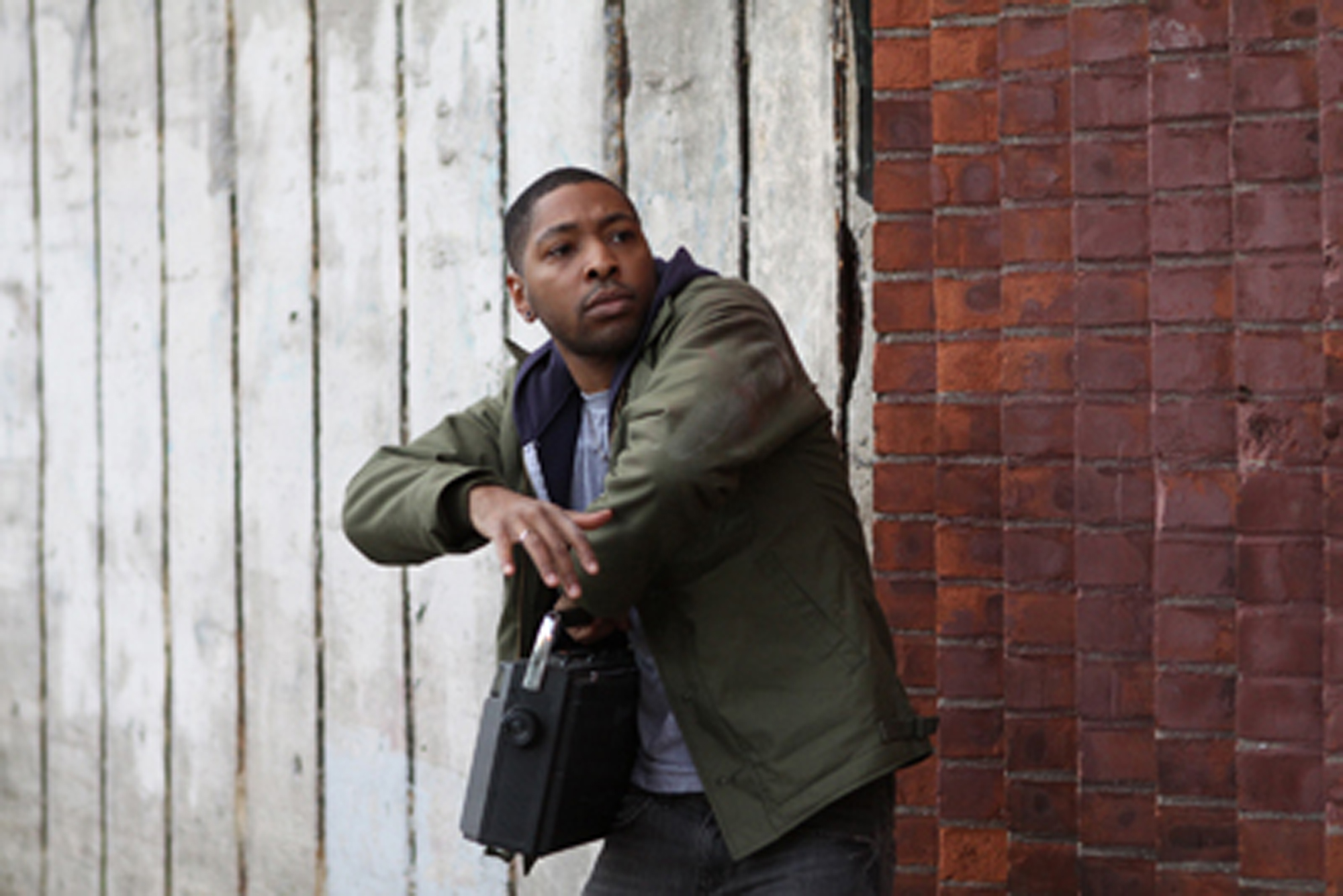
Dance artist and choreographer Kyle Abraham isn’t going on vacation anytime soon and he admits his next day off will be in August. “I try to work really really hard, I never take days off, which I need, but I’d rather get work done,” says Abraham. His work is paying off. Originally from Pittsburgh, PA, and now based in New York City, Abraham visits San Francisco this weekend to perform two solos in the Black Choreographers Festival at the ODC Theater.
“The first one is part of a new group work that I premiere in December 2011 at The Kitchen in New York, and I recently performed it in a program called American Realness in January. The second work is composed of excerpts from solos that I performed in the “Heartbreaks and Homies” show at Joe’s Pub last weekend in New York.” says Abraham. “The first is from a new work called Live!:The Realest MC. It’s in some ways a play on Pinocchio, but instead of a quest to be a real boy, it is a quest for realness in terms of using a gay vernacular and looking at hip-hop culture as a pinnacle of masculinity, and at the adoration of hip-hop personalities. So this character wants to own that in some way. The other solo is just love songs.”
For the recent performance at the intimate Joe’s Pub, Abraham enlisted choreographers Faye Driscoll and David Dorfman (with whom he has performed for the last five years) to share the evening. “I have my idols for sure,” says Abraham. “Kevin Wynn has been a huge idol for me, and Ralph Lemon, so I’m always intrigued and inspired by the work that they do. I still am trying to get a grasp on all that kind of stuff. I also talk to Reggie Wilson a lot.”
Abraham danced with Bill T. Jones immediately after completing undergrad at SUNY Purchase College in 2000. In the years since, he’s earned his MFA from New York University and has built a company, Abraham in Motion. Gaining momentum, he recently receiving a “Bessie” award (New York Dance and Performance Award) for his work The Radio Show, and this summer, he takes part in Jacob’s Pillow Dance Festival for the fourth year in a row, to perform a joint evening with Camille A. Brown.
“What I like to do,” Abraham says, “is present the work in Pittsburgh before it goes anywhere else. I feel like it’s something about being from there. All of the work is always inspired in some way from my life experience, so for me it’s great to have it first be shown there before it goes out somewhere else.” A residency at the Kelly Strayhorn Theater in Pittsburgh helped Abraham develop the first sketches of The Radio Show, which will tour the country next year. He looks forward to returning to his hometown this May for a performance at the August Wilson Center.
Hip-hop enlivens Abraham’s life experience and his work. “I was born in ‘77, and hip-hop was in that pocket, so it has always been ingrained in me. My first concert was Slick Rick,” he says. “It’s always been organic for me, and then over the years, studying various dance forms, all of those things later influence the movement. If I’m making phrase work, there’s always going to be some kind of hip-hop or urban aesthetic that’s going to come out naturally.” It certainly comes out in the solos at the Black Choreographers Festival, along with stunning explosions of limbs and quick switches back to calm and control.
Part of Abraham’s creative practice is to see a lot of work and be inspired by who and what surrounds him, including this trip to San Francisco. “I first came to San Francisco to find a nice transition between not dancing and coming back into dance and trying to figure out what I wanted to do next,” he says. “So coming here [again], even though I’m performing, still has a lot of vacation energy in a way, because I can clear my mind a lot and think about what I’m going to do next.”
7th ANNUAL BLACK CHOREOGRAPHERS FESTIVAL: HERE AND NOW
Sat./19, 8 p.m.; Sun./20, 7 p.m.; $10-$20
ODC Theater
351 Shotwell, SF
www.odcdance.org
“My girlfriend is a hacker”: Inside the EFF party
On our way to the Electronic Frontier Foundation’s 21st Birthday party, my programmer friend explained to me why, if it weren’t for the work of the good folks over at EFF, neither eBay nor WikiLeaks could do their thing.
See, it’s all about encryption, a topic my friend is slightly obsessed with. It used to be illegal for anyone but the government to send encrypted information through electronic channels, he explained, using technology that’s now commonplace and used in any website that requires a log in. In the 1990s, the EFF came along with a lawsuit to open up the ability to offer a secure transfer of information to the masses. The tech law firm prevailed, and soon it became possible to securely log in to a website and enter your credit card information without fear that it would be intercepted. Hence, the trail was blazed for online shopping.
From minds far more subversive than that of Meg Whitman sprang a very different use of the technology. Utilizing encryption software, WikiLeaks designed a way for whistleblowers to securely submit classified documents to an online repository.
That’s just one of many accomplishments that EFF could point to at its Feb. 16 celebration. A nonprofit, EFF “fights for freedom primarily in the courts,” according to its website, taking on the US government and major corporations on issues that threaten Internet freedom and digital rights. EFF boasts more than 61,000 contacts through its Action Center, which it uses to beat back bad legislation and raise awareness.
Just in the last few weeks, EFF has taken on the FBI over its plan to expand federal surveillance laws, weighed in on net neutrality, fended off against attacks from Congress over its aggressive protection of online privacy, and spearheaded a program that allows web users to surf secure all the time.
The EFF staged its 21st bash at Bricks and Mortar Media (BAMM.tv), a “content creation factory” in SoMa.
The place was adorned with festive, futuristic hacker art, from a flat-screen monitor displaying a word cloud, to a stage setup featuring an aerial array of computer bits and video game controllers.
One room featured a live video feed projected onto the wall with a strobe-light effect, and partygoers delighted in throwing kung-fu kicks in front of it and watching themselves flicker on screen like action figures seconds later.
In true tech-pioneer fashion, the night featured live nerdcore performances. What’s nerdcore? Let me put it this way. When the star of Dual Core shouts into the mic, “Throw your hands in the air if you’ve got mad skills,” the people he’s addressing really do have mad skills – like programming, web design, developing apps for mobile devices, managing vast databases, creating video games, and yes, even hacking. One of Dual Core’s raps included the line, “My girlfriend is a hacker.” He’s clearly smitten.
Several chiptune artists also performed, including Crashfaster — “a chip musician, retro remixer, and low-bit concert promoter whose outreach has galvanized the Bay Area’s vibrant chiptune community,” according to EFF – and Trash80, “the eminent chip musician behind ArduinoBoy — software that helps integrate the Nintendo Game Boy into any existing electronic music arsenal.”
I had the honor of chatting with Doctor Popular, described on EFF’s site as a “professional yo-yoer, nerdcore artist, and innovator.” The good doctor makes music using only an iPhone, iPad, and some wires. He told me he writes songs using a handful of apps while riding CalTrain from San Francisco to San Mateo for his day job at a company that makes video games.
And oh, the nerdy crowd! The knowing glint in their eyes, those people who really understand how to manipulate technology. They program software, develop apps, eat, sleep and breathe online communication, whip out iPhones and Droid phones and talk about video games, latest versions of browsers and operating systems, and other matters that this reporter could not quite comprehend, because they were using acronyms.
They were gracious. “Sorry,” some one said to me after launching into a paragraph of alphabet-soup gibberish to my programmer friend. “Sometimes I forget, and then I notice people’s eyes glazing over.”
And yet, when you hang out with hardcore nerdcore fans, you learn the most fascinating things. For example, how when you begin typing “Torrent” into a Google search engine, the word “torrent” will not show up in the automatic feed that suggests search terms. Why? Well, there are theories.
Noise Pop Film Festival: the new new age?

The Family Jams, a documentary by Kevin Barker (the man behind Currituck Co. and and on-again-off-again accompanist of Vetiver), captures the careers of the genre-fucks Devandra Banhart, Joanna Newsom, and Vetiver in their infancy on a 2004 summer tour. (The doc screens Thurs/24 as part of the Noise Pop Film Festival; check out a trailer here.)
Near the film’s beginning, Barker, in a voiceover, shares a memory of seeing large flying cockroaches that lived in his grandmother’s kitchen drawers in Hawaii. In the next scene — whodathunk? — a large cockroach appears during a show in Houston, Texas when his musical family (Banhart, Newsom, and Andy Cabic of Vetiver, among others) plays together at the show’s end. Could this link ‘twixt families be made any more obvious?
The documentary also attempts to challenge the so-called limitations of the family’s categorization as folk, but fails. During a radio interview, Banhart asks Cabic, “How do you deal with being considered “folk? Do you accept the humiliation of their inaccuracy and narrow-mindedness?” And in his next breath, a (possibly intoxicated) Banhart says, “Mine is new age. You’ve got to understand, new age — it’s got a bad taste in everyone’s mouth.”
He goes on: “I’m trying to make it groovy again. I’m really trying to give it some credibility. New age — that’s appropriate because it’s a combination of different things.” So, the genre-defying Banhart gives himself a label. Huh.
While The Family Jams has its humorous moments, like when a shirtless Banhart enters a door that clearly says “Shoes and Shirt Required Beyond This Point,” the doc’s high points come courtesy of concert footage. Jammin’ is what this family does best on camera. Otherwise, Barker’s film is largely a slow-moving study of community, and little else.
The Family Jams
Q&A with director Kevin Barker and members of Vetiver after the screening
Thurs/24, 9 p.m., $10
Viz Cinema
New People
1746 Post, SF
Herrera’s crackpipe crackdown

I lived at Hayes and Fillmore in the 1980s, at the height of the crack epidemic, and a spectacularly unsuccessful dealer hung out on my corner. He was so bad at selling the stuff (or else was smoking so much of it) that he was constantly broke and used to knock on my door late at night ask to borrow a buck to buy a can of beer.
At one point he owed me about $10, and offered to pay me back with “some hubba.” He proceded to open his fist and show me a couple of grimy rocks rolling around in his filthy, sweaty palm.
It looked so appealing. I politely declined.
That was my one and only chance to smoke crack, and I passed it up. So when I heard that city attorney Dennis Herrera was going to sue a bunch of local stores for selling crack pipes, I must admit I was curious: What’s the definition of a “crack pipe?” How can you tell what a piece of smoking apparatus is going to be used for?
I asked Jack Song, a spokesperson for Herrera, and he told me it was pretty clear. “They’re glass, and they have certain characteristics,” he said.
Again: I’ve never actually smoked crack, so I have no personal experience with crack pipes. But I used to have a really nice glass pot pipe, which unfortunately was seized by the police in upstate New York many years ago. I went on Google images, the source for all truth, and checked out “crack pipes,” and some of them looked a little like the one I used to use for what we now consider a legal medical treatment.
According to the press reports, an undercover cop went into these stores and asked to buy a crack pipe. The store owners allegedly offered up a specific device, which would not have been terrible smart; when we used to buy bongs in Connecticut, where selling any sort of drug paraphernalia was illegal, the salespeople would talk loudly about how to load “the tobacco.”
In this case, Herrera’s even going a bit beyond crack pipes:
At all times relevant to this Complaint, up to and including the present, in addition to
the permitted tobacco products, Defendants have also displayed and sold smoking paraphernalia, including a large array of pipes and devices commonly referred to as “bongs.”
But Song told me marijuana devices wouldn’t be targeted.
At any rate, the legal case is now going to rest, I guess, on what defines a “crack pipe.” (Apparently there are “meth pipes,” too, which are a little different from crack pipes. I feel so old and uninformed.)
And while I understand the neighbors griping about the stores attracting a nasty element (my old pal on Hayes and Fillmore was harmless enough, but your typical crackhead isn’t great company), I wonder about the ultimate impact of this particular, uh, crackdown.
Herrera’s lawsuit notes:
By providing their customers with a way to ingest illegal and dangerous narcotics, Defendants are creating and contributing to conditions which are injurious to the health, safety and welfare of their customers, neighbors, and the community at large. Defendants’ conduct causes or contributes to offensive and annoying conditions, including, but not limited to: illegal and dangerous trafficking of controlled substances, illegal and dangerous use and abuse of controlled substances, public intoxication, and the crime and nuisance related thereto.
I get that the city attorney considers these stores a community nusiance, and he may well be right. But I don’t think this is going to do much about crack and meth use.
I mean, can’t you smoke crack out of a pot pipe? Can’t you pretty much smoke it out of anything? When I was in high school people stuck their pencils into apples and made holes to smoke pot out of; in college, I learned that, in a pinch, Tampax wrappers made perfectly adequate rolling papers.
Druggies (of the sort who use crack pipes, anyway) may be violent and otherwise fucked up, but they’re notoriously creative. They may stop hanging around these particular stores in these particular neighborhoods, but they’ll find someplace else.
It seems likely that the only ones who are going to suffer for this are the store owners; the crackheads will be just fine. In a manner of speaking.
Onek to SFPD Chief turned D.A. Gascon: release records of officers cleared in shootings

Calitics has a revealing letter from David Onek, a senior fellow at the Berkeley Center for Criminal Justice, a former member of the San Francisco Police Commission and a candidate in the 2011 District Attorney’s race, demanding greater transparency from the D.A.’s office when it comes to explaining why officers have been cleared in officer-related shootings.
“After spending my career working to identify and implement the most effective public safety strategies, I have seen one constant – the community is safest when the police and prosecutors earn and keep the public’s trust,” Onek writes in a letter that is guaranteed to turn up the ante in an already intriguing race. “That’s why I read with real concern that the San Francisco District Attorney’s office would not produce reports related to officer-involved shootings pursuant to a recent public records request from NPR-affiliate KALW.”
(The KALW report shows that the person in the D.A.’s office who penned the letter denying its request for records was Paul Henderson, D.A. Kamala Harris’ chief of staff and her preferred pick as replacement D.A. before Gavin Newsom appointed former SFPD Chief George Gascón as his last act as mayor, shocking just about everyone except Willie Brown, especially when it came out that Gascón used to be a Republican and is not philosophically opposed to the death penalty. And while Gascón, who was registered in recent years as decline-to-state, promptly turned around and registered as a Democrat, he also filed papers in the D.A.’s race that cite the phone number of notorious campaign attorney Jim Sutton.)
In his post on Calitics, Onek notes that as a former Police Commissioner, he was briefed in closed session on the details of officer-involved shootings, and he often heard complaints from community members about how little public information was released about officer-involved shootings.
“This lack of transparency breeds distrust,” Onek observes.
Onek acknowledges that in all officer-involved shootings, the DA’s office conducts an independent review to determine if there is criminal liability, and that if such liability is found, the DA presses charges, which are public. “But when the DA determines that there is no liability, it is equally important that the DA publicly explain the reasons for its decision,” Onek states.
In short, he believes the D.A.’ office should issue a very detailed report on every officer-involved shooting in which it does not file charges and should make the report publicly available on its website. “The report should detail the facts, the law and the reasons for the decision not to file charges,” Onek says, arguing that complete transparency would make the job of police and prosecutors much easier by building trust between law enforcement and the community, making it more likely that community members will work in partnership with police and prosecutors, and that victims and witnesses will come forward to testify.
“Publishing detailed reports that clear officers when they acted within the law can dispel public misconceptions about what actually happened,” Onek concludes. “Of course, officers’ privacy rights need to be respected and investigations cannot be compromised. But once an investigation is complete, and an officer has been cleared, it is imperative that the District Attorney’s office share its findings with the public. “
And as Onek points out, this standard is already in place in communities in California. “The District Attorney’s office in San Diego, hardly a bastion of liberalism, actually lists these cases on its website,” Onek states. “Many other counties – including Los Angeles, Orange and Fresno – also make them matters of public record and available on request. Building trust with the community is the key to enhancing public safety. Let’s not violate that trust by refusing to release documents that the public has the right to see.”
I’ve got a call into D.A. Gascón’s office to learn more about the rationale for denying KALW’s request, and I’ll be sure to post his reply here, so stay tuned.
Hot sexy events: February 16-22

‘Tis the weekly sex events of playa-sized proportions! In addition to our city editor Steve Jones’ reading at Kinky Salon this week, this week you can also catch a reception for a new art book on goofily half-attired or gleefully naked Burners published for the world to see, courtesy of playa photographer Julian Cash.
The People of Burning Man is the product of Cash’s insistence on bringing an immaculate white portable studio to the playa year after year, setting up actual photo shoots in a festival world where most documentation relies on the most candid of cameras. The result is that BRC’s wacky personas and costumes are explicated and orchestrated better than they’d ever be if you just saw them strutting past you through Center Camp. Not surprisingly, a lot of the photos have to do with sex. But Cash’s impish camera-side manner has a way of making even the most pierced, punked perv look playful (I should know, he took myphotos last fall) – and his signature white backdrop strips his subjects’ context away so that you can really focus on what that pair of furry pink chaps, nipple paint, or lifted tutu wants to express.
The People of Burning Man opening art reception
With the publication of his playa photo book finally funded thanks to the omnipotent powers of Kickstarter, feel free to kick back and revel in the cheekiness of Julian Cash’s art book images – and perhaps make plans for a photo shoot of your own with the man?
Thurs/17 6-8 p.m., free
Good Vibrations
1620 Polk, SF
(415) 345-0500
Sizzle
One of the hottest spoken word open mics around, tonight marks the start of February’s impressive collaborations between Femina Potens – which is currently in-between brick-and-mortar gallery locations – and Mission Control. Featuring the likes of adult filmmaker-writer-educator Tristan Taormino, Valencia scribe Michelle Tea, and dominatrix Keva i Lee, you’re bound (and gagged) to catch something you like onstage.
Fri/18 8-11 p.m., $10
Mission Control
“Love you – mean it! Love in the context of S&M”
Complete with in-person scene demonstrations, this workshop will look at ways that femme tops can show love even while they inflict anxiety, struggle, and pain in their subs. Come with questions about how to apply the lessons to your own sex life and take note – no male-identifying lovahs at this one, just like at all other Exiles S&M education events.
Fri/18 7:30-10:30 p.m., $4-10
Women’s Building
3543 18th St., SF
(415) 431-1180
Kinky Salon Sweetheart’s Ball
Kinky Salon is counting on the fact that you’re totally over Valentine’s Day bullshit and yet totally ready to don your Candyland finest and ooze that sugary-sweet all over your swinger pals. For two nights in a row! Well, you don’t have to go to the costume play party for both nights, but if you’re going to take in all the performances – which include a duet with Polly Superstar and Bow Wow Wow’s Leigh Gorman and a reading by our own city editor of his new dissection of Burning Man culture – and still have time to get your gumdrop off, you may need to.
Fri/18-Sat/19 10 p.m.-late, $30-35 members only
Mission Control
School of Shimmy Burlesque 101
Oh man… how do those burlesque ladies do it? Dottie Lux can tell you, if you like. Lux’ll be performing onstage at Burlesque Moulin at the Down Low on Sat/19, and she’s just dropping back in Sunday afternoon to impart the basics of booty-shake to burlesque wannabees. Interested? Jump up there girl, show us your tap pants.
Sun/20 1-3 p.m., $30 discounted tickets available night of Sat/19 show
The Shattuck Down Low
2284 Shattuck, Berk.
(201) 615-9245
One year in: BDSM newbie panel
There’s plenty of places in town where you can go to hear the escapades of BDSM stalwarts, the individuals who’ve done it all. But what’s it like to be discovering it all for the first time(s)? This panel discussion will feature people who’ve dove into the scene in the last 365 days, moderated by Gabby, who says she entered the scene in 2007 and promptly started disobeying all the advice of those in the know.
Tues/22 8-10 p.m., $20
SF Citadel
277 Mission, SF
(415) 626-2746
Planned Parenthood calls for support against GOP attack
As the struggle to keep the doors open at the legendary women’s clinic, Lyon-Martin Health Services, continues here in San Francisco, yet another blow to women’s health care at the national level has advocates sounding the alarm. Planned Parenthood has issued a call for help defeating a federal bill it’s calling “the most dangerous legislative assault on women’s health and Planned Parenthood in our 95-year history.”
Congress is gearing up to vote on the Title X Abortion Provider Prohibition Act, which would eliminate federal funding for all health-care services provided by any clinic that offers abortion services. The legislation places Planned Parenthood, a leading national provider of reproductive health care serving primarily low-income and uninsured women, squarely in the crosshairs.
The bill was proposed by Rep. Mike Pence (R-IL), who apparently has serious beef with Planned Parenthood.
While Pence has sought to convince lawmakers that the bill would eliminate federal funding only for abortions, its reach is actually much broader than that, and it would deliver a devastating blow to basic reproductive health services for millions of women.
“This bill would eliminate all federal funding for Planned Parenthood health centers — including funding for birth control, cancer screenings, HIV testing, and more,” notes a statement on Planned Parenthood’s website. “The consequences of this bill are clear — and they would be devastating. More women would have unintended pregnancies. Cancer would develop, undiagnosed, in countless women. There is no doubt: cutting off millions of women from care they have no other way to afford places them at risk of sickness and death.”
Even Cosmo has weighed in, noting that this federal funding is helping millions of women stay healthy or detect early stages of disease: “Last year, that money (which would dry up completely if the bill is passed) went towards 2.2 million Pap tests, 2.3 million breast exams, and over six million tests for STDs.”
City Attorney Dennis Herrera has joined in the calls for defense of Planned Parenthood, issuing an email blast as part of his mayoral campaign asking voters to sign a petition against the Pence legislation. “New efforts by the far right to eliminate funding from all Planned Parenthood health centers nationwide pose a dangerous and immediate threat to women’s health,” Herrera wrote in the campaign message.
A number of other online petitions are circulating on this issue as well. Go here or here to learn more.
When radical protest works

It’s easy to get turned off by protests, to say that direct action, sit-ins, arrests are counterprodcutive and don’t make any difference. But then you read something like this and you realize that, over time, in-your-face activism can have a very direct impact.
Paul Watson founded the Sea Shepherd Society in 1978, after he left Greenpeace (which he also help found) in a battle over tactics. Greenpeace was always scrupulously nonviolent; Watson wanted to take things a step further. He bought a boat and started hunting down whaling ships; his first victim was a pirate whaler called the Sierra. He rammed his boat repeatedly into the Sierra’s hull off the coast of Portugal in 1979, nearly sinking it. An anonymous bomber finished the job a year later, blowing a huge hole in the whaler’s hull while it was in port.
Since then, Watson and his crews have made life miserable for whaling ships (check out this picture of a Sea Shepherd crewmember tossing a bottle of butyric acid — which is harmless but stinks really, really bad and would make conditions on the boat almost intolerable).
And it’s working: It took years, but Japan is now pulling back its whaling fleet, blaming the Sea Shepherds in part for making whale hunting too costly.
No more San Brunos!
For decades, the Guardian has done story after story on PG&E’s deteriorating service, terrible maintenance record, continuous stonewalling and coverups, emphasis — not on safety — but on jacking up executive salaries and putting tens of millions into fighting community choice aggregation in San Francisco and Marin, and on the granddaddy of monopoly moves (last year’s Prop 16). The San Francisco Chronicle, to its immense credit, has come through with a series of stories laying out PG&E’s virtually criminal behavior in the San Bruno pipeline explosion.
Now TURN, the consumer watchdog over utilities, is putting forth an excellent way to fight back with a tough petition and spreading the word. TURN says, “PG&E charged its customers $5 million to fix a gas pipeline under San Bruno in 2009, but delayed the work citing other priorities. The company then spent $5 million on executive bonuses.”
Take action to demand PG&E make customer safety its top priority, and pay for the costs of this tragedy with its own profits, not our pockets.
Sign the petition here, and tell the PUC, “No more San Brunos.”
Warren Hellman: The rich are undertaxed
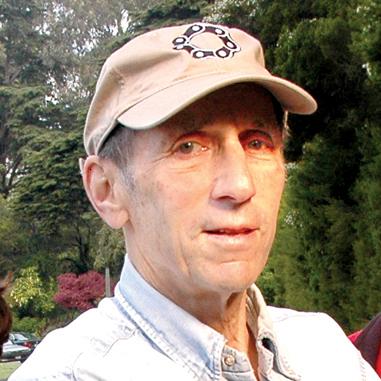
I couldn’t reach financier Warren Hellman before I wrote my column in this week’s paper talking about the employee pension discussions. But he called me yesterday (Feb. 16) after he’d seen it, and I expected he’d give me some shit.
Wrong.
In fact, Hellman had only one problem with my analysis: “Your article is didn’t go far enough.” Turns out he thinks I was a bit too easy on the billionaires.
“When you compare upper-echelon tax rates [in America] to any developed country in the world,” Hellman said, “the rich pay very low taxes here. You’re article is exactly correct — the wealthy are undertaxed.” He told me that he’s stopped trying to amass more personal wealth (“it’s all going into a foundation”) because he realizes that he couldn’t possibly spend all the money he has “and all that happens if you leave it all to the next generation is that you spoil your kids.”
Quite a statement coming from one of the city’s richest and most influential business leaders.
Of course, putting all the money in a foundation isn’t the only answer. The only way to address the wealth gap, and the decline in social, education and infrastructure spending, to for the government to get more involved — and that means collecting more tax money from the people who can afford to pay it. Hellman told me that he’s not about to accept a reduction in his lifestyle — but we both agreed that he doesn’t have to. He could pay a lot more in taxes and still be really, really rich.
So we talked about my proposal, which goes like this:
I’ve got a suggestion for the pension reform negotiators. Why not talk a little about parity.
Yes, pensions have to be fixed; let’s start at the top. Maybe nobody should have a pension of more than $100,000 a year; certainly, a former police chief shouldn’t get $250,000 a year for life. Maybe the highest-paid city employees should have to pay more into the pension system to protect the pensions of the people who make less. I could easily support progressive pension reform that would save the city money.
I just think tax reform should also be part of the equation.
Hellman wants $300 million in pension savings? Good — how about pairing it with $300 million in new taxes on the wealthy? How about big business and rich people give up something this time around, instead of all of the cuts falling on public employees and poor San Franciscans?
And Hellman, to his credit, didn’t disagree with the concept. His problem he said, was with the politics. “Taxes are the third rail of politics,” he said. “I’ve gotten my head handed to me three times now when I’ve supported tax increases.”
But I still think there’s a way to move forward here. The city employee unions agree to some sort of pension reform, which starts with a pension cap and higher payments from higher earners (not with what amounts to a pay cut for lower-wage employees who have already taken pay cuts in the past few years). Then Hellman, Mayor Ed Lee and Sup. Sean Elsbernd agree to support a progressive tax measure that would bring in badly needed revenue for public services and education.
It’s possible that the tax measure would have to wait until Nov. 2012, when it would only require a 50 percent vote. Maybe both measures go on that ballot. And Hellman, Elsbernd and Lee use their clout with downtown to push the Chamber of Commerce and the Commitee on JOBS to at least stay neutral and cut off any big-money campaign against the tax measure. Then they all agree to help raise money and campaign to pass it. And labor agrees to work for both measures.
Hellman said he feared that “one would kill the other” and both measures might fail. But I believe the people of San Francisco are willing to support new taxes — progressive new taxes — if they don’t think the money’s going to waste. And pairing pension refrom with new taxes sends a strong message: We’re all sharing the pain. Particularly if Hellman, Elsbernd and Lee can sell the tax package part of the deal to the business community.
It’s worth a try. Because otherwise, we’re going to have another Prop. B battle, both sides are going to spend a ton of money, and nobody’s going to walk away happy.
“It’s worth thinking about,” Hellman told me. I hope so.
The Performant: Enter the Platypus
French “Art” and Fringe wins at the EXIT Theatre
Of all the theatre companies in the Bay Area currently operating, the most specifically focused may well be our premiere (or rather only) amateur Francophone company Le Theatre Platypus. Though the Goethe-Institut sometimes hosts touring productions, such as Bridge Marklund’s “Faust in the Box” which will play in the Institut auditorium March 3 and The Mission Cultural Center hosts occasional Spanish-language plays such as Dolores Prida’s “Coser y Cantar” (playing March 17-19), dedicated multi-lingual local troupes are unfortunately scarce. This makes going to see a Platypus play more than just a night out, but a bona-fide cultural immersion experience.
Thursday night at The EXIT Theatre Mainstage is not usually where you’d expect to find a sold-out house, but Platypus pulled it off with their French language presentation of Yasmina Reza’s “Art” a satirical look at the world of art commerce as well as an exploration of the relationship between three friends whose differing feelings about an art piece underscores the divide in their characters.
There are many things about watching the play in French that are just the same as watching it in English—or any other translation. The appearance-driven shallowness of Serge (Michel Tassetto) is no less shallow in French than in English, and the zealous arguments against “the modern” of his acerbic buddy Marc (Arnaud Merceron) are no less self-righteous. The insecure hypochondriac Yvan (Thomas Marigne), who wobbles between trying to placate the feelings of both and obsessing over his pending marriage, is no less a schlub en Francais, and the piece of art in question—a $40,000 canvas painted all in white—is no less an eyesore.
The difference definitely lay in the crowd, half of whom appeared to be bona-fide expats, half of whom appeared to be French American International School scholars out for extra credit, and all of whom most certainly appeared to be having a great time. It surprises me that there aren’t more dedicated non-English Language theatre companies in the Bay Area, considering our diverse population, and while the Bay Area is a breeding ground for new translations, it’s interesting to consider what sort of impact these same companies might have mounting a non-translated work.
Because it’s never too early to start obsessing over the San Francisco Fringe Festival, which will be celebrating it’s 20th year in September, a hard-core crew gathered at the EXIT café on Saturday to witness the annual lottery — the process by which all entrants are chosen. This year 25 out-of-town companies, 10 of whom were alternates, and 35 locals, ditto, were drawn out of the “hat” by Christian “Nothing-up-my-sleeves” Cagigal and Michelle Talgarow. The San Francisco Fringe, as well as all Fringe Festivals part of the Canadian Association of Fringe Festivals are 100% non-curated, which means literally anything goes. Working titles of this year’s chosen productions include “Hamlet vs. Zombies,” by The Skinny Improv, “Hitler’s L’il Abomination,” by Annette Roman, and “I Love You, We’re F*#ked,” by Kevin J. Thornton, worthy Fringe titles all. The only question now—how do I wait six more months to see them?
Lion dancer takes off his mask
Another year and another ferocious super-natural lion symbolically rips and spits out heads of lettuce along the storefronts of Kearny Avenue. This is the lion dance, a highly visceral and visually unique performance that is a centerpiece in the city’s Southwest Airlines Chinese New Year parade, a 150-year old event that draws the participation of over 100 community groups.
Although each performance is different, one thing stays the same: the lion dancers’ faces are never revealed and their identity stays behind the mask. We were lucky enough to speak with one veteran lion dancer about growing up with the parade and his time inside the lion.
Wilson Mah is a native San Franciscan. He teaches lion dancing at Loong Mah Sing See Wui, or the Dragon Horse Lion and Dragon Dance Association, a non-profit dedicated to teaching the lion dance to its 100 young members between the ages of four and 19. Mah’s organization is one of the main lion dance troupes in this year’s Chinese New Year parade.
In his own youth, Mah was afforded an education about Chinese culture that he spends his adulthood passing on. “When I grew up, it was very common for kids to go to Chinese school right after our public elementary school let out,” Mah says. “The school that I went to was inside of a Methodist church called Hip Wo, I got involved in the parades through my school and the church while I was growing up.”
Mah remembers being affected by the lion dancers at an early age. “I was a baby and I remember being held by my father and watching the lions. I was terrified! For me, that was no paper-mâché symbolic lion. That was a lion that had made its way through heaven and down through the portals to Victory Hall on Stockton Street.”
Mah maintains that it is this unmatched, supernatural quality about the lions which makes them part of a rich Chinese cultural heritage worth holding onto. “When you see that lion and you watch it perform, you see how visceral and tenacious it is. That, contrasted with the idea that they bring good luck, is very powerful. I’m a fourth generation American and I can’t think of anything else equivalent to that.”
Nowadays, Mah uses the strength and tenacity of the lion to empower the youth in his group, encouraging them to manifest the best qualities of the lion both in and out of his class. Mah’s teaching experience dates way back. After dodging the Vietnam War, he set out to do community-based work and helped to establish The Kearny Street Workshop, a historic Asian American arts organization in SoMa. The road that eventually led Mah to teach the lion dance continued smoothly until the early ‘90s, when Mah and his family struggled after their house suffered significant damage from a fire. Mah decided to make something out of the rough situation. “While I was waiting for my house to be rebuilt I wanted to do something constructive.”
He’s been teaching the lion dance ever since. Although the group performs the lion dance at special events and celebrations throughout the year, he says the Chinese New Year Parade is an important opportunity for his dancers to showcase their hard work and cultural pride to the rest of the city. “We do it for the San Francisco community at large,” Mah says. “I still have cultural sensitivities, I’ve gone through racial intolerance growing up. I think it’s important to show the public the beauty of Chinese arts and culture. We want to bring a lot of these things to a positive light.”
SF Chinese New Year Parade
Sat/19, 5:30 p.m., free
Starts at Second Street and Market, SF
(415) 986-1370
Live Shots: 7th Annual Black Choreographers Festival, ODC Theater, 02/16/2011
I believe it’s almost everyone’s dream to be able to fly and for some, it is a reality. I stopped by ODC Theater this week to check out a final rehearsal of a dance piece choreographed by Raissa Simpson and actually got to watch her fly across the stage. OK, she was actually attached to cables, but there was still quite a bit of airborne action going on, and to be honest, it made me a little jealous.
This weekend, ODC is hosting the Black Choreographers Festival, which brings together a smorgasbord of dance talent, in celebration of African and African-American traditions and culture. And, from what I saw during rehearsal, it’s bound to be a vibrant and exciting show. There was not only an element of theater and drama in Simpson’s piece, but also an awesome hot pink prom dress that one of the dancers was sporting. So go get your fill of perfect pirouettes and fabulous flexion, You won’t regret a minute of it.
7th Annual Black Choreographers Festival: Here & Now
Feb. 17-19, 8pm and Feb. 20, 7pm
$10-$20
ODC
351 Shotwell, SF.
www.odcdance.org/performance.php?param=48
Adachi and Ballard’s pension reform gloves come off

Yesterday, I talked to Public Defender Jeff Adachi about the latest efforts to address pension reform in San Francisco. Readers may remember that Adachi roused the ire of the labor unions last year, with the ultimately unsuccessful Proposition B. At the time, most folks felt Adachi’s measure didn’t have a snowball’s chance because it asked public employees to bear the brunt of the city’s ballooning retirement and health plan costs. Yet, they all praised Adachi as a great city leader who has been on the right side of many other battles in this city’s rich political history.
But the pension reform issue hasn’t gone away, and now that Adachi is threatening to introduce another measure this fall, the gloves have apparently come off, as witnessed by a Bay Citizen article that reported that union leaders don’t want Adachi to be part of a pension-reform working group at City Hall
In that Bay Citizen article, Nathan Ballard, who served as communications director for former Mayor Gavin Newsom from 2007 to 2009, said, “Inviting Jeff Adachi to our talks would be like inviting Sarah Palin to speak at the Democratic convention.”
The Bay Citizen characterized Ballard as “a Democratic strategist who has been involved in the working group since its inception.” And it noted that Mayor Lee had reached out to Adachi—an effort that it framed as a “complicating move.”
But it didn’t get Adachi’s thoughts on Ballard’s comments. So, I asked Adachi how he felt about being compared to Sarah “Moose in the headlights” Palin.
“It’s ironic that a spokesperson from Burson-Marsteller, which is headed by Republican operatives such as President Bush’s former press secretary (Dana Perino) and represents some of the most reactionary corporate interests, such as USA Blackwater, is accusing me of being a Republican for trying to solving our city’s pension crisis,” Adachi replied, referring to the fact that Burson-Marsteller, a global public relations firm, appointed Ballard as a managing director in March 2010.
“This is a company that is known for representing the worst corporate criminals in modern history,” Adachi continued. “They organized a campaign against civil rights in Argentina, supported a government massacre in Indonesia and tried to justify the killing of over 2,000 people in India’s Bhopal disaster. You have a hired mouthpiece, Nathan Ballard, who’s been paid $50,000 out of union member dues deciding who can attend meetings at City Hall. “
Asked for his thoughts on Adachi’s response, Ballard replied, “Burson-Marsteller employs talented operatives from both sides of the aisle. Although I won’t speak to the specifics of Jeff Adachi’s allegations, Burson is well known as the world’s go-to firm for crisis communications, and that tends to involve handling high-stakes disputes for controversial clients. As a criminal defense lawyer, Jeff Adachi should resist the temptation to assign blame to an advocate for accusations made against a client.”
So, buckle your seats, ladies and gentlemen. The pension reform battle is ON. And if the exchange posted above is any indication, it’s only going to get uglier
Muni looks for money — but not downtown

The San Francisco Municipal Transportation Agency is looking for new ways to bring in money, which is a fine thing. I think taxes for transportation make perfect sense. And while not everything in government gets better when you throw money at it, Muni generally does. Some of the ideas are pretty sound and take a progressive approach; it’s hard to argue against a vehicle impact fee, since private cars on the road increase traffic and slow down the buses. I’m all for higher parking rates, and an off-street commercial parking fee is a great idea (even though the Guardian, which owns a building that has a small parking lot, would have to pay the fee).
But the list is missing the most obvious and the most fair element: A special tax assessment for downtown commercial property. We know, because the city has done numerous reports on this, that office developers don’t pay anywhere near the real cost of providing Muni service to their buildings. We know that most of the Muni lines, and certainly the ones with the heaviest traffic, exist to take commuters downtown. We know that decent transit is critical to the success of the entire central office district.
So why is there nothing on this list to address that? Why not an annual fee per square foot of commercial office space in the area zoned C-3-0 (highrise offices)? That ought to be part of any Muni funding plan.
I tried to get the folks at Muni to respond to my question, but I haven’t heard back. I’ll update as soon as I do.
Eye dance: Eonnagata and the heroics of being seen
Consider the need to be seen. The dance world is consumed by this challenge. Dancers repeatedly put ourselves in situations where we have optimal visibility via auditions, performances, and even day-to-day classes. Choreographers market themselves to be presented through grants and venues. But is this need, this desire to interest and engage and ultimately compel people to watch us, heroic, or simply pathetic? Suppose for a second not the plight of a common dancer trying to be seen, but of a very high profile dancer or choreographer, who for better or worse is seen, has been seen, and who people clamor to see. Would the work err more toward heroic because it is practically their duty to be seen?
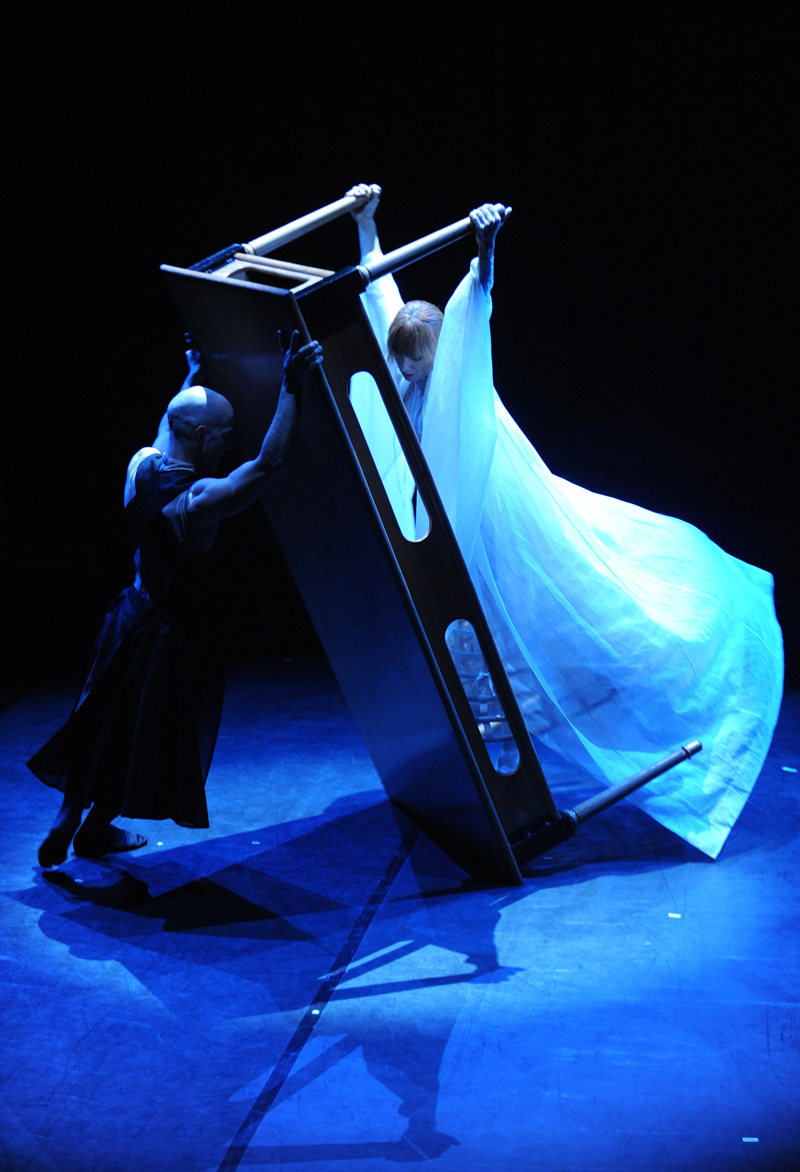
On February 9-10, Cal Performances presented Eonnagata, a dance-theater work created and performed by Sylvie Guillem, Russell Maliphant, and Robert Lepage. Dancers everywhere are familiar with legendary French ballerina Guillem, and her focus of-late on the contemporary realm has turned many a classicist onto different kinds of dance. French-Canadian Lepage is a playwright, actor, film director, and stage director known for his versatility in nearly every form of theater craft. Maliphant is a British choreographer noted for merging ballet with contact improvisation, yoga, and martial arts. Together, with lighting designed by Michael Hulls, and costumes designed by the celebrated Alexander McQueen, they collaborated to create Eonnagata, a fusion of Japanese Kabuki theater, martial arts, and contemporary dance chronicling the life of Charles de Beaumont, Chevalier d’ Éon, a French diplomat and spy of the 17th century known for cross-dressing tendencies that eventually led to his gender being completely obscured.
While I enjoyed Eonnagata tremendously, for me the larger question beyond whether or not the piece was likeable was what the piece aimed to accomplish artistically. Eonnagata sought to ignite a discussion on gender while also capturing the essence of a truly eccentric life. Engaging in that particular work allowed Guillem, Lepage and Maliphant to send a message through their high profile status that this was the kind of work important to them. Is that where dance bridges from pathetic to heroic, when the point is no longer simply to be seen but to actually say something as well?
The high status of the artists involved in Eonnagata lent an air of legitimacy to the work and an abundance of resources were made available to them that they might not have enjoyed if they were under the popular radar. However, when I ask myself if Eonnagata would still have been heroic, or for that matter even worthwhile, had they not been superstars, the answer is a resounding yes. So it is not the product or the acclaim but the endeavor itself that is heroic.
But back to the need to be seen: if a dance is not seen is it still worthwhile? There’s a part of me that says yes. Had Guillem, Maliphant, and Lepage come together in a studio every day for a year and never shown anyone results, the effort would still have been a valid endeavor, seeing as most artistic processes don’t use all of the choreography generated in the final performance product. But at the same time, there is a sense of responsibility, especially for dance celebrities, to share their art because they can reach a larger audience and thus expose dance to people who might not otherwise seek it out. Perhaps with certain status one goes from needing to be seen to being obligated to be seen.
As a dancer, I feel an immense need to be seen. However, it is not just a narcissistic hope for admiration, but also a hope that I may articulate something meaningful. After all, I still need to see dance as well.
Rediscovery: Peanut Butter Wolf puts Tony Cook’s and Dâm Funk’s ’80s jams in the spotlight

In conjunction with this week’s Noise Pop cover story on Peanut Butter Wolf (a.k.a. Chris Manak) and Dâm-Funk (a.k.a. Damon Riddick), over the next two days I’ll be sharing some quotes from the two, as well as music and video from a couple of recently-issued mid-1980s recordings that the pair love. First up is Tony Cook’s Back to Reality, which has just been released, with equally terrific orginal cover art, by Manak’s label, Stones Throw.
Back to Reality is a result of Manak’s passion for assorted independent singles by Cook, who drummed for James Brown and Etta James and performed odd jobs while recording his own music. Manak has remixed ten Cook tracks, some of them previously unheard, putting together a song collection that should draw some long-overdue attention to an artist who too often has had to put his creativity aside in order to pay the bills.
Tony Cook, “Heartbreaker” (feat. Vanesia Jean), original version:
Manak on Cook: “You’d think [the songs on Back to Reality] were 24-track, but he only worked on an 8-track. He was a good musician and producer. When you’re bouncing tracks, you have to have a good idea of what you’re doing. In those days it was hard to achieve such a full-sound [with an 8-track]. With Tony, I just started collecting his songs, and luckily enough, he had a MySpace page.
[In putting together Back to Reality] Tony was really cool about everything, really open to all of my ideas. He’s enjoying the accolades. We really want to get a band together.”
At Noise Pop, Manak shares a bill with Dâm-Funk, whose ’80s recordings Manak gathered and selected for last year’s Stones Throw release, Adolescent Funk. “When I first met Dâm,” Manak recalls, “I was DJing rare ’80s soul and funk, and he said, ‘Oh man, I’m so glad someone else is doing this.'”
Dâm-Funk, “I Appreciate My Life,” from Adolescent Funk:
The duo’s shared sensibility was a factor in the genesis of Adolescent Funk. “Dâm said, ‘Wolf, this Adolescent Funk is yours, you pick the songs,'” Manak recalls. On the subject of Adolescent Funk‘s cover image of “kids getting excited to go out at night,” also drawn from Dâm-Funk’s archives, Manak comes correct: “I’ve never seen a cover that looks like that.”
Ammiano goes after tax cheats
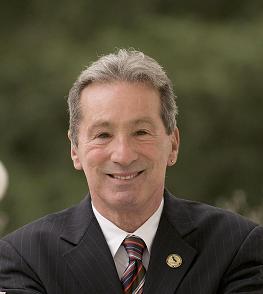
Assemblymember Tom Ammiano is moving to close a huge tax loophole that costs state and local government millons — and while his last attempt failed, this year he has a much better shot. The measure will probably make it out of the Legislature (hard to argue against something that doesn’t raise taxes at all but just makes sure nobody cheats) and I can’t imagine Jerry Brown deciding to veto it.
The bill, AB 448, would force companies that sell or transfer propetry to report it as an ownership change, which triggers a new assessment under Prop. 13. It’s one of the oldest loopholes in the book: I create a corporation or LLC to hold a piece of property, and when I want to sell, I simply transfer stock in the corporation or membership in the LLC to the buyer — and the property deed isn’t changed.
The California Tax Reform Association tracks this stuff, and you can see some examples here.
Ammiano’s been working with San Francisco Assessor Phil Ting, who told me “it’s a simple issue of fairness. Homeowners face reassessment when they buy property; why shouldn’t corporations?”
The stakes are high. It’s impossible to say how much San Francisco would pick up every year, but over time, it could be many millions of dollars (and about 57 percent of property tax revenue goes to the General Fund, the rest to the state, which returns most of it it the public schools).
Perhaps the Democrats should simply include this projected revenue in their budget; that way, Brown would have an even greater incentive to sign it.
SFBG Radio: Chris Daly on Twitter

Former Sup. Chris Daly has an opinion piece in today’s Guardian on the Twitter controversy; today, Johnny interviews him and gets more details on his argument that giving Twitter a tax break is a bad idea (among other things, he raises the question: what happens if Google buys Twitter and moves most of its operations down the Peninsula anyway?) Listen after the jump.
Snap Sounds: Prefab Sprout
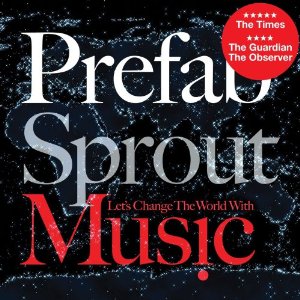
PREFAB SPROUT
Let’s Change the World With Music
(Tompkins Square)
Strange world we live in, where the likes of Björk and Stephin Merritt have written musicals, but we don’t have one by Paddy McAloon, whose songs far outdo contemporary Broadway’s best in terms of melody, emotional poignance, and poetic wordplay. It’s a tragedy that a composer and vocalist of such unashamed purity has been stricken with Ménière’s disease, which effects hearing. But it’s a blissful pleasure to hear previously-unreleased music by one of the late-20th century’s greatest pop songwriters.
McAloon honored and even eclipsed the spirits of Elvis, Moondog, and ABBA on his masterwork, 1989’s Jordan: The Comeback, throwing in a pair of sublime songs about Jesse James, to boot. In the tradition of 1989’s Protest Songs, Let’s Change the World with Music is a remastered version of a previously-unreleased collection of demos, dating from 1992. It presents romantic music as religion, and for an atheist or agnostic or unsparing anti-sentimentalist, its fervor can be off-putting. But the loveliest moments — “God Watch Over You,” “Music is a Princess,” “Angel of Love” — are the stuff of conversion, as tuneful as Paul McCartney, and with a lot more integrity.
Prefab Sprout, “Music is a Princess,” from Let’s Change the World With Music:
Prefab Sprout, “God Watch Over You,” from Let’s Change the World With Music:
Queer Palestinian activists discuss “pinkwashing” and more
Queer Palestinian activists are on tour in the Bay Area speaking about queer struggles in the context of the Israeli occupation of Palestinian lands. (Tonight is your last chance to catch the three representatives of the organizations Aswat and Al Qaws as they relate their stories, 7-9pm at the Pro Arts Gallery, 150 Frank Ogawa Plaza, Oakl. Facebook info here.)
Last night they spoke at Mission High School in an event organized by the Arab Resource and Organizing Center and co-sponsored by a diverse coalition of groups. Most asked be be identified by their first names only, fearing discrimination for the sexual orientation and reprisals for speaking out. Here are some highlights
“The Palestinian queer movement has managed to combine queer, feminism, and resistance to occupation into one integrated struggle,” said Haneen, who is active with Al Qaws, which promotes the development and growth of the Palestinian LGBTQ community. “When you talk queer rights in Palestine you cannot overlook the fact that Palestinians live under occupation. It is important not to overlook.”
One reason for the tour is to highlight what the activists call the “pinkwashing” of the Israeli occupation. “It’s a term that means the abuse of the Israeli gay struggle by the Israeli government,” said the 23-year-old activist, Sami. “Wrap a pink scarf around your eyes, we should not criticized Israel because it’s gay friendly. It’s part of the whole campaign of branding Israel as gay friendly and democratic and make people not see the human right violations.”
Moderated Cherríe Moraga, a queer Chicana activist and writer, the event was a rare exchange between two generations of queers of color. “I, as a Chicana, do not feel estranged from the Palestinian question, she said. “There is no contradiction for struggling for nation and for struggling for the freedom of our desires and sexuality.”
The three younger activists in turn showed appreciation for all they have learned from the veteran movements in the United States. “We learned a lot from the queer of color movements here in the United States when we were exploring the intersections of the struggle, [your writings] were amazing, [they] helped us,” Sami said. I would like to thank you for that.”
Despite their reference to other movements, they said everything from their rhetoric to their political strategy is based on communication with queer Palestinians. “The process of choosing the strategy is important,” said Abeer, who works toward inclusion of queer women in civil society. We went out to the field we met queer Palestinians. We developed all these news strategies on our feet. This is the spirit of Al Qaws—bringing these field experiences.”
The nascent movement they represent has already produced some concrete results. Before they began, the Arabic terms for gay were negative but now even the mainstream media has adopted some of the reclaimed and positive terminology of the movement.
If you cannot make it to the event, the after party will take place at 9:30 at the Paradiso Lounge, 2272 Telegraph Ave, Oakl.
Printed matters: A specific glance at the 44th California International Book Fair
Do you want the pristine first edition of Bram Stoker’s Dracula for 45 grand, or the slightly worn copy for 25 grand? Such were the questions that presented themselves at the 44th Annual California Antiiquarian Book Fair, which took place at SF’s Concourse Exhibition Center from February 11 through 13. A special shout out to local merchants Serendipity Books and Bolerium Books, both of whom had some of the event’s most interesting and affordable pleasures and treasures on display.
Work the throne: Interviews with the San Francisco Empress 2011 candidates
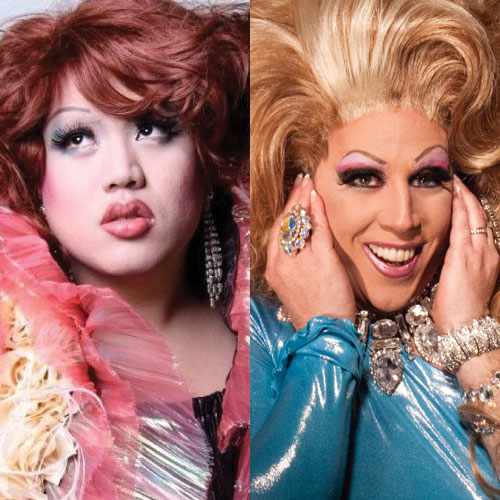
Update: Saybeline has been crowned the new Empress. Congratulations to both the outstanding candidates, and warm wishes for the future.
In this week’s Super Ego column in the paper, I give a grateful nod to our esteemed – if little acknowledged — Imperial Court system, an incredible, drag-based 45-year-old institution that raises tens of thousands of dollars for charitable Bay Area causes. (Really, do yourself a historical favor and check out the recently revamped Imperial website.) Below are my full interviews with the candidates, Saybeline and Monistat.
The annual elections for Empress of San Francisco are coming fast upon us (Sat/19, free. Noon–7 p.m. at Castro Muni Station, Castro and Market, and 11 a.m.–6 p.m. at Project Open Hand, 730 Polk, SF.) The winner will devote the next year of her life to raising funds and repping SF — after she graciously endures a daylong coronation ceremony on Sat/26, one of the city’s true mind-blowing spectacles. (The winner will be announced at Coronation.)
I emailed a series of questions to both candidates in order to get a better sense of who they are and why we should vote for them. They each bring a different, welcome perspective to the competition that ultimately helps refresh this cherished local tradition.
SFBG What is your Empress platform?
MONISTAT My mission to become Empress is to bridge communities together. We all know that Marlena’s [Bar in Hayes Valley] is the seat of power for the Imperial Court of San Francisco, and I being the outsider candidate promise to outreach to the members of this community. As Empress, I will be the Empress of San Francisco, not just the Castro, but the entire city. There are so many great facets of this town, and so much talent that I can use at my disposal to do some really good work! Being part of an amazing club scene in this town, I have been fortunate enough to work with some of the best promoters, DJs, performance artists, and venues, so why not refresh their eyes and give them something a little different.
SAYBELINE First and foremost, I offer an experienced continued commitment to service in our community. Additionally, I offer a continued commitment to honoring the 45-year history and traditions of the Imperial Council of San Francisco and the many Empresses and Emperors that have paved the way for many like myself, making a difference and serving in our community. Most importantly, my motivation comes from wishing to take on an expanded leadership role spearheading much needed grass roots community fundraising for our local network of diverse community based charitable organizations struggling to make ends meet.
I have actively been involved (both as a gay man and the persona of Saybeline Fernandez) in some way serving the LGBT community of San Francisco for over two decades. In those 20-plus years, I have giving my own money and served the community volunteering on the front lines for our LGBT political and human rights causes, volunteering for HIV/AIDS support services, services for our LGBT youth and services for our marginalized diverse communities. Additionally, I have lent my professional experience in event-planning to many fundraising events that have raised thousands of dollars and awareness, supporting and serving San Francisco. I also feel that one of the biggest differences in this campaign is that I have the ability and experience to energize and engage younger members of our community to become more actively involved in serving the community.
SFBG What would your first act as Empress be?
MONISTAT OMG Coronation is usually six hours long, and ends at midnight with the crowning of the new Empress. Its a long-held tradition. But of course win or lose, I’ll be out that night after the ball partying my brains out, to thank myself for finishing this amazing campaign. I will probably never sleep that night if I win, because usually I have to cart myself to all the bars that have sponsored me with the crown on my head, then have to be up and ready by 7am to go the Emperor Norton’s Cemetery all the way in Colma, in full mourning drag, with a veil on and everything (I secretly love all this pomp and circumstance). Then after a round of partying for three more days, I have to get working on my official Investiture, which naturally will be a fundraiser.
SAYBELINE This is easy for me. It’s sooo important to me that we get more younger members of our community actively involved in serving our community…. So many want to be involved but don’t know how. We have to open the doors, and engage and encourage them to have a greater presence in being of service.
SFBG How long have you wanted to be Empress?
MONISTAT What a loaded question. I believe that every queen is royalty and should be treated that way. The title of Empress just means you have to be in drag more than everyone else. I went to coronation last year. I’ve never won a title in my entire my life — all of my friends have kind of created their own niches and scenes in the city, so I thought, “Hey, why not do something my friends will never do?” So after talking to my closest pals, I decided to go for it and take the bull by the horns. Trust me, running for Empress is harder than most people think.. and it has taught me a lot of lessons about myself and growing up. It’s incredibly challenging to be put under a microscope 24/7 when everyone is watching you and every mistake you make is blown up 20,000 percent.
SAYBELINE I have been actively involved with the Imperial Council of San Francisco for a little over five years. And the thought of becoming Empress first crossed my mind some three years ago. As much as I may have wanted to run in previous years, I knew it was important to gain more experience within the court of San Francisco and the International Court System. Being Empress means both making a large personal financial committment and an expanded committment of one’s personal time. One has to have both in place in order to be successful. And after planning and getting things in order personally, the timing was finally right for me to throw my hat in and become a candidate and with the support of our community hopefully become the next elected Empress.
SFBG In one sentence, why should we vote for you as empress?
MONISTAT I’m young — my youthful energy combined with fresh ideas and the willingness to learn, plus my hands-on approach to things, is the perfect cure to a traditional court that needs to be shaken up a bit. My experience as a club promoter and my connections in this city will make for a great year as Empress. the Imperial Court is nearing its 50th year, there is need for new blood. I’m that queen. Oh yeah, I was also voted Best Drag Queen by the readers of SF Bay Guardian, enough said.
SAYBELINE A vote for Saybeline Fernandez is a vote for someone that offers leadership and experience — and someone committed to welcoming and encouraging younger members of our community to become more actively involved serving the community, raising much-needed funding for our local network of community-based charitable organizations.