

Brontez brought new energy to the “L@te: Friday Nights at BAM/PFA” series on Fri/11. The evening began with DJing by Myles Cooper, then an all-too-brief ear-scouring set by Brilliant Colors that left the audience asking for an encore. Next, people crawled over Thom Faulders’ orange BAMscape sculpture to see a series of short dance films by Gary Gregerson that was one of the evening’s highlights: the sound boomed from the speakers and the stark-black-and-white imagery popped from the screen, a lively marriage between Brontez’s spirited choreography and Gregerson’s affectionate knowledge of vintage TV dance shows. The centerpiece of the program, curated by Betty Nguyen, was a live performance by the Brontez Purnell Dance Company that, at its best, met raging two-piece rock accompaniment with spine-chilling results. After an improv dance class, the evening drew to a close with some music by Adeptus.
SFBG Blogs
Green Bay Packers’ Desmond Bishop drops in on Lee
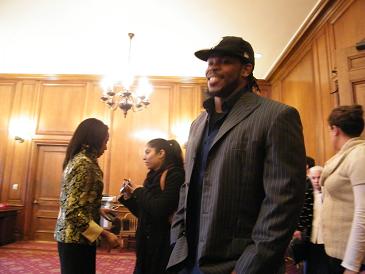
So, there I was sitting in the Mayor’s Office with fellow Guardian reporter Rebecca Bowe waiting to see Mayor Ed Lee when in walks Green Bay Packers linebacker and D10 native Desmond Lamont Bishop, who helped win the Super Bowl XLV, this month.
Turns out Bishop was there to see Lee, shortly before D10 Sup. Malia Cohen honored Bishop during the Board’s Black History month commendations’ ceremony.
We didn’t get a chance to interview Bishop (he was whisked into Lee’s office super quick), but Bowe and I surfed the web while waiting for our appointment with Lee and soon learned that Bishop was born in San Francisco on July 24, 1984, is 6 feet 2 inches tall, weighs 238 pounds, and was at Cal in 2005/06, before being drafted by the Packers in 2007, where he wears jersey number 55.
Cohen later confirmed that Bishop was born in Hunters Point and went to Visitacion Valley Junior High, before going to high school in Fairfield, and then returned to San Francisco to attend City College before heading to the University of California.
“Desmond is also deeply involved in his community,” Cohen said in a press release, which notes that Bishop started the Desmond Bishop Football Camp and participates in programs to help kids to be healthy and learn to read, including the Boys and Girls Club.“The Bishop family moved to San Francisco over 50 years ago, and Desmond’s grandfather still lives in Bayview Hunters Point.”
Too bad we didn’t have a chance to get Bishop’s autograph, but hopefully next time…
Mayor Ed Lee willing to disclose work calendar
Among the many issues that rankled progressives under Mayor Gavin Newsom’s administration was Newsom’s unwillingness to turn over his work calendar to members of the public who formally requested it. Beginning in 2006, a group of sunshine activists routinely submitted public-information requests for the mayor’s daily schedule in hopes of finding out who Newsom was meeting with, what events he attended, and just how he spent his time on the job as mayor of San Francisco. After years of battle, Newsom finally agreed to release a watered-down calendar containing very little information.
On this matter, it does not seem as if Interim Mayor Ed Lee will follow in the footsteps of his predecessor.
In an interview with Guardian reporters today, Mayor Lee indicated that he would be willing to make his calendar available to the public. “Sure,” he said when we asked him about it. “I have no problem with that.”
Lee noted that he has complied with similar requests in the past. “I’ve had those already reviewed as the City Administrator, so I’m used to it,” Lee said.
He added that while he was willing to share his work-related calendar, “I may not want to share where I privately go every night.”
That’s OK. Thanks to former Mayor Willie Brown, we already know Lee went out to dinner in North Beach the other night with Brown, Rose Pak, and several others.
Live Shots: Belly Dance Show and Kardash, Red Poppy Art House, 2/10/11
I’m all for intimate venues and performances — and the shows at the tiny Red Poppy Art House literally happen in your lap — but it’s kinda scary when the performers are wielding huge swords and you wonder if you’ll go home missing the tip of your nose.
Luckily, these blade-brandishing belly dancers knew what they were doing and even though there were several sharp shiny weapons balancing precariously on the head of a dancer at one point, just about two feet from my face, I felt OK.
The performance at Red Poppy not only featured belly dancing, but also the groovy fusion beats of Kardash and several of their musical friends. Their sound had a Middle Eastern flare to it and there was one moment that stuck with me the most during the show. One musician played the tambourine for a piece with such precision, isolating the drum and then the bells around the edge of the instrument, that it created a totally foreign sound like nothing I’ve ever heard before. It was truly beautiful.
The dancers also showed their considerable talents, especially Elizabeth Strong in a dance titled “Mata Hari,” about the infamous exotic dancer who was also a spy. Donning red lilies in her hair, Strong started the dance very slowly, creating a mesmerizing concoction of mystery and movement, but ended with a feverish mix of whirling hips and flying scarves.
And guess what? At the end of the night, I left with all my “Jewish princess nose” (as my mother likes to call it) fully intact.
The WMD lies, confirmed

I don’t even know where to begin with this story. The U.K. Guardian reports today that the Iraqi defector who convinced the U.S. that Saddam Hussein had weapons of mass destruction now says he fabricated that story:
Rafid Ahmed Alwan al-Janabi, codenamed Curveball by German and American intelligence officials who dealt with his claims, has told the Guardian that he fabricated tales of mobile bioweapons trucks and clandestine factories in an attempt to bring down the Saddam Hussein regime, from which he had fled in 1995.
“Maybe I was right, maybe I was not right,” he said. “They gave me this chance. I had the chance to fabricate something to topple the regime. I and my sons are proud of that and we are proud that we were the reason to give Iraq the margin of democracy.”
So: The U.S. went to war, at a cost of hundreds of billions of dollars and many thousands of lives, on a pretext created by an unreliable defector who made the whole thing up. And either lots of CIA officials, and people up to and including Colin Powell, believed this character (who had no corroborating evidence, of course, because there wasn’t any) or they used what they knew was dubious intelligence to dupe the public.
You wonder: If everyone who has a good reason to gripe about his or her former country goes and makes up a story like this, how many wars will we wind up fighting?
It’s kind of like the old commie-plot days, when the very mention of the word “communist” could ruin someone’s life.
The Clarence Thomas conflicts
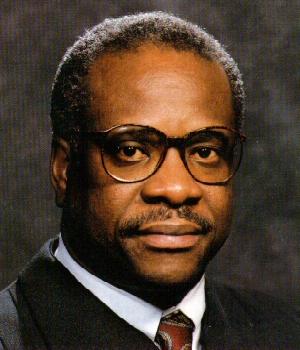
All I can say about this is that it’s pretty flagrant, pretty bad — and will probably amount to nothing, since the Supreme Court makes its own rules. But just imagine what would have happened if one of the more liberal justices had done something like this. I can hear Glenn Beck right now.
Editorial: Better options for garbage
One of the biggest, most important municipal contracts in San Francisco is never put out to bid. It’s awarded to the same company, automatically, and has been since 1932. Recology Inc. (formerly known as Sunset Scavenger, Envirocal, and Norcal Solid Waste Systems) is the only outfit licensed to pick up trash in the city. It’s also the only company that has a monopoly guaranteed in the City Charter.
Its residential rates are set every five years by an agency almost nobody’s ever heard of, the Refuse Collection and Disposal Rate Board, which consists of the city administrator, the controller, and the general manager of the San Francisco Public Utilities Commission. Commercial rates are set by Recology alone; there’s no appeal or oversight.
San Francisco is the only major city in the United States that contracts out solid waste collection to a private company. And it may be the only city of any size that does it without competitive bidding.
Now that city officials are discussing where the garbage should go — that is, what landfill should hold it — there’s a perfect opportunity to open up the 1932 deal, amend the charter, and fix this.
Sups. David Campos and Ross Mirkarimi are working on a measure that would mandate competitive bidding for the contract to pick up commercial and residential trash. “It’s not in the interest of the ratepayers to have a monopoly,” Campos told us.
It’s true that Recology has worked with the city on reducing the waste stream and developing a curbside compost and recycling plan. And Recology is an employee-owned company.
But that doesn’t mean the city or its residents and businesses are getting the best possible deal. Could another company do the same job better — and for less? Maybe. Would the prospect of a competitive bid drive Recology to improve service and cut rates? Absolutely. That why most municipal contracts are put out to bid on a regular basis.
But there’s a larger question here, one that the supervisors also should consider. Why does San Francisco have private garbage collection anyway? All over the country, cities handle that task as a part of the function of government.
There are several distinct advantages to evaluating a public option for refuse. For starters, the city is in desperate need of money — and Recology is making a nice profit off its local gig. It’s entirely possible, even likely, that the city could take over garbage collection, keep the rates at the same level, and bring in millions to the general fund. It’s also possible that city officials would decide to forego some of that income and cut rates to make life easier for residents and businesses.
Since the 1932 charter provision is getting a new look anyway, the supervisors at least ought to look at the possibility of ending private garbage collection. A fairly basic study should be able to establish how much revenue Recology takes in, what expenses are involved, and whether it’s worth pursuing municipalization.
Leno forces GOP hand
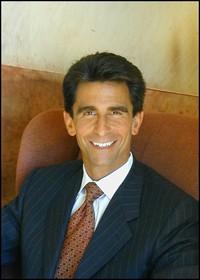
For whatever tactical reason (or other inexplicable Jerry Brown rationale), the governor has refused to tell Californians what he would cut if he can’t get his tax extensions approved. And the Republicans refuse to say what they would cut instead of letting the taxes continue.
So Sen. Mark Leno did it for them. Leno asked the Legislative Analyst to explain what $13 billion in budget cuts — the “no-new-taxes” budget the GOP wants — might look like.
It’s really, really scary.
For starters, take $4.5 billion away from K-12 education. That means the end to class-size limits for K-3. It’s a huge deal: The Gray Davis measure that limited those classes to 20 students probably did more than anything in decades to save public education in California. You want 40 kids in a kindergarten class with one teacher? You think any of them will be learning to read? Oh, and the state could save $700 million by delaying kindergarten for kids; guess who that impacts? Those kids are going to spend more time in pre-school which either (a) is subsidized by the taxpayers or (b) comes out of the hides of working parents.
Oh, and we’d eliminate food stamps for noncitizens. So people won’t be able to feed their kids. You think crime might become more of a problem? But wait: No room in the prisons.
Then we put college out of the financial reach of middle-class kids and expect to build a 21st century economy. And that’s just the beginning.
Leno deserves thanks for putting this list out; it ought to be in the ballot handbook along with the proposal to continue (not RAISE, just continue) some taxes. And we should all be asking every Republican in Sacramento: Is this what you want? If not, give us an alternative.
All roads lead to tandoori: Lahore Karahi’s Zulfiqar Haider speaks
I spoke with Zulfiqar “Guddu” Haider, the man behind Lahore Karahi, late one Wednesday evening. The last customers were making their way out the door of his unassuming Tenderloin Pakistani restaurant after a busy night, the kitchen staff had begun to clean up and head home. Haider led me over to one side of his dining room, a wall lined with glowing Yelp and Zagat reviews, and newspaper features with pictures of Haider front and center, dramatically holding out a steaming sautee pan and smiling boldly.
A tall, mustached man with a smile that could melt your heart, Haider is the owner and head chef at Lahore. He prepares every dish that comes out of the kitchen. “You have to try the tandoori fish,” he gushes. “Nobody doesn’t like it!” It’s not just Haider’s cheerful demeanor and his smoky tandoori fish that brings the crowds to Lahore – eating here doesn’t leave a dent in your wallet. Most dishes are between $5 and $12 each, with naan and appetizers all under five dollars. Haider says he’s never felt pressure to raise prices.
Friends that know him well call him Guddu, a nickname that loosely translates to baby and was first given to him by his mother. His pet name seems fitting in the best sense of the word – even at the end of a long day in the kitchen, his face lights up with a youthful glee as talks shop at his Tenderloin mainstay.
Born in Sahiwal Punjab in Pakistan, Haider says he was a goalie on his university’s soccer team. He came to the States in 1994 and after his first stint in the restaurant industry at a pizza and pasta shop, took a job as cook at Shalimar, another popular Indian and Pakistani restaurant in the TL. Soon he was opening Taj Mahal, his first restaurant, in 1996, and then a Fremont location in 2003 named Curry Palace before he left to return to the city. “I live on Gough and Oak,” he says. “I wanted to be able to work close to where I live.”
That led Haider to his next project, the challenging space that was Lahore Karahi. “The previous owners of this restaurant left because the location was hard. I took over and kept the name the same.” But the cooking was all his own, recipes passed down to Haider from his family in Pakistan. “All of my dishes come from my mother. She’s always close to my heart. It’s like she’s in front of me when I’m cooking.”

A fresh option from Lahore. Photo by Alex Fine
And while Haider struggled with his TL location to begin with, he was able to take his business to his current award-winning level. “At first, taxi drivers made this place run,” he remembers. “It was mostly all taxi drivers coming in and eating here — but soon more and more people came.” He smiles as if to reflect my own unspoken thought: and the rest is history. With a packed house late on a Wednesday, a wall full of good press, and a perma-smile, it’s not difficult to see how far Haider has come in the seven years that Lahore Karahi has been his own.
Lahore Karahi
Tue – Sun 11:30 a.m. – 10:30 p.m.
612 O’Farrell, SF
(415) 567-8603
www.lahorekarahisanfrancisco.com
Beer and Wine
MC/V
Moderately Noisy
Wheelchair Accessible
The Great San Francisco Valentine’s Day Pillow Fight 2011
It is extremely encouraging that A: hundreds of people still show up at Justin Herman Plaza to beat the living crap out of each other on Valentine’s Eve (with love!), B: We only resort to semi-violence for our kicks, and C: In the Facebook age, the “flash” in “flash mob” refers only to cameras. (Real spontaneous flash mobs RIP.) Video h/t: kevinsyoza
Hellman and Obama feel your pain

The Bay Citizen has a detailed report on the backroom discussions taking place around pension reform, and there aren’t any real surprises. The cops and firefighters seem to be leading the talks from the public-employee union perspective, although the other unions are there, and Mayor Lee has taken over the gavel from financier Warren Hellman. Sean Elsbernd is involved, but they’ve kept Jeff Adachi out. (And what the hell is Nathan Ballard doing in this mix?)
But what got me when I read the story this weekend was the quote from Hellman:
In an interview Thursday afternoon, Hellman said the group must come up with annual savings of $300 million to $400 million. (Proposition B was to have saved the city $120 million.)
“I hate that it comes out of the hide” of city workers, particularly those making modest salaries, Hellman said. “It is going to be really painful.”
It reminds me of Obama’s comments on his budget cuts: They’ll be painful and he hates to do it, but these tough decisions have to be made for the good of all of us.
My question: Why doesn’t anything ever come out of the hides of the billionaires?
From the start of this recession, working-class people, public employees and the poor have taken huge hits. Nothing — nothing — has happened to the top echelon of society. If anything, they’ve only gotten richer. The bankers who destoryed the economy with financial instruments even they didn’t understand? They’re not in the poor house. They haven’t had their homes foreclosed. They’re all doing just fine.
In fact, the United States government just kindly allowed them to keep their tax cuts for another two years.
Obama isn’t going to miss any meals. His kids will still have their fancy private school. He won’t have to worry about his pension vanishing or eating cat food in his old age. Same goes for Hellman; there’s nothing in the world that he could possibly want to buy that he can’t have.
So it makes me really mad to hear them talk about feeling bad about budget cuts and reducing pensions. If they feel bad, then why not do something about it?
Hellman’s not a bad guy. I’ve met him, he’s pleasant and polite and sincere about wanting to help the city. I couldn’t reach him on the phone today, but I’ll keep trying, because I have a question:
Over the past five years, city employees have given back hundreds of millions of dollars in wage and benefit concessions. Social programs have been cut by hundreds of millions more. And the rich in this town have given back nothing. Mr. Hellman: Is that fair?
I’ve got a suggestion for the pension reform negotiators. Why not talk a little about parity.
Yes, pensions have to be fixed; let’s start at the top. Maybe nobody should have a pension of more than $100,000 a year; certainly, a former police chief shouldn’t get $250,000 a year for life. Maybe the highest-paid city employees should have to pay more into the pension system to protect the pensions of the people who make less. I could easily support progressive pension reform that would save the city money.
I just think tax reform should also be part of the equation.
Hellman wants $300 million in pension savings? Good — how about pairing it with $300 million in new taxes on the wealthy? How about big business and rich people give up something this time around, instead of all of the cuts falling on public employees and poor San Franciscans?
I’m good with pension reform, really I am. And I’m not involved in the negotiations. But I’m a San Francisco progressive who will have to vote on the ultimate outcome. Give me something to work with here, guys.
Dad, Millennium. Millennium, Dad
San Francisco is composed of many worlds: in one, men and women wear suits and whiz up high-speed elevators to the top of the Transamerica building (until recently, I held to the belief that the uppermost floor is built entirely from Lindor truffles and boasts a wine fountain). In a cross-town galaxy, “Transamerica” might be a documentary on one’s downstairs neighbor.
But the great thing about the city is that its various worlds frequently overlap – in laundromats, at last call, and in the occasional rare dining experience that leaves everyone happy and full, even in the wallet. Case in point: Millennium, an artful mash-up of hippie and high class.
This weekend, I experienced just such a coalescence when my father, a venerable business-type, flew in for a meeting and informed me that the highest occupiable floor of the Transam Pyramid is just an inconveniently small conference room. After introducing him to my roommate Bella Donna (formerly Donald), I wanted to treat him to a taste of the city that would satisfy his unabashedly carnivorous appetite, impress him with SF’s classy culture, and yet not leave me scrambling to find a menu item that didn’t involve au jus.
I settled on Millennium, a veggie-only venue in the Hotel California, and shuffled my old man out the door before he could ask what kind of cuisine we were headed for. We’d already de-cabbed (traveling in style being one of the many perks of dining with Pop) in front of the restaurant when he finally weaseled it out of me.
“Vegetarian? Vegetarian!” he spluttered, looking genuinely shocked that I, his own flesh and blood, would so betray and deprive him of some other animal’s skin and bone. I almost felt bad as he plopped into his seat, not at all trying not to sulk.
The décor was the first thing to soothe his spirit: rich, heavy woodwork; black-and-white tiled floor á la French bistro, and an ornate, substantial zinc-topped bar may have reassured him that his meal, too, would be a satisfyingly substantial one. Even when I informed him that the restaurant’s interior had been recently redesigned with sustainability in mind (Charles de Lisle of Your Space Interiors chose curtains from recycled plastic bags, chandeliers that started life as paper grocery sacks, and earth-toned interior paints) he seemed at home in the cozy, cruelty-free faux leather booth – or at least sufficiently insulated from SF’s raging counter-culture, viz. a heavy tattooed specimen one table over.

Conscious, not crunchy – Millennium’s classic décor is father-approved. Photo by Alison Bagby
Our server Justin was polite, just the right amount of chatty, and swift to suggest an array of dishes that would please my flesh-craving father, who at this point was becoming sort of embarrassed by his insistence on animal, given that the restaurant’s staff seemed to be nice folk.
(“I don’t eat that much meat,” he squirmed. I reminded him that he grew up working in a meat-packing plant, the son of its branch manager. And that his eyes turn red when he goes too long without a steak.)
The first dish to come out was the housemade tortellini ($12.75) with black chanterelle and chestnut filling and an array of accoutrements that risked sounding prissy (“carrot butter, saffron-spring onion-white wine broth, braised sunchoke and spigarello kale”) but that actually rounded the plate out with a delightful and necessary balance of flavors and textures. From the dense, sweet cubes of sunchoke to the delicate crisp breadcrumbs topping the dish, each element melted lusciously into the whole, while somehow holding on to its own identity. Dad took one bite and then made haste to safely locate his portion of the dish to his plate: half, or actually, a fair bit more than half.
Next up was the black bean torte – Justin’s suggestion – stuffed with caramelized plantains ($10.75). In truth, I thought the bean filling was a bit pasty and bland, and that it didn’t do the plantains justice. But the pumpkin-habañero papazul more than supplied the needed kick, and the accompanying cashew “sour cream” was satisfyingly rich, tart, and abundant. Here, Dad broke out with a “this is totally vegetarian?” He scraped his fork across his already-clean plate and licked it. In other words, success.
From there, things just got better. We were surprised when oyster mushrooms ($11 in most circumstances) crusted with chickpea flour and thyme landed on our table, courtesy of the kitchen, simply because we commented that they sounded good. In truth, they were fantastic. Entrees included the seared sweet potato griddle cake ($23.25) with cauliflower, winter greens, and cilantro and lime chutney, which was crowned by an extravagant mound of sweet onion pakora. Resembling nothing so much as a bouffant-like mound of playafied burner-dreadlocks, the elaborate heap had my dad ready to rave. “This,” he said, waving his fork in the air. “This. This is… better than meat.” Whoa.
His awe and appetite carried us right through a Oaxacan green corn arepa ($24.75, billed as hearty fare to sate the meat-eaters among us), the chewiness and density of which was a slight disappointment to only me. Furthermore, it carried the now-expected array of plays on texture and contrasting tastes: poblano chiles, grapefruit, avocado and roasted butternut squash frolicked in complete harmony.
Three appetizers and two entrees later, and despite the generous portions, we were so charmed that we committed to a slice of chocolate almond midnight torte ($9.25). By the time it came out, my dad had been converted to a vociferous proponent of vegetarian cuisine and, eager to show his approval he said, “Great! I can’t wait to try this! I can’t believe they even make vegetarian dessert!”
Though I’m pretty sure my father hasn’t imbibed too many authentic mincemeat tarts or lard-and-suet pie crusts, I refrained from pointing out the slackmindedness of his statement. I just smiled into my vegetarian cappuccino, feeling wholly content and victorious.
So deeply entrenched was my father in the afterglow of a great gourmet experience that he didn’t even mind the mingled smells of urine and weed that wafted us along through the Tenderloin. “That was the only meal you could completely gorge on and still want to take a stroll afterwards,” he commented as we wandered, now cab-less, through the San Francisco streets.
Millennium
Sun-Thurs 5:30 p.m. – 9:30 p.m.; Fri-Sat 5:30 p.m. – 10:30 p.m.
580 Geary, SF
(415) 345-3900
Beer, Wine and Full Bar
AE/DC/MC/V
Quiet
Wheelchair accessible
Political activists still oppose Chiu’s handbill regulation

Progressive political activists and First Amendment advocates continue to have concerns about how Sup. David Chiu’s legislation to regulate handbill distribution will affect low-budget political campaigns, despite Chiu’s efforts to address the criticism.
Two weeks ago, he delayed deliberation on the measure, saying it wasn’t his intention to curtail political speech. The measure returns to the Board of Supervisors tomorrow (Tues/15), but the activists are asking that it be sent back to committee for more work.
Chiu and the Department of Public Works Menu and Flyer Littering Task Force introduced the legislation in an effort to clean up littering and to effectively penalize handbill distribution that doesn’t meet the new regulations of securing literature and ensuring it does not become litter. The new law would require handbills to be securely fastened on doorways or placed under doormats preventing them from becoming litter on the sidewalks and streets.
“You can’t just throw something on a stoop that can be blown away,” Catherine Rauschuber, one of Chiu’s legislative aides who worked on the measure, told us. Handbills can be anything from a menu for a local restaurant to a flyer promoting a community event to campaign advertising and political information. Newspapers are exempt.
But critics of the measure, including California First Amendment Coalition Director Peter Scheer, say it needs a lot more work to pass constitutional muster and safeguard free speech rights.
“The proposed amendment to the San Francisco ordinance is not a ‘reasonable’ regulation of handbills and leaflets because it leaves the distributor of such constitutionally protected materials in doubt as to how to comply,” he told the Guardian. “Specifically, the materials are required to be ‘secured.’ However, the most efficient means of doing so—using tape or other adhesive—is itself prohibited.”
Littering a neighborhood with unsecured handbills is already a criminal infraction, one that is rarely enforced, and Chiu’s legislation would make it an administrative penalty managed at the discretion of DPW. Rauschuber said the penalty would usually be a fine of around $100.
The DPW requested the authority to administer the penalties because it wasn’t a priority of the District Attorney’s Office to prosecute violators, and DPW officials said it would be more effective in lowering the instances of littering, Rauschuber told us.
Political activists such as Karen Babbitt worry about the effect the new legislation will have on grassroots campaigns. She believes that the language of the ordinance creates a disadvantage to political candidates with low-budget campaigns.
“If you place a piece of literature under a doormat and it still somehow ends up on the sidewalk, the campaign can be fined,” she told the Guardian. “I can’t think of a way that I, as a volunteer, could prove that I’d initially placed the piece of lit securely. I try to place them securely, but the wind sometimes still blows them away—especially in windy neighborhoods like Diamond Heights.”
The board’s Land Use and Economic Development Committee approved the measure on Jan. 24, and while political activists say it needs more work, those concerned about litter welcome the change.
Dawn Trennart, a member of the Middle Polk Neighborhood Association and the Menu and Flyer Littering Task Force, saw the handbills become a litter problem in her neighborhood last spring and brought it to Chiu’s attention.
“It is a litter and security problem,” said Trennart said. “The handbills get stuck in doors and cannot lock properly.”
The law would also allow buildings to post a smaller “no handbills” sign with 30-point font, instead of the current requirement of eight square inches, to prohibit distribution. Babbitt believes the ordinance is superfluous to the efforts political volunteers already make.
“Most folks I’ve volunteered with over the years already try to place pieces of literature in ways that keep them from blowing away. It makes your candidate look bad, after all, to have her or his literature blowing all over the neighborhood,” she said.
But she and other activists complain that the new law would presume the campaigns are guilty without offering proof. Scheer also pointed to a 1943 U.S. Supreme Court ruling in the case of Martin v. City of Struthers, which found that litter is not a compelling enough argument to regulate handbill distribution.
Scheer believes that, in order to satisfy the First Amendment, the ordinance should not only state what handbill distributors cannot do, but also state what they can do to avoid penalties, which is commonly called a “safe harbor” provision.
Still, political activists complain that they were not involved in the drafting of the ordinance. While the Sierra Club, ACLU, SF Labor Council, and other groups that distribute political handbills were not consulted, the activists note that Golden Gate Restaurant Association and other business groups were brought in to help shape the legislation.
By asking for the measure to be sent back to committee, where public testimony is taken, the political activists hope their concerns will finally be addressed.
Hounds and haunches: an evening at the pitbull burlesque
I’ve been to some militant burlesque shows, but Saturday night’s was probably one of the most radical. Lucky 13 was packed from the bar to the retro popcorn popper, temperatures were rising as high as the wooden balconies above us and onstage a diminutive man and his hound refused to be parted in the eyes of the law. “No more breed-specific legislation!” the speaker thundered. It was the burlesque community’s benefit for Pinups for Pitbulls and Chako, splendidly named the Valentine’s Day Pitty Party, and tonight it was all about the pitbulls. And naked women. But mostly pitbulls.
Power to the pitbulls! Pitbulls at the door, pitbulls patiently attending their owners’ smoke breaks, pitbulls by the merch table. There is nothing more satisfying than petting a barrel-headed canine whilst you wait for retro-ready striptease. The short guy was Shorty Rossi, who has a show on Animal Planet about his pitbull rescue group, the season highlight trailer of which makes him look like a more benevolent and sharper dressed Dog the Bounty Hunter.
Rossi was fresh off of a protest in Denver against the city’s ban on pitbulls within city limits. He had his pit Hercules up there on stage with him, who also appears on the show, occasionally combating pitbull racism from Hollywood casting directors. Herc’s even got his own IMDb page, for chrissakes.
And the naked ladies! These were pro tassel-twirlers, a little un-used to Lucky 13’s lack-thereof-of a raised stage platform, but made do with the newfound intimacy the venue afforded with the heaving masses that had come to see them lip sync, dance, in some cases sing for real. There was that and the shitty sound system, which kept cutting out and leaving the performers to really, really earn those doggies a home. But honestly no one stopped dancing, there was enough to look at to keep the crowds appeased, and everyone seemed to enjoy themselves besides the bitchy girls that were standing behind me commenting on how saggy everyone’s boobs were. Note to those girls: no one’s boobs were saggy, and if you’ve got something better to why don’t you hop up onstage and get to it?
My personal favorites were the Jellyfish Burlesque sword-fighters from Sebastopol and the blonde-beautiful Honey Penny, whose hair and general turned-out demeanor I would be lucky to recreate given a personal makeup artist, a Dollhouse Bettie residency, and a gift certificate for etiquette classes (do they do those anymore?). Honey Lawless turned in a great, tired businesswoman-into-harlot routine as well.
And I learned about pit bulls. BSL no, I say! And my boyfriend now thinks I have the power to create Valentine’s Day events tailored specifically to his needs and wants (they were serving, besides boobs and dog-petting time, special drafts from Ninkasi and Speakeasy). If you have a similarly-minded sweetheart on this black, heart-shaped rainstorm of a day, you might take them to Hubba Hubba’s weekly gig at the Uptown in Oakland tonight, although there will be no puppies, there will be plenty of excuses to “celebrate” a holiday that we all, ostensibly, think is for the dogs.
Hubba Hubba Revue
Mon/14 10:15 p.m., $5
The Uptown
1928 Telegraph, Oakl.
“Flex” keeps marine scientists guessing
I received a call last Friday from Nicole Catalano of Pacific Environment, an environmental nonprofit focusing on marine conservation. An endangered gray whale was headed for California, she told me, and I could follow its movements online. “We expect it to be in California either now, or any day now,” Catalano said.
“Flex,” as researchers have named him, is one of an estimated 120 western Pacific gray whales. The highly endangered species has fared much worse than the related eastern gray whale, which has an estimated population of around 20,000.
The whale was tagged last October as part of a research project geared toward offering the mammoth creatures better safeguards against extinction. “They were going to tag many of them,” Catalano explained, but so far, Flex is the only whale researchers have succeeded in making contact with.
The Marine Mammal Institute at Oregon State University has created a website, updated weekly, to track Flex’s transoceanic journey. So far, he’s gone from Russia, to the Bering Sea, to the Gulf of Alaska, to the coast of Oregon, to the coast of California.
Researchers have been suprised by his progress, and don’t know what to expect next. “Flex’s route may or may not be typical of what western gray whales do — there could be three or four other whales from the western population making this same trip, or Flex could take an entirely different route next year,” said Bruce Mate, director of the Marine Mammal Institute.
The international environmental community’s interest in western Pacific gray whales stems in part from monitoring offshore oil and gas drilling near Russia, Catalano noted. Seismic testing for offshore development is known to impact marine mammals, and some of this activity is occurring nearby the whales’ feeding areas. In 2006, the Western Pacific Gray Whale Advisory Panel was convened by scientists to provide independent recommendations on how oil and gas companies can minimize risks to rare creatures.
Ficks’ picks: Sundance and Slamdance ’11

1. Take Shelter (Jeff Nichols, US)
The creepiest film at this year’s Sundance follows Curtis, a hard working father and husband who is either truly having premonitions that a terrifying storm is a-comin’, or is slowly slipping into a mental breakdown. Michael Shannon’s performance is not only played to an absolute perfection, but the director’s script truly takes the time to let these characters earn their merit badges. And similar to previous festival experiences like Donnie Darko (2001) and Downloading Nancy (2008), the eerie tone and consistent pacing will either send you for the exit door (quite a few impatient audience members stormed out) or it will clamp around you, not letting go until the jaw-droppingly unexpected finale. The metaphor-filled Take Shelter is a genuine treasure that lingers for days after — here’s hoping it gets a higher-profile post-festival life than the previous Nichols-Shannon collaboration, the impressive Shotgun Stories (2007).
2. The Off Hours (Megan Griffiths, US)
Originally chosen to compete in the Dramatic Competition, this haunting ensemble piece was unexpectedly bumped into the NEXT category, which showcases innovative low-budget features.
http://www.youtube.com/watch?v=0TzI-gfP1Ko
Whatever the reasons the film was shifted around, Megan Griffiths (who also produced Todd Rohal’s wacked-out Catechism Cataclysm) has created the type of movie that used to rake in Sundance awards. Spiraling around a group of stagnated small-towners, these late-night diner waitresses and regional truck drivers are portrayed with complexity, depth, and the kind of melancholy that makes you want to jump into the screen and help them get out of there. Griffiths (who wrote, directed, and edited the film) makes you care about every single character — special nod to both Amy Seimetz, the shining star of Adam Wingard’s brilliant little horror flick A Horrible Way to Die (2010), and Ross Partridge, who crackled in the Duplass Brothers’ Baghead (2008). Did I mention Griffiths shot this on a digital Canon camera (5D)? Suggestion: turn this film into a quiet, off-beat TV show for IFC. It’s on par with Martin Scorsese’s Alice Doesn’t Live Here Anymore (1974) and should not be missed.
3. Meek’s Cutoff (Kelly Reichardt, US)
It was my favorite film at the Toronto Film Festival and it only got better this second time around. Not only is Jon Raymond’s subtle and layered script one of the most important of this era, the film’s artistic reveal is as profound as the genuine cinematic classics that it was inspired by. With this “minimalist Western,” Kelly Reichardt has delivered yet another astonishing, contemplative road trip (see: 2006’s Old Joy and 2008’s Wendy and Lucy). Do whatever it takes to see this on the big screen. Due to it being shot in the now rare 1932-1952 Academy ratio (1.37:1) format, only a limited number of screens in the world even have the capability to properly project this gorgeous square frame. Not only does cinematographer Chris Blauvelt’s camera masterfully pack in countless vertical horizons throughout this Oregon Trail trek, Reichardt edits this nuanced journey pitch-perfectly. Take a deep breath, pay attention to the small details of these pioneers’ struggles, and let the film happen all around you. It’s one of those small films that doesn’t patronize you for one second, yet it is able to confront our country’s very serious political confusion. Reichardt and Raymond have made a movie for the ages.
4. Pioneer (David Lowery, US)
This 15-minute short Pioneer stars Will Oldham (aka singer Bonnie “Prince” Billy, star of Reichardt’s Old Joy) as a father telling a bedtime story to his son; it’s easily as powerful as any of the 37 features (out of the 120 programmed) that I saw at this year’s festival. As dad continues to read the book and as the story continues to go deeper and darker, the simple and priceless interaction between father and son may remind you of some moments long forgotten. If you are looking for an hypnotic child actor for your next film, track down Myles Brooks immediately!
5. Old Cats (Pedro Peirano and Sebastián Silva, Chile)
This follow-up to Peirano and Silva’s stunning second film, 2009’s The Maid, is yet another mini-masterpiece, this time following an elderly woman who is disrupted one afternoon by her angry, bulldozing daughter who won’t stop complaining for one single minute. The film plays out in real time and you truly feel as if you are stuck in this apartment with the characters. With Peirano and Silva writing, directing, and even shooting this hypnotic cinema-verite, they yet again capture family dynamics in a way that is sometimes too much to bear. Small stories about small people seem to hit the hardest and I was truly a wreck when the lights came up.
6. Uncle Kent (Joe Swanberg, US)
Amy Taubin (Film Comment’s enfant terrible) unabashedly stated three years ago that Joe Swanberg’s films LOL (2006) and Hannah Takes the Stairs (2007) were so useless, they were “reason enough to bring back the draft.” But this has not stopped one of the originators of the mumblecore genre. (Unfamiliar? Mumblcore = modern-day hipsters sitting around rambling about stuff like Seinfeld episodes, Ebay auctions, and who sexted them last night.) While Swanberg has been smoothing out his cocky kinks the past few years, he has delivered some extremely rewarding films, including the spot-on take on the frustrations of long distance relationships in Nights and Weekends (2008), and Alexander the Last (2009) which sensitively uncovers the difficulty of being an artistic young married couple.
Uncle Kent is hands-down his greatest achievement to date. An exploration of social networking, this little ditty follows Kent, a down-on-his-luck 40-year-old, over the course of one weekend as he meets up with a girl from Chatroulette, and follows them as they go on Craigslist to find a partner for a threesome. (This layered, poignant, Greenberg-esque look at the boundaries of modern day relationships even won over Taubin, who admitted to me that she “really liked the film”!) If you’ve never heard of Swanberg or think he’s a waste of time, start with this short (72 minute), smart, and sexy flick.
7. In a Better World (Susanne Bier, Denmark/Sweden)
Susanne Bier’s latest accomplishment not only won the Golden Globe this year for Best Foreign Film, but is a good bet to take home the Oscar later this month. It’s a hypnotic look at how similarly confusing childhood and adulthood can be. Showcasing many Dogme 95 actors, this Danish gem swims nicely alongside Claire Denis’ most recent masterpiece White Material (2009).
8. Without (Mark Jackson, US)
That’s right, yet another low-budget indie film made in the Northwest. But boy, is it memorable. Winning a Special Jury Mention at this year’s Slamdance Film Festival for Joslyn Jensen’s “creative, nuanced and moving performance”, you can’t help but feel isolated and even trapped in this character study’s life. The almost-silent film follows a young girl as she tends to every detail for an invalid over a three-day period; it captures that alone time that for many is the ultimate fear. Warning: this film is not what it seems. A truly chilling and meditative experience all at the same time!
9. Pariah (Dee Rees, US) and Circumstance (Maryam Keshavarz, USA/Iran/Lebanon)
Both of these films bravely and triumphantly confront familial conflicts in the context of modern day same-sex relationships. Fleshing out Rees’ brillant 27 minute short film by the same name in 2007, Pariah not only embodies that gritty New York realism that independent filmmakers dream of, it succeeds just as powerfully due to its bar-none vision and sincerity to each one of its diverse characters. (Not only that, newcomer Adepero Oduye needs to be nominated for an Oscar.)
http://www.youtube.com/watch?v=wJq_rsfagO4
After Iranian filmmaker Jafar Panahi (1995’s The White Balloon; 2006’s Offside) was recently sentenced to prison (six years!) for making films that explore controversial subject matter, the director of the Audience Award-winning Circumstance filmed her movie in Lebanon to protect her cast and crew. Many of them are now banned from ever returning to Iran. The feelings of impossibility and utter frustration towards life, love, and everything in between reach amazing heights in Keshavarz’s debut feature. The film blends Deepa Mehta’s Fire (1996) and Steve McQueen’s art-house exploitation film Hunger (2007), all the while premiering during the first days of Egypt’s uprising. Looking for this year’s Winter’s Bone (2010)? It’s gonna be Pariah or Circumstance — hopefully both.
10. Martha Marcy May Marlene (Sean Durkin, US)
Mary Kate and Ashley’s younger sister Elizabeth Olsen delivers one of the best performances of the year (I know it’s early but trust me on this) as a young girl who falls prey to a modern day cult. John Hawkes gives another captivating performance though slightly less complex than his Oscar nominated role in Winter’s Bone. This is a gen-u-ine horror film and if you let it work, you will have goosebumps running down your arms all the way down to the last freakin’ shot.
11. Submarine (Richard Ayoade, UK)
I’m calling it now. This is the best grumpy teen romance of the year!
http://www.youtube.com/watch?v=6CAntLzsQ74
12. The Mill and Cross (Lech Majewski, Poland/Sweden)
Experimental art cinema for the digital age! It’s truly like taking a class on Bruegel’s The Procession to Calvary. But seriously, the film has at one point 143 digital layers! Even if that doesn’t make any sense to you, know that this director is insane and profound all at the same time.
13. Like Crazy (Drake Dremus, US)
This Grand Jury Prize winner will be a hard sell to people wanting relief from their own difficult relationships. For those that stick through it, it will expose your darkest and weakest secrets about your fears of being alone versus being with someone to fill the void.
14. Hobo With a Shotgun (Jason Eisener, Canada)
Just like Machete (2010), Hobo With a Shotgun was a fake trailer before it became a real movie. (Eisener won a South by Southwest competition held by Tarantino and Rodriguez, circa 2007’s Grindhouse, and the trailer was included with certain screenings of that film.) Brace yourself for Rutger Hauer playing… a hobo with a shotgun. This first-time filmmaker captures the perfect balance of irony and sincerity.
Original trailer:
New trailer (for the movie made after the original trailer):
http://www.youtube.com/watch?v=ssHEAOrAdCU
15. The Troll Hunter (André Øvredal, Norway)
This Norwegian horror film sits perfectly right along side Sweden’s Let the Right One In (2008) and Finland’s Rare Exports: A Christmas Tale (2010). It starts with the age-old folklore of trolls, revises the details into very tangible mythology, and presents it in the “found footage” style of Blair Witch Project (1999) and you’ve got yourself yet another contemporary Scandinavian horror hit.
Check back soon for Ficks’ picks, 2.0: 2011 Sundance documentaries!
Jesse Hawthorne Ficks has been teaching Film History at the Academy Art University for six years and has curated MiDNiTES FOR MANiACS for 10 years, a film series devoted to screening 35mm prints of dismissed, underrated, and overlooked films in a neo-sincere way.
SFBG Radio: Howie Klein, part II

In today’s installment, Johnny continues his interview with Howie Klein, founder of 415 records, contemporary of Harvey milk and Bill Graham. Listen after the jump.
It’s a sign: MUNI passsenger angst
It’s raining for the first time in weeks, and you know what that means. Somewhere in San Francisco, someone is standing on an outdoor MUNI platform and wondering why those stylish, clear sloping roofs fail so miserably when it comes to keeping the rain out. And while MUNI drivers should not take the blame for this and other transit-system flaws, we cannot help but feel the pain of the passenger who vented their frustration by leaving this bombastic complaint at the T-Third 20th Street station.
Obama’s going to screw California
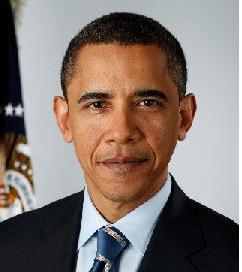
The giant cuts proposed by the Obama Administration (and worse ones suggested by the GOP) will hurt the economic recovery, hurt the poor, hurt the nation’s future — and hurt California. Let’s remember, as Brian Leubitz notes at Calitics, we live in a net donor state — for every dollar Californians send to Washington, the state gets 80 cents back. And now the president wants to make cuts that will further mess up the state budget — and since Gov. Jerry Brown is sending a lot of Sacramento’s work back to the counties, the shit will keep rolling downhill.
It’s true that Obama is also talking about tax hikes, but that’s going to be hard to get through the House. And even if he gets his higher taxes on oil and gas producers and high-income individuals, he still wants to cut spending — that is, non-military spending.
So over the next few months, as Washington politicians try to out-cut each other and talk about “living within our means” (except for wars that nobody wants to pay for but we keep fighting anyway), look for the budget crisis in Sacramento and San Francisco to get worse.
One ray of hope: If Jerry Brown is willing to back up his “local-government-does-it-better” campaign by giving local government the right to raise taxes abit more easily, then he’ll support Sen. Mark Leno’s bill to allow counties to raise the Vehicle License Fee. That might even come close to saving SF what Washington and Sacramento take away.
We are worse than Egypt

The revolution in Egypt was about a demand for democracy and resistance to repression — but it was also spurred in part by legions of angry young people who have no economic opportunity. And since the dramatic inequalities in Egypt were a factor in a stunning popular uprising, it’s worth noting an interesting fact:
Things are even worse here. According to Richard Eskow at the Campaign for America’s Future:
Here’s the reality: Income inequality is actually greater in the United States than it is in Egypt. Politicians here have close financial ties to big corporations, both personally and through their campaigns. Corporate lawbreakers often do go unpunished. Poverty and unemployment statistics for US minorities are surprisingly similar to Egypt’s.
Now, I’m not saying that poverty in the U.S. is worse than Egyptian poverty — the poor in Cairo are way worse off than the poor in New York or San Francisco. But when you compare the two countries, you get some disturbing similarities:
19.6% of Egyptians and 14.5% of Americans live below the poverty line. 21% of Egyptians are considered “near poor,” and 40% of Americans will fall below the poverty line at some point in their lives. One in six American children lives in poverty. So do one in four African Americans, which means the poverty rate for African Americans is greater than it is for Egyptians.
So why aren’t we out marching in the streets and demanding change? (Oh, wait, we did that two years ago, when we elected President Obama.)
Dick Meister: Scapegoating Public Empoyees
Dick Meister, formerly labor editor of the SF Chronicle and KQED-TV Newsroom, has covered labor, politics and other matters for a half-century.
Let’s pause for a moment to recognize some of our most important, yet most maligned workers. They are teachers and librarians. Police officers and firefighters. Bus drivers, doctors and nurses. Judges, lawyers, gardeners. They’re laborers and other maintenance and construction workers, and many others who provide us vital services.
They are public employees. There are millions of them, who every day do the essential work that keeps our country going.
It is they who keep our streets and highways, our parks and playgrounds safe and clean, who collect our trash. It is they who help educate our children, who provide emergency health care, who convey us to our jobs and back home after our day’s work, who sometimes risk their very lives to protect us from harm.
Yet despite all that – and more – public employees have come under heavy bipartisan attack by politicians who find them easy targets to blame for the budget shortfalls that have beset government at all levels. Labor costs, after all, make up the bulk of government spending everywhere.
There’s no way around that basic fact. So if we want all those vital services public employees provide – and we do – that’s the price we must pay, and should be happy to pay. Certainly no group of workers has done more for us, none who are more important to our welfare, none more deserving of their wages.
Yet we seriously shortchange many of those workers. And some people, including political leaders who obviously know better, ludicrously cite public employees as a major cause of the economic recession that just won’t go away.
The blame, of course, clearly rests elsewhere. The culprits, as the Portside Labor website noted, include “the super-rich who will continue to enjoy immensely lucrative tax breaks enacted during the Bush administration,” and the Defense Department officials who want “a budget blowing $78 billion over the next year to fund the endless wars in Iraq and Afghanistan and maintain a military machine that spends more than all its rivals combined.”
No, it’s not obscenely wealthy tax-dodging greedheads or the war-happy folks at the so-called Defense Department who’ve caused record budget deficits. Oh, no. It’s that “greedy public employee who pulls in an outrageous $19,000-a-year pension.” You know, one of those public employees Gov. Mitch Daniels of Indiana actually characterized as members of “a new privileged class.”
Public employee unions are striking back at such foolishness. For instance, the American Federation of State, County and Municipal Employees is waging a nationwide “Stop the Lies” campaign. Union President Gerald McEntee has been arguing that “hundreds of thousands of public employees, just like private sector employees, have been laid off, and taken pay and benefit cuts – even as Wall Street executives lined their pockets with taxpayer money and took home huge bonuses.”
The union’s retirees, meanwhile, are getting rich on pensions of, indeed, $19,000 a year.
There’s this, too: Government workers generally get less in pay and benefits than workers holding similar jobs in the private sector. As Portside Labor and others have pointed out, public sector workers don’t seem to resent the fact that their pay lags behind pay in private employment, “because most choose public service for other reasons than pay.” That’s obvious, and another reason to quit scapegoating the under-compensated workers who are among our most valuable.
The latest and perhaps best defense of the scapegoated public employees has come from President Harold Schaltberger of International Alliance of Firefighters .
Schaltberger notes the attacks on public employees are “like a tsunami rolling across the country.” He says the attacks have never been greater, more serious or as vicious.” As he says, “Wall Street’s recklessness, not public employee pensions, caused our nation’s financial collapse. Scapegoating workers won’t solve anything.”
In a full-page newspaper ad, Schaltberger noted that “Firefighters and paramedics are dedicated to the lives of our neighbors. Whether it’s a natural disaster, terrorist attack or another tragedy, we answer the call. We understand that many Americans are hurting because of the recession, but we will not apologize for putting our lives on the line, the dangerous work we do, or the pensions we’ve earned.”
Part of the reason for the strong attacks on public employee unions is that they have become the vanguard of the labor movement. They’ve been growing as unions in private employment have declined. Union membership overall dropped by about 600,000 last year, lowering the percentage of union members in private and public employment combined from just above12 percent to slightly below that figure. The percentage of public employees belonging to unions also shrunk slightly, but still stood at about 36 percent.
So, more than one-third of the country’s public employees now belong to unions, but only about 7 percent of workers in private employment are unionized. Which explains why the country’s anti-union forces are concentrating so heavily on public employees, and seeking to enlist broad public support for their anti-unionism by blaming public employees for our serious economic troubles.
Dick Meister, former labor editor of the SF Chronicle and KQED-TV Newsroom, has covered labor and politics for a half-century. Contact him through his website, www.dickmeister.com, which includes more than 250 of his columns.
The Performant: Of eggs and robots
Thomas John’s “The Lady on the Wall,” and the Slave Robots of Carl Pisaturo
A few years ago, at the Edinburgh Fringe Festival, I saw Dov Weinstein’s imitable Tiny Ninja Theatre enact “Macbeth” on a dollhouse-sized stage, which one viewed through cheap plastic binoculars from a distance of about ten feet. It will always remain one of my favorite versions of that particular play. Weinstein’s ability to perform as a literal cast of hundreds and run his own tech without fumbling his lines nor cues put many much larger (and taller!) companies to shame, and though the intention was quite obviously to amuse, Weinstein and his tiny plastic ninja cast still managed to convey the nuances of a more serious artistry. Thomas John’s puppet noir “The Lady on the Wall,” which played at the Garage last weekend, displayed the same perfect balance of dorky and deliberate, featuring an unlikely cast of, not ninjas, but eggs.
Dressed in a nice suit just a little too big (like an adolescent boy clad in his father’s clothes for the talent show), Thomas narrated the piece with the deadpan delivery of a professional street performer (which he is), making every bad egg-related pun in the book, as bacon, and eventually eggs, sizzled on a hotplate grill beside him. Maneuvering his fragile characters from the countryside to “Carton City” and back again, Thomas also incorporated small moments of juggling, shadow-puppetry, and DIY lighting effects into his 45-minute thriller. The somewhat scrambled plot (ha!) involved the mysterious death of a lovely lady egg named Maud, aka “Humpty Dumpty,” done wrong by a cad named Frank, and perhaps the victim of a mysterious marauder: “The Poacher”.
Other members of the cast spanned the gamut of noir archetypes, including a gruff, “hard-boiled” private eye (Bob), an ingénue (Molly Meringue), a suspect aristocrat (Sir Benedict), and a whole carton-full of doomed ovum -— the final body count of the show ultimately rivaling “Hamlet”. As for-adults puppetry in the Bay Area has been experiencing a bit of a slump of late, with the majority of produced shows coming in from out-of-town (here’s looking’ at you, Avenue Q), it was great to see such a unique spin on the medium by such a dexterous, likable, and local performer.
Speaking of unique spins, it would be hard to think of a more unique spin on classical dance than the Slave Robots of Carl Pisaturo, on display during MAPP in his studio workshop-cum-gallery, Area 2881. With a meticulously-arranged workspace in the back, and a front room full of spinning, whirling, brightly-lit, kinetic sculptures made of mostly mechanical components, Area 2881 is a low-key, yet entirely reverent, church of geek. Pisaturo’s centerpiece creations, a pair of skeletal humanoid figures with an astounding degree of hand and arm motion, and nightmarish Frank Garvey-designed body “panels,” are known merely as “Slave Zero” and “Slave One”.
As stirring instrumental music and projections of building demolition looped behind the backlit slaves, they “danced” along, using an expressive range of gesture to surprisingly emotional effect. More proof, if proof were needed, that robots — in addition to eggs and tiny plastic ninjas — can be artists too.
Live Shots: Claudette King, Biscuit and Blues, 02/04/2011
Do you ever watch a performer and find that they exude so much positivity and joy that you find your mouth stuck in a perpetual grin? And then you realize they’re singing the blues, rambling away about whiskey woes and dead beat good-for-nothing dudes, and you’re like “Why am I smiling?” This is what happened to me on Friday night for the Claudette King concert at Biscuit and Blues.
King not only has a set of powerful, bluesy pipes at her disposal, she also has a disposition of someone who just found herself in a candy shop and can’t stop giggling. The audience took it all in, clapping and hooting while simultaneously consuming huge plates of bbq ribs and mashed potatoes. King is the daughter of the much loved B.B. King, but I really think she stands on her own as a true blues singer, although I’m sure her father was an inspiration and an influence on her as an artist.
Oh and I have to mention this: Sam Love and I had the chance to meet King before the show and somehow the convo turned to love and marriage. During her set she sang a piece that’s all about “gettin’ some good lovin’.” Halfway through the song, King points to me and goes “See that photographer over there? She’s getting married to that dude next her. Now, they better get some good lovin’ on that wedding night! Well, they probably already are!” So in front of a sold out audience, King just told Sam Love and me a thing or two about getting down. Um, yeah – that just made my night! King has spirit, groove and a whole lot of blues and I can’t wait to see what she comes up with next.
SFBG Radio: Talking to Howie Klein

Today we continue Johnny’s interview with local music legends — he talks to Howie Klein, the co-founder of 415 Records, about his start in the music industry, Harvey Milk, Bill Graham, and more. We’re keeping these things short, so this is part one; we’ll post part two to the interview Feb. 14. Listen after the jump.