SFBG Blogs

Ammiano takes on prison costs

9

Assemblymember Tom Ammiano (D-SF) is taking on a crucial, but challenging task: trying to cut down on the costs of the prison system by eliminating some expensive waste in two sensitive areas: Drugs and sex offenders.


His drug bill is pretty much a no-brainer, and has the support of a bunch of district attorneys, including Mendocino County D.A. David Eyster, support it. The bill, AB 1017, would allow local prosecutors to charge (non-medical) marijuana growers with either a felony or a misdemenaor, depending on the circumstances. Right now, any amount of illegal cultivation is automatically a felony. Eyster:


It makes no sense that unlawful possession of less than one ounce of marijuana is an infraction, that possession of more than an ounce of marijuana is a misdemeanor, that possession of methamphetamines may be charged as a misdemeanor, but that growing any amount of marijuana must be charged as a straight felony punishable by prison.


The difference could be millions of dollars saved by county prosecutors and the prison system.


The sex-offender bill is pretty simple, too — although the GOP will no doubt get all hissy about it. AB 625 would allow for a tiered approach to the registration of sex offenders. It’s based on a state report that point out how little sense it makes to keep nonviolent offenders who are highly unlikely to commit another sex crime under the same level of expensive, tight monitoring — for life — as high-risk offenders.


The truth, according to Rebecca Blanton, a senior policy analyst at the California Research Bureau, is that only 5% of all sex offenders released from prison are arrested for another sex crime. That means 95% never again get charged with any of the six categories of crimes that require lifetime registration and monitoring.


Now, that doesn’t mean that none of those people commit sex crimes and don’t get caught. Nor does it mean they are all model citizens — The state tracked 2,028 sex criminals released in 2005 and found that 113 comitteed another sex crime, and 110 committed another crime. The most common reason for them to be back in jail was parole violations (that’s true of almost every class of California offender, since almost anything can be a parole violation, including missing an appointment with your parole officer).


But only 6.3% of the sex offenders tracked in that three-year study were charged with a crime against another person.


Ammiano’s not trying to make life easy for sex criminals (that’s what the GOPers will no doubt say). But there’s ample quantitiative evidence to show that some offenders are far more likely to be a threat to society — and many others aren’t — yet the state spend the same amount of resources on every category. A tiered system (which exists in all but three other states) would allow California authorities to track more closely the dangerous folks and pay less attention to the ones who are highly unlikely to offend again. 


Ammiano:


With the skyrocketing costs of corrections in California, we need to base our management and enforcement of sex offenders on the research and data available rather than emotion.  This means focusing our efforts and resources on the most dangerous offenders to ensure that the registry achieves its primary goal – to keep our children and communities safe. 


Tom Tobin, co-chair of the Sex Offender Management Board:


California needs to modify its current policy and start devoting our limited resources to those individuals who pose the greatest risk of re-offending.  Common sense and solid research both agree that not all sex offenders pose the same degree of risk of re-offending.  Many pose very little risk.  Unless one accepts the myth that “all sex offenders are alike,” there can be no defensible justification for treating them all the same and requiring lifetime registration for each and every convicted sex offender.  This puts an increasing burden on law enforcement and does not make our communities any safer.


So lets see if the nutty law-and-order crowd in Sacto is willing to listen to facts and reason this time around.


Taser proposal will move forward

Following a hearing at the San Francisco Police Commission that stretched late into the night, the seven-member panel voted 6 to 1 to authorize the San Francisco Police Department to develop a proposal for implementing Tasers or other less-lethal weapons.

Representatives from immigrant advocacy groups, communities of color, queer and transgender communities, mental-health professional organizations, and civil-rights watchdog groups turned out en masse to voice opposition to the plan. Out of around 50 speakers, just one spoke in favor of adopting Tasers.

As the discussion wore on, commissioners revised the resolution again and again. Interim Police Chief Jeff Godown had initially requested permission to draft a proposal in 30 days; it was extended to 90. Instead of researching the feasibility of Tasers alone, commissioners said the SFPD should look into other less-lethal weapons as possible alternatives. Another amendment prioritized outreach to marginalized communities.

Commissioner Petra DeJesus cast the lone vote of dissent, saying, “No matter how you dress it up, it’s a soft-pitch way to authorize Tasers.” DeJesus voiced concerns about how the departmental budget would be impacted. She also noted, “They’re being used more in the minority community, and that’s the community we’re trying to build trust with.”

Commissioner Angela Chan invited a series of guests to testify about concerns surrounding Tasers. Among them was Attorney John Burris, who has sued police departments over misuse of Tasers; a University of California Berkeley professor who gave a detailed presentation about Tasers and cardiac arrest; and Allen Hopper of the American Civil Liberties Union, who presented a video clip showing outrageous instances of Taser use. At the end of the night, however, Chan was persuaded to go along with the proposal.

Chan later told the Guardian that she supported the resolution because the timeline had been lengthened, which allowed for greater community outreach, and because the discussion had been broadened to include discussion about less-lethal weapons other than Tasers. Also, Chan noted that her suggestion for the force to review their use-of-force tactics as part of moving forward with the program was integrated into the resolution.

Several members of the San Francisco police force told horror stories about situations in which they said they could have used Tasers. A Mission Station officer suffered an attack by a Nortenos gang member in Garfield Park, and feared for his life until backup arrived. A Tenderloin Station officer was thrown into a store window after responding to a call about a trespasser. Just before it happened, “I was reaching for my firearm, and I was going to shoot him,” the officer said.

During the hearing, Chief Godown asked all SFPD officers to stand. He announced, “Everybody that’s in this room are my kids. I’m passionate about making sure they don’t get hurt.” Following a role-playing scenario in which a person waved a knife at an officer, Godown said that without a Taser, “That officer would have had no other option but to shoot that man.”

Equally disturbing, however, were stories about Taser deployments gone wrong. There was the petite African American woman who was at a drugstore buying candy when police attacked and Tasered her because they mistook her for a shoplifter. There was the Virginia couple that was hosting a backyard baptism celebration when police responded to a noise complaint and Tasered them both; the woman was pregnant, and could have suffered a miscarriage due to the electric charge. There was the 17-year-old grocery store clerk who suffered a heart attack and died after police Tasered him — the whole thing started with his employer’s complaint that he was eating a hot pocket he didn’t pay for. Then there was the man who was Tasered during a traffic stop by cops who thought he was drunk. In reality, he was in diabetic shock.

Mayor Ed Lee’s Deputy Chief of Staff, Cristine DeBerry, made an appearance to say Lee was in support of the department’s proposal to move forward with investigating the use of Tasers.

Sheriff Mike Hennessey also offered comments, saying Tasers have been an effective tool in San Francisco jails, yet are rarely used.

Community members, meanwhile, raised a slew of concerns. They highlighted pending budget cuts and asked how these new and expensive instruments could possibly be paid for. They questioned the erosion of trust between police and the public, particularly in communities of color, where Taser use tends to be disproportionately high. Many people, particularly from the mental health community, voiced concerns about accidental deaths due to Taser use.

“I’m a great-grandma with a heart murmur,” said Terrrie Frye, “and I wonder if the police will be able to recognize that when we’re all protesting the budget cuts that will result from these Tasers.”

*This post has been updated from an earlier version.

The truth about pensions

23

David Cay Johnston, the Pulitzer-Prize-winning former New York Times reporter, has a brilliant piece on his blog about public-employee pensions. His basic point: the mainstream media, including his own former paper, have utterly missed the point about how pensions work:


[Wisconsin] Gov. Scott Walker says he wants state workers covered by collective bargaining agreements to “contribute more” to their pension and health insurance plans.

Accepting Gov. Walker’ s assertions as fact, and failing to check, created the impression that somehow the workers are getting something extra, a gift from taxpayers. They are not.

Out of every dollar that funds Wisconsin’ s pension and health insurance plans for state workers, 100 cents comes from the state workers.

How can that be? Because the “contributions” consist of money that employees chose to take as deferred wages – as pensions when they retire – rather than take immediately in cash. The same is true with the health care plan. If this were not so a serious crime would be taking place, the gift of public funds rather than payment for services.


Public employees (like the few employees in the private sector who still get pensions) bargain collectively for compensation packages. Some of that compensation comes in the form of deferred pay, which the employer puts aside into a pension fund. In San Francisco, some city employees several years ago, through negotiations, agreed to forego a pay raise and instead accept more deferred compensation; that is, the money they would have received in wages now goes into their pension fund.


When you say that those employees “contribute nothing” to their pensions, you’re not telling the truth:


The fact is that all of the money going into these plans belongs to the workers because it is part of the compensation of the state workers. The fact is that the state workers negotiate their total compensation, which they then divvy up between cash wages, paid vacations, health insurance and, yes, pensions. Since the Wisconsin government workers collectively bargained for their compensation, all of the compensation they have bargained for is part of their pay and thus only the workers contribute to the pension plan. This is an indisputable fact.  


More:


Thus, state workers are not being asked to simply “contribute more” to Wisconsin’ s retirement system (or as the argument goes, “pay their fair share” of retirement costs as do employees in Wisconsin’ s private sector who still have pensions and health insurance). They are being asked to accept a cut in their salaries so that the state of Wisconsin can use the money to fill the hole left by tax cuts and reduced audits of corporations in Wisconsin.


At the time that San Francisco officials agreed to use deferred compensation as a way to avoid pay raises, it was a politically easy decision: The stock market was booming, and the pension fund was making so much money from its investments that the city could in effect keep that money (the pay raises that would have gone to the employees) and use it to avoid tax increases or cuts somewhere else. Unless they were fools, the city officials who signed off on this deal knew, or should have known, that at some point the stock market would come back to Earth, and the city would have to pay the deferred compensation out of the General Fund.


Now: You can argue that those contracts were overly generous and should be renegotiated. You can argue that the city can’t afford to pay its workers as well as it once did and that they should take further pay cuts (beyond the half-billion or so they’ve already given back). I don’t entirely agree, but at least that’s an honest argument.


But to say that city workers aren’t contributing to their pension fund, or need to contribute more, is dishonest. For the newspapers to report that as fact is bad journalism.


5 Things: February 24, 2011

0

Each day, SFBG staff pick five (or so) things that might interest you

>>1. BEARING JOY A little while ago, a Potrero Hill resident took the concept of neighborhood watch to new (artistic) heights when he came across some brazen red graffiti scrawled across the side of the Cor-o-van building on 17th street near Texas. “I just got sick of looking at it,” the impromptu artist said.

His solution was to paint over the mess, and he admits that he “got a little carried away.” The stretch of corrugated steel now blooms with red flowers, an orange tree, a rabbit in a hole, and a family of posy-sniffing bears. The artist has been adding to his outdoor menagerie on select sunny days for a few weeks now, serenaded by IZ Kamakawiwo’ole’s “Somewhere over the Rainbow.” 

>>2. REFRESHING FACE SALAD A partial list of superfoods: lemon, ginger, tomato, potato. Delicious, all, and now available for your face. Imperial Spa sells facial masks infused with the aforementioned treats – we got tricked out in the tomato the other day during our 90-minute aromatic acupressure treatment and it left us feeling fresher than a chopped salad. If you’re on a budget you can always sport the masks in the spa’s cheap-to-use day facilities. 

>>3. HEBREW-HOP Four-DJ Israeli juggernaut Soulico is rolling into Public Works tonight. (It’s free before 10:30 and only $5 after.) Soulico mostly teams up with quite famous US hip-hop acts like Lyrics Born, Rye Rye, and Ghostface Killah to produce a madly fun, well-produced hybrid of Israeli folk music and good-natured rap. But they also showcase some Israeli rappers that are little-known elsewhere, like Axum, whose hilarious and charmingly low-tech Soulico collab video below for “Pitnum Banu” makes us feel simultaneously hungry and stoned. Or something? Axum probably won’t be on tour with Soulico, but we’re hoping theyll brng their musical mischief (and may some good falafel) our way soon.

>>4. CINEMATIC MAPS If you haven’t read Rebecca Solnit’s amazing Infinite Cities, which reveals and collages hyperreal cartographies onto our Baghdad by the Bay (particular favorites: butter fly habitats vs. queer public spaces, the Third Street Phantom Coast, 2008 murder sites vs. 2009 Monterey Cypress growths) — then you’re in for a real alternative historical treat. Rebecca will be at the Red Vic tonight, helping raise money for another awesome project, Cinematic San Francisco, a “a multi-media event to address the past and future” of San Francisco’s presence in the movies, and its dreamlike, projected presence in the imagination. Are we still a city of fantasies?

>>5. HELL FREEZES OVER So Zeitgeist has re-opened after its remodel, to raspy sighs of relief from every raggedy biker (and wannabe) from here to the Excelsior. The rapacious rumors of outdoor bathrooms have not yet born fruit — though construction activity in the back of the patio against the building suggest that soon you’ll have more options for emptying those pitchers out of your bladder — but there is about 1,000 more beer taps now, in classy aisle formation behind the bar. HOWEVER by far the most exciting upgrade is the veggie burger the Zeit kitchen is now using – those things flirt with being an inch think! That’s a lot of animal-free deliciousness. And hey, weirder things can happen.

Contributors: Emily Appelbaum, Caitlin Donohue, Marke B.

Hot sexy events: February 23-March 1

0

Perhaps you recall a few weeks ago when I espoused my love for Rihanna and slightly-less-intense love for the new music video for her song “S&M.” I’m saddened to report that the lovely RiRi is in a spot of trouble over the new reel – David LaChappelle is suing her for deriving the video’s “composition, total concept, feel, tone, mood, theme, colours, props, settings, decors, wardrobe and lighting” from the fashion photog’s work. Here‘s a helpful guide to the similarities between the video and LaChappelle’s photos. 

But you know what, Violet Blue’s going with RiRi and so am I. David LaChappelle, for the love of Perez Hilton on a leash  – is this video detracting from your personal worth as a pervy photog? Now you can say you made a Rihanna video and maybe people will believe you. Problem = solved! Now onto sex events. Dirty talk and sexy poetry readings, etc.


Aural Sex

Word on the street is that sex educator-kinkster Midori’s voice is like buttah, so slide on into her workshop, which focuses on that most sexy, most mind-blowing organ of all – our voice! Uh wait, that’s not an organ so — our throat! Um — our diaphragm! Yeah, you’ll need one of those, so close enough.

Weds/23 6-8 p.m., $20-25

Good Vibrations

1620 Polk, SF

(415) 345-0500

www.goodvibes.com


The Art of Sacred BDSM

Wanna bring sacred into BDSM? Perhaps BDSM into the sacred? You are in luck because we have here a genuine shaman (who may or may not look like Melissa Joan Hart from “Clarissa Explains it All”) and a priest of love and eros who has the skillz to pay the billz in balancing the masculine and feminine in our lives. They’ll perform a sacred collaring ceremony for ya, and in general encourage more feeling in your feeling. 

Weds/23 7-9:30 p.m., call for price

Center for Sex and Culture

1519 Mission, SF

(415) 552-7399

www.sexandculture.org


Tongue Tied poetry night

Sex is poetry. Get all those nasty limericks out of your head for good at this kink-friendly (kinda goes without saying when you’re talking about the coffeeshop that hosted a Kink.com shoot a few years back) poetry night at Wicked Grounds. Emceed by a one TheyCallMeVroom. Nice name.

Thurs/24 7-10 p.m., free

Wicked Grounds

289 Eighth St., SF

(415) 503-0405

www.wickedgrounds.com


Kiss 

Hello hetero-centric gentlemen: do you have a lovely lady who is raring to play with you and sexy strangers this weekend? Why don’t you sign the two of you up for Kiss, the Mission Control play party for couples and single ladies only. Reserve your spot now – the night is reservation-only and we hear that the stripper pole at Mission Control books up fast. 

Sat/26 10 p.m.-late, $70 per couple, members only

Mission Control 

www.missioncontrolsf.org


The 15 Association’s Anniversary Play Party

Probably the most exclusive BDSM party going on this particular Sunday, the 15 Association will be celebrating 20 years in the male fraternity bondage business. Of course, if you’re not a member you can go to the open party on Sat/26 – but c’mon, don’t you want to see what sex looks like after two whole decades of hedonistic association?

Sun/27 1-8 p.m., $20 members only

SF Citadel

1277 Mission, SF

(415) 626-2746

www.sfcitadel.org

Behind the Twitter tax break deal

36

There’s much political intrigue and anticipation swirling around the Central Market Payroll Tax Exclusion, aka the Twitter Tax Break, which the Board of Supervisors will consider next month. This has all the elements of a great story: backroom deals between political and corporate power brokers, the strange argument that Republican-style tax cuts will cure Mid-Market blight, the fact that Twitter executives have uttered nary a tweet about shaking down SF taxpayers, and the role that a pair of supposedly progressive supervisors have played in brokering the deal.

Following up on my Feb. 10 post about how the deal would help Twitter meet the high asking price of politically connected landlord Alvin Dworman for a new mid-Market headquarters, the Bay Citizen yesterday had a great story showing how Dworman gave then-Mayor Gavin Newsom discounted office space for his lieutenant governor bid just as Newsom proposed the tax break that would benefit Dworman and Twitter. The story also includes a nice tick-tock about how this unseemly deal unfolded.

We at the Guardian are currently awaiting a big package of documents from City Hall that we requested on the deal, and sources tell us they’re likely to include some interesting insights and tidbits. For example, are Twitter and Dworman the main beneficiaries of this legislation or are there other corporations (and the politicians they support) who were pushing this plan? Everyone is also waiting to see how the city’s Office of Economic Analysis rates the proposal, and Economic Ted Egan tells us that report should be out by the end of next week or beginning of the following week.

At this point, we have more questions than answers, but that should start changing by next week. Maybe we’ll gain a better understanding of why Sup. Jane Kim is pushing this deal (much to the consternation of some of her former top supporters) or why Randy Shaw, the taxpayer-subsidized blogger and Tenderloin don, strongly backed Kim’s candidacy and attacked her critics with such perplexing ferocity. Will Willie Brown’s name continue popping up? Perhaps we’ll be able to determine whether the Newsom-Dworman pact actually broke campaign finance laws. And we’ll certainly gain some insights into how the Mayor’s Office of Economic and Workforce Development trades away taxpayer money to successful corporations that wield whines and threats of relocation.

If nothing else, we’ll get a peek into modern crony capitalism, San Francisco-style, dressed up in the guise of “saving” the Tenderloin. So, from a strictly journalistic perspective, this should be fun.

Protest this weekend in support of Libya, Bahrain, Yemen, Morocco uprisings

36

There’s a protest this weekend in San Francisco, in support of folks in Libya, Bahrain, Yemen, Morocco, and other Arab popular movements as they struggle against dictatorships and repressive governments.

Folks are invited to meet Saturday, February 26 at 1 p. m. at the U.N. Plaza at Market and 7th Street in San Francisco for a march that will feature 20 organizations, including Arab Resource and Organizing Center and American Friends Service Committee. [Update: Just got a call from ANSWER Coalition to say they did not approve the inclusion, by protest organizers, of their name as a feature organization at Saturday’s protest, because they do not agree with some of the wording in the protest organizers’ press release.]

“Across Arab nations popular movements for governmental, social, and economic change are arising daily since the start of 2011, with people going to the streets in the thousands and millions,” states a press release from march organizers. “ In many cases, these popular movements are being met by extreme use of force at the hands of governments and dictators whose repression has been supported by foreign assistance from the US.  The most horrific of this repression has been witnessed internationally through social media broadcasting from Libya and Bahrain, where hundreds of innocent protesters have been massacred.”,p.

Organizers note that thousands of Bay Area residents demonstrated solidarity over the last month in support of the Tunisian and Egyptian revolutions, and now they are inviting folks to turn out in solidarity with the people of countries who are mourning those who have lost their lives in this struggle for democratic ideals, and in standing with those who continue to come out into the streets despite brutal repression.

“We are marching in San Francisco to support one another as Libyans, and as Arabs who are all fighting for freedom. We are demanding that governments around the world end their complicity with Gaddafi that has kept him in power for 42 years, and take a firm stance against the brutal repression of our people.” Wafa, a Libyan-American educator and activist, said in a press release.

“For the past week, tens of thousands of Libyans have been marching and demonstrating to put an end to 42 years of dictatorship, poverty, unemployment, and torture at the hands of the ruthless Gadaffi regime,” protest organizers stated. “The people of Libya continue to make history, struggling to defend their country and demand a real end to Gadaffi’s regime, following in the footsteps of their brothers and sisters in Tunisia, Egypt, and in tandem with Bahrain, Yemen, Morocco, Jordan, Syria, Iran, and all nations fighting for freedom.”

Secret cajun kitchen discovered, evidence of gumbo

1

Those who enjoy strolling amidst a certain vibrant stretch of  24th Street in the Mission might be under a common misguided belief that the world is flat and ends east of Potrero Avenue. But just as Christopher Columbus proved the world was round by sailing west, I confirmed this is false by sailing east — one block east of Potrero, that is. What I found was Tasty’s Creole Cajun Kitchen, a new world filled with rare goods and spices. Among them, signature po’ boy sandwiches, southern brunch specialties, gumbo, red beans and rice, hush puppies, sweet tea, even French rolls flown in from Louisiana. What wonders the new world holds!

Although… perhaps Tasty’s seemed so exotic due to entirely different challenges to accessibility — it’s discretely tucked away inside a local bar, Jack’s. Jack’s Club has been operating on the corner of 24th and Utah for over 80 years. It is itself a relic from another time, its art deco interior, with stucco ceilings and wood paneling an homage to how little has changed inside of this building over time.

On a typical Tuesday afternoon Jack’s Club is dark and cave-like, acting as a refuge for a few regulars playing pool, drinking at the bar, and carrying on with bartender and current owner, Erma. Jack’s consists of a large front room that doubles as a dining room and a bar with counter seating, a pool room in the back, a pinball room in between, and a small kitchen alongside the bar. This kitchen, equipped with one stove and one deep fryer, is where all of Tasty’s cajun magic happens.

And it’s a lot of magic, for one stove. With over 10 kinds of po’ boy sandwiches, four authentic creole entrees, an assortment of bar appetizers and sides that range from oysters remoulade to sweet potato fries, and a Monday through Friday special of the day, it’s hard to imagine how this kitchen works. This is what I was pondering as I sat at a small table and read over the mouth-wateringly affordable menu. Most entrees are around 10 bucks, and all of the generously portioned sides are less than five. I finally decided on a fried oyster po’ boy with creole slaw on the side. 

Dive bar with a side of delicious. Photo by Hannah Tepper

It was promptly served on a modest tray. I took a bite of my first fried oyster with hesitation. Fried oysters are a tricky business—when they are good they are really good, and vice versa. But this time I was happy, and almost surprised to find that Tasty’s fried oysters were delicious, crispy, with a thin cornmeal crust on the outside, smooth and tender on the inside. How did this come out of that? I thought, looking back and forth between my oysters and the utterly modest kitchen with no door. My creole slaw was without a doubt one of the best coleslaw experiences of my life. Theirs is made in a sweet, mellow mustard-y dressing that you have to taste to truly understand, but take heed—this kind of slaw will leave a woman wanting more.

By the end of my meal I had questions and I wanted answers. Why here? Why so good? What is happening? Is life real? Luckily I found owner and bartender du jour, Erma, happily talking home-renovations with Tasty’s head chef, Cullen Quave. I interrupted them with a interrogative bombardment, and they kindly told me everything I wanted to know about Jack’s, Tasty’s, and the metaphysics of reality.

Erma, who would rather not disclose her last name, has owned Jack’s with her family for the last nine years. She is a self-identified “kid from the area,” and grew up only a few blocks away from Jack’s Club. It was her idea to run an authentic creole restaurant out of Jack’s small kitchen, but it took a few tries to get it right.

“The menu is all authentic and created by me. Before Tasty’s we had rented the kitchen to another party but I’ve always managed the restaurant,” she says. Then Erma met Quave, a like-minded home chef from New Orleans who wandered into Jack’s on his birthday looking for an authentic po’ boy sandwich to satisfy his creole cravings. “I was going to fly a po’ boy in from New Orleans,” Quave says, “but luckily my buddy told me about this place and so I came here and it was delicious.” The two got to talking and decided soon after to start Tasty’s with Quave as head cook and Erma providing her own recipes. I can attest that the result is delicious food, a big authentic menu, and a weird, cozy atmosphere. 

Five stars in my book, but Erma and Quave say that business on the Potrero side of 24th is slow at times. “This is a place where people just like to hang out. I enjoy the fact that there are a lot of locals and regulars that come in here. I enjoy seeing some of the people that I actually grew up with coming by,” Erma says. Meanwhile, newcomers—like myself—are always welcome to come by and eat some jambalaya. Some other great reasons to get over to Tasty’s Creole Cajun Kitchen at Jack’s Bar—live jazz every Friday night and a Mardi Gras shindig coming up on March 8th.  Their Mardi Gras celebration will be happening all afternoon, and will include a live jazz band, King Cake, Tasty’s serving up specialty dishes, and of course plenty of booze.

As I packed up my things to go, I had one last question for Quave—“How do you fry them oysters so good?” I asked. His answer: “You have to be a really good fryer.”


Tasty’s Creole Cajun Kitchen at Jack’s Bar

Mon. – Sun., 10:30 a.m. – 8 p.m.

Brunch: Sat.-Sun. 10:30 a.m.- 2 p.m.

2545 24th St., SF

(415) 641-5371

www.jacksclubsf.com

Full Bar

MC/V

Moderately Noisy

Wheelchair Accessible


Time to start building a cold frame

4

No, I’m not talking about Democrats building shelters against the big chill that the Republicans are trying to bring down on public sector workers, and the impact of that push on folks engaged in pension reform debates in San Francisco. Instead, I’m looking at the possibility that snow could fall at sea level around San Francisco this weekend for the first time in 35 years–and wondering if gardeners need to start worrying about protecting crops and plants that don’t like icy climes.

Hardy winter vegetables and bulbs typically do fine under a warm blanket of snow. But a lot of folks in the Bay Area start growing stuff in January and February that’s not cut out for snow.
 
I’ve read that you can use empty coffee cans, milk jugs with the bottom cut out, or sandwich bags as makeshift plant protection, provided there’s enough space in these containers for your plants to breathe. But just as I was planning to raid the recycle bins, Adam, a fellow gardener and Guardianista, pointed out that such measures won’t withstand high winds, and that if I’m serious about protecting buds and blooms, I should consider building a cold frame

Hmm. Maybe I’ll get around to buying untreated lumber, fastening it with galanized screws, pounding wooden stakes into the ground, and battling sheets of plastic film, all before Saturday’s threat of snowflakes. Or maybe I’ll simpy pop sandwich bags over my plants by torch light Friday night.. Or say a Hail Gaia, and hope that my plants survive regardless, just like they did last week’s hail storms.

And I suspect the snow won’t last too long here, unlike the East Coast, where, as the Farmers Almanac notes, native tribes called the February full moon, which occurred Feb. 17 this year, the Full Snow Moon, since the heaviest snows usually fall in February.  In fact, reading the Farmer’s Alamanac made me recall the 12 years I spent shoveling snow in eastern Canada, and I’m once again reminded just how good we have it here. at least on the weather front.

“Some tribes also referred to it as the Full Hunger Moon or Little Famine Moon, since harsh weather conditions in their areas made hunting very difficult,” the Farmer’s Almanac observes. “Forced to gnaw on bones and sip bone marrow soup for sustenance, the Cherokee named it the Full Bony Moon.”

The Celts called February’s moon the Moon of Ice, the Chinese named it the Budding Moon in anticipation of spring. Here in the Bay Area, maybe we should call our February moon, the Full Hail Moon, since that’s what fell from the skies last week.

Delta fish may not be “too far gone” after all

0

The San Francisco Chronicle had this dire environmental pronouncement on its front page last week: “Delta fish may be too far gone to save, plan hints.”

Summarizing a report released by the Delta Stewardship Council, the article suggested that California’s salmon and Delta smelt — a delicate creature that’s sort of an aquatic equivalent to a canary in a coal mine — might be going the way of the dodo due to longterm environmental impacts. Even worse, it didn’t sound as if there was anything conservationists, state agencies, nor anyone else could do about it.

Aside from being downright depressing, that narrative sounded a little, er, fishy. No one disputes that the Delta has been dramatically impacted by environmental problems, and concerns about diminishing fish populations are well founded. Fights over pumping freshwater out of the Delta have been dragging on for years, pitting environmentalists and commercial fishermen against powerful water districts in arid regions.


But the notion that there’s no longer any point in trying to save these Delta fish seemed hard to swallow. To take a cynical view, it would be rather convenient for certain powerful interests if the time, money, and water dedicated toward saving the salmon and smelt were freed up for other purposes.

Not being experts ourselves, however, we phoned Zeke Grader, who really knows his fish. Grader is the executive director of the Pacific Coast Federation of Fisherman’s Associations, a San Francisco-based trade association that represents commercial fishermen from Alaska to San Diego. Grader told us he was unwilling to accept the idea that it’s too late to save the salmon and the smelt.

“There may be some species … that are so far gone that it’s going to be impossible to save them, but I don’t think that’s the case with the salmon,” he said.

For once, Grader had some good news about the dramatically impacted salmon population. “This year, we had returns for the first time in 60 years upstream of the San Joaquin, now that we’ve got water back in it,” he said, referring to federally mandated increases in freshwater pumping into the Delta in recent years. “That clearly shows that after a couple years of restoring fish flows to it, that we’re getting fish back. That’s very encouraging, and we still have a lot to do, but I think we are going to be able to save the salmon.”

It might not be too late for the smelt, either, in Grader’s view. “I think we can save the Delta smelt. I think what was being said in the Delta Stewardship Council report has been either misinterpreted or misreported, because that’s simply not the case,” he added. “Maybe this is something that the water guys would like to create that myth, that well, we can’t restore, therefore don’t protect them — which is utter nonsense.”

Grader attributed the improvements to programs that truck fish around the Delta in an effort to avoid water pumps, which can fatally impact salmon, as well as increased freshwater flows.

He added that he didn’t see how the Delta Stewardship Council could proceed with a plan working with the assumption that extinction of certain species is inevitable. “Unless they just decided to ignore the Clean Water Act, ignore the Endangered Species Act, ignore … all of our water laws, I don’t see why there’s any reason that we can’t recover a lot of these,” he said.

Rediscovery: The hypnotic appeal of Jeff Phelps’ Magnetic Eyes

0

“That album is something I’ve known about for a long time,” Dâm Funk says of Magnetic Eyes, which was written, recorded and produced by Jeff Phelps in 1985. Thanks to the German label Tomlab, more people are finding out about Magnetic Eyes today. Along with the Tony Cook compilation produced by Dâm’s cohort Peanut Butter Wolf and released on Stones Throw, Magnetic Eyes is a rediscovered jewel of ’80s funk. But whereas the Cook album has roots in classic soul, Phelps’ album is a cool, synth-powered collection that brings techno figurehead the Electrifying Mojo to mind. It’s also blessed with peerless cover art and — as you’ll find out after the jump — it inspired a fantastic music video.

If the Pointer Sisters danced with neutrons, then Phelps — to paraphrase Magnetic Eyes’  “K-Shell” — danced with electrons, making bedroom recordings with a Tascam Portastudio 244. Sleek and minimalist, his compositions are on point. Electronic elements mingle with delicate jazz touches. The most powerful and pop example is “Hear My Heart,” where a Yusef Lateef-like woodwind briefly duets with a beguiling, raw (no studio enhancement trickery whatsoever) vocal by teenager Antoinette Marie Pugh. Beginning with a basketball game and moving on to closeups of red fingernails and tearful eyes (not to mention scenes of champagne fireside romance), the video for “Hear My Heart” is, like the best Jan Terri videos, a no-budget delight. The song itself is lovely and hit-worthy.

Jeff Phelps, “Hear My Heart,” from Magnetic Eyes:

http://www.youtube.com/watch?v=GUppqNiR_NM

While Phelps lived in Houston, TX at the time, the sound he crafts on Magnetic Eyes’ title instrumental track is a precursor to Detroit techno (the plaintively moving “Don’t Fall Apart On Me” could be an Inner City demo), not to mention the retro-informed future funk that Dâm Funk creates today; Dâm’s collaborator Ramona Gonzalez of Nite Jewel is also a fan of the album. Knowing this, I had to ask Dâm about the Electrifying Mojo, whose late-night radio sets — bringing together Kraftwerk and Parliament — helped forge the Detroit techno sound.

A sample of the Electrifying Mojo on late-night radio:

http://www.youtube.com/watch?v=qXu3Alw0-Hw

“I have some old tapes of his,” Dâm said, “His concepts were great, and he played great music. It’s all about the delivery and the passion. That’s what I try to do with my selector sets [as a DJ]. I want them to be special, more to the left angle and the dark side.”

The dark angle and the left side are both abundantly present in the cover art of Magnetic Eyes, which was created by an artist named Garry Hollie that Phelps knew at the time. While introverted instrumentals frame the album, it has a round-the-way creative and collaborative essence, with one lyric (“On the Corner”) penned by Phelps’ wife, and another (“Wrong Place, Wrong Time”) by one of his co-workers. Phelps still makes music today, and in a recent interview, he says he listens to a lot of Steely Dan (a likely influence on Magnetic Eyes), as well as Gil Scott-Heron, Tupac, and…Nite Jewel.


Spa steals

0

Hey pretty! We had so much Renew Issue we couldn’t fit it all in the paper today. So below, please find assembled some of the best ways to spa yourself in SF on the cheap. Because it’s easier to enjoy a nice steam without watching one’s rent money go up in smoke.


Nob Hill Spa 

Located in the classy Huntington Hotel, the price of this spa’s treatments are not for the thrifty-at-heart. Luckily, Nob Hill makes its facilities available to the average bear for the relatively humble cost of $35 a day, so that even without paying hundreds of dollars to be wrapped in seaweed like a man-sized maki roll, one can enjoy the use of an indoor pool, steam room, sauna, Jacuzzi, deck, work-out facility, tea service, and lounge mysteriously titled the “Zen Room.” Available Mon-Thurs, and on the weekends with a reservation.

1075 California, SF. (415) 345-2860, www.nobhillspa.com

The Hot Tubs

The Hot Tubs’ water, according its website, is filtered once every six minutes, so you have little reason to worry – overmuch – about what your room’s previous tenants were getting up to. Simple: private rooms with showers, redwood saunas and squeaky-clean hot tubs, $19.95 for one hour, with a free half-hour included if you wanna soak before 5 p.m. Difficult: finding a cozier spot for DIY massage.

2200 Van Ness, SF. (415) 441-8827, www.thehottubs.com


Apotheca 

Apotheca’s motto is “spas are swell, but we are not a spa.” It doesn’t offer fluffy robes, or expect patrons to settle for fluffy service. there’s no luxe lounge or  bubbling hot tub, but there is a staff of certified message therapists and licensed estheticians who claim they’ll tailor a treatment just for you. Furthermore, there’s a commitment to sustainability in Apotheca’s products and services — they’ll even encourage you to take the bus, oh my! Facials start at $85 for 60 minutes, massages start at $80 for 40 minutes.

582 Marshall, SF. (415) 573-9077, www.apotheca.com


Imperial Day Spa 

With an atmosphere that’s more YMCA than Club Med, this Korean wellness center offers a traditionally vigorous head-to-toe scrub-down followed by a milk-yogurt-cucumber moisturizing treatment and a shampoo that will set you back only $60 for 30 minutes and $90 for 80 minutes. Take advantage of the spot’s assortment of Jacuzzis, showers, saunas, and steam rooms before your treatment and you’ll go forth into the world silky-smooth and shining. Pick up a facial mask infused with ginger, lemon, tomato, or potato (!) at the front counter when you check in – nothing says spa day like wearing vegetable-scented tissue paper on your face.

1875 Geary, SF. (415) 771-1114, www.imperialdayspa.com


International Orange 

Named for the paint color on the Golden Gate Bridge, International Orange offers a full range of spa services, plus a light-drenched yoga studio, lounge, and redwood deck. This is the place to go for soft slippers, flavored water, and silky robes — and while prices tend to reflect the fact that dried fruit and gourmet chocolate are available in the waiting area, International Orange offers a variety of specials and membership packages that help soothe the sub-cutaneous layer and the wallet alike. Check the website for the ever-changing specials and save up to 30 percent.

2044 Fillmore, SF. (415) 563-5000, www.internationalorange.com


La Biang Thai Masssage

Traditional Thai massage includes stretching, yogic poses, reflexology, energy line work and pressure – lots and lots of pressure. But its proponents swear by the beating and for those who leave ‘Merican massage parlors longing for something a bit deeper, this may be your ticket. None of that tickle-and-feather stuff: this is intense, serious body work at a price that can’t be beat: $30 for 30 minutes, $55 for 60 minutes, and $105 for 120 minutes. 

1301 Polk, SF. (415) 931-7692, www.labiangthai.com


Spa Vitale

A private penthouse infinity pool in a bamboo garden terrace laps sunset bathers with luxury. Sound spendy? Well at $60 for 25 minutes, this rooftop ritual is steep in more ways than one, but the view combined with scented water, herbal beverages, and cucumber cooling pack for the eyes, make this a nice excuse to fake it ’til you make it. 

3000 Bridgeway, Sausalito. (415) 331-1611, www.hotelvitale.com


Luminous “Rothko Chapel” comes to SF Symphony

0

Ambient music is currently waging a sustained comeback (even the old ’80s New Age label Windham Hill has been sending me emails lately!) But if you’re looking for something that reaches for timelessness — with a lot more philosophical underpinnings than Yanni has mock turtlenecks — then the glowing symphonic sound sculpture that is Morton Feldman‘s “Rothko Chapel,” coming to the SF Symphony Wed/23-Sat/26, is just what you’re after.

Written in 1971 by the intellectually restless composer as a specific commission for the great Abstract Expressionist painter’s Houston chapel, Feldman’s meditative work for chorus, viola, percussion, and orchestra — which will surely be burnished to shining perfection by conductor Michael Tilson Thomas, he’s like that — replicates the spiritual absorption that can overwhelm when face-to-face with a Rothko canvas, let alone the 16 at once that comprise the chapel.

(I always think of Rothkos as paper towels for the soul. Feldman supposedly once said, “Do we have anything in music for example that really wipes everything out? That just cleans everything away?”)

Here’s a wonderful paragraph on Feldman’s relationship to art, especially Rothko, written by Alex Ross in 2006:

The example of the painters was crucial. Feldman’s scores were close in spirit to Rauschenberg’s all-white and all-black canvases, Barnett Newman’s gleaming lines, and, especially, Rothko’s glowing fog banks of color. His habit of presenting the same figure many times in succession invites you to hear music as a gallery visitor sees paintings; you can study the sound from various angles, stand back or move up close, go away and come back for a second look. Feldman said that New York painting led him to attempt a music “more direct, more immediate, more physical than anything that had existed heretofore.” Just as the Abstract Expressionists wanted viewers to focus on paint itself, on its texture and pigment, Feldman wanted listeners to absorb the basic facts of resonant sound. At a time when composers were frantically trying out new systems and languages, Feldman choseto follow his intuition. He had an amazing ear for harmony, for ambiguous collections of notes that tease the brain with never-to-be-fulfilled expectations. Wilfrid Mellers, in his book “Music in a New Found Land,” eloquently summed up Feldman’s early style: “Music seems to have vanished almost to the point of extinction; yet the little that is left is, like all of Feldman’s work, of exquisite musicality; and it certainly presents the American obsession with emptiness completely absolved from fear.” In other words, we are in the region of Wallace Stevens’s “American Sublime,” of the “empty spirit / In vacant space.”

http://www.youtube.com/watch?v=qxSt_w2ODaQ

(Speaking of vacant spaces, I absolutely love how the lowish resolution on the Rothko paintings in the video above melt their surface scrabbles into pixellated smears.)

SF SYMPHONY PRESENTS MORTON FELDMAN’S “ROTHKO CHAPEL”

with Mozart’s “Requiem in D Minor”

Wed/23 at 8pm, Thur/24 at 2pm, Fri/25 at 8pm, Sat/26 at 8pm

$35-$140

Davies Symphony Hall

201 Van Ness, SF

www.sfsymphony.org

Live Review: Prince at the Oracle Arena

11

At this point in his 35-year career, Prince is perhaps justified in expecting us humanoids to happily accept anything handed down to us from Mount Paisley Park. But at the Oracle Arena in Oakland on Mon./21 — the first of three last-minute concerts planned for the Bay (Thursday’s show was announced Monday night, after more than 30,000 tickets were sold for the first two performances in less than 72 hours), the mood was a curious mixture of intense, polished skill tinged with unexpected insecurity: Prince, in full 52-years-young prodigy mode, broke from the action in one instance with a surprising, “Are y’all having fun?” And heated anticipation and adulation gave way to a brief outbreak of boos — the audience pressed hard to get into the show, and was loathe to give up its ground after the first encore, hollering with displeasure when the house lights came up.

It was a mixed bag, albeit an entertaining and fascinating one, from an entertainer who can still pull out the stops, fingering his fretboard with one hand while slicking back his short crop with the other. A playful Prince alternately grinned at his band, placated the fans with hits, and happily jammed at length on one of his many Telecaster-style guitars, pacing himself all the while with breaks featuring guest Sheila E. and his backup vocalists. His impassioned take on “Cool,” the song he bestowed on the Time back in 1981, said it all: Prince was out to reestablish his own ageless brand of awesome, and have fun doing it. 

Opening the show was white zoot-suited Oakland native and psychedelic funk-rock pater familias Larry Graham, the bassist who broke ground and moved major booty with his slapping technique as part of Sly and the Family Stone. Fronting his band, Graham Central Station, Drake’s uncle got the audience primed with a sing-along to his 1980 slow-dance hit “One in a Million You,” before immediately ripping into a jaw-dropping bass demo that had him scraping his strings against a mic stand and probing them with his teeth — an exhibition that would have had Jimi Hendrix pondering the possibilities of the low end. The kicker: a lengthy Sly and the Family Stone medley, including a moving “Family Affair,” “Thank You (Falettinme Be Mice Elf Agin),” and “Dance to the Music,” with a finale that had Prince rising up from the bowels of the glyph-shaped stage, clad in fuzzy après-ski boots, to join Graham and crew for “Everyday People” and a palpably joyful “I Want to Take You Higher” that inspired everyone onstage — and a good batch of the crowd — to leap in unison.

The psych-funk-rock lineage clearly established, Prince remained the main Event-with-a-capital-E. The artist presently known as Prince is still an eerily, extraterrestrially-gifted performer, capable of shredding in hair-band-esque Eddie Van Halen mode, then tossing his leopard-pick-guarded guitar off the stage, and finally breaking into a fluid yet precisely controlled slew of popping, locking contortions in what looked to be flared satin PJs. A big-screen closeup of his posterior moving ever-so-minutely in time to the beat captured the detail with hilarious exactitude.

I had to laugh, marveling at the calculated, smooth perfection of the maestro’s moves, though Prince’s absolute, practiced fluency in so many modes of American music — rock tear-throughs, blues jams, soul breakdowns, pop sing-alongs, R&B balladry, jazz interludes and conga workouts with Sheila E. by his side — is seriously hard to question, and in keeping with the title of this tour, “Welcome 2 America.” This not-of-this-earth visitor has conquered the musical languages of the land, turning the tables on the natives.

Still, nothin’ compares 2 love, and Prince was out to please Monday — sprinkling his set with hits like “Raspberry Beret,” “Controversy,” and “Kiss” and unleashing a violet confetti downpour with “Purple Rain” — while seemingly just as eager to embrace the contributions of Carlos Santana, who was lent the Princely guitar; Bay native Sheila E., who sang “The Glamorous Life” to loud home-girl cheers; and backup vocalist Shelby Johnson, who memorably emoted through “Misty Blue,” as Prince playfully pulled Larry Graham up to enact a faux-romantic reunion.

The guest appearances may not have matched the celebrity drive-bys at his recent NYC dates — those ranged from Alicia Keys and Questlove to Cornel West and Kim Kardashian (who got kicked off stage for less-than-stellar dancing) — and new twirlers the Twinz weren’t in the house to add considerable sex appeal, but I, for one, left sated after a two-hour performance that included an hour-long encores. Prince’s displays of slink-worthy lewdness have been replaced by exhibitions of guitar hero virtuosity — “I don’t know how you feel, but I’ve missed you something horrible,” the gold-satin-draped artist cooed to us over a hot gold guitar toward the end of the show — but that made it no less a close encounter of the Princely kind.

PRINCE
With Larry Graham
Wed./23 and Thurs./24, 7:30 p.m., $71.50-$238
Oracle Arena
7000 Coliseum Way, Oakl.
www.livenation.com

Snap Sounds: Forest Swords — and the spirit of Aaliyah

1

FOREST SWORDS
Dagger Paths E.P.
(No Pain in Pop/Olde English Spelling Bee)

High on the “Ideas I Wish I Had” list is Forest Swordscover of Aaliyah’s “If Your Girl Only Knew,” a different (if equally idiosyncratic) take on R&B than that of fellow Olde English Spelling Bee act Autre Ne Veut. The group’s M. Barnes taps into the recessive, almost ghostly shade-throwing of the original — one reason why Aaliyah was a unique pop phenomenon — and slows it down to near-Gothic stasis, while adding another twist to the lyric’s romantic intrigue by flipping the gender of the vocalist. The spirit of Aaliyah haunted dubstep and its mutant kin in 2010, thanks to Forest Swords’ “If Your Girl,” and also James Blake’s “CMYK,” which sends the vocals of her best-known hit, “Are You That Somebody?,” through a series of flying-floating transformations. Check out the originals and covers/updates, as well as some more ruminations about this phenom, after the jump.

Of course, Aaliyah’s influence has been seeping into non-pop or R&B places for some time, from the Gossip’s live interpretation of “Are You That Somebody?” (which followed in the footsteps of Northwest no-bass counterparts the Spinanes cover of the same song)  to Gang Gang Dance’s professions of love for her around the time of Saint Dymphna. The vinyl version of The xx’s debut album includes the group’s cover of “Hot Like Fire,” which, like “If Your Girl Only Knew,” comes from Aaliyah’s 1996 album One in a Million, where her lithe mystique found a perfect home within Timbaland’s shadowy and spacious yet rhythmic production.

It’s tempting to view Aaliyah’s eternal return as an outgrowth of the fact that some if not many of these artists (and others) were probably kids swept up in radio love back when she was a major phantom of the airwaves. But as time passes, the summer and fall of 1998 — when “Are You That Somebody?” was topping the charts, Missy Elliott’s songwriting was in full effect, Brandy and Monica were fighting over a boy, and R. Kelly was beginning to explore musical narratives with Sparkle and Kelly Price — is starting to seem like a halcyon era of R&B pop. While I like some of the tributes to Babygirl I’ve just outlined, I can confidently say her originals stand supreme.

Forest Swords, “If Your Girl,” from Dagger Paths EP:

Aaliyah, “If Your Girl Only Knew,” from One in a Million:

James Blake, “CMYK,” from CMYK EP:

http://www.youtube.com/watch?v=w6nd8kr3Chk

Aaliyah, “Are You That Somebody”:

http://www.youtube.com/watch?v=-EymH-COrGk

Police Commission braces for another Taser debate

The San Francisco Police Department, police commissioners, and community advocates are gearing up for another debate about whether or not SFPD officers should carry and use Tasers. The hearing will be held at tomorrow’s Feb. 23 police commission meeting.

Interim Police Chief Jeff Godown — carrying forward a plan that originated with his predecessor, former police chief George Gascon — called for a hearing on the Taser proposal, according to a Police Commission spokesperson. If it wins approval, the SFPD will begin conducting research to develop training and policy guidelines for the SFPD to implement Tasers. The issue has ignited fierce debate in the past, and resistance is likely to be revived on this go-round.

Last year, the commission rejected Gascon’s proposal to add Tasers to police officers’ use-of-force options. Now, Commissioner Angela Chan, who was appointed last year by the San Francisco Board of Supervisors after the proposal had been defeated, is emerging as a voice of dissent.

Chan submitted a handful of reports published by American Civil Liberties Union (ACLU), Amnesty International, and other sources critical of Tasers for commissioners to review prior to the meeting. She’s also preparing a 45-minute presentation highlighting concerns about the weapons.

The SFPD will give its own 45-minute presentation to try and convince commissioners that it should be allowed to move forward with the plan this time. “It’s another tool for officers to use when encountering violent persons,” noted Sgt. Mike Andraychak, a police spokesperson.

Andraychak said it was too soon to provide any details about whether the Taser proposal would take the form of a pilot program, or be implemented all at once. He did not have specific information about how training would be developed, how the department planned to solicit input from various communities, or how long the department expected to be working on a draft policy if the police commission granted approval. Chak did note that if the SFPD moves forward, it may host town hall meetings about Tasers.

The Feb. 23 police commission meeting is likely to bring vociferous community opposition. The Coalition on Homelessness (COH) and a number of other community-based organizations are encouraging people to attend the meeting and speak during public comment.

In a letter submitted to the police commission, Asian and Southeast Asian Societies, Causa Justa (Just Cause), The Harvey Milk LGBT Democratic Club, COH, and other community advocates point out that Tasers have been declared a form of torture by a UN torture panel, and cite a University of Calfornia San Francisco study finding that police shootings more than doubled in the first full year of Taser implementation.

The community organizations also pointed out that Tasers are manufactured in Scottsdale, Ariz. — and San Francisco is still boycotting Arizona for enacting SB 1070, a bill that has drawn widespread criticism for encouraging racial profiling. Meanwhile, in a lean budget year, the cost of implementing Tasers is estimated at around $2 million, according to the letter.

Despite being turned down last time, the department has revived its Taser proposal in the wake of two officer-involved shootings early this year, including one that struck a mentally ill, wheelchair-bound man who was brandishing a knife. That case came under scrutiny after it was caught on a phone camera and posted to YouTube.

Following that incident, Gascon suggested that the outcome may have been different if officers had the option of deploying Tasers.

Yet Allen Hopper, police practices director at the ACLU, questions the idea that deploying a Taser would have been the correct response in that circumstance — especially in light of a recent Police Commission vote to strengthen SFPD practices when encountering people with mental illness. The Commission recently directed the SFPD to establish a Crisis Intervention Team (CIT), based on a policing model that emphasizes deescalation. Yet Hopper says deploying a Taser would achieve just the opposite.

“We think it’s putting the cart before the horse to give the police Tasers before they put that plan into effect,” Hopper said. People with mental-health problems, he added, are more likely to be on strong medication, or prone to excited emotional states and rapid heart rates — all of which could place them at a higher risk for serious injury or even death if struck with a Taser.

Counted among a class of weapons called conducted energy devices, Tasers deliver a painful electric jolt when deployed, temporarily immobilizing a subject by disrupting the central nervous system and causing involuntary muscle contractions. While they tend to be hailed by law enforcement as non-lethal alternatives to firearms, human-rights organizations have criticized Tasers because accidental deaths have been linked to their use. According to a report by Amnesty International, more than 330 people were reported to have died in the last decade after being struck by police Tasers. While not all of those deaths were directly attributed to the Tasers in coroners’ reports, many of the people who died were found to be in “excited states of delirium” or under the influence of illegal drugs or prescription medications when they were Tasered.

Is Adachi’s pension reform a Tea Party initiative?

54

With all eyes on Wisconsin, local labor leaders are suggesting that Public Defender Jeff Adachi’s proposed retirement/health plan reforms are really Tea Party initiatives, even as Adachi threatens to place another Measure B-like initiative on the fall ballot if city leaders can’t agree on a fix for the city’s fiscal problems

Last fall, Adachi started a war with the local labor movement when he placed Measure B on the November ballot. Measure B proposed increasing employee contributions for retirement benefits, decreasing employer contributions for heath benefits for employees, retirees and their dependents, and changing rules for arbitration proceedings about city collective bargaining agreements,

Measure B ultimately failed, but not after both sides spent a ton of cash. And now labor is refusing to have Adachi sit in on their pension reform talks with Mayor Ed Lee, former SEIU President Andy Stern is describing the fight in Wisconsin as a ’15 state GOP Power grab,” and SEIU Local 1021 leader Gabriel Haaland is pointing to Wisconsin as a reason for excluding Adachi from pension reform talks

“Adachi’s obviously scapegoating a group that’s part of a national agenda,” Haaland said, noting that in the states where Republicans gained statehouse control in 2010, there’s talk about eliminating collective bargaining, and ending defined benefit plans and paycheck protection.

“The problem is that pension reform has been blowing on the anti-public sector worker winds that are blowing in Wisconsin and other states, whether progressives want to acknowledge it or not,” Haaland continued. “There is a reason that Adachi got so much money last year, and the corporate interests behind him are part of this effort to bash public sector workers.”

Prop. B’s campaign finance records show the campaign raised $1.125 million in 2010, and that the lion’s share came from wealthy individuals.

Billionaire venture capitalist, former Google board member and Obama supporter Michael Moritz gave $245,000. Author Harrier Heyman, Moritz’ wife, donated $172,500. financial analyst Richard Beleson donated $110,000. George Hume of Basic American Foods donated $50,000. Gov. Schwarzenegger’s former economic policy advisor David Crane gave $37,500. Philanthropist Warren Hellman donated $50,000. Republican investor Howard Leach, who co-hosted a Prop. B fundraiser with former Mayor Willie L. Brown, gave $25,000. Investor Joseph Tobin gave $15,750. Maverick Capital partner David Singer gave $15,000. JGE Capital Partners donated  $15,000; Bechtel owner  Stephen Bechtel Jr gave $10,000: Matthew Cohler, a general partner of Benchmark Capital, donated $10,000; the California Chamber of Commerce donated $5,000 and philanthropist Dede Wilsey gave $1,000.

But records also show that Measure B opponents, which included San Francisco Firefighters, SF Police Officers Association, SF First Responders, the California Nurses Association, United Educators, San Francisco Gardeners, San Francisco Teachers, Library Workers, laguna Honda Workers, donated over $1 million in their successful bid to squash Adachi’s reform. And that just about every elected Democrat, including Assemblymember Tom Ammiano, then mayor Gavin Newsom, Sheriff Mike Hennessey, and Board President David Chiu, came out against Adachi’s original plan.
 
Haaland acknowledged that the argument could be made that the progressives’ version of the hotel tax didn’t pass and less attention was paid to the district elections last fall, because labor focused primarily on defeating Adachi’s Measure B.

“But at the end of the day, we did get the real estate transfer tax and we defeated Measure B,” Haaland observed. “So, we need to keep fighting anti-worker pressure. It’s challenging times, but I feel like the connections need to be made.”

Adachi was swift to refute Haaland’s claim that his Measure B pension reform is and was a Tea Party initiative.
“What’s not been reported is the fact that there are all these people supporting pension reform who are progressive Democrats,” Adachi said, pointing to Moritz, Crane and former Board President and Green Party member Matt Gonzalez, who all supported Measure B last fall.

“You are talking about saving basic services and that’s a progressive cause,” Adachi continued. “You might argue that pension reform isn’t a progressive solution. But then you are saying that the needs of one group of workers are subservient to the needs of other workers. And even if you raised every tax in the city, you’d not be able to keep up with pension and healthcare costs.”

“Even if we could raise parking tickets to $200 a pop, and tax folks who make more than $100,000 a year, that still wouldn’t solve the problem, because the problem is so huge,” Adachi added. “When you look at this crisis, you can’t simply redbait and say, you are a Republican, or Sarah Palin. Matt Gonzales has always spoken for progressive values, but because he supports pension reform, he’s suddenly a member of the Tea Party? At a certain point, it begins to become absurd.”

Haaland countered that he’s  “challenged by the notion that thousands show up in Wisconsin to fight some of the same people behind Measure B, but our discourse has lowered to whether or not Jeff Adachi is a good guy.”

And Adachi expressed doubt that Mayor Ed Lee can come up with a suitable pension reform plan.

“I’ve heard Lee say there has to be a solution involving pension reform and underfunded healthcare benefits that would save $300 million to $400 million in annual savings, and that corresponds with the solution he needs to come up with to close the budget deficit,” Adachi said.

Adachi said that he has met with Lee on his own to discuss pension reform, but the new mayor did not list specifics.
“He didn’t tell me what his plan was,” Adachi said, “The Prop. B supporters have a plan, but Lee did not ask what that was. But he said he sincerely wants to solve that problem, and that his preference would be one ballot initiative that everyone would agree on. And I fully support a solution that is going to truly solve the problem. I’ve always believed it’s important for the public to understand the gravity of the situation. For too long, it’s been the elephant in the room and there hasn’t been enough public information.”

Adachi said he had a beef with the idea of “groups of labor unions holding meetings at City Hall and deciding who can participate.”

“It’s also troubling that there is no information publicly available about what the ideas on the table are, no explanation of how they got there, and no documenting of the extent of the problem,” Adachi continued. “And that’s what got us here in the first place: a lack of transparency, and voters being asked to weigh in without the full information.”

Adachi said he has an upcoming meeting with Lee, the Department of Human Resources and Sup. Sean Elsbernd about pension reform that is separate from the working group that includes labor and philanthropist Warren Hellmann.

And Elsbernd told the Guardian he believes the pension reform process would go smoother if Adachi were at the table.
“I have no problem with Jeff at the table, it makes sense to have him there to avoid two ballot measures,” Elsbernd said.

Elsbernd added that it was too early to cite numbers when it comes to talk of capping pensions.
“It’s a mistake to pick a number right now because you don’t know what it’s worth,” he said, noting that the pension reform working group has sent a bunch of different scenarios to retirement actuaries to crunch the numbers to see how much they would save the city.

“I can see a case being made for asking the highest paid city workers to contribute higher amounts for healthcare benefits,” Elsbernd said. “But I’m not sure that’s equitable on retirement benefits, though I could see a situation where safety pays more, regardless, because they have better pensions.”

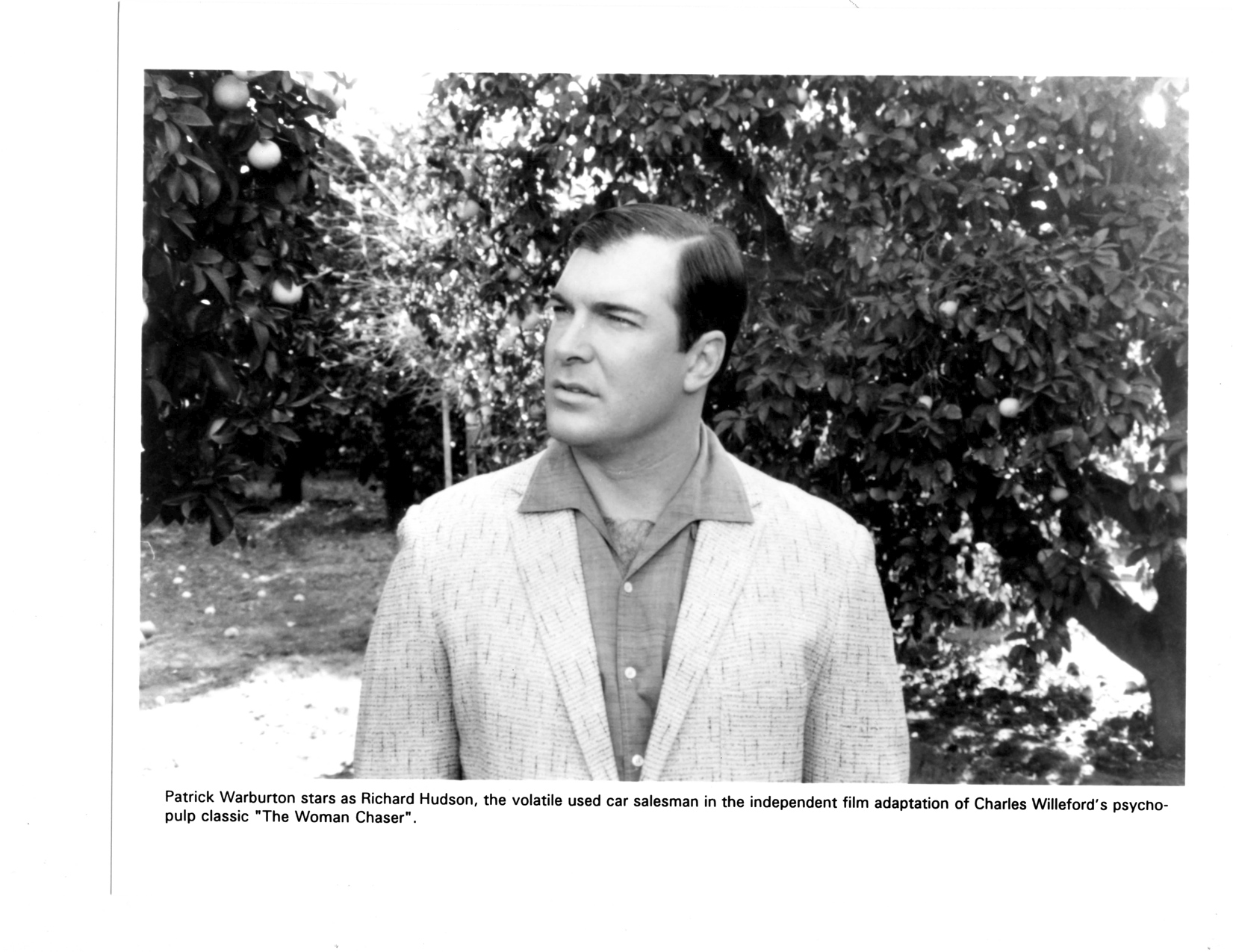
L.A. confidential: Patrick Warburton on “The Woman Chaser” — and “Dragonard”

0

Patrick Warburton occupies his own special niche. He is a big (6 feet, 3 inches), hirsute, square-jawed kinda white guy — the kind who saved screaming ingénues from gorillas or Martians in 1950s B flicks — who’s flourished parodying macho blowhards. Who doesn’t love Warburton? People who don’t know who he is, obviously.

They probably know him regardless, if not by name. First widely noted as Elaine’s emotionally deaf boyfriend on Seinfield, in recent years he’s starred in successful network sitcoms Rules of Engagement and Less than Perfect. They followed The Tick, a short-lived Fox superhero parody series everyone loved but the viewing public. He’s voiced various characters on Family Guy (a man’s gotta work), as well as loftier ’toons including The Venture Bros., Kim Possible, and Scooby-Doo! Mystery Incorporated, playing Buzz Lightyear in Toy Story spinoffs, as well as endearing villain Kronk in The Emperor’s New Groove (2000).

The Emperor’s New Groove reunited him with Eartha Kitt, also a costar in his screen debut: 1987’s WTF Mandingo (1975) rip-off Dragonard, in which he played a race traitor Scottish hunk on an 18th century Caribbean slaving isle populated by such punishing extroverts as boozy Oliver Reed, chesty Claudia Uddy, and creaky Pink Panther boss Herbert Lom. This campsterpiece features steamy sex intercut with chicken sacrifice, a character called “Manroot,” appalling homosexual caricatures, much library music, and other incitements to drinking-game joy. (Start trolling eBay for used VHS copies now.)

These days, Warburton is promoting a past project he’d rather remember: 1999’s The Woman Chaser (opening Fri/25 at the Roxie), billed as both his leading-role debut (hello! Dragonard!!) It was definitely the first feature for Robinson Devor (2005’s Police Beat, 2007’s Zoo), one of the most stubbornly idiosyncratic and independent American directors to emerge in recent years.

Derived from nihilist pulp master’s Charles Willeford 1960 novel, this perfect B&W retro-noir miniature sets Warburton’s antihero to swaggering across vintage L.A. cityscapes. Sloughing off an incestuously available mother and other bullet-bra’d she cats, his eye on one bizarre personal ambition, he’s a vintage man’s man bobbing obliviously in a sea of delicious, droll irony. Warburton appears with Devor at the Roxie for The Woman Chaser‘s theatrical-revival opening night. I caught up with the actor via phone last week.

SFBG Did The Woman Chaser have a significant impact on your career?
Patrick Warburton It should have. We debuted at the New York Film Festival, an amazing experience, then went to Sundance. The film got a nice little art house release in 15 or 20 cities. But after that, there were ownership issues, [and] it never went to DVD. So the audience has been extremely limited.

SFBG Yet a whole lot of people here seem to know and love it.
PW Of course I’ve always known San Francisco and its residents to possess far more beauty and art and culture than this desolate hell-hole we call Los Angeles.

SFBG Were you at all familiar with Charles Willeford before?
PW No, my first peek was Rob Devor’s screenplay adaptation, which was originally entitled King Size, then went back to the original [novel’s] title.

SFBG A strange title, because the hero isn’t chasing women. In fact, he’s completely self-absorbed and alarmingly misogynist.
PW No, this isn’t about a guy chasing women. I guess that’s the way you sold a pulp novel back then, putting a man with a topless woman in a convertible on the cover of a paperback with a title like The Woman Chaser — even though Willeford’s interests were much more psychological. I was [36] years old, playing this role had my sexual interest at an all-time low. I didn’t get it. Meanwhile the actor, Patrick Warburton, was probably knocking one off in his dressing room once a day back then.

SFBG Once?
PW Well, I was eating whatever the fuck I wanted, cuz this guy is a chain-smoking, whiskey-drinking car salesman. I got heavier than I’d ever been in my life, about 250 pounds. My wife was not pleased. [This character] was certainly an odd fellow, a misogynist.

SFBG How did you get involved?
PW My agent said “Here’s a script,” I met Rob, and we clicked. What’s interesting is it was right after the ninth season of Seinfeld. Anything else coming my way was because of that. But [Devor] had never seen an episode — I still don’t know if he has.

SFBG The movie does an incredible job recreating 1960 L.A. on a budget.
PW It was a grind. We’d procured a handful of permits, but mostly just ran into locations with our guerilla crew and stole shots. Rob really did have a vision. When you’re working long hours, you’re not getting paid a dime, you’re working with a director who has such a specific idea what he wants — he’s going to be a little bit of a pain in the ass. But it’s an experience I’ve come to appreciate over time. Because I’ve been on the other side, where you can’t believe what a piece of garbage you’re a part of. That movie was what it was wholly because of Rob. He’s truly an artist. You don’t get such opportunities very often in this business. We’ve talked about [working together] again, and the right thing hasn’t come up. But I would love that more than anything.

SFBG On another subject, I must quote 12 words of dialogue: “Sometimes being a slave is a man more dignity than being free!” So ungrammatical, for starters. Please reveal every last thing about Dragonard.
PW Oh, God. It was the first thing I ever did, and I knew after that experience … well. You have to be able to accept it. The most you can ask for [in this industry] are experiences where you learn and in the end get a great product. Like doing The Dish (2000) in Australia was great. I spent quality time with Sam Neill and Geoffrey Wright, then this delightful film came out of it. But with something like Dragonard, if you’re going to grow as an actor, you’ve got to just shit it out. You’ve got to say, not only is this the most awful movie ever made, but I am the worst thing in it.

http://www.youtube.com/watch?v=OKKWHkMlzPc

SFBG It doesn’t even sound like your speaking voice in that film.
PW I tell people I was dubbed.

SFBG You were?
PW No. I just say that to minimize all responsibility. Going down to South Africa at age 22 for my first movie … my very first day was with Oliver Reed, drunk on whiskey as usual at 10 a.m., doing a sword fight. Terrifying. I decided hey, I’m in prime drinking condition, I’ll try to keep up, though I refused to start before 5 p.m. I ended up going on pretty much a two-month bender with him.

SFBG Plus Dragonard had the late Eartha Kitt, another famously trying person to work with.
PW Eartha Kitt was a fascinating woman. When I got back from South Africa, she was performing [in concert] and I went to see her. Afterwards she invited me to her hotel room. I really didn’t know what the fuck I was doing there. I’m on the couch, she’s on the bed, petting one of her cats like Cruella de Vil. “How are you daaahling.” I must have been shaking. Years later we worked together in [Disney cartoon] The Emperor’s New Groove. Looking at the relationship between [her evil queen] Yzma and [his clueless musclehead sidekick] Kronk in that, I had to laugh. It’s so strange sometimes, how life imitates art, or art imitates life.

SFBG I believe there’s an actual website for devotees of onscreen flogging, and you are the absolute champ. [Warburton’s character is lashed for an onscreen eternity.]
PW I guess that was one way they figured to keep the budget down. “Hey, let’s just kill five minutes watching this guy get whipped!”

SFBG It’s funny, because making fun of the kind of heroic jocktard Dragonard takes seriously turned became your metier. Did you always see comedy as your strength, or did it just evolve that way?
PW No, it pretty much just evolved that way. After Dragonard I thought, “No one is ever going to take you seriously as an actor again — do something else!” [In recent years] I’ve watched it, with friends, after a lot of drinks. It definitely takes a few beers. But for a long time, I hoped every copy of that movie had been lost or destroyed, more than Paris Hilton or whoever wishes their sex tapes were just erased. Or maybe they don’t … anyway, I kinda went into hiding after that movie and thought: “OK, you asshole, are you going to be an actor or not?”

SFBG Yet you perservered.
PW I did. I did persevere.

THE WOMAN CHASER
Feb. 25–March 3, 7 and 9:15 p.m. (also Sat/26, 2 and 4:30 p.m.), $5–$9.75
Roxie
3117 16th St., SF
(415) 863-1087
www.roxie.com

The cushy life of a public-sector worker

1

You want to see how easy life is in those lucrative, unionized public-sector jobs that the governor of Wisconsin is going after? Isthmus, the alternative weekly in Madison, has a brilliant piece by a teacher who talks about what this battle is really about. Read it and tell me that this woman is overpaid and gets too many benefits. Go ahead. I can’t wait.

Wisconsin, unions, and defunding the left

21

Mother Jones mag this month has a GREAT story about the battle in Wisconsin, the history of unions and the Democratic Party, and the real aim of the move to bust public-sector unions. Writer Kevin Drum notes:

In the past, after all, liberal politicians did make it their business to advocate for the working and middle classes, and they worked that advocacy through the Democratic Party. But they largely stopped doing this in the ’70s, leaving the interests of corporations and the wealthy nearly unopposed. The story of how this happened is the key to understanding why the Obama era lasted less than two years.

He describes the history of the post-War era and the rise of the New Left, explains how the rift between big labor and the hippie/radical/antiwar folks culminated in the AFL-CIO refusing to endorse George McGovern in 1972, the decline of private-sector union membership and power and thed shift rightward of the Democratic Party.

At one point, he explains, unions were the only organized force with the resources to act as a counterforce to corporate America in political campaigns. Once that went away, the Dems had no choice:

In the real world, political parties need an institutional base. Parties need money. And parties need organizational muscle. The Republican Party gets the former from corporate sponsors and the latter from highly organized church-based groups. The Democratic Party, conversely, relied heavily on organized labor for both in the postwar era. So as unions increasingly withered beginning in the ’70s, the Democratic Party turned to the only other source of money and influence available in large-enough quantities to replace big labor: the business community.

You can blame the Sixties radicals for not understanding the importance of labor (and you’d be right). you can blame George Meany and the AFL-CIO folks for not realizing that those acid-abortion-gay rights folks were their real allies (and you’d be right). But in the end, the bad guys took advantage of the split, and of sweeping changes in the economy, and now we live in the most economically unequal society in the Western world. (Remember: Unions bring up wages and improve working conditions not just for their own members but for everyone else, too.)

So now the only major sector where organized labor is healthy and growing is the public sector — and that’s why the Republicans want to get rid of public-sector unions. In San Francisco, it’s often the case that the city employee unions (excluding police and fire) are the major donors to progressive causes — and are often the only institutional base with the kind of money to counter the Chamber of Commerce/Committee on JOBS/downtown developer bloc. Bust that up and you get corporate hegemony.


SFBG Radio: People power, from Libya to Wisconsin

8

In today’s episode, we talk about that remarkable moment when people realize that they aren’t alone — and that tends of thousands or maybe millions of their neighbors are willing to go out in the streets and do something about it. Listen after the jump.

sfbgradio2222011 by endorsements2010

Dick Meister: Shades of the Thirties

4

Dick Meister, formerly labor editor of the SF Chronicle and KQED-TV Newsroom, has covered labor, politics and other matters for a half-century.

By now, there’s can be no doubting it: What’s happening in Wisconsin is one
of the most important labor developments in decades. It’s of major
importance to unions and their members, of major importance to working
people generally ­ of major importance to us all.

In  many ways, it’s the 1930s again. Just as then, workers and their
political allies and other  supporters are demonstrating, picketing,
marching, striking and otherwise forcefully demanding the basic civil right
of collective bargaining ­ the unfettered right for workers’ representatives
to negotiate with employers on setting their wages, hours and working
conditions.

Eventually, workers and their millions of supporters won the 1930s struggle.
Congress, acting closely with President Franklin D. Roosevelt, granted the
legal right of collective bargaining to most workers. Farm workers,
domestics and a few other groups were excluded from the law, but all others
finally had that vital right.

The 1930s struggle arose primarily because of the economic pressures of the
Great Depression that led to massive protests, just as today’s struggle can
be traced to the pressures of the Great Recession that also have led to
massive protests.

There are key differences between then and now, however. In the thirties,
the struggle was to win union rights for workers in the face of strong
opposition from large financial interests, powerful conservative politicians
and other anti-labor forces. Today, the struggle is to keep union rights
from being taken away from workers by today’s anti-union forces. Their main
targets are public employees and the pensions and other benefits they won in
past bargaining with their government employers.

The governments’ aim, of course, is to use the savings from that to make up
for budget shortfalls resulting from the recession and, in many cases, from
poor government management.

But there’s another important reason: Public employees have become the
vanguard of the labor movement. Their numbers and the percentage of them
belonging to unions have been growing steadily, while the number and
percentage of unionized workers in private employment have been shrinking.
That’s caused anti-union forces to shift their major efforts into attempting
to curb the escalating spread of unionization among public employees.

Which explains what’s happening in Wisconsin, where Republican Gov. Scott
Walker has moved to all but eliminate the bargaining rights of most state
employees.
Walker is pushing bills through the GOP-controlled Legislature that would
bar state employees from bargaining on anything except their pay, and limit
any pay increases to the level of Consumer Price Index increases.

Employees would have no say in determining  their benefits or working
conditions, although most would have to increase their contributions to
pension and health care funds by up to 50 percent. What’s more, their
contracts would have to be re-negotiated yearly, and union dues could no
longer be deducted from employee paychecks.  It’s hard to imagine a union
surviving under such restraints.

The pay and benefits of Wisconsin state workers may be too high, or too low,
depending on who’s measuring. But that could be addressed through
negotiations between Gov. Walker and union representatives. But like some
petty dictator, Walker insists, “I don’t have anything to negotiate.”

Peaceful negotiations are how it’s done in civil societies, but that’s not
the style of union-busting Walker and his cohorts.  And if anyone doesn’t
like Walker’s approach, look out! He’s alerted the National Guard to be
armed and ready should Wisconsin state workers strike, disrupt state
services or otherwise rise in protest.

Shades, again, of the 1930s. In fact, the last time the Guard was called out
to quell a labor dispute in Wisconsin was during a United Auto Workers
strike in 1934.

Workers eventually won that and many other struggles of the thirties, thanks
to their courage and fierce determination and the broad public support they
inspired. And that’s precisely what it will take to overcome today’s
anti-worker onslaught by Walker and others like him.

The good news ­ and it’s very good news ­ is that such help is here and
growing fast. Crowds of as many as 70,000 labor supporters have been
gathering daily outside the Wisconsin State Capital in Madison to demand
that Walker and his fellow reactionaries return to the 21st century.

But give Walker this: Like the anti-labor politicians of the 1930s, he has
aroused public outrage that has brought important new strength and
solidarity to the cause of working people and their unions nationwide.

Certainly they’ll need all the strength they can muster, with major efforts
similar to Walker’s in Wisconsin underway in at least 17 other states.  In
more than a dozen. , Republican anger over labor’s strong support for
Democrats in last year’s elections have led directly to measures curbing
union political activities.

President Obama is correct. There is indeed a nationwide “assault on
unions.” But as the assaults increase, so will the public outrage that’s
winning unions the broad support they so badly need ­ and so richly deserve.

Dick Meister is a San Francisco-based columnist who has covered labor and
politics for a half-century as a reporter, editor, author and commentator.
Contact him through his website, www.dickmeister.com

Mirkarimi running for sheriff

17

Sup. Ross Mirkarimi is going to file papers today (Feb 22) to begin his campaign for sheriff.

Mirkarimi told us he wants to continue the progressive legacy of Mike Hennessey and to work to reduce recidivism. “Eventually, almost everyone who’s incarcerated comes back to the community,” he said, noting that more than 60 percent of people released from the county jail are re-arrested at some point. “We have to work on re-entry programs to lower that number,” he said. “It’s about keeping communities safe.”

Hennessey, long regarded as one of the city’s most progressive elected officials, has served as sheriff for 31 years. He’s been a national leader in progressive law-enforcement programs, and last year made headlines by fighting the federal mandate that local authorities turn over to immigration offices anyone arrested in the city without proper documentation. He announced recently that he won’t seek another term in November.

Since nobody else has announced an interest in the job — and nobody with Mirkarimi’s record and name recognition is even being mentioned — he becomes the instant front-runner. But it won’t be an easy campaign — the last thing downtown wants is another progressive in citywide office — particularly someone who, like Mirkarimi, could one day use the sheriff’s office as a platform to run for mayor.

Mirkarimi is a graduate of the San Francisco Police Academy and former investigator in the district attorney’s office. He’s been a champion of community policing and antiviolence programs — but as someone who has never been part of the local law-enforcement community, he comes to the race with political independence.

“One of the greatest successes of Mike Hennessey was that he was an independent sheriff,” Mirkarimi noted.

We’ll have more details in the Feb. 23 issue.