

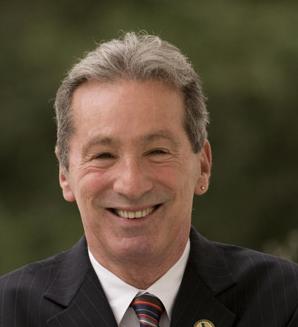
Assemblymember Tom Ammiano (D-SF) is taking on a crucial, but challenging task: trying to cut down on the costs of the prison system by eliminating some expensive waste in two sensitive areas: Drugs and sex offenders.
His drug bill is pretty much a no-brainer, and has the support of a bunch of district attorneys, including Mendocino County D.A. David Eyster, support it. The bill, AB 1017, would allow local prosecutors to charge (non-medical) marijuana growers with either a felony or a misdemenaor, depending on the circumstances. Right now, any amount of illegal cultivation is automatically a felony. Eyster:
It makes no sense that unlawful possession of less than one ounce of marijuana is an infraction, that possession of more than an ounce of marijuana is a misdemeanor, that possession of methamphetamines may be charged as a misdemeanor, but that growing any amount of marijuana must be charged as a straight felony punishable by prison.
The difference could be millions of dollars saved by county prosecutors and the prison system.
The sex-offender bill is pretty simple, too — although the GOP will no doubt get all hissy about it. AB 625 would allow for a tiered approach to the registration of sex offenders. It’s based on a state report that point out how little sense it makes to keep nonviolent offenders who are highly unlikely to commit another sex crime under the same level of expensive, tight monitoring — for life — as high-risk offenders.
The truth, according to Rebecca Blanton, a senior policy analyst at the California Research Bureau, is that only 5% of all sex offenders released from prison are arrested for another sex crime. That means 95% never again get charged with any of the six categories of crimes that require lifetime registration and monitoring.
Now, that doesn’t mean that none of those people commit sex crimes and don’t get caught. Nor does it mean they are all model citizens — The state tracked 2,028 sex criminals released in 2005 and found that 113 comitteed another sex crime, and 110 committed another crime. The most common reason for them to be back in jail was parole violations (that’s true of almost every class of California offender, since almost anything can be a parole violation, including missing an appointment with your parole officer).
But only 6.3% of the sex offenders tracked in that three-year study were charged with a crime against another person.
Ammiano’s not trying to make life easy for sex criminals (that’s what the GOPers will no doubt say). But there’s ample quantitiative evidence to show that some offenders are far more likely to be a threat to society — and many others aren’t — yet the state spend the same amount of resources on every category. A tiered system (which exists in all but three other states) would allow California authorities to track more closely the dangerous folks and pay less attention to the ones who are highly unlikely to offend again.
Ammiano:
With the skyrocketing costs of corrections in California, we need to base our management and enforcement of sex offenders on the research and data available rather than emotion. This means focusing our efforts and resources on the most dangerous offenders to ensure that the registry achieves its primary goal – to keep our children and communities safe.
Tom Tobin, co-chair of the Sex Offender Management Board:
California needs to modify its current policy and start devoting our limited resources to those individuals who pose the greatest risk of re-offending. Common sense and solid research both agree that not all sex offenders pose the same degree of risk of re-offending. Many pose very little risk. Unless one accepts the myth that “all sex offenders are alike,” there can be no defensible justification for treating them all the same and requiring lifetime registration for each and every convicted sex offender. This puts an increasing burden on law enforcement and does not make our communities any safer.
So lets see if the nutty law-and-order crowd in Sacto is willing to listen to facts and reason this time around.