


The Bay Citizen and Center for Investigative Journalism have formally announced their intent to merge under the leadership of Phil Bronstein, who plans to cut almost $2 million from the combined newsrooms. As I wrote last week: How can this possibly be good for local journalism? It will take 30 days to seal the deal and we’ll have more reporting and analysis in the coming weeks.
SFBG Blogs
Unintelligible genius: looking back at all four shows of the Reggidency
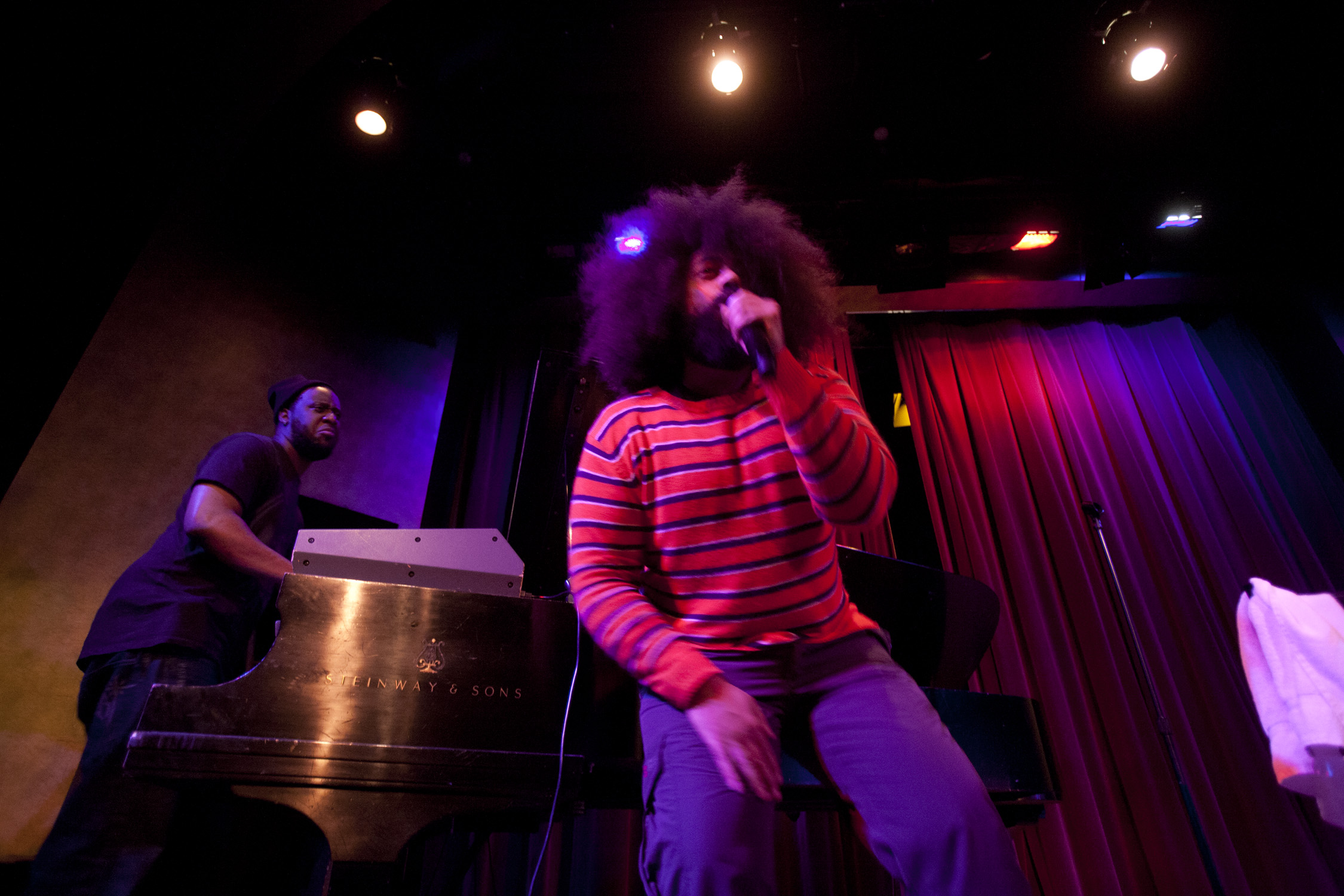
When Reggie Watts first came to my attention, through a series of appearances on Conan O’Brien’s show a few years back, I didn’t know where to place him. My first instinct was to lump him in with the trend in music – particularly indie rock – around the looping pedal where solo artists including Owen Pallett and tUnE-YaRds could layer mic samples atop one another during a live performance to get a larger, simulated band sound.
In Watts’s case he seemed to be to be combining musical styles including beat boxing to a comedic effect that picked up a tradition that was part Michael Winslow’s SFX, and part Andy Kaufman and Steve Martin’s anti-humor. Still, Watts resists categorization and besides the opportunity for a good pun, SF Sketchfest’s Reggidency, a four night series of shows, was an excellent chance for Bay Area audiences to try and figure out what the hell the performer does.
To get a sense of just how different Watts is from everyone else in comedy, you don’t have to look much further than Garfunkel and Oates, the opening act at his Mezzanine show on Wednesday. Garfunkel and Oates’ Riki Lindhome and Kate Micucci – two banjo and guitar strumming women with an appealing cuteness that screams sitcom – specialize in musical comedy. And they do it well, in songs about bad handjobs, smug pregnant women, and bad/bold booty calls. Each bit from the riotously funny duo had a clear comedic concept and tight musical package.
That same night Reggie Watts played a lot of songs, I’d say a larger proportion even than the first night at Yoshi’s, the “Just the Music” night where – ironically – he got involved in more characters and monologues. But if you asked me what the songs performed at Mezzanine (a Massive Attack themed venue according to Reggie) were about, I honestly couldn’t tell you. Not because I wasn’t paying attention, but because his songs generally aren’t about anything. Sure they involve ideas, concepts, and word play, but it comes in a stream of conscious manner; the songs are less neat little objects as much as platforms for Reggie to riff on whatever he wanted.
http://www.youtube.com/watch?v=es3H0_IMLvo
A night later, following a deadpan comedic introduction by Reggie that seemingly went over most of the Yoshi’s Oakland crowd Thursday night, jazz pianist Robert Glasper took the stage to open that show alone. Playing a large Steinway piano that dwarfed Watts’s Roland Fantom X7 keyboard, the music initially sounded completely different from what I’d heard from Watts the last two evenings, but as I listened I started to pick up what was going on, Glasper playing a foundation of deep bass notes, a gentle um-un-ah, while going to work over the top of it with playful flourishes. The effect was unique (when Glasper reached a certain intensity someone in the otherwise silent crowd ejaculated “Yes!” rather than exploded in laughter) but the method of improvisation, music or comedic, was the same.
Earlier that day, before the performance, while he was getting ready to drive around Berkeley to find a “Michelin joint” for lunch, Watts told me that he had never worked with Glasper before, and little preparation had been involved for the show. It was of little concern. “I’m not really too worried,“ Watts said. “He’s a jazz guy and has to mix improvisation anyways. He has a totally great ear. I think we’ll come up with something great, it should be fun.” That night Watts emerged on stage dressed in the same red striped sweater from two night before, but with a new gruff voice that was pure jazz man. “I have an original piece I’d like to perform for you tonight. I wrote it in ‘Nawlins in 2004. It’s called ‘Non-Equilibrium’ and it’s about the situation going on…in Kansas.”
During one of their early songs together, Glasper took a break from playing to lean back, place a on hand on the floor and a foot on the rim of the grand, posing for a photographer with an annoying flash. Watts on his own has no problem creating dialogues with alternating voices, but with Glasper he found a willing partner to joke with, whether a fake studio control room exchange, or hollowed between-song banter.
Their first song together, which started out as a gentle “Wind Beneath My Wings”-esque ballad and transformed into some gospel soul, had Watts busting out some of his singing chops. As he held one big cry while modulating the sound by shaking the microphone back and forth, it was clear how talented as a singer he is. (On top of previously being a member of numerous musical projects including the Wayne Horvitz 4 + 1 Ensemble and Maktub, Watts also released a fairly straight forward, funky electronic soul solo album, Simplified, in 2003, entirely distinct from his later comedic album Why Shit So Crazy? in 2010.) No joke, dude has pipes. The actual lyrics, when they are more than just sounds, are essentially cliches – maybe you’ll come back, the things we said – just allusions to a situation and no details. But the song itself sounds full.
http://www.youtube.com/watch?v=uK2De2eCebg&feature=related
“What do you want to do next?” Reggie asked after the song concluded. A dead-pan Glasper responded, “Something that has to do with…there’s a lot of stuff going on all over the world.” “Got it,” Reggie said quickly, starting up a steady bass beat. The track was mellow, but soon Watts was busting out every cheesy, cheap, and tinny pre-programmed effect on his comparatively tiny keyboard. Soon the two got into a karaoke jam session, covering Billy Joel’s “Piano Man” and Bonnie Raitt’s “I Can’t Make You Love Me.”
Watts doesn’t necessarily need accompaniment. This was clear on the last night of the Reggidency, when he was scheduled to improvise an original score for a silent film. In a characteristic screwball move, though, Watts selected not a pre-sound, Silent Era title, but a more modern film with the sound on mute, in this case Ridley Scott’s visually decadent, otherwise vacuous 1985 fantasy film Legend. With an actual silent film there are title cards for the story and the band just has to play the score, with this choice, Reggie was tasked with filling in all of the missing audio, including the introductory narration for the overly long post-Star Wars opening text (which he breathlessly sped up, deflating the gravitas), the original Tangerine Dream score, forest animal sounds, and the actors’ dialogue.
Watts replaced the husky voice of Mia Sara (Ferris Bueller’s girlfriend, Sloane – I don’t know why she wasn’t in that Super Bowl commercial either) with a ditzy whine and dubbed Tom Cruise as an appropriately doltish bumpkin, all while juggling original songs with descriptive lyrics like “the engine of reality is based out of conflict.” The whole thing was a technological and musical feat as much as a comedic one, although at times in part because of the venue’s sound system but also the number of layered elements, the audio was a bit muddled and Reggie’s voice hard to make out.
Even when he’s on a comedic roll, or when the sound is perfect, Watts can be hard to follow. Dana Carvey did a song once called “Chopping Broccoli,” a parody of pretentious musicians and their tendency to sound like they are just making up words to the songs as they go along. Whether he’s building a song atop a beat or doing a character, Watts seems to chop a lot of broccoli on stage, although the content frequently goes in less mundane, more psychedelic directions.
Watts introduced a song at the Mezzanine as “The Hall of Kings” and explicitly said it was about Egyptians taking credit for structures built before them (a topic of interest that he referenced previously as well – a rare instance in which he repeated something during the Reggidency.) When he started singing, however, it’s in a drawl, and the topic is roosters and TV. TV gets transformed into TB, tuberculosis, and soon, in his farmer voice, Reggie was singing about wanting to be next to potatoes.
By the time I figured out what the hell he was going on about, Watts went onto the next thing, musically shifted the quaint shuffle beat into slowed down hip-hop, added some wobble and made it dubstep. In the back of the room, where I seemed to be surrounded by increasingly distracted drunks and some rote club goers not interested in keeping up with the act, I started to feel strained, confused, wondering if I’m still tuned to the right reality. Almost on cue, Watts simplified things, as he hooked up an mp3 player, turned on Phoenix’s “If I Feel Ever Feel Better” and began dancing; it was a hilarious bit of purely physical comedy that was the exact opposite of the heady bit he was doing moments before.
http://www.youtube.com/watch?v=8wAQKyahAb4
I’d been wondering about the line between the inane and the insightful, and when I spoke to Watts between shows I ask if he’d consider being described as “unintelligible” as a compliment or an insult. “It’s totally complimentary,” Watts responds. “I like to mess around with the ideas, there are certain things you don’t have to hear clearly and sometimes a little concept here or there is nice for suggestion and then you can go on the nonsense trail again.”
It feels like Watts – who seems to have found a perfect niche in performing – is capable of doing anything on stage. For all the characters he does, and the range of subjects and styles he covers, Watts never appears mean, cynical, or harsh. (Someone before the last show on Friday even described him as lovable, a word not typically reserved for comedians.) Sometimes it’s a trick – a sort of cognitive short-circuit – as when he started the Mezzanine show by mouthing words but only audibly saying every third or fourth – but never a joke played at anyone else’s expense. Asked if there was any appeal to simply messing with people, Watts refused: “I don’t like to fuck around with people where I’m taking advantage of them. I want them to join in and try to provide opportunities for them to join in on the conceptualization.”
Catholic hospitals and birth control
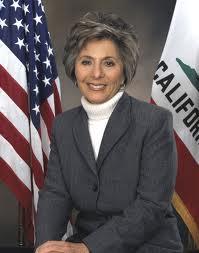
I’m glad Sen. Barbara Boxer, along with Sens. Patty Murray and Jeanne Shaheen, are supporting the Obama administration’s decision to mandate contraceptive coverage at Catholic hospitals. I read the Wall Street Journal editorial denouncing it as an assault on religious freedom, and I think there’s something that is too easily overlooked here.
Religious institutions like the Catholic Church are not just churches these days; they’re major employers and the operators of major health-care facilities that are intertwined with insurance companies. And for a lot of employees and patients, there isn’t any choice.
People who work for the hundreds of nonprofit social-service agencies run by the Catholic Church aren’t necessarily Catholics, or even religious. They might be receptionists, or janitors, or computer systems operators, or counselors who needed a job and happened to get hired by an agency that needed their (secular) skills. Jobs are hard to come by these days; a person who works in an administrative job at a Catholic nonprofit and is trying to pay the rent and support a family may not have the option of simply leaving because she doesn’t agreed with the Church’s position on birth control. She’s got a health plan paid for by her employer, just like most of the rest of us, and if that plan doesn’t cover contraception, she’s SOL. It’s not fair.
My health-insurance plan recently decided not to do business any more with Brown and Toland medical group and instead contract with Hill Physicians. I had nothing to do with that decision, which was based on some financial negotiations around reimbursement rates that were entirely out of my control, part of an ongoing fight between major hospital groups, physician groups and insurance companies that leave patients entirely out of the loop.
So I had to leave the doctor I’d been seeing for many years (who was a member of Brown and Toland and affiliated with the Sutter-owned California Pacific Medical Center) and I was reassigned to a new doctor, who is a member of Hill — and because of economic issues that have nothing to do with religion, my Hill doc is affiliated with Catholic Healthcare West. So now any major medical treatment I need is at St. Mary’s, or St. Francis, or Seton — all excellent hospitals, and I have no complaints. My new doctor is great, and frankly, the medical staff who are part of what happens to be a Catholic Church affiliated hospital chain aren’t a whole lot different from the medical staff at the secular CPMC — skillful, devoted, caring, and so far as I can tell, entirely free of any type of evangelism. I have no idea what, if any, religious affiliation the doctor who patched my broken hand back together last year had; it wasn’t an issue. Who cares?
But still: It’s a Catholic hospital chain. With all the issues that creates. And it’s part of the city’s public-health infrastructure. A lot of us didn’t choose a religious-based medical center; our insurance company did that for us.
Catholic Healthcare West just changed its name to Dignity Health, apparently for marketing reasons (interesting that they chose the name of a longtime group of gay Catholics) but according to the group’s website:
All of our Catholic hospitals, as well as those that may join the system at a later date, will continue to be Catholic and follow the Ethical and Religious Directives for Catholic Health Care Services (ERDs).
Among the rules that guide those ERDs:
First, Catholic health care ministry is rooted in a commitment to promote and defend human dignity; this is the foundation of its concern to respect the sacredness of every human life from the moment of conception until death. … Catholic health care does not offend the rights of individual conscience by refusing to provide or permit medical procedures that are judged morally wrong by the teaching authority of the Church.
I’m all for religious freedom. But under our current healthcare system, a lot of people have no choice as to their employer or their health-care system. And as long as that’s the case, I don’t see why the Church (which has to pay payroll tax on its employees and abide by the state’s employment laws) shouldn’t fall under the same health-insurance rules as everyone else.
Plastic bags banned from all SF stores

The Board of Supervisors voted to expand a 2007 ban on plastic checkout bags to cover all retail and food establishments.
The law bans all businesses from providing plastic bags to customers. It also requires a ten cent fee for paper bags, to be pocketed by the store. With the ban, only paper bags, compostable bags, and reusable bags will be permitted at checkout. The city hopes to encourage shoppers to carry reusable bags.
Supervisors acknowledged that this ordinance could create confusion and inconvenience for business owners.
Many supervisors, notably Chiu and Weiner, emphasized that in the past few months they had done outreach in their districts, explaining the bill at open forums and neighborhood association meetings, and getting community feedback.
Two amendments– an exemption of certain items, such as fresh flowers, bulk candy and loose nails, and a cap of the paper bag cost at ten cents- -were the were results of community feedback.
With the amendments, the ban passed unanimously, with ten votes (Supervisor David Campos was ill and not in attendane.)
Melanie Nutter, Director of the city’s Department of the Environment, helped lead the outreach efforts.
“I am pleased. The legislation being considered today will encourage customers to reuse their bags. This will dramatically reduce the impact of hundreds of millions of disposable bags currently in use in our city. These bags end up on our streets, in our bay and oceans, and in landfills,” said Nutter.
The most notorious effect of plastic pollution on the Pacific Coast is the “Great Pacific Garbage Patch,” a floating conglomeration of trash that has been known to kill marine life and has been a target of environmental concern.
The ban will take effect Oct. 1.
Nutter said that the city is looking into a bag giveaway program to ease access to reusable and compostable bags for consumers and businesses. She added that, for businesses that are not able to use up their inventory of plastic bags by Oct. 1, some exemptions to the implementation date may be made.
Original legislation to ban plastic bags from grocery stores and chain pharmacies passed in 2007. Since, several California cities have followed suit, including Malibu, Palo Alto, Los Angeles, San Jose and Long Beach.
“Now, it’s time for San Francisco to catch up and continue to show environmental leadership,” said Supervisor Christina Olague.
Will theme camps get the remaining Burning Man tickets?
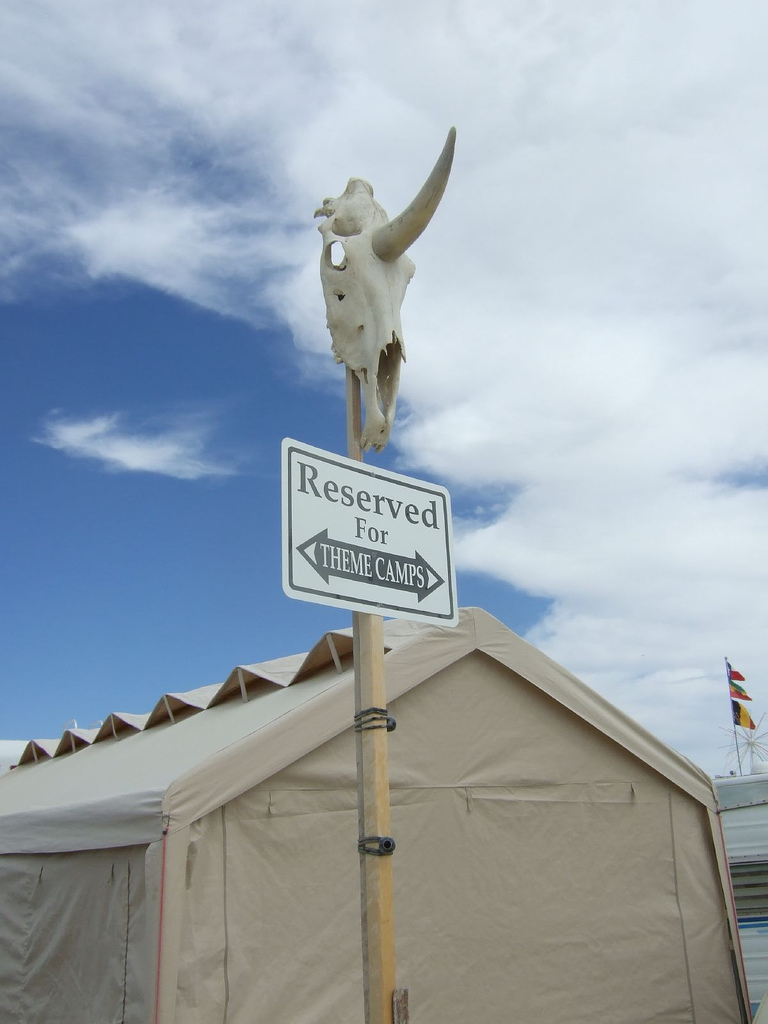
Organizers of Burning Man are working on a plan to deal with the fact that most longtime burners were denied tickets to this year’s event – the result of a new lottery system that seems to have been gamed by ticket scalpers and agencies – and sources tell us it could involve distributing tickets through established theme camps and art collectives.
Black Rock City LLC board member Marian Goodell said last week, in comments to the Guardian and a post the next day on the LLC’s Burning Blog, that organizers are very concerned that so many members of groups that create most of the temporary city’s infrastructure, art, and entertainment didn’t get tickets this year. Surveys show only about 20-33 percent of established camp members got tickets, even less in some camps.
“It’s clear that the theme camps and art projects are a significant part of the community, and this situation is causing problems for them. That’s the part that will hurt us if we don’t take another look at this,” Goodell told me, saying that the LLC planned to gather information and make an announcement within two weeks.
Since then, the LLC has asked many established theme camps and art collectives for specific information on how many of their members still need tickets. There were 700 registered theme camps in 2010, the last year for which the LLC has made that information publicly available, as well as 275 registered art installations, and 1,000 art car permit applications.
Several sources tell us the LLC is considering canceling the open ticket sale that is scheduled for March 28, at which the final 10,000 tickets were to be sold online on a first come, first served basis. Instead, they would sell some or all of those tickets through the leadership of established theme camps and art collectives.
Goodell hasn’t returned Guardian calls on the idea, which sources say has not yet been formally adopted. Yet Goodell said the LLC has ruled out the idea of re-doing last week’s lottery of 40,000 tickets and replacing it with a registration and regulated aftermarket system that would deter gouging by scalpers, as many have suggested, so they don’t seem to have many good options available at this point.
Clearly, the idea of selling tickets through the camps would help reduce the widespread anxiety that much the city’s art and entertainment won’t come to fruition this year, which could have a detrimental impact on the offerings and character of Black Rock City. In my book, The Tribes of Burning Man, I argue that these camps and collectives are the basic building blocks of this culture and the city it creates each summer in Nevada’s Black Rock Desert. As LLC board member Harley Dubois said on its website, “Theme camps are the interactive core of Burning Man.”
But she has also told me that it’s important for Black Rock City to be just as accessible to those who choose to camp independently or with small groups that don’t register for placement on the playa, so it’s unlikely that a decision to value theme camps and art collectives over other types of citizens would completely quell concerns over this year’s ticket fiasco.
What do you think?
The marriage decision, for better and for worse

The Ninth Circuit Court of Appeals judges cited both Groucho Marx (“marriage is a great institution, but who wants to live in an institution?”) and Marilyn Monroe (what if the movie was called “Who Wants to Enter Into a Domestic Partnership With a Millionaire?”) in discussing the importance of the word “marriage.” Justice Stephen Reinhardt’s ruling made clear that the only purpose of Proposition 8 was to “lessen the status and dignity of gays and lesbians in California.” The decision makes clear that the law against same-sex marriage is by its nature discriminatory.
But in the end, the ruling was very narrow. If you read the entire decision, it’s not a sweeping affirmation of the legal rights of Americans to marry the person of their choice. The court basically concluded that California voters had no legal right to take away marriage rights that had previously existed. Since the state Supreme Court had granted marriage equality, and 18,000 people got married before Prop. 8 passed, the ballot measure was in fact a reduction in rights, which, the court said, requires a different level of scrutiny and analysis.
The Chronicle calls it a “wise decision,” but in political terms, it’s a bit wimpy: It stops far short of where Judge Vaughn Walker went in his original ruling on this case, which essentially said that marriage is a fundamental right for all.
The good news: If the ruling stands up, same-sex marraige will be legal in the state of California. The bad news: If the ruling stands up, it’s likely that it will apply only to California.
But that could be good news in a sense, too. Here’s why.
The proponents of Prop. 8 are going to appeal to the U.S. Supreme Court. Everyone knows that. And if the 9th Circuit had come out with a sweeping ruling stating that the right of gays and lesbians to marry is fundamental and can’t be abridged under any circumstances, it’s almost certain the the Supreme Court would hear the case. That might be wonderful; the Supremes could come down with a decision like Brown v. Board of Education that forever changes the civil rights landscape and ensures full equality for the LGBT community in every aspect of society.
On the other hand, I worry that if this current Supreme Court heard Brown, five members might have sided with the Board of Education.
In other words, there are four very conservative justices who could easily proclaim the sanctity of heterosexual marriage in a ruling that would set us back years — and depending on how Justice Anthony Kennedy was feeling that day, he could go either way. So giving the current Supreme Court a chance to rule on the larger issue was, and is, risky. Now, Justice Reinhardt’s decision repeatedly cited a case that Kennedy had personally written, the 1996 Romer v. Evans, which would have made it harder for the swing judge to reverse the 9th Circuit — but you never know.
As it is, there’s a good chance now that the High Court will just take a duck. That would mean that same-sex marriage was restored to legal status in California (and there’s no way that another Prop. 8 will ever pass in this state, ain’t happening, don’t waste your money, bigots — this train is only going in one direction, and the population has already changed enough that same-sex marriage would easily win at the polls). And it will be legal in eight other states and D.C., and the movement will continue and in a few years, it will be legal everywhere, without the U.S. Supreme Court making the final call. (Or Kennedy will retire and Obama will be re-elected and it won’t matter because the Supreme Court will no longer have a troglodyte majority.)
And even if the court takes the case, it’s possible that Kennedy would go along with the narrow ruling (Reinhardt has been around a long time and he’s no fool — he knows who his audience is on a final appeal, and it’s one Supreme Court justice). It’s possible Kennedy might agree that you can’t take away existing rights, which would be good news for California and not terrible news for the rest of the country.
That’s the cautious approach. I’m the sort who usually wants to push issues as far as we can (wouldn’t a showdown over the defining LGBT issue of the day at the Supreme Court be exciting? Wouldn’t it be amazing to see Justice Scalia try to argue, in 2012, that it’s okay to deny marriage rights to lesbians and gay people?) And I believe that both the legal and political ground is shifting fast on this issue and we might get a grounbreaking Supreme Court decision the way we did in Lawrence v. Texas. But the downside is potentially huge.
So while I was disappointed in the rather limited scope of the decision, I suspect a lot of the lawyers who support marriage equality are quietly pleased. This is a big victory, and it might actually last.
Guardian editorial: Ellison wins, San Francisco loses!
EDITORIAL San Francisco’s not going to lose the America’s Cup. Oracle CEO and yachting billionaire Larry Ellison is too excited about the prospect of bringing the sport (and his company’s logo on the sail of his boat) to a mass audience for the first time in history that he’s not about to abandon San Francisco Bay. The process is too far along; that much is a done deal.
But the development agreements for the city’s waterfront is not a done deal at all — in fact, the proposal could wind up giving Ellison effective control over five piers and a valuable waterfront lot that he could develop for condos. And the city won’t get anywhere near enough out of the deal.
The development agreement is really just a sideshow in the cup planning; nobody’s arguing that Ellison’s America’s Cup Event Authority will need space to stage the race, and that will require the renovation of some waterfront property. And nobody disputes that the event will bring tourism and revenue to the city, which will offset some of the cost of allowing Ellison rights to the waterfront.
The rest of it is purely a real estate deal: Ellison’s offering to put millions of dollars in to renovating crumbling and underused piers, and in exchange the Port of San Francisco — which lacks the money to rebuild the waterfront and has no credible plans for a good part of its property — will give Ellison long-term low-cost leases and development rights on Piers 26, 28, 30-32 and possibly 29, as well as Seawall Lot 330 at Embarcadero and Bryant.
The city’s never been terribly good at cutting tough deals with real-estate developers, and the history of San Francisco is littered with examples of the taxpayers losing out to the speculators and builders. And in the furor of excitement over the America’s Cup, this development agreement could become the latest sellout.
The original projections for the economic impact of the event are looking more and more questionable; it’s entirely possible that San Francisco will wind up with far less than the $1.4 billion in spending and the thousands of jobs that cup promoters have promised. It’s still going to be a big deal, and the city (particularly the hospitality industry) will do well — but it’s not the answer to all of San Francisco’s problems. By the end of 2013, the event will be over — and Ellison will have essentially taken title to a huge amount of public land, for as long as 60 years into the future. And he won’t be paying the city the normal development fees, the normal impact fees, or even reasonable annual rent to the Port.
The supervisors need to put aside the hype around a sailing regatta and look at this for what it is: A real-estate development agreement with one of the world’s richest people. And right now, it’s a lousy deal for the city.
Live Shots: Golden Glass 2012 slow food and wine festival
Wine was flowing freely at 11 a.m. on Sat/4 for the pre-show press tasting. We had prepped ourselves by carb-loading on whole wheat oatmeal pancakes before heading to Fort Mason for the Eighth Annual Golden Glass festival (which raised awareness and funds for slow food programs) preparing ourselves to indulge in a smorgasbord of carefully vetted, sustainably produced wines.
(Oddly, I liked the first wine we sampled, a moscato d’asti by La Caliera, all sweet and bubbly, the best. Maybe it had something to do with the fact that it was the first wine to hit our tongues that morning, but I really believe it was just that great. You should try it.)
The wines came from all over Italy and California, along with a sampling of delectable edibles, including hot-from-the-oven bread by Danny Gabriner of Sour Flour and a large, golden roasted pig from the Butcher Brothers. Also at the Slow Food “Ark of Taste” table were some quirky culinary finds, like the Bodega Red potato. Once the staple tater of the gold miners, over time, it disappeared and was thought to have been completely lost until it was recently found. It is now being grown in Marin County, in hopes of reviving this long-lost tuber.
We skedaddled before the show opened to the public, since the event was totally sold out and we had a feeling that wine aficionados were going to take the place by storm, or rather, sips and gulps. But we felt lucky to have tasted such a wide and delicious variety of libations, before we teetered off to find some lunch.
Downtown action: Sex shop Feelmore510 celebrates one year of community pleasure
The sex shop Feelmore510 is located on the corner of Oakland’s Telegraph and 17th streets, across from an Obama campaign office, in between a pawn shop and the oldest African-American owned shoe store in town. The neighborhood is in transition, a place with old roots and a lot of new blooms – most businesses on this stretch of Telegraph opened within the last five years. Feelmore510 will celebrate its one-year anniversary Sun/12 when owner Nenna Joiner helps host Town Love, a new party at Hibiscus’ Rock Steady.
But those businesses aren’t the shop’s only neighbors. This fall, Feelmore510 also lived alongside Occupy Oakland’s City Hall encampment. Though many local business owners have expressed anxiety about the effect that protests were having on their sales, Joiner is in full support of the movement. She sometimes walked over to visit friends who were “occupying,” and was happy to donate safe sex supplies to the camp. “Sex is a basic need for survival,” she said in a recent in-store interview with the Guardian. Joiner allows protestors to chill in the store and talk politics — as long as they aren’t running from the cops.
Joiner envisions her store as more than just a place to shop – it’s also a community center. On a recent afternoon, Joiner shook each customer’s hand and asked them their name. Her goal is that all comers can shop for augmentations to their love life in comfort.
A cross-section of Oakland’s entire population converges in this particular area of downtown. Joiner sees everyone from rich vintage porn collectors — drawn to her extensive selection of old magazines and videos — to people who ask to pay with California welfare benefit cards.
Her best-selling items, which are taken home by customers who are male, female, straight, bi, and trans, are the queer porn films that Joiner herself directed, edited, and produced. 2010’s Tight Places features diverse actors and she made Hella Brown with a cast of all African American women. Hella Brown is made in a semi-documentary style – Joiner shot interviews with over 50 queer and trans subjects about their sexual proclivities while making the movie.

Artfully-displayed contraptions at downtown Oakland’s favorite sex shop.
Joiner’s films are unique in the way that they showcase different sexual practices and different body types from mainstream porn, which is often geared towards a heterosexual male audience. Her films show women of all shapes, having queer sex — fellating strap-ons and other acts you might not catch in other kinds of porn. While the films are not shot with the straight male audience in mind, that group does seem to enjoy them, often buying the first film and then returning for more. Joiner sees her films as educational tools, especially for what she calls the “brown community,” where things like transitioning from one gender to another are often socially stigmatized and restricted by financial limitations.
“Queer women of color possess a whole different intelligence and mentality,” she says, adding that many women have a certain shyness about “packing,” (wearing a flaccid prosthetic penis underneath clothing) and getting cosmetic gender modification surgery. Joiner fully embraces her role as an educator in the Oakland queer community.
Joiner refers to dildos as “prosthetics,” – she says that this language is less alienating to those unfamiliar with their usage. She keeps a packer on prominent display, in order to provoke people into asking questions, which can open up a dialogue about passing as a man, transitioning, or simply stuffing one’s jock with something more substantial than a tube sock. She says customer preference in prosthetics can vary. Many want a life-like phallus, while others request dildos that don’t look like penises, going for glass, sculptural, or abstract designs.
Joiner feels that she is at the intersection of several different communities in Oakland. Joiner goes to two church services every Sunday. She buys passing school kids lunch at Ms. Tina’s, the little sandwich shop next door. She’s active in the queer scene, and she’s also a small business owner who encourages other vendors to promote their own businesses by using her store as a launchpad.
“Having a space allows other people to identify with a vision of opening their own space.” When she first opened her store, naysayers questioned her brick-and-mortar approach over the Internet. But she says a website cannot replace the tactile satisfaction of a place to gather, to talk, to share. She uses her store to hold classes on topics rarely discussed other places, like sex industry work.
Joiner wants the toys she sells to be safe and fun for anyone, and to open up a conversation about sex, gender, and pleasure with Feelmore510. It works – her space encourages one to think of sex in a different, more open way. Joiner’s toys are all just tools for lovers to transfer feeling, power, and energy between each other. There is no single way to have sex, just endless different first-time experiences. It’s a new kind of space in an old part of Oakland, open for all comers to explore their most innovative sexual selves.
Feelmore510 one-year anniversary party at Town Love
Sun/12 5-11 p.m., $5
Rocksteady at Hibiscus
1745 San Pablo, Oakl.
(888) 477-9288
Facebook: Feelmore510 anniversary party at Town Love
San Francisco celebrates same-sex marriage ruling

While the usual procession of heterosexual couples beamed as they said their wedding vows on City Hall’s Grand Staircase this morning, a historic celebration took place in the South Light Court: hundreds applauded the announcement that same-sex couples are a big step closer to achieving equality in the basic right to marry.
The Ninth Circuit Court of Appeals held today that Proposition 8, which eliminated same sex marriage rights for couples in California, violates the Equal Protection Clause of the U.S. Constitution.
The court ruled that Prop. 8 served no purpose but to discriminate against one class of people, and the Constitution does not allow for “laws of this sort.”
The ruling specifically addressed the arguments advanced by proponents of Prop 8 that gay marriage would interfere with childrearing and religious freedom in the state.
“All parties agree that Proposition 8 had one effect only. It stripped same-sex couples…of the right to obtain and use the designation ‘marriage’ to describe their relationships. Nothing more, nothing less,” the judges wrote.
The ruling does not mean that marriage licenses will immediately be issued to same sex couples. A stay on the ruling has not been lifted. But the stay could be lifted in as early as 21 days from now. But more probably, it will take months or even years; the case is likely to go to the U.S. Supreme Court.
Chief Deputy City Attorney Terry Stewart – the lead attorney that defended San Francisco’s 2004 decision to issue marriage licenses to same-sex couples, which later triggered the Prop. 8 campaign – said the city is eager to see marriage equality, and that “city mechanisms and machinery stand ready to do whatever we can to expedite the process.”
The decision was based partly on logic that, since LGBTQ Californians already have parental rights and the right to domestic partnerships, denying them the right to marry could not be rationalized. City Attorney Dennis Herrera said that this is a “narrow decision,” meaning that if the Supreme Court upholds the ruling, it would apply only to California.
There remains a possibility that the Supreme Court will reject the case, and in that situation the Ninth Circuit decision striking down Prop. 8 would take immediate affect.
Members of the Bay Area coalition of Welcoming Congregations were present at the announcement.
“I’m jubilant,” said Rev. Roland Stringfellow of the Pacific School of Theology in Berkeley. “When it comes to equality, this is something we preach.”
He adding that his church had been performing same-sex marriages since the 1970s, and that he eagerly awaits legal recognition of his own union with his partner.
Sup. Scott Wiener acknowledged, “the fight is not over yet.”
But he said, “Every so often we get a court ruling that reaffirms our faith in the judicial system…this is a time for us to come together and celebrate.”
California political leaders issued several statements praised the court’s decision.
“The court has rendered a powerful affirmation of the right of same-sex couples to marry. I applaud the wisdom and courage of this decision,” said Gov. Jerry Brown.
Mayor Ed Lee issued a statement saying:
“I celebrate the decision by the Ninth Circuit Court today. This is a great day for marriage equality and a great day for California families. The Court affirmed today that there is nothing in the Constitution that allows discrimination and we are on our way to protecting the fundamental rights of everyone in our State. And, we will continue the fight until everyone is treated equally.
“San Francisco stands ready to begin marrying same sex couples, and we remain as deeply committed to the fight for marriage equality today as we did nearly eight years ago when then Mayor Gavin Newsom started one of the most important civil rights issues of our generation to ensure equality for all.
“I would also like to acknowledge the tireless work of our City Attorney Dennis Herrera and his team in defense of marriage equality and the California Constitution these last eight years. Together, we will take this fight all the way to the nation’s highest court, if necessary.”
Localized Appreesh: The Yellow Dress
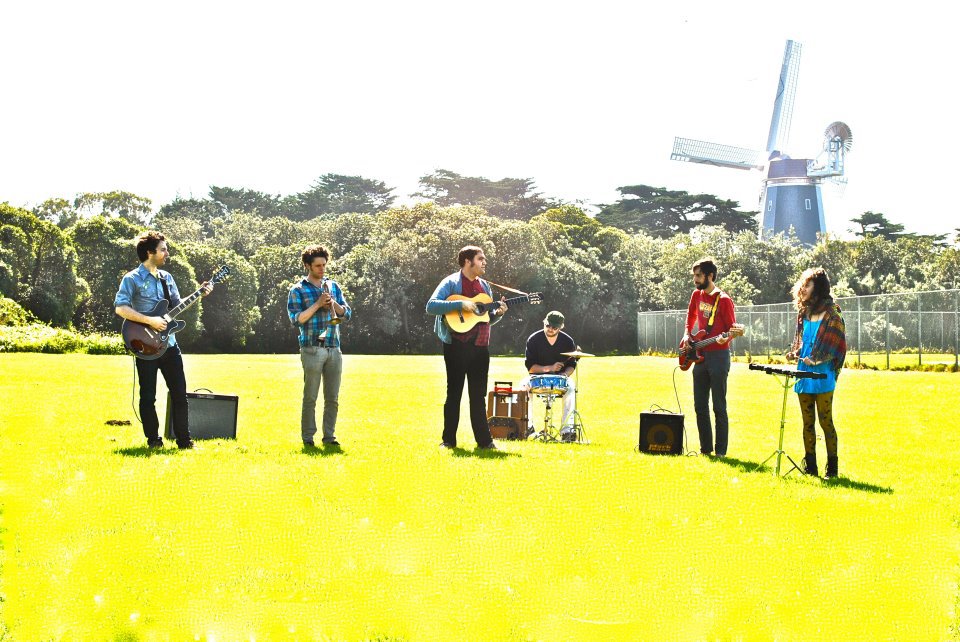
Localized Appreesh is our weekly thank-you column to the musicians that make the Bay. To be considered, contact emilysavage@sfbg.com.
Dogs, ghosts, kids, hand-clapping, whistling on a sunny park day – it’s all in the video for the Yellow Dress’s “This Could Be Anything.” The song itself is already a treat, kicking off with the aforementioned clapping and whistling and a solitary guitar, in pipes mariachi trumpet and swallow-you-whole powerful vocal pipes à la orchestral pop master Beirut. (It also has garnered comparisons to Magnetic Fields and a drug-less Velvet Underground.)
The Yellow Dress closed out 2011 with a metaphoric group hug, thanks to the video and a well-received second album, Humblebees. This year, it’s already off to a run through the park, pull your dress up and get mud on your ankles, start. In the next seven days, the San Francisco band will play three local shows, all at interesting venues, perhaps a bit off the beaten path. Do it up big and catch a trio of Yellow Dress performances.
Year and location of origin: 2007, San Francisco (the corner of Haight and Fillmore to be exact)
Band name origin: We used to be called Mr Stopmotion and the Yellow Dress after a particularly dapper couple I saw walking through Golden Gate Park, back then we were just a two-piece, and the name was pretty unweildy. For about a day we were Mr Stopmotion, which sounds like a Devo/XTC cover band. We decided on The Yellow Dress, which immediately led to a dramatic (and affirming!) number of yellow dresses in both (me and original bandmember Jon) of our lives. For a not very interesting story that sure took a lot of time to write.
Band motto: I’m sorry.
Description of sound in 10 words or less: Earnest-indie-twee-folk-pop.
Instrumentation: Acoustic and electric guitar, bass, drums, glockenspiel, male/female vocals, trumpet, organs, whistles, hand claps, if anyone reading this plays the cello and love dinosaurs please call me.
Most recent release: Humblebees.
Best part about life as a Bay Area band: With so many artistic people around it’s easy to find like minded folks to play with, slowly envelop in your ever growing line-up.
Worst part about life as a Bay Area band: With so many artistic people around you are rarely the only game in town any given night.
First record/cassette tape/or CD ever purchased: The Top Gun soundtrack. It was great.
Most recent record/cassette tape/CD/or Mp3 purchased/borrowed from the Web: West Indies Funk Volume 3 (2012 is the year of the steel drum).
Favorite local eatery and dish: I miss Mission Burger so much, you have no idea. The Yellow Dress is however willing to give a full endorsement to the chicken millanesa torta at La Torta Gorda.
The Yellow Dress
With Adam Balbo, the Slaves
Thurs/9
Alley Cat Books
3036 24th St., SF
With Matt Dorrien, Fox and Woman
Fri/10, 8 p.m., $8
924 Gilman, Berk.
www.924gilman.com
Valentine’s Day Monthly Rumpus: Sugar’s Coming Out Party
With Pocket Full of Rye, Janine Brito
Feb. 14, 7 p.m., $10
Verdi Club
2424 Mariposa, SF
www.therumpus.net
Sundance Diary, volume seven: up all night!

In a series of posts, Midnites for Maniacs curator-host and Academy of Art film-history teacher Jesse Hawthorne Ficks reports on the 2012 Sundance Film Festival. Check out his first, second, third, fourth, fifth, and sixth entries.
Park City at Midnight is what excites me most about each Sundance Film Festival. Yet, many other films screen at midnight that aren’t technically part of the actual category, which brings up the dilemma of what type of film warrants the designation of “Midnight Movie.” Late-night audiences range from the inebriated to the intellectual (and often both combined). This year’s crop of midnight films, in and out of the Park City at Midnight category, was genuinely one of the most eclectic and enjoyable group of films presented in years.
Quentin Dupieux’s Wrong — his follow-up to 2010’s unstoppable cult hit Rubber — is an absurdist journey where everything and nothing can happen, as long as it’s what you’d least expect from a narrative. The reactionary rules of this wandering wonder (don’t read any spoilers about it!) seem to have expanded David Lynch’s quietest, most awkward moments into a web of surrealist silliness that I immediately wanted to watch again as soon as it was over. As audiences were exiting at two in the morning, half of them were bleary-eyed from laughing hysterically, while the other half were in groggy, drunken stupors. For me, this confirms that Dupieux has achieved exactly what he wanted (to make the obvious joke, something so Wrong it’s right).
First-time filmmaker Richard Bates Jr.’s Excision snuck up on the audience, earning mad respect from the sold-out crowd as his film transformed from bloody fun to gory darkness, concluding with one hell of a jaw-dropping finale. While 90210 star AnnaLynne McCord truly went Method to exquisitely explore a disturbed high-schooler, Traci Lords’ passionate and complex performance as her perplexed mother should also be noted — she truly reached shades of Piper Laurie in Carrie (1976).
Jon Wright’s Grabbers had the buzz of being Bong Joon-ho’s The Host (2006) by way of Edgar Wright. The very enjoyable Irish film (which sports a hilarious drunken performance by newcomer Ruth Bradley) quite nicely fills a void for fans of tongue-in-cheek monster movies, and would best be experienced in a theater filled with boisterous bellows from fellow Anglophiles.
http://www.youtube.com/watch?v=uWlmhMSnVdM
In previous Sundance Diary installments, I discussed Tim and Eric’s Billion Dollar Movie and Katie Aselton’s triumphant Black Rock. Now, it’s time talk about Gareth Huw Evans’s unruly, uncompromising, and unbelievable Indonesian action film The Raid. Not since Sundance 1992 (John Woo’s Hard Boiled and Tsui Hark’s Dragon Inn) have I experienced the type of nonstop excitement as The Raid. This movie contains inventive fight sequences and hypnotic violence so insane and intense that you have to scream at the top of your lungs while simultaneously assuming a few of the stunt people had to have died during the film! (Jot down the name Iko Uwais, for this man will be taking over the world shortly, especially if he can shine in his U.S. debut, a remake of Mortal Combat coming in 2013). The Raid offers proof positive that a martial arts extravaganza can be as profoundly affecting as any essential art film.
Up next: Jesse Hawthorne Ficks’ eighth and final Sundance Diary, with his top ten from the festival!
Noise Pop Photo Retrospective, with Plastic Villains and Cool Ghouls
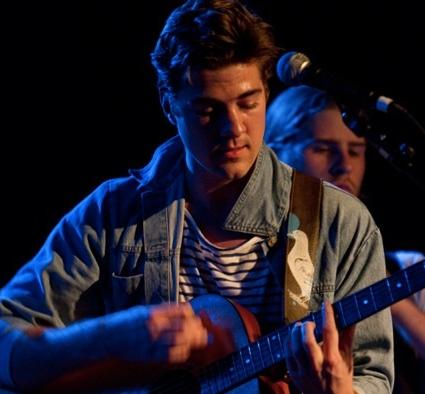
The 20th anniversary of Noise Pop is oh-so-close to upon us. In celebration and commemoration of how far the festival has come, and of the musicians who’ve made Noise Pop a much-anticipated Bay Area tradition, Bottom of the Hill will be hosting a retrospective photo gallery. The exhibit’s opening reception takes place Tues/7 from 6 to 9 p.m. and is free to the public.
Noise Pop producer Stacy Horne says Bottom of the Hill is an ideal home for the Photo Retrospective because the venue just celebrated its own 20th anniversary and has been an important Noise Pop venue throughout the years. (Bottom of the Hill has been hosting Noise Pop shows since 1994.) The gallery will be up in Bottom of the Hill’s back room from tonight through the last day of the festival (Feb. 26) and will include photos of former Noise Pop acts that have since achieved widespread acclaim such as Death Cab for Cutie, The Flaming Lips, and Edward Sharpe and the Magnetic Zeros. Photographers include Eduardo Acorda, Marlu Aufmuth, Jeanne Ellenby, Peter Ellenby, Charlie Homo, Sheila Menezes, Paige Parsons, Mike Rosati, Julie Schuchard, Shoka Shafiee, Matt Seuferer, and Deb Zeller.
Noise Pop, which began as a nightlong music festival at The Kennel Club (now The Independent) showcasing five bands, has developed into the largest independent music festival in San Francisco. It has also evolved into a comprehensive independent culture event that exposes Bay Area art, film, and design in addition to music. The Noise Pop festival officially kicks off Feb. 21.
In the Noise Pop spirit of exposing the young, up-and-coming, and local acts, performances by Plastic Villains and Cool Ghouls will follow Tuesday’s reception.
Plastic Villains, which formed fewer than six months ago and received “The Deli’s Bay Area Band of the Month Award” in November, is comprised of mostly USF undergrads that practice and record their “psychedelic garage rock blues hop” jams in their garage.
Cool Ghouls, also a San Francisco-based band, describe their sound simply as “rock-n-roll” and attribute the creation of their modern doo-wop goodness to tall cans, 40s, blunts, and crime.
Let the Noise Pop festivities begin.
Noise Pop Photo Retrospective
With Plastic Villains, Cool Ghouls
Tues/7, 6 p.m., free
Bottom of the Hill
1233 17th St., SF
www.bottomofthehill.com
Conflicted Chron buries the lead in city corruption case
UPDATE 2/15: READ OUR CURRENT STORY ON THE CASE HERE. The San Francisco Chronicle’s Matier and Ross love to poke snarky fun at progressives such as Matt Gonzalez, as they did again today when they wrote about his work on the Cobra Solutions vs. San Francisco case, for the second time. But they waited until the last paragraph in this second-to-last item in their column to reveal the real news: Mayor Ed Lee was deposed in the case last week and may be called as a witness.
Wow, talk about burying the lead. Here you have a sitting mayor implicated in a major corruption scandal – acting on orders from then-Mayor Willie Brown, who last year helped elevate Lee into Room 200 (and who just happens to write a weekly column for the Chronicle) – in a case that could cost city taxpayers $16 million.
The Chron hasn’t really covered the substance of the case, but Guardian readers may remember our investigative report on it last year. That’s when we unearthed evidence that Ed Lee, who was the city purchaser at the time, approved a fraudulent city contract – overruling city staff in the process – allegedly on orders from Brown.
It’s a complicated case and a long story well worth reading, but essentially it involves a company called Government Computer Sales Inc. (GCSI) that had ties to Brown. It’s accused of improperly getting a multi-million-dollar city contract with Lee’s help and then soliciting kickbacks from its subcontractors, including Cobra Solutions.
Cobra claims it didn’t know payments to GCSI were kickbacks and that it was damaged by the accusations and being frozen out of its city work by the City Attorney’s Office (under Dennis Herrera, who has his own interesting conflicts in the case). Also implicated in the case are SFPUC Director (and then-Controller) Ed Harrington; Monique Zmuda, still a top official in the Controller’s Office; and Steve Kawa, the chief-of-staff for Lee, Brown, and Gavin Newsom, and a powerful player at City Hall.
In a deposition, a city computer operations manager named Deborah Vincent-James testified that she and other city staffers knew GCSI was a fraudulent company, but that they were placed in the Computer Store (a list of qualified city contractors) to do work for the Department of Building Inspection on orders from above: “[Lee] was directed by the Mayor’s Office and told to do an evaluation process. They evaluated them. They were put in the store.”
UPDATE 2/7: Mayor Lee took the witness stand in court yesterday, where he was questioned by attorney Whitney Leigh about overruling staff to certify GCSI, which the City Attorney’s Office has deemed a fraudulent company that has since left town and evaded justice. More on what he said later.
Sundance Diary, volume six: dramarama
In a series of posts, Midnites for Maniacs curator-host and Academy of Art film-history teacher Jesse Hawthorne Ficks reports on the 2012 Sundance Film Festival. Check out his first, second, third, fourth, and fifth entries.
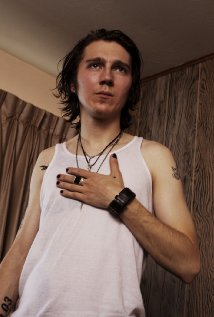
So Yong Kim’s character study For Ellen is only 93 minutes long, but the experience of watching it felt like it took an eternity. But — even though the film did not win awards at this year’s festival — it resonated; it was filled with many memorable, quiet moments. Paul Dano (never before so vulnerable) takes the reigns as a struggling musician who, while taking a break from touring to sign the papers for his long-overdue divorce, is forced to confront his own selfish tendencies when his custody rights start slipping through his fingers.
Writer-director Kim (2008’s Treeless Mountain) uses long, handheld takes that often prevent the viewer from seeing the actual feelings of our anti-hero. This subtle slice-of-life portrait never wavers from its sullen tone, which might explain why many critics seemed underwhelmed after its screening. For Ellen doesn’t give its flawed protagonist an easy way out, in a way that’s reminiscent of Darren Aranofsky’s The Wrestler (2008).
Ira Sachs (2005’s Forty Shades of Blue) delivered his most personal film to date with Keep the Lights On; oddly enough, it might be a little too personal for its own good. Chronicling an extremely passionate and self-destructive relationship from the late 90s to the present, Sachs transparently exposes the very modern Chelsea neighborhood life of daily phone sex, random hook-ups, and casual usage of hard drugs — all wrapped up in a self-absorbed universe that I am sure more people in this generation can relate to than would actually like to admit. The indie auteur’s latest beautifully-shot effort goes overboard with its honesty (especially toward the end) and I was left in an emotional limbo, wanting to care but feeling like I had read too much of someone’s personal diary.
Barely recognized as mumblecore’s first female director, Ry Russo-Young seems to have graduated to full-fledged indie director with Nobody Walks, which won a Special Jury Prize for Excellence in Independent Film Producing. Most audience members were at the screening thanks to star John Krasinski (The Office), who delivers his usual charm. But truly stealing the show was Olivia Thirlby, whose irresponsible yet utterly motivated 23-year-old artist is so wonderfully performed that you forget about some of the major cues the film has taken from Lisa Cholodenko’s Laurel Canyon (2002) and Tom Kapinos’s Californication. Lena Dunham, who made 2011’s monumental Tiny Furniture, co-wrote the film, and her unromanticized take on strong female voices shines quite brightly here.
But nothing in this year’s Dramatic Competition could compare to Ben Lewin’s The Surrogate, which won both the U.S. Dramatic Audience Award and a Special Jury Prize for Ensemble Acting. Truly delivering hands-down next year’s best actor performance, John Hawkes (2010’s Winter’s Bone) portrays Berkeley, Calif. journalist Mark O’Brien, whose poetry, autobiographical writings, and physical limitations gave writer/director Ben Lewin more than you could ever ask for. O’Brien’s real-life story was already told in Jessica Yu’s 1995 Academy Award-winning documentary Breathing Lessons: The Life and Work of Mark O’Brien, which hauntingly showcased O’Brien’s inspired and difficult life. For his narrative take, Lewin has pinpointed a very specific part of the story, creating a timeless romance and life-altering drama that ranks alongside Dalton Trumbo’s Johnny Got His Gun (1938) and David Lynch’s The Elephant Man (1980).
http://www.youtube.com/watch?v=SnUuVxL0UJ4
But it’s the acting that makes this film so unforgettable. Hawkes conveys complicated emotions and captures O’Brien’s soft-spoken syntax without ever slipping into pretension. William H. Macy throws in some very needed humor as an understanding, catch-22’d priest, and Helen Hunt gives the film that certain extra sense of surprise and understanding. It’s a cliché to say so, but it’s true: the film left nary a dry eye in the house. The Surrogate will be “the little film that could” for 2012 and for years after.
Up next: night owl Jesse Hawthorne Ficks tackles more Park City at Midnight movies.
Live Shots: Precious Drop
The evening’s “Precious Drop” dance performance at CounterPulse on Saturday, February 4 was centered around the theme of water — which is becoming a controversial topic as issues of water rights become more muddled. Most of the dances, performed by Mohamed Lamine Bangoura, the Jaara Dance Project, and Bu Falle African Drum and Dance, focused on celebrating Mami Wata and her fickle ability to pour down from the sky to provide precious drops of life. The choreography onstage mixed traditional and modern moves, performed by talented dancers from across the globe whose smiles filled the space with a joy that you could feel, even sitting in the audience.
Live musicians provided a background of fertile beats on a variety of drums and marimbas, and they also sang, making for a wonderful show. Their efforts were rewarded — both nights were sold out the space, with happy dance fans sitting on the floor and standing in the hallway to get a glimpse of the wetness onstage. The piece was a work-in-progress, so keep your ears perked (follow the drum beat!) for future performances.
A 2011 Jaara dance performance
Maximum Consumption: Bay Area bands choose their favorite eateries
I know, it’s so close to the weekend that you can taste it. But before you sign off for the day, your peepers sore and fingers trembling, here’s a comprehensive list – sure to get your tummy rumbling – of Bay Area bands’ favorite local restaurants, food trucks, and eateries. I compiled these answers from our On the Rise questionnaire (results of which are in this week’s issue) and my ongoing Localized Appreesh column. Enjoy.
San Francisco Bay Guardian: So local Bay Area musicians, what’s your favorite local eatery and dish?
DJ Theory: Cubano sandwich and sangria from Parada 22 in Upper Haight.
Dirty Ghosts: I don’t wanna be boring and say the super burrito at Cancún which is my real answer, so the margarita pizza at Una Pizza Napoletana
Metal Mother: Tacubaya in Berkeley, all the vegetarian dishes are amazing. My favorite is probably the ‘seasonal vegetable’ tamales.
Main Attrakionz: Buffet Fortuna in Downtown Oakland; chow fun noodles
Seventeen Evergreen: So many options here but let’s nominate the Chilaquiles at the farmer’s market in the Ferry Building or a number of places in the Mission for the same.
Jhameel: Cheeseboard Pizza in Berkeley. Perfect vegetarian pizzas.
http://www.youtube.com/watch?v=dPLYLsVDG8w
Future Twin: Secret Spot has delicious bagels, fresh squeezed juice, and homegrown greens.
Terry Malts: The #6 at Turtle Tower, best for hangovers.
Tycho: Thai Time — Red Chicken Curry (or anything else there).
Black Cobra: 1. Cathead’s Barbecue. Cornmeal crusted tofu is killer!
2. The Submarine Shop on West Portal. Italiano center sub with a Coke.
Silver Swans: El Metate Mexican Veggie burrito, the vegetables are roasted and always fresh. Everything there is delicious and on the cheap, right down to their alfajore cookies, I fully endorse the entire menu.
Le Vice: Broken Record — fresh organic soul food in a grimy-ass dive bar. Tasty as fuck. Hipster bling.
Ash Reiter: House of Curries – chicken tikka masala with potato nan.
Magic Touch: Ken Ken Ramen – Japanese ramen + veggie up.
The Fucking Buckaroos: Mission’s Kitchen – Breakfast Burrito.
Prize: Millenium for overall vegetarian dining experience, and the garlic spread from Stinking Rose for the best actual thing to put in my mouth.
Swiftumz: Fresh Dungeness crabs!
Buffalo Tooth: Morty’s in the TL, Chicken BLT.
Cosmo Alleycats: Steve: Le Colonial’s brussels sprouts; Mike: Cordon Blue, California @ Hyde, menu #5; Emily: Where to begin? The food trucks at Off the Grid are ridiculous. I’m addicted to Curry Up Now’s chicken tikka masala burrito. Also, the veggie burger at the Plant Organic is to die for. And I love my Thursday night ‘liquid dinners’ with the band at Blondie’s Bar & No Grill.
Mental 99: Joe: Iwashi (sardine) at Tataki South (Church and 29th). Dawn: It’s hard to go wrong in SF – so many good places to eat. But the veggie burrito at Taqueria Cancún is pretty tasty – and close by, especially if you just played El Rio.
Uni & Her Ukelele: Green Chili Kitchen.
Symbolick Jews: The Philly cheese steak at Mission Kitchen is forged in the fires of gastro-intestinal hell, and I stand by its superiority over any other cheese steak in the city.
G-Eazy: Gordo’s on College Ave in Berkeley, without a doubt.
The Spyrals: That’s a tough one. Probably Los Compadres. It’s a family owned Taqueria in South City, near where we rehearse. Damn good carnitas.
TurbonegrA: Esperpento. It’s cheap and fast – like us!
The Sandwitches: Chevys and fried chicken.
http://www.youtube.com/watch?v=1871NoR6IMQ
Debbie Neigher: Plantain black bean burrito at Little Chihuahua.
Violet Hour: Sausages at Rosamunde’s on Haight
Waterstrider: We frequent Taqueria La Familia. It is the best Mexican food in Berkeley. Their veggie burritos or chile rellenos do the trick for me.
Dreams: Shakin’ Jesse at Rudy’s Can’t Fail Cafe. Guinness, espresso, and ice cream – can’t go wrong with that.
The 21st Century: Al Pastor at El Metate–dynamite.And the Cold House Noodles at Yamo.
Rank/Xerox: Golden Gate Indian Cuisine and Pizza on Judah. Best restaurant in the city, eat everything but the Italian dishes.
The Jauntying Martyrs: Lucca Foods on Irving and 20th. Best deli in SF, baby. Get the Billy Filly. (You can only get it when Billy’s working).
Religious Girls: Bake Sale Betty’s fried chicken sandwich
Coit Tower battle: How do we fund the parks?
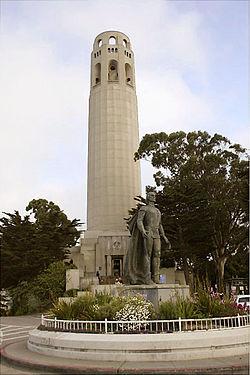
The emerging battle over whether San Francisco should allow private parties at Coit Tower is really part of a much larger political debate: How do we fund public parks? Is public space something that resources are put into, something that’s paid for by tax money and preserved and made available for everyone — or should part of the role of parks be to generate cash?
The Republicans in Congress, with the help of San Francisco’s own Rep. Nancy Pelosi, came down clearly on the side of self-funding around the Presidio, and it’s been a disaster.
I have friends who work at Rec-Park, and they tell me that at least the new revenue initiatives have prevented layoffs and kept some programs going. Which is true. But it’s the wrong question.
Parks are public commons. They’re not supposed to be private space (yeah, they rent out space for weddings in the park, but that’s a pretty minor deal). The city ought to be funding the parks. The city ought to be raising taxes enough to do it. Yeah, I know — you’re bored. I’m tired of saying it, too.
Bronstein and mergers are not what local journalism needs
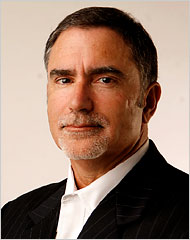
Local, independent, public interest journalism – which is what Warren Hellman sought to create by founding the Bay Citizen in 2009 – could be undermined by a proposed merger between that newsroom and the Center for Investigative Reporting (CIR) under the leadership of former San Francisco Chronicle Editor Phil Bronstein.
It is unseemly that Bronstein is claiming support for the idea from Hellman, who died in December, making comments to the Bay Citizen that misrepresent Hellman’s intentions. How do I know? Because I spoke with Hellman about his concerns about the Bay Area media landscape and what it needed several times before he announced its creation – a story that I broke on the Guardian website, scooping this incipient newsroom and others by a day.
“We’re forming a new media news center. Basically, it will be a not-for-profit 501c3 that will be source of Bay Area news,” Hellman said in that article. “It will focus on local news events, including politics and the arts, the kind of thing that is just dying at the Chronicle.”
That interview was a culmination of conversations that I’d had with Hellman on the subject for more than a year. He thought the Chronicle was doing a terrible job at covering the city – a legacy that began under the leadership of Bronstein, who was always more concerned with high-profile projects that might win awards and with expanding the paper’s reach and focus into suburbia than the bread-and-butter local coverage of issues and events that were important to San Franciscans.
In his comments to Bay Citizen, Bronstein (who has not returned our request for comment) cynically leaves the impression that Hellman would have supported his takeover bid, and that what he wanted was a combination of investigative reporting and quirky features like “Rascal of the Week, Crook of the Week, hilarious stuff.”
He might as well be describing the Chronicle, which was not what Hellman was seeking to duplicate. Nor was he pursuing the CIR model of using philanthropy and grants to fund journalism projects that would run in the Chronicle and other mainstream newspapers. No, what Hellman wanted was more media outlets with less dependence on advertising revenue, not to simply subsidize a newspaper that he thought was lacking.
Frankly, this whole proposal is very suspicious. Bronstein officially left Hearst Newspapers, which owns the Chronicle, just last month to play an unspecified new role at CIR, where he sits on the board. He and other Chronicle brass opposed and belittled the Bay Citizen when it was created, but since then, the Bay Citizen has been real bright spot on the local media landscape, often scooping the Chronicle on important stories that run in the New York Times, for which BC supplies content. And now, Bronstein wants to execute a deal that would potentially kill that competition.
I’m really not sure what’s going on at the Bay Citizen these days, or why all its top brass seems to be jumping ship. But it’s clearly not all bad. The departure of top executive Lisa Frazier – who consulted on BC’s creation and then gave herself a ridiculously high salary – seems like good news, at least for BC’s bottom line. I acknowledge that some kind of change might be needed.
But whatever happens, it should be about maintaining and improving strong local news coverage. The BC board only has one token journalist on it, and that’s not a good sign. CIR does good work and has a good journalistic ethos, but its board should realize that merging with BC (and cutting almost $2 million from their combined operations, as Bronstein is reportedly proposing) is bad for local journalism and bad for San Francisco.
Corporate journalism is the problem to which nonprofit journalism was the supposed antidote. That was Hellman’s vision. But we’re all in trouble if this experiment gets co-opted by a longtime Hearst company man, the very person who undermined local coverage and public interest journalism in the first place, a corporatist with a history of undermining competition with his illegal Chronicle-Examiner JOA, his backroom deal with Media News Group, and other bottom line tactics.
That’s bad enough, but to falsely invoke the spirit of the recently deceased to justify it, that’s just disgusting.
Some reality about the jobs report

The Obama Administration is thrilled with the new employment figures, and it’s clear the president will use this as a key part of his campaign (as long as the recovery keeps going and doesn’t sputter again). The Republicans, of course, are complaining that it’s not enough, that “we could do better,” but that sounds awfully hollow and fits into the narrative that the GOP doesn’t want anything to improve this year because the entire goal of the party is to defeat Obama in the fall.
But really, while it’s encouraging, the new unemployment figures are still bogged down by two things: The labor force is growing faster than the nation is creating jobs — and layoffs in the public sector are still a drag on the recovery.
There’s a pretty good analysis on DailyKos, talking about the labor force issue. But there’s more: Among people without a college education, the jobs picture is still really bleak. Same for people who have been unemployed for a while now and for youth. I could go on and on about the failure of trickle-down spending, but the reality is that the economy is still far too top heavy to all for a real recovery. Income inequality isn’t just a political and moral issue; it’s an economic downer. The U.S. economy depends overwhelmingly on consumer spending, and since all of the new new wealth of the past 20 years has gone to the very rich, most consumers don’t have enough money to spend enough to keep the economy buzzing. And a few new IPOs that make a few more people rich isn’t going to solve the problem.
Note that the one sector of the economy that is still losing jobs is government. That’s a result of low taxes that can’t fund public services (and can’t provide the generally decent unionized jobs, including jobs for people without college degrees, that exist in the public sector).
I was intrigued by the Congressional Budget Office report comparing federal and private-sector workers, which the Republicans (and, I’m sure, some of my beloved trolls on this blog) will use as evidence that government is bloated and public-sector workers are overpaid. But that’s not exactly what the report says:
CBO found that those without a college degree fared better as federal employees, since their pay was 36% higher than that of private-sector employees–particularly when it came to benefits. Those with advanced degrees such as doctorates, however, were generally better off in private industry, strictly from a monetary viewpoint–government pay was 18% lower than that of comparable individuals in the private sector.
In other words, federal pay is a lot more like the private sector used to be, back before the United States became one of the most socially stratifed societies in the developed world. The folks at the bottom do better, and the folks at the top don’t get as rich, and the gap between the highest paid and the lowest paid is a lot smaller.
Which is one reason that Republicans hate public-sector unions and government employment — it’s better for the 99 percent.
Sundance Diary, volume five: it’s Mark Duplass’ world, we just live in it
In a series of posts, Midnites for Maniacs curator-host and Academy of Art film-history teacher Jesse Hawthorne Ficks reports on the 2012 Sundance Film Festival. Check out his first, second, third, and fourth entries.
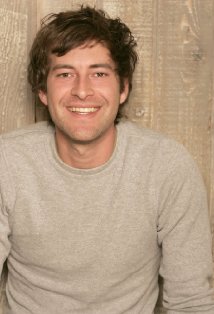
Colin Trevorrow’s quasi-romantic quirkfest Safety Not Guaranteed, which won the Waldo Salt Screenwriting Award, also achieved a near-miracle by coaxing smiles out of some of Sundance’s grumpiest audiences. Speaking of wonderfully grumpy, this movie stars Parks and Recreation fave Aubrey Plaza and Jake M. Johnson of The New Girl; their priceless personas are in big-screen effect as their characters hunt down a man who posted a classified ad in search of a time-travel companion.
What makes this film truly work is the sheer sincerity of Mark Duplass (as the would-be time traveller). His performance not only hilariously channels Michael J. Fox in 1985’s Back to the Future, but he genuinely achieves a level of poignancy that perfectly fits the film’s motif of loneliness. Safety Not Guaranteed looks to have the same mainstream crossover appeal that Miguel Arteta tapped into last year with Cedar Rapids.
The busy Duplass was part of two other films at this year’s festival, including Lynn Shelton’s pitch-perfect indie flick Your Sister’s Sister, the follow-up to her genre-defining bromance Humpday (2009). Depressed and confused 30-something Jack (Duplass, who is truly a master of casual awkwardness) heads off to a remote island to figure out where his life is headed. The only trouble: his best friend (a mesmerizing Emily Blunt) also has a lesbian sister (Rosemarie DeWitt) who is already on the island doing her own soul searching. With this contemplative, honest, and hilarious film, Shelton proves herself to be quite a splendid voice for our current generation of progressive pitfallers. Once again, Duplass brings a sensitivity to his modern-male roles that generations to come will still be deconstructing.
Duplass also wrote the screenplay for Black Rock, directed by (and starring) his wife, Katie Aselton (2010’s improvised marriage drama The Freebie). Easily the best entry in this year’s Park City at Midnight category, Black Rock is about three BFFs (Aselton, Kate Bosworth, and Lake Bell) whose weekend reunion on a remote island goes awry when they run into some … threatening situations. This tense, brilliantly revisionist genre flick manages to pave new roads for a genuine, even primal feminism long overdue in the horror genre. Let me be the first to put this on the same level as Neil Marshall’s The Descent (2005).
On Monday: Jesse Hawthorne Ficks takes on Sundance’s Dramatic Competition films. Oh, the drama!
A new district elections map
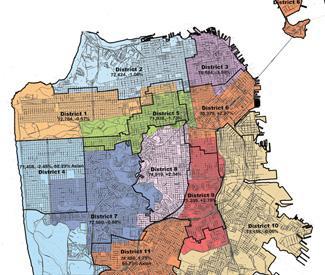
There’s only about a month left before the Redistricting Task Force starts to finalize a new map for supervisorial districts in San Francisco. You can look at the draft map the task force is working on here. The Guardian held a forum on the topic Jan 26 and that’s lead to an alternative community map, which is here. The group that worked on the draft community map is continuing to meet, and I’d love to hear more feedback on it. You can email comments to map@sfbg.com or just post them as comments here.
Breathe Owl Breathe’s newest project is a dark, DIY children’s book
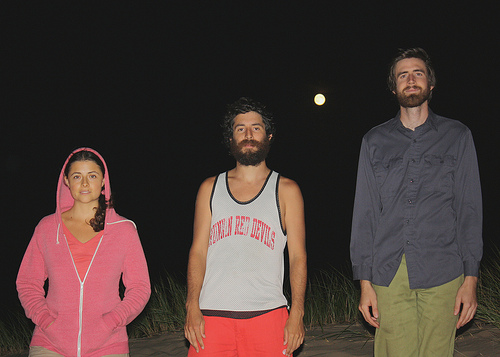
Breathe Owl Breathe, the ethereal, off-folk-band from the Lower Peninsula of Michigan, is on tour promoting its recent project, The Listeners/These Train Tracks — a children’s book with accompanying two-song record. Fans familiar with the band will not be surprised to hear it made a book for kids, or that the two stories are surreal and odd. The Listeners is about a mole and an ostrich – one blind, the other only technically a bird – that find each other in the darkness and form a band.
Fans will also not be surprised to find those darkly emotional sub-currents throughout — this whole project fits in perfectly with the persona of the band. Breathe Owl Breathe made its 2010 album Magic Central while holed up in a cabin in Michigan for the winter, and you can feel it. The album has an I’m-snowed-in-and-going-stir-crazy vibe.
And its live performances are just as interesting and weird, and for a folk band, conceptual — it’s borderline performance art (choreographed hand motions for their song “Swimming,” performed in animal masks). The band’s tour make a stop in San Francisco this Monday, Feb. 6 at Bottom of the Hill.
In a 2008 interview, Micah Middaugh, the band’s front person, likened Breathe Owl Breathe’s music itself to swimming. In a recent phone interview from Michigan, Trevor Hobbs, the percussionist, said their sound evolved to be more like adventuring: like “when you are stepping out to go cross-country skiing but you do not really know where you are going to go.”
This sort of childlike whimsy, a promotion of living and strangeness, is the hallmark of the band’s style, but it always seems to be cut with something dark, sometimes lyrics or melodies, sometimes images that populate its music videos. “Own Stunts” includes quick cuts of Andréa Moreno-Beals, cellist and singer for the band, outside in a nighttime snow being pulled into the shadows by the spindly branches of a tree.
http://www.youtube.com/watch?v=YTEkELB7mFk
The Listeners/These Train Tracks is both fanciful and eerie. It is also hand produced — Middaugh, the band’s singer and songwriter, over a three year period, wrote the stories that double as lyrics for the songs, drew the images, and carved them into wood blocks. The whole book is letterpressed and it’s made in Michigan, like Magic Central and everything else about this band.
While the book should pique the interests of the craft-focused, D.I.Y. artist, or anyone that likes kids books or indie-folk, it’s not targeted for any specific audience— it’s child-like, but the band is only performing at adult venues. “There are subtle tones of navigating through the world with people you love,” Hobbs said.
And expect Monday’s show to be high energy as the band is “inspired by artists that like to captivate the room,” Hobbs said. Middaugh introduced “Lion’s Jaw” at a festival in August by telling the crowd “so you are moving through life, and little do you know, you are being carried by a large lion.” He then asked everyone to feel the loose skin on the back of their necks where the lion picks them up. But “do not be afraid in the lion’s jaw,” he told the crowd.
Breathe Owl Breathe
With Laura Gibson, Morgan Manifacier
Mon/6, 9 p.m., $12
Bottom of the Hill
1233 17th St., SF
www.bottomofthehill.com