SFBG Blogs

Dick Meister: Sit down, punk!

1

By Dick Meister

Dick Meister, former labor editor of the SF Chronicle and KQED-TV Newsroom, has covered labor and politics for more than a half-century. Contact him through his website, www.dickmeister.com, which includes more than 350 of his columns.

I spotted a forgotten hero at the memorial service for SF labor leader Walter Johnson the other day, a true but largely unacknowledged hero of the anti-Vietnam War movement – Art Carter, former head of the AFL-CIO’s Contra Costa Labor Council.

The AFL-CIO, you might recall, was a major and outspoken supporter of that damned war which was waged as a key part of the Cold War against the Soviet Union.  The AFL-CIO held tenaciously to its unqualified support of the war, whether it was being waged by a long-time labor ally, Democratic President Lyndon Johnson, or by his anti-labor Republican successor, Richard Nixon.

It was in 1969, at the AFL-CIO’s national convention in Atlantic City, that Carter, a 28-year-old delegate, dared stand up to oppose a resolution unconditionally supporting the Vietnam War and the Vietnam policies of then-President Nixon, which delegates had loudly cheered when a guest speaker, Defense Secretary Melvin Laird, had spelled them out. The measure was presented by hawkish AFL-CIO President George Meany and ultimately opposed by only six of the 700 delegates – including, of course, Art Carter.

Much to the open disgust and anger of Meany and most delegates, Carter offered a substitute resolution that urged the AFL-CIO “to exercise all possible influence and persuasion on the national administration to effect an immediate major reduction of American military involvement in Vietnam and to bring the Vietnam War to a speedy end. “

Carter called his proposed measure  “a rather modest resolution” that came from his members – “working men whose sons have either just returned from Vietnam or who face going to Vietnam.”

He urged the AFL-CIO ‘s national leaders to take a critical look at the government’s Vietnam policies rather than “giving carte blanche to a president to do anything he regards as in the national interest.” Carter followed that with a proposed resolution condemning the Nixon administration’s Vietnam policies that got but one delegate’s vote – his.

Boy, did the stuff hit the fan, as I and other reporters from around the country rushed forward to question the young renegade from the Bay Area. It was big news, someone inside the AFL-CIO actually challenging the imperious George Meany, who was rarely challenged within labor circles.

Consider the situation. There was Carter, a delegate from a small, nationally obscure labor council, surrounded by hostile men at least twice his age and faced with the barely concealed animosity of a 75-year-old who was known nationwide as “Mr. Labor.” How dare Carter question Meany and the other labor elders?

 Meany, at the convention podium, snapped back at Carter immediately. He derided Carter and others who sought “peace at any price,” equated their suggestion for a reduction of forces in Vietnam with surrender and claimed that would result in “the kind of peace you get in the jail house.” Carter tried to respond, but Meany abruptly ruled him out of order, and Carter was forced to move away from the floor microphone and resume his seat amid noisy catcalls and angry shouts of “sit down! sit down!”

Carter was hardly a wild-eyed radical, just an intelligent young man of liberal bent calling for a peaceful solution to an ugly, futile war that had already left many Americans dead. Yet, he asked reporters, with an air of angry futility, “Did you hear what they called me?  Young punk, that’s what they said: Sit down, punk!”

Although Carter’s brave stand – and, believe me, it was indeed brave – didn’t directly alter the AFL-CIO’s war mongering, or that of others, it couldn’t help but have an impact on millions of Americans both inside and outside the labor movement.

 Just a few days after the AFL-CIO convention adjourned, as many as three million people in more than 200 cities took part in marches and other demonstrations to  demand immediate withdrawal of U.S. troops from Vietnam. It was the largest peace demonstration ever held up to that time.

Although the precise effect of Carter’s courageous stand is not clear, it undoubtedly did help inspire many others to openly oppose or at least seriously question the government’s Vietnam policies and pressure the AFL-CIO and others to at least tone down their support of the war.

In the context of the time, Art Carter’s was indeed a heroic act. Thankfully, today’s AFL-CIO leaders bear little resemblance to Cold Warrior Meany and his cohorts. The AFL-CIO’s current president, Richard Trumka, is an outspoken backer of the Occupy Wall Street Movement, for instance, as are many other AFL-CIO leaders and members who can cite Carter as an inspiration.

Dick Meister, former labor editor of the SF Chronicle and KQED-TV Newsroom, has covered labor and politics for more than a half-century. Contact him through his website, www.dickmeister.com, which includes more than 350 of his columns.

Appetite: Alchemical delights at Science of Cocktails 2012

2

Although the Science of Cocktails event may be on hiatus next year due to the Exploratorium‘s big move to the Embarcadero, this year’s party is worth highlighting. Attending since the inaugural event three years ago (check out my previous review here), I enjoy Science of Cocktails more each year.

I’m not sure if the new VIP area added much other than a bird’s-eye view from above with a few additional (but minimal) bites and drinks, the bulk of food being downstairs. Options were more enticing than ever in the ideal museum space, where one can interact with exhibits, kid-free, cocktails in hand. The cavernous space easily holds hundreds of people without feeling packed.

Drinks were poured by some of the Bay’s best bartenders and distillers, sporting white lab-coats, delivering concoctions from test tubes, beakers and hand-crafted contraptions. Cocktails were served in pre-bottled, liquid nitrogen, jello, even powdered forms. (Let us not forget the shiny, porcelain toilet spouting Speakeasy beer).

The biggest treat of the night was a special barrel from distiller Dave Smith at St. George Spirits in collaboration with bartenders Darren Crawford (Bourbon and Branch) and Russell Davis (Rickhouse). The three of them call the endeavor the Manhattan Project, a tribute to Frank Oppenheimer, founder of the Exploratorium — whose brother Robert was scientific director of the Manhattan Project that produced the first atomic bomb.

No bombs here. however. Only fine whiskey. Using St. George’s new Breaking and Entering Bourbon (B&E), the dynamic trio aged Manhattan cocktails with their own precise blend of vermouths (Punt E Mes, Dolin Rouge, Carpano Antica), serving a balanced, aged Manhattan. The unexpected came when they followed that up with a pour of B&E bourbon finished in the barrel used to age the Manhattan.

The first whiskey aged in a cocktail barrel, whispers of spice and bitters from the Manhattan up the B&E experience. This beauty won’t be for sale but you might just see the like of it at special drink events such as this.

My favorite cocktail of the night was Christina Cabrera’s (Michael Mina) Roses Foxtrot. Made with Four Roses bourbon, Calvados apple brandy, Gran Classico, Benedictine, Angostura bitters, and her own cardamom pear syrup and coffee tincture, the pièce de résistance was a thick absinthe foam and gently fried sage leaf Cabrera topped the drink with. Lush and light, the absinthe foam endowed a creamy crown and anise spirit to the cocktail. I could eat the foam and softly sugared sage leaves all on their own (and did). As a whole, the drink melded into a textural, breezy pleasure.

Other highlights included Jennifer Colliau’s (Slanted Door) mocktails using her own unmatched Small Hand Foods http://smallhandfoods.com/ line of gum syrups, grenadine and the like. Leave it to skilled hands to make some of the best drinks of a cocktail event sans alcohol (I was in love with her coconut water/orgeat drink).

It’s a long wait until 2014, but here’s to many more years of Science of Cocktails in the new Exploratorium.

Subscribe to Virgina’s twice-monthly newsletter, The Perfect Spot, www.theperfectspotsf.com

Presidio Trust gets sued — for good reason

14

The Sierra Club and the Presidio Historical Association have filed suit in federal court charging that the Presidio Trust violated environmental laws when it approved a new luxury hotel for the Main Post area.

The suit reflects the essential problem of the semi-private trust: When you force a national park to make enough money to pay its own way, and you stock the governing board with people who think like real-estate developers, then you create the near inevitability of serious problems.

The complaint, filed by lawyers at the Stanford Environmental Law clinic, argues that the construction of a 95,000-square-foot hotel, consisting of 14 buildings, “will degrade the historic, cultural, and aesthetic values and character of the main post, in direct violation of the duty imposed on the Trust by the National Historic Preservation Act.”

The suit also challenges the adequacy of the environmental impact statement the Trust prepared on the proposal.

The whole idea of a luxury hotel in an urban national park is a bit odd — but then, so is the idea of an 850,000-square-foot commercial office building owned by George Lucas’s outfit and built with a $60 million tax break.

That’s what privatization inspires. That’s why the entire foundation of the Presidio Trust and the law that created it are so fundamentally flawed.

In the meantime, we have this fancy hotel, which ought to go the way of the Fisher museum. It’s so clearly inappropriate for the site (which, by the way, is one of the most important historic sites on the west coast) that it’s hard to imagine how it got this far. (No it’s not — the Presidio Trust is a real-estate development outfit, not a national parks outfit. I keep forgetting.)

So now maybe this lawsuit will stop it in its tracks. Maybe at some point Congress will realize that national parks aren’t supposed to pay for themselves (shall we sell naming rights to the Grand Canyon to Disney?) and repeal the Presidio Trust Act. In the meantime, thanks to the folks who are trying to keep the damage under control.

Burning Man ticket fiasco creates an uncertain future

259

UPDATED WITH LLC RESPONSES BELOW   Is it the end of Burning Man as we know it? That’s certainly the way things are looking to thousands of longtime burners who didn’t get tickets when the results of a controversial new ticket lottery system were announced on Tuesday evening, particularly as big picture information emerged in online discussions yesterday.

[SFBG update: Will theme camps receive the remaining tickets?]

Personally, I was awarded the maximum two tickets I requested at the $320 level (my sister already claimed the other, so don’t even ask), but I’m feeling a little survivor’s guilt as I hear from the vast majority of my burner friends who didn’t get tickets. And if it wasn’t already clear that scalpers have effectively gamed the new system, that became apparent yesterday when batches of up to eight tickets were listed for as much as $1,500 each on eBay and other online outlets.

As I’ve attended Burning Man since 2001 and covered it for the Guardian and my book, The Tribes of Burning Man, I’ve become involved with many camps and collectives over the years. So over the last couple days, I’ve been privy to lots of online discussions and surveys, and it appears that only about a third of burners who registered for tickets actually received them (organizers have refused to say how many people registered for the 40,000 tickets sold this week, so it’s tough to assess whether scalpers were more effective than burners at buying them).

The huge number of burners without tickets is a big problem for theme camps and art collectives that rely heavily on their members to pay dues and work long hours to prepare often elaborate camps, art cars, or installations, some of which are now in doubt. Many people are so frustrated that they’ve pledged not to attend this year, and even those of us that did get tickets are questioning whether we want to go if some of our favorite people aren’t – particularly if they’re replaced by rich newbies willing to spend a grand on a ticket.

Theme camps are the basic building blocks of Black Rock City – a central tenet of my book and regular claim of event organizers – and the work they do to build their camps and plan fundraisers to pay for them has already begun, only with far more uncertainty than usual this year. And that will also exacerbate a tension that already exists between grant-funded art projects (which usually get free tickets for their volunteer builders) and big camps that don’t qualify for tickets, such as sound camps or independently funded art projects.

For now, most burners seem to be willing to wait a beat or two – as Black Rock City LLC is urging, a message that I willingly helped disseminate and that I support – to see whether enough extra tickets purchased by community-minded burners are offered for sale at face value using an aftermarket ticket exchange the LLC is hurriedly setting up right now. Some camps and projects have created internal ticket exchanges to try to take care of their own first. And there’s still the secondary ticket sale with the last 10,000 tickets coming on March 28.

But the frustrations are palpable, and there is widespread concern that Burning Man has jumped the shark and will be changed by the series of official missteps in the last year. Dozens of people have independently asked why, after the event sold out last year and scalpers made a killing, the LLC didn’t require each ticket to be registered to an individual and transferred only through a regulated aftermarket system, which would prevent gouging by scalpers. I’ve asked organizers that same question each of the last two years, and I was only told that it seemed like too much trouble and that things would work out.

Well, most burners don’t think things are working out very well. Many are still willing to wait and see, and this certainly is a resourceful community, so perhaps things seem more bleak now than they will in a month or two when playa preparations really kick into gear. But if not, the LLC could be facing a real crisis of confidence in its leadership of an event that we all help create, and perhaps even an open rebellion of its core members.

Many longtime burners are already making other vacation plans for this year, some are even pondering plans to create alternative events, and there are a significant number of them who have tapped the spirit of these political times and suggested it’s time to “Occupy Burning Man” or “Occupy Black Rock City.”

Whatever happens, the Year of the Dragon seems to have brought with it the old Chinese proverb: may you live in interesting times. I’ll continue covering new developments in this most interesting of years, so stay in touch.

Sincerely, Scribe

UPDATE (5 PM): LLC board member Marian Goodell just returned my call and said the organization leaders huddled up today to work on solutions to problems raised by the ticket shortfalls. “We’re genuinely really putting our heads together today. We’re listening, we really are,” she said. “It’s very real for us, I get it.”

She recognizes that it’s a big problem for established theme camps and art collectives having tickets for only about a third of their members, a figure that she also confirmed. “It’s clear that the theme camps and art projects are a significant part of the community, and this situation is causing problems for them,” she said. “That’s the part that will hurt us if we don’t take another look at this.”

Goodell also acknowledges that it doesn’t appear there are as many tickets available within those established burner networks as she had hoped would be the case: “I doesn’t look like camps are sitting on a lot of tickets.” But she also said that she doesn’t think the lion’s share went to scalpers. “We don’t think there are 10,000 people out there looking to scalp tickets,” she said. “Putting them up for sale is not the same thing as them being sold.” She reiterated her appeal that people don’t use scalpers for tickets but wait for community-based sources and solutions.

But Goodell said it was too late to re-do this week’s lottery — “not possible,” she said — even though the physical tickets won’t be mailed out until June. She said the LLC has divided up information-gathering tasks now and will regroup soon to decide how to proceed, with options including tweaks to the rules for the March 28 ticket sale or working with the BLM to bump up the population cap, an option that would raise other problems.

“We have many different challenges: scalping, community development, and population,” Goodell said, reiterating her concern that increasing the population would make logistical problems like the long exodus wait even worse. But whether that’s even a possibility will depend on the Environmental Impact Statement that is expected to be completed in March.

The Performant: Strangers in a strange land

0

Dan Carbone and Kitka resculpt old terrain

From the dark corner of the stage throbs the low rhythm of a skin-clad, Celtic-style drum and the strum of acoustic guitar, while in the light a man clad in a white dress shirt sways in hypnotic time, eyes shut tight, arms flung wide. “Sleeping, sleeping,” he croons softly, “I’m only sleeping.” Still swaying, he begins to tell the tale from the beginning, about a little baby boy whose “brain is knitting itself in an unusual way.”

You’d be forgiven for thinking in this first moment that the man is speaking of his own infancy, after all, brains don’t come knit much more unusually than that of East Bay-based avant-gardian Dan Carbone. But the infant’s name is not Dan’s, and though his brief and tragic backstory reverberates through much of the rest of the play, the infant soon yields the spotlight to his younger brother, the creator of the piece, “Father Panic,” which made its stage debut at the Garage on Friday. 

Although “Father Panic,” is indubitably Carbone’s most autobiographical work, a fretful monologue about a precocious childhood both hideously warped yet strangely innocent, familiarly eccentric, flourishes abound throughout. Puppets, poltergeists, twisted songs that expose the tortured inner monologues of the characters to the surface, a live video installation curated by Philip Bonner (a.k.a. Bulk Foodveyor) of childhood detritus and memory bank fodder.

Catherine Debon takes a turn as television-land language teacher, who translates self-loathing lyrics such as “maybe we can hate ourselves together,” into mellifluous French. And instrumentation is handily provided by swampabilly guitarist Andrew Goldfarb, who comprises, with Carbone, the performative music duo The Wounded Stag. But the unacknowledged star of the show is probably Carbone’s mother, who gradually takes over the piece, a raw bundle of outré obsessions and an embattled nature, the very embodiment of a stranger in a strange land — like a Raëlian without a cause, or an aquatic African frog in a solitary tank.

***

The mountains of Serbia, and a vocal tradition almost unknown this side of the “pond,” lie thousands of miles away from the basements of Connecticut. But an intriguing collaboration between Kitka, Oakland’s premiere ensemble of acapella Eastern European music and Svetlana Spajic, a renowned Serbain folk singer, brought that faraway land to stirring life during a two-part concert staged over the weekend at CounterPULSE.

After a video of venerable vocalist Jandrija Baljak teaching his technique to Spajic’s homeland ensemble, the concert began in earnest when Spajic took the stage. Dressed in Sunday best attire suggesting a peasant en route to Ellis Island circa 1914, Spajic’s passionate ululations did little to dispel the sensation of being transported backwards through time and space. Joined in the second half by Kitka, the remaining songs were characterized by an almost medieval lack of vibrato and elongated interludes of dissonant voice-bending harmonies. Even when comprehension of the lyrics was impossible, the music tapped into a complexity of almost primal emotion—though some slyly inserted San Francisco-centric lines did bring us briefly back to home before we were whisked once more into the territory of the unfamiliar by our fearless musical guides.

Sundance Diary, volume four: more docs!

0

In a series of posts, Midnites for Maniacs curator-host and Academy of Art film-history teacher Jesse Hawthorne Ficks reports on the 2012 Sundance Film Festival. Check out his first, second, and third entries.

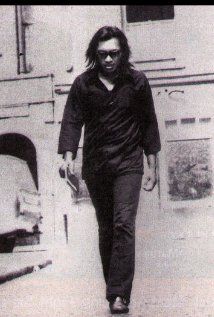
Winner of both the World Documentary Audience Award and the Special Jury Prize for its celebration of the artistic spirit is every musicologist’s dream film: Malik Bendjelloul’s Searching for Sugar Man. This larger-than-life tale is about obscure Detroit singer-songwriter Rodriguez, who created two brilliant albums, Cold Fact (1969) and Coming from Reality (1971), which some have compared to Bob Dylan’s greatest works. Yet virtually no one bought either of the records … except South Africans. The film reveals a fan base of millions, comprised of multiple generations who have viewed Rodriguez’s songs as political anthems for 40 years. And that’s just the first 15 minutes of the film!

Rodriguez’s lyrics and lifestyle celebrated a working-class hero mentality that seems to be as precious as the songs themselves, and Benjelloul’s film about his impact on a seemingly far-removed audience is a standout. But here’s a warning: be careful while reading any reviews of this film before you see it! Every single critic I’ve read has spoiled major dramatic points in the film, so try your best to catch it before you come into contact with any spoilers.

A few more for your doc queue:

The makers of 2006’s Jesus Camp, Heidi Ewing and Rachel Grady, picked up the U.S. Documentary Editing Award for their latest, Detropia. It poetically unearths a hopeless, dying city using beautifully dramatic storytelling, though the film itself feels a bit unfinished towards the final act. Kristi Jacobson and Lori Silverbush’s Finding North takes on hunger in America; many left the film wondering how they could take action to help ease the epidemic. David France’s superb How to Survive a Plague, about AIDS activists in the late 80s, left me and quite a few other critics totally devastated. France’s film is truly an emotional equivalent to last year’s U.S. Documentary Grand Jury Award winner about assisted suicide, How to Die in Oregon. This year’s World Cinema Documentary Editing Award went to Lisanne Pajot and James Swirsky’s Indie Game: The Movie, which follows a group of independent video game designers pouring a psychotic amount of hard work into their creation, Super Meat Boy.

But the most memorable among this year’s crop of socially-aware docs was Lauren Greenfield’s Queen of Versailles, which won the U.S. Directing Award for Best Documentary. The film follows an uber-rich U.S. family whose lavish lifestyle is slowly being toppled by the current recession. The inverted journey invites audiences to begin by scapegoating the couple (as it happens, the paterfamilias, David Siegel, is suing Sundance and the filmmakers for defamation). But as things onscreen turn sour, director Greenfield masterfully brings things back around, holding up a culture-of-entitlement mirror to the audience. This film stuck with me for days after the screening.  

Coming up next: Jesse Hawthorne Ficks on Sundance’s midnight movies (duh), and more!

Santorum lives for donuts and venison

0

I love Bad Lip Reading. And the Rick Santorum ad is the best one ever.

We are all homosexuals.

The big fat chick stunk … like beef.

I hold it like it’s a fancy fist for joy.

I had some porn, and I swore, and some weird witch gagged me.

I’m living for donuts and venison.

The first time I drank I had my shoes under my arm.

Diarrhea is OK.

Check it out.


Gavin Newsom (suddenly) cares about economic justice

37

I was eating my (late) breakfast as I was listening to Gavin Newsom on KQED’s Forum this morning, and at first it was just the usual lofty rhetoric about education … and then Michael Krasny asked the lieutenant governor about the Occupy movement, and I almost threw up my whole wheat bagel and peanut butter.

Cuz Gav — the mayor who would never even consider asking the city’s wealthiest to pay more taxes, who ran for governor and then lite gov on a platform that he’d balanced the city budget without raising taxes, the guy who was a great friend of the city’s 1 percent, had the nerve to sing the praises of Occupy and complain about economic injustice.

Seriously: Gav ranted on for about five minutes about how low the taxes are on rich people. He announced that his company just set up a new winery and hired a bunch of people — and taxes were never an issue. He acted like someone who reads my shit.

One of the messages of Occupy — and one of the reasons that the movement exists not just in Washington and Manhattan but in cities all over the country — is that economic injustice needs to be addressed everywhere. It’s not just about the Bush tax cuts or even Jerry Brown’s tax-hike initiative; it’s also about local government trying to address the wealth and income gap and the impacts of 1 percent domination — at home.

Gavin had seven years to do that. He didn’t even try. Worse, when the progressives on the board tried, he’d veto anything that remotely smacked of a tax hike on the rich or a way to force the 1 percent to share the wealth with the 99 percent. (Does anyone think he would have allowed Occupy to stay at Justin Herman Plaza as long as Ed Lee did? Not a chance.) Now he wants to take advantage of the popularity of the movement for his own advancement.

Fucking sick.

America’s cup: What does Larry get?

8

The development agreement for the America’s Cup comes out next week, although the project is already under way. But there’s some concern that the number of visitors (and thus the revenue to the city) might not be as high as projected.

The project EIR is more conservative about the possible number of visitors than city officials had been at first, and now the Bay Citizen reports that “doubts are growing about the number of spectators who will actually come to the city this year and next.” Apparently the prelims in San Diego have been a bit of a bust — and there aren’t as many teams signing up for the challenge.

So here’s the question: If the city winds up taking in less money than expected, does Larry Ellison take a bath, too?

Of course, it’s not that simple: Ellison’s getting a lot from the city, but it’s not based on any revenue the city will get from the cup; it’s based on the investment he’s putting into the port. He’s getting a sweet deal from San Francisco — way too sweet in my mind. The guy’s the sixth-richest person in the world; he doesn’t need all the goodies the city’s handing over, and I’m not sure I want the arrogant, aggressive CEO of Oracle determining the future of a large part of the San Francisco waterfront. But in theory, since he’s renovating property that’s falling apart, he gets something in return.

And, as Jane Sullivan, the spokesperson for the America’s Cup project at City Hall, points out, the fewer the visitors, the lower the city’s costs.

She also told me that “we don’t think the number of competitors will affect the number of visitors,” which is probably true — people will come for the spectacle, and Oracle will hype it beyond imagination, and nobody knows who any of these other teams are anyway. (The one team that might have gotten some press, aside from Oracle, wasn’t allowed to put in an application.)

But here’s the thing: This entire project, and the motivation to give Larry Ellison a bunch of really valuable city property, was the economic impact the cup is supposed to have on the city. The Mayor’s Office has been throwing around numbers like $1.4 billion in economic impact — that’s new jobs, full hotel rooms, packed restaurants, spillover employment benefits — and, of course, more tax revenue to the city coffers.

What it we give away the store to the Oracle pirates and we wind up getting a lot less money than we were hoping for? Nothing against the Cup; I love boats, and I love a big party (although I try to make sure that when the party’s over, I’m not completely broke). But it seems to me that the city’s the only one taking the risk on the downside. Larry gets everything he wants no matter how this all turns out.

We won’t know all the details until we see the agreement, but am I the only one worried about this?


But doubts are growing about the number of spectators who will actually come to the city this year and next to watch the races of experimental catamarans. Preliminary races held on 45-foot vessels in San Diego and elsewhere are failing to attract expected crowds or sponsors.

Source: The Bay Citizen (http://s.tt/15upW)

Hot sexy events: February 1-7

0

(Insert “saddle friction” joke here.) At the risk of sounding like an episode of Portlandia, we are stoked for the Bike Smut Film Festival, which rides in for its second SF showing in two weeks – the first took place at Bayview’s Cyclecide Swearhouse last weekend – on Fri/3. 

Bike smut: people having sex on bikes, sex with bikes, sex with bikes watching – surely there will be bike couplings in there somewhere (a handlebar penetrating a spoke, well greased). This incarnation of the fresh-from-touring-Europe show has an Oregon Trail theme. Yes, we know you loved that game in elementary school. You know who else did? Everyone.

Anyways, the whole shebang rolls into the art collective OffCenter on Divisadero Street this Friday, led by one-time Lusty Lady dancer and full-time bike slut Poppy Cox and that saint (as ordained by the Church of Bicycle Genius) Reverend Phil. It sounds like it’s gonna be a good time. 

Bike Smut Film Festival

Fri/3 7-10 p.m., $7

TheOffCenter

848 Divisadero, SF

www.bikesmut.com


“From the Collection of Larry Townsend” ongoing art exhibit

I was recently at the premiere of Priscilla Bertucci’s [SSEX BBOX] global sexuality documentary at the Center for Sex and Culture, but I kept looking at the walls. Not because the film wasn’t rad (it was!), but because of all the amazing comic-style drawings of Roman orgies, space orgies, and orgy-orgies currently occupying the sex-positive community center’s walls. I have Larry Townsend to thank for this, and you can too if you head down to the comfy library space of the Center for Sex and Culture, which is adding Townsend’s treasures for a spell to its perma-exhibits of antique vibrators and shelves of queer and sex-positive literature.

Through March 30

Center for Sex and Culture

1349 Mission, SF

www.sexandculture.org


Hard French Winter Ball

Few nights of our lives can match the high-pitched hormonal rush that was high school prom. Outfit agony, whose-your-date torture, the shoes, the corsage – foreplay from hell, really. How could you have known that years later you’d be trying to recreate that same special freak-out with a slutty queer soul party on the Santa Cruz Beach Boardwalk? El Rio’s favorite afternoon dance party takes to the road for the second year in a row this weekend, with Juanita More and the House of Salad drag beauties in tow (check the candidates for the ball’s king and queen, adorable). Will the town of Santa Cruz be the same after tulle-and-tux-encased queers occupy the beachfront? Reserve your hotel room now and pack protection because: no.

Sat/4 7 p.m., $20-$25

Cocoanut Grove

400 Beach, Santa Cruz

hardfrenchwinterball.eventbrite.com


“Bros Before Hos: Masculinity and Its Discontents” film festival

C’mon men, look at yourselves. No really – though masculinity studies is often the subject of yucks and early 1990s primal scream mock-ups, men really don’t get the magnifying glass treatment when it comes to their sexuality. Not so at this film series orchestrated by YBCA – from the story of truck-lifting strong man Stanley “Stanless Steel” Pleskun to a collection of ’20s-’70s stag films, the meat of menfolk (c’mon, not just that part) will be offered up as prime conversation-starters. Today, a look at boundary-pushing filmmaker Bob Mizer of the Athletic Model Guild.

Festival runs through Feb. 26, $8/screening

Sat/4, 7:30 p.m.: The Golden Age of the American Male: Films From Bob Mizer’s Legendary Athletic Model Guild 

Yerba Buena Center for the Arts

701 Mission, SF

(415) 978-2787

www.ybca.org


Good Vibes’ “Ask Our Docs: Intro to Anal Play”

It’s okay not to know about anal sex, Good Vibrations says. So okay, in fact, that the sex toy company is offering this completely free primer on how to get primed, taught by Charles Glickman, that man-about-sex-education-classes-in-town.

Tue/7 7-8 p.m., free

Good Vibrations

3219 Lakeshore, Oakl.

(510) 788-2389

www.goodvibes.com


Reggie Watts melts minds at SF Sketchfest’s Reggidency kickoff

3

“Welcome to [SF] Sketchfest,” Reggie Watts said, in what appeared to be his natural voice, “it’s going to be a big night for all of you guys.” The first night of his four-part “Reggidency” at the comedy festival was billed as being Just the Music but from before Watts took the stage at Yoshi’s SF – giving himself an introduction from behind the the curtain and then launching into a series of characters that wavered from pseudo-unintelligible to borderline familiar (Japanese? Jesse Jackson? Vallejo-ean?) – it was clear that label was Just a Guess.

To SF Sketchfest’s credit, it did mention that the series would be “unpredictable,” a label that gets applied to Watts’s work quite often. A week earlier at the same venue, I saw R&B singer Bilal perform with saxophonist Gary Bartz, and was struck by the vocalist’s ability to pull any sound out at any moment. You never quite knew what was going to come out of his mouth next, and when it came to comedy as well as music, the same seemed true with Watts. Whether beat boxing or mimicking Rihanna and Calvin Harris’s “We Found Love”, Watts did it with carefree, child-like playfulness, assuming that the kids were preternaturally versed in musical genres like house, soul, jazz scatting, grime, dub, and hip-hop.

The music came either with long, encyclopedic explanations of what the song was about – the sort you’d expect from an overzealous rock star – complete with huge contradictory elements, or ridiculous contextualization. One song was said to be appearing in the forthcoming video game Spore 3: Spored to Death, about “a microbe who lives in Williamsburg and really wants to be a detective,” while another was “originally for Tron: Legacy, but they ended up not using it because Daft Punk had it covered.”

As you might expect, the actual songs – consisting of keyboards and Watts’s mesmerizing vocally based looped beats – were their own punchline that had nothing to do with the set-up. One stand-out, a cautionary tale of sorts, about how “not every psychotropic substance is for everyone” was suitably trippy, with Watts creating layers of whiny back-up singers saying “oh yeah, I don’t feel so good” as he also dispensed common sense advice, such as “take a nap.” A soft love ballad pushed to the point of inaudibility warned of sentimental organ harvesting, while other tracks, almost entirely instrumental, showcased a technical skill that hid behind Watts’s bumbling physicality.

Most comedy can’t be condensed, and that’s extremely true of Watts’s output. Where other comedians struggle with transitions, he’s taken them out of the equation, as his characters – built as much upon vocabulary as tone and cadence – morph into one another with little more than a change in accent mid-sentence. (At one point Watts did an Oxfordshire boy doing a witch doing a bad “Kumar” – basically Indian Bill Cosby – and a little, probably unimportant piece of my mind broke.) During the space between songs – which was really the bulk of the show – he proved himself the king of the rambling narrative. If the show seemed short, it was only because of the near relentless pacing. No clear line between his music and comedy, the show was Just Reggie, which by itself is a lot to unpack.

The Reggidency continues
With Garfunkel & Oates
Feb/1, 8 p.m., $25
Mezzanine
444 Jessie, SF
www.mezzaninesf.com

Sundance Diary, volume three: docs!

0

In a series of posts, Midnites for Maniacs curator-host and Academy of Art film-history teacher Jesse Hawthorne Ficks reports on the 2012 Sundance Film Festival. Check out his first and second entries.

Jeff Orlowski’s Chasing Ice, which won this year’s Excellence in Cinematography Award for a U.S. Documentary, manages to sidestep the frivolous argument between liberals and conservatives as to whether or not the polar ice caps are melting. In fact, this beautiful documentary is so jaw-droppingly visual, you end up interacting with and understanding the planet’s ice structures as if they were your own grandparents. Trekking out to the furthest spots in the Northern Hemisphere, National Geographic photographer James Balog, his hard working-crew, and director Jeff Orlowski have created a document that will force the world to actually see what is happening as opposed to arguing assumptions. What I found even more unnerving is how beautiful I found crumbling ice caps to be. Am I part of the problem?
 
Doc fans will recognize the name Kirby Dick; his previous works include This Film is Not Yet Rated (2006), which exposed the MPAA (the highly-secretive, surprisingly small group which has been censoring cinema since 1968), and his controversial 2009 film Outrage, which aggressively outed closeted gay politicians who have and continue to vote against gay rights.

http://www.youtube.com/watch?v=1ifc_ongQFQ

At this year’s fest, Dick picked up the U.S. Documentary Audience Award for his latest disturbing documentary, The Invisible War. The film launches a massive exploration into the epidemic of rape in the US military, and the unbelievable actions taken within the system’s hierarchy to cover it up. It is utterly awful to realize that there are thousands of women and men who have been violated, humiliated, and robbed of justice, all while serving their country. You will leave this film a changed person.

Movies about artists always have the possibility of turning into an extended commercial — which isn’t necessarily a bad thing; it’s just important to not lose sight of that. Two documentaries from last year’s festival, Richard Press’s Bill Cunningham New York and Ricki Stern and Anne Sundberg’s Joan Rivers: A Piece of Work, highlighted not just the artist but managed to achieve something much deeper and more profound. This year, Matthew Akers’s Marina Abramović: The Artist is Present was similarly able to uncover something extremely haunting and even beguiling about its subject.

Abramović, one of the godmothers of performance art, is brilliantly shown to be audacious, committed, and finally successful, yet totally alone. This beautifully-constructed piece knows that what we are really dealing with is a person who wants to connect with every single other person on the planet. Abramović’s art is her life, and Akers’ film practices what its subject preaches by exporting her message to moviegoers, enabling her to touch even the people that she doesn’t come into direct contact with. Easily the best documentary of the Sundance Film Festival, it’s also an early contender for best doc of 2012. 

Up next: Jesse Hawthorne Ficks reports on even more docs!

3 recipes for a (booze-filled) vegan Super Bowl

3

Leaving aside the fact that the Niners will not be playing in it, Super Bowl 2012 is shaping up to be a helluva game. For one, you’ll be able to get your play-by-play commentary from polar bears, corporate trickery though it may be. Two, the Bay Area will not be subjected to dead fetus ads at half-time. Three, Madonna’s probably bringing M.I.A. and Nikki Minaj to whatever color of glitter explosion halftime will be. Four, you will undoubtedly have the opportunity to gorge yourself on salty snacks, cold beers, and hearty stew, all of the above because we live in Amurrca and that’s how it works. 

Yes vegans, even you! John Schlimm, author of the Tipsy Vegan (Da Capo, 176pp, $17)— which we reviewed in this winter’s Guardian Books Issue — was good enough to share with us some recipes for a nice little lineup of vegan Big Game treats, including whiskey-specked hot-to-trot peanuts, aforementioned hearty veggie-and-beer stew, and a prescription for guacamole that necessitates tequila. See that? Each of Sclimm’s dishes are not only animal product-free, but also embued with that lifeblood of all vegans, alcohol. Sure, not all vegans booze, but don’t tell that to the denizens of the monthly SF Vegan Drinks because those kids get some serious networking done over happy hour. Are you ready for some cow, pig, chicken, and fish-free football?!?!!? 

(all recipe descriptions are Schlimm’s)

Flaming Hot Peanuts

For those who like it hot, you’ve come to the right place. Have a fire extinguisher (or, in tipsy vegan speak, a cool cocktail) on standby and open your hatch for these blazing little dazzlers, which have been paired with a few swigs of whiskey. But, if you must, you can control the heat in this zippy snack by selecting bottled sauces with less flame. Though I plead with you to have a heart — this recipe is really intended for adventure seekers who like their kissers ignited with flavor.

2 pounds dry-roasted, salted peanuts

1⁄8 cup Tabasco sauce

1⁄8 cup peanut oil

Juice of 1 lime

1 teaspoon sugar, or 2 teaspoons prepared sweet red pepper relish

1/4 cup bottled crushed jalapeños, drained

3 tablespoons whiskey

8 droplets of liquid smoke (optional)

Other hot sauces of your choice to make 1 cup of liquid (or mild sauces for a little less kick)

Pour the peanuts into a large, resealable plastic bag. In a 1-cup glass measure, blend the remaining ingredients.

Stir the mixture thoroughly and pour over the peanuts, seal the bag, and squeeze it to mix thoroughly.

Marinate the peanuts overnight in the refrigerator, turning the bag a few times.

Preheat the oven to 250°F. Line a baking sheet or jelly roll pan with parchment paper. Spread the peanut mixture evenly over the sheet. Roast slowly for 2 to 21/2 hours, stirring every half hour.

Turn the oven off, and let the peanuts rest in the closed oven overnight to dry out.

Store in airtight container(s) lined with paper towels.

Yield: 2 pounds hot peanuts

Note: begin the recipe two days before you want to serve the peanuts.


Tequila Seduces Guacamole

What would guacamole be without a tequila chaser? ¡Ay caramba! Luckily for us, with this recipe we’ll never again have to ponder that terrifying question. Share the love and mix a few tablespoons of the lively spirit directly into this classic south-of-the-border dip. Just beware the fire hazard: when adding the jalapeños, carefully taste a slice to determine the sizzle factor, which can vary wildly. as for the limes, usually the smoother the skin, the juicier the lime.

3 ripe Hass avocados

1/4 cup fresh cilantro leaves, nicely chopped

1/2 medium red onion, diced

1 to 3 jalapeños (depending on your heat preferences), stemmed, seeded, and finely diced

Juice of 1 lime, about 3 tablespoons

2 to 3 tablespoons good tequila

1 teaspoon salt

1/2 teaspoon pepper

lightly warmed tortilla chips, for serving

Halve the avocados and remove the pits by whacking them with a knife blade and twisting them out. Use a spoon to scrape the avocado flesh into a large mixing bowl and mash with a fork just until chunky. Add the cilantro, red onion, jalapeños, lime juice, tequila, salt, and pepper and combine with the fork. If the mixture seems too thick, add a bit more tequila. Serve at room temperature with plenty of warm tortilla chips.

Yield: About 2 cups


Bottom’s Up VegeBean Stew

Served warm on a snowy Sunday or chilled on a hot summer afternoon, a good basic golden lager or dark beer of choice tops off this festival of vegetables and beans, infusing the ingredients with the hearty twist and twang of earthy hops. also, feel free to roll out a barrel of your own homebrew or favorite fresh ingredients, making this dish a true original every time.

1 (14 1/2-ounce) can cut green beans

1 (15-ounce) can black beans

1 (15 1/4-ounce) can corn

1 (15-ounce) can light red kidney beans

1 (15 1/2-ounce) can pinto beans

1 (15-ounce) can green and white lima beans

1 (14 1/2-ounce) can green and shelled beans

1 quart (14-ounces) regular V-8 juice

1 (7-ounce) can peeled and chopped green chiles

2 (16-ounce) bags frozen stir-fry vegetables (thawed)

1 small head cabbage, chopped

1/4 to 1/2 cup chopped fresh chives

2 to 4 (or to taste) tablespoons barley

3 tablespoons (or to taste) minced garlic

Season salt (to taste)

Garlic salt (to taste)

1 (12-ounce) bottle lager or dark beer (preferred) of choice

In a large pot, combine all the ingredients, except the beer. Cook, covered, over medium heat for 21/2 to 3 hours, until the vegetables are soft. Slowly pour the beer into the pot about 45 minutes before serving. Simmer until ready to serve.

This is a very versatile dish. Feel free to experiment by adding other beans, vegetables, or seasonings (i.e., crushed red pepper flakes, vegan Worcestershire sauce, hot sauce) of choice. There is even a variety of V-8 juices, including a “Spicy Hot” version, that could each add a really unique kick to the stew.

Yield: 12 to 15 servings.

Castro plaza bill passes, 6-5

10

The Board of Supervisors has passed a watered-down version of Supervisor Scott Wiener’s legislation to prevent camping and sleeping in Harvey Milk and Jane Warner plazas, with Supervisor David Chiu  casting the swing vote.

The bill passed 6-5 after an amendment by Chiu that stripped the bill of a provision which would keep shopping carts and other “large wheeled conveyances” from entering either plaza. But initial reactions among opposition activists has been mixed.

“I think it’s fair to say that Supervisor Chiu gave an elegant compromise with his amendment… It’s very polarizing legislation within the LGBT community,” said long-time LGBT activist Gabriel Haaland. Haaland, who added that he would not have voted in favor of the legislation, said many were concerned about the impact it might have on homeless LGBT youth.

Likewise, Bob Offer-Westort, an activist with the Coalition on Homelessness (CoH) who was arrested Friday night after pitching a tent in Jane Warner Plaza, expressed his satisfaction with today‘s decision, saying the supervisors removed the most controversial aspects of the legislation while applying the Parks Code, which imposes less onerous obligations on those subject to citations.

However he tempered this by saying, “it’s still still onerous and bad policy to use the criminal justice system to address homelessness. …I am very glad that supervisors who were concerned about the targeting of homeless youth took a moral stand today.”

Tommi Mecca, an activist with the San Francisco Housing Rights Committee, was training new activists and had not been able to watch the board vote,, but said that he was disappointed that the legislation passed at all.

“My initial reaction is that it’s sad we have to have regulations at all. Especially in Harvey Milk Plaza. Harvey Milk Plaza is a symbol for the LGBT community… it was just a fun, free place,” Mecca said.

“I don’t think it should be illegal to sleep in a public place. If there’s an earthquake, people think it’s fine to sleep on the street. But being homeless is a crisis too. Public space should be public… The reality was that we did not have a sixth vote to kill it.”

Localized Appreesh: Ash Reiter

0

Localized Appreesh is our weekly thank-you column to the musicians that make the Bay. To be considered, contact emilysavage@sfbg.com.

Call it youthful summer abandon or fresh-baked pop, but there’s something about Ash Reiter’s song and Perez Bros-directed video “Heatwave” that melts the ice of a chilled and cubed SF day. Whether it’s the the lilting melody, surfy plucking, stoop sing-along, or the perfectly-cast ice cream man offering up too many dripping frozen treats, it’s hard to wipe that sticky grin off your face. That is, until you see the ice cream man’s crestfallen face, realizing it’s just too much sugar.

Fun fact: Ash Reiter is both the cheery lead singer/elementary school music teacher, and the eponymous band name. The indie pop five-piece has played with MGMT and been featured on Daytrotter, released the Heatwave EP late last year and followed that up with Christmas in California. About to embark on a Pacific Northwest tour, Ash Reiter will celebrate its return to SF with a Noise Pop show Feb. 21 at Bottom of the Hill. But before all of that, a stop at Amnesia this week.

http://www.youtube.com/watch?v=1l26Z6BLirU

Year and location of origin: 2008 in the East Bay.

Band name origin: My mom and pops gave it to me. In college my band was called Drunken Boat (like the Rimbaud poem) but another band by the same name started hassling me about so I decided to just go by my own name.

Band motto: What would Paul McCartney, Bryan Wilson, The Strokes, Feist, Grizzly Bear, The Talking Heads, or Jolie Holland do?

Description of sound in 10 words or less:
Sunny intelligent retro indie pop with a folk twist.

Instrumentation: Ash – guitar, vocals, Will – drums, vocals, Drew – guitar, Scott – bass, Anthony – keys, vocals

Most recent release: Six song EP – Heatwave. Plus we’re mixing a full-length called Hola right now.

Best part about life as a Bay Area band:
I’m from here but I’m always discovering new places and people. I like living close to my nana.

Worst part about life as a Bay Area band: Touring – you have to drive so far to get to the next big city- it’s not like East Coast where you can pop from city to city.

First record/cassette tape/or CD ever purchased
: Prince’s Batman Soundtrack.

Most recent record/cassette tape/CD/or Mp3 purchased/borrowed from the Web: St Vincent – Actor is my latest purchase and obsession.

Favorite local eatery and dish: House of Curries – chicken tikka masala with potato nan.

Ash Reiter
With Chrystian Rawk (record release), Anna Ash, and the Heather Band
2/4, 9 p.m., $7
Amnesia
853 Valencia, SF
(415) 970-0012
www.amnesiathebar.com

Occupy Oakland inmates at Santa Rita attacked- developing story

153

(THIS STORY HAS BEEN UPDATED)

In the aftermath of the mass arrests of Occupy Oakland protesters– and whoever else happend to be on the wrong street at the wrong time– on Jan. 28 in Oakland, there have been loads of reports and rumors about brutality inflicted on those arrested. Most of those arrested were held in Santa Rita jail.


My observations:

I spent 20 hours in jail, and I saw some cruel treatment. I saw people suffering after being denied medication. I saw people with allergies to the food that was provided refused any substitute and unable to eat, sometimes for more than 24 hours. I saw people crammed into holding cells meant for groups a third their size, so that some people had to remain standing, sometimes for more than 24 hours. As many arrestees were wearing clothing coated in tear gas and pepper spray, those chemicals continued to waft through cells and affect all present.

Reports:

I have reports directly from sources of arrested occupiers being beat up in jail with police batons. At least 20 people were ziptied, meaning their hands were cuffed behind their backs– and more often than not, if they happen to be cuffed too tightly and their hands go numb and even blue, police won’t loosen them– for more than eight hours. I know that some people who were denied access to a restroom ended up sitting in their own vomit and urine for at least four hours in some cases.

UPDATE Another report from Joshua Clover, a professor of English at UC Davis, who was released Monday night, :
“I was held for 53 hours for a misdemeanor charge which every single person here, and there, knows will never be brought, and indeed which will be met with a class action suit for wrongful arrest that the city of Oakland will be compelled to settle. I have a perforated peptic ulcer. Early on in the stay I requested non—prescription care — liquid antacid, which the jail keeps on hand — when I began to have an ulcer attack, which is to say, when I began to bleed internally. I was not given such care until an attorney was able to intervene by phone many hours later. I received one capful, which was mildly effective for about three hours. Further requests were ignored. As many will know, a bleeding ulcer attack is both painful and potentially fatal”

UPDATE When I questioned Alameda County Sheriff’s Department Public Information Officer Sergeant JD Nelson about this, he responded that “[Clover] was obviously seen by a medical person, and they said that was enough medicine.”

But accoridng to Clover, via an email, “The one time that I received medication, a deputy came to the cell door accompanied by someone who may have been a nurse, holding a capful of antacid. I asked for more but was not given it.” And was Clover seen by a medical professional to determine the correct amount of medication? He says, “Definitely not.”

Also according to Clover, “Food was often not provided for periods of up to 14 hours. For a long period I shared a cell with 27 other people; it was about ten by ten feet. For a period I was in a cell labeled ‘Maximum Occupancy: Two.’ There were ten of us, three very sick. We stood. One of the people slumped over on the toilet, that being the alternative to standing.”

UPDATE

“Three people I know were denied medication for HIV infections while being held for multiple days, which is a life-threatening choice made by the county”

“two women were denied anti-depressants that they had with them when they went to jail”

UPDATE According to an anonymous source, “My 12×12 cell had 28 people. There was a toilet, a concrete bench, and enough hard floor space for three or four of us to sleep at a time. A girl in the cell across from ours told the guards she needed Lexapro or she would go into withdrawl. They ignored the request. One of my cellmates was HIV-positive. When I last saw him at 2 a.m. on Monday morning he had not yet been given his medications. As I exited the jail I saw a woman who had just been released lying on the floor. She was having a seizure and being tended to by a couple of firemen.”

UPDATE From Alyssa Eisenberg, who has multiple sclerosis:
“I take my medication at least twice a day…without it, the pain is, everything kind of goes numb and tightens up. Somtimes I can’t even see without it. When  had to sign the booking form about noon i couldn’t even see it, my vision was so blurry…I was told they don’t give meds to people that are going to be cited and released, only to people that are going to stay and get charged.”

Unconfirmed reports:

Daily Kos quotes an anonymous source who reports that “prisoners from the Oakland Commune were being denied medications (some had seizures) while the guards said they didnt care if they died. Some people were brutally beaten. The put tear gas in the vents of my cell twice.”
According to Occupy Oakland media spokesperson Omar Yassin, a report that someone was tear gassed in the jail’s hallway is likely credible.

Then there’s the peolpe who were injured during the protests Jan. 28. Also according to Yassin:

At least a dozen people had welts on their faces or bodies from being beaten by clubs or shot with rubber bullets. One woman was shot in both arms with rubber bullet; one man was shot in the face with rubber bullets while holding a video camera to document the events. Several protesters were shoved to the ground and received wounds on their faces while being arrested. Police raised their rubber-bullet rifles to the faces of protesters throughout the day, threatening attacks– a rubber bullet to the face can cause brain damage and blindness.


A spokesperson for the Alameda County Sheriff’s Department refused to comment, although she did say that they’ve “been bombarded with calls about this all day.” Shocker.

UPDATE According to Alameda County Sheriff’s Department Public Information Officer Sergeant JD Nelson, no complaints of mistreatment at Santa Rita have been filed.

Nelson said that peanut butter was made avaliable to vegans those allergic to meat, in direct contrast to what I witnessed in jail.

In response to reports that some detainees were held on buses in the Santa Rita parking lot for up to eight hours, during which time they were refused bathroom access and in some cases made to sit in their own urine and vomit, Nelson said that “Generally when they come to the jail the buses are unloaded fairly quickly. Obviously some people are going to go first, some last.”

He told me that detainees were denied medication because “We do we allow them to take their medication in jail. People will try to smuggle stuff in.”

When asked about reported beating in jail, Nelson replied, “I haven’t gotten any reports of any skirmishes between officers and those arrested. We would report it if  there was any use of force,”

According to Nelson, the Alameda County Sheriff’s Office has video footage of all of the areas in the jail where arrestees were held, and, unless there was a lawsuit preventing its release, he would make the footage available to me soon. For now he said, “I don’t even know if they’ve been developed.” (Is this 1984? Not in the Orwellian sense. In the technology sense.)

More on this soon. Send me information that you have, yael@sfbg.com

Guardian editorial: The parking war

3

EDITORIAL When you talk about changing parking rules in San Francisco, you’re setting off the political equivalent of shooting war. Nobody wants more parking tickets, nobody wants more expensive parking meters, nobody wants to pay for parking that’s been free for years — and the Municipal Transportation Agency has, by most accounts, done a pretty poor job of selling its new parking management program.

That’s too bad, because the MTA proposals aren’t all bad. In fact, the agency is doing exactly the right thing by looking at a long-term citywide plan for altering the way people pay for and use on-street parking. If the bureaucrats at a city department that isn’t used to San Francisco’s often slow community-oriented planning process can shift their outreach efforts into a different gear, there’s no reason they can’t come up with a plan that most neighborhood residents and small businesses will support.

The MTA’s SFPark program uses high-tech meters that accept credit cards and change prices at different points of the day to maximize turnover on the streets. That’s actually good for local businesses — the less time people spend circling the block looking for a parking space, the more likely they are to stop and shop. Limiting the number of cars cruising for a space improves traffic flow. And parking for an hour or two at a meter is still much cheaper than parking in a garage.

But when the MTA announced that it was expanding SFPark into the Northeast Mission, Dogpatch, Potrero Hill and Mission Bay, the neighborhoods rebelled. Some of that was just anger over the prospect of meters being installed on streets that don’t have them. Some of it comes from the changing land use in areas that are increasingly both residential and commercial. Some of it comes from the intense development pressure in those areas.

But a lot of it was a legitimate response to a perception that the MTA was trying to ram the changes through without making a serious effort to work with the community. It’s not surprising — the MTA has been somewhat isolated from the politics of land use and planning in the city. So the staff isn’t used to the fact that San Francisco is a process-oriented place where a wide range of constituent groups want input before anything happens where they live or work.

The neighborhoods also  need to understand reality: The era of free parking in San Francisco is coming to an end. That’s a good thing — the city as a matter of policy should discourage the use of cars, and charging drivers for parking (and using that money to improve Muni) is an obvious solution. And the proposals aren’t that onerous: Paying 25 cents an hour for all-day parking where you work is hardly a terrible financing burden. (And let’s face it — the neighborhood parking stickers are way, way too cheap.)

But much of the southeast is badly served by transit and there are vehicle-intensive production, distribution and repair uses, and MTA needs to understand that. The agency has wisely delayed the program — and after its shown it can work with the neighborhoods, this sort of bold initiative will be possible.


Jeffrey Sachs: The necessity for sustainable development

2

By Jeffrey D. Sachs
Jeffrey D. Sachs is Professor of Economics and Director of the Earth Institute at Columbia University. He is also Special Adviser to United Nations Secretary-General on the Millennium Development Goals.

ADDIS ABABA – Sustainable development means achieving economic growth that is widely shared and that protects the earth’s vital resources. Our current global economy, however, is not sustainable, with more than one billion people left behind by economic progress and the earth’s environment suffering terrible damage from human activity. Sustainable development requires mobilizing new technologies that are guided by shared social values.

United Nations Secretary-General Ban Ki-moon has rightly declared sustainable development to be at the top of the global agenda. We have entered a dangerous period in which a huge and growing population, combined with rapid economic growth, now threatens to have a catastrophic impact on the earth’s climate, biodiversity, and fresh-water supplies. Scientists call this new period the Anthropocene – in which human beings have become the main causes of the earth’s physical and biological changes. 

The Secretary-General’s Global Sustainability Panel has issued a new report that outlines a framework for sustainable development. The GSP rightly notes that sustainable development has three pillars: ending extreme poverty; ensuring that prosperity is shared by all, including women, youth, and minorities; and protecting the natural environment. These can be termed the economic, social, and environmental pillars of sustainable development, or, more simply, the “triple bottom line” of sustainable development.

The GSP has called for world leaders to adopt a new set of Sustainable Development Goals, or SDGs, that will help to shape global policies and actions after the 2015 target date for achieving the Millennium Development Goals (MDGs). Whereas the MDGs focus on reducing extreme poverty, the SDGs will focus on all three pillars of sustainable development: ending extreme poverty, sharing the benefits of economic development for all of society, and protecting the Earth.

It is, of course, one thing to set SDGs and quite another to achieve them. The problem can be seen by looking at one key challenge: climate change. Today, there are seven billion people on the planet, and each one, on average, is responsible for the release each year of a bit more than four tons of carbon dioxide into the atmosphere. This CO2 is emitted when we burn coal, oil, and gas to produce electricity, drive our cars, or heat our homes. All told, humans emit roughly 30 billion tons of CO2 per year into the atmosphere, enough to change the climate sharply within a few decades.

By 2050, there will most likely be more than nine billion people. If these people are richer than people today (and therefore using more energy per person), total emissions worldwide could double or even triple. This is the great dilemma: we need to emit less CO2, but we are on a global path to emit much more.

We should care about that scenario, because remaining on a path of rising global emissions is almost certain to cause havoc and suffering for billions of people as they are hit by a torrent of droughts, heat waves, hurricanes, and more. We have already experienced the onset of this misery in recent years, with a spate of devastating famines, floods, and other climate-related disasters.

So, how can the world’s people – especially its poor people – benefit from more electricity and more access to modern transportation, but in a way that saves the planet rather than destroys it? The truth is that we can’t – unless we improve dramatically the technologies that we use.

We need to use energy far more wisely while shifting from fossil fuels to low-carbon energy sources. Such decisive improvements are certainly possible and economically realistic.

Consider the energy inefficiency of an automobile, for example. We currently move around 1,000 to 2,000 kilograms of machinery to transport only one or just a few people, each weighing perhaps 75 kilograms (165 lbs.). And we do so using an internal combustion engine that utilizes only a small part of the energy released by burning the gasoline. Most of the energy is lost as waste heat.

We could therefore achieve huge reductions in CO2 emissions by converting to small, lightweight, battery-powered vehicles running on highly efficient electric motors and charged by a low-carbon energy source such as solar power. Even better, by shifting to electric vehicles, we would be able to use cutting-edge information technology to make them smart – even smart enough to drive themselves using advanced data-processing and positioning systems.

The benefits of information and communications technologies can be found in every area of human activity: better farming using GPS and micro-dosing of fertilizers; precision manufacturing; buildings that know how to economize on energy use; and, of course, the transformative, distance-erasing power of the Internet. Mobile broadband is already connecting even the most distant villages in rural Africa and India, thereby cutting down significantly on the need for travel.

Banking is now done by phone, and so, too, is a growing range of medical diagnostics. Electronic books are beamed directly to handheld devices, without the need for bookshops, travel, and the pulp and paper of physical books. Education is increasingly online as well, and will soon enable students everywhere to receive first-rate instruction at almost a zero “marginal” cost for enrolling another student.

Yet getting from here to sustainable development will not just be a matter of technology. It will also be a matter of market incentives, government regulations, and public support for research and development. But, even more fundamental than policies and governance will be the challenge of values. We must understand our shared fate, and embrace sustainable development as a common commitment to decency for all human beings, today and in the future.

Jeffrey D. Sachs is Professor of Economics and Director of the Earth Institute at Columbia University. He is also Special Adviser to United Nations Secretary-General on the Millennium Development Goals.

Copyright: Project Syndicate, 2012.
www.project-syndicate.org

Arrest raises doubts about Wiener’s loitering ban

4

Bob Offer-Westor, Human Rights Organizer for the Coalition on Homelessness (CoH), was arrested and issued a citation for loitering within half an hour of setting up his tent in Jane Warner Plaza on Friday evening. He demonstrated how the recent push to enact new anti-camping regulations – which the Board of Supervisors is considering this afternoon – will only seek to criminalize behavior already outlawed under s627(e) of the California Penal Code.

Following the incident, CoH claimed in a press release that the reliance by the San Francisco Police Department on PC 647(e) to arrest and cite Offer-Westor for loitering settles the debate by showing that legislation already exists to deal with the problem. But the author of the new regulations, Sup. Scott Wiener, remains unconvinced.

When contacted by the Guardian, Wiener reiterated his view that the claim that his proposal would duplicate existing law is “misinformation” and that existing laws referred to by the CoH either do not specifically relate to the two plazas or are so general as to be inapplicable.

This includes PC 647(e), the provision under which Offer-Westor was arrested, which states that: “Every person who lodges in any building, structure, vehicle, or place, whether public or private, without the permission of the owner or person entitled to the possession or in control of it is guilty of disorderly conduct, a misdemeanor.”

When asked to respond to news of the arrest, Wiener’s position was unshaken and he said that it was not surprising that the police relied on 647(e) as it is the only provision that may apply to camping in the plazas, but that its use by the officers proved nothing.

“Section 647(e) is vague and non-specific. One can argue that it does apply to camping in the plaza and someone could also argue that it does not apply. My legislation would clarify and make it explicit,” Wiener told us. “I would run the bet that if the ticket was taken to court that it would be found to be too vague and would not apply…Police should not have to rely on vague provisions.”

Offer-Westort would like to call Wiener’s bluff. He has sent Wiener – who is an attorney – a copy of his citation and asked the supervisor to act as legal counsel, but has so far received no response, adding that he objects to Wiener’s continuing use of the word “misinformation”.

“It’s amazing to me that he can continue to call this ‘misinformation’ after we have proven it in the real world,” Offer-Westort said.

Earlier this month, more than 20 prominent LGBT activists, including eight former presidents of the Harvey Milk Club, signed a letter outlining their opposition to Wiener’s regulations, saying that the legislation raises the spectre of infamous sit/lie laws which targeted the hippies of the 1970’s but were instead used to drive gay men out of the Castro.

Sundance Diary, volume two: ‘Beasts’ and ‘Daughters’

0

In a series of posts, Midnites for Maniacs curator-host and Academy of Art film-history teacher Jesse Hawthorne Ficks reports on the 2012 Sundance Film Festival. Check out his first entry here.

The surprise hit at this year’s Sundance Film Festival was Benh Zeitlin’s Beasts of the Southern Wild, which not only has the power to hypnotize but to also enlighten with its striking cinematography, fantastical special effects (wonderfully designed by San Francisco’s own Academy of Art University), and a truly guttural performance by newcomer Quvenzhané Wallis. She plays Hushpuppy, a precocious six-year-old searching to understand a world post-Katrina, post-race, and more importantly post-childhood.

Combining David Gordon Green’s George Washington (2001), Spike Jonze’s Where the Wild Things Are (2008), and most appropriately Julie Dash’s Daughters of the Dust (1991), Zeitlin has created a genuinely haunting enigma for modern audiences that deserves multiple viewings for maximum understanding. But even though it won both the U.S. Dramatic Grand Jury Prize and the U.S. Dramatic Excellence in Cinematography Award at this year’s festival, will Beasts ultimately be able to find an audience outside of the festival?

As it happens, Daughters of the Dust was restored for this year’s festival (and correctly color timed for the first time ever!) This visual poem exploring South Carolina’s coastal Gullah culture is as modern, historical, profound, and universal as Jane Campion’s The Piano (1993) and Terrence Malick’s Tree of Life. Yet for some reason, the film did not find a very large audience. With Sundance holding a 30-plus minute Q&A with Dash herself following the screening, many historical and symbolic details were explored — but more importantly, you were able to just sit with the film.

http://www.youtube.com/watch?v=c4PEcVK6gbM

When I was in college, Daughters was truly was one of the most difficult movies for me to keep up with (I fell asleep multiple times, couldn’t understand the character’s accents, etc.) Seeing it again for its 20th anniversary, the film feels more than ever like a revelatory example of visual narrative cinema: images and sounds sweep the viewer into a place where they can slow down and absorb the kind of filmmaking that can resonate in your soul.

Up next: Jesse Hawthorne Ficks goes doc-wild in his third Sundance Diary.

Bangarang: DIY hip-hop collective Doomtree is back

0

There’s something undeniably envy-inducing about a music collective. Everyone lives their separate lives yet they have continuing influence on one another; they hover nearby for comfort and camaraderie, maintain a steadfast family, and encourage a breeding ground for creatives. The emcees, DJs, lyricists, and producers in the Twin Cities-based DIY hip-hop collective/label Doomtree seem to have that system down pat. Under their own monikers, they create praise-worthy individual records. Together, the group carves out quality time and records masterpieces.

“Every year we do an end of the year, label showcase at First Avenue which is kind of like our legacy club in Minneapolis” says sole female emcee Dessa (Maggie Wander) as the group van careens down the mountains in some “white, alien-looking terrain” a week into a tour that takes it to San Francisco this week. 

“We initially started doing that show as a test of our own draw. Over the years it’s morphed into this like, pagan celebration of the preceding year,” she adds. “It’s hours of music together, you can see how much time we’ve spent together as friends, and occasional roommates – living together in conversion vans and sharing hotel beds.”

Last November’s No Kings, the latest full-length from the seven-piece, is one of those rare accomplishments in the music world; it’s at once fun and earnest, boasts quality rhymes, good beats, and catchy hooks, and features a rotating Lazy Susan of frontpersons. No kings, no group leader. The record is obviously the work of a collective, a rather in tune one at that – most went to high school together, some have been friends since junior high.

Among the catchiest of the No Kings bunch is a little hip-hop track dubbed “Bangarang” – yes, also the name of a Skrillex song and EP but, no, it’s not remotely dubstep. Doomtree’s is tougher and amusing, with a hearty beat and quick-spitting flow. The lyrics mesh the funny with the thought-provoking – “all these rappers sounds the same/beats/sound the same/raps/sound the same.” and later, “I built more than a rap career/I’ve got my family here.” The band wisely chose to feature the song in a video based around a karaoke night, meaning the words scroll across the screen for the viewer as well. Oh, and that karaoke night is hosted by a sensually stripping Har Mar Superstar, the perfect star for such a video.

http://www.youtube.com/watch?v=E2dX_k6MvWM

“We thought it would be fun to showcase the personalities within Doomtree, and a goofier side to the performers,” says Dessa. “And we’ve been friends with that dude [Har Mar] for a really long time.” Har Mar is part of the sex-oozy Gayngs collective (also of Minneapolis), which runs in the same circles as Doomtree.

The idea for the video came about when producer-DJ Lazerbeak (Aaron Mader) was sitting at a bar with the producer who made the video and they agreed a karaoke video would be easy, and they could get Har Mar to run up on tables, singing and screaming. Then we get to the core of the reason for it: it’s cheap and looks great. “We’re an independent label, and we’re artists owned and operated, so keeping costs down is the name of the game!” Dessa says.

The obvious question, to me at least, was if the group itself enjoys the occasional karaoke night out. Does art imitate life? In this case, no. No, it doesn’t.  Dessa and Lazerbeak giggle when I pose the question. “We’ve never done it,” Dessa says. “A big no,” Lazerbeak laughs. Whatever guys.

Doomtree

With 2Mex
Tues/31, 9 p.m., $16
Slim’s
333 11th St., SF
www.slimspresents.com

An expert’s pour: What and where to drink during SF Beer Week

0

Now that Drynuary has basically curled up into a ball and died (take that, seasonal sobriety!), it’s time to turn our gaze to SF Beer Week. 10 days of heavyweight gourmet beer drinking lie ahead of us, Bay Area. Even if your hankering for a beer paunch pales in comparison, say, to your desire to fit into your Valentine’s Day party dress, you have a responsibility to indulge.

For Beer Week is not just a gustatory pleasure — it supports what has burgeoned in SF into a thriving biz. Breweries sized from nano to Anchor are filling a six pack near you. Feb. 10-19 will conjure everything from urban beer hikes to beer-and-chocolate pairing events, beer-and-cheese couplings to the finest in bitter ales. Quite recently, we had the pleasure to one-on-one (via email) with David McLean, the mastermind behind all the brews at Magnolia Brewery. This isn’t his first time talking with the Guardian about the miracles of local boozing, but this time we’ve captured his can’t-miss picks for hobnobbing and hops that will take place Feb. 10-19 (and yes, they include an stout made with Hog Island oysters).

San Francisco Bay Guardian: In general, what are your top picks for Beer Week this year? 

David McLean: There are still so many incoming events in the queue to be posted to the schedule that I’m not sure we’ve even been exposed to half of what 2012’s SF Beer Week has to offer. But what I think we are starting to see is a more developed, organic process of brewers and other food-beverage professionals coming together in all kinds of great collaborations. This being the fourth year, my sense is that everyone’s creativity is much better developed following a few years of trying things out, seeing what works, seeing what other people are doing, and so forth. I’m not sure events like the SpeakeasySchmaltzNinkasiHomebrew Chef [tasting dinner with circus performers at the Elk Lodge] or the Trumer and Bols dinner at Comstock Saloon could have happened in year one, for example. And, the big opening celebration (Feb. 10) got a lot bigger this year, having moved to a new venue for us — the Concourse Exhibition Center. [Plus, we’ve] partnered with Noise Pop for the music and Off the Grid and other great vendors for the food. 

SFBG: Anyone new on the scene whose brews you’re excited to sample?

DM: After many delays (all par for the course) it is super-exciting to have Southern Pacific Brewing Company open just in time for SF Beer Week. As the first new brewery built in San Francisco in many years (close to 10), that one leads the pack in terms of excitement level. But the big story in craft beer this year is growth and newcomers to the industry — there are a number of other new beers and brewing companies in the Bay Area that are all worth trying. Another SF company just getting off the ground is Pacific Brewing Laboratories, which is starting to get its Squid Ink IPA and a couple of other beers into bars and restaurants. Almanac’s latest seasonal release, Winter Wit, should be hitting the streets just in time for Beer Week too, and it’s worth hunting down.

SFBG: A new release from a well-established local brewery you’re excited about?

DM: There are a handful of interesting collaborations among established breweries timed for Beer Week releases, but the one I am most excited about is the SF Strong Ale event that all members of the SF Brewers Guild collaborated on (and which was brewed at Speakeasy). It will debut at the opening celebration and then will be available in a very limited draft release around San Francisco (including at all Guild brewpubs).

SFBG: A food-beer pairing event you think is a can’t-miss?

DM: The creativity now happening in the world of beer dinners is something to behold. To me, the range of pairing dinners throughout Beer Week is one of its most impressive strengths. But some pairings are just so perfect as to be timeless — they’re less about being creative and more about flavors that need no help fitting together. A personal favorite is oysters and beer, particularly oysters and certain kinds of stout (especially dry stouts). We go a step further at Magnolia with an oyster stout we make using Hog Island Sweetwater oysters in the beer. The effect is subtle, and maybe it is gilding the lily, but a few freshly-shucked Sweetwaters and a glass of that beer (Oysterhead Stout) is about as good as it gets. We’ll be spending all day on Valentines Day shucking a variety of oysters and serving them with that stout and some other good oyster-pairing beers until the oysters run out. But, if I was free on February 13, you might find me at the Butcher and the Beer at the Beast and the Hare – it’s a dinner with Ryan Farr and Almanac Beer.

SFBG: Your tip for making it through Beer Week — how DO you do it?

DM: The well-timed vacation waiting on the other side of Beer Week helps maintain my sanity during Beer Week. I think many of us are already buried in Beer Week-related planning and work and the week hasn’t even started yet. With multiple events to work everyday, some near, some far, it’s a definitely a marathon and not a sprint. But it is also one of the premier celebrations of craft beer in the country and the sense of enthusiasm, camaraderie, and support from the beer community is more than enough to help us all get through the week. It’s energizing, actually. But don’t forget to hydrate.

SFBG: Has there been an increase in Bay Area craft breweries over the past year? What are the new ones?

DM: Here and everywhere. We started in 2011 with about 1,700 breweries in the country. We are creeping up on 2,000 a year later and there are something like 800 or so known to be in planning. It’s safe to say craft beer is exploding right now, and consumers have never had more quality choices for their beer drinking. In the Bay Area, some notable highlights are Southern Pacific, Elevation 66, Dying Vines, Pacific Brewing Laboratories, and Heretic Brewing. But, there are plenty more on the way in 2012.

For a full list of SF Beer Week events, head over to www.sfbeerweek.org