SFBG Blogs

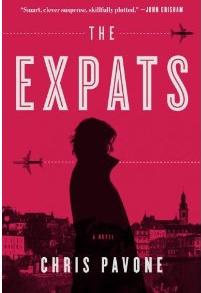
Trash Lit: The Expats (almost) lives up to the hype

0

There’s an awful lot of hype around this first novel by Chris Pavone. John Grisham compares it to the early works of Ken Follett, Frederick Forsyth, and Robert Ludlum. The folks at Crown publishing think this is going to be the Next Big Thing in the thriller world. And since I’m such a huge fan of overhyped authors, I decided I’d pour a nice glass of Buffalo Trace and read the first 20 pages.

I have a William Shakespeare theory about thrillers. The way my English Lit professor in college used to tell it, Willie played to a tough room: The theater-goers in 16th Century London got bored fast, and they brought rotten vegetables, and it wasn’t pleasant up there on stage if the plot started to drag. So there’s always action in the Bard’s first scene or two.

I read a lot of thrillers and I drink fast, so if I can’t get past the first couple of chapters, I’m done. Saves a lot of time.

I got past the start of The Expats and kept going; it became hard to put down.

Grisham is wrong: It’s not a lot like the work of Robert Ludlum or Frederick Forsyth — but I can live with that. The world only needed one Ludlum; you like his style, have at it — he wrote 25 books.

Pavone is different, in an odd way more polished. The Expats is as much a novel about a woman trying to balance a job, a husband and kids as it is a spy thriller. And while there’s a little too much Mr. and Mrs. Smith going on, it’s really a pretty fun read.

You get fake passports, big money and a gun just a few pages in. Then you get the more mundane story of Kate giving up her job as a run-of-the-mill government analyst (read: deadly killer spy) to move with her husband to Luxembourg, where he’s got a job doing computer security for a bank.

Except, of course, that’s not what he’s really doing. And the nice expat couple that happens to befriend Kate and hubby might be CIA assassins coming to take out Kate for her past indescretions, or they might by FBI agents trying to frame hubby for something that he might or might not be doing, or they might be something else altogether. But nobody is telling the truth about anything. And Kate is bored taking care of the kids and the house, so she has to become a secret agent again to find out what’s going on.

There’s a great section about what it means to quit your job so you have more time to spend with the kids and then discover that you can’t stand being a full-time parent. There’s a Paris nightclub with naked people and random sex and violence. There’s wierd almost-sex with the hubby’s new best bud who is supposed to be married but really wants to fuck her. She has to fend him off, spy on hubby, spy on the neighbors, lie to everyone involved and still get home in time for dinner.

Unusually literary for a thriller. The flashbacks got tiring after a while, but overall, it works. Put it on the spring list.


 

West Oakland’s Bikes 4 Life re-opening with rides for all

0

“It keeps me occupied, not doing trouble in the summer, and after I’m gone it’s going to leave me with some experience,” says Lamar, a 16-year-old who works at Bikes 4 Life in the West Oakland community bike shop’s promotional video. After the completion of its remodels, the shop is re-opening tomorrow, Sat/11, and will be handing out free rides to the neighborhood kids.

The shop opened in 2009. It was a direct response to the spate of crime that was taking West Oakland’s youth away from creative, productive pursuits and into Juvenile Hall. Bikes 4 Life welcomes the neighborhood’s kids in for lessons in bike repair and maitenance — skills that have the added bonus of providing kids with the tools for gainful employment down the road. 

Making a difference, one spoke at a time. Tomorrow, Bikes 4 Life celebrates the changes to its workshop with an event during which it will give away 20 bikes to neighborhood kids, and get some of its program participants up on their soap box to talk about how the program has made a difference in their lives. 

Bikes 4 Life grand re-opening

Sat/11 noon, free

Bikes 4 Life

1600 Seventh St., Oakl.

(510) 452-2453

www.bikes4life.com

How much hot gay tail are the rabid conservative gentlemen of America getting at CPAC?

0

Hooray, it’s time for our favorite blog post of the year. Every year Wonkette goes to the huge Conservative Political Action Convention in DC, and trolls Craigslist for attendees looking for gay sex. Then Wonkette posts the ads. This installment features Dan Savage scanning the CPAC crowd with Grindr! Check it out here.

Would Sept. elections be better than RCV?

25

A proposal by Supervisors Sean Elsbernd and Mark Farrell to end San Francisco’s experiment with Ranked Choice Voting will come before the board Feb. 14, and RCV suporters are organizing to fight it. According to an email I just got from Steve Hill, one of the leaders in the RCV movement, “the vote is going to be close.”

The first version of the Elsbernd-Farrell legislation would have returned the city to the pre-RCV situation — the general election for city offices would take place in November, and runoffs in any race where nobody got a majority (almost every contested city race these days) would take place in December. 

The December turnout in Board of Supervisors races was always way lower that the turnout in the November election (although that hasn’t always been the case in mayoral races — more people voted in the Matt Gonzalez-Gavin Newsom runoff than voted in that year’s general election).

But the two conservative supervisors have backed off that plan and replaced it with another one: The first election (in effect, the primary) would be held in September, with the runoff in November.

Some years, that would be three elections in the city in five months — the normal June state election, a September city election, and a November general election.

I realize that a lot of people, including some of my friends on the left, aren’t thrilled with RCV. If the mayor’s race had a runoff, it would have been a head-to-head contest between Ed Lee and Dennis Herrera, and that would have been fun. (Where would David Chiu, who got stabbed in the back by Lee and who criticized him during the general election, have gone in the runoff? What about Leland Yee?)

But I have to say, a September election seems like a really terrible idea. When are the candidates going to campaign — during August, when about half of the city is out of town? Would the candidates all have to trek out to Burning Man? (You can’t send direct mail flyers to the playa.) Maybe you hold the election late in September — but then the absentee ballots would arrive when, over Labor Day weekend? Talk about low turnout.

The whole idea of RCV was to get more people involved in electing their representatives at City Hall. You can talk about whether it helps the left or the right or incumbents or whatever, but it’s really all about turnout. One election: More people vote. Two elections: Fewer people vote. September election: Very few people vote.

Then in November, when the turnout is highest, the choice will be lowest, because the candidates who did well in the low-turnout election (typically the more conservative candidates) will be the only ones on the ballot.

On balance, I’m sticking with RCV — but if you have to change it, why not make the primary election in June? There’s already a June election in even-numbered years, it’s no added expense — and there’s the additional value of forcing candidates for mayor and supervisor to declare their intentions and get in the race early on. No more Ed Lee August surprise.

I asked Elsbernd about it and he told me that New York City holds its primary in September, and that’s an effective model. And, he pointed out, there’s no June primary in the odd-numbered years, when the mayor, sheriff, city attorney, treasurer and public defender are on the ballot.

True — but if you’re going to have a special municipal election anyway, June makes more sense to me. People are used to voting in June. I worry about September.

Telegenic Band Check: Kelly McFarling

0

SFBG videographer Ariel Soto-Suver, along with a small posse of banjo fans, met with Kelly McFarling at Viracocha in the Mission for an intimate evening concert.

Federal government sets its sights on 12 more SF dispensaries

19

Bad news for medical marijuana patients in the Bay Area: as reported by the SF Examiner, the DEA has requested records from the city’s Department of Public Health for 12 of San Francisco’s existing 21 cannabis dispensaries. This is the same move the DEA made before sending the threatening letters to five other cannabis collectives last fall. Those five dispensaries are now closed.

In fall of 2010, US Attorney Melinda Haag targeted five SF dispensaries in school zones with letters declaring them in violation of federal law. In the face of potential jail time for dispensary staff and even the landlords of the buildings that housed the dispensaries, they shut their doors. Now, more than 50 percent of the city’s dispensaries could have to follow suit. 

The really upsetting part about all of this? The sheer randomness of it all. In our recent Cannabis Issue, the Guardian interviewed Assemblymember Tom Ammiano, who said that in his meeting with Haag over the matter, the US Attorney said the orders to persue the dispensaries came from above. “She said she was only doing what the boss was telling her to do,” Ammiano told the Guardian. “We had a hard time with that.” The Obama Administration has been frustratingly opaque about the motives behind, and future plans for, persecuting an industry that Attorney General Eric Holder once called a “low priority” for federal law enforcement. 

The Guardian has sent an email to Mayor Ed Lee for his comments on the request for records, and will update this post when we hear back. Even then-Mayor Gavin Newsom, as the Examiner pointed out, sent a letter in 2008 to Congress to encourage it to act against the DEA’s attempts to intervene in California’s medical marijuana industry.

Assemblymember Ammiano and Senator Mark Leno are leading the efforts to establish a statewide regulatory board cannabis that would, among other things, demonstrate to the feds that the industry is being well-regulated in California. Americans for Safe Access and UFCW (the union representing cannabis workers in California) have also introduced a ballot initiative called the Medical Marijuana Regulation, Control, and Taxation Act that would establish a regulating board made of patients, government representatives, medical professionals, and cannabis industry folks. A poll conducted by Probolsky Research recently put voter support for that measure at 59.2 percent.  

But who knows if California voters will get a chance to regulate marijuana as they see fit. If these requests for records proceed as the last round of them did, SF could be down to nine dispensaries in a city with not only a large base of cannabis patients, but also a thriving cannabis culture. 

The dispensaries whose records were requested by the DEA were: 

Bay Area Safe Alternatives Collective

Emmalyn’s

Good Fellows Smoke Shop

Grass Roots

The Green Cross

Hope Net

Re-Leaf Herbal Center

SF Medical Cannabis Club

Shambala Healing Center

Valencia Street Caregivers

Vapor Room

Waterfall Wellness

Hearing today on bizarre Occupy Oakland stay-away order case

8

The first Occupy Oakland protester to allegedly be in violation of a stay-away order has a hearing today.

Joseph Briones, 30, was arrested along with 408 others at an Occupy Oakland protest Jan. 28. He is one of 12 who were apparently issued the restraining orders, and is therefore barred from being within 300 yards of Oakland City Hall, potentially for the next three years, according to Alameda County Deputy District Attorney Teresa Drenick.

But based on a Feb. 8 hearing, Briones and his lawyer understood that he did not have a stay-away order against him, said Occupy Oakland media committee member Omar Yassin.

“That’s why he was at the plaza, carefree, on Wednesday,” said Yassin. That’s when Briones was arrested.

In a Feb. 9 press release, Officer Johnna Watson of Oakland Police media relations said that “Joseph Briones is one of four individuals charged with a violent felony offense stemming from the Jan. 28 protest.” But according to records at the District Attorney’s office, that’s incorrect; Briones is charged with three misdemeanors.

While everyone scrambles to get their story straight, Briones is still in jail. He has a hearing at 2 o’ clock today. If found to have violated a stay-away order, he could face six months in prison.

So far, Briones is legally innocent of any crime; he has not been convicted of any of the charges leveled on him in connection with Jan. 28. None of the other 11 who are prohibited from going near City Hall have been convicted of anything either.

Besides all that, the stay-away orders may be entirely illegal.

According to Jivaka Candappa, one of the attorneys working on the stay-away order cases, “the orders are unconstitutional and unreasonable.”

Most of the charges on the twelve are as benign as blocking the sidewalk and remaining at the scene of a riot (the latter is the same charge that was placed on  hundreds who were cited and released with no bail, and whose charges will likely be dropped—including me.) Even the felony charges, such as assault of a police officer, are common charges leveled on protesters that are usually dismissed. It is highly unusual to ban individuals from any public place, for any reason, let alone City Hall and a public plaza so obviously necessary for access to First Amendment rights, under any circumstances.

“This is legitimate action in, for example, a domestic violence situation. Here, protesters have not attacked anybody and they’re not a physical threat,” said attorney Mike Flynn, president of the San Francisco chapter of the National Lawyers Guild.

Candappa says that he and his colleagues may file motions in the Alameda County Superior Court challenging constitutionality of the stay-away orders.

Said Candappa, “preventing someone from exercising their First Amendment rights doesn’t promote public safety. Courts are very reluctant to restrain someone’s expressive rights, because its really a cornerstone of any democracy and if you want to be able to participate in democracy you’ve got to have a right to express yourself. To take away that fundamental right to express yourself is something courts are very reluctant to do, especially when those conditions are applied against someone who has not yet been convicted.”


Trader Joe’s signs agreement in labor victory

6

Trader Joe’s, known for being really more of a snack emporium than a grocery store, can now be known for something else; buying tomatoes picked by people with basic human rights.

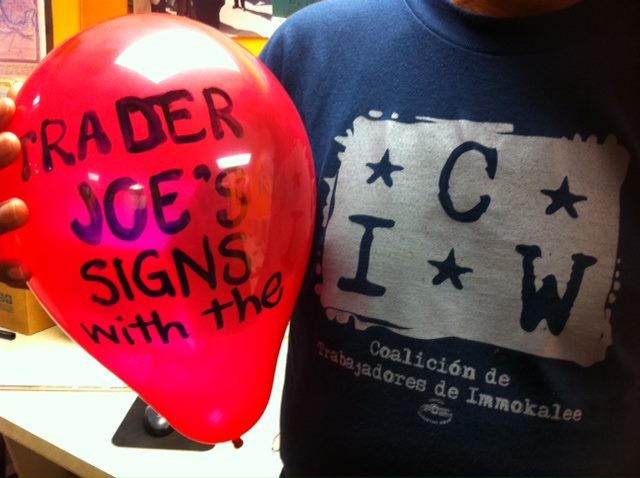
Feb. 9, it became the second grocery store chain– the first was Whole Foods– to sign an agreement with the Coalition of Immokalee Workers (CIW), a group based in Immokalee, Florida famous for its successful Fair Food campaign.

By signing a Fair Food agreement with the CIW, Trader Joe’s pledged to buy their Florida tomatoes only from companies that comply with the CIW’s list of working conditions. According to Bay Area CIW solidarity organizer Liz Fitzgerald, a 23-year-old San Francisco resident, the “code of conduct” includes “zero tolerance for sexual harassment or modern day slavery, having places where farmworkers can wash their hands, basic human rights like that.

The agreement also includes an increase in price for tomatoes—one penny per pound—to augment workers salaries.

Its just pennies, and its only tomatoes. But the Fair Food Campaign is one of the most successful farmworkers rights efforts in past decades, and seems to be growing stronger still.

Acitivists in Florida teamed up with allies across the country for the two-year campaign it took to win over Trader Joe’s, mainly consisting of protests and educational campaigns complementing behind-the-scenes meetings. The efforts targeting Trader Joe’s were amicable compared to their first campaign, aimed at Taco Bell, when begin in 2001. Then, the CIW led a nationwide boycott of the fast food chain and a “Boot the Bell” effort to get Taco Bells off college campuses. Taco Bell finally agreed to sign the agreement after four years of pressure.

Since then, the Fair Food Agreement has gained an impressive list of adherents. After Taco Bell, McDonalds, Burger King, and Subway signed on. In April 2009, CIW made a deal with Compass Group, the world’s largest contract food service provider. Industry giants Bon Appetit Management Company, Aramark, and Sodexo have also signed on to the agreement.

“The goal of the Fair Food Program is to promote the development of a sustainable Florida tomato industry that advances both the human rights of farmworkers and the long-term interests of Florida tomato growers,” according to a joint CIW-Trader Joe’s press release.
Fitzgerald says that, after two years organizing on the steering committee of the Bay Area’s Student-Farmworker alliance (highlights include a Lady Gaga impersonation during a flash mob-style protest last year), she is eager to keep up the fight.

“Its incredible because this is one of so many victories…CIW, along with allies, we are an unstoppable force. This makes me want to not stop until we change this entire agricultural system that’s so exploitative,” said Fitzgerald.

Larry Ellison won’t miss $22 million

52

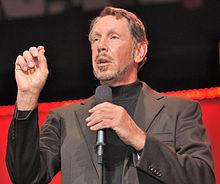
If the America’s Cup fundraising committee can’t come up with $32 million, the city’s going to be on the hook for a big chunk of change — as much as $22 million — budget analyst Harvey Rose says. Just for the record, I’d like to point out that the America’s Cup won’t just be an economic bonanza for the city (if it in fact turns out to attract a lot of people) — it will be a huge advertising and public-relations boon for Oracle Corp, which will have its singature logo and the sail of its boat. Larry Ellison, who will be helping skipper the boat, will be all over the news. You won’t be able to read a newspaper or watch the TV news or read anything online about the cup race without seeing the Oracle logo. You can’t buy that kind of exposure for any level of money.

And as far as I know, Ellison hasn’t contribute a dime to this fundraising committee.

For the record — and I’m pretty sure I have the math right — $22 million would be less than one tenth of one percent of Ellison’s net worth.

Larry, for god’s sake: Write out a check.

Live Shots: Making truffles with Neo Cocoa at La Cocina

0

“Ganache is proof that God loves us,” exclaimed a student with pink and purple hair, as Neo Cocoa founder Christine Doerr rapidly whisked a bowl of melted chocolate and poured it into a metal frame for cooling. We all stood around a huge table at La Cocina, learning how to make Doerr’s award-winning chocolate delights, essentially the soft and rich insides of a classic truffle without the hard outer shell. After a quick demo, it was time to get to work ourselves, rolling the chocolate in our hands to form balls and then dusting them in all variety of coatings, from fennel powder to cacao nibs.

Doerr, who originally started in the entrepreneur incubator program at La Cocina in 2008, now has her very own professional kitchen in Belmont and has been named one of the top ten chocolatiers in North America. No doubt today’s class was excited to learn chocolatey secrets from such an expert in the world of sweets.

At the end of the night, we all came away with a little box of chocolate heaven, perhaps to share with that special someone for Valentine’s Day. Even if you weren’t at the class, you can pick up a wonderful assortment of Neo Cocoa for your honey at many stores in San Francisco, including Bi-Rite Market and Canyon Market (and even Whole Foods).

Nite Trax: DJ Rekha brings the ‘Basement’ beats to Non Stop Bhangra

0

“I have been around the bhangra block,” says DJ Rekha, NYC’s ambassador for the highly danceable contemporary Punjabi (by way of London) sound, and founder of the popular, long-running Basement Bhangra party. “The biggest gig was definitely the White House. I have played all over the US and in Brazil, Sweden, New Zealand. I’ve done a bunch of music festivals and performed at cultural spaces including the Kennedy Center in DC.”

Talk about “world music” (even if that term has fallen from fashion). Rekha brings her Basement Bhangra spin — which includes a good bit of hip-hop and global bass influence — to our own beloved Non Stop Bhangra this Sat/11, joining the monthly party’s dholrhythms dance crew and DJ Jimmy Love for its reboot at Public Works, as I detailed in this week’s Super Ego nightlife column. In an email interview, Rekha wrote about bhangra’s changing scene, her favorite moments from the past 15 years at her club (Padma Lakshmi, anyone?), and her favorite bhangra bangers of the moment. 

http://www.youtube.com/watch?v=zgfMjwfs7H0

SFBG Can you share some of your favorite moments from Basement Bhangra?

DJ REKHA There have been a few.
1) I guess the first favorite moment is the first time I saw the line extend to the end of the block. We were always crowded, but by the following summer it was all the way down the street and not single file.
2) Having Wyclef stop by in the first few years of the night.
3) Dropping the Basement Bhangra anthem the first time.
4) Playing Panjabi MC’s Beware of the Boys after it was already hitting New York radio, having playing it there so much several years before.
5) Watching Ted Forstmann (RIP) crawl and look for his date Padma Lakshmi’s phone after she dropped it dancing
6) Getting a note to the booth saying I am Anil Kapoor (the game show host in Slumdog Millionaire) — and me dismissing it as a ploy to alter the bhangra musical direction of the night to Bollywood.

http://www.youtube.com/watch?v=DJztXj2GPfk

SFBG Have you been to San Francisco before, and if you have can you tell me if you think there are any differences between the bhangra scene here and in NYC?
   
DJ REKHA I have been to SF many times but I must sheepishly admit I have never been to a bhangra party there. But Non-Stop Bhangra is very well-known and regarded so I am super excited to be playing there Saturday.  My DJ experiences in SF have been awesome — most recently at the Asian Art Museum and for the 25th Anniversary of Trikone. In both cases I play a range of sounds. But SF is home to the best bhangra dance crew — Bhangra Empire — they’ve performed at the White House, professional sporting events. 

http://www.youtube.com/watch?v=WKWPzTF8-sw

SFBG Besides the fact that bhangra is infectious (I grew up partly in London and have loved it since the ’80s), do you think the influx of young Indian people moving to the US in the past couple decades has helped fuel bhangra’s popularity in clubs here?

DJ REKHA I think South Asian culture is more prevalent due to many factors —  Bollywood Dreams, Slumdog, globalization. Specifically for bhangra it’s the dance teams on the college scene that really help keep the music alive. Every major city in the US has some form of regular South Asian club night but only a few are actually focused musical on bhangra. Every major university has a bhangra team.  
 
SFBG What other types of music besides bhangra are you into — anything that might surprise some of your regulars?

DJ REKHA I love many styles of music.  Being from NY, I love hip-hop, but also dancehall, electronic, tropical bass. I am big Beatles and Prince fan.

SFBG What developments do you see happening within the bhangra sound?

DJ REKHA I think the latest thing we are seeing/hearing is Punjabi vocals with no actually bhangra music in the track. For example the song Amplifier by Imran Khan.  There is also a lot more over hip-hop stylings in the song in terms of vocals and not just beats.  The lines of what is a bhangra track vs something that is desi urban are being blurred.  Its never easy to keep a genre constrained.   Also in the last year or two as a reflection of dance music today there are a lot more faster tempoed songs.

SFBG Can you share your bhangra top 5 of the moment?

DJ REKHA My top 5 joint of the moment are:

>>”Tohar,” Garry Sandhu

>>”Electro Love Boliyan,” Ranbir S. and Bikram Singh


>>”Jatti,” Panjabi MC


>>”Jogi,” Jr. Dred


>>”Sadi Gal Hor Yah (feat. DCS),” PBN

Life after the fall: John Felix Arnold’s post-apocalyptic musical comic book art

0

Artist, illustrator, and graphic designer John Felix Arnold III lived his childhood in movement. His parents were both professional dancers and they kept the family mobile, relocating back and forth from Durham, North Caroline to Brooklyn, New York. While Arnold did not inherit a passion for dance, he was inspired by his mother and father’s kinesthetic sensibilities and he grew into a visual artist.

The February 4 opening of “The Love of All Above,” his new solo show, featured musical performances by Daylight Curfew, Kool Kid Kreyola, and Him Downstairs — a prime example of Arnold’s mixing of media and his obvious passion for the values inculcated by a deeply creative family. The musical performances took place on a funky altar composed of found objects built by Arnold, which will be on view as part of the exhibit.

The artist intends to create a feeling of “walking inside of a giant graphic novel about the end of the world,” with literal panels made from salvaged two-by-fours depicting scenes. He aims to “bring the audience together in one huge ceremonial experience inside of a realized environment.” The sculpture “Say It With Feeling” is displayed with a short set of instructions for how to carry out a ritual ablution in the style of Shinto mystical practices.

Arnold is heavily influenced by Japanese Edo-period print work, comic books, and manga, as well as modern abstract American art. His mural-like assemblages of wood paneled paintings, done in black, white, pastel pink, and blue, have an undeniable Cy Twombly and Robert Rauschenberg inflection to them. Those artists are two of his biggest inspirations, he admitted during a recent interview with the Guardian at the opening of this show. The figures in his work are mainly Asian women, with tribal face paint and hefty looking weapons in their hands, fending for themselves in a Mad Max backdrop of chaotic destruction.

More so than even the content, the interactive element is critical to Arnold’s mission as an artist, because he aims to directly counteract the alienation and distance enforced on us by modern technology. “The ability to interact with one’s surroundings is being lost through the virtual world that we spend more and more of our lives in,” he says. “Our spirituality is dying.” Through his dark vision of what the future might look like, Arnold hopes to promote in his viewers a deeper sense of awareness and gratitude for what they currently have.

Queens Nails Projects presents “The Love of All Above”

Through Jan. 21 by appointment, free

Art Now SF

3075 17th St., SF

(917) 543-5261

www.felixthethirdrock.com

Wiener wants a sunshine audit

44

Sup. Scott Wiener is calling for an audit of the costs of complying with the city’s Sunshine Ordinance — a move that could lead to some great ideas for better public access to records or to a dangerous attack on one of the city’s most important local laws.

I first learned about Wiener’s proposal from the Petrelis Files, which posted Wiener’s letter asking the ciyt’s budget analyst to determine how much each city department spends annually complying with the law, including staff time. That could turn out to be a fairly big number, the sort of thing that will make Matier and Ross and lead to headlines about a few crazy sunshine activists costing the taxpayers millions.

There will be a lot less discussion about the cost to the city and the taxpayers of government secrecy, which Wiener agrees is substantial but can’t be quantified.

Wiener told me he thinks the Sunshine Ordinance is important — “its value goes without saying.” He also said the Sunshine Ordinance Task Force is “poorly run and inefficient.” Wiener, who has been the subject of a sunshine complaint that wound up with the Task Force finding him in violation of the law, said city employees often have to spend hours and hours waiting at Task Force meetings. “They’re collecting overtime and sitting there waiting for their case to be called for five, six, seven hours,” he said. “Then it’s my understanding that sometimes the case doesn’t even get called.”

I called Rick Knee, who has been on the Task Force for many years, and he told me he agreed that there were probably some inefficiencies. But he said that in the past year, there’s been a huge backlog of complaints.

“Maybe that’s because of increased public awareness of the Task Force and the ordinance,” he said. “But I think there’s also an increase in sunshine problems.” Why? Well, for one thing, the Ethics Commission — which has enforcement power — almost never acts on Task Force findings. “The word has gotten out at City Hall that you can violate the sunshine law and skate,” Knee told me.

As for city employees having to wait around all day? “What about the people whose rights have been violated? They have to wait, too, and they aren’t even getting paid.”

No matter what Wiener’s survey finds, it’s pretty clear that the Task Force has saved both the city and the public money by resolving a lot of cases outside of court. Without the Task Force, the only recourse sunshine complainants have is to sue — which costs everyone involved a lot more than a few hours in a hearing room.

I’m not going to argue that the Task Force always operates with maximum efficiency or that there aren’t ways to make the hearings easier on both complainants and respondents. But there’s a much easier solution for everyone involved:

Make it easier to get public records in the first place.

I’ve been reporting on San Francisco City Hall for a long, long time, and I can tell you that, more often than not, it’s difficult and frustrating to get access to even basic records that ought to be handed over instantly. Why waste all of our time? Why not just make every document created by any city employee immediately available in an online database? Easy to do, cheap to do — and simple to check a box that would keep those very, very few records that truly ought to be confidential out of the public eye.

Wiener agreed there was merit to that suggestion, and I hope his audit looks beyond the dollars and cents of city workers complying with a city law and looks at the reason we have all these problems. The best way to save money on sunshine fights is not to force the public to fight to get access to information.


Behind-the-scenes pics from Courtney Trouble’s Guardian cover shoot (NSFW)

5

When the Guardian team and photographer Molly DeCoudreaux converged on 18th and Castro Streets to shoot naked pics of Courtney Trouble and her Queerporn.tv posse, we knew we’d attract some attention. But the hood’s laissez-faire attitude coupled with the fact that for months there’s been an ongoing nude-in one block away made us think, eh, perhaps our wee photo shoot wouldn’t cause too much of a stir. Well, as it turns out, it did. Cars screeched and honked, people dodged traffic to get their own photos, and Courtney, Sunny, and Billy worked it to the hilt. Here are some behind-the-scenes images from that afternoon shot by Molly DeCoudreaux and Caitlin Donohue.

This art will move you: 1AM SF Gallery’s homage to truck graffiti

0

“Graffiti is anti-corporation,” says Optimist, a long time Bay Area street artist in a Guardian phone interview. “Whereas advertisements on billboards are trying to sell you something, graffiti is trying to open your eyes to see who else is alive out there.” Spurred by this love of street art, Optimist partnered up with fellow street artist Plantrees to curate “Truck Show SF,” a group show which opens at 1AM SF gallery on Fri/10.

At the root of graffiti is an earnest longing for social emancipation, self-expression, and communication. Sadly, graffiti writers are often misunderstood, seen as vandals or gang members. “Truck Show” was put together to fight these stereotypes. The group show is a look at graffiti writers’ move from tagging on subway trains to box-style delivery trucks, and how this transition represents the ceaseless human desire for self-expression and unrestricted communication.

By making the show a charity event, Optimist says he wants to show that graffiti isn’t about “the ego or the fame of the name,” but is something that has the potential to serve as a creative outlet for the youth. “Truck Show SF” will feature 80 Bay Area writers. All profits will be dedicated to the non-profit organization Visual Element, a visual arts program in East Oakland that uses graffiti and mural painting programs to empower high school students.

The graffiti writers in the show range from burgeoning young artists to people who have been involved in graffiti for over 20 years. The sheer number of different individual artists who are coming together for a greater cause is notable. “People always say graffiti writers are taking away from society and they’re selfish,” adds Optimist. “This is a chance for graffiti writers to still do graffiti but at the same time give back to the younger generation who really needs the help.”

Graffiti has been around forever, of course. But long after the cave painting days, the art form experienced a rebirth in the 1970s and ‘80s in New York when a miserable economy bred social dissatisfactions in inner-city neighborhoods. During that era, the idea of the subway train as a moving canvas that could extend writing to the farthest corners of a city took hold. But due to transit regulations and chemical buffering methods which made it nearly impossible to spray on subways, graffiti had to conquer new ground. Optimist says that “the art of graffiti [has transitioned] from underground to up above ground and in to the streets.” Nowadays, you’ll see more graffiti on delivery trucks, which zoom through inner cities all throughout America.

“Graffiti is mostly concerned with letters and hand writing, so it’s all about inventing your own style to express yourself through the confines of the letters,” Optimist continues.

With “Truck Show,” Optimist wanted to show just how completely those confines could be ruptured. The exhibit showcases not only classic letterings, but the emerging style of graffiti shown in galleries.

One of the show’s artists Leon Loucher gets self-referential — he painted an entire night scene as the backdrop behind a figure spraying the first stages of his graffiti piece on a truck. Another artist, Alex Pardee, is more set on experimenting with surrealism. He paints insect-like creatures that burst out of trucks. Artists like Saze used the opportunity to make humorous responses to anti-graffiti sentiments, creating cut-outs of infamous buffers like Jim Sharp, placing the images in front of toy models and paintings of trucks.

“Graffiti is all about the moment,” says Optimist. And although the gallery is removed from the city streets, the pieces it will feature aim to capture the dynamism, action, and spontaneity that drive street art. To emphasize the liveliness of the art form, the actual sides of tagged trucks were brought in and placed amongst a collaged installation to grace the walls of 1AM.

In addition to the obvious similarities of a graffiti-themed art exhibition, Optimist was able to connect the street scene with his 1AM show by virtue of limited resources. “Graffiti writers usually have to deal with their work being next to or in the same space as [pieces done by] people they dislike.” He hopes that this show will achieve something the streets often fail to do, which is to create “a collective of graffiti writers who are joining forces to give back to something much greater – the youth.”


“Truck Show SF” opening reception

Fri/10 6:30 – 9:30 p.m., free.

1AM Gallery

1000 Howard, SF

(415) 861-5089

www.1amsf.com


The Performant: Science, Honor, Psychogeography

0

The Phenomenauts and Alley Cat Books shoot for the moon.

Trapped in a world they didn’t create, the spacecraft-garage band known to us as The Phenomenauts must surely come from a more evolved time and place, as evidenced by the spiffiness of their natty uniforms — and the electric jolt of their stage shows. As refinement and heroism (the band motto is “Science and Honor”) are qualities in tragically short supply among your run-of-the-mill rock groups, bands which contain both are bound to stand out, with or without the additions of attention-grabbing technical flourishes such as pinpoint lasers, billows of stage fog, and the custom-built Streamerator 2000, which shoots festive streamers of toilet paper out onto the frenetic crowd. Speaking of frenetic, I love a band that can make San Franciscans dance as if possessed by dervishes with hyperkinesis. For that feat alone, they deserve an intergalactic medal for courage in the face of cosmic indifference.

Headlining last Friday night at the Rickshaw Stop, the band was in top form, steering their craft through a set-list packed with velocity and passion. Their sonic profile can be described as a jaunty blend of Devo, the B-52’s, Oingo-Boingo, the Aquabats, and the Stray Cats, and their costumed concept is straight out of a low-budge sci-fi serial, let’s say “Jason of Star Command,” or “Lost in Space.” From their high-octane, punky cover of the Polecats’ “Make a Circuit with Me,” to the pumped-up psychobilly of Phenomenauts classics such as “Space Mutants,” complete with call-and-response oddience participation, to “It’s Only Chemical,” a slo-mo doo-wop duet between Commander Angel Nova and Leftenent AR7, a robot with strikingly human harmonizing capabilities (obviously an advanced model), the ‘nauts never let their tongue-in-cheek, space-explorer personas get in the way of solid musicianship and creative range.

If NASA had a house band, my guess is they’d want them to sound like the Phenomenauts. Actually, maybe NASA should just hire the Phenomenauts. You heard it here first.

Meanwhile, the excitement surrounding the grand opening of Alley Cat Books — the fourth sibling of an honorable lineage that includes Dog Eared, Red Hill, and Phoenix Books — maintained its momentum with the opening of a new art show in the somewhat cavernous space in the back of the store. The theme was California maps, though the interpretation was open, and one of the more striking pieces involved an interactive slideshow installation of Cuba designed by Hanna Quevado and Azael Ferrer, who I’m assuming also invited the percussion players jamming in the corner of the room. Other pieces included a textured tapestry of California Delta patterns, by Adrian Mendoza and a bare bones affair by Geoff Horne, an unadorned web of straight lines connecting the bars of San Francisco, a useful bit of reference knowledge. I’m looking forward to the promise of events to come, bands, readings, and film screenings are all rumored to be in the works, and of course, when all else fails to capture the imagination, there’re always *books.* And honor.

Here is your extra special Valentine’s Week fairy

0

Somehow, Valentine’s Day has grown into an entire week — and come hell or high Hallmark, we may just get away with avoiding it altogether (despite all the actually cool stuff going on). What we will not avoid, however, is enjoying this special Cupid of the Castro, caught on tape way back in 2006. Heart u, SF! 

WTF, Debra Saunders?

12

I really, really can’t figure out what the Chron’s only local editorial page columnist, the conservative Debra Saunders, is trying to say. If I read her Feb. 8 column right, she’s opposing the Appeals Court ruling on same-sex marriage — and she seems to be saying that Mayor Gavin Newsom was wrong to allow gay marriages and that the whole matter ought to be decided by a statewide vote:

When the California Supreme Court ruled in favor of same-sex marriage, Newsom stood on the steps of City Hall crowing, “It’s going to happen – whether you like it or not.” Newsom didn’t bother trying to win Californians over to his cause. He figured the courts would impose same-sex marriage on them. And then voters don’t have to like it.

Again — I don’t get it. By the tone of her column, you could almost get the impression that she’s against same-sex marriage. At the very least, she doesn’t seem to fathom that some basic civil and human rights aren’t and never have been subject to the will of the voters. If you asked the voters in Topeka, Kansas in 1954 whether the local schools should be forcibly desegregated, I think it’s a good bet that segregation and racism would have won at the ballot box. Is she trying to argue against Brown v. Board of Education?

I wrote her an email and asked her to explain — really, Debra, I want to understand, but I’m baffled — and I gave her all day to get back to me, but I haven’t heard.


Calvin Trillin: Explaining the resurrection of Newt Gingrich

0


Two attempts to explain the resurrection of Newt Gingrich

1

Yes, Newt appeared  dead at least twice. 

If Mitt’s guys were playing it smart,

They would have made certain of that

By driving a stake through his heart.

II

But Newt might have said if they had,

Proceed, Mitt. You’ll see I won’t mind it.

You’re free to drive stakes through my heart,

Except that you’ll first have to find it.

Calvin Trillin, The Nation, 2/13/2012


Campaign to regulate health insurance premiums launched in SF

68

Representatives from Consumer Watchdog and other groups today launched a ballot measure campaign to regulate health insurance rates in California with an event outside the San Francisco headquarters of Blue Shield of California, which is in the process of substantially increasing health premiums for a second consecutive year despite sitting on billions of dollars in cash reserves.

Consumer Watchdog President Jamie Court told us the measure and the campaign to gather the 505,000 valid signatures needed to qualify it for the November ballot would be similar to the group’s landmark 1988 campaign to pass Prop. 103, which regulated car insurance rates. That will include an extensive effort to mail petitions directly to voters and seek donations for the efforts, supplemented this time by an e-mail campaign.

“On 103, they got all but 100,000 signatures that way,” Court said, adding, “This is Prop. 103 for health insurance.”

The 800-word measure would require health insurance companies to publicly justify their rate increase requests, make the company CEOs affirm that financial data under penalty of perjury, and make the rate increases subject to approval by California’s Insurance Commissioner.

Significantly, the first person to sign the petition was U.S. Sen. Dianne Feinstein, who Court told us is co-chairing the campaign. “She has a real passion for the issue,” he said, describing how she was so outraged by a Blue Shield executive’s testimony to Congress over its double-digit proposed rate hike last year that she sponsored legislation to regulate health insurance premiums, which was defeated.

Blue Shield is officially a nonprofit company, and Court said its public filings show it has $3.4 billion in reserves, with is about 1400 percent more than the state requires. He also said many Blue Shield customers will be hit with a 15 percent rate hike on March 1, and he cited California Healthcare Foundation figures showing health insurance premiums have increased 153 percent in the last decade, while inflation increased by just 29 percent.

Calls to Blue Shield’s press office have not been returned, but I’ll update this post if/when they call.

Upset pornographers and the definition of scissoring: “Queer and Boning” controversy

8

Brouhaha! That would be the word I’d use to describe the reaction to today’s cover story, “Queer and Boning in Las Vegas,” about Courtney Trouble and her posse’s adventures at the AVN Awards in Vegas. The crux of the matter revolves around my interview with lesbian pornographer Jincey Lumpkin, whose oeuvre falls into a more conventional mode of pornmaking than Trouble and the other queer pornsters profiled. Jincey commented extensively in the article’s comment section and on her own website:

(This is in regards to a quote we printed that, compared to Bay Area queer porn, Jincey’s work “has more of an emphasis on aesthetics.”)

Throughout our interview what I discussed was my point of view in making porn. That I wanted to create something that was in the middle ground. Real lesbian porn, but created with an emphasis on glamour and aesthetics. Since the quote is taken out of context, it appears as though I am dismissive of the work of my peers, which I am not. I admire my queer porn peers, and I could not be where I am today without the trail-blazing efforts of Shine and Crash Pad Series. I have worked with a lot of the same stars, and have taken influence from their work. However, I don’t see anything wrong with creating work that comes from a different point of view.

When I say that I emphasize aesthetics, what I mean is that we spend a tremendous amount of time researching the look and feel of each series, and we collaborate with people in the fashion industry to achieve a certain look. I’m certainly not saying that the work of my peers is inferior or has no aesthetic appeal. In fact, I find Courtney’s work quite inspiring, even though we have a different point of view in the way we create things.

I’m not printing a correction on that. My reportage on the quote was accurate, however it was intended by the person who said it. But it’s nice to have it clarified here because it did seem like a weird thing to say.

She also clarified that she has shot fisting scenes, but that Girlfriends Films won’t allow them in her releases through them (I updated “Queer and Boning” to reflect that fact). She pointed me to this column she wrote in support of the Trouble-founded International Fisting Day. Also, that she doesn’t do scissoring scenes, but she does do tribbing. At the time that I’m writing this, the porn professionals, and non-professional lesbians I’ve spoken with are unable to tell me the difference between the two. Here’s the Urban Dictionary entries on the two, which are completley unhelpful. 

So there’s that. I have to quibble with one of Lumpkin’s points though. Saying “I control all of the business of Juicy Pink Box, including the content of what we shoot” and then going on to write in a different part of the same letter “However, because Girlfriends is concerned about obscenity prosecution, my contract with them requires that I cut those [fisting] portions out for DVD release,” (I assume she’s referring to the Cambria List, a rundown of no-nos that also include transsexuals, squirting, bisexual sex, and incest, the last of which Girlfriends seems to have no problems with) is a direct contradiction. She’s filtering the sex she shows, or being filtered. Either way, there’s a big difference between her work and the work of people that include sex acts deemed subversive not only because they’re hot, but because it’s part of their activism.

Lumpkin’s work is significant, which is why she’s in the article. A ton of people get off on the style of porn she makes. If you want my opinion, there’s more than enough room for QueerPorn.TV, Girlfriends Films, and all the rest of the porno continuum in this big, pervy world of ours. 

But there’s no denying that differences between them. And that we heart Bay Area-style queer porn. And that’s why we published the piece. So let’s get back on the awesome train, shall we?

Sundance Diary, volume eight: the final countdown

0

In a series of posts, Midnites for Maniacs curator-host and Academy of Art film-history teacher Jesse Hawthorne Ficks reports on the 2012 Sundance Film Festival. Check out his first, second, third, fourth, fifth, sixth, and seventh entries.
 
No film at this year’s festival encountered as much controversy as Craig Zobel’s Compliance. At the first public screening, an all-out shouting match erupted, with an audience member yelling “Sundance can do better!” You can’t buy that kind of publicity. Every screening (public and press) that followed was jam-packed with people hoping to experience the most shocking film at Sundance, and the film does not disappoint. (Beware: every review I have happened upon has unnecessarily spoiled major plots in the film, which is based on true events.)

What is so impressive about Zobel’s film is how it builds up a sense of ever-impending terror. In fact, I would go as far as to say that the film steps into Psycho (1960) terrain, specifically in the final act of the film. Compliance aims to confront a society filled with people who are trained to follow rules without questioning them. Magnolia Pictures, which previously collaborated with Zobel on his debut film Great World of Sound (which premiered at Sundance in 2007), picked up the film for theatrical release; if you dare to check it out, prepare to be traumatized. You’ll be screaming about one of the most audacious movies of 2012 — and that’s exactly why the film is so brilliant.

Before moving on, the short film that screened before Compliance needs a special mention for being one of the best films at Sundance 2012. Nash Edgerton’s follow up to last year’s brilliantly dark short Spider is an 11-minute short entitled Bear. Not only did it catch me completely off guard every step of the way, it’s the kind of slick, quick fix that had me panting at the idea of him creating a feature-length film.

Back to horror now. Rodney Ascher’s first feature, Room 237, explores the dozens of theories that fans all over the world have regarding Stanley Kubrick’s The Shining (1980). Ascher, who debuted at Sundance with his masterful short The S from Hell (2010) — about how the 1964 Screen Gems logo gave people nightmares for years … no, really! — has brought the same sort of enthusiasm towards this cinephilia fantasy.

Investigating theories about Kubrick’s methods vs. his madness, Ascher’s film uncovers just as many details that will give you goosebumps all the way home as it reveals some of the most outlandish speculations you could ever eavesdrop on. Which is why the film is so damn addictive! Just by putting this much time and energy into deconstructing a film that many 1980 audiences felt was inessential art, you realize how important critical thought truly is. Not only should this film be taught in cinema studies classes in hopes to crack Kubrick’s specific codes in The Shining, it’s the concept behind Room 237 (don’t look in the bath tub!) that deserves to be celebrated.

Jesse Hawthorne Ficks’ Sundance 2012 Top Ten
1. Rick Alverson’s The Comedy (USA)
2. Craig Zobel’s Compliance (USA)
3. Katie Aselton’s Black Rock (USA)
4. Matthew Akers’s Marina Abramović: The Artist is Present (USA)
5. Benh Zeitlin’s Beasts of the Southern Wild (USA)
6. Gareth Evans’s The Raid (Indonesia)
7. Spike Lee’s Red Hook Summer (USA)
8. Rodney Ascher’s Room 237 (USA)
9. Nash Edgerton’s Bear (Austrailia)
10. Ben Lewin’s The Surrogate (USA)