SFBG Blogs

The case for a study of the economic impact of market rate housing

88

“SF’s rush toward the ultimate highrise” read the headline on the Guardian front page of Sept. 27, 1971. The headline and the graphics by Art Director Louis Dunn illustrated the central point of our bombshell study: that despite the rhapsodies of  the Chamber of Commerce and the big developers, highrise commercial buildings don’t produce gushing revenues and they don’t pay for themselves.In fact, our exclusive study of the downtown highrise district  found that “for every $10 the district yields to the city treasury, the city has to provide $11 in services.

“Put another way: the highrise district contributes $62.9 million, or 25.2% of all locally generated municipal revenue.  But it costs $67.7 million, or 25.2% of all locally financed expenditures (figures from fiscal 1970.

“This means taxpayers subsidize–35 cents or so on the tax rate in fiscal 1970–the construction and maintenance of our civic monuments–the Bank of America building, the Transamerica building, the Hilton Hotel–and soon, another 23 skyscrapers that will be taller and bulkier and more  expensive than ever for residents and taxpayers.”

Project Director Tom Lehner, a San Francisco resident and expert on urban policy from UC-Berkeley’s School of Public Policy, made the crucial point: :”This report overturns once and ffor  all, emphatically and conclusively, the conventional wisdom that downtown skyscrapers somehow provide the municipal treasury with its lifeblood.

“Anyone who thinks for a moment about what’s happening in New York,” Lehner added, “will come to the same conclusion as our study did.  But the air’s been so full of propaganda from the Chamber of Commerce and other downtown interests like the Examiner and Chronicle that it’s difficult to have a clear thought about the subject.”  The economic  fact that taxpayers subsidize highrise development has become gospel and helped provide the ammunition for the slow growth movement on commercial highrises that ultimately won on the Proposition M  initiative in 1986.

Below is the  PDF that shows our study with the Louis Dunn drawings: scroll  through.

http://test.sfbg.com/PDFs/highrise.pdf

Today, the burning issue is the luxury building at 8 Washington and the host of market rate developments already built or in the works and their impact on neighborhoods. And today the city needs a study that can provide the facts on the economic impact of market rate development and how neighborhoods can cope with the impacts in an era of “now new taxes.”

Tony Kelly is the president of the Potrero Hill Boosters and one of the most knowledgeable neighborhood activists on the market rate housing front.  He and the Boosters are dealing with the Mission Bay Landrush and the city’s plan to flood the Eastern Neighborhoods with market rate housing. His take is most instructive on why a study is needed:

‘”During the Eastern Neighborhoods re-zoning in 2008, I saw neighbors who supported development turn into NIMBYs overnight as soon as they realized that building market-rate housing in San Francisco doesn’tpay for itself, or much of anything else.  On Potrero Hill, we spent an entire decade working on neighborhood planning that was supposed to  
give us new parks, new transit lines, and better schools in a part of town that desperately needs all of that.  And then, when the new zoning was finally approved … … we found out that none of those improvements made it over the finish line. 


“The impact fees for the new development won’t even come close to providing the transit, parks, schools or infrastructure that the new residents need, let alone those of us who are already here in a very underserved part of town.  I shouldn’t really have to remind you that the new housing isn’t affordable for City residents.  And the Planning  
Department’s own study from 2008 confirms that when you build market-rate housing, you create a bigger need for affordable housing – more than you are getting in affordable housing fees or inclusionary units.

” So, with every new market rate housing unit, we are falling further behind on everything the City needs to do to support neighborhoods.  And the increased property taxes are all going to the General Fund, to support services elsewhere in the City.  Who in their right minds, in any neighborhood, would sign up for such a deal?

“Now, on this side of town, we are stuck with development plans that are designed to double the populations of district 10 and district 6 in the next 20 years.  In my neighborhood, Potrero Hill, the population will triple. And now we have to figure out how to support this booming population without much help from City Hall.

“The new condominium projects that the Potrero Boosters Neighborhood Association has already seen in the past few months reveal the consequences of the Eastern Neighborhoods rezoning—thousands of condos and apartments (and thousands more residents) coming to the neighborhood, with very few opportunities for children or families, and not much planning from the City for alternatives to automobiles.  

“We cannot have urban density in our part of this City with suburban ways of living and getting around, and yet, that is what we have, now and in the future.  So in the neighborhoods, we have to plan (and takeaction) to create our own infrastructure, and not simply rely on what the City manages to give us.”

Kelly’s arguments against pellmell market rate housing is particularly strong for the city’s new frontier of Mission Bay and the Eastern Neighborhoods, but it applies to every neighborhood and the entire city.  This is why for starters the supervisors need to direct the budget analyst or the city’s economist to do a detailed study to help Tony Kelly and the rest of the neighborhoods deal properly with the onslaught of market rate housing.  b3

Editorial on the case against 8 Washington:
>
http://www.sfbg.com/bruce/2012/03/06/editorial-case-ag

Large, in charge: “Elephant Seals” at the SF Ocean Film Festival

0

Featuring an incredible variety of fascinating films about the ocean and its importance in nature, along with the role it plays in our society, the ninth San Francisco Ocean Film Festival (running now through Sun/11) showcases programs ranging from documentaries on marine life and environmental science to surfing videos and parables about pollution.

One of the highlights of this year’s festival is the short film Into The Deep With Elephant Seals (screening Sat/10), which offers a unique look at how marine biologists are using new technology to study the elephant seal population at Año Nuevo, just down the coast from San Francisco. Filmmaker Sheraz Sadiq, who produced the film for KQED as part of the station’s excellent QUEST series, says that he and his colleagues had wanted to do a story on elephant seals for some time, but had waited for the right mix of criteria to be met before setting out to do so.

“We wanted to take a different approach, we wanted to highlight the use of technology and the brilliant researchers who are pioneering the use of this technology to understand more information about elephant seals — where they go, what they eat, how long they dive,” he explains.

The captivating short introduces the work of UCSC Professor Dan Costa and his team of students, who are placing — and then retrieving — new satellite tags on a series of elephant seals to gather a variety of data about the animals. Once the story idea was approved, Sadiq and his team had to consider a number of logistical factors and faced a variety of challenges in order to get the project made.

“The timing was very tricky because the elephant seals at Año Nuevo breed from December to March, and getting the necessary permits, the necessary permissions, and working out all those details, along with trying to coordinate our production process with the research team was a bit of a challenge,” says Sadiq.

Even once all the needed arrangements had been made, the film crew faced yet another obstacle — they were going to attempt to film the retrieval of a satellite tag from a specific female subject, who could be at any part of the rookery that day, and not necessarily be in a spot easily accessible by the team. Luckily, the elephant seal was found in a reasonable area, and the day’s work was completed, but not without a close encounter that made an indelible mark in Sadiq’s mind.

“We were just a few yards from a couple of massive, slumbering male elephant seals, then without warning, one of them decided to challenge the other, and reared his massive head and let out this large bellow, and we literally froze in our tracks. It looked as though one was going to charge the other, and if you’ve ever seen a male elephant seal fight, it is a sight to behold, it’s these massive blubbery giants just going at each other. The park ranger very calmly told us to just step back, which is what we did, and fortunately the threat dissipated. That’s definitely a production moment I’ll never forget — and one that I don’t want to relive.”

The film presents a wealth of information and knowledge about elephant seals in a remarkably short amount of time, telling the sad story of how the animals — which can weigh up to 4,500 pounds — were nearly hunted to extinction for their oil-rich blubber in the 1800s, and were reduced to a colony of about only 30 individuals along the coast of Mexico before being protected and making an incredible comeback in the intervening years, reaching a population today estimated to be 170,000.

It also clearly maps out what scientists are learning today from their tagging research, including how far the pinnipeds travel out into the Pacific Ocean during their yearly migrations.

Sadiq attributes part of the film’s success to Costa. “He was terrific,” he says. “I could tell within five minutes of interviewing him that the interview was going to be sterling, he is so comfortable in front of the camera, and that is awesome. When you’re a producer, and you have to talk with incredibly smart researchers, there are some times unfortunately when they’re absolutely amazing, impeccable researchers, but they are just at that rarified academic point of view that it is kind of hard for them to come down and make their research accessible to a lay person. But Dan didn’t have that problem at all. He was extremely comfortable talking to a non-scientist like me about his research, the significance of the research, and why the elephant seals are such fascinating, charismatic animals, and why he had been studying them for 30-plus years.”

When Into The Deep With Elephant Seals screens during the 10 a.m. program Sat/10, Sadiq will be in attendance, and hopes that both the audience at the festival and future viewers take away a few key things from the film. “I really hope that viewers, especially young people, will get inspired by the work of Dan Costa,” he says. “I hope they see this and learn a little bit more about the scientific process and these amazing tools — it’s fascinating and a great joy to see the scientists and the passion that they bring to bear on their research. Plus, I hope they take a keen understanding of elephant seals and their comeback from the brink of extinction — this is a great conservation story.”

San Francisco Ocean Film Festival

Through Sun/11, $5-$12

Bay Theater

Aquarium of the Bay, Pier 39, SF

www.oceanfilmfest.org

Murk T.W.D.Y. slang? You mightcould with this video

0

One hundred words they’ve taken from us. Do you know which ones they are? Sure, it’s a few years old, but Rafael Casal breaks down the Bay Area’s propensity to coin viral slang (without getting its props from appropriators!) in this track, off 2009’s The Monster LP. The video’s got easy-to-learn text graphics so that even if you don’t know the lingo that reigned three years ago in the Bay, you can cop it real quick. Wait a second… [Via Broke Ass Stuart]

SOS: Vote to save the Small Business Administration!

1

Scott Hauge, the indefatigable founder and president of Small Business California, put out an email SOS today asking people to vote in a Wall Street Journal poll asking if the Small Business Administration should be eliminated.

“While the SBA is not perfect, it is all businesses around the country have,” Hauge noted. The Guardian heartily concurs.   I asked Hauge  where this was coming from.  He replied that the WSJ had an article a couple of weeks ago saying small business did not create jobs and were not meaningful jobs.  They were applauding big business.”

To put some facts on the issue, the Guardian commissioned  two major independent  studies in 1985 and 1986 that demonstrated conclusively that the net new jobs in San Francisco were created by small businesses. Hauge confirmed our job creation results with a study he commissioned with economist Kent Sims  in April 2006. This job creation point is now acknowdedged by virtually everyone, from the Chamber of Commerce on up and down. President Obama has recognized the value of small business  job creation and has elevated the Small Business Administration to cabinet level status. Vote no below–and get the word to our California congressional delegation.  b3


Street Threads: Look of the Day

0


Today’s look: Aris, Mission and Third Street

Tell us about your look: “Be yourself.”


The Performant: In the Flash

0

Bodies and words collide in ‘this.placed’

It’s easy to overlook them, two dancers, still as mannequins, positioned near the entrance to the performance space, a silent video of a wet fleshy mouth, open wide as if ready for a filling, projected onto their motionless bodies. Just before the lights go down, they disappear, as does the fleshy mouth. Onstage a much larger projection of mouth, nose, cheek, fills the back wall, as the sounds of kissing, mumbling, chewing, and lip popping create a fanfare for the two dancers (Jill Randall and Amanda Whitehead), who enter while stretching their own faces into humorously exaggerated positions. Finally, Whitehead opens her mouth normally, to recite the jumbled text of Britta Austin’s Flash Fiction “Bite Marks,” which substitutes for music in their energetic duet.

“Her mouth was broken, there was a broken insistence to it….the insistence in her broken mouth was in her tongue, constantly poking out… to taste: citric acid honey pencil shavings the pages of her books the undersides of her fingernails…”

Choreographed by Nina Haft, five Flash Fiction-driven dances premiered last weekend at ODC in a collaborative venture with Sue Li Jue, who directed four additional pieces. (Read Guardian dance critic Rita Felciano’s take on the performances here.) Haft has choreographed work from Austin’s quirkily unsettling short-shorts before. In 2008, Austin’s publisher Watchword with Intersection for the Arts presented a radical interpretation of her works, in a multi-faceted showcase which included visual, theatre, and dance artists entitled “Notecards, a Living Museum”. In this.placed simultaneously earthy and beguiling lines such as “what can be written that doesn’t carry the stench of concepts digested before?” and “in a world where we are trained to be embarrassed by other peoples’ sex lives…I am faulty,” propel each action on a stage almost too wide to closely embrace the painful intimacy of the language.

Like dance, the art of Flash Fiction can be described as a series of fleeting yet powerful moments, caught as if in a headlight or camera-shutter, a brief transcendence. In “Flesh, Taste, Friction,” a mesmerizing Frances Sedayao stands in the foreground in a shaft of light with the appearance of a half-open window blind, while fellow dancers Rebecca Johnson and Edmer Lazaro, each in their own shaft of light, imitate the postures of her unsuspecting neighbors. “What She Asked,” an intense duet between Lisa Bush and Carol Kueffer veers into territories of suffocation and uncontrolled rage as Kueffer, breaking free from Bush’s persistent, over-bearing embrace, angrily demands that her body be “inside the room, my head outside the room, and the door shut…” before shuddering in a fit of whole-body emotion.

Sue Li Ju’s four pieces, each based on a particular degree of body awareness or circumstance, provide a balanced counterpoint to Haft’s snapshots of the vagaries of the human mind. “Half the Sky,” focuses on identity from the pov of adopted Chinese children while “Not What She Seams,” explores the conditions of textile factory workers, and includes some particularly colorful sequences involving billowing waves of fabric mirroring the movements of the dancers, adding startled beauty to the grimness of their toil. A flash of bright fiction requiring no words.  

Stop the presses: Lefty O’Douls Irish Newsboys jump start St. Patrick’s day at 6:30 p.m. Friday

1

The Irish Newsboys get a jump on St. Patrick’s Day with a lively evening of Irish ballads featuring top right to left (Mike Sugarman of the KPIX’s Eyewitness Blues band, the Chronicle’s Jay Johnson and the Oakland Tribune’s Bob Loomis and bottom right to left Barry “The Fish” Melton and the Chronicle’s Kevin Fagan.) The Newsboys  will start playing at 6:30 p.m. Friday at Lefty O’Douls, 333 Geary St. Sugarman, I’m told by a reliable source, is the only non-Irishman in this subversive group.


The struggle for housing money at City Hall

24

It’s barely March, and the next election isn’t until June and that’s just primaries and the Democratic County Central Committee, but we just started getting political mail anyway. It’s a piece from the Board of Realtors, denouncing plans for an increase in the real-estate transfer tax “to provide subsidized housing to people who want to live in San Francisco but don’t have the means to do so.” Mayor Ed Lee, the flier says, is backing this “outrageous” plan.

What, exactly, is going on here?

Well, for starters, the mayor is distinctly NOT pushing for an increase in the transfer tax, not right now, anyway. What he is doing is meeting with housing advocates and legislators and trying to come up with a stable source of funding for affordable housing — yes, for families and low-income people, many of them longtime residents who are being forced out by Ellis Act evictions, others of them people who work in the city and would rather live here than commute from Pinole, which everyone with any sense agrees is a good idea.

The problem: For years, San Francisco used Redevelopment Agency tax-increment money for affordable housing. Now that money’s gone, since the governor abolished redevelopment agencies. Actually, the money’s not gone, technically — the increased tax revenue from redevelopment project areas still exists. It’s just that the state is now taking a bunch of it, and other taxing entities like BART and the school district get some of it, and now it’s impossible to send bonds and borrow money against it. So what was once tens of millions for affordable housing is now a few million.

“We might have $20 million a year in the general fund,” said housing activist Peter Cohen. “But that’s compared to the $40 million or $50 million we had in the past, and it still leaves housing short.”

Lee has promised repeatedly to fix that problem, to find a way to make sure that there’s enough money that the nonprofits who build housing can plan and develop for the long term. Right now, it’s being called a Housing Trust Fund, but nobody knows exactly how it will actually work.

Remember: The city’s own General Plan states that 60 percent of all new housing should be available at below market rate. All of the regional growth projections say that San Francisco needs to build more housing — for its own workforce, not just for the rich. (And the local workforce, for all the tech jobs the mayor keeps hyping, is still mostly public-sector workers and service employees, most of whom can’t possibly afford the soaring rents and housing prices in this city.)

A lot of the existing affordable housing money comes from the city’s inclusionary housing law, which mandates that market-rate developers set aside a percentage of their new units (usually 20 percent) for lower-income people. Most developers eschew allowing poor people into their condo enclaves, so they pay a fee into a city fund instead.
But if we’re aiming for 60 percent, and we’re getting (at most) 20 percent, we’re a long ways off. Oh, and the developers are starting to argue that the 20 percent rule is too onerous and they can’t build enough condos for the rich if they have to throw scraps to the poor and middle-class, too.

And some supervisors are squawking about building more housing for the middle class, and right now in a zero-sum game, that means less for low-income people.
This all adds up to a mess for the mayor, and it’s no wonder some advocates are talking about raising the transfer tax — which, after all, is paid by the seller of a residential or commercial building, and while there are absolutely some houses underwater in San Francisco (and there should probably be an exemption in the tax for that situation), overall home prices are rising again, and many, probably most home sales these days involve substantial profit. It’s not a perfect tax, but it’s a tax on a class that is (generally) better off to support a class that is typically not so well off.

Here’s the problem: If the mayor supports a transfer tax, and that’s part of the final package, the realtors and the commericial building owners will no doubt put huge amounts of money into defeating it. That would mean Lee would have to raise a bucket of money and campaign really hard to pass it. But Lee’s demonstrated that he’s not the fighting type; he wants something that nobody serious will oppose. Which is why my sources at City Hall say that he wants the transfer tax off the table.

That could mean that the Housing Trust Fund will be a basic set-aside, a budgetary mandate that a certain amount of money go into a reliable fund for housing. That’s one of the city’s most pressing needs (really, if this becomes a city of just the rich, even those of us who own houses or have rent-controlled apartments won’t want to live here any more. Mayor Larry Ellison? Eeew.) So I’m okay with that. I’m not a big fan of set-asides, but this is the whole future of San Francisco we’re talking about.

So the realtors can take a chill pill — the mayor doesn’t want to get in a fight with you. Sigh.

SF allows bikes indoors, but its cycling goal is elusive

63

When the Board of Supervisors this week voted 9-2 to require commercial building owners to allow employees to bring their bicycles indoors while they work, ordinance sponsor Sup. John Avalos hailed the legislation as an important step toward meeting the city goal of having 20 percent of all vehicle trips in the city be by bike by the year 2020.

“We are removing a barrier to people getting around the city by bicycle,” Avalos said at the March 6 hearing, noting that the measure addresses cyclists’ concern about bike theft and helps keep sidewalks uncluttered and racks and poles free for other cyclists to use.

While it’s true this may help make cycling a bit more attractive, San Francisco would have to take far bolder actions to get anywhere near meeting its 20 percent by 2020 goal, a target it set in 2010 with legislation sponsored by Board President David Chiu and one regularly touted in speeches by Mayor Ed Lee.

Just last month, the San Francisco Municipal Transportation Agency released its latest bike count survey, which showed that about 3.5 percent of vehicle trips in the city are taken by bike, a 71 percent increase in the last five years, gains the San Francisco Bicycle Coalition lauded as “impressive.” Yet to reach the city’s goal would require a 571 percent increase in the next seven years – one that would seem unattainable at this pace.

“It’s a very ambitious but realistic goal,” SFBC director Leah Shahum told us, although she acknowledged it would require a drastic change in the city’s approach. “I’ve been impressed by how much Mayor Lee has touted the 20 percent by 2020 goal, but our city agencies need to step up their sense of urgency and commitment to meet that goal.”

The SFMTA is now finalizing a report on how to hit that 2020 target, which is scheduled for release next month. But agency spokesperson Paul Rose acknowledged the difficulty in meeting that goal: “It would take funding resources which at this point we don’t have.” He can’t yet say would it would take to meet the goal, which the report will outline, but he said, “We’re exploring what can be achieved with our available funding.”

Shahum said all studies by SFBC and other groups show concerns about safety is the biggest barrier to substantially increasing cycling in the city, and that most people need bike lanes – particularly paths physically separated from cars, known as cycle tracks – to feel safe. She praised the SFMTA for installing 20 miles of new bike lanes in the last two years, its fastest pace ever, “but that pace needs to double or triple to meet that goal.”

Instead, Mayor Lee has backed off a pledge he made last year to fast-track a short segment of bike lanes on dangerous sections of Oak and Fell streets that would connect two popular east-west bikeways: the Panhandle and the Wiggle. That project was delayed by a year for more meetings and work after motorists objected to the loss of street parking spots.

“We’re talking about three blocks. It’s relatively small in scope but huge in impacts,” Shahum said of the project. “If the pace of change on these three blocks is replicated through the city, it’ll take hundreds of years to meet the goal.”

In his run for mayor last year, Chiu regularly touted the 20 percent goal he set in 2010 after returning from a fact-finding trip to the Netherlands – where about 38 percent of vehicle trips are by bike – that he took with SFMTA Director Ed Reiskin, SFBC members, and officials from other cities. Chiu says that San Francisco might be further along than the SFMTA figures show, citing an SFBC poll showing that 5 percent of San Franciscans say they ride a bike daily and another 12 percent ride more than once a week.

“Whatever the current percentage is, we have a long way to go. We have to be bolder about specific projects and strategies,” Chiu told us. He said there is a growing recognition that promoting cycling is an important way to address traffic congestion and greenhouse gas reduction and that “segregated bikes lanes are the most efficient way to move the most people through areas of urban density.”

Chiu also said that San Francisco could be poised for rapid progress on the creation of new bikes lanes, citing early opposition to replacing parking spaces with parklets and the car-free Sunday Streets (which kicks off its new season this Sunday along the Embarcadero) events, with the business community and many neighborhood groups fearing that restrictions on motorists would hurt businesses.

“The experience has turned out to be exactly the opposite,” Chiu said, noting the explosion in demand for parklets and new Sunday Streets events in the last couple years, saying that a widening embrace of more cycle tracks and other biking infrastructure could be next.

Mayoral Press Secretary Christine Falvey told us, “The mayor is very much committed to the aggressive goals set to get to 20 percent by 2020 and the city is moving in the right direction. He has also always supported the Oak Fell project and we’re seeing progress. It will be complete in 2013 and he has been talking to the SFMTA about the project to keep up to date. San Francisco is on its way to becoming the most bicycle friendly city in the U.S. and in this era of limited public funding, the mayor is working with the SFMTA to explore what ways we can increase trips taken by bicycle with available funding and increased public awareness.”

She cited the Avalos legislation and the current installation of cycle tracks on JFK Drive in Golden Gate Park as examples of the city’s commitment to “move us toward the goal of 20 percent,” but many in the cycling community consider these efforts to be low-hanging fruit – easy, cheap, and non-controversial improvements – that won’t get the city anywhere near its stated goal.

Bike activist Marc Salomon is critical of the incremental approaches taken by SFBC and the city, saying that to make significant progress the city needs to address enforcement and the culture on the roadways, protecting cyclists from aggressive or impatient motorists and recognizing that many traffic laws don’t make sense for cyclists.

“We need to change the culture of the cops to make sure every street is a safe street,” he said. Shahum said that’s an issue SFBC is trying to address: “We are talking to them about how police could better enforce dangerous behaviors.”

Yet any efforts to promote cycling will likely be met with a backlash by motorists who resent losing space to cyclists and the fact that many cyclists routinely run stop signs and lights. Sups. Sean Elsbernd and Carmen Chu voted against the Avalos legislation, with Chu objecting to city staff evaluating businesses that seek waivers based on limited space or other factors, calling it a waste of precious resources.

But Avalos noted that his ordinance – which will be up for final approval on its second reading this Tuesday – has no enforcement mechanisms and “overall, this is a cost effective way to promote bicycling in the city. The costs are minimal.”

He also thanked the conservative Building Owners and Managers Association for supporting the legislation. Shahum said BOMA strongly opposed similar legislation almost 10 years ago and its embrace of it now shows how attitudes toward cyclists have changed. “There are so many more people biking now and the business community recognizes the benefits of having more of their employees biking,” she said.

Even politically moderate supervisors have been supportive of promoting cycling, with Sup. Scott Wiener saying at this week’s hearing, “It’s very important to make it as easy as possible to bike, and bike theft is a big issue in this city as well.”

American Idol: Whitney and Stevie edition

0

The elimination round begins with the boys singing Stevie Wonder and the girls singing Whitney Houston. I think the boys got the worse end of it — Whitney’s a tough act to follow, particularly since she’s dead, but Stevie Wonder songs were never meant to be sung by anyone but Stevie Wonder. Thing is, he’s a great musician and singer, but a terrible lyricist, so when anyone else does his stuff it can easily sound stupid. And since the guys were weaker anyway, I was worried about a male train wreck of a night.

But it wasn’t that bad. Only a couple of moderately lame performances, and a few really good ones. A couple of the women were a little shrieky and off key, but there were some amazing moments, too.

The rundown:

J-Lo is spectacularly beautiful in a white top and pants. Randy is wearing some kind of odd jacket with what I have to hope is a fake leopard collar and a pin that looks like it’s made of smashed lego or something. Very odd. I don’t get the point.

Joshua does “I Wish.” Meh. Judges liked it, I wasn’t impressed. Too hard a song for the non-Stevies of the world. 

Elise: “I’m Your Baby.” Meh. Jeremiah: “Knocks Me Off My Feet.” Meh.

Erica, the wild card girl, wearing a dress that looks exactly like the Coke bottles that are everywhere in the background. “I Believe in You and Me.” Best so far; she’s got a great voice and she gives J-Lo “the goosies,” which gets me excited just thinking about it. When I mention that, Vivian says I’m “way too old” to go out with Jennifer Lopez, and that she’d have a terrible time on the date if we ever did. Good to know my daughter has my back.

Colton. “Lately.” Tough start but he pulled it together at the end. The judges loved it. Me and Viv? Meh.

Shannon. “I Have Nothing.” Nice try, but she was so nervous she could barely spit out the words. Deandre, the other wild card: “Master Blaster.” He can whip his hair back and forth, but he didn’t tonight. Viv: Eeew.

Skyler: “Where Do Broken Hearts Go?” One of my faves, going to the top four. Does Whitney like country, and it works. The girl can sing.

Heejun. My Number One. The kid’s really, really funny in a deadpan kind of way. He hands the singing coaches little pics of himself; the one to Jimmy says “I love you.” The one to Mary says “I love you more than Jimmy.” He does “All’s Fair in Love,” and the judges all like it, but it’s almost beside the point. He wins this on personality.

Holli. Amazing. Stunning. She looks like she’s 12 and sings like a seasoned pro. Jeremy: Meh.

And then Jessica. Whoa. “I Will Always Love You,” and she’s almost better than Whitney. Wow. Amazing. An Idol moment. If J-Lo talks about “the goosies” one more time I’m going to have to leave the room.

Philip Phillips. “Superstition.” Okay, sure. Whatever.

Elise and Jeremy go home tonight. You read it here first. And I’m absolutely always wrong.


The truth hopes: A preview of the Magic Johnson ESPN doc

0

The votes are in: Magic Johnson is one of the most amazing human beings to walk the earth. The basketball player’s announcement on November 7,1991 that he had the HIV virus forever changed the face of the disease. As the Nelson George-directed ESPN documentary, The Announcement — which premieres Sun/11 — tells us, after Johnson came out, suddenly everyone knew someone with HIV.

Hey, you just got diagnosed with a life-threatening mystery disease. Now go tell the world!

Most people know the basic plot of The Announcement. This was one of the league’s most talented players, a young pointguard who led his team, the Los Angeles Lakers. But Johnson’s five NBA championships required a lot of celebrating and he partied hard, without a condom, with a lot of women, at the chagrin of his long-suffering college sweetheart Cookie Kelly, who he later married. 

The movie’s candid treatment of Magic’s infidelities serve as the right dash of reality to temper Nelson’s film’s hero worship. You need a little texture to your protagonist, even if he is by most any definition The Man, which I mean in the awesome way and not in the don’t-let-him-get-you-down way. Seriously, that smile? Look at Magic Johnson’s smile. He is clearly the most handsome man who has ever lived. 

And then he got HIV. 

“This is not like my life is over, because it’s not.” When Johnson stood in front of cameras at that now-infamous press conference, most people probably didn’t believe those words. Back then, HIV was seen as a death sentence. The movie does a superlative job of capturing the fear tornado that surrounded the disease. 

Not to mention the crippling ignorance that led fellow NBA players like Karl “The Postman” Malone of the Utah Jazz to question whether it was safe to even play basketball with an HIV-positive person. Malone emerges as the movie’s villan, unrepentent about his harsh words even in the interviews director George shot recently. “He manned up,” he says of Johnson’s continued health after 20 years of living with the disease, a statement that caused boos to emerge spontaneously from the group I watched the advance copy of the movie with. The NBA developed “infection control procedure” inspired by Johnson’s diagnosis. Humiliating treatment for a player who used to be the king of LA. 

So yes, The Announcement is a heartstring-tugger. The musical score is a bit after-school special. (It’s actually the only thing about the movie that I just COULDN’T, with its treacle-y manipulation. The scene after Arsenio Hall recounts how he heard the big news for the first time — the driving piano chords made me laugh out loud, like a total asshole who is laughing out loud at a movie about AIDS.) There is one scene from an educational TV special Johnson made in which he is talking to HIV-positive children about what it’s like to live with the virus that is emotionally crushing. 

That the movie is good should come as no surprise — ESPN’s been making some phenomenal films over the last few years, most notably The Two Escobars, the Zimbalist brothers’ look at the braided paths of Colombia’s drug empire and its professional soccer scene. Sports serve as an epic canvas on which to make points about society, and that’s clearly being explored in some of the productions coming out of the media company. George is a budding film talent himself, and has proven himself to be an apt documentarian of the African American experience in his books on hip-hop culture and the intersections of art and sociology.

Humans triumphing over adversity! In The Announcement, George portrays Johnson as a preternaturally positive individual, smiling that god-like smile throughout a trial that would have sunk, if not killed someone less proactive. Johnson’s All-Star Game MVP award, won during the same season as “the announcement,” his Olympic gold medal, the way he calls Elizabeth Glaser, AIDS activist and wife of Paul Michael Glaser, a.k.a. Dectective David Starsky of Starsky and Hutch, for advice on living with the disease. Even before he is diagnosed with AIDS, his moves! His off-court outfits! Those belted purple short-shorts, the fur coat that looks like he’s wearing the largest lion’s mane of all time. 

The main emotion evoked by the film is relief. HIV, even AIDS, is no longer a death sentence. People no longer protest HIV-positive children in public schools or think the virus can be transmitted through sweat. It’s no considered a problem exclusive to gays. Johnson was the man most involved in changing those perceptions, so if the background music gets a little dramatic when he’s onscreen in The Announcement, that’s okay — the guy earned it. 

The Announcement premieres on ESPN Sun/11 at 9 p.m. For information on other screening times go here 

D5 candidates and constituents scrutinize Olague

38

San Francisco’s political lines are in the process of being redrawn. That’s true literally, with the current reconstitution of legislative districts based on the latest census, but it’s also true figuratively: old alliances based on identity and ideology are being replaced with uncertain new political dynamics. And nowhere is that more true than in District 5.

In a recent Guardian, we explored the implications of Sup. Christina Olague’s dual (and potentially dueling) loyalties between Mayor Ed Lee, who appointed her to the job, and the progressive political community with which Olague has long identified. Those seemed to play out yesterday when Olague bucked progressives to be the sixth co-sponsor of Sup. Mark Farrell’s proposed charter amendment to repeal ranked-choice voting for citywide offices.

Already, many of her progressive constituents – even those who have strongly supported her – have been privately grumbling that Olague hasn’t been accessible and expressing doubts about her ability to lead one of the city’s most progressive districts. Olague, who initially returned our calls immediately but said she’d have to get back to us about supporting Farrell’s legislation (I’ll add an update if/when she calls back), adamantly denied that she’s had a slow start.

“We’ve been working with constituents constantly,” she said, rattling off a list of nightly meetings. “I’m in the community all the time, getting coffee with folks…We’re working on multiple issues here.”

Michael O’Connor – who owns The Independent and other businesses and who ran in D5 in 2004 and may run again this year – supports Olague but questions the conventional wisdom that her progressive roots and mayoral support make her a lock for reelection this year.

“Olague is an awesome person and she would be a great supervisor in District 9,” O’Connor said, citing her strong ties to the Mission District and work with the Mission Anti-Displacement Coalition. “But she’s very beatable in D5 because she doesn’t have the deep connections to the community.”

That’s a belief that is shared by others, including London Breed – the executive director of the African American Art & Cultural Center for the last 10 years – who jumped into the race last week and threatened to cut into Olague’s support among Mayor Lee’s supporters.

With Attorney General Kamala Harris and other Lee supporters by her side, Breed cast herself as a more authentic and grassroots representative for the district where she was raised. Or as Harris said, “London understands the challenges and strengths of the district. She is, bar none, the best voice for District 5.”

Left unsaid was the split that her candidacy created among supporters of Lee, whose ascension to Room 200 was engineered largely by former mayor Willie Brown and Chinatown power broker Rose Pak. Brown (along with some of the city’s most influential African American ministers) strongly backed Breed for the D5 appointment, while Pak wanted her ally Malcolm Yeung, although she reportedly got behind Olague in the end.

Breed told us that she was supportive of Olague and that “I’ve been adamant about people giving her a chance and working with her.” But she said that it’s already become “clear that she just doesn’t have what it takes and was probably not going to get there,” based on “the feedback and phone calls I got with the experience people had in meeting her.”

“She’s familiar with planning, but not necessarily with the neighborhood and all its community groups,” Breed said. As for crossing Mayor Lee with her decision to run, Breed told us, “This was a hard decision for me to make because I work with many of these people and have good relationship with him.”

Progressive D5 candidates, such as City College Board President John Rizzo, are waiting to take advantage of votes on which Olague breaks with the progressives to carry water for the mayor. As he told us, “The mayor doesn’t get to make this decision, it’s the voters of this district that will decide.”

Like Breed, Rizzo also emphasized his long ties to the district. “I respect Christina and like Christina, but my connections are very deep,” he said, citing his 26 years of living and working as an environmental activist in the district. “I have a record of going out and taking the initiative and making things happen.”

Thea Selby, president of the Lower Haight Merchants and Neighbors Association, has also been running an active campaign for the D5 job, including highlighting Olague’s split loyalties. “She literally switched camps to help chair the Run Ed Run committee,” she told us. Julian Davis, who ran for D5 supervisor in 2004 and has been rumored to be mulling another run, said that it’s disconcerting just how many elected officials in San Francisco started off with the advantage of being appointed to the office: “It’s not participatory democracy the way we envision it.”

Selby and others will be closely watching how Olague votes this year, and trying to differentiate when those votes are significant (such as being the swing vote to place the challenge to RCV on the ballot) or not (including Olague’s early vote to override Lee’s veto, which fell two votes short of the eight needed). “We need to look and see how she votes on things – and when it matters and when it doesn’t,” Selby said.

Yet already, even before the really big and controversial votes like the upcoming 8 Washington and CPMC projects, Olague is feeling the polar tugs on issues such as bicycling. Many bike advocates are mad that Lee has delayed promised bike lanes on Oak Street and with a rash of tickets that cyclists on the Wiggle have received.

“I’ve long been an advocate of biking, but I know there are issues related to parking in the neighborhood,” Olague told us, straddling the issue. “Parking for some reason is a very controversial issue in the city.”

And where does she come down on the stepped up enforcement of bikes rolling stop signs on the Wiggle? “I want to sit down with the Bike Coalition and see what they think,” Olague said.

Meanwhile, Breed – who is widely considered a political moderate, which could cause her problems winning in D5 – is also trying to position herself as more independent than Olague. “I’m about being progressive,” she told us, citing her recent hiring of a case worker at the AAACC to help young African Americans work through barriers to success. “To me, that’s what being progressive is.”

Breed readily acknowledged her early political support from Brown, who appointed her to the Redevelopment Commission when he was mayor, but said that she would still take a tough stand against Lennar and other developers to ensure the needs of current San Franciscans are being met by new projects.

“I’ve told people, this does not mean you have my support,” Breed said of her political contributors and her support of Lennar’s massive redevelopment of the southeast part of the city. “As my grandmother used to say, all money ain’t good money.”

On Breed’s entrance into the race, Olague told us, “It was expected, so I’m not surprised.” Olague said that she’s begun to set up her election campaign, but that most of her focus has been on getting up to speed at City Hall and in D5: “I’m just trying to focus on the work of the district.”

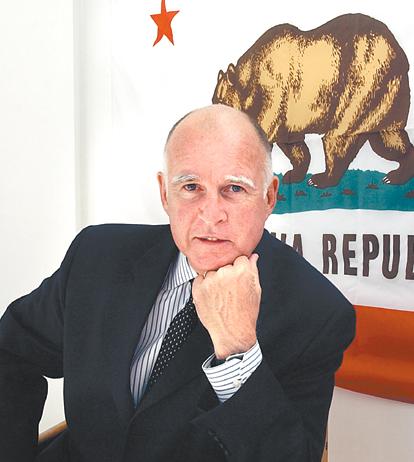
Jerry Brown says everyone on death row is guilty

7

I’m glad the governor is so confident that there are no innocent people on death row.

On one level, I don’t care — I’m against the death penalty period, and I don’t care how horribly guilty the folks who face execution are. Of course, many of them, probably most, were severely mentally ill at the time of the crimes, but that doens’t seem to matter to the gov either.

It’s hard to believe, though, that he really knows much about any of these cases, because innocent people have been put on death row, and some have been executed, all over the country. Jerry’s California is so special that our legal system never makes mistakes? (Notice that he didn’t say no innocent people have been executed; he went way beyond that to say that they’re all guilty. Amazing.)

Paperwork snafu delays big condo project

22

The developers of the 8 Washington project, who have already spent a sizable sum of money on legal, lobbying and prep work, have run into another setback: The March 8 hearing on the project’s shadow impacts has been postponed because of a missing public notice.

The hearing notice and the agenda for the joint meeting of the Planning Commission and the Recreation and Parks Commission wasn’t posted on the Rec-Park website, as required by state law, Linda Avery, the Planning Commission secretary, told us.

The joint meeting was set to consider the impact of shadows the project would cast on nearby Sue Bierman Park and to consider allowing increased shading. That approval is necessary before the project can move forward.

The problems with the public notice were brought to light by Zane Gresham, a lawyer with Morrison and Foerster who often represents developers. In a March 5 letter (PDF) to the two commission presidents, Gresham pointed out that the hearing notice describes the lot on Washington Street, where the project will be constructed, but never mentions the location of the park that will be shadowed.

“The notice misleads the public as to what lots would be affected by the proposed action and fails to disclose to the public the subject of the action to be considered,” the letter stated. “Because the instant hearing notice does not meet minimum legal standards, we respectfully request that no action be taken.”

Avery said that letter sparked a review of the entire notice, and city staffers discovered that it wasn’t properly posted. It also apparently fails to describe fully the action that the two commissions would take: they would to amend the acceptable shadow levels for the park, and then vote to apply those amendments to the 8 Washington development. Only the first type of action is mentioned in the paperwork.

It’s not clear who made the mistakes with the notices — but for a project of this magnitude, critics say it’s remarkable that the city and the developers can’t get the little details of posting a notice correct. “This is the gang that couldn’t shoot straight,” former supervisor Aaron Peskin told me.

The other mystery: Who hired Gresham to review the notice? His letter makes no mention of any specific client, and none of the leading public foes of 8 Washington have retained him. He hadn’t returned my calls and emails by press time.

AH, BUT HERE’S THE UPDATE: Chuck Finnie, who works for the lobbying firm BMWL, just called to tell me that Gresham represents Equity Office Properties, which runs the Ferry Building. EOP, a major national real-estate development firm, is unhappy because the 8 Washington project will wipe out a parking lot used by patrons of the Ferry Building’s businesses. “When EOP took on the job of restoring that building, part of the deal was that parking would be available,” Finnie said. “The Port is ignoring that responsibility.”

Gee, this condo enclave gets more and more unpopular by the day.
 

Are you on a ‘Motherf*ing Bike’?

1

Very much vehement trolling has been expended on the subject of the “privileged bike mob” in San Francisco. Let this insanely catchy tune and goofy-genius vid by Sons of Science fan the fixie flames!

Hyatt bikini pictures and hotel workers rights

16

“When I got to work that day, I heard a lot of laughter and jokes, including a manager that was around. When I got up close to look at what they were laughing at, what I saw were a bunch of pictures that were extremely humiliating and shameful. And I just felt so ashamed and humiliated as a woman that I got extremely upset and took down my picture and that of my sister.”

On Oct. 14, two weeks after Martha Reyes tore down the pictures, she and Lorena Reyes were fired from their positions as housekeepers at the Hyatt Santa Clara. Both have worked in hotels for more than two decades.

The pictures that started it all? Cartoon images of skinny white women wearing bikinis, with the faces of the hotel’s housekeepers tacked on.

“The pictures were pictures of women in bikinis with our faces pasted on. To be honest, for me as a woman it was—imagine, I’m a mom of five kids and nine grandkids. To be put in that kind of picture is extremely uncomfortable,” Martha told the Guardian.

When they were fired, the sisters were told that they were wasting company time by combining their ten-minute and lunch breaks. But the sisters believe that they were targeted after Martha tore down the pictures—and later, when confronted by a superior who demanded the images back, refused to return them.

As for the too-long lunch break claim: “We haven’t come across anyone else who’s been fired for it,” said Adam Zapala, an attorney with the firm Davis, Cowell, and Bowe, who is representing the sisters. “So it raises the suspicion in our mind.”

As we reported in November, the sisters have filed complaints against the hotel with the Equal Employment Opportunity Commission. They are asking for their jobs back and for back pay, saying they were wrongly terminated.

The complaints are specific to the Reyes’s case. On March 8, UNITE HERE Local 2, which represents Hyatt workers in several Bay Area hotels, will push back at Hyatt on a different level.

The group is planning an International Women’s Day protest at the Grand Hyatt in Union Square.

“On March 8, 1911, garment workers, all women, took to the streets demanding a 10 hr work day and an end to child labor. It was after that year that people started to celebrate March 8 as International Working Women’s Day. This action comes out of that tradition,” explains Julia Wong, an organizer with UNITE HERE.

International Women’s Day no longer specifically honors workers. But the bikini pictures bring up an issue that affects all women; sexual objectificaion.

“It’s making fun of what women’s bodies look like, sexualizing them, in an industry where its not safe to be sexualizing housekeepers,” said Wong, referring to widespread sexual harassment of hotel housekeepers. The extent of this issue was revealed to a degree last year in the aftermath of the Dominique Strauss-Kahn scandal.

“It’s really a fight for women’s rights in the workplace,” said Wong.

From bhangra to Brazilian horns: Celebrate International Women’s Day at Yoshi’s

0

International Women’s Day has been around to raise consciousness and support women’s rights since the early 1900s, and this year the party happens Thu/8. Tomorrow morning, people across the Bay Area will be rising up to join women-led demonstrations like Women Occupy and Rally Against Sex Discrimination and Sex Harassment to show our support for the XX-chromosoned all around the world. But after the daytime marches and the protests, Yoshi’s San Francisco Jazz Club invites us all to end the night at International Women’s Day’s official after party — an evening of notable speakers and intimate performances benefiting two upcoming events, Earth Day and Peace Day.

March 8 has become established as the annual date to globally recognize gender issues and celebrate feminism. The United Nations’ official 2012 theme for the day is “Empower Rural Women — End Hunger and Poverty,” and tomorrow night’s celebration at Yoshi’s should evoke that message — seasoned in local context and jazzy flavor. 

Patricia Maginnis, a long-loved activist and cartoonist, is one of the most esteemed feminist pioneers whose work helped the fight for safe, accessible abortions. She helped establish the Association to Repeal Abortion Law in California in 1966, and helped 12,000 women find abortions outside the country by 1969. Maginnis continues to make active contributions to spreading awareness of women’s rights, and will be speaking at Yoshi’s about the latest feminist issues concerning contraception and cosmetic safety. 

Big Brother and the Holding Company headlines tomorrow night’s stunning bill of SF-based musicians. It was Janis Joplin’s original band, and its experimental and raw sounds played a significant role in establishing San Francisco’s psychedelic music scene. 

Non Stop Bhangra, a monthly bhangra dance night in San Francisco that blends traditional Punjab folk and dance music — will also be bringing the party to Yoshi’s. The diverse line up will also feature Brazilian horn-driven funk band, Mondo Loko, sexy and soulful genre-bender Valerie Orth, soul-rock musician and former classical opera singer Pamela Parker, the soulful melodies of the harmonic powerhouse Lesley Grant, and the versatile, exotic vocals of Ziva.  

International Women’s Day Celebration

Thu/8 8 p.m., free for lounge-only; $35 for main stage access 

Yoshi’s San Francisco Jazz Club

1330 Fillmore, SF 

(415) 655-5600

www.yoshis.com


Genesis Breyer P-Orridge on “The Ballad of Genesis and Lady Jaye”

0

Read Nicole Gluckstern’s interview with documentary filmmaker Marie Losier about her new film, The Ballad of Genesis and Lady Jaye, here. Below, extended thoughts from Losier and film subject and musician-performance artist Genesis Breyer P-Orridge.

On serendipity:
Genesis Breyer P-Orridge:
It was Lady Jaye, when we started to take the whole idea of pandrogeny more seriously and dedicate our lives to it, she immediately said, “We really need to find somebody to just follow us around and film us.” And within a week we’d met Marie. We call it the “of course” factor. “Of course” we met Marie, because we were supposed to meet Marie, and it’s amazing how often that comes up, the “of course” thing. So from then on it wasn’t conscious anymore, it was just that Marie was around whenever she felt there was something to film, or she would say “I have this idea that I would like you to dress as a mermaid and pretend to swim with a house on your back….”

On influence:
Marie Losier:
Mike [Kuchar] is the person who taught me how to make films, just to make them. He’s actually the first person I made a film with, ever … the person who taught me how to load a roll of film in my camera. And he’s so clumsy, and everything always falls apart … so I didn’t think twice, like “Oh, ok, if I can make a film that way I don’t have to think too much [about the process], no worry.” And it works. It’s also a joy. Mike and George [Kuchar] were always like, “filmmaking is a hobby, just enjoy it.”


On DIY filmmaking:
ML: It took a long time, [seven years]. I had no budget and I did everything on my own time and budget. No crew, no producer. [I had] this tiny 16mm Bolex with no sound or anything, so it was a pretty archaic way of entering that world, but for me, it became very very beautiful because I was there and I was a part of it, but also, like a ghost who would just record beautiful moments…but was not intruding.

On pandrogeny:
GPO: In the beginning, as you know, it was basically just driven by [my and Lady Jaye’s] insane love for each other, the sense of wanting to literally consume each other and just find away we could somehow blend our bodies together as well as our minds and become a new-formed being whether it was in this dimension or another. But during that we had a lot of dialogues … about the implications and possibilities, and at some point it came back into my mind [something that William S.] Burroughs said to me in 1971: “How do we short-circuit control, and where is control located?”

It came to us that control is a recording, and DNA is a recording, and it terms of the human body and its potential and its ability to mutate and evolve, then where you have to look is DNA. And if you want to change the recording, you cut it up, you deny it its natural flow. And that’s what we realized we were doing, that we were quietly saying we will not let our bodies grow and look the way that DNA expects us to. We will say “we refuse,” and that became a really powerful thought for us … it loosened up our way of seeing things. We both thought, if we can break the pattern of DNA, even in simple ways, perhaps that will give people the breathing space to think about the future. If you can imagine that the body can become basically anything once you remove DNA as a monopoly … or suppressive doctrine … once you take away this idea that the body is sacred and a finished item, which it’s not, in our opinion, far from it, then everything becomes possible.

On the sweet hereafter:
GPO: Myself and [the late] Lady Jaye [are still] involved in pandrogeny, [just] she is now working in the immaterial dimension. The ultimate point for us personally was that when my body is dropped for her to maintain a sense of individual spirit through it so that when it’s my turn to leave this body we can literally find each other and literally become one. There’s lots of things that she noted that are still being manifested. She’s absolutely always around.

On love:
SFBG:
One thing I really like about the film are all the domestic scenes, people running around the kitchen and throwing barbecues. Do you have a sense of relief that that side of you is now in the public view, that people can associate you with domestic tranquility?

GPO: Definitely, thank goodness. The only thing that Jaye wanted to achieve was to be remembered as a great love affair, so for all of us involved, the band, our friends, are really thrilled that that’s what happened.

The Ballad of Genesis and Lady Jaye opens Fri/9 in Bay Area theaters.

Gamer: Sony PlayStation Vita top picks (and games to skip)

0

Read Peter Galvin’s review of the Sony PlayStation Vita in this week’s Gamer column.

Most of the Vita’s launch games exist to show off what the system can do. Mini games, short races, puzzlers; a lot of this initially sounds like phone gaming. But, even with all of Sony’s efforts to ape the success of Apple’s app store, don’t discount the Vita’s sticks and buttons, a fundamental that phone gaming has yet to overcome. Real games have buttons, people.

Little Deviants
This mini-game collection came as a pack-in with early orders of the Vita and seems specifically designed to show off the system’s novelties. Think WiiSports, but instead of a remote, you have touch screen games and “augmented reality” that uses the rear camera to allow you to shoot aliens in your house. Each game is fairly one-note and, for all but children, the novelty will grow old fast.

Uncharted: Golden Abyss
For everyone who thinks their phones can play games, play Golden Abyss. While this third-person shooter may stack less favorably against its console brethren, as a handheld title it’s simply stunning. An Uncharted adventure with very few concessions, Golden Abyss is closest to a home experience you’re likely to get on a handheld.

Super Stardust Delta
A score-attack twin-stick shooter where you wipe out asteroids as a tiny spaceship, Stardust has been a fixture on the PlayStation, and this handheld version might be the prettiest and most addicting entry yet.

Escape Plan
Early shoo-in for most unique downloadable title in the launch, Escape Plan has a gloomy black-and-white aesthetic that recalls Limbo and early Tim Burton. Basically a point-and-click adventure game, Escape Plan probably tries to do too much, but its distinct style is worth a look.

WipEout 2048
The best racing game at launch, WipEout offers a lot of content, a great sense of speed and a steady increase in difficulty — and it means you can skip the depressingly shallow ModNation Racers: Road Trip and Asphalt Injection.

Hot Shots Golf: World Invitational
This entry in the Hot Shots Golf series is largely uninterested in the Vita’s touch-screen, but golf mechanics are tight and short rounds create an addicting “just one more hole” experience that would seem to go against the sport’s generally calming nature.

Lumines Electric Symphony
Lumines may be the most addictive puzzle game. The Tetris-esque gameplay seems simple, but Lumines is more of an audio-visual experience that challenges you to beat your own — and the world’s — high scores to some pretty rave-y electronic music. Wear headphones!

Rayman Origins
Rayman Origins may be a port, but it’s a port of a full length console game and remains one of the best platformers of this generation. Even without co-op play, the colorful and fast-paced stages are masterfully designed and it’s nice to have them on the go.

Mayor Lee makes demands on SFUSD

9

“You thought you felt an earthquake Sunday night. Actually, that was me.”

Assemblymember Tom Ammiano was on the phone, talking to me about Mayor Ed Lee’s plan to demand some changes in the way the San Francisco Unified School District manages its property — and to hold up the $6 million the city owes the district until that happens. The mayor says there will be “strings attached” to the rainy-day fund money that would normally go to help SFUSD avoid teacher layoffs — and while it’s not exactly clear what those strings are, except that the mayor wants surplus property to be developed or sold, it’s not what Ammiano had in mind when he created the fund as a supervisor.

“The mayor is trying to hold the school district hostage,” Ammiano said. “And it’s not well advised.”

It’s also really odd: For one thing, as School Superintendent Carlos Garcia told me in a phone interview, any money the district got from selling off surplus property would be earmarked for use in facilities development and couldn’t go to pay teachers or prevent program cuts. “He wants to see how we’re using the property, and that’s fine, I’m happy to share that with him,” Garcia said. “But selling property doesn’t help. Even if we sold everything, we’d still need the money from the Rainy Day Fund.”

The district is constantly looking at ways to use its surplus property, and does a study on the topic every two years. But it’s not simple — for one thing, enrollment is growing, and it’s entirely possible that some sites that are now surplus will be needed in the next few years. And Garcia is properly cautious about getting rid of public property without a very good reason.

He’s a little curious, too, about what the mayor has in mind. “This did come a little bit out of the blue,” he told me.

The whole situation creates another disturbing conflict, one I’ve been worried about for years. The mayor’s education advisor, Hydra Mendoza, also sits on the School Board. What happens when the guy who pays her salary at her day job — Mayor Lee — takes a position that’s directly at odds with the interests of the job the voters gave her, as a board member? I see that happening right now, and I don’t know how it’s going to play out.

With any luck, the mayor will come to his senses, cut the check and stop trying to tell the school district how to manage its property. If not, his education advisor is going to be in a bit of a pickle.

Mendoza told me she doesn’t see it that way — in fact, she said she doesn’t think the mayor will really hold up the $6 million. “It’s part of an ongoing conversation,” she told me. “People keep telling the mayor that the school district has all this surplus property and needs to sell it before they get any city money. The mayor is just responding to that, saying ‘is there another source of revenue?’ Because the rainy day fund is going to dry up.

“How that got portrayed as ‘strings’ I don’t know.”

She did say, however, that the mayor “has been very clear that he wants to look at other revenue streams” and wants to see a plan in place to use the surplus property. Even though, of course, it’s not that simple and Mendoza was quick to agree that you can’t just put a tech company in a building that’s part of a school site.

She also insisted that there’s no conflict here. “It works well for me and the district,” she said. “If I wasn’t here, the perception of the district at City Hall would be different.”

But still: We’re very close to a situation where the mayor is on one side of an issue and the school district is on the other, and there’s critical money involved, and Mendoza is in the middle. “We haven’t come to those crossroads,” she said. “I haven’t been put in that situation. We’ve had a lot of civil conversations.”

But it’s out there, and it’s a potential problem.