Print sections as they appeared in the early 2010s

To find articles by keyword or author, you may want to use our Search function.

Print Sections

The truth hurts

3

cheryl@sfbg.com

SAN FRANCISCO JEWISH FILM FESTIVAL The 33rd San Francisco Jewish Film Festival broadens its scope this year with a theme — “Life Through a Jew(ish) Lens” — that allows it to encompass a wide spectrum of films. Though plenty of SFJFF’s programs do specifically address Jewish religion and culture, some of the films I watched were only tangentially “Jew(ish)” — as in, they simply happened to be made by a Jewish filmmaker. For fans of quality programming, however, that’s a moot point: SFJFF 2013 is a solid if eclectic festival, with a typically strong showing of documentaries well worth seeking out.

Previously seen locally at the San Francisco International Film Festival, Martha Shane and Lana Wilson’s After Tiller is as timely as ever, with the advent of increasingly restrictive abortion legislation in states like Texas and North Carolina. This doc focuses on the four (yes, only four) doctors in America who are able to perform late-term abortions — all colleagues of Dr. George Tiller, assassinated in 2009 by a militant anti-abortionist.

The film highlights the struggles of what’s inherently a deeply difficult job; even without sign-toting (and possibly gun-toting) protestors lurking outside their offices, and ever-shifting laws dictating the legality of their practices, the situations the doctors confront on a daily basis are harrowing. We sit in as couples make the painful decision to abort babies with “horrific fetal abnormalities;” a rape victim feels guilt and relief after terminating a most unwanted pregnancy; a 16-year-old Catholic girl in no position to raise a child worries that her decision to abort will haunt her forever; and a European woman who decides she can’t handle another kid tries to buy her way into the procedure. The patients’ faces aren’t shown, but the doctors allow full access to their lives and emotions — heavy stuff.

Similarly devastating is Brave Miss World, Cecilia Peck’s portrait of Israeli activist Linor Abargil, who survived a violent rape just weeks before she won the Miss World pageant in 1998. As Linor travels around the world on her mission to help others heal from their own sexual assaults, it becomes clear that she still has some lingering issues of her own to deal with. Taking action — working tirelessly to keep her rapist in prison; making a painful return trip to Milan, where the attack happened — only brings a certain amount of closure. Her emotional fragility manifests itself in a newfound embrace of religion (much to the confusion of her largely secular family, fiancé, and gay best friend), which is somewhat at odds with Brave Miss World‘s female-empowerment message. Still, though it gets a bit documentary-as-therapy, Brave Miss World offers a compelling look at one woman’s determined quest to help others who’ve suffered similar traumas — urging them, through sheer force of personality, to speak out and become activists themselves.

More cinematic therapy is offered up by the structurally similar Here One Day and My Father and the Man in Black. In both of these first-person docs, the filmmaker remembers a parent who committed suicide, making extensive use (in both cases) of remarkably candid audio and written diaries that were left behind. In Here One Day, Kathy Leichter delves into her troubled mother’s manic depression as she cleans out the closets of the New York City apartment where she grew up — and where her own young family now resides. Even more fraught with meaning than her mother’s physical leftovers — a mix of both meaningful (her writings and recordings) and pack-ratty (a trash-scavenged Marie Antoinette bust, a Coca-Cola memorabilia collection) — is the window where she leapt to her death in 1995. Leichter’s father, longtime New York State Senator Franz Leichter, is among the family members who speak openly about the event.

Filmmaker Jonathan Holiff’s My Father and the Man in Black is no less personal, but it offers slightly broader appeal, weaving the tale of Holiff’s father, Saul Holiff, and his stint as Johnny Cash’s manager from 1960-73. Holiff’s association with Cash coincided with the musician’s At Folsom Prison triumph, but also with the height of his raging drug problem; the beleaguered Holiff spent much of his time doing damage control in the wake of cancelled (or should-have-been cancelled) concerts. Parenting wasn’t a high priority, the younger Holiff recalls, but once the filmmaker discovers his father’s memoir and memorabilia-stuffed storage locker, he’s able to piece together the man behind the anger (and the drinking problem). The film relies perhaps too heavily on re-enactments (that, in turn, are heavily inspired by 2005’s Walk the Line), but it offers a not-often-seen perspective on show biz’s darker aspects, as witnessed by a man tasked with managing a superstar whose addictions often threatened to overtake his talent.

Beyond parental angst, another favorite theme among SFJFF doc-makers is race. Paul Saltzman builds off an incident in his own life for The Last White Knight, an insightful but at-times difficult to watch film anchored by an interview with Delay De La Beckwith, aging racist. (His father, the late Byron De La Beckwith, was finally convicted in 1997 of killing civil rights leader Medgar Evers in 1963.) Saltzman and the younger Beckwith, who are around the same age, first met in 1965: one, an idealistic student who traveled to Mississippi to help register African American voters; the other, a proud KKK member who punched Saltzman in the face because he didn’t care much for meddling outsiders. Welcome to the South!

Using animation, interviews with other civil rights activists (including Harry Belafonte and Morgan Freeman — though the latter insists “I don’t talk race”), and personal reflections, The Last White Knight strives to explore the current state of race in America. At its heart, though, it’s about the two men who form a surprising friendship of sorts, despite their combative past. It’s unclear, after all these years, if Beckwith is truly a chuckling specter of evil (“Got what they deserved,” he drawls when asked about the 1964 murders of civil rights workers Andrew Goodman, James Chaney, and Michael Schwerner), or a simple-minded man who thinks nothing of saying “Obama is a direct descendent of the devil” — and, while smiling and chatting with a man he knows is Jewish, “Jews control all the money and the media.” Jaw-dropping doesn’t begin to cover it, but Saltzman remains admirably composed throughout.

Race also factors, inevitably, into The Trials of Muhammad Ali, Bill Siegel’s lively investigation of the boxing champ’s Nation of Islam conversion, name change, and refusal to fight in Vietnam. If you’ve seen an Ali doc before (or even the 2001 biopic), a lot of the footage and material will feel familiar. But Trials, which offers interviews with Louis Farrakhan and Ali’s former wife Khalilah, among others, does well to narrow its focus onto one specific — albeit complicated and controversial — aspect of Ali’s life.

http://www.youtube.com/watch?v=99HMxN94bEc

Contemporary civil rights struggles factor heavily in Dawn Porter’s Gideon’s Army (first screened here at DocFest), about a trio of public defenders struggling with daunting work loads (one women has 180 clients at a time) and a system seemingly rigged against low-income defendants, many of whom plead guilty, whether or not they actually are, because they simply have no other options. Like After Tiller, it’s a doc that offers a sobering, eye-opening look at a job you wouldn’t want — yet makes you glad that those who do it are such steadfast characters.

And if all that sounds too intense, take note of these two films: Mehrnaz Saeedvafa’s Jerry and Me, in which the filmmaker and teacher reflects on Hollywood’s influence on her pre-revolutionary Tehran youth (including her love of Jerry Lewis; if you’ve ever wanted to see clips of 1960’s Cinderfella dubbed in Persian, this is your chance); and Amy Winehouse: The Day She Came to Dingle, a made-for-Irish-TV concert film that spotlights the singer in 2006, before her slide into addiction derailed her career and ended her life. Here, her voice sounds stunning as she croons her hits in a tiny, 200-year-old church; she’s also sweetly jazzed to discuss her influences (dig her story of hearing Ray Charles for the first time) in an accompanying sit-down interview that reveals how endearing and intelligent she could be. *

SAN FRANCISCO JEWISH FILM FESTIVAL

July 25-Aug 12, most shows $12

Various venues in SF, Berk, Oakl, San Rafael, and Palo Alto

www.sfjff.org


The death aquatic

0

cheryl@sfbg.com

FILM The 911 call placed from SeaWorld Orlando on February 24, 2010 imparted a uniquely horrific emergency: “A whale has eaten one of the trainers.” That revelation opens Gabriela Cowperthwaite’s Blackfish, a powerful doc that puts forth a compelling argument against keeping orcas in captivity, much less making them do choreographed tricks in front of tourists at Shamu Stadium.

Whale experts, former SeaWorld employees, and civilian eyewitnesses step forward to illuminate an industry that seemingly places a higher value on profits than on safety — skewed priorities that made headlines after veteran trainer Dawn Brancheau was killed by Tilikum, a massive bull who’d been involved in two prior deaths. (Though SeaWorld refused to speak with Cowperthwaite on camera, they recently released a statement calling Blackfish “shamefully dishonest, deliberately misleading, and scientifically inaccurate;” read the filmmaker’s response to SeaWorld’s criticisms at film blog Indiewire.) Blackfish, which premiered locally at the San Francisco International Film Festival, opens theatrically this week. I spoke with Cowperthwaite ahead of its release.

SF Bay Guardian Blackfish uses home-movie footage to illustrate training accidents, whale misbehavior, and so forth. I’m guessing a company as image-conscious as SeaWorld would strive to keep that kind of material out of the public eye. How did you get ahold of it?

Gabriela Cowperthwaite It came from every source imaginable: personal archives, historical archives, people who happened to be filming shows when they were visitors at the park. We had to vet every piece of footage, figure out the original owner, and go from there. It was the most time-consuming process imaginable — but we really needed to be inside the park to tell the story, so we had no choice but to really do the detective work to find out where every little bit came from.

SFBG Did you do any of your own clandestine filming at SeaWorld?

GC We kind of had to. I had to “meet” Tilikum, you know? Whatever we could do to get footage that could truthfully represent the story, we did.

SFBG The film interviews several former SeaWorld trainers who seem eager to speak out against the park. How did you find them?

GC When they heard how SeaWorld responded to Dawn Brancheau’s death in the news, they knew something was amiss and they began speaking out. In terms of them being comfortable [with being in] the film, they had spoken to author Tim Zimmerman [for the] Outside magazine article “Killer in the Pool,” and had felt a level of comfort with him. His article was one of the best articles I read about the Brancheau case. So from that, I was able to contact them. Their only caveat was that the film [would have to] be truthful, and I told them I planned to do a fact-based narrative that wasn’t sensationalized or gratuitous. Because we saw eye to eye on that approach, they agreed to be interviewed.

SFBG Blackfish highlights the disconnect between SeaWorld’s version of Brancheau’s death and what the trainers suspect actually happened. Their analysis of the video shot in the moments leading up to the attack is very effective.

GC It’s exactly what you want to know because you can’t understand what’s happening. The lay viewer sees a whale circling a pool; there’s nothing other than, “Isn’t this a cute trick?” Audience members at these shows are trained just as much as the whales are, to respond and laugh and clap on cue. And yet, to have a trainer say, “Oh no, this session is going badly” — that was so eye opening for me, and I could only learn that from these former trainers.

SFBG What do you think would be the best-case scenario for whales in captivity, going forward?

GC If SeaWorld were to stop its breeding program, that would be hugely important. And one of the best alternatives [for whales in the park] is instituting a sea pen, which is essentially cordoning off part of an ocean cove with a big net. You can’t just dump [the whales] into the ocean because they don’t know how to eat live fish, and a lot of them are hopped up on antibiotics. But you could soft-release them and keep them in a place where you could monitor their health, and yet allow them to be in an ocean environment. That would be an amazing thing that SeaWorld could do.

SFBG You mentioned that you had gone to see Tilikum in person. What was that like?

GC I was terrified of Tilikum when I first started making the documentary — I think because I’d read [Brancheau’s] autopsy report early on, and it was the stuff of nightmares. But when I started unpacking his life to try and understand [him], I started feeling this empathy. It culminated with me seeing him and truly feeling sorry for this tremendous, impossible animal — relegated to doing this silly lap around the pool and splashing everybody, and then going right back into his little pool.

SFBG And SeaWorld doesn’t acknowledge that it’s the whale that killed the trainer, of course.

GC Oh no. Absolutely not. They just don’t talk about it. And remember, they call everything Shamu. That’s the easiest way not to have to deal with the Tilikum factor.

BLACKFISH opens Fri/26 in Bay Area theaters.

The ascendants

0

arts@sfbg.com

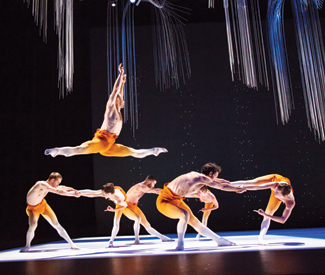
DANCE Though only in its fourth season, Robert Dekkers’ Post:Ballet has already gained an enthusiastic, impressively large following that has allowed the company to move from the Cowell to the Herbst to this year’s Lam Research Theater at Yerba Buena Center for the Arts. It’s easy to see the reason for Dekkers’ success.

While his dance making is clearly ballet-based, his works have an expansive sense of freedom that makes them welcoming and easy on the eye. By choosing to perform in the summer when other companies are on break, he can also work with highly trained professionals otherwise unavailable to a small (ten-person) ensemble like his. This year they came from Houston Ballet and Ballet Arizona, as well as the local Smuin Ballet, Alonzo King LINES Ballet, and Company C Contemporary Ballet.

Perhaps most intriguing is the ease with which Dekkers’ choreography embraces the ground and the air as one liquid continuum. His dancers crawl, slither, and slide along the floor like billowing smoke — and then rise into space as if born to it.

The world premiere for seven dancers, field the present shifts, is probably Dekkers’ most ambitious piece yet. It is a problematic work. A collaboration with architects Robert Gilson and Catherine Caldwell and a commissioned score, performed live by Matthew Pierce, it also features gorgeous magenta body-hugging costumes by Christine Darch, and a richly varied lighting design by David Robertson.

According to the program notes, field examines complex relationships. Within a given set of parameters, the piece also allows for individual decision-making by everyone involved. It added up to a lot of in-the-moment choices by a lot of people, and the results did not convince.

Visually, however, field was a feast for the senses. The dancers flew at each other like arrows, bunched up into swaying unisons as if buffeted by some gale force wind. They gathered on individual squares of light, responded to each other across the stage, and seemed to walk on water. They rolled into somersaults and carefully explored and yanked at each other. What I missed was an encompassing frame that held these individual units together. Also, a sense of uncertainty marred some the canons and unisons.

The two designers came up with what looked like huge sheaves of wheat hung upside down; at one point, they were lowered, presumably for the dancers to interact with. Few of them did. So what was the point? The distinct character of each of the ten or so sections of Pierce’s score for five violins, however, was a pleasure to hear.

The evening opened with the reworked Colouring II from 2011, danced with great authority by Ashley Flaner and Domenico Luciano. The piece traced the making of a pas de deux, developing at the same time as Enrico Quintero’s creation of a large, calligraphy-inspired painting. The dancers, approaching each other from opposite sides, added another gesture with each encounter, suggesting an almost filmic sense of accumulation. Daniel Berkman’s score, performed live, contributed his own voice to this intriguing process. This was watching visual and kinetic art in the making, and it was a delight. However, Dekkers standing on the sidelines, cueing the process, seemed intrusive. He should have trusted his artists.

Sixes and Seven, also from 2011, is a solo, here danced delicately yet firmly by Jessica Collado. This was richly varied choreography in which the dancer made full use of her body, including an excellent use of gestural language. At times, Collado appeared to withdraw into herself, but she also reacted to invisible external forces that impinged on her. You got a sense that she was living in a rich world. If the use of an excerpt from Philip Glass’s Einstein at the Beach meant to suggest some kind of cosmic existence, the choice was perfect.

Last year’s When in Doubt ended awkwardly in a wobbly pyramid, and used a distracting word-and-sound score by Jacob Wolkenhauer. But Dekkers showed considerable choreographic chops in the way he used his septet of dancers both in unisons and in smaller units. With the women on pointe walking in plié, and Robertson’s stark lighting that pulled the dancers across the stage with a quasi magnetic force, When began to feel ominous. This was even true for the two very different duets for Raychel Weiner and Christian Squire, and Collado and Jane Hope Rehm.

Dressing the women in black leotards and the topless men in black tights was inspired because the dancers could almost disappear into each other. The women were dark from the waist up, the men from the waist down. The color scheme abstracted personal interactions and sequences into two-dimensional patterns — thus foregoing overly eager tendencies to read narrative intentions into Dekkers’ choreography. *


Phone home

1

culture@sfbg.com

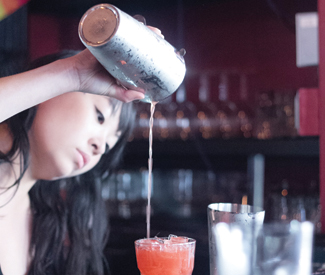
COCKTAIL HOUR I’m not sure whether it was completely unintended, but after my night at new SoMa gastropub the Willows, one thing was clear: I need to call my mother.

A sister bar to the Mission’s Sycamore, the Willows opened a few weeks ago on the corner of Folsom and 12th, in one of those cursed spots that’s seen a lot of turnover ever since Hamburger Mary’s decamped a decade ago. (Here’s hoping the Willows breaks the curse and settles in.) It’s walking distance from my job, and at 6pm I had a serious case of the Mondays and was ready to drink.

The place is divided into two parts: a main bar room and a smaller, cozier room dedicated to serving craft beers. The main room is huge with large windows letting in lots of natural light. There were couples sitting at tables doing whatever couples do, people playing pool near the door, and arcade games in the back of the bar. Just a nice open space.

As befits the Willows’ arboreal name, the craft beer room has wooden walls and a few wooden tables out in the open, with a couple of intimate booths as well. Relieved by the emptiness, I took a seat in the smaller room and ordered a malt beer. I chatted with the bartender — a friendly young man who looked like a lost member of Vampire Weekend — and waited for my friends to arrive.

When they showed up, we all dove into the menu. This is when you get a bit of nostalgia for home. The food menu takes you right back to your childhood: burgers, roast beef, sloppy Joes (“Just like Mom’s” was the caption on the menu), and the aptly titled “Mom’s Meatloaf.” Just reading it makes you feel like a kid waiting anxiously at the dinner table. Unfortunately, we weren’t too hungry at the time. But we decided to order the pork-belly donuts anyway. I mean, how could you not?

They were delicious. And then came the drinks. Most of the cocktail menu consists of traditional classics with a tiny twist — but I think what we enjoyed most was the menu itself. Filled with fun names (Oh, Trisha!, Mom’s Mai Tai, Donkey Show) and captions (“A distinctive drink for a discerning drinker” for the 007 Perfect Martini), we had a blast reading it. There was even had a drink called Fuck You, Grandpa!, which is something my mom would totally say.

My buds and I all ordered a couple each. They were pretty good for the most part, but the hands-down winner was the Willows’ version of a sidecar. At $12, it was the most expensive drink on the menu and worth every penny — and having ordered about four, there were a lot of pennies. When ordering the last of these, the bartender told me rather candidly that she hadn’t memorized the bar’s recipe yet.

“This is just how my mom likes it,” she shrugged. I should have asked if her mom was a bartender.

So, to recap: The Willows may not be the place to take your mom — but if you want to feel right at home, here you go.

THE WILLOWS 1582 Folsom, SF. (415) 529-2039, www.thewillowssf.com


New Guardian leadership wants your input

0

San Francisco Print Media Company last week named Marke Bieschke as publisher and Steven T. Jones as editor of the San Francisco Bay Guardian, elevating two longtime Guardianistas into the top spots, guaranteeing them editorial autonomy, and letting them work with the community to chart its future.

As a first step in that process, the Guardian will hold a public forum on July 31 from 6-8pm in the LGBT Center, 1800 Market Street, to solicit input and discuss the Guardian’s unique role in the Bay Area’s political and journalistic landscape. Helping to coordinate the forum is Guardian writer Rebecca Bowe, who has accepted the position of news editor. The forum and subsequent discussions will form the basis for a strategic plan that will help guide the Guardian into a new era.

The newspaper’s future was uncertain a month ago following the abrupt departure of longtime Guardian Editor-Publisher Tim Redmond in a dispute with the owners over layoffs and the Guardian’s autonomy. The company’s Vice President of Editorial Operations Stephen Buel, who is also editor of the San Francisco Examiner, was named interim Guardian publisher and Bieschke its interim editor.

Heeding concerns in the community about whether the Guardian would remain an independent, progressive voice in San Francisco, Bieschke and Jones negotiated terms with SF Print Media Company CEO Todd Vogt that guarantee them full editorial control, the addition of three new advertising sales positions and another staff writer, and guaranteed minimum staffing levels during a rebuilding period.

Bieschke and Jones, who are in their early 40s and have been with the Guardian for around 10 years each, say they are excited for the opportunity to work collaboratively with Guardian staff and its community to rejuvenate the paper, attract new readers, and achieve economic sustainability.

“Losing Tim’s leadership was hard on all of us at the Guardian, and we struggled with what to do next. But ultimately, the Guardian plays such an important role in San Francisco — particularly now, at a pivotal moment for this gentrifying city and its progressive movement — that we wanted to find a way to keep that voice alive, maintain our credibility, and reach out to a new generation of Bay Area residents,” Jones said.

The San Francisco Bay Guardian was founded in 1966 by Jean Dibble and Bruce B. Brugmann, who continues to blog and serve as editor-at-large for the Guardian. The couple retired from regular duties when the financially troubled paper was sold to Canadian investors headed by Vogt in the spring of 2012, a deal engineered by Redmond, whose writing is always welcome in the pages of the Guardian as he pursues a new media venture.

“I’m stoked to bring a different energy and openness to innovation to the Guardian, while respecting our legacy and strengthening our bonds with the progressive, alternative community,” Bieschke said. “Obviously, Steve Jones and I stand on the shoulders of giants, and we’re so grateful to our Guardian family, past and present, for blazing a trail for world class progressive journalism, arts and culture coverage, and community-building in the Bay Area. In that spirit, I’m eager to reconnect with our readers and partner with them to amplify the Guardian voice and continue to change the Bay Area for the better.”

Vogt said he’s excited by the prospects of new generation of Guardian leadership: “I’m happy about this. I think it’s appropriate that two recognized leaders in the progressive community are in charge of the Guardian and I look forward to seeing what they do with it.”

Years of cutbacks have distilled the Guardian newsroom down to just a few excellent journalists, but all say they’re excited for the chance to rejuvenate the paper, build its readership and revenues, and work more closely with the community.

“We all hope you’ll help us to guard San Francisco’s values, appreciating all of its best cultural, artistic, and culinary offerings in the process,” Jones said. “We love the San Francisco Bay Area, in all its messy urban glory, and we think it’s worth fighting for.”

New director triggers a brain drain at SFDPH

1

The San Francisco Department of Public Health has seen an exodus of top officials over the 18 months since Barbara Garcia took the reins from longtime chief Mitch Katz, the most recent being Environmental Health Director Dr. Rajiv Bhatia, who was placed on administrative leave last month pending an investigation into unspecified concerns.

Bhatia has been a hero to many progressive San Franciscans and public health professionals for his innovative work supporting expanded worker protections, regulation of cannabis dispensaries and restaurants, environmental justice initiatives, and other work that has landed him in the pages of the Guardian many, many times.

“The poorest Americans are about two times as likely to die. People in low-wage jobs have less access to health care … food, shelter, clothing, and transit,” Bhatia testified during the 2002 Board of Supervisors hearing that led to the creation of a city minimum wage.

Neither Bhatia nor the department would comment on his leave, although sources tell us that he has not been informed of the charges against him (which an item in the Chronicle last month suggested was a possible conflict of interest issue relating to his regulation of restaurants) and that Garcia has clashed with many top officials in the department since taking over.

Among those who have left the department are Dr. Susan Fernyak, Director of Communicable Disease Prevention and Control; Dr. Masae Kawamura, Director of TB Control; Dr. Grant Colfax, Director of HIV Prevention; Elizabeth Jacobi, Director of Human Resources; Tangerine Brigham, Director of Healthy San Francisco; Mark Trotz, Director of Housing and Urban Health; and Dr. Erica Pan, Director of Emergency Preparedness.

“SFDPH has a national and worldwide reputation for innovative solutions to traditional public health problems. As a citizen of this city, I’m concerned that the current leadership is fostering an environment that is driving out and stifling that innovation to the detriment of all of us. A number of staff people have told me they have been instructed not to stretch themselves to innovate, to do only what their job description says and no more,” said the source, who works for a nonprofit that partners with the department.

Asked to comment on the exodus and her role in it, Garcia issued the following statement in response to questions from the Guardian: “Three staff that reported to me directly were recruited and provided promotions in the Los Angeles Department of Health Services. I’m very proud of these staff who are now involved with Health Care Reform efforts for the Los Angeles area. Several other staff that reported to our Public Health Division left for positions that were closer to home and the majority of these departures were promotions. All staff left in good standing with the San Francisco Department of Public Health.”

Meanwhile, 93 “members of the public health, social and environmental justice, foundation and education communities” wrote a signed letter to Mayor Ed Lee on July 10 on behalf of Dr. Bhatia, highlighting his work and appealing for a just resolution to the situation.

“Many across the nation have been grappling with how to improve the social and environmental conditions that are the cause of poor health and health inequities. Under Dr. Bhatia’s leadership, the San Francisco Department of Public Health Environmental Health Section has found practical ways — using research, policy, regulation, and cross-sector collaboration — to produce measurable improvements to environmental and social conditions throughout San Francisco’s diverse communities,” they wrote.

While writing that they “have no knowledge or commentary on the details of the leave or investigations, they went on to note the initiative that Bhatia has shown in going beyond his prescribed duties to work with various San Francisco constituencies to support equitable solutions to this city’s problems: “He takes his responsibilities as a public servant seriously, working well beyond required hours, and he is committed to improving the life-chances of socially, economically, and politically marginalized communities.”

After Oscar, after Trayvon…

49

rebecca@sfbg.com

Even before Cephus “Uncle Bobby” Johnson picked up the phone on Feb. 27, 2012, he wasn’t having an easy day. His nephew, Oscar Grant, would have celebrated his 26th birthday on that date if he had not been killed by a gunshot wound on Jan. 1, 2009.

Grant was shot by BART police officer Johannes Mehserle while lying face down on a train platform, an incident that was caught on film, prompted riots in Oakland, drew international scrutiny, and became the subject of the award-winning film Fruitvale Station by Oakland filmmaker Ryan Coogler.

In the years since Grant’s death, Johnson and his wife, Beatrice X, founded the Oscar Grant Foundation to develop a support network for families who’ve lost loved ones due to police violence. It was his involvement in this work that led Johnson to be contacted that day, and informed that a 17-year-old boy named Trayvon Martin had been gunned down in Florida one day earlier.

It wasn’t a police shooting but nevertheless, “We knew at this point that we had to go to Florida,” Johnson recalled. “What we’ve decided is that whenever a family experienced that, we would definitely try and get to them.”

Fast forward to July 13, almost exactly three years after violent protests erupted in Oakland following the news that Mehserle, who was charged with second degree murder, had been convicted of involuntary manslaughter instead. A new wave of demonstrations flared up as word spread that George Zimmerman, the neighborhood watch volunteer who killed Martin, had been acquitted.

“We weren’t surprised,” Johnson, who returned to Florida last month to observe the jury selection process for Zimmerman’s trial, told the Guardian. “But it was still painful.”

The verdict in this high-profile case has brought discussions about racial profiling and unequal treatment in the criminal justice system to the forefront. Even President Barack Obama touched on the theme in comments to White House reporters on July 19, saying, “Trayvon Martin could have been me 35 years ago.”

At the national level, new findings on “implicit bias” — unconscious prejudices that research in psychology has shown can persist in individuals (including poorly trained police officers), even if they consciously reject racial stereotypes — has started to inform policy debates around racial profiling.

“Policy needs to recognize that implicit bias exists,” Maya Wiley, founder and president of the New York City-based Center for Social Inclusion, told us. “Rep. John Conyers introduced a bill last year to prohibit racial profiling in law enforcement. That bill, if made law, would collect data on stops by race, as well as provide resources for training. That is a step in the right direction.”

But things get complicated, Wiley says, because “research shows that people of color, women, the elderly, may all experience discrimination as a result of implicit bias. There is no remedy in the law for this. … I think what is important now is to fight Stand Your Ground Laws which empower people to act on their implicit biases.”

At a July 16 rally held on the steps of San Francisco City Hall, Rev. Malcolm Byrd, pastor of San Francisco’s First A.M.E. Zion Church, illustrated his point about racial profiling by donning a hoodie and sneakers at the rally.

“I wanted to come looking suspicious,” he explained. “I wanted to give you an image that America has of young black men. I look suspicious. This is my country. I love my country. Yet, I look suspicious.”

Last year, Mayor Ed Lee’s proposal to introduce a stop-and-frisk policy, which would have allowed police officers to randomly stop individuals who appeared to be suspicious in an effort to get weapons off the streets, was abandoned in the face of widespread community concern.

Officers who undergo training at the San Francisco Police Department Academy must complete 52 hours of “cultural diversity” training, according to SFPD spokesperson Sgt. Dennis Toomer, which includes a mandatory four-hour intensive geared toward preventing racial profiling. State law mandates just 16 hours for such training for law enforcement agencies, Toomer told us.

But despite supplemental police training and the efforts of grassroots organizations that carefully monitor police activity, the Bay Area has witnessed a number of fatal shootings at the hands of police since Grant’s death, and many draw a link between these cases and the broader issue of racial profiling.

When asked about the outreach efforts of the Oscar Grant Foundation, Johnson began to rattle off a long list of names — mostly young black men, from places ranging from Oakland to Vallejo to Stockton to San Leandro — who were killed by police, and whose families his organization has reached out to.

They have also been in touch with several families in New York City who lost loved ones in similar situations, Johnson said. In many cases, the individuals were killed despite being unarmed, and officers later explained their actions by saying they’d mistakenly believed the shooting victims had firearms.

After several years of taking an up-close look at the investigative and legal proceedings that unfold in the aftermath of officer-involved shootings, Johnson has reached the conclusion that from case to case, “The playbook is pretty much the same. The officer first alleges he felt threatened — it’s all about the thought process of the officer. It’s always found to be justifiable because the officer feared for his life.”

One long-term goal of the Oscar Grant Foundation is to build up a coalition that can mount a meaningful challenge to the California Peace Officers Bill of Rights, a law enacted some 30 years ago that affords special protections for law enforcement officers facing misconduct charges. Johnson and others are critical of provisions such as officers’ rights to keep confidential information out of their personnel files, which can prevent significant information from being disclosed during a criminal trial. Meanwhile, others throughout the Bay Area seem primed to push for change in the wake of the Zimmerman verdict. “On Sunday, every black church in the nation was talking about what? Trayvon Martin, and what we need to do,” Andrea Shorter, a member of the San Francisco Commission on the Status of Women, said during the July 16 rally. “Two weeks ago, and we were all standing here as San Franciscans to rejoice … because we knew that LGBT people could be treated as first class citizens. The job is not done.” San Francisco NAACP President Rev. Amos Brown, who organized the rally, vowed that his organization “will push for a civil suit to bring this Zimmerman gentlemen to justice.” The national NAACP is petitioning U.S. Attorney General Eric Holder to open a civil rights case against Zimmerman. Sups. London Breed, Malia Cohen, Jane Kim, and David Campos also delivered speeches at the rally. “For the first time in my life, after growing up and going to funeral after funeral after funeral after funeral, of all boys and black men throughout my life, I see people in this audience who are not African American, who are just as hurt as I am, who are just as sick of this as I am,” Breed said. “And we are all in this together. We have got to work together if we want to change it.”

Privatizing the Botanical Gardens

48

news@sfbg.com

The Board of Supervisors last week voted to continue the collection of “non-resident fees” at the Botanical Gardens in Golden Gate Park for a minimum 10-year period. Then it approved a companion measure to allow construction of a new, privately run nursery that will be the home of corporate parties and members-only activities, giving a private group unusual control over a public space.

The proposed plan will replace the existing nursery with a new Center For Sustainable Growth, funded as a “gift-in place” from the San Francisco Botanical Garden Society, a nonprofit that has supported the gardens since 1955, when it was known as Strybing Arboretum.

“This vote means we are basically privatizing 55 acres of Golden Gate Park and handing it over to a nonprofit with no public accountability,” Harry Pariser, a longtime resident of the Inner Sunset, activist, and author told the Bay Guardian. “Essentially we’re allowing the government to make us show an ID to come onto public land. It’s also going to be a space where there’s going to be a lot more commercial activity. I think inevitably there is going to be fees for everyone.”

The new agreement consists of demolishing an existing 4,600 square foot greenhouse, which will be replaced by a new 9,800 square foot nursery. A real estate evaluation report on the nursery project performed by Clifford Advisory, a limited liability corporation, compares the project to allegedly positive public-private development efforts such as the Hunter’s Point Shipyard project.

The lease agreement between the Botanical Garden Society and the City of San Francisco allows the society to use the premises for “special events,” designate members-only hours for the facility, and waive the non-resident fee for those events. According to the lease, the city shall avoid interfering with the Society’s “quiet use and enjoyment of the premises,” namely by allowing them to throw private parties.

“The Botanical Gardens is an incredible asset to the city, it’s a great place for families and kids, and now they’re no longer treating it as a public asset,” Sup. John Avalos, who recently voted against the non-resident fees and the lease agreement, told the Guardian. “They’re making it more exclusive.”


LAND GRAB

The SFBGS has a history of campaigning for private exclusivity on public land as well as generating new revenue sources. In 2010, Avalos pushed a plan to replace the revenue brought in by non-resident fees with $250,000 pulled from the city’s real estate transfer tax.

SFBGS, backed by London Breed before she was elected the supervisor of District 5, which includes the Botanical Gardens, opposed Avalos’ effort and helped shoot down the proposed plans, continuing the fee collections.

A large part of the board’s approval is derived from the lobbying efforts of Sam Lauter, a lobbyist hired by SFBGS who has continually pushed for permanent fees and the new conservatory. Lauter also helped support and fund Breed’s supervisorial campaign last year.

While the lease and management agreement purports that the SFBGS’s management shall be subject to the city’s definition of the gardens as a public space, it offers an exception in cases of SFBGS-sponsored special events, circumventing its status as a public space. The lease also allows the Society to use other buildings on the premises, such as the County Fair Building, for special events, free of charge.

Although the SFBGS is essentially taking over operation of the gardens, the city will continue to pay for utilities and offer a “rent credit” that requires the Society to pay just $100 in rent annually. Additionally, SFBGS will be reimbursed for non-resident fee collection expenses.

“We understand the logic of providing benefits for people who donate to the facility,” Breed legislative aide Conor Johnston told us. “It’s very important to remember all San Francisco residents have free access and [organized groups of] youth from outside the city have free access. This structure allows the arboretum to stay open.”

While San Francisco residents still have free access, the agreements with the SFBGS strongly limit this access by instituting members-only hours, forcing residents to show identification at security gates, and renting out buildings for exclusive corporate parties.

Another part of the Botanical Garden’s master plan consists of providing food services in a new visitors center. Consequently, the “public” gardens will enforce a rule barring visitors from bringing in outside food. The plan also details the SFBGS’s plan to bring in new revenue streams through corporate events.

“This is about weeding people out, controlling people and deciding who has access to this place,” said Pariser. “They put up a wall that must cost thousands of dollars and they destroyed this meadow that even London Breed was appalled by. They control this place like it’s a domain and you’re not allowed to say anything.”


QUIET TRANSFER

The lack of public outreach and input on the SFBGS’s buyout has left residents like Pariser feeling robbed of public land that their taxes pay to support. Nancy McNally, founder of the San Francisco AIDS Grove, voiced similar concerns regarding the misplaced priorities of both SFBGS and the Recreation and Parks Department, which in recent years has been under growing criticism for monetizing public spaces (see “Parks Inc.,” 7/12/11).

“For me, I can’t even be in the same room as Recreation and Park Director Phil Ginsburg. I think he has done so much harm to the parks,” McNally told us. “He’s created a ton of positions in the marketing and PR department. What do they need four people for to run public marketing for a public space?”

Frederick Law Olmsted, the co-designer of Central Park, is said to have influenced the style of Golden Gate Park. Olmsted’s theory was to bring wilderness into the city. For McNally, this non-manicured, rustic aspect of Golden Gate Park is what makes it so appealing.

“They’re taking away the basic foundation of the park, which is wildness,” said McNally. “The new building is so big, obtrusive, and unnecessary. It’s only about income for the Botanical Society’s select group.”

McNally views the RPD and SFBGS as predatory entities who target residents attempting to use the land by charging egregious fees for weddings, memorials, and other events.

McNally recalled a friend who wanted to have a memorial for another gardening enthusiast in the Arboretum. For 10 people, the RPD wanted $1,000 and to hire a security guard for a group of elderly gardening enthusiasts.

SFRPD did not return the Guardian’s phone calls regarding the management under the SFBGS, which also did not return our call.

Jane Glasby, an ex-librarian for the SFBGS, whose job was terminated in 2010 due to widespread cuts to the garden’s education program, expressed her inside views on the changing tides of park’s atmosphere in a letter written to “friends and garden lovers” as her tenure came to an end.

“Over the last few years, the library budget has been slashed, the children’s program cut back, and the adult education program all but eliminated,” Glasby wrote at the time. ‘With money available to pay a firm to lobby for an entrance fee $10,000 every month for at least the last seven months, it looks very odd to close the library [that was at the Arboretum] with the excuse of saving just $10,000 a year. Charging admissions would put the garden in danger of becoming an exclusive but shallow and flashy entertainment (I am thinking of the Tea Garden and the Academy [of Science]), rather than the living museum that we all love and respect.”

While Glasby’s comments refer to cutbacks dating back to 2010, her experience denotes what is seemingly becoming the protocol of SFBGS. Three years later, the Society has succeeded in charging non-residents indefinitely and turning what was once a public place of solitude for residents and non-residents alike into an increasingly privatized hub for members willing to pay extra for exclusivity of an allegedly public space.

McNally, who is now retired, has taken it upon herself to document the decreasing local attendance of the arboretum, which was once a frequent lunch spot for residents and nearby UCSF students. “On a sunny day at noon it used to be to be carpeted with people having lunch. It’s not anymore,” said McNally. “I have four years of documentation of that empty lawn at high noon, showing it completely empty, with just geese shitting everywhere.”


Corrections: The permit fee for the gardening club was corrected. We also added the parenthetical to Johnston’s quote to clarify visitor fees.


Why democracy matters

21

EDITORIAL There’s a troubling anti-democratic trend taking place in this country, one that’s been recently reflected everywhere from the US Supreme Court’s decision to strike down key provisions of the landmark Voting Rights Act to City College of San Francisco losing its accreditation and being placed under state control.

Maybe you’ve only been passively following the City College story, either because it doesn’t seem to directly affect you or simply because of mid-summer distractions, but here’s why you should care: power has been unilaterally stripped from the Board of Trustees, the people we elect to carry out our will, spend our money (including the parcel tax for CCSF that local voters overwhelmingly approved just last year), and strike the right balance between training students for jobs and universities and offering more community-based programming.

That can be a difficult balance to strike in San Francisco, with its multitude of interests and needs, and we can legitimately criticize how decisions are made or not made by this often dysfunctional board (as we’ve repeatedly done in these pages over the years). Democracy isn’t always the cleanest or most effective way to govern, but we as a country long ago decided that it’s an important experiment worth trying, and that it beats more autocratic alternatives.

But Mayor Ed Lee has been all too eager to give up on that experiment when it comes to City College, as he’s made clear in repeated public statements since the decision. Asked about the issue during the July 9 Board of Supervisors meeting, including the loss of local control over vital public assets and meeting halls, Lee once again praised the move “to save City College through a state intervention.”

Maybe that’s not a surprising position coming from a career bureaucrat who was appointed mayor with the support of powerful economic interests, but it should trouble those of us who haven’t yet given up on democracy, which is the stuff that happens between elections even more than casting ballots every couple years.

It’s about process and protests, coalitions and consensus-building, trial and error. As strange as it may seem to some, the Egyptian military’s recent removal of President Mohamed Morsi, whose unilateral dismantling of democratic mechanisms prompted widespread protests, was essentially a democratic act (albeit an imperfect choice between untenable options). That’s because that unilateral action was driven by popular will and accompanied by strong assurances to rapidly restore democratic institutions and leadership — something that has not yet happened in relation to City College.

Detroit has long been one of the most troubled big cities in the US, thanks to this country’s evaporating industrial sector and other factors. But when Michigan Gov. Rick Snyder implemented a state takeover of the city in March, fully half of the state’s African-American population was denied democratic representation. And since then, Snyder and other Republican leaders have magically found the funds that could and should have been offered in the first place to bail this city out. Instead, they’ve begun packaging up Detroit for the capitalist speculators.

If we aren’t vigilant, financially troubled California cities such as Vallejo and Stockton could be next on the urban auction block, and that list could grow from there given the ability of coordinated capitalists to withdraw investments and cripple any jurisdiction that opposes their interests (as writer Naomi Klein compellingly showed in her 2007 book The Shock Doctrine: The Rise of Disaster Capitalism).

Are we being a little alarmist about the state takeover of one, small democratic institution? Maybe, but there is good reason to draw bright, clear lines in defense of our experiment in democracy. The conservative-dominated US Supreme Court has already signaled its willingness to grease this slippery slope, led by Chief Justice John Roberts, who clearly is playing the long game and will likely be quarterbacking this effort for decades to come.

As the New York Times and other legal analysts noted after the court’s latest session ended, Roberts has been carefully laying the groundwork for an undermining of democracy, even when issuing rulings that ostensibly side with the liberals, as he did in helping strike down Prop. 8.

While we in San Francisco cheered the resulting legalization of same-sex marriage, what the ruling actually did was limit the power of the people to defend decisions made through the initiative process. And earlier that week, Roberts also wrote the ruling that the racial discrimination guarded against in the Voting Rights Act no longer existed, despite aggressive current efforts by Republicans to disenfranchise African American, Hispanic, and poor voters through disingenuous voter fraud laws, scrubbing voter rolls, and other mechanisms.

It was Thomas Jefferson, the greatest advocate for democracy among our founding fathers, who said, “The price of liberty is eternal vigilance.” In other words, we lose our liberty a chunk at a time if we don’t resist those who would trade democracy for efficiency (or in the parlance of Mayor Lee, “getting things done.”).

So the loss of local control over City College is something that should not stand, and we should all put be putting pressure on Lee and other locally elected representatives to demand a clear plan for when and how this important institution will be returned to local democratic control. If the Egyptian military can do it, clearly state education officials can as well.

Alerts: July 24 – 31

0

WEDNESDAY 24

Milk Club Dinner & Gayla Roccapulco Supper Club, 3140 Mission, SF. http://milkdinner2013.eventbrite.com. 7-10pm, $40 and up. Join the Harvey Milk LGBT Democratic Club in celebrating 37 years of queer progressive leadership. Featuring U.S. Army Lieutenant Dan Choi, staunch advocate for the successful repeal of the U.S. military’s “Don’t Ask, Don’t Tell” policy affecting LGBT service members, as keynote speaker. Milk Club honorees include whistleblower Bradley Manning, queer activist group ACT UP, the San Francisco Gay Men’s Chorus and others.

THURSDAY 25

Forum: The worst international trade deal you’ve never heard of First Unitarian Universalist Society of San Francisco, 1187 Franklin, SF. 7-9pm, free. You may or may not have heard of the Trans-Pacific Partnership, a multinational “free-trade” agreement that’s being hashed out largely behind closed doors. Why should you are? Here’s a hint: It’s being orchestrated by the likes of Chevron, Halliburton, Walmart, and major financial firms among others. Join experts in globalization and learn about international resistance to this shady trade deal.

SATURDAY 27

Party with Meiklejohn Civil Liberties Institute 1715 Francisco St., Berk. (510) 848-0599. 1:30-4pm, donation requested. This benefit gathering for a unique think tank on human rights will include a special treat: Oakland attorney Walter Riley will deliver a talk on “getting the Oakland Police Department to obey the law.” And just in case you require more discussion on our eroding civil liberties to make your hair stand up, there will also be discussion about how drones violate the California Constitution.

TUESDAY 30

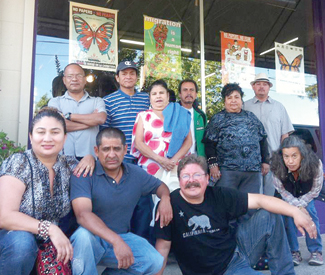
Teach-in: immigration and labor ILWU Local 34 union hall, 801 2nd St., SF. (415) 362-8852, http://www.lclaa.org. 7-9pm, free. Join the International Longshore and Workers Union for this Laborfest event, offering a concise history of labor and immigration in California. The history of the Bracero Program is key to understanding the current Congressional debate about immigration reform. Featuring members of the Association of Braceros of Northern California. Al Rojas, a labor organizer and with Labor Council For Latin America Advancement, LCLAA, of Sacramento, will discuss the continuing struggle of California Braceros for justice and the connection of the struggle for immigrant rights.


New generation of Guardian leadership seeks community partnership

52

San Francisco Print Media Company has named Marke Bieschke as publisher and Steven T. Jones as editor of the San Francisco Bay Guardian, elevating two longtime Guardianistas into the top spots, guaranteeing them editorial autonomy, and letting them work with the community to chart its future.

As a first step in that process, the Guardian will hold a public forum on July 31 from 6-8pm in the LGBT Center, 1800 Market Street, to solicit input and discuss the Guardian’s unique role in the Bay Area’s political and journalistic landscape. Helping to coordinate the forum is Guardian writer Rebecca Bowe, who has accepted the position of news editor. The forum and subsequent discussions will form the basis for a strategic plan that will help guide the Guardian into a new era.

The newspaper’s future was uncertain a month ago following the abrupt departure of longtime Guardian Editor-Publisher Tim Redmond in a dispute with the owners over layoffs and the Guardian’s autonomy. The company’s Vice President of Editorial Operations Stephen Buel, who is also editor of the San Francisco Examiner, was named interim Guardian publisher and Bieschke its interim editor.

Heeding concerns in the community about whether the Guardian would remain an independent, progressive voice in San Francisco, Bieschke and Jones negotiated terms with SF Print Media Company CEO Todd Vogt that guarantee them full editorial control, the addition of three new advertising sales positions and another staff writer, and guaranteed minimum staffing levels during a rebuilding period.

Bieschke and Jones, who are in their early 40s and have been with the Guardian for around 10 years each, say they are excited for the opportunity to work collaboratively with Guardian staff and its community to rejuvenate the paper, attract new readers, and achieve economic sustainability.

“Losing Tim’s leadership was hard on all of us at the Guardian, and we struggled with what to do next. But ultimately, the Guardian plays such an important role in San Francisco — particularly now, at a pivotal moment for this gentrifying city and its progressive movement — that we wanted to find a way to keep that voice alive, maintain our credibility, and reach out to a new generation of Bay Area residents,” Jones said.

The San Francisco Bay Guardian was founded in 1966 by Jean Dibble and Bruce B. Brugmann, who continues to blog and serve as editor-at-large for the Guardian. The couple retired from regular duties when the financially troubled paper was sold to Canadian investors headed by Vogt in the spring of 2012, a deal engineered by Redmond, who is always welcome in the pages of the Guardian as he pursues a new media venture.

“I’m stoked to bring a different energy and openness to innovation to the Guardian, while respecting our legacy and strengthening our bonds with the progressive, alternative community,” Bieschke said. “Obviously, Steve Jones and I stand on the shoulders of giants, and we’re so grateful to our Guardian family, past and present, for blazing a trail for world class progressive journalism, arts and culture coverage, and community-building in the Bay Area. In that spirit, I’m eager to reconnect with our readers and partner with them to amplify the Guardian voice and continue to change the Bay Area for the better.”

Vogt said he’s excited by the prospects of new generation of Guardian leadership: “I’m happy about this. I think it’s appropriate that two recognized leaders in the progressive community are in charge of the Guardian and I look forward to seeing what they do with it.”

Bieschke joined the Bay Guardian in 2005 as culture editor, coming on staff after covering nightlife in his Super Ego column, and he was made managing editor in 2010. His background includes online editorial and management level positions at Citysearch and PlanetOut Partners, as well as managing a bookstore in the Inner Richmond.

“I’m also excited to help diversify San Francisco’s media environment by bringing two decades of queer Arab-American activist experience to the role,” Bieschke said.

Jones is a Northern California native who was hired as the Guardian’s city editor in 2003, coming from Sacramento News & Review, where he served as news editor. Before that, he was a full-time staff writer for two other alternative newsweeklies, two daily newspapers, and one community weekly, all in California, since graduating from Cal Poly-SLO with a journalism degree in 1991.

Years of cutbacks have distilled the Guardian newsroom down to just a few excellent journalists: senior editor Cheryl Eddy, who has shaped the paper’s film and arts coverage since 1999; Bowe, an award-winning investigative reporter who returned to the Guardian in January from a one-year stint with the Electronic Frontier Foundation; and Music Editor Emily Savage, who knows the beats of this city better than anyone; with Art Director Brooke Robertson leading the Guardian’s creative presentation.

“We all hope you’ll help us to guard San Francisco’s values, appreciating all of its best cultural, artistic, and culinary offerings in the process,” Jones said. “We love the San Francisco Bay Area, in all its messy urban glory, and we think it’s worth fighting for.”

Music Listings: July 17-23, 2013

0

WEDNESDAY 17

ROCK

Bottom of the Hill: 1233 17th St., San Francisco. Joyce Manor, Merry Christmas, Tony Molina, 9 p.m., $10-$12.

DNA Lounge: 375 11th St., San Francisco. Six Feet Under, Decrepit Birth, Dealey Plaza, Cannabis Corpse, Saint Vernon, 7:30 p.m., $15-$20.

El Rio: 3158 Mission, San Francisco. Will Crum, Husband, Impuritan, 8 p.m., $5.

Elbo Room: 647 Valencia, San Francisco. Owl Paws, Cold Eskimo, Dogcatcher, The Crux, 9 p.m., $8.

Hemlock Tavern: 1131 Polk, San Francisco. Kirby Krackle, H2Awesome!, DJ Real, 8:30 p.m., $8.

The Knockout: 3223 Mission, San Francisco. Kids in Heat, The Dead Shakes, The Pentagraham Crackers, DJ Ryan Smith, 9:30 p.m., $6.

Milk Bar: 1840 Haight, San Francisco. Down Dirty Shake, Buffalo Tooth, Grill Cloth, The Spiral Electric, DJ Dahmer, 8 p.m., $2.

Monarch: 101 6th St., San Francisco. Strawberry Girls, These Colors, Oranges, Tommy Boys, 8 p.m.

DANCE

The Cafe: 2369 Market, San Francisco. “Sticky Wednesdays,” w/ DJ Mark Andrus, 8 p.m., free.

Cat Club: 1190 Folsom, San Francisco. “Bondage A Go Go,” w/ DJs Damon, Tomas Diablo, & guests, 9:30 p.m., $5-$10.

The Cellar: 685 Sutter, San Francisco. “Eye Candy Wednesdays,” 9 p.m., free.

Club X: 715 Harrison, San Francisco. “Electro Pop Rocks,” 18+ dance party with Mightyfools, more, 9 p.m., $10-$20.

DNA Lounge: 375 11th St., San Francisco. Die Sektor, Frontal Boundary, Techniker Sektion, DJs Decay & Unit 77, 8 p.m., $8-$12.

F8: 1192 Folsom St., San Francisco. “Housepitality,” w/ Terry Mullan, Ben Vallery, Buckner, Derek Opperman, 9 p.m., $5-$10.

Harlot: 46 Minna, San Francisco. “Qoöl,” 5 p.m.

Infusion Lounge: 124 Ellis, San Francisco. “Indulgence,” 10 p.m.

Lookout: 3600 16th St., San Francisco. “What?,” 7 p.m.

MatrixFillmore: 3138 Fillmore, San Francisco. “Innov8,” 8 p.m.

Q Bar: 456 Castro, San Francisco. “Booty Call,” w/ Juanita More, Joshua J, guests, 9 p.m., $3.

Showdown: 10 Sixth St., San Francisco. “Nokturnal,” w/ DJs Coyle & Gonya, Third Wednesday of every month, 9 p.m., free.

HIP-HOP

Double Dutch: 3192 16th St., San Francisco. “Cash IV Gold,” w/ DJs Kool Karlo, Roost Uno, and Sean G, 10 p.m., free.

Skylark Bar: 3089 16th St., San Francisco. “Mixtape Wednesday,” w/ resident DJs Strategy, Junot, Herb Digs, & guests, 9 p.m., $5.

ACOUSTIC

Cafe Divine: 1600 Stockton, San Francisco. Craig Ventresco & Meredith Axelrod, 7 p.m., free.

Fiddler’s Green: 1333 Columbus, San Francisco. Terry Savastano, Every other Wednesday, 9:30 p.m., free/donation.

JAZZ

Amnesia: 853 Valencia, San Francisco. Gaucho, Eric Garland’s Jazz Session, The Amnesiacs, 7 p.m., free.

Burritt Room: 417 Stockton St., San Francisco. Terry Disley’s Rocking Jazz Trio, 6 p.m., free.

Club Deluxe: 1511 Haight, San Francisco. The Techtonics, Every other Wednesday, 8:30 p.m., free.

Jazz Bistro At Les Joulins: 44 Ellis, San Francisco. Charles Unger Experience, 7:30 p.m., free.

Le Colonial: 20 Cosmo, San Francisco. The Cosmo Alleycats featuring Ms. Emily Wade Adams, 7 p.m., free.

Oz Lounge: 260 Kearny, San Francisco. Hard Bop Collective, 6 p.m., free.

Rasselas Ethiopian Cuisine & Jazz Club: 1534 Fillmore, San Francisco. M.B. Hanif & The Sound Voyagers, 8 p.m.

Revolution Cafe: 3248 22nd St., San Francisco. Michael Parsons Trio, Every other Wednesday, 8:30 p.m., free/donation.

Savanna Jazz Club: 2937 Mission, San Francisco. “Cat’s Corner,” 9 p.m., $10.

Top of the Mark: One Nob Hill, 999 California, San Francisco. Ricardo Scales, Wednesdays, 6:30-11:30 p.m., $5.

Zingari: 501 Post, San Francisco. Brenda Reed, 7:30 p.m., free.

INTERNATIONAL

Bissap Baobab: 3372 19th St., San Francisco. Timba Dance Party, w/ DJ WaltDigz, 10 p.m., $5.

Cafe Cocomo: 650 Indiana, San Francisco. “Bachatalicious,” w/ DJs Good Sho & Rodney, 7 p.m., $5-$10.

Cigar Bar & Grill: 850 Montgomery, San Francisco. Brazilian Night, 8 p.m.

Pachamama Restaurant: 1630 Powell, San Francisco. “Cafe LatinoAmericano,” 8 p.m., $5.

Union Square Park: 333 Post, San Francisco. Ilan Bar-Lavi, 12:30 p.m., free.

Yoshi’s San Francisco: 1330 Fillmore, San Francisco. Debo Band, Young Ethio Jazz Band, 8 p.m., $17-$22.

BLUES

Biscuits and Blues: 401 Mason, San Francisco. MoFo Party Band, 8 & 10 p.m., $15.

The Royal Cuckoo: 3202 Mission, San Francisco. Big Bones & Chris Siebert, 7:30 p.m., free.

The Saloon: 1232 Grant, San Francisco. Leah Tysse, 9:30 p.m.

SOUL

Boom Boom Room: 1601 Fillmore, San Francisco. “Soul Train Revival,” w/ “Ziek” McCarter, Third Wednesday of every month, 9:30 p.m., $5.

The Cellar: 685 Sutter, San Francisco. “Color Me Badd,” w/ DJ Matt Haze, Wednesdays, 5-9 p.m.

THURSDAY 18

ROCK

Bottom of the Hill: 1233 17th St., San Francisco. Apogee Sound Club, Death Cheetah, Sex Snobs, 9 p.m., $9.

Brick & Mortar Music Hall: 1710 Mission, San Francisco. Cool Ghouls, Wyatt Blair, Meat Market, Corners, Froth, DJ Al Lover, 9 p.m., $8.

S.F. Eagle: 398 12th St., San Francisco. Thursday Nite Live: Hollow Mirrors, Winter Teeth, Illusion of Self, 9 p.m., $7.

The Independent: 628 Divisadero, San Francisco. Futurebirds, Diarrhea Planet, The Ecstatics, 8 p.m., $12-$14.

Light Rail Studios: 672 Toland, San Francisco. Hungry Skinny, Andre Thierry & Zydeco Magic, The Surgeon Generals, The Campbell Apartment, 8 p.m., $5.

Monarch: 101 6th St., San Francisco. Tall Fires, Tall Sheep, Cash for Gold, Coo Coo Birds, 8 p.m., $8.

DANCE

Abbey Tavern: 4100 Geary, San Francisco. DJ Schrobi-Girl, 10 p.m., free.

Aunt Charlie’s Lounge: 133 Turk, San Francisco. “Tubesteak Connection,” w/ DJ Bus Station John, 9 p.m., $5-$7.

The Cafe: 2369 Market, San Francisco. “¡Pan Dulce!,” 9 p.m., $5.

Cat Club: 1190 Folsom, San Francisco. “All ‘80s Thursdays,” w/ DJs Damon, Steve Washington, Dangerous Dan, and guests, 9 p.m., $6 (free before 9:30 p.m.).

The Cellar: 685 Sutter, San Francisco. “XO,” w/ DJs Astro & Rose, 10 p.m., $5.

Club X: 715 Harrison, San Francisco. “The Crib,” 9:30 p.m., $10, 18+.

Elbo Room: 647 Valencia, San Francisco. “Afrolicious,” w/ DJs Pleasuremaker, Señor Oz, and live guests, 9:30 p.m., $5-$7.

The EndUp: 401 Sixth St., San Francisco. EDMSF Thursdays, 10 p.m., $10 (free before midnight).

F8: 1192 Folsom St., San Francisco. “Beat Church,” w/ resident DJs Neptune & Kitty-D, Third Thursday of every month, 10 p.m., $10.

Harlot: 46 Minna, San Francisco. 2000 and One, Pedro Arbulu, MFYRS, 9 p.m., free with RSVP.

Infusion Lounge: 124 Ellis, San Francisco. “I Love Thursdays,” 10 p.m., $10.

Laszlo: 2532 Mission, San Francisco. “Werk It,” w/ DJ Kool Karlo, Third Thursday of every month, 9 p.m., free.

Madrone Art Bar: 500 Divisadero, San Francisco. “Night Fever,” 9 p.m., $5 after $10 p.m.

MatrixFillmore: 3138 Fillmore, San Francisco. “Fusion,” w/ DJ Big Bad Bruce, 9 p.m., $5.

Mighty: 119 Utah, San Francisco. “Ritual,” w/ Irie Cartel & guests, 10 p.m., $5-$10.

Q Bar: 456 Castro, San Francisco. “Throwback Thursday,” w/ DJ Jay-R, 9 p.m., free.

Raven: 1151 Folsom St., San Francisco. “1999,” w/ VJ Mark Andrus, 8 p.m., free.

Rickshaw Stop: 155 Fell, San Francisco. “Popscene,” w/ Le Youth, Touch Sensitive, DJs Aaron & Omar, 9:30 p.m., $12-$15.

Ruby Skye: 420 Mason, San Francisco. “Awakening,” w/ DJ Bl3nd, 9 p.m., $15-$20 advance.

The Tunnel Top: 601 Bush, San Francisco. “Tunneltop,” DJs Avalon and Derek ease you into the weekend with a cool and relaxed selection of tunes spun on vinyl, 10 p.m., free.

Underground SF: 424 Haight, San Francisco. “Bubble,” 10 p.m., free.

Vessel: 85 Campton, San Francisco. “Base,” w/ Navid Izadi, 10 p.m., $5-$10.

HIP-HOP

Eastside West: 3154 Fillmore, San Francisco. “Throwback Thursdays,” w/ DJ Madison, 9 p.m., free.

Park 77 Sports Bar: 77 Cambon, San Francisco. “Slap N Tite,” w/ resident Cali King Crab DJs Sabotage Beats & Jason Awesome, free.

The Parlor: 2801 Leavenworth, San Francisco. “Locals Night Out,” w/ DJ Illy D, 9 p.m., free.

Project One: 251 Rhode Island, San Francisco. Paint the Night: Action Jackson, Young Audiences of Northern California fundraiser featuring free paints and brushes to help you unleash your inner Jackson Pollock, plus music by DJs Mr. E, Max Kane, The Whooligan, and Ry Toast., 6-10 p.m., $25.

Showdown: 10 Sixth St., San Francisco. “Tougher Than Ice,” w/ DJs Vin Sol, Ruby Red I, and Jeremy Castillo, Third Thursday of every month, 10 p.m.

Skylark Bar: 3089 16th St., San Francisco. “Peaches,” w/lady DJs DeeAndroid, Lady Fingaz, That Girl, Umami, Inkfat, and Andre, 10 p.m., free.

ACOUSTIC

Amnesia: 853 Valencia, San Francisco. Zoe Muth & The Lost High Rollers, Miwa Gemini, Margaret Glasby, 9 p.m., $10.

Atlas Cafe: 3049 20th St., San Francisco. Pat Campbell & His Buds, 8 p.m., free.

Plough & Stars: 116 Clement, San Francisco. Tipsy House, Third Thursday of every month, 9 p.m., free.

JAZZ

Blush! Wine Bar: 476 Castro, San Francisco. Doug Martin’s Avatar Ensemble, 7:30 p.m., free.

Bottle Cap: 1707 Powell, San Francisco. The North Beach Sound with Ned Boynton, Jordan Samuels, and Tom Vickers, 7 p.m., free.

Cafe Claude: 7 Claude, San Francisco. Shelley MacKay, 7:30 p.m., free.

Cafe Du Nord: 2170 Market, San Francisco. MegaFlame Big Band & Cabaret, The John Brothers Piano Company, Miss Kay & Eva D’Luscious, 8:30 p.m., $12-$15.

Cafe Royale: 800 Post, San Francisco. West Side Jazz Club, 9 p.m.

Club Deluxe: 1511 Haight, San Francisco. Michael Parsons, 8:30 p.m., free.

The Emerald Tablet: 80 Fresno St., San Francisco. Mark Levine & The Latin Tinge, 7:30 p.m., $10.

Le Colonial: 20 Cosmo, San Francisco. Steve Lucky & The Rhumba Bums, 7:30 p.m.

The Royal Cuckoo: 3202 Mission, San Francisco. Chris Siebert, 7:30 p.m., free.

Savanna Jazz Club: 2937 Mission, San Francisco. Savanna Jazz Jam with Eddy Ramirez, 7:30 p.m., $5.

Top of the Mark: One Nob Hill, 999 California, San Francisco. Stompy Jones, 7:30 p.m., $10.

Yoshi’s San Francisco: 1330 Fillmore, San Francisco. NaJe, in Yoshi’s lounge, Third Thursday of every month, 6:30 p.m., free.

Zingari: 501 Post, San Francisco. Barbara Ochoa, 7:30 p.m., free.

INTERNATIONAL

Bissap Baobab: 3372 19th St., San Francisco. “Pa’Lante!,” w/ Juan G, El Kool Kyle, Mr. Lucky, 10 p.m., $5.

Pachamama Restaurant: 1630 Powell, San Francisco. “Jueves Flamencos,” 8 p.m., free.

Rasselas Ethiopian Cuisine & Jazz Club: 1534 Fillmore, San Francisco. Latin Breeze, 8 p.m.

Verdi Club: 2424 Mariposa, San Francisco. The Verdi Club Milonga, w/ Christy Coté, DJ Emilio Flores, guests, 9 p.m., $10-$15.

Yerba Buena Gardens: Fourth St. & Mission, San Francisco. Ilan Bar-Lavi, 12:30 p.m., free.

Yoshi’s San Francisco: 1330 Fillmore, San Francisco. The Raghu Dixit Project, 8 p.m., $25-$35.

REGGAE

Pissed Off Pete’s: 4528 Mission St., San Francisco. Reggae Thursdays, w/ resident DJ Jah Yzer, 9 p.m., free.

BLUES

Biscuits and Blues: 401 Mason, San Francisco. Alvon Johnson, 8 & 10 p.m., $15.

Jazz Bistro At Les Joulins: 44 Ellis, San Francisco. Bohemian Knuckleboogie, 7:30 p.m., free.

The Saloon: 1232 Grant, San Francisco. Chris Ford, 4 p.m.; Wendy DeWitt, 9:30 p.m.

EXPERIMENTAL

Hemlock Tavern: 1131 Polk, San Francisco. Grex, Alto!, Efft, Street Priest, 8:30 p.m., $7.

The Luggage Store: 1007 Market, San Francisco. Heroic Trio, Dunkelpeck, 8 p.m., $6-$10.

FRIDAY 19

ROCK

Bottom of the Hill: 1233 17th St., San Francisco. Mister Loveless, Transfer, Dante Elephante, 9:30 p.m., $10.

Cafe Du Nord: 2170 Market, San Francisco. Bonnie & The Bang Bang, French Cassettes, Down & Outlaws, 9:30 p.m., $10-$12.

Neck of the Woods: 406 Clement St., San Francisco. California Wives, My Gold Mask, on the upstairs stage, 9 p.m., $10; Unruly Things, Fast Piece of Furniture, Spider Garage, on the downstairs stage, 9 p.m., $5-$7.

Slim’s: 333 11th St., San Francisco. Orchid, The Saint James Society, Hell Fire, 9 p.m., $15.

Sub-Mission Art Space (Balazo 18 Gallery): 2183 Mission, San Francisco. Them Creatures, Lucabrazzi, The Yes Go’s, Andrea & The Bad Sugar Daddies, 8 p.m.

Thee Parkside: 1600 17th St., San Francisco. Captured! By Robots, Elephant Rifle, Pins of Light, 9 p.m., $10.

DANCE

Cafe Flore: 2298 Market, San Francisco. “Kinky Beats,” w/ DJ Sergio, 10 p.m., free.

The Cafe: 2369 Market, San Francisco. “Boy Bar,” w/ DJ Matt Consola, 9 p.m., $5.

Cat Club: 1190 Folsom, San Francisco. “The Witching Hour vs. Strangelove,” w/ DJ Sage, Daniel Skellington, Joe Radio, and Tomas Diablo, 9:30 p.m., $7 ($3 before 10 p.m.).

The Cellar: 685 Sutter, San Francisco. “F.T.S.: For the Story,” 10 p.m.

The EndUp: 401 Sixth St., San Francisco. “Fever,” 10 p.m., free before midnight.

F8: 1192 Folsom St., San Francisco. “Vintage,” w/ DJ Toph One & guests, 5 p.m., free; “Freeform vs. Dubalicious,” w/ resident DJs Floorcraft, Jonboy, and guests, Third Friday of every month, 9 p.m., $5 (free before 10 p.m.).

The Grand Nightclub: 520 4th St., San Francisco. “We Rock Fridays,” 9:30 p.m.

The Independent: 628 Divisadero, San Francisco. Big Black Delta, Breakdown Valentine, 9 p.m., $12.

Infusion Lounge: 124 Ellis, San Francisco. “Escape Fridays,” 10 p.m., $20.

The Lab: 2948 16th St., San Francisco. “Goth Prom,” Decades magazine issue #2 release party with Some Ember, Galaxy Radio DJs Smac & Holly B, readings, art, food, more, 9 p.m., $5-$8.

Lookout: 3600 16th St., San Francisco. “HYSL,” 9 p.m., $3.

Madrone Art Bar: 500 Divisadero, San Francisco. “That ‘80s Show,” w/ DJs Dave Paul & Jeff Harris, Third Friday of every month, 9 p.m., $5.

MatrixFillmore: 3138 Fillmore, San Francisco. “F-Style Fridays,” w/ DJ Jared-F, 9 p.m.

Mighty: 119 Utah, San Francisco. “Lights Down Low,” w/ Cajmere, Harvard Bass, Matrixxman, 9 p.m., $15-$20.

Monarch: 101 6th St., San Francisco. Safety Scissors, Kit n’ C.L.A.W.S., Jason Kendig, 10 p.m., $10 advance.

Q Bar: 456 Castro, San Francisco. “Pump: Worq It Out Fridays,” w/ resident DJ Christopher B, 9 p.m., $3.

Ruby Skye: 420 Mason, San Francisco. Torro Torro, 9 p.m., $20 advance.

Slate Bar: 2925 16th St., San Francisco. “Darling Nikki,” w/ resident DJs Dr. Sleep, Justin Credible, and Durt, Third Friday of every month, 8 p.m., $5.

Temple: 540 Howard, San Francisco. “Trap City: 1-Year Anniversary,” w/ heRobust, UltraViolet, Napsty, WolfBitch, Thizz Markie, Lé Swndle, Teleport, Smasheltooth, Nebakaneza, Johnny5, Mr. Kitt, more, 10 p.m., $20.

Wish: 1539 Folsom, San Francisco. “Bridge the Gap,” w/ resident DJ Don Kainoa, Fridays, 6-10 p.m., free; “Depth,” w/ resident DJs Sharon Buck & Greg Yuen, Third Friday of every month, 10 p.m., free.

HIP-HOP

Elbo Room: 647 Valencia, San Francisco. “The Social,” w/ Mars Today, Sayknowledge, Cait La Dee, Ryan Nicole, Do D.A.T., Dynamic, The Whooligan, Mikos Da Gawd, 10 p.m.

EZ5: 682 Commercial, San Francisco. “Decompression,” Fridays, 5-9 p.m.

John Colins: 138 Minna, San Francisco. “Juicy,” w/ DJ Ry Toast, Third Friday of every month, 10 p.m., $5 (free before 11 p.m.).

Showdown: 10 Sixth St., San Francisco. “Fresh to Def Fridays: A Tribute to Yo! MTV Raps,” w/ resident DJs Boom Bostic, Inkfat, and Hay Hay, Third Friday of every month, 10 p.m.

Yoshi’s San Francisco: 1330 Fillmore, San Francisco. “Yoshi’s First Annual White & Pink Affair,” w/ DJs Mind Motion & D-Sharp (in Yoshi’s lounge), 10:30 p.m., $15-$25.

ACOUSTIC

Amnesia: 853 Valencia, San Francisco. Indianna Hale, Small Souls, 7 p.m., $5-$7.

Bazaar Cafe: 5927 California, San Francisco. Sweet Hayah, Jean Marc, Tommy P, 7 p.m.

Brick & Mortar Music Hall: 1710 Mission, San Francisco. Kelly McFarling, Cave Clove, Laura Benitez & The Heartache, DJs Mish Mosh & KillyKill, 9 p.m., $9-$12.

The Chapel: 777 Valencia St., San Francisco. Jolie Holland, Mark Olson, 9 p.m., $20.

Mercury Cafe: 201 Octavia, San Francisco. Toshio Hirano, Third Friday of every month, 7:30 p.m., free, all ages.

The Sports Basement: 610 Old Mason, San Francisco. “Breakfast with Enzo,” w/ Enzo Garcia, 10 a.m., $5.

JAZZ

Beach Chalet Brewery & Restaurant: 1000 Great Highway, San Francisco. Johnny Smith, 8 p.m., free.

Bird & Beckett: 653 Chenery, San Francisco. The Third Quartet, Third Friday of every month, 5:30 p.m., free.

Biscuits and Blues: 401 Mason, San Francisco. Lavay Smith & Her Red Hot Skillet Lickers, 8 & 10 p.m., $20.

Cafe Claude: 7 Claude, San Francisco. Steve Lucky & The Rhumba Bums, 7:30 p.m., free.

Cafe Royale: 800 Post, San Francisco. Cyril Guiraud Trio, 9 p.m.

Jazz Bistro At Les Joulins: 44 Ellis, San Francisco. Charles Unger Experience, 7:30 p.m., free.

Revolution Cafe: 3248 22nd St., San Francisco. Emily Anne’s Delights, Third Friday of every month, 8:45 p.m., free/donation.

Savanna Jazz Club: 2937 Mission, San Francisco. Ann Marie Santos, $10.

Top of the Mark: One Nob Hill, 999 California, San Francisco. Black Market Jazz Orchestra, 9 p.m., $10.

Zingari: 501 Post, San Francisco. Joyce Grant, 8 p.m., free.

INTERNATIONAL

1015 Folsom: 1015 Folsom St., San Francisco. “A Celebration of Fela Kuti,” w/ Tony Allen, Najite & Olokun Prophecy, Lagos Roots, Afrolicious, Rich Medina, Damon Bell, King Most, DJ Leydis, Izzy*Wise, 9 p.m., $15-$20.

Bissap Baobab: 3372 19th St., San Francisco. Qumbia Qrew, Third Friday of every month, 8 p.m.

Cafe Cocomo: 650 Indiana, San Francisco. Taste Fridays, featuring local cuisine tastings, salsa bands, dance lessons, and more, 7:30 p.m., $15 (free entry to patio).

Cigar Bar & Grill: 850 Montgomery, San Francisco. Montuno Swing, 8 p.m.

Little Baobab: 3388 19th St., San Francisco. “Paris-Dakar African Mix Coupe Decale,” 10 p.m.

Pachamama Restaurant: 1630 Powell, San Francisco. Cuban Night with Fito Reinoso, 7:30 & 9:15 p.m., $15-$18.

Verdi Club: 2424 Mariposa, San Francisco. “Café Flamenco,” w/ Yaelisa & Caminos Flamencos, Third Friday of every month, 8 & 9:30 p.m., $18-$22 ($10 for kids under 12).

Yerba Buena Gardens: Fourth St. & Mission, San Francisco. Crosspulse Percussion Ensemble, 11 a.m. & 12:15 p.m., free.

REGGAE

Gestalt Haus: 3159 16th St., San Francisco. “Music Like Dirt,” 7:30 p.m., free.

BLUES

Boom Boom Room: 1601 Fillmore, San Francisco. Bill Phillippe, 6 p.m., free.

The Saloon: 1232 Grant, San Francisco. Highwater Blues, 4 p.m.; Steve Freund, 9:30 p.m.

FUNK

Amnesia: 853 Valencia, San Francisco. “Hella Tight,” w/ resident DJs Vinnie Esparza, Jonny Deeper, & Asti Spumanti, Third Friday of every month, 10 p.m., $5.

Boom Boom Room: 1601 Fillmore, San Francisco. Turkuaz, July 19-20, 9:30 p.m., $15 advance.

Make-Out Room: 3225 22nd St., San Francisco. “Loose Joints,” w/ DJs Centipede, Damon Bell, & Tom Thump, 10 p.m., $5.

SOUL

Edinburgh Castle: 950 Geary, San Francisco. “Soul Crush,” w/ DJ Serious Leisure, 10 p.m., free.

The Knockout: 3223 Mission, San Francisco. “Oldies Night,” W/ DJs Primo, Daniel, Lost Cat, and friends, Third Friday of every month, 10 p.m., $5.

Milk Bar: 1840 Haight, San Francisco. The Peach Kings, The St. Valentinez, Baby & The Luvies, 9 p.m., $10.

Public Works: 161 Erie, San Francisco. M.O.M. DJs Gordo Cabeza, Timoteo Gigante, and Malachi, in the OddJob loft, 10 p.m., $5.

Yoshi’s San Francisco: 1330 Fillmore, San Francisco. The Stylistics, July 19-20, 8 & 10 p.m., $35-$42.

SATURDAY 20

ROCK

Bender’s: 806 S. Van Ness, San Francisco. The Butlers, 10 p.m., $5.

Bottom of the Hill: 1233 17th St., San Francisco. Papa, Wardell, Luke Sweeney & Wet Dreams Dry Magic, 9:30 p.m., $12.

Cafe Du Nord: 2170 Market, San Francisco. SMiLE! Progressive Rock Festival, w/ Dominique Leone, Matti Bye & This Forgotten Land, Corima, Once & Future Band, Inner Ear Brigade, DJ Neil Martinson, 8 p.m., $10-$12.

El Rio: 3158 Mission, San Francisco. The Meat Sluts, Bad Cop/Bad Cop, Jabber, 10 p.m., $7.

Hemlock Tavern: 1131 Polk, San Francisco. Wild Hunt, Ionophore, Ephemeros, Thoabath, 9:30 p.m., $7.

The Independent: 628 Divisadero, San Francisco. The BoDeans, The Luke Mulholland Band, 9 p.m., $25.

The Knockout: 3223 Mission, San Francisco. Qui, Feral Ohms, Pigs, 5 p.m., $7.

Neck of the Woods: 406 Clement St., San Francisco. Water District, The Insufferables, 9 p.m., $8-$10.

Thee Parkside: 1600 17th St., San Francisco. Luicidal, Oppressed Logic, Nihilist Cunt, 9 p.m., $10.

DANCE

Amnesia: 853 Valencia, San Francisco. “O.K. Hole,” w/ Painted Caves, Little Debbie, Inhalt, C.L.A.W.S., Tom Sellect, Keith Slogan, 9 p.m., $5.

Brick & Mortar Music Hall: 1710 Mission, San Francisco. Conte, Seatraffic, 9 p.m., $10-$13.

Cafe Flore: 2298 Market, San Francisco. “Bistrotheque,” w/ DJ Ken Vulsion, 8 p.m., free.

Cat Club: 1190 Folsom, San Francisco. “New Wave City: Soundtrack Night,” w/ DJs Skip, Shindog, Low-Life, and Prince Charming, 9 p.m., $7-$12.

DNA Lounge: 375 11th St., San Francisco. “Bootie S.F.,” w/ Meikee Magnetic, Mixtress ShiZaam, WolfBitch, Speakerbomb, Reyka, Tommy Arcade, DJ Tripp, David X, Purple Crush, more, 9 p.m., $10-$15.

The EndUp: 401 Sixth St., San Francisco. “The Show,” w/ The Junkies, Ben Seagren, Dean Samaras, Alessandro, Marija Dunn, 10 p.m., $10-$20 (free before 11 p.m.).

Infusion Lounge: 124 Ellis, San Francisco. “Social Addiction,” Third Saturday of every month, 10 p.m., $20.

The Lab: 2948 16th St., San Francisco. “R U That Some Body?,” w/ MicahTron, Sevrinn, Jocquese Whitfield, DJs Jaqi Sparrow & Essex, 9 p.m., $7.

Lookout: 3600 16th St., San Francisco. “Bounce!,” 9 p.m., $3.

Madrone Art Bar: 500 Divisadero, San Francisco. “Fringe: 4-Year Anniversary Bash,” w/ DJs Blondie K & subOctave, 9 p.m., $5 (free before 10 p.m.).

Mighty: 119 Utah, San Francisco. The Twelves, Wool, Nolan Gray, 9 p.m., $18 advance.

Milk Bar: 1840 Haight, San Francisco. “The Queen Is Dead: A Tribute to the Music of Morrissey and the Smiths,” w/ DJ Mario Muse & guests, Third Saturday of every month, 9 p.m.

Powerhouse: 1347 Folsom, San Francisco. “Beatpig,” Third Saturday of every month, 9 p.m.

Public Works: 161 Erie, San Francisco. 2 Live Crews, Benefit for Project HOPE Art and Peter Hudson featuring DJs from Brass Tax and Space Cowboys., 9 p.m., $10-$20 sliding scale.

Rickshaw Stop: 155 Fell, San Francisco. “Gameboi S.F.,” w/ VJ LaRock, 9:30 p.m., $12-$15.

Ruby Skye: 420 Mason, San Francisco. “World Town,” w/ Cold Blank, Tyler Sherritt, Trevor Simpson, 9 p.m., $20 advance.

Slate Bar: 2925 16th St., San Francisco. “Smiths Night S.F.: Madonna vs. Blondie,” w/ The Certain People Crew, 10 p.m., $5.

The Stud: 399 Ninth St., San Francisco. “Squrrrl: Underrr the Sea,” w/ DJs Papa Tony, Trevor Sigler, and Joe Pickett, 9 p.m., $5.

Sub-Mission Art Space (Balazo 18 Gallery): 2183 Mission, San Francisco. “Batcave S.F.,” w/ The Tunnel, New Happiness, plus DJs Agitator, Burning Skies, Lori Lust, and Decoffinated, 9:30 p.m., $6.

Underground SF: 424 Haight, San Francisco. “Deep Crates,” w/ DJ Jenö, Bones, Matt Holland, JD, 9 p.m., $5 (free before 10 p.m.).

Vessel: 85 Campton, San Francisco. Tall Sasha, Jason Kwan, Ks Thant, 10 p.m., $10-$30.

HIP-HOP

111 Minna Gallery: 111 Minna St., San Francisco. “Shine,” Third Saturday of every month, 10 p.m.

John Colins: 138 Minna, San Francisco. “The Bump,” w/ The Whooligan, Third Saturday of every month, 10 p.m., free.

The Knockout: 3223 Mission, San Francisco. “The Booty Bassment,” w/ DJs Dimitri Dickinson & Ryan Poulsen, Third Saturday of every month, 10 p.m., $5.

Showdown: 10 Sixth St., San Francisco. “Purple,” w/ resident DJs ChaunceyCC & Party Pablo, Third Saturday of every month, 10 p.m.

ACOUSTIC

Amnesia: 853 Valencia, San Francisco. Eric Friedmann & The Lucky Rubes, Porkchop Express, 7 p.m.

Atlas Cafe: 3049 20th St., San Francisco. Craig Ventresco & Meredith Axelrod, Saturdays, 4-6 p.m., free.

The Chapel: 777 Valencia St., San Francisco. Lia Rose, We Became Owls, Annie & The Beekeepers, 9 p.m., $12-$15.

The Lucky Horseshoe: 453 Cortland, San Francisco. Slow Motion Cowboys, 9 p.m.

Plough & Stars: 116 Clement, San Francisco. The Shelby Foot Three, 9 p.m.

JAZZ

Cafe Claude: 7 Claude, San Francisco. Vijay Anderson Quartet, 7:30 p.m., free.

Club Deluxe: 1511 Haight, San Francisco. Saturday Afternoon Jazz, w/ Danny Brown, Danny Grewen, Eugene Warren, & Beth Goodfellow, 4:30 p.m., free.

Jane Warner Plaza: Market, San Francisco. Kitten on the Keys, 3 p.m., free.

Jazz Bistro At Les Joulins: 44 Ellis, San Francisco. Bill “Doc” Webster & Jazz Nostalgia, 7:30 p.m., free.

Rasselas Ethiopian Cuisine & Jazz Club: 1534 Fillmore, San Francisco. The Robert Stewart Experience, 9 p.m., $7.

The Rite Spot Cafe: 2099 Folsom, San Francisco. Project: Pimento, 9 p.m., free.

The Royal Cuckoo: 3202 Mission, San Francisco. Jules Broussard, Danny Armstrong, and Chris Siebert, 7:30 p.m., free.

Savanna Jazz Club: 2937 Mission, San Francisco. Jazz Combustion Uprising, 7:30 p.m., $10.

Zingari: 501 Post, San Francisco. Lisa Lindsley, 8 p.m., free.

INTERNATIONAL

1015 Folsom: 1015 Folsom St., San Francisco. “Pura,” 9 p.m., $20.

Artists’ Television Access: 992 Valencia, San Francisco. An Evening with Sublime Frequencies and Filmmaker Hisham Mayet, Seattle record label Sublime Frequencies presents two documentaries about North African music and culture: Palace of the Winds and Folk Music of the Sahara: Among the Tuareg of Libya., 8 p.m., $9.

Cigar Bar & Grill: 850 Montgomery, San Francisco. Orquesta Borinquen, 8 p.m.

Little Baobab: 3388 19th St., San Francisco. “Paris-Dakar African Mix Coupe Decale,” 10 p.m.

Make-Out Room: 3225 22nd St., San Francisco. “El SuperRitmo,” Latin dance party with DJs Roger Mas & El Kool Kyle, 10 p.m., $5.

OMG: 43 6th St., San Francisco. “Bollywood Blast,” Third Saturday of every month, 9 p.m., $5 (free before 10:30 p.m.).

Pachamama Restaurant: 1630 Powell, San Francisco. Peña Eddy Navia & Pachamama Band, 8 p.m., free.

Revolution Cafe: 3248 22nd St., San Francisco. Go Van Gogh, Third Saturday of every month, 9 p.m., free/donation.

REGGAE

Slim’s: 333 11th St., San Francisco. Radical Something, The Holdup, 8 p.m., $15.

BLUES

Biscuits and Blues: 401 Mason, San Francisco. Andy T & Nick Nixon Band, 7:30 & 10 p.m., $20.

The Saloon: 1232 Grant, San Francisco. Tony Perez & Second Hand Smoke, Third Saturday of every month, 4 p.m.; Ron Thompson, 9:30 p.m.

EXPERIMENTAL

Center for New Music: 55 Taylor St., San Francisco. 11th Annual Festival of Contemporary Music, 7:30 p.m., $10-$20.

FUNK

Boom Boom Room: 1601 Fillmore, San Francisco. Turkuaz, July 19-20, 9:30 p.m., $15 advance.

SOUL

Elbo Room: 647 Valencia, San Francisco. “Saturday Night Soul Party,” w/ DJs Lucky, Phengren Oswald, and Paul Paul, Third Saturday of every month, 10 p.m., $10 ($5 in formal attire).

Mezzanine: 444 Jessie, San Francisco. “Soul Slam S.F. VIII: Prince & Michael Jackson,” w/ DJs Spinna, Proof, Hakobo, and King Most, 9 p.m., $20-$25.

Yoshi’s San Francisco: 1330 Fillmore, San Francisco. The Stylistics, July 19-20, 8 & 10 p.m., $35-$42. “The R&B House Party,” w/ Carl Thomas, plus DJs Pos Red, Supreme, and C.J. Flash (in Yoshi’s lounge), 10:30 p.m., $25.

SUNDAY 21

ROCK

Cafe Du Nord: 2170 Market, San Francisco. Tijuana Panthers, GRMLN, The She’s, 9 p.m., $10.

El Rio: 3158 Mission, San Francisco. Turkey Swamp, Fresh Juice Party, Brentando, 8 p.m., $5.

Make-Out Room: 3225 22nd St., San Francisco. Scraper, 7:30 p.m., $8.

DANCE

The Cellar: 685 Sutter, San Francisco. “Replay Sundays,” 9 p.m., free.

The Edge: 4149 18th St., San Francisco. “’80s at 8,” w/ DJ MC2, 8 p.m.

Elbo Room: 647 Valencia, San Francisco. “Dub Mission,” w/ DJ Sep & Vinnie Esparza, 9 p.m., $6 (free before 9:30 p.m.).

The EndUp: 401 Sixth St., San Francisco. “T.Dance,” 6 a.m.-6 p.m.; “Soul Affair,” w/ Atnarko, Cuervo, Mario Dubbz, Roger Moorehouse, 8 p.m.

F8: 1192 Folsom St., San Francisco. “Stamina Sundays: 2-Year Anniversary,” w/ Gridlok, Lukeino, Jamal, 10 p.m., free.

Holy Cow: 1535 Folsom, San Francisco. “Honey Sundays,” w/ Honey Soundsystem & guests, 9 p.m., $5.

The Knockout: 3223 Mission, San Francisco. “Sweater Funk,” 10 p.m., free.

Lookout: 3600 16th St., San Francisco. “Jock,” Sundays, 3-8 p.m., $2.

Otis: 25 Maiden, San Francisco. “What’s the Werd?,” w/ resident DJs Nick Williams, Kevin Knapp, Maxwell Dub, and guests, 9 p.m., $5 (free before 11 p.m.).

The Parlor: 2801 Leavenworth, San Francisco. DJ Marc deVasconcelos, 10 p.m., free.

Q Bar: 456 Castro, San Francisco. “Gigante,” 8 p.m., free.

Showdown: 10 Sixth St., San Francisco. “The Dark Wave Rises,” w/ DJ Xtine Noir & DJ From Full House, Third Sunday of every month, 10 p.m.

Slate Bar: 2925 16th St., San Francisco. “She Said…: A Queer Affair,” Third Sunday of every month, 4 p.m., $3-$5.

Temple: 540 Howard, San Francisco. “Sunset Arcade,” 18+ dance party with bar games and video arcade, 7 p.m., $5.

HIP-HOP

Yoshi’s San Francisco: 1330 Fillmore, San Francisco. The Coup, 8 p.m., $22-$26.

ACOUSTIC

Bottom of the Hill: 1233 17th St., San Francisco. Roadkill Ghost Choir, Shady Maples, Anju’s Pale Blue Eyes, 9 p.m., $10.

Club Deluxe: 1511 Haight, San Francisco. Musical Mayhem with the Dimestore Dandy, 5:30 p.m., free.

The Lucky Horseshoe: 453 Cortland, San Francisco. Sunday Bluegrass Jam, 4 p.m., free.

Milk Bar: 1840 Haight, San Francisco. The Kentucky Twisters, The Righteous Uprights, 4 p.m., free.

Neck of the Woods: 406 Clement St., San Francisco. “iPlay,” open mic with featured weekly artists, 6:30 p.m., free.

Plough & Stars: 116 Clement, San Francisco. Seisiún with Darcy Noonan, Richard Mandel, and Jack Gilder, 9 p.m.

St. Luke’s Episcopal Church: 1755 Clay, San Francisco. “Sunday Night Mic,” w/ Roem Baur, 5 p.m., free.

JAZZ

Club Deluxe: 1511 Haight, San Francisco. Jay Johnson, 9 p.m., free.

Jazz Bistro At Les Joulins: 44 Ellis, San Francisco. Bill “Doc” Webster & Jazz Nostalgia, 7:30 p.m., free.

Madrone Art Bar: 500 Divisadero, San Francisco. “Sunday Sessions,” 10 p.m., free.

Revolution Cafe: 3248 22nd St., San Francisco. Jazz Revolution, 4 p.m., free/donation.

The Riptide: 3639 Taraval, San Francisco. The Cottontails, Third Sunday of every month, 7 p.m., free.

The Royal Cuckoo: 3202 Mission, San Francisco. Lavay Smith & Chris Siebert, 7:30 p.m., free.

Savanna Jazz Club: 2937 Mission, San Francisco. Vocal Jam with Kelly Park, 7 p.m., $5.

SFJAZZ Center: 205 Franklin St., San Francisco. Laurie Antonioli & The American Dreams Band: The Music of Joni Mitchell, 7:30 & 9 p.m., $20.

Zingari: 501 Post, San Francisco. Kitt Weagant, 7:30 p.m., free.

INTERNATIONAL

Atmosphere: 447 Broadway, San Francisco. “Hot Bachata Nights,” w/ DJ El Guapo, 5:30 p.m., $10 ($15-$20 with dance lessons).

Bissap Baobab: 3372 19th St., San Francisco. “Brazil & Beyond,” 6:30 p.m., free.

Oasis Bar & Grill: 401 California Ave., San Francisco. “El Vacilón,” 4 p.m., $10.

Thirsty Bear Brewing Company: 661 Howard, San Francisco. “The Flamenco Room,” 7:15 & 8:30 p.m.

BLUES

Biscuits and Blues: 401 Mason, San Francisco. Jules Leyhe, 7 & 9 p.m., $15.

Lou’s Fish Shack: 300 Jefferson St., San Francisco. A.C. Myles, 4 p.m.

Revolution Cafe: 3248 22nd St., San Francisco. HowellDevine, 8:30 p.m., free/donation.

The Saloon: 1232 Grant, San Francisco. Blues Power, 4 p.m.; Silvia C, 9:30 p.m.

Sheba Piano Lounge: 1419 Fillmore, San Francisco. Bohemian Knuckleboogie, 9 p.m., free.

EXPERIMENTAL

Center for New Music: 55 Taylor St., San Francisco. Crissy Broadcast: Participatory Site-Specific Music Making, Panel discussion and event preview moderated by KDFC’s Jeffrey Freymann-Weyr., 5 p.m., free.

The Lab: 2948 16th St., San Francisco. MSHR, Rubber O Cement, Waxy Tomb, 8 p.m., $8.

San Francisco Community Music Center: 544 Capp, San Francisco. 12th Annual Outsound New Music Summit: Communications Workshop for Independent Musicians, 3-5 p.m., free; 12th Annual Outsound New Music Summit: Touch the Gear Expo, 7-10 p.m., free.

FUNK

Pier 23 Cafe: Pier 23, San Francisco. Hot Pocket, Third Sunday of every month, 4 p.m., $5.

SOUL

Boom Boom Room: 1601 Fillmore, San Francisco. “Deep Fried Soul,” w/ DJs Boombostic & Soul Sauce, 9:30 p.m., $5.

Delirium Cocktails: 3139 16th St., San Francisco. “Heart & Soul,” w/ DJ Lovely Lesage, 10 p.m., free.

MONDAY 22

ROCK

Amoeba Music: 1855 Haight, San Francisco. Bastille, 5 p.m., free.

Cafe Du Nord: 2170 Market, San Francisco. Colleen Green, Sisu, Burnt Palms, 8 p.m., $9-$12.

El Rio: 3158 Mission, San Francisco. Au Dunes, Rustangs, Sandy’s, 7 p.m., $5.

The Knockout: 3223 Mission, San Francisco. Vampire Circus, Das Fluff, Facts on File, The Tempers, DJ Neil Martinson, 9 p.m., $8.

DANCE

DNA Lounge: 375 11th St., San Francisco. “Death Guild,” 18+ dance party with DJs Decay, Joe Radio, Melting Girl, & guests, 9:30 p.m., $3-$5.

Q Bar: 456 Castro, San Francisco. “Wanted,” w/ DJs Key&Kite and Richie Panic, 9 p.m., free.

Underground SF: 424 Haight, San Francisco. “Vienetta Discotheque,” w/ DJs Stanley Frank and Robert Jeffrey, 10 p.m., free.

ACOUSTIC

Amnesia: 853 Valencia, San Francisco. The Pick Bluegrass Jam, Fourth Monday of every month, 6 p.m., free; The Earl Brothers, Fourth Monday of every month, 9 p.m., free.

The Chieftain: 198 Fifth St., San Francisco. The Wrenboys, 7 p.m., free.

Fiddler’s Green: 1333 Columbus, San Francisco. Terry Savastano, 9:30 p.m., free/donation.

Hotel Utah: 500 Fourth St., San Francisco. Open mic with Brendan Getzell, 8 p.m., free.

The Independent: 628 Divisadero, San Francisco. Shooter Jennings, Scott H. Biram, Shovelman, 8 p.m., $22-$25.

Osteria: 3277 Sacramento, San Francisco. “Acoustic Bistro,” w/ Jason Berk, Michael Shoup, Josh Hoke, Katie Garibaldi, 7 p.m., free.

JAZZ

Le Colonial: 20 Cosmo, San Francisco. Le Jazz Hot, 7 p.m., free.

Rasselas Ethiopian Cuisine & Jazz Club: 1534 Fillmore, San Francisco. Open Mic Jazz Jam with Tod Dickow, 8 p.m.

The Union Room at Biscuits and Blues: 401 Mason, San Francisco. “The Session: A Monday Night Jazz Series,” pro jazz jam with Mike Olmos, 7:30 p.m., $12.

Zingari: 501 Post, San Francisco. Nora Maki, 7:30 p.m., free.

INTERNATIONAL

Elbo Room: 647 Valencia, San Francisco. Bachaco, DJ El Kool Kyle, 9 p.m., $5.

REGGAE

Skylark Bar: 3089 16th St., San Francisco. “Skylarking,” w/ I&I Vibration, 10 p.m., free.

BLUES

Jazz Bistro At Les Joulins: 44 Ellis, San Francisco. Bohemian Knuckleboogie, 7:30 p.m., free.

The Saloon: 1232 Grant, San Francisco. The Bachelors, 9:30 p.m.

EXPERIMENTAL

San Francisco Community Music Center: 544 Capp, San Francisco. 12th Annual Outsound New Music Summit Composers Symposium: Compositional Trace Medium & Traditional Strata, 7-9 p.m., free.

SOUL

Madrone Art Bar: 500 Divisadero, San Francisco. “M.O.M. (Motown on Mondays),” w/ DJ Gordo Cabeza & Timoteo Gigante, 8 p.m., free.

TUESDAY 23

ROCK

Bottom of the Hill: 1233 17th St., San Francisco. Sweetwater Black, Lee Gallagher & The Hallelujah, Slow Season, 9 p.m., $8.

Brick & Mortar Music Hall: 1710 Mission, San Francisco. Hydrophonic, Soule Faction, Overland, 9 p.m., $5-$8.

Cafe Du Nord: 2170 Market, San Francisco. Midnight Cinema, Sentinel, 8 p.m., $10-$12.

El Rio: 3158 Mission, San Francisco. Mortar & Pestle, The Tempers, Diesel Dudes, 8 p.m., $6.

DANCE

Aunt Charlie’s Lounge: 133 Turk, San Francisco. “High Fantasy,” w/ DJ Viv, Myles Cooper, & guests, 10 p.m., $2.

MatrixFillmore: 3138 Fillmore, San Francisco. “TRL,” w/ DJ Big Bad Bruce, 10 p.m.

Monarch: 101 6th St., San Francisco. “Soundpieces,” 10 p.m., free-$10.

Q Bar: 456 Castro, San Francisco. “Switch,” w/ DJs Jenna Riot & Andre, 9 p.m., $3.

Underground SF: 424 Haight, San Francisco. “Shelter,” 10 p.m., free.

Wish: 1539 Folsom, San Francisco. “Tight,” w/ resident DJs Michael May & Lito, 8 p.m., free.

HIP-HOP

Double Dutch: 3192 16th St., San Francisco. “Takin’ It Back Tuesdays,” w/ DJs Mr. Murdock and Roman Nunez, Fourth Tuesday of every month, 10 p.m., free.

Elbo Room: 647 Valencia, San Francisco. The Life and Times Tour, w/ Self Jupiter, Spank Pops, L*Roneous, Dregs One, AgentStrike9, DJ Pause, host Michael Marshall, 9 p.m., $10.

Skylark Bar: 3089 16th St., San Francisco. “True Skool Tuesdays,” w/ DJ Ren the Vinyl Archaeologist, 10 p.m., free.

ACOUSTIC

Bazaar Cafe: 5927 California, San Francisco. Songwriter-in-Residence: Alan Monasch, 7 p.m. continues through July 30.

Cafe Royale: 800 Post, San Francisco. Toshio Hirano, 9 p.m.

Plough & Stars: 116 Clement, San Francisco. Sean O’Donnell & John Caulfield, 9 p.m.

JAZZ

Beach Chalet Brewery & Restaurant: 1000 Great Highway, San Francisco. Gerry Grosz Jazz Jam, 7 p.m.

Burritt Room: 417 Stockton St., San Francisco. Terry Disley’s Rocking Jazz Trio, 6 p.m., free.

Cafe Divine: 1600 Stockton, San Francisco. Chris Amberger, 7 p.m.

Club Deluxe: 1511 Haight, San Francisco. Eugene Warren Trio, 8:30 p.m., free.

Jazz Bistro At Les Joulins: 44 Ellis, San Francisco. M.B. Hanif & The Sound Voyagers, 7:30 p.m., free.

Oz Lounge: 260 Kearny, San Francisco. Emily Hayes & Mark Holzinger, 6 p.m., free.

Revolution Cafe: 3248 22nd St., San Francisco. West Side Jazz Club, 5 p.m., free.

Verdi Club: 2424 Mariposa, San Francisco. “Tuesday Night Jump,” w/ Stompy Jones, 9 p.m., $10-$12.

Yoshi’s San Francisco: 1330 Fillmore, San Francisco. Cherry Poppin’ Daddies, 8 p.m., $22.

Zingari: 501 Post, San Francisco. Amanda King, 7:30 p.m., free.

INTERNATIONAL

Bissap Baobab: 3372 19th St., San Francisco. “Underground Nomads,” w/ rotating resident DJs Cheb i Sabbah, Amar, Sep, and Dulce Vita, 10 p.m., $5.

The Cosmo Bar & Lounge: 440 Broadway, San Francisco. “Conga Tuesdays,” 8 p.m., $7-$10.

El Rio: 3158 Mission, San Francisco. “Balkan Brass & Eastern Grüve,” w/ DJ Baron Von East-Infection, Fourth Tuesday of every month, 9 p.m., free.

REGGAE

Milk Bar: 1840 Haight, San Francisco. “Bless Up,” w/ Jah Warrior Shelter Hi-Fi, 10 p.m.

BLUES

Biscuits and Blues: 401 Mason, San Francisco. Rich DelGrosso, 8 & 10 p.m., $15.

Rasselas Ethiopian Cuisine & Jazz Club: 1534 Fillmore, San Francisco. Bohemian Knuckleboogie, 8 p.m., free.

The Saloon: 1232 Grant, San Francisco. Powell Street Blues Band, 9:30 p.m.

EXPERIMENTAL

Center for New Music: 55 Taylor St., San Francisco. sfSoundSalonSeries, w/ Boris Baltschun & Serge Baghdassarians, sfSoundGroup, 7:49 p.m., $7-$10.

Hemlock Tavern: 1131 Polk, San Francisco. NegativWobblyLand, Mitchell Brown, Ecstatic Music Band, 8:30 p.m., $7.

FUNK

Madrone Art Bar: 500 Divisadero, San Francisco. “Boogaloo Tuesday,” w/ Oscar Myers & Steppin’, 9:30 p.m., $2.

SOUL

Make-Out Room: 3225 22nd St., San Francisco. “Lost & Found,” w/ DJs Primo, Lucky, and guests, 9:30 p.m., free. 2


Trayvon Martin: Guns escalate conflicts

86

OPINION The tragedy of Trayvon Martin’s death is not merely the loss an innocent young boy’s life, nor the criminal justice system’s failure to provide justice, though those are wounds we struggle to bear. The tragedy is that these wounds are not unique. We have felt this pain before. Trayvon is but one of thousands of young African American men who have lost their lives to gun violence. And George Zimmerman’s acquittal represents the dismissive attitude our country seems to have about those lives.

People from all walks of life are angry about Trayvon’s death and George Zimmerman’s acquittal. Our anger in the face of such tragedy is understandable. I share it. But I also believe that even in our darkest hours, there is hope. There is something to be learned here.

Let this be the start of a greater debate on gun laws, racism, and our national climate of fear for our own personal safety and the safety of our children.

We have to do something about the prevalence of guns in our society. If not for the introduction of a gun into the situation, Mr. Zimmerman likely would have been beaten up—something he probably deserved—and that would have been the end of it. His firearm needlessly escalated the situation far beyond where it needed to go.

This case is a very real example of a nation that puts someone’s right to carry a handgun over someone’s right to not be pointlessly murdered. Let me add my voice to the multitudes calling for greater firearm accountability.

And why did the situation that night begin in the first place? “Neighborhood Watch” means “watch” and “report suspicious activity,” not “chase” or “pursue.” What is so suspicious about walking, wearing a hoodie, and talking on a cell phone? Nothing. Unless you are black.

Although the African American community is, sadly, used to being profiled, used to grieving the loss of our young boys and men to gun violence, Trayvon’s case has opened the eyes of others who are finally as outraged as we are. For the first time, I feel that something has changed. The outpouring of support from non-African Americans for Trayvon Martin and his family has given me hope that our cries for boys and men in our community are finally being heard.

Anger is a great motivator. And progress is often borne from tragedy. I hope for the African American community and for our country that this tragedy is more than just a passing media spectacle. I hope it’s the beginning of something meaningful, a reevaluation of gun laws, of the violence young black men face every day, and of the way we empower our communities.

London Breed represents the Western Addition and the Haight on the Board of Supervisors


Trayvon Martin: Can it happen here?

25

OPINION Like many others I have been captivated by the proceedings in the Trayvon Martin case. Personally, and as a member of the Board of Supervisors, it has inspired disappointment, outrage, frustration, and more questions about our criminal justice system than I have answers. But more than anything else this case prompts me to ask: Can this happen here?

However you feel about this particular case, we all like to think that in San Francisco we are more advanced than the rest of the country, and in most ways we are. From our Sanctuary City to our community policing strategies, we have always been conscious about race in our criminal justice system and City policies.

The neighborhoods I represent have 33 percent of the City’s African American population, more than any other area of our City, and we also have the highest concentration of young people, nearly 23 percent. More than half of the individuals who are incarcerated in San Francisco are African American and last year District 10 had the City’s highest number of youth on probation.

Regardless of their ethnicity, residents of areas that experience public safety challenges have a heightened sense of awareness or tension about what goes on in their neighborhoods. Unfortunately, sometimes seeing a young African American man is a trigger. It is a trigger to walk faster, be more alert, notify neighbors, or even call the police to report suspicious behavior.

This is the exact tension that a year ago led Mayor Lee to discuss implementing a version of New York City’s controversial Stop and Frisk Policy. Under this policy, each year police officers stop hundreds of law abiding citizens, the vast majority of which are African American, Latino, and young men on the suspicion that they may be engaging in illegal behavior. I was proud to join with many residents, faith leaders, and even our Police Chief in outlining more productive ways that we can interrupt violent behavior without instituting a policy based on racial profiling.

Thankfully, Stop and Frisk was never implemented in San Francisco, but the debate we had about it demonstrated that we still struggle with the role race plays in our criminal justice system and crime in our neighborhoods.

This verdict serves as a call to action for all of us that if we don’t want a similar tragedy to occur here, we must continue to do what San Francisco has always done best — lead the way. I will continue to push our City to have open dialogues about race in all of our public safety policies. I have spent the last year and will continue to do everything possible to strengthen our City’s regulations on gun control and work collaboratively with all of our communities to develop real solutions to violence that are rooted in protecting and supporting our neighborhoods instead of racial profiling.

Malia Cohen represents southeast San Francisco on the Board of Supervisors.

Labors of love

0

arts@sfbg.com

THEATER A white passenger van pulls to the curb in a Santa Rosa neighborhood, discharging a group of Latino men and women at the door of a converted warehouse. The visitors vary by age, class, and education. All hail from Mexico or Central America, but more recently Los Angeles, where they’re among the city’s thousands of jornaleros, or day laborers, making their way job by job, often without secure documentation or security of any kind.

Standing beside the warehouse on this quiet street, they could be mistaken for an ad hoc work crew. But the warehouse is a theater, and this sunny afternoon in June is the culmination of a precious week off. Not that these men and women aren’t here in Santa Rosa to work — just this time, it’s on a play.

Brent Lindsay and Amy Pinto, artistic directors of the Imaginists, greet the visitors as they collect outside the theater and saunter in, joining other members and friends of the Santa Rosa company. It’s the final day of a weeklong artistic exchange between the Imaginists and Teatro Jornalero Sin Fronteras (Day Laborer Theater Without Borders), a Los Angeles–based Spanish-language ensemble theater created by and for the immigrant day laborer population. The ten-member troupe, founded in 2008 under the umbrella of LA’s Cornerstone Theater and led by co–artistic directors Juan José Mangandi and Lorena Moran, has created 15 short plays that they perform mostly at day laborer centers across Los Angeles — although last year saw TJSF tour both Northern California and El Salvador. The plays examine everything from the legal and human rights of immigrant workers to the transnational cultures migrant workers share and foster.

After a light breakfast of coffee and pan dulce, the two companies gather in a circle for warm up exercises led by both Lindsay and Moran. Then they all get back to work on a playlet they’ve been developing from improvisations. It begins with two workers who alternately pay off and slip by a snoozing guard (played by Imaginists company member Eliot Fintushel) to dump toxic waste into a nearby stream. When this causes an environmental disaster, a government spokesperson (Pinto) assures people in the audience that their organic produce is safe. Meanwhile, a cleanup crew of migrant workers is slowly poisoned to death. A news team rushes to the scene of the eco-disaster, but seems to take no notice of the brown bodies sprawled over it. Left alone onstage, the workers rise as ghosts — beginning with one who sings, “They’re carrying me off to the cemetery. Don’t anyone cry for me. Just sing my favorite song…” — and one by one exit the stage.

Throughout, Lindsay directs from a chair audience-side, giving advice or suggestions. All, however, are welcome to chime in with comments and do. An elderly woman named Adela Palacios, for instance, suggests that before departing the stage each ghost can simply state their name and what they did for a living, a suggestion readily embraced by all. Soon the form of the scene has a solid arc, and a tone that makes a virtue of the mix of amateur and professional actors. Combining slapstick, winking asides, an eerie sense of tragedy, and a moving use of direct address, it’s a surprisingly affecting bit of work.

“We come to the theater as older people,” explains Moran. “But we feel we’ve found a company [in the Imaginists] like us. We share the same path.” A native of Guatemala who worked in business administration before fleeing domestic abuse and the country, Moran (translated by Gustavo Servin of the Imaginists) speaks eloquently about the company she joined five years ago amid a dangerous working life both foreign and alienating to her. She acknowledges frankly, “Theater saved my life.”

TJSF is currently developing its first full-length play, Caminos al Paraíso (Paths to Paradise), written by Mangandi and directed by Moran. This exchange in Santa Rosa, made possible by a grant from the Network of Ensemble Theaters, has offered TJSF members the opportunity to learn important technical aspects of crafting a full evening’s production from their more experienced colleagues. At the same time, it’s offered the Imaginists, which has grown into a bilingual company since rooting itself in Santa Rosa, a chance to advance its own mission through contact with a deeply community-driven Latino theater. But neither motive really captures the personal ties and mutual respect that have been forming here, the subtle and profound reciprocity of influence, and the solidarity emerging from it all.

“TJSF is a brave, important theater company that is telling stories that we don’t usually hear,” reflected Pinto by email. “Coming together for a week, we were able to strengthen our own resolve to tell these stories, not to be afraid of being deemed ‘political.’ For the Latino members of the Imaginists, the exchange was a catalyst to be empowered by their histories and stories. This exchange reinforced how necessary it is to have comrades, to share experiences and methods, to have a network of support throughout the country for this work.”

The Imaginists plan to travel to Los Angeles for another face-to-face meeting with TJSF over next steps. Together they hope to develop something that can tour to labor centers across the country.

In the meantime, inspired by the exchange, the Imaginists are concocting a new play, based on a famous children’s story, which will address the plight of undocumented people. Working title: REAL. *

For an extended version of this story, visit www.sfbg.com/pixel_vision.


My stars!

22

culture@sfbg.com

PSYCHIC DREAM This month marks 10 happy years of predicting your weeks ahead through the magic and wisdom of astrology, with my weekly Psychic Dream horoscopes. These 10 years have been so much fun — thank you, my beloved stargazers (and naysayers!). In honor of this decade of Psychic Dream, we solicited questions from readers across the zodiac about the fine art of astrology and the intuitive work I do. Below are my answers. XO, Jessica.

Q What’s the Guardian’s sign? 

Jessica Lanyadoo An intense and taboo breaking Scorpio, of course!

Q In terms of compatibility, does astrological compatibility differ for same-sex couples? If I’m looking at my partner and my charts, where should I look for compatibility? 

JL In traditional astrology we often see traditional thinking about gender and sexuality. Unfortunately, most astrological texts are written not only for heterosexual couples, but also for people who conform to stereotypical gender norms and relationship styles. This often leaves homos, poly folks, and anyone of any sexual orientation who doesn’t fit into classic gender roles straining to find themselves reflected in astrological relationship readings.

Compatibility doesn’t differ for same sex couples, but relationship dynamics, values, and expectations can. People are just energy, and astrology gives voice to the ways that our energies run, and the most effective ways to use them, regardless of where we fall on the sexuality spectrum.

So this next part applies to all relationships. What I look for in relationship compatibility is a couple of things. After making sure that the people involved’s moons are well aspected so that they both feel safe and loved, I like to look for some healthy friction in a chart. We need difference in order to have sustained attraction and be interested in a person, so one shouldn’t be scared away by predictions of conflict. Some of the most successful relationship charts I have seen are riddled with strife! The key is to make sure that whatever problems you see challenge you to become a better, more whole person instead of ones that replay your old patterns. Don’t get too hung up on whether or not your Sun signs are supposed to be well matched; we are more than the sum of our Sun signs. Remember, easy is not the same as compatible.

Q How can I make “Virgo” sound sexier to people? 

JL One of the worst things that people do in astrology is pathologize others with it. Stereotyping sucks!

Virgo does sound sexy to people, but only people who are excited by smart, contemplative, and complex lovers. All 12 signs of the zodiac are sexy in their own way, but if you don’t werque what you’ve got then you’re not using your natural goods to their full potential. Be unapologetic about the sign you are, and trust that whether your spirit animal is Grumpy Cat, K.I.T.T. the talking car, or the Eiffel Tower, there is someone out there who’s astrologically perfect for you.

Q How can you spin the negative or challenging traits of your sign into something good? For example, manipulation for Scorpio, fickleness for Sagittarius, etc. 

JL Luckily, every sign has its bad and good traits, no spin necessary.

Most bad traits of your astrological sign are only positive qualities that are out of balance. For instance, we know that Sagittarius can be a know-it-all, but that’s just an over-exaggerated expression of Sag’s awesome enthusiasm and truth-seeking nature. Cancers can be clingy, but that’s just the fear-based side of their gift of being able to experience their needs and feelings genuinely. If we stop thinking about the signs as good or bad, and start seeking balance in our nature, whatever our natures are, then we tend to thrive. A simple concept, but not an easy task to fulfill.

Q In addition to astrology, tarot, and speaking to the dead, you say you work by intuition. What can you tell about someone when they walk in the room? 

JL I get asked this a lot. I try not to know anything about people when they walk in the room because it’s creepy when intuitive people psychically peep on others. I’m committed to respecting others’ privacy as much as I can. Also, when I’m not working, I don’t want to be overwhelmed by other peoples’ personal issues.

The most common misconceptions people have about psychics are that we can read your mind or are Hollywood style fortune-tellers. Your psyche and your life are not like a movie with a well-defined plot line and a beginning, middle, and end. Life is a complex choose-your-own-adventure story, a “Where’s Waldo” of happiness, success, and health. Psychics and astrologers can’t know all things at once about a person or their life because it’s all too complex and constantly shifting.

We all have agency in our lives, and with effort and time we can change just about anything, including the path we’re walking on right now.

Q Hi Jessica. Hope you are doing well. I have a question for your anniversary column. Can you see in someone’s chart when/how they are going to die — or even any possibilities or hints? 

JL Another commonly asked question! I always have the same thought when someone asks me this: why in the world would you want to know how or when you’re going to die? How can this information help you, and what if it’s wrong? We all die, and we generally don’t get to control the when and where of it, so as an astrologer and a counselor I never predict death.

What I do look for is how to maximize your quality of life while you’re here, how to make good choices that promote the highest quality of life possible, for the long haul. I believe that living well trumps having a solid When-Am-I-Gonna-Die theory any day. As a medical astrologer and medical intuitive, I am interested in investigating health issues and tendencies, but only inasmuch as it’s constructive.

Q Can you say without a doubt, after 10 years, that astrology “works” as a predictive science? 

JL I’ve been working as a professional astrologer for 18 years now and I can say authoritatively that, yes, astrology works!

Nothing is foolproof though; I believe that medical science works too, but I don’t know a single person who hasn’t been misdiagnosed or mistreated by it on occasion. No system or practitioner works effectively all of the time, or for all of the people, and no system should be used without discernment.

Many people throw away the wisdom of astrology and call it quackery without investigation. Many people follow it blindly. Neither approach is wise. Astrology is not a religion or a belief system. It is a valuable process of divination that when used by a trained and experienced professional can profoundly help people.

I no more encourage a person to make decisions about medicine by reading WebMD than I do by reading a random astrology website. Always consult a professional if you want accurate, high quality astrology information, folks!


Rise and snack

0

emilysavage@sfbg.com

TOFU AND WHISKEY Listening to infectious Terry Malts track “I Do” on a blissed-out drive across the bridge to Oakland last weekend, I was struck by how the song has grown so ingrained in my psyche.

With its driving hook and repetitive “I do/I do/I do/oh-oh” chorus about young punks in love, it’s like an underground college radio hit earworm, or the song you methodically skip to with a carful of friends on a sweaty sojourn to the beach, triumphantly pushing play on the old tape deck. It has that timeless, enduring quality. It feels like its always been in my collection.

And yet, the upbeat punk song is less than two years old, created by the San Francisco trio for its debut 2012 LP Killing Time (Slumberland). It’s got this nostalgic pull inherent in the band, and might be the best example of such among its back catalog. Returning to Killing Time left me wondering what was next for the group. Lo and behold, Terry Malts just announced the sophomore follow-up: Nobody Realizes This Is Nowhere, which will be released Sept. 10 also via Slumberland Records. The announcement came with a first single, driving, noisier, “I Was Not There.” Sensing a theme here?

Terry Malts were featured in my inaugural “On the Rise” cover story, in 2012 (it’s now a yearly tradition in the first couple months of the year), and it made me wonder how the others were doing.

As luck would have it, there was also news last week that chilly synch duo Silver Swans (Jonathan Waters and Ann Yu) returned with new track “Sea of Love,” off upcoming album Touch.

Likely the group I’ve most followed since the story, rockers Dirty Ghosts have grown tighter and louder in the past year or so, and have played both the Treasure Island Music Festival and a raucous, shred-worthy Noise Pop slot opening for the Thermals.

And then there’s multi-instrumentalist Jhameel, who has since moved to LA, but has kept up with a steady stream of beat-friendly R&B and pop releases, music vids, and drunk YouTube clips for fans, most recently collaborating with Giraffage and DWNTWN on the track “Move Me,” which showed up on the Kitsuné America 2 compilation.


DEEP SEA NIGHTLIFE

For those who’ve yet to experience “symphonic ambisonic soundscapes” deep down in the coral reefs: Soundwave SonicLAB, MEDIATE, and the Bold Italic present this sound-heavy Cal Academy Nightlife event with electronic composer-musician Christopher Willits (owner of experimental label Overlap.org) on the soundscapes, and local garage pop act the Mantles playing live among the fishies. And for the more scientific angle, there’ll be a talk by oceanographer and National Geographic Explorer-in-Residence (best title ever) Dr. Sylvia A. Earle.

Thu/18, 6-10pm, $12. California Academy of Sciences, 55 Music Concourse Drive, Golden Gate Park, SF. calacademy.org/events.

MIWA GEMINI

Vintage children’s tales always seem to take on a slightly creepy quality, and the same can be said for experimental folk songstress, Miwa Gemini. The Brooklyn singer-songwriter makes moody narrative lullabies that sound like campfire tales, told in a crisp singsongy voice over pah-pum drums and guitar lines that bend from Western twang to plucky surf. With Zoe Muth, Margaret Glasby.

Thu/18, 9pm, $10. Amnesia, 853 Valencia, SF. www.amnesiathebar.com.

BURGER SPREAD

That blissful drive last weekend? It was the route to Burger Boogaloo, the punk rock summer camp in Oakland’s Mosswood Park. Put together by Burger Records and Total Trash Booking, the fest boasted noisy punks, retro-inspired doo-wop groups, and sloppy surf-rock bands mostly from the Bay Area, LA, and Portland, Ore.,plus Jonathan Richman. There was great warm weather, a fenced off beer plot, vintage clothes and records for sale, and the sugary vegan donut burger made by Hella Vegan Eats.

Hysterical blindness

0

arts@sfbg.com

FILM Mads Mikkelsen has the kind of face that is at once strikingly handsome and unconventional enough to get him typecast in villain roles. (A good Hollywood parallel would be Jack Palance in his prime — they’ve got the same vaguely Slavic features, with sharp cheekbones and narrow eyes.)

He’s certainly known best, if not exclusively, as a villain in countries where Danish cinema has a non-existent or minor presence. (Which is to say, most of the world.) Like so many great foreign-accented actors, he got his big international break playing a bad guy in a James Bond or other blockbuster action series — in his case an actual Bond, as groin-torturing gambler Le Chiffre in 2006 franchise reviver Casino Royale. He was mean again in the big-budget 2011 flop Three Musketeers remake, and is currently creeping TV viewers out as a young Dr. Lecter on Hannibal.

Those roles are pretty much all American viewers know about Mikkelsen. But if you’ve been following Danish movies since 1996, when he debuted in the first of Nicolas Winding Refn’s Pusher trilogy — and you should have been, even years before that — you’d know he’s an endlessly charismatic actor who’s played many sympathetic roles. Several have been for leading Danish writer directors Anders Thomas Jensen (2005’s Adam’s Apples), Ole Bornedal (2002’s I Am Dina), Susanne Bier (2002’s Open Hearts, 2006’s After the Wedding) and Lone Scherfig (2002’s Wilbur Wants to Kill Himself). Why he hasn’t made a movie for Lars von Trier, I dunno — though he’s probably a happier person for it.

He’s a very fine actor, the kind whose international profile is eventually assured — even though Hollywood, which invariably magnetizes such actors with its engorged salaries and publicity, has so far found nothing else for him to do than play diabolically intelligent monsters. The Danish movies reveal other sides: the gradual crumbling of his charity-worker’s character’s well guarded emotional defenses in After the Wedding, for instance, or the near farcical yet eventually beatific blind faith of his minister in Adam’s Apples, who holds fast during a blackly comedic avalanche of misfortunes echoing the Book of Job.

His ability to evoke both sympathy and a suspicion of otherness are particularly well deployed in The Hunt, which won him the Best Actor prize at Cannes last year. Strangely, it’s Mikkelsen’s first film with another major Danish writer-director, Thomas Vinterberg — perhaps because the latter spent most of the interim time since 1998’s Dogme triumph The Celebration making weak English-language features.

In the very Danish Hunt, Mikkelsen plays Lucas, a benign lifelong small-town resident recently divorced from his son’s mother (with whom he has ongoing custody disputes), and who currently works at the local kindergarten. One day one of his charges — the youngest child of his best friend, in fact — says something to the principal that suggests Lucas has exposed himself to her. We’ve already seen how the little girl, who has obvious if unexplained psychological issues (symptomized by her superstitious skittishness about stepping on any sidewalk or tiling line), might’ve been led to parrot elders’ statements through sheer infantile confusion and willingness to say what adults apparently want.

Once her misguided “confession” is made, however, Lucas’ boss immediately assumes the worst. She announces her assumptions at a parent-teachers meeting (from which Lucas has already been excluded) even before police can begin their investigation. By the time they have, the viral paranoia and suggestive “questioning” of other potential child victims by all parties has created a full-on, massive pederasty scandal with no basis in truth whatsoever. Lucas is shunned (even beaten) by people he’s known all his life.

The Hunt is a valuable depiction of child-abuse panic, in which there’s a collective jumping to drastic conclusions about one subject where everyone is judged guilty before being proven innocent. (If you doubt that judgment, look on any gay-related Yahoo news comment-board, in which some posters will invariably state the “fact” that all gay people are pedophiles and/or were “turned” gay by being molested as children.) Many parents fervently believe “children don’t lie” — yet they do all the time. Sometimes inadvertently because they don’t understand the complexities of a situation, sometimes blatantly because they’re simply trying to tell adults what they want to hear.

The Hunt‘s emotional engine is Lucas’ horror at the speed and extremity with which he’s ostracized by his own community — and its willingness to believe the worst about him on anecdotal evidence. Mikkelsen’s imperfect yet upstanding father and teacher here is a fine parabolic illustration of such predator-hyperconscious adults’ victims. Engrossing, nuanced, and twisty right up to the fade-out, The Hunt questions one of our era’s defining public hysterias. In our own society, many people believe in entrusting guns to young children whom they wouldn’t dream of thinking mature enough to drive, drink, or absorb basic sex ed. Nonetheless — and this is not to remotely dismiss the existence and prosecution of genuine child sexual abuse cases — they assume children always know what they’re talking about when they’re nose-led into accusing elders of vaguely grapevine-heard behaviors they probably don’t yet understand the actual meaning or consequences of. *


THE HUNT opens July 26 in Bay Area theaters.

Glamour revival

0

cheryl@sfbg.com

FILM The 18th San Francisco Silent Film Festival opens with Augusto Genino’s 1930 Prix de Beauté, literally translated as “beauty prize” but more often referred to in English as Miss Europe. Memo to all wannabe pageant queens: you might as well shuffle off the stage when Louise Brooks — flawless features, perfect hair, sparkling smile, star quality oozing from every pore — shows up to compete.

Though she knows her jealous boyfriend will disapprove, vivacious typist Lucienne (Brooks) impulsively enters herself into the Miss France contest; after she wins, she advances to Miss Europe, where she’s also victorious. (Apparently Miss Universe hadn’t been invented yet, because obviously she’d take that title, too.) When her sourpuss love orders her home, she mourns her lost-and-found glamorous life while confined to their small apartment, where she’s kept company by a caged bird and a cuckoo clock. Amid all this dreary symbolism, a movie contract (offered by a worldly, dandy prince who’d pursued her at the beauty pageant) seems just the ticket to a better life — but as any Brooks fan can tell you, happy endings were not exactly her specialty.

Scripted by frequent Brooks collaborator G.W. Pabst (with René Clair, director of 1924’s Entr’acte), Prix de Beauté was the Hollywood rebel’s last major starring role; though it was shot as a very early sound film, Brooks’ part was dubbed, and it’ll be shown at the Silent Film Festival in traditional silent form. Look forward to a gorgeous print, thanks to a full restoration done last year by Italian film archive Cineteca di Bologna, and accompaniment by seasoned silent film pianist Stephen Horne.

More movie-star charisma comes courtesy of the oft-misunderstood Marion Davies, who gets a chance to display her considerable comedic talents in King Vidor’s 1928 The Patsy. Modern audiences remember Davies for her long association with William Randolph Hearst; some assume she was more or less exactly like the shrill Susan Alexander character in 1941 roman à clef Citizen Kane. And while Hearst did manipulate her career, he was said to prefer her in costume dramas, like 1922’s When Knighthood Was in Flower, in which she played Mary Tudor — hardly similar to The Patsy‘s goofy heroine, sort of a proto-Greta Gerwig type.

The Silent Film Festival’s description of the film attributes The Patsy‘s existence to star director Vidor’s “Hollywood clout.” But its enduring popularity (it closed the 2008 fest) is surely due to Davies’ performance, which famously includes her dead-on impressions of fellow silent stars Mae Murray, Lillian Gish, and Pola Negri. Living in the shadow of her elegant older sister, Grace (Jane Winton), awkward Pat (Davies) is forever stumbling and messy-haired. (“I wish I were beautiful and seductive, like a stocking advertisement,” she says, in one of the play-turned-film’s many hilarious intertitles.)

Pat pines for Grace’s nerdy beau, Tony — but even when Grace starts sneaking around with a local bad boy, Tony doesn’t notice Pat, despite her attempts to get his attention via some silly self-improvement efforts. Blustering on the sidelines is stage and screen legend Marie Dressler, a 1930 Best Actress Oscar winner for Min and Bill, who plays the sisters’ comedically overbearing mother. The Library of Congress supplies The Patsy on 35mm, with live accompaniment by the five-piece Mont Alto Motion Picture Orchestra.

Also a tale of two siblings, Henri de la Falaise’s Legong: Dance of the Virgins (1935) — a two-strip Technicolor fable shot on location in Bali — is rapturously described by the Silent Film Festival program as “the delineation of Balinese culture … an absorbing and mesmerizing quasi-documentary.” That may be so, but one suspects neither its cultural content, nor its love-triangle story (comely temple dancer falls for the new gamelan musician in town, and he’s OK with that — until he decides he prefers her younger sis), were what lured audiences in 1935. Rather, the sight of “Balinese beauties bathing in all their native glory,” as one poster trumpeted at the time (that’s code for “topless women”), was likely the main draw.

Decades later, however, Legong‘s more exploitative elements feel pretty tame, and the film remains most interesting for its fairly respectful depictions of what was considered an outrageously “exotic” way of life at the time. The Silent Film Festival screens the UCLA Film and Television Archive’s restored 35mm print; a sure highlight will be Legong‘s live score, a collaboration between Bay Area-based ensembles Gamelan Sekar Jaya and Club Foot Orchestra.

Additional highlights include the premiere screening of the meticulously-restored The Last Edition (1925) — a newspaper yarn about a San Francisco Chronicle press worker, complete with thrilling Market Street scenes; Tokyo Chorus (1931), an early entry from the highly influential Yasujiro Ozu; “Winsor McCay: His Life and Art,” biographer John Canemaker’s tribute to the Gertie the Dinosaur (1914) animator; Douglas Fairbanks as the titular outcast in Alan Dwan’s newly-restored 1916 The Half-Breed; and closing-night crowd-pleaser Safety Last (1923), which contains one of silent film’s most famous scenes: comedian Harold Lloyd scaling a multi-story building and dangling from a clock face. *

SAN FRANCISCO SILENT FILM FESTIVAL

Thu/18-Sun/21, most shows $15

Castro Theatre

429 Castro, SF

www.silentfilm.org


Giraudo (and activists) close CPMC deal

18

The takeaway message from a July 11 press conference held in the Mayor’s Office touting legislation authorizing California Pacific Medical Center’s construction of two new San Francisco hospitals was seemingly this: Everyone hearts Lou Giraudo.

A part owner of Boudin Bakery and former president of the San Francisco Police Commission, Giraudo was called in last year to help mediate a deal that seemed doomed when CPMC, city officials, and a coalition of labor and community organizations were unable to hash out an agreement that was acceptable to all sides.

Negotiations have been contentious over the past year due to early indications that CPMC would not guarantee that St. Luke’s, a health care facility relied upon by many low-income San Franciscans, would keep its doors open as a condition of moving forward with the new Cathedral Hill facility, a centerpiece of CPMC’s $2.5 billion project.

Enter Giraudo, who was, according to a not-so-subtle hint dropped by former Mayor Willie Brown in his San Francisco Chronicle column last year, “quietly brought in” by the mayor’s office to fix the half-baked mess that the CPMC deal had evidently devolved into.

Sup. David Campos sang Giraudo’s praises, saying, “I have yet to meet a finer public servant,” and calling Giraudo “a real hero of mine.”

Giraudo himself told the Guardian that his strategy was “to de-politicize the process and get people to think about the community.”

Board President David Chiu, who worked closely with Campos and Sup. Mark Farrell to negotiate with CPMC and other parties on behalf of the Board, went so far as to compare Giraudo to Batman. He even joked that he was going to shine a bat signal the next time a negotiator was needed, in hopes that Giraudo would save the day.

Yet while Giraudo may have provided the catalyst needed for a deal, it was community advocates who ensured that the public at large benefited from the CPMC plan more than they would have otherwise — since the mayor’s office seemed willing to go along with the health care giant’s original terms.

Long before Giraudo’s involvement, a coalition of labor and community organizations waged a campaign to rebuild CPMC “the right way,” holding strong on the issue of St. Lukes and refusing to agree to anything that would leave open the possibility that the hospital, a critically important facility for low-income patients, would be shuttered. “That coalition has been working for quite some time … to save St. Lukes,” Campos said of the diverse coalition of community and labor leaders, who formed under the name San Franciscans for Healthcare, Housing, Jobs and Justice. “It kept working for many years.” Under the terms of the agreement that was ultimately agreed upon, St. Luke’s will have a number of specified services to ensure it remains a full-service hospital, and CPMC will commit to providing services to 30,000 charity care patients and 5,400 Medi-Cal managed care patients per year. CPMC will also contribute $36.5 million to the city’s affordable housing fund, and it will pay $4.1 million to replace the homes it displaces on Cathedral Hill. While many advocates for San Francisco’s most vulnerable populations heralded the deal, some were disheartened that it did not dedicate space for psychiatric care.

Kiwis score points as Oracle regroups

0

After a week of one-boat “races,” an argument over rules, and an angry sponsor making waves in international media, it would be easy to write off the America’s Cup as the lamest party in town (so lame, in fact, that the organizers have ceased broadcasting the one-boat shows on YouTube).

But, it was a week of wins for Emirates Team New Zealand, most obviously the solid drubbing they delivered to Luna Rossa on Saturday (7/13) during the first race at which two boats actually showed. A smart “hook” by ETNZ blocked Luna Rossa from the start line and gave the Kiwis a five second advantage that stretched to over five minutes during the seven legs of the race. Unfortunately, that was the peak of the action as the gap between the boats grew so great and Luna Rossa officially earned a “did not finish” result for exceeding the five minutes allowed to cross the finish line after ETNZ. Overall, the match was almost as boring to watch as the single-boat snoozefests of earlier in the week, however it did show off the capabilities of the Kiwi crew, who are clearly mastering foiling while jibing, a key move for maintaining high speeds downwind. Which brings us to the other big win for the New Zealanders this week. On Thursday, the international jury ruled in favor of ETNZ and Luna Rossa, who protested a new rule requiring larger, symmetrical rudder elevators as a matter of safety. The jury decided that allowing the larger rudder elevators — which Oracle have been using on their boat since they relaunched in April after a pitch-pole in October destroyed their wing sail — would violate the AC72 Class Rule that governs the design specifications of the boats.

They said regatta director Iain Murray couldn’t change this rule without buy-in from all the competitors and that voluntary compliance of the other safety rules would appease the Coast Guard, which permitted the event based on the additional safety measures made after Andrew Simpson died. The rudder elevators help stabilize the lightweight boats while foiling, or lifting off the surface of the water to hit speeds of over 40 knots — ETNZ saw 42.3 on the speedometer on Saturday while Luna Rossa maxed out at 39.9 knots. The crew that masters this move and can maintain it over the course of a race will likely come out ahead. ETNZ is doing it now and will likely get better and better at it over the coming weeks as they continue to race the course through the multiple round robins of the Louis Vuitton Cup.

Meanwhile, Oracle will have to return to the drawing board and Ellison’s crew will need to get out on the water and re-learn how to handle their boat with a new rudder that complies with the Class Rule. Oracle has been tight-lipped on the subject, with just a brief statement from general manager Grant Simmer on the jury’s decision. “We continue to support the Regatta Director and we believe all teams have benefited from his review. We don’t have an issue complying with the Class Rule, and we will be ready to race under the rules affirmed by the Jury.” However, they may have an issue playing catch-up to the Kiwis, who have a lot on the line. If they aren’t able to wrest the Auld Mug from Larry Ellison’s hands, it’s likely the New Zealand government won’t chip in for a future campaign — especially if high-tech, billion-dollar boats remain the name of the game. The Kiwis have already chalked up four points and will need to win just one more of the next three bouts with Italy to advance to the Louis Vuitton Cup semifinals, during which the Swedish team, Artemis, should be back on the water. Spectators won’t see Oracle on the course until September 7, when the America’s Cup final matches commence, however there should be plenty of opportunities to observe their practice sessions with a newly rule-compliant boat. To that end, it’s worth noting that situating the race close to land for the first time in the Cup’s history, and with a short course completed in multiple laps, was supposed to draw crowds to the shoreline and the television screen. Now that I’ve seen the boats live and on television, I have to admit that so far it’s still a pretty boring sport to watch. Standing near the start line at Marina Green or the finish line at Piers 27/29 may get you flashes of action and watching it on television is like watching a video game.

The best of both worlds is to park as near as possible to the water and get your hands on a portable marine VHF radio tuned to channel 20, which transmits the official America’s Cup broadcast. Then you can hear details on speed and tactics while actually seeing the most unforgettable part of this race — the boats jibing downwind, hitting freeway speeds while foiling with spray flying and crewmembers bouncing from one hull to the other.

That’s still drawing gasps and cheers from the crowd.