Print sections as they appeared in the early 2010s

To find articles by keyword or author, you may want to use our Search function.

Print Sections

Boom boom

0

emilysavage@sfbg.com

TOFU AND WHISKEY Rye Rye went underground for a blip there. Discovered at 15 in a Baltimore club by Blaqstarr, then later introduced and signed to MIA’s Interscope imprint, N.E.E.T. Recordings, the burgeoning dancer, colorful fashion icon, and hip-hop artist seemed destined for immediate stardom. Then she got pregnant, and her debut album, originally slated for release in 2009, was delayed.

After a great many guest spots and collaborations, she came roaring back solo in 2012 with the release of that debut, Go! Pop! Bang!, and an acting gig in the film remake of 21 Jump Street. She popped up again in 2013 with her spring-released track “After Party” off casually impending mixtape RYEde or Die, and this June as a guest star on Asher Roth’s “Actin Up” (which later ended up also including Justin Bieber and Chris Brown).

She’ll be back in the Bay Area this week, after swinging through Oakland as the opener for Scissor Sisters last year at the Fox. This Hard French after party with Micahtron, however, should be a much more intimate, Rye Rye-centric event (Sat/3, 9pm, $20. Public Works, 161 Erie, SF. www.publicsf.com)

The 22-year-old’s style is bold and her voice positively bursts with energy and sonic Funfetti on tracks like the aforementioned frenzied dance single “After Party,” which includes call-backs to both MIA and Missy Elliott (whom she calls her main inspirations, in addition to Kanye West). She’s equally tough and confident on aggressively fun songs like Go! Pop! Bang!‘s “Dance.” And in the video for tender club hit “Boom Boom,” also off Go! Pop! Bang! — which samples the ’90s Vengaboys’ pop hit “Boom Boom Boom” — Rye Rye stars in a live action video game, showcasing both her dance skills and multihued lavender, sky blue, and pink bangs. Plus, she’s been known to tear up the dancefloor in person, at her own shows.

Yet on the phone, she’s quiet, coy, and talks in a girlish tone. Though she does mention several times that she’s a generally shy person, so this likely accounts for the tiny voice I hear whispering through the phone line from a hot day in Baltimore. She talks to me while watching cartoons with her young daughter, who she says likes her mom’s songs and already dances to them. “She knows it all,” Rye Rye says.

In talking about her own early days, as a teen going out with her older sister, Rye Rye says hip-hop was king, but there was some club music and R&B at the spots they’d hit up. At the time, she was in a group that used to dance all over Baltimore, which is what led to her making her own music. Fortuitously, her sister was friends with Blaqstarr, and she met him in a club then later rapped on his answering machine. “I saw him in the club that night, and he asked me to spit it for him and I was like, being shy so I told him no. But we started working in the studio together then eventually met MIA and Diplo.”

Those sessions led to her first mixtape, and eventually, Go! Pop! Bang! For RYEde or Die, she’s still in the midst of working on new tracks, but says she’s taking her time on this one because she’s not quite sure the direction she wants to go in just yet. “I’m deciding if I want to base it on things I deal with, you know? So I’m just still writing on it, trying to plan it out.”

In between writing new tracks and taking her daughter to the pool (her favorite spot this summer), Rye Rye says she’d also be open to more acting gigs, after enjoying her brief stint on the 21 Jump Street set. She got hooked up with the part when MIA told her the directors of the film were fans of her music and wanted her number, then pulled her in for an audition in LA with Jonah Hill, without a script. She and Jonah just riffed in front of casting directors, and she was picked for the role. The casual sentence that eventually ended up being her most memorable moment in the film? “Meanwhile you two were standing around, finger-popping each other’s assholes.” She says it dressed as a cheerleader with bleached bangs, putting emphasis on the word “popping,” and somehow manages to make the line sound cute.

Similar to how MIA’s “Paper Planes” later became synonymous with Pineapple Express — a track on which Rye Rye also contributed — the 21 Jump Street film theme was a bouncy electro-pop club banger by Rye Rye and Esthero.

Now, the rapper is courting meetings and looking ahead to some sporadic gigs until a proper tour at the end of the year, but says she isn’t too concerned about the future. “Everything for me is always just kind out of the blue,” she says. “You know I just go with the flow.”


WOOF

As first reported by the Bay Bridged, Different Fur Studio owner and engineer Patrick Brown and Robert Pera have come together to release a beat-heavy electro hip-hop album under the name WOOF. The record, Thrill of it All, is the debut LP from the duo, and was released a couple of weeks back on Bandcamp. It began as an instrumental record, then grew to include guest vocals handpicked by the duo from a broad reach of zeitgeist-y rappers and emcees including locals like Nanosaur, A-1, and Richie Cunning, along with Mykki Blanco, Mistah F.A.B., and Chicago MC Show You Suck. There’s also a Matrixxman remix of the song “Pretend,” which features Bird Call. woofbeats.bandcamp.com.


AL LOVER

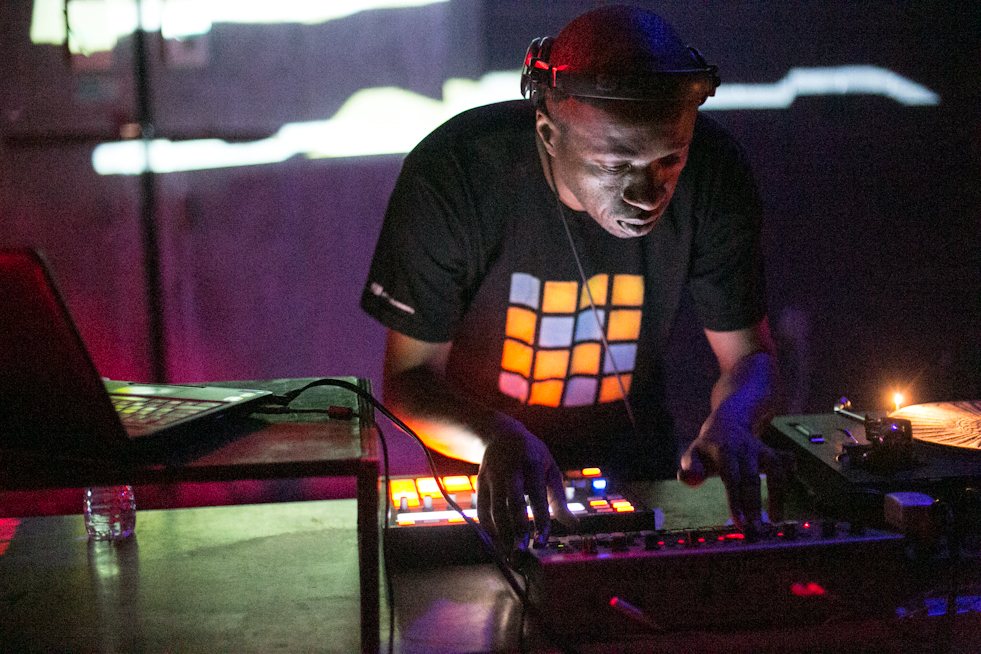
Experimental electronic producer Al Lover has been quoted as saying “the psych music of today is what the producers of tomorrow will sample.” So the local music-maker recently cut out the middle man, and went straight to the source, creating his own tripped out electro-psych tracks. That meant collaborating with Tim Presley aka White Fence on this month’s seven-inch “Snake Hands,” released through the UK’s PNKSLM Records, which is Lover’s first ever solo vinyl release. (Note that White Fence also has a show coming up Aug. 7 at the Rickshaw Stop.) “Snake Hands” is a single from his forthcoming LP Space Magick. Consummate beat-fiend that he is, Lover also flipped the switch back the other way this summer and put up a collection of remixes, recorded over a one-year period. That includes trance-ready instrumental mixes of tracks by fellow (or former) locals like Nick Waterhouse, Fuzz, and Burnt Ones, along with a standout take on Grinderman’s “Bellringer Blues.” He’ll be showcasing a live beat set at Bottom of the Hill tonight. With Coo Coo Birds, Face Tat, Bubblegum Crises.

Wed/31, 9pm, $8. Bottom of the Hill, 1233 17th St., SF. www.bottomofthehill.com.


SPACE VACATION

You guys, Space Vacation is like SF’s own Spinal Tap, distilling the many aspects of theatrical heavy metal into an entertaining metal act you must see live. The group plays actual sing-along heavy metal (in the vein of Iron Maiden and Def Leppard) but also brings along show-enhancing efforts like smoke and lasers. The quartet plays the all-day, all-ages Summer Throwdown event at DNA Lounge this weekend with Son of a SuperCar, Systemic Decay, Look a Flying Pig, Dammit, Serville, and a handful more. Lean in and throw the devil horns during the daylight.

Sun/4, 4:30pm, $15. DNA, 375 11th St, SF. www.dnalounge.com.


LIGHTNING DUST, LOUISE BURNS, SPELLS

There seems to be an uptick in occult fascination lately, or am I just now really paying attention? This whole lineup — a free show through Wood Shoppe — has the witchy vibe, with Vancouver’s Lightning Dust and Louise Burns, and SF’s own Spells. Lightning Dust’s Amber Webber (of Black Mountain) and Josh Wells began as a whispery folk duo in 2007. However, their spooky third LP, June’s Fantasy (Jagjaguwar), is said to be inspired more by “skeletal synth pop, modern R&B beats, the films of John Carpenter and…absolute minimalism.” Louise Burns has that chilled ’80s darkwave thing down. And Spells, the newest project from songwriter Jennifer Marie, incorporates synth and vintage organs into eerie, lovely nightmarescapes (check locally appropriate “Fog”).

Tue/6, 8pm, free. Brick and Mortar Music Hall, 1710 Mission, SF. www.brickandmortarmusic.com.

Milo grows up

0

arts@sfbg.com

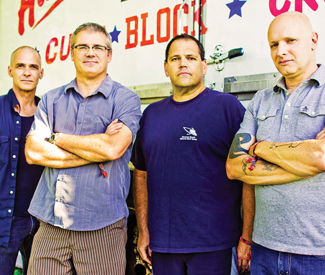
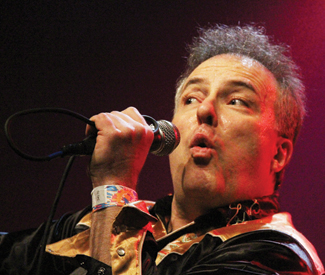
MUSIC The Descendents have been around since the early 1980s, writing fast, coffee-driven punk music with lyrics about trashy, tongue-in-cheek rebellion in songs like “My Dad Sucks” and “I’m Not a Loser.” The group has undergone various lineup changes, losing drummer Bill Stevenson to Black Flag for a while, and periodically losing lead singer Milo Aukerman to his pursuit of higher education and biochemistry (which the band named its most popular record after).

Brad Nowell of Sublime and Jason Thirsk of Pennywise died within months of each other in the summer of 1996, right around the time when the Descendents regrouped to record the landmark album Everything Sucks. How is this all connected? These three groups (well, Sublime with Rome now) will play the America’s Cup Pavillion together on Sun/4. The Descendents on-again/off-again frontperson, Dr. Aukerman, spoke with me recently about the upcoming show, his dual-life as a biochemist and band leader, and his influence on rockers who didn’t make it out of the ’90s.

SFBG First of all, happy 50th birthday! Do you think that your famous massive coffee intake has helped your longevity in any way?

Milo Aukerman Probably not. I think coffee can be good for you in moderation; it has antioxidant properties, for example. But like anything else you put into your body, it’s not good to overdo it. I am a caffeine abuser, for sure. But I like it, and it helps me rock out. At least I’m not strung out on something harder.

SFBG So when Milo [went] to College after releasing the record of the same name, you split briefly from the band and got a Ph.D. in biochemistry. Why the decision?

MA Actually, first I left to get my undergraduate degree (1982-1986), played again with the band (1985-1987), and then left for my Ph.D. (1987-1992). I’ve always said I would be a scientist, and that music was just a hobby for me. It’s a very intense hobby, and one that makes me some extra cash, but I never considered music as a career, and I still don’t. My career is in science, as I always wanted.

SFBG How do you decide to divide up your time?

MA In 1996 I was really burned out on science; I didn’t have a permanent position, so it was pretty easy to walk away from for a while. Once I got a permanent position, I couldn’t realistically take a break from science. Now, my decision to stay connected with music has been primarily based on wanting to have that creative outlet. While science is creative in its own way, I find that music keeps me feeling alive and young in ways that science cannot. So now, although I cannot really “walk away” from science, I take little vacations from it whenever the band gets together to play or record.

SFBG Do you have a quiet, “clone” of a “Suburban Home” in Delaware when you’re back to being Dr. Aukerman?

MA I do have a suburban home! The irony is that Tony Lombardo wrote “Suburban Home” as a way to poke fun at himself, because when he wrote it, he already owned a house. Let’s face it, we all grew up and took on more adult responsibilities and possessions, but we still have to look in the mirror and laugh at ourselves. Many of our songs are self-critical, some in a more humorous way than others.

SFBG You’re opening for Sublime with Rome at the America’s Cup Pavillion. They covered your song “Hope” on 40oz. to Freedom, did you ever meet or play with Brad Nowell while he was alive?

MA They also covered “Myage,” “Sour Grapes,” and “I’m Not a Loser” — I only learned after Nowell’s death how much they liked the Descendents. We never played with Sublime, nor did I ever meet Brad. I looked at their Wiki page, which lists their “Years Active” as 1988 to 1996…that’s the exact same time frame as our hiatus before Everything Sucks, so, there you go. But I’m really looking forward to seeing [Sublime with Rome] play; there will always be the naysayers saying “you can’t fill Brad’s shoes,” but if a band’s good, I don’t care about that shit. Eric shreds on bass, Rome has a good voice and I like their new stuff, so it’s all good.

SFBG Do you write songs like “I Like Food” as fast you play them?

MA Those type of songs usually start out in your head as a jumble of lines, and usually induced by too much caffeine. You may repeat them over and over, and say them to your friends for a laugh. So by the time you actually write them on paper, it’s pretty quick to finish them. Bill’s the master at these; he wrote “Weinerschnitzel,” then realizing it wasn’t short enough, wrote “ALL.”

THE DESCENDENTS

With Pennywise, Sublime with Rome

Sun/4, 5:30pm, $39.50

America’s Cup Pavilion

27-29 San Francisco Pier 33

(415) 371-5500

americascup.com/concert-series


On the Cheap: July 31 – August 7, 2013

0

On the Cheap listings are compiled by Guardian staff. Submit items for the listings at listings@sfbg.com. For further information on how to submit items for the listings, see Selector.

WEDNESDAY 31

Michael Hearst Booksmith, 1644 Haight, SF; www.booksmith.com. 7:30pm, free. The musician and author presents “Unusual Creatures,” describes as a “nerdy, family-friendly sort of Ted talk” about some of the planet’s most bizarre animals.

Andrea Carla Michaels and Bernadette Luckett Book Passage, One Ferry Building, SF; www.bookpassage.com. 6pm, free. The contributors read from a new anthology of women comedy writers, No Kidding: Women Writers on Bypassing Parenthood.

THURSDAY 1

Asian Art Museum $5 admission Asian Art Museum, 200 Larkin, SF; www.asianart.org. 5-9pm, $5. The Asian Art Museum stays open late every Thursday, and visitors who arrive after 5pm pay just $5 (regular adult admission is $12). Current exhibits include “In the Moment: Japanese Art from the Larry Ellison Collection.”

“Downtown Berkeley MusicFest” Downtown Berkeley BART Plaza, Berk; www.downtownberkeleymusicfest.org. 5-7pm, free. The sixth annual fest kicks off with concerts by Andre Thierry and Zydeco Magic, and Talk of da Town.

Larry O. Dean and Hugh Behm-Steinberg Moe’s Books, 2476 Telegraph, Berk; www.moesbooks.com. 7:30pm, free. The Chicago-based Dean and the Berkeley-based Behm-Steinberg read from their latest poetry collections.

FRIDAY 2

“Downtown Berkeley MusicFest” Berkeley Public Library, 2090 Kittredge, Berk; www.downtownberkeleymusicfest.org. 12:15-1pm, free. The sixth annual fest continues with the Steve Gannon Blues Band.

“Oakland Art Murmur: First Friday Gallery Walk” Art project spaces in Jack London, Downtown, and Uptown, Oakl; www.oaklandartmurmur.org. 6-9pm, free. Check the website for an open studios map to the galleries and other art venues staying open late for this monthly event.

SATURDAY 3

Bay Area Peace Lantern Ceremony North end of Aquatic Park (near Interstate 80 and the west end of Addison), Berk; progressiveportal.org/lanterns. 6:30pm, free. Commemorate the bombing of Hiroshima and Nagasaki with the floating of peace lanterns on the park’s lagoon. Arrive at 6:30 to construct lanterns; at 7pm, there will be musical and cultural performances, messages from the mayors of Hiroshima and Nagasaki, and a report from a bombing survivor. Lanterns launch at 8pm.

Fruit Pie Contest Omnivore Books on Food, 3885a Cesar Chavez, SF; www.omnivorebooks.com. 3-4pm, free for entrants ($5 if you’re tasting only). The food-focused bookstore hosts the ultimate pie-making smack down (cobblers, crisps, tarts, crumbles, and buckle-type desserts also allowed). Show up a little before 3pm with your creation cut into as many pieces as you can — because the more people who taste it, the better chance you have of winning. Top vote-getter splits the door money with the shop and gets bragging rights ’till next time. (Non-bakers need pay only $5 to taste all the goodies.)

Vintage Paper Fair Golden Gate Park, Hall of Flowers (County Fair Bldg), Ninth Ave at Lincoln, SF; www.vintagepaperfair.com. 10am-6pm, free. (Also Sun/4, 11am-5pm, free). Antique paper fans, look no further for a vast selection of “postcards, trade cards, stereoviews, photography, labels, brochures” and more to add to your collection. Appraisals are also offered free of charge.

SUNDAY 4

“Beat Generation Instawalk” Meet at Jack Kerouac Alley (near Broadway and Grant), SF; www.thecjm.org. 1-4:30pm, free. In conjunction with its exhibit “Beat Memories: The Photographs of Allen Ginsberg,” the Contemporary Jewish Museum hosts an Instagram-based scavenger hunt through North Beach that ends at the museum — where participants can win Beat-themed prizes and get free museum admission by showing their Instagram photos.

MONDAY 5

Alexander Maksik Booksmith, 1644 Haight, SF; www.booksmith.com. 7:30pm, free. Litquake co-sponsors this reading by the author of A Marker to Measure Drift.

TUESDAY 6

S.G. Browne Booksmith, 1644 Haight, SF; www.booksmith.com. 7:30pm, free. The author reads from Big Egos, a satirical look at identity in the not-too-distant future.

“Neither Friar Nor Conquistador” Emerald Tablet, 80 Fresno, SF; www.emtab.org. 7-9pm, free. An evening dedicated to the history of Monterey’s Spanish immigrant community, featuring a screening of labor activist Michael Muñoz’s short film The Spanish Pruners Strike 1932, as well as a reading from his biography, Change From Within. *


Downwardly mobile

0

arts@sfbg.com

FILM The good news about Blue Jasmine isn’t that it’s set in San Francisco — more on that later — but that it’s Woody Allen’s best movie in years. Although some familiar characteristics are duly present, it’s not quite like anything he’s done before, and carries its essentially dramatic weight more effectively than he’s managed in at least a couple decades. Yes, Match Point (2005) and Cassandra’s Dream (2007) were “serious” too, but they were basically thrillers (one pretty good, one awful) that, whatever their other qualities, demonstrated that he doesn’t have much feel for suspense.

Blue Jasmine is, in a very different way, full of tension — because its protagonist is uncomfortable in almost any situation, often teetering on the edge of a full-on anxiety attack. Yet these are recent developments. Not long ago Jasmine (Cate Blanchett) was the quintessential Manhattan society hostess, with homes hither and thither (including the Hamptons, naturally), ever-so-busy planning dinner parties, sitting on charity boards, and going to Pilates class. Her immaculately put-together elegance isn’t Brahmin-bred: a natural upscaler, she remade herself from humble roots to suit the role of picture-perfect wife to Hal (Alec Baldwin), a master of the universe type whose questionably legal investment schemes and not-particularly-discreet infidelities she turns a willful blind eye toward. (It helps that he’s a really, really good liar.)

But at the start here, that glittering bubble of money and privilege has burst — exactly how revealed in flashbacks that spring surprises up to the script’s end — with the result that marriage and material comfort are now gone. Penniless, fleeing her husband’s public disgrace (he seems Allen’s belated commentary on the bankster-induced crash of ’08), Jasmine has crawled to the West Coast to “start over” in the sole place available where she won’t be mortified by the pity of erstwhile society friends. That would be the SF apartment of Ginger (Sally Hawkins), a fellow adoptive sister who was always looked down on by comparison to pretty, popular, clever Jasmine.

Theirs is an uneasy alliance — arguably the most discomfiting flashback is to Ginger’s Manhattan visit with now ex-husband Augie (Andrew Dice Clay), a mini-festival of thinly veiled class snobbery. Ginger has good reason to resent her big sis, whose attempted financial assistance via slippery Hal actually wound up destroying the visitors’ marriage. (Allen’s casting can sometimes seem stunt-like and overdependent on “who’s hot now.” Yet its top to-bottom brilliance here is personified by comedian Clay’s excellence in a small but important role.) Still, she’s too big-hearted to say no.

Ergo, Jasmine arrives at the flat Ginger shares with her two young sons — nose immediately curling at its IKEA/thrift-shop modesty and the boys’ noisy energy — with no clear idea what she’ll do, or how she’ll support herself. She has no marketable skills, and god forbid she’d take something as lowly as Ginger’s supermarket-cashier job. Yet she continues to judge everything by standards she can no longer afford, notably sis’s new beau Chili (a terrific Bobby Cannavale), another working-class stiff who justifiably worries Jasmine will convince her she can “do better.”

Surfacing later in the SF portion of the narrative are three men who might actually fulfill that “bettering” function: Dr. Flicker (Boardwalk Empire‘s Michael Stuhlbarg), a grab-handy dentist from whom she reluctantly accepts a receptionist gig. Then at a party she drags Ginger to in order to blatantly find men of the “quality” they both “deserve,” the latter duly meets seemingly good catch Al (Louis C.K.), while the former reels in a much bigger fish in Dwight (Peter Sarsgaard), a dreamboat diplomat who’s just the ticket for a woman who’s never paid her own way in anything but trophy-wife good taste.

It’s somewhat disappointing that Blue Jasmine doesn’t really do much with San Francisco. Ginger lives in a nondescript neighborhood (near the start of South Van Ness). There are no gay characters, racial diversity is limited to background players, and good as they are, Cannavale and Clay have the kinds of personalities that yell “Jersey!” and “Brooklyn!,” respectively. There are a few shots nodding at the colorful, pretty, touristy side of the city, but that’s not the world Ginger lives or that Jasmine lands in. Really, the film could take place anywhere — although setting it in a non-picture-postcard SF (despite the warm tones of Javier Aguirresarobe’s cinematography) does bolster the film’s unsettled, unpredictable air.

Without being an outright villain, Jasmine is one of the least likable characters to carry a major US film since Noah Baumbach’s underrated Margot at the Wedding (2007), whose central dynamics (Nicole Kidman as neurotic older sister who destroyed Jennifer Jason Leigh’s prior marriage, and might now destroy her imminent second one) bear an eerie similarity. The general plot shell, moreover, is strongly redolent of A Streetcar Named Desire.

But whatever inspiration Allen took from prior works, Blue Jasmine is still distinctively his own invention. It’s frequently funny in throwaway performance bits, yet disturbing, even devastating in cumulative impact. Like Streetcar (and Margot for that matter), this is a movie as much about undiagnosed mental illness as it is about family (dis-)loyalties and class conflicts.

One of those actors who can do just about anything, Blanchett is fearless here — it’s a great role she burrows into so deeply it’s a wonder she ever came back out. Her Jasmine is cringe-inducing, terrified, superficial, unconsciously cruel. Yet she’s simultaneously so helpless that we can’t help but hope she’ll find her feet again, a rooting interest answered by the most haunting Woody Allen fadeout since 1985’s The Purple Rose of Cairo

BLUE JASMINE opens Fri/2 in Bay Area theaters.

Drawing inspiration

0

arts@sfbg.com

DANCE Though only in its third incarnation, Amy Seiwert’s wide-open “Sketch” has become a hit. The idea behind this annual summer project is to give acclaimed choreographers a chance to tread unfamiliar territory. One of the drawbacks of having a sizable repertoire to your credit is that you develop a comfort zone. You know what’s worked for you in the past, but the world is not nearly as wide open as it used to be.

“Sketch” tries to be something like a playground for experienced dance makers, who are given between 40-50 hours to come up with a piece for Seiwert’s Imagery company dancers. This year’s version, “Sketch 3: Expectations,” for which Val Caniparoli, Marc Brew, and Seiwert herself stepped up to the challenge, must be considered a success. Not everything worked, but that’s to be expected. Still, you could see minds stretching themselves all evening long. The eight dancers — some local, some from other parts — performed heroically; they were Brandon “Private” Freeman, Rachel Furst, James Gilmer, Sarah Griffin, Weston Krukow, Annali Rose, Ben Needham-Wood, and Katherine Wells.

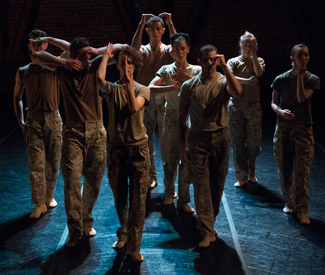
The most transparently cohesive work proved to be Caniparoli’s Triptych, which moved with consummate ease through its singular unisons that split up into multiple smaller configurations, only to gather its dancers again and again in the anonymity of military stand-at-attention stances. Caniparoli’s command of dance language is impressive.

He found inspiration for Triptych in Lalage Snow’s portraits of British soldiers deployed in Afghanistan. Contrasting contemporary string scores by John Tavener and Alexander Balanescu — meditative and quiet from the first, dramatic and dissonant from the second — worked well.

Instead of focusing on the horrors of war, Caniparoli investigated how it feels to be an anonymous cog in a machine. Again and again, he sent lineups around the stage, their precision and discipline suggesting confinement. Even the individualized gesture language suggested regimentation. Yet at Triptych’s center he placed a languid and intimate pas de deux for Griffin and Krukow, surely one of Caniparoli’s finest creations. But at the end, when the dancers moved straight toward the audience, you could only see their empty eyes.

For Australian-born, UK-based Brew, Awkward Beauty was a return to ballet — the style he trained in until an accident ended his performing career. As a choreographer he works in a wide variety of styles and media, but ballet is not usually one of them.

Awkward is, perhaps, ironically and yet appropriately named. A rather non-descript commissioned score by Dan Wool and murky lighting by Jim French didn’t bring much to a work in which Brew seemed interested in exploring some of ballet’s classic tenets, among them verticality. He appears to have assembled a lot of individual ideas that, unfortunately, didn’t coalesce into a comprehensive statement.

He put three of the women in pointe shoes — Wells is primarily a modern and post-modern dancer — and opened the piece with a striking image of the women standing on the men’s shoulders. From there, they individually worked their way to the ground. The maneuvers, however, looked forced and insecure — not something to attempt unless there is a lot more rehearsal time.

Upstage, a dance gesture traveled wave-like along a line; women were passed overhead in upside down splits, and (somewhat inexplicably) the dancers made repeated use of theater’s metal support beams. Center stage was given over to smaller units. The women’s trio — with the gorgeous Griffin as its center — looked balletically demure until the women literally let their hair down. Then Furst and Rose bourréed across the stage in lovely sync after a moment of looking like a sculpture of puppies.

An intricate duet for Wells and Needham-Wood played with verticality, and the giving and taking of support. Subtly, athletically, and with some poignancy, the piece showed what could have been by showing how awkwardness and beauty can coexist.

Seiwert has said that her work The Devil Ties My Tongue was inspired by Leonard Cohen’s poem S.O.S, fragments of which became part of Olafur Arnalds’ weather-inspired score. It also buzzed through dancers’ intimate whisperings. The piece opened with the dancers in semi-darkness watching a vulnerable Gilmer unfolding himself, before segueing into small units — double and triple duets, a male trio, and two contrasting pas de deux for Griffin and Krukow, and, to end the piece, Freeman and Wells.

Seiwert’s ability to layer complex, tension-filled structures that change kaleidoscopically with jutting limbs and interlocking legs — yet always look as if etched moment by moment — continues to surprise. Here, some of the encounters had a newfound intimacy about them, none more than the one for Freeman and Wells. The way he snuck around her, it wasn’t clear whether he was courting, protecting, or preying on her. Still, I want to see Devil again in a different context. It was not well suited as a closer. *


Warm-ups

0

culture@sfbg.com

COCKTAIL HOUR Yes, the rest of the country is sipping piña coladas and pink lemonade margaritas, while we shiver and pour whiskey into our hot tea. No problem: this is a primo time to ditch the sickly sweet and explore some solid bellywarmers in the cocktail category.


IRISH COFFEE AT BUENA VISTA CAFE

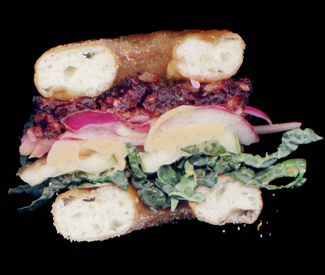
Let’s start with this classic — Buena Vista claims that it was invented here, why not, and the Fisherman’s Wharf-adjacent cafe’s gotten a rep for being a tourist magnet. Don’t let that detour you, it’s all super-charming. Served piping hot with coffee, whiskey and topped with whipped cream, the Buena’s Irish Coffee ($8) is pretty perfect for sipping as you imagine knitting little sweaters for the seagulls darting over the frigid bay.

2765 Hyde, SF. www.thebuenavista.com


MEXICAN HOT CHOCOLATE AT TRADITION

Coffee not your thing? Pop over to Tradition in the Tenderloin and see if you can handle its version of Mexican Hot Chocolate ($10). Rich in vitamin agave (this drink contains both mezcal and tequila), a few sips of this will thaw you out in no time. It’s usually on radition’s winter menu, but asking for it at the bar is well worth a try: even if they can’t whip one up, the bartenders will steer you in a warm direction.

441 Jones, SF. www.tradbar.com


CHAMOMILE TODDY AT BRASSERIE S&P

The easy-to-make hot toddy cocktail is a staple during cold weather. But the lovely Brasserie S&P in the Mandarin Oriental kicks it up a notch on the serenity scale by replacing the traditional bourbon with gin — and adding a pour of chamomile tea ($12). All that’s missing is the purr of a cat and a good hardcover book.

222 Sansome, SF. www.mandarinoriental.com


MANHATTAN SHAKE AT THE CORNER STORE

There’s nothing like a milkshake on a warm day, but yeah, about that…. This thick, rich Manhattan Shake ($10) is a nice compromise with SF weather. A cold concoction with the kick of a well-made Manhattan, the Corner Store’s treat will booze you up to the point that you’ll forget you’re drinking it in the fog.

5 masonic, SF. www.thecornerstore-sf.com


WHATAMELON AT ELIXIR

When the clouds part and we are blessed with hot day, Elixir has the perfect summer, fruit-filled cocktail menu. I originally visited in search of another warm drink for this list, but was instantly swayed by the bartender’s suggestion: a Whatamelon ($11). A tequila drink with watermelon juice, elderflower liqueur, agave nectar, and mint, it was light, tasty, and refreshing. Perfect for summer, even if just the summer in your mind.

3200 16th St., SF. www.elixirsf.com


Immigrants vulnerable to domestic violence

0

In San Francisco Sup. John Avalos’ District 11, half of all residents were born outside the U.S. In Sup. Jane Kim’s District 6, more than a third of residents are foreign-born, and almost half speak a language other than English.

Given the sizable immigrant population in San Francisco, it may not come as a surprise that Secure Communities (S-Comm), a federal immigration program administered by the U.S. Immigration and Customs Enforcement (ICE), is highly unpopular. What might not be so obvious is how dramatically S-Comm can impact the lives of foreign-born women who are survivors of domestic violence.

The reason for this is simple. “If you are a victim or a survivor of domestic violence and you call the police, you do not want to end up deported,” Beverly Upton of the San Francisco Domestic Violence Consortium explained at a July 23 rally, where advocates from organizations such as Mujeres Unidas y Activas, Causa Justa, the Filipino Community Center, and others stood and held banners demonstrating opposition to S-Comm. “We want it to be safer to call the police, not less safe.”

A member of Mujeres Unidas y Activas who introduced herself as Lourdes and spoke through a translator delivered a personal account of feeling fearful of police as well as an abusive partner. “Many times, abusers tell us not to call the police, because the police will not believe us. They say the police will probably deport us.”

The domestic violence and immigrant community advocates were there to champion Avalos’ Due Process for All Ordinance, which is being introduced at today’s Board meeting and is co-sponsored by seven other supervisors, essentially guaranteeing its passage. Avalos himself didn’t speak, and Sups. David Campos and Board President David Chiu, co-sponsors of the legislation, sent female staff members to make statements on their behalf as part of the all-female roster of speakers.

The legislation prohibits law enforcement officials from detaining individuals solely in response to immigration detainer requests issued by immigration authorities under S-Comm. As things stand, “the request has been honored in many cases,” Avalos explained in comments to the Guardian, even though California Attorney General Kamala Harris has affirmed that local law enforcement agencies are not obligated to comply with ICE detainers because they are mere “requests” and not legally binding. Since 2010, according to data provided be Avalos’ office, 784 San Franciscans have been deported after being turned over to federal authorities due to ICE detainers.

Sup. Jane Kim called S-Comm “a giant step backward when it comes to equality and fairness,” and added that S-Comm “makes our neighborhoods less safe.”

Legal Counsel Freya Horne read a statement on behalf of San Francisco Sheriff Ross Mirkarimi, stating that the sheriff has reduced the number of ICE detainers leading to deportations, and was supportive of Avalos’ legislation. She added that Mirkarimi had made it a policy to honor immigration detainer requests only in cases of criminal convictions of serious or violent felonies.

Avalos said he was compelled to move the legislation forward because “I’ve talked to so many people whose families have been separated, and have been devastated,” due to deportations under S-Comm. “We want to make sure we’re maintaining a level of due process,” he added, since the detainer requests are routinely issued without warrants or a requirement to show probable cause.

Chiu: centrist compromiser, effective legislator, or both

0

At the start of this year, when I wrote a Guardian cover story profile of Sup. Scott Wiener (which SF Weekly and San Francisco Magazine followed shortly thereafter with their own long Wiener profiles), he seemed like the one to watch on the Board of Supervisors, even though I noted at the time that Board President David Chiu was actually the more prolific legislator.

Now, it’s starting to seem like maybe we all focused on the wrong guy, because it is Chiu and his bustling office of top aides that have done most of the heavy legislative lifting this year, finding compromise solutions to some of the most vexing issues facing the city (ironically, even cleaning up some of Wiener’s messes).

The latest example is Wiener’s CEQA reform legislation, which the board unanimously approved on July 23, a kumbaya moment that belies the opposition and acrimony that accompanied its introduction.

That effort comes on the heels of Chiu’s office solving another big, ugly, seemingly intractable fight: the condominium lottery bypass legislation sponsored by Wiener and Sup. Mark Farrell. To solve that one in the face of real estate industry intransigence, Chiu showed a willingness to play hardball, winning over swing vote Sup. Norman Yee to get six votes using some hostile amendments.

In the end, Chiu won enough support to override a possible veto by the waffling Mayor Ed Lee, who has always echoed Chiu’s rhetoric on seeking compromise and consensus and “getting things done,” but who lacks the political skills and willingness to really engage with all sides. For example, it was Chiu — along with Sups. Farrell and David Campos — who spent months forging a true compromise on the hospital projects proposed by California Pacific Medical Center, replacing the truly awful CPMC proposal that Lee readily accepted.

“It’s been a very long year,” Chiu told the Guardian. “It’s been important for me to not just to seek common ground, but legislative solutions that reflect our shared San Francisco values.”

Next, Chiu will wade into another thorny legislative thicket by introducing legislation that will regulate the operations of Airbnb, the online housing rental corporation with a problematic business model.

After posting the preceding analysis of Chiu on the SFBG.com Politics blog on July 23, we heard lots of back channel concerns and complaints from progressive San Franciscans (and even some from moderates and conservatives who consider Chiu a raving socialist for helping suspend the condo lottery).

Nobody really wanted to speak on the record against Chiu, which is understandable given the powerful and pivotal position that he’s carved out for himself as a swing vote between the two ideological poles and on the Land Use Committee, whose makeup he personally created to enhance that role.

The main issue seems to be that Chiu allows both progressive and anti-progressive legislation to be watered down until it is palatable to both sides, empowering the moderates over the progressives. That’s a legitimate point. It’s certainly true that Chiu’s worldview is generally more centrist than that of the Guardian and its progressive community, and we’ve leveled that criticism at Chiu many times over the years.

The fact that he ends up in a deciding role on controversial legislation is clearly a role that Chiu has carved out from himself, no doubt about it. And that’s certainly why he played the pivotal role that he has this year. But when he uses that role to empower and support tenant groups, as he did on the condo lottery bypass measure, I think that’s something worth noting and praising.

On the CEQA reform legislation, it’s also a valid criticism of Chiu to note that Sup. Jane Kim had five votes for her legislation and that it was only Chiu who stood in the way of its passage (whether Mayor Ed Lee would have vetoed it, necessitating the need for two more votes, is another question).

In the end, Chiu can be seen as an effective legislator, a centrist compromiser, or both. Perspective is everything in politics.

Plan Bay Area: better, but it still gentrifies

0

By Peter Cohen and Fernando Martí

Council of Community Housing Organizations

OPINION On July 18, the Metropolitan Transportation Commission (MTC) and the Association of Bay Area Governments (ABAG) adopted the region’s first so-called “sustainable communities strategy,” as required under new state environmental laws. Plan Bay Area will direct the largest share of the region’s growth to the region’s urban cores — two-thirds of the region’s overall housing production is directed to 15 specific cities.

The vision is what environmentalists refer to as “smart growth” — shrinking the footprint of the region’s future development as a more environmentally friendly and geographically efficient pattern to absorb ever-increasing population. San Francisco alone has a very tall order: Our city will absorb 25 percent of new urban development, which equates to 92,000 new housing units and a pace of housing construction averaging around 3,100 units annually (a rate that has been reached only twice over the last 50 years since the era of 1960s urban renewal development).

The question that framed debates through the three-year process in drafting and finally adopting the plan is how that amount of new growth can be “done right;” that is, without gentrifying working class and poor communities and ensuring that infrastructure, including affordable housing and transit service, will keep up with that pace of growth. Tim Redmond’s feature article in the June 4 issue of the Guardian (“Planning for displacement”) and a June 12 forum sponsored by the Guardian, CCHO, and UrbanIDEA very thoroughly laid out the issues and critiques of the Plan Bay Area draft that was released by MTC/ABAG earlier this spring.

With such fundamental flaws when the draft plan was released in April, how did the July 18 adopted final Plan Bay Area fare? First, there is no question this regional “smart growth” plan will make combating gentrification at ground-level harder. But second, the plan could have been worse if not for a tremendous final pushback by progressive advocates from San Francisco and throughout the region loosely united in a “Six Wins for Social Equity” coalition and the committed leadership of a small core of progressive regional leaders — including two of San Francisco’s representatives, David Campos (MTC) and Eric Mar (ABAG) — who championed some final amendments.

Those “wins” (in reality, concessions by MTC/ABAG) achieved in this final push include: adding a public process to develop priorities for the Bay Area’s $3.1 billion share of state cap and trade funding, such as to affordable housing and local transit operations; strengthening the $14 billion transportation block-grant funds program (“OBAG”) to link it directly to local cities’ affordable housing production and displacement-prevention policies; and adding a requirement for MTC to develop a comprehensive strategy to prioritize funding of local transit service and transit maintenance.

Though the details of those amendments are fairly squishy and do not alter the development trajectory of the plan, they are potentially valuable handholds to work with going forward as Plan Bay Area gets implemented (and updated in four years).

That said, San Francisco’s front line working class neighborhoods and communities of color still stand to take the brunt of potential negative impacts from this regional “smart growth” plan. Theoretically they could receive the potential benefits of public infrastructure investments and stimulated economic activity. But while the risks are real, the potential benefits are still illusory.

We must become more engaged if we are to move Plan Bay Area beyond policy statements and promises of future “best-practices” to make sure vulnerable people are not displaced from their neighborhoods in the tide of infill real estate development and are guaranteed a real share of the fruits from “equitable” smart growth.

Building on progress

0

news@sfbg.com

A month-long labor standoff at the Hunters Point Shipyard redevelopment project has been put on hold as the city steps in to provide workforce mediation and oversight. But community-based organizations are left wondering how their workers will actually benefit.

Aboriginal Blackman United (ABU), a Bayview organization representing roughly 300 construction workers, announced on July 15 that it was calling off demonstrations at the construction site that had begun just before a June 26 groundbreaking ceremony (see “Lennar finally breaks ground amid controversies,” July 10).

ABU President James Richards suspended the protests after the Successor Agency to the San Francisco Redevelopment Agency informed him that Young Community Developers (YCD), another neighborhood nonprofit, would no longer exclusively manage job placements at Lennar Urban’s shipyard project.

The Hunters Point construction is expected to create 1,500 jobs annually, over the course of a 15- to 20-year build out. But critics have taken issue with local hiring guidelines hashed out in a 2003 development agreement with Lennar Corp. that are limited to good-faith promises rather than binding quotas.

Since then, community-based organizations have urged Lennar and the Building Trades Council to formalize their commitment to hiring from within the Bayview-Hunters Point community.

Building Trades Secretary-Treasurer Michael Theriault has so far been resistant to these efforts. “There is no inherent flaw in good faith,” Theriault said of local hire promises by Lennar. “Like any system, you have to enforce it.”

Until last week, Young Community Developers (YCD) was tasked with meeting local hire goals by recruiting and training tradespeople from the neighborhood and facilitating their placement on the project.

But Richards and other community advocates were skeptical of this arrangement because Theriault is vice president of YCD’s executive board. “How can [Theriault] be against mandatory hiring and be on YCD’s board?” asked Richards, who viewed it as an obvious conflict of interest.

ABU’s protests finally prompted Lennar and the Building Trades Council to seek the involvement of CityBuild, a workforce-training program and centralized referral network administered by the San Francisco Office of Economic and Workforce Development.

YCD Executive Director Shamann Walton said a meeting between the two organizations produced “a gentleman’s agreement that there will be an MOU in place between YCD and CityBuild,” designating CityBuild, rather than YCD, as the primary recruiting coordinator on the project.

YCD will be just one of a handful of community-based organizations that will assist in training and placement — others will include ABU, Anders & Anders, and the A. Philip Randolph Institute (APRI). APRI San Francisco Executive Director Jacqueline Flin says she supports a switch to CityBuild because it provides “a very good prospect of goal delivery. They have a fair process that’s been proven to work and the city’s invested in the effort.” Flin added, however, that she hadn’t yet heard any real details of the new arrangement with CityBuild. SFOEWD did not respond to the Guardian’s requests for comment. Terry Anders, director of the Anders & Anders Foundation, expressed disappointment that negotiations were taking place behind closed doors. Anders wants to see all the stakeholders brought to the table. He was quick to point out that, though CityBuild promises to be above board, “it is not a neighborhood organization.” “Somebody is making backroom deals,” Anders asserted, “and I am not for it. I don’t like being left out of the process.” He demanded an inclusive and transparent discussion, but a week after bargaining seemingly began and ended, it was unclear whether he would get one. “Lennar’s main concern is getting the buildings up, and they don’t care who does it,” he said. And though Richards is hopeful that CityBuild will be an improvement over YCD, he too was measured in expressing full confidence in the municipal agency just yet. For a lasting solution, CityBuild will need to work very closely with ABU and others. “We stopped all traffic ongoing to the shipyard and coming out for about a month,” to get this far, explained Richards, “the only way we guarantee that our people get jobs is that we are involved.”

Under fire again

0

rebecca@sfbg.com

At a recent hearing on San Francisco’s Health Care Security Ordinance — once-controversial legislation that is now in the business community’s crosshairs once again — a nursing student stood at the podium to address members of the Board of Supervisors Neighborhood Services & Safety Committee.

She told them about her mother, who battled illness but did not have access to healthcare for 14 years due to her immigration status, recalling a day when her mother explained why she wasn’t seeking medical attention: “If I go to the hospital, I’ll bury you in debt.”

For the uninsured and undocumented, going without medical care or going into insurmountable debt could be the only options if it weren’t for Healthy San Francisco, a medical services safety net that was created by the HSCO in 2006. The program is expected to continue to provide care for undocumented enrollees who won’t be eligible for federal assistance once the Affordable Care Act, also called Obamacare, takes effect early next year.

The HCSO’s mandate that businesses provide some healthcare coverage for their employees was fiercely opposed by the business community, which challenged it all the way to the US Supreme Court. Now, those same powerful forces are gearing up for a fresh challenge that could jeopardize HCSO’s potential to fill coverage gaps that will be created under Obamacare.

Under federal health care reform, two-thirds of the enrollees in Healthy San Francisco will become ineligible to continue receiving coverage because they will automatically gain eligibility for some form of federal assistance. Those earning up to 138 percent of the federal poverty level will be guaranteed coverage under Medi-Cal. But for low-income earners whose wages hover around $14 an hour, things are far less certain because they will be eligible to enroll in the federally created health benefit exchange, Covered California, although they won’t necessarily be able to afford it. For someone earning around $30,000 per year before taxes, the estimated monthly cost for a health insurance plan under Covered California hovers at more than $200 per month, in many cases making it too much of a stretch.

As things stand, uninsured San Francisco employees who earn too much to qualify for Medi-Cal, but not enough to afford enrollment in Covered California — despite being eligible — can still access funds set aside for them in medical reimbursement accounts under the HCSO. This option may provide enough of a financial boost for low-wage earners to take advantage of federally subsidized health insurance after all.

“For working people, the implementation of the Affordable Care Act actually makes the Health Care Security Ordinance more important,” explains Ian Lewis, research director at UNITE-HERE Local 2. “There are many consequences of the ACA … and the Health Care Security Ordinance is a buffer against them.”

As it stands, the local law “makes Covered California actually work in a high-cost city like ours,” Lewis added.

Under HCSO, San Francisco employers are required to contribute toward employees’ health care on a per-hour basis for each employee working more than eight hours per week, regardless of immigration status or city of residence, amounting to an estimated $255 per participant per month.

This mandate, known as the Employer Spending Requirement, has been the target of multiple lawsuits brought against the city by the Golden Gate Restaurant Association since the landmark health care ordinance, authored by then-Sup. Tom Ammiano, was first enacted in 2006.

That same requirement also makes the local ordinance stronger than the federal law when it comes to worker protections, because the federal mandate only requires employers to offer coverage for workers who put in 30 hours a week or more. That has prompted businesses nationwide to reschedule their workers down to 29 hours per week in a gesture of opposition to health care reform, but no such incentive exists in San Francisco because of the hourly contribution requirement.

Now that federal health care reform is poised for implementation, with enrollment set to begin in October and a transition to the new system slated for early next year, GGRA and the San Francisco Chamber of Commerce are urging the city to open up a new policy dialogue about employer requirements under the local health care law — and Mayor Ed Lee has been receptive.

“We question whether Healthy San Francisco should continue in its current form with the ACA coming in,” Small Business California President Scott Hauge told the San Francisco Business Times (“Healthy San Francisco, related program to shrink dramatically, but not price tag,” July 16). Hauge has met with Jim Lazarus, the Chamber’s senior vice president for public policy, and GGRA Director Rob Black on the issue, the article noted.

Reached by phone, Black emphasized to the Guardian that GGRA employers are merely seeking guidance on how businesses should comply with the local and federal mandates. “It’s important that we really focus on getting together, and getting together quickly,” Black said, to ensure “San Franciscans have access to the full benefits and subsidies of the Affordable Care Act.”

Longtime advocates of Healthy San Francisco and progressive policymakers are watching closely. “They’ve been trying to get out of their responsibility to provide worker’s health care since the law was passed,” Hillary Ronen, a legislative aide for Sup. David Campos, said of business interests who are airing complaints about employer requirements.

Once the federal law takes effect, San Francisco employers will have the option of either providing coverage, or contributing to a city program that establishes medical reimbursement accounts for employees administered by city government, Ronen explained. A third option, “standalone health reimbursement accounts,” under which employers manage reimbursement funds for employees, will be rendered illegal under Obamacare. That system generated controversy in recent years because employers were placing undue restrictions on the use of those funds, and in some cases even pocketing the money after neglecting to inform their workers that it was available (see “Check, please,” 4/23/13).

On July 25, Lee announced that the city’s Universal Health Care Council, a body previously tasked with guiding local health care policy, would be reconvened to “examine San Francisco’s implementation of the Federal Affordable Care Act (ACA) and engage stakeholders in identifying necessary local policies” to support the transition.

In response to signals that the business community is gearing up for a fresh challenge to the city’s health care law using the ACA as ammunition, Campos convened a hearing July 25 to discuss the importance of the HCSO in relation to the federal law.

For several hours, advocates of Healthy San Francisco — many of them members of the immigrant community who would have no other options if it weren’t for the program — delivered passionate defenses of the current program. Campos emphasized that federal health care reform stood to be a great success in combination with the local health care ordinance, which would serve to fill in any gaps in coverage.

Deputy Director of the Department of Public Health Colleen Chawla explained during the hearing that of the 60,000 San Franciscans currently enrolled either in Healthy San Francisco or SF Path, a second medical assistance program, roughly 40,500 will automatically become eligible to enroll either in Medi-Cal or Covered California under federal health care reform come January. The remaining 19,500 won’t be eligible, however, mostly due to immigration status. Healthy San Francisco is expected to continue providing a safety net for those who would otherwise fall through the cracks. But when it comes to the two-thirds who are eligible for federal assistance, but may not be able to actually afford it, things would be thrown into uncertainty if the Employer Spending Requirement were altered or eliminated. “Folks in the business community would be happy to say, the Affordable Care Act is enough, and businesses shouldn’t be complicated with an additional burden,” notes Le Ly, program director at the Chinese Progressive Association. But the HCSO “is an important pillar of the total continuum of care,” he said. “We see it as continuing to complement and strengthen health care coverage.”

Supporting unions helps all workers

0

EDITORIAL The San Francisco Bay Area has traditionally been very pro-labor, from the days when legendary longshoreman leader Harry Bridges led the San Francisco General Strike of 1934 to the modern era when labor unions have lent the muscle and money to myriad progressive reforms that San Francisco and California have proudly exported to the rest of the country.

But sadly, that sense of solidarity seems to be changing during these times of widespread economic anxiety, declining union membership, increasing urban gentrification, and a divide-and-conquer political climate created by both major parties. Too often, Bay Area residents are indifferent or even hostile to the plight of the working class.

We’ve seen it in the public reactions to the labor contract impasse and strikes at Bay Area Rapid Transit, whose unions staged a four-day strike that ended July 4 and which could resume again after a 30-day contract extension and cooling off period ends on Aug. 4. If the strike resumes — which seems likely at this point, disrupting commutes on a non-holiday workweek — the public’s anger and finger-pointing could be even worse than last time.

We heard similar resentments expressed in reaction to last week’s cover story (see “Striking Out,” July 24) about the stadium concession workers at San Francisco Giants’ games, who have been without a contract since 2010 and are even denied tip jars to supplement pay that is actually less than San Francisco’s minimum wage in many cases.

The common criticism is that these workers should just be glad to have a job, regardless of pay and benefits. And when it comes to the full-funded pensions of BART workers, critics rightfully point out that few of us enjoy that kind of retirement security.

But that criticism turns the real problem on its head. We all need far more retirement security than we have now, a reality that will hit hard in the coming years as the so-called “silver tsunami” breaks, leaving families and society to care for baby boomers who run out of retirement savings (which could happen quickly given that three-quarters of Americans aged 50-64 have less than $30,000 in retirement savings).

Bay Area residents should be supporting our brothers and sisters in organized labor, helping them so they can in turn help us, as SEIU Local 1021 and other unions are trying to do on the issue of retirement security for all (last year’s approval of SB1234 in California was a good start, but far more is needed).

When unions win good contracts, it generally increases wages and benefits in the region, even for non-union jobs (the opposite is also true, that wages stagnate when unions lose these fights), so it should be in our enlightened self-interest to support BART and Giants workers. Particularly during these times of economic uncertainty and woe, it’s important to overcome our resentments and stand in solidarity with our fellow workers — for their sake, for our own, and for the long-term best interests of our region and country.

Pedaling slowly

0

news@sfbg.com

With San Francisco bicycle rental companies such as Blazing Saddles and Bay City Bicycle Rentals and Tours having bike fleets numbering in the thousands, why does the new San Francisco bike share program only have 350 bikes? And can that really be effective?

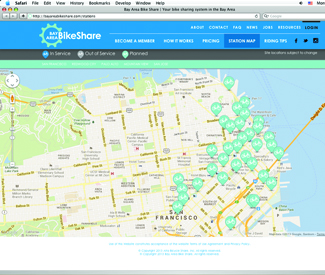
In August, San Francisco and a handful of other Bay Area cities will join the ranks of the dozens of cities in the country that have bicycle share programs, although most are more robust than ours. For example, New York City’s bike share program offer 6,000 bikes.

Sponsored by the Bay Area Air Quality Management District and bankrolled by the Metropolitan Transportation Commission with more than $7 million, the program will bring 700 bikes to the region — half of which will make their way to San Francisco.

In the following months, San Francisco could be allotted 500 total bikes. For the initial launch, 35 bike share stations will be spread throughout the city, and when the bicycle count rises, the number of stations will jump to 50.

MTC spokesperson Sean Co told us that most of the money for the program goes to the cost of the bikes themselves. Each bike costs $5,000, is outfitted with tracking technology, and is expected to last 10 years. In addition to being high-tech, all bike share bikes are unique to Alta Bike Share Systems, and require special tools to be taken apart, another factor in the high price tag.

The rest of money goes toward the stations and fees for a consultant that helps run the program. Co believes that the membership fees alone will make up for the over $7 million spent on the program. But that’s assuming the program isn’t a flop, which some fear it could be given the anemic number of bikes being offered.


WHY SO FEW?

New York City’s bike share, Citi Bike — financed completely by Citigroup Inc. with no public funds — launched in May with 6,000 bikes and 300 stations. That program is already approaching a million total rides. Chicago’s Divvy bike share system started off with 750 bikes at the beginning of July and will increase to 3,000 at the end of August.

Kit Hodge, deputy director of the San Francisco Bicycle Coalition, is one of the people who says that 350 bikes just isn’t enough for San Francisco. “The city and SFMTA have estimated that it would take 3,000 bikes to have an effective bicycle share,” Hodge told us. “We definitely are pushing for more bikes.”

But San Francisco’s bicycle share may get the thousands of bikes that some believe it needs. The Board of Supervisors recently passed a resolution that calls on the San Francisco Municipal Transportation Agency and Department of Public Works to have a much larger system by 2014.

“Five hundred bikes isn’t enough for a citywide bike share,” Sup. Scott Wiener, who sponsored the resolution, told us. “If you look at other cities with a large population and a lot of people biking, bicycle share stations have to be heavily concentrated in many different areas. With the 500 bikes, other areas of the city will be excluded.”

But critics like Wiener and Hodge may not have taken into account that this program is only a trial run, with enough funding to last a year, according to BAAQMD representatives.

BAAQMD Director of Strategic Incentives Damian Breen told us the program is just the right size: “We feel the pilot is appropriately sized. I don’t think we’ve limited ourselves at all. This is to test the waters and see what it can grow into.”

Breen also thinks that mainly focusing on San Francisco for the Bay Area-wide bicycle sharing program would be unfair to other cities. Unlike other bicycle sharing programs, such as New York City and Chicago, San Francisco’s bicycle sharing system is just one part of a regional program that includes Redwood City, Palo Alto, Mountain View, and San Jose.

“This stage of the program is to see what works and what doesn’t,” Breen said. “Maybe the bicycle share might be used more in the suburbs than in San Francisco. When you do something regionally you have to take all cities and all outcomes into account.”

When asked if the bicycle sharing program would have increased the number of bikes in San Francisco if there was additional funding, he said no.

“I think obviously all partners would have liked the program to be bigger in certain areas,” Breen said. “Whether or not it would have been bigger in places like San Francisco, if there was more funding, I cannot say.”

Breen says BAAQMD will consider corporate sponsorship for the bike share once the initial money from the pilot runs out.


THE LAST MILE

The possibility of more stations and bike share rides in the city isn’t appealing to Blazing Saddles bicycle rental company owner Jeff Sears.

“If stations are placed in areas like the Fisherman’s Wharf, or North Beach, people may be tempted to use bike share instead,” Sears said. “But, we’ve been assured by the BAAQMD that that’s not going to happen.”

Breen says the service is directed at residents who commute, and may need the bike for that “last mile” of their trek.

“This is different than bicycle rentals, which are usually meant for a day of riding,” Breen said. “They are designed for 30 minute use — the main audience is folks who are looking for that last mile after they get off of Caltrain or BART.”

Breen went on to say that areas with bicycle sharing programs also saw bicycle renting programs go up as a whole. But Jeanne Orellana of Bay City Bicycle Rentals and Tours believes otherwise.

“We absolutely feel that it would affect business,” Orellana said. “We wish that it would coexist with our business, but other cities with bicycle sharing programs have seen bicycle rental shops close down due to the competition.” A scenario similar to what Orellana imagined played out in Miami Beach, Fla. Unlike the program in store for the Bay Area, Miami Beach’s DecoBike offers pricing plans for residents and tourists, and many of the tourists find themselves choosing the bike share over rental shops in the area, causing business in bicycle rental shops to reportedly drop 40 to 50 percent. Wiener acknowledges the reservations that Orellana and Sears hold about bike share, but he said that both options can coexist in the same city. “They’re two completely different markets,” Wiener said. “I understand the concerns that they have but comparing bike sharing and bicycle rental is like comparing apples to oranges.” And the BAAQMD, SFBC, SFMTA, and Wiener all agree on one thing: Tourists choosing bike share over bicycle rental companies just doesn’t make sense economically. Renting a bicycle for a day at Bay City Bicycle Rentals and Tours is $32. Taking a bicycle out for the day at the bike share comes at a heftier price. For $9, customers can get a 24-hour subscription with unlimited 30 minute rides from station to station. But after those 30 minutes are up, fees get added. A 31- to 60-minute ride costs $4, and each 30-minute increment after that costs $7, which can build up to over $150 in a day if the bicycle is not returned to a station. In the meantime, Orellana hopes that consumers will make the right decision for themselves. “I trust and hope that many people will do the math and find that bike share isn’t cheaper for exploring the city,” Orellana said. Co said that more than 300 people purchased memberships for the Bay Area bicycle share 24 hours after memberships were up for grabs a couple weeks ago. BAAQMD is pleased with the results, and viewed it as a good turnout. The official launch date has not been released, but its infrastructure is now being put into place with its imminent launch.

Alerts: July 31 – August 7, 2013

0

Whose paper? Your paper! A community forum about the Guardian LGBT Community Center, 1800 Market, SF. tinyurl.com/lvl9vla. 6-8pm, free. Join the staff of the SF Bay Guardian for a community forum on the future of San Francisco’s oldest alternative newsweekly. Nearly a month after longtime editor-publisher Tim Redmond left the newspaper after 31 years, Guardian staff members have reached an agreement with our parent company ensuring full editorial autonomy and control. This forum will help us determine where to go from here. We will seek community input, engage in dialogue with our readers, and discuss the Guardian’s important role in the Bay Area media and political landscape as we work to rejuvenate the newspaper and reach a new generation of readers.


Hear Alice Walker’s deliciously enlightened poetry and prose First Congregational Church of Berkeley, 2345 Channing, Berk. tinyurl.com/lqcsfph. 7:30pm, $15–$18. Internationally celebrated author, poet and activist Alice Walker will speak at this benefit for KPFA Radio and read from her recent works, The Cushion in the Road: Meditation and Wandering as the Whole World Awakens (Essays); and The World Will Follow Joy: Turning Madness Into Flowers (New Poems) Walker has written seven novels, four collections of short stories, four children’s books, and many volumes of essays and poetry. She’s best known for The Color Purple, the 1983 novel for which she won the Pulitzer Prize in Fiction. This event will be hosted by Brian Edwards Tiekert.

THURSDAY 1

Rally for a human rights attorney stuck in prison with cancer Federal Building, 90 Seventh St., SF. lynnestewart.org. Noon-2pm, free. Roughly 10 years ago, the Guardian wrote about the case of Lynne Stewart, a National Lawyers Guild member and radical human rights attorney who dedicated her career to representing unpopular clients who faced civil liberties violations. She was convicted of providing material support to terrorists in 2005, an accusation supporters say is false, and was eventually sentenced to federal prison for 10 years. Now age 73, Stewart is battling cancer behind bars and has petitioned the Federal Bureau of Prisons for compassionate release. The request has been denied, and so supporters are rallying to show their support for Stewart.

FRIDAY 2

Panel: How to win the environment Nourse Theater, 275 Hayes, SF. tinyurl.com/n77mqsv. 7pm, $10. Want to know how the build “a winning movement” on climate change? If so, these folks know what they’re talking about. Bill McKibben, founder of 350.org, will speak on this panel along with Gopal Dayaneni of the Oakland-based Movement Generation Justice and Ecology Project, Rev. Sally Bingham of Interfaith Power & Light, Katy Roemer of the California Nurses Association, and Antonia Juhasz, author of The Tyranny of Oil and Black Tide.

Rep Clock: July 24 – 31, 2013

0

Schedules are for Wed/24-Tue/30 except where noted. Director and year are given when available. Double and triple features marked with a •. All times pm unless otherwise specified.

CASTRO 429 Castro, SF; (415) 621-6120, www.castrotheatre.com. $8.50-11. •Gloria (Cassavetes, 1980), Wed, 7, and Escape from New York (Carpenter, 1981), Wed, 5, 9:20. San Francisco Jewish Film Festival, July 25-Aug 1. See www.sfjff.org for program information.

CHRISTOPHER B. SMITH RAFAEL FILM CENTER 1118 Fourth St, San Rafael; (415) 454-1222, www.cafilm.org. $6.75-$10.25. The Hunt (Vinterberg, 2012), call for dates and times. The Look of Love (Winterbottom, 2013), call for dates and times. One Track Heart: The Story of Krishna Das (Frindel, 2012), call for dates and times. Rebels With a Cause (Kelly, 2012), call for dates and times. Storm Surfers 3D (McMillan and Nelius, 2012), call for dates and times. 20 Feet From Stardom (Neville, 2013), call for dates and times. Dial M for Murder (Hitchcock, 1954), Thu and Sun, 7 (also Sun, 4:15).

CLAY 2261 Fillmore, SF; www.landmarktheatres.com. $10. “Midnight Movies:” Samurai Cop (Sharvan, 1989), Fri, midnight; The Rocky Horror Picture Show (Sharman, 1975), Sat, midnight, with the Bawdy Caste performing live.

“FILM NIGHT IN THE PARK” This week: Creek Park, 400 Sir Francis Drake, San Anselmo; www.filmnight.org. Free (donations appreciated). Moonrise Kingdom (Anderson, 2012), Fri, 8; The Road to El Dorado (Bergeron, Finn, Paul, and Silverman, 2000), Sat, 8.

FIRST UNITARIAN UNIVERSALIST CHURCH 1187 Franklin, SF; www.laborfest.net. Donations accepted. FilmWorks United: International Working Class Film and Video Festival: Roadmap to Apartheid (Nogueira and Davidson, 2012), Thu, 7.

518 VALENCIA SF; www.laborfest.net. Donations accepted. FilmWorks United: International Working Class Film and Video Festival: •The Machinist (Majid and York, 2010), and Bhopali (Carlson, 2011), Fri, 7.

JACK LONDON SQUARE Market lawn, Harrison at Water, Oakl; www.jacklondonsquare.com. Free. Brave (Andrews, Chapman, and Purcell, 2012), Thu, sundown.

MISSION CULTURAL CENTER FOR LATINO ARTS 2868 Mission, SF; www.laborfest.net. Donations accepted. FilmWorks United: International Working Class Film and Video Festival: Dreamworks China (Facchin and Fraceschini, 2012), with “War in Paterson, the Strike that Changed the Labor Movement” (Seidel, 2010), and “A Witness to the Paterson Strike” (Golzio), Sun, 7:30.

NEW PARKWAY 474 24th St, Oakl; www.thenewparkway.com. $6. “SPECTRUMQueerMedia.com presents:” Strange Frame: Love and Sax (Hajim, 2012), Sun, 3.

NEW PEOPLE CINEMA 1746 Post, SF; www.jffsf.org. $13. “J-Pop Summit Festival: Japan Film Festival of San Francisco,” new films and anime from Japan, July 27-Aug 4.

NIMBY’S 8410 Amelia, Oakl; www.brainwashm.com. $10. Brainwash Drive-In/Bike-In/Walk-In Festival, Fri-Sat, 9 (music at 8). All shows broadcast in FM stereo.

NINTH STREET INDEPENDENT FILM CENTER 145 Ninth St, SF; detourdance.com/TDFF. $10-15 (two-day pass, $25). detour dance presents: “Tiny Dance Film Festival,” short dance films from around the globe, Fri-Sat, 8.

PACIFIC FILM ARCHIVE 2575 Bancroft, Berk; (510) 642-5249, bampfa.berkeley.edu. $5.50-9.50. “A Call to Action: The Films of Raoul Walsh:” They Died with Their Boots On (1942), Wed, 7; What Price Glory (1926), Sat, 6. “Tales of Love: The Enchanted World of Jacques Demy:” Lola (1961), Thu, 7; Bay of Angels (1962), Fri, 7; The Umbrellas of Cherbourg (1964), Sat, 8:30. “Dark Nights: Simenon and Cinema:” Monsieur Hire (Leconte, 1989), Fri, 8:45; The Bottom of the Bottle (Hathaway, 1956), Sun, 7. “Castles in the Sky: Masterful Anime from Studio Ghibli:” Princess Mononoke (Miyazaki, 1997), Sun, 4:30.

ROXIE 3117 and 3125 16th St, SF; (415) 863-1087, www.roxie.com. $6.50-11. A Band Called Death (Covino and Howlett, 2012), Thu, 7. Big Star: Nothing Can Hurt Me (DiNicola and Mori, 2012), Wed, 9; Thu, 9:15. An Oversimplification of Her Beauty (Nance, 2012), Wed-Thu, 7, 9:15. “This Must Be the Place: Post-Punk Tribes 1983-1990,” docs and oddities, Fri-Sun. Check website for full schedule. Plimpton! Starring George Plimpton As Himself (Bean and Poling, 2012), July 26-31, 6:45, 8:45.

YERBA BUENA CENTER FOR THE ARTS 701 Mission, SF; www.ybca.org. $8-10. Viola (Piñeiro, 2012), with “Muta” (Martel, 2011), Thu and Sat, 7:30; Sun, 2. *


Psychic Dream Astrology: July 24 – 31, 2013

0

July 24-30,2013

ARIES

March 21-April 19

You can’t find your intuition in a crowded room, Aries. When you get overwhelmed by others energies it will muddy the water of your instincts, making them unreliable. Take a step back this week so you can separate out what others want, think, and feel from your own experience and needs.

TAURUS

April 20-May 20

Mercury has finally gone direct and it’s time to get done all those things that got waylaid over the past month. Clean your house, empty your inbox and pay your bills this week. Tend to your basics so that you can deal with the more complicated stuff of your life with no distractions from your clear and focused mind.

GEMINI

May 21-June 21

It’s hard to be powerful and unapologetic for what you are and not let it ignite power struggles. Enjoy your compelling awesomeness but don’t trample over the needs of others as you do. Learn about your ego as humbly as you can as you watch it in action. Put yourself in the other person’s shoes this week.

CANCER

June 22-July 22

The only way to win is to play, so get in the game, Moonchild! You are in the right position to make things happen, so don’t let caution become procrastination, or bravery become foolishness. This is a great week to actualize goals, clean up your messes and take well-considered risks.

LEO

July 23-Aug. 22

You can’t know how things are going to develop, Leo, and if you want to get answers you’re just gonna have to let them play out. It’s time to turn inward and to connect with your deepest truths. People and situations can be confusing but this is a good week to strive to tolerate uncertainties until they work themselves out.

VIRGO

Aug. 23-Sept. 22

It’s not easy to be patient when your mind moves so quickly and you see so many paths at once, but that’s exactly what you must do this week. Trust that the steps you have laid out in front of you will bring you to your end goals, Virgo. You’re on the right track, even if things aren’t going as planned.

LIBRA

Sept. 23-Oct. 22

Its time to let go, Libra. You are changing and there’s no use in clinging to the past. The best you can do is to learn from the lessons that yesterday has to teach you and keep on moving. Don’t worry so much about what other people are doing this week; charge steadily ahead and the rest will follow.

SCORPIO

Oct. 23-Nov. 21

How you handle your affairs this week will have both a practical and energetic impact on your months ahead, Scorpio. Tie up loose ends with generosity; that means be nice to yourself and others as you facilitate closure. You’re on the verge of a new chapter, but first you should strive to end this one with grace.

SAGITTARIUS

Nov. 22-Dec. 21

Leave room for messiness, Sag. There may be helluv imperfections for you to focus on, but the most useful approach you can adopt this week is one of acceptance. Work with the complicated state of affairs in your life so you can avoid languishing in disappointment over what isn’t and make good with what is.

CAPRICORN

Dec. 22-Jan. 19

Things are opening up for you, Capricorn, so be open to new opportunities and pathways. Your life is going in a great direction, but a word of warning for this week is to make sure you take time for yourself. If you don’t pursue some down time to chillax in, you will find that you become exhausted and confused.

AQUARIUS

Jan. 20-Feb. 18

This week its time to look deep inside and find the truth of what you’re feeling. Don’t reason with your heart; just investigate the realness you find therein. Some things need to change if you’re going to give yourself what you need, and only you can decide if it’s worth the struggle, Aquarius.

PISCES

Feb. 19-March 20

The only way to change what you don’t like in your life is to be willing to change your self. This week you should not shy away from relating to your life differently. Check your habit of being agreeable when you totally disagree at the door, Pisces. No one appreciates compromises they don’t know you’re making.


Jessica Lanyadoo has been a Psychic Dreamer for 18 years. Check out her website at www.lovelanyadoo.com to contact her for an astrology or intuitive reading.

Theater Listings: July 24 – 31, 2013

0

Stage listings are compiled by Guardian staff. Performance times may change; call venues to confirm. Reviewers are Robert Avila, Rita Felciano, and Nicole Gluckstern. Submit items for the listings at listings@sfbg.com.

THEATER

OPENING

Gorgeous Hussy: An Interview With Joan Crawford Exit Theatre, 156 Eddy, SF; www.wilywestproductions.com. $15-35. Opens Fri/26, 8pm. Runs Aug 1, 3, 9, 15-16, 8pm. Running in repertory with Lawfully Wedded (below), this world premiere by Morgan Ludlow imagines a young writer’s encounter with the legendary movie star.

Lawfully Wedded: Plays About Marriage Exit Theatre, 156 Eddy, SF; www.wilywestproductions.com. $15-35. Opens Thu/25, 8pm. Runs Sat/27, Aug 2, 8, 10, and 17, 8pm. Running in repertory with Gorgeous Hussy (above), this world premiere “collage of scenes and stories” by Morgan Ludlow, Kirk Shimano, and Alina Trowbridge takes on marriage equality.

ONGOING

Can You Dig It? Back Down East 14th — the 60s and Beyond Marsh San Francisco, 1062 Valencia, SF; www.themarsh.org. $15-50. Sat, 8:30pm; Sun, 7pm. Through Aug 25. Don Reed’s new show offers more stories from his colorful upbringing in East Oakland in the 1960s and ’70s. More hilarious and heartfelt depictions of his exceptional parents, independent siblings, and his mostly African American but ethnically mixed working-class community — punctuated with period pop, Motown, and funk classics, to which Reed shimmies and spins with effortless grace. And of course there’s more too of the expert physical comedy and charm that made long-running hits of Reed’s last two solo shows, East 14th and The Kipling Hotel (both launched, like this newest, at the Marsh). Can You Dig It? reaches, for the most part, into the “early” early years, Reed’s grammar-school days, before the events depicted in East 14th or Kipling Hotel came to pass. But in nearly two hours of material, not all of it of equal value or impact, there’s inevitably some overlap and indeed some recycling. Reed, who also directs the show, may start whittling it down as the run continues. But, as is, there are at least 20 unnecessary minutes diluting the overall impact of the piece, which is thin on plot already — much more a series of albeit often very enjoyable vignettes and some painful but largely unexplored observations, wrapped up at the end in a sentimental moral that, while sincere, feels rushed and inadequate. (Avila)

Chance: A Musical Play About Love, Risk, and Getting it Right Alcove Theater, 415 Mason, Fifth Flr, SF; www.thealcovetheater.com. $40-60. Thu/25-Sat/27, 8pm (also Sat/27, 3pm); Sun/28, 5pm. New Musical Theater of San Francisco presents Richard Isen’s world premiere work inspired by the writings of Oscar Wilde.

Foodies! The Musical Shelton Theater, 533 Sutter, SF; www.foodiesthemusical.com. $30-34. Fri-Sat, 8pm. Open-ended. AWAT Productions presents Morris Bobrow’s musical comedy revue all about food.

God of Carnage Shelton Theater, 533 Sutter, SF; www.sheltontheater.com. $26-38. Thu-Sat, 8pm. Through Sept 7. Shelton Theater performs Yasmina Reza’s award-winning play about class and parenting.

Gold Rush! The Un-Scripted Barbary Coast Musical Un-Scripted Theater Company, 533 Sutter, Second Flr, SF; www.un-scripted.com. $10-20. Thu-Sat, 8pm. Through Aug 24. The Un-Scripted Theater Company performs an improvised musical about gold-rush era San Francisco.

Hedwig and the Angry Inch Boxcar Theatre, 505 Natoma, SF; www.boxcartheatre.org. $27-43. Thu-Sat, 8pm. Open-ended. John Cameron Mitchell’s cult musical comes to life with director Nick A. Olivero’s ever-rotating cast.

How to Make Your Bitterness Work for You Stage Werx Theatre, 446 Valencia, SF; www.stagewerx.org. $15-25. Mon-Tue, 8pm. Through Aug 27. Kent Underwood is a motivational speaker and self-help expert with some obvious baggage of his own in this solo play from former comedy writer and stand-up comedian Fred Raker (It Could Have Been a Wonderful Life). The premise, similar to that of Kurt Bodden’s Steve Seabrook: Better Than You (ongoing at the Marsh), has the audience overlapping with participants in an Underwood seminar. Underwood, however, two years on the seminar circuit and still unable to get his book published, deviates from the script to answer texts related to a possible career breakthrough. Meanwhile, with the aid of some bullet points and illustrative slides, he explains the premise of said manuscript, “How to Make Your Bitterness Work For You,” as the sad truth of his own underdog status emerges between the laugh lines. But where Bodden is careful to make his Seabrook a somewhat believable character despite the absurdity of it all (or rather, while firmly embracing the absurdity of the self-help industry itself), Raker and director Kimberly Richards put much more space between the playwright/performer and his character, which turns out to be a less effective strategy. Verisimilitude might not have mattered much if the comic material were stronger. Unfortunately, despite the occasional zinger, much of the humor is weak or corny and the narrative (interrupted at regular intervals by an artificial tone representing the arrival of a fresh text message) too contrived to sell us on the larger story. (Avila)

Keith Moon: The Real Me Eureka Theatre, 215 Jackson, SF; www.brownpapertickets.com. $40. Thu/25-Sat/27, 8pm; Sun/28, 7pm. Was Keith Moon the greatest rock ‘n’ roll drummer ever? Veteran solo performer and drum stylist Mick Berry doesn’t exactly come out and say so, but his biographical play about Moon definitely makes a good case for the possibility. Keith Moon: The Real Me, written and performed by Berry, kicks off with a literal bang, a hi-octane cover of “Baba O’Riley,” featuring Berry’s exuberantly crashing cymbals layered over the iconic, rapidfire synth riff that runs throughout the song. Though the characters of the play are all portrayed by Berry — with references to all the requisite sex, drugs, and self-destruction thrown into the mix — a full band stands at the ready behind two transparent screens to flesh out the show’s strongest element: the rock-and-roll. In order to channel Moon’s full-throttle drumming, Berry enlisted the assistance of Frank Simes, the music director of the Who’s 2012-2013 tour, while to channel Moon’s freewheeling but insecure personality, he enlisted local director Bobby Weinapple. The script itself is still ragged, and a couple of key moments, particularly when Moon’s car is attacked in early 1970, are presented in such a way that the context comes later, which is confusing if you don’t already know the history of the incident. But if you don’t mind a bit of chat with your rock concert, you’ll probably find this fusion of the two intriguing. Just remember, when the nice concessions people offer you complimentary earplugs, take them. (Gluckstern)

Sex and the City: LIVE! Rebel, 1760 Market, SF; trannyshack.com/sexandthecity. $25. Wed, 7 and 9pm. Open-ended. It seems a no-brainer. Not just the HBO series itself — that’s definitely missing some gray matter — but putting it onstage as a drag show. Mais naturellement! Why was Sex and the City not conceived of as a drag show in the first place? Making the sordid not exactly palatable but somehow, I don’t know, friendlier (and the canned a little cannier), Velvet Rage Productions mounts two verbatim episodes from the widely adored cable show, with Trannyshack’s Heklina in a smashing portrayal of SJP’s Carrie; D’Arcy Drollinger stealing much of the show as ever-randy Samantha (already more or less a gay man trapped in a woman’s body); Lady Bear as an endearingly out-to-lunch Miranda; and ever assured, quick-witted Trixxie Carr as pent-up Charlotte. There’s also a solid and enjoyable supporting cast courtesy of Cookie Dough, Jordan Wheeler, and Leigh Crow (as Mr. Big). That’s some heavyweight talent trodding the straining boards of bar Rebel’s tiny stage. The show’s still two-dimensional, even in 3D, but noticeably bigger than your 50″ plasma flat panel. Update: new episodes began May 15. (Avila)

So You Can Hear Me Marsh San Francisco, 1062 Valencia, SF; www.themarsh.org. $15-50. Fri, 8pm; Sat, 5pm. Extended through Aug 24. A 23-year-old with no experience, just high spirits and big ideals, gets a job in the South Bronx teaching special ed classes and quickly finds herself in over her head. Safiya Martinez, herself a bright young woman from the projects, delivers this inspired accounting of her time not long ago in perhaps the most neglected sector of the public school system — a 60-minute solo play that makes up for its relatively slim plot with a set of deft, powerful, lovingly crafted characterizations. These complex portraits, alternately hysterical and startling, offer their own moving ruminations on a violent but also vibrant stratum of American society, deeply fractured by pervasive poverty and injustice and yet full of restive young personalities too easily dismissed, ignored, or crudely caricatured elsewhere. An effervescent, big-hearted, and very talented performer, Martinez’s own bounding personality and contagious passion for her former students (as complicated as that relationship was), makes this deeply felt tribute all the more memorable. (Avila)

Steve Seabrook: Better Than You Marsh San Francisco, 1062 Valencia, SF; www.themarsh.org. $15-50. Sat, 8:30pm. Extended through Aug 24. Self-awareness, self-actualization, self-aggrandizement — for these things we turn to the professionals: the self-empowerment coaches, the self-help authors and motivational speakers. What’s the good of having a “self” unless someone shows you how to use it? Writer-performer Kurt Bodden’s Steve Seabrook wants to sell you on a better you, but his “Better Than You” weekend seminar (and tie-in book series, assorted CDs, and other paraphernalia) belies a certain divided loyalty in its own self-flattering title. The bitter fruit of the personal growth industry may sound overly ripe for the picking, but Bodden’s deftly executed “seminar” and its behind-the-scenes reveals, directed by Mark Kenward, explore the terrain with panache, cool wit, and shrewd characterization. As both writer and performer, Bodden keeps his Steve Seabrook just this side of overly sensational or maudlin, a believable figure, finally, whose all-too-ordinary life ends up something of a modest model of its own. (Avila)

Sweet Bird of Youth Tides Theatre, 533 Sutter, Second Flr, SF; www.tidestheatre.org. $20-40. Wed-Sat, 8pm. Through Aug 24. Tides Theatre performs Tennessee Williams’ Gulf Coast-set drama about an improbable couple.

Tinsel Tarts in a Hot Coma: The Next Cockettes Musical Hypnodrome, 575 10th St, SF; www.thrillpeddlers.com. $30-35. Thu/25-Sat/27, 8pm. Thrillpeddlers and director Russell Blackwood continue their Theatre of the Ridiculous series with this 1971 musical from San Francisco’s famed glitter-bearded acid queens, the Cockettes, revamped with a slew of new musical material by original member Scrumbly Koldewyn, and a freshly re-minted book co-written by Koldewyn and “Sweet Pam” Tent — both of whom join the large rotating cast of Thrillpeddler favorites alongside a third original Cockette, Rumi Missabu (playing diner waitress Brenda Breakfast like a deliciously unhinged scramble of Lucille Ball and Bette Davis). This is Thrillpeddlers’ third Cockettes revival, a winning streak that started with Pearls Over Shanghai. While not quite as frisky or imaginative as the production of Pearls, it easily charms with its fine songs, nifty routines, exquisite costumes, steady flashes of wit, less consistent flashes of flesh, and de rigueur irreverence. The plot may not be very easy to follow, but then, except perhaps for the bubbly accounting of the notorious New York flop of the same show 42 years ago by Tent (as poisoned-pen gossip columnist Vedda Viper), it hardly matters. (Avila)

Wunderworld Creativity Theater, 221 Fourth St, SF; www.wunderworld.net. $10-15. Sat-Sun, 2pm (also Sat, 11am; Sun, 5pm). Through Aug 11. In an irresistible boost to the the Children’s Creativity Museum’s new Creativity Theater (formerly Zeum), beloved Bay Area comedian, playwright, and performer Sara Moore (Show Ho) teams up with gifted co-writer and performer Michael Phillis (The Bride of Death) and director Andrew Nance for a largely wordless, but gabble-packed, family-friendly comedy that asks what Alice might find down the rabbit hole were she to tumble down it again as an octogenarian? The 60-minute play showcases the elastic features and sharp comedic instincts of both Moore (as a hilarious and heartfelt Alice, whom no one recognizes these days unless she stretches her face smooth again) and Phillis (who kicks things off with a mimed pre-curtain speech deserving of its own encore, before coming back as the now droopy-eared White Rabbit). Equally endearing are performances by Dawn Meredith Smith (as Caterpillar, Red Queen, and a rest home nurse), choreographer Rory Davis (as the Cheshire Cat), and the inimitable Joan Mankin as Alice’s bored nursing-home roommate and the Mad Hatter. (Avila)

BAY AREA

A Comedy of Errors Forest Meadows Amphitheater, 890 Bella, Dominican University of California, San Rafael; www.marinshakespeare.org. $20-37.50. Opens Sat/27, 8pm. Presented in repertory Fri-Sun through Sept 29; visit website for performance schedule. Marin Shakespeare Company presents a cowboy-themed spin on the Bard’s classic.

The Loudest Man on Earth Lucie Stern Theatre, 1305 Middlefield, Palo Alto; www.theatreworks.org. $19-73. Tue-Wed, 7:30pm; Thu-Sat, 8pm (also Sat, 2pm); Sun, 2 and 7pm. Through Aug 4. TheatreWorks presents the world premiere of Catherine Rush’s unconventional romantic comedy starring acclaimed actor Adrian Blue, who is deaf.

A Maze Live Oak Theatre, 1301 Shattuck, Berk; www.justtheater.org. $15-30. Thu-Sun, 8pm. Through Aug 4. Just Theater performs Rob Handel’s drama about multiple characters re-inventing their identities, running in repertory with Underneath the Lintel (below).

Oil and Water This week: Mill Valley Community Center (on the back lawn), 180 Camino Alto, Mill Valley; www.sfmt.org. Free. Wed/24, 7pm (music 6:30pm). Also Thu/25, 7pm (music 6:30pm), free, Montclair Ball Field, 6300 Moraga, Montclair; www.sfmt.org. Also Sat/27-Sun/28, 2pm (music 1:30pm), free, Live Oak Park, Shattuck at Berryman, Berk; www.sfmt.org. It’s a rough year for mimes, or at any rate for the San Francisco Mime Troupe who, after presenting 53 seasons of free theater in the parks of San Francisco (and elsewhere), faced a financial crisis in April that threatened to shut down this season before it even started. The resultant show, funded by an influx of last-minute donations, is one cut considerably closer to the bone than in previous years. With a cast of just four actors and two musicians, plus a stage considerably less ornate then usual, even the play has shrunk in scale, from one two-hour musical to two loosely-connected one-acts riffing on general environmentalist themes. In Deal With the Devil, a surprisingly sympathetic (not to mention downright hawt) Devil (Velina Brown) shows up to help an uncertain president (Rotimi Agbabiaka) regain his conscience and win back his soul, while in Crude Intentions adorable, progressive, same-sex couple Gracie (Velina Brown) and Tomasa (Lisa Hori-Garcia) wind up catering a “benefit” shindig for the Keystone XL Pipeline giving them the opportunity to perpetrate a little guerilla direct action on a bombastic David Koch (Hugo E Carbajal) with a “mole de petróleo” and a smartphone. Throughout, the performers remain upbeat if somewhat over-extended as they sing, dance, and slapstick their way to the sobering conclusion that the time to turn things around in the battles over global environmental protection is now — or never. (Gluckstern)

Sea of Reeds Ashby Stage, 1901 Ashby, Berk; www.shotgunplayers.org. $20-35. Wed-Thu, 7pm; Fri-Sat, 8pm; Sun, 5pm. Through Aug 18. The stage comes unusually populated in this latest from well-known Bay Area monologist and red-diaper baby Josh Kornbluth: a four-piece musical ensemble (El Beh, Jonathan Kepke, Olive Mitra, and Eli Wirtschafter) sits stage right, a standing table with some reed-making equipment appears stage left. Front and center is Kornbluth and his oboe, before him a music stand and behind him three “reeds”—freestanding concave walls of a bamboo-hue (designed by Nina Ball). But there’s more: Kornbluth’s physical trainer (Amy Resnick, replaced by Beth Wilmurt beginning August 7), bounding up from her seat in the first row to lend Kornbluth support or, more productively, prod him in the right direction as he takes the long road home to setting up a promised recital of Bach’s Cantata No. 82. That set up hinges on his recent bar mitzvah, at 52, in Israel, and its unexpected connections between his life-long oboe playing, his Communist upbringing in New York, his mixed marriage, his conversations with a local rabbi, and the Book of Exodus (specifically, Moses’s trail-blazing for the Israelites across the Red Sea, a.k.a., the Sea of Reeds). Although the introduction of supporting characters, musicians, and a musical score (by Marco D’Ambrosio) breaks new ground for the longtime soloist, Sea of Reeds is classic — indeed classical (thanks to a final few tenuous bars from the promised Bach cantata) — Kornbluth. Directed by longtime creative partner David Dower, the show features the boyish comedic persona, the intricate storytelling, and the biographical referents that have given him a loyal following over the years. Diehard fans aside, the show’s cheesy, somewhat self-regarding conceit of staging “spontaneous” interactions between Kornbluth and his trainer may not work with everyone. Perhaps more challenging, though, is the persistence of a less than fully examined disjunction between the political values of his parents and his own political and ethical evolution — a disjunction highlighted here in the narrative’s fraught Middle Eastern setting and its vague navigation between the violence of religious zealotry and a plea for tolerance. (Avila)

The Spanish Tragedy Forest Meadows Amphitheater, 890 Bella, Dominican University of California, San Rafael; www.marinshakespeare.org. $20-37.50. Presented in repertory Fri-Sun through Aug 11; visit website for performance schedule. Marin Shakespeare Company performs Thomas Kyd’s Elizabethan revenge tragedy.

This Is How It Goes Aurora Theatre, 2081 Addison, Berk; www.auroratheatre.org. $32-60. Wed/24-Sat/27, 8pm; Sun/28, 2 and 7pm. An awkward love triangle between former high school classmates gets the caustic Neil LaBute treatment in Aurora Theatre Company’s production of This is How it Goes. Not content to merely skewer the familiar battles between the sexes, LaBute further prods his captive audience with the big stick of race relations, and the often unacknowledged prejudices that lurk in the hearts of men. And women. There are no innocents in this play, though each character certainly has moments where they play upon audience sympathies, only to betray them a few inflammatory lines later. As the marriage between the successful yet self-conscious African American alpha male Cody (Aldo Billingslea) and his neurotically placating Caucasian wife Belinda (Carrie Paff) erodes, the mostly affable (and former fat kid) “Man” (Gabriel Marin) insinuates himself in the middle of their troubled relationship, obviously still carrying the torch for Belinda he did 15 years ago — as well as the same wary animosity an unpopular kid carries for the star of the track team, in this case, Cody. All three actors do a very good job of shape-shifting between their middle-class Jekyll and Hyde selves, assisted in part by Marin’s amiable asides, which don’t so much lull the audience as tease them with the idea that things are about to get better, when they can only get worse. (Gluckstern)

Underneath the Lintel Live Oak Theatre, 1301 Shattuck, Berk; www.justtheater.org. $15-30. Mon and Wed, 8pm; Sat-Sun, 3pm. Through Aug 4. Just Theater performs Glen Berger’s literary comedy, running in repertory with A Maze (above).

The Wiz Julia Morgan Theater, 2640 College, Berk; www.berkeleyplayhouse.org. $17-60. Wed-Thu and Sat, 7pm (also Sat, 2pm); Sun, noon and 5pm. Through Aug 25. Berkeley Playhouse travels to Oz with the Tony-winning musical.

PERFORMANCE/DANCE

Atamira Dance Company Joe Goode Performance Annex, 401 Alabama, SF; www.sfiaf.org. Sat/27, 8pm. $18-25. The contemporary Maori ensemble performs.

BATS Improv Bayfront Theater, B350 Fort Mason, SF; www.improv.org. $20. BATS Improv performs spontaneous shows based on current events (Fri/26, 8pm) and “Improvised Shakespeare” (Sat/27, 8pm).

“Bay Area Playwrights Festival” Thick House Theater, 1695 18th St, SF; www.playwrightsfoundation.org. Fri/26-Sun/28. $15. Three Bay Area playwrights and three New Yorkers contribute brand-new works to this 36th annual fest. The six plays were chosen from 425 submissions.

Chris Black and Megan Finlay Deborah Slater Dance Theater’s Studio 210, 3435 Cesar Chavez, SF; www.deborahslater.org. Fri/26-Sat/27, 8pm. $10-25. New works by Black (“Duets for Girls”) and Finlay (a physical and acrobatic show based on Macbeth), Studio 210’s summer artists-in-residence.

Caroline Lugo and Carolé Acuña’s Ballet Flamenco Peña Pachamama, 1630 Powell, SF; www.carolinalugo.com. Sat/27, Aug 4, 17, and 25, 6:15pm. $15-19. Flamenco performance by the mother-daughter dance company, featuring live musicians.

“Comics Quitting” Cinecave, 1034 Valencia, SF; www.cyniccave.com. Sun/28, 9pm. $10. Bryan Blank hosts this comedy show about quitting, with Scott Simpson, Luke Lockfield, Keith D’Souza, and Leslie Small performing.

“Dr. Zebrovski’s Hour of Power” CounterPULSE, 1310 Mission, SF; www.counterpulse.org. Fri/26-Sun/28, 8pm. $15-25. Theater, dance, performance art, and social commentary converge in this presentation by “the world’s number one dance psychic.”

“Dream Queens Revue” Aunt Charlie’s Lounge, 133 Turk, SF; www.dreamqueensrevue.com. Wed/24, 9:30-11:30pm, free. Fab drag with Collette LeGrande, Ruby Slippers, Sophilya Leggz, and more.

“Factory Parts” NOH Space, 2840 Mariposa, SF; www.foolsfury.org. Thu/25-Sun/28, 8pm. $15. The latest venture from foolsFURY (Port Out Starboard Home) is a festival of work-in-progress, offering glimpses into the creative process of several local and national (New York) companies as each tries out anywhere from 10 to 30 minutes of material related to a current project. The results, predictably, are all over the place, and that’s just fine given the premise of the festival. There’s definitely something to be said for entering into material in development being put on its feet before an audience for the first time. The expectations and energy in the room, as well as the nature of the encounter between performers and audiences, are distinct in some worthwhile ways — and things move along pretty quickly. The challenge for such a festival rests in curating companies and artists whose overall competence is at a solid level to begin with, so that even watching them flail about in exploration is likely to be fascinating or at least rewarding. Judging only by an encounter with Program A (the first of three programs in the festival), works can range from the fairly polished and surprising to the bare bones but intriguing to the unfinished but clearly tedious. The full program, however, offers some enticing names and subjects, while promising ever-finer gradations in this spectrum. (Avila)

50 Shades! The Musical Marines’ Memorial Theatre, 609 Sutter, SF; www.50shadesmusical.com. Wed/24-Thu/25, 8pm; Fri/26-Sat/27, 6:30 and 9:30pm (also Sat/27, 3pm); Sun/28, 3 and 6:30pm. $20-65. Musical parody of Fifty Shades of Grey.

“Mission Position Live” Cinecave, 1034 Valencia, SF; www.missionpositionlive.com. Thu, 8pm. Ongoing. $10. Stand-up comedy with rotating performers.

Red Hots Burlesque El Rio, 3158 Mission, SF; www.redhotsburlesque.com. Wed, 7:30-9pm. Ongoing. $5-10. Come for the burlesque show, stay for OMG! Karaoke starting at 8pm (no cover for karaoke).

“Resonance: Stories of Past and Present” Dance Mission Theater, 3316 24th St, SF; www.brownpapertickets.com. Fri/26-Sat/27, 8pm. $30-35. World-music percussion and dance with the Bay Area’s Maikaze Daiko (taiko), Japan’s GONNA (Wadaiko drumming), and more.

“San Francisco Magic Parlor” Chancellor Hotel Union Square, 433 Powell, SF; www.sfmagicparlor.com. Thu-Sat, 8pm. Ongoing. $40. Magic vignettes with conjurer and storyteller Walt Anthony.

“Sketch 3: Expectations” ODC Theater, 3153 17th St, SF; (415) 863-9834. Thu/25-Sat/27, 8pm; Sun/28, 7pm. $25-30. San Francisco contemporary ballet company Amy Seiwert’s Imagery performs.

“Union Square Live” Union Square, between Post, Geary, Powell, and Stockton, SF; www.unionsquarelive.org. Through Oct 9. Free. Music, dance, circus arts, film, and more; dates and times vary, so check website for the latest.

“Video Games Live” Davies Symphony Hall, 201 Van Ness, SF; www.sfsymphony.org. Thu/25-Fri/26, 7:30pm. $30-100. Multimedia concert experience featuring music from games like Final Fantasy and Skyrim, plus a Guitar Hero contest and a costume competition.

BAY AREA

“Inhale. Exhale. Repeat. — A 24-Hour Performance-A-Thon” Temescal Arts Center, 511 48th St, Oakl; info@dandeliondancetheater.org. Fri/26, 7:30pm until Sat/27, 8:30pm. $12-24. Dandelion Dancetheater presents this participatory performance project, with dance improvisation, breath-based musical improv, solo dance, and other elements. Join in or simply watch.

“Maori Picnic Banquet” Golden Gate Rugby Club, 725 California, Treasure Island; www.sfiaf.org. Sun/28, 2-9pm. $20-50. SF International Arts Festival and New Zealand American Association of San Francisco present traditional music and dance of the Pacific with the Atamira Dance Company and other artists.

*


Damaged goods

0

emilysavage@sfbg.com

TOFU AND WHISKEY Jello Biafra could be your theatrical political science professor. The still-charismatic frontperson and song-composer has long spewed knowledge deep from the underbelly of political theater, from his influential early 1980s Bay Area punk band Dead Kennedys, and projects like the band Lard, through his nine dense spoken word albums, and up to his newest musical endeavor, louder than ever in his 50s, Jello Biafra and the Guantanamo School of Medicine.

That band, which also includes Victims Family guitarist Ralph Spight, plays the Uptown this weekend with D.I., the Divvys, and Gir-illa Biscuits — an excellent local Gorilla Biscuits tribute act (Fri/26, 9pm, $15. Uptown, 1928 Telegraph, Oakl. www.uptownnightclub.com.)

Given Biafra’s affinity for weaving news-worthy (though oft-overlooked) scandals into contextual lyrics, I have often wondered from where he gathered his news. “Why, the Bay Guardian, of course! Where would a local voter be without your fine rag?” Biafra tells me from his San Francisco home, while finishing up making a juice of apples and greens. Is he mocking me? “I just hope the new ownership and staff goes pedal to the metal to keep up the standard of muckraking and ethics. There’s so much corruption to dig up in this area.” No, his tone is just often sarcastic.

“Locally, we have you folks, among others. And then you know, the Nation, Progressive, Mother Jones, interesting things people send me in the mail, digitally or otherwise, putting two and two together — trying to write songs about stuff that no one else has. Or at least, not in the same way.”

He continues: “It’s just filling in the gaps with what’s interesting. I’m proud that no two of my music albums sound alike. Not even the Lard albums sound alike. From Dead Kennedys onward my mission as the main lyricist and composer of the damn tunes, I kind of stick to my punk core — whether I intend to or not, it’s just who and what I am —but widen the base of the pyramid to what you can do with that energy.”

Guantanamo School of Medicine’s White People and the Damage Done (Alternative Tentacles, 2013) is the group’s most recent album. A semi-concept album, Biafra says it’s about “grand theft austerity, and how unnecessary it is.”

He explains, “People have asked me…what I think is the biggest problem in the world today and they expect me to say something like ‘climate change’… or inequality, or war, or whatever. I say you know, there’s a worse one, it’s corruption. Because that is what’s blocking anything constructive from being done about all those other problems.”

The title track of White People and the Damage Done, a pounding, guitar-heavy, Dead Kennedys-esque song, explicitly points a finger toward attitudes of the higher-ups in the US and EU regarding countries run by people of color, and the need to step in and take control.

Anthemic single “Shock-U-Py!” has a chantable chorus, and moment-in-time impact. In it, Biafra howls “Wake up and smell the noise/We can’t take it any more/Corporate coup must go/We will Occupy/We will Shock-U-py.” The Occupy movement may have left the mainstream radar for now, but Biafra’s song commemorated the moment, much like he did in early career chants calling out yuppies and atrocities in places like Cambodia, in the early ’80s. His lyrics are typically both rooted in the present, and packed with historical references.

A fast-paced earlier released track (still with that Biafra-esque carnivalian breakdown), “Dot Com Holocaust,” recorded at the time of the The Audacity of Hype EP (AT, 2009), touched on problems more local to Biafra and this rag, of gentrification and a new class of tasteless techies coming in to the Bay. Dripping with satire, the song seemed to have touched a nerve when first released, and garnered scores of angry, faceless Internet comments.

“I had this funny feeling we weren’t done with the Dot Com Holocaust. Sure enough, now it’s more aggressive and obnoxious than ever. Dot Com Monte Carlo — that’s kind of what Willie Brown’s puppets are trying to turn this city into, yet again,” he says. “It has been really sad for me to see so many cool people and artists and service-workers and people of color just bulldozed out of this town to make room for more mini little yuppies who treat San Francisco as a suburb of Silly-clone Valley.” Yes, Biafra talks like he sings.

When we discuss newer bands, he notes many acts are fleeing SF for the East Bay, something bands across genre styles and influences have brought up with me during casual conversations and interviews.

“Now you don’t see people like me when I was 19, just moving out to San Francisco [from Boulder, Colo.], chasing a dream. There was a time when the vitality of the underground was maintained by entire bands moving here as a unit. Everybody from MDC and the Dicks to DRI and later, Zen Guerilla.”

But as an underground label owner (Alternative Tentacles) he knows times are tough for both bands and music fans, with a poisonous combination of the crashed economy and rampant file-sharing affecting all involved. “I wonder how many people save up money from their shitty jobs for years in order to make some really cool piece of music only to find that nobody actually gives anything back,” he says. “Maybe the solution for people who want to get their friends into really cool music, don’t just send them the whole album, pick some favorites and send them a little teaser package, a little file to inspire them to check out them more.”

For the complete Jello Biafra Q&A, see SFBG.com/Noise.


YASSOU BENEDICT

Counterpoint, there are still some bands and artist types heading way out west to San Francisco in these turbulent, high-priced times: Yassou Benedict. This band is not in the slightest akin to Biafra’s people, though it is a group of hopeful young dreamers.

The shoegazing dreampop four-piece formed at a small high school in Upstate New York. While most bands from the area would migrate south to New York City, Yassou Benedict made the “fairly random” decision to head to SF. “We all got into a Subaru Forrester with a Great Dane in the back and all our stuff in a trailer and drove across country,” says guitarist James Jackson, who traveled with singer-bassist Lilie Bytheway-Hoy, guitarist-keyboardist A.J. Krumholz, and drummer Patrick Aguirre.

Now in the Bay, they work as servers at Outerlands, a cook at Beauty Bagels and Wise Sons, a bartender at the Boxing Room, and a pizza-dealer at Lanesplitter Pizza and Pub.

But more importantly, the group of 20-somethings recently released its debut EP, In Fits in Dreams, a moody, complex, emotionally fraught record that leaves the listener itching for a full-length, and touches on themes of “anxiety, and wanting to be weightless, the desire to run through wide open spaces.” The album release party was actually a few weeks back, but you can catch the band this week at Milk Bar with Beautiful Machines, Hotel Eden, and NVO (Fri/26, 8:30pm, $10. Milk Bar, 1840 Haight, SF. www.milksf.com).

Led by Bytheway-Hoy’s dramatic, high-ranging vocals, and unconventional song structures (like shifting time signatures) In Fits in Dreams also features guest vocals by Hole’s Melissa Auf Der Maur on track “Cloisters.”

The subtle beats and rolling vocals of “Cloisters” feels like a doomed march toward the unknown, while closer “Last Cicada” ventures more into Radiohead In Rainbows territory (the band has been known to cover “Jigsaw Falling Into Place”). There’s also the church-like pop hymn of “Back Roads that Dead End,” which begins as an anxious vocal solo with faraway chimes, the beats and guitars slowing filtering in.

It’s surely been noted elsewhere on the blogosphere, but there’s something strangely seductive within Yassou Benedict, which I mention to Jackson. “I am not sure why that is. If we are making people feel, whether it is the desire to make love, or children or anything else, than we are succeeding. It is kind of strange though. Our music is fairly depressing. Now I’m just imaging people holding each other and crying while they listen. Lilie’s voice probably has a lot to do with that.” Bytheway-Hoy’s voice is indeed both haunting and captivating.

There’s also a cinematic quality to In Fits in Dreams, likely driven by that high emotional tug. Given the soundtrack capabilities, I asked Jackson what type of film would best be suited to Yassou Benedict and he picked a future Wes Anderson film, also noting that a dream opening slot would be an imaginary Radiohead show in an intimate venue (no arenas!).

While the record was recorded and produced back in Hudson, NY (with Steve Durand at Dioramaland Studios), the band is touring on it from its new homebase in the Bay.


Soul-savers

0

arts@sfbg.com

MUSIC “That’s it, I’m done. In love.” This is what Erykah Badu had to say, late last year, upon discovering Hiatus Kaiyote: an unsigned “future soul” ensemble from Melbourne, Australia, with a Bandcamp page, a single EP to its name, no marketing budget, and everything to prove.

Now, less than a year later, the band has found itself reissuing its self-released debut LP via Sony (with a newly added guest spot from Q-Tip, no less) and co-headlining a highly anticipated bill with D’Angelo and Badu herself, in Detroit later this summer.

This Sunday, Hiatus Kaiyote will grace the Independent, in its first ever SF appearance, with local R&B powerhouse, the Seshen, featured in the opening slot.

So, how does an unassuming four-piece band, from halfway across the world, find itself on the radar of America’s neo-soul elite?

The answer to that question lies almost entirely in the strength of Tawk Tomahawk: Hiatus Kaiyote’s inaugural statement as a group, which rips through its 30-minute runtime with incendiary force, and a mind-boggling flair for invention and appropriation.

West African polyrhythms intermingle with sludgy, offbeat grooves á la J Dilla. And 1970s electric piano-washes bounce off harsher, synth textures resembling IDM and the LA beat scene as led by Flying Lotus. All the while, the production sound switches between clean lushness, and uncompromising rawness, at the drop of a hat.

Hiatus Kaiyote might identify as a “future soul” ensemble, and Nai Palm’s impassioned, show-stopping vocals surely establish a strong R&B foundation, but in the end, Tawk Tomahawk sounds less like a soul LP than an unfiltered rush of creative energy, heaping countless ideas and influences into an ecstatic vision of musical possibility.

This anything-goes approach is largely the result of all four members’ divergent musical backgrounds, and the varying influences they bring to the table. Vocalist and guitarist Nai Palm is the band’s principal songwriter, whose intricately layered, shapeshifting compositions move with Jeff Buckley-esque vertigo.

Drummer Perrin Moss is an accomplished MC, whose hip-hop background is evident in the lumbering chug of his grooves, often recalling Questlove’s work on D’Angelo’s Voodoo.

Bassist Paul Bender, a former student of University of Miami’s jazz program, lays down basslines as intricately fingerpicked as they are viciously slapped and primally funky.

Keyboardist Simon Mavin has found himself inhabiting a range of scenes, from Latin, to soul, to dub-reggae, which comes through in the lush, diversely textured tonal layering he brings to Hiatus Kaiyote’s sound.

“I think if you listen to our music enough, you sort of start to realize that it’s not just a soul band, or a jazz band… Our influences are pretty vast,” Mavin told the Guardian via Skype, from a hotel room in Mulhouse, France, the night before an eagerly anticipated appearance at the Montreux Jazz Festival in Switzerland. “We’re all in it because we want to be creatively intense, and stimulate each other through our ideas.”

This potency of ideas, and resistance to categorization, is likely what caught the ear of BBC’s tastemaker-in-chief Gilles Peterson, the famed radio DJ and musical ambassador who first brought Hiatus Kaiyote’s sound to international attention.

Not long after, the Twittersphere went abuzz; when everyone from Badu to the Roots’ indispensable Questlove began singing its praises, Palm, Mavin, Bender, and Moss were vindicated (in small circles, anyway) as saviors of soul music, transitioning it from a largely revivalist, wheel-spinning art-form, into a musical attitude with the ability to transcend genres as freely as it consumes them.

After its first American tour this spring, (including stops at SXSW and Questlove’s big-deal club night at Brooklyn Bowl), Hiatus Kaiyote signed a contract with Flying Buddha records, a subsidiary of Sony, which re-released Tawk Tomahawk last week, featuring a guest spot from A Tribe Called Quest’s Q-Tip added to their breakthrough track, “Nakamarra.” A sophomore LP is in the works as well; however, the band doesn’t plan on significantly altering its homegrown, independent recording process.

“Sonically, the reason we signed this record deal is because it enables us 100 percent creative freedom, even down to the point of mixing it,” Palm explained. “So, we’re gonna be recording it in our own setup… same home studio vibe.”

The magic of Hiatus Kaiyote can be found in this balance between the otherworldly thrust of its music, and its insistence on this humble, DIY approach to songcraft. By rejecting the interference of producers, engineers, and other outside forces, Palm, Mavin, Bender, and Moss have generated a sound that bears the single-minded vision of a great auteur, yet with the richness of ideas allowed by the collaboration of harmonious minds.

If Hiatus Kaiyote’s ascent continues, Erykah Badu could end up with some serious competition atop the soul pyramid.

HIATUS KAIYOTE

With the Seshen, Bells Atlas

Sun/28, 9pm, $22

Independent

628 Divisadero, SF

(415) 771-1421

www.theindependentsf.com