Print sections as they appeared in the early 2010s

To find articles by keyword or author, you may want to use our Search function.

Print Sections

Down Mexico way

0

arts@sfbg.com

FILM Traditional noir cinema is like a whirlpool (and there is, in fact, a 1949 noir titled Whirlpool): its protagonists are haplessly sucked into a vortex of escalating, devouring peril against which their struggles are likely to be futile. Violence, deceit, perversity, love gone wrong, vengeance, and insanity envelop the good and the weak, the haunted and proud alike.The familiar noir setting is that of the bustling city turned malevolent and strange, suddenly underpopulated streets fraught with danger in an unending night of guns, dames, and double crosses. But the open road is equally a noir landscape, exchanging the maze of urban entrapment for flights that seek rescue from dire straits but instead only dig deeper into trouble with each incriminating mile. Loss of control and comfort is the noir hero’s inevitable slippery slope; he (or the occasional she) is increasingly at the mercy of cruel fate, unrelenting pursuit, bad judgment, and/or unforgiving alien surroundings.

The Pacific Film Archive July series “Going South: American Noir in Mexico” explores one such manifestation of the traveler becoming “lost” in ways no AAA map can help. The eight vintage black and white features in curator Steve Seid’s program trace Yank protagonists’ odysseys southward, often on the lam or otherwise under duress. Some never actually make it to Mexico, or just to those border towns fabled for lawlessness and licentiousness (if largely because northern money, cultural ignorance, and thrill-seeking encouraged criminal predation).

Those who do make it find no comfort in a strange land: the stark desert, tourist traps, and insinuating locals with their maddening foreign tongue (the titular villain from 1953’s The Hitch-Hiker keeps expressing exasperation that Mexicans insist on speaking “Mexican”) provide no hiding place from their demons.

No less than three features star the inimitable sloe-eyed Robert Mitchum, a man who always seemed like he’d have a few Tijuana stories unfit for family consumption. Two by Mia’s dad John Farrow (1950’s Where Danger Lives and the next year’s His Kind of Woman), as well as Jacques Tourneur’s 1947 noir classic Out of the Past, find his variably innocent heroes drawn like flies into ornate sticky webs with an alluring brunette at their center. If Danger and Past prove her deadlier than the male, Woman‘s lighter tone allows a tropical resort near Santa Rosalita to parody den-of-thieves exoticism. In it, Jane Russell gets to be one dame who’s hard-boiled on the outside but soft on the in, as opposed to vice versa.

Mexico is likewise just the end point of thorny chases — after stolen loot or lying tail, respectively — in Phil Karlson’s excellent 1952 Kansas City Confidential and Anthony Mann’s cheesy Blue Angel (1930) update The Great Flamarion (1945) (with Erich von Stroheim as a grandiose vaudeville sharpshooter). But it’s central to the series’ three most potent entries, which also notably offer more complex takes on the relationship between our perennially poorer neighbor and imposing Gringolandia.

If you haven’t seen Orson Welles’ 1958 Touch of Evil — either in its original studio cut or drastically different 1998 Walter Murch reconstruction of the director’s original intent — you need to, because it’s a masterpiece of noir, exploitation, irony, and stylistic delirium. When Charlton Heston’s unlikely spray-tanned Mexican narcotics agent marries very blonde, “pure” (and racist) gringa Janet Leigh, their honeymoon becomes a grotesque nightmare of border-straddling sleaze, though the Spanish-speaking miscreants are just pawns in the hands of Yankee pros — especially Welles’ own Jabba the Hutt-like police captain.

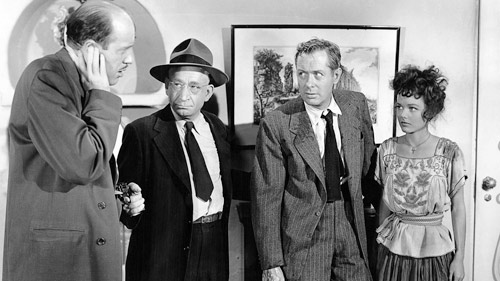
Much lesser-known are two other films by actors behind the camera. Ida Lupino’s The Hitch-Hiker finds two average American Joes on a Baja fishing trip kidnapped by a serial-murdering psycho who forces them deep into desolate foreign terrain. It’s the keen eye of locals rather than our desperate heroes’ resourcefulness that might ultimately save them from the maniac’s itchy trigger finger. Spare, tense and realistic, it’s contrasted by Robert Montgomery’s 1947 Ride the Pink Horse, a sort of noir-fever-dream spin on Under the Volcano (1984) in which the director stars as a war-veteran tough guy unraveling from sleep deprivation and general dislocation on a revenge mission in a fictitious border town. Full of phony ethnic exoticism and stereotypes, it nonetheless offers hope of salvation solely from kindly Spanish-speaking locals, notably a teenage girl (pigtailed Wanda Hendrix) who can see his imminent death in our gruff hero’s eyes.

“Go on, beat it. Scrambo!” he barks at her — a good line to be sure, though none can beat Out of the Past‘s (false, it turns out) koan “A dame with a rod is like a guy with a knitting needle.”

GOING SOUTH: AMERICAN NOIR IN MEXICO

July 1–29, $5.50–$9.50

Pacific Film Archive

2575 Bancroft, Berk.

(510) 642-5249

www.bampfa.berkeley.edu

Fake-out

0

arts@sfbg.com

HAIRY EYEBALL It’s not just the title of Stephanie Syjuco’s solo show “RAIDERS” — her first at Catharine Clark Gallery — that brings to mind Indiana Jones. Something of the latter-day swashbuckler comes across in Syjuco’s art, which, like Indy, initially seems to be playing to all sides for the sake of plunder — when in fact this cleverness is the outward expression of a deeper skepticism toward the very institutions it’s engaged with.

But Indiana Jones is also a pop cultural commodity and a franchise that has netted millions for creators George Lucas and Steven Spielberg. This too, I imagine, is not lost on Syjuco, whose work frequently strips Pop Art bare of its smart, slick exterior (as well as Conceptual Art of its pretensions) to access the larger and far less glamorous network of market forces, production processes, and questions of ownership that shape it as a commodity.

Whereas Takashi Murakami installed an actual Louis Vuitton boutique inside Los Angeles’ Museum of Contemporary Art, Syjuco’s project “Counterfeit Crochet” called on hobbyists the world over to knit fake designer bags, complete with logos, and even provided the patterns and instructions. She has also, on more than one occasion, set up detourned versions of shops and marketplaces inside museum walls.

“RAIDERS” opens with an installation of what at first glance appears to be a collection of handsome Asian antiquities — mainly vases and small, decorative vessels — arranged on the very shipping crates they were transported in. It quickly becomes obvious that what we’re looking at is truly a set-piece, and that the “priceless” cache before us is actually an arrangement of life-size photographic reproductions adhered to laser-cut wooden backings.

Raiders: International Booty, Bountiful Harvest (Selections from the A____ A__ M______) — to give the installation its full title — becomes more interesting when you consider that Syjuco used images downloaded from the Asian Art Museum’s online database of its holdings as her source material. Love and theft (if I may poach the title of Eric Lott’s remarkable study of American minstrelsy) are certainly forces that have shaped many a museum’s prized holdings, and it is this history — one so often bound to colonialism and its aftermath — that is also embedded in Syjuco’s fakes.

And Syjuco decidedly, politically, traffics in fakes, not forgeries. Practically every piece in “RAIDERS” has rematerialized online, open source materials — be they digital images or readily accessible canonical texts — into art objects that are themselves parodies of object-ness. Conceptually whip-smart and materially banal (wood, tape, paper, and glue are common ingredients), Syjuco’s pieces continually taunt us with the question, “Why buy the cow when you can get the milk for free?”

In the gallery’s back room, jewel-case-size blocks of wood covered in pixilated digital prints of CD cover art representing Syjuco’s entire collection of “music illegally downloaded or pirated from others” are, as the bright orange stickers adhered to their shrink-wrapped exteriors proclaim, really available for the “blowout price” of $9.99 a piece.” Across from this pile that looks as if it had been airlifted straight from a Tijuana bootlegger, is Phantoms (h__rt _f d__kn_ss) an installation organized around Joseph Conrad’s Heart of Darkness, replete with a table, sawhorses, houseplants, TV monitors, and 10 bound copies of different online, public domain versions of Conrad’s text that are strictly “price upon request.”

Syjuco is certainly not the first artist to take on the art world’s biggest white elephant: value. But she wields her scalpel with a thoughtful precision and economy of gesture that will forever be beyond the abilities of a gaseous giant such as Damien Hirst. And that, to borrow another clichéd bit of market-speak, is truly priceless.


INKSTAINS

If you missed the San Francisco Museum of Modern Art’s excellent Eadweard Muybridge retrospective that closed earlier this month, Matt Bryans has created something of an homage to the early master’s photographic panoramas and doctored views of a not-quite-virginal Yosemite at SF Camerawork.

“Untitled” unfurls along one of the gallery’s walls for nearly 30 feet, a fantastical expanse of ever-shifting landscape seemingly captured from a middle distance. Glaciers give way to snow-capped peaks, which then dip into valleys that ease into rolling plains and finally abut more misty crags. In the piece’s upper half, clouds swirl and dissolve across the arc of the sky as in a Chinese ink painting.

Although the piece has the weathered patina of an old daguerreotype and recalls Muybridge in its staged epicness, Bryans is a collage artist who works solely with a medium whose livelihood has been called into question about as often as film photography’s: newsprint. “Untitled” — which like the other large collage commissioned by SF Camerawork is all explosions and stars wrapped around a support column — was created using only India erasers and inky photographs clipped from newspapers.

Scanning the sky of Bryans’ panorama, you can make out the smudged traces of what was once type. And the closer you look, you start seeing the fissures between the thousands of carefully glued pieces that Bryans has transformed into a seemingly organic whole, which nonetheless appears on the point of disintegration.

The panorama piece is large enough that it sags a little and billows whenever a current of air hits it. It seems to hang heavy with the losses it embodies — photography’s ghosts, newspapers as a disappearing medium, the unknowable contexts of the images themselves — a load that’s almost too much to bear. 

STEPHANIE SYJUCO: RAIDERS

Through July 16

Catharine Clark Gallery

150 Minna, SF

(415) 399-1439

www.cclarkgallery.com

MATT BRYANS: BREAKING THE LAND

Through Aug. 20

SF Camerawork

657 Mission, SF

(415) 512-2020

www.sfcamerawork.org


Zero Zero

0

paulr@sfbg.com

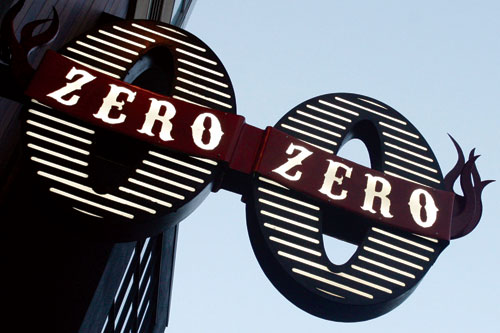
DINE Our recent bout of pizza chic was bound to reach some sort of apex sooner or later, like all fevers, and it now appears to have done so at Zero Zero, the Bruce Hill endeavor that opened last summer in the old Azie space adjoining LuLu. The name refers to a vaunted Neapolitan flour used to make pizza dough, but it also seems to suggest the turn of the millennium, with its near-5,000 Nasdaq and the reinvention of SoMa as the urban version of Silicon Valley. If you’d gone to sleep about 10 years ago and were just now waking up, you probably wouldn’t think much had changed, except that pizza had become very grand indeed during your little nap.

As a pizza master, Hill has a formidable pedigree. He was the longtime chef at Oritalia, one of the city’s most interesting and innovative restaurants of the 1980s and 1990s before moving on to reinvigorate the cooking at both the Waterfront and Bix. The Zero Zero gamble is to open a pizzentric restaurant in the heart of the city’s new restaurantland instead of at its fringes, in the lower Haight (Ragazza), Dogpatch (Piccino), or Glen Park (Gialina). A major plus of the location is that a rich lode of clientele is near at hand; being upstairs at Zero Zero on a busy weekend night is a little like trying to work your way through the break room of the Abercrombie and Fitch catalog. Clearly pizza is familiar and reassuring to people who aren’t too many years past their college graduations and who are now living in SoMa’s innumerable new luxury lofts. But is pizza enough to carry a serious restaurant?

Hill has gracefully hedged his bets by laying out a menu that’s considerably broader and more sophisticated than a few tomato-red pies to be washed down with steinfuls of brew. The kitchen turns out an assortment of crudo, antipasti, and pasta plates to keep things interesting. And if you don’t want pizza at all, you can certainly get by — although you won’t find so much as a single conventional large dish. It’s little dishes, with or without pizza. Or bupkes.

We found the food beautifully conceived and presented, although several dishes struck me as being on the verge of too salty. This is odd, considering that so much restaurant food has struck me as underseasoned over the years. Whenever I come upon oversalted food in a restaurant, I find myself thinking of the young chefs-in-waiting who can often be seen in clusters on the sidewalks in front of culinary academies, puffing away at their ciggies. It is well known that smoking cigarettes dulls the sense of taste and affects the way a chef is seasoning things.

A crudo of California halibut flaps ($12.95) was presented on a narrow sushi platter, as if subtly to enhance our sense of its freshness. And it was glisteningly tender, its butteriness deepened by Fiordolio EVOO. But the promised “panzanella” was just golden-crisp croutons with salt sprinkled over the top. It is surprising how much damage even a little salt can do to delicate food. I also found too salty an otherwise marvelous salad of wild arugula ($9.50) with quarters of ultra-ripe yellow nectarine and marcona almonds. The greens, with their almost prickly freshness, could have been picked five minutes before. But the lemon vinaigrette tended toward briny. One dish we did find in good tune was expertly braised octopus ($13.95), cubed and tender and plated with Sicilian chickpea fritters that could have passed for polenta triangles, along with the wondrous weed purslane and an agrodolce (sweet-sour) sauce. There was an important clue in this dish — that saltiness is a relative phenomenon. It can be balanced.

The pizzas buck the local trend by using a slightly thicker, puffier crust. One nice feature of puffs: they blister well. Blisters suggest that the pie has been rushed to you straight from the oven, like a popover. The topping combinations are elegant and restrained; even a relatively lavish pie, the Fillmore ($15.95), with leeks, mozzarella, hen-of-the-wood mushrooms, garlic, thyme, and three cheeses (parmesan, pecorino, fontina), remained coherent, with fresh herb breath.

But Zero Zero’s best feature is probably its build-your-own-dessert option. You choose your base ($4), your ice cream ($4.95) — simple flavors but housemade — and your toppings ($1 each). Olive oil and sea salt are among them, but so is chocolate hazelnut crunch. Which would you rather have? 

ZERO ZERO

Dinner: Sun.–Thurs., 5:30-10 p.m.;

Fri.–Sat., 5:30–11 p.m.

Lunch: Mon.–-Fri., noon–-2:30 p.m.

Brunch: Sat.–Sun., 11:30 a.m.–2:30 p.m.

826 Folsom, SF

(415) 348-8800

www.zerozerosf.com

Full bar

AE/DS/MC/V

Noisy

Wheelchair accessible


Girls just want to have fun

9

culture@sfbg.com

SEX It was their first official slumber party and a late-night run to the grocery store for pink hair dye was in order. Decked out in a combination of pink, pajamas, and leather, the San Francisco girls of Leather shrieked and giggled as they wandered the aisles searching for anything rosy-colored. The girls could easily have been mistaken for a freshman herd of coeds soaked in Malibu and cheap vodka, but as the group’s president, Leland, remembers, they were “just high on girls.”

Until they discovered the store’s collection of pink and white unicorns — on sale.

“We all oohed and ahhed and ended up purchasing six of them, surprising the other girls by returning to the party with an entire unicorn herd,” Leland says. From sleeping bags and hair braiding to dirty storytelling and play piercing, the night teetered between innocent and naughty, sweet and sexy. “So many unicorns, so many needles, and so much blood!” she said.

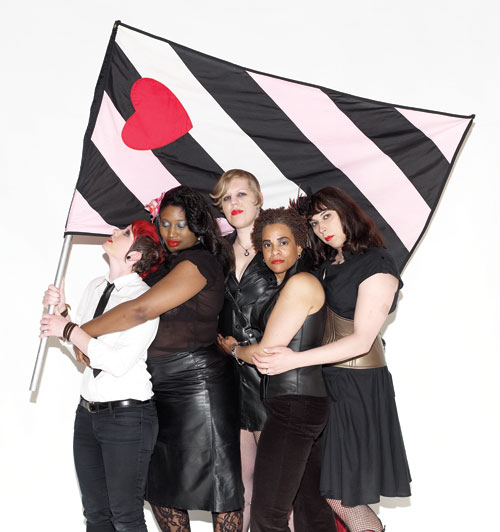
The SF girls of Leather (the girls prefer a lowercase “g” and uppercase “L” out of respect for the traditions of the leather community) are giddy and flirty: the epitome of seventh-grade girliness, complete with kinky sleepovers, hearts, and cuteness. As this year-old group sees it, maturity is overrated when it comes to BDSM — and a hint of silliness in a dark dungeon can only heighten the sex appeal. Who else is going to giggle or blush after a spank?

The group’s approach to leather is hardly in line with the masculine traditions that have come to be associated with the history of the kink community. But in the year since the girls formed their group, they’ve been working to secure their place in the continuum of leather lovers. And judging from the group’s growing membership — and accolades from the leather community at large — SFgoL is providing a much-needed refuge for marginalized fans of lighthearted play, splashing accents of pink across the traditional wash of black.


GIRL GOALS

Historically, a girl in the leather community has been defined as the female-identified version of a boy — a submissive expected to service a dominant individual in various kinds of BDSM play. But in SFgoL parlance, girl means something way more fun. Top, bottom, submissive, dominant, giver, receiver, experienced, or curious: all roles are welcome in the group, as long as you “girl” identify.

Which means what, exactly?

“Leather doesn’t have to be serious,” says Leland, who is of the mind that people of all ages, bodies, and sexual preferences can find bliss by tapping into their own personalized “girl-space.”

“You’re a leathergirl if you feel like it,” says SFgoL Vice President Kate McKinley. Even boys and bois are allowed in the group — as long as they have a “girl heart.” Coincidentally, McKinley wears one of these around her neck — a silver heart necklace.

“I play girly and therefore this group is where I belong,” she says.

An important tenet of the leather life, service (traditionally, the practice of obediently pleasing a dominant character) is still an integral part of the girl group’s goals — but its definition of the term goes beyond tending to masters and daddies.

In the year since the group’s inception, SFgoL has volunteered at multiple fundraisers and organized charity drives for nonprofits benefiting women in the leather community and beyond. Members are free to service individuals but are required to serve the community by means of philanthropy: grown-up Girl Scouts earning merit badges for kink.

Their efforts haven’t gone unnoticed — the San Francisco Bay Area Leather Alliance recognized SFgoL as its best new organization of 2010. “Contributing to the community makes it easier for us to enjoy what we’re doing,” says SFgoL member Anita, who asked that we not use her last name for professional reasons.

Anita moved to San Francisco from Norway on a work visa, but soon found herself lusting for a close encounter with leather. She discovered some BDSM groups for women interested in playing with women, but because she identified as straight when she arrived in the city, the SFgoL’s more inclusive membership requirements felt like a better fit.

She was also attracted to the group because it didn’t require members be in a dominant-submissive relationship. She was free to play with whomever, whenever, and however she pleased. “I’m a girl and I was interested in exploring the leather community in a group where I could just be myself and share my feelings,” she says.

Last month the SFgoL celebrated its one-year anniversary with 18 full members and more than 100 girls on its Listserv. The numbers are a strong indicator of its success, especially since the current version of the SFgoL isn’t the city’s first attempt at a girly collective. In 2004, a leathergirl group was formed, but failed to secure footing in the established leather community. The second time around seems to be the shiny charm — or maybe these girls are just extra-charming?

“We do have a smokin’ hot group of girls,” giggles Leland, looking around the table and raising her eyebrows at Anita and McKinley.

It’s lunch hour on a Tuesday and the three girls flirt like crazy, constantly laughing and finishing each other’s sentences between small bites of spicy Thai food. The three are a prime example of the group’s demeanor and exactly why Leland has enforced a “no cruising” rule during official meetings.

“The meetings are meant to be safe space and for taking care of business. But yes, we can play outside the meetings,” she says, batting her lashes as the other girls smirk, hiding a thousand secrets anyone with a pulse would die to hear.


RESIZING THE LEATHER FIT

Since its inception, the leather community has been predominately male. Icons like Marlon Brando, and the work of Tom of Finland and the Satyrs Motorcycle Club, defined modern masculinity in the 1950s, igniting a kinky obsession in the gay community. A badass jacket, muir cap, and related wardrobe of black hide became a symbol of sexual power and masculine independence, eradicating the stereotype that all gay men were effeminate.

Leather rules and traditions grew from military protocol and were diligently enforced by masters and their slaves, daddies and their boys. Women were intrigued, but struggled to find a place among the men; many leather bars turned away women at the door.

Over time, elements of BDSM became associated with leather and the community began to flex. During the ’80s, leatherwomen competitions popped up, and in the ’90s, groups like San Francisco’s Outcasts — now the Exiles —provided the community with strong female-identified role models. In 2006, the Exiles helped open Betty Paige’s Secret, which in subsquent years of the festival became Venus’ Playground. It was the first leatherwomen play space at the Folsom Street Fair.

It’s been six years since the Venus milestone, yet during this April’s International Ms. Leather competition in San Francisco, it was apparent that questions about the role of women in the leather community remain.

In a moment of call and response, “Where are the leatherwomen?” was shouted into the microphone. The answer was loud and proud: “Here we are! We’re here!” followed by a rumble of audience applause. Women may be standing their ground with paddles in hand, but the exchange was telling of their struggle for continued acknowledgment.

Deborah Isadorah, a veteran of kink and current leather momma, has been entranced by the leather community for more than 40 years, and is proud to have watched the roles of women expand. But in Isadorah’s eyes, the progression has been slow going.

“We live in a patriarchal society and that reflects on every part of our society, including leather,” she says, sipping a latte in Oakland and soaking in the spring sun.

“The men outnumber us physically in this community, [but that] doesn’t mean women’s voices are missing,” she continues. Isadorah is pleased with the progress of her generation of leatherwomen and is happy to sit back and nurture the younger crop. “I think we’ve done our job: to educate women about their bodies and the opportunities they have to explore sexuality beyond what society thinks is appropriate.”

Today, nearly half the current directors of the Leather Alliance, the community’s well-respected governing board, are female.

“We’re sitting at the table now,” says Daddy Vick Germany, a female-bodied leather daddy who has been a part of the Bay Area’s leather community for more than 15 years and serves as a director for the Alliance. Overall, Daddy Vick is content with the community’s moves toward inclusivity. “The men are leaving more space for us,” she says.

But traces of segregation can still be found. “Sometimes men just don’t see you — you’re not even in their line of vision,” she says, referring to a recent experience at the Up Your Alley street fair where a man blindly butted in front of her while she stood in a concession line. She recognizes that these incidents can be subconscious, but any female who roams the SoMa leather fairs is bound to encounter this feeling of invisibility. It makes her “mad as hell.”

Elected SF Dyke Daddy in 2002, Vick made substantial efforts to bridge gaps between the sexes. She’s currently running for SF Leather Daddy, a traditional competition built on fundraising for the AIDS crisis. In 2009 a transman won the competition, but if she wins, Daddy Vick would be the first female-bodied daddy to hold the title. Her candidacy alone is sure to shake things up with leathermen who believe in upholding traditional roles — but her motives are pure.

“I’m not doing this to make a statement as a female daddy. I’m running because I think I’m a good daddy for the community,” she says, meaning she cares about being a supportive, reliable father figure for those around her. The “working title” would help her foster change more effectively than her individual efforts.

Besides Folsom’s Venus’ Playground, there are no official social spaces intended for leatherwomen. This makes sharing communal bars and events incredibly important. Change is a slow process, but Daddy Vick says ample motivation is brewing in all corners, and — paired with the diffusion of kink — the space for growth can only flourish. Leather is opening into an umbrella term with the capacity to encompass multiple elements of fetish, and to further accept people of all genders, bodies, and preferences in any role.

In this respect, Daddy Vick thinks the SFgoL could play an important role. “It just takes people like Leland, coming in with a different energy. People who stand up in the crowd, see a need, and start organizing.”


FOLLOW THE PINK BRICK ROAD

While leatherwomen made slow but steady strides in the past decade, those straddling the space between butch and femme — the girl space — began breaking ground for themselves, too. In 2003 an international Leather Girl Network was born, led by the Bay Area’s Cheryl D. The group intended to mirror the already well-established leather boy community. Girls everywhere were giddy with possibilities.

“I had always identified with the title of ‘girl.’ I was a girl who liked to serve the community, but I was also a switch,” says Mistress Pilar, a longtime leather veteran and member of the original, and now revived, SF girls of Leather. Being a switch — someone who doesn’t commit to top or bottom exclusively — meant her definition of girl didn’t fit with that of the Leather Girl Network, which stated: girl equals submission. She wasn’t alone in her dilemma.

In 2004, San Francisco girls decided to put together their own troop, headed by girl Lori, the 2003 San Francisco Leather Dyke girl (a contest that no longer exists), and girl Hayden, the 2004 title-holder. They intentionally left the definition of girl open to allow for individual interpretation. The leather community shuddered at the loose restraints, confused by the men, boys, and transpeople that joined the girl ranks.

“People in the leather community were not comfortable with this idea at the time. No one even liked talking about it,” says Pilar, referring to the notion that a girl didn’t need to be a biological woman to be in their group. “The attitude that people should ‘get off the fence’ really hurt.”

The initial group grew to about 30 members and its short three years as a successful alliance was packed with fundraising, volunteer work, and super-girly fun. But eventually the negative attitudes, biased expectations, and confusion over the definition of “girls” wore down on moral.

“People would walk up to me and demand, ‘girl, clean my boots’ and I would say, ‘I don’t serve you, I serve the community,'” Pilar says shaking her head.

Even Daddy Vick remembers how the group of strong, independent individuals struggled to prove themselves to the wider leather community. The girls, she says, “took a lot of flak” for contesting tradition. “There was still a belief in place that girls and boys couldn’t be leaders. Some thought girls and boys should be seen and not heard.”

The girls managed to have good times regardless, but Pilar says by early 2007 the group was down to five members who reluctantly agreed the end had come. It wasn’t until the 2010 International Ms. Leather competition — when Pilar decided to donate the leftover SF girls memorabilia and a curious Leland started asking questions — that SFgoL sparked back into life, with a little PR and a lot of ambition.

“Leland is a wonderful leader. She creates a really positive image of a girl,” says Pilar, nostalgically looking over an old stack of meeting notes, scribbled calendars, and photos from the original group. The dissolution of her crew hit hard, and it’s bittersweet for Pilar to hear about the new group’s instant success. But more than anything, she’s proud. “I feel like a proud mom. Those are my girls.”

Coincidentally, just as the girls sprung out of the woodwork and formed an official group, the San Francisco boys of Leather, a longstanding and once very active organization, hung up their chaps and caps due to a decline in membership. The boys generously donated all their remaining funds to the girls.

Steve Gaynes, the 1994 SF Leather Daddy and Alliance director representing the 15 Association, a longstanding sexual fraternity for men interested in BDSM, has been a leatherman since 1978 and has watched all kinds of groups come and go. He says the ebb and flow is just a reflection of the community’s current needs.

“The energy ran of out the boys and ran into the girls. If there’s no driving force behind a group, it will die,” he says, noting the community’s excitement for the new girl group. “They’re enthusiastic, inclusive, and have clear ideas for their future. And they’re doing [it all] with a lot of respect for tradition.”

And the SFgoL’s continued dedication to volunteer work and partnerships with other groups have shown the community at large that it values the path paved by the forefathers — and foremothers — of leather.

Paying tribute to old protocol is simple. Isadorah boils it down to three simple rules: integrity, honesty, and service to the community. Judged by this metric, she says, anyone who thinks the SFgoL is out of line is just being stubborn. “Whenever something happens in the community that brings change, there will always be someone who is offended,” Gaynes says. “You won’t know you’ve created change until you’ve offended those people. Change is good and should be embraced.”


LOOKING OUT FOR THE GIRLS

Leland and McKinley agree that there seems to be a buzz of excitement surrounding the SfgoL lately. The group’s logo is everywhere, and partnerships are being fostered across the community. Leland has even been asked to serve as a director for the SF Leather Alliance.

But her primary concern is making sure the SFgoL remains a safe, welcoming landing pad for girls who are new to the leather community. And these days, the media is providing all sorts of inspiration for curiosity. Rihanna’s song “S&M” speaks directly to sexual play, but even a quick Google search for “girls in leather” retrieves images of celebrities in fetish gear, from Lindsay Lohan and Miley Cyrus in leather leggings to Emma Watson in a full latex suit with collar. In general, our society is opening up to alternative sex and women want in on the action.

But girls who jump in with little research and few friends may not leave with the most positive experiences. The inherent power dynamic associated with BDSM relationships and play can blur the lines between consent and abuse, and Leland says it’s important for newbies to have mentors within reach. “Sometimes the person you’re playing with may not have your best intentions at heart,” she says. “But as an alliance of girls, we can look out for each other.”

Bernal’s bucks

0

caitlin@sfbg.com

SHOPPING I stumbled into a small-town saloon, complete with a dingy 1950s cowboy mural over the door, a horseshoe-shaped bar, and the feeling that everybody — everybody! — knew the score better than I did.

Oh wait, I remembered. I’m just in Bernal Heights.

Normally I do not spend my Tuesday night on this hill, but tonight was an exception. Cortland Avenue was hosting a local business walk — the sidewalks lined with bustling young families and the fundraising popcorn stands of neighborhood groups. Paulie’s Pickling was offering free tastes of its delicious jarred carrots and cauliflower.

I wasn’t even on the hill for the sour samples. The evening also was meant to debut the Bernal Bucks card — an innovative, or at the very least, new take on the idea of local currency.

Bernal Heights is a neighborhood full of folks who don’t have much call to go anywhere else. Harriet — the kindly woman whose hubby was playing fiddle in the bluegrass sextet perched cozily on the small stage to the side of the Lucky Horseshoe’s front door — told me that they had lived in the neighborhood since 1971. They were well-acquainted with Lisa Marie Delgadillo, owner of the Horseshoe. In fact, Delgadillo’s partner would be playing banjo during the next set with his band Shedhouse.

“I wasn’t expecting this many people to show up,” Delgadillo said. As luck would have it, that day was actually the soft opening of the tavern, which she had bought from an owner who had stocked the historic space with great blues music but “hadn’t given it a good clean in 20 years.”

“Bernal really has a tight-knit community of business owners and residents — it totally makes sense that they’d promote in this way. It’s totally Bernal,” she said, refilling my pint as Shedhouse launched into four-part gospel harmony.

Mind you, this was not the start of Bernal’s local currency program. Bernal Bucks have been in circulation since 2009, initially as stickers users could affix to $1 bills. By spending them, users got a little more for their money — a free Fuji apple at Good Life Grocery, a free used DVD from Four Star Video, $1 off your drink at Stray Bar. The money went to the Bernal Heights Neighborhood Center and other community groups. The nonprofits got funding, shoppers felt warm inside, and businesses passed along the stickered bills to the next consumer, encouraging more people to drop dough in the area.

But now there’s a debit card, which eliminates the sticker step and acts like a frequent-flyer miles credit card. The more you spend, the more Bernal Bucks you rack up. You print out the bucks in $10 increments on your computer and spend them in your favorite local enterprise — on a screwdriver on Wild Side West’s garden patio perhaps, or a quick knife sharpening at Bernal Cutlery. The whole shebang is accessible via computer: no fuss, no muss.

“How can we create a mechanism that gives us more control over our economic destiny?” asked Arno Hesse, co-creator of the program, in a phone interview. Hesse hopes the card will “create a reminder in the wallet and an incentive to do the right thing more often.” He cited a study done on a similar shopping mall program that yielded a 24 percent income growth for business owners as a result of increased buying trips and ticket sales.

Hesse expects that “hundreds, hopefully even thousands” of Bernal Heights residents and workers will sign up. “We are optimistic that it will be a mainstream phenomenon. You don’t have to have a degree in economics to jump on this program,” he said.

He estimates that the program’s participating companies receive 50 percent of the neighborhood’s cash flow to locally run businesses.

The card is available through Mission SF Federal Credit Union, whose sole location is just down the hill from Cortland Avenue. Local bank, local businesses, card design by local artist (Ashley Wolff, an accomplished children’s book author) — it’s all local except for one thing: the glaring Visa symbol in the card’s lower right-hand corner.

Hesse is aware of the irony of having a megacorporation’s logo on a card meant to prevent Bernal money from “leaking out to the Safeways, Home Depots, or Amazons of this world.” There was debate at the Bernal Business Alliance over the issue, he said. But in the end, it was all about convenience: Business owners were unsure if part-time employees would be able to grasp an alternative payment system and counter space was too valuable to set up another kind of card-processing apparatus.

“Choosing Visa makes sense because is widely accepted by most merchants,” said Kathleen Scheible, an eight-year resident of the area and owner of Bernal Homeopathy. She added that the program also features a Web interface for businesses that would like to skip the Visa step. “There was a fair amount of logistical challenge to using the Bernal Bucks: having to go somewhere to physically purchase them, knowing how to use them. We like the idea of cash over credit in Bernal, but for many of us, debit or credit is the reality for anything over $10.”

I handed Delgadillo my sticker-less cash and told her I’d be back for more bluegrass when the bar gets its cabaret license in August. Judging from the convivial tenor of her first night, I bet by that point she’ll have seen her share of the Bernal Bucks card.

Bernal Heights is truly doing its own thing — few neighborhoods in the city produce the same close-knit, down-home vibe. If the program succeeds, Hesse said his group might respond to requests to help implement it in other neighborhoods or even citywide. The responses I heard from neighbors that night indicated the program will continue to succeed. Still, it is somewhat discouraging that even this successful local business campaign comes by way of plastic fantastic.

To learn more about the Bernal Bucks program, let your fingers do the walking to www.bernalbucks.org.


Farmville

1

le.chicken.farmer@gmail.com

CHEAP EATS I probably could have picked a better route to the restaurant. Maybe if I’d gotten off at the Powell station instead of Civic Center. As it was, at not-even-9 a.m. on a Saturday, I had to step over piles of shit and vomit.

It was like reading one of my restaurant reviews; it’s part of life, yes, but not necessarily the part you want to happen before dinner. Or in this case, breakfast.

But, so you know, I would step over dead bodies and piles of fish guts to caffeinate and chew things up with my friend Kayday. Especially at farm : table, which I had heard about and have been meaning to get to for forever. High on my list of Things To Do this year is to find my way back to my former farmerliness. Because I miss the eggs, but also because I’m tired of myself in my shit-kicking city-fried people personhood. I long for the smell of a chicken coop.

Kayday, who was essentially nudged out of San Francisco for the same reason I will be one day — for not being the cool kind of queer — was down for the weekend from Seattle. Not for Pride — for the weekend before, to consign and collect her guitars and things.

I do hope everyone had a happy and proudful Pride month, and weekend, and parade. I encourage this forward-thinking bubble, being the self-proclaimed beacon of queer acceptance that it, um, proclaims itself to be, to start opening not only its mouth but its employment opportunities, its hearts, and even in some cases (gasp) its zippers to transwomen before we lose more good guitar players to Seattle.

Mine had about a gazillion job interviews in the one year she was here, but no job offers, whereas she was one-for-one in both Los Angeles and Seattle. Which reminds me of my romantical track record, home and away. Not that we talk about this. You just can’t help wondering.

“I feel like I was dumped by San Francisco,” Kayday said.

We were sitting at the inside table. That’s officially all there is, inside, at farm : table, is one pretty big square one, seats maybe eight, and then a couple more on the sidewalk.

“That sucks,” I said, biting into my fresh pea and pecorino quiche, which didn’t. It was light and fluffy, and I could almost hear the hens that laid those eggs, clucking softly in the kitchen. I was almost halfway done with it before Kayday figured out how to even approach her baguette-bacon-hard-boiled-egg pileup. By which time everyone else at the table had weighed in with their own techniques.

“Turn the egg over and smash it into the bread,” one woman offered. Another said she just takes the pieces off and eats them à la carte.

“Me, I get the quiche,” I said, chomping on clouds. Christ, I love San Francisco. And the Tenderloin.

One nice thing about sharing a table with a bunch of strangers: Kayday was spared the gory details of my recent bad butt health. I only told her what the surgeon told me: that if it doesn’t heal in two to four weeks, the next procedure is so uncomfortable they will have to put me to sleep. Those were his words.

“I hope he doesn’t come from a veterinary background,” Kayday said.

“I know. Right?” I said. “I’m getting my affairs in order, just in case.”

FARM : TABLE

Mon.–Fri. 7:30 a.m.–6 p.m.;

Sat. 8 a.m.–6 p.m.;

Sun. 9 a.m.–3 p.m.

754 Post, SF

(415) 292-7089

No alcohol

Cash only

Life at 45 r.p.m.

2

arts@sfbg.com

MUSIC Hunter Mack is many things — visual artist, U.C. Berkeley mechanical engineering PhD, new dad — but music fans know him best as the owner and president of Oakland-based, 7-inch-centric Gold Robot Records. The indie label’s releases include the now-disbanded Volunteer Pioneer, San Francisco’s Man/Miracle, and Bonnie “Prince” Billy of Drag City Records, among others.

Thirty-two-year-old Mack, an avid concert-goer and audiophile, became disheartened when bands he saw perform only had their music available on CDRs. And he would continually hear these musicians express their want and longing to do a vinyl record. His close friend, Graham Hill, drummer for Beach House and Papercuts who records solo under the moniker Roman Ruins also had a few tracks that had not been released. “[Hill] is one of the reasons [I started the label]. His music needed to be preserved on something archival,” Mack explains.

Early on, Mack resolved to physically release GRR’s music on vinyl only (through its website, gold-robot.com/records, the label also distributes digital downloads). “I like the active listening experience that a 7-inch forces you into. You listen to things on one side; you have a song; if you want to listen to that song you have to actively flip it over,” he says. “Instead of setting your music on shuffle and not knowing where it came from or not making an actual choice, a 7-inch makes you — forces you — to make a choice.”

Thus GRR’s inaugural release was “Releasing Me/Your House,” a 7-inch by Roman Ruins, in 2007. “It was wonderful. I worked with [Hill] since and continue to work with him now,” Mack says.

Since its inception, GRR has grown to include a very diverse array of artists who have produced more than 30 releases, from Ned Oldham’s simple guitar songs, to the 1990s hip-hop of Meanest Man Contest, to the experimental noise rock of Railcars. “There’s something vain about being able to choose all the music that goes onto [the label]. I’m essentially the decider on what comes out,” he says. “For that reason, it ends up being an extremely eclectic collection of music because I listen to extremely eclectic music.”

An older version of GRR’s website explained that the only requirement for music to be considered for the label was that it “inspired space travel.” This, of course, was a joke — but it stuck and has become the label’s tagline throughout the years. In selecting artists to work with, Mack exclusively seeks out musicians who are as excited, motivated, and invested in the project as he is. “I’m just looking for stuff that I’m listening to and that I’m loving. I’m looking for somebody who needs my support,” he explains.

Mack enjoys working with artists in different stages in their careers: emerging artists like Monster Rally; well-established musicians doing a unique project (Bonnie “Prince” Billy’s Gold Robot Release featured poetry set to music); or a solo side project of an artist already in a band, like Roman Ruins. Mack’s openness to work with artists at different points in their professional careers reflects his commitment to providing musicians with several avenues to showcase their art.

This philosophy extends to designers too. While Mack has created album art for different releases — including the abstract cover for “Pastor/al,” a Roman Ruins 7-inch on orange vinyl — most of the artwork is done by other artists. “I know when I was just starting my visual arts career, I would have jumped at any chance to make art for a release. And so I’m trying to give people that opportunity,” Mack says. This year, Mack anticipates the release of five new GRR releases, from Not the 1s, Primary Structures, Seamonster, Monster Rally, and Roman Ruins. He acknowledges that this release schedule is very ambitious. “[It’s] a lot for me,” he says. Despite his mild apprehension, his passion for and love of music is palatable. “I’m not making any money off this,” Mack says. “It’s solely a project of getting music out and giving music back to the musicians.”

Cryptic cave wave

0

SOUND TO SPARE “What show are you here for?” asked what looked like a curious 10-year-old as I took care of business at the urinal. “I’m here to see Uzi Rash,” I answered matter-of-factly. But I wasn’t so sure he was curious about the bands by the way he stared at what makes it the men’s room. Apparently Oakland’s the New Parish (www.thenewparish.com) took the phrase “all ages show” to heart.

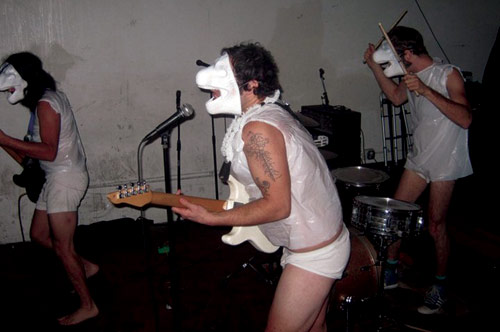
After that somewhat disturbing run-in, I settled into the bar excited for a night of firsts. It would be my first time at the venue, as well as my first time seeing openers Terry Malts. They were fine, but like I told the tiny Peeping Tom, I wanted to check out the East Bay’s Uzi Rash (www.myspace.com/uzirash). I hadn’t seen them since they did a memorable night of Monks’ covers on Halloween, where their performance included theatrical embellishments like shaved monk-like heads and makeshift robes.

This night’s scene was different. The onset of a rare heat wave was kicking in while the murky, cave-wave sounds of the mutable band — these days, a seven-piece stage outfit — took charge with a commanding and cacophonous presence. The Rash seems to be sitting on a backlog of sludgy, lo-fi treasure: current LP Palmwine Rumpus Vol. 2 (Party Ngg! Records) precedes a September release on Volar Records titled I Was 30 in 2012. Next month the band plans to start recording another full-length album, Whyte Rash Time — not a play on “white trash,” but a reference to the Monks’ Black Monk Time — which will hopefully see the light of day before the year’s end and they embark on a West Coast tour.

I caught up with Max Nordlie, the band’s toenail-painted, jorts-wearing guitarist and vocalist. He gave me a peek into his philosophy on degeneration and premonitions. (With song titles like “Bag of Dirt” and “I’m a Trashbag,” it’s tempting to see Uzi Rash as emblematic of the self-deprecating sounds I often notice oozing out of Oakland.)

Nordlie directly references 2012 as the year of the band’s apocalyptic demise, and explains how the Rash players were “born grown” four years ago. “The band sound was much more the same of itself than it could possibly be now,” Nordlie says cryptically, going on to cite a permanent need for regression. I hear that yearning for regression in the music — at times it reminds me of an unpolished version of Devo’s de-evolution.

That night, the ensemble’s delivery of what Nordlie calls “beach party squelch and shimmy” included electro-sax, keys, and cool-looking guitars. The band looked sort of like a low-budget version of Sly and the Family Stone: keyboardist Thee Whyte Bitch in her long white wig hammering out some discord and bassist Mateo Luv looking svelte in his long johns.

Their performance is raw and charged, and while the front man looks as if he’s working out some serious emotion, Nordlie assures me that he’s aiming at “getting it right” in an expressive sense — he just wants a playfully spirited “twist-and-shout-up.”

I asked Nordlie if the constant revolving door of musicians in the band dizzies him. “Stability, much like ability, is overrated,” he replied. “We seek to compensate for the traditional rock spectacle of ritual with monstrous unpredictability — even to ourselves,” he said, before quipping that the forthcoming Volar record is simultaneously “sophisticated and appalling.” That sounds like a great introduction to 2012, end times or no.

There will be a few more local opportunities to catch Uzi Rash this summer — most notably the 1-2-3-4 Go! Records 10-year anniversary show July 22 at Oakland Metro Operahouse (www.oaklandmetro.org) — before it goes on tour with Unnatural Helpers.

Rock on with you

0

arts@sfbg.com

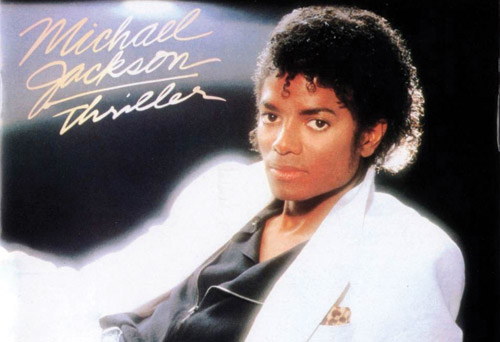
MUSIC Oh, Michael. So much has happened in these two years since you’ve been gone. I left my man and got my heart broken by another, chipped my front tooth, had to pay all my taxes up front, and manually upgraded my ass into the kind of shape that gives a woman like me a certain pride. Things have been rough; things have been good. And 90 percent of the good shit, including the fruits of all that ass-pumping, I achieved together with you. Keep on with the force, don’t stop. No, I’ll never stop getting enough of you.

Speaking of you, my darling, well, for you things have stayed exactly the same. Crazy-ass La Toya is still on TV, running her mouth about murder conspiracies, and the headlines are still a sordid “Jacko the Mysterious Nutter” mess. Every book written about you is still rude, invasive, and tabloidy, and the family, friends, and fans who claim to have cared for you the most still refuse to lovingly embrace you for who you were: an incomparable genius, the world’s greatest superstar, who, BTW, was totally gay.

Fuck everybody else and their delusional ways. After all this time, I’ve come to see: I am the only one who ever got you.

Memories of you, especially the ones honored on the anniversary eve of your death, should be as celebratory and joyous as the world’s greatest dance party — complete with fog machines, chemical inhalants, and unicorns. But all everyone wants to talk about is the drama. Little boys this, plastic surgery that. They actually think you did your face-up weird because you wanted to be a white Diana Ross with a superbutch Marlboro Man chin. That you hated yourself so severely you had to become someone you were not. But I know the truth: you built that distracting construction zone around your sacred temple to claim your private space. Only behind a strap-on nose and reptilian fake white skin could the real you stretch out and relax, connect with your spirit, make some art, do all your drugs. Who could blame you — and who’s to judge you? — for needing a tangible shield between yourself and all the stupid bitches who could not deal?

But as you receded further into this private space, your shield got thicker and you started to piss everybody off. Because it was awfully, horribly amorally sissy of you to want to look like a woman. A real man takes the face he is born with. In other words: you lied to us, motherfucker. You sang about loving women, rubbed your silky load on their thighs, even married all those hags. You grabbed your cock onstage and put on like vagina was cool.

Why was everyone so dumb and gay-blind in the first place? Because at the height of your Thriller fame in the 80s, no one was gay, not even those old warhorses George Michael and Boy George. But when it turned out that they, too, had lied to us — leading us on with all that maddening, un-Christian ambiguity — the real men had to take them out back and have a little talk. George and Boy — where are they today? Ruined.

No one forgives a liar. But maybe you were trying to tell us the truth, just no one was paying attention:

If they say, why, why?

Tell ’em that it’s human nature

Why, why, does he do me that way?

I like livin’ this way

I like lovin’ this way …

I listened to you, dear friend. I heard what you said about Billie Jean, that wacked-out club trash who said that you, rare orchid of the disco, would be “the one, who will dance, on the floor, in the round” — whether you were feeling it or not. She didn’t say anything about fucking! Not only that, you told us over and over — 10 times in less than five minutes, in fact — that, “Billie Jean is not [your] lover.” And I believed you. Everybody else was being a fool.

And so they had to tear you down, proving that total, brutal, violent annihilation of character is even more delicious when the victim is rich and black.

I always tell people the same high-minded thing: don’t read a single book; watch the movie instead. By that I mean 2009’s This Is It, of course, with its amazing rehearsal footage shot right before your death. If anyone has any questions or misgiving about who you were, this movie will correct it. All the drama and the Jacko the Freak-o bullshit fades away for once, revealing a musician of astonishing skill and professionalism. Not only do you hit every note on your own with your pure, naked voice, you also dance like a 20-year-old at the height of his game. To all those who scoff at my insistence that you were a genius: fuck you in the heart and prance on to hell.

But it wasn’t just your artistry that made me cry in This Is It — it was your extreme, almost over-the-top graciousness as well. I was stunned by the level of gentleness and respect you showed every single member of your crew — from the dancers to the musicians, the lighting guys to the PAs. You surely didn’t have to be so kind. Equally revealing was how your crew responded — unable to contain their awe and ecstatic delight, they were just plain thrilled to work with a compassionate legend like you. To them, you were the embodiment of love, humility, and respect. And if the people who worked so intimately with you before your death knew this, why can’t everybody else?

Don’t go changin’

0

arts@sfbg.com

THEATER The story of earnest young traveling salesman Gregor Samsa, who awakens one morning to discover he has changed into something he and his family can only describe as vermin, Kafka’s 1915 novella The Metamorphosis has undergone a number of metamorphoses of its own in terms of adaptations for stage and screen. One of the latest is the lauded 2006 interpretation by actor Gísli Örn Gardarsson and director David Farr, a coproduction between Iceland’s Vesturport Theatre and England’s Lyric Hammersmith that debuted in London and made its U.S. premiere at the Brooklyn Academy of Music last winter.

Berkeley’s Aurora Theatre offers the first wholly American production of this stage version, under the direction of Bay Area playwright-director-actor Mark Jackson. The production has many fine features, but the balance between the social and emotional content of the story and its abstract or absurdist framework gets skewed a bit too far toward the latter.

Jackson’s production stakes out its own territory by eschewing the Nazi-era periodizing of the original Vesturport–Lyric Hammersmith production. This Metamorphosis is set in the American 1950s — although the trappings of that place and time are only vaguely evoked here. Indeed, the costumes, semi-abstract split-level set, and heightened performance style together seem a blurry blend of Germanic petit bourgeois culture, high modernism, and Leave It to Beaver-esque TV surreality.

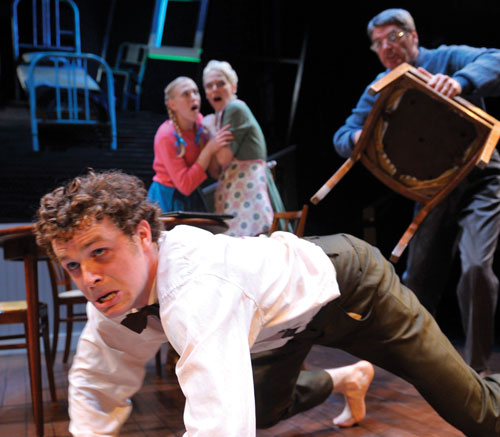
A horror and embarrassment to his family, Gregor (a winningly agile and sympathetic Alexander Crowther) confines himself most of the time to a variety of perches in his second-floor room — an environment rendered via a striking modernist pop-out painting and vertical jungle gym by Nina Ball. Its spare features are all askew and rotated forward on a sloped, accordion-like set of ridges, a veritable waterfall of steps supporting an elongated metallic bed frame and the creeping, scrambling Crowther.

Formerly the main breadwinner of his downwardly mobile lower-middle-class family, Gregor does not report for work one day. It’s that day, of course, that he drops so far in the estimation of his family that he is no longer even comprehensible to them, no longer even human. They instinctively side with his overbearing employer (Patrick Jones) and consider their own plight now that they must fend for themselves. Only his beloved sister Grete (Megan Trout) makes a serious attempt at communication and sympathy, although with melancholy results.

Grete is the key figure in this brisk 80-minute stage adaptation. Her brother’s transformation entails her own, from a would-be dancer into an eligible commodity in the material calculations of her desperate family and finally into a self-possessed agent in the cold material world. Trout is sharp but perhaps too perky and superficial in the role, since the anguish Gregor feels at seeing her metamorphose doesn’t have the same impact in the absence of a convincing sibling bond. Gregor clearly lives vicariously through the promise of Grete’s freedom, her life as an artist. When that dies, when she is transformed, his own demise is complete.

Gregor’s parents (played with sure satirical exaggeration but, again, little beyond comic anguish by Madeline H.D. Brown and Allen McKelvey) also feel too distant from it all. The cast offers little coherence as a family, albeit a fractured one. Instead we get a nicely wrought metaphor without much of a sense of its stakes, a lost opportunity and no doubt an unintended consequence. Bosses and subhumans, marriage as sexual commerce, art as perversion, the quiet everyday destruction of personality, the corruption of the closest social bonds by vast coercive hierarchies of power and authority — Jackson’s right, you don’t need to go back to Nazi Germany to find all that. It should all feel closer to home. *

METAMORPHOSIS

Through July 17

Wed.–Sat., 8 p.m.; Tues. and Sun., 7 p.m.;

Also Sun., 2 p.m., $10–$55

Aurora Theatre

2081 Addison, Berk.

(510) 843-4822

www.auroratheatre.org

The way forward

0

sarah@sfbg.com

Two days before President Obama announced his plan to begin withdrawing 33,000 troops from Afghanistan over the next 15 months, Peace Action West’s political director Rebecca Griffin delivered a box containing thousands of toy soldiers to Sen. Dianne Feinstein’s office in downtown San Francisco.

Tied to each soldier were handwritten messages that gave reasons for demanding a large and swift withdrawal. Many of the petitions came from folks whose loved ones are in the military or are veterans of Afghanistan and Iraq.

Unlike most Democratic Party leaders, Feinstein has not demanded a significant draw-down of combat troops, despite polls showing that Americans increasingly support leaving Afghanistan, particularly after the killing of Osama bin Laden. There’s good reason for the public’s growing restlessness. This 10-year war has already surpassed Vietnam as the longest conflict in U.S. history.

According to the online database icasualities.org, 1,637 U.S. soldiers have died in Afghanistan and 4,463 soldiers have died in Iraq. Another 11,722 service members have been wounded in Afghanistan, and 32,100 in Iraq, primarily by improvised explosive devices. And that’s not counting the thousands who are suffering from depression, posttraumatic stress disorder, and other ailments.

Griffin said her goal was to draw attention to the political organizing in support of ending the war. But even as she made her delivery, Feinstein was on MSNBC maintaining that draw-down decisions should be left to the military generals.

In the wake of President Obama’s June 22 announcement, which went way farther than the generals wanted, many of Feinstein’s colleagues such as Sen. Barbara Boxer and Rep. Nancy Pelosi, the house minority leader, expressed disappointment that the pace of withdrawal isn’t quicker.

“I am glad this war is ending, but it’s ending at far too slow a pace,” Boxer said.

“We will continue to press for a better outcome,” Pelosi stated.

Rep. John Garamendi (D-Concord), who visited the troops over Memorial Day weekend, told us that a different strategy is needed. “Our troops are incredible, dedicated, and skilled. But every minute of every day, they are in a very dangerous situation, and many of them are dying. There is no recognition that we are caught in the middle of a five-way civil war.”

And Rep. Barbara Lee (D-Oakland) vowed to offer defense appropriations amendments to cut all funding for combat operations. “History shows there is no military solution in Afghanistan,” she said. “We’ve got to engage with the Taliban and engage with those in the region to find some stability.”

But where does Obama’s plan leave the peace movement as the election nears?

Griffin said activists should take credit for getting Obama to withdraw 33,000 troops rather than the smaller number his generals wanted. She sees his plan as a sign that activists need to keep pushing for more, including a concrete timeline for when he will bring all the troops home.

Under Obama’s plan, 68,000 troops will still be on the ground in September 2012, and 2014 is identified as the deadline for completing the transition to Afghan control and ending the U.S.’s combat mission.

“This means there’ll be a significant military presence in Afghanistan for at least another three-and-a-half years,” Griffin said. “By the end of Obama’s first term, the war will be 11 years old and there will be nearly double the American troops on the ground as there were when [George W.] Bush left office.”

Progressive activist and author Norman Solomon, who is running in the 2012 race to replace Rep. Lynn Woolsey (D-Marin County), noted that a recent New York Times’ headline read “Obama Opts for Faster Afghan Pullout.”

“But faster than what?” Solomon said, noting that “10,000 troops are only 10 percent of our force. This is a pattern we saw in Iraq, where the withdrawal was too slow and the numbers remaining doubled when you factored in all the private contractors.”

Solomon said that when Nixon pulled 500,000 troops from Vietnam in the late 1960s, the conflict actually increased in terms of the tonnage of weaponry used. “And the U.S. is now engaged in wars in Libya, Yemen, and a Pakistan air war.”

But longtime antiwar activist and former Democratic state legislator Tom Hayden saw a number of clues in Obama’s speech for how to push for a faster, bigger, more significant draw-down.

“Obama said 33,000 troops will be withdrawn by next summer, followed by a steady pace of withdrawal. So that gets you to 50,000 troops by the election, and all combat troops out by 2014,” Hayden told us. “If he could be pushed by the peace movement, that would break the back of the warmongers’ planning.”

In his speech, Obama noted that the U.S. will host a summit with our NATO allies and partners to shape the next phase of this transition next May in Chicago, where Obama’s former chief of staff is mayor.

“Get ready, Rahm Emanuel, for big demonstrations,” warned Hayden, who was a member of the Chicago Seven group tried for inciting riots during the 1968 Democratic National Convention. “But do you imagine Obama would do that if he were going to escalate the war? No — he’s wrapping a ribbon of unity to transfer control to Afghanistan on a timetable.”

He also noted that Obama’s allies aren’t exactly pushing him to stay. “They may not have an exit strategy, but they are heading for the exits,” Hayden said. “So if you organize demonstrations with international support, that gives you an organizational opportunity in multiple governments to press Obama to leave.”

Hayden predicts that Obama is moving toward a diplomatic settlement, led by Secretary of State Hillary Clinton, that is pro withdrawal and pro women.

“But Obama’s got a genuine problem of his own making. He escalated the damn war,” Hayden said. “He doesn’t want the military to be attacking his plan. But if he wants to be in the center, he’s going to offend the generals.

Hayden noted that in his speech Obama said, “America, it is time to focus on nation building here at home.” It was a statement that sounded in line with a recent U.S. Conference of Mayors resolution calling on Congress “to bring these war dollars home to meet vital human needs, promote job creation, rebuild our infrastructure, aid municipal and state governments.”

But Richard Becker, western regional coordinator of the antiwar ANSWER Coalition, described Obama’s draw-down as “a minimal pledge.”

“Given the growing discontent with the war, it’s hard to see how you can claim that this is a step forward,” he told us.

Becker said it has been difficult to mobilize the antiwar movement under a Democratic administration. He also stressed the importance of people coming out in San Francisco for a “protest, march, and die-in” on Oct. 7, the 10th anniversary of the war, and for a major action in Washington. D.C., on Oct. 6. “What’s going to get the U.S. out is a combination of what’s going on in Afghanistan — and what kind of antiwar movement we have here.”

Don’t privatize public safety

3

Four weeks ago, surgeon Dimitry Nikitin walked out of Florida’s Orlando Regional Medical Center to his car and was shot dead by a disgruntled patient who then turned his gun on himself and committed suicide. Last September, a doctor at Baltimore’s Johns Hopkins was shot and killed by a patient distraught over his mother’s terminal diagnosis.

There is an epidemic of violence in America’s health care facilities. Many of the scenarios are familiar — the news is full of stories of combatants in gang fights following wounded rivals into hospital emergency rooms to finish them off. But the full depth of the problem is largely unreported and extends to hospital wards, clinics, and long-term care facilities

A recent report from the U.S. Department of Labor based on 2009 statistics says health care providers rank third in the likelihood of being assaulted on the job — just behind police and correctional officers. In 2009, there were 38 assaults per 10,000 nurses aides.

Despite this troubling trend, the San Francisco Department of Public Health is asking the Board of Supervisors to approve its proposal to replace institutional police officers in some public health facilities with low-paid private security guards.

Here are two reasons this is a profoundly bad idea.

1. Health care is a stressful environment and growing more stressful every day.

As the providers of last resort, public hospitals and clinics often face a perfect storm of patients who are involved in violence, alcohol and drug abuse, or are suffering from untreated mental illness. But even outside emergency wards, health care workers must work up-close with patients and family members pushed to the breaking point by an overburdened delivery system.

As health care costs spiral, public health budgets shrink and access to high quality care dwindles, many hospitals and clinics are reporting assaults by patients and family members upset by long lines, half-day waits, and unaffordable care.

According to a September report by CNN on rising violence in health care facilities, violence caused by patients’ frustration with health care services is on the rise.

“People are just tired of waiting, or they are just angry that they’re not getting the care they feel is acceptable,” nurse Rita Anderson told CNN. “Instead of saying something, their response is yelling, hitting, screaming, and spitting.”

2. Well-screened and trained security officers reduce health care violence.

According to a study on reducing violence in hospitals by the National Crime Prevention Council, three top strategies for keeping health care facilities safe include reducing patient wait-times through well-organized and managed patient processing; controlling facilities through locked wards, staff ID badges, and security cameras; and hiring carefully selected and well-trained security personnel.

Currently, San Francisco’s hospitals and health care facilities are protected by highly trained San Francisco Sheriff’s deputies and institutional police officers. The Department of Public Health wants to replace some of these officers with private security guards.

But the private security industry is notoriously bad at screening recruits and plagued with turnover, in part because of low salaries. As a result, the use of private security creates unsafe working conditions for employees who deal with difficult or violent patients, such as those in San Francisco’s psychiatric emergency wards.

Unlike institutional police officers, private security guards cannot make arrests. Instead, they must involve the San Francisco Police Department, accumulating costs that quickly defeat the budget savings of using low-paid private guards to do work that should be done by highly trained officers.

Everyone who uses San Francisco’s public health system should contact the San Francisco Board of Supervisors and ask them to make the right choice to keep our hospitals, clinics, and long-term care facilities safe.

Ed Kinchley is an emergency room social worker at San Francisco General Hospital.


Editor’s notes

5

tredmond@sfbg.com

I’m not going to tell Ed Lee he can’t run for mayor. I know he promised he wasn’t going to. I know that if he hadn’t made that promise, he wouldn’t have had the six votes to win the office. I think Lee believed at the time that he didn’t want to run in November, and he may believe it now.

But this is still a democracy, and if Lee thinks the situation has changed and he’s the only person who can properly lead the city over the next four years, he ought to put his name forward.

Right now, though, he’s allowing the “draft Ed Lee” movement to get out of control.

Chinatown powerbroker Rose Pak and political consultant Enrique Pierce (who runs the clearly misnamed Left Coast Campaigns and loves to tout his progressive credentials) have set up an office, are raising money, and have hatched this plan to get Lee to agree to put his name on the ballot and not actively campaign.

The operation — which, let’s remember, carries Ed Lee’s name on it — has already run afoul of the law. The Ethics Commission — hardly an aggressive political watchdog — says the campaign had improperly filed as a political action committee. That’s not Lee’s fault — he has nothing to do with this. But it already taints his reputation.

Lee, by all accounts, has done a far better job with the budget than his immediate predecessor. He’s actually been talking to people. He listens; he accepts logic; he tries to make thing work. I admit, the bar is pretty low — Gavin Newsom was a complete asshole. Still: Lee’s a decent guy.

But he has some heavy political baggage — and most of it has to do with his connections to sleazy operators like Pak and Willie Brown. As long as he’s linked to people who treat campaign finance laws, lobbying rules, and political ethics with disdain bordering on hostility, he’s going to have trouble keeping the public trust.

And right now, those same people are raising money — money that is already being spent on a political campaign — and the noncandidate is letting it happen.

Run if you want, Ed. But if you’re going to keep your promise, then it’s time to call Pak, Pierce and company and tell them to quit.

Three good initiatives for the fall

2

The progressive wing of the Board of Supervisors (including, to her credit, Sup. Jane Kim) has placed three important reform measures on the November ballot. That the measures are headed for the voters is a clear indication of the shift of power at the board — progressives no longer have a reliable six votes. But the progressives still have the ability to push issues — and in an mayoral election year, these measures will provide a valuable gauge for the candidates and create broad-based organizing opportunities.

The measures include a ban on the demolition of more than 50 units of rent-controlled housing; a ban on further admissions charges at parks or leasing park facilities to private companies; and a requirement that participants in the Care Not Cash program get an actual housing unit — not just a shelter bed — before their welfare grants are cut.

The supervisors are under immense pressure to back off from those proposals, and if two of the five supporters pull their names before the final deadline of July 14, the measures won’t make the ballot. Some argue that the controversy over the measures could threaten the mayoral campaign of progressive standard-bearer John Avalos. But Avalos told us he supports all three measures and has no interest in turning back. He’s right — the supervisors should hold firm and insist on a public vote on all three.

The Care Not Cash reform has already generated a lot of controversy. Mayor Ed Lee has denounced it, saying it will destroy the entire program, and two mayoral candidates, former Sup. Bevan Dufty and Assessor-Recorder Phil Ting, have come out against it. But the measure is pretty simple and straightforward: it says that a bed in a shelter doesn’t count as “housing.”

That’s a critical definition, because under Care Not Cash, the city tries to put homeless welfare recipients into housing, mostly single-room-occupancy hotels — and in exchange, takes back most of the welfare grants. But by law, a bed in a shelter counts as a home — so the minute the city finds someone a cot to sleep on in a noisy, sometimes dangerous shelter with no privacy and arbitrary curfews and rules, that person loses most of his or her welfare grant. Along the way, the city locks up shelter beds for people in the CNC program — so when other homeless people show up for a place to sleep, they’re told there’s no room. That’s a sign of a broken system.

The housing demolition measure comes as a response to a badly flawed proposal to rebuild Parkmerced — tearing down hundreds of rent-controlled housing units in the process. The parks measure is an attempt to stop Phil Ginsburg, head of the Recreation and Parks Department, from turning public property over to private for-profit firms in an effort to raise cash.

The community groups and grassroots sponsors of these measures have a responsibility to organize and mount serious campaigns; there’s going to be big-money opposition. But it’s worth having all three on the ballot in November.

Smooth sailing for developers

3

rebeccab@sfbg.com

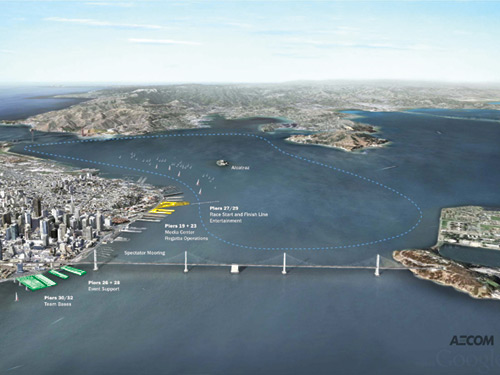
It’s a mad dash at San Francisco City Hall to put all the pieces together in preparation for the America’s Cup, the prestigious regatta that will culminate in the summer of 2013 along the city’s northern waterfront. But once that spectacle is over, the biggest impact of the event will be a massive, lasting, and quite lucrative transformation of the city’s waterfront by a few powerful players, a deal that has been modified significantly since it was approved by the Board of Supervisors.

As negotiations on the fine terms of the development agreements continue to unfold, the future landscape of a huge section of the San Francisco waterfront is in play. If the America’s Cup Event Authority (ACEA) — the race management team controlled by billionaire Oracle CEO Larry Ellison — aims high in its investments into port-owned infrastructure, it has the potential to lock-in leases and long-term development rights for up to nine piers for 66 years, with properties ranging from as far south as Pier 80 at Islais Creek to as far north as Pier 29, home of the popular dinner theater Teatro ZinZanni.

The possibility of securing long-term leases and development rights to Piers 19, 23, and 29 — provided race organizers sink more money into infrastructure improvements — was added to the deal in the last two weeks of 2010, just before San Francisco won its bid to host the world-famous sailing match. The possibility of obtaining rights to portions of two additional piers, 27 and 80, were also added at the last minute. Race organizers and city officials negotiated the final modifications after the Board of Supervisors signed off on the Host City Agreement on Dec. 14, 2010.

Not all board members knew that three additional city-owned piers were being added as possible extensions of the land deal, and those properties weren’t mentioned in any of the earlier documents that went through a public review process in the months leading up to the approval of the agreement. Yet Board President David Chiu was evidently appraised of how the last-minute negotiations were unfolding and he quietly offered his support.

On Dec. 22, 2010, Chiu sent a letter to Russell Coutts, CEO of Oracle Racing, the team that won the 33rd America’s Cup and is an integral player in laying plans for the 34th. “I understand that Mayor Newsom and the city’s team have been working directly with you since the board’s approval of the Host City Agreement to make the necessary adjustments and clarifications to the agreement to ensure it meets your needs. I am aware of these changes and support them,” Chiu wrote in a letter that was not shared with his fellow supervisors.

Quoting from a section of the agreement that explains that ACEA is ensured long-term development opportunities in exchange for funding improvements and upgrades, Chiu’s letter went on, “This section specifically applies to … Piers 30-32 and Seawall Lot 330, as well as Piers 26 and 28, and if mutually agreeable could apply to Piers 19, 23, and 29. To obtain the community’s support and agreement for future development rights to piers on the northern waterfront, you will need to invest in a strong partnership with the community … I am prepared to help facilitate that relationship.”

Former Board President and Democratic County Central Committee Chair Aaron Peskin, who has closely followed the America’s Cup land deal and has for decades been actively involved in land-use issues along the northern waterfront, interpreted Chiu’s letter to Coutts as a backroom deal.

“There is no question that the president of the board, without the authorization of the majority of the Board of Supervisors, went behind closed doors, out of view of the public, and committed to [long-term development] for three piers,” Peskin said, highlighting the fact that no other supervisors were copied on Chiu’s letter. “That he has done this unilaterally, without the consent of a board’s vote at a board meeting, is not good governance. If there’s one body that’s supposed to do all of its work for the public, it’s the Board of Supervisors.”

Chiu defended the letter by emphasizing the part that asked for a partnership with the community. “This was all within the broader framework of the Host City Agreement that we signed in the middle of December,” he told the Guardian when presented with the letter during an interview and asked to comment. “They had questions about, well, can we develop on these other piers? And what I said was, ‘Well, as I think the language here specifically says if mutually agreed upon … you could possibly do this.’ And we specifically said you’ll need to invest in a strong partnership with the community.”

He added that specific development plans would still have to be approved by the Board of Supervisors. Proposals for each parcel will be made in separate Disposition and Development Agreements, subject to board approval.

On hearing Chiu’s response, Peskin was still critical of the lack of transparency in this deal: “My position is, if it walks like a duck and quacks like a duck, it’s a duck.”

Meanwhile, an analysis prepared by Budget Analyst Harvey Rose in mid-March suggests that the final amendments did reflect new commitments for the city that go well beyond what was discussed publicly. “No city approval of the Event Authority’s selection of Pier 29 for a long-term lease is required in the agreement, as modified by the Mayor’s Office and other city officials,” the Budget Analyst’s report notes. “This entire provision … was not included in the agreement of Dec. 14, 2010 as previously approved by the Board of Supervisors.”

Brad Benson, special projects manager at the Port of San Francisco, explained the Pier 29 provision slightly differently. “The city would have to be acting in its reasonable discretion to say no,” he said, emphasizing that ACEA would have to invest well above the $55 million threshold to obtain rights to Pier 29.

At a time when a new era of civility is being hailed at City Hall, two elements of the city family are essentially agreeing to disagree on the broader question of whether the 11th-hour modifications to the deal resulted in a greater hit to city coffers than supervisors approved. While Rose stated in public hearings that the modifications would deal a greater blow to city revenues, City Attorney Dennis Herrera, a mayoral candidate, has stood with the Office of Economic and Workforce Development in his assessment that the changes did not significantly exceed the scope of what was approved by the board. Fred Brousseau of the Budget & Legislative Analyst chalked it up to “a difference in opinion,” reflecting “the auditor’s standard for materiality versus the city attorney’s.”

Legalese aside, it’s clear that the race organizers stand to gain some highly desirable waterfront property in exchange for investing in the piers and bringing an event to the city that is expected to generate substantial economic activity. If ACEA invests a minimum threshold of $55 million for infrastructure improvements, it can likely secure long-term development rights for Piers 30-32, a 13-acre waterfront parking lot where Red’s Java House is located, plus win the title to Seawall Lot 330, a two-acre triangular parcel along the Embarcadero that has been discussed as the site of a future luxury condo tower that has already cleared city approval for that use.

A high-rise next door to Seawall Lot 330, called the Watermark, currently has condos going for $1.2 million apiece on average, according to a calculation of online listings. Under the America’s Cup deal approved by the board, the port would have received 1 percent of each condo sale plus 15 percent of transfers or subleases made by ACEA. “Such required payments … have been entirely removed from the agreement as modified by the Mayor’s Office and other city officials,” the budget analyst’s report points out.

Waterfront real estate in San Francisco, always expensive, has recently soared to even higher values. According to a June 22 article in the San Francisco Business Times, Farallon Capital Management recently put up for sale a 3.36-acre parcel in Mission Bay zoned for life science and tech office space — and it’s expected to fetch around $90 million. This past April, BRE Properties shelled out $41.4 million for two Mission Bay residential development sites entitled for 360 residential units, and last year, Salesforce.com acquired a 14-acre Mission Bay property for $278 million, or $140 per buildable square foot.

By comparison, the $55 million that ACEA must invest to be granted a two-acre waterfront parcel on the Embarcadero, plus long-term rights to lease and develop an additional 13 acres across the street, sounds like a good deal. “We’re using an appraisal approach. It’s not going to ridiculously undervalue the property,” Benson said. Under changes made to the deal after the board signed off, base rent for Piers 30-32 will be $4 per square foot of building area. Rent for all other possible piers will be $6 per square foot of building area.

The ability to transfer city-owned Seawall Lot 330 outright to the ACEA is predicated on the approval by the State Lands Commission to strip that property of constraints placing it, like all coastal properties, in the public trust. Lt. Gov. Gavin Newsom, who pushed the deal as mayor, is one of the three members of that commission.

Under a provision in the agreement, the ACEA’s $55 million investment will be applied toward rent credits on city-owned parcels — and depending on how much the company puts in, that credit balance can increase by 11 percent every year. Benson described this as a typical arrangement, saying, “It’s not out of the line with other rent-credit deals the port has done.”

Two former mayoral advisors from OEWD, Kyri McClellan and Alexandra Lonne, have since gone to work for the America’s Cup Organizing Committee (ACOC), a nonprofit entity working in tandem with the city and the ACEA to secure financial commitments for hosting the race. Newsom has also been named ambassador at large for the America’s Cup effort.

Meanwhile, an OEWD budget proposal includes $819,000 in staffing costs for four management-level positions relating to America’s Cup planning. A refund is expected in the form of $12 million that the ACOC has committed to fundraise by the end of 2011, with an ultimate target of $32 million by 2013. So far, ACOC has only raised $2 million, but plans to seek higher donations once it gains tax-exempt status. “I think the $2 million is a really good start,” said Mike Martin, who transferred in February from the San Francisco Public Utilities Commission to OEWD to direct the America’s Cup effort. “They’re building a foundation for an effective pitch.”

For now, city departments are scrambling toward completing the environmental review process for the infrastructure improvements, expected to be complete sometime in November. “It’s incredibly compressed,” Martin said. “There’s a lot to be done in a very short time.”

Peskin, for his part, seemed be keeping a watchful eye on the unfolding America’s Cup plans. “What we, the citizens of San Francisco, have to watch out for is that we’re not being taken advantage of,” he said. “We’ve got to be vigilant that we don’t get taken to the cleaners.”

Stage Listings

0

Stage listings are compiled by Guardian staff. Performance times may change; call venues to confirm. Reviewers are Robert Avila, Rita Felciano, and Nicole Gluckstern. Submit items for the listings at listings@sfbg.com. For further information on how to submit items for the listings, see Picks. 

THEATER

OPENING

2012: The Musical! Dolores Park, 19th St at Dolores, SF; www.sfmt.org. Free. Sat/2-Mon/4, 2pm. Continues through Sept. 25 at various Bay Area venues. San Francisco Mime Troupe mounts their annual summer musical; this year’s show is about a political theater company torn between selling out and staying true to its anti-corporate roots.

BAY AREA

All My Children Cabaret at Marsh Berkeley, 2120 Allston, Berk; www.themarsh.org. $20-50. Previews Fri/1, 8pm. Opens Sat/2, 8:30pm. Runs Fri, 8pm; Sat, 8:30pm. Through July 23. Not the soap opera — it’s Seattle Improv co-founder Matt Smith in his comedy about a middle-aged man with boundary issues.

ONGOING

All Atheists Are Muslim Stage Werx, 533 Sutter, SF; www.brownpapertickets.com. $20. Runs Sun, 7pm. Through July 10. Zahra Noorbakhsh returns with her timely comedy.

Assisted Living: The Musical Imperial Palace, 818 Washington, SF; 1-888-88-LAUGH, www.assistedlivingthemusical.com. $79.59-99.50 (includes dim sum). Sat-Sun, noon (also Sun, 5pm). Through July 31. Rick Compton and Betsy Bennett’s comedy takes on “the pleasures and perils of later life.”

The Book of Liz Custom Made Theatre, 1620 Gough, SF; www.custommade.org. $10-29. Thurs-Sat, 8pm; Sun, 7pm. Through July 31. Custom Made Theatre performs David and Amy Sedaris’ comedy about an unconventional nun.

*Fighting Mac! Thick House Theatre, 1695 18th St, SF; 1-800-838-3006, www.therhino.org. $15-30. Wed/29-Sat/2, 8pm; Sun/3, 3pm. Theatre Rhinoceros artistic director John Fisher’s new play is (characteristically for the author of Combat! and Special Forces, among others) too subtly intelligent and far-reaching to fit comfortably under the didactic subject heading “gays in the military.” Nevertheless, that is the terrain it scouts, with neat skill and satisfyingly messy results. It’s the story of a young West Point–bound gay Berkeley student (an able, likeable Joshua Lomeli) with a fixation on the historical figure of Hector “Fighting Mac” Macdonald (a strong William J. Brown III), a self-made Victorian-era British Major-General who committed suicide after being accused of homosexuality. Mac shares the stage as alter-ego or mentor to the young man, counseling him to let go of his faith in feelings for a hard-headed calculation of advantage in a world where both love and war are often no more than means to social ends. In the paralleling of stories Fisher draws out with humor, knowing winks, and an underlying emotional unease the implications of certain colonized key words, like loyalty, honor, and love — and finds them too often a long way from home. Not for the first time, director Fisher also gets fine, open, and shrewd performances from a cast that includes several Berkeley students. (Avila)

“Fury Factory 2011” Various venues and prices; www.brownpapertickets.com. Through July 12. Over 30 Bay Area and national companies participate in this bi-annual theater festival.

Indulgences in the Louisville Harem Phoenix Theatre, 414 Mason, SF; 1-800-838-3006, www.offbroadwaywest.org. $20-40. Thurs-Sat, 8pm. Through July 30. Two spinster sisters find unlikely beaux in Off Broadway West Theatre’s production of John Orlock’s play.

The Pride New Conservatory Theatre Center, 25 Van Ness, SF; (415) 861-8972, www.nctcsf.org. $24-40. Wed-Sat, 8pm; Sun, 2pm. Through July 10. New Conservatory Theatre Center performs the West Coast premiere of Alexi Kaye Campbell’s love-triangle time warp drama.

*Vice Palace: The Last Cockettes Musical Thrillpeddlers’ Hypnodrome, 575 10th St; (800) 838-3006, www.brownpapertickets.com. $30-35. Fri-Sat, 8pm; Sun, 7pm. Through July 31. Hot on the high heels of a 22-month run of Pearls Over Shanghai, the Thrillpeddlers are continuing their Theatre of the Ridiculous revival with a tits-up, balls-out production of the Cockettes’ last musical, Vice Palace. Loosely based on the terrifyingly grim “Masque of the Red Death” by Edgar Allan Poe, part of the thrill of Palace is the way that it weds the campy drag-glamour of Pearls Over Shanghai with the Thrillpeddlers’ signature Grand Guignol aesthetic. From an opening number set on a plague-stricken street (“There’s Blood on Your Face”) to a charming little cabaret about Caligula, staged with live assassinations, an undercurrent of darkness runs like blood beneath the shameless slapstick of the thinly-plotted revue. As plague-obsessed hostess Divina (Leigh Crow) and her right-hand “gal” Bella (Eric Tyson Wertz) try to distract a group of stir-crazy socialites from the dangers outside the villa walls, the entertainments range from silly to salacious: a suggestively-sung song about camel’s humps, the wistful ballad “Just a Lonely Little Turd,” a truly unexpected Rite of Spring-style dance number entitled “Flesh Ballet.” Sumptuously costumed by Kara Emry, cleverly lit by Nicholas Torre, accompanied by songwriter/lyricist (and original Cockette) Scrumbly Koldewyn, and anchored by a core of Thrillpeddler regulars, Palace is one nice vice. (Gluckstern)

What Mamma Said About Down There SF Downtown Comedy Theater, 287 Ellis, SF; www.sfdowntowncomedytheater.com. $15. Thurs-Sat, 8pm. Through August 20. Sia Amma returns with her solo comedy.

BAY AREA

Down a Little Dirt Road Berkeley City Club, 2315 Durant, Berk; www.justtheater.org. $15-30. Thurs/30-Sat/2, 8pm; Sun/3, 5pm. A naturalistic family portrait twists itself into a supernatural love knot in Erin Marie Bregman’s first full-length play Down a Little Dirt Road, directed by Molly Aaronson-Gelb. Dad (Anthony Nemirovsky), an earthquake researcher, has moved his family to Parkfield, Calif. for work, but Mom (Lisa Morse) is not with them. Did she die in a plane crash on September 11? Did she vanish into another dimension? Daughter Alice (Alona Bach) has plenty of theories to share, each more earnestly improbable than the last. She is also plagued with recurring nightmares, an unsettling trait she shares with her father. Together they dream of wandering, lost, in a shadow realm, gradually revealed to hold the shade of the missing mother, trying desperately to get back to her daughter while a menacing authority figure (Ryan Tasker) tries to literally pry her memories away. Alona Bach delivers a guileless, pitch-perfect performance as Alice, and her relationship with her stage parents is comfortable and genuine. Berman is clearly playing with the convention of the family-oriented horror story, much like the referenced Roald Dahl classic The Witches, but the ghostly elements prove somewhat problematic in terms of staging and clarity, and while there are a few moments with some serious spine-tingling potential, the overall effect is somewhat flat. (Gluckstern)

East 14th: True Tales of a Reluctant Player Marsh Berkeley, 2120 Allston, Berk; www.themarsh.org. $20-50. Sat, 8:30pm; Sun, 7pm. Through Aug. 7. Don Reed’s hit solo comedy receives one last extension before Reed debuts his new show (a sequel to East 14th) in the fall.

Metamorphosis Aurora Theatre, 2081 Addison, Berk; (510) 843-4822, www.auroratheatre.org. $10-55. Tues, 7pm; Wed-Sat, 8pm; Sun, 2 and 7pm. Through July 17. Aurora Theatre Company performs a terrifying yet comic adaptation of Kafka’s classic by David Farr and Gísli Örn Gardarsson.

A Raisin in the Sun Pear Avenue Theatre, 1220 Pear, Mtn. View; (650) 254-1148, www.thepear.org. $15-30. Thurs-Sat, 8pm; Sun, 2pm. Through July 10. Lorraine Hansberry’s classic play comes to life on the Pear Avenue Theatre stage.

*Working for the Mouse La Val’s Subterranean, 1834 Euclid, Berk; www.impacttheatre.com. $10-20. Thurs-Sun, 8pm. Through July 8. It might not come as a surprise to hear that even “the happiest place on earth” has a dark side, but hearing Trevor Allen describe it during this long overdue reprise of 2002’s Working for the Mouse, will put a smile on your face as big as Mickey’s. With a burst of youthful energy, Allen bounds onto the tiny stage of Impact Theatre to confess his one-time aspiration to never grow up — a desire which made auditioning for the role of Peter Pan at Disneyland a sensible career move. But in order to break into the big time of “charactering,” one must pay some heavy, plush-covered dues. As Allen creeps up the costumed hierarchy one iconic cartoon figure at a time, he finds himself unwittingly enmeshed in a world full of backroom politics, union-busting, drug addled surfer dudes with peaches-and-cream complexions, sexual tension, showboating, job suspension, Make-A-Wish Foundation heartbreak, hash brownies, rabbit vomit, and accidental decapitation. Smoothly paced and astutely crafted, Working for the Mouse will either shatter your blissful ignorance or confirm your worst suspicions about the corporate Disney machine, but either way, it will probably make you treat any “Casual Seasonal Pageant Helpers” you see running around in their sweaty character suits with a whole lot more empathy. (Gluckstern)

PERFORMANCE/DANCE

“The Betrothed” Cowell Theater, Fort Mason Center, Marina at Laguna, SF; (415) 788-7142, ext. 18. Thurs, 7pm. Free (RSVP required due to limited space). The Italian Cultural Institute and the Museo Italo Americano present this theatrical performance based on Alessandro Manzoni’s novel of the same name.

“The Book” SOMArts Cultural Center, 934 Brannan, SF; www.somarts.org. Fri/1 and July 29, 6pm. Free. Also July 7, 14, and 21, 8pm. $12. In conjunction with a new dance-based exhibition by Avy K Productions, SOMArts presents a series of new work featuring Bay Area artists Carol Swann, Ken Ueno, Matt Ingalls, Jesse Hewit, and more.

“Queer Rebels of the Harlem Renaissance” African American Art and Culture Complex, 762 Fulton, SF; www.queerrebels.com. Fri-Sat, 7:30pm. $15-25. The National Queer Arts Festival presents this show of new work by 16 LGBT African American artists.

“The Romane Event Comedy Show” Make-Out Room, 3225 22nd St, SF; www.pacoromane.com. Wed, 7:30pm. $7. Comedian Paco Romane hosts this showcase of up-and-coming stand-up talent.

San Francisco Ethnic Dance Festival Yerba Buena Center for the Arts, Novellus Theater, 700 Howard, SF; www.sfethnicdancefestival.org. Fri-Sat, 8pm (also Sat, 3pm); Sun, 3pm. $18-58. The annual festival wraps up in a final weekend of dance from Haiti, Spain, China, Hawaii, and global points beyond.

“This Twisted Tale” Dance Mission Theater, 3316 24th St, SF; www.brownpapertickets.com. Fri-Sat, 8pm. $20. Paper Doll Militia performs their latest aerial theater production.

“Will Franken’s Beautiful Birthday Bash: .38 Special” Purple Onion, 140 Columbus, SF; (415) 956-1653. 8pm, $20. Comedian Will Franken performs a new show of vignettes in honor of his 38th birthday. 


Rep Clock

0

Schedules are for Wed/29–Tues/5 except where noted. Director and year are given when available. Double and triple features are marked with a •. All times are p.m. unless otherwise specified.

BALBOA 3620 Balboa, SF; www.balboamovies.com. $20. “Opera, Ballet, and Shakespeare in Cinema:” Rigoletto, performed by Placido Domingo, Wed, 7:30.

CASTRO 429 Castro, SF; (415) 621-6120, www.castrotheatre.com. $7.50-10. •The Blue Angel (von Sternberg, 1930), Wed, 3, 7, and The Devil is a Woman (von Sternberg, 1935), Wed, 5:15, 9. Beautiful Darling: The Life and Times of Candy Darling, Andy Warhol Superstar (Rasin, 2010), Thurs, 7, 9:15. “Peaches Christ presents:” Purple Rain (Magnoli, 1984), Fri, 8. With star Apollonia in person; for tickets ($23) and more info, visit www.peacheschrist.com. “Scary Cow’s 14th Indie Film Festival,” Sat, 3. For more info, visit www.scarycow.com. Call for Sun-Tues program info.

CHRISTOPHER B. SMITH RAFAEL FILM CENTER 1118 Fourth St, San Rafael; (415) 454-1222, www.cafilm.org. $10.25. Buck (Meehl, 2011), call for dates and times. The Tree of Life (Malick, 2011), call for dates and times. The Trip (Winterbottom, 2010), call for dates and times. Page One (Rossi, 2011), July 1-7, call for times.

“FILM NIGHT IN THE PARK” This week: Creek Park, 451 Sir Francis Drake, San Anselmo; (415) 272-2756, www.filmnight.org. Donations accepted. Breaking Away (Yates, 1979), Fri, 8; The Princess Bride (Reiner, 1987), Sat, 8.

FOUR STAR 2200 Clement, SF; www.lntsf.com. $10. “Asian Movie Madness” •Ip Man 2 (Yip, 2010), and Tiger Cage 2 (Yuen, 1990), Thurs, call for times.

PACIFIC FILM ARCHIVE 2575 Bancroft, Berk; (510) 642-5249, www.bampfa.berkeley.edu. $5.50-9.50. “Arthur Penn: A Liberal Helping:” The Missouri Breaks (1976), Wed, 7. “Japanese Divas:” The Life of Oharu (Mizoguchi, 1952), Thurs, 7; Rashomon (Kurosawa, 1950), Sat, 6:30; Sansho the Bailiff (Mizoguchi, 1954), Sat, 8:20. “Going South: American Noir in Mexico:” Ride the Pink Horse (Montgomery, 1947), Fri, 7; Where Danger Lives (Farrow, 1950), Fri, 9:10.

RED VIC 1727 Haight, SF; (415) 668-3994; www.redvicmoviehouse.com. $6-10. Orgasm Inc. (Canning, 2011), Wed-Thurs, 7:15, 9:15. Rango (Verbinski, 2011), Fri-Sun, 7:15, 9:20 (also Sat-Sun, 2, 4:15). Vertigo (Hitchcock, 1958), July 5-6, 7, 9:25 (also July 6, 2).

ROXIE 3117 and 3125 16th St, SF; (415) 863-1087, www.roxie.com. $5-9.75. Making the Boys (Robey, 2009), Wed, 9; Thurs, 9:15. Meek’s Cutoff (Reichardt, 2010), Wed, 7. “San Francisco United Film Festival,” Wed-Thurs, 6. Yoga Is (Bryant, 2011), Thurs, 7. Happy (Belic, 2011), Fri-Sun, 7, 8:30 (also Sat-Sun, 3:30, 5:15); July 4-7, 7 and 9.

SAN FRANCISCO PUBLIC LIBRARY Koret Auditorium, 100 Larkin, SF; www.greenplanetfilms.org. Free. Green (Rouxel, 2009), Wed, 6:15.

“TEMESCAL STREET CINEMA 2011” 49th St at Telegraph, Oakl; www.temescalstreetcinema.com. Free. “Animation + Experimentation,” short films, Thurs, 8:45. With music by Amber Gougis at 8pm.

TOP OF THE MARK InterContinental Mark Hopkins, One Nob Hill, SF; www.topofthemark.com. Free. Dirty Harry (Siegel, 1971), Tues, 7:30. YERBA BUENA CENTER FOR THE ARTS 701 Mission, SF; (415) 978-2787, www.ybca.org. $6-8. Centre Forward (Pak, 1978/2010), Thurs, 7:30.

Music Listings

0

Music listings are compiled by Cheryl Eddy. Since club life is unpredictable, it’s a good idea to call ahead to confirm bookings and hours. Prices are listed when provided to us. Submit items for the listings at listings@sfbg.com. For further information on how to submit items for the listings, see Picks.

WEDNESDAY 29

ROCK/BLUES/HIP-HOP

Autumn Sky, Rabbit Quinn Hotel Utah. 8pm, $10.

Bell’s Roar, Quiet Coyote El Rio. 9pm, $5.

Burlap to Cashmere, Rob Drabkin Café Du Nord. 8pm, $10.

La Corde, Octant, Tender Frame Hemlock Tavern. 9pm, $6.

Drift, Il Gato, Matinees Bottom of the Hill. 9pm, $8.

Dropkick Murphys, Chuck Ragan, Parkington Sisters Warfield. 7:30pm, $32.

David Landon Biscuits and Blues. 8 and10pm, $15.

Lumps, Th Mrcy Hot Sprngs, Meat Packers Knockout. 10pm, $5.

Magical School Bus, Viking Moses, Assateague, Eriksen Goetz Kimo’s. 9pm, $6.

Vows, Rosa Grande, Cellar Doors Elbo Room. 9pm, $6.

JAZZ/NEW MUSIC

Cat’s Corner with Nathan Dias and Christine Savanna Jazz. 9pm, $10.

Cosmo Alleycats Le Colonial, 20 Cosmo, SF; www.lecolonialsf.com. 7pm.

Dink Dink Dink, Gaucho, Michael Abraham Amnesia. 7pm, free.

“Guerrilla Cabaret” Martuni’s, 4 Valencia, SF; www.dragatmartunis.com. 7pm, $5. With Tom Shaw Trio.

Jazz organ party with Graham Connah Royal Cuckoo, 3202 Mission, SF; www.royalcuckoo.com. 7:30pm, free.

“Kim Nalley Sings Nina Simone” Rrazz Room. 8pm.

Ben Marcato and the Mondo Combo Top of the Mark. 7:30pm, $10.

Michael Parsons Revolution Café, 3248 22nd St, SF; (415) 642-0474. 8:30pm, free.

Quartet San Francisco Yoshi’s San Francisco. 8pm, $20.

DANCE CLUBS

Booty Call Q-Bar, 456 Castro, SF; www.bootycallwednesdays.com. 9pm. Juanita Moore hosts this dance party, featuring DJ Robot Hustle.

Buena Onda Little Baobab, 3388 19th St, SF; (415) 643-3558. 10pm, free. Funk, swing, rare grooves, and more with Dr. Musco and guests.

Full-Step! Tunnel Top. 10pm, free. Hip-hop, reggae, soul, and funk with DJs Kung Fu Chris and Bizzi Wonda.

Mary Go Round, the New Generation Lookout, 3600 16th St, SF; www.lookoutsf.com. 10pm, $5. Drag with Suppositori Spelling, Mercedez Munro, and Ginger Snap.

No Room For Squares Som., 2925 16th St, SF; (415) 558-8521. 6-10pm, free. DJ Afrodite Shake spins jazz for happy hour.


THURSDAY 30

ROCK/BLUES/HIP-HOP

A B and the Sea, Young Digerati Rickshaw Stop. 9pm, $10. With Popscene DJs.

Devil’s Own, Sweet Chariot, Gypsy Moonlight Band Bottom of the Hill. 9pm, $8.

Bobby Joe Ebola and the Children MacNuggets, Dead Westerns, Reaction, Emily’s Army, Freedom Club Thee Parkside. 9:30pm, $8.

Emily Anne, Patsychords, Bye and Byes Café Du Nord. 8pm, $10.

Female Trouble, Laura Jean, Tomorrow Men El Rio. 8pm, $7.

Hashishen Knockout. 9:30pm.

Howlin Rain, Assemble Head in Sunburst Sound, Meg Baird Hemlock Tavern. 9pm, $8.

Dom Kennedy, DJ Jack Slim’s. 8pm, $18.

Johnny Rawls Biscuits and Blues. 8 and 10pm, $20.

Sir Lord Von Raven, Apache, Warm Blood Amnesia. 9pm, $7-10.

Tubes Yoshi’s San Francisco. 8pm, $28.

JAZZ/NEW MUSIC

Cosmo Alleycats with Ms. Emily Wade Adams Blondie’s, 540 Valencia, SF; (415) 864-2419. 9pm, free.

Dave Parker Quartet Purple Onion, 140 Columbus, SF; (415) 956-1653. 7:30-10:30pm, free.

Dave Scott Quartet Revolution Café, 3248 22nd St, SF; (415) 642-0474. 8:30pm, free.

“Kim Nalley Sings Nina Simone” Rrazz Room. 8pm.

Organsm featuring Jim Gunderson and “Tender” Tim Shea Bollyhood Café. 6:30-9pm, free.

Pink Martini with San Francisco Symphony Davies Symphony Hall, 201 Van Ness, SF; www.sfsymphony.org. 8pm, $20-115.

Savanna Jazz Jam Session Savanna Jazz. 7:30pm, $5.

Soul jazz party with Chris Siebert Royal Cuckoo, 3202 Mission, SF; www.royalcuckoo.com. 7:30pm, free.

Stompy Jones Top of the Mark. 7:30pm, $10.

DANCE CLUBS

Afrolicious Elbo Room. 9:30pm, $5. DJs Pleasuremaker and Señor Oz spin Afrobeat, Tropicália, electro, samba, and funk.

Club Cornhole Stud. 9pm, $3.99. With DJ Phatima Unclear, DJ MF, Lady Bear, Broads, Joan Crawford’s Old Baguettes, and more.

Culture Corner Koko Cocktails, 1060 Geary, SF; www.kokococktails.com. 10pm, free. Roots reggae, dub, rocksteady, and classic dancehall with DJ Tomas, Yusuke, Vinnie Esparza, and Basshaka and ILWF.

Guilty Pleasures Gestalt, 3159 16th St, SF; (415) 560-0137. 9:30pm, free. DJ TophZilla, Rob Metal, DJ Stef, and Disco-D spin punk, metal, electro-funk, and 80s.

1984 Mighty. 9pm, $2. The long-running New Wave and 80s party features video DJs Mark Andrus, Don Lynch, and celebrity guests.

Supersonic Bollyhood Café. 10pm, $5. Fly the friendly skies with SF’s Tasty Crew, spinning wold beats from the Balkans, Brazil, Colombia, and more.

Thursday Special Tralala Revolution Café, 3248 22nd St, SF; (415) 642-0474. 5pm, free. Downtempo, hip-hop, and freestyle beats by Dr. Musco and Unbroken Circle MCs.

Thursdays at the Cat Club Cat Club. 9pm, $6 (free before 9:30pm). Two dance floors bumpin’ with the best of 80s mainstream and underground with Dangerous Dan, Skip, Low Life, and guests.

Tropicana Madrone Art Bar. 9pm, free. Salsa, cumbia, reggaeton, and more with DJs Don Bustamante, Apocolypto, Sr. Saen, Santero, and Mr. E.


FRIDAY 1

ROCK/BLUES/HIP-HOP

Battlehooch, Ghost and the City, Sun Hop Fat, Panhandlers Independent. 9pm, $13.

Grady Champion Biscuits and Blues. 8 and 10pm, $20.

Donkeys, He’s My Brother She’s My Sister, Red Pony Clock Hemlock Tavern. 9:30pm, $8.

Giant Squid, Judgement Day, Cormorant Thee Parkside. 9pm, $8.

Group Doueh, Nick Waterhouse and the Tarots, Mark Gergis DJ set Rickshaw Stop. 9pm, $14.

Scene of Action, Fighting the Villain, 5606, Hometown Bottom of the Hill. 9:30pm, $10.

Sonny and the Sunsets, Calvin Johnson, Sandwitches, Wounded Lion Great American Music Hall. 8pm, $13.

Stymie and the Pimp Jones Luv Orchestra, Gun and Doll Show, Last Men on Earth, Naked Fiction Café Du Nord. 8pm, $10.

JAZZ/NEW MUSIC

Black Market Jazz Orchestra Top of the Mark. 9pm, $10.

“Kim Nalley Sings Nina Simone” Rrazz Room. 8pm.

Ottmar Liebert and Luna Negra Yoshi’s San Francisco. 8 and 10pm, $25-30.

Pink Martini with San Francisco Symphony Davies Symphony Hall, 201 Van Ness, SF; www.sfsymphony.org. 8pm, $20-115.

Soul jazz party with Jules Broussard and Chris Siebert Royal Cuckoo, 3202 Mission, SF; www.royalcuckoo.com. 7:30pm, free.

DANCE CLUBS

Afro Bao Little Baobab, 3388 19th St, SF; (415) 643-3558. 10pm, $5. Afro and world music with rotating DJs including Stepwise, Steve, Claude, Santero, and Elembe.

Derrick Carter Public Works, 161 Erie, SF; www.publicsf.com. 9:30pm, $10-15. With Honey Soundsystem DJs, Rouzbeh, Galen, and Chris Smith.

Duniya Dancehall Blue Macaw, 2565 Mission, SF; (415) 920-0577. 10pm, $10. With live performances by Duniya Drum and Dance Co. and DJs dub Snakr and Juan Data spinning bhangra, bollywood, dancehall, African, and more.

Haight Street Hop Milk. 10pm, $5. With DJs Tanoa Samoa Boy and Rockin’ Raul spinning vintage 45s, plus burlesque dancers and more.

Low End Theory 103 Harriet, SF; www.1015.com. 10pm, $15. With TOKiMONSTA, Death Grips, and Free the Robots.

Oldies Night Knockout. 9pm, $2-4. Doo-wop, one-hit wonders, soul, and more with DJs Primo, Daniel, and Lost Cat.

120 Minutes Elbo Room. 10pm. Witch house with DJs Whitch, Nako, and oOoOO.

Strangelove: Military Fashion Show Cat Club. 9:30pm, $3-7. Goth and industrial with DJs Tomas Diablo, Joe Radio, Orko, and Xander. Military or military fetish attire encouraged.

That 90s Dance Party DNA Lounge. 9pm, $7-9. Pop, rock, and alternative from the 90s with BaconMonkey, Omar, Sage, and Sparkle.

Vintage Orson, 508 Fourth St, SF; (415) 777-1508. 5:30-11pm, free. DJ TophOne and guest spin jazzy beats for cocktalians.


SATURDAY 2

ROCK/BLUES/HIP-HOP

Animals and Men, Grass Widow, Rank/Xerox Bottom of the Hill. 10pm, $10.

Attitude Adjustment, Psychosomatic, Zombie Holocaust, Abrupt Slim’s. 8:30pm, $13.

Coliseum, Futur Skullz, Blown to Bits, Pins of Light Thee Parkside. 9:30pm, $8.

Dominique Leone, Kapowski, Dinosaur Feathers Amnesia. 9pm, $7-10.

Lost Puppy Thee Parkside. 3pm, free.

Lumerians, Young Prisms, Bronze Great American Music Hall. 9pm, $13.

Le Panique, Shell Corporation, Survival Guide Café Du Nord. 9pm, $12.

Royal Baths, Nucular Animals, Psychic Feline, Dadfag Hemlock Tavern. 9pm, $7.

Ty Segell, Audacity, Mikal Cronin, No Boss Independent. 9pm, $10.

Sweet Baby J’ai Biscuits and Blues. 8 and 10pm, $20.

JAZZ/NEW MUSIC

“Fillmore Jazz Festival” Fillmore between Jackson and Eddy, SF; www.fillmorejazzfestival.com. 10am-6pm, free.

Jazz organ party with Graham Connah Royal Cuckoo, 3202 Mission, SF; www.royalcuckoo.com. 7:30pm, free.

“Kim Nalley Sings Nina Simone” Rrazz Room. 8pm.

Ottmar Liebert and Luna Negra Yoshi’s San Francisco. 8 and 10pm, $30.

FOLK/WORLD/COUNTRY

“Red, White, and Bluegrass” Music Store, 66 West Portal, SF; www.shelbyashpresents.com. 2-4pm, free. With Kemo Sabe and MilkDrive.

“Red, White, and Bluegrass” Plough and Stars. 9:30pm, $6-10. With Windy Hill and TED.

DANCE CLUBS

Afro Bao Little Baobab, 3388 19th St, SF; (415) 643-3558. 10pm, $5. Afro and world music with rotating DJs including Stepwise, Steve, Claude, Santero, and Elembe.

Bootie SF DNA Lounge. 9pm, $8-15. Mash-ups.

Debaser Knockout. 10pm, $5. Alternative dance party with Jamie Jams and Emdee spinning 90s music.

DJ Grandmaster Flash Yoshi’s San Francisco. 10:30pm, $20.

DJ MartyParty Public Works, 161 Erie, SF; www.publicsf.com. 10pm, $10-12.

Sanafrica Bollyhood Café. 9pm, $7-10. West African and Latin fusion party with Jose Luis, DJ Nado, and DJ Mignane.

Saturday Night Soul Party Elbo Room. 10pm, $10. Sixties soul with DJs Lucky, Phengren Oswald, and Paul Paul.


SUNDAY 3

ROCK/BLUES/HIP-HOP

Blind Willies, Red Weather, Horny Brass Band Make-Out Room. 7:30pm, $8.

Neko Case, Dodos Sigmund Stern Grove, 19th Ave at Sloat, SF; www.sterngrove.org. 2pm, free.

Philistines, Truxton, Excuses for Skipping Bottom of the Hill. 9pm, $10.

Retro Electric Café Du Nord. 9pm, $10.

Th Mrcy Hot Sprngs, Blind Shake Hemlock Tavern. 9:30pm, $7.

Andre Thierry and Zydeco Magic Knockout. 6-10pm, $8. With DJ Dr. Scott.

Twice As Good Biscuits and Blues. 8 and 10pm, $15.

JAZZ/NEW MUSIC

“Fillmore Jazz Festival” Fillmore between Jackson and Eddy, SF; www.fillmorejazzfestival.com. 10am-6pm, free.

Jazz organ party with Lavay Smith and Chris Siebert Royal Cuckoo, 3202 Mission, SF; www.royalcuckoo.com. 7:30pm, free.

Kally Price Old Blues and Jazz Band, Emperor Norton’s Jazz Band Amnesia. 9pm, $5.

“Kim Nalley Sings Nina Simone” Rrazz Room. 7pm.

Ottmar Liebert and Luna Negra Yoshi’s San Francisco. 7 and 9pm, $25.

Tom Lander Duo Medjool, 2522 Mission, SF; www.medjoolsf.com. 6-9pm, free.

DANCE CLUBS

Batcave Cat Club. 10pm, $5. Death rock, goth, and post-punk with Steeplerot Necromos and c_death.

Boom DNA Lounge. 9pm, $12-15. House and hip-hop with Stanley Frank, Joshua J., Sidekick, and Juanita More, plus the Some Thing Drag Show.

Dub Mission Elbo Room. 9pm, $6. Dub, roots, and classic dancehall with Vinnie Esparza and Maneesh the Twister.

45 Club: 100 Yards of Funky Soul Records Knockout. 10pm, $2. Soul, funk, and more with Dirty Dishes, English Steve, and dX the Funky Gran Paw.

Ceremony City Nights, 715 Harrison, SF; www.sfclubs.com. 5pm-midnight, $40. With Moto Blanco, Jay Santos, and DJ Grind.

Jock Lookout, 3600 16th St, SF; www.lookoutsf.com. 3pm, $2. Raise money for LGBT sports teams while enjoying DJs and drink specials.

La Pachanga Blue Macaw, 2565 Mission, SF; www.thebluemacawsf.com. 6pm, $10. Salsa dance party with live Afro-Cuban salsa bands.


MONDAY 4

ROCK/BLUES/HIP-HOP

“El Rio Big Time Freedom Festival” El Rio. 3:30pm, $8. With John Vanderslice, Low Red Land, Finn Figgins, Tartufi, Whisperlights, and Walking In Sunlight.

DANCE CLUBS

Death Guild DNA Lounge. 9:30pm, $3-5. Gothic, industrial, and synthpop with Joe Radio, Decay, and Melting Girl. This week: wear a kilt or plaid skirt and get in free.

M.O.M. Madrone Art Bar. 6pm, free. DJs Timoteo Gigante, Gordo Cabeza, and Chris Phlek playing all Motown every Monday.

Recovery: 4th of July Edition Lookout, 3600 16th St, SF; www.lookoutsf.com. 3-8pm, free. Hostess Pollo Del Mar serves “jello injectors” as DJ Guy Ruben spins.

Sausage Party Rosamunde Sausage Grill, 2832 Mission, SF; (415) 970-9015. 6:30-9:30pm, free. DJ Dandy Dixon spins vintage rock, R&B, global beats, funk, and disco at this happy hour sausage-shack gig.


TUESDAY 5

ROCK/BLUES/HIP-HOP

Horsefly, Kate Fiano El Rio. 7pm, free.

Ted Nugent, Brent James and the ContraBand Independent. 8pm, $55.

Paul Collins Beat, King Lollipop, Garbo’s Daughter, DJ Shindog Thee Parkside. 8pm, $8.

Religious Girls, Zorch, Primary Colors Hemlock Tavern. 9pm, $6.

J-Roddy Walston and the Business, Maxim Ludwig and the Santa Fe Seven Café Du Nord. 8pm, $12.

 

Film Listings

0

Film listings are edited by Cheryl Eddy. Reviewers are Kimberly Chun, Michelle Devereaux, Peter Galvin, Max Goldberg, Dennis Harvey, Johnny Ray Huston, Louis Peitzman, Lynn Rapoport, Ben Richardson, and Matt Sussman. For rep house showtimes, see Rep Clock. For first-run showtimes, see Movie Guide.

OPENING

Happy Happy, a documentary by Roko Belic (1999’s Genghis Blues), traces the contented lifestyles of men and women around the globe. Manoj Singh is a Kolkata rickshaw driver sustained by his son’s smile. Anne Bechsgaard’s life is enriched by her co-housing community in Denmark. These soothingly sentimental profiles are intercut with commentary from leading neuroscientists and psychologists. They provide a cursory guide to the rare balancing act that is happiness in the 21st century. A brisk 75 minutes, the film is saturated with thought-provoking tidbits (the Bhutan government aims for gross national happiness instead of GDP) and an ambient backing track that’s heavy on the chimes. However, sometimes there’s the sense that these mechanics of happiness aren’t cinematically compelling enough, and that rifling through a couple Wikipedia pages might offer just as much insight. At its best, Happy sparks a reflection on how many of the unofficial criteria for joy one has fulfilled, and suggests ideas for simple happiness boosters. (1:15) Roxie. (David Getman)

Larry Crowne A recently unemployed man (Tom Hanks, who also co-wrote and directs the film) starts attending college, where he promptly becomes hot for teacher (Julia Roberts). (1:39) Four Star, Piedmont, Presidio, Shattuck.

Monte Carlo Selena Gomez, Leighton Meester, and Katie Cassidy play friends who fake their way to an awesome European vacation. (1:48)

Mr. Nice By the second hour of Mr. Nice, star Rhys Ifans and company have exhausted every possible pot smoking flourish. There’s the seductive French inhale by the pool, the suggestive mouth to mouth, the euphoric dragon release in the deserts of Pakistan: all rendered in extreme close-up with improbably thick plumes of white smoke. Mr. Nice is mostly sexy drug use tutorial, though it’s also part biography of real-life drug smuggler Howard Marks. His claim to fame — at least according to the movie’s tagline — is the sheer number of aliases, phone lines, and children he had (43, 89, and 4, respectively). Unexpectedly, it’s the period costuming, cinematography, and the enchanting listlessness of Chloe Sevigny that redeem the film. Mr. Nice is captivatingly interlaced with vintage news and scenery clips from the period and it’s shot in a way that is both hyper-stylized and erratic. Those twists and turns of Marks’s life turn out to be not nearly as suspenseful onscreen as they should be, making the movie less of a traditional drug thriller and more of a mildly interesting reflection on the culture of the period. (2:01) Lumiere, Shattuck. (Getman)

*Page One: Inside the New York Times When Andrew Rossi’s documentary premiered at Sundance this January, word of mouth on it was respectable but qualified, with nearly everyone opining that it was good … just not what they’d been led to expect. What they expected was (in line with the original subtitle A Year Inside the New York Times) a top-to-bottom overview of how the nation’s most respected — and in some circles resented — arbiter of news, “style,” and culture is created on a day-to-day as well as longer term basis. That’s something that would doubtless fascinate anyone still interested in print media, or even that realm of web media not catering to the ADD nation. But that big picture and the wealth of minute cogs within isn’t Page One‘s subject. Instead, Rossi focuses on the Gray Lady’s wrestling with admittedly fast-changing times in which newspapers and any other information source on paper seem to constitute an endangered species. This particular Times, however, is such a special case that that crisis might better have been explored by training a camera on a less fabled publication, perhaps one of the many that have succumbed to a once unthinkable, market-shrunk mortality in recent years. The film finds its colorful protagonist in David Carr, an ex-crack addict turned media columnist who retains his cranky, nonconformist edge even as he defends the Times itself from the same out-with-the-old cheerleaders who 15 years ago were inflating the dot-com boom till it burst. Facing one particularly smug champion of the blogosphere at a forum, Carr notes that without a few remaining outlets — like the Times — doing the hard work of serious research and reportage, the web would have nothing to purloin or offer but its own unending trivia and gossip. Page One does what it does entertainingly well, but if you’re looking for insight toward this not-dead-yet U.S. institution as a whole, you’d be better off simply picking up this week’s Sunday edition and reading every last word. (1:28) Bridge, Shattuck, Smith Rafael. (Harvey)

Transformers: Dark of the Moon Just wondering how Michael Bay could possibly improve on the previous film’s robot balls. (2:34) Presidio.


ONGOING

The Art of Getting By The Art of Getting By is all about those confusing, mixed-up and apparently sexually frustrating months before high school graduation. George (Freddie Highmore) is a trench coat-wearing misanthrope — an old soul, as they say — whose parents and teachers are always trying to put him inside a box and tell him how to think. He finds a kindred sprit in Sally (Emma Roberts) who smokes and watches Louis Malle films. Hot. Heavily scored by the now-ancient songs of early ’00s blog bands, it may all sound like indie bullshit but this one has charm and wit despite its post-trend package. Like a sad little crayon, Highmore is a competent Michael Cera surrogate du jour. Writer-director Gavin Wiesen embraces hell of clichés, but he suitably sums up a generational angst along the way. The film may not always feel real, but it does have real feeling. Look out for great performances from Blair Underwood and Alicia Silverstone. (1:24) Sundance Kabuki. (Ryan Lattanzio)

Bad Teacher Jake Kasdan, the once-talented director of a few Freaks and Geeks episodes and 2002’s underrated Orange County, seems hell-bent on humiliating everyone in the cast of Bad Teacher. Cameron Diaz is Elizabeth, the title’s criminally bad pedagogue who prefers the Jack Daniels method to the Socratic. Her impetus for pounding Harper Lee into her middle school students’ bug-eyed little heads is to cash in on a bonus check to fund her breast-y ambitions and woo Justin Timberlake and his baby voice. The only likable onscreen presence is Jason Segal as a sad sack gym teacher in love with Elizabeth. But he could do so much better. There’s no shortage of racist jokes and potty humor in this R-rated comedy pandering to those 17 and below. When asked if she wants to go out with her coworkers, Elizabeth ripostes, “I’d rather get shot in the face!” That scenario is likely a better alternative than suffering this steaming pile of cash cow carcass. (1:29) Marina, 1000 Van Ness, Shattuck, SF Center. (Lattanzio)

*Beginners There is nothing conventional about Beginners, a film that starts off with the funeral arrangements for one of its central characters. That man is Hal (Christopher Plummer), who came out to his son Oliver (Ewan McGregor) at the ripe age of 75. Through flashbacks, we see the relationship play out — Oliver’s inability to commit tempered by his father’s tremendous late-stage passion for life. Hal himself is a rare character: an elderly gay man, secure in his sexuality and, by his own admission, horny. He even has a much younger boyfriend, played by the handsome Goran Visnjic. While the father-son bond is the heart of Beginners, we also see the charming development of a relationship between Oliver and French actor Anna (Mélanie Laurent). It all comes together beautifully in a film that is bittersweet but ultimately satisfying. Beginners deserves praise not only for telling a story too often left untold, but for doing so with grace and a refreshing sense of whimsy. (1:44) Embarcadero, Piedmont, Sundance Kabuki. (Peitzman)

*Bill Cunningham New York To say that Bill Cunningham, the 82-year old New York Times photographer, has made documenting how New Yorkers dress his life’s work would be an understatement. To be sure, Cunningham’s two decades-old Sunday Times columns — “On the Street,” which tracks street-fashion, and “Evening Hours,” which covers the charity gala circuit — are about the clothes. And, my, what clothes they are. But Cunningham is a sartorial anthropologist, and his pictures always tell the bigger story behind the changing hemlines, which socialite wore what designer, or the latest trend in footwear. Whether tracking the near-infinite variations of a particular hue, a sudden bumper-crop of cropped blazers, or the fanciful leaps of well-heeled pedestrians dodging February slush puddles, Cunningham’s talent lies in his ability to recognize fleeting moments of beauty, creativity, humor, and joy. That last quality courses through Bill Cunningham New York, Richard Press’ captivating and moving portrait of a man whose reticence and personal asceticism are proportional to his total devotion to documenting what Harold Koda, chief curator at the Costume Institute at the Metropolitan Museum of Art, describes in the film as “ordinary people going about their lives, dressed in fascinating ways.” (1:24) Opera Plaza. (Sussman)

Bride Flight Who doesn’t love a sweeping Dutch period piece? Ben Sombogaart’s Bride Flight is pure melodrama soup, enough to give even the most devout arthouse-goer the bloats. Emigrating from post-World War II Holland to New Zealand with two gal pals, the sweetly staid Ada (Karina Smulders) falls for smarm-ball Frank (Waldemar Torenstra, the Dutchman’s James Franco) and kind of joins the mile high club to the behest of her conscience. The women arrive with emotional baggage and carry-ons of the uterine kind. As the harem adjusts to the country mores of the Highlands, Frank tries a poke at all of them in a series of sex scenes more moldy than smoldery. This Flight, set to a plodding score and stuffy mise-en-scene, never quite leaves the runway. Not to mention the whole picture, pale as a corpse, resembles one of those old-timey photographs of your great grandma’s wedding. These kinds of pastoral romances ought to be put out to, well, pasture. (2:10) Opera Plaza. (Lattanzio)

*Bridesmaids For anyone burned out on bad romantic comedies, Bridesmaids can teach you how to love again. This film is an answer to those who have lamented the lack of strong female roles in comedy, of good vehicles for Saturday Night Live cast members, of an appropriate showcase for Melissa McCarthy. The hilarious but grounded Kristen Wiig stars as Annie, whose best friend Lillian (Maya Rudolph) is getting hitched. Financially and romantically unstable, Annie tries to throw herself into her maid of honor duties — all while competing with the far more refined Helen (Rose Byrne). Bridesmaids is one of the best comedies in recent memory, treating its relatable female characters with sympathy. It’s also damn funny from start to finish, which is more than can be said for most of the comedies Hollywood continues to churn out. Here’s your choice: let Bridesmaids work its charm on you, or never allow yourself to complain about an Adam Sandler flick again. (2:04) Marina, 1000 Van Ness, Shattuck, Sundance Kabuki. (Peitzman)

Buck This documentary paints a portrait of horse trainer Buck Brannaman as a sort of modern-day sage, a sentimental cowboy who helps “horses with people problems.” Brannaman has transcended a background of hardship and abuse to become a happy family man who makes a difference for horses and their owners all over the country with his unconventional, humane colt-starting clinics. Though he doesn’t actually whisper to horses, he served as an advisor and inspiration for Robert Redford’s The Horse Whisperer (1998). Director Cindy Meehl focuses generously on her saintly subject’s bits of wisdom in and out of a horse-training setting — e.g. “Everything you do with a horse is a dance” — as well as heartfelt commentary from friends and colleagues. In the harrowing final act of the film, Brannaman deals with a particularly unruly horse and his troubled owner, highlighting the dire and disturbing consequences of improper horse rearing. (1:28) Embarcadero, Shattuck, Smith Rafael, Sundance Kabuki. (Sam Stander)

Cars 2 You pretty much can’t say a bad thing about a Pixar film. Cars 2 is by no means Ratatouille (2007) or Wall-E (2008), but the sequel to the 2006 hit Cars offers plenty of sleek visuals and one-note gags under its hollow hood. If nothing else, Pixar seems to have overcome the dingy, dark glaze that plagues 3-D films. Directors John Lasseter and Joe Ranft return to beloved autos Lightning McQueen (Owen Wilson) and the “extremely American” Mater (Larry the Cable Guy). This time around, secret agents Finn McMissile (Michael Caine) and Holley Shiftwell (Emily Mortimer) come along for the ride while working to expose sabotage in the alternative fuel industry. Compelling chase sequences, explosions and more than a few jabs at cultural stereotypes follow suit. This is the lightest, silliest Pixar film to date, but you probably don’t have any business seeing it unless you’ve got a kid in tow. (1:52) Balboa, Empire, 1000 Van Ness, Presidio, SF Center, Shattuck, Sundance Kabuki. (Lattanzio)

*Cave of Forgotten Dreams The latest documentary from Werner Herzog once again goes where no filmmaker — or many human beings, for that matter — has gone before: the Chauvet-Pont-d’Arc Cave, a heavily-guarded cavern in Southern France containing the oldest prehistoric artwork on record. Access is highly restricted, but Herzog’s 3D study is surely the next best thing to an in-person visit. The eerie beauty of the works leads to a typically Herzog-ian quest to learn more about the primitive culture that produced the paintings; as usual, Herzog’s experts have their own quirks (like a circus performer-turned-scientist), and the director’s own wry narration is peppered with random pop culture references and existential ponderings. It’s all interwoven with footage of crude yet beautiful renderings of horses and rhinos, calcified cave-bear skulls, and other time-capsule peeks at life tens of thousands of years ago. The end result is awe-inspiring. (1:35) SF Center, Shattuck. (Eddy)

Conan O’Brien Can’t Stop Conan O’Brien Can’t Stop seems less of a movie title and more like a hushed comment shared between one of the many hangers-on during the filming of the “Legally Prohibited From Being Funny On Television Tour.” Throughout 23 cities’ worth of footage, O’Brien seethes, paces, sweats, yells and beats dead jokes so hard that they spring back to life, as he is wont to do. At this point, the Leno/Coco drama is a bit stale — at least in internet time — but the documentary is a fascinating comedian character study nonetheless. It may be hard to sympathize with a man nursing a bruised ego as he cashes a $45 million dollar check, but it’s easy to see that he’s one of the best late night hosts (temporarily off) the air. Split primarily between clips of O’Brien performing songs on stage with a myriad of celebrity guests and bemoaning how exhausted and frustrated he is, Can’t Stop derives most of its hilarity from the off-the-cuff comments that pepper Conan’s everyday conversations. (1:29) Lumiere, Shattuck. (Getman)

*The Double Hour Slovenian hotel maid Sonia (Ksenia Rappoport) and security guard Guido (Filippo Timi) are two lonely people in the Italian city of Turin. They find one another (via a speed-dating service) and things are seriously looking up for the fledgling couple when calamity strikes. This first feature by music video director Giuseppe Capotondi takes a spare, somber approach to a screenplay (by Alessandro Fabbri, Ludovica Rampoldi, and Stefano Sardo) that strikingly keeps raising, then resisting genre categorization. Suffice it to say their story goes from lonely-hearts romance to violent thriller, ghost story, criminal intrigue, and yet more. It doesn’t all work seamlessly, but such narrative unpredictability is so rare at the movies these days that The Double Hour is worth seeing simply for the satisfying feeling of never being sure where it’s headed. (1:35) Opera Plaza. (Harvey)

Empire of Silver Love, not money, is at the core of Empire of Silver — that’s the M.O. of a Shanxi banking family’s libertine third son, or “Third Master” (Aaron Kwok) in this epic tug-of-war between Confucian duty and free will. The Third Master pines for his true love, his stepmother (Hao Lei), yet change is going off all around the star-crossed couple in China at the end of the 19th century and the start of the 20th, and the youthful scion ends up pouring his passion into the family business, attempting to tread his own path, apart from his Machiavellian father (Tielin Zhang). Much like her protagonist, however, director (and Stanford alum) Christina Yao seems more besotted with romance than finance, bathing those scenes with the love light and sensual hues reminiscent of Zhang Yimou’s early movies. Though Yao handles the widescreen crowd scenes with aplomb, her chosen focus on money, rather than honey, leaches the action of its emotional charge. It doesn’t help that, on the heels of the Great Recession, it’s unlikely that anyone buys the idea of a financial industry with ironclad integrity — or gives a flying yuan about the lives of bankers. (1:52) Four Star. (Chun)

Green Lantern This latest DC Comics-to-film adaptation fails to recognize the line between awesome fantasy-action and cheeseball absurdity, often resembling the worst excesses of the Christopher Reeve Superman movies. A surprisingly palatable Ryan Reynolds stars as Hal Jordan, the cocky test pilot who is chosen to wield a power ring as a member of an intergalactic police force called the Green Lantern Corps. He must face down Parallax, an alien embodiment of fear, who appears here as a chuckle-inducing floating head surrounded by tentacles. Peter Sarsgaard is effectively nauseating as Hector Hammond, who becomes Parallax’s crony after he is transformed by a transfusion of fear energy. The acting is all over the map, with Blake Lively’s blank-faced love interest caricature as the weakest link, and the effects are hit-or-miss, but scenes featuring alien Green Lanterns should please fans, and you could probably do worse if you’re looking for an entertaining popcorn flick. (1:45) 1000 Van Ness, Sundance Kabuki. (Stander)

The Hangover Part II What do you do with a problematic mess like Hangover Part II? I was a fan of The Hangover (2009), as well as director-cowriter Todd Phillips’ 1994 GG Allin doc, Hated, so I was rooting for II, this time set in the East’s Sin City of Bangkok, while simultaneously dreading the inevitable Asian/”ching-chang-chong” jokes. Would this would-be hit sequel be funnier if they packed in more of those? Doubtful. The problem is that most of II‘s so-called humor, Asian or no, falls completely flat — and any gross-out yuks regarding wicked, wicked Bangkok are fairly old hat at this point, long after Shocking Asia (1976) and innumerable episodes of No Reservations and other extreme travel offerings. This Hangover around, mild-ish dentist Stu (Ed Helms) is heading to the altar with Lauren (The Real World: San Diego‘s Jamie Chung), with buds Phil (Bradley Cooper) and Doug (Justin Bartha) in tow. Alan (Zach Galifianakis) has completely broken with reality — he’s the pity invite who somehow ropes in the gangster wild-card Mr. Chow (Ken Jeong). Blackouts, natch, and not-very-funny high jinks ensue, with Jeong, surprisingly, pulling small sections of II out of the crapper. Phillips obviously specializes in men-behaving-badly, but II‘s most recent character tweaks, turning Phil into an arrogant, delusional creep and Alan into an arrogant, delusional kook, seem beside the point. Because almost none of the jokes work, and that includes the tired jabs at tranny strippers because we all know how supposedly straight white guys get hella grossed out by brown chicks with dicks. Lame. (1:42) 1000 Van Ness, SF Center. (Chun)

Kung Fu Panda 2 The affable affirmations of 2008’s Kung Fu Panda take a back seat to relentlessly elaborate, gag-filled action sequences in this DreamWorks Animation sequel, which ought to satisfy kids but not entertain their parents as much as its predecessor. Po (voiced by Jack Black), the overeating panda and ordained Dragon Warrior of the title, joins forces with a cavalcade of other sparring wildlife to battle Lord Shen (Gary Oldman), a petulant peacock whose arsenal of cannons threatens to overwhelm kung fu. But Shen is also part of Po’s hazy past, so the panda’s quest to save China is also a quest for self-fulfillment and “inner peace.” There’s less character development in this installment, though the growing friendship between Po and the “hardcore” Tigress (Angelina Jolie) is occasionally touching. The 3-D visuals are rarely more than a gimmick, save for a series of eye-catching flashbacks in the style of cel-shaded animation. (1:30) 1000 Van Ness, SF Center. (Stander)

*Making the Boys In 1968 The Boys in the Band revolutionized Broadway and opened a lot of minds by being a hit play (and film) about NYC homosexuals. Yet on the cusp of “Gay Liberation” and for many years thereafter, much of the actual gay community hugely objected to author Mart Crowley’s fictive portrait of its ‘mos as insular, shallow, classist, bitchy, and guilt-ridden. It was (as interviewee Edward Albee notes here) a picture ideally suited to straight Broadway audiences who lined up to see queers rendered pitiful if still identifiably human. Crayton Robey’s absorbing documentary chronicles the bumpy road of Boys and its creators — Crowley never had another hit, floundering until he moved into TV series scripting. The cast of the 1970 movie version, directed by William Friedkin (one year before The French Connection, followed by The Exorcist), saw their big break turn into a virtual industry blacklisting. Exceptions were unimpeachably heterosexual thespians Laurence Luckinbill and Cliff Gorman, who only “played” gay. This engrossing document recalls a work that trailblazed, was rejected as politically correct, then re embraced as an important touchstone in gay visibility and self-empowerment. (1:33) Roxie. (Harvey)

Midnight in Paris Owen Wilson plays Gil, a self-confessed “Hollywood hack” visiting the City of Light with his conservative future in-laws and crassly materialistic fiancée Inez (Rachel McAdams). A romantic obviously at odds with their selfish pragmatism (somehow he hasn’t realized that yet), he’s in love with Paris and particularly its fabled artistic past. Walking back to his hotel alone one night, he’s beckoned into an antique vehicle and finds himself transported to the 1920s, at every turn meeting the Fitzgeralds, Gertrude Stein (Kathy Bates), Dali (Adrien Brody), etc. He also meets Adriana (Marion Cotillard), a woman alluring enough to be fought over by Hemingway (Corey Stoll) and Picasso (Marcial di Fonzo Bo) — though she fancies aspiring literary novelist Gil. Woody Allen’s latest is a pleasant trifle, no more, no less. Its toying with a form of magical escapism from the dreary present recalls The Purple Rose of Cairo (1985), albeit without that film’s greater structural ingeniousness and considerable heart. None of the actors are at their best, though Cotillard is indeed beguiling and Wilson dithers charmingly as usual. Still — it’s pleasant. (1:34) Albany, Balboa, Embarcadero, 1000 Van Ness, Piedmont, Sundance Kabuki. (Harvey)

Mr. Popper’s Penguins (1:35) 1000 Van Ness.

*My Perestroika Robin Hessman’s very engaging documentary takes one very relatable look at how changes since glasnost have affected some average Russians. The subjects here are five thirtysomethings who, growing up in Moscow in the 70s and 80s, were the last generation to experience full-on Communist Party indoctrination. But just as they reached adulthood, the whole system dissolved, confusing long-held beliefs and variably impacting their futures. Andrei has ridden the capitalist choo-choo to considerable enrichment as the proprietor of luxury Western menswear shops. But single mother Olga, unlucky in love, just scrapes by, while married schoolteachers Lyuba and Boris are lucky to have inherited an apartment (cramped as it is) they could otherwise ill afford. Meanwhile Ruslan, once member of a famous punk band (which he abandoned on principal because it was getting “too commercial”), both disdains and resents the new order just as he did the old one. Home movies and old footage of pageantry celebrating Soviet socialist glory make a whole ‘nother era come to life in this intimate, unexpectedly charming portrait of its long-term aftermath. (1:27) Balboa. (Harvey)

Submarine (1:37) Opera Plaza.

*Super 8 The latest from J.J. Abrams is very conspicuously produced by Steven Spielberg; it evokes 1982’s E.T.: The Extra-Terrestrial as well as 1985’s The Goonies and 1982’s Poltergeist (so Spielbergian in nature you’d be forgiven for assuming he directed, rather than simply produced, the pair). But having Grandpa Stevie blessing your flick is surely a good thing, especially when you’re already as capable as Abrams. Super 8 is set in 1979, high time for its titular medium, used by a group of horror movie-loving kids to film their backyard zombie epic; later in the film, old-school celluloid reveals the mystery behind exactly what escaped following a spectacular train wreck on the edge of their small Ohio town. The PG-13 Super 8 aims to frighten, albeit gently; there’s a lot of nostalgia afoot, and things do veer into sappiness at the end (that, plus the band of kids at its center, evoke the trademarks of another Grandpa Stevie: Stephen King). But the kid actors (especially the much-vaunted Elle Fanning) are great, and there’s palpable imagination and atmosphere afoot, rare qualities in blockbusters today. Super 8 tries, and mostly succeeds, in progressing the fears and themes addressed by E.T. (divorce, loneliness, growing up) into century 21, making the unknowns darker and the consequences more dire. (1:52) California, Empire, 1000 Van Ness, Presidio. (Eddy)

*13 Assassins 13 Assassins is clearly destined to be prolific director Takashi Miike’s greatest success outside Japan yet. It’s another departure for the multi-genre-conquering Miike, doubtless one of the most conventional movies he’s made in theme and execution. That’s key to its appeal — rigorously traditional, taking its sweet time getting to samurai action that is pointedly not heightened by wire work or CGI, it arrives at the kind of slam-dunk prolonged battle climax that only a measured buildup can let you properly appreciate. In the 1840s, samurai are in decline but feudalism is still hale. It’s a time of peace, though not for the unfortunates who live under regional tyrant Lord Naritsugu (Goro Inagaki), a li’l Nippon Caligula who taxes and oppresses his people to the point of starvation. Alas, the current Shogun is his sibling, and plans to make little bro his chief adviser — so a concerned Shogun official secretly hires veteran samurai Shinzaemon (Koji Yakusho) to assassinate the Lord. Fully an hour is spent on our hero doing “assembling the team” stuff, recruiting other unemployed, retired, or wannabe samurai. When the protagonists finally commence their mission, their target is already aware he’s being pursued, and he’s surrounded by some 200 soldiers by the time Miike arrives at the film’s sustained, spectacular climax: a small village which Shinzaemon and co. have turned into a giant boobytrap so that 13 men can divide and destroy an ogre-guarding army. A major reason why mainstream Hollywood fantasy and straight action movies have gotten so depressingly interchangeable is that digital FX and stunt work can (and does) visualize any stupid idea — heroes who get thrown 200 feet into walls by monsters then getting up to fight some more, etc. 13 Assassins is thrilling because its action, while sporting against-the-odds ingeniousness and sheer luck by our heroes as in any trad genre film, is still vividly, bloodily, credibly physical. (2:06) Four Star, Opera Plaza, Shattuck. (Harvey)

The Tree of Life Mainstream American films are so rarely adventuresome that overreactive gratitude frequently greets those rare, self-conscious, usually Oscar-baiting stabs at profundity. Terrence Malick has made those gestures so sparingly over four decades that his scarcity is widely taken for genius. Now there’s The Tree of Life, at once astonishingly ambitious — insofar as general addressing the origin/meaning of life goes — and a small domestic narrative artificially inflated to a maximally pretentious pressure-point. The thesis here is a conflict between “nature” (the way of striving, dissatisfied, angry humanity) and “grace” (the way of love, femininity, and God). After a while Tree settles into a fairly conventional narrative groove, dissecting — albeit in meandering fashion — the travails of a middle-class Texas household whose patriarch (a solid Brad Pitt) is sternly demanding of his three young sons. As a modern-day survivor of that household, Malick’s career-reviving ally Sean Penn has little to do but look angst-ridden while wandering about various alien landscapes. Set in Waco but also shot in Rome, at Versailles, and in Saturn’s orbit (trust me), The Tree of Life is so astonishingly self-important while so undernourished on some basic levels that it would be easy to dismiss as lofty bullshit. Its Cannes premiere audience booed and cheered — both factions right, to an extent. (2:18) California, Embarcadero, Empire, Smith Rafael, Sundance Kabuki. (Harvey)

*The Trip Eclectic British director Michael Winterbottom rebounds from sexually humiliating Jessica Alba in last year’s flop The Killer Inside Me to humiliating Steve Coogan in all number of ways (this time to positive effect) in this largely improvised comic romp through England’s Lake District. Well, romp might be the wrong descriptive — dubbed a “foodie Sideways” but more plaintive and less formulaic than that sun-dappled California affair, this TV-to-film adaptation displays a characteristic English glumness to surprisingly keen emotional effect. Playing himself, Coogan displays all the carefree joie de vivre of a colonoscopy patient with hemorrhoids as he sloshes through the gray northern landscape trying to get cell reception when not dining on haute cuisine or being wracked with self-doubt over his stalled movie career and love life. Throw in a happily married, happy-go-lucky frenemy (comic actor Rob Brydon) and Coogan (TV’s I’m Alan Partridge), can’t help but seem like a pathetic middle-aged prick in a puffy coat. Somehow, though, his confused narcissism is a perverse panacea. Come for the dueling Michael Caine impressions and snot martinis, stay for the scallops and Brydon’s “small man in a box” routine. (1:52) Albany, Clay, Smith Rafael. (Devereaux)

*Trollhunter Yes, The Troll Hunter riffs off The Blair Witch Project (1999) with both whimsy and, um, rabidity. Yes, you may gawk at its humongoid, anatomically correct, three-headed trolls, never to be mistaken for grotesquely cute rubber dolls, Orcs, or garden gnomes again. Yes, you may not believe, but you will find this lampoon of reality TV-style journalism, and an affectionate jab at Norway’s favorite mythical creature, very entertaining. Told that a series of strange attacks could be chalked up to marauding bears, three college students (Glenn Erland Tosterud, Tomas Alf Larsen, and Johanna Morck) strap on their gumshoes and choose instead to pursue a mysterious poacher Hans (Otto Jespersen) who repeatedly rebuffs their interview attempts. Little did the young folk realize that their late-night excursions following the hunter into the woods would lead at least one of them to rue his or her christening day. Ornamenting his yarn with beauty shots of majestic mountains, fjords, and waterfalls, Norwegian director-writer André Ovredal takes the viewer beyond horror-fantasy — handheld camera at the ready — and into a semi-goofy wilderness of dark comedy, populated by rock-eating, fart-blowing trolls and overshadowed by a Scandinavian government cover-up sorta-worthy of The Girl with the Dragon Tattoo (2009). (1:30) Lumiere. (Chun)

*X-Men: First Class Cynics might see this prequel as pandering to a more tweeny demographic, and certainly there are so many ways it could have gone terribly wrong, in an infantile, way-too-cute X-Babies kinda way. But despite some overly choppy edits that shortchange brief moments of narrative clarity, X-Men: First Class gets high marks for its fairly first-class, compelling acting — specifically from Michael Fassbender as the enraged, angst-ridden Magneto and James McAvoy as the idealistic, humanist Charles Xavier. Of course, the celebrated X-Men tale itself plays a major part: the origin story of Magneto, a.k.a. Erik Lehnsherr, a Holocaust survivor, is given added heft with a few tweaks: here, in an echo of Fassbender’s turn in Inglourious Basterds (2009), his master of metal draws on his bottomless rage to ruthlessly destroy the Nazis who used him as a lab rat in experiments to build a master race. The last on his list is the energy-wrangling Sebastian Shaw (Kevin Bacon), who’s set up a sweet Bond-like scenario, protected by super-serious bikini-vixen Emma Frost (January Jones). The complications are that Erik doesn’t ultimately differ from his Frankensteins — he pushes mutant power to the detriment of those puny, bigoted humans — and his unexpected collaborator and friend is Xavier, the privileged, highly psychic scion who hopes to broker an understanding between mutants and human and use mutant talent to peaceful ends. Together, they can move mountains—or at least satellite dishes and submarines. Jennifer Lawrence as Raven/Mystique and Nicholas Hoult as Hank McCoy/Beast fill out the cast, voicing those eternal X-Men dualities — preserving difference vs. conformity, intoxicating power vs. reasoned discipline. All core superhero concerns, as well as teen identity issues — given a fresh charge. (2:20) 1000 Van Ness, Sundance Kabuki. (Chun)


On the Cheap Listings

0

On the Cheap listings are compiled by Jackie Andrews. Submit items for the listings at listings@sfbg.com. For further information on how to submit items for the listings, see Picks.

WEDNESDAY 29

Support SF Pride At Work Women’s Building, 3543 18th St., SF; www.sfprideatwork.org. 6-8pm, sliding scale donation. Help support the LGBTQ arm of the labor movement at SF Pride at Work’s annual fundraiser featuring art, music and karaoke, and tasty treats. This year, in addition to a silent auction and art sale featuring work from the Beehive Collective, Jamie Q, Lex Non Scripta, and others, DJ BootyKlap will take the decks to get you dancing.

THURSDAY 30

“Small” Creativity Explored, 3245 16th St., SF.; www.creativityexplored.org. 7-9pm, free. You won’t find “Guernica”-sized works at this art exhibition. “Small” is all about artwork that can fit in the palm of your hand, and features over 100 pee wee stylings from 40 big talents. There will be smatterings from art modes from ceramics to woodblock prints, and mixed-media pieces exploring a wide variety of themes – the only parameter given to the artists was the size (seven by seven inches) allowing them to either interpret life’s minutia or immensity in any media they choose.

FRIDAY 1

“Homebrew” Rare Device, 1845 Market, SF; www.raredevice.net. 7-9pm, free. Artist and founder of Born Ugly skate mag Mickael Broth shows all new work at this opening reception for the former hooligan (as a young’n, he enjoyed graffiti and stealing beer from neighbors’ garages, and later spent 10 months in the slammer for vandalism.) The show, up all month, features an installation composed of drawings, paintings, and photographs that follow the theme of the home – which helped Broth overcome a crippling fear of one day coming home to his house in flames with his dog trapped inside. However morbid the inspiration, the result is inspiring and surprisingly optimistic.

SATURDAY 2

Fillmore Jazz Festival Fillmore between Jackson and Eddy, SF; www.fillmorejazzfestival.com. Sat/2 and Sun/3, 10am-6pm, free. Celebrate the rich history and jazz tradition of San Francisco’s Fillmore District with two days, and three stages of up-and-coming acts and seasoned crooners – like Mingus Amungus, Scary Larry and many others. Of course there will also be arts and crafts to check out, eclectic cuisine from a variety of food vendors, and other goods to purchase.

SUNDAY 3

Neko Case at the Stern Grove Festival Stern Grove, 19th Ave. and Sloat, SF; www.sterngrove.org. 2pm, free. Enjoy a free concert at this beautiful outdoor amphitheater in the park. Singer-songwriter Neko “Lungs for Days” Case headlines this 74 year-old tradition of free performing arts at the Grove. Also performing is local faves the Dodos, and to occupy the kiddies, Magik Magik orchestra (the Tiny Telephone recording studio’s official house orchestra) will get them making music together at the “build a band” workshop.

These Colors Don’t Run SOMArts Cultural Center, 934 Brannan, SF; www.squart.eventbrite.com. 3-11:30pm, $10. There’s a lot going on at this nine hour party – a mini-Hard French complete with BBQ, an experimental drag show, live bands including Dave End, Night Call, and Double Dutchess, and something called – ahem — squart performances. Not to be confused with the flatulent surprise known as a shart, squarting involves glitter, nudity, adult diapers, and spandex and works like this: artists break into randomly assigned teams and receive a list of theme criteria, for which they have two hours to assemble a piece and face a panel of judges for anything-goes spontaneous performance art.

East Bay Symphony and fireworks Craneway Pavilion, 1414 Harbor Way South, Richmond; www.oebs.org. 6:30pm, free. Enjoy live music, food, and fireworks for this Independence Day weekend celebration. Oakland East Bay Symphony will perform patriotic standards and popular movie scores to fireworks and breathtaking views of the San Francisco skyline. The venue will host a Fourth of July-themed concession menu, and you’ve got options: the adjacent Boiler restaurant will remain open during the event.

MONDAY 4

Pier 39 July Fourth celebration Pier 39, Embarcadero, SF; www.pier39.com. 1pm, free. Take the family to Pier 39 for this year’s Independence Day celebration featuring live music, fireworks, and all the attractions that Pier 39 always has to offer (sea lions!) Live performances lined up for this event are beach pop-y Ruby Summer and Tainted Love, everyone’s favorite ’80s cover band. There will also be a Club 90 dance party featuring club hits from back in the day. After the sun goes down, be sure to stick around for the fireworks display.


Psychic Dream Astrology: June 29-July 5

0

Take your worries as an opportunity to develop new ways of coping with frustrations as they come.


ARIES

March 21-April 19

There’s an important difference between being careful and being a worrywart. Don’t let your thinking become inspired by your fears as you evaluate your options this week, Aries. Set yourself on a path that is infused with positive visions for your future.

TAURUS

April 20-May 20

Spontaneity should never be undervalued, Taurus. Lay foundations that are tried and true, but don’t forget to inject play, adventure, and passion into them. Security is important — but if you’re not enjoying your life, you will never feel secure enough. Cultivate joyfulness as well.

GEMINI

May 21-June 21

You are undergoing a major push for transformation, Twin Star. Whether that push is coming from your circumstances or your inner compulsions, it’s time for you to heed the call for change. Don’t lament over what was or could have been; create a new you that feels good and true.

CANCER

June 22-July 22

You are in an excellent place for making improvements that feel great. The problem is change: nobody likes it, it can be anxiety-provoking, and it can make a Cancer freeze. Don’t do it! Instead, take your worries as an opportunity to develop new ways of coping with frustrations as they come.

LEO

July 23-Aug. 22

Make your emotional life priority No. 1, Leo. Your innermost world needs a shake-down this week, and the more open you are to feeling whatever is real for you, the better. Trust in your ability to handle whatever comes up as you pursue peace of heart and mind.

VIRGO

Aug. 23-Sept. 22

Hash it out, Virgo. A passive-aggressive approach will backfire like nobody’s business, so make sure you are direct with the people who are important to you. This week, create the kind of relationships you want by being the best, most direct version of yourself that you know how to be.

LIBRA

Sept. 23-Oct. 22

Cultivating connections that last requires being able to take the good with the bad. Make sure you aren’t looking for a Pollyanna to partner up with, pal. It can’t always be awesome with the folks you’re close to — be patient enough to weather some relationship storms this week.

SCORPIO

Oct. 23-Nov. 21

You know that when you feel things, you feel ’em deep, Scorpio. This week, make sure you don’t overload on a good thing, no matter how fabulous it feels. Allow yourself time to revel in the awesomeness in the moment without giving in to your compulsions.

SAGITTARIUS

Nov. 22-Dec. 21

If you hold yourself too rigidly, you’ll miss out on opportunities. But if you don’t hold yourself tight enough, you’ll waste precious time and energy on crap. Find a balance with healthy boundaries based on clear self-knowledge. If you don’t know what you want, hang back for now.

CAPRICORN

Dec. 22-Jan. 19

Your worrying can easily lead to some seriously bad vibes this week, Cap. Practice trusting your intuition instead of looking at things through a magnifying glass. You are poised for a major emotional ah-ha moment, but it involves breaking through your own blockheaded ways.

AQUARIUS

Jan. 20-Feb. 18

Watch out for your ego and its machinations, Aquarius. You are near the end some major internal shift and the need to prove yourself to people around you may trump your need to get it right. For best results, go for quality over proof and peace over power this week.

PISCES

Feb. 19-March 20

Wishful thinking and a positive spin on things won’t change the facts, pal. You want things to be in a place that they simply aren’t and risk deluding yourself. Don’t settle for less than your personal best as you muddle through illusions. Deal with reality versus potential this week.


Jessica Lanyadoo has been a psychic dreamer for 16 years. Check out her website at www.lovelanyadoo.com or contact her for an astrology or intuitive reading at (415) 336-8354 or dreamyastrology@gmail.com.

Alerts

0

WEDNESDAY 29

Moon Tides and the women of Jeju Island

Photographer Brenda Paik Sunoo presents her book Moon Tides, an homage to the female divers of Jeju-do between the ages of 39 and 93. Through photographs and interviews, the author presents the lives of these remarkable South Korean women who dive for seaweed and shellfish with little more than a knife and no breathing apparatus. This practice is common throughout coastal Korea and Japan, usually leaving the men to stay at home and care for the family. The film focuses on the older generations who still do it. The evening includes a wine reception; tickets can be purchased online.

5:30–7:30 p.m., $10

Russ Building

235 Montgomery, 12th Floor, SF

(415) 543-4669

www.imow.org


SATURDAY 2

Immigration history and Angel Island

Like a Left Coast Ellis Island, Angel Island was an immigration station for newly arrived immigrants and war prisoners. It was also the location of the 1939 trial to deport Australian-born International Longshore and Warehouse Union (ILWU) President Harry Bridges for allegedly being a member of the Communist Party. ILWU historian Harvey Schwartz and ironworker Mike Daly discusses the island’s history — from the trial of Harry Bridges to the Pearl River Delta Taishan people of China, who were largely responsible for building the early infrastructure of California. Check the website for ferry and shuttle information.

11 a.m., free

Angel Island Immigration Post

Mess Hall

Northeast side of the island

www.laborfest.net


SUNDAY 3

Labor attacks in California

The McCarthy-era “witch hunts” in California that targeted trade union members and their right to make a living also helped shape the future of the labor movement. The backlash included a large protest and sit-in at the House Un-American Activities Committee (HUAC) hearings in San Francisco, which resulted in ending the HUAC hearings and their attack on the labor movement. Hear about that tumultuous time from those who were involved, including Phil Mezey (the San Francisco State University professor who was fired for not signing a loyalty oath), labor historians, and a handful of retired workers and protestors.

2 p.m., free

ILWU Local 34

801 Second St., SF

www.laborfest.net 


Mail items for Alerts to the Guardian Building, 135 Mississippi St., SF, CA 94107; fax to (415) 437-3658; or e-mail alert@sfbg.com. Please include a contact telephone number. Items must be received at least one week prior to the publication date.

Go with the flow

2

arts@sfbg.com

QUEER “I don’t like titles. I’m an open-minded person. I’m not going to shoot anybody down based on gender or color,” Kreayshawn told me over the phone. “I’ve dated girls. I’ve dated guys. And I’ve felt the same way for both.”

It’s only been about a month since the 21-year-old East Oakland native’s “Gucci Gucci” video blew-up, gaining both props and criticism for her label-bashing, be-yourself approach — designer-addicted “basic bitches” are her favorite target, and everyone from college-campus Adderall addicts to crass Barbie wannabes gets a dig. She’s generated a lot of hype and the immediate backlash has been harsh, but Kreayshawn’s rambunctious persona has kept things fresh. She’s an adorable little stoner with mad style, a naughty mouth, and a cartoonish sexual vibe. Her “White Girl Mob” is a swagged-out version of the Spice Girls and her collection of work (including a hilariously over-the-top, girl-on-girl makeout session in the video for “Online Fantasy”) immediately gave the press a reason to cry “lez.”

That’s usually the story when a woman steps up in the rap game, though — in a genre marked by macho preening and degrading insults, most women in hip-hop usually play the boys’ game and highlight their masculine side or market a hypersexed sluttiness, both of which can easily play into stereotypes of lesbianism. (Recently, rap — and pop — women have found one escape hatch: straight-up out-of-body weirdness, à la early Nicki Minaj.)

For actual gay or bi ladies who want a piece of big-time rap’s pie, the odds so far have been stacked against them — out lesbian rappers like super-talented Yo Majesty only seem to get so far, although there is, at least, a still-flickering homo-hop circuit that promotes queer talent. Major label artists are pressured to stay in the closet, despite all the rumors and paparazzi shots of “companions.” This last approach can be psychologically disastrous, as I found out one night in Minneapolis when a devastated and drunk Lady Sovereign, who had repeatedly rejected the lesbian label at her management’s request, crashed on my futon after her ex-girlfriend refused to let her stay over. Sov finally came out last summer. You could tell that her bottled-up feelings had taken their toll, however.

But hey, it’s 2011 and it’s nice to think the rap game has matured along with the rest of pop culture. Ellen is wifed up. Lohan dated Ronson. Lambert should’ve won American Idol. Everybody seems “Born This Way.” As celebrity homos become more visible, the “openly gay” tag seems old-fashioned. But that doesn’t mean we still aren’t curious — and if you don’t tell, people will keep asking.

Yet while Kreayshawn hasn’t denied being a lady-lover, questions regarding her sexuality have garnered a wash of fuzzy responses, only fueling curiosity and more sound-bites. My personal favorite was her quote in Complex Magazine, in which she stated she isn’t a “raging lesbian” but an “occasional lesbian.” Should I be insulted? This needed some clarification.

“I say occasional because I go with the flow,” Kreayshawn told me over the phone, while relaxing on what she considers a “chill day:” hours of interviews and business related to her recent $1 million deal with Columbia Records.

She could easily claim the “B” in LGBT, but says she’s not comfortable with that label either. If anything, she’d go for an “A.”

“Sometimes I tell my friends I’m asexual because I don’t feel like I seek out guys or girls.” Kreayshawn lets interested parties approach her and would just rather let things happen organically. “A girl and I could start talking and I could think, ‘Hey, she’s cool, we should be friends’ or I could think ‘This girl is hot, we should hang out on another kind of hype.’ And it’s the same with guys.”

She’s like the indie-rap version of Lady Gaga — another young woman in the public eye who isn’t afraid to declare her undeclared sexual status. This isn’t a phase and she’s not on the fence. Nor is she checking just one box. She could be the poster child for that nebulous term, “post-gay,” if we’re at a point in our culture where we can move beyond the importance of mainstream representation. (Many would say we’re not.)

“I wish everybody was open-minded so we wouldn’t have to have any labels — no bi, straight, gay. We wouldn’t have to have these titles that separate people.”

Her spirited musician mother helped shape Kreayshawn’s flexible ideas on sexuality. Mom even worked in the warehouse of Good Vibrations, San Francisco’s sex-positive one-stop shop.

“I’d go visit my mom and bring my homework. That place is really diverse, you know what I’m sayin’? I saw some crazy dildos and shit, but I was taught that it’s normal. That’s why I’m open and accepting of everything.”

She admits her lyrics are consistently more lez-oriented, but not necessarily raging. “It’s not like I say I’m gonna eat this girl’s koochie — it’s on a different hype.” This way, she says, guys can sing along too.

It’s appropriate that Kreayshawn keep one eye toward her male audience and supporters — she rolls with a lot of buzz-worthy industry dudes, most notably the guys of Odd Future. As nice as their beats may be, members like Tyler, the Creator have been known to deliver some nasty, homophobic lines. Does she just bite her tongue?

“I know those guys personally, but I’m also not someone who goes off and listens to their music every day. I don’t like homophobe stuff, not in music and not in my friends,” she says, maybe hinting that the Odd Future guys just like to ruffle rainbow feathers for effect. Kreayshawn herself is no stranger to playing dirty, although she often takes on a mocking male persona when doing so — calling other girls hos and Twittering lines like “I need a bitch on my lap.”

“Growing up in the hood and shit, I would hear all kinds of that shit walking down the street,” she explains. Now she wants to turn sexist speech on its head and play with it. “When guys say that stuff in music, like, uh girl, your pussy is so wet — what? Ew — nasty!” She wants girls to be able to sing along and participate instead of feeling attacked or uncomfortable.

“But I wouldn’t say you should read into every single lyric,” she says. With all the attention she’s receiving, she may yet turn her girl-love outward with some solid lyrics. She’s already hard at work on a mixtape and her first full-length, which she hopes will be released by the end of the year. Predicting where Kreayshawn will be by next summer isn’t so easy.

“I’ll probably be touring like something crazy. Maybe directing a music video. Or maybe I’ll be knitting socks. You never know with me. It could get completely out of control.”

And as for advice at this year’s Pride: “Everyone be safe. Have fun. And just make sure you have fun and be safe while doing it.”

I told her she sounded like a mom. “I know,” she giggles in her squeakiest voice. “I just care about my people.”