Print sections as they appeared in the early 2010s

To find articles by keyword or author, you may want to use our Search function.

Print Sections

Shake, rattle, and read

1

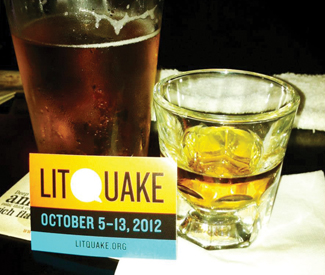
LIT What do you get when you bring together a horde of ravenous bibliophiles in a city that’s known for the possibility of a future catastrophic event? No, not the zombie-nerd apocalypse: Litquake, the largest annual independent literary festival on the West Coast. This year’s nine-day festival runs from Fri/5 through Sat/13, ending with Lit Crawl, the infamous booklovers pub-crawl that words up the Mission. The festival’s venues are as diverse as its writers, ranging from theaters, coffee houses, bars to a barbershop, a bee-keeping supply store, even a parklet. The jam-packed program is expected to bring even more attendees than last year (a whopping 16,581), and features 850 authors in 163 events including hundreds of readings and a multitudinous array of panels and cross-media events.

Originally dubbed Litstock, the festival was conjured up by Jane Ganahl and Jack Boulware at the Edinburgh Castle pub in San Francisco, a watering hole where local authors had been doing readings of their work. Ganahl and Boulware’s idea was simple: get a bunch of writers together to read their work in Golden Gate Park, and see what happens. With the help of Phil Bronstein, then editor of the San Francisco Examiner, they got $300 for a sound system, and on July 16, 1999, Litstock was born. Twenty-five writers read from their work, and to the surprise of Ganahl and Boulware, 300 people came to hear them. In 2002, the festival acquired its new, quintessentially San Francisco moniker, Litquake, and has been growing exponentially — more than 3,650 authors have presented to more than 83,500 people.

(About this year’s installment, Boulware tells the Guardian, “”This year, the festival feels like the programming has more depth than in previous years. We’re including more events at museums, more events outside the city, in particular the Berkeley Ramble, more tributes to noteworthy authors — Lenore Kandel, Woody Guthrie, and Juan Rulfo — and much more diversity in our expanded Lit Crawl schedule. We’re overjoyed to help cement the Bay Area’s rightful place on the national and international literary map.”)

As the story goes, the renaming of the festival in 2002 was partly inspired by an article in USA Today reporting that San Franciscans spend more money on books and alcohol than the residents of any other major city in the nation, according to the Bureau of Labor Statistics. Added to the festival in 2004, Lit Crawl has becoming the living, breathing embodiment of San Francisco’s happy marriage of books and booze — more than 6000 scribes and fans take part in venues in the Mission. San Francisco’s Lit Crawl (this year on Sat/13) has been so successful that there are now Lit Crawls in New York, Austin, Brooklyn and, soon, Seattle.

As neighborhoods go, the Mission is the perfect setting for the event, given its noteworthy independent bookstores and Dave Eggers’s brainchild, 826 Valencia. Like North Beach and the Haight, the city’s former literary hotspots, the Mission has an inherited bohemian spirit (some would call it Beat) that gives life to the idea of literary community.

This year’s Liquake roster of readers is a hefty one, spanning various genres and including such notable participants as Christopher Coake and Daniel Alarcón, both among Granta’s Best of Young American Novelists, along with local legends like US Poet Laureate Robert Hass and poet D.A. Powell. A bound-to-be-popular panel featuring cartoonist Daniel Clowes and Eggers himself will surely to draw a crowd, as the two discuss everything from the creative process to their favorite comics, books, and movies.

And for history buffs, there will be panels on little-known and formerly censored poetry of Beat poet Kandel and a tribute to Jane Austen featuring Karen Joy Fowler, author of bestseller book The Jane Austen Book Club.

It’s a fitting testament to San Francisco’s rich intellectual heritage that, in a city known for its ballooning tech industry (the oft-feared culprit behind literature’s “imminent demise”), San Franciscans’ literary love affair shows no signs of waning. Our lust for books still causes the city to tremble.

LITQUAKE

Fri/5-Sat/13

Various times, venues, and prices, SF.

www.litquake.org


Film Listings

0

Film listings are edited by Cheryl Eddy. Reviewers are Kimberly Chun, Dennis Harvey, and Lynn Rapoport. For rep house showtimes, see Rep Clock.

MILL VALLEY FILM FESTIVAL

The 35th Mill Valley Film Festival runs Oct. 4-14 at the Christopher B. Smith Rafael Film Center, 1118 Fourth St, San Rafael; Cinéarts@Sequoia, 25 Throckmorton, Mill Valley; and 142 Throckmorton Theatre, Mill Valley. For additional venues, full schedule, and tickets (most shows $13.50), visit www.mvff.com. For commentary, see Film.

OPENING

Bitter Seeds Just what we all needed: more incontrovertible evidence of the bald-faced evil of Monsanto. This documentary on destitute Indian cotton farmers follows an 18-year-old girl named Manjusha, a budding journalist who investigates the vast numbers of farmer suicides since the introduction (and market stranglehold) of "BT" cotton — which uses the corporation’s proprietary GMO technology — in the region of Vidarbha. Before BT took over in 2004, these cotton farmers relied on cheap heritage seed fertilized only by cow dung, but the largely illiterate population fell prey to Monsanto’s marketing blitz and false claims, purchasing biotech seed that resulted in pesticide reliance, failing crops, and spiraling debt. It’s a truly heartbreaking and infuriating story, but much of the action feels stagy and false. Should Indian formality be blamed? Considering the same fate befell Micha X. Peled’s 2005 documentary China Blue, probably not. Still, eff Monsanto. (1:28) Roxie. (Michelle Devereaux)

Butter Jennifer Garner, Olivia Wilde, and Hugh Jackman star in this Iowa-set satirical comedy about competitive butter carving. (1:32)

Frankenweenie Wee Victor Frankenstein brings his dog back from the dead in Tim Burton’s black-and-white, 3D animated tale. (1:27) Presidio.

The Mystical Laws As The Master gathers Oscar buzz for its Scientology-inspired tale, another movie based on the teachings of a similarly-named religion, Japanese fringe sect Happy Science, opens this weekend. But that analogy is incorrect, for The Mystical Laws way more resembles 2000’s Battlefield Earth, demonstrating and preaching its source material’s tenants rather than questioning them. Visit Happy Science’s website and you’ll find a New Age mix of Christianity and Buddhism, with woo-woo about truth and love. Its founder, Ryuho Okawa, claims to the reincarnation of "El Cantare," sort of an über-god who controls all spiritual activity on Earth. Anyway, now there’s an anime flick based on one of Okawa’s hundreds of books; it’s about an evil overlord with planet-ruling aspirations who gets smacked down by the powerful combo of aliens, a guy who realizes he’s humanity’s "light of hope" (basically a Jesus-Buddha combo, with psychic powers to boot), and an eight-headed flying dragon. There is Nazi iconography; there are Star Wars-inspired plot points. At one point, the hero preaches directly to the camera. It’s all very heavy-handed. A far more amusing use of your time would be to go to Happy Science’s website and click the tab marked "Astonishing Facts" to learn the spiritual fates of historical figures: "Currently Beethoven lives in the lower area of the Bodhisattva Realm of the 7th dimension in the Spirit world, and aims to transcend the sadness evident in parts of his music and become an expert in the music of joy," while proponent o’ evolution Darwin "is now serving a penance in Abysmal Hell." Hey, wait a minute! Isn’t science supposed to be "happy?" (2:00) New People, 1746 Post, SF; www.newpeopleworld.com. (Eddy)

The Oranges In director Julian Farino’s tale of two families, the Wallings and the Ostroffs are neighbors and close friends living in the affluent New Jersey township of West Orange. We meet David Walling (Hugh Laurie), his wife Paige (Catherine Keener), his best friend Terry Ostroff (Oliver Platt), and Terry’s wife, Carol (Allison Janney), during a period of domestic malaise for both couples — four unhappy people who enjoy spending time together — that is destined to be exponentially magnified over the Thanksgiving and Christmas festivities. We learn much of this in voice-over courtesy of stalled-out 24-year-old design school grad Vanessa (Alia Shawkat), a second-generation Walling whose narrative subjectivity the film makes plain. No one will fault Vanessa for editorializing, however, when her Ostroff counterpart, onetime BFF and present-day nemesis Nina (Leighton Meester), returns home after a five-year absence and, amid maternal pressure to date Vanessa’s visiting brother, Toby (Adam Brody), instead embarks on an affair with their father. The ick factor is large, particularly because it takes a while to keep straight all the spouses, offspring, and houses they belong in. But Farino works to convince us that the romantic spark between David and Nina should be judged on its merits rather than with a gut-level revulsion, a reaction we can leave to the film’s principals. To the extent that this is possible, it’s possible to enjoy The Oranges‘ intelligent writing and fine cast, whose sympathetic characters (perhaps excluding Nina, whose heedlessness regarding the feelings of others verges on sociopathic) we wish the best of luck in surviving the holidays. (1:30) Albany, Clay. (Rapoport)

The Paperboy Lee Daniels scored big with Precious (2009), but this follow-up is so off-kilter in tone and story it will likely polarize critics and confuse audiences, despite its A-list cast. I happened to enjoy the hell out of this tacky, sweat-drenched, gator-gutting, and generally overwrought adaptation of Peter Dexter’s novel (Dexter and Daniels co-wrote the screenplay); it’s kind of a Wild Things-The Help-A Time to Kill mash-up, with the ubiquitous Matthew McConaughey starring as Ward Jansen, a Florida newspaper reporter investigating what he thinks is the wrongful murder conviction of Hillary Van Wetter (a repulsively greasy John Cusack). But the movie’s not really about that. Set in 1969 and narrated by Macy Gray, who plays the veteran housekeeper for the Jansens — a clan that also includes college dropout Jack (Zac Efron) — The Paperboy is neither mystery nor thriller. It’s more of a swamp cocktail, with some odd directorial choices (random split-screen here, random zoom there) that maybe seem like exploitation movie homages. As a Southern floozy turned on by "prison cock" (but not, to his chagrin, by the oft-shirtless Jack), Nicole Kidman turns in her trashiest performance since 1995’s To Die For. (1:46) Embarcadero. (Eddy)

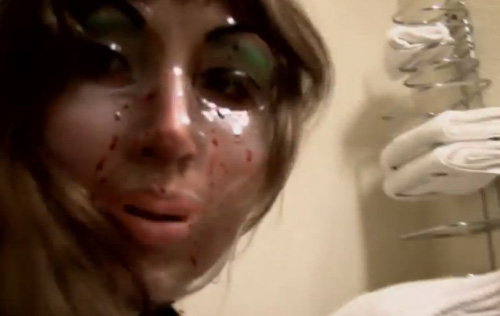
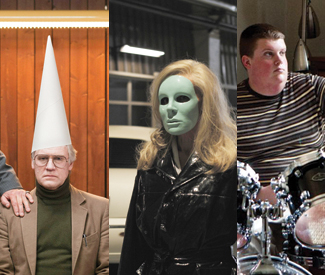
V/H/S See "Gruesome Discovery." (1:55) Bridge, Shattuck.

Taken 2 It’s kidnapping season again, and Liam Neeson is pissed. (1:31) Marina.

ONGOING

Arbitrage As Arbitrage opens, its slick protagonist, Robert Miller (Richard Gere), is trying to close the sale of his life, on his 60th birthday: the purchase of his company by a banking goliath. The trick is completing the deal before his fraud, involving hundreds of millions of dollars, is uncovered, though the whip-smart daughter who works for him (Brit Marling) might soon be onto him. Meanwhile, Miller’s gaming his personal affairs as well, juggling time between a model wife (Susan Sarandon) and a Gallic gallerist mistress (Laetitia Casta), when sudden-death circumstances threaten to destroy everything, and the power broker’s livelihood — and very existence — ends up in the hands of a young man (Nate Parker) with ambitions of his own. It’s a realm that filmmaker Nicholas Jarecki is all too familiar with. Though like brothers Andrew (2003’s Capturing the Friedmans) and Eugene (2005’s Why We Fight), Jarecki’s first love is documentaries (his first film, 2006’s The Outsider, covered auteur James Toback), his family is steeped in the business world. Both his parents were commodities traders, and Jarecki once owned his own web development firm and internet access provider, among other ventures. When he started writing Arbitrage‘s script in 2008, he drew some inspiration from Bernard Madoff — but ultimately, the film is about a good man who became corrupted along the way, to the point of believing in his own invincibility. (1:40) Metreon, Presidio, Smith Rafael, Shattuck. (Chun)

Backwards Athletic disappointment is not a new feeling for Abi (Sarah Megan Thomas, who also wrote the script), who has just learned she’s been named the alternate for the Olympic crew team — a bench warming role she was also relegated to in the last Olympics. But after she quits the team in a huff and moves home, it’s not long before she realizes that her life off the water is pretty depressing, too. Enter former boyfriend Geoff (James Van Der Beek), now the athletic director at the high school where Abi honed her rowing talents, who gives her a job coaching the talented but undisciplined girls who make up the current team. Will this new venture help Abi finally grow up and regain her self-confidence? Will she re-ignite her spark with Geoff? Will there be a last-act conflict involving yet another chance at the Olympics? Will there be multiple training montages? As directed by Ben Hickernell, Backwards hits all of the expected themes about following one’s heart and Doing the Right Thing. Thomas, a former rower herself, has an ordinary-girl appeal, but even Backwards’ attention to authenticity can’t elevate what’s essentially a very predictable sports drama. (1:29) Sundance Kabuki. (Eddy)

Beasts of the Southern Wild Six months after winning the Grand Jury Prize at Sundance (and a Cannes Camera d’Or), Beasts of the Southern Wild proves capable of enduring a second or third viewing with its originality and strangeness fully intact. Magical realism is a primarily literary device that isn’t attempted very often in U.S. cinema, and succeeds very rarely. But this intersection between Faulkner and fairy tale, a fable about — improbably — Hurricane Katrina, is mysterious and unruly and enchanting. Benh Zeitlin’s film is wildly cinematic from the outset, as voiceover narration from six-year-old Hushpuppy (Quvenzhané Wallis) offers simple commentary on her rather fantastical life. She abides in the Bathtub, an imaginary chunk of bayou country south of New Orleans whose residents live closer to nature, amid the detritus of civilization. Seemingly everything is some alchemical combination of scrap heap, flesh, and soil. But not all is well: when "the storm" floods the land, the holdouts are forced at federal gunpoint to evacuate. With its elements of magic, mythological exodus, and evolutionary biology, Beasts goes way out on a conceptual limb; you could argue it achieves many (if not more) of the same goals Terrence Malick’s 2011 The Tree of Life did at a fraction of that film’s cost and length. (1:31) Four Star, Shattuck, Smith Rafael. (Harvey)

Beauty is Embarrassing You may not recognize the name Wayne White offhand, but you will know his work: he designed and operated many of the puppets on Pee-Wee’s Playhouse, including Randy (the blockheaded bully) and Dirty Dog (the canine jazzbo). Neil Berkeley’s Beauty Is Embarrassing — named for a mural White painted on the side of a Miami building for Art Basel 2009 — charts the life of an artist whose motto is both "I want to try everything I can!" and "Fuck you!" The Southern-born oddball, who came of age in the early-1980s East Village scene, is currently styling himself as a visual artist (his métier: painting non-sequitur phrases into landscapes bought from thrift stores), but Beauty offers a complex portrait of creativity balanced between the need to be subversive and the desire to entertain. (1:27) Roxie. (Eddy)

The Bourne Legacy Settle down, Matt Damon fans — the original Bourne appears in The Bourne Legacy only in dialogue ("Jason Bourne is in New York!") and photograph form. Stepping in as lead badass is Jeremy Renner, whose twin powers of strength and intelligence come courtesy of an experimental-drug program overseen by sinister government types (including Edward Norton in an utterly generic role) and administered by lab workers doing it "for the science!," according to Dr. Rachel Weisz. Legacy‘s timeline roughly matches up with the last Damon film, The Bourne Ultimatum, which came out five years ago and is referenced here like we’re supposed to be on a first-name basis with its long-forgotten plot twists. Anyway, thanks to ol’ Jason and a few other factors involving Albert Finney and YouTube, the drug program is shut down, and all guinea-pig agents and high-security-clearance doctors are offed. Except guess which two, who manage to flee across the globe to get more WMDs for Renner’s DNA. Essentially one long chase scene, The Bourne Legacy spends way too much of its time either in Norton’s "crisis suite," watching characters bark orders and stare at computer screens, or trying to explain the genetic tinkering that’s made Renner a super-duper-superspy. Remember when Damon killed that guy with a rolled-up magazine in 2004’s The Bourne Supremacy? Absolutely nothing so rad in this imagination-free enterprise. (2:15) 1000 Van Ness, SF Center. (Eddy)

The Campaign (1:25) 1000 Van Ness.

Celeste and Jesse Forever Married your best friend, realized you love but can’t be in love with each other, and don’t want to let all those great in-jokes wither away? Such is the premise of Celeste and Jesse Forever, the latest in what a recent wave of meaty, girl-centric comedies penned by actresses — here Rashida Jones working with real-life ex Will McCormack; there, Zoe Kazan (Ruby Sparks), Zoe Lister Jones (Lola Versus), and Lena Dunham (Girls) — who have gone the DIY route and whipped up their own juicy roles. There’s no mistaking theirs for your average big-screen rom-com: they dare to wallow harder, skew smarter, and in the case of Celeste, tackle the thorny, tough-to-resolve relationship dilemma that stubbornly refuses to conform to your copy-and-paste story arc. Nor do their female protagonists come off as uniformly likable: in this case, Celeste (Jones) is a bit of an aspiring LA powerbitch. Her Achilles heel is artist Jesse (Andy Samberg), the slacker high school sweetheart she wed and separated from because he doesn’t share her goals (e.g., he doesn’t have a car or a job). Yet the two continue to spend all their waking hours together and share an undeniable rapport, extending from Jesse’s encampment in her backyard apartment to their jokey simulated coitus featuring phallic-shaped lip balm. Throwing a wrench in the works: the fact that they’re still kind of in love with each other, which all their pals, like Jesse’s pot-dealer bud Skillz (McCormack), can clearly see. It’s an shaggy, everyday breakup yarn, writ glamorous by its appealing leads, that we too rarely witness, and barring the at-times nausea-inducing shaky-cam under the direction of Lee Toland Krieger, it’s rendered compelling and at times very funny — there’s no neat and tidy way to say good-bye, and Jones and McCormack do their best to capture but not encapsulate the severance and inevitable healing process. It also helps that the chemistry practically vibrates between the boyish if somewhat one-note Samberg and the soulful Jones, who fully, intelligently rises to the occasion, bringing on the heartbreak. (1:31) Shattuck. (Chun)

The Dark Knight Rises Early reviews that called out The Dark Knight Rises‘ flaws were greeted with the kind of vicious rage that only anonymous internet commentators can dish out. And maybe this is yet another critic-proof movie, albeit not one based on a best-selling YA book series. Of course, it is based on a comic book, though Christopher Nolan’s sophisticated filmmaking and Christian Bale’s tortured lead performance tend to make that easy to forget. In this third and "final" installment in Nolan’s trilogy, Bruce Wayne has gone into seclusion, skulking around his mansion and bemoaning his broken body and shattered reputation. He’s lured back into the Batcave after a series of unfortunate events, during which The Dark Knight Rises takes some jabs at contemporary class warfare (with problematic mixed results), introduces a villain with pecs of steel and an at-times distractingly muffled voice (Tom Hardy), and unveils a potentially dangerous device that produces sustainable energy (paging Tony Stark). Make no mistake: this is an exciting, appropriately moody conclusion to a superior superhero series, with some nice turns by supporting players Gary Oldman and Joseph Gordon-Levitt. But in trying to cram in so many characters and plot threads and themes (so many prisons in this thing, literal and figural), The Dark Knight Rises is ultimately done in by its sprawl. Without a focal point — like Heath Ledger’s menacing, iconic Joker in 2008’s The Dark Knight — the stakes aren’t as high, and the end result feels more like a superior summer blockbuster than one for the ages. (2:44) Metreon. (Eddy)

Detropia Those of us from Detroit, once-glamorous capital of American manufacturing and symbol of the triumph of capitalism, often feel like we were born with the history of the city in our bones. Another common feeling is that of dread upon hearing that yet another arty documentary (or brow-furrowing article, or glossy photo book) is coming down the pipe. The narrative arc of such things is usually this: remember Motown? Cars were amazing. Then there were scary riots, probably out of thin air. Then the jobs left. Isn’t Detroit sad now? Look how spooky this abandoned train station from the 1930s is! America is over. Wait! Some hipsters are starting a farm downtown! There may be hope after all. But who knows? Detropia, directed by Heidi Ewing, who grew up near Detroit, and Rachel Grady, doesn’t exactly deconstruct that crusty storyline (non-spoiler alert: the hipster-farmers become performance artists). But this important and beautiful film shows how much more of the Detroit tale takes on meaning and shape when told through the voices of people who actually live there, with a cinematic eye that doesn’t shy away from reality, even as it bends it to narrative ends. (1:30) Elmwood, Roxie, Smith Rafael. (Marke B.)

Diana Vreeland: The Eye Has to Travel The life of legendary fashion editor Diana Vreeland is colorfully recounted in Diana Vreeland: The Eye Has to Travel, a doc directed by her granddaughter-in-law, Lisa Immordino Vreeland. The family connection meant seemingly unlimited access to material featuring the unconventionally glamorous (and highly quotable) Vreeland herself, plus the striking images that remain from her work at Harper’s Bazaar, Vogue, and the Costume Institute of the Metropolitan Museum of Art. "Narrated" from interview transcripts by an actor approximating the late Vreeland’s husky, posh tones, the film allows for some criticism (her employees often trembled at the sight of her; her sons felt neglected; her grasp of historical accuracy while working at the museum was sometimes lacking) among the praise, which is lavish and delivered by A-listers like Anjelica Huston, who remembers "She had a taste for the extraordinary and the extreme," and Manolo Blahnik, who squeals, "She had the vision!" (1:26) Embarcadero, Shattuck. (Eddy)

Dredd 3D Cartoonishly, gleefully gruesome violence abounds in Dredd 3D, a pretty enjoyable comic-book adaptation thanks to star Karl Urban’s deadpan zingers. This is not a remake of the 1995 Sly Stallone flop Judge Dredd, by the way, though it might as well be a remake of 2011 Indonesian import The Raid: Redemption. The stories are identical. Like, lawsuit material-identical: supercop infiltrates (and then becomes trapped in, and must battle his way out of) a high-rise apartment tower run by a ruthless crime boss. Key difference is that Dredd has futuristic weapons, and The Raid had badass martial arts. Also Dredd‘s villain is played by Lena "Cersei Lannister" Headey, so there’s that. (1:38) Metreon, 1000 Van Ness. (Eddy)

End of Watch Buddy cop movies tend to go one of two ways: the action-comedy route (see: the Rush Hour series) or the action-drama route. End of Watch is firmly in the latter camp, despite some witty shit-talking between partners Taylor (a chrome-domed Jake Gyllenhaal) and Zavala (Michael Peña from 2004’s Crash) as they patrol the mean streets of Los Angeles. Writer-director David Ayer, who wrote 2001’s Training Day, aims for authenticity by piecing together much of (but, incongruously, not all of) the story through dashboard cameras, surveillance footage, and Officer Taylor’s own ever-present camera, which he claims to be carrying for a school project, though we never once see him attending classes or mentioning school otherwise. Gyllenhaal and Peña have an appealing rapport, but End of Watch‘s adrenaline-seeking plot stretches credulity at times, with the duo stumbling across the same group of gangsters multiple times in a city of three million people. Natalie Martinez and Anna Kendrick do what they can in underwritten cop-wife roles, but End of Watch is ultimately too familiar (but not lawsuit-material familiar) to leave any lasting impression. Case in point: in the year 2012, do we really need yet another love scene set to Mazzy Star’s "Fade Into You"? (1:49) Marina, 1000 Van Ness, SF Center. (Eddy)

Finding Nemo 3D (1:40) 1000 Van Ness, SF Center.

For a Good Time, Call&ldots; Suffering the modern-day dilemmas of elapsed rent control and boyfriend douchebaggery, sworn enemies Katie (Ari Graynor) and Lauren (Lauren Miller) find themselves shacking up in Katie’s highly covetable Manhattan apartment, brought together on a stale cloud of resentment by mutual bestie Jesse (Justin Long, gamely delivering a believable version of your standard-issue young hipster NYC gay boy). The domestic glacier begins to melt somewhere around the time that Lauren discovers Katie is working a phone-sex hotline from her bedroom; equipped with a good head for business, she offers to help her go freelance for a cut of the proceeds. Major profitability ensues, as does a friendship evoking the pair bonding at the center of your garden-variety romantic comedy, as Katie trains Lauren to be a phone-sex operator and the two share everything from pinkie swears and matching pink touch-tone phones to intimate secrets and the occasional hotline threesome. Directed by Jamie Travis and adapted from a screenplay by Miller and Katie Anne Naylon, the film is a welcome response to the bromance genre, and with any luck it may also introduce linguistic felicities like "phone-banging" and "let’s get this fuckshow started" into the larger culture. The raunchy telephonic interludes include cameos by Kevin Smith and Seth Rogen (Miller’s husband) as customers calling from such unfurtive locations as a public bathroom stall and the front seat of a taxicab. But the two roomies supply plenty of dirty as Katie, an abashed wearer of velour and denim pantsuits, helps the more restrained Lauren discover the joys of setting free her inner potty mouth. (1:25) SF Center. (Rapoport)

Hotel Transylvania (1:32) Metreon, 1000 Van Ness, Shattuck.

House At the End of the Street Tight T-shirts, a creepy cul-de-sac, couples in cars on lonely lanes, and the cute but weird loner kid — all the stuff of classic drive-in horror fare, revisited in this ambitious tribute of sorts. Don’t mistake House at the End of the Street for genre-reviving efforts by super fans like Eli Roth and Rob Zombie; Mark Tonderai’s mash up of Psycho (1960) and Last House on the Left (1972) lacks the rock ‘n’ roll brio and jet-black humor of, say, Cabin Fever (2002) or The Devil’s Rejects (2005). Instead House reads like an earnest effort to add a thin veneer of psychological realism and even girl power sincerity to a blood-spattered back catalog. Teenage musician Elissa (Jennifer Lawrence) and her overwhelmed mom Sarah (Elisabeth Shue) have found themselves quite a deal of a new rental home — a bit too good, since their next door neighbors were both brutally killed by their brain-damaged offspring who was obviously afflicted with the same greasy hair issues as the ghoulish gal in The Ring. Ryan (Bay Area native Max Thieriot), the boy who continues to live in the house where his parents were murdered, is ostracized, attractive, and much like his home, a fixer — making him mighty attractive to Elissa. A hearty, artistic soul who likes to venture where others fear to tread, she’s drawn to him despite the fact that she feels like she’s being watched from the woods that separate their homes. Switching back and forth between various perspectives — like that of a sputtering, spasmodically edited psychopath-cam and the steady, thoughtful gaze of a rebellious yet empathetic girl — House manages to effectively throw a few curveballs your way, while toying with genre conventions and upsetting your expectations. Shoring up its efforts is a talented cast, headed up by Lawrence’s feisty heroine and Shue’s sad-eyed struggling mom. (1:43) Metreon, 1000 Van Ness. (Chun)

Lawless Lawless has got to be the most pretentiously humorless movie ever made about moonshiners — a criminal subset whose adventures onscreen have almost always been rambunctious and breezy, even when violent. Not here, bub. Adapting Matt Bondurant’s fact-inspired novel The Wettest County in the World about his family’s very colorful times a couple generations back, director John Hillcoat and scenarist (as well as, natch, composer) Nick Cave have made one of those films in which the characters are presented to you as if already immortalized on Mount Rushmore — monumental, legendary, a bit stony. They’ve got a crackling story about war between hillbilly booze suppliers and corrupt lawmen during Prohibition, and while the results aren’t dull (they’re too bloody for that, anyway), they’d be a whole lot better if the entire enterprise didn’t take itself so gosh darned seriously. The Bondurant brothers of Franklin County, Va. are considered "legends" when we meet them in 1931, having defied all and sundry as well as survived a few bullets: mack-truck-built Forrest (Tom Hardy); eldest Howard (Jason Clarke), who tipples and smiles a lot; and "runt of the litter" Jack (Shia LeBeouf), who has a chip on his shoulder. The local law looks the other way so long as their palms are greased, but the Feds send sneering Special Deputy Charlie Rakes (Guy Pearce), it’s an eye for an eye for an eye, etc. The revenge-laden action in Lawless is engaging, but the filmmakers are trying so hard to make it all resonant and folkloric and meta-cinematic, any fun you have is in spite of their efforts. (1:55) 1000 Van Ness, SF Center. (Harvey)

Liberal Arts Against his better judgment, 35-year-old Jesse (How I Met Your Mother‘s Josh Radnor, who also wrote and directed) falls for 19-year-old Zibby (Elizabeth Olsen), a student at the leafy Ohio university he graduated from years before (never named, but filmed at Kenyon College, Radnor’s own alma matter). The two meet when Jesse, now a jaded Brooklynite, visits to celebrate the retirement of Professor Hoberg (Richard Jenkins). Letter-writing, classical-music appreciation, a supremely awkward follow-up visit, and much white-boy angst follows. Liberal Arts is at its best when delineating a specific type of collegiate experience — as safe, privileged bubble where, as Jesse explains, you can announce "I’m a poet!" without anyone punching you in the face. It can also be an oppressive space, as illustrated by a cranky prof who feels trapped by academia (a razor-sharp Lucinda Janney), and a morose classmate of Zibby’s who identifies a little too closely with David Foster Wallace. And it’s stuff like the Wallace references (again, never named — just identified via heavily dropped hints, for all the cool viewers to pick up on) that’re ultimately Liberal Arts‘ undoing. Radnor explores some interesting themes, but the film is full of indie-comedy tropes — the friendly stoner (Zac Efron) who randomly appears to dispense life lessons; an anti-Twilight rant that’s a bit too pleased with itself; the unusually attractive character who appears in the first act and is obviously destined for inclusion in the inevitable happy ending. (1:37) Shattuck. (Eddy)

Looper It’s 2044 and, thanks to a lengthy bout of exposition by our protagonist, Joe (Joseph Gordon-Levitt), here’s what we know: Time travel, an invention 30 years away, will be used by criminals to transport their soon-to-be homicide victims backward, where a class of gunmen called loopers, Joe among them, are employed to "do the necessaries." More deftly revealed in Brick writer-director Rian Johnson’s new film is the joylessness of the world in which Joe amorally makes his way, where gangsters from the future control the present (under the supervision of Jeff Daniels), their hit men live large but badly (Joe is addicted to some eyeball-administered narcotic), and the remainder of the urban populace suffers below-subsistence-level poverty. The latest downside for guys like Joe is that a new crime boss has begun sending back a steady stream of aging loopers for termination, or "closing the loop"; soon enough, Joe is staring down a gun barrel at himself plus 30 years. Being played by Bruce Willis, old Joe is not one to peaceably abide by a death warrant, and young Joe must set off in search of himself so that—with the help of a woman named Sara (Emily Blunt) and her creepy-cute son Cid (Pierce Gagnon)—he can blow his own (future) head off. Having seen the evocatively horrific fate of another escaped looper, we can’t totally blame him. Parsing the daft mechanics of time travel as envisioned here is rough going, but the film’s brisk pacing and talented cast distract, and as one Joe tersely explains to another, if they start talking about it, "we’re gonna be here all day making diagrams with straws" —in other words, some loops just weren’t meant to be closed. (1:58) Four Star, 1000 Van Ness, Piedmont, Presidio, SF Center, Sundance Kabuki. (Rapoport)

The Master Paul Thomas Anderson’s much-hyped likely Best Picture contender lives up: it’s easily the best film of 2012 so far. Philip Seymour Hoffman stars as Lancaster Dodd, the L. Ron Hubbard-ish head of a Scientology-esque movement. "The Cause" attracts Freddie Quell (Joaquin Phoenix, in a welcome return from the faux-deep end), less for its pseudo-religious psychobabble and bizarre personal-growth exercises, and more because it supplies the aimless, alcoholic veteran — a drifter in every sense of the word — with a sense of community he yearns for, yet resists submitting to. As with There Will Be Blood (2007), Anderson focuses on the tension between the two main characters: an older, established figure and his upstart challenger. But there’s less cut-and-dried antagonism here; while their relationship is complex, and it does lead to dark, troubled places, there are also moments of levity and weird hilarity — which might have something to do with Freddie’s paint-thinner moonshine. (2:17) Albany, Embarcadero, 1000 Van Ness, Presidio, Sundance Kabuki. (Eddy)

Moonrise Kingdom Does Wes Anderson’s new film mark a live-action return to form after 2007’s disappointingly wan Darjeeling Limited? More or less. Does it tick all the Andersonian style and content boxes? Indubitably. In the most obvious deviation Anderson has taken with Moonrise, he gives us his first period piece, a romance set in 1965 on a fictional island off the New England coast. After a chance encounter at a church play, pre-teen Khaki Scout Sam (newcomer Jared Gilman) instantly falls for the raven-suited, sable-haired Suzy Bishop (Kara Hayward, ditto). The two become pen pals, and quickly bond over the shared misery of being misunderstood by both authority figures and fellow kids. The bespectacled Sam is an orphan, ostracized by his foster parents and scout troop (much to the dismay of its straight-arrow leader Edward Norton). Suzy despises her clueless attorney parents, played with gusto by Bill Murray and Frances McDormand in some of the film’s funniest and best scenes. When the two kids run off together, the whole thing begins to resemble a kind of tween version of Godard’s 1965 lovers-on the-lam fantasia Pierrot le Fou. But like most of Anderson’s stuff, it has a gauzy sentimentality more akin to Truffaut than Godard. Imagine if the sequence in 2001’s The Royal Tenenbaums where Margot and Richie run away to the Museum of Natural History had been given the feature treatment: it’s a simple yet inspired idea, and it becomes a charming little tale of the perils of growing up and selling out the fantasy. But it doesn’t feel remotely risky. It’s simply too damn tame. (1:37) Shattuck. (Michelle Devereaux)

ParaNorman (1:32) Metreon.

The Perks of Being a Wallflower Move over, Diary of a Wimpy Kid series — there’s a new shrinking-violet social outcast in town. These days, life might not suck quite so hard for 90-pound weaklings in every age category, what with so many films and TV shows exposing, and sometimes even celebrating, the many miseries of childhood and adolescence for all to see. In this case, Perks author Stephen Chbosky takes on the directorial duties — both a good and bad thing, much like the teen years. Smart, shy Charlie is starting high school with a host of issues: he’s painfully awkward and very alone in the brutal throng, his only friend just committed suicide, and his only simpatico family member was killed in a car accident. Charlie’s English teacher Mr. Andersen (Paul Rudd) appears to be his only connection, until the freshman strikes up a conversation with feline, charismatic, shop-class jester Patrick (Ezra Miller) and his magnetic, music- and fun-loving stepsister Sam (Emma Watson). Who needs the popular kids? The witty duo head up their gang of coolly uncool outcasts their own, the Wallflowers (not to be confused with the deeply uncool Jakob Dylan combo), and with them, Charlie appears to have found his tribe. Only a few small secrets put a damper on matters: Patrick happens to be gay and involved with football player Brad (Johnny Simmons), who’s saddled with a violently conservative father, and Charlie is in love with the already-hooked-up Sam and is frightened that his fragile equilibrium will be destroyed when his new besties graduate and slip out of his life. Displaying empathy and a devotion to emotional truth, Chbosky takes good care of his characters, preserving the complexity and ungainly quirks of their not-so-cartoonish suburbia, though his limitations as a director come to the fore in the murkiness and choppily handled climax that reveals how damaged Charlie truly is. (1:43) Albany, California, Embarcadero, Sundance Kabuki. (Chun)

Pitch Perfect As an all-female college a cappella group known as the Barden Bellas launches into Ace of Base’s "The Sign" during the prologue of Pitch Perfect, you can hear the Glee-meets-Bring It On elevator pitch. Which is fine, since Bring It On-meets-anything is clearly worth a shot. In this attempt, Anna Kendrick stars as withdrawn and disaffected college freshman Beca, who dreams of producing music in L.A. but is begrudgingly getting a free ride at Barden University via her comp lit professor father. Clearly his goal is not making sure she receives a liberal arts education, as Barden’s academic jungle extends to the edges of the campus’s competitive a cappella scene, and the closest thing to an intellectual challenge occurs during a "riff-off" between a cappella gangs at the bottom of a mysteriously drained swimming pool. When Beca reluctantly joins the Bellas, she finds herself caring enough about the group’s fate to push for an Ace of Base moratorium and radical steps like performing mashups. Much as 2000’s Bring It On coined terms like "cheerocracy" and "having cheer-sex," Pitch Perfect gives us the infinitely applicable prefix "a ca-" and descriptives like "getting Treble-boned," a reference to forbidden sexual relations with the Bellas’ cocky rivals, the Treblemakers. The gags get funnier, dirtier, and weirder, arguably reaching their climax in projectile-vomit snow angels, with Elizabeth Banks and John Michael Higgins as grin-panning competition commentators offering a string of loopily inappropriate observations. (1:52) Metreon. (Rapoport)

The Possession (1:31) Metreon.

Resident Evil: Retribution (1:35) Metreon, 1000 Van Ness.

Samsara Samsara is the latest sumptuous, wordless offering from director Ron Fricke, who helped develop this style of dialogue- and context-free travelogue with Koyaanisqatsi (1982) and Baraka (1992). Spanning five years and shooting on 70mm film to capture glimmers of life in 25 countries on five continents, Samsara, which spins off the Sanskrit word for the "ever-turning wheel of life," is nothing if not good-looking, aspiring to be a kind of visual symphony boosted by music by the Dead Can Dance’s Lisa Gerrard and composers Michael Stearns and Marcello De Francisci. Images of natural beauty, baptisms, and an African woman and her babe give way to the madness of modern civilization — from jam-packed subways to the horrors of mechanized factory farming to a bizarre montage of go-go dancers, sex dolls, trash, toxic discarded technology, guns, and at least one gun-shaped coffin. After such dread, the opening and closing scenes of Buddhist spirituality seem almost like afterthoughts. The unmistakable overriding message is: humanity, you dazzle in all your glorious and inglorious dimensions — even at your most inhumane. Sullying this hand wringing, selective meditation is Fricke’s reliance on easy stereotypes: the predictable connections the filmmaker makes between Africa and an innocent, earthy naturalism, and Asia and a vaguely threatening, mechanistic efficiency, come off as facile and naive, while his sonic overlay of robot sounds over, for instance, an Asian woman blinking her eyes comes off as simply offensive. At such points, Fricke’s global leap-frogging begins to eclipse the beauty of his images and foregrounds his own biases. (1:39) Opera Plaza, Shattuck. (Chun)

Searching for Sugar Man The tale of the lost, and increasingly found, artist known as Rodriguez seems to have it all: the mystery and drama of myth, beginning with the singer-songwriter’s stunning 1970 debut, Cold Fact, a neglected folk rock-psychedelic masterwork. (The record never sold in the states, but somehow became a beloved, canonical LP in South Africa.) The story goes on to parse the cold, hard facts of vanished hopes and unpaid royalties, all too familiar in pop tragedies. In Searching for Sugar Man, Swedish documentarian Malik Bendjelloul lays out the ballad of Rodriguez as a rock’n’roll detective story, with two South African music lovers in hot pursuit of the elusive musician — long-rumored to have died onstage by either self-immolation or gunshot, and whose music spoke to a generation of white activists struggling to overturn apartheid. By the time Rodriguez himself enters the narrative, the film has taken on a fairy-tale trajectory; the end result speaks volumes about the power and longevity of great songwriting. (1:25) Opera Plaza. (Chun)

Sleepwalk with Me Every year lots of movies get made by actors and comedians who want to showcase themselves, usually writing and often directing in addition to starring. Most of these are pretty bad, and after a couple of festival appearances disappear, unremembered by anyone save the credit card companies that vastly benefited from its creation. Mike Birbiglia’s first feature is an exception — maybe not an entirely surprising one (since it’s based on his highly praised Off-Broadway solo show and best-seller), but still odds-bucking. Particularly as it’s an autobiographical feeling story about an aspiring stand-up comic (Mike as Matt) who unfortunately doesn’t seem to have much natural talent in that direction, but nonetheless obsessively perseveres. This pursuit of seemingly fore destined failure might be causing his sleep disorder, or it might be a means of avoiding taking the martial next step with long-term girlfriend (Lauren Ambrose, making something special out of a conventional reactive role) everyone else agrees is the best thing in his life. Yep, it’s another commitment-phobic man-boy/funny guy who regularly talks to the camera, trying to find himself while quirky friends and family stand around like trampoline spotters watching a determined clod. If all of these sounds derivative and indulgent, well, it ought to. But Sleepwalk turns a host of familiar, hardly foolproof ideas into astute, deftly performed, consistently amusing comedy with just enough seriousness for ballast. Additional points for "I zinged him" being the unlikely most gut-busting line here. (1:30) Opera Plaza, Piedmont, Shattuck. (Harvey)

Solomon Kane Conceived by Conan the Barbarian creator Robert E. Howard, this 16th-century hero is cut from the same sword-and-sorcery cloth, being a brawny brute of slippery but generally sorta-kinda upright morals. Solomon (James Purefoy) is slaughtering his way to a North African treasure trove when demons swallow up his likewise greedy, conscience-free cohorts and damn his soul for a lifetime of bad deeds. Suddenly committed to the greater good, he returns homeward to cold gray England, where Jason Flemyng’s evil sorcerer soon imperils both our protagonist and the Puritan family (complete with love interest) he’s befriended. This movie has been around a while — since 2009, to be exact, yet barely beating director Michael J. Bassett’s new Silent Hill: Revelation 3D to U.S. theaters — and is a good illustration of what can happen when you make a fairly expensive ($45 million) fantasy-action adventure without major stars nor any marketable novelty. Which is to say: not much. There is absolutely nothing wrong with the good-looking, watchable but generic-feeling Solomon Kane, save that nothing about it feels remotely original or inspired. It’s the perfectly okay, like-a-thousand-others mall flick you’ll forget you saw by Thanksgiving, despite being peopled with such normally interesting actors as Max Von Sydow, Alice Krige, and the late Pete Postlethwaite. (1:54) Metreon. (Harvey)

Somewhere Between Five years ago, when filmmaker Linda Goldstein Knowlton adopted a baby girl from China, she was inspired to make Somewhere Between, a doc about the experiences of other Chinese adoptees. The film profiles four teenage girls, including Berkeley resident Fang "Jenni" Lee, whose American lives couldn’t be more different (one girl has two moms and attends a fancy prep school; another, raised by devout Christians, dreams of playing her violin at the Grand Ole Opry) but who share similar feelings about their respective adoptions. The film follows the girls on trips to London (as part of an organized meeting of fellow adoptees), Spain (to chat with people interested in adopting Chinese babies, and where the question "What does it feel like to be abandoned?" is handled with astonishing composure), and China (including one teen’s determined quest to track down her birth family). Highly emotional at times, Somewhere Between benefits from its remarkably mature and articulate subjects, all of whom have much to say about identity and personal history. (1:28) Shattuck. (Eddy)

"Stars In Shorts" Outside of the festival circuit, it’s an uncommon feat for shorts to make it to the big screen, so it can’t hurt to make name recognition a prerequisite for selection. In writer-director Rupert Friend’s Steve, Keira Knightley plays an embattled Londoner under siege by her lonely, pathologically odd neighbor (Colin Firth). Written by Neil LaBute, Jacob Chase’s After School Special sets up a semi-flirtation between two strangers (Sarah Paulson and Wes Bentley) at a playground, only to deliver the kind of gut-level punch you might expect from the writer-director of 1998’s Your Friends and Neighbors. LaBute’s own Sexting is an entertaining exercise in stream-of-consciousness monologuing by Julia Stiles. As with most shorts programs, "Stars" is a mixed bag. Robert Festinger’s The Procession, in which Lily Tomlin and Modern Family‘s Jesse Tyler Ferguson play reluctant participants in a funeral procession, sounds promising, but the conversation palls during the 10-plus minutes we’re stuck in the car with them. Benjamin Grayson’s sci-fi thriller Prodigal, starring Kenneth Branagh, reaches its predictable crisis points several minutes after the viewer has arrived. More successful are Jay Kamen’s musical comedy Not Your Time, starring Seinfeld‘s Jason Alexander as an old Hollywood hand whose writing career has stalled out, and Chris Foggin’s Friend Request Pending, which treats viewers to the sight of Dame Judi Dench gamely wading into the social network in search of a date. (1:53) Opera Plaza. (Rapoport)

Trouble with the Curve Baseball scout Gus (Clint Eastwood) relies on his senses to sign players to the Atlanta Braves, and his roster of greats is highly regarded by everyone — save a sniveling climber named Sanderson (Matthew Lillard), who insists his score-keeping software can replace any scout. Gus’ skill in his field are preternatural, but with his senses dwindling, his longtime-friend Pete (a brilliant John Goodman) begs Gus’ daughter Mickey (Amy Adams) to go with him — to see how bad the situation is and maybe drive him around. Ultimately, the film’s about the rift between career woman Mickey, and distant dad Gus, with some small intrusions from Justin Timberlake as Mickey’s romantic interest. Trouble with the Curve is a phrase used to describe batters who can’t hit a breaking ball and it’s a nuance — if an incontrovertible one — unobservable to the untrained eye. While Mickey and Gus stumble messily toward a better relationship (with a reasonable amount of compromise), Curve begins to look a bit like The Blind Side (2009), trading the church and charity for therapy and baggage. But what it offers is sweet and worthwhile, if you’re tolerant of the sanitized psychology and personality-free aesthetics. But it’s a movie about love and compromise — and if you love baseball you won’t have trouble forgiving some triteness, especially when Timberlake, the erstwhile Boo-Boo, gets to make a Yogi Berra joke. (1:51) Metreon, 1000 Van Ness, Sundance Kabuki. (Sara Vizcarrondo)

Vulgaria (1:32) Metreon.

Won’t Back Down If talk of introducing charter schools into the public education mix tends to give you collective-bargaining-related hives, Daniel Barnz’s Won’t Back Down is unlikely to appeal, unless perhaps as the object of a boycott or a picket line. Two embattled mothers, Jamie Fitzpatrick (Maggie Gyllenhaal) and Nona Alberts (Viola Davis), both with children at a failing Pittsburgh elementary school and the latter a teacher there, join forces to change the institutional culture by leading a parent-teacher takeover, with the goal of creating a charter school. As the bureaucratic process for doing so is described by a school district employee, it should take them three to five years to discover that they’ve been hurling themselves at a brick wall; Jamie, an efficient combination of fireball and pit bull, is determined to pulverize the wall in about two months. Watching her and Nona try to secure more than a third-rate, treading-water education for their kids, it’s hard not to root for the possibility of a transformation, and even an upper-level teachers’ union staffer played by Holly Hunter finds herself climbing the fence. The details of what lies on the other side (and inside Jamie and Nona’s 400-page proposal) stay fairly fuzzy, though. And while Barnz lets his warring factions—desperate mothers and educators, a union boss (Ned Eisenberg) watching the deterioration of the labor movement, a pro-union teacher (Oscar Isaac) ambivalently engaged in the chartering project—impassionedly debate their way through the film, a little more wonkiness might have clarified the arguments of those done waiting for Superman. (2:00) Metreon, 1000 Van Ness, Sundance Kabuki. (Rapoport)

The Words We meet novelist Rory Jansen (Bradley Cooper) as he’s making his way from a posh building to a cab in the rain; it’s important the shot obscures his generally shiny exterior, because we’re meant to believe this guy’s a sincere and struggling novelist. Jeremy Irons, aged with flappy eye makeup, watches him vengefully. Seems Rory fell upon the unpublished novel Irons’ character wrote in sadness and loss — and feeling himself incapable of penning such prose, transcribed the whole thing. When his lady friend (Zoe Saldana) encourages him to sell it, he becomes the next great American writer. He’s living the dream on another man’s sweat. But that’s not the tragedy, exactly, because The Words isn’t so concerned with the work of being a writer — it’s concerned with the look and insecurity of it. Bradley and Irons aren’t "real," they’re characters in a story read by Clay Hammond (Dennis Quaid) while the opportunistic, suggestive Daniella (Olivia Wilde) comes onto him. She can tell you everything about Clay, yet she hasn’t read the book that’s made him the toast of the town — The Words, which is all about a young plagiarist and the elderly writer he steals from. "I don’t know how things happen!", the slimy, cowering writers each exclaim. So, how do you sell a book? Publish a book? Make a living from a book? How much wine does it take to bed Olivia Wilde? Sure, they don’t know how things happen; they only know what it looks like to finish reading Hemingway at a café or watch the sun rise over a typewriter. Rarely has a movie done such a trite job of depicting the process of what it’s like to be a writer — though if you found nothing suspect about, say, Owen Wilson casually re-editing his 400-page book in one afternoon in last year’s Midnight in Paris, perhaps you won’t be so offended by The Words, either. (1:36) SF Center. (Vizcarrondo)


Aim for these

0

virginia@sfbg.com

APPETITE Most memorable restaurants boasts an overarching standard of quality to their menus. Other times, one dreams of specific items from certain spots. Here are a few places worth trekking out to for unique dream dishes.


LASAGNA BOLOGNESE AT MARCELLA’S

Lasagna… there are few foods as evocative of my childhood. Until now, Gaspare’s in the Outer Richmond was typically where I’d get my old school lasagna fix. Since May, though, Dogpatch now has a lasagneria, of all fantastic things. Marcella’s Lasagneria and Cucina is a humble corner shop selling Chef Massimo’s aioli spreads (like black truffle or spicy Chardonnay) and other housemade food products, paninis, soups, and pizzas for eating in or taking out. Best of all, six kinds of lasagna to choose from.

Jovial Massimo hails from Italy’s Abruzzo region (I’m charmed by the 1980s-looking photo of him above the counter in chef’s hat with a glass of wine), who regales with tales of early kitchen work and family. The shop is named after his daughter, while his friendly son sometimes works the counter. On a typical visit (open weekdays, 11:30am-7pm), lasagna options are butternut squash, bolognese, wild mushroom, spicy eggplant, spicy sausage, and pesto zucchini. I buy a whole lasagna for a family birthday — yes, it’s celebratory-good — and bring home three slices for dinner (8.50 each), reveling in savory-sweet red sauce and ultra-thin pasta sheets redolent with but not overcome by ricotta and mozzarella.

Butternut squash lasagna is typically white, so that the squash shines. Here it still does, while benefiting from a bit of red sauce. Earthy wild mushroom, spicy eggplant or pesto ricotta are winning. I like classic Bolognese best, the version my mother used to make. Massimo corners lassagna balance: there’s never too much of any one ingredient. The entirety melts in your mouth, as heartwarming as your Italian mama’s cookinge.

1099 Tennessee, SF. (415) 920-2225, www.marcellaslasagneria.com


MILLIONAIRE’S BACON AT BLACKWOOD

There are not many Thai joints in the Marina (Yukol Place has been keeping it real for years), and certainly not one like Blackwood. High ceilings and shades of black and grey set a chic tone, while non-traditional dishes like mushroom egg rolls and unfortunately named Marina Strips — Wagyu beef strips wrapped in baby hearts of palm — fill the menu. Many dishes are larger, more artfully arranged, versions of typical Thai dishes, like papaya salad or Pad See Ew (spelled Pad See You). Thai fusion is apparent in a Thai Wagyu burger ($12) on brioche loaded with a Thai salad of cucumber, carrot, cilantro, sesame. Or in generous, sizzling stone pots ($14-16), akin to Koran bibimbap filled with rice, veggies, meat of choice (I like crispy red snapper in plum dressing), topped with a fried egg.

However, the one destination item is merely a $5 add-on to a breakfast platter (served daily, 8am-4pm). And what an add-on! Blackwood’s only been open since June, but the millionaire’s bacon has already been named on the Discovery Channel Destination America’s United States of Food. Two hefty strips of bacon are dense, shimmery, chewy beauties, caramelized and slightly sweet and smoky. Despite bacon burn-out over the past decade, with bacon gracing every dessert and dish possible, these juicy strips renew and refresh the love, reminiscent of Southern ham in gourmet jerky-like form.

2150 Chestnut, SF. (415) 931-9663, www.blackwoodsf.com


CALABRIAN CHILE SPAGHETTINI AT BLUESTEM

Bluestem Brasserie is no run-of-the-mill downtown shopping break. In fact, it has improved since opening in summer 2011, honing in on its menu, house charcuterie, and whole-animal butchery practices (no part goes to waste). With new executive chef Francis Hogan, there is fresh life in the space frequented by tourists, shoppers, and the Moscone Center crowd. While wine on tap, grass-fed beef, and whole-animal practices are common in SF at large, being centrally situated downtown between SoMa and Union Square, Bluestem is exposing a new range of clientele to the delicious taste of sustainability.

Besides satisfying house pâté (on the charcuterie platter) of pork, pistachio, and the like, a whole roasted branzino ($29) is flaky, perked up with roasted summer chilis or your choice of side, while grass-fed six-ounce filet ($31) or 12-ounce ribeye ($34) steaks are appropriately tender, medium rare, with choice of sauce ($3.75), like bourbon espresso or horseradish-roasted garlic cream. The dish I found myself trekking back for whether at lunch or dinner is Calabrian chile spaghettini ($19). Though I would prefer some heat from Calabrian chiles (I detected none), the heaping bowl of pasta is topped with Early Girl tomatoes, arugula, and basil — the pièce de résistance being melted burrata flowing over the pasta in lush waves. A gentle zesting of lemon rind perfects it. Dessert ($9.50) is no afterthought. The Peaches and Herb “Reunited” sundae was a layered summer treat, but the jar filled with mini-cookies baked in-house, including lemon sugar and peanut butter, made me feel like a kid again. There were so many cookies, I finished the rest for breakfast the next day with coffee.

One Yerba Buena Lane, SF. (415) 547-1111, www.bluestembrasserie.com


Tetris of awesome

3

MUSIC “We’ve done the ISAM show in venues as big as the Sydney Opera House and as small as a local rock venue, but we’re basically holding our breaths every time. Someone could plug in their iPhone charger and blow the whole thing. In Coachella, the act on the field opposite had the idea of turning on floodlights for half their set, which washed us out for a good part with the ambient light.”

Brazilian electronic music legend Amon Tobin is on the phone, recounting some of the mundane worries that come with operating one of the most brilliant stage concepts in years, ISAM Live. The show is a marvel of cutting-edge technology that bathes a towering tetrominal assemblage of stacked cubes in digital projections, while — like the pilot of a Tetris spaceship, clad in his trademark baseball cap, hoodie, and jeans, ensconced in one of the glowing cubes — Tobin performs tracks from ISAM, his seventh studio album, and several other sonic treats. The tour is now in its second, completely revamped conceptual leg, ISAM Live 2.0, coming to Berkeley’s Greek Theatre on Fri/5. Tobin promises that ISAM 2.0 is “totally different … not connected to the album as much at all” from the first version, which played at the Warfield last year. Perhaps he’ll be wearing a spacesuit this time, too:

The visual illusions conjured up by Tobin and collaborators and mapped on the sculpture, made real with the help of a crack team of production designers headed up by Alex Lazarus of local art-tech collective Blasthaus, recall everything from early 20th century Constructivist art and colorform animation to tomorrow’s Xbox 360 game. Some of the effects are absolutely lovely, as when the structure “shatters” to crystalline pieces or a flood of winged creatures take flight across the stage. Some are vertigo-inducing, as when the whole thing acts as a flight simulator, or a slightly different version of the structure is projected onto the structure itself, and then begins revolving: meta! It’s all a sort of hyperreal 3-D, as shapeshifting as Tobin’s ever-elegant and booming compositions. (The music on ISAM itself is typical technopoetic Tobin — what makes the album standout is really how much the rest of the music world has caught up to his signature style, which contains elements of moody ambient, classic drum and bass, squonky electro, and crunchy dubstep without ever falling wholly into any of those genres.)

“What drove me to this idea was trying to find my way around the universal problem of presenting electronic music,” Tobin told me. “How do I make an engaging experience out of an album when I’m really just pushing buttons and twisting dials — it’s what we all do as electronic musicians. I don’t make dance music — I don’t think I even can — so the challenge becomes the concert presentation. And then the unusual situation becomes how to integrate myself into the proceedings. I didn’t just want to go out there and hang about.”

The waving hands and bobbing heads at the Warfield last year may prove that “I don’t make dance music” remark incorrect, but the show certainly succeeds at bridging the rapt audience vs. some arty dude’s knob-twisting divide. Tobin’s projects have lately been as much about technological expression as producing music — although one could argue, especially in his case, that these are one and the same at this point in history. Previous album Foley Room was a mosaic of found sounds recorded on the street (“from neighbours singing in the bath to ants eating grass”), that was accompanied by a gorgeous interactive website called “Field Recording” that featured morphological subaquatic creatures and a night-goggle feel.

This time around, Tobin’s technological adventurousness is helping to pique new interests. The crowd at the Warfield was not composed of the typical intelligent dance music, underground glitch, and scruffy turntablism fans I know from previous Amon Tobin shows. Rather, the “oohs,” “aahs,” and “this is fucking amazings” were coming from what looked to be a distinctly tech crowd. With Industrial Light and Magic, Pixar, and countless other digital animation studios located in the Bay Area, is ISAM Live introducing a new wave on enthusiasts to somewhat challenging electronic music through geek-candy visual technology?

“Well, electronic music is inherently tech-y to begin with,” Tobin says, “but even when I was just starting out, I was never interested in scenes. I’m too wrapped up in what I’m trying to do. I’m just hoping people will be into it, no matter who they are or how they got there.”

Tobin’s known for being laidback almost to the point of reclusivity, and his recent relocation to the Bay Area — “I live a little north of San Francisco, in the middle of the woods: I can walk around or go for a drive and do what I like” — has helped contribute to to both his secluded genius image and access to tech opportunity. Once he had the inspiration for ISAM Live, it wasn’t like he put an ad out on Craisglist to find designers, he told me. But a serendipitous encounter with Lazarus and the ease of putting together an adventurous, California-based design team got things going pretty easily. It’s also helped him firm up connections with local musicians he admires like SF’s Kronos Quartet, who were featured on Foley Room and will open for his concert at the Greek, and incredible live-sample collagist Eskmo, who opened for him early in the ISAM tour.

But the mind of Amon Tobin is ever-restless, and ISAM has been around for more than as year — despite the 2.0 relaunch, our conversation perks up when we begin to talk about his new release as Two Fingers called Stunt Rhythms, a beats and bass album that also belies his claim not to make dance music.

Stunt Rhythms is a tribute to the amazing electro and breakdance music that actually saved me, growing up in a shitty town called Hastings in England. Things like Cybotron’s ‘Clear’ or Man Parrish, JVC Force’s ‘Strong Island.’ My relationship to that sound is so deep. It’s music that keeps me pushing for something further off, pushing me through drum and bass, and making my own persona.

“It’s working my way toward that thing just over the horizon that keeps me going.”

AMON TOBIN: ISAM LIVE 2.0

with Kronos Quartet and Holy Other

Fri/5, 8pm, $39.50

Greek Theatre

2001 Gayley Way, Berk.

www.ticketmaster.com

Reborn on the Bayou

0

Tofu and whiskey is music editor Emily Savage’s new weekly music column.

emilysavage@sfbg.com

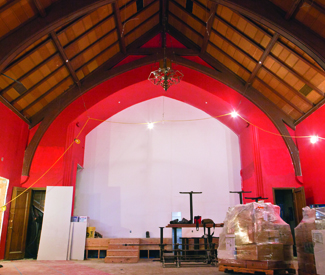
Tofu and Whiskey There are loud grinding noises and those cinematic electric sparks shooting from a machine below a church pew-like balcony. It’s musky and filled with dark bordello wood. The arched main room, the one you see when you walk in the front door of 777 Valencia Street and turn a quick corner, is outlined in bright, bloody red, and there’s a stage.

Despite this transitional state a few weeks back, this stage at brand new Mission venue, Preservation Hall West at the Chapel — named after the jazzy New Orleans venue that inspired it — will hold star-powered spillover from Hardly Strictly Bluegrass (www.hardlystrictlybluegrass.com) this week, beginning Thu/4; the fest itself is Fri/5 through Sun/7. The Preservation Hall Jazz Band of New Orleans will perform each night of the long weekend with double-dipping special guests including Elvis Costello, Robert Earl Keen, Justin Townes Earl, and Steve Earle. Maybe this means we’ll see a bespectacled Costello riding a bicycle from Golden Gate Park to the Mission, with a guitar slung on his back? One can dream.

Back to reality: “There’s no shame in construction,” said Tracey Buck of Slim’s, who, along with Britt Govea of (((folkYEAH!))) and certainly others in the future, will be doing consulting and programming at the new all-ages venue. The building, now owned by Jack Knowles, was built in 1914, formerly housed the New College, and before that was a mortuary — which gives it a sort of macabre back story. The idea for the Chapel came from Knowles’ friend Ben Jaffe, creative director for the beloved New Orleans venue, Preservation Hall, and leader of the Preservation Hall Jazz Band.

In early 2013, the West Coast sister venue will have a full restaurant attached serving fare with elements of New Orleans cuisine. But for now, there will just be concerts, including the aforementioned HSB-linked shows and upcoming visits from the likes of Woods, White Fence, and Here We Go Magic — but not to worry, the Chapel does have its liquor license now, and the bar should be ready to serve.

I pushed for fears about the venuenot being ready in time for its rapidly approaching opening date, anxiety about the relatively short distance between that morning two weeks back and the first show this week, but got back little more than nervous laughter. “It’s crunch time, but everyone knows what needs to be done,” said Buck, diplomatically.

It’s no surprise. First of all, if you live in the neighborhood, or have been near it recently, you’ve undoubtedly poked your head in and have seen what I saw — constant work. Secondly, as rabid HGTVers know, programs like Love It Or List It and their ilk show designers and construction workers whipping out brand new pads in a matter of weeks. Buck even referenced the show Restaurant: Impossible, where they quickly turn around a doomed eatery. So, it can be done.

There was also some less literal rebuilding at the actual Hardly Strictly Bluegrass festival in 2012. After the death late last year of the fest’s founder, head cheerleader, and billionaire backer, Warren Hellman, the crew had some personal reconstruction to work on.

Buck has been working the festival since it began 12 years back, and felt the loss personally. “It’s been tough, and I realize it more and more every day. But his spirit is there.”

Sheri Sternberg, technical director for the Hardly Strictly Bluegrass festival, also ruminated on Hellman’s passing, “There was something really great about having our first meeting with Warren each year…how excited he got about all the bands. If it was up to him, we would keep adding stages and days.”

The lineup this year is interesting, it’s a bit smaller — no more Thursday shows — but heavy on seriously disparate musicians such as Dwight Yoakam and Jenny Lewis and actor-bluegrass enthusiast John Reilly, and Cowboy Junkies, along with Giant Giant Sand (Howe Gelb’s hour-long opera) and a handful of younger acts such as Beachwood Sparks, the Civil Wars, and the Head and the Heart, along with the fest pillars like Emmylou Harris, Guy Clark, and Steve Earle. Sternberg says Gary West is gathering a “greatest hits” of the festival to pay tribute to Hellman, Earl Scruggs, and Doc Watson, all of whom died last year, in a set called “The Founding Fathers.” It’s kind of the theme of this year as well. That tribute will likely be kicked off with the Preservation Hall Jazz Band doing a second line.

I asked Buck if it was hard to nab artists from Hardly Strictly to play an unknown, nearly unfinished venue like the Chapel and she claims it was the opposite: “They were really eager. I think it’s just exciting to finally have a venue opening — rather than closing.”


LAURA MARLING

While bone-rattling noise has its very important place in my heart, there’s something to be said for warm cooing and surreal lyrics. For that, you can crawl up the grand staircase of the Swedish American and opera clap for English folk plucker Laura Marling. Her honest lilt and fluttering riffs have gained her comparisons to Joni Mitchell, but she has a distinctly British affect to these American ears. She played Grace Cathedral earlier this year and returns this week on her “Working Holiday Tour” to play from her most recent album A Creature I Don’t Know (Ribbon Music, 2011) at this far more intimate venue.

Wed/3, 8pm, $25. Swedish American Hall, 2174 Market, SF; www.cafedunord.com.


NOM DE GUERRE

Best band name of the week goes to members of San Francisco’s Butt Problems: Fuck You Cop, You Fucking Cop opens for Street Justice at the Knockout.

Thu/4, 10pm, $7. 3223 Mission, SF. www.theknockoutsf.com.


TOYS THAT KILL

Here’s to Recess Records — the independent punk label formed in 1989 and thriving in the current web-and-micro record shop musical landscape — and its friendly kingpin, Todd Congelliere. The snot-nosed singer-guitarist-label owner, who also fronted F.Y.P. and Underground Railroad to Candyland, returned this year to his early Aughts punk outfit, Toys That Kill. Todd and the Toys That Kill gang released its first new album in six years — the energetic and well-received Fambly 42 (Recess Records, 2012) — earlier this summer and have sparingly journeyed up the coast from their mythic Sunken City homebase of San Pedro, Calif. to play it live. Fambly 42 might have taken so long to get here because Todd (jokingly?) told me that good bands only put out three albums then quit to form new ones. With Pins of Light, Elephant Rifle.

Fri/5, 9:30pm, $10. Hemlock Tavern, 1131 Polk, SF; www.hemlocktavern.com.

Endorsements 2012: San Francisco propositions

85

PROPOSITION A

CITY COLLEGE PARCEL TAX

YES

The scathing accreditation report by the Western Association of Schools talks about governance problems at the San Francisco Community College District — a legitimate matter of concern. But most of what threatens the future of City College is a lack of money.

Check out the accreditation letter; it’s on the City College website. Much of what it says is that the school is trying to do too much with limited resources. There aren’t enough administrators; that’s because, facing 20 percent cuts to its operating budget, the college board decided to save front-line teaching jobs. Student support services are lacking; that’s because the district can barely afford to keep enough classes going to meet the needs of some 90,000 students. On the bigger picture, WASC and the state want City College to close campuses and concentrate on a core mission of offering two-year degrees and preparing students to transfer to four-year institutions. That’s because the state has refused to fund education at an adequate level, and there’s not enough money to both function as a traditional junior college and serve as the training center for San Francisco’s tech, hospitality and health-care industry, provide English as a second language classes to immigrants and offer new job skills and rehabilitation to the workforce of the future.

It’s fair to say that WASC would have found some problems at City College no matter what the financial situation (and we’ve found more — the nepotism and corruption under past boards has been atrocious). But the only way out of this mess is either to radically scale back the school’s mission — or to increase its resources. We support the latter alternative.

Prop. A is a modest parcel tax — $79 dollars a year on each property lot in the city. Parcel taxes are inherently unfair — a small house in Hunters Point pays as much as a mansion in Pacific Heights or a $500 million downtown office building. But that’s the result of Prop. 13, which leaves the city very few ways to raise taxes on real property. In the hierarchy of progressive tax options, parcel taxes are better than sales taxes. And the vast majority of San Francisco homeowners and commercial property owners get a huge benefit from Prop. 13; a $6 a month additional levy is hardly a killer.

The $16 million this tax would raise annually for the district isn’t enough to make up for the $25 million a year in state budget cuts. But at least the district would be able to make reasonable decisions about preserving most of its mission. This is one of the most important measures on the ballot; vote yes.

PROPOSITION B

PARKS BOND

YES

There are two questions facing the voters: Does the San Francisco Recreation and Parks Department need money to fix up badly decrepit, sometimes unsafe facilities, and build out new park areas, particularly in underserved neighborhoods? Has the current administration of the department so badly mismanaged Rec-Park, so radically undermined the basic concept of public access to public space, so utterly alienated neighborhoods and communities all over the city, that it shouldn’t be trusted with another penny?

And if your answer to both is yes, how the hell do you vote on Prop. B?

It’s a tough one for us. The Guardian has never, in 46 years, opposed a general obligation bond for anything except jail or prisons. Investing in public infrastructure is a good thing; if anything, the cautious folks at City Hall, who refuse to put new bonds on the ballot until old ones are paid off, are too cautious about it. Spending public money (paid by increased property taxes in a city where at least 90 percent of real estate is way under taxed thanks to Prop. 13) creates jobs. It’s an economic stimulus. It adds to the value of the city’s resources. In this case, it fixes up parks. All of that is good; it’s hard to find a credible case against it.

Except that for the past few years, under the administrations of Mayors Gavin Newsom and Ed Lee and the trusteeship of Rec-Park Directors Jared Blumenfeld and Phil Ginsburg, the city has gone 100 percent the wrong way. Parks are supposed to be public resources, open to all; instead, the department has begun charging fees for what used to be free, has been turning public facilities over to private interests (at times kicking the public out), and has generally looked at the commons as a source of revenue. It’s a horrible precedent. It makes us sick.

Ginsburg told us that he’s had no choice — deep budget cuts have forced him to look for money wherever he can find it, even if that means privatizing the parks. But Ginsburg also admitted to us that, even as chief of staff under Newsom, he never once came forward to push for higher taxes on the wealthy, never once suggested that progressive revenue sources might be an option. Nor did any of the hacks on the Rec-Park Commission. Instead, they’ve been busy spending tens of thousands of dollars on an insane legal battle to evict the Haight Ashbury Neighborhood Council’s recycling center — entirely because rich people in the Haight don’t want poor people coming through their elite neighborhood to cash in bottles and cans for a little money.

So now we’re supposed to cough up another $195 million to enable more of this?

Well, yes. We’re not happy to be endorsing Prop. B, but the bottom line is simple: The bond money will go for things that need to be done. There are, quite literally, parks in the city where kids are playing in unsafe and toxic conditions. There are rec centers that are pretty close to falling apart. Those improvements will last 50 years, well beyond the tenure of this mayor of Rec-Park director. For the long-term future of the park system, Prop. B makes sense.

If the measure fails, it may send Lee and Ginsburg a message. The fact that so many neighborhood leaders are opposing it has already been a signal — one that so far Ginsburg has ignored. We’re going Yes on B, with all due reservations. But this commission has to go, and the sooner the supervisors can craft a charter amendment to give the board a majority of the appointments to the panel the better.+

PROPOSITION C

AFFORDABLE HOUSING TRUST FUND

YES

This measure is about who gets to live in San Francisco and what kind of city this will be in 20 years. If we leave it up to market forces and the desires of developers, about 85 percent of the housing built in San Francisco will be affordable only by the rich, meaning the working class will be forced to live outside the city, clogging regional roadways and transit systems and draining San Francisco of its cultural diversity and vibrancy. And that process has been accelerated in recent years by the latest tech bubble, which city leaders have decided to subsidize with tax breaks, causing rents and home prices to skyrocket.

Mayor Ed Lee deserves credit for proposing this Housing Trust Fund to help offset some of that impact, even if it falls way short of the need identified in the city’s Housing Element, which calls for 60 percent of new housing construction to be affordable to prevent gentrification. We’re also not thrilled that Prop. C actually reduces the percentage of housing that developers must offer below market rates and prevents that 12 percent level from later being increased, that it devotes too much money to home ownership assistance at the expense of the renters who comprise the vast majority of city residents, and that it depends on the passage of Prop.E and would take $15 million from the increased business taxes from that measure, rather than restoring years of cuts to General Fund programs.

But Prop. C was a hard-won compromise, with the affordable housing folks at the table, and they got most of what they wanted. (Even the 12 percent has a long list of exceptions and thus won’t apply to a lot of new market-rate housing.) And it has more chance of actually passing than previous efforts that were opposed by the business community and Mayor’s Office. This measure would commit the city to spending $1.5 billion on affordable housing projects over the next 30 years, with an initial $20 million annual contribution steadily growing to more than $50 million annually by 2024, authorizing and funding the construction of 30,000 new rental units throughout the city. With the loss of redevelopment funds that were devoted to affordable housing, San Francisco is a city at risk, and passage of Prop. C is vital to ensuring that we all have a chance of remaining here. Vote yes.

PROPOSITION D

CONSOLIDATING ODD-YEAR LOCAL ELECTIONS

YES

There’s a lot of odd stuff in the San Francisco City Charter, and one of the twists is that two offices — the city attorney and the treasurer — are elected in an off-year when there’s nothing else on the ballot. There’s a quaint kind of charm to that, and some limited value — the city attorney is one of the most powerful officials in local government, and that race could get lost in an election where the mayor, sheriff, and district attorney are all on the ballot.

But seriously: The off-year elections have lower turnout, and cost the city money, and it’s pretty ridiculous that San Francisco still does it this way. The entire Board of Supervisors supports Prop. D. So do we. Vote yes.

PROPOSITION E

GROSS RECEIPTS TAX

YES

Over the past five years, Board of Supervisors President David Chiu estimates, San Francisco has cut about $1.5 billion from General Fund programs. It’s been bloody, nasty, awful. The budget reductions have thrown severely ill psych patients out of General Hospital and onto the streets. They’ve forced the Recreation and Parks Department to charge money for the use of public space. They’ve undermined everything from community policing to Muni maintenance.

And now, as the economy starts to stabilize a bit, the mayor wants to change the way businesses are taxed — and bring an additional $28.5 million into city coffers.

That’s right — we’ve cut $1.5 billion, and we’re raising taxes by $28.5 million. That’s less than 2 percent. It’s insane, it’s inexcusable, it’s utterly the wrong way to run a city in 2012. It might as well be Mitt Romney making the decision — 98 percent cuts, 2 percent tax hikes.

Nevertheless, that’s where we are today — and it’s sad to say this is an improvement from where the tax discussion started. At first, Mayor Lee didn’t want any tax increase at all; progressive leaders had to struggle to convince him to allow even a pittance in additional revenue.

The basic issue on the table is how San Francisco taxes businesses. Until the late 1990s, the city had a relatively rational system — businesses paid about 1.5 percent of their payroll or gross receipts, whichever was higher. Then 52 big corporations, including PG&E, Chevron, Bechtel, and the Gap, sued, arguing that the gross receipts part of the program was unfair. The supervisors caved in to the legal threat and repeal that part of the tax system — costing the city about $30 million a year. Oh, but then tech companies — which have high payrolls but often, at least at first, low gross receipts — didn’t want the payroll tax. The same players who opposed the other tax now called for its return, arguing that taxing payroll hurts job growth (which is untrue and unfounded, but this kind of dogma doesn’t get challenged in the press). So, after much discussion and debate, and legitimate community input, the supervisors unanimously approved Prop. E — which raises a little more money, but not even as much as the corporate lawsuit in the 1990s set the city back. It’s not a bad tax, better than the one we have now — it brings thousands of companies the previously paid no tax at all into the mix (sadly, some of them small businesses). It’s somewhat progressive — companies with higher receipts pay a higher rate. We can’t argue against it — the city will be better off under Prop. E than it is today. But we have to look around our battered, broke-ass city, shake our poor bewildered heads and say: Is this really the best San Francisco can do? Sure, vote yes on E. And ask yourself why one of the most liberal cities in America still lets Republican economic theory drive its tax policy.

PROPOSITION F

WATER AND ENVIRONMENT PLAN

NO, NO, NO

Reasonable people can disagree about whether San Francisco should have ever dammed the Tuolumne River in 1923, flooding the Hetch Hetchy Valley and creating an engineering marvel that has provided the city with a reliable source of renewable electricity and some of the best urban drinking water in the world ever since. The project broke the heart of famed naturalist John Muir and has caused generations since then to pine for the restoration of a valley that Muir saw as a twin to his beloved nearby Yosemite Valley.

But at a time when this country can’t find the resources to seriously address global warming (which will likely dry up the Sierra Nevada watershed at some point in the future), our deteriorating infrastructure, and myriad other pressing problems, it seems insane to even consider spending billions of dollars to drain this reservoir, restore the valley, and find replacement sources of clean water and power.

You can’t argue with the basic facts: There is no way San Francisco could replace all the water that comes in from Hetch Hetchy without relying on the already-fragile Delta. The dam also provides 1.7 billion kilowatt hours a year of electric power, enough to meet the needs of more than 400,000 homes. That power now runs everything from the lights at City Hall to Muni, at a cost of near zero. The city would lose 42 percent of its energy generation if the dam went away.

Besides, the dam was, and is, the lynchpin of what’s supposed to be a municipal power system in the city. As San Francisco, with Clean Power SF, moves ever close to public power, it’s insane to take away this critical element of any future system.

On its face, the measure merely requires the city to do an $8 million study of the proposal and then hold a binding vote in 2016 that would commit the city to a project estimated by the Controller’s Office to cost somewhere between $3 billion and $10 billion. Yet to even entertain that possibility would be a huge waste of time and money.

Prop. F is being pushed by a combination of wishful (although largely well-meaning) sentimentalists and disingenuous conservatives like Dan Lungren who simply want to fuck with San Francisco, but it’s being opposed by just about every public official in the city. Vote this down and let’s focus our attention on dealing with real environmental and social problems.

PROPOSITION G

CORPORATE PERSONHOOD

YES

If San Francisco voters pass Prop. G, it won’t put any law into effect. It’s simply a policy statement that sends a message: Corporations are not people, and it’s time for the federal government to tackle the overwhelming and deeply troubling control that wealthy corporations have over American politics.

Prop. G declares that money is not speech and that limits on political spending improve democratic processes. It urges a reversal of the notorious Citizens United vs. Federal Elections Commission Supreme Court decision.

A constitutional amendment, and any legal messing with free speech, has serious potential problems. If corporations are limited from spending money on politics, could the same apply to unions or nonprofits? Could such an amendment be used to stop a community organization from spending money to print flyers with political opinions?

But it’s a discussion that the nation needs to have, and Prop. G is a modest start. Vote yes.

Gruesome discovery

0

cheryl@sfbg.com

FILM In the summer of 1999, horror fans hungered for something, anything, that wasn’t a Scream-inspired self-aware slasher.

Though it had no stars, a microscopic budget, and was filmed in nausea-inducing shaky-cam, The Blair Witch Project burst into cinemas with a novel set-up — filmmakers lost in the woods record supernatural goings-on before falling victim to evil themselves — and scares galore. Towering box-office receipts, a Time magazine cover, and legions of rip-offs ensued.

“We just wanted to scare people,” Blair Witch co-director Daniel Myrick told me when I interviewed him for the Guardian back in 1999. He couldn’t have known that Blair Witch‘s influence would still be felt over a decade later, in movies like the blockbuster Paranormal Activity series — and even outside the horror genre, where stories constructed from characters filming themselves have become commonplace.

Now there’s V/H/S, an energetically exploitative take on the trend that reaches past Blair Witch to high-five the granddaddy of them all, 1980’s legendarily nasty Cannibal Holocaust. V/H/S also nods to vintage horror’s fondness for the anthology format, setting up the action with a frame story, Tape 56: hooligans film themselves behaving badly, then prowl a house in search of a mysterious VHS tape.

The apparently abandoned dwelling is creepy enough, with a dead body just hangin’ out in the TV room. But each tape they watch contains material so shocking (a woman turns flesh-tearingly monstrous after a drunken hookup; a student Skyping with her boyfriend suspects her apartment is haunted; and a road trip, a camping trip, and a Halloween party all go very, very wrong) it unsettles even tough guys who, earlier in the day, were grabbing women on the street in service of their budding “reality porn” business.

http://www.youtube.com/watch?v=Iv6S3RGMGw8

Each “tape” is directed by a different filmmaker or filmmaking team, all of whom were directed to use the found-footage format. So yes, V/H/S is a movie about people filming themselves watching other people who are also filming themselves.

“With a found-footage anthology, you could make a found-footage movie about people finding footage, and that seemed like such an obvious idea,” explains Simon Barrett, who worked on both the wraparound and haunted-apartment tale The Sick Thing That Happened to Emily When She Was Younger. “A lot of found-footage [features] become ludicrous; after two hours, you run into all the clichés of characters screaming at each other to turn the camera off. But you can believe that someone would leave the camera on for, say, 14 minutes of something scary happening to them.”

Adds Adam Wingard, whose multiple V/H/S credits include directing Tape 56, “Found footage is the most modern, new way to tell stories that we’ve seen before. We’ve seen vampires and ghosts. It puts it in a whole new context and framework for modern audiences — it basically spices up the genre.”

The biggest name on V/H/S‘s roster is probably Ti West, who made cult hit The House of the Devil (2009) and last year’s The Innkeepers.

“Some of my favorite movies are documentaries, so documentary-style filmmaking isn’t something that I have a problem with,” West says. “It’s that mostly [these kinds of films are] really derivative of the ones that came before them, which is frustrating.”

West, whose V/H/S segment is styled like a vacation video, prefers to shoot his films traditionally, though “I don’t think found footage is going to go away,” he says. “All of us in our daily lives [consume] found footage. We’re so accustomed to recording videos like it’s no big deal, and seeing videos recorded by amateurs. We’re so conditioned by the news and reality TV. It’s now just part of us, and part of our media.”

He’s right, of course. And when the found-footage aspect is no longer the film’s biggest novelty, like it was in the Blair Witch era, there’s room for other themes to emerge. V/H/S is — to use a word that doesn’t exist — “bro-y.” There are multiple scenes of male characters pointing the camera at clothed women, naked women, naked women who don’t know they’re being filmed, women the men are trying to have sex with, etc. (All of the filmmakers were male, though some female producers did work behind the scenes.)

V/H/S played multiple festivals, including Sundance, ahead of its theatrical debut this week. “I’m very curious about how mainstream audiences are going to respond,” Barrett says. “I feel like in the festival world, audiences come at these films ready to find some kind of political subtext to them, which I think our film overall kind of lacks at times. And when they’re trying to find out what it might be, that’s when segments get accused of being misogynistic.

He adds, “I think it’s an instinctive reaction to a horror film that touches on these subjects but doesn’t stop to tell the audience that these things are wrong, which — by the way, I think that actually is sexist, feeling you have to stop and tell the audience that women are empowered. That’s actually pretty condescending. I would rather just make a movie that does those things and hope that people get it. Which, you know, happens about half the time.”

The theme of voyeurism that runs through the film was a coincidence, though Barrett thinks that once the other filmmakers saw the frame story — inspired, he says, by Romain-Gavra’s “Stress” video for the band Justice, Harmony Korine’s 2009 Trash Humpers, and “sharking” videos — they might have been inspired in that direction.

“It is interesting that four of the six shorts could be interpreted as having some kind of failed sex tape element to them,” he says. “But I think that also just kind of organically came up, because we realized that we had total creative freedom to address the things that most found footage movies normally have to avoid. I think this was an opportunity for us to touch on these serious subjects in a goofy way. Ultimately, we just wanted to make a fun horror movie.”

West, who had a tight window to make Second Honeymoon, was the first to finish his short, turning it in before Tape 56 was completed.

“[V/H/S] turned out to have this really intense, misogynistic theme that kind of just came out of nowhere. It wasn’t planned,” he says. “Since I was first, I wonder: if I had gone last, would I have made something different? It sounds really stupid to say we didn’t know [the theme] was going on, but really everyone was very removed from each other.”

Also, West points out, “The filmmakers are not like the people they depict. In a way, the movie is presenting these awful dudes and they’re getting their comeuppance. So it may seem misogynistic, but actually it’s kind of this feminist revenge thing. I don’t know why it happened. I didn’t realize it until Sundance, when I was watching it and going, ‘There are some weird threads going on in this movie.'”


V/H/S opens Fri/5 in Bay Area theaters.

Psychic Dream Astrology: October 3-9

0

ARIES

March 21-April 19

Don’t try to push or rush your way out of your current state of affairs. You need some down time to reconsider your situation. You may need to change your mind or change your goals but then you may need to decide to stand your ground and fight. Either way, this week retreat to calmly assess your next move.

TAURUS

April 20-May 20

Abundance is yours for the taking, but that doesn’t mean that it will come rushing in all at once. You need patience and perseverance to light your way. You are pointed in the right direction, but perhaps looking for the wrong signs. Be attuned to subtleties this week for best results.

GEMINI

May 21-June 21

Relationships are a dynamic, living thing, and they don’t always follow logic. Understand the patterns that are playing themselves out in your relationships, and quit playing your role in dynamics that bring you unhappiness. Be willing to be different and things around you will change, Twin Star.

CANCER

June 22-July 22

Getting in touch with your emotions will clarify what you’re thinking, Moonchild. It’s essential that you separate what other people think from your own attitudes this week, even if that’s hecka confusing. Be intentional before you spring into action, and if you feel confused don’t do anything for a while.

LEO

July 23-Aug. 22

You are not in control, Leo. You cannot foretell the future or the feelings of the people around you. Your happiness is at least in part dependent on the momentum of your life being in your favor, and you may feel helpless to direct that flow this week. Don’t try for specific outcomes; just act in integrity and the rest will follow.

VIRGO

Aug. 23-Sept. 22

Use your ego to buoy you to greater heights instead of to psych yourself out, Virgo. Let the errors of your past teach you the things to avoid, even if that means you’ve got to learn to not overthink the errors of your past! Ballsy, bold, and wisely considered actions will get you where you want to be this week.

LIBRA

Sept. 23-Oct. 22

When you feel stymied, the best thing you can do is to try to understand why your reactions are as intense as they are. You’ll get more value from making sense of your own fears and impulses than you will from blindly reacting, so strive to act mindfully, Libra. The crap that slows you down is meant to teach you.

SCORPIO

Oct. 23-Nov. 21

When you move too far too fast you will find yourself feeling scattered and confused. Instead of lamenting your woes or trying to push past them, you would be wise to take a hard look at your actions. If what you’re doing doesn’t line up with your goals it’s time to take a deep breathe and change course.

SAGITTARIUS

Nov. 22-Dec. 21

You can have success on your present path, Sag, but if you really look at what you’re going for, are ya sure you want it? Make sure you’re not marrying yourself to potential alone. If things are not as you want them to be, make sure they’re clearly pointed in the direction that should be before you make any commitments.

CAPRICORN

Dec. 22-Jan. 19

If you can cultivate interest in your life instead of trying to fix things so much, you will get closer to where you need to be, Capricorn. You have a lot if ideas, but still don’t really know what’s good for you. Cultivate your willingness to let things develop around you, while you go by sense of feel for now.

AQUARIUS

Jan. 20-Feb. 18

Patience will lead to self-assurance this week, Aquarius. You are at the helm of something new, but there are loose ends yet to be tied. Clean your room, put away your toys to get ready for the next phase. The better prepared you are, the more gracefully you will be able to make use of your opportunities.

PISCES

Feb. 19-March 20

Love is a beautiful thing, but not all things borne from it are as lovely as we would prefer. This week you should rejoice in all things good in your life, Pisces, and in the world at large. Practice enjoying abundance in the present, without needing the future to be assured to you.

Jessica Lanyadoo has been a Psychic Dreamer for 18 years. Check out her website at www.lovelanyadoo.com to contact her for an astrology or intuitive reading.


Stage Listings

0

Stage listings are compiled by Guardian staff. Performance times may change; call venues to confirm. Reviewers are Robert Avila, Rita Felciano, and Nicole Gluckstern. Submit items for the listings at listings@sfbg.com. For further information on how to submit items for the listings, see Picks.

THEATER

OPENING

The Fifth Element: Live! Dark Room Theater, 2263 Mission, SF; www.darkroomsf.com. Opens Fri/5. Runs Fri-Sat, 8pm. Through Oct 27. Comedic adaptation of the 1997 Luc Besson sci-fi epic.

Geezer Marsh San Francisco, 1062 Valencia, SF; www.themarsh.org. $30-100. Opens Sat/6, 8pm. Runs Sat, 8pm; Sun, 7pm. Through Nov 18. Geoff Hoyle’s popular solo show about aging returns.

Of Thee I Sing Eureka Theatre, 215 Jackson, SF; www.42ndstmoon.org. $25-75. Previews Wed/3, 7pm; Thu/4-Fri/5, 8pm. Opens Sat/6, 6pm. Runs Wed, 7pm; Thu-Fri, 8pm; Sat, 6pm (also Oct 13, 1pm); Sun, 3pm. Through Oct 21. 42nd Street Moon performs George and Ira Gershwin’s classic political satire.

BAY AREA

Acid Test: The Many Incarnations of Ram Dass Marsh Berkeley, 2120 Allston, Berk; www.themarsh.org. $15-50. Opens Thu/4, 8pm. Runs Thu-Fri, 8pm; Sat, 5pm. Through Nov 24. Lynne Kaufman’s new play stars Warren David Keith as the noted spiritual figure.

Sex, Slugs and Accordion Marsh Berkeley, 2120 Allston, Berk; www.themarsh.org. $10. Opens Wed/3, 8pm. Runs Wed, 8pm. Through Nov 14. Jetty Swart, a.k.a. Jet Black Pearl, stars in this “wild and exotic evening of song.”

33 Variations TheatreWorks at the Mountain View Center for the Performing Arts, 500 Castro, Mtn View; www.theatreworks.org. $23-73. Previews Wed/3-Fri/5, 8pm. Opens Sat/6, 8pm. Runs Tue-Wed, 7:30pm; Thu-Sat, 8pm (also Sat, 2pm); Sun, 2 and 7pm. Through Oct 28. TheatreWorks performs Moisés Kaufman’s drama about a contemporary musicologist struggling to solve one of Beethoven’s greatest mysteries, and a connecting story about the composer himself.

The World’s Funniest Bubble Show Marsh Berkeley, 2120 Allston, Berk; www.themarsh.org. $8-50. Opens Sun/7, 11am. Runs Sun, 11am; Nov 23-25, 11am. Through Nov 25. Louis “The Amazing Bubble Man” Pearl brings his lighter-than-air show back to the Marsh.

ONGOING

Elect to Laugh Marsh San Francisco, 1062 Valencia, SF; www.themarsh.org. Tue, 8pm. Through Nov 6. $15-50. Veteran political comedian Will Durst emphasizes he’s watching the news and keeping track of the presidential race “so you don’t have to.” No kidding, it sounds like brutal work for anyone other than a professional comedian — for whom alone it must be Willy Wonka’s edible Eden of delicious material. Durst deserves thanks for ingesting this material and converting it into funny, but between the ingesting and out-jesting there’s the risk of turning too palatable what amounts to a deeply offensive excuse for a democratic process, as we once again hurtle and are herded toward another election-year November, with its attendant massive anticlimax and hangover already so close you can touch them. Durst knows his politics and comedy backwards and forwards, and the evolving show, which pops up at the Marsh every Tuesday in the run-up to election night, offers consistent laughs born on his breezy, infectious delivery. One just wishes there were some alternative political universe that also made itself known alongside the deft two-party sportscasting. (Avila)

Family Programming: An Evening of Short Comedic Plays Shelton Theater, 533 Sutter, SF; www.brownpapertickets.com. $20. Thu-Sat, 8pm. Through Oct 13. Left Coast Theatre Company performs short plays about gay and alternative families.

Foodies! The Musical Shelton Theater, 533 Sutter, SF; www.foodiesthemusical.com. $30-34. Previews Fri/5, 8pm. Opens Sat/6, 8pm. Runs Fri-Sat, 8pm (no show Nov 17). Open-ended. AWAT Productions presents Morris Bobrow’s musical comedy revue all about food.

The Normal Heart American Conservatory Theater, 415 Geary, SF; www.act-sf.org. $25-95. Wed/3-Sat/6, 8pm (also Sat/6, 2pm); Sun/7, 2pm. Three decades after the onset of the AIDS epidemic — today affecting and killing millions across the globe — playwright and ACT UP founder Larry Kramer’s 1985 autobiographical docudrama of the first years and victims of the crisis in New York City proves still relevant and powerful in this spirited 2011 Tony Award–winning Broadway revival, under direction by George C. Wolfe, now up at American Conservatory Theater in an ACT-Arena Stage co-presentation. Centering on the grassroots response to official inaction amid the homophobic status quo — in particular, the founding of a small but determined HIV advocacy group by Ned Weeks (Kramer’s stand-in, played brilliantly by Patrick Breen) and others — The Normal Heart also roots itself in a set of characters and fraught personal relationships as Weeks’s brash, confrontational style progressively alienates him from his brethren and more accommodating (or closeted) allies. It’s a play that really shouldn’t work so well, given its message-driven and inevitably self-serving structure, but it nevertheless does — in part because the urgency behind it remains, and the eerie confusion and unforgivable official neglect of those early years carry even more weight with tragedy-laden hindsight. Kramer also crafts some affecting scenes and some rousingly fiery monologues (not just for Weeks, and all expertly delivered by the sharp cast) that underscore a time when history, as it is wont to do, put forward fervent loudmouths and nonconformists as the necessary agents of resistance and change. (Avila)

The Other Place Magic Theatre, Fort Mason Center, Bldg D, Third Flr, SF; www.magictheatre.org. $22-62. Wed/3-Sat/6, 8pm (also Wed/3, 2:30pm); Sun/7, 7pm. A middle-aged scientist named Juliana (Henny Russell) finds herself marooned inside her own rapidly unraveling mind in the West Coast premiere of this occasionally intriguing but finally unconvincing psychological drama of madness and grief by Sharr White (Annapurna). Describing an “episode” she suffered while presenting a major new dementia treatment to an audience of doctors and sales reps in the Bahamas, Juliana soon proves an unreliable narrator, as estranged husband Ian (Donald Sage Mackay) challenges her on some basic facts — including her claim to be in phone contact with their long-lost daughter (Carrie Paff) and Juliana’s disgraced former post-doc (Patrick Russell). The mystery here has to do with another “episode” altogether, one that took place at the couple’s Cape Cod summer home years before, which has left Juliana and Ian bereft and now on the verge of divorce. As Juliana slides back and away to “the other place,” we understand the mistakes this supposedly brilliant but also flawed woman has made, and the emotional logic of her mind’s drift. Not a bad premise, but it also feels contrived, with dialogue straining after tension and wit that are too often not there. Helmed by artistic director Loretta Greco, the action unfolds at almost too regular a clip, leaving little room for rumination — no doubt a stylistic choice but one which undercuts what modest force there is in the play’s dynamics, which anyway serve a rather sentimental storyline about loss and forgiveness. (Avila)

The Real Americans Marsh San Francisco, 1062 Valencia, SF; www.themarsh.org. $25-50. Fri, 8pm; Sat, 8:30pm. Extended through Oct 27. Dan Hoyle’s hit show, inspired by the people and places he encountered during his 100-day road trip across America in 2009, continues.

Roseanne: Live! Rebel, 1760 Market, SF; www.brownpapertickets.com. $25. Wed, 7 and 9pm (no shows Oct 31). Through Nov 14. Lady Bear, Heklina, D’Arcy Drollinger, and more star in this tribute to the long-running sitcom.

Shocktoberfest 13: The Bride of Death Hypnodrome, 575 10th St, SF; www.thrillpeddlers.com. $25-35. Thu-Sat, 8pm. Through Nov 17. Thrillpeddlers’ annual Halloween horror extravaganza features a classic Grand Guignol one-act and two world premiere one-acts, plus a blackout spook show finale.

The Strange Case of Citizen de la Cruz Bindlestiff Studio, 185 Sixth St, SF; www.bindlestiffstudio.org. Thu-Sat, 8pm; Sun/7, 2pm. Through Oct 13. Bindlestiff Studio presents Luis Francia’s political thriller.

Twelfth Night San Francisco Maritime National Historic Park, Hyde Street Pier, 2905 Hyde, SF; www.weplayers.org. $30-80. Fri/5-Sun/7 and Oct 13, 5:30pm. After spending the summer on Angel Island with their epic-scale production of The Odyssey, the We Players have scaled back with a lo-key rendition of Shakespeare’s Twelfth Night on Hyde Street Pier. Of course when it comes to the We Players, “scaled-back” still means a two-and-a-half hour long participatory jaunt taking place mainly along the length of the pier and aboard the historic ferryboat, the Eureka, which serves primarily as the residence of the grieving Illyrian Countess, Olivia (Clara Kamunde) around whose favors much of the plot revolves. Highlights of the experience include the opportunity to visit historic Hyde Street Pier, a gypsy-jazzy score directed by Charlie Gurke (who also plays the lovelorn Duke Orsino), and the rascally quartet of the prankish Maria (Caroline Parsons), jocular drunk Toby Belch (Dhira Rauch), clueless doofus Andrew Augecheek (Benjamin Stowe), and wise fool Feste (John Hadden). But as We Players productions go, this one feels less inspired in its staging, and much of the action merely shuffles back and forth on the Eureka without incorporating many of the intriguing nooks and views the Hyde Street Pier offers, despite a promising opening scene involving a beach and a rowboat. Also, uncharacteristically for We, the comic timing seemed to be off the evening I saw it, although both Stowe and Hadden ably conveyed their wit without a flaw. Dress warmly, carry a big flask, and you’ll be fine. (Gluckstern)

The Waiting Period Marsh San Francisco, 1062 Valencia, SF; www.themarsh.org. $15-50. Thu-Fri, 8pm; Sat, 5pm. Extended through Oct 27. Brian Copeland (comedian, TV and radio personality, and creator-performer of the long-running solo play Not a Genuine Black Man) returns to the Marsh with a new solo, this one based on more recent and messier events` in Copeland’s life. The play concerns an episode of severe depression in which he considered suicide, going so far as to purchase a handgun — the title coming from the legally mandatory 10-day period between purchasing and picking up the weapon, which leaves time for reflections and circumstances that ultimately prevent Copeland from pulling the trigger. A grim subject, but Copeland (with co-developer and director David Ford) ensures there’s plenty of humor as well as frank sentiment along the way. The actor peoples the opening scene in the gun store with a comically if somewhat stereotypically rugged representative of the Second Amendment, for instance, as well as an equally familiar “doood” dude at the service counter. Afterward, we follow Copeland, a just barely coping dad, home to the house recently abandoned by his wife, and through the ordinary routines that become unbearable to the clinically depressed. Copeland also recreates interviews he’s made with other survivors of suicidal depression. Telling someone about such things is vital to preventing their worst outcomes, says Copeland, and telling his own story is meant to encourage others. It’s a worthy aim but only a fitfully engaging piece, since as drama it remains thin, standing at perhaps too respectful a distance from the convoluted torment and alienation at its center. (Avila)

BAY AREA

Assassins Ashby Stage, 1901 Ashby, Berk; www.shotgunplayers.org. $20-30. Previews Wed/3-Thu/4, 7pm. Opens Fri/5, 8pm. Runs Wed-Thu, 7pm; Fri-Sat, 8pm; Sun, 5pm. Through Nov 11. Shotgun Players performs the Sondheim musical about John Wilkes Booth, Lee Harvey Oswald, and other famous Presidential killers (and would-be killers).

Chinglish Berkeley Repertory Theatre, Roda Theatre, 2015 Addison, Berk; www.berkeleyrep.org. $14.50-99. Wed/3 and Sun/7, 7pm (also Sun/7, 2pm); Thu/4 and Sat/6, 2 and 8pm. Tony Award-winning playwright David Henry Hwang (M. Butterfly) delivers this inconsistent but generally lively and fascinatingly au courant comedy about a down-on-his-luck American businessman (Alex Moggridge) who visits China hoping to win a contract for English-language signage. Hiring a British expat (Brian Nishii) to smooth the way for him, he enters negotiations with a local official (Larry Lei Zhang). Although things seem to be going well (across some hilarious scenes of half-assed simultaneous translation), he finds the deal running inexplicably aground, then finds unexpected help from a hard-nosed, initially hostile, and beautiful Party official (a standout Michelle Krusiec), with whom he soon begins an extramarital affair. But the American (who has a past of his own that eventually comes to light with surprising consequences) has no idea of the machinations taking place behind the formal business meetings and other confused cross-cultural encounters. What unfolds is a sometimes stretched but generally shrewd and laugh-out-loud funny assessment of has-been American delusions through the prism of rising Chinese ambitions and clout, cultural and otherwise. If the central dynamic between the lovers is not always convincing on the individual or metaphorical level, Leigh Silverman directs for Berkeley Rep a super slick production, complete with rotating sets and precisely timed entrances, featuring an enjoyable cast rounded out by Vivian Chiu, Celeste Den, and Austin Ku. (Avila)

Hamlet Bruns Amphitheater, 100 California Shakespeare Theater Way, Orinda; www.calshakes.org. $35-71. Tue-Thu, 7:30pm; Fri-Sat, 8pm; Sun, 4pm. Through Oct 14. Liesl Tommy directs this season closer for Cal Shakes, a decidedly uneven and overall surprisingly bland production of one of Shakespeare’s most fascinating, affecting, and endlessly rich works. The best part of Tommy’s less-than-inspired hodgepodge production (summed up by the dry and cluttered swimming-pool set, albeit very nicely designed by Clint Ramos) is lead Leroy McClain, whose Hamlet is a vibrantly intelligent and charismatic force most of the time. He gets some fine support from Dan Hiatt as a comically pedantic but still sympathetically paternal Polonius, but there is precious little chemistry with either Ophelia (a nonetheless striking Zainab Jah) or faithless queen mother Gertrude (Julie Eccles). The rest of the cast is rarely more than dutiful. Meanwhile, the staging comes laden with some awkward and/or tired conceits: a small fish tank-like landscape inset into the back wall for an unraveling Ophelia; a gore-covered zombie-esque ghost (a flat Adrian Roberts, who also plays Claudius); or guards sporting submachine guns, which always looks ridiculous. Moreover, the language comes awkwardly modernized in places —substituting “dagger” for “bodkin” in a rather famous soliloquy, for example, seems unnecessary and is definitely distracting. Why not “submachine gun”? (Avila)

The Kipling Hotel: True Misadventures of the Electric Pink ’80s Marsh Berkeley, 2120 Allston, Berk; www.themarsh.org. $20-50. Sat, 8:30pm; Sun, 7pm. Extended through Oct 14. This new autobiographical solo show by Don Reed, writer-performer of the fine and long-running East 14th, is another slice of the artist’s journey from 1970s Oakland ghetto to comedy-circuit respectability — here via a partial debate-scholarship to UCLA. The titular Los Angeles residency hotel was where Reed lived and worked for a time in the 1980s while attending university. It’s also a rich mine of memory and material for this physically protean and charismatic comic actor, who sails through two acts of often hilarious, sometimes touching vignettes loosely structured around his time on the hotel’s young wait staff, which catered to the needs of elderly patrons who might need conversation as much as breakfast. On opening night, the episodic narrative seemed to pass through several endings before settling on one whose tidy moral was delivered with too heavy a hand, but if the piece runs a little long, it’s only the last 20 minutes that noticeably meanders. And even with some awkward bumps along the way, it’s never a dull thing watching Reed work. (Avila)

Topdog/Underdog Marin Theatre Company, 397 Miller, Mill Valley; www.marintheatre.org. $36-57. Tue and Thu-Sat, 8pm (also Sat/6 and Oct 20, 2pm; Oct 11, 1pm); Wed, 7:30pm; Sun, 2 and 7pm. Through Oct 21. Marin Theatre Company performs Suzan-Lori Parks’ Pulitzer Prize winner about a contentious pair of brothers.

PERFORMANCE/DANCE

“Comedy Bodega” Esta Noche Nightclub, 3079 16th St, SF; www.comedybodega.com. Thu, 8pm. Ongoing. No cover (one drink minumum). Stand-up comedy.

“Comedy Returns to El Rio” El Rio, 3158 Mission, SF; www.brownpapertickets.com. Mon/8, 8pm. $7-20. With Maureen Langan, Sammy Obeid, Dhaya Lakshminarayanan, Bobby Golden, and guest host Nick Leonard.

Dance Elixir Kunst-Stoff Arts, One Grove, SF; www.danceelixirlive.org. Thu/4-Sat/6, 8:30pm. $10. Performing Destroy// with Tiberius and Ava Mendoza.

“Hot Mess 3: Third Time, No Charm” New Conservatory Theatre Center, 25 Van Ness, SF; www.nctcsf.org. Thu/4-Sat/6, 8pm. $15. San Francisco’s newest sketch comedy group performs.

Shazia Mirza Punchline, 444 Battery, SF; www.punchlinecomedyclub.com. Wed/3, 8pm. $15. The British comedian performs, with opening acts Kevin Camia and Samson Koletkar.

Smuin Ballet Palace of Fine Arts Theatre, 3301 Lyon, SF; www.smuinballet.org. Fri/5-Sat/6 and Oct 11-13, 8pm (also Oct 13, 2pm); Oct 14, 2pm. $25-65. The company performs its fall program, including West Coast premiere Cold Virtues.

“Spaceholder Festival” ODC Theater, 3153 17th St, SF; www.odctheater.org. Fri/5-Sat/6, 8pm; Sun/7, 7pm. $25-45. Choreographer Morgan Thorson spearheads this evening-length performance that transforms the stage into “an archeological dig, an auction block, and a museum.”

“The Spooky Cabaret” Stage Werx, 446 Valencia, SF; www.wilywestproductions.com. Sun/7, 5:30pm; Oct 8-10, 7:30pm. $10. ‘Tis the season for this fest of three full-length and five one-act plays with horror themes.

“Theatecture on UN Plaza” Civic Center, UN Plaza, Seventh St at Market, SF; www.ftloose.org. Tue, noon-2pm. Through Oct 16. Free. Outdoor performance of Mary Alice Fry’s Honeycomb Zone as part of the “24 Days of Central Market Arts Festival.”

Music Listings

0

Since club life is unpredictable, it’s a good idea to call ahead or check the venue’s website to confirm bookings and hours. Prices are listed when provided to us. Visit www.sfbg.com/venue-guide for venue information. Submit items for the listings at listings@sfbg.com. For further information on how to submit items for the listings, see Picks.

WEDNESDAY 3

ROCK/BLUES/HIP-HOP

Assemblage 23, Espermachine, Demodulate DNA Lounge. 9pm, $18.

Battlehooch, Paranoids, Chaka Knockout. 9pm, $5.

“Communion in San Francisco” Brick and Mortar Music Hall. 8pm, $8-$10. With Tarnation, Prairiedog, Quinn DeVeaux.

Guido vs Jason Marion Johnny Foley’s Dueling Pianos. 9:30pm, free.

Jezabels, Yukon Blinde Independent. 8pm, $16.

Keith Crossan Blues Showcase: Big Jo Manfra Biscuits and Blues. 8 and 10pm, $15.

Laura Marling Swedish American Hall. 8pm, $25.

Nightwish, Kamelot Warfield. 8pm, $40-$65.

Helen Reddy Yoshi’s SF. 8pm, $45.

Terry Savastano Johnny Foley’s. 9pm, free.

“SF Acoustic Collective” Bottom of the Hill. 9pm, $7. With Laura Weinbach, Ben Flanagan, Adam Dishart, and more.

Spring Standards Hotel Utah. 8pm, $8.

Strung Out, Swellers, Such Gold, Sheds Slim’s. 7:30pm, $18-$20.

Tokyo Raid, Spiral Electric, Elektrik Sunset Hemlock Tavern. 8:30pm, $6.

Wax Tailor, Shana Halligan, DJ Tom Thump Rickshaw Stop. 8pm, $15.

Z-Man, Dregs One, Toast, Rey Resurrection Elbo Room. 9pm, $10.

JAZZ/NEW MUSIC

Cat’s Corner with Nathan Dias Savanna Jazz. 9pm, $10.

Dink Dink Dink, Gaucho, Eric Garland’s Jazz Session Amnesia. 7pm, free.

Ricardo Scales Top of the Mark, 999 California, SF; www.topofthemark.com. 6:30pm, $5.

FOLK/WORLD/COUNTRY

Cha-Ching Boom Boom Room. 8pm, $5.

DANCE CLUBS

Booty Call Q-Bar, 456 Castro, SF; www.bootycallwednesdays.com. 9pm.

Coo-Yah! Som., 2925 16th St, SF; (415) 558-8521. 10pm, free. DJs Daneekah and Green B spin reggae and dancehall.

Obey the Kitty: Justin Milla Vessel, 85 Campton Place, SF; www.vesselsf.com. 10pm, $5.

THURSDAY 4

ROCK/BLUES/HIP-HOP.

Alma Desnuda, Achii Boom Boom Room. 8pm, $15.

Big Tree, DRMS, Guy Fox Brick and Mortar Music Hall. 7:30pm, $5-$8.

Bisi and the Moonwalker, Black Dream, Greater Sirens 50 Mason Social House. 8pm, $13.

Dead Western, Exquisite Corpse, Blue Oaks Hemlock Tavern. 8:30pm, $6.

Helio Sequence, Slowdance Independent. 8pm, $18.

John Lawton Trio Johnny Foley’s. 9pm, free.

Stephen Marley Fillmore. 8pm, $29.50.

Mount Eerie, Bouquet, Tortured Genius Bottom of the Hill. 9pm, $12.

Niki and the Dove, Wolf Gang, popscene DJs Rickshaw Stop. 9:30pm, $13-$15.

Sheri Puorto Biscuits and Blues. 8 and 10pm, $15.

Helen Reddy Yoshi’s SF. 8pm, $45.

Sleeping Giants Brick and Mortar Music Hall. 10pm, $5-$8.

Street Justice, Lord Nasty and the Seekers of Perversion, Fuck You Cop, You Fucking Cop Knockout. 10pm, $7.

Rags Tuttle vs Guido Johnny Foley’s Dueling Pianos. 9:30pm, free.

JAZZ/NEW MUSIC

Home of Easy Credit Luggage Store Gallery, 1007 Market, SF; www.luggagestoregallery.org. 8pm, $5.

“Jazz Beyond Genre” Red Poppy Art House. 7pm, $12-$15. With Andrea Wolper, Hafez Modirzadeh, and more.

Stompy Jones Top of the Mark, 999 California, SF; www.topofthemark.com. 7:30pm, $10.

Ned Boyton Trio Bottle Cap, 1707 Powell, SF; www.bottlecapsf.com. 7-10pm.

FOLK/WORLD/COUNTRY

Delhi 2 Dublin, Non Stop Bhangra Slim’s. 9pm, $17

Septeto Nacional JCCSF, 3200 California, SF; www.jccsf.org. 7:30pm, $27-$45.

Twang! Honky Tonk Fiddler’s Green, 1330 Columbus, SF; www.twanghonkytonk.com. 5pm. Live country music.

DANCE CLUBS

Afrolicious Elbo Room. 9:30pm, $5-$7. With DJ-host Pleasuremaker.

All 80s Thursday Cat Club. 9pm, $6 (free before 9:30pm). The best of ’80s mainstream and underground.

Base: Tim Green Vessel, 85 Campton Place, SF; www.vesselsf.com. 10pm, $5-$10.

Supersonic Lookout, 3600 16th St., SF; www.lookoutsf.com. 9pm. Global beats paired with food from around the world.

Tropicana Madrone Art Bar. 9pm, free. Salsa, cumbia, reggaeton, and more.

FRIDAY 5

ROCK/BLUES/HIP-HOP

Adios Amigo, Solwave, Dogcatcher Elbo Room. 9:30pm, $8.

Adoration 50 Mason Social House. 8pm, $5.

Bernadette, Shawn Virago, Castles in Spain, Lydia Popovich, DJ Salex Thee Parkside. 9pm, $10.

Brother Tyrone Biscuits and Blues. 8 and 10pm, $20.

ConFunkShun Yoshi’s SF. 8 and 10pm, $30.

Dead Kennedys, Fang, Guantanamo Dogpile, 13 Scars Regency Ballroom. 9pm, $27.

Dead Winter Carpenters, Hackensaw Boys Brick and Mortar Music Hall. 9pm, $15-$20.

Dry the River, Ferocious Few, Houndmouth Independent. 9pm, $15.

Roger Knox, Jon Langford and Sally Timms, Walter Salas-Humara Swedish American Hall. 7:30pm, $16.

Nick Lowe, Jesse Winchester Great American Music Hall. 9pm, $30.

Mono, Chris Brokaw, Jon Porras Rickshaw Stop. 9pm, $12-14.

Reckless Kelly, Chuck Mead and His Grassy Knoll Boys, Trishas, Tiny Television Slim’s. 9pm, $17

Rebel Ship Boom Boom Room. 8pm, $15.

Laetitia Sadier, Orca Team, Pageants, DJ Dominique Leone Bottom of the Hill. 9:30pm, $14.

Sadies, John Langford and His Sadies, Misisipi Rider Cafe Du Nord. 7:30pm, $16.

Shpongle, Phutureprimitive Warfield. 10pm, $35-$40.

Sole Johnny Foley’s. 9pm, free.

Tell River, Gunsafe, Clay Hawkins Plough and the Stars. 9pm, $6.

Nathan Temby, Greg Zema, Jason Marion Johnny Foley’s Dueling Pianos. 9pm, free.

Toys That Kill, Pins of Light, Elephant Rifle Hemlock Tavern. 9:30pm, $10.

JAZZ/NEW MUSIC

Audium 1616 Bush, SF; www.audium.org. 8:30pm, $20. Theater of sound-sculptured space.

Black Jazz Orchestra Top of the Mark, 999 California, SF; www.topofthemark.com. 9pm, $10.

FOLK/WORLD/COUNTRY

Janam, Lila Sklar Red Poppy Art House. 8pm, $12-$15.

DANCE CLUBS

Braza! Som., 2925 16th St, SF; (415) 558-8521. 10pm, $5-$10. DJs Sabo, Kento, Elan spin Brazilian, and samba.

Joe Lookout, 3600 16th St.,SF; www.lookoutsf.com. 9pm.

Kenny Loi, Steele vs Whitlock Vessel, 85 Campton Place, SF; www.vesselsf.com. 10pm, $20-$30.

Old School JAMZ El Rio. 9pm. Old school funk, hip-hop, and R&B.

Paris to Dakar Little Baobab, 3388 19th St, SF; (415) 643-3558. 10pm, $5. Afro and world music.

Strangelove: Undead Wedding Cat Club. 9:30pm, $3-$10. With DJs Tomas Diablo, Joe Radio, Daniel Skellington, and Donimo.

Womp SF DNA Lounge. 9pm, $10. With Dyloot, Liam Shy, and more.

SATURDAY 6

ROCK/BLUES/HIP-HOP

Apogee Sound Club, Generacion Suicida, Permanent Ruin, Die Time, Cold Circuits Knockout. 4pm, $6.

Rome Balestrieri, Nathan Temby, Randy Johnny Foley’s Dueling Pianos. 9pm, free.

Michael Beach, Native Cats, Buttons Hemlock Tavern. 9:30pm, $7.

Big Gigantic, GriZ Regency Ballroom. 9pm, $20.

Burning Monk, Die! Thee Parkside. 3pm, free.

ConFunkShun Yoshi’s SF. 8 and 10pm, $30.

Dead Winter Carpenters, Hackensaw Boys Brick and Mortar Music Hall. 9pm, $12-$15.

Glen Hansard Fillmore. 9pm, $30.

Paula Harris and the Beasts of Blues, Big Ass Brass Biscuits and Blues. 8 and 10:30pm, $20.

Inciters, Impalers, Wicked Mercies Cafe Du Nord. 9:30pm, $10.

John Wayne Bro Band Riptide. 9:30pm, free.

Jenny Lewis Great American Music Hall. 9pm, $21.

Maccabees, Mwahaha Independent. 9pm, $20.

Mantles, Swiftumz, Cocktails El Rio. 10pm, $8.

Soul Rebels, Rebel Ship Boom Boom Room. 8pm, $20.

Tall Shadows Johnny Foley’s. 9pm, free.

Wave Array, She Beards, Warbler Bottom of the Hill. 9:30pm, $10.

JAZZ/NEW MUSIC

Audium 1616 Bush, SF; www.audium.org. 8:30pm, $20. Theater of sound-sculptured space.

FOLK/WORLD/COUNTRY

BronwChicken BrownChicken, Renegade Stringband, Mountain Men, Dull Richards Plough and Stars. 9pm, $10-$15.

Kafana Balkan, Brass Menazeri, Jill Parker and Foglove Sweethearts, DJ Zeljko Rickshaw Stop. 9pm, $13.

DANCE CLUBS

“Beats for Boobs” Mezzanine. 7pm, $25-$40. With shOOey, Carol C, Emily Fox, and more.

Bootie SF DNA Lounge. 9pm, $10-$15.

Martin Buttrich Public Works. 9:30pm, $20.

Cockfight Underground SF, 424 Haight, SF; (415) 864-7386. 9pm, $7. Dance night for gay boys.

Foundation Som., 2925 16th St, SF; (415) 558-8521. 10pm, $5-$10. Hip-hop, dancehall,funk, and salsa.

Haceteria Deco Lounge, 510 Larkin, SF; www.decosf.com. 9pm, free before 11pm, $3 after.

Paris to Dakar Little Baobab, 3388 19th St, SF; (415) 643-3558. 10pm, $5. Afro and world music.

Pheeko Dubfunk, Vahid, Frenchy Le Freak, G StavVessel, 85 Campton Place, SF; www.vesselsf.com. 10pm, $20-$30.

Saturday Night Soul Party Elbo Room. 10pm, $5-$10. DJs Lucky, Paul Paul, and Phengren Oswald spinning 60s soul 45s.

SUNDAY 7

ROCK/BLUES/HIP-HOP

Admiral Fallow, Young Buffalo Cafe Du Nord. 8:30pm, $12-$14.

Gregors, Piranha Party, Crazy Eyes Sub-Mission. 8pm.

Ewert and the Two Dragons, Lighthouse and the Whaler, Family Crest Bottom of the Hill. 8pm, $10.

Jason King Band Biscuits and Blues. 7 and 9pm, $15.

Michael Kiwanaka, Nathaniel Rateliff, Foy Vance Independent. 8pm, $20.

Wayne Krantz Yoshi’s SF. 7pm, $20.

Aaron Leese and the Panhandlers, Jenny and the Jerks Boom Boom Room. 8pm, $5.

Li XI, Rubedo, Mosshead, Oiler Hemlock Tavern. 8:30pm, $7.

Terry Savastano Johnny Foley’s. 9pm, free.

She Wants Revenge, Pyyramids Great American Music Hall. 8pm, $25.

Soulit 50 Mason Social House. 8pm.

Stepdad, Rich Aucoin, Terror Pigeon Dance Revolt Rickshaw Stop. 8pm, $10.

JAZZ/NEW MUSIC

Jazzkwest Trio Bliss Bar, 4026 24th St, SF; www.blissbarsf.com. 4:30pm, $10.

FOLK/WORLD/COUNTRY

Twang Sunday Thee Parkside. 4pm, free. With Jinx Jones and the King Tones.

DANCE CLUBS

Dub Mission Elbo Room. 9pm, $13. With Brother Culture, DJ Sep, and Dubsmashers.

Jock Lookout, 3600 16th St, SF; www.lookoutsf.com. 3pm, $2.

Love and Light Public Works. 9pm, $15.

Remember the Party: We Are Family City Nights, 715 Harrison, SF; www.remembertheparty.com. 6pm-3am, $30. Disco with DJ Jerry Bonham.

MONDAY 8

ROCK/BLUES/HIP-HOP

Star Anna and Kasey Anderson Brick and Mortar Music Hall. 9pm, free.

Blank Tapes, Lawlands, Cafe Cabana Cafe Du Nord. 8pm, $10.

Damir Johnny Foley’s. 9pm, free.

Gangstagrass, BPos Elbo Room. 9pm, $7.

Patti Smith Fillmore. 8pm, $39.50.

Richie Spice Independent. 9pm, $25.

JAZZ/NEW MUSIC

Bossa Nova Tunnel Top, 601 Bush, SF; (415) 722-6620. 8-11:30pm, free. Live acoustic Bossa Nova.

DANCE CLUBS

Death Guild DNA Lounge. 9:30pm, $3-$5. Gothic, industrial, and synthpop with Joe Radio, Decay, and Melting Girl.

Crazy Mondays Beauty Bar, 2299 Mission, SF; www.thebeautybar.com. 10pm, free. Hip-hop and other stuff.

M.O.M. Madrone Art Bar. 6pm, free. DJs Timoteo Gigante, Gordo Cabeza, and Chris Phlek playing all Motown every Monday.

Soul Cafe John Colins Lounge, 138 Minna, SF; www.johncolins.com. 9pm.

Vibes’N’Stuff El Amigo Bar, 3355 Mission, SF; (415) 852-0092. 10pm, free. Conscious jazz and hip-hop from the ’60s-’90s.

TUESDAY 9

ROCK/BLUES/HIP-HOP

Bad Books, Drowning Men, Harrison Hudson Bottom of the Hill. 8pm, $19.

“Benefit Show for Subversion Vol. 1” Knockout. 9:30pm, $6. With Secret People, No Mistake, Stares, Total Fucker.

Ben Howard Fillmore. 8pm, $25.

IO Echo, Gliss, Cruel Summer Rickshaw Stop. 8pm, $10-$12.

Saint Vitus, Weedeater, Sourvein Independent. 8pm, $22.

Stan Erhart Band Johnny Foley’s. 9pm, free.

Steve Vai, Beverly McClellan Regency Ballroom. 7:30pm, $40-$49.50.

Wreckless Eric and Amy Rigby, John Murry Hemlock Tavern. 8:30pm, $10.

JAZZ/NEW MUSIC

Bombshell Betty and Her Burlesqueteers, Fromagique Elbo Room. 9pm, $10.

Northern promises

0

On the Road (Walter Salles, US/France/UK/Brazil, 2012) Walter Salles (2004’s The Motorcycle Diaries) engages Diaries screenwriter Jose Rivera to adapt Jack Kerouac’s Beat classic; it’s translated to the screen in a streamlined version, albeit one rife with parties, drugs, jazz, danger, reckless driving, sex, philosophical conversations, soul-searching, and “kicks” galore. Brit Sam Riley (2007’s Control) plays Kerouac stand-in Sal Paradise, observing (and scribbling down) his gritty adventures as they unfold. Most of those adventures come courtesy of charismatic, freewheeling Dean Moriarty (Garrett Hedlund of 2010’s Tron: Legacy), who blows in and out of Sal’s life (and a lot of other people’s lives, too, including wives played by Kristen Stewart and Kirsten Dunst). Beautifully shot, with careful attention to period detail and reverential treatment of the Beat ethos, the film is an admirable effort but a little too shapeless, maybe simply due to the peripatetic nature of its iconic source material, to be completely satisfying. Among the performances, erstwhile teen dream Stewart is an uninhibited standout. Thu/4, 6:30 and 6:45pm, Smith Rafael. (Cheryl Eddy)

Road North (Mika Kaurismäki, Finland) Mika Kaurismäki’s films are generally much more broadly accessible than the dryly minimalist ones of his brother Aki, yet the latter has by far the larger international audience. That might change a bit with this likable seriocomic road trip. Emotionally recessive concert pianist Timo (Samuli Edelmann) is less than delighted one day to find an uninvited guest slumped outside his apartment: the father who abandoned him 30-odd years earlier. Far from having improved himself in the interim, Leo (Vesa-Matti Loiri) is a corpulent slob, convenience store robber, and car thief. But he is insistent in dragging his son on a journey whose full purpose he won’t reveal until its end. Actually, you can guess where it’s headed — but getting there is full of surprises, some touching and some very funny. Fri/5, 9pm, Smith Rafael; Sun/7, 6pm, Sequoia. (Dennis Harvey)

Fat Kid Rules the World (Matthew Lillard, US) It really does suck to be Troy (Jacob Wysocki from 2011’s Terri). An XXL-sized high schooler, he’s invisible to his peers, derided by his little brother (Dylan Arnold), and has lived in general domestic misery since the death of his beloved mother under the heavy-handed rule of his well-meaning but humorless ex-military dad (Billy Campbell). His only friends are online gamers, his only girlfriends the imaginary kind. But all that begins to change when chance throws him across the path of notorious local hell raiser Marcus (Matt O’Leary), who’s been expelled from school, has left the band he fronts, and is equal parts rebel hero to druggy, lyin’ mess. But he randomly decrees Troy is cool, and his new drummer. Even if he’s just being used, Troy’s world is headed for some big changes. Actor Matthew Lillard’s feature directorial debut, based on K.L. Going’s graphic novel, is familiar stuff in outline but a delight in execution, as it trades the usual teen-comedy crudities (a few gratuitous joke fantasy sequences aside) for something more heartfelt and restrained, while still funny. O’Leary from last year’s overlooked Natural Selection is flamboyantly terrific, while on the opposite end of the acting scale Campbell makes repressed emotion count for a lot — he has one wordless moment at a hospital that just might bring you to the tears his character refuses to spill. Sat/6, 3pm, Sequoia; Oct. 11, 7pm, Smith Rafael. (Harvey)

The Central Park Five (Ken Burns, US) Acclaimed documentarian Ken Burns takes on the 1989 rape case that shocked and divided a New York City already overwhelmed by racially-charged violence. The initial crime was horrible enough — a female jogger was brutally assaulted in Central Park — but what happened after was also awful: cops and prosecutors, none of whom agreed to appear in the film, swooped in on a group of African American and Latino teenagers who had been making mischief in the vicinity (NYC’s hysterical media dubbed the acts “wilding,” a term that became forever associated with the event). Just 14 to 16 years old, the boys were questioned for hours and intimidated into giving false, damning confessions. Already guilty in the court of public opinion, the accused were convicted in trials — only to see their convictions vacated years after they’d served their time, when the real assailant was finally identified. Using archival news footage (in one clip, Gov. Mario Cuomo calls the crime “the ultimate shriek of alarm that says none of us are safe”) and contemporary, emotional interviews with the Five, Burns crafts a fascinating study of a crime that ran away with itself, in an environment that encouraged it, leaving lives beyond just the jogger’s devastated in the process. Sat/6, 3:30pm, Smith Rafael; Mon/8, 3:15pm, Smith Rafael. (Eddy)

Rebels with a Cause (Nancy Kelly, US) The huge string of parklands that have made Marin County a jewel of preserved California coastline might easily have become wall-to-wall development — just like the Peninsula — if not for the stubborn conservationists whose efforts are profiled in Nancy Kelly’s documentary. From Congressman Clem Miller — who died in a plane crash just after his Point Reyes National Seashore bill became a reality — to housewife Amy Meyer, who began championing the Golden Gate National Recreation Area because she “needed a project” to keep busy once her kids entered school, they’re testaments to the ability of citizen activism to arrest the seemingly unstoppable forces of money, power and political influence. Theirs is a hidden history of the Bay Area, and of what didn’t come to pass — numerous marinas, subdivisions, and other developments that would have made San Francisco and its surrounds into another Los Angeles. Sat/6, 6:15pm, Sequoia; Tue/9, 4pm, Smith Rafael. (Harvey)

The Sessions (Ben Lewin, US) Polio has long since paralyzed the body of Berkeley poet Mark O’Brien (John Hawkes) from the neck down. Of course his mind is free to roam — but it often roams south of the personal equator, where he hasn’t had the same opportunities as able-bodied people. Thus he enlists the services of Cheryl (Helen Hunt), a professional sex surrogate, to lose his virginity at last. Based on the real-life figures’ experiences, this drama by Australian polio survivor Ben Lewin was a big hit at Sundance this year (then titled The Surrogate), and it’s not hard to see why: this is one of those rare inspirational feel-good stories that doesn’t pander and earns its tears with honest emotional toil. Hawkes is always arresting, but Hunt hasn’t been this good in a long time, and William H. Macy is pure pleasure as a sympathetic priest put in numerous awkward positions with the Lord by Mark’s very down-to-Earth questions and confessions. Sat/6, 7pm, Smith Rafael; Sun/7, noon, Sequoia. (Harvey)

Flicker (Patrik Eklund, Sweden) The provincial HQ of behind-the-times, inept telecommunications company Unicom is locus to a whole bunch of weirdness during the eventful work week chronicled by Swedish writer-director Patrik Eklund’s first feature. To wit: sterility by electrocution, tarantula therapy, grade-school performances of Frankenstein, Ted Danson fixations, workplace application of dunce caps, blind dates, domestic terrorism cults, and scented candle making. If you only see one Scandinavian comedy this year, make it Klown. If you only see two, however, this is definitely the other one. It’s a goofy, lightly surreal delight. Sat/6, 9pm, Smith Rafael; Mon/8, 3:15pm, Smith Rafael. (Harvey)

Jayne Mansfield’s Car (Billy Bob Thornton, US) Billy Bob Thornton’s first directing gig in over a decade is an ensemble piece set in small-town 1969 Alabama — like every U.S. town at the time, a hotbed of generational conflict over the Vietnam War and the generally changin’ times. Particularly defining that gap is the squabbling relationship between hawkish patriarch Jim Caldwell (Robert Duvall) and youngest son Carroll (Kevin Bacon), who — though a World War II veteran, like brother Skip (Thornton) — has appointed himself a sort of elder to the local hippie population. That alone is enough to set Jim’s teeth on edge; he’s put in an even crustier mood upon hearing that his ex-wife has died, and her corpse is being brought back from England by the new family (John Hurt, Ray Stevenson, Frances O’Connor) she’d acquired after leaving him. The awkward meeting between two very different clans quickly thaws in various ways, however, some sexual, some comradely. Dismissed as a garrulous mess in its other festival showings to date, this Car is indeed one rusty, leaky, wayward vehicle at times, with some forced situations and way too much speechifying in the director’s script (co-written with Tom Epperson). But the thematically over ambitious, structurally clumsy movie is watchable nonetheless, with some real strengths: most notably strong performances (especially Thornton’s own) and a real feel for a particular high-Southern Brahmin milieu that hasn’t changed much more in the last 40 years than it did in the prior 40. Thornton will receive the MVFF Award and be interviewed onstage at the film’s screening. Sun/7, 6:30pm, Smith Rafael; Oct. 14, 5pm, Smith Rafael. (Harvey)

Ricky on Leacock (Jane Weiner, France/US) Shot over the last 40 years, since she was her subject’s student, Jane Weiner’s film about globe trotting director-cinematographer Richard Leacock is a fond tribute that pays due respect to the latter’s innovations in the documentary form. Dismayed by the lack of spontaneity that cumbersome equipment forced on the genre, he began devising a series of lightweight, synch-sound cameras that could unobtrusively travel with and capture events as they occurred. While his own mostly TV-targeted fruits of that labor are relatively little-known today, their impact on nonfiction cinema was enormous — and Leacock, who died last year at 89, was clearly charming company. Sun/7, 7pm, Smith Rafael; Mon/8, 9:15pm, 142 Throckmorton. (Harvey)

In Another Country (Hong Sang-soo, Korea) This latest bit of gamesmanship from South Korea’s Hong Sang-soo (2000’s Virgin Stripped Bare by Her Bachelors) has Isabelle Huppert playing three Frenchwomen named Anne visiting the same Korean beachside community under different circumstances in three separate but wryly overlapping stories. In the first, she’s a film director whose presence induces inapt overtures from both her married colleague-host and a strapping young lifeguard. In the more farcical second, she’s a horny spouse herself, married to an absent Korean man; in the third, a woman whose husband has run away with a Korean woman. The same actors as well as variations on the same characters and situations appear in each section, their rejiggered intersections poking fun at Koreans’ attitudes toward foreigners, among other topics. Airy and amusing, In Another Country is a playful divertissement that’s shiny as a bubble, and leaves about as much of a permanent impression. Tue/9, 4:15pm, Sequoia; Oct. 12, 9:45pm, Smith Rafael. (Harvey)

To Kill A Beaver (Jan Jakub Kolski, Poland) Furtive, paranoid, solitary Eryk (Eryk Lubos) returns from places unknown to prepare his dilapidated farmhouse for a mission that, for a long time, remains equally unclear. Veteran Polish director Jan Jakub Kolski’s enigmatic drama takes its time unfolding the mysteries of Eryk’s traumatic past, unstable present, and future purpose. He’s all suspicion when he finds local teen Bezi (Agnieszka Pawelkiewicz) trespassing on his property, but her brazen come-on and hidden vulnerabilities chip away at his ample defenses. This intricate character study in the guise of a thriller puzzle is offbeat and absorbing, thanks in large part to Lubos’ prickly performance as a man as damaged as he is dangerous. Oct. 10, 6:30pm, Smith Rafael; Oct. 11, 9:30pm, Sequoia. (Harvey)

Holy Motors (Leos Carax, France) Holy moly. Offbeat auteur Leos Carax (1999’s Pola X) and frequent star Denis Lavant (1991’s Lovers on the Bridge) collaborate on one of the most bizarrely wonderful films of the year, or any year. Oscar (Lavant) spends every day riding around Paris in a white limo driven by Céline (Edith Scob, whose eerie role in 1960’s Eyes Without a Face is freely referenced here). After making use of the car’s full complement of wigs, theatrical make-up, and costumes, he emerges for “appointments” with unseen “clients,” who apparently observe each vignette as it happens. And don’t even try to predict what’s coming next, or decipher what it all means: this wickedly humorous trip through motion-capture suits, graveyard photo shoots, teen angst, back-alley gangsters, old age, and more (yep, that’s the theme from 1954’s Godzilla you hear; oh, and yep, that’s pop star Kylie Minogue) is equal parts disturbing and delightful. Movies don’t get more original or memorable than this. Oct. 11, 6pm, Sequoia; Oct. 12, 3:15pm, Smith Rafael. (Eddy)

The 35th Mill Valley Film Festival runs Oct. 4-14 at the Christopher B. Smith Rafael Film Center, 1118 Fourth St, San Rafael; Cinéarts@Sequoia, 25 Throckmorton, Mill Valley; and 142 Throckmorton Theatre, Mill Valley. For additional venues, full schedule, and tickets (most shows $13.50), visit www.mvff.com. Additional short reviews at www.sfbg.com.


On the Cheap Listings

0

Submit items for the listings at listings@sfbg.com. For further information on how to submit items for the listings, see Picks.

WEDNESDAY 3

Humpday Happy Hour! Good Vibrations Lakeshore Store, 3219 Lakeshore, Oakl. (510) 788-2389, www.goodvibes.com. 6:30-7:30pm, free. We’ve all faced the post-work dilemma: gym or happy hour? Stress no more because the good folks at Good Vibrations would like to invite you to come and work out those PC muscles by doing Kegel exercises. Remember, strong PC muscles are very beneficial regardless of age, gender and, sexuality.

Venus and Mars reading J. Paul Leonard Library, Room 121, 1600 Holloway, SF. (415) 338-2408, www.library.sfsu.edu. 4pm, free. SFSU professor of cinema Jan Millsapps reads from her new novel Venus and Mars, a story about the discoveries of a 20th century astronomer.

THURSDAY 4

“The Art of Conservation” The Bone Room, 1573 Solano, Berk. (510) 526-5252, www.boneroom.com. 7-9pm, free. Artist Jane Kim’s passion for the environment is her raison d’etre. Her environmental consciousness will be on display at this upcoming event hosted by Berkeley’s Bone Room. Featured will be life size murals of the endangered Sierra Nevada bighorn sheep, meant by Kim as a reminder of our own fragile ecosystem.

Hendrix on Hendrix Pegasus Books, 2349 Shattuck, Berk. (510) 649-1320, www.pegasusbookstore.com. 7:30pm, free. Jimi Hendrix historian and author Steven Roby will be a giving an audiovisual presentation on the storied and tragic career of one of rock’s most talented guitarists. This unique presentation will feature interviews with reporters in which Hendrix discusses his fraught childhood and his legacy. A cannot-miss for Hendrix enthusiasts.

“Circular Motion: Subverting Circumscription” Meridian Gallery, 535 Powell, SF. (415) 398-7229, www.merdiangallery.org. Through Nov.24. Opening reception: 5:30-8:30pm, free. Seven video installations from contemporary Cuban female artists will be display at the Meridian Gallery. The pieces of art each with its own distinct circular aspects form together to symbolize the much-troubled relationship between Cuba and United States.

FRIDAY 5

Pancakes and Booze Pop-Up Art Show Gallery 4n5, 863 Mission, SF. (415) 522-2440, www.galiara.com. Also Sat/6. 8pm-1am, free. If the name of this art show doesn’t convince you to show up then nothing will. But then again, don’t be that person and show up just for the food and beer — in addition to art from over 75 local and emerging artists, there will be a zombie fashion show, live music, and body painting.

SATURDAY 6

Frank Moore; Risk For Deep Love Temescal Art Center, 511 48th St., Oakl. (510) 526-7858, www.temescalartcenter.org. 8pm, free. Lauded and controversial shaman performance artist Frank Moore’s event at the Temescal Art Center will be sure to baffle your mind. Moore will attempt to reimagine human emotion through the use of musicians, actors, dancers, and members of the audience. It’s experimental performance art at its most experimental.

Garden Party White Walls, 835 Larkin, SF. (415) 931-1500, www.whitewallssf.com. Through Nov.5. Opening reception: 7-11pm, free. Artist Casey Gray will debut new works in his third exhibition with White Walls. This time around, the focus will be on paintings of 17th century Flemish life.

Cheeses of France Pop-Up Café Minna Gallery, 111 Minna, SF. (415) 974-1719, www.111minnagallery.com. 10am-5pm, free. Calling all cheeseheads! Famed chef Jason Fox of Commonwealth will be putting on a cheese dish clinic courtesy of the SOMA Pop-up Café. Five different French cheese producers will also be on hand to let you sample their delectable goods. Oh and there’ll be cheese art too.

SUNDAY 7

Japan Center Anime Fair: Sailor Moon’s 20th Anniversary Japantown Peace Plaza, Post and Buchanan, SF. www.japancentersf.com. 12:30-4:30pm, free. Bust out that Sailor Mercury ‘fit and head on over to Japantown to celebrate the 20th anniversary of the Sailor Moon anime classic series. There will be a performance that consists of a battle between Super Sentai and Kamen Rider and singing and dancing by Mari Watanabe, Yukie Dong, Ti@Mi, and Angel Hearts.

UCSF Taste for the Cure: A Taste of Science Jewish Community Center, 3200 California, SF. (415) 353-7672, www.jccsf.org. 11am-4pm, free. It’s nutrition meets education in UCSF’s popular event on how diet can have a significant effect on breast health. Breast cancer doctors from the university will be conducting presentations numerous breast cancer-related topics. Unique to this year’s event will be a demonstration of DNA extraction — after the strands have been extricated you’ll be able to view them via microscope on the spot.

MONDAY 8

Safeway World Championship Pumpkin Weigh-Off IDES Grounds, 735 Main, Half Moon Bay. www.miramarevents.com/weighoff. 7-11am, free. Cartoonishly fat pumpkins will be battling it out for the heavyweight title (no pun intended) at this year’s Safeway World Championship Pumpkin Weigh-Off. Defending champion Leonardo Urena of Napa will have to bring his A game if he’s going to break the state record that he set at last year’s competition. For the first time in the history of outlandish contest there will be a mega-prize of $25,000 offered to the pumpkin grower that can grow the world’s first one-ton pumpkin.

Panther medicine

1

caitlin@sfbg.com

HERBWISE The night before our interview, Elder Freeman spoke alongside Peace and Freedom Party presidential candidate (and beloved sitcom sassmouth) Roseanne Barr, 2008 Green Party candidate Cynthia McKinney, and others about the political possibilities of marijuana at a panel discussion held inside Oaksterdam University.

As Black Panther History Month begins, commemorating the 46th anniversary of the party’s founding by Freeman and his peers — see info on events at the end of this article — it seems only fitting that the cannabis movement and the Panthers’ struggle for social justice and the right to control our own communities be connected. For Freeman, the two have become inextricably linked.

The morning of the day we met at West Oakland’s Revolution Cafe, the 67 year old original member of LA’s Black Panther Party had two doctors appointments. Freeman has colon cancer. Three years ago, he was diagnosed with prostate cancer. He smokes marijuana to improve his appetite — he’s used to eating a single meal a day, but that’s not enough to keep up his strength during treatment. As a long-time 215 card-carrier, the last year’s federal crackdown on cannabis dispensaries threatens to send him back to buying pot on the streets.

Is access to marijuana a Black Panther issue? Freeman thinks so. He tells me why over a cup of coffee (cream, no sugar), and between interruptions by well-wishers — the entire neighborhood knows him, it seems, they all want to pay their respects.

“It’s all connected. The simple fact is that the judicial system is inadequate. The whole idea that they want to keep it in an illegal state is so that they can criminalize people.” He became aware of cannabis, he says, when Bob Marley started talking about its connection to non-violence. “I identified with the Rasta community for awhile,” he tells me.

Freeman’s been told that this current bout of cancer is incurable. But he’s also been told that the Watts uprising in 1965 that was responsible for his political awakening was actually riots and that he deserved to spend those seven years in jail alongside many of his Panther cohorts on a laundry list of mostly trumped-up charges. He didn’t buy those things either.

In fact, at Oaksterdam he shared with the crowd that he plans on going to Cuba for a second opinion on his medical treatment. “There’s something about American medicine that seems to be lacking,” he says.

Last night’s event was actually the first time Freeman spoke as a cannabis activist. He spends most of his time as an advocate these days working for inmate rights — not surprising when you consider he spent the better part of a decade as a political prisoner. He works with All of Us or None (www.allofusornone.org), a national organization that works to “ban the box” — remove questions about past incarceration from employment applications — promote inmate voting rights, and build awareness in the communities most affected by mass incarceration. So although personally, access to cannabis is clearly a health concern, he tends to speak about it with more a law and order focus.

“People are doing a lot of time for something that they shouldn’t even be in jail for.” He wonders out loud to me about why we don’t lock up cigarette producers. “They got it backwards. But that’s capitalism.”

BLACK PANTHER HISTORY MONTH RALLY

Oct. 13, noon

Frank Ogawa Plaza, Oakl.

BLACK PANTHER HISTORY MONTH EXHIBIT

Oct. 13, 2pm, free

Geoffrey’s Inner Circle

410 14th St., Oakl.

www.itsabouttimebpp.com


Indie indeed

0

cheryl@sfbg.com

FILM The 35th Mill Valley Film Festival is a star-studded affair, with tributes to Dustin Hoffman and 1977’s Star Wars and celebrity guests (Ben Affleck! Ang Lee! Stevie Nicks!), but indie cinema fans won’t want to miss Strutter. It doesn’t have any movie stars, but it comes courtesy of indie heroes Allison Anders (1992’s Gas Food Lodging, 1993’s Mi vida loca) and Kurt Voss, Anders’ co-director and co-writer on 1987’s Border Radio and 1999’s Sugar Town.

Anders says she views Strutter — the tale of Brett, a rock’n’roller working through heartbreak and post-college angst — as a continuation of her other films with Voss, all of which are music-themed and set in Los Angeles.

“When Kurt and I did Sugar Town, we kind of realized it was a companion piece to Border Radio. I think it was Michael Des Barres who said Border Radio‘s musicians were trying to pay their rent, and Sugar Town‘s musicians were trying to meet their mortgage. They were on a different level, but their desperation was the same,” she says. “In Strutter, the characters are even more desperate; nobody has any real roots except the streets of Los Angeles and the desert. In all three, there’s the music angle — but it’s also the desperation of trying to keep a band going, and what that means to people, particularly in LA.”

Though they tell separate stories, the three films share certain actors — but most of Strutter‘s leads are making their feature debuts. “I teach one quarter a year at UC Santa Barbara, which is where I met Flannery Lunsford, [who plays Brett],” she says. “I introduced Flannery to Kurt and they started doing some projects together. Then, Kurt and I started talking to Flannery about doing that last piece of the Border Radio trilogy, because Flannery also had a band.”

The love triangle between Brett, fellow musician Damon (Dante Ailano White), and femme fatale Justine (much-discussed, but never seen onscreen), was inspired by a famous rock’n’roll rivalry.

“Both Kurt and I were very enamored with the Britpop triangle of Brett [Anderson] from Suede, Damon [Albarn] from Blur, and Justine [Frischmann] from Elastica,” she says. “While we didn’t want to do that story, it was a kind of muse for the film, and we named all the characters after them.”

Anders may be a film-biz veteran, but she’s embraced the 21st century idea of online fundraising: both Strutter and its score (by Dinosaur Jr.’s J Mascis) were funded via Kickstarter.

“Kurt still has a sheet of paper where I wrote down names of people who, if each of them just gave us a little bit of money, we could finish making Border Radio. Back then you didn’t have any kind of mechanism for making that happen, but that’s essentially what crowdfunding is,” she says. “The great thing is, now you get your friends and people you don’t know to contribute to your project. Then, nobody [else] owns your movie, or record, or whatever it is. You’re doing your work on your own terms. If you’ve got a movie like Strutter, and you don’t have stars, and you’re shooting in black and white — we were doing everything the way we wanted to do it. For me, it was the better way to do things.”

www.mvff.com

To be Dee

0

cheryl@sfbg.com

TRASH Scrolling through Steven Spielberg’s filmography and trying to pick which of his blockbusters should be dubbed “most beloved” is no small task, but even diehard Indiana Jones fans and Velociraptor devotees have to give it up for 1982’s E.T. The Extraterrestrial. In honor of its 30th anniversary, the family classic gets a sparkling Blu-ray upgrade, plus bells and whistles (some extras are recycled from earlier DVD releases, and there’s no commentary, but the behind-the-scenes footage unearthed for “The E.T. Journals” is pretty nifty).

Dee Wallace, best-known for playing the matriarch of E.T.’s earth family — though she’s also a cult fave for her roles in horror flicks like 1981’s The Howling and 1986’s Critters — phoned for a quick chat on the eve of E.T.‘s Oct. 9 Blu-ray release.

San Francisco Bay Guardian Re-watching the movie, I was struck by how much of the film is really about a family in crisis.

Dee Wallace For me, the main theme of the film was the friendship between E.T. and Elliott, and that friendship was heightened because of the crisis of the family. Elliott really needed a friend. He needed somebody’s attention. [My character,] Mary, couldn’t give it to him — she was too busy making a living for everybody and raising three kids, you know? I think the family dynamic certainly catapults the film into people’s hearts, because they understand what it means to need somebody.

SFBG The family interactions seem very natural, and the extras on the Blu-ray go into how the kids were allowed to ad-lib some of their lines. What was that like for you?

DW I always looked at it as just being another one of the kids. I love to work that way, where I never know what’s going to happen. Steven would throw people lines and then he’d tell us, ‘Say this line but don’t tell them you’re gonna say it.’ We all were allowed to improv and bring our own ideas in, and then he would add things in to throw us all off. I love that because it keeps you in the moment all the time.

SFBG In telling the story from the kids’ point of view, Spielberg didn’t shoot any of the adult characters’ faces until well into the film’s third act — except yours. Did you have a sense of that at the time?

DW Oh yes. He explained to me that was his plan and that’s why I was cast, because he felt that my energy had a childlike quality to it. Which is true, even today! I’m still pretty childlike.

SFBG You’re also known for appearing in quite a few classic horror films. (I’m a big fan of 1977’s The Hills Have Eyes!) What drew you to those roles and how is acting in a horror film different than acting in a film like E.T.?

DW I don’t think it’s different — I just think you get to act more! [Laughs.] I think you get to use a wider range of emotions, a lot of times, in a horror film. Although in E.T., Mary was very emotional: she was angry, she was worried, she was joyful. I got to create a really beautiful emotional arc in E.T., and that’s what I look for.

SFBG You’ve appeared in some Rob Zombie movies, including his upcoming Lords of Salem, which features several horror vets in the cast.

DW Yes, Rob uses a lot of iconic horror actors in all of his stuff. I adore Rob. I love working with him. I think he’s brilliant. And he reminds me a lot of Steven: very in the moment, very loose, a real visionary, and open to people’s input and creativity.

Downtown development

1

LIT/VISUAL ARTS The term “Mission School” was coined in these pages by Glen Helfand in 2002 to describe a loose-knit group of artists based around the Mission District who were then just beginning to break through into international art world success. These artists — including Barry McGee, Margaret Kilgallen, Chris Johanson, Alicia McCarthy, Rigo 23 and others — made use of found materials and shared an informal aesthetic that was influenced as much by the low rent streets of the city around them as a relaxed, collective Bay Area vibe.

A decade later, it seems safe to say that the Mission School was probably the last major art movement of its kind in this country, and itself the end of an era. For over three decades, significant art and music breakthroughs in this country were linked to specific urban neighborhoods (hip-hop to the South Bronx; Warhol’s Factory to downtown Manhattan, riot grrrl to Olympia, Wash.; grunge to Seattle; Fort Thunder in Providence, RI, etc.) Today, with the rise of the importance of MFA programs as a means to enter the art world, and the lack of locality fostered by the internet, the era of geographic specificity as arts incubator has perhaps passed us for good.

Two new books take us back to those freer, more experimental days at the inception of the SoHo and East Village arts scenes of New York in the 1970s and 80s. 112 Greene Street: The Early Years (1970-1974) (Radius Books, 192 pp., $50) is a brief, but invigorating oral history from the early years of what we now know as SoHo. This just-released catalog to last year’s exhibition at Zwirner Gallery in Chelsea brings to life the sense of discovery and improvisation of the nascent neighborhood scene that centered around the legendary pioneering alternative arts space and its north star, the late Gordon Matta-Clark.

In October 1970, when Jeffrey Lew and Matta-Clark opened 112 Greene Street in the storefront of a “rundown former rag picking factory,” the area south of Houston Street was a wasteland of abandoned former textile factories known as Hell’s Hundred Acres. The space, with its lack of heat, and its raw walls, uneven floors, and poor artificial lighting resembled the city then falling apart all around it. The ruins of the city not only influenced the work; sometimes they literally became work.

Alan Saret remembers walking near Canal Street with Matta-Clark one night when a cornice simply fell off a building right in front of them. Saret found some other cornices on the ground nearby and paid the crew of a passing city garbage truck to haul them back to 112 Greene where they became part of a sculpture piece he called Cornices.

Far from the uptown galleries where Manhattan art world power then was consolidated, 112 Greene’s isolation and state of decay fostered a certain kind of “anything goes” artistic freedom and collaborative spirit. For the first opening at 112 Greene, Matta-Clark jackhammered a hole in the basement floor and filled the area with dirt, where he planted a cherry tree that he kept alive all winter with grow lamps. For a later exhibition, George Trakas wanted to do a two-story sculpture, so he simply cut a hole in the floor so his piece could rise up out of the basement into the main floor. The only rule seemed to be that work had to be created on site and could not be made for sale.

Perhaps predictably, with this last rule, the space could barely keep its doors open. Yet, there is a timeless lesson here for those running arts spaces today: the downfall of 112 Greene came ironically only after it finally achieved financial stability. When Lew landed a big NEA grant in 1973, pure art experimentation and spontaneity gradually gave way to formal scheduling and programming guidelines from the funders in DC, who demanded more and more say in the operation of the space. “The excitement that anything could happen waned as paperwork and schedules were enforced,” remembers Lew. The core group of artists slowly drifted away from 112 Greene, just as the original SoHo, too, was beginning to change all around them into the high-end shopping district it is today.

The SoHo model has become a cynical real estate gentrification strategy, as developers create prefab arts — and shopping — neighborhoods in empty warehouse districts across the country from Miami to Portland, Ore. to Brooklyn. But if, say, Bushwick’s art scene feels less like a real place than the shores of a desert island where hundreds of young artists have been randomly washed up by the storms of the global economy, 112 Greene Street reminds us that the first art neighborhoods were formed organically around genuine community. In 1971, Matta-Clark and artist Carol Goodden started an artist-run collective restaurant in SoHo called Food. By all accounts, Food was not some relational aesthetic stunt; it was a well loved and sincere attempt to provide cheap meals, a gathering place, and jobs to artists in the scene.

112 Greene Street ends before Matta-Clark’s untimely death from pancreatic cancer at age 35 in 1978, and before the artist would famously take the work he developed in the ruins of 112 Greene out into the ruins of the city with a practice he dubbed “Anarchitecture.” He took the city as his canvas, transforming raw space by sawing dramatic cuts in the floors and facades of abandoned buildings in the South Bronx and industrial parts of New Jersey. But the charm and dreamy freedom of the era 112 Greene Street depicts comes through in Matta-Clark’s film, Day’s End. In it, Matta-Clark works calmly with a blowtorch, cutting holes in the steel ceiling of an abandoned city pier on the Hudson River (with no apparent fear of getting caught) as the space slowly fills with radiant light.

A decade later, another artist who would die too young, David Wojnarowicz, would also find a wide-open playground in the rotting piers along the river. Wojnarowicz would spend hours at the piers, writing about what he saw there, having sex with strangers, and drawing murals or writing poetry on the crumbling walls. Wojnarowicz delighted in the ruins and saw the piers as a sign that America’s empire was fading away before his eyes. That today we know it was actually only Wojnarowicz’s world that was about to disappear is just one of the many poignant aspects of Cynthia Carr’s beautiful new book, Fire in the Belly: The Life and Times of David Wojnarowicz (Bloomsbury USA, 624 pp., $35), the first comprehensive biography to date of the artist, writer, and activist who died of AIDS at the age of 39 in 1992.

On the run from an abusive father, Wojnarowicz started sleeping with older men for money while living on the streets in his teens. Drawn to other criminals and outlaws, his first published writings were based on interviews he did with street hustlers, travelers, and homeless people he met in skid row waterfront diners and on hitchhiking trips. In the works of Jean Genet, he found a literary moral universe that helped him make sense of his own worldview. One of his earliest surviving works, a collage entitled St. Genet, depicts the French writer wearing a halo in the foreground while in the background, Jesus is tying off to shoot up. While Wojnarowicz would continue to use such blunt religious imagery in his work, the collage resonates in other ways. Carr reports that it was Kathy Acker who first called Wojnarowicz “a saint” when she appeared with him at his final public reading in 1991. The identification of Wojnarowicz’s life and work with the tragic loss of so many daring, outlaw artists to AIDS is so complete that Wojnarowicz has become a patron saint to young queer and activist artists today, his life story surrounded by an aura of myth.

Carr, a former arts reporter for the Village Voice, carefully picks apart myth from fact: Wojnarowicz didn’t actually start selling his body for money at age nine as he often claimed and he also wasn’t a founding member of ACT UP as many people suppose (though he did participate in some ACT UP protests). Yet, the complex and more human Wojnarowicz that Carr leaves us with is no less inspiring a figure — a self-taught artist whose lifelong struggle to make meaningful art out of his own experience, sexuality, and ultimate diagnosis with an incurable disease would almost by chance place him front and center in the story of the AIDS crisis and the great culture wars of the late 1980s and early ’90s.

Carr, a resident of the East Village now for four decades, became friends with Wojnarowicz late in his life, and she refreshingly breaks journalistic “objectivity” to insert her own eyewitness perspective into the narrative at many key junctures. One senses Fire in the Belly is so good precisely because it is a story only Carr could personally tell. Built on years of observation, Fire in the Belly has the ambitious scope and rich detail of a novel, and, more than a biography, is the story of a fabled East Village scene now irrevocably lost.

Wojnarowicz arrived in a gritty East Village where whole blocks had been abandoned to heroin dealers and bricked up tenements. A nihilistic neighborhood arts scene embraced the decay of the streets as an aesthetic, and galleries like Civilian Warfare Studios presented a giddy cocktail of downtown punk and queer culture mixed with the freshly born graffiti and hip-hop scenes of the South Bronx. Carr relates now-famous events like Gracie Mansion’s “Loo Division” show (mounted in the bathroom of her E. Ninth Street walkup), Keith Haring painting on the snow on the street in front of his show at Fun Gallery, and the exploits of the Wrecking Crew — a team including Wojnarowicz and other artists who would binge on acid and stay awake for days, filling galleries with creepy and crazed collaborative installations.

The artists’ isolation would not protect them from the art world for long. Soon, limos were disgorging passengers at openings on the heroin and rat-filled terra incognita east of First Avenue. East Village stalwarts like Jean-Michel Basquiat and Haring became rich and internationally famous, and even Wojnarowicz became a fairly established up-and-coming art star. The rags-to-riches story of the East Village scene might be the same kind of innocent tale of lost Bohemia as that of 112 Greene, were it not for the AIDS crisis shadowing it the whole time. Carr skillfully juxtaposes the narrative of openings and parties with chronological news reports of the then-unknown new disease. Carr describes a party on Fire Island in July 1981: writer Cookie Mueller read a story from the New York Times out loud to the room about a strange, new “gay cancer”. Photographer Nan Goldin, who was present, remembers today, “We all just kind of laughed.”

Carr’s tale picks up suspense after Wojnarowicz himself is diagnosed with AIDS. Over a breathtaking two-year period, Wojanrowicz embarks on an urgent mission to complete every single art project he’d ever hoped to accomplish in the time left to him in life. In the process he almost reluctantly becomes the fiery AIDS activist we remember today. While working on his career retrospective, he also battles the harassment of his landlord who is determined to evict Wojnarowicz and convert his loft in the gentrifying East Village into a cinema multiplex. He struggles to complete his memoir, even as his work becomes the focus of battles over government funding of art. Soon, Republicans denounce the dying man’s work as obscene and anti-Christian on the floors of Congress, and Wojnarowicz becomes a target of conservative Mississippi preacher Reverand Donald Wildmon’s public attacks. Wojnarowicz absorbed these attacks and the era’s stunning homophobia and turned them into what became the most powerful work of his career, the myth of his own life.

Carr’s book stands along with recent work like Sarah Schulman’s Gentrification of The Mind as a corrective to the uncritical nostalgia for the lost New York City of the 1970s and 80s that seems to have flowed like a river from Patti Smith’s 2009 memoir, Just Kids. These works unromantically detail what has been lost and then lovingly describe exactly how painfully it was all lost. Yet, perhaps all is not lost. While arts neighborhoods like the ones described in 112 Greene Street and Fire in the Belly seem like a thing of the past, the towering myths left behind by figures like Matta-Clark and Wojanrowicz still bring young artists against all odds to the rehabbed neighborhoods of San Francisco and New York today. Everytime Sara Thustra serves a meal at an opening at Adobe Books on 16th Street or Homonomixxx shuts down a Wells Fargo bank, we walk, if just for a short time, the streets of our old familiar city.

David Wojnarowicz: Cynthia Carr and Amy Scholder in Conversation
Wed/3, 7:30pm, free
Lecture Hall
San Francisco Art Institute
800 Chestnut, SF
www.sfai.edu/event/CynthiaCarr

Endorsements 2012: State and national races

25

National races

PRESIDENT

BARACK OBAMA

You couldn’t drive down Valencia Street on the evening of Nov. 4, 2008. You couldn’t get through the intersection of 18th and Castro, either. All over the east side of the city, people celebrating the election of Barack Obama and the end of the Bush era launched improptu parties, dancing and singing in the streets, while the cops stood by, smiling. It was the only presidential election in modern history that create such an upwelling of joy on the American left — and while we were a bit more jaded and cautious about celebrating, it was hard not to feel a sense of hope.

That all started to change about a month after the inauguration, when word got out that the big insurance companies were invited to be at the table, discussing health-care reform — and the progressive consumer advocates were not. From that point on, it was clear that the “change” he promised wasn’t going to be a fundamental shift in how power works in Washington.

Obama didn’t even consider a single-payer option. He hasn’t shut down Guantanamo Bay. He hasn’t cut the Pentagon budget. He hasn’t pulled the US out of the unwinnable mess in Afghanistan. He’s been a huge disappointment on progressive tax and economic issues. It wasn’t until late this summer, when he realized he was facing a major enthusiasm gap, that he even agreed to endorse same-sex marriage.

But it’s easy to trash an incumbent president, particularly one who foolishly thought he could get bipartisan support for reforms and instead wound up with a hostile Republican Congress. The truth is, Obama has accomplished a fair amount, given the obstacles he faced. He got a health-care reform bill, weak and imperfect as it was, passed into law, something Democrats have tried and failed at since the era of FDR. The stimulus, weak and limited as it was, clearly prevented the recession from becoming another great depression. His two Supreme Court appointments have been excellent.

And the guy he’s running against is a disaster on the scale of G.W. Bush.

Mitt Romney can’t even tell the truth about himself. He’s proven to be such a creature of the far-right wing of the Republican Party that it’s an embarrassment. A moderate Republican former governor of Massachusetts could have made a credible run for the White House — but Romney has essentially disavowed everything decent that he did in his last elective office, has said one dumb thing after another, and would be on track to be one of the worse presidents in history.

We get it: Obama let us down. But there’s a real choice here, and it’s an easy one. We’ll happily give a shout out to Jill Stein, the candidate of the Green Party, who is talking the way the Democrats ought to be talking, about a Green New Deal that recognizes that the richest nation in the history of the world can and should be doing radically better on employment, health care, the environment, and economic justice. And since Obama’s going to win California by a sizable majority anyway, a protest vote for Stein probably won’t do any harm.

But the next four years will be a critical time for the nation, and Obama is at least pushing in the direction of reality, sanity and hope. We endorsed him with enthusiasm four year ago; we’re endorsing him with clear-eyed reality in 2012.

UNITED STATES SENATE

DIANNE FEINSTEIN

Ugh. Not a pleasant choice here. Elizabeth Emken is pretty much your standard right-wing-nut Republican out of Danville, a fan of reducing government, cutting regulations, and repealing Obamacare. Feinstein, who’s already served four terms, is a conservative Democrat who loves developers, big business, and the death penalty, is hawkish on defense, and has used her clout locally to push for all the wrong candidates and all the wrong things. She can’t even keep her word: After Willie Brown complained that London Breed was saying mean things about him, Feinstein pulled her endorsement of Breed for District 5 supervisor.

It’s astonishing that, in a year when the state Democratic Party is aligned behind Proposition 34, which would replace the death penalty with life without parole, Feinstein can’t find it in herself to back away from her decades-long support of capital punishment. She’s not much better on medical marijuana. And she famously complained when then-mayor Gavin Newsom pushed same-sex marriage to the forefront, saying America wasn’t ready to give LGBT couples the same rights as straight people.

But as chair of the Senate Intelligence Committee, Feinstein was pretty good about investigating CIA torture and continues to call for the closure of Guantanamo Bay. She’s always been rock solid on abortion rights and at least decent, if not strong, on environmental issues.

It’s important for the Democrats to retain the Senate, and Feinstein might as well be unopposed. She turns 80 next year, so it’s likely this will be her last term.

HOUSE OF REPRESENTATIVES, DISTRICT 8

NANCY PELOSI

The real question on the minds of everyone in local politics is what will happen if the Democrats don’t retake the House and Pelosi has to face two more years in the minority. Will she serve out her term? Will her Democratic colleagues decide they want new leadership? The inside scuttle is that Pelosi has no intention of stepping down, but a long list of local politicians is looking at the once-in-a-lifetime chance to run for a Congressional seat, and it’s going to happen relatively soon; Pelosi is 72.

We’ve never been happy with Rep. Pelosi, who used the money and clout of the old Burton machine to come out of nowhere to beat progressive gay supervisor Harry Britt for the seat in 1986. Her signature local achievement is the bill that created the first privatized national park in the nation’s history (the Presidio), which now is home to a giant office complex built by filmmaker George Lucas with the benefit of a $60 million tax break. She long ago stopped representing San Francisco, making her move toward Congressional leadership by moving firmly to the center.

But as speaker of the House, she was a strong ally for President Obama and helped move the health-care bill forward. It’s critical to the success of the Obama administration that the Democrats retake the house and Pelosi resumes the role of speaker.

HOUSE OF REPRESENTATIVES, DISTRICT 9

BARBARA LEE

Barbara Lee represents Berkeley and Oakland in a way Nancy Pelosi doesn’t represent San Francisco. She’s been a strong, sometimes lonely voice against the wars in Iraq and Afghanistan and a leader in the House Progressive Caucus. While Democrats up to and including the president talk about tax cuts for businesses, Lee has been pushing a fair minimum wage, higher taxes on the wealthy, and an end to subsidies for the oil industry. While Oakland Mayor Jean Quan was struggling with Occupy, and San Francisco Mayor Ed Lee was moving to evict the protesters, Barbara Lee was strongly voicing her support for the movement, standing with the activists, and talking about wealth inequality. We’re proud to endorse her for another term.

HOUSE OF REPRESENTATIVES, DISTRICT 12

JACKIE SPEIER

Speier’s an improvement on her predecessor, Tom Lantos, who was a hawk and terrible on Middle East policy. Speier’s a moderate, as you’d expect in this Peninsula seat, but she’s taken the lead on consumer privacy issues (as she did in the state Legislature) and will get re-elected easily. She’s an effective member of a Bay Area delegation that helps keep the House sane, so we’ll endorse her for another term.

State candidates

ASSEMBLY DISTRICT 13

TOM AMMIANO

Tom Ammiano’s the perfect person to represent San Francisco values in Sacramento. He helped sparked and define this city’s progressive movement back in the 1970s as a gay teacher marching alongside with Harvey Milk. In 1999, his unprecedented write-in mayoral campaign woke progressives up from some bad years and ushered in a decade with a progressive majority on the Board of Supervisors that approved landmark legislation such as the universal healthcare program Ammiano created. In the Assembly, he worked to create a regulatory system for medical marijuana and chairs the powerful Public Safety Committee, where he has stopped the flow of mindless tough-on-crime measures that have overflowed our prisons and overburdened our budgets. This is Ammiano’s final term in the Legislature, but we hope it’s not the end of his role in local politics.

STATE ASSEMBLY, DISTRICT 19

PHIL TING

Phil Ting could be assessor of San Francisco, with a nice salary, for the rest of his life if that’s what he wanted to do. He’s done a good job in an office typically populated with make-no-waves political hacks — he went after the Catholic Church when that large institution tried to avoid paying taxes on property transfers. He’s been outspoken on foreclosures and commissioned, on his own initiative, a study showing that a large percentage of local foreclosures involved at least some degree of fraud or improper paperwork.

But Ting is prepared to take a big cut in pay and accept a term-limited future for the challenge of moving into a higher-profile political position. And he’s the right person to represent this westside district.

Ting’s not a radical leftist, but he is willing to talk about tax reform, particularly about the inequities of Prop. 13. He’s carrying the message to homeowners that they’re shouldering a larger part of the burden while commercial properties pay less. He wants to change some of the loopholes in how Prop. 13 is interpreted to help local government collect more money.

It would be nice to have a progressive-minded tax expert in the Legislature, and we’re glad Ting is the front-runner. He’s facing a serious, well-funded onslaught from Michael Breyer, the son of Supreme Court Justice Breyer, who has no political experience or credentials for office and is running a right-wing campaign emphasizing “old-style San Francisco values.”

Not pretty. Vote for Ting.

SENATE DISTRICT 11

MARK LENO

Mark Leno wasn’t always in the Guardian’s camp, and we don’t always agree with his election season endorsements, but he’s been a rock-solid representative in Sacramento and he has earned our respect and our endorsement.

It isn’t just how he votes, which we consistently agree with. Leno has been willing to take on the tough fights, the ones that need to be fought, and shown the tenacity to come out on top in the Legislature, even if he’s ahead of his time. Leno twice got the Legislature to legalize same-sex marriage, he has repeatedly gotten that body to legalize industrial hemp production, and he’s twice passed legislation that would give San Francisco voters the right to set a local vehicle license fees higher than the state’s and use that money for local programs (which the governor finally signed). He’s also been laying an important foundation for creating a single-payer healthcare system and he played an important role in the CleanPowerSF program that San Francisco will implement next year. Leno will easily be re-elected to another term in the Senate and we look forward to his next move (Leno for mayor, 2015?)


BART BOARD DISTRICT 9


TOM RADULOVICH

San Francisco has been well represented on the BART Board by Radulovich, a smart and forward-thinking urbanist who understands the important role transit plays in the Bay Area. Radulovich has played leadership roles in developing a plan that aims to double the percentage of cyclists using the system, improving the accessibility of many stations to those with limited mobility, pushing through an admittedly imperfect civilian oversight agency for the BART Police, hiring a new head administrator who is more responsive to community concerns, and maintaining the efficiency of an aging system with the highest ridership levels in its history. With a day job serving as executive director of the nonprofit Livable City, Radulovich helped create Sunday Streets and other initiatives that improve our public spaces and make San Francisco a more inviting place to be. And by continuing to provide a guiding vision for a BART system that continues to improve its connections to every corner of the Bay Area, his vision of urbanism is helping to permeate communities throughout the region

BART BOARD, DISTRICT 7

ZACHARY MALLETT

This sprawling district includes part of southeast San Francisco and extends all the way up the I-80 corridor to the Carquinez Bridge. The incumbent, San Franciscan Lynette Sweet, has been a major disappointment. She’s inaccessible, offers few new ideas, and was slow to recognize (much less deal with) the trigger-happy BART Police who until recently had no civilian oversight. Time for a change.

Three candidates are challenging Sweet, all of them from the East Bay (which makes a certain amount of sense — only 17 percent of the district’s population is in San Francisco). Our choice is Zachary Mallett, whose training in urban planning and understanding of the transit system makes up for his lack of political experience.

Mallett’s a graduate of Stanford and UC Berkelely (masters in urban planning with a transportation emphasis) who has taken the time to study what’s working and what isn’t working at BART. Some of his ideas sound a bit off at first — he wants, for example, to raise the cost of subsidized BART rides offered to Muni pass holders — but when you look a the numbers, and who is subsidizing who, it actually makes some sense. He talks intelligently about the roles that the various regional transit systems play and while he’s a bit more moderate than us, particularly on fiscal issues, he’s the best alternative to Sweet.

Party Radar: I Heart Cochina Tonga’s, Tyree Cooper in a church, Beat Junkies 20th, 3-D dance fest, more

0

O my goddess, there’s gonna be a yoga rave. Why, Govinda, why??? 

Actually I’m kind of intrigued. But full intriguement will have to wait until I’m hungover from the onslaught of this weekend’s parties. And here I thought I could recover from Folsom. Nah, brah. Not only are there all these parties I listed in my Super Ego clubs column this week, or our rooftop shindig at SFMOMA tonight, there are also all the below, equally worthy.

And before we launch — can I put in just one more plug for the STEREO: 3-D Arts and Music Fest on Saturday? There are going to be giant classic video games there! Plus a DJ set by Ladytron (and a ’80s video arcade set by DJ Omar), 3-D visual projections, and all kinds of cool effects. Go, Govinda, go!

In other news, can a porn star be a gay circuit DJ? The question has burnt a hole through the local gay internet this week, it really has. I never listen to that circuit, er, stuff — so it’s like a 9-inch tree falling in a forest of meth to me, honey. Good luck, though! Here are some real parties: 

——-

I HEART COCHINA TONGA’S

Ay-ay-ay, it’s the first anniversary of this hilariously fun monthly, mashing up budget Mexican fiesta with drag queens on cheap drinks. Ambrosia Salad hosts (and DJs now!), along with DJs Taco Tuesday and Stanley Frank. Lots of maracas shaking, and I’ll be the pinata colada. Disfrutas! 

Thu/27, 9pm, free. LookOut, 3600 16th St., SF. 

———

MUSIC IS FREEDOM

Raising awareness of and money to eradicate leukemia, this third annual shindig boasts the always-fresh Mark Farina, Scott Diaz, Chris Lum, and really tons more local funk-house alums. Greeve for a good cause ok!

Thu/27, 9pm, $10 donation to Leukemia and Lymphoma Society. Monarch, 101 Sixth St., SF. www.monarchsf.com

——- 

DIXON

http://www.youtube.com/watch?v=n-160hf7leA

Berlin’s sophisticated tech-house favorite returns to Public Works with a trademark impeccably calculated set to blow minds, pack floors. 

Thu/27, 9pm-3am, $10-$15. Public Works, 161 Erie, SF. www.publicsf.com 

———

TRUNCATE

Just some really great, kind of heady, deep and dark machine-generated dance music from this LA guy, in a 4-hour set.

Fri/28, 10pm, $15-$20. 222 Hyde, SF. 

———-

PETER VAN HOESEN

I randomly saw this deep-dub Berliner last time he was here, and he blew me away with his techno technique. He’s here this time around as part of the Bunker A/V series at Monarch, courtesy of the great underground techno club Bunker in NYC — and with Detroit-NYC heartthrob Derek Plaslaiko in tow.

Fri/28, 9pm-4am, $10-$20. Monarch, 101 Sixth St., SF. www.monarchsf.com

———

BEAT JUNKIES 20TH ANNIVERSARY

The stellar local turntablist crew has helped keep that native sound alive in the city for more than two decades — whaaaaa??? Craziness. J.Rocc, Rhettmatic, Babu, D Styles, Melo D, Shortkut, Mr.Choc, DJ Curse – long may they reign — and slay Mighty’s mighty soundsystem. 

Sat/29, 10pm-late, $20. Mighty, 119 Utah, SF. www.mighty119.com

______

OCTAVE ONE (lIve) + CARL CRAIG

Old school Detroit techno wizzes will go beyond the dance. Duo Octave One was excellent last last time they were here, playing a driving set that left us breathless. As a DJ, Craig is kind of the Prince of techno — you never know what his live sets will be like, but there will definitely be a soulful eccentricity (and he has one of the unmatched back catalogues in dance music to draw from). 

Sat/29, 9:30-4am, $20-$25. Public Wrks, 161 Erie, SF. www.publicsf.com

———

REVIVAL 001 with TYREE COOPER

Chicago acid hip-house legend is back on the scene – and headlining this amazing-sounding party at St. Johns church, his only US appearance on a grand tour. (Flashback to the wonderful Episcodisco parties at Grace Cathedral!) Also included: 5kinandbone5, DJ Dedan, Castle Hands, and light artist Donovan Drummond. Get spiritual now.

Sun/30, 5:30-10pm, $10-$15. Episcopal Church of St. John the Evangelist, 1661 15th St., SF. 

____

SWAGGER LIKE US

This monthly queer hip-hop patio party brought out the sunshine last time around, with stellar live performances and great tunes ranging across the whole hip-hopiverse. It wasn’t just ironic white hipster kids either! Nice vibes and a good time. plus Salt-N-Pepa. Okrrrr?

Sun/30, 3pm-8pm, $8. El Rio, 3158 Mission, SF. www.elriosf.com

Smells like team spirit

0

MUSIC “This is our biggest song by far,” Clyde Carson says wearily at his hotel room in San Jose. The song, “Slow Down,” features Clyde alongside his newly reconstituted group, the Team, and we’re waiting for Kaz Kyzah and Mayne Mannish to show. Mayne turns up, along with “Slow Down” producer Sho Nuff, but Kaz remains MIA, and the difficulty of keeping three rappers on the same page probably explains why the song is credited to “Clyde Carson featuring the Team,” though it appears on the crew’s reunion EP, Hell of a Night (Moedoe, 2012). In heavy rotation on KMEL, and branching out to other markets like LA and Chicago thanks to its Youtube-driven dance-craze, “Slow Down” has been bubblin’ for much of the year, as Clyde has doggedly pursued the hit with solo shows and Team dates.

Bay rap fans might experience a little déjà vu here. Back in 2004, when they burst out of Oakland with their regional smash “It’s Gettin’ Hot”— produced by a then-teenaged Sho Nuff — the Team helped launch what became known as the hyphy movement, following up with a memorable onslaught of local hits like “Just Go” and “Patron.” But what should have been the culmination, their sophomore album, World Premiere (Rex/Koch, 2006), was instead interminably delayed, blunting its impact. When Carson moved to LA in 2006 to sign a solo deal with Capitol through The Game’s Black Wall Street, the Team seemed prematurely finished due to business rather than personal or creative reasons.

http://www.youtube.com/watch?v=8l9DJvESFlk

Like several Bay artists signed by the majors during the hyphy era, including Mistah F.A.B., Clyde never got to drop an album; Capitol only released a pair of singles, “2 Step” and the Sean Kingston-featuring “Doin’ That,” in 2007, but didn’t release Clyde until 2009.

“You never know what’s gonna happen so you can never blame a label,” he says. “At the time Capitol was merging with Virgin. [Capitol Executive VP] Ronnie Johnson took over my project once the companies merged. We was getting ready to shoot the ‘Doin’ That’ video and — he died in his sleep. And I didn’t have enough of a foundation where I could move without a label.”

Instead of succumbing to this blow, Carson got back on the grind, and the success of “Slow Down” has resulted from a perfect storm of factors, beginning with an October 2011 call from now-adult Sho Nuff, whose youth had limited his earlier participation in Team activities.

By November, Clyde says, “we were in the studio recording. I put the hook on ‘Slow Down.’ I wanted a feature so I reached out to Keak da Sneak, but it didn’t work out so I reached out to Kaz and he put that verse on. Then I sent Kaz five or six songs and he did them all in one day. So we were like, shit, let’s do a Team album and put Mayne on these songs.”

Mayne himself is a key element of what we might call the Team 2.0.

“There was a time where I fell back from rappin’ and started learning the game by managing Carson,” he admits. “I wasn’t as confident a rapper as Clyde and Kaz, really goin’ in there destroying shit.”

But “destroying shit” is exactly what Mayne does on the third verse of “Slow Down,” and all over the EP, his rapid staccato bark providing a perfect contrast to the low-register growls of Kaz and Clyde.

“Some rapper blood just came out of me,” Mayne laughs, “and when we started back working with Sho Nuff, he helped bring my whole character and style out.”

The final ingredient was unpredictable: when “Slow Down” first dropped early this year, an SF high school student under the handle J12 posted a Youtube video of a dance he invented to the song. “The J12” has gone ghetto viral, racking up 700,000 hits, spawning numerous homage vids, and fueling demand for Team appearances in previously unheard of areas like Chicago. Inevitably J12 converged with the group, dropping the dance in the official video and becoming Carson’s DJ.

“He put that shit on for real,” Clyde says. “I never imagined havin’ a dance to one of our songs. When I was a teen, niggas wasn’t dancin’. But it lets me know the music we makin’ is resonating with that generation.”

“I ain’t gonna start dancin’,” Carson laughs, though I submit he’s doing the J12 at 1:05 of the official video. “But I definitely appreciate it.”


We were here

4

FILM “I feel like I was maybe here, a while back. Or I’m older than I really am, and I just have this young body and spirit and mind — but I have a memory of this place when it was bangin’,” says video blogger Crystal Starr in new doc Detropia, gazing at the Detroit skyline from an abandoned building somewhere on the West Side, puffing a little joint.

Most people who grew up in the Rust Belt, kicking around the ghostly landscape of industrial decay, know this feeling intimately. But for those of us from Detroit, once-glamorous capital of American manufacturing and symbol of the triumph of capitalism, the sentiment is especially keen. We feel like we were born with the history of the city in our bones.

Another common feeling is that of dread upon hearing that yet another arty documentary (or brow-furrowing article, or glossy photo book) about the Motor City’s current economic state is coming down the pipe. The narrative arc of such things is usually this: remember Motown? Cars were amazing. Then there were scary riots, probably out of thin air. Then the jobs left. Isn’t Detroit sad now? Look how spooky this abandoned train station from the 1930s is! America is over. Wait! Some hipsters are starting a farm downtown! There may be hope after all. But who knows?

Detropia, directed by Heidi Ewing, who grew up near Detroit, and Rachel Grady, doesn’t exactly deconstruct that crusty storyline (non-spoiler alert: the hipster-farmers become performance artists). But this important and beautiful film shows how much more of the Detroit tale takes on meaning and shape when told through the voices of people who actually live there, with a cinematic eye that doesn’t shy away from reality, even as it bends it to narrative ends. (In Detropia, even a plastic-wrapped head of iceberg lettuce is a metaphor.)

http://www.youtube.com/watch?v=SRce1KFsH-g

Those voices include Starr and several others, including George MacGregor, president of the United Auto Workers Local 22, who is filmed during the painful closure of an American Axle plant; Tommy Stephens, slight-but-wise owner of an old school bar-restaurant; and a jaunty band of scrap-metal salvagers who should become the subject of a documentary in their own right.

Yes, the film has a somber tone and melancholy style. Grim statistics — “in the last 10 years, Michigan has lost 50 percent of its manufacturing jobs;” “six million workers lost their jobs” — are dutifully displayed. Current Detroit industries, like casino gambling or techno and hip-hop music, and their effect on the economy are left unexamined. And yes, the ruins of Detroit look gorgeous. (One thing Detropia gets spot-on is how the pervasively humid, green-gray light of the coastal city echoes off peeled paint and crumbling yellow-red brick.)

But when you hear MacGregor at his desk gently telling an elderly retiree on speakerphone that she has no vision insurance — it was one of the union compromises of the auto industry bailout — right before he launches into a mesmerizing rhapsody on the middle class, the camera lingering on his greased hair and patchwork sweater, you realize the utopia of Detropia isn’t the hoped-for return of the old days. It’s the insistence of humanity to persevere and form a community, no matter how crazy things get.

DETROPIA opens Fri/28 in Bay Area theaters.

Purple-tratin’

2

marke@sfbg.com

SUPER EGO First off, a woozy-recovery shoutout to the heroes of Folsom Street Fair, beyond the organizers themselves, who continue to bring a solid electro music festival vibe to the, er, packed fistful of proceedings. I think drag artist VivvyAnne Forevermore outdid all the torture enthusiasts by staying in full face for three whole days of performing, the mysterious entity known as Luther proved at its party that 400 shirtless, sex-reeking men on a dancefloor doesn’t mean “circuit party,” and DJ Carnita of Hard French valiantly kicked off the amazing Deviants party fresh from the hospital, his ankle broken in a tragic gay basketball accident. What we won’t do for love!

Now, looking ahead (after all those behinds): is trap music a trap? The burgeoning microgenre has seized the Internet this summer after bubbling under for 10 years, begun as a low-budget, dirty-sounding Atlanta rap beats style meant to reflect the dark and paranoid feel of the drug game — the “trap” in question. What it’s become is both a savvy marketing onslaught by hype-happy music producers, some of them of the douche variety (boo) and also a way for dubstep-weary general partiers to get deeper and sexier, by combining hip-hop’s crunked 808 bass-snare swag with EDM’s keyboard-driven energy and some classic booty-bass trimming (nice).

I’m digging it, even though I’m no fan of pop-EDM’s LCD aspirations or contemporary hip-pop’s zombie materialism and worn-out masculinity-crisis tropes — although all that’s recently been changing a bit, and luckily the sophisticated techno and alternative hip-hop scenes have been thriving in reaction. SF finally has a regular club night devoted to the sound, Trap City (Sat/29 and last Saturdays, 9pm-4am, $7–$10. Icon, 1192 Folsom, SF.). And of course we’re giving it some goofy irony and some serious underground connections.

The irony comes via witchy-Tumblr graphics, cartoonish “gold chainz swangin'” hype, and Net-savvy entities (producer Trill Murray and rapper Chippy Nonstop perform this month). The underground connects come from notorious DJ Ultraviolet, queen of the early, grimy dubstep and bass scenes here, who runs the Trap with partner Napsty.

“I think a lot of DJs are getting into this style of music because it is a lot less intense and ‘ravetastic’ then most of the brostep coming out these days, and that sort of vibe is easier for more people to grasp right now than electro and dubstep bangers — although I enjoy those, too,” Ultraviolet told me over email.

“I’ve always injected a bit of hip-hop flavor into my sets and so a lot of the trap music coming out recently appealed to me: it sounds good on the big soundsystems and girls aren’t afraid to dance to it. I really like the diverseness of the scene. At Trap City we get all types of people. You just see everyone going nuts and loving it so much, I kinda ask myself, as a bass music DJ how could I not get into this? LOL.”

Together with other local DJs — some of them hailing from the burner, glitch, or street bass scenes — like Taso, Stylust Beats, Bogl, and AnTennae, and following in the footsteps of bigtimers like Diplo and Flosstradamus, the Trap City kids are pushing the sound forward. Even if it all ends up being more marketing mirage than actual sonic imprint (ahem, moombahton), it’s got a great beat and we can dance to it.

“SF has always loved its hip hop and dirty bass, so the combination of the two seems to fit perfectly with SF’s style,” Ultraviolet tells me. (Peep her productions and trap mixes at www.soundcloud.com/djultraviolet.) “We’re a cool town, this is cool music. I see SF and trap music having a long romantic relationship.”


AFROLICIOUS

Last time our favorite Latin funk-global jams collective took over Mighty, it was dancing room only — this installment looks to be just as groovy-bonkers, with a three-hour set from awesome Afrolicious brothers Pleasuremaker and Senor Oz (including live percussion), and special guests J-Boogie and Izzy*Wise.

Fri/28, 10pm-late, $8 advance. Mighty, 119 Utah, SF. www.mighty119.com


ANDY STOTT

The renowned Manchester technoist blew minds last year with the release of two EPs, Passed Me By and We Saty Together, that embraced an almost terrifying sludgy slowness, mesmerizing with an ur-tribal vibe. He’ll be joined by psychotomimetic occultists Demdike Stare, glitch-blissed Balam Acab, SF’s ghostly oOoOO, sound artist Holly Herndon, and Dark Entries’ darkwaver Josh Cheon for an eclectic night of sounds of now at the Public Access party.

Fri/28, 10pm, $12–$15. Public Works, 161 Erie, SF. www.publicsf.com


CATZ ‘N DOGZ

A Polish house duo so close to my heart I can feel it beating them right now. They live in Berlin now, and combine polished Wolf + Lamb-like R&Bish vibes with that trademark Germanic techno attention to every detail. Most important, they have a sense of humor, great ears for new releases, and are a lot of fun to dance to.

Sat/29, 9pm-4am, $10–$20. Monarch, 101 Sixth St., SF. www.monarchsf.com


SWEATER FUNK FOUR-YEAR ANNIVERSARY

The 100 percent vinyl soul party jets out of the toddler stage, with all the origonal crew in tact, including one of my favorite people, DJ Mama Bear. Laidback, deep boogie, slow jams loveliness — and yes, you will sweat.

Sat/29, 9pm, $5 advance, Elbo Room, 647 Valencia, SF. www.elbo.com


STEREO

This sounds cool: A party in a huge space (Space 550, in fact) with 3-D visuals mixed live (first 500 in get glasses), a DJ set by Ladytron, and a 1990s house room with old school and 3-D video games, and a giant projected Pong tournament. Double double win win.

Sat/29, 9pm-late, $25 advance. Space 550, 550 Barneveld, SF. www.tinyurl.com/stereo550


TIARA SENSATION PAGEANT

Who will win this year’s drag tiara of insanity and wonder? All the underground gender clown cognoscenti will gather to determine the new princess-unicorn of the scene, brought to you by the Tiara Sensation crew (they do the fantastic Some Thing drag night at the Stud on Fridays). Judges Pink Lightning, Gina LaDivina, and HRH Princess Diandra of NYC will choose from a glittering bevy of hopefuls; current titleholder Lil Miss Hot Mess will step down (and down) in a surely unforgettable number.

Sat/29, 9pm, $15–$20. Rickshaw Stop, 155 Fell, SF. www.rickshawstop.com