• No categories

Politics Blog

Cost of the death penalty: $4 billion

28

Since 1978, California has spent more than $4 billion to execute a grand total of 13 people. The cost per killing: $308 million.


That’s the results of a new study reported in the L.A. Times. Among the findings:


The state’s 714 death row prisoners cost $184 million more per year than those sentenced to life in prison without the possibility of parole.

A death penalty prosecution costs up to 20 times as much as a life-without-parole case.

The least expensive death penalty trial costs $1.1 million more than the most expensive life-without-parole case.

Jury selection in a capital case runs three to four weeks longer and costs $200,000 more than in life-without-parole cases.

The state pays up to $300,000 for attorneys to represent each capital inmate on appeal.

The heightened security practices mandated for death row inmates added $100,663 to the cost of incarcerating each capital prisoner last year, for a total of $72 million.


Wow, is this ever a great way to spend public money.


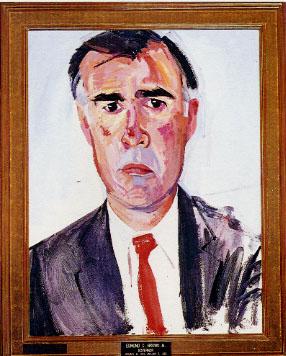
I wonder when the state’s official cheapskate, Gov. Jerry Brown, will come to his senses and announce a moratorium on executions and commute all the existing sentences to life without parole.

Suhr: SFPD Tasers not a priority

Asked on June 17 for an update on a San Francisco Police Department bid to research and implement the use of Tasers, Police Chief Greg Suhr indicated that it was on the back burner for now.

“I know that the Tasers and all were a huge discussion in prior administrations,” Suhr said. “I think right now with everything else that we have going, and especially with budgetary constraints right now, that in all honesty we really haven’t gotten to that yet.”

Among community concerns surrounding Tasers earlier this year were fears that adopting the so-called nonlethal weapons would overshadow a parallel effort to improve police responses to calls involving the mentally ill.

Asked about progress on the implementation of Crisis Intervention Training (CIT), a program advocated by Police Commissioner Angela Chan to train officers to better respond to calls involving the mentally ill, Suhr noted that he backed CIT and had taken preliminary steps to improve the department’s response in those situations.

“Within the first week that I was here, we put in a new policy and a procedure where every single mentally ill call is to be treated as a mini-critical incident, so a sergeant responds, takes charge of the scene, a little perimeter is set up, and unless that person is a danger to someone other than themselves, we wait. It’s basically a slowdown,” Suhr explained.

Community advocates championed CIT as an important step forward in the wake of the Jan. 4 shooting of Randal Dunklin, a wheelchair-bound, mentally ill man who was brandishing a knife outside the city’s Department of Public Health building. Dunklin allegedly stabbed an officer and suffered a nonfatal gunshot wound to the groin after he had tossed the knife.

Easy steps to open government

1

I missed the mayoral candidates forum on open government and technology, but sfist had a lively and fun report on it. I like David Chiu’s idea of lighting up all the city’s fiber optic cable — but why not go further, and lay cable everywhere that we’re tearing up the streets for sewer replacement? The biggest cost of laying cable is trenching and filling — and we’re already doing that. Mayor Lee wants a big street-repair bond for the fall, but a bond act to run public fiber under all the city streets would be far more valuable in the long term.


Here’s an even easier one: Make the basic city finance and property records available on a searchable database.


Our reporter Rebecca Bowe has been trying for a week to get the SFPD or the controller’s office to give her salary and overtime information for a couple of cops. Everyone’s too busy. It’s too much of a hassle. They can’t get to the records. We hear that all the time.


So why do city employees have to bother with this sort of request? Why isn’t there a public database of all the salaries of all city employees? The Chronicle did its own in 2009. How hard would it be for the city to post that data?


Same goes for Assessor’s Office records. I can pay a private company like LexisNexis a monthly fee, and get instant, searchable access to public records of property ownership and transfers, but why should I have to? Why isn’t all that data on line, too?


The Health Department has a nifty database to search for restaurant inspection records. There’s a fun GIS system that lets you look an a parcel of land and find out who owns it and track all the building permits. But there’s no place to simply type in a name and get a list of all the property that person owns, or track ownership transfers or any of that other stuff that can be done easily with a paid service.


Some sunshine advocates, including Kimo Crossman, have gone even further, suggesting that every document that a city employee creates (with the exception of certain personnel, law-enforcement and other exempt records) be automatically stored in a publicly accessible database. 


There’s some expense, obviously, in setting this all up and maintaining it — but considering how overworked and harried the staff at SFPD and the Controller’s Office seem to be, the savings in the long run in worker time would be well worth it. 

Does Newsom lose his seat on the DCCC?

41

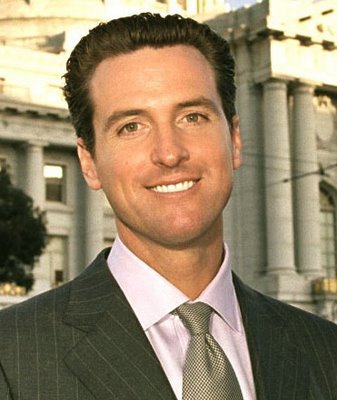
Does Gavin Newsom live in San Francisco anymore? No, according to the Chron — and if that’s true, than he’s no longer a member of the San Francisco Democratic County Central Committee. Any constitutional officer who is a member of the Democratic Party is automatically a member of the county commitee in the county where he or she resides; Newsom, of course, never shows up for the meetings, but he gets to send a proxy. (He has two alternatives, John Shanley and Warren Hinckle.) In a letter to Newsom dated June 16, DCCC Chair Aaron Peskin asks Newsom to clarify his residence: “if you are in fact a Marin County resident, you would no longer be a member of the SFDCC and would instead be a member of the Marin Democratic County Central Committee.”

Peskin told me he hasn’t heard back from the Lt. Guv. I haven’t heard back from him or his standard press flak, Peter Ragone, either.

Guardian Forum June 21: Budget, healthcare and social services

5

We’re doing the second in a series of Guardian forums on issues in the mayor’s race June 21. This one will focus on the budget, healthcare and social services. We’re looking for ideas — progressive approaches to the policy and process of setting the city budget, priorities in healthcare and social services, how to balance reveue and cuts, where new revenue should come from etc. The panelists will make some suggestions and outline some issues, but this is a community process and we want to hear from you. So come by, listen — and participate.

It’s at the Unite Here Local 2 hall, 209 Golden Gate. 6 pm. June 21.

panelists:


Gabriel Haaland, SEIU 1021

Brenda Barros, health care worker, SF General

Debbi Lerman, Human Services Network

Jenny Friedenbach, Budget Justice Coalition


The Local 2 hall is easy to get to, right near Civic Center. Join us.


Civil rights advocates say S-Comm reforms are spin, part of bigger FBI biometric tracking plan

23

In face of mounting criticism nationwide, the U.S. Department of Homeland Security announced today changes to its Secure Communities (S-Comm) deportation program. These changes include protections for domestic violence victims, and immigrants who are pursuing legitimate civil liberties protections. They give more discretion to ICE prosecutors, create a new detainer form that stipulates in multiple languages that arrestees cannot be detained under an ICE hold for more than 48 hours, except on holiday weekends. The form also requires local law enforcement to provide arrestees with a copy, which has a number to call if they believe their civil rights have been violated. The agency also said it will provide civil rights training related to its S-Comm program at the state and local level.

Immigrant and civil rights advocates said the announcement shows that the administration acknowledges that there are serious problems with S-Comm’s design and implementation. But they charged that the announced reforms fall far short of the S-Comm moratorium that an increasing number of advocates and lawmakers, including California Assemblymember Tom Ammiano, have demanded.

And some advocates expressed concern that the feds’ insistence on expanding S-Comm, in which fingerprints taken by local law enforcement agencies are automatically shared with federal and international databases, is proof that the program is the first step towards rolling out a much larger program called the Next Generation Identification (NGI) initiative.

Under the NGI, the FBI plans to phase-in the deployment of a host of new biometric interoperability capabilities to state and local law enforcement agencies within the next five years. And NGI likely won’t be limited to non-citizens and undocumented immigrants, suggesting that US citizens charged with a crime will also find that once their fingerprints are taken, law enforcement agencies will immediately compile a huge and internationally interconnected dossier on them, regardless of whether they are innocent of the charges.

Civil rights advocates also worry that local enforcement agencies’ participation in S-Comm will become inevitable because S-Comm is simply the first of a number of biometric interoperability systems being brought online by the NGI.
In other words, S-Comm is just the first of many additional information systems that are being made available to local law enforcement agencies to fully and accurately identify suspects in their custody.

And, according to the FBI/CJIS’s own documents, the feds have adopted a three-part strategy to deal with jurisdictions that do not wish to participate:
1.    Deploy S-Comm to as many places as possible in the surrounding locale, creating a “ring of interoperability” around the resistant site.
2.    Deploy S-Comm selectively to state correctional system facilities, permitting identification of Level 1 offenders who may have been arrested and sentenced in the non-participating jurisdiction,
3.    Ensure that the jurisdiction understands that non-participation does not equate to non-deployment.
In other words, though a local law enforcement agency is technically free to shut off, or ignore, the receipt of records related to the fed’s fingerprint-matching capabilities, the feds are already warning local law enforcement agencies that local officers may find themselves “deprived of substantive information relating to an arrested subject’s true identity, place of origin, and other pertinent data of significant law enforcement value.”

Ammiano, who is the author of California’s TRUST Act, which would allow local governments to opt out of S-Comm, said: “Today’s announcement by ICE is simply window dressing. How many more innocent people have to be swept up by the ironically named Secure Communities program before the Obama administration will change course? Talking about the need for comprehensive immigration reform is not an excuse for continuing with a flawed, unjust program that is having tragic consequences for communities across the country. It is time for a moratorium on S-Comm pending a real review of the program not just PR spin from ICE.”

Professor Bill Ong Hing, immigration law expert at the University of San Francisco, stated, “The fact is, under our Constitution, immigration is a federal responsibility. Neither a state like Arizona, nor the federal government itself, can force local governments to act as immigration agents. Such measures compound the injustices of our deeply broken immigration system – and public safety and local resources are among the first casualties.”

And the Asian Law Caucus, the ACLU of California, the Coalition for Humane Immigrant Rights of Los Angeles, the California Immigrant Policy Center, and the National Day Laborer Organizing Network released the following joint statement:  “We are deeply disappointed by the inadequacy of the Administration’s response to the mounting body of evidence that the ‘Secure’ Communities program is damaging public safety and ensnaring community members. The painful stories of domestic violence victims and other innocent community members facing deportation thanks to S-Comm underscore that the program has simply gone off the rails. While today’s announcement acknowledges that problems exist with the program, the measures outlined by the Administration are a far cry from workable solutions these problems. To announce “reform” before review is an exercise in politics, not policy. The administration should suspend the program and wait for the Inspector General report in order to develop fair and transparent policies.” 

“Before vital relationships between local law enforcement and immigrant communities are furthered damaged, before more domestic violence victims, street vendors, family members, and workers who are merely striving for the American dream are swept up for deportation, S-Comm must be reigned in,” the coalition continued. “For the sake of public safety and transparency, we need real solutions. We strongly support California’s TRUST Act, which sets safeguards the federal government has failed to implement and allows local governments out of S-Comm, and we continue to call for a national moratorium on this fundamentally flawed program.”

In recent weeks, Illinois, New York, and Massachusetts, have either pulled out or refused participation in the program while numerous local governments have sought a way out of a deportation dragnet that harms public safety and has operated with no transparency or local oversight. And Ammiano’s TRUST Act, which also sets basic standards for those jurisdictions that do want to participate in S-Comm passed the state Assembly in May and the Senate Public Safety Committee this week.

During today’s press conference, ICE Director John Morton told reporters that “it makes sense to prioritize resources. We don’t have enough resources to remove everyone who is here unlawfully.”

But when the Guardian asked if the reforms address the community criticisms that S-Comm was rolled out as a way to catch serious criminals, but has been largely used to deport non-felons, Morton maintained the S-Comm has always focused on serious criminal offenders, but was never limited to that.
“We remove felony offenders at a higher rate than are convicted in the general population,” he stated. ‘But federal law does not provide that you can come here unlawfully and then commit crimes other than violent crimes.”

True, but local law enforcement agencies have repeatedly observed that you break vital trust with immigrant communities if they believe that contact with police, including  being arrested for crimes they did not actually commit, or arrests for very low-level misdemeanors, will lead to deportation.

“This feels like a non-announcement, and it’s far from reform,” said B, Loewe of the National Day Laborers Organizing Network. “You don’t put a collar around a snake and call it a pet.”

And SF Police Commissioner Angela Chan, a staff attorney at the Asian Law Caucus, said the reason ICE and the FBI, “are so crazy for S-Comm is because it’s the first step in a much bigger loop that will include citizens and non-citizens alike.”

NDLON and the Asian Law Caucus are part of the coalition that is calling on the Obama administration to publicly oppose and terminate all programs that create partnerships between state and local law enforcement and the Department of Homeland Security; halt the development of the vast data gathering infrastructure that houses S-Comm, and inform the public of the current scope and purpose of its data collection and dissemination activities; and allow state and local jurisdictions to opt-out of S-Comm.

After today’s press conference, ICE issued a press release stating that through April 30, 2011, more than 77,000 immigrants convicted of crimes, including more than 28,000 convicted of aggravated felony (Level 1) offenses like murder, rape and the sexual abuse of children were removed from the U.S. after identification through S-Comm.

“These removals significantly contributed to a 71 percent increase in the overall percentage of convicted criminals removed by ICE, with 81,000 more criminal removals in FY 2010 than in FY 2008,” ICE stated. “As a result of the increased focus on criminals, this period also included a 23% reduction or 57,000 fewer non-criminal removals.

ICE also observed that the agency currently receives an annual congressional appropriation that is only sufficient to remove a limited number of the more than 10 million individuals estimated to be in the U.S. unlawfully. “As S-Comm is continuing to grow each year, and is currently on track to be implemented nationwide by 2013, refining the program will enable ICE to focus its limited resources on the most serious criminals across the country,” ICE stated.

ICE further noted that it is creating a new advisory committee that will advise ICE on ways to improve S-Comm, including recommending on how to best focus on individuals who pose a true public safety or national security threat.  This panel will be composed of chiefs of police, sheriffs, state and local prosecutors, court officials, ICE agents from the field and community and immigration advocates.  The first report of this advisory committee will be delivered to the Director of ICE within 45 days.

ICE Director Morton also issued a new memo that directs the exercise of prosecutorial discretion to ensure that victims of and witnesses to crimes are properly protected. The memo clarifies that the exercise of discretion is inappropriate in cases involving threats to public safety, national security and other agency priorities.

And ICE and the DHS Office for Civil Rights and Civil Liberties (CRCL) have created an ongoing quarterly statistical review of the program to examine data for each jurisdiction where S-Comm is activated to identify effectiveness and any indications of potentially improper use of the program. “Statistical outliers in local jurisdictions will be subject to an in-depth analysis and DHS and ICE will take appropriate steps to resolve any issues,” ICE stated.
.

Nat Ford’s contract isn’t the only problem

4

I’m glad Leland Yee and John Avalos are criticizing the $384,000 severance package for Muni chief Nat Ford. Yee’s even collecting signatures on a petition. None of which will matter, though — the MTA is going to approve this and Ford (who, in essence, appears to have been fired for doing a bad job) will walk away with the cash.


That’s because the MTA didn’t have a lot of choice. The guy had a contract. And it included, I’m sure, mandatory severance if he was dismissed for any reason before the end of the term.


Why do (some) department heads have employment contractsthat include severance payments? I don’t know. The police chief doesn’t have one. The director of public health doesn’t have one. In fact, most senior city employees don’t get guaranteed golden parachutes.


But the head of Muni does. The head of the Transbay Terminal project does. The last head of the SF Public Utilities Commission did; I don’t know if the current person has one, too, but it’s likely.


This is a problem.


Why should some selected department heads get special contracts, while your average department head gets nothing? Why should city employees at the top get severance when your average working city employee gets none?


There’s no clear definition of which department heads get special deals and which ones don’t. It’s up to the commissions. That’s what Yee and Avalos ought to be working on — changing the rules to get rid of these severance contracts in the first place.


Candidates land punches in first D.A. debate

5

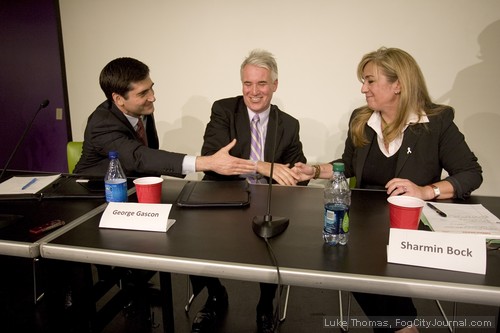
District Attorney and former SFPD Chief George Gascón, Alameda County Deputy District Attorney Sharmin Bock, and former San Francisco Police Commissioner David Onek all landed solid punches during a three-way District Attorney debate that was co-hosted by the San Francisco Young Democrats and the Alice B. Toklas LGBT Democratic Club, and moderated by Recorder editor Scott Graham. The primary sponsor of the debate was the City Democratic Club, according to CDC President Jim Reilly. So, thanks CDC for helping to pull off a great event.

The debate was framed as a choice between Bock, a veteran prosecutor with leadership experience, Gascón, a career cop with managerial experience, and Onek, a former San Francisco Police Commissioner and criminal justice reform expert. And above all it proved that if you lock three attorneys in the same room and pit them in a three-way fight, you’ll be rewarded with a blood sport spectacle.

Bock kicked off by noting that there are many similarities between the three candidates—except when it comes to independence and experience “Experience matters,” Bock said, throwing a one-two punch at Gascón and Onek. “The job of the District Attorney is not a management job, a police job or a job for someone with just a law degree. It needs a veteran prosecutor,” she said—remarks that resonated well with the crowd, judging from the applause.

But after a few niceties, Gascón shot right back at Bock and Onek. “I am the only one who has led large organizations and pushed public policy forward in an effective manner,” he said.

And Gascón struck a home run when he revealed that when he took the job of Chief of Police in Mesa, Arizona, he was “facing one of the most toxic environments” in terms of hatred towards people of color and the LGBT community–and that he did something about it, by standing up to anti-immigrant Sheriff Joe Arpaio of Maricopa County, and protecting the local LGBT community’s right to protest.

When it was his turn to speak, Onek fired off his own rounds at Bock and Gascón, noting that the state’s criminal justice system is broken—and claiming that it will take an outsider to fix it.
“This is a once-in-a-lifetime opportunity to reform the criminal justice system,” Onek said, laying out his reform-minded track record.

And then he stuck it to both Bock and Gascón by stating that the death penalty does not work. “I will never seek it in San Francisco under any circumstances,” Onek said, earning excited applause, as he noted that he’ll look at all policy question through the prism of three questions: ‘Does it make us safer, is it cost effective and is it fair and equitable?”

Onek also noted that neither the Supreme Court’s ruling that California must reduce its prison population by 30,000, nor Gov. Jerry Brown’s call for prisoner realignment, come with any money.
‘That’s a disaster,” observed Onek, as he stressed the need to demand resources to help deal with the upcoming load of prisoners that about to return to San Francisco.

Gascón fielded questions about whether they are enough people of color and LGBT background in management in the D.A.’s Office. “Well, I think there’s definitely always room for improvement in any organization,” he said, noting that he has a history in the Los Angeles Police Department, the Mesa, Arizona Police Department and the SFPD, “of pushing very aggressively to have diversity within the office.”
But he started a bit of a buzz when he said it was “really a surprise to me that I promoted the first male, black, police captain to the San Francisco Police Department.”
“You would think that there have been, you know, male African-Americans in that department for many years. It was hard for me to believe that actually in 2009 we had not had one,”  Gascón continued, a remark that got some debate observers asking afterwards, if this meant that Gascón really did not know that former SFPD Chief Earl Sanders was a black male.

Meanwhile, Bock was happily trampling all over the sit-lie legislation that then SFPD Chief Gascón and Mayor Newsom backed last fall, as she noted that more foot patrols and community policy are what’s actually needed. “Political hot-button measures don’t work,” Bock said. “Both sides agree it hasn’t worked. It’s the wrong response to the real problem.

Asked if he had a conflict of interest, when it comes to investigating allegations of police misconduct, Gascón claimed the problem is limited to a small number of officers, adding, “if the allegations are true.”

“In reality the majority of the SFPD are hard-working people doing the right thing,” he said. “And there has been only one challenge—and our office has prevailed,” Gascón said. “However, there have been a finite number of cases where I personally adjudicated the bad conduct—and those will be handled by the Attorney General’s office.”

Bock stressed that she was not in favor of sending drug offenders to prison and would focus on restorative justice, instead. Asked if she would have a panel on her staff review potential death penalty cases, Bock confirmed that she is committed to having a Special Circumstances Committee, as D.A. Kamala Harris did, to get input around the facts and from lawyers involved in such cases.“The ultimate decision is mine, and I oppose the death penalty,” Bock said, noting that she does not believe that 12 jurors will return a unanimous death penalty verdict. “But I do think as prosecutor you need to go case by case.”

Asked if he would have sought the death penalty in a case like the L.A. Night Stalker, who murdered 13 people, many of them elderly, Gascón said, “Probably not. All of us agree that the death penalty is not a good tool. But it is part of our system, and I continue to have the system Kamala Harris had in place. At the end of the day, it’s my decision, and I’m the only one in the room, who can say I’ve already turned down the death penalty.”

Agreeing with Bock that a jury is unlikely to go for the death penalty, Gascón maintained that the death penalty is “an illusory issue,” and that the real question is, “How do we rewrite the State Constitution [so the death penalty is not on the books]?”

Asked how he felt about marijuana, Gascón said he doesn’t believe folks should be incarcerated for use—and that folks are already being diverted to community courts in those instances.

But when Onek tried to wrap up by positioning himself as a the reformist-minded outsider, Gascón pounced, reminding folks that Onek was a Police Commissioner, when the Police Commission recommended Gascón to Mayor Newsom as the next SFPD Chief. “While David is someone I respect—and one of those who hired me, David has painted himself as an outsider, when the Police Commission is the policy-making body for the SFPD. There are no outsiders here. The question is, what have you done? There’s a difference between calling yourself a reformer and having other people call you a reformer.”

Bock for her part used her closing remarks to remind folks that there has been a crime lab scandal, alleged police misconduct, a DNA backlog, and about 100 cases dismissed as a result of these scandals, and a bunch of prisoners are about to be sent back to the community because of realignment. “We’re in challenging times, at a critical crossroads, with stormy weather ahead,” she said. “I’m not going to be trying things out at your expense. As a veteran progressive prosecutor, I’m fully prepared.”

SFBG Radio: Free speech, regulation and the Internet

1

A special episode today, featuring Perry Michael Simon of allaccess.com talking about what happens with media, including TV and talk radio, migrates to the web — and the ability of the FCC to regulate everything from obscenity to fairness and public accountability vanishes? Listen to the discussion after the break.

EndOfCensorship by endorsements2010

Women and circumcision: Leave me out of it

172

Here’s the thing about the circumcision debate: Like everything else between men and their foreskins, women want nothing to do with it.

A while back, I was at a blues club when a tall, slim, blond fellow asked me for a dance. I’d seen him out on the floor and he seemed like a smooth mover (blues dancers, unlike your average oonst-oonsters, tend to trade partners), so I said yes.

Turns out, I was right. He was a good lead: firm but gentle, playful yet clear. The only problem was, about a minute into the song, he started urgently not-quite-whispering about circumcision. Like, did I know it was mutilation? Had I ever slept with a natural guy? Wasn’t it better?

When I told him I wasn’t accustomed to discussing my sex life on the dance floor, he assumed I didn’t and I hadn’t so I couldn’t possibly say – and, in a show of great evangelical fervor, handed me a card directing me to a website of one, Ms. Kristen O’Hara, who’d authored a book called “Sex as Nature Intended It.”

I dismissed him for the sheer absurdity of his timing as much as anything else. But that was before his cause was set to appear on November’s ballot, thanks to the efforts of Lloyd Schofield and the intactivists (band name, anyone?) who’ve collected more than 7,000 signatures from preservation-friendly petitioners.

As an indisputably happy transplant to the land where cheeseburgers come toy-less and cats have their claws, I was perplexed to find myself perplexed by the proposal.

Was it a latent shred of Judaism somehow stirred up? A knee-jerk reaction to state intervention into this most private of matters? The inevitable result of growing up in a society that gets giggly over the merest suggestion of sexuality – Weiner’s wiener being only the latest example?

Or was it because we’re just so culturally inured to the custom that we treat those who oppose it as freaks? (Anyone else remember Alan Tudyk’s caricature of a gay German drug addict lamenting his lost foreskin in 28 Days?)

I wasn’t – and still am not – prepared to say. It’s complex issue, muddled by the phenomenon in which inhibition and hilarity combine to derail honest conversation. Add religion, equal protection, and a loaded term like “nanny state,” and it’s no surprise the matter has billowed into overwrought emotion on all sides.

But let’s forget – for a moment – vicious Monster Mohels who thirst over infant blood, fathers protecting their sons’ locker-room status, and doctors citing STI-prevention studies that were neither conducted in, nor aimed at, populations in this country. Let’s focus on one group that definitely doesn’t belong in the debate: women.

If my erstwhile blues partner was seriously trying to recruit supporters to his way of thinking, he should have known that an unsuspecting woman on the dance floor would not an ideal target make.

Nonetheless, I admit that a mix of consternation and bemused curiosity got the better of me. I ran reconnaissance on the website – a dreadful 90’s flashback minus only the midi – and was horrified to find that, as an unsuspecting women, I was precisely this Mr. Blues’ target. Indeed, I was the crucial component of his argument.

“The surgically altered circumcised penis makes it difficult – in some cases impossible – for most American women to achieve orgasm from intercourse,” the website proclaimed boldly.

Amid jerky, continuous-loop videos that looked like low-def pornos, and first-person testimonials that sounded like amateur online erotica, nary a word could be found about the person behind (or not, as the case may be) the prepuce. The entire site purported to tell me what I, as a woman, would want from my lover. And all signs pointed to extra skin.

Among O’Hara’s various assertions are that cut members miss out on the retracted foreskin bunching up to seal in vaginal moisture; that decreased sensitivity forces circumcised men have rough “adrenalized” sex; that circumcised men must take longer strokes which deny women ideal clitoral contact; and that the coronal “hook” of a circumcised penis rides along the rippled skin of the vagina, creating uncomfortable friction (the accompanying illustrations put me in mind of the Ruffles have R-R-R-Ridges commercials. Of course, Trojans have r-r-r-ridges, too – on the “Her Pleasure” condoms designed for the very purpose of creating friction.)

The website claims that the head of an uncircumcised penis is “soft, like velvet,” but that circumcised sex is like “being poked with a hard broomstick.” All of this to the following conclusion: men who are bad lovers, who pound like jackhammers, who leave their partners sore, simply can’t help it.

I’m sorry. I’m not denying that there may be physical differences, but my book, the unpracticed and unskilled just don’t get off that easy – pun totally intended.

Now, as it turns out – Mom and Dad, if you’re reading this, I sincerely apologize – I’ve had it both ways. And I’m going to go out on a limb here and assume that I speak for a large number of women when I say that I don’t find there to be categorical difference between men who are intact, and those who aren’t.

I’m sure O’Hara and her passionate band of male followers would tell me I’m either vastly lucky, vastly unlucky, or too tuned-out to tell the difference. But I have another analysis: sex is a highly variable, highly personal act.

Take the following unattributed account from O’Hara’s book: a woman describes sex – her first time – with a cut boy on the beach who “literally jumped [her] bones,” pummeled her, and left her feeling “almost dead.” A year later, she had her first natural sex with a boy she’d spent an idyllic summer skinny-dipping and milking cows alongside. Unlike the beach bum, he began the event by kissing her.

Well, no shit she felt differently.

If O’Hara were really a maven of sexuality – or if she paid any attention to the decades of medical literature that precede her – she’d know that sex has as much to do with a person’s head as his or her loins. And if she really had a drum to beat for female satisfaction, she’d be saying anything but “I’m sorry folks, it’s all out of your control. You’re at the mercy of what a masked doctor did 20 or 30 or 40 years ago.”

Women who are in bed with men – indeed, people who are in bed with people –should be encouraged to discuss their needs, say what they want, and help their partners become the best lovers possible. To suggest that a certain kind of sex is the inevitable result of circumcision is not only disempowering, but downright demeaning – for all parties involved.
While O’Hara’s website is clearly over the top, speculation as to women’s preferences pepper online information sharing forums, anti-circumcision websites, and even the literature listed in the resource section of MGMbill.org, which sponsored the San Francisco ballot measure.

To be certain, intact penises have some nifty tricks up their sleeves – thank you, I’m here all night – that circumcised penises just can’t pull off. Or course, if you’re wearing a condom, a lot of them won’t matter. And the – erm – polls can be twisted either way: many say women prefer circumcised penises. Since we’ve put the size debate (for the most part) to rest, it seems fair to reiterate that what you’ve got is less important than how you use it.

I am not trying to say that men shouldn’t get a say in their own anatomy. Even if you call circumcision a personal choice, no matter how you slice it – ok, ok, enough – it’s never really been down to the person who actually matters.

This is about a man’s relationship to his own body, which is why “what women want” shouldn’t play a role.

After all, we’re universally appalled when men’s preferences drive women to seek labiaplasty. (An analogy carefully chosen: it seems greatly unfair to draw a comparison to the vastly more invasive, vastly more dangerous practice of female genital cutting – which, unlike circumcision, has nearly always served to make sex difficult to completely impossible for women .)
There’s a more sinister side to the tendency to make male circumcision into a female issue. It overrides the question of bodily autonomy, and implies that men can only experience their body by acting out their sexual identity through women.

The issue becomes a man’s ability to please women – the equally problematic flip side, of course, being that if a man does a fine job of pleasing his partner, no harm has been done.

Framing the debate in this way cements women’s role as a passive fixture in the relationship, while also diffusing the man’s power (and responsibility) by focusing attention on an external, uncontrollable element.

Making that uncontrollable element controllable sounds great. The problem is, your infant son didn’t choose to be circumcised, but he also didn’t choose not to be. While a neonatal circumcision is irreversible, it’s not like waiting “until he can decide” is wholly without consequences, either.

“I’m glad I’m circumcised,” a friend told me recently, “and I’m sure glad I don’t remember it.”

It’s impossible to say how my friend would have felt about his circumcision had he grown up in a different cultural atmosphere, and mores may well be changing to the point where he would be just as happy whole.

According to the MGM bill’s own website, 90% of male babies already leave Bay Area hospitals intact. It would be foolish to pass a ban based on the assumption that masses of infants are senselessly whisked away to be docked while their mothers, drugged-up and dopey, lay unawares.

And, regardless of your views on the matter, it is likewise foolish to assume that damage between men and women can be introduced or repaired by a foreskin.

Take, for example, Mr. Blues. Now I didn’t ask, but both his fervor on the subject and statistics – as intactivists are fond of pointing out – would indicate that he was altered. side from his attempt bordering-on-low-grade-sexual-harassment to brainwash me, he seemed like a nice guy. And, despite all, we had chemistry. At least on the dance floor.
He was sensitive, attentive, spontaneous – and though I’d never want to be in bed with him, I daresay someone would. Because in the end, all those things matter – at least to women – a lot more than a few inches of skin, nerve-rich though they be.




The guv’s veto — WTF Jerry?

17

Nobody — least of of the Democrats in the state Legislature — quite knows why Gov. Jerry Brown vetoed the state budget. In fact, he didn’t even tell Legislative leaders what he was about to do. “There was no heads up, and that’s the most annoying part of it,” Assemblymember Tom Ammiano told me.


Brown knew exactly what the Democrats were doing. He also knew (or ought to know) that getting any Republicans ever to vote for his tax extensions was, and is, a pipe dream. If he didn’t like the Dems proposal, he could have asked for changes. But no: Jerry is Jerry, and he did his own thing. (Just like Arnold, he complained about the “can being kicked down the road.”) His veto message talks about how “strong medicine must be taken” to solve the deep fiscal crisis; without taxes (which the GOP won’t allow) I guess he’s talking about more cuts. I guess he’s talking about Californians really feeling the deep pain of another $10 billion cuts to services, so maybe they’ll wake up and demand more revenue and oust the Republicans.


But in the meantime, the governor won’t miss any meals.


Brian at Calitics looks at the bright side — at least that sale/leaseback idea is gone. And yes, the budget that the Democrats put forward was ugly and far from perfect. But I don’t see where we go from here. The Democrats in the Legislature aren’t going to vote for another $10 billion in cuts; no way. And the Republicans aren’t going to vote for tax extensions. And the existing taxes expire at the end of the month.


If there’s a good alternative out there, I don’t see it.


Ford says goodbye at Golden Wheel Awards

2

Just hours after being asked to leave the San Francisco Municipal Transportation Agency, director Nat Ford was at the San Francisco Bicycle Coalition’s annual Golden Wheels Awards accepting an award for the MTA’s Livable Streets Team. But that potentially awkward moment was eased by the universal political support for making the streets of San Francisco safer and more inviting for pedestrians and bicyclists.

Coming from car-centric Atlanta in 2006, Ford admitted he was an unlikely champion of turning San Francisco into one of the country’s best cities for biking. But he said the SFBC was “very persistent and worked with us.” While the bike injunction hurt progress, Ford said the support of SFBC and city officials allowed the agency to beef up the program from just a couple of staffers to “a dozen of the best bike planning and engineering folks in this country.”

“It was great working with all of you to get the MTA where it is today in terms of biking,” Ford told the capacity crowd in the War Memorial Building’s second floor event space, where the balcony overlooked City Hall and a sea of hundreds of bikes parked on the sidewalk out front.

Mayor Ed Lee spoke next, pledging to continue the progress and telling the crowd, “I want to give my very special thanks to Nat Ford for his five years of very dedicated service.”

Both Ford and MTA members told the Guardian that the split was a “mutual decision.” Ford told us, “Now’s a good time to go,” and that he’s still figuring out his next move. MTA board chair Tom Nolan told us, “It’s something we arrived at together. It’s good for his family and him.”

Indeed, it seems very good for Ford. The board approved a $385,000 severance package to go with its request that he resign before his contract expires, a payout that is drawing some criticism. “I am deeply disappointed that MTA would approve a nearly $400,000 golden parachute for an outgoing city executive. At a time when our budget is cutting critical social services for our kids and the most vulnerable in our city, we can ill-afford to be paying excessive payouts to administrators who are no longer working for the public. I have fought these exorbitant sweetheart deals at UC and CSU, and as mayor I will reform these practices,” Sen. Leland Yee, a candidate for mayor, said in a prepared statement.

Nolan says it’s time to restore the agency. “I’ve talked about wanting to restart what we do,” he told us. While Ford’s reported job hunting was one reason for the split, Nolan also alluded to mismanagement of the agency and the mistrust of its administration by Transport Workers Union Local 250A and other employees.

“We clearly have a problem when the drivers turn down a contract two-to-one,” Nolan said of the union’s rejection of its latest contract, which has since been approved by an outside arbitrator. “We can do a lot better.”

But the Ford saga was just a sideshow during an evening devoted to celebrating the improvements to the city’s bicycle network and selling the SFBC’s vision of what’s next, which it calls “Connecting the City.” The plan calls for three, green, separated bikeways (like those now on a stretch of Market Street) bisecting the city by 2015 (with the first Bay To Beach route done by next year) and a fully connected network of 100 miles of bikeways by 2020.

“Safe, comfortable, crosstown bikeways for everyone,” was how MTA Commissioner Cheryl Brinkman put it in slick video that the SFBC premiered at the event to promote the plan.

SFBC Director Leah Shahum told the crowd the idea is to connect and promote the city’s various neighborhoods and encourage “regular San Franciscans” to take more frequent trips by bike. “Seven in 10 of us, that’s how many people are already riding a bike,” she said, citing a survey of how many city residents own or have access to bikes. “We’re developing a vision where people are connected by safe, family-friendly bikeways.”

Shahum praised how engaged Mayor Lee has been with the plan and the need to improve the city’s cycling infrastructure. “Let me tell you how impressed I am with the level of involvement from Room 200,” she said.

Lee pledged to make cycling safer on dangerous sections of Oak and Fell streets that connect the Panhandle with the Lower Haight – sections Shahum took Lee on during Bike to Work Day this year – and to complete a new green bike lane on JFK Drive this year.

“We can get a lot of the goals of the Bicycle Coalition done together. We need your help in November,” Lee told the crowd, calling for them to support a street improvement bond measure on the fall ballot. He said the bicycling community has made the streets more fun and inviting, telling the crowd that at this weekend’s Conference of Mayors, he is “going to brag about our bike lanes and our way of living.”

Mehserle’s free, but some protesters could still face jail time

 Johannes Mehserle, the former BART police officer who shot and killed Oscar Grant while he was lying face down on the Fruitvale station train platform on New Year’s Day 2009, was released from a Los Angeles jail June 13 after serving a total of 365 days for his involuntary manslaughter conviction. He was sentenced to two years behind bars, but Judge Robert Perry granted him an early release due to credit for time served and good behavior.

The same date of his release, the National Lawyers Guild filed a class-action lawsuit on behalf of 150 protesters who were mass-arrested during the Nov. 5, 2010 demonstration in Oakland in the wake of Mehersle’s sentencing. Meanwhile, a handful of individuals who engaged in the Jan. 14, 2009 and July 8, 2010 protests launched by Grant supporters — which morphed into riots after community rallies came to an end — are still battling court cases.

Two of the protesters arrested last July initially faced serious felony arson charges for igniting a trash can, which could have led to incarceration for a longer duration than Mehserle served for fatally shooting Grant.

“There were several felony arrests last July, and people were facing charges that could lead to more than a year, no question about that,” noted attorney Dan Siegel of the Oakland-based firm Siegel & Yee. Siegel is currently representing Todd Lister and Adrian Wilson, the two defendants who were accused of arson. The codefendants now face attempted arson charges, carrying a minimum penalty of eight months, with a midterm of one year. “Theoretically, that’s what they’re still facing,” Siegel said, but added that he was confident the as-yet unresolved case would result in a more lenient outcome.

Meanwhile, some of the burglary charges stemming from the looting that occurred in Oakland last July could potentially lead to multi-year sentences, Siegel added, leading to more time in jail than Mehserle served.

Some of the hundreds arrested over the course of the three protests who had prior criminal convictions had their probation or parole immediately revoked as a consequence, said Rachel Jackson, a member of the Coalition for Justice for Oscar Grant and one of the organizers of the Nov. 5 community rally in downtown Oakland’s Frank Ogawa Plaza.

Of the hundreds of arrests made in Oakland during waves of protests launched by Grant supporters, just a small number were on serious charges such as burglary or arson. The mass arrest of 150 individuals last November was initially made on charges of unlawful assembly, yet nearly all of the arrestees were cited and released after spending up to 24 hours in jail, and all had their charges dropped.

In that instance, Oakland police corralled 150 demonstrators who had been participating in a lawful march through the streets into a residential block in East Oakland. Once they were surrounded, Oakland police — who were aided in the streets by 32 other law-enforcement agencies that night, according to National Lawyers Guild attorney Rachel Lederman — placed them all under arrest. No dispersal order was issued prior to making the arrests, and it would have been impossible to comply if one had been issued.

In a class-action lawsuit, the National Lawyers Guild argues that the Nov. 5 protester roundup and mass arrest was a violation of the Oakland Police Department’s crowd control policy, and that it constituted a violation of protesters’ rights to freedom of speech and freedom of assembly. “Even legal observers and a few people who happened to live in the neighborhood were swept up,” Lederman said.

“The policy is clear, and the constitution is clear,” she went on. “You must have probable cause to believe an individual is committing a crime. But in this case, the whole crowd was herded onto a residential street, blocked in, and held on the street for hours. There was never a dispersal order, and all exits were sealed off.”

The Oakland Police Department did not respond to a request for comment.

Arrestees were held handcuffed in vans, in some cases for hours, without access to a bathroom, Lederman noted. All of the women were subjected to pregnancy tests upon being booked into jail, “which made no sense and was abusive in this particular case,” Lederman maintains, because the short time they spent there didn’t justify the excuse that the test would have been necessary to determine whether anyone needed prenatal care. Several men, meanwhile, were subjected to DNA swabs, which is “only supposed to happen if you’re arrested for a violent felony,” according to Lederman. 

Jackson, who was also arrested that night, said she believed police conduct was “incredibly intimidating, and it has a chilling effect on free speech.”

The mayoral poll: No surprises

18

The David Chiu campaign has released a poll that isn’t really all that surprising. It shows that the two candidates who have run citywide races — State Sen. Leland Yee and City Attorney Dennis Herrera — are a little tiny bit ahead, and Chiu is a little tiny bit behind, but all of them are well within the margin of error of a poll sample of only 500 people. Yee is out in front at 17 percent (I’m actually surprised he’s not further ahead at this point, since so much of this is name recognition and he’s been elected so many times, to so many jobs, over so many years that he has by far the best name rec in the race). Chiu and Herrera are tied at 13 and 12 percent (but with a plus-or-minus five percent MOE, all three are statistically in a dead heat).


I would have thought John Avalos would be closer to the top at this point, since he’s doing a good job consolidating the left, but he’s never run citywide, and the campaigns have barely started. Again: It’s name recognition right now.


The bottom line: There is no front runner (with the possible exception of Yee). There may never be a front-runner among the three men bunched in the center of the pack. It’s all going to come down to who gets the second- and third-place votes — which is why ranked-choice voting is so valuable in a race like this. In a traditional race, two candidates who combined might have 35 percent of the vote would be in a runoff, and a candidate who missed the cut by half a percentage point would be out of the running.


One thing we do know: This poll is going to drive Rose Pak and Willie Brown nuts, and increase dramatically the pressure on Ed Lee to run. the more powerful Yee appears, the more likely it is that the center of power in the Asian community will shift away from Pak’s Chinatown operations. Yee’s base is west side, not Chinatown; always has been. Pak despises him (and the feeling is no doubt at least somewhat mutual).


The other fact that weighs in Yee’s favor: He’s doing a better job than anyone of expanding his base. He’s racking up leftside endorsements (unions, the Sierra Club) and aiming hard at the Avalos Number Twos.


As for the questions about what people want in a mayor? Again, these are poll-tested platitudes that we hear every year, and we’re going to hear more of them. “Together.” “Shared values.” “Making the city work.” If it weren’t such a beautiful day, I’d want to puke out my window.

Enjoy the Strawberry full moon

0

The moon looked pretty full last night, but according to my Farmer’s Almanac, it’s officially full tonight. It’s also the Strawberry full moon, so-called because the relatively short season for harvesting strawberries each year happens in June.

Daly: SFBG profiled the wrong guy

88

When I interviewed Chris Daly for this week’s cover story on David Chiu and the political realignment at City Hall, Daly said we were putting the wrong guy on the cover.

“If the story is about political realignment, it’s about David Ho,” Daly told me of the political consultant who once worked on his and other progressive campaigns, but who helped engineer a split in the progressive movement with the help of consultant Enrique Pearce and District 3 Sup. Jane Kim, whose campaign they worked on together last year, beating early progressive favorite Debra Walker.

Daly said the political realignment that has taken place at City Hall has more to do with Kim and Ho – in collusion with former Mayor Willie Brown, Chinatown Chamber head Rose Pak, and Tenderloin power broker Randy Shaw – than it does with Chiu, who Daly considers simply a pawn in someone else’s game. Ho is seeking to be Pak’s successor as Chinatown political boss, and he and Pearce have been out there doing the ground work Pak’s effort to convince Lee to remain mayor.

“Any realignment that exists is about David Ho and I think it has more to do with the District 6 race than the District 3 race,” Daly said. “As far as David Chiu and realignment, they are separate things.”

While Ho and Pearce have traditionally worked on progressive campaigns – particularly in high-profile contests like this year’s mayor’s race, where John Avalos is the clear progressive favorite – they are now some of the strongest behind-the-scenes backers of the campaign to convince Ed Lee to run. Neither Ho nor Pearce returned our calls for comment.

“That’s the whole realignment,” Daly said, explaining that it was the peeling of entities like Chinatown Community Development Corporation and the Tenderloin Housing Clinic away from the progressive coalition of the last decade that has cast progressive supervisors into the wilderness and empowered Chiu and Kim, who in turn brought Lee to power.

“It’s not a seismic realignment, it’s a minor realignment, it just happens to be who’s in power,” Daly said. “It was a minor political shift that caused a big change at City Hall.”

Power has now consolidated around Mayor Lee, as well as those who convinced Chiu to put him there, including the powerful players who helped elect Kim. “These people, as far I can tell, have disowned Chiu,” Daly said. “He did what they wanted but he failed the loyalty test in the process.”

Chiu has so quickly fallen from favor that even Planning Commission President Christina Olague, who spoke at Chiu’s campaign launch event on the steps of City Hall just two months ago, is now one of the co-chairs of a committee pushing Lee to run, along with others connected to CCDC and the Pak/Brown power center.

Kim has also notably withheld her mayoral endorsement. She tells us that she’s waiting until after budget season, but the real reason is likely to wait and see whether Lee gets into the race. Daly said this new political power center has been playing the long game, starting with supporting Chiu back in 2008.

“Peskin kind of brought him up, and then I – tactically or a strategic blunder – I made the mistake of not bringing someone up,” Daly said, insisting that he’s always questioned Chiu’s political loyalties. “I had doubts from the beginning. Ultimately, it was Jane Kim and David Ho who tag teamed me and got me on board.”

Daly said Chui’s last-minute move to cross his progressive colleagues and back Lee for mayor “irreparably harmed him with progressives,” while doing little to win over a new political base. “He miscalculated the damage it would do to him,” Daly said.

Chiu’s dependability was also called into question when he was openly considering a deal with Gavin Newsom to be named district attorney, which would have allowed Newsom to appoint his replacement in D3, a move that he didn’t check with Pak.

“He gave control of his political base to someone else,” Avalos told us, offering that if Chiu was going to be so narrowly ambitious then he should have taken Newsom’s offer to become district attorney.

Even those around Chiu have emphasized his independence from Pak, who has desperately been looking for someone she could count on to back and prevent Leland Yee from winning the mayor’s office. And if Lee doesn’t run, sources say she’s likely to back another political veteran such as Dennis Herrera or Michela Alioto-Pier.

But given how deftly Ho and his allies have grabbed power at City Hall, I’d say they have a pretty good chance of convincing Lee to run, despite the mayor’s resistance. And if Lee runs, Daly, USF Professor Corey Cook, and others we interviewed say he would probably win.

CA Senate committee approves TRUST Act in face of rising “S-Comm” concerns

2

The California Senate Public Safety Committee approved Assemblymember Tom Ammiano’s TRUST Act, (AB 1081) today in a 5-2 vote, in face of rising concerns about a troubled federal fingerprinting and deportation program known as Secure Communities (S-Comm). The TRUST Act would reform California’s participation in S-Comm, which has increasingly come under fire for undermining public safety and operating without transparency or local oversight. Ammiano’s AB 1081 assures that local governments have the ability to opt out of the program and it sets basic standards for jurisdictions that choose to participate. The bill now heads to the Senate Appropriations Committee for consideration.

San Francisco Police Commissioner Angela Chan, a staff attorney with the Asian Law Caucus, says  that immigrants rights activists are calling on California Gov. Jerry Brown and Attorney General Kamala Harris to suspend S-Comm entirely, for now. These calls come in the wake of New York decision to suspend the troubled program, Illinois’s decision to terminate the program, Massachusetts’ decision to refuse to sign the Department of Homeland Security’s proposed S-Comm agreement, and the Inspector General’s announcement that it plans to investigate S-Comm allegations this summer.
“But if S-Comm eventually becomes unsuspended, that’s where the TRUST Act would come into place,” Chan said.

At today’s hearing in Sacramento, retired Sacramento Police Chief Arturo Venegas testified in support of the TRUST Act, calling S-Comm a “Trojan horse,” thanks to Immigration and Customs Enforcement (ICE’s) alleged misrepresentation of S-Comm to law enforcement. And community leader Renee Saucedo read the testimony of Norma, a domestic violence victim whose calls for help landed her in deportation proceedings thanks to S-Comm.

Tuesday’s vote comes on the heels of a growing firestorm of congressional criticism of the program, which reportedly has an annual budget of $200 million. And the latest statistics from ICE show that of all the states, California has deported the most immigrants under S-Comm. As of April 2011, California had deported 41, 833 individuals since it began phasing in its participation in S-Comm in May 2009. These figures include 12,133 folks (30 percent of deportees) who did not have a criminal record. And if you add those with low-level offenses to the non-criminal category, the percentage grows to 70 percent. Texas was in second place after California, with 27,000 S-Comm deportations.

Play the game, preserve the wetlands for your grandkids

0

Things we like: halting environmentally harmful development projects, healthy waterways, online timesucks, and free booze. So Save The Bay, thanks bunches for your new fundraising Internet game — but in the future, thanksmuch for staying out of our heads, regardless of the potential benefits of whatever mind reading technology you’ve got your benevolent little mitts on.

At the risk of revealing the pathway to our sasstivist hearts, meet Battle for the Bay. It’s Save The Bay’s newest gizmo, giving water-loving point-and-clickers the chance to journey from the 1960s (when the bay advocacy group was founded) to present day times, all the while besting historically accurate environmental menaces to our local lands, from David Rockefeller’s 1970s bid to level the San Bruno Mountains and create a Manhattanized version of the San Mateo County shoreline, to the Costco Busan spill, to Cargill’s current ploy to transform 1,436 acres of Redwood City salt ponds to suit its freaky agribusiness needs. (Coincidentally, Save The Bay is not in favor of this plan.)

You’ll never get your stubby fingers on Bair Island, 1980s Mobil man! 

And it’s not just an opportunity to crusade against cartoonized powers that be! Trivia questions give you a chance to brush up on your ephemeral wisdom of the Bay Area (from brothel main drags to historical transportation lines), and there are prizes: the Bay city with the most players will win a free happy hour at a watering hole in their ‘hood. 

Genius. “We worked with Free Range Studios to design the game,” says Cara Longpre, online communications manager at Save the Bay. “We heart them.” (You’ll heart them too after watching The Meatrix, the company’s viral video hit from 2003). 

Other people Longpre hearts: George A. Miller and Janet McKinley, two longtime Save The Bay members who’ve agreed to front up to $10,000 in $1 increments each time you (you!) click over to the site to defeat the evil Pete Wilson beast. 

So quick, go! We’ve already lost 90 percent of our tidal marsh to development. And we want our free happy hour, dammit. Longpre told us not to count our chickens before we hatch on that one, but hey, we know some people in the media. 


SFBG Radio: Does Washington matter any more?

1

As the California state government remains paralyzed by Republicans, and the U.S. government seems unable to get anything of substance done to help the economy, Johnny and Tim talk about the power and poilcy shift to local agencies and ask: Is the era of national and even state government as an effective force for progressive change coming to an end? Listen after the jump.

NoMoreDCSacto by endorsements2010

Ten good bills for 2011

2

The news in Sacramento is mostly bad — Jerry Brown still can’t find the Republicans he needs to pass a budget, although maybe the redistricting process will help him. But it’s not all bad. Some important bills passed their houses of origin in the past week, and with Democrats controlling both the Senate and the Assembly and a Democratic governor, there’s actually a chance they could become law.


At the top of my list is the measure by Darrel Steinberg that could allow counties and school districts to raise a wide range of taxes. It is, as Sen. Mark Leno notes, a “game changer.” And it only requires a simple majority of both houses. (I wonder: Could the San Francisco supervisors put a tax measure on the ballot in November on the assumption that the Steinberg bill will be in effect by then?) If the GOP won’t budge on the budget, the Dems need to at least give local government the chance to find the resources to keep essential services running.


Assemblymember Tom Ammiano got AB 9, also known as Seth’s Law, approved on the Assembly floor. The measure, named in memory of Seth Walsh, a 13-year-old gay student from Tehachipi who suffered years of harassment and abuse, gives school districts the tools (and the mandate) to address bullying.


The Assembly also approved Ammiano’s AB 889, the Domestic Workers Bill of Rights, which gives domestic workers the same basic labor-law protections as other California workers, and AB 1081, the TRUST Act, which would allow California counties to opt out of S-Comm, the awful federal law that seeks to force local cops to become ICE agents.


Over at the state Senate, Mark Leno won approval for 11 bills, including SB 914, which would mandate that police get a warrant before searching the data on a person’s cell phone. It’s crazy that SB 914 is even necessary, but the state Supreme Court has ruled that, while you need a warrant to search a personal computer, you don’t need one to search a cell phone. SB 790 makes it easier for local agencies to form Community Choice Aggregation systems. SB 819 would give the state more authority to take firearms away from people who have committed felonies or have been institutionalized for mental illness. (The NRA’s going to hate this bill — felons have the right to guns, too …) SB 233 — another one I really like — gives local government the right to impose vehicle license fees.


Sen. Leland Yee won overwhelming support for SB 8, which mandates that foundations affiliated with the University of California, Cal State or community college campuses abide by the same public records laws as the schools themselves. (The Sarah Palin speaking fees bill.) SB 364, which requires corporations that get tax breaks for job creation to prove they’ve actually created jobs. SB 9 — another one that ought to be a no-brainer — ends the practice of giving juvenile offenders sentences of life without parole.


Seems likely all of these will emerge from the remaining house — and then we’ll see whether Brown is willing to sign progressive legislation.


Guardian poll: Should the garbage contract be put out to bid?

18

Since 1932, the company now known as Recology has, in some form or another, controlled the contract to pick up San Francisco’s garbage. Now some people are saying it ought to be put out to bid. The local company, which has an employee stock ownership plan, says it’s doing a heck of a job — and that a bid might open the door for a bad out-of-state conglomerate. On the other hand, 80 years is a long time for a contract — and a bidding process might help San Francisco get some more money out of what is by all accounts a very lucrative deal. Let us know what you think after the jump.


Free polls from Go2poll.com

High levels of strontium at Fukushima

6

More bad news for Japan and its stricken fishing industry: Tokyo Electric Power Company says radioactive strontium up to 240 times the legal concentration limit has been detected in seawater samples near an intake at the crippled Fukushima Daiichi nuclear plant.

According to Japan Times, the utility said the substance was also found in groundwater near the plant’s Nos. 1 and 2 reactors. And Japan’s Nuclear and Industrial Safety Agency said it is the first time that the substance has been found in groundwater—and that is necessary to carefully monitor the possible effects of the strontium on fishery products near the plant. Strontium tends to accumulate in bones and is believed to cause bone cancer and leukemia.

Strontium is a chemical element with the symbol Sr and the atomic number 38. An alkaline earth metal, strontium is a soft silver-white or yellowish metallic element that is highly reactive chemically. The metal turns yellow when exposed to air. It occurs naturally in the minerals celestine and strontianite. Strontium-90, an isotope of strontium, is present in radioactive fallout and has a half-life of 28.90 years. Both strontium and strontianite are named after Strontian, a village in Scotland near which the mineral was first discovered.