• No categories

Politics Blog

Jerry’s bad budget

19

The Democrats in the Legislature did what they had to do, and passed the only budget that the governor would agree to. But Jerry’s Budget — and this will always be Jerry’s budget, since he’s the one who insisted on the terms — is pretty bad news.


I could have told the governor six months ago that he’d never, ever get Republican support for tax extensions. I could have told him that things are very different from the 1970s, when he was last governor. Back then, Republicans were actually interested in governing and would work with Democrats. Now they’re only interested in obstructing — and in sticking to a “no taxes” pledge that has severely damaged the state.


But no: Jerry had to be Jerry, and veto the budget the Democrats passed the first time, because he still thought he’d get his way.


Now he has a budget that (a) won’t work unless the economy continues to pick up and (b) protects prisons at the expense of education.


Imagine: The Democratic governor of California saying that he is willing to cut a week out of the school year — but isn’t willing to make comparable cuts in the state prison system.


Oh, and guess what? It gives Republicans the ability to crow about how California didn’t need those tax extensions in the first place.


Way to go, Guv.

SFBG Radio: Small business and jobs in SF

0

Today we talk about jobs in San Francisco — how the giant mega-employers of yore have left and how the public sector and small business are now the big employers in town. Listen after the jump.

TheLittleGuyWins by endorsements2010

Despite risks, Bay Area residents return to Gaza

113

Kathy Sheetz says she isn’t afraid of what might happen when she sets sail again next week for Gaza. On her last trip she was welcomed by Israeli bullets, but she sees the message as more important than any possible consequences.

Her message, along with the hundreds of other activists who will be sailing to Gaza aboard 10 ships dubbed the Freedom Flotilla 2—Stay Human, is that Israel’s continued occupation of Gaza is unacceptable.

Sheetz, a 65-year-old Richmond resident, has sailed — or attempted to sail — to Gaza every year since 2008, when she and 43 other activists took two fishing boats to the shores of the Gaza. They had room only for themselves and safely arrived in Gaza. She realized the potential to come back with supplies and aid for the people. One necessity she had never thought of: hearing aids for children, some of whom are going deaf from the dropping of bombs.

Last year, the first Freedom Flotilla set sail for Gaza. Sheetz was one of many activists from around the world aboard six ships of the flotilla that were attacked by the Israeli Navy during an early morning raid in international waters.

Soldiers boarded the ships and attacked the unarmed passengers. They fired rubber bullets while a helicopter above the flotilla shot live rounds. In the end, nine activists died.

Still, she’s going back.

“I don’t think we have a choice,” Sheetz said. “(Palestinians in Gaza) seem to be paying a price and I think it’s wrong.”

Thirty-six activists, nine journalists, and four crew members will be aboard the American boat when it sets sail from an undisclosed port in Greece. Out at sea, it will meet up with nine other boats carrying activists from around the world. The port and launch date are being kept secret to avoid sabotage attempts by pro-Israeli enemies of the flotilla, said Jane Jewell, a media coordinator for the organization US Boat to Gaza.

The mission of the trip is not only to bring awareness to the situation in Gaza, but also to bring badly needed medical supplies and aid. Two of the ships in the flotilla are devoted to carrying cargo.

The American boat will only carry letters of support, though, in fear of retaliation by the U.S. government for being seen as aiding the terrorist organization Hamas.

All passengers aboard The Audacity of Hope, the name of the American boat, had to sign an awareness document that highlights the inherent dangers of the trip, including the possibility of death.

Henry Norr, 65, first visited Gaza in 2002 and has been to Palestine three times, witnessing injustices and working to spread the word. In 2005 he acted as a copy editor for the International Middle East Media Center, helping to report raids and arrests of activists.

“Everybody knows that there’s some danger,” Norr said. “We like to think that the Israelis will come to their senses.”

This will be the 10th trip made to Gaza since 2008. Of the previous nine, five arrived in Gaza successfully, three of the boats were detained in Israel and last years flotilla was outright attacked.

The Audacity of Hope, a name shared by the American boat and President Obama’s book, could signify the audaciousness of the journey or be a tongue-in-cheek joke, depending on who’s asked.

Both Jewell and Adam Shapiro, an organizer for the Free Gaza Movement, which helped organize the flotilla, felt Obama was just a puppet for Israel who does not have the courage to enact real change.

They said he backed down too easily to pressure from Israel’s Prime Minister Benjamin Netanyahu after Obama suggested earlier this year that Israel and Palestine revert to pre-1967 borders in an attempt to bring peace to the region.

The U.S. State Department also recently issued a statement condemning travel to Gaza.

“Previous attempts to enter Gaza by sea have been stopped by Israeli naval vessels and resulted in the injury, death, arrest, and deportation of U.S. Citizens,” said the statement. “The U.S. Embassy in Tel Aviv and the U.S. Consulate General in Jerusalem are not able to provide consular assistance in Gaza or on the high seas or coastal waters.”

Jewell, summing up the statement, said, “Americans citizens take second place to Israel.”

“They know that their American citizenship isn’t going to help them,” Jewell said of the activists.

Sheetz first found herself in Gaza in 1991 when trying to travel to Tel Aviv, Israel, for a conference. She hoped to rent a car in Rafah, Egypt, a border town with Gaza, but was instead forced onto a bus by an Israeli woman. She ended up in Tel Aviv, but not after wondering about what had happened.

“It was just a very odd experience,” Sheetz said. “I couldn’t describe it.”

Now she’s heading back, again, informed and with a mission.

“It’s not helping Israel,” Sheetz said of the occupation. “If they want security, this is not the way to go about it.”


Private cops at SF General?

26


Truly astonishing moment at the June 23 Budget Committee hearing. The director of Public Health, Barbara Garcia, actually testified that San Francisco General Hospital would be better off with private security guards instead of sheriff’s deputies — because the deputies were only able to follow the law.


You can watch the video here. The discussion starts at 4:49. It begins with Sup. Scott Wiener, is his quiet Scott Wiener way, asking Garcia to talk about the plan to contract out hospital security.


Garcia first insisted that this was a way to save $2 million that would prevent further cuts to health programs. That’s always the primary argument for contracting out.


But then she went a step further.  An outside company, she said, could provide better security — because the (low paid, poorly trained) guards will be able to operate without the restrictions of being peace officers. “There are some restrictions on [the deputy sheriffs’] ability to restrain patients,” she said.


That wasn’t a slip of the tongue — Gregg Sass, the chief financial officer, repeated it again. “If a patient isn’t breaking the law,” he said, “a deputy sheriff won’t intervene.” More: “Private security can intervene. They’re not bound by the same limits that a deputy sheriff is bound by.”


Both Garcia and Sass noted that they wanted security officers who reported directly to them, not to an elected sheriff.


Am I the only one who thinks this is a little weird?


The money thing I understand. I don’t agree — often these supposed savings don’t show up in the end, and besides, do we really want people who get paid $13 an hour without benefits handling security at SF General? But I understand the argument.


On the other hand, the notion that peace officers have to follow rules, and so we should have people who don’t have to follow rules instead strikes me as pretty disturbing. And I’m not sure how true it is: Can a security guard hold and restrain a patient who hasn’t broken the law and isn’t covered by a legal order like a 5150?


I don’t think so. The folks at SEIU Local 1021 don’t think so, either: A flier the group put out notes that:


The issue of Sheriff’s Dept. having legal restraints applies equally to all employees. If there is no 5150 or 5250, no-one has a right to restrain the patient against their will; but a well trained Institutional Policeman can gently persuade a patient with Alzheimer’s to return to their unit.


And I have to say, the notion of having the Department of Public Health oversee a security force (instead of the Sheriff or the Police Department) is disturbing, too. The worst problems in police abuse tend to come from little fiefdoms that aren’t propertly managed — the BART Police, for example, and housing and transit cops in other jurisdictions. Nobody at DPH is trained to manage a security force.


What, exactly, are these (low paid, poorly trained) security guards going to do — grab patients who complain about waiting six hours to see a doctor and “restrain” them? What happens when somebody actually does commit a crime (or brings a gun or a knife into the hospital)? The guards can’t make an arrest. So they call the cops — who come, in due time, but maybe not quickly enough to prevent a disaster. And, of course, we then pay the cops to come and make the arrest.


I haven’t been able to reach Eileen Shields, the public information officer at the Health Department, but I can tell you: The language that her boss used at the Budget and Finance Committee was pretty frightening.


UPDATE: Shields sent me over Garcia’s memo on this, which lays out the case. It pretty much says it all: 


There are times when  patients are unable to control their behavior due to acute medical       
 illness, such as delirium or brain injury. These patients may present a   
 serious risk to their own safety as well as to the safety of other       
 patients and hospital staff.                                             
                                                                           
 These situations are not the result of – nor do they result in – illegal 
 activity. This puts the Sheriff’s deputies, whose responsibility is to   
 uphold the law, in a difficult situation when they are confronted with   
 potentially harmful (but not illegal) situations caused by acute,         
 non-psychiatric medical conditions. Outside security firms do not operate 
 under the same constraints. Instead, they function as members of the     
 health care team whose responsibility is to enforce hospital policy. They 
 are charged with ensuring a safe environment and can act with greater     
 freedom to ensure safety within the limits of the law but without the     
 additional requirements and expectations placed upon a law enforcement   
 officer.
 

DREAM Act would reduce deficit, strengthen military…and perhaps save the world

23

Last December, when the DREAM (Development, Relief, and Education for Alien Minors) Act came up five votes short in the Senate, advocates began to worry that this seemingly modest piece of immigration reform, which offers a pathway to citizenship for undocumented youth who do well in college and/or serve in the military would not be able to get the necessary votes, even with Barack Obama as President. Rahm Emanuel, who served as Obama’s Chief of Staff up until last October, was reportedly criticized by some for allegedly not doing enough to support immigration reform. And frustration was high, as the community was forced to petition U.S. Immigration and Customs Enforcement (ICE) each and every time they heard that a well-performing student, with no criminal record, like Steve Li or Mandeep was about to be sent to a country that they barely knew–taking their education and knowledge of the United States with them.

But six months later, the DREAMers (undocumented students who want to serve their adopted country) are refusing to take “no” for an answer. (In December, Steve Li won a reprieve, and last week ICE decided not to deport Mandeep, who was voted in high school as “most likely to save the world.” ) And now Emanuel, who was sworn in as Chicago’s mayor in May, is raising his voice in support of the DREAM Act, which Sen. Dick Durbin (D-IL), who has been fighting for immigration reform for more than a decade, is sponsoring. And they are hoping to turn the tide and get Republicans to vote for legislation they say will reduce the deficit, build up the military and perhaps, by not deporting young U.S. trained geniuses, even save the world.

“The DREAM Act is consistent and reinforces the values of citizenship,” Emanuel said during a June 27 telephone call with reporters on the eve of the U.S. Senate’s first-ever hearing on the DREAM, which Durbin will chair June 28. “Having a DREAM Act pass at the national level will help us reinforce the right type of values,” Emanuel continued, noting that Colin Powell, a retired four-star general who was Secretary of State under President G.W. Bush, and Obama’s retiring Sec. of Defense Robert Gates, both support Durbin’s bill

Rahm was joined by Obama’s Education Secretary Arne Duncan and Margaret Stock, a former professor at the U.S. Military Academy at West Point, in arguing that the DREAM Act will stimulate the economy and benefit themilitary, by allowing thousands of top-performing U.S.-educated youth to give back to their adopted country rather than face deportation to countries they barely remember, where they could fall victim of forces that don’t have America’s interests at heart.

As former head of Chicago Public Schools, Duncan said he met plenty of students who “happened not to be born in America” but had excelled in public schools, only to find the door slammed shut, when it was time to go to college. “We need to summon the courage and political will to do the right thing for our country,” he said.

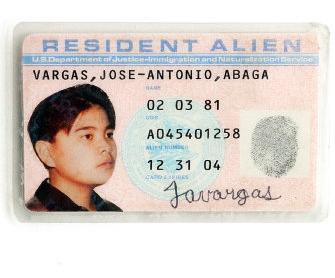
Duncan pointed to Pulitzer Prize-winning journalist Jose Vargas, whose story about his life as an undocumented immigrant was turned down by the Washington Post, before the New York Times magazine published it this weekend. “How many other Pulitzer Prize winners are there out there?” he asked.

And former West Point professor Margaret Stock explained that many of the DREAMers have great potential as military recruits, but are barred from enlisting, even though some of them try to anyway, under the current system.  “They are patriotic, honorable and want to serve the country,” Stock said.

Some of these potential recruits won’t qualify, because they have asthma or physical impairments, Stock noted. But she predicted that those that do, will do very well, based on a Pentagon study that showed that legal immigrants who enlist outperform U.S. citizens. And that, Stock added, could help fill the recruitment gap that is coming, as the economy recovers, and the U.S.-born population continues to age.

Records show that the military hasn’t had any difficulty meeting its goals since the economy tanked, a few years ago. But Stock predicted that the U.S. Armed Forces will face a difficult recruitment climate, as the recession ends. Unless the DREAM Act, which would dramatically enlarge the number of potential military recruits, passes.  “It would allow us to tap into a pool of homegrown talent that is highly motivated to join,” she said.

Asked what the point of the June 28 hearing is, given that the Republican votes for the DREAM Act still don’t seem to be there, Secretary Duncan, who will testify June 28 on behalf of the DREAM Act with Homeland Security Secretary Janet Napolitano, and Clifford Stanley, the Pentagon Undersecretary for Personnel and Readiness, replied,” to continue to raise awareness and build a groundswell of support.”

“I don’t think anyone has given up hope that we can do the right thing,” Stock added. “What may have changed is the serious talk about reducing the debt. “
.
According to a December 2010 Congressional Budget Office report, enacting the DREAM Act would save an estimated $1.3 billion over the next ten years. Supporters say that in addition to helping the military, the legislation would help fill 3 million job vacancies in the fields of stem cell, science and mathematics.
And as Stock pointed out, it makes no sense to deport large numbers of U.S. educated youth to foreign countries, where they risk being recruited to work for foreign governments against the U.S.’s best interests.

Asked whether new military recruits are really needed, now that Obama has announced a troop draw down in Afghanistan, Stock said that taking troops out of Afghanistan and Iraq doesn’t really reduce the global situation. “We constantly face crises in which we need the intervention of the U.S. military,” Stock said.

“We’re not turning into an era of full peace, and we expect to see a ten percent decline in pool of eligible recruits,” she said, noting that 35 percent of the U.S. citizens who sign up for the military fail medical fitness tests, another 18 percent fail because of drug and alcohol abuse, and 5 percent have criminal conduct problems.

“So, a crisis is coming, even with the draw down,” Stock continued, noting that the population of legal green card holders remains “relatively flat” even as the numbers of those who are legally here but can’t get a green card, and the numbers of those without documents but willing to serve, grows.

Stock noted that when you deport young people to countries they barely know and where they have no social safety net, they are in danger of being recruited by folks who might be at cross purposes with the United States. “The rise of MS-13 is directly related to our deportations to Central America,” Stock said. “The gang became their social network.”

Stock acknowledged that DREAM Act eligible students are “highly educated, high quality Americanized people,” and aren’t likely to become members of a gang. But they could be of interest to foreign militaries and intelligence organizations, she warned.

Asked how many non-citizens who are in the U.S. legally enlist in the military each year, Stock said about 9,000 non-citizens. But she noted that while documented non-citizens can join the military, they are however barred from becoming officers or attending West Point. “Most jobs are not open to them,” she said.  In other words, the DREAM Act doesn’t change the military’s requirements. But it would allow a much bigger number of non-citizens to join the military and eventually become citizens, which, in turn, would open more doors to them in the military, too.

And so ended the press conference ahead of Tuesday’s first-ever Senate hearing on the DREAM Act, which reportedly is being held in a large hearing room to accommodate at least 200 student supporters, including the daughter of a family of Albanian immigrants who was valedictorian of her Michigan high school class and is currently fighting deportation.

“These are young people who have that kind of exciting look in their eyes that they want to be part of the world,” Durbin, whose mother was a Lithuanian immigrant, recently said. “But they can’t make that first move toward the life that they want to live because they are undocumented.”

Predictably, the DREAM Act is being used as a recruiting tool for conservative groups, who argue that the DREAM is tantamount to amnesty for folks whose parents broke the law. These groups are already battling state-level Dream Act legislation in Maryland, which does not provide a pathway to citizenship but provides in-state tuition for qualified undocumented students. But a poll from Opinion Research Corporation in June 2010 found that 70 percent of likely voters support the DREAM, including 60 percent of Republican likely voters.

With the next election already looming, DREAMers aren’t likely to let up the pressure any time soon…so this could be an interesting political ride. Let’s hope it ends well for all the young people who are currently stuck in the middle of this Catch 22-like situation.
 

The undocumented journalist at the Chron

4

I realize Phil Bronstein has to wring his hands about hiring Jose Antonio Vargas as a reporter in 2000 not knowing the guy lacked documentation. But after I read the Vargas story in The New York Times, all I could think of was: Man, I would have been proud to be one of the editors who hired that guy.


Bronstein worries:


Am I a dupe? A felon, at least according to a new Alabama law that might find me guilty of “harboring” Vargas in my office the other day? Or am I supporting a potentially powerful new immigration movement?


There’s no way to tell for sure when immigration laws themselves are a hopeless jumble of unenforced, unenforceable or just plain unaddressed issues covering 11 million people.


The executive editor at the Washington Post proclaims that “what Jose did was wrong.”


Give me a fucking break.


Vargas came to this country at age 12. His mom sent him to live with her parents. He had no idea he was “illegal.” He didn’t figure it out until he tried to get a driver’s license at age 16. What was he supposed to do — turn himself in?


He did what he had to do, and what he had to do was figure out ways around an inhumane and unacceptable immigration system. Good for him.


I have no mixed feelings about this at all. I’m just sorry he never worked for me.


Ethics chief says “Run, Ed, Run” must register honestly

24

As the pseudo-campaign to convince Mayor Ed Lee to change his mind and run for mayor prepares to open a campaign office tomorrow morning – an event with all the trappings of a real campaign but without the candidate or the regulatory controls – the Ethics Commission is asking it to re-register in a less deceptive way.

As the Examiner reported this morning, Progress for All, the group behind the Run, Ed, Run campaign – which has set up a website, bought advertising, and printed and circulated campaign materials around the sole purpose of promoting a mayoral campaign – registered as a political action committee (one not subject to campaign contribution limits or other controls) even though Ethics Director John St. Croix said it is clearly formed around a primary purpose.

Today, St. Croix tells the Guardian that he has asked Progress for All to re-register as a committee formed around the specific purpose of promoting Lee for mayor, but that “I don’t know that they responded completely in the affirmative.” Guardian calls to the group’s main contract Gordon Chin, who also runs the Chinatown Community Development Center, were not returned.

Despite statements to the Examiner by Progress for All campaign consultant Enrique Pearce that this campaign isn’t unprecedented (he cited the 1999 mayoral write-in campaign of Tom Ammiano, who was a willing participant in the effort and formed a campaign committee), St. Croix said it is unprecedented and his office is figuring out how to regulate it.

“There aren’t regulations specifically designed for a scenario like his,” he told us. “They can’t operate in the absence of regulations.”

Right now, while Progress for All lists five co-chairs of the committee, the public has no way of knowing who’s funding the group, how much individual donors have given, or how much is being spent to make the campaign appear to have popular support. That will become more clear at the end of July when the semi-annual campaign finance reports are due, and St. Croix said his office plans to “carefully examine” those filings in order to decide how to proceed.

The group’s current filings list its purpose as “general civic education and public affairs,” but St. Croix said the public has a right to know that it has actually formed around a single candidate. While the courts have struck down fundraising limits for committees like this, the group’s website seems to limit contributions to the maximum individual contribution of $500, apparently acknowledging that there are potential legal problems with its current approach.

Lee has repeatedly said that he doesn’t want to run for mayor and has not encouraged this effort, but he has done little to discourage the efforts by a group led by his closest political allies, so he could be sullied by group’s tactics if he eventually decides to run. St. Croix says that if Lee runs and his campaign has any overlap with the current efforts, it will raised troubling issues of whether there has been any collusion between the two campaigns, which is illegal.

Despite the concerns expressed by Ethics, the agency doesn’t have a great track record of being tough with powerful campaign finance violators, as a Grand Jury report released this week argues. For example, although the Guardian and Bay Citizen each reported back in October about an independent expenditure (partially funded by Willie Brown) on behalf of Jane Kim’s supervisorial campaign that was done through Pearce’s Left Coast Communications, which was Kim’s campaign consultant, that apparently illegal action was never followed up by the Ethics Commission. St. Croix has said he can’t comment on that incident, and he responded to the grand jury report by noting that its recommendations were mild even though “the report itself uses some fighting words,” and he said he was preparing a formal response.

Although some activists have argued that those expressing concerns about this stealth campaign are somehow being undemocratic, the reality is that Progress for All is the only mayoral campaign not playing by the rules. And there are rules that govern elections, rules set up precisely so the public knows who’s really behind the campaign propaganda.

Civil Grand Jury slams shipyard development project

5

“The Civil Grand Jury concludes that the Hunter’s Point Shipyard redevelopment project will require more communication, more transparency, and more commitment from the City in order to achieve its goals of providing housing, jobs and economic development, tax revenue and open spaces to San Francisco and its residents, particularly those residing in the surrounding neighborhoods.”

So reads the conclusion of the Civil Grand Jury’s 2010-2011 report, which is titled, “Hunters Point Shipyard: a shifting landscape.” The report makes six findings and seven recommendation that city departments and the Board will have to respond to within the next 60-90 days. And some of these recommendations reflect problems the Guardian unearthed and highlighted during in its coverage of the development.

The jury found that the San Francisco Department of Public Health (SFDPH) is not in compliance with its pledge to the California Department of Public Health to keep residents informed of developments at the Hunters Point Shipyard. As the report’s authors note, the SFDPH’s website “is not regularly updated.”

The jury also found that the City has placed itself in a potentially compromising situation with developer Lennar where in essence, “the wolf is paying the shepherd to guard the flock.”

The jury further noted that by having developer Lennar reimburse the city for monitoring expenses associated with the shipyard project, SFDPH has created a situation that “could raise doubt in the public’s mind about its commitment to proactively and impartially enforce environmental health regulations even when it might adversely impact Lennar.”

Public trust in the SFPDH has been further jeopardized by its failure to update its website in a timely manner, and its apparent reluctance to comment publicly on the best method to deal with the clean-up of Parcel E-2, which is the site of a former dump and deemed one of the most polluted parcels of land on the shipyard.

The jury found that the above concerns were “further reinforced by the recent release of email messages that purportedly showed inappropriate communications between senior officials at the SFDPH and the U.S. Environmental Protection Agency and Lennar.”

The jury found that with the exception of Parcel A, the City has no legal control over the remaining shipyard property. “Consequently, in a technical sense, the City has no authority over matters dealing with deadlines and deliverables for environmental clean-up. However, the City does in fact have some standing in these matters via the 2004 conveyance agreement between the San Francisco Redevelopment Agency (SFRA) and the Navy. The agreement stipulates that the Navy will work collaboratively with the SFRA and share information about cleanup work.”

Last but not least, the jury found the previous efforts by the City to implement workforce policies at city-funded construction projects such as the shipyard have “largely proved ineffective” as they only require contractors to make good-faith efforts, but that earlier this year, a new local hire ordinance was implemented with stricter requirements and mandates.

Based on these findings, the jury recommended that SFDPH needs to update its shipyard project website on a weekly or monthly basis, immediately stop accepting money from Lennar to pay for monitors at the shipyard and cover the costs from its own resources, rigorously enforce conflict of interest guidelines governing deals between its officials and the companies they are monitoring, and conduct its own environmental assessment of the issue of capping Parcel E-2 and make its findings available to the public for comment.

The jury also recommended that because the Navy still owns the majority of the shipyard land and therefore the city has no direct control over deadlines and deliverables, it is critical that the Bay Area Air Quality Management District and SFDPH be “particularly vigilant in monitoring clean-up activities at the shipyard.”

The jury further recommended that the City and the SFRA should have “contingency plans in place” for continuing Redevelopment-related projects, including the shipyard, “in the event State redevelopment plans are cut or eliminated.”

Last but not least, the jury recommended that to ensure that promised job creation goals for the shipyard are realized, “the City should ensure that the Office of Labor Standards Enforcement has sufficient resources to allow it to effectively enforce the provisions of the new workforce laws.”

According to the conditions of the Civil Grand Jury’s report, for each finding the responding parties must report if the recommendation has been implemented or not, whether it requires further analysis, or was not implemented because it is either unwarranted or not reasonable.

So, expect to see some fireworks in the coming weeks, given that the Mayor’s Office, the Board, the Office of Economic and Workforce Development, SFDPH, the Office of Labor Standards Enforcement, the Redevelopment Agency and the BAAQMD have been named as the responding parties in this report…

Fixing Care not Cash

18

I will admit to a bias up front: I was against Care Not Cash in 2002, when Gavin Newsom used it as a cynical play to get elected mayor by bashing the homeless. I always argued that the city would be taking away the already-tiny welfare payments from people in exchange for housing that isn’t there. Imagine living on $422 a month in San Francisco. Now imagine that’s been cut to $59 a month — because the city’s determined that you can sleep in a shelter bed. Great fucking deal.


And that’s what happens. Care not Cash allows the city to reduce a homeless person’s general assistance grant to $59 a month as soon as the city finds housing for the person. And a shelter counts as housing.


There are lots of problems with the scenario — like this and and this. In essence, the city sets aside a certain number of shelter beds for people in the CNC program, but they don’t all show up, so there are empty beds — and people who need a place to sleep can’t get them because they’re earmarked as “housing” for an anti-homeless program.


So five supervisors have come up with a ballot initiative that would make one small, but significant change in the Care Not Cash legislation. It would specify that shelters don’t count as housing. That’s it. That’s the entire amendment. (You can read the proposed law here (pdf)


It makes perfect logical sense. You want to tell a homeless person that instead of giving you welfare payments, we’re going to give you housing? Fine. Then make it housing. Wasn’t that the premise of CNC from the start?


But somehow, CNC stalwarts (including those who make money off the program) are outraged, claiming this will gut the entire effort. In the Chronicle story, Mayor Ed Lee notes that


“By removing the shelter system from the available benefits provided to Care Not Cash recipients, we dismantle this path to getting people housed, ultimately undermining the success of the nationally recognized, award-winning program.”


Of course, the proposal doesn’t remove the shelter system from the available benefits. Sup. Jane Kim, the sponsor, and her colleagues aren’t talking about shutting down shelters or kicking homeless people out. The measure just says you can’t take someone’s welfare grant away just because you found him or her a temporary cot in a noisy, often unsafe shelter that offers no privacy and operates under random rules that at lot of us would find intolerable. 


Again, my bias is against the entire premise of Care Not Cash. I think the city (and the state and the feds) ought to be providing homeless people with enough money to get a place to live and enough to eat. That’s the way it used to work — when I arrived in San Francisco, you could actually afford to rent a room in a shared house with General Assistance money, and you could live reasonably — not in luxury, but reasonably — on federal SSI payments. But the cost of housing has so outstripped the increase in welfare payments that people wind up on the streets. 


But if we’re going to do the Care Not Cash thing, shouldn’t the city be required to provide real housing before the grants get cut off?


Randy Shaw, who runs a bunch of Care Not Cash hotels under city contract, doesn’t think so. He argues that


[T]he measure repeals CNC’s central premise that homeless single adults on welfare should not get $422 per month if they refuse SRO housing. The initiative also dramatically reverses San Francisco homeless policy: it replaces a system designed to get homeless people housed with one subsidizing homeless people to live permanently in shelters. The measure increases homelessness and provides no alternative funding to make up for the millions of CNC dollars that would be eliminated from the city’s supportive housing budget.


 I understand the concern about the CNC money (some of which, again, goes to Shaw’s operation). If the city starts paying $422 a month to some people who are now only getting $59, that money will have to come from someplace. But this whole notion that the proposed change will allow the city to give cash grants to people who “refuse SRO housing” seems a bit off.


“We haven’t changed that part at all,” Jennifer Freidenbach, who runs the Coalition on Homelessness and was involved in drafting the measure, told me. “People who refuse SRO housing would still get their grants cut.”


I asked Shaw about this — and also about my understanding that there isn’t enough SRO housing for every homeless person who wants a place to live. Should people on the waiting list get their grants cut off because the city can stick them in a shelter in the meantime?


For whatever reason, my old pal Randy hasn’t responded. (I continue to be boggled by two things — Shaw never calls people before he trashes them, and he seems unwilling to have substantive debates with me when I want to talk to him. That last time I emailed him to ask why he didn’t call people for comment, he responded: “I see the issue very differently and disagree with your premise.” How is that helpful? This time he didn’t answer at all.)


The oddest thing is that Shaw — a longtime housing advocate who has spent 30 years working to help low-income people — has adopted a remarkably strident, even harsh tone that reminds me of the rhetoric that Newsom and his allies used to use. Consider:


Understand we are talking about people who have the option of accepting permanent housing but refuse. People who want to get a full city grant, live in a city-funded shelter, but want the right to pay nothing.


Jeez. Those lazy welfare bums who want “the right” to a place to live and a miniscule, tiny cash grant.


There was a time when liberals used to talk about a guaranteed national income. Now the debate in progressive San Francisco involves bashing poor people. Wow. 


Will partisan agendas shape the redrawing of political lines? — UPDATED

14

UPDATED BELOW In the midst of a political realignment at City Hall that is still shaking out, the Board of Supervisors Rules Committee is today (Thurs/23) considering appointments to the Redistricting Task Force, the body that will redraw supervisorial districts using the latest census data. And its choices will say a great deal about the role of integrity and impartiality in the new “politics of civility.”

This commission will arguably have more influence on the city’s political dynamics over the next decade than any other, so overtly partisan appointees should be viewed with great suspicion. Larry Bush at CitiReport did a nice rundown of the applicants and their backgrounds, but the Rules Committee will be where the real action is.

President David Chiu stacked the committee with a conservative majority (Sups. Mark Farrell and Sean Elsbernd) and named a chair (Sup. Jane Kim) whose political loyalties are tough to peg right now. Will she seek an appointee who doesn’t have a political agenda, or will she seek to reward a partisan ally like applicant Paul Hogarth, who worked on her campaign and writes for BeyondChron.org, a propaganda outlet for Kim-backers Randy Shaw and the Willie Brown/Rose Pak/David Ho cabal that elevated Ed Lee into Room 200 and is desperately trying to keep him there.

There are other problematic applicants as well, including Potrero View Publisher Steven Moss, who ran for supervisor in D10 last year and has shown a penchant for seeking payback against his perceived enemies (including the Guardian, which ran articles questioning his residency status). Applicant Ron Dudum has also shown a vindictive streak – following up his failed D2 supervisorial campaigns with an unsuccessful lawsuit challenging the ranked-choice voting system – that would make him a worrisome figure to have on this task force.

So far, three people have been named to the body by the Elections Commission: gadfly/policy wonk David Pilpel, Google attorney Melissa Tidwell, and Mark Schreiber, the managing general partner of Cooper White & Cooper. So already, this is tilting toward a business community bias that will probably get worse once Mayor Ed Lee makes his three appointments to the nine-member commission.

Given how the Rules Committee is stacked, its three recommendations are likely to raise questions that the full board will need to put to rest when it takes the matter up on Tuesday. Voters need to have faith that partisan agendas aren’t shaping the city’s most important political lines, and now is the moment to ensure they have that confidence.

UPDATE: The committee voted unanimously to recommend Eric McDonnell, the chief operating officer of United Way of the Bay Area; Jenny Lam, director of community initiatives for Chinese for Affirmative Action and a board member of Chinatown Community Children’s Center; and Mike Alonso, a “security professional” with Corporate Security Services who got his law degree from New College in 2007 but never worked as a lawyer.

Radon gas is a leading cause of cancer

1

Remember how we were all freaking out a few months ago about radiation, in the wake of the devastating earthquake and tsunami in Japan that led to releases of radioactive material from Japan’s stricken Fukushiima Daiichi nuclear plant? Well, now comes news that the leading cause of non-smoking lung cancer in the United States is radon gas, a radioactive gas that comes from the natural decay of uranium found in nearly all soils. And the U.S. Environmental Protection Agency, which says radon gas leads to an estimated 21,000 deaths each year, apparently wants to help you test for it in your home.Typically, radon moves up through the ground to the air above and into people’s home through cracks and other holes in the foundation. In other words, your home can end up trapping and building up radon inside. This can happen in new and old homes, well-sealed and drafty homes, and homes with or without basements. And Sometimes radon can enter your home through well water, and occasionally building materials give off radon, too.

So, now U.S. EPA has announced a plan, which includes strategies to reach low-income families, many of whom, as the feds note, “do not have the resources to make the simple fixes necessary to protect their homes and loved ones.”

“With nearly one in 15 homes affected by elevated levels of radon and thousands dying each year from radon-induced cancer, it’s time to step up our actions in the federal government,” EPA Administrator Lisa P. Jackson said. “Through the Federal Radon Action Plan, we’re working with partner agencies to raise awareness about the threat of radon in our homes and to take steps to mitigate this hazard. Together our efforts will help reduce radon exposure and make our homes, schools and communities healthier places to live, learn, work and play.”

To learn more, check out the fed’s Radon Plan website, or call 1-800-SOS-RADON.

Board rebuffs Farrell’s shrinking of affordable housing project

12

The efforts by Sup. Mark Farrell and a group of his constituents from wealthy District 2 to downsize or derail an affordable housing project for young people at risk of homelessness was rebuffed yesterday by the Board of Supervisors, which voted 9-2 to deny an appeal of Planning Commission’s 5-1 approval of the Booker T. Washington Community Service Center project.

As the Guardian has reported, neighborhood opponents to the project convinced Farrell to change his position and propose that it be reduced from five stories to four without first consulting with project proponents. Farrell’s co-sponsor for the legislation, Sup. Ross Mirkarimi, opted to continue carrying the original legislation, creating a standoff at the board.

Farrell has said Mirkarimi and the other supervisors should defer to him and his constituents in District 2, a point he reiterated at the hearing. “We need to be really careful about introducing projects in other people’s districts,” he said. Mirkarimi has countered that the project is close to his District 5, it addresses a citywide problem of a lack of housing options for young people aging out of the foster care system, and it has long had the support of Farrell’s predecessor, Michela Alioto-Pier.

Everyone who spoke claimed to basically support the project, and Farrell argued that reducing it by one story shouldn’t make a difference, particularly given that shrinking the project would prevent neighbors from suing to stop it. “This is one of the most bizarre projects I’ve worked on since taking office,” Farrell said, later arguing the board should heed the concerns of neighbors: “That’s what we’re here to do as district supervisors, listen to our constituents.”

But most of his colleagues said the project addressed an important need and that city needs even more housing than this project supplies, making it difficult for them to simply defer to Farrell. His motion to reduce the project size was rejected on a 4-7 vote, with Farrell joined in dissent by Sups. Sean Elsbernd, Carmen Chu, and Scott Wiener. The appeal of the overall project was then denied 9-2, with only Chu standing with Farrell.

SFBG Radio: Commies and the U.S. Marine Corps

1

Today Johnny offers a special observation: After hearing a friend in the Army denounce “socialism,” he concludes that the military, particularly the Marine Corps, operates a lot like a communist organization. You know — relatively level pay, “from each according to his ability, to each according to his need,” free food and medical care, putting the needs of the whole over the needs of the individual …. commie stuff. (No — this is not Johnny channelling McCarthy and holding up names of Communist Marines. Trust me) Listen up after the jump.

MarinesAreCommies by endorsements2010

Measure would make getting a shelter bed easier and more fair

3

More than three years after a Guardian investigation found that San Francisco’s homeless shelter system is an unnecessarily confusing, difficult to navigate, and inequitable boondoggle that routinely denies people use of even vacant shelter beds, voters in November will get a chance to change a system created largely by former Mayor Gavin Newsom’s Care Not Cash program.

Care Not Cash was sold to voters in 2002 as a program that reduced the general assistance payments to homeless individuals in exchange for the city giving them housing and support services. But that housing often turned out to be simply a shelter bed, and after years of city budget cutting closed homeless shelters, nearly half the remaining beds were set aside for Care Not Cash clients whether they used them or not.

So Sup. Jane Kim and four progressive supervisors, working with the Coalition on Homelessness, yesterday approved the creation of a “Fair Shelter” ballot measure to require that Care Not Cash clients get more than simply a shelter bed and that shelter beds be opened up to all who need them on a more equitable and sensible basis.

But Mayor Ed Lee and others who helped create the current system are criticizing the measure and using the same deceptive claims that have masked the problem for years. “Care Not Cash is premised on providing a path to housing and services. That path begins with shelter for those who need it. By removing the shelter system from the available benefits provided to Care Not Cash recipients, we dismantle this path to getting people housed, ultimately undermining the success of this nationally recognized, award-winning program,” Lee said in a statement issued yesterday.

Human Services Agency Director Trent Rhorer, Newsom’s point person in creating the system, told the Chronicle that the measure would threaten Care Not Cash and attract more homeless people to the city by making it easier to get into shelters. He also denied there was a problem, noting that about 100 of the city’s 1,100 shelter beds are vacant each night.

But there’s a gaping contradiction at the heart of Rhorer’s rhetoric, demonstrating that the city’s real intention is to make life as difficult as possible for the homeless in the hopes that they’ll simply leave the city, as Guardian reporters found when they spent a week trying to sleep in the shelters. Vacant beds are only made available late at night, and claiming one often involves long uncertain waits and crosstown run-arounds between where people register and where they might ultimately sleep.

It’s a dehumanizing and deceptive system that COH and the city’s Homeless Shelter Monitoring Committee have long been seeking to change. “The inclusion of shelter in the original ordinance has resulted in an unintended negative consequence of wreaking havoc on the city’s publicly funded shelter system. People with disabilities, seniors, working homeless people and undocumented people have a disadvantage in garnering access to shelter beds under the current system,” Shelter Monitoring Committee Chair LJ Cirilo said in a statement put out by COH, which noted that 43 percent of shelter beds are reserved by Care Not Cash recipients, although they represent only about 14 percent of the city’s homeless population.

The cab driver protest

4

I’m on the side of the taxi drivers who held that noisy demonstration at City Hall. The folks who drive taxis get screwed in so many ways — the gate fees (the price of leasing a cab for a shift) go up faster than the fares the drivers can charge. Gas (which comes out of the drivers’ pockets) goes up even faster. And now they’re getting dinged for credit-card fees (even though by law they’re supposed to take credit cards). Add it all up, and the drivers are losing thousands of dollars a year — and they weren’t making all that much in the first place.


Wonder why drivers are bombing along 101 at 80 miles an hour from SFO to the city? The less time they spend on a fare the more fares they can take. It’s dangerous and the drivers don’t like it, but if you have to make a living and the city and the cab companies keep squeezing every dime out of your pocket, you have to drive like crazy.


I understand why Ross Mirkarimi was pissed at the noise — he’s trying to hold a press conference on education and nobody can hear the kids talking. Bad timing. But still — I’m amazed the drivers aren’t more angry. I’m amazed more of them aren’t calling for a strike. Driving a cab used to be a decent way to make a living (half the freelance writers in San Francisco were cab drivers). Now it’s a nasty grind for a stingy reward (and no helath insurance).


A note to journalists covering this story: Most of the drivers I know hate the word “cabbie.” They’re drivers. Taxi drivers. They’re rather be treated as professionals. 


Saving Oakland libraries

When I went to Oakland’s Art Murmur a couple weeks ago, a funeral procession organized to call attention to the possible loss of Oakland public libraries wound its way through the streets.

It wasn’t the only creative mobilization launched in Oakland in response to the possible closure of 14 branch libraries, including the Tool Lending Library, African-American Museum and Library at Oakland, and Second Start Adult Literacy program, to make up for steep revenue shortfalls. Under the painful budget scenario to be discussed by Oakland City Council at its June 21 meeting, just four library branches would stay open, with services just three days a week.

On June 20, a coalition called Save Oakland Libraries organized a 14-hour read-in, featuring local authors reading out loud in front of Oakland City Hall to vocalize support for keeping the libraries open.

Meanwhile, this is what happened last week when anti-capitalist protesters associated with Bay of Rage took to the streets as a “book block” to protest library closures:

http://www.youtube.com/watch?v=1UMo3prDOLw&feature=channel_video_title

While anarchist bookworms tangle with the cops on the streets, the Coalition to Save Oakland Libraries is asking people to send “polite” letters to the Oakland Police Officers Association to “ask them to make their Fair Share contribution to their retirement to keep the libraries open.” Oakland City Hall will likely be packed tonight.

Video by David Martinez.

Some families don’t flee San Francisco

19

I hate to admit, I take this a little bit personally, all this stuff about how families are fleeing San Francisco and how it might be better to live in Omaha or Louisville. Cuz I have a family and we aren’t leaving. And neither are my friends and neighbors. There are plenty of us who think that San Francisco is a great place to raise kids.


Some of the stories in the recent Chron article are laughably unrepresentative:


For Kearsley Higgins, raising a baby in San Francisco was idyllic. She and her husband owned a small two-bedroom house in the Castro, she found plenty of activities for her daughter, Maya, and made friends through an 11-member mothers’ group.


Now as the mother of an almost 4-year-old, with a baby boy due in September, Higgins has left. A year ago, she and her husband, a digital artist, bought a four-bedroom home with a large backyard in San Rafael. Maya easily got into a popular preschool and will be enrolled in a good public elementary school when the time comes.


Nice: One-income family buys a four-bedroom home in Marin. I’m afraid that’s not the market most of us are in.


The statistics are real:


New census figures show that despite an intense focus by city and public school officials to curb family flight, San Francisco last year had 5,278 fewer kids than it did in 2000.


The city actually has 3,000 more children under 5 than it did 10 years ago, but has lost more than 8,000 kids older than 5.


But the reasons have a lot more to do with the cost of housing than with anything else. The lack of affordable housing for families — and frankly, none of the new market-rate condos the city is allowing offer much of anything to people with kids — drives people to the cheaper suburbs. And in this economy, it’s not as if they just quit their jobs. No: They commute, long distances — and when you have kids, it’s hard to rely on marginal public transportation. What happens if you’re at work in SF and your kid gets really sick at school in Brentwood? Are you going to spend all afternoon trying to get there on BART and buses? No — you’re hopping in the car, by yourself, and driving 80 miles an hour to the school site.


Which means that building dense, expensive, small condos in San Francisco is the opposite of sustainable planning or green building. Sustainable planning means preserving existing affordable family housing and building housing for the San Francisco workforce. San Francisco is doing none of that. Density isn’t smart growth if the housing doesn’t work for people who work in the city. It’s dumb growth.


End of rant.


What I started off to say was that some of us are very happy living in the city. I’m more than happy with our public schools (McKinley and Aptos so far). I really like the idea that my son can get home from school by himself, on Muni — and can go to his martial arts class on Muni, and can walk to music lessons and bike to the park, and when he’s 16 we won’t even have to talk about a car. I love the fact that my kids are growing up with people who are very different from them — and that ethnicity, socioeconomic status, religion, sexual orientation and all the other things that were such a big deal when we were growing up are utterly irrelevant in their circles. They have friends who come from two-dad families, two-mom families, single-parent families, single grandparent families, rich families, poor families, black familes, Asian families, Latino families, families where the parents speak no English … it’s all a big Whatever. It’s San Francisco.


The city is full of cool, fun stuff to do. It’s full of fascinating people and neighborhoods. My kids experience stuff every day that the suburban folks with their big back yards won’t see in a lifetime. It’s not all positive — we see homeless people on the streets, and we give them money and talk about why people are homeless. But it’s real and it’s life and I’m not taking my family and running away.


So there.      


Suhr sounds open to Portland-style FBI terrorism taskforce resolution

1

When the Guardian sat down with SFPD Chief Greg Suhr last week, it was shortly after the Board of Supervisors unanimously approved Julius Turman as the next Police Commissioner. Turman’s appointment means the Commission, which provides civilian oversight of SFPD’s policies and procedures, now has seven members, once again, and thus can get on with addressing important outstanding issues, including what to do about the FBI’s hitherto secret agreement around SFPD officers assigned to the FBI’s terrorism taskforce.


At issue is an agreement with the FBI that then SFPD Chief Heather Fong signed in March 2007, but the Police Commission never reviewed. Further complicating the issue is the fact that in December 2008, the FBI introduced looser surveillance guidelines that appear to clash head-on with SFPD’s tighter surveillance policies, which require reasonable suspicion before any spying can be approved.


During Suhr’s first few weeks as Chief, the Police Commission and the Human Rights Commission held a joint hearing on the FBI’s hitherto secret agreement with the SFPD. And during that meeting, Suhr introduced a new bureau order which clarified that, under Suhr’s command, SFPD surveillance policies trump the FBI guidelines.


But civil rights advocates, including the American Civil Liberties Union and the Asian Law Caucus, continued to raise concerns. And evidently Suhr has listened to them. During our interview, Suhr told me that he met with ACLU’s John Crew, and Crew explained that Suhr’s new bureau order is only a temporary solution.


“It’s only a remedy as long as I am Chief,” Suhr explained, noting that the ACLU wants to sit down and review the matter and see if there is a way to tighten any loopholes,


“And if we can’t reach accord with the FBI, then we’ll talk about how to move forward with a Portland-style resolution,” Suhr said, referring to a recent decision by the Portland city council in Oregon not to sign the FBI’s agreement, and instead draft its own resolution to better define the terms and conditions under which local officers can participate in the FBI-led joint terrorism taskforce.


Asked what he thought about the FBI’s decision not to send a representative to address community concerns at the joint hearing of the San Francisco Police Commission and Human Rights Commission, Suhr replied, “I don’t think they [the FBI] thought it would be productive,” adding that his talks with Stephanie Douglas, the FBI Special Agent in charge of the terrorism taskforce, have been very “productive” so far.


Keep San Francisco odd!

2

The Redistricting Commission maps will be finalized in the next few weeks, and the big news for San Francisco is the loss of a state Senate seat. (That, and the fact that the Assembly and Senate may both become more centrist, thanks to the new lines and the top-two primary system.) You can check out the maps here.


There’s not a lot anyone can do about the loss of the Senate seat; the population growth in California is in the Central Valley and the Southland. But there’s another story that San Franciscans need to pay attention to, and it’s all about numbers. Odd and even numbers.


Here’s how it works:


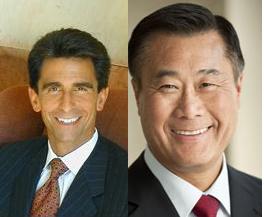
San Francisco now has two senators, Leland Yee and Mark Leno. Leno represents the East side and Marin, Yee the West side and parts of San Mateo. Leno’s district is Number 3; Yee’s is Number 8.


Yee’s term runs until 2014, Leno’s until 2012.


The commission hasn’t put numbers on all the new districts yet. But the way the law works, if the new Senate district has an even number, then Yee stays in office — reopresenting his current district — until 2014 (unless he gets elected mayor), Leno’s gone in 2012 and can’t run for the new seat until 2014. Which means for two years, half of San Francisco has no representation in the state Senate.


On the other hand, if the district gets an odd number, Leno runs again in 2012 for what will be his seat, Yee either gets electred mayor this fall (in which case there’s a special election for his seat) or he stays in office until 2014 (when he would be termed out anyway) and for the next three years, San Francisco still has two senators.


Remember that among Leno’s East side constituents are a disproportionate number of people of color, low-income people and LGBT people. That simple decision — on a seat number — could cut them out of representation.


For the record: This isn’t about Leno vs. Yee. If we had to choose one of the two of them for our state Senator, I suspect I’d go with Leno — but that’s not going to happen. It’s Yee AND Leno or Yee alone.


And it’s not about saving Leno’s seat, either. If he gets the bad number, he’ll find something else to do — Gov. Brown needs help, Nancy Pelosi’s going to retire soon, the filing deadline for the mayor’s office isn’t until August … if you like Leno, he’ll still be around. If you don’t like him, he’ll still be around.


It’s a question of the better deal for the city, and an odd number is clearly the better deal. The commission is having a hearing at Fort Mason June 27, 6 p.m. to 9 p.m., so it might be worth showing up and saying: Keep San Francisco odd!


So an even-number designation screws the poorer half of San Francisco — and an odd-number designation hurts nobody.

Tonight: Freedom of information panel on press passes

A few articles have been published over the past year or so about the availability of press passes in San Francisco, spurring a slew of questions: Who gets them? Why are they needed? What are the laws surrounding media access? And what are the rules governing the local process of issuing press badges, anyway?

To sort it out, the Freedom of Information Committee of the Northern California Chapter of the Society of Professional Journalists is organizing a panel discussion today, June 21, at the San Francisco Public Library. It’s not intended to be a debate, but an informational session for journalists and other interested parties to clear up some of the misconceptions surrounding press passes. Panelists will include Lt. Troy Dangerfield of the San Francisco Police Department’s Media Relations unit, Acting City Administrator Amy Brown, Attorney David Greene of the First Amendment Project, and Chris Roberts, a reporter who has covered controversy surrounding press passes before.

The panel will be held at 5:30 p.m. at the San Francisco Public Library, 100 Larkin St., in the Latino/Hispanic Community Meeting Room, located on the Library’s lower level. (Enter at 30 Grove Street, proceed down stairs to the lower level.)

Will another DREAMer be deported, despite ICE’s S-Comm reforms?

51

Last week, ICE announced reforms to its controversial Secure Communities program. Civil rights advocates denounced these changes as window dressing, and the Guardian broke the news about S-Comm’s importance to the FBI’s Next Generation Identification (NGI) initiative, which appears to be using S-Comm on undocumented folks to secure support for a fingerprint dragnet to cover a much broader segment of the population than undocumented immigrants. But now, even before folks have had a chance to fully process the potential civil liberties impacts of the FBI’s NGI’s initiative, comes word that Mandeep, a DREAM Act honors pre-med student at UC Davis, who was once voted “most likely to save the world” by her peers at Los Altos High in Mountain View, could be deported to India on Wednesday.


Mandeep is pursuing a degree in Neurology, Physiology, and Behavior at UC Davis. But she is undocumented, and thanks to Congress’ failure to pass the DREAM Act last year, she now faces deportation to a country she barely knows. Immigrant rights advocates note that it was only a  month ago that President Obama spoke about the importance of providing a path to citizenship for students like Mandeep.


“We should stop punishing innocent young people for the actions of their parents,” Obama said. “We should stop denying them the chance to earn an education or serve in the military.”


They note that Obama has authority to grant administrative relief, which would make qualified DREAM Act youth safe from deportation, but that he has said he can’t use his executive authority in that way. So they’ve been sounding the alarm about Mandeep’s plight by faxing government officials about her situation.


But weren’t ICE’s newly announced S-Comm reforms supposed to provide relief for students like Mandeep?


Immigrant rights advocates say they are concerned that the reforms may not have much real impact on Mandeep because they rely on advocates and attorneys to get attention on individual cases. They note that Mandeep and her mother turned themselves into ICE this morning because they are scheduled to be deported tonight at 1am. And that ICE released them. But it is not clear what will happen next….


Meanwhile, ICE today announced the results of a seven-day targeted “Cross Check” enforcement operation that led to the arrest of more than “2,400 convicted criminal aliens and immigration fugitives” in May, as part of its promise to focus S-Comm resources on undocumented residents who have also broken criminal laws.


“The results of this operation underscore ICE’s ongoing focus on arresting those convicted criminal aliens who prey upon our communities, and tracking down fugitives who game our nation’s immigration system,” ICE Director John Morton said. “This targeted enforcement operation is a direct result of excellent teamwork among law enforcement agencies who share a commitment to protect public safety.”


ICE notes that everyone taken into custody as part of this latest sweep had prior convictions for crimes such as armed robbery, drug trafficking, child abuse, sexual crimes against minors, aggravated assault, theft, forgery and DUI. ICE also noted that 22 percent of the individuals were immigration fugitives-convicted criminal aliens with outstanding orders of deportation who failed to leave the country.


ICE says it conducted its first successful Cross Check operation in December 2009,  and has since conducted similar operations in 37 states, but that this seven-day operation, was the largest of its kind, and involved the collaboration of more than 500 ICE agents and officers, and coordination with the U.S. Marshals Service, the U.S. Diplomatic Security Service, U.S. Customs and Border Protection, the U.S. Postal Inspection Service, and ICE’s state and local law enforcement partners throughout the United States.


Arrestees included a 32-year-old man residing in Amesbury, Mass., from the Dominican Republic, who is a registered sex offender convicted of assault, battery on a household member, indecent assault, battery on a child, and leaving the scene/person injured; a 51-year-old man residing in Denver, Colo. from Libya convicted of first degree sexual assault against a child and assault domestic violence; a 38-year-old man residing in Orlando, Fla. from the Philippines convicted of battery on a law enforcement officer, resisting officer with violence, reckless driving and refusal to submit to blood/urine test; andaA 37-year-old residing in North Hills, Calif. from Mexico convicted of aggravated felony sex crime and rape of an unconscious victim. He was also identified as re-entering the United States after deportation. He will be removed following prosecution for illegal re-entry after deportation; and a 47-year-old man residing in Magnolia, Texas from Mexico convicted of injury to a child with intent to cause bodily injury, burglary, marijuana possession, driving while license suspended and indecency with a child by sexual contact.


“ICE is focused on smart, effective immigration enforcement that prioritizes efforts first on removing those serious criminal aliens who present the greatest risk to the security of our communities, such as those charged with or convicted of homicide, rape, robbery, kidnapping, major drug offenses and threats to national security. ICE also prioritizes the arrest and removal of those who game the immigration system including immigration fugitives or those criminal aliens who have been previously deported and illegally re-entered the country, “ ICE stated.


Hmm. It sure sounds like Mandeep doesn’t fit ICE’s criminal alien profile or priorities any more…

Reminder: Guardian forum tonight

0

Come by the Local 2 hall, 209 Golden Gate, tonight for the second Guardian Forum on issues in the mayor’s race. We’ll be talking about budget, healthcare and social services, with a great lineup of speakers. And it’s all about audience participation — so bring your ideas. There will be plenty of time for discussion.


Panelists:


Gabriel Haaland, SEIU 1021


Brenda Barros, health care worker, SF General


Debbi Lerman, Human Services Network


Jenny Friedenbach, Budget Justice Coalition


the Unite Here Local 2 hall is at 209 Golden Gate, at Leavenworth. Couple of blocks from Civic Center BART. We start at 6 p.m. and run until 8 p.m. See you there.

Feinstein gets box of toy soldiers, as Obama prepares to announce troop draw down

1

As Obama prepares to announce a troop drawdown this week, Peace Action West’s political director Rebecca Griffin delivered a box of thousands of toy soldiers, each attached to a petition for a swift withdrawal of U.S troops from Afghanistan, to Sen. Dianne Feinstein’s San Francisco office on Monday afternoon. Unlike many Democratic senators, Feinstein has not publicly demanded a rapid drawdown.

Griffin said the goal of collecting the messages, attaching them to toy soldiers and delivering them to Feinstein was to draw attention to the organizing that is happening to end the war, which reportedly is costing $2 billion a week. Many of the messages attached to the soldiers came from folks with family in the military.

A representative from Feinstein’s office accepted the delivery in the foyer of the Post Street building where Feinstein’s office is located. But Feinstein continues to support deferring draw down timetables to Gen. David Petraeus, based on comments she made on MSNBC that her press secretary Tom Mentzer referred the Guardian to on Monday, when we asked if Feinstein supports a rapid withdrawal from Afghanistan.

Asked by MSNBC’s Andrea Mitchell, what Obama should do, perhaps this week, when he makes a decision as to how quickly to draw down, Feinstein said Monday that she had had a brief discussion with Petraeus. [Obama nominated Petraeus last June to succeed General Stanley McChrystal, after McChrystal was fired for comments he made to Rolling Stone magazine, which included dismissing the counter terrorism strategy that Vice President Joe Biden was advocating as “shortsighted,” saying it would lead to a state of “Chaos-istan” and showing a lack of respect for civilian leadership. Petraeus intends to retire in September, and Obama plans to nominate him as the next CIA director.]

“What General Petraeus said is, ‘Look, I will give him several options. I may make a recommendation. And then the President will decide,’” Feinstein told MSNBC. “My own view is that this right now is a primarily—should be a military decision.”

Feinstein noted that she is bothered by Afghan President Hamid Karzai’s reaction. [Presumably, Feinstein was referring to comments Karzai made on the weekend, when he stated that the Nato-led coalition forces are “here for their own purposes, for their own goals, and they’re using our soil for that.” Last month, Karzai threatened to denounce the coalition as occupiers if they did not stop attacks on Afghan homes, after an airstrike killed civilians, many of them children.]

“I’m really very bothered by President Karzai’s reaction to it,” Feinstein told MSNBC. “That is negative to our troops over there. You know, our people have died essentially so that his country might be secure. I think this is a real problem: to have a President of a country that you are trying to help to stabilize, to get rid of al Qaeda, to see the Taliban doesn’t take over the country, and to receive a comment like that from the President of the country. But I think the President will make a decision—we can all guess, but none of us really know—to begin removing the troops. How big, I can’t say.”

Feinstein’s comments came shortly after Obama’s Sec of Defense Robert Gates acknowledged that the U.S is negotiating with the Taliban—an acknowledgement that only came after President Karzai publicly said that the US is in talks with the Taliban.

Asked if she’d like to see a more rapid withdrawal than the 5,000 troops originally suggested, and if she thought with Osama bin Laden’s recent death, and with al Qaeda diminished in Afghanistan, there’s a justification to begin drawing down more rapidly, Feinstein said, “There is a justification,” but she left viewers with a question.

“I don’t want to see what has been a turnaround, in the words of Petraeus, ‘still fragile’ destroyed,” Feinstein said. “I think there have been major inroads made in Afghanistan. Particularly in the south and now the plan is to go east. So that to me is the crux of the decision. How do you begin a significant rollback of troops without destroying the forward momentum that has been made by the surge?”

It’s been 18 months since Obama first ordered a surge of 30,000 troops into Afghanistan. And even if he withdraws the surge, there would still be about 70,000 American troops on the ground. And according to the Department of Defense’s website, there are currently 1.425 million active service members in the U.S. military.

Those statistics brings us back to Peace Action West’s Rebecca Grifffin, who noted during Monday’s action that because there is no draft, there is more of a disconnect from and less of an outcry about the wars in Afghanistan and Iraq, then there was about Vietnam. “Because there is no longer a draft, the public is not as touched, as they were by Vietnam,” she said.

As of Dec. 2010, there were 103,700 coalition soldiers in Afghanistan, according to DoD numbers. This means Obama has sent an additional 72,300 soldiers to Afghanistan since Dec. 2008, when Bush left office. Obama has significantly reduced troop levels in Iraq—drawing down their numbers from 178,300 in Dec. 2008 to 85,600 in Dec. 2010—but though there is a large military presence still in place, folks are fretting about the safety of those remaining troops as they try to pack up and leave Iraq in the coming years.

So far, there have been 4,408 military deaths in Operation Iraqi Freedom, which began March 19, 2003, 36 military deaths in Iraq’s Operation New Dawn, which began Sept. 1, 2010, and 1,590 deaths in Afghanistan’s Operation Enduring Freedom, which began Oct. 7, 2001.

That’s 6.034 deaths in total–a huge loss in terms of the families and communities that have been impacted by these soldiers’ deaths.

And then there are the 11,722 soldiers who were wounded in Afghanistan, the 31, 928, wounded in Operation Iraqi Freedom and the 172 wounded in Iraq’s Operation New Dawn, And that’s not factoring in the impact and cost of dealing—and not dealing–with post-traumatic stress disorder. According to the Department of Veterans Affairs, 50,000 veterans of the Iraq and Afghanistan wars received a new PTSD diagnosis between 2002 and 2008, but fewer than 10-30 percent, particularly under 25-year-old males, completed a course of treatment sessions.

So, members of Congress are increasingly hearing from their constituents about the impacts of soldiers who were killed, maimed and/or are suffering from PTSD, especially as the recession threatens to translates into cuts to benefits and programs for veterans. And following the May 1 U.S. raid that led to Osama bin Laden being killed in Pakistan, there has been a big uptick in congressional support for a withdrawal, according to Griffin who spends a fair amount of time in Washington, D.C.

“A lot of people are using the raid as their starting point,’ Griffin said, pointing to the House of Representatives May 26 vote, where a measure which would have required Obama to develop an exit strategy for the war in Afghanistan with a clear end date and report back to Congress, only narrowly failed, winning 42 more votes than a similar amendment last year, and with a score of Republicans siding with the Democrats.

And in mid- June 16, a bipartisan group of senators wrote Obama, urging him to use his self-imposed July troop draw down deadline as an opportunity to begin a “sizable and sustained” draw down of troops that puts the U.S. on a path toward removing all regular combat troops from the country. But while a third of the Senate spoke out in that letter, and its signatories included Dem leaders Chuck Schumer, Dick Durbin, and Barbara Boxer, and a host of moderate Democrats and Republicans, it did not include Feinstein.

U.S. military officials have voiced concern that a rapid withdrawal of troops could undercut gains in southern Afghanistan, a traditional Taliban stronghold. And Feinstein certainly seems to share those worries. “It took 10 years and for the first time we now have a turnaround,” Feinstein, who is the Chair of the Senate’s Intelligence Committee, told reporters earlier this month. “I would like to not telescope what we are going to do; wait and see a little bit more about what happens. I think it’s important candidly to keep all our options open.”

In face of comments like this, Griffin and Peace Action West’s field organizers have spent the last two months collecting toy soldiers and messages to attach to them, with the help of an online outreach effort that they launched in May.“Part of it is to create a physical reminder of the public’s opposition to war. People talk about wanting their family members to come home, Griffin said, pointing to the handwritten messages that are attached to each toy soldiers. “Some politicians are saying, ‘Give them a little more time.’ But the casualties are going up each month, and last month was the deadliest for Afghan civilians on record. So, while Defense Secretary Gates, who is very invested in his counter insurgent strategy, is doing his farewell tour, the troops are asking, do we get to come home sooner because Osama bin Laden is dead?”

Griffin observed that DoD statistics show that double and triple amputations due to IEDs (improvised explosive devices) have increased, and that PTSD levels continue to rise as veterans return, yet it’s not clear that at-risk veterans are getting the help they need.

“There’s been a perception shift about Afghanistan,” Griffin continued, noting that it’s been going on for almost a decade, and that pressure from the public and Congress will make it more difficult for Obama to not follow suit.

But while Griffin is clearly against the war in Afghanistan, she believes there are alternative ways for the U.S. to be productively engaged. These include playing a role in regional diplomacy with Iran, Russia and Iraq, helping facilitate political negotiations with Afghan, and partnering with the Afghan people on development projects that help.

“But that does not include giving money to the military to build stuff because then it becomes a Taliban target,” Griffin explained.

Noting that Sen. Boxer has suggested drawing down the troops by 30,000 and Congressmember Barbara Lee has advocated reducing the troops by 50,000, Griffin believes that Obama’s July decision is very important in terms of setting the debate about when we are going to get out of Afghanistan entirely.

‘Will it be 2014, or much longer?” Griffin asked.

She believes the coming election season will help tip the balance, especially since recent polls show the American public supports a troop withdrawal, especially in the wake of the Osama raid. “But if there aren’t strong actions, it will fester and will risk getting bogged down,” she said, warning folks that they also focus on making sure that reduced military budgets don’t translate into cuts to veterans benefits and pay. “

A lot of people who are uncomfortable with what’s going on, don’t know what to do,” Griffin said, explaining that she is looking for people who want to end the war, and is urging them to visit Peace Action West’s website to learn about things that they can do,that they feel comfortable with. “We want people to know that even though it might seem hopeless, there’s a lot they can do.”

And with that Griffin shared with me a list of some of the reasons Californians gave when asked why they want to end the war:

“My nephew wants to come home.”

“I want my friend to be able to raise his son.”

“My ex-boyfriend never came back alive from Iraq. He was even against the war. And America is generally unhappy (to be mild) about our ‘fight’ still going on.”

“I want my legs back.”

“I have a good friend who is just back from Afghanistan and is suffering from PTSD. He is 22 years old. Stop doing this to young people.”

“If we can’t afford Medicare, then we can’t afford bombs.”

“Because my brother has been deployed several times and he has a family at home.”

“Stop because my son is in there for six years.”

“My brother has been to Iraq three times. The first time he was in the army for six months. We train football players longer than that.”

“My 21-year-old grandson was just sent with his army unit to the front lines in Afghanistan. Every day we wonder if he will come home alive and uninjured. And for what? Why does the U.S. have to police the entire world?”

All good questions and reasons as Obama prepares to tell the nation how many soldiers he plans to withdraw in July–and when the rest of them and their families can expect to see them come home….


SFBG Radio: Bruce without Clarence

2

Now that the Big Man, Clarence Clemons, has died at 69, is it time for Bruce Springsteen to declare and end to the E Street Band? Johnny, who is a musician, says its a matter of basic decency. Tim, who can’t play or sing a note, thinks the other musicians still ought to have a chance to make a living. And what about the fans? Listen after the jump.

ByeBigMan by endorsements2010