• No categories

Politics Blog

The taxi strike

4

It’s notoriously hard to organize cab drivers to do anything. They’re all independent sorts, and they’re split among 34 different companies. Some are permit holders, which makes them the landed gentry of the business; some are serfs who have to pay high fees to lease permits. All of them get paid only for days that they work; there is no vacation time or sick pay in the industry. So the idea that there will actually be a citywide tax strike Aug. 2 seems a bit farfetched.


On the other hand, if enough of the drivers got together, and if even 3 or 4 out of every 10 cabs sat idle, it would make a huge statement. For better or for worse, taxis are a key part of the city’s transportation infrastructure. It’s not Manhattan, which would come to a grinding halt without cabs, but San Francisco — particularly the tourist trade — still depends fairly heavily on a functioning taxi system.


And the drivers are absolutely right to be angry. The “gate” fees — the amount the drivers pay to lease a cab for a shift — go up faster than the fares they collect. Drivers pay for their own gas — and when prices go up, they don’t get to raise the rates. Over the past couple of years, the drivers have been getting squeezed tighter and tighter; it’s no wonder some of them drive at 80 miles an hour to and from the airport. It’s the only way to get enough fares in a shift to make a living.


Now the cabs are required to accept credit cards — and the companies get to charge the drivers a five percent fee on every transaction.


And is anyone surprised that they drivers don’t like having an electronic tracking system follow them around?


Part of what’s going on — let’s be honest — is that the industry is shifting away from cash. When drivers earn only cash, and there’s no way to track how much they’ve driven or how many fares they’ve collected, it’s easier for them to be a little more, shall we say, creative about what they report to the IRS. (The IRS, of course, likes to crack down on cab drivers, waiters and freelance writers, who generally make very little money, while allowing General Electric to pay no taxes at all.)


But if you take away the cash, charge credit-card fees and don’t account for the price of gas, you’re going to get an industry with fewer experienced drivers (nobody can do it for very long), more reckless driving and more scams.


Sometimes I wonder if anyone who works for the MTA has ever driven a cab. Might be an enlightening experience. 


Guns and necessity

4

The Public Defender’s Office is getting a lot of press for its trial victory in the case of Johnny Stone. And as a big fan of the Public Defender’s Office (although not always of Jeff Adachi’s outside political ventures), I have to say: Congratulations. Arial Boyce-Smith came up with an effective strategy to keep Stone out of jail on a gun charge. I’m generally happy when the defense wins; I think our criminal justice system is so screwed up, and our prison system is a costly, brutal, inhuman and ineffective way to handle offenders. A few high-profile cases aside, the times when prosecutors put innocent people (or people who don’t deserve prison time) behind bars far exceeds the number of times when a truly guilty bad actor gets away.


So good for the PD. From the facts in this case, I see no reason why Mr. Stone should have been convicted.


But I also have to say: I’m glad this was just a trial court case and doesn’t set any precedent. Because the idea that a person can carry a concealed firearm around any time he or she can claim to be afraid of crime is a pretty dangerous idea.


I know all the gun nuts will be on my case here, but I’ve never been big on handguns, and never believed guns are a terribly good means of self-defense. And while Stone was in fact in a situation that could have made him fearful for his life, I wonder: Was he really going to point the gun and shoot somebody? Would another gun battle in front of the Sunnydale Housing Project be good for anyone?


And how scared do you have to be? I know plenty of people who worry about crime in the Mission — and I wouldn’t want any of them walking around with concealed handguns.


I appreciate the excellent trial work here. But let’s not try that too often.

SoCal secede? Why is this bad?

48

I’ve been talking for years now about how Californians would be better off if we split up the state. Why should those of us who want to live in a civilized society be held hostage to a small cadre of right-wing nuts who have paralyzed the Legislature and are interested only in destroying the public sector?


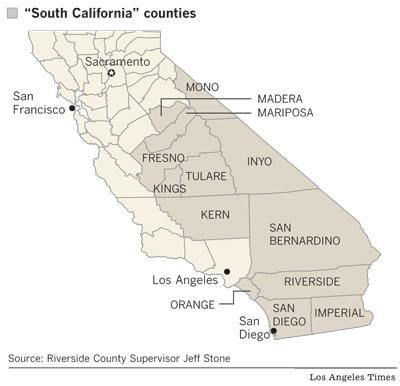
And now, one of those wingnuts seems to agree with me. A Riverside County supervisor named Jeff Stone wants to take 13 conservative counties from the south and the inland empire and create a new state of South California. I say: Why not?


Those counties vote for Republicans who vow to cut taxes and spending — and, of course, those counties also get more in state money than they contribute in taxes. That is, San Franciscans and people in Los Angeles are subsidizing with our tax dollars counties that elect people who don’t want taxes.


Fine. Leave us. Without those counties, California would have a two-thirds Democratic majority in both houses, easy. The state would be able to raise taxes to balance the budget. California’s credit rating would improve and the cost of bonds would drop. A Democrat could run for governor without pandering to the conservatives. Maybe we could even get rid of the death penalty.


South California would be an economic basket case — but it would still be part of America, so the Democrats and sane people who are stuck living there would be able to move north without worrying about ICE. I’d even propose setting aside a state fund (maybe equal to some percentage of what California now spends subsidizing the tax haters) to help pay relocation expenses for low-income liberal refugees.


Seriously: They want to leave, we don’t want them here … why not make everybody happy and let South California go?  

CPMC’s hospital dilemma

4

After summarily rejecting the city’s proposals for a community benefits agreement, Sutter Health, which owns the California Pacific Medical Center, is threatening to abandon its plans for a giant hospital on Van Ness. Randy Shaw at Beyond Chron thinks the nonprofit that acts like a robber baron corporation might be ready to pull the plug. The arrogant CEO, Warren Browner, is certainly acting that way.


But that would put CPMC is a tricky situation. State law mandates that hospitals complete seismic upgrades by 2013 — and while the deadline has been delayed in the past, time is eventually going to run out. Which means at some point CPMC is going to have to spend a lot of money renovating and bringing up to modern standards a hospital on California St. that it doesn’t want to use as a hospital any more. The plan calls for that building to become an administrative headquarters — which means it won’t have to meet the higher state seismic standards.


If Sutter walks away from the Cathedral Hill project, it’s going to have to spend hundreds of millions of dollars fixing up the California St. facility — and probably won’t get the same financial return.


The only really bad thing the health care outfit could do (and it would be really bad) is to shut down St. Luke’s in the Mission, saying that the seismic upgrade is too costly. But the city has made it very, very clear that shutting down the only hospital in that part of town would put so much pressure on SF General that it would be pretty close to unacceptable — and the end of CPMC’s ability ever to so much as install a flowerbox in this town.


So I think the city can hold firm here. It’s entirely in CPMC’s interest to do the Cathedral Hill deal. I think Shaw is absolutely right that the company doesn’t want to set the precedent of offering a city a decent benefits package — but in the end, the folks in the green eye shades are going to realize they have no choice.


So I think the city can just hold firm here — Sutter has to come back to the table.


During America’s Cup, clean-air program takes a step backward

A $5 million clean-air program along the San Francisco waterfront will be temporarily halted to accommodate the America’s Cup, prompting criticism from environmental advocates.

In October of 2010, representatives from the Port of San Francisco joined former Mayor Gavin Newsom and Princess Cruises to unveil a shoreside power installation at San Francisco’s Pier 27 for cruise ships transporting tourists to the city. The fourth system of its kind ever installed, the shoreside power hookup was touted as a way to improve local air quality by supplying passenger vessels with municipal power, making it unecessary for ships to run large diesel generators while at dock.

The U.S. Environmental Protection Agency provided $1 million to finance the emissions-reduction project. Additional financing came from the San Francisco Public Utilities Commission, the Bay Area Air Quality Management District, and Port capital funds.

Modern cruise ships use between 6 and 12 megawatts of power. The Port estimated that 19.7 tons of carbon dioxide would be reduced for every 10-hour ship call, while harmful air pollutants such as particulate matter, nitrogen oxides, and sulfur oxides would be cleared while diesel generators were shut down. The shoreside power was fed by San Francisco’s gravity-based Hetch Hetchy Water System, a relatively green energy source.

The environmental gains from shoreside power could be temporarily lost, however, when America’s Cup racing teams take over Pier 27 in 2012 and 2013 during the high-profile sailing events.

“With just one stroke of a pen, it’s gone,” said Teri Shore, program director at the Turtle Island Restoration Network (TIRN), based in Marin County. While the shoreside power hookup is disabled, “The ships will be coming in and parking, and running their diesel engines” at other waterfront piers.

The Port had already anticipated temporarily halting the shoreside power for a year during construction of a Pier 27 cruise terminal, Brad Benson of the Port of San Francisco told the Guardian. “Assuming there were no America’s Cup, it would already not be in operation … for approximately one year,” he explained. After a year of construction that will mark the first phase of the cruise terminal project, the America’s Cup will move onto the site, he said. “As a result of the America’s Cup, shoreside power is not going to be available for one year.”

By 2014, when cruise ships will be required by state law to have the ability to plug in at the shore rather than run polluting generators, the shoreside power will be in operation again, Benson added. The America’s Cup Event Authority — the primary race organizing team — has agreed to finance a $2 million relocation cost.

Shore, who is working with a coalition of environmental advocates that’s closely watching America’s Cup plans, said she hopes to see the city find some way to offset the impacts from the lost air-quality improvements. As long as ships’ generators are running, “there’s an exposure level,” she pointed out.

Benson said the port is starting to look at how it could offset the impacts, saying there might be ways of reducing carbon outputs during the event in order to make up for the lost emissions reductions. “I can’t tell you whether we could achieve the same level of emissions reductions that shoreside power would provide,” he said. “It’s very effective.”

On Monday, July 11, the city is expected to release a draft environmental impact review for the America’s Cup project.

SFBG Poll: Abolishing the death penalty

0

State Sen. Loni Hancock is moving to abolish the death penalty. It’s something others, including Sen. Mark Leno, have pushed in the past, but it’s a tough political scrap — the move would require a statewide vote, and it’s not clear that the money or organizational effort is there for this fall. Of course, the governor could solve the problem with a stroke of his pen, by simply commuting all death sentences to life without parole — but I don’t think he’s going to do that. The best move might well be a coordinated campaign in the fall of 2012, putting together the growing number of law enforcement types who don’t like the current system, the traditional death penalty foes, and the more conservative people who just think it’s too much of a waste of money.


Is it time to get rid of the death penalty? When and how? Vote after the jump.


Free polls from Go2poll.com

The city’s godawful computer problem

1

Mission Local has a stunning report on a Board of Supervisors Public Safety Committee meeting, at which the supes tried to sort out the mess that is the city’s 14-year project to combine all public safety computer systems. Check it out:


Fourteen years later, there are still no answers as to when the project will be completed. And there’s no answer to another big question, as well: At a meeting of the city’s Public Safety Committee on Thursday, Deputy City Administrator Linda Young told Supervisor David Chiu that she is not even sure what the project’s current budget is.


“This is unacceptable,” said Chiu.


And:


Supervisor David Campos, also on the committee, chimed in, asking if Young had a timeline for the project’s completion.


Young looked beseechingly at the group of JUSTIS staff members standing behind her. None of them spoke.


“No,” she said, finally.


Not a pretty picture.

SFBG Radio: Is Rupert Murdoch done?

2

In today’s episode, we talk about the future of media kingpin Rupert Murdoch, who just agreed to shut down his flagship British paper over charges of phone hacking. Is the News of the World really dead? Will it re-emerge as some other creature? Is the tabloid world of the press baron on the edge of collapse? Check out the discussion after the jump. 

SFBGradio782011 by endorsements2010

Is Ed Reiskin the new MTA chief?

1

It sure looks like it. And he could be the new Muni boss by the end of the week.


Which is not necessarily a bad thing — Reiskin’s well liked around City Hall, the bicyclists and alternative transport people think he’s a decent choice and he’s certainly run a big, complex city agency. But he’s never run a big transit agency — and that’s a very different experience from managing the Department of Public Works.


Sup. John Avalos, who is running for mayor, told me he thinks the MTA ought to take its time and look around a bit. “Nothing against Reiskin, but I think it’s important we make the most thorough effort to find the best person to fun this critical city department,” he said.


But from what I hear, Reiskin’s close to a lock. I just hope the MTA knows better than to offer him one of those five-eyar contracts with a rich buy-out provision. Look how well that worked last time.

Tom Ammiano and Brad Pitt

6

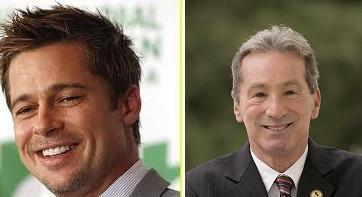
That’s just the headline to get your attention. Actually, Tom made a great, impassioned speech on the floor of the state Assembly about Sen. Mark Leno’s SB 48, which would mandate that school textbooks include information on the historic role of LGBT people in the development of California. Seems like a no-brainer, but some of the Republicans were pretty awful about it, and there was a fair amount of talk about “sexual preference.”


So up stands Ammiano, who urges his colleagues: “Don’t live in a bubble and encourage me to live a lie because you aren’t confortable. …. I don’t want to be invisible in a textbook. I will not be erased.


“This is about education, about leveling the playing field. This isn’t about trivialization of a very important issue, a life-death issue for so many of us.


“And while I’m at it, let me correct something: My sexual orientation is gay. My sexual preference is Brad Pitt.”


One of the many reasons we love Tom.


Check out the video here.  Tom’s speech is at about 1:25.


The bill passed, 49-25.


Hot weather didn’t melt much snow

0

The recent California heat wave has not brought with it a flood of icy water from the snow packed Sierra’s, and experts say the snow should instead melt off at a slow, gradual rate in the coming months.

Hydrologists initially worried about the excess snowfall that accumulated in late May and is still intact at higher elevations. Over the past month, though, their fears have eased as any flooding was minor and localized to back country creeks.

“Everything’s been controlled and very manageable,” said Mark McLaughlin, a Tahoe weather historian and writer with Mic Mac Media. “None of the worst case scenarios have happened.”

In the Central Sierra region snow pack conditions are 205 percent of normal and statewide conditions are 200 percent of normal, according to the California Department of Water Resources.

McLaughlin said any major flooding would be the result of “widespread, prolonged heavy rains” rather than a heat wave, and that it would most likely happen during the winter.

In the winter of 1997, reservoirs were filled to capacity and there had been six feet of snow fall when a storm brought 20 inches of rain to the area and flooded the San Joaquin River Basin.

Randall Osterhuber, a researcher and manager at the UC Berkeley Central Sierra Snow Lab, said reservoir managers have to keep a close watch on water levels. They can’t release too much water for fear of losing their reserves, but also can’t hold too much in case of an influx like in 1997.

“That’s the real challenge,” said Osterhuber.

Could CA really, actually end the death penalty?

32

I don’t know. Maybe not this year. But we’re getting a lot closer — and in the end, it’s not coming down to morality or cruelty or effectiveness but to money.


State Sen. Loni Hancock of Berkeley had a hearing July 7 on the issue, and has a bill to replace death sentences with sentences of life without parole. Honestly? It’s the same thing right now, for all practical purposes — the number one cause of death on Death Row is old age. The whole process is so (necessarily) lengthy and expensive that it just doesn’t work. And it’s costing the taxpayers a fortune.


Wouldn’t it be odd if, after all these years people like me have spent talking about the inhumanity, unfairness and grisly brutality of the death penalty, it fiscal conservative argument carried the day and we stopped executions to save money? But hell, I’ll take it.

Competing claims mark the final pension reform ballot push

43

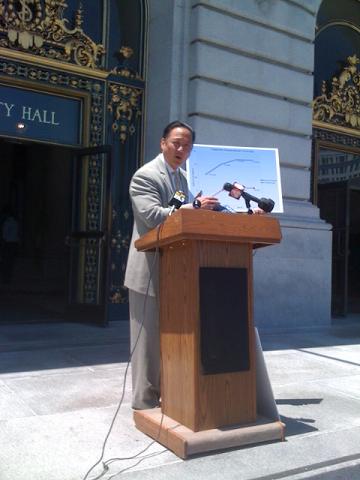
Public Defender Jeff Adachi held a press conference on the steps of City Hall this afternoon, talking about how his pension reform measure is on track to qualify for the November ballot, calling for the Board of Supervisors to strengthen a rival measure so he can drop his, and wielding a series of colorful charts showing how his measure would save the city far more money.

But those involved with crafting the measure that has come out of City Hall – including Mayor Ed Lee and Sup. Sean Elsbernd – tell the Guardian that Adachi is misrepresenting the numbers in a way that amounts to lying, and that he’s employing a legally risky strategy that could either sink pension reform for the year or set a troubling legal precedent that diminishes the vested rights of all public employees.

The conflict – with its complex claims and counter-claims and dizzying array of big numbers derived from speculative actuarial tables and predictions of future economic realities – offers a preview of what is likely to be a bruising yet bewildering battle if both measures make the ballot.

“We have to have real reform,” Adachi told assembled journalists and activists. “If we had real reform coming from this building, City Hall, I wouldn’t be standing here right now.”

But Elsbernd and Lee each told us that the event had more to do with grabbing headlines with sensational yet misleading claims during the final six days of signature-gathering than it did with Adachi’s claim that his measure will save $138 million annually by 2014-15 compared to a $84 million in the city’s plan.

“It is critical people understand the difference in these costs,” Adachi said.

Lee called the event “weak antics in trying to get a headline,” and said, “His claims are false.” Elsbernd said he spoke with Adachi on the phone for an hour yesterday trying to convince him that his fiscal claims were wrong, but to no avail. “Facts don’t seem to matter to him anymore,” Elsbernd said. “He’s not playing straight with the facts.”

Two issues are central to Adachi’s claims of a big cost savings: his plan’s requirement that employees pay more into their pensions without the city’ plan’s promise of lessening that burden during good years – which city officials say is legally dubious because it simply takes away something to which current employees are entitled to under their contracts – and the deal that the city cut last week with public safety unions to give them the 4 percent raise they were scheduled to receive this year but to increase their pension contributions by a similar amount.

“It’ll cost taxpayers even more than the amount of the raise,” Adachi argued, wielding charts and figures to show that the higher pension payouts due to the increased salaries of cops and firefighters will cost the city $45 million over the next 10 years, and as much as $381 million by 2042.

But Elsbernd said that the raises were part of a contract approved back in 2007 and can’t be just unilaterally taken away. “The raises have been incorporated into pension projections,” Elsbernd said, accusing Adachi of essentially double-counting them in his calculations. “He’s saying this action increases the costs, and that’s just wrong. This deal lowers those costs.”

When we asked Adachi about that point during the press conference, he argued that in these dire fiscal times, all public employee contracts should be renegotiated from scratch and therefore his fiscal claims were correct. “Why should we be talking about a 4 percent raise for anyone when we’re cutting basic services?” Adachi asked.

But simply invalidating approved contracts puts Adachi’s measure on shaky legal ground, Elsbernd said. But it’s ground that the wealthy funders of Adachi’s measure are anxious to plow because if the measure survives a legal challenge, it will weaken the ability of current employees to get the benefits they were promised.

“He wants to challenge the issue of vested rights, and in the end, that’s what this is about,” Elsbernd said, noting that if Adachi’s measure gets more votes and is invalidated, as he thinks it will be by the courts, than the city’s pension problem gets worse as the solution gets pushed back a year.

Adachi claimed during the press conference that he has privately been offered support by some union leaders who are attracted to the big cost savings and what it would mean to the city’s future fiscal health, but he wouldn’t name them or indicate whether they will go public at some point. But Lee said Adachi is just desperately looking for allies.

“He’s looking for someone to support his view of this, but we’re very confident that our proposal is better,” Lee told us, noting how important it was to develop the measure with input and help from the unions. “We’ve done it the right way. You do it with people, not to people.”

But Elsbernd also said Adachi’s pushing of pension reform last year and again this year is a big factor in the union givebacks that the city has received: “We would not be in the place we are with labor if not for Jeff Adachi.”

The board is set to consider the city plan next week, while Adachi says he has 60,000 signatures and plans to gather 5,000 more by the deadline of Monday at 5 pm, which should be enough meet the threshold of about 47,000 valid signatures.

The BART shooting: Fishier and fishier

2

BART’s official account of the latest shooting — and the assertion that the officers acted properly — is starting to look more and more dubious.


Props to the Bay Citizen’s Zusha Elinson for getting the first real break on the case — an interview with a witness who says the man who got shot wasn’t running or lunging toward the cops, that he didn’t seem to pose an immediate threat, and that the shooting may not have been justified:


Hollero said that from her view of the incident, police officers should “absolutely not” have shot the man, who she said “just looked like a drunk hippie.”


That’s the kind of information that will be key to the investigation — was this guy just a drunk with a knife who could have been restrained without lethal force? Or was he an immediate threat to the lives of the cops?


One of the nice things about having some journalistic competition in town is that it drives reporters to go beyond the official statements. When I covered the Jerrold Hall shooting in 1992, nobody from the Chronicle or its (then) sister paper, the Examiner, lifted a finger to challenge what BART was saying.


This time around, after all the bad publicity BART has been getting from police shootings — and with more reporters covering the story — BART’s not going to be able to keep a cover-up going. (In fact, I’m surprised nobody’s come forward yet with a cell-phone video of the shooting; if you’ve got one, call me). At some point all of this will come out — and the more BART tries to pretend everything is just fine, the worse the agency is going to look.


Obviously, there has to be a full investigation here, by the SFPD,  the BART Police and BART’s new civilian review operation. And the officers involved shouldn’t be disciplined until all the facts are in and the various agencies come to their various conclusions.


But opening some of this up to the public now won’t hinder the inquiry; if anything, more discussion will bring more witnesses forward. That’s why BART absolutely needs to release the security video feed from the station, make the initial police reports public and stop stonewalling reporters.


There may be — may be – a valid legal reason for BART to refuse to release information on the case; the California Public Records Act gives some latitude to police agencies involved in ongoing investigations. But there’s nothing in any law that says the material MUST be confidential; BART has full discretion to release that video.


It’s going to come out at some point anyway. Why wait? 

CPMC to City: Drop Dead

21

The astonishing cluelessness of the folks at California Pacific Medical Center continues.

In our last episode, CPMC’s chief, Dr. Warren Browner, announced to the City Planning Commission that the hospital had no interest in following the normal rules that apply to every developer planning a massive $2.5 billion project. Developers have to pay fees for transit and affordable housing. Nonprofits like CPMC are supposed to spend money on charity care. Nobody — not even the more moderate members of what is by no means an anti-development commission — was ready to accept Browner’s line.

And now the hospital chain has officially told San Francisco to go fuck itself. 

Sorry, Doc — this isn’t going to work.

IF Ed Lee has any integrity at all (and I hope and believe that he does) he’ll stick to his original position and demand a reasonable community benefits agreement that includes housing money, transit money, increased charity care and a commitment to keep St. Luke’s Hospital open in the Mission for the forseeable future. And he’ll tell the white coats and suits at CPMC that if they don’t want to do that, then San Francisco isn’t interested in their project.

CPMC can’t exactly pull up stakes and move: The Sutter affiliate makes its money by serving San Francisco residents (and working with San Francisco doctors who send insurance money into the hospital system). Go ahead, Dr. Browner — try to build in Brisbane. You’ll lose all your San Francisco patients — and all that Brown and Toland insurance money.

The activists at every level have made it pretty clear that they’re willing to work with CPMC and accept a gigantic project on the edge of the Tenderloin, on a street that already has terrible traffic and transit problems — but not without a solid, acceptable community benefits agreement. So the hospital crew is going to have to learn to work with San Francisco. 


A cheap shot at Tom Ammiano

34

Elizabeth Lesly Stevens has done some good work on the insanity of Prop. 13. Check out this, and this, and this — all of which say, more or less, that rich people are getting a great deal under the tax law, and aren’t paying their share.


Correct. Well said. Good points.


So why did she decide to take a cheap shot at the one local politician who’s actually trying to do something about it?


A column that ran in the New York Times July 3 talks about Assemblymember Tom Ammiano, who is leading an effort to reform the worst parts of Prop. 13 — the loopholes that allow commercial property to avoid reassessment, costing the state and local government tens of millions of dollars or more a year.


And what does Stevens, who based on her past writing clearly agrees this is a problem, have to say? Well, she says Ammiano is courageous for taking on the issue — then tweaks him for having a low, Prop. 13-protected assessment on his own house in Bernal Heights:


Yet the feisty Mr. Ammiano is quiet as a church mouse about altering the residential protections of Proposition 13 — of which he is a signal beneficiary.


Mr. Ammiano, who is also a comedian, pays just $530 a year in taxes on the Bernal Heights home he has owned since 1974. As far as the city and Proposition 13 are concerned, his house is worth $45,600. Zillow estimates its current worth at $645,000. At that value, the tax would be about $7,500.


That’s all perfectly true. It’s also true that Ammiano is (a) not rich and (b) has spoken for years of the need to reform all of Prop. 13, not just the commercial loophole he’s going after right now. I’ve known Ammiano a long time — and I can tell you that, since the days he was on the San Francisco School Board in the 1990s, he has consistently favored amending Prop. 13, including the residential benefits that he now enjoys.


So he hasn’t been “quiet as a church mouse.” He’s been pretty loud, for a pretty long time.


He also knows, as does Stevens, that repealing Prop. 13 entirely is a political nonstarter. Not going to happen. Too bad, but even talking about it is a waste of time right now. So Ammiano’s going after the only reform he has a chance of winning — and, by the way, attacking the most outrageous loophole.


I don’t think Stevens meant this to be a hit piece or anything; she, and her editors, are just fascinated by this strange law we Californians call Prop. 13. But when I read her piece, what I got out of it was: Here’s a guy who wants to make other people pay more taxes — but he’s not going to do anything about his own tax breaks. I just don’t think that’s terribly true, or terribly fair.


(By the way, Stevens is on vacation with her family, and, as is her usual practice, didn’t want to comment. She just said people can make their points in the comments section of her piece.)

Another BART Police shooting

2

It’s still too soon to determine whether the latest BART Police shooting was legit. There were witnesses. There’s station security video. Maybe the victim really was attacking the officers with a knife and a broken bottle. Maybe he was drunk. Maybe something else was going on.


But given BART’s horrible record on police shootings (even before the Mehserle case), this one ought to be investigated and debated in as open a manner as possible.


And already, the cone of silence has descended. BART public affairs says the station video won’t be released. The San Francisco Police Department, which is also investigating, won’t release any documents or information, the Public Affairs Office tells me.


I’m already dubious. Technically, it might be legal for a cop to shoot a man who has a knife — but is shooting a drunk guy really necessary? How much of a threat was he, really? Were there other ways to subdue him?


The BART Board ought to be asking these questions, too — in public. Because right now, I suspect I’m not the only one who doesn’t trust anything that BART administration or the BART Police say.


This is going to be a major test of how the new BART police oversight policy works. And since Step One is rebuilding the public’s trust, the typical secrecy has to end.  

Here’s tax reform, Jerry

14

Everyone knows I’m a fan of taxing the rich and that I think most of the economic problems in our country have their roots in the growing inequality of the past few decades, so it should come as no surprise that I enjoyed the Cruickshank piece on Calitics. He’s got exactly the right idea: Tax reform that benefits the wealthy (or, in fact, tax reform that doesn’t force the wealthy to pay more) isn’t tax reform at all.


I was on a houseboat at Lake Shasta over the 4th of July, arguing with some very smart people about why the economy is so fucked up (yeah, for relaxation I go someplace beautiful — then sit around and talk about economic policy), and we covered a lot of ground. My friend the investment banker and corporate executive said that out-of-control CEO pay — and bonus payments for failure, and lack of corporate accountability — were a bit part of the problem. “If corporations succeed, then everyone — all the people who work there, at every level — ought to benefit,” he pointed out. True: In the early post-War era, labor union clout in major industries (automotive, for example) forced corporations to pay a decent middle-class wage — that is, to share the fruits of success with the workers. That’s all gone now. “Corporations don’t pay enough taxes,” my friend the corporate salesman said — and he’s right, too.


And all of us agreed that higher taxes won’t drive corporations out of the country or out of states or even out of cities; the actual numbers of businesses that pick and and move because of taxes (as opposed to labor-force issues, rents, land availablity, access to transportation etc.) is so minor it’s not even worth talking about.


But those are just pieces of the puzzle. Here’s what I always come back to: Over the past couple of decades, the size of the U.S. economy has doubled — and real wages have been essentially flat. All that new money has gone to the very, very top. Robert Reich explain this brilliantly in exactly two minutes — and I don’t care how busy you are, you have two minutes to watch this video.


That, really, is the root of everything, the reason we’re still in a recession, that people are losing their homes, that government debt is soaring … it’s all because this country, as a matter of public policy, has allowed the very, very rich to take almost all of our wealth. We have become a banana republic, a corporate kleptocracy, a place so badly managed that it we weren’t the United States, the news media would be reporting on our utter lack of economic democracy. And they’d be saying that the system is so unsustainable that one way or the other, it’s going to collapse.


Jerry Brown must know this. He’s not going to run for another term. There’s no excuse at all for not at least proposing a modest tax increase on the highest earners and the most profitable big businesses. Come on, guv: What are you waiting for?


Everybody loves parklets

20

The Chronicle’s urban design writer John King, consistently one of the paper’s best writers, today took a celebratory look at the parklets that have been springing up around town, calling them, “the most intriguing urban design innovation in today’s San Francisco.” I agree with that sentiment, and so does the crowd that showed up on Sunday to dedicate “the Deeplet,” the first such parklet in front of a residential property.

It was a collaboration between homeowner Amandeep “Deep” Jawa, his girlfriend Kimberly Conley, and designer Jane Martin, who King quotes in his piece (which only Chron subscribers and read until Sunday when it goes public). The idea is to take underutilized space from automobiles and give it back to people.

Livable City director Tom Radulovich also spoke at the event, talking about how the streets were traditionally the gathering and social spaces in cities, until transportation planners started to value the efficient movement and storage of automobiles over a more inclusive view of streets. But the parklets – along with temporary street seizures like the Sunday Streets events – are part of a movement back to a more holistic view of city spaces.

We at the Guardian have been sympathetically covering this trend for years, and it is notably one of the few areas of agreement that we’ve had with the Chronicle and former Mayor Gavin Newsom, whose administration cleared the way for the permitted creation of parklet. And on this beautiful summer day, agreeing on the importance of having places to lounge and to just be seems like a great starting point for more discussions on the future of this great city.

The Village Voice, Ashton Kutcher and prostitution ads

13

There’s some fascinating back and forth in media circles about the Village Voice, its chain (which includes SF Weekly), Ashton Kutcher, Demi Moore, prostitution, and layoffs and budget cuts as the nation’s oldest alternative weekly.

It’s all so juicy I don’t know where to begin. Perhaps with the SF Weekly’s cover story this week, which also ran in the Voice and most of the chain’s other papers.

The story takes Kutcher and Moore to task for launching a campaign against child prostitution using bogus numbers.
For the record: I have no reason to doubt the Voice’s conclusions here. I have no problem with adult ads (which the Guardian also takes). And frankly, I have no problem with prostitution, which, like gambling and drugs, ought to be legalized, regulated and taxed.

And the Voice was scrupulous about disclosing that it has a financial interest in this issue. How much of an interest? Well, a lot. In fact, according to the New York Observer, the prostitution ads could well be floating the financially troubled chain:

Backpage, which is a fraction of the size of Craigslist, is the only popular classifieds site left willing to host the paid escort and body-rub ads that are often thinly veiled fronts for prostitution. In the month after Craigslist closed its erotic services sections under pressure from Congress and state attorneys general, Backpage enjoyed a half-million-visitor bump in traffic, according to Quantcast, and became the No. 1 publisher of escort ads on the Internet. The Aim Group, a media consulting firm, estimated that in January, Backpage brought in $2.1 million in revenue from erotic services ads alone.

That would be about $24 million a year — and the Observer notes that VVM desperately needed the cash:

For more than two decades, Village Voice Media executive editor Mike Lacey employed a simple, often devastatingly successful strategy for gaining control of the country’s alternative weekly business: acquire the local paper, cut editorial costs (lay off critics, reporters and, reportedly, entire fact-checking departments), pump the paper full of nationally syndicated content and splash an occasional local investigative piece on the cover. It was working like a charm until 2004, when the San Francisco Bay-Guardian sued VVM’s SF Weekly for manipulating ad prices in an attempt to drive the rival paper out of business. According to court transcripts, Mr. Lacey told the staff on his first day as owner of SF Weekly that this was precisely his intention.

Despite facing legendary antitrust lawyers in a state notorious for its aversion to monopolistic practices, Mr. Lacey spent years appealing the court’s award of $16 million, which grew to $21 million with interest, until the California Supreme Court threw out VVM’s petition. During the proceedings, the company revealed that it owed creditors $80 million and claimed it could not afford to pay the award. Lawyers for the Bay-Guardian threatened to force bankruptcy.

In January 2011, VVM and SF Weekly settled the issue privately. Though the terms of the agreement were not disclosed, between the settlement and what one attorney familiar with the case said were legal fees of at least $5 million to fight the case, VVM was likely left with an eight-figure hole burned in its pocket.

Since last spring, the company’s efforts to patch that hole up have included the unthinkable (laying off legendary Village Voice investigative reporter Wayne Barrett in January); the surprising (selling off Kansas City Pitch to Tennessee publisher South Comm, Inc., in mid-March); and the long overdue: shutting down an experiment with a pair of sex blogs that were never publicly launched despite being published for nearly a year.

(For the record: The Guardian and VVM have agreed not to discuss the terms of the settlement.)

Mike Lacey, the executive editor of Village Voice Media, shot back with a letter to the Observer featuring his typical wild-ass metaphors and flowery prose:

In fact, in just the past few months Backpage.com has spent millions of dollars policing content to attempt, for example, to keep underage kids out of adult listings. Despite Trench’s professed lack of knowledge, which we do not doubt for a second, anyone looking at Backpage will notice the absence of nudity-merely one of thousands of changes over the past year.

Damn — no more nudity on Backpage. Then Lacey goes on to describe what he found at the Voice when he took it over:

We found a Voice “library” where an individual sat with scissors and clipped out articles from other publications for filing. The age of the Internet stopped at the library’s doors. Town cars arrived to ferry one late working chap to Westchester County. While we kept critics at Cannes, Toronto, and Sundance, we equivocated on sending them to Rotterdam. The Voice was the only alternative newspaper in the country that thought its reporters needed to have their facts checked in addition to being edited, copyedited, and proofread. I disagreed. (Though I do not wish to presume that the Observer might not benefit from such staffing.)

Actually, it was a little more than that. There were a number of longtime Voice staffers — mostly with politically left views — who earned, by alternative press standards, fairly high salaries. They’ve been shoved out the door. Nat Hentoff, James Ridgeway, Wayne Barrett … all gone. They were, in some ways, the soul of the old Voice — scrappy, unafraid to be progressives (and to care about political causes) and interested in social change. That didn’t fit with Lacey’s world view.

But it gets better: The Voice and Kutcher are now in a tweet war — and all of this is going to bring more attention to Backpage and the sex ads — which, again, don’t bother me, but do bother a lot of stuck-up law-enforcement types, who will now have even more reason to go after VVM. At the Observer notes:

As Backpage grows in popularity, more news stories have emerged suggesting that the kinds of abuses that led lawmakers to demand Craigslist shutter its erotic-services section are increasingly occurring on the site. In September a former child prostitute sued VVM for knowingly publishing advertisements of her, and later that month 21 attorneys general called on the company to follow Craigslist’s lead and ban escort ads. VVM declined, but offered to continue cooperating with law enforcement officials on cases originating on the site.

I’m not sure all this publicity is exactly what Lacey had in mind.

 

Politicians have a limited time offer for you

0

As politicians push to maximize their campaign contributions before the semi-annual reporting deadline of tonight (Thu/30) at midnight – a big measure of the strength of their campaigns and sure-fire way to keep the money flowing in – our e-mail in-boxes at the Guardian have been flooded with urgent pleas for cash.

There’s a real art to these appeals, which generally rely on some combination of fear, humor, “we’re so close” appeals to “put us over the top,” and earnest calls for support in order to get people to open their wallets. We won’t find out how the campaigns really did for another month when the forms are due, but we thought we’d offer a sampling of our favorite pitches of the season.

President Barack Obama is offering to join you for dinner if you give his presidential campaign even a few bucks: “ I wanted to say thank you before the midnight deadline passes. And I’m looking forward to thanking four of you in person over dinner sometime soon. If you haven’t thrown your name in the hat yet, make a donation of $5 or more before midnight tonight — you’ll be automatically entered for a chance to be one of our guests.”

Democratic Party consultant James Carville sent out a funny one entitled “Backwards tattoo” on behalf of the Democratic Senatorial Campaign Committee: “FEC deadline is midnight, and here’s a number to ponder: 90%. It’s so important, you should tattoo it backwards on your forehead so you read it every time you brush your teeth:

  • 90% of donations to Karl Rove’s American Crossroads this year came from 3 billionaire donors bent on destroying President Obama.

  • 90% of donations to the DSCC come from grassroots supporters.”

Comedian and U.S. Sen. Al Franken always writes great appeals. I liked his previous one, “Oatmeal,” better than his current one, “Cake,” but it’s still pretty good: “Remember Election Night 2010? Remember watching Democrats you admired—progressive champions—giving concession speeches?  Remember shaking your head as radical right-wingers were declared winners?  Remember the first moment you realized that John Boehner was going to become Speaker of the House? Not fun memories.  But here’s the thing: In a lot of states, the cake was baked a long time before the polls closed—not in 2010, but in 2009. Every cycle, races are won and lost—months before anyone votes—because one side builds an early advantage that proves to be insurmountable.”

On the other side other aisle, the National Republican Senatorial Committee is offering signed lithographs of the U.S. Capitol (huh?) for donations of $125 or more, or you can give just $4 to help elect four more GOP senators because, “Even with the support of all 47 Republican Senators for a Balanced Budget Amendment, Harry Reid blocking its progress every step of the way will be nearly impossible to overcome.”

GOP presidential candidate Mitt Romney writes that, “Your donation will build the campaign needed to defeat the Obama juggernaut in 2012.”

Rep. Dennis Kucinich (D-Ohio) issued a national appeal for his efforts to stand “up to leaders of both parties” and the scheming capitalist forces: “Across the country, corporate forces have been pushing for draconian cuts to the social safety net, making it harder for all Americans to have a better quality of life.”

SF District Attorney candidate David Onek used his wife – Kara Dukakis, daughter of former Democratic presidential nominee Michael Dukakis – to make his fundraising plea today: “I’m writing today to ask for your help. As you already know, my husband, David Onek, is running to be San Francisco’s next District Attorney to reform our broken criminal justice system. The deadline for our fundraising period is midnight tonight and it is crucial that we make a strong showing.”

U.S. Sen. Barbara Boxer even acknowledged the barrage of funding appeals as she sought money for her PAC for Change: “I know you may be getting a flurry of these June 30 fundraising emails today, so let me get right to the point: We’ve already raised more than $44,000 toward our $50,000 end-of-quarter grassroots goal — but if we’re going to make it, and fight back against the millions that Karl Rove and our opponents are already spending against us, I need your support before midnight tonight.”

SF Mayoral candidate Leland Yee sent out an appeal this morning with the subject line, “An amazing couple months…14 hours to go before the deadline,” in which he touted his campaign’s endorsements and accomplishments but asked people to dig deeper: “Even if you have donated to the campaign already, a contribution before midnight tonight will make a huge difference. Every dollar counts and no amount is too small.”

Mayoral candidate Dennis Herrera exclaimed: “Wow! It’s been just seven hours since I sent an email to each of you asking for your support in sponsoring my field team’s 10,000 signatures by matching them with a fundraising goal of $10,000 – and we have made some serious progress. “

And then tomorrow, after a likely round of “thank you, we did it!” self-congratulatory messages, it’s back to summer as usual.

The Chron is clueless

8

The ol’ Chron commissioned its former reader representative, Dick Rogers, to do a piece on the Jose Antonio Vargas story, and he concludes that Vargas was a liar whose failure to turn himself in to immigration authorities (and thus accept deportation to a country he hardly knew) undermined his journalistic work. Rogers quotes editor Ward Bushee:


“While he deserves sympathy for his efforts to become a citizen, Vargas’ lack of forthrightness in some of his reporting cannot be defended,” Bushee said. “He practiced a pattern of deception that was not only dishonest, but disrespectful of his readers and fellow journalists at The Chronicle.”


Pardon me while I puke.


I’ve already written about Vargas and about former Chron editor Phil Bronstein’s (far more nuanced) handwringing over the situation. But the conclusions the Chron reached in the Rogers article are just bizarre and reflect a creaky, ancient attitude towards journalism that makes no sense in the modern world.


I called Rogers, who is a nice guy with a long history in journalism, and we had a long talk about the situation. I asked him what the young man should have done when he found out at 16 that his parents had sent him to the Unites States illegally. Rogers, to his credit, said he didn’t know, that it was a tricky moral and legal dilmemma. “But that’s not what I was asked to write about,” he said.


The issue for him: Vargas lied when he filled out his employment application and failed to disclose to his editors that he was in the country illegally. That damaged the Chronicle. “You can’t put yourself above your newspaper,” he told me.
Okay, once again: What should Vagas have done? What should a person who is forced by stupid and inconsistent federal laws to lie about his immigration status do if he wants to be a journalist? Well, Rogers said, that’s the dilemma: “I don’t think he should have been working in mainstream journalism.”


Of course, he’s have to lie to get a job as a lawyer, or doctor, or CPA. And all of those professions also have ethical codes that discourage lying. So perhaps he should have been a bricklayer.


To be fair, Rogers doesn’t go that far — he suggested that there were other types of journalism Vargas could have done. He could, for example, have worked for the Bay Guardian. (I wish.) After we talked for a while, Rogers said that if Vargas was going to work for the Chron, he should have recused himself from any stories involving immigration.


But let’s be real here: The Chron allowed a reporter who took money from a nativist group to keep writing about immigration. Bushee, who is so outraged about Vargas, has no problem allowing an (illegally) unregistered lobbyist who gets paid to advocate for wealthy interests in the city to write a political column without ever disclosing his clients or conflicts. (Rogers told me that was a legitimate point. “Conflicts are conflicts,” he said.)


And at the same time, the Chron fired a reporter who participated in an antiwar march and wouldn’t let a lesbian reporter cover same-sex marriage.


It’s inconsistent to the point of being silly.


Look: All of us have conflicts. As the great Larry Bensky once told me, “People who have no conflicts have no interests.” Can a person who drives a car write about transportation policy? Can a person who smokes pot write about medical marijuana (or should she tell her editor, sorry boss — I’m illegally ingesting a controlled substance at night, better fire me or report me to the cops because I can’t cover this story)? Can a person with children write about whether San Francisco is a good city to raise children? Can a person with kids in the public schools write about the school board? Can a divorced person cover a wedding? Can a person who had an affair write about a politician who’s caught fooling around? Can a person who drinks beer write about the city’s alcohol tax?


I mean, let’s not be ridiculous here.


Let me tell a perhaps hypothetical story. Suppose that, when I was working for a (socially conservative) daily newspaper in a (socially conservative) New England city in the mid-1970s, I had a colleague who was gay. And suppose she decided — correctly — that her career would be damaged (at that time, at that institution) if she was out of the closet. (For all I know, she was a criminal, too — I’m not sure when this particular state repealed its sodomy laws.) So suppose she lied — to her boss, to her coworkers, to everyone around. Did that mean she was a bad reporter? Not at all. My hypothethical friend did what she thought she had to do, at a time when the professional and political world she lived in was unwilling to accept who she was. (In fact, there were no laws back then about firing people because of their sexual orientation.) She hated it, we all hated it, and we worked to change things. But I’m not going to condemn her — or call into question the credibility of her work — because of it.


(By the way: I lied, too. I told my boss at this particular institution that I didn’t smoke marijuana. It was a job requirement. I wanted the job. I was a lawbreaker, and I still covered the cops. In fact, I wrote about pot busts. Thank god they didn’t test my pee.)


Let’s face it: Everyone at the Chron, and at every daily newspaper, has personal issues that prevents him or her from being completely objective. Jose Antonia Vargas was no different. The fact that the United States government forced him to lie is no grounds for saying he couldn’t be, and isn’t, a good, honest reporter.
 

Hunger strike highlights horrible prison conditions

14

In a state that’s still floundering for ways to comply with court orders to drastically reduce the number of inmates in a prison system that has long been severely overcrowded, people in prison face unconstitutionally inhumane and degrading treatment on a daily basis. And now a group of inmates is highlighting the problem with a hunger strike that begins this Friday, July 1.

Lawyers for and supporters of the group of inmates from the Secure Housing Unit at the notorious Pelican Bay prison will hold a press conference tomorrow (Thu/30) at 11 am outside the state building at 1515 Clay Street in Oakland to announce the hunger strike to back up a list of demands they have submitted to the warden and Gov. Jerry Brown. Their demands include an end to long-term solitary confinement, collective punishment, and forced interrogation on gang affiliation, and they say they will continue their hunger strike until their demands are met.

“The prisoners inside the SHU at Pelican Bay know the risk that they are taking going on hunger strike,” Manuel LaFontaine of All of Us or None said in a prepared statement. “The CDCR must recognize that the SHU produces conditions of grave violence, such that people lose their lives in there all the time.”

The anti-war group World Can’t Wait is also supporting the hunger strike and calling for a supportive demonstration on Friday at 11 am outside the state building in San Francisco at Van Ness and McAllister streets. California officials have for years defied judges’ orders to reduce the prison population, which is at 180 percent of capacity, and the Supreme Court this year upheld the order and is requiring the state to reduce the prison population to 109,000 inmates, of 137.5 percent of the levels the prisons were designed to house.
The Brown Administration is seeking an extension of the deadline as it wrestles with political gridlock and a budget debacle that has stymied the governor’s efforts to transfer more prison inmates to county jails. But that plan avoids the reality that the U.S. has by far the highest incarceration rate in the world, a situation that is both inhumane and fiscally unsustainable.