• No categories

Politics Blog

The creepy circumcision comics

92

I’m not the sort to cry racism, or sexism, or anti-thisorthat-ism every time something offends me. There’s stuff that’s intentionally offensive and still funny, stuff that’s unintentionally offensive and harmless and all sorts of other stuff that might be in poor taste but doesn’t rise to the “ism” level. But I have to say: The comics that the anti-circumcision folks are putting out are just creepy.  

The Chron story on this was a classic of its kind, with quotes from both “sides” and an academic interlude. But it all becomes a bit more clear with this comparison of the circumcision comics and some classic graphics from Nazi Germany (thanks to Sen. Mark Leno, who passed these along to me).

I’m not going to claim the authors of the comics were motivated by anti-Semitism; I don’t even know them. But folks, get a clue — this is beyond offensive. Anyone with any sense at all should know better.

Chauncey Bailey project: Bey found guilty

0

I’m not going to say that Jusef Bey IV would have walked if the Chauncey Bailey project hadn’t come together to investigate the murder. But it’s certainly possible. There’s no question that the Okland cops were ignoring key evidence. And his conviction on first degree murder charges for planning the assassination is a tribute to what can happen when journalists who normally compete with each other get together for this sort of project. We were proud to be involved in the Chauncey Bailey Project, and I think thoue outcome speaks for itself.

Pelosi says S-Comm is a waste of taxpayer dollars

19

House Democratic leader Nancy Pelosi called the fed’s troubled “Secure Communities” program a waste of money, as members of Congress held a press conference in Los Angeles to call for a suspension of the program. Illinois, New York and Massachusetts have already announced their withdrawal from S-Comm, following numerous reports that the program has led to non-criminal immigrants and even victims of domestic violence being caught up in the fed’s deportation dragnet, resulting in a chilling effect on community-police relations. And then there are the accusations that the feds engaged in systematic lying and dishonesty when it came to the question of whether states and municipalities can opt-out of the program. So, today Gov. Jerry Brown is being asked to end California’s participation, too.

Or as Pablo Alvarado, director of the National Day Laborer Organizing Network, put it, “What started as an effort to uncover the truth about S-Comm has evolved into a consensus view that the program should be scrapped all together. S-Comm has come to symbolize the President’s broken promises on immigration reform. The fact is that it has not yet been frozen is now being viewed as a betrayal and places the urgent need to end the program on the desk of our local officials. Our local officials were misled into the program and now is the time to lead us out. The tide is turning on the dangerous and dishonest ‘Secure Communities’ program. ICE has gotten into the snake oil business. It sold S-Comm to the American public under false pretenses.  It makes communities less safe, it imperils civil rights, and it is poisoning political efforts to reform unjust immigration laws.  Today, Rep. Becerra and the other Congresspeople said very clearly that this program has no place in California or anywhere in our democracy. We must prevent the Arizonification of our community whether it comes in the form of SB 1070 or S-Comm. There is an urgent need for California to do better for its residents and to suspend S-Comm immediately.”

Campos plans to plug loophole in SF health care law

1

Back in 2006, when Tom Ammiano was a supervisor, the Board approved his trailblazing San Francisco Health Care Security Ordinance (HCSO).  But the Golden Gate Restaurant Association, which presumably prefers you get served by folks who don’t have health insurance (“Waiter, there’s a booger in my soup!”) sued the city over the program. GRRA was hoping to invalidate the employer spending requirements of the City’s ordinance on the grounds that it violated the federal Employee Retirement Income Security Act. And in its quest, GGRA, which represents restaurants statewide and was concerned that Ammiano’s citywide legislation would spread to other municipalities, tried to take its case all the way to the U.S. Supreme Court. But in June 2010, the “Supremes” denied review to GGRA’s legal challenge, ending a contentious four-year legal battle over “Healthy San Francisco.” Or so everybody thought.But according to Sup. David Campos, who succeeded Ammiano as D9 supervisor and champion of the city’s health care legislation, some employers have been exploiting a loophole in the HCSo legislation to avoid their obligations under the law. And Campos now plans to stick a cork in this loophole.

Since 2008, HCSO has mandated that private businesses with 20 or more employees make minimum health care expenditures to, or on behalf of, their covered employees each quarter. But instead of paying for health insurance or paying into Healthy San Francisco (which provides workers with free or reduced-cost enrollment) some employers allocated money on paper to an account workers can access to reimburse out-of-pocket medical expenses.

“The problem is that most of these accounts are set up with ‘use-it-or-lose it’ provisions, “ a press release from Campos’ office explains. “The employers are credited with making the expenditures, but the balances in the accounts are wiped-out at the end of every year (or when the worker quits or gets fired) and the employers keep the money.” Oops.

So, Campos is introducing an amendment to the HCSO that would close what he’s calling a “don’t get sick in January” loophole (when employers zero-out the account balance at the end of the year, their employees begin the next year without any money available to reimburse health care costs). 

According to Campos, only 20 percent of the $62 million allocated to such reimbursement plans last year was actually reimbursed to the employees.“This means that $50 million, or 80 percent, of the health care expenditure was not spent on employee health care,” Campos stated. “Moreover, employers that meet the spending requirement via use-it-or-lose-it reimbursement accounts have a financial incentive to limit their use (in order to retain more funds at the end of the year).”

Campos’ office cites the words of auto mechanic Ron (who prefers not to use his last name for fear of retaliation by his employer) to explain this problem.

 “My employer provides me and my co-workers with a use-it-or-lose-it reimbursement account to satisfy part of its spending requirement under the Health Care Security Ordinance,” Ron stated. “But the employer does not allow us to use the money to pay for health insurance premiums and has limited the services eligible for reimbursement to such an extent that it is difficult to make good use of the account. As a result, we use a small portion of the money and lose the rest every year.  I finally decided to join Kaiser as a dependent of my wife who is a city employee.” 
 
Campos’ proposed amendment would close the loophole by re-affirming the traditional understanding of a “health care expenditure.”: employers will not be credited with making mandatory health care expenditures unless the expenditure is “irrevocably paid” (the money carries over from quarter to quarter and year to year to the employee.)

Campos’ proposed legislation also requires employers to provide written notice to their employees explaining how they are meeting their health care expenditure, and it streamlines penalties for noncompliant employers.

Zazie restaurant owner Jennifer Piallat says she supports the amendment because it “levels the playing field” for the vast majority of businesses in San Francisco that provide health insurance to their employees.

“A loophole should not disadvantage those of us who agree with the spirit of the Health Care Security Ordinance and who believe that employers should contribute to the well being of our employees,” Piallat stated.

Whether this loophole means that restaurants that were allegedly adding up to 4 percent in surcharges to customers’ bill to cover the alleged cost of paying contributions to their employees’ healthcare costs, have been pocketing the difference remains to be seen. An HCSO analysis by the city’s Office of Labor Standards Enforcement notes that the city’s Treasurer and Tax Collector did not collect industry data from businesses in 2009 and 2010, and therefore expenditures by industry are not available for those years.

But i industry data from 2008 shows that the “accommodations and food services” industry (think hotels and restaurants) “elected reimbursement plans as their primary expenditure at a substantially higher rate than any other industry in 2008,” the OLSE report states. (A table atttached to OLSE’s report shows that this rate was 47 percent in 2008—which was 36 percent more than the next highest ranking industry group listed.)

OLSE’s analysis also reveals that in 2010, 90 percent of all health care dollars were spent on health insurance, 3 percent were spent on Healthy San Francisco (the health access program San Francisco established as an option within HCSO) and only & percent were allocated to reimbursement plans. So, in other words, in 2010, most employers were doing the right thing by their employees, at least in terms of making required health care expenditures.

“The average reimbursement rate of money allocated to reimbursement plans in 2010 was low: only 20 percent of the $62.5 million allocated to such plans in 2010 was actually reimbursed to employees,” states the executive summary of OLSE’s analysis. “The remaining 80 percent, or $50.1 million, went unutilized. The median reimbursement rate for the 29 percent of employers (860 in total) that allocated money to a reimbursement plan in 2010 was even lower, just 12 percent.

OLSE’s report notes that this low utilization rate of reimbursement dollars is consistent with prior years.
“For example, in each of the past three years, over 50 percent of such plans (53 percent in 2008, 52 percent in 2009, and 57 percent in 2010) had a reimbursement rate of between 0 and 10 percent,” OLSE observed. “In other words, more than half of the employers who elected to meet their health care expenditure requirement (entirely or in part) by providing reimbursement plans retained over 90 percent of the money allocated to reimbursement plans. The increase in the percentage of employers utilizing reimbursement plans coupled with continued low reimbursement rates raises public policy concerns.”

Campos will be holding a press conference tomorrow (Friday June 10) at 11.30 a.m. in his office (Room 279 in City Hall) to flesh out the gory details. He’ll be joined by Tim Paulson, Executive Director of the Labor Council; Jennifer Piallat, owner of Zazie; Ron, auto mechanic; Tiffany Crain, Young Workers United; and Matt Goldberg, from the city’s Office of Labor Standards Enforcement.
 

The Sacramento nightmare

2

The best-case scenario, Brian at Calitics says, is still very dicey:


Somehow, Jerry manages to find the few votes that he needs for the so-called “tax bridge” and then we head to the ballot in September.  Yes, September.  What is certain to be a pretty low turnout election, we somehow have to make people understand just how important this revenue really is. And that isn’t going to be easy.


The good news is that the Democrats in the state Senate and Assembly are much more in agreement on blocking some of the worst cuts. The bad news, my sources tell me, is that Brown will not back down from his insistence that any new taxes go to a vote of the people.


It’s going to be tricky to get a single GOP vote for even short-term tax extensions (or even for putting tax extensions on the ballot). But if he manages to do that, somehow, the Gov still has to figure out where he’s going to get the millions of dollars it will take to win a low-turnout September election that will favor the conservative side. Who’s going to pay for this?


Not looking good, Jerry.


SFBG Radio: Why iCloud sucks

8

Today Johnny talks to Bob Pfeifer, former music industry executive, about how iCloud will simply continue the decline in the value of music — and in fact, amount to amnesty for illegal music piracy. Check it out after the jump.

ICloudIsBullshit by endorsements2010

Chase bank appeal could impact neighborhoods

5

An appeal hearing June 8 on a JP Morgan Chase branch on Divisadero and Fell could affect the future of small neighborhood retail in San Francisco.


The Planning Department gave Chase a permit to build a branch in a space protected by formula retail law. According to the department, the bank provides “financial services” — which are not specifically mentioned in the Planning Code section limiting formula retail.


Neighborhood activists are fighting the proposed bank, which would occupy three retail spaces on a stretch of Divisadero already home to numerous chains — and just six blocks away from another Chase branch.


Divisadero’s heavy traffic makes it a prime advertising street, and could explain why Chase is looking to build another branch so close to its existing one.


Community activists say the bank is clearly a formula retail establishment — which would mean it doesn’t comply with the Planning Code for the neighborhood. Since the space is more than 4,000 square feet, that would mandate a conditional use permit and a public hearing.


Quintin Mecke, a neighborhood resident who will be speaking at the Board of Appeals hearing, said  evening, the Planning Department privately measured the space but did not include areas normally listed when measuring square footage. The department did not return a request for comment.


The exemption of Chase from the formula retail law could affect more than just the Western Addition neighborhood.
“There’s clearly issues with the planning departments interpretation of this law,” says Mecke, “we’ve just happened to find a very specific, and what we call egregious, version of it.”


Mecke said he believes that if banks are exempted from this law, so could many other chain establishments — including adult entertainment and auto body shops — that don’t happen to be mentioned in the code, and small San Francisco neighborhoods could radically change.


Former Sup. Aaron Peskin, who was on the board when the formula retail law passed, told us that “it was written very broadly and what the planning department is asserting is that financial services are not part of that broad category.
 
“Had the board of supervisors intended to exclude financial services, that would have been specifically written into the law,” he said. “Instead the board passed a very broad category and financial services falls in that category. It was intended to be construed and defined broadly and should apply to financial services as much as it does to a restaurant or shoe store.”

Guardian forum 6/8 (Thursday) — join us

1

The Guardian, with the support of numerous progressive political groups, is holding a series of forums this summer on issues in the SF mayor’s race. The idea is to get a discussion going on what a progressive agenda looks like, what issues the candidates ought to be talking about and how that could be implemented. The first session — focusing on economy and jobs — takes place Thursday June 9, from 6-8 pm, at the USF Lone Mountain campus, room LM 100. That’s at Turk and Parker, the Balboa bus stops right in front and we’ll have vans to help people with mobility issues get up the hill. Check out the details after the jump.

Hall blasts Treasure Island deal

27

Mayoral candidate Tony Hall, who also happens to be a former executive director of the Treasure Island Development Authority, just blasted Mayor Ed Lee’s endorsement of the Treasure Island deal:

“This deal will never benefit San Franciscans because no banker will advance a billion dollars in pre-development costs that are necessary to shore up and detoxify a man-made island that sits in the middle of a bay on top of one of the strongest earthquake faults in Northern California,” Hall claimed in a June 7 press release. “The developers themselves are nearly bankrupt. I’m very disappointed in Mayor Lee for promoting this deal. As an administrator, he should know better and be strong enough to tell the people the truth.”

Hall went on to vent about the “City Family,” referring to a phrase that Mayor Ed Lee seems to be fond of using anytime he is trying to build consensus at City Hall.

“In the past few weeks, we have seen a trend developing from the so-called ‘City Family,’” Hall observed. “In May, they proposed a hasty pension deal that barely scratches the surface of the problem. Now in June they are ready to pass a phony Treasure Island deal that benefits the connected developers and their consultants, but will probably never benefit San Franciscans. All these celebrated agreements seem timed to paper over important issues with hasty solutions right before the Mayoral election.  What’s next for July? An agreement to build a permanent rainbow across the Bay? The ‘City Family’ might try to take these issues off the table, but my mayoral campaign is going to put these issues right back squarely in front of the voters.”

Will SF lose a senate seat?

7

The new draft lines for state Assembly and Senate seats are out, and it’s not good news for San Francisco. It’s particularly bad news for Sen. Mark Leno, who could potentially be reapportioned out of a seat.


It’s a tricky process, but here’s how I understand it will work. The draft lines now, which put Leno and Sen. Leland Yee in the same seat (covering all of San Francisco and some of San Mateo County, down to Colma), will be updated June 9th. At some point a few weeks later, the redistricting commission will also decide whether to give the San Francisco seat (just one, we used to have two) an even or an odd number. If it’s an even number, it’s Yee’s seat — and as of Jan. 1, 2013, Leno is out of office for two years, at which point he could run again for the new seat.


Of course, if it’s an odd number, then it’s Leno’s seat, and Yee would finish his term representing his old seat — assuming he’s not elected mayor, which would create a vacancy in a seat that might only exist for a year.


More important in the long run than the individuals is the harsh reality that this will be a more conservative seat (tougher, say, for Tom Ammiano to win). The Marin County seat will be more conservative, too. And San Francisco will have only one state senator.


Ammiano still has an Assembly seat, but it includes more of the Peninsula.


The whole process is going to turn the state Legislature more conservative. We’ll likely get more Republicans in a state that has an overwhelming Democratic majority. And it’s not as if the new maps are free of what used to be called gerrymandering: “When voters get a look at the new districts, they’ll see as much modern art as Phil Burton ever created,” Leno said.


OPINION: The “people’s seat” on the Police Commission

68

Editor’s note: School Board member Kim-Shree Maufas submitted this opinion piece on the upcoming Police Commission appointment.


On Friday, October 11, 2002, what began as an early morning school fight turned into a uniformed police officer-driven melee against students and teachers at Thurgoom Marshall High School. A total of 126 cops (some in SWAT/Riot gear) and sheriff’s deputites (tactical training was nearby) with firefighter and helicopter air support occupied the campus into the late afternoon.


That was so awful — but the real crime and shame for San Francisco was the subsequent behavior of the then Police Commission, which ignored hundreds of requests (delivered in writing and in person at commission meetings) for accountability, transparency, and reform to address ongoing police misconduct and bad practices so that San Francisco and its youth could actually feel safe and secure – not just from the criminals but from the city’s police force. 


I recall that one woman, who lived in Pacific Heights, asking the commission to “deal with what happened at that high school across town because we all want to know what happened.” 


After attending Police Commission meeting after Police Commission meeting with staff from the Ella Baker Center, Coleman Advocates for Youth and their Families and the ACLU of Northern California, the only response that I ever heard from that commission about the incident was: “We handle things in our own time.” 


These painful memories had me in tears as I walked home after attending the recent Board of Supervisor’s Rules Committee meeting on June 2, 2011, where I watched the recommendation for the board’s appointment to the commission go forward.


Back in October 2002, I was the Parent Teacher Student Association president at Marshall, my daughter was a student, and I suddenly thrust forward to a public podium over and over again to demand justice for our families … goodbye fundraising and bake sales.


My social justice journey to the Board of Education is closely tied to the 2003 Proposition H, the police reform measure that gave people a voice for reform and accountability by expanding the  Police Commission from five to seven, three to be selected by the Board of Supervisors and four by the mayor.  San Franciscans slapped the old Police Commission squarely in the face, screaming that the people MUST have a VOICE.


Because of what my family and countless others have been through and died for, I will forever consider the seats appoinnted by the board as “the People’s Seats for the People’s Voice,” meaning that those seats are for people who openly fight on behalf of disenfranchised community members, for people who stand as unashamed/outspoken advocates for common sense police policies and practices — and as seats for those who don’t get mayoral appointments because they’re a part of the in crowd.


On June 14, 2011, the entire Board of Supervisors will vote for the Police Commission appointment — and it doesn’t have to be the recommendation from the Rules Committee. The supervisors can take a different position – they can stand with the people on this one.


With all due serious respect to the other applicants, this opening on the Police Commission belongs to David Waggoner, who represents that “People’s Voice for the People’s Seat” — and I believe all those voters who reformed the commission in 2003 would say so too.


How Recology will attack the garbage initiative

4

We got an interesting call June 5 from a polling company. These folks typically ask if any member of the household works for the news media, and we have to figure out whether to lie and hear the questions or tell the truth and save 20 minutes. This time, the caller didn’t bother. So we agreed to answer “a few questions about the upcoming mayor’s race.”

Except the questions weren’t about the mayor’s race at all. They were about the proposal to mandate competitive bidding in the city’s garbage contract. And the poll, which was clearly testing different pro and con arguments, gave a good sense of how Recology, which holds the current monopoly, will try to frame the issues.

For starters, the pollster kept saying — without any evidence — that the proposal was the work of Waste Management Inc., a giant national garbage company. Among the arguments he presented: “This initiative is pushed by WMI, which puts profits ahead of customer service.” The pollster also charged that WMI had broken environmental laws and had a bad labor record.

Among the other arguments: “San Francisco should stick with a home-grown company that has done a good job.”

“The recycling system works.”

“A multinational Houston-based conglomerate wants to take over San Francisco’s recycling program.”

“Workers would lose their jobs.”

“Garbage rates would go up, and recycling would go down.”

“Politicians would have control over your garbage rates.”

That’s a nice snapshot of the campaign we’re going to see in the fall — and it’s utter bullshit.

The initiative is the work of retired Judge Quentin Kopp, Potrero Hill activist Tony Kelly and a few others. And it’s all about bringing competitive bidding to the city’s garbage contract. Waste Management Inc. has zero involvement.

“They haven’t give us a dime,” Kelly told me. “Nobody from Waste Management was involved in any way in our meetings or discussions. This isn’t about Waste Management Inc.; this has to do with the city and competitive bidding.”

In fact, the original idea came from the board’s budget analyst, Harvey Rose.

David Tucker, Waste Management’s community and public relations director, was happy to go on the record and “let the world know that WM has not contributed any funding to this effort.”

“While it would be nice to be able to compete in San Francisco, the truth is that our focus is on the city’s landfill disposal and facilitation agreements,” Tucker said, referring to the battle that WM has been waging for several years now to have a fair chance at being selected as the company that disposes San Francisco’s trash in a landfill outside city limits. (Right now, WM disposes the city’s trash at its Altamont Landfill near Livermore, and Recology hauls the city’s trash across the Bay Bridge to Livermore. But the city’s Department of Environment has tentatively awarded the landfill disposal AND the facilitation (which refers to transporting the trash) to Recology, essentially giving them a monopoly over the city’s entire waste stream, starting in 2016.)

Kelly told us he has nothing against Recology: “If Recology wins the competitive bid for the next century, it’s fine with me.”

Fine with us, too — and the odds are that’s exactly what will happen. The initiative states clearly that the bids have to include zero waste goals and worker protections — and the city already gives preference to locally owned companies. (You can read the text here (pdf)).

But in the process, Recology will have to accept better controls on rates — and will no doubt have to pay a franchise fee. So the city will get a better deal.

Recology knows that if the question on the ballot is framed as whether the garbage contract should be up for competitive bidding, about 90 percent of the voters will say yes. So the only way to block this initiative is to muddy the waters and make it about another company that has no role in the campaign.

Recology’s got a sweet deal, a no-bid $220 million deal that dates back to the 1930s. The company wants to protect it — and apparently is prepared to use whatever misinformation is necessary to do that.

Avalos introduces SF-San Mateo Local Hire agreement

7

Last year, when Sup. John Avalos introduced and eventually won passage of the city’s landmark local hiring ordinance, a number of battles broke out, as folks in neighboring municipalities began fretting that the new law could shut them out of construction jobs in San Francisco. Avalos worked hard to make sure their concerns were addressed, but he continued to encounter resistance from San Mateo County.
And in February Assemblymember Jerry Hill (D-San Mateo) who is facing term limits and reapportionment, introduced a bill in Sacramento that was intended to limit the reach of the Avalos legislation, which aimed to put more San Francisco residents to work on city-funded construction projects.
Hill’s legislation, AB 356, sought to prohibit the use of state money on local-hire projects and prevent Avalos’ legislation from being applied to the city’s projects in counties within 70 miles of San Francisco, including upgrades to the Hetch Hetchy water system on the Peninsula.
“San Francisco can use its own money any way it wants,” Hill said at the time, “Taxpayers from San Mateo, Ventura, Solano and other California counties shouldn’t have to pay for the increased construction costs that will result from San Francisco’s local-hire ordinance.”
Plus, he said the city should be thinking regionally, not hyper-local.
But, as Avalos repeatedly pointed out, his local hire law doesn’t apply to projects funded with state money, and it only mandates 20 percent local hire this year, gradually increasing to 50 percent local hire over the next seven years.
At the time, the Guardian predicted that Hill’s bill would “probably go down the crapper because the San Francisco legislators, who have a fair amount of clout up in Sacramento these days, aren’t going to support it. Assemblymember Tom Ammiano and state Sens. Mark Leno and Leland Yee have all signed a letter supporting the city’s local hire law.”
And sure enough, after the mayors of San Francisco and Los Angeles, not to mention organizations from San Francisco, Oakland, Los Angeles and San Diego, and the State Building Trades Council made their views known, Assemblymember Charles Calderon requested June 3 that Hill’s legislation by ordered to the inactive file.
Local supporters of Avalos’ legislation say Hill’s bill got pulled because there was no chance in hell that it would ever get out of the State Assembly.
But Hill’s office claims it was because San Francisco and San Mateo reached a deal last week, and that this outcome was Hill’s intention all along.
“What happened was that the Assemblymember Jerry Hill put together a bill and his intention was to get his constituents in San Mateo a memorandum of understanding with San Francisco—and that MOU was signed last Friday (June 3) by San Francisco Mayor Ed Lee and San Mateo County Board President Carole Groom,” Hill’s legislative aide Aurelio Rojos told the Guardian.
And according to a statement that Hill’s office released June 3, Hill welcomed the signing of a reciprocity agreement that “ends a dispute between the counties of San Mateo and San Francisco by creating a level playing field for San Mateo County residents working on construction  projects in the county funded by San Francisco.”
Hill’s press release claims the MOU was “forged following weeks of negotiations that began in February after Hill introduced legislation that would have limited San Francisco’s recently enacted local hire ordinance to its geographic boundaries. The agreement allows contractors working on San Francisco public works projects located in San Mateo County to hire an equal number of workers from the two counties.  As a result of the agreement, Hill has agreed not to move forward with his legislation, Assembly Bill 356.”
 “San Mateo County construction workers will no longer be penalized by San Francisco’s local hire ordinance as a result of the agreement,” Hill said.  “I applaud Mayor Lee and Supervisor Groom for creating a level playing field that will enable San Mateo residents to work on construction projects within their county.”
 Hill claims that  with San Francisco scheduled to award $27 billion in public contracts during the next decade, the city’s local hire  provision would have impacted the ability of San Mateo County residents to work on construction projects in their county, including the San Francisco International Airport, the jail in San Bruno, Hetch Hetchy waterworks and other facilities on the Peninsula.”
Either way, today, Avalos, who has long maintained that Hill either didn’t understand his legislation or was refusing to understand the legislation, and Mayor Ed Lee are introducing a resolution, “approving a local hiring agreement between San Francisco and San Mateo County,” and reinforcing equal opportunity guaranteed under San Francisco’s Local Hire Policy and community-labor partnerships
Avalos, who is running for mayor, apparently led the negotiations alongside Lee to forge the agreement which allows contractors performing San Francisco public works projects in San Mateo County to equally draw workers from San Francisco and San Mateo to meet required staffing levels under the local hiring ordinance.
The agreement covers San Francisco-funded projects located in San Mateo County, including the San Francisco airport.  Under the agreement, San Mateo workers are included by the local hiring requirement for projects  in San Mateo County, and will be able to fill up to half of the local hiring requirement.
“This is a win-win for workers in San Francisco and San Mateo. Whatever we can do to support job creation in the Bay Area region during this very long recession is going to be very meaningful to the families that are struggling to stay in this area,” Avalos said.
“The achievement in securing this resolution is really a testament to the strength of communities united,” said Brightline executive director Joshua Arce. “Sup. Avalos always intended that his legislation would expand, in terms of opportunities on city-funded projects, outside San Francisco. On San Francisco-funded work in San Mateo, San Francisco and San Mateo workers will be working side by side, taking advantage of the local and regional aspects of the legislation.”
Or as Avalos put it,  “The local hiring ordinance is about making sure we create job opportunities in San Francisco when the city invests taxpayer dollars in construction projects. We included the flexibility to craft reciprocal agreements with other cities and counties, and that’s exactly what was accomplished in the deal that was reached between San Francisco and San Mateo.”

Treasure Island: So “special”

2

Actually, there are a bunch of problems. The Chron says the developers want to make the place “special,” a community of its own:


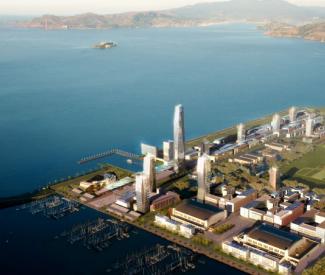
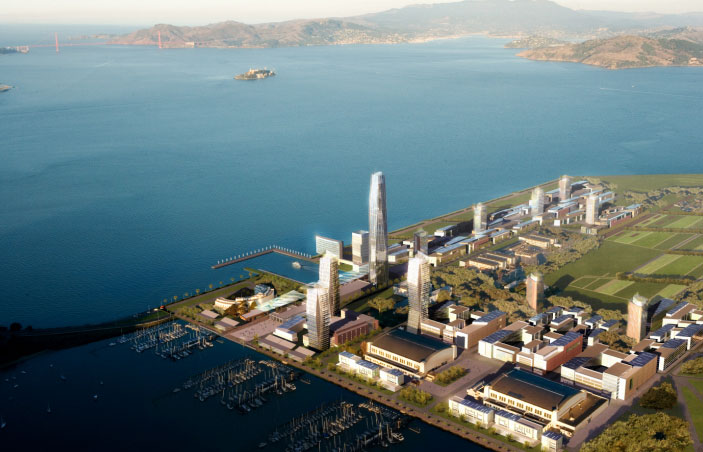
Developers hope the project, which goes before the Board of Supervisors for approval today, will feel like an urban village in the middle of a bustling metropolitan area. They hope urban farms, plentiful public transit and shared community spaces will give residents of the island a sense of community not found in other developments. …


For Treasure Island to be successful, developers and city planning experts agree that the residents of the island must feel like part of a special, distinct neighborhood where people want to spend time, and not just another community of commuters to San Francisco.


But the numbers don’t add up.

The plans call for 19,000 people living on the island — and there won’t be anywhere near enough employment opportunities for even a fraction of that number. So most of the residents are going to work somewhere else. Which means that twice a day they’ll have to travel — to and from San Francisco or to and from the East Bay — and there’s just no easy way to get that many people off that island to those locations.

Ther Bay Bridge is already beyond capacity during the periods when most of these people are going to be commuting. Yes, you can add a bunch of Muni buses to carry a lot of people, but that’s going to cost a lot of money. So would increasing ferry service to the level that this project would require. And if the past 50 years of San Francisco development is any guide (and it ought to be), the developers won’t pay enough for the transportation and the city won’t have the money to do it right so it won’t happen.

And even if the project meets the developers’ dreams in 30 years, it’s going to be a long, messy slog along the way. 

How, for example, will people who live on the island get their kids to school? Given San Francisco’s school-choice system, and the fact that there won’t be elementary, middle and high schools on the island anyway, and the school district can’t pay for the bus routes it has now, much less for new buses going to Treasure Island, you’re going to have hundreds of parents going to schools all over the city — and there will be only one way to get there: In cars.

(I’m all for no-car travel, but let’s be serious: Who’s got the time to take a kindergartener on the ferry downtown and on one or maybe two bus connections to a school — then turn around and take another bus to work? It isn’t going to happen. And nobody’s sending elementary school kids on Muni to school alone.)

If the supermarket isn’t built before most people move in, then you’ve got the grocery problem: It’s hard to do a week’s shopping on Muni and then a ferry. And what happens when you forget the milk (or run out of beer on the weekend?) No way to walk to the store, so you get in the car.

To make it even worse, 80 percent of the people who live there will be rich (since that’s who can afford market-rate housing). They’ll all have cars (and the developer kindly is providing parking spaces for all of them).

I just don’t see how it’s going to work. 

Treasure Island goes to the Board

37

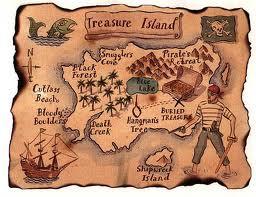
There’s three reasons I’ll always remember the Chronicle’s Phil Bronstein: he used to be married to Sharon Stone, he got bitten by a Komodo Dragon at the L.A. zoo, and he had the audacity to write a column in the Chronicle that was titled “Treasure Island eco-dream is bad choice for funds.”
Now it’s true that Bronstein was a 1986 Pulitzer Prize finalist for his work in the Philippines. But that was 25 years ago, and I didn’t read what he wrote, so I can’t comment on the quality of his work  then. But now I live in the East Bay and drive past Treasure Island most days of the week—and I have been waiting for someone at the Chronicle to finally voice something other than their usual preppy praise for this increasingly large development in the middle of the Bay.
 
And Bronstein certainly did have plenty to say about Treasure Island. And it wasn’t the usual upbeat pap about “bold and robust visions” that the Chron usually serves up when it concerns anything that involves Lennar and public-private development. Instead,  Bronstein began by describing T.I.  as a “onetime secretive Navy base filled with deer, political patronage and who knows what buried in the ground.”

Now, part of Bronstein’s fire may have been a result of him writing his column in April, a few weeks after a massive earthquake and tsunami hit Japan, triggering a nuclear meltdown. Or two or three.

Bronstein’s infamous rant even mentioned some of the radiologically impacted things at Treasure Island that, as he put it, “leached into the soil from weaponry or other deadly items: radium and PCBs 100,000 times the acceptable levels.”
And then he compared Lennar and billionaire Ron Burkle to “contemporary development pirates.” Believe me, that was a surprise to read in the Chronicle.

“This year, they’re scheduled to break ground on a huge multibillion-dollar public-private ecotopia mini-city built upon toxic waste and landfill,” Bronstein wrote. “This glorious contradiction might become a triumph of super-green living and high-end dreams. But it also represents something else: bad choices about how to spend public money in ever tighter times.”

Bronstein noted that the Board has a brief panic in April when they considered whether a Japan-style disaster could wipe out the T.I. plan, but that Rich Hills of the Mayor’s Office said the “disaster potential has already been addressed.”
“Unless we have what Hills called ‘a freak disaster,’” Bronstein added with a cutting bite that his Komodo dragon would have been proud of, including Bronstein’s inclusion of the fact that Treasure Island is on the California Emergency Management Agency’s tsunami inundation map, and that while we are coughing up $105 million to developers who want to profit from high-density living on T. I, all of us are neglecting aging infrastructure that we already have.

“While T.I. developers are busy putting some kind of shower cap-like cover over the land so trees and foundations don’t touch toxic ground that can’t and won’t be cleaned up, our children stand a pretty good chance of being flattened like pancakes in existing structures while they’re learning math and history during the next, inevitable big quake,” Bronstein concluded.
Meanwhile, those of us who drive the seismically-compromised Bay Bridge each day can’t help wondering how folks who decide to move to the development that’s being planned for Treasure Island will ever get off the island—unless they have a pirate ship.

That’s because every morning, we get to see a long line of drivers waiting—without much success—for drivers on the Bay Bridge to slow down and let them into the traffic.

Those of us who sometimes commute by ferry also know how tricky it is try and catch the last ferry, which leaves the San Francisco Ferry Building at 8:25 p.m. That’s way earlier than most commission meetings end. And earlier than most nightlife begins.

And then there’s the question of what happens when you get back to Treasure Island–and realize you forgot to buy milk, collect the dog, or pick up the kids from day care.

Now, maybe the city and the developers believe they have thoroughly considered and answered all these questions. But have they done any outreach to East Bay commuters, whose journey will likely be further impacted by the T.I. plan? If so, I certainly haven’t heard about it. And what about the folks in Berkeley who likely won’t be able to see San Francisco once a bunch of high-rises pop up in the Bay? Have they been consulted?

This Tuesday (June 7) at 5 p.m., the Board will hear an appeal of the city’s Treasure Island environmental impact report and consider a huge batch of related documents. (And I’m willing to bet that most current supervisors don’t know too much about this plan, and probably have only flipped through the thousands of pages of documentation related to it)

The appeal was filed by the Sierra Club, Golden Gate Audubon Society, and Arc Ecology, who last year filed an appeal around the city’s EIR for Lennar’s massive Hunters Point Shipyard/Candlestick Project. Only this time, this trio is being joined by a group of Treasure Island residents—and former Board President Aaron Peskin.

Which reminds me: Three weeks after Bronstein wrote his amazing Treasure Island hit, piece, his fellow columnists at the Chronicle, Phillip Matier and Andy Ross, were back, sounding much more like the Chronicle’s attack dogs usually do, when it comes to anyone who dares to find the city and Lennar’s massive plans less than perfect: “Peskin, who as a supervisor was notorious for his middle-of-night phone rants to department heads, called the proposed high-rise plan that just squeaked by the Planning Commission a ‘laughingstock mistake,’” M& R crowed.

But in the end, they quoted the very thought that Peskin wants M&R to print and Chronicle readers to consider about the city’s current Treasure Island plan:

“It will horrify San Francisco and the Bay Area for decades to come,” Peskin said.

Now, as the folks joining Peskin in opposing the city’s current plan note, they aren’t trying to stop the development of Treasure Island. They are simply fighting the latest plan.

“The developer and the city already have an approved EIR and project plan for a 6,000 unit smaller scale, more transit friendly project that was passed in 2006,” Arc Ecology states in a flier that it plans to distribute at the June 7 hearing. “Environmentalists and many of the appellants supported that plan. Don’t be fooled by the rhetoric. It was the earlier plan that won all the awards for sustainability.”

And as Arc points out, the city’s latest EIR and the plan currently before the Board is an entirely different animal from the city’s 2006 plan.

“It’s 25 percent bigger than the 2006 plan, tipping the scales on its impacts,” Arc states. “It increases the housing by 25 percent to 8,000 units, decreases transit service and affordable housing and competes with hotels and businesses that already exist downtown.”

“What can you do? Tell the Board to go back to the 2006 plan,” Arc advises.

The flier also lists a bunch of bullet points that outline some of the coalition’s objections.

“It’s unsustainable,” the flier states, claiming that under the new plan, there will be, “too many cars, too much traffic, too much air pollution.”

Under the new plan, there is also a seven percent reduction on the affordable housing set aside and a 17 percent reduction in overall affordable housing units, Arc notes. That’s another way of saying, “There is not enough affordable housing.”

And Arc claims the island will remain contaminated (see Bronstein’s rant about radionuclides and PCBs at the beginning of this post) even after the Navy completes its toxic and radiological cleanup. That the 40-story high-rise towers will obstruct views of San Francisco from the East Bay, and vice versa. And that the project financing plan will drive the city further into debt for at least another 15 years.

Arc’s flier concludes by asserting that the whole plan is undemocratic.
“Once approved, there will be no further environmental review of project plans—ever!” Arc claims. “Once approved the project will be implemented by an unelected nonprofit corporation. There has been no outreach or involvement of East Bay residents despite traffic and view impacts. The plan repays $55 million in additional developer costs to purchase this island with hundreds of millions of dollars of impacts on Bay Area residents.”

Now, I’m sure officials for the City and the developer will have plenty of counter arguments–and possibly busloads of low-income T.I. residents/unemployed SF workers, who will be shipped into the Board’s Chambers to argue that they need the Board to approve this plan so they can have new homes and jobs. Because that’s what happened last year, when Arc and the Sierra Club and Golden Gate Audubon expressed their concerns about plans to carve up the Candlestick State Park Recreation Area and build a bridge over the Yosemite Slough. And suddenly found themselves cast as the big bad villains, when it came to the city and Lennar’s wish to ram through the Candlestick/Shipyard plan.

But regardless of whether you believe in the project, oppose it, or don’t know much about it, make sure you show up at 5pm in Room 250 at City Hall on June 7, if you want to hear what actually goes down. Especially if you work in San Francisco, and live in the East Bay, because much of the Treasure Island traffic will directly impact the East Bay. 

Or as Arc puts it, “This new project is 25 percent larger than the prior one and like the difference between a 75 degree day and a 100 degree day – this increase in size makes all the difference. The new project will overdrive bridge capacity, create too much traffic, not enough transit, reduced levels of affordable housing, and vests enormous public power in an unaccountable, unelected development authority.  Please tell the Board they don’t have to go back to the drawing board – just to the 2006 plan and recirculate the EIR.”

 

SFBG Radio: The politics of sex scandals

0

Does the Edwards scandal hurt the Democrats? No. Does the Schwarzenegger scandal hurt the Republicans? No. It’s old history. But what about Rep. Anthony Weiner? Why does anybody care what he did on his own time? Johnny and Tim discuss after the break.

sfbgradio662011 by endorsements2010

Sneaky campaign to draft Lee sullies political environment

92

At a time when City Hall is taking on several important issues – from the budget and pension reform to massive projects such CPMC’s mega hospital and housing project and the redevelopment of Parkmerced and Treasure Island – an ambitious cabal of political operators bent of convincing Mayor Ed Lee to break his word and run for office is poisoning the environment under the dome.

A series of unfolding events over the last week makes it clear that Sup. Jane Kim’s campaign team – political consultants Enrique Pearce and David Ho, Tenderloin shot-caller Randy Shaw, and their political benefactors Willie Brown and Rose Pak – are orchestrating another campaign to convince Lee to run for office, apparently abandoning the mayoral campaign of Board President David Chiu.

The Bay Citizen reported that Pearce was pursuing creation of a mayoral campaign that Lee could simply step into, while blogger Michael Petrelis caught Pearce creating fake signs of a grassroots groundswell for Lee over the weekend. That effort joins another one by the Chronicle and a couple of downtown politicos to create the appearance of popular demand for Lee to run despite a large field of well-qualified mayoral candidates representing a wide variety of constituencies.

And then today, Shaw joined the effort with a post in his Beyond Chron blog that posed as political analysis, praising the John Avalos campaign – an obvious effort to ingratiate himself to the progressive movement that Shaw alienated by aggressively pushing the Twitter tax break deal and Kim’s candidacy – while trying to torpedo the other mayoral campaigns, calling for Lee to run, and offering a logic-tortured take on why the public wouldn’t care if Lee breaks his word.

Pearce and Ho – who sources say have been aggressively trying to drum up support for Lee in private meetings around town over the last couple weeks – didn’t return our calls. Kim, who is close to both Chiu and Avalos, told us she is withholding her mayoral endorsement until after the budget season – which, probably not coincidentally, is when Lee would get into the race if he runs.

Fog City Journal owner Luke Thomas, who Petrelis caught taking photos for Pearce over the weekend – told us Pearce’s Left Coast Communications, “hired me in my capacity as a professional photographer to take photographs of people holding ‘Run Ed Run!’ signs and should not be construed as an endorsement of the effort to draft Ed Lee into the mayor’s race.”

In an interview with the Guardian last week, Lee reiterated his pledge not to run for mayor – which was the basis for his appointment as a caretaker mayor to finish the last year of Gavin Newsom’s term – but acknowledged that Pak and others have been actively trying to convince him to run. Pak has an open disdain for candidate Leland Yee and fears his ascension to Room 200 would end the strong influence that Pak and Brown have over the Mayor’s Office and various department heads.

“I am not running. I’ve told people that. Obviously, there is a group of good friends and people who would be happy for me to make a different decision, so they’re going to use their time trying to persuade me. I’ve told them I’m not interested and I have my personal reasons for doing that but they’re not convinced that someone who has held this office for five months and not fallen into a deep abyss would not want to be in this office and run for mayor. I’ve been honest with people that I’m not a politician. I’ve never really run for office nor have I ever indicated to people that I’d like to run for mayor of San Francisco. That’s just not in my nature so it’s been a discussion that is very foreign to me that has been very distracting for me in many ways because I set myself a pretty aggressive piece of work that this office has to get to. The way I do it is very intensely. I do meet a lot of people and seek their input before I made a decision,” Lee told us.

Even Sup. Sean Elsbernd, who nominated Lee for mayor, told the Chronicle that he doesn’t support the effort to pressure Lee into running and he feels like it could hurt sensitive efforts to craft compromises on the budget and pension reform. When asked by the Guardian whether he would categorically rule out a run for mayor, Lee told us he would.

“I’ve been very adamant about that yet my friends will still come up to me and they’ll spend half their time talking to me about it. And I say thank you, I’m glad you’re not calling me a bum and trying to kick me out,” Lee told us, noting that Pak – a longtime ally who helped engineer the deal to get Lee into office, for which Chiu was the swing vote, parting from his five one-time progressive supervisorial allies in the process – has been one of the more vociferous advocates on him running.

Asked whether there are any conditions under which he might change his mind, Lee told us, “If every one of the current supervisors in office asked me to run and those supervisors who are running voluntarily dropped out.” But Avalos says he’s committed to remain in the race, and his campaign has been endorsed by three other progressive supervisors.

Creative protesters attend Apple’s World Wide Developer’s Conference

A long line formed outside Moscone West on the morning of June 6 as attendees of Apple’s World Wide Developer’s Conference prepared to be wowed by an unveiling of the company’s latest technology. A giant Apple logo was projected on the building above the scene as the crowd inched toward the entrance of the convention center, many clutching coffee cups and gazing at iPhones or iPads as they waited.

Suddenly, the conference-goers had something more entertaining to look at than the latest Tweet or email message. Five slender performance artists clad in head-to-toe spandex bodysuits wove through the techie crowd and waltzed right into the convention center, where they lined up and began a series of movements.

“Power rangers,” a bemused bystander quipped. Camera phones came out, and people laughed as they looked on, mildly surprised by the spectacle.

A couple nervous-looking security guards appeared several feet away from the spandex-clad team when they lined up inside the main foyer, but the two didn’t clash, since the performers turned and slow-walked in robotic movements back toward the door once they were asked to take it out to the sidewalk.

Video by Rebecca Bowe

Turns out, it was a form of creative protest. The colorful crew was there to bring in a message in the form of QR codes clipped to their outfits. They encouraged the iPhone-wielding passersby to scan them.

Scanning the QR code brought one to this link, a YouTube video titled, “Apple: Tax Cheating Doesn’t Sync With My Values.”

The five protesters were there with US Uncut, a grassroots organization founded several months ago for the purpose of “pressuring corporate tax cheats to pay their fair share,” according to a press release. Joanne Gifford, a spokesperson, told the Guardian that the protesters were there to bring the message that Apple was not being a good corporate citizen. “It’s very disturbing that they are doing everything they can not to give back to the system,” Gifford said.

As the Guardian previously reported, Apple is lobbying Congress for a tax holiday along with a host of other major companies and business groups under the “Win America Campaign.” According to a recent article in the Washington Post, “The idea is to encourage U.S.-based corporations to bring back, or ‘repatriate,’ up to $1 trillion now stashed in overseas tax havens by sharply reducing standard corporate income tax rates on that money from 35 percent to perhaps 5 percent.”

Yet critics argue that such a dramatic reduction in the corporate income tax would amount to a giveaway to some of the nation’s wealthiest companies — and reward tax-dodgers besides — at a time of devastating budget cuts and high unemployment. “US Uncut is demanding that Apple stop supporting the ‘Win America Campaign,’ … If Congress gives the corporations in the WAC tax coalition this loophole, it would cost American taxpayers over $80 billion,” US Uncut’s press release noted.

“Hey, Apple, if you’re going to lead the tax dodger’s lobby, then expect us to show up on your corporate storefront,” said US Uncut spokesperson Carol Gibson, “We all pay our fair share of taxes, and Apple should too.”

Protesters target Apple as a tax cheat

32

By Oona Robertson

Tomorrow (Sat/4), the economic justice organization US Uncut is protesting Apple Computers for trying to avoid paying $4 billion in federal taxes and for joining a corporate tax cheat lobbying group. Ironically, it is Apple’s good corporate reputation that has made it a target, as protesters hope the attention might shame the company into doing the right thing.

Apple has kept billions of dollars in profits in offshore tax havens and low-tax countries such as Ireland and the Netherlands. Through an organization called WIN America that Apple belongs to along with Google, Microsoft, and other large corporations, it is lobbying Congress for a tax holiday to bring $1.2 trillion in profits back to the U.S. to supposedly invest in the economy. Apple’s share of this tax break, $4 billion, would equal salaries for 90,000 teachers.

US Uncut is aware that the technology giant is an unlikely target for protest, due to its popularity and positive public image. Protesters are hoping that because Apple seems to care about its image in the eyes of consumers, it is more likely to respond to a protest.

“Most of the other companies aren’t really gonna give a damn if we go after them. They’re not concerned for their reputation. [With Apple] there’s a little more leverage,” US Uncut spokesperson Joanne Gifford told us. Apple did not return requests for comment.

Protesters hope to creatively drive their message home using flash mobs to get people’s attention. They are demanding Apple, “Leave the Tax Cheat Lobbying Group and Stop Lobbing Congress for More Tax Loopholes,” according to its website.

This Saturday’s action coincides with similar protests in 15 other U.S. cities, all organized by US Uncut as part of what it calls a national day of action. In San Francisco, protesters are meeting at Union Square to “discuss action ideas,” before heading over to the Apple flagship store on Market Street. Chanting, handing out leaflets and holding signs will be recommended, boasting slogans such as “Love the iPhone, hate the tax cheat,” and, “It only takes one bad apple.”

US Uncut’s website lists creative action ideas for protesters to employ, such as impersonating Apple employees by wearing turquoise blue shirts and nametags, or approaching the Genius Bar to ask questions such as, “Why can’t I sync my iPhone with my values?”

Teachers are being told to bring their pink slips and ask the “geniuses” how to save their jobs. The protesters’ last major flash mob, a music and dance number targeting Bank of America, made headlines and the hope is to replicate that level of publicity this Saturday.

SFBG Radio: Obama and unemployment

2

No president since FDR has been reelected with unemployment at the levels the United States is seeing today. So that mean Obama is in trouble? Is the recession ever going to end? Johnny Angel talks to economist Johnny Venom. Check it out after the jump.

EconInEightMinutes by endorsements2010

A rather odd endorsement

94

I got a press release today from the Dennis Herrera for Mayor campaign proudly announcing the endorsement of … Frank Jordan.


Jordan was mayor of San Francisco once. Back in the 1990s. His term ran from 1992 to 1996, and was, to be polite, mediocre. Nice guy; awful mayor. He was one of the more conservative mayors in memory, left office pretty unpopular, and a lot of people don’t even remember him. Those who do, particularly progressives, don’t remember him fondly at all.


Ah, but Herrera does.


“I’m deeply honored by Mayor Jordan’s praise for my leadership, and grateful for his endorsement for my mayoral candidacy,” said Herrera.  “Few can claim to have done as much to serve our City with such integrity, skill and courage as Frank Jordan.”


While Leland Yee is out trying to get support on the left, which might actually help him win, Herrera seems to be moving, if anything, to the right (which is what Jordan’s endorsement represents). Very odd. Very odd indeed.


I couldn’t reach Herrera today to ask him about it, but I’m sure he’ll call me and I’ll update this post. Meanwhile: WTF?  


UPDATE: I heard from Herrera late in the day. He told me that “there are only six people alive who have ever held the office of mayor of San Francisco and know what it’s really like to manage this city, and I would be proud to have the endorsement of any of them.” I asked: Including Willie Brown? Herrera: “He’s a columnist now so he doesn’t do endorsements.”


Herrera also pointed out, correctly, that he has the endorsement of Mike Hennessey, the progressive sheriff. And he’ll wind up with some more leftish endorsements, too. Still: Frank Jordan?

A different Mayor’s Office

10

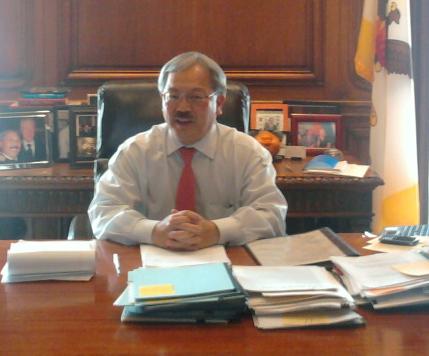
A group of Guardian reporters and editors met with Mayor Ed Lee June 2, and while the mayor and I don’t agree on everything, I have to say: It was refreshing.


Refreshing because the mayor has a sense of humor and doesn’t act like an infallible monarch. Refreshing because his office looks like, well, a working office. Refreshing because he smiled, was polite and never said “I dispute the premise of your question.”


What a difference.


Under Willie Brown, the mayor’s office was an imperial sanctum. If His Royal Williness deigned to favor one of his servants or subjects with the boon of a royal visit, you were expected to crawl on your hands and knees and kiss the floor. 


When Gavin Newsom was the occupant, the place was a cross between a museum and an Architectural Digest showplace — not a scrap of paper on the desk, every hair perfectly in place, the Robert Kennedy pictures and books lined up perfectly for the visitor to admire.


Both mayors treated the press with hostility. Both expected to be treated as potentates. The mayor was better than you and I — and you needed to understand that right away, or risk disdain and dimissal.


Ed Lee isn’t doing what I want with the budget. He’s not talking about raising taxes on the rich. He’s probably going to go along with ParkMerced and maybe even Treasure Island. He signed the Twitter tax break. I worry (a lot) about his ties to past corrupt regimes.


But he’s happy to have reporters in his office. He’s got stacks of reports on his desk and a notepad that suggests he’s actually reading them. He showed us his private “man cave” in the back, and offered us walnuts. He’s not always right on policy, and I don’t think he should run in the fall … but he’s not a jerk. And given the recent history of San Francisco mayors, that’s pretty radical.


Gov. Cuomo suspends S-Comm in New York State

14

More bad news for Immigration and Customs Enforcement (ICE)’s troubled Secure Communities program, which continues to draw fire for deporting thousands of folks with no criminal records since it was started under former President George W. Bush in 2008. Last month, Illinois said it was quitting the program, and today Gov. Andrew Cuomo issued a letter suspending S-Comm in NY state. 

In a June 1 letter to the Department of Homeland Security, Cuomo’s counsel Mylan Denerstein noted that since the commencement of Cuomo’s administration in January, “we have received numerous complaints and questions about the purpose and implementation of the Secure Communities Program to which the prior administration committed New York State.”

“The heart of concern is that the program, conceived of as a method of targeting those who pose the greatest threat to our communities, is in fact having the opposite effect and compromising public safety by deterring witnesses to crime and others from working with law enforcement,” Denerstein continued.
“Compounding these concerns, the Department of Homeland Security (DHS) Inspector General recently announced that he will investigate whether the program is meeting its stated goals, whether it is being applied equitably and whether prior representations to states, including New York, regarding the program’s purpose, intent and impact are accurate,” Denerstein wrote.

“Accordingly, until the numerous questions and controversies regarding the program can be resolved, we have determined that New York is best served by relying on existing tools to ensure the safety of its residents, especially given our overriding concerns that the current mechanism is actually undermining law enforcement,” Denerstein concluded. “As a result, we are suspending New York’s participation in the program.”

Last year, S-Comm was activated in 35 New York communities, but with Cuomo’s announcement all counties will be barred from sharing fingerprint data.

Ad agencies proclaim inequality

3

It’s always fun to hear what the corporate elite talk about when they talk to each other — and there’s a great example in the latest study produced by Ad Age, the journal of the advertising industry. The study confirms that the rich have everything, that the middle class is vanishing, that “mass affluence is over,” and that


Simply put, a small plutocracy of wealthy elites drives a larger and larger share of total consumer spending and has outsize purchasing influence.


From Too Much:


America as a whole, the new Ad Age study pauses to note, hasn’t quite caught up with the reality of this steep inequality. Americans still “like to believe in an egalitarian ideal of affluence” where “everyone has an equal shot” at “amassing a great fortune through dint of hard work and ingenuity.”


In actual life, the new Ad Age study points out, “the odds of someone’s worth amounting to $1 million dollars” have shrunk to “1 in 22.”


There you have it: The marketers have spoken.