• No categories

Politics Blog

Gun control, race, and the founding fathers

27

KPFA’s Mitch Jeserich, one of my favorite people on the radio, had a fascinating discussion this morning with Adam Winkler, who’s written an new book about the history of gun control. Everyone who fights with me on this blog knows I’m not a big fan of guns, and Winkler, a professor of constitutional law at UCLA, doesn’t completely agree with me.

But there’s some interesting stuff in his book and it’s worth listening to the show — in part because it shows just how inconsistent the gun nuts have been over the years and how their claims about the Second Amendment don’t hold up when you look at history.

For starters, Winkler told Jeserich, the noble founding fathers, those folks who put the right to keep and bear arms in the founding document of this great nation, were not at all opposed to gun control. They had all kinds of gun laws — most notably laws barring black people from owning guns. They also required that all muskets be regularly inspected and registered.

The racial element of gun control is nothing new, but Winkler shows some of the hypocrisy: In the 1960s, when the Black Panthers began carrying loaded guns on the streets (for self-defense against violent, racist white cops) the California Legislature set out to limit the right to bear arms in public — and Ronald Reagan, that staunch Second-Amendment guy who is worshiped by the NRA, fully supported the restrictions. In fact, he said in public that nobody should have the right to carry a loaded weapon on a public street.

At least, not as long as black people were doing it.

Even the NRA was not founded as a pro-gun group. It emerged after the Civil War to teach northerners better marksmanship. That mission continues, to a certain extent — I still have my NRA Marksman First Class medal, earned in summer camp in the 1960s, when they let kids do shit like that. But these days, it’s all about fighting any limits at all on the right to carry any weapons you can imagine.

So it’s worth remembering: The gun lobby didn’t always lobby for free access to guns (particularly not for guns for African-Americans). And the folks who wrote the Second Amendment were all in favor of a “well-regulated militia” whose members — at that time, the general (white) populace — had to declare, register and present to government agents on a regular basis all of their firearms.


Ed Lee and District 5

12

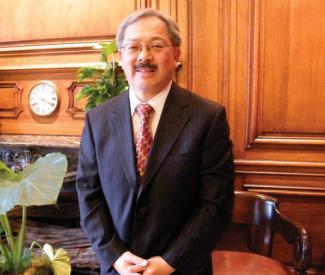
It’s all gossip at this point because if anybody other than Ed Lee knows who Ed Lee is going to appoint to the District 5 seat, that person isn’t talking. It’s no surprise the Chuck Nevius, who really loves Mayor Ed, thinks it’s just fine and dandy that he’s taking his sweet time to name a replacement for Ross Mirkarimi, but a some people who live in the district aren’t so happy.

Here’s the thing: The new supervisor will hav to be appointed and take office pretty soon, since Mirkarimi is officially sworn in as sheriff Jan. 8, and so is effectively already off the Board of Supervisors. Either Lee makes his choice by Jan. 10, the next board meeting, or the supes will meet one member short — and the district will have no representation.

Not the end of the world, of course, but: No matter when Lee pulls the string now, the new person will have to hire a staff, make connections across the district, get up to speed on the issues and move into a difficult and complicated job without any transition time at all. No time for preparation, no time to meet with Mirkarimi or his staff to figure out what’s going on — nothing.

If Lee had made his choice a few weeks ago, that person could have been doing what Mirkarimi has been doing in the sheriff’s office — meeting with the outgoing office holder, going to briefings, assembling a team etc.

So Lee’s indecision isn’t just bad for the district; it’s bad for the person he appoints.

Oh, and by the way: Nevius has part of his analysis a little wrong. He claims that

The Guardian, the progressive playbook, has already made its pitch, twice writing that Planning Commission President Christina Olague would be acceptable.

Actually, we haven’t endorsed or promoted anyone for the job (and that’s probably just as well, since anyone I suggest will never get the mayor’s support). We did run an opinion piece by Gabriel Haaland saying that Olague would be acceptable to him. All we’ve done is described the profile we’d like to see:

It’s critical that the mayor appoint a District 5 supervisor who is a credible progressive, someone who supports higher taxes on the rich and better city services for the needy and is independent of Lee’s more dubious political allies.

Either way, it’s time for Lee to make a decision.

Stuck in reverse

18

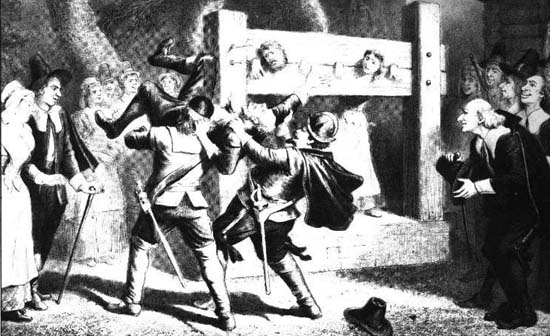
Some days, you wake up, check the news, and wonder just what the hell happened to this country. And I’m not talking about that nutty right-wing view that we’ve strayed from the original vision laid out for us by the authors of the Constitution or the Bible. I have just the opposite view: I’m wondering why those people seem so intent on dragging us back into the bad old days of bygone centuries, when white male property owners ran things as they saw fit.

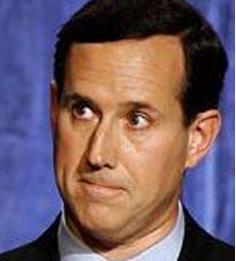
A dangerously intolerant religious fundamentalist who longs for the Puritan days, Rick Santorum, essentially tied for first place in the Iowa Republican presidential caucuses. And he was part of an entire field of candidates that wants to revoke women’s reproductive and LGBT rights, deny that industrialization has affected the environment and should be addressed, dismantle already decimated government agencies, simply let the strong exploit the weak, and hope that Jesus comes back to save us from ourselves. Their strange reverence for the Constitution apparently stems from wanting to drag us back into the 18th century.

And don’t even get me started on President Barack Obama and his worthless Democratic Party, which is only a bit better than the truly heinous Republicans. At least Obama says some of the right things – like wanting to raise taxes on millionaires, reverse Bush-era attacks on civil liberties, respect states’ medical marijuana laws, and use diplomacy rather than only bellicosity with concerning countries like Iran – even though he acts in contradiction of those statements, over and over again.

It’s no better in the Golden State, where the yestercentury crowd now wants to abandon plans for a high-speed rail system that has already been awarded $3.5 billion in federal transportation funding and for which California voters authorized another $10 billion in bond funding. Why? Because a panel headed by an Orange County douchebag says the business plan isn’t detailed enough and the money for the entire $100 billion buildout isn’t nailed down yet. Well guess what? California also doesn’t have a plan for when its highway and airport systems get overwhelmed by population growth over the next 20 years. And criticizing the viability of high-speed rail – something most other advanced countries figured out how to build decades ago – isn’t exactly going to help secure private equity commitments. It’s a super fast train, folks – not some scary satanic iron horse from the future – people will pay to ride it.

But the situation must be better here in liberal San Francisco, right? Wrong! Mayor Ed Lee, the San Francisco Chronicle, and all their business community allies continue to relentlessly push their belief that the main job of government is to create private sector jobs, even though most economists say a politician’s ability to do so is limited at best.

Lee is pushing for all city legislation to be measured by whether it creates private sector jobs, as if protecting the environment, preserving public sector jobs, or safeguarding the health, welfare, and workers’ rights of citizens weren’t also under the purview of local government. A Chronicle editorial today called Lee the most “realistic city leader in memory. He’s all about creating jobs, repaving streets, sprucing up faded Market Street and fixing Muni’s flaws,” the same goals the paper was focused on a century ago.

But the main trust of the editorial was calling for Lee to also focus on homelessness. Not poverty, mind you, but homelessness. “A decrease in jobless numbers is important, but so are fewer shopping carts pushed along sidewalks and a drop in the numbers of mentally ill in doorways and on park benches,” they wrote. In other words, they just don’t want to see poor people on the streets, because that newspaper and its fiscally conservative editorial writers and base of readers certainly haven’t been calling for a fairer distribution of this city’s wealth, or even higher taxes on the rich that might fund more subsidized housing programs or mental health treatment. I get the feeling they’d be content to just allow shanty towns on our southern border where our low-wage workers can live, just like the Third World cities that they seem to want to emulate.

Ugh, so depressing, so ridiculous, so regressive. I think I’m going back to bed now.

The GOP and class warfare

42

Every political consultant knows that words like “together” and “unite” play well with voters. That’s why you hear them so much on the campaign trail, from races for local office to presidential campaigns. Remember Obama’s signature speech, with his signature line?

Now even as we speak, there are those who are preparing to divide us, the spin masters, the negative ad peddlers who embrace the politics of anything goes. Well, I say to them tonight, there is not a liberal America and a conservative America – there is the United States of America. There is not a Black America and a White America and Latino America and Asian America – there’s the United States of America.

Now the Republicans are claiming that it’s the Obama administration that’s dividing America:

Democrats will “poison the American spirit by pitting one American against another and engaging in class warfare,” Romney said. “I believe in an America that is one nation under God, and I will keep it that way.”

But here’s the thing: Obama actually tried to work with both sides. I wish he hadn’t tried so hard, since the Republicans have no interest in helping him govern, but you can’t say he was a divider. The GOP candidates, on the other hand, can’t possibly succeed without being divisive; as Kos points, that’s all they have:

Their entire schtick is predicated on pitting Americans against Americans. Without such demonization, they would be unable to function as an ongoing concern.

I don’t have to run for office, so I can get away with saying this: I am not a uniter, not in the sense that the politicians are using the word. I want us all to get along and I’m not a fan of violence, but there’s already a war on in this country. There’s a class war — and our side didn’t start it. Americans have already been pitted against each other — not by Obama but by a small group of the very rich and the political toadies who support them, who have systematically dismantled the tax, education and service system that once made at least an attempt at creating a country with a level playing field, a stable middle class and an income and wealth distribution curve that wasn’t grossly distorted.

The one percent has declared war on the rest of us. And we’re supposed to sit here and take it and not fight back?

Or should we attempt to drown corporatocracy in the bathtub?

How scary is Iowa?

40

I know, I know: It doesn’t deserve the hype. And Mitt Romney’s going to be the Republican nominee anyway; the rest is all theater. And I was just joking about how it might help Obama if one of the true wingnuts won the Iowa Caucuses.

But in the cold light of a Jan. 4 morning, I have to say:

It’s pretty fucking scary that the voters in Iowa not only took seriously but gave a fair amount of support to someone who has made much of his career out of being a homophobe and a racist. Oh, and really, really stupid:

“There are people who were gay and lived the gay lifestyle and aren’t anymore. I don’t know if that’s the similar situation or that’s the case for anyone that’s black. It’s a behavioral issue as opposed to a color of the skin issue, and that’s the diff for serving in the military.”

Seriously: I know that he only got 30,000 votes, and there are a lot of evangelical Christians in Iowa, and I suppose not all of them hate queer people. Al Sharpton — and whatever you say, Sharpton’s no political fool — says that Santorum helps the Democrats by forcing Romney to continue to pander to the right. And I don’t believe that even 25 percent of the Republican voters in the nation as a whole would support someone with Santorum’s views.

But still: It’s 2012. And the most virulently antigay candidate in a right-wing field is right up near the top in the first real contest.

Isn’t that a little bit alarming?

Police foot patrols help with crime drop in SF

6

The Mayor’s Office and San Francisco Police Department this morning sent out a press release announcing a decrease in violent crime in 2011, citing a number of factors for the drop but failing to mention an important and once-controversial one: increased police foot patrols.

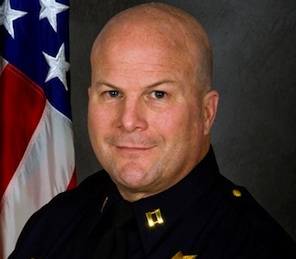
But Police Chief Greg Suhr told us that foot patrols are a big part of the community policing techniques – and “community policing” was indeed mentioned in the release – responsible for the drop.

“They’re big. When we talk about increasing community involvement, that definitely includes foot patrols,” Suhr told the Guardian, explaining his policy of having a visible police presence in high-crime corridors like mid-Market, 3rd and Palou streets, and parts of the Mission District. “People should always see a cop on foot or on a bike in some places.”

For a long time, the SFPD resisted getting cops out of their cars and onto the streets – even in the first couple years of then-Mayor Gavin Newsom’s tenure, when the city had almost twice the 50 murders it experienced each of the last two years — until it became a pitched political battle in the city.

Sup. Ross Mirkarimi and other progressives on the Board of Supervisors and the Police Commission locked horns with Newsom and then-Police Chief Heather Fong over the issue in 2010. After Newsom vetoed legislation to require foot patrols, Mirkarimi and Sup. David Campos co-authored a ballot measure requiring them, Measure M, which was narrowly defeated after SFPD began to implement them on its own.

“I believe that any analysis will eventually show – and they should really do this study – that community policing and foot patrols have a lot to do with this drop,” Campos, a former Police Commissioner, told us. “Community policing and foot patrols are the most pro-active way to reduce crime in any given neighborhood.”

Suhr agrees, something that Campos recognizes and praises the new chief for, saying he’s much better than his predecessors on the issue. “Chief Suhr has been very supportive of community policing,” Campos said. “He’s been very good about working with us to make it happen.”

Suhr said that the department needs to have enough personnel in the stations to take calls, do investigations, and otherwise process information. “Everyone else should be on the street trying to get in front of this stuff,” he told us.

He does still defend the department’s opposition to Prop. M, noting that it would have micromanaged SFPD in a way that he didn’t think was appropriate. But he’s also a true believer in foot beats and other community policing techniques, and he said things are better today than “years ago, when there wasn’t as much open communication as there is now.”

As for the Mayor’s Office and its failure to give credit directly to foot patrols, Press Secretary Christine Falvey told us, “Foot Patrols, the Ambassador Program and other efforts are all critical pieces of Community Policing, which is referenced as part of the success we have seen in getting the crime rate down in San Francisco.”

Her office’s press release follows:

MAYOR LEE & CHIEF SUHR ANNOUNCE SAN FRANCISCO’S CONTINUED HISTORIC CRIME RATE DROP
Year End Statistics Show Continued Historic Lows for Homicides & Violent Crime Rates Overall Since 1960s

San Francisco, CA— Today Mayor Edwin M. Lee and Police Chief Greg Suhr released the year end crime statistics showing continued historic low crime trends for the City. Mayor Lee and Chief Suhr announced that 2011 violent crime rates in San Francisco are down 6 percent from last year.

“Violent crime in San Francisco remains at historic lows because of stronger community partnerships, targeted approaches to violent crime and aggressive crime prevention strategies,” said Mayor Lee. “Despite some tough economic times, Chief Suhr and the San Francisco Police Department are working to make our City the safest big city in the United States through the best use of 21st century technology, strategic deployment of police resources, the use of innovative crime fighting strategies and successful partnerships with our diverse communities and neighborhoods.”

Homicides were at their second lowest annual rate of any year in San Francisco since the 1960s again in 2011.

In 2011, total violent crime in San Francisco was down six percent from 2010 and shows a reduction of 18 percent compared to 2008:
·        Homicide showed no statistical change; there were 50 homicides in both 2011 and 2010;
·        Aggravated Assault is down nine percent in 2011 from 2010;
·        Robbery is down two percent in 2011 from 2010;
·        Rape is down 12 percent in 2011 from 2010; and
·        Burglary is down five percent in 2011 from 2010.

In 2011, total property crime in San Francisco was up three percent from 2010.

The SFPD continues to pursue innovative crime reduction strategies including a “task force style” response to all crimes of violence. Increased community policing efforts, improved approach in assisting those suffering from mental illness and those with limited English proficiency, town hall community meetings and the decentralization of traffic officers and Beach/Park Patrols for safer streets and neighborhoods are also critical to the reduction of crime in San Francisco. In addition, the formation of the new Special Victims Unit allows our City’s most vulnerable populations the compassion and consideration they deserve.

“The year end crime statistics are an indication to the people of San Francisco of how well the men and women of the San Francisco Police Department are serving this City,” said Chief Suhr. “Our goal is for San Francisco to be the safest big city in America, and the men and women of the SFPD in partnership with our communities are committed to this end. We will achieve this goal by reducing crime and the perception of crime through the use of innovative crime fighting strategies, accessing the best technology available, predictive policing, strategic planning, and working collaboratively with all those concerned. There is nothing we cannot achieve when we all work together for the common good.”

Yee offers a package of government sunshine bills

1

California Sen.Leland Yee (D-SF) may have finished in a disappointing fifth place in the mayor’s race, garnering just 7.5 percent of the first place votes. But now he’s back to working in a realm where he’s really distinguished himself as a politician: opening up government agencies to greater sunshine and public scrutiny.

When the California Legislature reconvenes tomorrow (Wed/4) morning, Yee says he will introduce a series of bills giving the public better access to information. That builds on a record for championing sunshine, which earned Yee a James Madison Freedom of Information Award from the Northern California chapter of the Society of Professional Journalists in 2010.

In the past, he’s taken on the University of California and California State University systems, including a measure last year aimed at the latter for trying to keep secret high speaker’s fees paid to Sarah Palin. This time, Yee’s first target is the California Public Utilities Commission (CPUC) and its cozy and secretive approach to regulating Pacific Gas & Electric and other utilities. 

Senate Bill 1000 would subject the CPUC to the same California Public Records Act disclosure requirements as other state agencies, ending special exemptions granted to the agency back in the 1950s. CPUC documents are assumed to be confidential unless overtly made public by the CPUC board — the polar opposite standard of the CPRA, which assumes all documents are public unless they meet specific exemption requirements.

As the Bay Guardian, San Francisco Chronicle, and other media outlets have reported in the wake of PG&E’s deadly gas pipeline explosion in San Bruno, the CPUC has blocked release of incident reports, pipeline safety inspections, audits, and other information that could show what other areas might be at risk of a similar tragedy and evidence of exposed PG&E’s negligence in the explosion, as a federal review panel concluded. A CPUC spokesperson said the agency is studying the legislation and didn’t have an immediate comment. 

“The CPUC is supposed to be there to protect us and not as a barrier to public access,” Yee said in a public statement.

SB 1001 would double the $50 annual registration fee paid by lobbyists in California and use that revenue to improve the Cal-Access campaign finance and lobbying database operated by the Secretary of State’s Office. That system has periodically crashed in recent months because of outdated technology. 

“It is simply unacceptable that the public cannot access basic information on campaign contributions and lobbying activity,” said Yee.  “The crash of Cal-Access not only prevents public access, it means government is not being transparent or being held accountable.”

SB 1002 would require that when government agencies are asked for public documents that are available in electronic form, that they do so using formats that are easily searchable by keyword using current technology. That has been a big issue for years in San Francisco, where sunshine advocates have long called for the city to be more user-friendly when it complies with the Sunshine Ordinance.

“Producing a 2,000 page electronic document that cannot be searched or sorted is inadequate and almost useless,” said Yee. “For too long, many government agencies – either by choice or inertia – have been living in the Stone Age when it comes to producing public documents.”

SF 2003 would amend the Brown Act open meeting law to allow for injunctive or declaratory relief for past violations, thus preventing agencies from repeatedly violating that law. It addresses a loophole created by the court’s interpretation of the act in its McKee v. County of Tulare decision. 

Finally, Yee is also pushing for the Assembly to approve Senate Constitutional Amendment 7, which the Senate approved last year. It would exempt the Brown Act from requirements that the state pay for mandates on local government, which last year caused the Commission on State Mandates to pay out $20 million from the state budget to local governments for acts such as posting agendas and which has caused the Brown Act to be temporarily suspended during past state fiscal crises.

“Our open meeting laws are too important to be made optional every time the state runs short of money,” Yee said. “SCA 7 will ensure government agencies provide the public the information they deserve.”

Peter Scheer, executive director of the California First Amendment Coalition, praised Yee’s efforts.

“It’s a very valuable and important package of measures to plug loopholes, some recently created and some that have been with us for too long,” Scheer told us.

While most of the legislation takes on fairly narrow issues, Scheer said each address very real and important problems that journalists and the general public have encountered. “None would be particularly difficult to implement,” he said. “But collectively, they would make it easier to hold public officials accountable.”

The Iowa Caucuses are silly (but we’re all watching)

18

We all know (or we ought to) that Iowa is radically unrepresentative of the United States and that the Iowa Caucuses are a dumb barometer for choosing a president and that only really insane news media coverage has made this into such a big event. And this year it’s a freak show, complete with Santorum Salad and a weird World War II reference and that creepy guy calling that deadly dull guy a liar and lots of other fun Republican tomfoolery.

But here’s the question for those of us who don’t vote in Iowa (and wouldn’t be hanging out at a Republican caucus anyway): Is it better for one of the major-league wingnuts to win, or should we all hope that Mitt Romney, who is going to be the nominee anyway, comes out ahead and we can stop wasting our time talking about Michelle Bachman, Ron Paul, Newt Gingrich and that guy named Santorum?

Seriously: Is it better for the country to have the Republicans look even crazier than they really are, and have someone who’s gone far off the deep end become the front-runner, and leave Obama looking like the only grownup in the race — or is it better if Iowans dismiss the worst of the worst and go with someone who’s just a typical opportunistic sack of shit but who once managed to run the liberal state of Massachussetts and probably wouldn’t attempt to have half of San Francisco locked in prison on general principles?

I must admit, I’m tempted to root for the nutjobs.

OccupyOakland rings in the new year with protests against police

21

Occupy Oakland kicked off the year with two marches protesting police and prisons. A march to the Oakland City Jail on New Year’s Eve was followed by a march against police brutality on New Year’s Day, ending with a rally against police violence. Speakers at the rally indicated that the Bay’s most radicalized Occupy group may focus on an anti-police repression theme in the new year.

About 300 people attended a nighttime demonstration in Oakland City Center on Dec. 31. Protesters left Oscar Grant/Frank Ogawa Plaza at 9:45 and marched to the city jail. About 20 Occupy Oakland protesters remain in jail after several different incidents of arrest in the past weeks.

At the jail, protesters spoke about police repression, set off fireworks, and chanted “inside or outside, we’re all on the same side.” Many reported seeing solidarity fists sticking out from between bars on the jail’s windows.

The demonstration was part of a national call for New Year’s Eve jail solidarity protests, and similar “noise demonstrations,” in which protesters made noise outside jails to show solidarity with inmates. Similar protests took place in 25 cities around the world.

The march featured a giant banner stating “Fuck the police.”

Around 11:30 pm, protesters marched back for a dance party on the plaza. “At midnight, we did the countdown like everyone else,” said Patrick, who has been involved in OccupySF and Occupy Oakland.

A banner dropped in the plaza read, “Out with the old. Occupy 2012.”

At 1 pm on Jan. 1, Occupy Oakland participants gathered once again. They marched to Fruitvale Bart Station in an anti-police brutality march commemorating Oscar Grant. The unarmed young Oakland man was killed on Jan. 1, 2009 by BART Police Officer Johannes Mehserle, who was convicted of involuntary manslaughter for the shooting and given a two-year prison sentence.

The march was followed by a rally and speak-out with about 500 in attendance. Several women with sons and grandsons who had been killed by police in San Francisco and Oakland shared their experiences. Adam Jordan, member of the Oscar Grant Committee for Justice, said that Occupy Oakland had helped unify the local community against police brutality.

Several speakers agreed that police violence against the poor and people of color and recent arrests at Occupy Oakland, as well as tear gas and other weapons used against Occupy Oakland protesters, are all connected. “It’s all systemic. It’s the same problem,” Jordan said. “The police that are attacking everyone in Occupy Oakland now have been attacking black people for centuries.”

Members of Oscar Grant’s family, including his mother, his young daughter, his fiancé, his uncle, and several cousins, were also present, and many spoke.

Gerald Smith, an organizer with Occupy Oakland and member of the Oscar Grant Committee Against Police Brutality and Repression, read aloud a message from Angela Davis, who has proposed nationwide demonstrations to free political prisoners on Feb. 20. He also talked about several proposals to continue to protest against police violence in the East Bay, including picketing the Alameda County District Attorney’s office and emergency meetings the following day every time an Oakland resident is killed by a police officer.

In a reference to the leaderless, “horizontal” structure that has defined Occupy groups around the world, Smith said to the crowd, “How much will we do this? It’s up to you. I hope you know by now, you decide everything.”

Following court ruling, SF Redevelopment seeks a “legislative fix”

1

Redevelopment agencies were dealt a statewide hit after a unanimous ruling Dec. 29 by the California Supreme Court decided not only that lawmakers had the ability to terminate the agencies, but that those agencies could not continue forward with redevelopment projects as smaller entities.


Assembly Bills 1X 26, which eliminates redevelopment agencies but makes existing redevelopment housing projects an “enforceable obligation,” and 1X 27, which would have required agencies to make payments to the state of California in exchange for continuing to exist in smaller form, both came under scrutiny by the state Supreme Court. AB26 was upheld, but AB27 was considered illegal.

While large-scale redevelopment projects in San Francisco have generated no shortage of criticism and controversy, Mayor Ed Lee described the decision as disappointing and harmful for the city’s future.

“Redevelopment has not only played a critical role in creating jobs, transforming disadvantaged communities and delivering affordable housing, but it has spurred economic growth for our entire City at a time when we needed it most,” Lee said in a statement issued earlier today.

Gov. Jerry Brown introduced the idea of eliminating redevelopment agencies about a year ago as part of budget cuts designed to revitalize the state economy, as the Guardian reported last January. Today’s decision, which leaves the state with $1.7 billion more to work with in the first year of implementation of this plan, may help cushion the blow as state legislators seek to balance the budget.

However, the San Francisco Redevelopment Agency isn’t giving up.

“We are aggressively looking at solutions, most likely a legislative fix, to provide for redevelopment to continue,” S.F. Redevelopment Agency executive director, Tiffany Bohee, told the Guardian. “The state will do what it needs to do to fill the hole [in the state budget] but there are unintended consequences.”

Private funding from companies like Lennar Homes supplementing state funding has made the continuation of redevelopment projects in San Francisco’s Mission Bay, Bayview Hunters Point Shipyard, and Treasure Island possible. Lee maintains that these areas will remain unaffected.

The legislation does, however, affect future projects. “We call on the state to find a legislative solution to this problem” Lee’s statement noted. “And while we are committed to working with the state, we have already started to look at local solutions and alternatives.”

Bohee echoed the mayor’s resolve. “We are committed to the long haul and focused on what the next steps are,” she said.

12 arrested in raid of occupied Oakland home

There were 12 arrests in West Oakland today, Dec. 29, after police raided a foreclosed home on 10th Street that Occupy Oakland activists had taken over to use as housing for the homeless and meeting space, according to a press release just issued by Causa Justa :: Just Cause, a housing and immigrant rights organization based in Oakland and S.F.

Here’s a link to live footage shot earlier today: http://www.ustream.tv/recorded/19454451

Organizers are asking supporters to contact the Oakland Police Department and demand the release of those in custody, the press release noted.

Activists took over the Fannie Mae-owned vacant property on Dec. 6, on the National Day of Action, “as a call to stop fraudulent lending practices and illegal evictions by banks,” according to CJJC.

Activists provided two reasons for taking over the property:”To demand that Fannie Mae turn it into low-income housing,” and “In support of the Ramirez family, whose home in East Oakland was improperly foreclosed on by Fannie Mae in May of 2011. Bank of America acting on behalf of Fannie Mae sold the Ramirez home while the bank was supposed to still be working with them. The family is now renting the home they once owned.”

PG&E could be gone in five years

181

There’s a new map of solar-power cost projections that estimates that San Franciscans could replace PG&E power with local distributed solar as early as 2017. Sfist reported on the map today — and it adds to the clear evidence that San Francisco needs to devote resources to building its own clean-energy infrastructure. Because if the city starts planning to build solar arrays today, and starts designing a plan to help local residents and businesses put solar on their roofs, the day when the cost of that energy will be lower than the cost of PG&E’s fossil-fuel and nuclear power is rapidly approaching.


Chron picks up gay clergy story, without credit

1

The Chron just picked up the week-old story of how the Catholic archbishop kicked three gay clergy members out of an Advent celebration at Most Holy Redeemer Church in the Castro. John Wildermuth did a fine job getting the details, and while I don’t expect him to have the same approach to the story as I did, it would have been nice — and, I think, journalistically appropriate — to give credit to the publication that broke the story, the Bay Area Reporter.

This isn’t a huge deal, but it’s something of an issue in the media these days, and even the old, traditional New York Times, which never used to mention the names of competitors in news stories (unless they were the subject of the story) now makes it a point to note if a story that appears in the Times first appeared somewhere else.

It’s not hard, and it’s standard fare in the blogosphere. Just add a line that says “as the Bay Area Reporter noted Dec. 15….” A quick phrase, eight words, even if it’s buried in the story, and you’ve done your ethical duty.

I’m glad the story’s getting out, and the archdiocese is going to suffer further embarrassment for a stupid move, but Cynthia Laird, the news editor at the B.A.R., got the scoop on this, and now that it’s all over radio and TV, she’s been ignored.

I asked Wildermuth about it, and he had a thoughtful answer:

I don’t feel a need to credit news stories, i.e., pieces reporting on something that happened and that’s public in nature. Different, of course, with features and investigative pieces, which require credit for fairness sake. And if I had used anything from the BAR piece, I certainly would have credited them. For example, I did credit the California Catholic, since I used quotes from their original story, which predated both the local pieces.And actually, we heard about the incident on KQED, not from the BAR.
 
Anyway, as I’m sure you know, the question of attribution/credit and how/when/where it’s applied is a constantly moving target, particularly at the edges. As someone who has seen my stories grabbed and used without a mention over the years (and experienced the joy of hearing them read, word for word, on local radio stations in days gone by), I’ve got no problem about giving credit and have never had anyone from the Chron complain about giving credit. But my feeling is that news events are public and as long as the new reporting is original, credit isn’t necessary.

But this wasn’t a five-alarm fire or a sports event or a press conference; if Laird hadn’t picked up on the story and pushed it out there, nobody would have known about this. (KQED got it from her.) I realize those of us who are in the alternative press are a little sensitive, since this happens to us all the time, but still: Fair is fair.


The redistricting furor

55

I opposed the measure that created California’s new Redistricting Commission. As we noted in our endorsements at the time:

The commission is hardly a fair body — it has the same number of Republicans as Democrats in a state where there are far more Democrats than Republicans. And most states still draw lines the old-fashioned way, so Prop. 20 could give the GOP an advantage in a Democratic state. States like Texas and Florida, notorious for pro-Republican gerrymandering, aren’t planning to change how they do their districts.

But Prop. 20 passed anyway, and control of the critically important task of drawing lines for state Legislature and Congressional districts fell to an unbalanced group of people with no political experience. They commission held hearings up and down the state, took reams of testimony — and wound up with a map that will probably add six or seven Democratic seats to the Congressional delegation.

That’s not a big surprise: Democratic Party registration is stable in a very blue state, and Republican registration is declining. Any fair redistricting would likely lead to more Democratic seats. And it’s clear that the likes of Phil Burton were not involved: In Los Angeles, two powerful veteran members of the House, Brad Sherman and Howard Berman, wound up in the same district. No matter what happens, the Democratic Party will lose one of its heaviest hitters.

But ProPublica, the national (and generally very solid) investigative reporting group, took on the process and concluded that the Democratic Party managed to wire the deal:

As part of a national look at redistricting, ProPublica reconstructed the Democrats’ stealth success in California, drawing on internal memos, emails, interviews with participants and map analysis. What emerges is a portrait of skilled political professionals armed with modern mapping software and detailed voter information who managed to replicate the results of the smoked-filled rooms of old.

(Memo to the folks at PP: There haven’t been “smoked filled rooms” in this state in quite a while. By the time the 1990 census was done, most of the state (including most public facilities) had strict limits on indoor smoking, and in 2000, nobody smoked in any rooms controlled by any governmental agency. But we get the point.)

The story has set off a furor. Robert Cruikshank, one of my favorite political bloggers, did a fairly brutal takedown on the report:

Of course, the core assumption that California Republicans deserved any new seats is challenged by their collapse in the November 2010 elections. While Republicans across the country were having a banner night, California Republicans lost every single statewide election (including losing the governor’s race by 13 points despite outspending the Democrats nearly 10 to 1). They also failed to pick up a single seat in either the legislature or Congress, losing one Assembly seat. California voters made explicitly clear in November 2010 that they do not like Republicans. That doesn’t appear to have actually influenced the commission’s deliberations, but it does mean the claim that Republicans had any reasonable expectation of gains is ridiculous.

Then Jerry Roberts and Phil Trounstine, two poltical reporters with at least 50 years of experience between them, did their own examination at CalBuzz, and asked PP’s Jeff Larson to explain himself. The result is scathing:

  Plainly put, their piece is the worst kind of ersatz “investigative” reporting: lots of heavy breathing and over-reaching conclusions drawn from selectively using, twisting or ignoring facts, relying on innuendo and suggestion, and mischaracterizing crucial elements of the story to inferentially allege an impropriety where none exists. Wink, wink, nudge, nudge, say no more. Moreover, ProPublica never even called the commission for a comment on its much-ballyhooed “findings.”

In failing the smell test, this clunker promises plenty, but simply doesn’t deliver the goods.

Wow. Harsh.

But the Roberts/Trounstine takedown holds up pretty well. The point they make is that everyone — the GOP, the Dems, city and state officials, groups like the Mexican American Legal Defense and Education Fund and more — tried to influence the process. In Northern California, the Dems were apparently a little better at it (and managed to create at least one fake front group to promote the interests of Rep. Jerry McNerney); in the southland, the big Democratic operation of Howard Berman and his brother, Michael, which, as CalBuzz points out, have played a key role in past redistricing efforts (those “smoke-filled rooms”), got totally fucked and Howard may lose his seat after 28 years.

I will say that PP dug up some new info and exposed how the Dems managed to create “communities of interest,” some of them bogus, to try to influence the final lines. But I’ve been watching this stuff for a long time, and I can tell you: Reapportionment is political. Always has been, always will be. There are better lines and worse lines, there are scandalous cases of gerrymandering and political payback and there are (relatively) honest attempts to create districts that are fairly compact and also comply with federal law and don’t dilute minority representation. But there’s no such thing as “clean” reapportionment — and if the Dems and Republicans weren’t trying their best to influence the outcome, they’d be guilty of partisan misconduct.

The CalBuz conclu:

The plain fact is that while Democratic registration has been essentially flat in recent years, Republican registration has fallen into the toilet, and the GOP now represents less than one-third of state voters.

This means that Democrats represent an increasing proportion of the electorate; add to that the fact that decline-to-state independents, the fastest growing bloc of registered voters, also tend to vote Democratic, as we’ve shown previously.

This makes Johnson’s claim that Republicans are entitled to at least their current number of seats, which is the money quote of the Pierce-Larson opus, not only laughable but also intellectually dishonest. Sort of like the whole piece.


 

A bad incentive for pot busts

3

The Bay Citizen ran, without comment or perspective, a Bay City News item Dec. 23 noting that the Hayward Police Department and other local law-enforcement agencies picked up some $1.2 million when the feds disbursed the money that was seized from a marijuana dispensary that was busted in 2006.

This is a dirty side of the drug war that doesn’t get enough discussion or attention: When the cops bust dealers who have cash (or even fancy cars) on hand, the money doesn’t go to the general fund of a city or to the federal treasury (to fund, perhaps, alternatives to incarceration, drug treatment or education). It goes directly to the police agencies that made the arrests.

That’s a huge incentive — a direct cash incentive — for police to focus on arresting drug dealers (in this case, an operation that was selling marijuana, which everyone with any sense knows ought to be legal anyway).

In an era of diminshed resources, if you’re a police chief and you have a choice — send your officers to raid a pot club, or send them onto the streets to try to prevent violent crimes — there’s a financial incentive to go after the pot club. That skews law-enforcement priorities in a bad way.

I’m hardly the first one to make this point, but it’s worth thinking about when we see this kind of story celebrating the “true holiday gift” of drug money.


Occupy Berkeley’s overnight clashes with police

In an afternoon raid, the Berkeley Police Department cleared what was left of the Occupy Berkeley protest encampment. Here’s our account of protesters’ attempts to defend the camp last night and early this morning.

After being served an eviction notice the morning of December 21, protesters gathered at the Occupy Berkely camp, established several blocks away from the downtown Berkley BART station. About 100 protesters remained on site throughout the night, clashing a few times with police. But when the park officially opened at 6 a.m., an encampment of about 20 tents remained in Martin Luther King Junior Civic Center Park.

The Occupy Berkeley camp had been in place since October 10. In early December, it boasted more than 60 tents and several hundred protesters, but many packed up and left when the eviction notice was served. The notice stated, “this park is closed at 10:00 p.m. Starting December 21, 2011, this law will be enforced.”

It also noted that protesters were in violation of California Penal Code section 647 (e), which prohibits “public lodging.”

After the Occupy SF State camp was cleared December 20, Occupy Berkeley became the Bay Area Occupy movement’s last remaining tent city.

Around 11 p.m. Thursday, dozens of protesters milled around the camp. About 40 joined hands in a Winter Solstice ritual beside a large Christmas tree in the plaza, decorated by occupiers earlier that evening. Others had moved their tents and belongings to a nearby plaza outside of a Bank of America on Shattuck Avenue.

Two arrests were made around midnight. Some occupiers state that one of those arrested had been causing tension and fights in the camp, which has become notorious after several reports of crime. Yet when the arrests were made around midnight, thirty people followed and stood outside the police station, which is directly across the street from the camp.

Here’s a video from the scene posted by YouTube user akenower:
http://www.youtube.com/watch?v=Cg-maHNl6gs&feature=youtu.be

“I can’t say I like the guy, but I’m in solidarity with my fellow occupiers,” said one longtime OccupySF camper who has been spending time at Occupy Berkeley since the OccupySF eviction December 7.

Said the young man, who preferred to remain anonymous, “I’d rather continue the process of working this out within the camp than see him go to the police.”

At 12:30 a.m., a Berkeley Public Works truck pulled up to the park’s southeast corner, and workers loaded one or two tents and other possessions into the truck bed. About 70 protesters ran over to respond, led by a dozen “citizen journalists” wielding cameras. When one man using a computer to film the police approached a police car, an officer abruptly opened his door and struck the computer, and the man fell to the ground.

The officer then exited the vehicle and brandished his baton. Protesters responded by chanting “go home!” and advancing towards the officer; he retreated several feet into the street before returning to his car and driving away.

About 30 minutes later, protesters began to gather outside the police station on Martin Luther King Junior Way. The BPW truck, packed with their confiscated tents and other items, had pulled up in front of the station.

The truck’s driver initially surged forward. But as more protesters massed, and someone called out “you’re part of the 99 percent too,” the driver slowed to a stop and parked. Protesters, who cried out, “come get your stuff back!” climbed on to the truck and began redistributing items.
Soon, a dozen officers exited the police station with batons and lined up, surrounding the truck. Protesters refused to leave the intersection, chanting “Whose streets? Our streets!”

Holding their batons with both hands, several officers struck protesters, ordering them to get back. About ten “street medics” — protesters tasked with tending to injured occupiers — responded with assistance.

After police left the scene, the mood turned calm. Protesters exchanged stories and ideas for tactics, and donated coffee and food from supporters who stopped by trickled in.

The temperature was in the low 30s as the longest night of the year inched by. Unsure whether police would return, dozens of protesters stayed awake through the night.

More reasons why PG&E hurts the city

136

I know that the folks in Santa Clara are just taking full political advantage of the Candlestick blackout, buy you have to admit: They have a persuasive case. Here’s today’s Bay Citizen:

On Tuesday, Santa Clara’s mayor said his city’s superior public infrastructure helped lure the Niners away from San Francisco.

“To say this would be unlikely here is too kind: it simply could not happen in Santa Clara,” Mayor Jamie Matthews said in a Tuesday interview.

Santa Clara’s publicly owned Silicon Valley Power agency runs its own power generation and distribution system, drawing on sources such as wind turbines on Altamont Pass.

“The reason they moved to Santa Clara is the reliability of our services,” Matthews said. “We have reliability in our electricity system that is unparalleled.”

Yep: PG&E’s aging infrastructure and its inability to keep the lights on costs San Francisco jobs. And a reliable public system like the one in Santa Clara would help attract business. Maybe even more than tax breaks.

You paying attention, Mr. Mayor?


Tax Kim Kardashian!

20

This is perfect: The Courage Campaign is running an ad encouraging Kim Kardashian — who made $12 million last year for pretty much nothing except being Kim Kardashian — to endorse the millionaire-tax ballot initiative. The point is that Kim’s income is about 240 times as much as the income for the median California family — and she pays only 1 percent more in taxes.

We need to make Kim understand how much regular folks are suffering these days. If we do, maybe she’ll support paying a little more to help fund criticial services.

Sign me up. Tax Kim. If I had her phone number, I’d call her right now and tell her that her public is waiting — for her to join the Courage Campaign. Somehow, I don’t.

Catholic Church rejects LGBT ministers

32

I grew up in the Catholic Church, and it pretty much drove me away from religion. I could never quite get the basic contradictions between a message of love for all people and a politics of intolerance. (Jesus loves his children, except the women, who have to be second-class citizens, and the homosexuals, who are going to burn in Hell.)

Then there was the general wackiness: Every Sunday, we had to pray for “the Jews” in the hope that they would see the light of Jesus and be saved. I once asked our head parish priest, who was also the “Christian Doctrine” teacher at my Catholic school, what that was all about; the Jewish people I knew seemed to be doing fine on their own. They believed their thing, we believed ours, and so what? Were these folks all really going to suffer eternal damnation? That seemed so, you know, harsh.

The priest was very direct: Our way, the Catholic way, was the only way. Everyone else was wrong and would pay for it. People who didn’t believe the same things we did were doomed to hideous torture in the flames of Hades until the end of time and beyond. Too bad for them.

Oh, and by the way: It wasn’t just a sin to have sex, even with yourself — it was a sin to think about it.Later, Father.

Before the blog comments start, let me acknowledge that there are many wonderful Catholics who have done wonderful things for the world. I have nothing but respect for them and they way they live their lives. The nuns who live next door to my mom in Philadelphia are really sweet and helpful to her, and they were great when my dad was dying. I’m a proud atheist, but whatever turns your spirit on is fine with me. Just don’t tell me I have to agree with you.

That said, the dodos who run the organizational part of the Church have always been a bit of a problem.

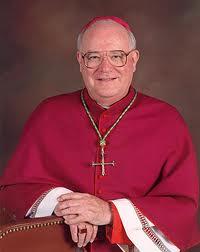
For example: this is San Francisco, and there are a decent number of gay Catholics, and a lot of them go to Most Holy Redeemer Church in the Castro, which is about as welcoming to gay people as any Catholic institution can ever be. And what does the Great and Exalted Archbishiop, Geroge Niederauer, do? According to a nice scoop by Cythina Laird in the BAR, he kicks a few lesbian and gay ministers out of an Advent service:

At least three gay and lesbian clergy members were disinvited from participating in Advent services at Most Holy Redeemer Catholic Church in the Castro, the Bay Area Reporter has learned. … “The basic reason is that Archbishop Niederauer felt the themes for vespers should better reflect the themes of Advent,” Wesolek told the B.A.R.

The “themes of Advent?” The only “theme of Advent” I know is that it celebrates the upcoming feast of the birth of Christ, who, at the time of his miraculous arrival into this world, hadn’t said a single thing about homosexuals.

Let’s be serious: This isn’t a religious statement, it’s a political statement about same-sex marriage. The archbishop can’t tolerate the idea that people — even respected religious people who also believe in Jesus, one of them a damn bishop, for Christ’s sake  — who happen to disagree with his teachings on marriage might share the stage with his holy crew:

Charles was the Episcopal bishop of Utah and was married to a woman for many years. After his retirement in 1993, he came out as a gay man, divorced his wife, and moved to San Francisco. In October 2008 he married Felipe Sanchez-Paris, Ph.D. in a civil ceremony in San Francisco. The couple had a church wedding in 2004 that was covered in the San Francisco Chronicle .

He told the B.A.R. that he received a call the night before his scheduled appearance “indicating that my participation in a liturgical service was unacceptable to the Chancery (in all likelihood, the archbishop): presumably, my participation as the first openly out gay bishop, legally married according to the laws of the state of California, might suggest approval of gay marriage.”

Kind of hard to believe. Or not.

I wish the folks at the archdiocese would talk to me about this, but they haven’t returned my calls.

UPDATE: George Wesolek, spokesperson for the archdiocese, just called me. He acknowledged that the archbishop had decided to disinvite the three ministers on the grounds that “it appeared they might be going to talk about topics with agendas. Advent is not the time for politicizing this, for divisive issues, it’s a time to bring people together.”

In other words: If you want to talk about same-sex marriage, shut up.


Lots of buzz and politicking around D5 appointment

65

There is eager speculation – and lots of public and private pressure being applied to Mayor Ed Lee – over the question of who he will appoint to fill the District 5 seat on the Board of Supervisors that is being vacated by Sheriff-elect Ross Mirkarimi.

Anti-progressive entities from the San Francisco Chamber of Commerce to the San Francisco Chronicle are urging Lee to appoint a fellow moderate to the solidly progressive seat, despite the outrage that would trigger on the left and the difficulty that appointee would likely have keeping the seat after the November election.

Chron columnist CW Nevius today published a weird little puff piece plugging London Breed – a moderate who wants the D5 seat, a fact he strangely didn’t mention – and her leadership of the African American Art & Cultural Center. Chron columnist Leah Garchik also pumped up Breed as a D5 appointee last week. Nevius’ column in particular seemed to be a thinly veiled attempt to influence the decision, despite the regular insistence by Nevius and others at the Chron that they never have a political agenda or try to influence City Hall. Yeah, right – at least we at the Guardian are honest about our advocacy for more progressive city leadership.

Breed is being strongly pushed by Willie Brown, the former mayor and current Chron columnist, as well as most of the city’s African American ministers, such as Revs. Amos Brown and Arnold Townsend, who showed up at last week’s Board of Supervisors meeting and followed Lee back to his office after his appearance before the board.

Sources connected to the ministers told us that Lee hadn’t returned their phone calls in recent weeks and they were angry about the snub, so they showed up to let him know and mau-mau him into appointing Breed. Indeed, Brown did get a private meeting with Lee after his followers wedged their way into the office.

Reporters had asked Lee about the D5 appointment just moments before and he said that he was in no hurry to make a decision. “I want to pay my respects to many groups in District 5,” Lee said.

While many names have been floated as D5 contenders, there are a few that rise to the top. Malcolm Yeung, public policy director of the Chinatown Community Development Center, is being pushed by Rose Pak, the Chinatown power broker who worked with Brown to get Lee into Room 200.

But given Lee will probably avoid simply choosing between the Brown and Pak choices – unless they can privately coalesce around someone, which is certainly a possibility – most City Hall speculation these days falls on Christina Olague. The Planning Commission president comes from the progressive camp but she also served as a co-chair of Progress for All, creators of the Run, Ed, Run campaign that persuaded Lee to run for a full term.

Speaking to the Guardian in October, Olague denied that her early endorsement of Lee had anything to do with the D5 seat, which she said she wasn’t seeking but would take if offered. “If we get progressives to support him early on, maybe we’ll have a seat at the table,” was how she explained her support for Lee.

On Friday, Olague showed up for Mirkarimi’s art opening and holiday party in his City Hall office, and she chatted with other possible contenders for the D5 seat, including Quintin Mecke, Julian Davis, Gabriel Haaland, Jason Henderson, and Michael O’Connor. Asked by the Guardian if she had any insights into how the appointment was going, she said all she knows is what she’s read online and in the newspapers.

And so we wait.

The lights are on in Santa Clara

1

It’s ironic that PG&E is trying to blame the (brief) power outages at Candlestick — seen live, nationwide, on what was otherwise a great Monday Night Football game — on San Francisco. Even by the utility’s biased admission (and let’s remember — these are the same folks who tried to duck blame for the San Bruno blast that killed eight people), the whole problem started when a line owned and operated by the private utility lost power.

But here’s the best part: One of the main reasons that Santa Clara has been able to finance a brand new stadium for the team, which will soon abandon poor, beat-up old Candlestick, is that the Peninsula city has its own public-power agency.

I’m not for using public money to build sports stadiums. The people who own NFL teams (with the exception of the Green Bay Packers) are not only part of the 1 percent; they’re part of the top one-tenth of the one percent. They’re very, very rich folks, who can pay for their own damn stadiums.

And I don’t think San Francisco will suffer greatly when the Niners move south — we never got much of an economic benefit from football games here, anyway.

But I’ll always remember the story Sheriff Mike Hennessey told me a few years back, when he was attending one of Mayor Gavin Newsom’s department-head meetings, and the mayor started complaining about Santa Clara’s efforts to woo the Niners, and how money from that city’s power agency was making it hard for S.F. to compete.

“Are you saying,” Hennessey asked the mayor, “that if San Francisco had public power, we might be able to keep the 49ers?”

Newsom didn’t respond.

Mayor Lee, Sharp Park, and Gavin Newsom

43

So Ed Lee’s going to veto the Board of Supervisors resolution on Sharp Park. Of course he is. And there’s more than snakes and frogs at issue here.

The veto, I think, sets the tone for what we’re going to see over the next four years, which is: Gavin Newsom.

For four years, the progressive bloc on the board — that is, the shaky sometimes-majority that can pull together six votes on an issue — is going to run slam into a mayoral veto a good deal of the time.

In this case, John Avalos, David Campos, David Chiu, Jane Kim, Eric Mar and Ross Mirkarimi — that’s the list of the six — all supported a plan to negotiate with the National Park Service to take over the property, which would probably mean the end of the golf course. It’s an environmental issue, mostly, and also a public-resource issue — but the main thing is that it’s an issue that split the board along the left-center/right lines that we’ll see again and again over Lee’s term. And Lee is siding with the right.

That’s what we came to expect from Newsom — every progressive initiative was a struggle; often, bill sponsors had to line up eight votes, not six, because there was always the threat that Newsom would shoot it down. And I’m getting the feeling that we’ll be facing the same thing with Mayor Lee.