• No categories

Politics Blog

Plenty of drama at the Mirkarimi hearing

69

I’m glad I got to the courtroom early; by the time Judge Susan Breall called the case of People v. Ross Mirkarimi, there wasn’t a single seat available, and Her Honor wasn’t allowing standing room.

What followed was a quick “not guilty” plea to three misdemeanor charges – and then a session that lasted more than two hours, with a long interruption, as the prosecution and defense argued over whether Mirkarimi was such a threat to his wife and two-year-old son that he should be forced to stay away from them and avoid any form of contact until after what is expected to be an early March trial.

In the process, Mirkarimi’s wife, Eliana Lopez, made a passionate plea against the restraining order and Deputy District Attorney Elizabeth Aguilar-Tarchi introduced new evidence to support her claims that the newly elected Sheriff is not only guilty of domestic violence but too dangerous to allow into his own home.

In the end, Breall – who once worked as a prosecutor in domestic violence cases – issued the order forbidding the sheriff from any contact with his wife and child, and told Mirkarimi and his attorney, Robert Waggener, to return to court Jan. 23 to set a trial date.

Breall angered Lopez – and some courtroom observers – by saying she was concerned that the 36-year-old Venezuelan soap opera star was new to the country and lacked fluency in English and a family support system. Waggener noted that the length of time Lopez had lived in the United States and her language skills weren’t part of the evidence in the case and had nothing to do with the need for a protective order. He later told me that it was unusual for a judge to mention or consider that sort of information in a restraining order.

In fact, Breall noted that she had learned about Lopez’ background from reading the newspapers, leading Waggener to insist that the judge stick to the facts before her and not rely on news accounts that the attorney said were inaccurate.

At times, the proceedings turned bizarre: After Lopez had been identified by her full name and discussed at some length, her attorney noted that the last name and address of a domestic violence victim should not be in the public record. Breall agreed, and from then on referred to her only as “Eliana L.”

A little late for that, of course: The local news media have put her picture and full name on the front pages and the airwaves repeatedly in the past week.

Early in the proceedings, Breall asked if Lopez had seen a victim advocate in the District Attorney’s Office, noting that such a visit was part of standard procedure in these kinds of cases. Shortly afterward, Lopez left the courtroom; we later learned she had walked down the hall to the D.A.’s Office and met with the advocate.

Waggener asked repeatedly during the afternoon that statements from Lopez be taken in a closed courtroom, citing her privacy rights. Breall declined, and refused to put any documents under court seal.

After delaying the case for roughly an hour while Lopez had her meeting and Waggener read over the documents that had already been published in local newspapers but had only that day been provided to him, the judge came back and heard arguments on the stay-away order – and we learned more about the evidence that the D.A. will be presenting in the case.

Waggener noted that after reading the documents he had received, he saw nothing that would justify barring Mirkarimi from seeing his family. Aguilar-Tarchi started to discuss what the now-famous videotape that neighbor Ivory Madison made of Lopez showing a bruise and discussing a confrontation with her husband, but Lopez’s lawyer interrupted with an interesting new claim: She said that when Lopez had met with Madison, who is a lawyer, she believed that everything she said would be protected by attorney-client privilege and thus shouldn’t be admitted as evidence.

That will no doubt come up later – but for now, Breall wasn’t interested.

Then Lopez took the stand.

Speaking in English – relatively fluent English – she first chided the judge for the comments about her language skills and her residency in the U.S. “This idea that I’m a poor little immigrant is insulting,” she said. “It’s a little racist.”

She said that, rather than being adrift without a support system, she was someone who had been living on her own for 16 years, had her own career and her own apartment in Venezuela (one larger and nicer than her home in San Francisco). She said she’s spent time in Los Angeles and New York and had traveled in Mexico, London, Tibet, Europe and all over Latin America.

“I don’t need the support of my (extended) family,” she said. “I support my family.”

She also said that the press coverage, while unfair, was nothing she couldn’t handle: “I’ve been working in TV for 15 years,” she noted. “Check out the press in Venezuela. This is nothing.”

Then she got into her point: She saw no need for a protective order, didn’t fear her husband and found the whole idea abhorrent. “The violence against me is that I don’t have my family together,” she said. “This country is trying to pull my family apart, and that is the real violence.”

Aguilar-Tarchi wasn’t done, though. After Lopez finished, she repeated some of the allegations in the video, but then described text messages that Lopez had allegedly sent to Madison. “She told a neighbor that she was afraid,” the prosecutor said. “She asked if she could change the locks on the door. She asked if she would have to go to the police or if the police would come to her.”
The text messages also stated, Aguilar-Tarchi said, that Mirkarimi was scared and didn’t want the story to come out and that he had taken Lopez and their son, Theo, on a vacation to Monterey in an effort to prove that everything was fine. “My little Theo is so confused,” one of the messages allegedly said.

Waggener argued that the case wasn’t yet on trial and that much of the evidence was hearsay. And, he said, “in terms of what this court sees all the time, broken bones etc., this is on the low end.” He explained that the couple had been together from the day of the incident – New Year’s Eve – until the day the original protective order was issued, “with no complaints or evidence of violence.” He called the description of the videotape (which hasn’t been shown in court) “highly distorted.”

Breall said some nice (if somewhat condescending) things about Lopez, who she called “charming,” but wasn’t swayed. “I am going to treat this case like any other case,” she said, issuing the order that would keep Mirkarimi away from his wife and child until the end of the trial. Waggener later said he would come back to Breall to seek a modification in that order next week. Breall said the trial would start no later than March 5.

(In an interesting side note, the prosecution demanded that Mirkarimi give up the three guns in his possession. I never knew he kept guns in his house. At any rate, they’ve already been turned over to the authorities.)

I walked out thinking: This is just awful. There’s really nothing positive you can say about it.

I’ve known Ross Mirkarimi for years; I’ve never seen any hint of violence in his behavior. Of course, I’m not that close to him, and I don’t know anything about his marriage. Still, somebody who has been part of the progressive community for a long time has been accused of something really terrible, and it has a lot of us shaking our heads and, frankly, wondering what to think. You want to stand by a friend who’s in trouble (and lord knows, I have plenty of friends who’ve been arrested and charged with all manner of crimes, and some of them were guilty as sin, and they’re still my friends).

But I’ve also helped a close friend through episodes of domestic violence, and I can tell you it isn’t a minor deal, or a private family affair (as Mirkarimi foolishly and inappropriately stated). It’s a serious crime, and for many years, the cops and the courts didn’t treat it that way. And because it used to be really hard for women to get stay-away orders (and in some areas, it still is), women have been badly hurt and sometimes killed.

It’s only because progressive political leaders (the same progressives my blog trolls love trash at the slightest provocation) demanded changes in the law that the rules now allow for prosecution even if the alleged victim doesn’t cooperate. It’s only because of progressive reforms that a case like this is even in court.

And I agree with those reforms. As I’ve said before, there’s no excuse for intentionally injuring anyone – and there’s less than no excuse for injuring your spouse. If that’s what Mirkarimi did, he should be held accountable. It doesn’t matter what side of the political divide he’s on. If he’s guilty of domestic violence, I’m not going to make excuses for him.

More than a misdemeanor charge is on the line. All Mirkarimi has done professionally is progressive politics and law-enforcement, and by most accounts, neither one has much room for someone who has a DV rap. (Although I have to say – there are an awful lot of cops who have DV allegations against them and are still on duty.)

If Mirkarimi weren’t the elected sheriff, this case might well have been handled a lot differently. He could have accepted a misdemeanor plea, taken DV courses, gone into therapy, tried to put his marriage back together. That’s pretty standard in first-offense cases. But to do that would be to admit something he can’t easily admit to and remain in office.

So Mirkarimi knows his only real chance is to win a “not guilty” verdict and then try to rebuild his reputation. Given the stakes, I can’t imagine that he would so much as raise his voice half an octave against Lopez over the next few weeks; one more allegation it would be the end of everything. But Breall must be worried (as any modern judge would be in any prominent DV case) that if she refused to issue the restraining order and something bad did happen, her ass would be very much on the line. So she did the obvious thing.

And the media circus continues.

The only possible bright side (and I always look for a bright side) is that a lot of people who weren’t talking about domestic violence are now discussing it, on the front pages. They’re talking about how a lot of women are trapped by batterers, how they’re afraid to testify and can’t (or don’t want to) leave, how all of us, particularly the police and the courts, are responsible for protecting victims who can’t find a way to escape. And that’s a whole lot of women.

All of that said, we have to remember that Mirkarimi is still innocent until proven guilty. The mayor has no business removing him from office at this point; he hasn’t been convicted of anything. It’s only a few weeks until his trial (Mirkarimi has made it clear he wants this over as quickly as possible, so by law he has to face a jury within 45 days). After that, if he’s guilty, the mayor and the supervisors can worry about whether to vacate the Sheriff’s Office – unless Mirkarimi makes that decision himself.

SF defends cops who killed an unarmed innocent

3

San Francisco is denying responsibility and aggressively defending the police officers who shot an unarmed man in the darkened attic of a Parkmerced home they entered without a warrant and where no crime had been committed. But the Ninth Circuit Court of Appeals this week rejected arguments that they were immune from responsibility and allowed the family’s civil lawsuit over the 2006 incident to move forward.

Compounding the fact that the city is pushing hard in the courts in what seems to be a tragic and obviously wrongful shooting is the fact that the officers who did it are still on the streets, with their guns on active patrols, even though one of them was also later indicted for stealing cash from a police evidence locker.

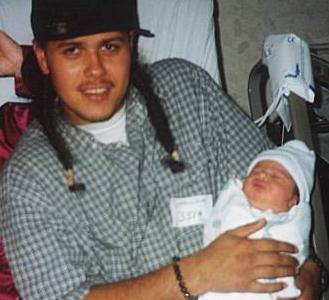
The shooting of 25-year-old Asa Sullivan by Officers Michelle Alvis and John Keesor has been covered extensively by the Guardian, from the early days when police refused to explain why they busted into the home where Sullivan lived to later coverage of communications in which Alvis and Keesor were told to back off by SFPD colleagues but didn’t, instead cornering Sullivan in a dark attic and shooting him 16 times because they say they mistakenly thought he had a gun.

We also covered the criminal indictment of Alvis two years later on charges of stealing $2,000 from a police evidence locker. A San Francisco jury later deadlocked on the case and it was dropped by the DA’s office. SFPD spokesperson Sgt. Michael Andraychak said he can’t comment on any internal discipline actions against the pair or on the current court case, but he did confirm that they are currently assign to Operations, which includes patrol and investigations.

Deputy City Attorney Peter Keith disputed the notion that the city is defending an inexcusable shooting. “We don’t think the shooting was wrongful, we think it was lawful,” he told us. Police were responding to a trespassing call from a security guard in the condo complex when they entered Sullivan’s home, and Keith said that seeing a shirt with blood on it gave them the right to enter the home, where they say Sullivan refused to surrender and threatened police.

But attorneys for Sullivan’s family dispute the police version of events and their story that the dead man threatened the cops that had cornered him, saying that the officers had no right to enter the house and that they attacked aggressively and didn’t heed the recommendation of fellow officers that they back off and de-escalate the situation.

And the court seemed to agree. As Judge Procter Hug wrote in the majority opinion: “Sullivan had not been accused of any crime. He was not a threat to the public and could not escape. He had not initially caused this situation. He had not brandished a weapon, spoken of a weapon or threatened to use a weapon.”

But as the Chronicle reported, the San Francisco Police Officers Association and other police groups fear the ruling will make officers liable for mistakes made during split second decisions. Well guess what, guys: It’s a tough job, for which you’re very well paid, and there need to be consequences when you murder innocent, unarmed civilians. And frankly, I think this precedent is just great because it will hopefully make cops think twice before they err on the side of just opening fire when things get tense.

“Occupy Wall Street West” hopes to see massive protest

14

A coalition from across San Francisco is hoping to make tomorrow – Friday, Jan. 20 – a monumental day in the history of Bay Area activism, the Occupy movement, and the fight against home foreclosures and other manifestations of corporate greed.Organizers call the day of protests, marches, street theater, pickets, and more “Occupy Wall Street West.”

Those that urged Occupy protesters to focus in on a list of demands should be pleased, as the day includes a list of demands on banks, including a moratorium on foreclosures and an end to predatory and speculative loans.


Organizers note that Occupy SF Housing, the coalition that planned the day, is separate from OccupySF. In fact, a subset of the group known best for its months-long tent city at Justin Herman Plaza was only one part of a substantial coalition that planned this day of action. Among others, the coalition includes the SF Housing Rights Committee, Homes Not Jails, Alliance of Californians for Community Empowerment (ACCE), and Occupy Bernal, a neighborhood-focused Occupy group specifically aimed at preventing evictions and foreclosures.

Justin Herman Plaza – or Bradley Manning Plaza, as many in OccupySF like to refer to the park just across from the Ferry Building – will be a crucial meeting point. A press spokesperson said that “down at Bradley Manning Plaza at 6 a.m.,12 p.m., and 5 p.m., we’re going to be launching various segments of the protests, and there will be information desks and education all for those who are interested.”

Organizers hope to culminate the day with a mass march at 5 p.m. A map of the planned actions can also be found here.

Many of the groups in the coalition have focused on specific cases of homeowners and tenants facing eviction and foreclosure; tomorrow, they bring their power to the Financial District.

Vivian Richardson, a member of the coalition who has also worked with ACCE and the newer Foreclosure Fighters group in Bayview, says that she remains in her home after being threatened with foreclosure due to community support.

“On my own, I tried everything to get out of this bad loan… I fought for two years on my own, only to have my home foreclosed on and taken away,” Richardson said at a press conference held yesterday.

“With the help of my community, unions, and ACCE members throughout the state, we generated over 1,400 emails and a few hundred calls to the CEO of [lender] Aurora Bank, and within one hour they called me to reopen my case,” she said. “As of today, the bank has voided the sale of my home and rescinded the foreclosure.”

Groups hoping to prevent foreclosures have had many success stories like Richardson’s. But tomorrow, they will put pressure on large corporate banks.

As SF Housing Rights Committee Executive Director Sarah Shortt said at the rally, “What we’re trying to do here is draw connections between some of those issues and the banking industry… I think that’s one of the most important pieces of the Occupy movement: starting to educate ourselves and each other about how ubiquitous the toll that’s been taken on cities, neighborhoods, communities by banking industry and the one percent.”

The focus is on housing, but in typical Occupy fashion, protesters will draw connections between all kinds of concerns that they see as abuses by banks and corporations.

According to OccupySF member Lisa Guide, the day is about “war profiteering, unjust foreclosures and evictions for profits by the big banks, exploitation of labor and union workers, and liberation of the commons for public good, among many other [issues].”

Guide also mentioned that Jan. 20 is “the eve of the Citizens United Supreme Court case, the court case that gave corporations the power to buy our government.” Simultaneous actions are planned to protest Citizens United, including an Occupy the Courts action at the Ninth District Court of Appeals at noon, to coincide with a national call to “Occupy the Courts

More than 55 organizations are involved in the day of action, and their focuses go beyond housing rights. These include students from Occupy SF State, Occupy Modesto Junior College, and other campus Occupy groups; anti-war organizations such as Iraq Veterans Against the War; environmental organizations such as the Rainforest Action Network; several unions, including UNITE HERE Local 2 and the California Nurses Association; the Chinese Progressive Alliance; and the Interfaith Allies of Occupy, which will be hosting an all-day “respite area” at Saint Patrick’s Roman Catholic Church at 756 Mission.

The array of events planned for Friday is overwhelming. There are demonstrations, pickets, and occupations planned at dozens of banks and corporations throughout the Financial District. Street theater is planned in several places, including an adaptation of A Christmas Carol by the San Francisco Mime Troupe at Justin Herman Plaza at noon and a show from Iraq Veterans Against the War that, according to IVAW member Jason Matherne, a Navy veteran who served in Qatar, “is called Operation First Casualty, because the first casualty of war is the truth.”

Matherne said, “corporations are profiting off the war at the expense of the 99 percent. Specifically, the Bechtel Corporation is using–misusing–billions of dollars to rebuild the infrastructure in Iraq.”

Tomorrow should be big. In a press release, organizers claim that “this is predicted to be the largest street protest of the Financial District since anti-war protests in 2003.”

Whatever the turnout, the Saint Patrick’s “respite” should be a boon, as weather reports indicate rain for tomorrow. Luckily, as Vicki Gray, a Deacon in the Episcopal Diocese of California, Occupy supporter and Interfaith Organizer, said of the sanctuary: “All are welcome. It will be warm, it will be quiet, and you will be loved.”

Supervisors make the Chamber of Commerce happy

7

You want a sense of what’s happened to politics at City Hall? Here you go: the San Francisco Chamber of Commerce is thrilled.


The Chamber just released its 2011 voting scorecard on the Board of Supervisors (which it calls the “Paychecks and Pink Slips Scorecard,” as if most of the stuff the Chamber supports had anything to do with actual job creation), and guess what? The board is more pro-downtown than it has been in a while:


The 2011 year-end scorecard reveals marked improvement in city’s efforts to create jobs and grow the economy. Overall, the Board of Supervisors received a score of 82 percent (equivalent to a B – grade), up from 60 percent (or a D – grade) in 2010. Individual rankings also improved, with five supervisors increasing their scores by at least 15 percent since last year. In 2011, a solid majority of supervisors voted in favor of jobs, the economy and government efficiency more than 75 percent of the time.


The top performer: Sup. Scott Wiener, who voted with the Chamber 88 percent of the time. Second best: Supervisor David Chiu (82%). The worst (or best, depending how you see downtown’s agenda of low taxes, reduced public services and minimual regulations) was Sup. John Avalos, who scored 56%.


The reality is that some of the Chamber’s key votes were relatively noncontroversial things that everone on the board supported — for example, a law sponsored by Sups. Ross Mirkarimi, Eric Mar, David Campos and Wiener making it easier for small cafes and restaurants to host live music and a measure restricting restaurant waste, both of which passed unanimously. There were some votes where nearly everyone opposed the Chamber — the cell phone disclosure requirements and the ban on yellow pages. And on a couple of them, even Chamber darlings Sean Elsbernd and Mark Farrell were on the wrong side — they voted against a tax exclusion for stock options because they wanted even greater tax reductions.


But on the key votes, you can see where the majority of the board lies: Six, sometimes seven votes with downtown, five, sometimes four with the rest of us. Not exactly a progressive majority. 

Firing bad teachers

8

Diane Ravich, who used to be on the wrong side of school reform but has pretty much come around, was on Forum Jan. 18 talking about education policy. For the most part, she was right on target, explaining that too much of a focus on testing (as a measure of school and teacher accomplishment, not as a diagnostic tool) and too narrow an emphasis on math and reading has damaged public schools.


Neither she nor host Michael Krasny spent much time talking about the bigger problem — money — or the fact that other nations that are eclipsing the United State in education actually tax people and spend that money on schools. California has already cut the number of classroom days, and may cut as much as a week out of the school year. That’s a huge deal, one that’s directly related to the intransigence of a few state legislators who can hold the entire budget hostage — and to the unwillingness of California residents to amend Prop. 13 and allow reasonable property taxes.


But one of the things that struck me was a caller who complained that tenure was making it impossible to fire bad teachers.


Tenure, Ravich noted, is badly misunderstood. At the college level, it’s essentially a lifetime commitment; a college professor gets tenure and he or she understands that, for the most part, it means a career at an institution — with minimal job requirements. Tenured professors teach a few classes, but are free to spend a lot of time on academic research (without any set requirement for success or publication.)


For K-12 teachers, tenure is just a word meaning that they get due process in employment. It’s basically the same as the civil-service rules that San Francisco city employees have — the right to a hearing on discipline and freedom for arbitrary actions on the part of management.


You think it’s hard to fire a teacher? Try firing a cop. The police, who have nothing called “tenure,” have more and broader rights than any other public-sector employees, including the right to have all disciplinary matters kept completely secret. And police officers are armed and given the ability to arrest and even shoot people.


So yeah, let’s blame the inability to fire teachers. That’ll fix the problems. 

Gov. Brown backs high-speed rail and other big ideas

4

California Gov. Jerry Brown this morning used a big portion of his annual State of the State speech to promote the construction of a high-speed rail system for California – a project that has been under attack by conservatives, as we reported in this week’s paper – chiding those who believe the state can’t do big things anymore.

“Contrary to those declinists, who sing of Texas and bemoan our woes, California is still the land of dreams,” Brown said, a theme that he developed and returned to throughout his speech, calling them “critics who fantasize that California is a failed state.”

Instead, Brown optimistically called for California to take on big projects, singling out high-speed rail, the conversion to sustainable energy sources, and a major water project that will address environmental issues in the Delta and the needs for drinking water and agricultural uses.

But it was the high-speed rail project, for which the Legislature must approve the issuance of bonds this year, that Brown used to make his strongest statement against retreating from big ideas, noting that California can’t simply build enough new freeway and airport expansions to handle a growing population.

“Those who believe that California is in decline will naturally shrink back from such a strenuous undertaking. I understand that feeling but I don’t share it, because I know this state and the spirit of the people who choose to live here,” he said.

And he exhorted Californians to remember the past as they plan for the future: “Critics of the high-speed rail project abound as they often do when something of this magnitude is proposed. During the 1930’s, The Central Valley Water Project was called a ‘fantastic dream’ that ‘will not work.’ The Master Plan for the Interstate Highway System in 1939 was derided as ‘New Deal jitterbug economics.’ In 1966, then Mayor Johnson of Berkeley called BART a ‘billion dollar potential fiasco.’ Similarly, the Panama Canal was for years thought to be impractical and Benjamin Disraeli himself said of the Suez Canal: ‘totally impossible to be carried out.’ The critics were wrong then and they’re wrong now.”

The Presidio: Lessons in privatization

5

So the Presidio Trust, the only private agency ever to control a national park, is going to make some cuts to meet its goal of complete economic self-sufficiency. But in tall the talk about this, it’s easy to forget that the creation of the trust changed the mandate of the park — and for the first time in the nation’s history, established that a national park is all about making money:


In preparation for an end to federal funding, the trust purposely prioritized projects that would garner the greatest revenue, including residential units and the Letterman Digital Arts Center, said trust spokeswoman Dana Polk.


“We wanted to generate a revenue stream for the park right away,” she said.


Never before in the nation’s history has anything like this happened. Yosemite doesn’t have to generate enough revenue to cover its operating costs. The Grand Canyon doesn’t have to accept real-estate development to pay its park rangers. National parks are something we use tax dollars to support.


Or at least, we used to. Until Rep. Nancy Pelosi came up with the idea of making the Presidio into a money machine.


Along the way, that great pauper George Lucas wound up with a $60 million tax break.


And we wound up with commercial office development and high-end residential uses in a national park.


What an awful precedent.

Protesters climb on Wells Fargo roof to protest evictions

9

Activists held a massive banner and pitched a tent on the roof of the Wells Fargo branch at 16th and Mission Jan 14, while 150 supporters watched from the parking lot. Seven were arrested.

Organizers say the demonstration was meant to draw attention to the bank’s complicity in unfair foreclosures and evictions.

The protest was planned by a coalition of Bay Area housing rights and homelessness advocacy groups, along with organizers from Occupy San Francisco.

Sarah Shortt, Executive Director of the San Francisco Housing Rights Committee, says that abuses by corporate banks are inextricably linked to issues that her group has been working on for years; “evictions, displacement, affordable housing, and tenants rights.”

After rallying at 16th and Mission, protesters looked up to see that six had climbed to the roof. They unfurled a banner reading “Banks: No Foreclosures/Evictions for Profit!”

A fire truck arrived ten minutes later, and put up a ladder to give the police and firefighters access to the roof.

The Police Department cooperated with protesters, assisting a negotiation with the bank branch’s manager. A letter detailing their demands, including a moratorium on foreclosures and an end to predatory and speculative loans, was apparently faxed to Wells Fargo spokeswoman Holly Rockwood.

Protesters said that they would not leave the roof until they had a meeting scheduled with Wells Fargo CEO John Stumpf. Six were arrested.
According to an SFPD statement, “A bank employee signed a private person’s arrest (citizens arrest) for trespassing.”

After those arrested were painstakingly shuttled down the ladder and into a police van, protesters blocked the van from leaving Hoff street between 16th and 17th for about ten minutes until it sped out through the parking lot. Protesters then marched to the nearby Mission Police Station, where a drummer from the Brass Liberation Orchestra, which often accompanies protest events in the city, was arrested for allegedly assaulting a police officer with her drum.

Those arrested on the roof were cited for trespassing and released within hours. Supporters have put up money to release the drummer, known as Montana; bail was set at $8,100.

While the drama on the roof unfolded, Shortt, along with organizers from Causa Justa: Just Cause and the San Francisco Tenants Union, spoke about abuses committed against tenants and homeowners. They also spoke about Wells Fargo’s investment in private prisons. 

In a press release, organizers said that the protest was meant to call attention to “predatory equity scams, Ellis Act evictions, and immoral home loans.”

The Ellis Act allows landlords to evict tenants for any reason, if they don’t re-rent the units at a higher price in the next five years. The act hasno restrictions on selling the units as tenancies in common — a backdoor way to create condos — and that’s a lucrative and common practice in the Mission.

Ellis Act evictions increased by 8% in 2011, According to the San Francisco Rent Board Annual Report.

Jose Morales, a tenant who was evicted based on the Ellis Act and activist with the San Francisco Tenants Union, spoke to the crowd Saturday. Said Morales, “I have osteoporosis, I’m 82 and a half years old, but you still see me walking around with my sign.”

He displayed protest signs declaring that housing is a human right and urging single-payer health care.

Mesha Irizarry also told her story to the protesters. Her Bayview home was sold to Bank of New York, then transferred to Bank of America on September 1, but says that she refuses to leave and is fighting the foreclosure.

“We do not play the blame-the-victim game. We are not alone. We are not ashamed to sat ay what has happened to us. We are fighting back, and we are going to win” said Irizarry, who named several other women who are resisting foreclosures in Bayview. 

Irizarry began a San Francisco chapter of Occupy the Hood, a group dedicated to confronting problems that disproportionately affect the poor and people of color within the Occupy Movement. In San Francisco, the branch has focused mainly on defending homes from foreclosure and eviction. Saturday’s protest was part of that effort.

This demonstration was also a part of a series targeting banks, that protesters plan to top off with a day-long “occupation of the financial district” January 20th.

Said Occupy SF Housing Coalition media spokesman Gene Doherty, “The banks and the development companies that have gotten us all into (the foreclosure crisis) are a major part of the problem…it is their ethical duty, moral duty right now to be fixing this. And if that means it’s going to eat into their profit, that means it eats into their profit.”


Sheriff Mirkarimi charged with domestic violence

338

Sheriff Ross Mirkarimi has been charged with three misdemeanors in connection with an alleged domestic violence incident against his wife, Eliana Lopez, on New Year’s Eve, District Attorney George Gascón announced this afternoon. Gascón said a restraining order has been issued that bars Mirkarimi from contacting his wife and child and that bail has been set at $35,000, although he was unaware whether Mirkarimi had been booked yet.

Mirkarimi is being charged with one misdemeanor each of domestic violence battery, child endangerment, and dissuading a witness from testifying. Gascón said their young son, Theo, was present during the incident. Lopez has refused to speak with investigators, but she has publicly denied that her husband has ever abused her.

Mirkarimi has maintained his innocence, as he did again with Lopez by his side during a City Hall press conference held simultaneously with Gascón’s press conference at the Hall of Justice. “We believe that these charges are very unfounded and we will fight those charges. I’m confident in the end that we will succeed,” Mirkarimi said, according to the San Francisco Chronicle. It was unclear whether the appearance with Lopez violated the restraining order.

Gascón confirmed press reports that Lopez had communicated via text message about the incident with the neighbor who ultimately contacted police – although he refused to disclose or characterize the contents of the communications – and that there was a photo taken of an injury to Lopez’s arm. He also said there are indications that this was not an isolated incident and the investigation is continuing. “We have heard there have been other instances,” Gascón said.

The fact that the charges were misdemeanors wouldn’t require Mirkarimi’s removal from the office he assumed just last weekend if he’s convicted, but he has already been required to relinquish any weapons, including his service revolver. He faces a year in jail and three years probation on the charges.

“While we do not relish having to bring charges against a San Francisco elected official, I have taken an oath to uphold the laws of the state of California and as the chief law enforcement officer for the city and county of San Francisco it is my solemn duty to bring criminal charges when the evidence supports such action. No one is above the law,” Gascón said. “Whether this was the elected Sheriff or any other San Francisco resident, this type of behavior is inexcusable, criminal, and will be prosecuted.”

Gascón also said that while Lopez has refused to cooperate, he believes there is ample evidence to bring charges. “A case is always stronger if the victim is willing to testify. However, it is very common for victims to be uncooperative in domestic violence cases,” Gascón said, noting that his office filed 771 domestic violence cases last year. He also said, “Regardless of whether the victim supports a prosecution, it is the state’s and my office’s obligation to ensure the safety of the victim.”

Residents slam proposal for more parking meters

65

Nothing makes people more angry than when the city tries to take away their free street parking. The San Francisco Municipal Transportation Agency was reminded of that fact at a City Hall hearing this morning when residents and business owners unleashed a storm of angry criticism over a proposal to install new parking meters in Potrero Hill, Dogpatch, Mission Bay, and parts of the Mission District.

The plans for this pilot program, which were released on Dec. 20, are intended to address the increased demand for parking in the “Mission Bay Parkshed” from development now underway in the area, as well as concerns about increased demand for street spaces once the parking lot at Folsom and 17th Street is converted into a park.

As with previous SFMTA proposals for extended parking meter hours – which were also met with angry criticism – the idea is to encourage increased use of transit and to free up more street parking space for business customers by discouraging local residents from taking up street parking spots for extended periods of time.

But even people who support that idea in concept say that the SFMTA plans are badly designed and don’t take into account the conditions on the ground, largely because they say planners did an abysmal job of outreach and gathering community input before creating the plans.

“I’m urging a cooling off period,” said Tony Kelly, president of the Potrero Boosters Neighborhood Association. He wants to see more active parking management of that neighborhood, but said planners need to better consult local residents. “We’ve earned that right in our neighborhood and you have not earned our trust.”

And that was among the more mild criticisms at this sometimes raucous hearing, where there were standing room only crowds in the main hearing room and an overflow room showing the hearing on television. Officials were accused of hostility to working families, incompetence, arrogance, and with trying to drive businesses out of town.

“Are you insane?” asked one commenter, while another asked, “How do you look at yourself in the mirror?” Several business owners said they would leave the city in the plans were implemented, and one said half of his employees were driven to tears over the proposals. “I don’t hear anyone asking for meters,” said one commenter. “I don’t hear anyone saying this is good.”

But there are those who say the city shouldn’t be expected to supply free parking to residents who choose to own cars, particularly given the SFMTA’s tight budget situation and the role that drivers searching for limited street parking spaces play in increasing traffic congestion in the city, thus slowing down Muni.

“On behalf of Livable City (and as a Mission District resident), I want to express our support for the expansion of SFpark meters into the Mission Bay, 12th and Folsom, and 17th and Folsom neighborhoods,” Livable City Executive Director Tom Radulovich wrote in a recent letter to the SFMTA. “Each of these areas is seeing intensified activity – new residents, new businesses, and new restaurants, bars, and entertainment venues – and each is badly in need of intelligent parking management. The expansion of metered spaces will provide the parking turnover that neighborhood-serving businesses need. SFpark metering and pricing will also reduce cruising for parking in these neighborhoods.”

But the opinions expressed at the hearing were almost uniformly critical, saying the plans actually call for meters on streets that are mostly residential and that they need more work. We’ll have more detailed analysis of the proposals and related issues in upcoming issues of the Guardian.

First drag queen to run the Milk Club

5

Here’s some good news for some bleak days: Anna Conda, whose given name is Glendon Hyde, is set to become the first drag queen to serve as president of the Milk Club. Glendon, a well known and exceptionally talented local performer, ran for District 6 supervisor in 2010 as a strong progressive and has been active in district as well as citywide politics as a member of the Entertainment Commission.

Gabriel Haaland reminds me that Anna Conda will not be the first trans person to serve as Milk Club president — Haaland had the job years ago. But still: Politics is serious, and Anna Conda takes it seriously — but a little fun in life makes it all bearable. And I suspect that Anna will make the Milke Club meetings lively. Congratulations!

States push back on Citizens United ruling

44

With the upcoming anniversary of the Citizens United decision, the U.S. Supreme Court ruling that allowed corporations to make unlimited campaign contributions, California Assembly member Julia Brownley (D-Santa Monica) is pushing a bill to ensure that corporate entities making political donations are required to at least disclose those contributions.

The California Disclose Act, AB 1148, specifically addresses accountability in election campaign ads, forcing corporate sponsors to step out from behind cryptic political action committee (PAC) names when they fund political advertisements.

“Currently the top two donors must be disclosed on political ads, usually behind meaningless campaign committee ads,” said Michelle Romero, manager of the Our Democracy program at the Greenlining Institute, which is supporting the legislation. “We hope to really pierce through the committee names to the top three donors behind ballot measure expenditure campaigns.”

Romero’s ideal realization of this bill would be to require political ads to list donors by the name of the corporation, rather than just its made-up PAC name. “Instead of saying, ‘This ad was paid for by the Committee for Responsible California,’ the ad would list the logos and names of top donors,” said Romero. “For example: the donors are Chevron, Comcast, etc.”

Yet other states have taken even bolder steps to counteract the Citizens United decision. The Montana Supreme Court recently affirmed a ban on unlimited corporate spending on political campaigns, seemingly defying the U.S. Supreme Court. But the Montana judges said that due to the rural state’s low-budget elections and the ability of a few large corporations (particularly mining interests) to drown out everyone else, the Citizens United case did not apply to Montana’s Corrupt Practices Law, which bars corporations from using company resources to make political contributions.

“The government is supposed to represent the people,” Romero said, “not corporate interests.” said Romero.

The new board committes: Not great news

49

Board President David Chiu has released the new committee assignments for 2012, and they aren’t a whole lot different from last year’s — except in a few areas. And they aren’t exactly an indication of progressive power.

The three most conservative supervisors — Mark Farrell, Sean Elsbernd and Carmen Chu — all were named to chair committees. Supervisors Eric Mar and John Avalos also are committee chairs, although David Campos was relegated to the joint City and School District Select Commitee, which is important but takes no votes and has no role in the legislative process.

Word is, however, that Campos may wind up chairing the Transportation Authority.

The Budget and Finance Committee is run by Chu, but Avalos and Jane Kim are also members, giving a majority to the progressives. But during the budget season, that panel expands to five members — and the additional two, Scott Wiener and Malia Cohen, are both decidedly on the moderate side. That means progressives will not have a majority on the panel that plays the central role in setting the city’s budget.

The Rules Committee is improved from last year — Kim is the chair, joined by Campos and Farrell. But Land Use and Economic Development — possibly the second most important committee after Budget and Finance — is dominated by moderates; Mar is the chair but Cohen and Wiener will have a 2-1 majority.

State Assemblymember Tom Ammiano told me he’s concerned that the two openly gay members of the board, Campos and Wiener, aren’t in more prominent roles. “It seems like there are two very hardworking people who were slighted here,” he said.

But Chiu disagrees, saying that the assignments “reflect the diversity of the board and the city.” He added: “Last year (when conservatives were given key posts) everyone thought the sky would fall, and it didn’t.”

The sky falling is pretty dramatic; I suspect it won’t. But there’s a difference between the sky falling and the progressive agenda moving forward.


Should city commissioners live in San Francisco?

14

Overriding the Rules Committee recommendation and dissing Sup. Scott Wiener – who has taken a lead role on protecting nightlife from critical cops and NIMBY neighbors – the Board of Supervisors yesterday voted to appoint Glas Kat Supper Club owner Steven Lee to the Entertainment Commission, even though he doesn’t live in the city and needed a special residency waiver. UPDATE (1/12, 3 PM): Sup. Sean Elsbernd informs us that the City Attorney’s Office has ruled residency waivers can’t be used with Charter Commissions such as Entertainment, thus invalidating this appointment. 

Why would supervisors do so when Castro club owner Tim Eicher, Wiener’s pick and the Rules Committee’s choice, was well-qualified, anxious to serve, and actually lives in the city? Maybe it has something to do with the fact that sources say Chinatown political fixer Rose Pak and Pak protege David Ho are close to Lee and have been lobbying on his behalf. Or that Wiener said Lee supporters have been making the argument that there are already too many gay men on the commission.

“Nightlife issues are important tot he LGBT community,” Wiener said, noting that he was disappointed that Lee supporters have made that argument, particularly because he noted the LGBT people are underrepresented on many city commissions, particularly the powerful Planning and Airport commissions, where there are none.

Whatever the case, it made for a tense discussion at the board yesterday, followed by a vote that didn’t break along normal ideological lines. The motion by Sup. Eric Mar to substitute Lee for Eicher was approved on a 6-5 vote, with Sups. David Campos, Carmen Chu, Sean Elsbernd, Mark Farrell, and Wiener opposed.

Lee supporters noted that he has lived and worked in San Francisco for decades even though he has recently moved down the peninsula to help care for an aging father and disabled brother. For three generations, Lee’s family has been opening and operating businesses in San Francisco, including nightclubs.

“I felt his experience was somewhat superior,” Sup. John Avalos said of his reason for backing Lee.

But those who voted against Lee said it’s a troubling precedent to choose an out-of-towner over a city resident. “To grant a residency waiver for someone when we have a qualified San Francisco candidate is something we just don’t do,” Farrell said.

Sup. Jane Kim cited examples of other appointees that had such waivers, but Elsbernd angrily retorted that those were for seats that no city residents had applied for. And if Sup. Malia Cohen gets her way, there will be even more non-residents being appointed to city commissions. She said that she intends to recommend African Americans who have left the city to serve on various commissions, and she told her colleagues that she expects their future support for that effort.

After the hearing, both Lee and Ho downplayed Pak’s role in the move, telling the Guardian that Lee had key supporters in many of the supervisorial districts. “I’ve been doing this on my own,” Lee said. “I never asked Rose to help me.”

As for his priorities on the Entertainment Commission, Lee said, “Obviously, our main goal is public safety, but also working with the neighbors.”

Newt Gingrich, commie radical

11

Actually, more likely Newt Gingrich, Scorched Earth Opportunist, but whatever, we’ll take it: Newt — he the friend of plutocrats and one-time lobbyist for predatory lenders — is launching an assault on Mitt Romney, calling him, in essence, a capitalist pig who exploits the workers.

The fact that it’s true makes the story even more fun. As does the fact that Romney has run so far to the right in the primaries that Obama — by any standard in serious trouble — now has a natural line of attack against the candidate most likely to offer him a credible challenge.

Here’s CalBuzz:

The Occupy Wall Street movement has succeeded in pushing the issue of the nation’s vast wage and wealth disparity onto the agenda of the 2012 campaign. While Republicans in the past have been successful in dismissing discussion and debate about the Third World levels of wealth concentration in the U.S. as unpatriotic “class warfare,” the inarguable facts about the massive gap between the wealthiest Americans and everyone else are now well-known by many mainstream voters, at a time when Romney stands as a central casting character representing the 1%.

Paul Hogarth at BeyondChron says that ” many of us wish that Democrats had the chutzpah to be this scathing and direct,” and I can’t argue with that. The good news is that the Newtclear Bombs in South Carolina will probably work: Romney’s going to win the nomination, and everybody knows it, but the blitz of revenge ads may wound Romney enough to convince the Obama folks that this is the line of attack to use during the general election.

In other words, Newt is pushing the Democratic party to the left, legitimizing the class warfare that the Republicans so love to denounce as unAmerican.

How much do we love this?

The state (and local) tax measures

1

The state of the state tax measures is more and more confusing; as Calitics notes, Jerry Brown, who has a half-assed tax plan that relies too much on sales taxes, wants everyone else out of the way, but you don’t say things like that to really, really rich people, and a really rich person wants her own tax measure, which is much more progressive but earmarks the money just for schools, which isn’t particularly helpful.

And there may be more.

The always-insightful and hardly-ever wrong folks at CalBuzz say Jerry’s got to stop everyone else from cluttering the ballot, else all of the plans will fail. Which is definately CW — but it doesn’t always work that way. There were five competing ballot measures aimed at insurance reform (some of them industry fakes) in 1998, and the voters still approved the real one, Prop. 103.

But taxes are a bit different — and if the voters see the various options not as alternatives but as many ways to raise taxes higher and higher, they might all go down.

And there’s another factor here: I’m hoping that there’s a serious business-tax reform measure on the San Francisco ballot. And if there are several state tax measures (attracting intense and big-money opposition) and there’s another one on the local ballot, we might be in trouble.

Maybe Jerry should get with Molly Munger and cut a deal: The guv makes his plan more progressive, Munger helps fund it — and local governments can join in the fight to “tax the 1 percent.” Then we can all win. Maybe.

The 49ers in SF? Give it up

4

Some folks just won’t accept the reality that the 49ers are gone. It’s over: The team is moving to Santa Clara. And you know what? It’s not the end of the world.

There’s not going to be a new billion-dollar football stadium in San Francisco, and for one very good reason: Nobody wants to pay for it. With all the financial problems facing this city, there’s no way the taxpayers are going to cough up that kind of money. Mike Antonini’s shadowy “investment company” doesn’t seem likely to put up the money; that’s not how stadiums are built. And the Niners owners, who could afford it, have made it clear they want public money to pay for their grand spanking new private castle.

When the Giants were talking about bulding a new stadium downtown, team representatives got the message loud and clear: San Francisco wasn’t going to pay the tab. So the team raised the money itself, got the approvals and built a park that has brought a significant amount of new economic activity into the city. It’s helps immensely that the Giants did something else — they didn’t try to build a parking lot. No public money, no parking — and look what we got: A stadium people walk or bike or ride transit to — and a thriving business district that lives off the money people spend drinking and eating before and after the games.

You don’t get that at Candlestick. Everyone drives in, watches the game, and drives away. That’s partially a football culture thing — football fans tend to like tailgate parties. But businesses in the area don’t get a whole lot of patronage from Niners fans (many of whom come from the Peninsula anyway).

So losing the team — other than the indignity of somebody talking about the “Santa Clara 49ers” — isn’t such a big deal for San Francisco. It’s too bad — done right, in the right location, a privately funded football stadium with very limited parking could be a cool thing for this city. But that’s not what the York family wants. So let the suckers in Santa Clara spend their money on it — and deal with the traffic and the fact that nobody will stick around after the game for a beer or a burger in any local restaurant.

Besides: Anyone with any sense knows that baseball is better live and football is better on TV.

Ed Lee’s 100 percent

26

I expected a lot of talk about togetherness at the mayor’s inauguration, but Ed Lee went a step further: He acually announced that he wants to be the mayor “for the 100 percent.” That’s a remarkable statement when you think about it, and it indicates to me that Lee doesn’t want to be, and isn’t going to be, and activist leader.

It’s nice to talk at political events about how we’re all in this together, how everyone in San Francisco is part of the same nice big city family, how we all really love each other and can hold hands and build a better city and all that happy horsehit. But the truth is, we aren’t, and we can’t.

San Francisco is a divided city, increasingly split between the rich and the poor, the powerful and the powerless. The politics are bitterly divided — and not because the progressives fought with former mayor Gavin Newsom. No: There are people who are used to getting their way in this town, and they have been for years, and they make up an oligarchy that stands with big landlords, and big developers, and big corporations, often using terms like “job creation”  to disguise an agenda of tax breaks, minimal regulation and a disdain for social justice.

That’s not conspiracy theory; it’s fact, and anyone who has been a part of this city for a long as me knows it.

It’s about political power. An activist, progressive mayor would acknowlege that fact — and the fact that power is never surrendered voluntarily. Sorry to spoil your spirit of togetherness, Ed, but Willie Brown and his clients, including Pacific Gas and Electric Company, have very little in common with me; I want to kick PG&E out of San Francisco and replace it with a publicly-owned utility. There is no compromise here, no middle ground — PG&E has to lose for us to win.

Not every issue in San Francisco is like that — some of the 1 percenters are all in favor of bicycle lanes and same-sex marriage and a lot of other wonderful things. There are plenty of areas where everyone in San Francisco can work together for the glory of our collective greatness.

But there are also issues that involve, yes, class warfare. Ed Lee must know that; he’s been around long enough, fought enough bad guys, stood up for the poor people. But he also apparently thinks he can be mayor and be pals with Brown and the billionaires — and still be on the side of the 99 percent. And it doesn’t work that way. Not if you want to make economic justice a part of the local agenda.

I think Lee’s going to be a lot better than Gavin Newsom, who was intractable and a jerk. But this notion that you never have to pick sides, that there is no 99 percent on one side up against a 1 percent on the other, is either cluelessness or bullshit. And I don’t think Lee is clueless.

BREAKING: Lee appointing Olague to D5 seat

20

Sources say Mayor Ed Lee will appoint Christina Olague, the Planning Commission president and longtime progressive, to the District 5 seat on the Board of Supervisors that was vacated by Sheriff Ross Mirkarimi. Formal announcement set for 10 am. More after the ceremony.

UPDATE 11:30 AM: Lee announced his decision and administered the oath of office to Olague this morning at City Hall before a large crowd of mostly progressive political activists who said they were pleasantly surprised to see one of their own get the nod, taking it as a positive gesture from a moderate mayor who has pledged to work with all sides.

In their remarks, both Lee and Olague talked about the need to get past political labels and stressed her detailed knowledge of planning and land use issues, which they hope will help with Lee’s main focus on job creation.

“This is not about counting votes, it’s about what’s best for San Francisco and her district,” Lee said. Olague echoed the sentiment: “I think this is an incredible time for our city and a time when we are coming together and moving past old political pigeonholes.”

She pledged to get right to work on pressing issues facing the city and with winning the “respect and trust” of voters in District 5, one of the city’s most progressive.

We’ll have more analysis and reaction to this appointment and Lee’s inaugural address yesterday in this week’s Guardian.

Mirkarimi takes the oath

181

The room was packed for the inauguration of Sheriff Ross Mirkarimi, and for the most part, the crowd wasn’t talking about what Mirkarimi referred to as the “cloud” hanging over the event. He mentioned the investigation into possible domestic violence only that once, then joked that he’d managed to get a lot of press to his event.


There was music, dancing, former Mayor Art Agnos administering the oath of office, a long, long Mirkarimi speech on criminal justice policy (please, Ross, 15 minutes would have been plenty). Most of Mirkarimi’s progressive colleagues (including supervisors John Avalos, David Campos, Jane Kim, and Eric Mar, state Sen. Mark Leno and Assemblymember Tom Ammiano) were on hand. And the press conference afterward was surprisingly mild.


Mirkarimi was asked what happened the night in question, and he declined to talk about it, saying the criminal justice system would work its way through the process. Then his wife, Eliana Lopez, interrupted, took the mike, and announced that this was a “family matter” and she would have no more to say – except that she has no complaints about her husband.


That was it. No shouted questions as the sheriff walked away, no 1000-watt camera flashes in his eyes, nothing to indicate that this is the gigantic scandal that it’s become in the daily papers.


But Mirkarimi did make one statement that’s worth mentioning: He said that there were forces in the department (I think he meant the Police Department) that didn’t want to see him as sheriff. That’s absolutely true.


Let me make a few points here.


First, for the record: There’s no excuse for assaulting anyone, and there’s less excuse for assaulting your wife. Domestic violence is a serious, under-reported problem, something all too often dismissed by the authorities – with catastrophic results. Women die because batterers are not held to account. I have close friends who have been in abusive relationships, and it’s not pretty and it’s not a joke and it’s not something to take lightly.


That said: I don’t know what happened that night at Mirkarimi’s house. But I do know that the minute the cops were brought in, it became political.


See, the cops, for the most part, are not Mirkarimi fans. He beat their guy, former Police Officers Association president Chris Cunnie, in the race for sheriff. He’s demanded changes in the department (including foot patrols, which a lot of old-timers don’t like). He also beat a sheriff’s captain. He’s a civilian who is going to run a law-enforcement agency as a civilian, which means he’s not part of the Fraternity.


The news reports about the incident were clearly leaked by the SFPD. So, I’m sure, was the search warrant (that’s a public document, but I honestly don’t think the Examiner tracked it down, I think it was delivered to the paper by a source in the department). Nothing wrong with that – cops (and politicians) tip reporters to stories all the time. I’m not blaming the Chron or the Ex for doing the story – it’s news, you have to report it.


And, of course, if the cops had ignored the case or downplayed it, they would have been criticized for covering up an incident involving the new sheriff.


Again: I’m not excusing Mirkarimi’s behavior (alleged behavior — we don’t know what actually happened). But the way the story and the details were leaked reflects the political reality that the cops don’t love the new sheriff, and a lot of them would be thrilled to take him down. That’s just political reality.


Which means Mirkarimi needs to be very, very careful – there are people watching every single move he makes, every day. And they’re not interested in policy debates.


PS: The D.A. and the cops managed to finish this particular investigation in record time. I wonder what’s happened to the investigation into possible vote fraud in the Ed Lee campaign. Months have passed. Nobody is facing any charges. There are no police leaks about anyone involved. Funny, that.

Who will push progressive taxes in 2012?

47

Mayor Ed Lee talked to the Examiner about his plans for the next year, and it’s a lot of the usual political crap: I’m going to create jobs, I’m going to bring people together and promote civility, ho hum. But he did mention, briefly, the need to change the city’s business tax, and here’s how he put it:

We have given ourselves four months to reach out to all the business groups. There will be different views and opinions. You can have a hybrid [between a payroll and gross receipts tax], and you can also have a phase-in period of time. We want to have a good conversation with everybody and get their best ideas, and then use those ideas to craft what we think could be on the ballot. We’re not saying it has to be on the November ballot, but it could be. We want to have something that is not job punishing, but also something that does not decrease our revenue.

First: He’s going to reach out to all the business groups — but what about everyone else in the city? The level of business taxes has a direct impact on city services; is that not part of the equation? Clearly, he’s talking about something that’s at best revenue-neutral, something that “does not decrease our revenue.”

And please, don’t tell me about “job punishing” — it makes me even crazier than I already am. Look: There has to be a business tax in San Francisco. And any time you tax businesses, you take money for the city that could be used for other things. In some cases — not that many — the extra money might be used to hire a few people. In reality, for most businesses, the payroll tax is absolutely NOT a factor in job creation. It sounds bad — Gasp! a tax on jobs! — but the truth is that payroll is a rough approximation for the size of a company, and that’s what the city uses as a tax base.

Of course, we could change that to a gross receipts tax — another rough approximation for the size of a company. It’s also imperfect — some companies have a lot of money (VC funding, for example) and a lot of employees, but at this point not much in the way of sales. Some companies (supermarkets, for example) have high gross receipts but relatively low profit margins. And, of course, if you do a gross receipts tax the same people who complain about the payroll tax will have a new line: The GR tax penalizes growth! It penalizes success! The more money you make the more you pay! Unfair! Un-American! Job killer!

Because some people in this town (mostly big business types) just want lower taxes, period — not different taxes, lower taxes

So let’s get rid of the “job killer” rhetoric and start talking about what the city’s tax policy should be. And it should go like this: The individuals and businesses with the most money should pay the highest tax rates. The rich don’t pay their fare share anywhere in the U.S., and while the mayor and the supervisors can’t change federal policy, they can do their part on a modest level at home.

This a great year for tax reform in San Francisco. The spirit of Occupy is very much alive. There is, for the first time in decades, a national discussion about income and wealth inequality. There’s strong evidence that the middle class is vanishing in San Francisco. And, thanks to the wierdness of state law, in 2012, when there’s an election for the Board of Supervisors, a tax measure can pass with a simple majority vote In many ways, this is the single most important policy issue in the city, the one that defines who pays for what and who gets what and whether (public sector) jobs are created or destroyed and what kind of a city we want to be.

So let’s take it seriously. Instead of allowing Mayor Lee and the (big) business folks set the agenda, the progressives really need to move forward on a tax-reform plan that looks at making big business pay more and small business pay less — and that brings in another $250 million a year for the local coffers If gross receipts is the flavor of the day, I’m good with that — but not a flat tax. Exempt, say, the first $250,000 (or the first $500,000, whatever, run the numbers and see what we can afford). Put a 1 percent tax on the next million, a 1.5 percent tax on all receipts between $1.5 million and $5 million, a 2 percent tax on $5 million to $10 million and 3 percent on everything higher. Adjust the numbers either way, but that’s the general idea. Then add in a tax on commercial rents (again, exempt the first $500,000 or whatever) to make sure the the big landlords (who get away with murder under Prop. 13) are paying, too. And yes, based on market supply and demand, some will try to pass that on to their tenants, but companies (including a lot of law firms) that rent enough space to be paying millions of dollars a year in rent can afford to modest tax hike.

It will take the city controller or the city’s economist to do the math and see what the options are and how you get to $250 million net new revenue, so my proposal is just a start. But somebody needs to take this on, some member of the Board of Supervisors — or else we’ll just be responding to what the Chamber of Commerce wants. Who wants to be the champion of Tax Reform for the 99 Percent? Time is getting short.

Daly is back in a progressive leadership role

45

Chris Daly, a pivotal organizer of progressive politics during his decade on the San Francisco Board of Supervisors, has returned to a high-profile role in the movement. Last month, he went to work for Service Employees International Union Local 1021, the city’s largest public employee year. And today, he was named its interim political director.

“I’m excited and I think everyone here is excited to have Chris’s talent and experience and energy on this team,” local President Roxanne Sanchez, who was elected as part of a progressive reform slate in 2010, told the Guardian. “Part of the vision of the executive board, and the mandate that we were elected on, is to build a long-lasting sense of power at the rank-and-file level.”

Even before lending support to the Occupy movement and its challenge to the power of the richest 1 percent of society, Local 1021 was targeting banks and other downtown financial institutions with its Fight for a Fair Economy campaign. Now Daly can continue pushing that agenda and connecting the dots between the consolidation of wealth and the hardships faced by workers and local government.

“The spark has been the Occupy movement, but it’s been 1021 that has been helping to instigate some of these possible next steps…It has an opportunity to be successful if there’s some institutional support for it,” Daly said of San Francisco’s progressive movement, which suffered a setback when he and other board progressives were termed out, and a bit of a revival in the fall with the emergence of OccupySF.

“Occupy is going to need some foundation to continue its work,” Daly said. “Without organizational or structural support, that could have been a one-time thing.”

But now, during an important election year when the union’s contracts with the city expire, Daly sees an opportunity to forward the interests of both union members and the broader progressive movement. Both Daly and Sanchez say educating their members and the general public about the importance of progressive issues is essential to advocating for their members, who are among the city’s lowest paid workers and those who have suffered the most layoffs in recent years.

“If there’s not a notion of the distribution of wealth and the 99 percent, we won’t be successful,” Daly said. “Downtown is powerful, and labor needs to be here to offset the power of downtown. Without that, we’re stuck.”

Sanchez said the reorganization now underway in her union, of which hiring Daly is a key component, is about turning the clock back on the labor movement and returning to an agenda of broadly building working class power, as unions did in the ’30s and ’40s before becoming more bureaucratic institutions in the ’50s.

“Chris, and his perspective of building community strength, is our focus,” Sanchez said. “This is the time when unions have to help move a working family agenda and to push back on the opportunistic wealthy interests in this society.”

In the year since he left the board, Daly has been running the bar he purchased, The Buck (formerly Buck Tavern) – which became like a progressive clubhouse and gathering spot – as well as helping John Avalos’s mayoral run and other campaigns. Daly says he wants to maintain that role by continuing to tend bar on Friday nights, but he plans to pour most of his energies into a new role that is really a continuation of his old role.

“For me, it was never about being on the Board of Supervisors. It was about trying to make the progressive movement strong and more effective…In some ways, I was one of the unofficial political directors of progressive San Francisco,” Daly told us. “I have a strong motivation to build a progressive political program, and now I have the opportunity to do that.”