• No categories

Politics Blog

Warren Hellman, the 1 percent exception

103

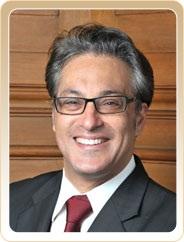
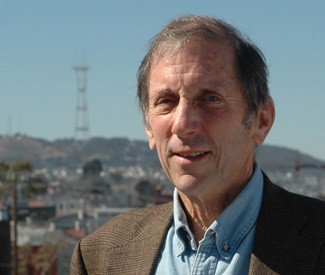
San Francisco lost a piece of its soul when Warren Hellman died last night. In a deeply polarized city, where Occupy’s paradigm of the 99 percent versus the 1 percent resonates more than anywhere, Hellman showed how an extremely wealthy investment banker could champion the interests of all San Franciscans.

I first got to know Warren in 2007 when I did a series of in-depth interviews with him for a Guardian cover story. Before that, he had been a bit of a villain to progressives as he worked with his downtown friends, such as the late Gap founder Don Fisher, to fund political initiatives and groups that aggressively pushed a pro-business agenda, from the Committee on Jobs to the parking garage under Golden Gate Park.

Born into the family that founded Wells Fargo Bank, he became the youngest partner to join Lehman Brothers before founding one of San Francisco’s largest investment banking firms, Hellman was solidly in the 1 percent. But he was a curious man with a good heart, compassionate soul, nimble mind, and strong sense of integrity.

So when the progressives he previously battled over the parking garage pushed for more car-free hours in the park – something Hellmann and his allies had pledged to support if the garage was built – he joined them and battled with his former garage allies who had abandoned that pledge, eventually forcing a compromise when it seemed the car-free crowd was headed for defeat.

That was the reason I got to know him and the focus on my “Out of downtown” story, but it was only the beginning. I came to know about how he was spending his money to help the schools and the poor, about his generous/selfish gift of the Hardly Strictly Bluegrass Festival, and about his belief that George W. Bush and other neo-conservatives – those who so shamelessly and short-sightedly helped consolidate this country’s wealth in fewer and fewer hands – were sullying his Republican Party.

So we stayed in touch and had early morning breakfasts together every six months or so, talking about the issues of the day. We talked about Burning Man, an event he loved and one I was covering and writing a book about. He listened as I complained about my shrinking staff at the Guardian and how the contraction of journalism was bad for San Francisco, and we talked through some possible solutions.
It bothered Warren to see the San Francisco Chronicle being decimated by an out-of-town corporation, and he wanted to help. So he took that kernel of an idea, mulled it, and discussed it with a wide variety of people who had expertise on the topic, just as he would do with his myriad investment banking ideas.

And with that steady heat that he applied to this kernel, he popped it into The Bay Citizen, a non-profit professional newsroom that has already done a great service to San Francisco, and which owes its existence to Hellman, who subsidized it with millions of dollars of his own money and encouraged his rich friends to give millions more. That is among his many legacies, although he was probably most proud of the Hardly Strictly Bluegrass Festival, probably the country’s best free concert. Warren loved that music, and he told me it was mostly because it told the stories of common people so beautifully. “The kind of music is the conscience of our country,” he told me. The San Francisco Board of Supervisors last week offered a bit of appreciation for Warren’s gift, renaming the main venue of Speedway Meadows as Hellman’s Hollow.

I’ll let the Bay Citizen and other media outlets write Warren’s full obituary. What I’m choosing to think about now is the man, and he is someone who I will truly miss. San Francisco just won’t be the same place without the example he set, but I hope it lives on in the hearts and minds of those in a position to help San Francisco find its heart and realize its potential.
 

Have we seen the last California execution?

19

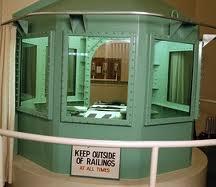
A judge in Marin has tossed out the current execution protocol, putting all executions in the state on hold — and potentially delaying any more state-sponsored killing until after November, when the voters will have a chance to end the death penalty for good.

So it may be that this gruesome and pointless farce has come to an end. It may be that California is ready to join the civilized world. It may be that the state is ready to save billions (yes, I said billions) of dollars by replacing death with life without parole. Which is effectively what we have now — the number one cause of death on Death Row is old age.

State Sen. Mark Leno noted at the San Francisco Tomorrow holiday party Dec. 14 that life without parole “means exactly that” — since that sentence has been adopted, not one person facing LWOP in California has ever been released. The one exception: People who turned out to be innocent. Fortunately, innocent people serving life sentences can still have a chance.

Christopher Hitchens, the war and religion

3

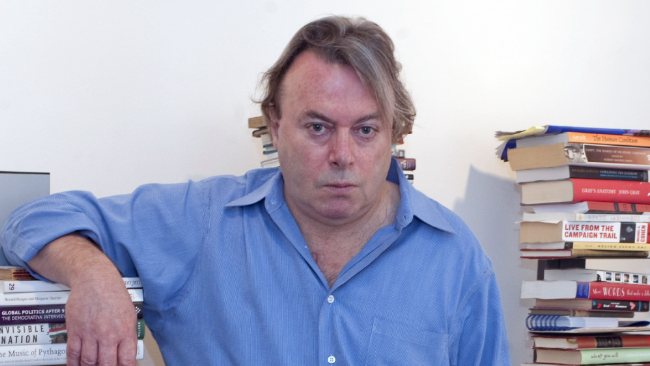
Everything that can be said about Christopher Hitchens has already been said. Thanks to the wonders of the Internet (and the fact that we all knew he was going to die soon), every friend, foe, analyst and critic in the world weighed in on the guy who was both an Oxford-educated British snob, a hard-partying literary figure, a one-time Trotskyite and, over the past decade, a disgraceful fan of the Iraq War.

He’d barely been dead an hour when the plaudits and attacks started to roll in — and I’m nowhere near qualified to join that party. (Although I will say: I have to give a certain amount of credit to anyone who can get away with calling Mother Teresa a “thieving, fanatical Albanian dwarf.”)

But I will say this: “God is not Great: How Religion Poisons Everything” is a wonderful read, and there was nothing more entertaining in the world than listening to Hitchens debate learned and respected religious figures on the Bible, hell and Jesus. While he’s (righly) lambasted for popularizing the term “Islamofascist,” he wasn’t much kinder to the Pope; he despised all religious leaders, rejected calls for a deathbed conversion and died a confirmed atheist.

I heard him once ask a noted Baptist minister whether he was really going to suffer unspeakable torture for eternity just because he didn’t believe in the Baptist God; the guy couldn’t answer him. He could discuss the great religious texts like the scholar he was and make jokes along the way.

I’m not much for the upper classes in general, and the British upper classes seem to have a particular sense of entitlement that grates on me, particularly when they weave back and forth between socialism and fine champagne. But you have to admit: The guy had style.


The Bonds trial: What a phenomenal waste

6

What a phenomenal waste of everyone’s time and money.

After eight years, millions of dollars in taxpayer money, and endless trees killed for newspaper stories, Barry Bonds was just sentenced to spend a month on his Beverly Hills estate.

If I take steroids and lie about it, can I spend a month there, too?

Seriously — other than the publicity the U.S. Attorney’s Office got for prosecuting the Home Run King, what has all of this accomplished? Are any of us safer now that Bonds has been forced to live under house arrest for 30 days and do 250 hours of community service (that he was going to do anyway)?

I’ve always agreed with Dave Zirin on this one:

After all the public money, drama, and hysterics, this is what we’re left with. He was “evasive.” Keep in mind that we live in a country where the US Department of Justice has not pursued one person for the investment banking fraud that cratered the US economy in 2008. Not one indictment has been issued to a single Bush official on charges of ordering torture or lying to provoke an invasion of Iraq. Instead, we get farcical reality television like the US vs. Barry Bonds.

Did Bonds take a “performance enhancing drug?” Again, Zirin:

The cortisone shot into Curt Schilling ankle in the 2005 playoffs was a performance enhancer. The Viagra coursing through Bob Dole’s veins is a performance enhancer. Whatever keeps that smile glued to Laura Bush’s face is a performance enhancer.

Please: There are real crimes happening all the time, from war crimes to political corruption and fraud, things that actually change the lives of human beings for the worse. And the U.S. Department of Justice has proudly used our taxpayer money to send Barry Bonds home for a month.

I’m so proud of our justice system.

End war, bring that money home — a controversial proposition, even in SF?

9

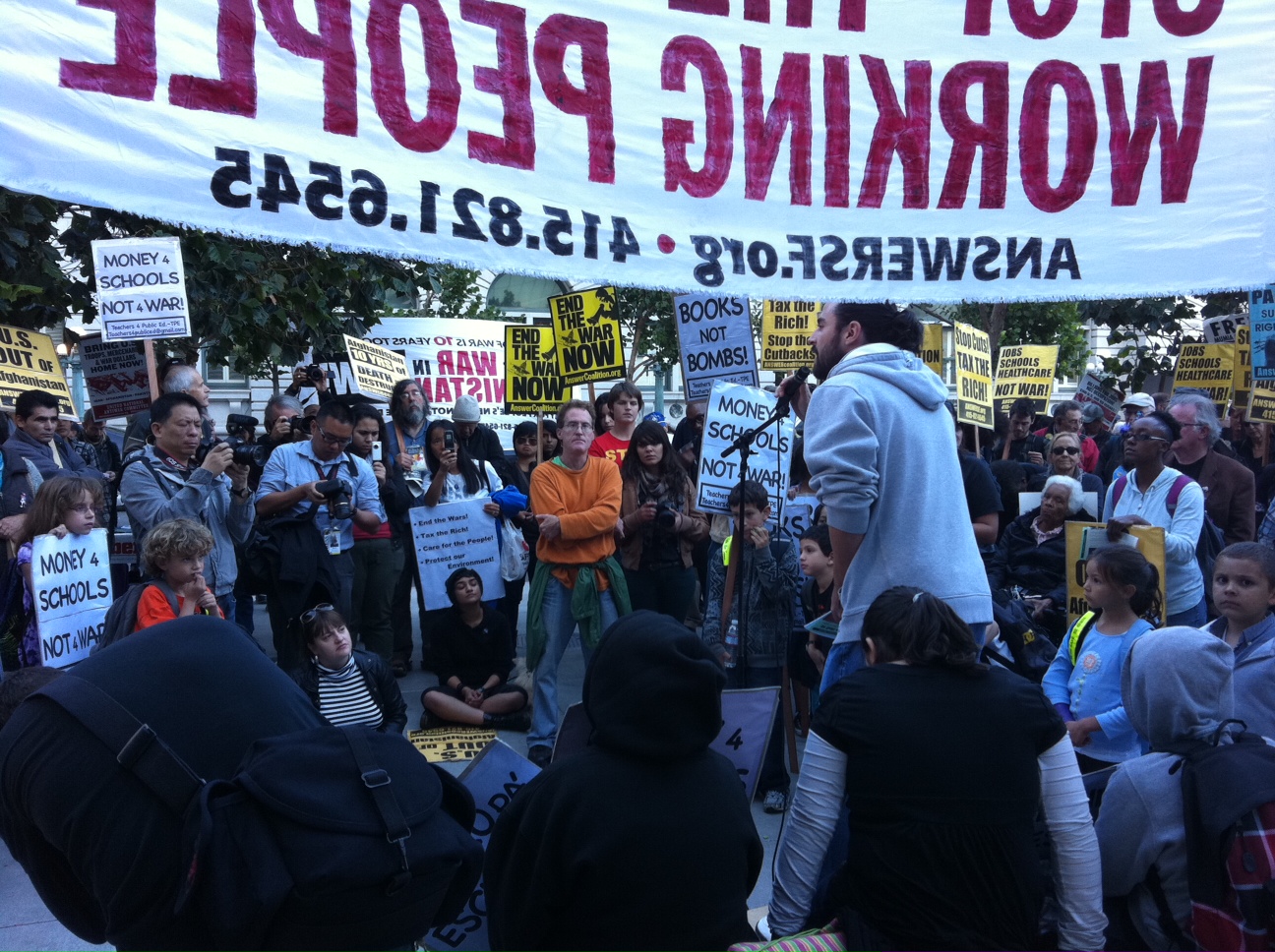
A substantial majority of Americans support ending the war in Afghanistan, decreasing the military budget, and redirecting that money to domestic needs, a position held even more strongly in liberal San Francisco. Yet three members of the Board of Supervisors this week still opposed a resolution in support of that position, a resolution that was mocked on the cover of today’s San Francisco Examiner.

So-called political “moderates” here love to deride progressives and label them out-of-touch with the rest of the country or with what they consider the “real world.” But how sensible and fiscally responsible is it to continue spending more than half of the federal budget on the military, a dollar amount that has more than doubled since Bill Clinton left the White House, when domestic conditions are so bad that tens of thousands of people across the country have been willing to spend months occupying their town squares?

The resolution approved Tuesday on a 8-3 vote – with Sups. Sean Elsbernd, Mark Farrell, and Carmen Chu, consistently the board’s most conservative members, in dissent – was similar to resolutions approved in dozens of jurisdictions across the country, most recently in Los Angeles and Pittsburgh, Penn. In May, a similar resolution was also approved by the U.S. Conference of Mayors, the first such action since the Vietnam War.

The resolution calls for members of Congress to “reduce the military budget, end the wars in Iraq and Afghanistan, and redirect the savings to domestic needs.” In support of that position, it notes that we’re spending almost $1 trillion per year on the military and war debt, more than 50,000 U.S. troops have been killed or injured in the two conflicts, and that everything from schools to public services to the country’s infrastructure needs are severely underfunded.

“It’s a way to signal to the federal government – in this case, particularly [Reps.] Nancy Pelosi and Jackie Speier – that people are fed up with their local economies being plundered to support war,” Janet Weil, who works on resolution like this as part of Code Pink’s Bring Our War Dollars Home campaign, told us. San Francisco’s resolution was developed by the New Priorities Campaign, a nationwide coalition that includes Code Pink.

But during this week’s approval of the measure – which included no discussion and lasted less than a minute – Elsbernd rolled his eyes as the measure came up and then voted against it. Afterward, I asked him why, and he gave a two-pronged answer. He generally opposes local resolutions on international issues, and on this one, he said that pulling all troops out of Afghanistan is an unrealistic position that is out of the national mainstream.

“Is this the appropriate forum to discuss how many troops we should have in Afghanistan? Probably not,” he said.

Yet most people clearly see the connection between lack of resources at home and trying to fight two simultaneous wars and maintain a military presence in 63 countries, something that Weil said has fed the Occupy movement around the country, where signs and public statements have repeatedly made that connection.

“I visited OccupySF and I saw very eloquent anti-war messages on dozens of signs, and that had nothing to do with organizing by Code Pink or other anti-war groups,” Weil said. “For a lot of people, it’s such a no-brainer that people don’t even bring it up.”

Yet she said that many politicians and mainstream media outlets have been out-of-touch with that reality. For example, while there has been some popular outcry over this week’s approval of a provision in the latest defense authorization bill that allows for indefinite military detentions of suspected terrorists captured on U.S. soil, the fact that the bill principally authorizes a whooping $662 billion in new military expenditures has gotten less attention.

“But the Occupy movement has pulsed energy and people into the anti-war movement across the country,” Weil said, predicting that the connection between domestic needs and wasteful military spending will put increasing pressure on the federal government to address the issue.

As for whether local resolutions will help with that process, even moderate political consultant Jim Ross – who mocked this week’s anti-war resolution in the Examiner article – correctly noted that San Francisco helped lead the international effort to boycott South Africa and end its apartheid regime, a movement that began with a resolution approved by the San Francisco Board of Supervisors.

Or, to put it in the bumper sticker mentality that conservatives seem to appreciate: think globally, act locally.

A really dumb article about bookstores

35

You never know what you’re going to get on Slate, which tends toward the neo-liberal and sometimes libertarian, but I just read a particularly awful piece by technology writer Farhad Manjoo, who thinks that local bookstores are economically inefficient and should just go away:

Compared with online retailers, bookstores present a frustrating consumer experience. A physical store—whether it’s your favorite indie or the humongous Barnes & Noble at the mall—offers a relatively paltry selection, no customer reviews, no reliable way to find what you’re looking for, and a dubious recommendations engine.

For a tech writer, Manjoo has a remarkably shoddy understanding of economics:

After all, if you’re spending extra on books at your local indie, you’ve got less money to spend on everything else—including on authentically local cultural experiences. With the money you saved by buying books at Amazon, you could have gone to see a few productions at your local theater company, visited your city’s museum, purchased some locally crafted furniture, or spent more money at your farmers’ market. Each of these is a cultural experience that’s created in your community. Buying Steve Jobs at a store down the street isn’t.

He conveniently ignores that fact that money spent a locally owned, independent business stays in the community — and thus creates more local economic activity and more jobs (not to mention tax revenue for local government). Money spent at Amazon goes to an out-of-town operation that doesn’t even pay state sales tax. You want to read about the well-documehted economic value of shopping at a local story, you can find plenty here and here and here.

And let’s talk about the One Percent — would you rather that your money helps the owner of a small local store buy food for his or her kids, or see the money go to one of the richest people in the world?

But there’s another point here. Like local coffee shops, local bookstores are places where people gather and have actual human interactions. I see my neigbors there; we talk about what we’re reading. When I’m done with books, I can sell them back — and someone else can buy them, used, and I can use the money to buy another new book. Which is a pretty efficient economic system.

And there are things you can’t put a price on: At Red Hill Books, the allegedly inefficent, overpriced local bookstore in Bernal Heights, the employees know me and my kids — and when my daughter, who is a voracious reader, finishes one series of books, they know what to recommend next.

That’s not a “recommendations engine” — that’s a live person.

If Farhad Manjoo wants to live in robo-world where a machine tells you what to eat, drink and read, fine — but I still think human beings, inefficient as we are, do a better job at selling books.


A step forward and step back for SF’s homeless families

26

As San Francisco grapples with a record-high number of homeless families seeking shelter space during the holiday season, a pair of homeless policy discussions at yesterday’s Board of Supervisors meeting highlighted shortcomings and missed opportunities in the city’s approach to the issue.

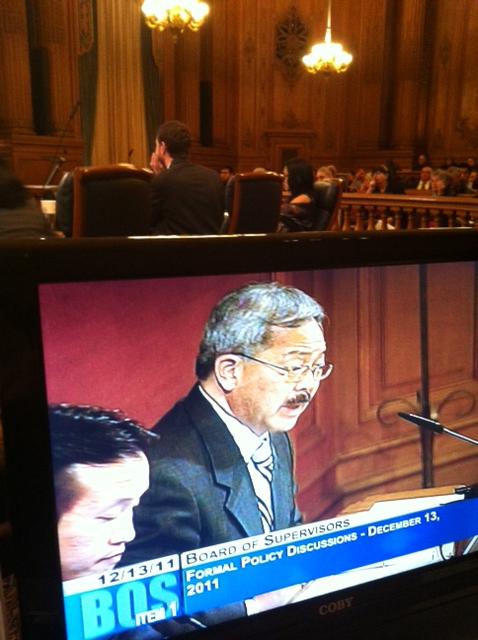
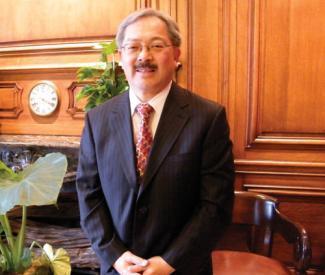
Mayor Ed Lee announced that he is opening up more shelter space and public housing units for homeless families, finally relenting to weeks of pressure to address the pressing problem. Yet the board also narrowly approved turning surplus city property over to neighborhood residents rather than using proceeds from selling it to benefit homeless families, as city policies call for.

The property in question, 341 Corbett Avenue, is a vegetated hillside near Upper Market that the city declared a surplus property in 2004, transferring it to the Mayor’s Office of Housing to either develop as housing for poor families or to put the proceeds from its sale toward that purpose. Providing housing for the homeless is what city policy calls for surplus property to be used for, according to 2002’s Surplus City Property Ordinance. The property was assessed at $2.2 million, but it wasn’t developed because of costs associated with the steep hillside, nor was it listed for sale.

Neighbors of the property have sought to use the property for open space and a community garden, so the district’s Sup. Scott Wiener authored legislation to facilitate a community garden by transferring it to the Department of Public Works. The transfer would involve no money, leaving homeless advocates concerned about depriving homeless families of any revenues from the property.

“There are a lot of public assets we could sell if we wanted to fund this need or that,” Wiener told his colleagues, noting that neighbors would rather see a community garden on the site and that Upper Market lacks adequate open space.

But Sups. Jane Kim and Eric Mar led the opposition to the move, saying they didn’t object to that kind of community use of this property, but that city policies need to be followed, particularly considering the dire need for more resources to address the needs of homeless families. “I do have concerns about the precedent we set and also being consistent,” she said, arguing for a delay in the action until city officials find a way to compensate MOH for at least some of the property’s value.

“Overriding the surplus property ordinance is not something I want to do right now,” Sup. John Avalos said.

But the board voted 6-5 to approve the transfer, with progressive Sups. Kim, Avalos, Mar, David Campos, and Ross Mirkarimi in dissent. Housing advocates upset by the action directly their ire at the swing vote, one-time progressive Sup. David Chiu, with activist Tommi Avicolli Mecca sending out an e-mail blast saying, “david chiu betrayed us again — he wouldn’t support continuing the 341 Corbett item so that affordable housing advocates could try and work out a better deal with the Mayor’s Office on Housing and others.”

Meanwhile, the skyrocketing number of homeless families has become a big issue in town since the Guardian broke the story on Oct. 13, with repeated stories in the Chronicle, Examiner, and other media outlets, and homeless advocates staging rallies outside City Hall and unsuccessfully pushing for a meeting with Mayor Lee on the issue.

During yesterday’s monthly mayoral question time, Kim asked Lee what he was doing to address the “alarming rate” of homeless families in the city – with 267 families now on a wait list for emergency shelter space, a 356 percent increase since 2007 – specifically challenging him to expand the city’s Rental Subsidy Program by 50 families and open new emergency winter shelters. She also noted three recent suicides in the city by individuals facing homelessness.

“I share your concern about family homelessness in San Francisco. My staff has been hard at work for a long time now trying to proactively respond to this very serious challenge and I’m proud to offer some very constructive, tangible solutions,” Lee said. He announced that his administration had just this week starting expediting the placement of homeless families into vacant public housing units, with 18 families now being processed and a goal of placing about 30 of the 79 families now in shelters into public housing units.

Lee also said that SalesForce.com CEO Marc Benioff is donating $1.5 million to the Home for the Holidays program the city is creating to provide rent subsidies and case management to 160 families, a donation that the city will match. “Their generosity is inspiring,” Lee said.

He also pledged to open up an unspecified number of new family shelter spots and, somewhat bizarrely, tried to wrap this issue into his relentless focus on promoting private sector job creation, mostly through tax breaks that actually cut into the city’s ability to provide direct assistance to homeless families. As Lee said, “The long-term goal is to increase these families’ incomes and to place them into permanent unsubsidized housing.”

Ammiano meets with U.S. attorney

59

Assemblymember Tom Ammiano finally got a meeting with the U.S. attorney for Northern California, Melinda Haag, Dec.13 to talk about the feds crackdown on medical marijuana — and he left disappointed that Haag didn’t seem to understand what a mess she’s making.

“The meeting didn’t result in any changes,” Ammiano told me. “But it was good that it happened. We cleared the air about the harm that’s being done.”

According to Ammiano’s aide Quintin Mecke, who was also in the meeting, Haag wasn’t at all clear about what she wanted — what, in other words, would end the crackdown. She talked a lot about “proximity to kids,” suggesting that dispensaries that are close to schools were a problem — although that’s a really bogus argument. I’ve been to a number of local dispensaries and my colleague Steve Jones has been to most of them, and every one requires a drivers license and a medical marijuana ID and they’re really serious about security. No high school kids are getting pot from the clubs.

Now: Pot use is up among high school kids nationally (which is another whole issue) but San Francisco Unified School District surveys show that drug use in general, and pot use in particular, is actually declining in this city. So a city that has a lot of pot clubs — highly regulated — is bucking the national trend on pot use among teens.

Ammiano wants to set strong state regulations for clubs, which most of the dispensary owners would welcome. But Haag wasn’t helpful with that, either — she said she wouldn’t make policy recommendations.

So there you have it — the U.S. Attorney is using demonstrably false allegations to pursue a program that she can’t defend — and she won’t help the Legislature find a solution. Thanks, President Obama.


Kids smoke pot, don’t drink

19

More American teens are smoking pot, and fewer are drinking alcohol, according to a new survey that’s at the very least interesting and could be a push for policymakers to start thinking about how we regulate marijuana.

As the father of two kids, I’d like to start off by stipulating: High schoolers are going to try to alter their consciousness. They’re also going to try to have sex. I did it, you did it, we all did it (well, we all drank and smoked pot. Some of us got laid and some of us didn’t, but speaking personally, I can say that for those who didn’t, it wasn’t for lack of trying).

My sainted mother used to tell my brother and me that she’d rather have us hang out in the basement with our friends than go out and drive somewhere at night, and she never adhered to the Catholic doctrine of pretending kids shouldn’t know about birth control. Her mantra: “As long as nobody gets pregnant or killed in a car accident, whatever you’re doing can’t be that bad.” Which isn’t such an awful parenting lesson.

And when it comes to getting pregnant or killed in a car accident, I’d say it’s probably better that kids smoke pot than drink. Not saying either one is a great choice for a 16-year-old, just saying that drunk driving, blackouts etc. are a product of alcohol and that the risks of really bad outcomes from smoking pot are a bit lower.

But there’s a larger point here, coming from the Marijuana Policy Project:

 “This report, once again, clearly demonstrates that our nation’s policymakers have their heads buried in the sand when it comes to addressing teen marijuana use,” said Rob Kampia, executive director of the Marijuana Policy Project.  “Political leaders have for decades refused to regulate marijuana in order to keep it out of the hands of drug dealers who aren’t required to check customer ID and have no qualms about selling marijuana to young people. The continued decline in teen tobacco and alcohol use is proof that sensible regulations, coupled with honest, and science-based public education can be effective in keeping substances away from young people. It’s time we acknowledge that our current marijuana laws have utterly failed to accomplish one of their primary objectives – to keep marijuana away from young people – and do the right thing by regulating marijuana, bringing its sale under the rule of law, and working to reduce the easy access to marijuana that our irrational system gives teenagers.”

Yep: Education and intelligent regulation works. When I was in High School, I was one of the very few kids that didn’t smoke cigarettes. Today, the number of teen smokers is much, much lower. And the new study says kids aren’t drinking as much — again, no doubt a result of health education and strict regulation.

So if harm reduction is the goal (and it ought to be), why aren’t we legalizing and regulating pot?


Ed Lee and “job killers”

15

Every time I hear the word “job killer” I think of the California Chamber of Commerce, which loves to affix the label to anything that might hurt corporate profits. Most environmental legislation, most pro-labor legislation, most financial regulations, anything that improves employer requriements for health insurance — the Chamber dubs it “job killers.”

And now Ed Lee is using that word to slow down progressive taxes, regulations or business mandates. He’s proposing a Charter Amendment to send any bills that might cause job losses to the Small Business Commission for a “jobs impact” public hearing.

That would give another weapon to downtown interests who want to kill, say, improvements to the Healthy San Francisco law, or any changes in the business tax.

Here’s what kills me: How many jobs were destroyed by the LACK of regulations over the U.S. financial industry? How many jobs were destroyed by a tax system that keeps most of the wealth concentrated in the top one percent? How many jobs were destroyed by cutbacks and layoffs in the public sector (which were a direct result of a failure to seek new revenues that business leaders would have called “job killers”?)

But we don’t have a special commission weighing in on tax cuts and tax breaks that cost the city money and kill city jobs.

Assemblymember Tom Ammiano, who has to deal with the California Chamber and its lackeys, told me that Lee “is talking like a Republican, or like the moderate Democrats in Sacramento.” That’s not where the mayor of San Francisco ought to be.


SF supervisors urge city to defy federal immigration holds

57

The San Francisco Board of Supervisors yesterday (Tues/13) approved a resolution calling for the city to adopt stronger policies for resisting federal efforts to deport undocumented immigrants who live here. It is the latest move to support the city’s Sanctuary City status and counter the federal Secure Communities (S-Com) program, a new database that allows the feds to circumvent local policies protecting local immigrants who have been arrested but not convicted of any crimes.

The resolution urges the Sheriff’s and Juvenile Probation departments not to honor civil immigration detainer requests from U.S. Immigration and Customs Enforcement until there is a written agreement to have ICE pay for all local costs associated with the incarcerations. The Santa Clara County Board of Supervisors adopted a similar policy in October, a move also being pursued in Chicago, New York City, Washington DC, and other jurisdictions.

“It doesn’t make communities safer. In fact, it makes immigrant communities less safe,” Sup. Eric Mar, who authored the resolution, said of S-Com, noting that it makes immigrants less likely to report crimes or cooperate with police. “I urge you to support this message and to follow the lead of jurisdictions like Santa Clara and Chicago, Cook County.”

Sups. David Campos and Jane Kim asked to join Mar and Board President David Chiu as co-sponsors of the measure, which was then approved on an 8-3 vote, with Sups. Sean Elsbernd, Mark Farrell, and Carmen Chu in dissent. Members of the San Francisco Immigrant Right Defense Committee, who had lobbied hard for the resolution and who packed board chambers, erupted in a sustained standing ovation after the vote.

Angela Chan, an attorney with Asian Law Caucus who helped lead the effort, afterward told supporters, “It’s because of this group’s hard work that we got a lot more votes than we thought we’d get,” noting they only had six solid votes going in. “Thank you, happy holiday, and we have lots more work to do.”

Chan hopes the resolution will give political cover to Ross Mirkarimi – who supported the measure as a supervisor and who takes over as sheriff at the end of the month – to expand policies created this year by Sheriff Michael Hennessey to resist some immigration detainer requests. Mirkarimi hasn’t yet returned calls for comment on the issue.

San Francisco has a fraught recent history on how to handle undocumented immigrants accused of crimes. Two years ago, the board adopted a policy of refusing to report them to the feds until they had been convicted of serious crimes, approving the Campos-authored legislation on a veto-proof 8-3 vote, only to have then-Mayor Gavin Newsom refuse to enforce the policy. After that highly charged fight, the creation of the S-Com program allowed the feds to circumvent those restrictions by directly finding out whether local inmates are undocumented, making moot Mayor Ed Lee’s agreement to partially implement the Campos legislation.

As we report in this week’s paper, this is one of a number of issues related to local control and an overreaching police state where Bay Area communities such as Berkeley, San Francisco, Richmond, and San Jose are trying to push back on the federal government. Sup. Jane Kim is currently working on an ordinance to restrict the participation of San Francisco http://www.sfbg.com/2011/04/26/spies-blue. Advocates say she plans to introduce the measure next month, but Kim told us she’s have some difficulty getting sign-off from the City Attorney’s Office.

My (latest) favorite website ever

10

Rick Perry will fight a chicken with hand. He says so himself, right here. And Newt Gingrich reminds us that you can’t think when you’re fucking high.

Oh, and there’s a group of spin-meisters in the back room trying to figure out how to make Perry sound less like a blithering idiot.

Livefunnyordie. I don’t know how these folks manage the lip-reading stuff, but it’s spectacular.

Lowe’s: The anti-Muslim neighbor on Bayshore

9

I don’t shop at Lowe’s. Don’t go to Home Depot or Wal-Mart (those folks have enough money as it is), either. I don’t like big-box retail in general, and I was opposed to bringing a big-box, out-of-state chain to build a store on Bayshore Boulevard. I think shopping local and spending your money with small merchants who are part of the community is good for the economy. 

But thanks to lobbyist Jack Davis, who was hired at some vast sum of money to bring Home Depot to San Francisco, and then-Mayor Willie Brown, who bought Davis’s line, Home Depot won permission to build on Bayshore — and when the Georgia-based company decided not to bother and left the site vacant, Lowe’s (based in North Carolinia) stepped in.

And now we know what an excellent neighbor the giant retail outlet has turned out to be. Lowe’s has decided to pull its ads from the Discovery Channel’s All-American Muslim show because some right-wing Christian nut-group objects to anything that doesn’t demonize the Islamic religion and all who follow it.

What a fine, upstanding company to welcome to San Francisco.

The good news about the mid-year state cuts

6

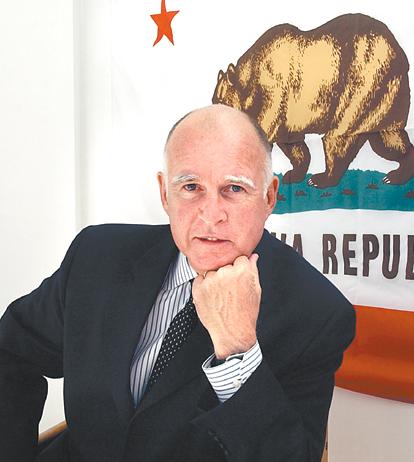
Well, there isn’t much good news, really — Gov. Jerry just announced another $1 billion in cuts, mostly to education and services for the disabled and poor. Check out the state’s priorities: $429.6 million in cuts to education, $225 million in cuts to MediCal, In-Home Supportive Services and developmental services — and a whopping $20 million in cuts to the prison system.

Supporters of K-12 education will walk away a little happier than they expected; the direct cuts (which could have meant losing an entire week of the school year) will amount to far less, only about $11 a student. But that doesn’t include $248 million in cuts to state funding for school transportation, which a lot of district will have to absorb in other ways. In San Francisco, it’s easier for kids in middle school and high school to take Muni; in more rural areas, school buses are a bigger deal.

Missing in a lot of the MSM coverage of the midyear cuts is the fact that the state is actually spending more money than expected. As Calitics points out, that’s no surprise:

It turns out that during a bad economic period, people need more services, but in the current climate in Sacramento, getting the legislature to approve the revenues for those services is an impossible feat even for somebody with the experience of Jerry Brown.

But here’s what’s interesting. In his press conference, Brown noted that the bright spot on the state’s fiscal front was increased money coming in from Prop. 63 — a surtax on incomes of more than $1 million to pay for services for the mentally ill. Which means that there’s additional money to be made by taxing the very rich.

And the voters seem more than willing to do just that.


OccupyOakland extends Port blockade into second day

0

Early this morning, the protesters carrying out Oakland’s part in yesterday’s national “West Coast Port Shutdown” declared victory after 24 hours of demonstrations. After picketing during both the 8am and 6pm shifts at the Port of Oakland yesterday, protesters decided to extend the day of action to the 3 am shift today (Tues/13). 

Occupy Oakland’s General Assembly had voted to extend the shut-down if there was police violence against Occupy protesters in other participating cities; Occupy groups from Anchorage to San Diego participated, and protesters were tear-gassed in Houston and Seattle.

After a successful morning action, thousands of protesters arriving on a march to picket the 6pm shift were surprised to find that it had already been canceled. In an emergency General Assembly, protesters exchanged information about solidarity actions across the country and chose to continue the shutdown.

Protesters marched to Gate 60, where they commenced what one long-time OccupySF protester called a “festival in the streets.” Sound trucks with live music and DJs entertained the crowd while others played live music; a handful of tents were pitched.
At 1:20 am, the picket began again. Demonstrators circled in front of the gate entrance, chanting “Oakand is a union town!” and slogans against Export Grain Terminal (EGT), a grain elevator operator with which the ILWU has been in dispute since 2009.

Port workers began to arrive around 1:30 am, and many were surprised to see that the picket had been extended. One man, one of the earliest to arrive, seemed exasperated, saying “This is still going on? I didn’t show up yesterday, but I drove here from Fairview today.”
Others reacted differently. When a protester greeted one man and explained the reason for the continued protest, he responded, “Listen, I’m from (ILWU) Local 10. We’re a militant union. I’m used to this kind of thing.”

Clarence Thomas, past secretary-treasurer of ILWU Local 10 and third generation Oakland longshoreman, expressed a similar sentiment of solidarity in a recent interview with Workers World, saying, “If ILWU members don’t honor the community picket lines, it will cause an irreparable breach with the community. If the ILWU can’t support the community, why should the community support the ILWU in 2014 contract negotiations or when the new grain agreement is up next year?”

At 1:45 am, dozens of Occupy supporters, many of whom had left the “port shutdown” action to get some rest with plans to return in the early hours of the morning, began marching to the port from 7th and Adeline streets to join the picket lines.

By 2:30 am, protesters were marching in community picket lines at gates 60, 63, 67 and 68, with over 100 at the first three locations and about 20 in an all-bike picket line at the fourth. A handful of workers crossed the picket line and went to work. The majority who arrived for work – a light turnout, as news of the picket traveled quickly – did not cross the picket line. Many did stay, however, and engage in political conversations with Occupy protesters.

By 3:15 am, the shift had been officially canceled. A general assembly of Occupy protesters and representatives from the ILWU met to discuss next steps.  ILWU steward Anthony Lavierge addressed the group, saying, “This was called in solidarity with the Longshoremen, and in my opinion another day would harm that relationship. However, this is a community picket, and in the end it’s up to you what you decide to do.

Though some protesters wanted to continue to extent the blockade, they were overwhelmingly voted down by those who felt the time was right to declare victory. Samantha Levins, an Alameda/Oakland ferry worker and organizer with the Inland Boatmans Union/ILWU, stayed until the protest dispersed at 3:45am. She told the Guardian, “Today was great. It was extremely well organized and everybody was really respectful.”

Levins saw the day of action as a step forward for Occupy in the direction of working more closely with unions. She said, “It really opens up possibilities (for Occupy) to work more with unions. They’ve proven they can do it in a respectful way. ”

Why we need Occupy

7

Not than anyone needs this kind of reminder any more, but more reports seem to come out every day highlighting the level of economic injustice in the United States. The Organization of Economic Cooperation and Development reported Dec. 5 that the United States now has the fourth-highest inequality level in the OECD, behind only Mexico, Chile and Turkey. Not distinguished company. Perhaps more important:

Income taxes and cash benefits play only a small role in redistributing income in the United States … only in Korea, Chile and Switzerland is the effect still smaller.

In other words, not only are we among the worst countries on Earth for economic inequality, we aren’t doing shit to change the situation.

Oh, and by the way — San Francisco has the worst income inequality in California.

That’s why we need Occupy. Because nobody else is making us pay attention.

Occupy shuts down morning shift at Port of Oakland

Usually, when significant events related to the Occupy movement occur in the pre-dawn hours, it means an encampment has been raided. But this morning, Occupy protesters were the ones carrying out a strategic plan before the sun came up.

A main objective of today’s Port of Oakland shutdown — the second in two months initiated by Occupy Oakland — was to strike back against the police raids that dismantled their camps.

Protesters led by Occupy Oakland effectively shut down the morning shift at the Port of Oakland today, Dec. 12, as part of a Coordinated West Coast Port Blockade that Occupy groups from San Diego to Anchorage have been planning since Nov. 18, when Occupy Oakland’s General Assembly unanimously approved the call to action.

Several hundred activists met up at the West Oakland BART station at 5:30 a.m. and proceeded to march down Seventh Street to the sprawling shipping hub, where they formed picket lines outside terminal entrances to prevent workers from entering the gates for the 7 a.m. shift. Shortly after they began picketing, truckers waiting to load or unload cargo began turning around to exit port property.

There were several busloads of protesters in addition to those who traveled to the port on foot, as well as a bicycle contingent. While most protesters filed through the streets in an uncharacteristically quiet march that seemed muted due to a lack of sleep, a few displayed gusto with a sound system, shiny homemade flags, and flashy outfits. Some showed up toting a life-sized cut-out of Lt. John Pike, the University of California Davis officer who became notorious for dispersing teargas into student protesters’ eyes, with the face cut out so people could pose for photos.

Police arrived on the scene clad in riot gear, but did not attempt to prevent protesters from circling up around the gate entrances and forming picket lines. They stood in formations in front of the gates weilding batons and teargas launchers, though protesters had no intention of entering the gates and only sought to block them. Alameda County Sheriff buses circled the area as well.

Around 7 a.m., when the morning shift would have typically started, two ILWU dockworkers (who declined to give their names) stood near the Hanjin Shipping gate at berths 55 and 56, surveying the picket line. Past the gate, a cargo vessel which had likely come from Japan was berthed and waiting to unload.

“Ain’t nobody going to cross it,” one of the men offered. The other gestured toward protesters and said, “These are Americans wanting American jobs.” Asked how he felt about the picket, he responded, “We don’t support it, because it’s not in our contract — but I do see some issues, like we’re hurting, too.” The ILWU members said longshoremen turned away because of the picket line wouldn’t be paid for the day, because they’re only registered as having reported to work if they’re physically on the terminal. They also noted that there was a relatively light workload at Oakland terminals on this particular day.

The official objectives of the port blockade, aside from showing resistance against crackdowns on Occupy encampments, were to demonstrate Occupy’s solidarity with longshore workers and port truckers. The International Longshore & Warehouse Union (ILWU) Local 21, based in Longview, Wash., has been locked in a legal dispute with Export Grain Terminal (EGT) stemming from what workers characterize as union-busting practices.

Port truckers, particularly in Los Angeles, have been unable to unionize due to their employment classification as independent contractors, and protesters sought to highlight their struggle as well. Picketers held signs declaring solidarity with the ILWU and truckers against the one percent — global shipping companies owned in part by agribusiness giant Bunge, Ltd. and Goldman Sachs, respectively, who profit from their labor.

Speaking into a megaphone, organizer Barucha Peller announced that occupiers in southern Washington had shut down the Port of Longview, according to a text message from ILWU Local 21. Union members wanted to thank the movement for the show of support.

By around 10 a.m., an independent arbitrator had ruled that the picket posed a health and safety risk to longshore workers, so the dockworkers were sent home, effectively halting port activity for the first part of the day. “I’m really impressed that so many people got up at five o’clock in the morning,” Anthony Lavierge, a steward with ILWU, said into the megaphone. “It’s officially shut down. The longhshore labor is officially going home.” However, protesters planned to return to the port later on to prevent the start of an evening shift.

Following the announcement that workers had gone home for the day, protesters marched back to West Oakland BART station. A second march to the port is planned for 4 p.m., leaving from 14th and Broadway streets in downtown Oakland following a 3 p.m. rally. A third march to the port is scheduled to leave the West Oakland BART station at 5 p.m.

Police arrest 55 in early morning raid at Occupy SF

9

After more than two months, police have successfully cleared out all of the Occupy SF encampment on Market Street between Main Street and the Embarcadero. In an early morning raid, police completely cleared out the Occupy SF protest site at 101 Market St.

More than 50 protesters were present at 101 Market St. on the evening Dec. 10, as well as at a smaller site across the street. No tents, tarps or other structures had been erected; most protesters had sleeping bags and blankets. Following an afternoon march and a small concert that ended by midnight, protesters were quiet and mostly asleep.

Police previously warned protesters that they were in violation of California Penal Code section 647(e), “lodging in a public place.” Police entered the camp and read written notices aloud every 90 minutes or so for more than 24 hours before the raid, but did not give a specific warning as to when enforcement would take place.

Around 4:30 a.m. on Dec. 11, police rushed in, quickly surrounding those who slept in front of the Federal Reserve Building. Without giving them the option to pack up their belongings and leave, police arrested each individual one by one. Protesters who’d set up camp at a smaller site across the street looked on and yelled out in dismay.

Protesters had previously been informed that they were permitted to sleep on the sidewalk between 11 p.m. and 7 a.m., as outlined in San Francisco’s sit-lie ordinance.

Until about 6 a.m., Market Street between Main and Spear streets was blocked off by over 100 police officers in partial riot gear as well as several police vehicles. At about 5 a.m., Department of Public Works crews arrived and started loading all the protesters’ belongings — mostly sleeping bags, blankets, protest signs, and food — into trucks.

Several were arrested on charges other than public lodging. Two protesters, who yelled at police as they lined up on the street, were arrested for obstructing traffic.

One man yelled that he was a homeless war veteran and that he wanted his belongings back, which he’d left on the sidewalk in front of 101 Market. He had been loudly decrying police activity for almost 30 minutes when he jeered that an officer “carried a big stick because he had a small dick,” at which point three officers immediately grabbed him, brought him inside police lines, and were joined by several other officers in pushing him to the ground and zip-tying his wrists. Another man was arrested for spitting near the feet of a policeman.

In one bizarre incident, an officer confiscated a package of bottled water that an individual was carrying at the time of his arrest and then proceeded to distribute the bottles up and down the police line.

A man with a broken foot, who was walking on crutches, was pushed down by police for obstructing the street. He was arrested a few minutes later, after he and several others sat down in a crosswalk in defiance of orders to step onto the sidewalk.

By 6 a.m., everyone who remained at 101 Market St. had been arrested and all of their belongings confiscated; the sidewalk was clear.

Occupy SF began its 24 hour protest at 101 Market St. on Sept. 29. The camp remained until the first police raid on Nov. 20. Protesters subsequently reclaimed the site on Dec. 1.

As things stand, there is no Occupy SF presence at either of the original downtown locations. By 6:45 a.m., about 10 individuals — those who’d evaded arrest — had set up a small protest site, complete with signs and information table, at 532 Market St., in front of the offices of E Trade Financial.

In the past week, Occupy protest sites have also popped up at City College of San Francisco, San Francisco State University, and at the Bank of America at 501 Castro St. Occupy SF State is the only protest camp, complete with tents, still in place today in the city today.

Should Occupy pull back and reinvent itself?

14

Maybe it’s time for the Occupy movement to simply take a bow, step off the national stage for now, and start planning its next big production. Because at this point, Occupy has been a smashing success – winning over its audiences and key critics, influencing the national debate – but it’s in danger of losing that luster if its lingers too long in its current form.

Consider the events of this week. When OccupySF’s long-standing encampment was finally removed by police and city workers, the general public barely noticed or reacted. Unlike during previous police raids, hundreds of supporters didn’t pour in to defend the camp and social media sites didn’t light up with messages of indignation and solidarity.

Why? Well it’s not because people don’t support the movement. Polls have consistently shown most people back Occupy, and even higher percentages support its basic message that the 99 percent are being screwed over by the 1 percent. Top political leaders at every level – Mayor Ed Lee, Gov. Jerry Brown, and President Barack Obama – made statements and speeches this week that echo the themes and ideas that Occupy has injected into the national dialogue.

But the tactic of occupation was only going to get us so far. It was a great way to start a conversation and demonstrate a broad discontent with this country’s inequities and plutocratic excess. Finally, the people have started to challenge those who are exploiting them, and it’s been particularly exciting to see young people fighting to reclaim their stolen futures.

That energy hasn’t dissipated, and it’s interesting to see it morphing into other campaigns, such as the recent takeovers of vacant foreclosed homes, the human rights march planned for tomorrow, and West Coast port shutdown scheduled for Monday. But I predict the crowds blockading the Port of Oakland will be a fraction of the size of the tens of thousands who took to the streets during the Oakland General Strike on Nov. 2.

Then, people were reacting to police violently crushing Occupy Oakland’s peaceful political assembly on Oct. 25, a galvanizing event, much like the raid on Occupy Wall Street and the abusive police tactics against occupiers on the UC Berkeley and UC Davis campuses. Each example showcased the police state’s willingness to use a heavy hand against peaceful protesters, demonstrating for a global audience what an important struggle this is and what we’re up against.

Yet it was hard to summon up much indignation over this week’s raid on OccupySF, even as protesters complained about being given just five minutes to get out and having their belonging seized and destroyed. Mayor Lee had been threatening the raid for weeks and had offered the group a free new home in the Mission – an offer they probably should have taken, one that would have allowed the group to declare victory and have a base of operations throughout the winter.

But unlike my cranky, “you kids get off my lawn” colleagues in the mainstream press, who have consistently derided the movement and valued anti-camping laws over the core constitutional right to peaceably assemble to petition for a redress of grievances, I think Occupy has been extremely important and effective. My desire is to see it evolve and continue.

Mayor Lee and other city officials have praised the goals and worldview of Occupy at every turn, even as they oppose the tactic of camping. As Police Chief Greg Suhr raided OccupySF, he told reporters that “part of the 99 percent removed part of the 99 percent to give the other part of 99 percent some relief,” tipping his hat to Occupy’s basic paradigm. Gov. Brown echoed Occupy’s economic inequity language in his call for higher taxes on the rich this week.

“I’m here in Kansas to reaffirm my deep conviction that we’re greater together than we are on our own. I believe that this country succeeds when everyone gets a fair shot, when everyone does their fair share, when everyone plays by the same rules. These aren’t Democratic values or Republican values. These aren’t 1 percent values or 99 percent values. They’re American values. And we have to reclaim them,” Obama said in his big speech this week, embracing the Occupy paradigm even as he tried to transcend it. But go back and read the whole speech and you’ll see that it would have fit right in during any Occupy General Assembly, with its regular calls to tax the rich, something this movement has given him the political cover to more forcefully advocate.

So the conversation has now begun, thanks largely to this movement. But, as most supporters of Occupy already know, our elected officials won’t simply enact the reforms we need on their own. They will need to be pushed and prodded relentlessly by a restive public, so the supporters of Occupy still have a lot of work to do.

How will they do that and what will it look like? I don’t know, but after watching these smart, creative, courageous, and committed young people and their supporters change the political dynamics of this country over the last three months, I’m anxious to see what they come up with and I stand read to chronicle and support the next phase, whatever it’s called and whenever it begins.

Poverty among plenty

108

The Bay Citizen has a fascinating map by census tract of poverty in the Bay Area. Among the things that jump out: There’s plenty of serious poverty in the area — and it’s worst than the map shows. The definition of “poverty” is a family of four living on $22,113 — in the Bay Area. Hard to imagine how a family of four can even pay rent, much less eat, in this part of the world on $22,000.

Aaron Glantz makes an interesting point: “In many parts of the Bay Area, the wealthy and poor live in close proximity to each other.” Check out the census tract in the Richmond, right next to Seacliff, where some of the richest San Franciscans live. A full 20 percent of the residents of that area are under the federal poverty line — and they can walk a couple of blocks to the mansions where millionaires live. There are 60 people living in extreme poverty in the 35-square-block area around Presidio Heights, where the likes of Sen. Dianne Feinstein and Rep. Nancy Pelosi live.

Poverty among plenty. Just a tiny fraction of the wealth of Feinstein, Pelosi and their neighbors would pull all of those 60 people way above the poverty line. And the Presidio Heights denizens would never miss it.


The data also show that in many parts of the Bay Area, the wealthy and the poor live in close proximity to each othe

Source: The Bay Citizen (http://s.tt/14J0t)

The data also show that in many parts of the Bay Area, the wealthy and the poor live in close proximity to each other. 

Source: The Bay Citizen (http://s.tt/14J0t)

That high-priced high-speed rail

20

Even Democrats in the state Legislature are starting to get nervous about continuing the high-speed rail program. After all, the price has gone up to close to $100 billion. That’s such a vast sum of money; the state can’t possibly afford that, right?

Well, let’s think about that and put it in a little historical perspective.

The Golden Gate Bridge was constructed during the worst years of the Great Depression. Cost in today’s dollars: $1.2 billion. That’s for one bridge.

BART was built in the 1960s. Cost in today’s dollars: $6.4 billion. For a transit system serving (at the time) three counties.

The California Aqueduct was also built in the 1960s. Cost in today’s dollars: $31 billion.

I can’t find good figures on the historical cost of building the California freeway system, but in 2006 dollars, highway construction runs between $3 million and $19.5 million per lane-mile. That is, a four-line highway costs between $12 million and almost $80 million a mile. If you take just the ten biggest highways in the state (a total of 3,547 miles) and figure a middle-of-the-road average of $40 million a mile, building the backbone of the state’s freeway system would cost $141 billion today.

High-speed rail, of course, gets cars off the road, reduces pollution and fossil-fuel dependence, and offers a much better transportation experience for people moving around California.

Sounds like a bargain to me.

OccupySF retakes plaza to debate whether to keep it

10

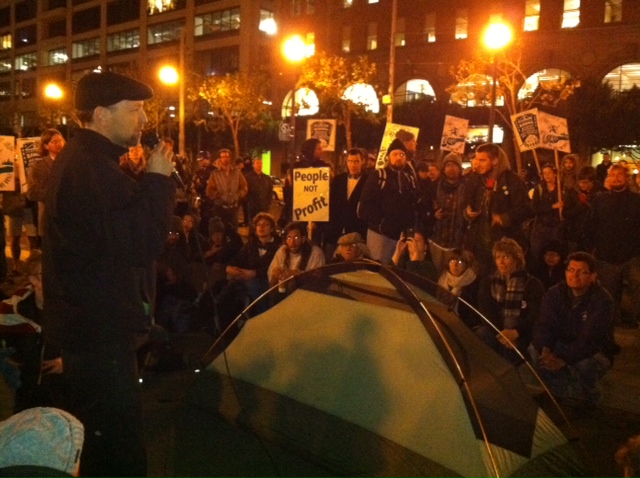
OccupySF and its supporters defended Justin Herman Plaza last night (Wed/7) in a strong display of nonviolent action, demonstrating a commitment to the movement. But the unfolding events also showed the group is at a crossroads as it debates its next moves, and whether to continue trying to occupy the plaza after the group’s tent city was removed by police and city workers.

About 250 gathered for a rally at 5 pm at 101 Market Street, marching the half a block to Justin Herman Plaza an hour later. Since the plaza was cleared out that morning, it had been guarded on all sides by a line of police. But as they approached, improbably, the police line parted, letting protesters through.

The group began to hold a general assembly meeting, but after 20 minutes police issued an order to disperse. About 50 sat down in a show of civil disobedience while a couple hundred more surrounded the outskirts.

Clashes with police in the past have been characterized by tension and angry cries from protesters. This one was more peaceful. Protesters held their ground and refused to leave, but besides a few incidents in which police detained and shoved protesters, most supporters were restrained and calm.

At 8:50 pm, police suddenly began to clear out. Jubilant protesters rushed into the plaza, having won it once again. However, from the meeting that followed, it seemed clear that many are restless to put their energies into actions other than defending the plaza.

The meeting consisted of several announcements concerning upcoming actions, such as taking part in the local march in support of International Human Rights Day on Saturday and Monday’s West Coast port shutdown. Occupy groups from Anchorage to San Diego have pledged to shut down their cities’ ports on Dec. 12.

Representatives from Occupy Community College of San Francisco and Occupy SF State University, both of which have now created tent city occupations of their own, were also present. After announcements, the discussion turned to strategy. Many saw a great opportunity to pitch tents and try to take back Justin Herman Plaza. Numbers had dwindled somewhat, but there were at least 150 protesters still present for that discussion. Others argued that OccupySF had successfully shown they could retake the plaza and that they should try and avoid a police clash that night, and instead sleep at and near 101 Market Street, their other recently reclaimed protest site.

Many insisted that OccupySF would be strategically wise to allow their supporters to reserve their energy for upcoming marches and actions; nightly calls to defend camp, said one protester, were wearing many down. In the end it was clear that “OccupySF is a network of autonomous individuals. Some will stay in Justin Herman, some won’t—but we’re all in solidarity.”

All this discussion took place amid reports that police were massing in the garage underneath the nearby Hyatt Hotel and at the police tactical building on 16th and De Haro streets. Many believed that they were staging to come back and make arrests if protesters attempted to re-erect their tent city. During the meeting, protesters put up five tents, but by 11:20 pm, they had voluntarily taken down their tents.

The OccupySF general assembly consented last week to defend Justin Herman Plaza anytime it is threatened. Yet the events of the past few days, as well as the destruction of large Occupy sites throughout the country in the past weeks, many sense that strategy may now be shifting.

Gordon Mar, director of Bay Area Jobs With Justice and OccupySF supporter who risked arrest last night, told us, “There’s a lot of exciting ideas and debate about new directions, including reoccupying JHP, but also moving forward in different ways. Occupy our homes initiatives have taken off recently, as well as occupations on college campuses, different communities and neighborhoods. It’s a really exciting and hopeful moment.”

Shaw San Liu of the Chinese Progressive Alliance issued a public statement saying, “You can raid a camp, but you can’t raid a movement. The movement cannot be stopped. [The occupation] was just the tip of the iceberg.”


Progressives split on bag ban, ex-cons

12

A couple of interesting votes at the Board of Supes Dec. 6. Sup. Ross Mirkarimi lost two pieces of legislation — a mandate that stores charge for bags at checkout counters and a tax credit for companies that hire ex-offenders.

The bag ban went down 7-4. Well, actually, it was continued to February, by which time Mirkarimi will be gone. Sup. Jane Kim said she wanted to see more outreach to minority businesses, and was quoted in the press saying she would support it at a future date, but I suspect the delay marks the end of the bill. Without Mirkarimi around to push it, the measure will probably just die. It’s odd because San Francisco used to be on the cutting edge of environmental issues; the bag ban is getting picked up by other cities and will probably be law all over the country in a decade.

Voting for the continuation were three supes who said they supported the “concept” — Scott Wiener, David Chiu and Kim.

The ex-offender tax credit went down 6-5 — and on this one, Sup. Malia Cohen, who is not always with the progressives but whose district has the largest number of parolees in the city, supported Mirkarimi. So did Kim, Eric Mar, and David Campos. The swing vote: Sup. John Avalos, the progressive leader in the mayor’s race and one of the most solid left votes on the board.

Avalos told me that he doesn’t support tax breaks; he’s been consistent on that, and I understand. I don’t support tax breaks, either. I don’t think they’re very effective and they cost the city money. But there are two elements that make this unusual — for one, if anyone actually used the tax credit and hired an ex-offender, the money the city would likely save by keeping that person from going back to jail would greatly exceed the amount of the tax reduction.

Besides, I was waiting to see Lee come up with an excuse to veto the bill — particularly at a time when more and more ex-offenders are going to be released in San Francisco. I know this is just petty politics and all that, but this was a tough decision involving a very unpopular group (nobody wants to be nice to former criminals) — and Lee got off easy.