• No categories

Politics Blog

What the preservation vote says about the 2012 supervisors

64

UPDATE: Important update at the end of this story

What does it mean that a historic preservation law favored by developers and promoted by Sup. Scott Wiener passed the Board of Supervisors 8-3? Maybe nothing. Historic preservation is a strange poliltical issue, favored by some of the wealthy white homeowner types who love pretty buildings (and aren’t so good on other issues), and this thing was sold as a way to help low-income people and affordable housing. But the reality is that the Wiener measure will make it harder to declare historic districts, and thus will take away a tool that the left can use to stop uncontrolled commercial development. And remember: The affordable housing community wasn’t pushing this bill, and, for the most part, hasn’t had problems with historic preservation. The most progressive political club in the city, the Harvey Milk LGBT Democratic Club, came out strongly against the measure and urged Sup. Christina Olague, a co-sponsor, to oppose it:

We are extremely troubled that you appear to be buying into the flawed, bogus and self-serving arguments by SPUR and other supporters of this legislation that historic preservation is classist and leads to gentrification, interferes with the production of affordable housing and is a tool of San Francisco’s elite.  Nothing could be further from the truth.

There was a way to address the issues of low-income people in historic districts without making it harder to block inappropropriate development, but Wiener’s bill went much further. And while I respect Scott Wiener and find him accessible and straightforward, and I agree with him on some issues, he isn’t someone whose basic agenda promotes the interests of tenants or low-income people. His supporters are much more among the landlord class and the downtown folks. The San Francisco Chronicle, which is a conservative paper on economic and development issues, loved the legislation.

So what happened when this got to the Board? Only three people — the ones the Chron calls “the stalwart left flank of the Board” — voted no.

John Avalos, David Campos and Eric Mar. They are now the solid left flank, the ones who can be counted on to do the right thing on almost every issue. Once upon a time, there were six solid left votes. Now there are three.

What does this mean for the other key issues coming up, including CPMC, 8 Washington, and the city budget? Maybe nothing. As I say, this issue is complicated. Olague told me, for example, that she’s really worried about working-class people who can’t afford to comply with the increased regulations that come with historic districts. Her vote doesn’t mean she’s dropped out of the progressive camp, or that she (or Sups. Jane Kim and David Chiu) can’t be counted on in the future. I really want to believe that this was just an aberration, a vote where I’ll look back in the fall and say: Okay, we disagreed on that one, but nobody’s perfect

Still, it’s kind of depressing: The dependable progressive vote is down to three.

UPDATE/CORRECTION: I didn’t know when I posted this that Olague had spoken to the Milk Club leadership after the club’s statement went out and the club has since issued a correction:

Due to a misunderstanding, Supervisor Christine Olague’s position on the Historic Preservation Commission’s critical role in the life of San Franicsco was misrepresented in our weekly newsletter. Supervisor Olague is looking into ways to help continue Historic District status for the Queer community, the Filipino community in the South of Market area, and the Japantown area. She is specifically looking for wording that would help these plans remain viable and welcomes any questions on her position and on her plan. Our apologies to the Supervisor for this unfortunate mistake.
SEIU reps pleased with tentative contract

46

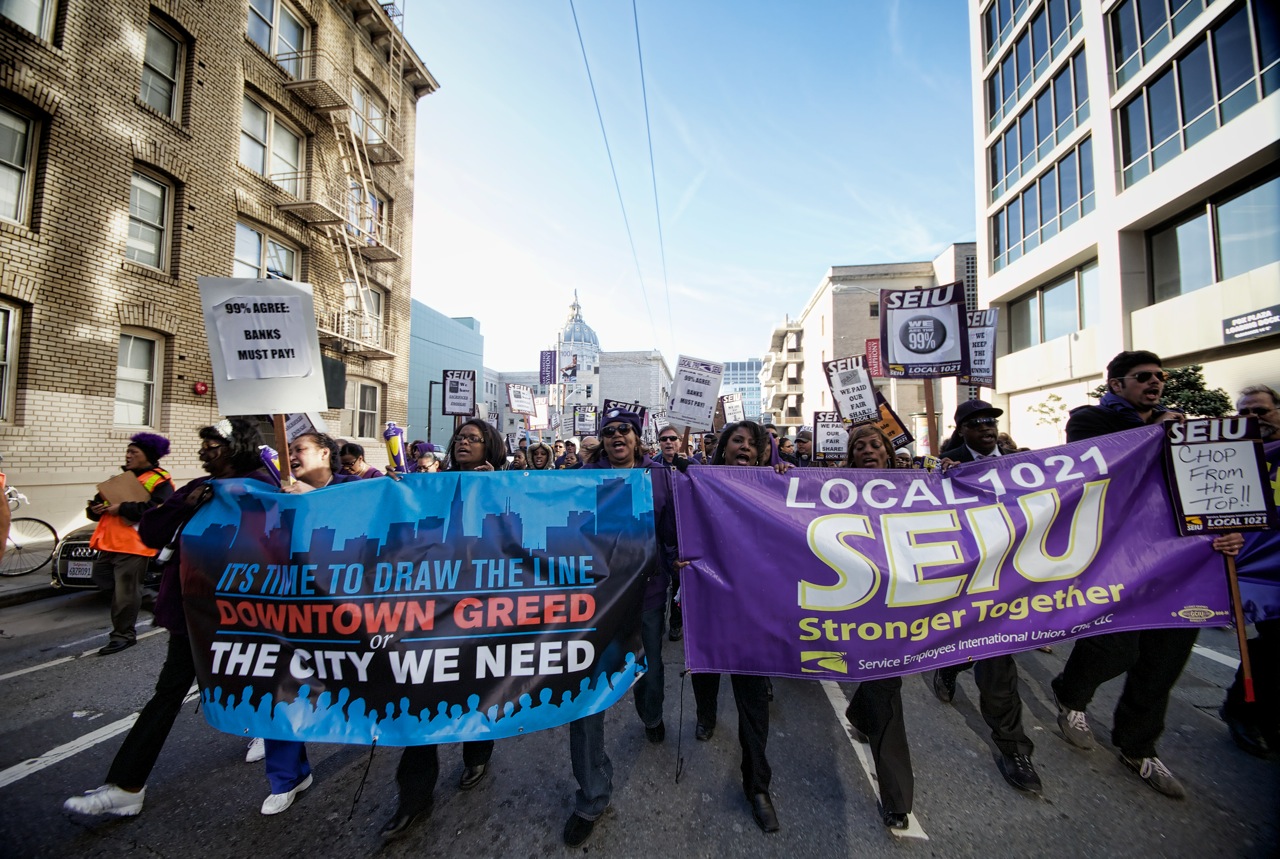
After heated negotiations, the city has come to a tentative two-year contract agreement with SEIU Local 1021. 

The union, which represents 12,000 city workers, has staged large protests in recent weeks while negotiators worked on the contract. The union was opposed to pay cuts and increases in health care costs that the city originally proposed.

With the new agreement, city workers will get a three percent pay increase, to kick in next year.

The arbitrator of the negotiations also ruled in favor of the union on the issue of temporary workers, who mostly don’t currently enjoy benefits or job security. Now, temporary city workers who have worked 1500 hours over the past three years will be prioritized for permanent jobs.

The SEIU did compromise on some parts of the deal. The new contract won’t include travel pay previously provided to people who commute outside the city for work. There will also be new restrictions placed on union organizing, as union stewards will need to be “escorted” into what the city deems “confidential areas,” restricting union access to work environments.

Larry Bradshaw, 1021 Vice President, has been at the table since negotiations began in February. “I’m very happy with the results,” said Bradshaw. “Its the first agreement since 2009 where the city is not going to balance the budget on the back of working families.”

In the years since 2009, city workers have had deferred pay wages, wage concessions, and increased health care costs. Bradshaw says the new contract will put base wages back at 2009 levels.

“I think in the first years of the recession our members were willing to sacrifice,” said Bradshaw. “But then year after year, they don’t want to keep doing that when the city is not going after corporations. They’re just sitting on wealth and the city is not taxing that wealth.”

http://vimeo.com/39869973

That sentiment has led to the SEIU’s call for increased taxes on some corporations in the city. That’s the issue they address in the above video, which may become a TV commercial for what may become a ballot measure in November that would restructure the business tax code.

SEIU Local 1021 members are currently in the process of voting to ratify the contract. The vote will be done by Monday evening, just in time for the Board of Supervisors to ratify the agreement at their May 15 meeting.

Bank’s offer to fund vandalism repairs draws activist backlash

55

After young anarchists vandalized cars and businesses during a brief but destructive rampage through the Mission District last week, Wells Fargo was quick to offer $25,000 in grants to repair the damage, which the bank publicized in a press release as “building upon its history of supporting local communities.”

Yet this is the same Wells Fargo that has been targeted by housing rights, labor, and other progressive activists in recent months for its aggressive foreclosure tactics and investments in mountaintop removal coal mining and other heinous activities, culminating in a major standoff between protesters and the company during its annual shareholders meeting in San Francisco on April 24.

The grant money was supposed to be administered mostly by the Valencia Corridor Merchants Association, but the group got an earful from activists during its meeting on Monday night and now its leaders are figuring out how they can extricate themselves from this thorny situation. Among those putting pressure on the group is Sara Shortt, executive director of the Housing Rights Committee of San Francisco, who says the bank is trying to buy allies that it desperately needs right now.

“Wells is trying to divide a wedge between activists who have been working to highlight their irresponsible practices in the community and the businesses we shop at,” Shortt told us. “As a Valencia Street resident, I resent that they are hoping to use my community merchants as a tool for them to gain positive PR, by taking advantage of their desperation after the attacks.”

Bank spokesperson Holly Rockwood emphasized Wells Fargo’s “long history of corporate philanthropy” when I asked her about the donation, and she denied that the corporation was trying to burnish its tarnished image less than week after thousands of activists disrupted the bank’s annual meeting, resulting in 20 arrests. “The timing was simply in response to the wave of vandalism,” Rockwood said.

Nonetheless, merchants association President Deena Davenport said the group is now “backing away from this” to avoid getting in the middle of this fight. “The people with the Housing Rights Committee gave us a lot of good reasons why shouldn’t accept this money,” she said, adding that the association will make a final decision at its meeting this Monday.

While she said that she appreciates the bank’s offer and doesn’t begrudge anyone who wants to accept the money, “we are looking at ways to raise the money ourselves,” including reaching out to local credit unions to see if they would match the Wells Fargo offer, making the same money available but without the heavy political baggage.

Obama’s evolution

58

Other than a few Mitt Romney supporters, most of us view evolution as a wonderful biological mechanism to which we owe our supposed higher intelligence. So Obama’s “evolution” from a foe to a supporter of same-sex marriage deserves tremendous praise. But before we go all ga-ga over the president, let’s remember:

He didn’t evolve on his own. In this case, the evolution needed a push, from generations of LGBT activists and supporters, who put the issue in front of the world, made it a basic matter of civil and human rights, and forced Obama to realize that he could no longer duck and had to take a stand.

Remember FRD’s famous statement to activists? “Now you have to make me do it.” That’s what happened here. Obama made the political calculation, of course, and it’s a good one — energizing his base is more important than angering a bunch of people who weren’t going to vote for him anyway. But there’s more to it, and I think Paul Hogarth has the right line:

Biden’s statement may have been the final trigger, but the LGBT movement deserves the credit – despite the odds – to hold firm on getting the President to take this historic stance. And it’s a lesson that other progressive constituencies should take heart in, as we strive to make Barack Obama the President we hoped he would be.

Let’s also remember that this really started in San Francisco, with an act of what I like to call civic disobedience. At the time, a lot of critics said that Mayor Gavin Newsom was hurting the Democratic Party by making a move before the rest of the nation was ready for it. But what he did eight years ago was force the rest of the nation to get ready for it — and the subsequent legalization of gay unions in a growing number of states has shown America what the Boston Phoenix referred to as “the utter, mundane normality” of same-sex marriage.

We all knew this moment was coming. The demographics can’t be denied. Almost everyone younger than 30, and most people younger than 40, supports same-sex marriage. The country is changing — in this case, in a very positive way — and Obama was risking being on the wrong side of history. Even the Republicans seem to get that — they’re running away from this issue as fast as they can.

So now it’s likely that L.A. Mayor Antonio Villaraigosa will have his way and the Democratic Party platform will have a same-sex marriage component. Romney will be on the defensive on a key social issue – a huge change from the past. The Supreme Court will be more likely to uphold Judge Vaughn Walker’s decision on Prop. 8 (yes, the high court is political and changes with the norms of society, sometimes slowly, but the president’s statement will have a clear impact.)

So this is huge — not just because of the impact but because of what it says about the power of progressive movements. Now let’s make the president raise taxes on the rich.


Mayor Lee signs watered-down limits on SFPD spying

6

Flanked by members of Coalition for a Safe San Francisco, Police Chief Greg Suhr, and Sup. Jane Kim, Mayor Ed Lee today signed legislation that calls for San Francisco Police officers working with the FBI’s Joint Terrorism Task Force to respect privacy rights in the California Constitution and local laws and calling for annual reports on SFPD-FBI activities.

Coalition members trumpeted what they called “historic civil rights legislation,” but this watered-down version of legislation that Lee vetoed last month doesn’t offer the same guarantees and codification of privacy principles as the previous version, which was approved on a 6-5 vote of the Board of Supervisors, whereas this new version won unanimous approval.

Its endorsement by the most conservative supervisors – those most deferential to the SFPD, politicians who routinely vote against even the most innocuous progressive legislation – is a sure indicator that the legislation doesn’t really do much to clips the wings of the SFPD, which initiated this controversy with a secret 2007 agreement with the FBI that federalized local officers.

That was precisely the objection to the initial legislation that were offered by Lee and Suhr, that it codified local privacy protections with specific limits on SFPD officers engaging in surveillance on citizens who had broken no laws, and that it subjected any future agreements with the FBI to approval by the Police Commission. The new legislation is far more vague.

“It is a step in the right direction, there’s no doubt it’s progress, but whether it’s real progress depends on the implementation,” says John Crew, an expert on police practices with the American Civil Liberties Union-Northern California, which unearthed the 2007 secret memo.

Crew has worked on this issue for years and has been troubled by the FBI’s claims that local laws don’t apply to federalized agents, with the SFPD’s resistance to allowing specific limits to be codified in local law, and with the deferential position Lee has taken to the SFPD. Crew said the strongest part of the new ordinance is the explicit statement that local officers can’t ignore local and state laws, but the details of how that’s applied weren’t really addressed in this new version.

“The question now is will there be a vigilant, meaningful, and sustained effort to implement this law and will there be sufficient transparency,” Crew said.

Two of the strongest advocates for the new law, Nasrina Bargzie of the Asian Law Caucus and Zahra Billoo of CAIR-SFBA, say the compromise version addressed their main issues and is worth celebrating, but they agree with Crew that its strength will ultimately depend on how it is implemented.

“We don’t see this as the end. We need to make sure it is implemented properly,” Billoo said, calling it a “watered down version” of the stronger and more specific initial legislation.

For example, the legislation calls for annual reports on FBI-SFPD activities, but it doesn’t go into much detail on what those reports will include.

“Part of what we’re going to do is communicate with the stakeholders about what we expect those reports to look like,” said Nasrina Bargzie, a coalition member from the Asian Law Caucus, noting that they would like to base them on the work that has been done in Portland, Ore., which has been a leader on the issue. “It’s going to require us to watch those trouble spots during implementation.”

While the vetoed legislation would have given the Police Commission more authority over future SFPD-FBI agreements, the signed version simply calls for public hearing before the Police Commission when there are new agreements. “Ultimately, it will come down to political will at the Police Commission” to enforce privacy protections, Crew said.

He called San Francisco “one of the strongest communities of concern about civil rights in the country,” and as long as that remains the case then this legislation could be an important vehicle for protecting civil rights. But the real question is what happens when there’s another terrorist scare and the JTTP decides civil liberties are secondary to beliefs that the police state and its surveillance efforts needs to be beefed up. Or when the police state decides to simply refuse to disclose is activities.

Housing for the rich moves forward — fast

39

A proposal to build the most expensive condos in San Francisco history will come before the Board of Supervisors May 15 — and then before the Port Commission May 16, and then before the Board’s Finance Committee May 16, a jumble of hearings and votes that may make it more difficult for critics to be heard.

The 8 Washington project will be one of the most critical votes the board will face in 2012 and will make a lasting statement about the city’s housing policy. And it’s on an odd fast track.

At the board’s May 15 meeting, the supervisors will consider an appeal to the certification of the project’s environmental impact report, and will vote on approving the conditional use authorization for the building complex. If either of those is rejected — that is, if project sponsor Simon Snellgrove can’t line up six votes to approve the EIR and the CU — then the whole thing goes down in flames. The project would still exist in theory, but in practice it would be another two years before it could come back again.

If both of those approvals get through, then the actual development agreement and the financial documents for the project come before the Port Commission the next day — May 16 — at a highly unusual special hearing set for 9am. That’s a tough time to get people to come out and speak against a project, but the Port says it’s necessary, and here’s why:

One hour later, at 10am, the board’s Budget and Finance Committee will consider the same thing. And the Port wants this to get through Budget and Finance before that panel is entirely consumed with the next city budget.

So there will be two nearly simultaneous hearings, both at City Hall, on the same topic, early in the morning. A little difficult for people who want to testify at both. What if the Port hearing goes on until, say, 11:30 or noon (there have been plenty of three-hour hearings on contentious land-use issues in this city)? What if the Budget Committee starts discussion on the item before the Port is through with it?

Brad Benson, the Port’s special projects director, told me that his agency was “in touch with the chair of the Budget Committee. We get the point that people can’t be in two places at the same time.” 

But still, it all seems awfully rushed — particularly since, according to project opponent Sue Hestor, the state Lands Commission also has to sign off on this, and that won’t happen until July.


GUEST OPINION: The politics of retribution

122

By Debra Walker and Krissy Keefer

We have been shocked and saddened by the perpetual attack on Ross Mikarimi and his family.

To Ross’s credit, he took responsibility in the criminal case he faced, and accepted a plea bargain to a non-domestic-violence misdemeanor that the district attorney concluded served the interests of justice.

He and his wife, Eliana Lopez, had resolved their dispute before the betrayed disclosure to the police and the media by the trained but unlicensed attorney that began the criminal case. The plea bargain was vetted and all legal ethicists consulted concluded that the plea bargain could not be the basis of any action against Ross for the now infamous term “official misconduct.” Ross was ordered into counseling.

Since the criminal case ended we have watched the mayor, domestic-violence advocates, and the majority of the print media, collectively pass judgment without connection to reality, with devastating consequences to Ross Mirkarimi, his family and the people of San Francisco.

Mayor Ed Lee suspended Ross without a hearing and without pay. In other words, the mayor acted against Ross without due process. City Attorney Dennis Herrera has merely repeated all of the unsubstantiated allegations from a newspaper opinion piece in the form of a pleading — and actually submitted this as fact, further embarrassing our city.

Barring further intervention by the courts, the Board of Supervisors and the Ethics Commission will now be forced to publicly weigh in on the concluded criminal case that occurred before Ross was in office.

Was the punishment laid out by the courts not enough? Are we going to all sit back and watch as San Francisco engages in a public political assassination of a progressive elected official? At what point does it stop? 

Clearly it hasn’t stopped with Ross. Now the mayor and the city attorney have begun the attack on his campaign manager and well-known City Hall aide Linette Peralta-Hayes. Who is next? It could be any of us, of you.

As close friends of Ross and Eliana, we can attest to the fact that this family has paid dearly for their now very public fight and we all should hope for a healing. It does not bring justice to any women’s issues to have such a public display of retribution and revenge. Blowing this out of proportion like this has been only sets the stage for the continued backlash against women’s real issues.

If there were not a complete attack on women’s rights at this time in our country, this might be easier to stomach. Not one thing about this has advanced the rights of women or the understanding of domestic violence. Instead, the criminal justice system has been manipulated to further a political agenda of removing an elected official from office.

We all make mistakes in life. There have been several recent occasions involving officials actually in office where their behavior was questioned.  One issues involved sexual contact with a subordinate, another involved domestic violence and others involved substance abuse. In not one of these instances has the person been removed office.

To remove Ross from office is political and nothing else.

People are purportedly so outraged on behalf of abused women everywhere. But where is the outrage about the coordinated attack on choice in our country or about the documented inhumanities perpetrated against women throughout the world, even today?  Or equal pay, or adequate healthcare? What about the families losing their homes to greedy banks? Nothing of substance gets done on these issues. Instead, attention is focused away from the important issues to the personal shortcomings of the politicians seeking to address those issues.

From the impeachment efforts against Clinton to the allegations against the Wikileaks activist, there are over-amped attacks aimed to politically destroy the target in the press.  “Due process” and “innocent until proven guilty” are essentially thrown out the pressroom window. 
In the name of domestic violence, the mayor and the city attorney have removed an elected official from office. Domestic violence advocates are being used to further an agenda that is hypocritical and ultimately will undermine and dis-empower us all.

Ross Mikirimi was the only progressive elected in the last election. Ross has always been an ideological feminist. The established power brokers in City Hall did not want Ross to be sheriff. They do not want someone who advocates for diversity. They do not want someone who supports the rights of the people to implement the Compassionate Use Act and maintain cannabis dispensaries. They do not want a sheriff who will stand up to the federal government.  They do not want a sheriff who will stand with the 99 percent.

San Francisco is a great city not because of intolerance but because of tolerance. The strength of the city came about because of respect for diversity and encouragement of diversity. Ross stands for those principles.

Ross made a mistake in his personal relationship. Eliana Lopez, his wife, has clearly forgiven him. Each of us should do the same. To do otherwise is to disrespect Lopez.

Are we going to trust City Hall to be the arbitrators of conduct?  And are we really going to sit by and watch as they systematically throw untrue, unfounded, unsubstantiated accusations at whomever they want? Really?

To use this incident as the basis for this coup is without precedent. City Hall’s actions are without basis in fact and without foundation in law.

We believe that the mayor, among others, is doing what he wants to under the guise of women’s rights. We do not want to be used in that way.

There is something very wrong with what is happening — and sadly if this public political assassination can happen to Ross and his family, it can and will happen to anyone of us. Ask Linette Peralta Hayes.
 
Krissy Keefer is artist director, Dance Mission Theater. Debra Walker, an artist, is political development chair of the California Democratic Party Women’s Caucus.

Low taxes are bad for business

29

The teachers at San Francisco’s public schools are talking about going on strike. The contracts talks with the district are at an impasse. Things look bleak.

Well, they don’t look as bleak as things in Philadelphia, but that’s not really much in the way of good news.

Part of the issue: The district wants the teachers to accept up to nine furlough days next year. Even if the governor’s tax measure passes, four furlough days are still on the schedule.

The teachers are complaining — with good reason — that the forced days off and other concessions cost them money, as much as $5,000 a year. But there’s another issue here: Furlough days are horrible for working parents — and for the businesses that employ them.

Ron Leuty has a nice column on this in the San Francisco Business Times, which doesn’t let you read all the stories unless you subscribe, but here’s the gist:

For parents, SFUSD parents who already have barely managed through four furlough days each of the past two school years, nine each year becomes intolerable. That totals up to nearly two school weeks for which we must find some sort of childcare or one-day mini-camps — and it’s cash out of our pocket. Or it means time off. For businesses, that means lost productivity, down work time and employees who are paying more for — and worrying more about — childcare.

For low-income parents who have to miss a day’s work and a day’s pay every time the kids are out of school, it’s a serious economic issue. And the local businesses, particularly small businesses which aren’t equipped to deal with excess employee absenteeism, it’s a nightmare.

Leuty doesn’t place any blame or explain how we got to this situation, so I will: Prop. 13 (and later, Prop. 218) made it really hard to raise local taxes, and a handful of Republicans are making it hard to raise state taxes, so there’s not enough money for the schools. Americans today, particularly wealthy Americans and corporations, are taxed far less than they were for most of the century, certainly the post-War era.

Local business leaders love to talk about the value of public schools. I don’t think many serious people who have looked at the finances believe that the SFUSD is fat, bloated, or wasting a lot of money; these days, even the anti-government folks have to admit it’s a pretty lean operation.

So why won’t those business folks (and, for the matter, the Business Times) start campaigning for changes in Prop. 13 to allow communities to fund the schools and avoid these debilitating furlough days? What, is this problem supposed to get fixed by magic?


Wiener goes after historic preservation

40


Sup. Scott Wiener is pushing a bill that would make it more difficult to create historic districts in San Francisco, and it’s already cleared the Land Use and Economic Development Committee.

UPDATE: Milk Club calls on Sup. Olague to drop her support for the bill.

The measure hasn’t received a lot of news media attention, but it could have a far-reaching effect on development in San Francisco.

In essence, the Wiener bill amends two parts of the city planning code to tighten the requirements for designating a part of the city as a protected historic area — a designation that makes it harder to demolish or substantially alter buildings.
Developers and some property owners dislike the historic designation. Perservationists see it as a way to prevent the destruction of buildings and neigbhorhoods that are a part of the city’s heritage.

Classic example: In the 1980s, members of the Residential Builders Association were tearing down vintage Victorians in the Richmond district and replacing them with boxy, multi-unit apartments that were worth more money than a single-family home. The builders made a lot of quick cash; the city lost some elegant old houses that can never be replaced.

They couldn’t do that as easily in Alamo Square, which is a historic district.

On the other hand, the owners of those stately well-protected houses in these special districts have to go through increased Planning Department scrutiny any time they want to make any substantial alteration in the structure.

Context: Less than 1 percent of the developed part of San Francisco is currently in a historic district. It’s not a huge deal, and most people don’t pay any attention to this stuff.

But it’s important, and here’s why: One, this city doesn’t care enough about its past — but more important, preservation is a tool that can be used to prevent very bad things from happening.

If we’d had good historic preservation laws in the 1970s, the International Hotel could have been designated an historic structure and wouldn’t have been demolished. Same, possibly, for the Goodman Building. Preservation laws could have been used to fight some of the horrors of redevelopment, which mowed down African American and Filipino neighborhoods in the 1960s and 1970s.

Some of Wiener’s suggestions are relatively benign. He wants to exempt affordable housing units from the laws that apply to historic districts, and Sup. Christina Olague, his co-sponsor, wants an economic hardship exemption so that the owners of buildings, particularly in communities of color, can avoid expensive battles over minor repairs and alterations.

I’m fine with all of that. I’m all for it. Good idea. Although it’s not fair to say that this process was driven by a concern for affordable housing; I spoke to Peter Cohen, at the Council of Community Housing Organizations, and he told me that the idea didn’t come from his crew. Not one affordable housing activist showed up at the Land Use hearing to support the Wiener bill.

But the measure also adds more burdens to the process of designating an historic district. It mandates a written survey of all property owners and occupants in an area proposed for historic designation — an expensive and cumbersome thing that isn’t required for commercial development, demolitions, zoning changes, massive market-rate housing projects, full-on gentrification, or anything else that screws up neighborhoods.
It requires the Planning Commission to consider whether historic preservation conflicts with “the provision of housing to meet the city’s regional housing needs allocation,” which is odd because the commission didn’t consider that when it approved 8 Washington, which directly conflicts with the city’s housing needs allocation, or when it’s allowed 20,000 units of mostly high-end housing over the past decade without any provision for the proper corresponding amount of affordable housing.

In short, it gives opponents of historic preservation more ways to stop new protections. That’s going to make developers very happy.

I asked Wiener why he decided to do this, what the problem was that this law is meant to solve. His answer: There are lots of potential new historic districts (including where he lives, in the Duboce Park and Dolores Street areas) and he wants to be sure that there’s a “robust community process.” Excuse me, Supervisor: There’s a robust community process every time anyone does anything in this town, and designating a historic district is no different.

Also: “A lot of people believe that in some situations, historic preservation can be taken to the extremes. This is a real hot topic for the city.”

Now here’s where it gets interesting (and even more complicated). There’s a neighborhood group called the Mission Dolores Neighborhood Association that’s been trying for almost seven years to get the area between Market and 20, Valencia and Sanchez designated a historic district. Peter Lewis, a musician who has been leading the battle, told me that he got involved because developers were tearing down some important old buildings (a Willis Polk building on Dolores and 15th came down a few years ago) and he wanted to halt it.
The group’s got sophistication and resources — MDNA has raised $80,000 for the necessary studies and has been working the the Planning Department and the Historic Preservation Commission.

Wiener is opposed to the idea — particularly the concept of including the Dolores Street median (designed by John Mclaren, he of Golden Gate Park fame) and Dolores Park in the district. The median’s already a state landmark.

“He’s been very polite to us, but he’s made it clear he doesn’t want to see streets or parks included in any historic designation,” Lewis told me.
Why? Well, for one thing, the Planning Department is talking about building bulb-outs on Dolores as a traffic-calming measure. Historic designation for the median might make that more difficult. And Lewis opposes the bulb-outs for all the wrong reasons: “They just want to get people out of their cars,” he said, dismissively.

But really: Is this all worth pushing a measure that could undermine preservation and encourage demolitions and bad development all over the city? Is the current system really all that bad? Didn’t a measure to strengthen historic preservation (placed on the ballot with an 11-0 vote on the Board of Supervisors) just pass overwhelmingly two years ago?

Because it seems to me that this is a solution in search of a problem.


Sunday Streets coming to — and staying in — the Mission

2

Sunday Streets – the once-controversial closure of streets to automobiles so they can be fully used by pedestrians, cyclists, and skaters, temporarily expanding the amount of open space in San Francisco – has become a popular monthly event and it rotates among neighborhoods around the city. And as the organizers prepare for this Sunday’s event in the Mission, where its biggest and best incarnations are held, city officials today announced an expansion of the program: the Mission will now host Sunday Streets on the first weekend of each month through the summer.

“Sunday Streets really comes to life and realizes its full potential when it’s in the Mission,” Ed Reiskin, executive director of the San Francisco Municipal Transportation Agency, said this morning at a press conference on the steps of City Hall.

The business community initially resisted the idea when it was proposed five years ago by Mayor Gavin Newsom and its chief sponsor, the nonprofit Livable City, concerned that customers would have a hard time getting to stores. But just the opposite has proven true as the popular events fill the streets with thousands of people.

“When Sunday Streets started, I know there was a little apprehension, we even felt it in the Mission,” Sup. David Campos, who represents the Mission. “But the neighborhood has come together to embrace the project.”

Mayor Ed Lee called the expansion of Sunday Streets “a great pilot program for San Francisco” and said that it represents “our openness to learning to use our streets differently.”

San Francisco was the third city in the country to hold these street closures – known as cicolvias in Bogota, Columbia, which pioneered the concept – following Portland, Ore. (the first, and one that we covered) and New York City. This Sunday’s event runs from 11 am to 4 pm, mostly along Valencia and 24th streets.

Only real change can avert more conflict

44

This week’s May Day events brought together immigrant groups, labor unions, and activists with the Occupy movement to confront gross inequities in our economic and political systems. That’s a healthy democratic exercise, even if it sometimes provokes tense standoffs with police and property interests. But the day was marred by violence that didn’t need to happen, and that’s a dangerous situation that could only get worse.

The Oakland Police Department debuted new crowd control policies to manage marches of several thousand people, and there were some improvements over its previous “military-type responses” that have placed the OPD under the oversight of federal courts. For example, when the decision was made to clear Frank Ogawa Plaza around 8:30 p.m., police allowed escape routes (instead of using dangerous kettle-and-arrest tactics), clearly visible public information officers were available to answer questions, and people were allowed to return shortly thereafter.

“We’re not attempting to permanently clear the plaza, we just want things to settle down,” OPD spokesperson Robyn Clark told me at the scene.

But the OPD continues to provoke conflicts and mistrust with its confrontational tactics, even as it argues that such tactics are actually intended to improve its approach to handling large demonstrations. “Today’s strategy focused on swiftly addressing any criminal behavior that would damage property or jeopardize public or officer safety. Officers were able to identify specific individuals in the crowd committing unlawful acts and quickly arrest them so the demonstration could continue peacefully,” OPD wrote in press release late Tuesday night.

That sounds nice, but it’s only partially true, and the entire situation is a lot more complicated and volatile than that. Clark and witnesses told me at the scene that the dispersal order came after police charged into a crowd of several hundred, perhaps more than 1,000, to arrest someone with a stay-away order and were met with an angry reaction from the crowd.

What did they expect? The city decided to seek stay-away orders against many Occupy Oakland protesters – a barely constitutional act that only fans divisions between the city and protesters – and then to execute them at a time when elements of both sides were itching for a fight anyway. Perceptions become reality in a scene like that, which can quickly escalate out of control (which is what happened – almost all the property damage in Oakland occurred after the plaza was cleared by police).

“These pigs can’t wait to come in here and bust us up,” speaker Robbie Donohoe told the crowd shortly before the sound permit ended at 8 pm, warning people to leave soon is they didn’t want to assume the risk of a violent confrontation with police.

It wasn’t an unreasonable expectation after watching police decked out in riot gear, loaded down with tear gas canisters, and gathered around an armored vehicle with military-style LRAD sound weapon since mid-afternoon. Donohoe wasn’t advocating violence, but an important revolutionary and constitutional principle: the right to assemble and seek redress of our grievances.

“They didn’t have a permit in Egypt, they didn’t have a permit in Tunisia, and we don’t need a permit here! If you want to stay, you stay!” he said.

Many Americans share that viewpoint, and they’re frustrated that political corruption and economic exploitation have continued unabated since the Occupy Wall Street movement began almost eight months ago. And many young people – particularly the Black Bloc kids who show up with shields and weapons, ready to fight – are prepared to take those frustrations out in aggressive ways, as we saw Monday night during their rampage through the Mission District.

Witnesses and victims of that car- and storefront-smashing spree are understandably frustrated both with the perpetrators and the San Francisco Police Department, whose officers watched it happen and did nothing to stop it or apprehend those who did it. SFPD spokesperson Daryl Fong told us it just happened too quickly, with less than 20 officers on hand to deal with more than 150 vandals.

“Obviously, you have people with hammers, crowbars, and pipes engaged in this kind of act, with the number of officers involved, it was challenging and difficult to control,” he told us.

In both Oakland and San Francisco, the reasons for the escalation of violence were the same: police officer safety. That’s why OPD asserts the right to use overwhelming force against even the slightest provocation, and it’s why the SFPD says they could do nothing even when the Mission Police Station came under attack.

Now, I’m not going to second-guess these decisions by police, even though we should theoretically have more control over their actions than any of us do those of angry Black Bloc kids, although I do think both of these sides are looking for trouble and invested in the paradigm of violent conflict.

Rather, I think it’s time for our elected leaders, from Mayor Ed Lee to President Barack Obama, to stop giving lip service to supporting the goals and ideals of the Occupy movement and start taking concrete actions that will benefit the 99 percent and diffuse some of these tensions. This is dangerous game we’re all planning, and we’re teetering on the edge of real chaos that will be difficult to reel back in once it begins.

“We are not criminals. We are workers, we pay rent, we own homes,” Alicia Stanio, an immigrant and labor organizer for the Pacific Steel Casting Company, told a crowd of thousands that had gathered in San Antonio Park in Oakland, where three marches converged on their way to City Hall, carefully monitored by a phalanx of cops.

She and thousands like her didn’t march or speak or risk violence on May Day just because they like being in the streets. They’re desperate for change, real change, and it’s time that our leaders begin to deliver it before things really get out of hand in this country.


Shawn Gaynor contributed to this report.

Reflecting on violence at the SF Commune

15

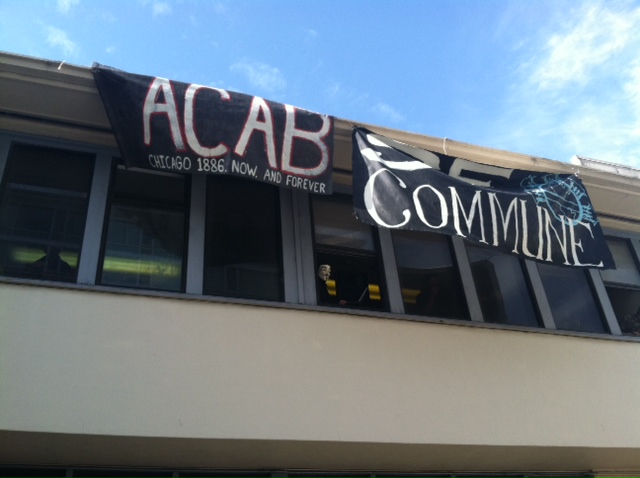
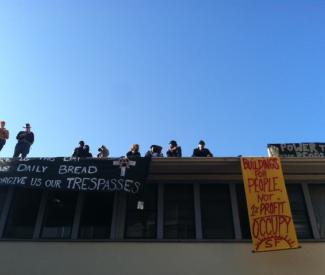
Occupy San Francisco protesters entered Catholic Church-owned properties at 888 Turk last night. This is the same building that a similar group occupied April 1, in a peaceful action that lasted about 24 hours. 

The successful reentry was a testament to the spread of skills and cultures surrounding building takeovers by groups like Homes Not Jails. The resulting “rebirth of the SF Commune” was a mellow and pleasant event at first, as protesters on a march from the celebratory Peoples Street Festival joined in the commune. Some held back in the street while others entered the building in hopes of building a “community center”—most remained outside the building, enjoying a free meal cooked and served by some of the same Occupy SF kitchen volunteers that once fed hundreds of people daily at Justin Herman Plaza.


The building occupation was meant to affirm a strong belief in the rights of people to gather and organize, or at the very least have a warm place to sleep at night. It was also an assertion from Occupy: we’re still here, your warnings to property owners to board up their vacant buildings and the chain-link fence you put up in front of 888 Turk (which protesters casually removed upon arrival) won’t stop us.

“The Catholic church owns it. They’re supposed to be doing charity, but they’re leaving it vacant until they can get high rent out of it,” said Jazzie Collins that afternoon, an organizer with Senior Action Network who was there to support the May Day actions.

“There’s too many vacant buildings in this city, while people sleep on the streets.”

Collins spoke only for herself, but her take on the situation matched the sentiments of many who questioned the importance of property rights in the light of unused building and homelessness throughout the city. That’s the same reason that the SF Commune had sprung up in the same building, exactly one month earlier.

Police spokesperson Sergeant Michael Andraychak seemed to believe that this repeat occupation would turn out the same way. “We’re putting up some barricades attempting to restrict access to the building,” said Andraychak around 5pm. “We’re opening traffic back up.”

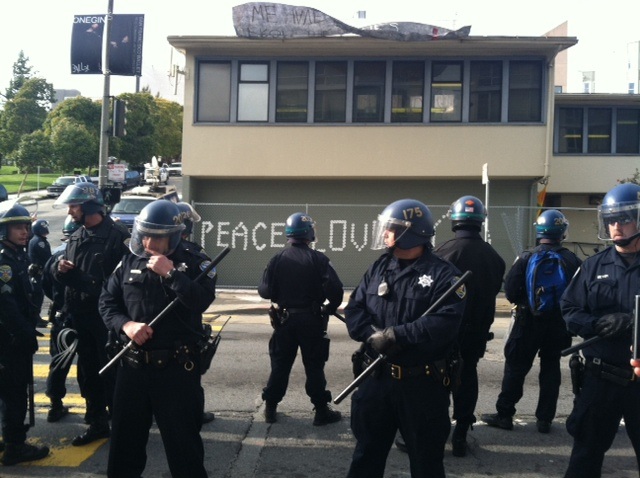
But not half an hour later, when the police put up the final barricades sealing off access to the building, the dozen or so people who got caught inside pushed back at the barricade. Police responded with intimidating and striking a few with batons. Then, a man appeared on the roof.

His face was covered in a black bandanna. He raised his arms, and in each hand, he held a brick. Onlookers began shouting, “don’t throw those!” He did though. He hit one man in the face, a fellow protester who, according to one source, has supported the Occupy SF effort since the camp.  

The mood of the crowd chilled. The brick-thrower held up more bricks, menacingly. 

Police closed the street off to traffic. Soon most protesters, supporters, and interested bystanders were on the other side of Gough or in the park, watching the events. A few spoke to and yelled at police lined up on the corners. Hundreds more police stood ground on Turk in front of the building. A few dozen remained inside, including one who had appeared on the roof, taken the bricks from the assailant, and tossed them off, out of reach.

Police arrested a suspect for the brick throwing as he exited the building out the back. Jesse Nesbitt, 34, is in custody in San Francisco County jail on $150,000 bail. According to sheriff’s department spokesperson Susan Fahey, he has been charged with three penal code violations: felony assault with force likely to cause great bodily injury (245a), assault on a peace officer with force likely to cause great bodily injury (245c), and felony vandalism of more than $400, 594b1.
 
A dozen or so remained in the building during the stand-off. Some poked their faces out an open window, hung down peace sign painted on a piece of cardboard, and talked into a megaphone. “We are not armed, we are completely peaceful,” one man assured. Meanwhile, police told press that they estimated 200 were inside and were “stockpiling pipes, bricks.”

The stand-off continued for a few hours until, at 7:30pm, police cleared out of the area. Most activists had left- thousands were massing in Oakland. But 40 or so people remained and re-entered the building. Many stayed until police came around 5am, arresting 26. Seven remain in custody, and all have been charged with trespassing. (Indicating that the weapon stockpiling concern turned out to be false. Which, as far as I could tell inside the building, it certainly was).

At that point, I entered the building as well to speak with those that remained. How did they feel about the violence? Did they think it was connected to the previous night’s events, when mysterious protesters destroyed numerous Valencia St businesses and cars in what some Occupy SF protesters suspect was an act of provocateurs?

For a response to come from Occupy SF, it must be consented on at a general assembly, a long process. So all the respondents represent only themselves- though most chose to remain anonymous. This structure can lead to a troubling lack of accountability: if something harmful happens at an action, who can be expected to explain it and help to prevent it in the future if everyone is responsible for only themselves? At the same time, each personal answer is less riddled in spin than a form answer would be, since people speak honestly, and for only themselves.

The Valencia St destruction “was enough that I didn’t come out and do anything today, whether it was Occupy or not,” one woman who had been “pretty involved in camp, back when it was at JHP” told me. “They were there to piggy back off an Occupy event, to use the organization of Occupy to organize themselves,”

The brick incident, however, did not caution her against showing up, as she did later that night. “Incidents like this happen often with mentally ill or violent people, but they get more publicity when they’re at an Occupy event.”

D, a longtime Occupy SF organizer, said wearily that “we were all surprised” at the incident.
“We weren’t expecting any bricks to be thrown,” he said, “and we didn’t want anyone to get hurt.”

But in terms of preventing similar actions in the future, D said, “We can only do so much. Everybody’s an autonomous individual and we can’t control what they do.”

“We can try to clean up everything that could be thrown, we did that last time. This time we focused more on stopping graffiti in the building. There wasn’t any.”

“That’s my friend. When I saw the brick flying at his face, I was hurt. Half our crew is in the hospital with him right now,” said another organizer. “But the real violence is the system putting people on the street, and the cops enforcing that. I’ve seen [Nesbitt] beat up by police.”

“What should we do, just turn our backs on people with mental illnesses?” another piped up.

“This whole occupy thing at this point is so spread out and separated,” said a self-described Occupy SF supporter. “There are parts that are revolutionary and parts that are more reform, and they’re trying to bridge that. I don’t know what it is at this point anymore. But I know I support a movement to articulate the rage at what’s happening in our country right now.”

City case speculates about Mirkarimi’s interference with investigation

111

The City Attorney’s Office laid out much of its case against suspended Sheriff Ross Mirkarimi yesterday when it released a list of witnesses and their expected testimony, as requested by the Ethics Commission, and it offers little support for the city’s accusation that Mirkarimi dissuaded witnesses or sought to destroy evidence of a crime, which are among the most serious allegations in the official misconduct case against him.

The longest and most significant section in the brief was the testimony of Ivory Madison, the neighbor who initiated the police investigation into whether Mirkarimi physically abused his wife, Eliana Lopez, during a Dec. 31 incident that she subsequent reported to Madison, who made a video of her story and a bruise on her arm.

It was the most detailed account yet of what happened from the perspective of Madison, who has refused media interviews, and it differs in some key areas from accounts that Mirkarimi gave to the Guardian and other media outlets.

For example, Mirkarimi said he grabbed his wife’s arm in the car during a heated argument and that tempers had cooled by the time they went inside. But Madison is expected to testify that, “Inside the house, Sheriff Mirkarimi pushed, pulled and grabbed Ms. Lopez, who was crying and screaming, as was their son. Ms. Lopez asked Sheriff Mirkarimi to stop, and said look what you’re doing to our son. Ms. Lopez then ran out of the house. While both inside and outside the house, Lopez was yelling, do you want me to call the police. When Ms. Lopez yelled about calling the police while outside, Sheriff Mirkarimi said no, come inside. Ms Lopez went back inside.”

It is unclear from the memo whether Madison was a direct witness to those events or whether they were relayed to her by Lopez, but it sounds like the latter given that the story is in a paragraph that began with the phrase “According to Ms. Lopez.” Since the incident, Lopez has consistently denied that Mirkarimi abused her and downplayed the conflict. The only other neighbor on the witness list, Callie Williams, wasn’t at home during the conflict, but she’s expected to testify that Lopez told her about that and an earlier instance of abuse and that “Sheriff Mirkarimi was scared that she was going to tell people what happened.”

While Madison’s expected testimony confirms Lopez’s account that the video was made to be used in the event of a child custody battle if the couple divorced, Madison’s account paints Lopez as actively worried about her safety: “Ms. Madison suggested calling the police. Ms. Lopez was afraid that the police would not believe her and would not protect her from Sheriff Mirkarimi, and was concerned about what the police could do to protect her.”

It also confirms what journalist Phil Bronstein, a friend Madison called for advice, told the Guardian about Madison’s initial call to police being a simple inquiry and that she didn’t intend to initiate a police investigation just yet. And it indicates that “Ms. Lopez was unhappy about the investigation. Ms. Lopez called Linnette Peralta Haynes (Sheriff Mirkarimi’s campaign manager in the November 2011 election) on her mobile phone. After speaking with Ms. Haynes, Ms. Lopez handed her phone to Ms. Madison. Ms. Haynes attempted to dissuade Ms. Madison from cooperating with the police and attempted to persuade Ms. Madison to lie to the police.”

Yet there is nothing in Madison’s expected testimony to indicate Mirkarimi was behind any of these efforts, and he denies it and says that he wasn’t even aware that Lopez had talked to Madison or made a video or that police had been called at that point. Peralta Haynes, who sources say is in the late stage of a difficult pregnancy, hasn’t cooperated with the investigation so it’s obviously speculative on the city’s part to indicate that she was acting as Mirkarimi’s “agent” in thwarting the investigation, as the city is claiming.

The only “evidence” that the city seems to offer in support of its accusation that Mirkarimi tried to thwart the criminal investigation comes from Madison’s husband, Abraham Mertens, who is expected to repeat the claim he first made in a controversial March 20 op-ed in the San Francisco Chronicle that, “During the time that SFPD inspectors were interviewing Ms. Madison on January 4, Mr. Mertens received a telephone call from Eliana Lopez urging him to make Ms. Madison stop talking to the police. Mr. Mertens heard Sheriff Mirkarimi’s voice in the background,” a more resolute version than Mertens had previously given when he wrote in the op-ed: “I recognized what I thought was Ross’ voice in the background.” Mertens also has not answered Guardian calls.

Mirkarimi categorically denies that he was present during that phone call and says that he was in meetings at City Hall and that he wasn’t aware that any of this was happening at the time. And he has denied urging Peralta Hayes to get involved, but her testimony could evolve into evidence if the city can show they talked before she spoke to Madison, but that’s still speculative. The city is seeking live testimony from Peralta Haynes about her communications with Mirkarimi on Jan. 4 and before.

During the recent Ethics Commission hearing on setting up procedures for the hearing, Mirkarimi attorney Shepherd Kopp noted that the city hadn’t done key interviews or collected physical evidence (such as phone records or the Lopez video) to support its charges against Mirkarimi before making its allegation, something that Deputy City Attorney Peter Keith didn’t dispute, noting that the the city had not yet received much of the evidence that it intends to present, such as the video.

The city appears to be banking on compelling incriminating testimony from Lopez and Mirkarimi, who they plan to treat as hostile witnesses. The other interesting name on the city’s witness list was Mayor Ed Lee, who the city is recommending give live testimony and who could also likely be subjected to a vigorous cross-examination that could have interesting political ramifications.

Should the Navy name a ship after Harvey Milk?

23

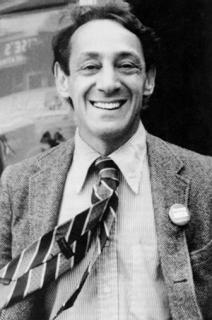
A Democratic Congressional rep. from San Diego thinks so.Rep. Bob Filner has asked the Secretary of the Navy, who has final say over such things, to name a warship the “U.S.S. Harvey Milk.” Milk served in the Navy during the Korean War. And Sup. Scott Wiener has introduced a resolution in support of the concept.

His press release:

Supervisor Wiener, who represents Milk’s old district on the Board of Supervisors, expressed excitement at the prospect of the christening:  “Harvey Milk was a visionary in our community and redefined what it means to be LGBT in public life.  Given Supervisor Milk’s extraordinary public service and military service to our country, I can think of no more fitting tribute than to name a naval vessel after him.” Retired Navy Commander Zoe Dunning, a leader in the repeal of Don’t Ask, Don’t Tell, agreed:  “Harvey Milk was proud of his Navy service. Similar to the USS Cesar Chavez, there should be a USS Harvey Milk to honor Milk’s leadership in the LGBT civil rights movement.” Anne Kronenberg, who served as one of Supervisor Milk’s legislative aides and who now serves as San Francisco’s Director of Emergency Management, noted that Milk would be smiling to hear about the effort to christen a ship in his name: “Harvey understood the importance of symbolism in the advancement of civil rights.  He also lived in an era when being out in the military was simply impossible. He’d be quite pleased that we are now in an era when not only can LGBT people be out in the military, but they can even have warships named after them. Times truly have changed.”

My friend and colleague Sandy Lange, who is the Guardian’s controller, agrees. Sandy was an officer in the Navy, and loved it, and got kicked out after the Naval Investigative Service followed her to a lesbian bar, long before even Don’t Ask, Don’t Tell. “This would be a great statement, to finally kick homophobia off the waves,” she told me.

Tommi Avicolli Mecca, who is also my friend, isn’t so sure. In a piece on Open Salon, he argues that Milk would be opposed to today’s military adventurism and that a warship isn’t a fitting memorial:

It’s one thing that gays can serve openly in the military. It’s another to attach the name of a queer progressive who opposed war to a military ship. It’s just not appropriate. It’s like naming a Christian church after him (Milk was a Jew and an atheist). Or a bomber plane after Gandhi.
 
What’s next? Recruitment ads in the gay newspapers featuring the Village People and/or hunky half-naked men? A pink heart medal for killing with a gay flair? A lavender box with a rainbow flag for our gay and lesbian corpses?  

Marke B., our managing editor, just wants to be sure that he’s involved in the interior design of the new ship, and that its sailors “open their legs for fleet week.”

Seriously — Avicolli Mecca thinks a better honor would be to make Milk’s birthday, May 22, a national holiday. Of course, Chavez (also a man of peace) has both a ship and a holiday.

I never met Harvey Milk — I arrived in San Francisco in 1981 — but I have to wonder what he’d think about a ship of war carrying his name.


Progressives party — together

6

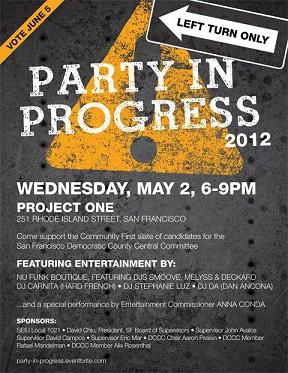
There are plenty of political fundraisers during campaign seasons, but this one will be especially interesting: The progressive slate for the Democratic County Central Committee is coming together for an event May 2 at 6 pm at Project One. The host committee includes outgoing chair Aaron Peskin and Sup. David Chiu, who have not always been on the best of terms — and Committee incumbent Alix Rosenthal, the main organizer of the event, who is also the organizer of what some see as a competing slate.

And that slate is having its own problems — involving clashes between some of the progressive women (Hene Kelley, who will no doubt be at the May 2 event) and some of the more moderate women (Hydra Mendoza, who won’t be there.) The party invite has a street sign saying “left turn only” — which is not at all what some of the people on Rosenthal’s other slate are thinking.

Rosenthal told us: “I personally think it’s remarkable that Aaron, Rafi [Mandelman], David Chiu, David Campos, Eric Mar, John Avalos and I are all on the host committee, given the rifts in the progressive movement of late.”

Yep. Everyone’s getting along. For one night, anyway.

Pix of May Day in Oakland

0

Photos by Tim Daw

Police leave, Occupiers remain

0

The man who was throwing bricks has been arrested — and in an unexpected move, the cops have packed up their barricades and left. Only one barricade was left in front of the door, and the protesters moved it and now remain in the 888 Turk Street building.

UPDATE: About 30 remained in the building as night fell, planning next steps. One anonymous supporter donated pizzas. 26 were arrested in an early-morning raid .

Bizarre development: Lone guy in black mask throws bricks at Occupy crowd

9

Yael Chanoff reports from the scene of the Occupy building takeover with a really strange development:.

Police had put up barricades in front of 888 Turk, and many of the protesters were out of the building, but some were still inside. Then, after the front door was completely sealed, a lone man, his face covered by a black bandana, appeared on the roof. He held a brick in each hand, and after a dramatic pause, hurled one of the bricks into the crowd below. It struck a protester in the face, causing a bloody injury. Paramedics are on the scene.

The brick-thrower kept up the barrage, hitting another protester in the leg, then moved to an adjacent building and began throwing pipes, hitting a police car.

Hundreds of police arrived on the scene; The brick thrower apparently vanished.


Occupy retakes Catholic Church building

11

The Occupy SF Commune is back.

More than 100 activists went from a march on Market Street to the building at 888 Turk, owned by the Catholic Church, that was occupied not long ago.

“This is our home,” said one OSF person. “A lot of folks love this spot.”

He added: “Any vacant building, people have the right to use it, just like with any vacant land. These are resouces of the commuinity and tney’re not being utilized.

“We’re offering medical care and serving food right now. Everyone is welcome here, and open space for the people, just like the camp at Justin Herman Plaza.”

Oakland protest: Tear gas, one arrest

0

Tuesday morning brought an eruption of protests though out downtown Oakland as Occupy activists marched and rallied in support of a national general strike day to mark May Day.

Though the action lacked the numbers of last fall’s Port of Oakland strike, three early morning marches of several hundred protesters made there way through Oakland drawing attention to issues of gentrification, patriarchy and what protesters characterized as the injustices of capitalism.

In a city still waiting for an economic recovery, the protests were a reminder that simmering tensions over economic disparities continue to cause major disruptions of business as usual in Oakland.

Activists focused attention on Child Protective Services and the family court system. The agency was criticizing the for dividing families and sharpening the financial strain on poor families.

“This is where lawyers get rich, where judges get rich, and everyone else suffers,” stated an Occupy Oakland activist on the steps of the courthouse on 13th and Oak.

By noon various marches and protests converged on Oscar Grant Plaza, as roughly 1,000 protesters blocking traffic at 14th and Broadway. Protester danced to a portable sound system carted around in wheel chair, and danced around a maypole erected in the intersection.

OPD’s new crowd-control tactics were in display as riot police entered the crowd to make an arrest as bystanders were moved away with tear gas, concussion grenades and batons.

One woman was arrested and a 19-year-old Oakland woman, was struck in the head with a police baton. Bleeding heavily from the blow, she was rushed to the hospital after Occupy medics determined her wound was beyond their capacity to treat.

It was unclear what provoked the arrest.

Further protests are planned for this afternoon.

UPDATE: Sergeant Jeff Thomason, OPD public affairs, told us there have been four arrests, related to an incident in which paint was allegedly thrown at a police officer. Oakland has summoned mutual aid from the California Highway Patrol, the Alameda County Sheriff’s Office and the Pleasanton and Hayward PDs.

Lively crowd takes over Financial District

7

Click here for more breaking May Day action coverage

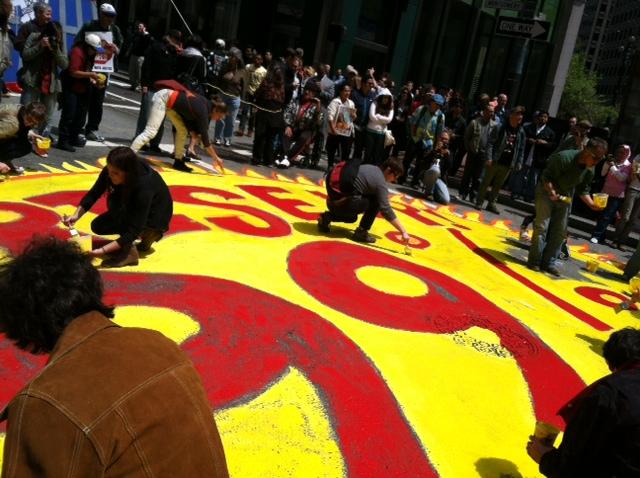
About 1,000 people gathered in the Financial District for a May Day convergence, blocking traffic at the intersection of Market and Montgomery and painting a huge yellow sun on the street with the caption “Rise up 99% Levántese!”

The lively crowd listened to music and speeches and participated in street theater.

Police were on hand in a line in front(415) 517-5910 of the Wells Fargo bank but as of the time of this post, there were no arrests.

In sharp contrast to the violence in the Mission, the actions have been peaceful.

The first march left 24th and Mission at around 10:15. Focused on immigrant rights — long a central tenet of May Day in the US — the event was planned by a large coalition including Mujeres Unides de Activas, HAVOC, SF Pride at Work, Young Workers United, and others.

The upbeat crowd of several hundred made its way to 16th and Mission, where police stood by as protesters took over the intersection for street theater.
A giant puppet representing the Earth held center stage. One player represented a banker; another tried to buy a house, but wound up homeless. When the victim of financial-sector greed sat down on the street, a “police officer” arrived to make a sit-lie arrest.

Tiffany Altamirano, with Young Workers United, told us, “My husband is undocumented. People are here whose brothers sisters and parents have been deported.”

The crowd took the intersection for about 40 minutes.

By mid-day the action had moved downtown, to the Westfield Mall, where a banner was dropped inside and pickets stood outside, showing solidarity with the SEIU Local 87 janitors who are in a dispute with building management.

Soon nearly 1000 converged on Market and Montgomery. Activists with The International Forum on Globalization giving away hundreds of books and pamphlets with critiques on global capitalism. A massive cutout of Goldman Sachs CEO Lloyd Blankfein stood in the middle of Montgomery, looking evil, with a message decrying corporate power.

Almost two dozen SFPD cops stood guard, with six police vans waiting nearby to haul away protesters. But the authorities seemed to be just letting the party happen with no orders to disperse.

Steven T. Jones contributed to this report.

Those rich city workers

10

The Chron’s Matier and Ross celebrated May Day early by running a piece on all of those overpaid city workers who are hauling in hundreds of thousands of dollars. And indeed, it sounds shocking: Nathaniel Ford, who was ousted from his job as the head of Muni, walked away  with $567,000. That’s worse than Arlene Ackerman, who screwed up the public schools and got a $375,000 golden parachute. (Actually, the bulk of Ford’s payout was approved last summer, so it’s not really new information.)

Still: The $500K Club and all of the $200K-and-up people makes it appear that the city is just pouring the taxpayers’ hard-earned cash down the maw of those greedy public-sector workers (some of whom just happen to be in contract talks).

Imagine:

The average pay for all city workers was $93,229, plus benefits. According to the city controller, the average wage earner in the city’s private sector, on the other hand, made about $78,228.

Enough to make the average private-sector person, who lacks retirement benefits, angry at the apparent largesse.

But let’s put this in perspective.

The vast majority of the highly-paid city employees are either people with advanced degrees and skills (doctors and lawyers) who would make even more in the private sector, or people in the management ranks, or — most notably — people in the public-safety sector.

Cops and firefighters in the city make a lot of money. More than their counterparts in much of the rest of the nation. Yes, those are tough jobs, and yes, they deserve to be well paid, but should every retired chief and command-staff-level cop walk away with a pension and benefits of close to $200,000 a year, for life? That’s a fair question.

Take out the cops, firefighters, doctors, lawyers and top-dollar department heads, who get special employment contracts that nobody else gets, and you have a very different picture.

The average member of SEIU 1021 who works for the City and County of San Francisco earns $50,400 a year. That’s average — and since SEIU represents some high-skilled workers who make considerably more than that, quite a few of the city workers make less. It’s decent pay compared to a lot of nonprofit and some private-sector jobs, but for a unionized staff in an expensive city — a staff that’s taken pay cuts and furloughs for the past few years — it hardly seems excessive.

I realize how sexy these “bloated city worker salary” stories are — the Chron loves to put this stuff on the front page — but it would be nice if Matier and Ross gave a more accurate picture.