• No categories

Pixel Vision

“Rollercoaster ride” for victims in the aftermath of Oakland gay-bashing

1

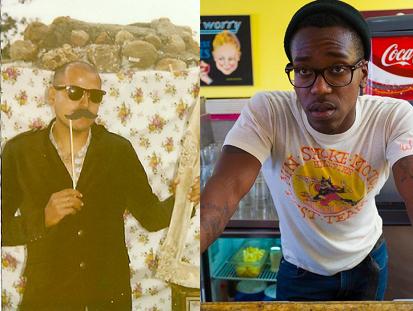
“This was me running in to grab my friend, I didn’t think twice about it,” says Oakland assault victim Adal Castellon, who (as reported by the Bay Citizen) was attacked with bandmate Brontez Purnell outside of Club Paradiso at 2 a.m. late Wednesday night. “That’s when the guy socked me in the face.”

Hard. When the Guardian spoke with him this afternoon, Castellon had just returned from the hospital where doctors told him bones in his face had been broken in five places. Recently unemployed after seven years working in Bay Area social services, he has no health insurance. 

Two days after the ordeal, the musician has barely had time to think about what he’ll have to do to recover from the assault. “This came at the worst time,” he says. “It’s been such a rollercoaster ride.”

The two men had arrived at the club around 12:30 a.m. on Wednesday, according to Castellon. It was a slow night, and they talked about issues pertaining to their band (Younger Lovers). Castellon, in training for the New York Marathon, wasn’t drinking.

When they exited, says Castellon “these guys told us that we were in the wrong club. This is our neighborhood club! Brontez has been going there since he was 22, and he’s 29 now.”

Purnell answered back “how dare you?” and the situation escalated until, Castellon tells us, the men started punching Purnell. He ran in to grab his friend, and caught the worst of the situation; three punches to the face. Now, Castellon’s upper jaw, cheekbone, and bones around his eye socket are broken, and in some places shattered. 

“[Castellon] is not a violent, confrontational person at all,” Purnell told the Guardian. 

The police are still searching for the assailants, but according to Castellon have some good leads to work on. “I know who one of [the assailants] is,” he tells us.

But regardless, Castellon’s marathon is off now, and the Bay Area queer community and its allies have been left wondering just what the hell is going on in our cities lately. Looks like we’re suffering from the same kind of ignorant goings-on that happen everywhere else. This from Purnell: “You can meet up with knuckleheads anywhere. What’s cool is the support that we have here.”

For information on how to donate to Adal Castellon’s medical expenses, contact Melissa Merit at (415) 816-9176.

The Sisters of Perpetual Indulgence have planned a march tomorrow in the Castro to speak out about the recent spate of homophobic beatings. 3 p.m. at Jane Warner Plaza. More information available here.

Giants fans and offense take a snooze at AT&T Park

0

On yesterday’s clear and sunny Wednesday afternoon, the San Francisco Giants played in front of a sold-out crowd for their sixtieth straight home game in a row. 

But even the 42,000-plus fans in the bleachers couldn’t ignite the recently gone-limp bats of the 2010 world champs. The Giants lost the matinee by a lopsided score of 9-2 to the Pittsburgh Pirates, a team who before arriving in the Bay had lost 10 games in a row. 

There was no joy for Giants fans — until the evening’s post-game special event, that is.

But first, the game itself. Starting pitcher Jonathan Sanchez continued to struggle to find his rhythm since returning from the disabled list on August 1 (he had tendinitis in his left bicep). Sanchez only pitched four and one-third innings, giving up five runs and four earned runs and allowing four walks in the mere four innings he pitched.

“I don’t think it was a very good outing, to be honest,” said Giants skipper Bruce Bochy at the post-game press conference. “[Sanchez] hurt himself. The pitcher sets the tone for the game and it wasn’t a very good one today for him.”

This was an abysmal home showing for the defending champs. In the last 10-game stretch, the Giants have produced a losing record of 3-7, ceding three straight series in a row to the Philadelphia Phillies, Arizona Diamondbacks, and as of yesterday, the Pittsburgh Pirates. The last time the Giants did that was in May of 2008.

The team’s even lost its first place spot in the National League West Division to the Arizona Diamondbacks, who beat the Astros Tuesday night. 

The Giants’ struggles can easily be credited to the lackluster performances displayed by the team’s offense. It’s a problem that Bochy is having issues resolving. “I wish I had an easy answer for that, they just have to get it going (offensively) — I don’t know how else really to say it. We had our chances to get back in the game. You keep going out there and working on it,” said Bochy

The team was missing its key trade deadline acquisition Carlos Beltran, who did not play for the third straight game due to a strained wrist, which he suffered during Sunday’s game against the Phillies. Outfielder Nate Schierholtz also did not play in Wednesday’s game.

But with all the offensive vacancies, Bochy says that he will not alter the lineup for Friday’s series opener against the Florida opener. “This is our club; we’ve got guys that have been around. They’ve got to figure it out,” said Bochy. Friday marks the start of a 10-game road trip for the G-men. The team will make crucial stops in Atlanta, Florida, and Houston. 

Said Bochy, “When you’re in something like this you think, gosh are we going to come out of it? And we will, and I think our offense will as well.”

But the day was not entirely ruined by baseball. After the game, bases and ground chalk were traded in for giant inflatable slides and tents. The ninth annual Giants slumber party was held Wednesday evening — sold-out, as always — right inside AT&T Park. 

Friends and families filed onto the makeshift campground immediately after the game ended, unloading tents, sleeping bags, flashlights, and teddy bears for the night’s festivities. 

They got to participate in a scavenger hunt throughout the stadium, they rambled through the dugouts, they scored autographed paraphernalia, and kids and parents settled down with a screening of Despicable Me projected on the ginormous high definition scoreboard.

All in all, not your average backyard overnighter — $200 per person (including a ticket to the game) has a way of putting AT&T Park in a whole different light. But how can you put a pricetag on home team happiness?

Beyond the stats: San Fran Preps and its crucial coverage

2

“It’s decision time,” says Jeremy Balan, founder of San Fran Preps, a high school sports website that covers all thirty athletically competitive high schools in San Francisco.

He’s not talking about a nail-biting second half of a soccer game. Unfortunately for Bay Area high school athletes and their supporters, his site needs help to keep up its coverage of prep athletics.

Balan came to the Bay Area two years ago after moving from Southern California, where he worked as a stringer for local newspapers. Once in the Bay, he got a job as a freelancer for the Examiner covering everything from motorcycle races to University of San Francisco baseball. 

But a year and a half ago, Balan realized the lack of attention that San Francisco high school sports was receiving.

“No one was covering high school sports in the city,” said Balan. “San Jose, the East Bay, and Marin cover their high school sports well, but there was this void in San Francisco.”

Into that void he stepped, putting his all into a website which now publishes one-to-three stories a day spanning San Francisco high schools, from the Davids to the Goliaths. 

“Nobody’s covering San Francisco high school sports on a day-to-day basis,” he says. “That’s what we do. We are a local newspaper, just online.” 

The site covers almost every high school athletics — basketball, baseball, soccer, lacrosse, softball, swimming, track, golf. Besides being the only site of its kind, San Fran Preps allows for fans, followers, friends, and family the ability to comment on stories, providing a valuable community forum. People can have heated discussions over a player they wanted to make the all-city list, or compliment the site for recognizing an athlete and telling his or her story.

Not only has San Fran Preps allowed fans a chance to follow their favorite high school teams and check out the latest standings; it’s a key source of recognition for local talent that goes beyond a mere stat line.

Just ask 18-year old Colombia University-bound Noah Springwater. Springwater, a graduate from SF’s University High School, was one of the top Bay Area basketball players this past season. He was selected to San Fran Preps’s all-city first team this year. 

“For players, [San Fran Preps] allows for public recognition that encourages and excites local athletes, while at the same time promoting engagement from fans and students around the city,” Springwater wrote to the Guardian. “Without San Fran Preps, student-athletes are not able to receive the recognition they deserve for their accomplishments. As many students take more pride in their athletics, San Fran Preps promotes the kind of attention that excites the city and keeps everyone interested.”

When the San Francisco Chronicle recently cut back on their local high school sports coverage, San Fran Preps was there to pick up the slack and even boost public interest in high school athletics. Over its year and a half in business, Balan says the site has been able to increase the level of competition throughout San Francisco sports. 

“The thing I’ve seen improve over the years was pride and competition. It perks up the players and coaches when they see one of our reporters and know that their game will be covered on our website.” 

The site don’t restrict coverage to elite schools like Sacred Heart Cathedral Preparatory or Saint Ignatius College Preparatory. Smaller schools with populations equaling a fraction of the more well-known athletic powerhouses receive play also.

“If we were to leave, the big schools would get a little coverage, but the smaller schools wouldn’t,” Balan says. “We cover all the high schools, not just the big, popular ones. Those stories need to be told and should be told. Otherwise, they are slipped under the rug. Thirty people covering a professional sports team and writing that story is great, but being able to tell that one story nobody knows about has a certain appeal.”

The first year of San Fran Preps, Balan ran the site without making a dime, living off of his student loans. “San Fran Preps is my baby, something that I created. It’s hard trying to make the site sustainable, let alone a full time job.” 

But now, he’s arrived at a crucial moment. Balan is trying to raise money for a seed investment to turn San Fran Preps into a non-profit organization through Kickstarter. He’s confident that he’ll succeed in assembling the necessary funds, if current fundraising levels stay at their current encouraging rate. “If we keep going at this pace we’ll make it,” he says.  

“We have put an injection of interest into the community about San Francisco high school sports” says Balan. San Fran Preps has covered buzzer beaters, penalty shoot outs, and walk-off home runs — but can it make its own last-second shot before the August 15th buzzer sounds? Hint, hint: it might need an assist.

Head to www.sanfranpreps.com for information on how to donate to the site’s fundraising drive.


A new kind of biker bar

0

Rapha Cycle Club is altering my mental image of what a biker bar is. For one thing, the walls are all really white. For others, I can shop, I can order a cup of Four Barrel and a Telltale Preserve croissant, I can watch the Tour de France – but I can’t have a beer. 

That’s because it’s a clothing shop, mainly. But as manager Emily Haddad (who Rapha imported to SF from her gig at an Austin bike shop specifically to work at the new space) tells me, it’s so much more. 

“It’s a bar, but one where everyone’s drinking coffee.”

It’s also a bar where everyone’s drinking coffee that opens at six a.m. on some days – those being when the Tour de France is on TV, or Italy’s equivalent the Giro D’Italia. On those days Haddad says there can be twenty bikers in the sleek Marina storefront, sitting and standing around the long, low table in the middle of the room that’s speckled with vintage biking photos and ephemera, watching the race and chatting amongst themselves. 

Rapha is a British cycling clothes brand that debuted in 2004 with a multimedia exhibition called “Kings of Pain.” It now has an office in Portland, Ore., has opened a similar “social shop” in Tokyo, and a mobile club — a van with similar intent that is cruising Europe this summer, stopping in places like Alpe D’Huez, France. The dominant colors of the line are grey and, complexly, pink – a homage to the Maglia Rosa, the pink jersey that is wore by the standings leader in the Giro D’Italia. 

Here is a Graeme Fife – the playwright and cycling journalist – quote the company feels illustrates its ethos. It is, in fact, written on the shop’s wall:

The greatest battle is not physical but psychological. The demons telling us to give up when we push ourselves to the limit can never be silenced for good. They must always be answered by the quiet the steady dignity that simply refuses to give in. Courage. We all suffer. Keep going.

Rapha Cycle Club San Francisco is the first yearround cafe the label has opened – a four seasons timetable that was decided, one assumes, when Haddad and Rapha brass realized that SF’s “summer” is not really the height of cycling season. 

Tucked into my favorite Marina intersection (its neighbors are John Campbell’s Irish Bakery and Real Food Co. grocery store), the shop-cafe is mere blocks from the hill that separates the neighborhood from the rest of San Francisco to the south. 

One end of the long table meant for coffee-drinking and the cheering-on of jerseys holds a glass curio case dedicated to Eddy Merckx, the dashing Belgian who many consider the most accomplished cyclist of all time (five Tour de France victories, three world championships, breaker of the world hour record). The case houses two commemorative plates, and amazing retro keychains that proclaim Merckx a world record holder. There is also a small photo gallery in a loft space upstairs, with rotating exhibitions that currently feature black and white images of men grimacing in pain.

One imagines road bike ironpeople inspired by Merckx or the steady dignity on the shop’s flatscreens purchasing a pink jersey and turning bike wheels resolutely to the mountain rising up from Rapha’s front door. Even if this is not quite the case, the shop is the ideal jump-off for friends meeting up to bike to the Marin Headlands, joining the phalanxes of sharply-Lycra’d bicyclists on those hills. 

With its sleek, get-er-done ethos Rapha Cycle Club would be a really good stop for all those businesspeoples that complain about not being able to ride their workclothes on their bikes. The shop sells a very expensive (but maybe worth it? I find men’s dress clothes hard to judge) blazer made by British bespoke tailor Timothy Everest that buttons up, and together, has a sharp little pocket on its back, and is made of fabric that gives enough to encourage light physical exertion.

It also sells similarly functional gingham dress shirts. One guy was trying on a pink, short-sleeved number when I was in the shop, wondering out loud if he could pull it off. Everyone in the store encouraged him to try. Or rather: Keep going. 


Rapha Cycle Club 

Mon.-Fri., 7 a.m.-7 p.m.; Sat.-Sun. 7 a.m.-6 p.m.

2198 Filbert, SF

(415) 896-4671

www.rapha.cc/san-francisco

Street Threads: Look of the day

0

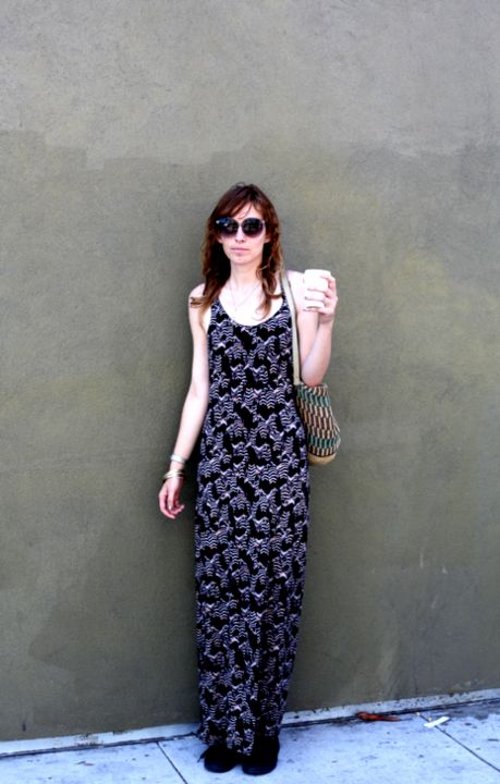
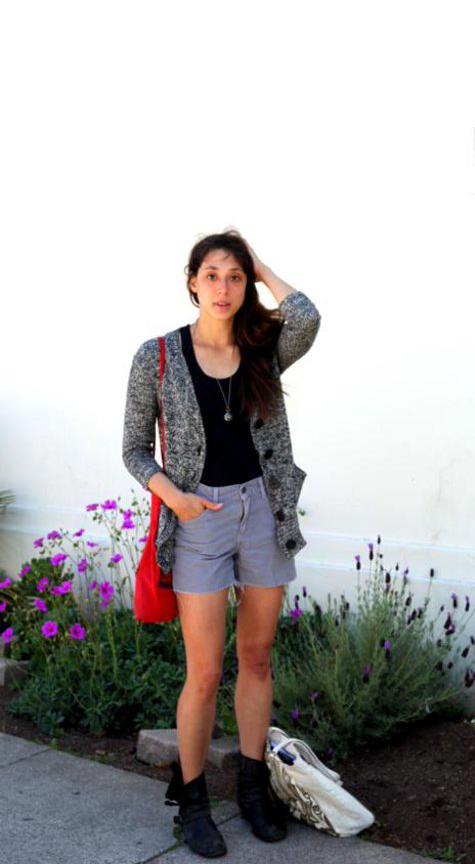
Today’s Look: Brook, 16th Street and Lapidge

What’s your style philosophy?: “I like jewelry and objects that have magical powers.”

The Performant: Cello rock!

1

Rasputina at the Great American Music Hall

Somewhere at the intersection of the society for creative anachronism and the Wave Gotik Treffen resides the cello-driven, chamber-rock trio Rasputina. Founded by multi-instrumentalist Melora Creager in 1992, the band has long straddled the line between whimsy and steel, with songs that range in topic from giants to vampires, orphans to infidels, E equals MC squared to 1816, “the year without a summer.” 

Decked out in corsets, ruffles, and turn-of-the-last-century fantasywear, fronted by a woman who often speaks with a faux European-High Elvish accent, Rasputina is positioned as far as possible from the center of the pop music arcana without falling completely out of the deck. Eschewing categorization, the band floats effortlessly above petty pigeon-holing, embraced by steampunk creativists, glamour Goths, strings buffs, and plain old folk alike.

Playing for an attentive crowd at the Great American Music Hall on Sunday, show openers UK folk duo Smoke Fairies, was a sweet surprise to jaded ears. Two honey-tongued English roses, each bearing a guitar that they played gently but not tentatively, their finger-picking sure, their voices perfectly complementary. 

Each song contained a shimmering undercurrent of regional inflection. The delicately balanced “Storm Song” lilted like an Irish ballad sung by Moya Brennan or Mairéad Ní Mhaonaigh, whereas the down-home slide guitar and husky vocals of “Living with Ghosts” evoked a haunting Appalachian melody with a hint of the Indigo Girls circa 1989 in the harmonies. Touring to support their first full-length album, Through Low Light and Trees (V2/Cooperative Music, 2010), Katherine Blamire and Jessica Davies have captured the attentions of Jack White and SXSW among others, securing some welcome street cred before their album even hit the shops this side of the pond.

Rasputina too has a newish album out, Sister Kinderhook (Filthy Bonnet, 2010), and mixed several of those songs into their concert set including “Sweet Sister Temperance” (an ode to one Emily Dickinson), “A Holocaust of Giants” (an ode to, well, giants), and one of my personal favorites, “Snow-Hen of Austerlitz,” a melancholy mountain ballad picked out on a half-sized banjo about a feral girl locked in a chicken coop. Older rockers, “Rats,” “Momma Was an Opium Smoker,” and “Saline, the Salt Lake Queen,” also found their way onto the setlist, as well as “Transylvanian Concubine,” (“the oldest song of the Rasputina canon,” Melora Creager pointed out). 

In addition to Melora, the lead cellist and songstress of the band, the group’s current lineup includes longtime Creager collaborator, classically-trained cellist Daniel DeJesus, and Jill-of-all-trades Dawn Micheli who plays the drums in a  more stately fashion than predecessors such as Cabin Fever’s Philosophy Major, or Jonathon TeBeest, which sucked some of the chaotic neutral vibe out of the harder numbers. 

In truth, it was the slower, more thoughtful tunes that rendered the evening triumphal, including a forlorn cover of “Bad Moon Rising,” and the equally mournful “Watch TV”. Creager’s distinctive vocals bent and snapped like the flexible boughs of spring saplings, her breathy vibrato a perfect foil for the mellow rumble of her cello. And though it seems unlikely that the cello will ever replace the electric guitar as the favored instrument of pouting rockers, with Rasputina to blaze the path, it will at least remain a fanciful option for the musical intelligentsia. 


Appetite: A pilgrimage to the Plymouth Gin distillery

0

A decade ago I explored the central and northern parts of England, feeling strangely at home among its countryside and moors. This summer I took a three-and-a-half hour train ride through those rolling green English hills (yes, dotted with sheep and cows), that was as idyllic as my memories. The journey brought me to the southwestern coast of England and the town of Plymouth

Famed for being the port from which the Mayflower and its pilgrims set sail for America and as home to the British Royal Navy, Plymouth is also known for Plymouth Gin, distilled here since 1793 in the Black Friars Distillery. It is the most atmospheric distillery I’ve ever visited, oozing history from every wall. Stone, wood, and signature navy blue colors (a homage to the seaside location and the town’s navy ties) define its look. Its gorgeous in-house bar evokes both farmhouse and chapel with a wood ceiling and warm, red walls.

Master distiller Sean Harrison was genuinely gracious and hospitable, an engaging conversationalist on numerous subjects. He took us out for haddock and chips, toured us through the distillery, taught us how to make our own basic gin, and treated us to a surprise English tea alongside a river in the woods.

Here is a photo journey commemorating an unforgettable trip as a guest of Plymouth, truly an institution in the spirits world. You can read more about my English adventures here and here

— Subscribe to Virgina’s twice-monthly newsletter, The Perfect Spot 


Behind the yuba: A trip to Hodo Soy Beanery’s factory floor

0

When I was fourteen, Snorkel Mom and I went to Japan to visit my Japanese “grandma” Kiyo. She lived in Tokyo and I remember one morning walking with her to a tiny, closet-sized building that had housed the neighborhood tofu shop in the very same spot for several hundred years. We took home a block of the freshest, most exquisite tofu I had ever eaten — nothing like the hard blocks of flavorless tofu found at most stores here in the States. So when I heard that there was a small company making fresh, traditional tofu in Oakland, I knew it would be worth hopping over the Bay to see what they had to offer.

On the first Wednesday of every month, Hodo Soy Beanery offers a tour to the public, giving folks a chance to sample the wide variety of soy products it creates and see first hand how it gets made. Hodo’s long list of organic, GMO-free soy delights includes fresh, creamy soymilk (nothing like that crap you can get in a box!), super-flavorful tofu in a wide range of textures, and ready-to-eat yummies like tofu salads, curry nuggets, and bricks of braised tofu with dense, potent flavors, perfect for adding to a sandwich in place of meat.

But probably the most exciting item at the beanery is its yuba. Hodo is the only place in the country making fresh yuba, a paper-thin tofu skin that comes together on the surface of heated soymilk. It’s carefully lifted off, drip-dried, and tenderly folded into small delicate rectangles. The texture is incredible and I can see this super-high protein soy food becoming a staple in home cooking on account of its versatility and delicacy.

And apart from being tasty, a visit to Hodo is fun. The staff was working hard and there’s big machines (eyes forward, people!), but there was a very human pace about the place. I got to chat with a few of the workers and they seemed to be enjoying their day.

That’s a beautiful thing, when companies are able to create an environment where their employees are having a good time and simultaneously making a product that is pure, simple, and scrumptious. There’s no longer the need to travel back to Japan to find that perfect piece of tofu, made in a centuries-old shop. Hodo’s right here.

Kind of makes me want to sing… 

Street Threads: Look of the Day

0

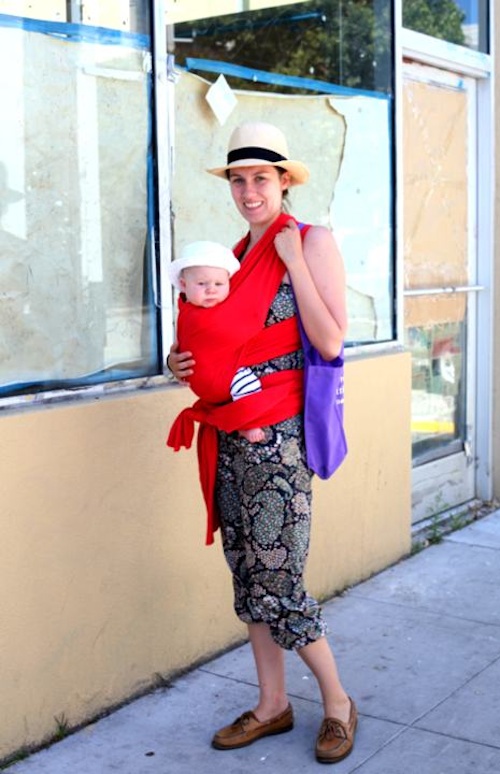
Today’s Look: Sandra (with Leon), 18th Street and San Carlos

Tell us about your look: “I got this jumpsuit from H&M.”

SF Giants asked to take a stand against racism UPDATED

13

Updated with response from SF Giants at bottom of post

The San Francisco Giants will host the Arizona Diamondbacks tonight (July 31), beginning a three-game series that will determine the first place slot in the National League West. A lot of eyes will be on our 2010 league champions – all the more reason, says a classic Mission District arts and culture organization, for them to take a stand against racist anti-immigration laws.

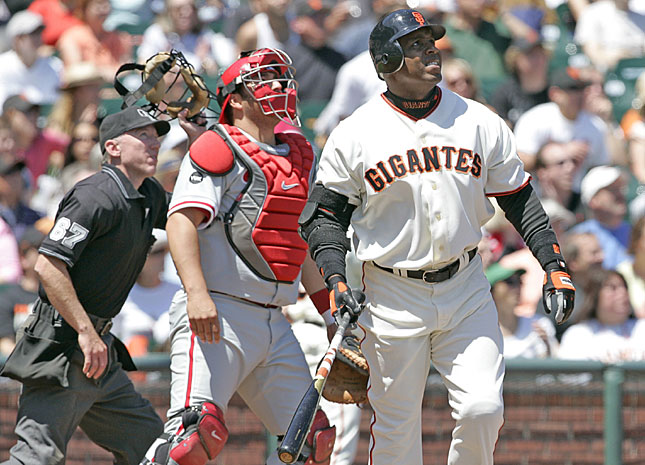
In early June, community members who had been leaders of the 1960s to ’80s group Casa Hispana de Bellas Artes sent Giants CEO Bill Newcombe a letter with a simple request. They want the baseball team to wear its popular ‘Gigantes’ jerseys while playing the Arizona Diamondbacks and the Atlanta Braves, two squads that hail from states that have recently passed laws codifing racial profiling in the fight against illegal immigration. The letter tells the team “this kind of law has created a paralyzing climate of fear among Latino families, citizen and non-citizen alike.”

San Francisco, the Casa Hispana elders insist, does not swing at discriminatory government. Reminding the Giants organization of its long-standing support of the Latino community, they’re politely encouraging the team to represent its fans by speaking out against discrimination. We caught up with Casa Hispana elder Don Santina for an email interview to explain why his group asked its team for a wardrobe change. The Guardian was unable to reach the SF Giants for comment – but any organizational response we get will be added to this post.


San Francisco Bay Guardian: Tell us about the mission of Casa Hispana de Bellas Artes.

Don Santina: Casa Hispana de Bellas Artes was founded in 1966 in the Mission District by a group of artists and poets to promote cultural advocacy for Latino-Chicano-Raza culture. [Our] group produced and sponsored programs year-round but focused particularly on an annual two-month long Raza/Hispanidad Festival which opened on October 12, Dia de la Raza. Among the multitude of programs, exhibits, performances, and events produced included major undertakings like the Chichen Itza exhibit at SF State, the pre-Colombian artifacts at the De Young and 24th Street BART station opening, the Cisco Kid Festival with Duncan Renaldo, and the Latin American Theatre Festival with Enrique Buenaventura, and low rider car exhibit at the US Presidio. Casa faded into history in 1983 when its major funding sources withdrew. The National Endowment for the Arts was seized by Reaganites.

In 1975 Casa Hispana executive director Amilcar Lobos Yong read a bilingual version of “Casey at the Bat” at Candlestick Park as part of a program in honor of the Giant’s support of the Latino community. Photo by Joe Ramos

SFBG: Why did you send this letter to the Giants?

DS: The elders of Casa wrote to Bill Newcomb’s Giants organization because it had produced a pre-game program in Candlestick Park with Horace Stoneham’s Giants team in 1975 honoring the Giants for their “pioneer recognition of Latin players” in the racist world of major league baseball.  At the event, Casa Poets Theatre read “Casey at the Bat” in English and Spanish before the game and gave awards to the Giants, Juan Marichal, and Tito Fuentes for his works with youth in the Mission District (editor’s note: the awards were presented by long-time Bay Area Latino news legend Luis Echegoyen). Casa people felt that the Giants should continue that anti-racist policy by making a genuine statement against SB 1070 by at least wearing Gigantes uniforms when playing Arizona and Atlanta.


SFBG: What’s been the response from the team? Did they get back to you?

DS: The Giants received Casa’s letter on June 9, and the business has not responded. Casa is disappointed in this lack of response and respect from a San Francisco-based team which has many Latino players.


SFBG: What is a professional sports team role’s in their community? Should they be speaking out on political and social issues? 

DS: A professional sports team has the same responsibilities to the community as any other business; in a word: Spike Lee’s “do the right thing.” Unfortunately, these teams are all mega-corporate businesses with morality based on profit. Dave Zirin has covered this topic very thoroughly.


SFBG: How much of the artists and community members involved with Casa Hispana are baseball fans?

DS: Most of the Casa people love the Giants; however, they also love fútbol, a.k.a. the international game of soccer.   


SFBG: Do you think they’ll be wearing the Gigantes jerseys at AT&T Park tonight?  

DS: We don’t think they’ll wear the Gigantes uniforms without public pressure or embarrassment. [But] if they do, it will be beneficial as a public stand against racial profiling laws. 


UPDATED WEDNESDAY, AUGUST 3: The Guardian contacted Giants spokesperson Shana Daum, who said she couldn’t recall recieving Casa Hispana’s letter but that the Giants would not be wearing their Gigantes jerseys at all during this week’s Arizona series. “We try to support the community, but we don’t want to take a political stance,” she told us.

“There’s other ways for major league baseball to get involved.” Daum cited the team’s annual Fiesta Gigantes celebration during September’s Hispanic Heritage Month, HIV/AIDS awareness days, the team’s pioneering involvement in the It Gets Better campaign. She added “but we appreciate the spirit in which [Casa Hispana’s request to wear the Gigantes jersey] was asked.”

Complete interview: “Between Two Worlds” directors Deborah Kaufman and Alan Snitow

0

In 1981 Deborah Kaufman founded the nation’s first Jewish Film Festival in San Francisco. Thirteen years later, with similar festivals burgeoning in the wake of SFJFF‘s success — there are now over a hundred around the globe — she left the festival to make documentaries of her own with life partner and veteran local TV producer Alan Snitow.

Their latest, Between Two Worlds, which opens at the Roxie Fri/5 while playing festival dates, could hardly be a more personal project for the duo. Both longtime activists in various Jewish, political, and media spheres, Snitow and Kaufman were struck — as were plenty of others — by the rancor that erupted over the SFJFF’s 2009 screening of Simone Bitton’s Rachel. That doc was about Rachel Corrie, a young American International Solidarity Movement member killed in 2003 by an Israeli Defense Forces bulldozer while standing between it and a Palestinian home on the Gaza Strip.

As different sides argued whether Corrie’s death was accidental or deliberate, she became a lightning rod for ever-escalating tensions between positions within and without the U.S. Jewish populace on Israeli policy, settlements, Palestinian rights, and more — with not a few commentators amplifying the conservative notion that any criticism of Israel is anti-Semitic, even (or especially) when it comes from Jews themselves.

People who hadn’t seen (and boasted they wouldn’t see) the strenuously even-handed Rachel called the documentary an “anti-Israeli hate fest” akin to “Holocaust denial,” its SFJFF inclusion “symptomatic of a demonic strategy” by “anti-Semites on the left.” KGO radio’s John Rothmann opined on air that the festival had “crossed the line” and “sympathized with those who participate in terror.”

Stunned SFJFF executive director Peter Stein (who’s leaving the festival after its current edition) decried Jewish community “thought police” who pressured the institution and those connected to it with defunding and boycotting threats. The festival attempted damage control by inviting a public foe of the screening (Dr. Michael Harris of StandWithUs/Voice for Israel) to speak before it, which only amplified the hostile rhetoric.

Seeing the festival being used by extremists on both sides became a natural starting point for Between Two Worlds, which takes a many-sided, questioning, sometimes humorous look at culture wars in today’s American Jewish population. It touches on everything from divestment debates at UC Berkeley to the disputed site of a Museum of Tolerance in Jerusalem (atop a 600-year-old Muslim cemetery), from the tradition of progressive liberalism
among U.S. Jews to rising ethnic-identity worries spawned by intermarriage and declining birth rates.

The fundamental question here, as Kaufman puts it, is “Who is entitled to speak for the tribe?” For the first time, the filmmakers have made themselves part of the subject matter, exploring their own very different personal and familial experiences to illustrate the diversity of the U.S. Jewish experience. Snitow’s mother had to hide her prior Communist Party membership to remain active in social-justice movements after the 1940s, while Kaufman’s father was a devoted Zionist from his Viennese childhood who had to adjust to offspring like “Tevye’s daughters gone wild,” including one who converted to Islam.

They’re clearly in sympathy with other documentary interviewees insisting that one core of Jewish identity has been, and should remain, a stance against absolutism and injustice towards any peoples. Between their SFJFF screenings the filmmakers chatted with the Guardian.

SFBG: Is the Bay Area still a bastion of Jewish liberalism, relatively speaking? Watching your movie I wondered how many other places there are where a Jewish film festival audience would boo and heckle a conservative pro-Israeli speaker like Dr. Michael Harris.

Deborah Kaufman: What we saw at the festival during the Rachel uproar was a collapse of the center. It was really a moment when the extremes were at battle and the center simply disappeared. That’s what was and is so disturbing. A kind of apathy where the moderates just throw up their hands and walk away from what’s become a very toxic debate.

Alan Snitow: It’s not that the Bay Area is unique to boo a so-called “pro-Israel” speaker. It’s that the Bay Area has maintained an open debate about Israeli policies when other Jewish communities never countenanced such debate from the get-go. Rachel was not shown in other Jewish film festivals around the country because they are already creatures of conservative donors. The aim in this power grab by the right in San Francisco was and is to silence people and institutions like the festival that oppose a McCarthyite crackdown in a remaining bastion of free speech. And this is being mirrored in Israel itself where the Knesset recently passed a law punishing anyone who publicly supports the idea of a boycott of the West Bank settlements.

I think we also have to question this claim of “pro-Israel.” All criticism of Israel’s occupation is now being branded as “anti-Israel.” Theodore Bikel — a lifelong Zionist activist who went to jail with my mother at the Soviet consulate in Washington DC — was recently called an “anti-Zionist” because he supported an actors’ boycott of performing in the settlements. J Street — an explicitly and consistently pro-Israel voice that is critical of Israeli policies — is regularly attacked as not really pro-Israel for that very reason. “Pro-Israel” has come to mean pro the policies of the current, most right-wing government in Israeli history — a government that is now advocating the truly Orwellian position that there is no occupation at all! That’s not what pro-Israel or Zionist ever meant except to some ideologues on the far right.

DK: The Bay Area has had a history of passionate political commitment — to both the Zionist and anti-Zionist causes. But today the right wing is certainly louder and aside from what we saw at the theater that day, there has been a significant silencing of voices critical of Israel’s occupation policies.

SFBG: Conversely, have you perceived the local Jewish community as growing more conservative in recent years? In particular, more inclined to treat criticism of Israeli government policies as inherently anti-Semitic, even when voiced by fellow Jews?

DK: We were interested in the notion of excommunication — going back to Spinoza — and to the accusation “self-hating Jew” that some people used to attack Hannah Arendt when she wrote Eichmann in Jerusalem. Today, right-wing Jews are leveling charges of treason against Jewish academics, rabbis, and community members whose positions on israel aren’t as rabidly right wing as theirs. We didn’t have to look very far to find dramatic stories for our film on these themes. Censorship and the stifling of dissent are happening right in our home town.

AS: There’s conservative and there’s conservative. The Jewish community hasn’t become more conservative in terms of voting patterns or support for civil rights or the welfare state, but the establishment has become more and more dependent on an ever smaller number of big conservative donors who have bought out these institutions and compromised their independence and legitimacy as representing the whole Jewish community. This is a major reason for the crisis. More and more young Jews are finding the community’s institutions do not reflect their liberal beliefs and upbringing, particularly when it comes to Israel. The result is that many young people are not identifying with Israel because its actions are not consistent with their ideals as American Jews.

SFBG: Had you already been thinking about somehow addressing political rifts in the Jewish community before the SFJFF fracas?

DK: We began the film over a year before the JFF fracas. We were focusing more on Jewish identity than politics — looking at intermarriage, hybrid identities, a new generation of American Jews — we wanted to re-tell the Biblical story of Ruth, and we were following a fantastic feminist-queer internet discussion called “Rabbis: Out Of My Uterus!” that we thought would be fun to film — but we kept getting swept into the Israel vortex and realized we had to address the question of dissent and who speaks for the Jewish community at this historical moment for the film to be relevant.

SFBG: The festival had shown other movies relating to different aspects of the Palestinian conflict before, and Rachel does make an effort to represent all the different sides of its story. What do you think particularly ticked people off about that film?

DK: Over the years the festival had shown many films that were more controversial than Rachel. In fact, that same summer the festival showed a film called Defamation that we felt was far more critical of the Jewish establishment, but it went right under everybody’s radar. It was the Tea Party summer — almost anything could have been the spark that ignited a controversy. But the tragic death of Rachel Corrie had already made her an internationally famous symbol of opposition to Israel’s occupation, so the anger was focused on the program with her name.

AS: Rachel was just a pretext. In the months before the film festival, think tanks in Israel had declared the Bay Area a node of “delegitimization” of Israel (along with Toronto and London). The right was looking for a test case to make an example of Jewish institutions that step out of line. The San Francisco Jewish Film Festival was founded as a transgression right from the start — a place where unpopular and counter-cultural and diverse views could engage. It was a perfect target to attack.

One other item: when the festival allowed [Harris] on the podium to attack one of its own films and filmmakers it was a bad precedent, and the right smelled blood in the water. The festival’s good faith effort was viewed as a sign of weakness and the attacks only intensified. The people who wrote the attacking emails are people who think that any criticism of Israel is tantamount to anti-Semitism. They are not to be appeased by any symbolic action. They want control and silence.

SFBG: Deborah, since you left the festival it’s seen several well-regarded executive and programming directors depart, seemingly burnt out. Do you think the effort it takes to represent and placate the festival audience has gotten harder?

DK: I’m not sure things have changed so much. There has always been pressure on festival directors to do what major donors demand. I got a lot of that during my tenure but resisted the pressure. The difference is the political atmosphere which is more polarized and shrill, especially since the new, ultra-right government in Israel has come to power. It’s hard to withstand the bullying and accusations of treason and self-hate.

AS: I think it’s also important to add that Deborah and Janis [Plotkin] — who was director for many years — also had a lot of fun with the festival. This is a very hard job, but it’s a creative and fascinating one, and these attacks may come with the territory, but they don’t dominate it.

DK: In terms of the audience it’s always been a diverse group. I have fond memories of the midnight screening of the silent version of The Golem (1920) we did at the Roxie in our second year — where people in the audience were literally screaming at each other and at the projectionist during the whole screening about whether we should turn the volume up or down on the rock music sound track we had commissioned.

SFBG: You’ve shown Between Two Worlds to a variety of Jewish audiences so far, in Toronto, New York, and Jerusalem as well as SF. What have been some of the responses?

DK: The response has been great and sometimes surprising — we’ve had people from the left and right of the political spectrum both say the film has made them reconsider their own stridency. Non-Jews have said it mirrors what they felt they could not say out loud. Young people have told us it’s affirming of their perceptions and reveals a history they didn’t know existed. In Jerusalem one person felt the film was overly optimistic because it didn’t examine the support of right-wing Christian fundamentalists for the settlements!

AS: I think the personal stories we tell of our own families ring true to many people. Most Jews know deep down that if you look at the family histories of American Jews, you will find intense long term debates between those people at the Passover seder table who were Communists, Socialists, and Zionists. Often, the only way to sit down together was to maintain silence, but we wanted to bring those utopian hopes and ideals back into focus, and people across the political spectrum seem to take that as an opportunity to think about and question their own families and their own positions.

SFBG: How did the decision come about to put yourselves in the film? As filmmakers, was it awkward to become subjects?

DK: We’ve never been in our own films so it was something of a challenge for us. We don’t feel relaxed in front of the camera, but early in the production we realized we had to be in the film so that people would know where we were coming from, and also because our family histories shed a lot of light on debates inside the Jewish community today. We watched a lot of work by other documentary filmmakers who put themselves in their films like Marlon Riggs, Alan Berliner, and Ross McElwee, and decided we’d give it a try. We also felt this film was really about the intersection of the personal and the political, so the structure that moves back and forth between the two made sense to us.

AS: My daughter, Tania, is an actor, and I kept thinking that we needed to consult with her about being on camera. It’s not just something that you do. You have to work at it and learn how to do it. After we did it a couple of times, we realized that we weren’t dressing right, that the hair was wrong, that I was scratching my head, that we should have shot ourselves from above and not below. Rather than being an on camera ego-trip, it was a humbling experience.

Between Two Worlds opens Fri/5 at the Roxie.

Appetite: At Beefeater Distillery, London

0

One jumps at the chance to spend a day at London’s Beefeater Distillery, particularly when given a personal tour by Beefeater‘s master distiller Desmond Payne. Gracious and mannered, Payne has been making gin for over 40 years, his early days being at Plymouth Gin. As a guest of Beefeater, my trip to London was full of unforgettable days, and this was one of them.

Join me on the photo tour, above, through the distillery, one that has been in operation since 1820 – the longest running London Dry Gin actually made in London.

Beefeater’s unique process is that they steep their 9 botanicals (juniper, angelica root, angelica seeds, coriander, liquorice, almonds, orris root, Seville oranges, lemon peel) for 24-hours in copper pot stills with water and a neutral grain base of English wheat. All this with only five year-round staff? Impressive at over 2 million cases a year.

Payne has been producing a series of seasonal releases, like Beefeater Winter Gin in December, a  Summer Gin (floral notes from elderflower and hibiscus), and a brand new London Market Gin (with kaffir lime and cardamom) that sadly we won’t see released in the US.

— Subscribe to Virgina’s twice-monthly newsletter, The Perfect Spot. Read more about Virginia’s exciting cocktail adventures in London here.

Brian Wilson ain’t got nothing on the men of “Whisker Wars”

2

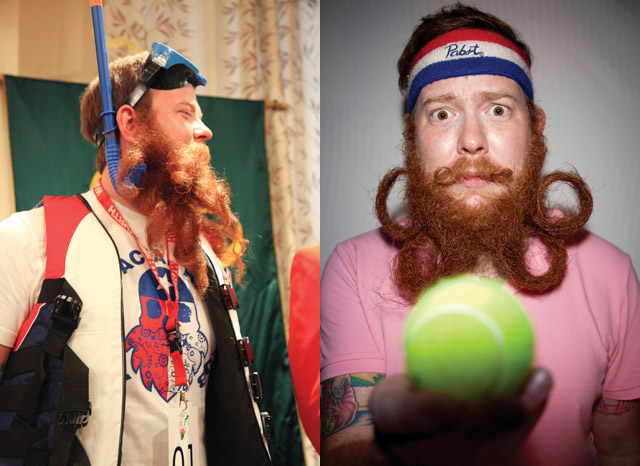
If the hirsute heroes of Deadliest Catch, Ice Road Truckers, and Ax Men haven’t fully satisfied your appetite for bearded he-men, the executive producer of those gems has ditched the “tough vocation” façade and introduced a show that’s purely about the fur: IFC’s Whisker Wars, which debuts Fri/5. The show trails men around the U.S. as they prep and groom for the World Beard and Moustache Championships in Trondhjem, Norway with the long-standing champs of Germany looming in the distance.

Competition categories run the gamut from Freestyle to Full Beard Natural (in one contender’s analogy, that boils down to “synchronized diving vs. marathon”). The former measures artistry and ingenuity, the latter demands “an unbroken line of unshaven ace from the temple to the chin to the other temple … to achieve natural fullness, size, and shape.” For some reason, Miss Oregon serves as a judge for the U.S. Nationals (where California beards killed, as we reported at the time) and looks repulsed as she’s forced to stroke and yank at waist-length beards. That face – filled with a bittersweet mix of disgust and morbid curiosity – seems to be the main driver of the documentary’s entertainment value.

We watch the dueling egos of the men, their interactions with surprisingly sane spouses, and overall grooming techniques. Reigning champ Jack Passion is derided for his narcissism and book deal, while Aarne Bielfeldt serves as a charming foil: a man who lives in the forest and is an avid harpsichordist. Bielfeldt’s beard is a dangling gray, though coincidentally, most of the men on Whisker Wars (including Passion) sport brilliant red beards of varying length and texture.

The beardsmen (beardos?) struggle with everyday tasks, such as eating, and other not-so-everyday tasks, like multiple brushing sessions. Just watching them wrangle unruly facial hair is exhausting, though the show is unexpectedly watchable, mostly because it isn’t afraid to acknowledge the self-seriousness and absurdity of it all.

Whisker Wars premieres Fri, August 5 at 11 p.m. on IFC.

Straightening out planking

0

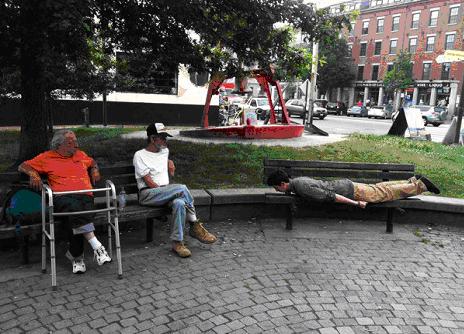
The newest international pastime involves lying face down on the ground with the ultimate goal of remaining as stiff as possible. I’d lump it in with parkour, mosh pits, and the car and phone booth stuffing competitions from the late 1950s and early ‘60s on account of its baffling physical appeal. For those of you unaware of this global craze and perhaps had no clue as to why Rosario Dawson was lying on a table on Jimmy Kimmel Live… they call it planking.

Although planking’s popularity has taken off this summer in the U.S, the trend goes back as far as 1994. It stayed under the radar as an underground hobby in Australia and Europe forever before its newfound seismic popularity.  

A written description of planking sounds neither amusing nor enticing. The goal of the practice is to find the most complex, unorthodox structure around and “plank” atop it, making sure to assume proper planking position — stiff as a board, arms at your sides. Planking is driven by a particular kind of oneupsmanship. Anything from fences to basketball hoops, forklifts to flagpoles, (yes flagpoles) plankers manage to find a way to remain as stiff as possible while their buddies quickly snap a photo of their latest feat. The higher the physical risk the better. 

But are bragging rights worth your life? 

On May 13, a man was arrested in Queensland, Australia for allegedly planking on top of an Australian police car. And sadly on May 15, a 20-year old Australian man made worldwide headlines after his failed attempt to plank on  a building’s balcony seven stories high resulted in the trend’s first casualty.

But for many, planking is nothing but clean harmless fun. Ryland Webb, an 18-year old from San Francisco, not only likes planking’s fun times — he also uses it as an opportunity to make a statement. 

Webb says he first started planking out of curiosity. “The first time I planked was with some friends on a long afternoon. We didn’t really know what to do so we gave [planking] a shot.”

While in Portland, Maine, Webb says that he used planking as a way of interaction. “We were in a different city and we viewed planking as an alternative way to interact with the natives. You really don’t know a place until you pretend you’re a board on its horizontal surfaces.”

“As times progressed we started to view the activity as our own innocent way of fucking shit up,” Webb says. “Planks began to be fashioned either to provoke reactions from bystanders, or symbolize some abstract form of youth rebellion.” He and his friends planked bike racks, benches, cars, newspaper stands, and fences.

And it’s not a trend if famous people aren’t doing it. Basketball players like Dwight Howard and former Golden State Warrior Gilbert Arenas, as well as mainstream artists like Katy Perry, Chris Brown, and Usher have all taken a plank now and then. 

But since planking’s breakout, there has been a growing amount of critics wary of the game’s origins and intentions. Some believe it to be an insulting representation of the horrific stacking of slaves atop wooden planks which took place during the Middle Passage. The idea of planking has sparked outrage from many; including Alvin Nathaniel Joiner IV, better known as rapper Xzibit, who tweeted “Planking is THE dumbest shit ever. #Planking was a way to transport slaves on ships during the slave trade, it’s not funny. Educate.”

It’s hard to say what the true intentions of planking really are. The game which has taken on many various monikers in the past, including “the lying down game”, “playing dead”, “extreme lying down,” and “facedowns.” 

But it does appear that the trend is sticking around, for the moment at least. Don’t be surprised if — on your next coffee run or hamster walk — you see someone lying face down atop of a bike rack or a public mail box. Planking may just be one of those things we’ll have to take lying down.


Street Threads: Look of the day

0

Today’s Look: Coco, 23rd St. and Valencia

Describe your look: “California meets Berlin.”

Street Thread: Look of the Day

3

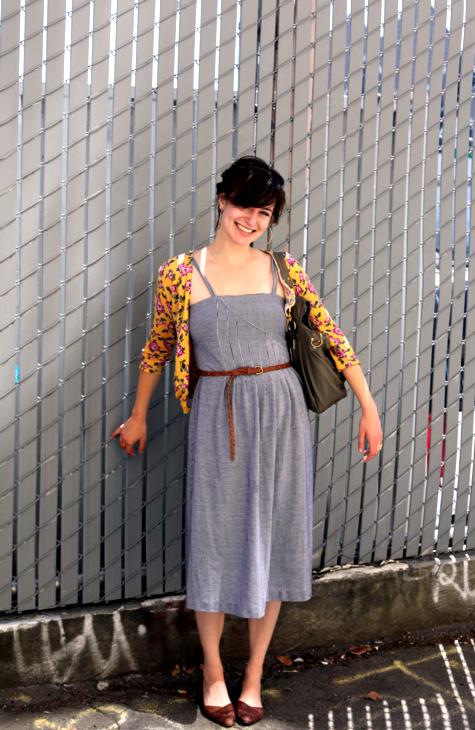
Today’s Look: Sarah, 24th St. and Poplar

What’s your style philosophy? “Go as classic as possible.”

Portuguese delights at the Secret Wine Shop and lenga|lenga

0

Up on the second floor of an industrial warehouse in SOMA, you can find a small, stylishly decorated loft filled with secret spirits. I’m not talking about a haunted house. I’m talking about the Secret Wine Shop. It’s also the home of owner Christy Bergman — and homebase for her endeavor to bring unique and delicious wines to an eager audience, in a nontraditional and extremely intimate environment.

On July 25, I went to Bergman’s Portuguese food and wine event, which was a collaboration with lenga|lenga, a new catering biz specializing in traditional Portuguese flavors.  Needless to say, it was one secret that deserves to be shared.

All six-courses were perfectly paired with a wonderfully robust, small-production wine, either from Portugal or made with Portuguese grapes. According to the chefs, there are 1001 ways to cook cod, so several of the dishes used this delicate, flaky fish, including the main course of creamy codfish, cooked with potatoes and white sauce, a Portuguese twist on potatoes au gratin or Spanish brandade.

As we made our way through the long list of wines, each one better than the last, we socialized with the resident cat Diesel, examined the eclectic art on the walls, and got to know our fellow wine aficionados, in what was essentially somebody’s living room. This is truly a special wine tasting experience, and with the expert wine selection by Bergman, your palette will be pleasantly surprised by the diversity of flavors that one evening can encompass. As they say in Portuguese as they clink their glasses together … saúde!

The Performant: Serf’s Up!

0

The Weill Project and Will Kaufman’s Woody Guthrie sing out.

“A pamphlet, no matter how good, is never read more than once, but a song is learned by heart and repeated over and over.” –Joe Hill

As this year’s annual LaborFest draws to an end, and the organized labor movement is facing an uncertain future as exemplified by the recent Republican victory in Wisconsin regarding collective bargaining, and the disappointing conclusion to the Mott’s strike of 2010, it does the socialist spirit good to soothe the savage breast with music created with an ulterior motive. Political convictions as entertainment have had their misses, but it’s the hits we remember more, whether “learned by heart,” or not.

Though probably best known for the unrepentantly dark murder ballad “Mack the Knife,” Bertolt Brecht collaborator Kurt Weill was a staunch socialist firmly on the side of the underdog. The two pioneered theatrical works about and for the working class, and critical of “business as usual,” in life as well as in theatre. Under the direction of Allan Crossman and Harriet Page-March, the Weill Project, explored a set of seafaring songs from familiar Brecht/Weill musicals like “The Threepenny Opera” to more obscure tunes such as “Youkali: Tango Habanera,” which made an orchestral appearance in a mostly forgotten Weill side-project called “Marie Galante.”

“Marie,” sung in French by soprano Sibel Demirmen, was one of the evening’s most striking offerings. Another was mezzo-soprano Meghan Dibble’s rendition of “Pirate Jenny,” a song which exemplifies the divide between the working classes and their careless capitalist oppressors. Two other vocalists, Harriet March Page and Justin March rounded out the vocal mix, ably accompanied by Martha Cooper on piano and John Bilotta on accordion. Presented as part of Stage Werx Theatre’s <www.stagewerx.org> new music series, Underground Sound, the Weill Project set the bar high for shows to come, and is an ensemble to watch out for.

A staunch socialist closer to home, one Woody Guthrie, came to life in the hands of Will Kaufman whose solo performance “Woody Guthrie: Hard Times and Hard Travellin’” (as well as his book, Woody Guthrie: American Radical) followed the dusty road of Guthrie’s political awakening through music.

A mean finger-picker, Kaufman played not just Guthrie tunes such as “I Ain’t Got No Home” and “So Long, It’s Been Good to Know You” as he described Woody’s visits to the migrant camps and the extra-legal liberties taken by the LAPD and a slew of union-busting vigilantes, but also songs that inspired him towards reaction. Songs like Joe Hill’s “The Preacher and the Slave,” Agnes Cunningham’s “How Can You Keep Movin’ (Unless You Migrate Too),” and Irving Berlin’s “God Bless America” — a song that galled Guthrie so much he wrote an angry counterpoint “God Blessed America,” which became his best known song, sans the political verses, as “This Land is Your Land.”

Kaufman, an American living in England, was inspired to tackle Woody Guthrie as a subject back in 2006 during a time when “George Bush and Dick Cheney were speaking for America,” in an attempt to connect with and portray an all-American voice closer to his own point of view. I can’t speak to whether or not he’s got the British convinced, but in San Francisco, his sentiments were welcome.

Appetite: Plans of attack for SF Chefs

0

SF Chefs year three starts this Monday, an event that has become San Francisco’s biggest food and drink showcase – our “food and wine classic”, if you will — utilizing much of the Bay Area’s best talent. (You can check out my coverage of the event from last year here).  

The event takes over Union Square for a week with events, classes, grand tastings, and nightly parties. There’s something magical about a tented Union Square, especially with the cable cars gliding by and tourists casually wondering what kind of fun is going on. After hours of tastings and music, one can walk to afterparties atop the Westin or other nearby locales, taking in the city lights until the wee hours with dancing and yes, more impeccable food and drink.

But with a week full of events, how does one begin to choose what to attend? I have covered a lot of ground every year I’ve attended and have some specific advice on what to make sure you don’t miss, depending on your preferences. Oh, and don’t forget to allow your stomach some recovery time.

If you’re a cocktail hound or celebrity chef follower

Don’t miss Friday night’s opening celebration and grand tasting (6:30-10 p.m.). Sure, the chef line-up is impressive. Everyone from Michael Mina to Tyler Florence will be there serving creative tastes of their food. There will be more food than you’ll ever be able to fit in one stomach, especially if you attempt to sample from the over 35 chefs who’ll be there.

On the cocktail front, you’ll work double-time to keep up with the amazing bartenders and bars represented as they shake up special event cocktails. There’s fine bartenders at many SF Chefs events, but Friday night particularly showcases a larger number of our city’s best bars in one place.

There’s also plenty of wine, beer, and spirits. You won’t suffer from choices. Chef Joey Altman and the Soul Peppers provide the live blues backdrop. Oh, did I mention that all tastes are unlimited with price of admission? That way you can keep going back for your favorites, if you do happen to pack stomach No. 2. 


If you want all this — and dancing too

Saturday night is another big shindig in “Union Square: Decadence After Dark” (7-10:30pm), again with over 35 chefs plus spirits, wine, beer, cocktails. Again, all unlimited. There will be dancing (if you’re still mobile) along with eats from chefs like David Bazirgan of Fifth Floor and Thomas McNaughton of flour + water.

Save room for the after parties. Friday night’s mayhem happens 10 p.m.-1 a.m. in private rooms at the City Club. With sponsors like Cigar Aficionado and Wente Vineyards, there’s cigars given out and Wente wines flowing along with cocktails, beer, chocolates, coffee, caviar, oysters, and desserts from Pastry Chef Leena Hung (The Restaurant at Wente Vineyards). Best of all, Hubert Keller will be stationed at the turntable. That man does everything.  

Saturday night offers a second afterparty option, this one hosted by Top Chef All-Stars winner Richard Blais and SF-based Skyy Spirits, the latter of whose portfolio includes beloved classics Campari and Wild Turkey, as well as the delightful Espolon Tequila. Chef Blais heads up a team of former Top Chef contestants (Fabio Viviani, Jen Biesty, Marisa Churchill, Mattin Noblia, Ryan Scott) for bites to go with cocktail creations by the Bon Vivants. There’s even more food from Dennis Lee (Namu) and Ryan Farr (4505 Meats) and music from Hot Pocket – a quintet comprised of members of the Best of the Bay winning group Bayonics – and DJ Dojah so you can dance it all off.


If you want demos, classes, and unlimited tastings 

There’s individual classes during the week, but for a full feast included, hit up the grand tasting tent all afternoon Saturday or Sunday. Both days feature food from over 30 big-name chefs like Hubert Keller and Elizabeth Faulkner. But there’s also ongoing demos from chefs like Martin Yan, NY’s Cesare Casella, Fabio Viviani, and Gary Danko, while cocktail experts such as H. Joseph Ehrmann and Charlotte Voisey school you on spirits and cocktails. Watch for a Negroni cart where top bartenders will mix you a classic negroni, a sbagliato (basically a sparkling negroni… with prosecco), or a negroni variation of your choice (even better, Campari is donating $200 per hour the cart is in operation to support USBG’s Bartenders Relief Fund).


If you want to get up close and personal

Choose from an array of classes, demos and meals taking place in the Westin for a more intimate focus than you’ll get in bustling Union Square during the Grand Tasting Tent and evening parties. You could watch Chris Cosentino (Incanto) and Elizabeth Falkner (Citizen Cake & Orson) take on Dominique Crenn (Atelier Crenn) and Russell Jackson (Lafitte) in a chef’s challenge. Maybe you want to attend a demo with Tyler Florence, a bartender’s cocktail breakfast, a Wine Spectator pinot noir panel, “Secrets of the Sommeliers” with Rajat Parr and Jordan Mackay, or a family cooking demo led by chefs Michael Mina, Craig Stoll (Delfina), Gerald Hirigoyen (Piperade), and their kids.

Another winning night last year was Thursday’s ‘Sugar and Spice” party. Smaller than Union Square events, tastes cover palate extremes, while cocktails from key bartenders and local wineries are featured. The line-up is strong (including Hoss Zaré of Zaré at Flytrap and Mourad Lahlou of Aziza), but it’s manageable and memorable in the stunning mezzanine ballroom of the Westin.


SF Chefs

Mon/1-Sun/7, $25-150

Various SF venues

www.sfchefs2011.com


— Subscribe to Virgina’s twice monthly newsletter, The Perfect Spot


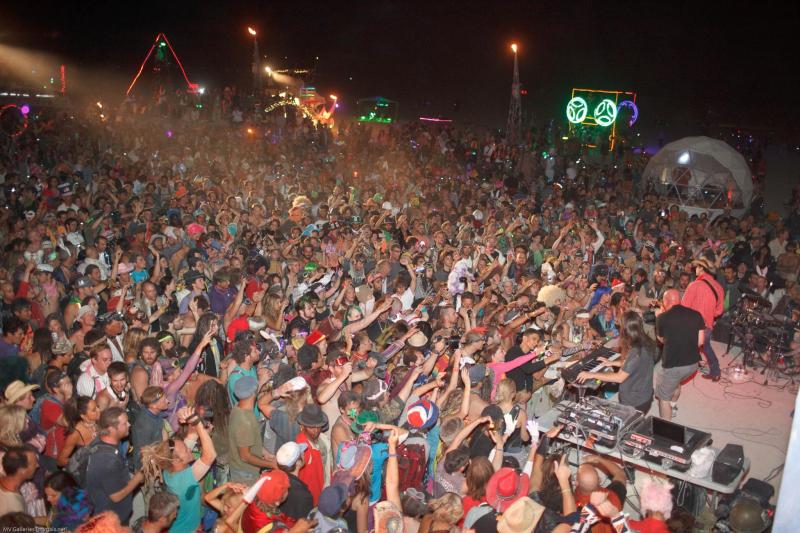
Many Burning Man DJs get stuck without tickets

153

UPDATE/CORRECTION: The manager for Infected Mushroom says the group does indeed have tickets.

The mad scramble for sold-out tickets to Burning Man and the subsequent price gouging by scalpers have been frustrating for burners who didn’t plan ahead, but now it appears that it could impact the musical offerings on the playa this year as many big-name DJs and musicians have been stuck without tickets.

“About 25 to 30 percent of our DJs are ticketless right now,” says Chris Kite of the Utah-based Bass Camp, which will be creating Temple of Boom on the high-profile corner of Esplanade and 10:00 this year. “These guys are contributing their art for free, and they aren’t even looking for a free ticket, just access to buy one.”

Among the big acts that are still ticketless are Shpongle, Infected Mushroom, EOTO, Mimosa, and Adam Ohana, many of which are managed by Coast 2 Coast Entertainment, which helped book many of its artists on the playa but waited too long to buy tickets for them, many of whom have been on tour and unable to put the time into preparing for Burning Man.

“We’re having a small crisis in that regard,” said Syd Gris of Opulent Temple, whose epic lineup for its traditional Wednesday-night White Party includes many of the performers who are stuck without tickets. He and Kite have both appealed to Black Rock City LLC, which stages Burning Man, but so far haven’t found a solution to the problem.

Big sound camps have always been the redheaded stepchildren of Burning Man. Despite their role in creating its nightlife and soundtrack – fueling the event’s growing popularity and helping burners with fundraising events throughout the year – they don’t qualify for art grants, free tickets, or other support that art collectives often receive from the LLC. While some burners dislike the DJ culture, Burning Man has in recent years become one of the world’s biggest electronic music events, a status that contributed to brisk ticket sales this year.

“The irony of this is some of these artists usually get paid $50,000 to play and they want to come [to Burning Man and] play for free and they can’t even do that,” said Syd, who has worked with other big sound camps to push for more support from the LLC in recent years, with little success (as I chronicle in my book). “Our lineup on Wednesday night, if we booked it at another festival, would be easily a $100,000 night.”

Kite notes that BassCamp’s budget this year is tens of thousands of dollars, all paid for by member dues and fundraising events – which is fairly typical for big sound camps (which, as part of the burner ethos, don’t pay the DJs) – and he said its been very demoralizing to spend so much time and money at this late stage to ensure they can still deliver their planned music lineup.

“I’m spending a lot of time online just trying to get tickets,” Kite said. Anyone who wants to help out can reach his camp at basscampevents@gmail.com, or they can contact Syd at sydgris@opulenttemple.org. And for a guide to the best DJ sets planned for Burning Man this year, check the Guardian’s Aug. 3 playa prep issue.

What’s next for San Francisco’s small theaters? The Roxie has an idea…

1

The Red Vic closed this week, and a recent SFgate.com article reported that Balboa Theater owner Gary Meyer will be leaving the Richmond District landmark at the end of the summer. What’s a small, independent movie theater to do in these troubled times?

The Roxie, San Francisco’s oldest continually operating theater (it’s had a few different monikers, but the Mission District space opened in 1909; it became a non-profit in 2008), has a plan, according to a press release that landed in my inbox this morning. It boils down to a four-letter word: BEER.

According to the release, “At a spry 102-years-young, the Roxie Theater has applied for a permanent beer license. Over the past year, the Roxie has used its non-profit status to obtain day use permits for on-site alcohol, and the response was so overwhelmingly positive that we’re trying to make it permanent. Our application is in! The Roxie hopes to add beer sales as part of its mission statement to make the theater a place of gathering and celebration, as well as a business model for the survival of neighborhood theaters.”

The release goes on to explain that the programming won’t change (have you seen World on a Wire yet?), and there will still be kid-friendly events planned to balance out the 21-and-over-only screenings. Also: “It has not yet been decided if beer will be offered every day, just weekends or just special events.”

Cross your popcorn butter-stained fingers that the Roxie finds success with this new endeavor, and in the name of all that is (cinematically) holy — get out there and see a movie! Check out the Roxie’s upcoming programming here.

A skate day for creative community

0

At last, a weekend with weather resembling an actual summer vacation. With Saturday’s moderate temperature, a soothing breeze, and clear skies I was in a great mood to head to Tha Hood Games at the African American Art and Culture Complex (AAACC) on July 23 (click here to see our event preview). The vast majority of my experience with skateboarding has been watching the X Games religiously every year, so you could say that the bar was set high for day’s skating.

I didn’t have a problem finding the Western Addition venue; all I had to do was follow the heart-pounding, bass-pumping beats coming from the event’s speakers. Mistakingly anticipating a small crowd as I rounded the corner of Buchanan Street, it turned out the party had already started. A crowd stretched out in front of the AAACC for a lock down Fulton Street: skaters, parents, fans, everyone excited to check out the fun that was visible through the parking lot fence.

Not to be deterred by the onlooking SFPD police vehicle, the energy in the parking lot turned skate park was infectious. It appeared that every skateboarder in the city had turned out for the Games. 

Tha Hood Games was the kickoff event for an exhibit that will be on display in the AAACC’s Sargent Johnson Gallery through next year. Eye-grabbing smaller paintings and murals on helmets, car hoods, and other surfaces, all highlighting the past works of Tha Hood Games, which was created to give Bay Area youth a chance to showcase artistic talent in a positive skating environment. Saturday’s opening reception and fashion show were held following the parking lot open skate, which was held in tandem with music performances and a live mural painting.

But the skating was what caught my eye. The downhill orientation of the Complex’s parking lot acted as a natural drop-in for boarders who’d use it in their descent towards the various obstacles and quarter pipes that awaited them at the bottom. Boarders could grab a drink from vitamin water sponsors when thirsty, a bite from Gussie’s Chicken and Waffles booth when hungry, and if their board took a hit, visit the deck doctors stationed at, yes, another booth.

The crowd snapped to attention when the emcee and founder of Tha Hood Games, Keith “K-Dub” Williams announced that pro skater Nyjah Huston had arrived at the AAACC parking lot. Huston was the youngest-ever competitor in the X Games when he made his debut during the 2006 X Games at age eleven. Now, he was being ambushed by a group of skaters that ranged from youngsters to people twice his age. 

For a high-schooler like myself, to see a ‘5”7 17-year old admired on a ten-foot scale was really gratifying. For the skaters in attendance, Huston was the person to be: they were standing in front of a skateboarding prodigy. 

But the most the most rewarding part of the day was the sight of people of all ages coming together to enjoy a day of skateboarding. Literally, I took an informal poll. Whether it came out of the mouth of Williams or I overheard it from other attendees, the catch phrase of the day was clear: “this is just a beautiful sight.” 

Appetite: Jasper’s menu brightens up the Corner Tap

0

All photos by Virginia Miller

You heard it here a couple weeks ago: Jasper’s Corner Tap & Kitchen is going to be a drink destination, no doubt about it. Pair its all-star bartender line-up and impeccable cocktail menu with 18 beers on draft (like Telegraph Reserve Wheat from Santa Barbara), a fine wine list with playful categories like “Flower Power” and “We’ve Got the Funk”, satisfying bar food, (eventually) open-all-day hours – and plunk the whole thing down next to Union Square, a perfect tavern space for your downtown rendevous? The set-up is already screaming hit.

If a sneak taste yesterday is any indication, it’s the type of place to bring friends for casual comfort food – house-made sausages, fish and chips, and lamb shepherd’s pie — with well-crafted yet un-fussy cocktails or craft beers in a space that manages to be industrial and warm at the same time. Bar service bodes well with a  talented staff that includes not only Kevin Diedrich (formerly of Burritt Room and NYC’s PDT), but also Brian MacGregor (Jardiniere), Francis Kelly (Ponzu, Presidio Social Club), and Allison Webber (Portland’s Irving Street Kitchen and The Gilt Club). 

As bar manager Kevin Diedrich told me, the menu is meant to be “approachable and not too geeky,” yet in signature Diedrich style, perfectly balanced and nuanced (for a delicious example of Diedrich balance, try his Soda Jerk, in which blanco tequila and Campari get tart with hits of lime and passion fruit, then fizzy and gently sweet with cream soda and egg white). 

Upping the game, Jasper’s will be the first known bar to have Bols Genever on draft! Starting next week, get your fill of a beloved Dutch spirit, flowing fresh and lush. Stay tuned for future unusual draft and barrel-aged offerings.

Enjoying bar bites (Berkshire pork riblettes, anyone?), I tasted through a wide range of the cocktail menu. With playful descriptions under each drink and plenty of house bitters and syrups, it satisfies the cocktail aficionado but, as Diedrich mentions, keeps bartenders and customers happy by not being painstaking or pretentious. Some drinks only have a handful of ingredients, others require a simple mix and stir and they’re ready. Elegant but straightforward. 

Join me on a little sneak-peek photo journey through a few food and cocktail highlights. Cocktail recipes are Kevin Diedrich’s unless otherwise noted. 

Jasper’s Corner Tap and Kitchen

401 Taylor, SF

(415) 775-7979

www.jasperscornertap.com

— Subscribe to Virgina’s twice monthly newsletter, The Perfect Spot