• No categories

Pixel Vision

Sk8 or die! “Tessa & Scott:” a sartorial appreciation

2

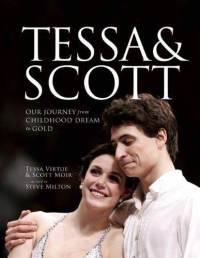
Taken as a sports glory confessional, Tessa & Scott: Our Journey from Childhood Dream to Gold (Anansi, 192 pages, $19.95) is pretty standard. It has more than its fair share of inspirational sound bites (“The young couple faced difficult challenges, but they were sustained by their love for skating and the knowledge that they could be champions.”). It’s also packed with glossy photographs and mildly amusing anecdotes. Yet, taken as a study in the evolution of dancing facial expressions, body chemistry, and ice dancing fashion choices, the book becomes exponentially more interesting. 

In terms of facial features, Tessa Virtue and Scott Moir (Canada’s 2010 Olympic ice-dancing champs, among their many accolades) were born to dance to together. They’ve got the distinctive “Are we siblings or are we lovers?” look that’s become a prerequisite for the sport. The fuzzier the line, the better. Ambiguous sexual preference is suggested, but not mandatory. Both Scott and Tessa have creamy skin and thick – slightly wavy – chocolate brown hair. It’s versatile enough to be tightly wound back, gelled, and hair-sprayed into oblivion, pre-show. Yet, they can also rock the slightly mussed-up, sweaty, post-dance routine look. Tessa is a huge fan of ponytails, though her go-to look for the ice is an intricate top bun. She’s got a strict anti-bangs policy. Scott has a fantastic variety of smiles (including a grimace that strikes a fine balance between warm and fierce), though he’s lacking a bit in the upper-lip department.

Tessa & Scott: Our Journey from Childhood Dream to Gold, or TSOJCDG, has about four major categories of photographs. The majority are mid-performance drama shots. The rest are the post-dance glory moments, cutesy childhood pics, and special nature photography shoots with Myra Klarman. Along the way, a few hybrids crop up. For example, take the classic moment when a pre-pubescent Tessa and Scott chomped on their medals to test the veracity of the gold.

The earliest evidence of Scott and Tessa’s signature pose is a photograph from early 2000. It’s an icy and intense glare at the cameras, complimented by the arched scowl of Scott’s eyebrows and a passionate clutching of his partner’s lower thigh or shoulder. Scott has a tendency to shut his eyes in passion, Tessa’s tend to widen for the crowd.

TSOJCDG is peppered with shots from a rustic shoot the couple commissioned from photog Klarman. For some reason, Klarman thought it would be a good idea for the couple to wade knee-deep into a lake, and pose crouched in the water. Tessa and Scott seem oblivious to their soaked clothing, and it’s one of those shots where you think more about what happened before and after than the actual image you’re looking at.

Back on the ice, I’d say Tessa has a great fashion sense, especially considering the track record her peers. She favors shades of pink, crystals, velvet, lace, fringe, pearls, and sheer fabric; usually all of the above at once. Scott tends to go for a more conservative image, with a classic tuxedo or suit. Tessa’s fashion climax probably arrived at the 2010 Olympics during a compulsory Tango Romantica. With her usual dark red lipstick and pulled back hair, Tessa wore a one-shouldered burgundy gown with a black tulle overlay, her bodice decked out in ruffles and intricately webbed pearls, jewels, and floral patterns. Underneath, she went for classic leggings and not much else: it seems the publishers didn’t catch an unfortunate nip-slip captured in some of the images.

Tessa only missteps when she ventures too far deep into Dancing with the Stars territory, as she did when competing earlier in her career in Andorra. She wore a magenta strappy dress, exposing lots of skin and bedazzled within an inch of her life. Not long after, Tessa took a risk with a three tiered, sparkling number – plus fringe and a diamond choker – for the 2009 Nationals, but it looks like one that paid off, landing the jump from tacky sad to tacky fun. 

Tessa & Scott: Our Journey From Childhood Dream to Gold is an enchanting look at the lives of two artistic and athletic champions. It may not be worth reading the 184 pages of copy and biographical detail, but it’s certainly worth a bookstore browse to check out over 171 shiny photographs of “big dreamers” and ice dancers Tessa Virtue and Scott Moir.

The Performant: Super Freaks

0

Thunderbird Theatre and Foul Play serve it up weird
 
Like swallows returning to Capistrano, there are certain annual events you can count on to lift the spirits and brighten an otherwise soggy outlook. One such anticipated delight is Thunderbird Theatre’s yearly production of an ensemble-created original comedy. Mavens of the shameless spoof, the fabulous T-birds have sent-up pulp detective fiction, lucha libre wrestling, pirate intrigues, Citizen Kane, Conan the Barbarian, vampire romance, and creepy office politics in variously hysterical ways, and a summer pilgrimage to their shows is always effort well-rewarded.

This year’s Thunderbird Special was “SaltyTowers” (the run ended July 23) — a goofy mashup of Greek mythology and the best BBC comedy show ever to feature the line “don’t mention the war.” The opening sequence, involving a traditional chorus, established the basic plot, but it was the next scene, set in the lobby of the hapless, underwater hotel that established the funny. As a string of minor gods, mortals on-the-lam, and a beleaguered mob boss-styled Zeus check-in to Poseidon’s realm, they were waited on by a Portuguese man-o-war, a Dolphin, and Poseidon himself: a world-weary deity in an ill-fitting suit, married to Medusa — a woman for whom the phrase “my little nest of vipers” could actually be taken for an endearment.

The tangled fishing line of a plot might have lost direction now and again, but the buoyant silliness of the Thunderbird crew was unsinkable. Brandon Wiley played a scantily-clad Dionysus with hedonistic abandon; Neil Higgins’ swinging socialite Hermes was equal parts Oscar Wilde and Eddie Izzard; Analisa Svehaug channeled Connie Booth as “Dolly,” a matter-of-fact dolphin receptionist-cum-waterpark
performer; and Thunderbird regular Shay Casey’s Zeus, “a big God with big needs,” nevertheless seemed strangely unflapped by the temporary loss of his tender bits in a mishap involving an angry crustacean (Gilbert Esqueda). Weird science alert: did you know the sting of a Portuguese man-o-war can cause an orgasm? To find out how, you’ll have to see it for yourself.

Meanwhile, across the hallway of the EXIT Theatreplex, an entirely different brand of weird is getting a test-drive at Foul Play’s premiere of Nikita Schoen’s “The Left-handed Darling”. Inspired in part by the imitable Tod Browning film, “Freaks,” Schoen’s first foray into playwriting is tinged with longing, deformity, and a calmly rational madness that doesn’t so much spiral as glide smoothly forward into the dark.

The central character, Calliope (AmandaOrtmayer), is the young daughter of former sideshow performers, Phillip and Constance Darling (Don Wood and Kimberly Maclean). Raised in isolation by her well-meaning yet physically challenged parents (they are unhappily co-joined), Calliope amuses herself by creating hybrid creatures from the body parts of the animals her father “preserves” in jars.

Starved for companionship, she falls in with a group of carnival freaks, played with delicate empathy by Wood, Maclean, Mikka Bonel, and Sean Owens, with a suitably creepy Mikl-em as their barker/overseer, Sugarchurch. Surreal flourishes such as the mysterious puppet entity, Dr Chang, a hauntingly lifelike parasitic twin, Don Seaver’s dissonant soundscape, and a stellar courtroom scene staged by the sideshow performers, create an atmosphere of thoughtful unease that lingers long after the final bow.

THE LEFT-HANDED DARLINGThrough Aug. 13
EXIT Theatre
156 Eddy, SF
(415) 673-3847
www.sffringe.org

Grab your deck, Tha Hood Games riding out tomorrow Sat/23

1

Mini ramps in front of murals, skate shoes stomping around, multiple forms of media sharing the spotlight for tomorrow (Sat/23)’s all-day multimedia art exhibit at the African Art and Culture Complex. Thanks to Parks and Recreation and an East Bay youth creativity non-profit you can shoulder your deck and head to Tha Hood Games exhibition.

Founded in East Oakland in 2005 by Keith “K-Dub” Williams & Ms. Barbara “Adjoa” Murden, Tha Hood Games was created to give “youth a creative platform to share their talents,” according to the group’s website. Tha Hood Games has ramped up 30 skate events and youth art festivals all over the Bay Area, in Las Vegas, Long Beach, and at the X Games.

The group’s events highlight the talents of Bay Area youth skateboarders. In an interview with the San Francisco Bay Area Independent Media Center, Williams said that, “Tha Hood Games gives youth an opportunity to showcase and nurture their skills in skateboarding, music, dance, and the visual arts in their own communities. This exhibition is our way of sharing our journey visually, and spotlighting our family of creative people and the many youth, cities and communities we have visited.”

So of course, there’s gonna be art on Saturday — the exhibit features murals and paintings on helmets and car hoods. There’s gonna be skateboarding – a temporary park’s been erected in the parking lot of the the African Art and Culture Complex that’ll be open from 10 a.m.-4 p.m. Also included will be live performances, live art, skate demos, and vendor booths.  Pro skater and associate of Tha Hood Games Karl Watson will be in attendance, as will be pro skater Nyjah Huston. An opening reception in the art gallery will take place from 5-7 p.m., and a fashion show  from 7-9 p.m.


“Tha Hood Games: Kids, Community, Comrades”

Sat/23, 11 a.m.-9 p.m., free

African Art and Culture Complex

762 Fulton, SF

(415) 292-6172

Facebook: Tha Hood Games Exhibition

www.aaacc.org


Appetite: 4 noteworthy new spirits

1

From an elegant new Islay scotch to a campfire toasted corn whiskey, then two locally-tied spirits, a rye with barbershop ties and a liqueur line imported by SF locals, there’s some noteworthy new sips to share with you.

WHISK(E)YS:

LAPHROAIG 2011 CAIRDEAS
Laphroaig’s master distiller John Campbell and Global Brand Ambassador Simon Brooking were in SF a couple weeks ago. I spent an afternoon with them sipping Laphroaig’s brand new 2011 Cairdeas, Ileach Edition. Limited release, only 350 cases have been made available to the US, of which SF alone has 75 (at Whiskey Shop on Sutter Street). On the heels of last year’s limited Cairdeas Master’s Edition, this winning version is non-chill filtered, hinting at that quintessential Islay peatiness but rounded out with an overall earthy, slate quality, and gentle sweet notes of candied orange.

Laphroaig is releasing a Triple-wood Quarter Cask scotch this Fall in the US (already a big seller in UK), which is basically their creamy, spicy Quarter Cask scotch finished in sherry casks. Though I have a bottle of their now extinct 15yr, and their 10yr is a peat-heavy Islay standard, my favorite remains their 18yr, a less peaty, more balanced beauty redolent of salt, vanilla, honey, with gentle spice and layered depth.

BALCONES BRIMSTONE
– In my 7×7 corn whiskey article, I list Balcones corn whiskey, a 2010 Double Gold medal winner at SF World Spirits Competition. They just released a new whiskey, Brimstone, smoked with sun-baked Texas scrub oak.

My first reaction upon tasting it is to crave BBQ (not unlike with MB Roland’s delightful Black Dog http://mbrdistillery.com/products.aspx, another smoked corn whiskey, although both have quite a different taste profile). Balcones Brimstone tastes, yes, of fresh corn, but with a bold, smoky, campfire essence, and more than a hint of sweet cumin. Distiller Chip Tate calls it, “Texas campfire in a glass.” That’s exactly it. An intriguing addition to the Balcones line.

I can’t help but be drawn more towards smoked corn whiskeys than to standard, clear corn whiskeys.

1512 SPIRITS – Salvatore Cimino is a Nob Hill barber by day (at 1512 Pine Street), and whiskey distiller by night. Cimino comes from a distilling lineage with a Prohibition-era bootlegger grandfather, whose 1923 photo (right) graces the bottle of 1512 Spirits‘ Barbershop Rye.

Distilled over direct fire in Rohnert Park (using one Portuguese copper alembic still and one 70-gallon finishing still), 1512 is truly small batch at 350 bottles per month. Made from 100% rye grain, his unaged rye ($32-35 a bottle) is surprisingly balanced and flavor-rich for a young whiskey.

I sampled the aged rye (not yet released), aged in 3-gallon new char, American oak barrels. At merely three months, it’s already showing robust color and body, the taste full with rich wood notes. Sal hopes to release a classic bourbon and a cherry-smoked bourbon in the future.

Sip these locally-made beauties at 15 Romolo, 83 Proof, Swig and Rye, or buy a bottle at Jug Shop, Healthy Spirits, Cask, Liquid Experience. Even LA’s Father’s Office is serving 1512 alongside their beloved burger.

pür•spirits – Recently released in SF (find them at D&M on Fillmore and online at K&L), pür•spirits is a German-distilled spirits’ line with a local connection: it was imported to the US by SF locals, Kiki and Harvey Braverman, from Kiki’s native Germany.

Though there are also two vodkas and a malted barley spirit, I sampled pür‘s three liqueurs:

– Blood Orange: Spiced and sweet, it is redolent of cinnamon and cloves.
– Elderflower: No, it does not taste identical to St. Germain, but is, rather, a little lighter, gently sweet and floral with hand-picked white elderflowers from around Lake Constance, which is situated between Switzerland, Austria and Germany.
– Pear: I’ve tasted a lot of pear liqueurs, from locally-made ones to those only found in Switzerland, Germany, etc… pür•likör williams is unusual not only in its almost lighter-than-air, delicate mouth feel, but in that it tastes just like fresh-pressed pears. It is my favorite of the three.

— Subscribe to Virgina’s twice monthly newsletter, The Perfect Spot

Appetite: Three appetizing new books

0

Mission Street Food: Recipes and Ideas from an Improbable Restaurant

By Anthony Myint & Karen Leibowitz

Leave it to McSweeney’s to publish a book that is ode to a series of brilliant SF dining concepts, a recent history of cutting-edge food, and a vividly illustrated cookbook. Mission Street Food, the book, makes me nostalgic for those not-so-long-ago early days of Mission Street Food, the experience. Through the book, I reminisced about favorite dishes served in that ultimate pop-up restaurant out of dingy Lung Shan, found my mouth watering for that incomparable Mission Burger out of Duc Loi Supermarket, and appreciated the current day incarnation of Mission Chinese. This book encapsulates it all, sharing many of the best recipes (with step-by-step photo instructions). We are lucky to have Myint and the Mission Street crew’s visions among us… and such a book to capture the experience.


Food Trucks: Dispatches & Recipes from the Best Kitchens on Wheels

By Heather Shouse

Though Food Trucks (released this spring) paints broad strokes of the rise in the phenomenon that is food trucks, it is a worthy snapshot of how this movement has risen nationally as the economy has suffered. It highlights ingenuity and fresh-thinking from chefs across the country who wanted to make food as affordable as it is exciting. It goes region-by-region through the US, listing a handful of trucks in various cities. Only five Bay Area trucks are listed (including Spencer on the Go! and RoliRoti), which is barely scratching the surface. Nonetheless, it’s a peek into a handful of individual stories and recipes of food trucks launched from New Orleans to Hawaii (including some of my favorite Oahu trucks).

America Walks into a Bar

By Christine Sismondo

Though Sismondo is Canadian, she offers a detailed account of US history from the front row seat of its bars, taverns, saloons, speakeasies and grog shops in her new book, America Walks Into A Bar. She posits that the States’ most important movements, from Revolution to Prohibition, were birthed out of the communal gathering places that are our bars. Factual and historical, Sismondo keeps it seamless, though I found some chapters more interesting than others. Stories of tipsy judges ruling court cases out of taverns and women-bar owners indicted during Salem Witch Trials are engaging and worth a look for those curious about just how much drink has factored into our country’s foundation.

— Subscribe to Virgina’s twice monthly newsletter, The Perfect Spot

Trash (summer) lit: Shut Your Eyes Tight

0

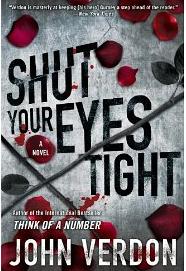
Shut Your Eyes Tight
By John Verdon
Crown, 509 pp, $24


Ever since Thomas Harris created Hannibal Lecter and James Patterson devised the twisted psychokillers who populate the Alex Cross novels, there’s been something of a drive in thriller lit to top even the worst, most grusome stuff imaginable. It’s the Pulp Fiction Syndrome in trash lit — and although Shut Your Eyes Tight is hardly the worst of the recent offerings, I was only about a third of the way through the book when I took out my notepad and wrote:


“This is some sick fucking shit.”


Yep: Ritual machete decapitations (including the bride at a society wedding). Headless body in a rich man’s freezer (below a hundred chickens and some broccoli). Doll equivalent of a horse’s head in a bed. Sexual sadists taking advantage of kids at a reform school for juvie sex offenders.


Oh, and our hero gets a roofie in his drink and gets blackmailed by a fake art patron with no real vowels in his name over (possible) unconsious underage sex. And the Sicilian mob is involved. And an obscure-Elizabethan-literary-reference murderer who cites the works of  Thomas (why should this not surpise me) Kyd.


Naturally, Dave Gurney, the reluctant former homicide detective caught in the middle of all of this, is having tortured relationship problems. It’s sort of a bloody Green Acres: His wife wants to live a nice peaceful life in the country, and he can’t stop himself from getting dragged into dangerous and horrifying crime investigations. In fact, for all the gore, the scenes with the wife are some of the most painful stuff in the book.


In this case, Gurney is called to help solve the wedding-day homicide, which the husband (a truly weird psychiatrist) wants to blame on the household help, in this case a young man who — according to the police — might have been having an affair with the late lamented, or might have been mad at her husband, or might just be a crazed killer who conveniently split town and can’t be found. But the facts don’t quite add up — and Gurney has to piss off not only all of the direct players but a crew of state cops who have bungled the preliminary investigation.


He follows the threads through a bizarre world of crooks, fashion models, child molesters, billionaires, and assorted upstate New York characters until he runs into the grisly world he retired to avoid. You can imagine how his wife feels.


Somehow, it all works as a perfectly adequate (if a bit too lenghty) beach book for the lovers of batshit psychos and the cops who chase them. It’s on my recommended list.

Short takes on the 2011 San Francisco Jewish Film Festival

0

Eichmann’s End: Love, Betrayal, Death (Raymond Lay, Germany/Israel, 2010) Many documentaries rely heavily on historical reenactments to flesh out real-life events not caught on camera. Sometimes this effect can be corny, but in Eichmann’s End, the powerful reenactments make the film. Interviews with actual eyewitnesses guide the acted-out tale of Nazi Adolph Eichmann’s post-World War II life; despite his grim contributions to the Holocaust, he managed to escape to Buenos Aires, eventually settling down to a normal-seeming life with his wife and sons. Though he lived under an assumed name, his true identity was known by many, including a Dutch journalist who conducted a series of interviews with Eichmann in the late 1950s.

Transcripts from these chats are performed nearly verbatim, tellingly revealing Eichmann’s lack of guilt, remorse, or any feelings whatsoever (except regret that he wasn’t able to exterminate all the Jews before the war ended). When by chance his teenage son became smitten with the pretty daughter of a Jewish Nazi hunter who’d survived a concentration camp in the 1930s, events were set in motion that lead to his dramatic capture and highly public trial in Israel. (For what happened next, see The Hangman, below). Eichmann’s End occasionally betrays its made-for-TV roots (as with its intrusive, unnecessarily “tense” score), but it’s chilling nonetheless. Mon/25, 5 p.m., Castro; Mon/1, 4:25 p.m., Roda; Aug. 7, 2:10 p.m., Oshman. (Cheryl Eddy)

The Hangman (Netalie Braun, Israel, 2010) Sephardic Jew Shalom Nagar would already be a pretty compelling subject for a short documentary — for starters, he’s a ritual butcher by trade — but the film’s title reveals his most prominent contribution to history: he was the jailer turned executioner of Adolph Eichmann. Though he calls the man evil (and, chuckling, recalls that the captured Nazi literally thought his shit didn’t stink) he admits he “grew attached” after six months of close contact; his task was not so much preventing Eichmann’s escape, but preventing his death before his trial, to the point of taste-testing all his food to make sure it wasn’t poisoned. When lots were drawn and a hesitant Nagar was selected to “press the button,” the experience affected him so deeply that he became devoutly religious. The rest of his life story, including a stint working at a jail in Hebron after the Six-Day War (where he advocated for prisoners’ rights), is no less remarkable, and reveals a remarkable man who views his fellow humans without any shred of prejudice. July 31, 4:45 p.m., JCCSF; Aug. 2, 4:40 p.m., Roda; Aug. 6, 4:30 p.m., Oshman. (Eddy)

In Heaven Underground: The Weissensee Jewish Cemetery (Britta Wauer, Germany, 2011) In Heaven Underground charts the history of the Weissensee Jewish Cemetery in Berlin, the second-largest Jewish cemetery in Europe, and an important piece of Jewish-German culture that somehow managed to escape desecration at the hands of the Nazis. Surprisingly perhaps, In Heaven Underground is a joyous film, showcasing Weissensee not as a place of death, but as a site for the enduring vibrancy of life. From the Pobbig-Shulz family who live on its premises to the goshawk enthusiasts who conduct research in its lush deciduous environs, Jews and gentiles alike reveal Weissensee cemetery’s resilient personality and its contributions to the people of Berlin both in the past and present. As Harry Kindermann, who worked there as a teenager, notes: “Jewish children could laugh in 1942. But only in the cemetery, because nobody there forbade it.” Sun/24, Castro, 11 a.m.; Aug. 6, 4:40 p.m., Roda. (Cooper Berkmoyer)

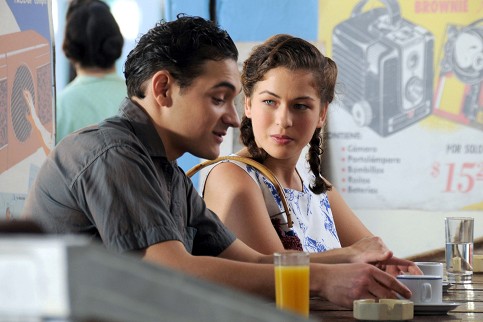
Polish Bar (Ben Berkowitz, U.S., 2010) The “good Jewish boy:” does he really exist? In Polish Bar, director-writer Ben Berkowitz tells the story of Rueben (Vincent Piazza) as he grapples with his roots and does whatever it takes to realize his dream of DJ stardom. Although employed by his uncle Sol (Judd Hirsch), Reuben moonlights at a strip club, honing his turntable skills and scoring cash on the side with more illicit trade. Along with stripper Ebony (Golden Brooks) and bouncer Tommy (James Badge Dale), he walks a razor’s edge between his aspirations and utter obliteration. Piazza does a great job of toeing the line; Reuben never comes off as malicious, just lost and caught in a vicious game. As Reuben sinks ever deeper into a sordid world of drugs and sex (and a weird plot tangent or two) he is forced to confront his tenuous relationship with his Jewish upbringing and face the repercussions of his actions. Sat/23, 9:15 p.m., Castro; July 30, 9:30 p.m., Roda; Aug. 2, 8:45 p.m., Oshman; Aug. 6, 8:55 p.m., Rafael. (Berkmoyer)

Skate of Mind (Karin Kainer, Israel, 2010) Ostensibly a documentary about skateboarding in Tel Aviv, Skate of Mind is more poignantly a story of youth in Israel. Mohammed Kahil (a.k.a. Juice) is an Arab-Israeli teenager with an unquenchable thirst for skating, dashing his father’s hopes that Mohammed help out with the family grocery store. Ever the rebellious son, he leaves home to move in with his Jewish girlfriend, Alina Fine. Although there are plenty of opportunities for Mohammed to showcase his considerable talent and talk endlessly about skateboarding, his relationship with Alina is the most intriguing part of Skate of Mind. Both their fathers disapprove, and having to get by on their own wears on their youthful, bordering-on-naïve love. In the end, despair and hope meet side by side as two young Israelis are forced to confront reality and look to the future. July 31, 8:50 p.m., JCCSF; Aug. 4, 2:30 p.m., Roda. (Berkmoyer)

San Francisco Jewish Film Festival
July 21-Aug 8, most shows $12
Castro Theater
429 Castro, SF
Christopher B. Smith Rafael Film Center
1119 Fourth St., San Rafael
Jewish Community Center of San Francisco
3200 California, SF
Oshman Jewish Community Center
3921 Fabian Way, Palo Alto
Roda Theatre at Berkeley Rep
2025 Addison, Berk.
(415) 621-0523
www.sfjff.org

Youth Speaks finds its Brave New Voices at this week’s international poetry slam

0

Bay Area, meet your home team. Their names are Joshua Merchant, Noah St. John, E.J. Walls, Gretchen Carvajal, Cassanda Euphrat Weston, and Jade Cho – spoken word poets, representatives of their cities in an international competition that has been the subject, even, of an HBO reality series, and all under the age of 18. Do you know about Brave New Voices?

A performance from BNW 2010 on everyone’s (least) favorite sustenance diet

 The international youth spoken word competition has been shocking senses and giving young people a way to spit the most difficult and important aspects of their lives since 1998 (go here for our recent post on Youth Speaks, the SF organization that was instrumental in making this slam royale happen and coordinates the Bay’s BNV representatives). What happens is teams of high school poets, usually selected through city-wide slams in their own areas, hit the stage during three rounds, reciting poems in tandem and solo that they’ve been revising and perfecting for months. Offstage, the kids get to meet fellow poets from around the world, ciphering and practicing their performances into the night.

We’re stoked at the Guardian for our Bay beatniks, and we somehow hooked two of them for an email interview in the middle of their preparations for the competition, which starts tomorrow, Wed/20, and culminates in the final slam Sat/23 at the SF Opera. Like Youth Speaks executive director James Kass says, here’s your “unadulterated, uncensored kids.”

San Francisco Bay Guardian: Introduce yourself to the city — how old you are, how long you’ve been involved with Youth Speaks, what do you like about spoken word?

Cassandra Euphrat Weston: I’m 18, I’ve been involved with Youth Speaks for about a year. I love the directness and honesty that spoken word demands of me as a writer. There is only one chance to connect with the audience; there’s no leisurely re-reading spoken word poems, and that immediacy creates an extremely powerful connection.

Gretchen Carvajal: I’m 17, I’ve been involved with Youth Speaks for almost three years now, and I love the entire spoken word community, the freeing environment [of] integrity and vulnerability coexisting.  All in all, spoken word is dope.


SFBG: You guys are less than a week out from Brave New Voices, how are you feeling?

GC: It feels surreal, we’ve been working at this for so long and it’s finally coming down to the wire, it’s Judgment Day. For real. Make it or break it. Think of every cliché used to describe this eye of the tiger moment, that’s what it is, times a million.


SFBG: What’s been the most challenging part about training for an international competition like this?

GC: Traveling from Newark to Oakland and Berkeley and San Francisco, it’s a lot of money to drop on BART. Also, several edits on the same poem can get a little repetitive, but it’s all for making the pieces stronger. 


SFBG: What are you most looking forward to about BNV? What do you think is going to be happening there when a country full of young spoken word artists meet?

CEW: I can’t wait to meet poets from all over the country and hear their work. I don’t know exactly what will happen, but I know the experience will be absolutely phenomenal.


SFBG: Tell me something that you’re proud of about your San Francisco team.

CEW: I love how different we all are, and how close we’ve become over the course of the past few months. Everybody has pushed themselves into the most difficult conversations and poems. This effort definitely shows.

GC: I’m proud of the mix we have in our team, and how we coincide. Our team has so many different styles and we can contribute to each other’s style, making everyone diverse within themselves. I just love my team.


Brave New Voices International Youth Poetry Festival

Wed/20-Sat/23, $6-100

Various Bay Area venues

www.bravenewvoices.org


Lit review: “Ambient Parking Lot”

0

Ambient Parking Lot (Kenning Editions, $14.95) is a 187-page book about one band’s quest to capture the world’s most perfect ambient noise in a parking lot. Wait, don’t go away! It’s great … I swear. Author Pamela Lu’s novel follows the Ambient Parkers, a fictional collective of musicians and artists, as they rise to heights of fame or alternately cower under the weight of their shortcomings.

Their peaks and valleys shape a familiar refrain if you’ve ever been in a band; Lu uses the Ambient Parkers (they are otherwise anonymous) as a foil by which she is able to draw the whole business of the so-called underground art establishment under her perceptive and witty lens. The performance artist who joins the Ambient Parkers for a night of experimental dance, the respected radio DJ who rebukes their creative advances, and perhaps most impressively of all, us, the fickle and demanding public: these are just a handful of the cogs in a not-at-all-well-oiled (and certainly well worn) machine.

In short, Ambient Parking Lot is Lu’s love song to the independent artist and the scene that he or she is a part of. He has no patron, no propulsion other than a curious drive to produce, to create. He is filled with doubt, wracked by neurotic compulsion. Grand success eludes him, but small victories are hard fought and well earned. Financial stability is not a goal but a hurdle, nagging at him from the periphery. He is the suburban anti-hero of the 2000s, driven but erratically so. Basking in the afternoon sun between empty factories and foreclosed homes, he has learned to love his blighted environment and revel in its hidden beauty.

And so, for all the humor in Ambient Parking Lot, for the subtle mocking jabs at the artists’ egos, there is an equally strong current of admiration. The Ambient Parkers are sincere, almost naively so, unwilling to “play the game” … but willing to try it out. They are somehow self-important and self-deprecating at the same time. They are every independent band as they confront the specter of commercial and critical success, as they grapple with their image and then grapple with consciously grappling with their image. It’s dizzying, really, and hilarious.

Lu succeeds tremendously in capturing the tribulations of the artist with tenderness and a ‘get-real’ attitude that keeps Ambient Parking Lot from turning into propaganda for the underground and reminds us that everyone is human, even the people we admire (or loathe) on stage, or lurk in the corner at an after party.

Post:Ballet aims to refresh dance at the Herbst

0

Like “okra” or “golf,” the word “ballet” can elicit a very strong reaction. Either its two syllables make you giddy, the same way a perfectly sauteed pan of okra can make you salivate, or make you instantly nod off, like the thought of 18 holes of golf. (No offense to golf lovers … I personally just don’t really get it). Fortunately for everyone on both sides of the ballet divide, there’s Post:Ballet, a relatively young dance company that is breathing new life into the dance form — and which brings something that almost anyone will find quite likable indeed.

This coming Fri/15 and Sat/16, the company is performing at Herbst Theater, to present their new program titled “Seconds.” The show incorporates video projections with eerily beautiful music, along with the dancers’ fluid and graceful movements, to create an incredibly engaging and dramatic performance. The dance company definitely has strong roots in ballet, but it is able to meld  tradition with fresh ideas, making for a ballet performance that everyone, including golf-loving okra freaks, won’t want to miss. I caught the company in rehearsals for its big show.

Post:Ballet, “Seconds”
Fri/15 and Sat/16, 8pm. $20-$25
Herbst Theater
401 Van Ness, SF.
www.postballet.org

Tech blogger takes on Silicon Valley

0

Critiquing the tech industry has to be one of San Francisco’s favorite events in the armchair Olympics – but usually the harangues are coming from my friend that can’t seem to hold onto his personal chef gigs. Incisive commentary about the social merits of Silicon Valley from within the tech community are hard to come by (maybe because they are all fully employed). 

Perhaps that’s why a critical blog post that tech news site The Next Web ran this week by normally ebullient reporter Hermione Way (who covers the start-up entrepreneur beat) set off so many alarms among her techie cohorts. Way, who I kind of think is a genius at being immersed in, and taking the piss from the tech industry, moved to Bay six months ago from the UK to interview start-up masterminds (we caught her before she’d even hopped the pond to learn about the life of a pro social networker), called out Silicon Valley on being motivated for all the wrong reasons:

I’ve heard pitch after pitch of the same technology and keep wondering why all these highly intelligent, well educated youngsters, many of whom have been educated in the best universities in the world (Stanford, Yale and Harvard) are not putting their brains to good use by solving real-world problems. Instead they’re building technology to solve trivial issues – like apps that show where to spot your nearest tofu cupcake and share it with your friends.

It’s an obvious critique that’s been levied by many people that haven’t met a fraction of the Internet entrepreneurs that Way has, but the post stirred up it’s fair share of wrath. 

Robert Scoble, who found initial fame as a Microsoft blogger and has been called a “technical evangelist”, pointed to financier Cynthia Ringo and Kevin Surace of Serious Material as exemplars of conscious technology movers. 

Over at Y Combinator, a start-up seed firm that operates news forums on its Hacker News website, some commenters thought the problem is that Way simply doesn’t understand what Silicon Valley is:

There isn’t a ‘problem’ with Silicon Valley, it simply exists like a beaker sitting over a bunsen burner. Over time different chemicals are available in the beaker and sometimes something magical happens, and sometime noxious fumes come out, but the place is an engine.

Of course, geographic locations don’t themselves create new techologies, socially-minded ones or otherwise — the people that live in them do. But to say that there is no culture of Silicon Valley – or hey, any place – is remarkably un-self aware. What is worked on, funded, and valued are trends that is agreed on by any community, even if, like Scoble, you can find exceptions to the rule. Here’s hoping that Way’s words will make techsters take a break from the coding-networking-developing grind to look at what they’re working towards.

The Perfomant: The future’s so bright

0

Rejecting planned obsolescence with chiptunes and Front Line Theatre

This week, The Performant turns one, so please excuse me a moment while I stick a candle in my Molotov cocktail, tie it to this big red balloon, and send it soaring. In the oft-imagined dystopian future, this may well be how all our landmark dates will be celebrated, not with a whimper but a bang. We’ll all get drunk on a rare flask of artesian well water, and play pin the tail to the Womprat. As for the party music, it’s tough to predict what we’ll be listening to in the 22nd century, but it’s a good bet that electronics are going to figure heavily into the equation—if only as a way to use up all the obsolete 21st century e-waste sure to be still piled around.
 
Take chip music, for example.

This hardy little strain of underground electronica, also known as chiptune and 8-bit, has been pulsating away for over a decade in its own little corner of the dance floor, creating a sound that is both futuristic and retro. Walking into the DNALounge for the West Coast edition of Pulsewave, New York’s premiere, monthly chip music event, was akin to walking into an 80’s-era video arcade. Primitive, 8-bit graphics loomed large on the projection screen (courtesy of VJ Max Capacity), and the blip and zoom of familiar video-game sounds wedded to danceable beats were being DJed by Doctor Popular. Anybody who’s ever felt compelled to dance along to the theme music of The Super Mario Brothers would feel right at home at a chip music event, where much-cherished Game Boys serve as instruments, a lo-fi medium for creating hi-tech ambiance.
 
Of course, not every chip musician is limited to just 8-bits. San Francisco’s The Glowing Stars featured Lizzie Cuevas on guitar, and Matt Payne on baby blue drums (and canary yellow key-tar), who doubled up on the Game Boy, tweaking the output of their “traditional” instruments with the bloopety-bloop of that iconic device. Morgan Tucker, or Crashfaster , added ominous, vocoder-distorted vocals over dark-edged, almost gothic layers of chiptune before inviting East Bay hip-hop ensemble Spirits in the Basement to rap along. And headliner Bit Shifter, who’s been creating chip music for over a decade, blew the top off with an eminently danceable set of hard yet chirpy, post-EBM deftly coaxed out of his modified Game Boy box. Watch for more chip music marathons in the future as Pulsewave SF goes monthly. It definitely beats dancing alone at the video arcade.   
 
Meanwhile, Front Line Theatre, presenting their “verse-and-movement comedy, ‘Rare Earth’” at CounterPULSE, created an entire world from abandoned electronics. Called Unland, this desolate island was poisoned by chemical landfill leachings and decorated by enigmatic sculptures made of empty consoles, motherboards, and chicken wire (designed by Honey McMoney). An unexpected “Tempest”-style shipwreck brought a wayward Unlander home, and a thinly-plotted revenge scheme emerged from the rusty rubble. Combining modern-day slang, future dilemmas, and age-old conflicts, “Rare Earth” provided a view of the future not too fantastic to accept, but disquieting enough to want to stave off for as long as possible. Finding a use for all those outdated electronics would be a good first step. Someone get Bit Shifter on the phone.

Eco-funny: Kristina Wong goes green

0

When things go wrong for performance artist Kristina Wong, you know it’s going to be a spectacular mess. A person with that much verve just wouldn’t be able to fail only halfway. So when she decided to “go green” the universe thanked her by almost blowing her up on the LA freeway in her bright pink, bio-fueled Mercedes. Now car-free in a city widely thought to be completely non-navigable without a motorized vehicle, this San Francisco-born “patronmartyr of carbon-free living,” is taking her new show on the road, to preach the good earth word with her signature madcap style.

Kristina’s multimedia productions, such as the nationally-recognized Wong Flew Over the Cuckoo’s Nest, are high-energy pastiches of autobiographical material, research stats, contrarian wisdom, and fearless deviations from any pigeonhole you might try to stuff her into. During Going Green the Wong Way, her fifth solo show, she’ll take you through the intricacies of the LA Public transportation system, appoint herself a “missionary of recycling,” mourn with “mother earth,” who is frankly getting a little fed up with our mess, and engage in a good old-fashioned plastic bag fight, during this limited homecoming run of five shows only, starting tonight (Thurs/14).

A tireless performer with a penchant for subversion, credits under Wong’s formidable belt include hanging out with the Billionaires for Bush campaign, a stint with award-winning sketch comedy troupe OPM, writing for the CBS Sketch Comedy Showcase (and Playgirl magazine!), going underground as a “Miss Chinatown” candidate, creating her own spoof mail-order bride service, and criss-crossing the country with the controlled chaos of her charmingly unpredictable solo shows. There are hundreds of ways to go wrong when attempting to go green, but going Wong can only ever be right.

http://www.youtube.com/watch?v=M7TYz7qm_Ec
 
Thurs/14-Sat/16, 8 p.m.; Sat/16-Sun/17, 3 p.m., $12-$15
Jewish Theatre
470 Florida, SF
(415) 522-0786
www.tjt-sf.org

Couscous with Al Qaeda part 2

0

TRUE TRAVEL TALES: This is part two of Marke B.’s culinary journey through the Arab Spring. You can read part one — spicy! — here.

Before we left Tunis, the lovely people and open vibe of which which we’d rapidly fallen in love with, we ate at a mind-blowing West African lunch off a small street near the African Development Agency building, El Khalifa. Heaping plates of sauce-covered, deeply flavored attiéké poulet brasse (a creamy, manioc-based specialty of Côte d’Ivoire) and choucouya de poulet au cancancan, smothered with onions over berberé-spiked rice, were served cafeteria-style to a bustling room of suits talking international affairs in a head-swimming number of languages.

All the development-speak in the air got us scheming about how to bring more tourists back to this great city, with its intense cosmopolitan air, historical riches, and perfectly enchanting old city section — although we’d already witnessed one option in play: activist tourism

In the medina (old city) of Tunis

Fortunately or unfortunately, our hotel (the majestic, insanely reasonable Grand Hôtel de France, go stay there) had played host to a coterie of trendy-anarchisty Western student-types, perpetual cigarette smoke wreathing their immaculately styled dreadlocks. They had come, like us, to see the after-effects of the revolution and make contact with some of the people behind it. But they also wanted a piece of the action, joining demonstrations and breathlessly relating tales of being chased by police — before heading out for a day at the beach. Part of a loose organization called the Knowledge Liberation Front, they had gathered from all parts of Europe, hoping to formulate new models of resistance to the austerity measures sweeping the Union. (The fact that there were so many Italians there, raging against Berlusconi, was kind of encouraging.) They were cute! If, of course, deadly serious. Whatever Tunisian group that had facilitated their “revolution experience” certainly had a great thing started in terms of possible revenue streams.  

But now we were on our way south via Tunisia’s main railroad line, hoping to reach the Grand Erg Oriental, a rippling sea of sand in the Sahara that looks like the pictures in your head when you hear “Sahara.” From there, our ultimate destination would be El Ghriba on the island of Djerba, the oldest synagogue in North Africa, and its huge annual Lag B’Omer festival, which draws tens of thousands of Jews from around the world in a celebrated pilgrimage.   

The third-century Roman-style amphitheater at El Djem 

On the way, we stopped in El Djem, a neat little town that just so happens to contain a humungous, remarkably intact Roman coliseum-like amphitheatre, a 35,000-seat wonder built in the 3rd century (with ancient graffiti carved into its stone!), which we had practically to ourselves. It also has a well-designed museum of ravishing mosaics, including some depicting the martyrdom-by-wild-beasts that the amphitheatre (actually more like a killing factory, really) showcased. Innumerable christians and animals – including now-extinct species of elephants, tigers, even giraffes — were sacrificed horribly for the crowd’s entertainment.

We had the most extraordinary lunch. At Cafe Le Bonheur, a traditional central Tunisian feast with several salads and a main course of tender rabbit stewed in saffron, served in casual French style by a hip young waiter for cheap. Score! Some balmy afternoon time in cafes over cafe filter (coffee served in a glass) confirmed that El Djem is one of those magical little places you could sink into for a while.

The only other tourists in El Djem belonged to a random British family. Hang in there, Tunisia!

Then it was on to Gabes at the end of the train line, an unremarkable oil town (with attendant pollution — but also plentiful alcohol and solid business-traveler restaurants), where we planned to rent a car and drive to the desert. As soon as we got to Gabes, though, we saw our plans would be interrupted. The barbed-wire around the city square was not an encouraging sign. We were now officially in the south, where the revolution had started and which, with its large and impoverished Berber population, had always been restive. 

Now that the Libyan revolution had begun, and tens of thousands of refugees were flooding into Tunisia (which, wonderfully, had welcomed them with open arms, providing housing and resources), the situation had grown more complicated. According to the press and the government, some of the Libyans were bringing weapons into the country with them — weapons stashes had been found in nearby caves. And, alas, on the route to the Grand Erg from Gabes, an Al Qaeda plot had been foiled, with more evidence of Al Qaeda presence being found in the region. (Both Tunisia and Morocco had remained almost Al Qaeda-free until recently, this was all sad news, although it still seemed divorced from the citizen’s everyday reality. Tunisians, especially, seemed casually or privately religious on the whole.)

We realized that it might not be the best thing to drive through the desert countryside, already a tricky operation, without a guide. So we switched plans and headed to tourist center Douz, where once busloads of tourists unloaded to ride camels and 4x4s into the scrubby surroundings, but which was now slowly but valiantly weathering the almost complete lack of tourist traffic since the revolution.

Livestock market at Douz

(First, it’s kind of gross that thousands of package tours cancelled now that there was no dictator, although people on package tours seem like the most vulnerable to feelings of uncertainty. Secondly, it was pretty inspiring to see people who were slowly slipping into poverty due to lack of income hold their heads up because they had won freedom — and remain positive that once things had settled down, people would come back. We heard that again and again.)   

So, swallowing my environmental eeks, we chartered a 4×4 to drive us over the dunes (after we had passed any cryptobiotic hotspots) to the hot springs oasis of Ksar Ghilane in the Grand Erg Oriental sand sea, which I probably don’t need to mention was aaaaah-mazing.

We rode camels named Caramel and Ghaniya (“pretty girl”) through a halcyon sunset into a full moon. And then it rained! In the freakin’ Sahara! Awesome.

We were, as usual, the only tourists there (and devoured delectable chicken tagine in an empty, cavernous mess hall right out of The Shining: camel-riding makes you ravenous!). As we were as well at our next stop, mountainous Matmata, the famous “trogolodyte” Sand People/ Mos Eisley Cantina town from Star Wars. I think that’s right — don’t kill me Star Wars nerds. There things, however, took another unexpectedly sinister turn.

Matmata is one of the biggest tourist draws in Southern Tunisia, thanks to the whole Skywalker connection. We rode in bumpily aboard a louage, the shared minivan taxis that are the main means of transport in these remote regions. But as we approached we saw smoke — and a tour bus, the only one of that week we later heard, rapidly retreating. As we entered the town center, the smoke grew overwhelming. A large group of men were burning tires in front of the government outpost. We were told that a govenment official was supposed to arrive from the capital that morning with news of a jobs program, but he never materialized. Out here the unemployment rate is around 70-80 percent, so this was a big deal (even though driving away the few tourists seemed like a bad idea.)

In the morning, after the tire fire

We managed to stay the night in one of the sunken, white-washed, fantasy-come-true underground trogolodyte dwellings, mingle with the locals, and stuff ourselves with kousksi bil djaj (chicken couscous), shakshouka (eggs poached with tomatoes, peppers, and tumeric) and makrouth — sweet, date-filled pastries native to the city of Kairoun.

The next morning, though, protesters had blocked the highway and were burning more tires. 

With no means of transportation, we started hiking the 12 kilometers to the next biggest city — luckily the day was overcast, this was still the Sahara after all! A nice man in a truck with government plates stopped to give us a ride, but as we rounded a large curve we hit another roadblock. A gang of young men from a nearby mountain town were standing ominously behind rocks piled on the road, makeshift weapons of former highway signs in their hands. As we slowly approached, they silently surrounded the truck.

“Uh oh,” I telegraphed to Hunky Beau, “I’ve seen this movie, and it doesn’t end well.” And then, “Well, at least a couple of them are hot.”

The guy giving us a ride backed slowly out and we retreated while he made a few calls. We went back to Matmata, our hearts sinking because the situation was getting heavier there as well. We waited a couple of stomach-wrenching hours on a bend outside of town, wondering what to do, at least enjoying the clifftop views. Lo and behold, our guardian angel in the truck returned with two hardcore, seasoned military men aboard (one of them a thick-faced number who looked like he saw a lot of torture under the old regime — and he wasn’t on the receiving end). We quickly squeezed in. As soon as we got back to the roadblock, the army dudes leapt out of the truck and charged the gang, bellowing and waving their arms.

“That’s the way to do it,” I thought, watching through laced fingers. “Barge the fuck right in.” There was a scuffle, one of the kids tried to grab an officer’s gun, weapons were hectically raised, but the kids eventually backed off after getting to vent a bit, and we charged through. Government escort? I’d never been so happy to have one. And all to help two complete strangers make it to their next vacation stop. Tunisia, I love ya.

But yeah, frustration out there is growing. When we eventually made it back to Douz, we had one of the best meals of my life. Finally, we found a great bowl of Ojja, the egg stew cooked with merguez sausages, served by the wonderful women who run Restaurant Chez Magic —  it really was a house of sausage stew magic!

Ojja at last. Crappy iPhone photo by Marke B.

Final destination: Djerba island, the legendary “Land of the Lotus Eaters.” Probably beautiful in its normal, sunny, sparkling blue Mediterranean state. Racked by magnificent storms when we were there. No Tunisian martinis at the beach for me.

No problem, though — there was plenty to enjoy, including one of Tunisia’s most bewitching specialties: brik. I know that there was a lot of other stuff involved, but if ol’ Odysseus and his Greek crew had trouble leaving this isle behind on their quest to return home, I’m pretty sure brik was involved.

Brik at Bric

Imagine, if you will, a thin-skinned pastry, stuffed with mashed potatoes, tuna, capers, parsley, olives, chopped onion, and harissa folded into a triangle and lightly deep-fried. But wait! Before the pastry is folded, and egg is gently broken into it, so that when your fork pierces the pastry skin, the yolk gently breaks and oozes out like a swoosh of golden flavor. I am sorry my vegan friends! Magnificent, and the place to get them is called Bric Belgacem in Houmt Souk, the capital, on January 14, 2011 Street (named after the date of the dictator Ben Ali stepped down). Gaaah, I want one.    

We had come to Djerba, like supposedly tens of thousands of other pilgrims, for the huge annual Lag B’Omer festival at the ancient synagogue of El Ghriba, in one of Northern Africa’s last remaining Jewish communities. Yep, on this small island, Jew and Muslim live side by side in peace — we’d unfortunately seen a dismaying share of anti-Semitism (not just anti-Israelism) on our journey in the form of graffiti, alas. We felt bouyant to be a part of this giant celebration.

And sure, in 2002 Al Qaeda had tried to blow up El Ghriba, which holds possibly the world’s oldest Torah (paraded through the streets during the festival). A truck bomb had killed 21. But that was long enough ago not to frighten people away, right?

El Ghriba synagogue

Not really. Spooked by the revolution and the turmoil just a few kilometers away in Libya (a flood of Libyan refugees was engulfing the island: there were more Libyan license plates than Tunisian ones), so many tourists had cancelled their pilgrimage that the celebration itself was cancelled. And boy, was it cancelled. When we showed up at the ornately-decorated, marvelously Moorish-style synagogue, there were just five old men praying, a father-daughter pair from Kansas (who had just crossed dangerous Southern Algeria for the heck of it) and the effervescent Zoey, a middle-aged Englishwoman who was receiving text messages from God. Let’s let her finish out this account:

“I woke up one day at my home in Norwich one day and I heard God telling me to drive to Israel.” She looked me in the eyes, completely calmly. “So I loaded up my camper and began to drive, trusting him to provide — and he has, oh how has. I made it to Libya and I asked God how was I going to get in. And you know what? He opened the borders for me, just opened them right up so I could drive through. As I was driving toward the border post, the rebels captured it, peacefully, and in the confusion I just drove. I met the rebels and slept in the mountains with them, until it was time to go. I drove on to Benghazi” — she was in a station wagon towing a trailer with a Jesus fish on the bumper — “where God taught me to accept my fear of being bombed, as bombs rained down all around me. I can tell you that was something.

“Checkpoint after checkpoint opened up before me. Sometimes they would search my car, but I had a Koran, and when they saw I had the Word of God with me they let me through. Once when danger approached, I received a text to avoid a certain area. Then finally, I was stopped and they ransacked my trailer. They tried to ransack me as well, but God put a stop to that! I was blindfolded and sent to a prison in Tripoli for a week. They ended up deporting me, and so I’m waiting here at the border until God tells me to try again. Really, you just need to trust sometimes. I can see that you’ll be hearing from him today, just by coming here.

“Sometimes,” she continued, “we have to do whatever crazy thing our heart tells us we should do, and call it belief.”

And with that, she went to drop a harboiled egg in an ancient well, which is the tradition at such occasions.


The energy of Arab Spring uprisings soon spread to Spain, although with a very different effect: you can read my report here.




Bastille Day at Sous Beurre? Oui, oui!

0

I’m sure all the travel stories in this week’s issue are making you jealous, especially when it’s raining fog outside and acting rather un-summery. But I have a secret to tell you. One of the best things about traveling is the food, and if you can find a restaurant here in San Francisco with authentic enough dishes in their kitchen, eating out can be almost as good as getting a new stamp in your passport. Here is one of them.


My husband and I just got back from our honeymoon in France a few weeks ago. It was not your typical French honeymoon, strolling around Paris. We spent it mostly in the country, hiking more than 100 miles, from tiny village to tiny village — and then in the evening, gorging ourselves on decadent three or four course meals, made with more butter than anything else. The other night, back home and back to the grind, I did a Yelp search for a French restaurants, thinking I could take my hubby on a buttery date, and a place called Sous Beurre Kitchen popped up, with one, five-star review (it now has two). Somehow, a tiny French restaurant has just appeared inside Sugarlump Cafe on 24th street and based on that one review, I knew we had to go there.

Sous Beurre’s name means “in butter,” which sounds incredibly true to the French way of cooking. We found the chef, Michael Mauschbaugh, behind the counter, in a new tiny kitchen that he built all on his own. Everything on the menu is made from scratch (except for the dairy items) and Mauschbaugh told me that he’s a big fan of making his own sausages and liver pates. Homemade pate? That was one of our favorite discoveries in France, the way they scooped it out of gigantic ceramic bowls, wrapped it in paper, and then sent you on your way to slather it on warm baguettes while picnicking along a river. Just the mention of pate made us drool.

But then it came out, slathered on crispy pieces of toast and topped with balsamic roasted figs and we knew that, yes, reliving our French foodie fantasies was not such a far off dream. It was delicious. And so was the hearty cassoulet with home-made juniper berry sausage, the perfect antidote to the chilly evening outside. Not only is the food perfectly French, it’s also local, organic whenever possible, and always served with a big smile. And for something even more fun, Mauschbaugh has created a special prix fixe menu for Bastille Day ($26), that will not only add a little culture to your life, but might even make you feel like you’ve traveled to that beautiful far off country where butter is truly king.

Bastille Day Dinner
Thu/14, 5pm-10pm, $26
Sous Beurre Kitchen
inside Sugarlump Cafe
2862 24th Street
San Francisco
www.sousbeurrekitchen.com

The Fillmore’s clip, cut, and snip: Reggie Pettus of New Chicago Barbershop No. 3 speaks

0

35 years ago, if you were to step through the doors of New Chicago Barbershop No. 3 you’d probably find Reginald “Reggie” Pettus standing behind his classic barber’s chair. Today, Pettus can still be found in the shop on Fillmore Street, an area that has seen seismic changes in its community. Pettus and the shop are a part of the Fillmore’s African American past, but he wants people to know that the shop is part of the present, too.

Born in Mobile, Alabama, the now seventy-one year old Pettus came to the Fillmore District in 1958, when he enrolled at City College of San Francisco. “Half of my family was in Mobile, Alabama, the other half was in San Francisco, so when I graduated from high school I wanted to come out here to go to school, so that’s what I did,” said Pettus in a Guardian interview one summer afternoon at his shop.

Known for its doo-wop beginnings and its present day rhythmic hot spots, the Fillmore District is the place to be when it comes to absorbing San Francisco’s jazz culture. Home to the historic Fillmore theater, and popular jazz club Yoshi’s San Francisco, the Fillmore District brings in people of all ages and colors to enjoy its good times. But if you’re looking to get a handle on some parts of Fillmore history, you won’t find it in the clubs. 

1551 Fillmore: The place to be for a beard trim, haircut, and some neighborhood history

Pettus has been working in The New Chicago Barbershop No. 3, a business originally opened on Ellis Street by his uncle James “Mack” McMillan in 1968, for thirty five years. Another branch (Chicago Barbershop No. 2), is located on Divisadero Street.

Pettus said that he’s been a professional barber for thirty seven years, but has been cutting hair since he was a young adult, including the time when he served in the Air Force from 1960 to 1964. “I’ve always been [a barber]. When I was in high school I cut hair, when I was in the service I cut hair. So when I got out of the service and came to California, my uncle, he had a barbershop so I went to school and became a barber, a legal barber that is.”

This year marks the forty-forth year of business for the barbershop, a success that Pettus credits to the staff’s welcoming customer service. “We open on time; we treat all the customers the same way, whether they’re Willie Brown or somebody that has come off the street. The way we treat people. That’s why we’re still here.”

Nevertheless, the barbershop has faced tougher times as the years have progressed. Pettus described the current business flow to be “fair”. “It’s holding on, put it that way.” He was adamant about the reasons for the ongoing decrease in clientele for the shop. He said that during the mid ‘70s, redevelopment came in and tore down most of the buildings around the Fillmore (the neighborhood had been slated for redevelopment since 1948 by the San Francisco Redevelopment Agency and by 1956, 60 blocks were included in this designated blighted area). As a result, most of the middle-class African American population had moved out of the Fillmore by the ’70s, resulting in a drop in business for the barbershop. “When they moved down, our business moved down,” said Pettus.

After the redevelopment, Pettus said that the makeup of the neighborhood had shifted. “Way back in the day it used to be mostly Afro Americans, Italians, and Asians. Now, after they tore all the buildings, then brought everything back, you got quite a few Koreans and Caucasians in comparison to Afro Americans.” 

“We’re the only Afro Americans on this block,” Pettus said. He takes pride in the fact that the shop has stuck around, but at the same time Pettus knows that it’s evidence of the lack of representation of African American businesses in the Fillmore District.

When asked what he’d change if he could tackle one aspect of the Fillmore’s future, Pettus responded “I would put more emphasis on having more Afro American people come back into the area, and let them know that we are still here too.”

Through the hardships that the New Chicago Barbershop No. 3 has faced, it has always been able to fall back on what it does best — cut hair. One of Pettus’s fonder memories was when Willie Brown came to the shop during his time as mayor. Over the years the shop has served as barbers to local stars, visiting celebrities – and the everyday residents of the Fillmore.

As many of the shop’s neighbors come and go, the New Chicago Barbershop No. 3 carries on as the Fillmore District’s spot for a cut, clip, or snip. But its owner is humble about its importance in the neighborhood. When asked about what separates the barbershop from other businesses on Fillmore Street, Pettus jokingly answered, “We’ve been here the longest.” 

Now retired, Pettus, who continues to live in the Fillmore,  and still makes frequent stops to the shop on 1551 Fillmore Street. 

Said Pettus, “I still do the same thing; I still deal with mostly the same people, and I enjoy it, I enjoy it.”


New Chicago Barbershop No. 3

1551 Fillmore, SF

(415) 563-9793

www.newchicagobarbershop.net


Art spotlight: D Young V’s post-Babylon transmutations

0

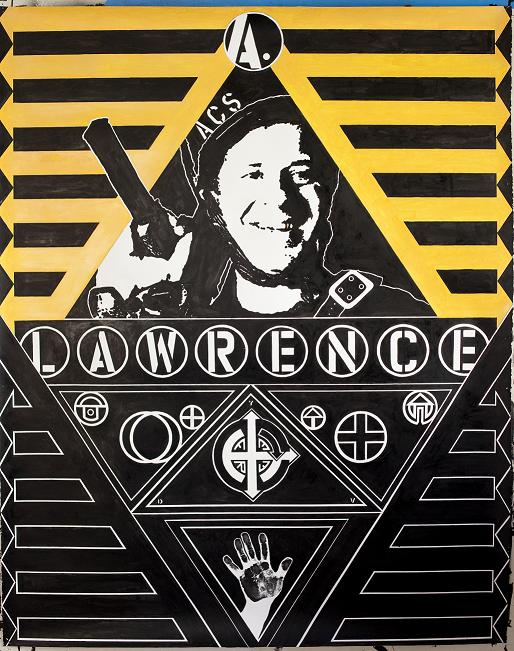
What’s the story behind a work of art? You could make like that bammer guy at the gallery opening and schmooze the into a corner artist, force them to tell you the story behind every single piece when they should be taking shots and turning up in paparazzi photos — or you could just hang with us. We asked SF wheatpaste artist D Young V what the deal was behind his “Make An Effort” show opening at White Walls on Sat/9. Turns out, he’d reimagined what his buddies would be doing after the City By the Bay went Mad Max on us. Post apocalyptic bike messengers? We’ll let him tell you himself.

San Francisco Bay Guardian: We’re intrigued by the artist statement — you asked San Franciscans to imagine themselves post-apocalypse? Explain?   

DYV: (This is about the piece you see on this post) Aaron is a Tenderloin-based fine artist and extremely talented graphic designer. We’ve worked together on a number of occasions. He is one of the friendliest people I have ever met, and also an avid bicycle rider. The “A.C.S.” on his helmet stands for Armed Courier Services. This is sort of a rogue group of messengers in this world that handle the delivery of information, mail, packages, and the transportation of people through neigborhoods and cities (for the right price). They are an armed force that has taken on the roles of bike messenger, post office, and sometimes private security. They are more like a mercenary group or extremely organized militia, but also a necessary part of the city’s movement and traffic of information and goods. I thought Aaron would be a good candidate for this piece due to his bike riding and extremely high level of organization. I wanted to get his unique personality [to come out] through the piece as well. Despite the fact that he is holding an Uzi over his shoulder, he appears very approachable and friendly. Though nobody would be aware of this but Aaron and I, the color of the arrows represents the color of his helmet in real life. I am intrigued by his helmet and wanted to incorporate it somehow in the piece, if only symbolically. The handprint on the botton of his piece is his.


“Make An Effort: New Works by D Young V”

Through July 30

Opening reception: Sat/9 7-11 p.m., free

White Walls

835 Larkin, SF

(415) 931-1500

www.whitewallssf.com

The Performant: Meme trope traditions

0

Taking in the San Francisco Mime Troupe’s “2012: The Musical”

Even the most anarchic, atheistic, or contrarian among us deserve the comfort of a few holiday traditions, whatever the season — and come the Fourth of July weekend you’ll find a kindred crowd hundreds strong camped out in the lower quadrant of Dolores Park. Unusually for Independence Day frolics, the focus is not on the consumption of grilled foodstuffs or blowing things up (fine traditions both), but on the opening of the latest San Francisco Mime Troupe show. Although the largest crowds typically show up for the official opening, always scheduled for the glorious Fourth, the preview performances are also well-attended, and it’s not unusual for folks to pick a preferred date that remains constant for years on end. And no matter how fog-bound the holiday itself, somehow the Mime Troupe opening miraculously manages to fall on one of the sunniest weekends of the year, proof perhaps of some insidious cosmic intervention, either on behalf of the Mimes or the ‘Murkins.


Politicized street theatre will always have a rather niche appeal, but the Mime Troupe nonetheless packs parks and indoor venues all over California, and in years past, the nation, with its signature brand of comedic-leftist-satire-with-song-and-dance-routines. For many San Franciscans it may sometimes feel like they’re preaching to the choir, but as anyone who’s ever seen The Reverence Billy on a roll can attest, sometimes the choir needs preaching to same as anyone else. And when it comes to the Mime Troupe, they don’t just talk a good game, but do their best to abide by it. In addition to “overthrowing capitalism one musical comedy at a time,” the Mime Troupe operates as a multi-racial, multi-generational collective, and it’s actually thanks to them, defendants of a little-remembered obscenity case in the 1960s, that theatre companies can perform uncensored in the parks of San Francisco today. Not that there’s anything particularly obscene about this year’s offering—“2012, The Musical”—where the only affront to public decency are the villainous corporate green-washers written into the script.
 
So here’s where it begins. A sunny Saturday in the park. Picnickers and space hoarders arriving hours early to ensure a good seat on the grass. By noon the Troupe is working out last-minutes staging kinks and sound mix, as eager, unaffiliated petition-bearers circulate the area. This year’s theme combines the personal (struggling radical theatre company looking for funding) with the political (when they find it, where is it really coming from, plus a side-plot involving an incompetent Senator running for President at the behest of the Rand Corporation). In keeping with the 2012 trope, a play-within-the-play is staged complete with spandex-clad denizens from the future, mad scientists Nostradamus, and a befeathered Mayan priest. But for the Mimes, it’s the memes they help disseminate that impact most. Self-determined collectivism. Radical inclusion. Art for people not for profit. The uncensored, uncensured use of public space. And an unabashed fealty for showtunes.
 
Through September 25,
Various locations
Free
(415) 285-1717
www.sfmt.org

The faces of High Sierra

3

All photos by Erik Anderson

Consider the camping festival. A chance for music, art, and recreational drug use fans to slough off the shackles of outrageous office jobs in the summertime and head out for the hills, to engage in traditional Mardi Gras mode where playing is your job, three concurrent stages of live music is the norm, and everyone — everyone! — has the residue of somebody’s glitter in their facial hair (and they all have facial hair).

Such was the 2011 High Sierra Music Festival in Quincy, Calif. — can you tell it was a good time?

High Sierra, I’ve always thought, is one of the most manageable festivals out there. It’s not too big — but not too small (typically, it hosts about 10,000 happy campers). It’s far enough from the city that you feel like you’ve achieved something when you round that last bend of the Feather River into the clear night of the Sierras, but you can still get out there if you leave mid-afternoon from the Bay.

Most importantly (unless like me you like to spend these weekends shooting the shit with friends you only get to see come festival-time), the music is supremely varied — Maceo Parker’s soul jazz rocked the main grandstand in the Saturday afternoon gleam and then the gleamy-eyed Sunday night late night party. Electronic beat maker Emancipator zoomed prettily through a Blackalicious remix that made the post-Dawes and Diego’s Umbrella-klezmer-power-surge crowd sink into a deep groove at the Vaudeville stage. Local boys Soft White Sixties brought the rock, Morning Jacket and Ween headlined, Sunset Productions‘ Silent Frisco silent disco — which will make an Outside Lands appearance this year — provided essential (lack of) background music for the dawn games of kickball in the shady grove, small impromptu sessions sprang up in every camping zone and bend in the dirt paths by the vendors and late night venues, and the kid’s stage — well hell, Dead-style environmental educators Banana Slug String Band killed it, per usual.

But hey, every music festival’s got music — and you can peep all these bands in the Youtube links I just shared with you. What you can’t catch on Youtube is the baby balancing on his dad’s outstretched palm (gonna be a surfer!), the impromptu high fives after the Samba Stilt Circus, parachute parties, and the innertube suspenders that some lucky man was still wearing after taking the customary HSMF break to dunk into the freezing cold mountain waters. 

So lucky us, photographer Erik Anderson’s sharing his flicks to those effects. You’re officially invited to clear your mind, click through the slideshow above, and pretend you spent your Fourth of July weekend with us. 


(Summer) Trash Lit: Adrenaline

0

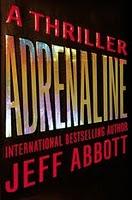
Adrenaline, by Jeff Abbott


Grand Central Publishing, 400 pages, $24.99


There’s a CIA agent who has a wife who also works for the CIA, and she’s seven months preggers with their kid, and life in the London Station is just dandy. Already a very bad sign: CIA agents with spouses and kids are prime fodder for thriller writers. It never works out. James Bond figured that out early, and since then, everyone else in the genre has fallen in love at his or her peril.


So naturally the wife gets kidnapped (or maybe she’s really a double agent) and the London CIA Station is blown up by a bomb that she might have planted (or maybe she didn’t) and our hero, agent Sam Capra, gets the full-on spook interrogation treatment, including all manner of fine drugs and devices, to see if he’s a traitor, too.


Of course, he’s entirely clueless. But by the time the manages to (maybe) convince CIA management that he doesn’t know where (or who) his wife is, he realizes it’s been nine months and the baby must have been born. So he sets off to find the kid, and the wife along the way, and the guy who either snatched her or hired her.


It’s a fun ride. Capra has to pretend he’s a smuggler who’s ready to steal counterfeit goods from Chinese gangs and reuse their trucks to get some nasty stuff into Great Britain. Much discussion of the modern underworld:


The postmodern criminal networks come together for a particular function — smuggling in ethnic laborers, muling heorin hidden inside televisions from China that were diverted first to ports in Pakistan, or setting up a train bombing to short-sell a transportation stock price. The cells are small and nimble, and they snap together and break into new shapes, like a child’s plane of tank or wall made from little plastic blocks. … When you cannot break a wall, you can shatter a single brick. I just needed to find the right brick.


In the weak tradition of this year’s top thrillers, there’s absolutely no sex. But Adrenaline does offer more than the usual amount of shooting, beating, and assorted personal violence:


[I] Found two Glock 9 mms, spare clips, silencers.


“What else do you need?”


“I have to fight a large number of people,” I said. “They will be heavily armed and I’ll be alone. So I guess I have to kill them all.”


You get the picture.


In the end, nothing is as it appears, the whole situation is a masterfully tangled mess that works its way through a string of bars in Europe and winds up with an ending that makes it very clear this is just the start of a Capra series. Don’t get too drunk when you read it or you’l lose track; the twists and turns require a little more concentration than the typical beach novel. But that’s not a bad thing, and this one goes on my summer list.


After 31 years, the Red Vic says farewell

4

You read it here yesterday: the gloomy news that the venerable Red Vic Movie House is officially closing shop July 25 (the theater’s 31st birthday). I caught up with Red Vic collective member Claudia Lehan today to talk about the rep house, whose signature red building has long been a Haight Street institution.

SFBG: There’ve been rumors for a little while that the Red Vic was in financial trouble. What ultimately led to the decision to close?

Claudia Lehan: We’ve known for awhile that it was coming, we just weren’t sure when to tell everybody. It’s this month because it’s our birthday, as you pointed out — July 25 — and we just thought that would kind of be a way to set a marker for ourselves for the closing.

SFBG: Was it just that not enough people were coming to the theater, that you weren’t selling enough tickets?

CL: Yeah, that’s kind of the bottom line, lack of attendance or lower numbers. It’s been a long, slow, steady decline. Then again, I worked last night and it was pretty busy for Vertigo. So it’s just hard to know, but if it’s not busy enough on a regular basis that we can make it a sustainable a business…

SFBG: It must have been pretty serious, since I remember from writing my article on the Red Vic’s 30th last year that the building is actually owned by a collective member, Jack Rix, and his wife, Betsy Rix, a former collective member and one of the Red Vic’s founders.

CL: Right. Yeah, it’s hard for them. There’s definitely no bad guys in this story. I know people are always like, “Is it your rent?” — and it’s obviously not. It is really hard for them, and I think they let us go quite a lot longer than is really sensible in order to, like, hit this marker of our birthday, which is really sweet.

SFBG: What’s the mood among the staff? You mentioned you were sad, but kind of ready, too.

CL: I think for us — we’ve been telling patrons who come in to see a movie, people are asking and we’re like, “Yeah, we are closing,” and it’s kind of like doing a bit of grief counseling. People who you tell are sometimes really sad about it. I think for us we’re sad but we’re kind of at the acceptance stage. But…it is a sad thing. We definitely don’t want to close, but it’s just sort of not realistic.

SFBG: What’s next for the Red Vic staff and space?

CL: I’ve been in grad school part-time for something completely unrelated to film, Chinese medicine. And [collective member] Sam Sharkey is still gonna be hosting The Room at the Clay [every second Saturday of the month at midnight, starting August 13]. I’m glad all the people who come out to enjoy The Room can continue, and Sam is a great host.

It’s pretty sure that our neighbors the Alembic are going to expand into what is now our lobby, and the auditorium is — there’s a few different ideas up in the air. I think Betsy is someone who is just very community-minded, and she wants to put something else in there that’s gonna have that spirit of the Red Vic. Something that’ll be good for the Haight, as well as San Francisco. So there’s a small chance that there’ll be a small screening room in the back, much smaller than the 140 seats we have now. It’ll be more of a community space. Sort of a multi-use space. And with the rest of the auditorium, she has a couple of different ideas, I’m not sure yet.

SFBG: The theater is saying farewell with Red Vic favorite Harold and Maude.

CL: Yeah, it’s a four-day run, and we’ll end on the 25th, and we’ll try to make the whole run special, and then see what happens on the 25th. I think it will be bittersweet. We’re trying to keep it a little bit positive, you know — kind of, “We’re so grateful we’ve been here for 31 years.” It’s pretty amazing that a collectively-run, single-screen theater survived for that long. We kept plugging away, but it’s kind of time.

SFBG: Well, you guys will definitely be missed…everyone I’ve talked to about it has been like, “Red Vic closing? Noooo!

CL: I know! But, I don’t want to have any tone of, like, pointing fingers at people. I think people are very nostalgic for movie theaters and bookstores, and these places where we love to hang out, but they don’t really turn out in the numbers they used to. It’s just a different world.

Appetite: Breaking bar news — MacGregor joins Jasper’s

1

We’ve been anticipating the opening of Jasper’s Corner Tap & Kitchen (slated for late July/early August) in the former Ponzu space downtown. With news of Chef Adam Carpenter helming the “upscale tavern-inspired” kitchen and none other than Kevin Diedrich as Bar Manager (who you’ve heard me talk about since early Burritt Room days), it’s sure to be an exciting opening all around.

There’s breaking news on the bar side today that ups the ante even further. Brian MacGregor is another bartender who’s long been slaking our thirst with superb imbibements since his Jardiniere days. He’s just signed on with Jasper’s bar team, making it officially an all-star cast. His Locanda gig fell through a couple months ago, which was entirely their loss, but that paved the way for his new role at Jasper’s.

As Jasper’s is part of the Kimpton restaurant group, Kimpton’s Master Mixologist Jacques Bezuidenhout is helping create the cocktail menu, heavy on fresh purees and juices, and, of course, local produce. Both Diedrich and MacGregor have been named Bay Area “Bar Stars” by the San Francisco Chronicle in recent years, and with Bezuidenhout also involved, we can expect a stellar cocktail menu and execution.

Along with 18 international beers on tap and a wine list assembled by Master Sommelier Emily Wines, Chef Carpenter’s menu will offer a line-up of gourmet comfort with the likes of homemade pretzels (accompanied by smoked cheddar and beer fondue), and creative versions of fish n’ chips (with polenta crust) or bangers n’ mash (spicy beer sausage). Open all day, every day, this promises to be not only a welcome downtown dining option, but with all that talent behind the bar, a drinking destination.

— Subscribe to Virgina’s twice monthly newsletter, The Perfect Spot

Sad day for San Francisco film fans

2

Two big bummers today, my fellow cinemaniacs.

The first bit of news is that it’s official, according to collective member Claudia Lehan: beloved Haight Street landmark the Red Vic Movie House will officially be closing its doors July 25, the theater’s 31st birthday (read my story about the Red Vic’s 30th birthday year here.) The last film to grace its screen will be perennial Red Vic favorite (and annual Red Vic birthday flick), Harold and Maude (1971). Stay tuned for more on this story.

And sad news from the San Francisco Film Society: charismatic executive director Graham Leggat will be stepping down from the post he’s held since 2005 due to health issues, according to a SFFS press release. (Chronicle columnist Leah Garchik has more on the story here.) Leggat wasn’t just a figurehead for the organization. He oversaw a huge expansion of SFFS’ programs — per the release: “Historic developments under Leggat’s direction include the launch of the country’s only daily independent regional online film magazine, SF360.org, in 2006; integration of the filmmaker services programs of Film Arts Foundation in 2008, which have since grown into a rich array of grants, residencies and project development services; the creation and expansion of SFFS’s annual Fall Season slate of festivals and events, which this year includes seven themed film series between September and November; and the recent announcement of the creation of the San Francisco Film Society New People Cinema, which provides a year-round theatrical home for the organization’s myriad activities for the first time in its 54-year history.” Best of luck to Leggat — a man whose charming, witty presence is familiar to all regular attendees of the San Francisco International Film Festival.