• No categories

Pixel Vision

Appetite: 3 restaurants to watch

0

Here are two new places that just opened, showing a lot of promise… and one that keeps getting better.

Sexy ’70s foodie lounge : CHAMBERS EAT+DRINK

The Phoenix Hotel has long exuded rock star hipness. Its prior restaurant was more bar than food destination… and it really wasn’t memorable on the drink front, though the mid-century motel poolside setting is special. The pool remains, now with cactus wall and bright orange chairs. Drinks, though decent, still aren’t worth a special trip, but the food is.

With chef Trevor Ogden behind brand new Chambers Eat+Drink inside the Phoenix, I had no doubt it would be good. Young and ambitious, he has impressed me from his days at Mission Beach Cafe. With a complete decor revamp, I am delighted to say there’s no atmosphere like it in SF. A sleek 1970s den lined with hundreds of records (yes, LPs), the place is outfitted in leather, plaid couches, quirky lamps, knick-knacks, themes varying between restaurant, lounge and pool.

The food keeps up. Shaved Spring Salad ($8) is a knock-out of asparagus, wild arugula, and sheep’s milk ricotta topped with shaved Summer squash and lightly fried mushrooms. In a saffron tarragon vinaigrette, it nods to the long days of Summer. Smoking Salmon ($12) arrives wrapped like a rose blossom over a mini-hearth, emitting smoke from roasting coals. A bowl of yuzu sake creme fraiche, chive oil and salmon caviar/roe complete the playful presentation.

In a city with no shortage of fine burgers, Ogden makes an utterly satisfying one ($12): Prather Ranch beef is pink and juicy topped with whole grain aioli, butter lettuce, heirloom tomato, and red onion so smoky it feels as if the burger was grilled by campfire. It comes with thyme-dusted Kennebec fries, while add-ons include crispy-braised pork belly ($3) or avocado ($2.50). There are a handful of entrees ranging $18-26, or one could go with a mix of small plates. PB & L.T. ($10) is essentially pork belly in rice paper wrap, layered with butter lettuce, heirloom tomato, house sambal (chili sauce), and champagne aioli. A fun way to eat belly, almost light yet satisfying. Cauliflower soubise soup ($7) was the only misstep for me – too salty: basil, dried olives, and pink peppercorn added nuance, but over-salting left the impression of being one note.

Ogden is also handling the desserts. They read better than they tasted in opening weeks… but there is promise here. A giant Manhattan creme brulee ($8) is rye bourbon creme brulee doused in macerated cherries and blood orange reduction with candied orange peel. To be fair, I’m not a big creme brulee fan so overall it came off too pudding-like, but high marks for the drink-as-dessert concept. Carrot Caraway Cake ($7) hit blessedly savory with caraway, Kaffir lime nectar and candied carrot tops. Dots of creme fraiche frosting didn’t seem enough to balance out the slight dryness of the cake.

I’m pleased to see a new addition with dramatic, unusual environs that is also for the gourmet. We don’t always do it up in the setting department in SF, preferring to (rightly) focus on the food first. But it doesn’t hurt to do both.

CHAMBERS EAT+DRINK 601 Eddy Street at Polk, 415-829-2316, www.chambers-sf.com

Louisiana Authenticity : BOXING ROOM , Hayes Valley (549 Irving Street, between 6th & 7th, 415-592-8174)

The new Boxing Room may not immediately recall Louisiana: exposed wood, modern chandeliers and an open space look like any typical current-day restaurant. But the food coming out of the kitchen from the hands of Chef Justin Simoneaux, a Southern Louisiana native, just begins to assuage my constant hunger for New Orleans.

First off, I can’t tell you how thrilled I was to see Creole cream cheese on his menu. I fill up on that silky, gently sweet goodness whenever I’m in Nola but had yet to see it here. Seems he couldn’t find it either so Simoneaux made his own. He’s currently serving it with a salad ($8) of mixed greens, strawberries, and spiced pecans.

Deep fried alligator with a Creole remoulade ($11) is about the freshest alligator I’ve tasted – even better than what I’ve had in Nola or Florida. He’s taken painstaking efforts to source the best possible ingredients and it shows: this alligator is more tender and flavorful than its fried status would suggest. Crawfish Étouffée ($13 small, $20 large) is a beloved dish served in varying styles, but often reminiscent of gumbo. Simoneaux’s roux base for the Étouffée is subtly sweet and savory. A beauty… but I could have used a little more crawfish.

Stuffed mirliton and eggplant ($17) is a superb vegetarian dish and maybe the most creative entree. Over a sweet, stewed tomato ratatouille, Grana Padano cheese accents a small, stuffed eggplant and larger mirliton, Southern Lousiana’s beloved vegetable (also known as chayote). Crispy Boudin Balls ($5) is delicious Cajun boudin sausage fried into breaded balls. Don’t miss the free starter of crackers with pimento cheese spread. I’ll take more pimento cheese, thanks. Bananas foster cake ($7) is a moist, dense take on one of Nola’s greatest desserts, served with a subtle bourbon ice cream.

There’s also oysters, fried chicken and red beans, beers on draft (a nice list ranging from Belgians to Louisiana beers), wines on tap, and plenty of bottles. Zydeco plays in the background. At least two waiters are from Louisiana – we sure enjoyed chatting ours up about the glories of food from that state. The only thing missing is a Mint Julep.

BOXING ROOM, Hayes Valley 549 Irving Street, between 6th & 7th streets, 415-592-8174, www.boxingroomsf.com

Daily-changing freshness: OUTERLANDS

Outerlands keeps getting better. Since chef Brett Cooper came on board and their liquor license came through, allowing for seasonal cocktails, it’s more of a destination than it was. I always liked the woodsy, narrow interior but found waits at brunch chaotic and the food all-around solid, if not noteworthy. There is now amped-up artistry, particularly in vegetarian dishes, distantly reminiscent of what one might see at Napa’s Ubuntu.

There are roughly only two $10 cocktails a night. Recently, I liked a Smash in a mason jar: Buffalo Trace bourbon, fresh peaches, lemon and rosemary. More refreshing than unforgettable, it was as garden-fresh as dinner was. Co-owner David Muller’s bartending background at places like Slanted Door clearly informs house-made ingredients and knowledgeable mix of ingredients, like an aperitif of Junipero gin, absinthe, Campari, fennel, sparkling wine.

Dinner highlights included baby carrots and leeks ($9) dotted with fennel, nettles and toasted almond breadcrumbs, and a plate of Mixed Beets ($8), juicy in red frill mustard and sherry, accented by dollops of the most divine, creamy house ricotta. Savory bread pudding ($9) is a puffy dream of their house bread baked with caramelized onions, chard, rosemary, crusted with Gruyere cheese.

Dessert ($7 each) was a mason jar filled with strawberry rhubarb parfait, creamy and fresh, but with barely a taste of rhubarb or fennel. More of both would have made for a superior dessert. More exciting, despite its straightforward sound, was a chocolate budino: lush dark chocolate, hazelnuts, graham cracker, toasted meringue, and thankfully plenty of salt to keep it savory.

Outerlands has evolved into something special by the beach, and a win for anyone who lives out that way.

OUTERLANDS, 4001 Judah Street at 45th Ave., 415-661-6140, www.outerlandssf.com

Subscribe to Virgina’s twice monthly newsletter, The Perfect Spot
(Summer!) Trash Lit: The Profession

0

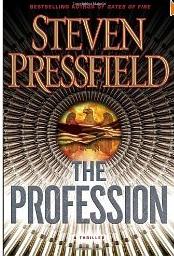
By Steven Pressfield. Crown, 320 pages, $25


Wow, they still drink Rolling Rock in 2032. And they still use military laptops and handhelds and complain about bad TV reception. The web doesn’t seem to have advanced much, and people still rely on the Al Jazeera video feed to see what’s going on in the Middle East.


There’s a lot that’s jarring in The Profession, a military thriller set in the Middle East 20 years in the future. For one thing, the future looks a lot like today, except that there’s been a dirty bomb attack on Long Beach and the Chinese are starting to cash in their U.S. debt, putting the world economy into turmoil. (It takes China 20 years to figure that out? Damn.)
So it’s pretty bad sci-fi. But it’s not a bad adaptation of the Heart of Darkness/Apaocalypse Now myth of the powerful general who goes rogue with his loyal troops and tries to take over part of the world.


In this case, it’s the Middle East, where (again, bad sci-fi) they’ve just found some more really rich oil fields. And much of the military work of the major nations is done by mercenaries.


One of them is General James Salter, who got cashiered out of the Marine Corps for defying the president’s orders, but who has a MacArthur-like following in both the military and the civilian worlds. He’s a private soldier now, and he’s got this plan to take control of much of the world’s oil, and then return in triumph to Washington, where he can become president (oh, and marry the widow of the prez who cashiered him, who is also involved in this plot.


Our hero, Gilbert Gentilhomme (and what kind of name is that for an action hero?) is one of Salter’s best friends and loyalists, one of the few who can get close to the great man. And he knows he can’t let the general get away with his plan.


Lots of desert battles. Random brutality. International intrigue, of sorts. A bleak and dusty vision of the future — but one where there’s no climate change or peak oil. No sex (and how come none of this summer’s thrillers have any sex?). But not bad for a quick beach read.
 

Wanna see something really silly? “Twilight Zone Live: Season 8”

1

The Dark Room’s suckling at the boob tube is a mass cultural sub-phenomenon of questionable taste and, yes, abnormal staying power. Remember 2005’s Batman the TV Show: The Play? I still wake up screaming from that one. But the persistence of this peculiar fetish is perhaps best measured by the yardstick of one series in particular, to wit, Dark Room’s annual live staging of Twilight Zone episodes.

It continues this weekend, and every subsequent weekend in July, in the eighth installment of Twilight Zone Live, actual episodes from the hoary small screen perennial recreated with wry comic aplomb and mainlined nostalgia by a variety of guest directors and comedy-ready cast members. Better than TV in that it is slightly bigger. Need more enticement? Check out Sam Shaw and Dan Foley in this spiffy pitch-perfect video teaser from Crisis Hopkins, an (almost) faithful recreation of the 1983 teaser for The Twilight Zone: The Movie

http://www.youtube.com/watch?v=ycArOJZ9eDE

Twilight Zone Live: Season 8

Through July 30

Fri-Sat, 8 p.m., $20

Dark Room

2263 Mission, SF

(415) 401-7987

http://darkroomsf.com (tickets here)


Behind the backflip: The story of a street-performing family

1

You can’t miss the acrobatic stylings of Orion, Alex, and Meisje Griffiths — also known as the Sardine Family — on a sunny day on the corner of Jefferson and Powell Streets. If the bold, baggy, crimson-colored pants don’t catch your eye, there’s something about the energetic English accents pumping out of the subwoofer that have a way of pulling you in.

Pier 39 rarely disappoints when it comes to street performers at this time of year. Cloudy days be damned, if it’s technically summer, a big heart with any kind of creative curiosity won’t be able to pass through tourist town without being reeled in by one of the different acts along the congested sidewalks. But who are these performers? How’d they wind up performing on city street corners? Who did I just give my money to?

Three second generation acrobats, along with longtime friend Kevin, make up the Sardine Family, a traditional circus act which weaves in plenty of comedic punch lines, showmanship, and charisma. And they deliver one hell of a street show. I was able to sit down with Orion Griffiths and get the story of how the Sardine Family set their clown shoes on the streets of San Francisco.

Orion, Alex, and Meisje are the three youngest of eight children. “We’re a circus family,” says Griffiths. “My mom and dad did street shows in Europe. My dad started doing street shows 34 years ago. I actually started real street shows when I was thirteen. I’ve been doing this for 17 years.” The 23 year old’s voice carries evidence of his parents’ home in the United Kingdom. “I’ve done [street shows] all around the world. I’ve done street shows like this in 46 countries.”

Originally from Europe, the three Griffiths emigrated from England to Massachusetts in 2004. They moved to San Francisco last year to attend acrobatics school and perform their street show at Pier 39 as a means to pay for their school’s tuition costs. 

Both Orion and Alex have been working on their current street performance, “for the past 10 years,” says Orion. “If you’ve got circus skills and you come out here, you probably will just flop, because it’s more about the talking, it’s got nothing to do with the skills you are doing. Even if you are doing double back flips on the street, nobody cares.” 

One of the highlights of the Sardine Family act is the moment each performer showcases their trick specialty. They perform stomach-wrenching rag doll backbends and dancing handstands. They juggle on top of a nearly ten foot tall unicycle and reel off aerial backflips. It’s amusing to see a family of tourists about to pass by suddenly do a double take, looping back to join the crowd that has already assembled around the Sardine Family. The act is flawless and the family’s chemistry creates an environment so natural and comfortable that everyone wants to hang out for the next trick. 

How do they do it? Orion and Alex, the two emcees of the performance, are constantly feeding off the audience and vibing off of each other, making sure the audience is entertained in between tricks. And even after the 10 years of hard work that the Griffiths have put into the act, Orion is neither fazed nor offended when the typical passer-by — well, passes by. “That’s part of street performing. They’ve got their own thing to do — they don’t need to care about a street show.” Griffiths went on to say, “I don’t even get upset when somebody watches the whole show and doesn’t put money in the hat.”

But if you want to give them something, that’s great too. Towards the end of one show both Orion and Alex jokingly say, “If you’ve got a dollar to donate, great. Five dollars, even better. If all you’ve got is a quarter…keep it. You need it more than we do.” 

As far as making a living off street performing? “It’s very, very hard,” Orion answers. “You can’t always make a living, you have to have a side job. We’ve made it out alright because we’re pretty good at it, but a lot of these [other street performers] have to get a side job. They do it for the love of it.”  

When asked about the people who criticize and continue to question the credibility of street performers like the Sardine Family, Griffiths responds “I love it.” However for the most part, he says that the Sardine Family has been well received by the people of San Francisco. “They love us, we’re English. San Francisco is a great place”

But let’s be clear: all those lifts, juggling balls, and tumbles — the Sardine Family performs in hopes of getting closer to a dream. 

“Our dream is to start a circus, and that’s why we’re here in circus school. We’re looking for a group or an organization that would fund our show to start a circus. Once more people meet us and see what our story is and here about our background, hopefully they’ll be on board with it,” Griffiths says.

“We’ve been doing this our whole lives, all for the same dream. We’ve been training for years. We’ll probably train another year to get our act right before we try and start a circus.”

But at the end of their flips and tricks on the day I stopped to watch, the Sardine Family says something that makes their godly acrobatic routine a little more grounded – maybe even a little more relatable, in this town of artists. 

“We’re not hustlers, we’re performers. We do this because we love it.”


The Performant: Trans-cendental Meditations

0

The Tranimals come out at Nightlife

The time is probably coming when humans will be able to adapt animalian traits, ala “Transmetropolitan,” either as a weekend whim or on a permanent basis. The whole notion is too tempting to remain a fiction forever. Imagine possessing the smooth, insulating skin of a dolphin, the soaring wings of a peregrine falcon, the keen night vision of a bobcat. The desire for such transmogrification is as ancient as recorded history: from Centaurs to Satyrs, Mermaids to Manticores, Mami Wata to the Minotaur, there’s hardly a mythology around without some reference to human-animal hybrids, whether monsters or gods. Years from now, the very notion of “transitioning” might well have to be expanded to include folks shifting between all kinds of bodies and capabilities. Until then, we’ll have to make do with costumery, flaunting temporary feathers and furs like so much wishful thinking.
 
You probably won’t find a denser concentration of fantasy animal drag outside a furry convention than at a “Tranimal” contest — particularly one hosted in the California Academy of Sciences, where accurately portraying animal characteristics is serious business.

At last week’s Pride-themed NightLife (and adult-themed, cocktail-hour weekly event that draws a huge crowd with ever-changing themes), an eager crowd eschewed the planetarium and rain forest sphere to gather in the glass-walled piazza for a mini-Trannyshack show followed by the surprisingly competitive Tranimal contest. “We were afraid no one was going to want to compete,” pageant organizer Heklina marveled as close to 40 contestants jumped on and off the makeshift stage for their 15 seconds of fame. Each costume more elaborate and exotic than the last, all manner of fauna was well-represented. A mysterious, stiletto-heeled figure in a spotted jaguar mask named Latrina (“Oh, how punk,” remarked Heklina); a flame-haired, fur-armed creature of the night called Envy; a surprise appearance from touring circuit star, Scotty the Blue Bunny (“We should just hand you the grand prize now and get it over with”). For the most part though, more faithfully-rendered animals swept the awards: a shy, lighted jellyfish, a spunky, slithery reptile “the Sex Raptor,” and the delicately-finned, giant-toothed “Lady Angler Fish”.

“That’s every gay man’s nightmare of a vagina,” joked Heklina about the lady’s enormous jaws ringed with gigantic, dagger-like teeth that obscured her entire abdomen. Some of the best costumes didn’t even compete. My personal faves, husbands Roger and Joel, looked ready for action as intrepid naturalists covered in giant insects and normal-sized birds, nets at the ready.
 
Down in the aquarium, costuming was scarce, but thanks to the pulsing sounds provided by Honey Soundsystem, and the disco-worthy
lights illuminating the fishtanks, a purely psychedelic experience was still available. Drawn especially to the languid varieties of jellyfish, “ballerinas of the sea,” I found the Soundsystem soundtrack extremely well-suited to the mysterious perambulations of the colorfully-illuminated Medusozoa. In general, all the fish seemed appreciative of the shindig, even Claude, the albino alligator was moved to leap off his usual perch and splash around his swamp domain. True, he might have just been trying to get away, but the possibility that he might have been fantasizing about donning a more human skin in order to join the party was an irresistible notion.

Where to get blown (up?) for FREEDOM

0

Annual fireworks extravaganzas: What a gorgeous waste — celebrating America! Johnny Funcheap has his huge, annual guide to sky-high Bay Area gunpowder-showers up, if you’re looking for some good ol’ patriotic shock and awe. Courtesy of China via Italy. Like Spaghetti-Os. And Katy Perry.  

Appetite: Time for tea

0

Ever a fan of a civilized (and delicious) respite for afternoon tea, here I present to you two divergent ways to raise your pinky in the city.

Kettle Whistle at Burritt Room: A gourmand’s pop-up tea

Currently scheduled to take place on the last Saturday of every month through October, Kettle Whistle launched its inaugural tea this past week in the spacious back room of Burritt Room’s turn-of-the-century-style bar, tucked upstairs in the Crescent Hotel.

The brainchild of pastry chef par excellence William Werner of Tell Tale Preserve Co. and tea mavens Lawrence Lai and Ann Lee of Naivetea, Kettle Whistle is essentially a pop-up high tea, one where ladies (and men) meet over crumpets and scones. But this is no typical tea.

At a pricey $55 per head, it’s even more costly than high tea at the stunning Palace Hotel — but Kettle Whistle has vastly superior food and drinks. Though dishes and tea pairings will rotate, you can be assured of three themed courses: savory bites, followed by scones and crumpets (the passion fruit olive oil curd on this tray will blow your mind — regular old lemon curd might never seem the same), ending with dessert. There’s even a take home bag of tea and a snack (mine came labeled “damn good granola,” a savory-sweet mix).

You’ll be full after three courses because the savory and dessert courses offer four to five different bites, each from Werner’s creative hand. An heirloom tomato sable on a homemade cracker with lemon and a strip of lardo iberico de Bellota was revelatory. Spheres of tomato and pig fat dissolved in my mouth like a dream I wish I could have over and over again. On the dessert platter, a chocolate and salted caramel fondant was silky save for a crispy strip of chocolate on top, enlivened with avocado and lime layers. I’d go back just to see what Werner will serve next.

Naivetea’s Taiwanese teas (a local Bay Area company run by Taiwan natives) are elegant, worthy companions — not overpowering nor overshadowed by any of the courses. My favorite was their award-winning (it recently took home first place at the North American Tea Championship) Dong Ding Oolong, a gentle beauty with backbone, whose toasted rice and caramel notes shine.

Kettle Whistle’s two July 23 seatings are already filling up, so I’d look into reserving a spot now. Dress up, wear a hat, and come hungry.

Through October. 417 Stockton, SF. (415) 400-0500, www.naivetea.com


Rose Tea: Casual tea cafe

Rose Tea, an open, airy new shop, is a peaceful respite off Irving Street that doubles as take-out cafe and flower shop. It’s only been open a few weeks, but my two visits there have been rewarded with herbal teas (I like the Fire on Ice: ginger and lime steeped with fresh mint leaves) served in a bottomless pot with a mini-French almond cake and jam for $6.50.

Sandwiches ($5.95-7.50) are made with care on rye bread with sides of fruit and nuts. I liked the chicken, apple, cream cheese, and raisins version, and the feta, avocado, and walnut with tomato and basil. Plates come finished with house macarons or baklava. With what appears to be Armenian and Greek roots (if the jams for sale are any indication), the cafe also offers Turkish coffee, an espresso bar, and spiced rose chai. It’s a welcome neighborhood spot for a pot of tea and a bite.

549 Irving, SF. (415) 592-8174, www.roseteasf.com


Subscribe to Virgina’s twice monthly newsletter, The Perfect Spot
 

One Hundred Days of Spring: As Mid-Market talks, two organizers do

1

All photos by Stephen Heraldo

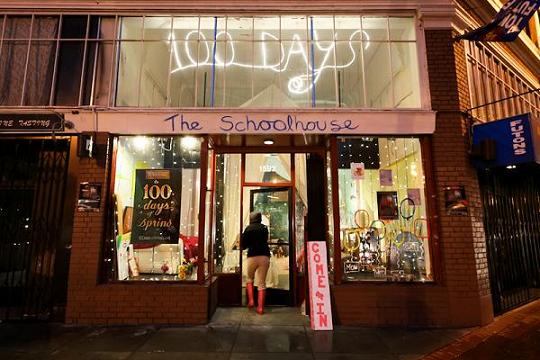
Just beyond the scope of the perpetual debate of revitalizing Mid-Market — defined as the stretch from Fifth Street to Van Ness Avenue — an extraordinary project is quietly closing its doors on an oblique, no-man’s-land corner of Market near Franklin. There, for one hundred days and nights, an empty glass storefront opened up to spill a swath of light and music onto the cigarette-studded sidewalk — without funding, a business model, or (as founders Will Greene and Sam Haynor are the first to say) much of anything else.

“Ask us our mission statement,” One Hundred Days of Spring organizer Haynor challenges.

“We don’t have one,” Greene, his creative partner, cuts in.

“Well, yes we do,” says Haynor.

“Yeah, that not doing it seemed like a cop-out,” the pair concludes.

“It” was creating more than three months of free and donation-based events, classes, and recorded stories representing a variegated slice of the local population: hipster kids in art collectives, professionals on their Market Street commutes, and low income neighborhood residents, including many who bed down each night on the block.

As part of Central Market Partnership’s ongoing efforts to inject arts and culture into revitalization plans for mid-Market, the San Francisco Office of Economic and Workforce Development is joining with the Arts Commission to hold a series of focus groups exploring ways to engage artists, small businesses and cultural organizations in the making of a thriving creative district.

Five focus groups have already met, according to OEWD’s Jordan Klein, and over the coming weeks, more gatherings — of community residents, transportation advocates, historical preservation advocates, and nonprofit leaders — will provide insight for the Central Market Economic Strategy, to be released in the late summer or early fall.

One Hundred Days of Spring wasn’t on the agenda of any of these meetings. A former boutique clothing store sandwiched between SROs and auto body shops on a strip shadowed by the sheer, block-long face of a Honda dealership, the space’s previous tenants didn’t last long. But transformed into a gypsy-tent-circus-wagon-theater-gallery-cum-classroom, the storefront, reborn as the Schoolhouse, rooted itself in the neighborhood in just a few months.

The hundred days are now over. But if the packed closing ceremony was any indication, Haynor and Greene’s model is one that the community is keen to reproduce. Mark Singer, a research librarian and freelance writer who found the project in what the two founders call the “analog way” — by stumbling across the threshold — told supporters, “I challenge everyone in this room to replicate what we’ve seen here, seen in the last hundred days.”

“The ultimate goal,” Haynor said, “is not only to share and to educate, but at the end of one hundred days, to have created one hundred new ideas for people to carry out into the world.”


Nothing to it

One Hundred Days of Spring was an experiment in community-supported programming. Rather than relying on or waiting for grant money, Haynor and Greene hoped to show that a community space can be self-sustaining — for the benefit of those who can contribute more and those who must contribute less.

“San Francisco is grant rich,” Haynor explains, “but it’s also full of people waiting for grants. They have a bunch of awesome ideas, but by the time the grant cycle comes around, the initial spark is gone. For us, going after a grant would just eat up time, and we wouldn’t end up doing what we wanted.”

Instead, the two 25-year-olds pooled their savings and paid $2,000 a month for rent from March to June, $200 for utilities, plus a few hundred extra for renovations and insurance. Within three weeks of the initial idea, they had moved into the space and populated a calendar of events through friends, friends of friends, and tools like SF Chalkboard. They were running full tilt by day six. 

In just over three months, the team offered more than 250 classes, shows, and tutorials — sometimes five in a day — covering everything from truffle-making and fermentation to bike repairs, aerial silks, and open mics. By collecting donations on a pay-what-you-can basis, Haynor and Greene were able to recover a large portion of their initial output, and also garner an extra $4,000 to reinvest into the project.

Greene on the value of 100 days of events: “If you try to put a value on what we have now, that we didn’t have then, you couldn’t buy it for $4,000.”

Though the Schoolhouse founders ended up $4,000 short, Greene says they “could have broken even” if they had focused more on the project’s revenue-generating components, like filming videos for musicians who performed in the space.

Even so, for Greene the worth of One Hundred Days of Spring was indisputable. “If you try to put a value on what we have now, that we didn’t have then, you couldn’t buy it for $4,000,” he says.

When Judy Nemzoff, community arts and education program director for the Arts Commission, stopped by the Schoolhouse and asked how Haynor and Greene did what they did, the two replied, “Well, we just signed a lease.”


It takes two

Inside the Schoolhouse, the laid-back attitude seemed to likewise shrug “nothing to it but to do it.” But the warm, easy atmosphere belied the late nights and hard work it took to get ‘er done.

Understanding how One Hundred Days of Spring came to be — and why it worked so well — means understanding a bit about its creators

Greene and Haynor, hanging at the Schoolhouse

Haynor and Greene have the kind of friendship people make movies about. Besides the sort-of charming things like finishing each other’s sentences and bragging about accomplishments each knows the other would never mention for himself, there’s the sense that somehow, these two unassuming fellows are going to change the world.

“We’re a good balance,” Greene says. With the air of someone showing how two-plus-two equals four, he explains, “Sam’s a bit spastic, and I can plunge a toilet.”

“We have different skill sets, but we share goals,” he continues. “We keep each other in check. We’re both very often wrong, but we’re rarely both wrong at the same time.”

Coco Spencer, who joined One Hundred Days of Spring as an intern partway through and become an indispensible team member, says she was willing to dedicate so many hours to the Schoolhouse because, “Basically, Sam and Will are the most inspiring people I’ve ever met.”

Haynor and Greene were campers and later counselors together at the Bar 717 Ranch in Trinity County. There, they found each other, and also a passion for teaching — or, as they put it, “helping people to be good versions of themselves.”

Though each has traveled and embarked on sundry individual projects — Greene as a musician and videographer, Haynor as a chess champion and conflict-area journalist — they continue to connect over their drive to educate in unique new ways.


Bathroom, beats, and big ideas

At the Schoolhouse, that meant engaging community members through a service-based approach. “Our main goal is to provide resources to people who need resources,” Greene says. “We’re not interested in providing resources to people who have resources.”

Given the diversity of The Schoolhouse’s participants, “resources” could mean different things.

Haynor explains, “For some people, we’re a bathroom. For some we’re a place to stop in and say ‘hi.’ For some, we’re a place to do events.”

“We’re successful because we’re always doing something fun, and everyone feels invited,” Greene says. “It’s the loose nature of our project. There’s no doorman, no guy with a cash box.”

There were challenges (“Sam’s been trying to put together homeless poetry readings, but he’s scheduled them for the first of the month. That’s when everyone gets their checks, so everyone gets drunk,” Greene says at one point), but there were also many moments — like when a woman from the block walked up and started giving Haynor a massage, or when Greene calmly negotiated with a rowdy, intoxicated visitor, encouraging her to pipe down and eventually leave — that pointed to a deft interface with the surrounding community.

“They respect our storefront more than they do the others,” Greene says. Some locals worked shifts at the Schoolhouse in return for resources. Others stopped in for music, for food and nutrition classes, or to look at the art. Some simply came by to talk about living in the area.

During an “Un-Talent Show”, a performer named SofT humorously described a street-dweller’s perpetual problem: carrying belongings. He showed an in-stitches audience how to bundle objects in an old sweater — a wholly relatable rap on wrapping. Another visit came from Benny, one of SF’s famous itinerant tamale sellers, who lives in an SRO across the street and makes what partakers described as “possibly the world’s best tamales” across town in his girlfriend’s kitchen.

Haynor describes a woman who walked into a sewing workshop — run by SF Social Fabric, a volunteer-staffed bike maintenance and sewing skills collective — with “some trepidation.”

“She was in a room with a bunch of people who were nothing like her,” he says, “but we got to know each other over the fact that we all wear clothes. And they all fall apart.”

Neighborhood connections at the Schoolhouse

“There’s a duality to this corner,” Haynor says. “From doctors to the people who live on the block to all the people in the middle who travel Market Street. Before us, some wouldn’t even cross the street.”

“At our best,” he continues, “we’re a place people from another demographic can discover the old-fashioned way — with their eyes and their feet. They cross the threshold, ask what we’re doing, decide to stay, and learn something. Now, I can’t go five minutes without seeing someone I know, or someone who I recognize, or someone who just popped in.”

Singer, a perfect example of the phenomenon, started stopping by between two and five times a week after his initial discovery. He framed the project’s importance in simpler terms: “This is where we need these things to happen. Where it smells like urine on a hot day.”


Let’s put on a show!

Singer believes that projects like the Schoolhouse can “transform parts of San Francisco” by providing services that are more than “just artists and gallery-talk.” The Schoolhouse, he says, “was something visceral.”

“One Hundred Days of Spring created an infinite possibility for community that can’t be replicated on a screen or keyboard. We’re not talking Internet cafés with white earbuds, but humans breathing in the same space — collaborating, communicating in one room, and that room changing every darn day.”

Indeed, the walls of the Schoolhouse were repainted so many times over the course of the hundred days — with layers of murals, street art, installations, white space for projecting films — that Spencer, who took charge of many of the events’ logistics, joked she was hoping to reduce the interior square footage, and thus, the rent.

The zealous energy required to transform the space again and again was reminiscent — Singer pointed out — of Babes-in-Arms-era Mickey Rooney and Judy Garland exclaiming Hey, kids! Let’s put on a show in this old barn! That down-home, DIY energy may be just what efforts like the Mid-Market revitalization require.

Greene, who attended one of the Central Market Partnership’s focus groups, says the consensus was that knowledge about and access to space were the biggest obstacles to creating and executing programs of any kind.

“People are looking for answers,” he says, “looking for some larger entity to hand them space, or looking tax breaks. There’s the feeling that you can’t just do what you want to do.”

“Rather than saying ‘if you give us space, we’ll fill it with beautiful things,’ you can say ‘I’m just going to do it.’ If you’re willing to make it happen, if you work really hard, if you work with the people you’re trying to reach, then you don’t have to worry about anything else.”

Despite the waiting, wanting, hoping attitudes Greene says he encountered, he points out that plenty of others are “just doing it.” The Schoolhouse helped along a few such visionaries by sponsoring two “Grant Prix Dinners.” During the informal roundtables, entrepreneurs presented project ideas between courses. Participants paid a fee for dinner and a ballot on which to elect their favorite projects – to whom the entry frees were turned over as seed money at the end of the night. 


Bringing together the neighborhood

At times, especially in San Francisco and other urban areas where real estate is costly, amping up a neighborhood’s arts and cultural amenities has acted as a roundabout measure to invite the type of gentrification that sweeps streets clean. That kind of programming is not intended to serve current residents so much as to usher in new ones. 

By contrast, the Schoolhouse made a conscious decision to serve the neighborhood’s existing population — with safer-feeling streets resulting, and much more quickly, at that. 

One Hundred Days of Spring was a bold, direct move to engage the local community. As such, it was highly effective not only at providing needed resources, but at tempering the less-desirable qualities of the neighborhood by creating a sense of community and responsibility among residents and passers-through.

“Coming out of Muni, walking home on Market Street,” Singer had said, “can frankly be pretty scary. There’s substance abuse, drug deals, and people who may or may not be harmless.” The Schoolhouse, he said, helped diffuse that lack of ownership and feeling of “anything goes.” For Singer – and Schoolhouse denizens of all backgrounds — the space managed to help tie a few new knots. 

“The Schoolhouse brought me closer to a world that’s very marginal,” Singer said. “the homeless world.”

Whether or not Mid-Market planners will look to the Schoolhouse for a lesson in effective community building, the project’s two masterminds have undoubtedly developed a model they can draw on in the future.

Haynor and Greene plan to continue working together on community education projects. With One Hundred Days of Spring under their belts, they will be able to approach supporters “not just with an idea, but with a proven concept.”

“We are both in this together to see what we’re both capable of,” Haynor said. “To see if we’re any good at this thing.”

In the style of banter so typical of the pair, Greene added, “So we can figure out the rest of what we’re going to do with our whole darn lives.”


Burner artists go bigger and wider

66

I’ve been covering Burning Man for many years, both for the Guardian and my book, so it’s easy to feel a little jaded about another year of preparing for that annual pilgrimage to the playa. But then I plug into the innovative projects that people are pursuing – as I did last week for the annual Desert Arts Preview – and I find myself as amazed and wide-eyed as a Burning Man virgin.
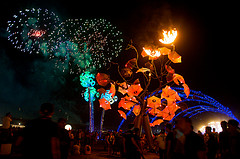
And when the weekend came, I watched my old camps go bigger than ever – with Opulent Temple throwing a rocking Rites of Massive six-stage dance party on Treasure Island, and the Flux Foundation lighting up the Electric Daisy Carnival in Las Vegas with its newest installation, BrollyFlock – demonstrating the ambitious scale at which veteran burners are now operating.
Increasingly, burners are putting their energies into real world projects not bound for Burning Man, often with the help of Black Rock Arts Foundation, the nonprofit spinoff of Black Rock City LLC that funds and facilitates public art projects. BRAF’s latest, a project that is also receiving a grant from the National Endowment for the Arts, is The Bike Bridge, which pairs noted burner artist Michael Christian with 12 young women from Oakland to turn old bicycles and bike parts into sculptures that will be built at The Crucible and placed throughout Oakland.
“The Bike Bridge is the next evolution of our community-focused public art projects,” BRAF Executive Director Tomas McCabe said in a June 23 press release. “This educational and creative project is designed specifically to engage Oakland’s youth.”
Later that evening, McCabe and other burners gathered on the waterfront in Kelly’s Mission Cafe for the Desert Arts Preview, where he ticked off a long list of projects that BRAF was working on around the world, from the conversion of a bridge in Portland, Ore. into an elaborate artwork to a sculpture made of sails for next year’s Figment festival in New York City to a bus opera (written about bus culture and performed aboard buses) in Santa Fe to a cool interactive floating eyeball artwork that will tour Paris, London, Barcelona, and San Francisco to the BOOM Parade (combining bicycles and boom boxes) that will roll through Bayview Hunters Point in October.
But the most ambitious artworks are still being planned for that limitless canvas of the Black Rock Desert, where Burning Man will be staged in late August. This year’s temple, The Temple of Transition, is being built out of Reno by a huge international crew from 20 countries headed by a pair of artists known simply by their nationalities, Irish and Kiwi, who built Megatropolis at last year’s event.
“We built a city block of buildings and burned it to the ground,” Kiwi told the gathering, noting how impressed he’s been by a number of recent projects he’s watched. “When you start doing that, you feel challenged and wonder what you can do next.”
Irish said they were particularly inspired by watching the Temple of Flux go up last year, a project involving more than 200 volunteers that I worked on and chronicled for the Guardian, and said it made them want to bid to build this year’s temple. “That’s what inspired us,” Irish said.
The project includes a series of towers and altars, the tallest one in the center reaching about 120-feet into the air, a phenomenal height against the vast flatness of the playa. They said volunteers have been plentiful and the city of Reno has actively facilitated their work, “but our main concern is having enough finances,” Kiwi said.
The project got a grant from the company that stages Burning Man, Black Rock City LLC, which gave almost $500,000 to 44 different projects this year, but most didn’t come anywhere close to covering the full project costs. The Temple of Transition bridged its gap by raising almost $25,000 in a campaign on Kickstarter, which many projects are now using.  
“It’s a great way to cut out the middle man. You guys are funding art directly,” longtime artist Jon Sarriugarte, who got a BRC art grant this year to build the Serpent Twins (with his partner, Kyrsten Mate), said of Kickstarter, where he was about three-quarters of the way to meeting his goal of the $10,000 he needs to cover his remaining project costs.
Serpent Twins is a pair of Nordic serpents crafted from a train of 55-gallon containers and illuminated with fire and LED effects that will snake their way around the playa this year, one of many mobile artworks that have been getting ever more ambitious each year.
“I love the playa. It’s a beautiful canvas, but it’s also a beautiful road,” Sarriugarte told the group, conveying his excitement at driving his art into groups of desert wanderers: “I can’t wait to split the crowds and then contain them.”
Another cool project that is in the final days of a much-needed Kickstarter campaign is Otic Oasis, whose artists (including longtime Burning Man attorney Lightning Clearwater) brought a scale model to the event. It’s a slotted wood structure made up of comfy lounging pods stacked into a 35-foot pyramid design that will be placed in the quietest corner of the playa: deep in the walk-in camping area, inaccessible to art cars and other distractions.
That and other projects that are doing Kickstarter campaign are listed on the Burning Man website, where visitors can get a nice overview of what’s in store.  
One project that didn’t meet its ambitious Kickstarter goal was Truth & Beauty, artist Marco Cochrane’s follow-up to last year’s amazing Blissdance, a 40-sculpture of a dancing nude woman that has temporarily been placed on Treasure Island. But the crew has already made significant progress on the new project, a 55-foot sculpture of the same model in a different pose (stretching her arms skyward), and Cochrane told me they will be bringing a section of her from her knees to shoulders as a climbable artwork.

The Flux crew has been working for months on BrollyFrock, a renegade flock of flaming, illuminated, and shade-producing umbrellas that was commissioned by Imsomniac for its Nocturnal and Electric Daily Carnival music festivals, and it was placed at the latter festival near Wish, large dandelions that were built near the Temple of Flux at Burning Man last year, as well as new artworks by Michael Christian. Flux’s Jessica Hobbs said burners artists have become much sought-after by the large festivals that have begun to proliferate.

“I really think a lot of these music festivals are looking at how our pieces make an experience,” Hobbs said, citing both the spectacularity and interactivity that are the hallmarks of Burning Man artworks of the modern era. The Flux crew was pushed to meet a tight deadline for the project, preventing them from doing a big project for Burning Man this year, but that’s just part of the diversification being experienced by burner artists these days. “We challenged ourselves and we came away with another great project.”


Appetite: Dining with two European winemakers

0

There’s nothing quite like dining with the person who made the wine you’re drinking — intimate and focused, it gives one a special insight into what’s in one’s glass. Earlier this month, I met with three Napa-Sonoma winemakers. Recently, I had the chance to spend time with two Europeans from the unparalleled regions of Bordeaux and Kamptal. Look for these wines in local wine shops — or ask that your shopkeeper stock them, they’re that good.

LAURENZ V., Austria – The Gruner Veltliners and Rieslings of Laurenz V.’s — whose name is pronounced “Laurenz Five” — hail from one of my favorite wine-making countries. I adore these two varietals when they come from skilled hands, and those of Laurenz Maria Moser V certainly qualify. He comes from five generations of winemaking, and his grandfather was the legendary Professor Dr. Lorenz Moser III, inventor of the Lenz Moser Hocherziehung trellising system that caught on across European vineyards.

Lunch with Moser entailed colorful stories and many a laugh — the man is hilarious. It also meant a line-up of gorgeous Gruners from a terraced landscape in the Kamptal region, north of Vienna. His wines are stainless steel-fermented, a technique which yields a crisp, bright Gruner profile.

We tasted through seven Gruners, from a juicy 2009 Laurenz und Sophie Singing to his Charming line (years 2005-2009). I was partial to the 2005, full and balanced with acidity and apple spice, as well as the 2006 with its clean nose and creamy yet mineral taste. We even sampled a honeyed 1980 (!) Gruner to witness the possibilities of a Gruner aging — contrary to popular opinion, they can mature quite prettily. 

We ended with a lively citrus-apple 2009 Prinz Von Hessen ‘H’ riesling and a lush, grapefruit-touched Johannisberger Klaus Riesling Kabinett Trocken. The two reflected the range of beautiful wines that come out of Austria. 


Chateau Palmer, Bordeaux, France – When one is invited to a personal dinner with a winemaker from Bordeaux, France, it’s a requirement to jump at the opportunity. During three plus hours with Bernard de Laage at Berkeley’s Claremont Hotel we tasted twelve Chateau Palmer, de Laage’s blends of equal parts merlot and cabernet sauvignon with just a touch of petit verdot. Comparing vintages side by side, we were able to gain a deeper appreciation of the inflections and strengths brought by each harvest. 

For me, the stand outs were the lush 2000 Palmer, the less aged but still bright 2005 Alter Ego — a robust, young expression of Chateau Palmer — an opulent and exuberant 1999 Palmer, and the musty, full, smoky but acidic 2002 Palmer. I actually couldn’t find a single low point in the 1998-2006 line-up.

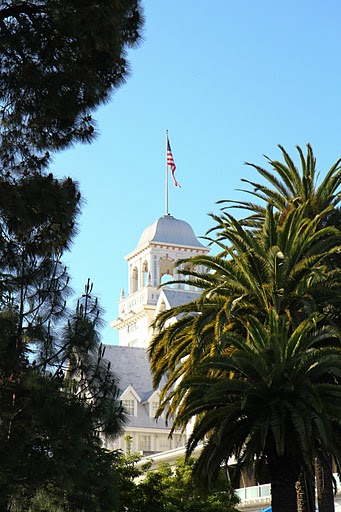
The evening, part of Berkeley Wine Festival (check out its site for future dinners), was over the top — spectacular views of the San Francisco Bay from the back room of Claremont Hotel’s Meritage restaurant. Twinkling lights on a warm night made a brilliant partner to rising star chef Josh Thomsen‘s menu. I was duly impressed with all his dishes, and wouldn’t be surprised if we see a lot more from him in coming years. My top dish of the five course dinner was the Maine sea scallops topped with Hudson Valley foie gras. Served over rhubarb-balsamic compote and endive, it was the dining pinnacle of the night. But for sheer satisfaction, I’m giving my points to Thomsen’s succulent Creek Stone beef short rib.

All in all, a happy marriage of wine, food, people, and setting.


— Subscribe to Virgina’s twice monthly newsletter, The Perfect Spot
 

Carrot coladas: Vegan happy hour, anyone?

0

A short list of cocktails that are not vegan: Irish coffee, anything involving Drambuie or Martini and Rossi vermouth, cheese-garnished Bloody Marys. (Thanks Barnivore.)

This spring, I interviewed six SF vegans on the state of animal product-free lifestylin’ out here in the Bay. They agreed it was all pretty awesome, given the kitchen creativity and commitment to healthy eating that lives out here. But they identified one thing that our hills and valleys are lacking: a strong sense of vegan community. 

And what’s a better community builder than alcohol?A vegan — and thus more hardcore — version of worldwide sustainability boozery crew Green Drinks, Vegan Drinks SF has been gathering up meat-defeaters for the past two years, dumping them (with fair notice) on the city’s watering holes for a vegan cocktail special, scintillating mingling opportunities, and drunken event announcements to cap the whole thing off. This week, there’s a meet-up at Martuni’s on Thurs/30. We caught up with Elizabeth Castoria, the managing editor of Vegan Drinks progenitor VegNews, to find out more about the phenomenon. 

Ah, and if you’re really feeling the concept, you might try meat-free speed dating.


San Francisco Bay Guardian: How many meetings of Vegan Drinks SF have there been? 

Elizabeth Castoria: We started in February of 2009, and typically skip the months of November and December because since Vegan Drinks is always held on the last Thursday of the month, those two months tend to get swallowed by the holidays. If my math’s right, that’s 25 meetings so far. 


SFBG: Are the drinks specifically vegan? I know that animal products tend to lurk in alcoholic beverages when you least expect them.

EC: The nice thing is that the vast majority of hard liquor is vegan (it’s much more common to find beer and wine that’s been processed with animal byproducts). Our monthly drink special changes up, but it’s always a liquor-based martini. 


SFBG: Who are the Vegan Drinkers? How many people came to the last event? 

EC: We don’t take tickets at the door or anything, but about 50 were in attendance at the last event. The group usually ranges between around 50-ish people to 75-ish, and it’s a real mix. Most are probably between the ages of 25 and 55, and the personalities are diverse, as in any group. Most are professionals who come right from work. 


SFBG: Why Martuni’s for this one? Does the place have a special vegan allegiance? 

EC: When we were scouting out places, Martuni’s seemed like a really good fit because it has a fairly spacious back room that’s semi-private. Skip, the owner, has been really wonderful about coming up with creative drink specials every month. He also happens to have both a popcorn popper and a really adorable little hot dog cart, and he went out and got us a bunch of vegan hot dogs, buns, and condiments that sold for $1. It’s wonderful to partner with someone who’s so enthusiastic! 


SFBG: And knowing Martuni’s, there will be some amazing lounge act in the back room…

EC: Ha! Not intentionally. Though Martuni’s martinis are notoriously strong, so after a few, you never know! We do, however, have a brief announcement period at the end of every event so that anyone who has a project or opportunity to share has the chance to do so. 


SFBG: Drunk events announcements, love it. Why’d you start Vegan Drinks? 

EC: Vegan Drinks as an idea actually started in New York in 2008. When our staff started seeing photos from their events that looked like way too much fun, we got jealous. So we started our own chapter! The point is just to create a space for people to come together, spend time among like-minded folks, and hang out. It purposefully doesn’t have an agenda beyond “let’s have drinks and chat” because so often events are fundraisers, or outreach, or festivals, or readings, or something else that involves a level of obligation, and it’s really nice to just get together with people in the community and hang out without any pressure. 


SFBG: Have you seen any interesting animal product-free collaborations spring up out of these meetings? What are the hot vegan conversation topics that people are mingling over these days?

EC: Certainly some networking happens, and some projects have come from that. For example, even with Vegan Drinks itself, we started organizing the events, and then connected with the Vegansaurus bloggers, and now we co-sponsor the event with them. In terms of hot topics, food is a nearly ubiquitous theme at vegan gatherings. New restaurants, places people have eaten recently for the first time and had either good or bad experiences, new recipes people are experimenting with and those kinds of things definitely come up.


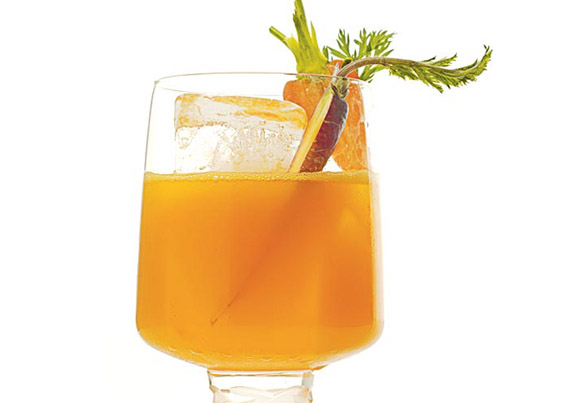
(Carrot colada photo by Wendall T. Webber via Food & Drink)


Vegan Drinks

Thurs/28 6-8 p.m., free with purchase of drink 

Martuni’s 

4 Valencia, SF

(415) 241-0205

www.sfvegandrinks.com


What goes around Hong Sang-soo disassembles the love triangle in “Oki’s Movie”

0

The drab realism of Hong Sang-soo’s films is more testing apparatus than window. His romantic narratives foreground structural operations (doublings, loops, intersections) in a gamely way; a set template of characters and situations also contributes to the impression of his films as moral prisms.

Oki’s Movie, one of only three movies the South Korean auteur has released in the last two years, is split into four sections of perplexing relation, but which together establish a lucid distance from a conventional love triangle. Doubters look upon Hong’s prodigious output as evidence of artistic complacency, while admirers point to the centrality of revision in his work (it’s the process by which he peels the onion of art in life and life in art). What sometimes gets lost in the discussion is that Hong’s narratives still have a delightful capacity to surprise. Oki’s Movie looks like it was shot fast and cheap, but its fluid shifts in perspective and rueful examination of the storytelling impulse are very fine indeed.

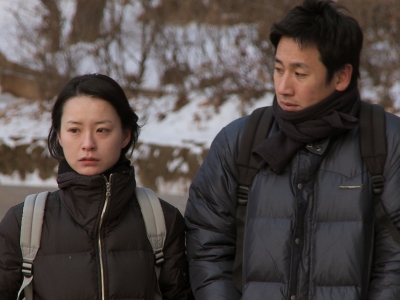
Oki’s Movie begins on a telling note of displacement when the wife of Jingu (Lee Seon-kyun) wife calls him by the wrong name as they leave their apartment. He’s the familiar Hong type: a ragingly insecure filmmaker-professor who interacts with everyone, whether stranger or wife, with the same grubby defensiveness. Within a few short scenes, we’re already launched into the inevitable whiskey-fueled meltdown, as Jingu impoliticly confronts his mentor, Professor Song (Moon Sung-guen), with another faculty member’s accusations. The pacing of this long take degradation is characteristically precise, with Jingu’s narrow perspective neatly reflected in Hong’s zooms and pans.

Jingu feels threatened by three women in the film’s first act (his wife, a stranger who snaps his photo, and a young woman who confronts him with a previous romantic entanglement during a Q&A following one of his films), but none are named Oki. By the time we begin to wonder about this, the opening credits are rolling again. Confusingly, we begin this second segment with Jingu and Song watching the end credits of a film (Jingu’s) on a computer monitor. We wonder if the previous act was a film-within-the-film, but this seems paradoxical when we realize that there has been a shift back in time. Here Jingu is Song’s student rather than his junior colleague. In any case, Oki (Jung Yumi) is just outside the door.

We can tell from her charged hello with Song that there’s something between them. A moment later Jingu lurches into his obdurate seduction. Eventually he cajoles Oki into bed, though Hong’s slipshod narrative keeps us from assigning any kind of finality to their embrace.

Even as we expect the narrative to upend the male initiative, it still comes as a tonic to have the movie turned over to Oki for the film’s final, eponymously titled act. In voiceover, Oki sets up the kind of controlled experiment Hong thrives upon: she will cut between two identical park strolls taken with both men to better judge her relationship with each.

One of Hong’s modes of indirection is to plant ideas which could easily be taken as reflections upon his own filmmaking in the mouths of all his characters. He surely identifies with both Jingu’s narcissism and Oki’s analytical rigor, in other words, but it’s only in this last segment that Hong admits a degree of lyricism into the film. The heretofore flat winter light softens and arches towards twilight. There’s real poignancy to Oki’s reflections, but it only comes when we’re most deeply embedded in the artifice of Hong’s narrative construction. “Things repeat themselves with differences I can’t understand,” she muses. Having specified the conditions of the repetitions doesn’t make resolution any less elusive. The only solution is to go on making films.

http://www.youtube.com/watch?v=4_T9f8o-HTA

Our bike falls in love

0

Our bike spotted this super clean tag in the Lower Haight the other day. It was drawn to the piece not just for its subject matter (you know how bikes tend to stick with their own kind), but also because of the composition. Check those lines! Dynamic! Hot. It was in love. 

It’s the work of Jaut Cares — we told our bike — who has been spraying two-wheelers around the Bay for a hot minute. Superlative local street art photography blog Endless Canvas has been tracking the artist since early last year, and Altar of Unanswered Prayers snapped a radtacular shot of a red, white, and blue number Jaut put up. 

Our bike didn’t have much to say in response, just recommenced scouting around for the Macaframa minibike and anything/one ever featured on Erin from Calivintage’s Bike + Babes blog. Fickle, fickle bici.

The Guardian Hot Pink List 2011

3

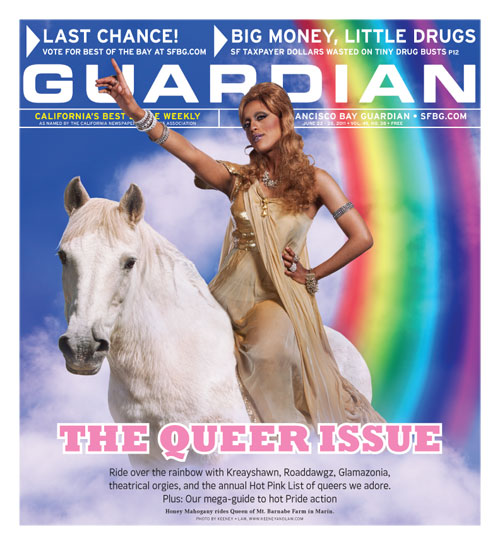
For the past few years, as part of our annual Queer Issue, we’ve rounded up a few of the people who have inspired us with their unique approaches to queer life. Whether they’re activists, artists, performers, or just plain hot-to-trot rabble-rousers, they’ve made our queer hearts beat a little faster (and reminded us of the fantastic diversity and dedication of the community). This year, we’ve gathered together another Hot Pink bunch, and asked them. “What inspires you right now — and what could the queer community use more of?” This year’s Hot Pink List was photographed by Keeney + Law


HONEY MAHOGANY

Singer, performer, social worker, photographer, glamour girl — Miss Honey Mahogany (www.itshoney.com) does it all and leaves you breathless. Catch up with her on the SFMOMA Pride Parade float (a drag salute to Paris, 1928) on Sunday, June 26, and look for her forthcoming EP this summer. “I feel really lucky to be coming of age as a performer at a time when there seem to be more and more queers out there in the public eye. Whether it be in popular media, politics, art, advocacy work, research … we are everywhere! One thing I would really like to see in the next few years is the rise of new, massively popular gay icons … and I mean ICONS, not celebrities. I think the world is ready for that. In fact, I think the world needs it.”


ROSE SLAM! JOHNSON

Have fun or make a difference? Bike-food-community activist Rose Slam! Johnson has found the two can make hot partners. She helped plan SF Bike Coalition’s Bike to School Day, and merrily oversees the Western Addition’s Urban Eating League, Apothocurious (a bike-powered organic food subscription service, www.apothocurious.com), and her own queer adult outdoors camp. This summer, she’s embarking on an multimonth bike ride and camping with Northwest queer youth. “Fear and defensiveness often distract us. By bringing people together around things we are passionate about — food, bikes, community, fun — we are able to move towards love, acceptance, and healing.”


KB BOYCE AND CELESTE CHAN

The masterminds behind Queer Rebels (www.queerrebels.com), an organization that showcases queer artists of color, KB and Celeste are involved in everything from Community United Against Violence (www.cuav.org) to “TuffNStuff: The Last Delta Drag King,” KB’s musical act. Upcoming “Queer Rebels of the Harlem Renaissance” (Friday, July 1 and Saturday, July 2), part of the national Queer Arts Festival (www.queerculturalcenter.org) is a stage extravaganza celebrating that great period. And TuffNStuff performs at the Trans March Rally (www.transmarch.org) Friday, June 24 from 3:30 p.m.-6:30 p.m. “We are inspired by new queer work that creates our own myths, reveals hidden histories, and is unapologetically, riotously gay!”


ALIX P. SHEDD

“It’s very rare to find an aesthetically dedicated queer space that isn’t centered around alcohol, includes queer youth, and is right for all different kinds of performers and performances. Somewhere you can scream, dance, and love everything that’s gay.” So Alix (with help from Lorin Murphy and a ton of volunteers) found a space, painted it pink, and launched the Big Gay Warehouse (www.biggaywarehouse.org). For the past year, the bGw has hosted many of the city’s most intriguing queercentric events, from punk concerts and video nights to sensory derangements and environmental makeovers. Alas, bGw’s days are numbered due to rising rents, but Alix — who’s also involved in trans-women-empowering nonprofit thrift store the Junque Shoppe and designs a clothing line called Apocalypse Vintage — already has the next move in mind.


MICAH TRON (WITH DJ JEANINE DA FEEN)

Super-sharp MC Micah Tron has been rising through the Bay’s hip-hop ranks with a deep electric sound and sexy come-ons. Check her out at www.soundcloud.com/Micahtron and peep her forthcoming EP “Jungle Music,” produced by the HOTTUB crew. She’ll be performing at the Crooked party at the Showdown on Friday, June 24 and on the Pride celebration main stage (www.sfpride.org) on Sunday, June 26 at 11:50 a.m. with her DJ Jeanine Da Feen. “Walking the streets of San Francisco inspire me, there’s nothing like being surrounded by people who aren’t afraid to be themselves. Our community could use more self-acceptance — we’re beautiful people!”


JOCQUESE “JOQ” WHITFIELD

Work! Voguer extraordinaire, Jocquese teaches the wonderful Tuesday night Vogue and Tone class — “a dance class with a party feel” — at Dance Mission Theatre (www.dancemission.com). He’s also part of the raucous Miss Honey nightlife crew and is a collaborator, with Shireen Rahimi, on the West Coast Dopest Outsiders youth life skills program, encouraging “movement through movement.” He’ll be performing at Crooked and Pride with Micah Tron. “I think we live in a society where we place sexuality on everything. I want to strip that away and tell people to just be themselves and dance.”


DIEGO GOMEZ/ TRANGELA LANSBURY

George Washington was due for a kick-ass sex change — so artist and illustrator Diego Gomez (designnurd.blogspot.com) started painting colorful characters like Storm from X-Men, She-Ra, and Jem on dollar bills, a.k.a. “Diego Dollars.” As the designer for Tweaker.org, he gets out valuable information from the San Francisco AIDS Foundation. He’s currently illustrating an “all-Latin porn-graphic novel” called Spicey and a comic book called “CuntBricks,” making clothes and accessories for Barney’s New York and local boutique Sui Generis, crafting with his “Needle X Change” knitting group, performing as his alter ego Trangela Landsbury, and a ton of other neon-bright activities. “I’d like to see more glitter and gold in the future and ‘happy’ surprises (not to mention endings).”


CHRISTOPHER REYNOLDS AND ALYSIA SEBASTIANI

Sustainability was all the queer conceptual rage this past year — but Christopher and Alysia, the powerhouses behind landscape design firm Reynolds-Sebastiani (www.reynolds-sebastiani.com) have been setting the principles in motion by designing and maintaining spaces throughout the city that morph norms to create alternative environments that adapt to change. Recent projects include a redesign of the Phoenix Hotel grounds, to be unveiled at Juanita More’s Pride Party on Sunday, June 26 and a show of amazing terrariums using vintage bottles they unearthed at St. Francis Fountain in the Mission’s new event space, Candy Kitchen, opening Thursday, June 23, 6 p.m.-10 p.m., and continuing for two weeks. “Like any cultural paradigm shift, sustainable practices must reach and change the popular vernacular in order to become truly sustainable — in this way they’re like queer culture,” says Christopher.

Queer Issue 2011: Scenes from the road

6

Eager to include the voices of queer youth in our 2011 Queer Issue, we asked the artists at Roaddawgz, a Tenderloin homeless youth creative drop-in center, to submit art that addressed the realities of being young and queer today. Here’s some selections from the amazing works they sent in:


Corner Skills

By Levi

Not all queers are queens… not that anything is wrong with it

I am the dude on the corna,

doin what I wanna.

Learnin to hone my skills.


A faggot such as me must learn to be an anomaly

moving through the crowds with no heads turnin

don’t need some angry motha-fuckah burnin

want’n to teach me what a man should do when a bitch brother is in your presence


Gotta learn to blend and defend;

haftah strengthen my core and my soul

because nobody cares if ah gay boy goes. 


“Battle To Love” by King Virgo


Meat Market

By Levi

  I am a piece of meat and every man wants some.


  I walk to the grocery store in the heart of the Gayborhood and men look at me like I am a steak, posturing as if they can take a grab at me, put me in their shopping cart, whisk me away to their abode and after they have their dinner throw away the leftovers.


  I am the dark meat, the black meat, men shun in daylight but troll after at night. Wanting the swwweeeeettttt cream in the center. I am the boy they still wish to be, the youth they envy, the looks they wish they could hate… but don’t. I am the homeless person that is hidden, who passes off as the moneyed and do my best not to look helpless because nothing is hotter for some men than sexploitation.


  I am a series of images, a composite. It’s much easier to see me as an object, a sex toy, a piece of ass or dick. If they were faced with who I was, the juxtaposition would make them re-evaluate their whole view of me and make them wonder “Maybe he is a human?” 

“Bleeding Heart” by Lisa Myaf

“The View From Here” by Insomnia

The Performant: Impossible weekend! Or: what to do when there’s everything to do?

0

Bicycle Music Festival and “A Clockwork Orange Afternoon”

Oh lordy, let me catch my breath. Weekend, you have officially kicked my ass.

Merely mortal, I found it difficult to plot an itinerary efficient enough to be able to hit every event that beckoned my attention over those bright and sunny 48 hours. Would I attend the annual Juneteenth street festival or a lecture on the benefits of zombie domestication? Journey to the End of the Night or a CLASH scavenger hunt? Sharon Jones and the Dap Kings at Stern Grove or Klaus Kinski at YBCA? Cloning myself seems a more attractive option by the day.

Spoiled for choice, and seeking the sun, I was wooed by the Bicycle Music Festival on Saturday afternoon. Located in the comfy meadow just past the De Young in Golden Gate Park, the Bicycle Music Fest kicked off with local folk rockers StitchCraft. Heather Normandale’s Jolie-Holland husk accompanied by her own guitar and Joey “Cello Joe” Chang wafted sweetly in the mild breeze while a team of stationary-bike pedalers powered up the PA system. 

Introduced by festival organizer and Rock the Bike founder Paul “Fossil Fool” Freedman as an “OG” of the Bicycle Music movement, Normandale is a fixture with the Pleasant Revolution bicycle-powered music touring group, including a five-month tour of Europe with fellow BMF-featured performers, The Ginger Ninjas, as well as a participant of the Shake Your Peace 2009 Winter Walking Tour. Next up, Cradle Duende brought the gypsy noise followed by Evan Francis and fellow jazz mafiosos  who played a mellow, sax-heavy set, warm as the rare June sunshine.

Solar-charged, pedal-powered, and ready for shade, I made tracks on Sunday for “A Clockwork Orange Afternoon” at the Edinburgh Castle. A celebration of the 40-year anniversary of the notorious Kubrick film made of the Anthony Burgess book of the same name, choice excerpts were read, and partly enacted, by Castle regulars: Jack Boulware as narrator, pub proprietor Alan Black as a slew of bit characters (including a spot-on interpretation of the Prison Chaplain), and bowler-hatted Crispin Barker as “Little Alex”. 

At 49, the book itself is still pretty spry, alternating between restless and relentless, full of ultra-violence, yes, and weepy devotchkas and the red, red vino on tap — but not far below the shock value of its remorseless protagonist’s actions lies Burgess’ unwavering belief that the basis for our humanity is our power of choice, for good or for ill. 

“When a man cannot choose he ceases to be a man,” asserts the prison chaplain doggedly, a statement echoed by Burgess himself in his 1986 essay “A Clockwork Orange, Resucked”. Stripped of his ability to choose his own moral path, and simultaneously losing his ability to listen to Beethoven’s Ninth (for Burgess, a self-taught composer, this was undoubtedly the ultimate cruelty), Alex pays dearly for his state-sanctioned “freedom”. And nearly fifty years later, the dire implications of the “Ludovico technique” still provoke as strongly as any spot of “twenty-to-one”.


Pedaling out in front: Bike Music Festival 2011 shows us what it takes

0

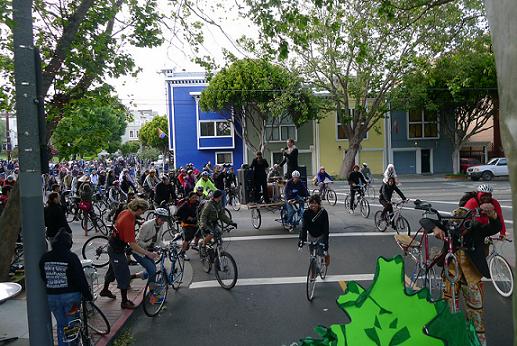
Chilling in the middle of Saturday evening traffic in the Stanyan-Kezar intersection doesn’t seem like a situation engineered to produce warm fuzzy feelings. But the aggressive honk cloud of surely confused, possibly perturbed automobiles behind me mattered little – I was digging too much on the tandems, trailers, and trees rolling past me on two (and three, holler back trikes!) wheels. 

In a way, that was all part one of the Bicycle Music Festival organizers, Paul “Fossil Fool” Freedman’s plan. Freedman (who we profiled in our recent Bike To Work issue), co-founder Gabe Dominguez, the Rock the Bike crew, and a superhuman pack of volunteers, staged the fifth year of their outdoor festival on June 18. Once again, it was completely pedal-powered, from the stage to the smoothies.

The fest started out in Golden Gate Park, in a concave field near Stowe Lake. But it was no day in the park to implement, this plan. 

At the festival’s peak, 12 in-shape attendees, pumping away on bikes hooked up to electrical generators, were needed to keep the tunes going. A flashing LED stick and a multi-colored tube holding a floating soda can were used to monitor the voltage being produced. 

When I hopped aboard for my turn to pump up the jams, I was surprised to find that the levels being generated by the bikers weren’t always enough to keep the music moving. In fact, during the second-to-last set of the night (when temperatures were dropping rapidly and a tired crowd had begun to disperse), rapper Ashel Eldrige lost power momentarily.

Periodically, a core volunteer held up a handmade “PEDAL” sign. To, you know, make people pedal harder. 

This would cause a meltdown in many event organizers — but then, Freedman’s not your typical event organizer. “I think it’s cool that it works that way,” he said in a phone interview with the Guardian.

“We’re used to things being ‘on.’ I think it’s a cool message that if you don’t show up, we’re not going to be able to have our festival.”

For Freedman, the Bicycle Music Festival is more about the journey. In fact, it was his favorite part of Saturday. After an already full day featuring female Latin rock vocalists, pedal-churned ice cream, mass instances of square-dancing, and a solid chunk of klezmer, it was time to pack it all up and head to the next location – Showplace Triangle, an intersection in Potrero Hill that has been converted into a temporary community plaza by urban sustainability group Rebar. There, the second half of the lineup would commence, including tunes from the California Honeydrops and an aerial acrobatist who’d cavort from a hoop attached to Freedman’s infamous tree-on-a-bike, El Arbol.

Around six p.m., volunteers had racked up all stage equipment (including the Ginger Ninjas, a three piece band who re-stationed itself on the stage after it had been securely affixed to the back of a three wheeled trike), all the bike-powered smoothie machines, and lineup posters. The hundreds of biking music lovers at the fest had also boarded their bikes, and we all looked on in awe at the bike mechanic flaunting of the laws of physics that was being performed. 

I had volunteered to help out as a “turn marshall” on the ride so that my fellow partiers could cruise without fear of being crushed by an impatient commuter, so I was up at the front of the pack near the more complicated endeavors. 

“This isn’t the first time that you’re… doing this, right?” I asked Mark Sullivan, the brave soul who had been selected (while he was out of the room, he told me) to tote the live music across town. “Well, we’ve done it. Maybe not with all the equipment, but yeah…” I made a mental note not to ride in front of the band bike going down a hill. 

Off we went, the music playing, and random spurts of cheering erupting as they are wont to do in such mass bike rides. I detached on Stanyan street to cork traffic and watch the parade of bikes and music and festival. It was a welcome break in my day – and gave me those aforementioned warm fuzzies to be doing something for the fun. But for reports on the rest of the ride we’ll have to turn to Freedman: 

“I was really praying for Mark when he was climbing the hill in East Mission. If he had stopped, the trailer would have fallen over. I had an amazing view because I was up high on the tree, but I couldn’t help, so I was just watching him. Then I was praying the brakes would be sound going down the hill.”

Halfway through the ride, at Duboce Park, the second act took the stage: opera singers from the San Francisco Conservatory. 

“People were leaning out of windows, it was real street theater,” says Freedman. “Opera doesn’t have a strong beat, but the audio was excellent, and the way [the sound] was echoing off of buildings – it didn’t hurt the song. One singer would give the rock sign after each track ended and everyone would cheer.”

Looking back on the day, its organizer is proud, but convinced that it’s just the beginning. “I don’t think we nailed it like we could have. I’m very grateful for where we are right now, but it can only get better.”

Even more important that the audio quality, Freedman looks forward to growing the people portion of the Bike Music Festival – partially for selfish reasons (he’d like to be able to dance more next year). 

Christopher Drellow is Freedman’s neighbor. Saturday was his first major role in one of the bike music productions – he rode a heavily loaded bike and trailer from his home in the Mission to both concert locations, and then home at the end of the day. He started out concerned about the heavy load he was toting, but as the day progressed, got sucked into the endless possibilities of bike cargo. 

“Because at that point it seemed clear that, well fuck it, it can clearly be done. I even invited passengers onto the load because suddenly [I] became interested in what can’t be done on these things — like, at what point will this fail? Or call it my hubris, that’s fine too.”  

All told, he was bike-musicking from nine a.m. to three in the morning, which gave him ample time to reflect on what it meant to power over 15 musical acts for a daylong party.

“I guess primarily what I’ve been thinking about has been BMF indicating a kind of proof that transitioning off fossil fuel driven machines will not be easy. And that it will be totally doable.”

All the hustling, all the saddle sores – these are the real cost of powering a festival. Somewhat akin to Mark Zuckerberg’s recent, much ballyhooed decision to eat only the animals that he killed personally, one has to wonder if people would party the same way if they knew what it cost in fossil fuel to bring the beat back (and back, and back).

Or maybe low-emission festivity would just mean a shift in what we think of as a celebration. “ People pitch in their different skills and talents and energy and love,” says Freedman. “We need positive examples of that to reaffirm our faith in living together in a city. There are advantages to living in a tight space, you can pull things off that you can’t do in car culture suburbia.”

Says Drellow: “It’s something of a time-honored tradition for people to cling to the assumption that something is impossible until someone else goes out and does it. Seeing the work done is something people kind of need. And okay, perhaps there are circumstances where bicycles are not the solution. But they seem to work pretty damn well beyond our common understanding of them. So I guess that’s what Paul Freedman is doing.”


Rock the Bike is working on the first NYC bike-powered music festival this weekend. (Freedman told us it’ll have the “most amazing” pedal-powered sound yet.) If you’re East Coastin’, check it out. The crew will be back in SF to perform at the July 10 Great Highway Sunday Streets and the July 31 SF Marathon.


BYO Flair: A guide to this weekend’s festival explosion

0

If there is one thing I know about festivals it is this: the gear you pack can leave you hydrated, hip and happy — or break you down to a sunburned, schlubby hunk of bad vibes. (It’s true – shoddy preparation for Reggae on the River 2006 left me stranded in the psych tent with disoriented girlfriend during the Ziggy and Damian Marley concert. Clearly, a hipper fedora would have solved everything.) 

This weekend plays host to a freakishly large share of summer festivals, so consider this your guide to happy cavorting in the sun. Cups, caps, frocks, and foods: here, friends, are our picks for best festie flair.  

Sierra Nevada World Music Festival

The perfect weekend campout for those that can’t handle the crushing crowds of the more commercial festivals this summer. Even the little things (children) will appreciate the open-minded approach to beautiful noise here.

Bring: Consider SNWMF a three-day immersion program in getting loose. Translation: you need costumes. If you’re heading up from San Francisco, we’ve got the perfect sartorial layover for you. Sebastopol’s Funk & Flash vintage store is far enough removed from the big city that its stock hasn’t been picked to all hell by the club kid set, so festie-bound you can benefit from its racks of flowery skirts, and tons of sparkle. Go, do you! 

Fri/17-Sun/19, $60-150

Boonville Fairgrounds

CA-128, Boonville

www.snwmf.com


Juneteenth Festival and Parade

The website proclaims this celebration of African American heritage to be the largest gathering of blacks in Northern California, but it remains to be seen whether you’ll fixate on the cultural signifcance while attending the event itself: with an impressive classic car show and three-on-three basketball tournament, all the historical reflection might have to wait until after the festival. 

Bring: No brainer accessory: a hat from Hats of the Fillmore, an independent business that’s been holding it down on Fillmore’s main drag for years. High quality at surprisingly low prices, you can don one of these lids to fit in perfectly with the jazzy milieu of SF’s traditionally black neighborhood. 

Sat/18 11 a.m.-7 p.m., free

Fillmore and Geary, SF

www.sfjuneteenth.org


Alameda Sailing Festival

Hey Muffy, take a break from hating on the impending America’s Cup to catch a day of boating buoyancy. The Encinal Sailing Foundation will be providing turns on the high seas for a “nominal” fee, and there will be seminars on “pilates for sailors,” boating to Mexico, and how to get your captain’s license. Afterwards, we know some great places to get drunk in Alameda!

Bring: This really goes for every fest on the list, but possibly the most important piece of flair is a fun, functional backpack to hold your water (flask), sunscreen, cell phone, and snacks. We love the Brooklyn Circus’ BKc satchels – but for the moment you’ve gotta special order them from New York. That’s fine, this ain’t the last weekend of the summer! The store’s preppy style (without the snooty WASP-y supply chain behind it) would be divine if you’re looking to drop some dough on a nice sailing fest outfit. 

Sat/18 10 a.m.-8 p.m., free

Encinal Yacht Club

1251 Pacific Marina, Alameda

www.summersailstice.com


Bicycle Music Festival

You read our profile on Fossil Fool, so you know all about the current trend towards bike-fueled culture fun. According to all the volunteers that have been standing near Mona Caron’s bike mural behind the Church Street Safeway for the past few days, this fest will be the perfect spot to enjoy the zeitgeist. Saddle up for awesome tunes, and community-building bike rides between concert sites. 

Bring: Hedgehog mug from Gravel and Gold so you can (chicly, adorably) reap the benefits of the fest’s pedal-powered smoothie maker. It also comes in rabbit, fyi. The calories you consume in said smoothies work doubletime — once you’re done drinking, take your turn powering the generator for the drinks or one of the music stages yourself.

Sat/18 noon-11:25 p.m., free

Various locations, SF

www.bicyclemusicfestival.com


Berry Festival

You know this sun isn’t going to last past 4th of July, so now is the perfect time to up your antioxidant intake and arm the old immune system against “summer” colds. CUESA and the Ferry Building farmers market is holding this day of loving for berry season – sample the treats available in the market stalls and let chef Daniel Clayton of Nibblers Eatery and Wine Bar show you how to whip up some healthy, hearty grub with the juicy little devils. 

Bring: a nice navy sweatshirt from Mollusk for the Bay breezes and inevitable tayberry stains. 

Sat/18 11 a.m.-1 p.m., free

Ferry Building, SF

www.cuesa.org


California Big Time Indian Gathering

The Ohlones are hosting their first gathering of Native peoples in their ancestral lands in two centuries. Come to learn more about real SF locals through dance, rituals, and craft exhibitions.

Bring: Mocs that slip off easy – you’re not gonna want a layer of separations between the well-manicured lawns of Yerba Buena and your soles. 

Sat/18 noon-11 p.m., free

Yerba Buena Gardens

Howard between Second and Third St., SF

www.worldartswest.org


North Beach Festival

Sure, the neighborhood street fests all start to look the same after awhile. But there are good parts of that same: family-friendly musical acts, artery-busting festie food, and an excuse to run amok in the streets. The North Beach incarnation has been going for 56 years, and manages to sneak a couple unique facets into the standard cruise-shop-eat formula SF has perfected. 

Bring: your kitty cat companion for the yearly St. Francis of Assisi animal blessings. Also, a flirty, locally made frock from NooWorks is totally Maria from West Side Story – perfectly for the neo-Catholic-in-the-summertime vibe you’ll be channeling. 

Sat/18-Sun/19 10 a.m.-6 p.m., free

Washington Square Park

Union and Columbus, SF

www.northbeachchamber.com


Northern California Pirate Festival

Never underestimate the amount of people willing to drop serious time and dime on dressing up in period costumes. You’ve seen the Renaissance fairs and the Dickens Christmas Fair – now it’s time to peep the pirates. Two very full days of pirate entertainers and replica boats (not to mention squadrons of pirate clothing vendor booths) await you if you be brave enough to cross the seas to Vallejo. 

Bring: Your 826 Valencia designer spyglass, for scurvy-watching of course. 

Sat/18-Sun/19 10 a.m.-6 p.m., free

Vallejo Waterfront

Mare Island Way (near the ferry terminal), Vallejo

www.norcalpiratefestival.com


Picklewater Free Circus Festival

As we mentioned in last year’s profile of our favorite free circus troupe, Circus Bella, nothing quite highlights the magic (and eccentricity) of this city quite like catching a high-flying aerial act smack dab in the heart of downtown. Picklewater is taking over Union Square for the third year in a row this weekend, and we suggest you head down — if only to catch the amazed gaze of the throngs of tourists that’ll be on hand to remind you that yes, your city is freakin’ amazing. 

Bring: Your medical marijuana card, and attending accoutrements. 

Sun/19 2-4 p.m., free

Union Square

Post and Powell, SF

www.jewelssf.org


Sharon Jones and the Dap Kings at the Stern Grove Festival

The 74th season of this green glade’s free concert series kicks off with a killer show from the queen of throwback soul. 

Bring: The Stern Grove scene struts more with its picnic spread than by any accessory or fly outfit. A retro basket (check Goodwill, people are always ditching picnic baskets) will be a useful score, and in terms of snack to make (they must be homemade!), peep our favorite new vegan cooking blog, The Vegan Stoner. It’s perfect, even if you had to self-medicate your hangover before you started prepping for the journey out to the Sunset.  

Feat. Ben L’Oncle Soul

Sun/19 2 p.m., free

Stern Grove

19th Ave. and Sloat, SF

www.sterngrove.org


Mission Street mural unveiling

But why spend all your time at the big events? Artist Aaron Lawrence is holding an al fresco event of his own – pulling the dropcloth off the work he and muralist Rocky Villanueva did on a new apartment building on Mission. He’s making a party of it, so get there early if you want to get down on the free burritos provided. 

Bring: Tapatio, tall can Tecate. Bring two cans, share them. 

Sun/19 2-5:30 p.m., free

Mission between 18th and 19th St., SF

Facebook: Sunday Mural Reveal Party


Appetite: Splendorini’s cocktail creations

0

I’ve got to concur with the Chronicle’s five choices for its 2011 Bar Stars. Between this column and my Perfect Spot newsletter, you’ve heard me talk about drinks made by all five bartenders chosen (like Kevin Diedrich and Alex Smith). Today, I’ll share the hottest concoctions by awardee Carlo Splendorini.

Splendorini made some beautiful drinks during his tenure at Gitane, so it’s no surprise that he’s continuing his tradition of excellence as lead bartender at Michael Mina’s flagship restaurant. Giving each creation Italian charm (and channeling Old Blighty thanks to his time at Nobu London), he’s ably backed by a strong bartending crew that includes Kate Bolton.

My latest visit with Splendorini took place before his Bar Stars honor – and after sampling seven of his cocktails, I was throughly impressed with the range, restraint, and beauty he showed in his selections – always lessons in refinement. He’s inventive, yet manages to leave one with the lingering sensation of balance. His drinks are as impressive, but never gimmicky as the latest cocktail trend.

Using Zucca, a bittersweet Italian amaro-aperitif, as the base of his Fraggle Cup ($11) was genius. It was particularly refreshing on the rocks with fresh tangerine wedges and a mini-forest of ginger stalks standing tall in the large glass in which it was served. I recommend this drink to anyone: especially for the exposure it provides to the range possible in amaro-based drinks.

A self-serve sazerac ($10) is as fun as it sounds: deconstructed, and waiting for you to ingest any way you find desirable – either which the ingredients mixed together or taken separately. A shot of Rittenhouse 100 rye was paired with an absinthe marshmallow, lemon zest, and a truly inspired Peychaud’s bitters jelly. Balanced layers were achieved in Splendorini’s gorgeous Schiedam Blossom (photo on right, $12 – part of the Nolet Gin cocktail competition open through July 15). Nolet Gin and sake melded with a fennel-ginger cordial, silky with egg white.

I could go on, but instead, I urge you to sit down at the bar with a few orders of Mina’s impeccable food, and let Splendorini and crew work their magic on you.


— Subscribe to Virgina’s twice monthly newsletter, The Perfect Spot
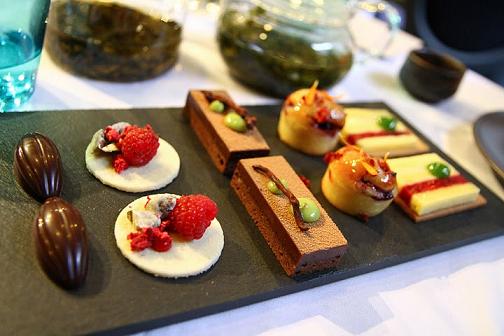
 

Two bike photo projects show love for the movement

0

We’re in a moment of bike love. Bikes are hot: in SF the weather’s hot, the Bicycle Music Festival‘s coming up, an extended network of bike paths is on their way – and around the world, there’s a lot of energy surrounding the rise of two-wheeled transport. It’s an important time for bicycles, so let look at how it’s being documented. 

One way: Matthew Finkle and Brittain Sullivan are the authors of a book called – yes – I Love My Bike (Chronicle Books, $16.95, 160 pages) that recently landed in our Guardian mailbox. Finkle and Sullivan, the book’s intro tells me, met on a bike ride on a summer night in Boston and subsquently pedaled across the country with each other, snapping flicks of their bikey buddies along the way.

Theirs is a photo book of bikes and their riders, smattered with terse little quotes from all the pretty things (“when I get pissed off I build gold bikes!” the handlebar-mustachioed, booze-toting Erik Noren of Minneapolis’ Peacock Groove Cycles enigmatically proclaims). America’s lookin’ real good on our bikes, according to I Love My Bike — everyone’s got a bicycle fit to induce heavy breathing among the so-inclined.

I have to admit, I started getting a little hot and bothered over some of the (bike!) specimens – there’s a yellow banana seat cruiser on page 109 for which I die, and I know that according to the bike snob gods I’m not supposed to like those five spoked plastic fixie rims anymore, but Daniel Mueller of Boston’s pink and powder blue creation… I don’t care, want.  

I Love My Bike: Wall to wall wheel walls 

When I shut I Love My Bike, I did so with the impression that the US is a solid mass of trendy, creative (mainly) young people — on bikes. I like those kinds of people – some might say that I am one myself. The book, presented as an aspirational showcase of hipster and high performance bike fashion, works just fine. 

But Finkle and Sullivan need to holler at whoever’s writing their back cover blurb. “Throughout their travels they met cyclists of all kinds…,” it rather hyperbolically shouts. Or maybe they met cyclists of all kinds, but they didn’t publish any photos of them – I’m didn’t see any families in there, and certainly no one with a junker bike that isn’t a hard-to-find, check-my-steez brand of junker. This is a book of bikers that are just a few freeways from having a big ass social ride to a BBQ of local, organic edibles in a park somewhere.

I think that people who bike are more complex than that — in a good way. For a different take on a bike photography project, head south. And east. Really far in both of those directions. 

There you will find South Africa’s Bicycle Portraits, a photo series that was started by Nic Grobler and Stan Engelbrecht to highlight the brave, self-propelled souls on roads where cars aren’t always the friendliest neighbors for meat puppets (to borrow a favorite term from David Byrne’s Bicycle Diaries). You’re not getting the idea that everyone depicted in Bicycle Portraits is a brother from a different mother — but you are getting the feeling that the biking movement is moving away from the “ain’t it cool?” model of awareness-building to the “ain’t it necessary?” school of thought. 

You can’t scroll through Grobler and Engelbrecht’s website without realizing that biking in South Africa may well be a lifestyle, but it’s not a single lifestyle — people aren’t just riding bikes because it’s fun, hip, or social, but because it’s the mode of transportation that makes the most sense for them. Bicycle Portraits purposefully paints a country of bikers as a diverse, important group of citizenry.

Rich people, poor people, old people, kiddos. Ashton May’s black township cruiser, Loza Philani’s well-ridden Raleigh (“my bike is like oxygen to me – it keeps me alive,” he says), and Brandon Searle’s high tech Durban Cannondale. The two also collected in-depth interviews with each subject to help explain how bikes figured in each of the lives they documented.

After two successful Kickstarter campaigns, the Bicycle Portraits team is now accepting pre-orders for what is sure to be a phenomenal book. (Swoop.)

In a land such as our own when bike riding all too often is stereotyped as the domain of flippant and sullen (does that work?) trendoids who refuse to “mature” into taking crowded public transportation and gas-guzzling automobiles, projects like Bicycle Portraits seem incredibly important. If we have proof in front of our eyes that bikes are helping people lead lives that help the planet, city governments are way more likely to invest in bike systems, parents are more likely to encourage their wee ones to take to two wheels, and people who don’t fit the hipster stereotype are more likely to pedal off into the sunset. Fashion is fun, but fashion alone can’t influence urban planning. 

We do the movement a disservice if we paint ourselves as the sole face of biking in today’s cities – but of course, the diehard dandies among us are always going to Love our bikes. Damn Carolyn Ngo of San Diego, where’d you get that metallic blue handlebar tape?


Tribes author burrows into the Big Apple

0

Thanks to the help of burners from at least five different tribes that I’ve covered or camped with at Burning Man, my New York City book tour was a successful adventure in art and community, from the Figment festival on scenic Governors Island to exotic eating and drinking in the East Village and Queens to a great underground party at an old Catholic school in Brooklyn to getting canonized by Rev. Billy and his 25-person choir into the Church of Earthalujah along with SF-based performance artist Guillermo Gómez-Peña.

The June 7-13 trip was in support of The Tribes of Burning Man: How an Experimental City in the Desert is Shaping the New American Counterculture, my book chronicling how an event born in San Francisco has spawned a vast, well-developed culture and ethos that is affecting life in cities around the world, even seemingly impervious megalopolises like the Big Apple.

I arrived on the red eye Wednesday morning just as a heat wave was peaking in New York, showing up mid-morning at the Upper East Side apartment of Jax, a recent transplant from SF who I worked with on last year’s Temple of Flux project. Her air conditioner hadn’t arrived yet, so I sweated through a needed nap before surrendering myself to exploring the city.

That night was my Tribes launch party in a great spot called Casa Mezcal on Orchard Street on the Lower East Side. Fellow Shadyvil campmate Wylie Stecklow had not only arranged the venue, which is owned by one of his law clients, but he moved the weekly Big Apple Burners happy hour and the final planning meeting for Figment (an event he co-founded four years ago) to the venue, giving me a built-in audience of interested burners who seemed to really appreciate my reading and discussion.
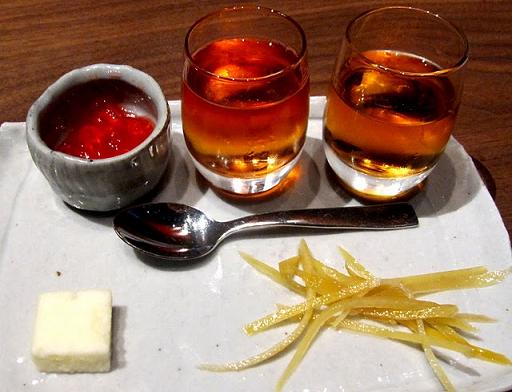

Also joining the party were two NYC figures who appear in my book: Not That Dave, Burning Man’s NYC regional contact and a Figment director, and Billy Talen, the former San Francisco performance artist who transformed himself into NYC’s Reverend Billy, pastor of the Church of Stop Shopping, which evolved into the Church of Life After Shopping before becoming the Church of Earthalujah to reflect a mission that expanded from economic justice and anti-consumerism to environmentalism and a holistic way of looking at the perils of our economic system.

As I’ve been doing at some of my Bay Area book events, I read chapters that introduced them and then let them speak, and they each had lively, weird, heart-warming things to say. Several other New Yorkers who I know through Burning Man showed up at the event to join the discussion, wish me well, and buy books. The most surprising guest was Mike Farrah, former Mayor Gavin Newsom’s old right-hand man who did more to facilitate the temporary placement of burner artworks in SF than anyone in City Hall. He now lives in NYC and showed up late, so after talking SF politics and BRC art over beers, we wandered past some of the oldest tenement buildings in the city together as we headed toward the subway.

The city was sweltering the next day (although Jax’s air conditioner had blessedly arrived), so I spent over three hours in the Metropolitan Museum of Art, which makes SF’s museums seem like mere gallery spaces. I walked through Central Park between the reservoir and the Great Lawn, which was being set up for that evening’s Black Eyed Peas concert, all the way to the Upper East Side and my reading at the Columbia University Bookstore (which nobody showed up for, a combination of school being out, the heat, and a freak thunderstorm that was just rolling in as my event began – my first flop after more than a dozen bookstore events).

But New York is a city for nightowls, as I was just beginning to appreciate, particularly after I made my way down to the East Village that night to meet a Garage Mahal campmate who I’ve known for years simply as Manhattan. He’s been living in his apartment for 15 years and the city for 25, developing a detailed knowledge of the best places to eat, drink, and otherwise indulge.

Manhattan won’t go to the Upper East Side, preferring to remain in “civilization,” as he calls the East Village, which earned its storied reputation as the center of the nightlife universe. We ate Japanese curry at Curry Ya, drank hard-to-find German Kolsch beer at Wechsler’s Currywurst, danced with saucy Armenian women on Avenue C, drank cold sake underground at Decibel, indulged in the most decadent fried pork sandwiches at Porchetta, mingled with beautiful young people in the Penny Farthing, and then drank cocktails on his stoop until dawn, the streets never going to sleep in this lively neighborhood.

On Friday in the early afternoon, I met Wylie at The Cube, a public art piece near the 8th Street subway stop, and we hopped a train down to the southern tip of Manhattan to catch the free ferry to Governors Island for the opening day of Figment, an art festival started there by burners in 2007 that has since expanded to Detroit, Boston, and Jackson.

Mayor Michael Bloomberg and other city officials have embraced and facilitated the popular three-day event, which now includes art projects such as a treehouse built of old doors, massive steel sculptures, and an elaborate miniature golf course that will remain on the island through the summer. Most of the projects featured the interactivity that is the hallmark of burner art, such as a sound project in an enclosed courtyard in which passerby had to figure out how they were controlling the sounds they heard.

Wylie and I pedaled on borrowed rental bikes to cover all the projects on a large island that is a decommissioned military base with gorgeous views of the Manhattan and New Jersey skylines. Out on the Picnic Point lawn, with the Statue of Liberty looking on from the bay, the venerable NYC-based Burning Man sound camp Disorient hosted a rocking set of DJs under a massive wooden sculpture that they built for Figment and the playa this year.

Unfortunately, Figment is permitted only as a daytime event that ends at 6 pm, because the energy of the 100-plus organizers and volunteers could have driven this party well into the wee hours. Instead, they all gathered after the event at the 340-year-old White Horse Tavern to discuss the day, celebrate, and share endless ideas for new art projects and ways of measuring and directing all the creative energy that flows through their event and city.

After partying until dawn again, Manhattan and I climbed into his car (yes, a car, in Manhattan, the better to cover more ground, he says) Saturday mid-afternoon, picked up a friend near Wall Street, and crossed the Brooklyn Bridge headed toward Astoria, Queens. There, we drank pitchers of rich Czech beer at the 100-year-old Bohemian Hall and Beer Garden, run by the nonprofit Bohemian Citizens’ Benevolent Society, a fraternal order open only to those with Czech blood. With an outdoor capacity of almost 1,000 people, this place was like my beloved Zeitgeist on steroids.

On the way back to the East Village that night, Manhattan did a sudden U-turn and parked in a bus zone in front of a crowded outdoor eatery called Tavern Kyclades, muttering something about needing octopus and telling us he’d just be a minute. The wait for tables at this amazing Greek seafood spot was 90 minutes, but after less than 10 he was back with a to-go container with three long octopus legs, grilled, tender, and just insanely good.

That night, the plan was to hit an underground party in Brooklyn, thrown in a former Catholic school by Rubulad, a venerable party crew. It was after 1 am when we finally left Manhattan’s apartment for the party, catching the subway at Union Square and arriving to find the party in full swing, with more than a dozen rooms with different offerings: DJ dance parties, avante garde films, a piano bar, live music from a trio that had the beautiful crowd dancing hard and smiling. As the party wound down, I headed to Queens with a new friend and we watched a new day dawn on the Empire State building standing tall in the distance.

Sunday might be a day of rest for some, but not for me, not with the kind of roll I was on. So I caught the last ferry to Governors Island at 3 pm and spent the afternoon at Figment with some other burner friends, Shanthi and Patty, who came back to the East Village with me afterward for my third and final Tribes event: being canonized by Reverend Billy during the Church of Earthalujah’s regular Sunday evening performance at Theatre 80 on St. Marks Place.

I’ve been covering Billy and his crew for years, from their performances in San Francisco’s Castro Theater and other local venues to their film “What Would Jesus Buy?” to their work at Burning Man, including their touching sendoff of burner work crews to the Gulf Coast in 2005 to do cleanup and rebuilding work after Hurricane Katrina, an effort that became Burners Without Borders.

As I write in my book, Billy and his choir of several dozen were transformed by Burning Man, and they have returned that embrace of a culture that magnifies and perpetuates their values. And after being called from the audience and walking toward the stage during a rousing rendition of the “When the Saints Go Marching In,” I was warmly embraced by the entire 25-member chorus – actually, it was probably closer to a group grope – and I became Saint Scribe.

And after that, it’s all a bit of a blur, and a vibrant, decadent, Big Apple blur. Thanks, everyone, for a truly memorable trip.

The Performant: The fast and the furious

1

FURY Factory turns four

Summertime is festival time in the city, and the streets will stay lively from now to Halloween, barring acts of god/s or unforeseen War on Fun skirmishes. But considering the typical bluster of an average summer day in San Francisco, it’s a relief that a few of our festivals can be enjoyed indoors. 

One example: FURY Factory, a three-week celebration of ensemble theatre hosted by San Francisco’s own foolsFURY Theater that provides the perfect excuse to avoid the elements, located in the comparable warmth of Project Artaud’s four theatre spaces. An eclectic lineup of 31 ensemble companies from around the country, FURY Factory includes talkbacks, workshops, and a forum for discussing excellence in theatre. 

But for most oddiences, the play’s the thing, and there is indeed a plethora of performances to choose from, some of which are even being streamed live on “New Play TV.”

On Saturday afternoon a cluster of kids and young-at-hearts gathered in The Jewish Theatre to watch a light-hearted collaborative effort between two San Francisco-based ensembles — Sweet Can Productions and Coventry and Kaluza – called “Chef Mulchini’s Kitchen”. A buoyant public service announcement regarding the four “R’s” (reduce, reuse, recycle, and rot) as presented by a quartet of capable clowns, “Kitchen” is a visually appealing romp which includes an appearance by a rapping green trash bin, puppet produce, and acrobatics. 

A nerd (Ross Travis, who also plays a brash pentathlete), a robot (Natasha Kaluza), a flirtatious neighbor (Kerri Kresinski), and that mustachioed punster, Chef Mulchini himself (Jamie Coventry), approach the topic of waste reduction with the wide-eyed earnestness of a Sesame Street sketch. You’re more likely to catch the next Mulchini performance at a public grade school than in a private theatre, but the performers themselves can be found in grown-up shows throughout the year, and are well worth watching on any stage.

One of the most buzzed-about events in the festival by far has been the West Coast premiere of Pig Iron’s Obie-winning “Chekov Lizardbrain,” which played for a single sold-out weekend at Z Space. An uncomfortably wry prologue narrated by an ostensibly imaginary occupant of protagonist Dmitri’s mind (both played by James Sugg) opens the show. 

The narrator “Chekov Lizardbrain” wears an ostentatious top hat and tailcoat, but his reptilian gestures and labored mumble undermine the graciousness such attire is meant to convey. His host body, Dmitri, is not much better off. An Aspergian botanist, he is socially awkward to the point of painful, and his interactions with three brothers whose house he is buying take a surreal turn as he recasts their conversations in the context of a Chekovian melodrama. 

The brothers, played by Dito van Reigersberg, Geoff Sobelle, and Quinn Bauriedel, first appear onstage in formal top hats, suit vests, and turn-of-the-century long underwear, underscoring their fantasy-based roles. Peeks behind the stylish red curtain provide glimpses of the murky swamp of Dmitri’s brain, where an initially light-hearted game of “lost and alone” leaves him stranded, inside and out. Though the “rules” of Chekov presented earlier in the show specify that tragedy should happen “offstage,” the melancholy finale in which Dmitri succumbs entirely to his “lizard brain” is not a particularly uplifting one. But the neocortex can sense the humanity in it.


FURY Factory 2011

Through June 26

Project Artuad

499 Alabama, SF

(415) 685-3665

www.foolsfury.org


The Duke abides: Gamer takes on “Duke Nukem Forever”

1

Duke Nukem Forever
Xbox 360, PS3, PC
(3D Realms / Triptych Games / Gearbox Software / 2K Games)

Duke Nukem Forever is an exploration of myth and ego, a commentary on celebrity-obsessed culture…

Oh, who are we kidding? Duke Nukem is a steroid-popping meathead who loves beer, blow jobs and blasting aliens. DNF is a direct sequel to Duke Nukem 3D, a PC game that debuted in 1996 – in those dying days of action movie excess, nu-metal and witty one-liners – and the sequel does not stray far from its roots.

That it took 15 years to release a sequel makes DNF the oldest video game joke in the industry. Following numerous delays, funding issues and company closures, its imminent release is a moment being watched by many gamers with cautious anticipation: Will the game enjoy the same success it might have had in the 90s? Or has the world changed too much, lending this joke a pitiful punchline?
Somehow, both of these things have happened. DNF successfully channels the crass humor of the original game, which was full of strip clubs and naughty curses, and it benefits from employing the same voice actor, Jon St. John. But the world has changed: it is still capable of containing a character as radical as Duke but the celebrated Duke gameplay is a tad past its sell-by date.

Following the events of Duke Nukem 3D, Duke is enjoying the good life in Las Vegas, where seemingly everything is Duke-branded, from burger joints (Duke Burger) to strip cubs (Duke Nukem’s Titty City.) As Duke is on his way to a late night talk show appearance, aliens attack once again and steal all of Earth’s women. It’s hard to tell whether, at some point in the game’s development, there was ever more to the story. Here it acts as a thin framework to drive the action across Vegas towards the Hoover Dam.

I was only half-joking by describing DNF as an exploration of myth and ego. Certainly, the game makes no great statements on matters of fame and narcissism, but the developers have fumbled the character’s celebrity into a game mechanic where your health is called “Ego” and performing tasks like signing autographs and admiring yourself in the mirror increase your Ego bar permanently. Yes, the first thing you do in the game is press the right trigger to “Piss” in a urinal.

While this jibes with the humor of the original game, it is also suspiciously pandering. There’s a strong disconnect between newly conceived gameplay and whatever was conceptualized over the course of 15 years. Fifteen years is a long time and Duke Nukem 3D wins no awards for its mechanics in today’s modern playground, but DNF more or less sticks to its guns. If you missed circle-strafing enemies, you’re going to have a blast with this.

Likewise, the platforming sections that interrupted the original game’s carnage can’t hold a candle to the type of sure-fingered control we enjoy today. Its inclusion here brought a smile of recognition and a frown of frustration when I couldn’t make jumps that I should have. Let’s not even bring up the fact that it takes over a minute to load a level after you die. How is that possible in 2011?

It’s hard to say what it would have taken to please everyone waiting for Duke Nukem Forever. In adhering to outdated mechanics you frustrate new players, and by updating everything you wind up with a relic of the ’90s in a world where Duke doesn’t belong. DNF straddles the line. It’s funny in a 12-year-old potty humor kind of way, and the Duke character survives his awakening into the 21st century. But 15 years of anticipation overshadows anything less than a home run and DNF is not a home run. If you are a card-carrying member of the cult of Duke, DNF often brings back the ridiculous feeling of playing that game, warts and all. I found myself excusing its failures whenever possible.