Noise

Party Radar: Men, Kele, Kaos

1

Ah, yes — the fleeting maybe yes/ maybe no of San Francisco summer has (possibly) arrived. And even if the weather doesn’t quite cooperate, at least we all feel our spirits lift and our clothing constrict. Fortunately, there are many, many parties to rip it all off at! Not literally, but why not? Besides some of the parties listed in this week’s Super Ego clubs column, here’s a few more at which you can run wild and free and hot.

MEN

The topical and too-catchy indie electro group Men, which includes super-sexy JD Samson of Le Tigre fame, is taking over the SFMOMA this evening as part of the Thursday Now Playing series. (“Radical dance music” in a big museum? Me like.)

Cool queers and friends of all stripes will get into a screening of a new project by the Ridykeulous project at 7pm and then a live performance in the Haas Atrium by Men at 9pm.

Thu/16, 6pm-9:45pm, free with admission to museum. SFMOMA, 151 Third St., SF. www.sfmoma.org


KELE

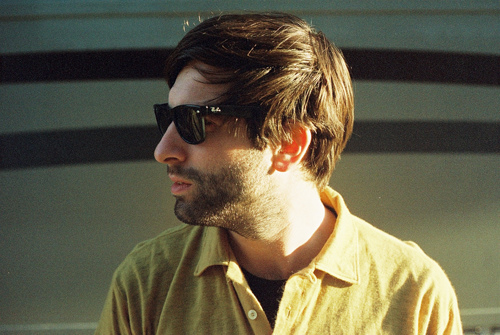
The Bloc Party leader — and out queer dream — is bringing his solo show to Mezzanine in support of new album The Boxer, and it seems he’s focussing on getting the crowd dancing. That’s alright with me! Does It Offend You, Yeah?, who put on a great show a couple years ago at Slim’s (even though everyone was at Coachella) open up with some baggy Madchester-referencing gonzo electro. 

Sat/18, 9pm, $20. Mezzanine, 444 Jessie, SF. www.mezzaninesf.com


DJ KAOS

Toothy grin for this one. Honey Soundsystem‘s great weekly Honey Sundays party has been homeless since Paradise Lounge shut its doors. Until the Honey boys find a new space, they’ve been a-roving — and it’s a great indication of how open our scene is that they’re arty-fab queer crowd is being welcomed by intelligent techno-head hosts. This week, Honey pairs with Bionic, the weekly Sunday at 222 Hyde that’s seen its fair share of roving itself, to bring in Berlin ‘s DJ Kaos, whose been pumping out quality, eclectic techno and house releases since 1991, yeesh. I can’t wait to see how this whole experiment coalesces.

Sun/19, 10pm, $5. 222 Hyde, SF. www.222hyde.com 

Music to cross the globe for

0

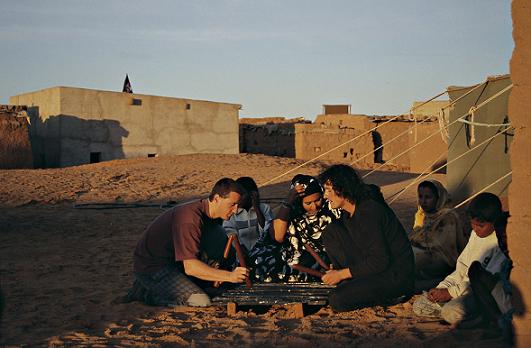
If you hoisted up a park bench, cut the back off of it, removed the legs, placed it on top of cushion on a saw stand, and commenced to thrum on it with headless croquet mallets with a dear friend, you’d have created a bootleg version of the txalaparta, a traditional instrument from the Basque region of Spain. Two of the area’s most renowned musicians took this contraption on a trip to play with indigenous nomadic musicians the world over, creating Nomadak TX, a music documentary where notes are exchanged in culture-to-culture melodies.

Igor Otxoa is a member of the group, Oreka TX, that embarked on the project that took them to India, Mongolia, Lapland, and the Sahara. Days away from the group’s launch of their North American tour –and in the midst of a visa kerfuffle that threatened to derail the whole thing — Otxoa (who is staying in Spain while band members Mikel Ugarte and Harkaitz Martinez de San Vicente man the txalaparta in the States) answered our questions via email from San Sebastian. His group will be in town next week (Thurs/23) at the Basque Cultural Center for a live performance of the music in Nomadak TX.

Oh you say you like guttural rhythm? Do we have the trailer for you… 

San Francisco Bay Guardian: Why do you play the txalaparta? 

Igor Otxoa: I saw it played in my neighborhood fiesta and I loved it. “Percussion and related to Basque culture, that’s for me!” I told myself. After that I saw it again at school played by the Artze brothers, some of the ones that brought back the instrument. After that, I started looking for somewhere I could learn it.


SFBG: The txalaparta almost disappeared at one point in the 20th century. Is there a well-documented tradition of how to play it, or have you developed your approach independently?

IO: The way to play it that we received was the one that the last of the old txalaparta players left to us. In the ’60s there were only two txalaparta player couples, the Zuaznabar brothers and the Goikoetxea brothers, and they left us the way of playing that they learned from their grandfathers. But after that there was a process in which the Beltran brothers and the Artze brothers started to develop the instrument in a more musical way. We are from the next generation — we learned from the Beltrans, and we developed the instrument in our own way.


SFBG: Why is it important that it be a two person instrument? 

IO: It was related to the work on the farms, and as in many percussion instrument that come from a tradition of work, it became an instrument. For us the txalaparta it is not the physical instrument itself — it is the way of playing it, sharing the rhythm between two people. That is why we don’t understand the txalaparta without two players. It’s its peculiarity, what makes it unique in the world, this way of sharing the rhythm between two players.


SFBG: Tell us about the motivation behind the film Nomadak TX. Why nomadic peoples?

IO: We choose the countries and peoples we wanted to meet for different reasons. One was the level of nomadity that they had. Another reason was the music of those cultures. We were very interested in the Khoomi singing in Mongolia. And the Bereber women´s singing. And the Indian rhythms. Another reason was the materials that condition the way of living in those parts of the world. The ice and snow that takes up many months in Saapmi, the sand and stones of in the Sahara dessert, the wood in India, and the air in Mongolia. We wanted to play txalaparta with those materials. And we got to!


SFBG: How did you locate the musicians that would be in the movie?

IO: Sometimes we made the arrangements before traveling. The musicians, we contacted them by different ways — the Internet helped a lot. Other times we didn’t contact any of them and it was just who we found on the trip. We think that like in music, on the trips the improvisation was the most interesting as we never knew what we would find. We had unforgettable musical surprises on all the trips. For us it had the same value: the music of a professional musician in a studio or old men singing in a yurt in the Mongolian steppe. 


SFBG: In Nomadak TX you make txalapartas out of everything from ice to stone — why the multi-media?

IO: That was one of the most marvelous moments of the project. We never expected to do a txalaparta with ice. Our idea was that we were going to play with the txalaparta of wood and the Terje Isungset “Iceman” in Saapmi would play with ice. But we tried it, and it was so nice to work with the ice. If you cut too much we would throw water on it and in few seconds it was frozen and the note was changed!


SFBG: Now that you’re doing the North America tour, inquiring minds want to know — when’s the Oreka TX hip hop remix coming out?

IO: Good question! I hope that during the USA Tour we will be able to contact good hip-hop musicians that can work on it. It is not our music style, so if we want to have a quality result, better if someone from USA makes it!


Oreka TX’s Nomadak TX live concert

Thurs/23 8 p.m., free

SF Basque Cultural Center

599 Railroad, SF

www.sfbcc.us


Snap Sounds: The Books

0

By Landon Moblad

THE BOOKS
The Way Out
(Temporary Residence)

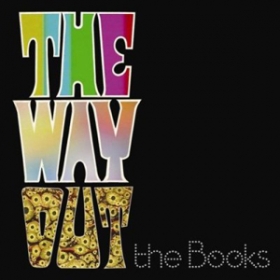
During the far too long half-decade wait between albums, it became easy to wonder if maybe Nick Zammuto and Paul de Jong, together known as The Books, had lost some of their creative juices. Luckily, one listen to The Way Out proves the wait was well worth it. If anything, this is an album so meticulously thought out and crafted that the two years (they officialy began recording in 2008) it took to create makes complete sense. It’s clear now that it wasn’t a lack of ideas, but rather a surplus of them to work through that caused the delay. And the final product, 15 tracks spread over nearly 55 minutes, is some of the finest work of their career.

For those uninitiated, The Books create a sort of cut-and-paste mix of cello, guitar, found sounds, male and female vocals and manipulated samples. The seamless blend of acoustic, electric and plain bizarre elements is unlike anything you’ve ever heard before, yet somehow instantly accessible. And at the core, underneath all the technical prowess and headphone trickery, lies the two things that separate The Books from their peers—a sense of humor and an ability to conjure up a broad range of emotions through their use of samples. Both are wonderfully intact on The Way Out.
Drawing inspiration this time around from self-help and hypnotherapy tapes, The Way Out is full of samples of new age mantras and cheesy therapists. Opener “Group Autogenics I” floats along on a base of sparse guitar and piano plunks while hypnosis instructions snake in and out. At one point a man says, “You may just possibly detect from my voice that I am Irish. And now, I leap forward in time.” As the last line is delivered, his voice echoes off into the distance and a tacky sci-fi whirl pops up. It’s small moments like this throughout that serve as the nudge and the wink to remind you that The Books aren’t taking any of this too seriously, and neither should you.
One of several highlights comes early on in the form of “A Cold Freezin’ Night.” The story goes that Zammuto and de Jong found an old Talkboy (the Walkman/tape recorder used by Macaulay Culkin in Home Alone 2) at a thrift store with a tape still inside. The content of the tape was a hilariously twisted conversation between what seems to be an older brother and his little sister. The frantic, quick pulse of music The Books created for it meshes perfectly while never drawing too much attention away from the strange source material. “I could kill you with a rifle, a shotgun, any way I want to,” the brother taunts. “Probably by cutting your toes off and working my way up. Towards your brain!” His sister replies with a defeated, “I wish I was a boy.”

Elsewhere, “I Didn’t Know That” is a lively piece of Books’ style slice-and-dice funk and a reminder that these guys can craft awesome grooves. Tracks like “Beautiful People” and “Free Translator” prove that Zammuto has harnessed his limited vocal range to impact the lyric-driven songs in a positive manner, which is something he struggled to do on 2005’s Lost and Safe
But what makes The Books distinct in a genre that can often seem cold or detached is their respect for — and ability to extract emotional elements from — samples. Take the recorded announcement of a pregnancy at a group dinner followed by celebratory applause on “All Our Base are Belong to Them” from their 2002 debut Thought For Food. Or the Japan Airlines flight attendant samples that lace “Tokyo” from 2003’s The Lemon of Pink. Coupled with music, these samples conjure up emotional responses and a vivid sense of time and place in a manner similar to similar a film.
The Way Out has several of these vivid moments, but the best is probably “Thirty Incoming.” The song’s title refers to a series of messages from a man left on a woman’s answering machine. “Hello Mary. Called to wish you good evening. And, uh, wish you good rest. And tell you how much I enjoyed your company last evening. And, uh, it really felt good to lie down next to you. I didn’t realize how much I’d missed that feeling.” Several more snippets of messages are played as the track shifts from distorted dial tone samples, to tribal drum breaks and swelling tremolo strings. It’s one of the most beautiful tracks the group has ever made.
The Way Out is another spectacular release from a group that continues to set its own personal bar higher and higher. And even though we may have had to wait a little longer than we’d have liked for new material, it’s hard to argue with the results. You could tell me the follow-up won’t come out for ten years next time around and I wouldn’t be upset or wonder why. I’d just patiently start counting down the days.

Forrest Day: their drag needs help, but boy can they play

0

“Last time I played a show with no shoes I had to get stitches between my little toe and the next big toe. It sucked.” And so commenced Forrest Day‘s show at Slim’s last Thursday Sept. 9, the group’s frontman (also named Forrest Day) clad in two mismatched gym socks for safety. He was also wearing a dress that most likely resulted from a trip to the big Goodwill on South Van Ness – a flowy number with an attached denim faux vest that Grandma had a hard time parting with after she lost all that weight. So there he was, head shaven, straight outta San Leandro, a man that hardly needs a dress to stand out musically. Oh, and the music? How about that music…


“So Forrest, how do you classify your music?” I ask. We’re on the other side of the weekend from the Slim’s show, and Day has fallen ill, answering my questions via phone from the comfort of bed. “I don’t,” he tells me. Or rather, he does: on a song to song basis. 

One is tempted to squeeze Day in under the “hip-hop plus” umbrella that is already occupied in the Bay Area by groups like Shotgun Wedding Quintet (who opened for Day at the show I saw) and on a national level by the Roots. All three groups are headed by charismatic frontmen eager to rap faster than you can say boo, sing, and occasionally cede the floor to a supporting cast of talented bass, drums, guitar, brass, etcetera, etcetera, to mammothly danceable effect. But the parallel minimizes the diverse influences all draw on, and in the case of Forrest Day, barely encompasses their show at all.

Because how many hip-hop artists bust out on the ska-rock tip? There are songs during the set at Slim’s that resemble hip-hop about as much as the Roots resemble the Mighty Mighty Bosstones. Day throws his girth about in that dress like some sort of crazed Big Momma as his six-piece ensemble (comprised of sax, keyboard, drums, bass, violin, guitar). 

Forrest Day guitarist Terrel Liedstrand rawks. Photo by Erik Anderson 

And the crowd? Well it goes wild, duh. And then Day picks up a sax, and launches into some sort of psychedelic jam session, if such things can include saxes. Didn’t you know he got his start as a high school saxophonist, back before he was producing beats for backpack rappers and fronting rock-ska groups? 

It’s kind of an awesome thing to watch. And I found myself bobbing my head next to a guy that, though a bit older than the rest of the early-to-mid twenties crowd singing the words around, was clearly enjoying the show. He leans over. “Hey, I just wanted to tell you, I like the way you’re groovin’.” It’s Day’s dad. I ask him how he’s enjoying the show, and he tells me it’s great, and that he doesn’t get to see his son in a dress every day of the week.

So the dress isn’t part of the deal? Says Day, that was the first time he’s performed in a dress… in this current band configuration. He likes dress up, particularly in muu-muus. For comfort or style factor? “It’s both,” sayeth he. “They put me in a funny mood. It’s nice to have all the air circulation between my legs.”

And Shotgun Wedding Quintet, were they copping fashion tips before the show? And how! “Yeah,” says Day. “They’re my friends. They all seemed very attracted to me. Let’s just say I got some action. Backstage was super hot that night.” Offstage and on, it would seem.


Forrest Day’s got no scheduled upcoming shows in the Bay, but its eponymous first album came out earlier this year, if you’re so inclined.


Michael Franti’s bare feet

0

Entering into its twelfth year of existence this weekend, Michael Franti’s Power to the Peaceful music and yoga festival doesn’t appear to pack quite the big name punch on (recycled, written on with hemp ink) paper – the Talib Kwelis and String Cheese Incidents that shared the bill with Franti in years past have been cycled out for Rupa and the April Fishes, SambaDa, and other relatively little known acts. But we caught up with Franti a few weeks ago to talk about this weekend’s (Fri/10-Sun/12) life-loving festivities while he was driving through the Nevadan desert, and he says there’s a method to the grooviness.

“It’s like being in a western movie out here,” Franti tells me after our call is dropped for lack of service. Reconnected, I ask: Michael, how’d you choose your supporting lineup for the concert you created to free Mumia, spread love, and perpetuate peace in Speedway Meadows?

“Last year we had Alanis Morrissette, lots of groups that we brought in from afar. This year we wanted to highlight Bay Area music,” says Franti, a Hunter’s Point resident himself. He took me through the lineup, which truth be told will probably make for a far more fun crowd than that of the year I had to throw bows to make it through the Indigo Girls crush. 

The patchouli-heavy roster includes the Santa Cruz capoeira crew SambaDa, bringing in a high-energy sound straight from the beach. All the acts involved have some smattering of multi-culturalism, including the Rupa and the April Fishes, of whose front lady Franti tells me “her family is Indian, but she grew up in America and sings in French and Spanish. She’s a M.D. half the year, and tours the other half of the year. I’ve always thought she was an amazing person.” We’ve got Rebelution to look forward to, surf-reggae boys from Santa Barbara, local emcee Sellassie, and… American Idol‘s Crystal Bowersox? She’s from Ohio, but hey she’s got dreadlocks – she’s in!

Most of the acts on the roster share the distinction for explicitly progressive social thinking, pretty key for a concert that Franti says he started to raise awareness of the fight to free Mumia Abu-Jamal, the Black Panther sentenced to Death Row for his alleged murder of a Philadelphia police officer. Tied to the concert, which focuses on promoting peace on an institutional and personal level, will be a 9 a.m. “1,000 Yogis for Peace” mass sun salutation (Sat/10), and a variety of paid shows meant to raise funds for future PTTP events. Though the Saturday Golden Gate shows will be the only free events of the weekend, the Fillmore Theater will also play host to Franti’s vibe, starting on Friday night when he’ll perform his new album, The Sound of Sunshine, continuing with a Talking Heads tribute Saturday night, and yoga-Brazilian dance workshops during the day on Sunday.

But before I hung up with Franti we had another hard-soled issue to discuss. That being, his lack of them. Franti threw off the shackles of tounges and laces a decade ago – kinda. “It comes up quite regularly that I go into a restaurant or store and they’ll ask me to wear shoes. So I put on flip-flops.” Damn the man! Oh, and he wears them running as well. 

Must we ask why? We must. Franti tells me through the savannah-induced static that he had been playing a lot of shows in developing countries, and the kids there thought his fragile, callus-free feet hilarious. Once back in SF, he decided to go unshod for three days, and the rest is history. Ironically, he’s been pretty involved in getting those things back on the feet of people that need them – donations are being collected at the concert for one of his favorite charities, Souls 4 Souls. That group will join over 100 social justice organizations at the concert on Saturday, where they will be offering information on everything from environmental issues to gang intervention. So wait, we’re listening to propaganda here? “The idea is to plug people into serving,” Franti says. 


As a willing member of the liberal media, I’ll be at Power to the Peaceful all weekend, and how! Check out my take on the downward dogs and loosely cinched fisherman’s pants in next week’s print edition of the SFBG


Power to the Peaceful 

main concert: Sat/11  9 a.m.-5 p.m., $5 suggested donation

Speedway Meadows

Golden Gate Park, SF

other live events: Fri/10-Sun/11, times and prices vary

Fillmore Theater

1805 Geary, SF

www.powertothepeaceful.org

Fatsouls houses the twilight with “In & Out”

0

I’ve long sung the praises of genius local deep and Afro house label Fatsouls, its creative leader DJ Said, and its fantastically soulful We & the Music party — another monthly installment of which takes place tonight (Fri/3, 9pm, $5. 222 Hyde, SF. www.222hyde.com) with residents Said and Le Charm. 

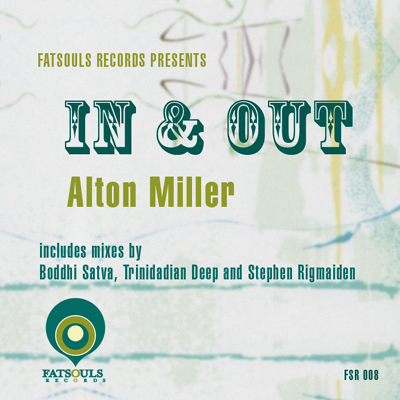
The new release on Fatsouls, “In & Out” by classic Detroit musicmaker Alton Miller, confirms that the label is gaining stature worldwide by continuing its steady stream of high-quality, thoughtfully mature, and devilishly groovy tunes.  

Alton, like others of his particular generation including Stacey Pullen, Shazz, Chez Damier, Theo Parrish, and Kenny Dixon, Jr., takes a more organic approach to techno, shaking off its colder aspects for a more overtly house and jazz-oriented feel, yet still lacing tracks with a slight urban spookiness that can only emanate from Detroit. (Some of them even incorporate  — gasp! — vocals.) They create what I think of as “twilight house,” far from the peak energy of midnight or the wind-down of afterhours: still banging enough to keep your body intrigued while your spirit dances up the walls toward daylight.

The main mix of “In & Out” does indeed feature Alton’s warm singing, on his own journey through love’s rejection to acceptance to a call for unity. That particular male voice is itself a connection to a long line of house releases. (One of the most unique and uplifting club experiences I ever had was at a mixed straight-gay club called Torpedo in Miami in 1992, on a night when the DJ played only deep house songs with male vocals. Amazing, and a sexy counter to the diva overload the club scene was experiencing at that post-rave moment.)

A gently intricate tribal-like drum pattern forms the basis of the track, while shimmery synths provide the drive. A Bhoddi Satva Ancestral Mix strips it down a bit with driving cymbal swooshes and pulsing yet unobtrusive chords. Sophisticated remixes by local talent-on-the-rise Steghen Ringmaiden and Trinidadian Trini round out one of the year’s most soulful and absorbing releases.    

In & Out (Original Mix) by Fatsouls Records

Party Radar: Stereo Total, Sabo, Cam, Dub Mission, more

0

Whoo! There’s a lot going on nightlifewise this long weekend. Besides the parties upon which I shined a woozy post-Canadian spotlight in this week’s Super Ego clubs column, here’s a few more great soirees at which you can work out your frustration or relief that you aren’t at Burning Man. The city is ours!

STEREO TOTAL

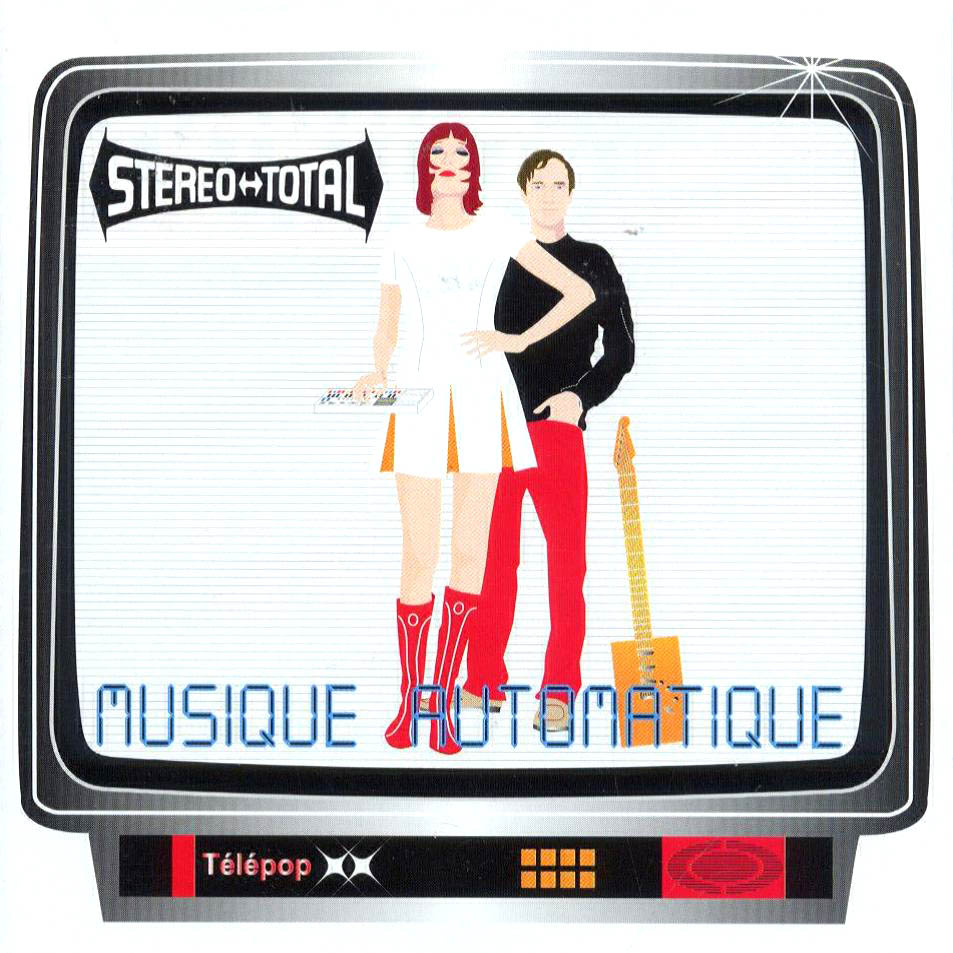
I caught the seminal ’90s dance-pop-punk, pan-European duo at Bimbo’s last year, with leslie and the Lys opening. Leslie was her usual oddball-amazeball whackadoodle self, but the Totals were a revelation. The place was packed, but even though there were only two of them, they enthralled the crowd with over-the-top mugging and anarchic, scenery-chewing live antics. And of course the infectious music turned into a massive singalong. Long story short: do not miss.

Thu/2, 9 pm, $18. Slim’s, 333 11th St., SF. www.slims-sf.com, www.stereototal.de 


BRAZA! FEATURING DJ SABO

NYC beatmaster Sabo has played to glorious acclaim at the Afrolicious and Tormenta Tropical parties, and SF crowds eat his Afro-Latin-tropical-hop beats up. (Does it help that he’s a total babe? Maybe for you — I would never even consider such a thing when evaluating a DJ’s skills.) For this month’s installment of the Braza! party, he’ll be laying down an all-Brazilian set to get your Ipanema jumpin’.

Fri/3, 10pm-3am, $10. SOM, 2925 16th St., SF. www.som-bar.com 


DJ CAM


The dreamy French hip-hopiste comes bearing surreal stoner grooves. (His new album Sevenincludes an appearance by reclusive house legend Nicolette!) Sway along with local bass-twister Mophono of mind-bending weekly Change the Beat and Carey Kopp.


Sat/4,10 pm–late, $10 advance. Mighty, 119 Utah, SF. www.mighty119.com 


PROJECT RUNTOVER

Those artsy-crafty drag queens behind weekly Friday night sensation Some Thing at the Stud (go there this week as well) are at it again, bringing their enormously fun — and actually quite genius,fashionwise –  parody of Project Runway to Cat Club. Sublebrity SF alternaqueer teams (pretty much everyone who’s anyone in the city) are given a series of surprise challenges and must use the club’s decorations to formulate a fab outfit. Then the model must perform a drag number in said outfit for judges. It’s a total hoot, and DJ Down-E helps you dance through it all.

Sat/4, 10pm-3:30am, $7. Cat Club, 1190 Folsom, SF. www.sfcatclub.com


DUB MISSION 14TH ANNIVERSARY


San Francisco’s original dub haven, this weekly joint always makes me smile while turning my head all spacey. Mission maestro DJ Sep welcomes Dr. Israel, Patch Dub, Katrina Blackstone, Turbo Sonidero Futuristico, and MC Mex Tape for a global-eared night of true vibes.

Sun/5, 9 pm, $10 advance. Elbo Room, 647 Valencia, SF. www.elbo.com


DJ DIZ

One of my favorite old(ish) school Chicago house DJs comes in for a special Sunday Sessions party at the EndUp. This one’s going til 5 folks, so bring a bottle of water and prepare to get souled-out, classic-style. With Dawn of Sound, Ryan Nyberg, Rick Preston and more.

Sun/5, 8pm-5am, $20. EndUp, 401 6th St., SF. www.theendup.com


Next stop Mustaine: rappin’ with the Megadeth man

0

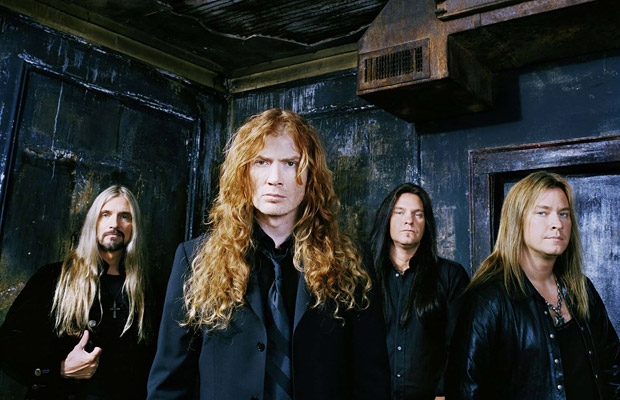
Dave Mustaine has seen more than his fair share of difficult obstacles to overcome throughout his musical career due to his past drug and alcohol addictions, which famously got him kicked out of the early line up of Metallica. Even during his ensuing triumphs with his own band, long-time metal favorites Megadeth, he struggled often with his demons.

Now clean and sober, the singer and guitarist is riding high on his current successes, which include a new autobiography, Mustaine: A Heavy Metal Memoir (Harper Collins) which hit the New York Times’ best seller list earlier this month when it was published. Megadeth’s latest studio album, 2009’s Endgame (Roadrunner Records) was received well by both fans and critics, and the band is currently on the road as part of the “American Carnage Tour” with Slayer and Testament.

Mustaine and company hit the Cow Palace tonight; he also did a book signing this morning. The first-time author is happy with the ways things have been going so far during his first foray into the literary world.

“I’m very excited about it, because when I initially set out to write this thing, it wasn’t to be on the Oprah book club — although now that I know a little bit more about books it would certainly be cool to sit on the couch and tell her a little bit about my story,” says Mustaine, speaking by phone before a concert in Albuquerque.


“My story is about helping other people and just giving people an indication that they’re not the only one that’s going through hard shit — and that you’ve just got to turn your collar up and lean into the wind, and persevere.”

In the book, Mustaine details his troubled upbringing; how his mother had to take her children and constantly flee from his alcoholic father, how her struggles led to an involvement with the Jehovah’s Witnesses, and how this religious indoctrination would eventually cause a rift between mother and son that resulted in his moving out on his own at the age of 15. There are the stories of sex and drugs along with the music, as is pretty much a requisite of any rock n’ roll memoir, but Mustaine doesn’t attempt to glorify his past mistakes.

“I’ve always wanted to tell the truth to people about what happened to my career, so they don’t think that I’m such a horrible person. I remember when my son was just a little guy and we did VH1’s Behind The Music and I had talked about crack — my son was coming home on the bus and some of the older students started chanting ‘Your dad’s a crack head’ to the point where he was in tears. It was really painful.”

Mustaine’s now-infamous stint in the early days of Metallica are covered as well, giving an insider’s perspective on what really happened — and despite years of trading barbs in the press, the axeman has appeared to have resolved most of the issues that he had with the other members of that band, who unceremoniously gave him the boot during a 1983 trip to New York. Earlier this year Megadeth and Metallica, along with Slayer and Anthrax — collectively known by fans as “The Big Four” — performed a handful of concerts together in Europe.

“I saw them over in Europe, we had dinner and it was fine. I was sitting there at the table with Lars and James, and I thought it was so great that we were together again — we’re in different bands, but the fact that we as three young little guys, what we accomplished, how we changed the world. I mean honestly, you can’t even listen to a television program anymore without hearing music that’s [evolved from] what we created. To be able to sit there with our brethren and knowing that in this room stands the cream of the crop of American heavy metal talent, and it was such a great feeling.”

“My relationship with Lars and James has been publicized a lot, so I went up to James and I said, ‘I don’t want to try to repair our old relationship. That would be like rearranging the deck chairs on the Titanic. I want to have a new relationship with you,’ and I think that’s what we have now, it’s great, and I’m going to see the guy when I get into town.”

At one of the concerts they played together, the guys got on stage to jam on old favorite, “Am I Evil?,” a cover song that goes back to the formative days of Metallica, when they used to live and play in San Francisco and the Bay Area.

“We would play the Stone and the Old Waldorf, and one of the songs that we would play, guaranteed, every single set, no matter where we played, no matter how big we got, we always played ‘Am I Evil?’ a song by Diamondhead. If you could have been in the little jam room right before we went on, it was so moving, because when the band stops there’s a little guitar part where there’s some hammer-ons, and Lars looked over to James and he said, ‘Hey, who should we have play this?’ He was pointing to me like he wanted me to do it and I thought, dude that is so cool. Who would ever have thought that we would have gone to that place where we were so hurt, and we just kept lobbing grenades at each other, to the place now where we’re playing together again, and we’re hanging out and hugging and having dinner with our wives.”

As he continues on his concert and book tours, Mustaine enjoys meeting the multiple generations of fans that come out, and the fact that he gets to talk to them about what he’s been through in his life.

“One of the things that I want the reader to know is that this wasn’t something that I wrote to be this self-absorbed book. It’s just a lot of revealing stuff that I share about my life and my walk, and how my life changed in 2002 when I became Christian.”

“I really have a hard time saying that I’m Christian because so many Christians are hypocrites, and have just given Christianity a bad name; I believe in God and I believe in Jesus, that’s my bag, that’s it, no more, I don’t push it on anybody. Being a dude who read the Satanic bible and did witchcraft and put hexes on people, that’s pretty cool.”

Doing both tours at the same time have been draining on the metal icon, but he says he wouldn’t have it any other way.

“I’m exhausted right now, my voice is sore, my arm is sore, my wrist is sore, but this is what I signed up to do, this is the job I do. I’ve always wanted to be the best at what I do.”

“We’re just constantly searching for that next riff that’s going to set us over the top and give us that number one record, that next lyric that’s going to break us through mainstream radio and we have a number one hit again, that perfect guitar solo, so that we get back on top again. We’re doing everything that we can, we’re every ounce of strength that we have.”

After this current tour wraps up, more touring around the world lays on the horizon — but first, Mustaine is excited about going back into the studio to record a new album — one that will again feature founding bassist David Ellefson, who had not played with the band since 2002 until re-joining earlier this year.

“The cool thing is having the signature bassist back, it gives a certain root to the bottom end again that people have grown to love, I’m excited about how our lives our progressing. I’m just so blessed I can’t even tell you, I look at my career right now and to think there was a period where no one wanted to touch us anymore — here we are,” Mustaine emphasizes. 

“I’ve got the band back, we’ve got a great record that’s getting critical acclaim, I’ve got the book on the best seller list, the tour, everything is so magnificent and I’m so grateful for all of this.”

Slayer, Megadeth, and Testament

Tonight, 7 p.m., $39.50

Cow Palace

2600 Geneva Ave., Daly City

www.cowpalace.com

www.livenation.com


Space is the place: The Sword’s “Warp Riders”

1

Once a metal album has surpassed a certain threshold of ambition, it is obligated to begin with an instrumental intro track. If said album is a concept album, this is doubly important. Warp Riders, the latest album by Austin, TX quartet the Sword, is a concept album in the most deliciously nerdy sense.

Weaving a dense science fiction tale of a distant plant caught in the throes of “tidal locking” (confining one hemisphere to dark and one to light), its songs regale the listener with visions of archers, mystical orbs, time travel, space travel, time/space travel, and beings called Chronomancers. The instrumental intro, “Acheron/Unleashing the Orb,” is therefore exactly as epic as you would suspect, erupting out shuddering guitar effects into hard-charging downbeat thrash.

The Sword have traveled a long way since their debut Age of Winters landed them on tour with Metallica. Warp Riders’ second track (and first single) “Tres Brujas” bears the trappings of this journey, boasting a chunky, arena-ready riff that prepares to bang heads in the nosebleed seats without sacrificing the band’s distinctive sound.

In the hands of producer Matt Bayles, this sound is rounded, warmed and perfected. Full of crystal clarity and meticulous composition, the album represents a milestone of professional accomplishment, if nothing else. Every note seems to fall in it’s proper place; every fill is carefully constructed and performed. Even the palm-muting sounds mysteriously augmented.

Third track “Arrows in the Dark” is a classic Sword singalong, taking advantage of singer J.D. Cronise’s improved vocal power and enunciation. Cronise is responsible for the album’s impenetrable plotting, so any questions about why arrows play such a big role in a sci-fi story should be directed to him (or possibly James Cameron).

“Chronomancer I: Hubris,” which follows, provides the album’s best riff, an anthemic masterpiece that resolves into vocal-powered verse that inches the story along. “Lawless Lands,” immediately after, is more of a sleeper hit, a stylistic departure that allows the band to settle deep into a hypnotic groove, showcasing bassist Bryan Richie.

After a methodical beginning, the tempo revs up for “Astraea’s Dream,” which is sure to please fans of the band’s more adrenaline-soaked early material. The title track that follows is a barn-burner along the lines of “Freya” (the song that got the Sword their big break), delivering big chunks of exposition along with a massive, concept-encapsulating chorus.

If there’s a song on the album destined to get goats, it’s “Night City,” a mid-tempo Thin Lizzy-style butt rocker with a chorus riff that borders on tongue-in-cheek. But when you consider what the lyrics describe — “You’re in a place they call the Night-side/In the shadows where the killers and the pirates hide/Stick around if you think you can survive” — the choice of a bloozy, verse-chorus-verse number to match a hard-drinking, hard-partying spaceport makes much more sense.

“Chronomancer II: Nemesis” opens with thunderous heaviness and finishes with a guitar solo – Kyle Shutt joins Cronise on a hair-raising tapped harmony as they conclude the enigmatic time-sorceror’s story. The table is then set for “(The Night the Sky Cried) Tears of Fire,” a valedictory epic built around the “Immigrant Song” drum pattern, lovingly adapted by drummer Trivett Wingo. Rife with cataclysmic imagery and infectious choruses, the song burns hot before breaking apart, resolving into the same keening guitar that began the album.

Though it represents the band at its most accessible, but also its most self-indulgent, Warp Riders is nothing if not a smashing success. That a band with such ability has the time, skill, inclination, and funding to craft an impeccable stoner rock album about time travel can be viewed in this day and age as a great boon. The Sword have escaped the gravity of their Sabbath homage roots, and dodged the asteroids of their detractors. Only one question remains: where is this rock ‘n’ roll spaceship headed next?

Gunning solo: Slash speaks!

0

For more than 20 years, Saul Hudson — better known to his millions of fans around the world simply as Slash — has exuded the very essence of what it means to be a rock star. His iconic stage image, with the trademark top hat, sunglasses, and low-slung Les Paul, is instantly recognizable, as are his innumerable guitar licks and solos that are now part of the rock n’ roll canon. He plays the Warfield Sun/29.

Having made a name for himself first with the titanic sound and success of Guns N’ Roses in the late 1980s and early 1990s, then capturing lightening in a bottle yet again in Velvet Revolver, the agile axeman released his first solo album in April, recruiting some of biggest names in music to lend their vocal talents to the self-titled effort. Ozzy Osbourne, Lemmy Kilmister, Dave Grohl, Iggy Pop, Ian Astbury, and more fill out of the collection of tracks that feature Slash’s trademark sound and style, yet explore some new territory when it comes to the sonic soundscape that he’s canvassed over the years.

Slash wrote the music, and then sent the track to the performer that he thought best fit the song, asking if they would like to participate. The approach to the record was an almost compete role reversal for the guitar slinger, who has recorded countless guest appearances and performances over the past two decades.

“That was exactly what inspired the record, really — I’ve done so much stuff on other people’s records it finally got to the point where I wanted to do a record where I get everybody,” says Slash, speaking by phone from his home in Los Angeles.

“The music dictated who should sing each song, that’s where the choices came from; the music inspired in my mind who should sing it.”

The process of writing and recording for the album was a collaborative effort, with Slash providing the foundation for the songs, then giving his friends free reign to write their own lyrics and change the arrangements if they wanted to.

“It was really open ended — I had what I considered to be some sort of an arrangement; a riff, a couple parts, maybe a chorus. That was open to interpretation to whoever I was working with — the vocal melodies and the lyrics were totally up to the singer. All these people are obviously great, I didn’t need to tell them what to sing,” he laughs.

“I would send them the demo and if they had some ideas to change anything then I was totally open to it, so in some cases we really dissected the song and rebuilt it from the ground up.”

The first video from the album, “Back From Cali,” was released earlier this month, and Slash’s U.S. tour in support of the new record kicks off at this weekend’s Sunset Strip Music Festival, where he will also be honored for his contributions to the Strip and the music world in general. The city of West Hollywood even declared August 26 to be “Slash Day,” something that the soft-spoken and humble musician has trouble wrapping his brain around.

“It’s a huge honor, but it’s really surreal, you know what I’m saying, I mean, ‘Slash Day’? Come on,” he laughs. “But they called me up and told me that I was going to be the honoree for this year’s festival, and it’s a little overwhelming. Being that I’m at home, I haven’t left the house — there’s a lot of activity going on around Sunset right now.”

The six string shredder will also be inducted into the Hollywood Walk of Fame and receive his own star on Hollywood Boulevard next year, another honor that has left him almost speechless.

“That’s even more surreal, that’s one of those things where you don’t even know what to say. I feel like very much a part of L.A. because I came up here — I wasn’t transplanted here later on, I got here when I was five years old, and I’ve been in this area for that long. Being recognized as being significant enough to be honored a star, that’s a whole different trip, it’s very flattering.”

He pauses before laughing and adding, “I’m wondering if there was some payola involved.”

Slash says that fans can expect to hear a wide range of songs on the upcoming tour, both from the new album, and broad sampling of tunes from across his back catalog, including Guns N’ Roses and Velvet Revolver tracks. His new band, featuring singer Myles Kennedy from Alter Bridge, hits the Warfield this weekend, a place that Slash says holds some good memories for him.

“It’s actually one of my favorite theaters in the country, I remember the first time Guns N’ Roses played the Warfield, it was just one of those amazing magic nights. I don’t think I’ve ever had a bad gig at the Warfield. It’s just one of those iconic old theaters, always a hell of a good time.”

Slash

Sun/29, 8 p.m., $29.50-$40.
Warfield
982 Market, SF
www.thewarfieldtheatre.com


Orgone heats up the Independent with fresh funk, 8/6/10

0

It was freezing (as usual) outside SF’s Independent last Friday. Thankfully, Orgone kept the packed venue warm and sweaty inside with funky rhythms, thick bass lines, sexy vocals, and swanky brass melodies. On stage, like old friends jamming together, the nine-member band emulated the upbeat enthusiasm and down to earth cool (that’s not too cool to get down) that their unique sound embodies. Merging old-school funk and jazzy hip swaying grooves with experimental psychedelic undertones, Orgone delivered upbeat funk with a mellow modern swagger.

With such a large instrumental band (guitar, keys, bass, percussion, trombone, trumpet, saxophone, drums) Orgone manages to create a complex sound that engages and yet never overwhelms. Striking the perfect balance between driving grounded sounds and more airy, free flowing vibrations, the ensemble definitely knows how to get people dancing. Their passion for feel-good, dance-y music is no more apparent then in the way they play together. Vibing off each other, their contagious energy ignited an on-stage fire that lit up their audience of glowing, dancing fans. 

While each band member played an equally integral part in Friday night’s show, the smooth, passionate voice and fiery stage presence of lead vocalist Fanny Franklin, the only female on stage, deserves special mention. With sexy ease and captivating charisma, this goddess knows how to command a stage. If you’re feeling nostalgic for the good ‘ol days, when live instruments trumped laptop beats, Orgone’s got what you want. 

Video: http://www.youtube.com/watch?v=o0bMoDUyRxk 

Jamie Stewart on orange juice, armpits, bird calls, and ambient music

0

On Friday 8/13, Berkeley Art Museum is hosting a project that is threefold: the visual art of David Wilson, short films curated by Max Goldberg, and the music of Jamie Stewart (Xiu Xiu). To find out more about this unusual collaboration, I spoke to Mr. Stewart on the phone about his contribution and how he anticipates the night will go down.

SFBG The BAM website says that you’re debuting a “new composition in field recording inspired by the night, animal calls, and quietness.” This is a little vague, so could you tell me more about what your performance is going to be?
Jamie Stewart I’ve always been really impressed with people who went to art school but I’ve never had any opportunity. Probably in the past six or seven years I’ve become a really avid birdwatcher and one of the things that I initially, having been so involved in music, enjoyed about birdwatching is that it was something completely visual for me. Most bird calls are completely bizarre so I had since become almost focused on listening to bird calls but almost in a way that’s detached from the birds itself. In the middle of this increased interest I find myself inexplicably in North Carolina and a big part of the recreational culture here is hunting. There’s a lot of hunting stores and being a vegan obviously, I’m not totally interested in hunting. In these stores there were rows and rows of different animal calls and a lot of these are really horrifying-sounding. If you blow into them, you hear some of the most harsh noise music ever imaginable. A lot of the hunting bird calls sound like the environment completely exploding. So I’ve racked up a pretty hardy collection of these.

SFBG How might you categorize this work into a genre?
JS It’s an ambient piece. I have a really extensive collection of gongs and animal calls and I will be using these together but with long periods of silence. It’s an attempt to incorporate ideas of 1950s minimalist composition insofar as focusing on the pauses in sound, animal sounds, and a certain amount of physicality.

SFBG How are you going to do it?
JS I think I’ll be running mostly. It will end up utilizing a fair amount of space. So far, there will be gongs placed on two different sides of the room and I have these two gongs I got in Korea recently, and various bird calls will be placed throughout the room. Part of the idea is to have [the piece] be in relative darkness and move as quickly as possible at predetermined intervals with each of the items that can make sound, to have a combination of intense rustling and physicality, and intense sounds, in addition to certain electronica. Short periods of super intense activity and miserable, intense sound, and then no source of sound.

SFBG How is this similar or different to Xiu Xiu?
JS It has absolutely nothing to do with Xiu Xiu at all. That has a specific aesthetic and philosophy, whereas this is more about being less defined, about subconscious experiences, and to be more experiential, whereas Xiu Xiu is an attempt to be about something that is very linear. I can feel what it is about but it is difficult to say what it is about. I think it will be emotionally clear but I think to put it into words will be more difficult, which is something I appreciate because usually I have to be as clear as possible.

SFBG Is this your first venture into museums and visual art?
JS When I was growing up, I used to do a lot of disruptive performance art –– we would shave our armpits into orange juice, the dumbest things possible. It wasnt a performance, I think we were just trying to irritate people. I’ve played the Gameboy occasionally. I’ve composed a fair amount of ambient music. I recorded a 13-disc series [available with a subscription]. I didn’t put it online, so I guess it was available to 50 people on Earth. This piece is probably more minimalist than some of that.

SFBG Who are some ambient artists that have inspired you in the making of this work?
JS A couple (like Rhys Chatham) but it was really inspired by natural sounds and more of a coming to terms with different ways in how people regionally deal with ideas of nature. [Being from California] I have a hippie-ized idea of what nature is for. Rhys Chatham is so preposterously minimalist. Chestnut and I saw how long we could endure listening to it. It’s called “Two Gongs” but my piece plays differently. Two gongs for an hour, very limited changes in the tonal shading. A lot of ambient music that I find difficult to endure or that is unpleasant I find particularly fascinating. It ends up being less of a musical experience and more of a psychological and physical experience. Its a combination of being inspired by the sonic tools that people use to destroy nature. Hopefully it’s just interesting. I don’t think Rhys Chatham was trying to do anything unpleasant either.

Te Vaka paddles up with news from the South Pacific

0

Opetaia Foa’i’s mother’s ancestral home is sinking into the ocean. And he’s not supposed to talk about it. Tuvalu, comprised of four South Pacific Islands whose combined mass comes to a grand total of ten square miles, has its own language, a distinct cultural heritage like many of its neighbors. But what struck Foa’i (who was born on Samoa and raised in an islander community on New Zealand) saw when he went back was that rising ocean levels had reached up the air strip his plane landed on. So he wrote a song about it. His music and dance group, Te Vaka (which comes to Great American Music Hall Fri/13) plays music that evokes not only the ancient tales of those faraway seas, but also the fact that they matter, here and now.

“I was in the bad books of my parents,” Foa’i tells me. We’re sitting with his wife, band manager Julie Foa’i, at a table in the courtyard of the Phoenix Hotel on Eddy Street. At the start of a whirlwind two year tour, the band is a bit boggled by their first view of the U.S. on this pass through. “We’re like, is the rest of our American tour going to look like this?” Julie tells me of the group’s quick trip out for supplies in the textured Civic Center-Tenderloin area before today’s drive to Santa Cruz. Her bewilderment is fetching, but it belies the fact the band has been touring the world for the last 15 years, during which time they’ve performed in Peter Gabriel’s WOMAD world music concert series, and in a whole passel of festivals the world over.

But back, for a moment, to the whole ocean taking over ancestral home thing. Opetaia wasn’t supposed to talk about it because in Tuvalu culture to speak of the rising waters, attributed scientifically to the dissipation of the polar ice caps, was to give them power. Simply not done. But Opetaia is a man who wanted a voice. One doesn’t go from doing covers in New Zealand bars to assembling a ten-piece ensemble of talented young island musicians, touring the world with them, and even recording with Peter Gabriel without a desire to be heard.

Not that he did it alone — there is a much loved story in the group of Julie quietly writing on a piece of scrap paper at a meeting “Take this music to the world”: she continues to be a driving force behind the group’s conquests. Te Vaka’s name comes from the word for “canoe,” paying tribute to the ancients that Opetaia says “sailed the ocean in a simple canoe using the environment to guide them. These guys, they populated the islands and they carried on — that’s why there’s this thread of culture connecting all the islands.” One senses the group thrives on that connection between cultures, cannot believe their luck when a new city is picking up what they’re putting down.

The song about the rising waters, “Toko Matua,” went on “Nukukehe,” Te Vaka’s third album. Subsequent releases have turned a gaze on AIDS, over fishing in the South Pacific — as well as the joys of island life. In addition to traditional music, Opetaia cites the artists that impressed him when he first went to the New Zealand mainland as a child with his parents for formal education: Jimi Hendrix, Joan Armatrang, Joni Mitchell. The band’s repertoire is now vast enough that they can tailor shows to their audience, upbeat for dancing crowds, slowed down for the times when a more traditional sound is appropriate.

And oh, those joys of island life. 

I mention an observation from many a review I’ve read of Te Vaka’s stage show: that it is undeniably, hip-thrustingly sensual. Is that a conscious effort on the part of the band? “We actually underdo everything!” laughs Opetaia. “If they call that sensual… If you want something sexy, go to Tahiti and the Cook Islands. The ritual of shaking hips, it has sexual connotations. That’s the original meaning, courting.” He smiles. “It’s not done on purpose.” “Although the girls do wear coconut bras,” Julie tells me. Apparently, the band has a boatload of costume changes at a typical show.

Which tends to confounds customs. Between the skins and feathers of the costumes to the backbone of the group’s percussion, the traditional log drums, they tend to get hassled a bit in the airport. Not to mention those drums are heavy. “We can’t do without them,” muses Opetaia. “But I can understand why other bands have ditched them.”

That’s not all that other groups from their region have ditched, either. The couple can’t name a single other band who has successfully brought the traditional sounds to the rest of world. “We’re the first that delivered it more South Pacific than any other group,” Opetaia says. Julie adds “we’re not vaguely related to what’s happening in Australia and New Zealand, most groups are doing reggae.” “It’s really sad,” Opetaia chimes in “I thought a lot of people would follow, there’s a lot of great musicians out there — but you’ve got to have patience” to make it big on the international scene “I think that’s what they need.” Of those who have turned to the fallback of modern island cultures everywhere, reggae, he says “they make more money than we do, but we don’t do this to be rock stars.”

But that patience that he was talking about is beginning to pay off for Te Vaka. Earlier this week, the group was selected to play the after-party for the Edmonton Folk Music Festival, a packed, high energy affair in a cavernous hotel ballroom. They were under the impression they’d be background music to the crowd, but were surprised when the floor started shaking beneath them. “You see that at rock parties — but people were jumping!” says Opetaia, aglow with the way the South Pacific’s sounds are resonating far beyond the reach of even the most intrepid canoe paddler.

Te Vaka

Fri/13 9 p.m., $26

Great American Music Hall

859 O’Farrell, SF

(415) 885-0750

www.gamh.com


Party Radar: Best of the Bay, ZZK, Illuminated Forest, A-Trak, more

0

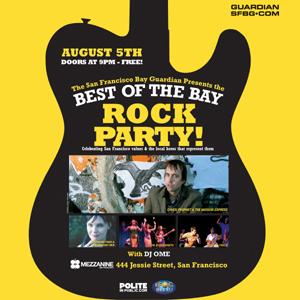
Whew! There’s a lot of throwdown and get lit opportunities in nightlife this week and weekend, beginning tonight, 8/5, at 9pm with the Guardian’s own Best of the Bay Rock Party revving up the amps at Mezzanine — with performances by Chuck Prophet, the Bitter Honeys, and Stephanie Finch and the Company Men, hosted by The Freeze and DJed by Ome. You’ll definitely want to hit this up, especially to schmooze with this year’s Best of the Bay winners. Your elbows will be rubbed down to the bone! 

Here are some more shindigs you need to get into:

ZZK

The outstanding Argentinean electro-cumbia label and Zizek party source is hitting the road — with primo acts El Remolon, Chancha Via Circuito, and El G in tow. (Check this wonderful Chancha mix, basically a refresher course in the primal cumbia sound). Digital folklorico!

Thu/5, 9pm, $12. Rickshaw Stop, 155 Fell, SF. www.rickshawstop.com

http://www.youtube.com/watch?v=YHIoxQrcs2U


Matthew Dear

The shapeshifting heartthrob of emotional techno is back in town to promote forthcoming album Black City, this time without his full band — but it will be a dance floor show to remember. Nikola Baytala, Shoddy Lynn, and Blufarm open.

Fri/6, 10pm, $15. Mighty, 119 Utah, SF. www.mighty119.com


A-Trak

Those crazy-fun electro-lovin’ Blow Up kids are back, with another “summer concert series” rager, featuring young turntable wiz A-Trak as well as Peanut Butter Wolf (whose got a dun finger in the whole synth wave pie), Nacho Lovers, and the always great Jeffrey Paradise.

Sat/7, 10 pm, $15, 18+. Mission Rock Cafe, 817 Terry Francois Blvd., SF. www.blowupsf.com


Revelations in the Illuminated Forest 

It’s one of your last chances to get in on the amazing “Green Sound” Soundwave Festival that’s taken over SF this summer and lit up many an adventurous, experimental-loving ear. The fest has set up the Lab as an Illuminated Forest — “a multimedia interactive exhibit and reactive performance space” (i.e., there are amazing things going on) — and this will be the de facto closing party. With plant sounds and other audiovisual wonders from Etraordinary Forest, Geraud Bec, and Takahiro Kawaguchi. 

Sat/7, 7:30, $10-$15 sliding scale. The Lab, 2948 16th Street, SF. www.projectsoundwave.com


Hard French

Awesome soul music all afternoon on a patio filled with intensely stylish and friendly young queers? Bring on the thankful tongue kisses! Bonus: this month’s installment’s theme is Psycho Beach Party, naturally.

Sat/7, 3pm-8pm, $5 ($10 for tasty beer bust). El Rio, 3158 Mission, SF. www.elriosf.com 


Le Perle Degli Squallor

Supersexi bodymotion and hot boy cruising at DJ Bus Station John’s monthly disco rareties hotspot at the wildly off-the-radar Hot Spot bar. Calling all fanny fondlers and tonsil-ticklers — come feel (an) Italian, stallion.

Sat/7, 9pm, $5. Hot Spot, 1414 Market, SF.


Gods of Distortion: The Interviews (Part Two)

1

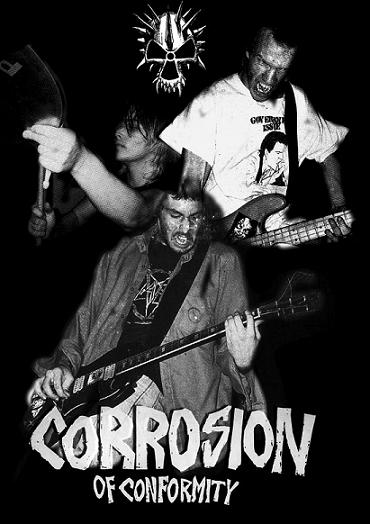
Check out Ben Richardson’s story on the Southern Lord Mini-Tour in this week’s Guardian. Here, he talks with Mike Dean, bassist and singer of Corrosion of Conformity.

San Francisco Bay Guardian: You guys are practicing in North Carolina now, in preparation for the tour?

Mike Dean: That’s right, yeah. It might be useful.

SFBG: How long has it been since you’ve played all these Animosity songs?

MD: Quite a while. Easily 23, 24 years, something like that. 23 years!

SFBG: How does that feel? Is it like putting on an old garment?

MD: Either I remember the stuff precisely, and it is like putting on an old garment – it feels just like yesterday, and I can play it – or there are parts of songs that I have no recollection of. It’s either completely natural or kind of strange.

SFBG: Can you point to any particular parts that seem unfamiliar?

MD: There’s a bridge-like part in the middle of the song “Holier,” that I completely forgot about!

SFBG: This must be due in part to the fact that your technique has changed a lot over the years. At this point you’re a veteran, a very well-schooled musician – not to say that you weren’t good to begin with…

MD: It’s funny that you should mention that. It’s an astute observation, because sometime around the time we did [1987’s] Technocracy, I started to play with my fingers more and more, and sort of leave the picking thing behind. Basically, it was like starting all over again, to some extent. Now, I can do all the things on Animosity and Technocracy with my fingers, as opposed to a pick, which I would just be dropping anyway.

SFBG: So you recorded Animosity playing with a pick, but now you can play all those parts with your fingers.

MD: Yeah, I guess I’m losing points for authenticity that way.

SFBG: Well, I’m a fan of the pick-less bass playing, in general, so I gotta support that approach.

MD: I am too, but I try to have a real open mind about it now. You’ll see videos, certain songs in which John Entwistle [of the Who] or John Paul Jones [of Led Zeppelin] use a pick to mix it up.

SFBG: Tell me a little bit about how you got involved with this Southern Lord Mini-Tour. How did it all come together?

MD: That’s an interesting story. I’ve done a little recording for a band that was on Southern Lord called Earthride. Maybe about five years ago. I kinda knew Greg [Anderson, owner of Southern Lord Records] from that business. Greg was kind of a hardcore fan when he was really young. I believe that Corrosion of Conformity stayed at his house in Seattle back in the day. I have a foggy recollection of that happening. It took me a while to sort of put that person together with the guy in SunnO)))) and Goatsnake, but eventually I made that connection. Dealing with him is pretty cool, and there are a lot of artists on his label that I admire, like Wino and Goatsnake, whom I thought were really good the first time I heard them – it’s hard to go wrong with basically the rhythm section from the California version of The Obsessed and the singer for Scream.

http://www.youtube.com/watch?v=Vk3rlgFrL3w&feature=related

SFBG: Did he reach out to you, or you to him?

MD: He reached out to us. He was looking to re-issue some old stuff, and that still hasn’t happened too much. We mentioned that we were gonna record a new release, and that may happen. So we just started talking to him about doing that, and he said “hey you wanna play some shows out here?” and we were like “oh yeah!” It kinda lit a fire under our ass to get some new songs down and go out and play ’em.

SFBG: This is the new release as a trio that I’m hearing rumors about, with the Animosity line-up?

MD: Yeah. The only tangible thing that’s done is a seven-inch vinyl, two versions of one song called “Your Tomorrow.” That should be available by the time we’re out playing on the West Coast. It was kind of a hurry-up production, though it sounds really good, and looks really good too.

SFBG: Are there any plans to do any new C.O.C. material with [singer-guitarist] Pepper [Keenan]?

MD: There are plans to do that. We have a multi-pronged general plan, to perhaps take this and do a full-length three-piece release, and get out there and play it some. That’ll be quite a story – it’s been a long time, and I think we have some new material that we’re excited about. I think at the point after we’ve done that, it’ll be a story to get the Deliverance line-up together. Before we got the three-piece together, we were supposed to go to Europe and play some festivals, we had some offers, but Pepper’s busy with his other group, Down, so his schedule’s a little jacked up. So almost as a joke, I said, “Well we should do a three-piece tour!” Everybody stopped and went “Uhhhh….maybe we should!”

SFBG: What had you been up to since C.O.C. went on hiatus, in 2006? You mentioned recording Earthride…

MD: Well, C.O.C. had been going without [drummer] Reed [Mullin], and in some point around 2004, we decided to make a record with Stanton Moore, from GalacticIn the Arms of God. That’s something I’m pretty proud of, something we did ourselves in Galactic’s now-demolished rehearsal space, which was flooded out of the warehouse district of New Orleans. We had a nice little tour with Clutch, in the UK. At that point, [C.O.C. guitarist] Woody [Weatherman] and I started a band that we tentatively called Righteous Fool, and he moved up to the mountains, to basically go into agriculture and have a kid — that kind of put a damper on our plans. Then I started getting in contact with Reed for the first time in quite a few years, and we started jamming together, and that became Righteous Fool, and through that combination of circumstances we have Righteous Fool opening up for the three-piece-C.O.C gigs we have lined up in a couple weeks. It’s a slightly greasier kind of feel.

SFBG: I was gonna ask, since there’s only one song up on the Righteous Fool MySpace, and it seems more in the uptempo vein, like the older C.O.C. stuff: what are your plans for the Righteous Fool sound? What side of your musical personality do you get to express in that project?

MD: Well…it’s kind of in its infancy. We’re a couple years into it, and some good songs have emerged, but it’s difficult to call where that’s gonna go. We have a pretty solid musical presence in the form of Jason Browning. I don’t really know what to say about that. There’re a lot of directions we could go. I think there’s going to be more of an emphasis on vocal harmonies, things like that. We have a couple fun things we do, with a Fleetwood Mac song, and a Skip James song.

SFBG: Well I think people are curious to see what’s going to happen with that, and excited to see the band live. You’ll be playing two sets in a pretty short duration on this tour. What do you think the audience reaction is going to be, going from a super-slow, enveloping Goatsnake set right into this pissed-off hardcore Animosity stuff.

MD: It’ll be interesting to see. There are a lot of people who perform that kind of music [doom metal, a la Goatsnake] at some point in their life, in their younger life, in their previous life, who might have been into the hardcore kind of thing, so there’s a lot of overlap there, in terms of the cast of characters who perform that kinda stuff well. At the time – it’s kind of humorous to think, now – some of the parts on Animosity that were slower, briefly dirge-like, somewhat Black Sabbath inspired – that was considered slow, and within a certain kind of close-minded scene, was actually controversial. It was a controversy that you would play a few measures of something slow or heavy rock-inspired.

I think we were credited with being on the forefront of that, but in a way, we were just imitating Black Flag, but taking our Black Sabbath influence a little more literally, and indulging some more regressive influences. We did something original with borrowed ideas. There are people that would say we were involved in the beginnings of that type of thing, y’know. I don’t think that would be too pompous to say. [Laughs] If it is, I just said it, so…

SFBG: You mentioned having respect for Wino earlier. Being in Saint Vitus in that SST scene, he encountered people who would really be pissed off that he would play slow, super-Sabbathy songs.

MD: That was a pretty crazy thing. I’d already been initiated to the music of the Obsessed by that time, and picked up an appreciation for it. And so to see that dude in Saint Vitus not playing a guitar! It was just absurd, but it kind of wound him up, and made him a more intense vocalist. He’s been playing some shows with Saint Vitus recently, and I’ve heard that that’s still the case. I haven’t witnessed any Saint Vitus in quite a few years.

SFBG: You should take the opportunity, if it arises. I’ve seen two shows in this resurrected Saint Vitus era and…

MD: There’s no Armando on drums…they have some other dude on drums…

SFBG: Yeah, they have a different drummer, but Wino and Dave [Chandler, guitarist] are still really potent.

MD: So Saint Vitus comes to Raleigh, NC in like 1986, and Wino stays at my house (it’s a house a lot of people live at) and here he is on this tour not playing guitar. He picks up an acoustic guitar and plays tunes in a couple funny different ways, and plays Robert Johnson songs verbatim, as they are on the one LP – Robert Johnson Complete Recordings – we were just like, “Oh, my God!”

SFBG: I’m curious as to how you got from playing hardcore with Sabbath interludes to playing that reinvented C.O.C. sound from the early nineties, which is much more directly Sabbath-influenced. But that transition corresponds with the time when you were out of the band…

MD: I think we were already looking in that direction. You go out there and you play hardcore music, and you’re on tour, and the quality of it – of some of the bands you see – isn’t that great, and you’re listening to music partially devoid of melody. You want to unwind, and listen to some older stuff, and you realize that the craftsmanship of the older stuff is a little more advanced, even though its time has come and gone. Whats the next logical thing if you’re listening to Sabbath, or the next logical regression, to try to take something new? Deep Purple! We were listening to a lot of that. It’s funny, because after I quit the band they ended up with a singer [Pepper Keenan] who’s obviously really Ian Gillian-inspired, and they hooked up with a producer who had really sound music theory ideas. That resulted in Blind.

I had kinda moved on. I met a nice girl and moved to San Francisco for half a year. I lived in Philadelphia and I was delivering things on my bike. I heard the Blind record, and I was like “Oh mah god, its really good!” That minute came and went, and around the end of 1993, they had a dispute coming up with new material, and they were looking for a bass player and a singer. They asked me, did I want to come and make a record, and I was like “Yeah, all right!”

SFBG: That’s been the thing doing research for this interview…I think the archetypal narrative for rock bands is that they have members in and out and it gets complicated, and there are a lot of hard feelings, whereas it seems like with C.O.C. there’ve been all these people in and out of the band, but it’s been very amicable. You left and came back; you’re playing in Righteous Fool with guys who had been in the band before…

MD: Well, you know, that’s not to say that there weren’t heated incidents involved in some of this revolving door activity. There might be some negativity that occasionally rears its head. But I think everybody tries to be an adult, and a compassionate person. I think Kyuss would be the band that had that more amicable situation. Drummers in and out, a couple bass players…

SFBG: I thought some guys from that band don’t even speak anymore…

MD: Well now, yeah, you’re right. The funny thing is that they were all supposed to be on Roadburn in Holland like the same day. Nick Oliveri playing his acoustic stuff. Mr. Garcia doing some Kyuss stuff…

SFBG: It seems like a lot of these differences are being put aside in the interest of these tours that are resurrecting bands – bands that have been broken up for awhile and are coming back to tour.

MD: There’s a big rash of that right now, and it’s one of things that actually kinda gives me pause about doing this, to some extent. The only thing I can do to allay my feelings of not wanting to be part of that is to attempt to offer something new. At this point, we have four or five new songs that we can perform. We’re doing this as part of readying ourselves to do something new. And I know people are excited about the old stuff, and its fun to play, fun to reinterpret, and we enjoy it, but it’s also about having something new. Because there are a lot of 40-, 45-year-old people who were in some moderately famous musical endeavor when they were 20, and they’re all coming out of the woodwork. There’s just a new market for it.

SFBG: Is it possible for you to expand on the drawbacks of these nostalgia tours? Not asking you to slag anyone off, obviously. Are there things that you could point to that give you the bad vibe with that trend?

MD: No, not really. I’m not going to point to anyone who’s substandard or insincere. At some point it just becomes a little redundant. I’m kind of an unlikely subject [for a retro-focused tour] because I’ve never been real big on the nostalgia factor. But here we are.

SFBG: It just seems like if it’s overdone, it can take away the spotlight from some of the cool new bands. But it cuts both ways, right, because if you have these nostalgia tours, you can have new bands as openers, and take advantage of the known quantity, the big name. If there’s a similarity in the music, then the fans of Saint Vitus, say, get exposed to up-and-coming bands in the same genre that the older cats who listen to Saint Vitus might not have heard of.

MD: Well Saint Vitus this doesn’t really even apply to…

SFBG: Well, yeah. You’re right…

MD: …regular time, the laws of time, don’t really apply to them. They started off working this old crazy freedom-rock ethos anyway. They started off being out of style, and they’re a special case.

SFBG: A bad example for me to cite. In general, do you think it’s a good time in musical history to be a metal band?

MD: It might be! One of these trips has a corporate sponsorship, so apparently someone believes that this can help with product placement and identity. That’s…pretty crazy.

SFBG: Do you follow any newer, up-and-coming music? I’ve been impressed in recent years by the resurgence of a lot of North Carolina-based bands that have been making names for themselves…

MD: You know, the funny thing is, Between the Buried and Me…we had no earthly idea that they were from Raleigh, North Carolina. I was just like “that band with the really badass drummer, and sort of exaggerated dynamics – they’re from Raleigh?! Really?!” I’m not actively following stuff like that, but I’ve heard of them, and I’ve heard them.

SFBG: How about Valient Thorr?

MD: Valient Thorr I’ve actually seen, and the funny thing is I do a lot of…I work a lot of events, I do rigging, and I used to do straight-up stagehand stuff, so I’ve moved Valient Thorr’s gear, at the Warped Tour. They were like, “No, no, you can’t move our gear, you’re Mike Dean!” And I was like, “Dude, the rent is due, every month, I will move it.” I like them, I like their crazy anti-war video from several years ago, with Mr. Brian Walsby. Have you seen that? Being on the Volcom label, no one ever sees their shit.

SFBG: It seems to me like Southern metal has experienced a crazy boom in the last five, 10 years or so. All these bands out of Georgia – Baroness, Mastodon, Kylesa, Black Tusk. You’re sort of in a unique position to speak to how well Southern rock can combine with heavy music.

MD: A lot of the bands that you just mentioned there are good, non-stereotypical versions of what you would call “Southern metal.” There are other acts that kind of exploit that in an uninteresting way. There’s a lot interesting musicianship in that stuff, which is pretty cool. I’m not a big flag-waver, but all those bands are pretty good. It’s kind of astounding how popular and successful Mastodon are.

SFBG: It’s crazy. I’ve seen them go from the club shows to the college amphitheaters. It’s crazy to see the change in the kind of people who you see at the show.

MD: I’ve never been to a Mastodon show. I’ve may have seen them open for somebody a long time ago, but I’ve never been to one of these big shows. I’d be curious to see.

SFBG: They’re total pros in one sense – the performance is really top notch. But the guitarist, Brent, is kind of a wild man, and I think they’re almost better when he’s three sheets to the wind, because it ups the intensity. If he’s getting angrier and angrier as the show goes on, his solos get more expressive…

MD: A whole album based on Moby Dick.

SFBG: Can’t argue with that, right?

MD: Those kids’ English teachers gotta be proud!

SFBG: One of the things I was struck by, listening to Animosity to prepare for this interview, was the strident political nature of a lot of the lyrics. Even though we live in very politically contentious times, there really hasn’t been the kind of musical reaction that existed under Reagan, when people were using music as a channel for their dissent. Do you have any insight, having written a seminal political hardcore album, about why that isn’t going on today?

MD: That’s an interesting observation. I don’t really know the answer to that. I don’t think there’s as much consensus, because of the disparate nature of media now, or the wider number of outlets. At that time, we had cable TV in its infancy, we had print media, we had three networks – I think that people would be more tuned in to the same media outlets at that point, and they would either accept it or reject it. I think there was more potential for mass consensus even in terms of dissent. Now it’s just so diffuse; people just look at things that reinforce their worldview. A lot of those worldviews don’t have anything to do with reacting to political situations, or reacting to wars that are going on. Also, I think expressing oneself through music didn’t result in any massive type of change. I don’t think its really an effective means of effecting any kind of change. It’s just blowing of steam…

SFBG: Well, Bono cured hunger in Africa. So, there’s that.

MD: I crewed for U2 on their 360 show as a local, working the spotlight, and the guy on the spotlight above me pissed himself in the spot chair – I got to watch the piss drip down.

SFBG: He couldn’t leave?

MD: Yeah, he couldn’t leave. I watched him drink some coffee beforehand, and I was wondering…

SFBG: You said it was the spotlight above you? That sounds like a bad situation…

MD: Fortunately, they were offset.

SFBG: Did you see a trickle of urine going by, a couple feet from you?

MD: I did. Yeah, I did.

SFBG: That’s brutal.

MD: They landed the truss, and the guy just left – he resigned on the spot.

THE SOUTHERN LORD WEST COAST MINI TOUR

Corrosion of Conformity, Goatsnake, Black Breath, Eagle Twin, Righteous Fool

Tue/10, 7 p.m., $25

DNA Lounge

375 11th St., SF

www.dnalounge.com

Gods of Distortion: The Interviews (Part One)

1

Check out Ben Richardson’s story on the Southern Lord Mini-Tour in this week’s Guardian. Here, he talks with Southern Lord founder and Goatsnake and SunnO))) guitarist Greg Anderson.

San Francisco Bay Guardian: So, first off, could you describe the planning of the Power of the Riff festival, and the Southern Lord Mini Tour that’s sort of spun off of that?

Greg Anderson: Well, last summer we did a Southern Lord event in Seattle with SunnO))), the other group that I play in. Basically it was two nights up there at this venue Neumo’s, and SunnO))) headlined each night, playing different sets each night. The support for both shows was Lord bands: we had Black Breath, Accused, Pelican, Earth, Trap Them. It was great! So the promoter of that venue – who put that on for us last year – called and asked if we wanted to do something similar this year – another Southern Lord event. So we were trying to put something together for that, and right around the same time, another good friend of mine told me that he’d been asked to put together something down here in Los Angeles, at the Echo and the Echoplex, and was I interested in getting involved in that. So with these things impending on the horizon, I thought I’d put together a decent line-up of Lord bands and make it happen.

Also, at the same time, I’d been talking with Mike Dean from C.O.C., who told me that they wanted to get out and play some shows with the three-piece line-up, the 80s Animosity line-up, and asked me if I was interested in working with them on that. So I thought I’d base it around them being the headliner and some of our bands on the bill as well. So that’s how it came together, and over the last couple months, I’ve been slowly putting together the pieces, getting other bands on board.

San Francisco just seemed like a natural choice, also, to do a show. San Francisco’s always been very supportive of Southern Lord and heavy music in general, so I thought “we’ve gotta do a show in San Francisco with this package – it’s gotta happen!”

SFBG: How long have you known Mike?

GA: He stayed at my house in 1986, when C.O.C. played in Seattle, actually, on the Animosity tour. It was an amazing show, and back then there were a lot of bands crashing on people’s floors. They still do, of course. I had a lot of bands stay at my house, and they were one of them. I met him then, but I didn’t reconnect with him as far as a working relationship goes until about 2003 – he was on the Probot record, as one of the vocalists on that, and I reconnected with him that way. A couple years later, he produced and recorded a record by this band on Southern Lord called Earthride.

It was kind of off and on. C.O.C.’s come to town, and I’ve talked to him and what-not. I have a lot of respect for his playing, over the years.

SFBG: Did the idea of playing the shows this summer precede the idea of releasing the seven-inch you guys are putting out, with the new track by that Animosity trio line-up?

GA: No, it all kinda came at the same time. I suggested it might be cool to have some new material, and he was really gung ho for doing that too, so we’re putting it together really for the shows that they’re playing – in time for the shows.

We thought it’d be cool. There are a lot of bands getting back together these days that rarely if ever have any new material, or really anything new. We had talked about that, and told me “hey, we’re actually playing a handful of new songs at these shows, so we’re really into writing new material.” So I said, “well, lets try to get something out there,” and that’s how the seven-inch happened.

SFBG: What’s your feeling on older, defunct, previously broken-up bands coming out of the woodwork? I saw an interesting comment of yours in another interview about the “Kyuss Syndrome,” in which a band isn’t a draw while they’re together, but if you give them some time, they build up this huge fanbase, whether or not they’re actually active and playing shows. What kind of ramifications do you see this trend having?

GA: First of all, I think it’s really great, actually. Some people kind of have a bitter attitude about it. They say “where were these people back in the day!” But the truth of the matter is that its really based around the internet, and the fact that information is so easily available, and cataloged and documented meticulously on the internet. You can find out a lot of stuff!

The other thing about the internet is that it’s like a trail, a path you can get on, on which you find one thing, and it leads to another thing, and it’s just a snowball effect. I think it’s just an amazing tool for discovery. It’s great, because there’s important music that’s been made, that before the internet, or without the internet, would have been much more difficult to learn about. Now, it’s easy, and I think people are getting turned on to all this stuff. The interest grows, and it makes it possible for these bands to come out and play to three to four times as many people as they did in their heyday.

It’s amazing! I’ve seen it in different genres. I saw At the Gates play in Los Angeles, and they sold out this huge place. I saw them in their first tour in the U.S., in the mid-nineties, and there were 50 people. It was the same thing with Saint Vitus. I saw them in the 80’s and it was a very select audience; very few people were there. Then, they come back, and they’re playing for three or four hundred people. I think it’s cool, I think it’s a real testament to the fact that this music is valid and incredible. It needs to be heard, and it needs to be given the respect that it’s due.

SFBG: Particularly in the case of At The Gates, there’s almost a sense of justice, in that a lot of people made a lot of money aping ATG when they weren’t around. Now they’re able to take advantage of a bunch of people who were introduced to the music through other bands that were playing an At the Gates style.

Do you think the proliferation of big summer metal festivals has had an effect on bands reforming? From what I can glean, that seemed to be an influence on Goatsnake getting back together, having this opportunity to play Roadburn, and you guys thinking “hey, why not?”

GA: I think there are two big factors: one – I won’t lie – the money is really attractive, especially when you get older, and you’ve got families, mortgages, etc. You can’t just crash on people’s couches – you’ve got responsibilities. When these festivals come along, or sponsorship from Scion or Converse comes along, it makes it so it can actually happen – the resources are there. And that’s something that wasn’t available – to my knowledge – in the 80s. These opportunities involving people with deep pockets who are willing to put it into underground music. It just didn’t exist. It definitely didn’t exist in the 80s and in the 90s, with the alternative music boom, stuff was available, but for underground metal and hardcore it wasn’t available.

Now, you’ve got these corporate sponsors who are putting together these insane events, and a lot of times – they’re free! Like the Power of the Riff fest that we’re putting on. We were able to get the funding to make it a free event. And at the request of the sponsor – they demanded that it be a free event – and we were like, “Wow! This is cool!” I think it’s an interesting time right now. There’s nothing like it. That wasn’t possible before. Like you’re saying with your question, it makes it so that these bands can get out there and do stuff. They have the resources to do that.

A lot of the bands I’ve seen are really kicking ass! I saw Saint Vitus a couple weeks ago, and it was mind-blowing – it was absolutely mind-blowing. They had it, man, they were killing. Eyehategod, same thing! These bands are charged! I saw Death Row play, which is like the original Pentagram – they were killer. It’s an interesting and cool time in music right now.

SFBG: Your bringing up Eyehategod and Death Row provides a good segue to my next question: does the doom metal genre have a particular affinity for a lot of interpollination between bands and musicians? For this kind of freewheeling collaboration, in which Goatsnake is tied into the Obsessed, and tied into SunnO))). I think of Eyehategod in the same way, with their connections to Down, and therefore C.O.C., and so forth. Do you think there’s something particular about doom-stoner metal that enables or inspires this kind of collaboration?

GA: I’ve never really thought about it before, to be honest with you. It’s just kind of a friendship or a brotherhood between the musicians, and kind of a desire to take things in different directions and do different things with it. You mentioned the Eyehategod thing, and that whole New Orleans scene is super, super-intertwined. Outlaw Order, Crowbar, Arson Anthem, and all these other bands that all share members. I think it’s really cool. Soilent Green. There’s tons of those bands, and I think it’s cool when bands can branch and do different side-projects. For me, as a fan, it’s interesting, and if you’re into the player or the players, and what they’re doing, it’s a real treat to have all these different outlets, rather than just doing one band, and one album a year.

I think it has to do with the punk rock roots that these people have and come from, and the DIY aesthetic of doing things on your own, and not really having to answer to a major label or someone telling you, “Well, you can’t do that, and you can only focus on this one band.” It’s kind of a shame, when you think about it. What if that spirit, and that mentality was happening with bands like Led Zeppelin and Sabbath? We’d have all these spin-offs and different projects that they were involved in, that were kind of pushing boundaries and doing different things. I think these [younger] people do what the hell they wanna do.

SFBG: Well you’re making my job easy, mentioning the punk rock ethos and the DIY ethos of these musicians, because my next question was about all the connections that exist between the 80s hardcore scene and the doom metal bands, and the doom bands that grow out of that scene and the musicians that play in hardcore bands and then do metal bands. I think I remember reading that you were a hardcore fan in your youth, and played in a more hardcore-oriented band. Do you have any insight into how those connections came to be? Stylistically, the types of music have some serious differences, and I know that at particular points in history, there was a lot of animosity between people who like their music fast and those who like it super-slow. Is there anything you can point to that speaks to the connection between those two worlds?

GA: I’m not sure I can explain or pinpoint why that’s a phenomenon, but you’re definitely right. What I was thinking when you were asking the question – I was thinking about Black Sabbath, because I think they’re one of those bands that everyone likes, and there are a couple hardcore bands like that too, like the Cro-Mags, and Bad Brains. Everyone can agree on those bands – at least a lot of people can.

I grew up in Seattle, and we didn’t get a chance to see a lot of outside, touring bands, because we were way up in the corner – we were sort of geographically isolated. There’s a lot of stuff that can happen because of that, and one result was the grunge explosion, where a strong local scene grew and was cultivated because there wasn’t a lot of outside influence. That also adds to how people got some of their open-mindedness. Grunge is a fusion of a bunch of different musical styles – punk included, metal included. What I thought was cool about Soundgarden, from the beginning, was that they sounded like a fusion of Zeppelin, Sabbath, and [Black] Flag. And the most important band in that scene growing up, at least for me, was the Melvins, who were the perfect combination of Black Sabbath and Black Flag. To have these prejudices against certain styles of music didn’t seem right to me, because there were all kinds of cool music happening around me. I know what you’re talking about – some of the punk rock attitude, and some of the metal attitude can be pretty narrow-minded at times. But at the time that I grew up in, the bands that I was heavily influenced by were available for me to see on a regular basis. That wasn’t the attitude, and it was obvious why it wasn’t the attitude.

I was turned onto metal first – Metallica, Motorhead, Raven, Slayer, Venom. Through those bands, and their attitude, and who they thanked on their records, and which T-shirts they wore, I got turned onto punk rock. And hardcore was a revelation because metal was played so fast and heavy, but then there were these hardcore bands that were playing even faster, like C.O.C. or D.R.I. The excitement involved in discovering new music has carried on throughout my entire life. And that was the start of it: being into metal, and then getting into hardcore.

SFBG: So the liner notes and sweaty T-shirts were like the internet of the 80s? Sticking with that theme of Seattle, and hardcore, and being psyched about discovering new music, can you talk to me about how you first came in contact with Black Breath, and the process of getting them on Southern Lord, and getting them on the tour this summer?

GA: It’s actually an interesting story! Over the last couple of years, especially playing with SunnO))), and working on this last record we were working on, I really turned away from, or wasn’t listening to much aggressive music. It was either experimental, or I was actually really into jazz music. It’s not like I was turning my back on heavy music, but my taste had just drifted a bit.

And then something snapped. I started listening to old hardcore records, like Jerry’s Kids, and Crucifix, which was sort of a reaction to where my mind was with the SunnO))) stuff. I wanted something that was the complete opposite of it. And so I was rediscovering stuff that I was listening to when I was younger, and I really got heavily into that. And I started searching about bands now that were happening, and I got turned onto His Hero is Gone, and a band called Cursed, and I was like “gosh, there’s actually some great music happening in the hardcore scene that I didn’t have any clue about!”

I got more into checking out the hardcore stuff that was happening over the last couple of years, and I got a record in the mail – a 12-inch, in the mail – by Black Breath. The font of their band logo was stolen from Celtic Frost, and they listed Poison Idea and Dismember as influences, and they were from Seattle, and I was like “Wow!” Because I actually get a lot of demo submissions, and most of it’s just CD-Rs, and honestly I just don’t have time to listen to ’em, but when we get a 12-inch we stop and think “that’s cool!”

SFBG: If I publish that information, you’re gonna get a lot more twelve-inches…

GA: [Laughs] If people are going to take the time to do that, it almost warrants me taking the time to listen to it. I think it’s a cool thing.

So I threw this record on, and I was totally blown away by the energy and intensity of it, and it so happened that this was close to a time that I was going back up to Seattle for Christmas. I ended up looking at the local paper to see what was going on around town, and they were playing one of the venues in Seattle. I went down to check it out, and their live show totally, totally blew me away. I hit ’em up after the show to see if they wanted to get a drink and talk about stuff, and it just kinda went from there.

SFBG: What was their reaction to that? It sounds sort of like the Miracle on 34th St. of metal…

GA: The funny thing is – and one of the things that really sold me on these guys – was that they were more impressed by the old hardcore band that I was in in Seattle – this band called Brotherhood, a hardcore band in the late 80’s. Being able to talk about that sold them on me. We bonded on a lot of different music. They’re really into the Swedish death metal of the 90s, which I’m really obsessed with as well.

Those guys actually turned me onto to a lot of other music as well. There’s this band that we just signed called Nails – they played a couple shows with Black Breath and I thought, “God, that’s great!”

SFBG: One last band-signing question. I noticed in another interview you did, you used a phrase “vigilantly heavy” to describe bands that you you appreciate. I can sort of figure out from context what you mean, but you applied it to Black Breath and I was hoping to get a more detailed description of how you’re using the word “vigilantly” in that way.

GA: I think it’s about being focused on what you’re doing. I notice a lot of intense focus from those guys on creating really amazing songs and riffs, especially. I’ve talked to them, and had in-depth conversations about that, and about how they write songs, and what they want. And they’re not just throwing the stuff together, and that’s pretty obvious. That’s one thing I’ve seen, with a lot of music these days. I won’t name any names, but there are more bands than ever, and more labels than ever – that’s kind of the curse of the internet, that there’s just too much music, too much information! It makes it more difficult to really find the good stuff. But I’m a seeker, man, and I enjoy that part of it, whether that’s going to a used record store and spending two hours flipping through all the used records, or really searching out music. When I find out about a band, I want to know everything about them – what other bands the members have been in, who’s influenced by them, who their influences were. That’s the same type of thing with Black Breath. They’re not just blowing stuff out there, and they’re really careful about what they do.

http://www.youtube.com/watch?v=HpOqsSV_S7c&feature=related

SFBG: To switch gears to a couple of Goatsnake questions to wrap up: do you remember the moment you first heard a Sunn amplifier?

GA: I do. I have two different recollections. One is Buzz Osbourne [of the Melvins], using the solid-state versions of the Sunn amps. I actually had no idea that Sunn had made a tube amp. I thought they were all about solid-state. In a lot of ways, to use a geek analogy, they were kind of the Peavey of the Northwest. They were based in central Oregon, in a town called Tualatin, and their whole thing, at least how I saw it, was that they were creating solid state amps and putting them out there at a reasonable price, for people who were getting into music. It was a good and cost-effective alternative to a Marshall, like a high-end model. Peavey was the same way – an inexpensive amplifier, usually solid-state, for people who were just learning to play guitar. Now, playing guitar is just so accepted and so huge that every company has a line of amps now that is targeted to this audience.

So this to me was what Sunn was about, and back in those days, you could go to any fucking pawn shop or any used store and get a Sunn head for really cheap! Especially pawn shops. That’s why bands like the Melvins picked up on them – because they were readily available.

The first time I heard the Model T, which is the amp I use in SunnO))), was actually in the mid-90’s. I was seeing this band in Olympia called Life, and the guitar player was this dude – actually a San Francisco dude, now – Tim Green, who went on to be in the [Fucking] Champs, and records bands now in San Francisco. And he played in this band that was amazing. Pretty Eyehategod-influenced. I went and saw him play in this basement, and he had this Sunn head, a tube amp, and I was like “what the hell is that!” It was super-loud, ripping, super-heavy, and immediately after I saw that, I searched one out – I had to have that amp. That was the beginning. I had never seen anyone play Sunn tube heads. I didn’t know they existed! And of course, after my search, I realized that they made a lot of them. But they stopped making them around the mid-70s, and that’s when they started making the solid-states, as a more reasonably-priced option.

SFBG: Do you remember the specific influences that were working on you around the time that Goatsnake was created?

GA: I moved to Los Angeles from Seattle in the mid-90s, and I had played in this band in Seattle called Engine Kid that was more – it was more about melody and dynamics, and we were really influenced by a lot of the stuff that was happening in Chicago, the Touch and Go style of bands like Shellac and Slint and Bastro and those kinda bands. But we were always into the heavy stuff too, and the Melvins, so there was that kinda influence.

When I moved to L.A., I had a chance to jam with the rhythm section from the Obsessed, because [Scott] Wino [Weinrich, singer-guitarist in the Obsessed] had just basically left town, and he was the leader of the band, and the band ended. They were just looking to do something new, and a friend of mine knew them and knew that I was looking to do something new too, so we put it together, under the guise of creating a heavy band, but with no guidelines.

At that point, I was listening to a ton of Eyehategod and a lot of Kyuss, and Slayer. Our common interests in that band – the bass player, drummer and I – were Pentagram, St. Vitus, and Trouble. That type of stuff. Basically, I started bringing them some music that I had written, and it was really heavy.

But we didn’t have a vocalist. And we thought, “how are we gonna do this?” We thought it would be too obvious to get a screamer, in the Eyehategod style. I really like that kind of music, but we wanted to go somewhere different, and to have some bit of melody in there. Pete Stahl was an old friend of all of ours, and we played him some of the demos, and he said “this is great, I think I could really do something with this.” It was a perfect combination, because the music’s really heavy, and I think you really expect someone to come screaming over it, but the vocals are really soulful, and really melodic. It was a really interesting contrast, and it set it apart from a lot of the other stuff coming out at that time.

SFBG: Was the harmonica Pete’s idea? That’s one of the things that put the music’s uniqueness over the top for me, is that it has this element that no other band takes advantage of.

GA: He’s a great harp player, too! When he first started doing it, I thought, “this reminds me of the first Sabbath record,” of “Wizard.” One thing I didn’t mention when you asked about the influences – at that point, I was overly super-obsessed with Sabbath. They’re my favorite band of all time, but at that time especially, I wanted to tap into something that had that sort of vibe. A lot of the music that was written for Goatsnake — all the time, but especially back then – was just sort of re-working Sabbath riffs. Turning them around, and playing them with much more distortion and tuned down a little bit more. Sabbath has always been, and always will be the most important inspiration for me. Also Sabbath, in my eyes, were basically just a heavy blues band. People ask me “Is Goatsnake stoner rock?” and I say, “No, it’s blues played slower, down-tuned and played a little heavier than you might have been used to hearing.”

SFBG: Can Goatsnake fans expect sort of a retrospective set? Is it gonna match up pretty closely with what you guys played at Roadburn?

GA: Yeah, it’s pretty much the same material that we’ve been working on. The big difference is that on Roadburn, we were playing with the original bass player for Goatsnake, Guy [Pinhas], who was in The Obsessed, and Acid King after that. But he lives in Europe, and he’s not able to come out for these other shows, so we’re going to be playing with Scott Reeder, who was in Kyuss, and who was actually in the Obsessed also – Guy took Scott’s place in the Obsessed. It’s amazing, because he’s actually played with Goatsnake before. He played on the last EP that we released, as well.

His playing is very different than Guy’s, and we’re going to attempt one song off the EP that we did with Scott. So we’re working on that, and he’s fitting in well with the other material. Actually, the last time Goatsnake played San Francisco was with Scott, in 2004. We played another Southern Lord showcase [at the Elbo Room].

SFBG: Is there a future plan for other Goatsnake shows down the road? I know you’re super-busy with your other band and, of course, your label, but I’m assuming that the people who read this interview will be dying to hear whether there’s a chance of a more extensive tour, or some new recordings.

GA: There definitely won’t be any extensive touring. Given all of our schedules, that’s just not possible. To be honest with you, I don’t think it’s an appropriate thing for this band to do. We’ve sort of made the decision, “We’re all having a good time, but let’s keep this special. Let’s do special events, and not beat it into the ground.” I think it’ll be every once in a while. We have actually already committed to doing one other show at the end of October, here in Los Angeles. Friends of ours and labelmates Pelican are doing their tenth anniversary show, and they asked us to play that show with them. That band Nails that I mentioned are going to open.

Other than that, we’ve gotten a lot of offers, and a lot of interesting ones, which have been really flattering. But we’re taking the mellow approach to it. Definitely not a “get in the van” kind of approach.

But I would love to make some more music with these guys. It’s just a matter of scheduling, and seeing what that’s about. That’s definitely something that I’m hoping for, but we’ll see. I don’t want to push anything. If it happens, it happens, and I’ll be stoked, but if it doesn’t, so be it.

THE SOUTHERN LORD WEST COAST MINI TOUR

Corrosion of Conformity, Goatsnake, Black Breath, Eagle Twin, Righteous Fool

7 p.m., $25

DNA Lounge

375 11th St., SF

www.dnalounge.com

Fantasy Island: Nick Weiss

0

The hot wonder behind the sound of Alexis’s “Lonely Sea” and “Like the Devil” and the “gayest music ever” made by H.U.N.X. is Nick Weiss. Weiss is also (along with Logan Takahashi) one half of Teengirl Fantasy, who have revived the spark of AngelFire while transforming old soul laments like Rose Royce’s “Love Don’t Live Here Anymore” into dance floor hallucinations for tonight. (Teengirl Fantasy has the Pitchfork “Rising” seal of approval, even if the site doesn’t seem aware of Alexis like Fader or responsive to H.U.N.X. like Vice.) In conjunction with a recent story about Alexis Penney and Myes Cooper, I asked Weiss some questions about music and men and here’s what he had to say.

SFBG Do you remember when you first met Alexis [Penney]?
Nick Weiss I met Alexis a year ago when Teengirl Fantasy threw a rave with Party Effects at the LiPo Lounge. Alexis was their “untrained female vocalist’”doing live PA. She mostly ended up talking about why she had a really hard day over Party Effects’ live technobass. It was amazing.
At the time Alexis and Seth [Bogart] were dating. The details of the night get fuzzy but we all ended up watching Michael Jackson’s memorial on TV the next morning. I instantly felt a musical connection with Alexis, and the shine of her confident aura. It was clear that we would meet again.

SFBG What’s it like working with Alexis? Can you tell me a bit about the writing and recording of “Lonely Sea”?
NW I came up to the Bay from LA to work with Alexis really soon after a breakup that had been particularly devastating for him. I had a general skeleton for “Lonely Sea” and Alexis had lyrics already written about pain and loss. My celebratory, buoyant house beat mixed with Alexis’ love-lost lyrics so instantly I knew we had a hit.

SFBG One touch that makes the song special is the horn harmony near the end.
NW I’m really proud of that MIDI saxophone solo. The club mix of “Lonely Sea” will include a very special extended sax solo.

SFBG What was your first memorable music experience? First memorable gay music experience?
NW The first album I can remember listening to and really loving was Annie Lennox’s Diva. My mom played it for me once in the car and I was hooked. I remember having some sense of the reasons I loved the production on that album, even though I was so young (I couldn’t have been older than 5 or 6). I would ask myself how “Walking on Broken Glass” could possibly hold so many layers of Lennox’s voice. That was the first time I understood the concept of multi-tracked vocals. Clearly it was also super influential as an early gay music experience.

SFBG What does the Teengirl Fantasy album sound like? When is it coming out, and on what label?

NW 7AM is out at the end of the summer on True Panther Sounds in the US and Merok Records in the UK and Europe. It somewhat follows our live set: starts out slow and dubby and moves into some pretty heavily ecstatic club bangers and sunrise tracks.
There’s one single on it that is some straight up ethereal vocal house. We also have an R&B torch song we wrote with vocalist Shannon Funchess (of Light Asylum and !!!). The album has been finished for a while but still sounds fresh to me. It’s definitely a repeat listener. We’re super proud of it.

SFBG What do you like about Myles Cooper? Have you two had the opportunity to nerd out over music and songwriting?
NW Myles’ music is amazing in that he makes incredibly catchy pop out of really tiny sounds, like a little Casio tone or pitched-up slap bass. He’s totally a visionary. We nerd out over music and songwriting all
the time, usually over text message.

http://www.vimeo.com/8350807

SFBG How does recording with Seth compare to recording with Alexis, and how would you describe your (artistic, whatever) relationships with both?
NW Seth and Alexis both are really hyper-specific about what they’re going for. Seth likes to work really fast and doesn’t usually go over two takes on a song. Alexis likes to throw out tons of reference
points while we’re writing – “give me something a little more trip-hop-acid-tropical-wave-current please! And could you make it a little more World?” I love Seth and Alexis and it’s seriously a blast
to work with either of them.

SFBG You recorded the H.U.N.X. tracks in Guerneville. What was that like?
NW All the H.U.N.X. tracks were recorded in a beautiful cabin in Guerneville overlooking the forest. Every day Seth and I would get up, write a song, go in the jacuzzi, [get out and] track the vocals, go back in the jacuzzi, and then maybe hit the gay bar or pizza parlor. It was perfect and really influenced the music to be able to record in such a beautiful gay resort town. Hopefully the next H.U.N.X. sessions can be in Palm Springs or Ibiza.

SFBG How did you like DJing at High Fantasy? What do you think of Aunt Charlie’s and the club?
NW Aunt Charlie’s is my favorite place, period. It has such an amazing feel, so comfortable and fun. DJing at High Fantasy was nuts. I can’t wait until Teengirl Fantasy can play live at High Fantasy.

Two views:Joanna Newsom at the Fox, 8/2/10

0

By Amber Schadewald and Sam Stander

TAKE ONE “Have you seen her before?” a spirited woman asked a random couple in the front row at Oakland’s Fox theater Monday night, just before the lights began to dim. “She’s a fucking angel.” And it’s hard to disagree. California’s own folk-harp-composing-wonder Joanna Newsom is a beautiful, beautiful being who produced a perfectly impressive evening with song after long song of feather-light melodies. 

The show was lined with songs new and old, but consisted primarily of those from her February release, Have One On Me [Drag City, 2010]. Her fingers danced like tiny forest fairies across the towering collection of strings, creating surreal melodies that otherwise only exist in dream sequences and lands of happily ever after. Newsom’s whole face smiled as she played and I especially enjoyed watching her bright red lips as they took on various shapes; from large o’s that created airy open vowels to horizontal concoctions that produced Newsom’s classic, fluttering sounds. Her “new” voice, or what has developed after nodules were removed from her vocal chords last year, is gorgeous and full, yet hasn’t lost all the unique characteristics fans adore and non-fans despise. 

The evening’s mini-orchestra was comprised of local musicians, hailing from Oakland and Alameda. Together they delivered flute melodies, trombone solos, tender violins, banjo, electric guitar and all kinds of funky lil’ sounds to fulfill Newsom’s intricate compositions. Closing my eyes, I saw all kinds of stereotypical soothing images: dolphins clearing the surf, dew drops on roses, whiskers on kittens….well, to say the least, I left the Fox feeling so content, you could’ve wrapped me up with a bow.

Angel? I’d say Ms. Newsom is more of a real-life Cinderella, hypnotizing all the forest critters with her organic harp and piano sounds, calling them to her like a pied-piper, but instead of making them clean her room, she puts them all into a deep, satisfying slumber. Ahhhhh. (Schadewald)

TAKE TWO Remember when Joanna Newsom was this weird dark-horse harp wunderkind with a challenging (some would say grating, others might say revelatory) singing style? That was eight years ago, believe it or not, and by most accounts the 28-year-old singer songwriter has since outrun the shadow of her perceived fey persona to establish herself as a formidable force in modern popular music. Her prodigious skill (which opener Robin Pecknold compared, oddly, to Einstein) was on display Monday 8/2 at Oakland’s Fox Theater, where she took the stage with a five-piece backing band and played a set featuring material from all three of her LPs.

The band set-up is necessary to convey the complexity of her more recent compositions, including bangers like “Emily,” the epic opening track from 2006’s Ys [Drag City], originally arranged by Van Dyke Parks but reduced for this group by multi-instrumentalist Ryan Francesconi. Not so surprisingly, however, the most powerful sonic moments emanated from Newsom’s harp and voicebox. Sometimes, she reaches a kind of ecstatic energy where she is shout-singing some of her lyrics, hitting the odd notes that were more characteristic of her singing voice prior to her development of vocal cord nodules in 2009.

The other musicians provided texture throughout, but on certain numbers, the talented players especially stood out. Andrew Strain’s mournful trombone on “You and Me, Bess” complemented Newsom’s playing beautifully, while the Celtic-y fiddle from Mirabai Peart and Emily Packard added lushness to “Kingfisher.” Have One on Me highlight “Good Intentions Paving Company” was accompanied by “some Pecknolds and some Newsoms” who came out on stage and appeared to be tapping rhythm sticks or drum sticks together.

Newsom is a virtuoso harp player, but in keeping with the general diversification of her music on Ys and this year’s Have One on Me, she spent a lot of the show at the piano, switching off instruments roughly every other song. Her performance of “Inflammatory Writ,” which already features piano in its recorded form on The Milk-eyed Mender [Drag City, 2004], featured a country-inflected arrangement that may very well improve upon the classic album version. Other songs that benefited from live performance were Have One on Me opener “Easy,” on which the whole band just sounded smashingly good, and older track “Peach Plum Pear,” which closed the set before the encore. It’s a testament to Newsom’s development that her wailing intensity at the end of that song now far outstrips the force of the overdubbed choruses on the recording. Still one of her most strikingly beautiful compositions, both musically and lyrically, the track as performed Monday sounded like the closing song to a melancholy romantic film.

In contrast to the quasi-refined aesthetic of much of her music, Newsom brought Pecknold onstage for an encore of “Picture,” the boozy Kid Rock/Sheryl Crow (or Allison Moorer) duet. Perhaps those anticipating a collaboration on “On a Good Day,” a Newsom track that Pecknold covers, might have been disappointed, but the change in tone was both hilarious and well-executed. The auxiliary Pecknolds and Newsoms returned to the stage to snap in time and dance across the stage, before the close of the show was met with a second standing ovation.

Newsom’s novel-length songs might seem a tight fit for a riveting live show, but especially when juxtaposed with Pecknold’s lovely-sounding but formless songs in the opening act, the brilliant structure of her pieces kept the concert hurtling forward. If you’re the sort to dismiss Newsom’s harp-driven stylings as something quaint or merely trendy, seeing her live might persuade you otherwise, since this harpist is as exhilarating as any more conventional rocker or folkie you’ll encounter onstage anytime soon. (Stander)


(A rhythmic series of) slaps on the back for the Body Music Festival artists

0

Slap a belly, claps them hands, shake your head side to side and buzz through your lips like a motorboat. It’s called body music, mon cheri – and since 2008 the Bay Area’s been the yearly gathering spot for all manner of the diverse artistes that call this noise home at the International Body Music Festival. This year, the festie’s moving down south to Sao Paolo, Brazil – but before it does, festival founder and primo tap dancer Keith Terry has organized a benefit show (Sat/7 La Peña Cultural Center) that features his group, Slammin, along with sometimes-clown and presently hambone performer Derique McGee. The show will fund Bay performers trips down south – and more presently, out to NYC where they will perform at the Lincoln Center (Thurs/12). We spoke with the mastermind behind this convergence of natural noisemakers over the phone, and found him to be more than happy to explain his unusual passion for playing with one’s self. Keith, what’s all this noise about?


Keith Terry on the ones and two-legs 


San Francisco Bay Guardian: Now then. Body music. I must admit, I wasn’t previously familiar with the art from. How’d you get turned on to it?

Keith Terry: I came to it 30 years ago – I’m a drummer, and I was in a rehearsal with tap dancers, and I had this thought that I could displace everything I was playing on my drums onto my body. And it became a career.


SFBG: Did you start out by researching the background of body music? It’s been around for quite some time, hasn’t it?

KT: I was really into tap dancers, people like Charles “Honi” Coles, Eddie Brown, Steve Condos. I’m really drawn to dance that has its own inherent soundtrack, or music that has a visual component. I’ve been fascinated by that for a long time. I was aware of hambone for a long time, that it grew out of slavery, of drums being taken away from slaves to suppress rebellion. There are a lot of traditional styles of body music. I’m a student of world music. But the style that I do is a contemporary style. 


SFBG: Tell me about it?

KT: I do solo and group shows, but for the festival my group is called Slammin’; 3 singers: beatboxer, and body music – eight in the ensemble. It’s very urban music: we draw from jazz, hip hop, R&B. There’s usually five of us, but for the Lincoln Center show we’re adding three additional body musicians, so this is the enhanced Slammin’.


SFBG: The Body Music Festival has been doing great the past few years in SF. Why are you moving the event to Sao Paolo?

KT: We’ve always had performers come to the festival from all over – we’ve had people from Indonesia, Turkey, Polynesia, France, Brazil, Spain. One thought I had in 2008 when I started the festival was that it would be great if the festival itself became international. I had asked Barbatuques, a group from Sao Paolo of 12 performers, I asked if they would host, and they accepted. Next year the full festival will be back in the Bay Area, then the next year in Istanbul. 


SFBG: Do audience members ever call foul on you and say that what you do is actually dance, not music?

KT: It’s hard to categorize and put it in a box. But people find it really accessible.


Body Music Festival Benefit Send-off Concert

Sat/7 8 p.m., $20-100

La Peña Cultural Center

3105 Shattuck, Berk.

(510) 849-2568

www.lapena.org

www.internationalbodymusicfestival.com


Flair for the music in your head

0

It’s happy hunting, this urban jungle. But leave the sounds of the flora and fauna to chance and you may be caught in the screeches and tweets of a tacky bird of paradise: who hasn’t had their morning quarry foiled by an ill-timed burst from a passing safari-mobile bumping last year’s Usher or – egads! – a morning DJ’s rehash of the latest hijinx on The Hills? Best to keep that trek through the underbrush sleek and soundtracked with some of the fierce headphones on offer at local J-pop mecca New People. After all, it don’t get much more wild than Tokyo fashion.

Exhibit A: headphones as jewelery. You want fly but functional, right? Ladeez… you got your choice of many little gems at New People, but my faves have gotta be the Elecom Rose Ear Drops ($44.95) , little red rose buds that fit in your canal just. So. Sweet. They’re cute, but not hit you over the head with it. You can peep Zumreed’s jewelery ‘phones in shiny blue bead style, too, if you’re more of a buy-my-bling-at-Sanrio kinda girl.

Exhibit B

Exhibit B: retro charm. Some of the style here wouldn’t look untoward attached to your Walkman, yeah I said it, Walkman. Zumreed comes strong in this category as well, with square phones, and a red and black color palette ($34.95). Back to the ’80s witcha, only with presumably better sound quality and debatably more commercial hip-hop in the zeitgeist. Or you can go Lucille Ball retro with dome candy colored or stripey ‘phones, again from Zumreed (above, $44.95-54.95). I see these being used to listen to a lot of The Shins. Early Beatles, maybe. 

FYI, the store also stocks a whole bunch of mini-speakers, perfect for when you and the rest of the food chain are chilling with nary a stereo to pump that jungle love.

ALL HAIL THE BURGER SPEAKER ($30)

Back to ‘phones… many of the models are be-tricked with noise canceling super powers – both for you to block out any possible ambient D-list punditry and so that the rest of your ecosystem doesn’t have to hear the bass beats of your carnivorous soul. After all, it just doesn’t do to let your prey know you’re coming for them, rawr.


New People

1746 Post, SF

(415) 525-8630

www.newpeopleworld.com


Live Shots: Keane, Fox Theater, 7/20/2010

0

Imagine you were on a long summer road trip and hours have passed.

A perfect go-to group to pop in would be Keane. Its music is hypnotic, and with the windows rolled down, wind blowing through your hair, they make perfect companions to sing along to on the open road.

There are so many awesome British bands and Keane is definitely one of them. As part of their Night Train tour, Keane performed Tuesday night to an ecstatic audience at the Fox Theater in Oakland. The band has a very lively, almost goofy, energy about them, making them fun to watch as they bounce across the stage. Keep a keen ear on this band. And now I gotta know … what else is on your road trip mix?

Work and play with the Shout Out Louds

1

By John Lambert Pearson

Does life on the road effect the music of the constantly-touring Shout Out Louds? “I guess it does,” says singer Adam Olenius. “You know, I think you’re sorta living a different life on the road and you think about home and being away and returning and of course that effects you. You meet a lot of people. People that you meet and things that happen while you’re traveling and things we do as a band become [what] I sing about. I’m not sure it’s being at a certain place, it’s just…being away, and trying to figure out your life.” On the eve of the group’s recent show at Great American Music Hall in support of their new album Work, I sat down and talked with Olenius about the pleasure and the work of being in a band.
 
SFBG Your existence as a band is constantly battled by traveling, you’re always together, but you’re also trying to remain individuals at the same time. I’m wondering if there’s anything you do that helps you. Do you stay together, or do you do things by yourself?
AO It depends if you have friends or crew or other people coming along. On this tour we have Henrik [Jonzon] with us, an old childhood friend. I haven’t had time to see him for awhile and now on the road we’re catching up a lot. He’s filling in for Ted [Malmros, on bass] who got a baby a few days ago.
 
SFBG I heard.

AO That’s kinda why we took a break after the second [album; Our Ill Wills]. We felt that we should try and find ourselves a bit. It’s not that we were tired of hanging out together. As you said, you’re a band all the time, and people just need to sort of think about what they want..  We agree that we still want to be in a band, so it was great that everyone was on the same boat.

SFBG Do you think a fourth album is coming?
AO Absolutely. And I think it’s gonna be coming sooner than the others. We have a lot of ideas, a lot of things we want to try — to start doing things by ourselves, I think. I want the next one to be more… schizophrenic. I love [Work], but there’s always a reaction to what you do.
 
SFBG People have said [Work] was quite a change from your previous work, but going back to some of your older work I can hear it in the older stuff. It’s interesting that it took you quite a long time and two other albums to get to this sound that I heard a long time ago. I’m wondering if there’s something that made you want to do that.
AO I think having two albums to look at while you’re working on the third one you can see what you liked on every record. We went back to ideas and back to the way I felt about certain songs. People kept saying we found our sound – I don’t think we found our sound, but we found ourselves.

SFBG I was thinking about your music in terms of an environment and a landscape. Our Ill Wills had a kind of maritime or nautical theme, and I was wondering if you thought Work had a specific place to which it belonged.
AO We wanted every song to be like a train – we talked about very straight roads, an escalating train. When we did the arrangements for the songs, they start slow and accelerate, and end in a bombastic way. That was something we didn’t really plan, it just happened. I think [Work] belongs more in a factory, with those belts…

SFBG You talk about books and libraries a lot – are any of you big readers?
AO Bebban [Stenborg] and Carl [von Arbin] are  I read a lot, but Bebban reads like 10 books a month. She is a good writer as well, she’s writing short stories. Everything — art and music and a lot of films – inspires us. Our songs, we can talk about them more [in those terms] as well.
 
SFBG Photography seems very important to you guys.
AO Yeah, it is because we also are very involved in all the artwork. and Carl was talking about how we took a lot of inspiration from Irving Penn and his photography on this record. The title came from many different ideas, but it has to do with Warhol’s Factory, and how Lou Reed and John Cale did a song called “Work.”

SFBG So that’s an example of where your ideas for the covers of your albums come from?
AO We’ve always been negative about showing ourselves too much, even though we have a lot of photography on the homepage. There isn’t a typical band photo.
[Work] looks very nice when you have it, especially on vinyl.  Very ’70s, and because Irving Penn passed away last year, it was a tribute to him. 
 
SFBG You have a lot of people that I love remixing your songs, like Kleerup and Russian Futurists and Studio. Is there anyone you’re still looking to get?
AO Of course. I would love Daft Punk. There’s some British guys doing one right now, Punks Jump Up.

SFBG They recently did a really good one for Lykke Li. What bands are you listening to right now?

AO I saw Caribou, I like that album. I haven’t really been listening to new stuff, but I bought the new National record, and last year I liked Girls a lot.
I saw them in a small club in Stockholm about six months ago, I think they’re really good. I’ve been listening to a lot of old stuff like Todd Rundgren and old early-’70s songwriter stuff.

SFBG Do you listen to a lot of Swedish music?
AO On tour we listen to a lot of Swedish bands. But we’ve listened to a lot of Fleetwood Mac on this tour – Rumours.

SFBG How would you describe your live show in comparison to your album?
AO It’s more explosive. This record sounds better live, because we didn’t have to change the songs to make live versions.
It took a couple months to find a live sound for the songs [on Our Ill Will].  

SFBG What is the song “Time Left For Love” about?
AO It’s a story. I remember writing the first sort of lines. It was a long time ago, when we recorded the first record. In Stockholm they have this truck that cleans the streets and it comes in the middle of the night, once a week — especially in Stockholm, cause we use a lot of sand in winter to get the streets dry. A lot of things had changed in my life, and that truck, that sound, every night put me to sleep.

SFBG Do you have a favorite song from Work?
AO My favorite song to write was “Throwing Stones.” It’s a song I started writing right before flying home from Melbourne, and I finished just 3 hours after I landed in Stockholm, so it’s an important song for me. It has a freedom to it. I like “Walls,” too. That was the first song I wrote for the album. Bebban actually played that piano melody on glockenspiel — I think the first time she played that was in Columbus, Ohio
I listened to the demo of “1999” recently, it’s got a more electronic and sharp sound. I think I liked the demo version more. But I like how we do it, like “Hard Rain” from the second album, that [also] has that beat with rushed melodies on top

http://www.youtube.com/watch?v=01oqzy-C7zw

SFBG I think “Hard Rain” and “1999” are the two closest songs from your two albums.
AO Yeah, and that’s why we made [“1999”] song number one, because it puts those two together, if you listen to our albums in a row. But who does that? Haha, I did that when I was fourteen with Guns ‘n’ Roses.  

SFBG Are you close with any other bands in particular?
AO The Stockholm scene is tight, you know.  We’re good friends with the Concretes, and Peter, Björn and John. We spend a lot of time with Swedish ones. Lykke Li, she’s a neighbor — I mean when she’s home. I can hear her when she’s writing songs and she can probably hear mine, cause we don’t have day jobs and you can hear through the walls

Live Shots: Die Antwoord, Rickshaw Stop, 07/16/2010

0

Zef!? I may not understand it, but I got a crash course after sweating, watching, and surviving a Die Antwoord show. If a hot and packed house crammed with drunks is zef, the Rickshaw Stop was so fokken zef. The duo of Ninja and Yo-Landi (DJ Hi-Tek was absent?) plowed through their debut album $o$ with fury and madness. Luckily I got one of the few vantage points to take these shots surviving most of it. After the jump, a video sent to us by Big Up Magazine