News and Politics | San Francisco Bay Guardian

News & Opinion

Banking on misfortune

11

news@sfbg.com

Unemployed San Franciscans are now receiving monthly benefit payments through a mandatory Bank of America debit card. While presented as a benefit to both recipients and the state, the initiative is the latest chapter in a long history of banks profiting off of the less fortunate.

In July, the California Employment Development Department (EDD) began distributing Bank of America debit cards to all California residents who receive unemployment benefits, “in what is one of the largest pre-paid card programs in the nation,” EDD spokesperson Dan Stephens tells the Guardian.

The cards, a result of a recent contract Bank of America won to implement the EDD’s new debit card system, replace the monthly unemployment check residents receive. The cards are also being used for disability insurance and paid family leave payments.

“We wanted a faster, safer, more convenient way for our customers to access their benefits,” Stephens says. But figuring out the new system takes time, usage fees can surface, and complaints have arisen.

“Now I have against my will been forced to become a B of A customer, which I don’t like,” says Cliff Liehe, a part time business teacher at City College who collects unemployment benefits during the summer. “I don’t want to do business with B of A. I hate them, and there’s a lot of staff members that feel the same way, throughout the state, not just City College.”

Liehe says that he dislikes B of A because it has a “corporate philosophy that I’ve disagreed with,” as well as, “terrible customer service and high fees.” Bank of America, the largest bank in the nation, angered the public by receiving a $20 billion federal bailout after buying Merrill Lynch in 2009, in the wake of the financial meltdown from which banks quickly recovered but the average American still hasn’t.

Money can be accessed on the debit card through purchases, unlimited ATM withdrawals, or transferred to a bank account. Liehe opted to have the money transferred to an account independent from B of A, but says he found the process challenging, and the information and instructions difficult to find.

Bank of America is not paying the EDD, but the new system will save the EDD approximately $4 million in initial savings due to decreased paper, printing, mailing, and check processing costs, Stephens tells the Guardian. He remains vague about the EDD’s plans for this money, but does make it clear that the agreement is a “no-cost contract” between parties.

However, Bank of America’s participation is far from charitable. “B of A is covering its costs through fees paid by banks and merchants who honor the cards. Interchange fees are received from businesses that use the ATM network,” Stephens says.

With 1.7 million Californians receiving unemployment benefits and using their cards at ATMs and retail establishments, Bank of America will be receiving a percentage off all this money spent, as well as gaining more than a million new customers, unless recipients have the know-how to have their money transferred to a different bank. This adds up to a substantial potential profit for America’s richest bank.

“We generally don’t comment on the profitability of individual programs or products, but we are pleased to be working with the EDD to provide more secure and convenient benefit payments to its constituents,” bank spokesperson Jefferson George told us.

What consumers don’t consider when using a credit or debit card to make purchases is that with each purchase, the merchant is paying a percentage back to the bank or other credit card processor. Here at the Guardian, for instance, we lose a significant percentage of our ad profits when advertisers pay with a credit card. With MasterCard and Visa, we lose 3.5 percent of the sales amount, and with American Express it’s 4.15 percent, on top of monthly processing fees.

“The issues with credit card charges in general is that it’s all about the small print,” says Hut Landon, Executive Director of Northern California Independent Booksellers Association. As with the Bank of America EDD card, unadvertised fees can occur through usage of debit and credit cards. On top of a base percentage, merchants must pay fees for rewards cards, mileage cards, and are sometimes charged for transactions, Landon explains. There is even a fee for manually entering credit card information instead of swiping it. The debit card fee is sometimes less, but merchants still could be suffering from the EDD’s new system.

“While this may be a good situation for Bank of America,” says Landon, “[for merchants] its definitely not a good deal.”

Joel Bleskacek, co-owner of Potrero Hill favorites Plow and Ruby Wine, tells the Guardian he pays between 1.5 percent and 3 percent for credit card transactions at his restaurant and wine store. That’s a significant amount of money lost with each transaction, money that goes directly to the banks or credit card processors. “For what we’re paying at the restaurant, I could hire a general manager to work if we only accepted cash,” Bleskacek says. But credit cards are more popular than cash at both his establishments. “A vast majority is credit card sales. People don’t seem to carry cash anymore. Same at the restaurant. An overwhelming majority of sales are through the credit card machine.” Credit card company’s earnings quickly add up. “Basically 2.5 to 3 percent of our entire economy is going to credit card companies…,” he says. “Somebody’s making some money.”

Alerts

0

alert@sfbg.com

FRIDAY 16

Justice begins with seeds

The California Biosafety Alliance hosts a two-day conference bringing together farmers, activists, and experts to discuss the threats of genetically modified foods. Speakers will discuss the corporate food model, how it impacts our lives and environment, and what people can do to change it. Dr. Vandana Shiva, activist and environmental justice leader, will be the keynote speaker.

Friday 9 a.m. to Saturday 6 p.m., $50–$200 sliding scale

The Women’s Building

3543 18th St. # 8

www.biosafetyalliance.org


SATURDAY 17

Stop corporate kleptocracy

Occupy Wall Street is a campaign started by Adbusters to sound the call of “Democracy NOT Corporatocracy” aimed at national policy makers. Organizers say 20,000-plus people will swarm Wall Street with peaceful barricades to set up tents and remain there until demands are met. To show West Coast solidarity, Occupy Financial District SF will host its own stay-in at the former Bank of America Building, which now houses Bank of America and Goldman Sachs offices.

2 p.m., free

555 California, SF

occupyfinancialdistrictsf@gmail.com

or Brian Cerney at bcerney@mail.csuchico.edu


Colossal coastal cleanup

Join 80,000 people to keep our waterways pristine as part of the annual California Coastal Cleanup Day. Environmental organizations are hosting cleanups throughout the Bay Area, so find a group cleaning a place near and dear to you at www.parksconservancy.org/volunteer. Bring a bucket, sunscreen, and a can-do attitude to show your appreciation for our beautiful outdoors.

9 a.m.-noon, free

Throughout Bay Area

www.coastal.ca.gov/publiced/ccd/ccd2.html


SUNDAY 18

Protest BART violence

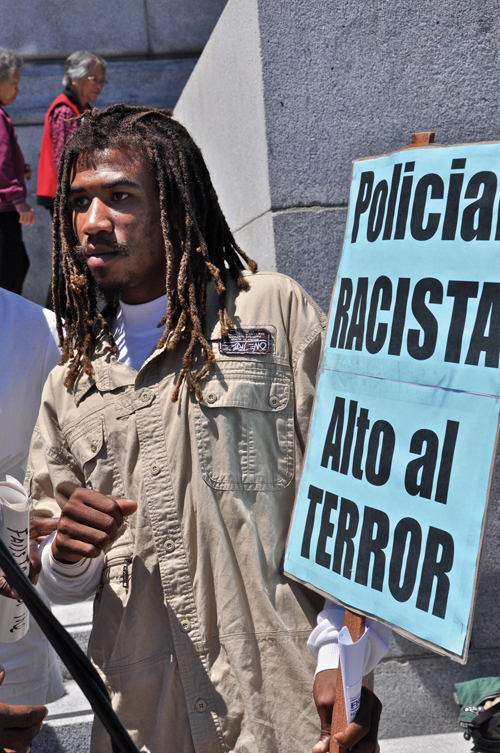
Come to protest the recent violence propagated by BART police and discuss how to use other forms of public transportation as part of a BART boycott. Artists, poets, musicians, bicyclists, skateboarders, roller skaters and all are invited to come with their creativity flowing to this “celebration of life free of oppression.”

2-4:30 p.m., free

Ferry Building

Market and Embarcadero, SF

Jeremy Miller, 415-595-2894, djasik87.9@gmail.com

Mesha Monge Irizarry, 415-595-8251, mamalamesha@gmail.com


WEDNESDAY 21

Experiment with direct democracy

Hear a panel of experts speak to California’s direct democracy (or lack of) and join the discussion about how to return the political process to the people. Panelists include Kim Alexander of the California Voter Foundation; Bruno Kaufmann, Swiss-Swedish journalist and president of Initiative & Referendum Institute Europe; Paul Jacob, president of the Citizens in Charge Foundation; and James H. Fowler, medical geneticist and political scientist at UC San Diego.

7 p.m., free

Golden Gate Room, Building A Fort Mason Center

Marina and Buchanan, SF

www.zocalopublicsquare.org


Mail items for Alerts to the Guardian Building, 135 Mississippi St., SF, CA 94107; fax to (415) 437-3658; or e-mail alert@sfbg.com. Please include a contact telephone number. Items must be received at least one week prior to the publication date.

A new progressive agenda

56

Over the past three months, the Guardian has been hosting a series of forums on progressive issues for the mayor’s race. We’ve brought together a broad base of people from different communities and issue-based organizations all over town in an effort to draft a platform that would include a comprehensive progressive agenda for the next mayor. All told, more than 100 people participated.

It was, as far as we know, the first time anyone tried to do this — to come up with a mayoral platform not with a few people in a room but with a series of open forums designed for community participation.

The platform we’ve drafted isn’t perfect, and there are no doubt things that are left out. But our goal was to create a document that the voters could use to determine which candidates really deserve the progressive vote.

That’s a critical question, since nearly all of the top contenders are using the word “progressive” on a regular basis. They’re fighting for votes from the neighborhoods, the activists, the independent-minded people who share a vision for San Francisco that isn’t driven by big-business interests.

But those of us on what is broadly defined as the city’s left are looking for more than lip service and catchy phrases. We want to hear specifics; we want to know that the next mayor is serious about changing the direction of city policy.

The groups who endorsed this effort and helped plan the forums that led to this platform were the Harvey Milk LGBT Club, SEIU Local 1021, the San Francisco Tenants Union, the Human Services Network, the Community Congress 2010, the Council of Community Housing Organizations, San Francisco Rising, Jobs with Justice, and the Center for Political Education.

The panelists who led the discussions were: Shaw-san Liu, Calvin Welch, Fernando Marti, Gabriel Haaland, Brenda Barros, Debbi Lerman, Jenny Friedenbach, Sarah Shortt, Ted Gullicksen, Nick Pagoulatos, Sue Hestor, Sherilyn Adams, Angela Chan, David Campos, Mario Yedidia, Pecolio Mangio, Antonio Diaz, Alicia Garza, Aaron Peskin, Saul Bloom, and Tim Redmond.

We held five events looking at five broad policy areas — economy and jobs; land use, housing and tenants; budget and social services; immigration, education and youth; and environment, energy and climate change. Panelists and audience participants offered great ideas and the debates were lively.

The results are below — an outline of what the progressives in San Francisco want to see from their next mayor.


ECONOMY AND JOBS

Background: In the first decade of this century, San Francisco lost some 51,000 jobs, overwhelmingly in the private sector. When Gavin Newsom was sworn in as mayor in January 2004, unemployment was at 6.4 percent; when he left, in January 2011, it was at 9.5 percent — a 63 percent increase.

Clearly, part of the problem was the collapse of the national economy. But the failed Newsom Model only made things worse. His approach was based on the mistaken notion that if the city provided direct subsidies to private developers, new workers would flock to San Francisco. In fact, the fastest-growing sector of the local economy is the public sector, especially education and health care. Five of the 10 largest employers in San Francisco are public agencies.

Local economic development policy, which has been characterized by the destruction of the blue-collar sector in light industry and maritime uses (ironically, overwhelmingly privately owned) to free up land for new industries in business services and high tech sectors that have never actually appeared — or have been devastated by quickly repeating boom and bust cycle.

Instead of concentrating on our existing workforce and its incredible human capital, recent San Francisco mayors have sought to attract a new workforce.

The Mayor’s Office has, as a matter of policy, been destroying blue-collar jobs to promote residential development for people who work outside of the city.

There’s a huge disconnect between what many people earn and what they need. The minimum wage in San Francisco is $9.92, when the actual cost of living is closer to $20. Wage theft is far too common.

There is a lack of leadership, oversight and accountability in a number of city departments. For example, there is no officiating body or commission overseeing the work of the Office of Economic and Workforce Development. Similarly the Arts Commission, the chartered entity for overseeing cultural affairs, is responsible for less than 25 percent of the budget reserved for this purpose

There’s no accountability in the city to protect the most vulnerable people.

The city’s main business tax is highly regressive — it’s a flat tax on payroll but has so many exceptions and loopholes that only 8,500 businesses actually pay it, and many of the largest and richest outfits pay no city tax at all.


Agenda items:

1. Reform the Mayor’s Office of Economic and Workforce Development to create a department with workforce development as a primary objective. Work with the San Francisco Unified School District, City College and San Francisco State to create sustainable paths to training and employment.

2. Create a municipal bank that offers credit for locally developed small businesses instead of relying on tax breaks. As a first step, mandate that all city short-term funds and payroll accounts go only to banks or credit unions that will agree to devote a reasonable percentage of their local loan portfolios for small business loans.

3. Reform procurement to prioritize local ownership.

4. Link economic development of healthcare facilities to the economic development of surrounding communities.

5. Link overall approval of projects to a larger economic development policy that takes as its centerpiece the employment of current San Francisco residents.

6. Enforce city labor laws and fund the agency that enforces the laws.

7. Establish the Board of Supervisors as the policy board of a re-organized Redevelopment Agency and create community-based project area oversight committees.

8. Dramatically expand Muni in the southeast portion of the city and reconfigure routes to link neighborhoods without having to go through downtown. Put special emphasis on direct Muni routes to City College and San Francisco State.

9. Reform the payroll tax so all businesses share the burden and the largest pay their fair share.

10. Consolidate the city’s various arts entities into a single Department of Arts & Culture that includes as part of its mandate a clear directive to achieve maximum economic development through leveraging the city’s existing cultural assets and creative strengths and re-imagining San Francisco’s competitive position as a regional, national and international hub of creative thinking. Sponsor and promote signature arts programs and opportunities to attract and retain visitors who will generate maximum economic activity in the local economy; restore San Francisco’s community-based cultural economy by re-enacting the successful Neighborhood Arts Program; and leverage the current 1-2 percent for art fees on various on-site building projects to be directed towards non-construction-site arts activity.


LAND USE, HOUSING AND TENANTS

Background: Since the office market tanked, the big land-use issue has become market-rate housing. San Francisco is building housing for people who don’t live here — in significant part, for either very wealthy people who want a short-term pied a terre in the city or for commuters who work in Silicon Valley. The city’s own General Plan calls for 60 percent of all new housing to be below-market-rate — but the vast majority of the new housing that’s been constructed or is in the planning pipeline is high-end condos.

There’s no connection between the housing needs of city residents and the local workforce and the type of housing that’s being constructed. Family housing is in short supply and rental housing is being destroyed faster than it’s being built — a total of 21,000 rental units have been lost to condos and tenancies in common.

Public housing is getting demolished and rebuilt with 2500 fewer units. “Hotelization” is growing as housing units become transitory housing.

Planning has become an appendage of the Mayor’s Office of Economic Development, which has no commission, no public hearings and no community oversight.

Projects are getting approved with no connection to schools, transit or affordable housing.

There’s no monitoring of Ellis Act evictions.

Transit-oriented development is a big scam that doesn’t include equity or the needs of people who live in the areas slated for more development. Cities have incentives to create dense housing with no affordability. Communities of concern are right in the path of this “smart growth” — and there are no protections for the people who live there now.

Agenda items:

1. Re emphasize that the Planning Department is the lead land-use approval agency and that the Mayor’s Office of Economic and Workforce Development should not be used to short-circuit public participation in the process.

2. Enact a freeze on condo conversions and a freeze on the demolition of existing affordable rental housing.

3. Ban evictions if the use or occupation of the property will be for less than 30 days.

4. Index market-rate to affordable housing; slow down one when the other is too far ahead.

5. Disclose what level of permanent affordability is offered at each project.

6. Stabilize existing communities with community benefits agreements before new development is approved.


BUDGET AND SOCIAL SERVICES

Background: There have been profound cuts in the social safety net in San Francisco over the past decade. One third of the city’s shelter beds have been lost; six homeless centers have closed. Homeless mental health and substance abuse services have lost $32 million, and the health system has lost $33 million.

None of the budget proposals coming from the Mayor’s Office have even begun to address restoring the past cuts.

There’s not enough access to primary care for people in Healthy San Francisco.

Nonprofit contracts with the city are flat-funded, so there’s no room for increases in the cost of doing business.

The mayor has all the staff and the supervisors don’t have enough. The supervisors have the ability to add back budget items — but the mayor can then make unilateral cuts.

The wealthy in San Francisco have done very well under the Bush tax cuts and more than 14 billionaires live in this city. The gap between the rich and the poor, which is destroying the national economy, exists in San Francisco, too. But while city officials are taking a national lead on issues like the environment and civil rights, there is virtually no discussion at the policy level of using city policy to bring in revenue from those who can afford it and to equalize the wealth disparities right here in town.

Agenda items:

1. Establish as policy that San Francisco will step in where the state and federal government have left people behind — and that local taxation policy should reflect progressive values.

2. Make budget set-asides a budget floor rather than a percentage of the budget.

3. Examine what top city executives are paid.

4. Promote public power, public broadband and public cable as a way to bring the city millions of dollars.

5. Support progressive taxes that will bring in at least $250 million a year in permanent new revenue.

6. Change the City Charter to eliminate unilateral mid-year cuts by the mayor.

8. Pass a Charter amendment that: (a) Requires the development of a comprehensive long-term plan that sets the policies and strategies to guide the implementation of health and human services for San Francisco’s vulnerable residents over the next 10 years, and (b) creates a planning body with the responsibility and authority to develop the plan, monitor and evaluate its implementation, coordinate between policy makers and departments, and ensure that annual budgets are consistent with the plan.

9. Collect existing money better.

10. Enact a foreclosure transfer tax.


YOUTH, IMMIGRATION, AND EDUCATION

Background: In the past 10 years, San Francisco has lost 24,000 people ages 12-24. Among current youth, 5,800 live in poverty; 6,000 have no high school degree; 7,000 are not working or attending school; 1,200 are on adult probation.

A full 50 percent of public school students are not qualified for college studies. Too often, the outcome is dictated by race; school-to-prison is far too common.

Trust between immigrants and the police is a low point, particularly since former Mayor Gavin Newsom gutted the sanctuary ordinance in 2008 after anti-immigrant stories in the San Francisco Chronicle.

Some 70 percent of students depend on Muni, but the price of a youth pass just went from $10 to $21.

Agenda items:

1. Recognize that there’s a separate role for probation and immigration, and keep local law enforcement from joining or working with immigration enforcement.

2. Improve public transportation for education and prioritize free Muni for youth.

3. Create family-friendly affordable housing.

4. Restore the recreation direction for the Recreation and Parks Department.

5. Implement police training to treat youth with respect.

6. Don’t cut off benefits for youth who commit crimes.

7. Shift state re-alignment money from jails to education.


ENERGY, ENVIRONMENT AND CLIMATE CHANGE

Background: When it comes to land use, the laws on the books are pretty good. The General Plan is a good document. But those laws aren’t enforced. Big projects get changed by the project sponsor after they’re approved.

Land use is really about who will live here and who will vote. But on a policy level, it’s clear that the city doesn’t value the people who currently live here.

Climate change is going to affect San Francisco — people who live near toxic materials are at risk in floods and earthquakes.

San Francisco has a separate but unequal transportation system. Muni is designed to get people downtown, not around town — despite the fact that job growth isn’t happening downtown.

San Francisco has a deepwater port and could be the Silicon Valley of green shipping.

San Francisco has a remarkable opportunity to promote renewable energy, but that will never happen unless the city owns the distribution system.


Agenda items:

1. Promote the rebirth of heavy industry by turning the port into a center for green-shipping retrofits.

2. Public land should be for public benefit, and agencies that own or control that land should work with community-based planning efforts.

3. Planning should be for the community, not developers.

4. Energy efficiency programs should be targeted to disadvantaged communities.

5. Pay attention to the urban food revolution, encourage resident owned farmers markets. Use unused public land for local food and community gardens.

6. Provide complete information on what parts of the city are fill, and stop allowing development in areas that are going to be inundated with sea level rise.

7. Prioritize local distributed generation of electricity and public ownership of the power grid.

8. Change Clean Energy San Francisco from a purchasing pool system to a generating system.

An American blindness

8

After the first jetliner crashed into the Twin Towers on that September 11 morning, a friend of mine and his 11-year old daughter climbed up to the roof of their Manhattan home to look around. Just then the second plane struck, the young girl fell backward, and went blind from shock.

It took more than a year of examinations and therapies before this girl came out of her blindness to look around.

That’s what happened to America itself ten years ago this Sunday on 9/11, though it might be claimed many of us were blinded by privilege and hubris long before. But 9/11 produced a spasm of blind rage, arising from a pre-existing blindness as to the way much of the world sees us. That in turn led to the invasions of Afghanistan, Iraq, Afghanistan again, Pakistan, Yemen, Somalia and, in all, a dozen “shadow wars” according to The New York Times.

Bob Woodward’s crucial book, Obama’s Wars, points out that there were already secret and lethal counterterrorism operations active in more than 60 countries as of 2009. From Pentagon think tanks came a new military doctrine of the “Long War,” a counter-insurgency vision arising from the failed Phoenix program of the Vietnam era, projecting U.S. open combat and secret wars over a span of 50 to 80 years, or 20 future presidential terms. The taxpayer costs of this Long War, also shadowy, would be in the many trillions of dollars — and paid for not from current budgets, but by generations born after the 2000 election of George W. Bush. The deficit spending on the Long War would invisibly force the budgetary crisis now squeezing our states, cities and most Americans.

Besides the future being mortgaged, civil liberties were thought to require a shrinking proper to a state of permanent and secretive war, so the Patriot Act was promulgated. All this happened after 9/11 through Democratic default and denial. Who knows what future might have followed if Al Gore, with a half-million popular vote margin over George Bush, had prevailed in the U.S. Supreme Court instead of losing by the vote of a single justice? In any event, only a single member of Congress, Barbara Lee of Berkeley-Oakland, voted against the war authorization, and only a single senator, Russ Feingold, voted against the Patriot Act.

Were we not blinded by what happened on 9/11? Are we still? Let’s look at the numbers we almost never see.


CASUALTIES OF WAR

As to American casualties, the figure now is beyond twice those who died in New York, Pennsylvania and Washington D.C. on 9/11. The casualties are rarely totaled, but are broken down into three categories by the Pentagon and Congressional Research Service. There is Operation Enduring Freedom, which includes Afghanistan and Pakistan but, in keeping with the Long War definition, also covers Kazakhstan, Kyrgyzstan, Pakistan, Tajikistan, Turkmenistan, and Uzbekistan. Second, there is Operation Iraqi Freedom and its successor Operation New Dawn, the name adopted after September 2010 for the 47,000 US advisers, trainers and counterterrorism units still in Iraq. The scope of these latter operations includes Bahrain, Jordan, Kuwait, Oman, Qatar, Saudi Arabia, Turkey and the United Arab Emirates. These territories include not only Muslim majorities but, according to former Centcom commander Tommy Franks, 68 percent of the world’s proven oil reserves and the passageway for 43 percent of petroleum exports, another American geo-interest which was heavily denied in official explanations.

A combined 6,197 Americans were killed in these wars as of August 16, 2011, in the name of avenging 9/11, a day when 2, 996 Americans died. The total number of American wounded has been 45,338, and rising at a rapid rate. The total number rushed by military Medivac out of these violent zones was 56, 432. That’s a total of 107,996 Americans. And the active-duty military suicide rate for the decade is at a record high of 2, 276, not counting veterans or those who have tried unsuccessfully to take their own lives. In fact, the suicide rate for last year was greater than the American death toll in either Iraq or Afghanistan.

The Pentagon has long played a numbers game with these body counts. In addition to being painfully difficult and extremely complicated to access, there was a time when the Pentagon refused to count as Iraq war casualties any soldier who died from their wounds outside of Iraq’s airspace. Similar controversies have surrounded examples such as soldiers killed in non-combat accidents.

The fog around Iraq or Afghanistan civilian casualties will be seen in the future as one of the great scandals of the era. Briefly, the United States and its allies in Baghdad and Kabul have relied on eyewitness, media or hospital numbers instead of the more common cluster-sampling interview techniques used in conflict zones like the first Gulf War, Kosovo or the Congo. The United Nations has a conflict of interest as a party to the military conflict, and acknowledged in a July 2009 U.N. human rights report footnote that “there is a significant possibility that UNAMA is underreporting civilian casualties.”

In August, even the mainstream media derided a claim by the White House counter-terrorism adviser that there hasn’t been a single “collateral,” or innocent, death during an entire year of CIA drone strikes in Pakistan, a period in which 600 people were killed, all of them alleged “militants.” As an a specific explanation for the blindness, the Los Angeles Times reported April 9 that “Special Forces account for a disproportionate share of civilian casualties caused by western troops, military officials and human rights groups say, though there are no precise figures because many of their missions are deemed secret.”


STICKER SHOCK OF WAR

Among the most bizarre symptoms of the blindness is the tendency of most deficit hawks to become big spenders on Iraq and Afghanistan, at least until lately. The direct costs of the war, which is to say those unfunded costs in each year’s budget, now come to $1.23 trillion, or $444.6 billion for Afghanistan and $791.4 billion for Iraq, according to the National Priorities Project.

But that’s another sleight-of-hand, when one considers the so-called indirect costs like long-term veteran care. Leading economists Joseph Stiglitz and Linda Bilmes recently testified to Congress that their previous estimate of $4 to $6 trillion in ultimate costs was conservative. Nancy Youssef of McClatchy Newspapers in D.C. — in my opinion, the best war reporter of the decade — wrote recently that “it’s almost impossible to pin down just what the United States spends on war.” The president himself expressed “sticker shock,” according to Woodward’s book, when presented cost projections during his internal review of 2009.

The Long War casts a shadow not only over our economy and future budgets but our innocent and unborn children’s future as well. This is no accident, but the result of deliberate lies, obfuscations and scandalous accounting techniques. We are victims of an information warfare strategy waged deliberately by the Pentagon. As Gen. Stanley McChrystal said much too candidly in a February 2010, “This is not a physical war of how many people you kill or how much ground you capture, how many bridges you blow up. This is all in the minds of the participants.” David Kilcullen, once the top counterinsurgency adviser to Gen. David Petraeus, defines “international information operations as part of counterinsurgency.” Quoted in Counterinsurgency in 2010, Kilcullen said this military officer’s goal is to achieve a “unity of perception management measures targeting the increasingly influential spectators’ gallery of the international community.”

This new war of perceptions, relying on naked media manipulation such as the treatment of media commentators as “message amplifiers” but also high-technology information warfare, only highlights the vast importance of the ongoing WikiLeaks whistle-blowing campaign against the global secrecy establishment. Consider just what we have learned about Iraq and Afghanistan because of WikiLeaks: Tens of thousands of civilian casualties in Iraq, never before disclosed; instructions to U.S. troops to not investigate torture when conducted by U.S. allies; the existence of Task Force 373, carrying out night raids in Afghanistan; the CIA’s secret army of 3,000 mercenaries; private parties by DynCorp featuring trafficked boys as entertainment, and an Afghan vice president carrying $52 million in a suitcase.

The efforts of the White House to prosecute Julian Assange and persecute Pfc. Bradley Manning in military prison should be of deep concern to anyone believing in the public’s right to know.

The news that this is not a physical war but mainly one of perceptions will not be received well among American military families or Afghan children, which is why a responsible citizen must rebel first and foremost against The Official Story. That simple act of resistance necessarily leads to study as part of critical practice, which is as essential to the recovery of a democratic self and democratic society. Read, for example, this early martial line of Rudyard Kipling, the poet of the white man’s burden: “When you’re left wounded on Afghanistan’s plains/ And the women come out to cut up what remains/ Just roll to your rifle and blow out your brains/And go to your God like a soldier.” Years later, after Kipling’s beloved son was killed in World War I and his remains never recovered, the poet wrote: “If any question why we died / Tell them because our fathers lied.”


A HOPE FOR PEACE

An important part of the story of the peace movement, and the hope for peace itself, is the process by which hawks come to see their own mistakes. A brilliant history/autobiography in this regard is Dan Ellsberg’s Secrets, about his evolution from defense hawk to historic whistleblower during the Vietnam War. Ellsberg writes movingly about how he was influenced on his journey by meeting contact with young men on their way to prison for draft resistance.

The military occupation of our minds will continue until many more Americans become familiar with the strategies and doctrines in play during the Long War. Not enough Americans in the peace movement are literate about counterinsurgency, counterterrorism and the debates about the “clash of civilizations”, the West versus the Muslim world.

The more we know about the Long War doctrine, the more we understand the need for a long peace movement. The pillars of the peace movement, in my experience and reading, are the networks of local progressives in hundreds of communities across the United States. Most of them are voluntary, citizen volunteers, always and immersed in the crises of the moment, nowadays the economic recession and unemployment.

This peace bloc deserves more. It won’t happen overnight, but gradually we are wearing down the pillars of the war. It’s painfully slow, because the president is threatened by Pentagon officials, private military contractors and an entire Republican Party (except the Ron Paul contingent) who benefit from the politics and economics of the Long War.

But consider the progress, however slow. In February of this year, Rep. Barbara Lee passed a unanimous resolution at the Democratic National Committee calling for a rapid withdrawal from Afghanistan and transfer of funds to job creation. The White House approved of the resolution. Then 205 House members, including a majority of Democrats, voted for a resolution that almost passed, calling for the same rapid withdrawal. Even the AFL-CIO executive board, despite a long history of militarism, adopted a policy opposing Afghanistan. The president himself is quoted in Obama’s Wars as opposing his military advisors, demanding an exit strategy and musing that he “can’t lose the whole Democratic Party.” At every step of the way, it must be emphasized, public opinion in Congressional districts was a key factor in changing establishment behavior.

As for Al Qaeda, there is always the threat of another attack, like those attempted by militants aiming at Detroit during Christmas 2009 or Times Square in May 2010. In the event of another such terrorist assault originating from Pakistan, all bets are off: According to Woodward, the U.S. has a “retribution” plan to bomb 150 separate sites in that country alone there, and no apparent plan for The Day After. Assuming that nightmare doesn’t happen, today’s al Qaeda is not the al Qaeda of a decade ago. Osama bin Laden is dead, its organization is damaged, and its strategy of conspiratorial terrorism has been displaced significantly by the people-power democratic uprisings across the Arab world.

It is clear that shadow wars lie ahead, but not expanding ground wars involving greater numbers of American troops. The emerging argument will be over the question of whether special operations and drone attacks are effective, moral and consistent with the standards of a constitutional democracy. And it is clear that the economic crisis finally is enabling more politicians to question the trillion dollar war spending.

Meanwhile, the 2012 national elections present an historic opportunity to awaken from the blindness inflicted by 9/11.

After more than 50 years of activism, politics and writing, Tom Hayden is a leading voice for ending the wars in Afghanistan, Iraq, and Pakistan and reforming politics through a more participatory democracy.

Fresh and Easy displacement

20

OPINION You could cut the hate with a knife. All eyes were on my fumbling fingers, unable to sign my WIC coupons fast enough with one hand while holding my 13-month-old son with the other. “Somebody’s using welfare checks to pay for their food,” A 20 something man in a polo shirt shouted into his phone next to me.

I spend so many days like this while trying to shop as a poor mama, its hard to even think about them. The life of a poor parent in the U.S. is always a scarcity model rollercoaster ride of hate, system abuse, subsistence crumbs and criminalization, best exemplified in the supermarket experience where the so-called paying customers suffer through the bother of waiting for poor parents to pay with our WIC coupons, working poor mamas to pay with payroll checks or indigenous elders to count out their multiple coupons.

I began to reflect on this when I heard about the new fresh and Easy Markets opening in the Bayview-Hunters Point, the Mission and the Portola district. It’s a new supermarket chain from England that by policy doesn’t accept WIC coupons.

WIC — the federal Women, Infants and Children’s program, is not welfare, but rather a supplemental program that allows low-income parents to get milk, grains, cereal and other basic foodstuffs. It’s a program used by many working poor as well as mamas on government crumbs so we can feed our children a balanced diet.

The Bayview, Mission, and Portola neighborhoods are peopled with a lot of multi-generational, multi-lingual mamas, and families in poverty like mine, who need access to affordable fruits and vegetables and non-hormone-filled meat like Fresh and Easy has, but are these stores really being built for us?

Like so much of San Francisco and the whole Bay Area, these communities are under attack from redevelopment and gentrification efforts. Removal and evictions of poor families and elders happen everyday in the city to make way for the corporate veneer of Lennar and John Stewart properties, condominiums, lofts and the rich young people who they are built for.

So who is Fresh and Easy for? They don’t take coupons, personal checks or WIC — and like their Whole Paycheck counterparts, they don’t hire union employees, or ultimately many employees at all, as they have the new self-pay check-out stands.

Fresh and Easy claims it doesn’t except the manufacturers’ coupons for the same reasons it doesn’t accept paper personal checks, W.I.C. vouchers, or cash payroll checks: That elimination of manual paper processing, combined with its self-service checkout system, saves money.

Pressured by community members who protested outside the Bayview store on its opening day, Fresh and Easy CEO Tim Mason now claims that Fresh and Easy in the Bayview will eventually begin taking WIC.

As this poor mama tries to move out from under the lie of criminalized government crumbs and the non-existent, bootstraps centered, corporate underwritten American dream, I have come to realize our collective, self-determined liberation begins with growing our own food in our poor neighborhoods with people-led community gardens, taking back stolen indigenous land and resources with organized poor people led/indigenous people-led efforts and whenever we have the energy, after all the other things we have to do to survive in this capitalist society fighting the exclusion and removal efforts of us by the smooth talking corporations who don’t see us as part of their grand profit-making plans.

Tiny aka Lisa Gray-Garcia, daughter of Dee and mama of Tiburcio is the co-founder of POOR Magazine/PoorNewsNetwork and author of Criminal of Poverty: Growing up Homeless in America

Mayor Lee and PG&E

9

EDITORIAL Pacific Gas and Electric Company is the number one corporate criminal in San Francisco. The company’s malfeasance caused the deaths of eight people and destroyed an entire neighborhood in San Bruno last year. The National Transportation Safety Board, in a report issued August 30, denounced PG&E’s “integrity management program without integrity” and blasted the company’s efforts to “exploit weakness in a lax system of oversight.”

That doesn’t even address the fact that PG&E has been operating an illegal monopoly in San Francisco for more than 80 years, engaging in an ongoing criminal conspiracy to violate the federal Raker Act. Or the fact that the utility spent $50 million of ratepayer money on a ballot initiative aimed at eliminating consumer choice in the electricity market.

So why was Mayor Ed Lee out at a PG&E public relations event Sept. 1 praising the “great local corporation” as a “great company that gets it?”

Well, the mayor’s campaign press spokesperson, Tony Winnicker, says that PG&E was at the event to donate $250,000 to a program for at-risk youth, and that the mayor was only recognizing that, for all its flaws, the utility “also [does] something good for our public schools and low-income kids.”

That’s not enough, and that’s not acceptable — and the mayor should apologize to the residents of San Francisco, San Bruno and everyplace else in California where the giant corporation has done serious and lasting damage.

It’s nice that PG&E gave a contribution to a program that helps Soma kids learn to read and to play baseball. We support the RBI program and its goals. Never mind that the $250,000 is about 0.005 percent of the money that the utility spent trying to block public power in California. Never mind that PG&E pays such a low franchise fee that it robs of city of millions of annual tax dollars that could fund programs like this one. It still sounds like a large sum, and to the nonprofit program at Bessie Charmichael School, it is.

But there’s a reason PG&E gives money to community groups and programs like this all over town — it’s a way to buy support and respect. Corporate largess of this sort is a relatively cheap public relations strategy — and for the mayor not to see that is embarrassing.

It’s a particularly notable conflict of interest, too — Lee’s top patron and biggest political supporter, Willie Brown (who knows a bit about corruption himself) has been on PG&E’s payroll as a private attorney for the past several years, earning about $200,000 a year.

Most of the candidates for mayor have been taking a gentle approach to Lee, and that makes a certain amount of sense — in a ranked-choice voting environment, negative campaigning often backfires. But there’s nothing inappropriate about saying that the mayor of San Francisco has damaged his own reputation and the reputation of the city by allowing himself to be used at a PR tool by PG&E. Remember: He didn’t just show up and thank the utility for the money. He called PG&E a “great local corporation,” which is, quite simply, false. This ought to become an issue in the race, and Lee should be forced to explain his position on public power, his ties to Brown and PG&E and his willingness to put aside years of malfeasance in the name of a small contribution.

Editor’s notes

0

tredmond@sfbg.com

I’ve been wondering for months now how all of the rich people who come into San Francisco for the America’s Cup are going to get around. The event plans call for the Embarcadero to be closed during the festivities, which means no cars. The F-line is nice, but slow — and even with new trains, has limited capacity. And I don’t expect to see a lot of the millionaire yachting types riding the bus with us commoners.

Walk? Yeah, from a couple of blocks away, but not from hotels South of Market or on Nob Hill or Union Square. Not in their $500 shoes. Cabs? The traffic will be unbearable.

So here’s an idea I’ve heard floating around: The city makes the project sponsor (that’s you, Larry) buy a fleet of several hundred pedicabs, bicycle-powered taxis. Then the city hires hundreds of unemployed teenagers to drive the visitors from their hotels to the waterfront, giving local youth a chance to earn some money off the cup events. Ban all forms of motorized transportation — no limos, no town cars.

Advantages: Zero carbon emissions. No traffic jams. Youth employment. Healthy exercise. And think about the chariot-race-and-bumper-cars action that will give the swells a thrill. It’s a winner for everyone.

I’ve also been thinking about how the abomination of a condo project at 8 Washington is going to affect the festivities — and it’s a concern. The city has published reports on both the luxury condo project and the cup, and the folks working on the two don’t seem to be talking.

For example, the 8 Washington developer wants to excavate 110,000 tons of soil for a massive parking garage, from a spot right on the edge of the Embarcadero, right while all the cup events are taking place. Where are the dump trucks (hundreds of them every week) going to go if the Embarcadero is closed? How will that construction add to the congestion mess?

I’m not a fan of 8 Washington anyway. It’s a project designed to create the most expensive condos ever built in San Francisco — which is just what the city needs. More second or third homes for very rich people who won’t live here more than a few weeks a year. Another project that will put the city further out of synch with its own General Plan goals for affordable housing.

And building these units for the rich will interfere with the entertainment for the rich that’s supposed to trickle down to the rest of us. I wish it were just funny.

Eric Quezada. Presente.

2

By Roberto Lovato and Jason Ferreira

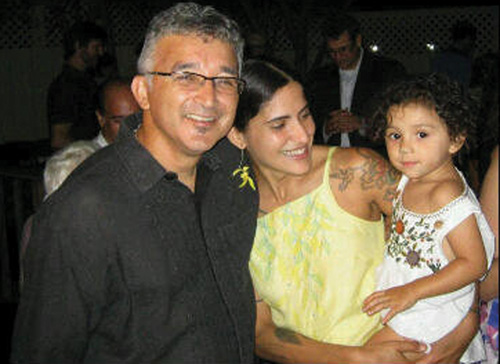
“I’d love to see a garden of flowers there,” whispered Eric Quezada a few days before his final breath on Earth. Looking like a Guatemalan Quixote, a lanky Eric pointed to the front of his Bernal Heights home with an index finger whittled down by a cancer he’d been fighting ferociously for seven years.

Days later, about 150 people brought pots packed with daisies, bougainvilleas, lavender, lots of red roses — and a bright bouquet of candles to bear witness to the life and friendship of a man who had planted his gentle way into our thoughts, our actions and—most especially—our hearts. To see the tearful and trembling faces of the diverse crowd — former Salvadoran revolutionaries, African American internationalists, soccer buddies made over a lifetime, immigrant rights advocates, Aztec dancers, Guatemalan family members, long time and recent Mission residents, queer leaders and the (Latino) Man Who Would Be Mayor — was heartbreaking. But at the same time we were all shining forth the beautiful Mission that Eric spent a lifetime steadfastly tending to with love.

A true revolutionary, our friend, our brother, who died Aug. 24 at 45, Eric Quezada, lived and died organizing his community, La Misión.

San Francisco and the wider community lost more than just a housing activist, a former candidate for supervisor, and an extraordinarily effective standard bearer of the left. We lost a husband-father-son-brother, a loyal friend and mentor, and a spiritual-political figure whose sources of beauty only became obvious after he gently touched you.

The son of Carlos and Clara Quezada, two Guatemalan immigrants known to many Mission residents as the dynamic duo that birthed two soccer stars (Eric and older brother Carlos) and owned CQ Bike shop on 24th Street, the very soft-spoken Eric lived to bridge the human and the political.

Traveling as a child between a San Francisco on the verge of the silicon revolution-based gentrification wave and wartime Guatemala, Eric developed early on a sense of the emotional and political circuits connecting movements and people on the insurgent continent of América. He grew up hearing stories of very involved and engaged family members like aunt, Ana Maria Quezada, who was arrested for protesting and organizing in Argentina during the 1978 World Cup, and his parents, who lived through the military coup that ousted democratically-elected Guatemalan President Jacobo Arbenz. “I remember hearing stories about Arbenz,” Eric once told us, adding, “—and how the U.S. sponsored the coup.”

Eric’s unique vision was also born out of the racism –and the resistance to it-back home in the Bay Area. Eric often talked of how his mother and he once witnessed two police officers harassing several young African American boys in the parking lot of a convenience store. Clara immediately took the officers to task for their racism, refusing to leave until they left the young boys alone. Eric never forgot his immigrant mother’s courage, her transcendent lesson: always stand alongside those who face injustice.

“Eric is a continuum,” fellow organizer and beloved compañera, Lorena Melgarejo, said. “His beliefs, his commitment didn’t stop in public. They are deep in how he thought about life. As a dad, as a friend, as a lover- that’s who he was,” said Lorena.

After Eric told her when they first met that he didn’t want to burden her with his cancer, Lorena responded: “You have no right to stop your life, you can’t close the door to life!” After that, they were never apart. Embracing life, one filled with no regrets, they fell in love immediately. A few years later, upon the arrival of their beautiful daughter Ixchel, Lorena reminded the larger-than-life, activist father that, “You can’t put your personal life on hold because there’ll always be an event, a meeting or some crisis in the world.”

As was obvious to anyone who really got to know him, one of Eric’s primary connectors to that wider, crisis-filled world of politics and culture was something seemingly apolitical: soccer.

“His politics were like his soccer playing,” explained Eric’s uncle, Edgar, who formed an important part of the Sagastume soccer dynasty in late 20th century San Francisco. “When Eric played, he was cool, but tenacious, hard working. He trained meticulously and never gave up. Eric was fond of saying how he “learned about the politics in different countries—Croatia, Greece, Mexico, El Salvador, England, all kinds—from playing in the San Francisco (soccer) leagues. You learned international relations and neighborhood politics at the same time.”

Such a schooling made Eric a ferocious ally of Central American revolutionary movements including the URNG in Guatemala, Sandinistas in Nicaragua, and the FMLN in El Salvador. These same commitments also served him well as a leader in the Venceremos Brigade to Cuba, where he met Fidel Castro, famously causing the Cuban leader to become nostalgic when asked about his memories of meeting Malcolm X in Harlem. Later, in 2002, he met with Hugo Chávez in Venezuela. They talked about everything from 21st century socialism to baseball. Beaming with the pride that only a lifelong—not fair weather—fan can display, Eric swore that Chávez was a huge fan of the San Francisco Giants.

The eclectic internationalism Eric envisioned and embodied was always two-way. He always strived towards reciprocity. Through Grassroots Global Justice and his work at the World Social Forum in Porto Alegre (Brazil), Eric sought to bring to the international stage the struggles of working class San Franciscans: day laborers, the homeless, people with HIV, and undocumented immigrants.

Eric’s journey reflected that of his mentor and dear friend, the legendary Bill Sorro (who himself died of cancer four years ago this very week). Both Bill and Eric were revolutionaries largely unsatisfied with the traditional rhetoric and disarming anger of the left. “We don’t struggle because we hate, we do so because we love. Yes, we may hate oppression but in the end we are fighting for something, we fight out of a place of love.” Eric never wavered in this.

Eric was a jazz man. A saxophone player, he believed in the art of improvisation and experimentation. At a time when the left was floundering, Eric brought a musical spirit to the necessary work of strengthening dialogue, analysis, and education in the community. He co-founded the Center for Political Education (San Francisco’s equivalent of the legendary Brecht Forum), which has served since 1998 as a catalyst for more effective organizing and as a space to build bridges.

Eric understood the centrality of compassionate bridge-building to political success. And like one of his heroes, Monseñor Oscar Romero, he will in his death rise again in his people. For Oscar Grande, a young community organizer with PODER, a Mission-based Latino environmental and economic justice organization, “Eric was instrumental in bringing radical politics and a visionary spirit to Mission politics,” said Grande.

Eric’s involvement in city politics was less about winning elections and electoral power than about the process of teaching the community how to deal with the powers that be. “He was about ‘let’s re-write the laws and get rid of the bums at City Hall so we can get the things our community needs: housing, open space and recreation opportunities at the material level,'” Grande said. But, according to Grande, who describes Eric as an “older bro/mentor,” Eric’s greatest contribution was spiritual.

“There are fewer and fewer schools of politics, places where you learn how to do politics,” said Grande. “Most of those that are still around in the Latino community are about deal-making, cozying up to the politicians. Eric offered an alternative. The spiritual and the political were always there. Those other fools started from the top-down. Eric started from the bottom up.” This was a key principle of the Mission Anti-displacement Coalition that Eric was instrumental in establishing.

During the last five years of his life, Eric’s bottom-up, interconnecting philosophy was realized at Dolores Street Community Services, a housing and community advocacy organization. For Wendy Phillips, longtime friend of Eric and DSCS Interim Executive Director, Eric was instrumental in securing real housing and other resources for different groups and in connecting DSCS and the Mission to immigrant rights, LGBT rights, and other struggles of our time.

“I think helping create MAC was a huge accomplishment of his because it stopped the massive wave of gentrifying capital entering the Mission. He and MAC mobilized hundreds of people to resist and show the board of supervisors and Mayor that the Mission wasn’t going to go down without a fight.” Their efforts resulted in a community rezoning process that has prioritized the creation of affordable housing in the Mission.

Phillips also noted that, while at DSCS, Eric also spearheaded the creation of the San Francisco Immigrant Legal and Education Network, a network of thirteen organizations that provide free legal services for immigrants, and, of course, advocacy. As if describing his soccer-inspired cosmopolitanism, she said, “Before it became obvious to most, Eric sensed that things were getting really bad on immigration and decided to create SFILEN, which unites Latino organizations, African organizations, Arab organizations, and Asian organizations in an effort to defend immigrants citywide.”

Eric’s defense of — and offensives in — La Mision continues to reverberate in and beyond his beloved neighborhood. “My campaign is really reigniting and reasserting the movement that Eric Quezada helped to build and grow,” said John Avalos, a serious contender in the upcoming Mayor’s race. Avalos, who has dedicated his campaign to Eric and his family, believes that Eric best symbolizes the continuation of the “movement of the people to build power against the downtown forces of gentrification and create livable neighborhoods where people can live with dignity.”

Eric Quezada spent his last days accompanied by loved ones. Along with Lorena, Ixchel and his mother, Eric was tended to and accompanied at his bedside by soccer buddies, family members, his closest personal and political friends, all of whom joined him in taking in the soothing sounds of his favorite music: guitarist friends playing boleros and bossa nova, CD’s of Los Lobos and Jorge Drexler, whose song “Todo Se Transforma,” (nothing is lost, everything is transformed) gave solace to Eric until his final breath. From the vantage point of our present heartbreak, it gives the rest of us hope.

In the lingo of the Latino and Latin American musical and political movements that informed Eric’s thought and action and his life in La Mision, “El Compañero Eric Quezada murio conspirando,” Comrade Eric Quezada died conspiring.

While in English the word “conspire” means to “make secret plans jointly to commit an unlawful or harmful act,” in political Spanish the word has an almost opposite meaning. Conspirar is closer to the Latin roots that combine con, meaning “together,” and spirare, the word for “breathing” and the origin of the word, “spirit.”

In this way, Eric conspired for a better world. After his last breath, he has left us a great spirit. We love you, carnal. Compañero Eric Quezada PRESENTE! La Lucha Continua!!!

(Note: The Community Celebration of Eric Quezada will take place on Sunday, September 25, 2011, 2-5 p.m. at Horace Mann Middle School, 3351 23rd Street

Those wishing to help Eric’s family can donate to the MAF — Ixchel Quezada Education Fund, http://missionassetfund.org/ixchel)

The mess at Lake Merced

2

By Jerry Cadagan

OPINION Lake Merced is a San Francisco jewel that for years has suffered from the benign neglect of the city. Here are some facts:

The San Francisco Public Utilities Commission is the owner of the lake and surrounding land. In 1950, the SFPUC made a major mistake in delegating to the Recreation and Park Department vague authority for recreation at the lake. Under the City Charter, Lake Merced is not a park that would ordinarily be handled by RPD.

Starting in the 1980s, the lake’s water levels dropped precipitously, for a variety of reasons. Neither agency took serious action to determine why, or to reverse the situation. That was a clue that having two quarterbacks running the Lake Merced operation was a bad idea. But starting in late 1993, many community activists started grappling with the water level issue, and it’s now under control.

As water levels recovered, SFPUC staffers wasted no time acting like they were fully in charge by initiating a planning process that, after four years of consultants feeding at the trough, resulted in a 187-page Lake Merced Watershed Report, released in 2010. The SFPUC paid the consultants a humongous $588,434. You can judge whether SFPUC’s ratepayers got their money’s worth by reading the document at sfwater.org/index.aspx?page=197

In January 2007, the Board of Supervisors requested that SFPUC and RPD revise the 1950 delegation of recreation management to RPD. The board’s resolution recites that SFPUC “has made a commitment to manage and maintain all the watershed lands … and to obtain and allocate the resources necessary” to do so. The Watershed Report (p. 10) confirmed that the “intent is to transfer primary responsibility for management of the lands surrounding the lake back to the SFPUC.” Those who were involved in the discussions in late 2006 know full well that the reason it is desirable for SFPUC to be fully in charge was so that there would be a single point of accountability.

The board’s January 2007 resolution asked the two agencies to report back in 90 days. They never did. Rather, some 1,180 days after the resolution, the agencies released a draft memorandum of understanding purporting to respond to the board’s request. Amazingly, the draft MOU left virtually all management responsibilities in the same muddled condition that has existed since 1950. The agencies held a public meeting to explain the draft MOU on July 19. The 40 attendees were generally unhappy with the lack of real change in management being proposed.

In an inexplicable move, in late July the SFPUC released a document describing intended renovations to the dilapidated boathouse building at the lake. The total cost of the proposed renovations is $940,000. But the document itself, and recent conversation with SFPUC staff, makes it clear that to make the building meet all building codes and disability access requirements would cost $1.9 million. Why is the SFPUC now planning to spend $940,000 when its own watershed report says, on page 24, “it may be better to completely rebuild and expand the facility rather than renovate?”

The ongoing litany of mismanagement and fiscal imprudence is unacceptable. Coherent, accountable management is needed at Lake Merced. Call Mayor Ed Lee (554-6141), Supervisor Sean Elsbernd (554-6516) and SFPUC General Manager Ed Harrington (554-3155) and demand it.

Jerry Cadagan was a co-founder of the Committee to Save Lake Merced in 1993 and has worked continuously on issues involving Lake Merced since that time.

Editor’s Notes

6

tredmond@sfbg.com

I have friends — progressives, activists, good people — who support Ed Lee for mayor. They tell me that Lee is accessible, that he listens to labor and grassroots community groups, that he’s going to be good on a lot of issues and that, compared to the mayors we’ve had in the past 30 years or so, he won’t be all that bad.

I respect that. I understand. But I try to remind them, and anyone else who’s listening, that the years when Willie Brown ran this town were really, really bad.

At the height of the Brown era, during the dot-com boom, hundreds of evictions were filed every single month. Thousands and thousands of low-income and working-class tenants were displaced, tossed out of San Francisco forever. Blue-collar jobs were destroyed as high-tech offices took over industrial space. Every single developer who waved money at the mayor got a permit, no matter how ridiculous, dangerous or crazy the project was.

In 1999, Paulina Borsook wrote a famous piece for Salon called “How the Internet ruined San Francisco.” But the Internet was just technology; what damaged this city so badly was a mayor who didn’t care what happened to the most vulnerable populations. At one point, Brown even said that poor people shouldn’t live in this city. We called his policies “the economic cleansing of San Francisco.”

He controlled local politics — brutally. If you didn’t kiss the mayor’s ring, you were crushed. He announced one day that the supervisors (then elected citywide) were nothing but “mistresses who have to be serviced” — and since most of them were utterly subservient to Brown, they didn’t even complain. Only one person on the board — Tom Ammiano — regularly defied the mayor; occasionally, Leland Yee and Sue Bierman joined him. But that was it.

The corruption was rampant. People who paid to play got in the door; nobody else came close. You did a favor for Brown and you got a commission appointment or a high-paid job, even if you weren’t remotely qualified.

The ones who suffered most were the poorest residents, particularly tenants, particularly on the east side of town. Brown didn’t seem to care that his appointments, deals and policies were causing terrible pain on the ground; it was as if politics was just a fun game, as if he were some sort of royal potentate, partying in the executive suites and ignoring what was happening on the streets.

There are people who believe that Ed Lee can be independent of Brown, and I hope they’re right. But Lee and Brown are close, and Brown helped put him in office — and the thought of even a small part of that rotten era of sleaze coming back makes me very, very nervous.

Move youth housing forward

0

EDITORIAL Somewhere between 4,500 and 6,800 young adults in San Francisco are either homeless or marginally housed, according to a 2007 report by the Mayor’s Transitional Youth Task Force. And the city has exactly 314 housing units for at-risk young people who have passed their 18th birthday and are kicked out of the foster housing program. That’s the definition of a crisis — yet two modest projects that would make a small dent in the problem have faced immense obstacles moving forward.

The Booker T. Washington Center and the Community Housing Partnership want to create a combined 74 units of affordable housing for vulnerable youth. But both have endured long delays in the planning process, thanks to opposition for people in upscale neighborhoods who clearly don’t want this kind of housing in their midst.

The Booker T. Washington project finally made it through the Board of Supervisors in July — although the small nonprofit is now facing a lawsuit to stop the housing. The CHP’s plan to build 24 units on the site of the old Edward II Hotel in the Marina comes before the board in September, and may also face litigation.

The supervisors needs to approve the CHP project and send a strong message that this is housing San Francisco needs — and that all group housing for vulnerable populations shouldn’t be confined to a few central city neighborhoods.

Opponents of the CHP project argue that it’s too dense for the neighborhood. That makes little sense: The hotel that the project is replacing once offered 29 rooms, mostly double-occupied. And the majority of those temporary residents drove cars; the majority of the young people served by the project won’t be vehicle owners. So the level of congestion and neighborhood impact should be relatively minor.

The larger issue that both projects reflect is that much of the low-income, transitional and supportive housing in this city has been concentrated in a few neighborhoods. It makes sense to put some housing near services, but there’s no reason why projects that offer on-site support for young people who are transitioning from high school to either college or the job market can’t be spread all over the city. In fact, that’s what the Mayor’s Office initially suggested several years ago when it sought proposals for youth housing projects.

The notion (quietly voiced by some project foes) that transitional youth housing will attract crime isn’t supported by either rational thinking or evidence. Young people who have lived most of their lives in foster homes — and are facing homelessness simply because they have aged out of the system — are far less likely to have legal problems if they’re housed in a supportive environment.

The city needs to be building more of this sort of affordable housing — and a clear vote in favor of the CHP project might encourage other nonprofits to start looking at similar proposals.

The real Leland Yee

53

tredmond@sfbg.com

It’s early January 2011, and the Four Seas restaurant at Grant and Clay is packed. Everyone who is anyone in Chinatown is there — and for good reason. In a few days, the Board of Supervisors is expected to appoint the city’s first Asian mayor.

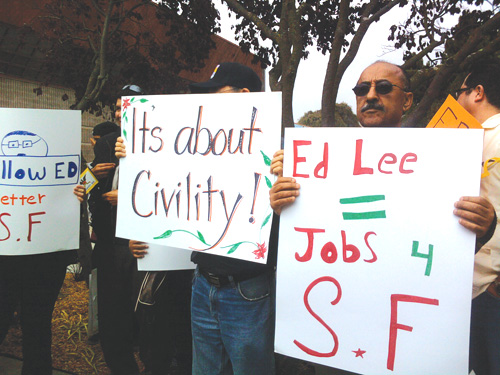
The rally is billed as a statement of support for Ed Lee, the mild-mannered bureaucrat and reluctant mayoral hopeful. But that’s not the entire — or even, perhaps, the central — agenda.

Rose Pak, who describes herself as a consultant to the Chinese Chamber of Commerce but who is more widely known as a Chinatown powerbroker, is the host of the event. She stands in front of the room, takes the microphone, and, in Cantonese, delivers a remarkable political speech.

According to people in the audience, she says, in essence, that the community has come out to celebrate and support Ed Lee — but that’s just the start. She also urges them not just to promote their candidate — but to do everything possible to prevent Leland Yee from becoming mayor.

She continues on for several minutes, lambasting Yee, the state Senator who lived in Chinatown as a child, accusing him of about every possible political sin — and turning the Lee rally into an anti-Yee crusade. And nobody in the crowd seems terribly surprised.

Across Chinatown, from the liberal nonprofits to the conservative Chamber of Commerce, there’s a palpable fear and distrust of the man who for years has been among San Francisco’s most prominent Asian politicians — and who, had Lee not changed his mind and decided to run for a full term this fall, was the odds-on favorite to become the city’s first elected Chinese mayor.

The reasons for that fear are complex and say a lot about the changing politics of Asian San Francisco, the power structure of a city where an old political machine is making a bold bid to recover its lucrative clout — and about the career of Yee himself.

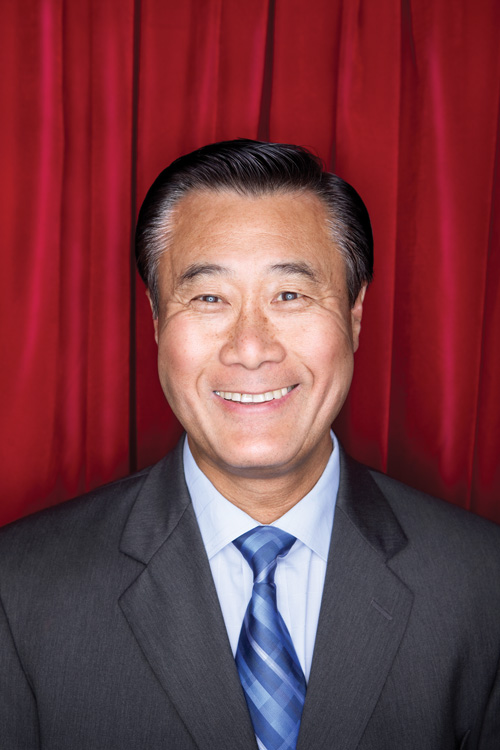
Senator Leland Yee is a political puzzle. He’s a Chinese immigrant who has built a political base almost entirely outside of the traditional Chinatown community. He’s a politician who once represented a deeply conservative district, opposed tenant protections, voted against transgender health benefits and sided with Pacific Gas and Electric Co. on key environmental issues — and now has the support of some of the most progressive organizations in the city. He’s taken large sums of campaign money from some of the worst polluters in California, but gets high marks from the Sierra Club.

His roots are as a fiscal conservative — yet he’s been the only Democrat in Sacramento to reject budget compromises on the grounds that they required too many spending cuts.

He’s grown, changed, and developed his positions over time. Or he’s become an expert at political pandering, telling every group exactly what it wants to hear. He’s the best chance progressives have of keeping the corrupt old political machine out of City Hall — or he’s a chameleon who will be a nightmare for progressive San Francisco.

Or maybe he’s a little bit of all of that.


Leland Yin Yee was born in Taishan, a city in China’s Guangdong province on the South China Sea. The year was 1948; Mao Zedong’s Communist Party of China had taken control of much of the countryside and was moving rapidly to take the major cities. The nationalist army of General Chiang Kai-Shek was falling apart, and Yee’s father, who owned a store, decided it was time for the family to leave.

The Yees made it to Hong Kong, and since Mee G. Yee had previously lived in the United States and served in the U.S. Army during World War II, he was ultimately able to move the family to San Francisco. In 1951, the three-year-old Leland Yee arrived in Chinatown.

For four years, Yee lived with his sister and mother in a one-room apartment with a shared bathroom while his father worked as a sailor in the merchant marine. It was, Yee recalled in a recent interview, a tight, closed, and largely self-sufficient community.

“The movie theater, the shoe store, the barber shop, food — everything you needed you could get in Chinatown,” Yee said. “You never had to leave.”

Of course, after a while, Yee and his mom started to venture out, down Stockton Street to Market, where they’d shop at the Emporium, the venerable department store. “It was like walking into a different country,” he said. “If you didn’t know English, they didn’t have time for you.”

Yee, like a lot of young Chinese immigrants of his era, put much of his time into his studies — in the San Francisco public schools and in a local Chinese school. “My mom spoke a village dialect, and we had to learn Cantonese,” he said. “Every little kid had to go to Chinese school. We hated it.”

When Yee was eight, his parents managed to buy a four-unit building on Dolores Street, and the family moved to the Mission, where he would spend not only the rest of his childhood but much of his early adult life. He graduated from Mission High School, enrolled in City College, studied psychology and after two years won admission to UC Berkeley.

Berkeley in 1968 was a very different world from Chinatown and even the relatively controlled environment he’d experienced at home in the Mission. “You didn’t protest in school. You’d have been sent home, and your mother would kill you,” he said.

At Berekely, all hell was breaking loose, with the antiwar protests, the People’s Park demonstrations, the campaign to create a Third World College (which led to the first Ethnic Studies Department), and a general attitude of mistrust for authority. “I developed a sense of activism,” Yee said. “I realized I could speak out.”

That spirit quickly vanished when Yee lost faith in some of his fellow activists. “People would work with us, then get into positions of power and use that against you,” he recalled. “A lot of my friends said ‘forget it.’ I left the scene.”

Yee once again devoted his energy to school, earning a masters at San Francisco State University and a Ph.D in child psychology from the University of Hawaii. Along the way, he met his wife, Maxine.

With his new degree, the Yees moved back to San Francisco — and back in with his parents at the Dolores property, where he, Maxine and a family that would grow to four kids would live for more than a decade.


Yee worked as a child psychologist for the San Francisco Department of Public Health, starting the city’s first high school mental-health clinic. He went on to become a child psychologist at the Oakland Unified School District, then joined a nonprofit mental health program in San Jose.

In 1986, Yee decided to get active in politics for the first time since college, and ran for the San Francisco School Board. He lost — and that would be the only election he would ever lose. In 1988, he won a seat, and established himself as an advocate for students of color, fighting school closures in minority neighborhoods. He also tried to get the district to modify its harsh disciplinary rules, arguing against mandatory expulsions.

On fiscal issues, though, Yee was a conservative. For his first term, despite the brutal cutbacks of the recession of the late 1980s and early 1990s, he insisted that the district make do with the money it had. His solution to the red ink: Cut waste. Only in 1992, when he was up for re-election, did he acknowledge that the district needed more cash; at that point, he supported a statewide initiative to tax the rich to bring money to the schools.

The sense of fiscal conservatism — of holding the line on taxes, but mandating open and fair contracting procedures and tight financial controls — was a hallmark of much of his political career. When the Guardian endorsed him for re-election to the board in 1992, we wrote that “there’s real value in his continuing vigilance against administrative fat and favoritism in contracts.”

Over the next four years, Yee worked with then-Superintendent Waldemar “Bill” Rojas, a deeply polarizing figure who pushed his own personal theory of “reconstitution” — firing all the staff at low-performing schools — and later was enmeshed in a scandal that led to prison time for a contractor he’d hired. Yee told me he was the only board member to vote against hiring Rojas, but people who were watching the board closely back then say he didn’t always stand up to the superintendent.

He also became what some say was a bit too close with Tim Tronson, a consultant hired by the district as a $1,000-a-day facilities consultant. Tronson wound up getting indicted on 22 counts of grand theft, embezzlement, and conspiracy in a scheme to steal $850,000 from the schools, and was sentenced to four years in state prison.

In 1998, when some school board members wanted to build housing for teachers on property that the district owned in the Sunset, Yee led the opposition — with Tronson’s help. At one meeting at Sunset Elementary School, Yee went so far as to say, according to people present, that “Tim Tronson is my man, and I rely on him for advice.”

Yee acknowledged that he worked closely with Tronson to defeat that housing project. “He was the facilities manager,” Yee explained, “and I said that I trusted his judgment.”


Yee has either a great sense of political timing or exceptional luck. He ran for the Board of Supervisors in 1996, facing one of the weakest fields in modern San Francisco history. He was the only Chinese candidate and one of just two Asians (the other, appointed incumbent Michael Yaki, barely squeaked to re-election). In an at at-large election with the top five winning seats, Yee came in third, with 103,000 votes.

He was never a progressive supervisor. In 2000, the Guardian ranked the good votes of what we referred to as Willie Brown’s Board, and Yee scored only 43 percent. He was against campaign finance reform. He supported the brutal gentrification and community displacement represented by the Bryant Square development. He voted to kill a public-power feasibility study and opposed the Municipal Utility District initiative. He opposed a moratorium on uncontrolled live-work development.

In 2002, Yee was one of only three supervisors to oppose Proposition D, a crucial public-power measure that would have broken up PG&E’s monopoly in the city. He stood with PG&E (and then-Sups. Tony Hall and Gavin Newsom) in opposition to the measure, then signed a pro-PG&E ballot argument packed with PG&E lies.

When I asked him about that stand, Yee at first didn’t recall opposing Prop. D, but then said he “stood with labor” on the issue. In fact, the progressive unions didn’t oppose Prop. D at all; the opposition was led by PG&E’s house union, IBEW Local 1245.

Yee was particularly bad on tenant issues. He not only voted to deny city funding for the Eviction Defense Collaborative, which helped low-income tenants fight evictions; he actually tried to get the city to put up money for a free legal fund to help landlords evict their tenants. He opposed a ballot measure limiting condo conversions. He opposed a measure to limit the ability of landlords to pass improvement costs on to their tenants.

In 2001, Yee voted to uphold a Willie Brown veto of legislation to limit tenancies in common, a backdoor way to get around the city’s condo conversion ordinance. Only Hall and Newsom, then the most conservative supervisors on the board, joined Yee. At one point, he started asking whether the city should consider repealing rent control.

He opposed an affordable housing bond in 2002, joining the big landlord groups in arguing that it would raise property taxes. Every tenant group in town supported the measure, Proposition B; every landlord group opposed it.

I asked Yee about his tenant record, and he told me that he now supports rent control. But he said that he was always on the side of homeowners and small landlords, and that property ownership was central to Chinese culture. “I was responding to the Chinese community and the West Side,” he said.

He wasn’t much of an environmentalist, either — at least not in today’s terms. He was one of the only city officials to support a “Critical Car” rally in 1999, aimed at promoting the rights of vehicle drivers (and by implication, criticizing Critical Mass and the bicycle movement).

His record on LGBT issues was mixed. While he supported a counseling program for queer youth when he was on the school board, he also supported JROTC, angering queer leaders who didn’t want a program in the public schools run by, and used as a recruiting tool for, the military, which at that point open discriminated against gay and lesbian people.


Yee was also one of only two supervisors who voted in 2001 against extending city health benefits to transgender employees.

That was a dramatic moment in local politics. Nine votes were needed to pass the measure, and while eight of the supervisors were in favor, Yee and Hall balked. At one point, Board President Tom Ammiano had to direct the Sheriff’s Office to go roust Sup. Gerardo Sandoval, who was ducking the issue in his office, to provide the crucial ninth vote.

Yee didn’t just vote against the bill. According to one reliable source who was there at the time, Yee spoke to a community meeting out on Ulloa Street in the Sunset and berated his colleagues, quipping that the city should have better things to do than “spend taxpayer money on sex-change operations.”

It was a bit shocking to trans people — Yee had, over the years, befriended some of the most marginalized members of what was already a marginalized community. “There was one person at the rail crying, saying ‘Leland, how could you do this to us,'” Ammiano recalled.

The LGBT community was furious with Yee. “I didn’t speak to him for at least a year,” Gabriel Haaland, one of the city’s most prominent transgender activists, told me.

Yee now says the vote was a mistake — but at the time, he told me, he was under immense pressure. When he voted for the queer youth program, he said, “the elders of the Chinese community ripped me apart. They called my mother’s friends back in the village [where he was born] and said her son was embarrassing the Chinese community.”

That must have been difficult — and he said that “if I had known the pain I had caused, I wouldn’t have voted that way.” But it was hard to miss that pain his vote caused.

On the other hand, people learn from their experiences, attitudes evolve, we all grow up and get smarter, and the way Yee describes it, that’s what happened to him.

In 2006, when he was running for state Senate, Yee met with a group of trans leaders and formally — many now say sincerely — apologized. It was an important gesture that made a lot of his critics feel better about him.

“He didn’t have to do that,” Haaland said. “People change, and he paid for his crime, and that’s genuine enough for me.”

As a former school board member, Yee kept an interest in the schools — but not always a healthy one. At one point, he actually proposed splitting SFUSD into two districts, one on the (poorer) east side of town and one on the (richer) west. “We strongly opposed that,” recalled Margaret Brodkin, who at the time ran Coleman Advocates for Children and Youth. “Eventually he dropped the idea.”

For all the problems, in his time on the Board of Supervisors, Yee developed a reputation for independence from the Brown Machine, which utterly dominated much of city politics in the late 1990s. His weak 43 percent rating on the Guardian scorecard was actually third-best among the supervisors, after Ammiano and the late Sue Bierman.

In 1998, he was one of the leaders in a battle to prevent the owners of Sutro Tower from defying the city’s zoning administrator and placing hundreds of new antennas on Sutro Tower. He, Bierman, and Ammiano were the only supervisors opposing Brown’s crackdown on homeless people in Union Square.

When he ran in the first district elections, in 2000, against two opponents who had Brown’s support and big downtown money, the Guardian endorsed him, noting that while he “can’t be counted on to support worthy legislation … He’s one of only two board members who regularly buck the mayor on the big issues.”

(He never liked district elections, and used to take any opportunity to denounce the system, at times forcing Ammiano to use his position as president to tell Yee to quit dissing the electoral process and get to the point of his speech.)


In 2002, the westside state Assembly district seat opened up, and both Yee and his former school board colleague Dan Kelly ran in the Democratic primary. Yee won, and went on to win the general election with only token opposition.

His legislative record in the Assembly wasn’t terribly distinguished. Yee never chaired a policy committee — although he did win a leadership post as speaker pro tem. And he cast some surprisingly bad votes.

In 2003, for example, then-Assemblymember Mark Leno introduced a bill that would have exempted single-room occupancy hotels from the Ellis Act, which allows landlords to evict tenants for no reason. Yee refused to vote for the bill. Leno was furious — he was one vote short of a majority and Yee’s position would have doomed the bill. At the last minute, a conservative Republican who had grown up in an SRO hotel voted in favor.

When he ran for re-election in 2004, we noted: “What’s Leland Yee doing up in Sacramento? We can’t figure it out — and neither, as far as we can tell, can his colleagues or constituents. He’s introduced almost no significant bills — compared, for example, to Assemblymember Mark Leno’s record, Yee’s is an embarrassment. The only high-profile thing he’s done in the past several years is introduce a bill to urge state and local governments to allow feng shui principles in building codes.”

In 2006, Yee decided to move up to the state Senate, and he won handily, beating a weak opponent (San Mateo County Supervisor and former San Francisco cop Mike Nevin) by almost 2-1. His productivity increased significantly in the upper chamber — and in some ways, he moved to the left. He’s begun to support taxes — particularly, an oil severance tax — and when I’ve questioned him, he somewhat grudgingly admits that Prop. 13 deserves review.

He’s done some awful stuff, like trying to sell off the Cow Palace land to private developers. But he has consistently been one of the best voices in the Legislature on open government, and that’s brought him some national attention.

Yee has been a harsh critic of spending practices and secrecy at the University of California, and when UC Stanislaus refused in 2010 to release the documents that would show how much the school was paying Sarah Palin to speak at a fundraiser, Leland flew into action. He not only blasted the university and introduced legislation to force university foundations to abide by sunshine laws; he worked with two Stanislaus students who had found the contract in a dumpster and made headlines all over the country.

He’s fought for student free speech rights and this year pushed a bill mandating that corporations that get tax breaks for job creation prove that they’ve actually created jobs — or pay the tax money back. He’s also won immense plaudits from youth advocates and criminal justice reformers for his bill that would end life-without-parole sentences for offenders under 18.

Along the way, he compiled a 100 percent voting record from the major labor unions, including the California Nurses Association and SEIU, and with the Sierra Club. All three organizations have endorsed him for mayor.

Yee told me that he thinks he’s become more progressive over the years. “My philosophy has shifted,” he said.

Yet when you talk to his colleagues in Sacramento, including Democrats, they aren’t always happy with him. Yee has a tendency to be a bit of a loner — he’s never chaired a policy committee and in some of the most bitter budget fights, he’s refused to go along with the Democratic majority. Yee insists that he’s taken principled stands, declining to vote for budget bills that include deep service cuts. But the reality in Sacramento is that budget bills have until this year required a two-thirds vote, meaning two or three Republicans have had to accept the deal — and losing a Democratic vote has its cost.

“You have to give up all sorts of things, make terrible compromises, to get even two Republicans,” one legislative insider told me. “When a Democrat goes south, you have to find another Republican, and give up even more.”

In other words: It’s easy to take a principled stand, and make a lot of liberal constituencies happy, when you aren’t really trying to make the state budget work.


I met Rose Pak on a July afternoon at the Chinatown Hilton. She brought along her own loose tea, in a paper package; the waitress, who clearly knew the drill, took it back to the kitchen to brew. Pak and I have not been on the greatest of terms; she’s called the Guardian all kinds of names, and I’ve had my share of critical things to say about her. But on this day, she was polite and even at times charming.

After we got the niceties out of the way (she told me I was unfair to her, and I told her I didn’t like the way she and Willie Brown played politics), we started talking about Yee. And Pak (unlike some people I interviewed for this story) was happy to speak on the record.

She told me Yee had “no moral character.” She told me she couldn’t trust him. She told me a lot of stories and made a lot of allegations that we both knew neither she nor I could ever prove.

Then we got to talking about the politics of Chinatown and Asians in San Francisco, and a lot of the animosity toward Yee became more clear.

For decades, Chinatown and the institutions and people who live and work there have been the political center of the Chinese community. Nonprofits like the Chinatown Community Development Center have trained several generations of community organizers and leaders. The Chinese Chamber of Commerce, the Six Companies, and other business groups have represented the interests of Chinese merchants. And while the various players don’t always get along, there’s a sense of shared political culture.

“In Chinatown,” Gordon Chin, CCDC’s director, likes to say, “it’s all about personal connections.”

There’s a lively infrastructure of community-service programs, some of which get city money. There’s also a sense that any mayor or supervisor who wants to work with the Chinese community needs to at least touch base with the Chinatown establishment.

Yee doesn’t do that. “He doesn’t give a shit about them,” David Looman, a political consultant who has worked with many Chinese candidates over the years, told me.

Yee’s Asian political base is outside of Chinatown; he told me he sees himself representing more of the Chinese population of the Sunset and Richmond and the growing Asian community in Visitacion Valley and Bayview.

Pak is connected closely to Brown, who Yee often clashed with. For Pak, Brown, and their allies, strong connections to City Hall mean lucrative lobbying deals and public attention to the needs of Chinatown businesses. Then there’s the nonprofit sector.

CCDC and other nonprofits do important, sometimes crucial work, building and maintaining affordable housing, taking care of seniors, fighting for workers rights, and protecting the community safety net. Yee, Pak said, “has never shown any interest in our local nonprofits. We all work together here, and he doesn’t seem to care what we do.” Yee told me he has no desire to see funding cut for any critical social services in any part of town. But he has also made no secret of the fact that he questions the current model of delivering city services through a large network of nonprofits, some of which get millions of taxpayer dollars. And the way Pak sees it, all of that — the nonprofits, the business benefits, the contracts — are all at risk. “If Leland Yee is elected mayor,” she told me, “we are all dead.”

I ran into an old San Francisco political figure the other day, a man who has been around since the 1970s, inside and outside of City Hall, who remains an astute observer of the players and the power relationships in the local scene. At the time we talked, he wasn’t supporting any of the mayoral candidates, but he had a thought for me. “This town,” he said, “is being taken over by a syndicate. Willie Brown is the CEO, and Rose Pak is the COO, and it’s all about money and influence.”

That’s not a pleasant thought — I’ve lived through the era of political machine dominance in this town, and it was awful. In the days when Brown ran San Francisco, politics was a tightly controlled operation; only a small number of people managed to get elected to office without the support of the machine. Developers made land-use policy; gentrification and displacement were rampant; corruption at City Hall turned a lot of San Franciscans off, not only to the political process but to the whole notion that government could be a positive force in society.

A few years ago, I thought those days were over — and to a certain extent, district elections will always make machine politics more difficult. But when I see signs of the syndicate popping up — and I see a candidate like Ed Lee, who’s close friends with Brown, leading the Mayor’s Race — it makes me nervous. And for all his obvious flaws, at least Leland Yee isn’t part of that particular operation. If there’s a better reason to vote for him, I don’t know what it is.

YEE HOME PURCHASE RAISES SUSPICIONS

Rose Pak has a question about Leland Yee. “How,” she asked me, “did the guy manage to buy a million-dollar house on a $30,000 City Hall salary?”

Pak isn’t the only one asking — numerous media reports over the years have examined how Yee raised a family of four and bought a house in the Sunset on very little visible income. And while I’m not usually that interested in the personal finances of political candidates, I decided that it was worth a look.

Here’s what I found: Public records show that in July 1999, Yee and his wife, Maxine, purchased a house on 24th Avenue for $875,000 (it’s now assessed at slightly more than $1 million). At the time, Yee was a San Francisco supervisor, earning a little more than $30,000 a year. (The salary of the supervisors was raised dramatically shortly after Yee left the board and went to the state Assembly.) His wife wasn’t working. And his economic interest statements for that period show no other outside earnings. So the disposable, after-tax income of the entire Yee family couldn’t have been much more than $25,000.

That, by any normal standard, shouldn’t have been enough to float a mortgage that, records show, totaled $516,000. In fact, the interest payments alone on that mortgage alone would total $3,600 a month — more than Yee’s gross income.

Documents in the Assessor’s Office show another paper trail, too. In 1989, Jung H. Lee, Yee’s mother, transferred the deed on a four-unit Dolores St. building where the family had been living to Maxine and Leland Yee — for no money. And a few months before the Yees bought the Sunset house, they took out a $320,000 home-equity loan on that property. That was the down payment on the Sunset property.

Still: At that point, the Yees would have been paying off two mortgages, with a total nut of about $5,000 a month — and supporting four kids, in San Francisco. In 2002, Yee’s economic interest statement’s show some modest income from teaching at Lincoln University — but nowhere near enough to pay that level of expenses.

What happened? Yee explains it this way: “For more than 10 years, we were living rent-free in my parents’ property,” he told me I an interview. “We were a close Chinese family, and my parents provided the food and helped pay for the children’s clothing. So we had almost no expenses and we lived very frugally.”

During that period, Yee was working for the San Francisco Department of Public Health, the Oakland Unified School District, and a San Jose nonprofit, earning, he said, between $50,000 and $90,000 a year. If he saved almost all of that money, he would have had more than a half-million dollars in the bank when he bought the Sunset house.

There’s nothing on any of his economic disclosure forms showing any ownership of stocks or other reportable financial interests during that period, so he wasn’t investing the money. In fact, he says, it was, and is, all in simple savings accounts. A bit unusual for that large a sum of money.

How did he get a mortgage? “Back then,” he said, “banks were willing to lend a lot more freely than they do today.”

Starting in 2003, Yee was in the state Assembly, making a higher salary — but still not much in excess of $100,000 a year. After taxes, he was probably taking home about $75,000 — and $60,000 was going to the two mortgages.

How did he do it? “We have been supplementing our income with our savings,” he said. “We don’t take vacations, we are very careful with our money.” And they clearly aren’t desperate for cash — Yee’s daughter occupies two of the four units in the Dolores St. building they own, but the other two units are vacant.

It’s possible. It’s plausible. But I don’t blame people for wondering how he managed to pull it off. (Tim Redmond, with research assistance by Oona Robertson) 


BIG CORPORATIONS HAVE BACKED YEE

Yee became a prodigious fundraiser in Sacramento — and a lot of the money came from big corporations that had business in the Legislature. And while he has perfect scores from the Sierra Club and the big labor unions, he’s taken tens of thousands of dollars from some of the biggest corporations, agribusiness interests, and polluters in the state. And at times, he’s voted their way.

Since 1993, for example, campaign finance records show Yee has taken more than $20,000 from Chevron, ExxonMobil, Valero, Conoco Phillips, and BP. He’s received another $22,450 from the chemical industry (and industry employees). Most of it came from Clorox, Dow Chemical, and Dupont.

And while the Sierra Club may not have considered it a priority, Sen. Mark Leno has worked hard to pass a bill limiting chemical fire retardants in furniture. In 2008, Yee voted against Leno’s AB 706.

That year he also refused to support a bill that would prohibit the use of the chemical diacetyl in workplaces. The industries that opposed AB 514 (including Bayer, Abbott Laboratories, Pfizer, and Johnson & Johnson) have given Yee a total of more than $60,000.

In 2003, Yee voted against a crucial tenant bill, one that would have prevented the owners of single room occupancy hotels from using the Ellis Act to evict tenants. He received a campaign check for $2,500 from the San Francisco Apartment Association the next day. Landlords in general have given Yee close to $40,000.

Then there’s agribusiness. Yee gets a lot of money from the farming industry, despite the fact that there obviously aren’t many farms in his district. Why, for example, would the California Poultry Association, the California Cattlemen’s Association, and the California Farm Bureau give him money? The Poultry Association’s Bill Mattos told us that Yee “has taken a keen interest in California’s poultry industry.”

Yee also took immense flak from the San Francisco Chronicle and other papers over a 2003 vote against a bill to limit emissions from farm vehicles. In an editorial, the paper wrote that he was “doing dirty work for the lobbyists.” In the end, under immense public pressure, he switched positions and voted for the bill. I asked Yee about all that money from all those bad operators, and he told me — as most politicians will — that campaign cash has never influenced any of his votes.

So why do all these groups give him money? “It’s about whether you will sit down and listen,” Yee said. “I will talk to all sides and at least consider the arguments as a thoughtful human being. Then I vote my conscience.” (Tim Redmond, with research by Oona Robertson) 

Parking on the park

13

news@sfbg.com

In a steering committee meeting for the Dolores Park Rehabilitation Project on August 4, San Francisco Recreation and Park Department (RPD) officials stunned the committee with a proposal to bring in more food trucks. The move came just two days after a ballot measure that would have banned more such leases in city parks was removed from the fall ballot.

The proposal included putting in a “cement pad,” with electrical and water hookups, where food trucks would park and sell their fare. It was just the latest in a series of controversial attempts to monetize park resources to raise funds for RPD (see “Parks Inc.,” July 12). But the steering committee reeled at the idea, worried it would permanently harm the image of Dolores Park.

“It was a surprise. It really hadn’t come up before,” said Rachel Herbert of Dolores Park Café, a steering committee member. Many of the neighbors don’t like the idea of commercializing the park because there’s no infrastructure to support it, she said.

“It personally made me question if the steering committee meetings are really just a way for Rec & Park to say, ‘We reached out to the community,'” said Herbert. The rehabilitation project is in its early stages of design and development, with a predicted completion date of April 2014.

There’s already one semi-permanent food truck in the park — the La Cocina-incubated, generator-powered Chaac-Mool truck — which is parked in the main park entrance. “We felt it would be irresponsible to ignore discussing a place for more food trucks in the new design,” said Jake Gilchrist, the park rehabilitation project manager.

“There were a lot of members in the room that didn’t want this to happen,” said steering committee member Robert Brust of the nonprofit Dolores Park Works. Brust said the argument over the proposal lasted all of five minutes before landscape architect Steve Cancian, employed by RPD to facilitate the meetings, “took it off the table.”

But it doesn’t look like they’re willing to give it up, said Brust. “The fight over the ‘commercialization’ of the park is at a stalemate right now,” he said. “Rec & Park has always sold stuff—they’re just trying to capitalize on it a little more now.”

Despite the steering committee’s obvious and immediate discontent with the idea to create a cemented, permanent space for food trucks, RPD officials say they are continuing to include the idea in community discussions. But they say they are open to suggestions.

“At the end of the day, it’s the community’s park,” RPD spokesperson Connie Chan told us. “We understand that whatever vision that we have, it needs to be with the community.”

The meeting came just two days after members of the Board of Supervisors killed a previously approved ballot measure that had been written by the group Take Back Our Parks, which had been severely criticized by RPD, Mayor Ed Lee, and supporters of the department’s privatization efforts. John Rizzo, a member of that group, expects RPD to move ahead with the proposal for Dolores Park.

“They never change something because of public opposition,” Rizzo said. “It’s the same stamp they use all over the city. They come up with these plans to make money and then they unveil the plans to the public.”

Rizzo suggested that the public contact San Francisco supervisors and the mayor to be heard regarding the privatization of parks, because “the [Recreation and Park] Commission is deaf ears.” Either way, Herbert said, significant changes are in store for Dolores Park, including the possibility of putting in a 14-foot paved road for vehicles. “I just really was kind of sad when I left that meeting. I don’t know if anyone’s really going to be able to make a difference. It seems like we’re in danger of it being built,” she said. “It’s not gonna be our sweet little Dolores Park anymore.”

Caught in a RAT trap

2

rebeccab@sfbg.com

Things are not always as they seem. That’s a lesson Matthew Martinez and Thad Conley learned the hard way — each of them after becoming unwitting targets of San Francisco Police Department (SFPD) sting operations that landed them in San Francisco County Jail, bewildered.

It was early October of 2010, and Martinez had just finished his shift as a chef at a San Francisco restaurant and was headed home when he encountered a man who seemed very intoxicated, near Eighth and Mission streets. The man asked him for a cigarette, so Martinez handed him one.

But then the man gestured to his chest, a move Martinez later explained he interpreted as an invitation to take one of the crumpled dollar bills that was spilling out of the disheveled drunk’s pocket, as payment for the cigarette. Martinez testified in court that he took one dollar, but tucked the other bills safely back into the hapless individual’s pocket.

As soon as Martinez had the bill in his hand, he was surrounded. Not only was the man who’d wanted a cigarette not drunk, he was a police officer. One of eight police officers. The undercover officer gave an arrest signal, and seven cops who had quietly been standing ready closed in, placing the 28-year-old chef under arrest.


TAKING THE BAIT

The cops had been staked out on the street for a sting operation as part of SFPD’s Robbery Abatement Team (RAT), a controversial unit that has drawn criticism from the San Francisco Public Defender’s Office for targeting some of the city’s poorest neighborhoods for busts, using cash as bait and sometimes snagging people with no prior criminal records.

Some of the same officers engaged in RAT stings have come under investigation for alleged misconduct in connection with a string of incidents at single room occupancy (SRO) hotels, publicized in a series of surveillance videos aired at press conferences earlier this year by San Francisco Public Defender Jeff Adachi.

“RAT … is used citywide as an effective tool to prevent robberies of innocent victims,” SFPD spokesperson Albie Esparza told the Guardian. “The Police Department uses this operation to catch people that are preying on the vulnerable. The theory is, you catch these people and get them off the street to prevent more robberies or more serious crimes from occurring, thus providing a safer neighborhood. Over 50 percent of the suspects arrested in RAT operations have a history of robbery or theft and a majority are on parole or probation.”

Esparza confirmed that some of the officers have been pulled from RAT duties. “Some of the officers that participated in the RAT operations are not actively working in that capacity due to the SRO/Henry Hotel investigations,” he said, referring to the alleged misconduct cases.

A couple months before Martinez’s ill-fated encounter with the man who he thought wanted to buy a cigarette, Conley was visiting San Francisco from Cincinnati to see friends and attend the Outside Lands music festival when he noticed something strange. Some women had made a show of leaving a car parked, with the doors open and engine still running, in the bus zone near the McDonald’s at Haight and Stanyan streets.

As they climbed into a cab, they spoke as if they were pulling a stunt to get back at a guy. According to Corey Farris, a public defender who represented Conley, he took it upon himself to move the car to a safe place. He first pulled it into the McDonald’s lot, but after someone informed him it would only get towed if he left it there, Farris says, Conley drove the car to a nearby police station.

The car had been placed there by SFPD and KKI Productions, which produces a television show called Bait Car. The whole thing was taped, and in footage obtained by the Guardian that was shot inside a stakeout vehicle where a cop and television producer were monitoring the scene, they can be heard laughing about sexually explicit comments one of them makes about a woman who walks in front of the camera.

At one point, the unidentified undercover officer wonders out loud who would take the bait, saying, “I was kinda hoping the Latin guy would do it.” Later in the video, when Conley comes into view after being apprehended by uniformed officers outside the police station where he’d parked the car, he’s heard explaining to officers that he moved the car because he didn’t want to see it towed.

“I read the police report,” Farris said. “And the police report doesn’t reference any of my client’s statements whatsoever. He says, ‘I’m taking it to the police station.’ That just seems like a big fact to leave out when you’re charging them for stealing the car.”


TELLING IT TO THE JUDGE

That dollar Martinez said he thought was meant as payment for a smoke snowballed into an expensive and time-consuming legal problem. He was held in jail for several days, according to his attorney, Prithika Balakrishnan, a public defender.

When Martinez, who is epileptic, asked to retrieve from his backpack the medication he takes to prevent seizures, his request was denied, Balakrishnan said. Unable to access his meds, he asked if he could sleep on a lower bunk in his jail cell in case he had a seizure, and Balakrishnan says that request was denied, too. The San Francisco Sheriff’s Department had not responded to a request for comment by press time.

Martinez’s trial was held in December 2010 and lasted several days. The officer who had been in plainclothes posing as a drunk denied ever motioning to his chest. At the end of the whole fiasco, it took a jury less than 20 minutes to find Martinez not guilty of grand theft. Disgusted, he left San Francisco soon after.

Conley, meanwhile, flew in from Cincinnati almost a year later for his trial date — only to be told upon arrival that his case had been dismissed.

Their cases were particularly bizarre, but Martinez and Conley aren’t the only ones to be targeted by undercover robbery abatement operations. A similar formula is employed in many cases, according to Deputy Public Defender Bob Dunlap, who heads up the office’s Felony Unit. An average of nine officers are staked out along the street, with a decoy officer posing as an easy target.

“He’ll have money crumpled up into balls in his shirt pocket,” Dunlap explains. “He’ll adopt the persona of someone who’s extremely intoxicated.” When someone tries to swipe the loose bills, the offender is immediately arrested. It’s easy to prove that the suspects are guilty. The offenders will have “marked city funds” in their possession — bills that have been photocopied in advance so serial numbers can be matched for evidence.

According to a tally of cases from the Public Defender’s Office, the average amount of money stolen in a RAT sting is $28, and there have been 118 cases filed with the Public Defender’s Office in connection with these undercover operations since 2007. Around 46 percent of all RAT stings take place in the Tenderloin, and 68 percent of the arrestees are black, according to Public Defender statistics. Officers are sometimes paid overtime while conducting RAT operations, and they earn extra pay for court appearances as well.

Just 35 percent of the cases were charged as misdemeanors, and the rest as felonies, according to the tally. “If it’s charged as a robbery, it counts as a strike offense,” points out Matt Gonzalez, chief attorney of the Public Defender’s Office. He’d like to know whether the program will continue under the direction of newly installed Police Chief Greg Suhr, particularly since some of the officers have been pulled from RAT operations in the wake of the SRO scandal, but SFPD has not made any indications that it will reevaluate the practice.

While the busts may be catching criminals who would be taking advantage of vulnerable residents, Gonzalez and Dunlap question the tactic of manufacturing crime, saying it’s an expensive operation that isn’t the best use of public resources. Dunlap likens it to a fishing expedition with an incredibly shallow reach. “They’re creating a different situation than they’re trying to abate,” he says. “There’s something distasteful about going into the poorest neighborhoods and fishing with money.”

Threats or payback?

1

news@sfbg.com

Officers from the San Francisco Police Department arrested a 21-year-old activist from Hunters Point less than 24 hours after he appeared on a public access television show where he indicted the police for a recent shooting and named officers he says have personally harassed him.

Around 4 p.m. on Saturday, July 23, Debray Carpenter, who is also known as Fly Benzo, was arrested near the intersection of Oakdale Avenue and Lane Street and booked on charges of threatening a police officer and resisting arrest. After spending almost four days in jail, the District Attorney’s Office declined to file any charges and Carpenter was released.

“If they feel like they can charge me, they would’ve,” Carpenter said after his release. “SFPD lies and that’s a fact. I just want the people to see how they lie. Just like they are lying about me, they could be lying about Kenneth Harding. Anything they say needs to be taken with a grain of salt.”

On July 16, police shot and killed Kenneth Harding Jr. while he was running from police. When officers stopped Harding at the 3rd and Oakdale Muni platform and asked him to produce a transfer, he bolted. The official story is that while he was running away, Harding pulled out a gun and fired at least one shot at police before they returned fire. Police later said the shot that killed him pierced his neck on the right side and was fired from his own gun, but some witnesses say that Harding didn’t have a gun, and many people in the community still have doubts about what happened.

Carpenter has spoken out against Harding’s death on the TV news, and he has participated in and organized protests calling for greater police accountability in the weeks following the shooting. On July 22, Carpenter appeared as the only guest on the public access program “CLAER Da Corner,” a 90-minute show hosted by Sharen Hewitt, the executive director of Community Leadership Academy & Emergency Response Project (CLAER), an anti-violence nonprofit.

During his appearance on the program, Carpenter named several SFPD officers who he claimed had harassed him in the past. He also recounted an exchange that took place a few days earlier on July 19. It was during this encounter that police say Carpenter made the criminal threat for which he was later arrested.

The police version of the incident differs significantly from the story that Carpenter shared with Hewitt on her show before his arrest.

According to Carpenter, he was with a group of people having a casual conversation with an SFPD officer as two other officers drove up and aggressively pursued a teenager for no apparent reason. When the group asked the officers about their behavior, one of the officers explained that she’s from New York, said Carpenter.

This prompted Carpenter to bring up Sean Bell, a young man who was gunned down by the NYPD, and the officer replied, “I haven’t shot anyone, yet,” according to Carpenter.

“Ya’ll bleed too. Just how we bleed, ya’ll bleed,” Carpenter shot back.

He told the host that the officer then responded by asking, “Is that a threat?”

“No, that’s a fact,” replied Carpenter. The police then drove away, he said.

But the police say that Carpenter threatened to kill one of the officers and was aggressive from the moment they arrived.

“Carpenter started yelling at them and he said, ‘White pig bitch I’m gonna put one in you,'” SFPD spokesman Lt. Troy Dangerfield told us.

“You bleed like I do. I’m gonna put one in you and show you,” Carpenter allegedly told police after being asked if his previous statement had been a threat, according to Dangerfield.

“There was a large crowd of people that began circling around the officers and they determined it was unsafe to make an arrest at the time,” Dangerfield said. “One of our rules is if you know somebody you don’t have to make an arrest right there and cause a big scene.”

The police arrested Carpenter four days later and booked him for allegedly making terrorizing threats and resisting arrest. While in jail Carpenter told his lawyer, John Hamasaki, that he didn’t know why he had been arrested and Hamasaki said at the time he wasn’t sure either.

“The arrest stinks,” Hamasaki told us. “Just an exercise of power by the police letting folks know if they speak up, they can be locked up.”

The District Attorney’s Office said that it declined to file charges because there was insufficient evidence to secure a conviction but declined to go into further detail.

“It is not uncommon for the District Attorney to drop charges that are against the police,” said Dangerfield, the police spokesman. “Unless there’s injuries, photos and things like that, they rarely want to prosecute a lot of threats against police officers, and even more resisting arrest, because they think that’s the type of business we’re in.”

“That’s bullshit,” said Hamasaki. “(Crimes against police are) the hardest things for us to negotiate to get them to come down. … The DA doesn’t want to upset the rank and file.”

Erica Derryck, a spokeswoman for the District Attorney’s Office, also disagreed with Dangerfield’s assessment.

“We take seriously any threats against San Franciscans whether they are uniformed sworn officers or members of the general public,” Derryck said. “We review every case on a case-by-case basis.”

Carpenter says he isn’t the only one being targeted for his activism in Hunters Point. Police arrested Henry Taylor, 54, as he was on his way to speak up at the July 20 town hall meeting at the Bayview Opera House in which Chief Greg Suhr’s appearance ignited pandemonium (see “Anger erupts over police shootings,” July 27).

Dangerfield said that police arrested Taylor for violating a stay-away order, but Taylor says that he isn’t under a stay-away order for that area and that police arrested him to prevent him from testifying at the town hall meeting.

No recordings are known to exist between Carpenter and the officer, just as no video recordings have revealed exactly what happened between Harding and the police on the 3rd Street Muni platform. There are several videos of the immediate aftermath, including footage of Harding writhing on the ground while police raised their weapons and denied him first aid, but apparently no video of the shooting itself. In Oakland, all officers are now issued small cameras to wear on their uniforms that record every interaction an officer has with the public. In the case of both Carpenter and Harding, such equipment would likely provide answers to what actually transpired, but Dangerfield said the SFPD has no plans to follow Oakland’s lead. “I know the chief of police has said he is looking into cameras for officers who do plain clothes assignments, and warrant arrests, and things like that. For the general patrol force, at this point, that’s not the case,” Dangerfield said. “There are some officers who do carry their own. … There’s no rule that says that can’t be done.”

Hetch Hetchy: Two visions

1

Editors note: We received two interesting commentaries on our Hetch Hetchy cover story (“Damn the Dam,” 8/10/2011). They appear below, offering very different perspectives on the issue.


OPINION Thank you for writing about our campaign to restore Yosemite’s Hetch Hetchy Valley and return it to the American public. We do not, however, propose “to remove SF’s main water and power source.” Most of San Francisco’s water comes from the Tuolumne River and will continue to do so; SF will simply store it elsewhere. As for power, removal of the O’Shaughnessy Dam will not reduce the power delivered to the city, but will mean less power sold to agribusiness in the Central Valley.

You erred in your conclusion about the impact of the restoration on the city’s Community Choice Aggregation (CCA) program; large hydropower is not considered “renewable” by state standards, so Hetch Hetchy power cannot be included in CCA’s stated goal of 51% renewable energy by 2017.

And please don’t buy in to the notion that America can no longer afford big ideas. The restoration of Hetch Hetchy Valley will be the most significant environmental restoration project in human history. It will strengthen not only the fragile Yosemite ecosystem but also the field of restoration science. It will inspire restoration efforts worldwide.

Mike Marshall is the executive director of Restore Hetch Hetchy


Rebecca Bowe’s recent article regarding efforts by the Restore Hetch Hetchy organization to tear down Hetch Hetchy Reservoir provides a fairly balanced telling of the two sides of the story. However, some key facts were omitted.

First, the case for tearing down Hetch Hetchy is largely based upon a paper written by a masters student at UC Davis in 2003 (see “Re-assembling Hetch Hetchy: Water Supply Implications of Removing O’Shaughnessy Dam”, by Sarah E. Null, December 2003). In her paper, Null bases the feasibility of tearing down Hetch Hetchy on the availability of replacement storage in New Don Pedro Reservoir, which is owned and operated by the Modesto and Turlock Irrigation Districts. Null’s premise is that if San Francisco were to lose Hetch Hetchy it could use storage space in the New Don Pedro reservoir.

This is not possible, as San Francisco has no ownership interest in NDP. Rather, it has the right to pre-deposit water it owes to the districts due to the districts’ senior water rights. Then when the city needs water, it withholds the water upstream at Hetch Hetchy and the districts debit the city’s account in NDP.

The districts have made it clear they do not intend to let the city take over part of their reservoir.

A second key fact is that if the city does not use Hetch Hetchy — and since it can’t use NDP — its water rights will be of little use. While state water rights laws are complex and esoteric, seniority is the general rule. The city’s water rights are junior to those of the districts. If San Francisco can’t exercise its water rights through the Hetch Hetchy system, it would have to take its water from the Delta. The result would be a substantial loss of water and water quality to San Francisco.

As to the loss of hydropower, the article correctly records the permanent loss of 400 megawatts of clean hydropower. The result would be a major new customer for Pacific Gas and Electric Company.

Tom Berliner is a former deputy city attorney who helped negotiate the city’s water and power contracts with the Turlock and Modesto Irrigation Districts.

Editor’s notes

0

tredmond@sfbg.com

Gavin Newsom rode into the Mayor’s Office with a campaign to take welfare money away from homeless people. Jeff Adachi’s campaign for mayor is fueled by his attempt to cut city-employee pension costs. It’s an effective tactic: You put an initiative on the ballot and campaign as its sponsor, with your name attached — and while direct fundraising for mayoral candidates is tightly restricted (contribution limits, no corporate money), ballot-measure campaigns can collect unlimited cash, from almost anyone. Pick a popular issue (and attacking homeless people and city workers seems to have a lot of traction these days) and your chances of getting elected get a nice boost.

So why has no candidate running for citywide office in San Francisco ever made tax reform the center of his or her campaign?

I realize that tax reform is boring. Slogans like “shared progressive values” and words like “together” play much better in the focus groups. But think about it: Nearly every major national poll shows that the voters — by a margin of roughly 2-1 — think that tax increases should be part of the solution to the nation’s budget woes. Since San Francisco is way more liberal than the nation as a whole, the margin in this city is probably about 3-1.

Naturally, the poll numbers depend on how you ask the question, so let me suggest a way to frame it that’s entirely honest and consistent with what I suspect most the voters in this city believe. “Since 400 American families now own more wealth than 50 percent of the entire population put together, should San Francisco’s budget problems be solved in part with higher taxes on very rich residents and businesses?”

You might actually get 90 percent support on that one.

Look: Warren Buffett, one of the richest people in the world, recently wrote an opinion piece in the New York Times saying that his class isn’t paying its fair share. Warren Hellman, one of the richest people in San Francisco, told me the same thing a couple of months ago. (In 2006, in a particularly revealing interview, Buffett told economics writer Ben Stein that “there’s class warfare, all right, but it’s my class, the rich class, that’s making war, and we’re winning.”) This is mainstream stuff now.

And I know some of the candidates, particularly Sup. John Avalos, support new taxes on the wealthy, and Assessor Phil Ting wants to repeal parts of Prop. 13. But nobody has ever made this a signature issue. Nobody’s ever made taxing the rich his or her version of Care Not Cash. I’m thinking maybe it’s time.

Pointless waste at SFPD

1

EDITORIAL So you’re sitting in a doorway, filling a bowl from the dregs of what was once an eighth of (perhaps nonmedical) bud, and some guy comes up an offers you $20 for what’s left in the little plastic bag. Maybe you’re unemployed, or maybe just a bit short of cash, but either way, it’s a no-brainer: For $20, you can some more pot. If the guy’s that desperate, and he’s waving the cash in front of you, what are you going to do?

So you take his money and give him the bag — and next thing you know, a half-dozen cops are surrounding you. You’re knocked to the sidewalk, cuffed and arrested — for selling drugs. And although the amount may be miniscule, the charges aren’t; selling drugs, any amount of drugs, can land you in the county jail.

As Rebecca Bowe reported June 21, this is how a sizable number of San Francisco police officers are spending their time these days. The so-called buy-bust operations involve an average of eight officers, working in teams. One poses as a desperate buyer, approaching not just people who are clearly dealers but anyone who might be in possession of illegal narcotics. He offers cash — often far more than the street value of the drugs — to entice a sale. Then after a pre-arranged signal, the team charges in, arresting the seller.

The bills carried by the decoys are photocopied in advance to make it easier to prove that the money in the seller’s pocket came from the supposed drug buyer.

Bowe reports in this issue that another team of cops has been using another similar scheme: A hapless-looking undercover officer, often appearing drunk, will wander around a low-income neighborhood with cash hanging out of his pockets, enticing someone to try to rob him. The Robbery Abatement Team (RAT) sometimes nabs people with no prior criminal records.

Police Chief Greg Suhr supports the programs, saying that the buy-bust teams discourage open-air drug dealing. But the Public Defender’s Office is dubious: Most of the people who wind up snared in these nets are not big-time drug dealers or hard-core criminals. And while many of the cases are dismissed (and some of the suspects wind up winning in court), the practice is using substantial amounts of police time and public resources — at a time when the police department claims it lacks the cash for more effective neighborhood foot patrols.

Both schemes are very, very close to entrapment — and even if the courts have allowed the undercover operations to continue, they make little sense as public policy. As Deputy Public Defender Bob Dunlap notes, “There’s something distasteful about going into the poorest neighborhoods and fishing with money.” And it’s expensive — as many as 14 officers can be involved in a single buy-bust or RAT patrol. Some of the officers are working overtime, collecting money the department doesn’t have. Since most of the people who get arrested are too poor to afford lawyers, the public defender has to put resources into defending the cases. The courts — which are so strapped for cash that civil cases aren’t even getting heard these days — have to take the time to sort out the charges. And the taxpayers have to fork over money to keep people who in many cases aren’t a threat to public safety in jail.

Suhr ought to shut down the two programs — and if he doesn’t, the supervisors should hold hearings, demand an audit of the cost of the undercover operations and make that a factor in the next police department budget.

Alerts

0

alerts@sfbg.com


THURSDAY 25

The Guardian Forum

This summer, the Bay Guardian — along with cosponsors that include SEIU 1021, the San Francisco Tenants Union, and the Harvey Milk LGBT Democratic Club — has held a series of public forums framing progressive issues for the mayor’s race and beyond. This fifth and final forum focuses on the Environment, Energy, and Climate Change and the panel is Guardian Executive Editor Tim Redmond, Antonio Diaz with People Organizing to Demand Environmental and Economic Rights, Alicia Garza with People Organized to Win Employment Right, former Supervisor Aaron Peskin, and Arc Ecology’s Saul Bloom.

5:30 p.m., free

Koret Auditorium, SF Main Library

100 Larkin, SF


FRIDAY 26

Torture and Yoo

The California Young Republican Federation hosts John Yoo as welcoming speaker for its first state convention. Yoo has had international complaints filed against him for his complicity in torture and other crimes against humanity at Abu Ghraib and Guantánamo Bay after writing legal memos justifying harsh interrogation techniques for the Bush White House. Yoo is a professor at UC Berkeley’s Boalt Hall School of Law. Anti-war protestors will gather at the doors to “welcome” convention attendees and protest Yoo.

6:30-8:00 p.m., free

Marine Memorial Club & Hotel

609 Sutter Street, SF

www.cyrf2011.com/


SATURDAY 27

Green Tea Party

The Tea Party Express national bus tour is kicking off in Napa, of all places. To counter the event, the Napa County Green Party is throwing a Green Tea Party with prominent progressive speakers, vegetarian cuisine, fun info booths, and iced green tea. The event will end with a march to the Napa Valley Expo Fairgrounds, where presidential candidates are expected to be speaking to Tea Party supporters. Participants are encouraged to wear green.

10:30 a.m., free

Veterans Memorial Park

Corner of Main and Third, Napa

napa@cagreens.org

(707) 257-7435


SUNDAY 28

Preserving the Harvest

The Ecology Center of San Francisco (ECOSF) is hosting a community workshop entitled “Preserving the Harvest: Canning and Drying,” along with a potluck and solar oven pizza making. Spend time with neighbors and friends while learning how to can fruits and tomatoes in the most energy efficient way. ECOSF’s mission is to promote cooperation, community, and respect for the environment, so bring a dish made from your garden to share.

11:00 a.m. – 5:00 p.m.

Near School of Arts athletic field

555 Portola, SF

www.eco-sf.org


Mail items for Alerts to the Guardian Building, 135 Mississippi St., SF, CA 94107; fax to (415) 437-3658; or e-mail alert@sfbg.com. Please include a contact telephone number. Items must be received at least one week prior to the publication date.

Fairer trade?

6

news@sfbg.com

Many people will pay more for a cup of coffee if a significant amount of that money goes to the people who grew its beans, helping improve their lives and communities. That’s the idea behind Fair Trade Certified coffee.

But Fair Trade may not be as lucrative for coffee farmers as people are led to believe, and uncertified San Francisco roasters such as Four Barrel, Ritual Roasters, and Blue Bottle appear to be making more significant impacts on the growers they buy from.

Fair Trade was once just a name for ethical commerce and an idea to fairly pay the farmers growing our food, but Fair Trade Certified* is now a trademarked term owned by Fair Trade USA*, based here in the Bay Area. To label their coffee with the Fair Trade certification, coffee farmers must buy into the system and abide by strict standards set by the cooperatives that oversee their production.

Although Fair Trade Certified coffee sells at significantly higher prices than generic coffee, the coffee producers often don’t see the majority of the increased profits. That’s because all the parties involved in the system take shares of that increased price.

“The buyer buys the coffee at a hiked price, assuming the price is trickled down to the farmer, but it isn’t,” says Masumi Patzel, a political scientist who made a recent research trip to the coffee farms of Guatemala. “The people who are benefiting from Fair Trade are the exporters.”

The coffee producers only receive a fraction of the final cost of the coffee, says Patzel, and her research has shown it hasn’t done much to improve conditions in coffee-growing communities.

“What are these farmers going do? How are they going to feed their families?” she asks.

Patzel says that in Guatemala, a country of mostly farmers and peasants, more than half of all personal income is spent on food (compared to about 20 percent in the U.S.), food prices have risen 80 percent in the last 10 years, and nearly half the population suffers from malnourishment.

Buying into the Fair Trade system and switching to the monitored system of growing coffee can be costly for the Guatemalan farmers who are struggling to get by. “They are just not making the cut,” she says, noting that on the farms she visited, farmers only drank instant coffee because they couldn’t afford the coffee they grew.

Yet Fair Trade USA spokesperson Stacy Geagan Wagner says Fair Trade has helped farmers. “Fair Trade is essentially an agreement between producers, industry and consumers,” she says. “Fair Trade agrees to pay a fair price for the products.”

At Fair Trade USA, which oversees the label, that “fair price” comes to at least $1.40 per pound of coffee beans, with an added 20-cent community development premium given to the farmers and a possible 30-cent organic incentive.

“Essentially the farmers always get higher then market price,” Wagner says, “because they get the premium, the organic incentive and the minimum price.”

However, the International Coffee Organization’s most recent composite had the average worldwide coffee price at $2.15 per pound, higher than the Fair Trade price. To work with the ever fluctuating coffee market, Fair Trade Certified coffee farmers are either paid the minimum of $1.40, or the current market price, whichever is higher.

“The Fair Trade minimum covers the cost of sustainable production,” says Wagner, “so they don’t starve to death when the market crashes.”

Some of San Francisco’s most popular coffee roasters have chosen to buy their coffee directly from the farms that grow it, bypassing the Fair Trade system and paying the farmers significantly more while forming a strong relationship between producer and roaster. Without the middlemen, there is suddenly a smaller separation between the farmer growing the coffee and the consumer purchasing it.

I saw that illustrated on my recent visit to the Ritual Roasters facility where roasters convert raw beans procured worldwide into aromatic coffee. As I was drinking a cup of very fresh coffee, owner Eileen Hassi showed me pictures of the exact farm where my coffee had been grown.

She had made a recent trip to this Costa Rican coffee farm, and taken pictures of the farm, the processing facilities, and the owners. It is this visible connection, as well as high quality coffee, that contribute to the growing popularity of some San Francisco independent roasters.

Local roasters Ritual, Four Barrel and Blue Bottle Coffee Co. follow this model of buying coffee directly from the producers and forming beneficial relationships. Some roasters call this direct trade.

“For me, it’s the only way to get the best quality coffee and the only way that you can continue to get the best coffee is to pay good money for it,” says Four Barrel owner Jeremy Tooker. “If you pay your pickers better then they pick better coffee.”

Hassi believes that the cost of coffee will continue to increase because of a volatile, heavily fluctuating market, increased consumption, and global warming causing some places to lose their capability of producing coffee.

“If all of us in the developed world want to keep drinking coffee,” she says, “we need to get used to paying a lot more for it.”

James Freeman, owner of Blue Bottle Coffee Co., says he believes there’s a place for Fair Trade. “It’s a certification and, like all certifications, there’s the pluses and the minuses,” he says. Yet his coffee is uncertified and purchased directly from producers and organic cooperatives. “The cheapest we buy coffee for is probably two, two-and-a-half times the fair trade minimum,” he says. “In a way it’s better for fewer farmers, but at least it’s better.”

Wagner disputes several San Francisco roasters’ claims that the $3–<\d>$4 minimum price they pay is double Fair Trade’s. “The market has been over $3 on many occasions in the past year,” she says, reiterating FairTrade’s policy to pay producers either the Fair Trade minimum or the market price. “So to say you’re paying double the fair trade minimum without knowing what is going on that is actually you distorting the information…We love people’s efforts to trade more directly with farmers, but we do not appreciate spreading misinformation about Fair Trade. That doesn’t help anyone.”

Fair Trade’s popularity stems from its altruistic image, and to lose this image through “misinformation” might do damage to its popularity. But challenging people’s assumptions about Fair Trade could help raise its standards, which Patzel says need to be “upgraded and improved”.

“It is my belief,” she says, “that the FTA [Fair Trade Association] and other certifying entities may want to consider how to improve the Fair Trade calculator, ensuring that it is not the exporters that are making the majority of the income and instead, increase the wealth distribution starting at the very base and bottom of the pyramid, not in the middle.”

Even Wagner concedes, “We’ve made significant impact but we can do more.”

Patzel says Fair Trade farmers may not even be treated better than convention coffee farmers. “Just because a farmer is producing Fair Trade coffee does not mean — not at all — that they are being treated better than farmers who are not. It depends on what kind of relationship they have with the producer,” she says. “It really is a case by case basis.”

Gilbert Ramirez has been working to run a cooperative in Costa Rica for 25 years that is 70 percent Fair Trade. For him, the monetary increase between Fair Trade and conventional coffee is 15-20 percent.

“But if we’re taking into account the added value, I’d say that we get 50 percent more in added value when we work through Fair Trade,” says Ramirez. “There’s a long list of things we consider added value, and the largest added value Fair Trade allows us is knowledge.”

Ramirez says he believes that Fair Trade has significantly helped his community. “Farmers are happy in Fair Trade because it’s a model that respects them. And it’s a model that gives farmers a guide on how to develop themselves better.”

In 2010 his cooperative received $8 million in premiums to invest in the community. And yet he says, “The situation is a bit difficult because the cost of living has gone up a lot. In Costa Rica, there’s a higher cost of living than in other countries. We have a really high tax environment in Costa Rica, and also really low production so it doesn’t allow the country to have a lot of economic development.” In the end, consumers can choose to buy a pound of Peet’s Fair Trade Coffee for $15.95, or a pound of Ritual’s Los Crestones coffee for $22.50 and know that it was produced in Costa Rica by Grace Calderón Jiménez before I probably watched it being roasted here in San Francisco.

* This article was changed to correct the name of the organization and its trademark.

So much for civility

0

rebeccab@sfbg.com

The San Francisco mayor’s race went from a lackluster affair to a dynamic match as the Aug. 12 filing deadline drew near and two prominent city officials who had previously said they wouldn’t run tossed their hats into the ring.

Mayor Ed Lee’s Aug. 8 announcement that he’d seek a full term prompted several of his opponents to use their time onstage at candidate forums to decry his reversal and question his ties to the moneyed, influential backers who openly urged him to run. Several days later, Public Defender Jeff Adachi’s last-minute decision to run for mayor signaled more tension yet to come in the debates.

At this point, eight current city officials are running campaigns for higher office, and the dialogue is beginning to take on a tone that is distinctly more biting than civil. Adachi, who had not yet debated onstage with his opponents by press time, told reporters he was running because he wanted “to make sure there’s a voice in there that’s talking about the fiscal realities of the city.”

Adachi authored a pension reform ballot measure that rivals the package crafted by Lee, labor unions, and business interests (see “Awaiting consensus,” May 31, 2011). At an Aug. 11 candidate forum hosted by the Alice B. Toklas Democratic Club, the San Francisco Young Democrats, and the City Democratic Club, all of the top-tier candidates who were present indicated that they would support Lee’s pension reform measure and not Adachi’s.

“The reforms that I have championed are reforms that are absolutely needed, along with action,” Adachi told reporters moments after making his candidacy official. He added that after watching the mayoral debates, “I became convinced that either the candidates don’t get it, or they don’t want to get it.”

Those fighting words will likely spur heated exchanges in the months to come, but until Adachi’s entrance into the race, it was Lee who took the most lumps from opponents. Even Board President David Chiu, a mayoral candidate whose campaign platform is centered on the idea that he’s helped restore civility to local government, had some harsh words for Lee during an Aug. 11 mayoral debate.

“I do regret my decision to take Ed Lee at his word when he said he would not run,” Chiu said in response to a question about whether he regretted any of his votes. He also said his first interaction with Lee after the mayor had announced his candidacy was “a little like meeting an ex-girlfriend after a breakup.”

Lee, whose pitch on the campaign trail features a remarkably similar narrative about transcending political squabbling in City Hall, became the target of boos, hisses, and noisemaker blasts when a boisterous crowd packed the Castro Theater for an Aug. 8 candidate forum. He received one of the most forceful rebukes from Sen. Leland Yee, an opponent whom Lee supporters are especially focused on defeating.

“Had the mayor said that he would in fact run, he may not have gotten the votes for interim mayor,” Yee said. “Will you resign from your post,” he asked, challenging Lee, “in order to then run for mayor?” Days later, Yee had developed a new mantra about throwing power brokers out of City Hall instead of “wining and dining with them.”

Yet Lee said his decision to enter the race wasn’t because of the push from his backers, but because of how well things have gone during his brief tenure in Room 200. “Things have changed at City Hall, particularly in the last seven months,” he told reporters Aug. 8. “And because of that change, I changed my mind.”

In yet another twist, former Mayor Art Agnos — whom progressives had looked to as a potential appointee to the vacant mayor’s seat back in December, before Lee was voted in to replace former mayor and Lieutenant Governor Gavin Newsom — delivered a surprise endorsement of City Attorney Dennis Herrera shortly after Lee declared. The decision was particularly significant since Agnos first hired Lee to serve in city government, and has a long history of working with him.

“[Herrera] is an independent person who will empower neighborhoods … and won’t be beholden to power brokers,” Agnos said. He also told the Guardian he wasn’t surprised that Lee had opted to run, given the role former Mayor Willie Brown and influential business consultant Rose Pak had played in orchestrating Lee’s appointment.

“Anybody who is an astute political observer saw the signs from the very beginning,” Agnos said. In response to a comment about his unique vantage point as a would-be caretaker mayor, he said, “I would’ve kept my word and not run for reelection.”

Intense focus on Lee’s flip-flop, and on the Progress for All-backed “Run, Ed, Run” effort that was the subject of an Ethics Commission discussion that same week, stemmed at least in part from the threat the incumbent mayor represents to other candidates. A CBS 5-SurveyUSA poll suggested he became an instant front-runner.

Yet questions about “Run, Ed, Run” — some raised by observers unaffiliated with any campaigns — also served to spotlight the candidate’s longstanding ties with backers closely connected to powerful business interests that stand to lose big if their links to city government aren’t preserved.

Retired Judge Quentin Kopp issued an open letter to District Attorney George Gascón Aug. 1 urging him to convene a criminal grand jury to investigate whether illegal and corrupt influencing had occurred when Pak — a close friend of Lee’s and a key driver behind the “Run, Ed, Run” effort — reportedly recruited executives of Recology to gather signatures urging Lee to run.

Recology, which handles the city’s waste, was recently awarded a $112 million city contract, and Lee’s scoring of the company and recommendation to raise rates in his previous capacity as city administrator benefited the company. Brown received substantial campaign donations from Recology in previous bids for mayor. Kopp is the coauthor of a ballot initiative asking San Francisco voters if the company’s monopoly on city garbage contracts should be put out to bid.

“A criminal grand jury is vital in order to put people under oath and interrogate them,” Kopp said. “They would put Willie Brown under oath, put Pak under oath, put [Recology President Mike Sangiacomo] under oath, put [Recology spokesperson Sam Singer] under oath … That’s the course of action that should be pursued by this.”

Although Kopp told the Guardian that he hadn’t yet received a response from Gascón, DA candidates Sharmin Bock, Bill Fazio, and David Onek nevertheless seized the opportunity to publicly and jointly call for Gascón to recuse himself from any investigation into Progress for All. Gascón has a conflict of interest, they argued, since he reportedly sought Pak’s advice when deciding whether to accept Newsom’s offer to switch from his previous post as police chief to his current job as top prosecutor.

The Ethics Commission determined unanimously Aug. 8 that the activities of Progress for All, the committee that was formed to encourage Lee to run, had not run afoul of election laws despite director John St. Croix’s opinion that it had filed improperly as a general purpose committee when it ought to have been a candidate committee, which would have placed caps on contribution limits.

“The Ethics Commission has spoken, and they’ve supported our position,” Progress for All consultant Enrique Pearce of Left Coast Communications told the Guardian.

St. Croix did not return Guardian calls seeking comment, but an Ethics Commission press release included a caveat: “Should facts surface that coordination occurred between Mayor Lee and [Progress for All], such allegations will be investigated under the Commission’s enforcement regulations.”

At a Lee support rally organized by his official campaign team on Aug. 11, volunteers who arrived with “Run, Ed, Run” materials produced by Progress for All were told they could not display those signs and T-shirts; the same people were on a first-name basis with one of Lee’s campaign team members.

Pressed on the question of whether there was any coordination between agents of Progress for All and Lee, Pearce said the Ethics Commission discussion had focused on whether Lee had been a candidate. “Whether or not he’s a candidate has nothing to do with whether or not he has dinner with Rose [Pak],” Pearce noted. He insisted that there had not been coordination, and that the efforts to encourage Lee to run and to support Lee as a candidate were totally separate.

Sup. John Avalos, who is running for mayor on a progressive platform, recalled at an Aug. 8 candidate forum how things unfolded when Lee’s name first came up as an appointee for interim mayor.

Avalos reminded people that he had called for postponing the vote back in December because he hadn’t even had a chance to sit down and meet with Lee, who was in Hong Kong at the time. With behind-the-scenes deals orchestrating his appointment, Avalos said, “We saw City Hall turning into one big back room.”

Stop cell phone censorship

13

EDITORIAL The bizarre move by BART officials Aug. 11 to shut down cell phone service in the underground train stations made headlines around the world — and for good reason. It was, Wired Magazine reported Aug 15, apparently the first time in United States history that a public agency sought to block electronic communications as a way to prevent a political protest.

It came at a time when oppressive governments around the world have been disabling cell phone and internet services to frustrate protest organizers. And it followed months of abysmally bad behavior by the transit agency, which is trying to respond to yet another dubious BART police shooting. Civil liberties activists have issued statements of condemnation and outrage; state Sen. Leland Yee, who is also running for mayor, has called on the BART board to adopt policies preventing future shutoffs.

But the BART board has proven itself unable to properly monitor and oversee its law-enforcement operations. At this point, the state Legislature needs to step in.

It’s not surprising that protesters have been swarming around BART stations this summer. The agency has a history of failing to control its police force, and when an officer shot and killed an apparently drunk man in the Civic Center station July 3, activists were fed up. BART responded badly, refusing to turn over video of the incident — and the more facts that came out, the worse the agency looked.

We understand the frustration that commuters felt when angry activists disrupted service for a brief period during the afternoon rush hour. And we understand BART’s concern that further actions inside the stations could be difficult to control.

But let’s remember: The BART board has never been particularly open to public input and most of its members show little interest in accountability. Over the past two decades, hundreds of people have appeared to speak at board meetings to demand a serious response to police shootings — and nothing ever happened. It took a particularly horrendous incident — a point-blank shooting of an unarmed man that was recorded on video — for the board to create even a modest police oversight program.

BART officials are trying to argue that cell phone service in the underground stations is a new service, something offered at the agency’s discretion — as if BART were some sort of private café that gives its customers free wifi. But that ignores the fact that the Bay Area Rapid Transit District is a government agency, one that has no more business shutting down cell phone service than the White House does blocking a newspaper from publishing embarrassing secrets.

As a practical matter, the decision was foolish: The protesters may have been inconvenienced, but so were hundreds of others who may have been trying to make business calls or connect to family members. In political terms, it was inexcusable. Think about it: A public agency was intentionally disabling communications to prevent a political protest. That’s about as bad as it gets.

We agree with Yee that the BART board ought to set a clear policy against any future attempts to control cell phone service for political purposes. But that’s not likely to happen — and it won’t be enough. The state Legislature needs to pass a measure specifically banning any public agency in California from disabling or interfering with any public communications system for political purposes. We can’t wait to see BART lobbyists show up and try to oppose that one.