Bay Guardian Archives

Alerts: March 5 – 11, 2014

0

WEDNESDAY 5

Debate: Supervisors Campos and Chiu Run for Assembly Potrero Hill Neighborhood House, 953 De Haro, SF. www.phdemclub.org. 7:30pm, free. Potrero Hill Democratic Club presents what promises to be a lively debate between two members of the Board of Supervisors running to succeed Tom Ammiano in the State Assembly, District 17: David Campos and David Chiu. The two Davids, both Harvard-educated attorneys, agree on a lot — but the debates are a forum where their differences can be brought into sharp focus. Which David do you want to represent you in Sacramento?


THURSDAY 6


Trans in the Tenderloin since the 1960s The GLBT Historical Society, 4127 18th St., SF. www.glbthistory.org. 7-9pm, $5 general admission, $3 for students. Hear about San Francisco’s transgender Tenderloin history, from the era when “screaming queens” acted up at the 1966 Compton’s Cafeteria Riot to today. Stories will be shared by four individuals with decades of firsthand experience in the neighborhood: a former sex worker, an ex-hair fairy and veteran transwoman activists. Moderated by GLBT History Museum curator Don Romesburg, this roundtable will feature Tamara Ching, Felicia Elizondo, Ronnie Lynn and Veronika Fimbres.


Where has all the water gone? Berkeley Fellowship of Unitarian Universalists’ Hall, 1924 Bonita, Berk. www.transitionberkeley.com. 7pm, $5-$10 suggested donation. Join Transition Berkeley will host this evening of film and conversation about water. Watch part of “Last Call at the Oasis,” and join in on a discussion about solutions. Speakers will include Matt Freiberg of the Berkeley Climate Action Coalition as well as experienced gardeners and homeowners who have mastered water conservation techniques.


SATURDAY 8

Protest Against The Nudity Ban Jane Warner Plaza, Market and Castro, SF. www.mynakedtruth.tv. 12pm, free. Please join us for another protest against the nudity ban on International Women’s Day. We will be focusing on women’s rights to body freedom and lack thereof. Please join us naked, dressed, or top-free. It is legal for women to be top-free in San Francisco.


TUESDAY 11

Day of Action: Third Anniversary of Fukushima Meltdowns Japanese Consulate, 50 Fremont, SF. nonukesaction.wordpress.com. 3-4:30pm, free. Three years ago, an earthquake and tsunami ravaged Japan. The after effects are still felt today, as radiation from the Fukushima nuclear plant continues to threaten lives. We are taking to the streets to demand action against the Tokyo Electric Power Company, which has been bungling the remediation efforts. Join for an assembly of short speeches and delivery of a letter to the Consul, then march to Union Square to rally in support of Japan.

Staying alive

3

By all accounts, Tez Anderson shouldn’t be alive today. When he contracted HIV in 1981, doctors gave him only two years to live. Somehow, he managed to outlast that prognosis by three decades.

“People ask me how I’m still here, and honestly, I don’t know,” he told the Guardian during an interview in his small office above Harvey’s Restaurant in the Castro. “I would get these little reprieves — two more years here and there — and I just got used to living like that.”

Muscular and energetic, Anderson has a surprisingly light-hearted demeanor for someone who has lived with death for his entire adult life, but there’s no denying that he has been through a severe and sustained trauma.

By 1992, AIDS had killed more residents of San Francisco than all four major wars of the 20th century combined. As a result, Anderson watched an entire generation of his friends — people whom he cared for and loved — succumb to the virus.

The loss has taken its toll. For years, Anderson suffered from severe anxiety, deep depression, and rage. At times he even considered suicide. While driving the windy hills of San Francisco, Anderson would occasionally imagine letting go of his steering wheel, sending his car careening down the hill.

“I was planning it out so that it would look like an accident,” he said. “I didn’t want people to be hurt by the fact that I killed myself.”

Like Anderson, many AIDS survivors suffer emotional ailments akin to post-traumatic stress disorder or survivor’s guilt. Walt Odets, a Berkeley-based psychologist who has worked with hundreds of gay men who lived through the AIDS epidemic, is convinced that a mental health crisis is unfolding among long-term HIV survivors.

“There’s an inability to live with vitality, to live with richness, to get up in the morning and feel like you have a future, if only for the day,” he told us. “We’re losing a lot of vital lives over this.”

Anderson believes that many AIDS survivors have a definable psychological syndrome. Last January he decided to give it a name: AIDS Survivor Syndrome, or ASS for short (the acronym was intentional). He and two friends, Michael Siever and Matt Sharp, have since formed the group Let’s Kick ASS.

Every Tuesday, they host a meditation class, and on Saturdays they convene at the Church Street Café for coffee and conversation. On the third Wednesday of each month, the group puts on large workshops and forums.

Just like during the 1980s and 1990s, when HIV-positive people built a social movement around AIDS, Let’s Kick ASS is trying to unite the community in the face of hardship.

“There’s nothing that will take away or fully heal this wound,” said Gregg Cassin, who has had HIV since the 1980s and works closely with Let’s Kick ASS. “But as we learned from the early days of the epidemic, coming together as a community is where the healing takes place.”


COMING TOGETHER

On a warm evening last September, Anderson hustled to set up tables and chairs in a large event space at the LGBT center on the outskirts of the Castro. It was the first town hall meeting for Let’s Kick ASS, and he had no idea what to expect. At most, he thought that 50 people would show up.

At around 6:30pm the first guests started to arrive. Then a few more people trickled into the room. By 7pm, every seat in the house was taken, and people were wedging into any available nook and cranny. Some of the attendees hadn’t seen each other in years and were hugging each other.

“I was blown away by how many people wanted to hear about the group,” Anderson recalled. “It felt like a class reunion.”

In the end about 200 people — almost all HIV-positive men over the age of 50 — came to the town hall. People shared stories from the past and discussed how to support each other in the future. Siever noted that many of those who came to the meeting had lost touch with the broader gay community.

“We opened up a space for them to come together that needed to be opened up, but wasn’t there anymore,” he said. “It was, and still is, amazing.”

It may seem odd that only now, more than 30 years after the Center for Disease Control first reported HIV in the United States, survivors are showing symptoms of severe emotional trauma. But such a delay isn’t uncommon; it wasn’t, for example, until the mid-1960s that psychologists first noticed “survivor guilt” among those who lived through the Holocaust.

“Many people believe that after a huge disaster, whether it’s AIDS or something else, it takes about two decades for people to finally get to a place where they’re ready to process and heal,” said Robert Grant, who has studied AIDS since 1982 and is now a researcher at UCSF’s Gladstone Institute. “People are just now starting to figure out what happened to them.”

Processing such a massive loss can cause a host of psychological ailments. Last year the San Francisco AIDS Foundation started a group for aging gay men called the 50-Plus Network. When asked what their “biggest issue” was, an overwhelming majority of the participants said social isolation.

“If you have strong connections with people and they keep dying, pretty soon you pull back,” said Jeff Liephart, senior director of programs and services at the SF AIDS Foundation. “The unconscious sense is, ‘if I create a new relationship, they’re just going to die too’.”

Along with feelings of isolation, Liephart said many AIDS survivors are bewildered by the fact that they survived the epidemic. Being HIV-positive during the crisis years was like knowing you had a time bomb inside of you that could go off at any moment.

“If you’re in a life-threatening situation like that you can’t process stuff,” he explained. “Your brain just won’t let you do it.”


STILL HERE

Anderson has spent over three decades fighting HIV. In 1993 — just prior to being diagnosed with AIDS — he had his first opportunistic infection and came down with pneumocystis pneumonia. Several years later his T-cell count dropped to 12, a dangerously low level. Today, Anderson suffers from severe neuropathy in his hands and feet and is technically disabled.

Still, he has the virus more-or-less under control, and in 2005 he decided that AIDS wasn’t going to kill him in the immediate future. This seemingly positive insight triggered a full-blown psychological crisis.

While working on a movie production with an ex-boyfriend (Anderson co-wrote the screenplay for the 2006 movie The Night Listener starring Robin Williams) he became noticeably agitated and was quick to get into verbal altercations. Within a year he had pushed away most of his friends.

Anderson partially attributes his self-destructive behavior to the realization that he might live into old age, a thought he never considered during his entire adult life.

“I spent so many years planning my own funeral, preparing everyone around me for my death, and I never planned for my future,” he explained. Being so intimate with death does something to your head. It makes you unable to make long term plans.”

Only now, at age 53, is Anderson getting ready to live a full life. When asked about retirement, he let out a chuckle. He has no 401(K), Roth IRA, or contingency plan. Many of his HIV-positive friends over 50 are in a similar predicament, but he’s optimistic that if they come together, they’ll be able to figure out a solution.

Over half of the people with AIDS in San Francisco are older than 50. As a result, AIDS service providers in the city have started paying much more attention to the mental and physical health ailments unique to long-term survivors. In 2012 UCSF started the Silver Project, which offers medical and social services to older people with HIV. The AIDS Foundation runs the 50-Plus Network, and the Alliance Health Project has been running a support group for gay men over 50 for the past five years.

These organizations all do similar work to Let’s Kick ASS, but Anderson believes his group is different in one fundamental way: It’s a nonhierarchical grassroots effort focused on peer-to-peer support. This philosophy was apparent at a recent Let’s Kick ASS town hall meeting, where a group of about two dozen men — mostly older, gay, and white — sat in a circle and shared why they had come to the event.

“I’ve put all of my experiences into a box, and I’m here to open up that box,” one man said. “I’m here to find my community again,” another added. Anderson was quiet throughout most of the meeting, but he chimed in a few times. At one point, he reminded everyone in the room that the space belonged to them.

“We have 20 years until the real curtains fall,” he said, “and we have a chance to make those next 20 years amazing.”

After Anderson made his comments, he sat down, crossed his arms, and listened closely as the group continued sharing its stories. The man, who had recently contemplated suicide, now has a new appetite for life.

“I read Joseph Campbell a while ago, and I remember him saying, ‘follow your bliss’, find that thing that you’re passionate about and do it whatever it takes,” he said. “I’ve found my passion, and now I’m not angry, I’m not depressed, I’m not anxious, I have a happy home life. I’ve found my passion, and I have a community again.”  

On March 15, Lets Kick ASS is hosting a benefit at the Castro Theatre, where actress Rita Moreno will be interviewed on stage after the screening of her film, Putting on the Ritz. The group is also planning the first National HIV/AIDS Long-Term Survivors Awareness Day on June 5.

Real Estate indulges the fans — in a good way — at the Independent

0

So this New Jersey-based band called Real Estate came to San Francisco this weekend to play two sold-out shows for Noise Pop at the Independent. The lighting and stage design was spectacular. The opening bands were superb. The venue was excellent.

Though all of these factors came together for a great experience, the one thing I will take away is that one drunk girl who screamed at Real Estate to play it’s song “All The Same” for the entirety of its set, and how she unintentionally fostered a sense of community.

But that will all be explained later.

Opening was Dominant Legs, a trio  out of San Francisco. The band had three easily defined traits: strong, jazz-like basslines, a pre-recorded, kicky synth beat and a vocalist who sounded strikingly like Andy Bell (of Erasure fame) to match. At times, the drum machine on the recording synced up with the actual drummer’s beat, making for a full sound that bands such as the Melvins and the Feelies (for a spell) have achieved with two drummers.

dominant legs
Dominant Legs

Next were The Shilohs, a Vancouver-based band that draws from influences such as Big Star and Neil Young, maintaining a ‘60s rock spin. Off of New Images, a record label run by Matt Mondanile of Real Estate and Ducktails, the band released its full-length, So Wild, last year.

Though The Shilohs try to maintain an allegiance to the ‘60s, there’s no question that both the band and Real Estate sound incredibly similar. This was probably why the band was booked for the show, and how they landed on Mondanile’s label. And the audience ate it up, as many more people gathered close to the stage to watch the band play.

shilohs
The Shilohs

After The Shilohs finished up, Real Estate appeared on stage in due time. In the interest of promoting new material, the band opened up with “Had to Hear” off of its latest album, Atlas.

Then it started soon after that song. Off in the distance I heard someone yell “PLAY ‘ALL THE SAME!’”

Initially I thought nothing of it — I mean, it’s a good song. It’s the perfect, psych-rock infused closer to the Real Estate’s well-recieved 2011 album, Days. Skip 15 minutes or so ahead to the third song of the set: three others have joined the plight for Real Estate to play “All The Same.” Song after song, (that wasn’t ‘All the Same’) more and more joined in the chorus for that damn song to play.

And you know what? Eventually Real Estate did play “All the Same” during its encore, along with “It’s Real.”

real estate
Real Estate obliges.

But instances such as this, when the demand of one inebriated audience member becomes the demand of many, remind me of how much I enjoy attending shows. Seldom do you enter a room to find that (nearly) each and every person in it all enjoy the same thing. And this was the case for the Real Estate show at the Independent.

And there’s definitely something to say about that.

Mikal Cronin takes the spotlight, has excellent hair at The Chapel

3

Mikal Cronin walks onto the stage this past Saturday night [March 1] for the third time this week, settling into the right corner; a spot he’s apparently comfortable in, given that it’s his usual post when playing in (fellow Laguna Beach native) Ty Segall’s band. Tonight was Cronin’s night, however, and his first Noise Pop appearance this year as Segall was suspiciously absent from the roster — perhaps a result of his recent deflection from San Francisco to LA? Regardless, Cronin was joined by his eponymous band at The Chapel, who wasted no time on introductions as they broke into one of their signature clamorous surf-rock jams.

The crowd eagerly soaked in the band’s offerings throughout the course of the evening, thrashing along to the jangly guitars and getting down with the miry basslines for the nearly hour-long set. Even on songs whose refrains seemed rather redundant (like the underwhelming second of the evening “Situation”) there was no shortage of hair flying, both on and off the stage.  Speaking of hair, though — the band has the game locked. The headbanging displayed by Chad Ubovich, Mike Anderson, and Cronin is the kind of stuff that would make even the most famously coiffed girl bands (ahem, HAIM) jealous, as they did it with such great fervor, intermittently draping their mics with long, stringy manes.  

mikal

College-rock favorite “See It My Way” was the first song officially announced, though if the amount of people singing along was any indication, it was probably the one that least needed an introduction. The room was silent as the tempo slowed down before Cronin concluded, “No I’m alright/I’m coming home/and I will find a way,” before launching into the chorus that sent the crowd into a bouncing frenzy. Feeling the love coming off the last song, Cronin thanked the audience as the band began to play the opening chords of another hair-band anthem, “Back in Black” — thoughis was only a tease, to the dismay of fans who let out a resounding sigh as the band transitioned into one of their own songs.

mikal

The garagey-beach guitar was omnipresent and at times came across as formulaic, which is interesting, because it’s that very quality that takes attention away from the somber lyrics which are noticeably in discord with the upbeat melodies. In a way, the repetitive sound of the music almost acts like a cloaking device, masking the feelings of desolation in certain songs — like “Change,” for example, which goes, “I can’t climb the mountain all alone/I’ve been at the bottom for a long time/I’ve been waiting for the sun to set, the moon to shine/The day to change to night so I can fall.”

mikal

Cronin reappeared on the stage solo for the encore, playing “Don’t Let Me Go,” in one of the more emotionally exposed moments of the evening — even the lights made his sweaty face look like he had been crying — but it was an ephemeral moment, as the rest of the band took up their instruments and played a droney, spiraling, psych-riff laden version of Wreckless Eric’s “(I’d Go The) Whole Wide World” to close out their set. If nothing else, it was a finale that proved that, even though Cronin takes place at the side of the stage, he is indeed a front man.

Live Shots: The Limousines lead a nonstop dance party at DNA Lounge

0

By Jonathan Roisman

It was more than three years ago when I first saw the Limousines on stage. I hadn’t heard a song of theirs and the half-filled Nob Hill Masonic Center was waiting for Weezer to step on stage and take them back in time on their “Memories” tour time machine. In the meantime, we were stuck in the present, listening to an unknown indie electronic duo that danced their asses off as they performed. As lead singer Eric Victorino sang about crusty socks and stacks of pizza boxes, I realized the Limousines had a knack for entertaining a crowd.

Flash forward to Thursday night [Feb. 27] at the DNA Lounge at this year’s Noise Pop festival. Two full-length albums later, including last year’s Hush, and the Limousines’ talent for energizing an audience had only gotten better. 

limousines

Fronted by the aforementioned singer-songwriter Victorino and jack-of-all-trades instrumentalist and producer Giovanni Giusti, the band successfully weaved together a setlist featuring songs from their entire catalog, including their 2009 EP, Scrapbook.

The band kicked off the show with their 2010 viral hit “Internet Killed the Video Star,” as Victorino tossed a red beach ball into the crowd to keep everyone’s hands in the air. As the song ended and the ball made its way back to the stage, Victorino popped it with childlike amusement before rolling through more songs from their debut album, Get Sharp.

The Bay Area-based pair didn’t take much time to talk to the crowd, but the nearly nonstop-dancing audience didn’t seem to mind a bit. They just wanted more music. The Limousines delivered with the energetic Hush opening track “Love is A Dog From Hell.”

limousines

When Victorino did decide to banter with the crowd, he was humble, if not particularly articulate. “This band means an awful fucking lot to us,” he said. And it showed. The Limousines played their smooth blend of electro-pop and synth-rock for nearly 80 minutes, giving the crowd their money’s worth.  The mostly twenty-somethings on the ground floor danced and clapped and made out with one another for nearly as long. The balcony was filled with a slightly older and less energetic crowd, but they looked like they were enjoying themselves as well.

As the show went on I realized something:  the Limousines are far from unique musicians. Their lyrics pine over heartbreak and wild nights. But it they set themselves apart from other performers with their attitude. Victorino and Giusti (and a third touring member from Texas) clearly wanted to be there. Their energy didn’t let up as they neared the end of their set with a number of tracks from Hush, including “The Last Dance,” and “Bedbugs,” the latter of which dealt with the fallout of sleeping with a friend. “I could lie and tell you we could still be friends,” Victorino shouted, “but you know it ain’t true.”

limousines

Before finishing the evening off with “Very Busy People,” an anthem to masturbation and Donnie Darko, Victorino took a moment to look at the crowd and thank them for coming out on a Thursday night. “I’m too told for this shit,” he said. But that was a lie. He was still young enough to care and put forth an effort to entertain a paying audience. The Limousines may not be the next smash-hit electronic band, but they know how to liven up a room — and that still counts for a hell of a lot.

@JonRoisman

Lord Huron bring their complex mythology to The Fillmore

0

By Stephen Sparks

In a recent profile in the New York Times, Ben Schneider, who was Lord Huron until he gathered childhood friends to form a quintet, revealed that the inspiration for the band’s track listing — and really their existence — is the western novelist George Ranger Johnson. Johnson is the author of ten novels, including Ghost on the Shore, Time to Run, and an unfinished eleventh, Setting Sun.

The only catch is that, well, Johnson doesn’t exist. His books, though convincingly documented online, were never written.

LH

Schneider admits to dreaming up the novelist as a way of establishing a mythology for his musical project. It’s a clever move, harkening back to the days when record companies would spring for elaborate record sleeves or CD inserts. It also brings to mind more conceptually minded bands like Pink Floyd — though the comparison between the two ends there.

While this cleverness is admirable and makes for a good story, it becomes meaningless if you put a bunch of people in a room to listen to a band that fails to live up to its premise. Image is important, but sound trumps all. Lord Huron is a solid combination of being both interesting and compelling musically.

LH

With their jangly guitars and locomotive rhythm — their Noise Pop kick-off show [Wed/26] started off with the chugga-chugga of a train, before the band launched into “Ends of the Earth” — Lord Huron give the impression, despite their output being limited to just a couple of EPs and one full-length album, of having been around for ages. Maybe it’s the evocative romanticism of the lyrics: Schneider sings of wandering through lonely, remote places as if such hadn’t vanished decades ago; of disappearing women and melancholy vistas capable of inspiring poets. Or it could be the congruence between the band’s dusty, old West vibe and their timeless blazers. They seem like they’d be as at home in a saloon as they were at The Fillmore.

Yet no matter how they mythologize themselves, they’re not a country and western band. Lord Huron exists in a comfortable place somewhere between Johnny Cash and My Morning Jacket. They sound familiar, friendly. Maybe this accounts for the diversity of concertgoers and helps explains why everyone, young and old, crooned along with Schneider as he opened the show with his crooning “Oooh-oh-oh-oooh” from the “Ends of the Earth.”

LH

And while the band really hit their stride four songs in,  and from then on played with chemistry and restrained enthusiasm, there was nevertheless a lack of something — carelessness? — that kept the show from being remarkable. Whether it’s shyness or professionalism, there was some distance between the band and the audience. It never felt like either side entirely engaged. This isn’t to say the show wasn’t solid, only that it was subdued.

But then, with so much distance in their songs — all those wide open, endless desert tracks and remote islands — perhaps this distance is built into the mythology.

Matthew Dear presents Audion, in a shipping container of LED triangles

0

At this point I have no idea when this show is going to start, but it’s 9:22 and there’s another loner type rubbing the wood grain pillar in the middle of Mighty. He’s got his hood up as if keeping a low-profile, but
blowing it otherwise. It looks like he took the wrong drugs, slowing down when he might want to speed up. Because at this point in the evening, with some crew members apparently still wiring up the massive amount of lights on stage, he might be in for a wait.

Matthew Dear, the headliner for the night under his Audion moniker, is wandering around the club. Seems typically calm and collected, but I wonder if there’s panic behind the scenes. The show — complete with a custom visual installation — was originally scheduled to be at the Regency Ballroom but was moved to this much smaller venue due to poor ticket sales. (You could see the marketing urgency increasing with each email, first listing the show discreetly as “Audion,” and then “Audion Live: Subvertical,” before finally throwing all the names out in a final push with “Matthew Dear Presents Audion Live: Subvertical.”) After changing venues and dropping the ticket price, Noise Pop also announced all previously issued tickets would now come with a +1. Maybe it’s the rainy weather, but there’s hardly anyone on the dancefloor yet.

audion

Except for squeaky-shoes, which is a good sign. A ubiquitous figure around SF clubs, in my experience if squeaky-shoes is at a show, you’ve made a good decision about your evening entertainment. (We call him squeaky-shoes because his shoes are really squeaky, especially when he’s dancing, in an individual style that involves leaping sideways/backwards a solid five feet at a time, pausing just before colliding with someone, and then walking away as if nothing happened.) He also always wears a comparatively silent ballcap. Look for him. He may be your spirit guide.

As far as I’m concerned, Matrixxman can not go on soon enough, as the same track has been playing over the P.A. for nearly 45 minutes. Aside from the dull bass, the music is drowned out, as if coming from the Chinese restaurant next door. Enduring this together, the woman besides me strikes up a conversation. She doesn’t know Matrixxman, Audion, or even Matthew Dear: she’s here for the lights, knowing that the visual setup was designed by the same team who did the mind-bending work on Amon Tobin’s ISAM.

audion

WhenI last saw Matrixxman, it was at the same venue, and he was doing a closing set for Le1f. One track he played — “C.U.N.T.” by Tronco Traxx — is permanently lodged in my brain. Google it. Your expectations will be met. Tonight he’s keeping things a bit more in pocket, setting up the headliner with a less potentially alienating mix dominated by jacked up house, chopped diva vocals, and something that sounded like Prince (and may well have been Prince).

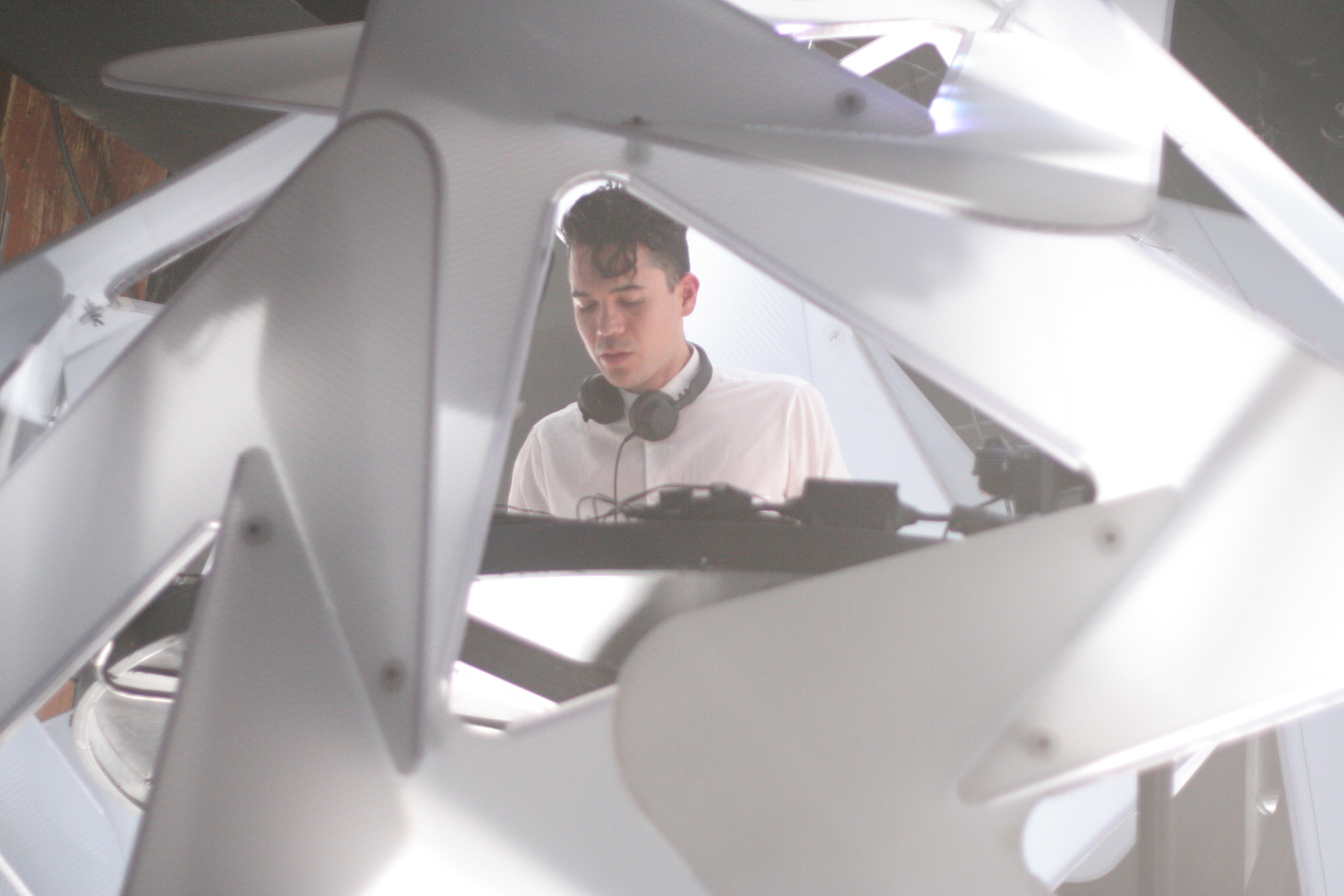
When the main event starts, all I can think of is packaging. Maybe it’s the corrugated plastic material that Matthew Dear is encased in, a neat sphere made up of interlocking LED-lit triangles; if Amon Tobin had a spaceship, Dear has a shipping container. It’s even branded in a way: the press release pointed out the resemblance between the triangles and the A in Audion. To me they look like a swirl of tracking buttons, with larger “reverse” and “play” arrows on each side of the stage. Like the comprehensive 10-year-spanning collection Audion X, this production seems designed to deliver Dear/Audion in an iconic form.

Tobin once impressed on me that not all electronic music is meant for dancing, so having a visual production like ISAM made sense. But while Tobin via ISAM warped around to places feet can’t easily follow, this isn’t really the case with Audion. Dear, particularly in this format, is clearly making dance music, heavily indebted to Detroit. (Not just the techno, but the car industry: his set drives along with little pause, frequently punctuated by a slow pulsing swell, revving and switching gears. See: “Mouth to Mouth” or “Motormouth.”)

A lot of the crowd dancing up front seems capable of following along unfazed, as if it’s just another night at Mighty. I’m more conflicted and end up with the ones in the back, stunned in place, not sure which
way to go. From back there, it could be a jaded rock show.

I look for the support beam molester from earlier, but don’t see him at all under the lights.

He’s probably fine.

audion

Movers/Shakers: Two rare visits by European contemporary dance-makers this weekend

1

Here are two very special opportunities to see (and, in at least one case, join in on) the work of some leading European contemporary dance/performance makers passing through town this weekend…

My Own Bodies – a solo for many

Sweden-based Shake it Collaborations (SiC) is an internationally active company comprised of Tove Sahlin and Dag Andersson. A small crowd of friends and acquaintances was in attendance last Sunday, in the Tenderloin, for the couple’s highly social duet, Roses & Beans, which featured no roses (but a few flowers) and no beans (but one hell of a layer cake). Deploying exuberant as well as exasperated movement, popular song (sung a cappella and sometimes directly into each other’s mouths), and a shrewd sense of humor, the piece sparked and built upon spontaneous interactions with and among the audience — all the while exploring various frames for the conception, reception, transmission, rejection, and abeyance of love as an organizing principle.

It was a memorable encounter, and, fortunately, not the last: This Friday and Saturday at CounterPULSE, Tove Sahlin will perform her everybody-in-the-pool solo, My Own Bodies.

The piece, which premiered in Stockholm’s House of Dance in 2013, is a 40-minute shakeout in which the audience contributes to a “common shake action.” The piece explores shaking as movement, as metaphor, as empathetic medium, as emotional trigger and state, and whatever else ends up on the floor. Come ready to quake. It should be a Richter 9.

Fri/28–Sat/1, 8pm, free (RSVP at counterpulse.org)

CounterPULSE

1310 Mission, SF

www.counterpulse.org


An Evening of Contemporary Dance

Meanwhile, a few blocks away on Market, you can find ACT’s Costume Shop alive this Saturday night with two more contemporary dance pieces.

From Italy, well-known choreographer and dancer Caterina Basso presents Il Volume Com’era, her solo piece, which was selected for the Venice Biennale project Prima Danza in 2013.

“The project arises primarily from the desire to be alone in the room and to work on movement, movement that is not guided by the prompting of others,” reads Basso’s statement from the Biennale premiere. “The work takes shape on the basis of a body that moves invisible objects, in a kind of action composed of displacements and short paths through the spaces. A fragmented but natural pace that is transmitted by the activity of the hands to the entire body. A fragile body because it is blocked by clearly defined limits, it seeks a place but is an obstacle to itself, its parts do not collaborate, as if each of them were engaging in passive resistance. A body that cannot find a suitable place, the comfort of feeling welcomed in a detail of time and space, the relief of a relationship. A halting movement that becomes rhythm, which searches for the way out of paths and rules, without really finding them.”

Sharing the bill with Basso are San Francisco dancer-choreographers Liz Tenuto and Monique Jenkinson, who will reprise the excellent duet they premiered at last year’s West Wave festival: the witty, sensual, vital Am I Square?

Sat/1, 8pm, $10

ACT Costume Shop

1117 Market, SF 

RSVP to bbasso@act-sf.org

RIP Josh Ezelle, SF house pioneer

1

Horrible news this morning — pioneering house DJ Josh Ezelle died last night in a motorcycle crash in Thailand. He was 42.

Ezelle, aka DJ Josh, was the first DJ many young clubbers heard in the late ’80s, and the list of venues and crews he supported or helped launch is a veritable what’s what of the SF scene, right up to the present. Wicked, the Gathering, Funky Techno Tribe, Sunset …

Ever-roving, he organized the groundbreaking 2000 ACA World Sound Festival in Acapulco. He moved to Thailand in 2001, and had recently located to Phuket, becoming a popular resort DJ there and witnessing the birth of his son.

A true example of bringing the underground SF spirit to the world, he’ll be mightily missed.

I watched Rebelution next to Dusty Baker

0

“Put in this story that you watched Rebelution next to Dusty Baker,” said Dusty Baker. As I stood against the railing on the upper level of the Independent Tuesday night, I was unknowingly chatting up the former San Francisco Giants’ manager. The baseball legend chuckled at my slight embarrassment at not recognizing him. He leaned over the railing as he talked about supporting live music and coming here with his best friend from 2nd grade. We overlooked a sold-out room, filled to the brim with an eclectic group of high school and middle-aged reggae lovers.

Rebelution opened the show with a tight guitar riff before the rest of the band jumped in with drums, bass, keyboard, and saxophone — a signature Rebelution move. No fog machine needed, dozen of joints lit up within the first minute creating a hazy shadow around the musicians. If you weren’t high before, you certainly would be through second-hand smoke alone — which got me wondering, is Dusty Baker high right now? Within the first song, my thoughts turned to nostalgia for simpler times.

reb

Disclaimer: Rebelution has been a long time favorite band of mine. I remember listening to the sweet reggae songs on road trips down the coast during high school. In college, I drove through the night to see the band play at Lollapalooza. My ringtone still to this day is the first 30 seconds of “Safe and Sound.”

The band’s front man, Eric Rachmany, started the show off with the crowd favorite “Attention Span.” Images of lazy afternoons and thoughts of making the world a better place overtook me. “It’s a pleasure to meet ya,” he sang.

It really was a pleasure for him. The SF native was genuinely pumped to be playing in his hometown. At every bridge, transition, and break between songs, Rachmany called out to the sold-out venue. “How are we doing San Francisco?” The crowd cheered back with matching enthusiasm. This mutual delight in each other’s presence is such a rare occasion in live music nowadays; Rebelution has a riveting stage presence.
reb

Beyond Rachmany, the keyboard player Rory Carey softly caressed the keyboard offering harmonious beats to Wesley Finley on the drums. Carey’s long blonde locks flowed side to side as he swayed back and forth over the keyboard. Standing well over six feet tall, the timid bassist, Marley D. William, occasionally stepped out from the shadows and commanded the stage. And the excellent touring member Khris Royal stole the show by blowing insane saxophone melodies that matched up perfectly with Rachmany’s guitar.
 
“He used to play guitar in the hallways at Drew,” said Adam Swig, a high school friend of Rachmany’s whom I met at the show. Rachmany grew up in the Sunset and went to the Drew School. “I was like ‘Man, that’s cheating. Girls are here.’” It’s no doubt that Rachmany is a babe magnet. With his soothing vocals and honest energy, the lead singer had girls in tube tops fawning over him. To be fair, dudes in backwards baseball caps, graphic T-shirts, and oversized hoodies partook in the fawning, especially during his epic guitar solos.

reb

While the vocals and instrumentals were perfectly on par, Rebelution’s performance was not only about music — it was about community. The Santa Barbara band opened for Israel Vibration at the Independent back in 2007, after independently releasing its first full-length album “Courage to Grow.” Since then, the band has played all across the California coast and around the country, selling out local venues and opening music festivals. Two years later, Rebelution founded its own record label 87 Music, named after the band members’ address while at UCSB, where they met. With three albums, an independent label and an upcoming fourth album, the reggae band found its way back to its roots at the Independent in celebration of the venue’s 10th anniversary.

With just a few simple strums of the acoustic guitar, Rachmany quieted the room for “Feelin’ Alright,” the band’s most popular single, about releasing hatred and surrendering to the music. The soft strings reverberated around the hall. To no one’s surprise, the entire crowd joined in with vocals. “I’m trying to pick up the soul’s intention to soak in music relaxation,” he sang.

reb

“They are probably the most successful ‘true’ independent touring band,” said Swig about his high school buddy’s band. Bias aside, the band’s success can be measured by the community love. As Emma wrote last week, the Independent is at the heart of the city. Much like the Divisadero venue, Rebelution relies heavily on the community, which was clearly seen at last night’s show, from Dusty Baker showing support to a surprise performance by Zion I. The show wasn’t about Rebelution; it was a celebration of live independent music. Rachmany spit a verse during Thrive’s opening set. The trumpet player of Brass Magic (first opener) played alongside sax player Royal during “Roots Reggae Music,” a new song from Rebelution’s upcoming album.

At the end of the set, Rebelution performed a wonderful two-song encore, including “Green to Black” with complementary green lights. Basking in the green-soaked room, the audience roared with excitement and the fan-made smoke machine started up again. Rarely have I seen such pure happiness and tranquility in this condensed space. It didn’t matter that the show was almost over, it happened. Waves of enlightenment overpowered Rebelution’s fans, including myself.

“We appreciate your energy,” yelled Rachmany through the thick fog. The crowd cheered back. From the light tunes of “Lazy Afternoon” to the socially conscious lyrics of “Good Vibes,” Rebelution’s intention was to bring honest joy to San Francisco, and I couldn’t get enough of the good vibes.

Coal export facility considered for Port of Oakland

UPDATE: The Port of Oakland Board of Commissioners voted to reject the proposals.

A company that operates a coal mine in Colorado is looking to ship its fossil fuel products to Asia via the Port of Oakland.

A coalition of environmental organizations sounded the alarm that the Board of Port Commissioners could agree to consider a lease proposal from Bowie Resource Partners to operate a coal export facility at Oakland’s Charles P. Howard Terminal. The board will meet this afternoon.

Another proposal submitted for consideration, from California Capital Group/ Kinder Morgan/ MetroPorts, could also lead to coal exports, said Jess Dervin-Ackerman, Conservation Organizer for the Bay Chapter of the Sierra Club.

“We’ve really reduced our use of coal in this country, but that means we’ve just been sending it to Asia,” Dervin-Ackerman noted.

In addition to the global concerns about exacerbating climate change by shipping coal to be burned in power plants in Asia, where there are weaker environmental protections, environmentalists are worried that Oakland neighborhoods could be impacted by pollution from rail operations and fine coal dust that could leave airborne traces behind as it is transported to the marine terminals.

Bowie proposed to ship not only coal, but petroleum coke, a pulverized fossil fuel that is illegal to burn in California. Already 128,000 barrels of this product, called petcoke for short, is shipped daily from throughout the state.

Port of Oakland staff, however, has recommended rejecting the proposals from both entities.

“Staff believes that Bowie’s proposed use and operation of the property raises environmental concerns related to the handling of commodities such as coal. Environmental concerns about handling commodities such as coal stem primarily from issues of fugitive dust and climate change,” a staff report drafted in preparation for today’s meeting noted. “Port staff believes that operations such as those proposed by Bowie conflict with recently adopted Port policies and programs intended to create or support environmental sustainability.”

The report went on to note that there has been controversy and litigation over coal and coal export facilities along the West Coast.

As things stand, there are active coal and petroleum coke terminals at the Ports of Long Beach, Benicia, and Stockton.

Given the shipping routes and recent controversies surrounding coal export terminals in the Pacific Northwest, “The Bay Area is a prime target” for fossil fuel companies, said Devin-Ackmerman. “These kinds of proposals just pop up overnight.”

Feds indict SFPD cops, alleging a drug ring and shakedowns of the poor

26

Federal grand juries today indicted four San Francisco Police Department officers, an SFPD sergeant, and a former SFPD officer on a variety of corruption, civil rights violations, and theft charges stemming from illegal raids on poor residents of single room occupancy hotels in San Francisco.

“Our department is shaken,” Police Chief Greg Suhr told reporters at a morning news conference. “This is as serious a matter as I’ve ever encountered in the Police Department.”

Yet Suhr also distanced himself from scandal, telling reporters, “This conduct occurred before my time as chief.” Shortly after Suhr was sworn in as chief in April 2011, he changed department policies related to the SROs, including preventing officers from using pass keys to enter the buildings without a warrant or the rooms without probable cause.

The pattern of alleged criminal behavior by SFPD officers was exposed in early 2011 by Public Defender Jeff Adachi, whose investigators found video surveillance from the Henry Hotel and other local SROs that supported defendants claims that police were shaking them down and then submitting false police reports.

“The indictments today are a victory for ordinary San Franciscans,” Adachi told reporters today, emphasizing that in addition to personally profiting from the shakedown, these officers were also submitting false testimony in perhaps hundreds of cases, including 100 that his office has gotten dismissed. “These allegations not only involve violations of the constitutional rights of our clients, but also lying on police records that were used to sent individuals to prison based on the testimony of these officers.”

Once the videos were made public, the investigation was referred to federal investigators because District Attorney George Gascon’s office had a conflict of interest, given that he had just come from serving as police chief in the SFPD, where he presided over the officers involved in this scandal.

Gascon issued a public statement saying, “I am relieved to know that the officers have been indicted after I referred the matter to federal authorities. It is extremely disappointing that the officers violated the trust of the community and tarnished the reputation of all the hard working men and women in uniform. As law enforcement, we must all work hard to ensure our agencies operate with the highest integrity and are deserving of the trust the public bestows upon us.”

Raw video of the press conference via KTVU.

His office didn’t respond to Guardian questions about his culpability in the scandal, but Gascon is likely to be asked about it when he holds a press briefing this hour. [UPDATE 5:30PM: During a brief press availability, Gascon said the indictments shouldn’t be considered a reflection of his leadership of the department: “Anytime you have a large organization, you are going to have people who operate outside the boundaries of what is acceptable.” Asked by the Guardian when he became aware of allegations that his officers were being accused of shaking down tenants in the SROs, he said, “We became aware at the same time everyone else did, when the videos came out.” The press availability was cut off after 10 minutes because Gascon was giving a State of Public Safety speech upstairs, showing up 25 minutes later, but spokesperson Alex Bastian said he would try to get answers tomorrow to Guardian questions about Gascon’s record and independence when it comes to prosecuting police abuse cases.]

Those indicted today were Officers Arshad Razzak, Richard Yick, Raul Eric Elias, and Edmond Robles, and Sgt. Ian Furminger. Also indicted was former officer Reynaldo Vargas, who was caught on videotape appearing to steal a laptop computer from a tenants in the Henry Hotel, and who Suhr said was dismissed from the SFPD before the federal investigation began.

Suhr also said that all of those involved have been on administrative duties throughout the investigation, which the SFPD cooperated with, and that some of them (he couldn’t say how many) were also required to turn in their firearms.

These indictments also don’t appear to be the end of this unfolding scandal. “There were other officers involved and they will be dealt with administratively,” Suhr said without providing details. When asked by the Guardian whether anyone in the command staff may face discipline, Suhr said “no.”

But with these six facing possibly lengthy prison terms, it will be interesting to see what they have to say about what others in the SFPD knew about their actions, which also allegedly involved running a drug ring out of Mission Station, where Furminger, Robles, and Vargas are accused of illegally seizing and selling marijuana.

Adachi wants to see this investigation continue: “It would be hard to believe that nobody who was involved in supervising these officers was aware of it.”

Courtney Barnett gets droll at the Rickshaw Stop

3

courtney
Courtney Barnett at the Rickshaw Stop Monday night.

By Sloane Martin

Standing outside the Rickshaw Stop before Courtney Barnett‘s set, I’m watching her chat with her bandmates when one of the girls working merch pops out to let Barnett know that they’ve run out of everything — shirts, albums, posters. “Oh, hang on,” Barnett cries. “I think we have a couple more t-shirts in the car!” And she’s off, grabbing the minivan keys from her drummer so she can dig out something to sell to San Francisco. Despite the shaggy hair and the tomboy-cool outfit of striped t-shirt, jeans, and Chelsea boots, she genuinely has appreciation for the fans who have come out.

That moment set the right tone for a goofy, humble, and electrically entertaining set on Monday night, one of several sold-out shows kicking off Noisepop 2014. Courtney Barnett (and the Courtney Barnetts, a rhythm section comprised of drummer Dave Mundy and bassist Andrew Loane) is a former bartender from Melbourne, Australia. Her debut album The Double EP: A Sea of Split Peas has gained considerable popularity over the past several months, fueled by a lauded performance at CMJ in October 2013. If you weren’t one of the fans lucky enough to grab a copy of the record before it sold out, you’ll have to order one from Barnett herself. The performer started her label, Milk! Records, which she described onstage as “me packing up CDs in my bedroom,” to release her own music as well as that of friends like Jen Cloher and Fraser A. Gorman. New York independent label Mom + Pop Music will release A Sea of Split Peas on CD and vinyl in the US later this year.

Wandering onstage and looking a bit bemused by the crowd’s excitement, Barnett launched into 40 minutes of tight, shredding guitar riffs and droll lyrics. Her eager, energetic drummer and bassist provided a heavy low-end that nearly drowned out some of her funnier moments. Her signature impassive delivery of the drawling line, “Just because you’re older than me / doesn’t mean you have to be so condescending,” on “Out of the Woodwork,”  and the opening of “Lance Jr.,” “I masturbated to the songs you wrote / resuscitated all my hopes,” was too enjoyable to be missed. After a slow start, Barnett and her bandmates seemed to loosen up, or maybe wake up, as they’ll finally be headed back to Australia for a much deserved rest after this final US show. All that time on the road made for a tightly rehearsed show, however, as at one point even the headbanging of each band member was perfectly in sync. Once the onstage banter started, it became clear that Barnett comes by her lyrical humor quite naturally, as she assured us that if we missed the chance to buy a t-shirt or a CD, “I’ll hug each and every one of you, and Andy will kiss you, and Dave will sign your chest.”

The crowd of hesitantly spastic dancers seemed not to know quite what to do with the deadpan vocals set against an enthusiastically kinetic rhythm section. Word to the wise: Either bob your head or bounce up and down or choose noodle arms, lest you lose your expensive beer to the floor, as the gentleman next to me did. Hopefully these fans figure out their dance strategies by the time the next record comes out, as the new song Barnett played us midway through her set was a promising sign of consistently fantastic work ahead. As the crowd sang along to “Avant Gardener,” Barnett’s sprawling narrative of an asthma attack suffered in her front garden, it was easy to sympathize with lines like, “Should have stayed in bed today / I much prefer the mundane,” but I, at least, was glad to have gotten out of bed to see her.

SF just won the Beyoncé video parody contest

0

…with this sensuous art film about the deepest love of all, the love of donuts. “Dunkin Love,” for your viewing pleasure below, features Bay Area artists Reggie White and Adrian Anchondo, and was shot at our very own, very chilly, Ocean Beach.

The multi-faceted White, it turns out, is also one of the players in Hundred Days, the “folk-rock odyssey” of a musical theater piece that premieres this week at Z Space. All the actors are also musicians, or, you know, amazing parody music video stars — read more about it in this week’s issue.

Anchondo is a Berkeley-based actor and former bartender at Hi Tops in the Castro who will, unfortunately, be departing for his hometown of LA in the coming weeks. The two met while working on a play at the Aurora Theatre, in which Anchondo played White’s abusive boyfriend. Acknowledging that the Bay Area is, yes, damn expensive for a struggling actor, Anchondo wrote us: “The best thing about being a performer is that when you feel stuck, you can just create something on your own. I seriously had only $100 to spend and I was like ‘Do I buy this wig and dress and these donuts? Or do I pay my internet bill?’ I think I made the right decision.”

We also asked to hear where in San Francisco the performers actually do get their donut fix, since Dunkin Donuts is out of the question — at least for now — and will report back as more details come in.

BRB, just got hungry.


Feds indict SFPD officers for allegedly stealing from the poor

44

Update: Click here for the latest as this story develops.

Federal civil rights and corruption charges have been filed against several San Francisco Police Department officers in connection with a series of raids on poor people’s SRO apartments, where the officers allegedly stole property, according to a report by KTVU.

The SFPD will be holding a press conference on the indictments within the hour, following by an afternoon press conference by Public Defender Jeff Adachi, who raised the issue in 2011 after obtained video surveillance footage that appeared to show an officers taking a laptop and other property, a story we covered at the time.

Surveillance video footage from the Julian Hotel, which Adachi’s office posted to YouTube in May 2011.

“We’re pleased to see the federal government appears to be taking these civil rights violations seriously,” Public Defender’s Office spokesperson Tamara Aparton told the Guardian.

Although the officers names haven’t been released, KTVU reports that five current officers and a former officer were indicted. Officers named by Adachi in 2011 as involved in the illegal alleged activites were Ronaldo Vargas and Richard Guerrero, although the SFPD says it won’t comment on the indictments until the press conference.

So check back here later for more on this breaking story. 

Surveillance video footage from the Henry Hotel (above) and the Jefferson Hotel (below), which Adachi’s office posted to YouTube in December 2010.

A personal goodbye to Bush Man 2, RIP

7

San Francisco has lost one of its own. Gregory Jacobs, KTVU confirmed today, passed away of heart failure last Sunday. 

He’s less known by his full name, but better known by his moniker, “The Bush Man.”

No, he’s not the original Bush Man. That would be David Johnson, who’d been there for 36 years, compared to Jacobs’ 30. 

Little matter. Jacobs was a San Franciscan through and through. Like many San Franciscans, he came here from somewhere else, in his case the “somewhere else” was Arkansas. But Jacobs was known and loved here in The City. 

The man was dedicated to his work: sitting along Jefferson street and spooking tourists by shouting “boo!” from behind two large and bushy tree branches. 

From the KTVU story:

Jacobs’ cousin says he was a father and brother and a man who always wanted to be in that spot down on the Wharf. And even in his final days he took every opportunity he could to come back.

“Yeah every time he got out of the hospital he would come straight out and sit down (at the Wharf) with his hospital ban (still on his wrist),” Jacob’s cousin Chris Tolbert told KTVU. “He got in his spot as if nothing was wrong with him.”

His family says they just hope people remember him and that what he loved to do was to make people laugh.

Many will share their favorite “I got spooked so bad!” memory, but I want to share a more personal story about Gregory Jacobs from my time working on the streets of the wharf. 

At age 17, I was living with a friend after irreconcilable differences with my mother led to too many shouting matches. The day I turned 18 I tried to go back home, but my father’s death years ago put too many strains on my relationship with my mother. At the time, we couldn’t coexist.

So I set out to live with my friend Morgan, who stayed in an in-law apartment in her family’s home in the Marina. Three kids, two parents, a grandmother living upstairs and a golden retriever named Indy welcomed me with open arms (and paws). The house was in the family for generations but the Blackburns were not Marina wealthy, and this wasn’t charity. I needed to pay rent, and I needed to do it fast. 

I went to the Wharf. 

Where better to earn rent money in a hurry, in summertime? On my own and a little confused about what life beyond high school should be about, I found the Wharf a somewhat daunting place. Beneath the facade of smiling tourists and the scent of tasty clam chowder lies a cutthroat network of businessmen, fleecers and street traders — all looking to make a buck. 

Bush Man was there of course, but also many more: Kenny the Clown, a mute magician with “mystery” rings, the Latino graffiti artists, caricature painters, a homeless man begging from inside a trash can (ala Oscar the Grouch), Mary the juggler, and even a fire-eating local comedian who walked barefoot on glass. They, the weird, the bastard stepchildren of Emperor Norton. 

Desperate for money, I joined their noble ranks. 

A friend set me up selling tickets for the nearby Blue and Gold fleet. Wear some slacks, he said. Clean yourself up, he said. I did both, and with a Gavin Newsom style hair slick and ferry tickets in my back pocket I stood on the sidewalk across Ripley’s Believe it or Not to ply my trade.

I couldn’t have screwed up more. There are rules to the sidewalks, invisible rules you learn only by pissing off the wrong people. I was a newbie, a fresh fish with no claims. 

The Wharf buskers let me know that right away. 

A jazz musician with an electric keyboard tore me a new one. “This is my spot, damnit!” is the effect of what he said over the course of five minutes, through the haze of a decade-ago memory. It was akin to a dressing down from Kenny G, and just as surreal. I moved 20 feet East to the front of Boudin’s, only to be slapped back by a homeless man in a cowboy hat named William. “Get your own damn spot!” he said. The look on his face went from genial-change-collector to “I’ll kick your ass, kid” in under a second, his fists cocked for a brawl. 

This, if you haven’t guessed, is where Jacobs the Bush Man comes in. Intimidated and confused, I wandered to his spot near the Anchorage Mall. He sat perched on a crate, jumping up and shaking his branches like a madman to scare the folks walking by. 

I always preferred his style of showmanship to the “original” Bush Man’s — Jacobs had attitude.

“Bet YOU never made her scream like that sir!” he’d say to the husband of a shrieking blonde. “Welcome to America!” he’d say to an Asian family he made jump (who could easily have been from Arkansas themselves). “If you’re havin’ fun, put a tip in the can!” he’d say to the crowd nearby, who applauded approvingly of his spook and scare routine.  

And his laugh, god his laugh. You could hear his cackle halfway down the block, and you knew his salt and pepper eyebrows were arched up as he laughed it up at his own jokes. 

Gregory Jacobs asked people to call him “G,” at least when I knew him. G showed me the ropes, told me when I could occupy certain spots, and how to get on the other buskers’ good sides. I even took cues from his showy style. 

“YOU sir, you look like you could use a bay cruise,” I’d say to a passing tourist with inflections reminiscent of my favorite Bush Man, and at a vocal volume that was similar too. “Don’t you think you ought to take your gorgeous girlfriend on a cruise around the bay?” 

Bush Man’s sales tips helped. I was rakin’ in the cash, at least, for an 18 year old. G made much more, pulling in hundreds of dollars a day during peak time in the summer. 

G wasn’t a saint for sure. More than once I saw him fist fight with the “original” Bush Man, David Johnson, who told me once that he taught Jacobs everything he knew. They used to split the proceeds, only Johnson claimed he was double crossed later on when Jacobs went off on his own as “Bush 2.” 

I don’t know much about all that. All I know is, G was kind, and I liked him. 

The Wharf liked him too (for the most part), and he was considered a local luminary. A year after I was selling cruise tickets, I started selling video games at a shop right by the In and Out Burger. One day walking out of my store I was startled, but not surprised, to see G judging a wet T-shirt contest starring the nearby Hooter’s girls.

He paced up and down, taking a good gander, pondering like a man with grave concerns on his mind. He took his job very, very seriously. Everyone watching smiled wide. 

Yeah he was ornery, cranky, and loud. But Jacobs had heart, and he looked out for his fellow Wharf folk. G once protected me from the wackier buskers out there on the sidewalk. 

One day as I strode down Jefferson street, Kenny the Clown (who ran for mayor at least once, and somehow obtained Steve Jobs’ stolen iPad) decided he thought I needed a hug (and more). If clowns aren’t frightening enough, Kenny is at least 6’5” — he’s a large man. Maybe he was harmless, but I didn’t want to find out. 

As Kenny chased me down the street, G took me by the shoulders and said “Run! I got this, I got this!” Swirling around on one foot he raised his palms up to Kenny’s sky high shoulders. “Kenny Kenny Kenny Kenny,” he said, “slow down man! Let’s talk.”

Sometime shortly after that, I sleepily walked to work to inventory the stock of Nintendo games. The sun was still rising. Keys in hand, my mind drifted to the stillness of the street, how early morning Fisherman’s Wharf belongs to the buskers, fishermen and shop owners getting ready for the day. Most of all, I loved how the scent of sea air is easier to detect when you’re not distracted by hundreds of loud tourists. 

I breathed in the air absentmindedly, enjoyably, as I reached out with my keys to unlock the gate to the store. 

“BOO!” shouted G from just behind my ear, and I jumped halfway off of my skeleton. 

“Holy crap G what’d you do that for?! I work here man, I’ve lived here my whole life, I thought you only did that shit to tourists,” I said, a little startled. 

I still remember what he said. “Hey man, everyone’s got their time.”

That they do G. I will miss you, and so will San Francisco.  

Synthesizers, saxophones, and one African grey parrot: The Other Minds music festival is a magnet for the avant-garde

1

By Micah Dubreuil

When Charles Amirkhanian was 5 years old, he received a John Cage record as a gift from his father. It was a mistake — the elder Amirkhanian had taken it to be an album of traditional Armenian music, their cultural heritage. Instead, young Charles was introduced to a sound that was anything but traditional, and in that music for prepared piano, he found a life’s calling. Some 60-odd years later, the director of the Other Minds festival — the West Coast’s premiere experimental music event, now in its 19th incarnation — points to that accident as a fairly fortuitous one.

Music is everywhere. Not just in the headphones mashed in every pocket, but in the sounds and systems of the world around us, from raindrops and birdcalls to trains and electronic circuits. That might, at first, sound overly lofty — but this concept has been a driving force for, among other things, hip-hop, arguably the dominant form of popular music over the last few decades. The impulse to investigate these sounds in unconventional and inventive ways has been equally significant in what’s usually called avant-garde, experimental, or simply “new” music. Other Minds 19 will celebrate this music Feb. 28 and March 1, when the festival takes over the SFJAZZ Center for the first time. Nine composers, all with ties to Northern California, will present works that aim to explore and reveal the world of sound through a variety of mediums, including wildly futuristic synthesizers, saxophones of unusual proportion, and one African grey parrot.

Of course, as more mainstream music has evolved over the course of the past two decades, so has the meaning of “avant-garde,” says Amirkhanian; much of what was once considered radical has become ubiquitous. “Now that everybody has the ability to use GarageBand, and can take a sample of something and turn it into a hi-hat cymbal, I don’t know if [needing to introduce avant-garde] is really a problem anymore,” he says. While some pieces in the festival could be seen as quite challenging, the goal is “to surprise people pleasantly rather than violently” with what Amirkhanian calls “revealationary” as opposed than “revolutionary” new music.
 
wendy reid
Wendy Reid, with Lulu

Composer Wendy Reid, a lecturer at Mills College in Oakland, has always been fascinated by natural processes and the beauty of bird song. She takes a direct route to revealing these sounds: She writes and performs with Lulu, an African grey parrot.

“I love birds,” says Reid simply. “They’re the greatest musicians that we have.” African grey parrots, in particular, are considered by many to be the most intelligent birds in the world. They can live more than 50 years, and have been known to carry out conversations with humans (not in the wild, presumably). Reid has always had birds as pets, or “family members,” as she likes to think of them. She records the birds’ songs, improvises along to the recordings, and composes bird-like sounds in order to engage Lulu, who responds as she feels fit.

Lulu is, to be sure, not a trained musician. She does not have notated parts or learned responses, and Reid stresses that this is “not a circus act” — to train or direct Lulu would compromise the natural musical responses that Reid finds so fascinating. “I let [the birds] be who they are; they are their best that way. People are their best that way, too.”

The festival is named, in a somewhat tongue-in-cheek manner, after an obituary of John Cage, wherein the author dismissively wrote that Cage “[merely] created music in other people’s minds.” (If you’ve heard of any avant-garde composer, you’ve heard of Cage. Philip Glass might be a close second, and he performed at the first Other Minds in 1993). Cage’s wide-ranging musical interests set a precedent that persists through this program. From Mark Applebaum’s sound sculptures, to Charles Celeste Hutchins’ live-generated digital projections (produced by self-developed software), to Myra Melford’s solo piano performance (seemingly old-fashioned in this context, though it will sound nothing of the sort), the festival’s intentionally non-thematic lineup covers an enormous variety of work. If ours are the “other minds” in question, they will be kept quite busy.

roscoe mitchell
Roscoe Mitchell

Widely referred to as an “American iconoclast,” living saxophone legend and prolific composer Roscoe Mitchell will present his composition Nonaah, arranged for four bass saxophones. If you’ve never heard or seen a bass saxophone, you’re not alone: it’s a rarely used instrument, larger then the more common baritone sax and with a deeper range, a full octave below the tenor. “One of the aspects of music that engages me is the sound, and the desire to know how all music works,” Mitchell says of his penchant for performing on unusual woodwinds. Nonaah itself is a composition that dates back to 1976, when Mitchell performed it on solo alto saxophone for an initially skeptical crowd in Europe. He thoroughly won the room, and has been exploring the piece ever since.

“When I first imagined this work for alto saxophone, I had no idea that this composition would take on a life of its own,” Mitchell says. After arranging the piece for alto sax quartet, he went on to write a completely notated version for four cellos, followed by flute, bassoon and piano, chamber orchestra, orchestra, and now bass saxophone quartet. Multiple doctoral theses have been written on Nonaah, and Mitchell is currently planning on writing a book about it. “For me it’s a kind of musical journey — it starts out a piece for alto saxophone, and now it’s a piece for full orchestra.” [See a video of Mitchell performing at a recent Exploratorium series below.]
 
Mitchell’s is not the only journey that leads to Other Minds 19. The festival’s line-up includes Donald Buchla, a prolific creator and founding father of sound synthesis who will be presenting the U.S. premiere of his composition Drop by Drop, as well as Joseph Byrd, one of the earliest adopters of synthesizers in rock ‘n’ roll. The entire program, in fact, is filled with either giants of the field or emerging stars.
 
don buchla
Don Buchla

Yes, there will also be animals, instruments you’ve never seen before, and electronic controllers that may well remind you more of Star Trek than a concert hall. But, as Wendy Reid says, this is not a circus act: These are composers and improvisers pushing the boundaries of serious music.  “There’s a thirst among maybe 2 percent of the population to hear this music,” says Amirkhanian, but the people in this dedicated group hail from every corner of the globe — and, as young Charles personally discovered, from every demographic.

Other Minds 19
Fri/28 – Sat/1, 7pm discussion and 8pm concert both nights
$25 – $65
SFJazz Center
201 Franklin, SF
www.sfjazz.org
www.otherminds.org

Big Soda’s sketchy grassroots support

7

The Guardian published a story today fact checking a list of local businesses who oppose the Sugary Beverage Tax, a list used by American Beverage Association funded publicists to slam the tax. The story is getting a lot of attention from health advocates and neighborhood businesses, but the Guardian has heard one question over and over: “Where can we see the list?”

Well, here it is, embedded as a PDF below. A few caveats: the list is from Jan. 29, and 12 businesses have been removed from the list since then, according to Affordable City, the ABA funded group that assembled the list. 

Still, our story found shops that were listed in error that were not on the list, and many store owners we spoke with said they weren’t aware funding from the tax would go to schools or fitness programs. Sugary Beverage Tax sponsor Sup. Scott Wiener told the Guardian that he expects to see millions of dollars from ABA’s main backers, Coca Cola Co. and Pepsico, spent to discredit the tax.

They have cause for concern, as San Franciscans may cut their sugary beverage spending by $31 million if the tax were to pass. 

If you’re a store owner, activist or health official and want to verify the list of businesses opposed to the tax for yourself, the list is above for your perusal. 

For more background on the Sugary Beverage Tax and its implications, check out our previous coverage here.

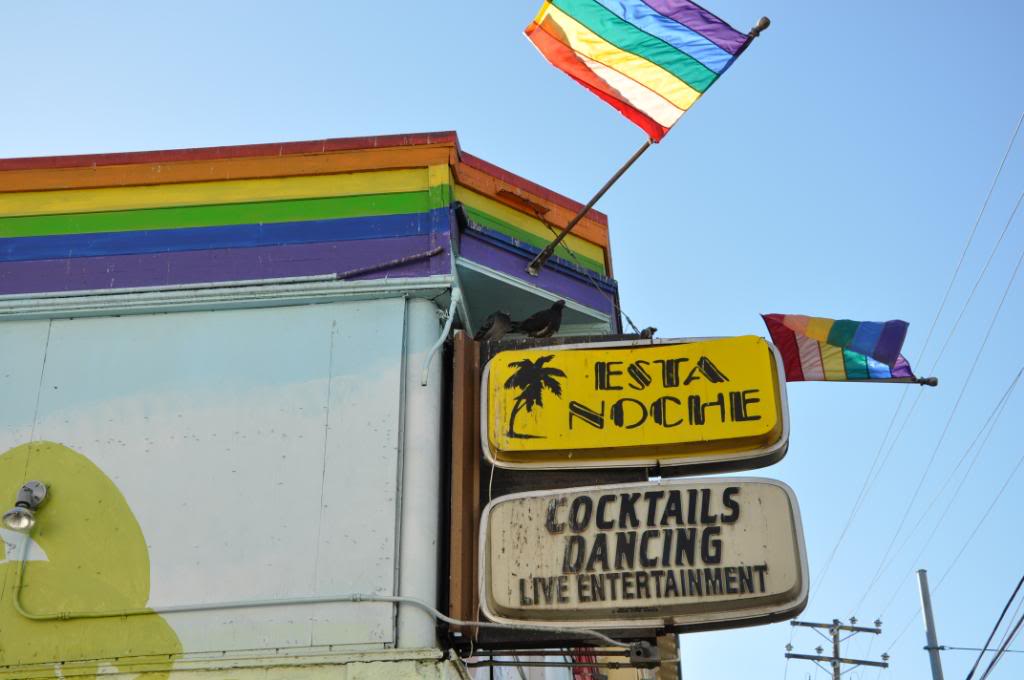
Nite Trax: Esta Noche to close, adios Esta Noche

11

Not even a guest starring role on Looking could save beloved Latino-oriented gay dive Esta Noche, alas! According to Eater SF, the Mission favorite is being sold by its owners reportedly willingly — to the team behind SoMa meat market Wish.

The new owners take over next week, but will keep things the same for a while, in order for everyone to have some time to say goodbye. (New Mission businesses, please take note: this is how you help avoid a PR nightmare.) Then get ready for more craft cocktails and loungey vibes, Missionites! Ugh.

I like the Wish kids, and I know that the Esta Noche tale is more complex than a simple eviction. Still, it’s heartbreaking to see a community mainstay — 40 years! — shutter, especially one that caters to a different crowd than Castro-roaming bachelorettes and tired Britney queens. Legendary comedy nights, hilarious performances, and, of course, the insane Miss Gay Primavera contest all played out on its stage. And where the hell can I hear Norteno music while cruising cute boys now?

With this coming hard on the heels of the 77 Geary building booting out its art galleries for tech companies, it has been suggested that the Guardian should start a column shaped like a tombstone, listing all the things we’re losing. But at least we’ll have craft cocktails!