Bay Guardian Archives

Stony lonesome

0

arts@sfbg.com

FILM Prison should be the most natural setting for film noir, as that’s where most of the genre’s protagonists are headed (if they don’t get bumped off first), and where many of them have already been. But it’s had spotty representation onscreen, with time served either skipped over in the narrative (how many pulp fictions start with a hard-luck protagonist just getting out of long-term for what’s sure to be short-term freedom?), or dominating entirely.

This spring’s edition of “I Wake Up Dreaming,” the recurrent Roxie noir showcase programmed by Elliot Lavine, has a number of notable titles dealing with the claustrophobic consequences of crime-not-paying. What’s even more notable this time around is the cross-pollination with Lavine’s other Roxie perennial, the series of Hollywood “pre-Codes” made in an approximately five-year window between the advent of “talkies” and the 1934 arrival of more rigidly enforced, censorious industry standards toward potentially objectionable content. Their peaks separated by about 15 years, pre-Codes and noirs shared a taste for hard-boiled dialogue and seamy situations, so their programmatic overlapping here feels right.

Two of the strongest entries here were released at least a decade before the arrival of anything that might legitimately be labeled noir. Daintily titled Ladies They Talk About (1933) is a rip-roaring original Women in Prison exploiter, with the inimitable Barbara Stanwyck as a moll who sashays into the hoosegow after enabling a bank stick-up. Getting two-to-five in San Quentin’s women’s ward, which here is like the world’s saltiest sorority, she quickly identifies her allies and enemies while spurning the visits of a childhood pal turned crusading DA (Preston Foster) — when she’d ratted on herself to prove “I’m on the level now” to him, he had the noive to actually charge her with the crime. That bum!

Another enduring star who came in with the sound era, Edward G. Robinson, gets all of Two Seconds (1932) to recall what got him to the electric chair — though that translates into a still-trim 67 minutes’ screen time in Mervyn LeRoy’s drama. The first half is a gem of snappy patter as the headliner and a terrific Foster play construction-worker roommates — Robinson the penny-pinching plodder, Foster the one always ready to blow his paycheck on booze, broads, and the horses. Yet it’s the former who’s taken for a chump’s ride by dancehall girl Vivienne Osborne, whose personality goes from Jekyll to Hyde the moment she’s manipulated him into an unholy matrimony. You can guess what happens — she’s already murder just to live with. As a none-too-bright lug who can’t get a break, Robinson gets a serious acting workout here, even if the climactic pre-execution Big Speech smacks overmuch of writing for Oscar’s sake.

Several rarities that verge on horror come from before and after the semi-official, immediately post-World War II noir era. Miracles for Sale (1939) was the final feature for director Tod Browning of Lon Chaney Sr. and Freaks (1932) fame. It stars Robert Young as a professional “magic” debunker investigating murders connected to an alleged witchcraft circle. Even so, this slick comedy thriller provides scant outlet for Browning’s love of the macabre.

Even less frequently revived are three early 1960s chillers: Erstwhile Incredible Shrinking Man Grant Williams plays a psychiatric patient and serial killer in The Couch (1962), Robert Bloch’s first screenplay after Hitchcock adapted his novel Psycho. The Hypnotic Eye (1960) has tall, dark, and handsome Jacques Bergerac (who married Dorothy Malone and Ginger Rogers) as a hypnotist whose prettier subjects tend to grotesquely disfigure themselves. Two on a Guillotine (1965) is a sub-William Castle gothic with the punishingly perky duo of Connie Stevens and Dean Jones having to spend an inheritance-earning week in the inevitable haunted house. They’re all terrible, but have a certain creaky charm.

Holding up very well indeed is 1949’s The Window, a rare genuine independent production of the era to achieve major recognition. As opening on-screen text announces, it’s the story of the boy who cried wolf — updated to a modern NYC tenement, where little Bobby Driscoll is testing the patience of his parents and playmates with his constant fabrications. Thus nobody believes him, of course, when he witnesses a real murder. Once his homicidal neighbors catch wind of him, our grade-school protagonist becomes prey himself. Criminal child endangerment was far from a typical story element in those days, and with its still-tense chase finale amid crumbling condemned buildings, The Window presented such a novelty that it won a (rather generous) special Oscar for Driscoll, who was usually seen in the more wholesome environs of Disney films like Song of the South (1946) and Treasure Island (1950). Yet soon after, adolescent acne would kill his acting career. Ironically echoing this famous role, the by-then heroin-addicted ex-con was found dead in an abandoned 1968 NYC tenement at age 31, his body found by playing children.

Other “Dreaming” highlights include a glossy 1947 double bill showcasing talented Warner Brothers star Ann Sheridan, the better being The Unfaithful, though Nora Prentiss has the virtue of being partly shot in SF. As sleepers go, though, two vintage “Bs” may rep the series’ best discoveries. Perhaps the program’s least likely inclusion is Angels in Disguise (1948), a later entry among the Bowery Boys’ nearly 100 juvenile hijinks. This one is a spoof of tough urban crime dramas, and a surprisingly good one, complete with shadow-heavy noir imagery and hard-boiled voiceover narration. As ever, the scene stealer is rubber-faced beanpole Huntz Hall.

From 1957, Death in Small Doses (“The picture that crosses the forbidden territory … of THRILL PILLS!”) rips the lid off amphetamine abuse among long-distance truckers, with future Mission: Impossible and Airplane! (1980) star Peter Graves as an undercover federal investigator. What makes it unmissable, however, is the supporting turn by none other than Chuck Connors (1979’s Tourist Trap, 1973’s Soylent Green) as perpetually hopped-up boarding-house hepcat “Mink.” If scene-stealing were a crime, Hall might get life without parole, but Connors would merit the chair. *

“I WAKE UP DREAMING 2014”

May 16-26

Roxie Theater

3117 16th St, SF

www.roxie.com


Sisterhood of rhythm

0

arts@sfbg.com

DANCE The Mother’s Day weekend premiere of Sarah Bush Dance Project’s reconceived 2011 Rocked by Women was a tenderly raucous, often humorous celebration of an overly sentimentalized holiday. Bush looks at the education of a “girlchild” in the “not-so-promised land” by paying tribute to the mothers who raised us physically. But it was pioneer “mothers” — the feminists of the 1970s, the lesbian activists of many decades, artists and entrepreneurs like Olivia Records and Club Q — who made us the women we have become. Their legacy, Bush realized, was in danger of being forgotten by the current generation of women for whom the battles had been fought. Molded into a convincing piece of dance theater, Rocked by Women is a joyous and self-effacing acknowledgement of prices paid and gains won.

Just as music energized the civil rights movement of the 1960s, feminism in its earlier and later stages drew inspiration from talented musicians who started the women’s music movement. Bush drew on that rich heritage and shaped Rocked‘s three parts around contributions from two generations of songwriters such as Holly Near, Cris Williams, and k.d. lang, as well as Janet Jackson, Tracy Chapman, Missy Elliott, and Bikini Kill. Julie Wolf also contributed music arrangements and wrote original songs.

Rocked derives its impressive energy as much from music as from dance. Yet Natalie Aceves, Krystal Bates, Joanna Gartner, Bianca Mendoza, Juliann Witt, and Bush performed with an intuitive grace, passion, and an almost delirious delight at the choreography’s lush physicality. Much like works by Dance Brigade (Bush’s home company), Rocked contains personal material that also feels universal, speaking to those who don’t fit into given norms, and who have had to struggle to become who they are meant to be. Using contact improv, disco, jazz, and hip-hop in an almost narrative way, the individual dances comment on the songs but do so from a distance. At its best, Rocked became a weighty yet explosive expression of the power of an indomitable spirit and embracing courage.

The show opened and closed with Near’s iconic “Mountain Song.” At first, a trio of kicking “babies” are cuddled by their mothers. It ends with the dancers facing the audience in a sing-along about the unstoppability of women who refuse to have “their dreams taken away.”

Each of the work’s movements explored a different aspect of growing up. In “Her Childhood,” the dancers engaged in circle games and playfully sculpted a mountain from their bodies. One of them triumphantly climbed it. They also donned masks cut from fashion magazines and tugged and pushed their bodies in an attempt to reshape them. Here, ballet’s preoccupation with perfection came in for a kick or two. The choreography had a sense of humor but you couldn’t miss the underlying pain and rage.

The emergence of a young girl’s sexual identity permeated the whole piece and resulted in a number of awkwardly tender duets. In one, the group’s smallest dancers, Mendoza and Bates, discover each other’s differences: Mendoza is Latina, Bates African American. Second movement “Her Adolescence” brings group pressures and rejections, driving and exploring of sexual identity; the choreography veered between plaintive and painfully funny. With Jackson’s “Control” providing the beat, the ensemble performed impressive unison hip-hop that opened into individually athletic feats. It was followed by a dancing-with-“boys” number as an awkward, one-sided groping session. In “Gossip,” teens entangled themselves in yards and yards of telephone lines. For Chapman’s “Fast Car,” they built themselves into a monster automobile that, predictably, crashed, leaving Mendoza stunned and bereft. In an achingly lovely courting duet, Mendoza gently reaches towards Aceves who keeps turning away.

The third movement — “Herself” — opened with a video of the Michigan Womyn’s Music Festival and rather unfocused dancing on stage. The pace picked up with mock taiko drumming to recorded drum. Another playfully confrontational scene involved a boom box, one set of headphones, and Mendoza and Aceves’ different musical tastes. They come to a meeting of minds and take it from there.

The tribute to Club Q, as both a sanctuary for lesbians and a place for fierce dancing, is wonderfully evoked by Bush’s own fierce dancers. It ends in dreamy slow dancing duet for Witt and Bates. Choreographing anger is not easy. When Bush interrupted the lovers, her danced fury felt like an arrow shooting straight at them.

While Rocked‘s documentary clips are convincingly integrated into the stage action, earlier uses of video — shadowy images, dancers sitting as if in lecture by Judy Grahn, crawling from beneath the screen — are not telling enough. That needs rethinking. But Rocked is a warm, skillfully created, and generous show that just might become a Mother’s Day tradition. * sarahbushdance.com/rocked-by-women

Getting the Kink out

2

joe@sfbg.com

The spotlights shone down, the athletes tussled, and the crowd screamed.

The toned and tattooed female wrestler tackled the topless, tanned, blond wrestler from behind, pulling her down like a tumbling tower. The mat thumped. Cheers erupted. In a sudden reversal, the tanned wrestler gained leverage with her right arm and slammed the tattooed fighter’s shoulders onto the mat, giving the blond the win.

What happened next was definitely not standard wrestling fare.

The tanned wrestler, triumphant, digitally penetrated the tattooed fighter. Her moans silenced the crowd, who listened, rapt. The fight wasn’t sport, but porn, America’s real favorite pasttime. Ultimate Surrender is just one of San Francisco-based studio Kink.com’s 30 or so paid subscription porn websites, including Fucking Machines, Everything Butt, and Hogtied.

But a new series of proposed state laws threatens the state’s porn industry, and the freakiest city on the West Coast may soon say goodbye to its highest profile porn purveyor, Kink.com, which for years has operated out of the historic Armory building on 14th and Mission streets.

The situation raises a question: Is Kink.com breaking up with San Francisco? If legislation requiring condoms on-set in porn and stricter state safety requirements become law, Kink.com CEO Peter Acworth tells the Guardian he has no choice but to leave California entirely.

“We can’t do business under those circumstances,” Acworth told us. “We can’t make a product that can compete.”

The tussle between pornographers, porn actors, and state lawmakers is a crucible where worker safety — and the right to choose how that safety is implemented — may soon be decided. Caught in the crossfire, freaky and sex-positive San Francisco stands to get a whole lot less kinky.


ECHOES OF LOS ANGELES

California Assembly Bill 1576 would legally require condom use while shooting porn, mandatory STD testing, and pornographic studios required to hold health records of their talent. The bill cleared the Assembly’s Committee on Labor and Employment just last month, the first step on a short road to gaining the governor’s signature.

Assemblymember Isadore Hall (D-Los Angeles), sponsored the bill, and the day it cleared committee he was triumphant.

“For too long, the adult film industry has thrived on a business model that exploits its workers and puts profit over workplace safety,” Hall said in a press statement. “The fact is, adult film actors are employees, like any other employee for any other business in the state. A minimum level of safety in the workplace should not have to be negotiated.”

The concern is largely over HIV infection on the sets of porn studios, and two parallel statewide efforts are working towards safety on porn sets. The state bill is the first, and the second is the renewed vigor in enforcing longstanding California Division of Occupational Safety and Health regulations.

In the early 1990’s, the federal Occupational Safety and Health Administration adopted a bloodborne pathogens regulation, and DOSH adopted a similar regulation soon after. DOSH’s standard requires employers to take measures to prevent employees’ eyes, skin, and mucous membranes from coming in contact with blood and “other potentially infectious materials,” including semen and vaginal secretions.

To some industries, the standard mandates rubber gloves and goggles. For the porn industry, the DOSH regulations are a moratorium on porn stars ejaculating on each others’ faces, deeming facials a workplace hazard. That standard porn finale can have life-changing ramifications.

“In 2004, there was a big (HIV) outbreak in the industry,” Eugene Murphy, senior safety engineer at DOSH, told the Guardian. “It was demonstrated HIV was clearly contracted on set.”

These infections mostly occurred in Los Angeles, once the center of the porn universe until Measure B arguably changed that. Los Angeles voters mandated porn studio condom use in 2012, and two years later, LA newspapers reported many pornographers have relocated to Las Vegas to escape the regulatory requirements.

The statewide pushback on porn is largely driven by the AIDS Healthcare Foundation, whose President Michael Weinstein has smiled for the cameras alongside Hall and other lawmakers every step of the way.

DOSH began its part in the porn crackdown in Los Angeles, but Murphy was charged with looking into San Francisco’s Kink.com, where Acworth is chafing against the idea of mandatory condoms.


RUBBERS REBUFFED

Acworth said he used to believe condoms should be mandatory for performers. After the porn set HIV infections in 2004, Kink.com buckled down.

“I attempted to run the business as condom mandatory for about a year,” Acworth told us. He even pronounced their necessity in an interview on CNN. But there were complications.

“There was pressure from the models themselves because of the chaffing issues,” he said. Porn performers have echoed those sentiments as well.

In an interview with entertainment site Nerve, popular porn star James Deen (see “Dick and smile,” 7/31/12) said he had no problem with personal condom use, but women he’s worked with often complained of chafing.

“I was talking to a girl about it and she was like, ‘Dude, I’m in pain everyday and constantly swollen,'” he told Nerve. “Condoms are intended to be used on an average-sized penis for average sex, and we have entertainment sex, for anywhere from 20 minutes to four hours.”

The condom effort tanked at Kink. Acworth said he withdrew the policy after listening to his performers’ wishes. The studio does adhere to 14-day HIV tests, and condoms are available in a “double-blind” agreement, by which actors can purportedly safely ask for condoms and not fear retaliation.

Despite those efforts, Kink was later awash in condom controversy. Earlier this year, DOSH fined Kink $78,000 in violations connected with the alleged on-stage HIV infections of two actors in 2013, one of whom alleged that a shoot continued despite one actor having a bleeding cut on his penis.

Acworth adamantly asserts the HIV transmission happened in these actors’ personal lives, and says the issue is used as a wedge by the AIDS Healthcare Foundation to push a political agenda. The Guardian attempted to contact the foundation but did not hear back by press time.

Regardless, Murphy said, DOSH is pursuing regulatory requirements around bloodborne pathogens at Kink, and the enforcement of those regulations is not tied to the whether the initial HIV infection case was verified or not.

“My concern,” Murphy said, “is whether there is a healthy and safe workplace.”


COMMUNITY TIES

Acworth came to San Francisco for the reasons many do: he wanted a place to be weird, or in his case, kinky.

He wanted a new home from which to shoot his leather porn site, Hogtied.com. New York City was big, but at the time (the ’90s), he felt San Francisco had a more established leather scene in the Folsom Street Fair and leather shops like Mr. S.

“San Francisco,” Acworth said, sitting across from us in a leather bondage chair, “appeared to be more geared up.”

Although not universally loved within the BDSM community, the studio is popular in San Francisco. Part of the credit may go to Kink’s recent revitalization of one of the largest spaces in its 200,000-square-foot historic brick fortress: the Drill Court.

The vast, arch-roofed space was outfitted with modern sound proofing for the benefits of performers and neighbors, but its life as a performance space is not new. In the 1920s, boxers traded blows under its lights, and history may repeat itself, Armor Community Center Sales Manager Quincy Krashna told us.

He’s in talks with Golden Boy Promotions (boxer Oscar De La Hoya’s company) to bring prize fighting back to this historic space. In recent months, the Drill Court played host to a massive New Year’s Eve party, a Game of Thrones-themed dance night and cancer fundraiser, and even an evangelical medical conference, where missionaries offered free dental and doctor checkups to the public.

“The Holy Spirit was truly present at this event,” a doctor from the program, Building Bridges, wrote on the program’s website.

Even bigger changes could be in store. Last month, Acworth filed an application with the city to convert most of the historic Armory into office space, what he called a “last ditch” plan in case the state condom ban passes and Kink decamps for Nevada.

“This move represents an insurance policy,” he told us.

In a public May 11 letter to Weinstein of the AIDS Healthcare Foundation, Acworth asked the foundation for a truce: “I am reaching out to you and AHF, in the hopes of a day where we may sit across the table from one another and agree on common goals and strategy on protecting performers as opposed to continuing this battle.”

As he notes in his letter, if pornographers lose this battle, the companies may relocate. If Acworth finds himself uncomfortably bound and gagged by new regulations, his safe word may be: Nevada.

Alerts: May 14 – 20, 2014

0

WEDNESDAY 14


Growing Green Awards

Berkeley City Club, 2315 Durant, Berk. www.nrdc.org. 6-9pm, $30/$20 for students. Author and advocate Anna Lappe serves as master of ceremonies for this year’s multimedia awards ceremony, celebrating leaders in sustainable food and agriculture. Presented by the Berkeley Food Institute and Natural Resources Defense Council. Food and wine reception follows.

THURSDAY 15


Global Day of Action Against Fast Food Industry

Downtown Oakland. sandra.eboc@gmail.com. 11am, free. Join fast food workers and allies from 36 countries and 150 U.S. cities for a day of action to call attention to some of the worst corporate behavior and income inequality. The first action will be in East Oakland at 6am and the second will be downtown at 11 am.


Community Forum on Proposed Development for 16th and Mission Plaza

Victoria Theater, 2961 16th St., SF. www.plaza16.org. 6-8pm, free. The proposed housing development near Mission and 16th Sts. will be too expensive and too big, shadowing Marshall Elementary School for five months of the year. Learn more about how this project will negatively impact neighborhood residents, community organizations, and mom and pop businesses. Be part of a community-based effort where the needs of people come before the needs of multimillion-dollar profits.


Fundraiser to support farming veterans

Goldman Theater, David Brower Center, 2150 Allston Way, Berk. 5:30-7:30pm, $100. Show your support and celebrate the accomplishments of the Farmer Veteran Coalition, portrayed in the award-winning documentary Ground Operations: Battlefields to Farmfields. Meet the veterans in the film who are part of a new generation of sustainable farmers, ranchers and artisan food producers.The evening will feature veteran-produced, farm-fresh tapas, beverages (wine, beer and mead!), as well as stories told by vets-turned-farmers. Meet the filmmakers, and watch the film, documenting how vets with post-traumatic stress disorder have found peace through sustainable agriculture.


Income gap

4

news@sfbg.com

It seems like San Francisco may surpass itself as the city with the highest minimum wage in the country, as labor activists and business groups are each pitching their own fall ballot measures to raise wages for the lowest paid workers.

The city’s current minimum wage of $10.74 is the highest in the country, but that still isn’t enough, according the labor activists, not in the city with the most expensive rent in the US and one of the largest income gaps.

“We have the highest growing gap between the rich and the poor, and the economic disparity is so high right now,” said José Argüelles of Young Workers United. He said the raising the minimum wage “isn’t the whole solution, but it’s part of it. Folks working full time in San Francisco should be able to afford to live in San Francisco.”

But sometimes even working full time in San Francisco isn’t enough to live here. A 2012 study by the San Francisco Department of Health found that even in the most inexpensive neighborhoods of the city, one would have to work 3.4 full-time minimum wage jobs to afford rent in a two-bedroom market rate apartment. In the priciest neighborhoods, one would have to work up to eight full-time jobs to afford rent.

All of this is occurring at a time when minimum wage debates are taking place across the country. President Obama has suggested raising the federal minimum wage from the current $7.25/hour to $10.10/hour, although Congress has been less receptive. Here in California, the state minimum wage of $8/hour will rise to $9/hour this July, and $10/hour by 2016.

The San Francisco ballot measure favored by labor activists is an initiative to raise the hourly minimum wage to $15 by 2017, with a sliding time frame depending on the size of the business. Proponents of the measure, dubbed the Minimum Wage Act of 2014, are just beginning to collect the necessary 9,702 signatures to qualify for the November ballot, and a recent poll found that 59 percent of likely voters supported the increase, while only 36 percent were opposed.

Business groups are usually the first ones to object to higher wages, but the San Francisco Chamber of Commerce and other small business-leaders are working with Mayor Ed Lee to craft their own, albeit more watered-down, ballot measure to increase pay. Despite their efforts, the $15/hour initiative took them by surprise and they are “outraged,” according to a statement released by the Chamber.

“This initiative is nothing more than a thinly veiled attempt to influence the outcome of the consensus-building process that will begin this week under the leadership of Mayor Ed Lee,” Chamber President Bob Linscheid said in the statement.

But many small businesses actually want to see the minimum wage increased, said John Eller of Alliance of Californians for Community Empowerment, one of the labor groups sponsoring the $15/hour initiative.

“What we heard when we talked to small businesses was that big money is coming in to buy up properties, that prices are getting jacked up, and that they are getting displaced, just like the residents of San Francisco,” Eller said. “But genuine interest in San Francisco, supporting young people, getting people out of poverty, and dealing with displacement were the themes that kept coming up.”

The business community wants to see the higher minimum wage phased in over a longer period of time and supports a more “moderate” wage, although an exact rate has not been decided, according to an email sent by Henry Karnilowicz, president of the San Francisco Council of District Merchants Associations. Other concessions that business leaders ask for include a separate, lower minimum wage for tipped servers and new hires in-training.

Raising the minimum wage “is about being fair and being reasonable,” said Karnilowicz. “It’s not true that small businesses are making a fortune, and I’d hate to see a big Walmart or Target coming into town to take their place.”

But Argüelles says that including special exceptions and a piecemeal law is a step in the wrong direction.

“In the past, San Francisco has led the way [with fair labor laws],” he said. “I think we can set a higher standard than that.”

Opponents to raising the minimum wage often claim that doing so hurts jobs and the economy, but a study from economists at UC Berkeley says otherwise. Unemployment in San Francisco has dropped since the last major minimum wage increase, and businesses absorb the extra labor costs through reduced employee turnover and improved efficiency.

The study also found that affected workers are largely adults and disproportionately women and people of color, two groups for whom the income gap is especially vast.

A measure qualifies for the ballot in one of two ways: either by garnering enough signatures through the initiative process, or being placed on the ballot directly by the mayor or a group of four or more supervisors. As of now, it seems plausible that San Franciscans will have two minimum wage measures to choose from this year, one from signatures and another from Mayor Lee.

On May 7, the Chamber released a press release stating that it’s seeking a single, consensus measure rather than two competing ordinances. Labor activists also hope to see one measure, Argüelles said.

There are no details yet on what Lee’s minimum wage ordinance would look like, if he sponsors one. There’s potential for a compromise between labor activists and business leaders, meaning one ballot measure with wide support. Otherwise, it will likely be one measure pitted against the other.

The deadline for Lee to submit his ordinance to the Department of Elections is June 17.

Stored power

0

rebecca@sfbg.com

BASED ON EARTH

For this second installment of our environmental news column, we’re looking at climate change from wildly different perspectives. We’ll explore whether local green-tech manufacturing firms can help wean California off fossil fuels, highlight some key data from the National Climate Assessment, and hear from an Amazonian shaman who’s fed up with white people making a mess of the planet and his home territory.


STASHING ELECTRONS

A new green technology sector in the Bay Area could help find the missing puzzle piece needed to establish a sustainable clean-energy mix for the state’s future.

Californians continue to rely on a majority of electricity sources that are environmentally unfriendly: natural gas, nuclear power, and even coal. Generating electricity by burning fossil fuels contributes to air pollution, consumes vast quantities of freshwater, and releases greenhouse-gas emissions, exacerbating global climate change.

But this is all starting to change. Since California requires utilities to convert one-third of their energy mix to renewable sources by 2020, there’s incentive for investment in carbon-free alternatives, such as wind and solar. Meanwhile, procurement decisions at the California Public Utilities Commission have pushed utilities to purchase more renewable power.

“Solar is succeeding beyond people’s expectations around the world,” because pricing has come down, said Julie Blunden, a consultant and energy-sector expert who formerly served as vice president at SunPower. “California set itself up to say, ‘we’re for changes to our power sector.'”

But renewables have an inherent problem — the power they produce can’t always be tapped just when it’s needed. Without some way to store the electricity generated by a wind or solar array, to be kept on hand for when demand hits a peak, wind and solar are unreliable for primary energy generation because they’re subject to fluctuations in wind and natural light. This is where energy storage comes in.

Throughout the Bay Area, companies specializing in battery manufacturing are starting to gain traction, with 11 regional battery manufacturers enrolling in CalCharge, an accelerator program for energy storage created with help from the U.S. Department of Energy and the California Clean Energy Fund.

CalCharge gives regional energy-storage companies access to national laboratories such as Lawrence Berkeley National Lab, facilities described by DOE renewables expert David Danielson as “science and engineering powerhouses at the forefront of clean energy innovation.”

One of the first grid-scale energy storage firms to join CalCharge is EnerVault, a flow battery manufacturer that’s working on a major installation in Turlock that will be co-located with a tracking solar system and an electric irrigation pump.

“The little dark secret about solar is that it’s intermittent,” explained Tom Steipen, CEO of Primus Power, a flow battery manufacturing firm based in Hayward that recently joined CalCharge.

On cloudy days, solar arrays won’t produce as much power. Wind presents similar challenges: “Wind in North America is stronger at night — but we don’t need it at night, we need it in the afternoon. So anything you can do to de-couple the instantaneous supply from demand is good for the environment, good for the economy, and that’s what energy storage does. … I like to describe it as a warehouse of electrons.”

Primus makes energy pods — an array of batteries that stand about six feet tall, placed in two rows within a shipping container — fed by renewable power arrays and tied in with the grid.

The pods can be stacked in Lego-like fashion, enabling more energy storage. They are then positioned beside a second shipping container, outfitted with equipment to convert stored DC power to AC power that can be sent over transmission lines.

Primus Power plans to make one of its first energy pod shipments to Miramar, the site of a marine base near San Diego where the movie Top Gun was filmed. The base is powered with its own contained micro-grid, but it was impacted by brownouts a couple years ago. With this project, Primus faces a test for its energy pods, which are estimated to last up to 20 years: Can the flow batteries, in combination with solar, produce reliable electricity for three full days?

If the pods can supply a smooth power supply, Primus wins — but more importantly, it will be a vote of confidence for carbon-free energy sources as significant sources of electricity generation.


“MONEY WON’T SAVE THE WORLD”

Davi Kopenawa is sometimes called the “Dalai Lama of the Rainforest.” He’s a shaman, activist, and spokesperson for his Yanomami tribe, the largest relatively isolated tribe in South America, which lives according to traditional indigenous ways in territory located within the Brazilian Amazon.

After years of battling the Brazilian government, Kopenawa and his people won a successful campaign for demarcation of the Yanomami territory in 1992. He co-wrote a book, The Falling Sky, with French anthropologist Bruce Albert, recently published by the Harvard University Press.

Today, the Yanomami are facing new pressures. Mining speculators are encroaching into their indigenous territory, causing fears of displacement, environmental destruction, and disease. In the past, exposure to disease brought dire consequences, resulting in widespread fatalities.

Kopenawa recently made a rare visit to San Francisco, giving talks at the Presidio Trust, UC Berkeley, and City Lights Books — and we got the chance to interview him while he was here.

Speaking via translation provided by Fiona Watson, research director of the human rights organization Survival International, Kopenawa talked about the Yanomami’s looming worries of environmental destruction and displacement that could be ushered in by mining companies.

“People are returning, invading it again, and repeating exactly what happened 20 years ago,” he told us. “These people are mainly gold miners who are looking for the riches of the Earth … They’re looking for oil, diamonds, and other precious materials, which is what white people want.”

He travels in part to seek support from the international community. “The majority of Yanomami have never left their land — they haven’t come out like I have,” he said. “So they don’t really see at close quarters how we are fighting against the politicians. However, the Yanomami and I, we continue to fight.”

Kopenawa had a lot to say about climate change and what has been done so far to address it: “All of you, the governments, the white people, need to listen to us, if you want to control the rich people who are always there … seeking raw materials from the earth, cutting down the forests, destroying the rivers.”

Indigenous leaders have spoken out internationally on the issue of climate change, he added, but the message has fallen on deaf ears. “They had the big UN climate meeting in Copenhagen,” he said. “But that didn’t result in anything. They only wasted money. They made us think that the city people would resolve things, but they couldn’t. The problem is the governments don’t listen. … The problem really is about capitalism, that’s at the root of the problem.”

Kopenawa’s perspective as a shaman in an indigenous culture is radically different from the world of government and politics, and he shakes his head at what he sees as utter complacency when it comes to implementing meaningful change.

“They’re only interested in the Internet, in paper, building more roads, stripping out the riches of the earth, destroying the trees,” he said. “We are different. We see the dangers, and we see that they are getting nearer. The cities are growing, the population is growing, and so the pollution is growing. There’s a lot of money in the world…But money won’t save the world.”

He advocates a new way of thinking about human progress.

“People have to stop thinking about ‘progress,’ which is pulling out the riches of the earth, and negotiating and doing business and having money all the time,” he said. “This is the error of the city people. I’ve tried to tell the city people, you need to minimize this problem of the climate, or else it will stop raining. And it will keep getting hotter.”


MORE WILDFIRES, LESS WATER

The Obama Administration unveiled the third National Climate Assessment on May 6, a hefty document detailing climate change impacts facing every region of the U.S.

Unsurprisingly, California’s own climate-related woes stem from water scarcity. Here are some details:

More money needed for drinking water. “Climate change will increase the cost of maintaining and improving drinking water infrastructure [estimated at $4.6 billion annually as things stand], because expanded wastewater treatment and desalinating water for drinking are among the key strategies for supplementing water supplies.”

Market impacts on delicious agricultural products. “California produces about 95 percent of U.S. apricots, almonds, artichokes, figs, kiwis, raisins, olives, cling peaches, dried plums, persimmons, pistachios, olives, and walnuts, in addition to other high-value crops. Drought and extreme weather affect the market value of fruits and vegetables more than other crops because they have high water content.”

More wildfires. “Numerous fire models project more wildfire as climate change continues. Models project … up to a 74 percent increase in burned area in California, with northern California potentially experiencing a doubling under a high emissions scenario toward the end of the century.”

Based on Earth is a monthly column by Guardian News Editor Rebecca Bowe.

Stop wiggling around the bike debate

118

EDITORIAL

Our blog post last week about traffic cops ticketing bicyclists riding the Wiggle on Bike to Work Day (see “Bike sting on BTWD,” page 13) triggered heated reader reactions on both sides, as stories about bikes often do. Many are angry that cyclists routinely run stop signs, while cyclists argue police should focus enforcement on motorists who present a far greater danger to the public.

When we finally heard back from the San Francisco Police Department this week, a spokesperson said that targeted enforcement on the Wiggle is being driven by complaints, and that the SFPD is compelled to act on those complaints and can’t selectively enforce traffic laws. A few people in the neighborhood have pledged in online forums to put a stop to the scofflaw behavior of cyclists there.

This presents an ideal opportunity for San Francisco to finally have a long-overdue discussion about traffic safety and how to encourage more people to ride bikes, which is official city policy — and for good reason in this era of global warming, fiscal austerity, and increasing traffic congestion.

The Wiggle — a series of city-posted turns snaking their way through Lower Haight — is a crucial east-west connection that is one of the most well-traveled bike routes in the city. But it also includes stop signs at the end of every block, six in all, that almost every cyclist slowly rolls through.

Rather than let a few people undermine the city’s voter-approved policies promoting cycling, we should see this standoff as an opportunity to use intersection designs and traffic enforcement strategies that recognize it unnecessarily clogs up intersections for everyone when cyclists lose their momentum and have to start pedaling from a full stop.

So as part of the study of Wiggle intersections that is now underway, the city should give serious consideration to installing traffic circles at each of these intersections, something it should then consider for intersections throughout the city that have high volumes of cyclist traffic.

San Francisco should also start pushing statewide reforms like Idaho-style laws allowing cyclists to treat stop signs as yield signs and red lights as stop signs, which wouldn’t change when motorists or pedestrians have the right-of-way, simply enshrining into law how cyclists already ride.

In the meantime, the SFPD should focus on dangerous intersections and behaviors, as Police Chief Greg Suhr has already pledged, and clearly communicate that priority to traffic cops. As it does with marijuana laws, San Francisco should make a deliberate decision to not make criminals of otherwise law-abiding citizens.

If thousands of San Franciscans are breaking the same law everyday, in the same intersections that actually have low collision rates, perhaps the problem is systemic. We should make changes that foster a respect for the law, not pursue crackdowns that will only feed division and hostility on our streets.

Mayor Lee faces question on minimum wage

San Francisco Mayor Ed Lee will attend the Board of Supervisors meeting today [Tue/13] to participate in “question time” – that exhilarating moment where the city’s highest-ranking official responds to pre-submitted questions with carefully crafted answers.

Today, Lee faces a question about raising the minimum wage, per District 1 Sup. Eric Mar:

“Mayor Lee, San Francisco is now the city with the fastest-growing gap between rich and poor. Yet, we have not raised our minimum wage in a decade. Washington, D.C., Seattle, and Oakland, among other cities, have recently moved to raise their minimum wage. … Some labor groups in the City have proposed to increase the city’s minimum wage to $15 an hour. … Can you share what level you are currently considering increasing the minimum wage to and how you plan on mitigating impacts on small businesses and non-profits?”

Which makes us wonder, will Lee name an actual dollar amount that he and a group of stakeholders he’s convened are considering increasing the minimum wage to?

Or will he stick to the vague answer he gave radio host Michael Krasny in a recent interview on KQED’s Forum? (“I said I was open to up to $15 an hour,” the mayor said in that interview, “and I didn’t state a number at the beginning.”)

Lawsuit claims SROs owned by city contractors are unsafe, moldy, rodent-infested

It’s often rumored that housing conditions in certain single-room occupancy hotels, or SROs, throughout San Francisco are atrocious. And when it comes to SROs under ownership of one family in particular, a lawsuit filed today by City Attorney Dennis Herrera now alleges not only that conditions are unhealthy and inhospitable – they’re also illegal.

Hotel owners, managers and operators Balvantsinh “Bill” Thakor, his wife Lataben B. Thakor, and their sons Kiransinh and Bahavasinh Thakor are all named in Herrera’s suit, which alleges that the business owners are renting uninhabitable residential rooms to vulnerable occupants, depriving SRO occupants of tenancy rights, maintaining public nuisances, doing construction work without required permits or contractors’ licenses, and making false claims for payment from the city.

The SRO owners hold contracts with the city. Herrera’s complaint alleges that taxpayer dollars are flowing into the hands of landlords who have allowed their properties to remain moldy, rodent-infested, and unsafe to occupants who are too poor to seek out other options.

We left a message for Balvantsihn “Bill” Thakor and will update this post if we receive a response.

Under the city contracts, homeless people who are pulled off the street by the Department of Public Health’s Homeless Outreach Team are temporarily placed in stabilization beds in SROs under the Thakor’s ownership. DPH rents out blocks of rooms to provide this temporary transitional housing, while low-income residents may live permanently in other units in the same buildings under their own private arrangements.

“San Francisco’s response to our affordable housing crisis must include aggressively protecting our most vulnerable residents — and that’s exactly what this case is about,” said Herrera. “The Thakor family has exploited low‐income residents by denying them tenancy rights. They’ve defiantly thumbed their noses at city inspectors over pervasive code violations, which endanger residents and neighbors alike. And they’ve billed taxpayers for providing clients of city programs with ‘clean, safe, habitable’ housing, when it was anything but clean, safe, or habitable.”

A litany of charges in Herrera’s complaint gives an idea of what conditions in some of these properties are like: “[Health and safety code violations include] rampant cockroach and bedbug infestations, failure to provide adequate fire protection and safety, failure to provide adequate security, failure to provide plumbing adequate to avoid repeated sewage leaks, failure to provide safe and functional wiring, failure to provide residential rooms and bathrooms free of mold and mildew, and failure to provide adequate heat.”

City Attorney spokesperson Matt Dorsey noted that there had been a host of health and building code violations issued against the hotel operators, but that fines and notices of violation still had not resulted in necessary repairs. With all administrative avenues exhausted, the city is now moving forward with a lawsuit.

“With litigation,” Dorsey said, “we have the ability to bring a level of fear that the administrative process cannot.”

Meanwhile, a quick search for court records revealed that this isn’t the first time Balvantsinh “Bill” Thakor has been named in a lawsuit brought by the City Attorney against SRO hotel owners.

In 2002, records show, then-City Attorney Louise Renne named him along with a host of other defendants in a suit relating to the ownership and operation of the Warfield Hotel, a 63-unit Tenderloin SRO where defendants had allegedly “failed to correct life-safety hazards … thereby forcing residents to live in substandard conditions in violation of applicable state and local housing laws.” According to this 2003 editorial in the San Francisco Chronicle, that particular SRO later went “from horrible to habitable.”

But even back then, Thakor was described in the Chronicle as “not known for his quick response to code violations.” All of which begs the question: With such a terrible track record, how do these hotel owners manage to land city contracts?

Tune in to Alternative Ink, the Guardian’s radio show LISTEN NOW

8

Greetings, Guardianistas, we’re making the leap from your eyeballs to your earholes with Alternative Ink, our new radio show on BFF.fm, San Francisco’s best Internet radio station. Tune in this Sunday, May 11, from 6-8pm for a blend of music, talk, and random musings that is uniquely Guardian. [UPDATE: You can listen to last night’s show by clicking here.”]

Actually, our first show was two weeks ago, but we decided to call it a soft launch while we found our voice and learned how all knobs and buttons work. But we quickly found our groove and now we’re ready to get into some trouble with a larger audience.

This week’s crew includes Editor-in-Chief Steven T. Jones, Music Editor Emma Silvers, News Editor Rebecca Bowe, Reporter Joe Fitzgerald Rodriguez, and a special guest appearance by Street Fight columnist Jason Henderson. Art Director Brooke Ginnard says she’s sitting this one out after producing our first show, but you never know.  

We’ll be talking about bikes, buses, and the implications of how people get around; our new BayLeaks encrypted tip system and the city scandals it’s exposing; Kink.com and controversial threats it faces; promising new clean energy technologies and related issues from the upcoming Based on Earth column; and the local music scene, from a solo street trumpteer to the hottest up-and-coming local bands. And if we get drunk enough, we might even dish on the evolving situation with our corporate overlords, who knows?

You can hear Alternative Ink every other week as we tag-team this time slot with our colleagues down the hall at SF Weekly, but trust us, ours is the one you wanna hear. So tune in Sunday. 

A few quick hits from the SF International Film Festival as it comes to a close

0

Sexual jealousy, filial betrayal, and bloodshed amid a civilization’s ruins. The SF International Film Festival began on these cheerful notes, with Viggo Mortensen, Oscar Isaac, and Kirsten Dunst tensely keeping company in opening-night film The Two Faces of January, Hossein Amini’s adaptation of the 1964 Patricia Highsmith novel. Mortensen plays Chester MacFarland, a New York con artist who, having bilked investors out of large wads of cash back in the States, is on the lam in Greece with his pretty young wife, Colette (Dunst).

When they catch the eye of Rydal (Isaac), a fellow American who’s idling in Athens — leading impressionable female tourists around the Acropolis and engaging in petty acts of grift — he becomes entangled in their affairs through a volatile mix of chance and attraction. The three become uneasy travel companions, as Rydal helps them evade Chester’s enemies and the local authorities. The sexual tension between Colette and Rydal runs along a foreseeable track, their shared youthful resilience a relentless rebuke to Chester, as he grimly knocks back whiskeys and fails to keep pace. But as Amini — a first-time feature director whose screenplay credits include Snow White and the Huntsman, Drive, and The Wings of the Dove — pointed out during the post-film Q&A, the relationship between Rydal and Chester proves much more complicated and fluid, shifting repeatedly, unpredictably, from con and mark (and mark and con) to sexual competitors to unwilling collaborators to quasi–father and son. The suspense heightens and the drama deepens as the characters struggle to keep their emotional footing and save their skins.

There’s no saving Mia Wasikowska’s skin — scarlet and blistering under a punishing desert sun — in John Curran’s Tracks, another adaptation, whose source material is the 1980 memoir of a young woman named Robyn Davidson, Tracks: A Woman’s Solo Trek Across 1700 Miles of Australian Outback (and the 1978 National Geographic article that preceded it). In the film, Robyn’s single-minded aim is to walk, for six or seven months, across nearly 2,000 miles of desert from Alice Springs in central Australia to the Indian Ocean, with, for company, a team of four feral camels (Australia apparently has the world’s largest population of them), which she would tame and train and use as pack animals, and her black lab Diggity. There’s some Into the Wild here, and some All Is Lost as well — in Robyn’s driving impulse toward deep isolation, her almost frantic need to remove herself from the cacophony of human transaction and commune with her animals in the empty desert, as well as in the film’s steady focus on logistics.

Nearly everyone — with the loopy exception of Adam Driver as Rick Smolan, an admiring freelance photographer who periodically joins her on the trail, at the behest of National Geographic — Robyn encounters at the film’s outset thinks she’s nuts, and doomed, and the viewer is likely sympathetic to this viewpoint. Robyn, radiating an unyielding idealism and a white-knuckled ethic of self-reliance, can seem naïve and unreasonable, and doesn’t much trouble to explain herself. The camera, meanwhile, follows in her tracks without judgment, accepting her decision and watching, solicitously, to see who she is out there and how she will make her way.

Three other films that left a mark: James Ward Byrkit’s twisty Coherence is a sci-fi thriller in which the possible influences of a comet passing overhead disrupt the urbane table talk and relationship tensions among four couples at a dinner party. François Ozon’s latest film, Young & Beautiful (now in theaters after its fest debut) takes a 17-year-old girl’s summer-vacation sexual discoveries as a jumping-off point for an uneasy exploration of a teenager’s decision to engage in prostitution. Even more than Tracks’ protagonist, the young Isabelle (Marine Vacth), and the film itself, is tight-lipped about her motivations, leaving us to wonder and worry — and scan her household (voyeuristic little brother, possibly philandering mother, oddly laid-back stepfather) for clues, an activity that Ozon, through the structure of the film, both encourages and critiques. And fellow French director Sophie Fillières gives us scenes from a marriage in decline in her sometimes absurd yet poignant If You Don’t, I Will, wherein Pierre (Mathieu Amalric) and Pomme (Emmanuelle Devos) struggle to navigate the glitches — physical, verbal, emotional — that have overtaken their every interaction.

It’s not that the relationships in The Skeleton Twins are less riddled with dysfunction, but at least the film, starring Kristen Wiig, Bill Hader, and Luke Wilson, gives us permission to laugh out loud amid the psychic wreckage. Wiig plays the melancholy, quietly floundering Maggie, one half of a long-estranged pair of twins, who is brought back into the life of her brother, Milo (Hader), under dire circumstances. When he comes to live with Maggie and her husband, oblivious sweetheart and nature lover Lance (Wilson), the two siblings are placed in uncomfortable proximity to a history of loss and upheaval they’ve both worked hard not to reexamine.

This sounds like the difficult, even dismal material of familial drama, and there are moments of pathos here, as well as sweetness. But director Craig Johnson’s script, cowritten with Mark Heyman (Black Swan), gives Hader and Wiig — who showed up with Johnson to the fest’s first screening to answer a few questions in between stand-up riffing off of the audience — plenty of room to generate hilarity (see, in particular: a power ballad lip-synch routine and an after-hours dental office visit involving clouds of laughing gas).

Bike to Work Day marred by another Wiggle police sting UPDATED

114

City officials and the San Francisco Bicycle Coalition hailed yesterday’s Bike to Work Day as a success, with the official SFMTA count finding 76 percent of vehicles along Market Street during the morning commute were bikes. But a pair of motorcycle cops ticketing cyclists that afternoon on the Wiggle put a damper on the celebration.

As we reported in this week’s paper, cycling has come to enjoy almost universal support in City Hall, at least in terms of political rhetoric, although the Mayor’s Office and SFMTA have committed only a small fraction of the funding needed to meet official city goals for increasing ridership. And yesterday’s bike sting on the Wiggle, a key east-west bike corridor in Lower Haight, felt like a slap in the face to the SFBC.

Since another series of police stings targetting cyclists on the Wiggle last fall, SFBC Executive Director Leah Shahum has been working closely with the San Francisco Police Department on its goal of focusing traffic enforcement resources on intersections with the most collisions, none of which include the Wiggle (the SFPD’s Focus on the Five initiative pledges traffic enforcement resources to the five most dangerous intersections in each police district and the five most dangerous traffic violations).

On Wednesday night, Shahum was even at the Police Commission hearing discussing the issue, and she says that Police Chief Greg Suhr and other top brass in the department have offered their assurances that such arbitrary stings on the Wiggle weren’t a good use of SFPD resources.

After recent hearings on how SFPD officers have refused to give citations to motorists who hit cyclists, Suhr and the department have also pledged to do so. But Shahum said she also heard from a cyclist on Bike to Work Day who was the victim of a hit-and-run by an impatient, road-raging motorist on 18th Street, and he told her that police refused to take a report even though he took down the license plate number.

Shahum said she’s disheartened by that story and those of the half-dozen cyclists she heard from who were ticketed on the Wiggle for not coming to a complete stop at a stop sign on the Wiggle.    

“I’m not confident the commitments from the chief and the commission are making it down to the officers. They are still pursuing very outdated traffic enforcement policies,” Shahum told us.

Shahum said she spoke to Capt. Greg Corrales, whose Park Station precinct includes the Wiggle, and Cmndr. Mikail Ali, who heads traffic enforcement, and both said they had no knowledge of any enforcement stings on the Wiggle. We left a message for SFPD spokesperson Albie Esparza, and we’ll update this post if and when we hear back. [UPDATE 5/12: Esparza just told us these citywide traffic enforcement officers were there based on citizen complaints about people running stop signs, but that the timing on BTWD wasn’t intentional: “It was a random thing they happened to be there that day.” He also noted that just 1 percent of traffic citations from April went to cyclists, and 93 percent to motorists, but he said officers can’t ignore traffic violations. “We cannot say as an agency do not cite pedestrians, do not cite bicyclists, that would be selective enforcement,” he said, while also agreeing that if officers that day on the Wiggle ignored motorist violations to focus on cyclists, that would also be selective enforcement.”] 

One of the cyclists ticketed on the Wiggle yesterday wrote this account to Shahum: “I suspect you will be hearing from a lot of cyclists in the next few days regarding the 2 cops who decided to hang out at Waller and Steiner Sts. yesterday to nail riders ‘running the stop sign.’ I was there at 4:51pm yesterday and I approached that intersection as I always do everyday braked with my right hand and signaled with my left arm to make that left turn onto Waller. I know for a fact I stopped as there was a car opposite me heading south on Steiner and I had to make sure which direction it might go. Once I made my left turn, there to greet me was a man in blue telling me to stop and present my driver’s license to him. He said that I failed to stop and I quote ‘your pedals were still moving at the stop sign.’… So,  a great 20th anniversary of bike to work day turned out to be a real downer for myself and I would guess for dozens more of riders. What a scheme to do this on a bike to work day with so many more riders out there.”

At the Bike to Work Day rally outside City Hall yesterday morning, where a broad cross-section of local political leaders and city officials spoke after riding their bikes to the event, Chief Suhr talked about the importance of making the streets safer for pedestrians and cyclists: “We are all in this together. Under the leadership of the mayor and the supervisors, all the department heads, we are committed to Vision Zero that in 10 years there are no fatalities in San Francisco.” 

Mayor Lee, who also rode to work, said: “I was proud to celebrate the 20th anniversary of Bike to Work Day by riding this morning from my neighborhood, Glen Park, accompanied by a growing number of bike commuters, including families, who are taking advantage of the benefits of a fun, healthy, affordable way to move around our City. With innovative bikeways like the new contraflow bike lane on lower Polk Street that connects Market Street to the Tenderloin and City Hall, we continue to improve and enhance our City’s bike network to connect our residents, neighborhoods, and businesses. But in order to do even more to make our streets safe, we must invest in our aging transportation infrastructure.” 

‘Neighbors,’ ‘Belle,’ and more new movies!

0

Not to detract from the drawing power of Seth Rogen’s comic chops (or Zac Efron’s abs, pecs, etc.) in this week’s Neighbors, but it seems Hollywood is taking a little blockbuster breather between last week’s Spider-Man cash grab and next week’s Godzilla onslaught. So now’s a great time to catch up on some smaller films that might’ve otherwise escaped your radar, including brains-and-beauty costume drama Belle, opening theatrically after its recent bow at the San Francisco International Film Festival. Reviews, trailers, and links below!

https://www.youtube.com/watch?v=9Qx90wdRD2I

Belle See “Skin Deep.” (1:45) 

Legends of Oz: Dorothy’s Return Computer-animated musical which does not look to resemble 1985’s spooky-great Return to Oz. Case in point: Dorothy is voiced by Glee‘s Lea Michele. (1:28) 

Neighbors Seth Rogen and Zac Efron star in this comedy about a family with a newborn forced to live next door to a frat house. (1:37) 

Now: In the Wings on a World Stage In 2011, a production of Richard III starring Kevin Spacey played SF’s Curran Theatre; it was but one stop on a dreamy world tour (London, Istanbul, Beijing, Sydney, Doha, Brooklyn, and Epidaurus, Greece) for an American and British company and crew directed by Brit Sam Mendes, who guided Spacey to an Oscar (and earned one himself) for 1999’s American Beauty. This backstage doc — fully endorsed by Spacey and co., so don’t expect any juicy spats or diva routines — follows this rambling troupe around the world as they work through one of Shakespeare’s most iconic history plays. Initially, some of the younger actors feel intimidated (and some of the Americans feel nervous about interpreting the Bard alongside Brits, despite the fact that superstar Spacey is spearheading the whole thing), but gradually the group becomes close-knit. Pretty scenery aside, most of the travel stuff is featherweight (“The culture [in Istanbul] is just crazy!” is one typically shallow insight), but watching the show from the inside out offers an intriguing look at the dramatic process. Still, as Mendes and others point out, “the thrill of theater is the fact that it’s live” and “ephemeral” — qualities not captured by this rather conventional doc. If you’re an aspiring actor, however, Now is probably essential viewing nonetheless. (1:33) Roxie. (Cheryl Eddy)

Young and Beautiful The titular attributes may be obvious surface ones, but they’re pretty much all we can take for granted in the character of Isabelle (Marine Vacth), a 17-year-old Parisian first met on a summer beach vacation with her family. With younger brother Victor (Fantin Ravat) as confidante, she methodically if haltingly sets out to shed her virginity, choosing as the lucky deflowerer a nice, very handsome German tourist (Lucas Prisor). The experience seems to leave her ambivalent, however, and a certain cool psychological opacity lingers after the clan goes home, and Isabelle returns to school while commencing a secret life so outré and baffling we would dearly love to understand her motivations. (Suffice it to say that the obvious reasons, love and/or need of money and/or sex, do not appear applicable in her case.) Is she rebelling? If so, against what? Probably not her easygoing mother and stepfather, played by Geraldine Pailhas and Frederic Pierrot. Reminiscent of Belle de Jour (1967) not just in premise but in dispassionate treatment of it, François Ozon’s latest sports his usual crisp directorial authority and eye for telling detail. But it’s built around a cipher, requiring an 11th-hour appearance by his past muse Charlotte Rampling in order to suddenly snap into focus — even as Isabelle remains something of a blur. (1:35) (Dennis Harvey)

Drivers protest fare breaks, fee hikes at Uber HQ

25

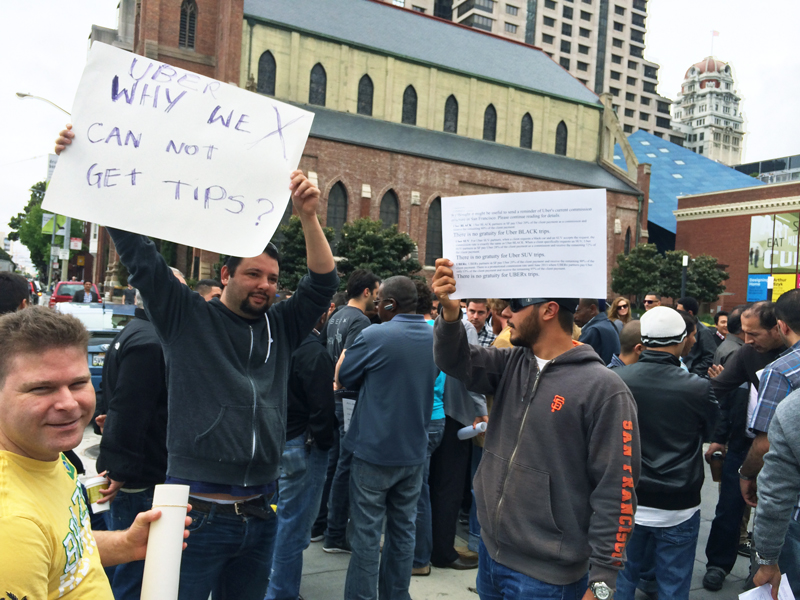
Uber drivers protested the company outside its San Francisco headquarters today, and their complaint was simple: They feel Uber is picking their pockets. 

“They tricked us!” shouted Ramzi Reguii, an Uber driver and one of the lead speakers at the protest. 

The crowd of about 40 or so drivers held signs reading “Uber Exploitation” and “Uber workers are blue collar.” 

At issue is an email Uber sent to drivers (known as “partners,” in Uber parlance) in January. Uber warned it planned to decrease fares for riders by 20 percent to boost sales during the slow winter months. To offset this, the company also promised to reduce its own commission from 15 percent to 5 percent in order to help shoulder the decreased profits drivers may face.

In the email to its partners, the company promised “this is a test we are running during a traditionally slow period in January and possibly into February and March,” noting “depending on the results, we can best determine how long to do the promotion.”

In April, Uber boosted its commission up to 20 percent, but did not adjust fares, creating a double whammy Reguii called “ridiculous.”

uber_pricing

The drivers contend Uber is stringing them along, telling them fare cuts are only temporary only to later renege on its promises. 

“Right now it’s very hard to make money working at Uber,” a driver, Eugene Vinnikov, told us at the protest. He quit his job to work for Uber full-time, favoring the flexible work hours. But he told us the lowered fares means he must work excess work hours, which eat away at the flexibility that made Uber so attractive in the first place.

For its part, Uber was out at the protest listening to concerns. A team of Uber employees mingled with the crowd, listening to drivers’ complaints and explaining reasons behind certain decisions.

Uber San Francisco General Manager Ilya Abyzov stood toe to toe with drivers, coffee in hand, and deep shadows under his eyes. 

uberdriver

He said he understands where the drivers are coming from.

“These drivers are running a business,” Abyzov told the Guardian. Uber has to make sure its drivers are as well cared for as their customers, he said. “Our business doesn’t exist without both sides.”

Lane Kasselman, an Uber spokesperson, also noted Uber is offering a $1 trip incentive through the summer to offset driver costs. 

But most of that is too little, too late for some drivers. 

“I love Uber, we all do,” one driver shouted at Abyzov, just a foot from his face. “But now I have to work sixteen hours to make what I was making in a day before.” 

Abyzov simply stood there, listening.

Marcus Books of San Francisco evicted

For months, we’ve been covering the story of Marcus Books, the nation’s oldest continuously operating black-owned, black-themed bookstore located in San Francisco’s Fillmore District. Facing eviction from the purple Victorian where the bookstore had operated since 1981, the family that owns it had launched an ambitious fundraising campaign in an effort to remain in place.

Widespread community support for the culturally significant bookstore even led to the Board of Supervisors granting landmark status for the bookstore’s Fillmore Street address, on account of “its long-term association with Marcus Books … and for its association with Jimbo’s Bop City, one of the City’s most famous, innovative and progressive jazz clubs.”    

But as the Bay Guardian has just learned, the bookstore was evicted on May 6. Now it seems the family is in the process of packing up the books and determining what the next step is.

In the meantime, here’s an open letter sent to supporters via email by bookstore co-owners Tamiko, Greg, and Karen Johnson.

Dear Supporters: 
It was difficult to know what to tell you about our struggle to stay in our building, its winding path of lawyers and judges and protests and promises, hopes and gravities made it difficult to report our status on a curved road. But the current property owner has changed the locks to the door of 1712 Fillmore Street.

Marcus Books missed a couple of rent payments (not such a rare thing considering that at the same time the largest US banks and even our government asked taxpayers to give them hundreds of billions of dollars of assistance). However, the mortgage holder, PLM Lender, foreclosed on the building that housed Marcus Books of San Francisco since 1981. It was sold to the Sweis family (realtors and owners of Royal Taxi in San Francisco). The Johnson family (co-owners of Marcus Books of San Francisco) has been trying to buy the building back for a year and half.   

The Sweis’ bought this building in a bankruptcy “auction” (apparently, they were the only bidder) for $1.6 million. The Johnsons offered $1.8 million; the Sweis set their price at $3.20 million, hoping to double their purchase price after a few months ownership. After some public outrage resulting in public protests against the Sweis, a negotiation brought their asking price down to $2.6 million, adding a million dollar profit to their purchase without adding any improvements to the property and adding a stipulation that the entire $2.6 million be raised within 90 days.

Marcus Books supporters, including the local chapter of the NAACP; ACCE (Alliance of Californians for Community Empowerment; Japantown activists; Westside Community Services; Julian Davis, our fearless legal council; Carlos Levexier’s “Keep It Lit” campaign committee; local literary community including writers and other bookstores; people from all over the world: friends, family, customers, churches and unions took a stand against the bulldozing of community. Individuals, unions, and churches donated $25,000. The Community Land Trust of San Francisco garnered loan pledges of $200,000 and Westside Community Services offered a loan of $1.60 million. Though by any standards that would have been more than enough for a down payment, the Sweiss’ refused the $1.85 million start and filed for eviction.

Concurrently, the San Francisco Board of Supervisors unanimously passed a resolution requiring every division of city government make it a priority that they each use their “powers” to help Marcus Books stay in its location. In addition, and after 5 years of efforts by John Templeton (the leader in Black California history), and Greg Johnson (co-owner of Marcus Books of San Francisco), London Breed and Malia Cohen, two San Francisco Supervisors, initiated the Board of Supervisors’ unanimous vote granting landmark status.

With the numerous speeches of San Francisco Mayor Ed Lee stating his commitment to righting the wrongs of the San Francisco Redevelopment Agency’s slaughter of the thriving African American Fillmore District, we at Marcus Books believed the City would take some affirmative action on our behalf, since Marcus Books is the only surviving Black business since the Redevelopment devastation. Maybe that support is around the next bend? Well the locks have been changed, the cavalry is not in sight, and it’s time to pack up the books and store them till we find another space.

You might ask yourself, why bother? Materialism rules the day. That is not news. More often than not, we take it for granted that the “bottom line” is the only line worth respecting, though it respects no one. This is a common conception, but not right. Right is the vertical line that runs through all levels: from its spiritual top to its earthly roots. This verticality is manifested only by integrity. Integrity defies gravity in its perpetual longing for truth. Millions of people have been put out of their homes by bottom-line-feeders. It’s common, but it’s not okay, now or at any other time. Sometimes you just have to take a stand. Integrity is a verb.

In 1970, I had a vision bout rebirth. A segment of that vision informs this struggle. In this particular scene, the spirit is climbing the Tree of Humanity, being lifted higher and higher by those entwined in The Tree. The spirit never steps on anyone’s face or heart. It just carries their dreams up with it. Because it is growing towards rebirth, it gets younger with each step up. Though there are thousands of supporters at the bottom of The Tree, there are fewer at the top and the helping hands are fewer and far between. At the top of The Tree, at the stratum of the clouds, quantity has morphed in into quality. Here a storm of wind and rain rages, lightning strikes and a mad dog spirals up The Tree, snapping at the heels of the now, infant spirit. Teetering on a limb, the spirit sees a man face down in the mud at the bottom of The Tree. Seems he got there from letting go of his faith in The Tree. The surrounding clouds urge the spirit fall.
 
“Cross Section”
The rumors, that were whispered,
            Here, the silence screams,
            And branches battle shadows
            To defend their dreams.
 
            Where Black is cut in pieces,
            Can’t hold myself together.
            Time cuts me down,
            Life me brought up,
            But lead me to this weather.
 
            The Time says, ‘Fall
            To soulless ease.
            To struggle is disgrace.
            The gravity will grant you peace,
            And hide your shameful face.’
 
            But I am born of honor:
            Descendent from above.
            My Father’s name is Wisdom
            And my Mother’s name is Love.
            And I have strength of purpose.
            That’s what my climb’s about.
            As I’m cut off,
            I will hold ON
            And trustingly Black-out.”
 
(Copyright 1997, Karen Johnson)
 
 For the hundreds of people who have lent their time, money, and prayers, we are truly grateful.
 
–Tamiko, Greg, and Karen Johnson, co-owners Marcus Books of San Francisco
 
 . . . to be continued

Some fans are bigger than others

1

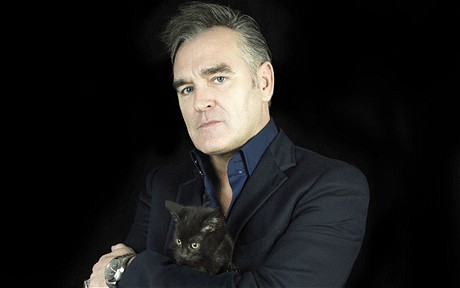
How big of a Morrissey fan are you?

Would you do anything for a Morrissey hug?

Would you shut down a Morrissey show for a Morrissey hug?

If not, you have nothin’ on these folks at last night’s Morrissey show in San Jose. Watch the video below for a primer on exactly how to piss off lots of people — people who paid a lot of money to see their idol, a singer who finally made it to the Bay Area last night after six consecutive show cancelizations over the past few years — by ending a show early with your needy, demanding, insatiable drive for hugs.

Check it out: The affection-assault, which provided an abrupt end to show’s encore, starts at about the one-minute mark.

https://www.youtube.com/watch?v=87h70Ac5LZU


Pow! Zap! Free comic book day with Ace of Geeks

0

Saturday’s Free Comic Book Day was like Christmas morning for comic lovers, and San Francisco is blessed with an abundance of comic book stores to celebrate from. Luckily for us, podcast Ace of Geeks decided to take a video tour of a few of SF’s most beloved dens of geekery on the beloved nerd holiday.  

Watching the Ace of Geeks crew (Mike, Jarys and Mae Linh) tour some of our city’s comic shops is a reminder of our bounty of nerdy-goodness, as each store has a distinct flavor.

Reflecting the Richmond district neighborhood, Cards and Comics Central has almost as many toys and collectibles as they do comics. Their anime and manga figurine collection alone is worth checking out (Neon Genesis Evangelion! Naruto!), and it’s one of the few places in the city you can find a stuffed Yoshi outside of Japantown.  

Ace of Geeks tours some of SF’s comic book shops.

The salesperson the Ace of Geeks crew talked to, Darrel, even has a Spider-Man themed New Era 59-50 flat brimmed hat (something a b-boy might wear before breakin’) that feels right at home in a neighborhood with schools like Washington High, attended by SF natives from the ‘hood. 

On the flipside, Hayes Valley is home to the ever-hilarious James Sime’s Isotope Comic Lounge, a comic shop with a hip, indie feel to it. Luckily, it predates the gentrification of the Hayes Valley ‘hood, and keeps the San Franciscan weird flavor alive (check out Sime’s hair, whoo!). But past its looks, Isotope is awesome because Sime is always trying something new. As he says in the video: “I get bored easily.” 

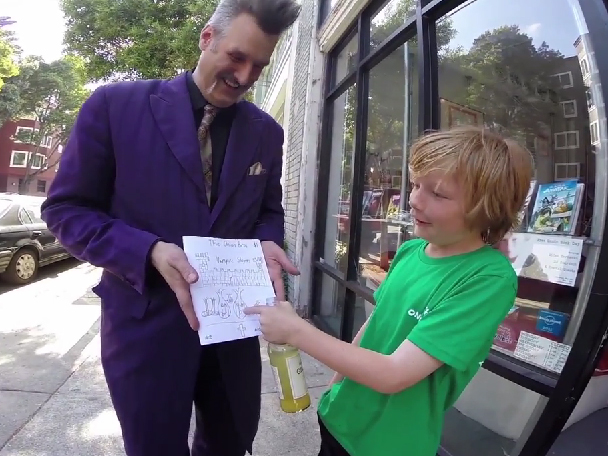
Two surprises on comic book day made Sime’s shop the one to beat. Firstly Isotope’s “featured” comic book artist was an adorable 11-year-old named Aidan Hernacki, who sat a table signing copies of his comic Onion Bros

But that’s Isotope, always trying to help out the little guy. 

The second surprise was a visit from J.J. Willliams III, the ultra-talented artist behind Promethea, Batwoman, and the new Sandman: Overture. Williams III donned a vest and was a hidden “shop boy” at Isotope, helping people find comics and answering questions. When a customer happened to actually buy a copy of Sandman: Overture, he whipped out his permanent marker and gave it a free autograph. 

Two Cats Comics in West Portal, Amazing Fantasy in the Inner Sunset and Comix Experience on Divisadero also made the tour. Check out the video to see the flavors of SF’s comic shops for yourself. 

Toyota work methods applied at General Hospital

San Francisco’s Department of Public Health has a $1.3 million contract with Seattle-based Rona Consulting Group to implement the Toyota Management System, a workflow methodology based on the auto-manufacturing model, at San Francisco General Hospital.

This new model, which aims for greater workflow efficiency, is being implemented just as healthcare staffers raise concerns that staffing levels at SFGH are dangerously low.

“Nurses often work through their breaks, and they stay after their shifts to get charting done,” said David Fleming, a registered nurse who has been at SFGH for 25 years. “I think nurses are getting the job done – but they’re at the edge.”

A group of healthcare workers spoke out at the May 7 Budget & Finance Committee meeting, during which supervisors discussed the DPH budget. Public employee union SEIU 1021, which represents healthcare workers, is in the midst of contract negotiations but Fleming said they had been grappling with reduced staffing for awhile.

According to a contract request to the Health Commission sent anonymously to the Bay Guardian, DPH entered into a 24-month contract with Rona totaling just over $1.3 million, for the purpose of implementing the Toyota Management System methodology as part of the transition to the new SFGH acute care facility, scheduled to open in December 2015.

The Bay Guardian received a copy of the contract request via BayLeaks, which uses encryption software known as SecureDrop to enable sources to anonymously submit documents.

The $1.3 million came from “General Funds (Rebuild Funds)”, according to the contract request. In 2008, voters approved Prop. A, funding the $887.4 million General Hospital rebuild through general obligation bonds. Use of the voter-approved, taxpayer-supported funds is restricted to hospital construction under a state law that limits the use of bond money to specified purposes.

However, Iman Nazeeri-Simmons, chief operating officer at DPH, said funding for the Rona contract came from a “hospital rebuild transition budget,” which she said provides for needs beyond construction costs.

Specialized consulting to educate hospital staff in the ways of the Toyota Management System doesn’t come cheap. A single meeting between the consultant and “key leaders” to “discuss needs and develop operational project plans” cost $25,225, the document showed. A one-day “visioning session” facilitated by the contractor was priced at $16,814. Five-day workshops fetch Rona $42,032 each. Based on estimates included in the contract request, the consulting firm would earn the equivalent of $4,707 per day.

The $1.3 million consulting contract was awarded even as unions remind city officials of staffing cuts during the economic downturn in 2008 that still have not been restored.

Here’s some video testimony from hospital staffer Heather Bollinger regarding how tough things can get at the General Hospital’s trauma center. “We do have staffing issues, and they do affect patient safety,” she said in public comment to the Health Commission on April 15.

Nato Green, who is representing nurses as a negotiator on behalf of public employee union SEIU 1021, described the staffing levels at SFGH as “unsafe and unsustainable.” There are currently 90 vacancies for nurses that haven’t been filled, he said. That’s a 14 percent vacancy rate, Green noted — typically substituted with traveling nurses, temps, and overtime labor.

Nazeeri-Simmons said the consulting was necessary for the transition to the new SFGH facility, for “doing it in the best way, and understanding there’s a completely different physical environment over there.” Rona is a pioneer in healthcare performance improvement, she said, and they are “leading us in very interactive workflow designs that are simulation-based,” geared toward “maximizing value and driving out waste.”

But does “driving out waste” translate to staffing cuts? “It certainly hasn’t happened here,” Nazeeri-Simmons responded when asked about that. Instead, the consultants have helped management to “right-size services to meet the demand,” she said, noting that wait times in urgent care had been significantly reduced as a result. Decisions such as using a portable X-Ray machine that eliminated the need for patients to walk ten minutes across the hospital grounds had dramatically reduced wait times, she added.

“We need to make sure the staff are working to the highest of their capability,” she added.

Heidi Gehris-Butenschoen, a spokesperson for Rona, said the goal of transforming work practices under the Toyota Management System is to improve patient care. Asked whether the consulting tends to affect staffing levels, Gehris-Butenschoen said, “That’s really up to the hospital. It’s definitely in our workshop not something we focus on. The Toyota system is not about cutting heads at all.”

SFGH has been working with Rona since July 2012. One of the company partners was formerly the CEO of Productivity, Inc., which advised “large-scale transformations for Fortune 100 companies,” according to the contract request. The workflow methodology is rooted in Lean principles, integrating a “just in time” staffing concept that’s been applied in corporate settings such as Walmart.

The Health Commission approved the $1.3 million contract at its Dec. 17, 2013 meeting as part of the consent calendar, which is summarily approved by a single vote.

Fleming, the RN, was skeptical of how much the Lean system had actually accomplished. They had literally “rearranged the furniture” since the program was implemented, he said, and observers had silently monitored staffers’ activities.

“When we work with anyone, we go out to the gemba, and we observe,” Rona’s Gehris-Butenschoen explained, noting that gemba refers to “the place where work happens.” The observations help hospitals identify where waste can be reduced, she added, such as moving a supply cabinet if time is being taken up by crossing the room to get to it.

But Fleming said he wasn’t convinced that applying a corporate efficiency method, borrowed from manufacturing, would provide the greatest benefit in a healthcare setting.

“We are not taking care of cars on an assembly line,” he said. “When it comes to another human being’s body, I don’t know that faster is necessarily better.”

Carmageddon cometh

42

news@sfbg.com

STREET FIGHT

San Francisco — already overwhelmed with private automobiles — faces a grim future of gridlock unless there is a radical change in how we think about city streets, parking, and regional transportation.

The facts are clear. Every day there are 1.7 million private car trips to, from, or within the city, according to the city’s transportation plan. Coupled with almost 10,000 vehicles registered per square mile, San Francisco today has one of the densest concentrations of cars on the planet, more than any peer city in the United States. In the business-as-usual scenario, the streets are forecast to absorb another half-million car trips. By 2040 there will be 2.2 million car trips on the exact same street grid we have today.

This is madness and it is dysfunctional for everyone. If you think Muni is unreliable now, it will be useless in 2040 as it stalls in the morass of 2.2 million car trips jammed onto city streets. Pedestrian injuries and deaths will rise with another 160 cars hitting pedestrians annually, simply due to oversaturation of automobiles. Cyclists might be able to weave around the stalled traffic, but it will be an ugly scene that fouls the air. Motorists will be stuck in their own gridlock, evermore impatient, distracted, honking, lurching through blocked intersections, sneaking through yellow lights, blocking crosswalks, double parking, and irritated with fellow drivers and everyone around. No one will be happy

This does not have to be. The city’s transportation agency hopes to reduce car trips from 1.7 to 1.6 million by 2018, a modest goal but barely holding the line. Reducing existing car trips by 100,000 while also adding thousands upon thousands of housing units and jobs, most coming with more parking, will quickly undo this humble ambition. The city can do more and the data shows us that there are many opportunities.

Consider that 68 percent of car trips within San Francisco are less than three miles. That’s 650,000 car trips per day that are generally pretty short — with a bicycle it’s less than a half-hour ride on relatively even terrain. If the city were able to get half of those car trips to switch to bicycle trips, it would be well on its way to averting carmageddon.

A more ambitious goal, increasing cycling to 20 percent of all trips, is the official city policy adopted by the Board of Supervisors. That’s 500,000-600,000 trips by bicycle every day, most of which can take place within that three-mile range, especially if cleverly arranged “wiggles” (level routes circumventing steeper hills) are laid out on the most logical corridors. But to carry that many cyclists, real space has to be allocated for them.

Out at San Francisco State University, where I teach a new Bicycle Geographies course that aims to increase cycling to the campus, there is tremendous opportunity to shift these kinds of short trips to bicycling. For students, faculty, and staff, bicycling is compatible with rapid transit, particularly for the “last mile” segments, such as between BART and SF State.

Bicycling is also a way to relieve local bus and light rail transit crowding — the 28 bus line on 19th Avenue, for example, is often jam packed and the city has only modest goals to improve that key line. Unlike transit or highways, bicycles do not require costly, long-term capital investment or operating funds and so can be deployed much more quickly.

It will be decades and cost hundreds of millions to improve the M-line, only now in the planning phase. We can lay down cycletracks much more quickly. Bicycling is also among the most equitable forms of urban transportation because it is affordable and accessible to almost everyone. This is obviously relevant to working-class students at SF State.

SF State has a memorandum of understanding with the city that obliges the university to reduce drive-alone automobile trips to campus, and the campus will not build any more car parking. With 4 percent of commute trips to SF State by bicycle (and only 2 percent among faculty) there is potential to increase the mode-share of bicycling as a path to reducing greenhouse gas emissions and auto trips.

The spatial proximity to Daly City and Balboa Park BART stations, as well as the Excelsior and Sunset, all under three miles from campus, means that the bicycle is well-suited to be a substitute for many short-range automobile trips and help the campus meet its goals. Yet what my students have found this semester is that it is all but impossible to bike safely to and from SF State, and the southwestern quadrant of San Francisco is largely left out of current bicycle planning in the city.

Taking multiple bicycle field trips over the past few months, we surveyed the opportunities for making safe routes to campus and envisioned what it would take to increase cycling to 20 percent of trips to and from SF State. Starting with the Balboa Park station, which is next to a deplorable tangle of freeway ramps, we ask what it would look like if fully-separated cycletracks were built on Geneva or Ocean avenues. These could connect City College and the Excelsior, and by way of a westward and southward jog, to a bicycle boulevard on Holloway Avenue, enabling a safe and convenient, 1.7-mile, 15-minute bike ride to SF State. Expanding the nascent Bay Area Bike Share to connect SF State and Balboa Park BART would create even more opportunity for cycling.

To the south of SF State, Daly City BART is a 1.4-mile, 10-minute bike ride that is daunting and poorly signed. It could be made safe and inviting with bicycle boulevards on streets parallel to traffic-clogged 19th Avenue and Junipero Serra. Borrowing from signature bicycle and pedestrian bridges in Pleasant Hill and Berkeley, perhaps there is an opportunity to build a bridge across Brotherhood Way toward the BART station, leveling an otherwise steep climb that discourages cycling.

To the north of campus, describing the designated 20th Avenue bicycle route as “a bit of a challenge” is an understatement. Cyclists must thread a cluttered shopping mall parking lot and overbuilt wide streets, and then confront a median blockading the way across Sloat Boulevard. While the megaproject to improve the M-line could include a cycletrack on this stretch of 19th Avenue, we should not wait a generation to increase cycling between SF State and the Sunset. The 20th Avenue route can be made welcoming now, with a fully-separated cycletrack and fixes on the Sloat intersection.

SF State, probably one of the most diverse campuses in the nation, has highly motivated students seeking real solutions to the huge problems society faces. The students are coming of age under extreme pressure of economic inequity and ecological duress, but they also see ways out of the mess created by the wasteful car culture and its linkages to ecological and social problems. They want to act now, and unlike past generations, they are shunning driving and many of them desire to reside in livable cities that offer choices for how they get around.

But what we have found this semester is that the campus is extremely isolated, difficult to access by bicycle, and walled-off by car sewers. Older, uninviting bicycle lanes are fragmented, disjointed, and seem to be an afterthought. With imagination, ingenuity, and political will, this can be remedied with bicycle improvements that cost far less than adding more car lanes and parking to the campus or surrounding area. And this would go much further at improving quality of life for neighbors who now have to put up with campus-generated traffic. Keeping the status quo, which means even more car trips but within the same space, is a dead end.


TRANSBAY DREAMS

Speaking of dead ends, San Francisco seems to specialize in dead-end train projects. The Central Subway, which is experiencing cost overruns and possible mismanagement, is one of these dead ends. There is no current option to have trains exiting to Geary or onto Columbus and possibly running on Lombard into the Marina, and that is a shame. Having the subway exit to the surface is probably the only way to make this project worthwhile.

There’s another dead end train project at the Transbay Terminal in downtown San Francisco. Yet unlike the Central Subway quagmire, I am impressed with the scale and possibilities for the Transbay Terminal project and there is opportunity to fix this dead end. Going back to the city’s business-as-usual traffic forecast, in 2040 car trips into the city from the Bay Bridge would increase 18 percent, and by 21 percent from San Mateo County. Aside from scratching my head wondering where exactly all of these cars are supposed to go, we simply need to stop this onslaught before the city becomes too dumb to move.

BART cannot solve it alone, as it will probably approach half a million riders per day by 2016, placing many downtown stations at or near capacity. BART also does not run all the way down the peninsula. Sometimes there are back-of-the envelope proposals to build a second BART tunnel under the bay, but this idea should be weighed against another idea. Rather than build a second BART tunnel to Oakland, how about a joint Amtrak California/Caltrain tunnel under the bay, and creating a true Grand Central Station of the West at Transbay? Let’s punch through the dead end currently planned for the east end of the Transbay Terminal “train box” and truly connect Northern California by rail.

This does not need to be high-speed rail, but rather the conventional, off-the-shelf electric rail already planned for Caltrain, of the variety that operates in the Northeastern US and much of Europe — efficient, high capacity trains that can travel 100-120 mile per hour comfortably and safely. In conjunction with a new transbay rail tunnel, the Capitol Corridor should be electrified and right of way captured from the freight railroads. One could take an electrified “baby bullet” from San Jose, through San Francisco, and continue to the East Bay and Sacramento. As Caltrain is electrified to the south, let’s also electrify the Altamonte Commuter Express trains, bring them across a rebuilt Dumbarton Bridge, and run high-frequency rail service into the new Transbay Terminal.

Understanding that this will take time to build, in the short term the Bay Bridge should be reconfigured to have bus-only lanes (and a bicycle lane on the bottom deck of the west span) and a greatly expanded AC Transit service that can relieve the looming BART crowding to the East Bay.

How to pay for these transbay dreams? A transbay rail project could get funding from Amtrak and other federal sources, requiring our congressional delegation to work for it. The state gasoline tax or eventual carbon taxes, and revenue from tolling Bay Area freeways, should be in the mix. The 101 and 280 should be tolled as well as the Caldecott Tunnel and I-80 in the East Bay, with revenue directed at electric rail in the long term and regional buses short term. And while people are talking about reforming Proposition 13 to end the artificially low property taxes on commercial land, let’s remember that transit — whether Muni, BART, or Caltrain — brings massive value to commercial property owners. They should be realistically expecting to pay in. In short, there are possibilities and ways to do this.

Here’s one small additional idea for raising seed money: In the wake of the Google bus controversy, the SFCTA, SFMTA, SF Planning Department, and City Attorney’s Office should assemble a crack team of California Environmental Quality Act experts and send them (on Caltrain and bike share!) down to comment on every large-scale suburban office project proposed in Silicon Valley. For example, Mountain View, where Google has its campus, is effectively displacing part of its transportation and housing responsibility to San Francisco.

As part of the CEQA mitigation for these suburban office projects, San Francisco ought to be demanding that Google/ Mountain View contribute to paying for the Transbay Terminal and electrifying Caltrain (a separate fund would be directed to affordable housing as mitigation for displacement). This is a similar line of reasoning to the May 1 lawsuit against the Google bus pilot, but it draws in those responsible for the poor planning in suburban sprawl. Regardless, the city ought to take a look at a CEQA mitigation angle for addressing the impacts these suburban decisions are having on the city.


PRAYING FOR ENLIGHTENMENT

One last point about transit finance: I sure hope Mayor Ed Lee, his political advisors, and all those religious ministers who complained about paying for metered parking on Sundays (see “Politics over policy,” April 22) have a plan to advocate for the November ballot proposals to help finance Muni.

They sold out sustainable transit advocates, their biggest ally on the November ballot initiatives, and have offered no rational explanation for their strategy, just an emotional hunch that somehow some people can’t cope with Sunday metering, and that making it free again will convince them to support increased public transit funding.

I imagine there is a well-thought-out campaign strategy, whereby every Sunday between now and November, the mayor is visiting all the churches in the city, and cajoling the ministers to use their pulpits to enthusiastically preach the merits of increasing the vehicle license fee (as well as approving a related general obligation bond).

After all, the VLF is a progressive tax — the more expensive your car, the more you pay. The older and cheaper your car, the less you pay. And bringing in $73 million annually would contribute to making God’s green earth cleaner, and help transport God’s children safely to work and on their errands. Praise the Lord and free parking on Sunday! Amen.

Street Fight is a monthly column by Jason Henderson, a geography professor at SF State and the author of Street Fight: The Politics of Mobility in San Francisco.


Injured protester Scott Olsen demands Oakland Police reform weapon use

17

Injured veteran Scott Olsen is calling on Mayor Jean Quan to ban the Oakland Police Department from using less-than-lethal weapons during protests and other crowd events.

The announcement came through his attorneys at the National Lawyers Guild Tuesday night, on the heels of Oakland City Council’s vote to approve a $4.5 million payout to Olsen for brain injuries he sustained at the hands of the OPD at an Occupy Oakland protest in 2011. 

An OPD officer shot a beanbag into the crowd, striking Olsen in the head. His skull was shattered and part of his brain was destroyed. Olsen had to learn how to talk all over again. The beanbag may have been “less lethal,” he contends, but the injury cost him dearly.

“Other major Bay Area cities don’t use SIM [Specialty Impact Munitions], chemical agents, or explosives on crowds, and we don’t need them in Oakland,” Olsen said, in a press statement. “OPD can’t be trusted to abide by its policies. These dangerous weapons must be completely banned at demonstrations and other crowd events. “

The “beanbag” that struck Olsen is more accurately described as a flexible baton round, a press release from the Oakland City Attorney’s office wrote. A flexible baton is a cloth-enclosed, lead-filled round known an SIM that is fired from a shotgun. 

Olsen and his attorneys, the National Lawyers Guild, launched a petition calling for OPD to cease use of less lethal weapons on crowds, which had 45 supporters as of press time.

So-called less lethal weapons like tear gas canisters, rubber bullets, and flexible baton rounds have injured over a dozen Oakland protesters, costing the city over $6.5 million in legal fees, according to the NLG.

As we’ve previously reported, OPD is currently under federal oversight over its mishandling of the Occupy protests and questionable actions in the infamous Riders case. OPD’s own Incident Statistics document the extensive use of force the night Scott Olsen was injured.

As the Guardian reported in 2012, “The document describes several types of UOF. On Oct. 25, these included baton (26 uses), chemical agent (21 total uses), non-striking use of baton (19 times), control hold (five), four uses of ‘weaponless defense technique’ and five uses of ‘weaponless defense technique to vulnerable area.’ In four reported instances, police ‘attempted impact weapon strike but missed.’”

Ultimately, Oakland will pay only $1.5 million of the $4.5 million settlement, city spokesperson Alex Katz wrote in a press release. The city’s insurance will pay the rest.

But the danger is far greater than fiscal.

Jim Chanin, one of Olsen‘s attorneys, noted that people have been inadvertently killed by less lethal weapons before, including a bystander in a 2003 incident in Boston. 

“If OPD is allowed to continue to shoot SIM and toss explosives into crowds,” Chanin said, “it is only a matter of time before someone is killed.”


Ownership in Guardian’s parent company may shift

18

Greetings, Guardianistas. Almost a year ago, when we went through a management struggle here the newspaper, I promised to let readers know if we encountered any threats to our editorial independence from our San Francisco Print Media Co. owners.

Frankly, we haven’t. We’re still calling events as we see them, bringing you the best emerging artists, and making endorsements from the same independently progressive perspective that we’ve been operating from since we were founded in 1966.

Principal owner Todd Vogt has kept his word and let us handle editorial content while he helps improve our revenues and grow the paper. Both have been on the upswing in recent months, and we’re grateful for his role in keeping the Guardian alive and thriving.

But as our colleagues down the hall reported last night, Vogt may be on his way out. This week, he informed the staff of the three San Francisco Print Media newspapers — the Bay Guardian, San Francisco Examiner, and SF Weekly — that he will be parting ways with his partners at Black Press Ltd., which also owns Oahu Press, Inc., by the end of the month.

Vogt has been talking to potential investment partners around San Francisco about exercising his option to take full ownership control of San Francisco Print Media Co. in the next couple weeks, but he said that he considers it unlikely given the high cost of buying out his partners.

Representatives from Black Press and Oahu Press were in the office yesterday and they told us they will be conducting a search for a new president of the company over the next few months, and they don’t expect to make any major changes in the operations of the Guardian or the other two papers before then.

Don Kendall with Black Press, who will be assessing the operations of all three papers during the search for a new president, called the papers “editorially solid.” A long-planned move by the three papers into new office space — into the top floor of the Westfield Mall, in a former SFSU Downtown Campus space — will also proceed as scheduled next month.

Spirits here at the Guardian are strong, we appreciate the role that Vogt has played in helping the Guardian mount a comeback after some tough financial times, and we’re hopeful that the new ownership team will appreciate the Guardian’s history and role it plays in the city — and that it will see us through our 50th anniversary and beyond.

And most of all, we appreciate the support of our readers and community, without whom we wouldn’t be able to do what we do. So thanks, and keep reading.  


P.S. We’ll be continuing the soft-launch of our new radio show, Alternative Ink, this Sunday from 6-8pm on bff.fm. The Guardian alternates Sundays with the SF Weekly, with both papers featuring music and talk. This week, we’ll have some great audio clips for the week’s news events, music from local bands, and we might even get into the topic of this post and let some secrets slip, so don’t miss it.