Bay Guardian Archives

Wear no evil

2

arts@sfbg.com

CULTURE

Do you know where your clothes come from: Bangladesh? China? Possibly. Clothes are a commodity whose origins are often taken for granted. Fashion followers glamorize garments as collectible items, while others value comfort above all. In most cases, customers will size up a garment’s price or style first, rather than considering where or how it was manufactured.

But consider this: The production end of the apparel industry impacts the world significantly. The fashion industry employs one-sixth of the world’s population. An estimated 250 million children work in sweatshops. The lack of regulation results in unfair labor and pollution around the world. It is the second most polluting industry, second only to oil. Due to the toxic waste discharge in China, you can tell what colors are in season by looking at the rivers. The deadliest garment-factory accident in history, the Bangladesh factory collapse last year, killed 1,129 workers and injured twice as many.

The fact of the matter is, if you care about where your craft beer came from, whether your apple is organic, or if your latte contains fair-trade coffee, you need to be applying that same consciousness to your clothes. Read on for ways to whip your fashion karma into shape.

sustainableshop

Click the image above to see our flowchart, “So you want to shop sustainably…”


SHOP SOCIAL

Global warming isn’t going anywhere. Why not help save the world (as summers grow hotter) one T-shirt at a time? Many independent (and several mainstream) brands have partnered with nonprofits to support the environment. Eco-friendly SF-based brand Amour Vert (www.amourvert.com) developed the Plant A T(r)EE program, in which a tree is planted in the US with each T-shirt purchase. According to the company, 15,000 have taken root so far, with plans to reach 100,000 by 2015. Other eco-conscious brands, including Alternative Apparel (www.alternativeapparel.com), support the workers behind the products. Though the company sources its materials in Peru, it works to ensure fair labor practices. Both of these brands design fashionable apparel with organic cotton and other natural, sustainable fabrics — which can result in higher prices. But if your clothing budget allows, it pays to focus on quality, not quantity.


SHOP SECONDHAND

Thrift shopping is probably the easiest and cheapest way to reduce your carbon footprint. The average American throws out 68 pounds of textiles every year. By buying secondhand, you’re saving water and energy that would otherwise be used to manufacture new products, not to mention keeping textile waste out of landfills — and curating your own unique style in the process.

When you clean out your closet, donate your duds to a local thrift store instead of discarding them. Somewhere, there’s a vintage shopper who will treasure that sparkly mini-dress you wore one long-ago New Year’s Eve.


SHOP LOCAL

Why haunt the mall when San Francisco has a plethora of homegrown makers? Eco-friendly apparel defies stereotypes (it’s not just hemp dresses anymore) thanks to independent, multi-brand shops like the Mission District’s Gravel & Gold (www.gravelandgold.com) and new Hayes Valley spot Gather (www.gathersf.com), both of which thoughtfully select products to create a connection with the craftspeople behind the designs. Progressive street style brands like San Franpsycho (www.sanfranpsycho.com) and Oaklandish (www.oaklandish.com) celebrate local love while keeping their manufacturing nearby. You can also find city blocks packed with locally made goods at craft and street fairs like the roving Urban Air Market (www.urbanairmarket.com).

But be wary. A label reading “Made in the US” does not guarantee the garment was produced under fair labor conditions. Despite labor laws, sweatshops still exist on our shores. Be an informed, aware shopper, and make sure your dollars are supporting an ethical company before you make a purchase. *


Missing Indie Mart

1

THE WEEKNIGHTER  Weekends are for amateurs. Weeknights are for pros. That’s why each week Broke-Ass Stuart (www.brokeassstuart.com) will be exploring a different San Francisco bar, bringing you stories about the places and people who make San Francisco one of the most phenomenal cities in the world. Who wants a drink?

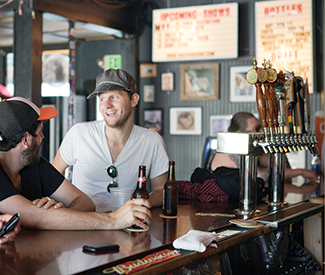
I’ve fallen in love many times at Thee Parkside. Okay, that’s a gross exaggeration. I’ve fallen into moderate, short-term infatuation many times at Thee Parkside.

For years it was home to Indie Mart, the DIY, rock-n-roll, block party Kelly Malone and Co. used to throw. Scores of local artist and designers would set up booths along Wisconsin Street, selling all the strange and beautiful things they created, while grimy-looking bands played ear-splitting music inside.

The parade of manic pixie dream girls was unnerving. They had no real place in society and only belonged as unblemished ideals in my mind. Some would float into town for the weekend and set up shop, only to disappear as soon as Indie Mart shut down. Others would flit from booth to booth, trying on each other’s wares and complimenting each other’s outfits. All of them pretty much sold the exact same shit, not that it mattered to me, they were all so lovely to look at and really only brought things to sell to each other anyway.

Thee Parkside is way more than just for day-long block parties full of whimsically dressed Amelies though. It’s a semi-legendary dive bar famed for it’s out-of-the-way location and its kick-ass live shows. Any night of the week you can see a variety of punk, metal, or country bands playing their hearts out on that tiny stage in that perfectly dingy barroom.

It’s also known for an awesome kitchen that manages to turn well-executed dishes like bahn mi and Cuban sandwiches into perfect bar food. If you haven’t been before, the Original Famous Twang Sundays are a great introduction to Thee Parkside life. Where else in The City can you hear country and bluegrass at an all-ages venue with a back patio for free? I think that’s what Sundays were invented for.

Despite these great things that happen at Thee Parkside, it’s still all those Indie Mart afternoons that most poignantly stick out in my mind. Maybe that’s just because, for many San Francisco’s doers and makers, Indie Mart was a place where we found a community of like-minded bad-asses. Dozens of people who were tinkering with wonderful things all throughout the Bay Area suddenly had a place to coalesce, sharing and selling what they made.

Sculptors, screen printers, and jewelry designers, set up shop next to each other while vintage clothes were hawked down the way and carpenters displayed their crafts. People who may never have encountered each other otherwise, were now meeting and forging relationships that would lead to marriages, babies, collaborations, and successful businesses. A diaspora of creative people now had a base and a community and a way to show the world what they were up to. It was honestly and truly, with all earnestness, magical. And Thee Parkside allowed that to happen.

Like all great scenes, Indie Mart came and left just like a goddamn fireball. One day it jumped from being a small thing in Kelly Malone’s backyard to a block party at Thee Parkside. It burned hot and heavy for a few years, and then suddenly it was done. But what it left in its wake was a slew of creators who now had the confidence and contacts to make a business out of what was previously just a hobby. And of course Thee Parkside is still around too.

Every time I pass by, I think, maybe I should get some people together and throw one more big block party for old times sake. And then I say nah, and stop in for a Cuban sandwich and a cheap drink instead.

Stuart Schuffman aka Broke-Ass Stuart, is a travel writer, poet, and TV host. You can find his online shenanigans at www.brokeassstuart.com

Alerts: May 21 – 27, 2014

0

WEDNESDAY 21


San Francisco Tomorrow annual awards dinner

Delancey Street Restaurant, 600 The Embarcadero, SF. www.sftomorrow.org. 5:30pm, $50. San Francisco Tomorrow will hold its annual awards dinner to recognize individuals for their service to the city. Recipients for this year include Rebecca Evans and renowned journalist and editor Tim Redmond of 48hills.org and formerly San Francisco Bay Guardian, and the keynote address will be delivered by former Mayor Art Agnos. San Francisco Tomorrow depends on this event to gain support for their continued efforts to protect the environment, elect responsible and responsive public officials and promote excellence in public transportation.

THURSDAY 22


Justice Now’s Spring Fling

Dr. Teeth and The Electric Mayhem, 2323 Mission, SF. www.justicenow.org. 5pm-late, free. Justice Now is an Oakland-based nonprofit and law clinic focused on the needs of women prisoners, providing legal services and advocating for healthcare access, defense of parental rights, sentencing mitigation and other needs. Ten percent of the evening’s proceeds for food and drink will be donated to Justice Now. The bar is known for its good beer, cocktails by the pitcher, and an elaborate menu with everything from homemade corndogs to a jelly donut and fried chicken “sandwich.”


Harvey Milk’s 84th birthday bash

Beaux, 2344 Market, SF. www.milkclub.org. 6-9pm, free. Harvey Milk believed in LGBT leadership and the radical idea that LGBT people should be elected, and hold public office. He lived and died fighting for that dream. Join the Harvey Milk LGBT Democratic Club, former State Senator Carole Migden, State Assemblymember Tom Ammiano, and Supervisor and assembly candidate David Campos for a celebration of Harvey’s life on what would be his 84th birthday.

FRIDAY 23


Homelessness in SF: Panel discussion and speak out

St. Anthony Foundation Dining Hall, 150 Golden Gate, SF. (415) 346-3740. 3-5pm, free. As thousands lose their homes in San Francisco, and fewer find pathways out of homelessness, this panel will discuss how the city is responding and where experts believe efforts should be focused. This is event is put on by the Coalition on Homelessness, as part of its Free School series.

SATURDAY 24


Demonstration: Empty the Tanks

Six Flags Discovery Kingdom, 1001 Fairgrounds, Vallejo. tinyurl.com/kx2jcpk. 10-1pm, free. This day is being organized to stand up against marine mammal captivity. The abuse and exploitation of these sentient beings has no place in the 21st century. On May 24th, protests and educational events will be held all over world in front of marine mammal parks and aquariums. The only way to close their doors for good is to get the general public to stop buying tickets. Please wear blue and join for a non-violent peaceful demonstration. Stand with us to tell the captivity industry that enough is enough.


Desegregate our schools

8

By Matt Haney

OPINION

Sixty years after the landmark Supreme Court decision Brown v Board of Education, we face the shocking reality that our nation’s schools are more racially and economically segregated today than they have been in more than four decades.

The vast majority of public school students attend schools where students look like them and share their socioeconomic background. Even areas where significant progress has been made are experiencing resegregation, including here in San Francisco.

For over 20 years, 1983-2005, San Francisco schools were under a federal court-ordered consent decree to eliminate segregation and accelerate racial equity, including a controversial assignment policy that limited enrollment of any ethnic group to no more than 45 percent in any school.

This policy ended after it was found unconstitutional in 2001. Since then, San Francisco schools have experienced a steady resegregation. A quarter of our schools have more than 60 percent of a single ethnic group, even though the district is highly diverse and lacks a majority group.

After three years of a new student assignment system, despite holding the reduction of racial isolation as a central goal, there has been little change. In the face of neighborhood segregation and displacement, family request patterns, language pathways, and elimination of school buses, our current student assignment system, absent additional interventions, may be outmatched in addressing this challenge.

Thus, 60 years after Brown, we must ask ourselves the question: Is racial and economic integration still a priority? And what does this mean for our ability to provide educational opportunity for all students, regardless of race or socioeconomic status?

While Brown is best known for helping end legalized segregation and sparking the Civil Rights Movement, Brown’s foundational premise is that all students have a right to educational opportunity.

In San Francisco, as in other cities, racial isolation and concentration of underserved students in the same school are highly correlated with other school factors that define school quality, including average years of teacher service, teacher turnover, attendance, and suspension rates. San Francisco’s most racially isolated and underserved schools are, thus, also those that are the most persistently low achieving.

As daunting as it may seem, there are things we can do now to restore the promise of Brown.

First, we should acknowledge that establishing racially and economically diverse schools still matters, and draw on creative and intentional tools at our disposal to work towards them. Segregated schools should not be accepted as a foregone conclusion, particularly in light of the well-documented challenges of ensuring educational opportunity in these contexts. We should look to diverse school models here in San Francisco, especially those where parental involvement is central.

Second, we must be honest about the resources needed to ensure equal opportunity for every student, particularly those in racially and economically segregated schools. This will take much more than small reforms or even equalizing funding; in fact, San Francisco has long had a system where schools with higher needs are given additional funding.

Ensuring true opportunity for every student in racially isolated schools requires transformation of what schools look like in these contexts, including longer school days, much smaller classes, high quality early childhood education and after school programs, experienced and highly paid teachers, and full-service school health clinics.

Third, we should recognize the interconnectedness of education with other forces, particularly poverty. Students come to school with deep trauma and stress caused by violence, poor nutrition, and economic instability, which deepen segregation and educational inequities. Anyone who is an education advocate must also be an antipoverty advocate, a worker’s rights advocate, a housing advocate, and a health care advocate.

These days it seems our collective outrage around race is applied in short bursts, often to sound bites and celebrity comments. We need to channel that energy and dialogue instead to a sustained focus on what is truly most unacceptable — the persistent unequal and segregated education of our children. Sixty years after Brown, equal education in diverse contexts for all children may be past due, but not past solving.

Matt Haney is an elected member of the San Francisco Unified School District Board of Education.

Neighborhood papers tell the story of SF

1


By Jessica Lipsky

news@sfbg.com

Before many San Francisco residents traded their newspaper subscriptions for Internet media, a dozen monthly papers covered the beat of the city’s distinct neighborhoods. Nine of these papers, whose heyday came with radical changes in the ’70s and ’80s, are being digitally archived by local historical organization Found SF.

“The papers all have their own personalities,” said Found SF organizer LisaRuth Elliott. “You get a sense of even how those change over time too, whether it’s a hard hitting article or it’s talking about the evolution of how the street businesses changed in Noe Valley. Archiving these papers opens up the gates for all the stuff we don’t know, and that you want to find out about, in San Francisco.”

Over the course of six months, Found SF volunteers will archive two decades’ worth of content from papers published throughout the city — the Noe Valley Voice, Tenderloin Times, Visitation Valley Grapevine, Richmond ReView, Potrero View, the New Fillmore, El Tecolote, North Mission News, and the Glen Park Perspective — in partnership with the Internet Archive and San Francisco Public Library. Since beginning the project in January, Found SF has scanned over 200 issues and tagged each with searchable keywords.


BILINGUAL VOICES

While several of the papers have come and gone, the publication that inspired the project is still going strong. Born from 1968 riots at San Francisco State for relevant ethnic education, the Mission’s El Tecolote was founded in 1970 as a bilingual paper dedicated to social activism. The paper made great inroads in the mid-’70s fighting for equitable health services, such as a bilingual emergency phone system, while covering Latino arts and civil wars in Nicaragua and El Salvador.

“We started El Tecolote to fill the gap of the mainstream media, which wasn’t covering this neighborhood with any real consistency; if it did it was often times negative news,” founder Juan Gonzales said. “The mission was to really be a voice for the neighborhood and hopefully move the spirit of organizing ahead to make some social change.”

In addition to taking a hard line on local politics and immigrant issues, the archives document the evolution of San Francisco from various perspectives. Residents of lower-income neighborhoods were displaced, and many districts leveled, during urban renewal projects in the 1950s and 1960s, while a 1973-75 recession caused further damages. The resulting plight set the stage for journalism driven by demand for hyper-local coverage of LGBT and feminist rights, gentrification, and third-world issues.

“In the mid-’70s there was consciousness around neighborhoods as social centers and places where community organizing was happening,” Elliott said. “People are facing eviction, they’re protesting, there are these vigils happening, and people talking about gaining rights for long-term things. We’re still working with the legacy of some of the housing decisions [San Francisco] made around that time due to the activism,” she added, citing the Tenderloin Times’ advocacy for SROs in the face of hotel development west of Union Square.


RESILIENCE IN HARD TIMES

The New Fillmore — established in 1986 as the city became inflicted with crack and AIDS epidemics, just as Reaganism swept in — was at the heart of socioeconomic changes that transformed parts of San Francisco from what felt like a blue-collar town to an increasingly white-collar city. Approximately 30 blocks in the Fillmore and Western Addition were leveled and left vacant until the ’80s, and the monthly paper played an important role in chronicling the return of businesses to the once thriving neighborhood.

“We ended up with the worst of both worlds in the Fillmore,” said Thomas Reynolds, who took over publishing the New Fillmore in 2006. Redevelopment efforts initially provoked no organized public protest, he said, but later “generated a lot of activism. The New Fillmore managed to capture a lot of the change that was coming to the neighborhood, and a lot of the flavor and history of the neighborhood that was being lost.” The paper encouraged civic engagement through a regular architecture column that featured local homes and helped owners register their historic buildings.

Several papers served neighborhoods with large refugee and immigrant populations, many of whom didn’t speak or read English. The Tenderloin Times promoted social services and encouraged activism through coverage of Southeast Asian and local politics, while publishing simultaneously in English, Lao, Cambodian, and Vietnamese over its two-decade run. Others chronicled changes in demographics, including an influx of Chinese residents into Visitation Valley and a population shift in the Mission from predominately Chicano to more Central Americans.

The Noe Valley Voice also took an international turn when escaped Irish prisoner Liam Carl toured the U.S. to expose harsh conditions in British jails. Carl entered the country illegally and was housed in a Noe Valley home in the fall of 1980, telling the Voice, “If [prisoners] thought that perhaps there was a chance that they could be heard through less drastic measures … and maybe bring about some change without so many people having to die, perhaps I can save lives.”

While the newspapers often differed in their coverage, each featured complementary stories chronicling the 1989 Loma Prieta earthquake. Common features included how to check for damage, profiles on restaurants that fed the neighborhood or, as one Noe Valley Voice headline described the experience of meeting neighbors during a power outage: “We Could See the Stars.” Ahead of the 25th anniversary in October, Found SF has examples of quake coverage online.

“It makes me think that the city is comprised of all these little villages and it’s a little hard to say San Francisco has one direction, one value system,” Elliott said. “The papers show the wide variety of people who live in the city … but it’s all very much at a very personal level. They know each other. They’re telling stories about each other.”

For more information on the neighborhood newspaper archiving project, or to volunteer, visit foundsf.org.


Guardian Intelligence: May 21 – 27, 2014

0

P>Because nothing screams “invest in healthcare” like an aging Sammy Hagar: The former Van Halen rocker teamed up with Metallica’s James Hetfield, Green Day’s Billie Joe Armstrong, Train’s Pat Monahan, Nancy Wilson of Heart, and other rock ‘n roll veterans for a special one-time acoustic show at The Fillmore May 15, benefiting the Pediatric Cancer program at UCSF Benioff Children’s Hospital — what organizers were calling the first annual “Acoustic-4-A-Cure” show. That’s a lot of oversized egos for one stage, but hey, we can’t knock rockin’ for a good cause.


HAIL THE TRAIL

Celebrate the 25th anniversary of the San Francisco Bay Trail — still a work in progress, with 60 percent of the “ring around the Bay” having been completed — Sat/24, at a re-dedication of the Rosie the Riveter World War II National Historic Park visitor center in Richmond. The center houses exhibits dedicated to civilian efforts on the home front during World War II, embodied by the iconic female factory worker. The festive ceremony will be a vintage-themed affair, complete with WWII-era big band jazz, swing dancing, and a costume contest. And in a nod to our current century, the event will also unveil the first Bay Trail smartphone app. Let the summer hiking season begin! www.baytrail.org


PROP. 13 PRESSURE

Public policy group Evolve California sent out a survey to California candidates for public office, and discovered that a full 80 percent support reforming Prop. 13. The nearly four-decades-old law bases property taxes on purchase price, not current market value, and is often blamed for lost revenues that could go toward, say, rescuing California’s public education system from the dregs. The vast majority of hopefuls running for federal, state, and local office said they’d support reassessing commercial properties at market value, as long as small businesses, homeowners, and renters remain protected.


GUTS OF THE CITY

A daylong conference Sat/31 will expose curious participants to some of the lesser-known aspects of city life: The design and planning of public transit, water systems, wireless networks, and other kinds of urban infrastructure. MacroCity, to be held at the Brava Theater on 24th Street in the Mission, will feature talks on everything from San Francisco’s modern military ruins, to the city’s transportation history, to water systems feeding San Francisco. Visit themacrocity.com for more.


BISON: “YAWN”

One Bay to Breakers participant apparently heard the call of the wild, as the poncho-clad man was caught on video jumping into the Golden Gate Park bison paddock. Two officers arrested him in short order, and the SFPD Richmond station tweeted afterwards, “The bison seemed unimpressed.”


PORN DISCRIMINATION

San Francisco based porn star Eden Alexander was rushed to an emergency room after a near-fatal reaction to a common prescription drug. But when she tried using crowd-funding site Giveforward to cover the cost of her treatment, she was told by its payment operators, WePay, that her fundraiser would be cancelled because its terms state “you will not accept payments … in connection with pornographic items.” Alexander only sought funding for her medical costs.


MISSION: RUMBA

Dust off your feather headdress — it’s time yet again for Carnaval (Fri/23-Sun/25) when Harrison between 16th and 24th streets becomes one giant celebration of the music, dance, food, and art of Latin America. This year’s theme is “La Rumba de la Copa Mundial,” or a Celebration of the World Cup, which starts June 12 in Brazil. Sure, there’ll be plenty of drunken revelry, but this is also a great showcase of the deep-rooted Latino arts scene that’s holding on here, determinedly, even as the Mission changes: Look for the Arte Expo, featuring works from the Mexican Museum, Mission Cultural Center, Galleria de la Raza, Accion Latina, BRAVA, and Precita Eyes. The parade’s on Sun/25; see www.carnavalsanfrancisco.org to plan your route.


WANGIN’ IT

Insanely talented Chinese pianist Yuja Wang drops in on our SF Symphony once a year to tickle the ivories and steal a few hearts. Seriously: Her annual appearance here has become an event as eagerly anticipated as the return of the swallows to Capistrano or a sweet, light beating at the Folsom Street Fair. This time around (Thu/22-Sun/25, www.sfsymphony.org) she’ll be taking on Prokofiev’s magical, romping Piano Concerto No. 1 and Litolff’s whirling scherzo from Concerto Symphonique — a double treat for music lovers.


MEAT US SOON

We had doubts about 4505 Meats moving into the old Brother-in-Law BBQ #2 space on Divisadero — that hood moved upscale long ago, but a fancy BBQ in that particular space had the potential to be more sacrilegious than celebratory. Well, at least one local outlet is smitten: SFist has been drooling over 4505’s $18 “Big Mac” — “two beef patties lovingly caressing a block of fried macaroni and cheese” — and “famed bacon-studded hot dogs wrapped in macaroni and cheese and then deep fried.” We’ll let you know how all that goes down, once we can afford it!

Bernal blows up

21

rebecca@sfbg.com

When Herb Felsenfeld and his wife, Gail Newman, look out the window of the Bernal Heights home they’ve lived in for more than 30 years, they see a vacant hilly lot grown in with tall grass, stretching up in the direction of nearby Bernal Heights Park.

The surrounding area has become quite popular. Earlier this year, real estate firm Redfin crowned Bernal Heights the nation’s No. 1 “hottest neighborhood,” its desirability ranked using “a combination of big-data analysis and real-life human experience,” according to the company blog.

There are plans to build two new single-family homes on the slope directly above them, causing a bit of a neighborhood stir. But one detail about this particular site — perched high atop Folsom Street on the eastern slope of Bernal Hill — has neighbors on edge.

Below the surface, extending up a 35 percent grade, is a natural gas pipeline owned and operated by Pacific Gas and Electric Co.

Property records designate it as Line 109, and it traverses the Bernal Heights neighborhood from farther south, running up Folsom Street. Two orange-and-white striped markers stake out its trajectory uphill, with an orange sticker on the back proclaiming, “Warning: Gas Pipeline.”

It’s serviced the area for at least 30 years, perhaps much longer, qualifying it as an aging piece of infrastructure. Felsenfeld, Newman, and neighbor Deborah Gerson say they’re worried that performing excavation on the slope for a road and new home foundations poses a safety threat.

Newman said she was especially perplexed by the San Francisco Planning Department’s issuance of a waiver of an environmental impact review, which is routine for a project of this size, citing no unusual circumstances. “I’m like, wait a minute,” she said. “There’s a pipeline here.”

One would think that any sort of risk would be eliminated by routine safety protocols. But it gets complicated when one considers that PG&E is under federal indictment for criminal negligence for its alleged failure to keep up with pipeline maintenance, due in part to sloppy recordkeeping. There may indeed be little risk involved with the new construction at this site — but then again, the neighbors’ concerns raise questions about whether adequate measures are in place to guarantee safety in this and other situations.

The criminal charges facing PG&E that were filed March 31 stem from an investigation launched in the wake of a fatal 2010 explosion in San Bruno caused by a pipeline rupture, which killed eight people and destroyed an entire neighborhood. The utility is fighting the charges in court and has reportedly invested $2.7 billion in shareholder dollars toward safety improvements since.

But according to the results of a regulatory audit on PG&E’s assessment of its own pipeline records that was undertaken to set things straight after the tragic explosion, crucial pipeline information is still missing or flawed, as the San Francisco Chronicle recently reported.

“Given the San Bruno disaster and the recent media revelations about PG&E’s pipes, we are wondering what information you have gathered on this subject,” Felsenfeld wrote in a letter to one of the housing developers, Fabien Lannoye. “Where exactly is Pipeline No. 109? How deeply is No. 109 buried? What is Pipeline No. 109 composed of? How big in diameter is Pipeline 109? How/with what are the pipe seams welded?”

He sent the same set of questions to PG&E. So far, Felsenfeld hasn’t received any answers. PG&E has also been stonewalling the developer’s information requests.

Lannoye, who is building one of the two new houses, described the project as a two-story, single-family home where he hopes to live with his wife and two children. He said he understands the neighbors’ concerns about safety, but also believes they are organizing in an effort to prevent him from moving forward.

When it comes to his communications with the utility company, however, Lannoye is a bit more baffled. “It’s kind of a little bizarre that we’re not getting clear information,” he said. “I’ve contacted like 15 different people from PG&E, and every time, they send me to someone else. Either they don’t want to give me the information, or they don’t know what it is.”

PG&E did not respond to the Bay Guardian‘s request for comment.

In general, the only parties who seem to be directly involved when there is construction near natural gas pipelines are the utility company and the project developer. An association called the Common Ground Alliance maintains the 811 phone line — a service known as Call Before You Dig — to ensure the location of underground lines are marked prior to any excavation.

When the Guardian phoned San Francisco’s Department of Public Works to ask if the agency has a pipeline risk assessment procedure in place when new construction is planned, we were told that such a thing might fall under the scope of the Department of Building Inspection.

But in a voicemail, DBI spokesperson Bill Strawn responded that such a thing might be up to the Department of Public Works, adding, “There’s no restriction about somebody building a project or a house somewhere in the vicinity of a natural gas pipeline.”

All of which means it falls to PG&E to ensure that high-pressure underground lines are safe, with no chance of rupture when new foundations are being installed close by. But PG&E doesn’t always know what it’s got. According to charges in the federal indictment, the utility created a GIS database in the late 1990s based on pipeline survey sheets that contained erroneous or incomplete information. PG&E then relied on that database to make integrity management decisions.

The indictment noted that prior to the San Bruno disaster, PG&E had been intentionally elevating pressure levels on Line 132, the one that ruptured, as well as Line 109, to maintain peak pressure levels in accordance with federal regulations. But experts have noted that this spiking practice could erode the integrity of a line if there are vulnerable welds.

“Our plan,” Lannoye explained, “is not to dig where the gas line is.” Line 109 would run beneath a sidewalk, he added.

Marilyn Waterman, another neighbor, outlined the situation in an email to University of California Berkeley professor Robert Bea, a nationally renowned civil engineer. She asked Bea if concern is warranted.

“Given the background you provided in your email, yes — you should be concerned,” he responded. It’s an old line, Bea pointed out, in an area with highly variable topography, with no available records detailing its operation and maintenance.

“This list is identical to the list of concerns that summarized causation of the San Bruno Line 132 gas pipeline disaster,” Bea wrote. “The fundamental ‘challenge’ associated with your concern is tied to the word ‘safe.'”

His rule of thumb? “If the potential consequences associated with a failure are low, then the likelihood of the failure can be high. If the potential consequences are very high, then the probability of failure must be very low.”

An evening with Herbie Hancock and Nancy Pelosi at the SFJAZZ Gala

2

By Micah Dubreuil

If you were driving down Fell street last Friday, you might have come upon an unexpected detour. This would have been the block cordoned off for the first annual SFJAZZ Gala in their new facilities at 201 Franklin St. The building opened in January 2013, and in addition to featuring near-perfect acoustics in the main auditorium — arguably the best on the West Coast for jazz — it provides a sophisticated space for a social and fundraising event such as this one.

The Gala was officially honoring pianist and composer Herbie Hancock, and featured performances by Hancock himself in addition to the SFJAZZ Collective, Booker T., Charles Bradley and his Extraordinaires, Terrance Brewer, the SFJAZZ High School All-Stars, and a number of special guests. Standout performances were delivered by Avishai Cohen and Warren Wolf of the SFJAZZ Collective, in particular. And then of course there was Charles Bradley, whose emotional commitment is so thorough that he seems always to be on the verge of tears. Seeing Hammond Organ master Booker T. in a room as small as the Joe Henderson Lab was also a rare and unique experience.

cb
Charles Bradley. All photos by Scott Chernis, courtesy of SFJAZZ.

The High School All-Stars played exceptionally well, highlighted by an inspired arrangement of Hancock’s “Eye of the Hurricane.” It must have been no simple feat for the teenagers (particularly the pianists) to perform mere feet from the legendary Hancock, but they acquitted themselves with distinction. It’d be easy to take the profoundly high level of youth musical achievement in the Bay Area for granted, if not for events like these reminding us that, you know, actual programs drive these accomplishments — programs like the SFJAZZ ensemble, the Berkeley High jazz program, the California Jazz Conservatory (formerly known as the Jazz School) and a number of others — and those programs take passion, effort, and funding. All told, their sweeping institutional support of this music is a remarkable achievement in its own right.

high school
The SFJAZZ High School All Stars, with Paula West

Presenting the SFJAZZ Lifetime Achievement award to Hancock was saxophonist and composer Wayne Shorter, who was himself honored in 2008. After receiving the award, Hancock performed a solo interpretation of Shorter’s classic “Footprints,” which was followed by a SFJAZZ arrangement of the same tune. If I had one criticism, the night’s overall programming was extremely safe, featuring nearly all well-traveled (but beautiful) standards by Hancock (and one by Shorter), including Maiden Voyage, Watermelon Man, and Actual Proof. The only deep cut, as it were, was “And What If I Don’t” from Hancock’s 1963 release, My Point of View, performed by the SFJAZZ Collective. However, the programming reflected the nature of the event: A fundraiser aimed at gaining financial support from perhaps a broader audience than merely hardcore jazz fans — though, to be sure, plenty of those were also in attendance.

When the tally was in, SFJAZZ raised over $1.4 million for its educational and artistic programs, which is roughly in line with previous fundraisers. The event reflected this level of ambition, with a red carpet entrance and deliciously decadent food from local and national culinary artisans: Oysters from Tomales Bay, bacon-wrapped mochi, heirloom tomatoes topped with white chocolate. The statuesque models flanking the front doors with platters of champagne might have been a bit much, but otherwise the event was classy and dignified, with a crowd (which included House Minority Leader Nancy Pelosi) dressed to impress; the invitation has read “black tie optional.” Master of ceremonies Robert Townsend, who directed Eddie Murphy’s stand-up film Raw (among other achievements) was jocular, jovial, and energetic. Even his (undeniably offensive) parody of sign-language interpreters received hearty laughter from the mostly-full auditorium.

booker
Booker T. Jones

Watching Shorter and Hancock sit by the side of the stage, it was hard not to reflect on their 50-year history of close collaboration and friendship. Jazz is obviously a major cultural institution, now propelled by organizations such as SFJAZZ, but for decades it was driven primarily by the passion and fearlessness of musicians like Hancock and Shorter. Their personal achievements are nothing short of colossal, and jazz itself would not be what it is today without them. In his acceptance speech, though, Hancock intoned that the jazz spirit “was all about we,” not the individual. He complimented hishosts for continuing those values: “SFJAZZ is all about sharing.” Here’s hoping the coming years keep allowing them to do just that.

Shipyard artists promised affordable studios in solar-powered facility

Alarm bells went off last year when a small group of sculptors and painters in Building 101 at the Hunters Point Shipyard artists’ colony – one of the largest artist enclaves on the western seaboard, where even famed poet and artist Lawrence Ferlinghetti has a studio – faced possible loss of affordable studio space.

Some artists who had long occupied low-rent studios were threatened under a shortsighted relocation plan hatched by Lennar, the mega-developer that is undertaking a sprawling mixed-use and residential project spanning 770 acres at Hunters Point Shipyard and Candlestick Point.

Fortunately it now seems that the artist colony, which has been there since the 1980s, may face brighter days ahead. Not only were the small number of Building 101 artists spared from eviction, but another group of artists who currently occupy studios in buildings that are slated for demolition under Lennar’s plan have now been promised brand-new art studio space with affordable rents set in perpetuity. 

Commissioners of the Office of Community Investment and Infrastructure – better known as the successor agency to the San Francisco Redevelopment Agency – will today [Tue/20] consider a final plan for a new shipyard art facility, which is expected to pass. The 87,000 square foot structure would house 130 artists’ studios, plus a gallery space, a kiln room, a spray booth and more. 

The Shipyard Trust for the Arts (STAR), a nonprofit organization that’s represented the Shipyard artists since the mid-1990s, announced in a press statement May 19 that it had approved Lennar’s final building design – and had managed to convince the developer to install solar panels to save energy costs in an effort to keep monthly rental payments at affordable rates.

Under a 2004 agreement, Lennar guaranteed that there would be no net loss of studio space, and a stipulation in Lennar’s development agreement promised that rents in the new studio spaces to accommodate displaced artists would be based on building operating costs only. But even this seemingly minimal threshold would have resulted in a projected 50 percent rent spike for more than half the artists facing relocation. This would have forced some of them off the shipyard, and out of San Francisco by default – dealing yet another blow to the city’s arts community.

In the course of a long and arduous negotiating process with Lennar with input from OCII, the shipyard artists proposed that Lennar supply solar energy to the building, which would allow the savings in utility costs to be put toward subsidizing studio rents for artists who would be otherwise forced out.

“That was really outside of their obligations,” noted Amabel Akwa-Asare, OCII assistant project manager, who has been working with Lennar and STAR on behalf of city government.

“It has been a long and difficult process,” said STAR vice president Stacey Carter, “but Lennar has agreed to put solar on the new artists studio building at Hunters Point Shipyard and STAR intends to use that savings to help offset the rents for qualified, low-income artists.”   

Dear United States: #Jessicastux discrimination shows SF inequality

41

Dear United States,

Yes,  you’ve found San Francisco out. You’ve got us. Our city is not the bastion of equality we claim it to be. 

It’s something most San Franciscans know, but now you, the country, are getting a peek at how discriminatory our local institutions can actually be.

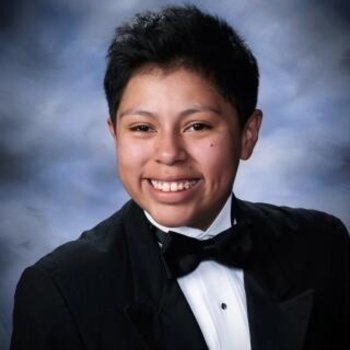
Just last week, the news of Sacred Heart Cathedral Prep’s discrimination against young Jessica Urbina went viral. Urbina just wanted to wear a tuxedo in her yearbook photo, and the Catholic school, Sacred Heart, said it would not print her photo in a yearbook because she wasn’t in a dress.

The resulting social media firestorm blew up in national media, propelled by the hashtag #jessicastux. Today Sacred Heart issued an apology, offering to work on its policies moving forward.

“On Friday, May 16, the school communicated that it will change its policy regarding senior portraits. We agree with our students who showed solidarity with their classmate that the current policy regarding senior portraits is not adequate to meet the needs of our families or our mission. We will involve our students, families, and Board in crafting the updated policy.

Many people suggest that the past few days have been deeply revealing about our school community. We agree. We are an imperfect community that can and does fail. We are a community that is open to self-reflection, and to the constructive criticism and leadership of its students, as well as to the criticism from members of our broader community. We are a community that strives to grow, improve and do what is right. We are a community that sees, in all situations, an opportunity to learn.”

But before we let Sacred Heart be crucified in the court of public opinion, let’s remember an old religious maxim: let ye who is without sin cast the first stone. And when it comes to inequality, San Francisco has many sinners.

Yes, dear country, you spent the last week utterly aghast that San Francisco, the champion of marriage equality, could discriminate against an LGBT teen.

You really don’t know the half of it. 

Take our public schools. Even as we celebrate the 60th anniversary of Brown vs. the Board of Education, an investigative report by the San Francisco Public Press revealed massive inequality in San Francisco public elementary schools. Though the SFUSD suffered funding cuts totalling $113 million in the 2009-10 school year (after numerous annual state cuts), some public schools managed to stave off layoffs and provide excellent facilities for their children. The catch? Only the elementary schools attended by rich families survived, bouyed by nearly $3 million in PTSA fundraising in 11 elementary schools.

But 35 of SFUSD’s elementary schools raised no money at all. These schools are not surprisingly attended mostly by the city’s poorest families, and their schools were met with brutal cuts.

The SFUSD is only now allowing students to wear hats (including some religious headgear), and is only now considering raising its minimum wage to San Francisco’s minimum of $10.24 an hour (as a state entity, it only has to pay $8 an hour).

And lest we pick on the schools too much, the explosive tech industry has had its impacts on San Francisco equality too. As taxi drivers flock to rideshare companies like Uber, Lyft and Sidecar, there are fewer drivers to drive wheelchair-accessible taxis. Those rideshare companies don’t yet have a plan to offer service to our city’s many persons with disabilities. Even our beloved regional transit system, BART, has new proposed “trains of the future” offering less space for electric wheelchairs to move around as well.  

San Francisco has also seen massive numbers of folks displaced by the tech boom, symbolized (and even exacerberated) by our city’s most hated/loved/over-discussed behemoths, the Google buses.  

We’ve even got the second highest inequality in the United States, fast headed for number one. Go us.

And though Bill O’Reilly at Fox News loves to make funny videos about San Francisco’s homeless while he talks up our love of hippies, he’s got it all wrong (unfortunately). The city issues numerous citations against homeless youth for the act of sitting down in the Haight Ashbury district (the birthplace of the Summer of Love), and has struggled with policies to help the homeless for over 10 years running. 

Also, did we mention one in four San Franciscans are food insecure? That means about 200,000 San Franciscans don’t have enough money to eat healthily, and many are near starvation. 

Yes, dear country, San Francisco espouses many loving principles, and we do have an innate sense of justice to help immigrants, the poor, and the marginalized.

But we still have a long, long way to go. 

Best,

A San Franciscan. 


Go do this thing tomorrow: Speak up for Viracocha

7

If you’ve ever set foot in Viracocha, the Never-Never-Land-esque antiques store/typewriter shop/arts space/music venue at 21st and Valencia, you know it’s a pretty magical place — especially in contrast to some of the shiny new businesses springing up around it in the Mission as of late. The brain child and passion project of poet Jonathan Siegel, it’s a homey haven for writers, musicians, visual artists, and dreamers of all kinds; for the past four years, it’s also been hosting intimate live shows and spoken word events in its downstairs performance space. Only problem — Siegel hasn’t been able to promote that aspect of the business, as the room’s not ADA-compliant, meaning the space has remained a (relatively open) secret, since each of those shows has been illegal.

Now, the little speakeasy that could is trying to go legit once and for all: At a City Hall hearing tomorrow, Tue/20 at 5:30 pm, Siegel and the store’s employees are hoping supporters will show up to help convince the SF Entertainment Commission that Viracocha should be granted a Place of Entertainment Permit.

ezza
Ezza Rose performing in the Viracocha basement. Photo by Pete Lee.

“We’ve been operating underground for four years: building, strengthing, and expanding a diverse community of artists, writers, and musicians,” Siegel wrote to supporters. “Not to mention an incredibly supportive and loving mass of patrons and neighbors. But now, it’s time to share with the world how this all works…what, exactly, we’re about, and what our potential is for the future.”

The hearing is open to the public, and Siegel says the commission knows everything about the space’s operations at this point (including its squeaky-clean track record in terms of noise complaints, thank you very much), and nothing’s on the DL anymore. So if you’ve had a good experience there, or just give a shit about the survival of affordable, independent, community-minded arts spaces in this city, come on down.

(Oh yeah, the bathroom’s pretty great, too.)

The Ghost of a Saber Tooth Tiger on going electric and the timeless combination of marijuana and Pink Floyd

4

By Rebecca Huval

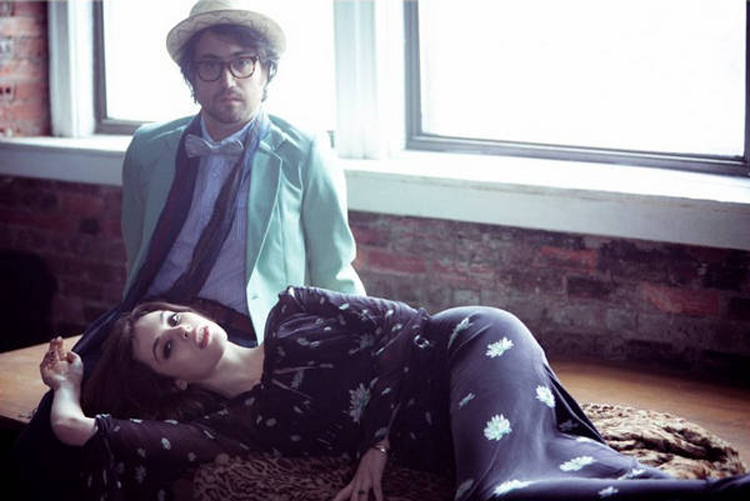
The Ghost of a Saber Tooth Tiger is out to topple everyone’s expectations. The two-piece band has rather public identities to overcome: Sean Lennon is the only child of John Lennon and Yoko Ono, and his girlfriend Charlotte Kemp Muhl is a world-class model who was the youngest covergirl on Britain’s Harper’s Bazaar.

With their latest release, Midnight Sun, Kemp Muhl has shown she has the pipes and songwriting chops to be taken seriously as a musician, and Lennon has proved he’s more than just his father’s ghost — rather, he’s the inimitable frontman of The GOASTT.

In the trajectory of Sean Lennon’s solo career and The GOASTT’s six-year history, Midnight Sun is their going-electric moment. Sean Lennon’s subdued and minimalist solo music paved the way for The GOASTT’s initial albums to be acoustic and saccharine in what Kemp Muhl now describes as “nerdy folk music.” This April’s album is oh-so-different. Inherited Beatlesque psychedelica meshes with modern-day indie à la Tame Impala and Deerhunter. Midnight Sun rocks in full-fledged electric, with synthy splashes and warped vocal reverb. The album ranges from trippy tracks such as “Devil You Know,” with prismatic texture and thick percussion, to thoughtfully orchestrated ballads such as “Don’t Look Back Orpheus” and Kemp Muhl’s graceful solo, “Johannesburg.”

Ahead of The Ghost of a Saber Tooth Tiger’s show at Great American Music Hall on Tue/20, I spoke with Charlotte Kemp Muhl about meeting Lennon at Coachella, the aha moment listening to Pink Floyd that triggered the band’s psychedelic shift, and how she balances jet-setting modeling and music careers.

San Francisco Bay Guardian You met Sean at Coachella in 2006. How did you strike up a conversation?

Charlotte Kemp Muhl I don’t remember which one of us struck up the conversation, but we were magnetized to each other. We were talking about things like Stephen Hawking, whatever random thing we’d read that week, and claymation. I just thought he was so eccentric and wearing this suit in the middle of the desert. He was with his friend Vincent Gallo, who told him, “Don’t go for that girl, she’s crazy.” I just remember he was really enthusiastic about things and unusual and childlike, even though he was much older than me [30 years old]. I was 17 at the time. We connected immediately.

SFBG Have you put a pause on your modeling career to concentrate on music?

CKM Kind of, it tag-teams. I have to do modeling to support doing music. I would never be able to afford collecting instruments, and unfortunately, it’s really hard to make money as a musician. You don’t! I have to do modeling to do music, but I can’t wait until I can retire and just concentrate on music. In a way the two careers are complementary. Fashion and music are connected like Siamese twins. In the sense that rock n’ roll has been influencing fashion and fashion, rock n’ roll for a long time. They’re incestuous industries.

SFBG Who are some of your musical role models?

CKM Hendrix, Syd Barret, and Bach.

SFBG What have you learned about music from working with Sean?

CKM The area in which I’ve most grown is rhythmically. He’s taught me a lot about being funky and syncopation. He’s an amazing drummer, and I’ve been teaching myself how to play drums by watching him. I learned a lot about arranging. We’ve both influenced each other a lot. It’s been fun.

SFBG Why did you wait until a year after you were dating to share your musical talents with Sean?

CKM I was shy. Everyday someone comes up to him with a demo CD. I didn’t want to be like that. I never thought we’d work together. I thought he’d do his solo career. I showed him one of the childhood songs I wrote, and he loved the melody and insisted that we work together. He quit his solo career to work with his mom and work with me. I hope he goes back to his solo career, fingers crossed for that, but he’s very shy. It’s been fun doing heavier rock music because it’s forcing him to be more of a frontman. We’re not just doing Sonny & Cher melodies. I really want him to be a frontman. He spent so much of his life being a sideman.

SFBG As a solo artist, Sean seemed very minimal and moody. Then, it seemed like The GOASTT started out very sweetly and softly with your acoustic album. Now, The GOASTT is more edgy, percussive, and textured. What do you contribute to his sound?

CKM I pushed us even further into a Pink Floyd, psychedelic direction. When we were doing a tour in France, I discovered the pairing of marijuana and [Pink Floyd’s] Live at Pompeii. We were at some cheap hotel in France, and it was freezing cold. Something just clicked in my mind, and I wanted to be doing psychedelic music and not nerdy folk music. Sean had always been into that shit so he was into that direction. That’s the ultimate cliche, marijuana and Pink Floyd, but it worked! We were opening up for Johnny Hallyday and Matthieu Chedid. He’s huge in France, like the Michael Jackson.

SFBG What was at like playing at Occupy Wall Street?

CKM It was fun. A lot of our friends were doing that at the time, and we were excited that people were getting together to protest because people are placated by their gadgets and they rarely show interest and support. We just came to support anti-fracking and we didn’t even think Sean would get flack for supporting OWS. People online were saying he’s the one percent, which is ridiculous, he’s not in the one percent. I mean technically, anyone with a color TV is in the one percent of the world. We performed a bluegrass version of “Material Girl,” by Madonna. It was supposed to be ironic.

SFBG Have you collaborated with Yoko Ono? What is like working with her?

CKM I played bass for her for a while for her festivals and her shows. We’re around a lot. She doesn’t really collaborate with people, she’s like a singular, visionary person. Sean is much more into collaborating and working with people. She’s more of a leader of an army. She’s like a visionary. You just do what she says kind of a thing.

SFBG What has been your favorite part of working with Sean?

CKM I’ve been working with other musicians without him around. Sean plays every instrument like a virtuoso. In the studio, it’s like a super weapon. I send him in to overdub instrument ideas, and then I’ll edit them all together. We can cover a lot of ground that way. I’ve noticed with other musicians, they’re very limited. They only play one of two instruments, and don’t have a bird’s eye view of songwriting. Sean always have great ideas about rhythm and harmony. We both have a million ideas, and it’s frustrating when you work with someone who’s not that inspired.

SFBG I know you’re a multi-instrumentalist: What instruments do you play on Midnight Sun?

CKM On the record, I play bass, keyboard parts, guitar, percussion, and arranged harmonies. The main instrument I play is Pro Tools. I do all the editing and all that stuff.

SFBG It seems like the album switches between different settings: Xanadu, a missed flight to Johannesburg, traveling to the underworld with Orpheus. Where were you when you wrote these songs? What was your process for collaborating?

CKM I wrote the words for Johannesburg when I was in Johannesburg with a Pirelli shoot for Peter Beard. “Xanadu” and “[Don’t Look Back] Orpheus” we wrote upstate on his farm. We would stay up all night writing acoustic songs in his bed. We would walk down to his studio, which is by a lake, and jam it. Other than “Johannesburg,” I write a part and then he writes a part. It’s like one of those drawings when you fold up a napkin and each of you draw part of a monster.

The GOASTT
With Syd Arthur
Tue/20, 8pm, $15
Great American Music Hall
859 O’Farrell, SF
www.slimspresents.com

KUSF’s axe-man, Father Privett, stepping down

40

The University of San Francisco president who sold off beloved community radio station KUSF in 2011 is stepping down in August, the university recently announced. Father Stephen Privett is known by elected officials and higher-education folks as a strong, stalwart 14-year leader of San Francisco’s oldest university. But to local artists and music lovers, Privett was and will always be the axe-man of KUSF.

And no, we don’t mean he shredded on the guitar.

KUSF continues to rock on as San Francisco Community Radio, but in 2011 its spot on the terrestial dial was sold and closed.

The day it went down, KUSF radio’s employees and volunteers were unexpectedly tossed out of their studio, the locks were changed, and they learned then and there that the station was sold. The signal went dark, radios went silent. The USF-hosted radio station long broadcasted renegade tunes on 90.3 FM, with programming in a variety of languages few other stations replicated.

Privett brought the hatchet down on the beloved radio station, silently. The backroom deal to sell KUSF’s spot on the dial to a Southern California classic music radio station was brewed largely in the dark, with only two KUSF employees told before the day the station was shuttered. Both were silenced under non-disclosure agreements, according to news reports at the time. 

In his farewell interview with USF’s campus magazine, Privett touched on his controversial decision. 

“KUSF was originally student run and operated, and a valuable learning laboratory. It morphed over time into a community enterprise where only 10 percent of the workers were USF students, while USF remained 100 percent responsible for its operation and costs.

Our mission is to educate in the Jesuit Catholic tradition, not to provide opportunities largely for non-students. I am obligated to spend tuition dollars to support student learning, and that’s how the proceeds were used: to fund scholarships and academic programs.

USF continues to offer students solid learning opportunities at KUSF.org, which is entirely student-staffed and streamed live on the Internet.”

It’s safe to say former KUSF DJs and volunteers aren’t sad to see him go. 

“Sadly, a black cloud continues to linger over Father Privett’s legacy, due to his shady and dishonest actions in killing one of the largest and most vital community radio stations in San Francisco,” former KUSF Music Director (and DJ) Irwin Swirnoff told the Guardian. “With all the drastic changes the city has gone through since the sale of the station, the loss of KUSF is extra devastating as the need for a spot on the terrestrial dial for artists, activists, musicians, and underrepresented communities.”

Privett has led San Francisco’s oldest university for 14 years, and this will be his last semester presiding over the Jesuit institution. This weekend, May 16-17, Privett will send off a graduating USF class for the last time. Meanwhile, the fate of the former KUSF-in-Exile, now SFCR, is still in limbo.

The staff and volunteers of KUSF filed an appeal of the sale of the station with the Federal Communications Commission back in 2012, former KUSF DJ Damin Esper told the Guardian. The appeal has neither been ruled on nor dismissed.

SFCR also filed with the FCC for a new spot on the dial, 102.5 FM. The frequency is known as Low Power FM, which has a variable broadcast strength. On its blog, SFCR says the broadcast range of 102.5 FM is as of yet unclear. 

But what is clear is that no matter what his accomplishments at USF, Privett will long be remembered in San Francisco as the man who shut down KUSF. 

“The station was gutted and demolished; dorms now stand in its place,” former DJ Andre Torrez told the Guardian. “He did what he felt he had to do in order to make his instant millions. Our vast vinyl library was handed over to the Prometheus archive, with no option for the Save KUSF volunteer/ activist group, which still broadcasts online only, to purchase or access the collection.” 

“We were major. We had Nirvana, The Ramones, Metallica, Iggy, Green Day, and more recently Ty Segall all as live in-studio guests when they were emerging artists or on the brink of breaking through. Father Privett probably wasn’t fully aware of how important KUSF was, but we certainly would have let him know how we felt had he cared or asked.”

“He has been instrumental in killing community terrestrial radio in San Francisco,” Torrez said, “and for that, he should be ashamed.”

Thick as blood: Sibling duo Broods are the next kiwis on the rise

1

“Kiwis tend to hold back and be too humble. They don’t want to be over-confident, but I think people are starting to realize that a little bit of confidence can go quite well,” says Caleb Nott, the elder brother of the sibling sensation from New Zealand known as Broods. He sits comfortably next to his sister, Georgia, in the back of The Independent, several hours before their show.

The brother-sister electro-pop duo didn’t get that confidence until the release of their first single, “Bridges,” on SoundCloud, created waves on the world wide interwebs last October. “Bridges” became a hit in the blogosphere and in this hemisphere alike, earning over 200,000 streams in a week.

“It all happened at once,” says 19-year-old Georgia. The singer has an innocent face, giving her the appearance of a much younger teenager. “We went from nobody really knowing us to people on the other side of the world wanting to meet us.”

Later that night, the band starts the night off with “Never Gonna Change,” a deep-synth track with correspondingly morose lyrics. “You’re pushing down on my shoulders, and emptying my lungs,” sings Georgia, lyrics reminiscent of a certain internationally-acclaimed Kiwi. Georgia moves slowly around the stage while Caleb creates layered synths and hypnotic beats. The two remain relatively reserved both on stage and in private. Georgia’s voice is sweet and breathy to the likes of Imogen Heap and Romy Madley Croft of The XX. Caleb brings more energy during the upbeat tracks, bouncing up and down behind his keyboard while Georgia skips around stage in a printed corset crop top and white billowy shorts.

broods

Georgia, a self-proclaimed depressing music lover (“I love sad songs,”) falls deeply into “Taking You There,” a personal favorite and one of the strongest songs from the self-titled EP. Caleb gently strums an acoustic guitar and offers deep vocals to accompany his sisters’ silvery, dream-like hums. The audience moves to the soft beat and sings along. Most of the audience knows the words to every song on Broods’ EP, which the siblings admit to still be adjusting to.

“Seeing people wearing our T-shirts in the crowd,” says Caleb before the show. “That’s so weird and crazy, you’ve got my face on your T-shirt.”

Since October, Broods — the name obviously referring to the band members’ blood relation but also the melancholic nature of their songs — has played two US tours, spent a brief stint touring with Haim, and is scheduled as the opening act for Ellie Goulding’s Australia/New Zealand tour this summer.

“Over the last couple of years, people have started to look over to Auckland and to New Zealand as a whole for new music.” Caleb explains. From LadyHawke, to The Naked and Famous, Lorde and now Broods, the New Zealand music scene is a treasure trove of indie talent. Caleb says the music scene remains relatively tight-knit where everyone supports each other in their own music genre but doesn’t reach out beyond, reminiscent to a private high-school. “It’s pretty cliquey, because it’s very small.”

“This one’s for Lorde,” says Georgia in between songs. She dives into the gentle lullaby “Sleep Baby Sleep.” The mesmerizing beat and soft vocals is characteristic of Lorde’s debut album.

The band is clearly following in her footsteps, from the grassroots release of the Broods EP, to the dark coming-of-age tones, to the producer who discovered them. Joel Little found Caleb and Georgia while a judge for a music competition in 2011 but the band wasn’t formed until early 2013 in Auckland. After producing Lorde’s Grammy Award-winning debut album, Joel Little began work on “Bridges.”

broods

Broods closes the show with its first single, “Bridges,” a moody track about broken relationships. Georgia starts out with muted piano chords and an ethereal voice that builds into Caleb’s rich synth soundscape. Georgia’s voice is exceptionally developed for her age. She plays a soft version of a song from their upcoming album. She’s most comfortable behind the piano, her instrument of choice. “And I’m trying hard to make you love me, but I don’t wanna try too hard,” she sings moodily about falling in love with the perfect man.

Broods has played in San Francisco twice now but has yet to play a show in New Zealand. The siblings will head home next week to work on their debut album with Joel Little. Then, they will play their first proper show in their hometown of Nelson with their 17-year-old sister, who is set to open with her folk band. Clearly, talent runs in the family.

Fast food workers strike in the Bay Area and worldwide

0

Bay Area fast food workers who walked out and picketed their stores last year are set for a repeat performance in their battle against the house that Big Mac built, timed to debut right as the Guardian hits the streets. And this strike is also set to expand.

On May 15, fast food workers worldwide plan to rise up in protest of unfair labor practices and punitive actions by their bosses. Fast food workers in the Bay Area will be joining the strike. Labor sources tell us their numbers may double thanks to new workers joining the movement in Pleasanton, Livermore, and Oakland.

The new Oakland march is twofold: One will picket a McDonald’s on East 12th Street, and another a McDonald’s on 14th and Jackson.

“I haven’t had a raise in three years,” a McDonald’s worker who identified herself as Markeisha told us just after she went out on strike from an Oakland McDonald’s in December. And contrary to the common narrative of fast food workers being independent teenagers, Markeisha said she has two children, and she is their sole provider.

Another common misconception is that workers are merely fighting for higher wages. Although raises are among their needs, fast food workers also contend they are a vulnerable workforce. Wage theft, low salaries, slashed hours, and punitive measures for speaking out are among the grievances fast food workers allege against their bosses at chains including McDonalds, Burger King, and Taco Bell.

“One thing we found when talking to fast food workers was wage theft issues were high,” Service Employees International Union Local 1021 Political Director Chris Daly told the Guardian. “When you’re making $8-11 an hour, a couple shifts can be the difference between paying the rent or not.”

Workers we talked to at the last strike alleged their jobs at McDonald’s and Kentucky Fried Chicken paid so low they had to also enroll in CalFresh (food stamps) to afford food. That sort of government subsidy for big business puts a strain on the taxpayer, former Labor Secretary and current UC Berkeley professor Robert Reich noted on his blog.

McDonalds alleges last year’s actions were strikes-in-name-only. “To right-size the headlines, however, the events taking place are not strikes. Outside groups are traveling to McDonald’s and other outlets to stage rallies,” McDonald’s wrote in a press statement.

Counter to the corporate narrative, the Bay Guardian witnessed multiple Oakland McDonalds workers joining picket lines (captured on video: “Oakland joins 100 cities in national strike,” Dec. 5,www.sfbg.com).

The next Fast Food Strike will have a world focus. Earlier this month, Salon.com reported the strike will reach cities including Karachi, Casablanca, London, Bangkok, Buenos Aires, Geneva and San Salvador.

“The fast food organizing across the country speaks to how this issue is capturing not just the public imagination,” Daly told us, “but speaking to low-wage workers realities to struggling simply to live.” 

Free Sunday meter plan challenged with environmental review

140

Transit advocacy groups filed an appeal today challenging a controversial vote by the San Francisco Municipal Transportation Agency’s Board of Directors to end paid Sunday meters last month

The appeal contests paid Sunday meters were a benefit to many, and the decision to terminate the program was made without adequate review under the California Environmental Quality Act.

“The enforcement of parking meters on Sunday in San Francisco has been doing exactly what it was designed to do,” the appeal argues, “reduce traffic congestion, reduce greenhouse gas emissions, increase parking availability, and increase revenues in the City and County of San Francisco.”

The appeal was filed by transit groups Livable City, The San Francisco Transit Riders Union, and an individual, Mario Tanev. The appeal will now go to the Board of Supervisors, for a vote to approve or deny review under CEQA.

SFMTA spokesperson Paul Rose told the Guardian, “We’ll take a look at the appeal, but it wouldn’t be appropriate to comment at this time.” The SFMTA had only just recieved notice of the appeal. 

Proponents of paid Sunday meters also spoke at the SFMTA board meeting, shortly before the paid meters were struck down.

Your own studies show meters are beneficial to shoppers and businesses,” Tanev said during public comment. “You could have used this money to support seniors and people with disabilities who clearly need it.” 

And the need from those groups was clear, as over 200 seniors and people with disabilities came to the meeting to advocate for free Muni. The SFMTA board denied the request for free Muni for seniors and disabilities just before voting to approve a budget that included rescinding the paid Sunday meters.

The Sunday meters program brought in $11 million, more than enough money to pay for all of the proposed free Muni programs, as many at the SFMTA meeting pointed out.

Shortly after the vote, SFMTA Board of Directors Chairman Tom Nolan told the Guardian he felt pushed from all sides.

“I’ve been on the SFMTA board for years, and I’ve never felt more pressure,” he said. “This is the hardest budget in the eight years I’ve been on the board.”

At the meeting, many seniors noted the rising cost of living in San Francisco, combined with declining federal assistance and retirement funds, are forcing hard choices on seniors. Many spoke of forgoing doctor’s trips because they could not afford Muni, or of forgoing food in order to afford Muni trips.

“Muni is for everybody, especially those who need it most,” Nolan said. “The testimony was very heartbreaking.”

Embedded below is the CEQA appeal filed against the free Sunday meter decision.

CEQA Appeal – SFMTA Sunday Meter Enforcement by FitztheReporter

Ammiano’s Prop. 13 reform bill moves forward with unlikely business community support

29

Assemblymember Tom Ammiano’s (D-SF) legislation to close a state loophole that has allowed big corporations and other commercial property owners to avoid paying higher property taxes that normally come when land is sold is moving toward becoming law after yesterday getting some unlikely support from the business community.

Assembly Bill 2372 would overturn state laws passed in the wake of Proposition 13, the landmark 1978 measure capping annual property tax increases until a property is sold, that define an ownership change as occurring only when a single purchaser buy more than 50 percent interest, a threshold easily avoided by creating shell corporation and LLCs.

“It costs the local jurisdictions a lot of money that could be going to potholes, teacher, or whatever,” Ammiano Press Secretary Carlos Alcala told the Guardian. “When I buy a house, I have to pay the increased property taxes, and when you buy a commercial building you should have to pay that increased tax.”

AB 2372 changes the threshold to allow reassessment if an owner sells 90 percent of his/her/its interest in a property, not matter how many ways the new controlling interest is sliced up. The California Chamber of Commerce and the usual business groups had opposed the measure, but they withdrew that opposition yesterday as the bill cleared the Assembly Revenue and Taxation Committee, thanks to some minor amendments and political finessing by committee Chair Raul Bocanegra (D-San Fernando Valley), who has pledged to sign on a co-sponsor.

“Now we have a bill that does exactly what I wanted, and yet it has the support of the business community,” Ammiano said in a prepared statement. “I’m grateful to Assemblymember. Bocanegra for helping with amendments that would remove opposition and make it clear that we are not targeting the average property owner. The average Californian is who we are trying to protect.”

“Homeowners are consistently reassessed but other properties aren’t,” Assemblymember Phil Ting (D-SF) — a committee member and former San Francisco Assessor — also said.

A spokesperson for the California Chamber of Commerce — a powerful conservative lobby and fierce defender of maintain Prop. 13 protections for commercial property — confirmed for the Guardian that it has changed its position on the bill, citing the amendments.

The conservative California Business Properties Association and the California Tax Reform Association also followed the Chamber in deciding to support the bill yesterday, according to Ammiano’s office, and even the Howard Jarvis Taxpayers Association — named for the author of Prop. 13 — has dropped its opposition to the measure. A statement by Ammiano’s office said sudden about-face “led one Republican committee member to refer to hell freezing over and pigs flying.”

But sources close to the action also say it was the work of Bocanegra — whose committee is crucial to legislation involving business interests — and a recent Field Poll showing 69 percent of Californians support closing this loophole and just 17 percent are opposed that may have made the difference.

At the hearing, Bocanegra thanked Ammiano for tackling “something that’s vexed us policywise in the state for a very, very long time.”