Tim Redmond

Dems in Sacto want to raise taxes — what about Newsom?

0

Well, the Democrats in Sacramento have finally decided that they aren’t completely terrified of tax hikes; they’re proposing a $5 billion package to help make the bloody cuts for next year a little less horrible. It’s mostly stuff that a majority of the voters would approve — a modest income tax hike on high earners, an increase in the vehicle license fee, and the reduction of some corporate tax breaks. And it’s nowhere near enough — but it’s a start. In fact, politically it’s a huge deal, because it puts the debate in the right place: Tax cars and rich people, or devastate public education, public safety and social services.


So here’s the question: Now that the leaders of the not-terribly-progressive state Senate are willing to talk about new sources of revenue, where is the mayor of San Francisco?

Trash Lit: ‘Reckless’ could be ripped from headlines (minus a couple murders)

0

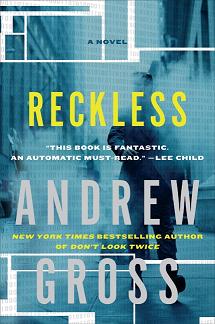
Reckless
Andrew Gross
William Morrow, 404 pages, $25.99

Imagine if the head of a powerful banking company with close ties to the federal government conspired with some shady Saudi billionaires and a cruel Serbian ex-military thug to bring down the American financial system in a Darwinian plot that would allow the one firm with insider knowledge to emerge even stronger. How would it play out? Well, minus a few murders, more or less exactly the way the financial-sector meltdown of the past couple of years has played out.

That’s what makes this such a fun book. It’s not the most brilliant thriller ever – the structure involves a lot of flicking back and forth between parallel plots, and gets confusing at times. But the premise is delicious, and the execution is good enough to make it eminently enjoyable.

Reckless starts off nicely, with a Middle Eastern banker set to launch world economic ruin, an American private dick fucking his girlfriend as doom approaches, a Greenwich, Connecticut society divorcee fucking a sexy European stud with a dubious background and a brutal, bloody murder of a securities trader, his wife (who was an old pal of the PI) and one of their kids.

It slows down a bit after that, but not much.

Turns out the dead guy was way underwater in a complex deal. A few more traders, also underwater and scrambling, wind up dead, too. And then the economy really starts to fall – AIG goes under. Fanny Mae and Freddie Mac go under. There’s panic at every level of government.

Meanwhile, the bad guys try to kidnap the mildly retarded son of the PI’s girlfriend after a hockey game, leading to a spectacular hockey-stick-and-knife-in-the-locker-room fight that ends with the PI shoving a sharpened skate into the kidnapper’s chest (neat trick; I always wondered if that would really work).

By the time it all gets sorted out, there’s railroad trestle gun play, a federal agent who’s bleeding to death but still makes a spectacular shot, and an utterly predictable power-out, stuck-in-the-elevator sex scene. Maybe even worth forking over the hardcover price.

The politics of sit/lie

91

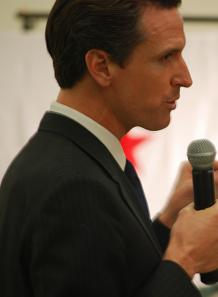
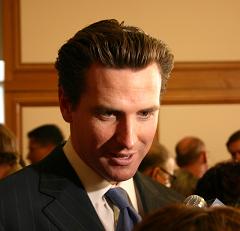
It’s no surprise that Mayor Gavin Newsom wants to put a sit/lie law on the ballot, and it has absolutely nothing to do with the fact that the supervisors are moving slowly on his proposal. It has nothing to do with any facts — the cops could enforce existing laws and address the problem.


No, this is all about politics. Newsom never wanted the supervisors to approve a sit.lie law; he and his operatives want to put it on the November ballot, so they can use it as a wedge issue to attack progressive candidates. They can also use it to raise money, which can be spread around through slate cards to support his supervisorial picks.


Remember, this is how Newsom got elected mayor: He picked a wedge issue (general assistance payments to homeless people), created a slogan (“care, not cash”), raised a ton of money, and made it his signature campaign strategy. It worked, so he’s trying again.


Before Arthur Evans leaps in and attacks me, let me say: I know there are people in the Haight who want this law. (There are also people in the Haight, including the venerable Haight Ashbury Neighborhood Council, who oppose it.) But I don’t think Newsom really cares about that; if he did, he’d work with the supervisors on a compromise or alternatives. Instead, he’s refusing to participate in the board’s debates.


This is all about November’s board elections. Sorry, Arthur, but your pet cause is now the mayor’s political tool.

The battle over Muni reform

1

Sup. Sean Elsbernd is getting a lot of attention for his plan to change the way Muni drivers are paid, and although he’s going to have a hard time getting 70,000 signatures for a Charter Amendment, the fact that Muni’s unions have given back to the city less than the other major employee unions gives he move a boost. There are arguments in favor of the current salary structure, but as long as it’s set in the Charter this way, it’s hard for the city to get any leverage on work-rul changes, which are really what Elsbernd is after.


But if you want to look at reforming Muni, you have to go beyond this one issue — and that may be the battle that takes place this fall. Sup. David Campos, along with Sups. Ross Mirkarimi and Eric Mar, has put together a comprehesive Muni reform Charter amendment that includes some of the changes Elsbernd is proposing — but addresses Muni governance and funding, too.


The Municipal Transportation Agency, which oversees Muni, is now run by a seven-member board, with all the members appointed by the mayor. That’s hardly created the sort of political independence that the supporters of the system wanted. So under the Campos proposal, three members would be appointed by the mayor, three by the Rules Committee of the Board of Supervisors, and the final member, the potential swing vote, would be appointed jointly by the mayor and board president (boy, that meeting will be fun). All seven would be subject to board confirmation.


The MTA would also be guaranteed a stream of income equivalent to 2.5 cents for every hundred dollars of property tax valuation.


The reform plan creates an Office of Inspector General in the MTA, and gives that person the authority to conduct audits and monitor waste and fraud — something sorely needed in the agency. And it would allow the supervisors to reject the MTA budget by a simply majority vote.


It’s likely that Campos, Mirkarimi and Mar will get the six votes they need to put this on the ballot, so they won’t have to go out and get signatures. Which means that even if Elsbernd’s ambitious grassroots effort is successful, the voters won’t be deciding whether to accept or reject a Muni reform measure; they’ll be choosing between one that only addresses pay for Muni workers and one that changes the pay system — but also seeks to overhaul how the system is run.

Chris Daly’s progressive primary

3

Sup. Chris Daly’s proposal for a progressive primary — and his pledge for candidates who want to participate — is starting to get attention in the mainstream media. The Chron had an item on it that, not surprisingly, makes it look like some sort of commie-style litmus test. (“I pledge allegiance to the Progressives,” the headline read. And even by Chron standards, the comments were pretty harsh.)
I’ve never been personally too fond of the idea of the progressive primary, particularly in its rather elaborate manifestation. (You can see what some of the D6 candidates think of it here.) I think the whole thing could have been done as a caucus, and cost a lot less money. And I told Daly when he first suggested this that he ought to make his “pledge” into a scorecard: Let the candidates answer the questions, then decide how much you like them based on their answers. That’s what the Guardian does in its endorsements. The pledge term just doesn’t sound very good, and it leaves progressives open to the charge that we expect purity and will somehow blackball candidates who don’t follow the every whim of one supervisor.

Truth is, Daly just compiled his list of 30 questions from the endorsement questionnaries that a bunch of progressive groups put out for Democratic County Central Committee Candidates; he used a copy of ours, too. And the positions on the list are pretty much representative of the general consensus of progressive San Francisco. So it’s less a “purity test” than a determination whether someone generally adheres to the positions that the Tenants Union, the Sierra Club, Local 1021 and the Milk Club promote. There’s no big secret here, and nothing terribly alarming — all of these same District Six candidates are going to appear before all of those organizations and answer, in one way or another, all of the same questions. Daly just put it all in one place.

And if we had an umbrella progressive organization in San Francisco, which Daly, among others, has tried but failed to create, what this would be is the basic platform of the city’s left. There may be some in the progressive camp who disagree with some of it, and others who think it should be longer, stronger, etc., but it’s pretty basic stuff.

The problem, really, is that it’s not coming from an organization — it’s coming from Chris Daly. And the winner of the progressive primary gets Daly’s endorsement. I like Chris, and he’s been solid on almost every issue (PDF), and taken on causes nobody else will touch — but any one individual politician who tries to establish this kind of standard is going to set himself up for bad press.

SFBG.COM Radio: Johnny and Tim on the collapse of the GOP

1

Today Tim and Johnny talk about all the nutty candidates that the Republican party will be fielding in the fall, from Nevada to Kentucky — and how that will alter the midterm elections. Listen after the jumpSFBGRADIO5/24/2010 by SFBG

Who’s afraid of taxes?

1

Well, the candidates for governor are, but apparently the people of California are not. The latest Public Policy Institute poll makes it pretty clear:


Of the four main spending categories of the state budget, Californians are the most willing to consider a tax increase to spare K–12 education from budget cuts (69%), while just over half would pay higher taxes to maintain current funding levels for higher education (54%) or for health and human services (54%). A large majority (79%) opposes paying higher taxes to spare prisons and corrections from budget cuts.


Californians would consider some other ways to raise revenues: 67 percent favor raising the top rate of the state income tax paid by the wealthiest Californians and 58 percent would favor raising state taxes paid by California corporations. Residents are much less likely to support extending the state sales tax to services that are not currently taxed (35%) or increasing the vehicle license fee (28%).


More than two-thirds of the voters want to raise the top tax rate for the rich. Almost 60 percent want to raise corporate taxes. Why is this not part of anyone’s platform?


Don’t touch Dan Noyes!

3

Beth Spotswood has a very funny piece on SF Appeal about Channel 7 news reporter Dan Noyes and a very odd press flak at Laguna Honda who keeps trying to feel up Noyes’s shoulder. Over and over again, until Noyes finally slaps his hand away. Then the guy tries to do it again.


There’s an actual story here, about how the Laguna Honda patients’ fund is spent, but the video of the touchy-feely session has already overwhelmed the actual news. You gotta watch:

SFBG Radio: Johnny and Tim on the craziest Senate campaign in years

0

In today’s installment, Johnny and Tim talk about Meg Whitman’s precipitous poll collapse — and the Senate race in Kentucky, which could turn out to be one of the wildest in years. Will mainstream Republicans actually get behind a guy who doesn’t support the Civil Rights Act?

SFBGRadio5/20/2010 by SFBG

I want to throw up

18

I’ve gotten a pretty strong stomach after 25 years of political reporting, but when I read stuff like this, I reall want to throw up. It’s not just pandering or corruption or sleaze — that shit’s common enough, and I can deal. It’s this utter, blatant, mind-boggling lack of reality that makes me start to lose my lunch.


(Pretty good lunch, too — I made myself a nice turkey sandwich with havarti cheese and mayo, on a crispy roll, bag o’ chips, bottle of sparkling Calistoga — hate to see it come back up again.)


But please, folks: Cannot anyone running for governor of California be remotely honest about the budget problem? These people are not fools; Meg Whitman and Steve Poizner have run businesses. Jerry Brown has been governor before, and has been a mayor. They know how budgets work. And they know this:


You cannot — cannot — solve a $19 billion budget deficit by reducing waste and fraud. Even Schwarzenegger admits that:


Shortly after taking office, Schwarzenegger also promised to find billions in fraud through a top-to-bottom review of state government. But after the 2006 review, Schwarzenegger admitted his advisers “did not find the kind of abuse that I thought there is.”


 There’s not $19 billion worth of bureaucratic waste, either. It’s just not there.


There are only two options to make this state fiscally sound again: Fundamentally restructure what the state of California does (that means, for example, eliminating most of the social safety net, giving up on public education and releasing about half the prison population), or raise taxes.


Only two options. Anyone with any sense knows that; as my friend and colleague Johnny Angel Wendell likes to say, it’s just simple math.


And yet nobody’s talking about it. Nobody’s even coming close. And the press isn’t pushing all that hard, either.


I was pleased to see that my old pal Jerry Brown saying that “those with the biggest belts” should tighten them. At least that has a tiny nod to the notion that some people are better off than others and the rich ought to pay more than the poor. But what the hell does it mean?


I called Jerry’s campaign office this afternoon and asked Sterling Clifford, his press person, to help me out a little. Is Brown saying that he thinks the wealthy should pay more taxes?


Actually, no: “I think he has been very clear that there will be no new taxes unless the people vote on them,” Clifford told me.


Okay, so does that mean he’s going to cut the budget of the biggest departments — say, the prison system? Well, no: “He intends to enter the budget negotiations with the Legislature with all options on the table.”


Shit. How about restoring the Vehicle License Fee to what it was before Schwarzenegger rolled it back? That a good Jerry Brown issue, environmentally sound. How about it? “I don’t know,” Clifford said. “I’ve never asked him about it.”


Well, you should, Sterling, and so should every reporter who sees him at every press event and every activist who sees him at every rally. And the same goes for Meg and Steve. These people are acting delusional — and we just have to call them on it.

Progressives, labor, grassroots win in May 18 primaries

4

Forget all the talk of anti-incumbent (and by implication, anti-Democrat and anti-Obama) sentiment in the electorate. The primaries May 18, which I talk about here, actually sent a much more interesting message.


Yes, there was the election of Rand Paul, who is about as looney as they come , but Republicans have nominated looneys before. What’s interesting is that in most contested Democratic races, the more progressive candidate won. Randy Shaw points out that CNN had it all wrong, and refuses to acknowledge what actually happened. The Chron actually notes (in one of the few intelligent MSM post-election pieces) that labor, particularly the AFL-CIO, won big in Pennsylvania and Arkansas. In the only open house seat, the Democrats won.


In the Democratic primary in Kentucky, the more progressive candidate won. In Pennsylvania, the more progressive Democrat won. In Arkansas, a Democrat in name only is facing a runoff she might lose.


So the progressives and the grassroots organizers can get people to the polls — if there’s a candidate to vote for. What Nancy Pelosi needs right now is a good national issue to run on. Electoral reform, for example.

SFBG.COM Radio: Tim and Johnny on yesterday’s primaries

2

Today we talk about last night’s primaries, what they meant — and what they didn’t mean. In fact, the conventional wisdom in the MSM is all wrong about what happened. Listen after the jump

SFBGRadio5/19/2010 by SFBG

Fiona Ma’s cash machine

6

Why does Assembly member Fiona Ma take on odd causes like ending rent control for trailer parks?


Maybe it’s because almost 90 percent of the money she raises comes from outside her district. From the Chron today:


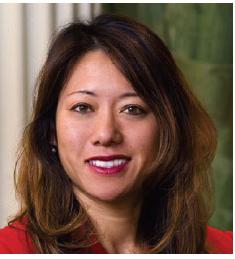
But San Francisco’s Fiona Ma, who was elected in 2006 and quickly rose to power within the Democratic Caucus, took the top spot when it came to sheer cash collected out of district: $1.68 million. Ma, now speaker pro tempore, raised more campaign cash from outside her district than either of the leaders of both houses. Her outside contributions made up 88 percent of the money she raised, placing her 29th in funds raised outside the district. Ma attributed the prolific fundraising to her involvement in statewide issues, such as high-speed rail, agriculture and domestic violence, that take her on the road. She said that as a member of the Assembly’s Democratic leadership – and someone from a safe Democratic district – she funnels a lot of money to other candidates. But she said the interests of her San Francisco constituents are well served because her high profile helps her promote those interests.


Editor’s Notes

3

Tredmond@sfbg.com

The governor of California released his last official state budget proposal May 14, just a few weeks before Mayor Gavin Newsom releases what might be his last official city budget proposal. The guv’s is truly ugly, so bad it’s almost hard to imagine what would happen if it passes. The mayor’s may not be a whole lot different.

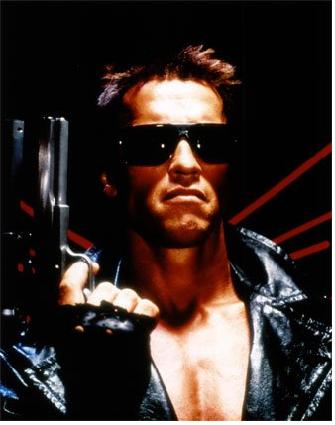
Here’s why Gov. Schwarzenegger’s budget is so hypocritical. In his message, Schwarzenegger said that "employment remains the biggest source of concern" as the state emerges from the Great Recession. Then he moved to guarantee more unemployment.

I remember when a Democratic Assembly Member from San Francisco first proposed the idea that would later become the philosophical basis for the CALWORKS program. Art Agnos, who went on to serve as mayor of this city, suggested that it wasn’t such a bad idea to make welfare recipients work — as long as the state offered education, training, and, most important, affordable child care. A lot of us complained about it, warning that it would never get fully funded; it costs a lot up front to provide the services that allow long-term unemployed to transition into the workforce. Ultimately, however, most states have now created some sort of welfare-to-work program.

Now Schwarzenegger wants that completely eliminated. Along with all state-subsidized child care. So how are low-income people with kids supposed to get a job?

They’re not. They’re supposed to become a permanent underclass in a rich state. That’s exactly what the governor is talking about — destroying opportunities for hundreds of thousands of people, keeping them from joining in the productivity boom we’re going to need to get the economy going again, forcing them to live a third-world existence, at a massive cost to the state’s future. All to avoid modest taxes on the rich. If that’s not class warfare, I don’t know what is.

So how are we going to respond in San Francisco? Will Newsom’s budget — the one he will have to answer for as he runs for lieutenant governor — be cuts only? Or does he have the courage to tell the truth — that the only way the state and the city are ever going to emerge from this recession is if the folks on top of the economic pyramid chip in a little more? Well, I asked his press person, Tony Winnicker, and here’s what he said: "The mayor’s budget will not rely on taxes to achieve balance."

Nice.

UC, CSU chiefs need to quit the Chamber of Commerce board

1

The California Chamber of Commerce is one of the most consistently right-wing organizations in the state, particularly on economic issues. The Chamber’s against pretty much all taxes and supports pretty much all cuts in government spending.

So why are the heads of the three largest public educational institutions in California, the University of California, California State University, and the California Community Colleges, members of the Chamber board?

It’s a tradition at the Chamber to put the UC president and the CSU and CCC chancellors on the board, which has about 100 members. But the three educators came under fire recently when the Chamber put out a blatantly partisan ad attacking Jerry Brown

And in fact, UC President Mark Yudof told the Chamber’s fundraising chair last year that he couldn’t donate to the CalChamberPAC because that group was trying to make sure that Democrats don’t win enough seats in the Legislature to hold a two-thirds majority. “As president of a public institution that is both in practice and in policy nonpartisan, I must decline your request for a contribution,” Yudof wrote in an Oct. 9, 2009 letter, a copy of which I obtained under the state’s Public Records Act.

But Yudof also stated: “As a member of the Board of Directors, I appreciate the Chamber’s engagement in the political process and its advocacy for a strong and vibrant California economy.”

The truth is, the Chamber’s “engagement in the political process” is almost always adversarial to the interests of the state’s public education system. The fundraising letter Yudof was responding to specifically sought money to block Democrats from holding enough seats to raise taxes — and the refusal of the governor and his GOP colleagues to seek any new revenue sources has been the major reason the state’s budget is so horribly messed up. And that’s the main reason the University of California and CSU have faced such alarming budget cuts.

Why are the people in charge of promoting public higher education willingly putting their names, and their credibility, behind what’s really a Neanderthal institution? Because that’s what’s going on here — Yudof, CSU Chancellor Charles Reed and CCC Chancellor Jack Scott aren’t on the Chamber board to offer advice. They’re on the board to give the Chamber more credibility. They help make the organization seem more friendly, more concerned with the public interest.

They help make an organization devoted to reducing the role of the public sector in this state seem supportive of public education. They help propagate a political lie.

I asked Yudof, Reed and Scott why they’re still on the board, and got pretty weak responses. Here’s Yudof’s spokesperson, Peter King:

[President Yudof] considers the California business community to be one of several key constituency groups that are important to the University, which is why traditionally higher education leaders in California have held seats on the Chamber board. In general, President Yudof has found the Chamber to be highly supportive of higher education in California. He cannot recall in his tenure as President a single Chamber proposal to reduce funding for higher education.

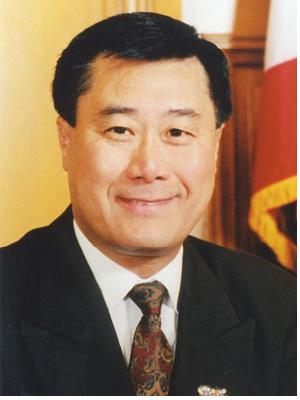
Um, actually that’s not true at all. The Chamber just released its 2010 “job killer” list — a roster of bills that the organization will oppose on the grounds that they’re bad for business. Among them: Assemblymember Tom Ammiano’s bill to fix a loophole in Prop. 13 (and provide more money for public education), and a bill by Sen. Leland Yee that would allow the state to recapture tax-credit money if the company that got the credits (for increasing employment in the state, for example) winds up leaving California or shipping jobs elsewhere. That money would be available for higher education.

 Passage of those bills would allow the state to stop cutting UC and CSU. The Chamber wants to kill them.

King did say, however, that after the Brown ad aired, he “has informed the Chamber that he will continue to serve on the board only if his status is changed to that of an ex officio member.” But that doesn’t mean anything; it’s his name on the letterhead that matters.

Reed’s press person, Erik Fallis, was even more vague. He would only refer me to a statement Reed and Yudof issued after the Brown ad controversy, which said, in part:

We value our inclusion on the Chamber board, which provides an opportunity to interact with business leaders on issues that are of vital importance to the future of California. This is a dialogue that has been of great benefit to higher education, the business community and the state as a whole.

Actually, the inclusion of top state education officials  is detrimental to the public interest, detrimental to public education and really bad form. Particularly now, when the Chamber is going out of its way to make sure that the state budget crisis is solved with nothing but cuts.

Scott has been openly complaining about budget cuts (PDF) but his office hasn’t responded to my questions.

Yee, a frequent critic of UC management, responded, though, and he didn’t mince words:

It would be one thing if President Yudof and Chancellor Reed used their positions on the California Chamber of Commerce board to support more revenue for our beleaguered public universities.  Unfortunately, the CalChamber is categorical in its opposition to new revenues and has become nothing short of a mouthpiece for the Republican Party.  The Chamber benefits from the prestige that Yudof and Reed bring to the table, and uses it to advance a right-wing agenda that includes questioning the validity of global warming (AB 32, 2006) and the need to protect workers from discrimination (AB 793, Jones, 2009), blocking universal health care (SB 810, Leno, 2010), and holding corporations accountable to their promises to create jobs (SB 1391, Yee, 2010).  It is outrageous that Yudof and Reed would serve as accomplices to killing bills that would increase revenue for higher education.

The top education executives need to resign from the Chamber board, now.

OMFG, Meg Whitman’s a smut dealer!

1

Or so Steve Poizner says, in a battle of the airwaves that’s getting completely insane.


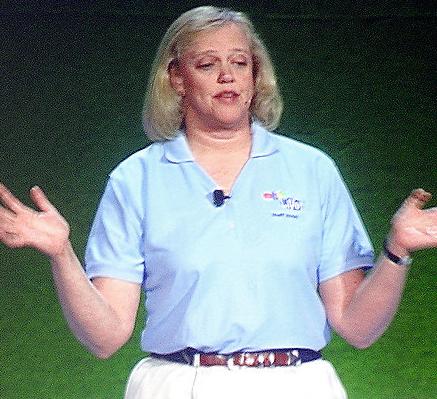
In a new ad, Poiz charges that Whitman, as CEO of EBay, allowed (oh no!) dirty movies to be sold on EBay. You can buy other dirty things there, too, like a Voodoo Hot Sex Life Improvement Love Spell (bidding starts at $9.99). And it’s all Meg’s fault!


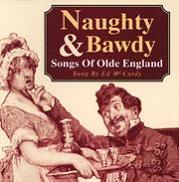
The problem with this approach is that I suspect a lot of Republicans may also shop on EBay, and some of them may want their own copy of the official Naughty and Bawdy Songs of England CD — or maybe something even a little naughtier. And they may not be that upset that ol’ Meg allowed them an easy and discreet way to buy the things that the GOP kinks in the closet wouldn’t want to be seen picking up at the mall. (That kind of thing gets around.)


Now Meg will have to respond with something even more harsh about Poizner. What fun.


SFBG Radio: Johnny and Tim on the worst state budget ever

0

In today’s SFBG.COM Radio, Johnny and Tim talk about the worst state budget proposal ever, why higher taxes won’t drive rich people and businesses out of California and how the next budget battle will play out in Sacramento. You can listen after the jump.

SFBGRadio5/17/2010 by SFBG

Arnold’s attack on the poor

5

As usual, Robert Cruickshank at Calitics has it exactly right: The governor’s budget isn’t just bloody and brutal, it’s a direct attack on poor people — and an effort to divide the interests of the poor and the middle class. If the new round of budget cuts had continued to hit public schools, higher education, state parks and other things that benefit the middle class and the people who are slightly better off, there might be a huge public backlash. Instead, almost everything that he’s hacking away is a program that helps the most needy:


Arnold is implicitly telling the middle-class “either you screw these poor families or we’re cutting something you want” and counting on the middle-class to react the same way they did in the ’80s and ’90s – by saying “go ahead, we won’t stop you.” 


In a sick way, it’s brilliant; it worked so well for Ronald Reagan, and Schwarzenegger figures it might work for him, too.


So this budget battle will not just be a test of whether the Democrats have the spine to stand up to the guv and the political skill to outflank the Republicans; it will be a test of whether they — and the better-off among the voters — are willing to go beyond narrow self-interest and stand up for the people at the bottom.


If not, what the governor is proposing will be the creation of a permanent underclass in California.

Never mind the budget, Gavin’s worried about himself

2

So this afternoon, the governor released a truly horrifying mid-year budget revise, a bloody proposal that would eliminate CALWORKS, the state’s major welfare program, and cut billions out of other essential services. Calitics puts it nicely:


At today’s press conference unveiling the May Revise of the 2010-11 budget, Arnold Schwarzenegger said “the budget should be a reflection of California’s values.” If that’s the case, then California’s values are protecting the wealthy and the large corporations from having to contribute anything to this society while making old people and children suffer. Arnold’s California is a place where if you aren’t wealthy, you don’t deserve to have health, food, or any other form of economic security.


And about an hour later, the mayor of San Francisco sends a text to Assemblymember Tom Ammiano, who represents the city. Was he asking for Ammiano’s help in fighting the budget cuts? Was he suggesting they work together on strategy to save the city’s most needy from the governor’s axe? No. Here’s what the text from Newsom, who is running for Lt. Governor, said:


I hear you voted for Hahn at the convention.


That’s right — a month after the state Democratic Convention, Newsom is complaining that Ammiano voted for his opponent in the endorsement derby. That’s what he cares about? More than the worse budget in state history?


Ammiano’s response:


And what???


Good question.


Pelosi needs to support the Fair Elections Act

8

In the wake of the horrible Supreme Court decision in Citizens United, Rep. John Larson of Connecticut has introduced a bill that would reform substantially the way members of Congress are elected. It’s not perfect, but it’s a big step. The Fair Elections Now Act, H.R. 1826, would create partial public funding for Congressional races, with a 4-1 match for contributions of $100 or less. The money would come from a small fee on goverment contractors.


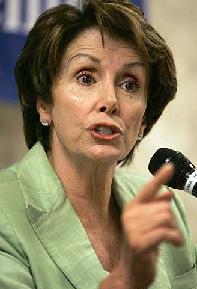
There are now more than 130 co-sponsors in the House, and they’re pusing for a floor vote. But Speaker Nancy Pelosi hasn’t decided whether to allow the bill to come to the floor.


The politics of that are crazy. If the Democrats want to keep control of the House, they need to have something to campaign on this fall. During the presidential campaign, the party promise reform — but so far, other than a mild health care bill, there’s no real reform on the table.


“If Democrats don’t have a real reform agenda that includes election reform — and that shows the party wants to change how business is done in Washington — we could be in big trouble in the fall,” Steve Hildebrand, a former Obama strategist who is helping the Fair Elections Now Act folks, told me.


So what’s up. Nancy?  Why not at least give the bill a chance.


SFBG Radio: Tim and Johnny on Pelosi and how Newsom could be really green

0

Today on SFBG.COM Radio: Tim and Johnny talk about why Nancy Pelosi isn’t more of a progressive — and how Gavin Newsom could follow the lead of a Republican from Utah and cut down dramatically on car use in San Francisco. You can listen after the jump.

SFBG.COM Radio 5/14/2010 by SFBG

SFBG Radio: Tim and Johnny on Meg’s collapse

3

On today’s SFBG Radio, Tim Redmond and Johnny Angel Wendell talk about the sudden collapse of Meg Whitman’s once-mighty lead in the GOP primary and the nomination of Elena Kagan to the Supreme Court. You can listen after the jump.

sfbgradio5/12/2010 by SFBG

Editor’s Notes

1

Tredmond@sfbg.com

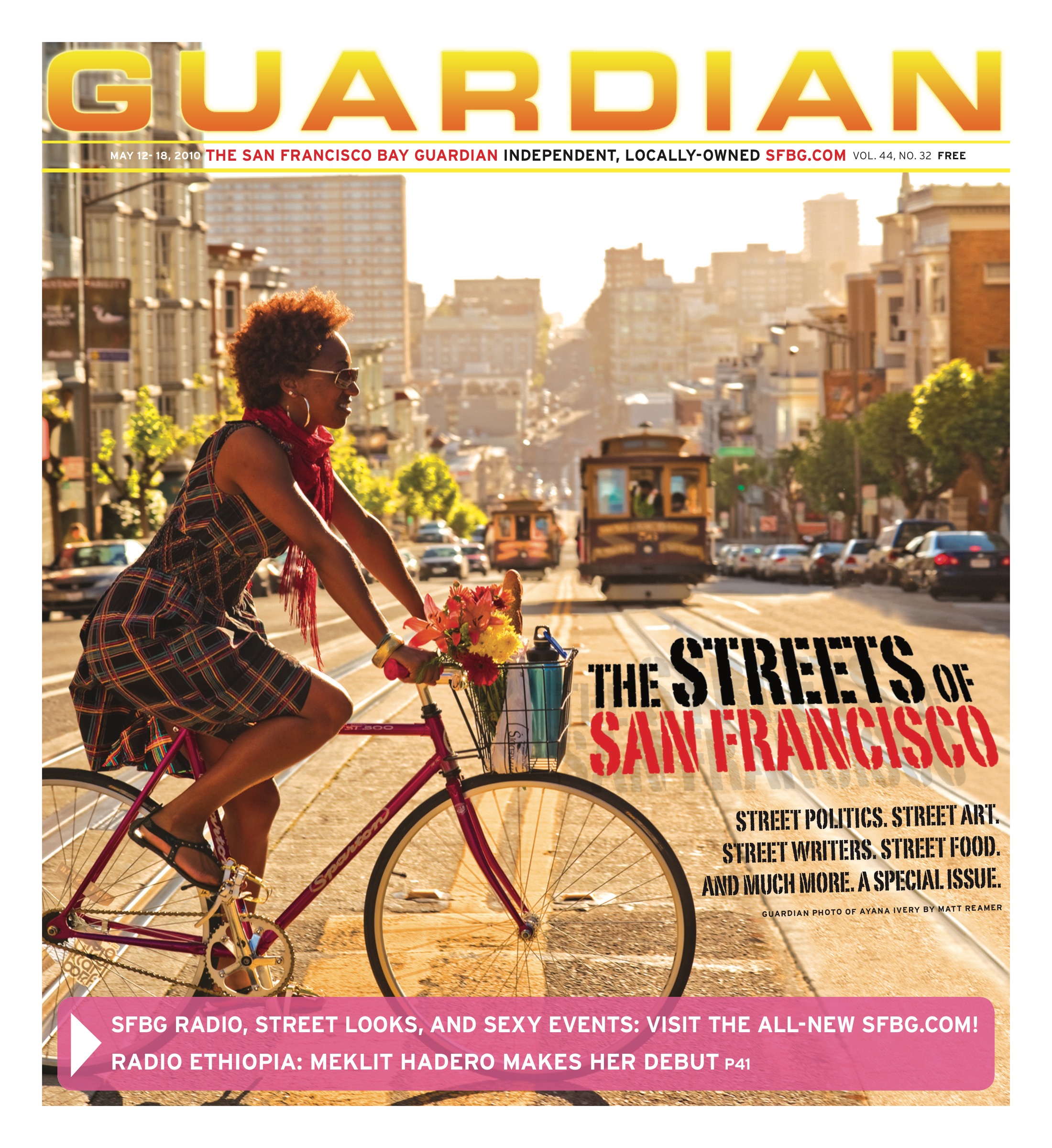
San Francisco has a lot of streets. Take a look at an aerial picture, or just look at the land-use statistics. More of this city is devoted to paved roads — pathways used largely and designed primarily for private automobiles — than any other single use. Parks, for example, don’t even come close.

That’s partially a matter of urban density. In more suburban-type cities like Berkeley or Portland or Seattle, the lots are bigger, yards are bigger, houses are bigger, and there’s more space between the strips of pavement.

But that density gives us a choice other cities don’t have. Maybe we don’t really need that much pavement.

I know it’s kind of a crazy thought, but imagine what some San Francisco neighborhoods would look like if we closed down, let’s say, one out of every four streets. I don’t mean open that land up for development, either — leave it as a passageway, a thoroughfare — but not for cars. Tear up the concrete, plant grass, make pathways for walking and biking … make the streets places where people can gather, kids can play, stores can enjoy the kind of traffic that only comes with a pedestrian mall, and restaurants can have outdoor seating in what would amount to a strip of mixed-use urban parkland.

Closing streets to cars creates plenty of problems, but I don’t think they’re insurmountable. Seniors and disabled people might have trouble with eliminating bus routes and parking in front of their houses, and that’s a legit concern. (Of course, the number of pedestrian seniors and disabled people killed or maimed by cars might go down too.) So maybe some streets could be turned into one-lane strips, and only people with disabled placards could use them. And ambulances and police and fire vehicles can already drive on car-free pathways in parks. And Muni could run a fleet of electric golf carts to ferry people with mobility issues up and down the grassy lanes.

Those of us who have cars would give up a certain amount of convenience; people without cars would get more of the benefits. That might discourage car use, which is good.

But even for drivers, I wonder. Would I be willing to give up the relative ease of parking near my house in exchange for letting my kids just open the front door of the house and run out and play in a safe, vehicle-free park that used to be a street? Would you?

The world is changing; the days of car culture driven by cheap oil are almost over. More and more people are going to be living in cities (that particular demographic trend is one of the most consistent in modern history). When we talk about the Streets of San Francisco, let’s stop for a moment and ask: does it all have to be about cars?

Is it okay to be quietly gay?

16

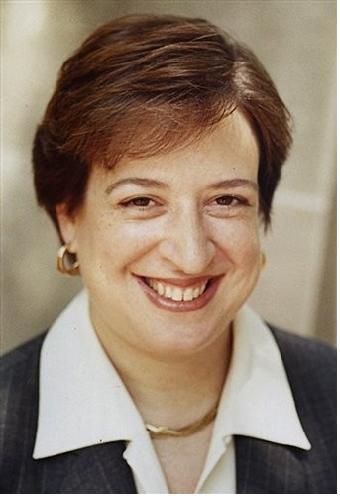
The White House barely had time to announce President Obama’s latest Supreme Court nominee, Elena Kagan, before the spin controllers were scrambling to deal with rumors that — gasp! the horror! — she might be gay.

The Chron blamed “the lesbian rumor” on “conservatives.” The Washington Post (and the White House) blamed CBS for letting a right-wing blogger report as a fact that Kagan likes girls, leading to this great moment in American politics:

“An administration official, who asked not to be identified discussing personal matters, said Kagan is not a lesbian.”  

And of course, no Washington rumor should ever be believed until an official source who won’t be named officially denies it.

The real question here is: Who cares? It’s actually worth discussing.

Andrew Sullivan kind of mangles logic in a post called “So is she gay?” . He starts off saying “it should mean nothing either way,” but then argues that it does:

“To put it another way: Is Obama actually going to use a Supreme Court nominee to advance the cause of the closet (as well as kill any court imposition of marriage equality)? And can we have a clear, factual statement as to the truth? In a free society in the 21st Century, it is not illegitimate to ask. And it is cowardly not to tell.”

Harvey Milk, of course, always said that everyone should be out, and that the cause of queer rights depended on tearing open the closet door. But that was then, and this is now, and I wonder: Has the United States, and the queer community, reached a point where it’s okay for someone to say that his or her sexuality is none of anyone’s business?

Judge Vaughn Walker, who’s handling the Prop. 8 case, is gay — but has never made a big deal of it one way or the other. I guess he’s sorta in the closet, but not really — he just keeps his personal life to himself.

What if Kagan’s the same way? What if she’s got a lesbian partner but isn’t going to talk about it? What about if she’s straight and isn’t going to talk about it? How can the White House prove she’s not gay, anyway — is her confirmation hearing going to feature a ten-minute televised session of her making out with a man? (And how would we know she wasn’t just acting, anyway?

Obviously, if she is gay, and she came out, having a lesbian on the Supreme Court would be a huge deal to the queer community, a major breakthrough in one of the highest offices in the land. And you can certainly argue that she shouldn’t be hiding anything, that the whole denial and ducking is an admission that homosexuality is something to be hidden in the first place. And that’s really sad.

In a perfect world, none of this would matter at all, and she could freely talk about her sexuality without any impact on her political career. But in a perfect world, could she also just say: Ain’t none of your business?

And are we anywhere close to that today?