Tim Redmond

Ammiano property tax bill passes key committee

12

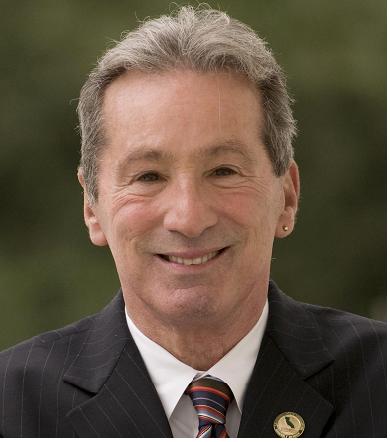
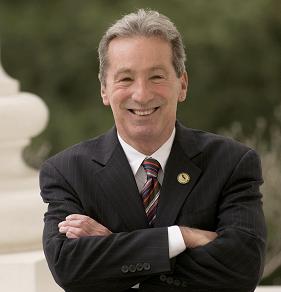
A bill by Assemblymember Tom Ammiano that would have a huge impact on the state’s budget and close a serious loophole in Prop. 13 cleared the Revenue and Taxation Committee today. AB 2492 won approval on a strict party-line 6-3 vote, with every Democrat in favor and every Republican opposed.


The measure is brilliant: It doesn’t undo Prop. 13 (which a lot of us would love to see, but is politically almost impossible). Instead, it simply defines property transfer in a way that forces commercial property owners to play by the same rules as everyone else.


It would bring in billions for the state — and has a great political twist. Homeowners, for better or for worse, are a powerful voting bloc — and although there hasn’t been much talk about it, over the years, residential property has had to shoulder more and more of the total tax burden. So if Ammiano can keep this debate alive, those more conservative homeowners who would never accept a change in Prop. 13 that might undermine their precious tax break might slowly come to realize that the law, as it’s written, is screwing them. (It’s particularly screwing people who brought property at the height of the boom, and are paying taxes far higher than their neighbors who bought a few years earlier.)


Ammiano told me he was encourged by the vote. The bill now goes to Appropriations, which shouldn’t be a problem since it won’t cost the state anything. And in a few weeks, it will be on the Assembly floor.


I don’t expect this governor to sign it, but if he vetos, it could be a great campaign issue — the Republicans are on the side of big landlords — and against homeowners.


By the way, our old pal Matt Smith at SF Weekly decided to take a swipe at me and the Guardian for our support for AB 2492, arguing that somehow it would benefit those of us who own homes. It’s a refrain I’ve heard from Smith before, and in the caption on his blog picture he talks about “getting in the game early and pulling up the ladder behind you.” I guess that’s about my opposition to more condos for millionaires, which has nothing to do with anything and no basis in reality. Building market-rate housing isn’t going to do anything to help middle-class people (and I assume Matt Smith falls in that category) buy homes in San Francisco.


The point of his blog is that we’re somehow pushing to protect our privileged position under Prop. 13. But anyone who knows me (and reads the Guardian) knows that’s nuts: I have long advocated the complete repeal of Prop. 13, and I’m one of the few people in town who wants higher taxes on myself. Besides, the Guardian’s owners, Bruce Brugmann and Jean Dibble, also own the commerical office building where we do business. So anything that could raise taxes on commerical landlords would directly affect the paper –and we still support it.


I called Smith today to give him a hard time about his item; you can accuse me of a lot of things, and attack my political positions (that’s easy; there are a lot of them, and some are pretty far out there). But don’t say I want to preserve my own (relatively) low property taxes, because that’s demonstrably wrong.


I’ll give Smith credit — he listened to me and reported my comments. But we could have avoided all of this if he’d just called me first.


SFBG Radio: Johnny and Tim on immigration politics

0

Today, the always calm, moderate and soft-spoken Johnny Angel Wendell talks to Tim Redmond about how the insanity of immigration politics in Arizona is going to impact the races for governor and senate in California. You can listen after the jump.

sfbg radio 5/11/2010 by SFBG

Gun nuts gone wild

29

It’s no surprise to see the Republican Senate candidates pandering desperately to the right wing, but at a certain point, it becomes a total farce. For example: Both Carly Fiorina and Chuck DeVore actually said during a taped debate that they think people on the federal no-fly list should be allowed to buy guns.


I know, I know — there are people on that list who shouldn’t be, and it’s a pain to get off it, but still: Buying guns?


Even Tom Campbell, who is running far to the right of where he’s always been, was a bit flabbergasted:


“That is not an infringement on anybody’s Second Amendment rights,” said Campbell, a former law professor at Stanford. “It seems somewhat unusual to take that position – except perhaps in a Republican primary.”


If Nancy Pelosi’s such a ‘progressive’ ….

32

… and even though Randy Shaw has become convinced that she is, I’ve never bought it, and I still don’t. A progressive in Congress would never have privatized a national park. A progressive wouldn’t have ducked same-sex marriage. But whatever — here’s my question for the day:


If Pelosi really believes in progressive causes, why doesn’t she do anything about it at home?


Pelosi’s almost never on the progressive side in local races. She never helps local progressive causes, raises money (which she’s really, really good at) for local progressive campaigns or takes visible stands on local progressive issues. Would it kill the Democratic Party if she helped defeat Prop. 16? Would it be the end of the Democratic majority if she went to bat for her own city’s sanctuary policies (and tried to block the horrible new policy on deporting anyone who gets arrested?)


Pelosi helped push health-care reform through, and that’s a fine thing. But unless you want to redefine “progressive,” I don’t think Nancy Pelosi fits the bill. (And I’m still proud I voted for Harry Britt for Congress.)

More fun with political ads

1

You don’t have to look far to find creative parodies of the famous Carly Fiorina demon sheep ad. But now the Democratic Party — finally stepping up — has released it’s own weirdo ad, called Demon Sheep II. It attacks both Fiorina and Tom Campbell, and has a toss-off at the end about Chuck DeVore, but it’s clearly aimed first and foremost at Carly — which suggests, no surprise, that the Dems (that is, the Democratic Senatorial Campaign Committee) is getting out of the box, now, with attacks on Barbara Boxer’s likely November foe. Carla Marinucci calls the ad “hysterical,” and while I wasn’t laughing that hard, you have to admit: The goofiness level of big-time California campaign ads is on the rise.


The ad hints at what Boxer’s camp is going to focus on this fall — and it’s similar to what Jerry Brown needs to do to defeat Meg Whitman. The ad is all about Carly Fiorini, rich business excutive who owns two yachts, flew around in corporate jets and moved 28,000 jobs offshore — then got fired. That works pretty well for Boxer, who can contrast her progressive stands on economic issues to the GOP’s pro-rich agenda. Now Brown needs to start taking a more populist stand (on Prop. 13 reform, for example) if he wants to make his attacks on Whitman stick.


Check out Demon Sheep II:


SFBG radio: Tom Ammiano on Prop. 13 reform

1

Today on SFBG Radio: Johnny Angel Wendell talks to Assemblymember Tom Ammiano about his plans to reform Prop. 13 and add a little fairness to a law that is giving big commercial property owners a huge windfall at the expense of homeowners — and state services. Listen after the jump


sfbgradioammiano by SFBG

Oil spill secrecy: What’s in the dispersal chemicals?

3

One the major responses to the Gulf of Mexico oil spill has been the use of chemical dispersants, compounds that break up the oil before it gets to shore. But Propublica’s raising an important issue:


Dispersing the oil is considered one of the best ways to protect birds and keep the slick from making landfall. But the dispersants contain harmful toxins of their own and can concentrate leftover oil toxins in the water, where they can kill fish and migrate great distances.


And the sharp-eyed sunshine advocates at the Sunshine in Government blog picked up on another element of this: We don’t really know how dangerous the chemicals are — because even though BP is dumping vast amounts of the stuff into the ocean, the dispersant formulas are secret:


In situations where the public interest in knowing what science can tell us about the chemical product we’re blasting into the Gulf of Mexico in a vast, untested experiment to stop a petroleum hemmorage in deep waters that threatens life in nature and livelihood in the Gulf Coast, the federal government, private companies and the industry they are a part of ought to do the right thing and make public all  the science they’re holding that sheds light on how the government and private sector are responding to this very current environmental and economic crisis.


Now, the sources I have in this clean-up tell me that the dispersant is a lot less toxic than the oil itself — but there are no long-term studies on the damage it might do to deep-sea biota and to the larger ecosystem. Not that they should stop dumping the stuff — it’s probably the best alternative, given a lot of bad alternatives — but since BP is taking responsibility for the spill and cleanup, we ought to know what the impacts of this chemical solution are — because the company ought to be responsible for those, too.

Interview: Author Paul Loeb and Soul of a Citizen

0

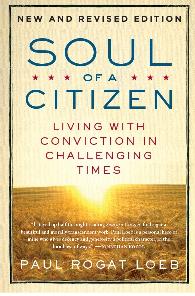
Paul Loeb, author, speaker, thinker and the man behind the surprising best-seller Soul of a Citizen stopped by the Guardian April 30 to chat about the new edition of his book — and about the state of community activism, the Obama administration, and the way people become engaged in politics. You can listen to the interview after the jump.


Paul Loeb by SFBG

Editor’s Notes

0

Tredmond@sfbg.com

I’m glad to see Mayor Gavin Newsom finally opposing the anti-immigrant bill in Arizona, and maybe, kinda, sorta, being willing to support some sort of boycott. He’s right that the Arizona law practically mandates racial profiling; he’s also right that it’s an utterly inappropriate way to address immigration and crime issues.

The problem is that the Arizona policy is awfully close to what Newsom has implemented in his own city.

As Angela Chan, staff attorney at the Asian Law Caucus, points out in an opinion piece at sfbg.com, the mayor’s policy — which mandates that juvenile probation officers report young people to federal immigration authorities if they suspect the youth may not be in the country legally — also pretty much mandates racial profiling. It also tears apart families. And makes no sense.

It’s easy to criticize a state like Arizona, run by right-wing nuts who follow the lead of nativist bigots. And that’s fine; I’m on board. But let’s not forget what’s happening right here in San Francisco, where the Democratic mayor is taking the same essential policy approach as the Republican governor of the Grand Canyon State.

The problem with Willie Brown Jr. Boulevard

3

Ok, Eve Batey has a fun item on SF Appeal: Even the Chronicle, which pays Brown to write his deeply conflicted newspaper column, doesn’t want to see Third Street renamed for the former mayor. That’s probably because Hearst Corp., which owns property on Third Street, doesn’t want to spend the money to change all of its letterhead, documents, mailing address etc. to reflect a street name change. We saw a lot of the same complaints when Army Street was changed to honor Cesar Chavez; some local businesses got mad because of the (modest) costs involved.


I’ve got a much bigger problem with the name change.


You name a street after someone who deserves a major civic honor. Naming a street in the Mission after Cesar Chavez makes a strong, positive statement about San Francisco’s values. So what would Willie Brown Jr. Boulevard celebrate?


One of the most corrupt mayors in San Francisco history, a guy who sold out the city to developers, stood by and allowed the greatest displacement of low-income San Franciscans in modern history, presided over the economic cleansing of San Francisco, and now flaks for PG&E, the pharmaceutical industry, and who knows what other private clients (despite writing about politics in his column, he hasn’t disclosed the list of which political interest groups are paying his sizable legal fees).


Brown’s a fun guy, and I always read his column, and when he did a radio show, he often had me on as a guest, and we joked about the old days, and I have to admit, he’s the life of the party. But let’s not forget the history here; his record in politics stinks.


Besides, he’s still alive — and although he’s smart enough that he’s never been caught doing anything illegal, you never know what trouble he could get into, and how badly he could embarrass the city, in the years to come.

The guv runs away from offshore drilling

8

The fallout from the disaster in the Gulf of Mexico has Repulicans scurrying for cover, and the latest on the list is Gov. Schwarzenegger, who just announced he no longer supports the Tranquillon Ridge project. (SacBee, from SFist). But Meg Whitman is still hanging tough; her website still says:

“With advances in drilling technology that reduce environmental risks, we need to re-look at offshore drilling. We have to utilize our resources here at home to reduce dependence. I want to look at new technologies such as slant drilling.”

As recently as May 2, her campaign confirmed that she’s still open to drilling off the California coast, as long as the cool new technology she talks about can minimize risks:

Whitman opposes new offshore drilling unless technological advances can minimize risks. Pompei defined the threshold as “next to a zero chance of an environmental impact.” Whitman has suggested, however, that slant drilling may be safe enough.

Let’s remember: the BP oil rig that blew up off the coast of Louisiana was state-of-the-art technology, the latest in drilling hardware:

BP suggested in a 2009 exploration plan and environmental impact analysis for the well that an accident leading to a giant crude oil spill — and serious damage to beaches, fish and mammals — was unlikely, or virtually impossible.

Oil Spill Meg is going to have a hard time with this one — and the way things look now, the issue isn’t going away for a long, long time. 

SFBG Radio: Tim and Johnny on sit-lie

0

ON SFBG radio today, Tim Redmond and Johnny Angel Wendell talk about the foolishness that is San Francisco’s proposed sit-lie law. Listen after the jump


Johnny Angel SFBG Radio Show 5/2 by SFBG

The Chron just wants to cut transit

10

Interesting that the Sfgate.com poll running along with the Matier and Ross item on transit agency deficits only cites four possible solutions: Cut service, cut employee pay, raise fares or “get in the bailout line.” I realize that the Bay Area’s transit agencies don’t always work well together and duplicate some service, and that some managers are overpaid, and some money is wasted on consulting contracts. But I also know that in a recession, the price elasticity of demand for transit (warning — deadly report) is pretty high. That means when you raise prices, fewer people ride — and at a certain point, you wind up losing money by hiking fares.


And I also know that transit systems are one of those government services that, like schools, almost always get better when you throw more money at them.


We have been systematically underfunding public transit in this state and this country for decades — and now we’re surprised that the agencies are running out of money? Of course, the Sfgate readers all want to cut employee pay — that’s an easy scapegoat — but I wonder what would happen if the poll included “raise gas taxes and parking fees to fund fast, clean, efficient public transit.” I know what I’d vote for.


GOP debate sets up Brown for gov campaign

0

I don’t know how many people were watching a Sunday afternoon Republican gubernatorial debate, but it hardly matters: All that Steve Poizner and Meg Whitman did was help the Democrats.


This race is over — Poizner can’t win. He’s too far down, with too little money against a candidate who will spend every penny it takes, and has the pennies to do it. All he can do now — and he’s getting really good at it — is create soundbites for the Jerry Brown campaign (or more likely, for the well-funded independent expenditure effort that we all know is coming).


Whitman’s greatest vulnerability is her background as a rich businesswoman with ties to Goldman Sachs and a fortune built and expanded at a time when much of the state is badly hurting. Every time you say the words “Whitman” and “Goldman Sachs” in the same sentence, she loses votes.


And Poizner did that wonderfully during the debate:


“Meg Whitman has massive investments in Goldman Sachs, made huge amounts of money from the collapse of the housing market, and then, when it was time for Goldman Sachs to get bailed out by taxpayers, Meg Whitman actively campaigned for a taxpayer funded (bailout). The question is, did she let people know?”


And:


Wow, you really don’t get this Meg…You were the CEO of eBay receiving investment banking services from Goldman Sachs, then you joined the Goldman Sachs board and their compensation committee, then Goldman Sachs started to feed you these sweetheart deals, not one, not two but 100 of them, and you made a fortune, a separate fortune from your eBay fortune and then until you got caught you didn’t think anything was wrong. But the fact is, Congress investigated what you did, they called it corrupt, the SEC investigated what you did and immediately declared what you did illegal, and the eBay shareholders investigated what you did and they sued you. They sued you for a huge conflict of interest and the only reason why you paid back any of this money is because you had to settle the lawsuit.


None of that is going to elect Poizner (who essentially ceded the Latino vote by announcing he supports the Arizona immigration law), but it’s going to make great copy for the attack ads on Whitman this fall.


That’s the problem with primaries that become entirely negative — they come back to get you in the general election.


SFBG radio: Johnny Angel and Tim Redmond on Whitman and SF’s mayor

1

Johnny Angel Wendell and Tim Redmond talk about Meg Whitman’s oil-spill and immigration policy problems, why Jerry Brown isn’t getting on the stick and why San Franciscans have trouble electing a progressive mayor.

Johnny Angel SFBG Radio Show 4/30 by SFBG

Fun with political ads

0

Wowee wow, the political ads are getting strange.


Steve Poizner, desperate to find some kind of traction in the final weeks of the GOP primary campaign, has released a new attack on Meg Whitman that continues in a long line of weird Republican animal flicks. It’s not quite as odd as Carly Fiorina’s demon sheep, but still: There are vultures flying around, vulture squawks in the background, and at one point, a vulture lands on the ground and starts chowing on some carrion.


But there’s a serious point here, too. The ad attacks Whitman for her ties to Goldman Sachs, and points out that she was making big money on dubious insider stock deals just as the rest of the nation’s economy was going to hell. ANd if Poizner thinks this will play with conservative voters, imagine what the Democrats will be able to do with it in the fall.


Then there’s Gavin Newsom’s ad, which starts out reminding us all that his state of the city speech was seven hours long (this is something we want to remember?) then lists all the great accomplishments he’s taking credit for, even though none of them were his initiatives. He talks about San Francisco having the best urban school district in California (although the mayor has no control at all over the schools, and the main reason the district’s finances aren’t worse is because of the Rainy Day Fund, a project of Tom Ammiano). He talks about paid sick leave (which came from the Board of Supervisors, not the mayor’s office) and universal health care (which was sponsored by Ammiano, not Newsom).


Then the ad winds up with Newsom walking back to his office and finding that Willie Brown is sitting in his chair. That, I guess, is a joke — but it only serves to remind viewers that (1) Newsom owes his political life to Brown, one of the most corrupt mayors in San Francisco history and (2) if Newsom wins, he’ll be leaving office early, allowing the supervisors to vote in a new mayor.


Did Gavin’s people even make this ad?

Newsom’s puppet show

0

Mayor Gavin Newsom, who has been doing exactly what Pacific Gas and Electric Co. wants at City Hall, is complaining that some of the supervisors are Bay Guardian puppets.


School Board fireworks

2

Look for some interesting heat and maybe some light at the school board meeting tonight (April 27). The teachers union is holding a march and members will be speaking out against the layoffs (PDF), since this is the last board meeting before pink slips to more than 800 teachers and 300 para-professionals. The district, of course, is broke, since most of the money comes from the state, and the state is broke for all the reasons we all know, and I don’t envy the job of the school board and the superintendent, who have to somehow balance the books. The teachers think there should be more cost-cutting at the central office and that the district should dip into reserve fund, which will be about $8 million to the good at the end of this year.


It’s complicated, but the state requires the district to keep 2 percent of its budget total in reserve; that’s a sound policy. Right now, according to information that SFUSD spokesperson Gentle Blythe sent me, the reserve is at $33.6 million, much more than is needed, but some of that is temporary federal stimulus money.


Here’s how the distict outlines the situation:


Our baseline projections (i.e., the fund balance that would result if no steps were taken to address the budget shortfalls) are that our Unrestricted General Fund (UGF) balance would be $24.2 million, negative $37.9 million, and negative $97.6 million at the end of the three respective years. At the end of FY 2009-10, we would have $8.4 million more in fund balance than the $15.8 million required. However, we would fall short of our required fund balance in the following two years by $53.7 million and $113.4 million, respectively. If the Superintendent’s Budget Deficit Action Plan were implemented, our UGF fund balance would be $33.6 million, $23.6 million, and $15.8 million at the end of the three respective years.  


That, of course, assumes that the economy will still be awful in the next two years, that the state won’t have or allocate any additional money to education and that this same horrible fiscal situation will continue. Which may be true — but it may also be true that things will get better with a Democrat in the Governor’s Office, and the projections might not be so dire.


Meanwhile, the board will also be taking up a truly awful bill called SB 955, which attacks teacher seniority. It’s an informational item only, but should generate some discussion, since board member Rachel Norton has already weighed in on it in her sfgate blog post:


Still, it’s clear that there is political traction for California to weigh in on the national conversation happening on teacher seniority and evaluation, and I’m told that an alternative bill is likely to be introduced by a Democratic sponsor. If that happens, it will be important for the Board to have a position on what provisions should be included or dropped.

At this point, there’s no Democratic alternative bill in Sacramento, but there are plenty of moderate Democrats who could come up with one. And it raises the whole touchy issue of how to handle staff reductions in a district where many of the senior teachers have managed to get themselves assigned to top-performing schools. “We just sent layoff notices to 60 percent of the staff at Alvarado,” Board President Jane Kim told me. “And some schools on the west side will have only 10 percent layoffs.”

I cna’t imagine a majority of this school board coming down on the side of reducing seniority for teachers. But the fact that Norton is talking about the board looking at other alternatives, and how a counter to SB 955 might be structured, suggests that this issue isn’t going away. 

What’s wrong with taxing car owners?

13

It’s almost as if we need a full-time blogger to monitor the backwards ideas coming from the Chron’s C.W. Nevius. Today’s case in point: Nevius thinks the idea of charging for Sunday parking is “the dumbest idea since the imitation crab meat cocktail.” 


His brilliant investigative observation:


For all the talk about the fees on Sunday turning over parking spaces, you never read very far into one of these parking enforcement stories before you get to the bottom line — an estimated $2.8 million a year in this case if the Sunday-charge system was implemented citywide.


That’s exactly right, Chuck: This is a way to bring in money for Muni. And I don’t get what’s wrong with that. People who drive cars (and I admit, I’m one of them) have an outsized impact on the city; they take up a huge amount of space (San Francisco devotes more urban land to streets than parks), they pollute the air, they increase the nation’s reliance on fossil fuels and they contribute to global warming. And they don’t pay anywhere near enough taxes and fees to mitigate the impacts of their behavior.


I’m all for higher gas taxes, for example; taxes should not just be a source of revenue but should, when possible, be targeted to discourage socially detrimental behavoir. And charging people a little money to drive their cars to Sunday brunch instead of walking or taking public transit isn’t a terribly radical, unusual or disturbing idea. (In fact, we ought to charge the churches for the right to turn the streets into private parking lots on Sunday mornings).


Nevius complains that car drivers aren’t bad:


But c’mon. These aren’t evil people. They aren’t trying to scam the city, pee on the street, or break car windows and steal backpacks. We could fine the aggressive panhandler and the petty break-in artists, but they don’t have any money.


And I agree: They aren’t bad. But the same way taxes on cigarettes both defray the social cost of tobacco use and discourage the dangerous and noxious habit, a modest little fee for parking your car helps pay for public transit and might just encourage a few people not to drive their cars. That’s something everyone in the city should support.

Editor’s Notes

0

tredmond@sfbg.com

The San Francisco Chronicle reports that there are now almost 10,000 employees with paychecks that totaled more than $100,000 last year. I can already hear the screaming: that’s close to a billion dollars! City workers are all overpaid, fat, and lazy! That’s why we have a budget crisis!

And yeah, I think it would be a lot more fair if the highest earners took the bulk of the pay cuts (5 percent for everyone in that $100K club would be $50 million a year). But Mayor Newsom wants to be sure the lowest-paid folks get their share of the hurt, so the biggest impact of his budget reductions will fall on those least able to handle it.

But I also think it’s worth looking at who these high earners really are.

Now, some of the ones at the top of the scale are political appointees. Do we really need to pay $354,000 to get someone qualified to run Muni? Is the head of the city’s Public Utilities Commission really worth $291,000? Some are getting market rate for their skills — three of the top 20 earners are doctors who work as pathologists in the Medical Examiner’s office.

But the most telling fact is that 11 of the top 20 are either cops or firefighters — and they’re collecting huge amounts of overtime. Four cops alone, all with the rank of captain or deputy chief, accounted for overtime pay totaling $588,000.

I know city employees who work at the senior management level — just like those cops — but they don’t get overtime. Neither do senior managers in most private-sector jobs. And it’s not as if these top cops are working for minimum wage; they all make around $200,000 or more as base salary. Plus they get excellent benefits and get to retire on sweet pensions.

Think of all the money and services you could save with one minor contract change: once you get to the level of captain in the SFPD, you aren’t eligible for overtime anymore.

Those overpaid city employees? Mostly cops

16

The big banner headline on the front page of today’s Chronicle exposes the fact that one out of every three city employees makes more than $100,000 — great fodder for the no-new-taxes-we-pay-the-workers-too-much bunch. But it’s worth taking a second to run the full database (which sfgate has made easy for you); ask for the top 20 earners.


Here’s what you find:


Four of the top five are cops (Deputy Chief Charles Keohane, $516,000; Deputy Chief Morris Tabak, $425,000, Cpatain Greg Suhr, $345,000 and Captain Sylvia Harper, $345,000. The only civilian in the bunch is the head of Muni, Nat Ford, who has a contract paying him $354,000. What puts the top cops over the top is overtime, hundreds of thousands of dollars of overtime. Nat Ford — who also works hard, probably as many hours as a deputy chief — doesn’t get overtime. The chief of police doesn’t get overtime. Why do top-level police managers?


Okay, that’s the top five. Of the top 20, 11 are either cops or firefighters. The only civilians? The head of the Public Utilties Commission, Ed Harrington, the guy who manages investments for the city, Kavid Kushner, and three doctors who work in the Medical Examiner’s Office. Investment managers get paid pretty well in the private sector; so do pathologists, and you have to pay a fair amount to get people with those specialized skills.


And the docs put in for a combined $4,300 in OT; the retirement guy got none.


So if you want to complain about overpaid city employees, let’s be honest about where the problem starts. We’re paying far too much overtime to management-level cops and firefighters, who already make very comfortable salaries. And while it’s tough to be a cop or a firefighter, most of these senior managers are not putting their lives on the line every day busting bad guys and walking into burning buildings; they’re supervisors.


I hope all the cut-the-fat folks will keep that in mind.


War — or a million more teachers?

1

I love these kinds of statistics. You want a reminder of why this country seems so broke all the time? It’s right here, in this nifty Consumer Federation of California report, brought to you by Calitics. California taxpayers have spent $38 billion supporting the war in Afghanistan — a war that has little point and that we can’t possibly win. No outside power ever wins in Afghanistan; it’s a country only in name, a collection of tribal fiefdoms that’s nearly impossible to govern, impossible to conquer and very, very costly to engage on a military level.


Remember what Kipling said about 100 year ago, when Great Britain was (foolishly) trying to fight where we’re (foolishly) trying to fight:


When you’re wounded and left on Afghanistan’s plains,
And the women come out to cut up what remains,
Jest roll to your rifle and blow out your brains
An’ go to your Gawd like a soldier.


And here’s what we could be doing instead with $38 billion in California:


•    15.6 million people with health care;
•    5.7 million scholarships and 7 million Pell Grants for university students;
•    4.5 million Head Start placements for children;
•    500,000 new elementary school teachers;
•    676,649 public safety officers;
•    535,058 music and arts teachers;
•    113,373 affordable housing units;
•    And 67.4 million homes with renewable electricity.


Just worth remembering every time our distinguished representatives in Washington vote to continue spending money in Afghanistan.


The message of 555 Washington

16

The San Francisco supervisors not only rejected the environmental impact report for the condo tower next to the Transamerica building; they did it unanimously. And although the developer could still go back and write a new EIR — one that takes into account all the many, many issues this one ignored — that seems unlikely:


The developer, Andrew Segal, said he does not plan to go forward. “If we have to recirculate the EIR, I think we’re done,” Segal said.


There are a couple of important lessons here.


For starters, I hope the folks at the Planning Department who allowed this steaming turd of a project to go forward, and the commissioners who voted to certify the EIR, got the message: Just because a developer wants to do something, and the mayor thinks it’s a dandy idea, doesn’t mean that it’s good planning policy. The 555 Washington project was more than twice the size that current zoning allows on the site, and internal emails from frontline planning staffers showed that the folks who did the actual analysis of the thing were pretty darn dubious. But Planning Director John Rahim pushed it for approval anyway.


I think the supervisors made clear that the days of developer-driven planning on this scale, with this magnitude of arrogance and absurdity, are over. Let’s hope Planning Dept. management is paying attention.


Then there’s the wonderful fact that, after insisting for years that this project would only work if the city allowed the developer to build a 430-foot tower in a slot with a 200-foot height limit, the project sponsor suddenly backed down at the last minute and said, hey, 200 feet would actually be fine. That’s something that city officials too often forget: Developers lie, and demand concessions and say that they can’t build anything unless we give them tax breaks, and waive fees, and allow spot zoning, and offer all sorts of other goodies. But when you tell them no, they often seem to have a sudden moment of clarity — and announce that, hey, we didn’t really need all that.


Back in the late 1980s, Southern Pacific Railroad’s land development subsidiary insisted that nothing could be built at Mission Bay unless the city allowed multiple 50-story office towers and mandated only limited affordable housing. Then-mayor Art Agnos told the voters that he’d cut the best deal the city could ever get, and the future of the southeast neighborhoods was at stake. Then the proposal lost at the ballot — and immediately, SP came back with a much better option.


How many times did the San Francisco Giants tell us they couldn’t build a ballpark without public money? Guess what — when the city said no, the team came back with a privately financed plan. 


As the lawyers say, so too here. If a 200-foot tower was a viable option, why didn’t the developer offer that from the start? Here’s why — you get richer if you build taller. But that’s not a particularly good reason for the city to make planning decisions.

The crime-lab mess: Who knew?

2

It’s no secret that the San Francisco crime lab is a godawful mess; in fact, we first pointed out problems in the lab back in 2001. Nobody took it seriously, and things continued to deteriorate.


Now the Examiner is pointing fingers at District Attorney Kamala Harris, saying her office had word that things weren’t exactly hunkey-dorey at the testing facility long before the current mess emerged. And if, indeed, a senior deputy in the D.A.’s office knew that the crime lab was bungling cases, Harris should have been informed, and she should have gone to the police chief and demanded to know what was going on; after all, lots and lots of her cases are now going south because of screw-ups in the lab.


But let me add another element to this, one that the daily newspapers haven’t put much focus on:


Where the hell was the chief of police, the assistant chief in charge of the crime lab, the crime lab director — all the top SFPD brass — whose job it was to monitor the lab and ensure its quality — while a truly nasty, messy situation was developing? Now, much of this pre-dates Chief George Gascon, and the guy he brought in from L.A., Assistant Chief Jeff Godown, who’s now trying to patch things up. But if the D.A.’s office knew there were problems, and a deputy D.A. was able to point to one lab employee who was allegedly calling in sick just to screw up lab operations, it’s almost inconceivable that nobody at the Police Department had a clue what was going on.


Godown appeared April 19 at the Board of Supervisors Public Safety Committee, and Sup. Ross Mirkarimi grilled him about how the situation was allowed to get so bad. Godown’s answer: “We’re still trying to piece together who knew what at the crime lab. Did the commanding officer know? Did the command staff at the Hall of Justice know?”


Good questions, because either somebody knew — and didn’t report it — or nobody knew anything, in which case you wonder why the SFPD is allowed to run a crime lab in the first place.