Tim Redmond

Editor’s Notes

0

Tredmond@sfbg.com

The San Francisco Chamber of Commerce decided this month to release a scorecard ranking the members of the Board of Supervisors on business-related issues. The idea was pretty clear: make the progressives on the board appear “anti jobs” — although some of the selections (naming rights for Candlestick Park?) weren’t really jobs issues at all. And the scorecard wasn’t about jobs (after all, the biggest employers in San Francisco are public agencies); it was about the downtown agenda.

We typically wait until election time to review how the supes voted over the past two years, but since the Chamber is launching its assault early, we thought we’d add a dose of reality. On page 13, you can find our list of 20 key votes on a broad range of progressive issues and see how the district supervisors did.

There’s another guide in this issue, too — our annual look at the San Francisco International Film Festival. And in honor of the festival, we’ve done something unusual. There are two different versions of the Guardian cover, highlighting two different movies. Go ahead — collect ’em both. 


Jerry Brown rambles about Prop. 13

9

Jerry Brown’s speech at the state Democratic convention was apparently well received, and his gimmicky call for a three-way debate got him a lot of good press. But if you want to see Brown’s essential problem — his inability to articulate a real vision for the future of the state, and his utter cluelessness on tax issues — check out this somewhat alarming video that Sweet Melissa captured at a NARAL event April 11. His answer to a Prop. 13 question was rambling, incoherent, and completely off point. Not good news.


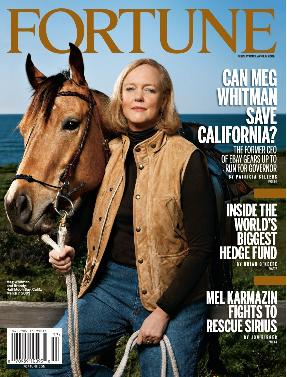
I mean, Meg Whitman has already poured $60 million of her own money into the race, and now she’s getting ready to put in more. Why? Because despite spending more cash than the gross national product of some small countries, all she’s been able to do is pull even with Brown at about 42 percent. Nobody in California who has any access to media can have missed Whitman’s blitz; she’s got her name recognition up, and everyone knows what her message is. But so far, a majority of the state isn’t buying it.


So Brown has a chance here. He can tag Whtman as a friend of Goldman Sachs, as an example of everything that’s wrong with American politics and finance, as another Schwarzenegger (whose ratings are in the toilet) and as someone who doesn’t offer any credible solutions to the state’s problems.


But first Brown needs to offer some credible solutions himself. And he’s not doing it. 

Newsom didn’t win in Los Angeles

5

I usually go to the California state Democratic Conventions, but I missed this one, so I’ve had to rely on news coverage to find out what happened — and it’s been pretty slim pickins. To read the Chron’s politics blog, you’d think the whole thing was silliness and parties, although Carla Marinucci got a fun comment from party Chair John Burton, who thinks the only thing that will drive the youth vote in November is pot.


But the news for people following the fate Gavin Newsom is that our mayor didn’t get the party’s endorsement for lieutenant governor. Matier and Ross spin it as a sorta, kinda victory:


Mayor Gavin Newsom didn’t get the state Democratic Party endorsement in his race for lieutenant governor, but he got the next best thing: keeping rival L.A. City Councilwoman Janice Hahn from getting it.


And technically, that’s true — Hahn ran hard for the endorsement, and really needed a boost, since she’s far behind in name recognition and money. But it was hardly a resounding win for the front-runner.


Newsom got 52 percent of the vote, short of the 60 percent needed for an endorsement. His campaign says, correctly, that he whupped Hahn, who got 42 percent.


But what’s remarkable is that Newsom had the support of all the party bigwigs — Nancy Pelosi, Dianne Feinstein, Burton — the folks who can usually pull strings and make sure that their candidate gets the nod. The truth is, Hahn never had a chance here; there was absolutely no way the L.A. council member was going to get enough votes to win the endorsement. Her only real play was to block Newsom — and she pulled it off.


So I wouldn’t call this a win for Newsom; I’d say it’s a sign that the grassroots Democrats are not entirely sold on the San Francisco mayor.

The dawn of Earth Day

2

tredmond@sfbg.com

GREEN ISSUE The heavens welcomed Earth Day to America. All over the country, April 22, 1970 dawned clear and sunny; mild weather made it even easier to bring people into the streets. The Capitol Mall was packed, and so many members of Congress were making speeches and appearing at events that both houses adjourned for the day.

Mayors, governors, aldermen, village trustees, elementary school kids, Boy Scout troops, labor unions, college radicals, and even business groups participated. In fact, the only organization in the nation that actively opposed Earth Day was the Daughters of the American Revolution, which warned ominously that "subversive elements plan to make American children live in an environment that is good for them."

By nightfall, more than 20 million people had participated in the First National Environmental Teach-In, as the event was formally known. It established the environmental movement in the United States and helped spur the passage of numerous laws and the creation of hundreds of activist groups.

It was, by almost all accounts, a phenomenal success, an event that dwarfed the largest single-day civil rights and antiwar demonstrations of the era — and the person who ran it, 25-year-old Denis Hayes, wasn’t happy.

His concern with the nascent movement back then says a lot about where environmentalism is 40 years later.

Gaylord Nelson, a mild-mannered U.S. senator from Wisconsin, came up with the idea of Earth Day on a flight from Santa Barbara to Oakland. Nelson was the kind of guy who doesn’t get elected to the Senate these days — a polite, friendly small-town guy who was anything but a firebrand.

A balding, 52-year-old World War II veteran who survived Okinawa, Nelson was a Democrat and generally a liberal vote, but he got along fine with the die-hard conservatives. He kept a fairly low profile, and did a lot of his work behind the scenes.

But long before it was popular, Nelson was an ardent environmentalist — and he was always looking for ways to bring the future of the planet into the popular consciousness.

In August 1969, Nelson was on a West Coast speaking tour — and one of his mandatory stops was the small coastal city that seven months earlier had become ground zero for the environmental movement. Indeed, a lot of historians say that Earth Day 1970 was the coming out party for modern environmentalism — but the spark that made it possible, the event that turned observers into activists, took place Jan. 28, 1969 in Santa Barbara.

About 3:30 on a Tuesday afternoon, a photographer from the Santa Barbara News Press got the word that something had gone wrong on one of the Union Oil drilling platforms in the channel just offshore. The platforms were fairly new — the federal government had sold drilling rights in the area in February 1968 for $603 million, and Union was in the process of drilling its fourth offshore well. The company had convinced the U.S. Geological Survey to relax the safety rules for underwater rigs, saying there was no threat of a spill.

But shortly after the drill bit struck oil 3,478 feet beneath the surface, the rig hit a snag — and when the workers got the equipment free, oil began exploding out. Within two weeks, more than 3 million gallons of California crude was on the surface of the Pacific Ocean, and a lot of it had washed ashore, fouling the pristine beaches of Santa Barbara and fueling an angry popular backlash nationwide.

Nelson received an overwhelming reception at his Santa Barbara talk — and horrified as he was by the spill, he was glad that an environmental concern was suddenly big news. But, as he told me in an interview years ago, he still wasn’t sure what the next steps ought to be — until, bored on an hour-long flight to his next speech in Berkeley, he picked up a copy of Ramparts magazine.

The radical left publication, once described as having "a bomb in every issue," wasn’t Nelson’s typical reading material. But this particular issue was devoted to a new trend on college campuses — day-long "teach-ins" on the Vietnam War.

Huh, Nelson thought. A teach-in. That’s an intriguing idea.

Hayes was a student in the prestigious joint program in law and public policy at Harvard. He’d been something of a campus activist, protesting against the war, but hadn’t paid much attention to environmental issues. He needed a public-interest job of some sort for a class project, though, so when he read a newspaper article about the senator who was planning a national environmental teach-in, he called and offered to organize the effort in Boston. Nelson invited him to Washington, was impressed by his Harvard education and enthusiasm, and hired him to run the whole show.

The senator was very clear from the start: the National Environmental Teach-In would not be a radical Vietnam-style protest. The event would be nonpartisan, polite, and entirely legal. Hayes and his staffers chafed a bit at the rules (and the two Senate staffers Nelson placed in the Earth Day office to keep an eye on things), and they ultimately set up a separate nonprofit called the Environmental Action Foundation to take more aggressive stands on issues.

Meanwhile, Hayes did the job he was hired to do — and did it well. Everywhere he turned, from small towns to big corporations, people wanted to plug in, to be a part of the first Earth Day. Many wanted to do nice, noncontroversial projects: In Knoxville, Tenn., students decided to scour rivers and streams for trash to see if they could each clean up the five pounds of garbage the average American threw away each day. In dozens of communities, people organized tree-plantings. In New York, Mayor John Lindsay led a parade down Fifth Avenue.

A few of the actions were more dramatic. A few protesters smashed a car to bits, and in Boston, 200 people carried coffins into Logan International Airport in a symbolic "die-in" against airport expansion. In Omaha, Neb., so many college students walked around in gas masks that the stores ran out. But it was, Hayes realized, an awful lot of talk and not a lot of action. The participants were also overwhelmingly white and middle-class.

Hayes wasn’t the only one feeling that way. In New York, author Kurt Vonnegut, speaking from a platform decorated with a giant paper sunflower, added a note of cynicism.

"Here we are again, the peaceful demonstrators," he said, "mostly young and mostly white. Good luck to us, for I don’t know what sporting event the president [Richard Nixon] may be watching at the moment. He should help us make a fit place for human beings to live. Will he do it? No. So the war will go on. Meanwhile, we go up and down Fifth Avenue, picking up trash."

Hayes finally broke with the politics of his mentor early on Earth Day morning when it was too late to fire him. The next day, the National Environmental Teach-In office would close and the organization would shut down. From that moment on, he could say what he liked and not worry who he offended.

"I suspect," he told a crowd gathered at the Capitol Mall, "that the politicians and businessmen who are jumping on the environmental bandwagon don’t have the slightest idea what they are getting into. They are talking about filters on smokestacks while we are challenging corporate irresponsibility. They are bursting with pride about plans for totally inadequate municipal sewage plants. We are challenging the ethics of a society that, with only 6 percent of the world’s population, accounts for more than half the world’s annual consumption of raw materials.

"We are building a movement," he continued, "a movement with a broad base, a movement that transcends traditional political boundaries. It is a movement that values people more than technology and political ideologies, people more than profit.

"It will be a difficult fight. Earth Day is the beginning."

I first met Hayes in 1990, near the office in Palo Alto where he was planning the 20th anniversary of Earth Day. He’d continued his environmental work inside and outside government, at one point running the National Energy Laboratory under President Jimmy Carter. Earth Day 20 was shaping up as a gigantic event, one that would ultimately involve 200 million people around the globe. Earth Day was becoming the largest secular holiday on the planet.

Hayes was excited about the event, which he was running this time without the moderating influence of a U.S. senator. And he was aiming for a much more activist message — in fact, at that point, he was pretty clear that the U.S. environmental movement was running out of time.

"Twenty years ago, Earth Day was a protest movement," he told a crowd of more than 300,000 in Washington, D.C. "We no longer have time to protest. The most important problems facing our generation will be won or lost in the next 10 years. We cannot protest our losses. We have to win."

And now another 20 years have passed — and by many accounts, we are not winning. Climate change continues, and even accelerates; an attempt at a global accord just failed; and Congress can’t even pass a mild, watered-down bill to limit carbon emissions.

And Hayes, now president of the Bullitt Foundation, a sustainability organization in Seattle, thinks the movement has a serious problem. "Earth Day has succeeded in being the ultimate big tent," he told me by phone recently. "To some rather great extent, is had some measure of success."

But he noted that "in American politics these days, it’s not the breadth of support, it’s the intensity that matters. Environmentalists tend to be broadly progressive people who care about war and the economy and health care. They aren’t single-issue voters. And somehow, the political intensity is missing."

Hayes isn’t advocating that environmentalists forget about everything else and ignore all the other issues — or that the movement lose its broad-based appeal — but he said it’s time to bring political leaders and policies under much, much sharper scrutiny and to "stop accepting a voting record of 80 percent."

It’s hard today to be bipartisan, and compromise is unacceptable, Hayes told me. "I was probably right [in 1990]," he said. "If what you’re aspiring to do is stop the greenhouse gases before they do significant damage to the environment, it’s too late." At this point, he said, it’s all about keeping the damage from turning into a widespread ecological disaster.

"I would like to see Earth Day 50 be a celebration," he said. "I would like to see by then a real price on carbon, nuclear power not proliferating, and a profound, stable investment in cost-effective, distributed renewable energy." But for that to happen, "we need to have a very intense core of environmental voters who realize that these threats to life on the planet are more important than a lot of other things."

Tim Redmond is the author, with Marc Mowrey, of Not In Our Back Yard: The People and Events that Shaped America’s Modern Environmental Movement (William Morrow, 1993) which can still be found in the remainder bins of a few used book stores.


Editor’s Notes

0

tredmond@sfbg.com

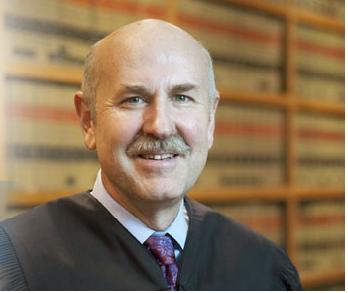
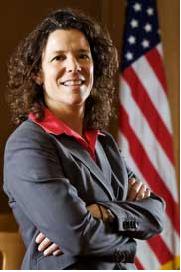
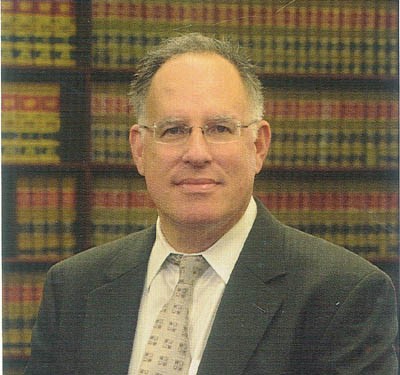
We’ve been talking to people who want to be judges, seven of them. One is already a judge and wants to keep his job; two are challenging him; and four are competing for an open seat. They all talk about their impressive legal backgrounds, life experience, desire to be fair and impartial, and to make the system of justice work for all.

The two who emerge as the winners will take their seats on the bench, and the presiding judge of the San Francisco Superior Court will decide what happens to them next — whether they handle felony murder trials, or juvenile hearings, or family court, or complex civil litigation, or small claims court. The P. J. oversees the court budget and things like the indigent defendant fund. So I asked them all: how does the presiding judge get chosen, anyway?

And all of them, including the sitting judge, said: Dunno.

Now, how can it be that six of the top attorneys in the city and one incumbent jurist don’t know how the person who runs the local courts gets that job? Well, maybe nobody cares — or maybe the whole process is so secretive nobody gets to learn about it.

See, the courts aren’t covered by the Brown Act, which mandates public meetings. So when the judges get together and meet (bimonthly in San Francisco), there’s no meeting notice and no press or public allowed.

I’m told by reliable sources that the P.J. is typically elected by acclamation when there’s only one candidate, and by secret written ballot when there’s competition. The ballots are tallied by the outgoing P.J., then discarded. Nobody knows who voted for whom.

Years ago, when the state Legislature (led by SF senators John Burton and Quentin Kopp) was updating the Brown Act, Ralph Grace, the publisher of a Los Angeles legal paper the Metropolitan News, went to Sacramento to argue that the courts, like any public agency, should operate openly. He got nowhere. "When you’re talking about running a public institution, you should do it in public," Grace told me this week.

There’s no law saying the P.J. has to be elected privately. The California Rules of Court say that local courts can set their own policies and procedures. So it appears that the San Francisco Superior Court could — if the judges wanted — open the doors.
They could. If they wanted to.

The Chamber of Commerce scorecard: You gotta be kidding

4

The San Francisco Chamber of Commerce has released a voting scorecard on the supervisors — and it’s a bad joke. The Chamber says the scorecard shows who are top opponents of business in the city, the ones who don’t support “job creation and government efficiency” — two poll-tested buzzwords the Chamber will try to use in supervisorial campaigns this fall.


But there are only ten votes on the scorecard — and they don’t even remotely represents the most important jobs, business or economic issues the board has addressed in the past year.


Seriously: Does anyone think that naming rights for Candlestick Park has had a huge impact on the ability of businesses to create jobs in the city? How about a resolution supporting a proposed Contemporary Art Museum?


And since small, locally owned independent businesses are the single largest private-sector job generators, how does the Recurrent Energy deal — a giveaway to a big power company — help create jobs?


Of course, that’s not what this is about. The scorecard issues were carefully chosen to make the progressives look bad. And, as always, the Chamber has completely ignored the fact that the largest employers in San Francisco are public-sector agencies, and that cutting government programs and blocking new sources of revenue are the real “job killers.”


We’re putting together our own scorecard, measuring a wider range of votes on key issues in the past year. What were the most important? What really mattered to San Franciscans? The comment lines are open.

Will Obama help Kamala Harris?

12

President Obama is coming to California to help raise money for Sen. Barbara Boxer, who already has more than $8 million on hand. The president has to do this; Boxer’s seat is critical to the Democrats hopes for hanging on to a majority in the Senate,and Obama will pull out all the stops in this fall’s campaign to help Dems in tough races.


And while Boxer’s not going to get an easy pass, she’s still the front-runner — whatever the polls may show, she’s always been a great campaigner and has overcome tough odds plenty of times before. And unless Tom Campbell pulls it out in the GOP primary, she’s going to face either Carly Fiorina or Chuck DeVore, and both of them are too far to the right for California.


But there’s another key race this fall where Obama could also be a huge help. I think San Francisco D.A. Kamala Harris is going to win the Democratic primary for attorney general, but in the general election, she’s going to get hit hard by the GOP dirt machine. It’s going to be death penalty and cop killers all day long. Harris is tough, and knows what’s coming, but I can guarantee that race will be nasty, mean, dirty, ugly and as negative as you can imagine.


And Harris is going to need to raise a lot of money to fight back.


Now let’s remember: Harris was one of the first California elected officials to support Obama for president. She was the co-chair of his state campaign. And this fall, he could return the favor by making a visible endorsement — and by coming to town for a major Harris fundraiser. The president of the United States can raise $5 million in one night for a candidate — and that kind of boost, along with the positive press it would generate, might make the difference.


Of course, Obama, who (sadly) won’t come out against the death penalty, will have to take some hard questions and a few hits himself, in a tough national election year for Democrats, if he gets to close to Harris. And she’ s enough of a pragmatist that she’ll understand if he ducks this one.


But he really shouldn’t.

Make PG&E get two-thirds for its initiative

2

Sacramento Bee columnist Dan Morain just joined the chorus of voices against Pacific Gas and Electric Co.’s Prop 16 with a piece that reminds us how PG&E just nine years ago last week went into bankruptcy. It’s particularly interesting to read the comments; the Bee publishes in a town that’s had public power for decades. The Sacramento Municipal Utility District offers lower rates and better service than PG&E — and while the public in general, and people who comment on newspaper blogs in particular, tend to be cynical about government these days, the folks in Sacramento seem quite pleased with their public utility.


Here’s one comment:


I used to live in a PG&E supplied house and my electric bills were unbelievably high… Now I live in SMUD house and my electric bills are sooo low. So I would definitely encourage people to vote NO. PG&E wants to monopolize the market knowing that a 2/3 vote is impossible. This is a case where a nonprofit efficient quasi govt. entity would be for our best interests. A for profit corporation like PG&E would suck us dry…

And another:

Why is this initiative known as the “Taxpayers Right to Vote” measure when it obviously should be names the “PG&E Profit and Monopoly Protection Act”? It’s the same disingenuous campaign that prevented Yolo County residents from enjoying the benefits of SMUD electricity. PG&E, along with their two-faced spokesman, the supposedly “honorable” Stan Atkinson, sold Yolo Co. down the river with a barrage of distorted facts, misinformation and scare tactics. When are voters going to stop approving these special interest propositions that are ruining this state? Quit relying on 30 second sound bites to make your decisions and see who’s really behind these initiatives and what their motives are. In fact, vote NO on all propositions unless they really have some merit. Prop 16 does not.

But here’s my favorite:


Here is an idea for a new initiative. I propose an initiative that would apply to all subsequent initiatives. For any initiative that seeks a 2/3 voter approval, or 2/3 legislature approval, that initiative itself would have to be passed by a 2/3 majority rather than by a simple majority. What is good for the goose ought to be good for the gander.

That makes a whole lot of sense. If PG&E thinks a two-thirds vote is fair, and the company wants to spend more than $30 million forcing that standard on all of us, then PG&E should have to get two-thirds of the vote for its own self-serving initiatives.

Candidates for judge: Richard Ulmer

1

Another candidate for judge, another interview, another sound file for your listening pleasure. This is incumbent Judge Richard Ulmer, who is facing two challengers, Michael Nava and Dan Dean.


Judge Ulmert by Endorse2010

Candidates for judge: Linda Colfax

0

We’re interviewing all the candidates for Superior Court judge in San Francisco. Here’s Linda Colfax:

Linda Colfax by Endorse2010

Candidates for judge: Harry Dorfman

1

We’ve been interviewing candidates for the two contested judicial races in San Francisco, and posting the sound files. The most recent candidate is Harry Dorfman; you can listen to his comments here


Harry Dorfman by endorse

The problem with Park Merced

7

It’s no secret that Park Merced, the sorta-suburban mega-housing complex in the southwest corner of the city, wants to expand. New mid-rise towers would house some 7,000 apartments, with space for maybe 12,000 new residents — which is fine if you like the idea of more rental housing in the city (although much of it not affordable). But it also means a huge amount of new traffic in the area, particularly on 19th Avenue, which is pretty crowded as it is.


Now, the developer and the city talk about adding new transit to the area — an underground Muni rail station at Park Merced, more buses, all that good stuff. Sup. Sean Elsebernd, who represents the district, is (properly) demanding it.


But here’s the hitch: Never once in the history of this city has a major new development paid enough fees or brought enough money into the city to pay for the infrastructure required to serve it. And that’s going to get even worse if the mayor gets his way and defers development fees.


The cost of the level of transit necessary to serve the new residents of Park Merced, along with the expanded number of students at San Francisco State, and the expansion of the Stonestown shopping center, is gong to be massive. Park Merced may pay to build a new station — but the developer won’t pay for the cost of buying new buses and trains, hiring operators, and paying them. The increased property tax revenue from the project won’t cover that, either — particularly since it also has to cover water and sewer expansion, police and fire expansion, new schools and parks, and all the other expensive things that 7,000 new residents will want.


I don’t think the city’s even come close to figuring out the total bill for all the infrastructure improvements this project will require. Let’s add that up first — before the city issues any permits — and present the developer with the bill. Then we can decide if this project is a good idea.

PG&E’s lies: The Prop. 16 ad

9

Pacific Gas and Electric Co. has its first TV ad out, blitzing the state with a Yes on Prop. 16 message paid for with some 30 million of your ratepayer dollars. And it’s breathtaking in the majesty of its lies and misinformation.


Saturday voting — and how to fund it

9

Alex Tourk, a local political consultant who was once Gavin Newsom’s campaign manager, came by today to pitch us on his latest project: Saturday voting. He’s generated a fair amount of press on the concept, and it sounds like one of those thing nobody could oppose; why not open the polls an extra day? In fact, why not open the polls from Friday until Monday? Why Tuesday, anyway?


Well, Tuesday voting is a creature of the mid-1800s, when it took a couple of days to get from the farm to the town center, and nobody wanted to start out on a Sunday. Now it’s in the California constitution. But there’s no law that says you can’t vote Saturday AND Tuesday.


What Tourk is proposing is fairly simple: Voting places would be open Saturday, but there would be no voting machines. You’d just go there and fill out an absentee ballot. Which you could also do at home, of course, and a citywide vote-by-mail effort might increase turnout even more. (Or maybe it wouldn’t, given the low rate at which census forms are getting returned.)


Tourk says he wants to build excitement about elections and community interest; that’s why he wants the polls open an extra day — and a day when more people are off work and thus, in theory, would have more time to vote. He’s circulating an initiative that would set up a one-time pilot project, for the 2011 mayor’s race. If it works, maybe the supervisors and the mayor will want to continue it.


Here’s my big concern: Tourk doesn’t want to ask for public money from a city that’s deep in the red, so he’s proposing to raise the $1 million or so it would cost for Saturday voting from private interests.


Of course, the names of the donors would all be public, but still: Managing elections is about the most central democratic function of a government — and I really don’t want to see private interests involved. It seems to me that if this is worth doing, it’s worth paying for with public funds.


Where would that money come from? Here’s an idea: Prop. 15, the California Fair Elections Act, would set up a pilot program for public funding for statewide elections. The money would come from fees on lobbyists. Why can’t we do the same thing in San Francisco? Fund Saturday elections with a lobbyist fee — and a tax on political consultants.


Seriously: Consultants make money by manipulating democracy. They represent, on a deep philosophical level, the privatization of American politics. I’m not saying all consultants are bad or that they should be outlawed or anything like that — but a modest levy on political consultant fees would more than fund a Saturday election pilot program.


Tourk smiled when I suggested this, and would only say it was “an interesting idea.” Now, which supervisor is going to pick up on a tax that will only offend the small number of people who help get all our local officials elected?

Editor’s Notes

0

Tredmond@sfbg.com

A couple of weeks ago, political consultant David Latterman, who often works with downtown interests, sent off an e-mail warning that the pro big-business, moderate bloc needed to get its act together. "It appears as if different groups are unwilling to set aside their egos or agendas, and pool together resources in a comprehensive plan to take back the [Democratic County Central Committee]," he wrote. "And guess what, we’re going to lose, in June and November."

His point: the DCCC matters, a lot. "The DCCC controls the supe endorsements that matter most," he noted, adding, "The mayor’s race starts now."

And that’s absolutely true — and unless the folks downtown are foolish or have given up (and neither is terribly likely) they’re going to get the message, and there’s going to be a big-money push in the next two months to oust the progressive majority on the county committee.

The DCCC controls the Democratic Party endorsements — and the party slate card is among the most influential political slates in a city where the vast majority of the population votes for Democrats. The DCCC could well make the difference in some of the key supervisorial races this fall — and could play a key role in choosing the next mayor of San Francisco.

But it’s not a high-profile election. More than half the votes will probably be absentees. That means it’s critical that the progressive candidates can raise money, do mailers, and fight back.

At this point, there’s a pretty good consensus on a progressive slate. We published our endorsements last week, and the Milk Club, Sierra Club, Tenants Union, and Assembly Member Tom Ammiano have endorsed most of the same candidates. In the fall, labor, environmental groups, tenants, and other progressive interests will be putting a lot of money into the races for district supervisor. But I could argue that the DCCC is just as important — and if we don’t fight this one to win, it’s going to be a lot harder in November.

Will Whitman’s spending backfire?

11

The political graveyards of California are littered with the bones of candidates who tried to get elected to statewide office on the basis of their own great wealth. Steve Westly, Al Checchi, Jane Harmon, Michael Huffington, Darrell Issa … lots of people though they could buy the job of governor or senator. Most of them failed — in part because they couldn’t craft a message that appealed to the voters.


But I think they also failed because on some level, California voters don’t like being bought. The idea that someone is so rich that he or she can spend around $50 million to get elected governor is kind of appaling, particularly in an era when people aren’t so happy with the very rich.


Calbuzz had a little fun looking at all the things Meg Whitman could buy with the $40 million she’s already spent (Madonna’s apartment, Conan O’Brien’s silence, a Cape Cod wastewater plant), but really: You have to wonder what she could have done for society if she’d used that cash for something other than her vanity campaign.


I have no polling data on why mega-millionaires don’t win; the current polls show Meg’s ahead of Jerry Brown . But I’m not sure her cash and her obscene spending won’t become a negative at some point.

Why does the Catholic Church still exist?

6

Johnny Angel Wendell, who wrote a piece for us this week about talk radio, does a show Sunday night on LA’s KTLK radio called Southern California Live, and this week — on Easter Sunday — he had a great rant about the Catholic Church. You can listen to it here — it starts about 22 minutes into the show. (Full disclosure — I’m often a guest on the show, and was on last night, and you can listen to me talk about Meg Whitman and Gavin Newsom at the end of the session, but Johnny’s bit on the church was better).


His question: Why does the Catholic Church still exist?


If any other major institution was caught doing what the Catholic hierarchy did — allowing, or even encouraging, the abuse of children by its frontline workers — nobody would go there any more. Imagine if Disneyland had this sort of scandal; no parent would ever take a kid there again. No school, or club, or program that involves or caters in any way to kids would survive a scandal like this.


I know, I know: It’s about religion and faith that’s supposed to transcend the foibles of the humans who run the show. But Jesus — how can even devout Catholics allow this to continue? The pope and all the corrupt, sleazy bishops and cardinals ought to be thrown out like the devils cast from heaven in the Bible — and until that happens, maybe all those devout Catholics should stop putting money in the collection plate.

One question for Tiger Woods

1

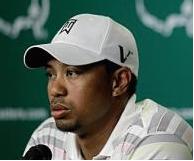
So Tiger Woods is finally talking to the press. I don’t get invited to the press conferences at Augusta National (imagine that), but if I were there, I’d have tried to ask exactly one question:


Mr Woods: Can you explain why your personal life is any business of anyone in this room — and if you can’t, then why don’t you stop answering questions about it?


Seriously: I’m tired of it. The guy has sex with people to whom he wasn’t married. His wife got pissed about it. Is that not the story of millions of couples all over the world? Just shut up and ask him about his practice rounds, or his new swing, or why Augusta still doesn’t have any women members.


The cover story in the American Journalism Review this month is called “Lost in the Woods: Sinking standards, the Media and Tiger Woods.” It’s by Washington Post reporter Paul Farhi. AJR is pretty stodgy for my taste most of the time, but Farhi has it right:


For all its lurid aspects, the Woods scandal may have constituted a watershed in American journalism: A major news story in which many “respectable” news outlets ditched traditional newsgathering methods and standards of fair play and piggybacked on aggressive but not always accurate tabloid reporting. The distinction between “mainstream” and “tabloid” may never have been so blurred as it was in the whirlwind of reporting on Woods.


I don’t fucking care who Tiger fucked. As John Madden might say, just let the guy play the game.

And if you’re following the latest Vatican scandal …

1

… and you’re reading about the Pope and his ol’ chum from San Francisco, and how the Catholic League blames homosexuals for the pedophilia scandal, and how the Vatican now equates bad press to the Holocaust, you might enjoy this nice little video. It’s funny, but it’s not funny — when I was a kid in Catholic school, we all knew you didn’t want to be chosen to be an altar boy. We could have used some of this fine product back then.

Judge sets hearing on contempt order for SF Weekly’s bank

7

Superior Court Presiding Judge James McBride April 1 granted a motion by the San Francisco Bay Guardian to set a hearing for the Bank of Montreal, the lead bank for the SF Weekly and its parent chain, to show cause why it should not be held in contempt of court for interfering with a judge’s order in the Guardian’s attempt to collect on its $2l million plus judgment in a 2008 predatory pricing trial.


McBride set the hearing for April 30 and said that he would not hear the case but would assign another judge to hear it.


He said at the beginning of his remarks that the Guardian in its briefs had established a prima facie case for a hearing.
After hearing oral arguments from Guardian attorneys Richard Hill and Jay Adkisson, and Bank of Montreal attorney
Dan Falk, McBride ruled in favor of the Guardian’s motion.


The motion addresses the latest twist in the efforts by the Weekly’s parent company, Village Voice Media, to duck payment of the judgment. For more than two years, since a jury ruled in the Guardian’s favor, VVM and the Weekly have been hiding behind a complex corporate structure and a cozy relationship with a banking syndicate and have refused to pay the debt.


The Guardian has seized two of the Weekly’s vehicles and the rent that subtenants pay the Weekly, and on March 9th, Court Commissioner Everette A. Hewlett Jr. ordered the Weekly to turn over half of its ad revenue to the Guardian.


The Guardian contacted the Weekly’s advertisers and advised them of the order. But, according to the Guardian brief, “after BMO received notice of the 9 March 2010 order, it began contacting all of the advertisers subject to the Assignment Order and instructed them to disregard that order and make payments directly to BMO.”


The Bank of Montreal, which heads a banking syndicate that has helped finance VVM’s expansion over the years, argues that VVM owes $77 million on a loan, and on March 12th, the syndicate declared the loan in default. That, the bank argues, means that BMO gets all of VVM’s money and that the Guardian is second in line.


However, the chain was valued just two years ago at $191 million, and under California law, BMO is required to marshal the assets of VVM – that is, to do an inventory of what the company owns and what it’s worth – so that other debtors can be paid.


“I have three times requested in writing to BMO that they marshal the assets of SF Weekly LP and New Times Media LLC, however BMO has never responded,” Adkisson stated in his court filing.


Hewlett has already said in open court that “it is possible that [BOM is] in contempt of court.”


The Guardian will be back in court April 14th asking that a receiver be appointed to take control of SF Weekly’s finances.


The banks in the syndicate that are holding the VVM debt (as of March, 2009) are Bank of Montreal, U.S. Bank, Wells Fargo, WestLB AG, Rabobank, BNP Paribas, and Brown Brothers Harrimann. You can read Adkisson’s filing here (PDF)

Judicial candidates: Dan Dean

0

Dan Dean is one of two candidates challenging Superior Court Judge Richard Ulmer in the June primary election. You can listen to our editorial board interview with him here.


Dan Dean by endorsements2010

The pope’s supporters are truly horrible

12

I’m glad I’m not the only one who noticed the astonishing ad that ran in The New York Times defending the pope. Maureen Dowd picked it up in a nicely savage column that suggests the holy father undergo an inquisition. I agree that medieval practices are about what’s needed for the Vicar of Christ — but his supporters are even worse. Here’s Bill Donohue, president of the Catholic League, who bought space on the Times oped page to spill a screed of mind-boggling ignorance and hate:


The Times continues to editorialize about the “pedophilia crisis,” when all along it’s been a homosexual crisis. Eighty percent of the victims of priestly sexual abuse are male and most of them are post-pubescent. While homosexuality does not cause predatory behavior, and most gay priests are not molesters, most of the molesters have been gay.


Yes, this guy, who leads a major Catholic organization, is really arguing in public that the problem isn’t that abusive priests were protected by the church; it’s that there are (gasp) homosexuals in the priesthood.


This isn’t an April Fool’s joke. The guy really wrote that. It really ran in a major American newspaper in 2010. And unless I missed something, not one leading voice in the Catholic Church — not one bishop, or cardinal, or Vatican official, or even an intellectual leader in the Church — has stepped forward to publicly criticize Donohue.


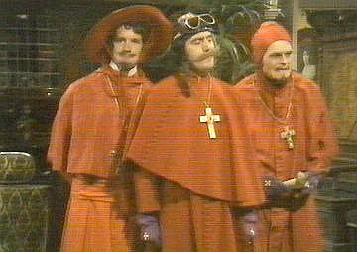
Let’s bring back the Spanish Inquisition.

Judicial candidates: Rod McLeod

0

Six candidates are running for two judicial seats in San Francisco, and over the next few weeks, we’ll be interviewing all of them (and at the end of April, we’ll be publishing our endorsements). The interviews make for interesting listening, so we’re posting the sound files on the web. Here’s Rod McLeod, who is one of four candidates seeking to replace retiring judge Wallace Douglass.


Rod McLeod by endorsements2010

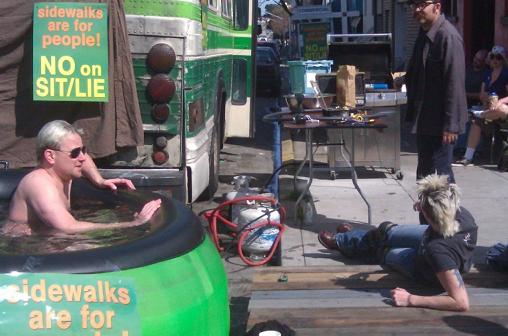
Sit-lie: A city planning issue?

4

The City Planning Commission will be taking up the proposed sit-lie law April 1. No, that’s not an April Fool’s joke — city planners are going to take testimony and weigh in on the proposal to ban sitting on the sidewalks. Why is this a planning issue? Well, Commissioner Michael Antonini asked for a hearing to see what other cities do (and he’ll probably push the commission to endorse the law) — and Commissioner Christina Olague wanted to see what impact the law would have on the city’s Pavement to Parks program.

It’s a serious question: A Planning Department staff report (PDF) discusses the issue in some depth, noting that the General Plan suggests that “parts of wide sidewalks can be turned into children’s play areas and sitting areas for adults.” General Plan policy 26.1 calls on the city to “consider the sidewalk as an important element in the citywide open-space system.” After all, streets and sidewalks take up 25 percent of all the land in San Francisco — far more than the parks.

And the Planning Department has been moving actively in the past year to turn more bits of pavement into temporary urban parks, places that used to be streets or sidewalks where people are now encouraged to …. sit. “It is unclear if the ordinance would apply to the temporary plazas and informal seating crated by Pavement to Parks,” the report concludes.

So expect some sparks to fly here, and for a heated debate if the commission tries to take action supporting or opposing the law.