Tim Redmond

Is BARFing good for your pet?

1

tredmond@sfbg.com

It’s called the BARF diet — and it’s the hottest thing in San Francisco pet stores these days. No, it’s not food that makes your pet throw up; BARF stands for biologically appropriate raw food. And its advocates are passionate about its advantages over old-fashioned commercial pet food.

“Dogs and cats in the wild would eat raw meat,” said Susan Yannes, who co-owns Pawtrero pet store and bathhouse on Mississippi Street. “They didn’t have doggie barbecues.”

The idea is to mimic as closely as possible what your pets would have eaten way back when — in the natural state, before they became so close to humans that they started eating the same sort of processed food (some would say processed crap) many of us eat.

And the trend is growing — fast. Matt Koss, who owns Primal Pet Foods, a supplier of frozen raw animal feed, reports 20 percent annual growth. He cites a massive pet food recall in 2007 as a spur to his business, adding that “there’s more and more consumer awareness about pet food.” Primal Pet supplies food to 2,000 pet stores nationwide, 15 in San Francisco.

But the BARF diet also has its critics — and not just in the multibillion dollar pet food industry.


A BETTER DOG IN JUST WEEKS

Yannes got into the raw food business when one of her dogs developed skin problems. “We were feeding him standard dry dog food, and the vet said it was fine,” she said. “His coat had all these bumps, so they gave him allergy medicine.”

Instead, she tried shifting the dog to an all-natural diet — “and a week later, he was fine.”

That’s a common story among some pet owners, who say that raw meat, combined with raw bones and some specially prepared grain and vegetable matter, makes dogs and cats healthier and happier. “Business is growing,” Yannes said. “People who try this don’t go back.”

The argument is similar to what you hear from people who have given up processed human food in favor of fresh fruits and vegetables and organic, free-range meat. It’s more natural; all that processing (and even heat) destroys essential nutrients.

A summary published on Pawblog that Yannes passed on to me sums it up: “When switching your pet to a raw food diet, there are many differences you will notice in a few weeks, including improved breath and white teeth, better digestion resulting in much smaller and firmer stools, less itching, scratching, and allergies, increased energy, healthy skin, and a shiner coat.”

The reason? “Dogs and cats stomachs are designed to digest raw meat and soft bones, utilizing the very strong concentrations of hydrochloric acid as well as the short length of their gastrointestinal tract. Any bacteria are taken care of with this acid.”

But some vets — including those that support and practice non-Western medicine — are more cautious.

“A raw diet is fine,” said Dr. Randy Bowman, a vet at Pets Unlimited. “Dogs were meant to eat raw food in the wild. But we’ve come far beyond that. Their gastrointestinal system has evolved, and they don’t need it.”

Adds Dr. Jeffrey Bryan, a veterinary oncologist who teaches at the University of Washington: “I think highly processed foods are problematic, but I wish we had more scientific evidence on the value of the raw diet.”


NOT FOR ALL

I think it’s safe to say that the raw food diet isn’t for everyone. For one thing, it’s more expensive — but if it winds up keeping our dog out of the vet’s office, it will more than pay for itself over time. More important, it requires a fair amount of work — and a lot of attention.

Raw meat has to be handled carefully. All the preparation surfaces have to be washed, and the pets’ dishes need to be washed with soap and water after every meal. That’s because raw meat — even organic, free-range stuff — contains bacteria that can carry diseases to pets and humans.

And according to Bowman, even the best grade of meat can carry diseases: “Even human-grade meat that’s processed and shipped distances carries bacteria, and it’s not meant for raw consumption.” Bowman suggests that pet owners at least sear the meat first, since the bacteria tend to be on the surface.

Dr. Rebecca Remillard, a veterinarian and pet nutritionist, is one of the harshest critics of the raw diet. “This is not a safe practice,” she writes on her Web site. “Dogs fed raw meat or eggs may develop mild to severe gastrointestinal disease from consuming products contaminated” with disease-causing bacteria.

Koss says that’s just misinformation. “Bacteria and pathogens are a concern in the entire food industry,” he said. “But if the food is handled properly, there is no danger at all to pets.”

Susan Lauten, who has a master’s degree in animal nutrition and a doctorate in biomedical science, runs a veterinary consulting business in Knoxville, Tenn. She agrees that, for the most part, healthy dogs and cats can safely eat raw food. But she’s less enthusiastic about comparisons to the diet these creatures ate in the wild.

“In the wild, dogs didn’t live very long,” she told me. “And one reason was that they got sick from eating contaminated meat.”

Lauten has a different concern about the raw diet. Animals that eat raw meat can release salmonella and other dangerous pathogens in their stool. “You don’t want that around if you have kids or immune-compromised people,” she said. “You can clean up after your dog, but you might not get everything.”

And she raised another issue: economics. “Do you tell people that they can’t have a cat unless they can afford the most expensive kind of food?”

Dr. Hannah Good, who practices holistic veterinary medicine in Santa Cruz, argues that “there’s a lot that can be accomplished by going in a different direction than kibble.” She noted that “a lot of diets are 100 percent garbage.”

But she also said that high-grade kibble diets are balanced to include all the nutrients an animal needs.

And what do the vets feed their pets? Good said her dog “eats whatever I eat”; she prepares a version of her own meals for her canine companion. Lauten’s dog has inflammatory bowel disease “and does very well on a commercial veterinary diet.”

Bryan, who thinks what a dog eats is an important factor in its health, doesn’t do the BARF thing either: “I give my dog Science Diet.”


Bark if you like needles

4

tredmond@sfbg.com

The dog named Hank Stamper got paralyzed on a sunny Saturday afternoon. One moment he was hanging out in the backyard, lying in the little patch of grass and giving the cats next door the evil eye, and the next thing I knew he was making a yelping sound like nothing my dog had ever uttered in his four years of healthy life.

When I got there, Hank was dragging himself around by his front paws, his back legs and hindquarters completely limp and useless.

So I picked up the 90-pound beast and wrestled him into the car and carried him to the pet hospital, where a young vet poked and prodded and confirmed that Hank’s entire hindquarters were numb and paralyzed. The doc didn’t know why, or what might have happened; there was no obvious injury. He said it might get better on its own, or it might not.

The specialist vet we saw the next day didn’t know what was wrong, either; it seemed to be some sort of stroke. An x-ray showed what might have been something screwy in his spine. “There’s a surgical procedure they do at UC Davis,” the specialist vet said. “It costs $10,000, and has about a 50 percent chance of success. I could call them if you want.”

Uh, no. I loved my dog, but that was way beyond our means, and my health insurance didn’t cover family members of the canine persuasion. So, sadly, with much weeping, we took poor Hank home. We figured we’d give it a day or two and, if he didn’t improve, his next trip to the vet would be his last.

While I was lamenting all this at work the following morning, one of my colleagues made a wild suggestion: take him to Irving Street Veterinary Clinic, she told me; there’s a vet there who does acupuncture.

Well, hell. I’d never heard of doggie acupuncture, but Hank wasn’t getting better, plus he was miserable, and we were at the end of the line. So I called and made an appointment. Dr. Jeffrey Bryan met me at the clinic, took a look at the poor mutt, and went to get his gear.

“To be totally honest, I can’t explain scientifically exactly why this works,” he said as he started sticking needles in Hank’s back and legs. “But in a remarkable number of cases, it does.”

We sat on the floor, the dog and I, while Bryan hooked a very low electric current up to some of the needles, then he told me to wait. Thirty minutes later, the doc turned the juice off, took the needles out — and goddamn if that dog didn’t stand up and start to walk.

Seriously — the animal that couldn’t even hold himself up to poo (it was gross, don’t ask) ambled stiffly out of the clinic and got into the car. Four acupuncture sessions later, Hank was running again, and within a few months, we did a 5K race — and the human member of the team wasn’t the one setting the pace.

That was back in 1996, when veterinary acupuncturists were fairly rare, even in San Francisco. I think Bryan was one of only two licensed vets who did it. Today it’s a growth industry.

In fact, an increasing number of vets — people with a doctor of veterinary medicine degree, folks who spent four years in graduate school studying Western science and medical techniques — are treating some of their patients with acupuncture, chiropractic, herbs, and other holistic approaches.

“It’s expanded quite a bit in the past five years,” said Dr. Randy Bowman, who practices at Pets Unlimited, a nonprofit animal hospital and adoption center in San Francisco. “We as vets have become more informed and more in touch with what our clients want.”

Bowman practices what he calls complementary and integrative medicine — a combination of traditional Western techniques and holistic treatments like acupuncture and herbs. “I think a lot of us get fed up with chronic conditions, pets that have problems Western medicine doesn’t have a cure for,” he said. “I wanted to offer my clients something more than the same antibiotic over and over.”

Acupuncture’s been around much longer than what we now call Western medicine. A recent article in accupuncture.com noted that primitive acupuncture therapies may have been practiced in India as long as 7,000 years ago, and it’s been part of Chinese culture for centuries.

“One of the earliest records of veterinary acupuncture was some 3,000 years ago, for the treatment of elephants,” explained the article, which was written by Susan Thorpe Vargas and John Cargill.

But the technique didn’t find widespread acceptance in America until much more recently. California first legalized acupuncture in the 1970s. And while some licensed acupuncturists have quietly been treating animals for years, it’s only recently that significant numbers of university-trained veterinarians have started to adopt the practice.

Although most humans have to choose between a doctor with an M.D. and an acupuncturist, in the animal world, the spheres of traditional and holistic medicine have grown closer.

Dr. Hannah Good, who practices in Santa Cruz, is an early disciple. She’s been offering animal acupuncture and chiropractic for more than 20 years. “I look at every case individually,” she told me. “Sometimes it’s herbal treatment, sometimes it’s surgery.”

There are many reasons for the shift toward holistic medicine in the animal world — and one, frankly, is cost. Invasive procedures, antibiotics, steroids — all the things traditional vets tend to do for sick animals — come at a stiff price. Hank’s $10,000 surgical estimate is unusual, but spending hundreds of dollars — many hundreds of dollars — on an animal’s illness is all too common.

The acupuncture that saved Hank’s life cost $40 a session, and the bottle of Chinese medicine Bryan prescribed as a supplement cost $8 at the herbalist down the street.

That’s not always the case — extended acupuncture treatment can be pricey. “But it’s still less expensive, particularly with chronic diseases,” Bowman noted.

I tracked down Bryan recently; these days, he’s a professor at the University of Washington School of Veterinary Medicine and an expert in veterinary oncology. He remembered Hank well — and although he has spent years in advanced training learning to treat animal cancer, he still uses acupuncture at times.

“One of my students had a dog with chronic pain and we gave him a very powerful steroid, but it had no affect,” he said. “But acupuncture made a lot of difference.”

He finds that his clients — even those whose animals have advanced diseases — are interested in alternatives. “A lot of people who have had acupuncture themselves find that this kind of treatment is more in line with their core values,” he noted. “It’s certainly growing in the public consciousness.”

Bryan would like to see the veterinary establishment — which is still dominated by Western scientific models — move more quickly to adopt nontraditional techniques. “Most of what we’re seeing is demand-driven,” he said. “People are asking for it. Veterinary medicine as a whole has done a poor job of being a leader in the field.”

The state budget isn’t growing

11

I heard a great show on NPR the other day about the new rules on compensation for executives whose banks got federal bailout money. The feds have cracked down (a bit), and some of those massive salaries have been cut and top bankers are now accepting much less pay, and stock that can’t be sold for three years.


And guess what: More than 80 percent of these people are still hard at work at their desks, including almost all of the most senior folks. Very few have left. It puts the lie to this notion that extreme salaries are needed to attract and retail the top talent; even after those salaries have been cut by more than half, the “talent” doesn’t flee.


There’s a new study by the California Budget Project (PDF) that says makes the same kinds of points. Jean Ross, the director of the nonprofit, nonpartisan group, says that urban legends die hard, so she’s chosen the top ten myths about the state budget and demonstrated how utterly inaccurate they are.


For example, the anti-tax folks love to crow about the massive growth in state spending and how the budget is “out of control.” Truth:


Current year spending is $16.9 billion below 2007-2008 levels and proposed 2010-2011 spending is $20.1 billion below  2007-2008 levels.


2009-2010 spending is $21.5 billion below the baseline levels projected by the Legislative Analysts Office in 2004.


As a share of the state’s economy, state spending is at its lowest levels since the early 1970s.


And it’s not just the recession:


State spending as a share of personal income has declined significantly in recent years.


And guess what: taxes aren’t driving businesses out of the state — or hampering personal wealth creation.


The number of millionaire taxpayers has increased more rapidly than the number of taxpayers as a whole since the passage of Prop. 63, which imposed an additional tax on high-income individuals.


And guess what, you bureaucracy bashers:


California ranks 41s [among the 50 states] with respect to the number of state and local government employees per 10,000 population.


So no, California doesn’t have a spending problem. The state has a revenue problem.

Editor’s Notes

4

Tredmond@sfbg.com

The pot initiative’s going to pass in November. California’s going to legalize personal use and small sales. I think that’s clear from the polls, and from the fact that the pot supporters are raising a fair amount of money, and the fact that there won’t be much effective opposition.

The state Legislature might not like it — ballot measures are impossible to amend, and with debate and discussion the measure might be a little different. But Assembly Member Tom Ammiano has tried, again and again, to get his colleagues to see the light: this is going to happen, and if the folks in Sacramento are afraid of it, then they’re not going to have any influence over the final product.

And it’s amazing to me how many people are afraid of this issue.

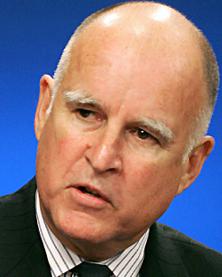
All three major candidates for governor, including Jerry Brown, who must have smoked pot at some point in his life (would Linda Ronstadt have gone out with a guy who never smoked weed?), are publicly opposing the measure. Ammiano can’t get a majority of the Assembly to vote yes on his legalization bill — and Democrats control things. You wonder when these people are going to understand that the voters, most of them, really don’t care if pot becomes legal. It doesn’t frighten anybody anymore — except elected officials.

Humboldt County is already preparing for this; business leaders are talking about the economic impact on the region and how the North Coast can become the Napa Valley of green bud. The Obama administration needs to get ready too — ready to tell the federal drug agents to leave California alone. And a few years from now, life will go on, and everyone will take legal pot for granted — and I wonder how silly Jerry Brown’s going to feel. *

The pot initiative’s going to win

9

It seems pretty clear to me that, with polls showing widespread support and money pouring in for the campaign, the initiative to legalize pot in California is going to pass. So why are all of the candidates for governor, even Jerry Brown (who may have smoked a joint or two in his time) coming out so strongly against it?


Jerry knows that legal pot isn’t going to create new law-enforcement problems; quite the contrary. It’s going to save huge amounts of money that the state and local governments now waste enforcing a silly law that nobody respects, will cut down on the jail population and discourage the environmentally damaging (and sometimes violent) gangs of rogue growers who plant on public land.


And he ought to know that this kind of a stand isn’t going to help him get elected. Once you take the hard-core Republicans who would never vote for Brown anyway out of the equation and look at the universe of potential Brown voters, legalizing pot probably gets more than 60 percent approval.


If you asked me back in 1978 whether I could imagine a day when Jerry Brown would oppose a marijuana legalization measure that was polling at 60 percent, I would have said: Whoa, man, no way. But then, I inhaled.

Us and the Weekly: It wasn’t personal

4

I really liked The Stranger’s article a couple of weeks ago about our battle with SF Weekly and it’s corporate parent, Village Voice Media. Eli Sanders is a good reporter, and he got most of it right.


But he did the same thing that a lot of people covering this legal battle have done, and it’s starting to get annoying. Everyone seems to want to play this as a battle of egos between Guardian Editor and Publisher Bruce Brugmann and VVM Executive Editor Mike Lacey. It’s as if we filed suit against them — and endured years of litigation and now collection efforts — just out of spite. It’s as if we were willing to go through all this just because Bruce didn’t like Mike Lacey.


Here’s Sanders’ spin:


These two men have hated each other for decades, but with increasing venom since 1995, when Lacey showed up in San Francisco in cowboy boots to announce that he and his partners had just purchased the tiny SF Weekly and planned to make a huge success of it.


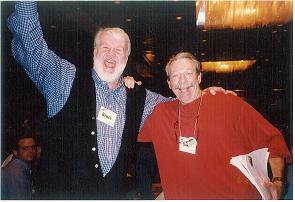
The thing is, Bruce and Mike haven’t hated each other for decades. They weren’t terribly close, but they got along fine — and sometimes, they were political allies. In 1997, three years AFTER Lacey’s company bought our competitor, SF Weekly, the two joined forces at an Association of Alternative Newsweeklies convention in Montreal to help push a bylaws measure that kept daily newspapers out of our trade association. And as the picture above shows, they were almost, sorta, kinda pals. At least for a few minutes.


The last thing we wanted to do was sue these guys. It wasn’t personal; we had no choice. Sure, the Guardian and VVM have very different approaches to journalism and politics, but we’d have been happy to compete with them — the way newspapers with different viewpoints should, on a level playing field. And for all the rhetoric on all sides, the legal animosity only started when the Weekly actively tried to put us out of business by selling ads below cost.


I dunno; the VVM people have been awfully rude to me of late, and I guess they like this mano-a-mano shit, but the reality is: We sued to stop illegal conduct that was threatening our business. That’s the real story.


Could he be — the worst pope ever?

15

In The Decline and Fall of the Roman Empire, Gibbons reports on the trial of Pope John XXIII in 1415, during which “the most scandalous charges were suppressed: The Vicar of Christ was accused only of piracy, murder, rape, sodomy and incest.”

And he wasn’t even the worst of them. Jesus, there have been some bad popes over the years. Even in modern times, we’ve had a few serious losers; Pius XII, by many accounts, was way too friendly with Adolf Hitler.

So it’s pretty hard to call the current occupant of the Throne of St. Peter the worst pope ever; there’s plenty of competition.

But folks, the former Cardinal Ratzinger is turning out to be so awful that he’s going to go down in history as one of the all time horrible leaders of a crumbling Catholic Church. This guy was actively involved in covering up child abuse scandals. He knew what was going on, and he not only ignored it — he ordered the bishops to report the crimes only to Rome, and not to civil authorities. He’s guilty not only of protecting the worst kind of criminals — authority figures who prey on children — but of actively seeking to prevent them from facing the consequences of their crimes.

If Bill Clinton was charged with obstruction of justice for lying about a (consensual) blow job (involving two adults), then Pope Benedict XVI ought to be indicted in every country that has similar statutes, starting with the United States. All it takes is one district attorney, one grand jury. The evidence is pretty clear. Then Interpol can put out a warrant for his arrest.

Of course, all that would do is keep the guy holed up in his nice, big house in Rome; the Vatican is its own sovereign nation, with its own laws and rules — and I don’t think Canon Law provides for obstruction charges (or any charges) against the head of state.

See, that’s the thing: Nobody can touch the pope (bad metaphor). There’s no procedure for impeachment. He’s the least accountable head of state in the world; even military juntas and dictators can be overthrown by force, but I don’t see any revolutionary cadre of young Cardinals rising up and turning the Swiss guards on Il Papa. Too bad: A nice middle-ages-style coup in the Vatican might be just the thing to shake up that moribund institution and remind its leaders that the rest of the world will only take so much abuse. 

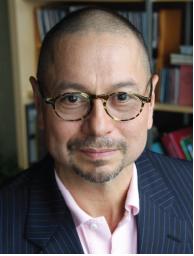
Judicial candidate interviews: Michael Nava

0

There are two contested races for judge in San Francisco — one open seat, and one incumbent who’s facing a direct challenge. We’ll be interviewing the candidates over the next few weeks, and posting the interview tapes so you can listen in. The first interview: Michael Nava, who’s running for Seat 15, challenging incumbent Judge Richard Ulmer. Daniel Dean is also in that race. We asked Nava to explain why he’s challenging a sitting judge (not a common practice, although Nava thinks perhaps it should be more common) and how his background as an openly gay Latino man would bring a different perspective to the bench.

Taking with Nava were Tim Redmond, Bruce Brugmann and Steven T. Jones.

You can listen to the interview here:

Michael Nava for judge endorsement interview by SFBG

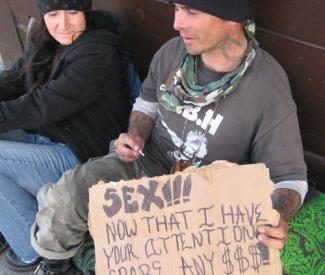
A great sit-lie debate

24

KPFA’s morning show had a great debate this morning around the sit-lie law, featuring Gabriel Haaland, a longtime Haight resident, and Ted Lowenberg, president of the Haight Ashbury Improvement Association. You can listen to it here.


In the discussion — nicely moderated by Brian Edwards-Tiekert — you could see the essential problem with the law emerging.


Haaland pointed out that blocking or obstructing the sidewalk is already illegal; so is aggressive panhandling, assault and all of the other behaviors Lowenberg complained about. Lowenberg’s response: Yes, that’s true, but it’s hard to arrest someone on those charges; you have to fill out paperwork. What we need is to give the police more discretion to use their judgment to make arrests when they think that’s what’s needed.


“The police need the immediate ability to respond without paperwork,” he said.


And that’s precisely what bothers a lot of us about this law.


The San Francisco police have a long history of abusing their “judgment” in cases involving marginalized populations. A lot of us don’t believe that arrests will be limited to violent bad actors — and we have many, many years of evidence to back us up.


Haaland pointed out that the last time a sit-lie law was enforced, in the 1970s when the cops wanted to crack down on the hippies on Haight Street, it wound up being used against gay men in the Castro. This time, it could be any of a wide range of people who wind up sitting on the sidewalks, for a lot of reasons.


Lowenberg kept talking about “street thugs” and complaining that the district attorney hasn’t prosecuted them when they’ve attacked people — in one case, gouging someone’s eyes and biting him. But attacking someone on the street is already illegal; does anyone really think that the D.A., and the law-enforcement model, will be any more effective with the new law in place?


It won’t — but that’s not the point. I think what Lowenberg and his allies want is to give the police more power, to let them “clean up the streets” as they see fit. It’s not about courts and prosecution; it’s about curbside justice. And that’s never worked well in San Francisco.


Editor’s Notes

6

Tredmond@sfbg.com

In 2003, after the United States invaded Iraq, a San Francisco Chronicle technology columnist named Henry Norr got fired for participating in an antiwar demonstration. Marching against the war, the Chron’s managers decided, was a conflict of interest. Although Norr didn’t write about politics, or international affairs, or anything other than computers, he was sent packing.

A year later, Chronicle reporter Rachel Gordon was barred from covering the biggest story in town — Mayor Gavin Newsom’s decision to allow same-sex marriages — because she’d married her same-sex partner. Again the paper’s editors went up on their big high horses and pronounced her conflicted.

So how come it’s fine for columnist and former mayor Willie Brown — who writes about politics all the time — to work as a flak for Pacific Gas and Electric Co.?

Brown was on hand to represent PG&E March 17 at a California Public Utilities Commission hearing on Proposition 16, a statewide ballot measure aimed at blocking public power. He sat with the PG&E executives and said in public that he was there on PG&E’s behalf. PG&E has been a client of his private law firm, and he acknowledged that the company "sought my counsel" over the past few years.

Sounds like a lot more obvious conflict than anything Norr or Gordon did.

But guess what? The Chron has a different standard for celebrity former mayors who carry water for corrupt utilities. When we asked Chronicle editor Ward Bushee about Brown’s obvious conflict, here’s what he said: "Willie Brown writes a popular weekly column for the Chronicle, and readers frequently tell us that they look forward to reading his informed insights and entertaining opinions on issues ranging from politics to movies.

"Our readers like his column to a large degree because he’s the Willie Brown with a long and colorful political history and many connections," he continued. "Willie is not an employee or a member of the Chronicle staff but his columns go through standard editing procedures. He understands conflict of interest as well as anyone. I’m confident that he would not use his column to promote or benefit outside interests or clients. But if you feel differently, why don’t you contact him and ask him these questions directly."

Um, actually, Mr. Bushee, you need a history lesson. Brown was notorious for using his position as speaker of the state Assembly to promote the interests of his private law clients — something that could have gotten him disbarred in 47 states (but not this one). So he has a long history of "promoting … outside interests or clients."

And I did try to contact him. The first time I called, he answered his phone but said he was too busy to talk. I’ve left messages since then, and he hasn’t called back.

For the record, I enjoy Brown’s column too. And for the record, I have no problem with a journalist taking stands on issues. I speak about issues all the time — on panels, on the radio, at community events … anytime anyone’s willing to listen, I’ll tell you what I think. Which is pretty much what you read right here.

But I never get paid for advocating for anyone, certainly not PG&E. And I don’t like double standards.

Frankly, Bushee is wrong here. If Willie Brown can show up as PG&E’s spokesperson at a public hearing on a major political issue and still cover San Francisco and California politics as a columnist (without, by the way, ever disclosing in his column that a major player in the political world is a private client of his), then the Chron should give Henry Norr his job back. And Rachel Gordon should be able to write about the politics of same-sex marriage. Because this looks really, really bad.

Cut administration, not schools

30

I received an interesting opinion piece this week from a group of teachers and parents working on sfbudgetblog.com, which looks at the San Francisco School District budget. They make some valid points:


By T.R. Amsler
Just when you think you’ve reached bottom, California schools find another shovel. Next year, San Francisco school children face even deeper cuts as many lose summer school, face increased class sizes and witness the dismissal of beloved teachers.


In identifying Sacramento as the crux of the problem, San Francisco schools superintendent Carlos Garcia has advocated a lawsuit against the state of California for failing to provide adequate funding to educate all children.
While we wait for a lawsuit that has not been filed, his proposed a 2010-11 budget slashes funding to classrooms while protecting central office jobs.


We wholeheartedly support Garcia’s effort to hold California accountable for the shameful under-funding of our schools. But change at the state level will take time—and in the meantime, we are baffled as to why, on a local level, he is not demonstrating the kind of ethical leadership we know he believes in.


Because of the state cuts, San Francisco must reduce its schools budget by $113 million over the next two years. The superintendent proposes making over 50% of those cuts from schools and classrooms. Over $8 million of the cuts are achieved by increasing K-3 class size—impacting our youngest and most vulnerable children. Over $8 million is slashed from Targeted Instructional Improvement Block Grant funds for the city’s lowest performing schools. Another $4.5 million comes from summer school programs for our struggling high school students. Garcia saves over $3 million by eliminating supplemental counseling funds for high schools supporting college readiness. Another $9 million is saved through furlough days, cutting instructional time for all students when we need to be expanding it.


Some say these draconian cuts are the only option. Some say we cannot find cuts in the central office because it is already lean. Yet the facts suggest otherwise: Compared to four similar-sized school districts (Elk Grove, Santa Ana, San Bernadino, and Capistrano), San Francisco spends significantly more on administration ($462 per student in SF compared to an average of $387) and less on instruction ($4,763 per student in SF compared to an average of $5,685).
Where does San Francisco spend its money instead of schools? This year, the district spent $340 million in centrally-budgeted services, as compared to $257 million in school-based funding. A portion of the central funds flows to schools in the form of centrally-funded staff, but the majority does not. There are many talented people working in the central departments, and many of the central services are helpful. But in a crisis, we must ask: do non-classroom-based expenditures better support student achievement than direct support of classrooms?


If San Francisco were to cut 20% from these central office budgets, we could save $68 million a year and close the budget gap without touching a penny of school-based funding. This would mean radically rethinking how the central office works—but if the alternative is radically slashing our schools, that’s some rethinking we cannot afford to put off.
Garcia’s proposal is to drastically defund school sites, fundamentally changing the experience of students and families. The radical shift however needs to happen not to families, but to the central office.


A group called the Children’s Allocation Team has created an alternative set of central office cuts that demonstrate the real possibility of protecting our schools and classrooms during this budget crisis. We need district staff to engage in this kind of creative thinking too.


In the San Francisco Chronicle on January 27, Superintendent Garcia wrote, “I recognize that we are in the midst of extraordinarily difficult economic times, but to place that burden on our children is morally unethical.” We agree.
Now we need our superintendent to make the morally ethical budget cuts he calls for. It is time to radically re-think the central office, not to fundamentally defund classrooms. We can, and we must, close the budget gap without touching classrooms and students.


T.R. Amsler has been a high school teacher and journalism teacher for ten years. SFbudgetblog.com is a collection of teachers, parents and administrators losing sleep to represent their investigations and analysis of the SFUSD local budget. Read, consider and contribute at www.sfbudgetblog.com


Jerry Brown’s inner populist emerges

3

In the 1990s, when Jerry Brown ran for president against Bill Clinton, his whole persona had a populist streak. He crashed with supporters instead of staying in fancy hotels; he raised money with an 800 number (the precursor to netroots fundraising); he railed against big-money interests. He even once put the future president of the United States on hold while he took another phone call. (Clinton gave up after waiting about ten minutes and disconnected.) 


But then he became mayor of Oakland and turned into a friend of developers, a tough-on-crime hardass and a promoter of military school. And he ran for attorney general as that Jerry Brown, not the old one.


So I’m glad to see some of his populism starting to re-emerge, not that I really think it’s going to stick (he’s still against raising taxes on the rich), but because it’s the only way he’s going to beat Meg Whitman.


Meg’s got a problem — the incumbent Republican is now rated as the worst governor ever, with the lowest popularity ratings in history. So Brown’s going to be running against the party that, by almost all accounts, wrecked California — and Whitman will have to run like hell away from the titular head of her own party in this state.


Brown also has the advantage, if he wants to take it, of being able to rail against the very types of financial institutions that Whitman and her anti-regulation platform represents. If he can make this about Wall Street, he wins, going away.


Developers win, but just this round

16

So the developers won the first round of the 555 Washington battle — and the role of the Recreation and Parks and City Planning Commissions said a lot about the state of local politics today. In both cases, you had the equivalent of a party-line vote: Every commissioner appointed by Mayor Gavin Newsom voted in favor of the project, and every commissioner appointed by the Board of Supervisors voted against it.


And since the Rec-Park commission is entirely made up of mayoral appointees, that vote was unanimous.


The fact that there were dissenting views on the Planning Commission is a clear indication of why it’s so important that the supes and the mayor both get to name members of that panel. And perhaps it’s time to apply the same standard to Rec-Park.


A sign of how bad it was at planning: Toward the end of the discussion on the certification of the environmental impact report, after board-appointed commissioner Christina Olague complained about the threats to the redwood trees on the site, commissioner Bill Lee insisted on taking some expert testimony on the issue. And who did he call up? The landscape architect for the project sponsor. Guess what? She thought the trees would be just fine.


But this shady deal is not done yet. The Planning Commission was set to vote not only on the EIR but on the other various approvals the project needs, but Sue Hestor, a lawyer and project foe, pointed out that the developer had made some last-minute changes to the plans, and by law, the public needed more time to review the new material. And the City Attorney’s Office, to its credit, agreed, and told the commission to continue that part of the vote for two weeks.


Meanwhile, it’s pretty clear that opponents will appeal the EIR certification to the Board of Supervisors — and the board will also have to approve the zoning changes and the sale of a public street that are necessary for the project to go forward.


And interesting twist at the commission meeting: Former Sup. Aaron Peskin pointed out that in 1992, a similar project came before the Recreation and Parks Commission — similar except that it was about half as tall. And the commission rejected it because it would cast shadows on public parkland.


And yet, a much bigger project, which must more extensive shadows, sailed through Newsom’s park panel — with no discussion at all. “This thing was a greased as it gets,” Peskin told me.


Yee asks DA to drop charges against reporters

0

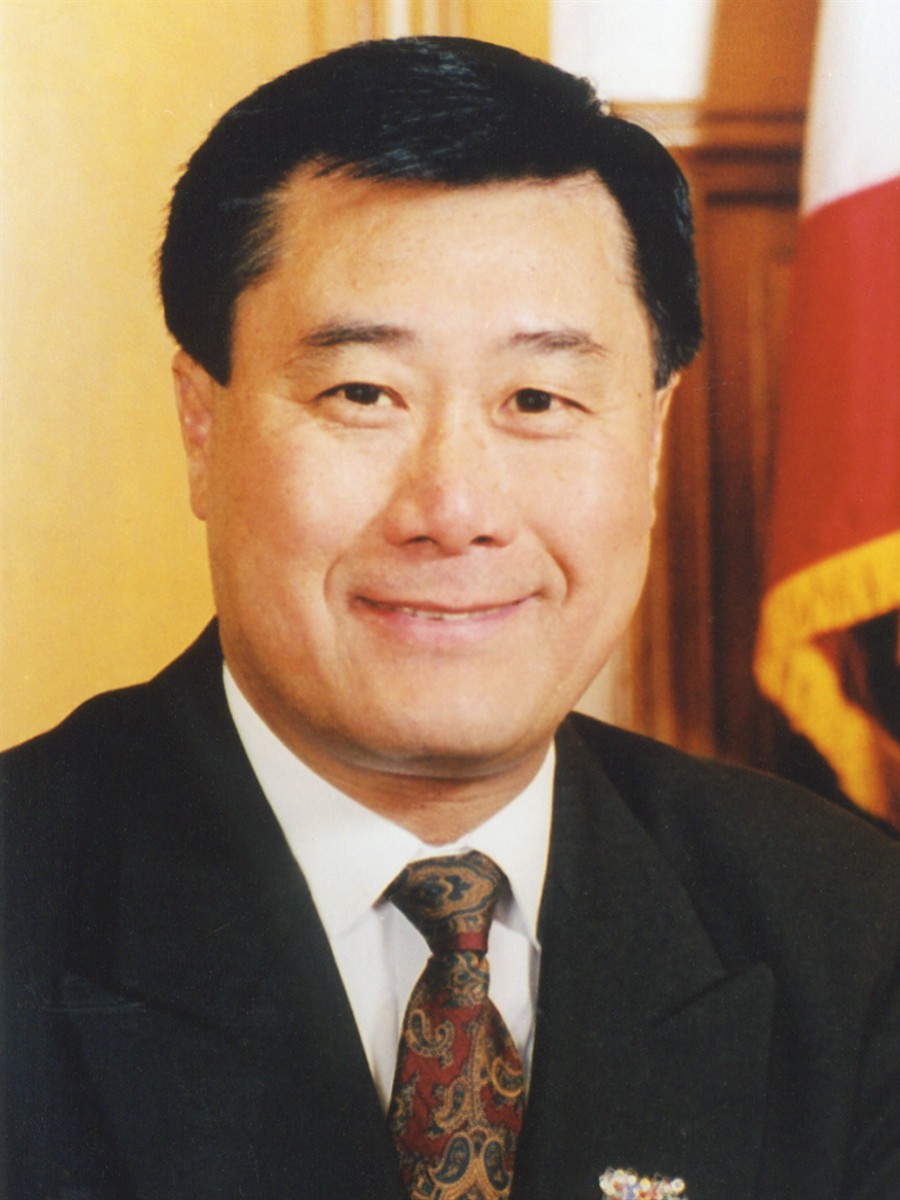
State Sen. Leland Yee has asked the Alameda County district attorney to drop all charges against reporters who were arrested while covering the protests over education cuts. In a March 8 letter to D.A. Nancy O’Malley, Yee noted that “at least two of the individuals arrested were journalists covering a legitimate news story.”


That adds to the pressure on O’Malley not to press charges against reporters. But we’re still waiting to hear from the D.A.’s office.


You can read the letter here.

If we’re going to be whores, let’s at least get paid

2

The San Francisco City Planning Commission will be voting March 18th on a proposal to build luxury condos next to the Transamerica building. The developers are two out-of-town outfits that support Republican candidates. And therein lies an interesting tale.


Back in 1984, when dinosaurs roamed the Earth and newspapers made a lot of money and Dianne Feinstein was mayor, San Francisco was host to the Democratic National Convention, which nominated a guy named Walter Mondale (talk about dinosaurs) to run against Ronald Reagan for president. Running the convention, and all the parties and galas, cost a fair amount of cash, and Feinstein hit up all the big civic donor types to chip in.


One of the people atop her list was Walter Shorenstein, the local real-estate tycoon who was a huge donor to Democratic Party candidates (Bill Clinton used to stay at Shorenstein’s house when he was in town). Shorenstein was also trying to get permits to build some new highrises — and some of his buildings were so grossly out of proportion that even Feinstein’s Planning Commission, which loved all things big and highrise, was balking a little.


So Walter calls the mayor and says this: Don’t you dare ask me to donate to your Democratic Convention if your planners are going to jerk me around on my permits. And Feinstein, of course, made sure the Planning Commission backed down and Shorenstein got exactly what he wanted.


We did a big story, and even the Chronicle, which wasn’t big on criticizing Feinstein or Shorenstein, wrote about it, and there was all manner of outrage — as there should have been. It was terribly unseemly, and made the city look bad, and made Feinstein look like she could be pushed around by developers ….


And for all that, at least the special favors were going to a local guy who was donating money to Democrats and to the city’s convention efforts. Hideous as it was, as least San Francisco (and Feinstein, and Mondale) were getting something out of it.


Fast forward to today — when Gavin Newsom’s Planning Commission is considering an awful, out-of-scale project that even architecture magazines don’t like. And who benefits from the special favors? Not a local guy helping out with a local project, but an offshore corporation and a developer from L.A. who is on Meg Whitman’s Finance Committee.


I mean, if we’re going to be whores here in Democratic San Francisco, shouldn’t we at least get paid for it? 


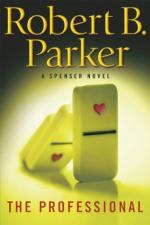
Trash Lit: Spenser says goodbye in ‘The Professional’

0

The Professional
Robert B. Parker
Penguin Books, 289 pages, $26.99

I just read the last Spenser novel, ever.

That’s a hard sentence to write. Spenser’s been around a long time, and I’ve read all 37 of Robert B. Parker’s classic tough-guy detective books, and even though they all have the same characters, similar plots, similar dialogue and similar themes, they’re all good. Every last one of them.

And I think it’s probably a good thing that this was the last one of them. I don’t know if Parker realized he was coming to the end of his life as he wrote The Professional, but you get the sense that Spenser is coming to the end of his. Not that the guy’s going to die – like Travis McGee, Spenser will long outlive his creator. But this book has a sort of melancholy sadness to it, a sweet sort of swan song feeling, and by the time you get to the end, you sense that Spenser’s pretty much done.

The plot is typical Parker: A sleazy con man is seducing young women who have rich older husbands. He videotapes the encounters and then threatens the clueless chicks with blackmail. He wants money, big money, or he’ll tell the hubbies – and the days of living large (and waiting to inherit the cash) will come to an end. The women are afraid to go to the cops, of course, so they go to Spenser. His job is to make the con man back off.

It’s the sort of thing that in an earlier version of Spenser would have been too simple to drag out into an entire novel. He’d go with his buddy Hawk, warn the sleazeball that the future was looking pretty shaky, maybe smack him around a bit just for good measure, the dude would split town and all would be well.

But this time, Spenser can’t do it. He almost kinda likes the creep, who is utterly straightforward about his lust for young women, his love for the chase and the score and his gleeful wonder at the fact that he’s figured out a way to make money at the game. Spenser and his main squeeze, Harvard shrink Susan Silverman, puzzle over the bad guy, polyamory relationships and the ethics of sex, while one of the rich hubbies, who has figured things out, sends two dumb-as-a-box-of-rocks thugs to kill Mr. Smooth. So Spenser has to stop them, but as it turns out, he kind of likes the thugs, too, since they are, after all, totally authentic: Marginal men who realize they have no value to society except for their ability to be half-rate muscle.

In the end, there’s a murder, and Spenser makes everything (almost) right. But his heart really isn’t in it.

In fact, this is the first and only Spenser book I’ve ever read that had an overdone edge to it. The dialogue is what makes Parker’s stuff work, and the interactions between Spenser and Silverman and Hawk in The Professional were predictable and dull. It’s as if the master of modern pot-boilers, the Man himself, Robert B. Parker, author of more than 50 top-rate books, was finally running out of steam.

There are the usual literary references (including a nice plug for Janet Evanovich, one of my longtime faves), but they seemed forced. The violence is tired. I was almost ready to give up, but I stuck around for the end, which was worthwhile – if only because it told me that this was the last we’d be hearing from Spenser.

The Professional reminded me of The Green Ripper, John D. MacDonald’s latter-era McGee book, where the author is clearly done with the character but cranks him up for one last stand, one final favor to the fans, a victory lap that gets more and more painful as it nears the finish line.

If you’re a Parker fan, you need to read The Professional. It’s a wake, of sorts; a chance to say goodbye. And it may have been Parker’s way to telling his fans that the fun is finally over.

Banks declare SF Weekly and parent company in loan default

7

The Bay Guardian’s lawsuit against SF Weekly and its parent company took a dramatic turn this week when a banking syndicate announced that Village Voice Media has defaulted on its $77 million loan.


San Francisco Superior Court Commissioner Everett A. Hewlett, Jr. also ordered that all of the Weekly’s advertising income be sequestered in an account designated by the Guardian and held there until April 5, when the Guardian will ask the court to appoint a receiver to take control of the Weekly’s assets.


The Weekly and its parent owe the Guardian more than $21 million as the result of a 2008 lawsuit verdict. A San Francisco jury found that the Weekly had sold ads below cost in an effort to damage the Guardian.


The case is on appeal, but the Weekly and Village Voice Media haven’t posted an appeal bond — essentially an insurance policy that would guarantee payment of the judgment. So the Guardian has the legal right to collect the money.
VVM has been hiding its money behind a complex corporate structure,
but in recent weeks the Guardian has won a series of court decisions that have allowed us to seize two Weekly vehicles, all of the income that the newspaper’s subtenants pay for leasing office space, and 50 percent of the Weekly’s ad revenue (and 100 percent of the revenue from credit card payments).


In an effort to block us from collecting that revenue, the Weekly filed a motion March 16 seeking a restraining order that would have stopped the Guardian from contacting Weekly advertisers. The court refused to issue the order – but as part of its application, VVM disclosed some rather dramatic facts.


Among the exhibits filed in court: A March 12 letter from the Bank of Montreal, which leads a banking syndicate that has helped VVM expand and advance its alternative newspaper empire. The letter, signed by Managing Director Thomas McGraw, states that because of the “recent economic downturn and the resulting financial difficulties,” VVM had been “unable to meet its amortization payments” and had been forced to renegotiate the loan in June, 2009. That new agreement had required that VVM send all of its profits — that is, “all revenue above its costs, plus a minimal operating cushion” — directly to the bank.


And now that the Guardian has been awarded a lien on all of the Village Voice papers and the right to half the Weekly’s income, the bank had declared VVM in default on the entire loan, which now stands at $77 million.


The default allows the bank to claim that it has the first right to any Weekly ad revenue, and VVM lawyer Randall Farrimond tried to make that argument to Commissioner Hewlett. But Hewlett was skeptical: “The Court never determined that the Bank of Montreal had any rights that had been adjudicated yet,” Hewlett said at a March 16 hearing. In fact, after hearing that the bank had sent its own letters to Weekly advertisers ordering them to send payments directly to the bank, Hewlett noted:


“Now, I’m not terribly sympathetic with Bank of Montreal doing what they did. “I mean it is possible that, absent some adjudication of their interests, that they are in contempt of court by interfering with the Court’s order.”


Hewlett said he had no intention of granting the restraining order or changing the essence of his earlier ruling — that the Guardian had the right to half SF Weekly’s income stream. But to save the advertisers from confusion over who to pay, he ordered that all money collected from advertisers be placed in a bank account chosen by the Guardian, in a bank that was not part of Bank of Montreal’s syndicate.


The Guardian will be back in court April 5 to ask for the appointment of a receiver, who would take control of the Weekly’s business operations and, under court guidance, divide any revenue between the Guardian and any other creditors.
In the meantime, VVM and the Bank of Montreal have asked a judge in Delaware – where SF Weekly is formally incorporated – to block collection efforts in California.


At a surprise hearing where the Guardian’s lawyers were given only five minutes warning and had no opportunity to present any evidence, the Delaware Chancery Court was nonetheless very skeptical of Bank of Montreal’s claims, and essentially ruled only to maintain the status quo until the Court could make a more informed decision.


The case continues to draw extensive news media interest; the Stranger, a Seattle alternative paper, ran a lengthy, detailed story on the case March 17.


You can read the key documents (including a declaration from Weekly publisher Josh Fromson and the bank letters) in the recent filing here. (PDF)

Editor’s Notes

0

Tredmond@sfbg.com

For decades, the San Francisco City Charter has had a fairly simple process for filling vacancies in local elected offices: the mayor makes an appointment. A supervisor leaves office, or the district attorney leaves office, or the city attorney leaves office, or the controller leaves office, or the assessor leaves office, or the public defender leaves office … there’s no election. It’s up to the mayor to fill the job. It gives the person in Room 200 a tremendous amount of power.

Gavin Newsom’s a beneficiary of this system — he didn’t run for election the first time he took elected office. A mayor named Willie Brown appointed him to the Board of Supervisors.

If the mayor leaves office, on the other hand, the Board of Supervisors, by a majority vote, gets to fill that position. And while Newsom has never complained about any of this in the past, now that he thinks he’s going to get elected lieutenant governor, he’s got a campaign underway to make sure the current district-elected board doesn’t get to name his successor. He wants to change the City Charter to mandate a special election if a mayor leaves office before the end of his or her term.

It’s about as hypocritical and self-serving as you can imagine, although he carefully talks about “democracy” and “the voters choosing.”

I find it kind of silly (and expensive) to plan a special election for mayor in March or April of next year when there’s already a regular election for mayor in November. And special elections have notoriously low turnout (favoring candidates with money and name recognition). But let’s play this out.

I’ve always thought it was odd that the mayor got to appoint supervisors. The governor can’t appoint state legislators; the president doesn’t appoint members of Congress. So if we’re going to change things, let’s be sure to change that, too. And then let’s take away the mayor’s ability to fill any vacancy in any elected office.

But you see, Newsom’s office told me he’s against that. He doesn’t want to limit the mayor’s power — just the power of the supervisors. Go figure.


Downtown’s DCCC slate fizzles

9

I’m actually a bit surprised that Gavin Newsom’s allies haven’t made a bigger push to take back control of the San Francisco Democratic Party, which will play a key role in the fall supervisorial races. It looked for a while as if the downtown folks were organizing to put a slate of strong candidates with solid name recognition on the ballot. But when the Department of Elections closed Friday afternoon, and the deadline for filing passed, there weren’t that many new names on the ballot. Here’s the list. (PDF).


Twelve candidates will get elected in each of the two San Francisco Assembly districts. On the east side of town, in AD 13, eight progressive incumbents, including Sups. David Campos and David Chiu, former Sup. (and current DCCC chair) Aaron Peskin are running. So is School Board member Kim-Shree Maufas and former state Sen. Carole Migden. Supervisorial candidates (and incuments ) Rafael Mandelman and Debra Walker are running, as are former supervisorial candidates Eric Quezada and Alix Rosenthal.


Not a lot of star power in the more moderate camp. Other than former Sup. (and incumbent) Leslie Katz and sup. candidate (and incumbent) Scott Wiener, it’s not a powerful crew. So the progressives look to do well — as they usually do — in D 13.


D-12 is a little more conservative in general — and there are lots and lots of candidates, meaning name recognition is even more important. I’d thought maybe somebody would talk Sup. Sean Elsbernd or Sup Carmen Chu into running. But no: the only elected officials on the list are progressives, including Sups. John Avalos and Eric Mar, School Board member Sandy Fewer, and Community College Board member Milton Marks. Then there’s incumbent (and former Sup.) Jake Mcgoldrick.


The moderate, pro-Newsom camp — the folks who would try to shift the Democratic Party endorsements away from progressives in swing supervisorial districts — may be large, but not terribly deep. Incumbents Tom Hsieh and Megan Levitan are, of course, running again, and there’s Bill Fazio, who once ran for district attorney.


Myra Kopp, wife of former state Sen. (and retired judge) Quentin Kopp, is a candidate, and while she may be a little more politically conservative than Avalos and Mar, she’s not going to be in the Newsom camp, either; she’s more of an independent wild card.


Paul Hogart agrees with me that the progressives seem well situated to keep control of the DCCC, although it’s never a sure thing: there are no contribution limits for these races, and since it’s a low-profile office, big money can make a big difference. Let’s see what downtown tries to do to buff up and promote its candidates in the next two months.


Campos on the next mayor

15

Just spoke with Sup. David Campos, who has some interesting thoughts on the next mayor and whether the supervisors should seek to change the City Charter to create a special election instead of filling a mayoral vacancy by appointment.


“I don’t have a problem with people having the final say,” Campos told me. “And they will, since there will be an election for mayor next year anyway.


“But the current system has been in place a long time, and a district-elected board appointed Dianne Feinstein mayor, and nobody had any problems with it back then. It’s just now that Newsom has decided to run for another office that he’s talking about this. It’s really self-serving.”


Yep, that it is.


Daly for mayor?

9

Sup. Chris Daly just called to comment on the selection of the next mayor of San Francisco. Gavin Newsom may want to change the Charter to mandate a special election if there’s a vacancy in the Mayor’s Office (thus preventing the district-elected supes from choosing a new mayor if he’s elected lieutenant governor). Daly’s already a step ahead: He’s planning to introduce his own Charter amendment, which would mandate special elections to fill vacancies for either supervisor or mayor — and the election would be a plurality victory. That means the person with the most votes wins — no matter how many candidates or how small the actual victory total.


Under that scenario, a special election for mayor — a crowded special election, with eight or ten or 15 candidates — could go to almost anyone; someone with a loyal, organized and modest constituency could round up, say, 20,000 votes and be the next mayor.


Even, maybe, someone like Chris Daly.


And he knows that. “I will not be running for mayor of San Francisco in November, 2011,” he told me. “But I would seriously consider running in March.”


Gavin — you sure this is a good idea?

All those white judges

11

Michael Nava, who is running for Superior Court judge in San Francisco, tipped me to a fascinating document that’s on the website of the California Judicial Council. It’s a spreadsheet breaking down the ethnicity and gender of all the justices and trial court judges in the state. And it’s pretty depressing.


In 2010, 73 percent of all trial court judges in the state are white, and 70 percent are male. A full 81 percent of the Court of Appeal judges are white, and 70 percent are male. That’s astonishing.


Some counties are even worse: The Marin County judiciary is 100 percent white. Same for Napa County. San Francisco’s a little better, at 66 percent white (but in a city with a majority non-white population, it’s hardly representative).


Check out the pdf here.


Gav’s running for (lite) guv!

1

It’s not any big surprise that Gavin Newsom is officially running for lieutenant governor; we all knew that was in the cards. Newsom’s downtown allies don’t want him running, because he might win — which would mean a vacancy in the mayor’s office. But it’s really all about Newsom, and he doesn’t want to be termed out with nowhere to go.


Calitics makes the point that


In many ways, this race will showcase the future leadership of California Democrats. The winner of the primary will go on to defeat Abel Maldonado and will be a top contender to be the next governor, whether they succeed Jerry Brown or (god forbid) Meg Whitman. It’s to the benefit of Democrats and progressives that this race be issue-oriented, and free of the unfortunate personal attacks that would undermine all the candidates involved.


And Newsom loves the idea of being showcased as the future leader of California Democrats.


Newsom got a big bounce the moment he announced, when state Sen. Dean Florez, one of two other Democratic candidates for the office, dropped out and endorsed Newsom.


That leaves just Newsom and Janice Hahn, a Los Angeles City Council member who’s got an aggressive campaign (featuring Garry South, the asshole political consultant who used to work for Newsom).


Newsom starts off with a major lead; all the money he spent campaigning for governor gave him significant name recognition, and in a Democratic primary for a low-profile office, that makes a lot of difference. And his likely opponent in November is Abel Maldonado, a not-terribly-appealing Republican.


So the talk in San Francisco is all about who becomes the next mayor if Newsom wins — and already, the Newsom strategists are trying to figure out how to prevent the progressive district-elected board from appointing his replacement. The latest strategy: A Charter amendment establishing that a vacancy in the Mayor’s Office has to be filled in a special election.


Hard to argue against that — except that the special election would be in the spring of 2011, and the general election would be that fall, meaning two expensive elections (one of them guaranteed to have low turnout) in the course of 11 months.


There’s no way Newsom’s getting six votes on this board for his idea, which means he’s going to have to raise the money to gather 47,000 signatures. And if he does, the supervisors ought to respond with their own Charter amendment — establishing that vacancies on the Board of Supervisors (now filled by a mayoral appointment) also require a special election. That’s only fair.


And while Newsom and his allies talk about how unfair it is to have district supervisors, some of whom were elected with as few as 10,000 votes, decide on the next mayor, it’s worth thinking through what a special election for mayor would look like. For starters, a lot of people would probably run — and the results would be utterly unpredictable. Suppose everyone who really wants to be mayor jumped in: Leland Yee, Dennis Herrera, Aaron Peskin, Ross Mirkarimi, Bevan Dufty, maybe Michela Alioto-Pier, maybe Sean Elsbernd, maybe even Mark Leno … and the turnout will be ultra-low, and, well, the next mayor’s going to be elected with a remarkably small number of votes.


Assume a turnout of 100,000 — high for a special election. And assume seven candidates (there would probably be a lot more). That means the winner would be unlikely to have more than 20,000 first-place votes.


If it’s a ranked-choice voting situation, any of the above could pull it off. If it’s a simple plurality, hey: someone like Chris Daly, who has a small but highly devoted constituency, would have as good a chance as anyone.


The bottom line is that a special election doesn’t guarantee anything — in fact, it could turn out to be downtown’s worst nightmare.


Here’s the letter Newsom sent to potential supporters:


I didn’t come to this decision easily, but, after a great deal of consultation with my family, constituents and supporters, I believe that the best way for me to serve is by taking all of the many things that are right about California and applying them to fixing what’s wrong in Sacramento.  


The issues I fought for when I ran for Governor last year haven’t changed: our state still faces a massive budget crisis, painful unemployment, and rising student fees that threaten the stability and accessibility of our University system.  Too many Californians lack access to quality health care and too many schools are overcrowded and underfunded.


But, despite our challenges, I will always believe in California – the dynamism of its past and the promise of its future.  I’m also convinced that those of us who love this state have both an obligation and the capacity now to reform it and make it better. To do that, we need to embrace a new way of doing things in Sacramento and we need new leaders who are willing to stand up and change state government.


I’m proud that I have the support of Speaker Nancy Pelosi, Senate President Darrell Steinberg, Assembly Speaker John Perez, Sacramento Mayor Kevin Johnson, United Farm Workers co-founder Delores Huerta and California Nurses and teachers and I hope I can count on your support too.


And here’s some of the press coverage:


LA Times on Newsom run, including information on early fundraising.


Calitics on Florez’s exit from the race, including text of Florez
message and press release.


Newsom announces his candidacy in an interview with reporter Phil
Matier
on CBS 5. (video)

 Chronice on Newsom’s chances.


 Willie Brown on who will succeed Newsom as mayor.
 
Chronicle speculates on who will replace Newsom, specifically on the
possibility of David Chiu becoming mayor.

LA Observed on Gary South vs. Newsom.


LA Times blog on awkward Newsom-Brown pairing.

Politics and redistricting: The madness in SF’s future

8

The political merry-go-round in San Francisco going to be whirling at light speed soon. It’s partially the fault of term limits — over the next couple of years, some very talented, ambitious politicians are going to be forced to leave local office, and they’re looking for the next step. Part of it is the confluence of a bunch of events, starting with Mayor Gavin Newsom and District Attorney Kamala Harris both seeking statewide office.


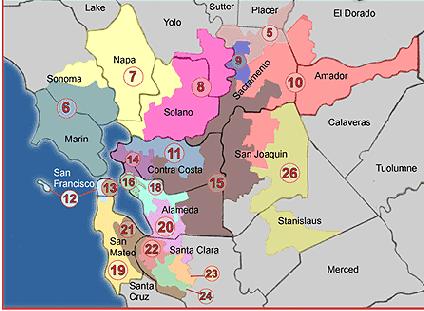
And there’s another factor that hasn’t been talked about much, but it’s really important: Next year, every Congressional, state Legislative and local supervisorial district is going to change.


After the decennial census, everyone has to draw new lines to reflect population shifts. At the state level (and Congressional redistricting is also a state function), that’s in the hands of a reapportionment commission, which I’m dubious about: The majority of the applicants are white people, and it’s supposed to have an equal number of Democrats and Republicans, although the state has far more Democratic voters. It’s anybody’s guess how they’ll actually draw the lines.


An elections task force will do the local lines, and it’s going to be harder to screw up; San Francisco supervisorial districts are supposed to reflect established neighborhood boundaries, and the population shifts within the city haven’t been that dramatic.And it’s unlikely anyone’s going to try to draw lines just to force an incumbent supervisor out of a district. But the districts will be a little bit different, and in San Francisco politics, a little bit can mean a lot.


The state Legislative districts will change significantly — and could change the politics of this area, and the state, in dramatic ways. For example, suppose Mark Leno’s Senate District moves somewhat North, to include a majority of Marin and Sonoma residents and only a small minority of San Franciscans? Suppose that district no longer includes Marin or Sonoma, but includes all of San Francisco (which would put Leno and Leland Yee in the same district)?


Suppose the 12th and 13th Assembly Districts, which now divide about East/West, shift to North and South? What if Tom Ammiano and Fiona Ma end up in the same district? (Um, I think that’s a closer relationship than either of them wants ….)


What happens if Nancy Pelosi is redistricted out of her seat? (Heh heh, won’t happen, but in theory, she and Lynn Woolsey could wind up living in the same district.)


It’s going to change the dynamics in a city that’s already poised for some upsets to the political apple cart.


Ross Mirkarimi’s termed out in 2012, and if he doesn’t run for mayor (or doesn’t get elected) he’ll be looking for the next step, which could be a run for the state Assembly; Tom Ammiano will be termed out in 2014. Of course, that’s been a gay seat for a long time (Carole Migden, Mark Leno, Ammiano) and by them someone like David Campos might be interested.


Or the district lines might have changed so much that both of them – or neither of them – can get elected.


If Bevan Dufty doesn’t get elected mayor, he’s out of a job – and he’s a political junkie who won’t easily retire. He’ll be looking at other offices, too. So will Sean Elsbernd, I suspect.


And that doesn’t even count the mayor’s race, which could, at this point, involve both state Senators, Leno and Leland Yee, and if either one wins, that opens up a Senate seat. And at the same time, if Kamala Harris is elected district attorney, that job will be open, and it’s an open secret that Board of Supervisors President David Chiu, a former prosecutor, would love to be in that office some day.


And in the background is the question of who becomes mayor if Newsom becomes lt. governor


 (and what happens to Aaron Peskin, an astute politician if ever there were one, and a potential mayor if this board of supervisors gets to make the appointment ). At lot to think about – and trust me, the thinking is already going on.