

PG&E has an early lead, with just a small fraction of a few counties reporting. Right now the Yes on 16 vote is 52.5 to 47.5, but there are no big cities reporting in yet. And in eight of the ten counties where there are results, the measure is losing. So I would say at this point, PG&E has a lot to worry about.
Tim Redmond
The news from back East
One of the first telling primary races is over, and it appears that Blanche Lincoln has narrowly survived a primary challenge in Arkansas. The progressive Dems who fought hard to get rid of a senator who helped kill the public option and might as well be a Republican will be unhappy, but the fact that even with the (tepid) support of the president she only squeaked by with the narrowist of victories sends a signal to other fence-sitting Dems. The bad news: The Republicans will probably pick up this seat in November.
SFBG Radio: Johnny and Tim on June 8 ballot props

Today, Johnny and Tim talk about the June 8th ballot props, why Republicans ought to vote No on 16 — and the monopoly power of PG&E and Comcast. You can listen after the jump.
sfbgradio6/7/2010 by sfbgradioThree words: Vote June 8
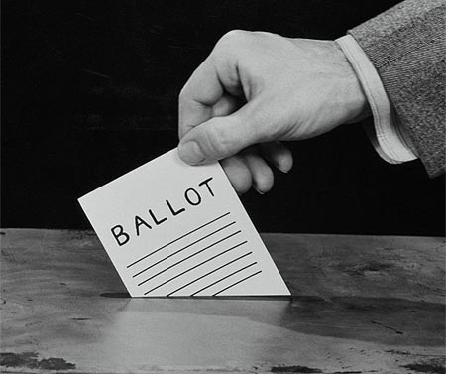
The problem with the June 8th ballot is that the Democrats aren’t fighting with each other.
I mean, it’s great that Jerry Brown and Barbara Boxer will emerge from the primary season unscathed, flush with money and ready to go after opponents who have been battered and beaten mercilessly in their own primaries. It’s great that Steve Poizner drove down Meg Whitman’s positives and made her look so bad that she’s now behind Jerry Brown (who isn’t even campaigning yet) in the polls. It’s great that Carly Fiorina was forced so far to the right that she had to endorse allowing people on the no-fly list to buy handguns. The expensive and ugly GOP primary battles may have saved Boxer’s job and put Brown in the governor’s office.
But around the state, Democrats don’t have as much reason to vote. Fiorina, Poizner, Whitman — they’re all spending millions to bring Republicans to the polls. There’s no similar statewide GOTV operation on the Democratic side. So the electorate could wind up skewing considerably to the right — and that’s going to hurt us on the ballot propositions.
Johnny Angel and I were talking on our radio show today about the fact that Republicans — those who aren’t complete idiots — ought to oppose Prop. 16 and Prop. 17. Those aren’t partisan measures; they’re just corporate scams. And nobody from any political party likes Pacific Gas and Electric Co. these days.
But the reality is, PG&E has aimed its Prop. 16 campaign directly at the heart of the more conservative electorate, with its anti-government message. And Mercury insurance has aimed its campaign at the better-off consumers who aren’t likely to drop their car insurance any time soon. I don’t see Prop. 16 winning big in any constituency — but it will do better among Republicans.
So Democrats have to get to the polls — and get their friends to the polls, and their families to the polls, and their neighbors to the polls, and a few dead people, too, if they can find them (just kidding, Arthur Evans, lighten up).
And in San Francisco, where there are no races for mayor or supervisor, it’s easy to want to sit this one out — but that would be a major mistake. The election for Democratic County Central Commitee alone is worth a trip to the polling place, since the makeup of that body will have a significant impact on the fall supervisorial races.
So you have to vote, folks. Here’s our endorsements.
About Peskin’s “coup”

It’s interesting that the Examiner and Chron both seem to be pushing the same slate of 24 candidates for the Democratic County Central Committee — and most of the folks on the list are not incumbents. Electing the so-called “moderate” slates would, in fact, mark a dramatic change in the politics of the DCCC — and yet, the Ex’s Ken Garcia still talks about a “progressive coup.” As if somehow the left is trying to take over a committee that hasn’t really changed all that much in years.
Garcia:
A few years back, the local Democratic party organization was the object of a coup engineered by former Supervisor Aaron Peskin and the aforementioned Daly that rid the group of many of its moderate members and replaced them with like-minded ultra-liberals, several of which were elected to the Board of Supervisors in large part because of the support of the DCCC, which controls slate mailers, raises money and otherwise does everything in its power to increase its power.
In fact, in 2008 Peskin was elected to the DCCC and became chair. But it was hardly a dramatic change in the commitee’s politics. Let’s look at the numbers.
You can read the list of candidates who won slots on the committee in 2006, before the supposed “takeover,” here. And you can see the list of candidates who won in 2008, the “coup” year, here. Guess what? They’re remarkably similar. In the 12th Assembly District, only three of 12 seats changed hands. Susan Hall, a progressive, retired. Dan Dunnigan and Jason Wong, both part of the more moderate wing, lost. Jake McGoldrick, Eric Mar and Michael Bornstein, all progressives, were elected. Net political change: exactly two sets for the progressives.
In District 13, Sue Bierman, an incumbent in 2006, died and was replaced by David Chiu, who was re-elected in 2008. Gerry Crowley retired, and exactly two other incumbents — Holli Thier and Bill Barnes — were unseated, replaced by Peskin and Chris Daly.
“Many of the moderate members,” Ken? Try four. Out of 24 elected seats. That’s a turnover rate of about 16 percent. Some coup.
As it turns out, the balance of power in the committee shifted just enough for Peskin to get elected chair, in a very close vote. But most of the votes on the committee, on most of the key issues, are fairly lopsided; a motion to oppose the sit-lie law, for example, passed overwhelmingly.
So the real coup attempt here is a well-funded move by downtown to oust the current incumbents and move the Democratic Party to the right. That’s what this election is about.
SFBG Radio: Johnny and Sarah talk about garbage

Today, Johnny talks to Sarah Phelan about the garbage that is threatening to bury us all — and that state’s new move to ban paper and plastic bags at grocery stores. You can listen after the jump.
Nevius family values

The Chron’s C.W. Nevius has made a big deal of moving back into town from the suburbs — and the offhand comment by Steve Jones in an email to Nevius has almost become a sticky nickname. In fact, his own newspaper’s website, sfgate, headlined his column “Suburban twit moves to city.”
But Chuck’s got some work to do before he starts to understand San Francisco values.
Take his latest column, about the Democratic County Central Commitee. Now, any Chron columnist (or anyone else) has the right to endorse and advocate for any candidates he or she wants. And Nevius is absolutely right to point out that the DCCC race is crucial, that control of the committee will have a significant impact on the fall supervisorial elections.
Here’s what made me want to scream:
“So, if you’re happy with the far-left agenda, check out the Bay Guardian. (Progs with name recognition like Peskin, David Campos, David Chiu, and John Avalos are probably shoo-ins. Daly is not running.) For those who’d like to see a swing to families, kids, and civility on the streets, here are some suggestions.”
A swing to families and kids? You must be kidding.
The single greatest issue facing families and children in this city is the cost of housing. That’s why Coleman Advocates for Children and Youth, which almost everyone agrees is the premier family-advocate group in the city, has made affordable housing a huge priority.
Some of what a recent Coleman report says:
“Two-thirds of all children in the city do not have a secure future in San Francisco
More families in San Francisco are low-income (43%) than middle-income (23%), and face economic hardship even when working full-time jobs.
Extreme racial disparities in family income and access to opportunity mean that the majority of children who do not have a secure future in SF are children of color, and the majority of children who do have a secure future are white.”
Coleman’s recommendations: Build and preserve affordable housing for families — not market-rate condos, not condo conversions, but below-market-rate housing.
From the report:
“1. Prioritize the needs of 45,000 children growing up in 20,000 extremely-poor and low-wage working families. trategies must combine investing in a stronger social safety-net for families now, and investing in anti-poverty strategies that will prepare today’s poor children to become economically secure San Franciscans of the future. The city’s housing and educational policies must focus on the children and families with the greatest need, and not get sidetracked by the demands of middle-income or upper-income families whose needs are legitimate but not as urgent.
2. Invest in affordable homeownership programs for middle-income families, but focus the vast majority of limited housing resources on building permanently affordable family rental housing.”
That is exactly what the progressives — the “far left” folks that Nevius decries — have been talking about all these years. The candidates Nevius endorses are of the political camp that advocates more market-rate housing, more condo conversions, fewer tenant protections — more of the kind of things that drive lower-income families out of the city.
The next priority is education. Families that don’t have a lot of money have no option other than the public schools, and a lot of us who might be able to afford private schools still think public education is the way to go. What the schools need in San Francisco is pretty simple: They need more money. The “moderates: Nevius endorses — who actually count as fiscal conservatives, by San Francisco standards — are generally against raising taxes, as is our mayor. The San Francisco city government doesn’t oversee the schools, and most of the education money in California comes from the state — but San Francisco’s Rainy Day Fund, and the willingness of the supervisors to put money into the local schools, has saved hundreds of teacher layoffs and helped the quality of the local public schools.
Where did that idea come from? Progressive leader Tom Ammiano.
I’m a San Francisco parent with two kids, and I have a lot of friends who are San Francisco families, and none of us see the Nevius agenda as family-friendly. That’s why we’re supporting the progressives.
SFBG Radio: Tim and Johnny on nationalizing BP

Today, Tim and Johnny discuss BP’s utter failure in the Gulf of Mexico — and Robert Reich’s suggestion that Obama simply nationalize the oil company’s interests in the United States and take over the repair and cleanup. You can listen after the jump.
Newsom doesn’t read the Guardian!
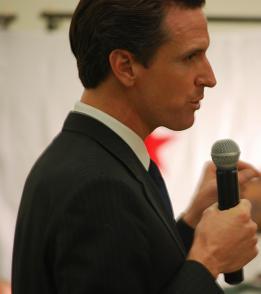
Gav was on KQED this morning, talking about his run for Lite Guv, and he started right off by saying how he doesn’t ever — ever — read the Bay Guardian
Michael Krasny started off by asking why Newsom refused to appear on the radio in a debate with Janice Hahn. “She agreed, you didn’t.” Krasny asked. “Why?”
Newsom’s comment: Gee, I didn’t have time for a debate. Too busy running the city, and trying to balance a budget– “the most complex budget in city history.” He insisted that he’d solved a $522 million deficit without laying off police or firefighters, while protecting the soc sev safety net and investing in homeless service and universal health care.
Krasny: “So the Guardian can’t beat you up any more?”
Gav: “Honestly, I haven’t read it in years, with all due respect to Tim Redmond and Brugmann and whatever the team is over there.”
Krasny, politely, tried to bring up the idea that a no-new-taxes budget means fewer jobs, but Newsom had none of it: “They seem to have a tax first policy,” he said (although he doesn’t read us, so he doesn’t know. He complained that San Franciscans are already paying 10 percent in sales tax — “a regressive tax,” and that “they (presumably the Guardian) consistently support it, I don’t.”
Read our paper, Mr. Mayor. The Guardian has consistently, for many years, argued that sales taxes are regressive, and we’ve consistently, for years, argued that there are far better options, ways the city can reclaim money from the wealthy. And we’ve argued that Newsom’s no-new-taxes policy is bad for the economy.
Oh, and by the way: You talked over and over about universal health care in San Francisco, and how proud you were of that policy. But if you were reading the Bay Guardian, you might recall that it wasn’t your policy. That initiative came from then-Sup. Tom Ammiano, and you opposed the key employer mandates that fund it. Hey, you could even pick that up by reading the Chron:
Why Comcast sucks

Ever wonder why Comcast routinely ranks among the worst companies in America for customer service? Let me tell you a story.
So my cable box stopped working, which meant I couldn’t get the Giants games and my daughter couldn’t watch Hannah Montana, which was something of a crisis in the Redmond household. So I called Comcast, and the nice woman on the phone tried a remote diagnosis, and told me the box was fried. “But don’t worry,” she said. “Just drop it by our office and we’ll give you a new one right away.”
Just drop it by our office. Here’s that that means: You arrive at the cramped, airless spot on Potrero and 16th and wait. And wait. And wait. When I got there, the line was 21 people long, and four customer service clerks were trying their best to sort out a wide range of problems — bill problems, service problems, people wanting more channels problems … by the time I got to the front, 41 minutes had passed, and the line stood at 28 people. There wasn’t any more room in the office; the 29th person was going to have to stand out on the street.
“It’s always like this,” an older woman in the line complained. And she’s right — at least, every time I’ve ever been there, the lines been long, the wait’s been long and every single person in the room was unhappy.
Here’s what’s going on: In the old days, when your cable service didn’t work, they sent a repair person to your house, and that person either fixed the problem or installed new equipment. Now it’s up to me to unscrew the box (easy enough for me, though maybe not for everyone), take my time to go wait in line for a new one, and reinstall it (again, easy for me, maybe not for everyone.) So I’m already saving Comcast the money it used to spend sending a trained technician to my house. Now I’m paying, with my own time, to wait while an inadequate number of service people try to handle far too many problems.
Brian Roberts is the CEO of Comcast. I’ve sent him a note that says the following:
1. You need to hire more people for customer service. If you don’t want to pay to send techs out to my house, then properly staff your offices. Most people have jobs, and can’t afford to spend an hour or more (with travel time) to exchange a piece of your equipment every time it breaks.
2. Set up some orderly lines. One line for simple exchanges of gear, one for billing problems, one for people who want to spend 30 minutes deciding on a service upgrade. Even the DMV gets that; it shouldn’t be so hard.
3. But more reliable gear.
4. Or: Cut your prices. I’m paying way, way too much money to put up with this shit.
SFBG Radio: Tim and Johnny on the election

Today, Johnny and Tim talk about California Republican gubernatorial cadidates Meg Whitman and Steve Poizner and the upcoming voter initiative to legalize marijuana in the November election. You can listen after the jump.
Editor’s Notes

Tredmond@sfbg.com
When I first heard that Arne Duncan, who hails from the charter-schools-are-great side of the educational spectrum, was going to be President Obama’s secretary of education, I figured: that’s too bad. But after all these years of Republicans, how bad can it be?
Well, pretty bad.
Duncan has discovered that he has a powerful tool to use to force some really terrible "reforms" onto school districts and states that really don’t want them. And he’s using it in a way that’s almost cruel.
See, every public school district in urban America is hurting right now. Everyone needs money; everyone’s desperate. Teachers are getting pink slips, schools are closing, class sizes are growing, programs are getting cut … and school boards and superintendents are reduced to begging for spare change to buy chalk and pencils.
And along comes Secretary Duncan with billions of dollars in grants, scraps of food for starving people — and all you have to do to get some of it is adopt an agenda that blames the problems of the education system on the teachers.
Get rid of teacher seniority. Get rid of tenure. Link teacher pay to student performance, as measured by standardized tests. Approve more charter schools (which suck money out of the public school system). Just do those things and you can compete in the beauty contest called "Race to the Top" — and maybe you’ll get some cash.
The New York Times Magazine had a fascinating story on this May 21. The writer, Steven Brill, marveled at how successful Duncan had been leveraging a fairly small amount of money into the most profound changes in educational policy this country has seen in 30 years. That’s because these days, school districts will do almost anything to keep the doors open.
But the problem is that the federal grants will run out, and some day the economy will recover, and maybe we’ll come to our senses and realize that government at every level should properly fund education — and the damage of the Duncan reforms will be done.
I can’t blame the SFUSD, which just agreed to apply for Race to the Top money, for seeking cash everywhere. And the SFUSD application doesn’t promise anywhere near what Duncan wants, so we won’t win anyway. But at some point, somebody’s got to say: this is a bad way to run the public schools.
Finally, some talk of taxes in Sacramento
With the state careening toward another fiscal meltdown, and a new study showing (pdf) that the governor’s proposed budget cuts would cost California 330,000 jobs, increase the unemployment rate by 1.8 percent and deepen the recession, the Democrats in Sacramento are finally talking about serious new revenue sources.
The tax plans proposed by the Senate and Assembly leadership aren’t perfect, but they’re a very good start. The state Senate plan would raise $4.9 billion by eliminating corporate tax breaks (which generally don’t produce jobs anyway), raising the Vehicle License Fee and keeping a modest income surtax. The Assembly plan, announced by Speaker John Perez, relies on repealing tax loopholes and imposing an oil-severance tax.
Wow! 29 Latinos for Meg Whitman

I wonder which is more remarkable — that there are only 29 members of the Latinos for Meg Whitman page — or that there are actually 29 Latinos for Meg Whitman. I mean, a candidate who over and over again insists that she really, really doesn’t want to do anything to allow people who have been living and working in this country for many years to get a chance at citizenship? I think it’s safe to say that won’t be her strongest base of support in November.
SFBG.COM Radio: Tim and Johnny on the real threat to business in California

Today, Johnny and Tim talk about the huge health insurance rates facing small businesses in California — and why that’s more of a threat to the viability of small business than tax increases. You can listen after the jump.
sfbg.comradio5/28/2010 by SFBGWhy is SFUSD signing on to Race to the Top?

The Obama administration, to its credit, is actually paying attention to, and putting money into, urban public education. But Arne Duncan, the education secretary, is using some of the money to push a broad agenda that, frankly, drives me nuts and undermines a lot of what public education ought to be about.
The New York Times Magazine did a good job laying out the agenda May 23. The self-styled reformers want to encourage charter schools, push standardized testing (and other easily quantifiable methods of evaluating classroom performance) and change the way teachers are hired and fired. In fact, in many ways, the Duncan agenda is all about blaming the teachers for the problems in public schools.
There are, absolutely, some bad teachers out there. There are people who are so burned out they should leave and find other work. There are people who never were terribly good at teaching anyway. There are people who can’t do the job, and somehow stick around year after year, dooming students to poor-quality classes. There are 300,000 public-school teachers in California; not all of them will be great. (There are also, by the way, terrible lawyers who never get disbarred and terrible doctors who kill and maim patients and manage to protect their medical licenses.)
But in California, certainly, the relatively modest number of poor teachers is not by any stretch the biggest problem with public education. And tests, particularly standardized tests, are not remotely a valid way of determining which teachers are good and which aren’t.
Teachers in California cities face widely divergent student populations. In some San Francisco classrooms, a majority of the students are English learners, or come from broken or troubled families, or lack proper nutrition, or are homeless … and those are just the surface issues. Telling a dedicated first-grade teacher that he or she is going to be fired because of test scores in a classroom where it takes heroic efforts every day to get 20 troubled kids to sit down and pay attention for even 15 minutes isn’t just unfair. It’s crazy.
The teachers unions have fought some of these efforts, and — thanks to world-class organizing efforts and a fair amount of campaign money — have managed to beat some of them back in Congress and state Legislatures. That’s where Race to the Top comes in.
Duncan and his merry band of “reformers” are dangling out federal money to districts that desperately, desperately need any pennies they can get — but the price is high. In essence, you have to sign on to at least part of the Duncan agenda, which promotes testing, charter schools, etc.
The highest number of points — 138 of the 500-point scale that Duncan and his staff created for the Race — would be awarded based on a commitment to eliminate what teachers’ union leaders consider the most important protections enjoyed by their members: seniority-based compensation and permanent job security.
It’s almost a cruel bargain: You don’t have enough money to buy chalk for the chalkboard or pencils for the kids, and the feds are happy to help — as long as you stick it to the teachers unions and sign onto an agenda that a lot of progressive school boards despise.
And that’s where San Francisco is.
In a special meeting May 20, the San Francisco School Board signed on to a Memorandum of Understanding with the state of California that will be part of California’s application for Race to the Top funding. You can read the MOU here. It’s not as bad as some of what Duncan is pushing, but still: SFUSD is participating in this madness.
I asked Jane Kim, president of the School Board, about it, and she told me that the district’s proposal “doesn’t have anything about charter schools or merit pay. It’s really just a continuation of the work that we’re already doing.” And that’s true, although Dennis Kelly, the head of the local teachers union, United Educators of San Francisco, isn’t happy about it, though; he told me that “this is not something we could sign on to. It’s pretty much the standard state form.”
And the board passed it unanimously, and a lot of the local board members are good progressives who know more about education than I do. And as Kim pointed out, at a time like this, “I don’t think we should refuse to go for the extra funding.”
Frankly, the San Francisco Unified School District isn’t going to get any Race to the Top money anyway — not with districts all over the country selling their souls and going way, way further than we are to scrap for that cash. But I have to ask: Since Race to the Top is such a bad idea, why are we even playing the game?
Poll: PG&E is in trouble

Internal polls by Pacific Gas and Electric Company’s consultants show that Prop. 16 — the scandalous attack on public power and community choice — is still trailing, despite $45 million in advertising, a source familiar with the polling told me today.
The tracking polls show that PG&E is having a hard time getting above 40 percent support in some parts of the state, particularly in the Central Valley, where complaints about smart meters are soaring. “PG&E’s name is just shit out there,” the source told us.
The utility had planned to spend $35 million on the campaign, but has recently dumped in $10 million more — a sign that Prop. 16 is still lagging. And despite the fact that the No on 16 campaign lacks the money even to do a single major television buy, the public apparently isn’t buying PG&E’s line. It doesn’t hurt that nearly every major newspaper in the state has opposed the measure — and that PG&E is having a hard time finding allies.
So it’s possible that the private utility will wind up spending $45 million or more — and wind up losing, and in the process, alienating a wide range of political leaders and community groups. Peter Darbee, you’re doing a heck of a job.
Another new model for newspaper ownership

Well, maybe it’s not entirely, new, but I haven’t seen it around here. The Point Reyes Light, a legend in West Marin, was just sold to a community-based group that’s almost, sortof a nonprofit. It’s actually called a “low-profit limited liability company” (not a bad name for most newspapers these days), and it’s going to be operated as a community trust, of sorts. Mark Dowie, the well-known investigative reporter, is involved, so that’s good news. And apparently, things weren’t working out with the previous owner.
Among the donors: Warren Hellman, who’s also involved in the (entirely) nonprofit Bay Citizen.
SFBG.COM Radio: Tim and Johnny on DADT and BP

Today we discuss why Obama hasn’t moved faster on getting rid of Don’t Ask, Don’t Tell — and what BP’s ultimate liability will be for the oil spill. You can listen after the break
SFBGRadio5252010 by SFBGReceiver appointed to investigate assets of SF Weekly and parent chain
The California Superior Court has appointed a receiver to investigate the finances of SF Weekly’s parent company and develop a plan to pay the Bay Guardian the $22 million that the chain owes as a result of our predatory pricing lawsuit.
On May 25, Commissioner Everett A. Hewlett, Jr., entered an order appointing professional receiver David Summers to investigate the assets of New Times Media LLC and its subsidiary, SF Weekly LP.
New Times Media LLC is the holding company for the nationwide Village Voice chain of alternative weekly newspapers.
Summers has been ordered to develop a plan for the disposition of the company’s assets so the Bay Guardian can get paid.
“This is a very significant step forward in our collection efforts,” said Bruce B. Brugmann, Bay Guardian editor and publisher.
After a six-week trial in 2008, a San Francisco jury found that the Weekly and New Times had intentionally sold ads below cost in an effort to damage the independently owned local competitor.
The jury awarded the Bay Guardian $6.39 million, and Judge Marla Miller trebled part of the damages and added on attorney’s fees. With interest accruing at 10 percent a year, the judgment is now more than $22 million.
New Times and SF Weekly Have appealed the judgment. The California Court of Appeal has set oral argument for 9 a.m. June 11.
Earlier this year, a lending syndicate lad by Bank of Montreal declared the Village Voice chain to be in default of their $77 million loan arrangements. Bank of Montreal claims to be daily sweeping the moneys earned by the Village Voice chain into a special account so as to protect the lenders’ interests.
The banks in the syndicate that are holding the VVM debt (as of March, 2009) are Bank of Montreal, U.S. Bank, Wells Fargo, WestLB AG, Rabobank, BNP Paribas, and Brown Brothers Harrimann.
The Bay Guardian has already seized two of SF Weekly’s vehicles and the rent that the paper’s subtenants pay. The California Superior Court has previously ordered half the SF Weekly’s advertising revenues diverted into an independent bank account, and placed a lien on New Times’ interests in its subsidiaries to protect the Bay Guardian’s interests.
Andy Van De Voorde, spokesperson for VVM, didn’t respond to an email requesting comment.
That strange DCCC tenant mailer

Paul Hogarth at Beyond Chron has a nice piece on all the money being poured into the Democratic County Central Committee races — and the odd mailer from the Affordable Housing Alliance that talks about “renters choice” but then gives to nod to some candidates who couldn’t even meet AHA’s own standards:
One slate card that has attracted some attention is from the Affordable Housing Alliance – which touts the “renters’ choice” for the June ballot. While urging a “yes” vote on the pro-tenant Proposition F and a few progressive candidates, the mailing also encourages a vote for DCCC moderates Scott Wiener on the East Side and Mary Jung on the West Side. Which raises the question who exactly the Affordable Housing Alliance really is.
Well, we got into this ten years ago, when AHA was fronting for the Brown machine. Hogarth quotes from the story (which predates our current web system), but I’ve posted it here in case you want to read the whole thing. We’ll see more of this in the next week or so as the race heats up; slate cards are a big business.
PG&E has no friends

The full-page ad on the back of the front section of today’s San Francisco Chronicle shows exactly how far PG&E has fallen in its political fortunes.
The Yes on 16 ad lists all endorsers of this godawful ballot measure — and other than the Chamber of Commerce, there’s not one San Francisco politician, community group, or organization on the list. Not one.
In fact, there’s not one statewide elected official. Nobody wants to carry PG&E’s water any more (unless you count the California Republican Party and the San Bernadino County Tea Party, two listed endorsers who will no doubt sway a lot of votes in the Bay Area).
That’s a big change. In past public-power campaigns in San Francisco, the giant utility was able to call in its chits and find a handful of politicians (who had been elected in part with PG&E campaign money) and community groups (who paid their bills in part with PG&E grants) willing to be PG&E shills. Now: Nobody.
Part of that is a reflection of just how bad Prop. 16 is — not one significant newspaper in the state has endorsed it, and most have blasted it. But it also shows how badly CEO Peter Darbee and his minions have alienated the California political world. “Nobody remembers them acting so outrageously,” State Senator Mark Leno told me. “They’ve just gone down a whole new path, and Peter Darbee is leading the charge.”
And if Prop. 16 goes down, PG&E’s fortunes will just fall further.
Media experiments

news@sfbg.com
With traditional journalism outlets still struggling through the Great Recession and into an uncertain future, some interesting new media experiments have been popping in San Francisco, including much-anticipated The Bay Citizen, an initially well-funded newsroom that launches this week.
It will join a media landscape filled with a wide range of new ventures: general news websites ranging from the nonprofit SF Public Press to the theoretically for-profit SF Appeal; niche sites such as the popular SF Streetsblog; the Spot.us media funding experiment; and the MediaBugs accountability project. And it isn’t all online — McSweeney’s magazine put out the one-time San Francisco Panorama newspaper in December and SF Public Press plans to print a similar demonstration newspaper next month.
But for all the high hopes and talk of using strategic partnerships and new funding models to overcome economic and readership trends that have hobbled the San Francisco Chronicle and other big media companies, those who run The Bay Citizen and other start-ups still need to prove their worth and sustainability.
Whatever The Bay Citizen becomes, it will break new ground — nobody has ever put this level of money into creating a nonprofit, online-only daily newspaper in a major market, or had such significant media partners, ranging from UC Berkeley’s Graduate School of Journalism to The New York Times, which will run the newsroom’s content as its twice-weekly Bay Area section.
Some people think this is the future of journalism; San Francisco-based financier Warren Hellman, who provided the seed money, thinks it’s worth $5 million or more to get the project off the ground. But since there’s no model out there, the crew at The Bay Citizen will be making it up as they go along. And at this point, even with what most Web publications would consider a huge amount of money, it’s clear that The Bay Citizen will not be replacing the Chronicle any time soon.
Jon Weber, the publication’s editor, knows the world of mainstream daily journalism (he was a writer for the Los Angeles Times); the world of high-paced big-money startups (he ran the Industry Standard); and the world of low-budget fledgling operations (he founded the small online magazine New West). And the first thing he had to figure was exactly what this new online daily was going to look like.
With a staff of just six news writers — and a regional focus — The Bay Citizen can’t try to cover breaking news the way the Chronicle, Examiner, or even Bay City News Service do. So the publication will be different from a traditional daily, with more enterprise reporting and less of the types of features dailies typically offer.
There will, for example, be no daily sportswriter. “There won’t be stories on every game, every day,” Weber told me. “We’ll pick our spots with enterprise reporting.” The Bay Citizen won’t try to compete with the Chronicle on national or international stories, either: “It’s a Bay Area focused site,” Weber said. “That doesn’t mean we won’t cover national stories when they impact the Bay Area. But that’s not part of our beats.”
The reporters will cover land use and environmental issues; health and science; education and social issues; business and finance; crime; and government and politics. The politics reporter won’t be able to cover San Francisco City Hall every day, either — he or she (that’s the one slot still open) will have to stay on top of local and statewide issues.
But what could make the Bay Citizen truly unusual is the extent to which Weber plans to partner with existing local bloggers and nontraditional news outlets. “We hope we can be a supporter of the local media ecosystem,” he said.
That could eventually set The Bay Citizen apart — and provide a new model for daily journalism. The publication has pending agreements with a dozen local Web sites and bloggers, some of them well-established and funded, and some more homegrown efforts. It’s also working with New American Media, which for many years has represented and encouraged ethnic news outlets.
Yet this isn’t exactly a new idea. SF Gate, the Chronicle’s Web site, has been running content from local blogs, including SF Streetsblog, for more than a year. But it doesn’t pay for that content and so far there have been few discernible benefits for either side of the equation.
“That’s been an experiment for us, but I’m not sure we see much of a return,” Streetsblog SF Editor Bryan Goebel told us. “The question is how you make these partnerships sustainable.”
That’s a question he’ll continue to explore with his newest partner, The Bay Citizen, which is promising to pay bloggers $25 for each post they run and to partner with them on larger projects. Although he’s still waiting to see a contract from Weber, Goebel said, “The model Bay Citizen is using could potentially work.”
Goebel needs something that will work. After 16 months in business, he said SF Streetsblog has 14,000 weekly readers and a loyal following among those interested in transportation and urbanism, but it’s funding (primarily from two rich individuals) has dried up to the point where he’s worried about the site’s future.
“I was hired to be the editor, but now the onus is on me to also keep it going,” Goebel said. “If the community likes this valuable resource … then the community needs to step up and support it.”
The Bay Citizen is also relying on that community-supported paradigm, using a four-part plan to pay the bills. At first The Bay Citizen will be heavily dependent on big donations. But Weber wants to see the operation transition to a more independent program that will rely on public broadcasting-style memberships (small donations), sponsorships (read: ad sales), and the sale of original content (syndication).
There’s already been some grumbling in the local blogosphere about Bay Citizen, from noting the outsized salary of the project’s president and CEO Lisa Frazier (a media consultant who led the search and then took the job at a reported $400,000 per year) to concerns about this big venture exploiting small local partners.
Frazier answered the salary question by noting that she has been working on the project for 14 months and emphasizing her business development experience. “This is a difficult problem we’re taking on and we need to put together a sustainable business model,” she told us. “It’s about results and our fundraising response has been fantastic.”
Another eyebrow-raiser is the background of The Bay Citizen’s Chief Technology Officer Brian Kelley, founder of the Web site ReputationDefender, which promises to remove negative items from the Internet searches of its paying clients — an antithetical mission for news organizations that expose the misdeeds of powerful figures.
Kelley downplayed his former company’s role in countering good journalism, telling us, “I do intend to take that knowledge here to promote our online content.”
Weber said the new venture won’t use its considerable initial resources to try to steal the show, and they’re bringing something truly valuable to the local media scene: a paid staff of journalists to counter the steep declines in local news-gathering.
“Listen,” Weber told us, “I was there for five years. I was running a little start-up with no resources. The last thing I want to do is hurt the smaller outfits. We think we can work together in ways that benefit everyone.”
SF Public Press has pursued a model like Bay Citizen’s for two years. But without millions of dollars in seed money, it’s still hobbling along as basically a volunteer newsroom despite getting around $35,000 from San Francisco Foundation, another Hellman-funded enterprise. “It’s an uncertain model. It’s a leap of faith for the writers to get involved with this,” said project manager Michael Stoll.
Yet Public Press is still moving forward with a newspaper (due out June 15) featuring content culled from a wide variety of local partners ranging from the Commonwealth Club and World Affairs Council to local public radio stations, local blogs, and The Bay Citizen. “We’re calling it both a pilot and a prototype,” Stoll said. “We want to get people’s reactions.”
Weber says he’s also eager to see how people react to The Bay Citizen when it launches May 26, because it will need to quickly establish itself. At the rate The Bay Citizen is spending, Hellman’s money won’t last more than a couple of years, and the financier told us he may be willing to put in a bit more, but he’s going to want to see a plan for financial stability that doesn’t involve him underwriting operations forever. It’s an experiment, but one most observers say is worth trying.
“We need to keep experimenting,” Goebel said, “because not every experiment is going to work.”
Editor’s Notes
Tredmond@sfbg.com
Even the San Francisco Chronicle, which is not know for its fiery progressive editorials, took all of the major candidates for governor to task May 22 for failing to offer any real solutions to the horrific budget problem: “[A]ll three are presenting the types of phantom savings (‘Let’s slash waste, fraud, and abuse! Cut across the board!’) and the panacea of collaboration (‘Everyone to the table! Appoint a blue-ribbon commission!’) that substitute for real leadership on the campaign trail.”
It makes me want to throw up. This is not a game; there are literally people’s lives in the balance. Even Jerry Brown, the Democrat’s best hope, is ducking madly. Jerry says that the folks “with the biggest belts should tighten them.” Sounds good, but what the hell does it mean?
Well, according to his press spokesman, it means nothing at all. I called the Brown for Governor campaign last week, and asked Sterling Clifford, who handles press for Jerry (that’s got to be a tough job) whether his boss was talking about higher taxes. No: “I think he has been very clear that there will be no new taxes unless the people vote on them.” (Actually, since the Public Policy Institute says two-thirds of Californians would support raising taxes on the rich to pay for education, a vote would likely be positive — but the campaign would be expensive and Brown would have to lead it.)
But he’s not willing to commit to any specific cuts in any specific programs. He’s not saying which belts he wants to tighten.
Here’s the hard, cold fact: You can’t solve California’s budget crisis by cuts alone, not unless you want to utterly abandon the state’s commitment to public education and social services (oh, and let about half the people in prison go free). Meg Whitman wants to lay off thousands of state workers (and create more unemployment). But even if you fired every single one of the 238,575 people who work for the state of California, you still wouldn’t cover a $19 billion hole. (The state’s total payroll in April was about $1.4 billion, or $17 billion a year.)
And we’re still stuck with billions in debt from the past few years when the governor couldn’t deal with reality and bumped it off into the future.
Maybe Brown thinks the economy will magically improve when he takes office, and the problem will solve itself. But it won’t. This is a structural issue, and until everyone, including the news media, accepts that, we’re just going to get into deeper and deeper doo-doo.