


Arianna Huffington just sold the Huffington Post to AOL for $352 million. Johnny and Tim talk about why it’s a bad deal for everyone except Arianna and her investors. Check it out after the jump.
sfbgradio272011 by endorsements2010Tim Redmond
I solved the state’s budget problem

And you can, too! The Sacramento Bee has a handy tool to evaluate options for closing the budget gap — and unlike some of the other versions of this I’ve seen, it actually offers a wide range of revenue options. I cleared up the $26 billion shortfall without cutting anything at all (except prisons; I checked the box for letting out low-level offenders early. I’d go even further, and repeal three strikes and the death penalty, but those options weren’t on the table at the Bee).
But you can see from this that the state doesn’t have to be broke, failing, in collapse. All we have to do is fix the revenue problem (and yeah, the state does have a revenue problem) and bingo — problem solved. In fact, I managed to get the state a billion-dollar surplus.
Go ahead, check it out.
SFBG Radio: Is the recession over?

Is the recession really ending? The government says so — but what do small businesses need to make that prediction real? Johnny and Tim discuss after the jump.
SFBGRadio: Kids, God and lies

A little bit of a break from our usual political ranting: Johnny talks about telling his kids about death and we discuss why it’s so easy to sugarcoat it (and talk about God and an afterlife) but in a secular household, it’s better to tell your kids the truth about everything, from death to sex and drugs. Agree? No? Listen and argue with us after the jump.
sfbgradio222011 by endorsements2010California is an even richer state
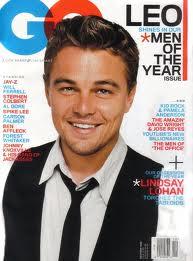
Jerry Brown pointed out in his State of the State address that California is a rich state; I’m not sure Jerry saw the latest from Vanity Fair, but I think his estimates of increased personal income might be a bit low. VF loves to dig into the lives (and fortunes) of Hollywood types, and the latest list of the highest-paid people in the film industry is interesting.
James Cameron made $257 million last year. Guess what? He lives in Malibu. That’s Malibu, California. Guess what? If we raised his taxes a little he’d still live in Malibu. In fact, he wouldn’t even notice.
Johnny Depp made $100 million, but he lives in France these days. But Steven Spielberg, who made $80 million without even working, lives in Los Angeles. So does Christopher Nolan $71.5 million) and Leo DeCaprio ($62 million). Kristen Stewart ($28.5 million lives in L.A. too, though I hear she wants to move to Australia; income taxes there are higher than the U.S., though, so she won’t be fleeing the taxman.
Got that? Four people, $477.5 million, last year alone. Yes, my friends, we can afford public education.
Editor’s Notes

You want a really bleak picture of the politics of California today? Check out the recent comments of Dan Schnur, GOP political consultant and director of the Jesse Unrush Institute for Politics at the University of Southern California.
In an interview with the Los Angeles Times, Schnur discussed the disconnect between image and reality in this state: "Cut $1 billion out of Medi-Cal and most voters won’t notice," he said. "Take away some cell phones and make legislators sit on a picnic bench, and they pay attention."
Yeah, he’s a Republican who worked for the likes of George W. Bush and John McCain, but his point, while politically sick and wrong, is also sadly accurate. How much money will the state save by getting rid of 48,000 cell phones? About $20 million a year. That’s 0.08 percent of the state’s budget shortfall. What did Brown save by replacing a boardroom-style conference table in his office with a glorified picnic table? Probably a few thousand dollars. How much does the state continue to lose every year to the utter waste of corporate tax breaks? How much could we bring in with an oil-severance tax? Well into the multiple billions.
What got all the press? Jerry’s picnic table and cell phone crackdown.
I’m not against either of those moves. In tough times, it’s important to set the standards at the top, and living cheap and avoiding the imperial trappings of public office is a great way to instill voter confidence. And anything Brown can do to convince the voters that he’s serious about cutting waste — and that they can trust him enough with their money that they should vote yes on his tax plan — can only be good.
But it all seems so silly and shallow.
The truth is, when you cut Medi-Cal, people die. You can’t prove that any specific cut killed any individual, and most of them are poor anyway and the major media don’t make a big fuss every time a poor person dies. It’s not as sexy as some Caltrans worker having to give up a cell phone.
I think I’m going to throw up now.
California is a rich state

My favorite part of the State of the State speech (full text here) was a bit of perspective that almost everyone has ignored. It went like this:
We are still a very rich society. In two years alone, Californians will have added more than $100 billion to their personal income. Yet, our State’s credit rating is the lowest of the 50 states, unemployment is higher than the national average and some journalists are calling California a “failed state.”
In two years, Californians will have added more than $100 billion to their personal income. And given that 20 percent of all income eanred in the U.S. goes to the top 1 percent of Americans. $20 billion of that new income will go to the very richest Californians. More than 60 percent of all income earned goes to the richest 20 percent, which would mean $60 billion in income to people who are already richer than four of five Californians.
Brown gets this, clearly. And he’s no fool; I think he can do simple math. Which would lead you to conclude that an increase in the state income tax for the top brackets could bring in a huge chunk of change — without harming the economic recovery. (And don’t give me that trickle down shit; facts are facts, and the top 1 percent of income earners are far less likely to spend their marginal dollar, creating jobs. They sock it away, creating wealth for future generations.)
I know the idea of talking about higher income taxes is political death, but when we talk about frugality and tightening our belts, let’s remember: California is still a very rich state. We can afford things like public education. Even the governor says so.
Why it has to be Green Bay

I mean, not if the 49ers were playing. And I have this ancient loyalty to my old hometown Jets, who won Super Bowl III against Baltimore when I was 11 years old. (I still remember Joe Namath sitting by the pool the day before, sipping a drink and proclaiming that his 21-point underdog team was so certain of victory he could “guarantee it.” And Joe was cool. A jerk, but cool. And Emerson Boozer was a great name for a running back.)
I was a bit of a Steelers fan, too, during the days of Terry Bradshaw and Franco Harris and Mean Joe Green (before the Coca Cola ad, barf).
But in the end, you have to root for the Packers. And not just because Aaron Rodgers went to Cal and got picked 24th (when the Niners could have had him but took Alex Smith instead, look how well that worked out) and had to wait patiently for Brett Favre to move on. I’ve always supported Green Bay because it’s the only publicly owned team in professional sports.
Okay, not exactly publicly owned: The city of Green Bay doesn’t hold the title deed. But it’s pretty close — there are 112,158 shareholders, most of them part of the Green Bay community in one way or another. There’s no majority owner — and it’s a functioning nonprofit. None of the shareholders get dividends; all the money is put back into the team. The Packers can’t leave town and can’t be sold.
The model so freaks out the NFL that the league passed a rule a few years ago barring any more teams from using it; now, there can be no more than 30 shareholders of any team and one must hold 30 percent of more and be the principal owner.
If all the teams were like Green Bay, there’d be no lockout, no Baltimore Colts splitting town in the middle of the night, no Al Davis jacking up Oakland. Go Packers.
Medi-Cal and cell phones: The ugly truth
There’s a chilling comment from political consultant Dan Schnur in the Los Angeles Times. In a fascinating story by Tony York, Schnur talks about the difference between image and reality in California’s budget wars:
“Cut $1 billion out of Medi-Cal and most voters won’t notice. Take away some cellphones and make legislators sit on a picnic bench, and they pay attention,” he said.
Yep: Jerry Brown is saving the state a few million dollars by cutting cell phones for state workers and replacing a fancy conference table in his office with a cheap one. And that’s gotten a lot of press — as Jerry, the old master, knew that it would. We still live in a state, and a nation, where symbolism matters more than substance.
Republicans still get away with saying that the governor needs to cut state employee pay and benefits — although you could fire (that is, cut all pay and benefits) for every one of the state’s 240,000 employees and you wouldn’t be close to balancing the budget. (What nobody says is that the majority of state spending in California goes for local programs — what legislator wants to call on the governor to cut funding for his or her district? Not even the Republicans do that.) Little cuts like Brown’s mean nothing, and are easily wiped up by the daily, unpredictable ebb and flow of tax receipts.
And yet, Brown has to send a message that he’s being frugal, so he gets rid of his conference table (did he sell it? For how much?) And it works.
And, of course, nobody ever talks about how much the state wastes in corporate tax breaks; it’s much easier to take away some Caltrans worker’s phone.
I wish Brown could really tell the truth in his State of the State speech — that the stuff people get agitated about is chump change, that a huge cut to Medi-Cal means people dying (but not today, and you can’t prove the link, and poor people die all the time and the press never notices), that cuts to education mean more poverty (and crime, and public expense) in the future, that we’ve already cut (or pupt off with gimmicks) about $30 billion in spending, and that the state has a serious revenue problem.
But he knows he can’t do that. People won’t vote for his tax plan unless he looks like he’s somehow punishing state workers and flagellating himself. Good thing the Jesuits trained him.
SFBG Radio: From Cairo to here

In today’s episode, Johnny points out that the protests in Egypt have been driven by young people — and that youth unemployment in the United States is at alarmingly high levels. So why aren’t young people out in the streets here? Check out the discussion after the jump.
sfbgradio1/30/2011 by endorsements2010Free Muni for kids
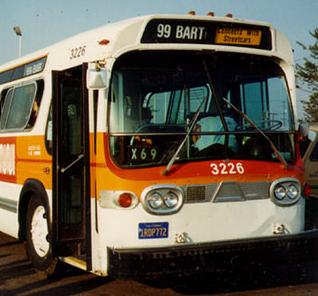
Sup. David Campos is talking about offering free Muni rides for some of San Francisco’s youth, and he’d like free passes for all school kids next year. That’s a great way for the city to work with SFUSD; the school district spends a huge amount of money on buses. In fact, transportation is the second biggest item in the district’s budget (after salaries). There ought to be a way for kids (above a certain age; maybe fifth grade) who now take SFUSD buses to get on Muni instead.
And let me tell you all a little secret: Most of the middle-school kids who ride Muni never pay anyway. They all pile on the bus after school and some have passes and some don’t and the driver can’t possibly keep up with who’s got what when 50 young people are climbing aboard all at once.
So if we can let them all ride free we can save money for the schools, which can go into the classrooms, and make life easier on the drivers and kids who can avoid the crazy scramble.
And if we can’t do that, or if the city wants some sort of reimbursement, there’s an easy solution: Sell Muni passes in the schools. Not to get too bureaucratic, but SFUSD already keeps track of family income levels (that’s how they do the free lunches) and it wouldn’t be that hard to issue Clipper cards that allow low-income kids to ride free. Kids who can afford it would get a card at the beginning of the year and their parents could put money on it at the Clipper web site (or the kids could do it themselves with a machine in the school office.)
I know it sounds complicated, but it’s way more complicated now; you have to take your kid in person to buy a youth pass and present a birth certificate. Way easier to do it at the schools, where that data is already in the system. A good deal for all: SFUSD agrees to devote one staffer at each middle and high school to the (part-time) job of issuing bus cards, and in exchange SFUSD students get to ride Muni free or cheap — and SFUSD gets to cut its transportation budget.
Why is this not a no-brainer?
GOP is wrong: Most Californians want taxes
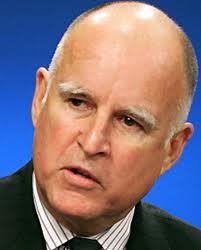
The Public Policy Institute of California generally has some of the most reliable polls in the state. It’s not a partisan group or part of anyone’s campaign, and the questions tend to be framed in a fair manner. So I take the results of the PPIC polls as a decent indicator of where the state is going.
And where it’s going right now could not be more clear: A vast majority of Californians in the latest PPIC poll want to see a June ballot measure to address the state budget, and they support higher taxes, particularly to save education. And 60 percent think the state should raise taxes on corporations.
It’s going to be tricky: Gov. Brown will need two Republicans in each house to go along if he wants to get a tax measure on the ballot. And the GOP is holding out for changes in the state pension system, which is a complex issue and will be hard to nail down in the short time that remains before the Legislature would have to vote on a June ballot measure. But Brown has the support of the public — even the support of most Republican voters — so it’s possible.
“I’m crossing my fingers,” Assembly member Tom Ammiano told me. “But I think we can get there.”
Can they shut off the Internet?

Proverbs for paranoids: If they can catch you asking the wrong questions, they don’t have to worry about answers.
— T. Pynchon
Indulge me here while I get a little paranoid and venture into a realm where it’s easy to get dismissed as a nutcase. And I’ll say this upfront: I really don’t know how much I ought to worry about this.
But: The Egyptian government just tried to decapitate the protests in the streets by shutting down the Internet, and it was relatively easy; four ISPs threw the switches at government command, and bingo — no more email or websites talking about how to toss the bums out. John Weber at the Bay Citizen (who is neither a nutcase nor a paranoid) says this is a first (although China and other countries have censored internet traffic and limited use, this is different; it’s a total sudden shutdown of what was an open service).
So it’s worth asking, anyway: Could that happen in other countries, including ours?
Well, you don’t have to be way out in loony land to be worried about the Lieberman Protecting Cyberspace as a National Asset Act. Yes, I realize all the talk of an Internet Kill Switch sounds batty. We talked about this today on sfbg radio, and Johnny told me I was way wacko: the Internet is so essential to commerce in this country that the corporate powers that be would never allow it to be throttled. Tens of billions of dollars would be lost in moments; the stock market and the banking system couldn’t function.
But the scary thing is that it wouldn’t be all the difficult. All you’d have to do is cut off the domain name servers and nobody could find anything. (Yeah, you can bypass that with website numbers — IP addresses — but most people don’t have those handy.) And one company, Sprint (I think) owns most of the switches that direct all the traffic in this country; shut them off and every city would be isolated.
The web was designed to be redundant; a natural (or unnatural) disaster in New York or Chicago wouldn’t cripple Internet traffic around the country. And I’m not saying that Obama (or his successors) would ever actually try to squelch protest in the U.S. by taking such a drastic step.
But the fact remains that technically, it wouldn’t be that hard to do what Egypt did, and shut things down for a while. And since so much of our political communication in this country is based on the web, it seems somehow that our ability to talk to each other in times of crisis is a wee bit fragile.
Or am I out of my mind here? It wouldn’t be the first time.
More John Ross poems

Thanks to some of the many John Ross fans out there, I’ve begun to collect a treasure trove of his poetry, much of it either unpublished or published in limited-circulation chapbooks. Even John didn’t have all of his work when he died, and there’s no central collection. So I’m going to post a couple more of my favorites here — and at somepoint, we have to figure out a way to publish the whole collection.
Here’s one from Running Out of Coast Lines (1985) called “Ohio.”
The snow is sooted
with the scrapings of burnt toast
and the crumbs of industry.
There are citizens asleep beneath it,
buried alive inside dark cocoons,
out of work and under the quilts
alarm clocks left unwound
to roll back the boozy winter,
just a deep snooze in February
the drifted fields and streets,
unscuffed, untraveled,
unhitched trailers,
going nowhere, no one
can find their car in Toledo anymore.
Snow is stasis, it sticks in Cleveland,
it freezes the veins of venom
inside the Cayahuga, gases
are suspended until further notice.
A man who once turned tractor tires
big as a house both of them
rolls over in the white bed
in Sandusky and tries to dream
only of the good parts.
Here’s “Kansas City” from The Daily Planet (1981)
Just when we absolutely had to split
she stepped up
like she owned a piece of history
and meant to lease it to us
right there on the spot.
I never knew Charlie Parker she said
slipping Bish the pic
in which she looked so slick
in a tophat and tuxedo
but I danced in the line
with June Williams
at the Jockey Club
before she run crazy in the streets
buckass naked up 18th
my she had a beautiful figure
June Williams
she said standing alone
in the doorway of the peeling porch
in the spring thundershower
pelting the helpless shrubbery outside.
O I toedance and play the vibes
and I can dance on tabletops too
only isn’t no work in Kansas City
since they merged the unions
the black union and the white one.
She wore a red beret and talked slow
loke she’d been slipping sweet-toothed wine
or else jamming skag, one.
Nope no work here in Kansas City
the machines play all the music now
they got a clique down at the union hall
things ain’t what
they used to be.
And one of my all time favorites, from The Daily Planet, is called “Wanted.”
She is wanted
Catherine Louise Como
also known as
Kathleen May Wright
Manon Minette
Catherine Ann James
Manon James
Cathy Wright
Minon Manette
She is wanted
also known as
Catherine Share
Catherine Louise Share
Janice Thompson
Betty Cox
Darleen Cook
also known as
Suzanne Bronson
Donna Todd
Mary Thomas
Janet Gross
Betty Bowers
Jessica Daniels
also known as
Gypsy
she is wanted
born Xmas ’42
France a tough war
a known Caucasian
she is wanted.
She is wanted
and she has
brown eyes, brown hair
and small bullet wound scars
on her right sholder
and her right hip.
In two of the mug shots
taken several years ago
Sacramento Calif
her hair is pulled too taut
atop her ears
and her swollen lower lip
curls defiantly
at the police photographer.
In the third, taken months later,
the unbraided hawsers of her hair
tumble wantonly to her shoulders
and she looks like she wants to bite
the arresting officer
on the fat white folds
of his throat.
There are two sets of
small dangerous fingerprints,
checkforging fingerprints,
mail fraud fingerprints,
tilltapping fingerprints.
She is wanted by the FBI
she is wanted by the federal marshalls,
she is wanted in the U.S. Mails,
she is wanted in California, Oregon, Nevada,
and 47 other states.
She is wanted
and she is armed
and considered to be dangerous
and that small I think crescent-shaped scar
on her smooth white hip
drives me 74 way bananas
every time
I try to buy
a 20-cent stamp.
SFBG Radio: Egypt and the Internet

Protests erupting all over Egypt as democracy comes to life in North Africa — and the government’s response is to shut off the internet. Could that happen here? Johnny thinks Tim is just a delusional conspiracy nut. Check it out after the jump.
sfbgradio1282010 by endorsements2010SFBG Radio: Obama is like the Seattle Seahawks

Okay, these webcasts have been getting long, and nobody has the time, and we get it. So it’s a new era for SFBG Radio: This one’s less than nine minutes. Here Johnny explain why Obama is like the Seattle Seahawks (really, it makes sense). Take eight minutes to check it out after the jump.
sfbgradio1/27/2100 by endorsements2010What if everybody ran for mayor?
I mean, not everybody. I’m not running. Tom Ammiano isn’t running. Mark Leno isn’t running. Ed Lee isn’t running, unless he is.
But as the progressives think about the 2011 mayor’s race, there’s a strategy that’s been floating around, mostly in bars, that’s crazy and I’m not even sure I’m serious about it myself, but it might actually make sense.
See, right now there’s no one progressive candidate that everyone can get behind. And there’s no single progressive candidate who has the resources and the citywide base to win a contest where millions of dollars will be spent, not only by the candidates but by indepenent expenditure groups.
So suppose a whole bunch of people ran? Suppose the field included Aaron Peskin, Chris Daly, David Campos, John Avalos, Ross Mirkarimi (although he might want to run for Sheriff), Eric Mar … a half dozen decent candidates get in the race, each of them bringing along constituencies who might not otherwise vote. And in the end, it all comes down to ranked-choice voting, and as we know from the Oakland mayor’s race and D10, anything can happen.
Aaron Peskin gets 15 percent of the vote, comes in first, gets enough second-place votes and suddenly — he’s mayor! Take that, Arthur Evans!
Seriously, the point isn’t to elect Peskin or any other individual. It’s too see if a concerted progressive campaign, involving candidates who work together, the way Jean Quan and Rebecca Kaplan did in Oakland, could get enough voters excited and involved to put one of the candidates over the top.
Again: I’m not even sure this is a good idea. But it’s worth thinking about.
Obama can’t “win” the future
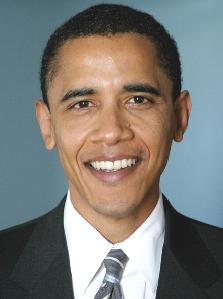
Most of the pundits in the center, like the New York Times, liked Obama’s State of the Union Speech. And for good reason: It was a centrist, cautious speech that promised lower corporate taxes, conservative education policy, lots of money for the military and cuts for everyone else. Two things, thought, that stood out for me:
1. Obama still believes in government. He made it very clear that he thinks the public sector has an important role to play, not just in regulation but in spurring and stimulating economic growth. He’s going about it all wrong, but he did remind people that government — the public sector — won the space race, gave birth to the internet, built the interstate highway system and in the process created tens of millions of jobs. The GOP is already going batshit about it; they got the message.
2. The crux of the speech, the “Sputnik Moment,” was this line: “To win the future, we’ll have to take on challenges that have been decades in the making.” Win the future. In fact, over and over, all night, we heard about “winning the future.”
But since when was the future a war, something to be fought with an enemy? To “win” the space race we had to “beat” the Soviets, which we did (ha ha, we got to the moon first). To “win” the future, do we have to beat someone else? The Russians aren’t up for winning much of anything these days, but Obama seems concerned about competing with China; do the Chinese have to “lose” the future for us to “win?”
It wasn’t a random choice of words. The White House speechwriters take this stuff very seriously. “Winning the future” is a catchphrase that the Obama administration wants to be attached to. And it’s a bad one.
The future of the planet can’t be about winning. When you look at the serious crisis facing the world — climate change that’s going to transform agriculture, put the homes of hundreds of millions of people under water and alter the way every single human being lives — beating China isn’t really relevant. Thomas Friedman says the world is flat, and he’s got a point — if Obama were able to articulate a message of cooperation, of seeking peace and working together with other nations, it would have been a remarkable speech.
Instead: Winning the future. What a loser.
Editor’s Notes

tredmond@sfbg.com
This is how strange things are in the world:
I read a piece on SFGate Jan. 21, by an editor named David Curran, who claimed (in that kind of “wow-I’m-funny” tone) that young people should stop trying to be doctors and college professors. Instead, he says, he wants to “quietly sneak our kids into some midlevel bureaucrat position where they can hang out for decades, get decent vacation, loads of holidays, and, yes, face a few pay cuts and furlough days because in the end they hit the pension jackpot!” Of course, those jobs are easy, since all public employees are stupid and lame: “Whenever the kids take forever to set the table, I get a little angry and they reply, ‘But dad, we’re just getting ready for our future job at the DMV!'”
Three days later, I picked up the Jan. 22 edition of The Economist and read a flattering profile about a group called Tiger 21 — “A self-help group for rich people.”
“Only those with more than $10 million of investable assets are eligible for membership, so no one assumes that, just because you have truckloads of cash, your problems are trivial. Whether you are worried that your kids might turn out like Paris Hilton, or fed up with your brother in law who wants to borrow money for the umpteenth time, someone in the room has faced a similar problem before.”
And The Economist writer wasn’t joking.
I worry so much about the poor rich. I’ve read all those stories about lottery winners who are suddenly miserable, and I think, nah. Long-term unemployment makes you miserable. The prospect of reaching old age in poverty makes you miserable. Being forced into a Medicare nursing home because the visiting nurse who allowed you to be independent lost his job in budget cuts makes you miserable. Dealing with too much money? It’s not the same. It’s really not.
The very rich have problems too, I’m sure — but if I had to choose between cat food and Paris Hilton, I think I could handle Paris just fine.
Or I could just blame all of society’s problems on the folks who work at Caltrans and the DMV. After all, middle class people with pensions that give them a decent retirement are such a burden on society. And such a waste! People who work for the government can’t do anything right. When’s the last time you had a good experience registering your car?
Well, I’ve waited in line at the DMV, and I’ve waited on hold with those efficient private-sector tech companies, and I’ll take the DMV any day. My son just bought a computer game that didn’t load; at 4:02 in the afternoon, I called Electronic Arts tech support, which was supposedly open until 5. At 4:05, I was fifth in the queue; at 4:56, I was second in the queue. At 4:59:57, the line went dead. Sorry, sucker — we close at five.
Comcast: efficient private sector. The wait to exchange your cable box when it doesn’t work is far, far worse than anything any government bureaucracy has ever thrown at me.
Somehow, somebody’s missing the point here.
Remembering John Ross
P>John Ross — poet, journalist, hell raiser, and iconic San Franciscan — died Jan. 16 of liver cancer, on the shores of Lake Patzcuaro in Mexico. He had been writing for the Guardian fairly consistently since 1982, for the last 25 years as our Mexico City correspondent.
I wrote a fairly lengthy obituary for him that’s posted on the politics blog at sfbg.com. There are so many stories to tell about John that it’s hard even to begin, but my favorite was his tale of the day he left Terminal Island, the federal prison near Los Angeles where he served more than two years for refusing the draft during the Vietnam War.
The warden saw him to the gates, he told me, and than shook his head and said, “Ross, you never learned how to be a prisoner.”
And that was pretty much the story of his life. He lived every day in the spirit of freedom and social justice. He was beaten by the police in the streets of San Francisco and lost an eye. He went to Baghdad to stand in the way of the bombs when George W. Bush invaded. He dodged Gen. Augusto Pinochet’s bullets in Chile. He was madly fearless and would go wherever the story was.
I wanted this page to be about his life, not his death, so I’m reprinting some of my favorite John Ross poems. They were all self-published, some in booklets photocopied and stapled together, some done at cut-rate printers, but none still available from anyone. They are all labeled “anti-copyright.” I just hope my copies aren’t the last ones on Earth.
There will be a memorial in San Francisco soon. I’ll publish the details when I have them. you can also e-mail obispa@gmail.com for updates.
P.S.: John, as I expected, left very specific instructions for his remains. I quote:
I ask that my body be rendered into ashes and the ashes distributed in the following locations: Trinidad, California, both flow from the bluffs and sprinkled atop the gravesite of my old comrade, E.B. Schnaubelt, a noted anarchist.
San Francisco, strewn along the Mission 14 route between 24th and 16th streets and deposited in the planter boxes outside the Café Bohème.
Mexico, some of my ashes can be dumped in the ashtrays outside the Hotel Isabel and on the sidewalk outside the Cafe la Blanca. A handful can be spread in the zócalo plaza. Other ashes can be spread at the Zapatista caracol in Oventik, on the shores of Lake Pátzcuaro, and in the boneyard at Santa Cruz Tanaco, where my first-born, Tristram, is buried, both in Michoacán.
New York City, my place of birth: I ask that my ashes be strewn in Washington Square Park and other pertinent venues in the East and West Village in addition to Union Square.• The remainder of my ashes should be rolled into marijuana cigarettes and smoked by participants in these scatterings. *
THE VIEW FROM MISSION ROCK
The big gray ships
They move so powerful slow
It almost seems We are not getting There.
This gives one hope.
(From At The Daily Planet, 1981)
RONCO Y DULCE
Coming out of the underground On the BART escalator, The Mission sky Is washed by autumn, The old men and their garbage bags Are clustered in the battered plaza We once named for Cesar Augusto Sandino. Behind me down below in the throat of the earth A rough bracero sings Of his comings and goings In a voice as ronco y dulce As the mountains of Michoacan and Jalisco For the white zombies Careening downtown To the dot coms. They are trying to kick us Out of here Again They are trying to drain This neighborhood of color Of color Again. This time we are not moving on. We are going to stick to this barrio Like the posters so fiercely pasted To the walls of La Mision With iron glue That they will have to take them down Brick by brick To make us go away And even then our ghosts Will come home And turn those bricks Into weapons And take back our streets Brick by brick And song by song Ronco y dulce As Jalisco and Michaocan Managua, Manila, Ramallah Pine Ridge, Vietnam, and Africa. As my compa OR say We here now motherfuckers Tell the Klan and the Nazis And the Real Estate vampires To catch the next BART out of here For Hell.
(from Against Amnesia, 2002)
PINOCHET MEETS THE PRESS
If the eye
inside the camera
offends thee,
pluck it out,
pluck out the eye
pluck out the film,
smash the camera,
slash the images,
pour gasoline over those
who framed the images
then strike a match.
Make sure there are
no witnesses,
that those who look
for witnesses disappear.
Silence the people,
cut out the tongues
of those who would complain
about being silenced.
Swear on blazing bibles
that none of you
will ever tell anyone
what you have seen here.
Empty out the nation.
Bury those who insist on staying
in unmarked graves.
Pretend that no one
will ever know.
Turn off the lights.
Try to sleep.
(from Heading South, 1986)
11TH SUICIDE POEM IN NOVEMBER
The next child I won’t father we will name
Nomathamba. We will call her Thembi for short
She will be exactly like Pharaoh drew her. She
Will smile several hours each day. Her teeth
Will come on like white Christmas. She will crawl
Into bed with us to see if we
Are fucking. She will never be scared. She will
Speak Xhosa. I will buy her a dog named Mardi Gras
And she will learn what it is to lose something
You love. She will grow up.
(Unpublished, undated)
Republicans worry about their “brand”

Like every political junkie in this state, I was fascinated to hear that Republican operatives think there’s a problem with their “brand.” It’s simple: Even when the state’s voters approve horrible right-wing anti-tax measures, they don’t seem willing to vote for Republicans. The way the operatives discuss the situation, it’s all about messaging; I think Robert Cruickshank at Calitics has a better analysis: “The CAGOP has made itself unelectable by being a white man’s party.”
It runs even deeper, though. In order to win a statewide GOP primary, you have to:
1. Oppose all taxes
2. Oppose gun control, even to the point of insanity
3. Support harsh crackdowns, bordering on open racism, on immigration and immigrants
4. Either be rich or toady up to the rich
And those positions aren’t winners in a statewide race.
The Democratic Party, for better or for worse (often for worse) has no such litmus tests. Yeah, it’s hard to get elected without labor support, but the Demos are much more of a “big tent” these days. Jerry Brown is more of a fiscal conservative than a lot of Republicans (who love to cut waste as long as it doesn’t hurt their rich supporters), but the tax-and-spend types like me all voted for him. Our senior senator, who happens to be the most popular politician in California in poll after poll, is only barely to the left of Joe Lieberman.
As long as the far right controls the part in what’s very much a centrist kind of state, the GOP isn’t going anywhere. Brand or no brand.
Historic preservation fight at the board

The supervisors will hear a recommendation from the Rules Committee Jan. 25th to appoint Richard Johns to a seat on the Historic Preservation Commission. These things typically aren’t that controversial — but there will probably be a fight over this one. And it’s significant because of what it says about the new board committees appointed by board President David Chiu.
Background: The Historic Preservation Commission was created by the voters with the passage of Prop. J in 2008. Then-Sup. Aaron Peskin authored the ballot measure, which gave the panel real teeth, the ability to prevent the destruction of important pieces of local history — and mandated professional qualifications for six of the seven members. The goal: Prevent a mayor who cared nothing about preservation from appointing hacks and cronies to the board.
Seat number 4, for example, is set aside for a professional historian, someone with exensive academic background in California and Bay Area history. As Mike Buhler, director of the San Francisco Architectural Heritage foundation, noted in a Jan. 3, 2010 letter to the Rules Committee:
The minimum professional qualifications in history are a graduate degree in history or closely related field; or a bachelor’s degree in history or closely related field plus one of the following:
1. At least two years of full-time experience in research, writing, teaching, interpretation, or other demonstrable professional activity with an academic institution, historic organization or agency, museum, or other professional institution; or
2. Substantial contribution through research and publication to the body of scholarly knowledge in the field of history.
Just before leaving office, Newsom nominated Richard Johns, a lawyer, to that seat. Johns has been active in the movement to restore the Old Mint and create a San Francisco History Museum, and he clearly has more than a passing interest in local history — but he doesn’t even remotely meet the qualifications for this seat.
He also happens to be married to Eleanor Johns, who was chief of staff to Mayor Willie Brown.
Johns has done some good volunteer work, but according to Peskin, he’s a perfect case study in what Prop. J was supposed to prevent. “We wrote the measure to ensure high professional standards and qualifications for each seat,” Peskin told me. “If they can get away with this, the voters got bamboozled.”
Or, as Robert Cherny, an eminent professor and historian at San Francisco state, noted in a Jan. 17 letter to the commitee:
I am concerned that this nomination will set a precedent that the professional qualifications established by the charter can be ignored if a mayor wishes to do so.
The other problem with Johns became clear in his Jan. 20 testimony to the committee, when he talked about the important of the need for change and growth in San Francisco — key words that anyone who has followed local politics knows are the mantra of developers who want to get rid of historic landmarks.
I asked Sup. David Campos, who was on the previous Rules Committee, about Johns’ qualifications, and he told me that you could make a strictly legal argument either way; the charter language could be interpreted by a court to allow Johns to slide in. But he also said he didn’t support the nomination. “I had to ask,” he told me, “is this the best we can do?”
Good point — this is a city full of professional historians. Is Richard Johns the best we can do?
The current Rules Committee — with two conservatives (Mark Farrell and Sean Elsbernd) and one progressive (the chair, Jane Kim), apparently thought so. His nomination was approved unanimously.
It’s only one seat on one commission, but the precedent is important: You can’t set professional standards for commissions then let the mayor ignore them an appoint his political allies. And historic preservation is under attack in the city: Sup. Scott Wiener just announced that he’s calling for a hearing on how the city’s “prioritization of historic preservation is impacting, and possibly undermining, other key policy objectives.” In a press statement, he complained about too many things having to go through the Historic Preservation Commission.
Most nominations that get approval at Rules slide right through the full board. That’s the problem with a Rules Committe stacked with conservative, pro-development supervisors.
In this case, though, we can expect a bit of a fuss. I know the progressives on the board won’t be unanimous in approving Richard Johns.
SFBG Radio: The economics of pearl handled dildos

In today’s episode, we discuss the economics of pearl-handled dildoes — and how supply, demand and income inequality impact the unemployment rate. Just in time for the State of the Union speech. You can check it out after the jump.
Calling all John Ross fans

I’m compiling some of John’s best poetry for the next issue of the Guardian, and I’m thinking we might try to collect them all in some sort of anthology. But I only have a few of his chapbooks, and I don’t know if anyone has all of them. If you have any of the books on this list, can you give me a call (487-2554)?
- Jam (Mercury Litho-Bug Press: 1976)
- 12 Songs of Love and Ecocide (1977)
- The Psoriasis of Heartbreak (1979)
- The Daily Planet (1981)
- Running Out of Coastlines (1983)
- Heading South (1986)
- Whose Bones (1990)
- Jazzmexico (Calaca de Pelón: 1996)
- Against Amnesia (Calaca de Pelón: 2002)
- Bomba (Calaca de Pelón: 2007)