


In Republican land, Ronald Reagan is still such an icon that when his son’s book raises questions about whether he was mentally competant to be president, the GOP squawk machine goes into overdrive. But as Johnny and Tim discuss on today’s show, Reagan wouldn’t get elected to anything in today’s Republican Party — he raised taxes.
HipsterRickshawReagan by endorsements2010Tim Redmond
What you can do for your country
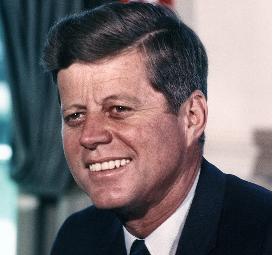
The radio’s been full of stories about the Kennedy inauguration, about that cold, snowy day in 1961 when a young president inspired the nation and the world with a call to civic engagement and sacrifice. Kennedy spoke of the torch being passed to a new generation, and in some ways, he was the first real post-War president. But his most stirring line — “Ask not what your country can do for you; ask what you can do for your country” — was very much a WWII-era sentiment, a notion that everything wasn’t about getting rich and demanding things, but that America stood for public service.
Not surprisingly, the taxes on rich people back then were much higher, and the income and wealth gap much smaller, and the middle class much larger. There was, of course, terrible poverty, but Kennedy and his successor, Lyndon Johnson, talked about using government resources to end it. The idea of a “war on poverty” wasn’t even that radical.
It’s stunning to me how quickly that spirit vanished.
The Vietnam War, the Nixon-era crackdown on protesters, COINTELPRO, the war on drugs … by the 20th anniversary of that famous speech, it was all over. And the anthem of the late 1970s, in the leftist circles where I hung out, went like this:
Ask not what you can do for your country
What’s your country been doin’ to you?
And when Ronald Reagan said government is not the solution, it’s the problem, lots of those Avengers fans cheered, too.
Now it’s almost impossible to get anyone to support even modest taxes to pay for basic government services, and the public sector is under constant attack.
Man, if I were into conspiracies, I could go a long way with this one.
Is Ed Lee a caretaker?
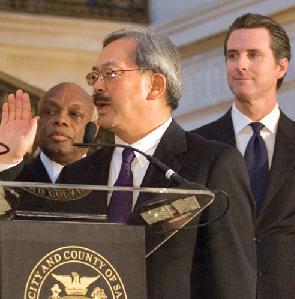
It’s not a moot question. Already, the Chron’s C.W. Nevius, in an otherwise innocuous column on Question Time, tossed out this nugget:
Lee may be the interim, but don’t kid yourself. There are people right now who are asking him if he’d like to make a run for the office in November.
This, of course, is the problem with the concept of a “caretakler” mayor. There’s no law, no rule that says Ed Lee can’t decide round about mid-summer, shortly before the filing deadline, that he’s changed his mind, loves the job, and can’t resist the siren song of his supporters urging him to seek a full term.
And hey: maybe he does do a great job in the next few months. Why shouldn’t San Franciscans have the right to elect him in November?
Of course, he promised that wasn’t going to be part of the deal. And if he had given any signals that he might want a full term, Sup. Sean Elsbern, who was adamant that he wanted a caretaker, wouldn’t have nominated Lee. David Chiu, who might want to run for mayor himself, would have been a lot less likely to vote for a potential rival. Lee the candidate wouldn’t have gotten the job.
So when he should up for Question Time, one of the supes ought to ask him: Right now, in public, for the record, will you tell us — is there any possibility that you will consider running in November?
I’m not saying the guy should be forced to give up his civic and Constitutional right to seek public office; as I said, that’s why I never liked the caretaker thing. But if he’s thinking of running, the city needs to know that, now, so we can work with him on an honest basis. And if he’s not, he needs to tell Nevius’ sources to quit spinning rumors.
Blue Shield: pay up or die

A Blue Shield customer from San Diego emailed Consumer Watchdog recently to complain about a 59 percent rate hike. his comment, according to Consumer Watchdog’s Jamie Court:
There is no market for health insurance. You have two choices: 1. Pay whatever they say. 2. Die.
That’s about it, right there.
You know why nobody in Sacramento can do anything about health insurance rates? It’s because by law our state Insurance Commissioner is really just a car-insurance and home-insurance commissioner with little authority over health insurers. That goes back to Prop. 103, the landmark ballot measure that created an elected insurance commissioner and dramatically restricted unfair practices by liability insurers. But Prop. 103 (thanks to the one-subject rules for initiatives) couldn’t take on health insurance.
Now there’s a bill in Sacramento, AB 52, that would give the insurance commissioner the ability to regulate health insurance rates — and the lobbyists are going nuts. But as Court says, Blue Shield made a big mistake — not only by radically raising rates but by refusing a request by Insurance Commissioner Dave Jones for a 60-day delay. “They have become the poster child for rate regulation,” Court told me. And if the Legislature doesn’t pass the bill (a similar effort failed last year) Court and Consumer Watchdog are looking at a major mesure for the 2012 ballot that would be the health-insurance equivalent of Prop. 103, a measure to control rates — and mandate a public option for Californians.
“We will have the same conditions in 2014 that we had with car insurance in 1984,” he said. “The government says you have to buy it, but there’s no regulations on cost.”
There’s more info about it here and you can contact your legislator here.
Editor’s Notes
Tredmond@sfbg.com
I talk to the Unitarians sometimes. I’m not much for church myself, but the Unitarians are pretty mellow. My neighbor, who grew up Unitarian, tells me that Unitarians “believe in one God … at most.” There’s even an atheist caucus at the Unitarian Church on Franklin Street. That works for me.
So a couple of times a year, they invite me to come and talk to their discussion forum Sunday morning, before services, and I always go — sweet, wonderful people who are about as liberal as religious people get, and they actually listen to me and ask intelligent questions.
So I was there two weeks ago talking about the year ahead in local politics, and after I went on far too long complaining about a city and a society that don’t want the wealthy to pay taxes, a woman walked up to the mic and made a really interesting point.
When you get your property tax bill in San Francisco, she said, there’s a little box you can check to make a voluntary contribution to the arts. Why, she asked, is there nothing about contributing to the public schools?
It’s not an academic point. In most states, local property taxes support local schools. In California, Proposition 13 forced the state to take on that responsibility. Now the state’s broke, and education has taken huge cuts. And even if San Francisco wanted to put more local money into the schools, the local budget has no extra room, either.
But almost everyone who owns property in San Francisco is getting a great deal from Prop. 13. My brother owns a house in upstate New York that cost about $100,000 — and his property taxes are higher than mine, and my house in San Francisco cost a good bit more than that. Warren Buffet complained about it to former Gov. Arnold Schwarzenegger; Buffet’s place in Southern California has lower taxes than his home in Omaha — and the tax bills don’t exactly reflect the comparative assessed values.
Now, I’m not into charity. I mean, I’m fine with charity, and people should be generous and all that, but when it comes to essential public services, charity won’t cut it. Rich people should pay taxes, and elected representatives should decide how to prioritize where the money is spent.
But here we are in San Francisco, with all these wealthy people not paying fair taxes on their property and Prop. 13 seemingly set in stone. So maybe we could start a campaign. It’s not hard to figure out how much you’re getting away with under Prop. 13. Take the actual value of your house (come on, you know what the place down the street just sold for); multiply it by the current tax rate (it’s on the invoice); and subtract the amount of your bill. Yeah, you’re saving a lot of money. Some of you are saving a whole lot of money.
Then the tax collector can put a box on the property tax bill that lets you make a voluntary contribution to the public schools that reflects some of that savings. Just some, a little bit. If we all did it, we’d make a huge difference.
SF’s new political era
news@sfbg.com
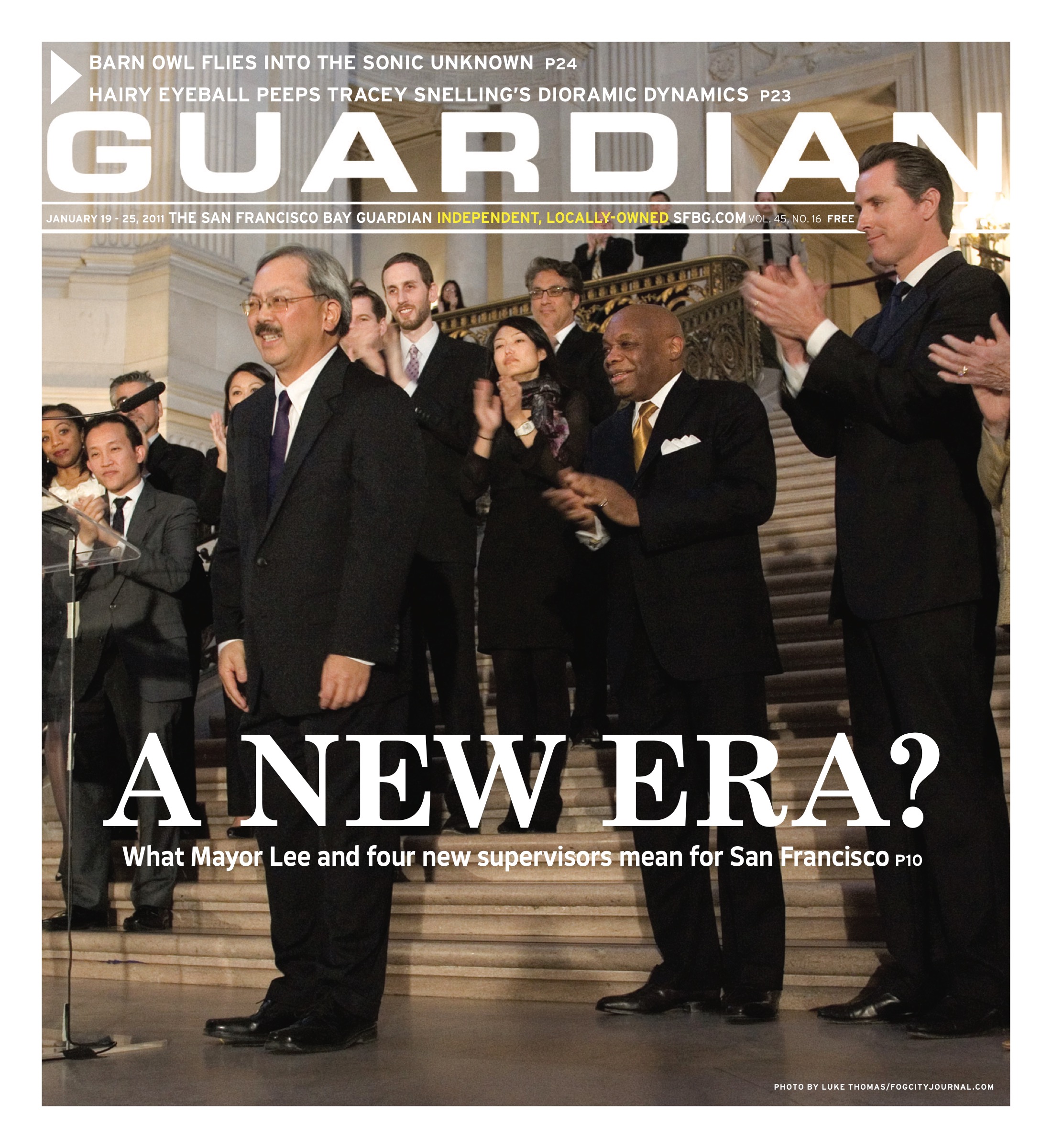
You can argue about what the word “progressive” means, and you can argue about the process and the politics that put Ed Lee in the Mayor’s Office. And you can talk forever about which group or faction has how much of a majority on the San Francisco Board of Supervisors, but you have to admit: this city has just undergone a significant political realignment.
Some of that was inevitable. The last members of the class of 2000, the supervisors who were elected in a rebellion against the sleaze, corruption, and runaway development policies of the Willie Brown administration, have left office. Gavin Newsom, the mayor who was often at war with the board and who encouraged a spirit of rancor and partisanship, is finally off to Sacramento. For the first time since 1978, the supervisors will be working with a mayor they chose themselves.
For much of the past 15 years, progressive politics was as much about stopping bad things — preventing Brown and then Newsom from wrecking the city — as it was about promoting good things. But the “politics of anti,” as San Francisco State political scientist Rich DeLeon describes is, wasn’t a central theme in the November elections, and this generation of supervisors comes into office with a different agenda.
Besides, one of the clear divisions on the board the past seven years was the Newsom allies against the progressives — something that dissipated instantly when Lee took over.
But the realignment goes deeper.
Until recently, the progressives on the board had a working majority — a caucus, so to speak — and they tended to vote together much of the time. The lines on the board were drawn almost entirely by what Newsom disparagingly calls ideology but could more accurately be described as a shared set of political values, a shared urban agenda.
There are still six supervisors who call themselves progressives, but the idea that they’ll stick together was shattered in the battle over a new mayor — and the notion that there’s anything like a progressive caucus died with Board President David Chiu’s election (his majority came in part from the conservative side, with three progressives opposing him) and with Chiu’s new committee assignments, which for the first time in a decade put control of key assignments in the hands of the fiscal conservatives.
A PROGRESSIVE MAJORITY?
The progressive bloc on the board was never monolithic. There were always disagreements and fractures. And, thanks to the Brown Act, the progressives don’t actually meet outside of the formal board sessions. But it was fair and accurate to say that, most of the time, the six members of the board majority functioned almost as a political party, working together on issues and counting on each other for key votes. There was, for example, a dispute two years ago over the board presidency — but in the end, Chiu was elected with exactly six votes, all from the progressive majority that came together in the end.
That all started to fall apart the minute the board was faced with the prospect of choosing a new mayor. For one thing, the progressives couldn’t agree on a strategy — should they look for someone who would seek reelection in November, or try to find an acceptable interim mayor? The rules that barred supervisors from voting for themselves made it more tricky; six votes were not enough to elect any of the existing members. And, not surprisingly, some of the progressives had mayoral ambitions themselves.
When state Assemblymember Tom Ammiano — who would have had six votes easily — took himself out of the running, there was no other obvious progressive candidate. And with no other obvious candidate, and little opportunity for open discussion, the progressives couldn’t come to an agreement.
But by the Jan. 4 board meeting, five of the six had coalesced around Sheriff Mike Hennessey. Chiu, however, was supporting Ed Lee, someone he had known and worked with in the Asian community and whom he considered a progressive candidate. And once it became clear that Lee was headed toward victory, Sup. Eric Mar announced that he, too, would be in Lee’s camp.
A few days later, when the new board convened to choose a president, the progressive solidarity was gone. Sups. David Campos, John Avalos, and Ross Mirkarimi, now the solid left wing of the board, voted for Avalos. Chiu won with the support of Mar, Sup. Jane Kim, and the moderate-to-conservative flank.
Now the Budget Committee — long controlled by a progressive chair and a progressive majority — will be led by Carmen Chu, who is among the most fiscally conservative board members. The Land Use and Development Committee will be chaired by Mar, but two of the three members are from the moderate side. Same goes for Rules, where Sup. Sean Elsbernd, for years the most conservative board member, will work with ideological ally Sup. Mark Farrell on confirming mayoral appointments, redrawing supervisorial districts, and promoting or blocking charter amendments as Kim, the chair, does her best to contain the damage.
You can argue that having independent-minded supervisors who don’t vote as a caucus is a good thing. You can also argue that a fractured left will never win against a united downtown. And both arguments have merit.
But you can’t argue any more that the board has the same sort of progressive majority it’s had for the past 10 years. That’s over. It’s a new — and different — political era.
What happens now? Will the progressives hold enough votes to have an influence on the city budget (and ensure that the deficit solutions include new revenue and not just cuts)? What legislative priorities will the supervisors be pushing in the next year? How will the votes shake out on difficult new proposals (and ongoing issues like community choice aggregation)?
Mayor Lee has pledged to work with the board and will show up for monthly questions. How will he respond to the sorts of progressive legislation — like tenant protections, transit-first policies, immigrant rights measures, and stronger affordable housing standards — that Newsom routinely vetoed?
How will this all play out in a year when the city will also be electing a new mayor?
IDENTITY POLITICS?
When Sups. Chiu, Mar, and Kim broke with their three progressive colleagues to support Chiu for board president — just as Chiu and Mar helped clear the path for Ed Lee to become mayor days earlier — it seemed to many political observers that identity had trumped ideology on the board. There’s some truth to that observation, but it’s too simple an explanation. There’s also the fact that Chiu strongly supported Kim, who is a personal friend and former roommate, in her election, so it’s no surprise she went with him for board president.
And the phrase itself is so laden with baggage and problems that it’s hard to talk about. It has come to signify a wide range of political activity and theorizing founded in the shared experiences of injustice of members of certain social groups. “Rather than organizing solely around belief systems, programmatic manifestoes, or party affiliation, identity political formations typically aim to secure the political freedom of a specific constituency marginalized within its larger context,” says the Stanford Encyclopedia of Philosophy, an ongoing research project by the students and faculty at Stanford University.
Although the notion of identity politics took hold during the social movements of the 1960s and ’70s — when liberation and organizing movements among women and various ethic and other identity groups fed a larger liberal democratic surge that targeted war, economic inequity, social injustice, and other issues — it’s also a political approach that has divided the populace.
“One of the central charges against identity politics by liberals, among others, has been its alleged reliance on notions of sameness to justify political mobilization,” says the Stanford Encyclopedia. “Looking for people who are like you rather than who share your political values as allies runs the risk of sidelining critical political analysis of complex social locations and ghettoizing members of social groups as the only persons capable of making or understanding claims to justice.”
Mar explains that the reality of identity politics and whether it’s a factor in the current politics at City Hall is far more complex.
“With me, David Chiu, and Jane Kim as a block of three progressive Asians — and I still define David Chiu as a progressive though I think some are questioning that — we all come out of what I would call a pro-housing justice, transit-first, and environmental sustainability [mindset],” Mar told us. “But I think because of our ethnic background and experiences, we may have different perspectives at times than other progressives.”
For example, Mar said, many working class families of color need to drive a car so they’ll differ from progressives who want to limit parking spaces to discourage driving. He also has reservations about the proposed congestion pricing fee and how it might affect low-income drivers.\
“I think often when progressive people of color come into office — Jane Kim might be one of the best examples — that sometimes there’s an assumption that her issues are going to be the same as a white progressive or a Latino progressive,” he said. “But I think kind of the different identities that we all have mean that we’re more complex.”
Campos, a Latino immigrant who is openly gay, noted that “as a progressive person of color, I have at times felt that the progressive movement didn’t recognize the importance of identity politics and what it means for me to have another person of color in power.”
But, he added, “I don’t think identity politics alone should guide what happens. A progressive agenda isn’t just about race but class, sexual orientation, and other things. It’s not enough to say that identity politics justifies everything.”
University of San Francisco political science professor Corey Cook told the Guardian that identity has always been a strong factor in San Francisco politics, even if it was overshadowed by the political realignment around progressive ideology that occurred in 2000, mostly as a reaction to an economic agenda based on rapid development and political cronyism.
“I’m not sure that identity wasn’t relevant, but it was swamped by ideology,” Cook told the Guardian. Now, he said, another political realignment seems to be occurring, one that downplays ideology compared to the position it has held for the last 10 years. “I’m not sure that ideology is dead. But the dynamics have definitely changed.”
Cook sees what may be a more important change reflected in Chiu’s decision to put the political moderates in control of key board committees. But he said that shift was probably inevitable given the difficulties of unifying the diverse progressive constituencies.
“It’s hard to hold a progressive coalition together, and it’s amazing that it has lasted this long,” he said.
There’s another kind of identity politics at play as well — that of native San Franciscans, who often express resentment at progressive newcomers talking about what kind of city this is, versus those who see San Francisco as a city of immigrants and ideas, a place being shaped by a wider constituency than the old-timers like to acknowledge.
“I’m honored to join Sups. Elsbernd and Cohen in representing the neighborhoods they grew up in,” Sup. Mark Farrell said during his opening remarks after being sworn in Jan. 8., sobbing when he thanked his parents for their support.
As he continued, he fed the criticism of the notion of ideology-based politics that has been a popular trope with Gavin Newsom and other fiscal conservatives in recent years, telling the crowd he wanted “to turn City Hall into a place based on issues and ideas, not ideology.”
Cohen also placed more importance on her birthright than on her political philosophy, telling stories about entering board chambers through the back door at age 16 when she was part of a youth program created by then-Mayor Frank Jordan, and with former Mayor Dianne Feinstein coming to speak at Cohen’s third-grade class. “I am a San Francisco native, and that is a responsibility I take seriously,” said Cohen, who graduated from the Emerge Program, which grooms women for political office,
“We will have another woman as president of the Board of Supervisors, and we will have a woman as mayor of San Francisco,” she added. And as the sole African American on the board, she also pledged, “I will be working to add more members of the African American community to the elected family of San Francisco.”
But what issues she plans to focus on and what values she’ll represent were unclear in her comments — as they were throughout her campaign, despite the efforts of journalists and activists to discern her political philosophy. In her public comments, her only stated goal was to build bridges between the community and City Hall and let decisions be guided by the people “not political ideologies.”
Oftentimes in recent San Francisco history, identity and ideology have worked in concert, as they did with former Sup. Harvey Milk, who broke barriers as the first openly gay elected official, but who also championed a broad progressive agenda that included tenants rights, protecting civil liberties, and creating more parks and public spaces.
Sup. Scott Wiener, shortly after being sworn into office, acknowledged the legacy of his district, which was once represented by Milk and fellow gay progressive leader Harry Britt, telling the crowd: “I’m keenly aware of the leadership that has come through this district and I have huge shoes to fill.”
Yet Wiener, a moderate, comes from a different ideological camp than Milk and Britt and he echoed the board’s new mantra of collaboration and compromise. “I will always try to find common ground. There is always common ground,” he said.
GETTING THINGS DONE?
Chiu is making a clear effort to break with the past, and has been critical of some progressive leaders. “I think it’s important that we do not have a small group of progressive leaders who are dictating to the rest of the progressive community what is progressive,” he said.
While he didn’t single out former Sup. Chris Daly by name, he does seem to be trying to repudiate Daly’s leadership style. “I think that while the progressive left and the progressive community leaders have had very significant accomplishments over the past 10 years, I do think that there are many times when our oppositional tactics have set us back.”
When Chiu was reelected board president, he told the crowd that “none of us were voted into office to take positions. We were voted into office to get things done.”
Some progressives were not at all happy with that comment. “I thought that was a terrible thing to say,” Avalos told the Guardian, arguing the positions that elected officials take shape the legislation that follows. As an example, he cited the positions that progressive members of Congress took in favor of the public option during the health care reform debate.
Talking about getting things done is “a sanctimonious talking point that fits well with what the Chronicle and big papers want to hear,” Avalos said. He said the Chronicle and other downtown interests are more interested in preserving the status quo and blocking progressive reforms. “It’s what they want to see not get done.”
Campos even challenged the comment publicly during the Jan. 11 board meeting when he said, “It’s important to get things done, but I don’t think getting things done is enough. We have to ask ourselves: what is it that we’re getting done? How is it that we’re getting things done? And for whom is it that we’re doing what we’re doing? Is it for the people, or the downtown corporate interests? I hope it’s not getting things done behind closed doors.”
Chiu said that, for him, getting things done is about expanding the progressive movement and consolidating its recent gains. “I think we all share a political goal. As progressives, we all share a political goal of getting things done and growing mainstream support for our shared progressive principles so that they really become the values of our entire city.”
To do that, he said, progressives are going to need to be more conciliatory and cooperative than they’ve been in the past. “I think it’s easy to slip into a more oppositional way of discussing progressive values, but I’m really pushing to move beyond that.”
The biggest single issue this spring will be the budget — and it’s hard to know exactly where the board president will draw his lines. “I have spoken to Mayor Lee about the need for open, transparent, and community-based budget processes and he’s open to that,” Chiu told us — and that alone would be a huge change. But the key progressive priority for the spring will be finding ways to avoid brutal budget cuts — and that means looking for new revenue.
When asked whether new general revenue will be a part of the budget solution, instead of Newsom’s Republican-style cuts-only approaches, Chiu was cautious. “I am open to considering revenues as part of the overall set of solutions to close the budget deficit,” he said. “I am willing to be one elected here that will try to make that argument.” But with his political clout and connections right now, he can do a lot more than be one person making an argument.
Chiu has always been open to new revenue solutions and even led the way in challenging the cuts-only approach to both the city budget and MTA budget two years in a row, only to back down in the end and cut a deal with Newsom. When asked whether things will be better this year given his closer relationship to Lee, Chiu replied, “I think things are going to be different in the coming months.”
During the board’s Jan. 7 deliberation on Lee, Sup. Eric Mar also said that based on his communications with Lee, Mar believed that the Mayor’s Office is open to supporting new revenue measures. He echoed the point later to us.
In addition to supporting the open, inclusive budget process, Mar called for “a humane budget that protects the safety net and services to the most vulnerable people in San Francisco is kind of the critical, top priority.
“I think it’s going to be difficult working with the different forces in the budget process,” he added. “That’s why I wish it could have been a progressive who was chairing the budget process.”
Mar said progressive activism on the budget process is needed now more than ever. “The Budget Justice Coalition from last year I think has to be reenergized so that so many groups are not competing for their own piece of the pie, but that it’s more of a for-all, share-the-pain budget with as many people communicating from outside as possible, putting the pressure on the mayor and the board to make sure that the critical safety net’s protected.”
CUTS WILL BE CENTER STAGE
But major cuts — and the issue of city employees pay and benefits — will also be center stage.
At the board’s Jan. 11 meeting, before the supervisors voted unanimously to nominate Lee as interim mayor, Sup. Elsbernd signaled that city workers’ retirement and health benefits will once again be at the center of the fight to balance the budget.
Elsbernd noted that in past years he was accused of exaggerating the negative impacts that city employees’ benefits have on the city’s budget. “But rather than being inflated, they were deflated,” Elsbernd said, noting that benefits will soon consume 18.14 percent of payroll and will account for 26 percent in three years.
“Does the budget deficit include this amount?” he asked.
And at the after-party that followed Lee’s swearing-in, Public Defender Jeff Adachi, who caused a furor last fall when he launched the ill-considered Measure B, which sought to reform workers’ benefits packages, told us he is not one to give up lightly.
“We learned a lot from that,” Adachi said. “This is still the huge elephant in City Hall. The city’s pension liability just went up another 1 percent, which is another $30 million”
Chu agreed that worker benefits would be a central part of the budget-balancing debate. “Any conversation about the long-term future of San Francisco’s budget has to look at the reality of where the bulk of our spending is,” she said.
Avalos noted that he plans to talk to labor and community based organizations about ways to increase city revenue. “I’m going to work behind the scene on the budget to make sure the communities are well-spoken for,” Avalos said, later adding, “But it’s hard, given that we need a two-thirds majority to pass stuff on the ballot.”
Last year, Avalos helped put two measures on the ballot to increase revenue: Prop. J, which sought to close loopholes in the city’s current hotel tax and asked visitors to pay a slightly higher hotel tax (about $3 a night) for three years, and Prop. N, the real property transfer tax that slightly increased the tax charged by the city on the sale of property worth more than $5 million.
Prop. N should raise $45 million, Avalos said. “I’ve always had my sights set on raising revenue, but making cuts is inevitable.”
THE IDEOLOGY ARGUMENT
Newsom and his allies loved to use “ideology” as a term of disparagement, a way to paint progressives as crazies driven by some sort of Commie-plot secret agenda. But there’s nothing wrong with ideology; Newsom’s fiscal conservative stance and his vow not to raise taxes were ideologies, too. The moderate positions some of the more centrist board members take stem from a basic ideology. Wiener, for example, told us that he thinks that in tough economic times, local government should do less but do it better. That’s a clear, consistent ideology.
For much of the past decade, the defining characteristic of the progressives on the board has been a loosely shared urban ideology supported by tenants, immigrant-rights groups, queer and labor activists, environmentalists, preservationists, supporters of public power and sunshine and foes of big corporate consolidation and economic power. Diversity and inclusiveness was part of that ideology, but it went beyond any one political interest or identity group.
It was often about fighting — against corruption and big-business hegemony and for economic and social equality. The progressive agenda started from the position that city government under Brown and Newsom had been going in the wrong direction and that substantive change was necessary. And sometimes, up against powerful mayors and their well-heeled backers, being polite and accommodating and seeking common ground didn’t work.
As outgoing Sup. Daly put it at his final meeting: “I’ve seen go-along to get along. If you want to do more than that, if you think there’s a fundamental problem with the way things are in this world, then go-along to get along doesn’t do it.” When Chiu announced that the new progressive politics is one of pragmatism, he was making a break from that ideology. He was signaling a different kind of politics. He has urged us to be optimistic about the new year — but we still don’t know what the new agenda will look like, how it will be defined, or at what point Chiu and his allies will say they’ve compromised and reached out enough and are ready to take a strong, even oppositional, stand. We do know the outcome will affect the lives of a lot of San Franciscans. And when the budget decisions start rolling down the pike, the political lines will be drawn fairly clearly. Because reaching across the aisle and working together sounds great in theory — but in practice, there is nothing even resembling a consensus on the board about how the city’s most serious problems should be resolved. And there are some ugly battles ahead.
SFBG Radio: Truth and MLK Day

Today Johnny and Tim talk about how Martn Luther King Jr. Day celebrations tend to ignore the history of the civil rights leader who was also a progressive on labor and economic issues — and an outspoken opponent of the Vietnam war. Listen after the jump.
sfbgradio1182011 by endorsements2010John Ross dies at 72
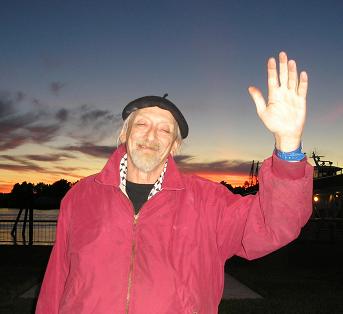
When John Ross left Terminal Island, the federal prison in Los Angeles, after serving a couple of years for refusing the Vietnam draft, the warden shook his head and said: “Ross, you never learned how to be a prisoner.”
I’m not writing the epitaph for whatever gravestone he has or doesn’t have, wherever it might be in the world, but that’s what I’d put on it: “John Ross, 1938-2011. Never learned how to be a prisoner.”
John, who died over the weekend, was a poet, author, activist, agitator and uncontrollable shit disturber, utterly and sometimes insanely fearless, pure of heart and devoted to the cause of social justice so deeply that he could never let up, even for a minute. He was also my friend.
John was a tenant organizer in San Francisco in the 1960s. He ran for supervisor once on a platform of rent control and ending the war; he was kicked off the ballot on the basis that he was a convicted felon. He never got his filing fee back.
After a while, he headed north for Arcata, back to the land, so to speak, and became something of a farmer. He wrote poetry, self-published maybe half a dozen books, most of which I have, some of which are probably lost forever. He wrote freelance for the Guardian, but he had no phone; you’d call him at a bar in Arcata (he swore later that Thomas Pynchon was one of his barmates), leave a message and he’d check in when he got it.
Then in 1984, he showed up at our office in San Francisco, fleeing the Campaign Against Marijuana Planting, which had raided his plot, trashed his house, thrown his typewriter out the window and missed capturing him by a few minutes. He sold the last of the crop in the city, found a room and started writing for us regularly.
He was one of the single most talented writers I’ve ever met — and a reporter willing to go anywhere for a story. He was also an absolute pain in the ass to work with. Every John Ross story I ever edited was a nightmare. He hated editors, almost as a matter of religion; every single word was sacred, and anytime I tried to mess with what he’d created he’d threaten to quit. “Take my name off the masthead; I’m never working for you again” was almost a mantra with us. It got to the point where I had to say: No, John. You can’t quit. You’re part of this operation forever, like it or not. And he always came around.
But it’s not a surprise that he never held down a real job for long.
Sandy Close at Pacific News Service sent him to Mexico City after the big earthquake in 1985, and he wound up at the Hotel Isabel, where he lived for the next 25 years. He took on stories nobody else would do or could do; he’d go places nobody else would dare. “Tim,” he’d always tell me, “you have to go where the story is.”
When the Zapatistas began their rebellion, he hitched a ride south from Mexico City, then hiked into the hills in Chiapas with a bag of granola and a couple of bottles of water, found the rebels in a little hamlet, met Subcommander Marcos and got interviews and information that left the rest of the media in the dust. In the first story he sent me, he described seeing a couple of reporters from the San Francisco Chronicle zipping by in a fancy rented jeep, with about $1,000 worth of camera gear, totally befuddled. They were out of their league; John was right at home.
He called me once, late at night, to ask if I knew any doctors in town. Turns out he’d been beaten pretty badly by the Mexican authorities just before getting on a plane to SF. I asked him how it happened, and he told me that he’d decided, on his own, to stand in the Mexico City airport and make a speech denouncing the government. The cops didn’t respond kindly.
He went to Iraq before the war to serve as a human shield in Baghdad (his emails were all signed “John Ross, humanshield”), left after having some clashes (imagine that) with his Iraqi government minders, travelled all over the world writing and selling his books, sent me pieces from everywhere, lost his eye to an old injury from fighting with the SFPD (his email signature became “Juan Eye”), won and refused an award from the City of San Francisco, wrote a major investigative piece on the death of journalist Brad Will and kept writing until the very end. When he was diagnosed with terminal liver cancer, he started signing his emails “John Ross, not dead yet.”
The last message I got was on Nov. 4. After complaining some more about the cops, he wrote:
“it appears ive written my last articles for the bay guardian — the doctors have given me six months on the outside and then its goodbye this cruel world — we raised some hell when i was here.” It’s signed: “insolidarity johnross enroute.”
Yes, John: We raised some some hell when you were here. Good luck enroute. And I will miss you forever.
John Ross leaves a son, Dante A. Ross, a daughter, Carla Ross-Allen, and a granddaughter, Zoe Ross-Allen, as well as a stepdaughter, Dylan Melbourne and her daugther Honore, as well as a sister, Susan Gardner. Memorial info is pending; I’ll keep you posted.
You can read some of John’s recent articles here and here and a lot more here.
SFBG Radio: A split decison for Jerry Brown

In today’s episode, we look at Jerry Brown’s first week in office — and give him an A for perception and a weak C for reality. Listen after the jump.
sfbgradio1/14/2011 by endorsements2010When will the gun madness stop?

Tucson was a disaster, a tragedy, possibly a result of overheated political rhetoric driving a deranged man to action. It was also the result of a national culture that makes it too easy to obtain a powerful weapon.
I looked at the top three stories on SFGATE this afternoon, and here they are:
1. More on the Tucson shootings.
2. 96-year-old woman and grandson shot to death in Livermore.
3. Man shot in Tenderloin coffee shop.
I know, the Chron loves to lead with mayhem, but seriously: That’s a lot of dead people for one day. And you can’t shoot someone if you don’t have a gun. You wonder when this madness will ever end.
The problem with parking tickets
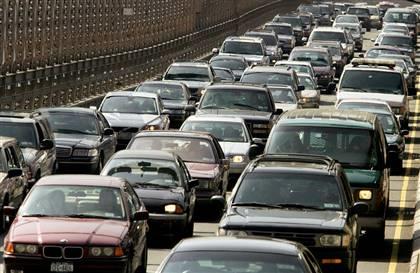
Naturally, C.W. Nevius is outraged that the poor drivers in San Francisco are going to get hit with more parking tickets since the Municipal Transportation Agency has a budget shortfall. We’re going to hear the usual whining form the cars-have-rights-too crowd; why is everybody always picking on the owners of internal combustion vehicles? I mean, they pollute the air and are destroying the planet, but paying for the right to drive in a city is such a horrible oppresive burden.
But here’s the thing: In this case, I don’t thing Nevius and the gang are entirely wrong.
Parking tickets were never meant to be primarily a revenue source. If you ask any rational urban planner or transporation expert, they’ll tell you that parking meter rates should be designed to encourage turnover of spaces and fines should be used to discourage illegal parking. In a perfect urban setting, the parking fines would be adequate to keep everyone following the rules, and there would be no revenue from tickets at all.
You start depending on illegal behavior as a source of revenue and you get into trouble fast. You get to the point where the city wants you to break the law so there will be enough money to pay for Muni service. Which makes no sense.
The system is also utterly unfair. Some people will never get parking tickets in San Francisco — because they have garages where they live (and garages seriously jack up the cost of housing) and garages where they work (and subsidized parking is an untaxed benefit for the few that harms society as a whole) and large parking lots where they shop (which encourages people to use big chain stores instead of neighborhood merchants.) Those people who never get tickets do just as much damage to the environment — and pay nothing for it.
In the end, parking fines are a somewhat regressive source of revenue. The very rich either don’t pay them or don’t care (in which case the deterrent is missing). Companies that do a lot of deliveries in congested parts of the city just factor the tickets into the cost of doing business — which means the drivers have no reason not to double-park. The average person who is five minutes late to pick the kids at child care (and is getting a $1 a minute penalty for being late; that’s standard in this city) and in desperation sticks the damn car in a yellow zone for just a couple of seconds and gets caught — that person is paying the cost of everyone else’s bad behavior.
But there’s no question that cars have serious negative impacts on the city, and San Franciscans shouldn’t be subsidizing their use. In fact, car users should be subsidizing Muni, big time. It just ought to be fair.
So for once, I’m with Nevius: Let’s use parking fines to discourage illegal parking, free up spaces and stop the damn double-parkers, who screw up everything, particularly Muni service (ever watch a trolley coach try to pull around a double-parked delivery truck downtown?). But when it comes to MTA revenue, we should try to go for a single, annual, progressive car tax. And it should be based on the value of the car.
You own and operate a $50,000 car in San Francisco? Costs you $500 a year in city taxes. Your car’s a 15-year-old beater worth $5,000? Pay $50. Yes, some people will cheat and pretend to live in Berkeley (although once we make this work, every other Bay Area city’s going to join us). Some people always cheat. If they get caught, their car gets towed and impounded. Most people will pay the tax.
Oh, and the neighborhood parking stickers need to be fixed. It costs, what, $300 a month to rent a garage these days — and for $70 A YEAR, you get the equivalent of a city-owned parking space on the street, all yours, all the time. That should be at least doubled. Then in exchange we can cut back on the street sweeping in neighborhoods.
I’ve always suspected that the city’s street-cleaning program was largely a post-Prop.13 way of raising revenue by taxing the people who are well enough off to own a car but not rich enought to have a garage. Sure, the city needs to clean Mission Street three times a week, but where I work, in Potrero Hill, the streets would be fine with a monthly sweeping. Save the city some money, too.
Owning a car in the city should be expensive. But the taxes ought to be fair. That’s all I’m saying.
SFBG Radio: Why is Sarah Palin whining?

It’s not bad enough that Sarah Palin is trying to take advantage of the tragedy in Tucson; she’s also complaining that she’s a victim. Johnny and Tim talk about how odd this is after the jump.
sfbgradio1122010 by endorsements2010About pragmatism
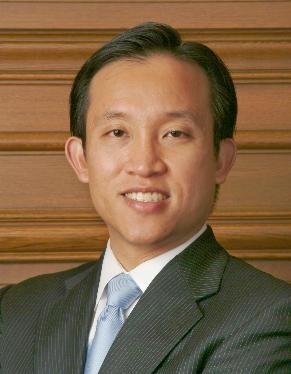
I want to say a word about pragmatism, about Sup. David Chiu’s contention that “we were voted into office to get things done.”
I’ll all for pragmatism. I’ve even for compromise sometimes. And I’m certainly in favor of getting things done. But just for a moment, I want to take a step back and remember what Chris Daly (who was actually quite good at getting things done) said during his final board meeting:
“I’ve seen go along to get along. If you want to do more than that, if you think there’s a fundamental problem with the way things are in this world, then go along to get along doesn’t do it.”
Daly’s tactics weren’t always terribly helpful. And working with people who don’t always agree with you doesn’t necessarily mean “going along to get along.” But I share Daly’s basic premise: There are fundamental problemws with the way things are in this city, and “getting things done” has to be about changing the situation. It’s not enough to keep the lights on and the cogs spinning; the city under Mayor Newsom went in the wrong direction, and the new administration has to take a new path.
Civility is good, as far as it goes. Reaching across the aisle and forming a progressive-centrist alliance, as Paul Hogarth suggests, can be useful. But President Obama quickly learned the dangers of an obesssion with bipartisanship, and while we all try to work together, we have to remember: The financial interests that supported Newsom and the conservatives on the Board of Supervisors don’t want to compromise on the big issues. They don’t want substantive change. They want to win, on their terms. And sometimes you just have to fight back.
So the question for 2011 is this: How much is David Chiu a fighter who is willing to use his substantial political capital to push for a progressive agenda? At what point will he say, gee, love working with all of you but some things are right and some things are wrong and there really are two opposing visions of this city and only one of them can win?
I remain the optimist, as always. But naming Carmen Chu, who is strongly opposed to taxes and is one of the most fiscally conservative members of the board, as Budget Committe chair, is enough to make me nervous.
How Jerry can save $125 million a year
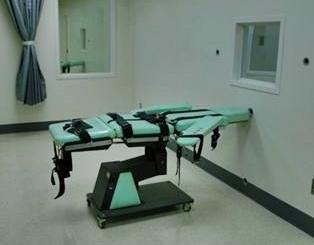
Here’s an excellent point from Julia Rosen at Calitics: While Jerry Brown is scrambling around saving a few million here and a few million there (not that I’m against cutting back on state cell phones), the state could save far, far more just by abolishing the death penalty. That’s a lot of money. The Illinois legislature just voted to end the death penalty, in large part because the strapped state can’t afford the inordinate expense of killing people. I personally think the death penalty is ghastly, and I’m horrified that our new district attorney is willing even to consider it, but even if you don’t have moral or societal qualms about executions, you have to admit it’s a horrible waste of money. The number one cause of death on California’s Death Row is old age. Life without parole works just as well.
John Ross is dying
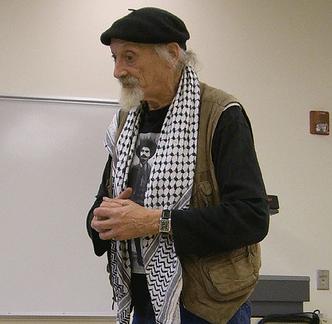
My friend John Ross — investigative poet, reporter, internationational shit disturber and reluctant honoree of the City and County of San Francisco is dying. His constant friend and supporter Elizabeth Bell let me know that he’s very weak: “John Ross and his cancerous liver are fading fast on the shores of Lake Patzcuaro,” where he has gone from Mexico City to retire. There’s a story about him in La Journada, if you read Spanish.
John never liked to sugarcoat things, so I’m not going to say that we all hope for a recovery; as he told me a month ago, we’re pretty close to the end here. He lived an amazing life, and of course, has no regrets.
I’ll bring you more info when I have it. Meanwhile, tune in to KPOO Jan 13 at 6 pm; Chelis Lopez will devote most of her show to his work. You can read John’s recent contributions to the Guardian here.
Editor’s Notes
tredmond@sfbg.com
Former Mayor Willie Brown says that choosing a person of color for a leadership position should be a progressive value. Board of Supervisors President David Chiu says the new mayor, Ed Lee, is a progressive. Several supervisors and other political observers say the six-vote progressive majority on the board is gone.
And nobody really talks about what that word means.
Progressive is a term with a long political vintage, but it’s changed (as has the political context) since the 1920s. (Progressives these days aren’t into Prohibition.) So I’m going to take a few minutes to try to sort this out.
I used to tell John Burton, the former state senator, that a progressive was a liberal who didn’t like real estate developers. But that was in the 1980s, when the Democratic Party in town was funded by Walter Shorenstein and other developers who were happy to be part of the party of Dianne Feinstein, happy to be liberals on some social issues (Shorenstein insisted that the Chamber of Commerce hire and promote more women), and happy to promote liberal candidates like John and Phil Burton for state and national office — as long as they didn’t mess with the gargantuan money machine that was high-rise office development in San Francisco.
But these days it’s not all about real estate; it’s that the level of economic inequality in the United States has risen to levels unseen since the late 1920s. So I sat down on a Saturday night when the kids went to bed(yeah, this is my social life) and made a list of what I think represent the core values of a modern American progressive. It’s a short list, and I’m sure there’s stuff I’ve left off, but it seems like a place to start.
This isn’t a litmus test list (we’ve endorsed plenty of people who don’t agree with everything on it). It’s not a purity test, it’s not a dogma, it’s not the rules of entry into any political party … it’s just a definition. My personal definition.
Because words don’t mean anything if they don’t mean anything, and progressive has become so much of a part of the San Francisco political dialogue that it’s starting to mean nothing.
For the record: when I use the word "progressive," I’m talking about people who believe:
1. That civil rights and civil liberties need to be protected for everyone, even the most unpopular people in the world. We’re for same-sex marriage, of course, and for sanctuary city and protections for immigrants who may not have documentation. We’re also in favor of basic rights for prisoners, we’re against the death penalty, and we think that even suspected terrorists should have the right to due process of law.
2. That essential public services — water, electricity, health care, broadband — should be controlled by the public, not by private corporations. That means public power and single-payer government run health insurance.
3. That the most central problem facing the city, the state, and the nation today is the dramatic upward shift of wealth and income and the resulting economic inequality. We believe that government at every level — including local government right here in San Francisco — should do everything possible to reduce that inequality. That means taxing high incomes, redistributing wealth, and using that money for public services (education, for example) that tend to help people achieve a stable middle-class lifestyle. We believe that San Francisco is a rich city, with a lot of rich people, and that if the state and federal government won’t try to tax them to pay for local services, the city should.
4. That private money has no place in elections or public policy. We support a total ban on private campaign contributions, for politicians and ballot measures, and support public financing for all elections. Corruption — even the appearance of corruption — taints the entire public sector and helps the fans of privatization, and progressives especially need to understand that.
5. That the right to private property needs to be tempered by the needs of society. That means you can’t just put up a highrise building anywhere you want in San Francisco, of course, but it also means that the rights of tenants to have stable places for themselves and their families to live is more important than the rights of landlords to maximize return on their property. That’s why we support strict environmental protections, even when they hurt private interests, and why be believe in rent control, including rent control on vacant property, and eviction protections and restrictions on condo conversions. We think community matters more than wealth, and that poor people have a place in San Francisco too — and if the wealthier classes have to have less so the city can have socioeconomic diversity, that’s a small price to pay. We believe that public space belongs to the public and shouldn’t be handed over to private interests. We believe that everyone, including homeless people, has the right to use public space.
6. That there are almost no circumstances where the government should do anything in secret.
7. That progressive elected officials should use their resources and political capital to help elect other progressives — and should recognize that sometimes the movement is more important that personal ambitions.
I don’t know if Ed Lee fits my definition of a progressive. He hasn’t taken a public position on any major issues in 20 years. We won’t know until we see his budget plans and learn whether he thinks the city should follow Gavin Newsom’s approach of avoiding tax increases and simply cutting services again. We won’t know until he decides what to tell the new police chief about enforcing the sit-lie law. We won’t know until we see whether he keeps Newsom’s staff in place or brings in some senior people with progressive values.
I agree that having an Asian mayor in San Francisco is a very big deal, a historic moment — and as Lee takes over, I will be waiting, and hoping, to be surprised.
Judge Kopp to run for D.A.?
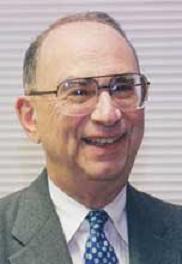
Yep: Quentin Kopp, the 82-year-old former supervisor, former state Senator, retired Superior Court judge and political fixture in this city for four decades, is being talked about as a potential challenger to the new district attorney, George Gascon.
I just talked to Kopp, and he confirmed that a lot of people have approached him about running in November, and while he’s not a candidate at this point, he hasn’t ruled it out. “If I do run — and I have to think about the rigors of a campaign — I would run on a platform of using the district attorney’s office to root out political corruption,” he said.
Kopp has always been fairly conservative on law-and-order issues and is a supporter of the death penalty. His political base has always been on the West side of town. But in a typically untraditional fashion, Kopp has become a bit more liberal in his later years — and has always been a strong supporter of open government and a foe of political sleaze.
And he seems to be in good health and certainly hasn’t lost his political vigor. (And, he reminds me, the legendary DA of New York, Robert Morgenthau, served past his 90th birthday.) So Kopp would be a formidable candidate in what’s shaping up to be a fairly large field.
Never a dull moment in this town.
Tucson, the rabid right and gun control

In today’s episode, we talk about the Tucson shootings, how the right wing has inflamed violence — and whether America needs more impulse control or more gun control Listen to Tim and johnny mix it up (guess who favors gun control?) after the jump.
sfbgradio1102010 by endorsements2010What progressive means
Willie Brown says that choosing a person of color for a leadership position should be a “progressive” value. David Chiu says Ed Lee is a progressive. Several supervisors, and other political observers, say the six-vote progressive majority on the board is gone.
And nobody really talks about what that word means.
Progressive is a term with an excellent political vintage, but it’s changed (as has the political context) since the 1920s. (Progressives these days aren’t into prohibition.) So I’m going to take a few minutes to try to sort this out.
I used to tell John Burton that a progressive was a liberal who didn’t like real estate developers, but that was in the 1980s, when the Democratic Party in town was funded by Walter Shorenstein and other developers, who were happy to be part of the party of Dianne Feinstein, happy to be liberals on some social issues (Shorenstein insisted that the Chamber of Commerce hire and promote more women) and happy to promote liberal candidates like John and his brother Phil for national office – as long as they didn’t mess with the gargantuan money machine that was highrise office development in San Francisco.
Arguing that Shorenstein’s economic agenda was driving up housing prices, destroying low-income neighborhoods and displacing tenants was a waste of time; the liberals like Burton (who also represented real estate developers as a private attorney) weren’t interested.
But these days it’s not all about real estate; it’s about the fact that the level of economic inequality in the United States has risen to levels unseen since the late 1920s, and the impacts are all around us. And it’s about (Democratic) politicians in San Francisco blaming Sacramento, and (Democratic) politicians in Sacramento blaming Washington, and the Democratic Party in the United States abandoning economic equality as a guiding principle.
So I sat down on a Saturday night when the kids went to be (yeah, this is my social life) and made a list of what I think represent the core values of a modern American progressive. It’s a short list, and I’m sure there’s stuff I’ve left off, but it seems like a place to start.
For all the people who are going to blast me in the comments, let me say very clearly: This isn’t a litmus-test list (we’ve endorsed plenty of people who don’t agree with everything on it). It’s not a purity test, it’s not a dogma, it’s not the rules of entry into any political party … it’s just a definition. My personal definition.
Because words don’t mean anything if they don’t mean anything, and progressive has become so much of a part of the San Francisco political dialogue that it’s starting to mean nothing.
For the record: When I use the word “progressive,” I’m talking about people who believe:
1. That civil rights and civil liberties need to be protected for everyone, even the most unpopular people in the world. We’re for same-sex marriage, of course, and for Sanctuary City and protections for immigrants who may not have documentation. We’re also in favor of basic rights for prisoners, we’re against the death penalty, and we think that even suspected terrorists should have the right to due process of law.
2. That essential public services – water, electricity, health care, broadband – should be controlled by the public and not by private corporations. That means public power and single-payer government run health insurance.
3. That the most central problem facing the city, the state and the nation today is the dramatic upward shift of wealth and income and the resulting economic inequality. We believe that government at every level – including local government, right here in San Francisco – should do everything possible to reduce that inequality; that means taxing high incomes, redistributing wealth and using that money for public services (education, for example) that tend to help people achieve a stable middle-class lifestyle. We believe that San Francisco is a rich city, with a lot of rich people, and that if the state and federal government won’t try to tax them to pay for local services, the city should.
4. That private money has no place in elections or public policy. We support a total ban on private campaign contributions, for both politicians and ballot measures, and support public financing for all elections.
5. That the right to private property needs to be tempered by the needs of society. That means you can’t just put up a highrise building anywhere you want in San Francisco, of course, but it also means that the rights of tenants to have stable places for themselves and their families to live is more important than the rights of landlords to maximize return on their property. That’s why we support strict environmental protections, even when they hurt private interests, and why be believe in rent control, including rent control on vacant property, and eviction protections and restrictions on condo conversions. We think community matters more than wealth and that poor people have a place in San Francisco too — and if the wealthier classes have to have less so that the city can have socio-economic diversity, that’s a small price to pay. We believe that public space belongs to the public, and shouldn’t be handed over to private interests; we believe that everyone, including homeless people, has the right to use public space.
6. That there are almost no circumstances where the government should do anything in secret.
7. That progressive elected officials should use their resources and political capital to help elect other progressives – and should recognize that sometimes the movement is more important that their own personal ambitions.
I could add a lot more, but I think those six factors are at the heart of what I mean when I talk about progressives. We support a lot of other things; I put the right of workers to unionize under Number 3, since unions (along with public schools and subsidized higher education) are one of the major forces behind a stable middle class and a more equal society. We think racism and homophobia are never acceptable, and we support affirmative action, but that goes under Number 1.
This is not a socialist manifesto; I never mentioned worker control of the means of production. Progressives don’t oppose private enterprise; they just think that some things essential for the good of society don’t belong in the private sector, and that the private sector should be regulated for the good of all of us. We trust and support small businesses much more than big corporations – and we think their interests are not the same.
I don’t know if Ed Lee fits my definition of a progressive. We won’t know until we see his budget plans, and learn whether he thinks the city should follow Gavin Newsom’s approach of avoiding tax increases and simply cutting services again. We won’t know until he decides what the tell the new police chief about enforcing the sit-lie law. We won’t know until we see whether he keeps Newsom’s staff in place or brings in some senior people with progressive values. We know that the people who pushed him to take the job aren’t progressives by any definition, but you never know. I agree that having an Asian mayor in San Francisco is a very big deal, an historic moment — and when Lee takes office, I will be waiting, and hoping, to be surprised.
Congratulations to Ed Lee
Congratulations to Ed Lee, who, unless Gavin Newsom still refuses to leave or the next board does something terribly surprising, will be the city’s first Asian mayor. This, as Sup David Chiu pointed out, is an historic moment, a watershed event in San Francisco history. And we shouldn’t forget that.
Now Lee will face a massive challenge, starting with a terrifying city budget — and a need to reassure progressives that he can be trusted. It’s not Lee’s fault that Rose Pak and Willie Brown settled on him as their candidate — but starting from Day One, he is going to have to demonstrate independence.
I have no doubt that, true to his roots, he will be solid on sanctuary city and local hire — two major issues that the supervisors mentioned today. And on those issues, and on civil rights in general, he will be vastly better than Newsom. He won’t deport high school kids and break up families.
But I have to wonder if he’ll be true to progressive values on the city budget — because the willingness to accept that, as Chris Daly just said, something is very wrong in this country and this world, and it includes (perhaps starts with) the vast income and wealth disparities that are making our society unsustainable, and that it’s the responsibility of every official at the federal, state AND local level to try to address that problem … that’s what separates out the real progressives.
Good luck, Mayor Lee, we sincerely wish you the best, look forward to working with you and can’t wait to hear your ideas on new city revenues.
Daly’s swan song
I’m just going to quote the way Chris Daly summed up today’s actions, because I think (beyond the vote today) it’s an important point for everyone to remember. Take it away, Chris:
“I’ve seen go along to get along. If you want to do more than that, if you think there’s a fundamental problem with the way things are in this world, then go along to get along doesn’t do it.”
It looks like Ed Lee — but will that hold tomorrow?
Well, Campos says he’s with Ed Lee — and that means it’s over. For now, anyway. There’s a new board in place tomorrow; it’s hard to imagine that the new supes will change this vote, but they’ll have to reaffirm it.
So Mayor Ed Lee will have a tough job ahead of him — starting with the fact that there’s no question he came to office at least to some degree because of Willie Brown and Rose Pak. And that’s going to hurt his credibility. He doesn’t need to convince us that he’s no Gavin Newsom; ne needs to convince us that he’s not going to take directions from Willie Brown.
Leno will not run for mayor
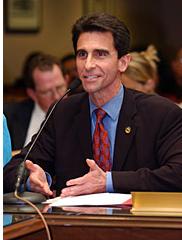
Just as the supervisors were meeting to select a successor mayor, Mark Leno called me to tell me that, after a lot of thought, he has decided he won’t be a candidate for mayor in November. He’s going to be running the state Senate Budget Committee, dealing with the worst fiscal crisis in California history, and “I just wouldn’t have the time to run a campaign.”
Leno would have brought a lot to the race, particularly as it’s shaking down now, but I certainly understand his choice.
Chinese community out in force for Lee
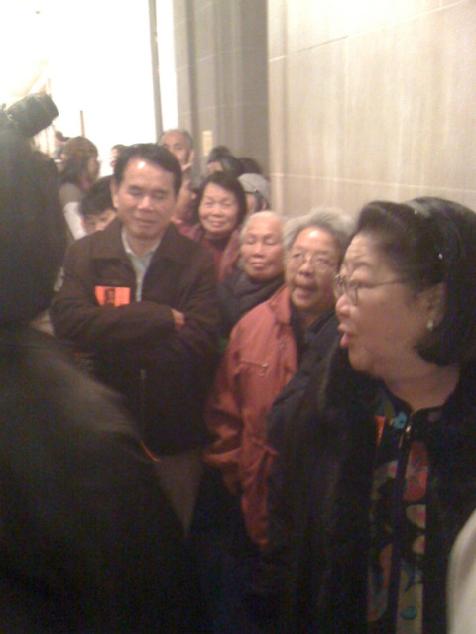
Well, Rose Pak promised a big demonstration and she’s got one: City Hall is mobbed with Ed Lee supporters pushing the supervisors to vote for the city’s first Asian mayor. Lee is still out of town, so he can’t answer questions, although he’s talked to several supervisors by phone. One said he seemed a little overwhelmed by all of this; he wasn’t even sure he wanted the job until Pak and Willie Brown talked him into it.
The revelations that the vote for Lee was a backroom deal orchestrated by Pak and Willie Brown (and from years of Brown watching, I can you this was a classic Brown move) will put Lee supporters like David Chiu and Eric Mar in a tough situation. Aaron Peskin, former supervisor, wasn’t mincing words when I talked to him jost before the meeting started:
“This is no so much about left and right, it’s about democracy and how power is transitioned,” he said. “This is disgusting, not because Ed Lee is or isn’t left or right or a progressive or a liberal. This is about the politics of power, and conservatives and moderates should be just as revolted as anyone.”
Meanwhile, my old friend Rev. Norman Fong, a leading Chinatown progressive, says he supports Ed Lee, as do a lot of progressives in the Asian communtity. I get that, and he’s a decent guy with a good history as a civil rights and housing lawyer, and he might even be a decent mayor. But this process stinks. There’s no other way to put it.