

Today Johnny talks to Johnny Venom from Chicago about the story behind what’s happening in Wisconsin. Listen after the jump.
Tim Redmond
Herrera’s crackpipe crackdown
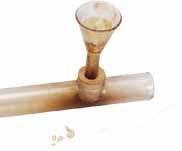
I lived at Hayes and Fillmore in the 1980s, at the height of the crack epidemic, and a spectacularly unsuccessful dealer hung out on my corner. He was so bad at selling the stuff (or else was smoking so much of it) that he was constantly broke and used to knock on my door late at night ask to borrow a buck to buy a can of beer.
At one point he owed me about $10, and offered to pay me back with “some hubba.” He proceded to open his fist and show me a couple of grimy rocks rolling around in his filthy, sweaty palm.
It looked so appealing. I politely declined.
That was my one and only chance to smoke crack, and I passed it up. So when I heard that city attorney Dennis Herrera was going to sue a bunch of local stores for selling crack pipes, I must admit I was curious: What’s the definition of a “crack pipe?” How can you tell what a piece of smoking apparatus is going to be used for?
I asked Jack Song, a spokesperson for Herrera, and he told me it was pretty clear. “They’re glass, and they have certain characteristics,” he said.
Again: I’ve never actually smoked crack, so I have no personal experience with crack pipes. But I used to have a really nice glass pot pipe, which unfortunately was seized by the police in upstate New York many years ago. I went on Google images, the source for all truth, and checked out “crack pipes,” and some of them looked a little like the one I used to use for what we now consider a legal medical treatment.
According to the press reports, an undercover cop went into these stores and asked to buy a crack pipe. The store owners allegedly offered up a specific device, which would not have been terrible smart; when we used to buy bongs in Connecticut, where selling any sort of drug paraphernalia was illegal, the salespeople would talk loudly about how to load “the tobacco.”
In this case, Herrera’s even going a bit beyond crack pipes:
At all times relevant to this Complaint, up to and including the present, in addition to
the permitted tobacco products, Defendants have also displayed and sold smoking paraphernalia, including a large array of pipes and devices commonly referred to as “bongs.”
But Song told me marijuana devices wouldn’t be targeted.
At any rate, the legal case is now going to rest, I guess, on what defines a “crack pipe.” (Apparently there are “meth pipes,” too, which are a little different from crack pipes. I feel so old and uninformed.)
And while I understand the neighbors griping about the stores attracting a nasty element (my old pal on Hayes and Fillmore was harmless enough, but your typical crackhead isn’t great company), I wonder about the ultimate impact of this particular, uh, crackdown.
Herrera’s lawsuit notes:
By providing their customers with a way to ingest illegal and dangerous narcotics, Defendants are creating and contributing to conditions which are injurious to the health, safety and welfare of their customers, neighbors, and the community at large. Defendants’ conduct causes or contributes to offensive and annoying conditions, including, but not limited to: illegal and dangerous trafficking of controlled substances, illegal and dangerous use and abuse of controlled substances, public intoxication, and the crime and nuisance related thereto.
I get that the city attorney considers these stores a community nusiance, and he may well be right. But I don’t think this is going to do much about crack and meth use.
I mean, can’t you smoke crack out of a pot pipe? Can’t you pretty much smoke it out of anything? When I was in high school people stuck their pencils into apples and made holes to smoke pot out of; in college, I learned that, in a pinch, Tampax wrappers made perfectly adequate rolling papers.
Druggies (of the sort who use crack pipes, anyway) may be violent and otherwise fucked up, but they’re notoriously creative. They may stop hanging around these particular stores in these particular neighborhoods, but they’ll find someplace else.
It seems likely that the only ones who are going to suffer for this are the store owners; the crackheads will be just fine. In a manner of speaking.
When radical protest works

It’s easy to get turned off by protests, to say that direct action, sit-ins, arrests are counterprodcutive and don’t make any difference. But then you read something like this and you realize that, over time, in-your-face activism can have a very direct impact.
Paul Watson founded the Sea Shepherd Society in 1978, after he left Greenpeace (which he also help found) in a battle over tactics. Greenpeace was always scrupulously nonviolent; Watson wanted to take things a step further. He bought a boat and started hunting down whaling ships; his first victim was a pirate whaler called the Sierra. He rammed his boat repeatedly into the Sierra’s hull off the coast of Portugal in 1979, nearly sinking it. An anonymous bomber finished the job a year later, blowing a huge hole in the whaler’s hull while it was in port.
Since then, Watson and his crews have made life miserable for whaling ships (check out this picture of a Sea Shepherd crewmember tossing a bottle of butyric acid — which is harmless but stinks really, really bad and would make conditions on the boat almost intolerable).
And it’s working: It took years, but Japan is now pulling back its whaling fleet, blaming the Sea Shepherds in part for making whale hunting too costly.
Warren Hellman: The rich are undertaxed
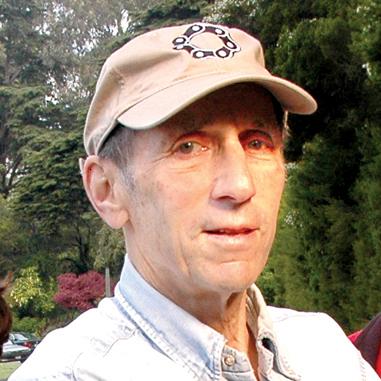
I couldn’t reach financier Warren Hellman before I wrote my column in this week’s paper talking about the employee pension discussions. But he called me yesterday (Feb. 16) after he’d seen it, and I expected he’d give me some shit.
Wrong.
In fact, Hellman had only one problem with my analysis: “Your article is didn’t go far enough.” Turns out he thinks I was a bit too easy on the billionaires.
“When you compare upper-echelon tax rates [in America] to any developed country in the world,” Hellman said, “the rich pay very low taxes here. You’re article is exactly correct — the wealthy are undertaxed.” He told me that he’s stopped trying to amass more personal wealth (“it’s all going into a foundation”) because he realizes that he couldn’t possibly spend all the money he has “and all that happens if you leave it all to the next generation is that you spoil your kids.”
Quite a statement coming from one of the city’s richest and most influential business leaders.
Of course, putting all the money in a foundation isn’t the only answer. The only way to address the wealth gap, and the decline in social, education and infrastructure spending, to for the government to get more involved — and that means collecting more tax money from the people who can afford to pay it. Hellman told me that he’s not about to accept a reduction in his lifestyle — but we both agreed that he doesn’t have to. He could pay a lot more in taxes and still be really, really rich.
So we talked about my proposal, which goes like this:
I’ve got a suggestion for the pension reform negotiators. Why not talk a little about parity.
Yes, pensions have to be fixed; let’s start at the top. Maybe nobody should have a pension of more than $100,000 a year; certainly, a former police chief shouldn’t get $250,000 a year for life. Maybe the highest-paid city employees should have to pay more into the pension system to protect the pensions of the people who make less. I could easily support progressive pension reform that would save the city money.
I just think tax reform should also be part of the equation.
Hellman wants $300 million in pension savings? Good — how about pairing it with $300 million in new taxes on the wealthy? How about big business and rich people give up something this time around, instead of all of the cuts falling on public employees and poor San Franciscans?
And Hellman, to his credit, didn’t disagree with the concept. His problem he said, was with the politics. “Taxes are the third rail of politics,” he said. “I’ve gotten my head handed to me three times now when I’ve supported tax increases.”
But I still think there’s a way to move forward here. The city employee unions agree to some sort of pension reform, which starts with a pension cap and higher payments from higher earners (not with what amounts to a pay cut for lower-wage employees who have already taken pay cuts in the past few years). Then Hellman, Mayor Ed Lee and Sup. Sean Elsbernd agree to support a progressive tax measure that would bring in badly needed revenue for public services and education.
It’s possible that the tax measure would have to wait until Nov. 2012, when it would only require a 50 percent vote. Maybe both measures go on that ballot. And Hellman, Elsbernd and Lee use their clout with downtown to push the Chamber of Commerce and the Commitee on JOBS to at least stay neutral and cut off any big-money campaign against the tax measure. Then they all agree to help raise money and campaign to pass it. And labor agrees to work for both measures.
Hellman said he feared that “one would kill the other” and both measures might fail. But I believe the people of San Francisco are willing to support new taxes — progressive new taxes — if they don’t think the money’s going to waste. And pairing pension refrom with new taxes sends a strong message: We’re all sharing the pain. Particularly if Hellman, Elsbernd and Lee can sell the tax package part of the deal to the business community.
It’s worth a try. Because otherwise, we’re going to have another Prop. B battle, both sides are going to spend a ton of money, and nobody’s going to walk away happy.
“It’s worth thinking about,” Hellman told me. I hope so.
Muni looks for money — but not downtown
The San Francisco Municipal Transportation Agency is looking for new ways to bring in money, which is a fine thing. I think taxes for transportation make perfect sense. And while not everything in government gets better when you throw money at it, Muni generally does. Some of the ideas are pretty sound and take a progressive approach; it’s hard to argue against a vehicle impact fee, since private cars on the road increase traffic and slow down the buses. I’m all for higher parking rates, and an off-street commercial parking fee is a great idea (even though the Guardian, which owns a building that has a small parking lot, would have to pay the fee).
But the list is missing the most obvious and the most fair element: A special tax assessment for downtown commercial property. We know, because the city has done numerous reports on this, that office developers don’t pay anywhere near the real cost of providing Muni service to their buildings. We know that most of the Muni lines, and certainly the ones with the heaviest traffic, exist to take commuters downtown. We know that decent transit is critical to the success of the entire central office district.
So why is there nothing on this list to address that? Why not an annual fee per square foot of commercial office space in the area zoned C-3-0 (highrise offices)? That ought to be part of any Muni funding plan.
I tried to get the folks at Muni to respond to my question, but I haven’t heard back. I’ll update as soon as I do.
Ammiano goes after tax cheats
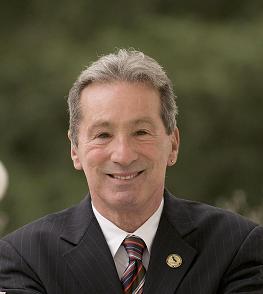
Assemblymember Tom Ammiano is moving to close a huge tax loophole that costs state and local government millons — and while his last attempt failed, this year he has a much better shot. The measure will probably make it out of the Legislature (hard to argue against something that doesn’t raise taxes at all but just makes sure nobody cheats) and I can’t imagine Jerry Brown deciding to veto it.
The bill, AB 448, would force companies that sell or transfer propetry to report it as an ownership change, which triggers a new assessment under Prop. 13. It’s one of the oldest loopholes in the book: I create a corporation or LLC to hold a piece of property, and when I want to sell, I simply transfer stock in the corporation or membership in the LLC to the buyer — and the property deed isn’t changed.
The California Tax Reform Association tracks this stuff, and you can see some examples here.
Ammiano’s been working with San Francisco Assessor Phil Ting, who told me “it’s a simple issue of fairness. Homeowners face reassessment when they buy property; why shouldn’t corporations?”
The stakes are high. It’s impossible to say how much San Francisco would pick up every year, but over time, it could be many millions of dollars (and about 57 percent of property tax revenue goes to the General Fund, the rest to the state, which returns most of it it the public schools).
Perhaps the Democrats should simply include this projected revenue in their budget; that way, Brown would have an even greater incentive to sign it.
SFBG Radio: Chris Daly on Twitter
Former Sup. Chris Daly has an opinion piece in today’s Guardian on the Twitter controversy; today, Johnny interviews him and gets more details on his argument that giving Twitter a tax break is a bad idea (among other things, he raises the question: what happens if Google buys Twitter and moves most of its operations down the Peninsula anyway?) Listen after the jump.
Editor’s Notes
tredmond@sfbg.com
In a heartwarming Valentine’s Day blog, Paul Krugman, the Nobel Prize-winning economist, talks about an old cartoon that ran in the 1980s showing Democrats trying to develop a centrist economic policy that cut spending on social programs. “How is this different from Republicans?” one Democrat asks. The answer: “We care about the victims of our policies.”
That, Krugman says, “is pretty much my reaction to the Obama budget.” The president talks about how awful the cuts will be, how programs he cares about will have to go, how painful this all is for him. Not that he’s going to miss any meals or wind up homeless, but whatever: we can all feel his pain.
It’s also pretty much my reaction to The Bay Citizen report that ran in The New York Times Feb. 13 on the pension reform negotiations going on at City Hall and in the office of billionaire financier Warren Hellman.
Hellman, Mayor Ed Lee, Sup. Sean Elsbernd, and some labor leaders are talking about how to avoid another bruising ballot measure fight this fall. Hellman backed off from supporting Public Defender Jeff Adachi’s Proposition B last year after some labor folks convinced him they could come up with a better plan.
Hellman’s new bottom line: the group needs to find between $300 million and $400 million in savings. He is quoted as saying: “I hate that it comes out of the hide” of city workers. “It is going to be really painful.”
Warren Hellman’s not a bad guy. I’ve met him, he’s polite and friendly, sometimes even almost sort of a liberal on some issues, and I think he does feel bad about cutting the pensions of low-level city employees. I even agree with him that the pension system needs reform.
But here’s the problem: nothing ever comes out of the hides of the rich.
Over the past five years, San Francisco has cut hundreds of millions in city spending. City employees have given back many millions more in concessions. Nonprofits have cut back services to the poor, the disabled, the sick.
But we haven’t asked big business and wealthy people to give up anything. Hellman hasn’t had to tighten his belt. Corporate executives in the city still make huge salaries. They’re not closing the swimming pool at the Olympic Club.
I could support pension reform — if Hellman, Elsbernd, and Lee would support tax reform. Then we can all feel each other’s pain. For once.
The WMD lies, confirmed
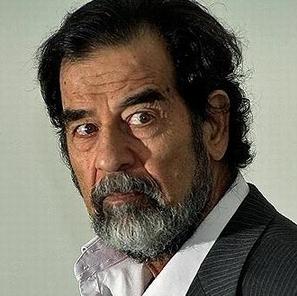
I don’t even know where to begin with this story. The U.K. Guardian reports today that the Iraqi defector who convinced the U.S. that Saddam Hussein had weapons of mass destruction now says he fabricated that story:
Rafid Ahmed Alwan al-Janabi, codenamed Curveball by German and American intelligence officials who dealt with his claims, has told the Guardian that he fabricated tales of mobile bioweapons trucks and clandestine factories in an attempt to bring down the Saddam Hussein regime, from which he had fled in 1995.
“Maybe I was right, maybe I was not right,” he said. “They gave me this chance. I had the chance to fabricate something to topple the regime. I and my sons are proud of that and we are proud that we were the reason to give Iraq the margin of democracy.”
So: The U.S. went to war, at a cost of hundreds of billions of dollars and many thousands of lives, on a pretext created by an unreliable defector who made the whole thing up. And either lots of CIA officials, and people up to and including Colin Powell, believed this character (who had no corroborating evidence, of course, because there wasn’t any) or they used what they knew was dubious intelligence to dupe the public.
You wonder: If everyone who has a good reason to gripe about his or her former country goes and makes up a story like this, how many wars will we wind up fighting?
It’s kind of like the old commie-plot days, when the very mention of the word “communist” could ruin someone’s life.
The Clarence Thomas conflicts
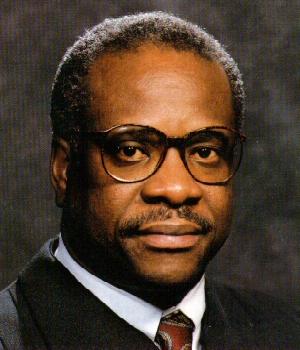
All I can say about this is that it’s pretty flagrant, pretty bad — and will probably amount to nothing, since the Supreme Court makes its own rules. But just imagine what would have happened if one of the more liberal justices had done something like this. I can hear Glenn Beck right now.
Leno forces GOP hand
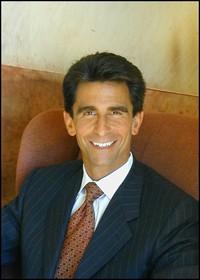
For whatever tactical reason (or other inexplicable Jerry Brown rationale), the governor has refused to tell Californians what he would cut if he can’t get his tax extensions approved. And the Republicans refuse to say what they would cut instead of letting the taxes continue.
So Sen. Mark Leno did it for them. Leno asked the Legislative Analyst to explain what $13 billion in budget cuts — the “no-new-taxes” budget the GOP wants — might look like.
It’s really, really scary.
For starters, take $4.5 billion away from K-12 education. That means the end to class-size limits for K-3. It’s a huge deal: The Gray Davis measure that limited those classes to 20 students probably did more than anything in decades to save public education in California. You want 40 kids in a kindergarten class with one teacher? You think any of them will be learning to read? Oh, and the state could save $700 million by delaying kindergarten for kids; guess who that impacts? Those kids are going to spend more time in pre-school which either (a) is subsidized by the taxpayers or (b) comes out of the hides of working parents.
Oh, and we’d eliminate food stamps for noncitizens. So people won’t be able to feed their kids. You think crime might become more of a problem? But wait: No room in the prisons.
Then we put college out of the financial reach of middle-class kids and expect to build a 21st century economy. And that’s just the beginning.
Leno deserves thanks for putting this list out; it ought to be in the ballot handbook along with the proposal to continue (not RAISE, just continue) some taxes. And we should all be asking every Republican in Sacramento: Is this what you want? If not, give us an alternative.
Hellman and Obama feel your pain
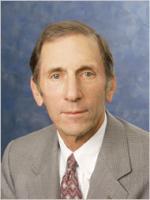
The Bay Citizen has a detailed report on the backroom discussions taking place around pension reform, and there aren’t any real surprises. The cops and firefighters seem to be leading the talks from the public-employee union perspective, although the other unions are there, and Mayor Lee has taken over the gavel from financier Warren Hellman. Sean Elsbernd is involved, but they’ve kept Jeff Adachi out. (And what the hell is Nathan Ballard doing in this mix?)
But what got me when I read the story this weekend was the quote from Hellman:
In an interview Thursday afternoon, Hellman said the group must come up with annual savings of $300 million to $400 million. (Proposition B was to have saved the city $120 million.)
“I hate that it comes out of the hide” of city workers, particularly those making modest salaries, Hellman said. “It is going to be really painful.”
It reminds me of Obama’s comments on his budget cuts: They’ll be painful and he hates to do it, but these tough decisions have to be made for the good of all of us.
My question: Why doesn’t anything ever come out of the hides of the billionaires?
From the start of this recession, working-class people, public employees and the poor have taken huge hits. Nothing — nothing — has happened to the top echelon of society. If anything, they’ve only gotten richer. The bankers who destoryed the economy with financial instruments even they didn’t understand? They’re not in the poor house. They haven’t had their homes foreclosed. They’re all doing just fine.
In fact, the United States government just kindly allowed them to keep their tax cuts for another two years.
Obama isn’t going to miss any meals. His kids will still have their fancy private school. He won’t have to worry about his pension vanishing or eating cat food in his old age. Same goes for Hellman; there’s nothing in the world that he could possibly want to buy that he can’t have.
So it makes me really mad to hear them talk about feeling bad about budget cuts and reducing pensions. If they feel bad, then why not do something about it?
Hellman’s not a bad guy. I’ve met him, he’s pleasant and polite and sincere about wanting to help the city. I couldn’t reach him on the phone today, but I’ll keep trying, because I have a question:
Over the past five years, city employees have given back hundreds of millions of dollars in wage and benefit concessions. Social programs have been cut by hundreds of millions more. And the rich in this town have given back nothing. Mr. Hellman: Is that fair?
I’ve got a suggestion for the pension reform negotiators. Why not talk a little about parity.
Yes, pensions have to be fixed; let’s start at the top. Maybe nobody should have a pension of more than $100,000 a year; certainly, a former police chief shouldn’t get $250,000 a year for life. Maybe the highest-paid city employees should have to pay more into the pension system to protect the pensions of the people who make less. I could easily support progressive pension reform that would save the city money.
I just think tax reform should also be part of the equation.
Hellman wants $300 million in pension savings? Good — how about pairing it with $300 million in new taxes on the wealthy? How about big business and rich people give up something this time around, instead of all of the cuts falling on public employees and poor San Franciscans?
I’m good with pension reform, really I am. And I’m not involved in the negotiations. But I’m a San Francisco progressive who will have to vote on the ultimate outcome. Give me something to work with here, guys.
SFBG Radio: Howie Klein, part II
In today’s installment, Johnny continues his interview with Howie Klein, founder of 415 records, contemporary of Harvey milk and Bill Graham. Listen after the jump.
Obama’s going to screw California
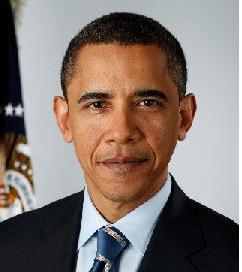
The giant cuts proposed by the Obama Administration (and worse ones suggested by the GOP) will hurt the economic recovery, hurt the poor, hurt the nation’s future — and hurt California. Let’s remember, as Brian Leubitz notes at Calitics, we live in a net donor state — for every dollar Californians send to Washington, the state gets 80 cents back. And now the president wants to make cuts that will further mess up the state budget — and since Gov. Jerry Brown is sending a lot of Sacramento’s work back to the counties, the shit will keep rolling downhill.
It’s true that Obama is also talking about tax hikes, but that’s going to be hard to get through the House. And even if he gets his higher taxes on oil and gas producers and high-income individuals, he still wants to cut spending — that is, non-military spending.
So over the next few months, as Washington politicians try to out-cut each other and talk about “living within our means” (except for wars that nobody wants to pay for but we keep fighting anyway), look for the budget crisis in Sacramento and San Francisco to get worse.
One ray of hope: If Jerry Brown is willing to back up his “local-government-does-it-better” campaign by giving local government the right to raise taxes abit more easily, then he’ll support Sen. Mark Leno’s bill to allow counties to raise the Vehicle License Fee. That might even come close to saving SF what Washington and Sacramento take away.
We are worse than Egypt

The revolution in Egypt was about a demand for democracy and resistance to repression — but it was also spurred in part by legions of angry young people who have no economic opportunity. And since the dramatic inequalities in Egypt were a factor in a stunning popular uprising, it’s worth noting an interesting fact:
Things are even worse here. According to Richard Eskow at the Campaign for America’s Future:
Here’s the reality: Income inequality is actually greater in the United States than it is in Egypt. Politicians here have close financial ties to big corporations, both personally and through their campaigns. Corporate lawbreakers often do go unpunished. Poverty and unemployment statistics for US minorities are surprisingly similar to Egypt’s.
Now, I’m not saying that poverty in the U.S. is worse than Egyptian poverty — the poor in Cairo are way worse off than the poor in New York or San Francisco. But when you compare the two countries, you get some disturbing similarities:
19.6% of Egyptians and 14.5% of Americans live below the poverty line. 21% of Egyptians are considered “near poor,” and 40% of Americans will fall below the poverty line at some point in their lives. One in six American children lives in poverty. So do one in four African Americans, which means the poverty rate for African Americans is greater than it is for Egyptians.
So why aren’t we out marching in the streets and demanding change? (Oh, wait, we did that two years ago, when we elected President Obama.)
SFBG Radio: Talking to Howie Klein
Today we continue Johnny’s interview with local music legends — he talks to Howie Klein, the co-founder of 415 Records, about his start in the music industry, Harvey Milk, Bill Graham, and more. We’re keeping these things short, so this is part one; we’ll post part two to the interview Feb. 14. Listen after the jump.
Editor’s Notes
tredmond@sfbg.com
I had fun with the state budget the other day. The Sacramento Bee has a pretty good online simulation that lets you pick programs to cut and revenues to raise to see if you can get rid of a $26.4 billion deficit, and I gave it a shot. It took me exactly seven minutes to turn the red ink into a $2.1 billion surplus.
See, it’s not that hard. Extend the 2009 tax increases, as Gov. Jerry Brown has suggested. Force multistate corporations to pay taxes based on sales in California. Increase the corporate income tax rate to the same level as the personal income tax rate. Eliminate the Prop. 13 loophole for nonresidential property. Pass an oil severance tax. A few more mouse clicks and bingo: I’ve got $28 billion, without cutting much of anything. (Well, I cut prison spending.)
The lesson you get from playing, of course, is that cuts alone will never do the job; there’s not enough left to cut.
When I finished, I called the office of Asemblymember Connie Conway (R-Tulare). She chairs the Republican Caucus gave the formal GOP response to Brown’s State of the State speech and insisted that new taxes were not acceptable.
Her press spokesperson, Sabrina Lockhart, was very friendly and nice. I told her about the Bee game and asked: If you don’t like Brown’s taxes, what specifically should the state cut?
Lockhart’s response: “Our focus has been on creating jobs to bring in new revenue.”
Okay, I’m for that, too, but let’s be real. Even if 1 million new jobs materialized tomorrow, that wouldn’t bring in enough money this year to balance the budget. Brown’s proposing $12 billion in cuts. If that’s not enough, what else do the Republicans think should go?
Lockhart: “The Republicans are engaged in the subcommittee process and will be reviewing the governor’s proposals.”
But your boss said no taxes, I told her. There are really only two options; taxes or more cuts, right? Am I missing something here?
Lockhart hemmed and hawed for a moment. “That’s why we think job creation has to be a part of this,” she finally said.
Well, I do, too, but it’s just not that simple. If the Republicans don’t want taxes, why won’t they tell us what they want to cut instead? Seriously, what Brown is offering is brutal, bloody — what else would the GOP members put on the chopping block?
Answer: They have no proposals. Nothing at all. Just no new taxes. If I were Jerry Brown, I’d be drinking heavily.
More questions about death drug

The Food and Drug Administration has finally released some more documents about the state’s procurement of its death drugs. The Guardian and the ACLU requested the material under the Freedom of Information Act. You can see the latest here.
A lot of it is just dry correspondance between agencies; the FDA was apparently a bit slow at releasing the imported drugs from customs. But there’s some interesting details in the mix.
For one thing, California and Arizona aren’t the only states that bought death drugs from England. A U.K. company named Dream Pharma also got orders from South Carolina, Arkansas and Georgia. And that pipeline is now shut off; the U.K. will no longer allow companies to export drugs for executions. (Civilized nation there.)
There’s also the interesting issue of whether the stuff that California bought is up to U.S. standards. The records show that the U.K. company doesn’t know if the Sodium Thiopental it sells meets U.S. standards; the company isn’t approved by the FDA. That means a hospital would have trouble buying and using the stuff for clinical purposes — but apparently it’s okay to use on condemned prisoners.
The issue is more than academic. The thiopental is supposed to render the prisoner unconsious and unable to feel pain before the next two drugs paralyze his breathing and stop his heart. If the stuff doesn’t work, then death could be very painful; imagine being awake as your lungs seized up and your heart stopped beating. In fact, the courts have been very clear on this point: Injecting the two final drugs into a person who is consious amounts to cruel and unusual punishment and is illegal.
So how do we know if the stuff the state bought works as advertised? How do we know what the proper dose is (you can’t exactly test it on someone first)? Is CDCR going to pay for a full chemical analysis to make sure they’re using the right amount of the right stuff?
Man, this is grisly. No wonder most civilized countries reject capital punishment.
Jerry Hill grandstands on local hire
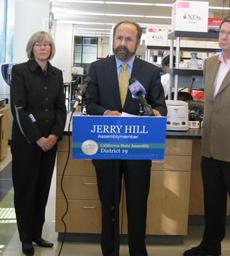
Assemblymember Jerry Hill — who’s facing term limits and reapportionment — has launched a pretty silly attack on San Francisco’s local hire law. He wants to make sure that no state money is used on local-hire projects (because the San Mateo County folks are mad about it.)
But the law doesn’t apply to projects funded with state money anyway, and it only mandates 50 percent local hire, and Hill’s bill will probably go down the crapper because the San Francisco legislators, who have a fair amount of clout up in Sacramento these days, aren’t going to support it. Assemblymember Tom Ammiano and state Sens. Mark Leno and Leland Yee have all signed a letter supporting the city’s local hire law.
And, of course, the Hill bill could mess with local hire efforts elsewhere.
Looks like a cheap publicity stunt to me.
Also in the Chron’s news briefs: A plan to raise the salaries of School Board members may make it to the ballot in San Francisco. I’ve been pushing this for years. It’s crazy to pay $500 a month to people who oversee a half-billion budget and do one of the most important jobs in the city — a job that by any account is a full-time-occupation. Yeah, it seems crazy to spend money on school board salaries when the district is laying off teachers, but some very good board members have quit because they can’t afford to have a job, a family and a seat on the School Board, and that’s nuts.
Why payroll tax breaks are stupid

Jeez, the folks at BeyondChron are so enamored of mid-Market payroll tax breaks you’d think they were getting one themselves. (But since nonprofits don’t pay the city’s business tax, maybe Randy Shaw doesn’t understand how it works.) Paul Hogarth, using a term typically employed by the Chamber of Commerce, call the tax a “job killer:”
Rather than taxing company profits or their net worth, the payroll tax is calculated on how many people they employ – which by definition makes it a “job-killer” for business that are hoping to expand.
And David Chiu told us he thinks we need to “reform the business tax. The payroll tax is a job killer.”
Now: I agree, we need to reform the business tax. We strongly supported Chiu’s proposal to replace the payroll tax with a gross receipts tax and a commercial rent tax (even though the Guardian is a commercial landlord and would have to pay that tax). It’s much more fair.
But this talk of the payroll tax being a “job killer” — and Twitter’s threat to leave town unless the company gets a tax break — boggles my mind. The payroll tax is a tiny, miniscule part of a San Francisco company’s expenses. I help run a small business in San Francisco. I have to make hiring decisions based on (tight) budgets, and I’ve had to do it for more than 20 years. And I can tell you, the payroll tax was never even remotely an issue. It’s not a “job killer;” compared to all the other factors involved in hiring in the city, it’s nothing, peanuts, birdseed.
Here’s how I explained it last time we had this discussion:
Say you’re a biotech company that wants to hire a new entry-level worker at a modest $35,000 a year. Can you afford it? Let’s cost it out.
There’s the salary, of course. Then there’s the 7.5 percent you’re paying in federal Social Security tax. That’s $2,626 more. And since you’re in San Francisco, you’re paying for health insurance; that’s probably between $2,000 and $4,000 a year, depending on the plan, but let’s peg it at the city’s minimum mandate, which is $1.09 an hour, or $2,267.
So now your $35,000 worker costs $39,893. Then there’s unemployment and disability insurance and workers’ compensation. The person’s going to need a desk and a chair, or a lab bench and a stool (and they have to be ergonomically correct), and probably a computer, a phone line, and software. And you’re going to have to spend some money on training. You’re going to offer a couple weeks of paid vacation, right? And you have to give sick days. So you have to account for the money you’re spending to cover your new worker when he or she isn’t working. If it all pencils out at less than $42,000, you’re doing well.
Oh, wait, I forgot — there’s the damn city payroll tax. That job-killing factor that could make the difference between hiring and not hiring. Better account for that; it could be a deal breaker.
Are you holding your breath? Ready for the ax to fall? Here you go: the payroll tax on your new hire is a whopping $525 a year. About $10 a week. You probably spent more on the help wanted ads.
Twitter wants a cap on the payroll tax for new employees, and that’s supposed to be the make-or-break factor that determines whether the company will stay here. Honestly? If that’s really true, then the folks at Twitter need some help in the accounting department, fast.
Again, my previous analysis:
Payroll tax data is confidential, but it’s not hard to make rough estimates. Twitter has abut 350 employees now, and if they make an average of, say, $70,000 a year (reasonable in a high-tech firm), then the company payroll is about $24.5 million a year, and the city’s 1.5 percent tax comes to $294,000.
Even if Twitter doubles its workforce, the amount it would save with the city’s proposed tax break is only about $300,000 a year (the cost of two or three high-end employees out of the 350 the company wants to hire). If Twitter moves into the 200,000-square-foot space it’s eyeing in Brisbane (sharing an office, reports say, with Walmart — how cutting edge!) and pays $25 a square foot in rent (probably low for nice office space), rent alone will be $8 million a year. Then there’s the cost of all those workers driving (or taking a private bus) to a location badly served by transit. The payroll tax liability in San Francisco is tiny in comparison.
Twitter would probably be paying more for the moving vans to haul its gear to Brisbane than the payroll tax it’s going to save. If it follows the likes of Genentech and Google and pays for fancy buses to transport its employees, the cost will make the payroll tax seem cheap. And if Chiu’s reforms ever become law, and there’s a commercial rent tax, and Twitter’s landlord passes it on to the tenants (likely), then guess what? Twitter’s taxes are going to be way higher anyway.
That’s why I think this is bullshit. It’s got nothing to do with Jane Kim or Randy Shaw or any of his political garbage. It’s simple economics. Twitter is jacking up the city for a tax break that will cost San Francisco money — but won’t be even a teensy weensy factor in job creation.
The reason this matters: Corporations constantly demand tax breaks from cities. And every time a city gives in (and let’s remember: the mid-Market tax break plan didn’t start with a need to help small businesses in the Uptown Tenderloin; it came from Twitter’s threats to move to Brisbane) then it opens the door for more blackmail. And if we’re going to make deals with these folks, let’s at least be be honest about it.
Again: If Twitter really, honestly thinks this tax break will make it more financially feasible to stay in the city — with all the other factors involved — then the bean counters there need to take a refresher course in Bean Counting 101. Tax breaks of this sort don’t create jobs; never have, never will. That’s the real lie we’re dealing with.
The Ed Lee documents
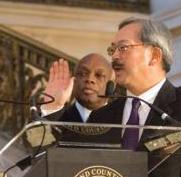
One of the depositions taken in a case involving fraud and corruption in city contracting contains some fascinating detail about how City Hall worked under Mayor Willie Brown — and the role the current mayor, Ed Lee, played in the behind-the-scenes action. The deposition of Deborah Vincent-James, who used to run the city’s technology purchasing agency, was taken by Matt Springman, an attorney with Gonzalez and Leigh. You can read the whole thing here (pdf).It gets pretty interesting around page 49, and the Ed Lee/Willie Brown stuff starts on p. 85.
The confession app: Have you masturbated?
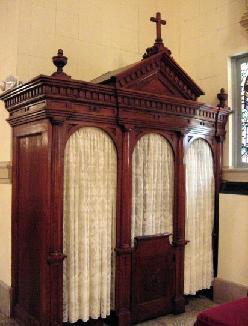
Oh my fucking god (and there’s no other polite way to put it): You can now go to confession on your iPhone. Maureen Dowd at the NYTimes notes that the hot new app
Walks you through the Ten Commandments, your examination of conscience and any “custom sins” you might have, then after confession (purportedly) wipes the slate clean so no one sees your transgressions.
Too bad my old colleague at an East Coast newspaper didn’t have this thing 30 years ago. She always asked me to be the one to interview the 60-something, bald-headed superintendent of schools in a small town we both covered because she couldn’t stop having “impure thoughts” when she saw him, and that meant she’d have to go to confession right after, and she’d miss her deadline.
And the Confession App is pretty special:
For instance, if you sign in as a 15-year-old girl and look under the Sixth Commandment, one of the questions is: “Do I not treat my body or other people’s bodies with purity and respect?” If you sign in as a 33-year-old married man, that commandment offers this query: “Have I been guilty of masturbation?”
Under the Sixth Commandment, men and women are asked: “Have I been guilty of any homosexual activity?” Priests, however, are not. They are asked if they flirt.
Um, I think there are a few sins missing there for the esteemed clergy of the Church of my youth.
Of course, all this does is make the Catholic Church look even dumber and more out-of-touch with the modern (sic) world (if such a thing were possible). Wayne Besen at Truth Wins Out (who does great work, but in this case takes it all a little to seriously) notes:
This is cyber spiritual abuse that promotes backward ideas in a modern package. Gay Catholics don’t need to confess, they need to come out of the closet and challenge anti-gay dogma. The false idea that being gay is something to be ashamed of has destroyed too many lives. This iPhone App is facilitating and furthering the harm.
Besides, electronic confession takes all the fun out of it. I remember the day in eight grade when every boy in my Catholic School class went into the little booth, one right after the other, and told poor Father Mahoney that we had just engaged in improper and sinful sexual behavior in the cloak room. We agreed in advance that each story had to be more detailed than the one before, and our best and most creative sinners got to go last. I think the good Father had plumb run out of Hail Marys by the end of the afternoon.
John Ross memorial Feb. 26
Friends and fans of John Ross, the poet and hellraiser who died in January, will celebrate his life at a memorial service Feb. 26th. It’s at the United Mission Presbyterian Church, 23rd and Capp, from 3-5 p.m., with a reception following at Cafe La Boheme. See you there.
SFBG Radio: Cheetah Chrome’s new book
Today we take another break from hard-core politics while Johnny gets back into his history in hard-core punk and talks with the legendary Cheetah Chrome, who has a new book out. Listen after the jump.
CheetahChrome by endorsements2010