Tim Redmond

Ten good bills for 2011

2

The news in Sacramento is mostly bad — Jerry Brown still can’t find the Republicans he needs to pass a budget, although maybe the redistricting process will help him. But it’s not all bad. Some important bills passed their houses of origin in the past week, and with Democrats controlling both the Senate and the Assembly and a Democratic governor, there’s actually a chance they could become law.


At the top of my list is the measure by Darrel Steinberg that could allow counties and school districts to raise a wide range of taxes. It is, as Sen. Mark Leno notes, a “game changer.” And it only requires a simple majority of both houses. (I wonder: Could the San Francisco supervisors put a tax measure on the ballot in November on the assumption that the Steinberg bill will be in effect by then?) If the GOP won’t budge on the budget, the Dems need to at least give local government the chance to find the resources to keep essential services running.


Assemblymember Tom Ammiano got AB 9, also known as Seth’s Law, approved on the Assembly floor. The measure, named in memory of Seth Walsh, a 13-year-old gay student from Tehachipi who suffered years of harassment and abuse, gives school districts the tools (and the mandate) to address bullying.


The Assembly also approved Ammiano’s AB 889, the Domestic Workers Bill of Rights, which gives domestic workers the same basic labor-law protections as other California workers, and AB 1081, the TRUST Act, which would allow California counties to opt out of S-Comm, the awful federal law that seeks to force local cops to become ICE agents.


Over at the state Senate, Mark Leno won approval for 11 bills, including SB 914, which would mandate that police get a warrant before searching the data on a person’s cell phone. It’s crazy that SB 914 is even necessary, but the state Supreme Court has ruled that, while you need a warrant to search a personal computer, you don’t need one to search a cell phone. SB 790 makes it easier for local agencies to form Community Choice Aggregation systems. SB 819 would give the state more authority to take firearms away from people who have committed felonies or have been institutionalized for mental illness. (The NRA’s going to hate this bill — felons have the right to guns, too …) SB 233 — another one I really like — gives local government the right to impose vehicle license fees.


Sen. Leland Yee won overwhelming support for SB 8, which mandates that foundations affiliated with the University of California, Cal State or community college campuses abide by the same public records laws as the schools themselves. (The Sarah Palin speaking fees bill.) SB 364, which requires corporations that get tax breaks for job creation to prove they’ve actually created jobs. SB 9 — another one that ought to be a no-brainer — ends the practice of giving juvenile offenders sentences of life without parole.


Seems likely all of these will emerge from the remaining house — and then we’ll see whether Brown is willing to sign progressive legislation.


Guardian poll: Should the garbage contract be put out to bid?

18

Since 1932, the company now known as Recology has, in some form or another, controlled the contract to pick up San Francisco’s garbage. Now some people are saying it ought to be put out to bid. The local company, which has an employee stock ownership plan, says it’s doing a heck of a job — and that a bid might open the door for a bad out-of-state conglomerate. On the other hand, 80 years is a long time for a contract — and a bidding process might help San Francisco get some more money out of what is by all accounts a very lucrative deal. Let us know what you think after the jump.


Free polls from Go2poll.com

The creepy circumcision comics

92

I’m not the sort to cry racism, or sexism, or anti-thisorthat-ism every time something offends me. There’s stuff that’s intentionally offensive and still funny, stuff that’s unintentionally offensive and harmless and all sorts of other stuff that might be in poor taste but doesn’t rise to the “ism” level. But I have to say: The comics that the anti-circumcision folks are putting out are just creepy.  

The Chron story on this was a classic of its kind, with quotes from both “sides” and an academic interlude. But it all becomes a bit more clear with this comparison of the circumcision comics and some classic graphics from Nazi Germany (thanks to Sen. Mark Leno, who passed these along to me).

I’m not going to claim the authors of the comics were motivated by anti-Semitism; I don’t even know them. But folks, get a clue — this is beyond offensive. Anyone with any sense at all should know better.

Chauncey Bailey project: Bey found guilty

0

I’m not going to say that Jusef Bey IV would have walked if the Chauncey Bailey project hadn’t come together to investigate the murder. But it’s certainly possible. There’s no question that the Okland cops were ignoring key evidence. And his conviction on first degree murder charges for planning the assassination is a tribute to what can happen when journalists who normally compete with each other get together for this sort of project. We were proud to be involved in the Chauncey Bailey Project, and I think thoue outcome speaks for itself.

The Sacramento nightmare

2

The best-case scenario, Brian at Calitics says, is still very dicey:


Somehow, Jerry manages to find the few votes that he needs for the so-called “tax bridge” and then we head to the ballot in September.  Yes, September.  What is certain to be a pretty low turnout election, we somehow have to make people understand just how important this revenue really is. And that isn’t going to be easy.


The good news is that the Democrats in the state Senate and Assembly are much more in agreement on blocking some of the worst cuts. The bad news, my sources tell me, is that Brown will not back down from his insistence that any new taxes go to a vote of the people.


It’s going to be tricky to get a single GOP vote for even short-term tax extensions (or even for putting tax extensions on the ballot). But if he manages to do that, somehow, the Gov still has to figure out where he’s going to get the millions of dollars it will take to win a low-turnout September election that will favor the conservative side. Who’s going to pay for this?


Not looking good, Jerry.


SFBG Radio: Why iCloud sucks

8

Today Johnny talks to Bob Pfeifer, former music industry executive, about how iCloud will simply continue the decline in the value of music — and in fact, amount to amnesty for illegal music piracy. Check it out after the jump.

ICloudIsBullshit by endorsements2010

Guardian forum 6/8 (Thursday) — join us

1

The Guardian, with the support of numerous progressive political groups, is holding a series of forums this summer on issues in the SF mayor’s race. The idea is to get a discussion going on what a progressive agenda looks like, what issues the candidates ought to be talking about and how that could be implemented. The first session — focusing on economy and jobs — takes place Thursday June 9, from 6-8 pm, at the USF Lone Mountain campus, room LM 100. That’s at Turk and Parker, the Balboa bus stops right in front and we’ll have vans to help people with mobility issues get up the hill. Check out the details after the jump.

Behind the all-smiles budget

2

news@sfbg.com

When Mayor Ed Lee released his 2011-12 budget proposal June 1, all was sweetness and light at City Hall.

The mayor delivered the document in person, to the supervisors, in the board chambers. Sup. Carmen Chu, chair of the Budget Committee, was standing to the mayor’s right. Board President David Chiu was to his left. There was none of the imperious attitude we’d come to expect in the Gavin Newsom era — and little of the typical hostility from the board.

As Sup. David Campos, who was elected in November 2008, remarked afterward: “It’s the first time since I’ve been elected that the mayor has taken the time to come to chambers. It’s reflective of how this has been a lot more of an inclusionary process.”

Lee went even further. “This is a pretty happy time,” he said. “There are no layoffs, and instead of closing libraries we’ll be opening them.” That earned him an ovation from assembled city leaders, including mayoral candidates City Attorney Dennis Herrera and Assessor-Recorder Phil Ting along with District Attorney George Gascón. “I think this budget represents a lot of hope.”

It’s true that this year’s cuts won’t be as bad as the cuts over the past five years. It’s also true that the pain is spread a bit more — the police and fire departments, which Newsom, always the ambitious politician, wouldn’t touch, are taking their share of cuts.

But before everybody stands up and holds hands and sings “Kumbaya,” there’s some important perspective that’s missing here.

Over the past half-decade, San Francisco has cut roughly $1 billion out of General Fund spending. The Department of Public Health has eliminated three- quarters of the acute mental health beds. Six homeless resource centers have closed. The waiting list for a homeless family seeking shelter is between six and nine months. Muni service has been reduced and fares have been raised. Recreation centers have been closed. Library hours have been reduced.

In other words, services for the poor and middle class have been slashed below acceptable levels, year after year — and Mayor Lee’s budget doesn’t even begin to restore any of those cuts.

“We’re not ready yet to restore old cuts,” Lee told the Guardian in a June 2 interview. “It was enough for us to accomplish a pretty steady course and keep as much. Particularly with the critical nonprofits that provide services to seniors and youth and homeless shelters, we kept them as close as we could to what last year’s funding was.”

But the current level of funding is woefully inadequate. As Debbi Lerman, administrator of the Human Services Network, noted, the people who work in the nonprofits Lee was talking about haven’t had a pay raise in four years — even though the cost of living continues to rise. “Our costs have gone up with cost of inflation,” she noted.

She said the cuts over the past few years have deeply eroded services for children, homeless people, substance abuse programs, and others. “There have been significant cuts to every area of health and human services.”

And in a city with 14 billionaires and thousands more very wealthy people, Lee’s budget is distinctly lacking in significant new ways to find revenue.


THE GOOD NEWS

Just about everyone agrees that the budget process this year has been far better than anything anyone experienced under Newsom. “He [Mayor Lee] listened to everybody,” Lerman said. “That doesn’t mean they fixed everything. Mayor Lee fixed as much as he could.”

At his press conference announcing the release of the budget, Lee thanked Police Chief Greg Suhr for having already made significant cuts through management restructuring and for considering an additional proposed cut of $20 million.

“We want to thank you for that great sacrifice,” Lee said, addressing Suhr, who sat in front row of public benches, dressed in uniform. Lee next acknowledged that adequate funding for social services also helps public safety. “Without those services, officers on the street would have a harder job,” he said.

Lee also praised the departments of Public Health and Human Services for helping to identify $39 million in federal dollars and $16 million in state dollars, to help keep services open and the city safer.

Lee noted that San Francisco no longer has a one-year budget process and has just released its first five-year financial plan as part of its decision to go in five-year planning cycles.

“To address this, I’ve asked for shared sacrifice, ” Lee continued, adding that he recently released his long-awaited pension reform charter amendment, emphasizing that it was built through a consensus and collaborative-based approach.

Lee also said he would consider asking voters to approve what he called “a recovery sales tax” in November if Gov. Jerry Brown is unable to extend the state’s sales tax. That would bring in $60 million — but it is only on the table as a way to backfill further state budget cuts.

Lee observed that San Francisco is growing, the economy is looking brighter, and unemployment is down from more than 10 percent last January to 8.5 percent today. He plugged the America’s Cup, the city’s local hire legislation, the Department of Public Works’ apprenticeship programs, and tourism, both in terms of earmarking funding in the budget for these programs and their potential to boost city revenues.

He said his budget proposed $308 million in infrastructure investments that include enhanced disability access, rebuilding jails, and energy efficiency, and is proposing a $248 million General Obligation bond for the November ballot to reduce the street repair backlog.

“We will get these streets repaired,” he promised.

“This submission of a budget is not an end at all, it’s the beginning of the process,” he continued, going on to recognize Chu for her work getting the process rolling and thanking Budget Analyst Harvey Rose in advance. “I do know his cooperation is critical.”

And he concluded by thanking each of the supervisors. “I will continue enjoying working with you — we need to keep the city family tight and together.”

The sentiment was welcomed by supervisors. “As he said, this is the beginning of the process, and it’s an important and symbolic step” Campos said. “The budget shows that a lot of good programs have been saved. But there is still work to do.

“There are still gaps in the safety network,” he added, singling out cuts to violence-prevention programs. “It’s my hope they will be restored.”


THE BAD NEWS

But even if the cuts for this year are restored, the city budget is nowhere near where it ought to be. “We still had to make cuts,” Lee acknowledged.

“We did consider very seriously a whole host of revenue ideas that we had,” he said. “They were not off the agenda at all.” At the same time, he noted that state law requires a two-thirds vote for new taxes (although that threshold drops to 50 percent in presidential election years). “We decided that it’s not that they were bad ideas, but that we wouldn’t be able to sell them at this time.”

Lee praised some of the revenue ideas that have been suggested in the past year, including the alcoholic beverage fee proposal by Sup. John Avalos, which Lee called “a pretty good idea.” He said that “a year or two from now” an additional sales tax and a parcel tax (for the police or for schools and open space) might be on the agenda.

The city now has a multiyear budget process and projections are supposed to go beyond a single year. But what’s missing — and what nobody is talking about — is a long-term plan to restore critical city services to a sustainable level. That means talking — now — about tax proposals for 2012 and beyond and including those revenue streams in long-term budget planning.

Because the city parks, the public health system, the libraries, the schools, affordable housing programs, and the social safety net are in terrible condition today, the result of year after year of all-cuts budgets. And while the supervisors and the mayor wrangle over the final details, and advocates try to win back a few dollars here and a few dollars there, it’s important to recognize that this budget does nothing to fix the damage.

“We’re about $10 million short of what we need right now to keep service providers at current levels,” noted Jennifer Freidenbach, who runs the Coalition on Homelessness. “But we also need to restore the health and human services system that was slaughtered under Gavin Newsom.”


Will SF lose a senate seat?

7

The new draft lines for state Assembly and Senate seats are out, and it’s not good news for San Francisco. It’s particularly bad news for Sen. Mark Leno, who could potentially be reapportioned out of a seat.


It’s a tricky process, but here’s how I understand it will work. The draft lines now, which put Leno and Sen. Leland Yee in the same seat (covering all of San Francisco and some of San Mateo County, down to Colma), will be updated June 9th. At some point a few weeks later, the redistricting commission will also decide whether to give the San Francisco seat (just one, we used to have two) an even or an odd number. If it’s an even number, it’s Yee’s seat — and as of Jan. 1, 2013, Leno is out of office for two years, at which point he could run again for the new seat.


Of course, if it’s an odd number, then it’s Leno’s seat, and Yee would finish his term representing his old seat — assuming he’s not elected mayor, which would create a vacancy in a seat that might only exist for a year.


More important in the long run than the individuals is the harsh reality that this will be a more conservative seat (tougher, say, for Tom Ammiano to win). The Marin County seat will be more conservative, too. And San Francisco will have only one state senator.


Ammiano still has an Assembly seat, but it includes more of the Peninsula.


The whole process is going to turn the state Legislature more conservative. We’ll likely get more Republicans in a state that has an overwhelming Democratic majority. And it’s not as if the new maps are free of what used to be called gerrymandering: “When voters get a look at the new districts, they’ll see as much modern art as Phil Burton ever created,” Leno said.


How Recology will attack the garbage initiative

4

We got an interesting call June 5 from a polling company. These folks typically ask if any member of the household works for the news media, and we have to figure out whether to lie and hear the questions or tell the truth and save 20 minutes. This time, the caller didn’t bother. So we agreed to answer “a few questions about the upcoming mayor’s race.”

Except the questions weren’t about the mayor’s race at all. They were about the proposal to mandate competitive bidding in the city’s garbage contract. And the poll, which was clearly testing different pro and con arguments, gave a good sense of how Recology, which holds the current monopoly, will try to frame the issues.

For starters, the pollster kept saying — without any evidence — that the proposal was the work of Waste Management Inc., a giant national garbage company. Among the arguments he presented: “This initiative is pushed by WMI, which puts profits ahead of customer service.” The pollster also charged that WMI had broken environmental laws and had a bad labor record.

Among the other arguments: “San Francisco should stick with a home-grown company that has done a good job.”

“The recycling system works.”

“A multinational Houston-based conglomerate wants to take over San Francisco’s recycling program.”

“Workers would lose their jobs.”

“Garbage rates would go up, and recycling would go down.”

“Politicians would have control over your garbage rates.”

That’s a nice snapshot of the campaign we’re going to see in the fall — and it’s utter bullshit.

The initiative is the work of retired Judge Quentin Kopp, Potrero Hill activist Tony Kelly and a few others. And it’s all about bringing competitive bidding to the city’s garbage contract. Waste Management Inc. has zero involvement.

“They haven’t give us a dime,” Kelly told me. “Nobody from Waste Management was involved in any way in our meetings or discussions. This isn’t about Waste Management Inc.; this has to do with the city and competitive bidding.”

In fact, the original idea came from the board’s budget analyst, Harvey Rose.

David Tucker, Waste Management’s community and public relations director, was happy to go on the record and “let the world know that WM has not contributed any funding to this effort.”

“While it would be nice to be able to compete in San Francisco, the truth is that our focus is on the city’s landfill disposal and facilitation agreements,” Tucker said, referring to the battle that WM has been waging for several years now to have a fair chance at being selected as the company that disposes San Francisco’s trash in a landfill outside city limits. (Right now, WM disposes the city’s trash at its Altamont Landfill near Livermore, and Recology hauls the city’s trash across the Bay Bridge to Livermore. But the city’s Department of Environment has tentatively awarded the landfill disposal AND the facilitation (which refers to transporting the trash) to Recology, essentially giving them a monopoly over the city’s entire waste stream, starting in 2016.)

Kelly told us he has nothing against Recology: “If Recology wins the competitive bid for the next century, it’s fine with me.”

Fine with us, too — and the odds are that’s exactly what will happen. The initiative states clearly that the bids have to include zero waste goals and worker protections — and the city already gives preference to locally owned companies. (You can read the text here (pdf)).

But in the process, Recology will have to accept better controls on rates — and will no doubt have to pay a franchise fee. So the city will get a better deal.

Recology knows that if the question on the ballot is framed as whether the garbage contract should be up for competitive bidding, about 90 percent of the voters will say yes. So the only way to block this initiative is to muddy the waters and make it about another company that has no role in the campaign.

Recology’s got a sweet deal, a no-bid $220 million deal that dates back to the 1930s. The company wants to protect it — and apparently is prepared to use whatever misinformation is necessary to do that.

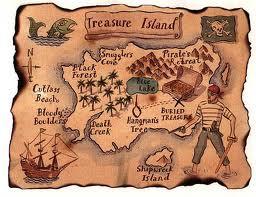
Treasure Island: So “special”

2

Actually, there are a bunch of problems. The Chron says the developers want to make the place “special,” a community of its own:


Developers hope the project, which goes before the Board of Supervisors for approval today, will feel like an urban village in the middle of a bustling metropolitan area. They hope urban farms, plentiful public transit and shared community spaces will give residents of the island a sense of community not found in other developments. …


For Treasure Island to be successful, developers and city planning experts agree that the residents of the island must feel like part of a special, distinct neighborhood where people want to spend time, and not just another community of commuters to San Francisco.


But the numbers don’t add up.

The plans call for 19,000 people living on the island — and there won’t be anywhere near enough employment opportunities for even a fraction of that number. So most of the residents are going to work somewhere else. Which means that twice a day they’ll have to travel — to and from San Francisco or to and from the East Bay — and there’s just no easy way to get that many people off that island to those locations.

Ther Bay Bridge is already beyond capacity during the periods when most of these people are going to be commuting. Yes, you can add a bunch of Muni buses to carry a lot of people, but that’s going to cost a lot of money. So would increasing ferry service to the level that this project would require. And if the past 50 years of San Francisco development is any guide (and it ought to be), the developers won’t pay enough for the transportation and the city won’t have the money to do it right so it won’t happen.

And even if the project meets the developers’ dreams in 30 years, it’s going to be a long, messy slog along the way. 

How, for example, will people who live on the island get their kids to school? Given San Francisco’s school-choice system, and the fact that there won’t be elementary, middle and high schools on the island anyway, and the school district can’t pay for the bus routes it has now, much less for new buses going to Treasure Island, you’re going to have hundreds of parents going to schools all over the city — and there will be only one way to get there: In cars.

(I’m all for no-car travel, but let’s be serious: Who’s got the time to take a kindergartener on the ferry downtown and on one or maybe two bus connections to a school — then turn around and take another bus to work? It isn’t going to happen. And nobody’s sending elementary school kids on Muni to school alone.)

If the supermarket isn’t built before most people move in, then you’ve got the grocery problem: It’s hard to do a week’s shopping on Muni and then a ferry. And what happens when you forget the milk (or run out of beer on the weekend?) No way to walk to the store, so you get in the car.

To make it even worse, 80 percent of the people who live there will be rich (since that’s who can afford market-rate housing). They’ll all have cars (and the developer kindly is providing parking spaces for all of them).

I just don’t see how it’s going to work. 

SFBG Radio: The politics of sex scandals

0

Does the Edwards scandal hurt the Democrats? No. Does the Schwarzenegger scandal hurt the Republicans? No. It’s old history. But what about Rep. Anthony Weiner? Why does anybody care what he did on his own time? Johnny and Tim discuss after the break.

sfbgradio662011 by endorsements2010

SFBG Radio: Obama and unemployment

2

No president since FDR has been reelected with unemployment at the levels the United States is seeing today. So that mean Obama is in trouble? Is the recession ever going to end? Johnny Angel talks to economist Johnny Venom. Check it out after the jump.

EconInEightMinutes by endorsements2010

A rather odd endorsement

94

I got a press release today from the Dennis Herrera for Mayor campaign proudly announcing the endorsement of … Frank Jordan.


Jordan was mayor of San Francisco once. Back in the 1990s. His term ran from 1992 to 1996, and was, to be polite, mediocre. Nice guy; awful mayor. He was one of the more conservative mayors in memory, left office pretty unpopular, and a lot of people don’t even remember him. Those who do, particularly progressives, don’t remember him fondly at all.


Ah, but Herrera does.


“I’m deeply honored by Mayor Jordan’s praise for my leadership, and grateful for his endorsement for my mayoral candidacy,” said Herrera.  “Few can claim to have done as much to serve our City with such integrity, skill and courage as Frank Jordan.”


While Leland Yee is out trying to get support on the left, which might actually help him win, Herrera seems to be moving, if anything, to the right (which is what Jordan’s endorsement represents). Very odd. Very odd indeed.


I couldn’t reach Herrera today to ask him about it, but I’m sure he’ll call me and I’ll update this post. Meanwhile: WTF?  


UPDATE: I heard from Herrera late in the day. He told me that “there are only six people alive who have ever held the office of mayor of San Francisco and know what it’s really like to manage this city, and I would be proud to have the endorsement of any of them.” I asked: Including Willie Brown? Herrera: “He’s a columnist now so he doesn’t do endorsements.”


Herrera also pointed out, correctly, that he has the endorsement of Mike Hennessey, the progressive sheriff. And he’ll wind up with some more leftish endorsements, too. Still: Frank Jordan?

A different Mayor’s Office

10

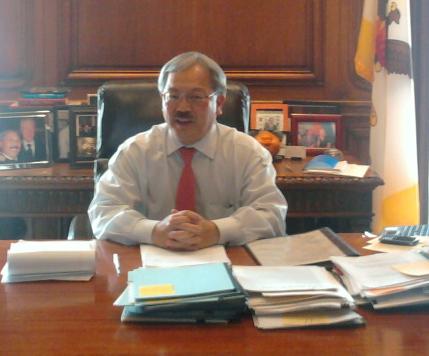
A group of Guardian reporters and editors met with Mayor Ed Lee June 2, and while the mayor and I don’t agree on everything, I have to say: It was refreshing.


Refreshing because the mayor has a sense of humor and doesn’t act like an infallible monarch. Refreshing because his office looks like, well, a working office. Refreshing because he smiled, was polite and never said “I dispute the premise of your question.”


What a difference.


Under Willie Brown, the mayor’s office was an imperial sanctum. If His Royal Williness deigned to favor one of his servants or subjects with the boon of a royal visit, you were expected to crawl on your hands and knees and kiss the floor. 


When Gavin Newsom was the occupant, the place was a cross between a museum and an Architectural Digest showplace — not a scrap of paper on the desk, every hair perfectly in place, the Robert Kennedy pictures and books lined up perfectly for the visitor to admire.


Both mayors treated the press with hostility. Both expected to be treated as potentates. The mayor was better than you and I — and you needed to understand that right away, or risk disdain and dimissal.


Ed Lee isn’t doing what I want with the budget. He’s not talking about raising taxes on the rich. He’s probably going to go along with ParkMerced and maybe even Treasure Island. He signed the Twitter tax break. I worry (a lot) about his ties to past corrupt regimes.


But he’s happy to have reporters in his office. He’s got stacks of reports on his desk and a notepad that suggests he’s actually reading them. He showed us his private “man cave” in the back, and offered us walnuts. He’s not always right on policy, and I don’t think he should run in the fall … but he’s not a jerk. And given the recent history of San Francisco mayors, that’s pretty radical.


Ad agencies proclaim inequality

3

It’s always fun to hear what the corporate elite talk about when they talk to each other — and there’s a great example in the latest study produced by Ad Age, the journal of the advertising industry. The study confirms that the rich have everything, that the middle class is vanishing, that “mass affluence is over,” and that


Simply put, a small plutocracy of wealthy elites drives a larger and larger share of total consumer spending and has outsize purchasing influence.


From Too Much:


America as a whole, the new Ad Age study pauses to note, hasn’t quite caught up with the reality of this steep inequality. Americans still “like to believe in an egalitarian ideal of affluence” where “everyone has an equal shot” at “amassing a great fortune through dint of hard work and ingenuity.”


In actual life, the new Ad Age study points out, “the odds of someone’s worth amounting to $1 million dollars” have shrunk to “1 in 22.”


There you have it: The marketers have spoken.


Sacramento deadline: Some key bills

0

A bunch of key bills come up in the state Legislature this week — and some of them are going to be very close. Assemblymember Tom Ammiano is pushing hard to get AB 1017, which would eliminate mandatory felony charges for pot cultivation, throught the Assembly floor (in fact, when I called his press secretary, Quintin Mecke, today (June 1) at about 11 a.m., Ammiano was on the floor making his 1017 pitch.) Ammiano also has a key tenant bill, AB 265, which would allow tenants who are a few days late with the rent to avoid eviction.


Dean Preston, executive director of Tenants Together, has a great rundown on the major tenant bills here. Sen. Mark Leno’s bill, SB 184, which is critical to protecting the rights of cities to demand affordable housing as part of a development deal, is going to be very close. So is Assemblymember Mike Feuer’s AB 934 — a nobrainer that simply clarifies tenant protections that have been threatened by recent court cases. (Preston told me that San Francisco Assemblymember Fiona Ma is not among the bill’s supporters at this point; you can call her office at  557-2312 and let her know you want her to vote for it.)


Sen. Leland Yee has gotten two bills through, one that would allow pharmacies to sell sterile syringes without a prescription and one that mandates more sunshine in the courts. His bill forcing the University of California to open up its foundation records will almost certainly clear the Senate now that UC had dropped its opposition. Tougher going, I expect, for SB 9, which would end life without parole sentences for juveniles.


Leno’s bill legalizing infusion drinks at bars cleared the Senate. He’s also pushing a Community Choice Aggregation bill, SB 790, and  the long-awaited, much-fought-over cell phone, SB 932, which would require modest disclosure of cell-phone radiation.


The difference between this session and the last one is that a lot of these bills might actually get the governor’s signature.

SFBG Radio: The drug war and kids

10

It’s fine to belive that drugs ought to be legal — but how do you talk to your kids about it? Johnny and Tim have a lively discussion after the break.

KidsNDrugs by endorsements2010

Editor’s Notes

7

tredmond@sfbg.com

Three weeks before the June 25-26 Pride Weekend — which is the unofficial opening of the official fall mayoral race — there are two front-runners: state Sen. Leland Yee and Sup. John Avalos.

I’m not saying either is going to win. Things change quickly in this town. We don’t even know for sure if the incumbent, Ed Lee, is going to be in the final scrum.

But here’s what we do know: Yee and Avalos — right now, today — are doing the things they need to do to emerge from a crowded pack. And the others are either hanging back or flailing around.

Avalos had more than 400 people at his kickoff. State Assemblymember Tom Ammiano was there to endorse him. He’s got window signs all over the east side of town. He’s showing momentum, energy; he’s on track to solidify the progressive base and start moving west. He has agreed to cosponsor the mayor’s pension reform plan (but only if SEIU Local 1021 gets the amendments the union wants).

Yee has figured out a very smart strategy: He realizes that he’s already got name recognition and a west-side base, that he’s never going to get the support of the Chinatown establishment (powerbroker Rose Pak hates him), and that he’s one of at least five candidates fighting over the center. So he’s trying to grab a share of the left.

Yee’s people were thrilled that he and Avalos got the Sierra Club. The more groups that endorse the two together (in any order), the more Yee becomes associated with the progressive standard-bearer. And the more second-place votes he gets on the left. (Don’t kid yourself; this race may well come down to who gets second-place votes on the left.)

And Sup. David Chiu just gave Yee a great big gift. Chiu defied every single tenant group in town and became the swing vote in favor of the Parkmerced project. Now the tenants are pissed — and you know Yee is going to try to take advantage of it.

The frustrating part of that scenario is that Yee was never a good tenant vote when he was a supervisor. That’s his Achilles’ heel on the left — but it’s old history, and the anger at Chiu is here today.

Would Chiu be a better mayor for tenants than Yee? Quite possibly. Is any tenant group thinking that right now? No.

Chiu’s in a tricky spot. He’s trying to be the centrist progressive — and that’s a hard thing to sell to either the center (where he’s one of five candidates) or the left (where Yee is edging him out in cozying up to Avalos).

City Attorney Dennis Herrera hasn’t recovered from the political consultant lobbying mess (not a new story, he’s hardly the only, or even remotely, the worst offender, but damn, it makes him look bad). Former Sup. Bevan Dufty’s doing great at the candidate forums but doesn’t have a breakout move. Assessor Phil Ting is awfully quiet.

It’s only June. But it won’t be “only” anything much longer.

The funny side of sit/lie

64

Nato Green, a local comedian, has a funny rant on sit-lie. His basic point: Nearly 100 percent of all crime is caused by people who are not lying down. In fact, getting people to lie down is a good way to prevent crime. And if you don’t want to look at freaky people on the streets, there’s a train to Walnut Creek every 20 minutes. Check out the video after the jump.

SFBG Radio: Is college worthless?

8

Is college worthless? Too expensive? One of the founders of PayPal thinks so, and he’s paying kids to drop out. Johnny thinks — well, maybe. Tim thinks that’s completely ridiculous. Plus: a rant on American Idol. Check it out after the jump.

CollegeWorthlessSoIsAI by endorsements2010

James Durbin, California Idol

76

Okay, here’s a really important political issue for the long weekend.


Now that American Idol is over, and the wrong people made it to the final, and our own James Durbin, the Santa Cruz kid who was by far the most talented performer on the show, was kicked off way to early in favor of a pair of southern god-fearing country types, maybe it’s time for California to make a statement.


After all, Durbin’s a hard rock guy from a crazy Left Coast town, has become an inspiration for people with disabilities, and is all aobut the California spirit. So we ought to show him some love. How about the state Legislature declares Durbin the “California Idol 2011?” Invite him up to perform outside the Capitol. Have a party. Rock out. Tell the southerners that, with all due respect, we stand by our man.


At least it would take everyone’s mind off the budget for a few hours.


Who wants to introduce the resolution?

Great news! More BART Police tasers!

7

I cannot contain my joy and excitement: BART is buying 130 new Tasers so every cop can have one! Imagine — more ways for the not-ready-for-prime-time police force to hurt people!


I’m dubious about BART police carrying guns — the seem to shoot the wrong people pretty often. And this new policy won’t replace lethal weapons with “less lethal” ones — the idea is to give the BART cops TWO ways to shoot people.


As we all know, “less lethal” is like “a little bit pregnant.” Either a weapon kills you or it doesn’t. Tasers are known to kill people.


But the larger point is that cops with Tasers are going to use them — and use them in circumstances where other alternatives tha don’t involve shooting anyone with anything were also possible. Tasers are a shortcut, an easy way to subdue a suspect. And I don’t care how much training the BART cops get; there are going to be mistakes, possibly deadly mistakes.


Why is the BART Board allowing this to happen?

Guardian poll: Top issues in the mayor’s race

25

What’s the most important issue in the mayor’s race? I mean, there are so many, and it’s hard to rank them or to choose one, but just for fun (and some insight into how Guardian readers see the city’s political priorities) I thought we’d do a poll on the top issues. Sadly, you can only vote for one (my polling software isn’t that sophisticated). But give it a shot after the jump.


Free polls from Go2poll.com