Tim Redmond

The Chron is clueless

8

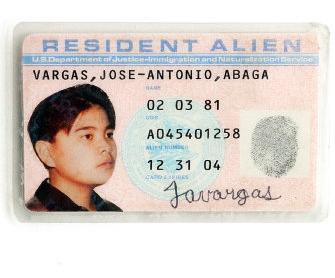
The ol’ Chron commissioned its former reader representative, Dick Rogers, to do a piece on the Jose Antonio Vargas story, and he concludes that Vargas was a liar whose failure to turn himself in to immigration authorities (and thus accept deportation to a country he hardly knew) undermined his journalistic work. Rogers quotes editor Ward Bushee:


“While he deserves sympathy for his efforts to become a citizen, Vargas’ lack of forthrightness in some of his reporting cannot be defended,” Bushee said. “He practiced a pattern of deception that was not only dishonest, but disrespectful of his readers and fellow journalists at The Chronicle.”


Pardon me while I puke.


I’ve already written about Vargas and about former Chron editor Phil Bronstein’s (far more nuanced) handwringing over the situation. But the conclusions the Chron reached in the Rogers article are just bizarre and reflect a creaky, ancient attitude towards journalism that makes no sense in the modern world.


I called Rogers, who is a nice guy with a long history in journalism, and we had a long talk about the situation. I asked him what the young man should have done when he found out at 16 that his parents had sent him to the Unites States illegally. Rogers, to his credit, said he didn’t know, that it was a tricky moral and legal dilmemma. “But that’s not what I was asked to write about,” he said.


The issue for him: Vargas lied when he filled out his employment application and failed to disclose to his editors that he was in the country illegally. That damaged the Chronicle. “You can’t put yourself above your newspaper,” he told me.
Okay, once again: What should Vagas have done? What should a person who is forced by stupid and inconsistent federal laws to lie about his immigration status do if he wants to be a journalist? Well, Rogers said, that’s the dilemma: “I don’t think he should have been working in mainstream journalism.”


Of course, he’s have to lie to get a job as a lawyer, or doctor, or CPA. And all of those professions also have ethical codes that discourage lying. So perhaps he should have been a bricklayer.


To be fair, Rogers doesn’t go that far — he suggested that there were other types of journalism Vargas could have done. He could, for example, have worked for the Bay Guardian. (I wish.) After we talked for a while, Rogers said that if Vargas was going to work for the Chron, he should have recused himself from any stories involving immigration.


But let’s be real here: The Chron allowed a reporter who took money from a nativist group to keep writing about immigration. Bushee, who is so outraged about Vargas, has no problem allowing an (illegally) unregistered lobbyist who gets paid to advocate for wealthy interests in the city to write a political column without ever disclosing his clients or conflicts. (Rogers told me that was a legitimate point. “Conflicts are conflicts,” he said.)


And at the same time, the Chron fired a reporter who participated in an antiwar march and wouldn’t let a lesbian reporter cover same-sex marriage.


It’s inconsistent to the point of being silly.


Look: All of us have conflicts. As the great Larry Bensky once told me, “People who have no conflicts have no interests.” Can a person who drives a car write about transportation policy? Can a person who smokes pot write about medical marijuana (or should she tell her editor, sorry boss — I’m illegally ingesting a controlled substance at night, better fire me or report me to the cops because I can’t cover this story)? Can a person with children write about whether San Francisco is a good city to raise children? Can a person with kids in the public schools write about the school board? Can a divorced person cover a wedding? Can a person who had an affair write about a politician who’s caught fooling around? Can a person who drinks beer write about the city’s alcohol tax?


I mean, let’s not be ridiculous here.


Let me tell a perhaps hypothetical story. Suppose that, when I was working for a (socially conservative) daily newspaper in a (socially conservative) New England city in the mid-1970s, I had a colleague who was gay. And suppose she decided — correctly — that her career would be damaged (at that time, at that institution) if she was out of the closet. (For all I know, she was a criminal, too — I’m not sure when this particular state repealed its sodomy laws.) So suppose she lied — to her boss, to her coworkers, to everyone around. Did that mean she was a bad reporter? Not at all. My hypothethical friend did what she thought she had to do, at a time when the professional and political world she lived in was unwilling to accept who she was. (In fact, there were no laws back then about firing people because of their sexual orientation.) She hated it, we all hated it, and we worked to change things. But I’m not going to condemn her — or call into question the credibility of her work — because of it.


(By the way: I lied, too. I told my boss at this particular institution that I didn’t smoke marijuana. It was a job requirement. I wanted the job. I was a lawbreaker, and I still covered the cops. In fact, I wrote about pot busts. Thank god they didn’t test my pee.)


Let’s face it: Everyone at the Chron, and at every daily newspaper, has personal issues that prevents him or her from being completely objective. Jose Antonia Vargas was no different. The fact that the United States government forced him to lie is no grounds for saying he couldn’t be, and isn’t, a good, honest reporter.
 

Editor’s notes

5

tredmond@sfbg.com

I’m not going to tell Ed Lee he can’t run for mayor. I know he promised he wasn’t going to. I know that if he hadn’t made that promise, he wouldn’t have had the six votes to win the office. I think Lee believed at the time that he didn’t want to run in November, and he may believe it now.

But this is still a democracy, and if Lee thinks the situation has changed and he’s the only person who can properly lead the city over the next four years, he ought to put his name forward.

Right now, though, he’s allowing the “draft Ed Lee” movement to get out of control.

Chinatown powerbroker Rose Pak and political consultant Enrique Pierce (who runs the clearly misnamed Left Coast Campaigns and loves to tout his progressive credentials) have set up an office, are raising money, and have hatched this plan to get Lee to agree to put his name on the ballot and not actively campaign.

The operation — which, let’s remember, carries Ed Lee’s name on it — has already run afoul of the law. The Ethics Commission — hardly an aggressive political watchdog — says the campaign had improperly filed as a political action committee. That’s not Lee’s fault — he has nothing to do with this. But it already taints his reputation.

Lee, by all accounts, has done a far better job with the budget than his immediate predecessor. He’s actually been talking to people. He listens; he accepts logic; he tries to make thing work. I admit, the bar is pretty low — Gavin Newsom was a complete asshole. Still: Lee’s a decent guy.

But he has some heavy political baggage — and most of it has to do with his connections to sleazy operators like Pak and Willie Brown. As long as he’s linked to people who treat campaign finance laws, lobbying rules, and political ethics with disdain bordering on hostility, he’s going to have trouble keeping the public trust.

And right now, those same people are raising money — money that is already being spent on a political campaign — and the noncandidate is letting it happen.

Run if you want, Ed. But if you’re going to keep your promise, then it’s time to call Pak, Pierce and company and tell them to quit.

Jerry’s bad budget

19

The Democrats in the Legislature did what they had to do, and passed the only budget that the governor would agree to. But Jerry’s Budget — and this will always be Jerry’s budget, since he’s the one who insisted on the terms — is pretty bad news.


I could have told the governor six months ago that he’d never, ever get Republican support for tax extensions. I could have told him that things are very different from the 1970s, when he was last governor. Back then, Republicans were actually interested in governing and would work with Democrats. Now they’re only interested in obstructing — and in sticking to a “no taxes” pledge that has severely damaged the state.


But no: Jerry had to be Jerry, and veto the budget the Democrats passed the first time, because he still thought he’d get his way.


Now he has a budget that (a) won’t work unless the economy continues to pick up and (b) protects prisons at the expense of education.


Imagine: The Democratic governor of California saying that he is willing to cut a week out of the school year — but isn’t willing to make comparable cuts in the state prison system.


Oh, and guess what? It gives Republicans the ability to crow about how California didn’t need those tax extensions in the first place.


Way to go, Guv.

SFBG Radio: Small business and jobs in SF

0

Today we talk about jobs in San Francisco — how the giant mega-employers of yore have left and how the public sector and small business are now the big employers in town. Listen after the jump.

TheLittleGuyWins by endorsements2010

Private cops at SF General?

26


Truly astonishing moment at the June 23 Budget Committee hearing. The director of Public Health, Barbara Garcia, actually testified that San Francisco General Hospital would be better off with private security guards instead of sheriff’s deputies — because the deputies were only able to follow the law.


You can watch the video here. The discussion starts at 4:49. It begins with Sup. Scott Wiener, is his quiet Scott Wiener way, asking Garcia to talk about the plan to contract out hospital security.


Garcia first insisted that this was a way to save $2 million that would prevent further cuts to health programs. That’s always the primary argument for contracting out.


But then she went a step further.  An outside company, she said, could provide better security — because the (low paid, poorly trained) guards will be able to operate without the restrictions of being peace officers. “There are some restrictions on [the deputy sheriffs’] ability to restrain patients,” she said.


That wasn’t a slip of the tongue — Gregg Sass, the chief financial officer, repeated it again. “If a patient isn’t breaking the law,” he said, “a deputy sheriff won’t intervene.” More: “Private security can intervene. They’re not bound by the same limits that a deputy sheriff is bound by.”


Both Garcia and Sass noted that they wanted security officers who reported directly to them, not to an elected sheriff.


Am I the only one who thinks this is a little weird?


The money thing I understand. I don’t agree — often these supposed savings don’t show up in the end, and besides, do we really want people who get paid $13 an hour without benefits handling security at SF General? But I understand the argument.


On the other hand, the notion that peace officers have to follow rules, and so we should have people who don’t have to follow rules instead strikes me as pretty disturbing. And I’m not sure how true it is: Can a security guard hold and restrain a patient who hasn’t broken the law and isn’t covered by a legal order like a 5150?


I don’t think so. The folks at SEIU Local 1021 don’t think so, either: A flier the group put out notes that:


The issue of Sheriff’s Dept. having legal restraints applies equally to all employees. If there is no 5150 or 5250, no-one has a right to restrain the patient against their will; but a well trained Institutional Policeman can gently persuade a patient with Alzheimer’s to return to their unit.


And I have to say, the notion of having the Department of Public Health oversee a security force (instead of the Sheriff or the Police Department) is disturbing, too. The worst problems in police abuse tend to come from little fiefdoms that aren’t propertly managed — the BART Police, for example, and housing and transit cops in other jurisdictions. Nobody at DPH is trained to manage a security force.


What, exactly, are these (low paid, poorly trained) security guards going to do — grab patients who complain about waiting six hours to see a doctor and “restrain” them? What happens when somebody actually does commit a crime (or brings a gun or a knife into the hospital)? The guards can’t make an arrest. So they call the cops — who come, in due time, but maybe not quickly enough to prevent a disaster. And, of course, we then pay the cops to come and make the arrest.


I haven’t been able to reach Eileen Shields, the public information officer at the Health Department, but I can tell you: The language that her boss used at the Budget and Finance Committee was pretty frightening.


UPDATE: Shields sent me over Garcia’s memo on this, which lays out the case. It pretty much says it all: 


There are times when  patients are unable to control their behavior due to acute medical       
 illness, such as delirium or brain injury. These patients may present a   
 serious risk to their own safety as well as to the safety of other       
 patients and hospital staff.                                             
                                                                           
 These situations are not the result of – nor do they result in – illegal 
 activity. This puts the Sheriff’s deputies, whose responsibility is to   
 uphold the law, in a difficult situation when they are confronted with   
 potentially harmful (but not illegal) situations caused by acute,         
 non-psychiatric medical conditions. Outside security firms do not operate 
 under the same constraints. Instead, they function as members of the     
 health care team whose responsibility is to enforce hospital policy. They 
 are charged with ensuring a safe environment and can act with greater     
 freedom to ensure safety within the limits of the law but without the     
 additional requirements and expectations placed upon a law enforcement   
 officer.
 

The undocumented journalist at the Chron

4

I realize Phil Bronstein has to wring his hands about hiring Jose Antonio Vargas as a reporter in 2000 not knowing the guy lacked documentation. But after I read the Vargas story in The New York Times, all I could think of was: Man, I would have been proud to be one of the editors who hired that guy.


Bronstein worries:


Am I a dupe? A felon, at least according to a new Alabama law that might find me guilty of “harboring” Vargas in my office the other day? Or am I supporting a potentially powerful new immigration movement?


There’s no way to tell for sure when immigration laws themselves are a hopeless jumble of unenforced, unenforceable or just plain unaddressed issues covering 11 million people.


The executive editor at the Washington Post proclaims that “what Jose did was wrong.”


Give me a fucking break.


Vargas came to this country at age 12. His mom sent him to live with her parents. He had no idea he was “illegal.” He didn’t figure it out until he tried to get a driver’s license at age 16. What was he supposed to do — turn himself in?


He did what he had to do, and what he had to do was figure out ways around an inhumane and unacceptable immigration system. Good for him.


I have no mixed feelings about this at all. I’m just sorry he never worked for me.


Fixing Care not Cash

18

I will admit to a bias up front: I was against Care Not Cash in 2002, when Gavin Newsom used it as a cynical play to get elected mayor by bashing the homeless. I always argued that the city would be taking away the already-tiny welfare payments from people in exchange for housing that isn’t there. Imagine living on $422 a month in San Francisco. Now imagine that’s been cut to $59 a month — because the city’s determined that you can sleep in a shelter bed. Great fucking deal.


And that’s what happens. Care not Cash allows the city to reduce a homeless person’s general assistance grant to $59 a month as soon as the city finds housing for the person. And a shelter counts as housing.


There are lots of problems with the scenario — like this and and this. In essence, the city sets aside a certain number of shelter beds for people in the CNC program, but they don’t all show up, so there are empty beds — and people who need a place to sleep can’t get them because they’re earmarked as “housing” for an anti-homeless program.


So five supervisors have come up with a ballot initiative that would make one small, but significant change in the Care Not Cash legislation. It would specify that shelters don’t count as housing. That’s it. That’s the entire amendment. (You can read the proposed law here (pdf)


It makes perfect logical sense. You want to tell a homeless person that instead of giving you welfare payments, we’re going to give you housing? Fine. Then make it housing. Wasn’t that the premise of CNC from the start?


But somehow, CNC stalwarts (including those who make money off the program) are outraged, claiming this will gut the entire effort. In the Chronicle story, Mayor Ed Lee notes that


“By removing the shelter system from the available benefits provided to Care Not Cash recipients, we dismantle this path to getting people housed, ultimately undermining the success of the nationally recognized, award-winning program.”


Of course, the proposal doesn’t remove the shelter system from the available benefits. Sup. Jane Kim, the sponsor, and her colleagues aren’t talking about shutting down shelters or kicking homeless people out. The measure just says you can’t take someone’s welfare grant away just because you found him or her a temporary cot in a noisy, often unsafe shelter that offers no privacy and operates under random rules that at lot of us would find intolerable. 


Again, my bias is against the entire premise of Care Not Cash. I think the city (and the state and the feds) ought to be providing homeless people with enough money to get a place to live and enough to eat. That’s the way it used to work — when I arrived in San Francisco, you could actually afford to rent a room in a shared house with General Assistance money, and you could live reasonably — not in luxury, but reasonably — on federal SSI payments. But the cost of housing has so outstripped the increase in welfare payments that people wind up on the streets. 


But if we’re going to do the Care Not Cash thing, shouldn’t the city be required to provide real housing before the grants get cut off?


Randy Shaw, who runs a bunch of Care Not Cash hotels under city contract, doesn’t think so. He argues that


[T]he measure repeals CNC’s central premise that homeless single adults on welfare should not get $422 per month if they refuse SRO housing. The initiative also dramatically reverses San Francisco homeless policy: it replaces a system designed to get homeless people housed with one subsidizing homeless people to live permanently in shelters. The measure increases homelessness and provides no alternative funding to make up for the millions of CNC dollars that would be eliminated from the city’s supportive housing budget.


 I understand the concern about the CNC money (some of which, again, goes to Shaw’s operation). If the city starts paying $422 a month to some people who are now only getting $59, that money will have to come from someplace. But this whole notion that the proposed change will allow the city to give cash grants to people who “refuse SRO housing” seems a bit off.


“We haven’t changed that part at all,” Jennifer Freidenbach, who runs the Coalition on Homelessness and was involved in drafting the measure, told me. “People who refuse SRO housing would still get their grants cut.”


I asked Shaw about this — and also about my understanding that there isn’t enough SRO housing for every homeless person who wants a place to live. Should people on the waiting list get their grants cut off because the city can stick them in a shelter in the meantime?


For whatever reason, my old pal Randy hasn’t responded. (I continue to be boggled by two things — Shaw never calls people before he trashes them, and he seems unwilling to have substantive debates with me when I want to talk to him. That last time I emailed him to ask why he didn’t call people for comment, he responded: “I see the issue very differently and disagree with your premise.” How is that helpful? This time he didn’t answer at all.)


The oddest thing is that Shaw — a longtime housing advocate who has spent 30 years working to help low-income people — has adopted a remarkably strident, even harsh tone that reminds me of the rhetoric that Newsom and his allies used to use. Consider:


Understand we are talking about people who have the option of accepting permanent housing but refuse. People who want to get a full city grant, live in a city-funded shelter, but want the right to pay nothing.


Jeez. Those lazy welfare bums who want “the right” to a place to live and a miniscule, tiny cash grant.


There was a time when liberals used to talk about a guaranteed national income. Now the debate in progressive San Francisco involves bashing poor people. Wow. 


SFBG Radio: Commies and the U.S. Marine Corps

1

Today Johnny offers a special observation: After hearing a friend in the Army denounce “socialism,” he concludes that the military, particularly the Marine Corps, operates a lot like a communist organization. You know — relatively level pay, “from each according to his ability, to each according to his need,” free food and medical care, putting the needs of the whole over the needs of the individual …. commie stuff. (No — this is not Johnny channelling McCarthy and holding up names of Communist Marines. Trust me) Listen up after the jump.

MarinesAreCommies by endorsements2010

The cab driver protest

4

I’m on the side of the taxi drivers who held that noisy demonstration at City Hall. The folks who drive taxis get screwed in so many ways — the gate fees (the price of leasing a cab for a shift) go up faster than the fares the drivers can charge. Gas (which comes out of the drivers’ pockets) goes up even faster. And now they’re getting dinged for credit-card fees (even though by law they’re supposed to take credit cards). Add it all up, and the drivers are losing thousands of dollars a year — and they weren’t making all that much in the first place.


Wonder why drivers are bombing along 101 at 80 miles an hour from SFO to the city? The less time they spend on a fare the more fares they can take. It’s dangerous and the drivers don’t like it, but if you have to make a living and the city and the cab companies keep squeezing every dime out of your pocket, you have to drive like crazy.


I understand why Ross Mirkarimi was pissed at the noise — he’s trying to hold a press conference on education and nobody can hear the kids talking. Bad timing. But still — I’m amazed the drivers aren’t more angry. I’m amazed more of them aren’t calling for a strike. Driving a cab used to be a decent way to make a living (half the freelance writers in San Francisco were cab drivers). Now it’s a nasty grind for a stingy reward (and no helath insurance).


A note to journalists covering this story: Most of the drivers I know hate the word “cabbie.” They’re drivers. Taxi drivers. They’re rather be treated as professionals. 


Some families don’t flee San Francisco

19

I hate to admit, I take this a little bit personally, all this stuff about how families are fleeing San Francisco and how it might be better to live in Omaha or Louisville. Cuz I have a family and we aren’t leaving. And neither are my friends and neighbors. There are plenty of us who think that San Francisco is a great place to raise kids.


Some of the stories in the recent Chron article are laughably unrepresentative:


For Kearsley Higgins, raising a baby in San Francisco was idyllic. She and her husband owned a small two-bedroom house in the Castro, she found plenty of activities for her daughter, Maya, and made friends through an 11-member mothers’ group.


Now as the mother of an almost 4-year-old, with a baby boy due in September, Higgins has left. A year ago, she and her husband, a digital artist, bought a four-bedroom home with a large backyard in San Rafael. Maya easily got into a popular preschool and will be enrolled in a good public elementary school when the time comes.


Nice: One-income family buys a four-bedroom home in Marin. I’m afraid that’s not the market most of us are in.


The statistics are real:


New census figures show that despite an intense focus by city and public school officials to curb family flight, San Francisco last year had 5,278 fewer kids than it did in 2000.


The city actually has 3,000 more children under 5 than it did 10 years ago, but has lost more than 8,000 kids older than 5.


But the reasons have a lot more to do with the cost of housing than with anything else. The lack of affordable housing for families — and frankly, none of the new market-rate condos the city is allowing offer much of anything to people with kids — drives people to the cheaper suburbs. And in this economy, it’s not as if they just quit their jobs. No: They commute, long distances — and when you have kids, it’s hard to rely on marginal public transportation. What happens if you’re at work in SF and your kid gets really sick at school in Brentwood? Are you going to spend all afternoon trying to get there on BART and buses? No — you’re hopping in the car, by yourself, and driving 80 miles an hour to the school site.


Which means that building dense, expensive, small condos in San Francisco is the opposite of sustainable planning or green building. Sustainable planning means preserving existing affordable family housing and building housing for the San Francisco workforce. San Francisco is doing none of that. Density isn’t smart growth if the housing doesn’t work for people who work in the city. It’s dumb growth.


End of rant.


What I started off to say was that some of us are very happy living in the city. I’m more than happy with our public schools (McKinley and Aptos so far). I really like the idea that my son can get home from school by himself, on Muni — and can go to his martial arts class on Muni, and can walk to music lessons and bike to the park, and when he’s 16 we won’t even have to talk about a car. I love the fact that my kids are growing up with people who are very different from them — and that ethnicity, socioeconomic status, religion, sexual orientation and all the other things that were such a big deal when we were growing up are utterly irrelevant in their circles. They have friends who come from two-dad families, two-mom families, single-parent families, single grandparent families, rich families, poor families, black familes, Asian families, Latino families, families where the parents speak no English … it’s all a big Whatever. It’s San Francisco.


The city is full of cool, fun stuff to do. It’s full of fascinating people and neighborhoods. My kids experience stuff every day that the suburban folks with their big back yards won’t see in a lifetime. It’s not all positive — we see homeless people on the streets, and we give them money and talk about why people are homeless. But it’s real and it’s life and I’m not taking my family and running away.


So there.      


Keep San Francisco odd!

2

The Redistricting Commission maps will be finalized in the next few weeks, and the big news for San Francisco is the loss of a state Senate seat. (That, and the fact that the Assembly and Senate may both become more centrist, thanks to the new lines and the top-two primary system.) You can check out the maps here.


There’s not a lot anyone can do about the loss of the Senate seat; the population growth in California is in the Central Valley and the Southland. But there’s another story that San Franciscans need to pay attention to, and it’s all about numbers. Odd and even numbers.


Here’s how it works:


San Francisco now has two senators, Leland Yee and Mark Leno. Leno represents the East side and Marin, Yee the West side and parts of San Mateo. Leno’s district is Number 3; Yee’s is Number 8.


Yee’s term runs until 2014, Leno’s until 2012.


The commission hasn’t put numbers on all the new districts yet. But the way the law works, if the new Senate district has an even number, then Yee stays in office — reopresenting his current district — until 2014 (unless he gets elected mayor), Leno’s gone in 2012 and can’t run for the new seat until 2014. Which means for two years, half of San Francisco has no representation in the state Senate.


On the other hand, if the district gets an odd number, Leno runs again in 2012 for what will be his seat, Yee either gets electred mayor this fall (in which case there’s a special election for his seat) or he stays in office until 2014 (when he would be termed out anyway) and for the next three years, San Francisco still has two senators.


Remember that among Leno’s East side constituents are a disproportionate number of people of color, low-income people and LGBT people. That simple decision — on a seat number — could cut them out of representation.


For the record: This isn’t about Leno vs. Yee. If we had to choose one of the two of them for our state Senator, I suspect I’d go with Leno — but that’s not going to happen. It’s Yee AND Leno or Yee alone.


And it’s not about saving Leno’s seat, either. If he gets the bad number, he’ll find something else to do — Gov. Brown needs help, Nancy Pelosi’s going to retire soon, the filing deadline for the mayor’s office isn’t until August … if you like Leno, he’ll still be around. If you don’t like him, he’ll still be around.


It’s a question of the better deal for the city, and an odd number is clearly the better deal. The commission is having a hearing at Fort Mason June 27, 6 p.m. to 9 p.m., so it might be worth showing up and saying: Keep San Francisco odd!


So an even-number designation screws the poorer half of San Francisco — and an odd-number designation hurts nobody.

Reminder: Guardian forum tonight

0

Come by the Local 2 hall, 209 Golden Gate, tonight for the second Guardian Forum on issues in the mayor’s race. We’ll be talking about budget, healthcare and social services, with a great lineup of speakers. And it’s all about audience participation — so bring your ideas. There will be plenty of time for discussion.


Panelists:


Gabriel Haaland, SEIU 1021


Brenda Barros, health care worker, SF General


Debbi Lerman, Human Services Network


Jenny Friedenbach, Budget Justice Coalition


the Unite Here Local 2 hall is at 209 Golden Gate, at Leavenworth. Couple of blocks from Civic Center BART. We start at 6 p.m. and run until 8 p.m. See you there.

SFBG Radio: Bruce without Clarence

2

Now that the Big Man, Clarence Clemons, has died at 69, is it time for Bruce Springsteen to declare and end to the E Street Band? Johnny, who is a musician, says its a matter of basic decency. Tim, who can’t play or sing a note, thinks the other musicians still ought to have a chance to make a living. And what about the fans? Listen after the jump.

ByeBigMan by endorsements2010

Cost of the death penalty: $4 billion

28

Since 1978, California has spent more than $4 billion to execute a grand total of 13 people. The cost per killing: $308 million.


That’s the results of a new study reported in the L.A. Times. Among the findings:


The state’s 714 death row prisoners cost $184 million more per year than those sentenced to life in prison without the possibility of parole.

A death penalty prosecution costs up to 20 times as much as a life-without-parole case.

The least expensive death penalty trial costs $1.1 million more than the most expensive life-without-parole case.

Jury selection in a capital case runs three to four weeks longer and costs $200,000 more than in life-without-parole cases.

The state pays up to $300,000 for attorneys to represent each capital inmate on appeal.

The heightened security practices mandated for death row inmates added $100,663 to the cost of incarcerating each capital prisoner last year, for a total of $72 million.


Wow, is this ever a great way to spend public money.


I wonder when the state’s official cheapskate, Gov. Jerry Brown, will come to his senses and announce a moratorium on executions and commute all the existing sentences to life without parole.

Easy steps to open government

1

I missed the mayoral candidates forum on open government and technology, but sfist had a lively and fun report on it. I like David Chiu’s idea of lighting up all the city’s fiber optic cable — but why not go further, and lay cable everywhere that we’re tearing up the streets for sewer replacement? The biggest cost of laying cable is trenching and filling — and we’re already doing that. Mayor Lee wants a big street-repair bond for the fall, but a bond act to run public fiber under all the city streets would be far more valuable in the long term.


Here’s an even easier one: Make the basic city finance and property records available on a searchable database.


Our reporter Rebecca Bowe has been trying for a week to get the SFPD or the controller’s office to give her salary and overtime information for a couple of cops. Everyone’s too busy. It’s too much of a hassle. They can’t get to the records. We hear that all the time.


So why do city employees have to bother with this sort of request? Why isn’t there a public database of all the salaries of all city employees? The Chronicle did its own in 2009. How hard would it be for the city to post that data?


Same goes for Assessor’s Office records. I can pay a private company like LexisNexis a monthly fee, and get instant, searchable access to public records of property ownership and transfers, but why should I have to? Why isn’t all that data on line, too?


The Health Department has a nifty database to search for restaurant inspection records. There’s a fun GIS system that lets you look an a parcel of land and find out who owns it and track all the building permits. But there’s no place to simply type in a name and get a list of all the property that person owns, or track ownership transfers or any of that other stuff that can be done easily with a paid service.


Some sunshine advocates, including Kimo Crossman, have gone even further, suggesting that every document that a city employee creates (with the exception of certain personnel, law-enforcement and other exempt records) be automatically stored in a publicly accessible database. 


There’s some expense, obviously, in setting this all up and maintaining it — but considering how overworked and harried the staff at SFPD and the Controller’s Office seem to be, the savings in the long run in worker time would be well worth it. 

Does Newsom lose his seat on the DCCC?

41

Does Gavin Newsom live in San Francisco anymore? No, according to the Chron — and if that’s true, than he’s no longer a member of the San Francisco Democratic County Central Committee. Any constitutional officer who is a member of the Democratic Party is automatically a member of the county commitee in the county where he or she resides; Newsom, of course, never shows up for the meetings, but he gets to send a proxy. (He has two alternatives, John Shanley and Warren Hinckle.) In a letter to Newsom dated June 16, DCCC Chair Aaron Peskin asks Newsom to clarify his residence: “if you are in fact a Marin County resident, you would no longer be a member of the SFDCC and would instead be a member of the Marin Democratic County Central Committee.”

Peskin told me he hasn’t heard back from the Lt. Guv. I haven’t heard back from him or his standard press flak, Peter Ragone, either.

Guardian Forum June 21: Budget, healthcare and social services

5

We’re doing the second in a series of Guardian forums on issues in the mayor’s race June 21. This one will focus on the budget, healthcare and social services. We’re looking for ideas — progressive approaches to the policy and process of setting the city budget, priorities in healthcare and social services, how to balance reveue and cuts, where new revenue should come from etc. The panelists will make some suggestions and outline some issues, but this is a community process and we want to hear from you. So come by, listen — and participate.

It’s at the Unite Here Local 2 hall, 209 Golden Gate. 6 pm. June 21.

panelists:


Gabriel Haaland, SEIU 1021

Brenda Barros, health care worker, SF General

Debbi Lerman, Human Services Network

Jenny Friedenbach, Budget Justice Coalition


The Local 2 hall is easy to get to, right near Civic Center. Join us.


Nat Ford’s contract isn’t the only problem

4

I’m glad Leland Yee and John Avalos are criticizing the $384,000 severance package for Muni chief Nat Ford. Yee’s even collecting signatures on a petition. None of which will matter, though — the MTA is going to approve this and Ford (who, in essence, appears to have been fired for doing a bad job) will walk away with the cash.


That’s because the MTA didn’t have a lot of choice. The guy had a contract. And it included, I’m sure, mandatory severance if he was dismissed for any reason before the end of the term.


Why do (some) department heads have employment contractsthat include severance payments? I don’t know. The police chief doesn’t have one. The director of public health doesn’t have one. In fact, most senior city employees don’t get guaranteed golden parachutes.


But the head of Muni does. The head of the Transbay Terminal project does. The last head of the SF Public Utilities Commission did; I don’t know if the current person has one, too, but it’s likely.


This is a problem.


Why should some selected department heads get special contracts, while your average department head gets nothing? Why should city employees at the top get severance when your average working city employee gets none?


There’s no clear definition of which department heads get special deals and which ones don’t. It’s up to the commissions. That’s what Yee and Avalos ought to be working on — changing the rules to get rid of these severance contracts in the first place.


SFBG Radio: Free speech, regulation and the Internet

1

A special episode today, featuring Perry Michael Simon of allaccess.com talking about what happens with media, including TV and talk radio, migrates to the web — and the ability of the FCC to regulate everything from obscenity to fairness and public accountability vanishes? Listen to the discussion after the break.

EndOfCensorship by endorsements2010

The guv’s veto — WTF Jerry?

17

Nobody — least of of the Democrats in the state Legislature — quite knows why Gov. Jerry Brown vetoed the state budget. In fact, he didn’t even tell Legislative leaders what he was about to do. “There was no heads up, and that’s the most annoying part of it,” Assemblymember Tom Ammiano told me.


Brown knew exactly what the Democrats were doing. He also knew (or ought to know) that getting any Republicans ever to vote for his tax extensions was, and is, a pipe dream. If he didn’t like the Dems proposal, he could have asked for changes. But no: Jerry is Jerry, and he did his own thing. (Just like Arnold, he complained about the “can being kicked down the road.”) His veto message talks about how “strong medicine must be taken” to solve the deep fiscal crisis; without taxes (which the GOP won’t allow) I guess he’s talking about more cuts. I guess he’s talking about Californians really feeling the deep pain of another $10 billion cuts to services, so maybe they’ll wake up and demand more revenue and oust the Republicans.


But in the meantime, the governor won’t miss any meals.


Brian at Calitics looks at the bright side — at least that sale/leaseback idea is gone. And yes, the budget that the Democrats put forward was ugly and far from perfect. But I don’t see where we go from here. The Democrats in the Legislature aren’t going to vote for another $10 billion in cuts; no way. And the Republicans aren’t going to vote for tax extensions. And the existing taxes expire at the end of the month.


If there’s a good alternative out there, I don’t see it.


The car-radio wars

1

It’s not enough to try to get four kids (two of mine, two of the neighbors) out the door and into the car for the half-hour trip to various summer camps across town. No: They have to fight — bitterly — over which radio station we listen to. It sometimes literally comes to blows.


My son, the metal-head, insists on on Live 105, with the bass turned up and the volume cranked. My daughter, who accepts only female vocalists of the Taylor Swift/Rhianna/Katy Perry genre, insists on Movin’ 99.7, and she sings along louder than the radio. The other day, it was absolute chaos as they battled for control of the front seat (and thus the radio knobs), punching and grabbing and pushing like some sort of Winfield St. WWF Smackdown at 8 a.m.


You been there? Here’s the solution.


I shut them both up and tune into …. the New Oldies (I hate that word; I feel so …. Old) on KKSF, 103.7 And make the kids listen to to … REO Speedwagon! 


Remember those guys? Maybe it’s a generational thing, but here’s what I remember: “Roll With the Changes” at full tilt, blasting out the holes in my bedroom door, and my mother holding her head in her hands and begging me to “turn off that horrible noise.”


It was horrible, too. It still is. I love it — and I love it even more that my two kids — nine and 12 years old — are sitting in the car holding their heads in their hands and begging their dad to “turn off that horrible noise.”


Next I’m sending the Speedwagon to make peace in the Middle East.


The mayoral poll: No surprises

18

The David Chiu campaign has released a poll that isn’t really all that surprising. It shows that the two candidates who have run citywide races — State Sen. Leland Yee and City Attorney Dennis Herrera — are a little tiny bit ahead, and Chiu is a little tiny bit behind, but all of them are well within the margin of error of a poll sample of only 500 people. Yee is out in front at 17 percent (I’m actually surprised he’s not further ahead at this point, since so much of this is name recognition and he’s been elected so many times, to so many jobs, over so many years that he has by far the best name rec in the race). Chiu and Herrera are tied at 13 and 12 percent (but with a plus-or-minus five percent MOE, all three are statistically in a dead heat).


I would have thought John Avalos would be closer to the top at this point, since he’s doing a good job consolidating the left, but he’s never run citywide, and the campaigns have barely started. Again: It’s name recognition right now.


The bottom line: There is no front runner (with the possible exception of Yee). There may never be a front-runner among the three men bunched in the center of the pack. It’s all going to come down to who gets the second- and third-place votes — which is why ranked-choice voting is so valuable in a race like this. In a traditional race, two candidates who combined might have 35 percent of the vote would be in a runoff, and a candidate who missed the cut by half a percentage point would be out of the running.


One thing we do know: This poll is going to drive Rose Pak and Willie Brown nuts, and increase dramatically the pressure on Ed Lee to run. the more powerful Yee appears, the more likely it is that the center of power in the Asian community will shift away from Pak’s Chinatown operations. Yee’s base is west side, not Chinatown; always has been. Pak despises him (and the feeling is no doubt at least somewhat mutual).


The other fact that weighs in Yee’s favor: He’s doing a better job than anyone of expanding his base. He’s racking up leftside endorsements (unions, the Sierra Club) and aiming hard at the Avalos Number Twos.


As for the questions about what people want in a mayor? Again, these are poll-tested platitudes that we hear every year, and we’re going to hear more of them. “Together.” “Shared values.” “Making the city work.” If it weren’t such a beautiful day, I’d want to puke out my window.

Editor’s notes

7

tredmond@sfbg.com

I heard Phil Ginsburg, the head of the San Francisco Department of Recreation and Parks, on KQED’s Forum June 13, talking about the state of the public parks, and he got the usual angry calls. One person wanted to know why it costs so much to play on the city’s ball fields. Another wanted to know why the city is working with a private foundation to put artificial turf and big lights out at the end of Golden Gate Park. (I still don’t understand why the baseball field at Holly Park is always — always — locked and nobody seems to be allowed to play on it at all. Except the people who jump the fence. Not that my kids and I would know anything about that.)

Ginsburg did his best to duck and weave and answer — and portray this as a tough situation with a lack of public resources. But what he didn’t say is that the overall mission of the department has changed over the past few years. Dramatically. And it follows an alarming national trend that, ironically, started right here in San Francisco, with the Presidio National Park.

When the Sixth Army moved out of the Presidio and the land reverted to the National Park Service, Republicans in Congress threatened to sell it off. The NPS was short of money to develop and maintain the place, so Rep. Nancy Pelosi came up with a plan. She turned the park into a semiprivate enclave run by a board of real-estate developers with a mandate to become economically self-sufficient. Step one: give that notable Marin County pauper George Lucas a $50 million tax break to build a commercial office building in the middle of a national park.

It was a terrible precedent. Public parks aren’t supposed to be money-making enterprises. But it took hold — and now Ginsburg is following the same model.

Rec and Parks these days is all about commercialization. The recreation centers are leased to private operations. More and more park space is going to private food vendors. The Stowe Lake concession is set to become an upscale café (run by an out-of-town outfit). The City Fields Foundation, run by the sons of Gap Inc. founder Don Fisher, is taking over soccer fields. It costs money for tourists to visit the arboretum.

I know: there’s no cash, the city’s broke, and Ginsburg says this is the only way to keep the department running. But it’s really dangerous — because once you treat the public commons as a commodity, you’ve crossed a line. And it’s hard to go back.

SFBG Radio: Does Washington matter any more?

1

As the California state government remains paralyzed by Republicans, and the U.S. government seems unable to get anything of substance done to help the economy, Johnny and Tim talk about the power and poilcy shift to local agencies and ask: Is the era of national and even state government as an effective force for progressive change coming to an end? Listen after the jump.

NoMoreDCSacto by endorsements2010