


Today Johnny talks about marching on Wall Street — to demand full employment or else. Check out the discussion after the jump.
Tim Redmond
Guardian forum: Everybody loves public power
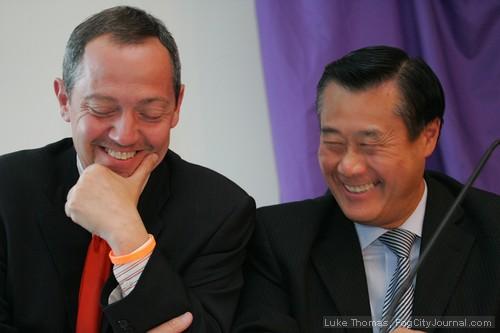
The Guardian candidates’ forum was a blast — standing room only at the LGBT Center, a great, lively crowd, and most of the candidates for mayor showed up. Not Ed Lee, though — we invited him, but he was a no-show. That’s typical — he’s skipped the vast majority of the mayoral debates and events, and when he does show up, he leaves early.
We set out to pin the candidates down on five key issues that came out of the Guardian’s summer issues forums. Shaw San Liu, our moderator, forced the mayoral contenders to give us yes-or-no answers, and our all-star celebrity panel of answer analyzers (Sue Hestor, Corey Cook and Fernando Marti) weighed in and raised signs to tell us whether the candidate had said Yes, No, or Waffled.
The questions:
1. Will you support the creation of a municipal bank to offer access to credit to small business instead of relying on tax breaks for economic development?
2. Will you support a freeze on condo conversions and the development of new market-rate condos until the city has a plan and the financing in place to meet the General Plan goal of 60 percent of all new units available at below market rate — and then index new market-rate housing to the creation of affordable units?
3. Do you have a viable plan to bring $250,000 a year in new revenue into the city to address the structural budget deficit?
4. Will you agree to opt out of the federal secure communities program and will you reverse Mayor Newsom’s policy and direct all local law-enforcement agencies not to cooperate with immigration authorities?
5. Will you support a proposal to either buy out PG&E’s San Francisco facilities or build a new city grid through a bond act so that San Francisco will control its own energy distibution system?
Only John Avalos answered Yes to all five. But it was remarkable how many of the candidates supported most or all of the progressive agenda we’ve developed. Every single candidate voiced support for a municipal bank. And every one of them said Yes to buying out PG&E’s distribution system so the city could run it’s own electric utility.
They had a lot more trouble with the notion of a freeze on new market-rate housing and condo conversions, and not all of them could explain how they would bring in $250,000 in new revenue. But I give them all credit for showing up and facing the tough questions and saying that, for the most part, they wanted to promote a progressive agenda.
Here are the scores:
John Avalos: Y, Y, Y, Y, Y
David Chiu: Y, W, Y, Y, Y
Bevan Dufty: Y, N, Y, Y,Y
Dennis Herrera: Y, W, Y, Y, Y
Phil Ting: NA. NA, Y, Y, Y (He came late and missed the first two)
Joanna Rees: Y, N, N, Y, Y
Leland Yee: Y, W, W, Y, Y
Jeff Adachi: Y, W, Y, Y, Y
Terry Baum: Y, Y, N, Y, Y
So five waffles on housing policy; nobody wants to stand up and say that we’re building too much housing for the rich and that it has to stop until we catch up with affordable housing. (At least Dufty was honest and told us he doesn’t want to cut off TIC and condo conversions).
I’m waiting for the video and I’ll post it when I get it.
SF restaurants cheat on health care
For years, I’ve wondered about those “health-care surcharges” that pop up on menus at local restaurants. The owners say they have to charge extra to pay for the city’s health-care ordinance, which always struck me as odd: You don’t see “avocado price hike surcharge” or “rent-went-up” surcharge or “PG&E rate hike” surcharge — restaurants, like other businesses, typically roll those factors into their normal prices.
This is political: A lot of restaurants opposed the law, which requires employers to pay for health insurance, and they’re sticking that little sign out there to make San Franciscans think the government is driving up the price of a meal.
Now: I would actually be willing to pay an extra 3 percent or even 5 percent for a nice dinner if I thought that money was going to make sure the cooks and waiters and bus staff could go to the doctor when they get sick. But it turns out, according to the Wall Street Journal, that we’re getting scammed — the surcharges often don’t go for health care at all. The restaurants just pocket the money.
In an investigation of 40 local restaurants — most of them high-end places where dinner for two can cost $100 or more — the Journal found that the vast majority of the money collected for health care never goes to the employees:
One Market, which says its annual revenue exceeds $5 million, is one of at least 40 San Francisco restaurants identified by The Wall Street Journal that tell customers they are charging extra in the name of health-care benefits, but which end up spending less than a third of what they allocate. The data come from forms that restaurants filed with the city, which the Journal obtained under California’s public records law. No restaurant mentioned in this article disputed the data.
Wayfare Tavern, the downtown restaurant owned by celebrity chef Tyler Florence, says on its menu that it adds 3.5% to every bill to cover health-care costs. Last year, it earmarked $63,724 for health care but only spent $6,013, the city data show. Café Flore, which adds 35 cents to every bill in the name of health care, spent nothing on health expenses for its employees last year. Trademark, which has a 3.5% surcharge, also spent nothing on employee health expenses last year, the data show.
Worse, this appears to be an intentional way to skirt the law:
In most cases, the plans are administered by a third party. Some of these companies tout how HRAs are a loophole around the San Francisco Heath Care Ordinance. “If the funds are not needed (And many are not!!!) the employer wins because the unused funds stay with them…not the City,” says a brochure from BeneFlex HR Resources Inc.
BeneFlex ensures restaurants inform workers about the HRA to “make sure it’s handled the way it’s supposed to,” says Mark Schmersahl, the firm’s vice president. Still, he says, “There are going to be times when the employer comes out ahead.”
I recognize that the city puts a lot of demands on small business, and a lot of them are expensive — and again, if a restaurant owner has to raise prices a few percentage points to pay for health insurance, I’ll pay — that’s the price of eating out in San Francisco.
But this isn’t how the health-care law was supposed to work — and it’s the reason Sup. David Campos is trying to change it. Campos has a bill that would stop employers from keeping money that was supposed to go for health care. “It’s also a consumer-protection law,” Campos told me. “People are being defrauded here.”
The death penalty: How close, how far
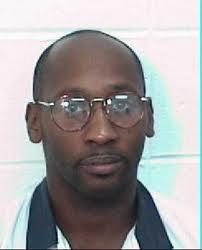
The Chronicle didn’t even put the news on the front page (although The New York Times did), but the execution of Troy Davis went forward more or less as scheduled Sept. 21, with news media around the world watching. It was a shameful miscarriage of justice; as the Times noted in an editorial:
Seven of nine witnesses against Mr. Davis recanted after trial. Six said the police threatened them if they did not identify Mr. Davis. The man who first told the police that Mr. Davis was the shooter later confessed to the crime. There are other reasons to doubt Mr. Davis’s guilt: There was no physical evidence linking him to the crime introduced at trial, and new ballistics evidence broke the link between him and a previous shooting that provided the motive for his conviction.
Yes the Georgia courts, and the federal courts, and the United States Supreme Court, let the state kill Davis — and now it’s too late to prove his innocence. That, of course, is the most horrible aspect of the death penalty. It’s also cruel, expensive and pointless.
But there’s a bit of good news, at least in California. I’m convinced that sentiment is changing. We’ve been interviewing candidates for San Francisco sheriff and district attorney over the past two weeks — and I can tell you, while San Francisco isn’t a good reflection of the state as a whole, attitudes among law-enforcement types in this town have changed pretty dramatically over the past ten years or so.
In 1999, Matt Gonzalez, Bill Fazion and Terence Hallinan all ran for district attorney, and Gonzales came in third. Fazio — a veteran prosecutor and tough-on-crime type, went to Gonzalez and sought his endorsment in the runoff. Gonzalez said he’d support him — if Fazio would agree never to seek the death penalty. It was a pretty easy call, since no San Francisco jury is ever going to vote for capital punishment anyway — but Fazio refused. He insisted that he was a death-penalty supporter to the end, and he lost the race.
Now, Fazio says the death penalty is a complete failure, and he would not only never seek it but he’s actively in favor of repealing it.
Just a few months ago, former police chief and current D.A. George Gascon was talking about how the death penatly ought to be one of a prosecutor’s tools — but now he utterly disavows is, says he would never seek it and is calling for repeal.
Chris Cunnie, a former president of the avowedly pro-death-penalty Police Officers Association, told us he opposes capital punishment.
And Kamala Harris, who never wavered in her refusal to seek the death penalty, even for the killing of a cop, managed to get elected attorney general of California.
So there’s hope.
Editor’s notes
tredmond@sfbg.com
So the people who advise President Obama have finally figured out that he was on the road to becoming a one-term president — and the United States was on the road to ruin under President Perry. Whatever combination of self-preservation and fear was at work, it worked, at least for the moment.
Obama is now on record as refusing to accept any cuts in entitlements for poor people unless the rich people give a little, too. It’s a pretty good political statement — in every single major poll taken in the past year, an overwhelming majority of Americans agreed that higher taxes on the wealthy should be part of any deficit-reduction package. And it’s a no-brainer economic statement — the fundamental problem with the U.S. economy is a lack of consumer demand, which is tied directly to the fact that all of the wealth over the past 20 years has gone to the top and the middle class doesn’t have enough money to spend.
But what’s it’s really done is kicked the proverbial tax can — and thus, unfortunately, economic recovery — down the proverbial road another 13 months. Because the Republicans won’t accept higher taxes, and if Obama keeps his newfound spine, he won’t accept any cuts in Medicare and Medicaid, and nobody is talking about cutting the military, so nothing is going to happen.
Instead, this is the launch of Campaign 2012. Obama’s got a tough sell — the number on issue for most voters is jobs, and while I personally believe that the first stimulus plan kept the recession from getting worse, that’s not enough. Things are supposed to get better, and when they don’t, the guy at the top gets the blame.
So Obama has a problem: It’s all his fault, but he can’t do anything about it, and that’s what the Republicans are counting on. His only choice is to come roaring out like Harry Truman, and blame the “do-nothing” Republican Congress for blocking economic growth (and, if he has any sense, will say that the GOP is holding a jobs program hostage to protect the interests of the millionaires), and the Democrats will try to use that message to take back the House — and if it works, we might just possibly get things back on track in 2013. If it doesn’t, it’s going to be a very ugly decade.
Endorsement Interviews: David Chiu
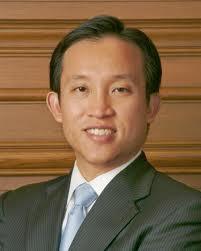
Board President and mayoral candidate David Chiu could well be the person most directly hurt by Mayor Ed Lee’s decision to run for a full term. It’s ironic, since Chiu supported Lee — on the basis that the former city administrator would not be a candidate in November. And he has the inside story on why Lee is in the race: According to Chiu, Lee told him that he didn’t really want to run, but “was having trouble saying no to Willie Brown and Rose Pak.”
Chiu has been in the center of the current board, moving away from progressives on some key issues — but he’s talking very much a progressive line in his campaign. He’s promising business tax reforms, transit justice, affordable housing and new revenue. Audio and video after the jump.
The mud flies
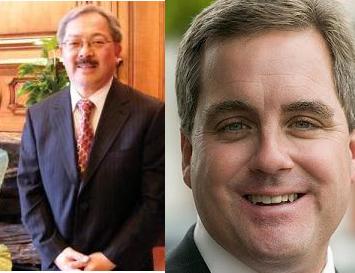
Dennis Herrera is out with an ad attacking Ed Lee — and it’s just the beginning of what we’re going to see as the top-tier candidates try to knock the front-runner down.
All the credible polls show Lee at least 10 points out in front. They also show that he has about 30 percent of the voters — which means 70 percent are either undecided or like another candidate. So he’s hardly invincible.
But with so many candidates in the race — most of them competing in the mashup in the middle, without strikingly different policy ideas — the strategists for Leland Yee, Jeff Adachi and Herrera have all decided that attack ads are in order. And the ads all seem to have the same basic theme: Lee is controlled by outside interests.
“Ed Lee says he gets things done,” the new Herrera ad says. “But what’s he doing — and who’s he doing it for?”
There’s a picture of Lee and Rose Pak. There’s a swipe at the Central Subway. There’s a pretty damning charge about Lee trying to raise garbage rates and then getting campaign help from Recology, the local garbage monopoly. And there’s an obvious shot at Lee for calling PG&E “a great corporation.”
The ad ends with some odd Republican lapel pins on the jackets of some unidentified dark-suited gentlemen as the voice-over says:
“Ed Lee’s getting it done — for his friends and his contributors, not for us.”
Hmmm. I didn’t see the Republican connection, but Matt Dorsey, Herrera’s press person, told me that one of the independent expenditure committees raising soft money for Lee is run by a big Republican player. Not sure how many people will get that — but on the other hand, there’s just so much in this ad. The Herrera camp has to figure some of it will stick.
Nothing new, really, nothing others haven’t brought up. But it’s just the start; expect a lot more trash talk over the next few weeks as Lee tries to stay above the fray and his opponents try to force him to fight.
SFBG Radio: Beyond the Wall Street protests

Today we talk about the protests on Wall Street — and Johnny offers a more effective approach. Hint: It has to do with blaring out-of-tune techno music at rich people. You’ll have to listen after the jump to get the rest.
Endorsement interviews: John Avalos
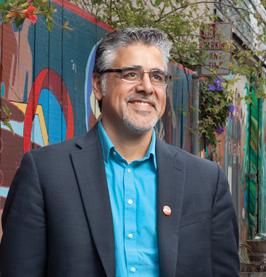
Sup. John Avalos is running a grassroots progressive campaign for mayor. He is, he says, the only candidate talking about working-class people, and he wans to “create an administration that puts neighborhoods and people first.” He wants to create a municipal bank to use money the city now dumps into Wells Fargo and Bank of America for loans to small businesses and economic development. He told us that by the end of his eight years in office, he’d like to see the city bringing in $500 million a year in new revenue — for education, child care, Muni, parks, public health and other services. Check out the interview (audio and video) after the jump.
Endorsement interviews: Bill Fazio
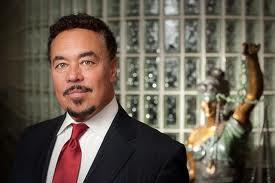
Bill Fazio has been both a prosecutor and a defense lawyer — most recently working on the defense side — and his views on criminal justice have changed a bit since he first ran for District Attorney’s office in 1999. Back then, he was a supporter of the death penalty; today, he says it’s an expensive failure. He’s not a big fan of “buy busts,” and said he supports restorative justice (but in a limited way). He vowed to us that he’d appoint a team of investigators and prosecutors to go after municipal corruption. You can listen to the interview and watch the video after the jump.
The Chron’s bizarre tax logic
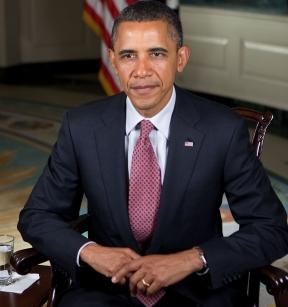
Chronicle Washington columnist Carolyn Lochhead doesn’t typically show her political beliefs in such a clear and direct way, but her attack on the Obama tax plan is just … bizarre. Check it out:
Rather than pursue long-run tax and entitlement reform, the new Obama plan, his sixth by some counts, litters up the tax code even more and does nothing significant on debt drivers Medicare and Medicaid.
Actually, the big “debt drivers” over the past two decades haven’t been Medicare and Medicaid, or even social security — the debt and deficit problem comes from (1) tax cuts on the rich and (2) wars. Remember, Bill Clinton left office with a budget surplus (even including entitlements, and even including projections for the baby boomers retiring and all the other panic buttons the GOP likes to push). Bush turned that into a staggering deficit by cutting taxes at the same time he went to war in Iraq and Afghanistan.
And “litter up the tax code?” That’s crazy talk. Obama wants to get rid of tax breaks that litter up the code.
More:
He re-iterated his call to end the Bush tax cuts on high earners, but keeps the rest of the Bush tax cuts which are a bushel of special tax breaks for the middle class.
What? The middle class has been slammed by the recession (and by 20 years of income moving almost entirely to the top 5% of the population). The only way out of this recession is to give the middle class more spending power.
I’m not defending everything Obama’s done (his willingness to extend the Bush tax cuts was part of the problem), but seriously: This is economics 101.
Guardian forum: The candidates on the issues
Don’t miss the final Guardian forum on the mayor’s race — featuring the candidates. It’s going to be fun — so far, eight candidates have confirmed, and we’re going to ask them to talk about the progressive agenda that we’ve developed over the summer. Among other things, we’re going to ask the candidates whether they support some of the key elements of the program — and an independent blue-ribbon all-star panel of experts (not including me) will judge whether the would-by mayors answered yes, answered no — or waffled.
We’ll see you there.
6 p.m., Wed. Sept. 21, at the LGBT Center, Market and Octavia.
Endorsement interviews: Dennis Herrera
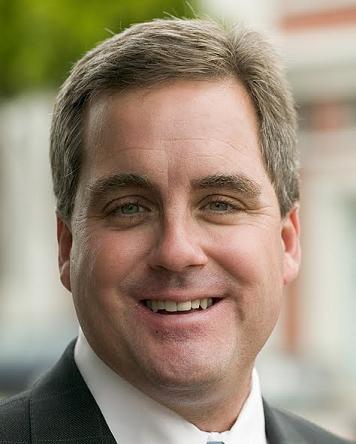
Dennis Herrera has an interesting challenge: as city attorney, he’s been barred by law, legal ethics and custom from taking stands on a lot of the legislative and political issues facing the city. He couldn’t, for example, say he opposes a law that he might later have to defend in court. But now that he’s running for mayor, he’s liberated himself, and he’s started to talk about specific challenges facing the city.
Herrera told us he thinks this is the most important mayor’s race in the past 20 years and said that local government is going to have to play more of a role taking care of things that the federal and state governments will no longer do. He talked about the “culture of an organization” and his experience running a large office. He said that the city can’t cut its way out of its budget problems and he supports “additional revenues,” including a higher real-estate transfer tax, a more progressive payroll tax and (possibly) a commercial rent tax.
He supports an affordable housing bond — but wouldn’t call for a moratorium on market-rate housing and condo conversions.
Video and complete audio are after the jump.
SFBG Radio: Johnny wants a coup

Today, Johnny articulates his vision of the future: Obama gets re-elected, the right wing tries a coup — and finally, the west coast can secede. Has he gone off his rocker? Has he gone off his meds? Check it out after the jump.
BART’s failed press mainpulation

Another nice scoop by Zusha Elinson at the Bay Citizen: He’s got emails showing how BART tried to set up a fake counter-protest and press conference to skew media coverage toward how protests were inconveniencing riders.
The brainchild of Linton Johnson, BART’s PR chief (and the man who brought you the cell-phone shutoff), the plans included a pre-written script and a couple of private SUVs with drivers to take the BART loyalists to the press conference.
You can’t make this shit up.
BART’s attempts to avoid protests and manipulate the press appear to exceed its interest in reforming police practices. I wonder, sometimes, if the BART Board is even paying attention.
Editor’s notes
tredmond@sfbg.com
If you want to put more money in the pockets of working people, cutting the federal payroll tax — which, for many, is a larger tax burden than the income tax — makes perfect sense.
If you want to create jobs, cutting the payroll tax for businesses is a risky proposition.
Most new jobs in the United States are created by small businesses — and the payroll tax, while significant, isn’t a dramatic hindrance to job growth.
I work for a small business, and I ran the numbers with our controller, and if the Obama stimulus bill passes, the Bay Guardian will probably have enough extra money to hire one part-time employee — as long as we don’t pay that person much more than the city’s minimum wage. That’s something, I suppose. But even multiplied by the millions of small businesses in the country, there’s no guarantee it will lead to millions of jobs — particularly since so many small businesses in this country are deeply in debt, scraping for profits and likely to use the extra money for something other than hiring.
And a lot of big businesses already have the cash on hand to hire new workers, but they aren’t doing it.
That’s because businesses don’t make hiring decisions based just on taxes and cash — they hire people when they need workers to fill demand for their products and services. And the fundamental problem with the American economy today is that the very rich, who don’t spend most of their money, keep getting more of it, and the middle class doesn’t have enough to stimulate demand.
Here’s what makes me crazy: The government knows how to create jobs. If that’s what Obama wants to do, why not just .. do it?
Let’s say you want to create a million new jobs that pay a living wage (say, $50,000). If, instead of hoping that the private sector will be the middleman, Obama directed federal, state, and local governments to hire people to rebuild the nation’s infrastructure, teach in public schools etc, that would cost …. oh, about $500 billion.
So for $447 billion, you might only get 800,000 jobs. But that increased economic activity, and the demand it would create, would almost certainly lead to more jobs, probably at least another 400,000 jobs. That’s more than a million; the unemployment rate just dropped a full percentage point, and the recovery is well under way.
Why is nobody even talking about this?
A new progressive agenda

Over the past three months, the Guardian has been hosting a series of forums on progressive issues for the mayor’s race. We’ve brought together a broad base of people from different communities and issue-based organizations all over town in an effort to draft a platform that would include a comprehensive progressive agenda for the next mayor. All told, more than 100 people participated.
It was, as far as we know, the first time anyone tried to do this — to come up with a mayoral platform not with a few people in a room but with a series of open forums designed for community participation.
The platform we’ve drafted isn’t perfect, and there are no doubt things that are left out. But our goal was to create a document that the voters could use to determine which candidates really deserve the progressive vote.
That’s a critical question, since nearly all of the top contenders are using the word “progressive” on a regular basis. They’re fighting for votes from the neighborhoods, the activists, the independent-minded people who share a vision for San Francisco that isn’t driven by big-business interests.
But those of us on what is broadly defined as the city’s left are looking for more than lip service and catchy phrases. We want to hear specifics; we want to know that the next mayor is serious about changing the direction of city policy.
The groups who endorsed this effort and helped plan the forums that led to this platform were the Harvey Milk LGBT Club, SEIU Local 1021, the San Francisco Tenants Union, the Human Services Network, the Community Congress 2010, the Council of Community Housing Organizations, San Francisco Rising, Jobs with Justice, and the Center for Political Education.
The panelists who led the discussions were: Shaw-san Liu, Calvin Welch, Fernando Marti, Gabriel Haaland, Brenda Barros, Debbi Lerman, Jenny Friedenbach, Sarah Shortt, Ted Gullicksen, Nick Pagoulatos, Sue Hestor, Sherilyn Adams, Angela Chan, David Campos, Mario Yedidia, Pecolio Mangio, Antonio Diaz, Alicia Garza, Aaron Peskin, Saul Bloom, and Tim Redmond.
We held five events looking at five broad policy areas — economy and jobs; land use, housing and tenants; budget and social services; immigration, education and youth; and environment, energy and climate change. Panelists and audience participants offered great ideas and the debates were lively.
The results are below — an outline of what the progressives in San Francisco want to see from their next mayor.
ECONOMY AND JOBS
Background: In the first decade of this century, San Francisco lost some 51,000 jobs, overwhelmingly in the private sector. When Gavin Newsom was sworn in as mayor in January 2004, unemployment was at 6.4 percent; when he left, in January 2011, it was at 9.5 percent — a 63 percent increase.
Clearly, part of the problem was the collapse of the national economy. But the failed Newsom Model only made things worse. His approach was based on the mistaken notion that if the city provided direct subsidies to private developers, new workers would flock to San Francisco. In fact, the fastest-growing sector of the local economy is the public sector, especially education and health care. Five of the 10 largest employers in San Francisco are public agencies.
Local economic development policy, which has been characterized by the destruction of the blue-collar sector in light industry and maritime uses (ironically, overwhelmingly privately owned) to free up land for new industries in business services and high tech sectors that have never actually appeared — or have been devastated by quickly repeating boom and bust cycle.
Instead of concentrating on our existing workforce and its incredible human capital, recent San Francisco mayors have sought to attract a new workforce.
The Mayor’s Office has, as a matter of policy, been destroying blue-collar jobs to promote residential development for people who work outside of the city.
There’s a huge disconnect between what many people earn and what they need. The minimum wage in San Francisco is $9.92, when the actual cost of living is closer to $20. Wage theft is far too common.
There is a lack of leadership, oversight and accountability in a number of city departments. For example, there is no officiating body or commission overseeing the work of the Office of Economic and Workforce Development. Similarly the Arts Commission, the chartered entity for overseeing cultural affairs, is responsible for less than 25 percent of the budget reserved for this purpose
There’s no accountability in the city to protect the most vulnerable people.
The city’s main business tax is highly regressive — it’s a flat tax on payroll but has so many exceptions and loopholes that only 8,500 businesses actually pay it, and many of the largest and richest outfits pay no city tax at all.
Agenda items:
1. Reform the Mayor’s Office of Economic and Workforce Development to create a department with workforce development as a primary objective. Work with the San Francisco Unified School District, City College and San Francisco State to create sustainable paths to training and employment.
2. Create a municipal bank that offers credit for locally developed small businesses instead of relying on tax breaks. As a first step, mandate that all city short-term funds and payroll accounts go only to banks or credit unions that will agree to devote a reasonable percentage of their local loan portfolios for small business loans.
3. Reform procurement to prioritize local ownership.
4. Link economic development of healthcare facilities to the economic development of surrounding communities.
5. Link overall approval of projects to a larger economic development policy that takes as its centerpiece the employment of current San Francisco residents.
6. Enforce city labor laws and fund the agency that enforces the laws.
7. Establish the Board of Supervisors as the policy board of a re-organized Redevelopment Agency and create community-based project area oversight committees.
8. Dramatically expand Muni in the southeast portion of the city and reconfigure routes to link neighborhoods without having to go through downtown. Put special emphasis on direct Muni routes to City College and San Francisco State.
9. Reform the payroll tax so all businesses share the burden and the largest pay their fair share.
10. Consolidate the city’s various arts entities into a single Department of Arts & Culture that includes as part of its mandate a clear directive to achieve maximum economic development through leveraging the city’s existing cultural assets and creative strengths and re-imagining San Francisco’s competitive position as a regional, national and international hub of creative thinking. Sponsor and promote signature arts programs and opportunities to attract and retain visitors who will generate maximum economic activity in the local economy; restore San Francisco’s community-based cultural economy by re-enacting the successful Neighborhood Arts Program; and leverage the current 1-2 percent for art fees on various on-site building projects to be directed towards non-construction-site arts activity.
LAND USE, HOUSING AND TENANTS
Background: Since the office market tanked, the big land-use issue has become market-rate housing. San Francisco is building housing for people who don’t live here — in significant part, for either very wealthy people who want a short-term pied a terre in the city or for commuters who work in Silicon Valley. The city’s own General Plan calls for 60 percent of all new housing to be below-market-rate — but the vast majority of the new housing that’s been constructed or is in the planning pipeline is high-end condos.
There’s no connection between the housing needs of city residents and the local workforce and the type of housing that’s being constructed. Family housing is in short supply and rental housing is being destroyed faster than it’s being built — a total of 21,000 rental units have been lost to condos and tenancies in common.
Public housing is getting demolished and rebuilt with 2500 fewer units. “Hotelization” is growing as housing units become transitory housing.
Planning has become an appendage of the Mayor’s Office of Economic Development, which has no commission, no public hearings and no community oversight.
Projects are getting approved with no connection to schools, transit or affordable housing.
There’s no monitoring of Ellis Act evictions.
Transit-oriented development is a big scam that doesn’t include equity or the needs of people who live in the areas slated for more development. Cities have incentives to create dense housing with no affordability. Communities of concern are right in the path of this “smart growth” — and there are no protections for the people who live there now.
Agenda items:
1. Re emphasize that the Planning Department is the lead land-use approval agency and that the Mayor’s Office of Economic and Workforce Development should not be used to short-circuit public participation in the process.
2. Enact a freeze on condo conversions and a freeze on the demolition of existing affordable rental housing.
3. Ban evictions if the use or occupation of the property will be for less than 30 days.
4. Index market-rate to affordable housing; slow down one when the other is too far ahead.
5. Disclose what level of permanent affordability is offered at each project.
6. Stabilize existing communities with community benefits agreements before new development is approved.
BUDGET AND SOCIAL SERVICES
Background: There have been profound cuts in the social safety net in San Francisco over the past decade. One third of the city’s shelter beds have been lost; six homeless centers have closed. Homeless mental health and substance abuse services have lost $32 million, and the health system has lost $33 million.
None of the budget proposals coming from the Mayor’s Office have even begun to address restoring the past cuts.
There’s not enough access to primary care for people in Healthy San Francisco.
Nonprofit contracts with the city are flat-funded, so there’s no room for increases in the cost of doing business.
The mayor has all the staff and the supervisors don’t have enough. The supervisors have the ability to add back budget items — but the mayor can then make unilateral cuts.
The wealthy in San Francisco have done very well under the Bush tax cuts and more than 14 billionaires live in this city. The gap between the rich and the poor, which is destroying the national economy, exists in San Francisco, too. But while city officials are taking a national lead on issues like the environment and civil rights, there is virtually no discussion at the policy level of using city policy to bring in revenue from those who can afford it and to equalize the wealth disparities right here in town.
Agenda items:
1. Establish as policy that San Francisco will step in where the state and federal government have left people behind — and that local taxation policy should reflect progressive values.
2. Make budget set-asides a budget floor rather than a percentage of the budget.
3. Examine what top city executives are paid.
4. Promote public power, public broadband and public cable as a way to bring the city millions of dollars.
5. Support progressive taxes that will bring in at least $250 million a year in permanent new revenue.
6. Change the City Charter to eliminate unilateral mid-year cuts by the mayor.
8. Pass a Charter amendment that: (a) Requires the development of a comprehensive long-term plan that sets the policies and strategies to guide the implementation of health and human services for San Francisco’s vulnerable residents over the next 10 years, and (b) creates a planning body with the responsibility and authority to develop the plan, monitor and evaluate its implementation, coordinate between policy makers and departments, and ensure that annual budgets are consistent with the plan.
9. Collect existing money better.
10. Enact a foreclosure transfer tax.
YOUTH, IMMIGRATION, AND EDUCATION
Background: In the past 10 years, San Francisco has lost 24,000 people ages 12-24. Among current youth, 5,800 live in poverty; 6,000 have no high school degree; 7,000 are not working or attending school; 1,200 are on adult probation.
A full 50 percent of public school students are not qualified for college studies. Too often, the outcome is dictated by race; school-to-prison is far too common.
Trust between immigrants and the police is a low point, particularly since former Mayor Gavin Newsom gutted the sanctuary ordinance in 2008 after anti-immigrant stories in the San Francisco Chronicle.
Some 70 percent of students depend on Muni, but the price of a youth pass just went from $10 to $21.
Agenda items:
1. Recognize that there’s a separate role for probation and immigration, and keep local law enforcement from joining or working with immigration enforcement.
2. Improve public transportation for education and prioritize free Muni for youth.
3. Create family-friendly affordable housing.
4. Restore the recreation direction for the Recreation and Parks Department.
5. Implement police training to treat youth with respect.
6. Don’t cut off benefits for youth who commit crimes.
7. Shift state re-alignment money from jails to education.
ENERGY, ENVIRONMENT AND CLIMATE CHANGE
Background: When it comes to land use, the laws on the books are pretty good. The General Plan is a good document. But those laws aren’t enforced. Big projects get changed by the project sponsor after they’re approved.
Land use is really about who will live here and who will vote. But on a policy level, it’s clear that the city doesn’t value the people who currently live here.
Climate change is going to affect San Francisco — people who live near toxic materials are at risk in floods and earthquakes.
San Francisco has a separate but unequal transportation system. Muni is designed to get people downtown, not around town — despite the fact that job growth isn’t happening downtown.
San Francisco has a deepwater port and could be the Silicon Valley of green shipping.
San Francisco has a remarkable opportunity to promote renewable energy, but that will never happen unless the city owns the distribution system.
Agenda items:
1. Promote the rebirth of heavy industry by turning the port into a center for green-shipping retrofits.
2. Public land should be for public benefit, and agencies that own or control that land should work with community-based planning efforts.
3. Planning should be for the community, not developers.
4. Energy efficiency programs should be targeted to disadvantaged communities.
5. Pay attention to the urban food revolution, encourage resident owned farmers markets. Use unused public land for local food and community gardens.
6. Provide complete information on what parts of the city are fill, and stop allowing development in areas that are going to be inundated with sea level rise.
7. Prioritize local distributed generation of electricity and public ownership of the power grid.
8. Change Clean Energy San Francisco from a purchasing pool system to a generating system.
Ting wants instant public records
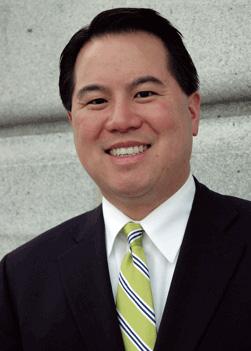
When Assessor and mayoral candidate Phil Ting came by for his endorsement interview, we talked about open government, and I mentioned an idea that sunshine advocate Kimo Crossman first proposed back in 2008: Why not make all city documents (with a few limited exceptions) public the moment they’re created?
Why not send a copy of every memo, every email, every contract, every check, everything anyone at City Hall produces, into a public server, where the rest of us can see what our elected officials and civil servants are doing? No more hassles with sunshine requests — the docs would already be there, in a searchable database.
Well, apparently Ting liked the idea — and it’s now part of his mayoral platform. In a release posted Sept. 13, Ting argues that “everything should be public.”
And I mean just about everything. I think that every email, every memo, every check, every contract, every phone message, every tweet, every cell phone call and every other single government document that is not part of an employee personnel decision, about an immediate public safety issue, protected by state law or part of a pending lawsuit should be made public at the time it is created. The reality is that technology has outstripped our city’s Sunshine laws. And it would be far less expensive – and far more productive – simply to have all digital public records (which is now nearly all public records) simply posted to a City Sunshine Site at the time they are created. This site should quickly include, and certainly be the basis of, an Application Programming Interface (API) that gives San Franciscans the tools and the data they need to help hold government accountable.
He explains:
So as mayor, if I send an email to my chief of staff on an issue – that should be made public when I send it. When I have a meeting at City Hall or anywhere else, that would be part of an online calendar, which should be made public. A direct message – a tweet from the mayoral account – just about anything that is created, said or discussed should be made public in real time.
Every document created by city government (with the noted exceptions) should be made available to the public at the time it is created. That should include every check written – and every dollar spent or promised. And every contract. And every subcontract. Everything.
There is simply no supportable reason for any work product created by a public employee to be hidden from the public – or perhaps even worse, to be put behind the barrier of a “sunshine” process that is now so complicated, time consuming and expensive that it promises public accountability without always being able to deliver it.
It makes perfect sense — the technology exists, and is relatively inexpensive (particularly compared to the time it takes city agencies to respond to public records requests). It would be easy to allow people creating confidential documents (legal strategy memos in the City Attorney’s Office, say, or personnel records) to add a tag to the file that would keep it out of the public database — and, of course, it would be easy for an agency (or the Sunshine Task Force) to search those tagged files later to see what should and shouldn’t have been kept secret.
I don’t think anyone else has ever done this; San Francisco could be the first city in the country to make sunshine a part of everyday life at city Hall. I hope this becomes part of the mayoral debates.
Arthur Evans dies at 69
Arthur Evans, who once was a leader in the gay liberation movement but of late had become bitterly opposed to people sitting on the sidewalks in the Haight, died of a heart attack Sept. 11. He was 69. You can read an obit by Michael Petrellis here.
I note his passing in part because he was a regular on sfbg.com, posting comments nearly every day on our politics blog. I disagreed with pretty much everything he said; he made a habit of bashing progressives and loved to attack me in particular. But he was almost always polite and engaged (he only violated our comments policy a few times) and so, in an odd way, was part of our online community.
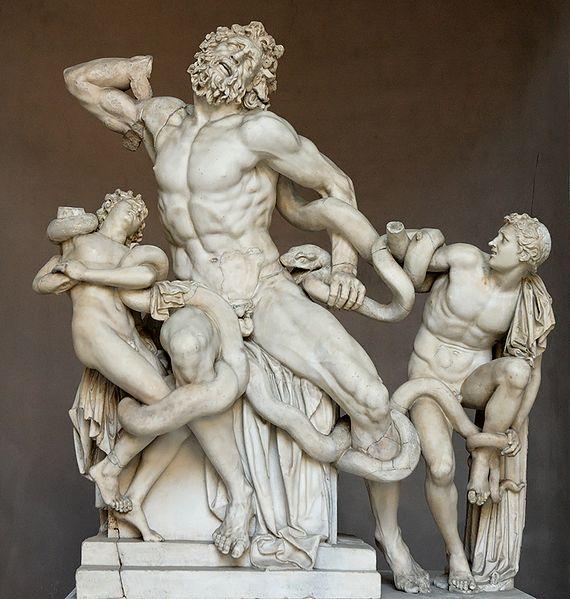
His last comment was, typically, directed at me, and I post I wrote Sept. 9 about nude men in the Castro. Arthur was something of a classical scholar who translated ancient Greek, and he suggested that I was wrongly using the image of a statue of Laocoon in “defending male exhibitionism.” He noted: “Both the poet and the sculptors use the story to depict the destruction of raw male energy by an image of phallic power.” My last response to him: Lighten up, Arthur.
Trash Lit: Demon hunting with John Wayne Cleaver

I Don’t Want to Kill You, By Dan Wells
Tor, 320 pages, $11.95
One of the reviews on the back of this book says that “regardless or your age or your genre preferences, you will find this story both profound and enthralling.” The usual blurb crap, but it did make me think that this could be another series like the Maximum Ride books –stuff my 12-year-old son and I could share.
He’s pretty advanced in the thriller world; he reads Stephen Hunter and Lee Child. And this one seemed right up his alley — a shy high school kid who has to fight off a demon made of black goo that takes over the bodies (and minds) of humans. John Wayne Cleaver (perfect name for a demon hunter) is the only one who can stop the evil creature from killing everyone in town.
But I Don’t Want To Kill You is just a tad too creepy for young teens, even kids raised on today’s violent video games. See, Cleaver’s mom is an undertaker, and John lives in the family funeral home and helps with the embalming — and while I appreciate the grisly details of mortuary science, particularly the use of vaseline to plug bullet holes so the preservative fluid can be pumped through the veins, it gets to be a bit much.
So I’ll wait a couple of years before I pass this along to Michael — but I’m happy to share it with my adult friends. It’s great — weird, nasty, sometimes sick, but brilliantly written with memorable prose, a great plot and lively characters.
Our protagonist is a diagnosed sociopath, someone pretty much incapable of feeling empathy for other human beings. He’s positively beastly to his poor mom. But he’s not as cold-hearted as he seems — he knows that he has to risk his own life to save everyone else in the town, and he goes about it in a methodical and logical way.
The only problem: This depraved and confused high school kid starts to maybe, sorta fall in love. With a girl who’s hot and popular and ought to want nothing to do with him. For a while, we suspect that she might be the demon, but she’s not — she just likes John, the way cute teenage girls sometimes like boys who are so odd that they’re attractive.
The thing is, her friends, the other teenage girls, start killing themselves, for no good reason, and it’s clear that the demon is somehow at work. Oh, she (John is convinced that the demon is female) also kills a priest and a teacher — and it’s not clear exactly how or why she’s choosing her targets. Except that John Wayne Cleaver is going to be one of them.
Slashed up body parts. Gross post-autopsy mortuary scenes. Eyes gouged out, tongues cut off, bodies stuck up on poles, gunshots, death by fire … and a first date and a first kiss and some honest puberty angst. You know, to go with all the blood and petroleum jelly and body fluids and black goo.
You gotta check this one out.
SFBG Radio: Johnny wants a nude-in

Today we can’t resist talking about naked people in the Castro, since my last post on the subject has about 90 comments (not counting the ones that violated our comments policy and had to be deleted). Johnny thinks all of San Francisco should pick a day and go naked, just to show solidarity with the guys at 17th and Castro. I’m good with that — maybe, sort of — as long as Chuck Nevius and a few others I can think of stay home.
Listen to the fun after the jump.
Endorsement interviews: Phil Ting
We’ve started interviewing the candidates for mayor, sheriff and district attorney, and, as usual, we’re taping the interviews and posting the audio feed unedited for your listening fun. We’re also putting up videos of the candidates’ opening statements.
mayoral candidate Phil Ting’s basic pitch: “The most progressive thing we can do is make government more efficient.” He talked a lot about his crowdsourcing website, Resetsf, which allows hundreds of San Franciscans to weigh in on the city’s problems — and offer solutions. Among his solutions: One minute of improved time on every Muni line would save $20 million a year. That means eliminating some bus stops to make the busses go faster.
He argued (with me) that San Francisco can eventually build its way out of the housing crisis by constructing more units on transit corridors. He vowed to reverse Gavin Newsom’s policy on sanctuary and told us he supports the central subway. Listen and watch after the jump.
Watch Ting’s opening statement here:
How to create jobs
I listened to the Obama speech, and at least he showed some energy (although this bipartisan shit clearly doesn’t work and I don’t know when he’s going to give it up). But here’s what makes me crazy: The whole point of this $447 billion stimulus is to create jobs. Why not just, you know, create jobs?
I agree that a cut in the payroll tax (which, for a lot of working Americans, amounts to more money than the income tax) will put money in the pockets of people who are likely to spend it, and will stimulate, to some extent, consumer demand. That, of course, is the crux of the issue — unless there’s demand for goods and services, the economy’s not going to turn around.
Of course, some of that money will go to replenish savings and pay down debt — not a bad thing, but not what we need right now.
Cutting the payroll tax for businesses will also be a direct stimulus, particularly for smaller employers, who create most of the new jobs. But again, let’s be real: I just ran the numbers, and a company the size of the Guardian would get enough of a tax break to hire one part-time person at not much more than the city’s minimum wage. Sure, you spread that across millions of small businesses, and you’ll get some new job creation. But I wonder: Is this the most efficent way to achieve the objective?
Let’s see. An economist at Moody’s says the plan could create 1.9 million jobs. That, of course, includes not just the jobs created by the tax cuts, but the multiplier effect (you hire someone to dig a ditch, that person buys shoes so the shoestore needs more help, etc.) And the prediction is just that — a prediction. It assumes, for example, that most of the employers who get the tax break will use the extra money to hire more people. I’m not so sure about that. Businesses tend to hire not because they have spare cash (which might just as well end up in the owner’s pocket) but because they need more workers to meet growing demand for goods and services. If that demand isn’t there, the jobs won’t magically appear just because employers have more cash on hand. (In fact, some of the biggest employers in this country have plenty of cash on hand; they aren’t using it to hire anyone.)
How about we try it another way? Let’s assume that $50,000 a year is a decent wage in most parts of the country. (You want to make it $60,000? Whatever. It just changes the calculus a little bit).
For $1 million, you can hire 20 people at $50K. For $1billion, you can hire 20,000 people. For $400 billion, you can hire 800,000 people.
Why not just do that? Why not take that stimulus money and hire public employees — to teach in schools, to build roads and bridges, to repair the nation’s electricity infrastructure, to construct high-speed rail lines, to rebuild crumbling housing in inner cities …. there’s plenty to do.
Yeah, some of the money would go to the dreaded “bureacrats” who would oversee the hiring programs and fill out the forms. But the world needs accountants and managers, too — and the ranks of the unemployed include quite a few people with those skills.
Now: There’s lots of debate about the size of the multiplier; when it comes to job creations, I’ve heard numbers from 1.4 to 5.0, depending on the circumstances. But there’s no doubt that direct federal hiring — 800,000 new living-wage jobs — would have a direct impact on consumer demand and create a guaranteed need for more private-sector workers. I’d bet it’s about one for one — the 800,000 federal jobs would lead to another 800,000 private-sector jobs. That’s 1.6 million jobs — and unlike the current plan, those are jobs that are not dependent on what employers decide to do with their tax breaks.
Hell, we want to cut unemployment in half? For, say, $1.5 trillion, you could create 7 million jobs pretty easily. That’s just about the annual cost of the wars in Iraq and Afghanistan.
The government knows how to create jobs. Federal, state and local agencies hire people every day. The whole thing seems so silly; why give money to private employers and hope for the best when you can use the same money to hire people directly? Why waste time and money on the middleman?
The Chron’s war on nudity
Poor Scott Wiener. He tries to do something practical — telling naked guys to sit on a towel or something when they occupy public benches — and all of a sudden the Chron launches a war on nudity. First there’s this shit from Chuck Nevius, who suggests that anyone who isn’t wearing clothes is some sort of a pervert:
Why? If these guys were opening a trench coat and exposing themselves to bystanders in a supermarket parking lot we’d call them creeps. But if they sit on public chairs and expose themselves to bystanders, they’re defenders of free speech. Here’s some free speech – when moms and dads walk their kids to school, they don’t want to see you naked. This isn’t a civil rights issue, it’s just obnoxious.
Actually, I’ve often walked my daughter to school along Castro Street, and I don’t care whether people are naked or not. Neither does she. My kids are San Francisco city kids; it’s all a big Whatever. And the naked guys in the Castro, mostly middle-aged men, aren’t “exposing themselves” in the way of a sex offender who gets off on it; they don’t confront anyone, or jump in front of anyone, or try to force anyone to look at them. They aren’t fucking in the streets. They’re just walking around (and sitting down) without clothes on.
Whatever.
But then the Chron decides this is all worth a scathing editorial:
Here’s an idea, San Franciscans: Keep your pants on – at least in public. Most people don’t want to see that much of you. And even in a city known for tolerance of unusual behavior, inflicting nudity on an unsuspecting public can scare youngsters and offend adults. … People who insist on walking down Market Street without clothes should be cited.
Now there’s going to be pressure on the cops to find a way to bust the nudists (some of whom will love the attention), and the city will either waste a lot of money prosecuting and defending them when there’s no actual law that’s been broken — or the supervisors will be under pressure to outlaw public nudity, which will create another big fuss and waste a lot of all of our time.
Besides, the Chron ought to love the Wiener law. If I ran that paper, I’d put a couple of new racks at Castro and Market. The guys who forget their towels are going to need something to sit on.
PS: If nudity doesn’t offend you, check out our hottest butt in SF contest here.