Tim Redmond

Duck! It’s the Blue Angels!

54

My poor dog will be hiding under the table when I get home, hyperventilating. I’m trying to make phone calls — and I feel like I’m in a war zone. I know, I know — it’s fleet week and we support the troops and an expensive, dangerous, ostentatious display of military might should make us all feel better.

But I’m not feeling it.

I like a noisy event as much as anyone else. I’m all for street fairs, music in the parks, random shouting … it’s all good. This is a big city.

But do we really have to have Navy jets buzzing over us for several days? Is this a good way to spend our tax dollars? Does a city where JROTC is a huge issue need to celebrate what’s really primarily a military recruiting event?

Or am I just jealous because they won’t let me fly one?


Endorsement interviews: Bevan Dufty

1

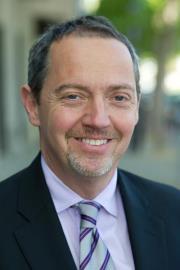
Bevan Dufty’s been running for mayor for about two years now. He’s often the star of the debates — if only because he has an engaging personality and is willing to laugh at himself, a rare trait in a politicians. And although he way typcially aligned with the fiscal conservatives on the Board of Supervisors, he has the support of the progressive SEIU Local 1021 — in large part because he’s talking about working with city employees instead of demonizing them. He also told us that the next mayor of San Franciisco needs to have a black agenda — to address the alarming outmigration of African Americans and the economic damage that’s been done to that community. You can listen to the full interview and watch video after the jump.


Dufty by endorsements2011


http://www.youtube.com/watch?v=GPohsxUCQao

Alioto-Pier plays the school card

8

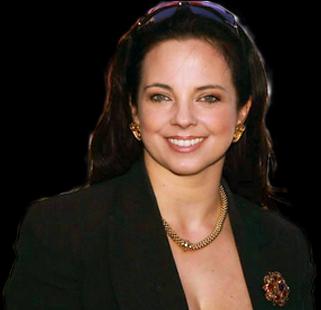
Former Supervisor Michela Alioto-Pier is barely registering in the mayoral polls and at this point has about zero chance of getting elected. So she’s thrown out a desperation pitch, trying to get votes from people who think kids should all go to neighborhood schools.

A mailer that I got yesterday shows two sad looking children in front of a Muni bus with the line: “Our ride to school is longer than our parents’ ride to work. Who will stand up and fight for us?”

There are shades of the old (sometimes racist) anti-busing stuff here — why should kids have to ride buses – buses — to go to a school that isn’t right in the neighborhood? There’s also very much a class issue — the public schools in rich neighborhoods have resources (that is, rich parents) that schools in poor neighborhoods don’t. So kids who grow up in (still segregated) poor neighborhoods won’t get a chance to have the same quality education as kids who had the skill and drive that it took to be born to wealthy parents.

Sure, we could “make every school a great school,” as the neighborhood schools crew likes to say — but that would take money. Tax money. Lots more tax money.  And I don’t hear Alioto-Pier talking about repealing Prop. 13.

Here’s the reality: In most public schools, parents have to raise money to supplement what the district can offer. You want smaller classes, or language options? Fine — come up with $50,000. Hold fundraisers, write grants, beg and plead — and some school communities are very good at it. Clarendon routinely raises $200,000 or more a year. My daughter’s school, McKinley, holds a car was and Dog Fest, and we got a corporate grant to rebuild the playground. Those things take (a) parents who have time and (b) parents with the skills to write grants and (c) parents who have money to contribute on their own.

You segregate school attendance by neighborhood and you’ll get some schools that have a lot of a, b, and c — and some that have almost none. Now, you could “tax” the good fundraisers — force, say, the Clarendon and McKinley parents to give 25 percent of everything they raise to other schools that don’t have the same parent resources. I’m not actually against that. But it’s almost impossible to administer and unlikely to happen.

Or you could say that parents all over town have the right to choose a school anywhere, including one of the ones in the wealthier parts of town. Then the parents who have resources wind up helping out kids who come from poorer families, because the schools are more socio-economically diverse.

There’s also the fact that San Francisco is a pretty small city; taking a bus from my neighborhood, Bernal Heights, to my son’s middle school, Aptos — in a different neighborhood in another part of town — isn’t that big a deal.

And there’s the indisputable fact that most parents don’t want to be limited to their neighborhood schools. They want choice. There are different types of programs for different kids — and you can’t have Mandarin, Spanish and Japanese immersion all offered at every single elementary school. 

And by the way: Most parents who want to send their kids to the nearby schools get their way already. The new assignment policy gives priorioty to neighborhood residents. And 80 percent of the parents who enter the lottery get one of their seven choices. (Enter the lottery and chose your neighborhood school and the odds are pretty good that you’ll get it. But a lot of people don’t do that — they want a different program or opportunity somewhere else. San Francisco very rarely forces kids to take long bus rides; those kids mostly go to schools that their parents chose for them.) It’s not a perfect system, but as a parent who’s been through it (twice), I can tell you it’s really not that bad.

Then there’s the fact that the mayor doesn’t actually get to decide any of this. The school assigment policy is set by the School Board. So even if Alioto-Pier got elected, there’s no way she could implement the “neighborhood school plan” that she’s talking about.

This is just outright pandering to a West Side crowd. And it’s probably a waste of paper and ink — Alioto-Pier’s not going back to City Hall.

The goals of Occupy Wall Street

74

Occupy Wall Street is an easy target — a group of protesters taking on one of the most powerful institutions in the country, with loose spinoffs in cities all over, and no clear leadership or (many would say) agenda. The Atlantic’s business writer, Danile Indiviglio, weighed in Oct 5 with an essay he called “Five Reasons Occupy Wall Street Won’t Work.” Some of it’s your typical musings from a guy in a suit who doesn’t understand direct action (“But the Occupy Wall Street movement’s anger is directed at bankers. Here’s the problem: they really don’t care.”)

But his main pitch is one that I’m sympathetic to, and so are a lot of other supporters of the growing movement. He says the protesters don’t know what they want:

Any protest that hopes to accomplish some goal needs, well, a goal. If a demonstration like this lacks concrete objectives, then its purpose will be limited at best and nonexistent at worst. At this time, all the protest really appears to stand for is a general dislike of Wall Street. But what does that mean?

And that’s where I think he’s wrong. The occupiers may have started off with only vague objectives, but some tangible, progressive goals are starting to emerge — and they don’t in any way require the bankers to care.

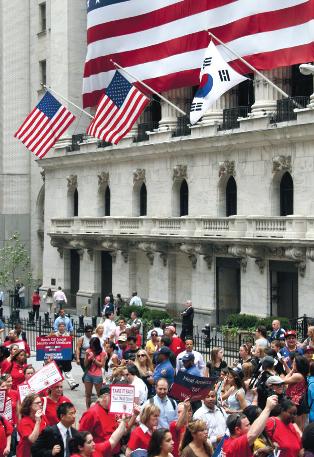
The Wall Street protests are growing — and some of the people getting involved have a very clear agenda. The most dramatic evidence is the growing role of organized labor in the actions. The nurses marched Oct. 5 — and they have a very specific platform, well thought-out, that calls for a financial transactions tax. AFSCMA, CWA and the city’s transit workers joined the march, too. And the head of the AFL-CIO, Richard Trumka, is now on board. And while Trumka made it clear that labor isn’t going to try to dominate the spontaneous protests,

The labor leader was specific as he summarized his demands: make Wall Street invest in creating jobs for Americans, stop foreclosures and write down problem mortgages. Paying for government programs would come from a “very tiny” tax on speculation, he said.

I’m not seeing any kind of political turf war here — the original Occupy Wall Street folks seem happy to have labor on the team. And once you get tens of thousands of labor activists in the streets — and using the media and the growing groundswell of support for the protests to push a Congressional agenda — then something potentially powerful is happening.


Jerry Brown has lost his mind

8

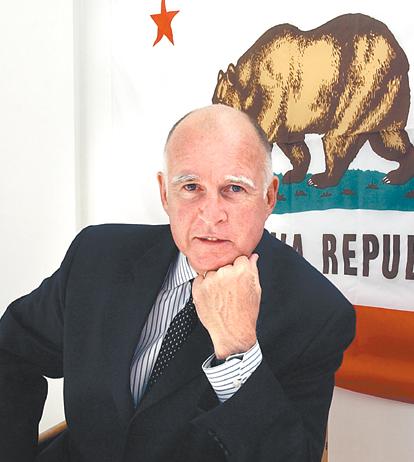
He’s all for “realignment” — giving counties more responsibility for public services. He’s all for environmental initiatives that decrease the state’s reliance on fossil fuels. But when a measure comes along that does both — at no harm to anyone in Sacramento, and has the support of just about everyone in San Francisco from the Chamber of Commerce to the Labor Council — he vetoes it.

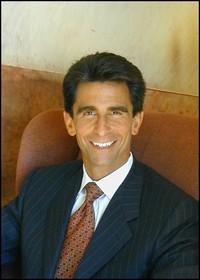
Brown just announced that he won’t sign Sen. Mark Leno’s SB 223, which would have allowed San Francisco to bring in as much as $75 million a year in new revenue by raising license fees on cars.

Let’s look at this for a moment. New revenue to handle increased state mandates — without Brown having to raise anyone’s taxes. Local control (San Franciscans would have to vote to tax themselves on car use.) A rejection of his Republican predecessor’s unliateral decimation of the state budget. And someting that discourages car use in the process.

A winner on every account. A perfect piece of Jerry Brown legislation that fits in precisely with everything he’s been talking about as governor.

And yet, he vetoes the bil, issuing a ridculous statement calling Leno’s bill “piecemeal” and asking for “a broader revenue solution to the state’s fiscal crisis” — something he knows the Republicans won’t allow and thus will not happen any time soon.

I dunno. Looks to me like Jerry’s gone off the deep end.

Trash Lit: Robert Ludlum is (really) dead

1

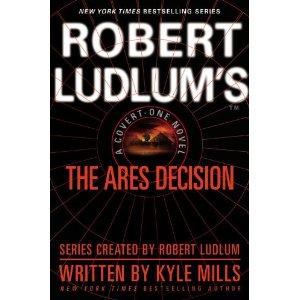
The Ares Decision
By Kyle Mills
Grand Central Publishing, 410 pp $27.99

The official title of this particular work of literary art, as it were, is “Robert Ludlum’s (TM) The Ares Decision.” That because the name Robert Ludlum sells — still, long after he left for the Great Bestseller List In The Sky. See, Ludlum — by many accounts the modern master of the international spy/thriller genre — died in 2001. But they made movies and they’ve made sequels and they’ve made more sequels and they’ve made movies out of stuff Ludlum never wrote. Jason Bourne is almost the new James Bond — a character who far outlives the guy who created him.

So they’ve found other writers to pretend they’re Ludlum and write stuff that maybe the Late Great might have done if he had lived forever (TM).

And as long as people keep making money on this shit, the producers are going to keep producing it.

In fact, there’s a whole lotta James Bond going on in this latest “Robert Ludlum’s (TM)” book. I can tell you this: It reads sometimes like a script for a Bond movie (which is embarassing). It reads sometimes like a Tom Clancy novel (which is not all bad). It hardly ever reads like something that Robert Ludlum would have written.

Here’s the deal:

There’s some nasty parasite that turns people into living zombies — they feel no pain, just anger, and fight and kill until their bodies are so hacked up that they can’t move any more. Of course, the little bug is very fatal; the living zombies only last a few hours before they die almost as horribly as the people they killed along the way.

Perfect bio-weapon, no?

Well, the Iranians (of course) think so, and they’re trying to force a young biologist who just wants to study ant parasites into turning this thing into a weapon. (The ant girl, Sarie Van Keuren, is the best character in the book, a gin-driniking scientist who is excellent with guns, a first-rate mechanic and a total space cadet. She has more depth than any of the rest of the sterotypes who people the sordid tale.)

Naturally, the CIA is involved, and naturally, it’s trouble: The director really wants the Iranians to use the zombie weapon so he’ll have an excuse to get the president to nuke the whole country back to the stone age. He doesn’t want too many people to die though; just a few million Americans, enough to create the political climate for mushroom clouds over the Middle East.

And he’s a bad guy, the CIA director, a nasty dude who puts secret paralysis death drugs in the General Tso’s Chicken.

There’s a looney Kurtz-style African strongman who has something of a cult. He is in the employ of Iran, and has an undergound fortress lab in Central Uganda, where the kidnapped Dr. Van Keuren is put to work. The only one who can save her is a super-secret operative who works directly for the president in an off-the-books op called Covert-One (how imaginative).

Along the way, there’s more living zombie attacks, crazed infected monkey attacks, machete attacks, a severed-head-in-the-back-of-a-pickup scene and a little bit of conventional warfare.

I read the whole thing. I liked Sarie enough to keep going. And it’s got an interesting plot, in a sick Clancy-ish way. But don’t name this stuff after Robert Ludlum; he had a lot more class.   

Rick Perry’s nutcase preacher

32

Did anyone else catch Terry Gross’s brilliant interview with C. Peter Wagner, the leader of the New Apostolic Reformation? He’s one of Rick Perry’s peeps, and his crew was involved in Perry’s big prayer meeting a few months back.

Lord, the guy is off his tree. I mean, full-on wackamole batso crazy.

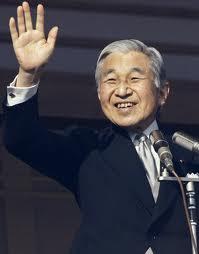
Japan, for example, is in deep economic decline because it’s controlled by demons who were allowed to take over the country when the emperor had sex with the Sun Goddess. (She’s not a nice girl, the Sun Goddess.) Wagner isn’t sure how that happened, physically, but he’s certain that it did (since humans have been known to have sex with the incubus and succubus).

Must have been hot.

And, of course, there are a lot of demons in Congress — and not only Democrats. There might be some demonic Republicans, too. They have to be diagnosed with a five-page questionnaire so the demons can be cast out.

Oh, and some whole cities are controlled by demons. (I wonder which ones those might be?)

When you talk about demons over cities, we’re talking about what — sometimes what we refer to as territorial spirits, and they’re more high-ranking spirits in the hierarchy of darkness and they’re more powerful and they require different approaches, and it’s not as easy as commanding them to leave in the name of Jesus. So sometimes there has to be repentance, sometimes there has to be — there has been bloodshed in that city that needs to be repented of, there has been idolatry in the city that has ruined the land. There’s been immorality that needs to be repented of, and there are several social things that people really need to acknowledge that they’re bad and repent of them and ask forgiveness.

Mercy.

So this is the kind of dude who will be hanging around the White House in the Perry Administration. Talk about demons overhead.

What the Republicans agree on (scary)

32

The most interesting thing about the Republican debates is not where the candidates disagree — it’s where they all seem to agree. And it’s pretty fucked up.

My friends at CalBuzz say this is the big story missing from the MSM coverage of the campaign so far. They point to a remarkable article in The New Republic titled “Five Things All The GOP Candidates Agree On (They’re Terrifying).”

He notes:

Add all this up, and it’s apparent the Republican Party has become identified with a radically conservative world-view in which environmental regulations and collective bargaining by workers have strangled the economy; deregulation, federal spending cuts, and deflation of the currency are the only immediate remedies; and the path back to national righteousness will require restoration of the kinds of mores—including criminalization of abortion—that prevailed before things started going to hell in the 1960s. That Republicans hardly even argue about such things anymore makes the party’s transformation that much more striking—if less noticeable to the news media and the population at large.

And you wonder why Johnny Wendell wants to change the name from the GOP to the Shit Head Party.

Endorsement interviews: Terry Baum

26

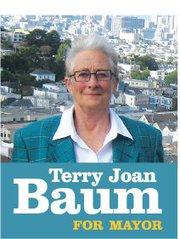
Terry Joan Baum is the Green Party candidate for mayor. She told us she got in the race to get progressive issues out and on the agenda; she was a candidate before Sup. John Avalos announced, and she says she’d be supporting him if she weren’t a candidate. She told us she’s the only candidate calling for criminal charges against PG&E in the San Bruno explosion. “I understand that I’m a longshot,” she said, “but I’ve already influenced the debates.” Listen to the interview and watch the video after the jump.


Baum by endorsements2011

Bevan Dufty loves Muni

8

The award for the best political ad of the year (so far) goes (no surprise) to Bevan Dufty, who is the only mayoral candidate willing to laugh about himself and the only one who could pull off an ad that’s a love poem to Muni.

I’m sympathetic: I love Muni, too. But I’m not running for mayor and trying to explain why the system is so fucked up.

Still: It’s great to see Dufty on the train with his kid, and it’s great to remember how exciting Muni is for kids, and I laughed when I saw the ad. Which is something.

Check it out:


We could ride trains

0

The Muni trains are fun. I rode them for years before I figured that out. 

Muni was always a matter of function, a means of getting around. I was in a rush, a busy person with Places to Be. I was late; the train wasn’t there. When one of those historic clankers from Boston showed up on Church Street, I got even more crabby. The thing goes about four miles an hour; don’t they know we’re on a schedule here?

And then I had a son.

Even before he could talk, Michael loved trains. He’d point at them and start waving his hands up and down and laughing. “Choo-choo” was one of his first words; I think he knew that one even before “dada” and “mama.” And when I finally took him for a ride on the J-Church, around his second birthday, he became the happiest boy on the planet.

For the next year or so, every weekend morning, when he woke me up at the crack of dawn, I’d ask him what he wanted to do that day, and he’d say, with a big smile, “We could ride trains!” And almost every Saturday and Sunday afternoon, that’s what we’d do, from Church Street to Market Street, down Market, maybe along the waterfront to the end of the line at Fisherman’s Wharf. Then we’d get on another train and ride back home.

Sometimes we’d stop for a while at Dolores Park; sometimes we’d have doughnuts and check out the sea lions at the wharf. Sometimes we’d take a walk along the bay and look at boats. But really, as Zen masters and three-year-old boys have always known, the journey was the destination.

It’s different seeing the city through a child’s eyes.

I remember the amazing sense of wonder I had when I first arrived in San Francisco, a 22-year-old out of the New York suburbs and a Connecticut college town who had never been west of Buffalo. Everything seemed so alive, so special and strange and funny. And after a while, like everyone else, I had to pay the rent, and fight with the bank and the phone company, and the IRS found me, and life in the big city became, well, life in the big city.

But when you walk around with a kid, it all starts to come back. The whole urban world is an adventure. That stuff blowing around on the sidewalks isn’t garbage — it’s treasure. The graffiti on the walls isn’t vandalism (or even art) — it’s a clue to some sort of puzzle, maybe a map to where the pirates buried the gold. Even watching the train pull away just before you get to the corner isn’t any reason to be mad — because (as Michael always announces with glee) pretty soon there will be another one!

Just walking out the door is an explosion of scientific marvels. The wind is moving air, which is pretty cool when you think about it. The fog is a cloud on the ground. The rain makes puddles, and puddles lead to big splashes and soaking wet feet, and life doesn’t get much better than that. I suspect that every day in Michael’s life is like the first time I smoked pot and tried to talk about the difference between time and color.

There was a long period (and now it seems like another lifetime) when I could go for weeks without venturing beyond work, the 500 Club, a couple of take-out places, and my apartment. The advantage (and curse) of this city is that you can live quite well in your own neighborhood (particularly when it’s a place like the Mission District or Bernal Heights), so you don’t need to go anywhere else.

Amazing what I was missing.

I’ve lived in or around the Mission for 10 years, and I’d never been to Garfield Pool. You can swim there for three bucks, and it’s never crowded. The locker room feels like something out of a 1940s socialist paradise — everything’s one color, brutally utilitarian, and just a little bit broken. There are free kickboards, basketballs (and a poolside hoop), and sometimes even swim goggles (I guess when people leave them behind they become properly nationalized). The Upper Noe Recreation Center has the same sort of feel: on Saturday mornings, there’s a toddler gym, filled with a huge conglomeration of toys that look and feel like they were never actually new. But they work just fine and are durable as hell, and on rainy days, dozens of children stranded inside get a chance to ride welded tricycles and plastic cars around and crash into each other, with no ill effect. I smile just thinking about it.

The big children’s playground at Golden Gate Park has a long, steep slide made out of concrete that would make a modern-day insurance agent gasp in horror and alarm. Kids who have barely learned to walk somehow manage to climb up about 75 slippery, uneven steps that are almost too much for me, then sit on torn pieces of cardboard and careen down a hard, fast incline and skid to a stop at the bottom. It’s outstanding.

At Crissy Field, there’s a narrow, shallow channel where the water in the newly restored tidal marsh flows in and out of the bay. I don’t think the people who oversaw the ecological restoration of the wetlands area had any idea they were creating a swimming hole for kids, but that’s what happened: on warm days, dozen of children splash in the stream and build elaborate sand castles on the banks. When the tide goes out, a muddy island appears in the middle. Even with the tide coming in, the channel is never more than a few feet deep. It’s mind-boggling: you’re on the edge of the bay, in the shadow of the Golden Gate Bridge, a few yards away from the icy-cold currents and riptides where even seriously athletic adults in wet suits venture only with care — and three-years-olds are romping in the water with their dogs.

There’s a railroad museum at the old Hunters Point shipyard, with vintage steam engines that still work. There’s a model river (full of water and plastic fish) at the Bay Area Discovery Museum in Sausalito. There’s a working beehive in the bug house at the San Francisco Zoo, and the queen bee has a white dot painted on her abdomen. There’s an artificial earthquake that shakes up the Lego houses you can build at the California Academy of Sciences.

There are stores in the Mission that sell parachuting space aliens. If you ask nicely at Mitchell’s Ice Cream, they’ll stick a few green gummy worms in your chocolate-chip cone.

These are all things I didn’t know.

When I was a kid in the suburbs, I couldn’t imagine growing up in a city. I hope my kids see it differently. Because I’m getting to be a kid again right here in San Francisco — and I can’t imagine anyplace better.


SFBG Radio: The GOP or the SHP?

3

Today Johnny makes a modest proposal: Instead of calling the Republicans the Grand Old Party, let’s be honest and call them the Shit Head Party. Listen up after the jump.

TheShitheadParty2 by endorsements2011

SFBG Radio: A left-wing tea party?

38

In this episode, Johnny and economist Johnny Venom talk about the Wall Street protests, what will and won’t work, whether the system is too rigged — and possibly the birth of a left-wing tea party. Check it out after the jump.

FivePointsOfVenom by endorsements2011

City College execs get away with it

3

What a deal. Former City College Chancellor Phil Day and one of his associates have agreed to a plea bargain in the City College corruption case. There will be no jail time for Day and Stephan Herman; they’ll pay a fine ($30K for Day, $20K for Herman), make some sort of undetermined “restitution” and walk away with no felony convictions on their records. Cris Arguedas, Day’s celeb attorney (who also represents Barry Bonds), did a hell of a job turning all the years of sleaze at City College into a relatively modest non-event. Ho hum. Pay a fine (which, with his string of well-compensated jobs, he can certainly afford — he clearly paid Arguedas more than the fine will ever be), walk away. No big deal.

But as G.W. Schulz reported for us over the years, this wasn’t just a little tiny mistake. There’s been a pattern of underhanded operations out on Phelan Ave. for years — and now the office of District Attorney George Gascon is allowing it all to disappear under the well-worn rug.

Damn.

Here’s what I wonder: Does anybody really believe that Day and Herman acted alone — that nobody on the Community College Board knew what they were doing? Did the chancellor cook up this whole scheme to ship money to a bond campaign without any of the elected officials who were directly involved in that campaign realizing what was going on?

I realize that the majority of the folks on the college board today are trying to clean up the mess that Day left behind and move the institution forward, but I have always thought that there was more here than the formal legal charges indicated. And now we’ll never know.


Will Brown sign Leno’s VLF bill?

11

We’re still waiting. A bill that could bring San Francisco another $75 million a year — just by restoring the vehicle license fee that people in this city paid before Arnold Schwarzenegger gutted it — is still sitting on Gov. Jerry Brown’s desk. And we have no idea what action he’s going to take on Sen. Mark Leno’s SB 223.

The good news is that he has already signed one bill that grants local governments in the East Bay to raise sales taxes with a vote of the people. So he’s clearly open to the idea. Leno told us he remains hopeful. “We’ve been working on this for eight years,” he told me. “And there’s never been a time when local government needs it more.”

Mayor Ed Lee has voiced his support; so has the Board of Supervisors. The SF Chamber of Commerce and the Labor Council are on board. “You can’t get much more broad-based support than we have in San Francisco,” Leno said.

There’s a form to email the governor here.

Endorsement interviews: Sharmin Bock

4

Sharmin Bock is one of just two candidates for district attorney ever to try a criminal case in court. In fact, she’s tried plenty of them in a 23-year career as an Alameda County prosecutor. She’s lived in San Francisco all that time, commuting across the Bay because, she told us, Alameda County had one of the two best D.A.’s offices in the country. (Not a nice assessment of the office she’s seeking; her implication is that she didn’t want to work at home because the office was never up to her standards).

Bock really pushed the experience line, saying that a candidate who hadn’t been in the trenches couldn’t lead a team of lawyers on the path toward reform. She told us she doesn’t think low (or maybe even mid-level) drug dealers should be in jail, and is big on changing the was cases are charged. She told us she opposes the death penalty, would never charge a non-violent felony as a third strike, and would focus on fixing the crime lab problems. She also vowed to be aggressive about municipal corruption.

Check out the audio and video after the jump.


Bock by endorsements2011

Editor’s notes

1

tredmond@sfbg.com

Every mayoral candidate who wants the progressive vote showed up for the Guardian forum Sept. 21. Everyone except Mayor Ed Lee.

Yeah, the mayor’s a busy guy. But state senators and city attorneys and public defenders and city assessors and supervisors are busy, too, and those people managed to get to the LGBT Center, where more than 100 people were packed into the fourth floor room.

Jeff Adachi made a point of talking about “showing up” — and everyone knew exactly what he was saying. Where was Ed?

Well, maybe the mayor isn’t interested in votes from the city’s left, but I kind of doubt he’s written off such a huge sector of the population. In fact, by that standard, he would have written off most of the neighborhoods, and most of the political clubs. Because the mayor isn’t showing up much at all.

There have been more than 50 forums, debates and candidates nights over the course of the election season. Sure, some of them happened before Lee got in the race — but since the day he filed his papers, the other candidates have gone to between 12 and 15 events. Lee has made it to maybe two or three — and when he does show up, he often answers one question then leaves.

I get the strategy: Lee is pretending to be above the political fray. He’s the incumbent in the Rose Garden, refusing to lower himself to the level of all that riffraff out there trying to communicate with the voters. He’s making sure nobody gets to ask him any embarrassing questions; that way he won’t make any mistakes. And his entire reelection will be one big scripted event, paid for with big corporate money and managed from behind the scenes by the same slick operators who brought you Gavin Newsom.

Do we really want four more years of that?

Tony Winnicker, who was Newsom’s press secretary, is now handing the media for Lee. He’s just as hostile and dismissive of legitimate journalistic inquiries as he ever was, just as full of spin and vinegar. He acts as if campaigning — you know, the stuff all the others are doing — is beneath the dignity of His Honor.

Come on, Mr. Mayor. Come out and campaign like everyone else. We’re starting to wonder what you’re trying to hide.

SFBG Radio: Why California needs a state bank

104

Today we talk about why California should follow North Dakota and create a state bank — and why San Francisco needs a public bank, too. Listen after the jump.

BankOfCalifornia by endorsements2011

Endorsement interviews: Paul Miyamoto

4

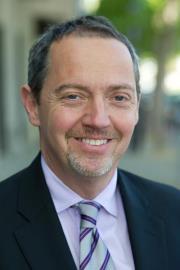
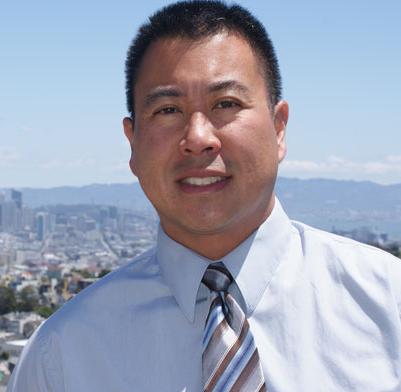
Paul Miyamoto is a captain in the Sheriff’s Office and is running for the top job. He told us that at a time when significant change is coming — from the retirement of longtime Sheriff Mike Hennessey to state realignment on prison policy — it’s important to have “someone from within, someone who’s been doing the job.” He vowed (as did all the candidates) to continue Hennessey’s progressive policies, but was a little fuzzy in some areas. He said, for example, that he’s against privatizing jail health services — but would be willing to examine the issue if there were a viable alternative. Audio and video after the jump.

Miyamoto by endorsements2011


Endorsement Interviews: Leland Yee

73

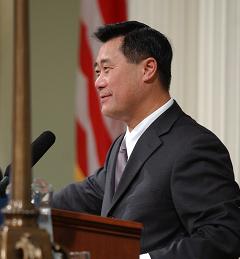
State Sen. Leland Yee, who is running for mayor, has been involved in local politics since the 1980s, when he joined the School Board. He’s been a supervisor elected at-large, a district supervisor, a state Assembly member and now a senator. And he stirs up strong passions in the city — supporters of Mayor Ed Lee say they urged him to get into the mayor’s race in part to stop Yee from winning. Yee was a fiscal conservative on the Board of Supervisors, but in Sacramento, he’s been a foe of budget cuts. And he told us he wants to see new revenue — including a city income tax — to make sure that “the people who need services get them.”

You can listen to our interview with Yee and see the video after the jump.

Yee by endorsements2011

Endorsement Interviews: George Gascon

16

George Gascon is, as far as we can determine, the only police chief in the country ever to become a district attorney. It’s put him in an odd position, particularly given the recent problems in the SFPD: He has to monitor and possibly prosecute people who used to work for him. That conflict has been a big part of the campaigns against him.

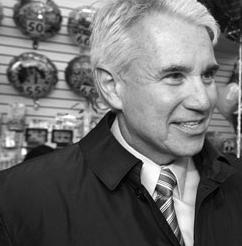
Gascon discussed the situation at length, telling us that he’s proud to be “a progressive chief of police who became district attorney.” He said that he was the one who brought some of the department’s problems (the crime lab, the lack of a Brady policy) to light. “I have taken on police corruption aggressively,” he said.

You can listen to the full interview (and see the video) after the jump.

Gascon by endorsements2011


The Quezada memorial

0

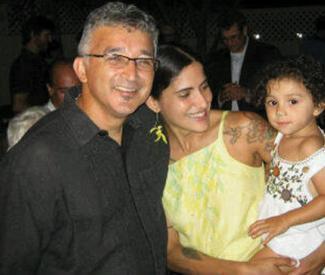
It was standing room only, and not even much of that left, when I arrived at the memorial for community organizer and Mission District icon Eric Quezada Sept 25. “It is,” my friend Chri Cook noted, “as if the entire San Francisco left is here.”

Well, maybe not quite — but close. The auditorium at Horace Mann Middle School couldn’t hold the huge, diverse crowd that packed the downstairs and the balcony and flowed out the doors and into the halls. The speakers talked of Eric’s life — as an activist, a soccer player and a father  — but also, in a dramatic way, about the part of the Mission, the part that doesn’t live off tapas and $12 martinis on Valencia Street, a community that fought displacement in the dot-com era, that fights evictions and condo conversions and high-end housing developments every day, that supports artists and musicians and immigrants and working-class people … Eric Quezada’s Mission. Long may it live.

The family needs help with medical expenses — and also to help with the education of Eric’s daughter, Ixchel. Contributions can be made to the Ixchel Quezada education fund or mailed to 470 Columbus Ave., Suite 211, San Francisco, 94133. Checks should be made payable to Eric Quezada Memorial Fund. A fundraiser is being held at Jane Morrison’s home at 44 Woodland Ave. on Oct. 16 between 3 and 5 p.m.