Cheryl Eddy

Rep Clock

0

Schedules are for Wed/18-Tue/24 except where noted. Director and year are given when available. Double and triple features are marked with a •. All times pm unless otherwise specified.

ARTISTS’ TELEVISION ACCESS 992 Valencia, SF; www.atasite.org. $6. "Other Cinema:" "Ken Adams’ Terence McKenna Experience," Sat, 8:30.

CASTRO 429 Castro, SF; (415) 621-6120, www.castrotheatre.com. $7.50-11. •Red Desert (Antonioni, 1964), Wed, 2:20, 7, and Zabriskie Point (Antonioni, 1970), Wed, 4:40, 9:20. San Francisco International Film Festival, Thu and Mon. See www.sffs.org for tickets and schedule. "James Bond 50th Anniversary:" Dr. No (Young, 1962), Fri, 2, 7, and On Her Majesty’s Secret Service (Hunt, 1969), Fri, 4:10, 9:05; •From Russia With Love (Young, 1963), Sat, 9:20, 2:20; and Diamonds Are Forever (Hamilton, 1971), Sat, 4:45; The Spy Who Loved Me (Gilbert, 1977), Sat, 7:05; •Thunderball (Young, 1965), Sun, 1, 8:15; Live and Let Die (Hamilton, 1973), Sun, 3:30; For Your Eyes Only (Glen, 1981), Sun, 5:50.

CENTURY 9 835 Market, SF; dosomethingreelsf.eventbrite.com. $10. "Whole Foods Market Do Something Reel Film Festival:" The Apple Pushers (Mazzio, 2011), Sun, 3.

CHRISTOPHER B. SMITH RAFAEL FILM CENTER 1118 Fourth St, San Rafael; (415) 454-1222, www.cafilm.org. $6.75-10.25. The Deep Blue Sea (Davies, 2011), call for dates and times. The Island President (Shenk, 2011), call for dates and times. Jiro Dreams of Sushi (Gelb, 2011), call for dates and times. Monsieur Lazhar (Falardeau, 2011), call for dates and times. The Salt of Life (de Gregorio, 2010), call for dates and times. Bully (Hirsch, 2012), April 20-26, call for times. Letters From the Big Man (Munch, 2011), April 20-26, call for times.

DELANCEY STREET 600 the Embarcadero, SF; www.theinstitutemovie.com. $10. The Institute (McCall, 2012), Fri, 8. Also Sat, midnight, Grand Lake, 3200 Grand, Oakl.

MISSION CULTURAL CENTER FOR LATINO ARTS 2868 Mission, SF; www.writerscorps.org. Free. "Poetry Projection Project," short films based on youth poems, Sat, 2.

PACIFIC FILM ARCHIVE 2575 Bancroft, Berk; (510) 642-5249, bampfa.berkeley.edu. $5.50-9.50. "Film 50: History of Cinema, Film and the Other Arts:" Adaptation (Jonze, 2002), Wed, 3:10. With a lecture by Marilyn Fabe. "Documentary Voices:" Granito: How to Nail a Dictator (Yates, 2011), Wed, 7. San Francisco International Film Festival, Fri-Tue. See www.sffs.org for tickets and schedule.

ROXIE 3117 and 3125 16th St, SF; (415) 863-1087, www.roxie.com. $6.50-10. Bad Fever (Guy-Defa, 2011), Wed-Thu, 7, 9. The Ballad of Genesis and Lady Jaye (Losier, 2011), Wed-Thu, 8:45. The Hunter (Pitts, 2010), Wed-Thu, 7. "The Dark Side of Oz:" The Wizard of Oz (Fleming, 1929), Fri, 8. With a certain Pink Floyd album providing accompaniment. Letters From the Big Man (Munch, 2011), April 20-26, 6:45, 8:45 (also Sat-Sun, 2:55, 4:15).

SF FILM SOCIETY CINEMA 1746 Post, SF. $10-11. The Turin Horse (Tarr, 2011), Wed-Thu, 2, 5:30, 8:30.

VORTEX ROOM 1082 Howard, SF; www.myspace.com/thevortexroom. $7 donation. "Starship Vortex:" •Star Pilot (Francisci, 1966), Thu, 9, and Star Odyssey (Brescia, 1979), Thu, 11.

YERBA BUENA CENTER FOR THE ARTS 701 Mission, SF; (415) 978-2787, www.ybca.org. $6-8. How Much Does Your Building Weigh, Mr. Foster? (López Amado and Carcas, 2011), Sun, 2 and 4.

You’re gonna need to upsize that popcorn

0

Guess how many movies are opening in the Bay Area Fri/13? Sixteen. Sixteen, y’all. That might be an all-time Ultimate Grand Supreme record. So in this saturated situation, what’s worth seeing, considering this is your last weekend before the San Francisco International Film Festival sets up shop and dominates all your moviegoing brain cells?

First, check out Dennis Harvey’s feature-length review of Applause, imported from Denmark and featuring “a flamboyant, arresting, faultless star turn” from Paprika Steen, a megastar in her home country.

Seeking more? Here are five (out of 16, remember — true fiends can check out our complete film listings if five ain’t enough) to get you through the weekend.

A buzzed-about doc on the (unfortunately) hot topic of teen bullying:

http://www.youtube.com/watch?v=LzhVdc7aQv8&feature=related

Bully Anyone who’s ever been a kid on the wrong side of a bully — or was sensitive and observant enough not to avert his or her eyes — will be puzzling over the MPAA’s R rating of this doc, for profanity. It’s absurd when the gory violence on network and basic cable TV stops just short of cutting characters’ faces off, as one blurred-out bus bully threatens to do to the sweet, hapless Alex, dubbed “Fish Face” by the kids who ostracize him and make his life hell on the bus. It’s a jungle out there, as we all know — but it’s that real, visceral footage of the verbal (and physical) abuse bullied children deal with daily that brings it all home. Filmmaker Lee Hirsch goes above and beyond in trying to capture all dimensions of his subject: the terrorized bullied, the ineffectual school administrators, the desperate parents. There’s Kelby, the gay girl who was forced off her beloved basketball team after she came out, and Ja’Maya, who took drastic measures to fend off her tormenters — as well as the specters of those who turned to suicide as a way out. Hirsch is clearly more of an activist than a fly on the wall: he steps in at one point to help and obviously makes an uplifting effort to focus on what we can do to battle bullying. Nevertheless, at the risk of coming off like the Iowa assistant principal who’s catching criticism for telling one victim that he was just as bad as the bully that he refused to shake hands with, one feels compelled to note one prominent component that’s missing here: the bullies themselves, their stories, and the reasons why they’re so cruel — admittedly a daunting, possibly libelous task. (1:35) Piedmont, Shattuck. (Kimberly Chun)

A horror spoof so good we don’t dare spoil it for you. Not even posting the trailer, that’s how serious we are:

The Cabin in the Woods If the name “Joss Whedon” doesn’t provide all the reason you need to bum-rush The Cabin in the Woods (Whedon produced and co-wrote,  with director and frequent collaborator Drew Goddard), well, there’s not much more that can be revealed without ruining the entire movie. In a very, very small nutshell, it’s about a group of college kids (including Chris “Thor” Hemsworth) whose weekend jaunt to a rural cabin goes horribly awry, as such weekend jaunts tend to do in horror movies (the Texas Chainsaw and Evil Dead movies are heavily referenced). But this is no ordinary nightmare — its peculiarities are cleverly, carefully revealed, and the movie’s inside-out takedown of scary movies produces some very unexpected (and delightfully blood-gushing) twists and turns. Plus: the always-awesome Richard Jenkins, and in-jokes galore for genre fans. (1:35) California, Presidio. (Cheryl Eddy)

The only movie involving Luc Besson you need to worry about this week (we’ve seen the Besson-produced and co-written Lockout, which could skate by on action-movie silliness if it didn’t so blatantly rip off John Carpenter, a.k.a. The Great One):

http://www.youtube.com/watch?v=SMYAzQC3UjI
 

The Lady Luc Besson directs Michelle Yeoh — but The Lady is about as far from flashy action heroics as humanly possible. Instead, it’s a reverent, emotion-packed biopic of Nobel Peace Prize winner Aung San Suu Kyi, a national hero in Burma (Myanmar) for her work against the country’s oppressive military regime. But don’t expect a year-by-year exploration of Suu’s every accomplishment; instead, the film focuses on the relationship between Suu and her British husband, Michael Aris (David Thewlis). When Michael discovers he’s dying of cancer, he’s repeatedly denied visas to visit his wife — a cruel knife-twist by a government that assures Suu that if she leaves Burma to visit him, they’ll never allow her to return. Heartbreaking stuff, elegantly channeled by Thewlis and especially Yeoh, who conveys Suu’s incredible strength despite her alarmingly frail appearance. The real Iron Lady, right here. (2:07) Bridge, Shattuck. (Cheryl Eddy)

The last of 2012’s Best Foreign Language Film nominees to open locally, after Bullhead, Footnote, In Darkness, and eventual winner A Separation:

http://www.youtube.com/watch?v=gjNCkxnT-xE

Monsieur Lazhar When their beloved but troubled teacher hangs herself in the classroom — not a thoughtful choice of location, but then we never really discover her motives — traumatized Montreal sixth-graders get Bachir Lazhar (Fellag), a middle-aged Algerian émigré whose contrastingly rather strict, old-fashioned methods prove surprisingly useful at helping them past their trauma. He quickly becomes the crush object of studious Alice (Sophie Nelisse), whose single mother is a pilot too often away, while troublemaker Simon (Emilien Neron) acts out his own domestic and other issues at school. Lazhar has his own secrets as well — for one thing, we see that he’s still petitioning for permanent asylum in Canada, contradicting what he told the principal upon being hired — and while his emotions are more tightly wrapped, circumstances will eventually force all truths out. This very likable drama about adults and children from Quebec writer-director Philippe Falardeau doesn’t quite have the heft and resonance to rate among the truly great narrative films about education (like Laurent Cantet’s recent French The Class). But it comes close enough, gracefully touching on numerous other issues while effectively keeping focus on how a good teacher can shape young lives in ways as incalculable as they are important. (1:34) Albany, Embarcadero, Smith Rafael. (Dennis Harvey)

And The Three Stooges: The Movie. Wait, no. Actually…

The Turin Horse Hungarian auteur Béla Tarr’s final cinematic statement is extrapolated from a climactic episode in the life of Friedrich Nietzsche, wherein the philosopher tearfully intervened in the beating of a horse on the streets of Turin. Tarr, working with frequent collaborators Ágnes Hranitzky and László Krasznahorkai, conjures the lives of a horseman and his daughter as they barely subsist amid a windswept wasteland. This glacial Beckettian dirge of a film, shot in black and white and composed of Tarr’s trademark long takes, doesn’t so much develop these two characters as wear them down. Their stultifying daily routines — cleaning the stable, fetching water from the well, changing and cleaning their numerous layers of clothing — occupy much of the film, so it is all the more unsettling when this wretched lifestyle is torn asunder by the whims of nature. (2:26) SF Film Society Cinema. (Sam Stander)

Rep Clock

0

Schedules are for Wed/11-Tue/17 except where noted. Director and year are given when available. Double and triple features are marked with a •. All times pm unless otherwise specified.

ARTISTS’ TELEVISION ACCESS 992 Valencia, SF; www.atasite.org. $6. "Other Cinema:" "Psychedelia:" analog-synthesizer subculture works by John Davis, Lori Varga, David Cox, Matthew Bate, and more, Sat, 8:30. "Brazilian Voices of Cinema:" O Dragão da Maldade contra o Santo Guerreiro (Rocha, 1969), Sun, 8.

BERKELEY FELLOWSHIP OF UNITARIAN UNIVERSALISTS 1606 Bonita, Berk; www.bfuu.org. $5-10. Queen of the Sun: What Are the Bees Telling Us? (Siegel, 2010), Thurs, 7.

CASTRO 429 Castro, SF; (415) 621-6120, www.castrotheatre.com. $7.50-10. •Young Adult (Reitman, 2011), Wed, 3:05, 7, and Juno (Reitman, 2007), Wed, 5, 8:55. "Midnites for Maniacs: Growing Up Too Fast Triple Bill:" •Lost in Translation (Coppola, 2003), Fri, 7:15; Battle Royale (Fukasaku, 2000), Fri, 9:30; and House (Ohbayashi, 1977), Fri, 11:45. Admission $13 for one or three films. •2046 (Wong, 2004), Sat, 2:30, 8:55; Days of Being Wild (Wong, 1991), Sat, 5; and In the Mood for Love (Wong, 2000), Sat, 7. •Sutro’s: The Palace at Lands End (Wyrsch, 2011), Sun, 1; Remembering Playland (Wyrsch, 2010), Sun, 3. •The Manchurian Candidate (Frankenheimer, 1962), Sun, 6:30, and The Parallax View (Pakula, 1974), Sun, 8:55.

CHRISTOPHER B. SMITH RAFAEL FILM CENTER 1118 Fourth St, San Rafael; (415) 454-1222, www.cafilm.org. $6.75-10.25. The Deep Blue Sea (Davies, 2011), call for dates and times. The Island President (Shenk, 2011), call for dates and times. Jiro Dreams of Sushi (Gelb, 2011), call for dates and times. The Salt of Life (de Gregorio, 2010), call for dates and times. Monsieur Lazhar (Falardeau, 2011), April 13-19, call for times. "World Ballet on the Big Screen:" Romeo and Juliet from the Royal Ballet, London, Sun, 10am; Tues, 6:30. Positive Negatives: The Photography of David Johnson (Steiner, 2011), Sun, 4:15.

ELMWOOD 10070 San Pablo, El Cerrito; www.rialtocinemas.com. Free. "Community Cinema:" Hell and Back Again (Dennis, 2011), Wed, 7.

KADIST ART FOUNDATION 3295 20th St, SF; (415) 738-8668. Free. Kippenberger: The Film (Kobel, 2005), Wed, 7.

PACIFIC FILM ARCHIVE 2575 Bancroft, Berk; (510) 642-5249, bampfa.berkeley.edu. $5.50-9.50. "Film 50: History of Cinema, Film and the Other Arts:" Playtime (Tati, 1967), Wed, 3:10. With a lecture by Marilyn Fabe. "Documentary Voices:" 24 City (Jia, 2008), Wed, 7. "Cine/Spin:" The Blood of a Poet (Cocteau, 1930), Thurs, 7:30. With accompaniment by UC Berkeley student DJs. "Dark Past: Film Noir by German Emigrés:" Caught (Ophuls, 1949), Fri, 7; Criss Cross (Siodmak, 1949), Fri, 8:50; Dark City (Dieterle, 1950), Sun, 6:15. "The Library Lover: The Films of Raúl Ruiz:" Tres Tristes Tigres (1968), Sat, 6; The Suspended Vocation (1977), Sun, 4. "Howard Hawks: The Measure of Man:" Rio Bravo (1959), Sat, 8; El Dorado (1967), Tues, 7.

ROXIE 3117 and 3125 16th St, SF; (415) 863-1087, www.roxie.com. $6.50-10. The Ballad of Genesis and Lady Jaye (Losier, 2011), Wed, 8:45. Better Than Something: Jay Reatard (Hammond and Markiewicz, 2011), Wed-Thurs, 7:30, 9:30. The Hunter (Pitts, 2010), Wed, 7. San Francisco International Women’s Film Festival, Fri-Sun. For more info, visit www.sfiwff.com. Bad Fever (Guy-Defa, 2011), April 13-19, 7.

SF FILM SOCIETY CINEMA 1746 Post, SF. $10-11. This Is Not a Film (Panahi, 2011), Wed-Thurs, 1, 3, 5, 7, 9. The Turin Horse (Tarr, 2011), April 13-19, 2, 5:30, 8:30.

SF PUBLIC LIBRARY Koret Auditorium, 100 Larkin, SF; www.sfpl.org. Free. "Bay Area Community Cinema Series:" Hell and Back Again (Dennis, 2011), Tues, 5:45.

"SONOMA INTERNATIONAL FILM FESTIVAL" Various North Bay locations; www.sonomafilmfest.org. More than 130 independent films from around the world, plus a tribute to legendary filmmaker John Waters, Wed-Sun.

VORTEX ROOM 1082 Howard, SF; www.myspace.com/thevortexroom. $7 donation. "Starship Vortex:" •Flash Gordon (Hodges, 1980), Thu, 9, and Barbarella (Vadim, 1968), Thu, 11.

YERBA BUENA CENTER FOR THE ARTS 701 Mission, SF; (415) 978-2787, www.ybca.org. $6-8. "Great Directors Speak:" •Robert Bresson: Without a Trace (Weyergans, 1965), and Chantal Akerman by Chantal Akerman (Akerman, 1996), Thu, 7:30.

So you want to be a time traveler!

0

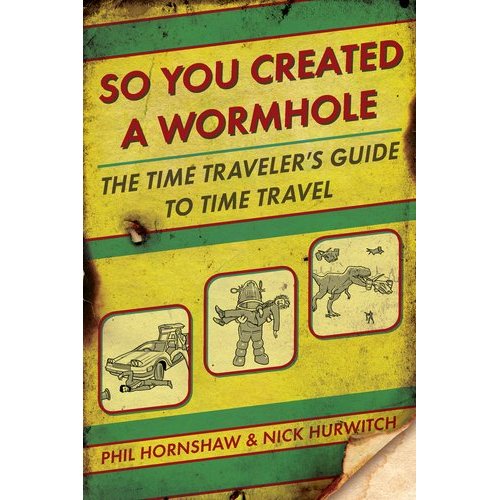
If you’re an aspiring time traveler, you need to pick up a copy of the brand-new how-to book So You Created a Wormhole: The Time Traveler’s Guide to Time Travel (Berkley Trade, 326pp., $15). If you are already a time traveler, you should probably pick up a copy, read it, then go back in time till before you time-traveled in the first place, and use your new knowledge wisely.

Wait, does that make any sense? Time travel is some intense and tricky stuff. I got ahold of authors and time-travel experts Phil Hornshaw and Nick Hurwitch for further intel on the matter.

SFBG The book contains several film references (Back to the Future, Bill and Ted’s Excellent Adventure, The Terminator, etc). In your opinion, which film offers the most accurate depiction of time travel? Which is the least accurate?

Phil Hornshaw Back to the Future is a pretty reliable resource for the perils of time travel, even if it does take a few liberties in the service of being awesome. Granted, you can’t go into the future and find yourself there — how could you be there in the future if you left from the past? — but the ideas of timelines being corrupted and for the most part, of needing antecedents in the past in order to create the future, is handled pretty deftly in Back to the Future.

http://www.youtube.com/watch?v=2SrV13F3x7Y

McFly: accurate.

Conversely, Terminator is a pretty terrible time travel movie, even though evil robots are super-cool, because of the problem of Kyle Reese going back, creating John Connor, and then getting sent back by John Connor in order to create John Connor in order to get sent back by John Connor. Those kinds of stories can work, but they make your brain ache. And that’s just not very nice, James Cameron. But really, there’s not really a “worst” time travel movie because they’re pretty universally terrible at being time travel movies. That was a big reason for the Time Traveler’s Guide in the first place.

Nick Hurwitch Agreed. You can’t go wrong with the Holy Trilogy — that’s Back to the Future, not Star Wars, kids. But the time travel movies that always bug me are those that send their characters to the era during which the film was made for the rest of the movie. For example, in Time After Time, the movie starts out in the late 19th Century, but the hero and the villain are quickly sent to San Francisco, 1979. The movie was made in, you guessed it, 1979.

That’s to say nothing of all the hundreds of movies and television shows that get time travel completely wrong — but at a minimum, don’t be lazy. Hopefully after reading this guide, the audience at large will have a better grasp of what works in a time travel movie and what doesn’t.


SFBG The book points out that time travel can have catastrophic results when executed improperly. Which rule of time travel is the most important?

NH You should never, under any circumstances, visit yourself in the past. History is easy enough to screw up simply by hopping around through time, but any interactions with other versions of yourself increase the risk of paradoxes exponentially. You could prevent yourself from traveling back in the first place, get yourself killed, be mistaken for yourself, or, more often than not, engage in hand-to-hand combat to the death with yourself. If you’re going to mess up time for the rest of us, at least stick to stepping on butterflies.

PH Yeah, that’s a good one. Also don’t make out with your mom or dad. That actually applies all the time. You don’t have to be a time traveler to apply that to your life.


SFBG Is time travel an activity suited for beginners? What kind of pre-training do you recommend, and will a montage be necessary?

PH The biggest danger of time travel is getting killed within the first 10 minutes of your arrival, so if there’s one thing a novice time traveler should be good at, it’s running. We also recommend bringing along a firearm, so if you’re looking for a montage, I’d recommend track-running and then gunplay. We don’t recommend them at the same time as that’s generally frowned upon no matter what time you’re visiting, but both are useful skills.

NH Many idiots less prepared and less intelligent than your readers have shot off through spacetime and managed to make it back alive, or at least only partially maimed. That’s a crapshoot, though. The best way to get your feet wet (or singed by electricity, as the case may be) is to sign up for the Qualified Users And Negotiators of Time Travel Universal Ministry (QUAN+UM) internship program, WEDGIE (the Wormhole Educational Development and Guided Internship Experience). It’s the bottom rung of time travel, sure, but you learn the ins and outs of quantum physics, proper shotgun etiquette, laboratory-mopping, and sandwich-making. 


SFBG Two of the most obvious reasons to attempt time travel are the “do-over” — re-living some important past event — and the “betting on sports games/lotteries in the past after learning the final score/winning number in the future.” The book strongly discourages both. Can you elaborate on why?

PH Do-overs never go all that well. When you head to the past to do over something you already did, you have your past-self to deal with. He or she is, you know, there doing the thing. Doing it poorly, usually. How do you get rid of yourself in order to do something over? You can’t kill them or really remove them from the situation because you risk further complications. Plus, you’re Old You and they’re Younger You and it gets all complex and confusing. It’s generally inadvisable. As for time gambling, it has to do with the Biff’s World Effect which is that acquiring a bunch of money through time travel generally makes you a jerk.


SFBG If a time traveler finds your book mid-journey, which is the first chapter he or she should read?

NH That of course depends on what era they find themselves in. The survival guide portion of the book is organized by era, so should they be in Prehistory in need of shelter or a dino pal, then the Prehistory chapter is for them. Or, if they’re next up to joust at the Renaissance Festival an actual festival during the Renaissance the chapter on medieval times might just get them out alive. For general panic on the run, however, Chapter IV: The Perplexing Pandemic of Potential Paradoxes, is your one-stop shop for things you’re likely about to screw up.

PH There’s a lot of generalized knowledge right at the front of the Survival Guide portion of the book. Really, though, you should never time travel without reading the whole book. And you should always have a copy. And a backup copy. As many copies as you can comfortably carry. The more copies you have, the safer you probably are. We have no science to back that up.


SFBG Which do you prefer, traveling forward in time or backward? Why? And what is the time and place of your favorite or ideal destination?

PH There’s a period right before the Robot Uprising and subsequent Robopocalypse when things are pretty great. Robotic butlers, plenty of technology, food for everyone generally, everything is beaches and mai tais. Immediately after this comes the Robot Uprising, life underground and the near destruction of humanity, and after that comes peace between robots and humans, immediately after which aliens arrive and subjugate Earth for quite a while. But after that things are pretty cool. Especially if you like space adventures, which everyone does, obviously.

NH Riding dinosaurs is one of the most underrated facets of human existence, sadly underserved due to a lack of time travel. It’s also pretty neat using just a single leaf as a blanket. But if you put a gun to my head, nothing beats forming a ragtag team of castoffs and space aliens and bounding around the universe as a smuggler and/or freedom fighter.


SFBG QUAN+UM is a mysterious entity often referenced in the book. What are you at liberty to reveal about the organization? Why are the official colors purple and orange?

NH Only that they have the best damned bowling team this side of the Cretaceous. As for the colors: it’s a science-y thing. You wouldn’t understand.

PH Purple and orange are great colors for intern time travel test jumpsuits because they stand out when you’re trying to recover bodies, but have you seen them together? It’s so horrific, it has been known to drive people insane. Also, as it happens, purple and orange are radioactive when combined.


SFBG Do you think time travel will ever be an option for uber-rich tourists like Richard Branson and Ashton Kutcher, a la space travel? Would this be a disastrous business venture that would ultimately require a hero or machine-man to travel back from the future to prevent?

NH If we learned anything from Jurassic Park, and we did, it’s that tourism and playing God with science do not mix.

http://www.youtube.com/watch?v=g5gbNtYw9KA

“Hold onto your butts.”

PH QUAN+UM exists because of jerks with money and crazy people in their basement, making radioactive mini-fridges and trying to ride in them to visit the Wild West. We’re not really supposed to talk about it, but to answer your questions, yes. And yes. Repeatedly. In fact, that’s kind of what we’re doing in 2012 right now. We won’t say who needs a strict talking to, however. He knows what he did.


SFBG What’s the most dangerous foe (dinosaurs, wizards, Nazis, alien overlords, etc.) one might encounter while traveling through time? What’s the most important thing to know about them?

NH Yourself. No other foe is as dangerous to you or to the sanctity of the timeline. The most important thing to know about them is that they know everything about you. The second most important thing to know about them is that they will turn hostile, inevitably. It’s best to be unpredictable and use moves and tactics that you would never use, otherwise they’ll have a leg up in the battle. Or … a leg even, anyway.

PH Also dragons.

***

Bonus round:

SFBG This sign appeared last year outside of the Guardian offices. Please advise.

NH Uh-oh. What was the date, exactly? Looks like another intern is trying to “take matters into his own hands.”


Check out Hornshaw and Hurwitch’s web site for more info on So You Created a Wormhole: The Time Traveler’s Guide to Time Travel, which contains extended discussions on riding dinosaurs, the Robot Uprising, and other topics.

Rep Clock

0

Schedules are for Wed/28-Tues/3 except where noted. Director and year are given when available. Double features are marked with a •. All times p.m. unless otherwise specified.

ARTISTS’ TELEVISION ACCESS 992 Valencia, SF; www.atasite.org. $6-10. “Tejido Conectivo Film Performance,” expanded cinema projects by Luis Macias and Adriana Vila, Fri, 8. “Other Cinema:” “OptrOnica,” animation with creative soundtracking by Jeremy Rourke, Thomas Carnacki, and more, Sat, 8:30.

CASTRO 429 Castro, SF; (415) 621-6120, www.castrotheatre.com. $7.50-10. The Wizard of Oz (Fleming, 1939), presented sing-along style, Fri-Sun, 2:30 and 7:30. This event, $10-15. •Shame (McQueen, 2011), Wed, 2:30, 7, and Take Shelter (Nichols, 2011), Wed, 4:35, 8:55. •Pretty Poison (Black, 1968), Thurs, 7, and Remember My Name (Rudolph, 1978), Thurs, 8:45.

CHRISTOPHER B. SMITH RAFAEL FILM CENTER 1118 Fourth St, San Rafael; (415) 454-1222, www.cafilm.org. $6.75-10.25. Boy (Waititi, 2010), call for dates and times. Jiro Dreams of Sushi (Gelb, 2011), call for dates and times. The Deep Blue Sea (Davies, 2011), March 30-April 5, call for times. The Salt of Life (de Gregorio, 2010), March 30-April 5, call for times.

DELANCEY STREET THEATER 600 Embarcadero, SF; www.eventbrite.com. $20. Miss Representation (Siebel Newsom, 2011), Sat, 7. With a panel discussion on “The State of the Woman.”

JEWISH COMMUNITY CENTER OF THE EAST BAY 1414 Walnut, Berk; www.brownpapertickets.com. $8. Torn (Kertsner, 2011), Thurs, 7:30.

PACIFIC FILM ARCHIVE 2575 Bancroft, Berk; (510) 642-5249, bampfa.berkeley.edu. $5.50-9.50. “Special Event: Kevin Brownlow:” book signing and reception, Fri, 5:30; “Abel Gance’s Napoleon: A Restoration Project Spanning a Lifetime,” illustrated lecture, Fri, 7. “Howard Hawks: The Measure of Man:” I Was a Male War Bride (1949), Sat, 6:30; Monkey Business (1952), Sat, 8:35; The Thing From Another World (Nyby, 1951), Tues, 7.

PARAMOUNT 2025 Broadway, Oakl; www.silentfilm.org. $40-120. Napoleon (Gance, 1927), with accompaniment by the Oakland East Bay Symphony, Sat-Sun, 1:30.

ROXIE 3117 and 3125 16th St, SF; (415) 863-1087, www.roxie.com. $6.50-10. “You Can’t Do That On Screen Anymore: Two Days With Frank Zappa:” From Straight to Bizarre: Zappa, Beefheart, and LA’s Lunatic Fringe (2012), Wed, 7. The Hunter (Pitts, 2010), March 30-April 5, call for times. “San Francisco Film Society Education Presents: Bay Area Experimental Cinema (1960-1970),” Mon, 7. This event, $20.

SF FILM SOCIETY CINEMA 1746 Post, SF. $10-11. The Sound of Noise (Simonsson and Nilsson, 2010), Wed-Thurs, 3, 5, 7, 9. House of Pleasures (Bonello, 2011), March 30-April 5, 2, 4:30, 7, 9:30 (Tues/3, shows at 2 and 4:30 only).

UNIVERSITY OF SAN FRANCISCO Presentation Theatre, 2350 Turk, SF; www.usfca.edu. Free. “Human Rights Film Festival,” 13 films addressing human rights abuses, Thurs-Sat.

YERBA BUENA CENTER FOR THE ARTS 701 Mission, SF; (415) 978-2787, www.ybca.org. $6-8. “Human Rights Watch Film Festival:” Pink Ribbons, Inc. (Pool, 2011), Thurs, 7 and 9. “Great Directors Speak:” “Sodankylä Forever”: •The Century of the Cinema and Yearning for the First Cinema Experience (Von Bagh, 2011), dialogues from the Midnight Sun Film Festival, Sun, 2.

Lost at sea

3

cheryl@sfbg.com

AMERICA’S CUP Clear your mind, if you can, of brawls over San Francisco piers and other obscenely expensive parcels of waterfront real estate. Focus solely on the inevitability of the 34th annual America’s Cup.

Summer 2013, it’ll rip into town, offering self-described “adrenaline sailing at its best” to jet-setting yachting enthusiasts. In 2010, the 33rd contest was won in Spanish waters by Oracle Racing, headed up by billionaire Larry Ellison. In 2013, Ellison plans to defend his trophy as the competition (ironically, dealing with its own financial struggles; the San Francisco Business Times reported March 23 that America’s Cup officials laid off half their staff) makes its San Francisco Bay debut.

Of course, average San Franciscans — often found ransacking their couch cushions to scare up burrito funds — couldn’t give a rat’s ass about an event blatantly catering to the one percent. But they should, and here’s why: unless we want to see all those Top-Siders stride directly to wine country after each day of racing concludes, we need to give the visitors (estimates vary on the numbers: 10,000? 200,000?) a reason to hang out in SF, visit its neighborhoods, and spend money locally.

One idea: organize an arts festival with programming complementary to the America’s Cup races. Such an event would potentially offer a huge boost to the local arts scene.

The most passionate supporter of an America’s Cup arts festival has got to be Andrew Wood, executive director of the San Francisco International Arts Festival. Last fall, he announced the 2013 SFIAF would shift its dates from May, when it usually takes place, to July through September. That way, SFIAF could coincide with the race — and be a component in what he envisions as a much larger, citywide event.

“We first contacted the America’s Cup about including an arts component before they even confirmed San Francisco as the venue,” Wood remembers. “They’ve never really had a strong arts component to the America’s Cup before, but they’ve never tried to do anything like they’re trying to do here.”

He’s referring to this particular race’s unique appeal for “a land-based audience.” Geographically speaking, some America’s Cup races are viewable only to television audiences and anyone who happens to have a boat hanging out within sight of the course; the San Francisco Bay obviously offers far more viewing opportunities for landlubbers.

“If you do either of the two largest sporting events in the world — the Olympics and the World Cup — an arts festival is mandatory. You can’t even bid on the Olympics unless you have a festival that’s going to run alongside it,” Wood explains. “[The event will then] appeal to more people. People will stay in the locale longer and spend more money — [especially important for] the America’s Cup, where there’s only racing for an hour a day.”

Money is always a factor when planning for an arts festival of any size, particularly something large enough to entertain 200,000-ish people.

“We can raise a lot of our own money, but what we need is some type of agreement that says we can go out and raise it as the name ‘America’s Cup’,” Wood says, noting that he’s already broached the subject of fundraising with some of the consulates representing countries with boats entered in the race. He’d like to bring artists from all of the participating countries (so far: Italy, Spain, France, South Korea, New Zealand, China, and Sweden) to San Francisco to perform alongside Bay Area arts groups. His grand vision includes theme weeks for each country revolving around the various holidays that happen to fall within the race dates — for example, France’s Bastille Day, July 14.


AN IMPOSSIBLE DREAM?

Wood was optimistic after his first meeting with Mark Bullingham, then the America’s Cup director of marketing, in April 2011.

“Then I jumped into SFIAF in May,” Wood remembers. “When I came back in June or July, he’d resigned. We were never able to get traction with the America’s Cup after that.”

As time for fundraising grows short — and the America’s Cup deal shrinks and evolves as development plans are tinkered with; the latest incarnation was presented to the San Francisco Board of Supervisors March 27 — Wood holds out hope that an arts festival will be included in the deal. A little bit of hope.

“If they let the deal be signed without including an arts component — or even just mentioning ‘Well, we’ll have a future conversation around this’ — then Larry Ellison can do what he wants. Oracle can have some entertainment if they wish, or they can cut the entertainment if they wish,” he says. “The way the actual America’s Cup legislation is written at the moment, the city is going to let the America’s Cup Event Authority escape without having to commit to any type of arts program whatsoever.”

From the city’s point of view, that’s not entirely true. San Francisco’s Office of Economic and Workforce Development acknowledged the importance of having an arts component in a memo titled “America’s Cup Neighborhood Engagement Strategy” presented to the Board of Supervisors February 22, 2012 — though so far, that’s been the only official word on the subject.

“We’re still trying to get our approvals here so we haven’t really moved much beyond [what’s in the memo],” says the OEWD’s Jane Sullivan, Communications Director for the America’s Cup project. “I think what we in the mayor’s office are concentrating on is trying to make sure the economic benefits spread across the city, and probably using the neighborhoods as a focus of how to do that. But certainly that would include the arts component in the neighborhoods and maybe beyond.”

One promising idea outlined in the memo is to use a smart phone app to help alert visitors to neighborhood activities, including arts events.

“There’s an app that exists right now called Sfarts.org that is a project between the [San Francisco] Arts Commission and Grants for the Arts,” Sullivan explains, noting that working with the San Francisco Travel Association would be a way to market the app to visitors.

Though discussions are “ongoing,” Sullivan says the city is focused on “coordination and promotion, and then helping to develop or further develop a robust technology platform to support that.”

When asked if she thinks an official, large-scale arts festival would make its way into the America’s Cup deal, she’s straightforward: “I do not think that’s going to happen.”


X GAMES 2.0

Tony Kelly — facilities manager at Bindlestiff Studio, and a longtime participant in San Francisco’s arts and political scenes — believes that arts events are “the only way to save the America’s Cup” in terms of reaping any of the event’s promised neighborhood economic impact.

“It’s not just having arts events, it’s putting them in places to draw people to the neighborhoods,” he says. “If people go to the races in the afternoon, then you draw them out into the neighborhoods for arts events in the evening, then they actually stay in the city longer. They go to restaurants, bars, hotels, and merchants.”

However, he cautions, “If you think this many people are showing up, you better have things for them to do. If you don’t think this many people are showing up, you better create things so that people do show up. Either way.”

He’s concerned about the city’s strategy of promoting existing arts events without offering additional support to arts groups.

“If the city pretends that we have this ongoing international arts festival any weekend of the year, and therefore we’ll just promote what we already have, and that’ll be our festival during the America’s Cup, that essentially works as a budget cut,” Kelly says. “There’s a certain amount of funding that dribbles down to the arts right now. It is what it is. And then they’re like, ‘We’re gonna add this whole other thing, and we hope you guys can add capacity to handle this stuff, because here come all these people. But no, we’re not going to support it at all.’ That’s a classic unfunded mandate. ‘Oh, you can take this on too.'”

Kelly, Wood, and other members of the arts community have brainstormed a hypothetical list of festival events: an America’s Cup-themed parade, allowing Sunday Streets on Market Street throughout the weeks of racing, outdoor musical performances, an art walk along the Embarcadero, and more, tapping into publicly-owned venues around the city. A sample budget was also drafted.

“It is definitely an example of what could be done fairly quickly and efficiently in this year’s budget, if anyone at City Hall chose to do so,” Kelly says.

Unsurprisingly, Wood shares Kelly’s frustration with the city’s let’s-promote-what’s-in-place plan. “San Francisco has this enormous arts infrastructure that it isn’t using properly,” he says. “Why not hotwire the system to create a program of events that would also complement [arts events which are] already going on? There’s been no real effort to try and corral what’s going on and figure out how it fits together, so that’s what we’ve been trying to do.”

Kelly remains skeptical that the America’s Cup will even draw the promised crowds; he suspects its actual impact on the city will more resemble the X Games — which San Francisco hosted in 1999 and 2000 — than an event “as big as multiple Super Bowls.”

He also views the city’s reluctance to support an arts festival as part of a larger, long-standing problem.

“San Francisco is this great, hip, fun, creative city — why is that? It’s because of the artists. But housing prices keep going up, so more artists have to leave,” he says. “However, when there’s an event that’s counting on us to actually deliver this stuff to the neighborhoods, there’s no support for it. Push is coming to shove and has for a number of years now, and this is just one more obvious, obvious example of it.”

Rep Clock

0

Schedules are for Wed/21-Tues/27 except where noted. Director and year are given when available. Double features are marked with a •. All times p.m. unless otherwise specified.

ARTISTS’ TELEVISION ACCESS 992 Valencia, SF; www.atasite.org. $6-10. Periwinkle Cinema presents: Dandy Dust (Scheirl, 1998), Wed, 8. Audio-visual improvisations with Bill Hsu, Tony Druer, Jacob Felix Heule, and more, Fri, 8. "Other Cinema:" International Women’s Month program hosted by Anne McGuire, featuring spoken word by Kara Herold, films by Marie Losier, and more, Sat, 8:30.

CASTRO 429 Castro, SF; (415) 621-6120, www.castrotheatre.com. Wilde Salome (Pacino, 2011), Wed, 7. With Al Pacino, Tony Kushner, and other special guests in person; tickets ($25) benefit the GLBT Historical Society. "Disposible Film Festival," competitive shorts program, Thurs, 8. Tickets ($14) and additional info at www.disposiblefilm.com. The Wizard of Oz (Fleming, 1939), presented sing-along style, Fri-Sun, 7:30 (also Sat-Sun, 2:30). This event, $10-15.

CHRISTOPHER B. SMITH RAFAEL FILM CENTER 1118 Fourth St, San Rafael; (415) 454-1222, www.cafilm.org. $6.75-10.25. Boy (Waititi, 2010), call for dates and times. Jiro Dreams of Sushi (Gelb, 2011), March 23-29, call for times.

PACIFIC FILM ARCHIVE 2575 Bancroft, Berk; (510) 642-5249, bampfa.berkeley.edu. $5.50-9.50. "Film 50: History of Cinema, Film, and the Other Arts:" To Kill a Mockingbird (Mulligan, 1962), Wed, 3:10. With lecture by Marilyn Fabe. "Documentary Voices:" Distinguished Flying Cross (Wilkerson, 2011), Wed, 7. "Dark Past: Film Noir by German Emigrés:" Where the Sidewalk Ends (Preminger, 1950), Thurs, 7; Strange Illusion (Ulmer, 1945), Sat, 8:35. "The Library Lover: The Films of Raúl Ruiz:" The Hypothesis of the Stolen Painting (1979), Fri, 6:45. "Afterimage: James Ivory, Three Films from Novels:" Le Divorce (2003), Fri, 8:30. "Howard Hawks: The Measure of Man:" Sergeant York (1941), Sat, 6.

PARAMOUNT 2025 Broadway, Oakl; www.silentfilm.org. $40-120. Napoleon (Gance, 1927), with accompaniment by the Oakland East Bay Symphony, Sat-Sun, 1:30. Through April 1.

ROXIE 3117 and 3125 16th St, SF; (415) 863-1087, www.roxie.com. $6.50-10. Crazy Horse (Wiseman, 2011), Wed, 6:45. Fake It So Real (Greene, 2012), Wed-Thurs, 6:15, 8. The FP (Trost and Trost, 2012), Wed-Thurs, 10. Tim and Eric’s Billion Dollar Movie (Heidecker and Wareheim, 2012), Wed, 9:15. The Nancy Boys and Hardly Drew Mysteries (Dulay, 2012), Thurs, 8. "Cinemadness!:" "Cinefamily," mondo mix show, Fri, 7; Street Trash (Muro, 1987), Sat, 7:30 and 11; The Hidden (Sholder, 1987), Sat, 9:15; George Kuchar: Comedy of the Underground (Vazquez and Hallinger, 1982), Sun, 2; Secret Honor (Altman, 1984), Sun, 4 and 8:30; Elvis Found Alive (Gilbert, 2012), Sun, 6. Pudhupettai (Selvaraghavan, 2006), Mon, 6:30. "You Can’t Do That On Screen Anymore: Two Days With Frank Zappa:" 200 Motels (Zappa, 1971), Tues, 7:15, 9.

SF FILM SOCIETY CINEMA 1746 Post, SF. $10-11. Kill List (Wheatley, 211), Wed-Thurs, 2:30, 5, 7, 9. The Sound of Noise (Simonsson and Nilsson, 2010), March 23-29, 3, 5, 7, 9.

VORTEX ROOM 1082 Howard, SF; www.myspace.com/thevortexroom. $7 donation. "Deep Shat:" Pray for the Wildcats (Lewis, 1974), preceded by rare William Shatner TV appearances, outtakes, music videos, interviews, and more, Thurs, 9.

YERBA BUENA CENTER FOR THE ARTS 701 Mission, SF; (415) 978-2787, www.ybca.org. $6-8. "Human Rights Watch Film Festival:" The Green Wave (Ahadi, 2010), Thurs, 7:30.

Rep Clock

0

Schedules are for Wed/14-Tues/20 except where noted. Director and year are given when available. Double features are marked with a •. All times p.m. unless otherwise specified.

ARTISTS’ TELEVISION ACCESS 992 Valencia, SF; www.atasite.org. $6-10. SF Cinematheque presents: When It Was Blue (Reeves, 2012), Fri, 7:30. “Other Cinema:” Rick Prelinger’s Learning With the Lights Off: Educational Film in the United States book release, Sat, 8:30. “Small Press Traffic: Myles, Contrad, and Buuck,” Sun, 5. Colectivo Cinema Errante presents: “Brazilian Voices of Cinema:” Madame Satã (Aïnouz, 2002), Sun, 8.

BALBOA 3630 Balboa, SF; (415) 221-8184; www.cinemasf.com/balboa. $7.50-10. “Indian Cinema Beyond Bollywood: A Festival of Bengali Movies from Tollywood,” Fri-Sun and Tues. Joffrey: Mavericks of American Dance (Hercules, 2012), Mon, 7. With filmmaker Bob Hercules and Joffrey alumni in person.

BERKELEY FELLOWSHIP OF UNITARIAN UNIVERSALISTS 1924 Cedar, Berk; www.bfuu.org. $5-10. Will the Real Terrorist Please Stand Up? (Landau, 2010), Thurs, 7. A Darker Shade of Green, Fri, 7.

CASTRO 429 Castro, SF; (415) 621-6120, www.castrotheatre.com. $7.50-10. San Francisco International Asian American Film Festival, Wed. For tickets and program info, visit www.caamedia.org. •A Dangerous Method (Cronenberg, 2011), Thurs, 3:15, 7, and Carnage (Polanski, 2011), Thurs, 5:10, 8:55. •Possession (Zulawski, 1981), Fri, 7, and The Tenant (Polanski, 1976), Fri, 9:20. Peaches Christ presents: “Pam Grier Is Live and In-Person!”: Jackie Brown (Tarantino, 1997), Sat, 3:20; Coffy (Hill, 1973) Sat, 8. Gala show with Grier in person before Coffy screening; for tickets ($10-55) and more info, visit www.peacheschrist.com. The Descendants (Payne, 2011), 2:30, 5:15, 8. Tinker, Tailor, Soldier, Spy (Alfredson, 2011), Tues, 2:30, 5:15, 8.

CHRISTOPHER B. SMITH RAFAEL FILM CENTER 1118 Fourth St, San Rafael; (415) 454-1222, www.cafilm.org. $6.75-10.25. Chico and Rita (Trueba, 2010), call for dates and times. Crazy Horse (Wiseman, 2011), call for dates and times. “2012 Oscar Nominated Short Films,” narrative and documentary (separate admission), call for dates and times. Boy (Waititi, 2010), March 16-22, call for times. “Science On Screen:” “Our Robots Ourselves:” I’m Here (Jonze, 2010), Sun, 7. With a presentation by Ken Goldberg, UC Berkeley Professor of Robotics.

PACIFIC FILM ARCHIVE 2575 Bancroft, Berk; (510) 642-5249, bampfa.berkeley.edu. $5.50-9.50. “Film 50: History of Cinema, Film, and the Other Arts:” Vertigo (Hitchcock, 1958), Wed, 3:10. With lecture by Marilyn Fabe. San Francisco International Asian American Film Festival, Wed-Sat. For tickets and program info, visit www.caamedia.org. “The Library Lover: The Films of Raúl Ruiz:” Time Regained (1999), Sun, 6. “Howard Hawks: The Measure of Man:” Red River (1948), Tues, 7.

ROXIE 3117 and 3125 16th St, SF; (415) 863-1087, www.roxie.com. $6.50-10. Lou Harrison: A World of Music (Sotes, 2012), Wed-Thurs, 7, 8:50. Pariah (Rees, 2011), Wed-Thurs, 8:45. Straight Outta Hunters Point 2 (Epps, 2012), Wed-Thurs, 7. “Washed to Sea,” short film and dance performance, Thurs, 10. This event, $1-3. Fake It So Real (Greene, 2012), March 16-22, 6:15, 8 (also Sat-Sun, 2:45, 4:30). The FP (Trost and Trost, 2012), March 16-23, 10.

“SAN FRANCISCO DANCE FILM FESTIVAL” Various venues, SF; www.sfdancefilmfest.org. $10-100. Feature-length documentaries and shor dance films from around the globe, Thurs-Sun.

SF FILM SOCIETY CINEMA 1746 Post, SF. $10-11. Kill List (Wheatley, 211), March 16-22, 2:30, 5, 7, 9 (Sun/18 and Tues/20, shows at 2:30 only). The Island President (Shenk, 2011), Tues, 7.

SF PUBLIC LIBRARY Koret Auditorium, 100 Larkin, SF; www.sfpl.org. Free. “Bay Area Community Cinema Series:” Revenge of the Electric Car (Paine, 2011), Tues, 5:45.

YERBA BUENA CENTER FOR THE ARTS 701 Mission, SF; (415) 978-2787, www.ybca.org. $6-8. “Human Rights Watch Film Festival:” Impunity (Lozano and Morris, 2010), Thurs, 7:30.

Pamalot

0

cheryl@sfbg.com

FILM Say the name “Pam Grier” and certain things come to mind: the iconic poster for her 1973 breakout, Coffy, about a nurse turned vigilante (“the baddest one-chick hit squad that ever hit town!”); or her cool-as-ice, career-reviving turn in 1997’s Jackie Brown.

What you don’t think of, probably, is blaxploitation’s most gorgeous badass puttering around on a Colorado farm. Make no mistake, Grier is a badass (onscreen and off), but this was the first thing she said, over the phone, after a breathless greeting: “I was just stacking some hay!” With that image lodged in my brain, I chatted with Grier about her upcoming event in San Francisco with Peaches Christ.

SFBG The Castro is screening films that span your career: Coffy and Jackie Brown. Did you realize, at the time, that Coffy would have such an impact?

Pam Grier I knew that Coffy was representing the women’s liberation movement. But it was also representing my mother — as we were all trying to survive the Jim Crow era, she was the nurse in our community — and my grandfather, who was the first feminist in my life. He required the girls to learn as much as the boys, and to be self-sufficient. He said, “Men will respect you when you can do something.” And I brought that to film. It was about literally giving women across the world a voice. I didn’t invent it — I just happened to be the one who could show it onscreen. I think women [realized] “Yes! We’ve always had that freedom. Why haven’t we utilized it?” It was a real revolutionary movement.

SFBG What was it like working with director Jack Hill?

PG He was great. He and Roger [Corman] were very much into authenticity, and they wanted their actors to be as raw as possible. It was great that they didn’t want to overly polish me and cover me in blue eyeshadow.

SFBG You first encountered Jackie Brown director Quentin Tarantino when he was casting 1994’s Pulp Fiction. What was that initial meeting like?

PG I walked into his office and all of my posters were on his wall. Very impressive. I said, “Did you put them up because I was coming?” He said, “No, I was gonna take them down, so I didn’t seem like a stalker!” He is so enamored with film — how could you not respect someone with such a great appreciation of cinema and art?

I remember I was watching Reservoir Dogs in New York City, and the characters talked about “Pam Grier, that badass chick.” My friends around me started screaming and pointing at me! I said, “He gave me an homage! Amazing!” You never know when you’ll impress other people by just being yourself.

SFBG Aside from being a film star — with roles in multiple upcoming films, including the RZA’s directorial debut, The Man With the Iron Fists — you are also a huge film fan as well.

PG I love the cinema, and I have respect for all films whether I like them or not. I love good storytelling. [My career is] always an adventure. It’s always interesting. I’m never bored! *

“PAM GRIER IS LIVE AND IN-PERSON!”

Sat/17, 8 p.m., $10-$55

Castro Theatre

429 Castro, SF

www.peacheschrist.com

Rep Clock

0

Schedules are for Wed/7-Tues/13 except where noted. Director and year are given when available. Double features are marked with a •. All times p.m. unless otherwise specified.

BAY THEATER Aquarium of the Bay, Embarcadero at Beach, SF; www.oceanfilmfestival.org. $8-12. “San Francisco Ocean Film Festival,” films about and inspired by the oceans, Thurs-Sun.

BERKELEY FELLOWSHIP OF UNITARIAN UNIVERSALISTS 1924 Cedar, SF; www.wesurge.org. “Social Uprising, Resistance, and Grassroots Encouragement (S.U.R.G.E.) Film Festival,” social justice films and script readings, Thurs, 7-11.

CASTRO 429 Castro, SF; (415) 621-6120, www.castrotheatre.com. $7.50-10. •Manhattan (Allen, 1979), Wed, 3, 7, and Welcome to L.A. (Rudolph, 1976), Wed, 4:55, 8:55. San Francisco International Asian American Film Festival, Thurs and Sun. For tickets and program info, visit www.caamedia.org. “Midnites for Maniacs: Grunge Love Triple Bill:” •Reality Bites (Stiller, 1994), Fri, 7:15; My Own Private Idaho (Van Sant, 1991), Fri, 9:30; and Freeway (Bright, 1996), Fri, 11:30. Triple-feature, $12. Children of Paradise (Carné, 1946), Sat, 2:30, 7:30. My Week with Marilyn (Curtis, 2011), Tues, 2:30, 4:45, 7, 9:10.

CHRISTOPHER B. SMITH RAFAEL FILM CENTER 1118 Fourth St, San Rafael; (415) 454-1222, www.cafilm.org. $6.75-10.25. Chico and Rita (Trueba, 2010), call for dates and times. Crazy Horse (Wiseman, 2011), call for dates and times. “2012 Oscar Nominated Short Films,” narrative and documentary (separate admission), call for dates and times.

ELMWOOD 10070 San Pablo, El Cerrito; www.rialtocinemas.com. Free. “Community Cinema:” Revenge of the Electric Car (Paine, 2011), Wed, 7.

PACIFIC FILM ARCHIVE 2575 Bancroft, Berk; (510) 642-5249, bampfa.berkeley.edu. $5.50-9.50. “Film 50: History of Cinema, Film, and the Other Arts:” Throne of Blood (Kurosawa, 1957), Wed, 3:10. With lecture by Marilyn Fabe. “Documentary Voices:” Le Quattro Volte (Frammartino, 2010), Wed, 7. “Dark Past: Film Noir by German Emigrés:” High Wall (Bernhardt, 1948), Thurs, 7. San Francisco International Asian American Film Festival, Fri-Sun. For tickets and program info, visit www.caamedia.org. “Howard Hawks: The Measure of Man:” The Big Sleep (1945), Tues, 7.

PALACE OF FINE ARTS 3301 Lyon, SF; rei.com/sanfrancisco. $20. REI presents films from the Banff Mountain Film Festival, Wed-Thurs, 7-10. Proceeds benefit GirlVentures.

ROXIE 3117 and 3125 16th St, SF; (415) 863-1087, www.roxie.com. $6.50-10. Straight Outta Hunters Point 2 (Epps, 2012), Wed-Thurs, 7. Pariah (Rees, 2011), Wed-Thurs, 8:45. “Hollywood Before the Code: Nasty-Ass Films for a Nasty-Ass World!:” •The Story of Temple Drake (Roberts, 1933), Wed, 6:30, 9:45, and Call Her Savage (Dillon, 1932), Wed, 8; •The Black Cat (Ulmer, 1934), Thurs, 6:40, 9:45, and Kongo (Cowan, 1932), Thurs, 8. Lou Harrison: A World of Music (Sotes, 2012), March 9-15, 7, 8:50 (also Sat-Sun, 3:15, 5).

SF FILM SOCIETY CINEMA 1746 Post, SF. “San Francisco Green Film Festival,” features and shorts with environmental themes, Wed. This event, $10-50; more info at www.sfgreenfilmfest.org.

YERBA BUENA CENTER FOR THE ARTS 701 Mission, SF; (415) 978-2787, www.ybca.org. $6-8. “Human Rights Watch Film Festival:” Better This World (Galloway and Duane de la Vega, 2011), Thurs, 7:30. San Francisco Cinematheque presents: “Jaap Blonk: Soundtracks, Scores, Interactive Animations, ” Fri, 7:30. This event, $10.

C’mon inside “Silent House” with co-director Laura Lau

0

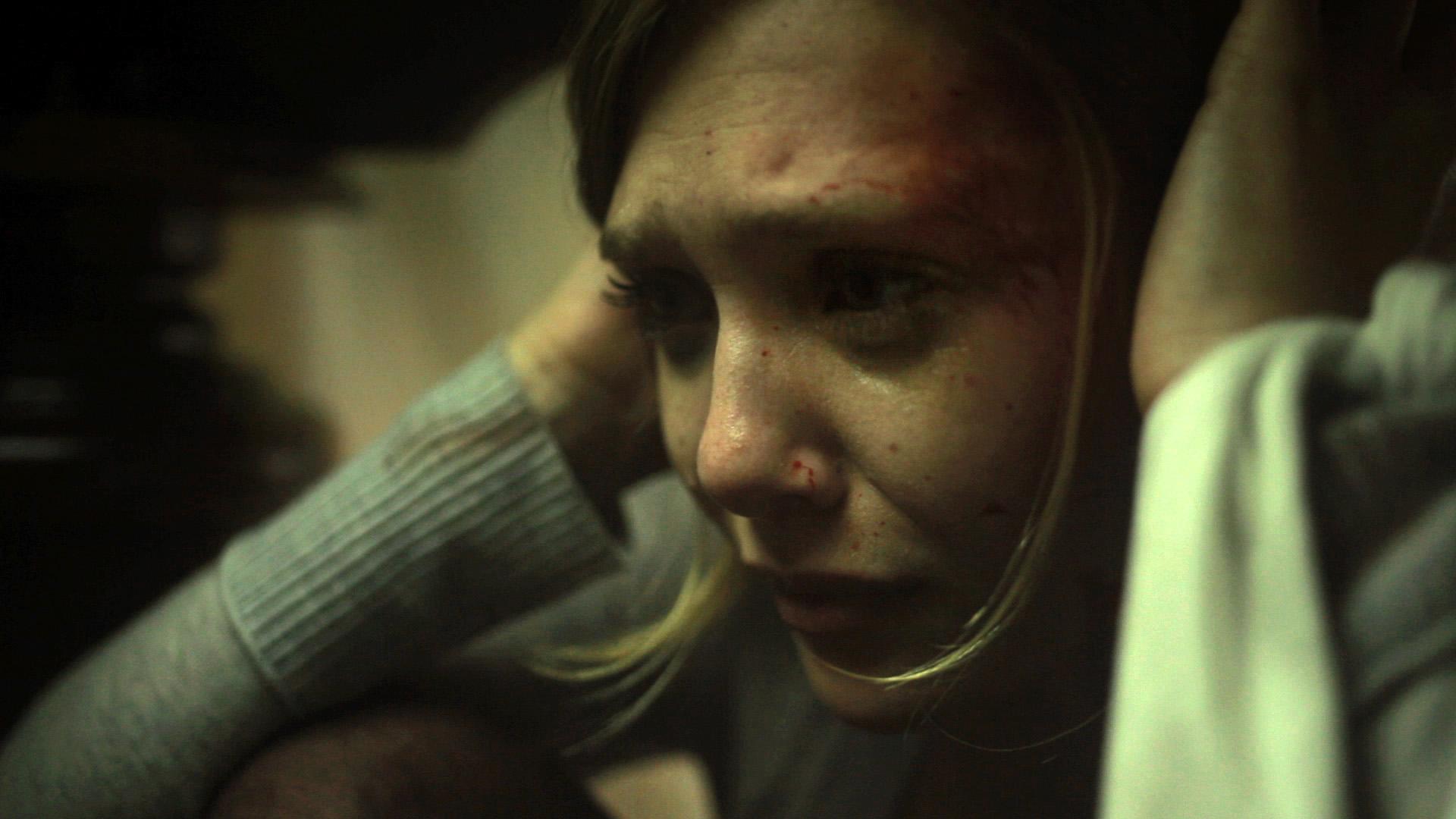
Yep, it’s another remake of a foreign horror movie — but Uruguay’s La casa muda is obscure enough that Silent House, which recycles its plot and filming style, feels like a brand-new experience. Co-directors Chris Kentis and Laura Lau, last seen bobbing in shark-infested waves for 2003’s similarly bare-bones Open Water, apply another technical gimmick here: Silent House appears to be shot in one continuous take.

Though it’s not actually made this way, each shot is extraordinarily long — way longer than you’d expect in a horror film, since the genre often relies on quick edits to build tension. Instead, the film’s aim is “real fear captured in real time” (per its tag line), and there’s no denying this is one shriek-filled experience.


The dwelling in question is an isolated, rambling lake house being fixed up to sell by Sarah (Elizabeth Olsen), her father (Adam Trese), and uncle (Eric Sheffer Stevens). The lights don’t work, the windows are boarded up, most doors are padlocked shut, and there are strange noises coming from rooms that should be empty. Much of the film follows Sarah as she descends into deeper and deeper terror, scrabbling from floor to floor trying to hide from whoever (or whatever) is lurking, while at the same time trying to bust her way out. Though the last-act exposition explosion is a little hard to take, the film’s slow-burn beginning and frantic middle section offer bona fide chills.

I caught up with the Tiburon, Calif.-born, New York-based co-director and writer Laura Lau just prior to Silent House‘s release.

SFBG: Like Open Water, which used a minimal crew and took place, for the most part, in the middle of the ocean, Silent House combines a streamlined story with a complicated technical set-up — the illusion of one long take. What do you think attracts you and co-director Chris Kentis to these types of films?

Laura Lau: I think it’s true that we want to challenge ourselves as filmmakers. We don’t want to repeat what’s already been done. We want to try and do things that are different — that makes it interesting for us. I think that’s absolutely true about both of these projects. Each one of them had its own really unique challenges. But of course it’s all about telling a story, and what it is that, emotionally, creates a reaction in us. Both of these films were really about certain kinds of horrors, true horrors that really spoke to us and we wanted to make films about.

http://www.youtube.com/watch?v=Wc7-biVJlJQ

SFBG: And just to clarify, Silent House is not really one continuous shot. You did cut sometimes.

LL: Yes. It is a seamless, continuous shot, and the experience for the viewer is that it is one continuous take. However, to achieve that we did that in very long takes, but they were different shots that we stitched together.

SFBG: But the takes are, as you say, a lot longer that what you would see in an average film.

LL: Absolutely. And not only that, but all of the sort of usual filmmaking tools that you have were taken away from us. We didn’t shoot any coverage at all. Usually, you go on a film shoot and you shoot a lot of coverage, and then you go and make your movie in the editing room. In our situation here, we had to make all those decisions ahead of time; what we shot was what we had. And all of the usual ways that you would control pacing, revealing information, even sculpting performances were taken away from us.

SFBG: The lighting appears to come only from on-set sources, mostly flashlights. Was this really what happened?

LL: Well, the whole house was pre-lit from above, and it was all on a dimmer board. We had a dimmer board operator who had to ride those lights. That was one of the elements that made it tricky, because not only was there performance and camera choreography, but there were elements like the lights, like the [assistant director] department hitting cues, like props. All of those things that were critical to actually getting the shot the way we wanted it — if any one of those elements went awry, we would have to start over again.

SFBG: Did you do a lot of rehearsing?

LL: We did. After I had written the script, and then, once we had gotten the location, I re-wrote the script. And then Chris and I just started to run the movie from top to bottom. I would actually just act out Sarah’s part, and we could run it over and over again. Especially since the script was like, 60 pages, so it was short for a feature, and there was a lot of trepidation about whether it was feature-length. Which it was, but nobody knew, because nobody in our crew had made a movie in this way, and of course [neither had any of the] producers. So, there was that process of Chris and I basically running it through, and our [director of photography], Igor Martinovic, came on, and we ran it with him. And then we went into rehearsal. We had two weeks of rehearsal with the actors, and then we had three weeks to shoot the movie. We had 15 days.

SFBG: Martinovic has a lot of documentary experience (2010’s The Tillman Story; 2008’s Man on Wire). Did that play into your decision to work with him on Silent House?

LL: Absolutely.

SFBG: Silent House isn’t part of the “we’re filming ourselves!” trend in films right now, but it has some similarities to those types of movies.

LL: I can see why you would say that, and I think it’s because the continuous shot is entirely coming from one person’s experience. Since there’s no cutting, you really are trapped with this character, who is trapped in a nightmare, in a terrifying situation. We hope that the experience is that you really feel like you are there with her as she’s going through this.

SFBG: How did you approach building tension and suspense within the continuous shots?

LL: I think that actually the continuous take is what really builds the tension. If you can’t release yourself, and there’s no cutting, I think it just builds the intensity. You can’t get away from this character and you can’t get away from her experience. I think that the story I wanted to tell with this technique of the continuous take was really about one woman’s experience. It’s about her experience and what it is that she’s going through.

SFBG: How did you cast Elizabeth Olsen as Sarah?

LL: We had been working with casting directors Kerry Barden and Paul Schnee on previous projects that we’d been trying to get off the ground, and as soon as they read the script, they said, “Oh, we know who Sarah has to be.” They had cast Jennifer Lawrence in Winter’s Bone the year before. So [Olsen] came in as the girl our casting directors had already cast, and they were right! She had the charisma and the luminosity and the depth, because again, this is a film where we knew that we were going to be watching one character, and she had to be somebody that we wanted to watch, and somebody that we would care about.

SFBG: A lot of what’s scary about Silent House are the unseen elements, including mysterious noises throughout the house. Did you choreograph the sounds as carefully as the lighting and performances?

LL: Yes, of course, the sound and the score were all part of the design of conveying Sarah’s experience. What she was going through, throughout the film. So everything was working together through the entire film.

SFBG: You mentioned earlier that you’re interested in making movies that don’t repeat what’s already been done. Silent House is a remake, but the source film hasn’t been seen in the U.S., has it?

LL: No, it has not. And I think the last time a film that was a continuous take has been seen by American audiences was Hitchcock’s Rope, in 1948. It’s been a long time. It really is a very different cinema experience, we think. And Rope is not a horror movie. It’s a very different genre. It feels very theater-like; all of the action takes place in two rooms, it could really almost be like a theater stage. It’s quite different from our film. We were just thrilled when we were offered to do the remake, because it was really an opportunity to do something different. And how often do you get to actually do something different?

Silent House opens Fri/9 in Bay Area theaters.

Awesome explosion

0

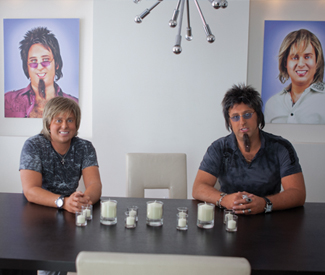
FILM It’s almost impossible to describe Adult Swim hit Tim and Eric Awesome Show, Great Job!, but “cable access on acid” comes pretty close. It’s awkward, gross, repetitive, and quotable; it features unsettling characters portrayed by famous comedians and unknowns who may not actually be actors. Tim Heidecker and Eric Wareheim, who are much more low-key than the amplified versions of themselves they play on the show and in the new Tim and Eric’s Billion Dollar Movie, discussed the spoils of cult fame the morning after a recent screening in San Francisco.

“Seeing the last ten minutes with our hardcore fans — that was the best, because they’re laughing at everything,” Wareheim says. “Versus, we just came from the Sundance Film Festival, and there were good crowds, but there were a lot of people who didn’t know us. It takes awhile to adjust to what we do, like a learning curve.”

Though it opens theatrically this week, Billion Dollar Movie has been available On Demand since the end of January.

“The idea is to get it out to as many people as possible, especially people who won’t be able to see it in theaters, since it’s a limited theatrical release,” Wareheim explains. “But I also think that by getting it out there [early], our fans are talking about it, and they’ll go again in the theater.”

So, how do you transform something comprised of bite-sized insanity into a feature-length film? “Early on, we made a choice not to do a sketch movie, or just make a long episode of the show,” Heidecker says. “We felt that the pacing would never sustain itself. We tried to pace it in a way that the craziness would be there, but it just wouldn’t be coming at you so rapidly. But still, some people are saying that it’s completely exhausting. For us, we feel like we scaled down, but that might not be the reaction of the man on the street.”

http://www.youtube.com/watch?v=88pv0cbw8yQ

“For someone who’s unfamiliar with us, it’s at least an interesting take on comedy,” Wareheim says. “Some people are really going to enjoy it, some people are not going to get it, and some people are going to hate it.”

And though Billion Dollar Movie contains its share of boundary-pushing gags (literally, you will gag), Heidecker and Wareheim’s humor also springs from their deliberately crappy production values, inspired by commercials, TV outtakes, and promo videos — and necessitated by their own low budget (title notwithstanding). Still, Heidecker sees the movie as a turning point for the pair.

“We’ve been playing with that aesthetic for awhile now, and it is getting a little redundant,” he says. “As in any kind of aesthetic trend, you’re gonna run out of ammunition. I think in a lot of ways, the movie moves past the aesthetic [of the TV show]. We use it in certain places where it’s appropriate, but it wasn’t like, this is all we do. You gotta have other tools in the toolbox.”

TIM AND ERIC’S BILLION DOLLAR MOVIE opens Fri/2 in Bay Area theaters.

Rep Clock

0

Schedules are for Wed/29-Tues/6 except where noted. Director and year are given when available. Double features are marked with a •. All times p.m. unless otherwise specified.

BALBOA 3630 Balboa, SF; www.balboamovies.com. $7.50-10. “Balboa Birthday Bash:” Safety Last! (Newmeyer and Taylor, 1923), Sun, 7. Balboa’s 86th birthday party, with cake, vaudeville performers, and more.

CALIFORNIA COLLEGE OF THE ARTS 1111 Eighth St, SF; www.sfcinematheque.org. $5-10. “The Filming of Modern Life: Cinema, Modernity, and the Avant-Garde,” a lecture by Malcolm Turvey, Tues, 7.

CASTRO 429 Castro, SF; (415) 621-6120, www.castrotheatre.com. $7.50-10. •Stairway to Heaven (Powell and Pressburger, 1946), Wed, 2:35, 7, and The Music Lovers (Russell, 1970), Wed, 4:35, 9. •Funny Face (Donen, 1957), Thurs, 2:25, 7, and Love Streams (Cassavetes, 1984), Thurs, 4:25, 9. •Planet of the Apes (Schaffner, 1968), Fri, 2:30, 7, and Beneath the Planet of the Apes (Post, 1970), Fri, 4:40, 9:10. “Scary Cow Short Film Festival,” Sat, 3. More info and tickets (this event, $15-40) at www.scarycow.com. The Girl With the Dragon Tattoo (Fincher, 2011), Sun, 1, 4:30, 8. Lou Harrison: A World of Music (Soltes, 2012), Tues, 7. More info and tickets (this event, $25; benefits Harrison House Music and Arts) at www.harrisondocumentary.com.

CHRISTOPHER B. SMITH RAFAEL FILM CENTER 1118 Fourth St, San Rafael; (415) 454-1222, www.cafilm.org. $6.75-10.25. Chico and Rita (Trueba, 2010), call for dates and times. “2012 Oscar Nominated Short Films,” narrative and documentary (separate admission), call for dates and times. Crazy Horse (Wiseman, 2011), March 2-8, call for times. The Apartment (Wilder, 1960), Sun, 6:30. Introduced by film historian Joseph McBride.

PACIFIC FILM ARCHIVE 2575 Bancroft, Berk; (510) 642-5249, bampfa.berkeley.edu. $5.50-9.50. “Film 50: History of Cinema, Film, and the Other Arts:” Pather Panchali (Ray, 1955), Wed, 3:10. With lecture by Marilyn Fabe. “African Film Festival 2012:” You Are All Captains (Laxe, 2010), Wed, 7. “Dark Past: Film Noir by German Emigrés:” The Dark Past (Maté, 1948), Thurs, 7; Shockproof (Sirk, 1949), Thurs, 8:40. “The Library Lover: The Films of Raúl Ruiz:” Mysteries of Lisbon (Ruiz, 2010), Fri, 7; Three Lives and Only One Death (1996), Sat, 8:30. “Afterimage: James Ivory, Three Films from Novels:” Mr. and Mrs. Bridge (Ivory, 1990), Sat, 6. “Howard Hawks: The Measure of Man:” Ball of Fire (Hawks, 1941), Sun, 2; To Have and Have Not (Hawks, 1944), Tues, 7. “A Tribute to José Saramago (1922-2010)”: José and Pilar (Mendes, 2010), Sun, 4:30.

ROXIE 3117 and 3125 16th St, SF; (415) 863-1087, www.roxie.com. $6.50-10. Straight Outta Hunters Point 2 (Epps, 2012), Wed-Thurs, 7, 8:45. “Hollywood Before the Code: Nasty-Ass Films for a Nasty-Ass World!:” •Three on a Match (LeRoy, 1932), Fri, 6:45, 9:45, and Scarface (Hawks, 1932), Fri, 8, 10; •Freaks (Browning, 1932), Sat, 2:15, 5, 8, 11, and Island of Lost Souls (Kenton, 1932), Sat, 3:30, 6:30, 9:30; •The Bitter Tea of General Yen (Capra, 1933), Sun, 1:15, 4:30, 8, and The Cheat (Abbott, 1931), Sun, 3, 6:20, 9:45; •Sensation Hunters (Vidor, 1933), Mon, 6:20, 9:45, and Murder at the Vanities (Leisen, 1934), Mon, 8; •Blondie Johnson (Enright, 1933), Tues, 6:30, 9:35, and Ladies of the Big House (Gering, 1931), Tues, 8.

SF FILM SOCIETY CINEMA 1746 Post, SF. Roadie (Cuesta, 2011), Wed-Thurs, 2:30, 5, 7, 9:15. This event, $10-11; more info at www.sffs.org. “San Francisco Green Film Festival,” features and shorts with environmental themes, March 1-7. This event, $10-50; more info at www.sfgreenfilmfest.org.

SF PUBLIC LIBRARY 100 Larkin, SF; www.sfpl.org. Free. Vincent Who? (Lam, 2008), Sun, 12:30. With community activist Curtis Chin in person.

YERBA BUENA CENTER FOR THE ARTS 701 Mission, SF; (415) 978-2787, www.ybca.org. $6-8. “Human Rights Watch Film Festival:” Salaam Dunk (Fine, 2011), Thurs, 7:30.

Son burn: “We Need to Talk About Kevin” review

1

It’s inevitable — whenever a seemingly preventable tragedy occurs, there’s public outcry to the tune of “How could this happen?” (Exhibit A: recent events in Ohio.) But after the school shooting in We Need to Talk About Kevin, the more apt question is “How could this not happen?”

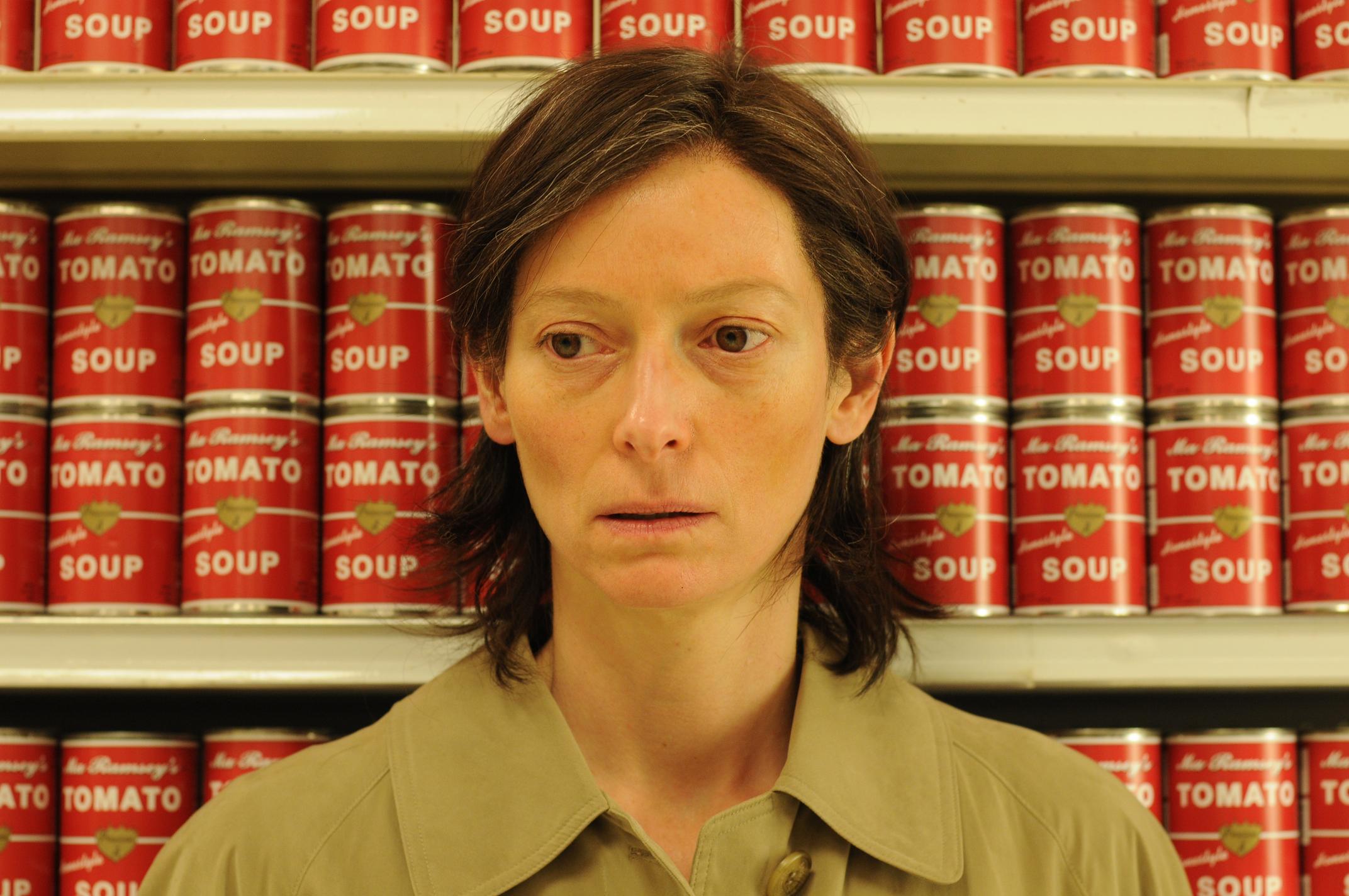
Lynne Ramsay (2002’s Morvern Callar) — directing from the script she co-adapted from Lionel Shriver’s novel — uses near-subliminal techniques to stir up atmospheric unease from the very start, with layered sound design and a significant, symbolic use of the color red. While other Columbine-inspired films, including Elephant and Zero Day (both 2003), have focused on their adolescent characters, Kevin revolves almost entirely around Eva Khatchadourian (a potent Tilda Swinton) — grief-stricken, guilt-riddled mother of a very bad seed (played as a teen by Ezra Miller, at age seven-ish by Jasper Newell, and as a baby by Rocky Duer).

The film slides back and forth in time, allowing the tension to build even though we know how the story will end, since it’s where the movie starts: with Eva, alone in a crappy little house, working a crappy little job, moving through life with the knowledge that just about everyone in the world hates her guts.

Motive was a hot topic post-Columbine. Both of the Colorado killers kept rage-filled diaries, but their home life has remained largely enigmatic. Dylan Klebold’s mother penned an essay for O magazine in 2009, titled “I Will Never Know Why.” It describes her shock upon realizing that her beloved son was involved in the massacre, and her enduring regret at not doing more to prevent it. She also touches on her experiences after the event: “I was widely viewed as a perpetrator or at least an accomplice since I was the person who had raised a ‘monster.'”

Eva shares these feelings of shock and guilt, and experiences, as Susan Klebold describes, constant public shame. She can’t leave her house without experiencing humiliation, thanks to the vandals who’ve splashed her porch and car with crimson paint. (The grim, practiced way she takes a sander to her sullied front door suggests it’s not an infrequent occurrence.) Forget about blending in when everybody knows your face — or your last name is as memorable as “Khatchadourian.”

But Eva’s guilt runs even deeper. Kevin‘s flashback scenes are stuffed with rock-solid evidence that her kid was born a complete psycho, and that Eva is fully aware of it.

What’s worse, she suspects it’s her own fault. She didn’t even want a baby in the first place, really; husband Franklin (played with gee-whiz oblivion by John C. Reilly) passive-aggresses her into domesticity. “Stop resisting,” the doctor urges as she’s giving birth, but it seems resisting would’ve saved her a lot of anguish. The baby screams all day (Eva’s only relief: parking the stroller at a construction site, where the sounds of a jackhammer drown out his cries); later, when the family moves to the ‘burbs, he grows into a scowling child who spends every waking minute terrorizing his mother. Even worse, he adopts a fake-sweet personality whenever Franklin is around.

Frustrated, Eva takes him to the doctor, who concludes, “There’s nothing wrong with him.” So, is Eva what’s wrong with him? Later, when she’s scouring high school-aged Kevin’s room, she finds no Columbine-style diaries, only a CD-ROM marked “I Love You.” It’s the only time love and Kevin are presented as part of the same thought — and, naturally, the “I Love You” disc actually contains a crippling computer virus.

Kevin is very nearly a full-blown horror movie, and the demon-seed stuff does get a bit excessive. But it’s hard to determine if those scenes are “real life” or simply the way Eva remembers them, since Kevin is so tightly aligned with Eva’s point of view. Though she’s miserable in the flashbacks, the post-tragedy scenes are even thicker with terror. The film’s most unsettling sequence unfolds on Halloween, horror’s favorite holiday; Eva drives past a mob of costumed trick-or-treaters as Buddy Holly’s “Everyday” (one of several inspired music choices) chimes on the soundtrack. Masked faces are turn to stare — accusingly? Coincidentally? Do they even know she’s Kevin’s mother? — with nightmarish intensity heightened by slow motion.

And indeed, “Everyday” Eva deals with accepting her fate; the film is sympathetic to her even while suggesting that she may actually be responsible. When a woman walks up to her on the street and punches her in the face, screaming “I hope you rot in hell!”, Eva brushes off help from a stunned bystander: “It’s OK. It was my fault.” Whether or not Eva will forgive her son is uncertain. Clearly she’ll never forgive herself.

We Need to Talk About Kevin opens Fri/2 in Bay Area theaters.

Film Listings

0

Film listings are edited by Cheryl Eddy. Reviewers are Kimberly Chun, Max Goldberg, Dennis Harvey, Lynn Rapoport, and Matt Sussman. For rep house showtimes, see Rep Clock. Due to the Presidents’ Day holiday, theater information was incomplete at presstime.

INDIEFEST

The 14th San Francisco Independent Film Festival runs through Thurs/23 at the Roxie Theater, 3117 16th St, SF. For tickets (most films $11) and schedule info, visit www.sfindie.com.

OPENING

Act of Valor Action movie starring real-life, active-duty Navy SEALs. (1:45)

*Bullhead Michael R. Roskam’s Belgian import scored an unexpected Best Foreign Language Film Oscar nomination this year. Unexpected, because it’s daring, disturbing, and a lot of other things that Foreign Language Film nominees usually are not (heartwarming, yes — gasp-inducing, no). The five-second description of this film, which is about a cattle farmer who injects both his livestock and his own body with illegal hormones, doesn’t do it justice. Who knew there was such a thing, for instance, as a “hormone mafia underworld”? While some of Bullhead‘s nuances, which occasionally pivot on culture-clash moments specific to its Belgium setting, will inevitably be lost on American viewers, the most important parts of the movie come through loud and clear, and you won’t soon forget them. (2:04) (Eddy)

*Dizzy Heights: Silent Cinema and Life in the Air The film medium’s first, sound free decades coincided with a sense of hurtling modernization throughout first-world society like nothing before or since — centuries of history had scarcely prepared for the sudden reality of such concepts as “world war” or “skyscraper.” Aviation in particular was such a fascinating wonder its potential seemed limitless, though commercial air travel was as yet many years and dollars from the average citizen’s reach. Curated by Patrick Ellis, this Pacific Film Archive series brings together some of the era’s most fanciful depictions of progress and peril in the skies. It includes 1918’s goofy, ambitious Danish A Trip to Mars, whose intrepid (if in-fighting) Earthlings land to promptly horrify the Red Planet of Peace’s entire vegetarian populace by shooting fowl and throwing a grenade. The influence of Isadora Duncan weighs heavily on the ensuing lessons learned, as wreath-bearing, toga clad peaceniks (“Come with me and look at the dance of chastity”) exhort our heroes to return home and preach pacifism — a very timely message, then. The 1929 British “disaster flick” High Treason more realistically depicts a very Jazz Age near future pushed away from the Charleston towards more catastrophic military conflict by unscrupulous war profiteers. Julien Duvivier, a director at the beginning of a long, sometimes pedestrian career in the French cinematic mainstream, was young and feckless when he made 1927’s Mystery of the Eiffel Tower, a long, antic conspiracy thriller that directly inspired the Tintin comics. This long weekend of rarities also includes a program of shorts encompassing animation from Disney and McKay, trick photography and Mack Sennett slapstick. Pacific Film Archive. (Harvey)

Gone A woman (Amanda Seyfried) who escaped a serial killer fears he has retaliated by kidnapping her sister. (1:34)

*In Darkness See “The War at Home.” (2:25)

*Khodorkovsky Russia today is a so-called “managed democracy.” Flawed a system as democracy is, though, it’s something you either live in or don’t — put a qualifier on the term, and it becomes something else. This particular something else is a nation where a popular, populist leader like Vladimir Putin can maintain an economically successful (at least for many) status quo and his own power by squelching any political opposition via decidedly un-democratic means. One of the most conspicuous such cases in recent years has been the imprisonment of Mikhail Khodorkovsky, former owner of oil company Yukos and the most fabulously wealthy “oligarch” to emerge from Russia’s post-Soviet move toward capitalist privatization. Though initially considered as corrupt as any in that privileged class, he realized after a fashion that transparency actually encouraged investment, becoming a noted respecter of oft-abused minority shareholder rights and a sort of poster child for ethical business practice. This transition coincided with increased friction between him and Putin, who had given Khodorkovsky and others like him relatively free rein so long as they “stayed out of politics.” On the day before the latter was arrested in 2003 — returning against all advice from an overseas trip where he’d been expected to become another wealthy “political emigrant” — he continued to align himself with the reformist anti-Putin opposition by telling a TV host “As long as our country isn’t fully a civil society, no one is safe from the people with handcuffs.” Conviction on questionable charges, Stalinesque detention in remote Siberia, and still-ongoing excuses for sentence elongation have ensued. The subject of Cyril Tuschi’s documentary (finally interviewed directly at the end) is certainly not innocent of arrogance, incaution, and possibly more prosecutable crimes; but he has also clearly chosen the hardest path against an intractable, grudge-keeping foe on moral principal. How many billionaires would even consider losing their freedom, comfort, and wealth for such an abstract? Khodorkovsky the movie has its character flaws, too — but you can forgive a filmmaker some of those when he’s working on a subject, and from a perspective, that has gotten more than a couple fellow journalists “mysteriously” poisoned to death. (1:51) (Harvey)

*Roadie Michael Cuesta’s first film as both director and writer (again co-authoring with brother Gerald) since 2001’s startling debut feature L.I.E. is also his best work since then. After nearly a quarter-century spent schlepping equipment for Blue Oyster Cult — the arty metal band (“Don’t Fear the Reaper,” i.e. “more cowbell!”) that was already sliding from the spotlight when he signed on — Jimmy Testergross (Ron Eldard) is fired, the reasons unknown to us. With nowhere else to go, he lands on the doorstep of his childhood home in Queens, where he hasn’t been seen in at least 20 years. Mom (Lois Smith) is going senile, though somehow her disapproval comes through with perfect clarity (and hasn’t changed in all that time). Seeking a liquid solace at a bar, our hero instead runs into Randy (Bobby Cannavale), who bullied him mercilessly way back when — and is now married to “Jimmy Testicle’s” still-hot former girlfriend Nikki (Jill Hennessey), who has rock-star aspirations of her own. Taking place over less than 24 hours’ span, Roadie is a very small character study, but a well-observed one. “Developmentally stunted by rock ‘n’ roll,” as one character puts it (when it emerges 40-something Jimmy has never learned to make coffee for himself), its protagonist is the kind of likable boy-man loser usually found in Fountains of Wayne songs, an aging lifelong air guitarist pining over good old days that probably weren’t even that good. His nostalgia is as touchingly hapless as his dubious future. (1:35) SF Film Society Cinema. (Harvey)

*Straight Outta Hunters Point 2 See “Back to the Point.” (1:20) Roxie.

Tyler Perry’s Good Deeds Director Tyler Perry puts aside the Madea drag to star as a man torn between Gabrielle Union and Thandie Newton. (1:51)

Wanderlust Paul Rudd and Jennifer Aniston star in this David Wain-directed, Judd Apatow-produced comedy about a New York City couple who move to a commune. (1:38)

ONGOING

*The Artist With the charisma-oozing agility of Douglas Fairbanks swashbuckling his way past opponents and the supreme confidence of Rudolph Valentino leaning, mid-swoon, into a maiden, French director-writer Michel Hazanavicius hits a sweet spot, or beauty mark of sorts, with his radiant new film The Artist. In a feat worthy of Fairbanks or Errol Flynn, Hazanavicius juggles a marvelously layered love story between a man and a woman, tensions between the silents and the talkies, and a movie buff’s appreciation of the power of film — embodied in particular by early Hollywood’s union of European artistry and American commerce. Dashing silent film star George Valentin (Jean Dujardin, who channels Fairbanks, Flynn, and William Powell — and won this year’s Cannes best actor prize) is at the height of his career, adorable Jack Russell by his side, until the talkies threaten to relegate him to yesterday’s news. The talent nurtured in the thick of the studio system yearns for real power, telling the newspapers, “I’m not a puppet anymore — I’m an artist,” and finances and directs his own melodrama, while his youthful protégé Peppy Miller (Bérénice Béjo) becomes a yakky flapper age’s new It Girl. Both a crowd-pleasing entertainment and a loving précis on early film history, The Artist never checks its brains at the door, remaining self-aware of its own conceit and its forebears, yet unashamed to touch the audience, without an ounce of cynicism. (1:40) (Chun)

*Chico and Rita This Spain-U.K. production is at heart a very old-fashioned musical romance lent novelty by its packaging as a feature cartoon. Chico (voiced by Eman Xor Oña) is a struggling pianist-composer in pre-Castro Havana who’s instantly smitten by the sight and sound of Rita (Limara Meneses, with Idania Valdés providing vocals), a chanteuse similarly ripe for a big break. Their stormy relationship eventually sprawls, along with their careers, to Manhattan, Hollywood, Paris, Las Vegas, and Havana again, spanning decades as well as a few large bodies of water. This perpetually hot, cold, hot, cold love story isn’t very complicated or interesting — it’s pretty much “Boy meets girl, generic complications ensue” — nor is the film’s simple graphics style (reminiscent of 1970s Ralph Bakshi, minus the sleaze) all that arresting, despite the established visual expertise of Fernando Trueba’s two co directors Javier Mariscal and Tono Errando. When a dream sequence briefly pays specific homage to the modernist animation of the ’50s-early ’60s, Chico and Rita delights the eye as it should throughout. Still, it’s pleasant enough to the eye, and considerably more than that to the ear — there’s new music in a retro mode from Bebo Valdes, and plenty of the genuine period article from Monk, Mingus, Dizzy Gillespie, Chano Pozo and more. If you’ve ever jones’d for a jazzbo’s adult Hanna Barbera feature (complete with full-frontal cartoon nudity — female only, of course), your dream has come true. (1:34) Smith Rafael. (Harvey)

*The Descendants Like all of Alexander Payne’s films save 1996 debut Citizen Ruth, The Descendants is an adaptation, this time from Kaui Hart Hemmings’ excellent 2007 novel. Matt King (George Clooney) is a Honolulu lawyer burdened by various things, mostly a) being a haole (i.e. white) person nonetheless descended from Hawaiian royalty, rich in real estate most natives figure his kind stole from them; and b) being father to two children by a wife who’s been in a coma since a boating accident three weeks ago. Already having a hard time transitioning from workaholic to hands-on dad, Matt soon finds out this new role is permanent, like it or not — spouse Elizabeth (Patricia Hastie, just briefly seen animate) will not wake up. The Descendants covers the few days in which Matt has to share this news with Elizabeth’s loved ones, mostly notably Shailene Woodley and Amara Miller as disparately rebellious teen and 10-year-old daughters. Plus there’s the unpleasant discovery that the glam, sporty, demanding wife he’d increasingly seemed “not enough” for had indeed been looking elsewhere. When has George Clooney suggested insecurity enough to play a man afraid he’s too small in character for a larger-than-life spouse? But dressed here in oversized shorts and Hawaiian shirts, the usually suave performer looks shrunken and paunchy; his hooded eyes convey the stung joke’s-on-me viewpoint of someone who figures acknowledging depression would be an undeserved indulgence. Payne’s film can’t translate all the book’s rueful hilarity, fit in much marital backstory, or quite get across the evolving weirdness of Miller’s Scottie — though the young actors are all fine — but the film’s reined-in observations of odd yet relatable adult and family lives are all the more satisfying for lack of grandiose ambition. (1:55) (Harvey)

The Help It’s tough to stitch ‘n’ bitch ‘n’ moan in the face of such heart-felt female bonding, even after you brush away the tears away and wonder why the so-called help’s stories needed to be cobbled with those of the creamy-skinned daughters of privilege that employed them. The Help purports to be the tale of the 1960s African American maids hired by a bourgie segment of Southern womanhood — resourceful hard-workers like Aibileen (Viola Davis) and Minny (Octavia Spencer) raise their employers’ daughters, filling them with pride and strength if they do their job well, while missing out on their own kids’ childhood. Then those daughters turn around and hurt their caretakers, often treating them little better than the slaves their families once owned. Hinging on a self-hatred that devalues the nurturing, housekeeping skills that were considered women’s birthright, this unending ugly, heartbreaking story of the everyday injustices spells separate-and-unequal bathrooms for the family and their help when it comes to certain sniping queen bees like Hilly (Bryce Dallas Howard). But the times they are a-changing, and the help get an assist from ugly duckling of a writer Skeeter (Emma Stone, playing against type, sort of, with fizzy hair), who risks social ostracism to get the housekeepers’ experiences down on paper, amid the Junior League gossip girls and the seismic shifts coming in the civil rights-era South. Based on the best-seller by Kathryn Stockett, The Help hitches the fortunes of two forces together — the African American women who are trying to survive and find respect, and the white women who have to define themselves as more than dependent breeders — under the banner of a feel-good weepie, though not without its guilty shadings, from the way the pale-faced ladies already have a jump, in so many ways, on their African American sisters to the Keane-eyed meekness of Davis’ Aibileen to The Help‘s most memorable performances, which are also tellingly throwback (Howard’s stinging hornet of a Southern belle and Jessica Chastain’s white-trash bimbo-with-a-heart-of-gold). (2:17) (Chun)

Hugo Hugo turns on an obviously genius conceit: Martin Scorsese, working with 3D, CGI, and a host of other gimmicky effects, creates a children’s fable that ultimately concerns one of early film’s pioneering special-effects fantasists. That enthusiasm for moviemaking magic, transferred across more than a century of film history, was catching, judging from Scorsese’s fizzy, exhilarating, almost-nauseating vault through an oh-so-faux Parisian train station and his carefully layered vortex of picture planes as Hugo Cabret (Asa Butterfield), an intrepid engineering genius of an urchin, scrambles across catwalk above a buzzing station and a hotheaded station inspector (Sacha Baron Cohen). Despite the special effects fireworks going off all around him, Hugo has it rough: after the passing of his beloved father (Jude Law), he has been stuck with an nasty drunk of a caretaker uncle (Ray Winstone), who leaves his duties of clock upkeep at a Paris train station to his charge. Hugo must steal croissants to survive and mechanical toy parts to work on the elaborate, enigmatic automaton he was repairing with his father, until he’s caught by the fierce toy seller (Ben Kingsley) with a mysterious lousy mood and a cute, bright ward, Isabelle (Chloe Grace Moretz). Although the surprisingly dark-ish Hugo gives Scorsese a chance to dabble a new technological toolbox — and the chance to wax pedantically, if passionately, about the importance of film archival studies — the effort never quite despite transcends its self-conscious dazzle, lagging pacing, diffuse narrative, and simplistic screenplay by John Logan, based on Brian Selznick’s book. Even the actorly heavy lifting provided by assets like Kingsley and Moretz and the backloaded love for the fantastic proponents at the dawn of filmmaking fail to help matters. Scorsese attempts to steal a little of the latters’ zeal, but one can only imagine what those wizards would do with motion-capture animation or a blockbuster-sized server farm. (2:07) (Chun)

The Iron Lady Curiously like Clint Eastwood’s 2011 J. Edgar, this biopic from director Phyllida Lloyd and scenarist Abi Morgan takes on a political life of length, breadth and controversy — yet it mostly skims over the politics in favor of a generally admiring take on a famous narrow-minded megalomaniac’s “gumption” as an underdog who drove herself to the top. Looking back on her career from a senile old age spent in the illusory company of dead spouse Denis (Jim Broadbent), Meryl Streep’s ex-British Prime Minister Margaret Thatcher steamrolls past hurdles of class and gender while ironically re-enforcing the fustiest Tory values. She’s essentially a spluttering Lord in skirts, absolutist in her belief that money and power rule because they ought to, and any protesting rabble don’t represent the “real England.” That’s a mindset that might well have been explored more fruitfully via less flatly literal-minded portraiture, though Lloyd does make a few late, lame efforts at sub-Ken Russell hallucinatory style. Likely to satisfy no one — anywhere on the ideological scale — seriously interested in the motivations and consequences of a major political life, this skin-deep Lady will mostly appeal to those who just want to see another bravura impersonation added to La Streep’s gallery. Yes, it’s a technically impressive performance, but unlikely to be remembered as one of her more depthed ones, let alone among her better vehicles. (1:45) (Harvey)

Margaret Lisa Cohen (Anna Paquin) is an Upper West Side teen living with her successful actress mother (J. Smith-Cameron, wife to writer-director Kenneth Lonergan) — dad (Lonergan) lives in Santa Monica with his new spouse — and going through normal teenage stuff. Her propensity for drama, however, is kicked into high gear when she witnesses (and inadvertently causes) the traffic death of a stranger. Initially fibbing a bit to protect both herself and the bus driver (Mark Ruffalo) involved, she later has second thoughts, increasingly pursuing a path toward “justice” that variably affects others including the dead woman’s friend (Jeannie Berlin), mom’s new suitor (Jean Reno), teachers at Lisa’s private school Matt Damon and Matthew Broderick), etc. Lonergan is a fine playwright and uneven sometime scenarist who made a terrific screen directorial debut with 2000’s You Can Count On Me (which also featured Ruffalo, Broderick and Smith-Cameron). He appears to have intended Margaret as a pulse-taking of privileged Manhattanites’ comingled rage, panic, confusion, and guilt after 9-11. But if that’s the case, then this convoluted story provides a garbled metaphor at best. It might best be taken as a messy, intermittently potent study of how someone might become the kind of person who’ll spend the rest of their lives barging into other people’s affairs, creating a mess, assuming the moral high ground in a stubborn attempt to “fix” it, then making everything worse while denying any personal responsibility. Certainly that’s the person Lisa appears to be turning into, though it’s unclear whether Lonergan intends her to be seen that way. Indeed, despite some sharply written confrontations and good performances, it’s unclear what Lonergan intended here at all — and since he’s been famously fiddling with Margaret‘s (still-problematic) editing since late 2005, one might guess he never really figured that out himself. (2:30) SF Film Society Cinema. (Harvey)

My Week With Marilyn Statuette-clutching odds are high for Michelle Williams, as her impersonation of a famous dead celebrity is “well-rounded” in the sense that we get to see her drunk, disorderly, depressed, and so forth. Her Marilyn Monroe is a conscientious performance. But when the movie isn’t rolling in the expected pathos, it’s having other characters point out how instinctive and “magical” Monroe is onscreen — and Williams doesn’t have that in her. Who could? Williams is remarkable playing figures so ordinary you might look right through them on the street, in Wendy and Lucy (2008), Blue Valentine (2010), etc. But as Monroe, all she can do is play the little-lost girl behind the sizzle. Without the sizzle. Which is, admittedly, exactly what My Week — based on a dubious true story — asks of her. It is true that in 1956 the Hollywood icon traveled to England to co-star with director Sir Laurence Olivier (Kenneth Branagh) in a fluff romance, The Prince and the Showgirl; and that she drove him crazy with her tardiness, mood swings, and crises. It’s debatable whether she really got so chummy with young production gofer Colin Clark, our wistful guide down memory lane. He’s played with simpering wide-eyed adoration by Eddie Redmayne, and his suitably same-aged secondary romantic interest (Emma Watson) is even duller. This conceit could have made for a sly semi-factual comedy of egos, neurosis, and miscommunication. But in a rare big-screen foray, U.K. TV staples director Simon Curtis and scenarist Adrian Hodges play it all with formulaic earnestness — Marilyn is the wounded angel who turns a starstruck boy into a brokenhearted but wiser man as the inevitable atrocious score orders our eyes to mist over. (1:36) (Harvey)

The Vow A rear-ender on a snowy Chicago night tests the nuptial declarations of a recently and blissfully married couple, recording studio owner Leo (Channing Tatum) and accomplished sculptor Paige (Rachel McAdams). When the latter wakes up from a medically induced coma, she has no memory of her husband, their friends, their life together, or anything else from the important developmental stage in which she dropped out of law school, became estranged from her regressively WASP-y family, stopped frosting her hair and wearing sweater sets, and broke off her engagement to preppy power-douchebag Jeremy (Scott Speedman). Watching Paige malign her own wardrobe and “weird” hair and rediscover the healing powers of a high-end shopping spree is disturbing; she reenters her old life nearly seamlessly, and the warm spark of her attraction to Leo, which we witness in a series of gooey flashbacks, feels utterly extinguished. And, despite the slurry monotone of Tatum’s line delivery, one can empathize with a sense of loss that’s not mortal but feels like a kind of death — as when Paige gazes at Leo with an expression blending perplexity, anxiety, irritation, and noninvestment. But The Vow wants to pluck on our heartstrings and inspire a glowing, love-story-for-the-ages sort of mood, and the film struggles to make good on the latter promise. Its vague evocations of romantic destiny mostly spark a sense of inevitability, and Leo’s endeavors to walk his wife through retakes of scenes from their courtship are a little more creepy and a little less Notebook-y than you might imagine. (1:44) (Rapoport)

W.E. Madonna’s first directorial feature, 2008’s Filth and Wisdom, was so atrocious, and the early word on this second effort so vitriolic, that there’s a temptation to give W.E. too much credit simply for not being a disgrace. Co-written by Madge and Alek Keshishian, it’s about two women in gilded cages. One is Wallis Simpson (the impressive Andrea Riseborough), a married American socialite who scandalized the world by divorcing her husband and running about with Edward, Prince of Wales (James D’Arcy), who had to abdicate the English throne in order to marry her in 1936. The other is fictive Wally Winthrop (Abbie Cornish), a childless Manhattan socialite in the late 1990s who’s neglected by her probably-unfaithful husband (Richard Coyle). Over-eagerly intertwined despite their trite-at-best overlaps (the main one being Wally’s obsession with Wallis), these two strands hold attention for a while. But eventually they grow turgid. We’re presumably meant to be carried away by their True Love, but the film doesn’t succeed in making Wallis and Edward seem more than two petulant, shallow snobs who were fortunate to find each other, but didn’t necessarily make one another better or more interesting people. (It also alternately denies and glosses over the couple’s fascist-friendly politics, which became an embarrassment as England fought Germany in World War II.) Meanwhile, Wally is a mopey blank too easily belittled by her spouse, and too handily rescued by a Prince Charming, or rather “Russian intellectual slumming as a security guard” (Oscar Isaac) working at Sotheby’s during an auction of the late royal couple’s estate. As is so often the case with Madonna, she seems to be saying something here, but precisely what is murky and probably not worth sussing out. Likewise, the attention to showy surface aesthetics — in particular Arianne Phillips’ justifiably Oscar-nominated costumes — is fastidious, revealing, and to an extent satisfying in itself. Somewhat ambitious and in several ways quite well crafted, the handsomely appointed W.E. isn’t bad (surely it wouldn’t have attracted such hostility if directed by anyone else), but the flaws that finally suffocate it reach right down to its conceptual gist. There is, however, one lovely moment toward the end: Riseborough’s Wallis, a well-preserved septuagenarian, dancing an incongruous yet supremely self-assured twist on request for her bedridden husband. (1:59) (Harvey)


Back to the Point

1

cheryl@sfbg.com

FILM “It’s highly probable that no one but Kevin Epps could have made a film like Straight Outta Hunters Point,” begins Erik K. Arnold’s 2001 Guardian article. Epps, then a 33-year-old first-time filmmaker, had just released his bold documentary; it investigated a neighborhood that most San Francisco residents never actually visited, but knew about thanks to news coverage of its prodigious gang violence.

“That world wouldn’t open up to an outsider,” Epps, who grew up there before studying film at San Francisco State University and the now-defunct Film Arts Foundation, told Arnold.

Cut to 2012, and Epps is no longer an emerging talent — he’s a full-time independent filmmaker with multiple credits (including The Black Rock, a documentary about Alcatraz’s African American inmates, and hip-hop film Rap Dreams), collaborations (with Current TV and others), and an artist fellowship at the de Young Museum under his belt. For his newest project, he returns to the scene of his first work. He no longer resides in Bayview-Hunters Point, but he still lives close by, and he’s never lost touch with the community that inspired the first film and encouraged him to make its follow-up.

Straight Outta Hunters Point opened up a lot of opportunities up for me, in terms of traveling abroad and being exposed to experiences that I would never have had [otherwise],” Epps explains. “But I was always mindful of, you know, this is my passport: telling the [community’s] stories, that’s my passport to the world. So though my life has changed a little bit, I’ve never been too far away from what’s going on in the community. I decided to keep shooting certain things that I thought had significance, and more importantly interviewing people in the community who could give insight into its current state.”

Despite its title, and its similar use of handheld camera, SOHP 2 is not a straightforward sequel to part one.

“I wanted to talk to people who really live in the community [to find out] what’s going on every day — Straight Outta Hunters Point eight, nine, ten years later. Have things changed for the better or gotten worse?” Epps says of his new film. “It’s not really a sequel — it’s a continuation of that conversation, and looking at where things are now, compared to how they were then. Obviously there’s some redevelopment that’s been happening. That’s apparent in the film, when the Hunters View housing development slowly gets torn down.”

Epps built his film around themes that arose from his interviews with Hunters Point residents, including the disconnect between generations — older folks with activist backgrounds, and youths who face “a lot of distractions” as they approach adulthood — and pressures, both internal and external, that have shaped the neighborhood.

“These are the predominant topics that come up, if you go to the barber shop or if you’re hanging out at the gym, and you get into an informal conversation. Redevelopment. Violence, which has a history that’s still being dealt with. [Discussing] these reoccurring themes is a way to see if there’s been any progress. Being a filmmaker, I was trying to put them into a creative context, more like an edu-tainment sort of piece,” he says. “My first documentary was really for the community, when I was living there, to have a conversation with ourselves. [SOHP 2] is less of a personal story. It’s [investigating], did we break some of the cycles? And how do things look in the present day?”

Going back to that earlier point about Epps’ unique access to the neighborhood: while he admits that not every person he approached was eager to be filmed (“When you go into these communities that have other activities going on, where people have other ways of survival because there are no jobs, you’re gonna always get opposition to cameras”), he does understand that in many ways, he has the exclusive on this particular story.

“Do people know me, and does that carry weight, because of the first film? Yes. It does help me get access to some things that a lot of people have had their cameras taken from them trying to do,” he says. “There were some German filmmakers out here for three years trying to shoot a film. They had funding and everything. They could talk and kick it on the block, but once they took out the cameras — they shut ’em down.”

STRAIGHT OUTTA HUNTERS POINT 2

Kevin Epps in person at Fri/24-Sat/25 evening shows

Feb. 24-March 1, 7 and 8:45 p.m. (also Sat/25-Sun/25, 3:15 and 5 p.m.), $6.50–$10

Roxie Theater

3117 16th St., SF

(415) 863-1087

www.roxie.com

Living the green dream

1

FILM Bay Area filmmakers Steve and Ann Dunsky (2005’s The Greatest Good) have a pair of documentaries making waves right now: Green Fire, about conservationist Aldo Leopold, which plays at the upcoming San Francisco Green Film Festival; and Butterflies and Bulldozers, an exploration of the decades-long fight to save San Bruno Mountain. Bulldozers screened at the 2011 Green Film Festival, and has a coveted slot amid the 20th anniversary programming at Washington, D.C.’s Environmental Film Festival later this spring. (It also features Guardian editor and publisher Bruce B. Brugmann among its interviewees.) I chatted with the busy couple about their latest projects.

SFBG I have to admit, I hadn’t even heard of Aldo Leopold until I saw Butterflies and Bulldozers, which opens with a Leopold quote.

Ann Dunsky I think maybe 99.9 percent of all the people we’ve ever spoken to have never heard of Aldo Leopold. But for those people who do know of him, he’s like their god. He’s had an amazing influence on the field of conservation.

SFBG How did you get involved with the San Bruno Mountain story?

Steve Dunsky We had just made The Greatest Good, and it was a really intensive period of time. So [we] decided to take some time off from our regular jobs, with the U.S. Forest Service making films, and maybe do an independent film. At that time we’d been living in Brisbane for about 20 years, and we’d heard about this amazing story that had national implications, both historically and in a contemporary sense. And since that’s what we do — we make films about conservation and conservation history — we thought we’d look into it.

SFBG What was the biggest challenge you faced?

AD What intrigued us was the heart of the story, which is what you’re always looking for: the wonderful relationship and dynamic between [film subjects] Fred [Smith] and David [Schooley], these two really good friends who bonded over their joint efforts to save the mountain, and ultimately had a major falling-out about the best way to do that. So we thought, “There’s the thread that we would like to weave throughout he film.”

SD The reason we chose that Leopold quote at the beginning is that we ultimately realized that it’s a story about compromise. It’s an uncomfortable subject for a lot of people, especially in the environmental community, because it does create a lot of tension over where you draw the line. At what point do you say it’s OK to have some development in exchange for other protections?

AD It was a challenge to find that proper balance where we were very respectful to all sides. Telling the story completely without any narration is a very hard way to make a film, but ultimately I think it’s much more satisfying, because our voices aren’t in there trying to tell the viewer what to think.

SFBG The film discusses how San Bruno Mountain was, in some ways, ground zero for the environmental movement.

SD The early 60s were a formative time for the environmental movement, and San Bruno Mountain and Save the Bay played a critical role in that. And then, you have this whole second layer of the story, which deals with the Endangered Species Act and the Habitat Conservation Plan amendment, which is also very historically significant.

SFBG What’s next for San Bruno Mountain? 

SD It’s really a success story, despite the compromises that were made. As we say in the film, it is one of the largest open spaces in any urban area in the United States. Most of the mountain, 2,000 acres, is state and county park. And that was the result of these protests, as well as the political and legal processes that went on in the 1970s behind the scenes. [Currently] a developer wants to build on some sand dunes that are on the west side of the mountain, so that’s a fight going on right now.

SFBG Do you hope the movie will inspire people to take up the fight?

SD For people in the Bay Area, what I would like them to do is — when they drive by San Bruno Mountain, they don’t look at it as a big, ugly, brown lump, but actually realize that it’s a haven for biodiversity, and also that there was this 50-year ongoing struggle to save it. I think it’s important for people to know the history of their surroundings.

From a national perspective, we really hope that it gets people to think about these deeper issues of conservation, questions about compromise, and questions about development versus preservation.

AD One of my favorite Leopold quotes is “Conservation without a keen realization of its vital conflicts fails to rate as authentic human drama; it falls to the level of a mere utopian dream.” I love that because I think it’s so easy to say “No development anywhere!” A lot of us would like things to be that easy, but they’re not. And I think this film, hopefully, will help people recognize that it’s not that simplistic. 

Green Fire screens March 5 at the Green Film Festival (www.sfgreenfilmfest.org) and March 8 at the Randall Museum (www.sfns.org). For more information on Butterflies and Bulldozers, visit www.butterfliesandbulldozers.com; DVDs available for institutional and home use at www.bullfrogfilms.com.


Gooooooold! Are you ready for the Oscars?

1

It’s Academy Awards season, and whether you’re planning to hit a viewing party at the Roxie, the Balboa, the Christopher B. Smith Rafael Film Center, or your Meryl Streep-obsessed BFF’s apartment, it’s best to show up prepared. Especially when there’s a pool going.

Best Picture (and Best Director)
Black-and-white silent charmer The Artist has emerged as the clear front-runner, with copious wins at the Golden Globes, the BAFTAs, the Director’s Guild of America, and the Producer’s Guild of America, plus a Golden Collar Award for the film’s charismatic canine co-star. I honestly can’t think of another movie that could step up at this point; dwindling threats The Help and The Descendants will have to find glory in other categories. Look for The Artist‘s Michel Hazanavicius to pick up Best Director, too, unless Martin Scorsese scores an upset for Hugo. (He won’t.)

Best Actor
Tinker Tailor Soldier Spy‘s Gary Oldman is my pick, but I also wanted L.A. Confidential to beat Titanic in 1998. Wasn’t gonna happen then, won’t happen now. It’s a suave-off between The Artist‘s Jean Dujardin, who’s been raking in kudos for his performance since Cannes 2011, and The Descendants‘ George Clooney, a previous winner in the Supporting Actor category (for 2006’s Syriana). Clooney is also nominated for his adapted screenplay for The Ides of March, which he directed. Close call, but look for The Artist tsunami to carry Dujardin to the podium. Consolation for Clooney: he’ll be nominated again. And again. And again.

Best Actress
I was ready to declare this category the Battle of the Padded Butts and Power Wigs: Meryl Streep’s Margaret Thatcher (in The Iron Lady) versus Michelle Williams (in My Week With Marilyn). These performances are eerily similar in some ways, with respected thespians (Streep a multiple prior winner, Williams a multiple prior nominee) portraying complex women who come fully-furnished with extremely well-defined public images. But The Help‘s Viola Davis, also a prior nominee, just picked up the Screen Actors Guild trophy; could she be the choice vote for Academy members who are tired of “acting” that feels more like an imitation?

Best Supporting Actor
Christopher Plummer, who is only two years younger than the Oscars, has been making films since the 1950s and is also a beloved star of stage and the small screen. He was first nominated, in this same category, for 2009’s The Last Station, after which he reportedly said, “It’s about time! I mean, I’m 80 years old, for God’s sake. Have mercy.” His performance as Ewan McGregor’s dying, newly-out father in Mike Mills’ twee yet pleasant Beginners breaks no new acting ground, but the Academy loves to reward a legend. Do you really think Jonah Hill has a chance? Captain Von Trapp for the win.

Best Supporting Actress
This one’s the Battle of the Poop Gags. “Eat my shit” versus “It’s coming out of me like lava!” The Help‘s Octavia Spencer already has a Golden Globe, a BAFTA, and SAG awards decorating her mantle, so she’s nearly a lock. However, newly Emmy’d (for her sitcom, Mike & Molly) Bridesmaids scene-stealer Melissa McCarthy can’t be totally counted out. The dolphin speech alone should keep her in the race.

http://www.youtube.com/watch?v=eCZkmwSzv4k

Best Adapted Screenplay/Best Original Screenplay
The Writers Guild of America awards are Sun/19, so this category may shape up even more after this weekend. For adapted, I think you can guess what I’m rooting for (Tinker Tailor Soldier Spy, which just won at the BAFTAs), but The Descendants, adapted by director Alexander Payne, Nat Faxon, and Jim Rash from the novel by Kaui Hart Hemmings, also has a decent shot. Steven “Schindler’s List” Zaillan and Aaron “The Social Network” could sneak in with Moneyball, though let’s be honest: a kind word to describe that movie is “tedious.” Apologies to A’s fans.

Original screenplay will probably go to Hazanavicius for The Artist, but if the idea of a silent movie winning “best screenplay” rubs you wrong, there’s always Woody Allen’s Midnight in Paris (not that great, except for the Hemingway scenes) and my top pick: Annie Mumolo and Kristen Wiig’s Bridesmaids. A win for Bridesmaids would (sorta) make up for the fact that Diablo Cody was robbed of a nomination for Young Adult.

But who knows, really. Rooney Mara could pull off an Adrien Brody-style upset win. Eddie Murphy (remember when he was gonna host, for like five minutes last fall?) could show up and kick Billy Crystal off the stage. Maybe this will be the year something exciting actually happens! Gotta tune in to find out. And to see the gowns. It’s all about the gowns, anyway, right?

The 84th Academy Awards air Sunday, February 26 starting at 4 p.m. (for red-carpet fiends) on ABC.

Rep Clock

0

Schedules are for Wed/15-Tues/21 except where noted. Director and year are given when available. Double features are marked with a •. All times p.m. unless otherwise specified.

ARTISTS’ TELEVISION ACCESS 992 Valencia, SF; www.atasite.org. $6. “Miss Shannon// Underground (A) (T) (A) Laserbeam Premiere [Q] [A] [Z],” Wed, 8.

BALBOA 3630 Balboa, SF; www.balboamovies.com. Granito: How to Nail a Dictator (Yates, 2011), Thurs, 7:15.

BAY THEATER Pier 39, SF; sfoffspecialscreening.eventbrite.com. $10-20. “San Francisco Ocean Film Festival Special Screening:” •One Beach (Baffa, 2011) and Thirty Thousand: A Surfing Odyssey from Casablanca to Cape Town (James and James, 2011) Thurs, 7.

CASTRO 429 Castro, SF; (415) 621-6120, www.castrotheatre.com. $7.50-10. The Skin I Live In (Almodóvar, 2011), Wed, 2:30, 5:15, 8. •Certified Copy (Kiarostami, 2010), Thurs, 2:45, 7, and Circumstance (Keshavarz, 2011), Thurs, 4:50, 9. •Thunder Soul (Landsman, 2010), Fri, 3:30, 7, and Black Dynamite (Sanders, 2009), Fri, 5:10, 8:40. Sutro’s: The Palace at Lands End (Wyrsch, 2011), Sat, 1, 3. •The Lineup (Siegel, 1958), Sat, 7:30, and Invasion of the Body Snatchers (Siegel, 1956), Sat, 5:45, 9:10. “Scary Cow Prime Cuts: Fifth Anniversary Film Festival Extravaganza,” Sun, 4. More info at scarycow.com/primecuts. Hugo 3D (Scorsese, 2011), Mon, 2:30, 5:15, 8.

CHRISTOPHER B. SMITH RAFAEL FILM CENTER 1118 Fourth St, San Rafael; (415) 454-1222, www.cafilm.org. $6.75-10.25. “Rafael Film Club” with guest David Templeton, Thurs, 1. Chico and Rita (Trueba, 2010), Feb 17-23, call for times. “2012 Oscar Nominated Short Films,” narrative and documentary (separate admission), call for dates and times.

DE YOUNG MUSEUM Golden Gate Park, 50 Hagiwara Tea Garden Dr, SF; deyoung.famsf.org. Free. What’s Going On: The Life and Death of Marvin Gaye (Marre, 2006), Sun, 2. With host Kevin Epps and music historian Rickey Vincent.

MECHANICS’ INSTITUTE 57 Post, SF; (415) 393-0100, rsvp@milibrary.org. $10. “CinemaLit Film Series: Hollywood Dames: Beauty and Brains:” Leave Her to Heaven (Stahl, 1945), Fri, 6.

“NOISE POP FILM SERIES” AMC Loews Metreon 16, Fourth St at Mission, SF; 2012.noisepop.com/film. $11.50. Re: Generation Music Project (Bar-Lev, 2011), Thurs/16 and Feb 23, 8.

PACIFIC FILM ARCHIVE 2575 Bancroft, Berk; (510) 642-5249, bampfa.berkeley.edu. $5.50-9.50. “African Film Festival 2012:” Kongo: 50 Years of Independence in Congo (Various directors, 2010), Wed, 7. “Seconds of Eternity: The Films of Gregory J. Markopoulos:” The Illiac Passion (1966-67), Thurs, 7. “Austere Perfectionism: The Films of Robert Bresson:” A Man Escaped (1956), Fri, 7; Une femme douce (1969), Sat, 6:30; Four Nights of a Dreamer (1971), Sat, 8:20. “Howard Hawks: The Measure of Man:” The Dawn Patrol (1930), Fri, 8:55; Only Angels Have Wings (1939), Tues, 7.

ROXIE 3117 and 3125 16th St, SF; (415) 863-1087, www.roxie.com. $6.50-10. SF IndieFest, through Feb 23. Visit www.sfindie.com for complete schedule.

SAN FRANCISCO PUBLIC LIBRARY Koret Auditorium, 100 Larkin, SF; www.sfpl.org. Free. “Bay Area Community Cinema Series:” More Than a Month: One Man’s Journey to End Black History Month (Tilghman, 2012), Tues, 5:45.

SFFS | NEW PEOPLE CINEMA 1746 Post, SF; www.sffs.org. $10-11. Once Upon a Time in Anatolia (Ceylan, 2011), Wed-Thurs, 2, 5:30, 8:30. Margaret (Lonergan, 2011), Feb 17-23, 2, 5:30, 8:30.

VORTEX ROOM 1082 Howard, SF; www.myspace.com/thevortexroom. $7 donation. “The Second Coming of the Vortex Room:” Zardoz (Boorman, 1974), and The Night God Screamed (Madden, 1971), Thurs, 8.

YERBA BUENA CENTER FOR THE ARTS 701 Mission, SF; (415) 978-2787, www.ybca.org. $6-8. “Bros Before Hos:” Meat Rack (Thomas, 1968), Thurs, 7:30; Steam of Life (Berghall and Hotakainen, 2010), Sun, 2.

Twisted misters

1

cheryl@sfbg.com

FILM This year’s San Francisco Independent Film Festival kicks off with a film that knows exactly what time it is: 4:44 Last Day on Earth.

Abel Ferrara’s latest imagines what the end of the world might be like for a volatile Lower East Side couple — he’s an ex-junkie (Ferrara favorite Willem Dafoe), she’s a young painter (Shanyn Leigh, Ferrara’s real-life companion). The film’s title refers to the predicted instant that an environmental catastrophe will completely dissolve the ozone layer, but 4:44 is mostly set indoors, specifically within the headspace of Dafoe’s character. It’s a gritty film that veers between self-indulgence and stuff that honestly seems pretty practical (sure, there’s a lot of Skyping, but if the world were ending, wouldn’t you?); as far as inward-looking disaster movies go, anyone planning an apocalypse film festival could double-bill 4:44 nicely with 2011’s Melancholia.

IndieFest is not an apocalypse film festival, per se. You could choose to have a jolly old time; there’s a power ballad sing-along, and even a flick called I Like You. But the selections for sick puppies are truly, truly outstanding this year. Personally, I recommend going as dark as you can possibly stand.

Start your journey with Michael R. Roskam’s Bullhead, a Belgian import that just scored a Best Foreign Language Film Oscar nomination. The five-second description of this film, which is about a cattle farmer who injects both his livestock and his own body with illegal hormones, doesn’t do it justice. Who knew there was such a thing, for instance, as a “hormone mafia underworld”? While some of Bullhead‘s nuances, which occasionally pivot on culture-clash moments specific to its Belgium setting, will inevitably be lost on American viewers, the most important parts of the movie come through loud and clear, and you won’t soon forget them.

http://www.youtube.com/watch?v=5fvLVNlMvus

Also memorable is Snowtown, another standout Australian crime film on the heels of Animal Kingdom (2010). While Snowtown — whose vérité shooting style recalls Andrea Arnold’s films about desperate living amid Britain’s council estates — isn’t quite as exportable as Animal Kingdom, it is just as uncomfortably tense, and features a teenage protagonist struggling to survive amid close-to-home evil. It’s based on the real-life case of Australia’s worst serial killer, and follows the gruesome facts quite closely. The film has a lot of characters that come and go without much explanation or introduction, which starts to seem deliberate after awhile. Fortunately, the core cast is magnetic. Remember 2005’s Wolf Creek? Snowtown is just as intense.

Still have a lust for blood? Of course you do. British director Ben Wheatley made a splash with 2009 gangster drama Down Terrace; he’s back with much buzz surrounding Kill List, with a review in the IndieFest catalog citing it as “the number one horror film of the year.” I’d hate to hand out that accolade so early in 2012, but this hired-killer-down-the-rabbit-hole tale is indeed worth considering.

Of course, there’s more to horror than guts and torture; if you need a reminder as to why, check out the festival’s pair of home-is-where-the-creepy-is films from Austria, Beside My Brother and Still Life. Beside My Brother‘s set-up — an emotionally disturbed father pretends his twin sons are the same person, and forces them to live as such, a practice they maintain into adulthood — is more promising than its payoff. Remember how in Dead Ringers (1988), the doppelganger bros were gynecologists? Here, they’re painters, and pretty bland ones at that. Far more harrowing is Still Life, about the irrevocable damage wrought by a father’s single, horrible revelation. First-time feature director Sebastian Meise manages to distill the complete crumbling of a seemingly normal-ish family into a slender, wrenching 77 minutes.

Speaking of harrowing, there’s nothing scarier in all of IndieFest than the early scenes of documentary Last Days Here, made by Don Argott and Demian Fenton (directors of 2009’s excellent The Art of the Steal). The film alights upon Bobby Liebling, dubbed the “godfather of doom” for his forty-plus year stint fronting legendary band Pentagram, as a fiftysomething crack addict living in his parents’ basement. Last Days Here is both heartfelt and gloves-off; it’s also blessed with having one of the most unbelievable comeback stories at its core (not a spoiler if you keep abreast of Bay Area concerts; Pentagram’s played here several times in recent years). It, like many of the films discussed here, has a distributor and will be coming around after IndieFest, but I implore you not to sleep on this one — even if you don’t love heavy metal, but especially if you do.

Less successful but no less intriguing is Atlanta oddity Snow On Tha Bluff, which is somewhere between an old-school ethnographic film — like, Robert Flaherty old — and self-aware product of the YouTube generation. The opening and closing scenes are obviously staged, as a drug dealer named Curtis Snow steals a video camera and decides he’ll make an autobiographical movie from the footage he collects. What’s between those bookends is what appears to be an authentic record of life in Snow’s crime-infested neighborhood, complete with drive-by shootings, home invasions, run-ins with the police, copious drug use, etc. Why any of the involved would allow their faces to be shown on camera while, say, firing a non-street legal weapon into a rival’s home is the film’s biggest mystery; its biggest accomplishment is obscuring the obvious lines of demarcation between what’s real and what’s not.

To end your IndieFest experience on a slightly uplifted note, you will have to die — or at least be cool with hanging out with the ghosts in Finisterrae, the first feature from Catalan artist Sergio Caballaro.

Expressing themselves via droll, post-production “dialogue” (in Russian, subtitled in English), the newly-deceased, sheet-wearing duo decides they would like to live again. A-journeying they go, following the wind and encountering an array of strange characters, including enough taxidermied animals to make Chuck Testa‘s head spin. Finisterrae starts slow but builds to glorious, gorgeously filmed and supremely weird heights. Hippies beware.

SAN FRANCISCO INDEPENDENT FILM FESTIVAL

Feb. 9-23, most films $11

Roxie Theater

3117 16th St., SF

www.sfindie.com


Rep Clock

0

Schedules are for Wed/8-Tues/14 except where noted. Director and year are given when available. Double and triple features are marked with a •. All times p.m. unless otherwise specified.

ARTISTS’ TELEVISION ACCESS 992 Valencia, SF; www.atasite.org. $6-10. Dirty Looks presents: City of Lost Souls, Fri, 8. “Mindscapes,” short films, Sat, 8.

CALIFORNIA COLLEGE OF THE ARTS 1118 Eighth St, SF; www.dirtylooksnyc.org. Free. Dirty Looks presents: “Queer Conversations on Culture in the Arts,” with selections from the “Female Trouble” experimental shorts program and a conversation with Margaret Tedesco, Thurs, 7.

CASTRO 429 Castro, SF; (415) 621-6120, www.castrotheatre.com. $7.50-10. •Pickpocket (Bresson, 1959), Wed, 3:30, 7:15, and American Gigolo (Schrader, 1979), Wed, 4:55, 8:45. •Beauty and the Beast (Cocteau, 1946), Thurs, 3:05, 7, and No Such Thing (Hartley, 2001), Thurs, 4:55, 8:50. “Midnites for Maniacs: I’m Black and I’m Proud:” •I’m Gonna Git You Sucka (Wayans, 1988), Fri, 7:30; Pootie Tang (Louis CK, 2001), Fri, 9:30; CB4 (Davis, 1993), Fri, 11:30. French American International School presents: “I-Speak: Celebrating 50 Years of International Education,” Sat, 6:30. This event, $5-10; tickets at www.internationalsf.org. •Do The Right Thing (Lee, 1989), Sun, 2, 8, and Malcolm X (Lee, 1992), Sun, 4:15. “Love: Ali MacGraw:” Love Story (Hiller, 1970), Tues, 8. With pre-show gala performance and MacGraw in person; for tickets ($25-45), visit www.ticketfly.com.

ELMWOOD 10070 San Pablo, El Cerrito; www.rialtocinemas.com. Free. “Community Cinema:” More Than a Month: One Man’s Journey to End Black History Month (Tilghman, 2012), Wed, 7.

CHRISTOPHER B. SMITH RAFAEL FILM CENTER 1118 Fourth St, San Rafael; (415) 454-1222, www.cafilm.org. $6.75-10.25. “Rafael Film Club:” “Jan Wahl,” Thurs, 1. Pina (Wenders, 2011), call for dates and times. “Mostly British Film Festival:” Route Irish (Loach, 2010), Wed, 7; Albatross (MacCormick, 2011), Thurs, 7. “2012 Oscar Nominated Short Films,” narrative and documentary (separate admission), Feb 3-9, call for times.

LAMORINDA THEATRES Four Orinda Theatre Square, Orinda; www.caiff.org. $12-15. “California Independent Film Festival,” 11 features, plus docs, shorts, and educational seminars, Feb 10-16.

MECHANICS’ INSTITUTE 57 Post, SF; (415) 393-0100, rsvp@milibrary.org. $10. “CinemaLit Film Series: Hollywood Dames: Beauty and Brains:” Intermezzo (Ratoff, 1939), Fri, 6.

PACIFIC FILM ARCHIVE 2575 Bancroft, Berk; (510) 642-5249, bampfa.berkeley.edu. $5.50-9.50. “Documentary Voices:” The Green Wave (Ahadi, 2010), Wed, 7. “Seconds of Eternity: The Films of Gregory J. Markopoulos:” “Markopoulos: The Early Films (1940-49)” Thurs, 7; “Eros and Myth (1950-63),” Sat, 6:30. “Austere Perfectionism: The Films of Robert Bresson:” The Trial of Joan of Arc (1962), Fri, 7; Les dames du Bois du Boulogne (1945), Fri, 8:25; Lancelot of the Lake (1974), Sat, 8:30. “Screenagers: 14th Annual Bay Area High School Film and Video Festival,” Sat, 3. “Howard Hawks: The Measure of Man:” The Criminal Code (1931), Sun, 4:30; Bringing Up Baby (1938), Tues, 7. “African Film Festival 2012:” Viva Riva! (Munga, 2010), Sun, 6:30.

ROXIE 3117 and 3125 16th St, SF; (415) 863-1087, www.roxie.com. $6.50-10. Come Back, Africa (Rogosin, 1959/2012), Wed-Thurs, 6:45, 8:30. Drive (Winding Refn, 2011), Wed, 8:45. Into the Abyss (Herzog, 2011), Wed, 6:45. SF IndieFest, Feb 9-23. Visit www.sfindie.com for complete schedule.

SFFS | NEW PEOPLE CINEMA 1746 Post, SF; www.sffs.org. $10-11. Domain (Chiha, 2010), Wed-Thurs, 2, 4:30, 7, 9:30. Once Upon a Time in Anatolia (Ceylan, 2011), Feb 10-16, 2, 5:30, 8:30.

TWINSPACE CONTINUUM 2111 Mission, Third Flr, Ste 3, SF; www.blockreportradio.com. $15. “Human Rights and Hip-Hop Film Festival,” documentaries and shorts, Fri, 5; Sat, 6:30.

VOGUE 3290 Sacramento, SF; www.mostlybritish.org. $12.50. “Mostly British Film Festival:” Black Butterflies (van der Oest, 2011), Wed, 5; London Boulevard (Monahan, 2010), Wed, 7:15; The Great White Silence (Ponting, 1924), Wed, 9:30; A Passionate Woman (2010), Thurs, 5; Route Irish (Loach, 2010), Thurs, 7:30.

VORTEX ROOM 1082 Howard, SF; www.myspace.com/thevortexroom. $7 donation. “The Second Coming of the Vortex Room:” The Second Coming of Suzanne (Barry, 1974), and Marjoe (Kernochan and Smith, 1972), Thurs, 8.

YERBA BUENA CENTER FOR THE ARTS 701 Mission, SF; (415) 978-2787, www.ybca.org. $6-8. “Bros Before Hos:” The Killing of a Chinese Bookie (Cassavetes, 1976), Thurs, 7:30; “Female Trouble,” experimental shorts program presented by Dirty Looks curator Bradford Nordeen, Sun, 2.

Rep Clock

0

Schedules are for Wed/8-Tues/14 except where noted. Director and year are given when available. Double and triple features are marked with a •. All times p.m. unless otherwise specified.

ARTISTS’ TELEVISION ACCESS 992 Valencia, SF; www.atasite.org. $6-10. Dirty Looks presents: City of Lost Souls, Fri, 8. “Mindscapes,” short films, Sat, 8.

CALIFORNIA COLLEGE OF THE ARTS 1118 Eighth St, SF; www.dirtylooksnyc.org. Free. Dirty Looks presents: “Queer Conversations on Culture in the Arts,” with selections from the “Female Trouble” experimental shorts program and a conversation with Margaret Tedesco, Thurs, 7.

CASTRO 429 Castro, SF; (415) 621-6120, www.castrotheatre.com. $7.50-10. •Pickpocket (Bresson, 1959), Wed, 3:30, 7:15, and American Gigolo (Schrader, 1979), Wed, 4:55, 8:45. •Beauty and the Beast (Cocteau, 1946), Thurs, 3:05, 7, and No Such Thing (Hartley, 2001), Thurs, 4:55, 8:50. “Midnites for Maniacs: I’m Black and I’m Proud:” •I’m Gonna Git You Sucka (Wayans, 1988), Fri, 7:30; Pootie Tang (Louis CK, 2001), Fri, 9:30; CB4 (Davis, 1993), Fri, 11:30. French American International School presents: “I-Speak: Celebrating 50 Years of International Education,” Sat, 6:30. This event, $5-10; tickets at www.internationalsf.org. •Do The Right Thing (Lee, 1989), Sun, 2, 8, and Malcolm X (Lee, 1992), Sun, 4:15. “Love: Ali MacGraw:” Love Story (Hiller, 1970), Tues, 8. With pre-show gala performance and MacGraw in person; for tickets ($25-45), visit www.ticketfly.com.

ELMWOOD 10070 San Pablo, El Cerrito; www.rialtocinemas.com. Free. “Community Cinema:” More Than a Month: One Man’s Journey to End Black History Month (Tilghman, 2012), Wed, 7.

CHRISTOPHER B. SMITH RAFAEL FILM CENTER 1118 Fourth St, San Rafael; (415) 454-1222, www.cafilm.org. $6.75-10.25. “Rafael Film Club:” “Jan Wahl,” Thurs, 1. Pina (Wenders, 2011), call for dates and times. “Mostly British Film Festival:” Route Irish (Loach, 2010), Wed, 7; Albatross (MacCormick, 2011), Thurs, 7. “2012 Oscar Nominated Short Films,” narrative and documentary (separate admission), Feb 3-9, call for times.

LAMORINDA THEATRES Four Orinda Theatre Square, Orinda; www.caiff.org. $12-15. “California Independent Film Festival,” 11 features, plus docs, shorts, and educational seminars, Feb 10-16.

MECHANICS’ INSTITUTE 57 Post, SF; (415) 393-0100, rsvp@milibrary.org. $10. “CinemaLit Film Series: Hollywood Dames: Beauty and Brains:” Intermezzo (Ratoff, 1939), Fri, 6.

PACIFIC FILM ARCHIVE 2575 Bancroft, Berk; (510) 642-5249, bampfa.berkeley.edu. $5.50-9.50. “Documentary Voices:” The Green Wave (Ahadi, 2010), Wed, 7. “Seconds of Eternity: The Films of Gregory J. Markopoulos:” “Markopoulos: The Early Films (1940-49)” Thurs, 7; “Eros and Myth (1950-63),” Sat, 6:30. “Austere Perfectionism: The Films of Robert Bresson:” The Trial of Joan of Arc (1962), Fri, 7; Les dames du Bois du Boulogne (1945), Fri, 8:25; Lancelot of the Lake (1974), Sat, 8:30. “Screenagers: 14th Annual Bay Area High School Film and Video Festival,” Sat, 3. “Howard Hawks: The Measure of Man:” The Criminal Code (1931), Sun, 4:30; Bringing Up Baby (1938), Tues, 7. “African Film Festival 2012:” Viva Riva! (Munga, 2010), Sun, 6:30.

ROXIE 3117 and 3125 16th St, SF; (415) 863-1087, www.roxie.com. $6.50-10. Come Back, Africa (Rogosin, 1959/2012), Wed-Thurs, 6:45, 8:30. Drive (Winding Refn, 2011), Wed, 8:45. Into the Abyss (Herzog, 2011), Wed, 6:45. SF IndieFest, Feb 9-23. Visit www.sfindie.com for complete schedule.

SFFS | NEW PEOPLE CINEMA 1746 Post, SF; www.sffs.org. $10-11. Domain (Chiha, 2010), Wed-Thurs, 2, 4:30, 7, 9:30. Once Upon a Time in Anatolia (Ceylan, 2011), Feb 10-16, 2, 5:30, 8:30.

VOGUE 3290 Sacramento, SF; www.mostlybritish.org. $12.50. “Mostly British Film Festival:” Black Butterflies (van der Oest, 2011), Wed, 5; London Boulevard (Monahan, 2010), Wed, 7:15; The Great White Silence (Ponting, 1924), Wed, 9:30; A Passionate Woman (2010), Thurs, 5; Route Irish (Loach, 2010), Thurs, 7:30.

VORTEX ROOM 1082 Howard, SF; www.myspace.com/thevortexroom. $7 donation. “The Second Coming of the Vortex Room:” The Second Coming of Suzanne (Barry, 1974), and Marjoe (Kernochan and Smith, 1972), Thurs, 8.

YERBA BUENA CENTER FOR THE ARTS 701 Mission, SF; (415) 978-2787, www.ybca.org. $6-8. “Bros Before Hos:” The Killing of a Chinese Bookie (Cassavetes, 1976), Thurs, 7:30; “Female Trouble,” experimental shorts program presented by Dirty Looks curator Bradford Nordeen, Sun, 2.

Rep Clock

0

Schedules are for Wed/25-Tues/31 except where noted. Director and year are given when available. Double and triple features are marked with a •. All times p.m. unless otherwise specified.

ART DECO MOVIE THEATER 2700 Saratoga, Alameda; www.baicff.com. $10-20. "Bay Area International Children’s Film Festival," family films from around the world, Sat-Sun, 10am-5:30pm.

BALBOA 3630 Balboa, SF; www.brownpapertickets.com. $15-20. "Opera and Ballet at the Balboa Theatre:" Caligula, from the Paris Opera Ballet, Wed, 7:30; Cendrillon, from the Royal Opera House, Sat-Sun, 10am. "Jazz and Film:" A Great Day in Harlem (Bach, 1994), with live performance by Jimmy Ryan’s Balboa Be Bop Band, Sun, 5:30.

BERKELEY FELLOWSHIP OF UNITARIAN UNIVERSALISTS 1924 Cedar, Berk; www.bfuu.org. Hypothesis (Smith), followed by a discussion about 9/11 truth, Thurs, 7.

CASTRO 429 Castro, SF; (415) 621-6120, www.castrotheatre.com. $7.50-10. "Noir City X:" •House of Bamboo (Fuller, 1955), Wed, 7:30, and Underworld USA (Fuller, 1961), Wed, 9:20; •Naked Alibi (Hopper, 1954), Thurs, 7:30, and Pickup (Haas, 1951), Thurs, 9:20; •Thieves’ Highway (Dassin, 1949), Fri, 7:30, and The Breaking Point (Curtiz, 1950), Fri, 9:30; •Three Strangers (Negulesco, 1946), Sat, 1, 5, 9, and The Great Gatsby (Nugent, 1949), Sat, 3, 7; Roadhouse Nights (Henley, 1930), Sun, noon; The Maltese Falcon (Del Ruth, 1931), Sun, 1:20; City Streets (Mamoulian, 1932), Sun, 3; Mr. Dynamite (Crosland, 1935), Sun, 4:45; The Glass Key (Heisler, 1942), Sun, 7; The Maltese Falcon (Huston, 1941), Sun, 9. Advance tickets (double features, $10-15) and more info at www.noircity.com.

CHRISTOPHER B. SMITH RAFAEL FILM CENTER 1118 Fourth St, San Rafael; (415) 454-1222, www.cafilm.org. $6.75-10.25. "Rafael Film Club:" Complicated Women (Munro Neely, 2003), Thurs, 1. With author and film critic Mick LaSalle. Pina (Wenders, 2011), Jan 27-Feb 2, call for times. Joffrey: Mavericks of Dance (Hercules, 2011), Sat, 10:30am.

JEWISH COMMUNITY CENTER OF THE EAST BAY 1414 Walnut, Berk; (510) 848-0237, www.brownpapertickets.com. $6-8. "San Francisco Jewish Film Festival Presents:" 77 Steps (Mara’ana, 2010), Thurs, 7:30.

PACIFIC FILM ARCHIVE 2575 Bancroft, Berk; (510) 642-5249, bampfa.berkeley.edu. $5.50-9.50. "Film 50: History of Film, Cinema, and the Other Arts:" "Back to the Beginning: From the Cinema of Attractions to Narrative Illusionism," with lecture by Marilyn Fabe, Wed, 3:10. This event, $5.50-11.50. "Documentary Voices:" David Holzman’s Diary (McBride, 1968), Wed, 7. "African Film Festival 2012:" Medicine for Melancholy (Jenkins, 2007), with director Barry Jenkins in person, Thurs, 7; A Screaming Man (Haroun, 2010), Sun, 4:30. "Howard Hawks: The Measure of Man:" Paid to Love (1927), Fri, 7; Scarface (1932), Tues, 7. "Henri-Georges Clouzot: The Cinema of Disenchantment:" Diabolique (1955), Fri, 8:40; The Spies (1958), Sun, 6:30. "Austere Perfectionism: The Films of Robert Bresson:" Pickpocket (1959), Sat, 6:30; Diary of a Country Priest (1950), Sat, 8:10.

ROXIE 3117 and 3125 16th St, SF; (415) 863-1087, www.roxie.com. $6.50-10. Warren Ellis: Captured Ghosts (Meaney, 2011), Wed, 7:15, 9. The Upsetter: The Life and Music of Lee "Scratch" Perry (Higbee and Bhala Lough, 2011), Thurs, 7:30, 9:30. Sing Your Song (Rostock, 2011), Jan 27-Feb 2, 6:45, 8:45 (also Sat-Sun, 2:45, 4:45).

SFFS | NEW PEOPLE CINEMA 1746 Post, SF; www.sffs.org. $10-11. Fullmetal Alchemist: The Sacred Star of Milos (Murata, 2011), Wed-Thurs, 2, 4:30, 7, 9:15. Sleeping Beauty (Leigh, 2011), Jan 27-Feb 2, 2, 4:30, 7, 9:15 (no 7pm show Mon/30).

YERBA BUENA CENTER FOR THE ARTS 701 Mission, SF; (415) 978-2787, www.ybca.org. $6-8. "British Arrow Awards: Best British Television Commercials of 2011," Thurs-Sun, 2, 4, 6, 8. The House by the Cemetery (Fulci, 1981), Fri-Sat, 10.

ZINC DETAILS 1905 Fillmore, SF; rsvp@zincdetails.com. Free. Eames: The Architect and the Painter (Cohn and Jersey, 2011), Wed, 6. With a discussion about the Eames with former Dwell editor Sam Grawe.

Ding dong, you’re dead

0

TRASH It takes a certain kind of sicko to fall in love with Italian horror, what with all the oozing maggots, spurting jugulars, WTF plot twists, weird zooms, jarring musical cues, and supporting characters who do completely bizarre things that are never explained.

Sickos take note: Yerba Buena Center for the Arts is screening an uncut 35mm print of Lucio Fulci’s 1981 The House By the Cemetery. HUGE. Within the gore-splattered Fulci canon, House is maybe not as well-known as 1981’s The Beyond, 1980’s City of the Living Dead, or 1979’s Zombie (which made a recent local appearance thanks to Blue Underground, the cult champions also responsible for this showing of House). But it’s no less essential or enjoyable than the others, despite suffering from one nearly insurmountable flaw. (More on that that in a minute.)

House‘s story is actually pretty straightforward, as Fulci flicks go. After a mysterious murder-suicide claims his colleague, professor Norman Boyle (Paolo Malco) uproots his family, including wife Lucy (Fulci scream queen Catriona MacColl) and young son Bob (Giovanni Frezza), from New York City to small-town Massachusetts, where he plans to finish the dead man’s research. Fate or something worse means the Boyles will be bunking in “the Freudstein place,” a notorious mansion once occupied by “a certain Dr. Freudstein — a turn-of-the-century surgeon with a penchant for illegal experiments.” Uh-oh. That the family is merely renting this sinister abode is ignored by the film’s ad campaign: “Read the fine print. You just may have mortgaged your life!”

That may be so, but the truth is Bob’s dubbed-over voice is the scariest thing in this movie. Among the House DVD extras is an interview with a grown-up Frezza; the first thing out of his mouth is an apology. (His later filmography includes Lamberto Bava’s ludicriously amazing 1985 Demons, so he’s off the hook as far as I’m concerned.) It’s a distraction that elevates Bob from a mere rip-off of the kid in 1980’s The Shining, an obvious House influence, to eardrum-torturing moppet from hell.

http://www.youtube.com/watch?v=zbIiJeCpCgY

Fortunately, the rest of House is weird enough to cushion this sonic godawfulness, or at least blunt it a bit; it helps that the other kid in the movie — Silvia Collatina as Mae, the Scatman Crothers to Bob’s Danny Torrance — sounds perfectly normal. There are plenty of juicy bits for Italian horror geeks, including Ania Pieroni as a creepy, glaring babysitter (doing a slight variation on her creepy, glaring Mother of Tears in Dario Argento’s 1980 Inferno) and Carlo De Mejo (star of City of the Living Dead) as a helpful librarian. The traditional Fulci cameo casts the director as Dr. Boyle’s bow tie-wearing academic peer, uttering the immortal line “I adore New England!”

Speaking of, the titular house actually exists, though it’s not actually located by a cemetery as advertised. Also the setting for Umberto Lenzi’s 1988 Ghosthouse (sickos know Lenzi’s name well, thanks to grindhouse nuggets like 1981’s Cannibal Ferox and 1980’s Nightmare City), it’s the historically significant Ellis House in Scituate, Mass. No word, however, if the arts association that now maintains the property accommodates curious horror fans — or if the basement décor is still keepin’ it funky. 


THE HOUSE BY THE CEMETERY

Fri/27-Sat/28, 10 p.m., $8

Yerba Buena Center for the Arts

701 Mission, SF

www.ybca.org