youth

Music Listings

0

Since club life is unpredictable, it’s a good idea to call ahead or check the venue’s website to confirm bookings and hours. Prices are listed when provided to us. Visit www.sfbg.com/venue-guide for venue information. Submit items for the listings at listings@sfbg.com. For further information on how to submit items for the listings, see Picks.

WEDNESDAY 16

ROCK/BLUES/HIP-HOP

Blues Organ Party with Big Bones and Chris Siebert Royal Cuckoo, 3202 Mission, SF; www.royalcuckoo.com. 7:30pm, free.

Gunshy Johnny Foley’s. 9pm, free.

Lee Huff vs Nathan Temby Johnny Foley’s Dueling Pianos. 9pm, free.

Michael Hurley, Cass McCombs, Jessica Pratt Great American Music Hall. 8pm, $15.

Jerry Joseph, Shelley Doty, Fred Torphy, Marc Friedman Brick and Mortar Music Hall. 8pm, free.

Keith Crossan Blues Showcase with Terry Hanck Biscuits and Blues. 11:30pm, $15.

Parquet Courts Hemlock Tavern. 8:30pm, $8.

Paulie Rhyme, Sweet Hayah, Aisha Fukushima, Bottom Hammer Elbo Room. 9pm, $7.

Todd Sickafoose’s Tiny Resistors, Erik Deutsch Band, Adam Levy Cafe Du Nord. 8pm, $10-$12.

JAZZ/NEW MUSIC

Dink Dink Dink, Gaucho, Eric Garland’s Jazz Session Amnesia. 7pm, free.

Latin Jazz All-Stars feat. Steve Turre, Chembo Corniel, Arturo O’Farrill, Nestor Torres Yoshi’s SF. 8pm, $25.

Reuben Rye Rite Spot. 9pm, free.

Ricardo Scales Top of the Mark, 999 California, SF; www.topofthemark.com. 6:30pm, $5.

FOLK/WORLD/COUNTRY

Timba Dance Party Bissap Baobab, 3372 19th St, SF; www.bissapbaobab.com. 10pm, $5. Timba and salsa cubana with DJ Walt Diggz.

DANCE CLUBS

Booty Call Q-Bar, 456 Castro, SF; www.bootycallwednesdays.com. 9pm. Juanita MORE! and Joshua J host this dance party.

Coo-Yah! Slate Bar, 2925 16th St, SF; www.slate-sf.com. 10pm, free. With Vinyl Ambassador, DJ Silverback, DJs Green B and Daneekah.

Hardcore Humpday Happy Hour RKRL, 52 Sixth St, SF; (415) 658-5506. 6pm, $3.

Martini Lounge John Colins, 138 Minna, SF; www.johncolins.com. 7pm. With DJ Mark Divita.

THURSDAY 17

ROCK/BLUES/HIP-HOP.

Adios Amigo, City Tribe, Ghost Tiger Cafe Du Nord. 9pm, $10.

Big Tree, Strange Vine, Bonnie and the Bang Bang, Owl Paws Bottom of the Hill. 8:30pm, $10. "Songs for Sandy: Hurricane Relief Show."

Broadway Calls, Silver Snakes, Civil War Rust Thee Parkside. 9pm, $10.

Eskmo Independent. 9pm, $20.

Hammond Organ Soulful Blues Party with Chris Siebert Royal Cuckoo, 3202 Mission, SF; www.royalcuckoo.com. 7:30pm, free.

John Lawton Trio Johnny Foley’s. 9pm, free.

Knocks, Gemini Club, popscene DJs Rickshaw Stop. 9:30pm, $13-$15.

Mark Matos and Os Beaches, Van Allen Belt, Sasha Bell, Crushed Out, DJ Neil Martinson Brick and Mortar Music Hall. 9pm, $6-$10.

Run Amok, Parae, Scarlet Stoic Sub-Mission. 8:15pm, $8.

Eric Sardinas Biscuits and Blues. 8 and 10pm, $20.

Nathan Temby vs Lee Huff Johnny Foley’s Dueling Pianos. 9pm, free.

Trampled By Turtles Fillmore. 8pm, $25.

JAZZ/NEW MUSIC

Latin Jazz All-Stars feat. Steve Turre, Chembo Corniel, Arturo O’Farrill, Nestor Torres Yoshi’s SF. 8pm, $25.

Midnight Flyte Rite Spot. 9pm, free.

SF Jazz Hotplate Series Amnesia. 9pm.

Stompy Jones Top of the Mark, 999 California, SF; www.topofthemark.com. 7:30pm, $10.

FOLK/WORLD/COUNTRY

Get Down Boys Atlas Cafe, 3049 20 St, SF; www.atlascafe.net. 8-10pm.

Twang! Honky Tonk Fiddler’s Green, 1330 Columbus, SF; www.twanghonkytonk.com. 5pm. Live country music.

DANCE CLUBS

Afrolicious Elbo Room. 9:30pm, $5-$7. With DJ-host Pleasuremaker and Senor Oz spin Afrobeat, Tropicália, electro, samba, and funk.

All 80s Thursday Cat Club. 9pm, $6 (free before 9:30pm). The best of ’80s mainstream and underground.

Base: Pan-Pot, Alex Sibley Vessel, 85 Campton Place, SF; www.vesselsf.com. 10pm, $10.

Ritual Dubstep Temple. 10pm-3am, $5. Trap and bass.

Tropicana Madrone Art Bar. 9pm, free. Salsa, cumbia, reggaeton, and more with DJs Don Bustamante, Apocolypto, Sr. Saen, Santero, and Mr. E.

FRIDAY 18

ROCK/BLUES/HIP-HOP

Asesino, Verbal Abuse, Embryonic Devourment, Psychosomatic DNA Lounge. 7pm, $16.

Back Pages Johnny Foley’s. 9pm, free.

"Bands4Bands Showcase" Slim’s. 8pm, $13. With Kaos, Potential Threat, Mystic Rage, Star Destroyer.

Black Cobra, Glitter Wizard, Lecherous Gaze Brick and Mortar Music Hall. 9pm, $10-$13.

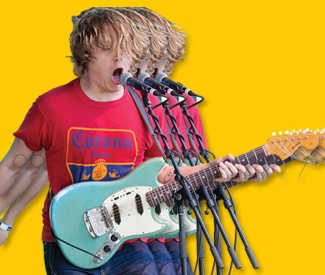
Jake Bugg, Valerie June, popscene DJs Rickshaw Stop. 9pm, $15-$17.

Commissure, Let Fall the Sprarrow, Skyscraper Mori Hemlock Tavern. 9:30pm, $7.

Fidlar Amoeba Music, 1855 Haight, SF; www.amoeba.com. 6pm, free.

Fidlar, Pangea, Meat Market Bottom of the Hill. 9pm, $10.

Hammond Organ Soul Blues Party Royal Cuckoo, 3202 Mission, SF; www.royalcuckoo.com. 7:30pm, free.

Lee Huff, Jeff V., Rags Tuttle Johnny Foley’s Dueling Pianos. 9pm, free.

Native Elements, Jah Yzer Elbo Room. 10pm, $10.

Johnny Rawls Biscuits and Blues. 8 and 10pm, $20.

Ty Segall Fillmore. 9pm, $22.50.

Tell River, Anju’s Pale Blue Eyes, Hang Jones, Gayle Lynn and the Hired Hands Cafe Du Nord. 9pm, $8.

JAZZ/NEW MUSIC

Audium 1616 Bush, SF; www.audium.org. 8:30pm, $20. Theater of sound-sculptured space.

Black Market Jazz Orchestra Top of the Mark, 999 California, SF; www.topofthemark.com. 9Pm, $10.

George Duke Yoshi’s SF. 8pm, $32; 10pm, $24.

Lee Vilenski Rite Spot. 9pm, free.

FOLK/WORLD/COUNTRY

Alex Pinto Trio Red Poppy Art House. 8pm, $8.

Queer Cumbia Bissap Baobab, 3372 19th St, SF; www.bissapbaobab.com. 8pm, $3-$7. Musica tropical, cumbia, merengue.

DANCE CLUBS

DJ What’s His Fuck Riptide Tavern. 9pm, free.

Hella Tight Amnesia. 10pm, $5.

Sebastien Drums, Justin Milla Vessel, 85 Campton Place, SF; www.vesselsf.com. 10pm, $20-$30.

Joe Lookout, 3600 16th St.,SF; www.lookoutsf.com. 9pm. Eight rotating DJs.

Old School JAMZ El Rio. 9pm. Fruit Stand DJs spinning old school funk, hip-hop, and R&B.

Paris to Dakar Little Baobab, 3388 19th St, SF; (415) 643-3558. 10pm, $5. Afro and world music with rotating DJs including Stepwise, Steve, Claude, Santero, and Elembe.

"Save KUSF Benefit" Bender’s, 806 S. Van Ness, SF; www.bendersbar.com. 9pm, $5. With KUSF in Exile DJs Zoe, Stoo Odom, Brian Springer.

SATURDAY 19

ROCK/BLUES/HIP-HOP

Chris A., Jeff V., Lee Huff Johnny Foley’s Dueling Pianos. 9pm, free.

Bay Area Heat Johnny Foley’s. 9pm, free.

Buttercream Gang, Youth of the Beast, Apopka, Darkroom Thee Parkside. 9pm, $7.

Hammond Organ Soul Blues Party Royal Cuckoo, 3202 Mission, SF; www.royalcuckoo.com. 7:30pm, free.

Kowloon Walled City Hemlock Tavern. 9:30pm, $7.

Femi Kuti and the Positive Force Fillmore. 9pm, $35.

London Souls, Major Powers and the Lo-Fi Symphony, Wake Up Lucid Bottom of the Hill. 9:30pm, $12.

Maria Muldaur Biscuits and Blues. 8 and 10pm, $20.

Mustache Harbor Slim’s. 9pm, $20.

Paperplanes Riptide Tavern. 9:30pm, free.

Pinback, Judgement Day Bimbo’s. 9pm, $25.

Trails and Ways, Tremor Low, My Satellite Cafe Du Nord. 9pm, $10.

Turtle Rising Thee Parkside. 3pm, free.

Wayne Wonder, Joshua, Selecta Dans-One, DJ Rob Roots Brick and Mortar Music Hall. 9pm, $20-$25.

Yo La Tengo Amoeba Music, 1855 Haight, SF; www.amoeba.com. 3pm, free.

JAZZ/NEW MUSIC

Audium 1616 Bush, SF; www.audium.org. 8:30pm, $20. Theater of sound-sculptured space.

George Duke Yoshi’s SF. 8 and 10pm, $32.

Project Pimento Rite Spot. 9pm, free.

FOLK/WORLD/COUNTRY

Steph Macpherson Brainwash Cafe. 8pm.

Razteria a.k.a Renee Asteria Neck of the Woods. 9pm, $10-$15.

Craig Ventresco and Meredith Axelrod Atlas Cafe, 3049 20 St, SF; www.atlascafe.net. 4-6pm.

DANCE CLUBS

Bootie SF: SF vs LA vs NYC DNA Lounge. 9pm, $10-$15. With Mykill, Faroff, Billy Jam, and more.

Fringe Madrone Art Bar. 9pm, $5. Indie music video dance party with DJ Blondie K and subOctave.

Oakland Faders dance party Rickshaw Stop. 9pm, $5.

OK Hole Amnesia. 9pm.

Paris to Dakar Little Baobab, 3388 19th St, SF; (415) 643-3558. 10pm, $5. Afro and world music with rotating DJs.

Radio Franco Bissap, 3372 19th St, SF; (415) 826 9287. 6 pm. Rock, Chanson Francaise, Blues. Senegalese food and live music.

Scotty Boy Vessel, 85 Campton Place, SF; www.vesselsf.com. 10pm, $20-$30.

Saturday Night Soul Party Elbo Room. 10pm, $5-$10. With DJs Lucky, Paul Paul, Phengren Oswald.

Smiths Party Slate Bar, 2925 16th St, SF; www.slate-sf.com. 10pm, $5. Sounds of the Smiths, Morrissey, the Cure, and New Order.

Wild Nights Kok BarSF, 1225 Folsom, SF; www.kokbarsf.com. 9pm, $3. With DJ Frank Wild.

SUNDAY 20

ROCK/BLUES/HIP-HOP

Beso Negro, Sage, Steakhouse Cafe Du Nord. 8:30pm, $10.

Down, Warbeast Regency Ballroom. 8pm, $25.

Easway, King Pin, Ellie Cope Slim’s. 8pm, $15.

Giggle Party, Bella Novela, Spider Heart Bottom of the Hill. 9pm, $8.

Hammond Organ Blues Party with Lavay Smith and Chris Siebert Royal Cuckoo, 3202 Mission, SF; www.royalcuckoo.com. 7:30pm, free.

John Lawton Trio Johnny Foley’s. 9pm, free.

Harvey Mandel and the Snake Crew Biscuits and Blues. 7 and 9pm, $20.

Mike Giant and DJ Dougernaut Hemlock Tavern. 10pm, free.

JAZZ/NEW MUSIC

Collaboration feat. Dee Lucas, Joel Del Rosario, Sure Will Yoshi’s SF. 8pm, $32; 10pm, $24.

Linda Kosut, Benn Bacot Bliss Bar, 4026 24 St. SF; www.blissbarsf.com. 7pm, $22.

FOLK/WORLD/COUNTRY

Brazil and Beyond with Sandy Cressman Trio Bissap Baobab, 3372 19th St, SF; www.bissapbaobab.com. 6:30pm, free.

Paula Frazer, Rusty Miller, New Family Band Rite Spot. 9pm, free.

Hillbilly Swing with B Stars Amnesia. 9pm, $7.

Twang Sunday Thee Parkside. 4pm, free. With Nobody From Nashville.

DANCE CLUBS

Beats for Brunch Thee Parkside. 11am, free. With Chef Josie and DJ Motion Potion.

Dub Mission Elbo Room. 9pm, $8-$11. With Nickodemus, Spy from Cairo, DJ Sep.

Jock Lookout, 3600 16th St, SF; www.lookoutsf.com. 3pm, $2.

MONDAY 21

ROCK/BLUES/HIP-HOP

Damir Johnny Foley’s. 9pm, free.

White Cloud, Tears Club, Spectre, Grill Cloth Elbo Room. 9pm, $5.

Quicksand, Title Fight Regency Ballroom. 8pm, $28.

JAZZ/NEW MUSIC

Craig and Meredith Rite Spot. 8:30pm, free.

Mike Olmos Jazz Biscuits and Blues. 7:30pm, $12.

DANCE CLUBS

Crazy Mondays Beauty Bar, 2299 Mission, SF; www.thebeautybar.com. 10pm, free. Hip-hop and other stuff.

Death Guild DNA Lounge. 9:30pm, $3-$5. With Decay, Joe Radion, Melting Girl.

M.O.M. Madrone Art Bar. 6pm, free. DJs Timoteo Gigante, Gordo Cabeza, and Chris Phlek playing all Motown every Monday.

Soul Cafe John Colins Lounge, 138 Minna, SF; www.johncolins.com. 9pm. R&B, Hip-Hop, Neosoul, reggae, dancehall, and more with DJ Jerry Ross.

Vibes’N’Stuff El Amigo Bar, 3355 Mission, SF; (415) 852-0092. 10pm, free. Conscious jazz and hip-hop with DJs Luce Lucy, Vinnie Esparza, and more.

TUESDAY 22

ROCK/BLUES/HIP-HOP

Dubious Ranger, Sunrunners, Grahame Lesh, Midnight Snackers Elbo Room. 9pm, $8.

Fat Tuesday Band Biscuits and Blues. 8 and 10pm, $15.

God Module, Mordacious, Flesh Industry DNA Lounge. 9pm, $12.

Hot Fog, Buffalo Tooth, Wild Eyes, DJ D’Sasster Riptide Tavern. 9:30pm, $6.

Li Xi, Former Friends of Young Americans, Ash Reiter Amnesia. 9pm, $7.

Stan Erhart Band Johnny Foley’s. 9pm, free.

JAZZ/NEW MUSIC

Muriel Anderson with Tierra Negra Yoshi’s SF. 8pm, $20.

FOLK/WORLD/COUNTRY

Brazilian Zouk Bissap Baobab, 3372 19th St, SF; www.bissapbaobab.com. 8:30pm, $5.

DANCE CLUBS

KPT F8, 1192 Folsom, SF; www.feightsf.com. 9pm, $5.

Stylus John Colins Lounge, 138 Minna, SF; www.johncolins.com. 9pm. Hip-hop, dancehall, and Bay slaps with DJ Left Lane.

Takin’ Back Tuesdays Double Dutch, 3192 16th St,SF; www.thedoubledutch.com. 10pm. Hip-hop from the 1990s.

On the Cheap Listings

0

On the Cheap listings by Caitlin Donohue. Submit items for the listings at listings@sfbg.com. For further information on how to submit items for the listings, see Picks.

WEDNESDAY 16

Lyrics and Dirges reading series Pegasus Books, 2349 Shattuck, Berk. www.pegasusbookstore.com. 7:30pm, free. A monthly reading series that mixes the talents of established and emerging writers, this edition of Lyrics and Dirges features Gulf War vet Sean McIain Brown, Stanford Ph.D. candidate Cam Awkward-Rich, creator of Sit Next to a Black Person Month Kwan Booth, and more.

THURSDAY 17

“Putting the Science of Emotion Into Ocean Conservation” Bay Model Visitor Center, 2100 Bridgeway, Sausalito. 7pm, $5 suggested donation. Wallace J. Nichols is of the mind that preserving our oceans is all in our heads. Really – his theory is that cognitive science (the human brain’s neurological response to the sea) could be the ticket to saving our waterscapes. Today, he’ll explain in this lecture.

Tilt: The Battle to Save Pinball lecture and movie Pacific Pinball Museum, 1510 Webster, Alameda. www.pacificpinball.org. Also Sun/20. 6pm, free. For pinball play, $15/adults, $7.50/kids. No one is in favor of less pinball machines, surely. But what is the reason for their gradual disappearance? Find out with filmmaker Jeff M. Giordano’s movie on the subject. After the showing, Giordano will lead a group discussion on the matter.

Mission Community Market returns Bartlett between 21st and 22nd Sts., SF. www.missioncommunitymarket.org. 4-8pm, free. “Small but mighty” is how the MCM planners characterize the newly-returned winter version of this Mission farmers market. Yummy treats from Blue House Farm produce to Coastside Farms smoked fish will be for sale, and Uni and her Ukelele will pluck from 6-8pm.

Third and 22nd Streets Microhood Event Third and 22nd Sts and surrounding neighborhood, SF. www.bolditalic.com. 6-8pm, free. The Bold Italic continues in its grand tradition of highlighting tiny slices of San Francisco where commercial activity is growing. Today, head to the Dogpatch for chocolate samples from Alter Eco, a photobooth at Orange Photography, wholesale prices on framed works at Oberon Design, wine tasting at Spicy Vine Wine, and new-to-the-area La Fromagerie’s cheese tasting.


SATURDAY 19

Thien Pham talks Sumo Cartoon Art Museum, 655 Mission, SF. www.cartoonart.org. 1-3pm, free. Bay Area comic book artist Thien Pham pens compulsively-readable odes to the Asian American experience. His newest release Sumo tells the story of a depressed football player cum sumo wrestling trainee – hear the inspiration behind the tale at this signing-discussion.

“Small Gems” print show Crown Point Press, 20 Hawthorne, SF. www.crownpoint.com. Small-scale prints by a host of artists including Dorothy Napangardi, Sol LeWitt, and William Bailey.

“Living the Dream: Status, Luxury, and America” Studio 17 Gallery, 3265 17th St., SF. www.studio17sf.com. 6-9pm, free. Artist Angie Crabtree and her 13-year-old daughter Jessie Rai join forces for this visual exhibit of their version of the American dream. Jessie sketched luxury foods, Angie finished portraits of USA icons like President Obama and Steve Jobs, in moss, sugar, and wood veneer.

“Periodic Calendar” Electric Works, 1360 Mission, SF. www.sfelectricworks.com. 2-3pm, free. Joey Sellers and art collective Ape Con Myth open up this exhibit featuring their take on the periodic table. Dates and time, remixed, are promised.

Fine Print Fair Fort Mason Conference Center, SF. www.ifpda.org. 10am-6pm, free. Also Sun/20 11am-5pm, free. 15 art dealers have brought prints ready to be collected, images created by artists near and far, beginning and long dead – one of the fair’s major draws is work by 16th to 19th century European masters.

SUNDAY 20

“Coffee and Sustainability” Port Authority Building, Ferry Building, 1 Sausalito, SF. www.bookpassage.com. 6pm, $5. Is our cumulative caffeine addiction getting in the way of our planet’s health? It doesn’t have to! Jitter over to the Ferry Building for this panel discussion, which features the founder of Blue Bottle, an environmental professor who specializes in coffee agricultural systems, and the author of Left Coast Roast, a West Coast guide to roasters and brewers.

MONDAY 21

Yerba Buena Gardens Martin Luther King Jr. Day celebration and parade March starts at CalTrain station at 11am, ends at Yerba Buena Gardens, Third St. and Mission, SF. www.norcalmlkfoundation.org. Health festival starts at 10:30am, music festival at 1:15pm. Every year, Yerba Buena Gardens is filled with the spirit of Dr. King. Freedom trains from all over the Bay Area will bring attendees to CalTrain for the start of a triumphant parade to the Yerba Buena Gardens, where the Richard Howell Quintet and the Latin Jazz Youth Ensemble will play, and health information and testing will be available all day. Area museums are free today, so there’s plenty of learning to be done and good times to be had in honor of the great man.

MLK Jr. Day Oakland celebration McClymonds High School, 2607 Myrtle, Oakl. (510) 652-5530, www.ahc-oakland.org. 10am-noon, donations welcome. Community violence prevention group Attitudinal Healing Connection is putting on this MLK Day program, which celebrates people who’ve made a difference in their neighborhoods. San Francisco State University Africana studies professor Wade Nobles provides the keynote address, and local choral and dance groups will perform.

A tale of police priorities

116

By Anh Lê

On Friday afternoon, November 9th, as I was walking on Howard St. near 3rd, I was physically assaulted twice by a Caucasian man walking with an accomplice, an African American woman. I was punched in the jaw the first time while I was still on the sidewalk; the assailant followed me into the street traffic to punch me in the jaw again. Many people passed by, yet none stopped to help. 

I called 911 from the a nearby restaurant. The first oSan Francisco police officer to arrive ordered me to sit down, and then quickly left. Then two other officers arrived, one of whom told me that he was already on assignment at the Moscone Convention Center. Even though I had an eyewitness, and we both provided the officers with a description of the assailant and his accomplice, and I told the officers that the two were still in the vicinity on Howard St., the police did nothing. One of the cops told me, “I think the guy looks like someone from the Tenderloin.”

Compare that to another incident and you get a sense of the city’s police priorities.

On Thursday afternoon, December 13, at the Muni island bus stop on Market St. at 5th, I saw two young African American men in handcuffs. They were detained by an SFPD officer, and two Muni fare inspectors. Both African American men were calm, poised, and respectful in their behavior.

One of the handcuffed men had a cell phone in his mouth while the police officer was questioning him. I thought that it was an odd situation, since the officer could have assisted him by removing the cell phone from his mouth.  I also thought that the dynamics of the situation seemed degrading and demeaning to this young man.

Within five minutes, several additional SFPD officers arrived on the scene, and then several more arrived in an unmarked large black SUV. Nearly all of the police officers were Caucasian. None was African American. 

One of the officers unzipped the second detainee’s backpack.  He calmly said to the officer, “I don’t have any weapon in there.” I could see that the situation involved a simple Muni fare situation. Yet I saw more than ten SFPD officers responding.

I spoke with two of the passengers waiting at the bus stop to ask them what they had seen. Semetra Hampton and Laversa Frasier told me that they saw the two young males handcuffed, and that these young men never acted in any aggressive manner.

I spoke with the two young men, Wayne Price and Jamal Jones. Each received citations, one for paying a youth fare as an adult, the other for misuse of a Clipper card. Hardly serious crimes.

I contacted Officer Michael Andraychak in the Media Relations Unit at SFPD and Paul Rose, spokesperson for San Francisco Municipal Transit Authority to ask why so many officers were involved in such a minor incident.

Rose emailed to tell me that transit fare inspectors saw that the men were using youth passes and asked for identification. When they refused, the fare inspectors contacted police. Andraychack said a Muni fare inspector tried to detain the suspects, but they refused to comply and ran onto the Muni bus island. The inspectors flagged down a nearby police officer, who radioed his location and told dispatch that he was being summoned by Muni personnel for an undetermined problem. Additional officers heard this radio transmission and responded to the scene.

He noted that “Fifth Street / Market is on the border of Tenderloin and Southern Districts. Officers from both districts patrol this area and the MTA K9 officers routinely patrol the Market Street Muni Metro Stations and surface transit stops.”

I appreciate the efforts by Rose and Andraychack to provide me with the information requested.  However, their statements only tell part of the story. Some of their information does not match what I observed, nor what the eyewitnesses told me at the Muni bus stop.

I was there; I counted more than ten SFPD officers who descended on these two young men. Neither of them had done anything violent to anyone, yet their fare evasion elicited massive response.

On the other hand, there was no diligent effort by SFPD to locate, apprehend, and arrest the assailant who assaulted me, on November 9th when he and his accomplice were still in the vicinity of the attack.

Mayor Ed Lee recently proposed a policy permitting police officers to detain and search certain individuals on the street if police deemed it necessary. After vigorous protests from San Franciscans and the Board of Supervisors on the grounds that such a policy would encourage racial profiling, the mayor withdrew the plan.

Still, I have to wonder: Is sending that many officers to handle a simple Muni fare situation involving two young African American males necessary — or is it racial profiling at its extreme? Is this how we as San Franciscans want to see our tax dollars spent — and wasted?

Golden doodles

4

cheryl@sfbg.com

Yeah, the presidential election happened months ago. But the most intense campaign season is just beginning, as multiple ceremonies ramp up to Hollywood’s ultimate night of self-congratulation (and occasionally questionable fashion): the Academy Awards. The nominations will be announced Jan. 10; the ceremony, hosted by first-timer Seth MacFarlane — of Family Guy and talking teddy bear fame — is Feb. 24. Predictions are based on Golden Globe nominations, Screen Actors Guild Award nominations, Independent Spirit Award nominations, random news and gossip reports, and my own loudmouthed opinion.

Best Actor This one’s already in the bag, or more accurately, tucked under the stovepipe hat: Daniel Day-Lewis is the closest thing 2013 has to a lock, for Lincoln. The only strike against the two-time winner is that his last trophy came pretty recently, for 2007’s There Will Be Blood. Though it’s unlikely any of the other nominees have a chance, best guesses for also-rans are Hugh Jackman for Les Misérables (he sings!); John Hawkes for The Sessions (he’s paralyzed!); and Denzel Washington for Flight (he drinks!) The fifth slot could go to Silver Linings Playbook‘s Bradley Cooper, The Master‘s Joaquin Phoenix (my pick), or dark horse Jack Black, for Bernie.

Best Actress Two women enter, one woman leaves … with a little gold man in tow. Best Actress looks to be a battle between Zero Dark Thirty‘s Jessica Chastain and Silver Linings Playbook‘s Jennifer Lawrence. Both have been nominated before, though Chastain might have an edge here: Zero is a serious action-drama that’s been hyped more than Playbook, and Chastain — last year’s “Where did she come from and why is she in every movie?” surprise — has settled down from overexposed newcomer to reliable talent. Lawrence, also the lead in the mega-popular Hunger Games series, is just 22 years old, and though her sophisticated work in Playbook belies her relative youth, she may be passed over with the understanding that she’ll soon be nominated again.

Other names that will likely appear on the ballot: Marion Cotillard, a past winner, for playing a woman who loses her legs in Rust and Bone; and Naomi Watts, a past nominee who should probably have gotten a statuette by now, for playing the matriarch of a tsunami-ravaged family in The Impossible. The last slot could go to Academy fave Helen Mirren (for the so-so Hitchcock); another past winner, Rachel Weisz, for her raw turn in The Deep Blue Sea; Emmanuelle Riva, winner of the San Francisco Film Critic Circle’s Best Actress award for her work as a dying woman in Amour; or grade-school discovery Quevenzhané Wallis, for her tough-sprite turn in Beasts of the Southern Wild.

Best Supporting Actor After I saw Argo, I was certain that Alan Arkin (who won in this category for 2006’s Little Miss Sunshine) would repeat. Then I saw Lincoln, and decided Tommy Lee Jones was the clear favorite. Then I saw Django Unchained, and Samuel L. Jackson, Leonardo DiCaprio, and Christoph Waltz lurched forth. I suspect all of Django‘s supporting cast won’t actually be nominated (my favorite of the trio: Jackson), and The Master’s Philip Seymour Hoffman and Silver Linings Playbook‘s Robert De Niro are likely contenders. Matthew McConaughey could also slither in, for the crowd-pleasing Magic Mike. But right now, I’m leaning toward the hilariously world-weary Jones for the win. “It opens!”

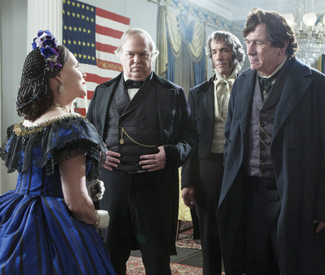
Best Supporting Actress It’s going to be Sally Field, the nutty-yet-sympathetic Mary Todd in Lincoln, versus Anne Hathaway, the weepy, shorn Fantine in Les Misérables. I am not a Hathaway fan, but if the Academy — who are not immune to being emotionally manipulated by director Tom Hooper (2010’s Best Picture The King’s Speech) — wants to award someone from Les Mis, she’s more likely to squeak in than Jackman. Plus, she hosted the Oscars a few years ago. That’s got to count for something, right?

Other nominees: I’m hoping both Amy Adams (spooky in The Master) and Nicole Kidman (daffy in the Paperboy) get nods, but any slots left over will probably be filled by The Sessions’ Helen Hunt or Maggie “Dowager Countess 4-Lyfe” Smith, for The Best Exotic Marigold Hotel.

Best Screenplay (Original and Adapted) The Golden Globes, the Oscars’ boozier little bro, doesn’t differentiate between original or adapted, but its lumped-together nominees contain the likely winners in each category: Mark Boal for Zero Dark Thirty (original), and Tony Kushner for Lincoln (adapted). Other original nominees could include Django Unchained, The Master, Amour, and Looper; other adapted nominees will be sure-things Argo and Silver Linings Playbook, with The Sessions and Beasts of the Southern Wild possibly filling out the category.

Best Documentary The 15-film short list was released in early December, so there’s a bit of navigational help with this one. I have seen most (but not all) of the films on the list; with that disclaimer, my predictions for the final five are: The House I Live In, The Imposter, Searching for Sugar Man, This Is Not a Film, and the SFFCC’s top doc, locally-made hospital drama The Waiting Room. I’m still awaiting the chance to check out Mea Maxima Culpa: Silence in the House of God, a highly-praised look at clerical sex abuse from oft-nominated (and once-rewarded, for 2007’s Taxi to the Dark Side) director Alex Gibney.

Best Foreign Language Film Since only one film per country can be submitted, and The Intouchables snagged France’s spot, my favorite movie of the year (Holy Motors) isn’t even eligible. But that doesn’t matter, really — Intouchables will likely get a nod, but this race is for the critically-beloved Amour (from Austrian director Michael Haneke, whose The White Ribbon was nominated in 2010) to lose. Other short listers (there are a total of nine) include Canada’s War Witch, Chile’s No, Denmark’s A Royal Affair, Romania’s Beyond the Hills, and Switzerland’s Sister.

Best Director/Best Picture As Steven Spielberg surely recalls, just because you win Best Director (for 1998’s Saving Private Ryan) doesn’t mean Shakespeare in Love won’t swoop in and steal your Best Picture prize. Oscar can tap between five and ten nominees for Best Picture, so the categories won’t necessarily line up — but this year, they just might. Look for the top contenders to be Kathryn Bigelow-Zero Dark Thirty (see my review elsewhere in this issue; it’s also my pick to win), and Spielberg-Lincoln. Other likely nominees: Paul Thomas Anderson-The Master; Ben Affleck-Argo; Tom Hooper-Les Misérables; David O. Russell-Silver Linings Playbook; and Michael Haneke-Amour.


Capo’s

9

virginia@bayguardian.com

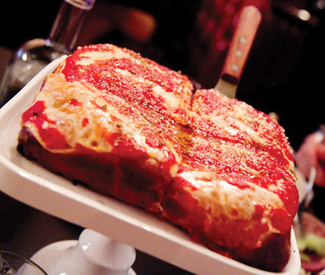
APPETITE Tony’s Pizza Napoletana reigns for my favorite all-around pizza experience, because of its range of impeccable pies, from New York to Neapolitan. I’m no stranger to these categories, especially after years of living in what’s become a damn great pizza town. As an 11-time world pizza champion, Tony Gemignani has done the impossible: win 2007’s World Champion Pizza Maker prize at Italy’s World Pizza Cup, the only American and non-Neapolitan to do so. What makes Tony’s special is painstaking detail to which each style is prepared, right down to flour and ovens used, whether authentic versions of Detroit pizza cooked in a 550 degree gas oven, or a Jersey tomato pie that could make one weep with its garlic and tomato purity.

Enter Capo’s (“boss” in Italian), Gemignani’s new Chicago pizza endeavor. Consulting four scions of Chicago’s legendary pizza families (Marc Malnati of Lou Malnati’s, Leo Spitziri of Giordano’s, Jeff Stolfe from Connie’s, Tony Troiano of JB Alberto’s), he chose three ovens — one wood-fired and two brick, heated to different degrees depending on recipe — and is the only West Coast restaurant using Ceresota flour from one of Illinois’ oldest mills, a staple of Chicago’s most revered pizzerias.

Capo’s Prohibition-era setting (pressed tin ceiling included) is entirely my scene. From the doorman to a stylish host, it evokes a decades-old North Beach haunt, not a newcomer. Red leather booths named after Chicago mobsters, a functioning 1930’s telephone booth, a restored, 1960’s panoramic painting (found in the floor boards) of Adolf Restaurant once housed in the space… Capo’s is an ode to Chicago and San Francisco’s rich Italian-American immigrant history.

Sweet-spicy house Calabrese sausage ($18) in roasted peppers, caramelized onions, and light tomato cream sauce is dreamy. An antipasti platter ($12) feels sparse compared to antipasti “salads” of my New Jersey youth, dense with meat and cheese, but meats here are hand-sliced daily on an antique slicer in Capo’s front window. I rarely seeing Chicago specialties mostaccioli or conchiglie ($12 in pesto or tomato sauce, $13.50 in meat sauce) on West Coast menus; Tony’s mostaccioli is a beaut. Appropriately cheesy, baked in a wood-fired oven, red meat sauce seals the deal. Capo’s signature dish, quattro forni ($13), is limited to 20 a day due to the preparation required and well worth ordering. Like a glorified garlic bread, or as a waitress described it, doughnut, puffed bread is cooked four times in different ovens, doused in tomato sauce, mozzarella, garlic. If you have room and a warm whiskey crisp is available for dessert, get it.

Then there’s the pizza. While I’ve savored excellent thin crust in Chicago, even after multiple tries at original locations of legendary chains or solo favorites, I’ve yet to find deep dish remotely comparable to Capo’s or Bay Area deep dish havens, Zachary’s and Little Star. I won’t give up the hunt, but thus far for me eating deep dish here is better than going to Chicago (though I’d happily eat my way through Chicago any day).

Appropriate for a Chicago-influenced spot, there are four types of pies: deep dish, cast iron pan, stuffed, and cracker-thin ($17-35). You can’t go wrong. Meat blissfully dominates most pies (unless you build your own), whether folds of Italian beef, thinly shaved in authentic Chi-town fashion, or house Calabrese, fennel, or Italian sausages, shown off in the likes of the Sam Giancana or Old Chicago pies. Italian Stallion pizza, which I prefer in cracker-thin form, showcases Italian beef, heightened by a drizzle of horseradish cream and insanely good sweet-hot peppers you’ll find on a number of Capo’s pies. Flour-based crust gets texture and complexity from a dusting of cornmeal, while Tony reveals a key to its perfection: European butter and a bit of lard. Fresh cheese oozes, unlike chewy wads of low-quality mozzarella I’m faced with in some of Chicago’s venerable deep dish houses.

Elmer Mejicanos heads up a whiskey-centric bar program, housing over 100 American-dominant whiskies, while Tony mentions finding a few antique whiskey bottles dating back to the 1920s in the basement (when are we pouring?) Building your own Old Fashioned is a key menu focus, alongside a short-but-sweet cocktail list ($12). After trying every one on the menu, I’ve re-ordered only The Silencer. Carpano Antica takes the form of ice cubes melting in Campari, Seltzer Sister Soda and crystals of brandy — an ideally bitter, bright aperitif. A glass of Chianti or Montepulciano is well-suited to all that red sauce: Tony’s longtime business partner Marni McKirahan runs the wine program, also highlighting rare Midwest wineries.

If I seem to be gushing, perhaps I am. Visiting three times in the first month alone, I’ve sampled almost every listed pizza and cocktail. Some new openings are exciting, fresh, visionary. A spare few respect the past, even perfect it.

641 Vallejo, SF. (415) 986-8998, www.sfcapos.com

Subscribe to Virgina’s twice-monthly newsletter, The Perfect Spot, www.theperfectspotsf.com


More school security? Maybe not.

9

OPINION I pretty much live in schools. Almost every morning, I get my three-year-old ready for pre-school, my seven-year-old ready for first grade, and myself ready for high school, where I teach English. Almost everyday, I’m in at least three schools. But never before had I thought so thoroughly about school security until Monday, Dec. 17, when I drove my daughters, and then myself, to school for the first time after the shootings in Newtown.

My first stop is my daughter’s public elementary school in San Francisco. Because I often have an 8am class and am pressed for time, I almost never walk her into school. I pull up along a curb, where fifth graders clad in fluorescent vests open the back door of my car to escort my daughter out. From there, she walks alone into a side door and then out onto an outdoor basketball court, where the whole school gathers every morning. Her teacher then takes my daughter to her classroom, which is, incidentally, closest to the front door to the school, which is always open during the day. A potential shooter would have no problem entering, and with enough ammunition and a deadly enough gun, he could kill at will.

I asked for the first time that day: would it be better to close off the campus?

The next stop is my three-year-old daughter’s pre-school. There, I park my car, get her out, and walk to the front entrance, where an administrative assistant buzzes me in upon recognition. Because it’s busy in the mornings, I often hold the door for other parents trying to get in. Of course, it would be very easy for a killer to force his way in behind one of us, or he could simply shoot the glass if he was determined enough.

Again, the questions arise: should the director have a gun in her office? Should we put up metal doors? Should the school hire a security guard monitoring cameras before letting parents and children into the school?

Finally, I arrive at my high school, which is a rather affluent independent school. I park on the street and walk right in. Often the receptionist doesn’t even notice me. We have a completely open campus, with many doors into which someone could enter with no resistance whatsoever. We have security guards, but they are unarmed and more concerned with directing traffic around the school than with a potential intruder. All of our students have off-campus privileges. Should we keep students on campus? Should we bar all the doors? Place an armed security guard at every entry point into the school?

The answer I’ve come to is no.

The question of school security gets at the very nature of what schools are. Schools both are and are not of the world. On the one hand, schools are a place that prepares our youth for the world. They’re also a place where young people can learn to take risks, where they can make mistakes before they go out into the “real” world. On the other hand, however, schools reflect our neighborhoods, our counties, our cities, our states, our country, and our world.

If we bar our schools off from the outside world, the message that we’re sending to our children is that the world is a place to be feared, a place where calculus won’t do you any good — but where a gun will. To “secure” our schools is to admit our collective failure at making the outside world safe. It is to admit that one of the fundamental values of any society, and in particular our American society—trust—has been broken.

I would hope instead that we work now to change the world enough to communicate to our children that the world is, in fact, a place that is not just safe but that they are invited into, a place where they can thrive and find happiness rather than a place to fear and hide from. Our responsibility is not to gate schools off from the world but to take the need for gates down altogether.

Scott Laughlin teaches English at University High School.

This ain’t a wrap

0

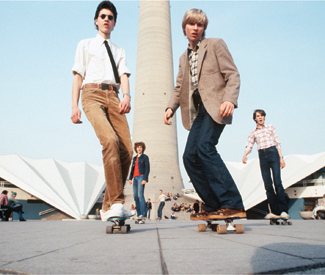
YEAR IN FILM Perhaps the backlash was inevitable. Any film that so flawlessly wows its initial audience in turn begins to receive a lot more scrutiny down the line, and there are definitely things about This Ain’t California to scrutinize. Billed as a documentary, yet centered around a character who may not actually exist, This Ain’t California details the unlikely rise of a rebellious East German skateboarding scene hidden from view behind the Iron Curtain.

An exuberant mischung of archival and new video footage, a brash and punkish soundtrack, animated sequences, and compelling, little-explored subject matter, the film made irreverence its watchword, from storyline to storyboard. And although the sheer scale of this irreverent approach, including the filmmakers’ unorthodox methods of framing their story, raised serious questions about This Ain’t California‘s self-definition as documentary, what was undeniable was the movie’s greatest success — its flawless capture of a zeitgeist, not just of a specific place and time, but of the irrepressible vitality of youth cultures everywhere.

>>Read more from our Year in Film 2012 issue here.

Screened first at the 2012 Berlinale in February (and in San Francisco at the Berlin and Beyond Film Festival in October), This Ain’t California won the coveted “Dialogue en Perspective” prize for young filmmakers, an award given with this statement that foreshadowed the controversy to come: “We’ve rarely been so splendidly manipulated.” While the jury in Berlin was referring to the dynamic editing job spearheaded by 23-year-old Maxine Gödecke, as the film won more awards around the festival circuit — including “Best Documentary” at the Cannes Independent Film Festival — details about its unconventional creation began to emerge in the press. That much of the so-called “archival” video footage was recreated by a slew of modern-day skaters disguised in touchingly hilarious GDR-era hairdos and aggressively mismatched stripes. That all of the footage of the central character Denis “Panik” Paraceck was actually that of Berlin-based skater-model, Kai Hillebrandt. That Denis Paraceck (who, according to the film, died in Afghanistan in 2011) might actually never have existed, let alone been the impetus behind the film’s modern-day reunion of the now-adult skaters (and at least a couple of hired actors, including David Nathan and Tina Bartel).

German news weekly Der Spiegel condemned it as a glorified advertisement for skate culture, bloggers such as Berlin-based Joseph Pearson of The Needle decried the dangerous folly of Germans rewriting their own history, and the filmmakers themselves have been cagey about admitting to the extent of their subterfuge.

“[It’s] so much more fun to keep that secret,” director Martin Persiel explains to me via email when asked to comment.

But lest the naysayers condemn the film as pure hoax, it should be noted that there most definitely was an underground skate scene in East Germany, in addition to other outlaw scenes, including break dancers, punk rockers, and heavy metal bands. Plenty of the film’s old-school skate rats are verifiable as such, and some of the most frankly unbelievable details of the film, such as a compatriot with a Finnish passport being tapped to smuggle boards in from the West, appear to be corroborated independently by academic Kai Reinhart, who has been researching sports history and GDR funsportart since 2005.

“As a filmmaker there is a huge responsibility to truthful depiction of your subject,” Persiel insists. “[And] as far as feedback from the skaters from the East goes, we did do justice to their story.”

On the controversy over allowing a partially fictitious film win awards in the documentary category (against presumably less colorful and more rigorously fact-based films), Persiel remains silent, though he does theorize that the definition of “documentary” is expanding and evolving all the time.

“I call This Ain’t California a ‘documentary tale’,” he explicates, adding his own micro-category. It’s an explanation that probably won’t placate his detractors, but whatever side of the definition of “documentary” the film winds up being relegated to, the definition of “best” will still apply. No matter what, it’s a movie well worth seeing, and controversies aside, a movie well worth having been made — for truly we have been splendidly manipulated. *


2012’S TOP SELF-CURATED DOUBLE FEATURES (A.K.A. TWO-DOLLAR WEDNESDAY AT LOST WEEKEND IS MY JAM)


More in common than you’d expect Delicatessen (Marc Caro and Jean-Pierre Jeunet, France, 1991) and Deliverance (John Boorman, US, 1972)

William H. Macy is underrated Edmond (Stuart Gordon, US, 2005) and The Cooler (Wayne Kramer, US, 2003)

All about men A Single Man (Tom Ford, US, 2009) and A Serious Man (Ethan Coen and Joel Coen, US/UK/France, 2009)

Post-Prometheus Ridley Scott-a-thon Blade Runner (Ridley Scott, US/Hong Kong/UK, 1982) and Alien (Ridley Scott, US/UK, 1979)

Noomi vs. Rooney The Girl with the Dragon Tattoo (David Fincher, US/Sweden/Norway, 2011) and The Girl with the

Dragon Tattoo (Niels Arden Oplev, Sweden/Denmark/Germany/Norway, 2009)

Please kill me Dancer in the Dark (Lars von Trier, various, 2000) and Black Swan (Darren Aronofsky, US, 2010)

Gay follies Paris is Burning (Jennie Livingston, US, 1990) and The Birdcage (Mike Nichols, US, 1996)

Dark days Capturing the Friedmans (Andrew Jarecki, US, 2003) and Deliver Us from Evil (Amy Berg, US, 2006)

The masochism tango The Piano Teacher (Michael Haneke, Austria/France/Germany, 2001) and Secretary (Steven Shainberg, US, 2002) Let’s get physical Boogie Nights (Paul Thomas Anderson, US, 1997) and Magic Mike (Steven Soderbergh, US, 2012)

Ficks’ picks

0

1. Cosmopolis (David Cronenberg, Canada/France/Portugal/Italy) During the five times I watched this brilliantly slow-burning, transcendental flick, I saw dozens of audience members fall asleep, walk out early, and complain all the way down the corridor of the Embarcadero Center Cinema hallways. I had to watch it that many times (plus read the book and have countless late-night discussions) just to try and wrap my brain around this era-defining exploration of what it means to be a (hu)man in the Y2Ks. Robert Pattinson proved he’s a truly spectacular actor, Paul Giamatti has never been better, and David Cronenberg is only getting better as he gets older.

2. In the Family  (Patrick Wang, US, 2011) Self-distributed due to its length (169 minutes), this is a stunningly haunting and devastating work. Viewers with the patience to stick with it are rewarded with a genuinely achieved emotional volcano that I can only relate to John Cassavetes’ greatest films. A truly landmark film, in both style and content.

3. The Master  (Paul Thomas Anderson, US) Of all the films that Anderson has boldly attempted, audaciously experimented with, and (perhaps most importantly) been critically embraced for, The Master is a balanced period piece that combines both poetic and historical elements with a couple of truly profound performances by Joaquin Phoenix and Philip Seymour Hoffman. This is not a film only about Scientology, or about just one master. This is a film that asks many questions, but supplies few answers.

4. The Comedy (Rick Alverson, US) Perhaps containing the most mean-spirited characters of the decade, this harrowingly insightful satire of the hipster generation’s compulsion to heap irony upon irony inspired many an audience member to exit mid-film. But the many who dared to remain (including fans of the film’s lead actor, Tim Heidecker, from Tim and Eric Awesome Show, Great Job!) may have found themselves forced to question their own heartless (and even sociopath) tendencies.

Director Rick Alverson’s perceptive use of a contemporary antihero is quite comparable to the counterculture characters of the 1970s: Robert De Niro in Taxi Driver (1976), Peter Falk in Husbands (1970), and Jack Nicholson in Five Easy Pieces (1970). And since The Comedy was not necessarily made to be enjoyed, it will probably, sadly, take 20 years for people to recognize that there is no finer film to define this generation.

5. Florentina Hubaldo CTE (Lav Diaz, Philippines) With this six-hour film, Lav Diaz has created yet another minimalist masterpiece that few will even attempt to watch — 20 people started out in the Yerba Buena Center for the Arts’ screening, and only 10 finished it. Diaz has a monumental goal in mind for his character, and his film’s length is a major part of achieving it. I am not sure if there will ever be a time when six-hour character studies will be all the rage, but until then, Diaz is paving an uncharted road for others to follow.

6. Shanghai (Dibakar Banerjee, India) This Hindi remake of Costa-Gavras’ monumental political thriller Z (1969) may not have French New Wave cinematographer Raoul Coutard behind the camera, but Shanghai‘s director of photography Nikos Andritsakis adds his own brand of raw intensity. For his part, writer-director Banerjee creates an even more complicated look at the state of politics in the age of the modern terrorist. Seemingly inspired by fellow director Ram Gopal Varma’s career of gritty political dramas, Banerjee is an international director to watch.

7. Holy Motors (Leos Carax, France) The perfect companion to David Cronenberg’s Cosmopolis, this film contains a tour de force performance by the almighty Denis Lavant (of Claire Denis’ 1999 Beau Travail), with Michel Piccoli, Eva Mendes, Édith Scob, and Kylie Minogue in supporting roles. Unique, surreal, and completely inspired, this day-in-the-life journey will make you want to watch it again as soon as it ends.

8. The Grey  (Joe Carnahan, US) The best existential “animal attacking human” flick since David Mamet’s 1997 cult classic The Edge. It’s a film that showcases Liam Neeson as he tapes glass to his fists to battle a pack of giant wolves — and manages to be emotionally stirring at the same time. Make sure to keep watching all the way through the credits.

9a. Your Sister’s Sister (Lynn Shelton, US, 2011) Lynn Shelton’s follow-up to her genre-defining bromance Humpday (2009) is a pitch-perfect indie that attempts to dig deep within its dark and confused characters. Depressed and confused thirtysomething Jack (played by Mark Duplass, master of casual awkwardness) heads off to a remote island to figure out his life. The only trouble: his best friend (a mesmerizing Emily Blunt) also has a lesbian sister (Rosemarie DeWitt) who is already there doing her own soul searching. With this contemplative, honest, and hilarious film, Shelton is turning out to be quite a splendid voice for our current generation of progressive pitfallers.

9b. Jeff, Who Lives At Home (Jay Duplass and Mark Dupass, US) They’ve done it again! With Jeff, the mumblecore masters (2005’s The Puffy Chair; 2010’s Cyrus) construct a stoner comedy-existential trip for the man-child generation. While inspiring outstanding performances from Jason Segal and Ed Helms (both the best they’ve ever been), playing brothers, a poignantly performance by Susan Sarandon as their mother raises this wonderfully earned sentimental indie flick to the ranks of family dramas like Jodie Foster’s Home for the Holidays (1995) and her most recent overlooked gem, The Beaver (2011).

10. Lotus Community Workshop (Harmony Korine, US) His next film, Spring Breakers (due out next year), is poised to become Harmony Korine’s most accessible film to date; it’s a T&A-filled exploitation film, led by James Franco as a grimy, gold-grilled-grinning, dreadlocked drug dealer who lives to prey on bikini-clad young girls. But 30-minute meta-masterpiece Lotus Community Workshop, which played the San Francisco International Film Festival earlier this year (as part of omnibus film The Fourth Dimension), is maybe Korine’s greatest film to date. The almighty Val Kilmer plays a dirt bike-riding, fanny-pack wearing, roller-rink guru named Val Kilmer — and yep, it’s as mind-blowing as it sounds.

11. ParaNorman  (Chris Butler and Sam Fell, US) This stop-motion animated film surprised parents who felt its PG rating should have been PG-13 — and it inspired gasps and even yells (from adults!) in every screening I attended. Daringly shot on a Canon 5D Mark II DSLR Camera and released in a fully utilized 3D, this ode to midnight movies is a kids’ film that will stand the test of time and should rank right alongside Shaun of the Dead (2004) and Army of Darkness (1992): horror parodies that transcended their own self-awareness and become classics themselves.

12-14 [tie]. A Simple Life (Ann Hui, Hong Kong, 2011), Amour (Michael Haneke, Austria/France/Germany), The Turin Horse (Béla Tarr and Ágnes Hranitzky, Hungary/France/Germany/Switzerland/US, 2011) Ann Hui’s simple, straightforward tale of a woman’s choice to check herself into a retirement home after suffering a stroke will probably get overshadowed by Michael Haneke’s wonderfully minimalist approach to an elderly couple’s decline after one of them experiences the same ailment. Meanwhile, Béla Tarr’s final film is for acquired tastes only; it’s a cyclical journey with a rural couple, who eat potatoes, are isolated in a stormy darkness, and care for their horse. All three films lay out a terrifyingly realistic blueprint of old age.

15. Compliance  (Craig Zobel, US) No film at the 2012 Sundance Film Festival encountered as much controversy as Compliance. At the first public screening, an all-out shouting match erupted, with one audience member yelling “Sundance can do better!” You can’t buy that kind of publicity. Every screening that followed was jam-packed with people hoping to experience the most shocking film at the fest. And it doesn’t disappoint: Zobel unleashes an uncomfortable psychological mindfuck on the viewer all the way through to the stunning final 15 minutes, which are even more shocking than all the twists and turns that came before.

16. The Kid With a Bike (Jean-Pierre Dardenne and Luc Dardenne, Belgium/France/Italy, 2011) Can these Belgian brothers make a bad film? Seriously? Like their Palme D’Or winners Rosetta (1999), The Son (2002), and L’enfant (2005), Kid is yet another hypnotic, neo-realist portrait of modern-day youth. Every character makes unexpected yet inevitable decisions. No moment is false. The Dardennes create movies that make life feel more real.

17. Beasts of the Southern Wild ( Benh Zeitlin, US) Fantastical special effects created by 31 students at San Francisco’s own Academy of Art University (yes, I am biased), plus star Quvenzhané Wallis as Hushpuppy, a precocious six-year-old searching to understand a world post-Katrina, post-race, and more importantly post-childhood. Combining David Gordon Green’s George Washington (2001), Spike Jonze’s Where the Wild Things Are (2008) and perhaps even Julie Dash’s Daughters of the Dust (1991), Zeitlin has created a haunting enigma for modern audiences that deserves multiple viewings. But even though it won multiple prizes at the 2012 Sundance Film Festival, will it get the Oscar attention it deserves?

18. Universal Soldier: Day of Reckoning (John Hyams, US) When Jean-Claude Van Damme started this franchise back in 1992, it was a nice little combo of First Blood (1982), The Terminator (1984) and Robocop (1987). Twenty years later, the series’ fourth entry is co-written, co-edited, and directed by John Hyams, the son of Peter Hyams, who directed JCVD classics Timecop (1994) and Sudden Death (1995) — and man oh man does he deliver a tough and gritty little action sci-fi film. Van Damme takes on an even darker role than his scene-stealing turn in Expendables 2; with a cleverly subversive script, eloquently choreographed fight scenes (one of which gives Dolph Lundgren some pretty priceless moments), and a denouement that has to be seen to be believed, you may be rooting for this VOD released genre film as much as I am — not to mention Indiewire, which called it “One of the Best Action Movies of the Year!”

19. John Carter (Andrew Stanton, US) With a budget of $250 million, this epic based on Edgar Rice Burroughs stories brought the Walt Disney company to its knees by only making $73 million back. If you saw the film in 3D, you might be confused as to why no one bothered to see it. In my opinion (having watched it twice), John Carter achieves everything James Cameron’s Avatar (2009) did, as far as sci-fi extravaganzas go, but it also has an inspired story and a charming cast: Taylor Kitsch, Lynn Collins, Samantha Morton, and Willem Dafoe. This is possibly this generation’s Ishtar (1987), and like Elaine May’s infamous still-unavailable bomb, John Carter is actually enjoyable; it’ll need a decade or two for audiences to find it as one of the most enjoyable CGI spectacles in recent years.

20. The Dark Knight Rises (Christopher Nolan, US) [SPOILER ALERT!] I found The Dark Knight Rises hard to dismiss as just another money-making super-hero adaptation. After multiple viewings, I’ve come to think of the conclusion to the trilogy as the finest of the three. I’ve also had time to puzzle over the film’s intricate plot.

While many fellow critics seemed to find the film’s political handlings of Bane’s Occupy/French Revolution movement to be flimsy and even irresponsible, I would argue that the film works in a more complicated way toward politics. If Bane’s misguided revolution fell flat, then it would be important to look at Catwoman’s anarchist ways. And about that — did she put her selfishness aside to start over with a broke Bruce Wayne, or is the closing sequence just Alfred’s fantasy? (And if the latter is true, did Batman actually blow himself up in the end?)

And then there’s Blake, who bests the pathetic Deputy Commissioner, then turns his back on the well-meaning yet lying-to-the-people Commissioner Gordon. Though Blake knows he has to quit the police force amid such corruption, he can’t dismiss his urge to help the helpless and downtrodden — after all, he’s an orphan from the streets — and Robin is born. He’s alone (no butlers down in that cave anymore …), and will need to figure out what to do in Gotham City — a town that’s always wild at heart and weird on top.

(Note: list compiled prior to viewing Zero Dark Thirty or Les Misérables.)

Best Actor of 2012
Matthew McConaughey for Bernie (Richard Linklater, US, 2011), Killer Joe (William Friedkin, US, 2011), Magic Mike (Steven Soderbergh, US, 2011), and The Paperboy (Lee Daniels, US)

Best Unreleased Films of 2012

The Act of Killing (Joshua Oppenheimer, Christine Cynn, and Anonymous, Denmark/Norway/UK)

Black Rock (Katie Aselton, USA)

Berberian Sound Studio (Peter Strickland, UK)

Pilgrim Song (Martha Stephens, US)

The Lords of Salem (Rob Zombie, US)

Jesse Hawthorne Ficks programs the Midnites for Maniacs series, which emphasizes dismissed, underrated, and overlooked films. He is the Film History Coordinator at Academy of Art University.

The screams of dead children — everywhere

167

The screams of a thousand dead children wail through my mind. Children in Afghanistan, Iraq, Palestine and Libya killed by empires’ drones; thousands of young men of color America killed by white supremacist occupying armies called police, security guards and neighborhood watch agents; teenage workers from Bangladesh and China killed by corporations for profits; countless babies and young people killed by drive-by shootings and gun violence in communities of color intentionally ghettoized, destroyed and preyed upon by devil-opers, bank gangsters, gentriFUKators; and hundreds of white, middle-class children, youth, and adults killed by more gun violence perpetration, mental illness and the mental vacancy of wite culture.

Thousands of children die for corporate profits, war profits, and prison industrial profits every year in this country. Dead because gun violence is glorified and the sale of guns make some people rich, because parents are tired and don’t have the energy to fight with their kids to turn off the video games, because video games, un-conscious rap, Hollywood movies and corporate news with people killing each other make death look like entertainment — and with each sale make more profits for tech corporations in Silicon Valley run by the new technological colonizers. Because guns are exciting, especially when you have little else to be excited about.

So shouldn’t the grief for all of our children be the same? Shouldn’t our actions to stop the rise in death by gun violence everywhere be equally urgent and comprehensive?

The president shed tears in a prime-time speech for the 20 white middle-class children from Connecticut. But what about crying for babies killed by drive-by shooters, youth killed by police, and hundreds of teenage workers from China who react to mercury poison and throw themselves out the window while US tech companies make billions in profit? Why aren’t thousands of people shedding tears and sorrow and sympathy for the children in Gaza who die everyday?

In the bizarre naming of poverty positions there is a terrifying concept called the deserving vs undeserving poor rooted in the US crums (welfare) policies that were originally set up for white widows of World War II veterans in the 1930s and 1940s. Due to overt and systemic white supremacist institutional values that undergird everything in the US from its stolen beginnings to now, these white, hetero-normative women were viewed as the deserving poor, or “legitimate” poor people, who had come upon bad times from no “fault” of their own and therefore were deserving of our aid and our sympathy. In contrast, indigenous sisters, sisters of color in diaspora, or divorced, poor or unmarried women were viewed as aberrant, pathological or “lazy,” who had inherently done something to “deserve” their poverty and therefore deserved none of the US crums, only criminalization, incarceration or disgust.

I think we have come to a time, with the meteoric rise in death by gun violence of so many of us of all ages, colors, cultures and regions of the country, where we now have the deserving vs undeserving dead. How about little baby Hiram, 1 year old, who died because he happened to be in the line of fire from a passing car in Oakland? Or Ayana Jones, a 7-year-young innocent baby shot when Detroit police stormed their home with assault rifles to “find a suspect.” Or Derrik Gaines, a young disabled man who was killed by Daly City police? Or the countless children killed in Afghanistan, Palestine, Iraq or Libya by colonizing empire armies attempting to steal more indigenous resources for the ever-hungry jaws of capitalism? Did they deserve to die because someone calls their innocent bodies “collateral damage?”

What about all of our poor children of color — sorted, separated, tested, and arrested out of schools — who roam the streets with no jobs, no hope and endless violent images pumped into their heads from corporate media lies and mythologies in the holding tanks called our ghettoized neighborhoods, pick up guns and shoot each other for something to do until the police arrive to place them into the plantation prisons that await their profitable arrival? Do they deserve to die?

There are many reasons why children and adults are killing each other. My Black Indian Mama Dee used to say, white supremacy and capitalism isn’t good for any human, even white people. People have talked about the proliferation and glorification of guns to all young people through mass media, as well as the deep wounds of the cult of independence on a human’s psyche, not to mention the gutting by Republicrats of the mental health system. But one of the deepest ones that I see is the factory schools themselves, the separation of youth from elders’ wisdom and the ways that our children no longer even vaguely understand the respecting, honoring, and neccessary reverance of their elders.

Om this society, we are taught how to ghetto-ize and separate our elders from our children in as many ways as possible. This separation and lack of reverence is valued in capitalism as it sets up more products and capital to trade on. I pray and send love and strength to these families and little ancestors to help their still living families decolonize from this myth of separation and capital-inspired death so their may be healing for them.

From this moment and so many more like it, I am drawn to believe that when people like me and my mixed race family in poverty die, we deserve to. My hope and vision is that with this moment of so much sorrow for the families in Connecticut, perhaps the oddly democratizing impact of death will free us all from the unspoken but clearly existent concept that some of us deserve to die and awaken us all to the real-ness that none of us do.

The Muni vs. housing clash

73

OPINION Two votes at the Board of Supervisors and the Municipal Transportation Agency Dec. 4 laid out a stark contrast between two different approaches to transportation advocacy — one based on a sense of justice and the idea that public transit is an issue of equity, and another based on the self interest and transactional politics of a cash-strapped transportation agency and its dedicated allies.

After years of work, organizing transit riders and talking to policy makers from the local to the regional levels, a scrappy group of transit justice advocates, many of them young, most of them people of color, got the Municipal Transportation Agency board to approve a $1.6 million plan to fund free Muni passes for low-income youth. It sent a strong message that a new kind of transportation advocacy has arrived, one that puts race, class, and environment at the center.

Meanwhile, a separate vote was taking place at the Board of Supervisors that seemed to pit community organizations, nonprofit service providers, and affordable housing developers on opposite sides of the fence from what has become a mainstream transportation and bicycle advocacy community.

We should have been on the same side. But a last-minute maneuver by Sup. Scott Wiener to add to the MTA’s strained budget (a worthy goal) by expanding the 30-year Transportation Impact Development Fee (TIDF) to include nonprofits that provide critical services in our neighborhoods backfired and sent his amendments out the door in a 9-2 vote.

Many transportation and bicycle advocates seemed incredulous that the rest of the world did not accept their arguments.

I consider many of these transportation advocates friends and acquaintances whom I have known and worked with for years. But rather than seeing themselves as part of a greater social justice movement rooted in the communities who are most affected, some of these advocates have become increasingly narrow in their scope, single-minded in their pursuit of funding for bike lanes and bulbouts, as well as rapid transit projects serving downtown commuters.

Real-world politics requires that activists, organizers, and policy advocates be flexible and willing to figure out how to work with others very unlike themselves. Recently an organization I work for was able to work in a broad coalition, convened by the mayor, to develop and campaign for a Housing Trust Fund to create a permanent source of funding for affordable housing, as a direct response to the State of California taking away the city’s housing budget when it dissolved the redevelopment agencies. We walked into the room knowing that we would have to make tough decisions, and have to take those back to our allies in the progressive movement.

But we also walked in with non-negotiables. We were not going to entertain any attempt at weakening rent control by tying the Housing Trust Fund to lifting the condo conversion lottery. We would not support a set-aside without increasing city revenue to support not just our housing trust fund but also critical health and social services. We do not screw over our broader movement for pure self-interest.

We stand at a crossroads, and we could very well end up with two different transportation advocacy communities, both talking about the same thing, but with very little to say to each other. As the old mineworker’s song used to say, it’s time to decide: “Which side are you on?”

Fernando Martí works at the San Francisco Information Clearinghouse

The Mountain Goats unify a contemplative crowd at the Fillmore

1

By the time the audience had gathered in the Fillmore on Friday night to see the Mountain Goats, news of the school shooting in Connecticut had jarred people across the country and incited countless conversations about gun regulation and mental health resources. Tragedy can spur these important discussions, but the events of Friday morning called for something else as well. John Darnielle, the man behind the Mountain Goats, opened by recognizing the tragedy as a huge disappointment — another thorn in our hope for humanity – but more importantly, as a reason for us to get together, make music, and spread joy.

Darnielle’s ability to empathize with the dark side of life made him a perfect candidate to guide us through mourning with understanding and empathy. About half the set was from the new album, Transcendental Youth. About problematic youth and self-destructive tendencies, this couldn’t have felt more pertinent.

The songs took on new meaning in light of that morning’s events. “Amy aka Spent Gladiator 1” is supposedly about Amy Winehouse (or alternatively: all the not-Amy Winehouses who died and no one knew about). But on Friday it was equally about Adam Lanza. The song encourages recklessness so long as it’s not at the cost of your life. The lines, “find where the heat’s unbearable and stay there if you have to/don’t hurt anybody on your way up to the light,” made me think about the thin line between deciding to hurt someone else or hurting yourself.

The evening was much more than psychological investigations though: Darnielle brought home the loss of the families of the children and teachers with a story about his 15-month-old son. “When you are far from your child and you hear that something terrible has happened to children,” he said, “there is this indescribable horror that descends on you – that I think is understandable by anyone – but at the same time it does sort of feel like it belongs to you.”

He played two lullabies he sings for his son which were both mature enough to reach to the most cynical and life-worn audience member: the crowd was pleased with “Ripples” by the Grateful Dead which he followed with Johnny Cash’s “Dark is the Dungeon”. (In case you worrying that a song about the dark of coal mines might be depressing for a 15-month-old, Darnielle assured us that his son loves it, recounting how the boy’s face looks as though “you destroyed everything that brought him joy in this world” the moment the guitar goes back on the rack).

Throughout the evening, Darnielle played many of his older songs, solo on acoustic guitar, like the calm reflection on the power of inspiration, “Love Love Love.” The rest of the Mountain Goats joined him with the aggressive drumming and steady bass on the Transendental Youth songs as well as old favorites like “Up the Wolves.” Occasionally, the brass from Matthew E. White’s band would fill in on the new numbers while Darnielle transitioned to the keyboard.

In addition to the horn contribution, White’s opening set added complexity to the show, but still fit in with the reflective mood of the evening. Often, the rich lyrics from his studio album, Big Inner, were hard to make out against the orchestrated upbeat keyboard, guitar, percussion, and punctuating brass.

As the lyrical meanings were scaled back though, the simultaneously symphonic and psychedelic builds and breakdowns were brought to the front. But, White did become selectively audible, and the message came out crisp and clear on the song “Gone Away” which he dedicated to the children who lost their lives at Sandy Hook Elementary. He explained that he had written the hauntingly beautiful song the night his 4-year-old cousin died in a car crash.

After the moments of sadness and reflection were over, everyone turned their comforted hearts into a unified chorus, singing along for the Mountain Goats’ encore: including the angry number, “No Children” and the defiant anthem, “This Year.” I thought about the time I sang both songs driving home with my best friend, the songs almost demand it.

The joined voices made clear how many people in the audience had also used those songs to get through a hard time. This sense of shared perseverance despite our private struggles was the perfect note to end the trying day, bringing everyone together to take back the hope we might have lost earlier.

Our Weekly Picks: December 12-18

0

WEDNESDAY 12/12

"The Lion and the Lamb"

Sam Flores, a graffiti-inspired artist whose work often deals with religious themes, now turns his attention to the conflicting symbols of violence and innocence. His recent paintings, which show a more classical style than previous works, depict the lion and the lamb amongst other figures in chaotic, urban settings. These bold and deeply hued paintings convey the convoluted relationship between good and evil. As a prominent artist in the crossover between urban and fine arts, you may have found his work alongside painter-designer, Jeremy Fish or tagger-tattoo artist, Mike Giant. Like many others, Flores got his start designing for skateboard and clothing companies, but with more and more solo exhibits, his painting has begun to flourish. This show should be a great example of the strong voice he has found. (Molly Champlin)

Through Feb. 12

Opening reception tonight, 6:30pm, free

Fifty24SF

218 Fillmore, SF

(415) 861-1960

www.fifty24sf.com

WEDNESDAY 12/12

Charles Phoenix Holiday Show


Oddball Americana guru Charles Phoenix has explored and celebrated the best in kitschy, cool, and kooky artifacts and history for many years now, having written several books on mid-20th century, deep-fried pop culture, fashion, lifestyle and more. The author of tomes such as Southern California In The 50s, and Americana The Beautiful brings his hilarious holiday show and talk to the city, set to roast not just Christmas, but all of the holidays with his ever-growing collection of slides and tales of his off-beat and always colorful road trip adventures. (Sean McCourt)

8pm, $25

Empress of China Ballroom

838 Grant, SF

www.charlesphoenix.com

WEDNESDAY 12/12

"How The Grouch Stole Christmas"


The Grouch is continuing his annual holiday hip-hop tour through 18 cities across the West Coast. This year the merry night in San Francisco will include performances by Bay Area native Mistah F.A.B., Minneapolis-based artist Prof, DJ Fresh, and of course, the Grouch and Eligh. Apart from the live show, Mistah F.A.B. will host a Battle of the Bands/MCs Showcase where participants will have the platform to show their own talent. The freestyle champion will win a Grouch Merchandise pack and a pair of Able Planet studio headphones. (Soojin Chang)

8pm, $20

Regency Ballroom

1300 Van Ness, SF

www.theregencyballroom.com

THURSDAY 12/13

Subterranean Arthouse’s Third Annual Chanukah Party


Yiddish supergroups, klezmer dance parties, and tzedakah, all wrapped into one shiny gold coin of an evening. The Subterranean Arthouse’s Chanukah Party is part of Heather Klein’s "Hungry for Yiddish: A Mitzvah Project" concert series, which donates proceeds from events to the Berkeley Food Pantry and similar organizations; and the event is co-presented by KlezCalifornia and the Jewish Music Festival. Acts include Klein’s Inextinguishable Trio, Anthony Mordechai-Tzvi Russell, noted Yiddish dance instructor Bruce Bierman, and Saul Goodman’s Klezmer Band. With instructions from Bierman, the lovely Yiddish songs of both Klein and Russell, and Goodman’s brassy klezmer, this should make for a fun, frenzied mid-point party during the festival of lights — and yes, they’ll light the menorah. Chag Sameach, Berkeley. (Emily Savage)

9pm, $10–$20 donation

Subterranean Arthouse

2169 Bancroft, Berk.

Klezmer.brownpapertickets.com

FRIDAY 12/14

Dylan Moran


Perhaps best known to American audiences for his appearances in Shaun of the Dead and Run, Fatboy, Run, Irish comedian Dylan Moran is a huge hit in his native UK, notably for his brilliant role as a cantankerous and drunk, yet lovable book shop owner in the tragically short-lived BBC series "Black Books." His live stand-up is where he’s really making his name now though; his current "Yeah, Yeah" tour is only stopping in New York, Los Angele, and here in San Francisco — consider yourself lucky and don’t miss your chance to see one of funniest comics on either side of the pond. (McCourt)

Also Sat/15, 8pm, $35

Marines Memorial Theatre

609 Sutter, SF

(415) 771-6900

www.marinesmemorialtheatre.com

FRIDAY 12/14

The Mountain Goats


I’d like to sit on some front porch (any porch, really) with John Darnielle and just listen to him tell stories — maybe over a glass of whiskey and several puffs of something. Sometimes telling the truth, but mostly relying on a wild imagination, the Mountain Goat’s dynamic leader has been writing songs about addiction, infidelity, and more sensitive subjects for the last 20 years. The group’s new album, Transcendental Youth, has been an excuse for Darnielle to branch out, inviting avant-symphonic rocker, Matthew E. White, to write horns for the album and working with Owen Pallett to arrange the songs for a collaboration with the a cappella quartet, Anonymous 4. This should be a well-worn show — mixing old and new in a chaotic journey through the picaresque scenes of Darnielle’s mind. (Champlin)

With Matthew E. White

9pm, $28

Fillmore

1805 Geary, SF

(415) 346-6000

www.thefillmore.com

FRIDAY 12/14

"Diez Por Arriba"


The glorious annual flamenco season is in full swing — so much emotion, so much drama, so much invigorating live sound and movement, olé! It’s all a perfect rehearsal for your upcoming family holiday gatherings. Next up, fantastic choreographer Yaelisa and her Caminos Flamencos company, an enthralling troupe that stomps, whirls, hypnotizes, and enraptures like a force of nature, all under the expert musical direction of Jason McGuire "El Rubio." I would say the distinguishing feature of Yaelisa’s work is its generous spirit and breadth of technique. As evidenced by Caminos’ show last year, she favors longer solos and duos, giving each featured performer enough time to weave a spell of exquisite technique and subtle variations. Gorgeous costumes (hello, tight-pantsed toreadors!) and music from an international ensemble helps turn up the magic past 10. (Marke B.)

Also Sat/15, 8pm; Sun/16, 3pm, $20–$40

ODC Theater

3153 17th St., SF

www.caminosflamenco.com

SATURDAY 12/15

"In One Hand A Ghost, The Other An Atom"


As urban art has become more popular, many taggers are making a profit from their work in the gallery world. New2, who has been writing in Australia since the movement began in the early ’80s, is one of these. He’s worked in a variety of spray paint alternatives when bringing his work indoors, including paint, sculpture, and paper. His most recent project, "In One Hand A Ghost, The Other an Atom," uses intricate, paper cut-outs to merge his long tradition of writing (the ghost) with his futuristic take on letters (the atom). In the show, care and thoughtfulness form the same bright colors, geometric currents, and space themes that he has developed in years of experimentation on trains and empty walls. (Champlin)

Through Jan. 5

7pm, free

White Walls Gallery

835 Larkin, SF

(415) 931-1500

www.whitewallssf.com

SATURDAY 12/15

Pilot 61


Making dances — we all know — is a lonely and precarious enterprise. You can’t just sit down on your keyboard and write your poems. You need bodies and a bigger area than your kitchen. That’s why ODC’s Pilot program is such a gift to young choreographers. They get 11 weeks, a studio, a tiny budget, and a lot of feedback. In return, they have to commit to two public performances — of which we are the beneficiary. Seeing what gifted but not-yet-established choreographers come up with is a thrill like few others. In its 61st incarnation, Pilot will introduce Jenni Bregman, David Schleiffers, Katharine Hawthorne, Erin Malley, and Phoebe Osborne. They are calling the program Nightcap. (Rita Felciano)

Also Sun/16, 8pm, $12

ODC Dance Commons

351 Shotwell, SF

(415) 863-9833

www.odctheater.org

SATURDAY 12/15

Found Footage Festival


You’ve seen ’em: those piles of mysterious VHS tapes, often unmarked, gathering dust at Community Thrift. Found Footage Festival curator-hosts Nick Prueher and Joe Pickett live for the thrill that comes from finding bizarre, hilarious cast-off videos — and they’re on the road, sharing their fascination with audiences across the country. The 2012 program of repurposed entertainment looks to be stuffed with gems, gut-busters, and things that make you go "WTF?": ferret-care tips, freaky craft-sponging, and something called "The Sexy Treadmill Workout." Head to the FFF website to whet your appetite with the "VHS Find of the Day" feature. Two words: cat massage. (Cheryl Eddy)

Also Sun/16, 8pm, $13

Roxie Theater

3117 16th St., SF

www.foundfootagefest.com

MONDAY 12/17

Dee Dee and Brandon


Dee Dee from the Dum Dum Girls and Brandon from the Crocodiles are in love — married, in fact, and make a rather swoon-worthy couple. She with her thick-lined lids and vertical striped tights, he with his dark sunglasses. Listen to Dee Dee’s crooning on "Bedroom Eyes" off 2011’s Only In Dreams, in which she repeats "fear I’ll never sleep again" and you start to get a sense of their connection, and the pain they feel apart on separate tours. To view said connection live, in all its gushy splendor, be the voyeur at their joint Rickshaw Stop show tonight; a very special showcase, indeed, where both will perform songs from their respective catalogs and — as I can only imagine — harmonize like old lovers do. Like Johnny and June, Exene and John Doe, all those passionate, oft-heartsick music mates that have come before them, the duo is sugar and spice with a splash of whiskey. (Savage)

With Gio and Stef (Young Prisms)

8pm, $15

Rickshaw Stop

155 Fell, SF (415) 861-2011

www.rickshawstop.com

TUESDAY 12/18

Kinky Friedman


Although he has garnered a considerable amount of national mainstream success in the last 25 years as the author of a series of popular mystery novels and non-fiction books touching on politics, writer and all-around raconteur Kinky Friedman first made a name for himself as a singer and songwriter. In the early 1970s, along with his band the Texas Jewboys (he was raised by Jewish parents in the Lone Star State), he penned a slew of country and twang-tinged tunes such as the rollicking and humorous "They Ain’t Making Jews Like Jesus Anymore." He hits the city tonight as part of his "Bipolar" tour. This is your chance to meet the man, as he promises to "sign anything but bad legislation!" (McCourt)

With Brian Molnar

8pm, $25

Cafe Du Nord

2170 Market, SF

www.cafedunord.com


The Guardian listings deadline is two weeks prior to our Wednesday publication date. To submit an item for consideration, please include the title of the event, a brief description of the event, date and time, venue name, street address (listing cross streets only isn’t sufficient), city, telephone number readers can call for more information, telephone number for media, and admission costs. Send information to Listings, the Guardian, 225 Bush, 17th Flr., SF, CA 94105; or e-mail (paste press release into e-mail body — no attachments, please) to listings@sfbg.com. Digital photos may be submitted in jpeg format; the image must be at least 240 dpi and four inches by six inches in size. We regret we cannot accept listings over the phone.

Film Listings

0

Film listings are edited by Cheryl Eddy. Reviewers are Kimberly Chun, Dennis Harvey, Lynn Rapoport, and Sara Vizcarrondo. For rep house showtimes, see Rep Clock.

OPENING

Any Day Now In 1970s West Hollywood, flamboyant drag queen Rudy (Alan Cumming) and closeted, newly divorced lawyer Paul (Garret Dillahunt) meet and become an unlikely but loving couple. Their opposites-attract bond strengthens when they become de facto parents to Marco (Isaac Leyva), a teen with Down syndrome left adrift when his party-girl mother (Jamie Anne Allman) is arrested. Domestic bliss — school for Marco with a caring special-education teacher (Kelli Williams); a fledgling singing career for Rudy (so: lots of crooning, for Cumming superfans) — is threatened by rampant homophobia, so Rudy and Paul must conceal their true relationship from Paul’s overbearing boss and the other parents at Marco’s school. When the secret gets out, the fact that Marco is being well cared-for matters not to the law; he’s immediately shunted into a foster home while Paul and Rudy battle the court for custody. Actor-turned-director and co-writer Travis Fine (2010’s The Space Between) guides a veteran cast through this based-on-true-events tale, with sensitive performances and realistic characterizations balancing out the story’s broader strokes. (1:43) Embarcadero, Smith Rafael. (Eddy)

The Central Park Five See "The Awful Truth." (1:59) Embarcadero, Shattuck.

The Hobbit: An Unexpected Journey Peter Jackson returns to Tolkien with the first of three movies about the epic adventures of Bilbo Baggins (Martin Freeman). (2:50) California, Cerrito, Marina, Presidio..

Hyde Park on Hudson See "The Awful Truth." (1:35) Clay, Embarcadero.

The Matchmaker In 2006, amid ongoing conflict with Lebanon, an Israeli novelist learns he’s received an unexpected inheritance from a man he knew in 1968, the summer before he turned 16. Most of Avi Nesher’s The Matchmaker takes place during those golden months in Haifa, when young Arik (Tuval Shafir) — lover of Dashiell Hammett, son of Holocaust survivors — takes a job working for a charismatic but vaguely shady matchmaker (comedian Adir Miller, who won the Israeli equivalent of a Best Actor Oscar), following potential clients to assure their quest for love is on the level. His exciting new gig whisks the budding writer out of middle-class monotony and introduces him to a wealth of colorful "Low Rent district" types; he also nurses a raging crush on his best friend’s free-spirited American cousin. Mostly a gently nostalgic tale, The Matchmaker also offers an unusual take on the Holocaust, viewing it from two decades later and using its looming memory to shape the characters who experienced it firsthand — as well as members of the younger generation, like Arik, who pages through The House of Dolls to learn more, even as he refers to the concentration camp where his father was held as simply "there." (1:52) Opera Plaza. (Eddy)

ONGOING

Anna Karenina Joe Wright broke out of British TV with the 9,000th filmed Pride and Prejudice (2005), unnecessary but quite good. Too bad it immediately went to his head. His increasing showiness as director enlivened the silly teenage-superspy avenger fantasy Hanna (2011), but it started to get in the way of Atonement (2007), a fine book didn’t need camera gymnastics to make a great movie. Now it’s completely sunk a certified literary masterpiece still waiting for a worthy film adaptation. Keira Knightley plays the titular 19th century St. Petersburg aristocrat whose staid, happy-enough existence as a doting mother and dutiful wife (to deglammed Jude Law’s honorable but neglectful Karenin) is upended when she enters a mutually passionate affair with dashing military officer Count Vronsky (Aaron Taylor-Johnson, miscast). Scandal and tragedy ensue. There’s nothing wrong with the screenplay, by Tom Stoppard no less. What’s wrong is Wright’s bright idea of staging the whole shebang as if it were indeed staged — a theatrical production in which nearly everything (even a crucial horse race) takes place on a proscenium stage, in the auditorium, or "backstage" among riggings. Whenever we move into a "real" location, the director makes sure that transition draws attention to its own cleverness as possible. What, you might ask, is the point? That the public social mores and society Anna lives in are a sort of "acting"? Like wow. Add to that another brittle, mannered performance by Wright’s muse Knightley, and there’s no hope of involvement here, let alone empathy — in love with its empty (but very prettily designed) layers of artifice, this movie ends up suffocating all emotion in gilded horseshit. The reversed-fortune romance between Levin (Domhall Gleeson) and Kitty (Alicia Vikander) does work quite well — though since Tolstoy called his novel Anna Karenina, it’s a pretty bad sign when the subsidiary storyline ends up vastly more engaging than hers. (2:10) Albany, Metreon, Piedmont, Sundance Kabuki. (Harvey)

Argo If you didn’t know the particulars of the 1979 Iranian Revolution, you won’t be an expert after Argo, but the film does a good job of capturing America’s fearful reaction to the events that followed it — particularly the hostage crisis at the US embassy in Tehran. Argo zeroes in on the fate of six embassy staffers who managed to escape the building and flee to the home of the sympathetic Canadian ambassador (Victor Garber). Back in Washington, short-tempered CIA agents (including a top-notch Bryan Cranston) cast about for ways to rescue them. Enter Tony Mendez (Ben Affleck, who also directs), exfil specialist and father to a youngster wrapped up in the era’s sci-fi craze. While watching 1973’s Battle for the Planet of the Apes, Tony comes up with what Cranston’s character calls "the best bad idea we have:" the CIA will fund a phony Canadian movie production (corny, intergalactic, and titled Argo) and pretend the six are part of the crew, visiting Iran for a few days on a location shoot. Tony will sneak in, deliver the necessary fake-ID documents, and escort them out. Neither his superiors, nor the six in hiding, have much faith in the idea. ("Is this the part where we say, ‘It’s so crazy it just might work?’" someone asks, beating the cliché to the punch.) Argo never lets you forget that lives are at stake; every painstakingly forged form, every bluff past a checkpoint official increases the anxiety (to the point of being laid on a bit thick by the end). But though Affleck builds the needed suspense with gusto, Argo comes alive in its Hollywood scenes. As the show-biz veterans who mull over Tony’s plan with a mix of Tinseltown cynicism and patiotic duty, John Goodman and Alan Arkin practically burst with in-joke brio. I could have watched an entire movie just about those two. (2:00) 1000 Van Ness, Presidio, SF Center, Sundance Kabuki. (Eddy)

Chasing Ice Even wild-eyed neocons might reconsider their declarations that global warming is a hoax after seeing the work of photographer James Balog, whose images of shrinking glaciers offer startling proof that our planet is indeed being ravaged by climate change (and it’s getting exponentially worse). Jeff Orlowski’s doc follows Balog and his Extreme Ice Survey team as they brave cruel elements in Iceland, Greenland, and Alaska, using time-lapse cameras to record glacier activity, some of it quite dramatic, over months and years. Balog is an affable subject, doggedly pursuing his work even after multiple knee surgeries make him a less-than-agile hiker, but it’s the photographs — as hauntingly beautiful as they are alarming — that make Chasing Ice so powerful. Could’ve done without Scarlett Johansson crooning over the end credits, though. (1:15) Embarcadero, Shattuck. (Eddy)

Cloud Atlas Cramming the six busy storylines of David Mitchell’s wildly ambitious novel into just three hours — the average reader might have thought at least 12 would be required — this impressive adaptation directed (in separate parts) by Tom Twyker (1998’s Run Lola Run) and Matrix siblings Lana and Andy Wachowski has a whole lot of narrative to get through, stretching around the globe and over centuries. In the mid 19th century, Jim Sturgess’ sickly American notory endures a long sea voyage as reluctant protector of a runaway-slave stowaway from the Chatham Islands (David Gyasi). In 1931 Belgium, a talented but criminally minded British musician (Ben Whishaw) wheedles his way into the household of a famous but long-inactive composer (Jim Broadbent). A chance encounter sets 1970s San Francisco journalist Luisa (Halle Berry) on the path of a massive cover-up conspiracy, swiftly putting her life in danger. Circa now, a reprobate London publisher’s (Broadbent) huge windfall turns into bad luck that gets even worse when he seeks help from his brother (Hugh Grant). In the not-so-distant future, a disposable "fabricant" server to the "consumer" classes (Doona Bae) finds herself plucked from her cog-like life for a rebellious higher purpose. Finally, in an indeterminately distant future after "the Fall," an island tribesman (Tom Hanks) forms a highly ambivalent relationship toward a visitor (Berry) from a more advanced but dying civilization. Mitchell’s book was divided into huge novella-sized blocks, with each thread split in two; the film wastes very little time establishing its individual stories before beginning to rapidly intercut between them. That may result in a sense of information (and eventually action) overload, particularly for non-readers, even as it clarifies the connective tissues running throughout. Compression robs some episodes of the cumulative impact they had on the page; the starry multicasting (which in addition to the above mentioned finds many uses for Hugo Weaving, Keith David, James D’Arcy, and Susan Sarandon) can be a distraction; and there’s too much uplift forced on the six tales’ summation. Simply put, not everything here works; like the very different Watchmen, this is a rather brilliant "impossible adaptation" screenplay (by the directors) than nonetheless can’t help but be a bit too much. But so much does work — in alternating currents of satire, melodrama, pulp thriller, dystopian sci-fi, adventure, and so on — that Cloud Atlas must be forgiven for being imperfect. If it were perfect, it couldn’t possibly sprawl as imaginatively and challengingly as it does, and as mainstream movies very seldom do. (2:52) 1000 Van Ness, SF Center. (Harvey)

The Collection As soon as you behold the neon sign "Hotel Argento" shining over the grim warehouse-cum-evil dead trap, you know exactly what you’re in for — a wink, and even a little bit of a horror superfan’s giggle. In other words, to tweak that killer Roach Motel tagline: kids check in, but they don’t check out. No need to see 2009’s The Collector — the previous movie by director-cowriter Marcus Dunstan and writer Patrick Melton (winners of the third season of Project Greenlight, now with the screenplays for multiple Saw films beneath their collective belt) — the giallo fanboy and gorehound hallmarks are there for all to enjoy: tarantulas (straight from 1981’s The Beyond), a factory kitted out as an elaborate murder machine, and end credits that capture characters’ last moments. Plus, plenty of fast-paced shocks and seemingly endless splatter, with a heavy sprinkle of wince-inducing compound fractures. The Collection ups the first film’s ante, as gamine Elena (Emma Fitzpatrick) is lured to go dancing with her pals. Their underground party turns out to be way beyond the fringe, as the killer mows down the dance floor, literally, and gives the phrase "teen crush" a bloody new spin. Stumbling on The Collector‘s antihero thief Arkin (Josh Stewart) locked in a box, Elena releases him but can’t prevent her own capture, so killer-bodyguard Lucello (Oz‘s Lee Tergesen) snatches Arkin from the hospital and forces him to lead his team of toughs through a not-so-funhouse teeming with booby traps as well as victims-turned-insidious-weapons. All of which almost convinces you of nutty-nutball genius of the masked, dilated-pupiled Collector (here stuntman Randall Archer), who takes trendy taxidermy to icky extremes — even when his mechanism is threatened by a way smart last girl and a lock picker who’s adept at cracking building codes. Despite Dunstan’s obvious devotion to horror-movie landmarks, The Collection doesn’t turn out to be particularly original: rather, it attempts to stand on the shoulders — and arms and dismembered body parts — of others, in hopes of finding its place on a nonexistent drive-in bill. (1:23) Metreon, 1000 Van Ness. (Chun)

End of Watch Buddy cop movies tend to go one of two ways: the action-comedy route (see: the Rush Hour series) or the action-drama route. End of Watch is firmly in the latter camp, despite some witty shit-talking between partners Taylor (a chrome-domed Jake Gyllenhaal) and Zavala (Michael Peña from 2004’s Crash) as they patrol the mean streets of Los Angeles. Writer-director David Ayer, who wrote 2001’s Training Day, aims for authenticity by piecing together much of (but, incongruously, not all of) the story through dashboard cameras, surveillance footage, and Officer Taylor’s own ever-present camera, which he claims to be carrying for a school project, though we never once see him attending classes or mentioning school otherwise. Gyllenhaal and Peña have an appealing rapport, but End of Watch‘s adrenaline-seeking plot stretches credulity at times, with the duo stumbling across the same group of gangsters multiple times in a city of three million people. Natalie Martinez and Anna Kendrick do what they can in underwritten cop-wife roles, but End of Watch is ultimately too familiar (but not lawsuit-material familiar) to leave any lasting impression. Case in point: in the year 2012, do we really need yet another love scene set to Mazzy Star’s "Fade Into You"? (1:49) Metreon, 1000 Van Ness. (Eddy)

Flight To twist the words of one troubled balladeer, he believes he can fly, he believes he can touch the sky. Unfortunately for Denzel Washington’s Whip Whitaker, another less savory connotation applies: his semi-sketchy airline captain is sailing on the overconfidence that comes with billowing clouds of blow. Beware the quickie TV spot — and Washington’s heroic stance in the poster — that plays this as a quasi-action flick: Flight is really about a man’s efforts to escape responsibility and his flight from facing his own addiction. It also sees Washington once again doing what he does so well: wrestling with the demons of a charismatic yet deeply flawed protagonist. We come upon Whip as he’s rousing himself from yet another bender, balancing himself out with a couple lines with a gorgeous, enabling flight attendant by his side. It’s a checks-and-balances routine we’re led to believe is business as usual, as he slides confidently into the cockpit, gives the passengers a good scare by charging through turbulence, and proceeds to doze off. The plane, however, goes into fail mode and forces the pilot to improvise brilliantly and kick into hero mode, though he can’t fly from his cover, which is slowly blown despite the ministrations of kindred addict Nicole (Kelly Reilly) and dealer Harling (John Goodman at his most ebullient) and the defensive moves of his pilots union cohort (Bruce Greenwood) and the airline’s lawyer (Don Cheadle). How can Whip fly out of the particular jam called his life? Working with what he’s given, Washington summons reserves of humanity, though he’s ultimately failed by John Gatins’ sanctimonious, recovery-by-the-numbers script and the tendency of seasoned director Robert Zemeckis to blithely skip over the personal history and background details that would have more completely filled out our picture of Whip. We’re left grasping for the highs, waiting for the instances that Harling sails into view and Whip tumbles off the wagon. (2:18) 1000 Van Ness, SF Center, Sundance Kabuki. (Chun)

Hitchcock On the heels of last year’s My Week With Marilyn comes another biopic about an instantly recognizable celebrity viewed through the lens of a specific film shoot. Here, we have Anthony Hopkins (padded and prosthetic’d) playing the Master of Suspense, mulling over which project to pursue after the success of 1959’s North by Northwest. Even if you’re not a Hitch buff, it’s clear from the first scene that Psycho, based on Robert Bloch’s true crime-inspired pulpy thriller, is looming. We open on "Ed Gein’s Farmhouse, 1944;" Gein (Michael Wincott) is seen in his yard, his various heinous crimes — murder, grave-robbing, body-part hoarding, human-skin-mask crafting, etc. — as yet undiscovered. Hitchcock, portrayed by the guy who also played the Gein-inspired Hannibal Lecter, steps into the frame with that familiar droll greeting: "Guhhd eevvveeeening." And we’re off, following the veteran director as he muses "What if somebody really good made a horror picture?" Though his wife and collaborator, Alma (Helen Mirren), cautions him against doing something simply because everyone tells him not to, he plows ahead; the filmmaking scenes are peppered with behind-the-scenes moments detailed in Stephen Rebello’s Alfred Hitchcock and the Making of Psycho, the source material for John J. McLaughlin’s script. But as the film’s tagline — "Behind every Psycho is a great woman" — suggests, the relationship between Alma and Hitch is, stubbornly, Hitchcock‘s main focus. While Mirren is effective (and I’m all for seeing a lady who works hard behind the scenes get recognition), the Hitch-at-home subplot exists only to shoehorn more conflict into a tale that’s got plenty already. Elsewhere, however, Hitchcock director Sacha Gervasi — making his narrative debut after hit 2008 doc Anvil: The Story of Anvil — shows stylistic flair, working Hitchcock references into the mise-en-scène. (1:32) California, Metreon, Piedmont, Sundance Kabuki. (Eddy)

In the Family With a running time of just under three hours, writer-director-star Patrick Wang’s In the Family rewards patient viewers with its quietly observed tale of a man battling for custody of his son. Wang’s debut feature has already earned local acclaim, picking up both the Best Narrative Feature Award and the Emerging Filmmaker Award at the 2012 San Francisco International Asian American Film Festival. It returns in an expanded engagement right when Hollywood is rolling out its flashiest year-end fare, which In the Family neither resembles nor aspires to resemble; its story unfolds via remarkably low-key scenes, most of which are shot using extremely long single takes. Not many films, even self-produced indie dramas, dare allow so much breathing room into each sequence. This technique works, for the most part, because the story is so compelling. Joey (Wang) and Cody (Trevor St. John) are a well-matched couple in small-town Tennessee, busy with jobs — Joey’s a contractor; Cody’s a teacher — and raising six-year-old Chip (Sebastian Brodziak). When tragedy strikes, and Cody is killed, Chip, who is Cody’s biological son, is placed in the care of the late man’s sister, Eileen (Kelly McAndrew). It’s weighty stuff, but Wang avoids typical melodrama clichés to convey the depths of his character’s despair; the film’s sole contrivance is containing most of its last act in a deposition scene, complete with a cartoonishly slick lawyer whose cruel questions make sure the viewer knows that homophobia (and racism) are both themes here. It’s a bottom-heavy ending to a film that otherwise prefers observing at a distance, using its long, wordless scenes to convey delicate, organically-shifting emotions. (2:49) Roxie. (Eddy)

Just 45 Minutes From Broadway (1:59) Roxie.

Killing Them Softly Lowest-level criminal fuckwits Frankie (Scoot McNairy) and Russell (Ben Mendelsohn) are hired to rob a mob gambling den, a task which miraculously they fail to blow. Nevertheless, the repercussions are swift and harsh, as a middleman suit (Richard Jenkins) to the unseen bosses brings in one hitman (Brad Pitt), who brings in another (James Gandolfini) to figure out who the thieves are and administer extreme justice. Based on a 1970s novel by George V. Higgins, this latest collaboration by Pitt and director-scenarist Andrew Dominik would appear superficially to be a surer commercial bet after the box-office failure of their last, 2007’s The Assassination of Jesse James By the Coward Robert Ford — one of the great films of the last decade. But if you’re looking for action thrills or even Guy Ritchie-style swaggering mantalk (though there is some of that), you’ll be disappointed to find Killing more in the abstracted crime drama arena of Drive (2011) or The American (2010), landing somewhere between the riveting former and the arid latter. This meticulously crafted tale is never less than compelling in imaginative direction and expert performance, but it still carries a certain unshakable air of so-what. Some may be turned off by just how vividly unpleasant Mendelsohn’s junkie and Gandolfini’s alchie are. Others will shrug at the wisdom of re-setting this story in the fall of 2008, with financial-infrastructure collapse and the hollow promise of President-elect Obama’s "Change" providing ironical background noise. It’s all a little too little, too soon. (1:37) Four Star, Metreon, 1000 Van Ness. (Harvey)

A Late Quartet Philip Seymour Hoffman is fed up playing second fiddle — literally. He stars in this grown-up soap opera about the internal dramas of a world-class string quartet. While the group is preparing for its 25th season, the eldest member (Christopher Walken) is diagnosed with early stage Parkinson’s. As he’s the base note in the quartet, his retirement challenges the group’s future, not just his own. Hoffman’s second violinist sees the transition as an opportunity to challenge the first violin (Mark Ivanir) for an occasional Alpha role. When his wife, the quartet’s viola player (Catherine Keener), disagrees, it’s a slight ("You think I’m not good enough?") and a betrayal because prior to their marriage, viola and first violin would "duet" if you get my meaning. This becomes a grody aside when Hoffman and Keener’s violin prodigy daughter (Imogen Poots) falls for her mother’s old beau and Hoffman challenges their marriage with a flamenco dancer. These quiet people finds ways to use some loud instruments (a flamenco dancer, really?) and the music as well as the views of Manhattan create a deeply settled feeling of comfort in the cold —insulation can be a dangerous thing. When we see (real world) cellist Nina Lee play, and her full body interacts with a drama as big as vaudeville, we see what tension was left out of the playing and forced into the incestuous "family" conflicts. In A Late Quartet, pleasures are great and atmosphere, heavy. You couldn’t find a better advertisement for this symphonic season; I wanted to buy tickets immediately. And also vowed to stay away from musicians. (1:45) Albany, Smith Rafael. (Vizcarrondo)

Life of Pi Several filmmakers including Alfonso Cuarón, Jean-Pierre Jeunet, and M. Night Shyamalan had a crack at Yann Martel’s "unfilmable" novel over the last decade, without success. That turns out to have been a very good thing, since Ang Lee and scenarist David Magee have made probably the best movie possible from the material — arguably even an improvement on it. Framed as the adult protagonist’s (Irrfan Khan) lengthy reminiscence to an interested writer (Rafe Spall) it chronicles his youthful experience accompanying his family and animals from their just shuttered zoo on a cargo ship voyage from India to Canada. But a storm capsizes the vessel, stranding teenaged Pi (Suraj Sharma) on a lifeboat with a mini menagerie — albeit one swiftly reduced by the food chain in action to one Richard Parker, a whimsically named Bengal tiger. This uneasy forced cohabitation between Hindu vegetarian and instinctual carnivore is an object lesson in survival as well as a fable about the existence of God, among other things. Shot in 3D, the movie has plenty of enchanted, original imagery, though its outstanding technical accomplishment may lie more in the application of CGI (rather than stereoscopic photography) to something reasonably intelligent for a change. First-time actor Sharma is a natural, while his costar gives the most remarkable performance by a wild animal this side of Joaquin Phoenix in The Master. It’s not a perfect film, but it’s a charmed, lovely experience. (2:00) 1000 Van Ness, Presidio, SF Center, Sundance Kabuki. (Harvey)

Lincoln Distinguished subject matter and an A+ production team (Steven Spielberg directing, Daniel Day-Lewis starring, Tony Kushner adapting Doris Kearns Goodwin, John Williams scoring every emotion juuust so) mean Lincoln delivers about what you’d expect: a compelling (if verbose), emotionally resonant (and somehow suspenseful) dramatization of President Lincoln’s push to get the 13th amendment passed before the start of his second term. America’s neck-deep in the Civil War, and Congress, though now without Southern representation, is profoundly divided on the issue of abolition. Spielberg recreates 1865 Washington as a vibrant, exciting place, albeit one filled with so many recognizable stars it’s almost distracting wondering who’ll pop up in the next scene: Jared Harris as Ulysses S. Grant! Joseph Gordon-Levitt as Robert Lincoln! Lena Dunham’s shirtless boyfriend on Girls (Adam Driver) as a soldier! Most notable among the huge cast are John Hawkes, Tim Blake Nelson, and a daffy James Spader as a trio of lobbyists; Sally Field as the troubled First Lady; and likely Oscar contenders Tommy Lee Jones (as winningly cranky Rep. Thaddeus Stevens) and Day-Lewis, who does a reliably great job of disappearing into his iconic role. (2:30) Cerrito, 1000 Van Ness, Presidio, SF Center, Shattuck, Sundance Kabuki. (Eddy)

North Sea Texas Growing up is never easy — especially when you know who you are and who you love from a tender young age, and live in a sleepy Belgium coastal hamlet in the early ’70s. Sexual freedom begins at home, as filmmaker Bavo Defurne’s debut feature opens on our beautiful little protagonist, Pim — a melancholy, shy, diligent soul who has a talent for drawing, a responsible nature, and a yen for ritual dress-up in lipstick and lace. He has an over-the-top role model: an accordion-playing, zaftig mother who has a rep as the village floozy. Left alone far too often as his mom parties at a bar named Texas, Pim takes refuge with kindly single-mom neighbor Marcella, her earnest daughter, and her sexy, motorcycle-loving son, Gino, who turns out to be just Pim’s speed. But this childhood idyll is under threat: Gino’s new girlfriend and a handsome new boarder at Pim’s house promise to change everything. Displaying a gentle, empathetic touch for his cast of mildly quirky characters and a genuine knack for conjuring those long, sensual days of youth, Defurne manages to shine a fresh, romantic light on a somewhat familiar bildungsroman, leaving a lingering taste of sea salt and sweat along with the feeling of walking in one young boy’s very specific shoes. (1:36) Opera Plaza. (Chun)

The Perks of Being a Wallflower Move over, Diary of a Wimpy Kid series — there’s a new shrinking-violet social outcast in town. These days, life might not suck quite so hard for 90-pound weaklings in every age category, what with so many films and TV shows exposing, and sometimes even celebrating, the many miseries of childhood and adolescence for all to see. In this case, Perks author Stephen Chbosky takes on the directorial duties — both a good and bad thing, much like the teen years. Smart, shy Charlie is starting high school with a host of issues: he’s painfully awkward and very alone in the brutal throng, his only friend just committed suicide, and his only simpatico family member was killed in a car accident. Charlie’s English teacher Mr. Andersen (Paul Rudd) appears to be his only connection, until the freshman strikes up a conversation with feline, charismatic, shop-class jester Patrick (Ezra Miller) and his magnetic, music- and fun-loving stepsister Sam (Emma Watson). Who needs the popular kids? The witty duo head up their gang of coolly uncool outcasts their own, the Wallflowers (not to be confused with the deeply uncool Jakob Dylan combo), and with them, Charlie appears to have found his tribe. Only a few small secrets put a damper on matters: Patrick happens to be gay and involved with football player Brad (Johnny Simmons), who’s saddled with a violently conservative father, and Charlie is in love with the already-hooked-up Sam and is frightened that his fragile equilibrium will be destroyed when his new besties graduate and slip out of his life. Displaying empathy and a devotion to emotional truth, Chbosky takes good care of his characters, preserving the complexity and ungainly quirks of their not-so-cartoonish suburbia, though his limitations as a director come to the fore in the murkiness and choppily handled climax that reveals how damaged Charlie truly is. (1:43) Bridge, Shattuck. (Chun)

Playing For Keeps Not a keeper: the marketing imagery that makes Gerard Butler look like an insufferable creep with bad hair. Dennis Quaid, seen in a small pic toward the base of the Playing For Keeps poster, gets that thankless role instead in this family-oriented rom-com, which is better than some while still being capable of eliciting very audible yawns from an audience supposedly primed for cutesy hijinks. Butler is George Dryer, a onetime pro soccer star now on the decline yet desperately seeking his next opening — a career as a sportscaster. To get there he has to run a networking gauntlet called coaching children’s soccer, which he gets roped into by ex Stacie (Jessica Biel) and spawn Lewis (Noah Lomax). The ankle biters are the least of his problems: more challenging are hot ‘n’ horny soccer moms like TV sports vet Denise (Catherine Zeta-Jones), cry-face Barn (Judy Greer), and desperate trophy housewife Patti (Uma Thurman), who’s saddled with all-American a-hole Carl (Dennis Quaid). The charisma-oozing George has to practically fight them off, while somehow shooting for that family-first goal. With its sex farce tendencies, rom-com DNA, and vaguely sour attitude toward hard-up moms, hot or not, I’m not sure who Playing For Keeps is really making a play for — perhaps married ladies looking for date-night possibilities and some shirtless Butler action? Projecting believability even under the most plausibility-taxing circumstances, Butler manages, as always, to be the best thing in the movie, though it seems like less of an achievement when his projects tend toward mediocrity. (1:46) Metreon, 1000 Van Ness, Shattuck. (Chun)

Red Dawn A remake of a 1984 movie that seemed a pretty nutty ideological throwback even during the Reagan Era’s revived Cold War air conditioning, Red Dawn should have come out a couple years ago, having been shot late 2009. But in the meantime MGM was undergoing yet another seismic financial rupture, and as the film sat around for lack of the means needed for distribution and marketing, it occurred that perhaps it already had a fatal, internal flaw. You see, this update re-cast our invaders from Russkies to People’s Republicans, tapping into the modern fear of China as debtor and international bully. But: China is also a huge fledgling market for Hollywood product. So a tortured makeover of the remake ensued; scenes were added, re-shot, and digitally altered to impose a drastic narrative change. The new villain is absurd it gets acknowledged as such by dialogue: "North Korea? It doesn’t make any sense!" Yup, in the new Red Dawn a coastal Washington state burg is the first attack point in a wholesale invasion of the U.S. (pop. 315 million) by the Democratic People’s Republic (pop. 25 million). It’s football season, so a Spokane suburb’s team — Wolverines!! — lends its name as battle cry and its revved up healthy young flesh as guerilla martyrs to the fight for, ohm yeah, freedom. Do they drink beer? Do they rescue cheerleader girlfriends from concentration camps? Do they kick North Korean ass? Do you really need to ask? (1:34) Metreon. (Harvey)

Rise of the Guardians There’s nothing so camp as "Heat Miser" from The Year Without a Santa Claus (1974) in Rise of the Guardians,, but there’s plenty here to charm all ages. The mystery at its center: we open on Jack Frost (voiced by Chris Pine) being born, pulled from the depths of a frozen pond by the Man on the Moon and destined to spread ice and cold everywhere he goes, invisible to all living creatures. It’s an individualistic yet lonely lot for Jack, who’s styled as an impish snowboarder in a hoodie and armed with an icy scepter, until the Guardians — spirits like North/Santa Claus (Alec Baldwin), the Tooth Fairy (Isla Fisher), and the Easter Bunny (Hugh Jackman) — call on him to join them. Pitch the Boogeyman (Jude Law) is threatening to snuff out all children’s hopes and dreams with fears and nightmares, and it’s up to the Guardians must keep belief in magic alive. But what’s in it for Jack, except the most important thing: namely who is he and what is his origin story? Director Peter Ramsey keeps those fragile dreams aloft with scenes awash with motion and animation that evokes the chubby figures and cozy warm tones of ’70s European storybooks. And though Pine verges on blandness with his vocal performance, Baldwin, Jackman, and Fisher winningly deliver the jokes. (1:38) Metreon, 1000 Van Ness. (Chun)

A Royal Affair At age 15 in 1766, British princess Caroline (Alicia Vikander) travels abroad to a new life — as queen to the new ruler of Denmark, her cousin. Attractive and accomplished, she is judged a great success by everyone but her husband. King Christian (Mikkel Boe Følsgaard) is just a teenager himself, albeit one whose mental illness makes him behave alternately like a debauched libertine, a rude two year-old, a sulky-rebellious adolescent, and a plain old abusive spouse. Once her principal official duty is fulfilled — bearing a male heir — the two do their best to avoid each other. But on a tour of Europe Christian meets German doctor Johann Friedrich Struenesse (Mads Mikkelsen), a true man of the Enlightenment who not only has advanced notions about calming the monarch’s "eccentricities," but proves a tolerant and agreeable royal companion. Lured back to Denmark as the King’s personal physician, he soon infects the cultured Queen with the fervor of his progressive ideas, while the two find themselves mutually attracted on less intellectual levels as well. When they start manipulating their unstable but malleable ruler to push much-needed public reforms through in the still basically feudal nation, they begin acquiring powerful enemies. This very handsome-looking history lesson highlights a chapter relatively little-known here, and finds in it an interesting juncture in the eternal battle between masters and servants, the piously self-interested and the secular humanists. At the same time, Nikolaj Arcel’s impressively mounted and acted film is also somewhat pedestrian and overlong. It’s a quality costume drama, but not a great one. (2:17) Opera Plaza, Smith Rafael. (Harvey)

The Sessions Polio has long since paralyzed the body of Berkeley poet Mark O’Brien (John Hawkes) from the neck down. Of course his mind is free to roam — but it often roams south of the personal equator, where he hasn’t had the same opportunities as able-bodied people. Thus he enlists the services of Cheryl (Helen Hunt), a professional sex surrogate, to lose his virginity at last. Based on the real-life figures’ experiences, this drama by Australian polio survivor Ben Lewin was a big hit at Sundance this year (then titled The Surrogate), and it’s not hard to see why: this is one of those rare inspirational feel-good stories that doesn’t pander and earns its tears with honest emotional toil. Hawkes is always arresting, but Hunt hasn’t been this good in a long time, and William H. Macy is pure pleasure as a sympathetic priest put in numerous awkward positions with the Lord by Mark’s very down-to-earth questions and confessions. (1:35) Four Star, Opera Plaza. (Harvey)

Seven Psychopaths Those nostalgic for 1990s-style chatty assassins will find much to love in the broadly sketched Seven Psychopaths. Director-writer Martin McDonough already dipped a pen into Tarantino’s blood-splattered ink well with his 2008 debut feature, In Bruges, and Seven Psychopaths reads as larkier and more off-the-cuff, as the award-winning Irish playwright continues to try to find his own discomfiting, teasing balance between goofy Grand Guignol yuks and meta-minded storytelling. Structured, sort of, with the certified lucidity of a thrill killer, Seven Psychopaths opens on Boardwalk Empire heavies Michael Pitt and Michael Stuhlbarg bantering about the terrors of getting shot in the eyeball, while waiting to "kill a chick." The talky twosome don’t seem capable of harming a fat hen, in the face of the Jack of Spades serial killer, who happens to be Psychopath No. One and a serial destroyer of hired guns. The key to the rest of the psychopathic gang is locked in the noggin of screenwriter Marty (Colin Farrell), who’s grappling with a major block and attempting the seeming impossible task of creating a peace-loving, Buddhist killer. Looking on are his girlfriend Kaya (Abbie Cornish) and actor best friend Billy (Sam Rockwell), who has a lucrative side gig as a dog kidnapper — and reward snatcher — with the dapper Hans (Christopher Walken). A teensy bit too enthusiastic about Marty’s screenplay, Billy displays a talent for stumbling over psychos, reeling in Zachariah (Tom Waits) and, on his doggie-grabbing adventures, Shih Tzu-loving gangster Charlie (Woody Harrelson). Unrest assured, leitmotifs from McDonough plays — like a preoccupation with fiction-making (The Pillowman) and the coupling of pet-loving sentimentality and primal violence (The Lieutenant of Inishmore) — crop up in Seven Psychopaths, though in rougher, less refined form, and sprinkled with a nervous, bromantic anxiety that barely skirts homophobia. Best to bask in the cute, dumb pleasures of a saucer-eyed lap dog and the considerably more mental joys of this cast, headed up by dear dog hunter Walken, who can still stir terror with just a withering gaze and a voice that can peel the finish off a watch. (1:45) Metreon. (Chun)

Silver Linings Playbook After guiding two actors to Best Supporting Oscars in 2010’s The Fighter, director David O. Russell returns (adapting his script from Matthew Quick’s novel) with another darkly comedic film about a complicated family that will probably earn some gold of its own. Though he’s obviously not ready to face the outside world, Pat (Bradley Cooper) checks out of the state institution he’s been court-ordered to spend eight months in after displaying some serious anger-management issues. He moves home with his football-obsessed father (Robert De Niro) and worrywart mother (Jacki Weaver of 2010’s Animal Kingdom), where he plunges into a plan to win back his estranged wife. Cooper plays Pat as a man vibrating with troubled energy — always in danger of flying into a rage, even as he pursues his forced-upbeat "silver linings" philosophy. But the movie belongs to Jennifer Lawrence, who proves the chops she showcased (pre-Hunger Games megafame) in 2010’s Winter’s Bone were no fluke. As the damaged-but-determined Tiffany, she’s the left-field element that jolts Pat out of his crazytown funk; she’s also the only reason Playbook‘s dance-competition subplot doesn’t feel eye-rollingly clichéd. The film’s not perfect, but Lawrence’s layered performance — emotional, demanding, bitchy, tough-yet-secretly-tender — damn near is. (2:01) Piedmont, SF Center, Shattuck. (Eddy)

Skyfall Top marks to Adele, who delivers a magnificent title song to cap off Skyfall‘s thrilling pre-credits chase scene. Unfortunate, then, that the film that follows squanders its initial promise. After a bomb attack on MI6, the clock is running out for Bond (Daniel Craig) and M (Judi Dench), accused of Cold War irrelevancy in a 21st century full of malevolent, stateless computer hackers. The audience, too, will yearn for a return to simpler times; dialogue about "firewalls" and "obfuscated code" never fails to sound faintly ridiculous, despite the efforts Ben Whishaw as the youthful new head of Q branch. Javier Bardem is creative and creepy as keyboard-tapping villain Raoul Silva, but would have done better with a megalomaniac scheme to take over the world. Instead, a small-potatoes revenge plot limps to a dull conclusion in the middle of nowhere. Skyfall never decides whether it prefers action, bons mots, and in-jokes to ponderous mythologizing and ripped-from-the-headlines speechifying — the result is a unsatisfying, uneven mixture. (2:23) Marina, Metreon, 1000 Van Ness, Shattuck, Sundance Kabuki. (Ben Richardson)

The Twilight Saga: Breaking Dawn – Part 2 The final installment of the Twilight franchise picks up shortly after the medical-emergency vampirization of last year’s Breaking Dawn – Part 1, giving newly undead Bella Swan (Kristen Stewart) just enough time to freshen up after nearly being torn asunder during labor by her hybrid spawn, Renesmee. In a just world, Bella and soul mate Edward Cullen (Robert Pattinson) would get more of a honeymoon period, given how badly Part 1‘s actual honeymoon turned out. Alas, there’s just enough time for some soft-focus vampire-on-vampire action (a letdown after all the talk of rowdy undead sex), some catamount hunting, some werewolf posturing, a reunion with Jacob (Taylor Lautner), and a few seconds of Cullen family bonding, and then those creepy Volturi are back, convinced that the Cullens have committed a vampire capital crime and ready to exact penance. Director Bill Condon (1998’s Gods and Monsters, 2004’s Kinsey) knows what the Twi-hards want and methodically doles it out, but the overall effect is less sweeping action and shivery romance and more "I have bugs crawling on me — and yet I’m bored." Some of that isn’t his fault — he bears no responsibility for naming Renesmee, for instance, to say nothing of a January-May subplot that we’re asked to wrap our brains around. But the film maintains such a loose emotional grip, shifting clumsily and robotically from comic interludes to unintentionally comic interludes to soaring-music love scenes to attempted pathos to a snowy battlefield where the only moment of any dramatic value occurs. Weighed down by the responsibility of bringing The Twilight Saga to a close, it limps weakly to its anticlimax, leaving one almost — but not quite — wishing for one more installment, a chance for a more stirring farewell. (1:55) Metreon, 1000 Van Ness, Sundance Kabuki. (Rapoport)

Waiting for Lightning The first voice you hear in Waiting for Lightning is pro skateboarder Danny Way’s mother: "I said, ‘Are you crazy? What do you think you’re doing?’" Can’t really blame her for worrying: Waiting for Lightning is a bio-doc following the fearless Way’s rise from littlest squirt at the Del Mar skate park to his determined quest to jump over the Great Wall of China in 2005. Growing up, he faced problems (his dad was killed in jail; his mom partied … a lot; his mentor died in a car crash; he suffered a broken neck after a surfing accident), but persevered to find his calling, pursuing what a peer calls "life-and-death stuntman shit." Like all docs about skateboarding — a sport that depends so much on cameras standing by — there’s no shortage of action footage, and big names like Tony Hawk and Christian Hosoi drop by to heap praise on Way’s talents and work ethic. Lightning is aimed mostly at an audience already fond of watching skate footage; it lacks the artistic heft of 2001’s Dogtown and Z-Boys, or the unusually compelling narrative of 2003’s Stoked: The Rise and Fall of Gator, and the whole "Way is a golden god" theme gets a little tiresome. But it must be said: the Great Wall jump — a self-mythologizing publicity stunt that would do Evel Knievel proud — is rather spectacular. (1:32) Metreon. (Eddy)

Wreck-It Ralph Wreck-It Ralph cribs directly from the Toy Story series: when the lights go off in the arcade, video game characters gather to eat, drink, and endure existential crises. John C. Reilly is likable and idiosyncratic as Ralph, the hulking, ham-fisted villain of a game called Fix-It-Felix. Fed up with being the bad guy, Ralph sneaks into gritty combat sim Hero’s Duty under the nose of Sergeant Calhoun (Jane Lynch), a blond space marine who mixes Mass Effect‘s Commander Shepard with a PG-rated R. Lee Ermey. Things go quickly awry, and soon Ralph is marooned in cart-racing candyland Sugar Rush, helping Vanellope Von Schweetz (a manic Sarah Silverman), with Calhoun and opposite number Felix (Jack McBrayer) hot on his heels. Though often aggressively childish, the humor will amuse kids, parents, and occasionally gamers, and the Disney-approved message about acceptance is moving without being maudlin. The animation, limber enough to portray 30 years of changing video game graphics, deserves special praise. (1:34) Metreon, 1000 Van Ness. (Ben Richardson)

YEAR IN MUSIC 2012: Sinner’s exit

0

emilysavage@sfbg.com

YEAR IN MUSIC “We weren’t supposed to be allowed to play live on the morning news,” Ty Segall says just moments after finishing a meal at In-N-Out, on his way down the coast from San Francisco, the city he can no longer afford to live in, to pick up his 16-year-old sister from his hometown of Laguna Beach. “Giving a bunch of long-haired weirdos really loud amplifiers and free reign on the morning news is just stupid. So I thought that was a great opportunity to do whatever the hell we wanted.”

“And I’m really happy we did that,” he says of the Ty Segall Band’s bizarrely mesmerizing performance of “You’re the Doctor” off this year’s Twins (Drag City), on the Windy City’s WGN Morning News in October. It ended with screeching feedback and Segall repeatedly screaming “Chicago!” into the mic. “It was way too early, so we were already feeling a little weird.” The weirdness rubbed off on the news anchors, who, when the camera panned back to them mid-song, were throwing papers up in the air and pogoing behind their desk. It made for a great split second.

The band also made its late night debut in 2012, on perhaps more appropriate Conan. Segall, drummer Emily Rose Epstein, bassist Mikal Cronin, and guitarist Charlie Moothart seemed a bit more in tune with that set-up and host, playing Twins‘ awesome “Thank God For Sinners.”

The group of old friends toured extensively this year, playing a whole bunch of festivals including Bumbershoot, the Pitchfork Music Festival (“I had no idea what to expect with that one, because like, you know, Pitchfork is almost a mainstream media outlet now. But that was one of the most wild, definitely craziest festival we played”) and Treasure Island in San Francisco (“most beautiful festival…the scenery — it was just psychotic”).

http://www.youtube.com/watch?v=CCMSYRgRdAo

And Segall again had a full hand of releases over these 12 months. He began the year with a White Fence collaboration: Hair (Drag City), following that up with a Ty Segall Band record, Slaughterhouse (In the Red). Then in October he dropped a solo album, Twins (Drag City).

Each record stood for itself. They were recorded with different bands at various locations (Eric Bauer’s studio in Chinatown, the Hangar in Sacramento). Hair was a true collaboration between Segall and White Fence’s Tim Presley, exploring one another’s strengths through fuzzy noise, psychedelic wanderings and the occasional surfy licks. It was originally slated to be an EP, but it was going well, they decided to put out a full LP.

Slaughterhouse kicks off with foaming feedback and maintains a sonic assault of aggressive, noisy guitars, screaming in the ether, throughout — a loud, frenzied, psychedelic garage-punk masterpiece. Bluesy-punk thumper “Wave Goodbye” turns down the riffs on the intro and lets Segall’s nasal intonations take charge, with a ’70s punk approach: “I went to church and I went to school/I played by all of your other rules/but now it’s time to…wave goodbye/Bye bye.” He shrieks that last “bye bye,” simultaneously recalling early Black Sabbath, and sonically flipping the bird.

Twins was the solo triumph, lyrically exploring Segall’s dual personalities between his thrashy stage persona, and his casual, polite, dude-like demeanor off-stage.

“Who can know the heart of youth but youth itself?” — Patti Smith in ‘Just Kids.’

Segall first picked up the guitar at 15 after hearing Black Flag. “I was super into Black Sabbath and Cream and classic rock and then I heard Black Flag and I was like ‘dude, I can play punk.'”

The multi-instrumentalist still plays guitar, first and foremost. Currently, he sticks to a ’66 baby-blue Fender Mustang he calls “Old Blue” or “Blue-y,” but brings along a ’68 Hagstrom as backup.

During the week of Halloween though, Segall, 25, played drums with the first band he joined when he moved to San Francisco eight years back, straight-forward punk act Traditional Fools. It was at Total Trash’s Halloween show at the Verdi Club with a reunited Coachwhips (with Thee Oh Sees’ John Dwyer) and it made for an epic night of reunions for the two men most associated with the current garage rock scene in San Francisco. “I have always thought, and will always think, that John Dwyer is the savior of rock and roll.”

When I bring up the news of Segall’s pal Cronin signing to Merge recently, he has a similar compliment for him: “He’s going to be the savior of us all. I can’t wait until you guys hear his next record; it’s insane.” Segall swears Cronin will be the next big thing.

Late last week, In The Red Recordings announced it would be reissuing Segall and Cronin’s joint 2009 surf-laden, chainsaw-garage record Reverse Shark Attack. In a video from that era for the song “I Wear Black,” Segall and Cronin cruise through town on skateboards in washed-out clips, ever the beach-bred rockers.

It was just three years ago, but that’s lifetime in Ty-land.

As the city has watched him grow Segall has maintained a youthful glow, a raucous, energetic punk spirit surrounded by sun-kissed California locks and a fuck-everything attitude. His sound, however, has expanded. How couldn’t it? He put out three records in 2012, and a dozen more in his relatively short lifetime.

But youthful abandon has caught up Segall. He can longer afford to live and work in San Francisco, the city that loves him so. He plans to move to LA in March or April of 2013. Will the wide sea of local rockers here soon follow suit? How many have we already lost to the rising tides of tech money? It’s a question currently without an answer.

“It’s really expensive,” Segall says. “I’ve loved it there, but I can’t even play music…I can’t work at my home. It’s a drag. I think a lot of musicians and artists are being forced to move out of San Francisco because they can’t afford it, and they can’t really work anymore because they can’t afford housing that allows for noise.”

It seems backward, that a year full of such booming professional success and critical acclaim should be the final year he’s able to afford the life he’s lead for the better part of a decade. But perhaps he just needs a break, to go back and focus all of his time and energy on a single release in the far-off future. Give his tired mind a minute to grasp his explosive last year.

“[In 2013] I’m going to like, get my head wrapped around the next thing and take some time, [and] slowly and lazily start working on demos,” he says. “There’s definitely not going to be a record from me for a year. I just want to focus on one thing and make it as best as I can. I’ve never really focused on just one thing for a year straight, so I’d like to do that.”


EMILY SAVAGE’S LIST OF NEW ALBUMS I LISTENED TO ENDLESSLY IN 2012

1. Grass Widow, Internal Logic (HLR)

2. Cloud Nothings, Attack on Memory (Carpark)

3. Ty Segall, Slaughterhouse (In the Red)

4. Dum Dum Girls, End of Daze EP (Sub Pop)

5. Frankie Rose, Interstellar (Slumberland)

6. Godspeed You! Black Emperor, Alleluja! Don’t Bend! Ascend! (Constellation)

7. The Fresh and Onlys, Long Slow Dance (Mexican Summer)

8. THEESatisfaction, awE naturalE (Sub Pop)

9. Terry Malts, Killing Time (Slumberland)

10. Guantanamo Baywatch, Chest Crawl (Dirtnap Records)


Heads Up: 7 must-see concerts this week

0

Call it the influence of witch house on the folk scene, or don’t –  those involved would probably hate that. But it does feel like there have been more and more “darkly spiritual acoustic-folk” acts of late, in the vein of Chelsea Wolfe and Father John Misty (albeit, on opposite ends of the spectrum), and in particular, King Dude, who returns to the Bay for a set of Oakland shows this weekend. There’ll also be live sets this week by Lavender Diamond, less moody but certainly as spiritual and folk-infused, and the legendary, if snappier Mountain Goats.

Unrelated, but also performing in the Bay these next few days: Roy Loney and the Phantom Movers, Overwhelming Colorfast, and the Chuckleberries; Dee Dee from the Dum Dum Girls with her boo, Brandon from the Crocodiles; Wooden Shjips, Liturgy, and Barn Owl, at the same show. Plus, it’s Chanukah, and the Subterranean Arthouse is celebrating with Yiddish bands and live klezmer. I hope for your sake you get some latkes this holiday season, my first batch was oily, crispy, and vegan – perfect.

Here are your must-see Bay Area concerts this week/end:

Lavender Diamond
You know Lavender Diamond, right? The whimsical LA-based electro-folk band fronted by crystal-clear vocalist/tree fairy Becky Stark? The group plays SF’s newest venue, the Chapel, this week. And as I hinted and posted about last week, Lavender Diamond will be joined on stage by actor-musician-superhuman John C. Reilly.
With Jessica Pratt
Tue/11, 9pm, $10-$12
Chapel
777 Valencia, SF
www.thechapelsf.com
https://www.youtube.com/watch?v=SPHZY8IOgIc

Thrill Jockey 20th Anniversary
It’s finally here, the showcase I was blathering on about in the Tofu and Whiskey music column last week. Here are the specifics: awesomely independent Chicago label Thrill Jockey is celebrating 20 years of existence with showcases in towns they love, including ours. This was includes performances by Wooden Shjips, Liturgy, Barn Owl, Trans Am, Man Forever, and Eternal Tapestry. Thrilling.
Thu/13, 8pm, $18
Independent
628 Divisadero, SF
www.theindependentsf.com
https://www.youtube.com/watch?v=D2iwAAaEZvE

Subterranean Arthouse’s Chanukah Party
The Subterranean Arthouse’s Chanukah Party is part of Heather Klein‘s “Hungry for Yiddish: A Mitzvah Project” concert series, which donates proceeds from events to the Berkeley Food Pantry and similar organizations; and the event is co-presented by KlezCalifornia and the Jewish Music Festival. Acts include Klein’s Inextinguishable Trio, Anthony Mordechai-Tzvi Russell, noted Yiddish dance instructor Bruce Bierman, and Saul Goodman’s Klezmer Band. With instructions from Bierman, the lovely Yiddish songs of both Klein and Russell, and Goodman’s brassy klezmer, this should make for a fun, frenzied mid-point party during the festival of lights — and yes, they’ll light the menorah.
Thu/13, 9pm, $10-$20 donation
Subterranean Arthouse
2169 Bancroft, Berk.
Klezmer.brownpapertickets.com

The Mountain Goats
“The Mountain Goat’s dynamic leader, John Darnielle, has been writing songs about addiction, infidelity, and more sensitive subjects for the last 20 years. The group’s new album, Transcendental Youth, has been an excuse for Darnielle to branch out, inviting avant-symphonic rocker, Matthew E. White, to write horns for the album and working with Owen Pallett to arrange the songs for a collaboration with the a cappella quartet, Anonymous 4.” — Molly Champlin
With Matthew E. White
Fri/14, 9pm, $28
Fillmore
1805 Geary, SF
(415) 346-6000
www.thefillmore.com
http://www.youtube.com/watch?v=q6RQwx3r1BU

King Dude
If you missed King Dude – the “darkly spiritual acoustic-folk” side project of gravelly TJ Cowgill of Teen Cthulu and Book of Black Earth – at Elbo Room last month, chin up. Dude/Cowgil is playing two shows at the Uptown this weekend, opening for Psychic TV. So no more tears, except possibly for those drawn from King Dude’s bleak, dance-with-the-devil, Johnny Cash straining to meet Tom Waits ballads.
With Lumerians, Youth Code
Fri/14-Sat/15, 9pm, $23
Uptown
1928 Telegraph, Oakl.
www.uptownnightclub.com
https://www.youtube.com/watch?v=bP-MBHdka90

Roy Loney and the Phantom Movers, Overwhelming Colorfast, the Chuckleberries

This is an early show, and it’s a benefit to help rebuild wild rock purveyor Norton Records (its warehouse was demolished in Hurricane Sandy) so it’s already a win-win situation: donate to a worthy cause, catch every band, and still have time for an early dinner. But the lineup is even better; it’s packed with classic Bay Area musicians: roots rock’n’rollers Roy Loney and the Phantom Movers – featuring hiccuping, rockabilly star Loney, of Flamin’ Groovies fame – along with ’90s pop-punk band Overwhelming Colorfast, the Chuckleberries featuring Russell Quan of the Mummies and Phantom Surfers, and more.
With the Tomorrowmen, Dirty Robbers, Rue 66, the Devil-Ettes, DJs Ruby White and Sid Presley
Sun/16, 2-7pm, $7-$10
Elbo Room
647 Valencia, SF
www.elbo.com
http://www.brownpapertickets.com/event/301250
https://www.youtube.com/watch?v=BRD2IADQsrs
https://www.youtube.com/watch?v=DH276SrfG-M

Dee Dee and Brandon
OK, technically this is next week, but it’s a Monday so I’m letting it slide: Dee Dee from the Dum Dum Girls and Brandon from the Crocodiles are in love — married, in fact, and make a rather swoon-worthy couple. Listen to Dee Dee’s crooning on “Bedroom Eyes” off 2011’s Only In Dreams, in which she repeats “fear I’ll never sleep again” and you start to get a sense of their connection, and the pain they feel apart on separate tours. To view said connection live, in all its gushy splendor, be the voyeur at their joint Rickshaw Stop show tonight; a very special showcase, indeed, where both will perform songs from their respective catalogs and — as I can only imagine — harmonize like old lovers do.
With Gio and Stef (Young Prisms)
Mon/17, 8pm, $15
Rickshaw Stop
155 Fell, SF
(415) 861-2011
www.rickshawstop.com
https://www.youtube.com/watch?v=ysk55bI5E0U

Same-sex marriage: What they’re saying

4

Lots of statements getting issued on the Supreme Court’s decision, reflecting both the desire of many elected officials to weigh in on this momentus event and some interesting differences in tone.

Assembly Member Tom Ammiano:


“This doesn’t decide anything on its own, but it opens the door for the U.S. Supreme Court to acknowledge that people in every state of this union should be able to form marriage unions with the partner of their choosing and not be limited by outdated customs and laws.”

“It’s a bit disappointing that the Supreme Court isn’t already kicking Prop. 8 to the curb, but I’m hopeful that they will do that after hearing arguments. We can also hope that this court decides that it’s time to say, once and for all, that denying this right to same-sex couples is just as unconstitutional as denying marriage to mixed-race couples – a decision made decades ago.”

State Sen. Mark Leno:

“I am hopeful and encouraged about today’s decision from the U.S. Supreme Court to review the Proposition 8 case, which is one of the most significant equal rights issues to come before the court in many decades,” said Senator Leno. “For the past four years we have argued that Proposition 8 is not only unconstitutional, but that it also violates the basic principles of respect, dignity and validation that every American deserves. I am confident that the Supreme Court will reaffirm these fundamental freedoms and uphold that a person’s right to be treated equally does not vanish simply because of who they are or whom they love.


“The momentum for marriage equality has never been stronger in our country. We have support from President Obama, recent victories at the ballot box, and polls that show a majority of Americans are with us. In addition, federal courts continue to strike down laws that discriminate against lesbian, gay, bisexual and transgender people. I am convinced our triumphs will continue.”


Mayor Ed Lee:


“I am optimistic that the Supreme Court will reaffirm, as the Ninth Circuit Court did, that California’s Proposition 8 is unconstitutional.

“We remain as deeply committed today as we were nearly eight years ago when then Mayor Gavin Newsom jumpstarted one of the most important civil rights movements of our generation. I would like to thank City Attorney Dennis Herrera for his work on this important issue and bringing us to this point. I thank the legal team of Ted Olson and David Boies and the American Foundation for Equal Rights for defending equality in this legal pursuit. 

Same-sex marriage is legal, or will soon be, in nine states — Connecticut, Iowa, Maine, Maryland, Massachusetts, New Hampshire, New York, Vermont, Washington — and the District of Columbia. I look forward to the day when California joins this well-respected list.”


Lt. Gov. Gavin Newsom:


Today marks the beginning of the end for a California journey that started eight years ago when San Francisco issued same-sex marriage licenses. By agreeing to hear the Proposition 8  case the U.S. Supreme Court could end, once and for all, marriage inequity in California.

Forty-five years after the Supreme Court ruled that marriages between interracial couples were constitutional in Loving vs. Virginia, Justices can once again reaffirm the basic American principal of equality for all.

The singling out a class of Californians for discrimination violates the basic principles of who we are as a nation. It is important at this moment in time to recognize that individuals can be mightier together than apart, that there is strength in our diversity, power when we unite around our shared values and success when we advance together.

 Today’s announcement starts the clock towards the final decision for California. History will one day be divided into the time before marriage equality and the period that follows. And thankfully, we will be on the side of history worthy of being proud of.


Assembly Speaker John Perez:

“Today’s announcement that the Supreme Court will take up Hollingsworth v. Perry and the challenges to the Defense of Marriage Act is a reminder that the pathway to justice is long and difficult. The plaintiffs in the initial challenge to Proposition 8, Perry v. Schwarzenegger, presented a powerful and compelling argument that Proposition 8 is unconstitutional, which was eloquently recognized in Judge Vaughn Walker’s ruling in that case. I am very confident that the Supreme Court will rule in favor of our community in Hollingsworth v. Perry, as it is now known, and affirm that Proposition 8 is unconstitutional. But until that outcome is secured, our community must continue to fight for justice on every front, from working to secure the Employment Non-Discrimination Act to addressing the issues of homelessness among LGBT Youth.”

Rep. Nancy Pelosi:


With the Supreme Court’s decision, marriage equality will finally have its day in the highest court in the land. Americans will hear whether inequality and discrimination are consistent with the high standards and deepest values of our Constitution. We remain confident that the justices’ ruling will fall on the side of civil rights and discard DOMA and Prop 8 in the dustbin of history.

“From the start, Republicans have known that DOMA is unconstitutional, and that’s why Republicans have tried to pass legislation to prohibit judicial review of this disgraceful law. Speaker Boehner’s legal team repeatedly failed to convince the courts to keep denying basic rights to American families, all while wasting nearly $1.5 million in taxpayer funds. Now, the Supreme Court will decide whether Edie Windsor deserved to face a penalty of hundreds of thousands of dollars after her partner of four decades passed away. We believe Ms. Windsor and couples like hers will see justice done in this case.

“By taking up the Prop 8 case, the Supreme Court will have the opportunity to make a strong statement that laws, in California and nationwide, must not target the LGBT community unfairly and that families across our state and our country deserve fair and equal treatment under the law.

“We have now reached a landmark moment in the history of civil rights in our nation. Let’s end discrimination and ensure equality for all of America’s families. Let’s get this over with and on to the future!”

UPDATE:

Bay Guardian Controller Sandy Lange:

“Well, at least I don’t have to get married this weekend.”


Next level: this weekend’s SF Youth Arts Summit takes SOMArts

0

San Francisco’s next great designer, sculptor, or filmmaker could possibly be in attendance this Sat/8 at the second annual San Francisco Youth Arts Summit taking place at SOMArts Cultural Center.

Maybe the next big things will be Maeve Fitzhoward and Brandy Ruedas, two youth artists who we met who will be showcasing – and selling, hey – their printmaking projects from Out of Site youth arts center, which will help host Saturday’s science-fair-meets-arts-gala. Fitzhoward and Ruedas also dish out advice to other artists through their positions on the Out of Site youth advisory board.

The Guardian also spoke with another Out of Site participant Mari Galicer, who’s been taking the digital media class this past semester. Galicer has learned how to create and manipulate film using programs like FinalCut Pro and Photoshop. Right now she’s working on a film with a group of peers about the city’s 11th district. If you stop by to see her, smile pretty – she’s putting together footage of this weeks’ Art Summit for an upcoming promotional video for Out of Site.

The summit will feature a total of 200 teenage artists from over 20 youth arts organizations. Attendees will also get to check out autuers from YBCA’s Young Artists at Work program, the Children’s Creativity Museum, and BAYCAT‘s base of budding Bayview media types.

While you’re perusing the various works of art you may want to indulge in some printmaking at the Out of Site bartering bank and ATM (Art That Matters) machine, or unleash your inner filmmaker by creating a stop-motion video at the mobile animation studio. If you’re a wordsmith, show off your literary skills at a poetry workshop with members of the WritersCorps, SF Mime Troupe, and TILT, the independent film center for young people.

SF Youth Arts Summit

Sat/8, 2-5pm, free

SOMArts Cultural Center

934 Brannan, SF

www.somarts.org

Honk if you love movies! New releases and rep programs

1

If this week’s openings seem a little thin, it’s because all of the studios are hoping to cash in on the holiday moviegoing spirit, releasing their films next week (The Hobbit: An Unexpected Journey) or, more likely, the week after (Django Unchained, Les Misérables, This is 40, The Impossible, Jack Reacher, etc.) ‘Tis the season, and all that.

But that doesn’t mean you should ignore Friday’s releases (check out my feature on custody drama In the Family), or miss out on two rep programs Dennis Harvey covers in this week’s issue: retro porn-musical showcase “Honk If You’re Horny” at the Yerba Buena Center for the Arts, and a tribute to French comedian Pierre Étaix at the Smith Rafael Film Center.

Plus, more short takes below, including Harvey’s preview of on the Vortex Room‘s weekly (and timely!) apocalypse series. Because if the world ends December 21, you won’t get to see any of those Christmas releases anyway. Tres désolé, Hugh!

http://www.youtube.com/watch?v=Oqe-nNhp0kw

Generation P When Babylen Tatarsky (Vladimir Epifantsev) meets an old friend by chance, he’s plucked from penny-ante street level entrepeneurship into the much higher stakes of advertising in early 1990s Russia — a brave new world of post-Communist consumerist capitalism bent on outperforming the West’s, in which new corrupt orders replace the old ones with dizzying speed. His rise from humble copy writer to a “living god” controlling mass reality one commercial at a time is accompanied by a whole lot of recreational drug use, mafia-style violence, and references to Mesopotamian mythology. Adapted from Victor Pelevin’s 1999 novel (published in the US as Homo Zapiens), Victor Ginzburg’s film preserves its heady, gonzo mix of Pynchon, cyberpunk, and Putney Swope (1969) as a satirical conspiracy fantasia in which excess is both the style and the subject. No doubt at least half the in-jokes are lost on non-Russian audiences, but Generation P is so dense and hyperactive you’ll be entertained by its fabulist sociopolitical onslaught regardless. (1:52) (Dennis Harvey)

http://www.youtube.com/watch?v=f9gINU_VT0Q

North Sea Texas Growing up is never easy — especially when you know who you are and who you love from a tender young age, and live in a sleepy Belgian coastal hamlet in the early ’70s. Sexual freedom begins at home, as filmmaker Bavo Defurne’s debut feature opens on our beautiful little protagonist, Pim — a melancholy, shy, diligent soul who has a talent for drawing, a responsible nature, and a yen for ritual dress-up in lipstick and lace. He has an over-the-top role model: an accordion-playing, zaftig mother who has a rep as the village floozy. Left alone far too often as his mom parties at a bar named Texas, Pim takes refuge with kindly single-mom neighbor Marcella, her earnest daughter, and her sexy, motorcycle-loving son, Gino, who turns out to be just Pim’s speed. But this childhood idyll is under threat: Gino’s new girlfriend and a handsome new boarder at Pim’s house promise to change everything. Displaying a gentle, empathetic touch for his cast of mildly quirky characters and a genuine knack for conjuring those long, sensual days of youth, Defurne manages to shine a fresh, romantic light on a somewhat familiar bildungsroman, leaving a lingering taste of sea salt and sweat along with the feeling of walking in one young boy’s very specific shoes. (1:36) (Kimberly Chun)

“The Vortex Apocalypse, or How I Learned to Stop Worrying and Love Thursday Film Cult” With a respectful nod to the Mayans, the Vortex sees off 2012 with four weeks of movies depicting end-of-the-world-as-we-know-it scenarios. First up is an interesting duo from 1974. In Chosen Survivors, 11 strangers selected for their particular knowledge and skills are taken to an elaborate government bunker deep beneath the desert. They’re told they’re among several such groups in different secret locations chosen to preserve the human race in the immediate aftermath of total thermonuclear war. This is pretty hard to take, along with the notion that they’ll be spending at least the next five years in this very 1970s silver discotheque-spaceship environ. But soon the chosen few have an even more jarring crisis to deal with: the scientists who devised this sunken fortress neglected to note it is surrounded by caves filled with hungry vampire bats. There’s a very big twist at the one-hour point, but just when this rare theatrical feature by TV director Sutton Roley (The Man From U.N.C.L.E., Airwolf, etc.) should kick into high gear, it actually seems to slow down. Still, there are a couple very tense sequences, and some interesting character fillips. The co-feature is The Last Days of Planet Earth a.k.a. Prophecies of Nostradamus, a Japanese superproduction that aimed to top both the then-prominent disaster movie genre and the strain of eco-horror dominating much of 1970s fantasy cinema. In addition to the expected earthquakes, tsunamis, and such, Earth’s meltdown triggers such phenomena as pterodactyl-sized vampire bats (again!) and bird-eating flowers. Toshio Masuda’s special effects spectacular also features a really weird modern dance performance, and — in the editorially butchered, atrociously dubbed US release version — dialogue like “But by not allowing them to live, you’re … killing them!” Vortex Room. (Dennis Harvey)

http://www.youtube.com/watch?v=BHpsXGU0gTc

Waiting for Lightning The first voice you hear in Waiting for Lightning is pro skateboarder Danny Way’s mother: “I said, ‘Are you crazy? What do you think you’re doing?'” Can’t really blame her for worrying: Waiting for Lightning is a bio-doc following the fearless Way’s rise from littlest squirt at the Del Mar skate park to his determined quest to jump over the Great Wall of China in 2005. Growing up, he faced problems (his dad was killed in jail; his mom partied … a lot; his mentor died in a car crash; he suffered a broken neck after a surfing accident), but persevered to find his calling, pursuing what a peer calls “life-and-death stuntman shit.” Like all docs about skateboarding — a sport that depends so much on cameras standing by — there’s no shortage of action footage, and big names like Tony Hawk and Christian Hosoi drop by to heap praise on Way’s talents and work ethic. Lightning is aimed mostly at an audience already fond of watching skate footage; it lacks the artistic heft of 2001’s Dogtown and Z-Boys, or the unusually compelling narrative of 2003’s Stoked: The Rise and Fall of Gator, and the whole “Way is a golden god” theme gets a little tiresome. But it must be said: the Great Wall jump — a self-mythologizing publicity stunt that would do Evel Knievel proud — is rather spectacular. (1:32) (Cheryl Eddy)

Free Muni for youth a rare progressive victory

18

The left isn’t winning all that much these days, but Sup. David Campos had a huge victory with the passage of a plan to offer free Muni to some 40,000 low-income kids. The challenges aren’t over — it’s still not clear, for example, how the actual clipper cards will be distributed — but this is a big step forward.

And it didn’t come easily. Campos worked with a coalition of low-income advocates that refused to give up despite two years of setbacks.

“We were relentless, even when we lost,” Campos told me.

It’s no secret that I’ve supported this plan all along (I actually like free Muni for all youth). And I think we’ll get there. In the meantime, for low-income middle-school and high-school kids, most of whom don’t get school bus rides any more, this is a big deal. The price of taking Muni to school ($1 a day for youth fares) is a significant amount of money, particularly for families with several kids who are struggling to make rent and eat. Yeah, there are cheaper youth passes — but you have to go to a Muni office in the middle of the day and bring proof of your kid’s age and it’s a pain in the ass for working parents.

So now it’s up to the MTA to figure out how to make it easy for families, some of them with limited English proficiency and virtually no time to wait in lines at Muni offices, to take advantage of the program. “We’re going to spend a lot of time doing outreach,” Campos said. “We’re working with Muni and with community-based organizations. We’re going to make this as easy as possible.”

The obvious solution, in my mind, is to distribute the passes at public schools. The school district already has income information on the kids, through the free and reduced-price lunch program; in theory, all anyone would have to do is take that list, adjust it a bit (because the eligibility for lunches and Muni passes is a little different) and hand out the passes at middle-school and high-school campuses. (You’d miss low-income kids who go to parochial schools, and a few others, but SFUSD wouldn’t be the only provider, just the first.)

And it’s education-related, since most of these kids take Muni to and from school — or should.

Problem is, there are legal rules about the use of the lunch data (although there must be a way to get around it) and SFUSD doesn’t seem terribly interested. (More work, more hassles for an already overworked and underfunded district.) But you could station one Muni worker at each school to hand out the passes, right? Or Muni could use some of the outreach money to pay for the SFUSD staff time.

At any rate, those are details. The main point is that Campos and his allies managed to beat back the opposition and make this actually happen. Good job.

(Oh, and the same day, Sup. Jane Kim managed to get $1.7 million for the schools to help with graduation rates — without raiding the Rainy Day Fund. Two progressive wins and it’s only the 5th of December.)

The Performant: Talk Lobster

0

Killing My Lobster sends up San Francisco

“Funny can mean different things to different people.” Perhaps no tagline better describes the fluctuations of sketch comedy than that of veteran gagsters Killing My Lobster. And they should know, since they’ve been dishing up their irreverent brand of short-attention span comedy since 1997. Even if, as a performance format, sketch comedy isn’t really your thing, the variables built into its basic equation — rotating writers and cast members, wacky themes, and the unique juxtaposition of the ludicrous with the everyday — ensure that, like the weather, if you don’t like something, just wait 10 minutes, and you will probably be rewarded with something you do.

The blink-and-you-missed-it one-night run on Saturday of “Killing My Lobster Takes it to the Streets,” at Stagewerx naturally included the weather in their microhood-specific roundup of familiar, Bay Area moments.

Fog, of course, and even the sun (in the East Bay, natch) got referenced in sketches which ranged topically from botched muggings and marauding food trucks to a series of wildly ineffectual 911 dispatch calls and a night in the life of a drug-loving cabdriver. Using San Francisco as their canvas, the Lobsters created a humorous collage of snapshots of city living, in a city that takes making fun of itself more seriously than most.

Opening with a brief spate of beat-boxing from Tommy Shephed aka Soulati of Felonious, (whose creative partner Dan Wolf directed the show), the first sketch featured the aforementioned mugging. A menacing Brian Allen tried to divest a pair of yupsters of their cash only to have them snort derisively that they don’t carry “money” and obnoxiously compare his mugging skills to that of robbers past, until he was forced to flee out of shame for his poor performance. The obligatory roommates from hell trope got a ribald twist in the form of an orgy, and a flashback to the birth of MUNI gave insight as to why the Richmond District has been deprived of metro lines for all these years. 

Other highlights included a tearful wake being held for an amiable youth, Cody (Anthony Tupasi), who, it turns out, wasn’t dead at all, but might as well be, since he moved to the East Bay, a video of clip-board zombies soliciting donations on 18th Street, a retro-hipster faceoff which included the best line of the evening “I want to have your babies so we can watch them die of cholera,” and a visit to Blue Toad Farm which included the second-best line of the evening: “This is a locally-grown, artisanal, heirloom carrot root.” Maybe you had to be there.

Which brings us right back to that tagline. Humor is so highly subjective that conveying it adequately, sight-unseen, can be a tricky business, and it’s precisely why seeing it live is so important. Fortunately, this is a lesson that KML fans seem to have fully absorbed as the house was packed despite the torrential downpour. And happily this is a lesson that KML seems willing to teach often, the only real question being, what sacred cows will these Lobsters skewer next?  


Our Weekly Picks: December 5-11

0

WEDNESDAY 5

Jill Tracy

Spooky chanteuse Jill Tracy describes her new holiday release, Silver Smoke, Star of Night, as “the Christmas album for those who prefer the October chill.” She celebrates its release with three festive events, starting with tonight’s “Fragrance: The Allure and Magical History of Perfumes,” an after-hours party at the San Francisco Conservatory of Flowers. The evening is both concert and launch of her limited-edition fragrances (appropriately, devoted to “dark elegance”), created with local perfumers Nocturne Alchemy. Sat/8, the Hypnodrome (where Tracy has been known to perform with the Thrillpeddlers) hosts “Creepshow Christmas” — a family-friendly show mixing ghost stories with live accompaniment. Finally, Silver Smoke‘s official CD release shindig is Dec. 19 at the DNA Lounge. Spirits will be bright! (Cheryl Eddy)

Tonight, 6-10pm, $13

San Francisco Conservatory of Flowers

Golden Gate Park, 100 John F. Kennedy Dr., SF

Sat/8, 8pm, $13–$25

Hypnodrome

575 10th St., SF

www.jilltracy.com


Blue Scholars

The young MCs in Seattle rap duo Blue Scholars met, quite appropriately, in a hip-hop club at the University of Washington. You can hear these academic roots clearly in DJs Sabzi and Geologic’s smart, searing rhymes. The heady lyrical content of their work tackles serious, political issues such as socioeconomic mobility, empowerment, and questioning authority. Even more impressively, these boys don’t just talk the talk. Geologic’s history of activism in the Filipino-American community and the duo’s headquarters in 98118, the country’s most ethnically diverse zip code, is the perfect recipe for the smart, relevant hip-hop that the scene most desperately needs (we’re looking at you, Chris Brown). (Haley Zaremba)

With The Physics, Brothers From Another

8pm, $19.50

Fillmore

1805 Geary, SF

(415) 346-6000

www.thefillmore.com


Get Carter and The Trip

Verrrry clever, Castro Theatre — programming back-to-back screenings of Get Carter (1971) and The Trip (2010). Gritty Get Carter follows a snarling Michael Caine as he prowls around Newcastle, punching his way through the local gangster contingent he holds responsible for his brother’s death. The Trip, a travelogue featuring Steve Coogan and Rob Brydon (playing exaggerated versions of themselves), contains some genius and quotable comedy — ABBA sing-offs, mock-epic speeches — but none more memorable than the two actors going head to head with their Caine impressions: “You were only supposed to blow the bloody doors off!” Truly, an inspired double feature. (Cheryl Eddy)

Get Carter 2:40 and 7pm; The Trip 4:50 and 9:10pm, $8.50–$11

Castro Theatre

429 Castro, SF

www.castrotheatre.com


THURSDAY 6

“Drag Queens on Ice”

It’s a bird! It’s a plane! It’s … er, definitely something, flying at you with the unstoppable momentum of a two-story wig and a pair of birdseed-filled balloons. You already know what’s green and ice skates (Peggy Phlegm) now come find out what’s queen and ice wobbles — all those years in man-stilletos can’t help you out on the rink, honey. This cherished annual hoot features a wealth of San Francisco’s beloved gender clown personalities threading their way through bewildered tourist families in Union Square (who actually get really into it, and by the end it’s a heartwarming family affair, full of squeals of delight). You can even skate with these swanning lovelies! No money back if you end up with a weave in your face. The great Donna Sachet — she of the stunning, form-fitting, fake-fur-trimmed ravishing red holiday dress — mistresses the ceremonies. Grab a warming adult beverage from nearby Emporio Rulli Il Caffe and join in the fun. But don’t you dare judge, or you might get Nancy Kerrigan’d. Skates are blades, remember. (Marke B.)

8-9:30pm, $10 entrance, $5 rentals

Union Square Skating Rink

Post and Geary, SF

www.unionsquareicerink.com


The Family Stone

I’ve had some good times listening to San Francisco’s Sly and the Family Stone — both letting my mind wander the groove of their funky sound and feeling the sense of pride in one’s self that Sly Stone sings so well — and I’d venture a guess that you have too. Though that innovate teacher and leader has opted for life out of the spotlight, three of the original members, Jerry Martini (saxophone), Cynthia Robinson(trumpet), and Greg Errico (drums), are keeping the music alive with the help of a few younger talents. Mostly hailing from the Las Vegas area, these new members are all performers with rich experiences listening to Sly’s music. This new Family Stone recreates the old hits in a fresh show, hoping to bring the music to all generations. (Molly Champlin)

7-8pm, $40–$45

Rrazz Room

222 Mason, SF

(800) 380-3095

www.therrazzroom.com


Streetlight Manifesto

Streetlight Manifesto was pretty late to the ska game, releasing its first album in 2003, well over a decade after the genre’s revival heyday. Though in a way, the band’s timing was actually perfect. Born out of the ashes of previous Jersey ska-punk heroes Catch-22 and One Cool Guy, Streetlight’s catchy tunes and punk rock virility have been nearly single-handedly keeping third-wave ska alive in a world dominated by hip-hop, mainstream pop, and EDM. The band is ringing in the new year with the release of its fifth album, The Hands That Thieve. During this tour, Streetlight Manifesto promises to play new songs, old favorites, and everything in between; so put on your skanking shoes and lace ’em up tight. It’s gonna be a good night. (Zaremba)

With Hostage Calm, Lionize

8pm, $21

Slim’s

333 11th St., SF

(415) 255-0333

www.slimspresents.com


FRIDAY 7

Hope Beyond

Kim Gordon, artist and gallery director at Modern Eden, has curated the one-night-only art show, Hope Beyond, a benefit for the victims of Hurricane Sandy. The assembled line-up includes an impressive selection of artists representing a variety of pop-surreal and contemporary styles. The work ranges from the graffiti style sharpie drawings of Kidlew to intricate fusion of nature images and Hindi symbolism by Inge Vandormael. Personally, I’m excited to see what all of these artists will contribute to the show. Especially Serge Gay Jr. — an artist whose paintings collage and reproduce pop culture images to create dichotomies between what’s real and what’s fake and make you to take a second look at his subjects: beauty, violence, drugs, and race. With all art priced below $100 and the proceeds going to Hurricane Sandy victims, what’s not to love? (Champlin)

6pm, free

Modern Eden Gallery

403 Francisco, SF

(415) 956-3303

www.hope-beyond.com


SFBallet’s Nutcracker

The folks in Imperial Russia loved The Nutcracker and kept it alive during Soviet times. But the West never saw it until some White Russians, who had escaped to San Francisco, nagged then San Francisco Ballet Artistic Director Willam Christensen to choreograph it in 1944. By now there are hundreds of versions all over the world; the oddest one I ever saw had Drosselmeyer arrive on a spaceship. SFB’s, choreographed by Helgi Tomasson in 2004, is set during the 1915 Panama International Exhibition. It lacks the cloying sweetness and sentimentality that infects so many others. Tomasson’s is a love letter to the City — cool, transparent, a little reserved and superbly elegant. (Rita Felciano)

Through Dec. 28, 7pm, 2pm matinees; $20–$270

War Memorial Opera House

301 Van Ness, SF

(415) 865-2000

www.boxofficesanfrancisco.com


SATURDAY 8

Misfit Toy Factory II

Did you ever feel cheated as a kid when you would see cartoons and hear stories about elves making toys from scratch, then you got a Barbie doll or video game that obviously wasn’t cobbled at the North Pole? Well, now is your chance to watch the toys actually being made. Not by elves though, but by local artists. There will be over 35 of them at Root Division Art Space bringing creativity from their various fields (painting, sculpture, and illustration mostly) to the art of toy making. All the work will be sold for a flat rate of $40. Bring cash for some shopping, or just come to enjoy the atmosphere of creativity complete with music by DJ Yukon Cornelius. (Champlin)

6pm, free

Root Division Art Space

3175 17th, SF

(415) 863-7668

www.rootdivision.org


John Prine

I think I need to start with a disclaimer: I love John Prine. Yes, I’m completely biased when I say that he is one of the greatest living lyricists and you’d be lucky to go see him. But why take my word for it? His more than 40 years of successful songwriting can speak for themselves. Starting off as a Chicago-area postman doing open mics in his spare time, Prine eventually got noticed — by a young Roger Ebert. Now, almost 70 years after that glowing review, Prine is still an incredible songwriter and performer, and each song is a charming, witty, and poignant labor of love. In his time as a performer, many trends and genres have come and gone, but a great folk song never goes out of style. (Zaremba)

With Justin Townes Earle

8pm, $39–$59

Warfield

982 Market, SF

(415) 345-0900

www.thewarfieldtheatre.com


SUNDAY 9

San Francisco Crab Fest 2012

Continuing a long-running San Francisco tradition that takes advantage of the fact that the crab fishing season along the California coast coincides with the holiday season, the Fisherman’s Wharf Community Benefit District 2012 Crab Fest will offer up a tasty fete featuring the crustacean prepared in a variety of ways by local restaurants, along with exhibits, cooking demonstrations and more. A host of sustainably-produced regional wines will provide the perfect way to raise a toast to the annual event, which donates all proceeds to the San Francisco Firefighters Toy Program and the San Francisco Police Department’s Youth Fishing Program. (Sean McCourt)

Noon-3pm, $25–$30

Waterfront Terraces, Fisherman’s Wharf

145 Jefferson St., Third Floor, SF

www.visitfishermanswharf.com


Queer Rebels Winter Shindig

Though the weather outside is frightful, the smolderingly creative queers performing tonight at El Rio are more than capable of keeping your toasty warm. The lineup alone is worth the sleigh ride to El Rio — burlesque from the bountiful Ms. Vagina Jenkins, jazzy moves courtesy East Bay punker Brontez Purnell, the release performance of drag king blueser K.B. TuffNStuff’s Trans of Venus album, and so much more hotness. But as if that wasn’t enough to draw you like a moth to flame, this: the evening is a benefit for Queer Rebels’ year-round lineup of genderbending, empowering art events like the Exploding Lineage! experimental film fest, two-day summit of Asian American activists, and the group’s annual eponymous production of queer takes on the Harlem Renaissance and beyond. (Caitlin Donohue)

8-11pm, $7-20 sliding scale

El Rio

3158 Mission, SF

www.elriosf.com


SUNDAY 9

John Cale

Whereas Lou Reed was the primary source of the Velvet Underground’s swagger, and hard-bitten lyricism, John Cale took charge of the group’s more avant-garde leanings. Even 45 years after leaving the band, Cale continues to challenge and surprise his listeners, as evidenced by the title of his latest LP: Shifty Adventures in Nookie Wood. Largely devoid of the splintering bursts of noise that defined his formative years, and the rootsy pastoralism of Paris 1919 and Vintage Violence, Cale’s latest is an art-rock record in the tradition of Peter Gabriel and Kate Bush: affecting in its ability to experiment and take risks while working squarely within the pop template. Another gutsy effort from an aging icon whose renegade streak hasn’t gone anywhere. See him while you can. (Taylor Kaplan)

With Cass McCombs

8pm, $32–$48

Regency

1290 Sutter, SF

(888) 929-7849

www.theregencyballroom.com

The Guardian listings deadline is two weeks prior to our Wednesday publication date. To submit an item for consideration, please include the title of the event, a brief description of the event, date and time, venue name, street address (listing cross streets only isn’t sufficient), city, telephone number readers can call for more information, telephone number for media, and admission costs. Send information to Listings, the Guardian, 225 Bush, 17th Flr., SF, CA 94105; or e-mail (paste press release into e-mail body — no attachments, please) to listings@sfbg.com. Digital photos may be submitted in jpeg format; the image must be at least 240 dpi and four inches by six inches in size. We regret we cannot accept listings over the phone.

Film Listings

0

Film listings are edited by Cheryl Eddy. Reviewers are Kimberly Chun, Dennis Harvey, Lynn Rapoport, and Sara Vizcarrondo. For rep house showtimes, see Rep Clock.

OPENING

Generation P When Babylen Tatarsky (Vladimir Epifantsev) meets an old friend by chance, he’s plucked from penny-ante street level entrepeneurship into the much higher stakes of advertising in early 1990s Russia — a brave new world of post-Communist consumerist capitalism bent on outperforming the West’s, in which new corrupt orders replace the old ones with dizzying speed. His rise from humble copy writer to a "living god" controlling mass reality one commercial at a time is accompanied by a whole lot of recreational drug use, mafia-style violence, and references to Mesopotamian mythology. Adapted from Victor Pelevin’s 1999 novel (published in the US as Homo Zapiens), Victor Ginzburg’s film preserves its heady, gonzo mix of Pynchon, cyberpunk, and Putney Swope (1969) as a satirical conspiracy fantasia in which excess is both the style and the subject. No doubt at least half the in-jokes are lost on non-Russian audiences, but Generation P is so dense and hyperactive you’ll be entertained by its fabulist sociopolitical onslaught regardless. (1:52) Embarcadero. (Harvey)

In the Family See "Father and Law." (2:49) Opera Plaza.

North Sea Texas Growing up is never easy — especially when you know who you are and who you love from a tender young age, and live in a sleepy Belgium coastal hamlet in the early ’70s. Sexual freedom begins at home, as filmmaker Bavo Defurne’s debut feature opens on our beautiful little protagonist, Pim — a melancholy, shy, diligent soul who has a talent for drawing, a responsible nature, and a yen for ritual dress-up in lipstick and lace. He has an over-the-top role model: an accordion-playing, zaftig mother who has a rep as the village floozy. Left alone far too often as his mom parties at a bar named Texas, Pim takes refuge with kindly single-mom neighbor Marcella, her earnest daughter, and her sexy, motorcycle-loving son, Gino, who turns out to be just Pim’s speed. But this childhood idyll is under threat: Gino’s new girlfriend and a handsome new boarder at Pim’s house promise to change everything. Displaying a gentle, empathetic touch for his cast of mildly quirky characters and a genuine knack for conjuring those long, sensual days of youth, Defurne manages to shine a fresh, romantic light on a somewhat familiar bildungsroman, leaving a lingering taste of sea salt and sweat along with the feeling of walking in one young boy’s very specific shoes. (1:36) Opera Plaza, Shattuck. (Chun)

Playing For Keeps Gerard Butler plays a former sports star who aims to redeem himself by coaching his kid’s soccer team. (1:46)

"The Vortex Apocalypse, or How I Learned to Stop Worrying and Love Thursday Film Cult" With a respectful nod to the Mayans, the Vortex sees off 2012 with four weeks of movies depicting end-of-the-world-as-we-know-it scenarios. First up is an interesting duo from 1974. In Chosen Survivors, 11 strangers selected for their particular knowledge and skills are taken to an elaborate government bunker deep beneath the desert. They’re told they’re among several such groups in different secret locations chosen to preserve the human race in the immediate aftermath of total thermonuclear war. This is pretty hard to take, along with the notion that they’ll be spending at least the next five years in this very 1970s silver discotheque-spaceship environ. But soon the chosen few have an even more jarring crisis to deal with: the scientists who devised this sunken fortress neglected to note it is surrounded by caves filled with hungry vampire bats. There’s a very big twist at the one-hour point, but just when this rare theatrical feature by TV director Sutton Roley (The Man From U.N.C.L.E., Airwolf, etc.) should kick into high gear, it actually seems to slow down. Still, there are a couple very tense sequences, and some interesting character fillips. The co-feature is The Last Days of Planet Earth a.k.a. Prophecies of Nostradamus, a Japanese superproduction that aimed to top both the then-prominent disaster movie genre and the strain of eco-horror dominating much of 1970s fantasy cinema. In addition to the expected earthquakes, tsunamis, and such, Earth’s meltdown triggers such phenomena as pterodactyl-sized vampire bats (again!) and bird-eating flowers. Toshio Masuda’s special effects spectacular also features a really weird modern dance performance, and — in the editorially butchered, atrociously dubbed US release version — dialogue like "But by not allowing them to live, you’re … killing them!" Vortex Room. (Harvey)

Waiting for Lightning The first voice you hear in Waiting for Lightning is pro skateboarder Danny Way’s mother: "I said, ‘Are you crazy? What do you think you’re doing?’" Can’t really blame her for worrying: Waiting for Lightning is a bio-doc following the fearless Way’s rise from littlest squirt at the Del Mar skate park to his determined quest to jump over the Great Wall of China in 2005. Growing up, he faced problems (his dad was killed in jail; his mom partied … a lot; his mentor died in a car crash; he suffered a broken neck after a surfing accident), but persevered to find his calling, pursuing what a peer calls "life-and-death stuntman shit." Like all docs about skateboarding — a sport that depends so much on cameras standing by — there’s no shortage of action footage, and big names like Tony Hawk and Christian Hosoi drop by to heap praise on Way’s talents and work ethic. Lightning is aimed mostly at an audience already fond of watching skate footage; it lacks the artistic heft of 2001’s Dogtown and Z-Boys, or the unusually compelling narrative of 2003’s Stoked: The Rise and Fall of Gator, and the whole "Way is a golden god" theme gets a little tiresome. But it must be said: the Great Wall jump — a self-mythologizing publicity stunt that would do Evel Knievel proud — is rather spectacular. (1:32) Metreon. (Eddy)

ONGOING

Anna Karenina Joe Wright broke out of British TV with the 9,000th filmed Pride and Prejudice (2005), unnecessary but quite good. Too bad it immediately went to his head. His increasing showiness as director enlivened the silly teenage-superspy avenger fantasy Hanna (2011), but it started to get in the way of Atonement (2007), a fine book didn’t need camera gymnastics to make a great movie. Now it’s completely sunk a certified literary masterpiece still waiting for a worthy film adaptation. Keira Knightley plays the titular 19th century St. Petersburg aristocrat whose staid, happy-enough existence as a doting mother and dutiful wife (to deglammed Jude Law’s honorable but neglectful Karenin) is upended when she enters a mutually passionate affair with dashing military officer Count Vronsky (Aaron Taylor-Johnson, miscast). Scandal and tragedy ensue. There’s nothing wrong with the screenplay, by Tom Stoppard no less. What’s wrong is Wright’s bright idea of staging the whole shebang as if it were indeed staged — a theatrical production in which nearly everything (even a crucial horse race) takes place on a proscenium stage, in the auditorium, or "backstage" among riggings. Whenever we move into a "real" location, the director makes sure that transition draws attention to its own cleverness as possible. What, you might ask, is the point? That the public social mores and society Anna lives in are a sort of "acting"? Like wow. Add to that another brittle, mannered performance by Wright’s muse Knightley, and there’s no hope of involvement here, let alone empathy — in love with its empty (but very prettily designed) layers of artifice, this movie ends up suffocating all emotion in gilded horseshit. The reversed-fortune romance between Levin (Domhall Gleeson) and Kitty (Alicia Vikander) does work quite well — though since Tolstoy called his novel Anna Karenina, it’s a pretty bad sign when the subsidiary storyline ends up vastly more engaging than hers. (2:10) Metreon, Sundance Kabuki. (Harvey)

Argo If you didn’t know the particulars of the 1979 Iranian Revolution, you won’t be an expert after Argo, but the film does a good job of capturing America’s fearful reaction to the events that followed it — particularly the hostage crisis at the US embassy in Tehran. Argo zeroes in on the fate of six embassy staffers who managed to escape the building and flee to the home of the sympathetic Canadian ambassador (Victor Garber). Back in Washington, short-tempered CIA agents (including a top-notch Bryan Cranston) cast about for ways to rescue them. Enter Tony Mendez (Ben Affleck, who also directs), exfil specialist and father to a youngster wrapped up in the era’s sci-fi craze. While watching 1973’s Battle for the Planet of the Apes, Tony comes up with what Cranston’s character calls "the best bad idea we have:" the CIA will fund a phony Canadian movie production (corny, intergalactic, and titled Argo) and pretend the six are part of the crew, visiting Iran for a few days on a location shoot. Tony will sneak in, deliver the necessary fake-ID documents, and escort them out. Neither his superiors, nor the six in hiding, have much faith in the idea. ("Is this the part where we say, ‘It’s so crazy it just might work?’" someone asks, beating the cliché to the punch.) Argo never lets you forget that lives are at stake; every painstakingly forged form, every bluff past a checkpoint official increases the anxiety (to the point of being laid on a bit thick by the end). But though Affleck builds the needed suspense with gusto, Argo comes alive in its Hollywood scenes. As the show-biz veterans who mull over Tony’s plan with a mix of Tinseltown cynicism and patiotic duty, John Goodman and Alan Arkin practically burst with in-joke brio. I could have watched an entire movie just about those two. (2:00) 1000 Van Ness, Presidio, SF Center, Sundance Kabuki. (Eddy)

Back to 1942 Multiple storylines wend through Feng Xiaogang’s historical epic about a devastating drought that brought famine to China’s Henan province. Abandoned by their government, millions of refugees would eventually die in a situation compounded by corrupt officials, the Chinese army’s demands on the region’s nonexistent grain stores, and looming Japanese troops. The scenes from the road are grim, on both small (a desperate family tries to trade their child for grain) and larger (Japanese bombing raids, cannibalism) scales — though there are moments of hope, as when rival families put aside their differences to help a pregnant daughter. (Hope doesn’t last, though: when the baby is born, the half-dead mother mutters, "Kill it.") Meanwhile, an American journalist (Adrien Brody) chases the story with the help of a priest (Tim Robbins, working a distracting accent); after witnessing horrors in Henan, his reporting helps nudge the government into action, however slightly. It would take an exceptionally even hand to prevent this heavily tragic material from sliding face first into melodrama, something Back to 1942 doesn’t even attempt to do. Whether you feel moved or manipulated is up to you. (2:26) Presidio. (Eddy)

The Big Picture Trading places, especially under sinister circumstances, seems unnervingly easy to do — if you’re the talented Mr. Ripley or The Big Picture‘s adorably scruffy bourgeois-on-the-run Paul (Romain Duris of 2005’s The Beat That My Heart Skipped). Coming from wealth and amiably going through the motions of upper-middle-class lawyerly life with his wife (Marina Fois) and kids, Paul is accustomed to relegating his love of photography to the sidelines as a hobby. So when photojournalist neighbor Gregoire (Eric Ruf) has a freakish accident, Paul throws himself down the rabbit hole of another man’s identity. Is it possible to completely start over — and is there a kind of freedom in death? Working from Douglas Kennedy’s novel, director and co-writer Eric Lartigau keeps his camera firmly fixed on his camera-wielding, metamorphosing lead, sidestepping the meta and going for the clearly Hitchcockian (though Hitch would probably reject the occasional cheesy slow-motion effect and reach for something more visually or technically audacious). To his credit, Lartigau keeps the audience guessing even beyond the credits, making this noir something of an artist’s parable, while Duris makes you root for his haunted, puppy-dog-ish Paul as he falls, finds his métier, and tumbles once more. (1:50) Embarcadero. (Chun)

Chasing Ice Even wild-eyed neocons might reconsider their declarations that global warming is a hoax after seeing the work of photographer James Balog, whose images of shrinking glaciers offer startling proof that our planet is indeed being ravaged by climate change (and it’s getting exponentially worse). Jeff Orlowski’s doc follows Balog and his Extreme Ice Survey team as they brave cruel elements in Iceland, Greenland, and Alaska, using time-lapse cameras to record glacier activity, some of it quite dramatic, over months and years. Balog is an affable subject, doggedly pursuing his work even after multiple knee surgeries make him a less-than-agile hiker, but it’s the photographs — as hauntingly beautiful as they are alarming — that make Chasing Ice so powerful. Could’ve done without Scarlett Johansson crooning over the end credits, though. (1:15) Embarcadero. (Eddy)

Cloud Atlas Cramming the six busy storylines of David Mitchell’s wildly ambitious novel into just three hours — the average reader might have thought at least 12 would be required — this impressive adaptation directed (in separate parts) by Tom Twyker (1998’s Run Lola Run) and Matrix siblings Lana and Andy Wachowski has a whole lot of narrative to get through, stretching around the globe and over centuries. In the mid 19th century, Jim Sturgess’ sickly American notory endures a long sea voyage as reluctant protector of a runaway-slave stowaway from the Chatham Islands (David Gyasi). In 1931 Belgium, a talented but criminally minded British musician (Ben Whishaw) wheedles his way into the household of a famous but long-inactive composer (Jim Broadbent). A chance encounter sets 1970s San Francisco journalist Luisa (Halle Berry) on the path of a massive cover-up conspiracy, swiftly putting her life in danger. Circa now, a reprobate London publisher’s (Broadbent) huge windfall turns into bad luck that gets even worse when he seeks help from his brother (Hugh Grant). In the not-so-distant future, a disposable "fabricant" server to the "consumer" classes (Doona Bae) finds herself plucked from her cog-like life for a rebellious higher purpose. Finally, in an indeterminately distant future after "the Fall," an island tribesman (Tom Hanks) forms a highly ambivalent relationship toward a visitor (Berry) from a more advanced but dying civilization. Mitchell’s book was divided into huge novella-sized blocks, with each thread split in two; the film wastes very little time establishing its individual stories before beginning to rapidly intercut between them. That may result in a sense of information (and eventually action) overload, particularly for non-readers, even as it clarifies the connective tissues running throughout. Compression robs some episodes of the cumulative impact they had on the page; the starry multicasting (which in addition to the above mentioned finds many uses for Hugo Weaving, Keith David, James D’Arcy, and Susan Sarandon) can be a distraction; and there’s too much uplift forced on the six tales’ summation. Simply put, not everything here works; like the very different Watchmen, this is a rather brilliant "impossible adaptation" screenplay (by the directors) than nonetheless can’t help but be a bit too much. But so much does work — in alternating currents of satire, melodrama, pulp thriller, dystopian sci-fi, adventure, and so on — that Cloud Atlas must be forgiven for being imperfect. If it were perfect, it couldn’t possibly sprawl as imaginatively and challengingly as it does, and as mainstream movies very seldom do. (2:52) 1000 Van Ness, SF Center. (Harvey)

The Collection As soon as you behold the neon sign "Hotel Argento" shining over the grim warehouse-cum-evil dead trap, you know exactly what you’re in for — a wink, and even a little bit of a horror superfan’s giggle. In other words, to tweak that killer Roach Motel tagline: kids check in, but they don’t check out. No need to see 2009’s The Collector — the previous movie by director-cowriter Marcus Dunstan and writer Patrick Melton (winners of the third season of Project Greenlight, now with the screenplays for multiple Saw films beneath their collective belt) — the giallo fanboy and gorehound hallmarks are there for all to enjoy: tarantulas (straight from 1981’s The Beyond), a factory kitted out as an elaborate murder machine, and end credits that capture characters’ last moments. Plus, plenty of fast-paced shocks and seemingly endless splatter, with a heavy sprinkle of wince-inducing compound fractures. The Collection ups the first film’s ante, as gamine Elena (Emma Fitzpatrick) is lured to go dancing with her pals. Their underground party turns out to be way beyond the fringe, as the killer mows down the dance floor, literally, and gives the phrase "teen crush" a bloody new spin. Stumbling on The Collector‘s antihero thief Arkin (Josh Stewart) locked in a box, Elena releases him but can’t prevent her own capture, so killer-bodyguard Lucello (Oz‘s Lee Tergesen) snatches Arkin from the hospital and forces him to lead his team of toughs through a not-so-funhouse teeming with booby traps as well as victims-turned-insidious-weapons. All of which almost convinces you of nutty-nutball genius of the masked, dilated-pupiled Collector (here stuntman Randall Archer), who takes trendy taxidermy to icky extremes — even when his mechanism is threatened by a way smart last girl and a lock picker who’s adept at cracking building codes. Despite Dunstan’s obvious devotion to horror-movie landmarks, The Collection doesn’t turn out to be particularly original: rather, it attempts to stand on the shoulders — and arms and dismembered body parts — of others, in hopes of finding its place on a nonexistent drive-in bill. (1:23) Metreon, 1000 Van Ness. (Chun)

The Flat Arnon Goldfinger’s The Flat begins as the filmmaker’s family descends upon the Tel Aviv apartment of his recently-deceased grandmother, "a bit of a hoarder" who lived to 95 and seemingly never got rid of anything. This includes, as Goldfinger discovers, copies of the Joseph Goebbels-founded newspaper Der Angriff, containing articles about "the Nazi who visited Palestine." The Nazi was Leopold von Mildenstein, an SS officer with an interest in Zionism. Turns out he made the journey in 1933 with his wife and a Jewish couple named Kurt and Gerda Tuchler — Goldfinger’s grandparents. Understandably intrigued and more than a little baffled, Goldfinger investigates, finding letters and diary entries that reveal the unlikely traveling companions were close friends, even after World War II. His mother, the Tuchler’s daughter, prefers to "keep the past out," but curiosity (and the pursuit of a good documentary) presses Goldfinger forward; he visits von Mildenstein’s elderly daughter in Germany, digs through German archives, and unearths even more suprises about his family tree. Broader themes about guilt and denial emerge — post-traumatic coping mechanisms that echo through generations.

(1:37) Opera Plaza. (Eddy)

Flight To twist the words of one troubled balladeer, he believes he can fly, he believes he can touch the sky. Unfortunately for Denzel Washington’s Whip Whitaker, another less savory connotation applies: his semi-sketchy airline captain is sailing on the overconfidence that comes with billowing clouds of blow. Beware the quickie TV spot — and Washington’s heroic stance in the poster — that plays this as a quasi-action flick: Flight is really about a man’s efforts to escape responsibility and his flight from facing his own addiction. It also sees Washington once again doing what he does so well: wrestling with the demons of a charismatic yet deeply flawed protagonist. We come upon Whip as he’s rousing himself from yet another bender, balancing himself out with a couple lines with a gorgeous, enabling flight attendant by his side. It’s a checks-and-balances routine we’re led to believe is business as usual, as he slides confidently into the cockpit, gives the passengers a good scare by charging through turbulence, and proceeds to doze off. The plane, however, goes into fail mode and forces the pilot to improvise brilliantly and kick into hero mode, though he can’t fly from his cover, which is slowly blown despite the ministrations of kindred addict Nicole (Kelly Reilly) and dealer Harling (John Goodman at his most ebullient) and the defensive moves of his pilots union cohort (Bruce Greenwood) and the airline’s lawyer (Don Cheadle). How can Whip fly out of the particular jam called his life? Working with what he’s given, Washington summons reserves of humanity, though he’s ultimately failed by John Gatins’ sanctimonious, recovery-by-the-numbers script and the tendency of seasoned director Robert Zemeckis to blithely skip over the personal history and background details that would have more completely filled out our picture of Whip. We’re left grasping for the highs, waiting for the instances that Harling sails into view and Whip tumbles off the wagon. (2:18) 1000 Van Ness, SF Center, Sundance Kabuki. (Chun)

Hitchcock On the heels of last year’s My Week With Marilyn comes another biopic about an instantly recognizable celebrity viewed through the lens of a specific film shoot. Here, we have Anthony Hopkins (padded and prosthetic’d) playing the Master of Suspense, mulling over which project to pursue after the success of 1959’s North by Northwest. Even if you’re not a Hitch buff, it’s clear from the first scene that Psycho, based on Robert Bloch’s true crime-inspired pulpy thriller, is looming. We open on "Ed Gein’s Farmhouse, 1944;" Gein (Michael Wincott) is seen in his yard, his various heinous crimes — murder, grave-robbing, body-part hoarding, human-skin-mask crafting, etc. — as yet undiscovered. Hitchcock, portrayed by the guy who also played the Gein-inspired Hannibal Lecter, steps into the frame with that familiar droll greeting: "Guhhd eevvveeeening." And we’re off, following the veteran director as he muses "What if somebody really good made a horror picture?" Though his wife and collaborator, Alma (Helen Mirren), cautions him against doing something simply because everyone tells him not to, he plows ahead; the filmmaking scenes are peppered with behind-the-scenes moments detailed in Stephen Rebello’s Alfred Hitchcock and the Making of Psycho, the source material for John J. McLaughlin’s script. But as the film’s tagline — "Behind every Psycho is a great woman" — suggests, the relationship between Alma and Hitch is, stubbornly, Hitchcock‘s main focus. While Mirren is effective (and I’m all for seeing a lady who works hard behind the scenes get recognition), the Hitch-at-home subplot exists only to shoehorn more conflict into a tale that’s got plenty already. Elsewhere, however, Hitchcock director Sacha Gervasi — making his narrative debut after hit 2008 doc Anvil: The Story of Anvil — shows stylistic flair, working Hitchcock references into the mise-en-scène. (1:32) Metreon, Sundance Kabuki. (Eddy)

Holy Motors Holy moly. Offbeat auteur Leos Carax (1999’s Pola X) and frequent star Denis Lavant (1991’s Lovers on the Bridge) collaborate on one of the most bizarrely wonderful films of the year, or any year. Oscar (Lavant) spends every day riding around Paris in a white limo driven by Céline (Edith Scob, whose eerie role in 1960’s Eyes Without a Face is freely referenced here). After making use of the car’s full complement of wigs, theatrical make-up, and costumes, he emerges for "appointments" with unseen "clients," who apparently observe each vignette as it happens. And don’t even try to predict what’s coming next, or decipher what it all means, beyond an investigation of identity so original you won’t believe your eyes. This wickedly humorous trip through motion-capture suits, graveyard photo shoots, teen angst, back-alley gangsters, old age, and more (yep, that’s the theme from 1954’s Godzilla you hear; oh, and yep, that’s pop star Kylie Minogue) is equal parts disturbing and delightful. Movies don’t get more original or memorable than this. (1:56) Embarcadero. (Eddy)

Just 45 Minutes From Broadway (1:59) Roxie.

Killing Them Softly Lowest-level criminal fuckwits Frankie (Scoot McNairy) and Russell (Ben Mendelsohn) are hired to rob a mob gambling den, a task which miraculously they fail to blow. Nevertheless, the repercussions are swift and harsh, as a middleman suit (Richard Jenkins) to the unseen bosses brings in one hitman (Brad Pitt), who brings in another (James Gandolfini) to figure out who the thieves are and administer extreme justice. Based on a 1970s novel by George V. Higgins, this latest collaboration by Pitt and director-scenarist Andrew Dominik would appear superficially to be a surer commercial bet after the box-office failure of their last, 2007’s The Assassination of Jesse James By the Coward Robert Ford — one of the great films of the last decade. But if you’re looking for action thrills or even Guy Ritchie-style swaggering mantalk (though there is some of that), you’ll be disappointed to find Killing more in the abstracted crime drama arena of Drive (2011) or The American (2010), landing somewhere between the riveting former and the arid latter. This meticulously crafted tale is never less than compelling in imaginative direction and expert performance, but it still carries a certain unshakable air of so-what. Some may be turned off by just how vividly unpleasant Mendelsohn’s junkie and Gandolfini’s alchie are. Others will shrug at the wisdom of re-setting this story in the fall of 2008, with financial-infrastructure collapse and the hollow promise of President-elect Obama’s "Change" providing ironical background noise. It’s all a little too little, too soon. (1:37) Four Star, Marina, Metreon, 1000 Van Ness. (Harvey)

A Late Quartet Philip Seymour Hoffman is fed up playing second fiddle — literally. He stars in this grown-up soap opera about the internal dramas of a world-class string quartet. While the group is preparing for its 25th season, the eldest member (Christopher Walken) is diagnosed with early stage Parkinson’s. As he’s the base note in the quartet, his retirement challenges the group’s future, not just his own. Hoffman’s second violinist sees the transition as an opportunity to challenge the first violin (Mark Ivanir) for an occasional Alpha role. When his wife, the quartet’s viola player (Catherine Keener), disagrees, it’s a slight ("You think I’m not good enough?") and a betrayal because prior to their marriage, viola and first violin would "duet" if you get my meaning. This becomes a grody aside when Hoffman and Keener’s violin prodigy daughter (Imogen Poots) falls for her mother’s old beau and Hoffman challenges their marriage with a flamenco dancer. These quiet people finds ways to use some loud instruments (a flamenco dancer, really?) and the music as well as the views of Manhattan create a deeply settled feeling of comfort in the cold —insulation can be a dangerous thing. When we see (real world) cellist Nina Lee play, and her full body interacts with a drama as big as vaudeville, we see what tension was left out of the playing and forced into the incestuous "family" conflicts. In A Late Quartet, pleasures are great and atmosphere, heavy. You couldn’t find a better advertisement for this symphonic season; I wanted to buy tickets immediately. And also vowed to stay away from musicians. (1:45) Smith Rafael. (Vizcarrondo)

Life of Pi Several filmmakers including Alfonso Cuarón, Jean-Pierre Jeunet, and M. Night Shyamalan had a crack at Yann Martel’s "unfilmable" novel over the last decade, without success. That turns out to have been a very good thing, since Ang Lee and scenarist David Magee have made probably the best movie possible from the material — arguably even an improvement on it. Framed as the adult protagonist’s (Irrfan Khan) lengthy reminiscence to an interested writer (Rafe Spall) it chronicles his youthful experience accompanying his family and animals from their just shuttered zoo on a cargo ship voyage from India to Canada. But a storm capsizes the vessel, stranding teenaged Pi (Suraj Sharma) on a lifeboat with a mini menagerie — albeit one swiftly reduced by the food chain in action to one Richard Parker, a whimsically named Bengal tiger. This uneasy forced cohabitation between Hindu vegetarian and instinctual carnivore is an object lesson in survival as well as a fable about the existence of God, among other things. Shot in 3D, the movie has plenty of enchanted, original imagery, though its outstanding technical accomplishment may lie more in the application of CGI (rather than stereoscopic photography) to something reasonably intelligent for a change. First-time actor Sharma is a natural, while his costar gives the most remarkable performance by a wild animal this side of Joaquin Phoenix in The Master. It’s not a perfect film, but it’s a charmed, lovely experience. (2:00) Balboa, 1000 Van Ness, Presidio, SF Center, Sundance Kabuki. (Harvey)

Lincoln Distinguished subject matter and an A+ production team (Steven Spielberg directing, Daniel Day-Lewis starring, Tony Kushner adapting Doris Kearns Goodwin, John Williams scoring every emotion juuust so) mean Lincoln delivers about what you’d expect: a compelling (if verbose), emotionally resonant (and somehow suspenseful) dramatization of President Lincoln’s push to get the 13th amendment passed before the start of his second term. America’s neck-deep in the Civil War, and Congress, though now without Southern representation, is profoundly divided on the issue of abolition. Spielberg recreates 1865 Washington as a vibrant, exciting place, albeit one filled with so many recognizable stars it’s almost distracting wondering who’ll pop up in the next scene: Jared Harris as Ulysses S. Grant! Joseph Gordon-Levitt as Robert Lincoln! Lena Dunham’s shirtless boyfriend on Girls (Adam Driver) as a soldier! Most notable among the huge cast are John Hawkes, Tim Blake Nelson, and a daffy James Spader as a trio of lobbyists; Sally Field as the troubled First Lady; and likely Oscar contenders Tommy Lee Jones (as winningly cranky Rep. Thaddeus Stevens) and Day-Lewis, who does a reliably great job of disappearing into his iconic role. (2:30) 1000 Van Ness, Presidio, SF Center, Sundance Kabuki. (Eddy)

The Perks of Being a Wallflower Move over, Diary of a Wimpy Kid series — there’s a new shrinking-violet social outcast in town. These days, life might not suck quite so hard for 90-pound weaklings in every age category, what with so many films and TV shows exposing, and sometimes even celebrating, the many miseries of childhood and adolescence for all to see. In this case, Perks author Stephen Chbosky takes on the directorial duties — both a good and bad thing, much like the teen years. Smart, shy Charlie is starting high school with a host of issues: he’s painfully awkward and very alone in the brutal throng, his only friend just committed suicide, and his only simpatico family member was killed in a car accident. Charlie’s English teacher Mr. Andersen (Paul Rudd) appears to be his only connection, until the freshman strikes up a conversation with feline, charismatic, shop-class jester Patrick (Ezra Miller) and his magnetic, music- and fun-loving stepsister Sam (Emma Watson). Who needs the popular kids? The witty duo head up their gang of coolly uncool outcasts their own, the Wallflowers (not to be confused with the deeply uncool Jakob Dylan combo), and with them, Charlie appears to have found his tribe. Only a few small secrets put a damper on matters: Patrick happens to be gay and involved with football player Brad (Johnny Simmons), who’s saddled with a violently conservative father, and Charlie is in love with the already-hooked-up Sam and is frightened that his fragile equilibrium will be destroyed when his new besties graduate and slip out of his life. Displaying empathy and a devotion to emotional truth, Chbosky takes good care of his characters, preserving the complexity and ungainly quirks of their not-so-cartoonish suburbia, though his limitations as a director come to the fore in the murkiness and choppily handled climax that reveals how damaged Charlie truly is. (1:43) Bridge, Embarcadero. (Chun)

Red Dawn A remake of a 1984 movie that seemed a pretty nutty ideological throwback even during the Reagan Era’s revived Cold War air conditioning, Red Dawn should have come out a couple years ago, having been shot late 2009. But in the meantime MGM was undergoing yet another seismic financial rupture, and as the film sat around for lack of the means needed for distribution and marketing, it occurred that perhaps it already had a fatal, internal flaw. You see, this update re-cast our invaders from Russkies to People’s Republicans, tapping into the modern fear of China as debtor and international bully. But: China is also a huge fledgling market for Hollywood product. So a tortured makeover of the remake ensued; scenes were added, re-shot, and digitally altered to impose a drastic narrative change. The new villain is absurd it gets acknowledged as such by dialogue: "North Korea? It doesn’t make any sense!" Yup, in the new Red Dawn a coastal Washington state burg is the first attack point in a wholesale invasion of the U.S. (pop. 315 million) by the Democratic People’s Republic (pop. 25 million). It’s football season, so a Spokane suburb’s team — Wolverines!! — lends its name as battle cry and its revved up healthy young flesh as guerilla martyrs to the fight for, ohm yeah, freedom. Do they drink beer? Do they rescue cheerleader girlfriends from concentration camps? Do they kick North Korean ass? Do you really need to ask? (1:34) Metreon, 1000 Van Ness. (Harvey)

Rise of the Guardians There’s nothing so camp as "Heat Miser" from The Year Without a Santa Claus (1974) in Rise of the Guardians,, but there’s plenty here to charm all ages. The mystery at its center: we open on Jack Frost (voiced by Chris Pine) being born, pulled from the depths of a frozen pond by the Man on the Moon and destined to spread ice and cold everywhere he goes, invisible to all living creatures. It’s an individualistic yet lonely lot for Jack, who’s styled as an impish snowboarder in a hoodie and armed with an icy scepter, until the Guardians — spirits like North/Santa Claus (Alec Baldwin), the Tooth Fairy (Isla Fisher), and the Easter Bunny (Hugh Jackman) — call on him to join them. Pitch the Boogeyman (Jude Law) is threatening to snuff out all children’s hopes and dreams with fears and nightmares, and it’s up to the Guardians must keep belief in magic alive. But what’s in it for Jack, except the most important thing: namely who is he and what is his origin story? Director Peter Ramsey keeps those fragile dreams aloft with scenes awash with motion and animation that evokes the chubby figures and cozy warm tones of ’70s European storybooks. And though Pine verges on blandness with his vocal performance, Baldwin, Jackman, and Fisher winningly deliver the jokes. (1:38) Balboa, Metreon, 1000 Van Ness. (Chun)

A Royal Affair At age 15 in 1766, British princess Caroline (Alicia Vikander) travels abroad to a new life — as queen to the new ruler of Denmark, her cousin. Attractive and accomplished, she is judged a great success by everyone but her husband. King Christian (Mikkel Boe Følsgaard) is just a teenager himself, albeit one whose mental illness makes him behave alternately like a debauched libertine, a rude two year-old, a sulky-rebellious adolescent, and a plain old abusive spouse. Once her principal official duty is fulfilled — bearing a male heir — the two do their best to avoid each other. But on a tour of Europe Christian meets German doctor Johann Friedrich Struenesse (Mads Mikkelsen), a true man of the Enlightenment who not only has advanced notions about calming the monarch’s "eccentricities," but proves a tolerant and agreeable royal companion. Lured back to Denmark as the King’s personal physician, he soon infects the cultured Queen with the fervor of his progressive ideas, while the two find themselves mutually attracted on less intellectual levels as well. When they start manipulating their unstable but malleable ruler to push much-needed public reforms through in the still basically feudal nation, they begin acquiring powerful enemies. This very handsome-looking history lesson highlights a chapter relatively little-known here, and finds in it an interesting juncture in the eternal battle between masters and servants, the piously self-interested and the secular humanists. At the same time, Nikolaj Arcel’s impressively mounted and acted film is also somewhat pedestrian and overlong. It’s a quality costume drama, but not a great one. (2:17) Clay, Smith Rafael. (Harvey)

Searching for Sugar Man The tale of the lost, and increasingly found, artist known as Rodriguez seems to have it all: the mystery and drama of myth, beginning with the singer-songwriter’s stunning 1970 debut, Cold Fact, a neglected folk rock-psychedelic masterwork. (The record never sold in the states, but somehow became a beloved, canonical LP in South Africa.) The story goes on to parse the cold, hard facts of vanished hopes and unpaid royalties, all too familiar in pop tragedies. In Searching for Sugar Man, Swedish documentarian Malik Bendjelloul lays out the ballad of Rodriguez as a rock’n’roll detective story, with two South African music lovers in hot pursuit of the elusive musician — long-rumored to have died onstage by either self-immolation or gunshot, and whose music spoke to a generation of white activists struggling to overturn apartheid. By the time Rodriguez himself enters the narrative, the film has taken on a fairy-tale trajectory; the end result speaks volumes about the power and longevity of great songwriting. (1:25) Opera Plaza. (Chun)

The Sessions Polio has long since paralyzed the body of Berkeley poet Mark O’Brien (John Hawkes) from the neck down. Of course his mind is free to roam — but it often roams south of the personal equator, where he hasn’t had the same opportunities as able-bodied people. Thus he enlists the services of Cheryl (Helen Hunt), a professional sex surrogate, to lose his virginity at last. Based on the real-life figures’ experiences, this drama by Australian polio survivor Ben Lewin was a big hit at Sundance this year (then titled The Surrogate), and it’s not hard to see why: this is one of those rare inspirational feel-good stories that doesn’t pander and earns its tears with honest emotional toil. Hawkes is always arresting, but Hunt hasn’t been this good in a long time, and William H. Macy is pure pleasure as a sympathetic priest put in numerous awkward positions with the Lord by Mark’s very down-to-earth questions and confessions. (1:35) Embarcadero. (Harvey)

Seven Psychopaths Those nostalgic for 1990s-style chatty assassins will find much to love in the broadly sketched Seven Psychopaths. Director-writer Martin McDonough already dipped a pen into Tarantino’s blood-splattered ink well with his 2008 debut feature, In Bruges, and Seven Psychopaths reads as larkier and more off-the-cuff, as the award-winning Irish playwright continues to try to find his own discomfiting, teasing balance between goofy Grand Guignol yuks and meta-minded storytelling. Structured, sort of, with the certified lucidity of a thrill killer, Seven Psychopaths opens on Boardwalk Empire heavies Michael Pitt and Michael Stuhlbarg bantering about the terrors of getting shot in the eyeball, while waiting to "kill a chick." The talky twosome don’t seem capable of harming a fat hen, in the face of the Jack of Spades serial killer, who happens to be Psychopath No. One and a serial destroyer of hired guns. The key to the rest of the psychopathic gang is locked in the noggin of screenwriter Marty (Colin Farrell), who’s grappling with a major block and attempting the seeming impossible task of creating a peace-loving, Buddhist killer. Looking on are his girlfriend Kaya (Abbie Cornish) and actor best friend Billy (Sam Rockwell), who has a lucrative side gig as a dog kidnapper — and reward snatcher — with the dapper Hans (Christopher Walken). A teensy bit too enthusiastic about Marty’s screenplay, Billy displays a talent for stumbling over psychos, reeling in Zachariah (Tom Waits) and, on his doggie-grabbing adventures, Shih Tzu-loving gangster Charlie (Woody Harrelson). Unrest assured, leitmotifs from McDonough plays — like a preoccupation with fiction-making (The Pillowman) and the coupling of pet-loving sentimentality and primal violence (The Lieutenant of Inishmore) — crop up in Seven Psychopaths, though in rougher, less refined form, and sprinkled with a nervous, bromantic anxiety that barely skirts homophobia. Best to bask in the cute, dumb pleasures of a saucer-eyed lap dog and the considerably more mental joys of this cast, headed up by dear dog hunter Walken, who can still stir terror with just a withering gaze and a voice that can peel the finish off a watch. (1:45) Metreon. (Chun)

Silver Linings Playbook After guiding two actors to Best Supporting Oscars in 2010’s The Fighter, director David O. Russell returns (adapting his script from Matthew Quick’s novel) with another darkly comedic film about a complicated family that will probably earn some gold of its own. Though he’s obviously not ready to face the outside world, Pat (Bradley Cooper) checks out of the state institution he’s been court-ordered to spend eight months in after displaying some serious anger-management issues. He moves home with his football-obsessed father (Robert De Niro) and worrywart mother (Jacki Weaver of 2010’s Animal Kingdom), where he plunges into a plan to win back his estranged wife. Cooper plays Pat as a man vibrating with troubled energy — always in danger of flying into a rage, even as he pursues his forced-upbeat "silver linings" philosophy. But the movie belongs to Jennifer Lawrence, who proves the chops she showcased (pre-Hunger Games megafame) in 2010’s Winter’s Bone were no fluke. As the damaged-but-determined Tiffany, she’s the left-field element that jolts Pat out of his crazytown funk; she’s also the only reason Playbook‘s dance-competition subplot doesn’t feel eye-rollingly clichéd. The film’s not perfect, but Lawrence’s layered performance — emotional, demanding, bitchy, tough-yet-secretly-tender — damn near is. (2:01) SF Center. (Eddy)

Skyfall Top marks to Adele, who delivers a magnificent title song to cap off Skyfall‘s thrilling pre-credits chase scene. Unfortunate, then, that the film that follows squanders its initial promise. After a bomb attack on MI6, the clock is running out for Bond (Daniel Craig) and M (Judi Dench), accused of Cold War irrelevancy in a 21st century full of malevolent, stateless computer hackers. The audience, too, will yearn for a return to simpler times; dialogue about "firewalls" and "obfuscated code" never fails to sound faintly ridiculous, despite the efforts Ben Whishaw as the youthful new head of Q branch. Javier Bardem is creative and creepy as keyboard-tapping villain Raoul Silva, but would have done better with a megalomaniac scheme to take over the world. Instead, a small-potatoes revenge plot limps to a dull conclusion in the middle of nowhere. Skyfall never decides whether it prefers action, bons mots, and in-jokes to ponderous mythologizing and ripped-from-the-headlines speechifying — the result is a unsatisfying, uneven mixture. (2:23) Marina, Metreon, 1000 Van Ness, Sundance Kabuki, Vogue. (Ben Richardson)

Starlet Fresh off the bus from Florida, Jane (Dree Hemingway, daughter of the perennially undervalued Mariel) is living an indolent existence in the San Fernando Valley — it takes a while for us to realize she even has a job, albeit a pretty irregular and undemanding one. (Hint: What movie industry is largely based in the Valley? Second hint: It’s not the non-porn one.) Most of the time she just hangs about with her equally immature, similarly employed housemates, tanning and playing with her little dog. When a chance find at a yard sale yields a stash of hidden cash, Jane goes on a brief spending spree, then guiltily tries to return the remaining cash to Sadie (Besedka Johnson). The latter is an extra-cranky elderly woman who has no idea she’s missing any money and slams the door in Jane’s face before she can explain. Undaunted, perhaps needing some semblance of family in her vapid new life, Jane basically forces her friendship on the old lady, with eventual success albeit a few speed bumps. Sean Baker’s film is often an uncomfortable watch, because the dynamic between lead characters is so frequently awkward and discordant. (And also because the other major figures, Jane’s housemates played by Stella Maeve and James Ransome, are so completely obnoxious.) But its resistance to easy odd-couple sentimentality ultimately works to Starlet‘s favor, making the low key (like everything else here) close unexpectedly poignant. Real-life adult entertainment stars Manuel Ferrara and Asa Akira appear as themselves. (1:59) Opera Plaza. (Harvey)

The Twilight Saga: Breaking Dawn – Part 2 The final installment of the Twilight franchise picks up shortly after the medical-emergency vampirization of last year’s Breaking Dawn – Part 1, giving newly undead Bella Swan (Kristen Stewart) just enough time to freshen up after nearly being torn asunder during labor by her hybrid spawn, Renesmee. In a just world, Bella and soul mate Edward Cullen (Robert Pattinson) would get more of a honeymoon period, given how badly Part 1‘s actual honeymoon turned out. Alas, there’s just enough time for some soft-focus vampire-on-vampire action (a letdown after all the talk of rowdy undead sex), some catamount hunting, some werewolf posturing, a reunion with Jacob (Taylor Lautner), and a few seconds of Cullen family bonding, and then those creepy Volturi are back, convinced that the Cullens have committed a vampire capital crime and ready to exact penance. Director Bill Condon (1998’s Gods and Monsters, 2004’s Kinsey) knows what the Twi-hards want and methodically doles it out, but the overall effect is less sweeping action and shivery romance and more "I have bugs crawling on me — and yet I’m bored." Some of that isn’t his fault — he bears no responsibility for naming Renesmee, for instance, to say nothing of a January-May subplot that we’re asked to wrap our brains around. But the film maintains such a loose emotional grip, shifting clumsily and robotically from comic interludes to unintentionally comic interludes to soaring-music love scenes to attempted pathos to a snowy battlefield where the only moment of any dramatic value occurs. Weighed down by the responsibility of bringing The Twilight Saga to a close, it limps weakly to its anticlimax, leaving one almost — but not quite — wishing for one more installment, a chance for a more stirring farewell. (1:55) Metreon, 1000 Van Ness, Sundance Kabuki. (Rapoport)

Wreck-It Ralph Wreck-It Ralph cribs directly from the Toy Story series: when the lights go off in the arcade, video game characters gather to eat, drink, and endure existential crises. John C. Reilly is likable and idiosyncratic as Ralph, the hulking, ham-fisted villain of a game called Fix-It-Felix. Fed up with being the bad guy, Ralph sneaks into gritty combat sim Hero’s Duty under the nose of Sergeant Calhoun (Jane Lynch), a blond space marine who mixes Mass Effect‘s Commander Shepard with a PG-rated R. Lee Ermey. Things go quickly awry, and soon Ralph is marooned in cart-racing candyland Sugar Rush, helping Vanellope Von Schweetz (a manic Sarah Silverman), with Calhoun and opposite number Felix (Jack McBrayer) hot on his heels. Though often aggressively childish, the humor will amuse kids, parents, and occasionally gamers, and the Disney-approved message about acceptance is moving without being maudlin. The animation, limber enough to portray 30 years of changing video game graphics, deserves special praise. (1:34) Metreon, 1000 Van Ness. (Ben Richardson)