Water

Why Muni won’t earn a dime off the tech buses

174

Every day mammoth private buses squeeze into San Francisco public bus stops, and every day they contribute to the delay of countless Muni buses. Riders walk around the Google, Apple and Genentech luxury rides and into the street to board their grimy, underfunded public transit system. 

Now finally, the mayor has announced the near-approaching implementation of a pilot program to permit and regulate the tech industry’s private coaches. If approved by a vote from the SFMTA Board of Directors on Jan. 21, the pilot will begin. The only catch is, though they’ll charge those companies for the cost of implementing the program, the San Francisco Municipal Transportation Agency won’t make any money off of the tech shuttles.

The chronically underfunded Muni won’t get a lift from Google. Yesterday (Mon/6) we finally got an explanation as to why.

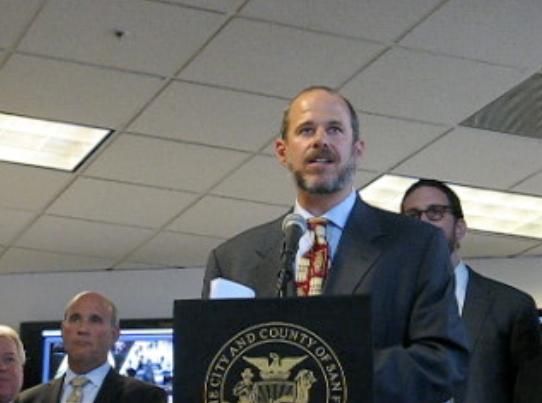
On the 8th floor of the SFMTA offices, the transit agency’s director Ed Reiskin told reporters that his hands were tied by California Proposition 218, which limits what new revenue municipalities can raise without voter approval.

“Only the voters of San Francisco can enact a tax that generates excess revenue,” he said. 

“This isn’t new,” Reiskin said, but he’s only half right. Though Prop. 218 was passed in 1996, this is the first time anyone at the MTA has touted it as a reason not to profit off of the tech shuttles.

We even asked Mayor Ed Lee this question just a month ago, and got a two-minute response that did not once include Prop. 218

Part of this might have to do with the nebulous quality of Prop. 218. An implementation guide from the California Budget Analyst office puts it this way: “Proposition 218’s requirements span a large spectrum, including local initiatives, water standby charges, legal standards of proof, election procedures, and the calculation and use of sewer assessment revenues. Although the measure is quite detailed in many respects, some important provisions are not completely clear.”

The waters of Proposition 218 are murky: is the government charging for the use of Muni stops a fee or a tax? In that grey area lies the answer on whether the city truly can’t charge tech buses to help fix Muni, or if this is just political cover for a government who doesn’t want to piss off tech.

Tellingly, that’s pretty much what Reiskin said.

“There’s a lot of benefit these services (buses) are bringing to San Francisco,” Reiskin told us after the press conference. “We wanted to resolve the conflicts without killing the benefit.”

“I imagine if we sat down with them and said ‘we wanna start taxing you guys’ they’d say ‘screw it, we don’t want to do the shuttles.’”

The 18-month pilot will recoup an estimated $1.5 million, the estimated cost of the project, according to the SFMTA. The project would give approval for use of 200 Muni stops by private shutle providers, out of 2,500 Muni stops in the system. We’ve reached out to California’s budget analyst office to dig into Proposition 218. 


Bad company

1

arts@sfbg.com

FILM Considering the relative infrequency of theater-to-film translations today, it’s a bit of a surprise that Tracy Letts had two movies made from his plays before he even got to Broadway. Bug and Killer Joe proved a snug fit for director William Friedkin (in 2006 and 2011, respectively), who well past age 70 experienced something of a career resurgence from them. Those modern Grand Guignols got around, but were too outré for the kind of mainstream success accorded 2007’s August: Osage County, which won the Pulitzer, ran 18 months on Broadway (an eternity for a non-musical at present), and toured the nation.

As a result, August was destined — perhaps doomed — to be a big movie, the kind that shoehorns a distracting array of stars into an ensemble piece, playing jes’ plain folk. On stage, this Long Day’s Journey Into Fuck All Y’All was a juicy-steak drama meal, chockablock with family dysfunction, colorful cussin’, shocking revelations, and ghoulish as well as broad humor. It was like a vintage Sam Shepard text crossed with an old-school three-act “well-made play.” It was also three and a half hours long.

To his credit, Letts’ own screenplay adaptation clocks in at almost exactly two hours, a considerable reduction that nonetheless doesn’t feel gutted. Whether it feels like a movie, though, is another question. What seemed bracingly rude as well as somewhat traditional under the proscenium lights just looks like a lot of reheated Country Gothic hash, and the possibility of profundity you might’ve been willing to consider before is now completely off the menu. If you haven’t seen August before (or even if you have), there may be sufficient fun watching stellar actors chew the scenery with varying degrees of panache. But the play exposes itself in a medium it might have been most suitable for 50 years before it was written. (Not that the censors would have allowed it then.)

Gorgon matriarch Violet Weston (Meryl Streep, who else) is dying of cancer, albeit not fast enough — she’s still quite capable of driving long-suffering, shot-pounding spouse Beverly (Shepard) to distraction, and all other “loved ones” to a safe geographic distance away. Nonetheless, when Bev simply exits their rambling rural Oklahoma home with no apparent intention of returning, the scattered troops are called in for reinforcement.

Pissed-off prodigal daughter Barbara (Julia Roberts) returns in the company of a husband (Ewan McGregor) and teenage daughter (Abigail Breslin) she’s well on her way to alienating just like mommy did. Middle child Karen (Juliette Lewis) is a man-crazy ninny entering another bad marriage, this one to a Master of the Universe, Florida-style (Dermot Mulroney). Family doormat Ivy (Julianne Nicholson), the third sister, stuck around to masochistically endure Violet’s ingratitude and caustic pity but might be plotting her escape at last. Last and least, there’s Auntie Mattie Fae (Margo Martindale), a viperous chatterbox whose husband (Chris Cooper) self-medicates with beer and TV, while their son (Benedict Cumberbatch) is treated like an even bigger loser than he is.

You know the beats: Late-night confessions, drunken hijinks, disastrous dinners, secrets (infidelity, etc.) spilling out everywhere like loose change from moth-eaten trousers. Even at its much greater stage length, August was overstuffed, though what seemed excessive in a mostly good way then now simply plays as a pileup of clichés and contrivances enlivened by some good lines and snappy performances. Of course the dialogue sounds ornately “theatrical” in this more naturalistic presentation. But director John Wells, a veteran TV writer-producer whose prior feature was 2010’s decent corporate-downsizing drama The Company Men, doesn’t make anything seem very natural. (If Nebraska lives and breathes its locations, this movie might as well have been shot on a studio back lot for all the authenticity earned.)

Nor can he magically weld this cast into a credible “family.” Lewis and Martindale get a lot out of their comically vulgar characters, but are ultimately too one-note. Mulroney delivers a very sharp caricature with less visible effort; Cumberbatch and Nicholson are OK as wallflowers amid invasive stinkweeds. Cooper is the kind of actor who can manage a great deal while seemingly doing very little, while McGregor is the type who can sometimes look like he’s working awfully hard to make absolutely no impression whatsoever. The film’s success story, I suppose, is Roberts: She seems very comfortable with her character’s bitter anger, and the four-letter words tumble past those jumbo lips like familiar friends.

On the downside, there’s Streep, who’s a wizard and a wonder as usual yet also in that mode supporting the naysayers’ view that such conspicuous technique prevents our getting lost in her characters. In the national touring stage production, octogenarian Estelle Parsons was manifestly a cranky old lady — you worried for her going up and down those three flights of stairs, and gasped at her not-at-all-cute potty mouth. Streep acts the shit out of being cranky and old; one suspects between takes she’s probably running triathalons and saving whales. She pulls out the stops, but maybe they should have been left in. If Streep can do anything, then logic decrees that include being miscast.

Still, she’s a lucky woman alongside Misty Upham, who plays that eternal most-thankless role: The largely mute, ever-observant “ethnic” (here, Native American) domestic-nurse-helper who graces all these yelling white people with her quiet compassion, swooping in to save the innocent and comfort the comfortless when necessary. (She also cooks so well you half expect magical Like Water for Chocolate-style dishes to heal all wounds.) Among the things August has lost in translation is the pretense of unsentimentality. When Gustavo Santaolalla’s schmaltzy score drips like molasses over Upham’s payoff moments, you know it’s gone way too far in the other direction. *


AUGUST: OSAGE COUNTY opens January 10 in San Francisco.

A look back: The “Candlestick Swindle” in ’68

9

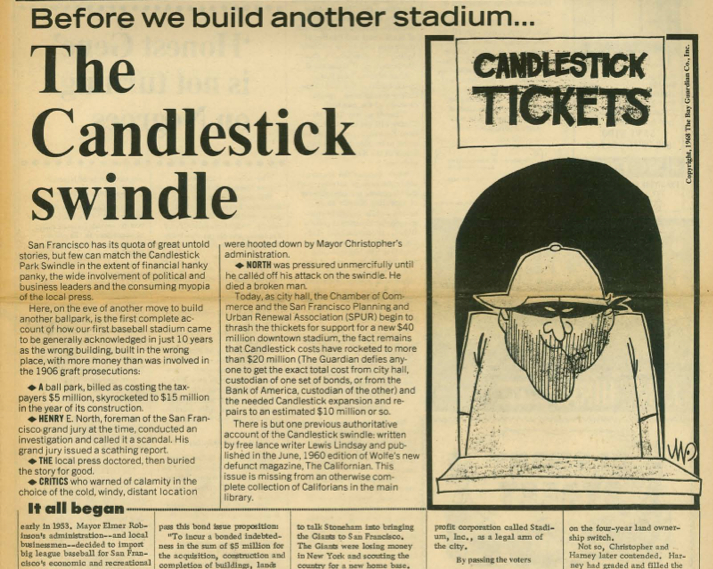
San Francisco spent this week saying goodbye to its beloved foggy stadium, Candlestick Park. Amidst the farewells, the Guardian spotted a post from sports blog Deadspin, which reprinted one of our articles from 1968  titled, “Before We Build Another Stadium… The Candlestick Swindle.” 

When we saw the post, we started thumbing through our archives looking for the article. Though Deadspin said it was from 1972, we found it in Vol. 2, Issue no. 10, May 14, 1968, it’s a down and dirty tale of intimidation, bypassing voters through dummy corporations, profiteering, and racism. Candlestick has a colorful history, to say the least. 

The author, Burton H. Wolfe (Burton, not “Mr. Wolfe,” he wrote via email), gave us permission to re-publish it in full here. Just for fun, we’re also embedding the original issue as a PDF, which can be download and printed. Looking through the issue, it’s heartening (and disheartening) how much, and how little, changes.


The Candlestick Swindle

It all began early in 1953. Mayor Elmer Robinson’s administration—and local businessmen—decided to import big league baseball for San Francisco’s economic and recreational benefit. A downtown stadium was adequate for San Francisco’s AAA minor league club, the Seals, but not for major league fare.

Hence, Robinson asked the Board of Supervisors to approve a $5 million bond proposition to construct a new stadium. Among the supervisors in approval: George Christopher, soon to become mayor; Gene McAteer, headed for the state senate; Francis McCarty, a future judge; Harold Dobbs, restaurateur and budding Republican candidate for mayor, and John Jay Ferdon, future district attorney.

In July of that same year, 1953, a local multi-millionaire contractor named Charles Harney purchased 65 acres of land at Candlestick Point from the city of San Francisco for $2,100 an acre.

Next year, a band of publicists headed by Curley Grieve, S.F. Examiner sports editor, beat the drums and called the natives to pass this bond issue proposition:

To incur a bonded indebtedness in the sum of $5 million for the acquisition, construction and completion of buildings, lands and other works and properties to be used for baseball, football, other sports, dramatic productions and other lawful uses as a recreation center.

Major league baseball, they proclaimed, would bring untold wealth to the city for a mere $5 million, a price that would be returned many times. After voters approved this in November, 1954, the search began for a site. If there were any doubts the stadium would cost more than $5 million, they were dispelled in a personal meeting between Robinson’s successor, Mayor Christopher, and the owner of the New York Giants, Horace Stoneham.

In April, 1957, Christopher and McCarty flew to New York to talk Stoneham into bringing the Giants to San Francisco. The Giants were losing money in New York, and scouting the country for a new home base.

To prove San Francisco’s support for professional baseball, Christopher waved the $5 million stadium bond issue at Stoneham. According to testimony reported by the 1968 grand jury investigation, Stoneham replied contemptuously:

Any figure other than 10 or 11 million dollars shouldn’t even be discussed because there would be no possibility or probability of a major club moving to that particular community.

Back in San Francisco, Christopher reported the need for more money to other city leaders and businessmen. Since the proposition suddenly to double the original bond issue might run into trouble with the voters, they decided to create a non-profit corporation called Stadium, Inc., as a legal arm of the city.

Bypassing the Voters

Operating through this dummy corporation, the Christopher administration could bypass the voters to raise more money.

Harney and two of his employees were selected as the first board of directors of Stadium, Inc. Christopher told Harney that he would be the contractor to build the new stadium, and his 41 acres of Candlestick land would be the heart of the 77-acre location.

In 1957, Harney sold back 41 acres of the parcel he had purchased from the city in 1953 at $2,100 an acre. The 1957 price the city paid to Harney for its own former land was $65,853 an acre. That’s a crisp total of $2.7 million.

The city’s Real Estate Department approved the deal even though other land adjacent to Harney’s was bought at about the same time for just $6,540 an acre. Harney made a profit of $2.6 million on the four-year land ownership switch.

Not so, Christopher and Harney later contended. Harney had graded and filled the land, and so naturally he was paid for his improvements. One fact raised doubts about that explanation: a $7 million fee awarded to Harney to construct the new stadium included $2 million for stadium construction, $2 million for grading and filling and $2.7 million for real estate.

Had it not been for the creation of Stadium, Inc., the Christopher administration would have been required to hold open, competitive bidding for the contract, and voters would have seen the price tags.

By operating through Stadium, Inc., Christopher was able to evade the city charter and arrange the contract in a privately negotiated deal.

Through the same apparatus, his administration was able to float another $5.5 million bond issue without voter approval. The interest rate on these bonds was set at 5% whereas the interest on the original $5 million bond issue was only 2.4%, a difference that would eventually cost the city hundreds of thousands of dollars.

Evading an Investigation

In February, 1958, Harney and his employees were removed from the board of Stadium, Inc., after, as the grand jury report later pointed out, “Three influential men then were substituted to represent the city’s interest—Alan K. Brown, W.P. Fuller Brawne and Frederic P. Whitman.”

The maneuver came too late to prevent Henry E. North from instigating a Grand Jury investigation into the strange transactions.

North, like Christopher, was a Republican and a conservative member of the San Francisco business community. Until his retirement, at 70, he had been executive vice-president of one of the largest property owners in the city: the Metropolitan Life Insurance Company. He had a strong sense of civic duty, however, and the Candlestick Park deal smelled to him of garbage.

The report North issued, as the result of the Grand Jury investigation, was potential dynamite. It showed that, shortly before the city purchased Harney’s land at $65,853 an acre, adjacent pieces of tideland were sold by the city for less that $4,000 an acre. It did not make sense that Harney’s land, partly under water, should have brought $61,000 more from city coffers.

On Dec. 2, 1958, the San Francisco Chronicle carried partial coverage of the Grand Jury report. On page 5, the year Harney purchased the city land was stated as 1933 rather than 1953. Of course, the 20-year difference would provide a reason for the tremendous increase in value, because the initial purchase price would have been at depression levels.

Undoubtedly, it was a typographical error. And no doubt it was by unintentional omission that other salient features of the Grand Jury report were omitted altogether and never printed by the Chronicle or any other major newspaper.

North charged that all bond issues negotiated by Stadium, Inc. were illegal evasions of the city charter. Bond payments had to be made from city funds, not the dummy nonprofit corporation, and so the whole deal amounted to legal subterfuge; a way to make taxpayers foot the bill without letting them vote on it.

The report, drafted by North and signed by 18 other citizens, estimated annual payments on the bonds of $990,000 for the first 15 years of the debt period. Against that, the city was to draw $225,000 a year in rent from the Giants and $225,000 a year from advertising and parking revenues, leaving a balance of $640,000 to be paid annually from taxes or city funds. It was estimated that the city could make up the balance by commanding the juicy television rights; instead, Christopher arranged for rights to go exclusively to the Giants.

Altogether, it was a marvelous deal for the Giants. In their last New York season, attendance at the Polo Grounds plummeted to 684,000. The club had gone broke and it was almost impossible to give away its stock. After the Giants first season in San Francisco in 1958, attendance tripled over its last year in New York, and their stock soared to $1,000 a share. In terms of revenue, the increase in gate receipts alone meant $3 million the first year.

While the Giants were reaping enormous profits at taxpayers expense, City Hall and the local newspapers were trying to make it appear that San Francisco, too, was earning money. The News-Call Bulletin, the now defunct Hearst paper, once stated that when all returns are in, the season just ended (1960) will have yielded the city about $530,000. The fact was that the sole revenue to the city was $50,000 received to maintain buildings and grounds.

The other Hearst paper, the Examiner, stated, on the other hand: City Hall officials said $375,000 of the revenue figure will be used to pay the annual cost of the city’s $5 million bond issue. The Chronicle published this figure: Of the remaining $527,000, the first $375,000 must go toward payment of the city’s $5 million stadium bond issue.

The fact was that all revenues from the ball park and its parking lot had to be used to pay off the $5.5 million worth of bonds issued by Stadium, Inc., with the exception of the $50,000 maintenance income. The other $5 million worth, issued by the city, had to be paid off through real and personal or property taxes collected by the city.

The result: a projected loss, not profit, of $640,000 the city must pay from taxes or other general city revenues (according to the Grand Jury report), and a loss this year of at least $360,000 (according to figures supplied to The Guardian by the city controller’s office and Mike Barrett, the Bank of America executive who handles Stadium, Inc.’s trustee account.)

Some annual loss on Candlestick Park will continue until 1993, when the stadium will finally be free of debt and owned completely by the city—unless, it is torn down before then or reconstructed, which will add more debt.

There was another interesting development at Candlestick: Stevens California Enterprises, which got the food and beverage concession at the ball park, bought all its milk until two seasons ago from Christopher’s milk company, Christopher Dairy Farms. The Borden Co. now has the lucrative contract.

Even though City Hall and the newspapers were misstating facts about the Candlestick story, San Francisco restaurateurs, hotel owners and shopkeepers at least began to realize that they were not making any money from the ball park, as promised by the ballyhooers. Only the Giants, Harney, and Christopher were making money. The Giants were attracting few additional tourists to San Francisco, and area fans who journeyed to isolated Candlestick Point, several miles away, did not stop to patronize downtown establishments. Some downtown business men were angry, and if North’s crusade were given time and publicity, they might cause an uncomfortable controversy.

Christopher sent emissaries to North, but he would not be wooed or pressured from his stand. To the contrary, he made even more vigorous attacks on Christopher and the ball park deal. The lives of future generations had been mortgaged by this shoddy piece of business, he maintained. Christopher was diverting city funds from various departments: $1.4 million from street improvement bonds, $1.2 million from state gasoline taxes given to the city for road improvements, $1.5 million from sewer bonds for services to the Giants ball park.

A Hidden Payoff?

Already the cost was $15 million, and it might exceed $20 million when various exits, entrances, widened access streets and the like were built to handle the anticipated large crowds. Privately, North informed civic and business leaders that there was an underhanded payoff in the deal, and he intended to expose it.

Christopher reacted viscerally to North’s charges. With newspapermen present, he asserted North was drunk, incoherent, and fixable. The description was published in the newspapers.

North went to Nate Cohn, one of the foremost criminal lawyers in California, and they filed a $2 million libel suit against Christopher. In a pre-trial hearing, Christopher’s attorney filed a thick brief with 45 motions for dismissal of the suit, hoping to tie up the case inextricably. In just an hour and a half, Superior Court judge Preston Devine threw out all 45 motions, indicating clearly that Cohn and North had a good case.

Breaking Down North

Christopher’s friends in the business community went to work on North. The publisher of one of the three daily newspapers, North told me, called on him and said, “Henry, why don’t you play ball? You’re giving the city a bad name, stirring things up like this.”

At the Pacific Union Club across the street from the Fairmont Hotel on Nob Hill, where North was already in disfavor for bringing Jewish guests despite the no-Jews-allowed policy, fellow Republican business executives started a snub-North routine. One day, for example, an old business friend greeted North:

“Say, Henry, I see in the papers there’s some fellow named Henry North filing a suit against the mayor and stirring things up. Must be another Henry North in this town, huh?”

“No, that’s me,” North told him.

“Is that so?” the old friend said. He turned his back on North and never spoke to him again.

I talked to North several times during the siege because I was publishing articles about Candlestick Park in my magazine, The Californian (now defunct). In those days he was full of fight, willing to take on City Hall and the entire business establishment even if it meant losing every friend he had. He promised to tell me the names of the men involved in the payoff, and he excoriated Christopher.

“You know what I call men like George Christopher? Black Republicans. Men who never did anything in their lives for the good of the common people. They’ve never realized that this country as a whole is no better off than the great masses of its people.”

The Fateful Fifth

Then they went to work on his wife. Unlike Henry, she was not involved in politics and her life revolved around her friends and social affairs. Her friends snubbed her and she no longer received invitations. She cried, she pleaded, she begged Henry to call off the ball park investigation and the lawsuit, when that did not move him, she threatened him with divorce. Henry began hitting the bottle.

On June 2, 1960, shortly after I published a detailed article by Lewis Lindsay called “The Giants Ball Park: A $15 Million Swindle,” the press broke the story that North had buried the hatchet with Christopher. In its first edition, the Chronicle correctly reported that North and Christopher had drunk a fifth and a half of Scotch together at Christopher’s home, and praised each other for publication. “He’s a great mayor,” North said—and agreed that legal entanglements were finished. The Chronicle dropped mention of the Scotch in later editions that went to most of its readers.

Cohn was outraged. “We had this suit won,” he told me. “North assured me he was going through with this no matter what happened. But they got to him through his wife, the poor old bastard. You see how they do things in this city? It’s so goddamned rotten you can’t believe it.”

When I called on North again, I found a complete transformation in his appearance. The look of a peppery fighter with ruddy cheeks had given way to a physical wreck; a baggy-eyed, tired, meek looking man weighed down by defeat.

The saddest part of the story was that his wife divorced him anyway. Not long afterward, North died of a heart attack. Harney died in December, 1962.

With North out of the way, with the daily newspapers blacking out the most important parts of the Candlestick Park story, with The Californian reaching only a few thousand citizens, it looked as though the scandal would never be investigated. In an effort to stir up something, I personally appeared before the Finance Committee of the Board of Supervisors and urged their help. One committee member, Al Zirpoli, had said before that he would favor an investigation.

No committee member challenged any facts I presented. When I finished, John Jay Ferdon, Committee Chairman, said only that he would not favor an investigation. He did not say why. (Six years later, when he had become District Attorney, he told me I was right about Candlestick.) Zirpoli, later to become a federal judge and the judge to hear draft resistance cases, said, “I agree with what Mr. Ferdon says.” He suggested, “If there is wrongdoing, your best course of action is a taxpayers’ suit.”

I went looking for wealthy liberals to finance a taxpayers suit, but none were in season. Cohn would have taken the suit if I could have found somebody to pay him for his time. All that he could do now was take me to business friends and introduce me.

The typical reaction came from Sam Cohen, owner of a plush restaurant on Maiden Lane said:

“Sorry, Burton, I can’t get involved. Do you know what Christopher can do to me with his power at City Hall? A Health Department inspector can find something wrong with this restaurant any time he wants. A door is too narrow, my stove does not meet regulations, anything to run me out of business. That’s how they do it. You can’t fight them.”

Since nobody in the city would fight, I asked Sen. Estes Kefauver, chairman of the Antitrust and Monopoly Sub-Committee of the Senate Committee on the Judiciary, to investigate. He replied: “As interesting as a study of how the San Francisco ball park deal took place would be, I do not conclude that it is a matter that should be gone into on the federal level. I think that it is entirely a local or state matter, and that the Subcommittee would perhaps be criticized if it moved into this area.”

Now Another Ballpark

Here we are eight years later, with a Candlestick Park that enrages so many people that a new mayor, Joe Alioto, wants to scrap it for a new stadium. His announced philosophy is that great public projects should not be waylaid just because all of the people aren’t getting enough spaghetti and zucchini. And no doubt many San Franciscans believe that a ball park is a great public project, greater than a school, housing complex or a modern transportation system. That attitude could be the most tragic part of this story.


Clean Power SF still moving forward

10

news@sfbg.com 

Dec. 19 marked the 100th anniversary of the Raker Act, federal legislation that specifically called for San Francisco to directly distribute the water and electricity generated by the O’Shaughnessy Dam to its residents and for their benefit. The city does so with the water, through the San Francisco Public Utilities Commission, but Pacific Gas & Electric used its power and connections to take control of the electricity and keep it, corrupting the political system for nearly a century in the process.

“The result: San Francisco has paid through the nose to PG&E for its power and the city loses about $30 million a year in profits it would get from a public system,” journalist J.B. Neilands wrote in the March 27, 1969 issue of the Bay Guardian, the first of dozens of stories we’ve written on the topic, spanning many unsuccessful public power campaigns, each one dominated by millions of dollars in PG&E spending.

Meanwhile, San Francisco’s longstanding effort to develop a municipal renewable energy program has been stymied by politics, but certain aspects of the plan are advancing nevertheless.

At a Dec. 13 meeting of the Local Agency Formation Commission (LAFCo), a committee comprised of members of the Board of Supervisors that has been working to develop CleanPowerSF for years, Sup. London Breed called for putting out a Request for Proposals to develop a concrete plan for building out local renewable energy infrastructure. LAFCo adopted the motion.

With plans for solar panel arrays or wind power facilities that would generate hundreds of megawatts of electricity for the municipal energy program, the build-out is a key aspect of the plan that could lead to job creation and stable electricity rates in the long term.

Earlier this year, members of the San Francisco Public Utilities Commission, a body composed of mayoral appointees, refused to approve a not-to-exceed rate for the program, effectively obstructing any forward progress.

“This does not get around the political problem we have,” said Eric Brooks, a longtime advocate of CleanPowerSF. “On Aug. 13, from [the SFPUC’s] standpoint, they put the program on hold.” Nevertheless, “the idea is to work on all the other things, and get those things done.”

Project proponents plan to bring on a consultant to hash out more tangible goals with regard to job creation, and then use those shovel-ready plans to bring trade unions on board.

The political pressure against CleanPowerSF, fueled by groups associated with PG&E in political alignment with Mayor Ed Lee, is formidable. Yet Breed and others remain undeterred. “We want labor to be a partner on this,” Breed told the Bay Guardian. “We want to make sure that it’s clear, and more importantly, we want it to be a strong proposal. … My goal is to make it difficult for them to oppose it.”

A century after the Raker Act, San Franciscans are still illegally denied public power

27

The San Francisco Examiner has a good story on today’s 100th anniversary of the signing of the Raker Act, federal legislation that allowed San Francisco to build a dam in Hetch Hetchy Valley, a campaign championed most fervently at the time by the Examiner’s then-Publisher William Randolph Hearst.

The article was a good roundup of issues related to the Raker Act, and it included ongoing efforts by the group Restore Hetch Hetchy to try to tear down the dam, but there was a key aspect of the Raker Act that the Examiner left out, one that has been championed by the Bay Guardian over the years.

The Raker Act specifically called for San Francisco to directly distribute the water and electricity generated by the O’Shaughnessy Dam to its residents and for their benefit. The city does so with the water, through the San Francisco Public Utilities Commission, but Pacific Gas & Electric used its power and connections to take control of the electricity and keep it, corrupting the political system for nearly a century in the process.

“The result: San Francisco has paid through the nose to PG&E for its power and the city loses about $30 million a year in profits it would get from a public system,” journalist J.B. Neilands wrote in the March 27, 1969 issue of the Bay Guardian, the first of dozens of stories we’ve written on the topic, spanning many unsuccessful public power campaigns, each one dominated by millions of dollars in PG&E spending.

Section 6 of the Raker Act says that the city “is prohibited from ever selling or letting to any corporation or individual, except a municipality or municipal water district or irrigation district, the right to sell or sublet the water or the electric energy” generated by the dam.

That long-standing violation could become an issue that threatens San Francisco’s control over its main source of clean water and power if Save  Hetch Hetchy gains traction in the courts with a lawsuit that it is pledging to file.

While PG&E doesn’t wield the same strong influence that it once did at City Hall, thanks partly to years of aggressive overreach that soured many local officials on the powerful utility, it does still retain close ties to former Mayor Willie Brown (an attorney who has been on retainer with PG&E for years) and current Mayor Ed Lee, who has sabotaged the latest half-step toward public power, CleanPowerSF.    

To have and to hold

1

arts@sfbg.com

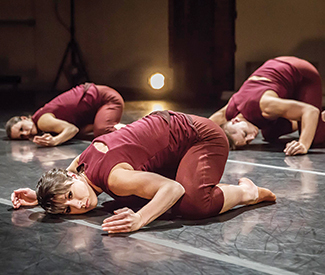
DANCE RAWdance packed enough movement material into its new Mine to tempt lesser choreographers to dilute it into a much longer work than this quintet’s 55 minutes. But that’s not who Wendy Rein and Ryan T. Smith are. Here joined by Kerre Demme, Aaron Perlstein, and Laura Sharp, the duo created choreography pared down to its essence where every head turn, every lurch, every stabbing leg counts. The work has nothing to with excavating minerals; it has everything to do with possession — what we have or want control over, be it property, physical space, or other people.

Pre-performance images suggested a bunch of people tied up in hanging ropes. Thankfully, none of that materialized. Instead of ropes — they did enter as one of very few props — scenic designer Sean Riley used strands of string for what looked like a three-dimensional map in which multiple roads coalesced into a single point. They reminded me a little of those air routes maps you look at in in-flight magazines when you have run of others things to do. Hanging from the Joe Goode Annex’s high ceiling, Riley’s rope sculpture was airy and light, yet thanks to the weights attached had a downward pull.

Mine turned out to be an intricately structured, excellently performed essay on some of our less noble instincts. Slowly, it began to appear that the idea of “mine” dehumanizes us instead of enriching us. The work started on a pure dance level with images gradually emerging to become more explicit, until a final one was so literal that I wasn’t sure whether it had not gone over the top.

As the audience walked in, Perlstein found a spot for himself. Ever so slowly the other dancers joined him in a pedestrian lineup that quickly scattered into similar but individual expressions. But common moves began to look less innocent as people moved into each other’s space. Did Sharp stumble over a prone Perlstein or did she kick him because he was in her way? A push-up position for two became one for four until the dancers waddled along like some multi-limbed creature. Sinewy and so tightly focused on each other that they looked like one evolving organism, Rein and Smith in a duet looked both delicate and unbreakable. Yet they also had the shifting wariness of boxers about them.

Anxiousness and indifference seeped into Mine like dripping fog. At one point the dancers pounced to the floor and recovered, opening their arms and looking upward as if expecting some relief. At another, like soldiers going to battle, they walked bent over but fiercely yanked their knees to their chests as if to protect them. Holding flashlights in the dark, the men impassively observed the women writhing in some kind of agony. Then it was their turn to watch Perlstein’s simple touch trying to calm a fiercely shaking Smith; it elicited rage. This was one of the few spots in Mine when you could sense a gesture emanating from personal motivation. Perlstein, previously, had shaped a piece of rope into a circle around Smith’s solo. I couldn’t decide whether he was trying to expand or limit a space for the dance.

When three wire baskets descended from the ceiling to encase dancers’ heads, I thought of those dreadful headgears that slaves were forced to wear. Here they turned the dancers into automatons, who on each quarter turn executed identical patterns of small steps. Joel St. Julien’s score — excellent throughout — began to sound as if coming from below water.

In Mines fiercest section, dancers hurled themselves against the theater’s wall, where they stayed as if glued until an intruder yanked or scraped them off, forcing him or herself into the space. It was brutal because it looked so impersonal; it seemed just something that was. Sort of like Lord of the Flies for grown-ups.

But perhaps my favorite moment was also one of its simplest. Sharp danced a limb-slashing solo center space. Her colleagues watched from the corner of the square. Slowly, almost ceremoniously they moved in, shrinking Sharp’s space with every step they took. You could just feel the air constricting around her.

So what about that last image? It did involve a rope; it also reminded me of a Roman chariot. *

MINE

Wed/11-Sun/15, 8pm, $21-25

Joe Goode Annex

401 Alabama, SF

www.rawdance.org


Joe Bulgo: The neglected hero of Pearl Harbor

5

By Bruce B. Brugmann

(B3 note: reprinted from last year and to be reprinted every year by me for reasons that will become apparent upon reading this story.)

This is the incredible story of the neglected hero of Pearl Harbor.

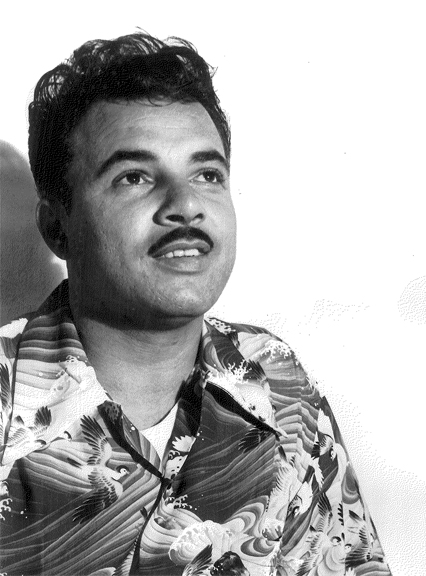
His name is Joe Bulgo and he lived across the street from our family for years on 14th Avenue in the West Portal area. I knew him as a neighbor, and our daughter and son played with his two daughters. His wife Val for decades has sold and still sells fine jewelry in a downtown department store. Daughter Linda played the star Snow White for years in Beach Blanket Babylon and now has her own show in Las Vegas. Daughter Dianne is the catering director at the St. Francis Hotel.  And our families shared a wonderful domestic helper, Rose Zelalich.

But neither our family nor any of his neighbors had any idea of his Pearl Harbor heroism until his daughter Linda gave me a copy of a story on Joe in the December issue of the 1990 Readers Digest.

The story, “No Medals for Joe,” started when the reporter on the story, Mayo Simon, was asked to do a television script about the sinking of the battleship Oklahoma on December 7, 1941.  Simon tracked down the phone number of a sailor who was believed to be an eyewitness to the Oklahoma disaster. When Simon called,  Joe said in his Hawaiian accent, “Nobody knows this story.  Not my wife, not my children. Come on up, I tell you everything. I remember everything.”

So Simon came to Joe’s house, sat on the living room couch, and got Joe’s first and only interview on the Oklahoma disaster. Joe laid out the story of how he, a 21-year-old shipyard worker,  and his “chipping” gang of 20 worked for four days and nights to save 32 sailors who had been locked in their compartments amidst the pandemonium, floating bodies,  trapped air, and rising water.

“Joe worked tirelessly, opening bulkhead after bulkhead, only to find himself in a maze of compartments filled with debris,” Simon wrote. “Sometimes he came upon smashed bodies of sailors in passageways, but he had to keep going. Whenever Joe paused, he could hear desperate tapping reverberating through the ship. Save me, save me, the terrified sailors were saying. Give me life…That sound would live in Joe’s marrow forever.

“Night fell, and the clatter of the chipping guns continued. Fully expecting another Japanese attack, the workers could not use lights on the hull.  Instead, they relied on the grisly illumination from the burning Arizona. Toward midnight, when Joe cut into the hull, water bubbled out. He tasted it: sweet.  He hit a fresh water tank…They drilled open its bottom and a shout went up: inside was a dry, white shaft. A way in!”

He kept on going and “suddenly the ship began to sway and groan. Joe’s stomach tightened in terror. If it starts to settle, I’m gone. Fighting the urge to turn back, he tried to catch his breath in the choking stench of oil and sewage. Then he heard the tapping. Faint. Steady. Joe tapped back with his chisel on the sweating metal bulkhead. Come on, he thought. Tell me where you are. Finally, answering taps.

“Joe’s chipping gun dug into the steel, the trapped air came out with a whoosh, water was rising to Joe’s waist, but he refused to be distracted. “Keep on going, he told himself. Get them out!” Finally he was able to pry open the steel and “immediately the sailors came out in a huge rush of water—kids smeared with oil, hardly able to move or breathe after being trapped for more than 20 hours. None had the strength to get up to the hatch. So Joe said, ‘Here, up on my back!’

“One by one they climbed on his broad back, and he lifted them to the hatch, where other workers pulled them to safety.  By the time the last sailor got out, the water was up to Joe’s neck.” Joe scrambled up the hose line and the hatch was sealed behind him. “Joe blinked in the sunlight, filling his lungs with fresh air. The sailors, wrapped in their blankets, were already in the launch that was taking them to the hospital ship. Joe shouted and waved, but they were too far away to hear. He watched them disappear across the gray harbor.” They were gone and he didn’t know who they were and knew he would probably never see them again.”

More than 400 men died in the Oklahoma, but Joe Bulgo and his chipping crew saved 32 men. And Joe, miraculously, carried l0 of them to safety on his back as the water kept rising dangerously.

Simon reported that later that year the Navy gave citations to Joe and his crew “for heroic work with utter disregard of personal safety.” After the war, Joe married, joined the merchant marine and came to San Francisco during the Vietnam War to work on a chipping gang at the San Francisco Naval Shipyard.

His most valuable possession, his citation, was lost when his suitcase was stolen in a bus station. He wrote letters to Washington and finally got a copy of the citation with a note that he might someday get a medal. But Joe never got a medal and “it seemed the rescue was a forgotten episode about a forgotten ship.”

Simon said kept thinking to himself. “This man deserves a medal. Well, if nothing else, the film will give him and his fellow shipyard workers the recognition they merit.” But the film was never made and he put away his interview notes and script.

A year later, Simon  was asked to speak at the next convention in San Jose of the U.S.S. Oklahoma Association, an organization of all who had ever served on the ship. He almost declined but then remembered that Joe had  lamented the fact that he had never seen any of the men he had saved. “It was all in the dark and so quick.  I wish I could have talked with them once.”

On May 16,1987, Val and Linda Bulgo and Linda’s husband Matt wheeled Joe into the big convention room. Joe was in a wheelchair, his once powerful body shrunken, his eyes filled with the pain of bone cancer. The Bulgo family was seated in front at the head table. Simon told Joe’s story and how Joe had finally cut through the bulkhead and released the trapped sailors and told them in his island accent, “Here, on my back” and then lifted each one to safety.

“I know three of those men are here tonight,” Simon said. “And I also know you never got a chance to thank him. So if there’s something you would like to say to that Hawaiian kid who risked his life to save yours 46 years ago—well, he’s right over there.”

Simon wrote that it was “impossible to describe the emotions that swept the hall as I  pointed to Joe, and 200 people rose to their feet and cheered. He covered his face with his napkin. He didn’t want them to see him crying. Three elderly veterans embraced the man who could no longer stand, even to acknowledge the applause, but on whose broad, strong back they had once been carried.”

Joe Bulgo died two months later. The San Francisco Examiner called Simon and he gave them the story that the hometown daily paper had missed all those years. The obituary started:  “Joseph Bulgo, Jr., a neglected hero of Pearl Harbor…”

Simon supplied Joe’s epitaph in the conclusion to his own story: “Well, yes, there hadn’t been any medals for Joe. But, I thought to myself, in the end we made things right. We said thank you, at last, to an American hero.”

Linda Bulgo told me, as her dad lay dying in the hospital, that she asked him how why he risked his life to rescue the sailors. “I just knew I had to do it,” he told her. She has never forgotten those eight words.

For my tribute to my old neighbor,  I will do the story of Joe Bulgo, the neglected hero of Pearl Harbor, on every  Pearl Harbor anniversary.  Click here for the full Readers Digest story.


Music Listings: December 4-10, 2013

0

WEDNESDAY 4
ROCK
Bottom of the Hill: 1233 17th St., San Francisco. Odd Owl, James Leste, Andrew Blair & Graham Patzner, Ghost Parade, 9 p.m., $8.
El Rio: 3158 Mission, San Francisco. Alabaster & The Original Bastards, Devon McClive & Sons, Tall Fires, 8 p.m., $10.
Hemlock Tavern: 1131 Polk, San Francisco. Sea Knight, Moon Honey, Build Them to Break, 8:30 p.m., $6.
Milk Bar: 1840 Haight, San Francisco. Vandella, Lee Gallagher & the Hallelujah, Fritz Montana, 8:30 p.m., $5.
Rickshaw Stop: 155 Fell, San Francisco. Crash Kings, The Struts, King Washington, 8 p.m., $10.
DANCE
The Cafe: 2369 Market, San Francisco. “Sticky Wednesdays,” w/ DJ Mark Andrus, 8 p.m., free.
Cat Club: 1190 Folsom, San Francisco. “Bondage A Go Go,” w/ DJs Damon, Tomas Diablo, & guests, 9:30 p.m., $5-$10.
Club X: 715 Harrison, San Francisco. “Electro Pop Rocks,” 18+ dance night with Terravita, 9 p.m.
The EndUp: 401 Sixth St., San Francisco. “Tainted Techno Trance,” 10 p.m.
F8: 1192 Folsom St., San Francisco. “Housepitality,” 9 p.m., $5-$10.
Harlot: 46 Minna, San Francisco. “Qoöl,” 5 p.m.
Infusion Lounge: 124 Ellis, San Francisco. “Indulgence,” 10 p.m.
Lookout: 3600 16th St., San Francisco. “What?,” w/ resident DJ Tisdale and guests, 7 p.m., free.
Madrone Art Bar: 500 Divisadero, San Francisco. “Rock the Spot,” 9 p.m., free.
MatrixFillmore: 3138 Fillmore, San Francisco. “Reload,” w/ DJ Big Bad Bruce, 10 p.m., free.
Q Bar: 456 Castro, San Francisco. “Booty Call,” w/ Juanita More, Joshua J, guests, 9 p.m., $3.
HIP-HOP
Skylark Bar: 3089 16th St., San Francisco. “Mixtape Wednesday,” w/ resident DJs Strategy, Junot, Herb Digs, & guests, 9 p.m., $5.
ACOUSTIC
Bazaar Cafe: 5927 California, San Francisco. Kapali Long, 7 p.m.
Cafe Divine: 1600 Stockton, San Francisco. Craig Ventresco & Meredith Axelrod, 7 p.m., free.
Cafe Du Nord: 2170 Market, San Francisco. The Gundersen Family Holiday Special featuring Le Wrens, 8 p.m., $10-$12.
The Chapel: 777 Valencia St., San Francisco. Brendan Canning, Holly Miranda, 8 p.m., $15.
Club Deluxe: 1511 Haight, San Francisco. Happy Hour Bluegrass, 6:30 p.m., free.
Fiddler’s Green: 1333 Columbus, San Francisco. Terry Savastano, Every other Wednesday, 9:30 p.m., free/donation.
Hotel Utah: 500 Fourth St., San Francisco. Jamie Kent, Cyndi Harvell, 8 p.m., $10.
Plough & Stars: 116 Clement, San Francisco. Jeanie & Chuck’s Bluegrass Country Jam, First Wednesday of every month, 9 p.m., free.
JAZZ
Amnesia: 853 Valencia, San Francisco. Gaucho, Eric Garland’s Jazz Session, The Amnesiacs, 7 p.m., free.
Burritt Room: 417 Stockton St., San Francisco. Terry Disley’s Rocking Jazz Trio, 6 p.m., free.
Jazz Bistro at Les Joulins: 44 Ellis, San Francisco. Charles Unger Experience, 7:30 p.m., free.
Revolution Cafe: 3248 22nd St., San Francisco. Michael Parsons Trio, Every other Wednesday, 8:30 p.m., free/donation.
Savanna Jazz Club: 2937 Mission, San Francisco. “Cat’s Corner,” 9 p.m., $10.
Top of the Mark: One Nob Hill, 999 California, San Francisco. Ricardo Scales, Wednesdays, 6:30-11:30 p.m., $5.
Yoshi’s San Francisco: 1330 Fillmore, San Francisco. The Wee Trio, 8 p.m., $17-$21.
Zingari: 501 Post, San Francisco. Anne O’Brien, First Wednesday of every month, 7:30 p.m., free.
INTERNATIONAL
Bissap Baobab: 3372 19th St., San Francisco. Timba Dance Party, w/ DJ WaltDigz, 10 p.m., $5.
Boom Boom Room: 1601 Fillmore, San Francisco. Cha-Ching, First Wednesday of every month, 9 p.m., $5.
Cafe Cocomo: 650 Indiana, San Francisco. “Bachatalicious,” w/ DJs Good Sho & Rodney, 7 p.m., $5-$10.
Pachamama Restaurant: 1630 Powell, San Francisco. Aguabella, 8 p.m., $10-$12.
Pier 23 Cafe: Pier 23, San Francisco. David Correa & Cascada, 6 p.m., free.
BLUES
Biscuits and Blues: 401 Mason, San Francisco. Chris Cain, 7:30 & 9:30 p.m., $20.
SOUL
Lexington Club: 3464 19th St., San Francisco. “Secret Lovers,” w/ DJs Ponyboy, Lil MC, Katie Duck, and Durt, First Wednesday of every month, 9 p.m., free.

THURSDAY 5
ROCK
Brick & Mortar Music Hall: 1710 Mission, San Francisco. Guy Fox, Bonnie & The Bang Bang, Growwler, Benefit show for Public Arts Workshop., 9 p.m., $7-$10.
The Chapel: 777 Valencia St., San Francisco. Escondido, Young Moon, 8 p.m., $12-$15.
S.F. Eagle: 398 12th St., San Francisco. The Intelligence, Dylan Shearer, 9 p.m.
Hemlock Tavern: 1131 Polk, San Francisco. The New Mummies, Books on Fate, Kristian Rodriguez, 8:30 p.m., $5.
The Independent: 628 Divisadero, San Francisco. The Long Winters, Sean Nelson, 8 p.m., $15.
The Knockout: 3223 Mission, San Francisco. Cash Pony, Surplus 1980, BreakArts, 9 p.m.
Mezzanine: 444 Jessie, San Francisco. “Club NSSN,” w/ Portugal. The Man, Chvrches, NoNoNo, The Colourist, Aaron Axelsen, Miles the DJ, 7:30 p.m., $30.
Milk Bar: 1840 Haight, San Francisco. Li Xi, Little Sister, Momotaro, Mashi Mashi, 8:30 p.m., $5.
Red Devil Lounge: 1695 Polk, San Francisco. Dishwalla, Oceanroyal, 9 p.m., $15-$20.
Rickshaw Stop: 155 Fell, San Francisco. Penguin Prison (DJ set), Double Duchess, The Frail, DJ Nick Williams, 9 p.m., $15.
Thee Parkside: 1600 17th St., San Francisco. Rock Bottom, Chrome Eagle, Sweet Chariot, Cop Out, 9 p.m., $5.
DANCE
1015 Folsom: 1015 Folsom St., San Francisco. “A Light in the Attic,” w/ Kaminanda, Kalya Scintilla, Birds of Paradies, Alia, Kitty-D, VNDMG, Balance, Boats, more, 10 p.m., $10 advance.
Abbey Tavern: 4100 Geary, San Francisco. DJ Schrobi-Girl, 10 p.m., free.
Audio Discotech: 316 11th St., San Francisco. “Phonic,” w/ Designer Drugs, Non Sequitur, 9:30 p.m., $10 advance.
Aunt Charlie’s Lounge: 133 Turk, San Francisco. “Tubesteak Connection,” w/ DJ Bus Station John, 9 p.m., $5-$7.
Cafe Du Nord: 2170 Market, San Francisco. Hi Fashion, Bright Light Bright Light, 8 p.m., $10-$12.
The Cafe: 2369 Market, San Francisco. “¡Pan Dulce!,” 9 p.m., $5.
Cat Club: 1190 Folsom, San Francisco. “Throwback Thursdays,” ‘80s night with DJs Damon, Steve Washington, Dangerous Dan, and guests, 9 p.m., $6 (free before 9:30 p.m.).
The Cellar: 685 Sutter, San Francisco. “XO,” w/ DJs Astro & Rose, 10 p.m., $5.
Club X: 715 Harrison, San Francisco. “The Crib,” 9:30 p.m., $10, 18+.
Elbo Room: 647 Valencia, San Francisco. “Afrolicious,” w/ DJs Pleasuremaker, Señor Oz, and live guests, 9:30 p.m., $5-$8.
Infusion Lounge: 124 Ellis, San Francisco. “I Love Thursdays,” 10 p.m., $10.
Lookout: 3600 16th St., San Francisco. “Fluff: A Queer Night of House,” w/ DJs Sissyslap & Dr. Sleep, First Thursday of every month, 9 p.m., $3.
Madrone Art Bar: 500 Divisadero, San Francisco. “Night Fever,” 9 p.m., $5 after 10 p.m.
Pork Store Cafe: 3122 16th St., San Francisco. “Back & Forth,” w/ Ryury & Mr. Rise, 10 p.m., free.
Public Works: 161 Erie, San Francisco. “Black Magic Disko,” w/ Trickski, Shiny Objects, Trev Campbell, Hi-Tem (in the OddJob Loft), 9 p.m., $10-$15.
Q Bar: 456 Castro, San Francisco. “Throwback Thursday,” w/ DJ Jay-R, 9 p.m., free.
Raven: 1151 Folsom St., San Francisco. “1999,” w/ VJ Mark Andrus, 8 p.m., free.
The Tunnel Top: 601 Bush, San Francisco. “Tunneltop,” DJs Avalon and Derek ease you into the weekend with a cool and relaxed selection of tunes spun on vinyl, 10 p.m., free.
Underground SF: 424 Haight, San Francisco. “Bubble,” 10 p.m., free.
Vessel: 85 Campton, San Francisco. “Base,” w/ Tone of Arc, Ean Golden, 10 p.m., $5-$10.
HIP-HOP
Eastside West: 3154 Fillmore, San Francisco. “Throwback Thursdays,” w/ DJ Madison, 9 p.m., free.
The EndUp: 401 Sixth St., San Francisco. “Cypher,” w/ resident DJ Big Von, 10 p.m., $5-$10.
John Colins: 138 Minna, San Francisco. “The Premiere,” video hip-hop party with VDJ T.D. Camp, First Thursday of every month, 9 p.m., $5.
Skylark Bar: 3089 16th St., San Francisco. “Peaches,” w/lady DJs DeeAndroid, Lady Fingaz, That Girl, Umami, Inkfat, and Andre, 10 p.m., free.
Yoshi’s San Francisco: 1330 Fillmore, San Francisco. KRS-One, Duckwrth, 10:30 p.m., $25.
ACOUSTIC
Amnesia: 853 Valencia, San Francisco. Misisipi Mike & The Midnight Gamblers, Mipso, 9 p.m., $7.
Bazaar Cafe: 5927 California, San Francisco. Acoustic Open Mic, 7 p.m.
Hotel Utah: 500 Fourth St., San Francisco. Highway Hymns, Willy Tea Taylor, Jason Eady, 9 p.m., $10.
The Lost Church: 65 Capp St., San Francisco. Mr. Andrew, J.J. Schultz, 8 p.m., $10.
Musicians Union Local 6: 116 Ninth St., San Francisco. San Francisco Singer-Songwriters’ Workshop, hosted by Robin Yukiko, First Thursday of every month, 6:30 p.m., $25 (free for AFM members).
Plough & Stars: 116 Clement, San Francisco. The Shannon Céilí Band, First Thursday of every month, 9 p.m., free.
Slim’s: 333 11th St., San Francisco. Gaby Moreno, David Garza, Cazadero, Irene Diaz, 8 p.m., $15.
Swedish American Hall: 2174 Market, San Francisco. Kaki King, Jerome Holloway, 8 p.m., $15-$17.
JAZZ
Blush! Wine Bar: 476 Castro, San Francisco. Doug Martin’s Avatar Ensemble, 7:30 p.m., free.
Bottle Cap: 1707 Powell, San Francisco. The North Beach Sound with Ned Boynton, Jordan Samuels, and Tom Vickers, 7 p.m., free.
Cigar Bar & Grill: 850 Montgomery, San Francisco. Jimmy Grant Quartet, First Thursday of every month, 8 p.m., free.
Jazz Bistro at Les Joulins: 44 Ellis, San Francisco. Eugene Pliner Quartet with Tod Dickow, First and Third Thursday of every month, 7:30 p.m., free.
Pier 23 Cafe: Pier 23, San Francisco. Dick Fregulia Band, 7 p.m., free.
Savanna Jazz Club: 2937 Mission, San Francisco. Savanna Jazz Jam with Eddy Ramirez, 7:30 p.m., $5.
Top of the Mark: One Nob Hill, 999 California, San Francisco. Stompy Jones, 7:30 p.m., $10.
Yoshi’s San Francisco: 1330 Fillmore, San Francisco. NaJe, in Yoshi’s lounge, First Thursday of every month, 6:30 p.m., free; Aga Zaryan: “Remembering Nina & Abbey,” 8 p.m., $19-$25.
Zingari: 501 Post, San Francisco. Barbara Ochoa, 7:30 p.m., free.
INTERNATIONAL
Bissap Baobab: 3372 19th St., San Francisco. “Pa’Lante!,” w/ Juan G, El Kool Kyle, Mr. Lucky, 10 p.m., $5.
Pachamama Restaurant: 1630 Powell, San Francisco. “Jueves Flamencos,” 8 p.m., free.
Red Poppy Art House: 2698 Folsom, San Francisco. The Nightingale Trio, Tre Sisters, 7:30 p.m., $10-$15.
Sheba Piano Lounge: 1419 Fillmore, San Francisco. Gary Flores & Descarga Caliente, 8 p.m.
Verdi Club: 2424 Mariposa, San Francisco. The Verdi Club Milonga, w/ Christy Coté, DJ Emilio Flores, guests, 9 p.m., $10-$15.
REGGAE
Neck of the Woods: 406 Clement St., San Francisco. Natural Vibrations, Native Elements, on the upstairs stage, 9 p.m., $15-$20.
Pissed Off Pete’s: 4528 Mission St., San Francisco. Reggae Thursdays, w/ resident DJ Jah Yzer, 9 p.m., free.
BLUES
50 Mason Social House: 50 Mason, San Francisco. Bill Phillippe, 5:30 p.m., free.
Biscuits and Blues: 401 Mason, San Francisco. Greg Nagy, 8 & 10 p.m., $18.
The Saloon: 1232 Grant, San Francisco. Chris Ford, First Thursday of every month, 4 p.m.
COUNTRY
The Parlor: 2801 Leavenworth, San Francisco. “Twang Honky Tonk & Country Jamboree,” w/ DJ Little Red Rodeo, 7 p.m., free.
EXPERIMENTAL
The Luggage Store: 1007 Market, San Francisco. Cartoon Justice, The Pascucci-Oppenheim Duo, Cloud Shepherd, 8 p.m., $6-$10.
SOUL
Boom Boom Room: 1601 Fillmore, San Francisco. West Grand Boulevard, 9:30 p.m., $5.

FRIDAY 6
ROCK
50 Mason Social House: 50 Mason, San Francisco. Turn Me On Dead, Staring@Stars, Mary Jones’ Lights, Ultra Violent Rays, Waiting Room, 8 p.m.
Amoeba Music: 1855 Haight, San Francisco. Toad the Wet Sprocket, 6 p.m., free.
The Chapel: 777 Valencia St., San Francisco. Patterson Hood, 9 p.m., $22-$25.
DNA Lounge: 375 11th St., San Francisco. Everything Goes Cold, Sorrow Church, Roadside Memorial, DJ Decay, Crashfaster, 9 p.m., $8-$13.
El Rio: 3158 Mission, San Francisco. Friday Live: Boats!, DJ Emotions, 10 p.m., free.
Hemlock Tavern: 1131 Polk, San Francisco. Steel Cranes, Oceanography, Turtle Rising, 9:30 p.m., $6.
Milk Bar: 1840 Haight, San Francisco. High Cliffs, The Wave Commission, Little Smoke, 9 p.m., $8.
Slim’s: 333 11th St., San Francisco. The Aquabats, Kepi Ghoulie, Mike Park, 8 p.m., $20.
Yoshi’s San Francisco: 1330 Fillmore, San Francisco. The Tubes, 10:30 p.m., $29-$33.
DANCE
1015 Folsom: 1015 Folsom St., San Francisco. Oliver, Classixx, Shy Girls, Lando Kal, Richie Panic, J-Boogie, DeeJay Theory, Justin Milla, Shawn Steele, 10 p.m., $17.50 advance.
Amnesia: 853 Valencia, San Francisco. “Brass Tax,” w/ resident DJs JoeJoe, Ding Dong, Ernie Trevino, Mace, First Friday of every month, 10 p.m., $5.
Audio Discotech: 316 11th St., San Francisco. Nitin, Silky, J. Remy, 9:30 p.m., $10 advance.
Cafe Flore: 2298 Market, San Francisco. “Kinky Beats,” w/ DJ Sergio, 10 p.m., free.
The Cafe: 2369 Market, San Francisco. “Boy Bar,” w/ DJ Matt Consola, 9 p.m., $5.
Cat Club: 1190 Folsom, San Francisco. “Strangelove: Germany Calling,” w/ DJs Tomas Diablo, Joe Radio, Xander, and Unit 77, 9:30 p.m., $7 ($3 before 10 p.m.).
The Cellar: 685 Sutter, San Francisco. “F.T.S.: For the Story,” 10 p.m.
The EndUp: 401 Sixth St., San Francisco. “Fever,” 10 p.m., free before midnight.
The Grand Nightclub: 520 4th St., San Francisco. “We Rock Fridays,” 9:30 p.m.
Infusion Lounge: 124 Ellis, San Francisco. “Escape Fridays,” 10 p.m., $20.
Lookout: 3600 16th St., San Francisco. “HYSL,” 9 p.m., $3.
Madrone Art Bar: 500 Divisadero, San Francisco. “Dirty Rotten Dance Party,” w/ Kap10 Harris, Shane King, guests, First Friday of every month, 9 p.m., $5.
Manor West: 750 Harrison, San Francisco. “Fortune Fridays,” 10 p.m., free before 11 p.m. with RSVP.
MatrixFillmore: 3138 Fillmore, San Francisco. “F-Style Fridays,” w/ DJ Jared-F, 9 p.m.
Mighty: 119 Utah, San Francisco. “Throwback,” Mighty 10-year anniversary party with DJ Rooz, Tyrel Williams, Miguel Solari, Jayvi Velasco, Lance DeSardi, DJ Gunz, Ren the Vinyl Archaeologist, 9 p.m., free before midnight with RSVP.
Monarch: 101 6th St., San Francisco. “As You Like It,” w/ George FitzGerald, J.Phlip, Galen, Bells & Whistles, 9 p.m., $15-$20 advance.
OMG: 43 6th St., San Francisco. “Release,” 9 p.m., free before 11 p.m.
Powerhouse: 1347 Folsom, San Francisco. “Nasty,” First Friday of every month, 10 p.m., $5.
Public Works: 161 Erie, San Francisco. “Haçeteria,” w/ Cherushii, Glenn Jackson, Ben Deploy, Jason P, Smac, Tristes Tropiques, and Nihar, 9 p.m., $5-$10.
Q Bar: 456 Castro, San Francisco. “Pump: Worq It Out Fridays,” w/ resident DJ Christopher B, 9 p.m., $3.
Rickshaw Stop: 155 Fell, San Francisco. Trapeze X, Featuring music by DJs Delachaux, The Klown, and The Speakeasy Syndicate, plus burlesque by Vienna La Rouge, Kara La Fleur, Fou Fou Ha, and Ze SexBombe Danzeurs., 9 p.m., $10-$15.
Underground SF: 424 Haight, San Francisco. “Bionic,” 10 p.m., $5.
Wish: 1539 Folsom, San Francisco. “Bridge the Gap,” w/ resident DJ Don Kainoa, Fridays, 6-10 p.m., free; “Depth,” w/ resident DJs Sharon Buck & Greg Yuen, First Friday of every month, 10 p.m., free.
HIP-HOP
Brick & Mortar Music Hall: 1710 Mission, San Francisco. Nate the Great, The Kid Rated R, Supreme, plus DJs West Kraven, Beatknoxx, and Okeefe, 9 p.m., $10.
Elbo Room: 647 Valencia, San Francisco. “Swagger Like Us,” w/ Cakes Da Killa, Queens D. Light, plus DJs Lady Ryan, DavO, and Boyfriend, 10 p.m., $8.
EZ5: 682 Commercial, San Francisco. “Decompression,” Fridays, 5-9 p.m.
F8: 1192 Folsom St., San Francisco. “Some Type of Way,” w/ MicahTron, Nanosaur, Sean G, Kool Karlo, Roost Uno, 9 p.m., $9.99 (free before 11 p.m.).
Nickies: 466 Haight, San Francisco. “First Fridays,” w/ The Whooligan & Dion Decibels, First Friday of every month, 11 p.m., free.
Public Works: 161 Erie, San Francisco. Big K.R.I.T. (DJ set), DJ D-Sharp, 9 p.m., $10 advance.
Slate Bar: 2925 16th St., San Francisco. “Remix,” w/ Lando 1, 9:30 p.m.
ACOUSTIC
Atlas Cafe: 3049 20th St., San Francisco. Zach Hing, 7:30 p.m., free.
Dolores Park Cafe: 501 Dolores, San Francisco. StringQuake, 7:30 p.m.
Hotel Utah: 500 Fourth St., San Francisco. Danielia Cotton, RonDre., Venetia Pristavec, Johnny Marnell, 9 p.m., $8-$10.
Plough & Stars: 116 Clement, San Francisco. Avery County, 9 p.m.
The Sports Basement: 610 Old Mason, San Francisco. “Breakfast with Enzo,” w/ Enzo Garcia, 10 a.m., $5.
St. Cyprian’s Episcopal Church: 2097 Turk, San Francisco. First Fridays Song Circle, First Friday of every month, 7 p.m., $5-$10; Alasdair Fraser & Natalie Haas, 8 p.m., $19-$22.
Yoshi’s San Francisco: 1330 Fillmore, San Francisco. An Acoustic Evening with Al Stewart, 8 p.m., $24-$28.
JAZZ
Beach Chalet Brewery & Restaurant: 1000 Great Highway, San Francisco. Johnny Smith, 8 p.m., free.
Bird & Beckett: 653 Chenery, San Francisco. Don Prell’s SeaBop Ensemble, First Friday of every month, 5:30 p.m., free.
Cafe Royale: 800 Post, San Francisco. Wrapped in Plastic, First Friday of every month, 9 p.m.
Center for New Music: 55 Taylor St., San Francisco. Festivus 2013: Night One, w/ Rent Romus’ Life’s Blood, Adam Shulman & Katy Stephan, The Klaxon Mutant Allstars, Patrick Cress’ Telepathy, 7 p.m., $8-$10.
Cliff House: 1090 Point Lobos, San Francisco. John Kalleen Group, 7 p.m.
Jazz Bistro at Les Joulins: 44 Ellis, San Francisco. Charles Unger Experience, 7:30 p.m., free.
The Palace Hotel: 2 New Montgomery, San Francisco. The Klipptones, 8 p.m., free.
Savanna Jazz Club: 2937 Mission, San Francisco. Savanna Jazz Trio, 7 p.m., $8.
SFJAZZ Center: 205 Franklin St., San Francisco. Giulia Valle, 7 & 8:30 p.m., $15-$20.
Top of the Mark: One Nob Hill, 999 California, San Francisco. Black Market Jazz Orchestra, 9 p.m., $10.
Zingari: 501 Post, San Francisco. Joyce Grant, 8 p.m., free.
INTERNATIONAL
Bissap Baobab: 3372 19th St., San Francisco. “Paris-Dakar African Mix Coupe Decale,” 10 p.m., $5.
Cafe Cocomo: 650 Indiana, San Francisco. Taste Fridays, featuring local cuisine tastings, salsa bands, dance lessons, and more, 7:30 p.m., $15 (free entry to patio).
Croatian American Cultural Center: 60 Onondaga, San Francisco. “Beyond the Borders,” w/ Galbeno Band, 8 p.m., $15.
Pachamama Restaurant: 1630 Powell, San Francisco. Cuban Night with Fito Reinoso, 7:30 & 9:15 p.m., $15-$18.
Red Poppy Art House: 2698 Folsom, San Francisco. Camille Mai Trio, Blind Willies, 7:30 p.m., $10-$20.
REGGAE
Gestalt Haus: 3159 16th St., San Francisco. “Music Like Dirt,” 7:30 p.m., free.
Showdown: 10 Sixth St., San Francisco. “How the West Was Won,” w/ Nowtime Sound, First Friday of every month, 10 p.m., free.
BLUES
Biscuits and Blues: 401 Mason, San Francisco. Greg Nagy, 8 & 10 p.m., $20.
Tupelo: 1337 Green St., San Francisco. Jinx Jones & The KingTones, First Friday of every month, 9 p.m.
COUNTRY
Thee Parkside: 1600 17th St., San Francisco. Eddie Spaghetti, The Gravel Spreaders, Benjamin Brown, 9 p.m., $10.
FUNK
Amnesia: 853 Valencia, San Francisco. Swoop Unit, First Friday of every month, 6 p.m., $3-$5.
The Independent: 628 Divisadero, San Francisco. Dragon Smoke (featuring Stanton Moore, Ivan Neville, Eric Lindell, and Robert Mercurio), Mike Dillon, DJ Matt Haze, 9 p.m., $35.
Make-Out Room: 3225 22nd St., San Francisco. “Loose Joints,” w/ DJs Centipede, Damon Bell, & Tom Thump, 10 p.m., $5.
SOUL
Edinburgh Castle: 950 Geary, San Francisco. “Soul Crush,” w/ DJ Serious Leisure, 10 p.m., free.
The Knockout: 3223 Mission, San Francisco. “Oldies Night,” w/ DJs Primo, Daniel, Lost Cat, friends, First Friday of every month, 10 p.m., $5.

SATURDAY 7
ROCK
50 Mason Social House: 50 Mason, San Francisco. Chronic Town, Gang of Forty, 9:30 p.m., $6.
Bender’s: 806 S. Van Ness, San Francisco. Swiftumz, Violent Change, Tony Molina, 10 p.m., $5.
Boom Boom Room: 1601 Fillmore, San Francisco. Roem & The Revival, Kingsborough, Steven Roth Band, 9:30 p.m., $10.
Bottom of the Hill: 1233 17th St., San Francisco. The Flatliners, Living with Lions, Culture Abuse, 9:30 p.m., $12-$15.
Cafe Du Nord: 2170 Market, San Francisco. The Hundred Days, Dangermaker, Bang Bang, Aaron Cuadra, 9 p.m., $8-$10.
El Rio: 3158 Mission, San Francisco. Vulturegeist, Secrets of the Sky, Broken Cities, 9 p.m., $6-$10.
Hemlock Tavern: 1131 Polk, San Francisco. Primitive Hearts, Big Tits, Adam Widener, The Shanghais, 9 p.m., $6.
Hotel Utah: 500 Fourth St., San Francisco. That Ghost, Golden Drugs, Dante Elephante, Crime Novels, 9 p.m., $8.
The Lost Church: 65 Capp St., San Francisco. Castles in Spain, The Unfortunate Bastard, Stella Royale, 8 p.m., $10.
Make-Out Room: 3225 22nd St., San Francisco. Benefit for Alan Forbes with Harderships, Hot Lunch, The Freeks, Ethan Miller, DJ Jello Biafra, 5 p.m., $10.
Milk Bar: 1840 Haight, San Francisco. The Bad Jones, Super Adventure Club, The Stages of Sleep, 9 p.m., $10.
Neck of the Woods: 406 Clement St., San Francisco. People Get Ready, The Trims, Conquistador, on the downstairs stage, 9 p.m., $12.
Slim’s: 333 11th St., San Francisco. The Mowgli’s, Blondfire, Hunter Hunted, 8 p.m., $16.
DANCE
Audio Discotech: 316 11th St., San Francisco. Bixel Boys, Tropicool, 9:30 p.m., $10 advance.
Cafe Flore: 2298 Market, San Francisco. “Bistrotheque,” w/ DJ Ken Vulsion, 8 p.m., free.
Cat Club: 1190 Folsom, San Francisco. “Leisure,” w/ DJs Aaron, Omar, & Jetset James, First Saturday of every month, 10 p.m., $7.
DNA Lounge: 375 11th St., San Francisco. Bootie S.F.: Hubba Hubba Revue Holiday Show, 9 p.m., $10-$15.
The EndUp: 401 Sixth St., San Francisco. “Play: 1-Year Anniversary Party,” w/ Danny Howells & Nikita, 10 p.m., $15-$20.
Harlot: 46 Minna, San Francisco. Lauren Lane, Bones, Troy Kurtz, Shae B, Burn Unit, 9 p.m., $10.
Infusion Lounge: 124 Ellis, San Francisco. “Volume,” First Saturday of every month, 10 p.m., $10-$20.
The Knockout: 3223 Mission, San Francisco. “Debaser,” w/ resident DJs EmDee, Jamie Jams, and Stab Master Arson, First Saturday of every month, 10 p.m., $5 (free before 11 p.m. if wearing flannel).
Lookout: 3600 16th St., San Francisco. “Bounce!,” 9 p.m., $3.
Madrone Art Bar: 500 Divisadero, San Francisco. “The Prince & Michael Experience,” w/ DJs Dave Paul & Jeff Harris, First Saturday of every month, 9 p.m., $5.
Mezzanine: 444 Jessie, San Francisco. “Wonder-Full S.F. X,” w/ DJ Spinna, Proof, Hakobo, King Most, 9 p.m., $25-$35.
Mighty: 119 Utah, San Francisco. Mighty 10-Year Anniversary, w/ 2manydjs, Eug, 9 p.m., $25 advance.
Monarch: 101 6th St., San Francisco. “Lights Down Low,” w/ Deniz Kurtel, Pictureplane, Tyrel Williams, Richie Panic, Marco de la Vega, 10 p.m., $15-$20.
Public Works: 161 Erie, San Francisco. Distrikt: Holidaze – The Koktail Edition, With DJ Kramer, John Early, and more., 9 p.m., $10-$15.
Q Bar: 456 Castro, San Francisco. “Homo Erectus,” w/ DJs MyKill & Dcnstrct, First Saturday of every month, 9 p.m., $5.
Ruby Skye: 420 Mason, San Francisco. Project 46, Carl Kennedy, 9 p.m., $20 advance.
The Stud: 399 Ninth St., San Francisco. “Go Bang!: Celebrating Five Years of Atomic Dancefloor Disco Action,” w/ DJs Ken Vulsion, Nicky B, Steve Fabus, and Sergio Fedasz, 9 p.m., $7 (free before 10 p.m.).
Temple: 540 Howard, San Francisco. D:Fuse, Tall Sasha, Vodka Soda, Ks Thant, Self Destrukt, Mr. Kitt, Jai Unda, Babymuah, 10 p.m., $20.
Underground SF: 424 Haight, San Francisco. “Push the Feeling,” w/ residents Yr Skull & Epicsauce DJs, First Saturday of every month, 9 p.m.
Vessel: 85 Campton, San Francisco. “Swank,” w/ Pheeko Dubfunk, DJ Nile, Lorentzo, 10 p.m., $10-$30.
HIP-HOP
John Colins: 138 Minna, San Francisco. “N.E.W.: Never Ending Weekend,” w/ DJ Jerry Ross, First Saturday of every month, 9 p.m., free before 11 p.m.
Slate Bar: 2925 16th St., San Francisco. “Touchy Feely,” w/ The Wild N Krazy Kids, First Saturday of every month, 10 p.m., $5 (free before 11 p.m.).
ACOUSTIC
Amoeba Music: 1855 Haight, San Francisco. Lissie, 3 p.m., free.
Atlas Cafe: 3049 20th St., San Francisco. Craig Ventresco & Meredith Axelrod, Saturdays, 4-6 p.m., free.
Bazaar Cafe: 5927 California, San Francisco. Jamie Purnell, 7 p.m.
Great Star Theater: 630 Jackson, San Francisco. One Man Band Extravaganza, w/ Jordan B. Wilson, 1 Man Banjo, Shovelman, The Slow Poisoner, Cello Joe, 8 p.m., $5.
The Independent: 628 Divisadero, San Francisco. Lissie, Kopecky Family Band, 9 p.m., $18-$20.
Plough & Stars: 116 Clement, San Francisco. “Americana Jukebox,” w/ The Naked Bootleggers, Kemo Sabe, 9 p.m., $6-$10.
Revolution Cafe: 3248 22nd St., San Francisco. Seth Augustus, First Saturday of every month, 9 p.m., free/donation.
The Riptide: 3639 Taraval, San Francisco. The Low Rollers, 9:30 p.m., free.
Swedish American Hall: 2174 Market, San Francisco. Pomplamoose, Steve Poltz, Griffin House, 8 p.m., $20-$25.
JAZZ
Amnesia: 853 Valencia, San Francisco. Broken Shadows Family Band, 6 p.m.
Center for New Music: 55 Taylor St., San Francisco. Festivus 2013: Night Two, w/ John Shiurba’s 5×5, Lisa Mezzacappa’s Bait & Switch, Noah Phillips, Michael Coleman’s Enjoyer, 7 p.m., $8-$10.
Jazz Bistro at Les Joulins: 44 Ellis, San Francisco. Bill “Doc” Webster & Jazz Nostalgia, 7:30 p.m., free.
Savanna Jazz Club: 2937 Mission, San Francisco. Savanna Jazz Trio, 7 p.m., $8.
SFJAZZ Center: 205 Franklin St., San Francisco. Giulia Valle, 7 & 8:30 p.m., $15-$20.
Sheba Piano Lounge: 1419 Fillmore, San Francisco. The Robert Stewart Experience, 9 p.m.
Yoshi’s San Francisco: 1330 Fillmore, San Francisco. Mike Stern Band featuring Randy Brecker, Anthony Jackson, and Keith Carlock, 8 & 10 p.m., $22-$28.
Zingari: 501 Post, San Francisco. Lisa Lindsley, 8 p.m., free.
INTERNATIONAL
1015 Folsom: 1015 Folsom St., San Francisco. “Pura,” 9 p.m., $20.
Amnesia: 853 Valencia, San Francisco. Fanfare Zambaleta, Broken Shadows Family Band, 9 p.m.
Bissap Baobab: 3372 19th St., San Francisco. “Paris-Dakar African Mix Coupe Decale,” 10 p.m., $5.
Make-Out Room: 3225 22nd St., San Francisco. “El SuperRitmo,” w/ DJs Roger Mas & El Kool Kyle, 10 p.m., $5.
Old First Presbyterian Church: 1751 Sacramento, San Francisco. Veretski Pass, 8 p.m., $14-$17.
Pachamama Restaurant: 1630 Powell, San Francisco. Peña Eddy Navia & Pachamama Band, 8 p.m., free.
Roccapulco Supper Club: 3140 Mission, San Francisco. Jowell & Randy, 8 p.m., $40 advance.
Space 550: 550 Barneveld, San Francisco. “Club Fuego,” 9:30 p.m.
REGGAE
Red Devil Lounge: 1695 Polk, San Francisco. One Drop, Midnight Raid, Dewey & The Peoples, 9 p.m., $10.
BLUES
Biscuits and Blues: 401 Mason, San Francisco. Karen Lovely, 7:30 & 10 p.m., $22.
AMERICANA
Plough & Stars: 116 Clement, San Francisco. “Americana Jukebox,” First Saturday of every month, 9 p.m., $6-$10.
FREE
Pier 23 Cafe: Pier 23, San Francisco. Danilo y Universal, 8 p.m., free.
SOUL
Brick & Mortar Music Hall: 1710 Mission, San Francisco. Kendra Morris, Binky Griptite, Jordan & The Ritual, DJ heyLove, 9 p.m., $12-$15.
El Rio: 3158 Mission, San Francisco. “Hard French,” w/ DJs Carnita & Brown Amy, First Saturday of every month, 2 p.m., $7.
Elbo Room: 647 Valencia, San Francisco. “Saturday Night Soul Party,” w/ DJs Lucky, Phengren Oswald, & Paul Paul, First Saturday of every month, 10 p.m., $10 ($5 in formal attire).

SUNDAY 8
ROCK
Brick & Mortar Music Hall: 1710 Mission, San Francisco. Rio Rio, Coo Coo Birds, Mission Bells, Koruscant Weekend, Jared Cohen & The Future Proof, 7 p.m., $10.
El Rio: 3158 Mission, San Francisco. Benefit for San Francisco Community Land Trust with Future Twin, Annie Girl & The Flight, Baby Alpaca, 8 p.m., $10-$15 suggested donation.
Thee Parkside: 1600 17th St., San Francisco. My Jerusalem, Know Secrets, High Water, 8 p.m., $10.
DANCE
The Cellar: 685 Sutter, San Francisco. “Replay Sundays,” 9 p.m., free.
The Edge: 4149 18th St., San Francisco. “’80s at 8,” w/ DJ MC2, 8 p.m.
Elbo Room: 647 Valencia, San Francisco. “Dub Mission,” w/ King I-Vier, DJ Sep, Maneesh the Twister, 9 p.m., $6 (free before 9:30 p.m.).
The EndUp: 401 Sixth St., San Francisco. “T.Dance,” 6 a.m.-6 p.m.; “Sunday Sessions,” 8 p.m.; “The Rhythm Room,” Second Sunday of every month, 8 p.m.
F8: 1192 Folsom St., San Francisco. “Stamina Sundays,” w/ DJs Lukeino, Jamal, and guests, 10 p.m., free.
The Knockout: 3223 Mission, San Francisco. “Sweater Funk,” 10 p.m., free.
Lookout: 3600 16th St., San Francisco. “Jock,” Sundays, 3-8 p.m., $2.
MatrixFillmore: 3138 Fillmore, San Francisco. “Bounce,” w/ DJ Just, 10 p.m.
Otis: 25 Maiden, San Francisco. “What’s the Werd?,” w/ resident DJs Nick Williams, Kevin Knapp, Maxwell Dub, and guests, 9 p.m., $5 (free before 11 p.m.).
The Parlor: 2801 Leavenworth, San Francisco. DJ Marc deVasconcelos, 10 p.m., free.
Q Bar: 456 Castro, San Francisco. “Gigante,” 8 p.m., free.
The Stud: 399 Ninth St., San Francisco. “No Parking on the Dancefloor,” w/ resident DJs Dutchboy & Gehno Aviance, 11 p.m., $5.
HIP-HOP
Boom Boom Room: 1601 Fillmore, San Francisco. “Return of the Cypher,” 9:30 p.m., free.
ACOUSTIC
Cafe Du Nord: 2170 Market, San Francisco. Ed Kowalczyk, Callaghan, 8 p.m., $30-$35.
Hotel Utah: 500 Fourth St., San Francisco. Rust & Whiskey, Pirate Radio, The Tough Brothers, 8 p.m., $6.
The Lucky Horseshoe: 453 Cortland, San Francisco. Sunday Bluegrass Jam, 4 p.m., free.
Madrone Art Bar: 500 Divisadero, San Francisco. “Spike’s Mic Night,” Sundays, 4-8 p.m., free.
Make-Out Room: 3225 22nd St., San Francisco. Carolyn Mark, Peter Case with Deep Ellum, Happy Family Singers, 7:30 p.m.
Neck of the Woods: 406 Clement St., San Francisco. “iPlay,” open mic with featured weekly artists, 6:30 p.m., free.
Plough & Stars: 116 Clement, San Francisco. Dave Cory & Friends, 9 p.m.
St. Luke’s Episcopal Church: 1755 Clay, San Francisco. “Sunday Night Mic,” w/ Roem Baur, 5 p.m., free.
JAZZ
Chez Hanny: 1300 Silver, San Francisco. Noel Jewkes Quintet featuring Steve Heckman, 4 p.m., $20 suggested donation.
Jazz Bistro at Les Joulins: 44 Ellis, San Francisco. Bill “Doc” Webster & Jazz Nostalgia, 7:30 p.m., free.
Madrone Art Bar: 500 Divisadero, San Francisco. “Sunday Sessions,” 10 p.m., free.
Martuni’s: 4 Valencia, San Francisco. Madame Jo Trio, second Sunday of every month, 4-6 p.m., free.
Revolution Cafe: 3248 22nd St., San Francisco. Jazz Revolution, 4 p.m., free/donation.
The Royal Cuckoo: 3202 Mission, San Francisco. Lavay Smith & Chris Siebert, 7:30 p.m., free.
SFJAZZ Center: 205 Franklin St., San Francisco. SFJAZZ High School All-Stars Orchestra & Combo, 2 p.m., $5-$20.
Yoshi’s San Francisco: 1330 Fillmore, San Francisco. Mike Stern Band featuring Randy Brecker, Anthony Jackson, and Keith Carlock, 7 & 9 p.m., $20-$25.
Zingari: 501 Post, San Francisco. Brenda Reed, 7:30 p.m., free.
INTERNATIONAL
Atmosphere: 447 Broadway, San Francisco. “Hot Bachata Nights,” w/ DJ El Guapo, 5:30 p.m., $10 ($18-$25 with dance lessons).
Balancoire: 2565 Mission St., San Francisco. “Tardeadas Tropicales,” 3 p.m.
Bissap Baobab: 3372 19th St., San Francisco. “Brazil & Beyond,” 6:30 p.m., free.
El Rio: 3158 Mission, San Francisco. “Salsa Sundays,” Second and Fourth Sunday of every month, 3 p.m., $8-$10.
New Dehli Restaurant: 160 Ellis St., San Francisco. Bollywood Dance Party, Benefit for the Tenderloin After-School Program with DJ Amar, Dholrhythms dance troupe, Indian food buffet, and more., 6-9 p.m., $50 suggested donation.
Pachamama Restaurant: 1630 Powell, San Francisco. Georges Lammam Ensemble, 8 p.m.
Thirsty Bear Brewing Company: 661 Howard, San Francisco. “The Flamenco Room,” 7:30 & 8:30 p.m.
REGGAE
The Independent: 628 Divisadero, San Francisco. Black Uhuru, Mike Pinto, Revival Sound System, 9 p.m., $25.
BLUES
Revolution Cafe: 3248 22nd St., San Francisco. HowellDevine, 8:30 p.m., free/donation.
The Saloon: 1232 Grant, San Francisco. Blues Power, 4 p.m.
Sheba Piano Lounge: 1419 Fillmore, San Francisco. Bohemian Knuckleboogie, 8 p.m., free.
Swig: 571 Geary, San Francisco. Sunday Blues Jam with Ed Ivey, 9 p.m.
COUNTRY
The Riptide: 3639 Taraval, San Francisco. Joe Goldmark & The Seducers, Second Sunday of every month, 7:30 p.m., free.
EXPERIMENTAL
Musicians Union Local 6: 116 Ninth St., San Francisco. Daniel Pearce/Teddy Rankin-Parker Duo, Lasqo/Adams/Bennett, 7:30 p.m., $8-$10.
SOUL
Delirium Cocktails: 3139 16th St., San Francisco. “Heart & Soul,” w/ DJ Lovely Lesage, 10 p.m., free.
Rickshaw Stop: 155 Fell, San Francisco. Gavin Turek, Midtown Social, DJ Carnita, 8 p.m., $10-$12.

MONDAY 9
ROCK
The Chapel: 777 Valencia St., San Francisco. Basia Bulat, Haunted Summer, 9 p.m., $13-$15.
Elbo Room: 647 Valencia, San Francisco. Capsula, City of Women, 9 p.m., $8.
The Independent: 628 Divisadero, San Francisco. American Authors, The Royal Concept, Misterwives, 8 p.m., $13-$15.
The Knockout: 3223 Mission, San Francisco. Wooden Indian Burial Ground, 9 p.m., $5.
DANCE
DNA Lounge: 375 11th St., San Francisco. “Death Guild,” 18+ dance party with DJs Decay, Joe Radio, Melting Girl, & guests, 9:30 p.m., $3-$5.
Q Bar: 456 Castro, San Francisco. “Wanted,” w/ DJs Key&Kite and Richie Panic, 9 p.m., free.
Underground SF: 424 Haight, San Francisco. “Vienetta Discotheque,” w/ DJs Stanley Frank and Robert Jeffrey, 10 p.m., free.
ACOUSTIC
Amnesia: 853 Valencia, San Francisco. The Pick Bluegrass Jam, Second Monday of every month, 6 p.m., free; Toshio Hirano, Second Monday of every month, 9 p.m., free.
Cafe Du Nord: 2170 Market, San Francisco. Hayden, DonCat, 8 p.m., $15.
The Chieftain: 198 Fifth St., San Francisco. The Wrenboys, 7 p.m., free.
Fiddler’s Green: 1333 Columbus, San Francisco. Terry Savastano, 9:30 p.m., free/donation.
Hotel Utah: 500 Fourth St., San Francisco. Open mic with Brendan Getzell, 8 p.m., free.
The Lost Church: 65 Capp St., San Francisco. The Royal Oui, Big Eagle, 8 p.m., $10.
Osteria: 3277 Sacramento, San Francisco. “Acoustic Bistro,” 7 p.m., free.
The Saloon: 1232 Grant, San Francisco. Peter Lindman, 4 p.m.
JAZZ
Jazz Bistro at Les Joulins: 44 Ellis, San Francisco. Eugene Pliner Quartet with Tod Dickow, 7:30 p.m., free.
Le Colonial: 20 Cosmo, San Francisco. Le Jazz Hot, 7 p.m., free.
Pier 23 Cafe: Pier 23, San Francisco. Terry Timberlake, 6 p.m., free.
SFJAZZ Center: 205 Franklin St., San Francisco. Monday Night Band Showcase with Adam Theis, 7:30 p.m., free.
Sheba Piano Lounge: 1419 Fillmore, San Francisco. City Jazz Instrumental Jam Session, 8 p.m.
The Union Room at Biscuits and Blues: 401 Mason, San Francisco. The Session: A Monday Night Jazz Series, pro jazz jam with Mike Olmos, 7:30 p.m., $12.
Zingari: 501 Post, San Francisco. Kitt Weagant, 7:30 p.m., free.
REGGAE
Skylark Bar: 3089 16th St., San Francisco. “Skylarking,” w/ I&I Vibration, 10 p.m., free.
BLUES
The Saloon: 1232 Grant, San Francisco. The Bachelors, 9:30 p.m.
SOUL
Madrone Art Bar: 500 Divisadero, San Francisco. “M.O.M. (Motown on Mondays),” w/ DJ Gordo Cabeza & Timoteo Gigante, 8 p.m., free.

TUESDAY 10
ROCK
Hemlock Tavern: 1131 Polk, San Francisco. 3 Leafs, American Cream, 8:30 p.m., $5.
Hotel Utah: 500 Fourth St., San Francisco. Va Va Blume, Watch for Rocks, Worth, 8 p.m., $8.
The Knockout: 3223 Mission, San Francisco. Tender Buttons, Scraper, Silver Shadows, DJ Grody Cody, 9:30 p.m., $7.
DANCE
Aunt Charlie’s Lounge: 133 Turk, San Francisco. “High Fantasy,” w/ DJ Viv, Myles Cooper, & guests, 10 p.m., $2.
Harlot: 46 Minna, San Francisco. “Tutu Tuesday,” w/ resident DJ Atish, Second Tuesday of every month, 9 p.m., $7 ($2 in a tutu before 11 p.m.).
Monarch: 101 6th St., San Francisco. “Soundpieces,” 10 p.m., free-$10.
Q Bar: 456 Castro, San Francisco. “Switch,” w/ DJs Jenna Riot & Andre, 9 p.m., $3.
Underground SF: 424 Haight, San Francisco. “Shelter,” 10 p.m., free.
Wish: 1539 Folsom, San Francisco. “Tight,” w/ resident DJs Michael May & Lito, 8 p.m., free.
HIP-HOP
Brick & Mortar Music Hall: 1710 Mission, San Francisco. “The Show: Holiday Edition,” w/ Smoovie Baby, Show Banga, Troy, Symba, Deltrice, Lyrical Tone, Tonka Boy Dre, more, 8:30 p.m., $10-$15.
Double Dutch: 3192 16th St., San Francisco. “Takin’ It Back Tuesdays,” w/ DJs Mr. Murdock & Roman Nunez, Second Tuesday of every month, 10 p.m., free.
ACOUSTIC
Bazaar Cafe: 5927 California, San Francisco. Songwriter in Residence: Kate Kilbane, 7 p.m. continues through Dec. 31.
Cafe Du Nord: 2170 Market, San Francisco. Erin McKeown & Her Anti-Holiday Spectacular, 9 p.m., $18-$20.
The Chapel: 777 Valencia St., San Francisco. Aiofe O’Donovan, Evie Ladin, 8 p.m., $12-$15.
The Independent: 628 Divisadero, San Francisco. The Lone Bellow, Ivan & Alyosha, 8 p.m., sold out.
Plough & Stars: 116 Clement, San Francisco. Seisiún with Barry O’Connell & Vinnie Cronin, 9 p.m.
JAZZ
Beach Chalet Brewery & Restaurant: 1000 Great Highway, San Francisco. Gerry Grosz Jazz Jam, 7 p.m.
Blush! Wine Bar: 476 Castro, San Francisco. Kally Price & Rob Reich, 7 p.m., free.
Burritt Room: 417 Stockton St., San Francisco. Terry Disley’s Rocking Jazz Trio, 6 p.m., free.
Cafe Divine: 1600 Stockton, San Francisco. Chris Amberger, 7 p.m.
Jazz Bistro at Les Joulins: 44 Ellis, San Francisco. Clifford Lamb, Mel Butts, and Friends, 7:30 p.m., free.
Le Colonial: 20 Cosmo, San Francisco. Lavay Smith & Her Red Hot Skillet Lickers, 7 p.m.
Revolution Cafe: 3248 22nd St., San Francisco. West Side Jazz Club, 5 p.m., free.
Verdi Club: 2424 Mariposa, San Francisco. “Tuesday Night Jump,” w/ Stompy Jones, 9 p.m., $10-$12; “Tuesday Night Jump,” w/ Johnny Boyd, Stompy Jones, Victor & Penny, 9 p.m., $15.
Yoshi’s San Francisco: 1330 Fillmore, San Francisco. Tommy Igoe Big Band, 8 p.m., $22.
Zingari: 501 Post, San Francisco. Amanda King, 7:30 p.m., free.
INTERNATIONAL
Cafe Cocomo: 650 Indiana, San Francisco. “Descarga S.F.,” w/ DJs Hong & Good Sho, 8 p.m., $12.
The Cosmo Bar & Lounge: 440 Broadway, San Francisco. “Conga Tuesdays,” 8 p.m., $7-$10.
F8: 1192 Folsom St., San Francisco. “Underground Nomads,” w/ rotating resident DJs Amar, Sep, and Dulce Vita, plus guests, 9 p.m., $5 (free before 9:30 p.m.).
REGGAE
Milk Bar: 1840 Haight, San Francisco. “Bless Up,” w/ Jah Warrior Shelter Hi-Fi, 10 p.m.
FUNK
Madrone Art Bar: 500 Divisadero, San Francisco. “Boogaloo Tuesday,” w/ Oscar Myers & Steppin’, 9:30 p.m., free.
SOUL
Boom Boom Room: 1601 Fillmore, San Francisco. Soul Mechanix, 9:30 p.m., free.
Make-Out Room: 3225 22nd St., San Francisco. “Lost & Found,” w/ DJs Primo, Lucky, and guests, 9:30 p.m., free. 2


Psychic Dream Astrology: Nov 27-Dec 3, 2013

0

ARIES

March 21-April 19

The movie is not yet over, the fat lady has not yet sung. This week you shouldn’t assume that you know what will happen in your relationships, as they’re story is being co-created by you and the people you’re involved with, right now. Participate in a way you can feel good about, regardless of what anyone else does.


TAURUS

April 20-May 20

Don’t let your belief in scarcity rule your thinking this week! If you trust that you’re OK, that no matter what happens you can deal with it (even if you don’t wanna), then the way you handle your options shifts. You need to have faith in yourself in order to make decisions that are truly right for you, Taurus.


GEMINI

May 21-June 21

Where are you at in the foundation-laying process, Twin Star? Instead of lamenting the progress you haven’t made, try taking stock of what you have achieved so far! You are solidly on your way to someplace better, but if you don’t celebrate or at least acknowledge your accomplishments, then that totally sucks for you.


CANCER

June 22-July 22

At the end of the day, you’ve got to be loyal to yourself above all others.  Sometimes that’s going to mean that you say ‘no’ to them, or that you disappoint them, but if you are doing in it efforts to say ‘yes’ to yourself, then it’s the right thing to do this week. Kindness and niceness do not always look the same.


LEO

July 23-Aug. 22

Don’t write anything in stone this week, Leo. You do not have all the information you need, so you’d be wise to put off any major decisions or wild proclamations. Be the Jessica Fletcher of your own life; ask questions, watch carefully and don’t make too many assumptions. The easy answer is not always the truth.


VIRGO

Aug. 23-Sept. 22

When life hands you lemons you can make lemonade, but sometimes the lemons are so damn bitter that there’s not enough sugar in the world to make it drinkable! This week you don’t need to make the best of things, Virgo. You can feel whatever you’re feeling, just don’t try to force your bitter lemons on those around you.


LIBRA

Sept. 23-Oct. 22

“Honesty is the best policy,” they say, but sometimes it’s hard to be honest with your self. Strive to get real about what you’re thinking and feeling, Libra. The only way to be free of your compulsions and fears is to face them. Accepting yourself is the first step to changing what’s not working for you.


SCORPIO

Oct. 23-Nov. 21

It’s time to let go, Scorpio. Things aren’t as you’d like them to be, and you know what needs to change. Take stock of what’s not working so that you can innovate the shifts you need in your life that will bring about improvements. Don’t fear the growing pains of transition; you’re totally ready.


SAGITTARIUS

Nov. 22-Dec. 21

Reach out to your peeps this week, Sag. You need some perspective, and you’re unlikely to get it by obsessing over things on your own. Let your support network have your back as you engage in a much-needed wrestling match with your many minds. If you can’t be real with the ones you love you’re doing something wrong.


CAPRICORN

Dec. 22-Jan. 19

Salvation comes this week through your willingness to stay emotionally present through what may be some hard conversations. Whether you need to sit yourself down to have a heart to heart or you need to do that with someone else, show up with an open mind and your emotional integrity at the fore.  


AQUARIUS

Jan. 20-Feb. 18

Don’t try to solve the world’s problems this week, Aquarius. You may feel spurred on by your anxieties to focus on the future when what you really should be doing is coping with your present. Reconnect with your own vitality and strength, and let yourself figure out tomorrow’s problems tomorrow.


PISCES

Feb. 19-March 20

Self-fulfilling prophecies are easy to concoct, but you shouldn’t be looking for proof of how crappy things are, Pisces! You can be honest and direct without dropping an anvil. Diplomacy doesn’t have to water you down. Don’t pick fights with people that have more power than you this week.

Want more in-depth, intuitive or astrological advice from Jessica? Schedule a one-one-one reading that can be done in person or by phone. Visit www.lovelanyadoo.com 

Undocumented and unafraid

45

rebecca@sfbg.com

Business as usual means buses depart from the Immigration and Customs Enforcement building in downtown San Francisco every weekday, ferrying deportees from throughout the region to federal detention centers or the airport. Even in San Francisco, a Sanctuary City where local law enforcement agencies have limited cooperation with ICE authorities, life can be filled with uncertainty for those who lack legal citizenship status.

In recent years, many immigrant activists have taken the step of publicly revealing themselves to be “undocumented,” to sound a call for immigration reform and to push back against the fearful existence that the looming threat of deportation can create.

But the young people who are profiled here have taken things a step further, going so far as to risk arrest by protesting deportations and pushing for immigration reform, all while identifying themselves loud and clear as undocumented.

In the same vein as protesters who marched for civil rights, gay rights, free speech, or in anti-war movements before them, the undocumented youth are putting themselves on the line. Their mantra, chanted at top volume, is “undocumented and unafraid,” highlighting the ever-present possibility that they could face stiff penalties for their actions.

Nationwide, an estimated 11 million undocumented immigrants remain in limbo as a push for federal immigration reform, which would create a pathway to citizenship for people in the country illegally, remains stalled in Congress. While community-led campaigns have yielded legislation that creates safeguards against deportation for young people who arrived with their parents as children, bureaucratic nightmares and forced deportations continue unabated.

Nearly everyone we interviewed for this article mentioned their grandparents while sharing their personal stories with the Guardian. While the politics and policy surrounding immigration reform are tremendously complex, the impact the current system has on people’s lives often boils down to problems like not being able to take a flight to visit an ailing grandparent because it would be impossible to return.

“It’s intense,” says Nicole Salgado, an American citizen who lives with her foreign-born husband in Mexico. “Because you know, it’s essentially an issue of trespassing, and so it seems to me like it’s a really harsh penalty for a civil infraction. No harm was done to a person, and that’s the case for the vast majority of people who are in this situation.”

ALEX ALDANA

Alex Aldana is nervous.

He’s stopped making eye contact, which is strange, because Aldana doesn’t normally break eye contact, and isn’t the nervous type. Since 2012, he’s been arrested seven times.

All seven arrests stemmed from acts of civil disobedience, each carried out to protest the same issue: immigration laws that he views as unjust, because they lead to forced deportation.

Aldana, 26, is an undocumented immigrant. He entered the US legally from Guadalajara, Mexico, in February 2003 on a work visa, but when the time on his visa ran out, he was left undocumented. It coincided with the departure of his father, a man Aldanda says deceived his family.

Like many other undocumented immigrants, he has been trying to give a largely misunderstood population a face. Unlike many others, he’s doing so in a way that carries a great deal of risk.

He’s part of the growing contingent of undocumented immigrants who are, as they say, “undocumented and unafraid.” And when they say it, they shout it.

Aldana participated in a sit-in inside Gov. Jerry Brown’s office. He’s faced the Ku Klux Klan at pro-immigration reform rallies in San Bernardino. He’s been a key link in a human roadblock created to halt a deportation bus in San Francisco. He’s been detained by ICE and local police departments. He normally comes across as fearless, but not on this day.

“This is probably the last crazy thing I’ll do,” Aldana says. “I have thought about it, I have planned it.”

Sometime in late November, he and an intrepid band of humanitarian crusaders plan on taking their fight to the southern US border for the first action of its kind.

The details — which they’re keeping intentionally vague — involve a group of activists crossing the San Diego-Tijuana border legally (many are still Mexican citizens, after all), before ferrying previously deported people back over the border into the United States.

Their hope is to create a spectacle to raise awareness, and even mentioning the planned action makes Aldana squirm a bit. He’s hesitant to disclose specific information; the wrong statement could end his journey before it begins, he explains.

And the timing isn’t perfect for community support, he adds. The last act of civil disobedience he engaged in — a human blockade that halted an ICE bus (see “On the line,” Oct. 23) — didn’t garner universal backing within the immigrant activist community.

“[Some] people are really backlashing the immigrant youth movement right now,” says Aldana. “They consider us harmful.”

But on the flip side, Aldana considers that community’s apathy toward deportation harmful. He doesn’t think that any approved immigration reform should even include deportation as an option.

“In the immigrant community, if you mention ‘immigration reform’ — not ‘conscious,’ not ‘comprehensive,’ just ‘immigration reform’ — then you hear, ‘Yeah, I support it,'” he says. “But what kind of immigration reform are we supporting? Are we supporting militarization? Are we supporting massive deportation? Because word by word, that’s what it says right now.”

The immigration reform package now being pushed by President Obama includes beefed up border security, a crackdown on the hiring of undocumented immigrants, and streamlined deportation procedures, along with a path to citizenship.

Aldana’s confidence in his activism belies a background drenched in fear.

“I never learned how to drive because of that fear [of being deported]. I never traveled because of that fear,” he says. “One of the reasons I never went to college was because ICE was in every bus stop, at least where I come from. When you lose fear, you do incredible things. I’ve been to like 30 states now.”

He started on the activism trail when he was still in high school in Coachella, advocating for women’s rights after watching his mother suffer through domestic abuse, but he didn’t start advocating for immigration reform until years later.

“I was very open about my sexuality and my gender identity very early on,” says Aldana, who identifies as queer. Yet he felt more self-conscious about sharing his immigration status. “Ten years after that, even when I was working for a nonprofit [in Southern California], I was really afraid saying I was undocumented, because my family depended on that job.”

More recently, Aldana has struck a balance between activism and bread winning, a lifestyle that will be put to the test in the coming month. He says he isn’t planning on coming back to the US for a little while after the protest at the border, but not for legal reasons. He just wants to have peace of mind for a moment, to be treated like any other American.

“My grandmother is dying, and I’m not gonna wait for any policy to deny what I couldn’t do with my mom’s mom,” says Aldana. “I think that when what makes us human is that vulnerability, that we really need to have those rights.”

He adds, “I really dislike when people say, ‘I’m gonna visit so-and-so because they’re really sick and they’re on the other side of the world.’ To me it’s like, why can’t I do that?” (Reed Nelson)


MAY LIANG

May Liang, a 23-year-old campaign organizer who accompanied her parents to the United States from China as a child, remembers the moment she realized there were other undocumented Asian families in her midst.

She was at a conference on issues surrounding the Asian Pacific Islander community at the University of California Berkeley campus, where she was a student. “Outside of each workshop, there’s this poster. This one said ‘undocumented Asian students.'” It struck a chord as she realized she wasn’t the only one.

It was one of the first meetings of ASPIRE (Asian Students Promoting Immigrant Rights through Education), a small but growing organization where Liang is now the first paid staff member. Her first undertaking was to plan out last month’s ICE bus blockade.

Now, she’s in the middle of preparing for a Thanksgiving Day vigil to be staged with others outside the West County Detention Center in Richmond, where undocumented immigrants are held in federal custody. Many in her community won’t get the chance to enjoy Thanksgiving dinner with loved ones, she says, “because their families have been ripped apart by deportation.”

Liang wasn’t always an activist. She didn’t become aware of the barriers her immigration status presented until she became a teenager and started pursuing part-time jobs and a driver’s license, only to discover she lacked a Social Security number.

Not having an ID posed problems, but she’s quick to note that she had it easier than some of her fellow activists. “I walk around, and nobody suspects me because I’m Asian. In the media we see a lot of Latino people,” she explains. Nevertheless, “It was just like hiding a secret. I was trying to pass as something I knew that I wasn’t.”

One day, just as she was gearing up to go to college, her father called a family meeting. Their immigration status had been “pending” ever since they’d arrived on tourist visas and applied for green cards. But he’d just been notified that their applications had been denied.

“As soon as you get denied, you can’t be here,” Liang notes. “And so we were also ordered deported.”

They decided to fight it out in court, and the case dragged on until after she’d entered college.

“My family’s first court date was on the same day as a midterm,” she recalls. “It was really early in the morning, at the immigration court on Montgomery. I was in the waiting room, reading and studying. And then right afterward, I got on the BART and took my anatomy midterm. It felt really surreal.”

In the end, they were able to avert deportation, yet remained undocumented. As a full-time activist, Liang is thinking big. “For me, it’s like we need to change the system of immigration. One of the most important things we need is sort of a cultural shift as to how we treat people.”

Her first priority is to call for an end to deportations as long as federal immigration reform remains pending in Congress.

Liang is big on being inclusive. Laws such as the California DREAM Act, which aids undocumented students, and the federal Deferred Action for Childhood Arrivals can help youth like herself. Yet she doesn’t understand that piecemeal approach.

“Why is there a distinction being made, just because we’re younger?” she says. “These narratives were given to us. We did not create them. And it becomes divisive, because it really puts our parents under the bus.”

She’s also critical of the notion that immigration laws should treat people differently based on their nations of origin. “We like to say immigration is a Latino issue,” she says. “But it is also an Asian issue. It’s an American issue, because we are immigrants of America.”

Along those lines, Liang regards the work that she and other undocumented youth are engaged in as being a kind of patriotism, for a country that hasn’t yet accepted them as citizens.

“We actually love this country,” she says, “because it does have this sort of mentality of fighting for your rights, social justice, freedom of speech, and that stuff. In all that has happened in the history of this country, there are so many examples of things having been changed because of the people.” (Rebecca Bowe)


DAVID LEMUS

On July 21, 2008, David Lemus arrived in the United States at the age of 16.

He’d spent the previous two days marooned in the pick-your-poison expanse of desert spanning the southern border of the US.

All told, his El Salvador-to-California journey lasted a month, and he did the final two-day leg of the passage solo, carrying nothing more than a water bottle, tortillas, and beans.

He had no identification, he said, and no other personal items; nothing that could tie him to an existence he was supposed to be leaving behind. The goal was to be invisible, both to Border Patrol and any computers storing records.

He made the trip with his father and two younger brothers, but he’d last seen them in Mexico; the coyote guiding them across the border had informed Lemus and his family that they stood a better chance of making it if they split up. Lemus got in one car, next to a Honduran teenager who was roughly the same age, and his father and brothers got into another one.

He didn’t see his father and brothers again until October 2008. They were detained at the US-Mexico border and were deported back to El Salvador; their second trip took over four months, but they finally made it.

Lemus, his father, and his brothers were trying to reunite with his mother and sister, who had successfully completed the journey earlier that year. But as things went, Lemus was ferried across the border, let out in the desert, and traveled across a desert known for its potentially fatal landscape, all without his family.

It was a remarkable journey — hot, rugged, impossibly arid — made even more remarkable by the fact that Lemus, along with the rest of his family, is among the millions to complete it. Yes, millions.

But now, as a UC Berkeley student and member of the East Bay Immigrant Youth Coalition, Lemus is a key player in the “undocumented and unafraid” wave of activism that is under way in California, and he’s a long way from donning the invisible mask he felt he had to wear while crossing the desert.

“Undocumented and unafraid is probably the only thing owned by the undocumented community, where we can say, ‘This is our thing,'” Lemus said.

Lemus and his peers have been making waves in California since 2011, when an anti-ICE action in San Bernardino made national headlines. He was arrested alongside six other students in the demonstration, which he refers to as “coming out of the shadows.”

It was his first action of civil disobedience, and the rush of activism overwhelmed him. The second time he was arrested for civil disobedience was this past summer, while protesting President Obama and the slow pace of immigration reform.

“The first time was scary, because we didn’t know what was going to happen,” Lemus said. “But I also feel that that is the moment when you really wake up, because you see it for the first time.”

Lemus is a born agitator, someone who can’t sit idly by while an injustice is being committed. His face, almost eternally placid, contorts when he mentions things like the public perception of undocumented immigrants.

“People say that we are not only the shit stirrers, but that we created the shit,” said Lemus. “And that’s not fair. The way I see it is that most immigrants are here because of a lot of actions the US has taken in Latin America; military interventions in Nicaragua, Guatemala, El Salvador, Columbia, Venezuela. You know we don’t even have a currency in El Salvador anymore? We have dollars.”

Lemus doesn’t consider himself a DREAMer, a word used to describe students brought here as children who would receive protection from deportation under the federal DREAM Act, were it signed into law. He was born in El Salvador and remembers it well, in stark contrast to the DREAMers — and doesn’t know if he would even want to become a US citizen should the opportunity present itself, since he says he’s witnessed too much injustice at the institutional level.

What he won’t stop fighting for is what he calls, “not civil rights, but human rights. It would be unfair for us to want civil rights right now, because we need to get human rights first.”

For Lemus, that distinction is about valuing our basic humanity more than our citizenship.

“I don’t think a lot of people realize the amount of risk it takes to come here,” he said. “We leave everything behind in the process, and a lot of times we don’t get it back. We just want a better life.” (RN)


SITI “PUTRI” RAHMAPUTRI

Siti Rahmaputri, who goes by Putri, was 19 when she risked arrest by joining a handful of classmates in disrupting a meeting of the University of California Board of Regents.

A petite, soft-spoken UC Berkeley student, she hardly comes across as an agitator. Yet she joined the July protest to voice anger about the selection of Janet Napolitano, former secretary of the Department of Homeland Security, as head of the UC system. For undocumented students like Rahmaputri, Napolitano is synonymous with deportations due to her former post as head of the agency that oversees ICE.

When they got word of Napolitano’s appointment, Rahmaputri and fellow activist Ju Hong joined with some students from UC Irvine and UC San Diego to call attention to the secretary’s role in deportations.

“We started chanting, ‘undocumented unafraid,’ ‘education not deportation,’ ‘no to Napolitano.’ Unfortunately, two of my friends got hurt — they were tackled down by the UC police. And at the end, the four of us stood there and really linked arms. We were screaming and screaming,” she recalls. In a matter of minutes, “everyone left except for us, the media, and the UC police. The UC Regents were just outside the door.”

She was charged with two misdemeanors, placed in handcuffs for several hours, and then released. But the whole time, Rahmaputri said she felt encouraged by supporters from ASPIRE and others.

“I heard people chanting from the outside: Let them go. Let them go. I didn’t want to seem scared, I wanted to seem confident, like here I am, getting arrested, so what?” she says. “I’m just standing for the things that I feel is right.”

Originally from Indonesia, Rahmaputri attended middle school and high school in San Francisco after coming to the United States with her parents at age 11. Not long ago, she and her parents narrowly averted deportation.

“They never really told me exactly that I was undocumented, but they gave me hints,” she says of her upbringing.

A couple years ago, not long after she’d enrolled in Diablo Valley College, her parents were notified — six months late, due to an incorrect address — that their green card applications had been denied.

“I lost a lot of hope. I didn’t really know what to do,” she remembers. “I talked to my counselor and asked, ‘should I keep going in school or should I start working instead to save money to go back to Indonesia?'”

In the end, they were able to defer deportation through letters of support and legal assistance from the Asian Law Caucus, but their immigration status continues to hang in the balance, and the possibility of eventual deportation still looms.

In early October, Napolitano agreed to sit down with Rahmaputri and nine other UC students to discuss policies affecting undocumented university students. The activists urged her to shore up sanctuary protections, by providing campus resources and incorporating better sensitivity training for UC police.

But it was a little awkward, Rahmaputri thought, because Napolitano’s office had made it a lunch meeting.

“She was just there eating her lunch, listening to our stories and our struggles and why we think she should not be here. And here she is, enjoying her meal. It was a weird conversation. She said okay, ‘I will look at it thoroughly. Give me time to look at it.’ So, she’s basically not giving us any answers.”

She and others plan to keep the pressure on by staging rallies whenever Napolitano makes public appearances, and they were planning an action for the Nov. 8 inauguration of the new Berkeley chancellor, Nicholas Dirks.

When her family was fighting deportation, Rahmaputri caught a glimpse of detainees in the ICE facility in downtown San Francisco when she was there to be fingerprinted. She was impacted by the sight of them being led around in shackles.

“It was time for me to reflect, that I have this privilege to be free, to be out here where I can speak my mind, and I am able to go to school and get educated,” she says of that experience. “At the same time, I want to represent others who cannot.” (RB)


Agitating in exile

An American citizen who was born and raised in the United States, Nicole Salgado holds a master’s degree, is a published author, and previously held jobs in the Bay Area as a high school science teacher and urban gardener. While she might seem like an unlikely person to be directly impacted by immigration laws, she’s essentially been living in exile in Queretaro, Mexico, for the past seven years.

She’s there because Margo, Salgado’s husband and the father of their daughter, is prevented from returning to the US from Mexico due to immigration laws.

“It really boils down to some pretty strict technicalities,” Salgado explained in a Skype interview. “There’s really not any way around it. My husband has a permanent bar that lasts 10 years, and we’re in year seven of that. And if there was no reform in the next three years, we would not be able to apply — just apply — for his return until 2016.”

They met in 2001, when she was 23.

“I worked for the San Francisco League of Urban Gardeners. I was working on a project down the peninsula, in La Honda, and I met Margo through friends. We got really close really fast, and got engaged within a few months,” she said.

Salgado knew he was undocumented, “but I didn’t know what it entailed.” Simply getting married, it turned out, wasn’t going to put them in the clear.

As long as they remained in the US, Margo’s status was a source of anxiety. He didn’t have a driver’s license, but nevertheless had to drive in order to work.

“I was always really petrified when he would be working more than half an hour away from the house,” Salgado said. “Because I always knew that if there was just one little bit of racial profiling, or something wrong with the taillight or something, then he could get pulled over.”

They closely monitored the progress of proposed laws that could offer protection for undocumented immigrants, and went to immigration rallies. But in the end, they opted for joining his family in Mexico, because they did not want to live in fear.

Salgado co-authored a book with Nathaniel Hoffman, Amor and Exile: True Stories of Love Across America’s Borders, which explores the role that American citizens who are married to undocumented immigrants might play in the larger immigration reform efforts in Congress.

She’s also been organizing online. “We got together and we formed a sort of loosely organized forum of women, like myself who were in exile, or were separated from their spouses in the US,” she said. “We called ourselves Action for Family Unity.”

She acknowledges that adults who knowingly crossed the border illegally might have a harder time winning over the public at large than youth who were brought to the US as children. Yet she still believes the laws that have placed her in this situation are in need of reform.

“My basic premise is, you know, the US is a nation of immigrants, and we depend on immigrants every year as part of our economy and part of our society,” Salgado says. “And as an American citizen, I believe that it’s my right to be able to determine where I want to live, regardless of who my choice of spouse is.” (RB)

Live Shots: Wanda Jackson at the Chapel

0

“Well hello, San Fran!” shouted Wanda Jackson to an almost-full Chapel on Thursday night. “You already know I love you. You should know that by now.”

Jackson, still touring at age 76, looks to be about five feet tall — if you include her carefully teased hair. She needs help getting on and off the stage. She talks openly about her “senior moments.” And she’s an absolute rock star. Her age and petite stature seem merely to add to her massive stage presence. After finishing her rollicking first song, “Riot in Cell Block Number 9,” she beamed at the crowd, asking, “Isn’t it wonderful, the energy?”

Wonderful is exactly the word I would use to describe it. The audience responded to Jackson’s razor-sharp wit, fascinating anecdotes, and serious vocal chops (she can yodel!) with fever-pitch enthusiasm. After a 60-year career, Jackson has an incredible body of work under her belt, and the set list, which bounced around from era to era of her career, didn’t have a single low point. But people weren’t really there for the songs.

We were there for Wanda. The Queen of Rockabilly truly is royalty — just being in her presence is a joyful experience. Though she can’t hit all the high notes anymore, Jackson’s talent hasn’t faded a bit since her heyday in the 1950s and ‘60s. Her voice is still incredible, her stamina is inspiring, and her humbleness is astonishing. Few people could name-drop Elvis Presley and Jack White in the same sentence and seem all the more charming for it.

Jackson, who is inevitably paired with Elvis in any description of her life or music, didn’t shy away from the topic on stage as she often does in interviews. In what felt like a very intimate moment, the crowd was enraptured as they watched her reminisce about her old friend. “Elvis was a true gentleman,” she told us. “He truly was.” She spoke about how her father would only let her go out with Elvis, “nobody else.” He would take her out for lunches and matinees — whatever he could afford. “He was a poor boy then.” After waxing about her short-lived romance, Jackson transitioned into one of the night’s highlights — a soulful rendition of “Heartbreak Hotel.”

Most of the songs Jackson played were preceded by a mini history lesson — the year they were recorded, what she was up to at the time, who was involved. Speaking about her evolution from a country singer touring with her father to a rockabilly singer touring with Elvis (who encouraged her to play this “new music”) Jackson paused for clarity — “We call it rockabilly now, but it was actually rock and roll.”

Jackson is still rock and roll. She playfully threw water on her fans, splashing the monitors (“I could have been electrocuted…you too!”) and played through a setlist of almost 20 songs without stopping for breath. “Whatever!” she shouted in response to her jet lag. “Isn’t that what they say today? Whatever?” By the time the night ended with “Let’s Have a Party,” no song could have been more appropriate.

A big Oscar contender opens! Plus: two politically charged docs, ‘Diana,’ and more new movies

1

The movie you need to see this weekend, ASAP, is 12 Years a Slave — one of the most important releases of the year, and a likely contender for all possible awards, including Best Actor and Best Picture. (Review here.) Also new to theaters is the Cannes-winning, controversy-stirring Blue is the Warmest Color. (Review here.)

Read on for more short takes on today’s new releases, plus a 1979 cult classic that’s ripe for rediscovery.

http://www.youtube.com/watch?v=Q2Ir5LsraA4

About Time Richard Curtis, the man behind 2003’s Love Actually, must be enjoying his days in England, rolling in large piles of money. Coinciding with the 10-year anniversary of that twee cinematic love fest comes Curtis’ latest ode to joy, About Time. The film begins in Cornwall at an idyllic stone beach house, as Tim (Domhnall Gleeson) describes his family members (Bill Nighy is dad; Richard Cordery is the crazy uncle) and their pleasures (rituals (tea on the beach, ping pong). Despite beachside bliss, Tim is lovelorn and ready to begin a career as a barrister (which feels as out of the blue as the coming first act break). Oh! And as it happens, the men in Tim’s family can travel back in time. There are no clear rules, though births and deaths are like no-trespass signs on the imaginary timeline. When he meets Mary (Rachel McAdams), he falls in love, but if he paves over his own evening by bouncing back and spending that night elsewhere, he loses the path he’s worn into the map and has to fix it. Again and again. Despite potential repetition, About Time moves smoothly, sweetly, slowly along, giving its audience time enough to feel for the characters, and then feel for the characters again, and then keep crying just because the ball’s already in motion. It’s the most nest-like catharsis any British film ever built. (2:03) (Sara Maria Vizcarrondo)

http://www.youtube.com/watch?v=8oOG3vUkKUM

A.K.A. Doc Pomus “All greatness comes from pain.” The simple statement comes from Raoul Felder, brother of legendary R&B songwriter Doc Pomus, in the beautiful, crushing mediation on his brother’s life, A.K.A. Doc Pomus, opening theatrically this week after serving as the closing-night film of the 2012 San Francisco Jewish Film Festival. Doc wrote some of the greatest music of a generation: R&B and early rock’n’roll standards such as “This Magic Moment,” “A Teenager in Love,” “Save the Last Dance For Me,” and “Viva Las Vegas” — songs made famous by the likes of Dion, the Drifters, and Elvis Presley. Jewish, debilitated by polio, and vastly overweight, Doc defied expectations while struggling with a lifetime of outsider status and physical pain. William Hechter and Peter Miller’s doc offers a revealing look at his remarkable life. (1:38) Vogue. (Emily Savage)

http://www.youtube.com/watch?v=axLcfpj7xeU

Diana The final years of Diana, Princess of Wales are explored in what’s essentially a classed-up Lifetime drama, delving into the on-off romance between “the most famous woman in the world” (Naomi Watts) and heart surgeon Hasnat Khan (Naveen Andrews). Relationship roadblocks (his Muslim family, back home in Pakistan, is hesistant to accept a divorced, Christian Brit as their son’s partner) are further complicated by extraordinary circumstances (Diana’s fame, which leads to paparazzi intrusions on the very private doctor’s life), but there’s real love between the two, which keeps them returning to each other again and again. By the third or fourth tearful breakup — followed by a passionate reunion — Diana’s story becomes repetitive as it marches toward its inevitable tragic end. Still, director Oliver Hirschbiegel (2004’s Downfall, another last-days-in-the-life biopic, albeit of a slightly different nature) includes some light-hearted moments, as when a giggling Diana smuggles Hasnat through the palace gates (past guards who know exactly what she’s up to). As you’d expect, Watts is the best thing here, bringing warmth and complexity to a performance that strives to reach beyond imitation. (1:52) (Cheryl Eddy)

http://www.youtube.com/watch?v=2UNWLgY-wuo

Ender’s Game Asa Butterfield (star of 2011’s Hugo), Harrison Ford, and Ben Kingsley appear in this adaptation of Orson Scott Card’s sci-fi novel. (1:54)

http://www.youtube.com/watch?v=mueIglaVYDk

Free Birds Owen Wilson and Woody Harrelson lend their voices to this animated turkey tale. (1:31)

http://www.youtube.com/watch?v=m3_hKv4pEM4

God Loves Uganda Most contemporary Americans don’t know much about Uganda — that is, beyond Forest Whitaker’s Oscar-winning performance as Idi Amin in 2006’s The Last King of Scotland. Though that film took some liberties with the truth, it did effectively convey the grotesque terrors of the dictator’s 1970s reign. But even decades post-Amin, the East African nation has somehow retained its horrific human-rights record. For example: what extremist force was behind the country’s Anti-Homosexuality Bill, which proposed the death penalty as punishment for gayness? The answer might surprise you, or not. As the gripping, fury-fomenting doc God Loves Uganda reveals, America’s own Christian Right has been exporting hate under the guise of missionary work for some time. Taking advantage of Uganda’s social fragility — by building schools and medical clinics, passing out food, etc. — evangelical mega churches, particularly the Kansas City, Mo.-based, breakfast-invoking International House of Prayer, have converted large swaths of the population to their ultra-conservative beliefs. Filmmaker Roger Ross Williams, an Oscar winner for 2010 short Music by Prudence, follows naive “prayer warriors” as they journey to Uganda for the first time; his apparent all-access relationship with the group shows that they aren’t outwardly evil people — but neither do they comprehend the very real consequences of their actions. His other sources, including two Ugandan clergymen who’ve seen their country change for the worse and an LGBT activist who lives every day in peril, offer a more harrowing perspective. Evocative and disturbing, God Loves Uganda seems likely to earn Williams more Oscar attention. (1:23) Roxie. (Cheryl Eddy)

http://www.youtube.com/watch?v=AxGgkEHmHHg

Kill Your Darlings Relieved to escape his Jersey home, dominated by the miseries of an oft-institutionalized mother (Jennifer Jason Leigh) and long-suffering father (David Cross), Allen Ginsberg (Daniel Radcliffe) enters Columbia University in 1944 as a freshman already interested in the new and avant-garde. He’s thus immediately enchanted by bad-boy fellow student Lucien Carr (Dane DeHaan), a veteran of numerous prestigious schools and well on the road to getting kicked out of this one. Charismatic and reckless, Carr has a circle of fellow eccentrics buzzing around him, including dyspeptic William S. Burroughs (Ben Foster) and merchant marine wild child Jack Kerouac (Jack Huston). Variably included in or ostracized from this training ground for future Beat luminaries is the older David Kammerer (Michael C. Hall), a disgraced former academic who’d known Carr since the latter was 14, and followed him around with pathetic, enamored devotion. It’s this last figure’s apparent murder by Carr that provides the bookending crux of John Krokidas’ impressive first feature, a tragedy whose motivations and means remain disputed. Partly blessed by being about a (comparatively) lesser-known chapter in an overexposed, much-mythologized history, Kill Your Darlings is easily one of the best dramatizations yet of Beat lore, with excellent performances all around. (Yes, Harry Potter actually does pass quite well as a somewhat cuter junior Ginsberg.) It’s sad if somewhat inevitable that the most intriguing figure here — Hall’s hapless, lovelorn stalker-slash-victim — is the one that remains least knowable to both the film and to the ages. (1:40) (Dennis Harvey)

http://www.youtube.com/watch?v=IMnr-R7BkkU

Last Vegas This buddy film may look like a Bucket List-Hangover hybrid, but it’s got a lot more Spring Breakers in it than you’d expect — who beats Vegas for most bikinis per capita? Four old friends reunite for a wedding in Vegas, where they drink, gamble, and are confused for legendary men. Morgan Freeman sneaks out of his son’s house to go. Kevin Kline’s wife gave him a hall pass to regain his lost sense of fun. Kline and Freeman trick Robert De Niro into going — he’s got a grudge against Michael Douglas, so why celebrate that jerk’s nuptials to a 30-year-old? The conflicts are mostly safe and insubstantial, but the in-joke here is that all of these acting legends are confused for legends by their accidentally obtained VIP host (Romany Malco). These guys have earned their stature, so what gives? When De Niro flings fists you shudder inside remembering Jake LaMotta. Kline’s velvety comic delivery is just as swaggery as it was during his ’80s-era collaborations with Lawrence Kasdan. Douglas is “not as charming as he thinks he is,” yet again, and voice-of-God Freeman faces a conflict specific to paternal protective urges. Yes, Last Vegas jokes about the ravages of age and prescribes tenacity for all that ails us, but I want a cast this great celebrated at least as obviously as The Expendables films. Confuse these guys for better? Show me who. (1:44) (Sara Maria Vizcarrondo)

http://www.youtube.com/watch?v=-v5ZXAxTGHg

Let the Fire Burn In 1985 a long-simmering conflict between Philadelphia police and the local black liberation group MOVE came to a catastrophic conclusion. Ordered to leave their West Philly building after numerous neighborhood complaints about unsanitary conditions, incessant noise, child endangerment and more, the commune refused. An armed standoff came to a halt when a helicopter dropped two FBI-supplied water gel bombs on the roof, killing 11 MOVE members (including five kids) and creating an uncontrollable fire that destroyed some 60 nearby homes. It’s hard to deny after watching Jason Osder’s powerful documentary that MOVE then looked like one crazy cult — its representatives spouting extreme, paranoid rhetoric in and out of court; its child residents (their malnutrition-bloated stomachs nonsensically explained as being due to “eating so much”) in visibly poor health; its charismatic leader John Africa questionably stable. But whatever hazards they posed to themselves and the surrounding community, it’s also almost undeniable here that city law enforcement drastically overreacted, possibly in deliberate retaliation for an officer’s shootout death seven years earlier. The filmed and amply media-reported trials that ensued raised strong suspicions that the police even shot unarmed MOVE members trying to escape the blaze. This outrageous saga, with numerous key questions and injustices still dangling, is an American history chapter that should not be forgotten. Let the Fire Burn is an invaluable reminder. (1:35) (Dennis Harvey)

http://www.youtube.com/watch?v=HIKQCZDYfEI

Man of Tai Chi Keanu Reeves directs and plays a supporting role in this contemporary Beijing-set martial-arts drama. (1:45)

http://www.youtube.com/watch?v=N6lImifpiZM

The Pin Canadian film about a romance between two Eastern European youths, in hiding during World War II. (1:23)

The Visitor Directed by “Michael J. Paradise” (aka Giulio Paradisi), this 1979 Italian-US. co-production is belatedly starting to acquire a cult following. Joanne Nail is Barbara, mother of Katy (Paige Conner), a seemingly normal little girl with a disconcerting tendency to swear like a longshoreman when out of ma’s earshot. Also unbeknownst to mom is that her boyfriend (Lance Henriksen, no less), as well as characters played by Mel Ferrer, Glenn Ford, John Huston, Sam Peckinpah, and the inimitable Shelley Winters are all very interested — on the good and the evil side — in Katy, a “miracle of nature” with “immense powers.” Those powers apparently include making Kareem Abdul-Jabbar’s basketball explode at the hoop, and sending teenage boys through plate glass at an ice rink. Some of the adults nosing around Katy really, really want Barbara to give her a similarly gifted baby brother, others do not. It all involves some kind of interplanetary conspiracy to … well, beats me, frankly. Its utter senselessness part of the charm, The Visitor includes any number of bizarre moments, including Winters’ evident enjoyment of slapping some sense into Katy (the child thesp later confirmed that the Oscar winner went a little too Method in that scene), and crusty old Huston intoning the line “I’m, uh, the babysitter.” This glossy sci-fi horror mess. which the Roxie is showing in a new digital transfer, borrows elements freely from 1977’s Exorcist II: The Heretic (a fiasco that inspired very little imitation), 1976’s The Omen (or rather 1978’s Damien: Omen II) and, strangely, Orson Welles’ 1947 The Lady from Shanghai (directly ripping off its famous hall of mirrors scene). Yet there’s a certain undeniable originality to its incoherence. (1:48) Roxie. (Dennis Harvey)

Film listings and reviews Oct. 30-Nov.5, 2013

0

Film listings are edited by Cheryl Eddy. Reviewers are Kimberly Chun, Dennis Harvey, Lynn Rapoport, Sam Stander, and Sara Maria Vizcarrondo. For rep house showtimes, see Rep Clock.

OPENING

About Time Richard Curtis, the man behind 2003’s Love Actually, must be enjoying his days in England, rolling in large piles of money. Coinciding with the 10-year anniversary of that twee cinematic love fest comes Curtis’ latest ode to joy, About Time. The film begins in Cornwall at an idyllic stone beach house, as Tim (Domhnall Gleeson) describes his family members (Bill Nighy is dad; Richard Cordery is the crazy uncle) and their pleasures (rituals (tea on the beach, ping pong). Despite beachside bliss, Tim is lovelorn and ready to begin a career as a barrister (which feels as out of the blue as the coming first act break). Oh! And as it happens, the men in Tim’s family can travel back in time. There are no clear rules, though births and deaths are like no-trespass signs on the imaginary timeline. When he meets Mary (Rachel McAdams), he falls in love, but if he paves over his own evening by bouncing back and spending that night elsewhere, he loses the path he’s worn into the map and has to fix it. Again and again. Despite potential repetition, About Time moves smoothly, sweetly, slowly along, giving its audience time enough to feel for the characters, and then feel for the characters again, and then keep crying just because the ball’s already in motion. It’s the most nest-like catharsis any British film ever built. (2:03) (Vizcarrondo)

A.K.A. Doc Pomus “All greatness comes from pain.” The simple statement comes from Raoul Felder, brother of legendary R&B songwriter Doc Pomus, in the beautiful, crushing mediation on his brother’s life, A.K.A. Doc Pomus, opening theatrically this week after serving as the closing-night film of the 2012 San Francisco Jewish Film Festival. Doc wrote some of the greatest music of a generation: R&B and early rock’n’roll standards such as “This Magic Moment,” “A Teenager in Love,” “Save the Last Dance For Me,” and “Viva Las Vegas” — songs made famous by the likes of Dion, the Drifters, and Elvis Presley. Jewish, debilitated by polio, and vastly overweight, Doc defied expectations while struggling with a lifetime of outsider status and physical pain. William Hechter and Peter Miller’s doc offers a revealing look at his remarkable life. (1:38) Vogue. (Emily Savage)

Blue is the Warmest Color See “Hot and Cool.” (2:59) Embarcadero.

Diana Naomi Watts stars in this exploration of the last two years in the life of Princess Diana. (1:52) Shattuck.

Ender’s Game Asa Butterfield (star of 2011’s Hugo), Harrison Ford, and Ben Kingsley appear in this adaptation of Orson Scott Card’s sci-fi novel. (1:54) Presidio.

Free Birds Owen Wilson and Woody Harrelson lend their voices to this animated turkey tale. (1:31)

God Loves Uganda Most contemporary Americans don’t know much about Uganda — that is, beyond Forest Whitaker’s Oscar-winning performance as Idi Amin in 2006’s The Last King of Scotland. Though that film took some liberties with the truth, it did effectively convey the grotesque terrors of the dictator’s 1970s reign. But even decades post-Amin, the East African nation has somehow retained its horrific human-rights record. For example: what extremist force was behind the country’s Anti-Homosexuality Bill, which proposed the death penalty as punishment for gayness? The answer might surprise you, or not. As the gripping, fury-fomenting doc God Loves Uganda reveals, America’s own Christian Right has been exporting hate under the guise of missionary work for some time. Taking advantage of Uganda’s social fragility — by building schools and medical clinics, passing out food, etc. — evangelical mega churches, particularly the Kansas City, Mo.-based, breakfast-invoking International House of Prayer, have converted large swaths of the population to their ultra-conservative beliefs. Filmmaker Roger Ross Williams, an Oscar winner for 2010 short Music by Prudence, follows naive “prayer warriors” as they journey to Uganda for the first time; his apparent all-access relationship with the group shows that they aren’t outwardly evil people — but neither do they comprehend the very real consequences of their actions. His other sources, including two Ugandan clergymen who’ve seen their country change for the worse and an LGBT activist who lives every day in peril, offer a more harrowing perspective. Evocative and disturbing, God Loves Uganda seems likely to earn Williams more Oscar attention. (1:23) Roxie. (Eddy)

Kill Your Darlings Relieved to escape his Jersey home, dominated by the miseries of an oft-institutionalized mother (Jennifer Jason Leigh) and long-suffering father (David Cross), Allen Ginsberg (Daniel Radcliffe) enters Columbia University in 1944 as a freshman already interested in the new and avant-garde. He’s thus immediately enchanted by bad-boy fellow student Lucien Carr (Dane DeHaan), a veteran of numerous prestigious schools and well on the road to getting kicked out of this one. Charismatic and reckless, Carr has a circle of fellow eccentrics buzzing around him, including dyspeptic William S. Burroughs (Ben Foster) and merchant marine wild child Jack Kerouac (Jack Huston). Variably included in or ostracized from this training ground for future Beat luminaries is the older David Kammerer (Michael C. Hall), a disgraced former academic who’d known Carr since the latter was 14, and followed him around with pathetic, enamored devotion. It’s this last figure’s apparent murder by Carr that provides the bookending crux of John Krokidas’ impressive first feature, a tragedy whose motivations and means remain disputed. Partly blessed by being about a (comparatively) lesser-known chapter in an overexposed, much-mythologized history, Kill Your Darlings is easily one of the best dramatizations yet of Beat lore, with excellent performances all around. (Yes, Harry Potter actually does pass quite well as a somewhat cuter junior Ginsberg.) It’s sad if somewhat inevitable that the most intriguing figure here — Hall’s hapless, lovelorn stalker-slash-victim — is the one that remains least knowable to both the film and to the ages. (1:40) Shattuck. (Harvey)

Last Vegas This buddy film may look like a Bucket List-Hangover hybrid, but it’s got a lot more Spring Breakers in it than you expect — who beats Vegas for most bikinis per capita? Four old friends reunite for a wedding in Vegas, where they drink, gamble, and are confused for legendary men. Morgan Freeman sneaks out of his son’s house to go. Kevin Kline’s wife gave him a hall pass to regain his lost sense of fun. Kline and Freeman trick Robert De Niro into going — he’s got a grudge against Michael Douglas, so why celebrate that jerk’s nuptials to a 30-year-old? The conflicts are mostly safe and insubstantial, but the in-joke here is that all of these acting legends are confused for legends by their accidentally obtained VIP host (Romany Malco). These guys have earned their stature, so what gives? When De Niro flings fists you shudder inside remembering Jake LaMotta. Kline’s velvety comic delivery is just as swaggery as it was during his 80s era collaborations with Lawrence Kasdan. Douglas is “not as charming as he thinks he is,” yet again, and voice-of-God Freeman faces a conflict specific to paternal protective urges. Yes, Last Vegas jokes about the ravages of age and prescribes tenacity for all that ails us, but I want a cast this great celebrated at least as obviously as The Expendables films. Confuse these guys for better? Show me who. (1:44) Presidio. (Vizcarrondo)

Let the Fire Burn In 1985 a long-simmering conflict between Philadelphia police and the local black liberation group MOVE came to a catastrophic conclusion. Ordered to leave their West Philly building after numerous neighborhood complaints about unsanitary conditions, incessant noise, child endangerment and more, the commune refused. An armed standoff came to a halt when a helicopter dropped two FBI-supplied water gel bombs on the roof, killing 11 MOVE members (including five kids) and creating an uncontrollable fire that destroyed some 60 nearby homes. It’s hard to deny after watching Jason Osder’s powerful documentary that MOVE then looked like one crazy cult — its representatives spouting extreme, paranoid rhetoric in and out of court; its child residents (their malnutrition-bloated stomachs nonsensically explained as being due to “eating so much”) in visibly poor health; its charismatic leader John Africa questionably stable. But whatever hazards they posed to themselves and the surrounding community, it’s also almost undeniable here that city law enforcement drastically overreacted, possibly in deliberate retaliation for an officer’s shootout death seven years earlier. The filmed and amply media-reported trials that ensued raised strong suspicions that the police even shot unarmed MOVE members trying to escape the blaze. This outrageous saga, with numerous key questions and injustices still dangling, is an American history chapter that should not be forgotten. Let the Fire Burn is an invaluable reminder. (1:35) Opera Plaza, Shattuck. (Harvey)

Man of Tai Chi Keanu Reeves directs and plays a supporting role in this contemporary Beijing-set martial-arts drama. (1:45) Metreon.

The Pin Canadian film about a romance between two Eastern European youths, in hiding during World War II. (1:23) Opera Plaza.

12 Years a Slave See “To Hell and Back.” (2:14) California, Embarcadero.

The Visitor Barbara (Joanne Nail) Directed by “Michael J. Paradise” (aka Giulio Paradisi), this 1979 Italian-US. co-production is belatedly starting to acquire a cult following. Joanne Nail is Barbara, mother of Katy (Paige Conner), a seemingly normal little girl with a disconcerting tendency to swear like a longshoreman when out of ma’s earshot. Also unbeknownst to mom is that her boyfriend (Lance Henriksen, no less), as well as characters played by Mel Ferrer, Glenn Ford, John Huston, Sam Peckinpah, and the inimitable Shelley Winters are all very interested — on the good and the evil side — in Katy, a “miracle of nature” with “immense powers.” Those powers apparently include making Kareem Abdul-Jabbar’s basketball explode at the hoop, and sending teenage boys through plate glass at an ice rink. Some of the adults nosing around Katy really, really want Barbara to give her a similarly gifted baby brother, others do not. It all involves some kind of interplanetary conspiracy to … well, beats me, frankly. Its utter senselessness part of the charm, The Visitor includes any number of bizarre moments, including Winters’ evident enjoyment of slapping some sense into Katy (the child thesp later confirmed that the Oscar winner went a little too Method in that scene), and crusty old Huston intoning the line “I’m, uh, the babysitter.” This glossy sci-fi horror mess. which is the Roxie is showing in a new digital transfer, borrows elements freely from 1977’s Exorcist II: The Heretic (a fiasco that inspired very little imitation), 1976’s The Omen (or rather 1978’s Damien: Omen II) and, strangely, Orson Welles’ 1947 The Lady from Shanghai (directly ripping off its famous hall of mirrors scene). Yet there’s a certain undeniable originality to its incoherence. (1:48) Roxie. (Harvey)

ONGOING

All Is Lost As other reviewers have pointed out, All Is Lost‘s nearly dialogue-free script (OK, there is one really, really well-placed “Fuuuuuck!”) is about as far from J.C. Chandor’s Oscar-nominated script for 2011’s Margin Call as possible. Props to the filmmaker, then, for crafting as much pulse-pounding magic out of austerity as he did with that multi-character gabfest. Here, Robert Redford plays “Our Man,” a solo sailor whose race to survive begins along with the film, as his boat collides with a hunk of Indian Ocean detritus. Before long, he’s completely adrift, yet determined to outwit the forces of nature that seem intent on bringing him down. The 77-year-old Redford turns in a surprisingly physical performance that’s sure to be remembered as a late-career highlight. (1:46) Albany, SF Center, Sundance Kabuki. (Eddy)

Blue Jasmine The good news about Blue Jasmine isn’t that it’s set in San Francisco, but that it’s Woody Allen’s best movie in years. Although some familiar characteristics are duly present, it’s not quite like anything he’s done before, and carries its essentially dramatic weight more effectively than he’s managed in at least a couple decades. Not long ago Jasmine (a fearless Cate Blanchett) was the quintessential Manhattan hostess, but that glittering bubble has burst — exactly how revealed in flashbacks that spring surprises up to the script’s end. She crawls to the West Coast to “start over” in the sole place available where she won’t be mortified by the pity of erstwhile society friends. That would be the SF apartment of Ginger (Sally Hawkins), a fellow adoptive sister who was always looked down on by comparison to pretty, clever Jasmine. Theirs is an uneasy alliance — but Ginger’s too big-hearted to say no. It’s somewhat disappointing that Blue Jasmine doesn’t really do much with San Francisco. Really, the film could take place anywhere — although setting it in a non-picture-postcard SF does bolster the film’s unsettled, unpredictable air. Without being an outright villain, Jasmine is one of the least likable characters to carry a major US film since Noah Baumbach’s underrated Margot at the Wedding (2007); the general plot shell, moreover, is strongly redolent of A Streetcar Named Desire. But whatever inspiration Allen took from prior works, Blue Jasmine is still distinctively his own invention. It’s frequently funny in throwaway performance bits, yet disturbing, even devastating in cumulative impact. (1:38) Clay, Metreon. (Harvey)

Captain Phillips In 2009, Captain Richard Phillips was taken hostage by Somali pirates who’d hijacked the Kenya-bound Maersk Alabama. His subsequent rescue by Navy SEALs came after a standoff that ended in the death of three pirates; a fourth, Abduwali Abdukhadir Muse, surrendered and is serving a hefty term in federal prison. A year later, Phillips penned a book about his ordeal, and Hollywood pounced. Tom Hanks is perfectly cast as Phillips, an everyman who runs a tight ship but displays an admirable ability to improvise under pressure — and, once rescued, finally allows that pressure to diffuse in a scene of memorably raw catharsis. Newcomer Barkhad Abdi, cast from an open call among Minneapolis’ large Somali community, plays Muse; his character development goes deep enough to emphasize that piracy is one of few grim career options for Somali youths. But the real star here is probably director Paul Greengrass, who adds this suspenseful high-seas tale to his slate of intelligent, doc-inspired thrillers (2006’s United 93, 2007’s The Bourne Ultimatum). Suffice to say fans of the reigning king of fast-paced, handheld-camera action will not be disappointed. (2:14) Four Star, Marina, 1000 Van Ness, SF Center, Sundance Kabuki. (Eddy)

Carrie Is the world ready for a candy-covered Carrie? It’s a sad state of affairs when the best thing about a movie, particularly a wholly superfluous remake like this, is its creepy poster. That’s the closest thing this Carrie has to offer next to that retina-scorching, iconic 1976 image of blood-saturated Sissy Spacek that continues to lend inspiration to baby Billiths everywhere. Nonetheless, like a shy violet cowering in the gym showers, this Carrie comes loaded with potential, with Boys Don’t Cry (1999) director Kimberly Peirce at the helm, the casting of Julianne Moore and Chloe Grace Moretz in the critical mother-daughter roles, and the unfortunately topical bullying theme. Peirce makes a half-hearted attempt to update the, um, franchise when the tormented Carrie (a miscast Moretz) is virally videoed by spoiled rival Chris (Portia Doubleday), but the filmmaker’s heart — and guts — aren’t in this pointless exercise. We speed through the buildup — which unconvincingly sets up Carrie’s torments at home, instigated by obviously mentally ill, Christian fundamentalist mom Margaret (Moore), and at school, where the PE teacher (Judy Greer) pep-talks Carrie and Sue Snell (Gabriella White) is mysteriously hellbent on paying penance for her bullying misdeeds — to the far-from-scary denouement. Let’s say mean-spirited reflexive revenge-taking is no real substitute for true horror and shock. Supposedly drawn to Carrie for its female-empowerment message, Peirce nevertheless isn’t cut out to wade into horror’s crimson waters — especially when one compares this weak rendition with Brian De Palma’s double-screen brio and high-camp Freudian passion play. (1:32) Metreon, 1000 Van Ness. (Chun)

Cloudy With a Chance of Meatballs 2 (1:35) Metreon, 1000 Van Ness.

The Counselor The reviews are in, and it’s clear Ridley Scott has made the most polarizing film of the season. Most of The Counselor‘s detractors blame Cormac McCarthy’s screenplay, the acclaimed author’s first that isn’t drawn from a prexisting novel. To date, the best film made from a McCarthy tale is 2007’s No Country for Old Men, and The Counselor trawls in similar border-noir genre trappings in its tale of a sleek, greedy lawyer (Michael Fassbender) who gets in way over his head after a drug deal (entered into with slippery compadres played by Brad Pitt and Javier Bardem) goes wrong. Yes, there are some problems here, with very few unexpected twists in a downbeat story that’s laden with overlong monologues, most of them delivered by random characters that appear, talk, and are never seen again. But some of those speeches are doozies — and haters are overlooking The Counselor‘s sleazy pleasures (many of which are supplied by Cameron Diaz’s fierce, feline femme fatale) and attention to grimy detail. One suspects cult appreciation awaits. (1:57) Four Star, Marina, Metreon, 1000 Van Ness, Sundance Kabuki. (Eddy)

Don Jon Shouldering the duties of writer, director, and star for the comedy Don Jon, Joseph Gordon-Levitt has also picked up a broad Jersey accent, the physique of a gym rat, and a grammar of meathead posturing — verbal, physical, and at times metaphysical. His character, Jon, is the reigning kingpin in a triad of nightclubbing douchebags who pass their evenings assessing their cocktail-sipping opposite numbers via a well-worn one-to-10 rating system. Sadly for pretty much everyone involved, Jon’s rote attempts to bed the high-scorers are spectacularly successful — the title refers to his prowess in the art of the random hookup — that is, until he meets an alluring “dime” named Barbara (Scarlett Johansson), who institutes a waiting period so foreign to Jon that it comes to feel a bit like that thing called love. Amid the well-earned laughs, there are several repulsive-looking flies in the ointment, but the most conspicuous is Jon’s stealthy addiction to Internet porn, which he watches at all hours of the day, but with a particularly ritualistic regularity after each night’s IRL conquest has fallen asleep. These circumstances entail a fair amount of screen time with Jon’s O face and, eventually, after a season of growth — during which he befriends an older woman named Esther (Julianne Moore) and learns about the existence of arty retro Swedish porn — his “Ohhh&ldots;” face. Driven by deft, tight editing, Don Jon comically and capably sketches a web of bad habits, and Gordon-Levitt steers us through a transformation without straining our capacity to recognize the character we met at the outset — which makes the clumsy over-enunciations that mar the ending all the more jarring. (1:30) 1000 Van Ness, SF Center, Sundance Kabuki. (Rapoport)

Enough Said Eva (Julia Louis-Dreyfus) is a divorced LA masseuse who sees naked bodies all day but has become pretty wary of wanting any in her bed at night. She reluctantly changes her mind upon meeting the also-divorced Albert (James Gandolfini), a television archivist who, also like her, is about to see his only child off to college. He’s no Adonis, but their relationship develops rapidly — the only speed bumps being provided by the many nit-picking advisors Eva has in her orbit, which exacerbate her natural tendency toward glass-half-empty neurosis. This latest and least feature from writer-director Nicole Holofcener is a sitcom-y thing of the type that expects us to find characters all the more adorable the more abrasive and self-centered they are. That goes for Louis-Dreyfus’ annoying heroine as well as such wasted talents as Toni Colette as her kvetching best friend and Catherine Keener as a new client turned new pal so bitchy it makes no sense Eva would desire her company. The only nice person here is Albert, whom the late Gandolfini makes a charming, low-key teddy bear in an atypical turn. The revelation of an unexpected past tie between his figure and Keener’s puts Eva in an ethically disastrous position she handles dismally. In fact, while it’s certainly not Holofcener’s intention, Eva’s behavior becomes so indefensible that Enough Said commits rom-com suicide: The longer it goes on, the more fervently you hope its leads will not end up together. (1:33) Balboa, SF Center, Sundance Kabuki. (Harvey)

Escape From Tomorrow Escape From Tomorrow acquired cachet at Sundance this year as a movie you ought to see because it probably wouldn’t surface again. The reason was its setting, which composites two of the most photographed (and “happiest”) places on Earth. They’re also among the most heavily guarded from any commercial usage not of their own choosing. That would be Disney World and Disneyland, where Escape was surreptitiously shot — ingeniously so, since you would hardly expect any movie filmed on the sly like this to be so highly polished, or for its actors to get so little apparent attention from the unwitting background players around them. That nobody has pulled the fire alarm, however, suggests Disney realized this movie isn’t going to do it any real harm. While its setting remains near-indispensable, what writer-director Randy Moore has pulled off goes beyond great gimmickry, commingling satire, nightmare Americana, cartooniness, pathos, and surrealism in its tale of 40-ish Jim (Roy Abramsohn), which starts on the last day of his family vacation — when his boss calls to fire him. What follows might either be hallucinated by shell-shocked Jim, or really be a grand, bizarre conspiracy, with occurrences appearing to be either imaginary or apocalyptic (or both). Lucas Lee Graham’s crisp B&W photography finds the grotesquerie lurking in the shadows of parkland imagery. Abel Korzeniowski’s amazing score apes and parodies vintage orchestral Muzak, cloying kiddie themes, and briefly even John Williams at his most Spielbergian. All the actors do fine work, slipping fluidly if not always explicably from grounded real-world behavior to strangeness. But the real achievement of Escape From Tomorrow is that while this paranoid fantasy really makes no immediate sense, Moore’s cockeyed vision is so assured that we assume it must, on some level. He’s created a movie some people will hate but others will watch over and over again, trying to connect its almost subliminal dots. (1:43) Roxie. (Harvey)

Escape Plan It’s fascinating how ruined faces and silvered goatees can lend an air of, uh, gravitas to even the most muscle-bound action-movie veterans. The logic: Sylvester Stallone and Arnold Schwarzenegger have been around so long that they must possess more than a few brain cells to rub together. And rub they do — to surprisingly pleasing effect in this cut-above-the-next-Expendables-sequel meeting of blockbuster behemoths. Stallone’s Ray Breslin is a prison security specialist so nerdily devoted to his work that he gets himself locked up to test his clients’ jails. He gets in over his head when he’s thrown into the most secure private prison in the world, which happens to be run by former Blackwater mercenaries. It’s essentially the next, rather permanent-looking step after your not-so-friendly rendition flight. Breslin befriends security man Rottmayer (Schwarzenegger), who’s in the clink on behalf of his “digital Robin Hood” boss. Menaced by warden Hobbs (Jim Caviezel) and brawny Drake (Vinnie Jones), the two prisoners kick off a changeable game, Muslim prisoner Javed (Faran Tahir) in tow. Director Mikael Håfström lays out the plans with geeky enthusiasm by way of zippy point-of-view shots that are supposed to let you into Breslin’s noggin. Shockingly, after Stallone’s recent brain-dead exercises (2012’s Bullet to the Head), it’s not an unhappy experience in this smarter-than-it-looks post-9/11 prison-break drama that wears its complicated feelings about War on Terror-era crime and punishment — and torture — on its sleeve. Still, matters never get too bleeding-heart liberal here, at the risk of alienating the stars’ audiences. Sly obviously embraces this opportunity to play smarter than usual, while the ex-Governator sinks his choppers into his role with glee, trotting out a Commando-style slo-mo gun-swinging move that will have his geek brigade cheering. (1:56) 1000 Van Ness, SF Center. (Chun)

The Fifth Estate After being our guide through the world of 1970s Formula One racing in Rush, Daniel Brühl is back serving that same role — and again grumbling in the shadows cast by a flashier character’s magnetism — for a more recent real life story’s dramatization. Here he’s German “technology activist” Daniel Domscheit-Berg, who in 2007 began collaborating with the enigmatic, elusive Julian Assange (Benedict Cumberbatch) on WikiLeaks’ airing of numerous anonymous whistleblowers’ explosive revelations: US military mayhem in Afghanistan; Kenyan ruling-regime corruption; a Swiss bank’s providing a “massive tax dodge” for wealthy clients worldwide; ugly truths behind Iceland’s economic collapse; and climactically, the leaking of a huge number of classified U.S. government documents. It was this last, almost exactly three years ago, that made Assange a wanted man here and in Sweden (the latter for alleged sexual assaults), as well as putting US Army leaker Chelsea (née Bradley) Manning in prison. The heat was most certainly on — although WikiLeaks was already suffering internal woes as Domscheit-Berg and a few other close associates grew disillusioned with Assange’s megalomania, instability, and questionable judgment. It’s a fascinating, many-sided saga that was told very well in Alex Gibney’s recent documentary We Steal Secrets: The Story of WikiLeaks, and this narrative feature from director Bill Condon (2004’s Kinsey, 2006’s Dreamgirls, the last two Twilights) and scenarist Josh Singer feels disappointingly superficial by contrast. It tries to cram too information in without enough ballasting psychological insight, and the hyperkinetic editing and visual style intended to ape the sheer info-overload of our digital age simply makes the whole film seem like it’s trying way too hard. There are good moments, some sharp supporting turns, and Estate certainly doesn’t lack for ambition. But it’s at best a noble failure that in the end leaves you feeling fatigued and unenlightened. (2:04) 1000 Van Ness, SF Center, Sundance Kabuki. (Harvey)

Gravity “Life in space is impossible,” begins Gravity, the latest from Alfonso Cuarón (2006’s Children of Men). Egghead Dr. Ryan Stone (Sandra Bullock) is well aware of her precarious situation after a mangled satellite slams into her ship, then proceeds to demolition-derby everything (including the International Space Station) in its path. It’s not long before she’s utterly, terrifyingly alone, and forced to unearth near-superhuman reserves of physical and mental strength to survive. Bullock’s performance would be enough to recommend Gravity, but there’s more to praise, like the film’s tense pacing, spare-yet-layered script (Cuarón co-wrote with his son, Jonás), and spectacular 3D photography — not to mention George Clooney’s warm supporting turn as a career astronaut who loves country music almost as much as he loves telling stories about his misadventures. (1:31) Balboa, Metreon, 1000 Van Ness, Presidio, Sundance Kabuki, Vogue. (Eddy)

Informant Local filmmaker Jamie Meltzer’s complex, compelling Informant makes its theatrical bow at the Roxie a year and a half after it premiered at the 2012 San Francisco International Film Festival (it’s been playing festivals nearly nonstop since). The doc explores the strange life of Brandon Darby, a lefty activist turned FBI informant turned Tea Party operator who helped send two 2008 Republican National Convention protestors to jail. He’s a polarizing guy, but the film, which is anchored by an extensive interview with Darby, invites the audience to draw their own conclusions. (Side note: if you conclude that you want to yell at the screen and give Darby a piece of your mind, chances are you won’t be alone.) (1:21) Roxie. (Eddy)

Insidious: Chapter 2 The bloodshot, terribly inflamed font of the opening title gives away director James Wan and co-writer and Saw series cohort Leigh Whannell’s intentions: welcome to their little love letter to Italian horror. The way an actor, carefully lit with ruby-red gels, is foregrounded amid jade greens and cobalt blues, the ghastly clown makeup, the silent movie glory of a gorgeous face frozen in terror, the fixation with 1981’s The Beyond — lovers of spaghetti shock will appreciate even a light application of these aspects, even if many others will be disappointed by this sequel riding a wee bit too closely on its financially successful predecessor’s coattails. Attempting to pick up exactly where 2011’s Insidious left off, Chapter 2 opens with a flashback to the childhood of demonically possessed Josh Lambert (Patrick Wilson), put into a trance by the young paranormal investigator Elise. Flash-forward to Elise’s corpse and the first of many terrified looks from Josh’s spouse Renai (Rose Byrne). She knows Josh killed Elise, but she can’t face reality — so instead she gets to face the forces of supernatural fantasy. Meanwhile Josh is busy forcing a fairy tale of normalcy down the rest of his family’s throats — all the while evoking a smooth-browed, unhinged caretaker of the Overlook Hotel. Subverting that fiction are son Dalton (Ty Simpkins), who’s fielding messages from the dead, and Josh’s mother Lorraine (Barbara Hershey), who sees apparitions in her creepy Victorian and looks for help in Elise’s old cohort Carl (Steve Coulter) and comic-relief ghost busters Specs (Whannell) and Tucker (Angus Sampson). Sure, there are a host of scares to be had, particularly those of the don’t-look-over-your-shoulder variety, but tribute or no, the derivativeness of the devices is dissatisfying. Those seeking wickedly imaginative death-dealing machinations, or even major shivers, will curse the feel-good PG-13 denouement. (1:30) Metreon. (Chun)

Jackass Presents: Bad Grandpa (1:32) Metreon, 1000 Van Ness, Presidio.

Machete Kills Herewith we have the first sequel to a film (2010’s Machete) spawned from a fake trailer (that appeared in 2007’s Grindhouse). Danny Trejo’s titular killer has been tasked by the POTUS (Charlie Sheen, cheekily billed by his birth name, Carlos Estevez) to take down a Mexican madman (Demian Bechir) who’s an enemy of both his country’s drug cartels and the good ol’ USA. But it’s soon revealed (can you have plot spoilers in a virtually plotless film?) that the real villain is weapons designer Voz (Mel Gibson), a space-obsessed nutcase who’d fit right into an Austin Powers movie. The rest of Machete Kills, which aims only to entertain (with less social commentary than the first film), plays like James Bond lite, albeit with a higher, bloodier body count, and with famous-face cameos and jokey soft-core innuendos coming as fast and furious as the bullets do. As always, Trejo keeps a straight face, but he’s clearly in on the joke with director Robert Rodriguez, who’d be a fool not to continue to have his exploitation cake and eat it too, so long as these films — easy on the eyes, knowingly dumb, and purely fun-seeking — remain successful. (1:47) Metreon, 1000 Van Ness. (Eddy)

Metallica: Through the Never The 3D IMAX concert film is lurching toward cliché status, but at least Metallica: Through the Never has more bite to it than, say, this summer’s One Direction: This is Us. Director Nimród Antal (2010’s Predators) weaves live footage of the Bay Area thrash veterans ripping through hits (“Enter Sandman,” “For Whom the Bell Tolls,” etc.) into a narrative (kinda) about one of the band’s roadies (The Place Beyond the Pines‘ Dane DeHaan). Sent on a simple errand, the hoodie-wearing hesher finds himself caught in a nightmarish urban landscape of fire, hanging bodies, masked horsemen, and crumbling buildings — more or less, the dude’s trapped in a heavy metal video, and not one blessed with particularly original imagery. The end result is aimed more at diehards than casual fans — and, R-rated violence aside, there’s nothing here that tops the darkest moments of highly personal 2004 documentary Metallica: Some Kind of Monster. (1:32) Metreon. (Eddy)

Muscle Shoals Hard on the heels of Dave Grohl’s Sound City comes another documentary about a legendary American recording studio. Located in the titular podunk Northern Alabama burg, Fame Studio drew an extraordinary lineup of musicians and producers to make fabled hits from the early 1960s through the early ’80s. Among them: Percy Sledge’s “When a Man Loves a Woman,” a slew of peak era Aretha Franklin smashes, the Rolling Stones’ “Brown Sugar,” and those cornerstones of Southern rock, Lynyrd Skynyrd’s “Freebird” and “Sweet Home Alabama.” Tales of how particular tracks came about are entertaining, especially when related by the still-lively likes of Etta James, Wilson Pickett, and Keith Richards. (Richards is a hoot, while surprisingly Mick Jagger doesn’t have much to say.) Director Greg Camalier’s feature can be too worshipful and digressive at times, and he’s skittish about probing fallouts between Fame’s founder Rick Hall and some long-term collaborators (notably the local in-house session musicians known as the Swampers who were themselves a big lure for many artists, and who left Fame to start their own successful studio). Still, there’s enough fascinating material here — also including a lot of archival footage — that any music fan whose memory or interest stretches back a few decades will find much to enjoy. (1:51) Opera Plaza. (Harvey)

Runner Runner Launching his tale with a ripped-from-the-headlines montage of news reports and concerned-anchor sound bites, director Brad Furman (2011’s The Lincoln Lawyer) attempts to argue his online-gambling action thriller’s topicality, but not even Anderson Cooper can make a persuasive case for Runner Runner‘s cultural relevance. Justin Timberlake plays Richie Furst, a post-2008 Wall Street casualty turned Princeton master’s candidate, who is putting himself through his finance program via the morally threadbare freelance gig of introducing his fellow students to Internet gambling. Perhaps in the service of supplying our unsympathetic protagonist with a psychological root, we are given a knocked-together scene reuniting Richie with his estranged gambling addict dad (John Heard). By the time we’ve digested this, plus the image of Justin Timberlake in the guise of a grad student with a TAship, Richie has blown through all his savings and, in a bewildering turn of events, made his way into the orbit of Ben Affleck’s Ivan Block, a shady online-gambling mogul taking shelter from an FBI investigation in Costa Rica, along with his lovely adjutant, Rebecca (Gemma Arterton). Richie’s rise through the ranks of Ivan’s dodgy empire is somewhat mysterious, partly a function of the plot and partly a function of the plot being piecemeal and incoherent. The dialogue and the deliveries are also unconvincing, possibly because we’re dealing with a pack of con artists and possibly because the players were dumbfounded by the script, which is clotted with lines we’ve heard before, from other brash FBI agents, other sketchily drawn temptresses, other derelict, regretful fathers, and other unscrupulous kingpins. (1:31) Metreon. (Rapoport)

Rush Ron Howard’s Formula One thriller Rush is a gripping bit of car porn, decked out with 1970s period details and goofily liberated camera moves to make sure you never forget how much happens under (and around, and on top of) the hood of these beastly vehicles. Real life drivers James Hunt and Niki Lauda (played by Chris Hemsworth and Daniel Brühl, respectively) had a wicked rivalry through the ’70s; these characters are so oppositional you’d think Shane Black wrote them. Lauda’s an impersonal, methodical pro, while Hunt’s an aggressive, undisciplined playboy — but he’s so popular he can sway a group of racers to risk their lives on a rainy track, even as Lauda objects. It’s a lovely sight: all the testosterone in the world packed into a room bound by windows, egos threatening to bust the glass with the rumble of their voices. I’m no fan of Ron Howard, but maybe the thrill of Grand Theft Auto is in Rush like a spirit animal. (The moments of rush are the greatest; when Lauda’s lady friend asks him to drive fast, he does, and it’s glorious.) Hunt says that “being a pro kills the sport” — but Howard, an overly schmaltzy director with no gift for logic and too much reliance on suspension of disbelief, doesn’t heed that warning. The laughable voiceovers that bookend the film threaten to sink some great stuff, but the magic of the track is vibrant, dangerous, and teeming with greatness. (2:03) SF Center, Sundance Kabuki. (Vizcarrondo)

Torn An explosion at a mall throws two families into turmoil in this locally-shot drama from director Jeremiah Birnbaum and scenarist Michael Richter. Maryam (Mahnoor Baloch) and Ali (Faran Tahir) are Pakistani-émigré professionals, Lea (Dendrie Taylor) a working-class single mother. Their paths cross in the wake of tragedy as both their teenage sons are killed in a shopping center blast that at first appears to have been caused by a gas-main accident. But then authorities begin to suspect a bombing, and worse, the principals’ dead offspring — one as a possible Islamic terrorist, another for perhaps plotting retaliation against school bullies. As the parents suffer stressful media scrutiny in addition to grief and doubt, they begin to take their frustrations out on each other. An earnest small-scale treatment of some large, timely issues, the well-acted Torn holds interest as far as it goes. But it proves less than fully satisfying, ending on a note that’s somewhat admirable, but also renders much of the preceding narrative one big red herring. (1:20) Opera Plaza, Shattuck. (Harvey)

The Trials of Muhammad Ali If you’ve seen an Ali doc before (or even the 2001 biopic), a lot of the material in The Trials of Muhammad Ali will feel familiar. But Bill Siegel’s lively investigation, which offers interviews with Louis Farrakhan and Ali’s former wife Khalilah, among others, does well to narrow its focus onto one specific — albeit complicated and controversial — aspect of Ali’s life: the boxing champ’s Nation of Islam conversion, name change, and refusal to fight in Vietnam. And as always, the young, firebrand Ali is so charismatic that even well-known footage makes for entertaining viewing. (1:26) Opera Plaza, Shattuck. (Eddy)

Wadjda Hijabs, headmistresses, and errant fathers fall away before the will and wherewithal of the 11-year-old title character of Wadjda, the first feature by a female Saudi Arabian filmmaker. Director Haifaa al-Mansour’s own story — which included filming on the streets of Riyadh from the isolation of a van because she couldn’t work publicly with the men in the crew — is the stuff of drama, and it follows that her movie lays out, in the neorealist style of 1948’s The Bicycle Thief, the obstacles to freedom set in the path of women and girls in Saudi Arabia, in terms that cross cultural, geographic, and religious boundaries. The fresh star setting the course is Wadjda (first-time actor Waad Mohammed), a smart, irrepressibly feisty girl practically bursting out of her purple high-tops and intent on racing her young neighborhood friend Abudullah (Abdullrahman Algohani) on a bike. So many things stand in her way: the high price of bicycles and the belief that girls will jeopardize their virginity if they ride them; her distracted mother (Reem Abdullah) who’s worried that Wadjda’s father will take a new wife who can bear him a son; and a harsh, elegant headmistress (Ahd) intent on knuckling down on girlish rebellion. So Wadjda embarks on studying for a Qu’ran recital competition to win money for her bike and in the process learns a matter or two about discipline — and the bigger picture. Director al-Mansour teaches us a few things about her world as well — and reminds us of the indomitable spirit of girls — with this inspiring peek behind an ordinarily veiled world. (1:37) Opera Plaza. (Chun)

Zaytoun It’s 1982 in war-torn Beirut, and on the semi-rare occasion that streetwise 12-year-old Palestinian refugee Fahed (Abdallah El Akal) attends school, he’s faced with an increasing number of empty desks, marked by photos of the dead classmates who used to sit there. His own father is killed in an air strike as Zaytoun begins. When an Israeli pilot (Stephen Dorff — a surprising casting choice, but not a bad one) is shot down and becomes a PLO prisoner, Fahed’s feelings of hatred give way to curiosity, and he agrees to help the man escape back to Israel, so long as he brings Fahed, who’s intent on planting his father’s olive sapling in his family’s former village, along. It’s not an easy journey, and a bond inevitably forms — just as problems inevitably ensue when they reach the border. Israeli director Eran Riklis (2008’s Lemon Tree) avoids sentimentality in this tale that nonetheless travels a pretty predictable path. (1:50) Smith Rafael. (Eddy)


Live Shots: Street Joy, the She’s, the Tambo Rays at Milk Bar

0

Wednesday night, three young, up-and-coming bands gathered at the Milk Bar, an intimate venue on the western edge of Haight Street, to lay down fun, unseasonably warm beats – a welcome contrast to the decidedly autumnal weather.
 
Street Joy, a LA-based rock trio comprised of Jason DeMayo (vocals, guitar), Scott Zimmerman (drums), and Mike Coleman (bass), kicked off the show with upbeat pop and punkish tunes. These musicians, who organized into a formal band in 2012, describe their songwriting as “that of the cassettes a dad would show his son on car rides to baseball practice.” Sigh, nostalgia.
 
The highlight was their spirited cover of “Hold Me Tight” — a Beatles release circa 1963 — and the dynamic on-stage rapport between Zimmerman and DeMayo kept me enthralled throughout their set.
 
The She’s — a teenage girl group whose crooning, feminine, summery sound is inspired by ‘60s girl groups and pop acts like the Beach Boys — followed. While many of their songs sound very similar (at times their set felt like a contagious throw-back daze), their multipart harmonies, which are the crux of their songwriting, felt expert. In addition to playing catchy tracks off of their 2011 release (Then It Starts To Feel Like Summer) such as “Jimmy” and “Fabian,” they played some newer songs, including “Anywhere But Here,” which is somewhat dark and subdued – at least in the She’s universe.
 
Bassist Sami Perez, guitarists Hannah Valente, and Eva Treadway, and drummer Sinclair Riley (they all sing) have been best friends since kindergarten, and it shows. On stage, they are incredibly in-sync; they even managed to all crouch down and grab their plastic water cups at once point in a synchronized sweep. Yes, their water cups — no booze yet.
 
By the time the Tambo Rays took the stage at 11:15pm, I was starting to feel pretty exhausted, but Sara DaMert’s spirit and spunk picked me right back up. The group’s alternative percussionist extraordinare, Sara, who at any given moment was either playing keys, drums, cymbals, tambo, or a combination of the four, was the heart of the “chill pop” foursome’s performance. Sara’s brother, Brian DaMert, perhaps the slightly subtler member of the family, laid down entrancing guitar riffs, engulfing the waning audience in a beautiful wall of sound.
 
The Tambo Rays showcased a surfy rock’n’roll (occasionally hippie-laced) sound onstage; their set was fluid and kept my attention. The highlight of their performance was “Take That,” whose enthused delivery, distinctly summery feel, and sardonic lyrics about Georgia the chicken instantly made me smile.

Vote “no” on everything

13

All this year’s candidates are unopposed incumbents, which is lame. It’s a sign of an unhealthy democracy that we don’t even have a choice. Why isn’t anyone running? The citywide races on this ballot have no term limits and no public financing, so we’re stuck with career politicians until they decide to move on. Even if they’re okay at their jobs, that’s problematic.

We aren’t necessarily opposed to Treasurer Jose Cisneros or City Attorney Dennis Herrera. They each have admirable accomplishments on their résumés, but they aren’t the type of pioneering progressive leaders that we’re comfortable endorsing in uncontested elections — and Herrera has a couple ugly marks on his record (gang injunctions and invalidating a people’s referendum on Bayview/Hunters Point development).

We are, however, strongly opposed to the Guardian’s endorsements of Carmen Chu and Katy Tang. Back in the day, they worked together in Mayor Gavin Newsom’s budget office. Then he appointed Chu as District 4 supervisor and Tang became her legislative aide. Then Mayor Ed Lee appointed Chu as Assessor and it was Tang’s turn to be District 4 supervisor.

Are you sensing a trend? If Tang goes on to serve two full terms, the Sunset will go from 2007 until 2022 without a contested election. That’s crazy pants!

Odds are that will also mean 15 years without the District 4 supe ever disagreeing with the mayor. Chu was on the opposite side of virtually every contested vote The League has ever cared about: free Muni for youth, the Sit-Lie law, increasing the hotel tax, Election Day voter registration, and CleanPowerSF.

Tang hasn’t been around long, but she’s already voted against CleanPowerSF and carried the mayor’s water by trying to weaken John Avalos’s Due Process for All ordinance. She attempted to insert exceptions that would’ve made undocumented San Franciscans unsure if they could call the police without risking family members’ deportation. When she used the fearmongering image of the city becoming a “safe haven for criminals,” she was rightfully booed by hundreds of immigration and domestic violence advocates in the audience.

And then there’s the golden rule of politics: Follow the money! Chu and Tang have racked up over $150,000 each. Huge chunks of that money come from developers, property managers, consultants, and others looking to strike it rich with land use deals approved by the new board.

That’s especially troubling for Assessor-Recorder Chu. She’s responsible for assessing property taxes, most of which come from skyscrapers downtown. She should be all up in the business of those corporations: Every time a building changes hands or a company’s ownership changes, the company owes a real estate transfer tax. But Chu is buddy-buddy with the Building Owners and Managers Association, taking piles of cash from the real estate industry. That sucks.

This business of the mayor appointing his buddies who then go on to win uncontested races has got to stop. It’s troubling that the mayor — our executive branch — unilaterally fills out our legislative branch. Hello? Did the folks writing our City Charter ever hear of “checks and balances?”

We think all mayoral appointees should be placeholders, legally prohibited from running in the following election. None of this pledging not to run and then “changing your mind” (we’re looking at you, Ed Lee). That reform would be a proposition we could say yes to — and a welcome change of pace from this November’s ballot.

The San Francisco League of Pissed Off Voters is an all-volunteer local chapter of the National League of Young Voters.

Brown takes heat on fracking

On Thursday Oct. 17, more than fifty people gathered in front of the Parc 55 Wyndham Hotel in downtown San Francisco to protest Governor Jerry Brown’s reception of an environmental award. 

Every year, the BlueGreen Alliance hosts its Right Stuff Awards dinner to honor prominent individuals promoting a sustainable environment and economy. This year, they selected Governor Jerry Brown as a winner in the government category. The choice enraged environmentalists, who congregated where the awards dinner was being held to voice their indignation.

Brought together by several collaborating organizations, including Idle No More and Gathering Tribes, the protesters blocked the entrance to Parc 55 as they awaited the governor’s arrival. Bearing signs with messages such as “Jerry Brown is Not BLUE or GREEN,” they yelled to drivers who honked horns in support as they sailed past.

They were upset by Brown’s support for Senate Bill 4, which he signed into law in September. SB-4 is California’s first legislation regulating hydraulic fracturing, more commonly known as fracking, which involves shooting massive amounts of water and toxic chemicals deep into the earth to crack rock formations and release otherwise trapped oil and natural gas deposits.

Widely viewed as flawed legislation that is far from what environmentalists had in mind when they called for the practice to be regulated in California, the bill allows fracking permits to be approved as long as oil and gas companies publicly disclose which chemicals are used in the process. The legislation also requires groundwater and air quality monitoring before operations begin. Environmentalists fear that SB-4 will lead to a dramatic expansion of fracking in California, by allowing access to the state’s vast Monterey Shale deposit, estimated to hold 15.4 billion barrels of recoverable oil.

“This award from BlueGreen is a travesty,” declared protester Steve Ongerth, after a flash mob of young people danced to the song “Toxic” by Brittney Spears, dressed in shirts spelling out TOXIC while donning surgical masks.

In the past several years, Governor Brown has accepted at least $2.49 million in financial donations from oil and natural gas interests. Environmentalists point to these donations as an explanation of Brown’s refusal to impose a moratorium or an outright ban on fracking, despite pressure from a statewide coalition of organizations calling for such protective measures.

They also blame him for the changes made to SB-4 in the final week before the bill was voted on, which followed intense lobbying by oil and gas interests. The amendments substantially weakened restrictions on fracking by removing some of the bill’s tougher regulations and diluting language intended to ensure that new wells go through adequate environmental review.

“Jerry Brown has sold out the California public for his own self-serving interests. He made a deal with the devil,” said protester Pamela Zuppo of 350 Bay Area. “This is a fracking bill gone wrong. It is referred to as a regulation bill, but it is not. It is an institutionalization of fracking bill and it’s the destruction of our democracy.”

When he signed SB-4, Brown said it “establishes strong environmental protections and transparency requirements,” but added that he plans to seek additional changes next year to clarify the new requirements. So far, details remain sketchy on what areas of the bill will actually be addressed.

At the last minute, activists learned that Brown would not be attending the event to accept his award in person. When this was announced, the crowd of protesters let out a cheer.

But environmentalists who remain concerned about fracking are keeping the pressure on. On Saturday, Oct. 19, activists from 350.org, Food & Water Watch and the Center for Biological Diversity held a march and rally in downtown Oakland to call on Brown to ban fracking.

“Over the past year, Governor Brown has gone against the wishes and best interests of Californians — the majority of which oppose fracking — and has clearly stated his support for the dangerous drilling process, said Food & Water Watch Northern California Organizer Tia Lebherz.

“By doing this he is embarrassing himself and putting his legacy and our state’s future at risk.”