Water

Film listings

0

Film listings are edited by Cheryl Eddy. Reviewers are Kimberly Chun, Dennis Harvey, Lynn Rapoport, and Sara Maria Vizcarrondo. For rep house showtimes, see Rep Clock.

OPENING

The Iceman See “Assassination Character” at www.sfbg.com. (1:46) Embarcadero, Shattuck.

Midnight’s Children Deepa Mehta (2005’s Water) directs and co-adapts with Salman Rushdie the author’s Booker Prize-winning 1981 novel, which mixes history (India’s 1947 independence, and the subsequent division of India and Pakistan) with magical elements — suggested from its fairy-tale-esque first lines: “I was born in the city of Bombay, once upon a time.” This droll voice-over (read by Rushdie) comes courtesy of Saleem Sinai, born to a poor street musician and his wife (who dies in childbirth; dad is actually an advantage-taking Brit played by Charles “Tywin Lannister” Dance) but switched (for vaguely revolutionary reasons) with Shiva, born at the same moment to rich parents who unknowingly raise the wrong son. Rich or poor, it seems all children born at the instant of India’s independence have shared psychic powers; over the years, they gather for “meetings” whenever Saleem summons them. And that’s just the 45 minutes or so of story. Though gorgeously shot, Midnight’s Children suffers from page-to-screen-itis; the source material is complex in both plot and theme, and it’s doubtful any film — even one as long as this — could translate its nuances and more fanciful elements (“I can smell feelings!,” Saleem insists) into a consistently compelling narrative. Last-act sentimentality doesn’t help, though it’s consistent with the fairy-tale vibe, I suppose. (2:20) Opera Plaza, Shattuck, Smith Rafael. (Eddy)

Something in the Air After accidentally causing a guard serious harm during a Molotov-cocktail revenge attack on high school campus police, floppy-haired Gilles (Clément Métayer) and his baby anarchist comrades have to scatter for summer vacation. He heads to Italy along with potential new girlfriend Christine (Lola Créton), the last one (Carole Combes’ Laure) having tripped off to London and Ibiza with her artist parents. Gilles wants to be an artist, too. As much of a narrative arc as there is here details his gradual shift from dedication to political ideology toward decisions that might help further his career and define his aesthetic as a painter (or maybe a filmmaker). Always interesting but never involving, Olivier Assayas’ somewhat autobiographical feature is a portrait-of-a-young-man exercise that’s ultimately a little too much like everyone’s freshman college year: Fascinating and life-changing if you were there, not so much if you’re just hearing someone else’s counter cultural reminiscences. Gilles is a petulant blank whose revolutionist convictions seem borrowed rather than felt — which may be the writer-director’s intent, but it’s hard to tell. Originally titled Apres Mai — a much more useful reference to the French far-left political tumult of May 1968 and its aftermath — this is one more cinematic attempt to encapsulate the “turbulent” 1960s (extending here into the mid-’70s) that at least fleetingly captures the era’s fluidity of sex, love, community, and ideology. And that’s far less successful at convincing us the beliefs our protagonists tout are anything more than an immature following of cultural fashion. It’s an incongruously passive movie about a time in which passion reigned. (2:01) Opera Plaza, Shattuck. (Harvey)

Star Trek Into Darkness CUMBERBATCH! (2:07) Balboa, Presidio.

Stories We Tell Actor and director Sarah Polley (2011’s Take This Waltz) turns the camera on herself and her family for this poignant, moving, inventive, and expectation-upending blend of documentary and narrative. Her father, actor Michael Polley, provides the narration; our first hint that this film will take an unconventional form comes when we see Sarah directing Michael’s performance in a recording-studio booth, asking him to repeat certain phrases for emphasis. On one level, Stories We Tell is about Sarah’s own history, as she sets out to explore longstanding family rumors that Michael is not her biological father. The missing piece: her mother, actress Diane Polley (who died of cancer just days after Sarah’s 11th birthday), a vivacious character remembered by Sarah’s siblings and those who knew and loved her. Stories We Tell‘s deeper meaning emerges as the film becomes ever more meta, retooling the audience’s understanding of what they’re seeing via convincingly doc-like reenactments. To say more would lessen the power of Stories We Tell‘s multi-layered revelations. Just know that this is an impressively unique film — about family, memories, love, and (obviously) storytelling — and offers further proof of Polley’s tremendous talent. (1:48) Embarcadero, Shattuck, Smith Rafael. (Eddy)

Sun Don’t Shine Prolific indie producer and actor (Upstream Color) Amy Seimetz’s debut as feature writer-director is a intriguingly ambiguous mumblecore noir about a couple on the run, à la Bonnie and Clyde. Crystal (Kate Lyn Sheil) and Leo (Kentucker Audley) are driving south through Florida — a state that seemingly always relaxes demands on intelligence and legality — with a handgun, innumerable anxieties, and something problematic hidden in the trunk. We gradually realize she’s unstable, though to what extent remains unclear. Seimetz’s refusal to spell out that and other basic narrative elements lends her film a compelling aura of mystery, one that heightens some striking, tense sequences but also can prove somewhat frustrating in the long run. (A little more insight would have made it easier to understand why the seemingly level-headed Leo has hitched his wagon to the increasingly off-putting Crystal.) Overall, though, it’s the kind of first feature that makes you eager to see what she’ll come up with next. (1:20) Roxie. (Harvey)

ONGOING

Aftershock Dumped into theaters without fanfare or advance screenings, this collaboration between co-scenarist/producer/star Eli Roth and Chilean director Nicolás López deserves better — it’s possibly the most luridly entertaining of numerous recent jokey homages to retro grindhouse cinema. Roth plays a character known only as Gringo, a divorced Yank lawyer on vacation traveling around Chile with two local friends, brash Pollo (Nicolás Martínez) and mopey Ariel (Ariel Levy). Their tour of raves, clubs, drugz, and tail-chasing — the rare warm-up half-hour that’s actually very funny and enjoyable — comes to an abrupt halt in Valparaiso. Partying with three newly met multinational lady friends (Lorenza Izzo, Andrea Osvárt, Natasha Yarovenko) they find themselves caught in a major earthquake — and the carnage that it causes is just the beginning of their woes, as crisis piles upon crisis. Spinning ’70s disaster-flick tropes toward crass gore-horror, Aftershock is gleefully trashy enough to get away with outrageous cruelties, including mortal harm served out to characters shockingly high on the cast list. (1:30) (Harvey)

The Angels’ Share The latest from British filmmaker Ken Loach (2006’s The Wind that Shakes the Barley) and frequent screenwriter collaborator Paul Leverty contains a fair amount of humor — though it’s still got plenty of their trademark grit and realism. Offered “one last opportunity” by both a legal system he’s frequently disregarded and his exasperated and heavily pregnant girlfriend, ne’er-do-well Glaswegian Robbie (Paul Brannigan) resolves to straighten out his life. But his troubled past proves a formidable roadblock to a brighter future — until he visits a whiskey distillery with the other misfits he’s been performing his court-ordered community service with, and the group hatches an elaborate heist that could bring hope for Robbie and his growing family … if his gang of “scruffs” can pull it off. Granted, there are some familiar elements here, but this 2012 Cannes jury prize winner (the fest’s de facto third-place award) is more enjoyable than predictable — thanks to some whiskey-tasting nerd-out scenes, likable performances by its cast of mostly newcomers, and lines like “Nobody ever bothers anybody wearing a kilt!” (not necessarily true, as it turns out). Thankfully, English subtitles help with the thick Scottish accents. (1:41) Smith Rafael. (Eddy)

At Any Price Growing up in rural Iowa very much in the shadow of his older brother, Dean Whipple (Zac Efron) cultivated a chip on his shoulder while dominating the figure 8 races at the local dirt track. When papa Henry (Dennis Quaid) — a keeping-up-appearances type, with secrets a-plenty lurking behind his good ol’ boy grin — realizes Dean is his best hope for keeping the family farm afloat, he launches a hail-mary attempt to salvage their relationship. This latest drama from acclaimed indie director Ramin Bahrani (2008’s Goodbye Solo) is his most ambitious to date, enfolding small-town family drama and stock-car scenes into a pointed commentary on modern agribusiness (Henry deals in GMO corn, and must grapple with the sinister corporate practices that go along with it). But the film never gels, particularly after an extreme, third-act plot twist is deployed to, um, hammer home the title — which refers to prices both monetary and spiritual. A solid supporting cast (Kim Dickens, Heather Graham, Clancy Brown, Red West, newcomer Maika Monroe) helps give the film some much-needed added weight as it veers toward melodrama. (1:45) SF Center. (Eddy)

The Big Wedding The wedding film has impacted our concepts of matrimony, fashion, and marital happiness more than all the textbooks in the world have affected our national testing average; but it’s with that margin of mediocrity I report from the theater trenches of The Big Wedding. With this, the wedding movie again peters to a crawl. Susan Sarandon (an actress I love with a loyalty beyond sense) is Bebe, the stepmother/caterer swept under the rug by the selfishness of her live in lover Don (De Niro), his ex-wife/baby momma Elle (Diane Keaton) and their racist wackjob future in-laws. When Don and Elle faced the end of their marriage, they tried to rekindle with a Columbian orphan. Cue Ben Barnes in brownface. Alejandro is set to wed Amanda Seyfried and when his mother ascends from Columbia for the wedding, he decides Don and Elle have to act like their marriage never ended &ldots; which makes Bebe a mistress. Surprise! A decade of caring selflessly for your lover’s kids has won you a super shitty wedding you still have to cater! To give you a sense of the conflict management on display, Bebe — the film’s graceful savior —drops a drink on Don before fleeing the scene in her Alfa Romeo; she’s the one character not determined to act out her more selfish urges in the style of an MTV reality show. Despite some less imaginative conflicts and degrading “solutions,” this blended family still speaks some truth about the endearing embarrassment of the happy family. (1:29) SF Center. (Vizcarrondo)

Blancanieves If you saw the two crappy overblown Hollywood takes on Snow White last year, my condolences. This is probably its best cinematic incarnation ever not made by someone called Walt. Pablo Berger’s Blancanieves transplants the tale to 1920s Spain and told (à la 2011’s The Artist) in the dialogue-free B&W style of that era’s silent cinema. Here, Snow is the daughter of a famous bullfighter (a beautiful performance by Daniel Giménez Cacho) who’s paralyzed physically in the ring, then emotionally by the death of his flamenco star wife (Inma Cuesta) in childbirth. He can’t bring himself to see his daughter until a grandmother’s death brings little Carmencita (the marvelous Sofía Oria) to the isolated ranch he now shares with nurse-turned-second-wife Encarna — Maribel Verdú as a very Jazz Age evil stepmother. Once the girl matures (now played by the ingratiating, slightly androgynous Macarena García), Encarna senses a rival, and to save her life Carmen literally runs away with the circus — at which point the narrative slumps a bit. But only a bit. Where The Artist was essentially a cleverly sustained gimmick elevated by a wonderful central performance, Blancanieves transcends its ingenious retro trappings to offer something both charming and substantiative. Berger doesn’t treat the story template as a joke — he’s fully adapted it to a culture, place, and time, and treats its inherent pathos with great delicacy. (1:44) Opera Plaza, Smith Rafael. (Harvey)

The Company You Keep Robert Redford directs and stars as a fugitive former member of the Weather Underground, who goes on the run when another member (Susan Sarandon) is arrested and a newspaper reporter (Shia LaBeouf) connects him to a murder 30 years earlier during a Michigan bank robbery. Both the incident and the individuals in The Company You Keep are fictive, but a montage of archival footage at the start of the film is used to place them in the company of real-life radicals and events from the latter days of the 1960s-’70s antiwar movement. (The film’s timeline is a little hard to figure, as the action seems to be present day.) Living under an assumed name, Redford’s Nick Sloan is now a recently widowed public interest lawyer with a nine-year-old daughter, still fighting the good fight from the suburbs of Albany, NY — though some of his movement cohorts would probably argue that point. And as Nick heads cross-country on a hunt for one of them who’s still deep underground, and LaBeouf’s pesky reporter tussles with FBI agents (Terrance Howard and Anna Kendrick) and his besieged editor (Stanley Tucci) — mostly there to pass comment on print journalism’s precipitous decline — there’s plenty of contentious talk, none of it particularly trenchant or involving. Redford packs his earnest, well-intentioned film with stars delineating a constellation of attitudes about revolution, justice, and violent radical action — Julie Christie as an unrepentant radical and Nick’s former lover, Nick Nolte and Richard Jenkins as former movement members, Brendan Gleeson as a Michigan police detective involved in the original investigation, Chris Cooper as Nick’s estranged and disapproving younger brother. But their scrutiny, and the film’s, feels blurry and rote, while the plot’s one major twist seems random and is clumsily exposed. (2:05) Albany, SF Center, Sundance Kabuki. (Rapoport)

The Croods (1:38) Metreon.

Disconnect (1:55) Presidio, SF Center.

Evil Dead “Sacrilege!” you surely thought when hearing that Sam Raimi’s immortal 1983 classic was being remade. But as far as remakes go, this one from Uruguayan writer-director Fede Alvarez (who’d previously only made some acclaimed genre shorts) is pretty decent. Four youths gather at a former family cabin destination because a fifth (Jane Levy) has staged her own intervention — after a near-fatal OD, she needs her friends to help her go cold turkey. But as a prologue has already informed us, there is a history of witchcraft and demonic possession in this place. The discovery of something very nasty (and smelly) in the cellar, along with a book of demonic incantations that Lou Taylor Pucci is stupid enough to read aloud from, leads to … well, you know. The all-hell that breaks loose here is more sadistically squirm-inducing than the humorously over-the-top gore in Raimi’s original duo (elements of the sublime ’87 Evil Dead II are also deployed here), and the characters are taken much more seriously — without, however, becoming more interesting. Despite a number of déjà vu kamikaze tracking shots through the Michigan forest (though most of the film was actually shot in New Zealand), Raimi’s giddy high energy and black comedy are replaced here by a more earnest if admittedly mostly effective approach, with plenty of decent shocks. No one could replace Bruce Campbell, and perhaps it was wise not to even try. So: pretty good, gory, expertly crafted, very R-rated horror fun, even with too many “It’s not over yet!” false endings. But no one will be playing this version over and over and over again as they (and I) still do the ’80s films. (1:31) Metreon. (Harvey)

42 Broad and morally cautious, 42 is nonetheless an honorable addition to the small cannon of films about the late, great baseball player Jackie Robinson. When Dodgers owner Branch Rickey (Harrison Ford) declares that he wants a black player in the white major leagues because “The only real color is green!”, it’s a cynical explanation that most people buy, and hate him for. It also starts the ball curving for a PR shitstorm. But money is an equal-opportunity leveling device: when Robinson (Chadwick Boseman) tries to use the bathroom at a small-town gas station, he’s denied and tells his manager they should “buy their 99 gallons of gas another place.” Naturally the gas attendant concedes, and as 42 progresses, even those who reject Robinson at first turn into men who find out how good they are when they’re tested. Ford, swashbuckling well past his sell-by date, is a fantastic old coot here; his “been there, lived that” prowess makes you proud he once fled the path of a rolling bolder. His power moves here are even greater, but it’s ultimately Robinson’s show, and 42 finds a lot of ways to deliver on facts and still print the legend. (2:08) Metreon, 1000 Van Ness, Sundance Kabuki. (Vizcarrondo)

From Up on Poppy Hill Hayao (dad, who co-wrote) and Goro (son, who directed) Miyazaki collaborate on this tale of two high-school kids — Umi, who does all the cooking at her grandmother’s boarding house, and Shun, a rabble-rouser who runs the school newspaper — in idyllic seaside Yokohama. Plans for the 1964 Olympics earmark a beloved historic clubhouse for demolition, and the budding couple unites behind the cause. The building offers a symbolic nod to Japanese history, while rehabbing it speaks to hopes for a brighter post-war future. But the past keeps interfering: conflict arises when Shun’s memories are triggered by a photo of Umi’s father, presumed lost at sea in the Korean War. There are no whimsical talking animals in this Studio Ghibli release, which investigates some darker-than-usual themes, though the animation is vivid and sparkling per usual. Hollywood types lending their voices to the English-language version include Jamie Lee Curtis, Christina Hendricks, Ron Howard, and Gilllian Anderson. (1:31) Shattuck. (Eddy)

The Great Gatsby Every bit as flashy and in-your-face as you’d expect the combo of “Baz Luhrmann,” “Jazz Age,” and “3D” to be, this misguided interpretation of F. Scott Fitzgerald’s classic tale is, at least, overstuffed with visual delights. For that reason only, all the fashion-mag fawning over leading lady Carey Mulligan’s gowns and diamonds, and the opulent production design that surrounds them, seems warranted. And in scenes where spectacle is appropriate — Gatsby’s legendary parties; Tom Buchanan’s wild New York romp with his mistress — Luhrmann delivers in spades. The trade-off is that the subtler aspects of Fitzgerald’s novel are either pushed to the side or shouted from the rooftops. Leonardo DiCaprio, last seen cutting loose in last year’s Django Unchained, makes for a stiff, fumbling Gatsby, laying on the “Old Sports” as thickly as his pancake make-up. There’s nothing here so startlingly memorable as the actor and director’s 1996 prior collaboration, Romeo + Juliet — a more successful (if still lavish and self-consciously audacious) take on an oft-adapted, much-beloved literary work. (2:22) California, Four Star, Marina, 1000 Van Ness, Presidio, SF Center, Sundance Kabuki, Vogue. (Eddy)

In the House In François Ozon’s first feature since the whimsical 2010 Potiche, he returns somewhat to the playful suspense intrigue of 2003’s Swimming Pool, albeit with a very different tone and context. Fabrice Luchini plays a high school French literature teacher disillusioned by his students’ ever-shrinking articulacy. But he is intrigued by one boy’s surprisingly rich description of his stealth invasion into a classmate’s envied “perfect” family — with lusty interest directed at the “middle class curves” of the mother (Emmanuelle Seigner). As the boy Claude’s writings continue in their possibly fictive, possibly stalker-ish provocations, his teacher grows increasingly unsure whether he’s dealing with a precocious bourgeoisie satirist or a literate budding sociopath — and ambivalent about his (and spouse Kristin Scott Thomas’ stressed gallery-curator’s) growing addiction to these artfully lurid possible exposé s of people he knows. And it escalates from there. Ozon is an expert filmmaker in nimble if not absolute peak form here, no doubt considerably helped by Juan Mayorga’s source play. It’s a smart mainstream entertainment that, had it been Hollywood feature, would doubtless be proclaimed brilliant for its clever tricks and turns. (1:45) Opera Plaza, Shattuck, Smith Rafael. (Harvey)

Iron Man 3 Neither a sinister terrorist dubbed “the Mandarin” (Ben Kingsley) nor a spray-tanned mad scientist (Guy Pearce) are as formidable an enemy to Tony Stark (Robert Downey, Jr.) as Tony Stark himself, the mega-rich playboy last seen in 2012’s Avengers donning his Iron Man suit and thwarting alien destruction. It’s been rough since his big New York minute; he’s been suffering panic attacks and burying himself in his workshop, shutting out his live-in love (Gwyneth Paltrow) in favor of tinkering on an ever-expanding array of manned and un-manned supersuits. But duty, and personal growth, beckon when the above-mentioned villains start behaving very badly. With some help (but not much) from Don Cheadle’s War Machine — now known as “Iron Patriot” thanks to a much-mocked PR campaign — Stark does his saving-the-world routine again. If the plot fails to hit many fresh beats (a few delicious twists aside), the 3D special effects are suitably dazzling, the direction (by series newcomer Shane Black) is appropriately snappy, and Downey, Jr. again makes Stark one of the most charismatic superheros to ever grace the big screen. For now, at least, the continuing Avengers spin-off extravaganza seems justified. (2:06) Marina, Metreon, 1000 Van Ness, Presidio, Sundance Kabuki. (Eddy)

Jurassic Park 3D “Life finds a way,” Jeff Goldblum’s leather-clad mathematician remarks, crystallizing the theme of this 1993 Spielberg classic, which at its core is more about human relationships than genetically manufactured terrors. Of course, it’s got plenty of those, and Jurassic Park doesn’t really need its (admittedly spiffy) 3D upgrade to remain a thoroughly entertaining thriller. The dinosaur effects — particularly the creepy Velociraptors and fan-fave T. rex — still dazzle. Only some early-90s computer references and Laura Dern’s mom jeans mark the film as dated. But a big-screen viewing of what’s become a cable TV staple allows for fresh appreciation of its less-iconic (but no less enjoyable) moments and performances: a pre-megafame Samuel L. Jackson as a weary systems tech; Bob Peck as the park’s skeptical, prodigiously thigh-muscled game warden. Try and forget the tepid sequels — including, dear gawd, 2014’s in-the-works fourth installment. This is all the Jurassic you will ever need. (2:07) 1000 Van Ness. (Eddy)

Kon-Tiki In 1947 Norwegian explorer and anthropologist Thor Heyderdahl arranged an expedition on a homemade raft across the Pacific, recreating what he believed was a route by which South Americans traveled to Polynesia in pre-Columbian times. (Although this theory is now disputed.) The six-man crew (plus parrot) survived numerous perils to complete their 101-day, 4300-mile journey intact — winning enormous global attention, particularly through Heyderdahl’s subsequent book and documentary feature. Co-directors Joachim Roenning and Espen Sandberg’s dramatization is a big, impressive physical adventure most arresting for its handsome use of numerous far-flung locations. Where it’s less successful is in stirring much emotional involvement, with the character dynamics underwhelming despite a decent cast led by Pal Sverr Hagen as Thor (who, incredibly, was pretty much a non-swimmer). Nonetheless, this new Kon-Tiki offers all the pleasures of armchair travel, letting you vicariously experience a high-risk voyage few could ever hope (or want) to make in real life. (1:58) Albany, Embarcadero, Piedmont. (Harvey)

Love is All You Need Copenhagen hairdresser Ida (Trine Dyrholm) has just finished her cancer treatments — with their success still undetermined — when she arrives home to find her longtime husband Leif (Kim Bodnia) boning a coworker on their couch. “I thought you were in chemo” is the closest he comes to an apology before walking out. Ida is determined to maintain a cheerful front when attending the Italian wedding of their daughter Astrid (Molly Blixt Egelind) — even after emotionally deaf Leif shows up with his new girlfriend in tow. Meanwhile brusque businessman and widower Philip (Pierce Brosnan), the groom’s father, is experiencing the discomfort of returning to the villa he once shared with his beloved late wife. This latest from Danish director Susanne Bier and writing partner Anders Thomas Jensen (2006’s After the Wedding, 2004’s Brothers, 2010’s In a Better World) is more conventionally escapist than their norm, with a general romantic-seriocomedy air reinforced by travel-poster-worthy views of the picturesque Italian coastline. They do try to insert greater depth and a more expansive story arc than you’d get in a Hollywood rom com. But all the relationships here are so prickly — between middle-aged leads we never quite believe would attract each other, between the clearly ill-matched aspiring newlyweds, between Paprika Steen’s overbearing sister in-law and everyone — that there’s very little to root for. It’s a romantic movie (as numerous soundtracked variations on “That’s Amore” constantly remind us) in which romance feels like the most contrived element. (1:50) Embarcadero, Shattuck. (Harvey)

Mud (2:15) California, Metreon, 1000 Van Ness, Piedmont, Sundance Kabuki.

Oblivion Spoiler alert: the great alien invasion of 2017 does absolutely zilch to eliminate, or at least ameliorate, the problem of sci-fi movie plot holes. However, puny humans willing to shut down the logic-demanding portions of their brains just might enjoy Oblivion, which is set 60 years after that fateful date and imagines that Earth has been rendered uninhabitable by said invasion. Tom Cruise plays Jack, a repairman who zips down from his sterile housing pod (shared with comely companion Andrea Riseborough) to keep a fleet of drones — dispatched to guard the planet’s remaining resources from alien squatters — in working order. But Something is Not Quite Right; Jack’s been having nostalgia-drenched memories of a bustling, pre-war New York City, and the déjà vu gets worse when a beautiful astronaut (Olga Kurylenko) literally crash-lands into his life. After an inaugural gig helming 2010’s stinky Tron: Legacy, director Joseph Kosinski shows promise, if not perfection, bringing his original tale to the screen. (He does, however, borrow heavily from 1968’s 2001: A Space Odyssey, 1996’s Independence Day, and 2008’s Wall-E, among others.) Still, Oblivion boasts sleek production design, a certain creative flair, and some surprisingly effective plot twists — though also, alas, an overlong running time. (2:05) Balboa, Metreon, 1000 Van Ness, Sundance Kabuki. (Eddy)

Oz: The Great and Powerful Providing a backstory for the man behind the curtain, director Sam Raimi gives us a prequel of sorts to 1939’s The Wizard of Oz. Herein we follow the adventures of a Depression-era Kansas circus magician named Oscar (James Franco) — Oz to his friends — as he cons, philanders, bickers with his behind-the-scenes assistant Frank (Zach Braff), and eventually sails away in a twister, bound for a Technicolor land of massively proportioned flora, talking fauna, and witches ranging from dazzlingly good to treacherously wicked. From one of them, Theodora (Mila Kunis), he learns that his arrival — in Oz, just to clarify — has set in motion the fulfillment of a prophecy: that a great wizard, also named Oz, will bring about the downfall of a malevolent witch (Rachel Weisz), saving the kingdom and its cheery, goodhearted inhabitants. Unfortunately for this deserving populace, Oz spent his last pre-twister moments with the Baum Bros. Circus (the name a tribute to L. Frank Baum, writer of the Oz children’s books) demonstrating a banged-up moral compass and an undependable streak and proclaiming that he would rather be a great man than a good man. Unfortunately for the rest of us, this theme is revisited ad nauseam as Oz and the oppressively beneficent witch Glinda (Michelle Williams) — whose magic appears to consist mainly of nice soft things like bubbles and fog — stand around debating whether he’s the right man for the task. When the fog clears, though, the view is undeniably pretty. While en route to and from the Emerald City, Oz and his companions — among them a non-evil flying monkey (voiced by Braff) and a rather adorable china doll (Joey King) — wander through a deliriously arresting, Fantasia-esque landscape whose intricate, inventive construction helps distract from the plodding, saccharine rhetoric and unappealing story line. (2:07) SF Center. (Rapoport)

Pain & Gain In mid-1995 members of what became known as the “Sun Gym Gang” — played here by Mark Wahlberg, Dwayne Johnson, and Anthony Mackie — were arrested for a series of crimes including kidnapping, extortion, and murder. Simply wanting to live large, they’d abducted one well-off man (Tony Shalhoub) months earlier, tortured him into signing over all his assets, and left him for dead — yet incredibly the Miami police thought the victim’s story was a tall tale, leaving the perps free until they’d burned through their moolah and sought other victims. Michael Bay’s cartoonish take on a pretty horrific saga repeatedly reminds us that it’s a true story, though the script plays fast and loose with many real-life details. (And strangely it downplays the role steroid abuse presumably played in a lot of very crazy behavior.) In a way, his bombastic style is well-suited to a grotesquely comic thriller about bungling bodybuilder criminals redundantly described here as “dumb stupid fucks.” There have been worse Bay movies, even if that’s like saying “This gas isn’t as toxic as the last one.” But despite the flirtations with satire of fitness culture, motivational gurus and so forth, his sense of humor stays on a loutish plane, complete with fag-bashing, a dwarf gag, and representation of Miami as basically one big siliconed titty bar. Nor can he pull off a turn toward black comedy that needs the superior intelligence of someone like the Coen Brothers or Soderbergh. As usual everything is overamped, the action sequences overblown, the whole thing overlong, and good actors made to overact. You’ve got to give cranky old Ed Harris credit: playing a private detective, he alone here refuses to be bullied into hamming it up. (2:00) Metreon, 1000 Van Ness. (Harvey)

Peeples (1:35) 1000 Van Ness.

The Place Beyond the Pines Powerful indie drama Blue Valentine (2010) marked director Derek Cianfrance as one worthy of attention, so it’s with no small amount of fanfare that this follow-up arrives. The Place Beyond the Pines‘ high profile is further enhanced by the presence of Bradley Cooper (currently enjoying a career ascension from Sexiest Man Alive to Oscar-nominated Serious Actor), cast opposite Valentine star Ryan Gosling, though they share just one scene. An overlong, occasionally contrived tale of three generations of fathers, father figures, and sons, Pines‘ initial focus is Gosling’s stunt-motorcycle rider, a character that would feel more exciting if it wasn’t so reminiscent of Gosling’s turn in Drive (2011), albeit with a blonde dye job and tattoos that look like they were applied by the same guy who inked James Franco in Spring Breakers. Robbing banks seems a reasonable way to raise cash for his infant son, as well as a way for Pines to draw in another whole set of characters, in the form of a cop (Cooper) who’s also a new father, and who — as the story shifts ahead 15 years — builds a political career off the case. Of course, fate and the convenience of movie scripts dictate that the mens’ sons will meet, the past will haunt the present and fuck up the future, etc. etc. Ultimately, Pines is an ambitious film that suffers from both its sprawl and some predictable choices (did Ray Liotta really need to play yet another dirty cop?) Halfway through the movie I couldn’t help thinking what might’ve happened if Cianfrance had dared to swap the casting of the main roles; Gosling could’ve been a great ambitious cop-turned-powerful prick, and Cooper could’ve done interesting things with the Evel Knievel-goes-Point Break part. Just sayin’. (2:20) Embarcadero, Four Star, 1000 Van Ness, Presidio, Shattuck, Sundance Kabuki. (Eddy)

The Reluctant Fundamentalist Based on Pakistani novelist Mohsin Hamid’s award-winning 2007 novel, and directed by the acclaimed Mira Nair (2001’s Monsoon Wedding, 2006’s The Namesake), The Reluctant Fundamentalist boasts an international cast (Kate Hudson, Martin Donovan, Kiefer Sutherland, Liev Schreiber, Om Puri) and nearly as many locations. British-Pakistani actor Riz Ahmed (2010’s Four Lions) stars as Changez Khan, a Princeton-educated professor who grants an interview with a reporter (Schreiber) after another prof at Lahore University — an American citizen — is taken hostage; their meeting grows more tense as the atmosphere around them becomes more charged. Most of the film unfolds as an extended flashback, as Changez recounts his years on Wall Street as a talented “soldier in [America’s] economic army,” with a brunette Hudson playing Erica, a photographer who becomes his NYC love interest. After 9/11, he begins to lose his lust for star-spangled yuppie success, and soon returns to his homeland to pursue a more meaningful cause. Though it’s mostly an earnest, soul-searching character study, The Reluctant Fundamentalist suddenly decides it wants to be a full-throttle political thriller in its last act; ultimately, it offers only superficial insight into what might inspire someone’s conversion to fundamentalism (one guess: Erica’s embarrassingly bad art installation, which could make anyone hate America). Still, Ahmed is a compelling lead. (2:08) Opera Plaza, Shattuck, Smith Rafael. (Eddy)

Renoir The gorgeous, sun-dappled French Riviera setting is the high point of this otherwise low-key drama about the temperamental women (Christa Theret) who was the final muse to elderly painter Auguste Renoir (Michel Bouquet), and who encouraged the filmmaking urges in his son, future cinema great Jean (Vincent Rottiers). Cinematographer Mark Ping Bin Lee (who’s worked with Hou Hsiao-hsein and Wong Kar Wai) lenses Renoir’s leafy, ramshackle estate to maximize its resemblance to the paintings it helped inspire; though her character, Dédée, could kindly be described as “conniving,” Theret could not have been better physically cast, with tumbling red curls and pale skin she’s none too shy about showing off. Though the specter of World War I looms in the background, the biggest conflicts in Gilles Bourdos’ film are contained within the household, as Jean frets about his future, Dédée faces the reality of her precarious position in the household (which is staffed by aging models-turned-maids), and Auguste battles ill health by continuing to paint, though he’s in a wheelchair and must have his brushes taped to his hands. Though not much really happens, Renoir is a pleasant, easy-on-the-eyes experience. (1:51) Shattuck, Smith Rafael. (Eddy)

The Sapphires The civil rights injustices suffered by these dream girls may be unique to Aboriginal Australians, but they’ll strike a chord with viewers throughout the world — at right about the same spot stoked by the sweet soul music of Motown. Co-written by Tony Briggs, the son of a singer in a real-life Aboriginal girl group, this unrepentant feel-gooder aims to make the lessons of history go down with the good humor and up-from-the-underdog triumph of films like The Full Monty (1997) — the crucial difference in this fun if flawed comedy-romance is that it tells the story of women of color, finding their voices and discovering, yes, their groove. It’s all in the family for these would-be soul sisters, or rather country cousins, bred on Merle Haggard and folk tunes: there’s the charmless and tough Gail (Deborah Mailman), the soulful single mom Julie (Jessica Mauboy, an Australian Idol runner-up), the flirty Cynthia (Miranda Tapsell), and the pale-skinned Kay (Shari Sebbens), the latter passing as white after being forcibly “assimilated” by the government. Their dream is to get off the farm, even if that means entertaining the troops in Vietnam, and the person to help them realize that checkered goal is dissolute piano player Dave (Chris O’Dowd). And O’Dowd is the breakout star to watch here — he adds an loose, erratic energy to an otherwise heavily worked story arc. So when romance sparks for all Sapphires — and the racial tension simmering beneath the sequins rumbles to the surface — the easy pleasures generated by O’Dowd and the music (despite head-scratching inclusions like 1970’s “Run Through the Jungle” in this 1968-set yarn), along with the gently handled lessons in identity politics learned, obliterate any lingering questions left sucking Saigon dust as the narrative plunges forward. They keep you hanging on. (1:38) Piedmont, Shattuck. (Chun)

Scatter My Ashes at Bergdorf’s This glossy love letter to posh New York City department store Bergdorf Goodman — a place so expensive that shopping there is “an aspirational dream” for the grubby masses, according to one interviewee — would offend with its slobbering take on consumerism if it wasn’t so damn entertaining. The doc’s narrative of sorts is propelled by the small army assembled to create the store’s famed holiday windows; we watch as lavish scenes of upholstered polar bears and sea creatures covered in glittering mosaics (flanking, natch, couture gowns) take shape over the months leading up to the Christmas rush. Along the way, a cavalcade of top designers (Michael Kors, Vera Wang, Giorgio Armani, Jason Wu, Karl Lagerfeld) reminisce on how the store has impacted their respective careers, and longtime employees share anecdotes, the best of which is probably the tale of how John Lennon and Yoko Ono saved the season by buying over 70 fur coats one magical Christmas Eve. Though lip service is paid to the current economic downturn (the Madoff scandal precipitated a startling dropoff in personal-shopper clients), Scatter My Ashes is mostly just superficial fun. What do you expect from a store whose best-selling shoe is sparkly, teeteringly tall, and costs $6,000? (1:33) Clay. (Eddy)

The Source Family Under the guidance of charismatic, luxuriously-bearded leader Father Yod (once named Jim Baker, later known as YaHoWha), the Source Family operated one of the country’s first health food restaurants. They lived in a Hollywood Hills mansion, wore flowing robes, assumed dreamy new names, meditated, and studied Father Yod’s custom blend of Eastern and Western philosophy and mysticism. As the home movies that comprise Maria Demopoulos and Jodi Wille’s documentary, The Source Family, suggest, there were golden moments aplenty, even as the mainstream began to view the group with suspicion (and an aging Father Yod’s decision to take multiple wives confused some members — particularly the woman he was already legally married to). Tapping into the group’s extensive film and psych-rock music archives, as well as interviews with surviving members, The Source Family offers a captivating look at what had to be the most earnest (and most photogenic) cult of the 1970s. (1:38) Roxie. (Eddy)

Upstream Color A woman, a man, a pig, a worm, Walden — what? If you enter into Shane Carruth’s Upstream Color expecting things like a linear plot, exposition, and character development, you will exit baffled and distressed. Best to understand in advance that these elements are not part of Carruth’s master plan. In fact, based on my own experiences watching the film twice, I’m fairly certain that not really understanding what’s going on in Upstream Color is part of its loopy allure. Remember Carruth’s 2004 Primer? Did you try to puzzle out that film’s array of overlapping and jigsawed timelines, only to give up and concede that the mystery (and sheer bravado) of that film was part of its, uh, loopy allure? Yeah. Same idea, except writ a few dimensions larger, with more locations, zero tech-speak dialogue, and — yes! — a compelling female lead, played by Amy Seimetz, an indie producer and director in her own right. Enjoying (or even making it all the way through) Upstream Color requires patience and a willingness to forgive some of Carruth’s more pretentious noodlings; in the tradition of experimental filmmaking, it’s a work that’s more concerned with evoking emotions than hitting some kind of three-act structure. Most importantly, it manages to be both maddening and moving at the same time. (1:35) Roxie. (Eddy)

Music listings

0

Music listings are compiled by Emily Savage. Since club life is unpredictable, it’s a good idea to call ahead or check the venue’s website to confirm bookings and hours. Prices are listed when provided to us. Visit www.sfbg.com/venue-guide for venue information. Submit items for the listings at listings@sfbg.com. For further information on how to submit items for the listings, see Picks.

WEDNESDAY 15

ROCK/BLUES/HIP-HOP

Appleseed Cast, Hospital Ships, Dandelion War Bottom of the Hill. 9pm, $14.

Caldecott, Super Water Sympathy, Emily Moldy Café Du Nord. 8:30pm, $8.

Alice Dimicele, Dave Mulligan, Jordan Feinstein, James Nash Brick and Mortar Music Hall. 9pm, free.

Lee Huff vs Todd Johnny Foley’s Dueling Pianos. 10pm, free.

Kevin Russel Band Biscuits and Blues. 8 and 10pm, $15.

Mister Loveless, Teenage Sweater, Happy Fangs, Here Come Dots Elbo Room. 9pm, $10.

Terry Savastano Johnny Foley’s. 10pm, free.

Soul Train Revival with Ziek McCarter and the Revival Band Boom Boom Room. 8pm, $5.

Surplus 1980, Disonova, Aberrant Phase Hemlock Tavern. 8:30pm, $7.

JAZZ/NEW MUSIC

Dink Dink Dink, Gaucho, Eric Garland’s Jazz Session Amnesia. 7pm, free.

Terry Disley Burritt Room, 417 Stockton, SF; www.burrittavern.com. 6-9pm, free.

Freddie Hughes Royal Cuckoo, 3203 Mission, SF; www.royalcuckoo.com. 7:30-10:30pm, free.

Redwood Tango Trio Rite Spot. 9pm.

William Parker Quartet Yoshi’s SF. 8pm, $25; 10pm, $16.

DANCE CLUBS

Timba Dance Party Bissip Baobab. 10pm, $5. Timba and salsa Cubana with DJ Walt Diggz.

Booty Call Q-Bar, 456 Castro, SF; www.bootycallwednesdays.com. 9pm. Juanita MORE! and Joshua J host this dance party.

Cash IV Gold Double Dutch, 3192 16th St, SF; www.thedoubledutch.com. 9pm, free.

Coo-Yah! Slate Bar, 2925 16th St, SF; www.slate-sf.com. 10pm, free. With Vinyl Ambassador, DJ Silverback, DJs Green B and Daneekah.

Hardcore Humpday Happy Hour RKRL, 52 Sixth St, SF; (415) 658-5506. 6pm, $3.

Martini Lounge John Colins, 138 Minna, SF; www.johncolins.com. 7pm. With DJ Mark Divita.

Stay Sick Monarch. 9pm, free. With DJ Omar.

THURSDAY 16

ROCK/BLUES/HIP-HOP

Big Boi, Killer Mike, Fishawk, Goast Mezzanine. 8:30pm, $35.

Burnt Ones, Week of Wonders, Fronds, Jollapin Jasper Hemlock Tavern. 8:30pm, $7.

Delorean, Romans, DJ Aaron Axelsen Rickshaw Stop. 9pm, $16.

Egg, Sophie Barker Red Devil Lounge. 9pm, $15-$20.

Exhausted Pipes 50 Mason Social House, SF; www.50masonsocialhouse.com. 10pm, free.

Foxy Monarch. 9pm, free. With DJ Kizmiaz.

Groovy Judy Johnny Foley’s. 10pm, free.

J Boogie’s Dubtronic Science Boom Boom Room. 8pm, $7.

Chris James and the Showdowns, Pebble Theory, Voodoo Switch Bottom of the Hill. 9pm, $10.

Picture and the Frame, Exhausted Pipes, Peck the Town Crier 50 Mason Social House, SF; www.50masonsocialhouse.com. 10pm, free.

Religious Girls, San Francesca, Split Screens, Hoot Hoots Brick and Mortar Music Hall. 9pm,$10.

Shady Maples, Whiskerman, Cave Clove Café Du Nord. 8:30pm, $10.

SRV Tribute with Alan Iglesias Biscuits and Blues. 8 and 10pm, $20.

Todd vs Lee Huff Johnny Foley’s Dueling Pianos. 10pm, free.

JAZZ/NEW MUSIC

Bela Fleck SF Jazz Center, 201 Franklin, SF; www.sfjazz.org. 7:30pm, $20-$60.

Goapele Yoshi’s SF. 8pm, $35; 10pm, $30.

Nick Rossi Rite Spot. 9pm.

Chris Siebert Royal Cuckoo, 3203 Mission, SF; www.royalcuckoo.com. 7:30-10:30pm, free.

DANCE CLUBS

Afrolicious Elbo Room. 9:30pm, $8. DJs Pleasuremaker and Señor Oz spin Afrobeat, Tropicália, electro, samba, and funk.

All 80s Thursday Cat Club. 9pm, $6 (free before 9:30pm). The best of ’80s mainstream and underground.

Pa’lante! Bissip Baobab. 10pm, $5. Electro-cumbia, dancehall, and soca with DJs Juan G, El Kool Kyle, Mr. Lucky.

Ritual Temple. 10pm-3am, $5. Two rooms of dubstep, glitch, and trap music.

Tropicana Madrone Art Bar. 9pm, free. Salsa, cumbia, reggaeton, and more with DJs Don Bustamante, Apocolypto Sr. Saen, Santero, and Mr. E.

FRIDAY 17

ROCK/BLUES/HIP-HOP

Black Angels, Hanni El Khatib, Wall of Death Fillmore. 9pm, $25.

Hello Monster, Audiodub, Culprit, Bulkhead Betty Brick and Mortar Music Hall. 8pm, $13.

Lee Huff, Jeff V, Todd Johnny Foley’s Dueling Pianos. 10pm, free.

Lee Vilenski Trio Rite Spot. 9pm.

Main Squeeze Boom Boom Room. 8pm, $10.

Midi Matilda, OONA, holychild Rickshaw Stop. 8:30pm, $10-$12.

MIRV, Kehoe Nation, Polkacide Bottom of the Hill. 9pm, $17.

Mobb Deep DNA Lounge. 8pm, $20.

Ocean Blue, Orange Peels Café Du Nord. 7pm, $15.

Savoy: Live With Lasers, Lobounce Slim’s. 9pm, $16.

SRV Tribute with Alan Iglesias Biscuits and Blues. 8 and 10pm, $20.

Sweet Chariot, Chelsea Crowell, Happy Family Singers Hemlock Tavern. 9:30pm, $8.

Top Secret Band Johnny Foley’s. 10pm, free.

Claude Von Stroke, Justin Martin, Kill Frenzy, Leroy Peppers, J. Philip, Worthy Mezzanine. 9pm, $5-$20.

JAZZ/NEW MUSIC

Audium 1616 Bush, SF; www.audium.org. 8:30pm, $20. Theater of sound-sculptured space.

Bela Fleck SF Jazz Center, 201 Franklin, SF; www.sfjazz.org. 7:30pm, $25-$65.

Goapele Yoshi’s SF. 8pm, $40; 10pm, $35.

Hammond Organ Soul Jazz Blues Party Royal Cuckoo, 3203 Mission, SF; www.royalcuckoo.com. 7:30-10:30pm, free.

Mike Reed’s People Places and Things, Darren Johnston Ensemble Center for New Music, 55 Taylor, SF; www.centerfornewmusic.com. 8pm, $10-$15.

Trance Mutations #3 Lab, 2948 16th St, SF; www.thelab.org. 9pm, $5. Soundscapes by Idaho Joe, Waxy Tombs, Black Thread, Business Etiquette.

Lee Vilenski Rite Spot. 9pm.


FOLK/WORLD/COUNTRY

Flamenco del Oro with Kina Mendez cante ya baile, Stephanie Narvaez baile, Glopal Slavonic Emerald Tablet, 80 Fresno, SF; www.flamencodeloro.com. 8pm, $10.

Shapes Redwood Grove at the SF Botanical Gardens, 1199 Ninth St, SF; www.brownpapertickets.com. 6-8pm.

DANCE CLUBS

DJ What’s His Fuck Riptide Tavern. 9pm, free.

Hella Tight Amnesia. 10pm, $5.

Joe Lookout, 3600 16th St.,SF; www.lookoutsf.com. 9pm. Eight rotating DJs, shirt-off drink specials.

Old School JAMZ El Rio. 9pm. Fruit Stand DJs spinning old school funk, hip-hop, and R&B.

Paris to Dakar Little Baobab, 3388 19th St, SF; (415) 643-3558. 10pm, $5. Afro and world music with rotating DJs including Stepwise, Steve, Claude, Santero, and Elembe.

Smoke N’ Mirrors Monarch. 9:30pm, $10. With Wildkats, Shiny Objects, Sleight of Hands, Trev Campbell.

Thirsty Third Fridays Atmosphere, 447 Broadway, SF; www.a3atmosphere.com. 10pm, $10.

Queer Cumbia Bissip Baobab. 8pm, $3-$7. Musica tropical, cumbia, merengue with DJs Adan Atl, Rosa La Rumorosa, Jiggles and AlumiuX.

SATURDAY 18

ROCK/BLUES/HIP-HOP

Bay Area Heat Johnny Foley’s. 10pm, free.

Bhi Bhiman, Meklit and Quinn SF Live Arts at Cyperian’s, 2097 Turk, SF; www.noevalleymusicseries.com. 8pm, $15.

Black Pus, CCR Headcleaner, Reptilian Shape Shifters Hemlock Tavern. 9:30pm, $10.

Crackerjack Preacher Riptide Tavern. 9pm, free.

Disappears, LENZ, Tambo Rays Bottom of the Hill. 10pm, $12.

Foreverland: Michael Jackson tribute Slim’s. 9pm, $16.

Hibbity Dibbity Thee Parkside. 3pm, free.

Juanes Warfield. 8pm, $39.50-$100.

Laura Marling Chapel, 777 Valencia, SF; www.thechapelsf.com. 9pm, $25.

Mud City Manglers, Vans, Arabs, Spider Garage Thee Parkside. 9pm, $7.

Project Pimento Rite Spot. 9pm.

Robert Randolph and the Family Band Bimbo’s. 8pm, $75-$150. Blue Bear School of Music Benefit.

“R5 Loud Tour” with Brandon and Savannah, Taylor Matthews, Alex Aiona Great American Music Hall. 8pm, $18-$20.

Shahram Solati, Firoozeh, Sami Beigi Mezzanine. 9pm, $50.

Skerik’s Bandalabra feat. members of MCTuff Boom Boom Room. 8pm, $10.

Sonny Rhodes Biscuits and Blues. 8 and 10pm, $20.

Todd, Lee Huff, Jeff V Johnny Foley’s Dueling Pianos. 10pm, free.

Y&T Fillmore. 9pm, $36.50.

JAZZ/NEW MUSIC

Audium 1616 Bush, SF; www.audium.org. 8:30pm, $20. Theater of sound-sculptured space.

Bela Fleck SF Jazz Center, 201 Franklin, SF; www.sfjazz.org. 7:30pm, $30-$70.

Goapele Yoshi’s SF. 8pm, $40; 10pm, $40.

Project Pimento Rite Spot. 9pm.

Hammond Organ Soul Jazz Blues Party Royal Cuckoo, 3203 Mission, SF; www.royalcuckoo.com. 7:30-10:30pm, free.

Wear? Hear! Suitable Actions, Lost and Found, Exo-Skatch Center for New Music, 55 Taylor, SF; www.centerfornewmusic.com. 7:30pm, $10-$15.

FOLK/WORLD/COUNTRY

Free Dive Red Poppy Art House. 8pm, $12-$15.

Gamelan Sekar Jaya Yerba Buena Gardens, Mission between Third and Fourth Streets, SF; www.ybgfestival.org. 1-2:30pm, free.

Go Van Gogh Revolution Café, 3248 22nd St, SF; (415) 642-0474. 9pm, free.

Trans Balkan Expressway Brick and Mortar Music Hall. 9pm, $10.

DANCE CLUBS

Bootie SF: Bay to Breakers Pre-Party DNA Lounge. 9pm, $10-$15.

Fringe Madrone Art Bar. 9pm, $5. Indie music video dance party with DJ Blondie K and subOctave.

Kinky Disko Underground SF, 424 Haight; www.kinkydisko.com. 10pm, $7. Vintage boogie.

Kiss the Sky Bissip Baobab. 9pm, $5. Afro-soul, house, and world with DJs Nina Sol and Emancipacion.

OK Hole Amnesia. 9pm, $5-$7.

Paris to Dakar Little Baobab, 3388 19th St, SF; (415) 643-3558. 10pm, $5. Afro and world music with rotating DJs.

Radio Franco Bissap, 3372 19th St, SF; (415) 826 9287. 6 p.m. Rock, Chanson Francaise, Blues. Senegalese food and live music.

Saturday Night Soul Party Elbo Room. 10pm, $5-$10.

Smiths Party Slate Bar, 2925 16th St, SF; www.slate-sf.com. 10pm, $5. Sounds of the Smiths, Morrissey, the Cure, and New Order.

Super Big Gay Dance Party El Rio. 3-8pm, $7. Benefit for 2013 Dyke March, with Hard French DJs, Mango, Stay Gold, and more.

Trapeze VI: Electro-Casba Monarch. 9pm, $10.

Uncanny Valley, DJ Sean Dimentia, hostess Lady Bear and her Dark Dolls Café Du Nord. 9:30pm, $7.

Wild Nights Kok BarSF, 1225 Folsom, SF; www.kokbarsf.com. 9pm, $3. With DJ Frank Wild.

SUNDAY 19

ROCK/BLUES/HIP-HOP

Dillinger Escape Plan, Faceless, Royal Thunder, Rob Metal DNA Lounge. 8:30pm, $20.

Hans Eberbach Castagnola’s, 286 Jefferson, SF; www.castagnolas.com. 2pm, free.

Fabolous, Pusha T Mezzanine. 9pm, $27.50-$60.

Flobots, Wheelchair Sports Camp, All City Elite Café Du Nord. 7:30pm, $15.

Gothic Tropic, Seatraffic, Cruel Summer Brick and Mortar Music Hall. 9pm, $10.

Terry Savastano Johnny Foley’s. 10pm, free.

Tunnel, Ghostfoot, Gashcat Hemlock Tavern. 6pm, $6.

Yard Sale, Scott Young Rite Spot. 5pm.

JAZZ/NEW MUSIC

Bela Fleck SF Jazz Center, 201 Franklin, SF; www.sfjazz.org. 7:30pm, $25-$65.

Goapele Yoshi’s SF. 7pm, $35; 9pm, $30.

Lavay Smith Royal Cuckoo, 3203 Mission, SF; www.royalcuckoo.com. 7:30-10:30pm, free.

FOLK/WORLD/COUNTRY

Coburns Tupelo, 1337 Grant, SF; www.tupelosf.com. 4-7pm, free.

GoldDiggers, Moonshine Maybelline Thee Parkside. 4pm, free.

ZOFO’s Mosh Pit Red Poppy Art House. 4pm, $20.

DANCE CLUBS

Beats for Brunch Thee Parkside. 11am, free.

Crème Fraiche ft. Mrs. Blythe Monarch Lounge. 9pm, free.

Dub Mission Elbo Room. 10pm, $5-$10.

Jock Lookout, 3600 16th St, SF; www.lookoutsf.com. 3pm, $2.

Ms White, Vin Sol, Matrixxman, Robert Jeffrey Monarch. 9:30pm, $5.

MONDAY 20

ROCK/BLUES/HIP-HOP

Jeremy Messersmith Café Du Nord. 7:30pm, $12.

Tyler the Creator, Earl Sweatshirt Regency Ballroom. 8pm, $30.

DANCE CLUBS

Crazy Mondays Beauty Bar, 2299 Mission, SF; www.thebeautybar.com. 10pm, free. Hip-hop and other stuff.

Death Guild DNA Lounge. 9:30pm, $3-$5. Gothic, industrial, and synthpop with Joe Radio, Decay, and Melting Girl.

M.O.M. Madrone Art Bar. 6pm, free. DJs Timoteo Gigante, Gordo Cabeza, and Chris Phlek playing all Motown every Monday.

Monarch Live Mondays Monarch. 8pm, free. With DJ Jules, Jacob, Alden, and live acts.

Soul Cafe John Colins Lounge, 138 Minna, SF; www.johncolins.com. 9pm. R&B, Hip-Hop, Neosoul, reggae, dancehall, and more with DJ Jerry Ross.

Vibes’N’Stuff El Amigo Bar, 3355 Mission, SF; (415) 852-0092. 10pm, free. Conscious jazz and hip-hop with DJs Luce Lucy, Vinnie Esparza, and more.

Tuesday.

TUESDAY 21

ROCK/BLUES/HIP-HOP

Devendra Banhart, Rodrigo Amarante Regency Ballroom. 8pm, $30.

Boris, Bosse-de-Nage Rickshaw Stop. 8pm, $18.

Butt Problems, D’Jelly Brains, Nanash 774 Riptide Tavern. 9:30pm, $6.

Joey Cape, Kevin Seconds, Russ Rankin, Mick Leonardi Thee Parkside. 8pm, $10.

Fpod BPod Amnesia. 9:30pm, $5-$7.

Level Vibes Monarch Lounge. 9pm, free. With Now Time DJs.

Nick Moss Biscuits and Blues. 8 and 10pm, $20.

Noise Tour: Marianas Trench Powered by Journeys, Air Dubai, Good Natured Slim’s. 7:30pm, $18.

Ariel Pink Chapel, 777 Valencia, SF; www.thechapelsf.com. 9pm, $28-$32.

San Quinn, Repp Money, Tadaysha, Don Toriano, DaVinci Brick and Mortar Music Hall. 10pm, $10.

Sea Wolf, Savoir Adore Great American Music Hall. 8pm, $16.

3 Leafs, Resin Cum, Heroic Trio Hemlock Tavern. 8:30pm, $6.

Union Trade Bottom of the Hill. 9pm, $10.

JAZZ/NEW MUSIC

Terry Disley Burritt Room, 417 Stockton, SF; www.burrittavern.com. 6-9pm, free.

Drizoletto Rite Spot. 9pm.

Rova Saxophone Quartet Center for New Music, 55 Taylor, SF; www.centerfornewmusic.com. Noon, free.

FOLK/WORLD/COUNTRY

Drizoletto Rite Spot. 8:30pm.

DANCE CLUBS

Brazilian Wax Elbo Room. 9pm, $7.

Soundpieces Monarch. 10pm, $5. With Bogl, Ryury, and more.

Yo La Tengo plays the hits at the Fillmore, covers Black Flag

0

The last time I saw Yo La Tengo, on its fabulously gimmicky Spinning Wheel tour, the trio delivered an abrasive, garage-y opening set under an alter-ego, Dump, and closed with a Jackson Browne cover. This past Friday, the band took the Fillmore stage with a loose, meditative acoustic set, before eventually closing with an incendiary rendition of a Black Flag song. There’s no predicting the content, or structure of a Yo La Tengo show; yet, no matter how vigorously it flips from one genre to the next, it sounds unmistakably like Yo La Tengo.

From its yearly run of Hanukkah shows, to its infamously vast archive of cover songs, the Hoboken, NJ trio of Ira Kaplan, Georgia Hubley, and James McNew has cultivated a rich mythology over nearly three decades as a band. It’s also maintained remarkable consistency and prolificacy within its recorded material, which, like Stereolab, has caused many a fan to take its casual greatness for granted. Alternating between insistently bouncy pop songs, blissfully droned-out jams, and cozy ballads to wear your autumn sweater by, Yo La Tengo has assembled a wildly eclectic back-catalogue that continues to pleasantly surprise, and occasionally confound live audiences.

At Friday’s show, the band threw out a curveball right away, with an understated, acoustic rendition of “Ohm,” the decidedly electric opening track from this year’s Fade: its 13th LP, and arguably its most muted, direct work to date. Kaplan and McNew powered through the drony, hypnotic guitar riff at the song’s center with a quiet, chugging insistence, reinforced by Hubley’s understated, yet undeniably groovy drum brushing. It was a captivating opener, and a shining example of Yo La Tengo’s penchant for elegant simplicity.

The remainder of the opening set showed similar restraint, shuffling through several other new songs (the Beach House-y “Two Trains,” Hubley’s gorgeously vocalized “Cornelia & Jane,” the raga-ish “I’ll Be Around”) intermixed with material from the band’s back-catalogue. One definite highlight was a stripped-down rendition of “Decora” (from 1995’s Electr-o-pura), while “No Water” (from its second LP, 1987’s New Wave Hot Dogs) was easily the night’s most unexpected selection.

After a short break, during which many bespectacled audience members pined for a louder, freakier closing set, Yo La Tengo retook the stage with a full drum kit, and an arsenal of electric guitars, providing a jolt that the first half was missing. “Beanbag Chair” (from 2006’s curiously titled I Am Not Afraid of You and I Will Beat Your Ass) delivered on the band’s talent for effervescently hooky pop songcraft, while “Deeper Into Movies” (a high point from 1997’s seminal I Can Hear the Heart Beating As One) set a darker, angstier mood, foregrounding Kaplan’s fuzzed-out guitar sensibility.

However, a Yo La Tengo show wouldn’t be complete without a sprawling, 10+ minute epic, and the band delivered handsomely with “The Story of Yo La Tengo.” Beginning with ambient washes of guitar and synth, the sprawling jam morphed slowly into a devastating guitar freakout, complete with Hendrix-esque stage theatrics. Given Kaplan’s soft-spoken, dryly funny live persona, watching him attack his fretboard with prog-like dexterity and ferocity was incredibly endearing, in a brain-melting sort of way. Although Hubley and McNew both took turns fronting the band, proving Yo La Tengo as one of the more democratic ensembles around, Kaplan absolutely stole the show.

In true Yo La Tengo tradition, the band came back for an encore set of cover songs: in this case, Black Flag’s “Nervous Breakdown,” and the Scene is Now’s “Yellow Sarong.” Following an uncompromisingly pissy, noisy punk number with a kinder, gentler pop selection, the pairing was perfectly symbolic of the trio’s stylistic range.

Few ensembles can claim Yo La Tengo’s dependability while remaining so utterly unpredictable, and fewer can sustain such a balancing act so unpretentiously. Even after three decades and 13 albums together, Kaplan, Hubley, and McNew continue to record and perform as vitally and infectiously as many bands on the first leg of their journey. If Sonic Youth’s dissolution is for real, we can officially claim Yo La Tengo as the reigning champions of the autumn-sweatered indie set.

Jamaican Queens on major influences, ‘Wormfood,’ and Detroit

0

The Detroit-based trio, Jamaican Queens, makes instantly catchy, hip-hop-influenced, electronic-soaked pop gems and performs them in a dance-inducing glam pop fashion. Although Ryan Spencer, Adam Pressley, and Ryan Clancy have been laying down beats together for less than a year, they have already released a full-length album – Wormfood – hit their hundredth show, and written album number two (which they’ll record once they’ve concluded their lengthy West Coast and summer tours).

I spoke with Jamaican Queens before they opened for Javelin at the New Parish in Oakland last week. After the boys grabbed a few local brews (Anchor Steam, of course), we went up to the roof and talked about their eclectic sound, living in Detroit, and the projects in the works. If you missed the Oakland show, catch them this Sunday at Brick and Mortar as Jamaican Queens could quickly become your favorite new band. (That’s been the case for yours truly.)

SF Bay Guardian How would you describe your sound?

Adam Pressley It’s hip-hop influenced and really abrasive.

Ryan Spencer It’s also experimental, but at the same time in the veil of pop. And lyrically, it’s very glam. We want to make music that makes people feel some sort of emotion – whether it be good or bad.

SFBG Who are some of your chief influences?

RS Most of the vocals I’m influenced by are dramatic – like the way David Bowie sings or the way the London Suede sings or T. Rex.

AP When we were making Wormfood, I started listening to the Magnetic Fields, and I was heavily influenced by what they were doing production-wise.

RS Yeah, they make very exaggerated pop music and can wrap up a huge amount of emotion in a two and a half minute song.

SFBG What type of music do you tend to listen to on your own?

AP I listen to only pop.

RS I listen to some more avant-garde stuff. I like Cambodian music and Jamaican Dancehall. That’s kind of where “Jamaican Queens” came from: Dancehall music. I love that stuff. But I like music that’s all across the board. Reggaeton. Insane punk rock. Everything. As long as it can make you feel something.

SFBG Do you guys have a favorite song to perform?

Ryan Clancy The dexterity and movement our songs require make them all really fun to play.

AP Our songs could be performed by six people, but we’ve got it so that we can all perform two instruments at once, so I’m playing a bass and a drum pad, Ryan Clancy is playing electronic drums and real drums, and Ryan Spencer is playing guitar and sampler. That’s “Water” right there.

SFBG Who’s behind your “Caitlin” video? The cinematography is unbelievable.

RC The cinematographer is our good friend Dan DeMaggio.

RS Our friend Caitlin, who the song is about, is the main character in the video. It’s a really dark story. She was living with Adam at the time, and her great aunt got murdered. A team of con artists started working for her great aunt and then ended up breaking into her house and murdering her. This is the song we wrote for her when she was going through that. It was a really intense time.

SFBG So, what’s it like living in Detroit?

RS I imagine it’s a little bit like Oakland. It’s a really supportive community, and the art and music scenes are very small so everyone knows each other and all of the bands that seem to be cool work together and help each other. Most of our friends don’t really have jobs, so you’ve got a lot of creative people working really hard on their art.

RC Yeah, I think one of the reasons we have such cool videos is because the art and the music scene are very incestuous. Everyone who’s a good photographer is also probably in a band or something.

SFBG What are you guys up to this summer and fall?

RS We’re doing a lot of festivals throughout the summer as well as working on going to Europe for the first time. We’re also making remixes, releasing some vinyl stuff in the UK, and recording a new album, which will be a long time coming because Wormfood just came out last month.

SFBG What do you think of the Bay Area so far?

RS The weather’s amazing, the people are cool, and it’s really liberal. It’s great.

Jamaican Queens
With Maus Haus, Black Jeans
Sun/12, 9pm, $7
Brick and Mortar
1710 Mission, SF
(415) 371-1631
www.brickandmortarmusic.com

Commission approves soccer project but pushes the city to restore habitat

43

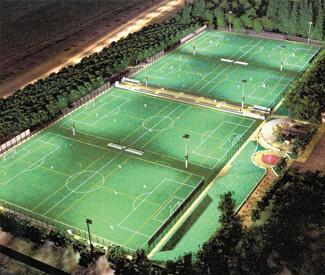
The California Coastal Commission today upheld San Francisco’s plan to replace the Beach Chalet grass soccer fields at the west end of Golden Gate Park with artificial turf and high stadium lights after an emotional five-hour hearing, but not before voicing concerns about the loss of natural terrain and urging the city to do wildlife habitat restoration work on adjacent land.

The soccer project has been repeatedly approved by city agencies despite strong opposition from some neighbors and environmentalists, who say it conflicts with a Local Coastal Plan that calls for it to be a “naturalistic” setting. Their appeal to the commission — which enforces the California Coastal Act of 1976 and regulates development in the coastal zone statewide — was supported by commission staff, giving hope to opponents.  

But the dearth of playing fields in the city and bad conditions on this often soggy, gopher-ridden site drove the local approvals of the project, and advocates for soccer and youth dominated public testimony at today’s hearing, which was held in San Rafael. Supportive speakers made arguments ranging from the exodus of families from the city to the need to combat youth obesity and diabetes to concerns that the woods surrounding the field is now “a fornication playground for gay men, it’s a shooting gallery for drug users, and it’s a toilet for the homeless,” all ills they say the turf and lights will help dispel.    

“I urge you to reject the appeal and allow San Francisco to manage our park system,” Sup. Scott Wiener testified to the commission, adding, “San Francisco has a crisis in that we are losing our families and losing our children.”

Former Sup. Aaron Peskin took the opposite position, calling the commission’s staff report “well-reasoned” and telling commissioners they have an obligation to protect coastal areas on behalf of all Californians: “It is the role of the commission not to succumb to political pressure.”

After public testimony and before a lunch break when he needed to leave, Commissioner Steve Blank made a motion to adopt staff recommendations and deny the city’s project, rejecting the various arguments made by supporters as irrelevant to whether this project complied with the Coastal Act and should be built so close to the ocean.

“Our review is based on the needs of 38 million Californians. One of the reasons our coastline looks the way is does is because of this commission,” Blank said, later adding, “This project looks like an industrial sports facility which is the antithesis of a naturalistic setting.”

He acknowledged arguments that the site has been soccer fields for more than 60 years and that many San Franciscans want them there. But he analogized it to the city’s one-time embrace of the Embarcadero Freeway before decades later realizing it wasn’t an appropriate waterfront use and tearing it down.

After a lunch break, the commissioner who seconded his motion, Esther Sanchez, continued Blank’s arguments against the project. “Our purview is different than the city and county of San Francisco,” she said. The commission’s role is ensuring compliance with the Coastal Act and LCP — which was developed by the city and approved by the commission decades ago — and its call to “emphasize naturalistic land use qualities of the western part of the park for visitor use,” saying the city should use other parks if it wants artificial turf fields.

But Commissioner Steven Kinsey called for the commission to defer to the city process and argued that turf and lights don’t necessarily violate the vague language in the LCP. “Grass alone does not make the site naturalistic,” Kinsey said, making a motion to approve the city’s project.

Commissioner Martha McClure then strongly sided sided with Kinsey and the city, and Commissioners Robert Garcia and Wendy Mitchell followed suit, saying how they personally liked turf more than grass. “It’s great for the environment, it’s water reducing, it stays green,” Mitchell said, noting that she’s replacing the lawn at her Southern California home with turf, calling the staff report “arrogant,” and saying, “I’m disappointed that we’re hearing this item.”

Garcia said the project will improve the public’s access to the coastal zone, which is something the Coastal Act also encourages.

“Artificial turf has become a savior for us, we can keep all our fields in play,” Commissioner Carole Groom, a member of the San Mateo County Board of Supervisors, later said, making her the fifth solid vote for the city’s project.

That left four swing votes on this 11-member commission who all said this was a difficult decision. They were inclined to let the project go through, but they were bothered by converting seven acres of real grass to artificial turf and wanted to mitigate that loss of wildlife habitat.

Chair Mary Shallenberger took issue with Mitchell’s comments. “I think they is absolutely properly before us,” she said. “This is how the process is supposed to work. Staff ended their presentation by saying this is a judgment call,” commending project opponents for filing the appeal.

“This was a very hard one for me,” Commissioner Dayna Bochco said, raising doubts that “seven acres of plastic would be a natural and healtful condition.”

Commissioner Jana Zimmer shared the concern and seized on a comment that SF Recreation and Parks Director Phil Ginsburg made earlier expressing a desire to restore as a naturalistic setting a long-neglected four-acre site next to Beach Chalet that used to be the city’s old wastewater treatment plant, noting that $6.5 million in the city’s last parks bond was set aside for habitat restoration in Golden Gate Park.

“I’d like to find a way to link the finding here to that requirement,” Zimmer said, asking Ginsburg whether he could make that commitment.

Ginsburg said that would be the top staff recommendation for the bond money, but that a public process and environmental review would be needed and he couldn’t make the commitment.

“I do believe mitigation is required here,” Bochco said. “We’re taking away seven acres of habitat and I want it replaced with something.”

A majority of commissioners, those for and against the project, strongly urged Ginsburg to follow-through on his pledge to pursue habitat restoration on the adjacent site. But with concerns expressed about tying the two projects together — which raised both legal and local control issues — the motion to do so failed on a 5-6 vote.

With Ginsburg’s pledge and the writing on the wall, the commission then voted unanimously to approve the project, clearing the way for the city to break ground as early as this summer.

Aiming for the top of the food chain

The issue of labeling for genetically engineered foods gained fresh momentum last week, when Sen. Barbara Boxer announced she’d be pushing for the U.S. Food and Drug Administration to require this consumer notification on a national level.

It’s sure to be an uphill battle for the organic food movement, which suffered a loss on this issue at the California ballot last year, but a new book calling for a mass restructuring of the nation’s food system might help provide ammunition for proponents of GE food labeling.

Wenonah Hauter’s Foodoply: The Battle over the Future of Food and Farming in America traces decades of little-known history documenting small farmers’ resistance to agricultural consolidation, followed by national and international policy agreements that gave rise to the commercialized agribusiness model that dominates America’s food system today. Hauter, executive director of Food and Water Watch, grew up on a farm.

“It gave me life experience about how difficult farm work is, and how hard farmers have to work, and how under-valued they are in our society,” the author said of that experience in a recent interview with the Bay Guardian. “One of the reasons I wrote Foodopoly was to get at this issue … It’s easy to demonize farmers rather than the systemic causes of the traditional food system.”

Her book is nothing short of a call to arms to take back corporate control of a food system that short-changes small farmers and leaves consumers with limited, unhealthy options.

“If we want to change our food system, we have to reclaim our democracy,” she says. “So many people just think we’re going to create an alternative system, without really doing the political work to address fundamental issues, like the consolidation that allows some companies to have so much power over our political system.” It won’t be achieved with certified sustainable agriculture programs or farmers markets alone, she says – but rather through confronting agribusiness’ influence in the halls of government.

Her meticulously researched work names names, providing detailed lists of the industry’s most influential processers, grocers, and junk-food manufacturers along with the ubiquitous brands they produce. It also sheds light on the ills of factory farming and genetically engineered foods.

“The top 20 processing companies and the grocery industry have benefited from figuring out that fat, sugar and salt actually addicts people to junk food, and is making people sick and overweight,” Hauter told us. “Children see just under 5,000 junk food ads a year. We know that children begin to identify with brands at about the age of two. Lots of junk food is placed at eye level for young children, because they pull on their parents’ shirttails, whining for the junk food.”

While organics may pose a healthier alternative, meanwhile, Hauter’s chapter on the “paradox” of attractively packaged, premium-priced organic food is rather disheartening. “Fourteen of the 20 largest food processing companies actually control many of the organic brands, and organics today are viewed as a rich market, where people can be charged,” Hauter notes, going straight to the heart of the matter. “It’s a lot different from the vision I think many people had in the early 1970s, when the organics movement began.”

Foodopoly also devotes considerable attention to the political influence of the biotech sector. “I think that the biotech industry has a lot of political power,” she told the Guardian, and then revealed that assertion to be a profound understatement: “Over a 10-year period, they spent $572 million on lobbying and campaign contributions, they hired 13 former members of Congress during this period, they hired 300 former staff from the White House … and they have about 100 lobby shops in Washington. … With Prop 37, [of the] the approximately $45 million put towards ads, about $8 million was Monsanto’s.”

This kind of influence doesn’t just carry troubling implications for the democratic process, but makes it less likely that looming questions around the long-term health effects of genetically engineered foods will ever be sufficiently answered.

“With all the new technology coming on – nanotechnology, cloning, genetic engineering – we really need to take a look again at our regulatory system,” Hauter insists. “There’s a lot of new evidence coming out on the problems with these new technologies. There was a review of hundreds of scientific studies around glyphosate, which is a major ingredient in Monsanto’s Roundup herbicide. It shows that there are cellular effects within the human body, and that these could very well be working together with other variables to trigger health problems. We’re talking about everything from gastrointestinal problems, to diabetes, autism, obesity, Alzheimer’s, and a number of different problems.”

Despite these disturbing findings, there’s been a distinct lack of long-term study or precautionary restraints imposed by lawmakers, Hauter says.

“There are a lot of other reasons that we should be concerned about genetic engineering, from the cost and control of foods, to the overuse of this dangerous herbicide, glyphosate, and the fact that it’s creating super weeds,” she says. Further complicating matters, “New pesticides are being developed to address the problems that these co-branded herbicides have caused. That’s the problem with our society,” Hauter adds. “We never look at the unintended consequences.”

Will SF’s new broadband infrastructure be controlled by the city or Google?

28

Board President David Chiu is calling for San Francisco to add to its broadband fiber network every time a contractor or utility tears up a street, joining other cities in expanding high-speed Internet capacity. But will this new network be a municipal utility or corporate-controlled? An upcoming hearing he has called for could begin to answer that question.

“In the 21st century, cities need access to affordable, high-quality broadband to compete economically, just as access to water, electricity, roads or railways was critical in the 20th century,” Chiu said in a public statement. “We see other cities like Austin, Kansas City and Santa Clara making enormous strides.  My proposal will ensure that San Francisco does better in this area.”

But Austin and Kansas City have opted to take the easy path and let Google install and control the system, which raises a variety of questions and problems that are highlighted “Kansas City Gives it up for Google,” in the current issue of Harper’s Magazine, which looked at how KC is letting corporate interests trump the public interest.

“According to its contract, Kansas City must give Google access to its underground conduits, fiber, poles, rack space, nodes, buildings, facilities, and available land. It cannot charge the company for ‘access to or use of any city facilities . . . nor will it impose any permit and inspection fees.’ And what does the city get in return? It has no say in the pricing of Google’s services, nor can it ensure that Google will deliver fiber-optic service to all of the city’s residents. Google’s offices, meeting spaces, and showroom are provided free of charge, and the city pays the company’s electric bill. The mayor, moreover, is barred from commenting on Google’s activities without the express permission of Google,” the magazine writes.

Chiu is building his proposal from a report that then-Sup. Tom Ammiano commissioned years ago, calling for the city to build a network of fiber as it opens up the streets. Now, Chiu is trying to implement that idea with legislation and an upcoming hearing on the issue, but right now he’s agnostic on whether that network is owned by San Francisco or a corporation that it might contract with.

“My legislation doesn’t dictate who lays the fiber, it just ensures that it happens,” Chiu told the Guardian, although he did add that he’s “more intrigued that it could be the public sector.”   

The Harpers article discusses how public utilities have succeeded in delivering reliable, cost-effective services to millions of Americans since the 1930s when FDR began to use government to deliver electricity to rural areas that lacked it, drawing parallels to the 100 million Americans now who lack access to high-speed Internet service. But the federal government seems to be encouraging corporations to do the work this time, and they’re more than happy to oblige.

“Why does Google feel so at home in Kansas City—rather than in, say, California, where the company is based? Why not build their first citywide fiber-optic network in a nearby community? According to Google vice president Milo Medin, the company has preferred to steer clear of such pesky statutes as the California Environmental Quality Act. ‘Many fine California city proposals . . . were ultimately passed over in part because of the regulatory complexity here,’ Medin told a congressional committee in 2011. ‘In fact, part of the reason we selected Kansas City for the Google Fiber project was [that] the city’s leadership and utility moved with efficiency and creativity in working with us to craft a real partnership,’” the article says.

Yet with Google in charge, the company is only guaranteeing access to neighborhoods where a minimum number of residents pre-register and pay for premium service, redlining out many African-American neighborhoods and forcing community members to go door-to-door essentially selling Google’s services.

And in the end, the corporation will make gains even if it loses money on the project, as the article concludes: “So why would an Internet-search company want to spend a fortune to install fiber-optic cable in Kansas City, Missouri, and neighboring Kansas City, Kansas? Freedom from regulatory headaches is one part of the equation: if such networks are the wave of the future, the time to jump in is now, before legislative oversight can ruin the party. But another explanation might be the treasure trove of user-behavior information that such a network represents. Data of this kind is so prized that a company like Google can afford to give away other services for free, as long as this beneficence opens up new markets. In Kansas City, low-income subscribers to the company’s slower, ‘free’ Internet option will be giving Google details about each URL they visit, even if their accounts remain anonymous. And customers who plunk down $120 a month for the ‘Full Google Experience’ will have their television-viewing habits individually tracked by Google’s data-mining elves. Is this a reasonable bargain? For Kansas City, it’s too late to ask. But history—and the success of municipally owned fiber-optic projects throughout the country—strongly suggest that we should look this gift horse in the mouth.”

Food for thought as San Francisco contemplates whether it wants to build public infrastructure or simply facilitate more corporate infrastructure.

Dirty dialect in a small town: A trip to the Boonville Beer Fest

2

I thought that the booming voice yelling across the backyard of Anderson Valley Brewing Company, hosts of the vaunted Boonville Beer Festival, would be bearing tidings of “shut the hell up and go to sleep.” After all, it was 1am and many of the pros camping in the shady glen designated for brewers had a long day of pouring stouts and ambers in the hot sun ahead at the May 4 festival. 

But I had misjudged the staying power of bearded and hop-obsessed hippiefolk.

“I want to hear some partying!” concluded the voice. We beckoned the rambling brewer who’d dropped by our camp to pour another finger of barleywine, double-checked our Ibuprofen cache, and kept one blurry eye on the 24-year old apple farmer talking about oral sex in Boontling, Boonville’s appealingly vulgar indigenous dialect, by the campfire. I heard later accounts of brewers staying up all night communing with toads in the creek that lined the back edge of the Anderson Valley Brewery’s makeshift campgrounds. 

Boonville is no refined urban pourfest. “This is the beer festival you have to go to,” confirmed a crew member of Concord’s Black Diamond Brewing. If you enjoy sweeping mountain landscapes, 90 degree heat, and beer from across the state, you will agree. Boontville is epic, one-day setting for the 60-some breweries on tap each year.

>>CHECK OUT OUR SLIDESHOW FROM BOONVILLE 2012

Tips gathered around the campfire the night before the one-day festival: drink slowly, don’t drop your tasting cup, don’t get stuck in the fairground’s horse corral, keep an eye out for the actual indoors bathrooms for a break from the Port-a-Pots. 

I’ll admit I fell back on the stalwart Hell or High Watermelon Wheat ale from the home team 21st Amendment Brewery. I am not an ironclad beer drinker and by my way of thinking, the 90 degree heat that ruled May 11 in Anderson Valley was not ideal for coffee stouts no matter how delicious. Pro drinkers avoided joining in on the standard beer fest hollering that hails a dropped tasting cup, and focused their energies on finding the off-menu small-batch specialties being poured, like Black Diamond’s brandy barrel-aged Grand Cru. 

SF’s thriving microbrew scene was well-represented by Speakeasy, Magnolia, Pacific Brewing Lab. The city kids were joined by scores of breweries from across the state — Sacramento’s Rubicon, San Diego’s Societe, and the coastal Pizza Port were a few of the exciting new brews we tried. 

Beer’s great and all, but Boonville’s small-town trappings made a bright day of beer-drinking a cultural event.

The Anderson Valley Lion’s Club was selling BBQ tri-tip sandwitches for $10 ($12 with veggies.) I’m not big on the mammal-eating, so my boozy friend suggested I ask them for a grilled cheese. Larry Lombard, a Lion of 25 years and self-described “wingnut over in Boonville — that makes me a flyboy,” told me I was SOL on veg-friendly eats at the Lion’s tent. No big deal — proceeds from the festival go to fund the Club’s two college scholarships, given out yearly to local high school students, and judging from the tent’s traffic, they were going to make some academic dreams come true this year.

“This year it looks like it’s going to be good,” Lombard said. “We try just as hard on the bad years as the good years, though.”

Tucked away in the shade, the well-coiffed ladies of Anderson Valley Historical Society were working hard selling water bottles and Boontling dictionaries for donations and fending off the advances of dehydrated gentlemen. 

Boontling in action

“A lot of the stuff has sexual connotations.” (Forgive me, gray-haired angel, for not writing down your name! Blame the Watermelon Wheat.) The ladies and I were discussing Boontling, whose origins are debated. Was it created by the local fishermen, as written in the dimunitive Boontling dictionary I took home, or as the apple farmer told us and I prefer to believe, invented as a code used by the local wenches to throw shade at the city wife some poor Boont man brought home with him? 

At any rate, the verbal language was first officially studied by a California State University-Chico professor named Charles Adams. The dialect is largely referential, meaning most words originate from local landmarks. Maybe your cousin Sandy is a little slutty (this being the example used by the apple farmer) — you’ll sub in the word “Sandy” for “floozy.” The adding on of new words to see if your conversation partner will catch it is referred to as “sharking,” making Boontling a dynamic language. 

Maybe. “I think it’s gonna die,” said the Historical Society expert. “However, there seems to be interest in it now.” Mainly from the media, she said. She directed me to town’s two premier Boontling linguists for more info. She had one the guys’ digits memorized. 

Here are some of my fave words from the Boontling mini-dictionary I copped, entitled A Wee Deek on Boont Harpin’s (A Little Look at Boont Talking). I advise memorizing them and trying not to irritate the locals using them when you make the trip up north for next spring’s fest: 

Apple head: girl friend

Burlapper: (not actually in dictionary, but the ladies of the Historical Society urged me to write it down, “burlapper” being some sort of four-letter word serving as both noun and verb)

Jeekus: donkey or mule

Jimheady: confused; unclear mentally; suffering from a bad hangover

Tidrik: a party

Wilk: a wild cat

Pickem up billies: dirty men’s socks (!?)

The warriors arena: How are you going to get there?

51

The Warriors and the all-star lineup of nearly every political consultant in town launched a new public relations offensive this week with the release of a new, spiffy set of drawings and a rewritten plan for a waterfront arena. And opponents of the project pretty much shrugged and said: So, what?

Sure, it looks nicer than it did before. Sure, there’s a pedestrian walkway around the arena. Yeah, there’s glass on the inside that will give spectators a nice view of the Bay. Oh, and there’s room for a cruise ship terminal, to give the whole thing a veneer of maritime use.

But the problems with this project have never been the architecture of the 12-story structure or the inevitably dubious links to the water. “The design was never the point,” Randy Shandobil, a spokesman for the Waterfront Alliance, told us. “Is this the best place to put a big arena?”

The new plan calls for a slightly smaller arena — 125 feet high instead of 135 — with slightly less retail space and seating inside. The glass sides will not only allow fans to look out, but allow people walking around the outside to view in and see something going on inside. The scoreboard will probably be visible; the actually play on the floor less so.

The visuals presented by the architects, Snøhetta and AECOM, indicate that the arena will perch on a large pad raised significantly above the level of the current Piers 30-32. From the ground level, the arena looks like a giant flying saucer, taller than AT&T Park, that’s plopped down below the Bay Bridge.

Craig Dykers, a representative of the architects, told a Board of Supervisors committee May 6 that the arena will fill a need for some sort of project along the open stretch of waterfront from the Ferry Building to AT&T Park. His presentation made it sound as if that undeveloped area was by nature a blight; thousands of joggers, walkers, bicyclists and people enjoying the unimpeded views of the Bay might disagree.

In fact, the project will change more than the two piers; it will create a busy residential and commercial shopping district that will increase foot and vehicle traffic even when there are no games or concerts scheduled.

This is, by any standard, a very different project from what the Warriors first proposed back in November, 2012. That’s why the Waterfront Alliance is asking that the scoping sessions for the environmental impact report on the project ought to go back to square one.

No matter what you think about the design, or the views, or the impact on the city’s priceless waterfront, there’s a problem that’s glaringly obvious, and Sup. Scott Wiener made the point very clearly:

This absolutely has to be a transit-first arena. There’s no way that part of the city can handle even half of the 5,000 cars that have been counted at the Warrior’s current home, Oracle Arena in Oakland. And much of that impact is going to fall on the subway, or light-rail vehicle system.

“It absolutely has to have good LRV service,” Wiener said.

The problem: “Our current system is not even meeting our current needs. I have a lot of constituents who say, when there’s a Giants game you just don’t take the subway because there’s not going to be any capacity. We’re close to a breaking point now, even past it. and our ten-year capital plan puts to the side most of Muni’s unmet capital needs.”

Jennifer Matz, the Mayor’s Office point person on waterfront development, said she agreed with Wiener. “I recognize this challenge,” she said. “There needs to be more of a holistic approach.”

But Wiener wasn’t backing down. Adding the capacity that will be needed to serve the new arena, and the new Giants development, and the new residents moving into the waterfront neighborhood, is not going to be cheap. “Where,” he asked, “is the money going to come from?”

Peter Albert, who works for the Municipal Transportation Agency, is looking into the number of passengers that will be riding Muni — and BART, and Caltrain — and the capacity those systems plan to add. But he had no answer to Wiener’s question.

That’s because there is only one answer: The taxpayers will have to come up with something in the range of a billion dollars to solve Muni’s capacity problems in the next few years — or else the developers will. And right now, there’s not a lot of political will at City Hall to ask for either.

Bay to Breakers will have video surveillance, license plate scans, and secret “FBI assets”

19

Police video surveillance was in the spotlight during yesterday’s City Hall hearing on security measures at large events, as supervisors voiced a desire to strike the right balance between security and civil liberties. And while they got some reassurance and small signs of restraint from the SFPD, they also learned about secretive new security measures that go beyond what the public was aware of.

San Francisco Police Chief Greg Suhr clarified misleading media reports (a Chronicle story then picked up by Associated Press) that he’s seeking real time video surveillance along Market Street. Right now, Suhr said he just wants an inventory of existing video cameras along Market and downtown that he can request footage from after a crime is committed and that he would make his case to the board if he ever wanted to go beyond that.

“Right now, we only look at footage in retrospect,” Suhr told the Neighborhood Services and Safety Committee hearing, adding that he has no objections to seeking a court warrant to obtain that footage because “we do want it to be admissible.”

Yet Suhr and Deputy Chief James Loftus also revealed that SFPD will be deploying an undisclosed number of temporary real-time video surveillance cameras atop long poles at the Bay to Breakers footrace on May 19, as it did last fall during the World Series and the big parade down Market Street celebrating the Giants victory.

“We always want more video,” Suhr told the Guardian, although he said that he also understands the civil liberties sensitivities of San Franciscans, which is why he isn’t now seeking a permanent increase in SFPD’s real time video surveillance capabilities. “I’m from San Francisco, I get it.”

Other security tools that the SFPD will be employing at Bay to Breakers and other large events are technology that uses video cameras on police cars to capture license plate numbers and run them through a DMV database, what Loftus vaguely described as “specialized resources from surrounding jurisdictions” (watch out for the drones, y’all), and unspecified “FBI assets [that] will be present and assisting in event security.”

When Sup. Eric Mar, who called the hearing, asked about those last two items, Loftus said he wouldn’t discuss them publicly, but “I could talk to you about it offline if you’d like.”

Sup. David Campos said that he doesn’t want San Francisco to be reactionary after incidents like the Boston Marathon bombing and that we should be a model city for balancing security with civil liberties: “I think that’s a very difficult balance to strike, but it anyone can strike that balance, I think San Francisco can.” He also expressed concerns about plans to ban backpacks at Bay to Breakers: “I don’t know if that’s going to address the problem.”

Loftus said the ban only applied to large backpacks (larger than 8.5x11x14 inches) and that runners and spectators will still be allowed to use small backpacks to hold water and changes of clothing. Yet for those concerned about the creeping police state, including several people who spoke during the public comment period, there was little consolation offered in the presentations, and the supervisors said this would be an important ongoing discussion.

“This is a discussion that goes beyond San Francisco,” Campos said. “We as a country need to have this discussion.”

Typhoid fever warning for Stonestown Nordstrom’s eaters

5

If you or someone you know ate at Nordstrom Cafe at Stonestown Galleria on April 16, 17, 18, 20, or 27, there is a risk of contracting typhoid fever — eek. A restaurant worker has been diagnosed with the infectious disease. Full press release and more info from the SF Department of Public Health below: 

Typhoid Fever in Restaurant Worker

Department of Public Health Issues Alert for Customers Who Ate at Nordstrom Café in Stonestown Galleria

San Francisco, CA—Officials at the San Francisco Department of Public
Health announced today that a local restaurant food handler was diagnosed
with typhoid fever.  The public health investigation is ongoing, but based
on current information, health officials believe the infectious disease was
acquired by the food handler during a trip outside of the United States.

Anyone who ate at the Nordstrom Cafe within the Nordstrom store in the
Stonestown Galleria in San Francisco on April 16, 17, 18, 20, or 27, 2013
may be at risk.  Health officials advise these individuals to see a
healthcare provider right away if they start to experience symptoms such as
fever, weakness, stomach pains, headache, nausea, vomiting, diarrhea, or
loss of appetite.  In some cases a rash of flat, rose-colored spots may
appear.  Symptoms usually begin within 8 to 14 days after exposure, but
could potentially appear for up to 30 days.

“Unfortunately, symptoms of typhoid fever can resemble other illnesses,”
said Tomás J. Aragón, MD, Health Officer for City & County of San
Francisco.  “Persons who are at risk because they dined at the Stonestown
Nordstrom Cafe on one of those dates should see a healthcare provider right
away if they are feeling unwell, and should tell their physician that they
may have been exposed to typhoid fever.  There is testing and effective
treatment available.  If you suspect you have typhoid fever, do not prepare
food or drink for anyone and do not care for young children, hospitalized
patients, or persons with weakened immune systems.”

Typhoid fever is an illness caused by the bacterium Salmonella enterica
serotype Typhi.  Although death is uncommon, typhoid fever can be severe
and life-threatening. In the United States, 300-400 cases of typhoid fever
occur each year, and most of those are acquired during international
travel. People are at risk of typhoid fever if they eat food or drink
beverages that have been handled by someone who has typhoid fever, or if
sewage contaminated with the bacteria gets into the water supply used for
drinking or food preparation. Typhoid fever is still common in the
developing world, where it affects about 22 million people and causes about
200,000 deaths.

The only way to know if an illness is typhoid fever is by testing samples
of stool, blood, and urine for the presence of Salmonella enterica serotype
Typhi.  Typhoid fever can be successfully treated with appropriate
antibiotics, and persons given antibiotics usually begin to feel better
within 2 to 3 days.  Although untreated typhoid can potentially be fatal,
deaths from typhoid fever are uncommon in the United States.  However,
persons with typhoid fever who do not get treatment can continue to have
fever and feel unwell for weeks or months. Even if their symptoms go away,
persons with typhoid fever may continue to pass typhoid bacteria to others,
and so they should not handle food or care for children, hospitalized
persons, or those with weakened immune systems until further testing proves
that typhoid bacteria are gone from the body.

Nordstrom at Stonestown Galleria is cooperating with the Department of
Public Health in the investigation to ensure that the public and their
workers are informed and protected.

For more information about typhoid fever, go to
http://www.cdc.gov/nczved/divisions/dfbmd/diseases/typhoid_fever/

Assembly committee OKs moratorium on fracking in California

Three bills seeking to impose moratoriums on fracking in California won approval at the California Assembly Natural Resources Committee in Sacramento on April 29, an important milestone for environmentalists who ultimately plan to push for a permanent ban on the practice.

Assembly Bill 1301, introduced by Assembly Member Richard Bloom (D-Santa Monica), is backed by a host of statewide environmental organizations including the Center for Biological Diversity, Food & Water Watch, and Clean Water Action. That bill and AB 1323, similar legislation sponsored by Holly Mitchell of Culver City, seek to halt the controversial oil-and-gas extraction method in California until possible health and environmental impacts have been adequately reviewed.

“It’s an important step,” notes Adam Scow, California campaigns director for Food & Water Watch in San Francisco. “In theory, the quickest timeline the bill could pass is [sometime] this year.” He added, “Gov. Jerry Brown has the power to issue a moratorium now,” but “Brown is repeating industry talking points that fracking can be done safely.”

A third bill, AB 649, would create moratoriums on fracking only nearby sensitive sites such as aquifers or agricultural lands, but that proposal received less support from fracking opponents who believe it should be subjected to a blanket moratorium and ultimately banned. All three bills won approval from the Natural Resources Committee, and are now headed for the Assembly Appropriations Committee.

Short for hydraulic fracturing, fracking is an oil and gas extraction method that utilizes high-pressure water and toxic chemicals to fracture shale deep underground. It’s prompted fierce opposition in New York, Pennsylvania and throughout western states, where fears about groundwater contamination and long-term ecological impacts are growing as the practice is more widely adopted.

“It uses huge amounts of water,” Wenonah Hauter, executive director of Food & Water Watch, told the Bay Guardian in an interview. “It pollutes the water with chemicals that don’t even have to be disclosed, and the wastewater either stays underground and we don’t really know what happens to it, or it has to be disposed of through injection wells that are associated with earthquakes.”

And yet, powerful momentum is building in the petroleum industry around oil extraction from the Monterey Shale, a geologic formation estimated to contain 15 billion barrels of oil that would have been inaccessible but for technological advancements in fracking. The Western States Petroleum Association, a powerful industry lobby, placed the vast California fossil fuel reserve in the crosshairs in a mid-March report, along with the outright giddy pronouncement that “this oil, if prudently and safely developed, could dramatically change our state’s energy security picture for decades to come and usher in an era of unprecedented prosperity.”

All of which amounts to stringent opposition to bills that would impose a moratorium until health and environmental impacts can be carefully evaluated. According to this article in High Country News, that industry association spent $8.5 million last year lobbying state government.

While things still hang in the balance in California as far as fracking is concerned, the mad dash for shale oil has already transformed vast swaths of rural landscape in North Dakota, where oil production has shot up dramatically in recent years. According to a study released by the Western Organization of Resource Councils, fracking and other oil and gas extraction practices result in the permanent removal of seven billion gallons of water from the hydrologic cycle each year in North Dakota, Montana, Wyoming, and Colorado.

Mean Greens

0

culture@sfbg.com

THE BLOB Good green goddess, we’re only midway through the season but your Blob is getting asparagused out! This year, that delectable spring stalk seems especially abundant on menus about the Bay, from the warming canh cua mang tay (crab and asparagus soup) at PPQ Dungeness Island (www.ppqcrab.com) in the Outer Richmond to the verdant asparagus ice cream served at a Blob friend’s garden party. Along the way: zingy asparagus lemon pizzetta with prosciutto at Per Diem (www.perdiem.com) in the FiDi, using Zuckerman Farm in Stockton’s trademark purple variety, and the snap of a Shattuck tempura roll with battered yam at Mission vegan Japanese go-to Cha-Ya (762 Valencia, SF).

The following treats are deliberately void of nubby spears — you can asparaguess why. Yet they’re pretty veg-tacular all the same.


WOLFGANG SALAD AT MARKET AND RYE

As the Blob was rolling through the diner-riffic wonderland that is West Portal — seriously, the bottomless coffee per square footage of this neighborhood is out of countrol — she remembered a sustainable, construct-your-own salad green spot had sprung up among the laden hash brown platters: Market and Rye. (There’s also one on Potrero Hill.) With choices like strawberries, flax seeds, crispy onions, and, yes, roasted asparagus, it was a lunch lock. It was also lunch rush, and the supercute staff seemed a might stretched to put together everyone’s picky orders, so the Blob chose a signature Wolfgang salad ($10.50) instead. It’s a twist on your old school Asian chicken salad, loaded with roasted chicken, red cabbage, carrots,

toasted sesame seeds, mandarin oranges, crunchy Asian trail mix, and hot mustard soy vinaigrette.

The dressing was just a might too creamy-thick for the Blob’s taste. But if there’s one thing

she loves, it’s a twisted Asian chicken salad. So she sat right down at the rustic space’s communal table with her Mason jar of strawberry water — and Wolfganged that ish right down. You can also order yummy premade salads like spring pea with lemon dressing or broccolini Waldorf by the scoop, like ice cream, which is neat.

68 West Portal and 300 De Haro, www.marketandrye.com


HAYES VALLEY FARM COCKTAIL AT ORBIT ROOM

The Orbit Room is such a special splice of atmospheric Europe cafe into artisanal SF cocktailia that the Blob hates to risk ruining it by overpromotion. Its spring drink menu is stunning ($10 each — add egg white for two more dollars, cluck cluck). The Blob stopped in with tasty amiga the Tablehopper (www.tablehopper.com), who recounted her scandalous Coachella exploits while enthusing over a Koriander — practically a salad in a glass, with leafy cilantro, tequila, ginger syrup, lime, and celery bitters. A Spring Shrub shapes a traditional American shrub (a colonial-era cocktail using sweetened vinegar syrup) with strawberry balsamic and black peppercorn base, vodka, lemon, a splash of rosé, and mint seltzer.

But the delicious Hayes Valley Farm coated the Blob’s gullet. It’s a classic bee’s knees cocktail, popular during Prohibition, with honey from the farm down the street, gin, lemon, celery juice, and rose water — all romantically garnished with dried rose petals. Sweet, but also bittersweet: sweet because the Hayes Valley farm honey came back after a massive bee die-off in 2010, bitter(ish) because the farm itself will be demolished next month for pricey condos. (The stalwart farmers claim to be OK with this, appreciating the brief time they had.) In 50 years, will people believe there was once a thriving farm there, not in 1813 but in 2013?

1900 Market, SF. www.orbitroomcafe.com


“LA FESTA DI TUTTE LE FESTE” AT CUPOLA

If you’re going to name something “the feast of all feasts” and price it at $30 per person, you know the Blob’s gonna check it out — even if it’s at a mall (in this case under the dome, thus “cupola,” at the Westfield Center). And yes, even though it does that awful phony four percent HealthySF surcharge thing, which the Blob didn’t know until she got the bill. Up to that point, she would have recommended it profligately.

Strap yourself in for eight or so random courses from handsome Lark Creek offshoot Cupola’s impressive Italian menu, decided by the kitchen. (A complementary “Festa Di Bacchus” wine journey can be had for $17.) As in: two-plus hours of well-portioned food — no flighty tasting menu flim-flam here, these are actual dishes. As in: the Blob and her companion Pinky received two whole Neapolitan pizzas (margherita and spice sopressata), a gloriously delicate handkerchief pasta with simple red sauce, a butter lettuce and gorgonzola salad, another salad of chopped veggies and wine-marinated croutons, an al dente squash and (sorry) asparagus dish, and frothy strawberry tiramisu. The highlight? A somehow feather-light artichoke lasagna — they do pasta soft here — accompanied by an arugula-cashew salad. Finally, the Blob was stuffed!

Westfield Center, 845 Market Street, fourth floor, www.cupolasf.com


So SoMa

1

caitlin@sfbg.com

SEX The tech-y, day lit factory space of high design sex toy manufacturers Crave (www.lovecrave.com) is located at Folsom and Eighth Street, so of course the innovative, pronged vibrator that industrial designer Ti Chang is showing me doubles as a USB storage device.

“I can’t imagine a better city in the United States to do this,” Chang tells me, ushering me past the way-cool 3-D printer, laser engraver, and laser cutter the company uses to build its line of pricey vibrators (besides motors and batteries — difficult to source affordably from this country — the vibes are made and assembled right there in the SoMa space.)

Crave’s full line-up. Please note vibrating nipple clamp lariat necklace (top)

Assembly line. Bottom left, a contraption meant to test the vibes under water pressure

Chang launched the Crave line on Valentine’s Day with business partner Michael Topolovac after a wildly successful crowdfunding venture, accomplished without the help of Kickstarter, which eschews sex-related campaigns. They hosted a “build a vibe” workshop that allowed customers to see just how “safe and lovely it is when these [toys] come together,” she says.

The line is beautiful, made to appeal to women put off by more vulgar devices. The “Duet” vibrator features two prongs meant to surround the clitoris, and can deliver a powerful, silent range of vibrations. It’s USB rechargeable, and its base comes in stainless steel or plated with 24 karat gold, in the case of the model that also houses 16GB of data storage. (“That’s for the uber jet setter,” jokes Chang.)

I can’t remember what this machine does. Shapes metal?

Crave’s resident teddybear

Chang’s designs are so gorgeous you want to show them off — and you can. Crave’s “Foreplay” jewelry line (which is made in China) doubles as accessories. The “Droplet Necklace” is a lariat design featuring two graceful silver weights that can be affixed to your nipples, and set to vibrate.

Titillated? Crave is one of the local businesses hosting a factory tour through SFMade Week — go see how pleasure is built.

SF MADE CRAVE TOUR

May 9, 4-5pm, free

1234 Folsom, SF

www.sfmade.org

THIS WEEK’S SEXY EVENTS

“Porn 2.0: Creating Adult Content for Online Consumption” Wed/1, 7pm, $10. Feelmore510, 1703 Telegraph, Oakl. www.feelmore510.com. Roxxie Cyber teaches you about the best way to convert that sex tape to rock-hard… dollars.

“I Masturbate” Through May 31. Opening reception: Fri/3, 7-10pm, free. Center for Sex and Culture, 1359 Mission, SF. www.sexandculture.org. Down for a gallery show of positively sexy people masturbating? Of course you are! As bonus, photographer Shilo McCabe is willing to wager more displays of this nature are key to improving society’s openness about our sexuality. Now you’re perving with a purpose!

Thong Protest Sat/4, noon-2pm, free. Jane Warner Plaza, Market and Castro, SF. nude-in.blogspot.com. Toe the line of legality at this demonstration against the recent nudity ban, where thongs, jockstraps, socks-on-your-cock are the recommended dress code.

Music listings

0

Since club life is unpredictable, it’s a good idea to call ahead or check the venue’s website to confirm bookings and hours. Prices are listed when provided to us. Visit www.sfbg.com/venue-guide for venue information. Submit items for the listings at listings@sfbg.com. For further information on how to submit items for the listings, see Picks.

WEDNESDAY 24

ROCK/BLUES/HIP-HOP

Bob vs Guido Johnny Foley’s Dueling Pianos. 10pm, free.

Edie Sedgewick, El Elle, All Your Sisters Hemlock Tavern. 8:30pm, $7.

Flosstradamus, Lil’ Texas Regency Ballroom. 8pm, $22.

Fuzz, Wooden Burial Ground, Spyrals, Man Rickshaw Stop. 8pm, $10.

Sergent Garcia Slim’s. 8pm, $25.

Gunshy Johnny Foley’s. 10pm, free.

Telekinesis, Mount Moriah, Paparazzi Bottom of the Hill. 9pm, $10.

JAZZ/NEW MUSIC

Big Bones Royal Cuckoo, 3203 Mission, SF; www.royalcuckoo.com. 7:30-10:30pm, free.

Dink Dink Dink, Gaucho, Eric Garland’s Jazz Session Amnesia. 7pm, free.

Terry Disley’s Mini-Experience Burritt Room, 417 Stockton, SF; www.mystichotel.com. 6-9pm, free.

Lara Downes with Quartet San Francisco Yoshi’s SF. 8pm, $24.

Ricardo Scales Top of the Mark, 999 California, SF; www.topofthemark.com. 6:30pm, $5.

Craig Ventresco and Meredith Axelrod Cafe Divine, 1600 Stockton, SF; www.cafedivinesf.com.7-9pm, free.

FOLK/WORLD/COUNTRY

Kitten on the Keys Rite Spot Cafe. 8:30pm.

Timba Dance Party Bissap Baobab, 3372 19th St, SF.; www.bissapbaobab.com 10pm, $5. With DJ Walt Diggz.

Toast Inspectors Plough and Stars. 9pm.

DANCE CLUBS

Bodyshock, Inhalt, DJ Crackwhore, DJ Unit 77 Elbo Room. 9pm, $7.

Booty Call Q-Bar, 456 Castro, SF; www.bootycallwednesdays.com. 9pm. Juanita MORE! and Joshua J host this dance party.

Cash IV Gold Double Dutch, 3192 16th St, SF; www.thedoubledutch.com. 9pm, free.

Coo-Yah! Slate Bar, 2925 16th St, SF; www.slate-sf.com. 10pm, free.

Full-Step! Tunnel Top. 10pm, free. Hip-hop, reggae, soul, and funk with DJs Kung Fu Chris and Bizzi Wonda.

Hardcore Humpday Happy Hour RKRL, 52 Sixth St, SF; (415) 658-5506. 6pm, $3.

Martini Lounge John Colins, 138 Minna, SF; www.johncolins.com. 7pm. With DJ Mark Divita.

Sonic Bodies #3 Center for New Music, 55 Taylor, SF; www.centerfornewmusic.com. 7:30pm, $7-$10. Electro-acoustic and noise musicians, dancers.

THURSDAY 25

ROCK/BLUES/HIP-HOP

Aloha Screwdriver, Rocketship Rocketship, Deadbeats Thee Parkside. 9pm, $5.

Baby Dee and Annie Amnesia. 7:30pm, $12.

Joe Bagale, Crystal Monee Hall, Subharmonic Great American Music Hall. 9pm, $14-$16.

Ghost BC, Ides of Gemini Regency Ballroom. 8:30pm, $22.

Guido vs Bob Johnny Foley’s Dueling Pianos. 10pm, free.

Led Zepagain DNA Lounge. 9pm, $20.

Lydia, From Indian Lakes, Sweet Talker Slim’s. 7:30pm, $13-$15.

Dave Moreno Johnny Foley’s. 10pm, free.

Joan Osborne Acoustic Duo Yoshi’s SF. 8pm, $40.

Ben Ottewell Independent. 8pm, $15.

Papa Bear and the Easy Love, Peachalope, WOOOOOO Hemlock Tavern. 8:30pm, $6.

Transit, Seahaven, All Get Out Bottom of the Hill. 8pm, $12.

JAZZ/NEW MUSIC

Stompy Jones Top of the Mark, 999 California, SF; www.topofthemark.com. 7:30pm, $10.

Brad Mehldau SFJazz Center, 201 Franklin, SF; www.sfjazz.org. 7:30pm, $30-$70.

Chris Siebert Royal Cuckoo, 3203 Mission, SF; www.royalcuckoo.com. 7:30-10:30pm, free.

Sophisticated Ladies Rite Spot Cafe. 9pm.

FOLK/WORLD/COUNTRY

Pa’lante! Bissap Baobab, 3372 19th St, SF.; www.bissapbaobab.com 10pm, $5. With DJs Juan G, El Kool Kyle, Mr. Lucky.

Tipsy House Plough and Stars. 9pm.

DANCE CLUBS

Afrolicious Elbo Room. 9:30pm, $8. With Pleasuremaker and Senor Oz, plus Chauncey Yearwood.

All 80s Thursday Cat Club. 9pm, $6 (free before 9:30pm). The best of ’80s mainstream and underground.

Goldroom, Viceroy (DJ set), popscene DJs Rickshaw Stop. 9:30pm, $13-$17.

Ritual Temple. 10pm-3am, $5. Two rooms of dubstep, glitch, and trap music.

Sound Remedy Brick and Mortar Music Hall. 8pm, $10.

FRIDAY 26

ROCK/BLUES/HIP-HOP

Back Pages Johnny Foley’s. 10pm, free.

Bob, Guido, Jeff V. Johnny Foley’s Dueling Pianos. 10pm, free.

Dear Hunter, Naive Thieves Slim’s. 8:30pm, $16.

Dope Stars Inc., Rabid Whole DNA Lounge. 8pm, $13.

Eight Bells, Amber Asylum, Dead Man Hemlock Tavern. 9:30pm, $7.

Kill the Noise, Brillz, Codes Regency Ballroom. 9pm, $30.

Kowloon Walled City, Tartufi, Queen Crescent Brick and Mortar Music Hall. 9:30pm, $10.

Maps and Atlases, Young Man, Cannons and Clouds Rickshaw Stop. 9pm, $15.

Shuggie Otis, Jesca Hoop Mezzanine. 9pm.

Phenomenauts, Emily’s Army, Warm Soda Bottom of the Hill. 9:30pm, $12.

Proclaimers, JP Great American Music Hall. 9pm, $26.

Ruben Studdard Yoshi’s SF. 8pm, $40; 10pm, $32.

Super Diamond, Purple Ones Bimbo’s. 9pm, $22.

Tumbleweed Wanderers, Guy Fox Independent. 9pm, $18.

TV Mike and the Scarecrowes, Christian Lee Hutson, Electric Sheep, Daring Ear Thee Parkside. 9pm, $8.

JAZZ/NEW MUSIC

"A Night at the Opera" Herbst Theatre, 401 Van Ness, SF; sfwmpac.org. 8pm, free.

Audium 1616 Bush, SF; www.audium.org. 8:30pm, $20. Theater of sound-sculptured space.

Brad Mehldau Duo with Kevin Hayes SFJazz Center, 201 Franklin, SF; www.sfjazz.org. 7:30pm, $30-$70.

Hammond Organ Soul Jazz Blues Party Royal Cuckoo, 3203 Mission, SF; www.royalcuckoo.com. 7:30-10:30pm, free.

Allison Lovejoy Rite Spot Cafe. 9pm.

Loren Means, Jean Ramirez, Lee Bloom Caffe D’Melanio, 1314 Ocean, SF; (415) 333-3665. 7-9pm, free.

Paris Combo Palace of Fine Arts, 3301 Lyon, SF; www.palaceoffinearts.org. 8pm, $25-$50.

"Taglish" Red Poppy Art House. 7:30pm, $10-$15. With Karl Evangelista, Grex, and more.

FOLK/WORLD/COUNTRY

Baxtalo Drom Amnesia. 9pm, $7-$10. Live music, gypsy punk, and belly dance.

Kevin Burke and John Carty Brick and Mortar Music Hall. 7:30pm, $20.

Dave Hanley Band, Bloody Ol’ Mule Plough and Stars. 9pm.

Tina and Her Pony Modern Times Bookstore, 2919 24 St, SF; www.tinaandherpony.com. 8pm, free.

Trio Troubadour Bissap Baobab, 3372 19th St, SF.; www.bissapbaobab.com 7:30pm, free.

"Under the Influence" Emerald Tablet, 80 Fresno, SF; undertheinfluence.emtab.org. 7pm, $5. Lizzy Acker, MK Chavez, Mariama Lockington perform works by major influences.

DANCE CLUBS

araabMUZIK, Heroes x Villians, Branchez, G Jones 1015 Folsom, SF; www.1015.com. 10pm, $17.50.

Joe Lookout, 3600 16th St.,SF; www.lookoutsf.com. 9pm. Eight rotating DJs, shirt-off drink specials.

MOM SF Anniversary Cafe Du Nord. 8pm, $20. With Rojai and E. Live, Hot Pocket, DJs Gordo Cabeza, Timoteo Gigante, and more.

Old School JAMZ El Rio. 9pm. Fruit Stand DJs spinning old school funk, hip-hop, and R&B.

120 Minutes presents White Ring Elbo Room. 10pm. With resident DJs S4NtA_MU3rTE, Chauncey CC.

Paris to Dakar Little Baobab, 3388 19th St, SF; (415) 643-3558. 10pm, $5. Afro and world music with rotating DJs including Stepwise, Steve, Claude, Santero, and Elembe.

Trap and Bass DNA Lounge. 9pm, $20. With Dirty Audio.

SATURDAY 27

ROCK/BLUES/HIP-HOP

Bay Area Heat Johnny Foley’s. 10pm, free.

Broken Water, Synthetic ID, Permanent Collection Thee Parkside. 9pm, $8.

Built to Spill, Ugly Winner Slim’s. 9pm, $26-$28.

Chappo, Sunrunners, Coast Jumper, Nova Albion Elbo Room. 9:30pm, $10.

Chick Jagger 50 Mason Social House, SF; www.50masonsocialhouse.com. 7pm, free.

Clamhawk Manor, Prepare for War!? Thee Parkside. 3pm, free.

DRMS, James Riotto, Bells Atlas Bottom of the Hill. 9:30pm, $12.

Ensemble Mik Nawooj, Aima the Dreamer, CelloJoe Brick and Mortar Music Hall. 9pm, $15.

Jeff V., Greg Zema, Bob Johnny Foley’s Dueling Pianos. 10pm, free.

Qui, Victory and Associates, Minot Hemlock Tavern. 9:30pm, $8.

Rupa and the April Fishes, Las Cafeteras Independent. 9pm, $20.

Slippery Slope, Everyone is Dirty, Collapsible Empire El Rio. 9pm.

SOJA, Rootz Underground, Los Rakas Warfield. 8:30pm, $28.

Ruben Studdard Yoshi’s SF. 8pm, $40; 10pm, $32.

JAZZ/NEW MUSIC

Audium 1616 Bush, SF; www.audium.org. 8:30pm, $20. Theater of sound-sculptured space.

Brad Mehldau Duo with Mark Guiliana SFJazz Center, 201 Franklin, SF; www.sfjazz.org. 7:30pm, $30-$70.

Hammond Organ Soul Jazz Blues Party Royal Cuckoo, 3203 Mission, SF; www.royalcuckoo.com. 7:30-10:30pm, free.

Mr. Lucky and the Cocktail Party Rite Spot Cafe. 9pm.

FOLK/WORLD/COUNTRY

Fireflies Plough and Stars. 9pm.

Kafana Balkan, Inspector Gadje Brass Band, DJ Zeljko, Jill Parker Rickshaw Stop. 9pm, $15.

DANCE CLUBS

Bootie SF: Aprilween DNA Lounge. 9pm, $20. With Lobsterdust, Maya Jakobson, DJ K.Ash, Smash-Up Derby, and more.

Paris to Dakar Little Baobab, 3388 19th St, SF; (415) 643-3558. 10pm, $5. Afro and world music with rotating DJs.

Re: Edit Underground SF, 424 Haight, SF; www.undergroundsf.com. 10pm. With DJs Michael Perry, Bob V, James Demon, Zenith.

Temptation Cat Club. 9:30pm. $5-$8. Indie, electro, new wave video dance party.

SUNDAY 28

ROCK/BLUES/HIP-HOP

Absu, Pale Chalice, Cyanic DNA Lounge. 8pm, $17.

Built to Spill, Ugly Winner Slim’s. 8pm, $26-$28.

Cave Singers, Bleeding Rainbw Great American Music Hall. 8pm, $16.

Commisure, Carta, Skyscraper Mori Hemlock Tavern. 8:30pm, $7.

Har Mar Superstar, Easystreet, Rocky Business Bottom of the Hill. 9pm, $10.

Paul Kelly, Lady Crooners Brick and Mortar Music Hall. 8pm, $20.

Dave Moreno and Friends Johnny Foley’s. 10pm, free.

New Build, No Ceremony /// Independent. 8pm, $17.

Shadow Sessions performing Endtroducing Elbo Room. 5pm, $10.

Marnie Stern, SISU, E V Kain Rickshaw Stop. 8pm, $12.

We Will Be Lions, Quaaludes, Sweat Lodge, Paperhaus Thee Parkside. 8pm, $7.

JAZZ/NEW MUSIC

Lavay Smith Royal Cuckoo, 3203 Mission, SF; www.royalcuckoo.com. 7:30-10:30pm, free.

FOLK/WORLD/COUNTRY

Brazil and Beyond Bissap Baobab, 3372 19th St, SF; www.bissapbaobab.com. 6:30pm, free.

Maria Fibish Plough and Stars. 9pm.

Silver Threads Tupelo, 1337 Grant, SF; www.tupelosf.com 4-7pm, free.

Sweet Jo’s Chilli and Biscuits, Stu Allen and Mars Hotel, Echo Trails Brick and Mortar Music Hall. 2pm, free.

Tin Cup Serenade Red Poppy Art House. 7:30pm, $5.

VOENA: Voices of the River Yoshi’s SF. 6pm, $12-$22. Multi-cultural children’s choir.

DANCE CLUBS

Beats for Brunch Thee Parkside. 11am, free.

Dance to Cure Diabetes Project 1, 251 Rhode Island, SF; www.p1sf.com. Noon-11pm. With Mark Farina, Maurice Tamraz, Sen-sei and Brian Salazar, and more.

Deep Fried Soul Dance Party Boom Boom Room. 8pm, free.

Dub Mission Elbo Room. 9pm, $6. With DJ Sep, Maneesh the Twister, Dub Gabriel.

Jock Lookout, 3600 16th St, SF; www.lookoutsf.com. 3pm, $2.

MONDAY 29

ROCK/BLUES/HIP-HOP

Chad Valley, Ski Lodge, Soonest Bottom of the Hill. 9pm, $12.

Damir Johnny Foley’s. 10pm, free.

Dunwells Chapel, 777 Valencia, SF; www.thechapelsf.com. 9pm, $10-$12.

Thee Oh Sees Brick and Mortar Music Hall. 9pm, $10.

Various Cruelties, B. Hamilton, Hindu Pirates Rickshaw Stop. 8pm, $10-$12.

Whitehorse Cafe Du Nord. 8pm, $10.

FOLK/WORLD/COUNTRY

Mike Burns Rite Spot Cafe. 8:30pm.

DANCE CLUBS

Crazy Mondays Beauty Bar, 2299 Mission, SF; www.thebeautybar.com. 10pm, free. Hip-hop and other stuff.

Death Guild DNA Lounge. 9:30pm, $3-5. Gothic, industrial, and synthpop with Joe Radio, Decay, and Melting Girl.

M.O.M. Madrone Art Bar. 6pm, free. DJs Timoteo Gigante, Gordo Cabeza, and Chris Phlek playing all Motown every Monday.

Soul Cafe John Colins Lounge, 138 Minna, SF; www.johncolins.com. 9pm. R&B, Hip-Hop, Neosoul, reggae, dancehall, and more with DJ Jerry Ross.

Vibes’N’Stuff El Amigo Bar, 3355 Mission, SF; (415) 852-0092. 10pm, free. Conscious jazz and hip-hop with DJs Luce Lucy, Vinnie Esparza, and more.

TUESDAY 30

ROCK/BLUES/HIP-HOP

Blood Red Shoes, Mister Loveless Brick and Mortar Music Hall. 9pm, $12.

IAMSU!, Problem Slim’s. 9pm, $19.

In Cahoots, Ghost Tribe Fires, Balto Hotel Utah. 8pm.

Jelly Bread Boom Boom Room. 8pm, $5.

Lonely Forest, Now Now, Doe Eye Rickshaw Stop. 8pm, $10-$12.

METZ, White Lung, Mrs. Magician Bottom of the Hill. 9pm, $12.

Stan Erhart Band Johnny Foley’s. 10pm, free.

Synchronized Watches, See Minus Hemlock Tavern. 8:30pm, $6.

Titan Ups, Burnt, Giraffe Aftermath Amnesia. 9pm, $8-$10.

Wakey! Wakey! Cafe Du Nord. 8pm, $12.

JAZZ/NEW MUSIC

Terry Disley’s Mini-Experience Burritt Room, 417 Stockton, SF; www.mystichotel.com. 6-9pm, free.

Renaud Garcia-Fons Yoshi’s SF. 8pm, $24. International Jazz Day.

FOLK/WORLD/COUNTRY

Toshio Hirano Rite Spot Cafe. 8:30pm.

On the Cheap listings

0

Submit items for the listings at listings@sfbg.com. For further information on how to submit items for listings, see Picks.

WEDNESDAY 24

LGBT Career Fair SF LGBT Center, 1800 Market, SF. lgbtcareerfair2013.eventbrite.com. Noon, free. RSVP online. Head over to the LGBT Center today to check out some leading Bay Area employers dedicated to diversity and inclusion in the workplace. The fair provides the LGBT community and allied job seekers the opportunity to network and discover new careers.

THURSDAY 25

Green fashion show and discussion SkunkFunk, 1475 Waight, SF www.efactor.com/greenclothessf. 7-9pm, free. Check out a fashion show with a focus on sustainable, eco-friendly clothing. After you’re wooed by all the green style Oceana Lott, a human resource manager, magazine editor, and teacher will speak about how to create a lifestyle that is both fulfilling and economically minded.

The Bone Room Presents The Bone Room, 1573 Solano, SF. www.boneroompresents.com. 7pm, free. Head to the Bone Room this evening to uncover the mysteries behind the human nose. Neuroscientist Leslie Vosshall will give an in-depth presentation on the biology and possibility of genetic basis for the human sense of smell.

“How to Move a Mountain” Southern Exposure, 3030 20th St., SF. www.soex.org. 7-9pm, free. At this eclectic three-pack of presentations on the power of collaborations you’ll be able to learn about the sexual life of slime mold, robots that can improvise music, and how to draw collectively.

FRIDAY 26

Body image workshop AHP Services Center, 1930 Market, SF. www.ucsf-ahp.org. 6:30-9:30pm, free. Call (415) 476-6448 x1 to register. Join tonight’s discussion about the way gay and bisexual men see their bodies. The evening will cover ways to improve body image and how it can affect your relationships and sex life.

Natural Poetry Month book party Pegasus Downtown, 2349 Shattuck, Berk. www.omnidawn.com. 7pm, free. Celebrate National Poetry Month with Omnidawn Publishing. Writers George Albon, Norma Cole, Alice Jones, and more will give brief readings from their own Omnidawn books. Hors d’oeuvres, desserts, wine, and fizzy water will be provided to sip and snack on.

SATURDAY 27

Public Square: Future soul edition YBCA Forum and Galleries, 701 Mission, SF. www.ybca.org. 11am-1am. Check website for specific event prices. Join the YBCA for a full day of classes, performances, and exhibits. Some events on the schedule include the 50 Cent Tabernacle, which — for a mere 50 cents — will give you access to up to six of the offered dance and movement classes. Hang out at an event put on by art group Field of Inquiry afterward, which answers the question “What will soul look like in the year 2038?” The group will respond with performances, food, design, murals, and technology. Check the site for a full schedule of events for the day.

Same-Sex Ballroom Competition Just Dance Ballroom, 2500 Embarcadero, Oakl. www.aprilfollies.com. 10am-11pm, $15 for daytime events only, $25 for evening events only, $35 for entire day. Now in its 11th year, the annual and longest running same-sex dance competition will include international Latin, American smooth, and American rhythm divisions. New to the competition this year are tango and country western dances. The day includes dance lessons for beginners, A-level finals, performances by top rated couples in the evening, and an open social dance for all.

9th Annual Golden Gate Sacred Harp Singing Potrero Hill Neighborhood House, 953 De Haro, SF. www.bayareasacredharp.org. 9am-3:30pm, free. Experience the raw power and moving poetry of the sacred harp in an authentic singing ritual — a centuries-old tradition of singing early American hymns in shape note style. A dinner will be held at noon on the grounds, so bring a dish to share.

SUNDAY 28

People’s Park Anniversary People’s Park, 2556 Haste, Berk. www.peoplepark.org. Noon-6pm, free. The politically driven, community-run park is celebrating its 44th anniversary today. The day will consist of live performances by The Fvah Squad Band, Junior Toots, and more. There will be tables for community organizations, workshops, free vegan meals from Food not Bombs, and a drum circle.

Pinhole Photograph Day RayKo, 428 Third St., SF. www.raykophoto.com. Noon-5pm, free. In honor of worldwide Pinhole Photography Day, RayKo is hosting a special exhibition of this throwback, analogue art. Pinhole artist Jo Babcok will be exhibiting his images and cameras made from everything from a suitcase to coffee pots to a bowling ball case. Babcock will also be teaching pinhole amateurs how to make their own camera from supplies provided by RayKo. Check the website to enroll in this quick-and-easy seminar.

How Weird Street Faire Howard and New Montgomery, SF. www.howweird.org. Noon-8pm, $10 donation requested. The 14th annual street faire is back with the theme “Weirdi Gras.” The fair will include marching bands, parades, art, performances, 10 stages of world-class electronic music, and vendors from around the world. Expect to see costumes, and dancing reminiscent of New Orlean’s Mardi Gras style. Even more exciting, five New Orleans marching bands will roam the fair grounds this year, in accordance with the theme.

Festival of Mandolins Croatian American Cultural Center, 60 Onondage, SF. www.croationamericanweb.org. 11am-5pm, $10 advance, $15 door, children free. The 13th annual San Francisco Festival of the Mandolins will include five diverse performances ranging from bluegrass to classical. Before the show mandolin workshops will be held. Ethnic Bulgarian food will also be available.


Coquettish

0

culture@sfbg.com

DINING When you name your restaurant Coqueta, Spanish for “flirt,” you’re really putting it all out there in terms of your food and atmosphere — playful yet unwavering, open but with a hint of mystery, and definitely attentive. After visiting Coqueta during its opening week, I’m confident celebrity chef Michael Chiarello’s new venture will score.

Opened April 13th, Coqueta is seductive on every level. Located on Pier 5, the restaurant is intimate: 60 leather seats in the buzzing main room, wooden tables, stone walls, flickering candles. Nearly every seat has a view of the kitchen — nothing to hide here. On the left side of the restaurant is Bar 5, a glass-enclosed terrace that seats an additional 30 people in rows of long, wooden, family-style tables.

Chiarello’s garnered an exciting following from his days running Napa’s Tra Vigne restaurant and stints on TV, so it was no surprise that there was a wait to get seated. Just a 15-minute delay past our reservation time, though — my friend and I were kindly invited by staff onto the terrace for a drink. (In fact service all round was abundantly attentive; I was even lead to the restroom.)

Immediately, the drink menu swept me off my feet. Created by bar director Joe Cleveland, it ranges from modern classics to San Francisco-inspired creations, solid Spanish gin and tonics to sherry cocktails (all $9–$14 each), plus pitchers of sangria and other Spanish party classics for groups. My friend started out the evening with the El Cazador, a bright sherry cocktail with lime, honey, and Campari. My first choice was the San Francisco-inspired Engine Co #5, a bourbon drink with tobacco-infused cream sherry, lemon, and zurracapote (red wine mixed with fruit, sangria-like but steeped for several days). By the time our drinks were finished, we were seated.

The menu consists of lovely, rustic-looking tapas-sized dishes ($9–$14 each), both hot and cold, along with cheese plates, bite-sized skewers, cured meats, mini open-faced sandwiches, and larger family style dishes. After being offered some sparkling water in beautiful hammered brass tumblers, we decided to start our night with a couple of bite-sized skewers, Chiarello’s light-hearted take on Basque-country pintxos, at $2.50 each. Quail egg with mustard seed and serrano? Why not. Jamon serrano with manchego cheese and apricot? Oh, I couldn’t possibly. Chorizo with artichokes and peppers? Two, please. All tiny bits of deliciousness. Enamored, we ended up ordering two more, the baby beets with spring onions and citrus fruit with more spicy chorizo.

Narrowing down our main dishes was a challenge. We settled on four plates: three hot tapas and one cold one. We first dug into the cold tapa, a cured cod crudo with tomato fresco, hearts of palm, arugula, and citrus dressing. It was a refreshing way to begin our foray. Our next dish was Gambas de Negro, whole prawns grilled with chili and black garlic. The most savory and comforting dish, though, was a sunny side up egg presented with shrimp, crispy potatoes, and a chorizo dressing. Finally came the “Tattas” Bravas, a spin on tater tots — and that classic Spanish bar standard, patatas bravas — with an array of jambon and potato nuggets served with salsa and aioli. Those popped right into our mouths.

While eating, we also ordered a couple tequila drinks. The first was the Castro, a unique tipple consisting of tequila blanco, fruity curaçao liqueur, pepper and lime. The second was The Sun Never Sets, creamy and scrumptious with tequila anejo, Licor 43, lime, fresh pineapple juice, and pineapple espuma brulee. As he made it, Cleveland told me this was his personal favorite.

Although we passed on the desserts, two of them were generously given to us by a guest at the next table — was this flirting? We were definitely beguiled by the sangria pop-rocksicles, tasty and mischievous adult treats, and the cool berry gazpacho, which floated us into the night.

I left the restaurant nearly vowing to Chiarello, who introduced himself to our table (there’s that attentiveness again), that I would return. I probably should have teased it out a little.

Pier 5, Embarcadero, SF. (415) 704-8866, www.coquetasf.com


The new Exploratorium opens — are the piers as good as the Palace?

3

As someone who was practically bottle-fed on the old Exploratorium space, I was hesitant approaching the science museum’s opening day at its new home on Pier 15 and 17. Like many other SF natives, I was attached to the old world charm and neo-classical elegance of the Palace of Fine Arts location, opened in 1969 by physics professor Frank Oppenheimer.

But consider me a convert. Where the Palace of Fine Arts’ physical layout seemed to dictate the content of the old museum, the new building, extensively rehabbed to house the famously hands-on exhibits, allows them to exist more organically. The new site now houses the largest pod of solar panels in the city, holds a magnificently vista-ed observatory, and harnesses as a heating source the Bay waters it sits above on 1800 wood and concrete pilings built around a century ago.

Paul Doherty the self-proclaimed “physicist, teacher, author, and rock climber,” has worked at the Exploratorium for 26 years, making the senior staff scientist the perfect person to lead me on a tour through the two-story space yesterday.

“We wanted it to be open, so a flood (of people) could come in, but then,” Doherty says pointing towards the Atrium, the first space visible to museum visitors. For long-time Exploratorium fans, the result is a comforting mix of the familiar and new, and as Doherty tells me for new visitors, it’s meant to be a good intro to what lies beyond. “This space here features classic Exploratorium exhibits that will show people who aren’t necessarily San Francisco natives the kinds of things that they will be experience while they’re here,” he tells me. “We wanted to showcase the best of the best.”

The atrium houses well-loved classic exhibits like “The Turn Table”, originally a physics Ph.D. thesis intended to show how a ball rolls across a spinning metal disc. When the ball crosses the “turntable”, it takes a chaotic, almost torturous path before it unexpectedly exits the table parallel to the point at which it entered.

Doherty said museum attendees, not staff, were the first to wheel coin across its surface. He picks up one of the plastic discs now part of “Turn Table” and wheels it across the moving table. “As you can see, the visitors taught us what this exhibit was really about. We watch our visitors, and we learn from them.”

Traversing the museum floor, we pick up new listeners gravitating towards Doherty’s excitement, almost as tactile at the Exploratorium’s most famous “Tactile Dome” (which will be up and running by Summer 2013). It’s enough to make you a little envious that your own workspace doesn’t inspire raptures like those of Doherty in his new digs.

For another atrium exhibit entitled “Moving Objects” (2012), by Exploratorium artist in residence Pe Lang, suspends rubber rings on vibrating rods, giving the illusion that the rings are passing through each other. “Drip Patterns” is a staff-made offering which illuminates the oozing drip of mineral oil. The effect is surprisingly artsy, and demonstrates the existence of caustics, which in differential geometry are “envelopes of rays either reflected or refracted by a manifold.” True to the spirit of the Exploratorium, no PhD is necessary to enjoy the installations — even to the uninformed onlooker, “Drip Patterns” looks cool, dispelling the idea of science-art dichotomy,

The new space’s innovations are enough to make me wish little Jessica could have seen the space. All the old favorites are present: the giant bubble-maker, live tornado capsule, artist in residence Ed Tannenbaum’s “Recollections” (1981), which freezes your image via a large scale projector in oh-so-’80s-music-video manner. These exhibits — all made in-house, as Doherty reminds me — trick you into learning, entice you into participating, and invite you to interact. I’m not eight anymore (dammit) but they made me feel like a kid again.

According to my guide, over the years, Exploratorium staff has made 2,000 exhibits. 600 are in the new space, 450 classics carried over from the Palace of Fine Arts, refurbished. 150 are brand new.

If you’re going to brave the crowds this weekend — or tonight’s continued opening ceremony celebrations — be sure to bring comfortable shoes and an open mind. If you can catch Doherty passionately explaining the mysterious behaviour of dry ice on water or the density of mineral oil suspended in light, all the better. 

The Exploratorium Piers 15 and 17, SF. (415) 528-4360, www.exploratorium.edu

Is there such a thing as “green” fracking?

Michael Klein is an unlikely oil industry executive. He’s also an unlikely environmental activist. For many years, the affluent San Franciscan was a major donor and chair of the board of the Rainforest Action Network, an environmental organization famous for its aggressive agitation targeting timber giants, coal companies, air polluters, and the dirty energy financiers of Wall Street.

But he’s stepped down from that role, and has since helped form a company called Hydrozonix, which might be called a “green” fracking enterprise.

Hydrozonix provides water treatment systems for the oil and gas exploration industry, and seeks to eliminate the use of two particularly nasty fracking-fluid chemicals known as biocides and scale inhibitors. It also gives companies a way to treat and recycle wastewater fluid. The company just completed its first year of operations, Klein told us, with 12 systems reportedly up and running in Texas oil fields.

Does this mean a die-hard environmentalist has crossed over to the dark side? “It was never an easy decision,” Klein told us. “I never thought I would tell anybody that I’m in the oil business.”

He hasn’t exactly turned into a climate change denier.

“I believe we have to stop using carbon based fuels as soon as possible,” Klein says without hesitation, “and find the political will to put a price on carbon.” He also supports a temporary moratorium on fracking. But he claims he’s only trying to make fracking “dramatically safer” in the interim, because “until we stop subsidizing [fossil fuels], the alternatives are at a severe disadvantage.”

Since entering the biz, however, Klein’s no longer convinced by arguments made by proponents of a permanent ban on fracking in California, which revolve around health and safety concerns. “I’ve come to the conclusion that if best practices are used, it’s … considerably safer than deepwater drilling,” he told the Guardian. “I do believe it can be done without concerns about contaminating aquifers or poisoning everyone.”

For a more on fracking in California, pick up a copy of this week’s Green Issue or read it here.

Follow @byRebeccaBowe

Psychic Dream Astrology: April 17-23

0

ARIES

March 21-April 19

Creating a narrative that helps you to make sense of your emotions does not help you to be true to them, Aries. Too much story telling can lead to distancing yourself from what you’re actually experiencing. Be brave enough to drop into your feelings and to deal with whatever your find this week.

TAURUS

April 20-May 20

Instead of figuring out the "right" thing to say concentrate on how to speak in a direct and honest way. Don’t get your point across, Taurus, communicate the things that you need the other person to hear. Express yourself in ways that allow for your true meaning to get heard this week.

GEMINI

May 21-June 21

This is an excellent week for beginnings, Gemini. Whether you focus your energies on cultivating new attitudes, learning a new skill or concept or opening the door to a new person or thing entering your life, you are likely to grow from it. Take responsibility for what you start and enjoy the ride.

CANCER

June 22-July 22

Sometimes the path to becoming free is through the very brambles that bind you. You may be feeling sad and stuck, but evading those feelings will only make them worse. You are going through a loss or a major fear of impending loss this week, but don’t let those feelings define you. Find and release what you need to let go of, Cancer.

LEO

July 23-Aug. 22

Being a boss and taking accountability for the direction and content of your life is awesome. You are capable and driven. The only danger is that you heap things on top of each other and end up overwhelmed and unable to come through on all of your commitments. Pace yourself, no matter how confident you’re feeling this week, Leo.

VIRGO

Aug. 23-Sept. 22

You can be in the greatest relationships with the all-time best people and still have problems. It’s important to be honest with yourself about how you’re participating with others this week. Do they know what’s going on with you or are you expecting them to guess? Are you over-talking things and obscuring the point? Pursue clarity, Virgo.

LIBRA

Sept. 23-Oct. 22

Follow through on your plans and trust your instincts, Libra. This is not the time to kick back and navel gaze. You are running high energy that will help you get things done this week, and get ’em done successfully. Don’t be scared that action will disrupt the peace you have in your life. This week it’s nothing ventured, nothing gained.

SCORPIO

Oct. 23-Nov. 21

You have responsibility to yourself, Scorpio. This week you must have enough vision and self-love to be willing to delay gratification. Your goals need to be executed over the long haul, but don’t loose faith! With patience and perseverance you can get exactly where you need to go. Invest in your future.

SAGITTARIUS

Nov. 22-Dec. 21

Don’t give up, Sagittarius. Even if things aren’t going as you want them to and obstacles seem insurmountable, you need to stay in the game. Learn from your mistakes and pay attention to the evidence that is being presented to you about the people and situations around you. Accept where you’re at; it’s the first step towards change.

CAPRICORN

Dec. 22-Jan. 19

You’ve got all these ideas about the right way to do things that are outdated if they ever worked at all. Strive to create more flexibility and fluidity in your thinking as you come up with new ideas and revamp others. Reject your old, rigid attitudes in favor of a kindler, gentler, and more compassionate way of living.

AQUARIUS

Jan. 20-Feb. 18

Center your life on the things that make you thrive, Water Bearer. You’ve been around the block before and you know that you’re not very good at compromising your happiness for long. You need to make some choices this week and the best way to do it is by prioritizing things that you can sustain with a whole heart.

PISCES

Feb. 19-March 20

Putting a good face on things is nice but it won’t get the job done, Pisces. This week you must cope with stressful situations even if they bring up alarmist reactions in you. If you’re willing to let go of your old worn out ways all will be for the best.


Jessica Lanyadoo has been a Psychic Dreamer for 18 years. Check out her website at www.lovelanyadoo.com to contact her for an astrology or intuitive reading.

Indicator city

74

steve@sfbg.com

When biologists talk about the health of a fragile ecosystem, they often speak of an “indicator species.” That’s a critter — a fish, say, or a frog — whose health, or lack thereof, is a signal of the overall health of the system. These days, when environmentalists who think about politics as well as science look at San Francisco, they see an indicator city.

This progressive-minded place of great wealth, knowledge, and technological innovation — surrounded on three sides by steadily rising tides — could signal whether cities in the post-industrial world will meet the challenge of climate change and related problems, from loss of biodiversity to the need for sustainable energy sources.

A decade ago, San Francisco pioneered innovative waste reduction programs and set aggressive goals for reducing its planet-cooking carbon emissions. At that point, the city seemed prepared to make sacrifices and provide leadership in pursuit of sustainability.

Things changed dramatically when the recession hit and Mayor Ed Lee took office with the promise to focus almost exclusively on economic development and job creation. Today, even with the technology and office development sectors booming and employment rates among the lowest in California, the city hasn’t returned its focus to the environment.

In fact, with ambitious new efforts to intensify development along the waterfront and only lackluster support for the city’s plan to build renewable energy projects through the CleanPowerSF program, the Lee administration seems to be exacerbating the environmental challenge rather than addressing it.

According to conservative projections by the Bay Conservation and Development Commission, the Bay is expected to rise at least 16 inches by 2050 and 55 inches by the end of the century. BCDC maps show San Francisco International Airport and Mission Bay inundated, Treasure Island mostly underwater, and serious flooding the Financial District, the Marina, and Hunters Point.

Lee’s administration has commissioned a report showing a path to carbon reduction that involves promoting city-owned renewable energy facilities and radically reducing car trips — while the mayor seems content do the opposite.

It’s not an encouraging sign for Earth Day 2013.


HOW WE’RE DOING

Last year, the Department of the Environment hired McKinsey and Company to prepare a report titled “San Francisco’s Path to a Low-Carbon Economy.” It’s mostly finished — but you haven’t heard much about it. The department has been sitting on it for months.

Why? Some say it’s because most of the recommendations clash with the Lee administration’s priorities, although city officials say they’re just waiting while they get other reports out first. But the report notes the city is falling far short of its carbon reduction goals and “will therefore need to complement existing carbon abatement measures with a range of new and innovative approaches.”

Data presented in the report, a copy of which we’ve obtained from a confidential source, shows that building renewable energy projects through CleanPowerSF, making buildings more energy-efficient, and discouraging private automobile use through congestion pricing, variable-price parking, and building more bike lanes are the most effective tools for reducing carbon output.

But those are things that the mayor either opposes and has a poor record of supporting or putting into action. The easy, corporate-friendly things that Lee endorses, such as supporting more electric, biofuel, and hybrid vehicles, are among the least effective ways to reach the city’s goals, the report says.

“Private passenger vehicles account for two-fifths of San Francisco’s emissions. In the short term, demand-based pricing initiatives appear to be the biggest opportunity,” the report notes, adding a few lines later, “Providing alternate methods of transport, such as protected cycle lanes, can encourage them to consider alternatives to cars.”

Melanie Nutter, who heads the city’s Department of the Environment, admits that the transportation sector and expanding the city’s renewable energy portfolio through CleanPowerSF or some other program — both of which are crucial to reducing the city’s carbon footprint — are two important areas where the city needs to do a better job if it’s going to meet its environmental goals, including the target of cutting carbon emissions 40 percent from 1990 levels by the year 2025.

But Nutter said that solid waste reduction programs, green building standards, and the rise of the “shareable economy” — with Internet-based companies facilitating the sharing of cars, housing, and other products and services — help San Francisco show how environmentalism can co-exist with economic development.

“San Francisco is really focused on economic development and growth, but we’ve gone beyond the old edict that you can either be sustainable or have a thriving economy,” Nutter said.

Yet there’s sparse evidence to support that statement. There’s a two-year time lag in reporting the city’s carbon emissions, meaning we don’t have good indicators since Mayor Lee pumped up economic development with tax breaks and other city policies. For example, Nutter touted how there’s more green buildings, but she didn’t have data about whether that comes close to offsetting the sheer number of new energy-consuming buildings — not to mention the increase in automobile trips and other byproducts of a booming economy.

Tom Radulovich, executive director of Livable City and president of the BART board, told us that San Francisco seems to have been derailed by the last economic crisis, with economic insecurity and fear trumping environmental concerns.

“All our other values got tossed aside and it was all jobs, jobs, jobs. And then the crisis passed and the mantra of this [mayoral] administration is still jobs, jobs, jobs,” he said. “They put sustainability on hold until the economic crisis passed, and they still haven’t returned to sustainability.”

Radulovich reviewed the McKinsey report, which he considers well-done and worth heeding. He’s been asking the Department of the Environment for weeks why it hasn’t been released. Nutter told us her office just decided to hold the report until after its annual climate action strategy report is released during Earth Day event on April 24. And mayoral Press Secretary Christine Falvey told us, “There’s no hold up from the Mayor’s Office.”

Radulovich said the study highlights how much more the city should be doing. “It’s a good study, it asks all the right questions,” Radulovich said. “We’re paying lip service to these ideas, but we’re not getting any closer to sustainability.”

In fact, he said the promise that the city showed 10 years ago is gone. “Gavin [Newsom] wanted to be thought of as an environmentalist and a leader in sustainability, but I don’t think that’s important to Ed Lee,” Radulovich said.

Joshua Arce, who chairs the city’s Environmental Commission, agreed that there is a notable difference between Newsom, who regularly rolled out new environmental initiatives and goals, and Lee, who is still developing ways to promote environmentalism within his economic development push.

“Ed Lee doesn’t have traditional environmental background,” Arce said. “What is Mayor Lee’s definition of environmentalism? It’s something that creates jobs and is more embracing of economic development.”

Falvey cites the mayor’s recent move of $2 million into the GoSolar program, new electric vehicle charging stations in city garages, and his support for industries working on environmental solutions: “Mayor Lee’s CleantechSF initiative supports the growth of the already vibrant cleantech industry and cleantech jobs in San Francisco, and he has been proactive in reaching out to the City’s 211 companies that make up one of the largest and most concentrated cleantech clusters in the world.”

Yet many environmentalists say that simply waiting for corporations to save the planet won’t work, particularly given their history, profit motives, and the short term thinking of global capitalism.

“To put it bluntly, the Lee administration is bought and paid for by PG&E,” said Eric Brooks with Our City, which has worked for years to launch CleanPowerSF and ensure that it builds local renewable power capacity.

The opening of the McKinsey report makes it clear why the environmental policies of San Francisco and other big cities matter: “Around the globe, urban areas are becoming more crowded and consuming more resources per capita,” it states. “Cities are already responsible for roughly seventy percent of global carbon dioxide emissions, and as economic growth becomes more concentrated in urban centers, their total greenhouse gas emissions may double by 2050. As a result, tackling the problem of climate change will in large part depend on how we reduce the greenhouse gas emissions of cities.”

And San Francisco, it argues, is the perfect place to start: “The city now has the opportunity to crystallize and execute a bold, thoughtful strategy to attain new targets, continue to lead by example, and further national and global debates on climate change.”

The unwritten message: If we can’t do it here, maybe we can’t do it anywhere.


ON THE EDGE

San Francisco’s waterfront is where economic pressures meet environmental challenges. As the city seeks to continue with aggressive growth and developments efforts on one side of the line — embodied recently by the proposed Warriors Arena at Piers 30-32, 8 Washington and other waterfront condo complexes, and other projects that intensify building along the water — that puts more pressure on the city to compensate with stronger sustainability initiatives.

“The natural thing to do with most of our waterfront would be to open it up to the public,” said Jon Golinger, who is leading this year’s referendum campaign to overturn the approval of 8 Washington. “But if the lens you’re looking through is just the balance sheet and quarterly profits, the most valuable land maybe in the world is San Francisco’s waterfront.”

He and others — including SF Waterfront Alliance, a new group formed to oppose the Warriors Arena — say the city is long overdue in updating its development plan for the waterfront, as Prop. H in 1990 called for every five years. They criticize the city and Port for letting developers push projects without a larger vision.

“We are extremely concerned with what’s happening on our shorelines,” said Michelle Myers, director of the Sierra Club’s Bay Chapter, arguing that the city should be embracing waterfront open space that can handle storm surge instead of hardening the waterfront with new developments. “Why aren’t we thinking about those kinds of projects on our shoreline?”

David Lewis, director of Save the Bay, told us cities need to think less about the value of waterfront real estate and do what it can to facilitate the rising bay. “There are waterfront projects that are not appropriate,” Lewis said. Projects he puts in that category range from a scuttled proposal to build around 10,000 homes on the Cargill Salt Flats in Redwood City to the Warriors Arena on Piers 30-32.

“We told the mayor before it was even announced that it is not a legal use of the pier,” Lewis said, arguing it violated state law preserving the waterfront for maritime and public uses. “There’s no reason that an arena has to be out on the water on a crumbling pier.”

But Brad Benson and Diana Oshima, who work on waterfront planning issue for the Port of San Francisco, say that most of San Francisco’s shoreline was hardened almost a century ago, and that most of the planning for how to use it has already been done.

“You have a few seawall lots and a few piers that could be development sites, but not many. Do we need a whole plan for that?” Benson said, while Oshima praises the proactive transportation planning work now underway: “There has never been this level of land use and transportation planning at such an early stage.”

The Bay Conservation and Development Commission was founded almost 50 years ago to regulate development in and around the Bay, when the concern was mostly about the bay shrinking as San Francisco and other cities dumped fill along the shoreline to build San Francisco International Airport, much of the Financial District, and other expansive real estate plans.

Now, the mission of the agency has flipped.

“Instead of the bay getting smaller, the bay is getting larger with this thing called sea level rise,” BCDC Executive Director Larry Goldspan said as we took in the commanding view of the water from his office at 50 California Street.

A few years ago, as the climate change predictions kept worsening, the mission of BCDC began to focus on that new reality. “How do we create a resilient shoreline and protect assets?” was how Goldspan put it, noting that few simply accept the inundation that BCDC’s sea level rise maps predict. “Nobody is talking about retreating from SFO, or Oakland Airport, or BART.”

That means Bay Area cities will have to accept softening parts of the shoreline — allowing for more tidal marshes and open space that can accept flooding in order to harden, or protect, other critical areas. The rising water has to go somewhere.

“Is there a way to use natural infrastructure to soften the effect of sea level rises?” Goldspan asked. “I don’t know that there are, but you have to use every tool in the smartest way to deal with this challenge.”

And San Francisco seems to be holding firm on increased development — in an area that isn’t adequately protected. “The seawall is part of the historic district that the Port established, but now we’re learning the seawall is too short,” Goldspan said.

BCDC requires San Francisco to remove a pier or other old landfill every time it reinforces or rebuilds a pier, on a one-to-one basis. So Oshima said the district is now studying what it can remove to make up for the work that was done to shore up Piers 23-27, which will become a new cruise ship terminal once the America’s Cup finishes using it a staging ground this summer.

Yet essentially giving up valuable waterfront real estate isn’t easy for any city, and cities have both autonomy and a motivation to thrive under existing economic realities. “California has a history of local control. Cities are strong,” Goldspan said, noting that sustainability may require sacrifice. “It will be a policy discussion at the city level. It’s a new discussion, and we’re just in the early stages.”


NEW WORLD

Global capitalism either grows or dies. Some modern economists argue otherwise — that a sustainable future with a mature, stable economy is possible. But that takes a huge leap of faith — and it may be the only way to avoid catastrophic climate change.

“In the world we grew up in, our most ingrained economic and political habit was growth; it’s the reflex we’re going to have to temper, and it’s going to be tough.” Bill McKibben writes in Eaarth: Making a Life on a Tough New Planet. “Across partisan lines, for the two hundred years since Adam Smith, we’ve assumed that more is better, and that the answer to any problem is another burst of expansion.”

In a telephone interview with the Guardian, McKibben discussed the role that San Francisco could and should be playing as part of that awakening.

“No one knows exactly what economy the world is moving toward, but we can sense some of its dimensions: more localized, less material-based, more innovative; these are things that San Francisco is good at,” he told us, noting the shift in priorities that entails. “We need to do conservation, but it’s true that we also need to build more renewable power capacity.”

Right now, CleanPowerSF is the only mechanism the city has for doing renewable energy projects, and it’s under attack on several fronts before it even launches. Most of the arguments against it are economic — after all, renewable power costs more than coal — and McKibben concedes that cities are often constrained by economic realities.

Some city officials argue that it’s more sustainable for San Francisco to grow and develop than suburban areas — thus negating some criticism that too much economic development is bad for the environment — and Radulovich concedes there’s a certain truth to that argument.

“But is it as green as it ought to be? Is it green enough to be sustainable and avert the disaster? And the answer is no,” Radulovich said.

For example, he questioned, “Why are we building 600,000 square feet of automobile-oriented big box development on Hunters Point?” Similarly, if San Francisco were really taking rising seas seriously, should the city be pouring billions of dollars into housing on disappearing Treasure Island?

“I think it’s a really interesting macro-question,” Jennifer Matz, who runs the Mayors Office of Economic Development, said when we asked whether the aggressive promotion of economic development and growth can ever be sustainable, or whether slowing that rate needs to be part of the solution. “I don’t know that’s feasible. Dynamic cities will want to continue to grow.”

Yet that means accepting the altered climate of new world, including greatly reduced fresh water supplies for Northern California, which is part of the current discussions.

“A lot of the focus on climate change has moved to adaptation, but even that is something we aren’t really addressing,” Radulovich said.

Nutter agreed that adapting to the changing world is conversation that is important: “All of the development and planning we’re doing today needs to incorporate these adaptation strategies, which we’re just initiating.”

But environmentalists and a growing number of political officials say that San Francisco and other big cities are going to need to conceive of growth in new ways if they want to move toward sustainability. “The previous ethos was progress at any cost — develop, develop, develop,” Myers said, with the role of environmentalists being to mitigate damage to the surrounding ecosystem. But now, the economic system itself is causing irreversible damage on a global level. “At this point, it’s about more than conservation and protecting habitat. It’s about self-preservation.”

Fracking changes everything

31

In December 2012, the federal Bureau of Land Management held an annual auction for oil and gas development rights on federal territory in California, offering up wild lands in Fresno, Monterey, and San Benito counties. It sold off leases to 15 parcels, totaling nearly 18,000 acres. One bidder was a subsidiary of Occidental Petroleum, an oil company that drilled 675 new wells in California in 2011 alone.

The BLM affair works like any other auction: Bids are made verbally, and leasing rights are awarded to the highest bidder. Every last acre was snapped up, locking companies in for 10-year leases.

The average bid per acre? $4.21. The highest bid per acre? Ten bucks. The total federal government revenue? Just over $100,000.

The fact that oil companies can buy up mining rights to such a vast area of public land, for the price equivalent of about a tenth of a house in San Francisco, is nothing new. But this land auction was significant because BLM turned a blind eye to fracking, an oil and gas extraction technique that’s fueled widespread opposition. BLM green-lighted the leases based on an official assessment projecting that no more than a single acre of land would be disturbed by the anticipated oil drilling, the same argument used to justify the previous year’s auction.

Such a scenario may have been realistic in 2006, when the governmental agency drafted the document it relied on to make such a rosy prediction. But technological advancement has transformed the fossil-fuel sector over the past six years, and the oil industry is buzzing about vast untapped potential contained within the Monterey Shale, a leviathan geologic formation that extends across a major stretch of California, including beneath the federal lands in question.

“The Monterey area has become a focal point,” says Brendan Cummings, “because, but for fracking, these areas would never get tapped for oil.” An attorney with the Center for Biological Diversity, Cummings splits his work between offices in Joshua Tree and San Francisco. He led the Center in a lawsuit against BLM over its 2011 oil-and-gas lease auction, which affected 2,500 acres, arguing that the government should have realistically assessed the environmental threats posed by fracking before it started handing out drilling rights.

“Fracking changes the economics of oil,” Cummings says. “Fracking changes everything.”

And it’s happening all over California, and growing at a rapid rate.


DRILLING ON STEROIDS

Sounding more like an approximate substitute to circumvent a television ban on profanity, “fracking” is short for hydraulic fracturing. It consists of pumping high-pressure fluids up to 15,000 feet underground and into “horizontal wells” that can fan outward for a mile or more, with the aim of smashing up the shale formations. While a form of fracking has been in use for decades to “rework” oil wells, the kind of high-pressure, high-temperature operations now being employed represent a departure from traditional methods.

The exact contents of the proprietary fracking fluids are mostly secret, but they’re known to contain high volumes of water, sand, and a patented blend of toxic chemicals, sometimes incorporating acid to make the rock brittle enough to fracture.

“Once they’ve fracked up the shale,” explains Adam Scow, California campaigns director at San Francisco-based Food and Water Watch, “they can pump indefinitely.” It’s a short-term, expensive operation, Scow says, amounting to “drilling on steroids.”

On April 8, a federal judge ruled that the Obama Administration had violated federal law in the 2011 BLM auction by failing to first conduct an environmental impact study on fracking. It’s too soon to say how this will affect the 18,000 acres auctioned off in December, but Cummings says he expects to be back in court before long.

Yet the ruling has no effect on the oil wells already dotting the landscape in places like Kern County, an area already marked by poor air quality that supports the highest concentration of fracking operations in California. And for every acre of federal land now tied up in court, there are thousands more private parcels susceptible to being radically altered by fracking.

The U.S. Energy Information Administration estimates that the Monterey shale formation, which extends from the northern San Joaquin Valley to Los Angeles County and westward to the coast, holds more than 15 billion barrels of oil.

It’s an astounding quantity that dwarfs that of the Bakken Formation, which has helped light up North Dakota’s economy with a fracking boom, or the Eagle Ford Shale in West Texas, each of which are estimated to contain between 3 and 4 billion barrels.


NO SPECIAL PERMIT REQUIRED

Once a company has obtained a permit to extract oil and gas, “the state doesn’t require companies to get a permit to frack,” explains Scow, so it’s unknown just how much it’s currently happening. Voluntarily reported industry data shows that at least 91 wells were fracked in California between January 2011 and April 2012. Yet in 2011 alone, state records show, 2,294 new wells were drilled, while 3,376 notices were filed to “rework” existing wells.

In California, oil and gas drilling is regulated by the Division of Oil and Gas Resources. Speaking at a forum at the Commonwealth Club hosted by Climate One on April 2, Mark Nechodom, director of the California Department of Conservation, said DOGR never required reporting on fracking because it’s “one short blip” in oil production.

“In our historical use of fracturing in California, we have had no evidence that there is any environmental damage or hazard to human health—no evidence, I am saying—and therefore we have not required reporting,” said Nechodom, whose agency presides over DOGR. “Now we are requiring reporting and we are in the middle of developing a regulation for that.”

Nevertheless, the prospect of a pending California fracking boom on top of the loosely regulated activity already underway has galvanized Bay Area environmentalists. A host of environmental organizations are planning to form a coalition in the next several weeks to push for a permanent ban on fracking, targeting Gov. Jerry Brown.

Unchecked fracking could unleash a host of problems, says Scow, including a high risk of tainted groundwater, harmful air emissions, a spike in atmospheric carbon from the release of underground methane, and possibly even more frequent earthquakes due to wastewater disposal deep below the earth’s surface, which can destabilize faults.

“The process is just too dangerous,” he says. “There’s no safe way to frack. In the long term, we want fracking banned.”


OIL AND WATER

Policy discussions about fracking often arrive at the “Halliburton loophole.” In 2005, the story goes, when the federal Energy Bill was being drafted under the Bush Administration, then-Vice President Dick Cheney orchestrated the inclusion of a perplexing provision exempting “hydraulic fracturing” from the Safe Drinking Water Act.

Cheney famously presided over Halliburton, a company that invented a precursor to modern-day fracking in the 1940s. Few understood what it meant at the time, but the ascendance of fracking has made it clear that the loophole amounted to a munificent gift to the oil industry, clearing the way for rigs to bore downward and outward with toxic underground fluid injections unencumbered by regulatory slowdowns — all to the detriment of safe drinking water.

“The Safe Drinking Water Act loophole has really created a problem for us,” Steve Craig, an olive rancher from Monterey County, noted while speaking at the Commonwealth Club panel.

Craig described the frustrating process of trying to get agencies to intervene in a fracking operation nearby his ranch, right along the Salinas River. “At this point, we don’t know what’s in the fracking fluids. How can you know if it’s a problem if you don’t know the content of the chemistry? It’s not fair to the public to hide behind that trade secret veil and expect us to live with it.”

The risk of groundwater contamination tops Scow’s list of nightmarish scenarios. Fracking fluids can contain benzene and other carcinogens, as well as compounds linked with kidney or nervous system problems. “Once fracking fluid is injected underground, much of it stays underground indefinitely,” a Food and Water Watch issue briefing notes. “There is a network of different pathways through which contaminants … could flow into and contaminate groundwater.”

And since groundwater is drinking water in some places, Scow says this possibility is a major concern. “Prevention is really the key here,” he says. “We’re talking about some nasty stuff that could be irreversible.”


TOUGH FIGHT AHEAD

On April 29, the Assembly Resources Committee is scheduled to take up two nearly identical pieces of legislation that would impose indefinite moratoriums on fracking. The practice has already been subject to moratoriums in New York and New Jersey, and was permanently banned in Vermont and nationwide in France and Bulgaria.

But there’s likely to be stiff resistance, because for oil companies, fracking may as well be California’s modern-day gold mine.

“We’ve been a major petroleum state for a number of years, and the governor has indicated strongly that we want to continue to do that,” Dave Quast, head of an industry association called Energy in Depth, noted at the Climate One panel. “It’s been done safely, and it will continue to be done safely, and we should all be excited about that,” because it’s preferable to importing oil from the Middle East or places with weaker environmental regulations, Quast said.

But there’s a larger question: Do we really want to be burning more oil? If every last barrel of oil were extracted from the Monterey shale, says Scow, it could indeed meet the nation’s total oil needs — but based on current consumption rates, it would be entirely burned up in less than three years.

“Burning the 15 billion barrels of oil — even if that were some kind of achievement,” Scow says with a wry laugh, “is still going to make our climate crisis worse.”

Warriors Arena proposal rouses supporters and opponents

72

UPDATED Rival teams have formed in the last week to support and oppose the proposed Warriors Arena at Piers 30-32 as the California Legislature considers a new bill to approve the project, a new design is about to be released, and a trio of San Francisco agencies prepares to hold informational hearings.

Fresh off the collapse of two of the city’s biggest development deals, Mayor Ed Lee and his allies are pushing hard to lock in what he hopes will be his “legacy project.” A new group of local business leaders calling itself Warriors on the Waterfront held a rally on the steps of City Hall today, emphasizing the project’s job creation, community partnerships, and revitalization of a dilapidated stretch of waterfront.

That launch event followed last week’s creation of the San Francisco Waterfront Alliance, made up mostly of area residents and environmental organizations that oppose the project, including the Sierra Club and Save the Bay. The group today released a press release and artist’s rendering of how the 13-story arena and two condo towers may block views of the bay.

Last week, SFWA put out a press release criticizing Assembly Bill 1273 by Assembly member Phil Ting, claiming it would allow the project to avoid scrutiny by the Bay Conservation and Development Commission, which oversees and issues permits for waterfront projects. “One of the primary reasons we have regulatory agencies like the BCDC is so that local jurisdictions don’t run roughshod over the Bay and the waterfront,” group President Gayle Cahill said in the release. “The San Francisco Waterfront Alliance strongly believes that BCDC should retain its jurisdiction in this project to ensure independent oversight for the Bay and for all of us.”

Yet Ting and supporters of the project say the legislation doesn’t change BCDC’s oversight of the project, pointing to language that explicitly acknowledges the agency’s authority. While the legislation would remove the need for the three-member State Lands Commission to approve the project, proponents said approval by the full Legislature is a higher bar that ensures more public scrutiny and accountability.

“It does not waive BCDC. It goes through the same BCDC process,” Ting told us. “By going through the Legislature, you do have more hearings and public process. The idea was to make this more thoroughly vetted.”

The Port’s Brad Benson told us that State Lands staff is also still actively scrutinizing the project. “We’ve been working closely with State Land and BCDC staff to incorporate their concerns,” Benson said. For example, the arena configuration has already been moved closer to shore than originally proposed because of BCDC concerns about maritime access to a deep-water berth at the site.

In addition to approval by the Legislature and BCDC, the project must also be approved by the Port Commission and Board of Supervisors. The latest design for the project is scheduled to be released on May 6 and will be discussed by the Board of Supervisors Land Use and Economic Development Committee that day, said Gloria Chan of the Mayor’s Office of Economic and Workforce Development. The Planning Commission will then hold an informational hearing on the new design May 9, following by a May 14 hearing before the Port Commission. 

The project is proposed to include a 17,500-seat arena that would host more than 200 Warriors games, concerts, and other events per year, starting in 2017, on 13 acres of rebuilt piers. The adjacent, 2.3-acre Seawall Lot 330 would include up to 130 new condos, a hotel of up to 250 rooms, and 34,000 square feet of restaurants and retail space.

The whole project would include just 830-930 parking spaces, making its still-unfolding transportation plan key to the project’s approval. Opponents of the project also criticize the project’s height and its financing package and say this intensive development isn’t consistent with city plans or state laws that protect waterfront lands for maritime and public uses.

“We told the mayor before it was even announced that it is not a legal use of the pier,” Save the Bay Executive Director David Lewis told the Guardian. “There’s no reason that an arena has to be out on the water on a crumbling pier.”

Yet proponents tout the project’s economic benefits to the city and the need for an arena that size to host concerts and conventions, beyond the prestige of luring the Warriors away from Oakland and back to its original home city. “It will be privately financed and turn a crumbling pier and unsafe parking lot into a state-of-the-art venue that generates new revenue for the region and provides a spectacular new facility for the Bay Area’s NBA team.”Jim Wunderman, CEO of the Bay Area Council and an honorary co-chair of Warriors on the Waterfront, said in the press release.

UPDATE: Rudy Nothenberg, who served five SF mayors financing big civic projects and helped found SF Waterfront Alliance, disputes several assertions made by project proponents. “The first version of [AB 1273] unquestionably moved BCDC out of the way,” he said, claiming that bill language was altered after input from BCDC and the consultant to the Assembly Natural Resources Committee. BCDC has not yet returned a call from the Guardian on the issue. Nothenberg also says AB 1273 turns the deliberate fact-finding process required for the State Lands Commission to make its public trust determination into a political process that is a less thorough vetting of the project.

He also took issue with the statements by Wunderman and others that this is a privately funded project, noting that taxpayers will be paying $120 million to rebuild these piers and will give up future property taxes on the site, which will be diverted by a special tax district to help repay the bonds. Nothenberg told us, “Their continued assertion that there is no public money involved in blatantly untrue.”


Save the San Francisco Mime Troupe’s summer season!

0

All the world may be a stage, but as San Francisco Mime Troupe fans are finding out, it’s not a free one.

Even as we gleefully contemplate a Fleet Week sans Blue Angels, truly the silver lining of sequestration, the news that the San Francisco Mime Troupe is facing an immediate financial crisis reminds us of its downsides as well. After several anticipated grants failed to be awarded to the acclaimed theatrical collective, including one from longtime funders the National Endowment for the Arts, the Mime Troupe announced that it needs to raise $40,000 by the end of April in order to mount its summer tour of a show about natural resources and climate change tentatively entitled Oil and Water.

By no means is the Mime Troupe alone in facing financial difficulties. Securing arts funding has always been a precarious proposition at best for small theater companies, but one thing that sets the Mime Troupe conspicuously apart from most of their peers is their commitment to providing all of their shows for free  — reaching thousands of people with their often tongue-in-cheek, issue-motivated musicals in public parks across the Bay Area each year.

“I don’t think it’s totally sequester-based but I’m sure that hasn’t helped,” Mime Troupe general manager and collective member Ellen Callas says via email. “Money for arts is not a congressional priority, particularly among the GOP.”

In response to its immediate financial crisis, the Mime Troupe has spoken of downsizing the length of its tour this summer as well as cutting back on its overall production costs, shrinking its carbon footprint as it tightens its belt.

It’s not the first time the Mime Troupe has had to scale back dramatically. After broadly-implemented cuts on the NEA and the California Arts Council in the 1990s, support for the cross-country touring the Mime Troupe specialized in was lost for good, and the company confined itself thereafter to the boundaries of the Bay Area, losing the opportunity to reach out to a national audience, once so central to its mission. The upside to this forced localization, though, has manifested itself in the Mime Troupe’s ability to reach out to its more immediate community, particularly in terms of its youth programs and internships, which are also provided free to participants.

With the summer season in jeopardy, so too are the various youth (and working actor) opportunities to be part of the action, something that Callas makes sure to mention in our correspondence. But she remains optimistic in regards to the Troupe’s reinvigorated commitment to grassroots fundraising, having (at the time of this writing) already raised $15,000, money which will be used to reshape the collective into the “leaner and greener” organization that will be better able to withstand the financial crises of the future.

”We’re seeing this as an opportunity to re-tool our business model so that we can sustain ourselves in the new economy,” promises Callas.

Donate to the San Francisco Mime Troupe at www.sfmt.org.