Visual Arts

Generations confer over La Peña’s second skin

3

I’m sitting in on a meeting between two generations of muralists. In name, our encounter was designed as an interview about La Peña Cultural Center’s plans to redo its decades-old facade, a historic piece that right now is a 3-D tableau named “Song of Unity” and meant to represent the people of North and South America coming together in art.

But it has become clear to me the interviewer that’s it’s way more momentous to let these groups talk largely unimpeded by my questions. Two people who created the mural in 1978 are speaking with two people who will design its rebirth in 2012 about changes in the world of street art over the last 34 years. It’s the first time the four have met together. Assasinated Chilean artist-activist Victor Jara‘s detached hands strum a guitar in silent soundtrack over us as we sit on folding chairs in front of the mural in question. 

In contrast to his “Song of Unity’s” figurative style, “graffiti is an abstract art,” says Osha Neumann.

Neumann was able to pay his original mural crew largely with funds from government-sponsored community arts program meant to train and employ creative types. La Peña’s wasn’t the only piece the group worked on — they also masterminded the piece on Berkeley’s Amoeba Music and a large wall at People’s Park. Their work was inspired, he says, by the school of Mexican muralists that included Diego Rivera, José Orozco — the masters that gave birth to the last mural renaissance in the United States. 

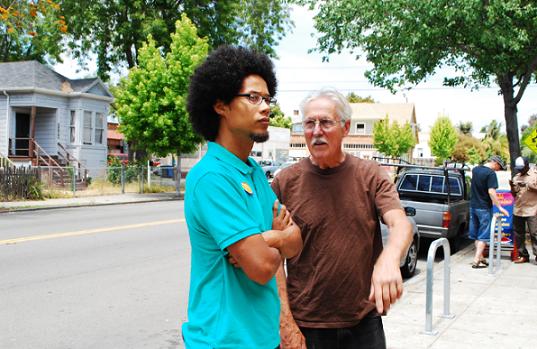
Osha Neumann, Cece Carpio, and O’Brien Thiele — two generations of La Peña artists. All Guardian photos by Caitlin Donohue

“Song of Unity” was meant to illustrate the coming-together of two continents through activist culture, at a time with US interventionism in Latin America was reaching a fevered pitch of corruption and when Bay Areans and Latin American refugees were coming together to form La Peña. It was a heavy moment. Jara’s hands, by way of illustration, are portrayed severed from his body for a reason. After the 1973 Chilean coup, they were said to have been cut from his body by military junta.

“Graffiti has no connection at all to the work of the Mexican muralists,” Neumann continues in response to my question about how street art has changed since his time.

“Graffiti artists don’t usually work collectively,” adds O’Brien Thiele, Neumann’s co-artist.

But here, Robert Trujillo must step in. Trujillo is a member of the Trust Your Struggle collective, the team of California-bred young people that have been elected to take up this historic mantle.

“But there are graffiti crews that are really well-established,” he interjects gently. “CPS from Los Angeles. TKO and MSK have crews worldwide. These are the groups that pioneered graffiti art on the West Coast.”

Trujillo should know — in a time in which street art has come into vogue and become a big-money game, TYS is a sterling example of what is still great about the genre. TYS travels the world connecting with communities in parts of the developing world like Latin America and the Phillipines. It uses graffiti-inspired murals to illustrate social problems, solutions. The center already bears the group’s mark — its superlative Cafe Valparaiso, which serves Chilean food at lunch and dinner, is adorned with a striking mural done by TYS members.


“When you’re in school, writing on the walls — that’s the thing they tell you not to do,” Trujillo tells us, by way of explaining the power of graffiti. “You don’t have a voice. With graffiti, suddenly you have a voice. People have to realize that it exists because of society.” He pauses, then hits upon an eloquent sum-up. “Graffiti is the perfect answer to society.”

“This is a really huge project for us,” says TYS member Cece Carpio. Carpio is La Peña’s program manager, one of many ties the local group has to the center. “This is a place of gathering. [With the new mural] we want to honor the history of Latin American activism here, but also the diversity that the place has now.”

This comes to the heart of why La Peña wants a new mural. Certainly, “Song of Unity” is in bad shape. It is crumbling at the junctures of its panels. Water is seeping in through the cracks, a death sentence for its three-dimensional figures. 

“Song of Unity” today

But perhaps even more importantly, the re-envisioning of the center’s facade will represent something rather extraordinary — that a radical institution that has been relevant in this community for decades has found itself in the hands of a new, dedicated generation.

La Peña’s programming has continued to diversify. Upcoming events include July 13’s Asian Rock Fest and this year has seen the fifth year of Queendom, DJ Zita’s all-female celebration of the five elements of hip-hop — not to mention the Immigrant Voices Festival that brought openly undocumented journalist Jose Antonio Vargas to the center last week. The Immigrant Voices Festival is a project explicitly sponsored by this “second generation” group — referred to as LP2G by the center. 

“I was sorry when they said they wanted to take [“Song of Unity”] down,” Neumann admits to the group that is assembled that sunny Sunday afternoon. “But they said they wanted new blood. What could I say to that?”

What indeed? Because if there is one good reason to donate to La Peña’s campaign to step, facade-first, into the new generation of activism — and you can! The last day to contribute to its Indie Gogo campaign is today, Mon/2 — it is to celebrate that a radical institution started in the fire of the ’70s has successfully found relevance today among the Internet generation. 

So what is TYS going to paint on this wall? Will it be three-dimensional, like Jara’s memorialized fingers and guitar? The final design won’t be determined until the collective’s done more meetings like this with the community members of La Peña. But you can rest easy on one point. Says Trujillo: “We all know it’s going to be fresh though.”

Art breakthroughs and country music with Sonny Smith

0

Sonny Smith’s dedicated yet freewhelin’ attitude towards life and art have brought him to his ninth record release this week, Longtime Companion (Polyvinyl Records), with his band the Sonny & the Sunsets. Yes, amid traveling to Central America, undertaking the sprawling “100 Records” art project, writing and performing monologues, and providing scripts for theater and film, Smith found the time to record yet another album.

A longtime San Francisco music scene fixture, Smith is now giving the North Bay a try, specifically San Rafael, with his 8-year-old son. That said, Smith is nowhere near slowing down on his prolific cycle of creativity. His new record has a diverse, country edge. The title track from Longtime Companion features enough flute-work to feel reminiscent of Nick Drake, while the track “Year of the Cock” has a straight-up Johnny Cash vibe.

I spoke to Smith over the phone about his album release, songs as comics, and how having a family has changed his outlook as an artist. Sonny & the Sunsets play Amoeba Music San Francisco tonight:

SFBG How did your time in Central America affect your songwriting and creative influences?

Sonny Smith It was the first time I had my own breakthrough. I wrote a screenplay. I was sitting around playing guitar, trying out songs, and the screenplays became songs. I began writing songs that were linear stories with characters and plots and that stuck with me for years – it started there.

http://www.youtube.com/watch?v=WV70ZV0bX1w

SFBG I read in an interview that after your “100 Records” project ended, you were interested in undertaking another huge project called “Record Plant” – are you still planning to get back to that?

SS Yes I have been thinking about that but it’s morphed into a project called “Protest Factory.” People would come make protest signs, like posters, and musicians would make songs to go with the signs. I would like the poster-making to be open to the public, not just artist friends such as musicians.

SFBG Do you visualize your songs in images, like the record covers musicians made for your project? Or is storytelling your main focus?

SS They go together: sometimes I draw comic panels first for a song idea, like a storyboard. It is like making a little mini movie, I draw it out and fit it all together. Sometimes in the end I discover it’s actually not a song, it’s a visual thing. It is a strange, weird process.

SFBG Did the recording process of the new album feel like a breeze compared to the “100 Records” project?

SS It was very casual, with a couple of friends, when we had time. Actually the “100 Records” project was pretty spread out, so it was fairly casual as well. This time around it was definitely beer cans and afternoons, no uptight studios and all that shit.

SFBG Do you make a point of creating theme albums or does a vibe just strike you as you write?

SS It’s organic. I don’t set out to make a themed record, but songs do come in groupings. It’s natural that you write a few songs and they all share a kind of theme. After around five or six songs, you start to see what it is, and that can inform the rest of the record a little bit.

I didn’t set out to make a country record, but since three or four country songs came out, once I had enough, I said ‘Oh yeah, this is definitely a country record.’ Then I decided to work on more country songs because then I knew I had a record. It was not preconceived – it’s midway through that you start to notice a theme.

SFBG How do you decide what will become a script, and what will become a song?

SS You embark on something, and at some point it reveals itself as what it really is and should be – a lot of things change midstream. For example, recently I started out trying to make a novel, and then I realized it just wasn’t meant to be a book; at some point I couldn’t force it, I could see that is what it is.

I did a play-monologue type thing this year. At first it began as comic books, but at some point I realized it was more of a monologue. I try not to deny it too much, and instead let it be what wants to be. My work does change a lot – if a song does not work for whatever reason, for example, then often I realize it is meant to be a poem. On the other hand, if a poem does not translate into a song, then I let it be what it is.

SFBG How did you end up working with Miranda July?

SS I met her when she was making her first movie [Me, You and Everyone We Know] and she read this cool story over music for a project I was working on. We only worked together for an afternoon and sent a few emails back and forth. You can’t really say you know someone or that it was much of an experience from that amount of interaction – well except we did go to Africa together for a brief love affair. [laughs]

SFBG Any other artists you’d love to work with?

SS One person I was thinking of recently is basically an intangible goal: when I was watching Moonrise Kingdom I was thinking that if I met Wes Anderson, I would see if he wanted to make a sci-fi movie with me. It’s unlikely, but you never know!

SFBG What is one really memorable moment of inspiration or just something that really stands out over your career so far?

SS There are great moments where you feel like you have broken through something – a personal breakthrough, where you did something you had in mind. If I happen to be with other people when that happens, it is exciting. When I was in Central America it was a pivotal moment where I said ‘What is being made here? This is really cool!’

The “100 Records” project came about because the visual artists – that ended up making the record covers –  were making covers that were going to be sketches inside a book. Then the art eclipsed the book idea. It was scary, I thought ‘Oh man, I have to do this?!’ Exciting too. I think it’s good to get in over your head, so you have to hike out, as long as it’s not too hard.

http://www.youtube.com/watch?v=gTxChvAp47U

SFBG Do you have a particular place where you’ve enjoyed performing most out of all your travels thus far?

SS
The Make-Out Room feels like home. [Also,] we have played at a grocery store in Portland, right next to the broccoli. There was no sound system or stage, I just know the manager and we enjoyed playing there.

SFBG What made you choose San Francisco as your home base, and what’s your take on the current Bay Area music scene?

SS I was born here and left for a while – but when I came back, it was more like coming home. I don’t know if I would be staying for as long if it wasn’t for my 8-year-old girl. I try not to think about it too much. It’s an exciting music scene – but I think it has always been exciting and always will be, some years it just gets more attention than others.

SFBG
How has having a family changed your approach to making art?

SS In the earlier years before they go to school, you have to exploit the little bit of time you have to yourself. It can help in a way, because once you have obstacles it actually makes your brain synapses work – you create solutions. If I was rich and lived in some pad and could sleep in until noon every day and lounge around a pool, that would not be conducive to being creative. Maybe that’s why often when people make that much money, they’re not as creative anymore. You need a balance. Kids are creative and much more free, so if you let that rub off on you at all then you’ll be effective.

Sonny & the Sunsets
Fri/29, 6pm, free
Amoeba Music SF
1855 Haight St.
(415) 831-1200
www.amoeba.com

Check out the Punk Rock Museum, a benefit for the preservation of punk

0

The Punk Rock Museum is an enormous punk rock preservation undertaking by Taquila Mockingbird – with the intention of pushing the Smithsonian to open a punk rock annex (!) – and was originally conceptualized for its Los Angeles location. Its doors have been open for barely four months now, and has already brought a new vitality to the punk rock scene as well as a renewed interest in preserving punk culture through original art, flyer art, photography, and, of course, music.

The museum is dedicated to Darby Crash of the Germs, who asked Taquila before he died to keep punk alive. (She tells the story in the video below this post.)

The museum is now making its way to the Bay with a mix of new works and pieces from the permanent collection. Come out and enjoy an evening of art and music to benefit the museum and help commemorate a very important period in modern art and culture.

Music:
DEBORA IYALL/ ROMEO VOID
METAL CIRCUS (a Husker Dü Tribute band)
Meri St. Mary & the Housecoats
DJ Big Nate

Artists:
Tim O’Hanlon, Jeffrey Lamm, Winston Smith, Andy Garza, Ricky Cole, Gary Indiana, Lily Chow, Snake Lady Rose, Kris X, Vincent Anton, The Units, James  Stark, Johnny Bonnell, and more.

For more info and to secure your tickets, follow this link.

Saturday, July 7, from 9pm-1:45am @ Thee Parkside, 1600 17th Street, SF | $15


Localized Appreesh: First Church of the Sacred Silversexual

0

Localized Appreesh is our weekly thank-you column to the musicians that make the Bay. To be considered, contact emilysavage@sfbg.com.

More than just a band, and beyond a tribute act, self-described local “cover cult” First Church of the Sacred Silversexual takes early David Bowie relics and shoots them out of a glitter-packed cannon. Essentially, they provide flamboyant DIY musical theater in an ode to the Thin White Duke and the shiny space cadet in us all.

Led by The Reverent Father Lysol Tony-Romeo, the sacrilegious Bowie church includes sermons and campy sing-along musical performances with choirs of freaky chanters performing cuts from the classic Space Oddity, along with Ziggy Stardustian tracks and far beyond, deep into the catalogue. For San Francisco, it’s part of a long and storied tradition of theatrical antics, performance art, and metaphoric drag. Oh no love, you’re not alone.

Year and location of origin: 2010, Suffragette City Transfer Station, Mission District.

Band name origin: The advanced enlightened state of attraction that transcends gender and centers upon sparkle alone.

Band motto: Wham Bam Thank You Ma’am!

Description of sound in 10 words or less: 12-person worship band delivering blasphemous sermons exalting David Bowie.

Instrumentation: Father Lysol Tony-Romeo (Lysol Tony-Romeo): vocals; Major Tom (Michael Carney): vocals; Uncle Sally (Jillian Dahhling):  vocals; Fancy Nancy (Aoife Davis):  vocals; Careless Cadence (Bryn Laux):  vocals; Alabaster Superior (Alison Niedbalksi):  keys, vocals; Hazy Deranged (Adam Dragland):  guitar, vocals; Akimbo Botswani (Jason Yeatman):  guitar; Lloyd (Ben Chambers):  bass; Raymond T. Gunn (Greg Maximov):  drums; Foxy Frankie Scandal (Teddy Raven):  saxophone

Most recent release: Bowie on Broadway!  The First Church talks Fame.

Best part about life as a Bay Area band: All the young dudes.

Worst part about life as a Bay Area band: All the young dudes.

First album ever purchased: The Rise and Fall of Ziggy Stardust and the Spiders from Mars.

Most recent album purchased/downloaded:  Ha.

Favorite local eatery and dish: The band only ingests cocaine, milk and white peppers, so anywhere that serves that

First Church of the Sacred Silversexual
Fri/29, 8pm, $10
Broadway Studios
435 Broadway, SF
Fecbook: Bowie On Broadway

A queerness in Harlem, finely revived

0

Visual alchemy, fabulous feminist story-telling, and something deemed “hyper-literate busking” abound at 2012’s Queer Rebels of the Harlem Renaissance fesitval, three nights of art and performance (Thu/28-Sat/30) by 21 LGBTQ African Americans.

Part of the 15th National Queer Arts Festival, Queer Rebels of the Harlem Renaissance continues the legacy of the droves of artists, performers, and activists who questioned stale societal standards in a myriad ways during the heyday of the New York City neighborhood’s 1920s and 30s creative blossoming: from sensual lyrics of Bessie Smith to the pointed poetics of Langston Hughes, the artists of the Harlem Renaissance continue to testify to the assertion that social causes are rarely separate and constantly progressing.

“The explosion of artistic, intellectual, and sexual freedom during the Harlem Renaissance created new possibilities,” explains Celeste Chan over the phone. She co-directs the performance series with Kali Boyce — together they’re known as the Queer Rebels. “We think that dialogue on race, gender, and sexuality grew naturally during the Harlem Renaissance because these were people’s real experiences, and what they wanted to create art about. We’re thankful for the elders and the artists who paved the way for us, whose shoulders we stand on.”

Queer Rebels of the Harlem Renaissance reinforces the idea that it is necessary to understand a past in order to create a future. Thus, paying proper homage to the Harlem Renaissance artists who opened the possibility for social change and activist dialogue, the performance schedule for Queer Rebels consists largely of dance, story-telling and readings, and music. Earl Thomas, Sista Monica, and “Drag King of the Blues” TuffNStuff operate within the jazz and blues traditions — however, the show also expands to mediums of artistic expression not so common in 1920’s America, such as political film,  contemporary music, and visual alchemy with appearances from the likes of short-filmmaker Crystal Mason, punk rock dancer Brontez Purnell, and visual artist Adee Roberson. 
(Check out the incredible-sounding lineup here.)

“Artists and queers are up against a lot, and have always been society’s outsiders, the ones who have and will lead the way,” says Chan, “Today, we are able to live unapologetically queer lives and create our own spaces because of the work that the Harlem Renaissance artists did.”

QUEER REBELS OF THE HARLEM RENAISSANCE

Thu/28.-Sat/30, 8pm, $15-$25

African American Art and Culture Complex

762 Fulton, SF.

www.queerrebels.com

Tickets:  www.brownpapertickets.com/event/246312


THEESatisfaction communicates its boldly cosmic agenda at the Independent

1

Amid the reign of Kanye, it can be easy to overlook the humble beginnings of hip-hop: a populist genre designed to be executed with minimal resources. Seattle duo THEESatisfaction’s reverence for this history was on full display at the Independent last Friday night, as they “turned off the swag” to deliver a remarkably unadorned performance, in support of the acclaimed awE naturalE, released earlier this year. Two microphones and a MacBook were all Catherine Harris-White and Stasia Irons needed to communicate their boldly cosmic agenda.

Taking the stage in matching leopard-print, Stas and Cat opened with the frenetic, Billy Cobham-esque “naturalE”, before easing into an expertly paced set, indebted to countless strains of black vanguard music: the astral thrust of Sun Ra and George Clinton; the buttery neo-soul of Erykah Badu; the political integrity of Last Poets; the loop-based hypnosis of J Dilla.

Musicians this boldly enterprising are notorious for massaging their egos, but conversely, Stas and Cat turned in an endearingly casual performance, devoid of hipster posturing and showbiz schtick. Everything, down to the synchronized dance moves, was imparted with the laid-back spirit of two best friends (or, in Stas and Cat’s case, lovers) goofing off in their living room.

Despite the relaxed vibe, the duo’s stage presence was incredibly refined, starting with their beautifully interlocking vocal techniques. Cat’s jazz-based vocal inflections provided the perfect foil to Stas’ rap verses, like the splash of milk in a cup of tea. “Deeper” was a highlight in this sense; revolving mainly around Stas’ rapping, Cat added subtle ornamentation, echoing syllables and completing phrases to create a swirling, intoxicating tremolo effect.

In a pleasant surprise, “Deeper” ended with a newly written, a capella outro, before transitioning seamlessly into the grooving, yet subdued, “Needs.” While the (predominantly female) audience went wild, nothing could’ve prepared them for the hedonistic centerpiece of awE naturalE, “QueenS”. A much needed, diversionary moment on a record abound with blistering social criticism, it entitled Cat to her Donna Summer moment of the night. The crowd reacted ecstatically, singing along to her chants of, “sweat in your cardigan!” while doing exactly that.

The remainder of THEESatisfaction’s set balanced material from awE naturalE, with cuts from their self-released That’s Weird (2008) and Snow Motion (2009). Clocking in at roughly an hour, it left the audience mostly satisfied, craving just a little more: an ideal balance that’s rarely achieved.

The “laptop set,” much like a solo singer-songwriter performance, is a difficult art to master. It takes a compelling personality to keep things interesting in such a minimal environment. On Friday night, THEESatisfaction showed a total command of their craft, never allowing their austere presentation to overshadow the richness of their creative vision.

The economies of desire

0

THEATER Since 2010, This Is What I Want has hitched its program to the National Queer Arts Festival to explore the artistic and social ground between intimacy and performance. Privileging the immediate, even confused elaborations of desire over the canny or slickly theorized, TIWIW (produced by THEOFFCENTER in association with SOMArts, the Center for Sex and Culture, and the Queer Cultural Center) challenges adept, professional performance makers to risk forgoing the usual control or cohesion in the hope of finding new avenues for creation and participation.

TIWIW’s free-ranging curatorial approach, which includes artists operating outside queer or identity-based practices, gets a further boost this year with the inclusion of several Los Angeles–based artists and a symposium at the Center for Sex and Culture moderated by Carol Queen.

San Francisco–based performance artist and choreographer Tessa Wills took over as artistic director this year at the invitation of TIWIW’s founder, choreographer Jesse Hewit. Wills’s own piece caps the five-day program with a “participatory experience” at the Center for Sex and Culture, and in general she brings a particular stamp to this year’s festival, even as TIWIW stretches out within and beyond the Bay Area via a curatorial team that includes Hewit, Rachael Dichter, and Los Angeles–based artists Anna Martine Whitehead and Doran George.

Wills, a thirtysomething whose relaxed mien belies a probing stare, is an internationally produced performance maker who grew up studying music, ballet, and contemporary dance in England before relocating to the Bay Area. She’s one of those artists always worth going out of your way for. In fact, she was behind one of the more memorable contributions to last year’s TIWIW program (more on that below). Wearing a sleeveless T-shirt that nonchalantly compliments the shorn sides of her sandy brown bob, Wills sat down at a Mission café last week to discuss her directorial vision for TIWIW and the economies of desire.

San Francisco Bay Guardian Can you describe briefly the curatorial process this year?

Tessa Wills We asked people to apply, either people whose work we like or with a specific piece in mind, like Sara Kraft’s — Rachael [Dichter] knew exactly what the piece was. [Multimedia artist Sara Kraft’s The Truth employs a pair of dueling narratives in what the artist describes as a desperate search for objectivity, “fueled by the deeply subjective madness of desire, loss and the chaos of experience.” It premiered at Yerba Buena Center for the Arts in 2007.]

I had the curatorial statement underway, and the other curators added to it, enriched it or changed parts, and we invited people from there. About half of them are new commissions from people we are just excited by, like Dia [Dear] and Mica [Sigourney], and half of them are pieces that already exist. There are loads of people coming up from LA this time because two of the curators are down there.

SFBG One of those is British artist Doran George. How did he become involved?

TW I followed his work in England but never met him. Then he came to San Francisco, and we made very fast, intense connections around work and politics, and also a friendship. So we were looking for a way to work with each other.

When Jesse asked me to direct TIWIW and invite in curators, it seemed like that was really where Doran was at. A lot of his work is about somatics as it relates to gender. Because he was [in Los Angeles], it seemed sensible to think about other people that could support him and his choices down there. Anna Martine [Whitehead] is also down there working, and obviously she has this strong history with the festival, and her voice is clear, rich and powerful.

SFBG Can you explain the emphasis on desire and economy in your work and in your directorial approach overall?

TW Broadly, people in this festival [in the last two years] have looked at desire through the lens of sexuality — but they also have not. My artistic direction has put it very specifically; I really wanted to bring in that question of how money and desire weave together, and where the places of empowerment and disempowerment are around that. I’ve brought sex work to the fore in that. Doran also is interested in that. But we were very careful in the curating to broaden that out a lot. The pieces are not all about sex; but the pieces are all about desire. So there is breadth, but also that very specific thing that I’ve brought in.

In my piece, at Center for Sex and Culture on Saturday, there are nine people who are “charging,” they’re doing one-on-one performances with audiences. Basically, they’re facilitating you talking about your desire. But it’s not like straight sex work. It’s not like they’re going to meet your desire. They’re going to interrogate it with you and charge it up.

SFBG So “charge up” has a double entendre.

TW It’s got a double entendre, exactly. All of the chargers are sex workers. I identify as a sex-worker ally, and I identify in the space between performance and sex work. Those are my two communities. So this theme, the value of desire, somehow has those two together.

SFBG Where do you see subversive or radical points of departure in the intersections of desire and economy? 

TW People will take money and then use it for their subversive practices. So there’s that. Then there’s the fact that everybody is working for free to put this festival on. I think that adds a really interesting perspective to the conversation about how desire and money relate. Because the thing that’s really driven this festival is this passionate desire to put it on for its own sake. It defies any economic logic that any of us are working this hard. I mean, it’s ridiculous. I feel stupid how hard I’m working on this.

SFBG That’s the position of a lot of art-making in this society. But then, ridiculousness is a tried-and-true strategy of subversion too. I’m reminded of the argument in Judith Halberstam’s book, The Queer Art of Failure, where a willingness to “fail” — in the terms set by the dominant social and economic order — may offer a way out from under that order, and suggest alternatives beyond its reach or ken.

TW There are all these other economies that come to light when you look at that disconnect or failure [vis-à-vis the dominant economic model]—then it’s like, ok, that’s obviously not working, so what else can be motivating? There are just so many diverse economies at work. Like DavEnds piece, for example. She was really motivated by wanting to have close, intimate exchanges and make more friends. The people she’s brought into her piece, she’s very clear about it, are people that she wants to be friends with.

SFBG There’s a social impulse mixed in there. I also like the idea that desire could be tied to giving away or losing, as opposed to taking, receiving, gaining or possessing. Does that resonate with some of the pieces this year? 

TW Yes, I think that’s right. Mica Sigourney’s piece is one that I was very keen to curate. He’s the only one who’s been in all the iterations of the festival, and I think each time he’s done [TIWIW], it’s gotten a little closer to actually managing to stage desire, in motion, on the stage. His piece is kind of a secret, but there’s a way in which he is working directly with money. He’s trying to figure out his erotic value in the moment, with the audience. There’s a way in which his work always gets right to the heart of the theme for me.

SFBG Back to your piece: Does it build on previous work?

TW Yes. Last year, when I was at the festival, I did this piece with electric butt plugs. [Note: In this piece, Wills and co-performer Harold Burns were naked inside (what looked like) giant pink bath scrunchies (designed by Honey McMoney), wearing electric butt-plugs attached to a microphone set low before a pillow at the front of the stage. Individual audience members could come kneel and whisper their fantasies, their words registering solely in the physical responses and expressions of the performers.]

When they asked me to be in the festival, I identified that what I’m really excited about is the process of saying what you want, the somatic experience of saying what you want — especially if it feels transgressive inside of you. I don’t really care what the content of the thing is. And I don’t care whether society thinks it’s ok or not. I’m not really interested in any of that. I’m just interested in the physical, somatic experience of saying what you want. That seems like the most valuable thing for me.

So what I did in the butt-plug piece was to get the audience to come up and say things, to say what they wanted, and they couldn’t really be heard, and then we would just get the sensation — we would get the quality of how they were talking but we wouldn’t get the content. And we’d experience that in a very intimate, deep way. That’s what I wanted to try and develop a bit further this year. So after this week of people watching other people struggle and interrogate and stage their desire, [in this piece] they get to have all of that research land in their own body. They have their own process of saying what they desire, and they have their own somatic experience.

SFBG So it’s very individual and private, there’s no larger audience, there’s no documentation of the whole thing.

TW Exactly. It’s kind of rough for me as an artist, because I’ve put so much work into it, and it’s a very generous piece in terms of the amount — like we talked about the economic worth and the amount of one-on-one time with the audience. So it’s very sad for me to never get an audience response, actually.

SFBG No payoff?

TW Yeah, I’ll never get that.


THIS IS WHAT I WANT

Performances Wed/27-Fri/29, 8pm, $20

SOMArts Cultural Center

934 Brannan, SF

“Slow Sex Symposium” Sat/30, noon-4pm, free

“This Is What You Want — Experiential” Sat/30, 5-11pm, $15-$25

Center for Sex and Culture

1349 Mission, SF

thisiswhatiwant.eventbrite.com

Walk this way

2

arts@sfbg.com

DANCE If you’ve ever had to create a multi-course meal from random fridge contents, or pulled together a smashing outfit moments before a big party, you are well familiar with the fine art of making do.

ODC Theater Director Christy Bolingbroke might have been thinking along these lines as she put together the Walking Distance Dance Festival — SF, a three-day marathon of 12 companies both local and national, with one from Singapore thrown in for good measure. These are the ingredients that she had to work with; the occasion is that Dance/USA, the national service organization for dance, is in town. That’s a big opportunity to show the rest of the country who we are and what we do.

The ten-year-old but little-known Scuba, a multi-city initiative between San Francisco, Seattle, Minneapolis, and Philadelphia, offers touring opportunities to mid-career artists to and from participating cities. ODC has a long tradition of offering developmental residencies to local choreographers. And last, but not least, ODC has an elegant multi-venue “campus,” as they call it, suitable for simultaneously showcasing performances both intimate and large. For Walking Distance, Bolingbroke curated a mix of Scuba and former ODC resident artists performing in three ODC venues.

But she also had something else in mind. Walking Distance presents most works in shared line-ups. “We know that audiences follow individual artists,” she explains. “We wanted to create opportunities for them to see different artists in one sitting to get a taste of a variety of choreographies.”

It’s a model that has been the norm in other performing arts, such as symphony orchestras. Dance companies, however, have for the most part stuck to one-artist programs, though Robert Moses’ Kin Dance Company’s recent “The BY Series” and Amy Seiwert and Imagery’s upcoming “Sketch 2” may be indications of change to come.

One of Walking Distance’s most intriguing pairings just might be ODC Dance with Maya Dance. Maya is a five-year-old contemporary ensemble from Singapore that bases its work on Asian esthetics and traditional dance forms. In May, ODC and Maya performed in a shared program in Singapore. Both groups performed Brenda Way’s 2008 Unintended Consequences: A Meditation; KT Nelson set a work on Maya, and Kavitha Krishnan set one on ODC. The repeat will be Maya’s first US appearance.

Making their first appearance in San Francisco are three Scuba artists; it’s impossible not to be impressed with the sheer variety of dance being created outside the Eastern corridor. A colleague from Seattle described Alice Gosti’s Spaghetti Co — Are you Still Hungry? as “basically a food fight with kinetically interesting things happening.” For her Halo, Gabrielle Revlock is bringing one prop — a hoop — from Philly. And then there is the German-born Minneapolis choreographer Angharad Davies, who in Security examines the effect of tedious shift work on relationships.

Of the work by former ODC Theater residents, only the excerpt of Catherine Galasso’s Fall of the Rebel Angels is new. Perhaps that’s not what festivals traditionally do, but for Bolingbroke this one is an opportunity to gather works that have proven themselves.

Walking Distance also reflects the theatrical strengths among former ODC resident artists. There is no pure dance, and no ballet unless you count the revival of Kunst-Stoff’s deliciously deconstructed Less Sylphide. The festival’s choreographers — Ben Levy, Monique Jenkinson, Ryan Smith and Wendy Rein, and Shinichi Iova Koga — have extraordinarily broad perspectives on how dance communicates.

“It’s a taster, a sampler of many different things,” Bolingbroke says of Walking Distance, which was inspired by a 2011 version held in the Mendocino County town of Willits. At that festival, several theaters in close proximity to each other collaborated to present BARE Dance (from Los Angeles), AXIS Dance Company, and Na Lei Hulu I Ka Wekiu; it focused local attention on California dance in an informal, easily accessible manner. This approach just might work in San Francisco as well — now and at future incarnations of the fest.

WALKING DISTANCE DANCE FESTIVAL — SF

Fri/29-Sat/30, 6:30pm; Sun/1, 2pm, $20-$75

ODC Theater

3153 17th St., SF

www.odctheater.org

Rio Grande

0

virginia@sfbg.com

APPETITE Who needs menus when the bartenders are this good? The granddaddy of the speakeasy resurgence, New York’s Milk and Honey, has been doing the menu-less thing since 2000, while places like LA’s Library Bar get their inspiration from daily changing, farmers market produce. Two fascinating new SF bars are serving custom cocktails their own way, only able to go sans menu because of strong talent behind the bar. Reviewed online on the Guardian’s Pixel Vision blog is the intimate, amusingly named Big; here is my take on the other menu-less charmer, Rio Grande.

I’ve written about Bon Vivants (cocktail designers Scott Baird and Josh Harris, operations specialist and behind-the-scenes mover Jason Henton) numerous times over the years, from early days at 15 Romolo to recent cocktail menu creation at Berkeley’s new Comal. Anticipating their long-awaited Mission bar Trick Dog, I’ve been having fun in the meantime with multiple visits to Rio Grande, a bar they just launched as part of ATO (A Temporary Offering) in the Kor Group’s Renoir Hotel, a genius pop-up project where local entrepreneurs can test concepts, from FoodLab restaurants to shops and art events.

Using the hotel’s vacant, three-room space, revolving projects invigorate the stretch of Market near Seventh Street. Rio Grande is unlike any other bar in town. Evoking a South of the Border cantina, or what the Vivants dub “Tarantino and Once Upon a Time in Mexico meet border town roadhouse,” here funky kitsch glitz marries laidback ease, as tequila, mezcal, whiskey, and canned beer flow.

Under the gaze of Wild Turkey bourbon and Espolon tequila logos emphasizing the bar’s whiskey-tequila union, the ceiling sports a Virgin of Guadalupe shrine in front of a painting of 1970s adult film actress Vanessa del Rio, a Baird crush after whom he named the Del Rio cocktail (reposado tequila, fino sherry, St. Germain elderflower, orange bitters). The Del Rio will soon be served on tap, while the current on-tap cocktail is an Old Fashioned.

The bar was initially launched as a pop-up, in keeping with ATO’s rotating offerings, but the Renoir folks like it enough to try and find a way for it to stay. If it can’t, the Vivants will move it to various locales as a gypsy bar. Here’s hoping it remains while they launch other nomadic bars — a fine concept.

Rio Grande was, impressively, built out in three weeks: Henton says there were days they’d still be wielding power saws at 5:30am, building high-top tables or implementing one of Harris’ many estate sale-flea market finds. (He stalks local sales for vintage pieces like the bar’s fascinating ceiling fans and the cowhide splayed in the entrance. Harris even gathered Mexican national newspapers from 1945-’47 to became the wallpaper behind the bar.) The bar itself boasts a pole on either end for whatever shenanigans might ensue, while a mini-stage is set for live music. Even without bands, tunes are perfection: a little hard rock, a lot of classic country — think Waylon, Hank I and II, your general outlaw cowboy musicians.)

To exist sans menu, it’s crucial that bartenders be talented, knowledgeable and versatile. Rio Grande couldn’t be more on the right path with hand-chosen barkeeps Morgan Shick and Russell Davis, assisted by Trick Dog chef Chester Watson. Shick is one half of Jupiter Olympus, a bar-restaurant consulting company that throws some crazy, imaginative parties. I’ve judged a number of cocktail contests where Shick (who’s worked at bars from Marzano to Michael Mina) was an entrant: his sense of balance and ingenuity stand out every time. Davis, besides being named Nightclub and Bar’s 2012 Bartender of the Year, recently crafted a brilliant soda fountain menu at Ice Cream Bar and can be found actually igniting flames at Rio Grande for special cocktails.

According to Harris, the Vivants wanted “to take all the pretentiousness out of the bar scene and make it fun”, which is why Tecate and Dos Equis flow just as freely as Del Maguey. During my visits, I’ve sipped a mezcal and yellow chartreuse winner and a bitter amaro beauty on crushed ice (Julep snow cone-style). Speaking of ice, it’s hand-cut here, a pleasure to watch. During one visit, Shick made a mezcal, grapefruit soda drink accented with crème de cassis (black currant liqueur), lime, Luxardo Maraschino liqueur, and salt: smoky, salty and citrusy. Spiced fall notes shine in his mixture of Siete Leguas anejo tequila, made with Averna for a tinge of bitter balance, Angostura orange bitters, sweet vermouth and apple brandy. I’m in love with a finish of Old Bardstown bourbon, Nocino walnut liqueur, Balcones’ rum-like Rumble (made from Texas wildflower honey, Mission figs, turbinado sugar), plus dry vermouth and triple sec. Dry, sweet, full, it’s still bracing enough to put hair on your chest.

“Watch for some potentially interesting surprises musically,” says Harris of the tiny stage, and for Tarantino Tuesdays, when Tarantino films and soundtracks accompany your pour.

RIO GRANDE

1108 Market, SF

Subscribe to Virgina’s twice-monthly newsletter, The Perfect Spot, www.theperfectspotsf.com


Music Listings

0

Since club life is unpredictable, it’s a good idea to call ahead or check the venue’s website to confirm bookings and hours. Prices are listed when provided to us. Visit www.sfbg.com/venue-guide for venue information. Submit items for the listings at listings@sfbg.com. For further information on how to submit items for the listings, see Picks.

WEDNESDAY 27

ROCK/BLUES/HIP-HOP

Adios Amigo, Dreamdate, Garrett Pierce Rickshaw Stop. 8pm, $10.

Civil War Rust, Air Show Disaster, Why I Hate Bottom of the Hill. 9pm, $8.

Keith Crossan Invitational Pro Blues Jam Biscuits and Blues. 8 and 10pm, $15.

Trini Lopez Rrazz Room. 8pm, $40-$45.

Jason Marion vs. Lee Huff Johnny Foley’s Dueling Pianos. 9:30pm.

Terry Savastano Johnny Foley’s. 9pm, free.

Symbolick Jews, Konichiwa Baby, Impersonations Hemlock Tavern. 9pm, $6.

Tanlines, Aaron Axelsen, Miles the DJ Brick and Mortar Music Hall. 9pm, $10.53.

JAZZ/NEW MUSIC

Cat’s Corner with Nathan Dias Savanna Jazz. 9pm, $10.

Cosmo AlleyCats Le Colonial, 20 Cosmo Place, SF; www.lecolonialsf.com. 7-10pm.

Dink Dink Dink, Gaucho, Michael Abraham Amnesia. 7pm, free.

Ricardo Scales Top of the Mark, 999 California, SF; www.topofthemark.com. 6:30pm, $5.

FOLK/WORLD/COUNTRY

Nachito Herrera Trio Yoshi’s. 8pm, $20.

DANCE CLUBS

Booty Call Q-Bar, 456 Castro, SF; www.bootycallwednesdays.com. 9pm. Juanita MORE! and Joshua J host this dance party.

Coo-Yah! Som., 2925 16th St, SF; (415) 558-8521. 10pm, free. DJs Daneekah and Green B spin reggae and dancehall with weekly guests.

Full-Step! Tunnel Top. 10pm, free. Hip-hop, reggae, soul, and funk with DJs Kung Fu Chris and Bizzi Wonda.

Mary Go Round Lookout, 3600 16th St, SF; www.lookoutsf.com. 10pm, $5. Drag with Suppositori Spelling, Mercedez Munro, and Ginger Snap.

Megatallica Fiddler’s Green, 1333 Columbus, SF; www.megatallica.com. 7pm, free. Heavy metal hangout.

Shutter Elbo Room. 10pm, $5. With DJs Nako, Omar, and Justin.

Southern Fried Soul Knockout. 9:30pm, $3. With Selectors Medium Rare, Psychy Mikey spinning barbecue greasy soul.

THURSDAY 28

ROCK/BLUES/HIP-HOP

Anthem Johnny Foley’s. 9pm, free.

AVICII, Chuckle, Cazzette Bill Graham Civic Auditorium. 8pm, $49.50.

Harper Blynn, Madi Diaz Cafe Du Nord. 8pm, $10.

Butch Whacks & the Glass Packs Bimbo’s. 8pm, $45.

Shane Dwight Biscuits and Blues. 8 and 10pm, $16.

Fake Your Own Death, Glass Trains, Le Panique Hemlock Tavern. 8:30pm, $6.

High and Tight, Flexx Bronco, Lonely Kings, Parachute on Fire Thee Parkside. 9pm, $7.

Lee Huff vs. Jason Marion Johnny Foley’s Dueling Pianos. 9:30pm.

Japonize Elephants Amnesia. 9pm, $7-$10.

J Boog, Katchafire, Irie Dole, Hot Rain Mezzanine. 9pm $35.

Trini Lopez Rrazz Room. 8pm, $40-$45.

Magic Trick California Academy of Sciences, 55 Music Concourse, SF; www.calacademy.org. 6pm, $10-$12.

Russian Circles, An So I Watch You From Afar, Deafheaven Great American Music Hall. 8pm, $14.

Sister Sparrow & the Dirty Birds Boom Boom Room. 8pm, $15.

Terry Malts, Rat Columns, Synthetic ID Bottom of the Hill. 9pm, $10.

JAZZ/NEW MUSIC

Chuchito Valdes Latin Jazz Band Yoshi’s. 8pm, $18; 10pm, $12.

Stompy Jones Top of the Mark, 999 California, SF; www.topofthemark.com. 7:30pm, $10.

Ned Boynton Trio Bottle Cap, 1707 Powell, SF; www.bottlecapsf.com. 7-10pm.

FOLK/WORLD/COUNTRY

Twang! Honky Tonk Fiddler’s Green, 1330 Columbus, SF; www.twanghonkytonk.com. 5pm. Live country music, dancing, and giveaways.

DANCE CLUBS

Afrolicious Elbo Room. 9:30pm, $5-$7. With DJ/host Senor Oz and guests DJ Oneman, B Sears & Coolhands.

Andy Rourke (DJ set) Rickshaw Stop. 10pm, $12. Popscene vs the Smiths.

Afrolicious Elbo Room. 9:30pm, $5. DJs Pleasuremaker and Señor Oz spin Afrobeat, Tropicália, electro, samba, and funk.

Get Low Som., 2925 16th St, SF; (415) 558-8521. 10pm, free. Jerry Nice and Ant-1 spin Hip-Hop, ’80s and Soul with weekly guests.

Ritual Dubstep Thursdays Temple Nightclub, 540 Howard, SF; www.templesf.com. 10pm, $5. Dubstep with alternating DJs.

Thursdays at the Cat Club Cat Club. 9pm, $6 (free before 9:30pm). Two dance floors bumpin’ with the best of 80s mainstream and underground with DJ’s Damon, Steve Washington, Dangerous Dan, and guests.

Tropicana Madrone Art Bar. 9pm, free. Salsa, cumbia, reggaeton, and more with DJs Don Bustamante, Apocolypto, Sr. Saen, Santero, and Mr. E.

FRIDAY 29

ROCK/BLUES/HIP-HOP

Baby Dee, Carletta Sue Kay Brick and Mortar Music Hall. 8pm, $12-$15.

Back Pages Johnny Foley’s. 9pm, free.

Blues Brothers Review Yoshi’s. 8pm, $30; 10pm, $25.

Bpos Showdown, 10 Sixth St, SF; www.showdownsf.com. 9pm, free.

Butch Whacks & the Glass Packs Bimbo’s. 8pm, $50.

Delta Rae, Victoria George, Helena Independent. 9pm, $12.

El-P, Killer Mike, Mr. Muthafuckin’ eXquire, Despot Regency Ballroom. 8pm, $25.

Ian Franklin & Infinite Frequency Rockit Room. 9:30pm, $5.

Noah Griffin Union Room at Biscuits and Blues. 7:30pm, $10.

Growlers, Extra Classic, Cosmonauts Rickshaw Stop. 8:30pm, $13-$15.

Guido, Jason Marion, Lee Huff Johnny Foley’s Dueling Pianos. 9pm.

Paula Harris Biscuits and Blues. 8 and 10pm, $20.

Austin Hastings, Stellar J, Mischa Pollack Brainwash Cafe, 1122 Folsom, SF; www.brainwash.com. 8pm.

Trini Lopez Rrazz Room. 8pm, $40-$45.

Laura Marling Grace Cathedral, 1100 California, SF; www.lauramarling.com. 9pm, $39.50.

Moggs, Sons of Huns, Porch Hemlock Tavern. 9:30pm, $7.

Mrs. Magician, Mantles, Kids on a Crime Spree Bottom of the Hill. 10pm, $12.

Rad Cloud, Assateague, Sean Flinn and the Royal We, Sparrow’s Gate Amnesia. 9pm, $7-$10.

Chris Sprague & His 18 Wheelers, Mitch Polzak and 10-4, Kit & the Branded Men Cafe Du Nord. 9pm, $10-$12.

Justin Townes Earle, Tristen Great American Music Hall. 9pm, $21.

JAZZ/NEW MUSIC

Audium 1616 Bush, SF; www.audium.org. 8:30pm, $20. Theater of sound-sculptured space.

Black Market Jazz Orchestra Top of the Mark, 999 California, SF; www.topofthemark.com. 9pm, $10.

Terry Disely Bottle Cap, 1707 Powell, SF; www.bottlecapsf.com. 5:30-8:30pm, free.

FOLK/WORLD/COUNTRY

El Sonido Callejero, Santos De Los Angeles Slim’s. 8pm, $13-$15.

Taste Fridays 650 Indiana, SF; www.tastefridays.com. 8pm, $18. Salsa and bachata dance lessons, live music.

DANCE CLUBS

Bloke Salutes Roxy Music Truck. 8pm, free. With DJ Bobby Please.

DJ What’s His Fuck Riptide Tavern, 3639 Taraval, SF; www.riptidesf.com. 9pm, free.

Joe Lookout, 3600 16th St.,SF; www.lookoutsf.com. 9pm. Eight rotating DJs, shirt-off drink specials.

Old School JAMZ El Rio. 9pm. Fruit Stand DJs spinning old school funk, hip-hop, and R&B.

Paris to Dakar Little Baobab, 3388 19th St, SF; (415) 643-3558. 10pm, $5. Afro and world music with rotating DJs including Stepwise, Steve, Claude, Santero, and Elembe.

Pledge: Fraternal Lookout. 9pm, $3-$13. Benefiting LGBT and nonprofit organizations. Bottomless kegger cups and paddling booth with DJ Christopher B and DJ Brian Maier.

Sandwell District Showcase Public Works. 9pm, $15. With Function, Silent Servant, RRose, and more.

Sweater Funk Elbo Room. 10pm, $10. With DJs Jon Guillermo, Selecter DJKirk, Sabrina, Chun-Tech, special guests Mark Grusane and Mike Cole, and more.

Teenage Dance Craze Knockout. 10pm, $5. DJs Russell Quan, Okie Oran, and dX the Funky Granpaw spin surf, soul, garage, and more.

SATURDAY 30

ROCK/BLUES/HIP-HOP

Alaric, La Corde, Crimson Scarlet, DJ Brown Amy El Rio. 10pm, $7.

Ben Benkert, Caldecott, Lifted Roots, Speed Goat Slim’s. 9pm, $14.

Big Tree, City Tribe, Yesway Rickshaw Stop. 8pm, $10.

Blisses B, Green Door Hemlock Tavern. 6pm, $5.

Blues Brothers Review Yoshi’s. 8pm, $35; 10pm, $30.

Butch Whacks & the Glass Packs Bimbo’s. 8pm, $50.

Glitter Wizard, Shrine, Hot Lunch Hemlock Tavern. 9:30pm, $8.

Growlers, Extra Classic, Summer Twins Independent. 9pm, $15.

He’s My Brother She’s My Sister, Assemble Head in Sunburst Sound, Strange Vine Cafe Du Nord. 9:30pm, $10.

Kafana Balkan, Brass Menazeri, Fishtank Ensemble Great American Music Hall. 9pm, $15.

Trini Lopez Rrazz Room. 8pm, $40-$45.

Major Powers & the Lo-Fi Symphony, Billy Cramer & Share the Land, Prairiedog Amnesia. 9pm, $8-$10.

New Monsoon, Tim Carbone Brick and Mortar Music Hall. 9pm, $12-$15.

Northerlies, Raven Marcus, Slow Motion Cowboys Amnesia. 5:30pm, $8-$10.

Quintron & Miss Pussycat, Dent May, Shannon and the Clams Elbo Room. 9:30pm, $12.

Royal Deuces, Jinx Jones & the King Tones, Miss Lonely Hearts Knockout. 10pm, $6.

Earl Thomas & the Blues Ambassadors Biscuits and Blues. 8 and 10pm, $22.

Thundercult, Vir, Lotus Moons Thee Parkside. 9pm, $5.

Top Secret Band Johnny Foley’s. 9pm, free.

Trainwreck Riders Riptide Tavern, 3639 Taraval, SF; www.riptidesf.com. 9:30pm, free.

Via Coma, I The Mighty, Atlas Bottom of the Hill. 9pm, $10.

Voco, Minot Thee Parkside. 3pm, free.

Greg Zema, Lee Huff, Jason Marion Johnny Foley’s Dueling Pianos. 9:30pm.

JAZZ/NEW MUSIC

Audium 1616 Bush, SF; www.audium.org. 8:30pm, $20. Theater of sound-sculptured space.

Elliot Simpson Unitarian Universalist Society of San Francisco, 1187 Franklin, SF; www.tangentguitarseries.com. 7:30pm, $15.

Two Grands One Heart: Lynn Yew Evers and Margie Balter Salle Pianos, 1632 C Market, SF; www.lynnyewevers.com. 7-9pm.

FOLK/WORLD/COUNTRY

Craig Ventresco & Meredith Axelrod Atlas Cafe, 3049 20th St, SF; www.atlascafe.net. 4-6pm, free.

DANCE CLUBS

Icee Hot: Robert Hood Public Works Loft. 10pm, $10.

Paris to Dakar Little Baobab, 3388 19th St, SF; (415) 643-3558. 10pm, $5. Afro and world music with rotating DJs including Stepwise, Steve, Claude, Santero, and Elembe.

Woogie Nights with Alex Rose, Alexi Delano, Sammy Bliss, Sex Pixels Public Works. 9pm.

SUNDAY 1

ROCK/BLUES/HIP-HOP

Apparitions, Rat Columns, Bad Backs Hemlock Tavern. 9pm, $6.

Con Brio, Dia, Steer the Stars Cafe Du Nord. 9pm, $10.

Delicate Steve, Yalls, Al Lover Brick and Mortar Music Hall. 8:30pm, $8-$10.

Dream Theater, Crimson Projekct Warfield. 8pm, $52-$65.

Kally Price Old Blues and Jazz Band Amnesia. 8pm, $5.

Trini Lopez Rrazz Room. 5pm, $40-$45.

Lower Dens, No Joy, Ellie Beziat Independent. 8pm, $15.

Terry Savastano Johnny Foley’s. 9pm, free.

Vastum, Whitehorse, Laudanum Elbo Room. 4pm, $6.

JAZZ/NEW MUSIC

Dwaine Spurlin Band Bliss Bar, 4026 24 St, SF; www.blissbar.com. 4:30-7:30pm, $10.

Preservation Hall Jazz Band, Stone Foxes Sigmund Stern Grove, 19th Avenue and Sloat Boulevard, SF; www.sterngrove.com. 2pm, free.

FOLK/WORLD/COUNTRY

Twang Sunday Thee Parkside. 4pm, free. With Lone Star Retrobates.

DANCE CLUBS

Dub Mission Elbo Room. 9pm, $6. Dub, roots, and classic dancehall with DJ Sep, Maneesh the Twister, DJ Shockman.

Jock Lookout, 3600 16th St, SF; www.lookoutsf.com. 3pm, $2. Raise money for LGBT sports teams while enjoying DJs and drink specials.

La Pachanga Blue Macaw, 2565 Mission, SF; www.thebluemacawsf.com. 6pm, $10. Salsa dance party with live Afro-Cuban salsa bands.

MONDAY 2

ROCK/BLUES/HIP-HOP

Bass Drum of Death, DZ Deathrays, Warm Soda Bottom of the Hill. 9pm, $10.

Damir Johnny Foley’s. 9pm, free.

French Cassettes, Butcher Brown, West Wingz Elbo Room. 9pm, $5.

Theo Katzman, Joey Dosik Cafe Du Nord. 8pm, $10.

Mates of State, Stepkids Independent. 8pm, $18.

JAZZ/NEW MUSIC

Bossa Nova Tunnel Top, 601 Bush, SF; (415) 722-6620. 8-11:30pm, free. Live acoustic Bossa Nova.

FOLK/WORLD/COUNTRY

Vieux Farka Toure Yoshi’s. 8pm, $22.

DANCE CLUBS

Death Guild DNA Lounge. 9:30pm, $3-5. Gothic, industrial, and synthpop with Joe Radio, Decay, and Melting Girl.

Krazy Mondays Beauty Bar, 2299 Mission, SF; www.thebeautybar.com. 10pm, free. Hip-hop and other stuff.

M.O.M. Madrone Art Bar. 6pm, free. DJs Timoteo Gigante, Gordo Cabeza, and Chris Phlek playing all Motown every Monday.

Vibes’N’Stuff El Amigo Bar, 3355 Mission, SF; (415) 852-0092. 10pm, free. Conscious jazz and hip-hop from 1960s-early ’90s with DJs Luce Lucy, Vinnie Esparza, and more.

TUESDAY 3

ROCK/BLUES/HIP-HOP

Driftless Pony Club Cafe Du Nord. 8pm, $10.

Family Folk Expolision Amnesia. 9:15pm, free.

Colleen Green, White Fang, Pamela Brick and Mortar Music Hall. 9pm, free.

“Hip Hop, Hope, and Harmony” Elbo Room. 9pm, $10. SF AIDS Walk benefit with Junior Toots, Zamico, DJ Lady Ryan.

Libyans, Adults, Face the Rail Hemlock Tavern. 9pm, $7.

Sad Ladders El Rio. 8pm, $5.

Valient Thorr, Holy Grail, Royal Thunder, Kickass Bottom of the Hill. 8:30pm, $12.

Young Empire, Humans, Rio Rio Thee Parkside. 8pm, $10.

JAZZ/NEW MUSIC

Gaucho Bottle Cap, 1707 Powell, SF; www.bottlecapsf.com. 7-10pm.

DANCE CLUBS

Eclectic Company Skylark, 9pm, free. DJs Tones and Jaybee spin old school hip hop, bass, dub, glitch, and electro.

Post-Dubstep Tuesdays Som., 2925 16th St, SF; (415) 558-8521.10pm, free. DJs Dnae Beats, Epcot, Footwerks spin UK Funky, Bass Music.


On the Cheap Listings

0

Submit items for the listings at listings@sfbg.com. For further information on how to submit items for the listings, see Picks.

WEDNESDAY 27

Swing in the Square Union Square Park, SF. www.unionsquarelive.org. Fourth Wednesdays, 6pm-8pm, free. All you jazzy cats can get your groove on in 1930s and ’40s style at this outdoor party. Move to the Western swing sounds of the B-Stars, who will play live all evening. If you show up early, professional dance instructors await to give you lessons.

San Francisco’s 236th birthday Presidio, SF. www.presidio.gov/calendar. 11am-midnight, free. Join Los Californianos in celebrating SF’s anniversary at the location of the city’s founding, the Presidio. Commemorate the people of early California with music and a horse riding ceremony performed by the Amigos de Anza drill team.

Music on the Main 12th Street and Macdonald, Richmond. www.richmondmainstreet.org. 5pm, free. Enjoy some classic rhythm and blues as it floats over the children’s activities and outdoor bazaar at the first installment of this annual concert series. Blues artist Jesse James will lay down his soul, R&B crooner Reed Fromer will make your hair stand tall, and pop performers from the Richmond Police Activities League will keep your feet tappin’

THURSDAY 28

“So You Think You Can Paint” art party Club Six, 60 6th St., SF. www.clubsix1.com. Thursdays, 6pm-11pm, free. All you have to bring is a friend to this self-titled “world’s most creative happy hour.” The venue will provide all the paint, brushes, tunes, and cheap drinks you need to paint a masterpiece on one of Club Six’s walls. The idea is to complete as many eight-foot-long walls as possible prior to the end of the night, as a party.

Jazz Summerfest Citizen Rhythm Project Stanford Shopping Center, 180 El Camino Real, Palo Alto. www.sfjazz.org. 6pm-7:30pm, free. Citizen Rhythm is an award winning Bay Area fusion group. Come jam with Bay Area fusion group Citizen Rhythm – they’ll be infusing the works of Mingus, Monk, Miles, and more with funk, hard rock, and hip-hop.

Costume roller disco party Mighty, 119 Utah, SF. www.mighty119.com. 9pm, $5. Ladies and gents rolling around in revealing disco outfits? Check. Saturday night classics all night long? Check. Bring a pair of quads or rent skates from David “Skate Godfather” Myles who will be at the front desk. Costumes are optional, boogie is mandatory.

Underground Market Public Works, 161 Erie, SF. www.publicsf.com. 5pm, $10. It’s been away for a year (dang health inspectors, let us live!) but ForageSF’s DIY market of mealtime is back, and better than ever. All food items – prepared by such rad local vendors as Rice Paper Scissors and Homeroom – will be under $5, and sustainable sweeties abound. A date auction will go off, another facet of the evening that’ll contribute to a drive for a new community kitchen space run by ForageSF.

FRIDAY 29

Circus Bella in the park Yerba Buena Gardens, Third St. and Mission, SF. www.circusbella.com. Noon, free. It was the shared dream of David Hunt and Abigail Munn to create this open air, one-ring circus, so in 2008 they made it come true. Ever since, lucky park-goers have been known to happen across Munn’s loping aerial acrobatics and ground-level clowning by the rest of Bella’s talented pack. Bring a blanket and enjoy a picnic lunch as you watch their antics set to live music.

Sonny and the Sunsets concert Amoeba Music, 1855 Haight, SF. www.amoeba.com. 6pm, free. Sonny Smith recorded his album Longtime Companion (out June 26 on Polyvinyl Records) directly onto tape in a musty basement that smelt of beer and tobacco. By way of acoustic guitars, intimate lyrics, and pedal steel, Smith explores love and heartache with songs that sound a little like the results of a Johnny Cash-Kinks-Gene Clark jam session. Hear him perform live today.

SATURDAY 30

Flickr photo walk Treasure Island, 1 Avenue of the Palms, SF. www.meetup.com/flickr. 2pm-4pm, $5. Snag your real camera and give Instagram a break for this photo walk through the man-made island in the middle of the Bay. Flickr peeps will guide you to spectacular views of the city, bay, and the construction that’s underway on the eastern span of the Bay Bridge.

Toothpick Golden Gate Bridge Exhibit final day Hyatt Regency, 5 Embarcadero, SF. www.sanfranciscoregency.hyatt.com. 9am-midnight, free. Ripley’s Believe It Or Not presents this 13-foot model of the Golden Gate Bridge, constructed out of 30,000 toothpicks. You can also gawk at a scale model of a cable car made from matchsticks, and enormous 3-D portraits of Jerry Garcia and legendary Spanish guitarist Carlos Santana made from chicken wire.

French cinema night with wine Alliance Francaise, 1345 Bush, SF. www.afsf.com. 6:45pm, $5 donation. This evening was designed to help non-French speakers discover French cinema. Enjoy wine, refreshments, and free popcorn — and learn to speak French through conversing with cinema buffs.

Russian River water carnival and fireworks show Monte Rio Public Beach, Monte Rio. www.mrrpd.org. Enjoy Independence Day in high California-style — at a beach crowded with people and BBQ. This annual event features a water boat parade, and a “water curtain” — patriotic images projected onto a curtain of water that flows from the Monte Rio bridge. Plus, yes, fireworks.

SUNDAY 1

Sonoma Winery charity classic car show B.R. Cohn Winery, 15000 Sonoma Highway, Glen Ellen. www.brcohn.com. Noon-5pm, free. Visitors can enjoy live music as they gaze at a hand-picked collection of vintage cars from various eras. Food from local vendors will be available, and B.R. Cohn wines will abound. Bring your wallet if you’d like to support Redwood Empire Food Bank of Santa Rosa, donations will be accepted on site.

Park electronic dance music party Pioneer Log Cabin picnic area, Stow Lake Dr. East, Golden Gate Park, SF. www.goldengateparkparty.com. 2pm, free. Bring dancing shoes, something to BBQ, face paint, beer to share, perhaps some earplugs, and boogie down with fellow house music fans at this all-day dance extravaganza.

Preservation Hall Jazz Band Stern Grove, 19th Ave. and Sloat, SF. www.sterngrove.org. 2pm, free. Have you gotten your Stern Grove Festival fix yet this summer? The Sunday free concert series is once more in glorious swing – pack up your hummus and homies and head to the leafy glade for Big Easy brass from Preservation Hall, headlining a bill that also includes bluesers the Stone Foxes.

Monday 2

Beatles karaoke night Café Royale, 800 Post, SF. www.caferoyale-sf.com. 8pm, free. Pianist Joshua Raoul Brody plays your blackbird singing in the dead of night – sit back and let the evening go with beer and cocktails at this Tenderloin neighborhood bar. Brody’s turning it into a Beatle-driven piano bar tonight.

Women of Jazz fan appreciation night Yoshi’s Jazz Club, 510 Embarcadero, Oakl. www.yoshis.com. 8pm, $5. Celebrate the female jazz world as you tap your feet (and enjoy delicious sushi, if you like) to the tunes of “Sweet” Sue Terry, an internationally-known soloist on the sax and clarinet. Then hear composer Peggy Stern riff on everything from her original work to re-harmonized standards.

TUESDAY 3

Colleen Green Brick and Mortar Music Hall, 1710 Mission, SF. www.brickandmortar.com. 8pm, free. Colleen Green sings catchy, heart-wrenching songs that range from psychedelic drone to ’80s pop goulash and ’90s power punk. She plays her Daniel Johnston-inspired live shows alone on stage with only an electric guitar and a drum machine to accompany her. Come down to this free show and see.

A’s post-game fireworks show Oakland Coliseum, 7000 Coliseum Way, Oakl. www.oakland.athletics.mlb.com. 10pm, free. As soon as the Athletics (hopefully) defeat the Boston Red Sox, just make sure you’re anywhere near the Coliseum. If you are, you can enjoy this spectacle of fireworks that will boom over the stadium following the game in celebration of our nation’s independence from Great Britain. And baseball, obviously baseball.


Pipe dreams and nightmares

3

LIT In the early pages of his new memoir, Steven Martin admits he’s obsessive. This is not uncommon, he explains, for collectors — not to be confused with the dilettantes he calls “gatherers.” Serious hobbyists hunt down highly specific items, fervently scrutinize them, and then evangelize to whoever’ll listen about their findings.

This kind of behavior can manifest around just about anything that people collect: Civil War artifacts, Depression glass, Beanie Babies. San Diego-born Martin became fascinated with Asian culture at a young age; after a stint in the military, he ended up living in Bangkok. A few decades later, he’s chronicled his adventures thereabouts in Opium Fiend: A 21st Century Slave to a 19th Century Addiction (Ballantine, 396 pp., $26).

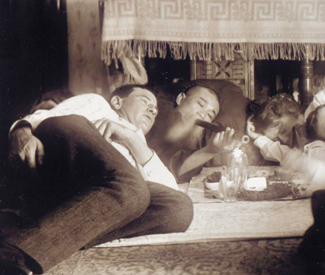
Yep: as unlikely as it sounds, he became hooked on opium. If you thought what Martin calls the cause of “the world’s first real drug epidemic” vanished along with the Model T — well, you’d mostly be right. Opium Fiend, which is crammed with plenty of historical information as well as Martin’s first-hand experiences with the drug, explores how an obsessive interest in antique opium-smoking paraphernalia — a formerly obscure thing to collect, at least until Martin’s own photo book, The Art of Opium Antiques, came out in 2007 — led to, perhaps inevitably, a full-blown dependence on opium itself.

He’s clean now; in the first chapter, he discusses the gruesome agony of detoxing. Later, one of his close friends, a fellow addict, doesn’t survive the experience. It’s a sobering moment in a book that, though clearly a cautionary tale, propels forward with the particular energy of someone who’s really, really stoked to share his story.

“Some people watch movies or sports, but my favorite past time is seeking out and studying whatever I happen to be collecting at the moment,” Martin says. “When I got serious about collecting opium-smoking paraphernalia, around 2001, I realized there was just nothing really out there about it. I took it as a challenge to collect as much as I could, and learn as much as I could about it.

“It had this outlaw chic about it that was interesting. But it also seemed to have this really odd juxtaposition — you have these beautiful, finely-crafted pieces of art, made from the best materials a century or so ago: jade, silver, or ivory. Really, really strikingly beautiful. But in actuality these things were instruments of self-destruction. It’s a bit dark, but I found that appealing.”

Though he’d dabbled in smoking even before he began building his trove of implements, he did not expect to become a raging addict — mostly because he didn’t think becoming an opium addict was even physically possible.

“Most of the research that I did was coming from Victorian-era accounts of what opium smoking was like. I was very skeptical of what these books said. The tone was often very shrill, almost like a Reefer Madness kind of thing, so I didn’t take it as seriously as I should,” he says. “But opium’s not like these modern drugs we hear about, a one-hit-and-you’re-hooked-for-life sort of thing. It can take months — or in my case, years — to develop a serious addiction.”

And “opium tends to rebuff the amateur,” Martin says. “People often try it once and never try it again. But I happened to be in a place where it was possible to get opium that was processed specifically for smoking, which is actually a misnomer. The paraphernalia that’s used is designed to vaporize the drug, not burn it.”

For the curious, Opium Fiend describes the actual experience of smoking, including the specific feelings associated with the high (tranquil, but “it turns you inward,” says Martin; he took detailed notes daily, even at the height of his addiction) and the preparation required to achieve the highest-quality result. It’s a delicate, time-consuming process, but for Martin that was part of the thrill.

“For me, that was the best part. I was really hooked on the ritual. Once I’d actually learned to prepare the pipes myself, that became my favorite source of entertainment: lying there next to the opium layout, within the glow of the opium lamp, watching myself prepare pipe after pipe. It was just mesmerizing,” he says.

“I’d be lying if I didn’t say I miss it very much. Sometimes I’ll have these very vivid dreams about smoking, and I’ll wake up in the morning, lying on my left side, in the same position I used to smoke in. It’s crazy — even though I’ve quit, it won’t leave me alone. I think about it all the time.”

No more fast food: Slow Sex Symposium proposes a love beyond capitalism

0

After a hectic Pride weekend, it’s about time to slow down. A Sat/30 performance-workshop (part of this week’s stellar This Is What I Want performance art fest — read Guardian theater critic Robert Avila’s enlightening interview with artistic director Tessa Wills here) should fit the bill nicely. Introducing “Slow Sex Symposia” and its curator, internationally-acclaimed writer and dancer Doran George. George is planning an afternoon exploration into alternative sexual practices, lifestyles, and unique relationships. Slow sex is a term the artist coined to serve as counterpoint to today’s fast-paced, commercialized notions of sex. Last week, George and I spoke about what it was like to work with a blockbuster lineup of artist, “the economics of queer desire,” and a childhood solo of  “Yankee Doodle.”

San Francisco Bay Guardian: Tell us about the slow sex movement. What makes it important?

Doran George: Slow sex is not a movement as far as I know. It’s a term that I coined for the symposium because I like the idea that communities of alternative sexual practice are engaged in the long-term process of cultivating a culture of sex that takes time, in contrast with the immediacy of practicing conventional ideas about sex. 

Setting up a good SM scene, negotiating non-monogamy, negotiating racist ideas about the sexuality of non-white bodies while still claiming the space for pleasure, these all take time. There is also a parallel [between slow sex and] the slow food movement, in the sense that I believe the radical pleasure community provides a model of sexual practice that is more nourishing, [similar to how] slow food is better than its fast equivalent. 

>>FOR MORE ON THE FESTIVAL, READ “ECONOMIES OF DESIRE”: ROBERT AVILA’S INTERVIEW WITH THIS IS WHAT I WANT‘S ARTISTIC DIRECTOR

SFBG: In your artist statement you reference accessibility to touch, conceptualizing new models of relationships, and the complexities of race in the sex industry. Can the slow sex movement move into mainstream and can queer forms of thought (around sex) be integrated into popular culture?

DG: There are many examples of alternative sexual practice entering mainstream culture. Unfortunately most of them are bitterly disappointing. Mainstream culture constantly needs new images and ideas to make it seem exciting, but at the same time it is usually committed to sustaining convention. Take Madonna’s use of SM imagery in the late 20th century as an example. Although some of the aesthetics were tantalizing, the bodies and constructions of gender were incredibly conservative. There were no sexy butch leather dykes on Madonna’s stage or in her videos. 

I think this is partly because the real power of alternative sexual culture is located in the fact that it is something you have learn and practice — it often entails carefully unpicking and rethinking relationships.. All of this takes careful work that is difficult for the fast consumer culture to contend with. In this sense I’m not sure that existing structures for the production and distribution of mainstream culture are very well designed for alternative sexual culture because radical sex depends upon local economy rather than global corporations. 

SFBG:  You are working with a blockbuster cast of queer artists, sex educators, and performers. What was it like working alongside all these influential queer people?

DG: I first heard about radical sex culture when I was in the fourth year of my dance training, nearly 20 years ago. Rachel Kaplan came to my dance academy and gave me a copy of More Out than In which was writing that came out of 848 space about the intersection between art, sex and community. 

A few years later I came to San Francisco from London with an artist’s grant to research diverse sexual cultures. It was 1999 and I was refusing to use gendered pronouns and regularly getting harassed on those big red buses for looking like a freak. When I first arrived in the Bay Area I felt like a queen. Susan Stryker showed me the hot-spots of transgender history and bought me my first\-ever burrito in the Mission. Pat (now Patrick) Califia and Matt Rice took me out for sushi. Annie Sprinkle gave me a pin badge that said “metamorphosexual” on it, and I met with Carol Queen and a host of other San Francisco folk. 

I was overwhelmed by the culture that had emerged in this city, the ideas and practices that people had pioneered, and the history that was being recorded. Returning to the UK I carried on making my own dance works that were influenced by the knowledge I had gleaned from people in the Bay. Being able to create a symposium that looks at how the unique sex culture of San Francisco has informed and been informed by the practice of art is therefore my own way of honoring the people and the gifts I was given as a young queer artists. 

SFBG: What does the term “the economics of queer desire” mean for you?

DG: I’m interested in how conventional economies of desire are queered, or how the queer dimensions of economies of desire become visible. Someone said to me recently that the extra-marital affair is the straight way to play. It made me laugh and struck me as a beautiful queering of heterosexuality, although Carol Queen’s Bend Over Boyfriend is still my all time favorite queering of straight sex.

SFBG: Where does art, desire, and sex intersect in your opinion?

DG: I don’t think that art, desire, and sex ever don’t intersect. Artistic practice has been involved in representing ideals of gender, desire and sex for centuries, and they inform the way that we practice sex. The symposium provides two different frames in which to think, one of them is

performance, and the other is sexual practice, but in reality these things are not separate. Having two frames is useful because it helps to start a conversation by giving us two different ideas to talk about: Performers make their work to represent or express something, and sex radicals do their practice to connect with people erotically (in all the different dimensions that the erotic can exist).

SFBG: How should attendees of the Slow Sex Symposia expect to walk away feeling? 

DG: I hope that attendees will walk away thinking about their feelings, and feeling about their thinking! I also hope their thinking and feeling moves in lots of different directions. My desire for the symposium is that it will provide a space for discourse about sexual and artistic practice to proliferate. A strong culture is one that can contend with diverse opinions being voiced.

SFBG: I enjoyed reading your bio on the This is What I Want website. You are quite an accomplished artist and scholar. Can you tell us something about yourself most people don’t know?

DG: My first major stage performance was a solo rendition of “Yankee Doodle” at the age of nine in the scout gangshow at the amateur dramatic theatre in a working class hosiery town in the British midlands. I don’t think the audience or I ever really recovered! 

Slow Sex Symposia 

Sat/30 noon-4pm, free with reservation

Center for Sex and Culture

1349 Mission, SF

www.theoffcenter.org

Poverty Scholars Unite

2

This post has been updated. RYME orientation is July 3, not June 27.

July 3 will begin another session of Poor Magazine’s revolutionary youth media education program, or RYME.

Poor Magazine was founded in 1996 as a way to bring together poor people to produce media, teach and learn, and create community. From their space in the Mission, they have launched the printed Poor Magazine, Poor News Network TV and Poor Radio, published dozens of books at Poor Press, and hold programming throughout the year.

One such program is People Skool, sessions for and by the people. Poor rejects status indicators like degrees and job titles in favor of expertise based on experience. People are esteemed as Indigenous Scholars, Poverty Scholars, Youth Scholars, and Mama Scholars share their knowledge at People Skool.

The RYME session is “a multi-generational , mutli-lingual skool,” according to Tiny Gray-Garcia, Poor Magazine’s co-founder.

The program will “teach our children and families back their stolen indigenous languages through art and project based learning– this summer we will be teaching media, radio, music, art and journalism with a focus on eldership, indigenous herstories and histories ” Gray-Garcia said in an email.

Tuition for the program is based on ability to pay, and can range from $90 – 500. There are full scholarships and stipends provided for youth in poverty.

At tomorrow’s orientation, youth can learn about the program, which runs through July 31, and a “healthy homemade lunch” with “vegan and meat options provided” will be served, Gray-Garcia said.

Revolutionary Youth Media Education orientation/registration

July 3, 4pm, free

Poor Magazine

2940 16th St., #301, SF

www.racepovertymediajustice.org

Youth scholars from last summer’s RYME program conduct interviews outside City Hall

Heads Up: 7 must-see concerts this week

0

There must be something about living in California that makes people want to pick up an instrument and strum, pluck, or smash. Be it surf-infused rock’n’rollers in San Diego dedicated to the Church of John Swami Reis (Mrs. Magician), illustrious weirdo harpists (Nevada City, Calif. born Joanna Newsom), San Francisco psych poppers (Magic Trick) or sticky LA streets punks (the Shrine), the sounds of the state continue to boil.

Sure, California boasts hundreds of miles of beachy coast, Hollywood streets lined with gold flecked stars, the bubbling Disney-pocalypse, camp-friendly mountainous ranges, and craggy tourist pits. It’s endless and sunny, (even when it’s foggy). And in different cities throughout this unwieldy giant of a region, scenes of sound have popped up decade after decade. It’s all rather inspiring and decadent if you take a step back and listen.

Here are your must-see Bay Area concerts this week/end:

Joanna Newsom & Philip Glass
It’s a (likely) once-in-a-lifetime opportunity to catch the revered composer and the tree-fairy harpist with pipes of chirping gold, together, in concert. And of course, the show is a benefit for Big Sur’s Henry Miller Memorial Library, which typically hosts forested indie concerts throughout the summer months.
Mon/25, 8pm, $62.50-$140
Warfield
982 Market, SF
(415) 345-0900
www.warfieldtheatre.com
http://www.youtube.com/watch?v=mb5Jp_duKNM

K-Holes
To be in a k-hole is essentially to remain stuck in a drugged, spaced-out soup of one’s own mind. So is all that all that rage funneled into punishing, grinding guitar lines and scratchy howls necessary for K-Holes, the NYC five-piece named after such a state, but which sounds more like an extrovert coke binge than an introvert k-hole? Perhaps not, but it gets the point across. K-Holes (a.k.a Jack Hines of Black Lips, Julie Hines, Sarah Villard, Cameron Michel, and Golden Triangle’s Vashti Windish) have a dragged-from-the-pits-of-hell sonic spark and the anti-capitalist lyrics to back the sludge punk ambiance.
With Dirty Ghosts, Blasted Canyons
Tues/26, 9pm, $8-$10
Brick and Mortar Music Hall
1710 Mission, SF
(415) 371-1631
www.brickandmortarmusic.com
http://www.youtube.com/watch?v=WLgKjlLN-uQ

Gallery Crawl Nightlife: Tim Cohen’s Magic Trick
Here’s yet another win in the brilliant series of Thursday nightlife events at the Cal Academy of Sciences. This time, the earthly sciences wonderland gets transformed into a pop-up museum with guest curators picking the best things to see and hear. Use your senses, friends. Along with a whole lot of bold pop-up art, there’ll be a performance by San Francisco’s own moony rock’n’roll treasure trove Tim Cohen’s Magic Trick, and additional music by folkYEAH! founder-DJ Britt Govea.
Thu/28, 6pm, $10-$12
California Academy of Sciences
55 Music Concourse Drive, SF
(415) 379-8000
www.calacademy.org
http://www.youtube.com/watch?v=zTgs7LjCh60

Mrs. Magician
Check dystopic Zombies-esque single “There’s No God” off this year’s salty Strange Heaven (released by Swami – John “Swami” Reis’ label; FYI, Reis also produced the record). The rolling waves of fuzz, upbeat melodies matched to deathly serious lyrics, and classic surf guitar wobbling should draw you in quick. “There’s no god/la la la la.”
With Mantles, Kids On A Crime Spree
Fri/29, 10pm, $12
Bottom of the Hill
1233 17th St., SF
(415) 621-4455
www.bottomofthehill.com
http://www.youtube.com/watch?v=Bq4r_aBBwC8

Dent May
“With his new release, Do Things — a slice of sun that sounds like the product of playing with a drum machine after listening to “Wouldn’t It Be Nice” on repeat/acid — May proves that the party is wherever he goes.” — Ryan Prendiville
With Quintron and Miss Pussycat
Fri/29, 9pm, $9-$12
New Parish
579 18th St., Oakl.
www.thenewparish.com

Sat/30 9:30pm, $10-$12
With Quintron and Miss Pussycat, Shannon and the Clams
Elbo Room
647 Valencia, SF
(415) 552-7788
www.elbo.com
http://www.youtube.com/watch?v=qXS_C77rbME

The Shrine
LA’s the Shrine just signed to Tee Pee Records, and is about to release growly punk sophomore album Primitive Blast (July 10). From a preliminary and rudimentary listen, I gather the LP is steeped in shredding and skating on sticky Los Angeles nights, which makes sense – the band’s debut album was recorded with the help of pal Chuck Dukowski, he of hardcore punk/City of Lost Angels skateboarders Black Flag fame.
With Glitter Wizard, Hot Lunch
Sat/30, 9:30pm, $8
Hemlock Tavern
1131 Polk Street, SF
(415) 923-0923
www.hemlocktavern.com
http://www.youtube.com/watch?v=r4amJTck5rM

Lower Dens

“The Baltimore outfit’s breakthrough record, Nootropics, doubles down on thick, Krautrockabilly grooves, with the Zen-like propulsion of Lou Reed cruising the Autobahn. The production aesthetic is fascinating, in its ability to sound dry, and soaked in reverb, both at once, and the album’s second half reveals a newfound interest in musique concrete, giving the material an artieredge.” — Taylor Kaplan
With No Joy, Alan Resnick
Sun/1, 8pm, $15
Independent
628 Divisadero, SF
(415) 771-1421
www.theindependentsf.com
http://www.youtube.com/watch?v=GafB7NQvQWg

7 spots for mental regeneration this week

0

Pride is over, and we’re willing to wager your depleted brain cells could stand for some stimulus. Whether you’re into sitting in dimly-lit rooms in North Beach listening to fiction read in a thick Hungarian accent, or dressing to the nines and perusing some edgy new performance art, here are seven cultural hot spots in the city this week.

László Krasznahorka

A Hungarian author emerges from his reclusivity in the hills of Szentlászló in order to present the San Francisco literati with a reading from his novel of scheming, sex, failure, hope, communism, freaky farm collectives, tango, and the devil. Sounds like a can’t-miss situation. City Lights will host celebrated author László Krasznahorka to read Satantango (yes, that’s satan-tango), the book that inspired the seven-and-a-half hour film by remodernist filmmaker, Béla Tarr. 25 years after its original publication date, the novel has finally been translated by George Szirtes, so now we plebeian Californians can get our Hungarian apocalyptic fix. 

Thu/28 7:30pm, free

City Lights Bookstore

261 Columbus, SF

(415) 362-8193

www.citylights.com

Kala Art Institute artist talks 

The busy thoroughfare of Berkeley’s San Pablo Avenue makes an appropriately unsettling backdrop for the Kala Art Institute’s first night of artist talks. From large-scale industrial sculpture, to dystopian watercolor, to engineered photographs of imaginary landscapes, artists Randy Colosky, Vanessa Marsh, and Alison Frost’s work treads an uncanny path between real and surreal. It defamiliarizes the familiar in a fashion of which even Freud would be proud. This series of talks features discussions from Kala fellows during their residencies at the gallery, so look forward to more free inspiration (and free refreshments, which are, um, always a welcome addition for any easel-toting San Francisco artist) in July, August, and September.

Wed/27, 7pm, free 

Kala Gallery 

2990 San Pablo, Berk 

(510) 841-7000

www.kala.org

Raw SF Solstice 

Despite its strictly fashionable cocktail attire mandate and swanky SOMA venue, June’s Raw SF installation offers something for even the freakiest. With a mission to showcase and support emerging, underground artists during the first 10 years of their careers, RAW displays innovative visual art, film, fashion, music, hair and makeup artistry, photography, modeling, and performance art. San Francisco’s installation attendees can also expect henna, organic refreshments, food trucks, a DJ, and a ceremonial tea service.

Thu/28, 7pm-12am, $10 pre-sale tickets, $15 door, $5 after-party (after 9pm)

1015 Folsom, SF

(888) 729-7545

www.rawartists.org

Readers Café and Bookstore poetry series

In support of the San Francisco Public Library, the dusty shelves of Readers Café and Bookstore will be available after hours for the last installment of the shop’s Thursday night poetry readings. Palestinian American poet and historical children’s fiction writer Lorene Zarou-Zouzounis and San Francisco beatnik Martin Hickle will read from their respective collections, and special prices on food and drink will be on offer as you contemplate questions of life and poetry while you gaze out at the Bay from this Fort Mason storefront. 

Thu/28, 6:30pm, free

Readers Bookstore

Building C, Room 165, Fort Mason Center, SF

(415) 771-1076

www.friendssfpl.org

“Evolve: A Woman’s Journey”

Turn what was intended to be a sangria-fueled and nail-painting girls’ night into a celebration of femininity with some real punch. The Fort Mason center showcases Patrick Stull’s work in a diverse series of art from almost all mediums – digital, oil, graphite, sculpture, casting, mixed media, and even original music that chronicles the emotional and physical experience of pregnancy. Much of the art is built to a life-size scale to deal with a subject matter that is as life-large as it gets. 

Fri/29, 9pm, $25

Fort Mason Center

2145 3rd St., SF

www.patrickstull.com

“Only Birds Sing the Music of Heaven in This World”

A million thanks to whoever decided to make food trendy. Combining some of the things NorCal natives hold dear (that’d be food, art, and agriculture) the Museum of Craft and Folk Art hosts a show with curator Harrell Fletcher that displays past and contemporary representations of agriculture, farming, and labor. With a certain focus on alternative farming project imagery, the show links agriculture art with social activism and community building through engaging with various genres, including folk art, outsider art, and craft. 

Sat/30, 11am-6pm, GA $5

Museum of Craft and Folk Art

51 Yerba Buena, SF

(415) 227-4888 

www.mocfa.org

Librotraficante Bay Area Banned Book Reading

As school board officials threaten to ban ethnic studies books and authors — not to mention the subject entirely — in Arizona, Libotraficante is hosting this afternoon of readings from banned books. With more than a dozen performers set to read from controversial tomes, the event is sure to be anything but boring. 

Sun/1 noon-4:30pm, free

Koret Auditorium, San Francisco Public Library

100 Larkin, SF

www.sfpl.org

Students, parents, teachers march in support of Lakeview sit-in

7

More than 100 gathered outside Oakland City Hall for a rally and march June 23 to celebrate the sit-in at Lakeview Elementary School. The school is one of five that the Oakland School Board voted to close last fall, in a move that would save the city $2 million per year. 

The school’s unofficial reopening was initiated by Lakeview parents, and since has been organized and led by Lakeview parents and teachers. Organizers have also run a People’s School for Public Education, with more than 20 elementary-age children enrolled. Classes ran for the past week from 9am to 3pm and include music, art, gardening, social justice, and PE. A daily picket and rally was held to support the sit-in and the Peoples School at 5pm.

Organizers may extend the people’s school for another week.

The children and students involved in the effort led the march yesterday, which left from City Hall around 1pm. Protesters marched to the school, where they held a community barbecue.

At an Oct. 26 Oakland School Board meeting, the board voted to close Lakeview, along with four other elementary schools, at the end of the school year. The Save Oakland Schools campaign has been working to stop these closures. Lakeview officially shut its doors at the end of this school year, but with the ongoing sit-in, organizers hope to keep it open as long as possible.

The city plans to use the school’s building for administrative offices.

Speakers at the rally included parents and teachers of Oakland elementary school teachers. 

On the march, demonstrators chanted “Whose schools? Our schools!” and “Education is a right! For our children we will fight!” In reaction to police at the kid-led march, some chanted “their kids! They’re cute! Get those guns up off your suit!”

“The Lakeview sit-in demands a stop to all school closure, or the resignation of Tony Smith, superintendent of the Oakland Unified School District. The Sit-In at Lakeview is held in solidarity with all parents and teachers struggling to demand quality public education across the country,” according to a press release.

The now week-long action is the result of collaboration between Occupy Oakland and its various offshoots and the parents and teachers of Lakeview, as parents and teachers lead the efforts.

Photo via Justin Beck

Glass on Glass: an extended interview with the composer

7

Few living composers can claim more influence over the landscape of modern classical music than Philip Glass. A glance at his expansive discography — comprised of symphonies, operas, ballets, film scores, and a broad range of collaborative efforts — reveals a restlessly creative artist, with little regard for categorization. Even after turning 75 earlier this year, Glass continues to work as prolifically as ever.

The latest installment in Glass’ storied career finds the composer joining forces with acclaimed singer-songwriter-harpist Joanna Newsom, for an exclusive, one-off performance Mon/25 to benefit Big Sur’s Henry Miller Memorial Library.

In a phone conversation with the Guardian last week, from his home in Manhattan, Glass detailed the evolution of his creative alliance with Newsom, his burning desire to work with Ornette Coleman and Wynton Marsalis, his likeness to Brian Eno, and his refusal to be labeled a “minimalist”, among a host of other topics.

Our interview was much too extensive for Wednesday’s feature to contain, so read on for more words of wisdom from Glass.

http://www.youtube.com/watch?v=N1C3FtvOZ4g

San Francisco Bay Guardian Are you working on any of your own material recently? Anything you can share with us, that you’re working on for your own purposes?

Philip Glass I finished an opera for Linz, Austria, based on a story about [Austrian novelist-playwright Peter Handke], and now I’m working on another opera, based on… well, that’s a Walt Disney. Besides that, I’m working with Godfrey Reggio on one of his new movies. He’s the one who made Koyaanisqatsi and Powaqqatsi. Besides that, I’m doing concerts. The one [in San Francisco] of course… and I have three in New York this week, and one in Chicago next weekend.

SFBG Solo piano performances?

PG They’re mostly ensemble concerts with my own group. There will be one in New York called the River to River Festival. That’s a group that’s been together for about 35 years or so, and we’re playing pieces that are retrospective of music from those years. Then, I will be doing some collaborative pieces. One concert I’m doing, I’m playing with Laurie Anderson. And I did one last night with Stephin Merritt. The concert in Chicago, which is next weekend, I’m doing with a wonderful violinist named Tim Fain [accompanying Glass and Newsom Mon/25], which is mostly chamber music of mine.

So, I tend to do a variety of things. It keeps everything very interesting for me. It means I’m always practicing and rehearsing [laughs], but it’s more fun to do that than to just play the same thing over and over again. I don’t do that very much.

SGBG Moving on to the show in San Francisco coming up: I spoke with [Magnus Toren, executive director of the Henry Miller Memorial Library] on the phone the other day, and said he’d heard that your rehearsals with Joanna Newsom and Tim Fain are going very well.

PG Yeah, we got along very well, and I’ve known Tim a long time. I knew Joanna from her records when we met for the first time. She spends a lot of time in New York. We met very recently, and we had two sessions here. We’re going to have another rehearsal out there.

What we’re doing, basically… it’s her music and my music. I’m playing one of her new songs, and then she and Tim are playing a number of songs together. Then, we’re playing some of my trios that I adapted for harp, piano, and violin. We’re also doing solo pieces. Violin, harp, and piano: it’s kind of a classic combination. They’re instruments that go very well together, and we found … she’s an excellent player, anyway, and a wonderful singer. But, we found that our music works very well together.

SFBG Are there any songs of [Newsom’s], or just elements of her music that you really connect to?

PG She has a unique way of approaching the harp. I’m not a harpist, so I can’t give you the technical details, but when you hear her play, she has her own style. The way that certain pianists have a certain way of playing the piano. You know, you hear them, you say, “Oh, that’s so-and-so.” You know right away who it is.

She has a bigger tonal range than harp players usually use, because she can change keys very easily, very rapidly. And so, that gives her a lot of flexibility in terms of the tonality. That’s the one thing that I noticed right away. She has a command of the whole range of the instrument, and she can adapt her voice to it very, very well.

SFBG In a recent interview, you said, “all the collaborations I’ve done, have been a way for me to put myself in a place where I haven’t been before.” Based on the time you’ve spent rehearsing with Joanna and Tim, where is this collaboration taking you, that you’ve never been before?

PG I’ve used the harp a lot in orchestral music, where it becomes part of the orchestra. It might not stand out that much. But now, with a harpist right in front of me, there were parts of the instrument that worked very well with parts of my music, and I was able to hear it. Although I knew the instrument, in terms of a large ensemble, I’ve never been in such an intimate relationship with it. It brings out a texture in the music I write, which I’m hearing almost for the first time.

SFBG Besides Newsom, are there any other new artists you’ve been listening to recently, or any currently working musicians who you admire, or take inspiration from?

PG I’m going back to working with a wonderful kora player named Foday Suso. He’s from the Gambia. We toured a lot in the late ’90s, and the early part of this decade, and we’re just trying to start touring again. We haven’t played in a few years. There will be a new percussion ensemble, and we’re going to be playing with them. But, we have concerts coming up in Seattle, and Mexico City, and actually one in Carmel.

I would guess, in terms of a new player, I think Joanna is the newest of the new, given the people I know. I just, last night, was doing a concert with, and played one piece with, Stephin Merritt. I liked playing with him. He’s a very good singer. Do you know his work?

SFBG Magnetic Fields, right?

PG Yeah, that’s right. So, he’s another person I’ve just worked with very recently, who I enjoyed working with.

SFBG So, you’re really known for your collaborations. You’ve done a lot of them. Is there any kind of consistent contribution that you feel you bring to collaborative projects?

PG One of the things that interests me the most is when I work with people who don’t have a background in Western music, as such. Wu Man, who is a wonderful pipa player (it’s like a Chinese mandolin, you could say), we’ve done work together. I’ve worked with Mark Atkins from Australia. He’s a didgeridoo player.

A percussion group from Brazil called Uakti. What I really like, is going outside of my home base. You know, my home base is basically central European art music, as it grew up in Europe and then took root in America. I find, when I’m playing with people from Africa, or Australia, or China, or Japan, or Korea, I find it very stimulating.

SFBG Are there any artists in particular who you’d love to collaborate with?

PG I did a very extensive piece with Leonard Cohen recently [The Book of Longing], and I liked that. I could go back to that collaboration again. But, it’s been four or five years since we did that piece. There are two people I’ve talked to, we’ve never had the time to do it: one is Ornette Coleman, and the other is Wynton Marsalis. We keep on talking about it, but you have to get in the same room long enough to do some work [laughs].

I’d love to go back and do some more pieces with Ravi Shankar, who is still alive, and still writing. I got to know his daughter, Anoushka. Wonderful sitar player. So, that’s a young person I would like to work with. But, she knows that. Ever since she was eight years old. She’s become a wonderful player, these days.

SFBG A few other questions about your music. You seem to reject the “minimalism” tag…

PG Well, here’s the problem: if you would like people to come to a concert of minimalism, and they come to the concert, you’re not going to hear it [laughs]. The reason I object to descriptions that are not going to be found [is that] instead of helping the audience, it creates a kind of obstacle.

The pieces I wrote in ’73, ’74, ’75, ’76: yeah, sure! But, I’m not playing any of those pieces in the concert in San Francisco. I can, and I have. I played Koyaanisqatsi with Godfrey Reggio’s film at the Hollywood Bowl last year. And, that’s close to that period. It was written in 1979. So, it wouldn’t be so outlandish to call it minimalist, but actually, the pieces I’m writing today … it’s misleading.

I don’t know what your situation is, but often, editors will try to find something to sum it up and make a headline of a piece: “Minimalist composer arrives with Joanna Newsom.” But, that’s not going to happen! [Laughs]. So, those are catchy lines, and they’re maybe good journalism, but they’re actually poor preparation.

Look: I’ve been writing music for 40 years. It’s not the same music. So, when people ask me about that, I say, “well, let’s talk about what the concert’s going to be.” Now, in this particular concert, I’m doing pieces with Joanna, and with Tim, that have been written in the last ten years. So, there’s no minimalism in it at all.

When people talk about [Einstein on the Beach]: of course. It resonates with reality. That was the heartland of minimalism in the mid-’70s, and Einstein was one of the apotheosis pieces of that time, that caught that spirit, caught that technique. But, we’re not doing Einstein. We will be doing Einstein at Berkeley, at the Zellerbach, in October.

SFBG Do you have a way, maybe a shorthand, to classify what you’re doing now?

PG You kind of brought it up, yourself. I work with musicians from many different areas, so I’ve become a collaborator. In a way, that informs more about what I do than almost anything else. I don’t care how I’m remembered, in a way, but how I might be remembered as someone who worked with a lot of different people, from Allen Ginsberg, to Twyla Tharp. [That’s the distinctive thing], and it’s definitely reflected in the form of the work.

SFBG A lot of people who were brought up on popular music, even jazz, see a certain exclusivity in classical music. But, looking at your body of work, in contrast, you’ve produced a wide range of work on commission, from operas…

PG Yeah, I got over that label right away! [Laughs].  I’m not even a new music composer anymore. I’m just a composer.

I mean, part of my agenda was to get out of the ghetto, get out of the new music ghetto, into a bigger musical world, where I could work with David Bowie, or Emmylou Harris, or Joanna Newsom. I could work with anybody, and it wouldn’t be a surprise. No one’s going to say “what is he doing now?” because I’ve done it so much that it’s more like, “there he goes again!” [laughs]

SFBG You’ve collaborated with Brian Eno in the past.

PG Yes, that was part of the collaboration with David Bowie, because during the days where they were doing pieces like Heroes and Low (I turned those into symphonies) Brian was a collaborator, for sure.

Also I had a record company at one time [Point Records], and we produced a new performance of Music for Airports [with Bang on a Can]. So, I’ve been involved with his music more than casually. I mean, I’ve actually been involved in recordings, and working on scores with his music. Very interesting composer. Very interesting guy.

SFBG Along those lines: he’s is another artist who’s really made a reputation on versatility, on working within a lot of musical settings. So, do you feel like you might have more in common with, perhaps, someone like Eno, than some of the more traditional figures in Western art music?

PG Well, I think that’s a very good point, because Eno crosses lines very casually, very easily. He wasn’t interested in being in any particular [genre]. I came up at Juilliard, and then [I had] a very high-end academic teacher in Paris called Nadia Boulanger. People who come from that background don’t usually do a lot.  [Pauses]. Trying to think. There was a great producer who produced some Michael Jackson [Quincy Jones]. He was a student of Nadia Boulanger as well. People turn up, but it’s not that common, to be truthful.

SFBG Another quotation from a recent interview, concerning your philosophy on music: you said, “music is a place, and is as real as Chicago, or Indianapolis, or the city you live in. It’s an absolute place, and once you know where that place is, you can go there.” Do you try to bring your audience, your listeners, to a certain place with your music?

PG Well, it’s not that I try to. I’m there already, so if they’re coming to my concerts, they’re going to be there, too. I think that it’s not so much the intention. It’s, more or less, a result of how I work, and who I am. If I tried to do it, I couldn’t do it any better than just, naturally doing what’s natural to me.

I think that’s not uncommon among musicians. We live in this world. It’s not a pastime. It amounts to, almost, an obsession for most musicians. They almost can’t think of anything else, to be truthful. They’re probably boring people to be around if you’re not a fellow musician [laughs]. But, the allure of the world of music is very powerful, and when you’re caught up in it, that’s what it is.

SFBG The place in music that you occupy: do you form any visual associations with it?

PG Not really, though in dreams, I can see things. The language of music is aural. It’s not about seeing; it’s about hearing.

SFBG Is there a piece, or even a section of a piece of yours, that you feel really succinctly encapsulates your approach to music, or what you strive for?

PG Einstein was the piece in the ’70s that captured that for me. But then, six years later, I was doing Koyaanisqatsi. Before Einstein, there was Music in Twelve Parts. Then, after that, there were three operas I did, to the work of Jean Cocteau. These are things that come up throughout my life. Certain pieces kind of sum up everything you’ve been thinking about, and you become aware of it afterwards. It’s hard to know it when it’s happening.

When I look back on certain pieces, [in the mid-’90s there was] Symphony No. 2, which, I didn’t think very much of when I wrote it. And the violin concertos from that time. They both became emblematic pieces of a certain kind.

I can see pieces that way: pieces that seem to sum up a period of search and work, and they seem to be the contestants of those ideas. And then, you move on to, then maybe three, four years of experimentation, of working through things. And then, another piece will pop up, that kind of sums it up. That happens to everybody.

A Benefit for Big Sur’s Henry Miller Memorial Library
Philip Glass and Joanna Newsom with Tim Fain
Mon/25, $62.50-$140
Warfield
982 Market, SF
(415) 345-0900
www.thewarfieldtheatre.com

Phantoms of Asia

0

Life. Death. The cosmos. What’s it all about? Bold new art – along with objects from the museum’s own renowned collection – explores spirits, spirituality, cosmic order, and the afterlife. This is a provocative interplay of 150 artworks from past and present, including paintings, sculptures, photographs, site-specific creations, and more by artists from all over Asia. Pause and reflect on your own place in the universe while taking in some amazing art. Check out Phantoms at the Asian Art Museum on Thursday nights when the museum is open until 9pm. After 5pm admission is only $5 while members, children and SFUSD students, and active members of the U.S. Military are FREE! Purchase tickets for Thursday nights online. More about Phantoms of Asia here.

To enter to win a pair of tickets, email sfbgpromos@sfbg.com with “Phantoms” as the subject and provide your name and mailing address in the message. One lucky winner will win a pair of tickets to the viewing on Thursday, June 28. Winner will be announced Monday, June 25.

Now through Sunday, September 2 from 5-9 pm @ Asian Art Museum, 200 Larkin, SF | $5

Don’t funk with THEESatisfaction’s groove

0

Cat Harris-White and bandmate Stasia Irons know how to write a memorable lyric. “Queens of the Stoned Age/and princess of time/feel our energy/floating through your mind.”

The totally DIY hip-hop duo, which makes up THEESatisfaction, earlier this year released groundbreaking, 30-minute debut LP awE NaturalE. But they’ve long been a part of the emerging Seattle art scene. In it, they’ve been creating a nearly incomparable sound, at least, galaxies away from swag, with roots in soul and jazz overlaid by spacey electronic beats, cosmic funk zaps, and unexpected twists, along with eloquent sing-rapped verses.

Each track on the record holds a mini story, another sound exploration. The chopped, wordless R&B opener “awE” blends easily into funky beat-poetry style “Bitch,” on which the duo sings, “I’m always finding a time/when I feel I need to please you/but why do I even give a fuck/A fuck about/how the world trails off/off.” Fade out.

There’s floaty, twinkling “Juiced” and powerful closer “Naturale”. Synthy, whistle-dropping, hand-clapping jam “QueenS” should, in a perfect world, be the summer anthem of 2012. On it, their mission statement: “Leave your face at the door/turn off your swag /check your bag.”

I talked with both Harris-White and Irons about all this – musical origins, the nature of DIY creation, being sci-fi Trekkies, Seattle’s current hip-hop surge, harmonizing with Drake, and memorable personal anthems (hint: Montell Jordan) –  prior to their SF show this weekend:

SFBG How was the Europe tour?

Cat Harris-White It was really good, we did 12 shows out there in two weeks so it was kind of intense, but the crowds were really cool. We got to see a lot of cool people and go to different places we’ve never been – we went to the Netherlands, where we’ve never been before, and Brussels.

Stasia Irons This time we got to go up to Sweden and Belgium, we even dipped into Germany, we didn’t have a show there but we passed through Dusseldorf, Germany, so that was awesome. We went out in Scotland to a nightclub and [laughs] we had a lot of fun. We were out pretty late, but that’s how they party.

SFBG It must be much easier to get around on tour with just the two of you, as opposed to a larger backing band, or with roadies?

SI Yeah, it’s much easier, you can take the train.

SFBG [THEESatisfaction] comes from a pretty DIY sensibility, a scene where you’re making your own handmade CDs and tapes?

CHW Definitely, we were doing our own thing. We’re self-managed. It’s just a totally different experience, because we get to make the decisions and decide what we’re doing.

SFBG Does that also influence the style of music you’re making?

SI Yeah, when we first started off we just made music for ourselves, just to enjoy at home and play around. We kind of developed the way we sound over time just listening to a lot of different kinds of music and figuring out what we wanted.

We really like gospel and jazz. We both come from those genres. I was more heavily in gospel and Cat was well-versed in jazz. So we started there. And then since we’re doing it ourselves, we can go anywhere we want with it.

SFBG I’ve seen a lot of comparisons, to acts like Shabazz Palaces or even ESG, but beyond that I feel like it does have a very different sound, and it probably comes from that DIY sensibility – how do you feel about comparisons to other acts?

CHW I accept them, and it’s cool that people can draw those lines. I’m never really offended. I like when they’re able to pick out people who I really like. Someone told us that we reminded them of TLC and SWV and Digable Planets.

http://www.youtube.com/watch?v=qGWFBt_IPOg

SFBG On the album, there are such interesting turns of phrases, and wordplay, I was wondering where that came from – are you voracious readers, students of hip-hop?

SI We read a lot, especially now more than ever. When we first started out we were just listening to a lot of music, and not really reading a lot. But now, since we did the album, we were heavily in to black sci-fi authors. I went to school for English, and Cat went to school for vocal jazz, so that’s the reason too.

SFBG There are some sci-fi sounds, outer-space atmospheres on the album — was that sort of spacey vibe intentional?

CHW Yeah, we’ve always been into sci-fi too, I’m totally a Trekkie and everything like that. We’ve always been into outer-space and exploring beyond what’s here on earth, and exploring deeper into what is here on Earth. Where we come from, where we’re going. We’re researchers and historians. We’re always interested in finding out different information, I guess that comes out in our sound.

SFBG Who are some of the authors you’re reading currently?

CHW Right now we’re reading a lot of Octavia Butler.

SI Toni Morrison. Oh, Shakespeare.

CHW Shakespeare definitely. Alice Walker as well.

SFBG I feel like “Queens” is a really anthemic song – a song that people want to shout out the lyrics to – what were the anthems of your youth?

CHW Growing up I listened to a lot of George Clinton and P-Funk and Parliment. “We Want the Funk” and just all their songs. You know what I’m saying? Those songs go on for like 10 minutes and they’re just chanting and harmonizing and blending things, so those kind of songs were anthemic, but also songs from Chic and SOS Band and other songs like that that have the same kind of vibe.

SI My mom listened to R&B a lot — so “This Is How We Do It” comes on, obviously I’m going to be reciting all the lyrics. Party jams like that. A lot of New jack swing and shit too.

http://www.youtube.com/watch?v=0hiUuL5uTKc

SFBG What’s your music scene like in Seattle?

CHW Yes, Seattle is poppin’ right now, as far as music. A lot of friends are involved in it, not necessarily only music, but arts, authors. A lot of artsy people. But hip-hop is what’s really going on right now. It used to be a lot of grunge and indie bands and they’re still there, but I see like a lot of different kinds of hip-hop coming out of Seattle right now.

As you said Shabazz, and then there’s Champagne Champagne, a lot of great hip-hop DJs – Chocolate Chuck. There’s punk hip-hip, party hip-hop, sad hip-hop [laughs], Christian hip-hip.

SFBG Christian hip-hop?

CHW [Laughs] there’s a lot of that going on. That’s actually how I started getting involved [with music]. When I was kid, going to church, there was a group called Cave and I didn’t know they were Christian hip-hop, they never cursed or anything but their songs were just really good and usually gospel hip-hop isn’t all that good, but they were pretty dope.

SFBG Any thoughts on the current state of mainstream hip-hop? I guess “mainstream” is kind of a fast and loose description, but radio-popular hip-hop in 2012?

CHW I don’t have a problem with it essentially in a big way, because there’s always a certain place for it, on the radio and TV. There’s always been a popular format of music, music that’s highly promoted to the world. The music you’ll hear when you go places – you’ll hear Flo Rida or Odd Future or Nicki Minaj, or maybe LMFAO. There’s music that will always be promoted because there’s a certain force behind it and that’s fine. It’s been around as long as radio’s been around.

SFBG Do you have any dream collaborators?

CHW Fantasy-wise, Prince or Stevie Wonder. Missy Elliot, Timbaland too. Esperanza Spalding. Drake [laughs], we can harmonize with Drake.


THEESatisfaction
WIth Le Vice
Fri/22, 9pm, $14
Independent
628 Divisadero, SF
(415) 771-1421
www.theindependentsf.com

Rep Clock

0

Schedules are for Wed/20-Tue/26 except where noted. Director and year are given when available. Double features (and more) are marked with a •. All times pm unless otherwise specified.

ARTISTS’ TELEVISION ACCESS 992 Valencia, SF; www.atasite.org. $6. “Colectivo Cinema Errante presents: Brazilian Voices of Cinema:” Dona Flor and Her Two Husbands (Barreto, 1976), Sun, 8.

BALBOA 3630 Balboa, SF; www.cinemasf.com/vogue. $7.50-10. “Best of God” and “Best of Drugs,” illustrated talks by comedian Owen Egerton using religious films and educational scare films, Wed (“God”) and Thu (“Drugs”), 7:30.

BERKELEY FELLOWSHIP OF UNITARIAN UNIVERSALISTS 1924 Cedar, SF; (510) 841-4824. Donations welcome. A Noble Lie: Oklahoma City 1995 (Lane, 2011), Sat, 7.

CASTRO 429 Castro, SF; (415) 621-6120, www.castrotheatre.com. Frameline 36: San Francisco LGBT Film Festival, Wed-Sun. Visit www.frameline.org for schedule and tickets. •Pina (Wenders, 2011), June 26-27, 7 (also June 27, 3:05), and Cave of Forgotten Dreams (Herzog, 2010), June 26-27, 9 (also June 27, 5:05).

CHRISTOPHER B. SMITH RAFAEL FILM CENTER 1118 Fourth St, San Rafael; (415) 454-1222, www.cafilm.org. $6.75-10.25. Bel Ami (Donnellan and Ormerod, 2012), call for dates and times. Bernie (Linklater, 2012), call for dates and times. Peace, Love and Misunderstanding (Beresford, 2011), call for dates and times.

“FILM NIGHT IN THE PARK” This week: Old Mill Park, 300 block of Throckmorton, Mill Valley; www.filmnight.org. Donations accepted. Enchanted (Lima, 2007), Fri, 8. Dolores Park, Dolores at 19th St, SF. Mamma Mia! (Lloyd, 2008), Sat, 8.

LUMIERE 1572 California, SF; www.48hourfilm.com. “48 Hour Film Project,” premiere screenings, June Wed-Thu, 6:45, 9:15.

PACIFIC FILM ARCHIVE 2575 Bancroft, Berk; (510) 642-5249, bampfa.berkeley.edu. $5.50-9.50. “Behind the Scenes: The Art and Craft of Cinema with Editor Curtiss Clayton:” To Die For (Van Sant, 1995), Wed, 7; Rick (Clayton, 2003), Fri, 7; Maladies (Carter, 2012), Fri, 9:20. “Gregory Peck: An Agreeable Gentleman:” The Man in the Grey Flannel Suit (Johnson, 1956), Thu, 7; To Kill a Mockingbird (Mulligan, 1962), Sun, 4:45. “One-Two Punch: Pulp Writers Dorothy B. Hughes, Mickey Spillane, Elmore Leonard:” In a Lonely Place (Ray, 1950), Sat, 6:30; Fallen Sparrow (Wallace, 1943), Sat, 8:30. “Afterimage: Three Nights with Nathaniel Dorsky:” “Films of Nathaniel Dorsky: Devotional Songs (2002-04),” Sun, 7:30.

ROXIE 3117 and 3125 16th St, SF; (415) 863-1087, www.roxie.com. $6.50-10. Frameline 36: San Francisco LGBT Film Festival, Wed-Sat. Visit www.frameline.org for schedule and tickets. How to Grow a Band (Meatto, 2011), Wed-Thu, 9:15. Marley (Macdonald, 2012), Wed-Thu, 6:30. Ultrasonic (Rao, 2011), June 22-28, 7, 8:45 (also Sat-Sun, 3:30, 5:15).

SF FILM SOCIETY CINEMA 1746 Post, SF. $10-11. The Story of Film: An Odyssey, Part Four: European New Wave; New Directors, New Forms (1960s) (Cousins, 2011), Sat, noon. British TV series; new episodes every Sat through June 21. Found Memories (Murat, 2011), June 22-28, 2:30, 4:30, 6:30, 8:30. The Woman in the Fifth (Pawlikowski, 2011), Wed-Thu, 3, 5, 7, 9.