Video

Events Listings

0

On the Cheap listings are compiled by Lucy Schiller and Caitlin Donohue. Submit items for the listings at listings@sfbg.com. For further information on how to submit items for the listings, see Picks.

WEDNESDAY 4

2012 showing Chinatown Meeting Room, Chinatown Library, 1135 Powell, SF; www.sfpl.org. 2:30-5:30pm, free. Ring in the purported year of our doom with a little cinematic apocalypse: John Cusack and Danny Glover battling mega-tsunamis, an irate Yellowstone super-volcano, and the inevitable detachment of California from the continental U.S.

BAY AREA

“Being and Ideal Grace: Love and Spirituality in Robert and Elizabeth Browning’s Letters” lecture Northbrae Community Church, 941 the Alameda, Berk; (510) 526-3805. 7:30pm, $5 donation suggested. Bay Area actor Julian Lopez-Morillas explores the written missives shot between Robert and Elizabeth Browning, two 19th century romantic poets who penned some of the steamiest pre-Victorian prose known to Fabio.

THURSDAY 5

Lands End restoration Lands End, Presidio, SF; www.parksconservancy.org. 1-4pm, free. The coastal bluffs of the Presidio are calling out for a little TLC. Help plant, water, and weed in a spot more naturally beautiful than any human-made garden.

FRIDAY 6

“Get Lucky” opening reception SOMArts Cultural Center, 934 Brannan, SF; www.somarts.org. 6-9pm, free. Celebrating experimental music pioneer and artist John Cage’s hundredth birthday, SOMArts stages an indeterminacy-themed evening, featuring the creation of a living tarot deck and an involved, improvised poem.

“Taking Stock’ opening reception Z Space, 450 Florida, SF; www.zspace.org. 6:30-8:30pm, free. Venturing daily into the packaged wilderness of grocery stores in San Francisco and Denver, artists Emily Heller and Leah Rosenberg took pains documenting and replicating how food is presented to the American public.

Sharon Lockhart’s pop-up “Lunch Break” SFMOMA, 151 Third St., SF; (415) 357-4035, www.sfmoma.org. 11:30 a.m.-1:30pm, free. An ongoing exhibition looking at the activities Americans pursue on our lunch breaks gets free and interactive today, hosting Vietnamese pop-up cafe Rice Paper Scissors, Blue Bottle Coffee, and a Skype chat with curator Sharon Lockhart. Share your lunch break traditions at a community table that will be set up to encourage conversation among fellow laborers.

“Working Conditions” closing reception Southern Exposure, 3030 20th St., SF; www.soex.org. 7-9pm, free. For almost two months, nine artists have worked in view of the public under the theme of labor and process, and with varying degrees of audience interaction. Jennie Ottinger’s method serves as one example; she promised a certificate of recognition to visitors willing to mix her paints and clean her brushes. Nathaniel Parsons is another; he bestowed a thoughtful woodcarving on every visitor who accompanied him on a walk-and-talk.

SATURDAY 7

Vintage Paper Fair Hall of Flowers, Golden Gate Park, SF; www.vintagepaperfair.com. Through Sun/8. 10am-6 pm, free. “Ephemera” can bring to mind molding moth wings and mildew spots as much as forgotten treasures of yesteryear. But Hal Lutsky’s annual vintage paper fair promises nothing but pristinely-preserved postcards, brochures — even stereoviews.

SUNDAY 8

Battle reenactment Frankenart Mart, 515 Balboa, SF; www.frankenartmart.com. Noon-6 pm, free. A hotdog-fixated art gallery in the Inner Richmond, Frankenart Mart staged a multi-month series of battles and battle-related artwork. Today’s reenactments (participant-led, nonviolent, and accompanied by hotdogs) are less Appomattox as they are Thanksgiving Day.

BAY AREA

“Hiram Johnson and Woman’s Suffrage Vote 1911” lecture Berkeley History Center, 1931 Center, Berk; www.lwvbae.org. 2pm, free. Sure, we’ve got the vote. But failing to learn about our dark(er) past will only doom us to repeat it – reason enough to head to this free lecture at the Berkeley History Center on the progressive revolution sparked by California governor Hiram Johnson. After you get your fill of the talk, all visitors are invited to tour the exhibit on our state’s voting women, which is stacked with memorabilia and facts from the last century.

TUESDAY 10

Word Is Out: A Queer Film Classic book launch SF Public Library, 100 Larkin, SF; www.sfpl.org. 6pm, free. In 1977, a documentary on the lives of gays and lesbians helped shift the political dialogue of the United States – or at least, so says author Greg Youmans, who recently penned a book exploring the significance of the film. At this roundtable discussion with Youmans, an original promoter of the film, and the Word Is Out‘s makers, rarely-seen footage of the video pre-interviews conducted for the documentary will be screened.

Top 10 of 2011: Moombahton DJ Mr. Lucky’s favorite tracks

0

DJ Mr. Lucky will Moombahton you. The dashing deej (who gracefully took a face full of pinot noir on the cover of our Beer and Wine Issue) held down the weekly Monday night Skylarkin’ reggae smokeout in 2011, and added a roster of other regular nights to his retinue: Showdown’s monthly Urban Tropic tropical bass-electro cumbia sweat session and Fresh Greens, the Sixth Street bar’s hip-hop-dancehall night. He took the time to write out his favorite dancefloor fillers of the year that was, so we figured we’d best pass them along to you and yours.

10. Laza Morgan ft. Movado – “One By One”. This track was the sure fire selection on any dancefloor. So much crossover appeal and a fun track to dance and hold yuh gal to.

9. Juvenile ft. Rick Ross – “Power”. Did anyone else pay attention to this track? It’s been years since Juvenile broke out nationally and this track shows he’s still got it, even with a little help from the Teflon Don (who had a number of tracks that killed this year too). 

8. Boogat – “Esa Mujer”. Reggaeton meets the sample from Dawn Penn’s “No No No”? Yes yes yes please. This was a secret weapon for me this year.

7. Keys + Krates – “Ring the Alarm”. A track off an excellent release from this live-remixing group outta Toronto. Flips Tenor Saw’s track by the same name and takes it to outer space.

6. Kelly Rowland feat. Lil Wayne – “Motivation” (Diplo Remix). The original version of this song is hot, easily one of the sultriest tracks heard in popular media all year. But when Diplo touched on it this track took on a whole new feel, a throbbing dubby beast that was sure to shake loins!

Kelly Rowland Ft Lil Wayne – Motivation ( Official Video ) from GrillzHipHopTv on Vimeo.

5. Vybz Kartel – “Summertime/Go Go Wine”. It’s kind of a cheat on my part, since I’m naming two Kartel songs but lets face it: The World Boss put out so many tunes this year it’d be hard to pick just one. “Summertime” really caught the essence of a summer beach party and got play well into winter. “Go Go Wine” was the perfect pairing of classic Vybz lyricism and Dre Skull’s more traditional dancehall sound.

4. DJ Shadow feat. Little Dragon – “Scale It Back”. I always have my eyes and ears on Shadow, he’ll always be a hero to me. “Scale it Back” shows the continued growth of the MPC master and paired with Yakumi Nagano’s tender vocals make this tune feel both melancholic and hopeful. Cool video too!

3. Kanye West and Jay-Z – “N*ggaz in Paris”. The highly anticipated Watch the Throne album may have been a bit of a let down, but it definitely yielded some solid tunes. For as much as “Otis” may have been the go-to single, this track was the sleeper track that really blew the shit apart on the dancefloor.

2. Goapele – “Play”. She’s always had an enchanting voice that has spoken to the soul, but with “Play” this East Bay songstress took it to another place. The song drips sex, and her singing and lyrics seal the deal. The baby-making anthem for 2011.

1. (Drumroll please) Riot Earp – “Should I Care”. Without a doubt, this song got the most play from me in 2011. Moombah has been a drug of choice for me since I first laid ears on it, and seeing its progression has been exciting. With the release of Moombahsoul V.3 I was introduced to this beauty of a song that samples Isley Bros. “Footsteps in the Dark” and flips it into a cumbia infused dancefloor bomb.

Riot Earp – Should I Care by RiotEarp

Localized Appreesh: Swiftumz

0

Localized Appreesh is our weekly thank-you column to the musicians that make the Bay. Each week a band/music-maker with a show, album release, or general good news is highlighted and spotlit. To be considered, contact emilysavage@sfbg.com. This installment is guest written by Frances Capell.

If you pick up a copy of Swiftumz’s (a.k.a. Chris McVicker’s) LP, Don’t Trip (Holy Mountain), you’ll notice a purple sticker that says “CALL ME,” and lists his phone number. Weird, yes, but it’s the same endearing candor that lights up McVicker’s darling lo-fi pop tunes. His retro guitar hooks and fragile, imperfect voice remind me of Girls’ Chris Owens, but McVicker is one of a kind. Check out the album, give him a call, or go see him at the Hemlock Tavern this Saturday.

Year and location of origin: We’ve all been playing music together for years, this incarnation is new and based around my solo project.
Band name origin: A nickname some people call me.
Band motto: “Short sets!”? Do bands have motto’s? I think we are all into having fun playing music together, being productive at practice so we can be good live.
Description of sound in 10 words or less: Short, heartfelt, pretty pop songs with good instrumental arrangements.
Instrumentation: Two guitars/drums/bass and whatever else is called for.
Most recent release: Don’t Trip LP (Holy Mountain Records). Released October 2011.
Best part about life as a Bay Area band: Feel like this is the best place to live, and that translates to most aspects of life and art.
Worst part about life as a Bay Area band: I don’t know, I think we all really like it here.
First record/cassette tape/or CD ever purchased: Prince 1999.
Most recent record/cassette tape/CD/or Mp3 purchased/borrowed from the Web: Bought last week at Aquarius: Fac.Dance Compilation, Scare Dem Crew The Album, Dictators Manifest Destiny.
Favorite local eatery and dish: Fresh Dungeness crabs! [ed note: but from where, Swiftumz?]

Swiftumz
With Wet Illustrated and Meercaz
Sat/7, 9:30 p.m., $6
Hemlock Tavern
1131 Polk, SF
(415) 923-0925
www.hemlocktavern.com

Warming up with the picturesque video for “Day We Met:”
https://www.youtube.com/watch?v=SH-Oh_NhDr4

Nite Trax: DJ Pickpocket’s top 11 parties of 2011

6

Wily DJ Pickpocket of the invaluable roving Donuts parties — which combine forward-thinking, often experimental live acts with crazy-fun dancing and DJs, plus donuts! — offers some of her best party experiences from a busy year spent on the local scene. She’s got a wild night planned for us tomorrow, Fri/30, at SF’s Public Works for the Donuts anniversary-birthday party with Gavin Russom, LA Vampires, and Magic Touch. Here are her Pickpocket ’11 party picks:

1) Icee Hot with Anthony Shakir at Public Works
“Detroit legend Anthony “Shake” Shakir has been making techno music for more than 20 years, and I think this was his first time in SF. He played an epic set and Brooklyn’s Creep opened up.”

http://www.youtube.com/watch?v=6fxtNfszImI

2) Sunset Campout with Larry Heard, Steve Summers live,  Miracles Club live in Belden, CA

“Imagine an entire town on a river turned into a house music party zone for an entire weekend. Cabins, tents, a crazy soundsystem, floaties, live acts, and the legendary Larry Heard, a.k.a. Mr. Fingers. It was unreal!”

3) No Way Back & Honey Soundsystem with Virgo Four (live!) at Public Works
“Merwyn Sanders and Eric Lewis (a.k.a.Virgo Four) put out a seminal house album in 1989 straight out of Chicago. in 2011, they put out Resurrection, a massive batch of previously unheard and unreleased material from 1984 to 1990. This legendary duo played a memorable live set in the intimate Oddjob Loft at Public Works.”

4) Omar Souleyman at Mezzanine
“Coming all the way from Syria, Omar Souleyman played a sweaty party with his funky folk and boogie pop sounds of Syria. The whole crowd was bobbing up and down in a sweaty craze.”

5) Sweaterfunk with Dam Funk at Li Po Lounge
“Dam Funk got really intimate with old friends and fans to a free party in the basement of Lipo Lounge on a Sunday night. Playing obscure boogie tracks and MCing on the mic, he won everyone’s hearts and got the whole crowd dancing til they turned the lights on at 1:30am.”

6) Donuts and No Way Back with Optimo and Mi Ami at Public Works
“JD Twitch and Jonnie WIlkes of Glasgow are better known as Optimo, the duo not only are amazing DJs but are known for throwing their crazy Optimo Espacio parties in Glasgow with live acts. Mi Ami (who have actually been a guest at Optimo Espacio in Scotland) opened up for them, playing a dancey live set to a sweaty crowd in the Oddjob Loft at Public Works.”

7) As You Like It, Donuts, and No Way Back with Mike Huckaby, Steffi, and Beautiful Swimmers at Public Works
“All-star lineup, two floors, about 900 people dancing until almost 4am. Need I say more? Beautiful Swimmers killed it in the Oddjob Loft with their mix of everything from disco to italian house, Mike Huckaby opened up for Steffi in the main room–and the crowd wouldn’t stop dancing even when the lights came on.”

http://www.youtube.com/watch?v=bNzzkL_0Psk

8) Sunset Boat Party with Magic Touch live at Sunset Boat Party
“Sunset has been throwing amazing parties in the woods, on boats and in underground spacessince the 90’s.  If you’ve never experienced one of the boat parties it’s something you have to experience at least once. Imagine dancing to live or DJed dance music on the upper deck while floating underneath a full moon or swaying on the main dancefloor with views of the city and the Golden Gate Bridge through the windows.”

9) Icee Hot with Omar S and Jackmaster at Public Works
“Detroit legend Omar S played an amazing set of classic house and Detroit techno in the sweaty upstairs Oddjob Loft Halloween weekend.”

10) Donuts with Legowelt, Miracles Club, Xosar, Tres Lingerie at Public Works
“Donuts presented a night with numerous live electronic acts. Tres Lingerie opened up with their boogie disco songs fronted with vocals by the charismatic James Anthony, Miracles Club delivered a 90’s era house performance complete with stage dancer Ryan Boyle, and to top it off the dark synth debut live set by Xosar, as Clone describes as “occult-tinged public access house music”. Dutch electronic genius Danny Wolfers, aka Legowelt joined her and ventured off into his solo live set which closed the night.”

11) L.A. Vampires at High Fantasy, Aunt Charlie’s Lounge
“High Fantasy is one of the most fun and unique weekly parties in San Francisco. Hosted by the infamous Alexis Blair Penney and Myles Cooper, this night brings together drag queens, gay boys, straight music lovers, and hot girls to the dance floor for some of the most underground dance music. LA Vampires is the solo venture of Amanda Brown. Amanda is also the founder of 2011′s most talked-about labels 100% Silk. The impact and influence of 100% Silk, was huge this year. 100% Silk harked back to a time in club music when energy and attitude were more important than polished production.”

***BONUS! The Beat Electric Dance Show 2 at Mezzanine
“What is actually 2011 footage of San Francisco’s club night “The Beat Electric Dance Show 2″ looks like found footage from golden disco’s past, not just thanks to the added VHS grain, but because of what appears to be totally unbridled nightlife bliss at Mezzanine. The Beat Electric dance show had live VHS video taping of dancers on the stage, on the dancefloor to Beat Electric DJs and an epic live set by Magic Touch with a crazy guitar solo by Josh Anzano. Tres Lingerie and Corinne also played, and HOTTUB and Jihaari T were MC’s for the night.”

Keith Olberman to NY Mayor Bloomberg: Resign!

0


With a link to the video of Keith Olberaman’s scathing commentary on Current TV on  Bloomberg’s  raid on Occupy New York

I have been watching Keith Olberman for years, as a tv sports reporter,  the MSNBC star who opened up broadcast journalism to a bit of liberal advocacy,  and now to his excellent television show at Current TV (channel 107 in San Francisco) carrying on the Olberman tradition.   On Tuesday night (12/27/11), he rousted New York Mayor Michael  Bloomberg from his office with a scathing indictment of his use of pepper-spraying, truncheon-swinging  police against unarmed Occupy protesters in a cowardly early morning raid  in lower Manhattan.

It was one of his best commentaries, the sort of thing Edward R. Murrow would have enjoyed.   Since the media either dismissed or misreported  this important raid and the important next day legal jockeying between the mayor and the  protesters/ National Lawyers Guild  over a temporary restraining order, Olberman’s commentary was all the  more valuable.

Listen to  Olberman’s  complete commentary with this link. And tune in Olberman regularly to get the best continuing Occupy coverage and some of the best invective on television.

http://current.com/shows/countdown/videos/keiths-special-comment-why-occupy-wall-street-needs-michael-bloomberg

Zero for conduct

1

arts@sfbg.com

YEAR IN FILM American cinema lost several of its troubadours this past year: genuine independents like Robert Breer, Owen Land, Adolfas Mekas, Richard Leacock, Jordan Belson, and George Kuchar. Critical appraisal of these sui generis filmmakers tends to rest upon masterpieces and technique, but several were also influential as teachers.

Mekas founded the film department at Bard College, which today boasts a remarkable faculty including Peter Hutton and Kelly Reichardt. German filmmaker Helga Fanderl dedicated her San Francisco Cinematheque show earlier this fall to Breer, her mentor at Cooper Union. Leacock used his post at MIT in the 1970s to develop relatively affordable video systems for student filmmaking. Kuchar brought several generations of San Francisco Art Institute kids into moviemaking laboratories flying under banners like “AC/DC Psychotronic Teleplays” and “Electro-graphic Sinema.” After Kuchar’s passing SFAI professor and administrator Jeannene Przyblyski wrote, “I will very much miss waking up at night worrying about what might be going on in Studio 8.”

Teaching remains an underappreciated aspect of the whole adventure of avant-garde filmmaking. The late 2010 release Radical Light: Alternative Film and Video in the San Francisco Bay Area, 1945–2000 (University of California Press) lovingly detailed the instructional incubators that have contributed to a long-flourishing Bay Area avant-garde, but one still hungers for more particular chronicles along the lines of “Professor Ken,” Michael Zryd’s contribution to Optic Antics: The Cinema of Ken Jacobs (Oxford University Press). Zryd persuasively links Jacobs’ intensive teaching style at SUNY Binghamton to his thrilling feature-length frame analysis, Tom, Tom, the Piper’s Son (1969). The story of the American avant-garde’s alliance with the academy has everything to do with the mid-century college boom and the rise of theory, but this general view doesn’t take into account those outlying autodidact instructors who reoriented the teacher-student exchange in much the same way that they called upon a different kind of spectatorship.

Among the many treasures in the SFAI archive’s George Kuchar file are a couple of his syllabuses: “In this workshop atmosphere we all embark on making a moving picture using the equipment at school and … whatever else falls into our hands.” Class participation is what the class was. It’s also discretionary: “Come as frequently as you wish so that we can showcase your unique talents or specialty acts and help us try to solve the many technical and creative problems involved in making moving pictures.” Asked about his unorthodox teaching materials, Kuchar responded, “Am I going to show the students Potemkin and then talk about our class movies? With the kind of words I use and my accent? It’ll be like sacrilege or something … It’s stupid anyway. Renting movies is expensive as hell, and you can put that money into making a movie.”

Kuchar’s creativity took a liberating form in the classroom. Elsewhere in the SFAI file, the filmmaker reflects upon having to rescue terrible class productions in the editing room. One laughs at first and then is touched that he considered these real movies, imperfect but necessary to see through.


RAY OF LIGHT, RAY OF DARKNESS


One of the year’s most significant film restorations originated in a comparable workshop environment. Nicholas Ray arrived at SUNY Binghamton in 1971 not having directed since 55 Days at Peking (1963). As in Kuchar’s workshops, he took his students as collaborators: everyone rotated production jobs and worked toward the common ends of We Can’t Go Home Again, an unspooled picture of dissolution spanning the election years of 1968 and 1972. The workshop process became central to the psychodrama itself. As in other films of the era by John Cassavetes, Robert Kramer, and Shirley Clarke, the filmmaking style dives deep into breakdown narratives: he and four students charting out self-destructing versions of themselves.

In Leo Tolstoy’s prescriptive essay “Are the Peasant Children to Learn to Write from Us, or Are We to Learn from the Peasant Children?”, the great Russian author dramatizes his teaching experience to show how an attuned instructor can enrich a student’s intrinsic sense of harmony. Ray evinces a similar degree of trust in his pupils, but towards the ends of drawing out their intrinsic disharmony (this was Nixon time, after all). The composition of the drama and the drama itself bleed into one another; performance is inescapable, the film grasping how the phrase “the personal is political” was reversing itself.

We Can’t Go Home Again — which plays in a restored and reconstructed version along with Susan Ray’s contextualizing documentary Don’t Expect Too Much at Yerba Buena Center for the Arts in January 2012 — was long thought unsalvageable for both technical and artistic reasons. Ray conceived the film as a multi-projector performance, with several streams of narration playing simultaneously and various 16 mm/Super 8 mm frames affecting a kind of cinematic Guernica. The limitations of the novice crew are readily apparent, though the amateur acting likely plays differently in our present media environment. Ray continued to tinker long after presenting a version at the 1973 Cannes Film Festival, and the present reconstruction doesn’t claim to be definitive. It does, however, make Ray’s vision a feasible if still challenging theatrical proposition.

As always in the director’s work, the characters’ emotions are primary and sharply defined in space. Vulnerable figures reach across their loneliness; improvised family units emerge from the ashes of corruption and betrayal. The thin veneer of middle-class reality that gives 1955’s Rebel Without a Cause and 1956’s Bigger Than Life their magnificent tension is gone, leaving only the characters’ own psychological mirrors and Ray himself clad in James Dean’s red jacket. Student Tom Farrell is the last of Ray’s boy angels, a bewildered innocent suffering moral estrangement from his policeman father (whom he loves). The agonizing close-up in which he shears his beard in front of both a mirror and Ray’s camera is both visceral and symbolically telling, the beating heart of the film.

Though deeply marked by shame and pain, We Can’t Go Home Again also has a comic streak. The counterculture dream is pictured as eating raw cauliflower without any pants on. As he prepares to act out his suicide Ray mutters to himself, “I made ten goddamned westerns, and I can’t even tie a noose.” Of course this kind of flaunted martyrdom requires its own vanity, which might lead one to wonder about the lasting impact of Ray’s teaching — that is, whether his ferocious movie might have superseded the students’ learning.

His colleague Ken Jacobs certainly thought so: “I had the dumb idea that he would balance the little department, teaching from his narrative/Hollywood experience but he was self-aggrandizing BS throughout, with tantalizing glimpses of a former self.” Don’t Expect Too Much justifiably avoids department politics to focus on the film itself, but knowing this acrimonious background colors Ray’s former students’ awed remembrances of the Great Artist. There’s a lot of talk about the director working by instinct, exactly the kind of mystification Jacobs targets when he draws a distinction between “living through the cinema” and “using film to enrich your engagement with life and the real world”: “One is an experience that dominates while the other condemns you to be free.” The irony is that it’s hard to imagine a public university giving either man so much freedom today — if they even hired them at all.

Reel, reel good

0

DENNIS HARVEY’S FAVORITE DOCUMENTARIES OF 2011:

American Teacher (Vanessa Roth and Brian McGinn, U.S.)

The Arbor (Clio Barnard, U.K.)

Buck (Cindy Meehl, U.S.)

The Last Lions (Dereck Joubert, U.S./Botswana)

My Perestroika (Robin Hessman, U.S./U.K./Russia)

Nostalgia for the Light (Patricio Guzmán, France/Germany/Chile)

Pianomania (Robert Cibis and Lilian Franck, Austria/Germany)

Pina (Wim Wenders, Germany/France/U.K.)

Shut Up Little Man! An Audio Misadventure (Matthew Bate, Australia)

Vigilante Vigilante: The Battle for Expression (Max Good, U.S.)

We Were Here (David Weissman and Bill Weber, U.S.)


DENNIS HARVEY’S FAVORITE NARRATIVE FEATURES OF 2011:

The Artist (Michel Hazanavicius, France/Belgium)

Ceremony (Max Winkler, U.S.)

Certified Copy (Abbas Kiarostami, France/Italy/Belgium)

The Descendants (Alexander Payne, U.S.)

Drive (Nicolas Winding Refn, U.S.)

Happy, Happy (Anne Sewitsky, Norway)

Hugo (Martin Scorsese, U.S.)

I’m Glad My Mother Is Alive (Claude Miller and Nathan Miller, France)

Incendies (Denis Villeneuve, Canada/France)

Machotaildrop (Corey Adams and Alex Craig, U.S./Canada)

The Mill and the Cross (Lech Majewski, Sweden/Poland)

The Names of Love (Michel Leclerc, France)

Oka! (Lavinia Currier, U.S.)

Rango (Gore Verbinski, U.S.)

A Separation (Asghar Farhadi, Iran)

The Strange Case of Angelica (Manoel de Oliveira, Portugal/Spain/France/Brazil)

Tucker and Dale vs. Evil (Eli Craig, U.S./Canada)

Uncle Boonmee Who Can Recall His Past Lives (Apichatpong Weerasethakul, Thailand/U.K./France/Germany/Spain/Netherlands)

Weekend (Andrew Haigh, U.K.)

Young Adult (Jason Reitman, U.S.)


CHERYL EDDY’S TOP 11 OF 2011

1. The Artist (Michel Hazanavicius, France/Belgium)

2. Young Adult (Jason Reitman, U.S.)

3. Tinker Tailor Soldier Spy (Tomas Alfredson, France/U.K./Germany)

4. Drive (Nicolas Winding Refn, U.S.)

5. Melancholia (Lars von Trier, Denmark/Sweden/France/Germany)

6. The Descendants (Alexander Payne, U.S.)

7. Shame (Steve McQueen, U.K.)

8. The Trip (Michael Winterbottom, U.K.)

9. Cave of Forgotten Dreams (Werner Herzog, Canada/U.S./France/Germany/U.K.)

10. TrollHunter (André Øvredal, Norway)

11. The Tree of Life (Terrence Malick, U.S.)


KIMBERLY CHUN’S TOP 10 FILM “LIKES” OF 2011

(ALPHABETICAL)

Please don’t speak: The Artist (Michel Hazanavicius, France/Belgium)

Scrappy apocalypse: Attack the Block (Joe Cornish, U.K./France)

Scraps of footage refashioned: The Black Power Mixtape 1967-1975 (Goran Olsson, Sweden)

Best long-form music video: Drive (Nicolas Winding Refn, U.S.)

Personal apocalypse: The Future (Miranda July, Germany/U.S.)

The lives of others: Margin Call (J.C. Chandor, U.S.)

Feel-good apocalypse: Melancholia (Lars von Trier,

Denmark/Sweden/France/Germany)

Body Con: Shame (Steve McQueen, U.K.)

Body Con 2: The Skin I Live In (Pedro Almodóvar, Spain)

Two-state evolution: The Time That Remains (Elia Suleiman, U.K./Italy/Belgium/France)


RYAN LATTANZIO’S TOP 11 OF 2011

1. Melancholia (Lars von Trier, Denmark/Sweden/France/Germany)

2. Uncle Boonmee Who Can Recall His Past Lives (Apichatpong Weerasethakul, Thailand/U.K./France/Germany/Spain/Netherlands)

3. We Need to Talk About Kevin (Lynne Ramsay, U.K./U.S.)

4. Drive (Nicolas Winding Refn, U.S.)

5. Certified Copy (Abbas Kiarostami, France/Italy/Belgium)

6. A Separation (Asghar Farhadi, Iran)

7. Into the Abyss: A Tale of Death, a Tale of Life (Werner Herzog, Germany/Canada)

8. Weekend (Andrew Haigh, U.K.)

9. Shame (Steve McQueen, U.K.)

10. Meek’s Cutoff (Kelly Reichardt, U.S.)

11. The Future (Miranda July, Germany/U.S.)


JESSE HAWTHORNE FICKS’ PICKS FOR 2011

(FOLLOWED BY THE AMOUNT OF TIMES HE’S SEEN EACH FILM, IF MORE THAN ONCE)

(Updated from the print version)

1. (tie) Meek’s Cutoff (Kelly Reichardt, U.S.)

Even though this was on my list last year, it was released officially this year. Minimalist, transcendental, and more dramatic than any other action film this year. (4)

1. (tie) Attack the Block (Joe Cornish, U.K./France)

Subversive, prophetic, and totally addictive! This is one best films of the decade! Believe, bruv! (6)

2. Midnight in Paris (Woody Allen, Spain/U.S.)

Just because this is a crowd pleaser should not detract from Allen’s complicated script, shining as bright as ever. Re-watch and be stunned that the ending is much more profound than you may have first noticed. (7)

3. Season two of Louie (FX Network)

Louis C.K. transcended his own brilliant comedy and created 13 genuine existential classics.

4. The Trip (Michael Winterbottom, U.K.)

Steve Coogan finally achieved his art house goal with this pitch-perfect exploration of a man and his own worst enemy. Winterbottom’s six-part mini-series for British television was great, but the edited-down feature film is downright life affirming. (5)

5. We Need to Talk About Kevin (Lynne Ramsay, U.K./U.S.)

Director Ramsay (our modern-day Orson Welles, anyone?) and editor Joe Bini have created an hypnotic ride of poetic cinema. Do we really have to wait 10 more years before her Ramsay’s next show stopper, like we did after 2002’s Morvern Callar?

6. (tie) Hanna (Joe Wright, U.S./U.K./Germany)

A flawless reworking of La Femme Nikita (1991) with crisp dialogue that was light years ahead of anything else this year.

6. (tie) The Woman (Lucky McKee, U.S.)

Audiences were running for the doors at Sundance. This high-concept allegory is one of the most disturbing explorations of misogyny ever put on film. (3)

6. (tie) Sucker Punch (Zack Snyder, U.S./Canada)

This fast and furious pseudo-“feminist” flick seemed to be unfairly treated and totally misunderstood by audiences and critics alike. Get the 127-minute director’s cut on Blu-ray, stop letting fanboy nonsense bully you, and revel in Emily Browning’s tour de force performance. (2)

7. Young Adult (Jason Reitman, U.S.)

Diablo Cody’s script is near-perfect in this look at a 37-year-old who has to reassess where her “determination” has led her. (2)

8. Beginners (Mike Mills, U.S.)

Who wants their heart broken? A man confronts the death of his father and realizes his romantic choices might be leading him to no man’s land. Gulp. (3)

9. Heartbeats (Xavier Dolan, Canada)

This 22-year-old writer-director-star’s mash-up of My Own Private Idaho (1991) and In the Mood for Love (1999) captures our era’s hipster insecurities so flawlessly that it’ll take a decade for people to recognize how important this film actually is. (3)

10. The Artist (Michel Hazanavicius, France/Belgium)
This accessible masterpiece proves silent movies are futuristic! Perfect for the whole family and part of the second Golden Age for cinema from the 1920s.

11. The Beaver (Jodie Foster, U.S./United Arab Emirates)
I don’t care what he does offscreen, Mel Gibson is a damn fine actor! And Jodie Foster’s dark and deeply personal directing deserves the mensch of the year award!

12. (tie) Take Shelter (Jeff Nichols, U.S.)

Michael Shannon’s performance (as a father who will stop at nothing to “protect” his family) is creepy. Nichols’ ending is even creepier.

12. (tie) Melancholia (Lars von Trier, Denmark/Sweden/France/Germany)

Von Trier’s “nicest” film is genuine therapy for a neurotic soul.

13. One Day (Lone Scherfig, U.S./U.K.)

Stop telling me the book was so much better! With a Same Time, Next Year (1978) structure, this film’s deep emotions (courtesy of Anne Hathaway) shook me to the core.

14. Certified Copy (Abbas Kiarostami, France/Italy/Belgium)

This unofficial remake of Roberto Rossellini’s Journey to Italy (1954) still kept me guessing; it also features another jaw-dropping performance by Juliette Binoche.

15. The Tree of Life (Terrence Malick, U.S.)

This audacious exploration of a 1950s family is absolutely universal and profound. (2)

16. Tyrannosaur (Paddy Considine, U.K.)

Who wants their stomach punched, ripped open, torn out, and then presented to you? Then check out this love story.

17. (tie) Hugo (Martin Scorsese, U.S.)

Who says 3D isn’t art? Did studios really allow Scorsese to show multiple Georges Méliès’ films in 3D? Plus, Sacha Baron Cohen gives a truly Oscar-worthy supporting performance.

17. (tie) Drive Angry (Patrick Lussier, U.S.)

Lussier, director of 2009’s absolutely brilliant My Bloody Valentine remake, facilitated a priceless Nicolas Cage performance — he drinks from a freakin’ human skull, in 3D — but keeps things so frenetic, I had to sit in the theater for a second viewing as soon as it was over! (2)

17. (tie) Final Destination 5 (Steven Quale, U.S.)

In which the entire franchise of entitled 20-somethings dying gruesome deaths comes full circle by concluding with every single grisly death from all five films in glorious 3D.

18. The Mill and the Cross (Lech Majewski, Sweden/Poland)

Rutger Hauer + 143 Digital layers = monumental experimental art for the ages!

19. Rakhta Charitra and Rakhta Charitra 2 (Ram Gopal Varma, India)

Ram Gopal Varma’s films should compete at Cannes. (2)

20. Bill Cunningham New York (Richard Press, U.S./France)

This doc’s inspiring message: do what you love every day of your life, and don’t ever slow down.


Actor of the Year: Andy Serkis (Rise of the Planet of the Apes, The Adventures of Tintin)

Actress of the Year: Melissa McCarthy (Bridesmaids)

Best Future Midnite Movie: The Catechism Cataclysm (Todd Rohal, U.S.)

Shot in less than a week, this abstract, train of thought buddy road trip has the immediacy of sheer brilliance!

Jesse Hawthorne Ficks teaches film history at the Academy of Art University and curates and hosts Midnites for Maniacs, a film series emphasizing dismissed, underrated, and overlooked films.


LYNN RAPOPORT’S TOP 8 FILMS OF 2011

1. The Artist (Michel Hazanavicius, France/Belgium)

2. Beginners (Mike Mills, U.S.)

3. Tomboy (Céline Sciamma, France)

4. Dirty Girl (Abe Sylvia, U.S.)

5. Bridesmaids (Paul Feig, U.S.)

6. Pariah (Dee Rees, U.S.)

7. Young Adult (Jason Reitman, U.S.)

8. Crazy, Stupid, Love. (Glenn Ficarra and John Requa, U.S.)


SAM STANDER’S TOP 10 FILMS OF 2011

1. Uncle Boonmee Who Can Recall His Past Lives (Apichatpong Weerasethakul, Thailand/U.K./France/Germany/Spain/Netherlands)

2. Meek’s Cutoff (Kelly Reichardt, U.S.)

3. Drive (Nicolas Winding Refn, U.S.)

4. Midnight in Paris (Woody Allen, Spain/U.S.)

5. Certified Copy (Abbas Kiarostami, France/Italy/Belgium)

6. The Tree of Life (Terrence Malick, U.S.)

7. Essential Killing (Jerzy Skolimowski, Poland/Norway/Iceland/Hungary)

8. The Future (Miranda July, U.S.)

9. Bridesmaids (Paul Feig, U.S.)

10. Captain America: The First Avenger (Joe Johnston, U.S.)


MAX GOLDBERG’S TOP 10 FILMS OF 2011 (SAN FRANCISCO OPENINGS)

The Arbor (Clio Barnard, U.K.)

Attenberg (Athina Rachel Tsangari, Greece)

Get Out of the Car (Thom Andersen, U.S.)

The Kid with a Bike (Jean-Pierre Dardenne and Luc Dardenne, Belgium/France/Italy)

Mysteries of Lisbon (Raúl Ruiz, Portugal)

Of Gods and Men (Xavier Beauvois, France)

Oki’s Movie (Hong Sang-soo, South Korea)

Road to Nowhere (Monte Hellman, U.S.)

Terri (Azazel Jacobs, U.S.)

Señora con Flores/ Woman with Flowers (Chick Strand, U.S./Mexico)


Nite Trax: Folsom date moved, KiNK-y Bulgarian techno, pop ‘n lock Santa

0

Local and glocal nightlife notes, reviews, tunes, and more

>>First off, the I Love Cochina Tonga’s party at the LookOut last night was wonderfully fun. Ambrosia Salad delighted with her explosive Barbra Streisand-Miami Sound Machine medley, replete with broken glass and sleigh bells. And there were some serious salsa moves happening up in there later, especially with the dancing banana named Mike. It was, yes, peanut butter jelly time.

>>Second off, my intense footwear nightmare has finally become reality! The first one to wear these in the clubs wins forever.

>>No outdoor oral for Oracle, alas. For the first time in two decades, the official date of the gargantuan, scandalous Folsom Street Fair has changed, moved up to September 23 from its traditional spot at the end of the month. The reason? Oracle World has sold out all the hotel rooms that weekend (bummer for those programmers looking for a two-fer). Here’s the official statement:

Conflict with Oracle Open World Forces Date Change

Normally, the Folsom Street Fair is held on the last weekend in September. However, in 2012, that weekend is the same as Oracle Open World. We have received word from our partners in the hotel industry that many of the city’s hotels are already completely sold out for that weekend.

We have now confirmed that in 2012 the Folsom Street Fair will take place on 9/23/12, so mark you calendars!

We apologize in advance for any inconvenience that this change may cause.

Folsom should never be about apologies! Unless that’s your thing, of course. And I found this weird thing while searching for “Oracle fetish”

(BTW: The guy on the right in the picture above, Johnathan, will be dancing tonight, Fri/23, at big gay wet-towel party Steam at the Powerhouse — featuring actually great music by one of my fave up-and-coming techno DJs, Doc Sleep. She’ll also be headlining next week’s Go Bang! NYE Party at Deco Lounge — catch her.)

>>Yesterday I posted a solstice mix by Honey Soundsystem’s Jason Kendig. Guess it’s time for more Honey love: here’s a mind-tickling deep and moody techno mix by the headliner of the collective’s upcoming huge NYE bash at Public Works, KiNK. The Bulgarian DJ and producer lets us know what sounds are going down in his Eastern neck of the dark woods. (Listen to the below on a really loud system, preferably.) This mix certainly makes me long for something kinkier than egg nog ….

KiNK’s Heavy Weekend [Sunset Honey NYE 2012 Promo Mix] by HONEY SOUNDSYSTEM

>>Finally, I leave you with this slightly disturbing, all the way funky video of Santa throwing down downtown. To all a good night:

Occupy Berkeley’s overnight clashes with police

In an afternoon raid, the Berkeley Police Department cleared what was left of the Occupy Berkeley protest encampment. Here’s our account of protesters’ attempts to defend the camp last night and early this morning.

After being served an eviction notice the morning of December 21, protesters gathered at the Occupy Berkely camp, established several blocks away from the downtown Berkley BART station. About 100 protesters remained on site throughout the night, clashing a few times with police. But when the park officially opened at 6 a.m., an encampment of about 20 tents remained in Martin Luther King Junior Civic Center Park.

The Occupy Berkeley camp had been in place since October 10. In early December, it boasted more than 60 tents and several hundred protesters, but many packed up and left when the eviction notice was served. The notice stated, “this park is closed at 10:00 p.m. Starting December 21, 2011, this law will be enforced.”

It also noted that protesters were in violation of California Penal Code section 647 (e), which prohibits “public lodging.”

After the Occupy SF State camp was cleared December 20, Occupy Berkeley became the Bay Area Occupy movement’s last remaining tent city.

Around 11 p.m. Thursday, dozens of protesters milled around the camp. About 40 joined hands in a Winter Solstice ritual beside a large Christmas tree in the plaza, decorated by occupiers earlier that evening. Others had moved their tents and belongings to a nearby plaza outside of a Bank of America on Shattuck Avenue.

Two arrests were made around midnight. Some occupiers state that one of those arrested had been causing tension and fights in the camp, which has become notorious after several reports of crime. Yet when the arrests were made around midnight, thirty people followed and stood outside the police station, which is directly across the street from the camp.

Here’s a video from the scene posted by YouTube user akenower:
http://www.youtube.com/watch?v=Cg-maHNl6gs&feature=youtu.be

“I can’t say I like the guy, but I’m in solidarity with my fellow occupiers,” said one longtime OccupySF camper who has been spending time at Occupy Berkeley since the OccupySF eviction December 7.

Said the young man, who preferred to remain anonymous, “I’d rather continue the process of working this out within the camp than see him go to the police.”

At 12:30 a.m., a Berkeley Public Works truck pulled up to the park’s southeast corner, and workers loaded one or two tents and other possessions into the truck bed. About 70 protesters ran over to respond, led by a dozen “citizen journalists” wielding cameras. When one man using a computer to film the police approached a police car, an officer abruptly opened his door and struck the computer, and the man fell to the ground.

The officer then exited the vehicle and brandished his baton. Protesters responded by chanting “go home!” and advancing towards the officer; he retreated several feet into the street before returning to his car and driving away.

About 30 minutes later, protesters began to gather outside the police station on Martin Luther King Junior Way. The BPW truck, packed with their confiscated tents and other items, had pulled up in front of the station.

The truck’s driver initially surged forward. But as more protesters massed, and someone called out “you’re part of the 99 percent too,” the driver slowed to a stop and parked. Protesters, who cried out, “come get your stuff back!” climbed on to the truck and began redistributing items.
Soon, a dozen officers exited the police station with batons and lined up, surrounding the truck. Protesters refused to leave the intersection, chanting “Whose streets? Our streets!”

Holding their batons with both hands, several officers struck protesters, ordering them to get back. About ten “street medics” — protesters tasked with tending to injured occupiers — responded with assistance.

After police left the scene, the mood turned calm. Protesters exchanged stories and ideas for tactics, and donated coffee and food from supporters who stopped by trickled in.

The temperature was in the low 30s as the longest night of the year inched by. Unsure whether police would return, dozens of protesters stayed awake through the night.

The bottom of the top

0

YEAR IN GAMER One of the most exciting release windows in recent memory, this year’s fall gaming onslaught is officially behind us. And while most gamers are quick to rank the marquee experiences — battling dragons (The Elder Scrolls V: Skyrim), thwarting diabolical clowns (Batman: Arkham City), and riding giant birds in a green tunic (The Legend of Zelda: The Skyward Sword), it’s only when you approach the bottom half of a critic’s top 10 that the real debate begins.

So let’s skip ahead, past Uncharted 3 and Portal 2, which round out the established top five games of the year, and delve into the bottom half of the top 10. Any one of the following games might have taken home top honors in years past. As it stands, you may have overlooked one or two. And that’s what Christmas is for.

6. Rayman Origins

2D platforming in 2011 takes place in one of two venues: the games marketplace, like PSN or XBLA, or on your phone. Rayman Origins‘ greatest disadvantage is that it looks like something you can get on your phone for a buck but it costs full price. Don’t be fooled, a dollar will never get you as much content as you’ll find in Rayman, with its more than 60 levels of hand-drawn animation, four-player co-op, and star limbless thingamajig. Rayman isn’t just a re-skinned Mario; it’s a brighter, sillier and more rhythm-based experience than the Italian plumber, with a similar level of polish.

7. Dark Souls

It feels strange to be recommending a game that I’m often too afraid to play. Dark Souls is a brutal action RPG wherein you play a sort of zombie that most enemies can kill with a single hit. Save points are sparse and taking a break respawns any enemies that you might have killed already. (If you’re an old-school gamer, you’re screaming “all games used to be like this!”) Dark Souls employs an amazing level design that intricately connects its diverse dungeons and features a unique multiplayer system that allows other players to either leave tips for you or invade your game and make life even harder. You know that snotty friend who says today’s games are too easy or too much like movies? Get him this game.

8. L.A. Noire

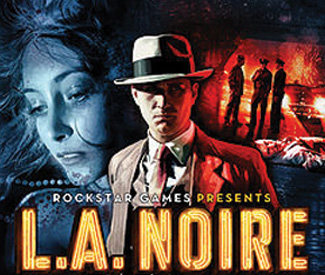
Dismissed by some as a hackneyed attempt to marry Rockstar Games’ Grand Theft Auto with a point and click adventure, L.A. Noire may not be the perfect joining of genres we all hoped it would be, but it’s a wonderful homage for aficionados of 1940s crime movies. A sordid tale of an ex-Marine turned policeman rising through the ranks of the LAPD, L.A. Noire is well paced and acted, with a fully fleshed-out story — which can be hard to find in video games. Though it ultimately made more headlines for the developers’ harsh working environment, L.A. Noire remains a unique and expansive take on an under-represented genre.

9. Driver San Francisco Do you like driving fast cars but find yourself overwhelmed with the intricacies of real-life simulations? More racing games are contextualizing their in-game courses with a bit of drama and back story, and Driver San Francisco takes the cake when it comes to unique storytelling. You play an SF cop in a coma who can enter the bodies of other drivers on the road and drive like a maniac without consequence. He uses this amazing power to help teenagers win street races, freak out driver’s ed instructors and save the city from a terrorist attack that may or may not exist at all. Driver SF is less than polished, and local residents will notice some discrepancies in the city’s geography, but for pure entertainment few games take risks like these.

10. Super Mario 3D Land

After a bit of an embarrassing year for Nintendo, and the 3DS in particular, Super Mario 3D Land marks the first game to make the troubled console truly worth owning. A jump-in-and-play good time, Mario 3D highlights both the 2D platforming of New Super Mario Bros. and the fluid 3D exploration of Mario Galaxy, creating something that’s more than a throwback, it’s a refinement of everything that makes the 25-year franchise so popular. It’s not innovative enough to be worth buying a 3DS for, but early adopters finally have a game to call their own.

Revolutionary bedfellows: What Occupy has in common with the sex-positive movement

2

Guardian reporter Yael Chanoff embedded at the Occupy SF and Occupy Oakland encampments during the months-long protest. Here, she reflects on the non-monogamy movement and what it could mean for the 99 percent

Temperatures were running high at Occupy San Francisco. After a day of hard work, the protesters were decompressing. Talented musicians shared their instruments with friends and strangers in impromptu jam sessions. 

The evening in question took place during Occupy SF’s early stages, back when police would swarm at the first sign of a tent being propped up, and all of the 200 or so people who camped out that night mingled and slept in the open air. I sat with two young women and three young men who were all topless, leaning on each other and using laps as pillows. 

Another occupier, who said he had arrived that day, wandered by. “So,” he asked, “Is this thing about free love?”

“I don’t know” the guy next to me replied. He shrugged at the newcomer. “But we’re definitely doing that.”

RADICAL INTIMACY

One week later, I was sitting in the midst of a very different kind of alternative community. We were inside the Supperclub nightclub, in a hot room scattered with beds. The event’s attendees wore sparse Adam and Eve-themed costumes and glittery pasties winked here and there. A video of bonobos copulating was playing. 

It was a “second base” party, one of the many social calendar offerings of San Francisco’s sex-positive community.  The night – dubbed “Sex at Dawn” after author Christopher Ryan’s book by the same name that explores the historical roots of non-monogamy – would feature a panel discussion with several of the leading lights in the alternative, kinky, political sex community. 

Among the night’s speakers: Dossie Easton, Carol Queen, Philippe Lewis, people who have devoted their lives to creating intellectual and physical spaces where free love is unquestioningly ‘what it’s about.’

Their passion notwithstanding, the party that would follow their talk was not a sex party, strictly speaking. Event producers and Club Exotica founders Philippe “Fuzzy” Lewis and Jocelyn Agloro describe their gatherings as “co-created pieces of temporary social art,” places “for people to explore intimacy, relationships, sensuality, and sexuality — in community.” 

In some ways, the two nights were similar. But in other ways, they were quite different. The cost of admission, for example (Occupy SF: free; Club Exotica’s party: $10-35). And the numerous beds. But I couldn’t help being struck by the similarities. 

Both spaces were populated by humans whose need for connection wasn’t being met anywhere else, humans brought together by an experiment in revolutionary ways of relating to each other based on sharing and compassion. 

As I see it, the two communities have important lessons to share with each other.

THE FUTURE OF LOVE?

Occupy SF’s merry encampment is just a memory now. Justin Herman Plaza is empty these days, and somewhat unsettling – a grim square of concrete, bocce courts, and dead grass where 200 thrilled, at times confused, yet fiercely committed individuals spent two month trying to make a better world. 

But the movement is not over. It’s just in the process of reinventing itself. Forums on “Occupy 2.0” are happening around the country.

And as I think back on that night with those free loving campers, I have to wonder, will Occupy hook up with the sexual liberation movement?

When it comes to sex at Occupy, experiences varied among the individuals I interviewed. One young man who has been involved in polyamorous relationships for several years said he didn’t see anything of the sort at camp. “People have met and started dating here,” he said, “but it’s usually monogamous.”

Be that as it may, more than a few people assured me that “there’s been at least one orgy in the tents.” 

Two campers who had been occupying since late September told me that they were in a polyamorous relationship with a third occupier, and knew of other of other threesomes that had developed at camp. One of them, a calm, smiling young man, said the Occupy SF camp was an environment that definitely encouraged this kind of free love.

“I think it’s because you’re around each other all the time, in this rapid exchange of revolutionary ideas, and that’s another way you connect.”

But is sexual revolution part of the Occupy ethos?

The calm man’s partner was an energetic twenty-year-old known to start dance parties at 4 a.m. when camp was still around. She didn’t think so. 

“I mean, we talk about it with each other,” she said. “But it’s not really a part of the political side of the movement.”

Others found that Occupy had at least encouraged more sexual license, albeit unaccompanied by sex-positive theory. With wide-eyed disbelief one long-time camper told me, “I don’t understand it. I’ve been with more women since I’ve been here, homeless, than I ever did when I was housed.” 

It appeared that societal notions of monogamy were being sloughed off at Occupy SF – but without any of the underlying theories of polyamory espouses by the city’s sex-positive community. Many occupiers I spoke had never heard of any theory of non-monogamy, and agreed that a workshop teaching about alternative relationship models at camp could have helped sort out a lot of their ambiguous sexual experiences. 

Ironically, some of the city’s most qualified teachers might have been in the tent next door to these potential students.

SEXPERTS IN THE TENTS

Joani Blank, founder of Good Vibrations and longtime sexual liberation activist, spent time at Occupy Oakland. She told me that she saw ideas of love, sharing, and interpersonal connection brewing in that camp. 

Said Blank, “the camps encouraged love and acceptance and egalitarianism. With Occupy, there’s been a significant opportunity for the nature of love and friendships to change and be more open, and a lot of people [are] relating to other people who are very much not the same as they are. A variety of relationships are being encouraged and supported because everybody’s united.”

Blank thinks that the camps bred sexual experimentation. “[The occupiers] will jump into sexual experiences they’ve never had. So, for them it’s very liberating. I felt that energy myself the night I stayed there, and it translates easily into other kinds of excitement.”

In the ambiguity that surrounds Occupy’s future, one thing seems clear: this movement won’t survive unless it’s built on our love for our peers. That’s the focus of parties like “Sex At Dawn,” where attendees are not allowed to have intercourse, but instead are encouraged to open up sensually to those around them. 

The quest to open up in ways not traditionally encouraged within the bounds of capitalism was seen by many as a keystone of Occupy. The viral video-upcoming documentary The Revolution is Love focuses on Occupy and protesters’ search to replace consumerism with intimacy. 

Polly Pandemonium, founder of sex club Mission Control and its popular swinger’s party Kinky Salon told me that “the sexual liberation movement and the Occupy movement…we are all working towards the same future. It’s homo sapiens natural predisposition to share rather than hoard and fight. The mutual goal is to help people realize that it’s safe to share, and that they won’t be left out in the cold, and to create a culture which supports and rewards that kind of behavior.”

Even in its current transition phase, Occupy continues to capture the imagination of millions, including many involved in our sexual liberation movement right here in San Francisco. With a new, restless crowd of thousands who saw how community sharing could be applied to sexual relationships at the Occupy camps, some new sexual revolution may be stirring. 

For now, Occupy and the sexual liberation movement are just getting acquainted. But if activists stick with the core notions of sharing and love, we might be seeing the start of a beautiful relationship. 


The Performant: Please appropriate me

0

Bryan Boyce and Negativwobblyland pump up the culture jams at L@te

Nighttime at the Berkeley Art Museum. An undercurrent of glee emanating from the patrons, as with a roomful of children up past their bedtimes. Enhancing the playground vibe, a giant orange mountain of rippling wooden waves designed by Thom Faulders, squats in the middle of the room, serving as seating for the assembled crowd, as well as pre-show entertainment as we scramble up its sides.

We’re here for the last L@te program of the year for a fanciful pairing between filmmaker Bryan Boyce and electronic noise ensemble Negativwobblyland, comprised of two parts Negativland (Mark Hosler and Peter Conheim) and one part Wobbly (Jon Leidecker). Pop culture appropriationists all, Boyce may be best known as the creator of the crassly hilarious political short “America’s Biggest Dick,” a tortured marriage of Dick Cheney and “Scarface,” while Negativland has been creating sonic mash-ups of samples and electronically-generated noise since 1979—including the infamous, legally-contested “U2” which combined a rude Casey Kasem rant with a casio-tone undercurrent of “I Still Haven’t Found What I’m Looking For,” and landed Negativland on the Fair Use frontlines.

As the lights dim, a brief burst of fanfare grabs attention, while on the projection screen the face of G.W. Bush superimposed on top of a cartoon sun, rises above the placid hills of Teletubbyland as a baby giggles offscreen. As cute little bunnies come out to play, the G.W. Bush sun firebombs them into oblivion with unexpected superpowers, smiling genially the whole time.

Terry Gilliam springs immediately to mind, and as more politically-pointed clips roll, so do the Yes Men, except instead of dressing up as politicians or corporate shills, the “characters” employed by Boyce is tweaked footage of actual politicians. “This is absolutely unbelievable,” boasts an “infomercial host” G.W. Bush with Jonathan Crosby’s “stunt mouth,” hawking macaroni and glitter “Election Collectibles” alongside Al Gore. Veering into more introspective ground, Boyce’s final two pieces ditch the politics for poetry-in-motion with “More is Always on the Way,” a series of quietly remarkable photographs of signs and billboards in their “native” urban habitat displayed with a spare, electronic soundtrack, and the other, “Whisper Hungarian Softly to Me,” a haunting blend of old Bela Lugosi footage and a trio of modern belly dancers with original music composed by Dan Cantrell. 

Negativwobblyland, clad in identical grey plaid shirts, take their places at a table set with piles of gear, in particular a series of five devices they call “boopers”—feedback devices inventively engineered from recycled radio and amplifier parts. The sonic onslaught created by these deceptively simple devices (and a few judiciously appended drum loops and samples of insect and animal noises) can be likened in some ways to the meandering of jazz improvisation, and inspires (in me, anyway) similar free-associations of image and impression. As the drone of an underwater sea creature, the loneliness of the long-distance trucker, a buzzing chainsaw disco, a teenage Atari foxtrot, the rumble of Tibetan long horns, and the high whine of a Himalayan mosquito swirl through my particular streams of consciousness, onstage, three fearless captains set a course for the opposite shore, jamming our earwaves with their slyly subversive, yet ultimately inclusive, collaboration.


Last-minute gifts: Dick Vivian Mix CD, $10

2


Need an 11th hour gift idea? Want to shop local and support Bay Area-owned businesses? Here’s a present that’s sure to please your music-loving loved ones…

ROOKY RICARDO’S: There is perhaps nothing more happy than a man with soul in his heart, as anyone who watches the YouTube video entitled “Dick Vivian cuttin’ the rug at Rooky’s!” can attest. Vivian is the owner and spiritual embodiment of the venerable Lower Haight record store, which he stocks with real-cheap 45s, vintage camera equipment, and a passel of witty lapel pins and magnets.

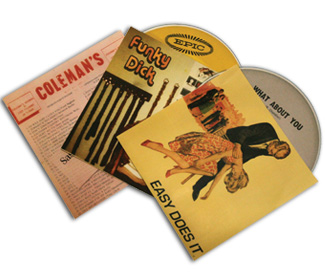
For real holiday majick, however, one must turn to Vivian’s lovingly-crafted mix CDs. There they sit, 10 bucks a pop with witty, retro-recreation packaging, a wonderland of ’60s soul, girl bands, and more. Many of the tracks, Vivian will attest, have never been captured in CD form before. Do you have a dad who still digs on the funky sounds of his youth? A buddy who is never more happy than when she’s doing the twist? You friend, have struck shopping list gold.

448 Haight, SF. (415) 864-7526, www.rookyricardos.com

For more last-minute gift ideas check out the Guardian’s Holiday Guide.


Jhameel’s top 10 songs for 2011

0

For so many more year-end music lists, click here and pick up this week’s paper.

Jhameel‘s list of top 10 songs for 2011

1. “Cruel” by St. Vincent

2. “Don’t Fuck with my Money” by Penguin Prison

3. “Holocene” by Bon Iver

4. “Bam Bam” by King Charles

5. “King of Diamonds” by Motopony

6. “Don’t Move” by Phantogram

7. “5 O’Clock” by T-Pain

8. “White Lie” by Jhameel

9. “Love U More” by Sunday Girl (RAC Mix)

10. “Imprint” by Amtrac


T-Pain (featuring Lily Allen and Wiz Khalifa:
http://www.youtube.com/watch?v=noLrCDzAp5M&ob=av2e

Bonus video: Jhameel covering another T-Pain tune (“Buy You a Drink”) last year:
http://www.youtube.com/watch?v=dPLYLsVDG8w

Come, as you are

0

YEAR IN MUSIC While thousands of shoppers — many appearing unfocused in their consumerist abandon — swarmed around me in the midst of Black Friday madness a couple of weeks ago, I knew exactly what I was looking for. Indeed, it was the only thing on my shopping list — the only thing that could make me get out of bed early the morning after Thanksgiving.

Capping off this fall’s many assorted special releases marking the 20th anniversary of Nirvana’s Nevermind, Universal Music was issuing a special, limited-edition, four record, 10-inch vinyl singles box set in conjunction with Record Store Day’s Black Friday festivities.

The re-release of these seminal singles — “Smells Like Teen Spirit,” “Come As You Are,” “Lithium” and “In Bloom”— probably only appeals to die-hard Nirvana fans or the completests; though possibly also to all those who were around when Nevermind first started making waves, and can vividly remember the impact of each single (and its accompanying music video) as they were released in the fall of 1991 and throughout 1992.

I fall into all of these categories, so it was with reverence and much anticipation that I braved the crowds of Union Square, walked briskly into Rasputin Music, found a set, and grabbed it off the shelf. There were no new tracks to discover, nothing that I hadn’t heard before — but the sense of excitement and joy from racing down to the record store was a welcome feeling, transporting me back to junior high, when Nirvana was exploding, and I was first exposed to a new world of music that would forever changed my life.

It was with these same highly-charged emotions (albeit months earlier) that I made the pilgrimage to Seattle in September to visit a new exhibit celebrating Nirvana’s legacy and impact on popular culture at the Experience Music Project museum. “Nirvana: Taking Punk To The Masses,” opened in April and features a treasure trove of artifacts and interactive installations telling the story behind Nirvana — how it became one of the most influential and beloved rock bands of the last quarter century.

Seeing the instruments that were used to create the music that has had such a profound effect on my life was awe-inspiring; as was gazing at hand-written lyric sheets, original demo tapes, artwork, family photos, stage props and more. Oral histories from band members Krist Novoselic and Chad Channing, along with others who had worked alongside them including producers Jack Endino and Butch Vig, and guitar tech Earnie Bailey, provided a personal look at the life of the band.

When coming to the end of the exhibit, my friend and I both commented that while it was a touching experience, it somehow seemed too brief, that there really should have been more to it. It was then that we looked at each other and came to what should have been an obvious realization; for all its influence and impact on our lives and the lives of millions of fans around the world, Nirvana only existed for a mere seven years. The band’s career, like Kurt Cobain’s life, was cut much too short.

In that time, however, the band made an incredible impression on its fans — and at the end of the exhibit there’s a video station where visitors are invited to share and record their memories of Nirvana — what the music has meant to them personally. After walking past the final panels and displays that recounted the events of April 8, 1994, though, I (and several other people nearby) was a little misty-eyed, and didn’t feel much like trying to sum up what Nirvana has meant to me all these years, on the spot, in front of a camera.

Instead, my friend and I proceeded to do what Nirvana had inspired us to do as teenagers; we went into one of the jam rooms in the museum, picked up a guitar, cranked up the volume, and played some tunes off Nevermind.

Rep Clock

0

Schedules are for Wed/14-Tues/20 except where noted. Director and year are given when available. Double and triple features are marked with a •. All times p.m. unless otherwise specified.

ARTISTS’ TELEVISION ACCESS 992 Valencia, SF; www.atasite.org. $6. “Other Cinema:” “New Experimental Works,” Sat, 8:30.

BALBOA 3630 Balboa, SF; www.brownpapertickets.com. $17.50-20. “Opera and Ballet at the Balboa Theatre:” Tosca, performed by the Royal Opera House, Wed, 7:30; The Nutcracker, performed by the Royal Ballet and the orchestra of the Royal Opera House, Sat-Sun, 10am.

CASTRO 429 Castro, SF; (415) 621-6120, www.castrotheatre.com. $7.50-10. “Noir City Xmas:” Lady on a Train (David, 1945), Wed, 7:30; Christmas Holiday (Siodmak, 1944), Wed, 9:20. •The Soft Skin (Truffaut, 1964), Thurs, 2, 7, and Shoot the Piano Player (Truffaut, 1960), Thurs, 5:15, 9:15. The Birds (Hitchcock, 1963), Fri, 2, 4:30, 7, 9:30. “Heeeere’s Christmas!”: The Shining (Kubrick, 1980), presented as part of “The Torrance Family Christmas Revue,” hosted by Peaches Christ, Sat, 8. This event, $25-45; more info at www.peacheschrist.com. “Santa’s Cool Holiday Film Festival:” Santa Claus Conquers the Martians (Webster, 1964), plus vintage Christmas cartoons, and more, Sun, 1:30.

CHRISTOPHER B. SMITH RAFAEL FILM CENTER 1118 Fourth St, San Rafael; (415) 454-1222, www.cafilm.org. $6.75-10.25. The Artist (Hazanavicius, 2011), Wed-Thurs, call for times. Golf in the Kingdom (Streitfeld, 2010), Wed-Thurs, call for times. The Nutcracker, performed by the Royal Ballet and the orchestra of the Royal Opera House, Sun, 1:30; Tues, 7.

ELECTRIC WORKS 230 Eighth St, SF; www.sfelectricoworks.com. “Imagine That,” animation screening curated by Sarah Klein for kids and adults, Sat, 6.

EXPLORATORIUM McBean Theater, 3601 Lyon, SF; www.exploratorium.edu. Free with admission ($10-15). A Child’s Christmas in Wales (Lightner, 1963), Sat, 2.

HOUSE OF AIR 926 Mason, SF; www.houseofair.com. $8. One for the Road, Fri, 8.

PACIFIC FILM ARCHIVE 2575 Bancroft, Berk; (510) 642-5249, bampfa.berkeley.edu. $5.50-9.50. Theater closed through Jan 11.

ROXIE 3117 and 3125 16th St, SF; (415) 863-1087, www.roxie.com. $6.50-10. “Southern (Dis)Comfort: The American South in Cinema:” Wild River (Kazan, 1960), Wed, 6:15; Spring Night, Summer Night (Anderson, 1968), Wed, 8:30; The Beguiled (Siegel, 1971), Fri, 7; Shy People (Konchalovsky, 1987), Fri, 9:15. Golf in the Kingdom (Streitfeld, 2011), Wed-Thurs, call for times. Footprints (Peros, 2011), Dec 16-22, 7, 8:45 (also Sat/17-Sun/18, 3, 4:45). Paul McCartney: The Love We Make (Maysles and Kaplan, 2011), Dec 16-22, 7, 9 (also Sat/17-Sun/18, 3:15, 5).

SAN FRANCISCO PUBLIC LIBRARY Koret Auditorium, 100 Larkin, SF; www.sfpl.org. Free. “Bay Area Community Cinema Series:” Taking Root: The Vision of Wangari Maathai (Merton and Dater), Wed, 5:45.

SFFS | NEW PEOPLE CINEMA 1746 Post, SF; www.sffs.org. $10-11. The Bride Wore Black (Truffaut, 1968), Fri and Dec 18-22, 2, 4:30, 7, 9:30.

VORTEX ROOM 1082 Howard, SF; www.myspace.com/thevortexroom. “Left Out of Radical Light: (A So-Called/Supposed Survey of) Alternative Film and Video in the San Francisco Bay Area, 1945-2000,” Fri, 8.

YERBA BUENA CENTER FOR THE ARTS 701 Mission, SF; (415) 978-2787, www.ybca.org. $6-10. “From Muppets to Metal: Music Movies:” Emmet Otter’s Jug-Band Christmas (Henson, 1977), Thurs, 7:30; Sun, 2; John Zorn: A Film in 15 Scenes (Klahr, Gobolux, Hills, and Izzo, 2011), Sat, 7:30.

Film Listings

0

Film listings are edited by Cheryl Eddy. Reviewers are Kimberly Chun, Max Goldberg, Dennis Harvey, Lynn Rapoport, and Matt Sussman. For rep house showtimes, see Rep Clock.

OPENING

Alvin and the Chipmunks: Chip-wrecked Yep, another one. (1:27)

Being Elmo: A Puppeteer’s Journey Documentary about puppeteer Kevin Clash, currently living his lifelong dream as the man behind one of the most popular Sesame Street characters. (1:25) Opera Plaza, Shattuck.

A Dangerous Method Cool and chatty (unsurprisingly, given its subject matter and the fact that it’s based on a play and a novel), David Cronenberg’s latest begins in 1904 Zurich as a shrieking patient (Keira Knightley) is escorted into the care of psychiatrist Carl Jung (Michael Fassbender). Dr. Jung, an admirer of Sigmund Freud, tests the “talking cure” on the woman, who turns out to be the fiercely intelligent and conveniently beautiful Sabina Spielrein. An attraction, both intellectual and sexual, soon develops, no matter that Jung is Sabina’s doctor, or that he happens to be married to a prim wife whose family wealth keeps him in boats and lake houses. Meanwhile, Jung and Freud (an excellent Viggo Mortensen) begin corresponding, eventually meeting and forming a friendship that’s tested first when Sabina comes between them, and later when Jung expresses a growing interest in fringe pursuits like parapsychology. The scenes between Freud and Jung are A Dangerous Method‘s most intriguing — save those brief few involving Vincent Cassel as a doctor-turned-patient who advises Jung to “never repress anything” — but the film is mostly concerned with Jung’s various Sabina-related dramas. Pity that this is a tightly-wound Fassbender’s least dynamic performance of the year, and that Knightley, way over the top in Sabina’s hysterical scenes, telegraphs “casting mistake” from the get-go. (1:39) Embarcadero. (Eddy)

Footprints The title of this low-budget show biz fable refers to the imprints (aren’t they mostly hand prints, though?) left in front of Grauman’s Chinese Theatre by stars past, present, and sometimes forgotten. Daisy (Sybil Temtchine) wakes up on Doris Day’s piece of sidewalk, unsure of who she is or how she got there. A cast of Hollywood Boulevard denizens, all of whom are suspiciously friendly and non-creepy, pitch in to help the plaintive gal remember her identity: the chick who plays Catwoman for photo-snapping tourists, the Scientology recruiter (really!), the kindly old gentleman who directs her to a memorabilia shop (where yet another nice guy works), a pair of wisecracking tour guides, the helpful real-estate broker, the sweet former B-movie goddess. The only sinister presence is a stern-looking guy who appears at random to, uh, look stern; his role in this Twilight Zone-lite tale, as well as Daisy’s purpose, is cleared up by the end of the film’s slender 80 minutes. Distinguished by the attention it pays to old Hollywood landmarks that still lurk beneath the Boulevard’s newly shiny exterior — and a WTF scene where Daisy is mistaken for Mira Sorvino — Footprints is otherwise forgettable. Mulholland Drive (2001) this is not. (1:20) Roxie. (Eddy)

Paul McCartney: The Love We Make It’s easy to dismiss this fairly mundane Albert Maysles documentary following Paul McCartney as he organizes his all-star post-9/11 benefit, the Concert for New York City, in October 2001 — on one level, it comes off as a cheesy glad-hander aspiring to a kind of historic, old-school razzle-dazzle. Just how many celebs and famous faces can pass through the scene, grip and grin, then tug their forelocks in the direction of the king of all rock stars? You might want to make a drinking game of it. But if you stave off the eyeball-glazing boredom that sets in watching McCartney make the rounds at Howard Stern, 60 Minutes, etc., you might find the telling little character nuances that come out in Maysles’ edit intriguing and appreciate the weird balancing act McCartney undertakes — as both the “nice Beatle” and a musician trying put across his music — even as he’s besieged by teary-eyed aging Beatlemaniacs and crazed street folk alike. There’s an edge, a been-there, seen-it-all flicker in those wide, sloping eyes, much as there is in our own peepers, as McCartney makes baseball small talk with his driver, waits on a tardy Dan Rather, and even must listen to Bill Clinton deliver the same self-servicing wisecrack twice, in this mildly interesting glimpse into the continuing, blandly surreal journey of a rock ‘n’ roll survivor. (1:34) Roxie. (Chun)

Sherlock Holmes: A Game of Shadows The game is afoot (again) when Holmes (Robert Downey Jr.) and Watson (Jude Law) face arch nemesis Professor Moriarty (Jared Harris). (2:09) Four Star, Marina.

*Tinker Tailor Soldier Spy Tomas Alfredson (2008’s Let the Right One In) directs from Bridget O’Connor and Peter Straughan’s sterling adaptation of John le Carré’s classic spy vs. spy tale, with Gary Oldman making the role of George Smiley (famously embodied by Alec Guinness in the 1979 miniseries) completely his own. Your complete attention is demanded, and deserved, by this tale of a Cold War-era, recently retired MI6 agent (Oldman) pressed back into service at “the Circus” to ferret out a Soviet mole. Building off Oldman’s masterful, understated performance, Alfredson layers intrigue and an attention to weird details (a fly buzzing around a car, the sound of toast being scraped with butter) that heighten the film’s deceptively beige 1970s palette. With espionage-movie trappings galore (safe houses, code machines), a returned-to flashback to a surreal office Christmas party, and bang-on supporting performances by John Hurt, Mark Strong, Colin Firth, Toby Jones, and the suddenly ubiquitous Benedict Cumberbatch, Tinker Tailor epitomizes rule one of filmmaking: show me, don’t tell me. A movie that assumes its audience isn’t completely brain-dead is cause for celebration and multiple viewings — not to mention a place among the year’s best. (2:07) (Eddy)

ONGOING

Arthur Christmas (1:37) 1000 Van Ness.

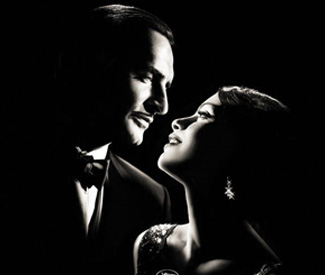
*The Artist With the charisma-oozing agility of Douglas Fairbanks swashbuckling his way past opponents and the supreme confidence of Rudolph Valentino leaning, mid-swoon, into a maiden, French director-writer Michel Hazanavicius hits a sweet spot, or beauty mark of sorts, with his radiant new film The Artist. In a feat worthy of Fairbanks or Errol Flynn, Hazanavicius juggles a marvelously layered love story between a man and a woman, tensions between the silents and the talkies, and a movie buff’s appreciation of the power of film — embodied in particular by early Hollywood’s union of European artistry and American commerce. Dashing silent film star George Valentin (Jean Dujardin, who channels Fairbanks, Flynn, and William Powell — and won this year’s Cannes best actor prize) is at the height of his career, adorable Jack Russell by his side, until the talkies threaten to relegate him to yesterday’s news. The talent nurtured in the thick of the studio system yearns for real power, telling the newspapers, “I’m not a puppet anymore — I’m an artist,” and finances and directs his own melodrama, while his youthful protégé Peppy Miller (Bérénice Béjo) becomes a yakky flapper age’s new It Girl. Both a crowd-pleasing entertainment and a loving précis on early film history, The Artist never checks its brains at the door, remaining self-aware of its own conceit and its forebears, yet unashamed to touch the audience, without an ounce of cynicism. (1:40) Embarcadero, Smith Rafael. (Chun)

*The Descendants Like all of Alexander Payne’s films save 1996 debut Citizen Ruth, The Descendants is an adaptation, this time from Kaui Hart Hemmings’ excellent 2007 novel. Matt King (George Clooney) is a Honolulu lawyer burdened by various things, mostly a) being a haole (i.e. white) person nonetheless descended from Hawaiian royalty, rich in real estate most natives figure his kind stole from them; and b) being father to two children by a wife who’s been in a coma since a boating accident three weeks ago. Already having a hard time transitioning from workaholic to hands-on dad, Matt soon finds out this new role is permanent, like it or not — spouse Elizabeth (Patricia Hastie, just briefly seen animate) will not wake up. The Descendants covers the few days in which Matt has to share this news with Elizabeth’s loved ones, mostly notably Shailene Woodley and Amara Miller as disparately rebellious teen and 10-year-old daughters. Plus there’s the unpleasant discovery that the glam, sporty, demanding wife he’d increasingly seemed “not enough” for had indeed been looking elsewhere. When has George Clooney suggested insecurity enough to play a man afraid he’s too small in character for a larger-than-life spouse? But dressed here in oversized shorts and Hawaiian shirts, the usually suave performer looks shrunken and paunchy; his hooded eyes convey the stung joke’s-on-me viewpoint of someone who figures acknowledging depression would be an undeserved indulgence. Payne’s film can’t translate all the book’s rueful hilarity, fit in much marital backstory, or quite get across the evolving weirdness of Miller’s Scottie — though the young actors are all fine — but the film’s reined-in observations of odd yet relatable adult and family lives are all the more satisfying for lack of grandiose ambition. (1:55) California, Marina, 1000 Van Ness, Piedmont, SF Center, Sundance Kabuki. (Harvey)

*Drive Such a lovely way to Drive, drunk on the sensual depths of a lush, saturated jewel tone palette and a dreamlike, almost luxurious pacing that gives off the steamy hothouse pop romanticism of ’80s-era Michael Mann and David Lynch — with the bracing, impactful flecks of threat and ultraviolence that might accompany a car chase, a moody noir, or both, as filtered through a first-wave music video. Drive comes dressed in the klassic komforts — from the Steve McQueen-esque stances and perfectly cut jackets of Ryan Gosling as the Driver Who Shall Remain Nameless to the foreboding lingering in the shadows and the wittily static, statuesque strippers that decorate the background. Gosling’s Driver is in line with Mann’s other upstanding working men who hew to an old-school moral code and are excellent at what they do, regardless of what side of the law they’re working: he likes to keep it clear and simple — his services as a wheelman boil down to five minutes, in and out — but matters get messy when he falls for sweet-faced neighbor Irene (Carey Mulligan), who lives down the hall with her small son, and her ex-con husband (Oscar Isaac) is dragged back into the game. Populated by pungent side players like Albert Brooks, Bryan Cranston, Ron Perlman, and Christina Hendricks, and scattered with readily embeddable moments like a life-changing elevator kiss that goes bloodily wrong-right, Drive turns into a real coming-out affair for both Danish director Nicolas Winding Refn (2008’s Bronson), who rises above any crisis of influence or confluence of genre to pick up the po-mo baton that Lynch left behind, and 2011’s MVP Ryan Gosling, who gets to flex his leading-man muscles in a truly cinematic role, an anti-hero and under-the-hood psychopath looking for the real hero within. (1:40) Lumiere. (Chun)

*Eames: The Architect and the Painter Mad Men would boast considerably fewer sublime lines without the design impact of postwar masters Charles and Ray Eames. Touching on only the edges of the wide net cast by the couple and the talented designers at their Venice, Calif., studio, Eames attempts to sum up the genius behind the mid-century modern objets that brought a sophisticated new breed of beauty and glamour to an American middle class. Narrated by James Franco and chock-full of interviews with everyone from grandson Eames Demetrios to director Paul Schrader, this debut feature documentary by Jason Cohn opens on the then-married would-be architect Charles and sidetracked painter Ray meeting and swooning at the Cranbook Academy of Art in Michigan, all while working with Eero Saarinen on a prize-winning molded-wood chair for a MOMA competition. Their personal and design lives would remain intertwined forever more — through their landmark furniture designs (who doesn’t drool for that iconic Eames lounge and ottoman, one of many pieces still in production today); their whimsical, curious, and at-times-brilliant films; their exuberant propaganda for the US government and assorted corporations; and even those Mad Men-like indiscretions by the handsome Charles (Cohn drops one bombshell of an interview with a girlfriend). Throughout, in a way that faintly reflects the industrial design work at Apple today, the Eameses made selling out look good — even fun. One only wishes Cohn, who seems to get lost in the output, delved further into the specific furniture designs and films themselves (only 1968’s Powers of Ten is given adequate play), but perhaps that’s all fated to be sketched out for a sequel on the powers of two. (1:24) Balboa. (Chun)

Golf in the Kingdom Golfers, apparently, worship Michael Murphy’s 1971 best-seller Golf in the Kingdom for its explorations of the sport’s more mystical qualities (for context, Murphy also co-founded Big Sur’s Esalen Institute). It’s unlikely there’ll be any new converts via director Susan Streitfeld’s low-budget attempt to translate the cult novel to the big screen — supply your own “sand trap” joke here, but this movie is a mess: murky night scenes, strange editing choices, and pretentious new age dialogue (“Keep asking questions. The best ones don’t have answers!”) that might’ve felt deep on the page, but is hilariously woo woo when spoken aloud. In fact, if you pretend Golf in the Kingdom — the tale of a young American golfer who encounters a meditating, is-it-wisdom-or-is-it-bullshit-spouting teacher during a stopover in Scotland — is a comedy, you’ll be better off. Not as well off as if you just watched Caddyshack (1980) instead, though. (1:26) Roxie, Smith Rafael. (Eddy)

Le Havre Aki Kaurismäki’s second French-language film (following 1992’s La Vie de Boheme) offers commentary on modern immigration issues wrapped in the gauze of a feel good fairy tale and cozy French provincialism a la Marcel Pagnol. Worried about the health of his hospitalized wife (Kaurismäki regular Kati Outinen), veteran layabout and sometime shoe shiner Marcel (Andre Wilms) gets some welcome distraction in coming to the aid of Idrissa (Blondin Miguel), a young African illegally trying to make way to his mother in London while eluding the gendarmes. Marcel’s whole neighborhood of port-town busybodies and industrious émigrés eventually join in the cause, turning Le Havre into a sort of old-folks caper comedy with an incongruously sunny take on a rising European multiculturalism in which there are no real racist xenophobes, just grumps deserving comeuppance. Incongruous because Kaurismäki is, of course, the king of sardonically funny Finnish miserabilism — and while it’s charmed many on the festival circuit, this combination of his usual poker-faced style and feel-good storytelling formula may strike others as an oil-and-water mismatch. (1:43) Opera Plaza. (Harvey)

Hugo Hugo turns on an obviously genius conceit: Martin Scorsese, working with 3D, CGI, and a host of other gimmicky effects, creates a children’s fable that ultimately concerns one of early film’s pioneering special-effects fantasists. That enthusiasm for moviemaking magic, transferred across more than a century of film history, was catching, judging from Scorsese’s fizzy, exhilarating, almost-nauseating vault through an oh-so-faux Parisian train station and his carefully layered vortex of picture planes as Hugo Cabret (Asa Butterfield), an intrepid engineering genius of an urchin, scrambles across catwalk above a buzzing station and a hotheaded station inspector (Sacha Baron Cohen). Despite the special effects fireworks going off all around him, Hugo has it rough: after the passing of his beloved father (Jude Law), he has been stuck with an nasty drunk of a caretaker uncle (Ray Winstone), who leaves his duties of clock upkeep at a Paris train station to his charge. Hugo must steal croissants to survive and mechanical toy parts to work on the elaborate, enigmatic automaton he was repairing with his father, until he’s caught by the fierce toy seller (Ben Kingsley) with a mysterious lousy mood and a cute, bright ward, Isabelle (Chloe Grace Moretz). Although the surprisingly dark-ish Hugo gives Scorsese a chance to dabble a new technological toolbox — and the chance to wax pedantically, if passionately, about the importance of film archival studies — the effort never quite despite transcends its self-conscious dazzle, lagging pacing, diffuse narrative, and simplistic screenplay by John Logan, based on Brian Selznick’s book. Even the actorly heavy lifting provided by assets like Kingsley and Moretz and the backloaded love for the fantastic proponents at the dawn of filmmaking fail to help matters. Scorsese attempts to steal a little of the latters’ zeal, but one can only imagine what those wizards would do with motion-capture animation or a blockbuster-sized server farm. (2:07) 1000 Van Ness, Presidio, Shattuck, Sundance Kabuki. (Chun)

The Ides of March Battling it out in the Ohio primaries are two leading Democratic presidential candidates. Filling the role of idealistic upstart new to the national stage — even his poster looks like you-know-who’s Hope one — is Governor Mike Morris (George Clooney), who’s running neck-and-neck in the polls with his rival thanks to veteran campaign manager (Philip Seymour Hoffman) and ambitious young press secretary Steven (Ryan Gosling). The latter is so tipped for success that he’s wooed to switch teams by a rival politico’s campaign chief (Paul Giamatti). While he declines, even meeting with a representative from the opposing camp is a dangerous move for Steven, who’s already juggling complex loyalties to various folk including New York Times reporter Ida (Marisa Tomei) and campaign intern Molly (Evan Rachel Wood), who happens to be the daughter of the Democratic National Party chairman. Adapted from Beau Willimon’s acclaimed play Farragut North, Clooney’s fourth directorial feature is assured, expertly played, and full of sharp insider dialogue. (Willimon worked on Howard Dean’s 2004 run for the White House.) It’s all thoroughly engaging — yet what evolves into a thriller of sorts involving blackmail and revenge ultimately seems rather beside the point, as it turns upon an old-school personal morals quandary rather than diving seriously into the corporate, religious, and other special interests that really determine (or at least spin) the issues in today’s political landscape. Though stuffed with up-to-the-moment references, Ides already feels curiously dated. (1:51) SF Center. (Harvey)

Immortals Arrow time (comin’ at ya, in 3D), blood lust, fascinating fascinators, and endless seemingly-CGI-chiseled chests mark this rework of the Theseus myth. Tarsem Singh flattens out the original tale of crazy-busy hero who founded Athens yet seems determined to outdo the Lord of the Rings series with his striking art direction (so chic that at times you feel like you’re in a perfume ad rather than King Hyperion’s torture chamber). As you might expect from the man who made the dreamy, horse-slicing Cell (2000), Immortals is all sensation rather than sense. The proto-superhero here is a peasant (Henry Cavill), trained in secret by Zeus (John Hurt and Luke Evans) and toting a titanic chip on his shoulder when he runs into the power-mad Cretan King Hyperion (Mickey Rourke, struggling to gnash the sleek scenery beneath fleshy bulk and Red Lobster headgear). Hyperion aims to obtain the Epirus Bow — a bit like a magical, preindustrial rocket launcher — to free the Titans, set off a war between the gods, and destroy humanity (contrary to mythology, Hyperion is not a Titan — just another heavyweight grudge holder). To capture the bow, he must find the virgin oracle Phaedra (Freida Pinto), massacring his way through Theseus’ village and setting his worst weapon, the Beast, a.k.a. the Minotaur, on the hero. Saving graces amid the gory bluster, which still pays clear tribute to 1963’s Jason and the Argonauts, is the vein-bulging passion that Singh invests in the ordinarily perfunctory kill scenes, the avant-garde headdresses and costumes by Eiko Ishioka, and the occasional edits that turn on visual rhymes, such as the moment when the intricate mask of a felled minion melts into a seagoing vessel, which are liable to make the audience gasp, or laugh, out loud. (1:50) 1000 Van Ness. (Chun)

In Time Justin Timberlake moves from romantic comedy to social commentary to play Will Salas, a young man from the ghetto living one day at a time. Many 12-steppers may make this claim, but Salas literally is, because in his world, time actually is money and people pay, say, four minutes for a cup of coffee, a couple hours for a bus ride home from work, and years to travel into a time zone where people don’t run from place to place to stay ahead of death. In writer-director Andrew Niccol’s latest piece of speculative cinema, humans are born with a digitized timepiece installed in their forearm and a default sell-by date of 25 years, with one to grow on — though most end up selling theirs off fairly quickly while struggling to pay rent and put food on the table. Time zones have replaced area codes in defining social stature and signaling material wealth, alongside those pesky devices that give the phrase “internal clock” an ominous literality. Niccol also wrote and directed Gattaca (1997) and wrote The Truman Show (1998), two other films in which technological advances have facilitated a merciless, menacing brand of social engineering. In all three, what is most alarming is the through line between a dystopian society and our own, and what is most hopeful is the embattled protagonist’s promises that we don’t have to go down that road. Amanda Seyfried proves convincible as a bored heiress to eons, her father (Vincent Kartheiser) less amenable to Robin Hood-style time banditry. (1:55) Four Star. (Rapoport)

*Into the Abyss: A Tale of Death, a Tale of Life How remarkable is it that, some 50-plus features along, filmmaker Werner Herzog would become the closest thing to a cinema’s conscience? This time the abyss is much closer to home than the Amazon rainforest or the Kuwaiti oil fields — it lies in the heart of Rick Perry country. What begins as an examination of capital punishment, introduced with an interview with Reverend Richard Lopez, who has accompanied Texas death row inmates to their end, becomes a seeming labyrinth of human tragedy. Coming into focus is the execution of Michael Perry, convicted as a teenager of the murder of a Conroe, Tex., woman, her son, and his friend — all for sake of a red Camaro. Herzog obtains an insightful interview with the inmate, just days before his execution, as well as his cohort Jason Burkett, police, an executioner, and the victims’ family members, in this haunting examination of crime, punishment, and a small town in Texas where so many appear to have gone wrong. So wrong that one might see Into the Abyss as more related to 1977’s Stroszek and its critical albeit compassionate take on American life, than Herzog’s last tone poem about the mysterious artists of 2010’s Cave of Forgotten Dreams (and it’s also obviously directly connected to next year’s TV documentary, Death Row). The layered tragedies and the strata of destroyed lives stays with you, as do the documentary’s difficult questions, Herzog’s gentle humanity as an interviewer, and the fascinating characters that don’t quite fit into a more traditional narrative — the Conroe bystander once stabbed with a screwdriver who learned to read in prison, and the dreamy woman impregnated by a killer whose entire doomed family appears to be incarcerated. (1:46) Opera Plaza. (Chun)

J. Edgar The usual polished, sober understatement of Clint Eastwood’s directing style and the highlights-compiling CliffsNotes nature of Dustin Lance Black’s screenplay turn out to be interestingly wrong choices for this biopic about one of the last American century’s most divisive figures. Interesting in that they’re perhaps among the very few who would now dare viewing the late, longtime FBI chief with so much admiration tempered by awareness of his faults — rather than the other way around. After all, Hoover (played by Leonardo DiCaprio) strengthened his bureau in ways that, yes, often protected citizens and state, but at what cost? The D.C. native eventually took to frequently “bending” the law, witch-hunting dubious national enemies (he thought the Civil Rights movement our worst threat since the bomb-planting Bolshevik anarchists of half a century earlier), blackmailing personal ones, weakening individual rights against surveillance, hoarding power (he resented the White House’s superior authority), lying publicly, and doing just about anything to heighten his own fame. A movie that internalized and communicated his rising paranoid megalomania (ironically Hoover died during the presidency of Nixon, his equal in that regard) might have stood some chance of making us understand this contradiction-riddled cipher. But J. Edgar is doggedly neutral, almost colorless (literally so, in near-monochrome visual presentation), its weird appreciation of the subject’s perfectionism and stick-to-it-iveness shutting out almost any penetrating insight. (Plus there’s Eastwood’s own by-now-de rigueur soundtrack of quasi-jazz noodling to make what is vivid here seem more dull and polite.) The love that dare not speak its name — or, evidently, risk more than a rare peck on the cheek — between Hoover and right-hand-man/life companion Clyde Tolson (Armie Hammer, very good if poorly served by his old-age makeup) becomes both the most compelling and borderline-silly thing here, fueled by a nervous discretion that seems equal parts Black’s interest and Eastwood’s discomfort. While you might think the directors polar opposites in many ways, the movie J. Edgar ultimately recalls most is Oliver Stone’s 1995 Nixon: both ambitiously, rather sympathetically grapple with still-warm dead gorgons and lose, filmmaker and lead performance alike laboring admirably to intelligent yet curiously stilted effect. (2:17) 1000 Van Ness, SF Center, Sundance Kabuki. (Harvey)

*Like Crazy Jacob (Anton Yelchin) and Anna (Felicity Jones) meet near the end of college; after a magical date, they’re ferociously hooked on each other. Trouble is, she’s in Los Angeles on a soon-to-expire student visa — and when she impulsively overstays, then jets home to London for a visit months later, her re-entry to America is stopped cold at LAX. (True love’s no match for homeland security.) An on-and-off long-distance romance ensues, and becomes increasingly strained, even as their respective careers (he makes furniture, she’s a magazine staffer) flourish. Director and co-writer Drake Doremus (2010’s Douchebag) achieves a rare midpoint between gritty mumblecore and shiny Hollywood romance; the characters feel very real and the script ably captures the frustration that settles in when idealized fantasies give way to the messy workings of everyday life. There are some contrivances here — Anna’s love-token gift from Jacob, a bracelet engraved “Patience,” breaks when she’s with another guy — but for the most part, Like Crazy offers an honest portrait of heartbreak. (1:29) Piedmont, SF Center, Shattuck, Sundance Kabuki. (Eddy)

*Love Crime Early this year came the announcement that Brian De Palma was hot to do an English remake of Alain Corneau’s Love Crime. The results, should they come to fruition, may well prove a landmark in the annals of lurid guilty-pleasure trash. But with the original Love Crime finally making it to local theaters, it’s an opportune moment to be appalled in advance about what sleazy things could potentially be done to this neat, dry, fully clothed model of a modern Hitchcockian thriller. No doubt in France Love Crime looks pretty mainstream. But here its soon-to be-despoiled virtues of narrative intricacy and restraint are upscale pleasures. Ludivine Sagnier plays assistant to high-powered corporate executive Christine (Kristin Scott Thomas). The boss enjoys molding protégée Isabelle to her own image, making them a double team of carefully planned guile unafraid to use sex appeal as a business strategy. But Isabelle is expected to know her place — even when that place robs her of credit for her own ideas — and when she stages a small rebellion, Christine’s revenge is cruelly out of scale, a high-heeled boot brought down to squash an ant. Halfway through an act of vengeance occurs that is shocking and satisfying, even if it leaves the remainder of Corneau and Nathalie Carter’s clever screenplay deprived of the very thing that had made it such a sardonic delight so far. Though it’s no masterpiece, Love Crime closes the book on his Corneau’s career Corneau (he died at age 67 last August) not with a bang but with a crisp, satisfying snap. (1:46) Four Star. (Harvey)

*Margin Call Think of Margin Call as a Mamet-like, fictitious insider jab at the financial crisis, a novelistic rejoinder to Oscar-winning doc Inside Job (2010). First-time feature director and writer J.C. Chandor shows a deft hand with complex, writerly material, creating a darting dance of smart dialogue and well-etched characters as he sidesteps the hazards of overtheatricality, a.k.a. the crushing, overbearing proscenium. The film opens on a familiar Great Recession scene: lay-off day at an investment bank, marked by HR functionaries calling workers one by one into fishbowl conference rooms. The first victim is the most critical — Eric Dale (Stanley Tucci), a risk-management staffer who has stumbled on an investment miscalculation that could potentially trigger a Wall Street collapse. On his way out, he passes a drive with his findings to one of his young protégés, Peter (Zachary Quinto), setting off a flash storm over the next 24 hours that will entangle his boss Sam (Kevin Spacey), who’s agonizing over his dying dog while putting up a go-big-or-go-home front; cynical trading manager Will (Paul Bettany); and the firm’s intimidating head (Jeremy Irons), who gets to utter the lines, “Explain to me as you would to a child. Or a Golden Retriever.” Such top-notch players get to really flex their skills here, equipped with Chandor’s spot-on script, which manages to convey the big issues, infuse the numbers with drama and the money managers with humanity, and never talk down to the audience. (1:45) Four Star, Presidio. (Chun)

*Melancholia Lars von Trier is a filmmaker so fond of courting controversy it’s like he does it in spite of himself — his rambling comments about Hitler (“I’m a Nazi”) were enough to get him banned from the Cannes Film Festival earlier this year, where Melancholia had its debut (and star Kirsten Dunst won Best Actress). Oops. Maybe after the (here’s that word again) controversy that accompanied 2009’s Antichrist, von Trier felt like he needed a shocking context for his more mellow latest. Pity that, for Melancholia is one of his strongest, most thoughtful works to date. Split into two parts, the film follows first the opulent, disastrous, never-ending wedding reception of Justine (Dunst) and Michael (Alexander Skarsgard), held at a lavish estate owned by John (Kiefer Sutherland), the tweedy husband of Justine’s sister, Claire (Charlotte Gainsbourg). Amid the turmoil of arguments (John Hurt and Charlotte Rampling as Justine and Claire’s divorced parents), pushy guests (Stellan Skarsgard as Justine’s boss), livid wedding planner (Udo Kier, amazing), and hurt feelings (Michael is the least-wanted groom since Kris Humphries), it’s clear that something is wrong with Justine beyond just marital jitters. The film’s second half begins an unspecified amount of time later, as Claire talks her severely depressed, near-catatonic sister into moving into John’s mansion. As Justine mopes, it’s revealed that a small planet, Melancholia — glimpsed in Melancholia‘s Wagner-scored opening overture — is set to pass perilously close to Earth. John, an amateur astronomer, is thrilled; Claire, fearful for her young son’s future and goaded into high anxiety by internet doomsayers, is convinced the planets will collide, no matter what John says. Since Justine (apparently von Trier’s stand-in for himself) is convinced that the world’s an irredeemably evil place, she takes the news with a shrug. Von Trier’s vision of the apocalypse is somber and surprisingly poetic; Dunst and Gainsbourg do outstanding work as polar-opposite sisters whose very different reactions to impending disaster are equally extreme. (2:15) Albany, Bridge. (Eddy)

Midnight in Paris Owen Wilson plays Gil, a self-confessed “Hollywood hack” visiting the City of Light with his conservative future in-laws and crassly materialistic fiancée Inez (Rachel McAdams). A romantic obviously at odds with their selfish pragmatism (somehow he hasn’t realized that yet), he’s in love with Paris and particularly its fabled artistic past. Walking back to his hotel alone one night, he’s beckoned into an antique vehicle and finds himself transported to the 1920s, at every turn meeting the Fitzgeralds, Gertrude Stein (Kathy Bates), Dali (Adrien Brody), etc. He also meets Adriana (Marion Cotillard), a woman alluring enough to be fought over by Hemingway (Corey Stoll) and Picasso (Marcial di Fonzo Bo) — though she fancies aspiring literary novelist Gil. Woody Allen’s latest is a pleasant trifle, no more, no less. Its toying with a form of magical escapism from the dreary present recalls The Purple Rose of Cairo (1985), albeit without that film’s greater structural ingeniousness and considerable heart. None of the actors are at their best, though Cotillard is indeed beguiling and Wilson dithers charmingly as usual. Still — it’s pleasant. (1:34) Opera Plaza, SF Center, Shattuck. (Harvey)

Moneyball As fun as it is to watch Brad Pitt listen to the radio, work out, hang out with his cute kid, and drive down I-80 over and over again, it doesn’t quite translate into compelling cinema for the casual baseball fan. A wholesale buy-in to the cult of personality — be it A’s manager Billy Beane or the actor who plays him — is at the center of Moneyball‘s issues. Beane (Pitt) is facing the sad, inevitable fate of having to replace his star players, Jason Giambi and Johnny Damon, once they command the cash from the more-moneyed teams. He’s gotta think outside of the corporate box, and he finds a few key answers in Peter Brand (a.k.a. Paul DePodesta, played by Jonah Hill), who’s working with the sabermetric ideas of Bill James: scout the undervalued players that get on base to work against better-funded big-hitters. Similarly, against popular thought, Moneyball works best when director Bennett Miller (2005’s Capote) strays from the slightly flattening sunniness of its lead actor and plunges into the number crunching — attempting to visualize the abstract and tapping into the David Fincher network, as it were (in a related note, Aaron Sorkin co-wrote Moneyball‘s screenplay) — though the funny anti-chemistry between Pitt and Hill is at times capable of pulling Moneyball out of its slump. (2:13) SF Center. (Chun)

The Muppets Of course The Muppets is a movie appropriate for small fry, with a furry cast (supplemented by human co-stars Jason Segel and Amy Adams) cracking wise and conveying broad themes about the importance of friendship, self-confidence, and keeping dreams alive despite sabotage attempts by sleazy oil tycoons (Chris Cooper, comically evil in the grand Muppet-villain tradition). But the true target seems to be adults who grew up watching The Muppet Show and the earliest Muppet movies (1999’s Muppets from Space doesn’t count); the “getting the gang back together” sequence takes up much of the film’s first half, followed by a familiar rendition of “let’s put on a show” in the second. Interwoven are constant reminders of how the Muppets’ brand of humor — including Fozzie Bear’s corny stand-up bits — is a comforting throwback to simpler times, even with a barrage of celeb cameos and contemporary gags (chickens clucking a Cee-Lo Green tune — I think you can guess which one). Co-writer Segal pays appropriate homage to the late Jim Henson’s merry creations, but it remains to be seen if The Muppets will usher in a new generation of fans, or simply serve as nostalgia fodder for grown-ups like, uh, me, who may or may not totally still own a copy of Miss Piggy’s Guide to Life. (1:38) Balboa, 1000 Van Ness, Presidio. (Eddy)

My Week With Marilyn Statuette-clutching odds are high for Michelle Williams, as her impersonation of a famous dead celebrity is “well-rounded” in the sense that we get to see her drunk, disorderly, depressed, and so forth. Her Marilyn Monroe is a conscientious performance. But when the movie isn’t rolling in the expected pathos, it’s having other characters point out how instinctive and “magical” Monroe is onscreen — and Williams doesn’t have that in her. Who could? Williams is remarkable playing figures so ordinary you might look right through them on the street, in Wendy and Lucy (2008), Blue Valentine (2010), etc. But as Monroe, all she can do is play the little-lost girl behind the sizzle. Without the sizzle. Which is, admittedly, exactly what My Week — based on a dubious true story — asks of her. It is true that in 1956 the Hollywood icon traveled to England to co-star with director Sir Laurence Olivier (Kenneth Branagh) in a fluff romance, The Prince and the Showgirl; and that she drove him crazy with her tardiness, mood swings, and crises. It’s debatable whether she really got so chummy with young production gofer Colin Clark, our wistful guide down memory lane. He’s played with simpering wide-eyed adoration by Eddie Redmayne, and his suitably same-aged secondary romantic interest (Emma Watson) is even duller. This conceit could have made for a sly semi-factual comedy of egos, neurosis, and miscommunication. But in a rare big-screen foray, U.K. TV staples director Simon Curtis and scenarist Adrian Hodges play it all with formulaic earnestness — Marilyn is the wounded angel who turns a starstruck boy into a brokenhearted but wiser man as the inevitable atrocious score orders our eyes to mist over. (1:36) Albany, Clay, 1000 Van Ness, Piedmont. (Harvey)

New Year’s Eve (1:58) 1000 Van Ness, Presidio, Sundance Kabuki.

*Outrage The title definitely works: not only is this the most violent Takeshi Kitano film in a stretch, but the shameless, strangely off-key caricatures, especially that of a corrupt African diplomat, veer into offensiveness. Then again, what isn’t offensive, broadly sketched-out, and nasty about this yakuza crime drama-cum-jet-black comedy concerning a particularly code-less, amoral band of modern-day ronin? Chaos reigns, sucking even the beautiful and the charismatic into its quicksand. Kitano here is stony-faced Otomo, the chief bully for boss Kato (Miura Tomokazu) and underboss Ikemoto (Kunimura Jun). Kato is being screwed with by his own godfather, and must distance himself from ex-con brethren, or “brother,” Murase (Renji Ishibashi), then offend him, and finally do much worse. Otomo and his own crew of tough guys, headed up by the wickedly handsome Mizuno (Kippei Shiina) are charged with enacting the twisted plan, which is nihilistically comical in its Byzantine politics and back-stabbing switchbacks — the U.S. Congress will see much that’s familiar in Outrage‘s gaming of an already-decaying system. The shameless caricature of the mob’s African gambling cohort, which succeeds in making him the only vaguely sympathetic character of the lot, only demonstrates how irredeemable and decadent the so-called system — one filled with criminals obsessed with hierarchy and equally preoccupied with wrecking disorder within a very rotten order — has become, especially in the context of the interracial crime-brethren bonding of Kitano’s Brother (2000), the director’s last yakuza flick. Using Japan’s mafia as a cruel funhouse mirror through which to peer at his culture, Kitano finds much wanting with this, his 15th film, and much like Takashi Miike and his recent 13 Assassins, the filmmaker questions the core Japanese notions of duty, conformity, and loyalty and finds that, much like trickle-down economics, power corrupts from the top down. (1:49) Lumiere, Shattuck. (Chun)

Puss in Boots (1:45) 1000 Van Ness.

*Shame It’s been a big 2011 for Michael Fassbender, with Jane Eyre, X-Men: First Class, Shame, and A Dangerous Method raising his profile from art-house standout to legit movie star (of the “movie stars who can also act” variety). Shame may only reach one-zillionth of X-Men‘s audience due to its NC-17 rating, but this re-teaming with Hunger (2008) director Steve McQueen is Fassbender’s highest achievement to date. He plays Brandon, a New Yorker whose life is tightly calibrated to enable a raging sex addiction within an otherwise sterile existence, including an undefined corporate job and a spartan (yet expensive-looking) apartment. When brash, needy, messy younger sister Cissy (Carey Mulligan, speaking of actors having banner years) shows up, yakking her life all over his, chaos results. Shame is a movie that unfolds in subtle details and oversized actions, with artful direction despite its oft-salacious content. If scattered moments seem forced (loopy Cissy’s sudden transformation, for one scene, into a classy jazz singer), the emotions — particularly the titular one — never feel less than real and raw. (1:39) Embarcadero, Shattuck, Sundance Kabuki. (Eddy)

The Sitter Which lovable schlub do you identify with more — Zach Galifianakis or Jonah Hill? Galiafiankias was already a full-blown standup-of-sorts talent before he broke into the cineplexes, but Hill — son of Richard Feldstein, account to rockers such as Metallica — seems like a natural talent of the kind that wasn’t buffed and bruised onstage, but embodies a kind of Apatow-like organic funniness untied to one-liners and conventional shtick. In a way that musicians like his father’s clients might appreciate, he riffs well, and that talent serves him pretty well in The Sitter, which the actor has described as a mash-up of Adventures in Babysitting (1987) and After Hours (1985), only more punk rock. It’s actually more hip-hop pop, as filtered through a hapless but smartypants college drop-out and pitched to his 20-something peer group rather than the rug rats, but who’s sweatin’? As our tale opens, Noah (Hill) is not-so-busy failing to launch, living with his lovelorn mom, when he gets roped into sitting her pal’s kids as a good deed. The little monsters (Max Records, Landry Bender, and Kevin Hernandez) need a dose of harsh reality, and surprise, Noah is prepared to give it to them, when he goes on a drug run for his bad girlfriend (Ari Graynor). Hill does well with what he’s got to work with, as do such sketched-out figures like Sam Rockwell’s oddball gay dealer, who seems clearly derived from Alfred Molina’s character in Boogie Nights (1997), and though this effort never quite transcends its obvious sound-bite inspirations (and makes sure everyone feels far too good at the end), it delivers some cute-crass pleasure for just a brief sitting. (1:21) 1000 Van Ness, Shattuck. (Chun)

The Skin I Live In I’d like to think that Pedro Almodóvar is too far along in his frequently-celebrated career to be having a midlife crisis, but all the classic signs are on display in his flashy, disjointed new thriller. Still mourning the death of his burn victim wife and removed from his psychologically disturbed daughter, brilliant-but-ethically compromised plastic surgeon Robert (played with smoldering creepiness by former Almodóvar heartthrob Antonio Banderas) throws himself into developing a new injury-resistant form of prosthetic skin, testing it on his mysterious live-in guinea pig, Vera (the gorgeous Elena Anaya, whose every curve is on view thanks to an après-ski-ready body suit). Eventually, all hell breaks loose, as does Vera, whose back story, as we find out, owes equally to 1960’s Eyes Without a Face and perhaps one of the Saw films. And that’s not even the half of it — to fully recount every sharp turn, digression and MacGuffin thrown at us would take the entirety of this review. That’s not news for Almodóvar, though. Much like Rainer Werner Fassbinder before him, Almodóvar’s métier is melodrama, as refracted through a gay cinephile’s recuperative affections. His strength as a filmmaker is to keep us emotionally tethered to the story he’s telling, amidst all the allusions, sex changes and plot twists torn straight from a telenovela. The real shame of The Skin I Live In is that so much happens that you don’t actually have time to care much about any of it. Although its many surfaces are beautiful to behold (thanks largely to cinematographer José Luis Alcaine), The Skin I Live In ultimately lacks a key muscle: a heart. (1:57) Lumiere, Shattuck. (Sussman)

*Sutro’s: The Palace at Land’s End Filmmaker Tom Wyrsch (2008’s Watch Horror Films, Keep America Strong and 2009’s Remembering Playland) explores the unique and fascinating history behind San Francisco’s Sutro Baths in his latest project, an enjoyable documentary that covers the stories behind Adolph Sutro, the construction of his swimming pools, and the amazingly diverse, and somewhat strange collection of other attractions that entertained generations of locals that came to Land’s End for amusement. Told through interviews with local historians and residents, the narrative is illustrated with a host of rarely-seen historic photographs, archival film footage, contemporary video, and images of old documents, advertisements and newspapers. The film should appeal not only to older viewers who fondly remember going to Sutro’s as children, and sadly recall it burning down in 1966, but also younger audiences who have wandered through the ruins below the Cliff House and wondered what once stood there. (1:24) Balboa. (Sean McCourt)

*Tomboy In her second feature, French filmmaker Céline Sciamma (2007’s Water Lilies) depicts the brave and possibly perilous gender experimentations of a 10-year-old girl. Laure (Zoé Héran) moves with her family to a new town, falls in with the neighborhood gang during the summer vacation, and takes the stranger-comes-to-town opportunity to adopt a new, male persona, Mikael, a leap of faith we see her consider for a moment before jumping, eyes open. Watching Mikael quietly observe and then pick up the rough mannerisms and posturing of his new peers, while negotiating a shy romance with Lisa (Jeanne Disson), the sole female member of the gang, is to shift from amazement to amusement to anxiety and back again. As the children play games in the woods and roughhouse on a raft in the water and use a round of Truth or Dare to inspect their relationships to one another, all far from the eyes of the adults on the film’s periphery, Mikael takes greater and greater risks to inhabit an identity that he is constructing as he goes, and that is doomed to be demolished sooner, via accidental discovery, or later, when fall comes and the children march off to school together. All of this is superbly handled by Sciamma, who gently guides her largely nonprofessional young cast through the material without forcing them into a single precocious situation or speech. The result is a sweet, delicate story with a steady undercurrent of dread, as we wait for summer’s end and hope for the best and imagine the worst. (1:22) Opera Plaza, Shattuck. (Rapoport)

Tower Heist The mildest of mysteries drift around the edges of Tower Heist — like, how plausible is Ben Stiller as the blue-collar manager of a tony uptown NYC residence? How is that Eddie Murphy’s face has grown smoother and more seamless with age? And how much heavy lifting goes into an audience member’s suspension of disbelief concerning a certain key theft, dangling umpteen floors above Thanksgiving parade, in the finale? Yet those questions might not to deter those eager to escape into this determinedly undemanding, faintly entertaining Robin Hood-style comedy-thriller. Josh Kovacs (Stiller) is the wildly competent manager of an upscale residence — toadying smoothly and making life run perfectly for his entitled employers — till Bernie Madoff-like penthouse dweller Arthur Shaw (Alan Alda) is arrested for big-time financial fraud, catching the pension fund of Josh’s staffers in his vortex. After a showy standoff gets the upstanding Josh fired, he assembles a crew of ex-employees Enrique (Michael Peña) and Charlie (Casey Affleck), maid Odessa (Gabourey Sidibe), and foreclosed former resident Mr. Fitzhugh (Matthew Broderick), as well as childhood friend, neighbor, and thief Slide (Murphy). Murphy gets to slink effortlessly through supposed comeback role — is he vital here? Not really. Nevertheless, a few twists and a good-hearted feel for the working-class 99 percent who got screwed by the financial sector make this likely the most likable movie Brett Ratner has made since 2006’s X-Men: The Last Stand — provided you can get over those dangles over the yawning gaps in logic. (1:45) 1000 Van Ness. (Chun)

The Tree of Life Mainstream American films are so rarely adventuresome that overreactive gratitude frequently greets those rare, self-conscious, usually Oscar-baiting stabs at profundity. Terrence Malick has made those gestures so sparingly over four decades that his scarcity is widely taken for genius. Now there’s The Tree of Life, at once astonishingly ambitious — insofar as general addressing the origin/meaning of life goes — and a small domestic narrative artificially inflated to a maximally pretentious pressure-point. The thesis here is a conflict between “nature” (the way of striving, dissatisfied, angry humanity) and “grace” (the way of love, femininity, and God). After a while Tree settles into a fairly conventional narrative groove, dissecting — albeit in meandering fashion — the travails of a middle-class Texas household whose patriarch (a solid Brad Pitt) is sternly demanding of his three young sons. As a modern-day survivor of that household, Malick’s career-reviving ally Sean Penn has little to do but look angst-ridden while wandering about various alien landscapes. Set in Waco but also shot in Rome, at Versailles, and in Saturn’s orbit (trust me), The Tree of Life is so astonishingly self-important while so undernourished on some basic levels that it would be easy to dismiss as lofty bullshit. Its Cannes premiere audience booed and cheered — both factions right, to an extent. (2:18) Balboa. (Harvey)

Twilight Saga: Breaking Dawn — Part One Some may have found Robert Pattinson’s stalker-suitor Edward Cullen sufficiently creepy (fits of overprotective rage, flirtatious comments about his new girlfriend’s lip-smackingly narcotic blood) in 2008’s first installment of the Twilight franchise. And nothing much in 2009’s New Moon (suicide attempt) or 2010’s Eclipse (jealous fits, poor communication) strongly suggested he was LTR material, to say nothing of marriage for all eternity. But Twilight 3.5 is where things in the land of near-constant cloud cover and perpetually shirtless adolescent werewolves go seriously off the rails — starting with the post-graduation teen nuptials of bloodsucker Edward and his tasty-smelling human bride, Bella Swan (Kristen Stewart), and ramping up considerably when it turns out that Edward’s undead sperm are, inexplicably, still viable for baby-making. One of the film’s only sensible lines is uttered at the wedding by high school frenemy Jessica (Anna Kendrick), who snidely wonders whether Bella is starting to show. Of course not, in this Mormon-made tale, directed by Bill Condon (1998’s Gods and Monsters, 2004’s Kinsey). And while Bella’s dad, Charlie (Billy Burke), seems slightly more disgruntled than usual, no one other than lovesick werewolf Jacob Black (Taylor Lautner) seems to question the wisdom of this shotgun-free leap from high school to honeymoon. The latter, however, after a few awkward allusions to rough sex, is soon over, and Bella does indeed start showing. Suffice it to say, it’s not one of those pregnancies that make your skin glow and your hair more lustrous. What follows is like a PSA warning against vampire-bleeder cohabitation, and one wonders if even the staunchest members of Team Edward will flinch, or adjust their stance of dewy-eyed appreciation. (1:57) 1000 Van Ness, SF Center, Sundance Kabuki. (Rapoport)

*Young Adult We first meet Mavis Gary (Charlize Theron) passed out next to last night’s bar pickup, whose name she won’t remember upon waking. You get the feeling this scenario happens a lot to Mavis — she’s the aging Manhattan model who seems like a trophy until the guy realizes she’s an even bigger asshole than he is. Plus, she’s in Minneapolis, on a house-grade scotch budget, where the denizens of the Midwestern home town she’s long abandoned assume she’s living a relatively glittering existence as swinging single and published author (albeit ghost author, of a petering-out tween fiction franchise). But no, her life is empty. Save your sympathy, however — Mavis might feel she’s missing something, but her consumerist values and incredible selfishness aren’t going to be sacrificed in finding it. After getting a courtesy baby announcement from old boyfriend Buddy (Patrick Wilson), she makes a determination as arbitrary as it is adamant: they were always meant to be together, and she needs to reclaim him so they can re-live their glory as King Jock and Queen Bitch of high school. Never mind that Buddy is quite happy where he is — let alone that new baby, and a wife (Elizabeth Reaser) less glam but cooler than Mavis will ever be. Acting as her confidant on this kamikaze mission is ex-classmate Matt (Patton Oswalt), who wants to reverse time about two decades for very different reasons. This reunion for the Juno (2007) duo of director Jason Reitman and writer Diablo Cody puts the latter’s facile wit to more complex, mature, organic use — though this ruthless yet quiet black character comedy is no uptempo crowd-pleaser. Rather, it’s an insidious, incisive commentary on such entertainments, as well as on juvie fiction like Sweet Valley High, whose adaptation is what Cody was developing before this tangent trumped it. It’s a surprisingly nervy movie, more like a 20-years-later sequel to Heathers (1988) than to Juno. (1:34) California, Metreon. (Harvey)


How guilty?

0

caitlin@sfbg.com

YEAR IN MUSIC You call it godawful taste in music, I call it reverse colonization. Learn to like the schlock on the radio and instead of groaning through that car ride you too can passenger seat-rock fit to make the Acura in the lane next to yours take “lookit this spazz” photos. Famous!

Yes, it takes some synaptic refiguring to truly enjoy Top 40 music. And not just so that you can enjoy facile lyrics — certain idealistic underpinnings can change your head’s bob to Drake’s latest into a rueful shake real quick. Sexism? Yes.

But this year had some R&B and commercial hip-hop gems. The general trend towards dance music has been making the sounds in those worlds fluffier, more addictive. And the videos — well this is the best part about succumbing to the ways of the Billboard Hot 100. One gets to bask in the light of candy-colored, expertly choreographed, lip-pursing versions of heaven. Forever chain-pressing repeat, because you’re not really a fan of any of these jams until you know. Every. Word.

So we’ve come to the conclusion that it’s all about mitigating the damage that you’re doing to your psyche. And so here we have some favorite bubblegum-ish tracks of the year, arranged so that the true soul crushers bring up the rear of the list.


RIHANNA FEAT. DRAKE “WHAT’S MY NAME?”

Rihanna entranced us in 2011 with her dance-ready beats, her off-kilter brand of hot (red hair dye, S and M wear, and oversize pastel cashmere sweaters playing equal roles), and sass. The yardstick by which all guilty pleasure songs must be judged is how loudly you feel like singing to them, which is usually tied to how much you can puff your chest out while imaging the lyrics apply to you. “What’s My Name?” is exactly the song you want to come on after you’ve celebrated a big win, say gotten a cup of coffee for free from your favorite grounds-slinger, or woken up on time. Plus, in the video Drake hits on Rihanna while she’s buying milk.

Guilty?: Not. Rihanna is the zeitgeist, the rest of us dust on her wind.


BEYONCE FEAT. J. COLE “PARTY”

Queen B continued her reign of terror right on through pregnancy this year, enrapturing all those lucky enough to catch sight of her baby bump. Carrying a child did not prevent her from making nearly every song from this year’s 4 into a hit single, or even discourage her from sporting Lycra and jouncing about in the video for “Countdown” (whose dance steps were later proven to be an “homage” to a routine by Belgian choreographer Anne Teresa De Keersmaeker). “Party” is a summer song, and judged by aforementioned I-wanna-be-that metric, it kills.

Guilty?: Do you hate babies? Not guilty.


NICKI MINAJ “SUPER BASS”

Another defining characteristic of the guilty pleasure is the inextricably linked dance move that accompanies its entry into one’s auditory landscape. Minaj’s “Super Bass” inevitably inspires a pushing away from the chest movement, usually paired with some kind of stomping of the feet. Wait, but does that make you a Barbie (the singer-emcee’s term for her own fans)? Being one of Nicki’s flock might just speak more to your hip-hop philosophy these days: like Drake, she came from a performing arts background, and makes no bones about the hip-hop world serving as a canvas for performance.

Guilty?: Fans of hip-hop with teeth take it easy — this music’s always been about putting on a show. Not guilty.


WILL.I.AM FEAT. SESAME STREET “WHAT I AM”

How do we hate Will.i.am? Let us count the ways. One, his group the Black Eyed Peas are the textbook example of sell-out. Nothing makes it past this group that will not sell Pepsis or $2 toasters at Target. Two, he told Elle Magazine that women who keep condoms around are “tacky.” Three, his participation in the Ed Lee “2 Legit 2 Quit” video (a production that seemed specifically engineered to enrage me). But then, this song, in which this hurricane of a man is surrounded by the beloved scamps of Sesame Street. It makes us want to high step. But is it right?

Guilty?: For above three reasons, all Will.i.am projects must be considered tainted — but positive behavior by him must be encouraged. Guilty, but harm to self is mitigated if you listen to this song while buying Trojan Her Pleasures.


DRAKE “MAKE ME PROUD”

A time-honored tradition contained within the “songs for women” canon of male hip-hop and R&B stars is the sweet hook versus the totally busted approach to the female sex in the lyrics. Pretty much the entirety of this year’s Take Care album qualifies for inclusion in this time-honored rite — although the way the singer-rapper calls an ex-flame out of his “old phone” in the track “Marvin’s Room” says as much about him as it does the girls that he’s calling. “Make Me Proud” is a big brother approach to the same hot chick he’s demeaning in every other song on the album. She’s good-looking, smart, she reserves sex because she’s sick of guys hitting on her. Ugh. Too bad Nikki Minaj has a verse on here rapping about being a Sagittarius and it’s now on my Spotify “starred” list.

Guilty?: Are you kidding? Lock yourself up.

Localized Appreesh: Mental 99

0

Localized Appreesh is our weekly thank-you column to the musicians that make the Bay. Each week a band/music-maker with a show, album release, or general good news is highlighted and spotlit. To be considered, contact emilysavage@sfbg.com.

Between them, local guitarist Joe Gore and drummer Dawn Richardson have played alongside some heavy-hitters: Tom Waits, PJ Harvey,  Tracy Chapman, Eels, DJ Shadow, Courtney Love, Four Non-Blondes, and a whole lot more. Together, the duo plays lush instrumental rock’n’roll in their new band, Mental 99. How lush? With just two (albeit two considerably talented) musicians, the band showcases a densely layered sound – the strength  you might expect from say, a quartet – thanks in part to its live looping skills.

Check out Mental 99’s killer cover of classic Joy Division tear-jerker “Love Will Tear Us Apart” (video below). Yep, just the two of ’em, no vocals necessary; the power of the emotion-inducing song bleeds through. Next, catch the band live this weekend at the Make-Out Room. But first, read up.

Year and location of origin: 2010/San Francisco
Band name origin: “Crack Spackle” was confusing people, so we resorted to Plan B. We were thinking more 1899 than 1999.
Band motto: “How much damn noise can two people make?”
Description of sound in 10 words or less: Instrumental. Cinematic. Eerie. Beautiful. Funny. Virtuosic. Catastrophic. More adjectives, please.
Instrumentation: Guitar, drums, and sheer optimism.
Most recent release: Mental 99. Your basic eponymous debut album.
Best part about life as a Bay Area band: Global beacon of tolerance and innovation. Plus good pizza.
Worst part about life as a Bay Area band: Legitimate sasquatch sightings are few and far between.
First record/cassette tape/or CD ever purchased:
Dawn: Sonny and Cher Live (yep, it was on vinyl)
Joe: Enrico Caruso’s Celeste Aida (yep, it was on Edison cylinder)
Most recent record/cassette tape/CD/or Mp3 purchased/borrowed from the Web: Joe: Skrillex’s Scary Monsters and Nice Sprites is real fun.
Dawn: Bustin’ Loose – Chuck Brown & the Soul Searchers.
Favorite local eatery and dish: Joe: Iwashi (sardine) at Tataki South (Church and 29th).
Dawn: It’s hard to go wrong in SF – so many good places to eat. But the veggie burrito at Taqueria Cancún is pretty tasty – and close by, especially if you just played El Rio.

Mental 99

With the Anita Lofton Project
Fri/16, 7:30 p.m., $8
Make-Out Room
3225 22nd St., SF
(415) 647-2888
www.makeoutroom.com

http://www.youtube.com/watch?v=4MNy5-tCT04

G-O-S-S-I-Ping with the PreZcotts

1

It is rare that you get a chance to kick it with a girl group in its early stages. In my admittedly paltry experience in the matter, they emerge full-grown into one’s consciousness. Blame it on lax Disney Channel-watching regime, blame it on the commercial music hype machine — typically by the time one catches wind of a Miley Cyrus four-pack, they already have their own line of hair extensions and rapt fan club. 

Which is why time was of the essence when the email from the PrezCotts‘s publicist came. “You HAVE to Check Out the Dynamite New Modesto-Based Girl Group the PreZcotts!” it preached. Unique capitalization, it was soon to be revealed, is a trademark trope of the PreZcotts’ canon.

“What I love about the girls is that they really represent what teens nowadays go through and look like,” said the email. “They avoid the artificial and sometimes overly matured look of their pop star contemporaries and stick to an empowering and inspirational message of believing in oneself and loving yourself for who and how you are.”

And so, I made a date to meet the PreZcotts. Westfield Mall food court, Monday afternoon seemed like an appropriate place and time.

Perched on some benches, the four PrezCott sisters were on their fourth trip to San Francisco with their manager, an ex-Metallica employee named Frank Munoz, who is on his first foray into the world of teen pop. They (the young women) were wearing vests and gold and pink and zebra prints, which inspired oddly maternal feelings in me. 

What road had led AnaLeyna, ChaLyn, RaNelle, and MaRiah to this sister group? What did the publicist mean by avoiding the overly matured look of their contemporaries? What was the message behind their music? Was any of this their idea in the first place?

“We want to be role models,” said AnaLeyna, who as the songwriter and oldest sister was the first to provide the answer to most questions. She’s the gang leader, clearly. “A lot of our songs are emotionally inspiring.” 

The PreZcotts get with god. They started singing in church at incredibly young ages. Their mom limited the kinds of songs they could listen to as young(er) whippersnappers. ChaLyn mentions that she is the only one who does not believe in evolution in her high school science class (but doesn’t preach contrary theories, at least not in the interview: “I don’t understand how it happened really, I’m not a scientist.”)

As Christians, they’re a bit leery of the scandalizing nature of pop culture. “We try and keep it honorable and appropriate,” AnaLeyna said. When asked how they will avoid the pitfalls of celebrity, a la Miley’s pole dancing or Lindsay Lohan’s… well, everything, the PreZcotts seemed sure that family and their religion will keep them on track. Of those who have fallen before: “They must be under so much pressure, like they crack or something,” AnaLeyna reasoned, graciously. The PreZcotts talked about their faith candidly, a remarkable feat in an interview with a Guardian reporter that gave one the impression that maybe no one has vetted the publication before the interview. 

But they do seem ready to take their family vessel to the top, these sisters. They want to bolster kids their ages through tragedies, share with them what happened when their own dad passed away (his face and birth-death dates adorns their debut album’s liner notes). 

Guardian photo by Caitlin Donohue

His passing hasn’t been the only rough spot for the girls from Modesto. All four of them have had to deal with bullying — AnaLeyna had to be homeschooled when the harassment got to be too much at her school. “MaRiah always feel like she doesn’t have any friends,” the eldest PreZcott told me, MaRiah quickly turning her face away at the statement. “Gossip” is AnaLeyna’s response to bullying. “It really is affecting people everywhere.”

Though at times the girls seemed unsure of how to answer questions, they haven’t been shoved into a gimmick yet. You get the impressions that their songs are comprised of things that they actually think need to be said. 

But I’m sure it was Munoz who suggested that the girls cover a Metallica song. 

The song features the PreZcotts and Japanese guitar prodigy Yuto Miyazawa. Through a neat trick, it was published on the Metallica Youtube channel, where at the time of writing it has recieved over 31,000 views. But as it is a Youtube video, it has Youtube comments — and reading through them after my interview with the girls it makes me wanna bash heads. Bullies! 

“A lot of the Metallica fans were pretty teed off that a teen pop had covered the song — they were the ones commenting,” said Munoz. The girls seemed a little distressed, so we had a satisfying conversation about how people can get real pigheaded when they’re anonymous on the Internet. 

The PreZcotts’ album smells like strawberries. 

Packaged in pink and images of the girls in lights, its materials have been infused with a strawberry scent that persists a day or so past the time you tear off its shrink wrap. 

The reason for this, Munoz explained to me, is to counteract the younger generation’s tendency to listen to all their music in Internet single form. Indeed, when I asked the PreZcotts what their favorite albums were, I was met with little more than searching stares. (Later we ascertained that some of their favorite artists were Alicia Keyes, Disney pop princess Selena Gomez, and Mariah Carey — though many of these singers release some songs deemed inappropriate by the girls). 

As their publicist had promised me they would, the PreZcotts asked if I’d like to hear them sing something acappella. I said I would, and a few minutes later, in the middle of the mall, I am treated to a private concert. 

“What do you guys want to sing?” asked AnaLeyna. “I want to sing ‘Free Your Mind’ by En Vogue.” Her sisters were fine with that choice, and without losing all of their endearing awkwardness, they start to harmonize like pros. Well, because they are, of course. “We’re here to tell you it’s okay, things happen.” AnaLeyna told me. “No matter what the latest fashion trend is, be yourself.” 

Lit shorts: ‘Beck’ by the book

0

Beck
By Autumn de Wilde
Chronicle Books
176 pp., hardcover, $35

 
For more than a decade and half, pop culture photographer (and video director) Autumn de Wilde has chronicled Beck, the iconic songwriter and her personal friend, on tour, in the studio, and as he’s posed before the camera — the latter especially.

Indeed, in Wilde’s photos we find Beck looking as impenetrably cool as ever. Incorporating fewer candid shots and plenty of showy staged ones — Beck in a white suite; Beck lifting an enormous red egg; Beck surrounded by loosely clad dancers — the collection has few insights into the mythologized songwriter and too many into his eclectic wardrobe. Wilde is a fine photographer, but her photos evoke the same Beck we’ve been looking at for decades. For real insights, look to the front of the book at the conversations between Wilde and Beck, where the two are finishing each other’s sentences and looking back on their collaboration. 

Read more book reviews in our Books Issue, on stands now