Technology

Film Listings

0

Film listings are edited by Cheryl Eddy. Reviewers are Kimberly Chun, Max Goldberg, Dennis Harvey, Lynn Rapoport, and Matt Sussman. For rep house showtimes, see Rep Clock.

OPENING

*The Adventures of Tintin Producer Peter Jackson and director Steven Spielberg join forces to adapt the work of Belgian comic creator Hergé, using performance-capture 3D animation (and featuring that new technology’s most prominent performer, Andy Serkis, in a key role). Hergé wrote over 20 volumes following the globe-trotting exploits of intrepid young reporter Tintin (Jamie Bell) and his canine companion, Snowy; The Adventures of Tintin draws from a trio of books dating from the early 1940s, tweaking the tales a bit but retaining the series’ ebullient energy and sharp humor. After he impulsively buys a model ship, Tintin is sucked into a mystery involving a long-lost pirate treasure sought by the sinister Sakharine (Daniel Craig) and, eventually, newfound Tintin ally Captain Haddock (Serkis). Fan favorites Thompson and Thomson (Simon Pegg and Nick Frost — frequent compadre Edgar Wright co-wrote the script) and a certain “Milanese Nightingale” make appearances in a story that careens between exotic locales and high-seas battles, and is packed with epic chase scenes that would leave Indiana Jones breathless. And in case you were worried, Tintin boasts the least creepy, least “uncanny valley” performance-capture animation I’ve seen to date. (1:47) Presidio. (Eddy)

The Darkest Hour Aliens invade and drain the planet’s power supply, or something. Save us, Emile Hirsch! (1:29) Shattuck.

The Flowers of War Christian Bale stars in Zhang Yimou’s period drama as a man who poses as a priest to protect a group of women during the 1937 Nanking Massacre. (2:21) Bridge.

*The Girl With the Dragon Tattoo The meeting of Stieg Larsson’s first “Millennium” book and David Fincher promised fireworks, as he’s a director who can be equally vivid and exacting with just the elements key to the series: procedural detail, obsession, violence, tweaked genre conventions, mind games, haunted protagonists, and expansive story arcs. But perhaps because this possible franchise launch had to be rushed into production to ride the Larsson wave, what should have been a terrific matchup turns out to be just a good one — superior in some stylistic departments (notably Trent Reznor and Atticus Ross’ pulsing score), but overall neither an improvement nor a disappointment in comparison to the uninspired but effective 2009 Swedish film version. Daniel Craig plays Mikael Blomkvist, the muckraking Stockholm journalist whose public disgrace after a failed expose of a suspect corporate tycoon makes him the perfect candidate for an unexpected assignment: staying sequestered in the wealthy, warring Vanger clan’s island home to secretly investigate a teenage girl’s disappearance and presumed murder 40 years ago. His testy helpmate is the singular Lisbeth Salander (Rooney Mara), antisocial hacker, researcher, and ex-mental patient par excellence. Nearly three hours long, the compressed, slightly altered (get over it) storyline nonetheless feels rushed at times; Fincher manages the rare feat of making mostly internet research exciting in filmic terms, yet oddly the book’s more shocking episodes of sex and/or mayhem don’t have the memorable impact one might expect from him. The leads are fine, as is the big support cast of recognizable faces (Christopher Plummer, Stellan Skarsgård, Robin Wright, etc.) But the knockout suspense, atmosphere, and urgency one hoped for isn’t present in this intelligent, not entirely satisfying treatment. On the other hand, maybe those who’ve already read the books and seen the prior films have already had so much exposure to this material that a revelatory experience is no longer possible. (2:38) Four Star, Presidio. (Harvey)

I Melt With You See “The Unbearable Triteness of Being.” (1:47) Lumiere.

Mission Impossible: Ghost Protocol No world landmark (the Kremlin, the Burj Khalifia) is too iconic and/or freaking tall for uber-adrenalized Impossible Missions Force agent Ethan Hunt (Tom Cruise) and his team (Jeremy Renner, Paula Patton, Simon “Comic Relief” Pegg) to infiltrate, climb, assume false identities in, use as a home base for unleashing futuristic spy technology that seems almost plausible (with the help of lots of iPads), race a BMW through, etc. One kind of gets the sense that Cruise and company sat down with a piece of paper and were like, “What stunts haven’t we done before, and how many of them can I do with my shirt off?” Celebrated animation director Brad Bird (2004’s The Incredibles) is right at home with Ghost Protocol as his first live-action effort — the film’s plot (set in the present day, it involves a positively vintage blend of Russians and nukes) and even its unmemorable villain take a back seat to Cruise’s secret-agent shenanigans, most of which take the form of a crazy plan that must be altered at the last minute, resulting in an even crazier plan, which must be implemented despite the sudden appearance of yet another ludicrously daunting obstacle, like, say, a howling sandstorm. For maximum big dumb fun, make sure you catch the IMAX version. A warning, though: any time the movie screeches to a halt to explore emotions or attempt characterization … zzz. (2:13) Presidio. (Eddy)

*My Reincarnation Reincarnation may not only sound far-fetched to a Westerner, but also unsettling. Imagine being told that you’re the manifestation of someone else — a dead stranger, essentially — and that your life is a mere shadow of that someone’s past life. At the heart of Jennifer Fox’s sweeping documentary is a father-son relationship strained by this clash between Western culture and Buddhist tradition. Filmed over 20 years, the documentary follows a Tibetan Buddhist Master, Chögyal Namkhai Norbu, and his son, Yeshi, who is believed to be the reincarnation of his great uncle. Yeshi is a normal Italian teenager who wants to be a photographer and play music, and receive some attention from his detached father. But Chögyal Namkhai Norbu insists on treating his son like a student, not his own flesh and blood. Reincarnation is a vast and intriguing look at a faith and a family, how the two intertwine, and how they can both ultimately change. (1:22) Roxie, Smith Rafael. (James H. Miller)

*Silent Souls Director Aleksei Fedorchenko and scenarist Denis Osokin’s enigmatic feature follows two men on a modern road trip that might well be deep into the bottomless past of Russia’s diverse religious rituals, mysticisms, and folklore. Coworkers travel cross-country to perform complicated Meryan ethnic rites for one protagonist’s late, beloved younger wife. This involves the transport of two birds, some surprisingly graphic personal reminiscences, an oceanfront funeral pyre, and other incidents whose full import the filmmakers are happy to leave somewhat cryptic. Gently comic, lyrical, at times borderline surreal, Souls belies a short running time of just an hour and a quarter — for all its intangibles, by the end this beguiling journey feels too substantial to have possibly taken so little of our time. (1:15) SFFS New People Cinema. (Harvey)

*War Horse If the idea of watching heroic horses getting slaughtered amid the brutal trench warfare of World War I fills your heart with disgust, then you might want to applaud Steven Spielberg and his relatively sensitive touch with that material in the heartrending War Horse. The PG-13 rating also gives you some idea that the director will be hewing to the movie’s origins as a children’s book. Spielberg paints this tale about loss of innocence, be it in the fields of the farm or the battle, in broad strokes, but here, you might feel a bit less manipulated by his prowess as a crowd-pleasing storyteller, less conscious about the legacy he draws on, and more immersed in a story that stays as close as it can to its animal protagonist’s point of view, short of pulling a Mr. Ed. War Horse opens with Joey’s birth and follows him as he’s sold to a struggling English farm run by traumatized war veteran Ted (Peter Mullan), his spunky wife Rose (Emily Watson), and his animal-loving son Albert (Jeremy Irvine). Circumstance — and an unyielding landlord (David Thewlis) — sends Joey off to the so-called Great War, first into the care of an honorable captain (Tom Hiddleston), later a French girl (Celine Buckens), and worst, into the arms of the German enemy, where he toils as a disposable beast of burden charged with hauling the literal machines of war uphill. Spielberg shields viewers both young and old from the more explicit horrors, though gracefully imparts war’s terrors, sending fresh chills through a viewer when, for instance, a child riding a horse disappears over a ridge and fails to return. No one’s immune from tears, and you have to wonder how much healing is actually possible at War Horse‘s conclusion, despite its stylized, symbolism-laden beauty. Nonetheless cinephiles will glean a certain pleasure from images that clearly nod to the blood-red skies of Gone With the Wind (1939), the ominous deep focus of Orson Wells, and the too-bright Technicolor clarity-slash-artifice of National Velvet (1944). (2:26) Balboa, Presidio, Shattuck. (Chun)

We Bought A Zoo Notorious heartstring manipulator Cameron Crowe directs this tale of a single dad (Matt Damon) who unexpectedly becomes the owner of a small zoo. (2:03) Balboa.

ONGOING

Alvin and the Chipmunks: Chip-wrecked (1:27) 1000 Van Ness.

Arthur Christmas (1:37) 1000 Van Ness.

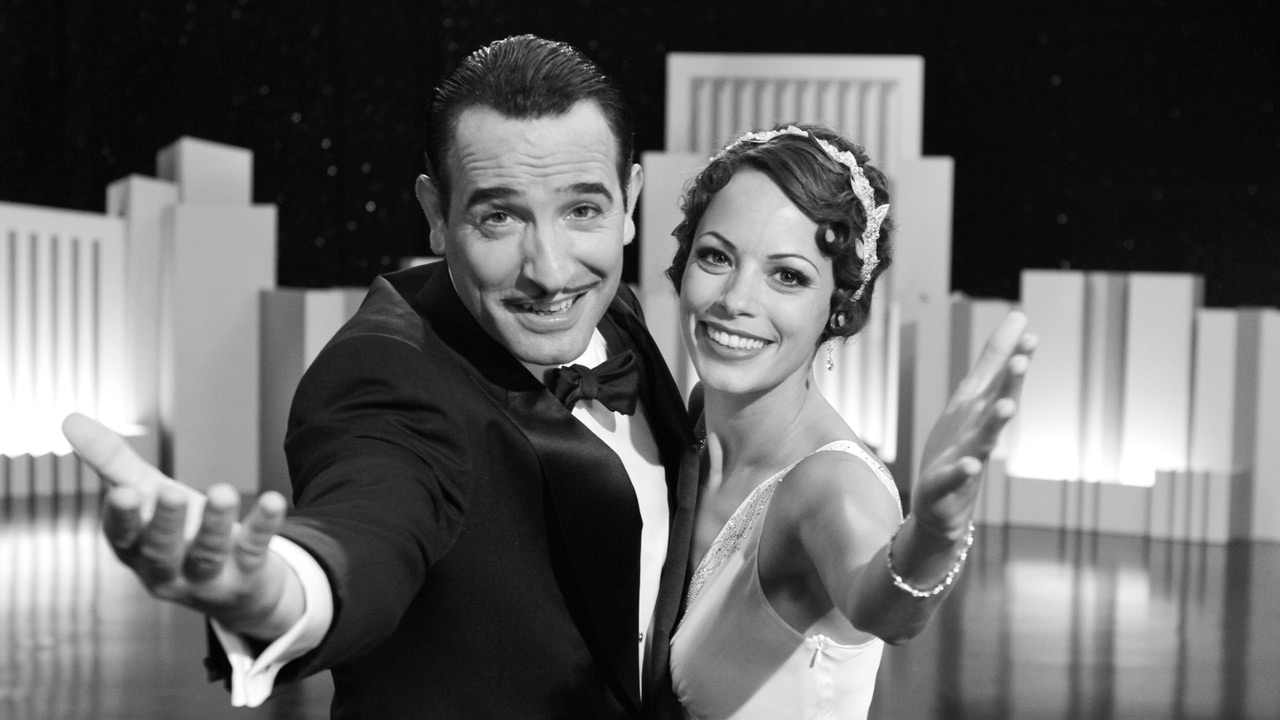
*The Artist With the charisma-oozing agility of Douglas Fairbanks swashbuckling his way past opponents and the supreme confidence of Rudolph Valentino leaning, mid-swoon, into a maiden, French director-writer Michel Hazanavicius hits a sweet spot, or beauty mark of sorts, with his radiant new film The Artist. In a feat worthy of Fairbanks or Errol Flynn, Hazanavicius juggles a marvelously layered love story between a man and a woman, tensions between the silents and the talkies, and a movie buff’s appreciation of the power of film — embodied in particular by early Hollywood’s union of European artistry and American commerce. Dashing silent film star George Valentin (Jean Dujardin, who channels Fairbanks, Flynn, and William Powell — and won this year’s Cannes best actor prize) is at the height of his career, adorable Jack Russell by his side, until the talkies threaten to relegate him to yesterday’s news. The talent nurtured in the thick of the studio system yearns for real power, telling the newspapers, “I’m not a puppet anymore — I’m an artist,” and finances and directs his own melodrama, while his youthful protégé Peppy Miller (Bérénice Béjo) becomes a yakky flapper age’s new It Girl. Both a crowd-pleasing entertainment and a loving précis on early film history, The Artist never checks its brains at the door, remaining self-aware of its own conceit and its forebears, yet unashamed to touch the audience, without an ounce of cynicism. (1:40) California, Embarcadero, Piedmont. (Chun)

Being Elmo: A Puppeteer’s Journey (1:25) Opera Plaza, Shattuck.

A Dangerous Method (1:39) Albany, Embarcadero, Sundance Kabuki.

*The Descendants (1:55) California, Marina, 1000 Van Ness, Piedmont, SF Center, Sundance Kabuki.

*Drive (1:40) Castro, Lumiere.

Footprints (1:20) Roxie.

Le Havre (1:43) Opera Plaza.

Hugo (2:07) 1000 Van Ness, Shattuck, Sundance Kabuki.

Immortals (1:50) 1000 Van Ness.

J. Edgar (2:17) 1000 Van Ness, Opera Plaza, SF Center.

*Melancholia (2:15) Lumiere, Shattuck.

Midnight in Paris (1:34) Shattuck.

The Muppets (1:38) 1000 Van Ness, Presidio.

My Week With Marilyn (1:36) Albany, Clay, 1000 Van Ness, Piedmont.

New Year’s Eve (1:58) 1000 Van Ness, Sundance Kabuki.

Paul McCartney: The Love We Make (1:34) Roxie.

*Shame (1:39) Embarcadero, Shattuck, Sundance Kabuki.

Sherlock Holmes: A Game of Shadows Maybe Guy Ritchie should’ve quit while he was ahead. Thanks to strong performances from Robert Downey Jr. and Jude Law, the British director’s first Holmes flick proved surprisingly fun. Two years later, it’s clear that Ritchie’s well of creatitivity has run dry. Sherlock Holmes: A Game of Shadows is cliched and overlong, burying a few good ideas under an avalanche of tired action movie stalwarts gone steampunk. To be fair, the set design and art direction are still sumptuous, creating a hyperbolic, detailed vision of Victorian Europe. New cast additions Jared Harris (as Moriarty, maliciously polite) and Stephen Fry (as Mycroft, eccentric and nude) do well with limited material. Noomi Rapace, playing a helpful gypsy, is superfluous. Downey Jr. and Law are still game for some amusing PG-13 homoeroticism, but it’s the former’s disinterested performance that ensures the movie’s downfall. Forced to make do without witty quips or interesting deductions, the Holmes of A Game of Shadows is part bruiser, part buffoon. The game’s a flop, Watson. (2:09) Four Star, Marina, 1000 Van Ness, SF Center, Sundance Kabuki. (Ben Richardson)

The Sitter (1:21) 1000 Van Ness.

The Skin I Live In (1:57) Opera Plaza, Shattuck.

*Tinker Tailor Soldier Spy (2:07) SF Center, Shattuck, Sundance Kabuki.

*Tomboy (1:22) Shattuck.

The Tree of Life Mainstream American films are so rarely adventuresome that overreactive gratitude frequently greets those rare, self-conscious, usually Oscar-baiting stabs at profundity. Terrence Malick has made those gestures so sparingly over four decades that his scarcity is widely taken for genius. Now there’s The Tree of Life, at once astonishingly ambitious — insofar as general addressing the origin/meaning of life goes — and a small domestic narrative artificially inflated to a maximally pretentious pressure-point. The thesis here is a conflict between “nature” (the way of striving, dissatisfied, angry humanity) and “grace” (the way of love, femininity, and God). After a while Tree settles into a fairly conventional narrative groove, dissecting — albeit in meandering fashion — the travails of a middle-class Texas household whose patriarch (a solid Brad Pitt) is sternly demanding of his three young sons. As a modern-day survivor of that household, Malick’s career-reviving ally Sean Penn has little to do but look angst-ridden while wandering about various alien landscapes. Set in Waco but also shot in Rome, at Versailles, and in Saturn’s orbit (trust me), The Tree of Life is so astonishingly self-important while so undernourished on some basic levels that it would be easy to dismiss as lofty bullshit. Its Cannes premiere audience booed and cheered — both factions right, to an extent. (2:18) Castro. (Harvey)

Twilight Saga: Breaking Dawn — Part One (1:57) 1000 Van Ness, SF Center.

*Young Adult (1:34) California, 1000 Van Ness. 


A really dumb article about bookstores

35

You never know what you’re going to get on Slate, which tends toward the neo-liberal and sometimes libertarian, but I just read a particularly awful piece by technology writer Farhad Manjoo, who thinks that local bookstores are economically inefficient and should just go away:

Compared with online retailers, bookstores present a frustrating consumer experience. A physical store—whether it’s your favorite indie or the humongous Barnes & Noble at the mall—offers a relatively paltry selection, no customer reviews, no reliable way to find what you’re looking for, and a dubious recommendations engine.

For a tech writer, Manjoo has a remarkably shoddy understanding of economics:

After all, if you’re spending extra on books at your local indie, you’ve got less money to spend on everything else—including on authentically local cultural experiences. With the money you saved by buying books at Amazon, you could have gone to see a few productions at your local theater company, visited your city’s museum, purchased some locally crafted furniture, or spent more money at your farmers’ market. Each of these is a cultural experience that’s created in your community. Buying Steve Jobs at a store down the street isn’t.

He conveniently ignores that fact that money spent a locally owned, independent business stays in the community — and thus creates more local economic activity and more jobs (not to mention tax revenue for local government). Money spent at Amazon goes to an out-of-town operation that doesn’t even pay state sales tax. You want to read about the well-documehted economic value of shopping at a local story, you can find plenty here and here and here.

And let’s talk about the One Percent — would you rather that your money helps the owner of a small local store buy food for his or her kids, or see the money go to one of the richest people in the world?

But there’s another point here. Like local coffee shops, local bookstores are places where people gather and have actual human interactions. I see my neigbors there; we talk about what we’re reading. When I’m done with books, I can sell them back — and someone else can buy them, used, and I can use the money to buy another new book. Which is a pretty efficient economic system.

And there are things you can’t put a price on: At Red Hill Books, the allegedly inefficent, overpriced local bookstore in Bernal Heights, the employees know me and my kids — and when my daughter, who is a voracious reader, finishes one series of books, they know what to recommend next.

That’s not a “recommendations engine” — that’s a live person.

If Farhad Manjoo wants to live in robo-world where a machine tells you what to eat, drink and read, fine — but I still think human beings, inefficient as we are, do a better job at selling books.


ILWU attitudes toward port blockade aren’t so simple

The Chronicle’s Andrew Ross describes Occupy organizers as “brilliant” in a sarcastic tone for vowing to move ahead with the Dec. 12 West Coast port blockade, despite public statements from the longshore union’s president criticizing the plan. But Ross’ article misses the mark, and seems to ignore alliances that have been forged between various sectors of labor and the Occupy movement in recent months.

“Trouble is, the folks they purport to be in solidarity with don’t seem hot on the idea to ‘effectively shutdown the hubs of commerce’ at all,” Ross writes. The Chronicle’s narrative is clear: Here you have some everyday working people trying to do their jobs, make ends meet, and put food on the table. They don’t want to see business as usual disrupted by a bunch of out-of-touch radicals who claim to speak for them.

But in reality, workers’ attitudes toward the port shutdown are far more nuanced. After all, longshore and warehouse workers are feeling the pinch as advances in technology reduce the number of jobs to be filled along waterfront shipping facilities, and many truck drivers who haul cargo to and from West Coast ports are barely able to make ends meet since they’re employed as independent contractors and paid low hourly wages without union representation.

The president of the International Longshore and Warehouse Union (ILWU), Robert McEllrath, issued a statement Dec. 6 in which he criticized the plan for a west coast port blockade, which occupiers in Oakland, Los Angeles, Seattle, Portland, Vancouver, and Anchorage have all vowed to participate in on Dec. 12.

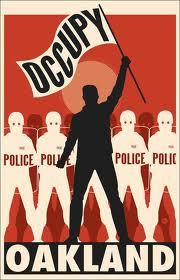
The official aim of the Occupy port shutdown is to demonstrate solidarity with longshore workers engaged in a labor dispute against EGT in Longview, Wash., and to stand with port truckers in Los Angeles whose attempts to unionize have been thwarted. The action is also meant as payback for raids against Occupy encampments in Portland, Oakland, Los Angeles, and other major cities, which were carried out in the wake of coordinated teleconferences between metropolitan mayors and a powerful organization of former police chiefs engaged in shaping law enforcement practices.

“Support is one thing,” wrote McEllrath, the ILWU president. “Organization from outside groups attempting to co-opt our struggle in order to advance a broader agenda is quite another and one that is destructive to our democratic process and jeopardizes our over two year struggle in Longview.”

ILWU spokesperson Craig Merrilees echoed McEllrath’s statement, telling the Guardian, “The Occupy Oakland group failed to respect the ILWU’s democratic decision-making structure. It’s unfortunate — it could’ve been handled differently.”

Dan Coffman, president of ILWU Local 21 in Longview, Washington, had just gotten out of a court hearing with grain terminal operator EGT when the Guardian caught up with him by phone. His union has been locked in an ongoing struggle against EGT, stemming from the multinational corporation’s attempts hire non-union workers and erode standard worker benefits such as overtime pay at a new grain terminal built on Port of Longview property.

“The ILWU has no involvement in [the port blockade] whatsoever,” Coffman explained. “We are not organizing this, and we are not promoting it.”

Yet he emphasized that, speaking as individual, “I’m a 99 percenter. Things have got to change. We’ve got to get some sanity back in this country. It’s obscene what they’re doing to working people and poor people in this country.”

Some rank and file members of ILWU said they agreed with the principles of the Occupy movement.

“Longshoremen had a good response to the [Nov. 2 general strike and port blockade],” Anthony, a longshoreman who’s worked at the Port of Oakland for more than a decade, told the Guardian in a phone interview. “It was empowering to a lot of people that so many people came out.” He added, “The rank and file do support the principles of the community and Occupy.”

The Port of Oakland ran full-page ads in major newspapers last week condemning plans for a port blockade, yet incorporating a key phrase of the Occupy movement into its message. “Port of Oakland is where the 99% work,” the ad proclaimed. “Occupy groups have called for a ‘total west coast ports shutdown’ on December 12th. Port of Oakland maritime operations were partially shut down on November 2nd. What did that accomplish? Lost work hours, lost shifts, and lost wages for workers and their families.”

Asked about the ad, Anthony called it “a lot of propaganda.”

Tremaine Waters, another longshoreman at the Port of Oakland, told the Guardian, “The majority of ILWU workers are supportive of what’s going on. They understand the situation occurring in America right now.” He added that if community members organize a picket line on Dec. 12, “I would say, yes, the ILWU members will respect it.”

Clarence Thomas, a third generation Oakland longshoreman, discussed the planned port shutdown in an interview with Worker’s World. Thomas emphasized that ILWU traditions and practices dictate that union members do not cross community picket lines.

“A picket line is a public demonstration — whether called by organized labor or not,” Thomas said in the interview. “It is legitimate. There are established protocols in these situations. To suggest to longshoremen that they shouldn’t follow them demands clarification. It is one thing to state for the record that the union is not involved, but another thing to erase the historical memory of ILWU’s traditions and practices included in the Ten Guiding Principles of the ILWU adopted at the 1953 biennial convention in San Francisco,” Thomas said. He added, “Labor is now officially part of the Occupy movement. That has happened.”

Get read!

0


ROCK AND ROLL ALWAYS FORGETS

By Chuck Eddy

Duke University Press

352 pp., paper, $24.95

Chuck Eddy glides through music criticism like a grumpy fanatic. Each article included in Rock and Roll Always Forgets — culled from Eddy’s vast back catalogue of music journalism articles, beginning with the early 1980s — is packed with cultural references, touchstones, facts, witty asides, a dash of snark, and acknowledgments of once-obscure acts. Yet, he approaches each band like he’s the first to have discovered it. He’s a musical anthropologist, but also, archeologist, digging up the remains of musicians past, lest we forget. Take a piece on a Marilyn Manson show, written in 1996. More than simply describing the stage and the crowd (which he does, expertly: “[they] wore too much black makeup, but they didn’t scare me — most seemed to be upper-middle-class Catholic school teens from the burbs…”). He wanders near profundity, dissecting Manson’s overall persona, his ticks, his own cultural references, and those who came before him, namely Alice Cooper, but a great many more. Most importantly, Eddy alludes to why that all matters in the least. (Emily Savage)


TROPIC OF CHAOS

By Christian Parenti

Nation Books

295 pp., hardcover, $25.99

Through historical research and on-the-ground reporting in Kenya, war-torn areas of Afghanistan, and other regions marked by intense conflict, Christian Parenti offers an unusual and compelling analysis of violence through the lens of the environment. Tropic of Chaos: Climate Change and the New Geography of Violence teases out the idea that increasingly unstable weather patterns stemming from climate change have fueled conflict throughout impoverished areas of the Global South. In the savannahs of northwest Kenya, for instance, deadly cattle raids have intensified as intertribal warfare heats up in the face of water scarcity. Recurring droughts and floods in Afghanistan have made it exceedingly difficult for farmers raise traditional crops, making them increasingly reliant drought-resistant poppy — the raw ingredient for heroin — for economic survival. Parenti also turns a sharp eye upon the repression, surveillance, and counterinsurgency that first-world nations have employed to combat growing violence in water-scarce, conflict-ridden regions, and calls for a more enlightened approach. (Rebecca Bowe)


CAFE LIFE SAN FRANCISCO

by Joe Wolff

Interlink Books

224 pp., paperback $20

Small quirks in this guide to the city’s cafes and coffeehouses — the sixth in a series that includes Sydney, New York, and Venice — will let you know its not strictly, strictly for locals. Java Beach is lumped in with more gearhead-oriented Mojo Bicycle Cafe and Ninth Avenue’s Arizmendi Bakery is filed under the catchall “Sunset District and vicinity.” The introduction’s discussion of “San Fran” versus “Frisco” versus “the City” is one that became boring long ago. But those things matter little. In-depth histories of some of your favorite cafes, from Java Beach to Philz’ to Caffé Baonecci are lucid looks at the facts and rewards of small entrepreneurship in the city. And Roger Paperno’s loving photography of velvet crema and foccacia sheets combines with words to create an ode to the city’s third spaces that any caffeine-laptop addict will appreciate in their stocking. (Caitlin Donohue)


LIONS OF THE WEST: HEROES AND VILLAINS OF THE WESTWARD EXPANSION

By Robert Morgan

Algonquin Books

497 pp., hardcover, $29.95

Biography can be the best history; stories of the people who changed the world (for better, and often for worse) are more compelling than turgid texts of dates and places. Lions of the West recounts the development of the American frontier from the end of the Revolutionary War to the Civil War era through the lives of 10 men. Yeah, all men. In fact, Morgan (by choice or by the longtime bias of American historians) makes it appear as if all of the great and evil deeds done as the nation moved Westward Ho were the province of the male of the species. At times, the profiles are a bit over the top (I don’t really care that much about Kit Carson’s personal life.) Overall, though, it’s a detailed, lively, and informative book that minces no words, especially when discussing the theft of much of the southwest from Mexico. San Franciscans will enjoy learning who Stockton, Sloat, Castro, Winfield, and a few other streets were named after. (Tim Redmond)


VHS: ABSURD, ODD, AND RIDICULOUS RELICS FROM THE VIDEOTAPE ERA

By Joe Pickett and Nick Prueher

Running Press

272 pp., paper, $14

Found Footage Festival founders and comedy writers Joe Pickett and Nick Prueher are apparently the Indiana Joneses of VHS, unearthing remarkable video package cover art that would otherwise be relegated to hoarder basements, bonfires, and anywhere else the worst (a.k.a., the best) videotapes go to die. I salute these dudes, even though the captions they tag each page with aren’t always funny or necessary. Truly, the covers (soft-focus and garish, tacky and baffling) speak for themselves, direct dispatches from ye olden days, long before YouTube brought WTF-ness to anyone with an Internet connection. You see, children, back in the 1980s or 90s, home viewers had to seek this shit out: instruction in squirrel-calling, chair-dancing, seduction, hairstyling (“What the Heck Am I Going to Do With My Hair?”), baby-proofing, spotting counterfeit Beanie Babies, etc. Straight-to-video masterpieces (F.A.R.T.: The Movie). Horrible exercise fads (“Bunnetics: The Buttocks Workout”). Well-meaning but also ghoulish-looking self-improvement vids (“Face Aerobics”). Every page is magical. Your mind will be blown. (Cheryl Eddy)


BI-RITE MARKET’S EAT GOOD FOOD

By Sam Mogannam and Dabney Gough

Ten Speed Press

297 pp., hardcover, $32.50

Bi-Rite Market is the ultimate neighborhood grocery. Shockingly small (with ambition to expand), it’s jam-packed with the best in organic produce, meats, cheeses, and artisan food products, much of it local. Now, Bi-Rite founder Mogannam has a new book loaded with recipes for such inviting delectables as white bean puree with prosciutto crespelle and strawberry rhubarb pie. But don’t relegate it to the cookbook category. Hewing to Bi-Rite’s mantra of creating community through food, the authors share extensive tips on shopping seasonally and locally for the healthiest and best-tasting products, no matter where you may live. You’ll learn what to look for at the grocery, storage and usage tips, and more. Well-illustrated sections feature produce (broken down by season), wine, beer, cheese, deli meats, butchery, baked goods, and even farmer profiles. Bonus: stay tuned for Sweet Cream and Sugar Cones, Bi-Rite’s ice cream and frozen treats recipe book from its renowned creamery, out this April. (No word yet on whether it’ll tell us how to beat the ever-present line outside.) (Virginia Miller)


DAMNED

By Chuck Palahniuk

Doubleday

247 pp., hardcover, $25

Welcome to Hell, as seen through the eyes of 13-year-old Madison Spencer, the daughter of a jet-setting yet eco-hyperconscious movie starlet and philanthropist. This is Dante’s Inferno meets The Breakfast Club, a film that overtly informs the plot and its main characters. As in Palahniuk’s breakout novel Fight Club, it’s hard distinguish between reality and perception as Maddy leads readers past the Vomit Pond, across Dandruff Desert, and right into Satan’s black Town Car. As she recalls her final weeks on earth, you’re pretty sure that she didn’t really die from a marijuana overdose. Clearly, things are not what they seem as the novel looses an American teenager’s perspective on modern life in both the underworld and earthly realm, with wry commentary on everything from pop culture and capitalist excess to the defeated religions whose fallen gods roam Hades. The gags alone — like the telemarketing and chatroom porn the damned deliver to Earth, and Hell’s endless loop of The English Patient — make this a tough book to put down, all the way to its slightly unsatisfying conclusion. (Steven T. Jones)


BEST AMERICAN COMICS 2011

edited by Alison Bechdel

Houghton Mifflin Harcourt,

352 pp., paperback $25

Chris Ware’s textbooky flowcharts; Angie Wang’s Technicolor, spiraling pistil-armed super-flower-heroine; Peter and Maria Hoy’s intricately plotted cause-and-effect grid art — the sixth year of this hardcover assemblage of the year in superlative strip art soars as a holiday gift for your fave comic nerd. Visual trickery and innovative page staging aside, many of the graphic narratives in this book hold up on plot alone. An excerpt from Kevin Mutch’s Fantastic Life effectively mines zombie philosophy, dating paranoia, and begging drinks off your service industry friends for comic gold. Many of the best pieces, perhaps indicative of the graphic novel mood these days, explore the darker side of the human psyche. But what graphic novel fan is unfamiliar with complicated? (Caitlin Donohue)


THE TIPSY VEGAN

By John Schlimm

Lifelong Books/Da Capo

164 pp., paper, $17

Every time I think we’re past the stereotype of the sullen, uptight vegan, I get another comment like, “Wait, don’t you only eat vegetables?” Why yes, I do eat plenty of veggies, but I also eat decadent dishes such as The Tipsy Vegan‘s Party Monster Pancakes, loaded with the sweet nectar of amaretto and drenched in syrup. This book is a carnivorous teetotaler’s nightmare, boasting 75 boozy recipes stuffed with everything from “beer to brandy” for the liquor-loving vegan cooks among us. It’s not, as I initially imagined, a book on vegan cocktails — that would be far too easy. Written by John Schlimm (Ultimate Beer Lover’s Cookbook), a member of “one of the oldest brewing families in the United States,” the book includes booze-infused treats for parties, brunch, and supper: fried avocados, slur-baaaaked peaches with Cointreau, “Bruschetta on a Bender” — all of which kind of sound like stoner food to me. An nice touch: glossy food porn shots on every page. (Emily Savage)


PROJECT DOG

By Kira Stackhouse

self-published

352 pp., hardcover, $34.99

Local photographer Kira Stackhouse experienced an inspiration so intense that she ditched her high-profile marketing job to pursue it: she would photograph specimens of the 50 most popular canine breeds officially registered with the American Kennel Club (“purebred dogs”) that had been purchased from professional breeders — and pair them with photos of the exact same kinds of dogs found in local dog rescues and shelters. The purpose was to start a dialogue about the effects of professional breeding and highlight the many kinds of dogs available for adoption (and also to change peoples’ perceptions about rescue dogs). But a major part of the story — and what makes this book so fantastic — is the wonderful doggy photography and sumptuous layout. Dogs are posed, or pose themselves, against iconic Bay Area backdrops, accompanied by often hilarious, always revealing, biographies and profiles. Project Dog became an online sensation: this book cements its reputation. Available at www.projectdog.net. (Marke B.)


LISTEN TO THIS

By Alex Ross

Picador

384 pp., paper, $18

In the expanded paperback edition of his absorbing and erudite collection of essays, Alex Ross of the New Yorker writes what could be called his mantra as critic: “I have always wanted to talk about classical music as if it were popular music, and popular music as if it were classical.” Ross listened exclusively to classical until he was 20, something he admits may sound “freakish.” But whether he’s describing Björk in her recording studio in Iceland, or composer John Luther Adams’ sound and light installation in Alaska, Ross draws from an immeasurable well of knowledge and plunges into his subject with gusto. He can find commonalities between Radiohead’s “Pyramid Song” and Stravinsky’s Firebird Suite, clear away the myths that have clouded both Franz Shubert and Bob Dylan, and thoroughly explain why OK Computer and John Cage’s 4’33” are equally astonishing. Informative, eye opening, Ross is every lover of music thrown harmoniously into one. (James H. Miller)


MY FAMILY TABLE

By John Besh

Andrews McMeel Publishing

272 pp., hardcover, $35

To know anything about New Orleans’ dining scene is to know John Besh. As one of Nola’s great chefs, he has a number of restaurants, including the acclaimed August, elevating local cuisine in forward-thinking ways. His original book My New Orleans is a striking post-Katrina tome to one of the greatest cities in the world and its vibrant culinary history. It’s a gorgeous coffee table volume packed with photos of the region’s people, places, and foods — more than 200 recipes from Mardi Gras specialties to gumbo, many with a contemporary twist. Besh just released, My Family Table, with welcoming, everyday recipes he cooks with his family that are healthy, fresh, simple, and heartwarming. Besh’s star power (Iron Chef champion and James Beard award-winner that he is) never dominates. Like New Orleans, it’s a visually beautiful book, but this time themed by “School Nights,” “Breakfast with my Boys,” and recipes like “Curried Anything” or “Creamy Any Vegetable Soup.” Closing with the key element of cooking, the communal, he writes: “If asked what my last meal would be, I’d reply, ‘Any Sunday supper at home, cooked with love, for people I love.'” (Virginia Miller)


FOUR SEASONS OF YOSEMITE: A PHOTOGRAPHER’S JOURNEY

By Mark Boster

Time Capsule Press

128 pages, hardcover, $34.95

John Muir would have loved this book, the spectacular result of a passionate love affair with Yosemite National Park involving all of the principals in this impressive project. Muir helped glorify and preserve Yosemite with his voice and pen. Robert Redford, who fell in love with Yosemite as an 11-year-old boy recovering from a mild case of polio, wrote an eloquent introduction to the book. Photojournalist, Mark Boster was smitten by the beauty and grandeur of the Yosemite when he first visited the park as a child with his family. He spent a year in the park detailing its seasonal changes in more than 100 magnificent pictures. “I felt the breezes, analyzed the light, listened to the sound of the rivers and falls, and tried to capture the images that moved me,” he writes in his introduction. Catherine Hamm’s delicate haiku add a poetic touch to many scenes. (The two principals who brought this project to life with loving care are Narda Zacchino, a former editor of LA Times and the Chronicle, and Dickson Louie, a former executive at both those papers. Zacchino serves as publisher and editor and Louie as president and CEO of Time Capsule Press, which specializes in creating books by using the archival content of newspapers and magazines.) Available at www.fourseasonsofyosemite.com (Bruce B. Brugmann)


THE PDT COCKTAIL BOOK

By Jim Meehan

Sterling Epicure

368 pp., hardcover, $24.95

Few bars have made as much impact on the New York cocktail (and thus the international) scene than PDT. Known as an early mover in the speakeasy trend, PDT revives classic recipes and invents new ones in the classic spirit. Bartender Jim Meehan put PDT on the map, and he’s since gone on to write about drink and educate bar managers and tenders everywhere. In the PDT Cocktail Book, he shares more than 300 cocktail recipes in a comprehensive collection inspired by classic tomes like The Savoy Cocktail Book. There are recipes from generations of hard-working bartenders, tips on glassware, bar tools, equipment, garnishes, techniques, a listing of seasonal ingredients, even a spirits primer. In keeping with PDT’s connection to neighboring Crif Dogs who serve creative dogs in the bar, there’s a section of hot dog recipes from big-name chefs who are regulars at the bar, including David Chang (Momofuku), Wylie Dufresne (WD-50), and Daniel Humm (Eleven Madison Park). From the comfort of home, cook up a Mason Dog fried in cornmeal and huitlacoche (corn smut/fungus, a Mexican specialty) to go with the Little Bit of Country cocktail, which mixes bourbon, maple, and jalapeño. (Virginia Miller)


EVERYTHING IS ITS OWN REWARD: AN ALL OVER COFFEE COLLECTION

By Paul Madonna

City Lights

240 pp., hardcover, $27.95

Like Ben Katchor’s classic “Julius Knipl, Real Estate Photographer,” local artist Paul Madonna’s “All Over Coffee” — published every Sunday in the Chronicle and on essential Web zine The Rumpus (www.therumpus.net) — draws me into a psychic space that is at once serene and troubled, surreal and hyperreal. The effect comes as much from the drawing style as the dreamlike non-narrative: both are direct descendants of Winsor McKay’s “Little Nemo.” Madonna gets an extra chills-up-the-spine boost from his illustrations of semi-familiar San Francisco architecture and intersections, lucid as etchings of bleached Kodachrome shots. For this second collection of the strip, he broadens his nib to include not only the City by the Bay, but Paris, Rome, Buenos Aires, and Tokyo. Overheard quotes, snatches of philosophical discourse, interior monologue snippets, existential doubts, random observations, and short stories are floated over the images to capture a peculiarly lovely eddies in the zeitgeist.


I DON’T WANT TO KILL YOU

By Dan Wells

Tor

320 pp., paperback, $11.95

Some of this is sick shit. You need a warped sense of humor and a love for random violence to enjoy the tale of a young man who lives with his mom in a mortuary and fights a demon made of black goo who takes over the minds and bodies of humans. But it’s a different type of thriller — complete with its own kinda sweet moments of teenage love and angst — and it’s packed with great detail. (Did you know that undertakers use Vaseline to fill up bullet holes? Cool.) John Wayne Cleaver, perfect name for a demon hunter, is a sociopath who is beastly to his mother and can’t get along with the other kids . Except for a super-hot chick who he thinks must be a demon, otherwise why would she like such a loser geek? The demon is nasty and gouges out eyes, cuts off tongues, sticks bodies on poles … you gotta check it out. (Tim Redmond)


RICE AND CURRY: SRI LANKAN HOME COOKING

S.H. Fernando, Jr.

Hippocrene Books

224 pp., paperback, $19.95

After a tongue-inflaming visit to the East Village’s fantastic Sigiri restaurant in NYC a couple weeks back, my interest in — and lust for — spicy Sri Lankan treats like kiri hodhi (coconut milk gravy), rossam (coriander-tamarind broth), kool (seafood soup), Jaffna goat curry, and ulundu vai (savory donuts) was, er, inflamed. Fortunately for me, author “Skiz” Fernando recently spent a year on the island rediscovering his roots and delving into the varied cuisine (later serving as a guide for that cheeky culinary colonist Anthony Bourdain). The punchy, informative Rice and Curry is the result, and includes nice introductions to Sri Lankan geography and history, as well as tips on what to stock in your cupboard to achieve the certain Sri Lankan “oomph” that sets the cuisine apart from Indian. A particular passage that profiles Leela, Fernando’s aunt’s ancient maid, offers some real insight into the island’s food tradition and customs — and yields a marvelous, corruscating crab curry from her hometown of Chilaw, just in time for Dungeness season. (Marke B.)


HEDY’S FOLLY: THE LIFE AND BREAKTHROUGH INVENTIONS OF HEDY LAMARR

By Richard Rhodes

Doubleday

261 pp., hardcover, $26.95

An author best-known for his 1986 Pulitzer-winning The Making of the Atomic Bomb, Richard Rhodes might seem like an unlikely biographer for movie stunner Hedy Lamarr, who lit up Golden Age films like Cecil B. DeMille’s 1949 epic Samson and Delilah. But her above-average qualities (she was called “the most beautiful woman in the world”) extended beyond the superficial. After escaping her gilded-cage marriage to an Austrian munitions magnate, Lamarr found success — and five more husbands — in Hollywood; between roles, she started inventing “to challenge and amuse herself.” During World War II, she got serious about her hobby. Showbiz circles led her to avant-garde musician George Antheil, renowned for his groundbreaking composition for 1924 short Ballet Mécanique. As Rhodes writes, “[Lamarr] began thinking about how to invent a remote-control torpedo to attack submarines just at the time she met Antheil, who knew quite a lot about how to synchronize player pianos.” Together, the “charming Austrian girl” and “the bad boy of music” worked on that torpedo, as well as “spread-spectrum radio,” an innovation that paved the way for contemporary wireless technology. Unlikely? Yes. Fascinating? Indeed. Never underestimate a beautiful woman — or a skilled writer’s ability to humanize complicated characters and bring drama to a tale loaded with tech-speak. (Cheryl Eddy)


COME, THIEF

By Jane Hirschfield

Knopf

98 pp., hardcover, $25

As it happens, one of Bay Area poet Jane Hirschfield’s passages currently adorns the famous Kahn and Keville auto repair shop’s marquee in the Tenderloin: “What some could not have escaped/ others will find by decision/ each we call fate.” Well, you could never blame her for not thinking big. As a well-known and approachable poet, she sports a blurb from O, The Oprah Magazine on this, her ninth collection, the first in six years since releasing her arresting After. And while her slightly witchy, be-scarved, grandiloquent persona screams marketable poetess, there’s some understated magic in her latest poems. These ones are full of plums and glass and vague Zen spells that give off, in their overall effect, an rueful, anticipatory sigh. Some childlike wonder seeps in: “Another year ends./ This one, I ate Kyoto pickles,” says “Washing Doorknobs,” my favorite from the collection. “But one thing you’ll never hear from a cat/ is Excuse me” goes “A Small-Sized Mystery.” Sometimes you can almost Hirschfield her straining for ambiguity, the poems’ heavy life lessons tearing through her delicate webs of observation. Still, each poem here showcases Hirschfield’s incisive power. (Marke B.)


PLENTY

By Yotam Ottolenghi

Chronicle Books

287 pp., hardcover, $35

Recently I returned to London, eating my way extensively through the city. One of my gustatory highlights was Yotam Ottolenghi’s beloved bakery and restaurant, Ottolenghi (with four locations). Not only were his baked goods otherworldly delights, his straightforward but elegant dishes using pristine ingredients were among the freshest and satisfying of my London travels. Plenty, his new cookbook, is a cleanly designed book with vivid photos of recipes like broccoli gorgonzola pie and mushroom herb polenta. Most impressive? Ottolenghi’s recipes are 100% vegetarian. The meat-free aspect is barely emphasized, and one feels no lack in the diverse range of flavors (with Middle Eastern influences) presented. Since 2006, Ottolenghi has penned the UK Guardian’s vegetarian column — and he’s not even a vegetarian! This speaks to how respected he’s become as a chef in his use of veggies and grains. Plenty shows this talent off, but most importantly delivers approachable, easy-to-replicate recipes to tickle our palates. (Virginia Miller)


HILLBILLY NATIONALISTS, URBAN RACE REBELS, AND BLACK POWER

By Amy Sonnie and James Tracy

Melville House

201 pp., paper, $16.95

Gazing back in time to the era when the Black Panthers were serving up free breakfast to low income youth and coming into the crosshairs of COINTELPRO, few may be aware that an interracial coalition of radical organizers included a contingent of poor white southerners bent on fighting capitalism in solidarity with communities of color. Written by a cofounder of the Center for Media Justice and a longtime San Francisco housing activist, this detailed bit of radical history spotlights the organizing efforts of poor whites, transplanted from rural Appalachia to the low-income Uptown neighborhood of Chicago, to build coalitions of poor people in solidarity with civil rights leaders. Groups like Jobs or Income Now (JOIN), the Young Patriots, and Rising Up Angry launched campaigns against neglectful landlords and cops who brutalized their youth. They represented the white arc of the multiracial Rainbow Coalition, initiated by the Black Panthers in Chicago as “a code word for class struggle.” Bizarre as it may seem, “It became common to see [Panther] Fred Hampton ‘give a typically awe-inspiring speech on revolutionary struggle, while white men wearing berets, sunglasses, and Confederate rebel flags sewn into their jackets helped provide security for him.'”

(Rebecca Bowe)


MR. KILL

By Martin Limon

Soho Press

376 pp., hardcover, $24

Korea in the 1970s. The United States has 50,000 troops in country, mostly near the Demilitarized Zone, and they don’t always behave. In general, the Korean authorities allow the military to police its own — but when a young Korean woman is brutally raped on a train to Seoul, and the assailant appears to be an American, all hell breaks loose. Martin Limon lived in Korea for ten years, and he does a (fairly) good job of presenting a portrait of the Cold War tensions between the two supposed allies. There’s a little bit of American bias — the author is former military himself — and his potrayal of Korean society isn’t as sensitive or oddly loving as John Burdett’s descriptions of Thailand in the Bankok 8 series. Limon’s great storytelling and his lively and compelling protagonists, Sergeants George Sureno and Ernie Bascom, pull readers past those issues. Perfect gift for someone who likes international crime thrillers. (Tim Redmond)


THE RECIPE PROJECT

By One Ring Zero

Black Balloon Publishing

116 pp., hardcover, $24.95

It’s part cookbook, part music journalism, part rock opus, and hell, part coffee table book. The Recipe Project (subhead “A Delectable Extravaganza of Food and Music”) is a concept spearheaded by New York-based gypsy-klezmer act One Ring Zero. The band’s co-founders, Michael Hearst and Joshua Camp, created songs using the recipes of well-known chefs (Mario Batali, Isa Chandra Moskowitz, Chris Cosentino) as the word-for-word lyrics. The meals themselves served as musical influence; each recipe inspired a different sound. While the songs are not likely ones you’d listen to say, on a long lonesome drive, they do have a glint of childlike glee. It’s conceptual. The true genius of this project is its overall cohesiveness. It’s an all-in-one package. Follow the recipe, listen to the song, get some interesting background factoids. The Recipe Project also includes full recipe playlists, articles by rock journalists, and some pretty interesting interviews with chefs. (Emily Savage)


CARY GRANT: DARK ANGEL

By Geoffrey Wansell

Arcade Publishing

192 pp., hardcover, $24.95

Back in print (it was originally released in 1996), this paen to the dapper star of North By Northwest (1959), An Affair to Remember (1957), Notorious (1946), His Girl Friday (1940), and approximately 10 zillion other classic films is somewhere between a biography and a coffee-table book. It’s worth picking up for the lavish black-and-white photos alone, illustrating the span of Cary Grant’s career with film stills, behind-the-scenes shots, and the occasional almost-candid image (did he ever take a bad picture)? The accompanying text is straightforward, but — as its title suggests — doesn’t shy away from Grant’s well-documented countercultural experiments. (“Grant became so enthusiastic about the value of LSD that he extolled its virtues during the shooting of his next picture.”) Nor does it gloss over Grant’s vices (he smoked 30 to 40 cigarettes a day) and sometimes troubled personal life (he was married five times). But the book’s chief focus is Grant’s brilliant career. As Stanley Donen, who directed him three times, remarks to author Geoffrey Wansell, “He’s thought of as a man who achieved a certain elegance and savoir faire. But in truth he was a fantastic actor.” (Cheryl Eddy)


NATURAL HISTORY OF SAN FRANCISCO BAY

By Ariel Rubissow Okamoto and Kathleen M. Wong

University of California Press

352 pp., paperback, $24.95

Drag queens, beat poets, burlesque dancers, hyphy rappers, dot com techies — the human species of the Bay Area have been well-documented, but information on the non-human dwellers of the bay itself has been left to scattered guidebooks, obscure blogs, and academic sources. Authors Rubissow Okamoto and Wong have collected a wealth of biological and environmental information in their book, published this November. The cross-country saga of the striped bass, the hidden beauty of eelgrass, the varied contentions of the California water wars are presented in highly readable, easily digestible sections. The emphasis here is on environmental impact and recent conservation developments — I did not know that it’s officially dangerous to eat more than one pound a month of fish from the bay! — and the history of decades of restoration triumphs and setbacks is related sleekly and straightforwardly. Absorbing all the information in this illuminating primer helped me appreciate the seething loveliness and churning forces that make up the place I call home. (Marke B.)




UC’s pick of Bratton to investigate pepper spray incident isn’t reassuring

12

The video images are already iconic, a line of young students sit cross legged, arms linked, at the front edge of an Occupy UC Davis protest, nonviolently protesting the impacts of the economic crisis on the University of California and beyond. As police step forward students begin to chant “the whole world is watching,” and officers disperse fire extinguisher size canisters of pepper spray into the faces of the seated students.

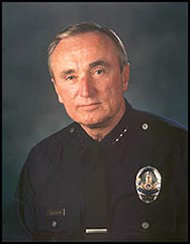
As is turns out the students were right, the whole world was watching, leaving UC Davis with a public relations nightmare that has left the campus police chief and two officers on administrative leave. In the wake of the incident, UC President Mark G. Yudof established an independent review to be conducted within the next 30 days, naming former Los Angeles Police Chief, Bill Bratton, now chairman of Kroll Security, to lead the investigation.

“My intent,” Yudof said, “is to provide the chancellor and the entire University of California community with an independent, unvarnished report about what happened at Davis.”

While UC Davis touts Bratton as “a renowned expert in progressive community policing,” deep questions surround the choice of Bratton. The Council of University of California Faculty Associations (CUCFA) was quick to question the independence of the investigation of police violence at UC Davis, pointing out that Bratton, through Kroll, already holds contracts with the UC system.

“We already know that Kroll has provided security services to at least three UC campuses for the past several years. This in itself would disqualify Mr. Bratton from participating in the investigation,”said CUCFA president Robert Meister. “You would be illustrating the kinds of connection between public higher education and Wall Street that the Occupy UC movement is protesting.”

Bratton also served as president of the Police Executive Research Forum, the police non-profit that facilitated controversial phone discussions between major metropolitan police chiefs in the lead up to the crackdown on the Occupy movement across the nation, raising questions about his ability to lead the UC Davis investigation.

Bratton’s offical bio from the LAPD shows the depth of his involvement in PERF when it states, “He is also the only chief executive to serve two terms as the elected President of the Police Executive Research Forum (PERF).” Bratton was instrumental in the creation of PERF’s hardline 2006 report Police Management of Mass Demonstrations http://www.policeforum.org/library/critical-issues-in-policing-series/MassDemonstrations.pdf for which he receives special recognition in the acknowledgments section of.

“PERF gathered more than 100 invited practitioners and stakeholders at an international forum in San Diego in December 2004 to highlight issues related to mass demonstrations and use-of-force. At this event, Los Angeles Police Chief William J. Bratton set the scene for a lively interaction as he discussed the changing nature of protests and mass demonstration events. He recalled that in the 1960s the issues leading to demonstration events tended to be more community-centered and that the police focus was largely tactical. He noted that today, demonstrations are sometimes orchestrated by far-reaching national and international organizations, coalitions and informal groups subscribing to anarchistic methods,” reads the report.

The manual pays special attention to managing media messaging, devoting a section to media in the wake of a major demonstration: “An integrated media strategy seeks to manage and harness the media attention in order to help achieve the overall policing objectives. By partnering with the media, the potential increases for all parties to win, public confidence to be maintained and the reputation of the law enforcement agencies to be enhanced.”

Though Bratton has moved on as PERF’s president, he keeps close ties with the organization. In April , Bratton was the keynote speaker at a PERF conference on technology and policing held in Washington, DC, a subject Bratton is an expert on due to his role in developing the controversial CompStat system used to “predicatively model” crime in some metropolitan areas.

Bratton is widely recognized as the leading proponent of the “broken windows theory” of policing, which advocates a zero tolerance approach to petty crime. Speaking to the Telegraph(UK) this summer about the historically large youth riots in the UK, he said youth were “emboldened” by over-cautious policing.

“To be effective, a police force should have ‘a lot of arrows in the quiver,’ said Mr Bratton, advocating a doctrine of ‘escalating force’ where weapons including rubber bullets, Tasers, pepper spray and water cannon were all available to commanders,” the paper wrote on August, 12 2011.


Silence is golden

0

FILM With the charisma-oozing agility of Douglas Fairbanks swashbuckling his way past opponents and the supreme confidence of Rudolph Valentino leaning, mid-swoon, into a maiden, French director-writer Michel Hazanavicius hits a sweet spot, or beauty mark of sorts, with his radiant new film The Artist.

In a feat worthy of Fairbanks or Errol Flynn, Hazanavicius juggles a marvelously layered love story between a man and a woman, tensions between the silents and the talkies, and a movie buff’s appreciation of the power of film — embodied in particular by early Hollywood’s union of European artistry and American commerce. Dashing silent film star George Valentin (Jean Dujardin, who channels Fairbanks, Flynn, and William Powell — and won this year’s Cannes best actor prize) is at the height of his career, adorable Jack Russell by his side, until the talkies threaten to relegate him to yesterday’s news. The talent nurtured in the thick of the studio system yearns for real power, telling the newspapers, “I’m not a puppet anymore — I’m an artist,” and finances and directs his own melodrama, while his youthful protégé Peppy Miller (Bérénice Béjo) becomes a yakky flapper age’s new It Girl.

Both a crowd-pleasing entertainment and a loving précis on early film history à la Martin Scorsese’s Hugo, The Artist never checks its brains at the door, remaining self-aware of its own conceit and its forebears, yet unashamed to touch the audience, without an ounce of cynicism. And if you blink, you might miss the allusion to The Artist‘s backstory: in the opening film-within-a-film, Valentin dons a mask and a top hat in a swift tip of the topper to iconic French villain-antihero Fantômas, which provided the initial inspiration for producer Thomas Langmann to approach Hazanavicius.

Langmann wanted the director to do a remake of the 1960s Fantômas movies starring Jean Marais. “I said, ‘No, I can’t do that. It doesn’t interest me,'” recalls the director on a recent visit to San Francisco. Langmann, however, insisted on a movie with the director, who had made the Bond-parody OSS 117 series with Dujardin. “So I said, OK, I’ll do your Fantômas — not your high-tech one, but the 1905 one, the real one, and I’ll do it in black-and-white, and silent.”

In the end, Langmann gave the go-ahead for a silent movie untethered to the Fantômas franchise — “I knew when we met that he was crazy enough to follow me and to support me,” quips Hazanavicius — and with the Valentin character on his mind and two scripts on hand, one for The Artist as it stands and one for the adventure comedy that materializes as the initial film-within-a-film, the director made the silent he had dreamed of, shooting at Hollywood locales such as the Paramount Studio and Mary Pickford’s mansion and utilizing far-from-analog technology when needed (for example, the Hollywood sign is transformed into its original “Hollywoodland” state digitally, and the film’s luminous black-and-white was rendered using 500 ASA color film to get a grainier look).

One of the keys to casting the period spell was keeping everything simple, rather than highlighting obvious tropes. “I put a lot of things out of the frame, always,” Hazanavicius explains, “because when there are too many things, it’s just too much. You show the audience, ‘Look it’s the ’20s! It’s so ’20s! Did you not know we were in the ’20s?’ Sometimes you have to just show a white wall, and that’s enough. The audience is there to believe, so the more you let them believe, the better it is.”

Likewise the lightest touch was required with the actors, who worried about replicating the silent era’s performances and were tasked with conveying everything with the briefest flicker of emotion dancing across the face, or body language (which Béjo memorably plays with in a scene when she mimes an embrace with her would-be heartthrob’s jacket). “I know it was stressful for the actors in the beginning because they wanted to know if I asked for something very special, but I didn’t,” says the director. “They don’t play silent, really — they play ’20s, and I think it’s different. We think [silent film players] overact not because the movies are silent but because the codes of the ’20s are very different from the codes of acting today.

“So what I said to [Dujardin] was very simple: ‘Don’t be upset with the silent thing,'” Hazanavicius continues. “‘You don’t have anything special to do. You have to do what you usually do — you come with your face, your body, your smile, your charm, and you embody the character, and you respect the situation, and everything will be fine.'” Also fueling the feel was the fact that The Artist was shot at 22 frames a second, rather than the standard 24. “It gave us a very small acceleration in the gesture so the way they move is a little bit too fast, so that gives a flavor of the ’20s,” adds the filmmaker.

For Hazanavicius, the draw to make a silent was multipronged. “I wanted to share my experience as an audience member because I love the way the story is told to you in a silent movie,” he says. “There’s a lot of room for you. You can make your own movie. You participate in the storytelling process. I really like it because you’re very close to the story — it’s your voices, your dialogue, your sound design — you’re part of the process, so I really love that.”

Another enticement was the formal challenge of not only assembling the narrative about early film stars, which incidentally echoes that of John Gilbert and Greta Garbo, but shooting in a silent style, playing with era’s visual codes. To that end, Hazanavicius and leading lady (and romantic partner) Béjo did enormous amounts of research, poring through the period’s films and actors and directors’ biographies. “I hope my future movies will be better thanks to this one,” says the director.

“When I wrote the script, I sent it to the script supervisor, and she said to me, ‘You really want to, I don’t know how to say, show off!'” he remembers. “‘You really want to be remarked [upon].’ I said, ‘Yes!’ I think we all want to be remarked [upon]. I don’t want to make a discreet movie that nobody wants to see.”

Sounds like the words of a real artist.


THE ARTIST opens Fri/2 in San Francisco.

J’Accuse: An open letter from a UC-Davis professor

17

I

Madeline Perez, our correspondent on the scene at the University of California-Davis, reports that Nathan Brown, an untenured  assistant professor in the Department of English, has written an eloquent  open letter to Chancellor Linda P.B. Katehi  demanding her  immediate resignation. She emailed his letter to the Guardian. Perez  says it has  further electrified the campus and given an emotional rationale to the Occupy Davis movement and unified the students in calling for Katehi’s resignation. As a result of his letter, Brown has become an instant campus hero and given his department new distinction. He was interviewed Monday morning  on Amy Goodman’s “Democracy Now” show on KPFA Pacifica radio  and then on Monday night  MSNBC cable television shows. 

Brown in his interviews emphasized the point in his letter that “the fact is, the administration of UC campuses systematically uses police brutality to terrorize students and faculty, to crush political dissent on our campuses and to suppress free speech and peaceful assembly. Many people know this.  Many more people are learning it very quickly.”

Brown opens his letter by saying that he is a junior faculty member “who has taken an active role in supporting the student movement to defend public education on our campus and throughout the UC system. In a word, I am the sort of young faculty member, like many of my colleagues, this campus needs. I am an asset to the University of California at Davis. You are not.”

He concludes: “I call  for your resignation because you are unfit to do your job. You are unfit to ensure the safety of students at UC Davis. In fact: you are the primary threat to the safety of students at UC Davis. As such, I call upon you to resign immediately.”

Open Letter to Chancellor Linda P.B. Katehi
Linda P.B. Katehi,

I am a junior faculty member at UC Davis. I am an Assistant Professor in the Department of English, and I teach in the Program in Critical Theory and in Science & Technology Studies. I have a strong record of research, teaching, and service. I am currently a Board Member of the Davis Faculty Association. I have also taken an active role in supporting the student movement to defend public education on our campus and throughout the UC system. In a word: I am the sort of young faculty member, like many of my colleagues, this campus needs. I am an asset to the University of California at Davis.

You are not.

I write to you and to my colleagues for three reasons:

1) to express my outrage at the police brutality which occurred against students engaged in peaceful protest on the UC Davis campus today

2) to hold you accountable for this police brutality

3) to demand your immediate resignation

Today you ordered police onto our campus to clear student protesters from the quad. These were protesters who participated in a rally speaking out against tuition increases and police brutality on UC campuses on Tuesday—a rally that I organized, and which was endorsed by the Davis Faculty Association. These students attended that rally in response to a call for solidarity from students and faculty who were bludgeoned with batons, hospitalized, and arrested at UC Berkeley last week. In the highest tradition of non-violent civil disobedience, those protesters had linked arms and held their ground in defense of tents they set up beside Sproul Hall. In a gesture of solidarity with those students and faculty, and in solidarity with the national Occupy movement, students at UC Davis set up tents on the main quad. When you ordered police outfitted with riot helmets, brandishing batons and teargas guns to remove their tents today, those students sat down on the ground in a circle and linked arms to protect them.

What happened next?

Without any provocation whatsoever, other than the bodies of these students sitting where they were on the ground, with their arms linked, police pepper-sprayed students. Students remained on the ground, now writhing in pain, with their arms linked.

What happened next?

Police used batons to try to push the students apart. Those they could separate, they arrested, kneeling on their bodies and pushing their heads into the ground. Those they could not separate, they pepper-sprayed directly in the face, holding these students as they did so. When students covered their eyes with their clothing, police forced open their mouths and pepper-sprayed down their throats. Several of these students were hospitalized. Others are seriously injured. One of them, forty-five minutes after being pepper-sprayed down his throat, was still coughing up blood.

This is what happened. You are responsible for it.

You are responsible for it because this is what happens when UC Chancellors order police onto our campuses to disperse peaceful protesters through the use of force: students get hurt. Faculty get hurt. One of the most inspiring things (inspiring for those of us who care about students who assert their rights to free speech and peaceful assembly) about the demonstration in Berkeley on November 9 is that UC Berkeley faculty stood together with students, their arms linked together. Associate Professor of English Celeste Langan was grabbed by her hair, thrown on the ground, and arrested. Associate Professor Geoffrey O’Brien was injured by baton blows. Professor Robert Hass, former Poet Laureate of the United States, National Book Award and Pulitzer Prize winner, was also struck with a baton. These faculty stood together with students in solidarity, and they too were beaten and arrested by the police. In writing this letter, I stand together with those faculty and with the students they supported.

One week after this happened at UC Berkeley, you ordered police to clear tents from the quad at UC Davis. When students responded in the same way—linking arms and holding their ground—police also responded in the same way: with violent force. The fact is: the administration of UC campuses systematically uses police brutality to terrorize students and faculty, to crush political dissent on our campuses, and to suppress free speech and peaceful assembly. Many people know this. Many more people are learning it very quickly.

You are responsible for the police violence directed against students on the UC Davis quad on November 18, 2011. As I said, I am writing to hold you responsible and to demand your immediate resignation on these grounds.

On Wednesday November 16, you issued a letter by email to the campus community. In this letter, you discussed a hate crime which occurred at UC Davis on Sunday November 13. In this letter, you express concern about the safety of our students. You write, “it is particularly disturbing that such an act of intolerance should occur at a time when the campus community is working to create a safe and inviting space for all our students.” You write, “while these are turbulent economic times, as a campus community, we must all be committed to a safe, welcoming environment that advances our efforts to diversity and excellence at UC Davis.”

I will leave it to my colleagues and every reader of this letter to decide what poses a greater threat to “a safe and inviting space for all our students” or “a safe, welcoming environment” at UC Davis: 1) Setting up tents on the quad in solidarity with faculty and students brutalized by police at UC Berkeley? or 2) Sending in riot police to disperse students with batons, pepper-spray, and tear-gas guns, while those students sit peacefully on the ground with their arms linked? Is this what you have in mind when you refer to creating “a safe and inviting space?” Is this what you have in mind when you express commitment to “a safe, welcoming environment?”

I am writing to tell you in no uncertain terms that there must be space for protest on our campus. There must be space for political dissent on our campus. There must be space for civil disobedience on our campus. There must be space for students to assert their right to decide on the form of their protest, their dissent, and their civil disobedience—including the simple act of setting up tents in solidarity with other students who have done so. There must be space for protest and dissent, especially, when the object of protest and dissent is police brutality itself. You may not order police to forcefully disperse student protesters peacefully protesting police brutality. You may not do so. It is not an option available to you as the Chancellor of a UC campus. That is why I am calling for your immediate resignation.

Your words express concern for the safety of our students. Your actions express no concern whatsoever for the safety of our students. I deduce from this discrepancy that you are not, in fact, concerned about the safety of our students. Your actions directly threaten the safety of our students. And I want you to know that this is clear. It is clear to anyone who reads your campus emails concerning our “Principles of Community” and who also takes the time to inform themselves about your actions. You should bear in mind that when you send emails to the UC Davis community, you address a body of faculty and students who are well trained to see through rhetoric that evinces care for students while implicitly threatening them. I see through your rhetoric very clearly. You also write to a campus community that knows how to speak truth to power. That is what I am doing.

I call for your resignation because you are unfit to do your job. You are unfit to ensure the safety of students at UC Davis. In fact: you are the primary threat to the safety of students at UC Davis. As such, I call upon you to resign immediately.

Sincerely,

Nathan Brown
Assistant Professor
Department of English
Program in Critical Theory
University of California at Davis

Rank complaints

27

steve@sfbg.com

Even before all the votes had been cast on election day, the two most conservative members of the San Francisco Board of Supervisors proposed a ballot measure to repeal the city’s ranked-choice voting (RCV) system, prompting all the usual critics of this voter-approved electoral reform to denounce it as confusing and undemocratic.

Those same two supervisors, Sups. Sean Elsbernd and Mark Farrell, were also the ones who unsuccessfully pushed for a weakening of the public financing system last month, changes that will likely be wrapped into discussions in the coming weeks over how elections are conducted in the city. And progressive supporters of both systems warn that district supervisorial elections will probably be the next target of this concerted push to roll the clock back on electoral reforms in the city.

"The [San Francisco] Chronicle and the [San Francisco] Chamber [of Commerce] have been at it from day one," Steven Hill, who helped crafted both the RCV and public financing systems, told us. "They’re really clear about what they want to eliminate, so we should be clear about what we need to defend and we can’t get confused by this."

Indeed, the Chronicle ran an editorial Nov. 14 advocating the repeal of ranked-choice, calling it "a fundamentally flawed system that is fraught with unintended consequences." The paper, as well as its allies at the Chamber and other downtown institutions, has been equally vociferous in criticizing public financing and district elections.

Hill said that’s because moneyed interests prefer systems that they can manipulate using the millions of dollars in unregulated independent expenditures they can summon — an ability they demonstrated again in his election on behalf of Mayor Ed Lee — such as low-turnout runoff elections, citywide supervisorial races, and elections without the countervailing force of public financing. "They’ve been doing this steadily and looking for ways to chip away at it," Hill said.

But conservatives aren’t the only ones raising questions about RCV; some progressives say the system needs adjustment, too.

Although Farrell opposes all three of those electoral reforms, he insists that his concerns about RCV are about voter confusion and the perception that winners don’t have majority support and could be viewed as illegitimate. "There is just so much voter confusion out there," Farrell said, citing comments from voters who don’t understand how their votes are tabulated to produce a winner.

Hill counters that voters do have a clear understanding of how to rank their choices, downplaying the importance of whether they understand all the details of what happens next. But Farrell said that and the majority rule issue have undermined people’s faith in the elections.

"People get very upset when they realize someone didn’t get a majority of the vote," he told us, referring to how the majority threshold drops as voters’ top three candidates are eliminated. "To me, it’s just simpler to go back to the runoff system."

Many moderate politicians agree. "I don’t like ranked choice voting and I never have," City Attorney Dennis Herrera, who finished third in the mayor’s race, told us on election night. "I defended it all the way to the 9th Circuit [Court of Appeals in his role at City Attorney], but I think it’s bad policy."

Sup. Scott Wiener, a Herrera supporter we spoke to at the same election night party, also wants to see a change. "I supported ranked-choice voting and until recently I continued to support it, but this race changed by mind," Wiener said, attributing the large mayoral candidate field and free-for-all debates to RCV. "There is no way most voters will be able to distinguish among the candidates."

But Hill says it’s a mistake to attribute the large field to RCV, or even to the public financing system that some are also trying to blame, a problem he said can be addressed in other ways, such as changing when and how candidates qualify for public matching funds.

Wiener said he hasn’t made up his mind about repealing RCV, and he said that he absolutely opposes a return to the December runoff election. One alternative he suggested was a system like that in place in New York City, with the initial election in September and the runoff during the general election in November. But he does think some change is needed, and he’s glad Elsbernd and Farrell proposed an RCV repeal.

"They’re starting a conversation with the repeal, but that’s not where it’s going to end," Wiener said.

Indeed, the system still has the support of most progressives, even Sup. John Avalos, who finished second in the mayor’s race and would now be headed into a runoff election against Ed Lee under the old system. "I continue to support ranked choice voting," Avalos told us. It takes six supervisors to play the charter amendment repealing RCV on the ballot.

Sup. Ross Mirkarimi, who was narrowly elected sheriff in the ranked-choice runoff despite a 10-point lead in first place votes, said of the Farrell and Elsbernd proposal, "I do want to hear their criticisms."

"I understand the larger discussion, which was a bit of a misguided approach that some of our colleagues used to go after ranked choice voting on election day," Mirkarimi said. "But they are good politicians and they seized an opportunity."

Mirkarimi did say he was open to "maybe some tweaks. I do think ranked choice works better when you have many choices." Others, such as former Sup. Matt Gonzalez, have also recently advocated a ranked-choice system that allows more choices, which would address the majority-vote criticism because fewer ballots would be exhausted.

Hill said the legislation that voters approved back in 2002 already calls for more choices, but the technology used in the city’s current system only allows three choices. Yet he said the city’s vendor, Dominion Voting Systems, has developed a system allowing up to 11 choices, for which it is currently seeking federal certification.

Although he said various tweaks are possible, "I think the system worked well in this election," Hill said, noting that few San Franciscans would have wanted to drag this long campaign out by another month or to pay for another election.

Is SF moving to the right?

92

The Bay Citizen/New York Times thinks so. The headline on the story — “more conservative is the new normal” — says it all. Matt Smith (formerly of our price-fizing rival SF Weekly) and Gerry Shih say the Nov. 8 election signals a turn to the right for this famously liberal city:

But Tuesday’s election signaled a palpable shift: In addition to Lee, a pro-business moderate, voters overwhelmingly picked George Gascón, the law-and-order former police chief — and former Republican — as district attorney.

“To whoever thinks San Francisco is loopy and left-wing, this election basically said, ‘No, it’s really not,’” said David Latterman, associate director of the Leo T. McCarthy Center for Public Service and the Common Good at the University of San Francisco. “We just elected an ex-Republican, pro-death penalty district attorney by a landslide. Just ponder that.”

Well: It’s interesting that they call Lee a “pro-business moderate,” which is probably accurate but differs from how Lee’s more progressive supporters see the new mayor. But while they talk about Gascon, they conveniently leave out the fact that San Francisco has elected the first solid progressive to a citywide office in a long, long time. Ross Mirkarimi — a former Green Party member and without a doubt one of the most left-leaning supervisors — won a tight, contested race for sheriff running honestly as a progressive. I think you have to go back to 1987, when Art Agnos ran for mayor as the candidate of the left, to find another example of a progressive champion winning all across town.

The interesting element of all of this — and something I think Smith and Shih got absolutely right — is that the demographic makeup of the city is changing, and has been for a while:

“From a political perspective, the tech companies are employing young workers who often prefer to live in San Francisco, even if they commute to Silicon Valley, said Wade Randlett, a Bay Area technology executive and top fund-raiser for President Obama.”

Wade Randlett is not my favorite person in local politics, but the point he makes is valid — and it’s not happening by accident. Virtually all of the new housing that’s been built in San Francisco in the past decade has been aimed at wealthy people, a lot of them young tech types who commute from the city to Silicon Valley. The other people moving into new housing are empty-nest retirees from places like Marin County. If you walk through the new condo buildings in Soma, the residents are mostly white, with a few Asians; there are almost no African Americans, very few families and essentially zero working-class people.

For years, downtown groups (including Randlett’s former employer, SFSOS) have pushed for this kind of housing, and some of them have been very open about their goal: By bringing in more rich people and tech workers, you can change the politics of the city. Housing activist Calvin Welch puts it succinctly: Who lives here, votes here.

That’s the reason why land use and housing are so critically important in this town. If poor and working-class people are pushed out to make way for a more upscale set of residents, then progressives who talk about taxing the wealthy to provide services for the poor will have a harder time getting elected.

It’s not a conspiracy; it’s an open, stated policy goal of the people who spent vast sums of money electing Ed Lee.


Remembering Pina Bausch onscreen … and onstage

1

One reason I love dance so much is the transcendence I feel when I watch really powerful dance. It is the feeling that somehow the bodies onstage have moved beyond being simple dancers on an elevated platform and are instead communicators of something that can’t be written or painted, but can only be communicated through the medium of physical movement. When I have this feeling I know I will once again be swept up in dance and cry or laugh or simply feel my soul reverberate. 


 One such great practitioner of dance passed away in 2009. Her name was Pina Bausch, and she created epic dance-theater pieces for her company in Wuppertal, Germany. Bausch’s work built itself upon the personalities of her dancers, asking them to emote theatrically in order to create meaning in movement. Her pieces were characterized by elaborate sets, including stages covered in dirt, flowers, leaves, chairs, and even rain. Her dancers were incredibly devoted to her, some staying in her company for two to three decades, investing their lives in her work. She delved into themes ranging from sex to death, heavy topics she explored through repetition, pushing both her dancers and her audiences’ comfort thresholds. She is attributed with creating the genre of tanztheater, or dance-theater. While not all loved her work, she undeniably pushed hard and said much through dance.
 
Wim Wenders, renowned film director, playwright, author, photographer, and producer, has long been spellbound by Bausch’s work. While he had discussed with Bausch on many occasions documenting her work, it wasn’t until the advent of 3D technology that he knew he had found the perfect medium to capture the essence of Bausch’s work on film. The resulting film, Pina, began as a collaboration between Bausch and Wenders, but after Bausch’s sudden death Wenders decided to complete the film as a tribute to her. I recently saw Pina at the recent Mill Valley Film Festival, and found it deeply touching.

The care and devotion both Wenders and the dancers have in creating a testament to their lost teacher, leader and friend is evident in every beautiful shot and scene. The film walks a fine line between trying to be representational of Bausch’s work and knowing it cannot begin to do it justice in one short film. Excerpts from some of her more famous works are interspersed with choreography taken off of the stage and out into Wuppertal. From a dancer struggling up a huge hill of dirt to a man catching a woman as she falls down steps, these moments of site-specific dance are not an attempt to change the perspective of Bausch’s choreography, which was always presented in proscenium theaters, but simply to honor the spirit of her choreography by showcasing it in different settings.
 
Pina left me incredibly sad, for I will never have the opportunity to see much of her work. Her pieces, with their elaborate stage sets and their dependence on the dancers’ personalities, cannot easily be reset on other dance companies. Yet somehow the ephemeral nature of her work makes it all the more special. Her company is touring for what might be the last time, and is coming to the Bay Area via Cal Performances on December 2 and 3. The piece being presented, Danzón, is a meditation on life’s trajectory through childhood and sexual awakening on into adulthood and death. This will be one of the last chances to see Bausch’s work performed with the dancers she crafted the piece on.
 
What little I’ve seen of Bausch’s work has left me breathless. Knowing that dance like Bausch’s exists, dance that can communicate a feeling so powerful across generations and cultures, fills me with such love and reverence for the art form. I highly recommend seeing either Pina or Danzón. See Bausch’s work one way or another. It might be the last time we can.

Haunting the hunters

0

marke@sfbg.com

“There are so many popular ghost-hunting apps, software programs, and TV shows out there right now that rely only on the tech side of things — but what people don’t realize is that if you take the human part out of the ghost-hunting equation, you’re really left with nothing. Sure, it may look like your app is detecting some sort of peripheral movement, or the people on TV may be tracking some remote electromagnetic phenomenon. But you have to remember that ghosts were once people, that you’re dealing with human beings. Technology will only take you so far. You need that human sensory and extrasensory contact for the spirit to fully reveal itself as more than just a blip on a screen. You can’t just go take a photo of a ghost with your iPhone!”

Master of Parapsychology, professor at JFK university, and Bay Area ghost detective Loyd Auerbach (www.mindreader.com) is speaking to me over the phone about the book he published earlier this year with psychic Annette Martin, The Ghost Detectives’ Guide to San Francisco, a spooky and involving compendium of the duo’s 16-year investigations into local paranormal phenomenon. Auerbach had just come from a weeklong conference on the paranormal at Atlantic University in Virginia, where hot topics included quantum psychometrics, split beam research, global consciousness projection and convergences, and — his specialties — recurrent research with mediums and parapsychology education.

That’s some heady stuff for a down-to-earth guy who credits comic book geekiness as his gateway to paranormal investigation. “It’s either surprising or not surprising that so many paranormal investigators are comic book geeks and old TV show fanatics,” he says with a laugh. (Auerbach is also a well-known chocolatier: his Haunted By Chocolate line, www.hauntedbychocolate.com, will be featured at Berkeley’s Spun Sugar shop for Halloween.)

Besides the ghost detectives’ indepth sleuthing at places like Alcatraz, the Queen Anne Hotel, and Chinatown, I was particularly intrigued by Auerbach and Martin’s concept of “residual haunting” versus actual haunting. “Residual hauntings are simply traces of emotion or action that clutters the psychic territory of a location — even living people can ‘haunt’ a place residually. A real haunting consists of a complex set of phenomena that naturally involve one or several spirits, but that moves beyond repetitive enactments and into a fuller narrative.”

The ghost detectives do indeed experience fuller narratives — several of them chilling, like the barrage of negative feelings that assault Annette in Chinatown and the echoes of despair filling Alcatraz. And some are more, er, entertaining, like Auerbach’s intimate encounter with a specter named Cayte at the Moss Beach Distillery that’s jokingly referred to as “ghost sex.”

The book was to have kicked off a series exploring Bay Area. Unfortunately, Annette, whose “gift of the white light” brought her a considerable amount of TV and radio fame, passed away in September. “I have so much material from our collaboration, I’m still planning to do something,” Auerbach said. “And to answer your next question: no, I haven’t exactly heard from Annette from the other side. But several of her psychic friends have, and I’m hoping my next project will involve seeking her out.”

ENCOUNTER AT THE PRESIDIO OFFICERS’ CLUB

An excerpt from The Ghost Detectives’ Guide to San Francisco

LOYD I indicated we should move back to the main room, it had large windows looking out toward the bay. In front of the windows was a platform. Annette moved to the platform and windows.

ANNETTE What I felt was a lot of energy, right around here.

LOYD Right here?

I set down the TriField Meter as well as a natural EMF meter, which measures non-tech sources of magnetic and EM fields. The latter has a sound indicator to alert the user when the readings change.

ANNETTE I am going to turn on my tape recorder and see if we can pick up any voices.

Something is registering with me. … She stands at the window, waiting for him. Ah, she’s asking me why he hasn’t come.

[Annette took a few deep breaths and began to channel.]

My name is Annette and this is Loyd. There is nothing to be afraid of. Can you show me something?

[Annette: She was certainly curious. I was getting her questions intuitively.]

ANNA MARIE Yes, I am from San Francisco. I went to school here, Notre Dame de Victoria and St. Gabriel’s and Mercy High School… Did I like the nuns? Some of them. You spend time in the chapel [at the Presidio]. You feel good there. You want to run and play with the children, but sometimes they get frightened.

LOYD What is your name?

ANNA MARIE Anna Marie.

LOYD What is your last name?

ANNA MARIA Guiterrez.

LOYD Where were you born?

ANNA MARIE Not in this country. I came as a child. Travelled a long ways…

LOYD How did you travel? By what means of transportation?

ANNA MARIE Mother said by boat. Mother was beautiful. I came back to find her, but she is not here ….

LOYD Do you remember when you came back here?

ANNA MARIE People, many parties … noise … people … men … no ladies. I used to swing on a tree.

LOYD A tree here? [Annette nods.] Were you married?

ANNETTE She’s turned away from me now, she says others come here but not her love, not her man. “Ships, many ships.”

LOYD Annette, can you tell what she is wearing?

ANNETTE Yes, she is wearing this long white dress, with something tied in the center. She has very long hair but there is something tied around her head. Like a white scarf… She looks, she could be 20. She keeps changing, sometimes she looks older…. This is where she is waiting for him.

LOYD The man she loves?

ANNETTE She says she calls him Pugsy, but that wasn’t his real name….She doesn’t want to talk anymore. Anna Marie, can you tell me his real name? “It’s too painful,” she says. It’s alright, it’s alright, we will call him Pugsy.

This is the place where they would meet. There was a big tree, a great big tree with branches that go way up. He put a rope around the branch so that she could swing and they would laugh.

She doesn’t understand why all these people were here. She says that if she stays here, maybe he will find her. She can’t find him…

LOYD What year does she remember being here?

ANNETTE She thinks it’s 1776…. This is 1996, Anna Marie. We come with love and we don’t want you to be sad and you can leave if you want. [Annette takes in two deep breaths.] OK, she ran away. Wow!

LOYD So she’s basically stuck here?

ANNETTE She is stuck here, on her fixation on this man. And there was this tree, like a big oak tree, I saw it so clearly, and laughing and giggling.

LOYD Do you think it was taken down to build this building?

ANNETTE I forgot to mention that I felt closer to the water when I was talking to Anna Marie. Did anything measure on the meter?

LOYD Yes, a couple times when she was speaking through you.

ANNETTE She would come in close to me and then she would back away. At one point is was like we were holding hands. She is very friendly, very loving, but also very sad.

From The Ghost Detectives’ Guide to Haunted San Francisco, copyright 2011 by Loyd Auerbach and Annette Martin, published by Craven Street Books


When it’s over

0

arts@sfbg.com

MUSIC “The reason why my rhythms are so repetitive and feel almost infinite is that, in a way, I fear closure. In the same way that I can never finish a book, I have trouble ending my songs. I have trouble ending anything. I can’t even finish a meal,” Luis Vasquez, frontrunner of the Soft Moon, tells me. (The group plays Mon/31 at the Independent.)

Thinking about beginnings is equally problematic. The Soft Moon is a music project built on unsettled grounds. It’s magnetized between the poles of late 1970s and early ’80s post-punk, the motorik beats of techno and Krautrock, and organic forms of Afro-Cuban poly-percussion, but all equally disrupted from their roots, on a search for some other destination.

The anxiety about endings is strange, on the surface at least, because Vasquez — singer, songwriter, multi instrumentalist — has accomplished more than your average procrastinator. Since last year’s self-titled debut on Captured Tracks, a desolate and rapturous composition, the Soft Moon has steadily seduced a devoted listenership. Vasquez, along with fellow Bay Area-based musicians Justin Anastasi on bass and Damon Way on drum machines and synthesizers, just performed a few shows on the East Coast after returning from tour in Europe earlier in the summer. The band is also working on material for a second full-length and preparing for the release of a new EP, Total Decay, coinciding with a launch party on Halloween in San Francisco.

Songs by the Soft Moon often begin in full throttle, as if they’ve already begun. They move forward carried by the sheer propulsive gravity of their engineered drum patterns — driving their gutted vehicles according to shapes and zigzags, towards endings that dissolve, break in static, submerge into chaos, or collapse abruptly as if the frequency on the radio has just changed or connection suddenly lost. Despite whatever glimmer of hope or flicker of light is carved out by the oscillating guitar strums and the burning synthetic melodies, the songs never find their way out of claustrophobia.

They have geometrical names: “Circles,” “Parallels,” or frightening ones: “Tiny Spiders,” “Dead Love.” They conjure moods of loss: forgotten memories, clouded nostalgia, a future that never came to pass, harrowing desire, and love. Vasquez doesn’t sing so much as chant in a corrosive whisper, “You can’t pull yourself out of the fire,” or he screams, yells, moans, gurgles from the depths — his voice degenerates into a mechanical short-circuit, primal electric emotion. “I don’t know what it is about endings,” he says. “Maybe I want to hold onto the moment. Sometimes I take a snapshot of it as if it’s still there. Maybe it’s simply my fear of death.”

The substance of the Soft Moon is raw, cutting. Yet the music feels good, even approaches heights of euphoria. Streams of pleasure charge the rawness; optimism suspends fear. It’s delivered in pop formulas, forged from hours, years of digesting Prince, Madonna, Joy Division, Kraftwerk. But the Soft Moon also turns pop upside down. Hope is never realized. Familiar intensities of pleasure and desire are disturbed. The music spurs an emotional awakening in your guts, in the ghost of the machine that beats its mechanical rhythms on and on. A haunted undercurrent of pop washes up on the shore — like all promised lands, a tragic place.

Vasquez thinks the Soft Moon evokes his childhood growing up in Victorville, a suburban desert community nestled in the heart of the Inland Empire just outside of Los Angeles. He recalls empty space, tract houses, malls, skies that went on forever, blinding flashes of sunlight, and a soft moon hanging low in the horizon. He remembers riding in the car for endless stretches, the rhythms of commuting, “isolated in music as if it was a sanctuary.”

I ask, so how do you ever finish a song, at least in the sense of putting it out there? “I just abandon them,” Vasquez says. Why bother making them? “I get attached to songs and put a lot of effort into making them. Occasionally they become revelations for me.” How do you recuperate your abandoned revelations when you perform, repeating all over again what you could never finish in the first place? “When I play live, it gets to a euphoric level, and it’s very cathartic, but I never get a sense of overcoming anything. Or the overcoming is really only my chance to express something to the crowd, to be vulnerable, finally.”

Perhaps the Soft Moon’s most revelatory song yet is “When It’s Over.” It’s something of a post-apocalyptic nightmare, anticipating the end, a bleak and empty one, and at the same time recovering the traces of a past, revealing the specters and ghosts that still inhabit the present. Recurring dreams serve as inspiration; “You know, the typical: alien invasions, planets colliding, comets, the sun exploding — very cosmic — the earth stopping, or falling,” he says. “It always has something to do with the galaxy. It’s always so devastating … I never could finish [Cormac McCarthy’s] The Road either.”

The EP, Total Decay, follows these same themes of temporal and planetary displacement, or rather, diaspora. But the core engine, and enigma, of these songs is always one full of life, vital and imaginative. “I want to hold onto the organism, since technology is developing so fast that we have difficulty adapting.” Vasquez says. “Body, sensitivity, emotion, skin, flesh, blood — I think that’s why the nostalgia is so prevalent in the music.”

The Soft Moon holds on just as equally to the machine. The songs are produced organisms, synthesized from spirit and electronics; they are born, grow, mature, and wither away. In “Total Decay,” swirling alarms disperse, echo, derail into static breath. Synthetic wind gusts into the hypnotic poly-percussion of “Visions,” dancing frenetically around punctuated low end bass. Claps chatter and keys bubble up from the ether, and return to their source, without justification, just as suddenly. *

THE SOFT MOON

With Led Er Est, Chelsea Wolfe, Michael Stocke, and Josh Cheon

Mon/31, 9 p.m., $13

The Independent

628 Divisadero, SF

(415) 771-1421

www.theindependentsf.com


The bad old days

0

tredmond@sfbg.com

Willie L. Brown, according to the Chronicle’s John Cote, is “a tremendously popular figure in the city, viewed by many as an avuncular man-about-town, elder statesman and a uniquely San Franciscan character.” The Ed Lee Story, a hagiographic campaign book, refers to Brown’s “characteristic showmanship and hypnotic charm.” Even Randy Shaw, the housing activist who clashed with Brown over gentrification once upon a time, now says in BeyondChron that Brown’s first term “was the most progressive of any mayor in modern San Francisco history.”

I feel as if I’m living in some sort of strange parallel universe, something out of Orwell or North Korea or the Soviet Union of the 1950s. It’s as if history never happened, as if the years between 1996 and 2004 have just vanished, have been deleted from San Francisco’s collective memory. It’s crazy.

I wonder:

What about the thousands and thousands of people who lost their homes and were tossed out of the city like refugees from a war? What about the rampant corruption at City Hall? What about the legions of unqualified political cronies who got good jobs and commission posts? What about the iron-fisted machine rule that kept local politics closed to all but the loyal insiders? Doesn’t any of that count?

Here are some things that absolutely, undeniable, demonstrably happened while Willie Brown was mayor:

Rents on the East Side of town, particularly in the Mission, tripled and sometimes quadrupled between 1996, when Brown took office, and 2004, when he left. Evictions more than tripled, too, and at one point more than 100 people a month were losing their homes. Most of those people were low-income, long-term tenants. They were forced out because richer people were moving into town during the dot-com boom and could pay more for those apartments. We called it the “Economic Cleansing of San Francisco.”

Every day, it seemed, we’d be out at another rally as the Tenants Union and the Mission Antidisplacement Coalition tried to save another family from the forces of gentrification. Every week, it seemed, another group house full of artists would be served an eviction notice. Everywhere you looked, nonprofits and small businesses were losing space to high-tech companies with plenty of money.

I watched the wrecking crew tear down a studio complex on Bryant Street, forcing more than 100 painters and photographers to leave, to make way for a high-tech office project that was approved even though it violated the local zoning laws — and then was never built. For two years, I walked to get my lunch past the empty hole in the ground that had once been a thriving community.

That was typical. Every developer who waved money in front of the mayor got a building permit, no matter how crazy, illogical or illegal the project was. The Planning Department and the Bureau of Building Inspection were little more than fronts for the lobbyists and Brown cronies who determined development policy in the city.

In October, 1999, the author Paulina Borsook wrote a famous piece in Salon called “How the Internet Ruined San Francisco.” I agreed with the sentiment; the influx of the dot-commers was wrecking all that was cool and weird about the city. But she got one point wrong: The Internet didn’t ruin anything. The Internet was, and is, a technology, a tool, something that, like most technological advances, can be used for good or evil.

Mayor Brown didn’t create the dot-com boom. Although he took credit for an awful lot of things, even Willie didn’t claim to have invented the Internet.

But what he did — and what ruined many San Francisco neighborhoods, and ruined the lives of many San Franciscans — was to let the economic cleansing of the city happen, without raising a finger to slow it down or prevent the evictions or protect the most vulnerable people in the city. Over and over, he encouraged it — by appointing commissioners and supervisors and department heads who allowed evictions and development and displacement in the name of growth and prosperity.

In fact, when reporters from the zine Maximum Rock ‘n’ Roll asked Brown about the problems facing poor people, he told them that the city had become so expensive that poor people would be better off living somewhere else.

Because he didn’t care about poor people, or tenants, or artists, or anyone who lacked money and flash and dazzle and clout. He was the worst kind of imperial mayor.

Here’s how we put in it in our 33rd anniversary issue in 1998:

“Let’s say the next major earthquake that hits San Francisco is of roughly the same magnitude of the Loma Prieta quake of 1989, or maybe just a bit stronger. Let’s say it wipes out right 1,000 houses and leave some 5,000 people homeless … and lets say a few unscrupulous profiteers take advantage of the shortages of critical supplies and charge desperate residents triple the normal rate for food, blankets and drinking water….

“The profiteers, speculators and charlatans would be exposed in the press and roundly, loudly denounced by every political and community leader in the city. The ones who didn’t wind up in jail would be forced to leave town in disgrace.”

Or else they wouldn’t. Because when an economic earthquake ravaged San Francisco during his term, Brown — the most powerful mayor in modern history, a guy who could have had an immense impact on what was happening — went to meet the speculators and profiteers with outstretched arms, welcomed them to the city and partied with them at night.

And when he ran for re-election, they thanked him by funding an astonishing $5 million campaign.

Then there was the corruption. Not only did Brown raise pay-to-play to a new art form, he filled the city payroll and key commissions with campaign workers, former political allies, and cronies, subverting the civil service system and undermining both the function of city agencies and public respect for local government. At least seven Brown appointees were indicted or investigated for criminal misconduct. While sentencing a Housing Authority official to five years in prison, U.S. District Judge Charles Legge decried what he called Third World-style corruption at San Francisco City Hall.

When Mayor Ed Lee, who is now seeking a full four-year term, was asked to give Brown a grade for his eight years in Room 200, Lee said: A-Plus.

Which makes us a little nervous. To say the least.

I’ve been going back through the Guardian archives over the past couple of weeks, picking out some great covers to reproduce (see page 18) and looking at four and a half decades of alternative news coverage of San Francisco. And if there’s one theme that emerges from the stacks and stacks and stacks of papers, it’s that local government matters.

In the 1960s, when the underground press was talking about sex, drugs and dropping out, the Guardian was talking about the ways big corporations were stealing the taxpayers’ money at City Hall. (Okay, the Guardian wrote about sex and drugs too. But sex and drugs and political scandals.)

The difference between the independent alternative press and the underground papers of the era was more than just thematic. The underground publishers were having a great time and celebrating culture, but none of those publications was built to last. From the day they published their first issue in October, 1966, Guardian founders Bruce Brugmann and Jean Dibble intended their paper to become a permanent part of San Francisco.

The Guardian quickly demonstrated that it had a different approach than a lot of the “New Left” — particularly when it came to electoral politics. At a time when some were saying that it made no difference whether Ronald Reagan or Pat Brown won the 1966 governor’s race, the Guardian made the key point about Reagan.

“California cannot afford the luxury of this kind of conservatism,” a Nov. 7, 1966 editorial stated. “Because of the millions of people coming to California, because San Francisco and Los Angeles soon will have the greatest concentration of urban power in history, because farm land and open space is vanishing at a suicidal rate, because technology is putting vast populations out of work, because of the social neglect of our cities and the uglification of our countryside, because we now have the knowledge to bridge the gap between the rich and the poor.”

And while the paper devoted considerable space to reporting on and opposing the war in Vietnam, it was also developing a reputation for local investigative reporting. One June 7, 1971 story showed how the city had all of its short-term deposits in local banks that paid no interest at all. The story parked an investigation by the city’s budget analyst, the resignation of the city treasurer — and a new investment policy that brought the city at least $1 million more revenue a year. (Adjusted for inflation, that’s about $5 million a year, times 40 years is a lot of money that the Guardian brought into the city coffers).

And from the start, the Guardian was a nonpartisan, independent foe of corruption, secrecy and undue influence at City Hall. So while the paper eagerly endorsed Phil Burton (and later his brother, John) for Congress and lauded their antiwar and environmental policies, the Guardian also blasted the Burtons for exercising undue influence back home. The paper strongly endorsed George Moscone for mayor — then denounced him when he fired Harvey Milk from a commission post after Milk had the gall to challenge the Moscone/Burton candidate for state Assembly.

The 1999 Sunshine Ordinance, which dramatically opened up City Hall records, was sponsored and promoted by the Guardian. Willie Brown and his cronies hated it.

It’s probably a misnomer to say that the Burtons, who were a dominant force in local politics in the 1970s and 1980s, ran an old-fashioned machine. They didn’t have the iron control over local politics and the patronage jobs system that the word “machine” implies.

But when Brown became mayor of San Francisco, he had all of that. Brown controlled eight solid votes on the Board of Supervisors (and through various political machinations, had managed to appoint most of them). “He ruled the building,” Assemblymember Tom Ammiano, who was a supervisor during those years, recalled. “If you defied him, you were radioactive.”

And one of the people who rose through the ranks as a loyal Brown appointee was Ed Lee. Who to this day thinks things in that administration were just dandy.


The Lee campaign complains about “guilt by association,” and that’s a legitimate point. Ed Lee isn’t Willie Brown. He’s a lot more open, a lot (a lot) more humble, and as numerous progressives have pointed out to us, his door is open. He doesn’t have the history of sleaze that pretty much defined Brown’s political career.

There will be no “Ed Lee Machine.” In fact, with district elections of supervisors pretty much guaranteeing more diffuse political power in the city, there will never be another mayor able to rule the way Brown did.

And these days, Brown’s clout could easily be overstated. Until he engineered the selection of Ed Lee as mayor, his power seemed to be waning. And even Mayor Lee hasn’t done everything that Brown wanted.

Of course, the Chronicle, which he helped immensely when Hearst Corp. bought the paper and had trouble with federal regulators, has helped Brown by giving him a column that created a new, sanitized persona.

But the important thing about the Brown administration was not so much who was in charge but who benefited. The landlords, the developers, the big corporations got pretty much what they wanted from City Hall. The rest of us got screwed.

And now those same interests — in some cases, the exact same people — who supported, promoted and worked with Willie Brown are backing Lee for mayor. If they thought he was going to be an independent progressive, that money and support wouldn’t be coming in. There are people who miss the machine days — and if they think Ed Lee is their guy, it’s reason to worry.

Corruption matters. When people lose faith in local government because they see the kind of sleaze that was daily business under Brown, then they stop wanting to pay taxes for public services. After all, the mayor is wasting our money already. Lee may be a decent guy — but some of the people he hangs out with, some of the people who are supporting him, have a long and very unpleasant history in this town. And all the time he was sitting there at City Hall, while Brown was running a corrupt operation that did lasting damage, Lee never raised a public finger in protest. I hate to see all the history forgotten when people decide who to support for mayor in November, 2011.

Light years

0

arts@sfbg.com

FILM A pioneer of what film scholar Gene Youngblood called “expanded cinema,” San Francisco artist Jordan Belson developed his majestic form of abstract cinema over six decades of work. He died last month at 85, the same day as George Kuchar. Belson worked on a very different plane than Kuchar: his films were non-representational, long in the making, and were for many years out of circulation owing to his rigorous standards. The prints showing at a special memorial screening at the Pacific Film Archive come from the Center for Visual Music, a Los Angeles-based organization carrying on extensive preservation work of Belson’s work. Choreographed along the lines of rhythm, texture, frequency and color, Belson’s assured geometric forms tend to evoke sublime metaphors of subatomic particles, space odysseys and mandala wheels. For me, they create a startling awareness of cinema’s weightlessness (and for less than The Tree of Life‘s catering costs).

Belson had deep roots in the sprawling avant-garde mapped in Radical Light: Alternative Film and Video in the San Francisco Bay Area, 1945-2000 (University of California Press). After graduating from UC Berkeley a painter in 1946, he became enamored with cinema’s purely graphic possibilities after being exposed to visual music by the likes of Oskar Fischinger and Norman McLaren at Frank Stauffacher’s legendary “Art in Cinema” series at the old San Francisco Museum of Art. Along with his early forays in animation, Belson shot Christopher Maclaine’s The End (1953), a fruitful case of clashing sensibilities.

Belson took a great leap forward with a series of light shows he orchestrated with electronic music composer Henry Jacobs in the late 1950s. The Vortex Concerts created a sensation at the Morrison Planetarium in Golden Gate Park: “People were just ripe for it,” Belson explained in an interview with author Scott MacDonald. “It” was a carefully articulated sensory immersion based upon the planetarium’s advanced technology (including a then novel star projector), Belson’s extraordinary sensitivity to the kinesthetics of light, and Jacobs’ innovative compositions for rotational speakers.

You get an inkling of what they were up to in Allures (1961), an enveloping film that grew out of the Vortex Concerts. The mostly circular figures radiate out, rotate, recede, divide and multiply. These movements surface micro-calibrations of tonality and rhythm in the music. A gravitational focus towards the center of the frame draws in the eye and makes those moments when the entire frame glimmers with points of light frankly overwhelming. The titles of some of Belson’s other films give you a sense of his energy-seeking objectives: Séance (1959), Chakra (1972), Cycles (1974, co-produced with Stephen Beck), Music of the Spheres (1977), and so on.

Belson preferred not to discuss his practical methods in public — “I like a convincing illusion,” he told MacDonald — but it’s clear from watching a selection of his films that his technique evolved over time. In Light (1973), a piece inspired by the electromagnetic spectrum, Belson conveys color as a matter of temperature rather than discrete points of energy. And in his final masterwork, Epilogue (2005), the light particles of Allures have been replaced by billowing supernova clouds of color subtly illuminating Rachmaninoff’s “Isle of the Dead.” Given Belson’s lifelong channeling of the cosmos, it’s fitting that this video composition was partially funded by NASA’s art program.

The Center for Visual Music has issued an excellent DVD including several of the abovementioned films (Jordan Belson: 5 Essential Titles), but Belson’s work takes on a different life in the cinema — among other revelations, the darkness surrounding the screen is superbly vivid in light of Allures‘ fireworks. “I am essentially an artist of the inner image,” the filmmaker told MacDonald. Film is not the most logical tool to accomplish this ends, but Belson undoubtedly made the medium his own. 

“JORDAN BELSON: FILMS SACRED AND PROFANE”

Wed/19, 7:30 p.m., $5.50–$9.50

Pacific Film Archive

2575 Bancroft, Berk

(510) 642-5249

bampfa.berkeley.edu