Tech

Phantom menaces

cheryl@sfbg.com

FILM Does anyone actually believe Ghost Adventures is real? Including its hosts? For the uninitiated, this is the Travel Channel show that locks a trio of doucheba — er, paranormal investigators inside an allegedly haunted location overnight, leaving them with an arsenal of high-tech gadgets to record any paranormal happenings.

Inevitably, these goings-on include supernatural “voices” captured by one of their doohickeys (the voice always sounds exactly like garbled static, but is subtitled into meaning — usually a variation of “Get out!”) Main host Zak Bagans employs obnoxious tactics to goad the spirits into responding. Did you see that one where he decided he needed to bare his telegenically pumped-up chest to provoke the phantom that hated tattoos? It was fully necessary, people. For science. Also, it was 24-karat unintentional comedy gold.

Ghost Adventures and similar shows (main ingredient: shaky, sickly-green night vision) are ripe for parody, but they’re also au courant. As anyone with a pair of eyes and a thirst for blood can attest, there’s been a trend in “I am filming myself at all times” horror since ye olden days of The Blair Witch Project (1999), sure to be buoyed along for another decade-plus thanks to the monster success of 2007’s Paranormal Activity. (Last year’s The Last Exorcism being a prime example.) If these films are fake-real, then shows like Ghost Adventures, which follow regular people through actual abandoned prisons, sanitariums, and the like, are real-fake.

Which brings us to Grave Encounters, a fake-real movie that does a number on Zak Bagans types and delivers some pretty decent scares in the process. (Don’t be put off by the directors’ corny nom de screen, “the Vicious Brothers.” Although, dudes — really?) The film, which closes out the 2011 Another Hole in the Head Film Festival, is introduced by a slick production-company type who assures us that what we are about to see is undoctored video from a ghost-hunting reality show. Seems the crew of Grave Encounters, including lead investigator Lance Preston (Sean Rogerson), have vanished from the crumbling confines of their latest filming location, a decrepit mental hospital with a sinister past.

With this Blair Witch-y setup, the found footage rolls, including outtakes that let us know Lance and company are skeptics not above manipulating circumstances to get the shots they need. The faux-show apes Ghost Adventures‘ title sequence, low-angle shots, and jumpy editing. There’s even a slightly unhinged caretaker on hand to lock the Grave Encounters folks in for the night. And this wouldn’t be a horror movie (as opposed to a highly questionable reality show) if creepy critters didn’t end up coming out to play. It’s not a spoiler to disclose that once doors start slamming by themselves, full-scale shit-hitting-fannage (shades of 2001’s excellent Session 9) is not far behind.

In a similar vein, but with a more succinct running time and more likeable characters, is Haunted Changi, one of HoleHead’s opening-night films. A group of young filmmakers (portrayed by actors who have the same names as their characters) set out to make a documentary about Singapore’s Old Changi Hospital, a vacant structure troubled by the lingering fragments of World War II-era prisoners of war and their decapitation-happy Japanese captors. Plus, the occasional vampire. Old Changi Hospital is apparently a bona fide ghost-hunting hotspot, which makes the fake-real Haunted Changi a little more real than it probably ought to be.

After the four-person crew’s initial visit to the hospital, director Andrew (Andrew Lau, also credited as Haunted Changi‘s director) becomes obsessed with the place, returning again and again to shoot more footage and hang out with a mysterious woman he encounters there. Meanwhile, uptight producer Sheena (Sheena Chung), dreadlocked sound guy Farid (Farid Azlam), and “I am filming myself at all times” camera guy Audi (Audi Khalis) feel the after-effects in different ways — all of them bad.

Haunted Changi features a scene where a group of paranormal investigators use a little kid as their supernatural-activity barometer, like a canary in a coal mine. Way creepy, and one of the few novel ideas in a film that’s solid without being particularly original. Still, Old Changi Hospital has plenty of built-in atmosphere; a real-real documentary on its history would probably be just as scary as Haunted Changi‘s paranormal fantasy.

ANOTHER HOLE IN THE HEAD FILM FESTIVAL

June 2–17, $11

Roxie Theater

3117 16th St., SF

www.sfindie.com


NUGGETS OF GUTS: SHORT TAKES ON ANOTHER HOLE IN THE HEAD 2011

Absentia (Mike Flanagan, U.S., 2010) Daniel has been missing for seven years. His wife, Tricia (Courtney Bell), has dutifully done all the right things, distributing missing-person posters, mourning, seeking therapy, and filling out the paperwork to have him declared dead in absentia. But — heavily pregnant by a new suitor — she’s more than ready to move on with her life. In town to help with this task is her younger sister, Callie (Katie Parker), a former drug addict who nudges Tricia to look for new apartments and work on her social life. But is Daniel really dead? Tricia’s been having freaky visions that suggest he’s still … somewhere. And what, exactly, is haunting that tunnel down the block from Tricia’s front door? Absentia is an indie-horror find: Bell and Parker are totally believable as sisters who stick together despite their complicated relationship, and writer-director Mike Flanagan conjures serious menace from a benign suburban streetscape. Mon/6, 9:20 p.m.; June 12, 5:20 p.m. (Cheryl Eddy)

Apocrypha (Michael Fredianelli, U.S., 2011) Vampires are about as ubiquitous and tired a pop cultural fixture as the Kardashians and it’s getting harder and harder to come up with an original twist on such a shopworn staple. That’s all the more reason why I wanted Apocrypha, a modestly-budgeted, locally-made indie premiering at HoleHead, to make good on its promising premise that vampires aren’t just bloodsuckers, they’re also amnesiacs. Unfortunately, director Michael Fredianelli (who also coproduced, edited, cowrote, and stars in the film) makes a hot mess out of this neat idea thanks to weak dialogue, inept direction, lackluster performances, and a virulent misogynistic streak that’s far more unsettling than the inevitable torrents of blood. Fredianelli plays Griffith Townsend, a man at wit’s end to understand his growing compulsion to bite the women he takes home. Eventually, his path crosses with Maggie (cowriter and coproducer Kat Reichmuth) — an equally confused woman trying to find out how she woke up in Golden Gate Park — with whom he shares a dark, and somewhat obvious, connection. When Townsend’s job as a senior editor at the San Francisco Chronicle, rather than all the neck-biting, requires the greatest suspension of audience disbelief, you know it’s time to go back to the drawing board. June 11, 3:20 p.m. (Matt Sussman)

Auschwitz (Uwe Boll, Germany, 2010) It takes serious cojones or at least a healthy dose of self-delusion, for Uwe Boll to decide he’s the one to give us a realistic depiction of Auschwitz. Boll is often considered cinema’s most reviled director, known more for his schlocky video game adaptations than for his sense of morality. But in Auschwitz, he does his best to reflect on a horrific atrocity, bookending his portrayal of the death camp with a short documentary in which he questions German youth about the Holocaust. The mind-boggling ignorance on display is somewhat effective, but these teenagers likely know about as much as most American high schoolers — if not more. And Boll’s gritty Auschwitz isn’t the answer: it’s hard to watch at times, and it’s certainly more to the point than Spielberg’s Schindler’s List (1993). But Boll shows his trademark lack of restraint, and the legitimately stirring moments are undercut by shock value violence. June 10, 9:20 p.m.; June 13, 7:20 p.m. (Louis Peitzman)

Helldriver (Yoshihiro Nishimura, Japan, 2010) Leave it to Japanese director Yoshihiro Nishimura (2008’s Tokyo Gore Police) to give us a joyous, blood-soaked twist on zombies. Helldriver‘s living dead are distinguished by the antlers growing out of their foreheads — antlers that can be removed and ground into powder for use as a popular street drug. There’s more of a plot to Helldriver than the set-up, but it’s admittedly a little tough to make sense of it with body parts and buckets of blood flying in all directions. Short version: Kika (Yumiko Hara) has to take down her evil stepmother, who has become the Zombie Queen. To say there are casualties along the way is an understatement — nearly every character is flayed, decapitated, or torn into pieces, all with gleeful abandon. However gross Helldriver may be, it’s an awful lot of fun, an over-the-top, distinctly Japanese reinvention of the genre. Fri/3 and June 13, 9:20 p.m. (Peitzman)

The Mole Man of Belmont Avenue (Mike Bradecich and John LaFlamboy, U.S., 2010) What happens when a pair of slacker brothers (writers-directors-stars Mike Bradecich and John LaFlamboy) inherit a dilapidated apartment building with a perilously low occupancy rate? What if that building also has a pet-eating monster scrambling between its walls? And what’s that ever-hungry monster gonna eat once all the pets are gone? Dilemmas — all of them absurd, some of them gory, and most of them hilarious — abound in this clever, fast-paced cracker featuring Robert “Freddy Krueger” Englund in a cameo as a cranky, horny tenant. Chicago-bred comedians Bradecich and LaFlamboy have Simon Pegg-Nick Frost levels of chemistry. Is it too much to hope that the dreaded Mole Man will return so there’ll be a sequel? Sun/5, 7:20 p.m.; Tues/7, 9:20 p.m. (Eddy)

The Oregonian (Calvin Lee Reeder, U.S., 2010) More an experiment in tedium than terror, Calvin Lee Reeder’s The Oregonian will look familiar to anyone who has seen their share of David Lynch movies. Only unlike Lynch, Reeder offers little in the way of narrative or structure to counterbalance all the creepy randomness he throws at us. One can truly sympathize with the film’s nameless heroine — a frightened young woman who, upon waking up in a station wagon covered in blood, embarks on a hellish journey through the Oregon countryside — for in watching The Oregonian in its entirety the audience also undergoes a seemingly endless slog, only the succession of borrowed gestures merely exhausts rather than frightens. If you really want some good backwoods scares, watch Gummo (1997) or the Texas Chainsaw Massacre (1974) instead. Sat/4, 9:20 p.m.; June 16, 7:20 p.m. (Sussman)

The secret life of Michael Peevey

11

rebeccab@sfbg.com

Inside a legislative hearing room at the state capitol, things were beginning to get uncomfortable. Roughly five weeks had passed since a Pacific Gas & Electric Co. pipeline explosion killed eight and leveled an entire San Bruno neighborhood, and this California Senate committee hearing was an early attempt to get answers.

San Bruno residents who lost loved ones in the deadly explosion huddled in the front row, their eyes fixed on company representatives and agency bureaucrats as they spoke. At the back of the room, a band of immaculately dressed PG&E executives and utility lawyers sat clustered together.

Richard Clark, director of the consumer protection and safety division of the California Public Utilities Commission (CPUC), fielded questions from visibly frustrated state legislators. Sen. Dean Florez (D-Shafter) wanted know why the CPUC hadn’t done anything when PG&E ignored an impaired section of the ruptured pipeline even after it was granted $5 million to fix it.

“Did the PUC do any accounting when you gave them $5 million?” Florez demanded. “Do we just give them money and cross our fingers and hope they fix it? Is that what we do? Until some terrible tragedy occurs?”

Sen. Mark Leno (D-San Francisco) said the CPUC needed to step it up and start practicing serious hands-on oversight. He recalled a tragedy that occurred in 2008 when a gas leak in Rancho Cordova triggered a pipeline explosion, killing one person and injuring several others. Although an investigation determined that PG&E was at fault, the CPUC hadn’t yet gotten around to fining the company.

“We’ve got a pattern here,” Leno said. “And we’re not doing anything differently.”

Less than three weeks after CPUC staff members were grilled in Sacramento, Michael Peevey — president of the CPUC and the top energy official in the state — boarded an airplane for Madrid. He was embarking on a 12-day travel-study excursion, with stops in Sevilla and Barcelona, sponsored by the California Foundation on the Environment and the Economy (CFEE).

Peevey’s wife, California Sen. Carol Liu (D-Glendale), was along for the trip. So were two other state senators, several members of the state Assembly, CPUC commissioner Nancy Ryan, and a host of representatives from the energy industry. The group included executives from Chevron, Mirant (now GenOn, the owner of the Potrero power plant), Covanta Energy Corporation, Shell Energy North America, and engineering giant AECOM. High-ranking executives of the state’s investor-owned utilities also participated, including Fong Wan, the senior vice president of energy procurement for PG&E.

Although strict rules normally govern commissioners’ interactions with parties that have a financial stake in the outcomes of commission rulings, there wasn’t anything especially unusual about Peevey traveling internationally with a group that included representatives from the same companies his regulatory commission oversees. CFEE trips happen every year. The nonprofit has footed the bill to fly groups of regulators, legislators, and utility executives to prime vacation destinations like Italy, Brazil, and South Africa in recent years, excursions organizers say are critical for educating top-level stakeholders about worldwide best practices for sustainable systems. However, groups such as The Utility Reform Network (TURN) have decried CFEE trips as “lobbying junkets.”

As PG&E and the CPUC both work to win back the public’s confidence after their latest deadly failure, it’s worth analyzing whether their relationship — shaped by vacations together at exotic locales — has grown too cozy.


THE BUDDY SYSTEM

CFEE isn’t the only nonprofit that regularly flies Peevey overseas for green travel tours with high-ranking utility executives, and the 12 days he spent in Spain wasn’t the only time he spent away from official duties and in the company of the corporations his commission regulates.

These controversial getaways are just a small part of Peevey’s involvement with private-sector interests. He also chairs the board of a nonprofit investment fund created as part of a $30 million settlement agreement with PG&E. Called the California Clean Energy Fund, it funnels money into private venture-capital funds that invest in green start-ups, plus a few companies in the fossil-fuel sector.

While legislators have voiced frustration that lax CPUC oversight of PG&E on pipeline-safety issues opened the door to disaster in San Bruno, inside observers are critical of the outright favors Peevey has granted utilities, such as guaranteeing an unprecedented, higher-than-ever profit margin for PG&E as part of the company’s 2004 bankruptcy settlement.

The CPUC is set up to perform as a watchdog agency, yet social and professional ties running deep within California’s insular energy community mean regulators sometimes run in the same circles as the executives who answer to them, making for cozier relationships than the general public might anticipate. It’s an old-fashioned insider game that one longtime observer wryly characterizes as “the buddy system.” But the buddy system can bring consequences.

As the public face of the CPUC, Peevey repeatedly has been thrust into the spotlight. He has absorbed advocates’ concerns about pipeline safety, rising electricity rates, SmartMeters, missed targets for energy efficiency, and municipalities’ David-vs.-Goliath battles with PG&E to implement community choice aggregation (CCA), to name a few. He’s a magnet for public scrutiny while occupying the center seat at commission meetings, but Peevey’s behind-the-scenes engagements with private-sector organizations bent on shaping statewide energy policy demonstrate how power is wielded in California’s energy world, a system in which regulators seem to be partnering with utilities rather than policing them.

Based at Pier 35 in San Francisco, CFEE’s board of directors is composed of a small group of officers, plus a long list of members who hail from some of the most prominent businesses nationwide. Shell, Chevron, J.P. Morgan, Goldman Sachs, AT&T, and PG&E all hold positions on CFEE’s membership board, and each entity chips in to fund the foundation’s activities and travel excursions.

The group also includes representatives from labor organizations like the International Brotherhood of Electrical Workers and mainstream environmental groups such as the Natural Resources Defense Council. Among the emeritus members of CFEE’s governing board are some high-ranking figures, such as CIA director-turned-Pentagon boss Leon Panetta. CFEE received $45,000 in donations from PG&E in 2009 (the most recent year available) and was granted similar amounts in prior years.

CFEE spokesperson P.J. Johnston, the son of former state senator and CFEE officer Patrick Johnston and the press secretary under former Mayor Willie Brown, described the trips as valuable opportunities for top-level stakeholders to gain insight on best practices and engage in noncombative dialogue on key issues.

“The idea for us was that it made sense to have someplace where it was nonconfrontational to engage in policy, work-type discussions,” Johnston explained. He added that the trips are “all about policy, on the 30,000-foot level,” and emphasized that discussions aren’t about specific decisions pending before the CPUC.

Loretta Lynch, a former president of the CPUC who brought a reformist spirit to the agency and was never shy about rebuking utilities, is skeptical of CFEE’s stated program goals. When she was first appointed to the commission, Lynch said, CFEE contacted her to ask where she wanted to travel. If the trips are arranged to fly regulators to destinations they’ve been itching to visit, she reasoned, must-see green innovations probably aren’t dictating the itineraries. “To me,” Lynch said, “they don’t have anything to study in mind.”


“PARTYING WITH THE JUDGE”

The CFEE trip to Spain included a briefing on developing wind energy from AES, a company working on wind and solar development in California that also operates polluting, gas-fired power plants in Huntington Beach, Long Beach, and Redondo Beach. There was a round table on solar energy featuring a presentation from the Independent Energy Producers Association, a trade group that regularly files petitions and comments on CPUC proceedings. The trip included a tour of a desalination plant, a talk from the president of the Madrid Chamber of Commerce, and discussions about California’s energy market. Scheduled activities ended by midafternoon on some days, and the itinerary left a Friday afternoon, Saturday, and Sunday in Sevilla wide open.

Asked to comment on concerns about inappropriate lobbying, Johnston said: “We’re not guarding against anyone’s potential behavior any more than we would be on the streets of Sacramento. We’re not setting ourselves up as the guardians. We’re not facilitating that, per se, either.” He added, “I realize there are critics of any kind of travel and any kind of commingling. But it is wise for us not to close our eyes to the rest of the world, and there’s not a great appetite for spending taxpayer money on these trips.”

Yet Lynch countered that there is an important distinction between the roles of Sacramento legislators and that of utility commissioners. “Regulators are not legislators,” Lynch said. “They’re more like judges. Their decisions have the power of a judge’s decision.” By inviting commissioners along on these lavish getaways, she said, “it’s as if you’re partying with the judge.”

Mindy Spatt, a spokesperson for TURN, echoed Lynch’s concerns. “These ostensibly educational trips are essentially lobbying junkets, where utilities … wine and dine legislators,” Spatt said. TURN raised the issue several years ago, she said, when Peevey joined a CFEE trip attended by a representative of Southern California Edison “just coincidentally at the exact same time that he was penning an alternate decision in Edison’s rate case.” She added: “In TURN’s perspective, the commissioners need to be more in touch with what actual utility customers are experiencing, rather than in touch with the top restaurants in Brazil.”

While Peevey is only one of a host of officials who attend CFEE trips, he has more than just a casual tie to the nonprofit. From 1973 to 1983, he served as president of the California Coalition for Environment and Economic Balance (CCEEB), an organization CFEE grew out of and whose membership shares some overlap with CFEE.

Based in San Francisco, CCEEB was founded by Edmund G. “Pat” Brown (Gov. Jerry Brown’s father) in 1973. CCEEB backed a late-1970s proposal to construct a series of nuclear power plants along the California coastline. More recently, the group honored BP with a 2009 award for environmental education — shortly before the company and lax federal regulators were responsible for the worst oil spill in U.S. history.


A YEAR IN THE LIFE

Spain wasn’t the only country Peevey jetted off to with complimentary airfare in 2010. According to a Form 700 filing with the Fair Political Practices Commission, he also traveled to Germany from Aug. 1–5 for a sustainable energy study tour organized by the Energy Coalition. Joining that trip were representatives from investor-owned utilities PG&E, Southern California Edison, and Sempra, plus various city officials and energy experts from the Swedish Energy Agency.

The group stayed at the Radisson Blu Berlin Hotel, which is famous for its AquaDom. “Standing at 25 meters high, it is the world’s largest cylindrical aquarium containing 1 million liters of saltwater,” according to the hotel website. All Radisson Blu Berlin guests have free access to “the hotel’s well-being area,” called Splash, which features a pool, sauna, steam bath, and fitness room.

Based in Irvine, the Energy Coalition’s Board of Directors is chaired by Warren Mitchell, a retired chair of the Southern California Gas Co. and San Diego Gas & Electric Co.. Another director is a utility lawyer who also sits on the board of directors of the Northeast Gas Association, a consortium of natural gas companies in the northeastern U.S.

Founded in the late 1970s by John Phillips to get large businesses to reduce energy consumption in partnership with utilities, the Energy Coalition has arranged excursions for years to bring energy regulators, city officials, and utility executives to Sweden (where Phillips’ wife was born) to exchange ideas on energy issues. The nonprofit organizes an annual summit called the Aspen Accord, “an energy policy forum where cities, utilities, regulators, and end-users collaborate to identify problems and propose solutions to our most pressing energy issues,” according to a 2009 tax filing. While it used to be held in Aspen, Colo., the most recent Aspen Accord was held at San Francisco’s Westin St. Francis. Peevey gave introductory remarks, and the conference featured talks from PG&E, among others.

Craig Perkins, executive director, told the Guardian that the Aspen Accord and study trips are designed to create a venue for major stakeholders to arrive at outside-the-box solutions. “What we try to do is get everybody out of their comfort zone, if you will — that’s the best way to support more creative thinking,” he said. Official regulatory proceedings are “so rigidly legalistic and bureaucratic that it almost prevents any creative thought from happening,” he added. “We’re not in San Francisco, we’re not in Sacramento, we’re not in corporate offices — let’s just talk about these really big issues, and really big challenges.”

The Germany tour included meetings with the Berlin Energy Agency, talks about climate policy, and a tour of an eco-community in Freiburg. Perkins said utility companies must to pay their own way on the trips, but costs are covered for governmental officials.

An Energy Coalition tax filing reveals that board members receive a monthly retainer of $1,000, quarterly meeting fees of $1,000, plus $500 for each board committee meeting. Teleconferences also result in $500 meeting fees.

Several years ago, the Energy Coalition partnered with PG&E to create the Business Energy Coalition, which paid businesses including Bank of America and the Westin St. Francis $50 per KW of energy savings for banding together to reduce energy during peak load hours. According to a tax filing, total annual Energy Coalition revenue dropped from $10.7 million in 2008 to $3.75 million in 2009 “due to large revenue receipts for participant incentives” for the Business Energy Coalition program, as “revenues were used for direct pass-through payments to program participants and contractors.” In 2006, according to a CPUC filing, PG&E paid the Energy Coalition $227,373 for unspecified consulting services.

In addition to the $8,880 trip to Spain (comped), and the $6,583 trip to Germany last year (comped), Peevey’s 2010 disclosure form shows that he also went to Australia May 14-19 to participate in a conference hosted by the Sydney-based Total Environment Center called “Smart Metering to Empower the Smart Grid” ($12,577, comped). And while it doesn’t show up on his FPPC filing, an agenda for CFEE’s Energy Roundtable Summit from Dec. 9-10 at the Carneros Inn in Napa lists Peevey as a participant. A glance through past filings suggests that 2010 was no anomaly; it’s a typical year in the life of a jet-setting utilities regulator.


GREEN CAPITALISM

Peevey once served as president of the Southern California Edison, an investor-owned utility, and was president of NewEnergy, Inc., an electricity company that later was sold to Williams Energy. Yet his professional image is that of a forward-thinker on climate change. According to a bio on the CPUC website, he’s received awards for achievements on green and sustainable energy from various organizations throughout California.

In 2005, speaking in Berkeley at an annual conference for the California Climate Action Registry, Peevey touted a list of his accomplishments on sustainable energy. My final example of PUC actions on climate change is related to PG&Es bankruptcy, he said. When they emerged from bankruptcy last year, one of many conditions of our support for their reorganization plan was that they create a $30 million Clean Energy Fund, devoted to investing in California businesses developing and producing clean technologies.

What Peevey didnt mention is that he chairs the board of directors of that fund. As a nonprofit venture capital fund, the obscure, San Francisco-based CalCEF sounds like an oxymoron. Based on the terms of the PG&E bankruptcy settlement, its governed by a nine-member board consisting of three CPUC appointees, three PG&E appointees, and the rest selected jointly by the CPUC and PG&E appointees. Other board members include past PG&E executives, a former member of the California Energy Commission, and a former chair of the board of governors of the California Independent System Operator (Cal-ISO), the body that ensures statewide grid reliability and blocked the closure of the Mirant Potrero Power Plant for years.

The nonprofit’s stated mission is to catalyze clean energy investment to aid in the state’s transition away from fossil fuels. CalCEF president Dan Adler described it as a sort of seasoned guide for fledgling green companies that might otherwise fail to navigate the murky, complicated clean-energy sector. CalCEF is in a position to usher start-ups toward success with a combination of funding, networking, and insider wisdom on state energy policy.

Among the challenges that the clean-energy sector faces, Adler said, are the utilities themselves. “They are effectively monopoly, or oligopoly, controllers of the energy industry,” he said. “And they don’t like outside innovation coming and disrupting their work process or their relationship with their customers.”

CalCEF aims to guide the finance community “to be partners with what public policy is doing around clean tech and clean energy,” Adler went on. “There’s a tremendous amount of money to be made, but there’s also a lot of opportunity for money to be wasted. If you don’t have a private-sector investment community that understands these rules and can put their money alongside these rules in a collaborative framework, we’re very unlikely to achieve the really aggressive energy targets that California has set.”

Yet as one skeptical energy insider noted, “there are 15 to 20 other funds, with 10 times as much money, an hour south in the same field,” referring to the burgeoning clean-tech hub in Silicon Valley. It’s questionable whether the CPUC is actually fulfilling some dire need with CalCEF, this person said.

Lynch, not surprisingly, takes a dim view of CalCEF. The former CPUC president questions what business the CPUC has creating a private foundation to guide venture capital investment. “It is a fundamental distortion of the PUC’s authority,” she charged, “all in service of Peevey’s ambitions.”

Peevey’s economic disclosure showed that he holds more than $1 million in a private family trust, without disclosing whether private investments contributed to that fund.

Adler stressed that there is arms-length relationship between CalCEF board members and the companies that benefit from the fund’s investments. “Because we are a nonprofit, and because we have on our board members of the regulatory community, we recognized quickly that we can’t be making direct investments into companies,” said Adler, a former CPUC staff member who was highly regarded even by the critics of CalCEF. “So … we’ve picked the venture-capital funds that we wanted to partner with.”

CalCEF funnels its capital into three different for-profit investment firms, which in turn select the companies that will be included in CalCEF’s investment portfolio. Several directors of the partnering investment firms also sit on the boards of directors of the companies they invest in. The startups run the gamut, from carbon-offset outfits, to energy-efficient lighting manufacturers to solar and wind companies, to biofuels startups to various kinds of technology firms related to the smart grid.

But CalCEF has also poured money into companies that bolster the fossil-fuel industry. One of its first investments was CoalTek, a company developing technology for so-called “clean coal.” Asked to explain why, Adler told the Guardian, “We don’t have veto power on every deal that goes down.”

Adler said he personally believes that “there’s no such thing as clean coal,” but tempered this by adding, “there are some very smart people in our community who will tell you that there’s no future … without coal.”

Another CalCEF investment, DynaPump, is developing technology to make it more energy efficient to pump oil and gas. Asked about this decision, Adler responded: “I will say that when we were approached with this investment by the venture partner that ultimately undertook it, we had our misgivings. If you can save energy in the production of oil and gas, then you’re definitely making a contribution to overall energy efficiency.”


TAX-EXEMPT TESLA

There appear to be some closer-than-arms-length links between CalCEF board members and the investment fund’s beneficiaries. A bio for CalCEF director Nancy Pfund, for example, notes that in her capacity as manager of an outside investment fund, she had “worked closely” with Tesla Motors, a CalCEF investment. Tesla provided CalCEF’s first investment return earlier this year after Tesla went public. A principal of one of the investment firms that works with CalCEF, Stephen Jurvetson of Draper Fisher Jurvetson, holds Tesla shares in a personal trust, according to a filing with the U.S. Securities and Exchange Commission.

Tesla manufactures sleek, electric, zero-emission sports cars with prices in the six-figures, and it’s gearing up to roll out a model that will cost somewhere closer to $50,000. The company’s success was helped by a sales-and-use-tax exclusion granted by the state of California last year. Peevey had a hand in that, too. Few Californians may have heard of the California Alternative Energy and Advanced Transportation Financing Authority (CAEATFA), a state body within the Office of the Treasurer, which has the power to authorize sales-tax exclusions for companies that are developing alternative energy technologies. Peevey has a seat on it.

In October 2009, according to a CAEATFA document, Tesla was granted a sales tax exclusion from that financing authority. The sports car manufacturer had received a tax break of $3.3 million as of December 2010, and stands to gain a tax break as large as $29.1 million, depending on its property purchases. As a CAEATFA member, Peevey approved the deal by proxy.

A central question is whether the CalCEF dollars that benefited Tesla and other CalCEF portfolio investments were originally derived from PG&E shareholder profits or ratepayer funds. Adler was careful to note that the initial $30 million came from company shareholders, not PG&E customers. But Lynch pointed out that every dime in PG&E coffers originates with the millions of customers who pay utility bills.

Lynch noted another provision of the bankruptcy settlement agreement, which guarantees PG&E a minimum annual profit of 11.2 percent, catapulting it forever into a higher rate of return than the 8 percent to 11 percent profit traditionally granted by the CPUC in prior decades. “They’re manipulating how big this bucket is to siphon off funds into programs like CalCEF,” Lynch said. “It’s all to give Peevey and his friends access — and to greenwash what was a very stinky deal for the ratepayer.”


ELUSIVE CLEAN ENERGY FUTURE

In California, a national leader in addressing climate change, the stakes are high in the energy sector. The CPUC is tasked not only with shoring up transmission-pipeline safety to prevent another San Bruno disaster, but helping to chart a course away from reliance on fossil fuel-powered energy sources.

CFEE, the Energy Coalition, and CalCEF share a common thread — their missions relate to advancing the cause of a clean energy future in California. And while utility funding and partnership is evident in all three operations, the overarching goal is understood to be green.

But as Adler observed, the utilities themselves present one of the greatest obstacles to progress on a clean-energy transition. While California has increased renewable energy sources, it’s done a poor job at supplanting fossil fuel generation with green alternatives, in part because the CPUC has allowed for increasing fossil fuel power generation even as renewable energy expands. According to a listing on the California Energy Commission website, nine natural gas power plants have won approval statewide and are moving toward construction, while six new ones are under review.

The CalCEF approach to addressing climate change, rather than aggressively targeting polluting industries, is to encourage the fledgling green industry in hopes of facilitating success in partnership with the financial sector. In many cases, the backers of the clean-tech companies are the same players behind the big energy giants.

Environmental advocates are critical. “If anyone thinks the CPUC is set up to serve public interests, forget that,” says Al Weinrub, executive director of the Local Clean Energy Alliance, a group that organized against PG&E’s ill-fated Proposition 16 last year. “They never have and they never will.”

Weinrub said he viewed proponents of green energy as falling into two camps: Moneyed interests motivated by a growing new market sector, and activists motivated by environmental and social justice causes. Major green investment firms “want to de-carbonize capitalism,” he observed. “But everything else stays the same.”

Peevey is considered a major driver behind the state’s climate change legislation, and he’s highly regarded for his dedication to green energy. Yet as long as the interlocking dynamic between energy regulators and California’s largest utilities goes unchallenged, change will only come in a way that’s as comfortable, profitable, and manageable for the state’s top polluters as they wish. And in a state with an aging energy infrastructure that’s vulnerable to the impacts of climate change, that pace isn’t nearly quick enough. 


2,000 years in the waking

0

arts@sfbg.com

One night in 2009 I found myself climbing a stairwell to the second floor of the Grotowski Institute’s historic roost at Rynek-Ratusz 27 in downtown Wroclaw, Poland, with maybe 30 or 40 other people hailing from a variety of countries. We entered a modestly large room, plain and hushed like a Quaker meetinghouse, with several ascending rows of benches against opposite walls — the same room where Jerzy Grotowki’s Laboratory Theatre had performed Akropolis in 1965, someone whispered. I was jet-lagged and might have been the one whispering, for all I could make of this somnambulant excursion. But when the performance began, all sleepiness dropped away and one of the most memorable encounters, in a trip filled with impressive theatrical events, began to unfold.

The encounter was with Teatr ZAR, a Wroclaw-based ensemble company founded in 2002 by Jaroslaw Fret (also since 2007 director of the Grotowski Institute) whose unique work arises from years-long investigations into primordial music from the Orthodox Christian world — some of the oldest examples of polyphonic music, culled from a series of research trips to Eurasia and North Africa, including early Christian sites in Armenia, Bulgaria, Corsica, Egypt, Georgia, Greece, and Iran.

“Zar” is the name of the 2000-year-old funeral songs still sung by the Svaneti tribe in the remote reaches of the Caucasus Mountains in northwestern Georgia, which Fret and company visited between 1999 and 2003. Fret and Teatr ZAR rigorously absorb such ancient and distinct religious music (via cultural exchange with practitioners and the adoption or invention of various techniques of notation and transmission that would likely merit an advanced degree in musicology) and then thoughtfully rework it amid movement and themes (some text-derived if not exactly text-based) over a significant gestation period. This concerted ensemble practice, in line with Grotowski’s own “laboratory theatre” approach, has produced three startling theatrical pieces, each lasting roughly one hour, grouped as a triptych under the title Gospels of Childhood.

Many of us in the room that night had come to Wroclaw by special invitation of Philip Arnoult’s Baltimore-based Center for International Theater Development in conjunction with the Grotowski Institute, which was hosting the Grotowski Year 2009, on the 10th anniversary of the death of the internationally renowned Polish prophet of “poor theatre.” (Under the auspices of UNESCO, the Grotowski Year coincided with two major theater festivals, including one built around the EU’s prestigious European Theatre Prize, that year bestowed on the great Polish director Krystian Lupa.) We had all, therefore, been treated to the same buzz about an unusual company working with ancient songs. But it would have been difficult to anticipate the effect on the audience of the intoning voices and thrilling harmonies that filled the room, or for that matter the moody intensity, bounding athleticism, brooding and ecstatic movement, and the quasi-liturgical atmosphere of these exceptionally deft and well-crafted performances.

In a remarkable Bay Area debut this week, the entire Gospels of Childhood Triptych is being performed six times as a must-see showcase of the eighth annual San Francisco International Arts Festival.

The first piece, Overture, which was the original inspiration for the group, is a gorgeously subdued, candle-lit, almost ceremonial work, arising from a shimmering chorus of voices and invoking the cycle of life and death in its fleet and lithesome choreography. It developed from Fret’s interest in Gnostic thought and intertwines the story of Lazarus from the perspective of his two sisters with the testimony of Mary Magdalene, who holds a particular place in Gnostic traditions.

The second piece, Caesarean Section: Essays on Suicide, is a physically and emotionally powerful work whose raw, wild energy animates prodigious feats of dance amid another intoxicating arrangement of music, now accompanied by live instrumentation. It amounts to an emotionally wide-ranging exploration of freedom and the human condition on the brink of self-annihilation.

Finally, the third piece, Anhelli: The Calling (which was still being developed when I saw it in 2009) is inspired in part by Polish Romantic poet Juliusz Slowacki and his journey from Naples to the Holy Land, in which the ensemble made use of a large white sheet in its evocation of an expanse as forbidding as it was liberating.

These pieces, which can be seen on separate nights or all in one go between two venues on Potrero Hill (the perfectly suited St. Gregory of Nyssa Episcopal Church hosting parts one and three, and the nearby Potrero Hill Neighborhood House hosting the more volatile and frenetic Caesarean Section), stir up a range of feeling with their arresting amalgam of liturgical song (with a smattering of modern airs from the likes of Erik Satie) and the power and precision of ZAR’s accomplished ensemble. Use of natural light, live instrumental accompaniment, and simple stage properties (simple but strikingly arranged, as in a glowing shaft of broken glass that cuts across the floor in Caesarian Section) meanwhile train a low-tech, premodern set of theatrical elements toward addressing the fundamental facts of life and death. The deep relationship between theater and religion rarely feels this palpable.

But it starts with the music, which as Fret told me in Poland in 2009, gives the path to all that follows, both as a direction and foundation. “Every single action [in Gospels of Childhood] was put on a solid footing because the music was very solid; music is so precise, a structure of breathing. “

That structure, says Fret, is a tool applied to life, just as theater is a tool. “In the extraordinary vibratory qualities of the zar, we saw a column of breathing. It is 2,000 years old. Even the Svaneti people don’t understand it — in that there is no [semantic] meaning — but they have not forgot the ritual function of it, related to the funeral ceremony, to saying farewell, to fulfilling that moment when the coffin is lowered into the earth, sending the soul somewhere. For a moment a society breathes together. This is the most important and central function of singing, to breathe together. The main message of life and of art is a pattern of breathing. We can use emotion to direct our breathing. We can also use some tools, like song, to harmonize, not only in terms of technique but also with what’s inside. The performance is a huge ‘partitura,’ or score, of breathing.” 


TEATR ZAR: THE GOSPELS OF CHILDHOOD TRIPTYCH

Part of the SF International Arts Festival

Thurs/19–Sat/21 and Mon/23–May 25;

7 p.m.(part one); 8:15 p.m. (part two); and 9:30 p.m. (part three)

$12–$25 ($48 for all three parts)

St. Gregory of Nyssa Church (parts one and three)

500 De Haro, SF

Potrero Hill Neighborhood House

953 De Haro, SF

(800) 838-3006

www.sfiaf.org


Fear the beard

12

rebeccab@sfbg.com

Christopher Hanson, a 38-year-old single father who lives in Albany, doesn’t have one of those scraggly, runaway beards that one might associate with jam bands or train hopping. He keeps his goatee neat and trimmed, sometimes using scissors to clip back the mustache. Yet Hanson says he got fired last month because his facial hair was deemed a violation of his company’s employee appearance policy. Now, he’s fighting back.

Hanson worked as an audio-video technician for Swank Audio Visuals, a company that does conferences and events at major hotels throughout the Bay Area, including the Westin St. Francis, the Claremont, and the Four Seasons. On the day he was fired, he was on his hands and knees taping down a power cord for an event that was about to start at the Claremont when his supervisor asked to have a word with him. Having spoken with his boss about the beard situation before, he got a funny feeling.

“I just knew what he was going to say,” Hanson recalled. “I thought: are these guys really going to push this, this far?”

For Hanson, having a beard is not a matter of personal expression; nor is it related to religious reasons. He has psoriasis, which prevents him from being able to shave. About a week before he was let go, his dermatologist sent a note to Swank’s human resources department explaining that although he was undergoing treatment, she had counseled him never to shave his beard. It could exacerbate the disease, she explained. Shaving the affected area could cause pain, redness, and irritation on a daily basis, as well as unsightly rash. The doctor urged Swank to grant a medical exception for Hanson.

Hanson says he reminded his boss, Ken Reinaas, and Reinaas’ boss, Todd Liedahl, about that letter when he was approached for their final conversation about the beard. “I said, ‘I have a medical condition,” Hanson recalled. But he says the response he got was, “I’m sorry, but that’s the way it is.” Hanson says he didn’t yell or let himself become agitated. “I just kind of stood there and tried to keep a calm and humble mannerism,” he said.

About a week later, Swank’s human resources department issued a letter at Hanson’s request explaining why he’d been fired. It stated: “The reason for [sic] end of your employment is due to the fact that we are unable to accommodate your medical request not to shave because this is a standard of our company appearance policy.” Swank did not return multiple Guardian requests for comment.

The job, which had a strict dress code requiring AV techs to wear ties and shirts with collars, paid around $15 an hour. With a teenage daughter to support, Hanson needed every cent to make ends meet. He also had taken on substantial debt to finance an education at Ex’pression College for Digital Arts — a for-profit school in Emeryville with a tuition rate of $11,200 per semester for full-time students — and he needed to be able to pay back the student loans.

Hanson began to suspect that his former employer might have broken the law, so he sought legal representation. According to a complaint filed May 12 on Hanson’s behalf by attorney Albert G. Stoll Jr., the Claremont Hotel — which houses the Swank office where Hanson was based — has no employee restrictions against facial hair. “The manager of hotel banquets had a goatee; one of the hotel banquet employees had a goatee; another hotel banquet employee had a mustache; and at least two other employees had facial hair,” the lawsuit points out.

However, Swank employees were barred from having facial hair because company policy was pegged to the most conservative hotel employee appearance policy in the region, Hanson said.

In the case of the Bay Area, that hotel is the Four Seasons. Before being hired as a full-time AV tech based in Berkeley, Hanson took on part-time gigs for Swank to set up for hotel events as far north as Sausalito and as far south as San Jose. He says that when he was first hired, nobody informed him of the no-beard policy — and he had sported the goatee at the time he was offered the job.

The first time he learned there was a problem was when he was called on to do a job at the Four Seasons in San Francisco. He completed the first job without incident, yet when he was asked to go back a second time, Reinaas told him he would have to shave. He said it was impossible to do that, so the job went to someone else.

When the Guardian phoned the San Francisco Four Seasons to find out just what its employee appearance policy was — and to ask whether exceptions are granted for individuals who cannot shave due to medical or religious reasons — assistant director of human resources Jason Brown said he could not comment.

Months later, after Hanson had been hired as a full-time staff member based at the Claremont, Hanson says he was informed that Swank was ramping up enforcement of its no facial hair policy. He was told he’d have to comply even though he was willing to opt out of work at the Four Seasons. He asked his dermatologist to send the letter urging the company to grant an exception, and shortly after, he was fired.

The lawsuit charges that it was illegal for Swank to fire Hanson because the Fair Employment and Housing Act forbids employers from discharging an employee for designated reasons, including disability. Since Hanson’s psoriasis is a disability, the argument goes, his termination constitutes a form of illegal discrimination.

However, not all medical conditions are considered disabilities in the court of law. Under state law, a disability is considered a serious medical condition that limits a major life activity. If Hanson is successful in proving that psoriasis constitutes a disability, Swank could be ordered to make a reasonable accommodation — such as retaining him as an AV tech while allowing him to opt out of work at the Four Seasons. Hanson’s lawyer Tim Phillips describes this case as being “on the cutting edge of discrimination law.”

There have been similar face-offs over appearance policies in the past, but none that fit Hanson’s circumstance exactly — and, ironically, it seems that he might have an easier time arguing his case in court if he is unable to shave for religious reasons, or if he belongs to a racial minority that is disproportionately affected by a particular medical condition.

Not all cases brought against employers with similar policies in the past have been successful. In 1984, a Sikh machinist working for Chevron refused to shave his beard, in violation of a company policy, and wound up getting demoted to a lower-paid job as a janitor. Chevron’s no-beard rule was created to ensure that employees had a gas-tight seal on respirators worn to protect against exposure to toxic gases, but the machinist could not shave for religious reasons. The Sikh man sued Chevron and lost.

In 1999, Sunni Muslim police officers in Newark sued when they were required to shave their beards to comply with an officer appearance policy, and the court ordered the police department to create an exception for those who couldn’t shave for religious reasons.

Meanwhile, a spate of cases have been brought against no-beard policies at fire departments around the country by African American men suffering from a common skin condition called pseudofolliculitis barbae. The condition, which disproportionately affects African Americans, leaves pimply bumps on the beard area after shaving and can cause scarring over time — and the 100 percent effective cure is to refrain from shaving. No-beard policies in fire departments are borne out of the need for firefighters to wear respirators when battling infernos. While the results of those cases varied from city to city, some plaintiffs were able to show that the policies were a form of racial discrimination because they had a disparate impact on African Americans.

Meanwhile, staff attorney Linda Lye of the American Civil Liberties Union (ACLU) of Northern California was willing to weigh in. There are no laws banning no-beard policies on the state or federal level, Lye said, yet courts have ordered employers to make exceptions for religious reasons and to prevent racial discrimination in the case of the black firefighters. She added that certain municipalities such as Santa Cruz have enacted employment laws that prevent discrimination in appearance policies. In general, Lye noted, the ACLU is “troubled whenever employees are penalized because of medical conditions, race, sexual orientation, or other similar factors.” 

The fun side of bikes

3

steve@sfbg.com

Paul Freedman, a.k.a. the Fossil Fool, is a singer-songwriter and builder of elaborate art bikes who lives in San Francisco’s Mission District. Since 2001, when he decided to apply his Harvard University education to building custom bikes, accessories, pedal-powered products, and mobile sound systems, Freedman created Fossil Fool and Rock the Bike to sell his creations and provide a platform for his performances and alternative transportation advocacy work.

But anyone who’s watched Freedman build and ride his creations — such as his latest, El Arbol, a 14-foot fiberglass tree built around a double-decker tall bike with elaborate generator, sound, and lighting systems and innovative landing gears — knows this is a serious labor of love by an individual at the forefront of Bay Area bike culture. We caught up with him recently to discuss his work and vision.

SFBG How did Rock the Bike start?

FOSSIL FUEL I was working at a shop in Berkeley and I decided to make my first bike music system, which I called Soul Cycles. So I had that other job at a bicycle nonprofit, which is cool, and that was the first impetus. I did two innovative things with my first bike music system: I put the controls on the handlebars, which I’d never seen anyone do, and I put speaker back-lighting to make the speakers look nice at night. I used a really nice CFL fluorescent lamp, and I started playing around with those and it looked great, so that was our first product for those first three or four years.

SFBG What was going on in the larger culture at the time that led you to believe your interest in bikes and technology was going to be fruitful or make an interesting statement?

FF I care deeply about biking and a lot of the people I was with did too, but I felt like the bicycle advocacy scene was not very effective when it came to actual outreach. I felt like the thing that had been really formative for me was this person-to-person interaction, in my case by hanging out with the guys who started Xtracycle, and going on quests to get ingredients for dinner and riding late at night with the music systems on the tour. I felt like those experiences were what made bicycling appealing, but the bike advocacy scene was using guilt trips and telling people you should ride a bike because you’re too fat and you should ride a bike because there’s too much traffic. And I felt like we needed to shift that mindset and really start focusing on the fun aspects of biking and the social aspects to grow the scene.

SFBG Do you feel like it has, and what effect do you think it had on those who weren’t already riding bikes?

FF I think it’s moving that direction. Even within traditional bike advocacy groups, those people are starting to really focus on their events and creating community, in a good way, and challenging themselves with doing so. And I think that’s really positive.

SFBG Your timing also dovetailed with heightened green awareness — with a push for renewable energy, concerns over peak oil, and things like that.

FF Yeah, I feel that transportation choices are the main thing people need to examine about their lives with respect to their impact on global warming. And that’s not just a feeling, that’s the consensus of the Union of Concerned Scientists. They say that if you want to have an impact on the planet, positive or negative, the first thing you should consider is your transportation habits. So that means flying, it means driving, and everything else. I don’t think it’s really beneficial to focus on what people need to do with a car, like they need to drop their kids off. It’s more important how people do the optional things with cars like the trips to Tahoe, and the flights to Mexico. It’s those optional things I want to focus on, which is why I’m so interested in Sunday Streets, which is like the antidote. It’s this thing you can do here, that you can walk and bike to, that’s as fun as driving to Tahoe.

SFBG Through your technology and design work, it also seems like you’re showing a broad range of what people can do on a bike, with lots of cargo or a whole performance stage setup. Do you think design is convincing people that bikes are more versatile that they thought they were?

FF Oh yeah, I think that would be a really beneficial outcome of this work. By riding through town with our music gear, of course people are going to look at that and think, oh yeah, I could probably go to Rainbow Grocery and buy a bunch of food for my household on a bike. So it would be a great outcome if people would make that connection.

SFBG Is there anything about San Francisco that makes people here more receptive to your message?

FF San Francisco is a very tight city geographically. It’s not like Phoenix. The blocks are pretty short here and the distances are pretty short here, and you can ride year-round here, which is not true in Boston where I grew up.

SFBG The focus on technology and design here also probably helps, right?

FF Oh, for sure. This is an awesome place to be prototyping and doing funky mechanical, electrical art. There’s a lot of support for it. There are places like Tap Plastics for learning about fiberglass. There are lots of electronics stores that serve the Silicon Valley tech developer communities. You can buy stuff there that’s helpful. You can learn about Arduino [an open source microprocessor] at Noisebridge. There are a lot of resources for doing interactive art here or for doing bicycle-related projects. There are a lot of welders here.

SFBG Where do you think we are on the arch with this stuff — the beginning, the middle? — in terms of gaining wider acceptance of biking as an imperative and an option for anyone?

FF I think there’s an important generational shift underway, and I don’t know whether it’s my focus on bikes that leads me to meet all these kinds of people, but it feels like I’m meeting more people these days that are going to pick their next city or their next neighborhood based on how it is to bike there. They’re bringing it up in conversation, it’s not me. So it seems like people are really considering what their daily life is going to be like and how the community feels, and biking is one of the symbols of a whole swath of other beneficial things. They know that if they see a bunch of bikes when they visit a place, then there’s probably a lot of other cool stuff like music, arts, farmers markets. Those kinds of things are sort of linked together, and the bike is the key indicator. So there’s been this generational change of thought. The idea that having a bigger, faster car is better, I just don’t think that’s popular with these people. They no longer believe it.

SFBG It’s having cooler bike.

FF It’s having cooler bike and being able to use it and not have to step into the stress of car culture if you can avoid it.

SFBG What’s your next step?

FF One of the really positive things for me has been the Rock the Bike community, with its roadies, performers, musicians — all types of people who are on our e-mail list. So I can just say, I need three roadies for a three-hour performance slot and there’s going to be a jam at the end, so bring your instruments. That’s an awesome thing and it’s just going to improve, so I think the community will grow as we continue do gigs where we have fun and the people have fun.

In terms of my own art, this tree [gesturing to his El Arbol bike] has been my focus for the last year or two, and it’s not done yet. It has to look undeniably like a tree. It looks like a tree, but with a light green bark that you really don’t see in nature, so that has to change. I want it to have brown bark, but I still want it to do beautiful things at night with translucency. And I want it to have a true canopy of leaves, so that when you’re far away from it at Sunday Streets and you’re wondering whether to go over there, you’ll see a tree. Not just a representation of a tree, but I want them to be like, how the hell did he ride a tree over here?

SFBG Why a tree?

FF I don’t know. You get these ideas, and you start drawing them and can’t shake them. There are all sorts of reasons why trees are interesting. They are gathering points.

SFBG And you’re doing some very innovative design work on this bike, such as the landing gear.  

FF The roots. Yeah, that’s never been done before. Through the course of doing the project, people would send me tips and interesting things, and one guy sent me a link to a photo of tall bikes being used in Chicago in the early 1900s as gas lamp lighting tools, and they were very tall. I’d say 10 to 12 feet tall, and they were tandems, so there was a guy on top and a stoker on the bottom providing extra power, and they didn’t have landing gears. So they would ride from one lamp to another and hold the lamp as they refilled it. And I just love that story because if you were growing up in Chicago, and you saw these gas lamp people coming by in the early evening to turn the lights on, and if you were a little kid trying to fall asleep or whatever, that would have an indelible mark on your childhood, and that whimsical quality is what I’m going for. That should be part of what it’s like to grow up in the Mission District in 2011.

SFBG How does that fit into the other cultural stuff that you’re also bringing to the bike movement, the music you’re writing, design work, the style, and the events that you’re creating?

FF Sometimes I wish it wasn’t so multipronged. I would clearly be a better performer and musician if it was the only thing I did, so I apologize to all my fans for not putting 100 percent into the music. But I put 100 percent into the whole thing, including creating bikes and running Rock the Bike, which is a business.

SFBG But are you doing all these things because you find a synergy among them?

FF It’s the fullest expression of who I am.

SFBG Where do you see this headed? What will Rock the Bike be like five years from now?

FF I would like to see the quality of our entertainment offerings steadily improve to the point where people genuinely look forward to it, and not just to the gee-whiz aspect of look what they’re doing, but just for the feeling of being there. So I’d like to challenge ourselves with the quality of the music, how it is to be engaged in the setup process — because I think the setup is cool, with biking to the event and engaging in the transition to a spectacle, where every step along the way is part of the show. I like that idea. I’d like to challenge ourselves to be a carbon-free Cirque du Soleil, a show that is slamming entertainment and they bike there and pedal-power everything: the lighting, the sound, the transportation. And I want the performers to be just as good.

SFBG Are there people in other cities doing similar things?

FF The Bicycle Music Festival is spreading to other cities, which is cool. I think there are going to be over a dozen bicycle music festivals this summer. In terms of people doing really inspiring work with bike culture or this kind of mobile art, you definitely see some amazing things at Burning Man. That’s probably one of the best venues for this type of art. But I can’t think of another city where people are doing all of this. I’m part of a group on Flickr called Bicycle and Skater Sound Systems, and there’s nothing on that whole group that I see as being on this level. I don’t know why.

SFBG When you ride a cool custom bike down the street, the reactions it elicits from passersby is just so strong and happy. What is that about?

FF It’s a reaction to an expression of personal freedom. People light up when they see you expressing yourself, and a part of them thinks, oh yeah, that would be fun, I’d like to express myself. And there are just so many ways to express yourself and be human — and that’s something that we need to remind ourselves because, in many ways, our personal freedoms are declining and there’s more surveillance.

SFBG And people might take that spark and do any number of things with it.

FF One of the very cool things about bicycle art is that it’s mobile. So you ride your bike and you might turn heads a couple dozen times a day. I ride this tree, and if it’s in the full mode where it’s 14-feet tall and there’s music on, and I’m going from here to Golden Gate Park, I’d estimate that 500 people see it. There’s probably no other art form you can do that with. I can’t think of any other that’s like that. So it’s a really cool art form. Those people aren’t paying you, but you shared art with them, and it’s a good way to get exposure. It’s a great way for a lot of people to see your art.

SFBG With your mobile, pedal-powered stages, you’re also demonstrating green ways of powering even stationary art.

FF It is an interesting time for pedal power. I feel like there’s a turning point that’s maybe beginning in the field of events with how they’re powered. I think there are going to be a lot more people who are going to festivals in the coming years who are looking at the diesel generators and saying, ‘My summertime festival experience is being powered by diesel.’ And I think there are going to be a lot of people seeing that and wanting to do something else.

SFBG Have the technologies for how much juice you’re able to get out of pedal power been advancing since you’ve been working on it?

FF Yes, it’s truly impressive right now, particularly if you’re putting that juice into music because we have very efficient generators where there’s no friction interface anymore, nothing rolling on the tire, it’s all just ball bearings rolling on the hub. Then we put that power into these new modified amps, and they have a DC power supply now, as opposed to an AC power supply, so we don’t have to put the power into an inverter. So the net sum of that is one person can pedal-power dance music for 200 people, which is pretty amazing and inspiring.

SFBG And the battery technology is also improving, right?

FF Yeah, the batteries are what you use for the mobile rides, and that’s getting better. If you’ve been to a bike party, it’s just incredible how many good, loud sound systems there are right now. It’s a very kinetic art form, although I wish people would focus more on the visual aspects of their system, because I feel like there’s a trend to get big and loud fast. But I wish there were more people doing the work that Jay Brummel is doing, where he doesn’t just want to ride on a bicycle, so he turned his bike into a deer and he steers by holding the antlers.

SFBG But there has been some push-back from the police. Have you gotten many tickets?

FF Well, I got tickets for riding up high on this quadracycle. There is a law against riding tall bikes in California. It says you shouldn’t ride a bicycle in such as manner as to not be able to stop safely and put your foot down. Obviously you can’t put your foot down on a tall bike.

SFBG The fact that you have landing gears on your bike didn’t make a difference?

FF Well the officer didn’t take it seriously, but the court sided in my favor. The judge was flipping through photos of the landing gear the entire trial — he couldn’t stop flipping through them. And he asked, ‘How do you get on? Where do you step?’ So I was like, ‘Well, you step here, you step there, and you swing.’ It was pretty fun. 

BICYCLE MUSIC FESTIVAL

Saturday, June 18

11 a.m.–10 p.m., free

Various locations, SF

www.rockthebike.com

www.fossilfool.com


Boxed out

5

rebeccab@sfbg.com

The Board of Supervisors is gearing up to revisit whether telecommunications giant AT&T should be permitted to install 726 new metal boxes on city sidewalks for a communications network upgrade, without completing an environmental impact review.

At an April 26 meeting, the board spent several tedious hours listening to concerns such as whether the boxes would attract graffiti or clutter the sidewalks, and debated the finer points of whether the project could legally be considered exempt, ultimately resolving to take up the issue again May 24.

Meanwhile, a small cadre of tech-savvy San Franciscans has seized on this debate as an opportunity to drum up enthusiasm for an alternate vision of a citywide communications future, one with faster connection speeds that wouldn’t necessarily be controlled by the AT&T and Comcast duopoly.

At the meeting, AT&T California President Ken McNeely, dressed in a sharp suit, trumpeted the company’s proposed upgrade, part of a new system called U-verse. “This is the largest single upgrade to the San Francisco local phone network in more than a century,” he said. “Our network will provide the next-generation IP technologies that San Francisco needs to provide if it wants to continue to attract the best and brightest in the region.”

Yet Rudy Rucker, bearded and clad in a camouflage T-shirt, sounded a different note. “The U.S. is No. 30 in the world in Internet speed,” he said. “The boxes are not the way to go. What we need to do is rework the entire infrastructure of how we do communications in the city. We’re relying on copper lines. We need to pull all those out, recycle the copper, and put in fiber-optic cable.” Rucker is a cofounder of MonkeyBrains, an independent Internet service provider (ISP) based in San Francisco.

AT&T’s U-verse upgrade would enable it to offer connection speeds three times faster than current service — but not nearly as fast as what fiber proponents envision. Several members of the tech industry interviewed by the Guardian cautioned that another AT&T upgrade might be necessary after less than a decade to keep pace with technological advancement. At that point, it’s anyone’s guess whether those boxes would continue to be useful. AT&T did not respond to a query from the Guardian.

SPEED FREAKS

When it comes to Internet speeds, the United States trails Asia and some European countries. “We’ve fallen from first place,” said Ashwin Navin, who founded several tech startups including a file-sharing company called BitTorrent. “It’s really put our software and technology industry at a disadvantage.”

According to a website that compares connection speeds using data compilation, California ranks 23rd in the nation, while San Francisco doesn’t even clear the top 30 cities nationwide, Navin noted.

Yet much faster connection speeds are possible — even commonplace — in countries such as Japan and Singapore. “Right now, the average download speed in San Francisco is something around eight megabits,” explained Dana Sniezko, who’s emerged as a tech activist since creating a website called SF Fiber, which calls for a neutral, open, affordable community fiber network. “What U-verse is going to offer is about three times that. Something like fiber can offer service that’s 1,000 megabits [called a gigabit], or even much larger than that. Fiber allows you to really have a huge capacity for the future.”

Put in practical terms, Sniezko said, the difference between a connection speed of eight megabits and a gigabit amounts to downloading a full-length feature film in 90 minutes, versus several seconds. And since fiber also can deliver faster upload speeds, it opens the door to new possibilities. “It lets individuals potentially come up with really innovative and creative ideas,” Sniezko said. “If you wanted to have your own streaming TV channel from your house, you could. Or anything, really.”

Fiber already exists under San Francisco city streets — but most places lack the direct connections to homes or businesses, so the capacity is not realized. The city’s Department of Technology and Information Services (DTIS) convened a study in 2007 for developing the infrastructure to create a full-fiber network, deeming fiber “the holy grail of communications networking: unlimited capacity, long life, and global reach.”

Since then, progress has been slow. AT&T’s new system would also be based on fiber, but information would still travel to homes or offices over copper phone lines, resulting in slower speeds than a direct connection could supply.

On a recent afternoon, MonkeyBrains cofounder Alex Menendez scrambled up a ladder leading from his small Potrero Hill office space to show off some rooftop antennas and laser devices. There was a clear view from the flat, sunny roof to the office building the laser was pointed at, many blocks away. Secured to a hand-built metal stand, the gadgets were part of the company’s high-speed Internet network, which counts KQED among its roughly 1,000 subscribers.

Menendez was explaining how his small company is able to use these microwave devices in combination with fiber-optic cables to provide high-speed Internet by leapfrogging from node to node throughout San Francisco.

Menendez said he didn’t feel strongly one way or another about AT&T’s metal boxes. “But it raises a more interesting issue: what’s the 50-year-down-the-line solution? There’s much better technology out there. It could be super-affordable, with a wide-open, massive amount of bandwidth.”

But, he added, it won’t happen without the support of local government.

MISSED CONNECTIONS

The City and County of San Francisco owns an underground fiber-optic network spanning more than 110 miles, used mostly for municipal and emergency purposes. AT&T has its own fiber — and with a history going back more than a century in San Francisco, it also has a lock on the market.

AT&T owns underground cables, copper phone lines, and rights-of-way, making it necessary for small market players to interface with the corporation and pay fees. This makes it difficult for local ISPs to compete on any meaningful scale. “They have the right to trench the street,” Menendez explained. “We don’t.”

Mendendez and others are looking at micro-trenching as a possible way around this. Last summer, Google hosted an event at its Mountain View headquarters called the Micro-trenching Olympics (“A very Google-y thing to do,” according to a company representative speaking in a YouTube video) to find out which contractor could best slice a one-inch wide, nine-inch deep trench in a parking lot and install fiber-optic cable inside. The idea behind micro-trenching is that it’s fast and minimally disruptive — and best of all, it doesn’t interfere with existing infrastructure, so there’s no need to pay a fee to AT&T, or any other company.

Some in the tech community are hoping it will signify a new and efficient way to link fiber-optic cable directly to homes and businesses, ultimately resulting in the kind of Internet speed that would let you download a movie in less than ten seconds. With micro-trenching, there would be no need for utility boxes.

Navin, Mendendez, and several others have talked up the idea of micro-trenching a small area in the Mission District to bring fiber-optic, high-speed Internet to an entire neighborhood. Yet their early conversations with the city’s Department of Public Works suggest that it may be a slow process. “They were like, ‘What is this?'” Menendez recounted. “There’s no established permitting process.”

Meanwhile, Board of Supervisors President David Chiu recently asked DTIS to examine the possibility of leasing excess capacity on city-owned dark-fiber infrastructure, which is currently in place but not being used. This could boost bandwidth for entities such as nonprofits, health care facilities, biotech companies, digital media companies, or universities, Chiu said, while bolstering city coffers. “There are many places in town that need a lot more bandwidth, and this is an easy way to provide it,” he said.

Sniezko noted that other cities have created open-access networks to deploy fiber. “This is really effective because it’s a lot like a public utility,” she explained. “The city or someone fills a pipe, and then anyone who wants to run information or service on that pipe can do so. They pay a leasing fee. This has worked in many places in Europe, and they actually do it in Utah. In many cases, it’s really cool — because it’s publicly owned and it’s neutral. There’s no prioritizing traffic for one thing over another, or limitation on who’s allowed to offer service on the network. It … creates some good public infrastructure, and also allows for competition, and it sort of revives the local ISP. Chiu’s proposal is a little bit in that vein, it sounds like. But he hasn’t released a lot of details on it yet, so we’re still looking.”

Visit www.sffiber.info for more info


SFBG Radio: can anyone stop the oil companies?

2

Johnny thinks the oil industry is on its last legs, that everyone hates the oil companies right now, that Obama wants to get rid of their tax breaks — and that solar tech will soon render them little more than burned out hulks. Tim thinks the industry is still so powerful that nothing is going to change in Washington. Check out the Great Oil Debate after the break.

I HateOilCompanies by endorsements2010

American Idol: Too bad, Stefano

3

“O.M.G.! Katy Perry! O.M.G.!” That’s Vivian, dancing and cartwheeling around the living room when the special guests for the April 21 show were announced.

Yep: Katy Perry. Yep: More entertainment to fill in a full hour so that Ryan Seacrest can stretch a five-minute process (sending one contestant home) into 60 minutes with plenty of Ford ads. And she wasn’t bad; Viv and Jean liked the new song, “Extraterrestrial,” but I’m getting sick of the same old over-costumed dangers rolling around in smoke on the floor. Can the high-tech world of Idol find a new special effect?

Not a whole lot of drama remaining. We all knew Stefano and one of the two girls would hit the bottom three; I wasn’t surprised to see Jacob there, too. Haley’s better than Lauren, but Lauren somehow seems to have the teenage-girl vote, so she’s got a few more rounds to go.

Stefano? Well, he put it right, and with some class: “It’s all about giving your absolute best.” That’s what he did — his absolute best. And it just wasn’t as good as the other guys.

Next week: the songs of Carole King. How the hell is James going to rock that shit? 


Stage Listings

0

Stage listings are compiled by Guardian staff. Performance times may change; call venues to confirm. Reviewers are Robert Avila, Rita Felciano, and Nicole Gluckstern. Submit items for the listings at listings@sfbg.com. For further information on how to submit items for the listings, see Picks. For complete listings, see www.sfbg.com.

THEATER

OPENING

Vice Palace: The Last Cockettes Musical Thrillpeddlers’ Hypnodrome, 575 10th St; (800) 838-3006, www.brownpapertickets.com. $30-35. Previews Fri/22-Sat/23, 8pm; Sun/24, 7pm. Opens April 29, 8pm. Runs Fri-Sat, 8pm; Sun, 7pm. Through July 31. Thrillpeddlers presents composer Scrumbly Koldewyn’s revival of the 1972 musical revue.

BAY AREA

Passion Play Live Oak Theatre, 1301 Shattuck, Berk; (510) 649-5999, www.aeofberkeley.org. $10-15. Opens Fri/22, 7pm. Runs Fri-Sat, 7pm (also May 1, 18, and 15, 2pm). Through May 21. Actors Ensemble of Berkeley presents the West Coast premiere of a time-travel play by Sarah Ruhl.

ONGOING

The Busy World is Hushed New Conservatory Theatre Center, 25 Van Ness; 861-8972, www.nctcsf,org. $24-40. Wed-Sat, 8pm; Sun, 2pm. Through May 1. New Conservatory Theatre Center presents the world premiere of a play by Keith Bunin.

*Caliente Pier 29, The Embarcadero; 438-2668, www.love.zinzanni.org. $117-145. Wed-Sat, 6pm; Sun, 5pm. Open-ended. Teatro Zinzanni presents a new production conceived in San Francisco.

Collected Stories Stage Werx, 533 Sutter; Z(800) 838-3006, www.brownpapertickets.com. $20-25. Fri-Sat, 8pm (alos April 24 2pm). Through May 7. Stage Werx presents David Margulies’ drama about art, ethics, and betrayal.

Cordelia NOHspace, 2840 Mariposa; (800) 838-3006, www.brownpapertickets.com. $18-20. Wed-Thurs, 7pm; Fri-Sat, 8pm. Through May 7. Theatre of Yugen presents world premiere of an abstraction of Shakespeare’s King Lear.

*40 Pounds in 12 Weeks The Marsh, Studio Theater, 1074 Valencia; (800) 838-3006, www.themarsh.org. $15-35. Call for dates and times. Through April 30. Pidge Meade’s one-woman show extends its successful run.

*Geezer Marsh, 1062 Valencia; (800) 838-3006, www.themarsh.org. $20-50. Thurs, 8pm; Sat, 5pm; Sun, 3pm. Through July 10. The Marsh presents a new solo show about aging and mortality by Geoff Hoyle.

*Into the Clear Blue Sky Phoenix Theater, 414 Mason; 913-7272, www.sleepwalkerstheatre.com. $15-17. Thurs-Sat, 8pm. Through April 30. In our post-apocalyptic future as imagined by J.C. Lee, New Jersey is a pitched battleground of mythic proportions, and the moon is open for business. Against a spare backdrop of torn, crumpled fragments of letters and skillfully understated lighting (designed respectively by Ben Randle, Christian Mejia, and Alexander C. Senchak), a nuclear family of four experiences a severe meltdown. We meet a deadbeat dad who disappears into space (Christopher Nelson), a runaway daughter whose hands are disfigured by chemical burns (Dina Percia), a slightly unhinged, Neruda-quoting mother (Pamela Smith), and a banished son, Kale (Eric Kerr), who sets out on a hero’s quest to bring his sister home. The second part of the “This World and After” trilogy, being staged this season in its entirety by Sleepwalkers Theatre, Into the Clear Blue Sky may be set in a futuristic world beset by cannibals and sea monsters, but its primary concerns are those close to the heart. In fact, the most sympathetic character by far is the lovelorn neighbor boy, Cody (Adrian Anchondo), who would wear his heart on his sleeve if he had sleeves to wear it on; a bare-chested, face-painted, poetry-spouting Sancho Panza to Kale’s Quixote. Under Ben Randle’s direction, the actors morph easily from their characters into parts of the set and even the lighting team, making the most of a small budget with their large collaborative effort. (Gluckstern)

KML Reboots Traveling Jewish Theater, 470 Floriad; www.killingmylobster.com. $10-20. Thurs-Fri, 8pm; Sat, 7 and 10pm; Sun, 7pm. Through Sun/24. The sketch comedians present a new show about the pleasures and pains of technology.

Loveland The Marsh, 1062 Valencia; (800) 838-3006, www.themarsh.org. $20-35. Fri, 8pm; Sat, 8:30pm (also May 1 and 8, 7pm). Through May 8. Ann Rudolph’s one-woman show continues its successful run.

M. Butterfly Gough Street Playhouse, 1620 Gough; (510) 207-5774, www.custommade.org. $20-28. Thurs-Sat, 8pm. Through April 30. Custom Made Theatre presents David Henry Hwang’s award-winning play.

Party of 2 — The New Mating Musical Shelton Theater, 533 Sutter; 1-800-838-3006, www.partyof2themusical.com. $27-29. Fri, 9pm. Open-ended. A musical about relationships by Shopping! The Musical author Morris Bobrow.

The Real Americans The Marsh MainStage, 1062 Valencia; 282-3055, www.themarsh.org. $25-35. Fri, 8pm; Sat, 8:30pm. Through April 30. Dan Hoyle’s hit show returns for another engagement.

Sea Turtles Exit Theater, 156 Eddy; www.generationtheatre.com. $15-25. Fri-Sat, 8pm; Sun, 3pm (also April 28, 8pm). Through April 30. GenerationTheatre presents an original play by David Valayre.

Secret Identity Crisis SF Playhouse, Stage 2, 533 Sutter; 869-5384, www.un-scripted.com. $10-20. Thurs-Sat, 8pm (no show May 7). Through May 14. Un-Scripted Theater Company presents a story about unmasked heroes.

Shopping! The Musical Shelton Theater, 533 Sutter; (800) 838-3006, www.shoppingthemusical.com. $27-29. Sat, 8pm. Open-ended. A musical comedy revue about shopping by Morris Bobrow.

A Streetcar Named Desire Actors Theatre, 855 Bush; 345-1287, www.actorstheatresf.org. $26-38. Wed-Sat, 8pm. Through June 4. Actors Theatre of San Francisco presents the Tennessee Williams tale.

Talking With Angels Royce Gallery, 2901 Mariposa; (800) 838-3006, www.brownpapertickets.com. $21-35. Thurs-Sat, 8pm. Through May 21. A play by Shelley Mitchell set in Nazi-occupied Hungary.

Tape The Dark Room, 2263 Mission; www.darkroomsf.com. $10-20. Fri-Sat, 8pm. Through Sat/23. The 4th Mirror presents a production of the play by Stephen Belber.

Twelfth Night African American Art & Culture Complex, 762 Fulton; (800) 838-3006, www.African-AmericanShakes.org. $15-35. Sat, 8pm; Sun, 3pm (no performance April 24). Through May 1. African-American Shakespeare Company presents a jazzy interpretation of the Bard.

*Wirehead SF Playhouse, 533 Sutter; 677-9596, www.sfplayhouse.org. $30-50. Tues-Wed, 7pm; Thurs-Fri, 8pm; Sat, 3and 8pm. Through Sat/23. Perfectionism’s ruthless class dimensions come to the fore in SF Playhouse’s smart, fun, and sharply staged Bay Area premiere about the super-smart posthumans of the near future, and the rest of us. A shady China-based conglomerate with a name that sounds like Sin-Tell sells a scintillating if dangerous procedure for those already well connected: a hardwire boost to the neural circuitry that gives the recipient more than an edge on the competition and something just shy of godlike powers. Two friends and colleagues in a banking firm (Craig Marker and Gabriel Marin) and their variously class-marked but equally ambitious girlfriends (Lauren Grace and Madeleine H.D. Brown) are all drawn into this cyborgian gold rush, and it gets sticky in more ways than one, as meanwhile a brash local DJ named RIP (Scott Coopwood) raps sardonically over the airwaves about this latest twist in an old game. SF Playhouse’s Susi Damilano directs a charismatic cast (including a terrific Cole Alexander Smith in a related series of frenetic roles) in Matt Benjamin and Logan Brown’s culture-jamming riposte to tech-mad humanist hogwash about Progress. It gets you thinking. (Avila)

BAY AREA

*Beardo Ashby Stage, 1901 Ashby, Berk; (510) 841-6500, www.shotgunplayers.org. $17-26. Thurs-Sat, 8pm; Sun, 5pm. Through Sun/24. Shotgun Players present a an original songplay about Rasputin.

East 14th – True Tale of a Reluctant Player The Marsh Berkeley, 2120 Allston Way, Berk; (800) 838-3006, www.themarsh.org. $20-50. Sat, 8pm; Sun, 7pm. Through May 8. Don Reed’s one-man show continues.

*Eccentricities of a Nightingale Aurora Theatre, 2081 Addison; (510) 843-4822, www.auroratheatre.org. $10-55. Tues, 7pm; Wed-Sat, 8pm; Sun, 2 and 7pm. Through May 8. Bracketed literally from beginning to end by fireworks, Aurora Theatre’s production of Tennesee Williams’ The Eccentricities of a Nightingale offers some serious bang. On the surface, a tragic-comic tale of unrequited love in small-town Mississippi, Eccentricities plunges into deeper waters, exploring the ever-waged war between societal norms and its misfits — and the struggle to remain true to oneself — with a subtly layered approach. Protagonist Alma (Beth Wilmurt), the titular Nightingale, isolated by her complicated family circumstances and her own mild eccentricities, carries a long-burning torch for the boy-next-door, a rather callow young doctor (Thomas Gorrebeeck) with a terrifyingly overprotective mother (Marcia Pizzo). But Alma’s yearning, as much habit as attraction, has less to do with a dream of settling down with a nice doctor husband, but rather of freeing herself from the conventions that threaten to crush her spirit. Alma’s nervous artistic temperament hides a solidly pragmatic core, and when she has her young doctor alone in a hotel room at last, her plea for him to “give me an hour and I’ll make a lifetime of it,” rings not of desperation but of the adventure she craves. Director Tom Ross deftly brings out the gentle humor and bittersweet victory in the text via a strong cast and stellar design team. (Gluckstern)

Not a Genuine Black Man The Marsh Berkeley, TheaterStage, 2120 Allston Way, Berk; (800) 838-3006, www.themarsh.org. $20-50. Thurs, 7:30pm. Through May 5. Brian Copeland’s one-man show continues.

Out of Sight The Marsh Berkeley, Theaterstage, 2120 Allston Way, Berk; (800) 838-3006, www.themarsh.org. $20-50. Sat, 5pm (no show Sat/9); Sun, 3pm. Through May 8. Sara Felder’s one-woman show returns.

Singing at the Edge of the World The Cabaret at The Marsh Berkeley, 2120 Allston Way, Berk; (800) 838-3006, www.brownpapertickets.com. $15-35. Thurs-Fri, 8pm; Sat, 5pm. Through Sat/16. The Marsh presents a one-man show by Randy Rutherford.

Slices 2011 pear Avenue Theatre, 1220 Pear, Mtn View; (650) 254-1148, www.thepear.org. $15-30. Thurs-Sat, 8pm; Sun, 2pm. Through April 24. Pear Avenue Theatre presents its annual festival of short plays.

Snow Falling on Cedars TheatreWorks at Mountain View Center for the Performing Arts, 500 Castro, Mtn View; (650) 463-1960, www.theatreworks.org. $24-67. Tues-Wed, 7:30pm; Thurs-Fri, 8pm; Sat, 2 and 8pm; Sun, 2 and 7pm. Through April 24. TheatreWorks presents a stage adaptation of the David Guterson novel.

Three Sisters Berkeley Reperory Theatre, Thrust Stage, 2025 Addison, Berk; (510) 647-2949, www.berkeleyrep.org. $29-73. Dates and times vary. Through May 22. The creators of Eurydice and In the Next Room present a new take on Chekhov.

The World’s Funniest Bubble Show The Marsh Berkeley, Cabaret, 2120 Allston Way, Berk; (800) 838-3006, www.themarsh.org. $8-50. Through July 10. The Amazing Bubble Man returns.

PERFORMANCE/DANCE

Alonzo King LINES Ballet Yerba Buena Center for the Arts; 701 Mission; (415) 978-2787, www.ybca.org. Wed/20-Thurs/21, 7:30pm; Fri/22-Sat/23, 8pm; Sun/24, 5pm. Check for prices. Alonzo King LINES Ballet’s new Triangle of the Squinches—the title refers to a structural device—is a dance about affinities. Dance is often described as “architectural,” and architectural creations are sometimes described as having “dancing” qualities. Architect Christopher Haas created what looked like a solid wall that made up of rubberized strings, and another wall – monumental, but also malleable – out of corrugated cardboard. The dancers’ movements infused these seemingly solid structures with motion. But the choreography stayed on the level of “Let’s see what we can do with this.” Still, LINES is LINES. The dancing, particularly by newcomers Courtney Henry and Michael Montgomery, was gorgeous. Mickey Hart’s score had a beautiful shimmer to it, combining earthly sounds with celestial ones. (Felciano) 

Music Listings

0

Music listings are compiled by Cheryl Eddy. Since club life is unpredictable, it’s a good idea to call ahead to confirm bookings and hours. Prices are listed when provided to us. Submit items for the listings at listings@sfbg.com. For further information on how to submit items for the listings, see Picks.

WEDNESDAY 20

ROCK/BLUES/HIP-HOP

Bridge, Big Light, Real Nasty Slim’s. 8pm, $13.

Cypress Hill Warfield. 8pm, $45.

Dengue Fever, Maus Haus, DJ Felina Fillmore. 8pm, $22.50.

Fucking Buckaroos, Clepto, Mano Cherga Band El Rio. 9pm, $5.

Grand Lodge 50 Mason Social House, 50 Mason, SF; www.50masonsocialhouse.com. 9pm, free.

Gregory Alan Isakov, Fairchildren Café Du Nord. 8:30pm, $14.

Janet Jackson Bill Graham Civic Auditorium, 99 Grove, SF; www.tickemaster.com. 8pm, $49.50-149.50.

Limousines, K.Flay, Young Digerati, Shitty DJ Independent. 8pm, $15.

Angie Mattson, Beth Waters Hotel Utah. 8pm, $8.

Movits!, Planet Booty, Coppe with Deghouls Bottom of the Hill. 9pm, $12.

Radiators Great American Music Hall. 9pm, $30.

Thralls, Night Surgeon, Bad Bibles Hemlock Tavern. 9pm, $6.

FOLK/WORLD/COUNTRY

Artofficial, Hot Pocket, Seneca, DJ A-Train Elbo Room. 9pm, $8.

“Jah Summit Live” Blue Macaw, 2565 Mission, SF; www.jahsummit.eventbrite.com. 9pm, $7.

JAZZ/NEW MUSIC

Lynda Carter Rrazz Room. 8pm, $45-55.

Cosmo Alleycats Le Colonial, 20 Cosmo, SF; www.lecolonialsf.com. 7pm.

Dink Dink Dink, Gaucho, Michael Abraham Amnesia. 7pm, free.

Larry Jazz Band Showroom, 1000 Van Ness, SF; www.theshowroomsf.com. 7pm, $10.

Ben Marcato and the Mondo Combo Top of the Mark. 7:30pm, $10.

Michael Parsons Revolution Café, 3248 22nd St, SF; (415) 642-0474. 8:30pm, free.

DANCE CLUBS

Booty Call Q-Bar, 456 Castro, SF; www.bootycallwednesdays.com. 9pm. Juanita Moore hosts this dance party, featuring DJ Robot Hustle.

Cannonball Beauty Bar. 10pm, free. Rock, indie, and nu-disco with DJ White Mike.

Jam Fresh Wednesdays Vessel, 85 Campton, SF; (415) 433-8585. 9:30pm, free. With DJs Slick D, Chris Clouse, Rich Era, Don Lynch, and more spinning top40, mashups, hip hop, and remixes.

Mary-Go-Round Lookout, 3600 16th St, SF; (415) 431-0306. 10pm, $5. A weekly drag show with hosts Cookie Dough, Pollo Del Mar, and Suppositori Spelling.

No Room For Squares Som., 2925 16th St, SF; (415) 558-8521. 6-10pm, free. DJ Afrodite Shake spins jazz for happy hour.

Respect Wednesdays End Up. 10pm, $5. Rotating DJs Daddy Rolo, Young Fyah, Irie Dole, I-Vier, Sake One, Serg, and more spinning reggae, dancehall, roots, lovers rock, and mash ups.

Synchronize Il Pirata, 2007 16th St, SF; (415) 626-2626. 10pm, free. Psychedelic dance music with DJs Helios, Gatto Matto, Psy Lotus, Intergalactoid, and guests.

Third Wednesdays Underground SF. 10pm-2am, $3. With Ms. Jackson, DJ Loryn, and Becky Knox spinning electro, tech, house, and breaks.

THURSDAY 21

ROCK/BLUES/HIP-HOP

Nicholas Burke, Infantree, Hugo, Damato Hotel Utah. 8pm, $8.

Crackerjack Highway 50 Mason Social House, 50 Mason, SF; www.50masonsocialhouse.com. 9pm, free.

Harderships, Mammatus Knockout. 9:30pm.

Marchfourth Marching Band Independent. 8pm, $18.

Mimosa, Paper Diamond Dillmore. 8pm, $22.50.

Off!, Culture Kids, Ecoli Eagle Tavern. 9pm.

Valerie Orth, Stringer Belle, Audiafauna Café Du Nord. 9pm, $10.

Ty Segall, Royal Baths, TRMRS, Nick Waterhouse and the Tarots Bottom of the Hill. 8:30pm, $8.

Sparrows Gate, SentiMentals, Toshio Hirano Amnesia. 9pm, $7.

Subhumans, M.D.C., Vacuum Thee Parkside. 8:30pm, $12.

System and Station, Gold Medalists, Sprains Hemlock Tavern. 9pm, $7.

Young the Giant, Man in Space, Strange Birds Slim’s. 9pm, $14.

Zeds Dead Regency Ballroom. 8pm, $20.

JAZZ/NEW MUSIC

Lynda Carter Rrazz Room. 8pm, $45-55.

Collective Revolution Café, 3248 22nd St, SF; (415) 642-0474. 8:30pm, free.

Dime Store Dandy Rite Spot, 2099 Folsom, SF; www.ritespotcafe.net. 9pm, free.

Organsm featuring Jim Gunderson and “Tender” Tim Shea Bollyhood Café. 6:30-9pm, free.

Stompy Jones Top of the Mark. 7:30pm, $10.

FOLK/WORLD/COUNTRY

Country Casanovas Atlas Café. 8-10pm, free.

Jessica Fichot Red Poppy Art House. 7pm, $12-15.

“Twang! Honky Tonk” Fiddler’s Green, 1330 Columbus, SF; www.twanghonkytonk.com. 5pm.

DANCE CLUBS

Afrolicious Elbo Room. 9:30pm, $5. DJs Pleasuremaker and Señor Oz spin Afrobeat, tropicália, electro, samba, and funk.

Base Vessel. 10pm, $10. With Three and Greg Eversoul.

Caribbean Connection Little Baobab, 3388 19th St, SF; (415) 643-3558. 10pm, $3. DJ Stevie B and guests spin reggae, soca, zouk, reggaetón, and more.

Club Jammies Edinburgh Castle. 10pm, free. DJs EBERrad and White Mice spinning reggae, punk, dub, and post punk.

Culture Corner Koko Cocktails, 1060 Geary, SF; www.kokococktails.com. 10pm, free. Roots reggae, dub, rocksteady, and classic dancehall with DJ Tomas, Yusuke, Vinnie Esparza, and Basshaka and ILWF.

Drop the Pressure Underground SF. 6-10pm, free. Electro, house, and datafunk highlight this weekly happy hour.

80s Night Cat Club. 9pm, $6 (free before 9:30pm). Two dance floors bumpin’ with the best of 80s mainstream and underground with Dangerous Dan, Skip, Low Life, and guests. This week, celebrate Robert Smith’s birthday with a Cure-themed night.

Guilty Pleasures Gestalt, 3159 16th St, SF; (415) 560-0137. 9:30pm, free. DJ TophZilla, Rob Metal, DJ Stef, and Disco-D spin punk, metal, electro-funk, and 80s.

Jivin’ Dirty Disco Butter, 354 11th St., SF; (415) 863-5964. 8pm, free. With DJs spinning disco, funk, and classics.

Mestiza Bollywood Café, 3376 19th St, SF; (415) 970-0362. 10pm, free. Showcasing progressive Latin and global beats with DJ Juan Data.

Monsoon Season El Rio. 9pm, free. World beats with DJ ExEss.

Nightvision Harlot, 46 Minna, SF; (415) 777-1077. 9:30pm, $10. DJs Danny Daze, Franky Boissy, and more spinning house, electro, hip hop, funk, and more.

1984 Mighty. 9pm, $2. The long-running New Wave and 80s party has a new venue, featuring video DJs Mark Andrus, Don Lynch, and celebrity guests.

Peaches Skylark, 10pm, free. With an all female DJ line up featuring Deeandroid, Lady Fingaz, That Girl, and Umami spinning hip hop.

Thursday Special Tralala Revolution Café, 3248 22nd St, SF; (415) 642-0474. 5pm, free. Downtempo, hip-hop, and freestyle beats by Dr. Musco and Unbroken Circle MCs.

FRIDAY 22

ROCK/BLUES/HIP-HOP

Amon Amarth Regency Ballroom. 9pm, $25.

Lynda Carter Rrazz Room. 8pm, $45-55.

Diego’s Umbrella, Vagabond Opera, Mark Growden Independent. 9pm, $15.

Disastroid, Here, Fondue El Rio. 9pm, $8.

Endoxi, Bob Hill Band Union Room (above Biscuits and Blues). 8:30pm, $10.

Glen Fajardo and Eddie Cohn 50 Mason Social House, 50 Mason, SF; www.50masonsocialhouse.com. 9pm, free.

Lost in the Trees, Sean Rowe Hemlock Tavern. 9:30pm, $10.

Mustache Harbor Café Du Nord. 9:30pm, $15.

Randy Newman Davies Symphony Hall, 201 Van Ness, SF; www.sfjazz.org. 8pm, $25-45.

Radio Moscow, Hot Lunch Thee Parkside. 9pm, $10.

“Sugar Rush: A Fundraiser Concert for the American Diabetes Association” Rasselas Jazz. 9pm, $10-20. With Jay Trainer Band, Ziva, Peggle Theory, For the Broken, and more.

Kurt Vile and the Violators, RTX, Carletta Sue Kay Bottom of the Hill. 10pm, $14.

“Yard Concert Fundraiser 2011” Dolores Park Café, 501 Dolores, SF; www.doloresparkcafe.com. 7pm, $20. With Audrey Howard, Laura Zucker, True Margit, Shelley Doty, Groovy Judy, and Sistas in the Pit.

JAZZ/NEW MUSIC

Black Market Jazz Orchestra Top of the Mark. 9pm, $10.

Les Carnegie and the Jazz Vanguards Condor, 300 Columbus, SF; www.condorsf.com. 3pm.

Ensemble Mik Nawooj Red Poppy Art House. 8pm, $10-15.

Wobbly, Ensemble Economonique, Thomas Carnacki Lab, 2948 16th St, SF; www.thelab.org. 8pm.

FOLK/WORLD/COUNTRY

Baxtalo Drom Amnesia. 9pm, $7-10.

Harvey Diller Revolution Café, 3248 22nd St, SF; (415) 642-0474. 9pm, free.

Lagos Roots AfroBeat Ensemble, DJ Jeremiah Elbo Room. 10pm, $13.

Yonder Mountain String Band Fillmore. 9pm, $25.

DANCE CLUBS

Afro Bao Little Baobab, 3388 19th St, SF; (415) 643-3558. 10pm, $5. Afro and world music with rotating DJs including Stepwise, Steve, Claude, Santero, and Elembe.

DJ Mei Lwun Medjool, 2522 Mission, SF; www.medjoolsf.com. 10:30pm, free.

Duniya Dancehall Blue Macaw, 2565 Mission, SF; (415) 920-0577. 10pm, $10. With live performances by Duniya Drum and Dance Co. and DJs dub Snakr and Juan Data spinning bhangra, bollywood, dancehall, African, and more.

Exhale, Fridays Project One Gallery, 251 Rhode Island, SF; (415) 465-2129. 5pm, $5. Happy hour with art, fine food, and music with Vin Sol, King Most, DJ Centipede, and Shane King.

Fubar Fridays Butter, 354 11th St., SF; (415) 863-5964. 6pm, $5. With DJs spinning retro mashup remixes.

Good Life Fridays Apartment 24, 440 Broadway, SF; (415) 989-3434. 10pm, $10. With DJ Brian spinning hip hop, mashups, and top 40.

Hot Chocolate Milk. 9pm, $5. With DJs Big Fat Frog, Chardmo, DuseRock, and more spinning old and new school funk.

Hubba Hubba Revue: The San Francisco Show DNA Lounge. 9pm, $10-15. Barbary Coast-themed burlesque.

PANTyRAID, LowRIZERz 103 Harriet, 1015 Folsom, SF; www.1015.com. 10pm, $25.

Psychedelic Radio Club Six. 9pm, $7. With DJs Kial, Tom No Thing, Megalodon, and Zapruderpedro spinning dubstep, reggae, and electro.

Rockabilly Fridays Jay N Bee Club, 2736 20th St, SF; (415) 824-4190. 9pm, free. With DJs Rockin’ Raul, Oakie Oran, Sergio Iglesias, and Tanoa “Samoa Boy” spinning 50s and 60s Doo Wop, Rockabilly, Bop, Jive, and more.

Some Thing Stud. 10pm, $7. VivvyAnne Forevermore, Glamamore, and DJ Down-E give you fierce drag shows and afterhours dancing.

Soul Rebel Koko Cocktails, 1060 Geary, SF; www.kokococktails.com. 10pm, free. Reggae, punk, 2tone, oi, and more with Dougie, Tim, and Tomas.

Vintage Orson, 508 Fourth St, SF; (415) 777-1508. 5:30-11pm, free. DJ TophOne and guest spin jazzy beats for cocktalians.

SATURDAY 23

ROCK/BLUES/HIP-HOP

Jello Biafra and the Guantanamo School of Medicine, Restarts, Dreadful Children, Bum City Saints Thee Parkside. 2:30pm, $10-12.

Eddie Cohn, Joyce Todd McBride and friends, Mindi Hadan, Con Brio Amnesia. 8pm, $7-10.

Foreverland, Sex With No Hands Bimbo’s 365 Club. 9pm, $22.

Daryl Hance Brick and Mortar Music Hall, 1710 Mission, SF; www.brickandmortarmusic.com.

“Lyrics Born presents Continuum” Yoshi’s San Francisco. 10:30pm, $26. With full live band and special guests.

Silly Pink Bunnies! Thee Parkside. 7pm, free.

Spectrum, Spyrals Hemlock Tavern. 9:30pm, $15.

Two Gallants Bottom of the Hill. 10pm, $15.

“UK Reunion Tour” Regency Ballroom. 8pm, $65-99. Featuring Eddie Jobson and John Wetton.

Yoni Wolf, Moore Brothers, Becky Wolf and Amy Miller Swedish American Hall (upstairs from Café Du Nord). 8pm, $15.

JAZZ/NEW MUSIC

Erin Brazill 50 Mason Social House, 50 Mason, SF; www.50masonsocialhouse.com. 9pm, free.

Garage a Trois, Amendola vs. Blades Independent. 9pm, $20.

Buddy Guy, John Németh Davies Symphony Hall, 201 Van Ness, SF; www.sfjazz.org. 8pm, $20-65.

Nucleus Revolution Café, 3248 22nd St, SF; (415) 642-0474. 9pm, free.

FOLK/WORLD/COUNTRY

Back49 Riptide Tavern. 9:45pm, free.

Lady A and the Heel Draggers, Misisipi Mike and the Midnight Gamblers, West Nile Ramblers, Bootcuts, DJ Blaze Orange Café Du Nord. 8:30pm, $13.

Quijeremá Red Poppy Art House. 8pm, $12-15.

“Sounds and Rhythms of Afghanistan” Herbst Theatre, 401 Van Ness, SF; (415) 621-6600. 8pm, $25-75.

Craig Ventresco and Meredith Axelrod Atlas Café. 4pm, free.

Yonder Mountain String Band Fillmore. 9pm, $25.

DANCE CLUBS

Afro Bao Little Baobab, 3388 19th St, SF; (415) 643-3558. 10pm, $5. Afro and world music with rotating DJs including Stepwise, Steve, Claude, Santero, and Elembe.

Barracuda 111 Minna. 9pm, $10. Eclectic 80s music with DJs Damon and Phillie Ocean plus 80s cult video projections, a laser light show, prom balloons, and 80s inspired fashion.

Bootie SF: DJ Tripp’s Birthday DNA Lounge. 9pm, $8-15. Mash-ups with DJ Tripp, David X, Mykill, and more.

Debaser Knockout. 9pm, $5. DJ Jamie Jams, EmDee, and Stab Master Arson spin 90s hip-hop jams.

DJ Clee Medjool, 2522 Mission, SF; www.medjoolsf.com. 10:30pm, free.

Fog and Laser Rickshaw Stop. 9pm, $7. DJs EmDee and RamblinWorker host this anything-goes, genre-free dance party.

4OneFunktion Elbo Room. 10pm, $5-10. Starship 27 Vol. 2 release party with guest performers Diabase, J-1, the 4OneFunktion All-Stars, and more.

Go Bang! Deco Lounge, 501 Larkin, SF; www.decosf.com. 9pm, $5. Atomic dancefloor disco action with Nicky B, Derrick Love, and more.

Mango El Rio. 3-8:30pm, $8-10. Sweet, sexy fun for women with DJs Edaj, Marcella, Olga, and La Coqui.

Reggae Gold Club Six. 9pm, $15. With DJs Daddy Rolo, Polo Mo’qz, Tesfa, Serg, and Fuze spinning dancehall and reggae.

Rock City Butter, 354 11th St., SF; (415) 863-5964. 6pm, $5 after 10pm. With DJs spinning party rock.

Spirit Fingers Sessions 330 Ritch. 9pm, free. With DJ Morse Code and live guest performances.

SUNDAY 24

ROCK/BLUES/HIP-HOP

“Aftermath: A Citizen to Citizen Tsunami Rescue and Relief Benefit” Thee Parkside. 8pm, $7-10. With Ass Baboons of Venus, Thunders, Tiger Honey Pot, and DJs Nako, Korri, and Lil Joe.

Alter Bridge, Black Stone Cherry, Like A Storm Regency Ballroom. 8pm, $28.

Eastern Conference Champs, Red Cortez, Apopka Darkroom Hemlock Tavern. 9pm, $8.

“It Gets Indie: A Benefit for It Gets Better and the Trevor Project” Great American Music Hall. 7:30pm, $25. With Rabbit! and Handshakes.

“JAMband Family Festival” Park Chalet, 1000 Great Hwy, SF; www.jamjamjam.com. 11am, free. With Charity Kahn.

Tower of Dudes, Graves Brothers Deluxe, Tunnel Make-Out Room. 8pm, $7.

Two Gallants Bottom of the Hill. 9pm, $15.

JAZZ/NEW MUSIC

Tom Lander Duo Medjool, 2522 Mission, SF; www.medjoolsf.com. 6-9pm, free.

FOLK/WORLD/COUNTRY

Family Folk Explosion Revolution Café, 3248 22nd St, SF; (415) 642-0474. 8:30pm, free.

Louis Romero and Mazacote El Rio. 5-8pm, $8.

Tater Famine Thee Parkside. 4pm, free.

DANCE CLUBS

Batcave Cat Club. 10pm, $5. Death rock, goth, and post-punk with Steeplerot Necromos and c_death.

Branded James Rickshaw Stop. 8pm, $5. Benefit for Back to Business career workshops.

Dub Mission Elbo Room. 9pm, $6. Dub, roots, and classic dancehall with DJ Sep, Ludachris, and guest Janaka Selekta.

Gloss Sundays Trigger, 2344 Market, SF; (415) 551-CLUB. 7pm. With DJ Hawthorne spinning house, funk, soul, retro, and disco.

Honey Soundsystem Paradise Lounge. 8pm-2am. “Dance floor for dancers – sound system for lovers.” Got that?

La Pachanga Blue Macaw, 2565 Mission, SF; www.thebluemacawsf.com. 6pm, $10. Salsa dance party with live Afro-Cuban salsa bands.

MONDAY 25

ROCK/BLUES/HIP-HOP

Travis Barker and Mix Master Mike Independent. 9pm, $30-50.

Mad Rad, Mash Hall, Toast Elbo Room. 9pm, $10.

Paul Simon Davies Symphony Hall, 201 Van Ness, SF; www.ticketmaster.com. 8pm, $65-125.

DANCE CLUBS

Death Guild DNA Lounge. 9:30pm, $3-5. Gothic, industrial, and synthpop with Joe Radio, Decay, and Melting Girl.

Krazy Mondays Beauty Bar. 10pm, free. With DJs Ant-1, $ir-Tipp, Ruby Red I, Lo, and Gelo spinning hip hop.

M.O.M. Madrone Art Bar. 6pm, free. With DJ Gordo Cabeza and guests playing all Motown every Monday.

Network Mondays Azul Lounge, One Tillman Pl, SF; www.inhousetalent.com. 9pm, $5. Hip-hop, R&B, and spoken word open mic, plus featured performers.

Sausage Party Rosamunde Sausage Grill, 2832 Mission, SF; (415) 970-9015. 6:30-9:30pm, free. DJ Dandy Dixon spins vintage rock, R&B, global beats, funk, and disco at this happy hour sausage-shack gig.

Skylarking Skylark. 10pm, free. With resident DJs I & I Vibration, Beatnok, and Mr. Lucky and weekly guest DJs.

TUESDAY 26

ROCK/BLUES/HIP-HOP

Civil War Rust, Cut Downs, Sheens Bottom of the Hill. 9pm, $8.

Jamaica, Chain Gang of 1974 Independent. 8pm, $15.

Outlaws and Preachers, Ghost Town Refugees John Colins, 138 Minna, SF; www.johncolins.com. 9pm, $5.

Ash Reiter, Radiation City, Phantom Kicks Hemlock Tavern. 9pm, $6.

Sugarspun, Silver Threads El Rio. 7pm, free.

tUnE-yArDs, Buke and Gass, Man/Miracle

Whiskey Avengers, Franco Nero, DJ Ras Fank Elbo Room. 9pm, $5.

FOLK/WORLD/COUNTRY

Quiet Echos Revolution Café, 3248 22nd St, SF; (415) 642-0474. 8:30pm, free.

DANCE CLUBS

Eclectic Company Skylark, 9pm, free. DJs Tones and Jaybee spin old school hip hop, bass, dub, glitch, and electro.

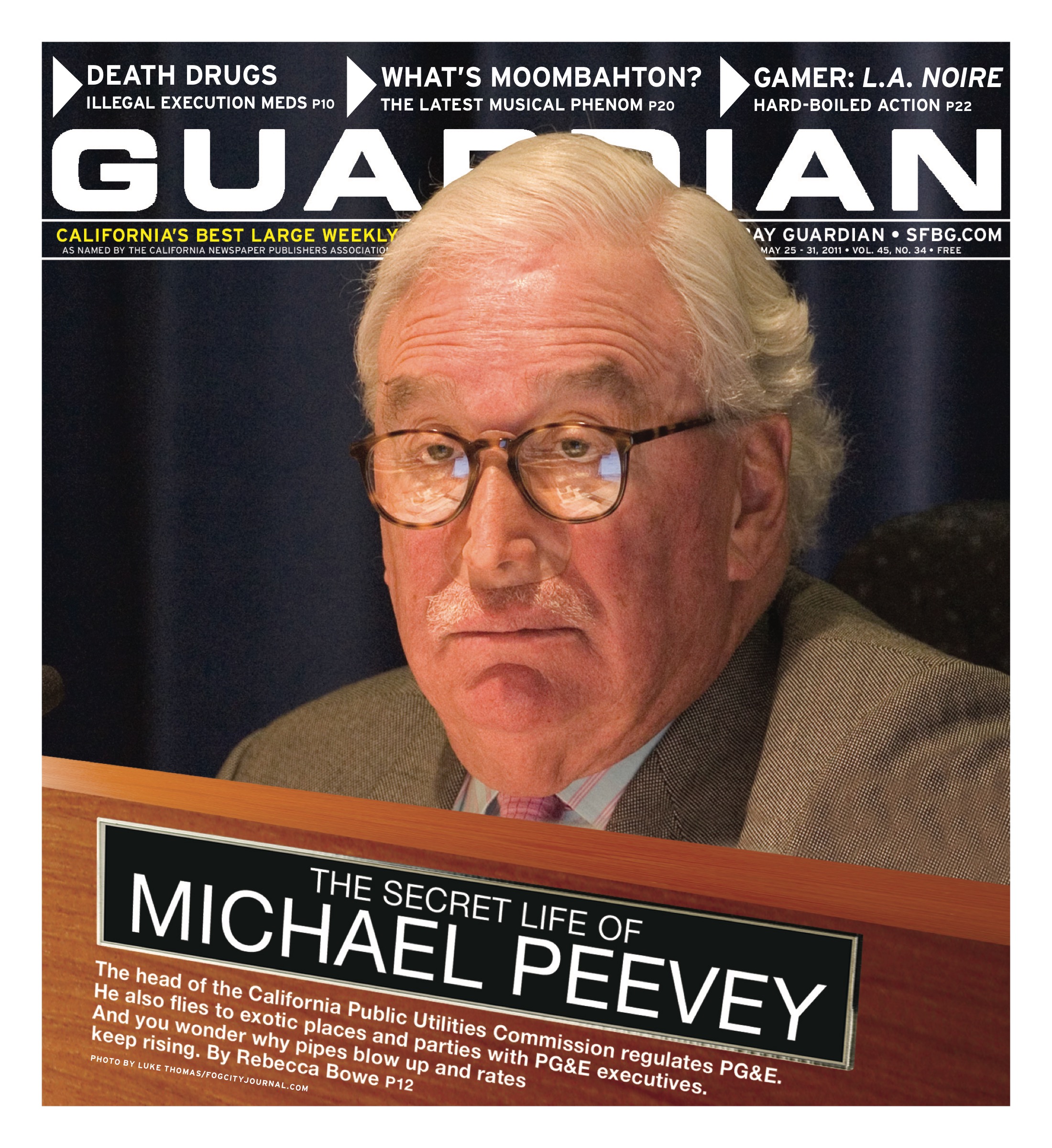
Share the Love Trigger, 2344 Market, SF; (415) 551-CLUB. 5pm, free. With DJ Pam Hubbuck spinning house.


A long time ago, in a galaxy not far away

0

arts@sfbg.com

SCI-FI DOCUMENTARY Recalling a simpler time — before mass commercialization and marketing took over the world of science fiction, pop culture, and fan conventions — local filmmaker Tom Wyrsch’s new documentary Back To Space-Con conveys the story of the home-grown, grassroots-fueled sci-fi conventions of the 1970s, told through interviews with the people behind the events, fans who were there, and rare footage shot on location here in the Bay Area more than 30 years ago.

Coming off the successes of his first two projects, 2008’s Watch Horror Films, Keep America Strong, which looked at the local TV phenomenon Creature Features and last year’s wildly popular Remembering Playland At The Beach, about the now-gone San Francisco beach-side amusement park, it wasn’t hard for Wyrsch to decide on what subject to tackle next.

Several years ago, the late Bob Wilkins, former host of Creature Features, had given Wyrsch a treasure trove of one-of-a-kind 16mm footage taken for his show at a series of Star Trek and sci-fi conventions, showing a great array of fans, their handmade costumes, and of course, the many special guests and celebrities who were on hand.

Wyrsch himself had attended some of these events, the larger ones called “Space-Con,” when he was growing up in the Bay Area. “At that time they were a brand new experience,” says Wyrsch. “To go to these conventions was just fabulous. And they definitely left a mark.”

With his fond memories in place and the opportunity to use Wilkins’ rare original footage, Wyrsch decided to interview the people who helped put on the shows, along with those who had attended the conventions as fans, all to help share the feeling of what it was like back then, which the film does very effectively.

“My approach to making documentaries is to really do two things: First, I want to take people back who actually experienced it. The other part is, I want to be able to take people there who never had a chance to go because they either weren’t in the area or they were too young,” says Wyrsch.

One of the great things about Back To Space-Con is seeing all the homespun costumes that fans wore — this was before the Star Trek movies started being made, and for some of the conventions included here, just before and at the beginning of the Star Wars (1977) phenomenon. There were virtually no official costumes or merchandise, and many of the people interviewed remark how wonderful it was to see such creativity and excitement in their fellow fans.

“[Space-Cons] were fan-based conventions that really did not have anything to do with the industry. They were the fans putting on shows for each other,” says Wyrsch. “In the film you can see how they are the grassroots movement of conventions that led to the ones we have today.”

Wyrsch is grateful to have been able to use so much original film footage, and he hopes viewers will appreciate how rare it is that material like this has survived all this time.

“What the younger generation doesn’t know was that it was very difficult and very expensive to go out in the field and do an interview or to film indoors because of lighting and the old cameras,” he explains. “With video and all the high-tech electronics and computers you can put in the camera [today], you don’t have to worry about that stuff anymore. But back then, it was tough, and with a lot of interviews they would go out and do them and then throw the film away because there was no use to it anymore and it took up a lot of storage space. Bob [Wilkins] kept this, and he kept part of history.”

Wyrsch will be on hand at a special Back to Space-Con premiere event at the Balboa Theater, along with former Chronicle writer and Creature Features host John Stanley, and Ernie Fosselius, the man behind the Star Wars spoof Hardware Wars (1978).

“I think people get to see the simplicity that was there in the seventies, it wasn’t so regimented like they are nowadays,” says Wyrsch. “And people love that.”

BACK TO SPACE-CON

Thurs/14, 7 p.m., $10

Balboa Theater

3630 Balboa, SF

(415) 221-8184

www.balboamovies.com


New school

1

CAREERS AND ED You don’t need a degree, or even the patience to sift through US Census Bureau reports on educational attainment, to know that each year this nation graduates more students from institutions of higher ed — public and private universities, colleges, junior colleges, and professional schools — than it did the year before. San Francisco is second only to Seattle in the number of papered persons running around, and statistics say that they, in turn, are more likely to raise little educational overachievers of their own. With this glut of matriculation on the horizon, it’s hard not to ponder the degree programs of the future: an associate’s in astrotourism? A bachelor’s of biosynthetic anatomy? A PhD of P4TA? (That’s “preparing for the apocalypse” for the cyber-stupid.) Hard to say. But before we get carried away, here’s a sampling of programs fit for a brave new world that can be found in the here and now.


SOLAR PHOTOVOLTAIC DESIGN AND INSTALLATION

California South Bay University sits smack-dab in the center of Silicon Valley, so it’s no surprise that the offerings are high-tech. The larger California zeitgeist seems to be rolling in on the San Francisco fog, though, and interesting patterns — like a master’s of science in green energy technology — have emerged. But the university really takes advantage of the Santa Clara Valley sunshine (and billowing demand for sustainable energy) with its Interstate Renewable Energy Council-accredited certificate program in solar photovoltaics, the science of connecting the two. If a full-fledged degree isn’t in your forecast, the school offers two 40-hour courses that might be a perfect fit.

California South Bay University, 1107 North Fair Oaks, Sunnyvale. (408) 400-9008, www.csbu.us


INTERACTION DESIGN

Degrees in video-game design and Web programming are old hat, but California College of the Arts takes the idea of the user interface beyond the screen, and plugs it back into real life. The school’s focus on design that users can interact with includes classes on platforms from cell phone to sculpture, game console to gallery, preparing students to “create meaningful and innovative designed experiences in the realms of work, lifestyle, and play.” Vague? Yes. Useful? Possibly. That three-dimensional holographic surround-sound computer interface that Tom Cruise uses in Minority Report? Get your virtual-reality gloves out ’cause it’s on its way …

California College of the Arts, 1111 Eighth St., SF. 1-800-477-1278, www.cca.edu


LANDSCAPE HORTICULTURE

Horticulture goes high-tech at Merritt College. The school claims to have all the most up-to-date equipment in the field, and with 5,000 square feet of computerized greenhouses, a 5,000-square-foot lath house, a floral and drafting lab, and disciplines such as “turf management,” we doubt anyone would argue. And to think, we were still relying on dirt, sun, and water to do our growing.

Merritt College, 12500 Campus Drive, Oakl. (510) 531-4911, www.merritt.edu


BOOK ART AND CREATIVE WRITING

This master’s program allows students to develop as writers and visual artists simultaneously, and encourages a “deep exploration of the book form in both content and materiality.” The interplay of form and content is not a new academic trope, but given that physical codices may soon be obsolete, taking a moment to ponder the book as object might not be a bad idea — lest future generations wonder why we wrote all over our toilet paper. Literary artifacts? Worth checking out!

Mills College, 5000 MacArthur Blvd., Oakl. (510) 430-2255, www.mills.edu


GREEN AND SUSTAINABLE TRAVEL

Tourists looking for a tequila sunrise and a tan may not realize that the pool they’re baking beside used to be a jungle. Each year, sensitive wildlife areas the world over are steamrolled under hotel strips. At the same time, environmentally-conscious tourism has become a booming industry. Given the facts, a student could do worse than this City College Business School program. The quickie certificate takes just a year — not a bad thing, considering ecotourism’s popularity and the rapidly decreasing availability of stuff left to tour.

City College of San Francisco, Ocean Campus, 50 Phelan, SF. (415) 239-300, www.ccsf.edu


HIV/STI PREVENTION

With a focus on risk reduction counseling, data collection, and outreach strategies, this one-year certificate in HIV/STI prevention studies from City College’s health education department just seems like a really good plan to bring a brighter future to all.

City College of San Francisco, Ocean Campus, 50 Phelan, SF. (415) 239-3000, www.ccsf.edu


FOLKLORE

Preparing for the future is all about remembering the past … or so might say a folklorist with a master’s or doctorate from UC Berkeley. An interdisciplinary degree from the department of anthropology, folkloristics (that’s the term) provide a new spin on the studies of ethnicity, nationality, gender, and sexuality, as well as the chance to revive vernacular tales, customs, beliefs, and plain ol’ stories from days gone by.

UC Berkeley, 318 Sproul Hall No. 5900, Berk. (510) 642-7405, www.berkeley.edu


RAZA STUDIES

That “melting pot” we all learned about in grade school is on the boil — bubbling with a range of issues both sweet and spicy, and some we haven’t even tasted yet. As our country continues to diversify, equity, social justice, and community empowerment will only become more important. San Francisco State University’s B.A. in raza studies seeks to offer future leaders the knowledge, skills, and social consciousness necessary to navigate an increasingly complex social landscape.

San Francisco State University, 1600 Holloway Ave., SF. (415) 338-1111, www.sfsu.edu


TAXATION

If everything else on this list is just a bit too futuristic and far out, Golden Gate University offers one of the country’s oldest and best-respected graduate programs in taxation. Looking for the ultimate in job security? This is your best bet since the San Francisco College of Mortuary Sciences closed in 2002. Death … and taxes. Golden Gate University School of Taxation, 536 Mission, SF. (415) 442-7880, www.ggu.edu

Stage Listings

0

Stage listings are compiled by Guardian staff. Performance times may change; call venues to confirm. Reviewers are Robert Avila, Rita Felciano, and Nicole Gluckstern. Submit items for the listings at listings@sfbg.com. For further information on how to submit items for the listings, see Picks. For complete listings, see www.sfbg.com.

THEATER

OPENING

Cordelia NOHspace, 2840 Mariposa; (800) 838-3006, www.brownpapertickets.com. $18-20. Previews Tues/19, 7pm. Opens April 20, 7pm. Wed-Thurs, 7pm; Fri-Sat, 8pm. Through May 7. Theatre of Yugen presents world premiere of an abstraction of Shakespeare’s King Lear.

ONGOING

The Busy World is Hushed New Conservatory Theatre Center, 25 Van Ness; 861-8972, www.nctcsf,org. $24-40. Wed-Sat, 8pm; Sun, 2pm. Through May 1. New Conservatory Theatre Center presents the world premiere of a play by Keith Bunin.

*Caliente Pier 29, The Embarcadero; 438-2668, www.love.zinzanni.org. $117-145. Wed-Sat, 6pm; Sun, 5pm. Open-ended. Teatro Zinzanni presents a new production conceived in San Francisco.

Collected Stories Stage Werx, 533 Sutter; Z(800) 838-3006, www.brownpapertickets.com. $20-25. Fri-Sat, 8pm (alos April 24 2pm). Through May 7. Stage Werx presents David Margulies’ drama about art, ethics, and betrayal.

*40 Pounds in 12 Weeks The Marsh, Studio Theater, 1074 Valencia; (800) 838-3006, www.themarsh.org. $15-35. Call for dates and times. Through April 30. Pidge Meade’s one-woman show extends its successful run.

Free Theater Community Room, Notre Dame Senior Plaza, 347 Dolores; 864-4467. Free. Fri, 7:30pm; Sat-Sun, 3pm. Through April 17. The 16th Street Players present four comic plays.

*Geezer Marsh, 1062 Valencia; (800) 838-3006, www.themarsh.org. $20-50. Thurs, 8pm; Sat, 5pm; Sun, 3pm. Through May 1. The Marsh presents a new solo show about aging and mortality by Geoff Hoyle.

Into the Clear Blue Sky Phoenix Theater, 414 Mason; 913-7272, www.sleepwalkerstheatre.com. $15-17. Thurs-Sat, 8pm. Through April 30. Sleepwalkers Theatre presents the second production in a three-part apocalypse series.

KML Reboots Traveling Jewish Theater, 470 Floriad; www.killingmylobster.com. $10-20. Thurs-fri, 8pm; Sat, 7 and 10pm; Sun, 7pm. Through April 24. The sketch comedians present a new show about the pleasures and pains of technology.

Loveland The Marsh, 1062 Valencia; (800) 838-3006, www.themarsh.org. $20-35. Fri, 8pm; Sat, 8:30pm (also May 1 and 8, 7pm). Through May 8. Ann Rudolph’s one-woman show continues its successful run.

M. Butterfly Gough Street Playhouse, 1620 Gough; (510) 207-5774, www.custommade.org. $20-28. Thurs-Sat, 8pm. Through April 30. Custom Made Theatre presents David Henry Hwang’s award-winning play.

*Obscura: A Magic Play Exit Studio, 156 Eddy; 673-3847, www.sffringe.org. $20-25. Fri-Sat, 8pm. Through Sat/16. Christian Cagigal is back with the magical. Over the last several years, the popular Bay Area writer/performer has developed a series of dramatically structured magic shows (the most recent being the autobiographical Now and at the Hour), each a different attempt at blending expert prestidigitation with elements of narrative theater. Tightly focused and deliberately small-scale, Obscura is in some ways his most successful foray yet. In the Exit Theater’s new studio space, Cagigal (with occasional help from his audience) unfolds a series of sly Gothic stories combined with extremely clever, sometimes dementedly playful card and coin tricks—the majority a collection of favorite pieces from other magicians—all played out on a delicately managed little table augmented by overhead projection (a set-up that offers various visual opportunities, including use of title cards). Rapid-fire narration (occasionally indistinct but generally articulate) and a laid back, slightly mischievous demeanor combine here with consummate skill in an intimate and very enjoyable evening of crafty little tales. If there’s an overarching theme, it probably has something to do with human folly, the persistence of mystery, and the devil, but then any good fable involving a deck of cards probably should. (Avila)

Party of 2 — The New Mating Musical Shelton Theater, 533 Sutter; 1-800-838-3006, www.partyof2themusical.com. $27-29. Fri, 9pm. Open-ended. A musical about relationships by Shopping! The Musical author Morris Bobrow.

The Real Americans The Marsh MainStage, 1062 Valencia; 282-3055, www.themarsh.org. $25-35. Fri, 8pm; Sat, 8:30pm. Through April 30. Dan Hoyle’s hit show returns for another engagement.

Sea Turtles Exit Theater, 156 Eddy; www.generationtheatre.com. $15-25. Fri-Sat, 8pm; Sun, 3pm (also April 28, 8pm). Through April 30. GenerationTheatre presents an original play by David Valayre.

Secret Identity Crisis SF Playhouse, Stage 2, 533 Sutter; 869-5384, www.un-scripted.com. $10-20. Thurs-Sat, 8pm (no show may 7). Through May 14. Un-Scripted Theater Company presents a story about unmasked heroes.

Shopping! The Musical Shelton Theater, 533 Sutter; (800) 838-3006, www.shoppingthemusical.com. $27-29. Sat, 8pm. Open-ended. A musical comedy revue about shopping by Morris Bobrow.

*Songs of the Dragons Flying to Heaven The Thick House, 1695 18th St; 255-8746, www.asianamericantheatre.org, www.crowdedfire.org. $15-25. Call for dates and times. Through Sat/16. “They have no idea what the fuck we’re doing,” observes one of the nameless “Korean” characters in Young Jean Lee’s Songs of the Dragons Flying to Heaven. In rapid succession the audience has witnessed a video clip of the playwright being slapped repeatedly in the face, a westernized Korean woman (Cindy Im) ranting about her “retarded monkey” parents and minority rage yet promising her Grandmother that she’ll give Jesus a whirl, bafflingly banal interactions between two “white” people (Alexis Papedo and Josh Schell) struggling with their floundering romance, and cartoonish interludes of exaggerated sex, consumerism, and violence enacted by three gaudily-dressed Korean women (Mimu Tsujimura, Lily Tung Crystal, Katie Chan)—none of whom are actually played by Koreans. It’s a play you have to surrender yourself to, a roller-coaster ride of sharp curves and nausea-inducing plunges (especially twisted is the gross-out contest of suicide methods in which each character takes a turn at dying in an unimaginably gruesome yet hilarious manner). Oddly, the piece ends on a rather lackluster note, with the two “white” people exploring the mutual contempt they pretend is love, which might be the playwright’s method of showing that white people can ruin anything without half trying, but the ride before their dead end is a thrilling one. (Gluckstern)

A Streetcar Named Desire Actors Theatre, 855 Bush; 345-1287, www.actorstheatresf.org. $26-38. Wed-Sat, 8pm. Through June 4. Actors Theatre of San Francisco presents the Tennessee Williams tale.

Talking With Angels Royce Gallery, 2901 Mariposa; (800) 838-3006, www.brownpapertickets.com. $21-35. Thurs-Sat, 8pm. Through May 21. A play by Shelley Mitchell set in Nazi-occupied Hungary.

Tape The Dark room, 2263 Mission; www.darkroomsf.com. $10-20. Fri-Sat, 8pm (also Sat/16, 10pm). Through April 23. The 4th Mirror presents a production of the play by Stephen Belber.

Twelfth Night African American Art & Culture Complex, 762 Fulton; (800) 838-3006, www.African-AmericanShakes.org. $15-35. Sat, 8pm; Sun, 3pm (no performance April 24). Through May 1. African-American Shakespeare Company presents a jazzy interpretation of the Bard.

*Wirehead SF Playhouse, 533 Sutter; 677-9596, www.sfplayhouse.org. $30-50. Tues-Wed, 7pm; Thurs-Fri, 8pm; Sat, 3and 8pm. Through April 23. Perfectionism’s ruthless class dimensions come to the fore in SF Playhouse’s smart, fun, and sharply staged Bay Area premiere about the super-smart posthumans of the near future, and the rest of us. A shady China-based conglomerate with a name that sounds like Sin-Tell sells a scintillating if dangerous procedure for those already well connected: a hardwire boost to the neural circuitry that gives the recipient more than an edge on the competition and something just shy of godlike powers. Two friends and colleagues in a banking firm (Craig Marker and Gabriel Marin) and their variously class-marked but equally ambitious girlfriends (Lauren Grace and Madeleine H.D. Brown) are all drawn into this cyborgian gold rush, and it gets sticky in more ways than one, as meanwhile a brash local DJ named RIP (Scott Coopwood) raps sardonically over the airwaves about this latest twist in an old game. SF Playhouse’s Susi Damilano directs a charismatic cast (including a terrific Cole Alexander Smith in a related series of frenetic roles) in Matt Benjamin and Logan Brown’s culture-jamming riposte to tech-mad humanist hogwash about Progress. It gets you thinking. (Avila)

BAY AREA

*Beardo Ashby Stage, 1901 Ashby, Berk; (510) 841-6500, www.shotgunplayers.org. $17-26. Thurs-Sat, 8pm; Sun, 5pm. Through April 24. Shotgun Players present a an original songplay about Rasputin.

East 14th – True Tale of a Reluctant Player The Marsh Berkeley, 2120 Allston Way, Berk; (800) 838-3006, www.themarsh.org. $20-50. Sat, 8pm; Sun, 7pm. Through May 8. Don Reed’s one-man show continues.

Eccentricities of a Nightingale Aurora Theatre, 2081 Addison; (510) 843-4822, www.auroratheatre.org. $34-45. Tues, 7pm; Wed-Sat, 8pm; Sun, 2 and 7pm. Through May 8. Aurora Theatre Company presents a Tennessee Williams drama.

Not a Genuine Black Man The Marsh Berkeley, TheaterStage, 2120 Allston Way, Berk; (800) 838-3006, www.themarsh.org. $20-50. Thurs, 7:30pm. Through May 5. Brian Copeland’s one-man show continues.

Out of Sight The Marsh Berkeley, Theaterstage, 2120 Allston Way, Berk; (800) 838-3006, www.themarsh.org. $20-50. Sat, 5pm (no show Sat/9); Sun, 3pm. Through May 8. Sara Felder’s one-woman show returns.

Quidam The Cow Palace 2600 Geneva, Daly City; (415) 404-4100; www.cowpalace.com, www.cirquedusoleil.com. $32-115. Call for dates and times. Through Sun/17. In Albert Lamorisse’s 1956 short film The Red Balloon, a child’s love affair with a mischievous toy takes place on the streets of Paris, a rough gray place that weirdly foreshadows the subterranean world inhabited by the mysterious creatures of Quidam. Here the silent child toting a giant red balloon is Zoe (Alessandra Gonzalez), who’s been spirited away to their underworld from her neglectful, oblivious parents. Her participation in their antics basically amounts to her looking on as acrobats, contortionists, and clowns strut their stuff, in the uninviting, under-populated confines of the Cow Palace, a far from ideal venue for a show that relies so much on audience participation and intimacy. In general the acts involving more performers work better in the cavernous space—an inventive diabolo juggling act, a complicated twenty-person jump rope exhibition, a five-person aerial Spanish Webs ensemble, and a highly-acrobatic fifteen-person Banquine act: synchronized, rapid-fire flinging of bodies to, fro, high, and low without missing a beat or (thankfully) a catch. There is much to admire in Cirque du Soleil’s dedication to legitimizing the Circus as a higher art form, but this presentation of Quidam aims unfortunately low. (Gluckstern)

Singing at the Edge of the World The Cabaret at The Marsh Berkeley, 2120 Allston Way, Berk; (800) 838-3006, www.brownpapertickets.com. $15-35. Thurs-Fri, 8pm; Sat, 5pm. Through Sat/16. The Marsh presents a one-man show by Randy Rutherford.

Slices 2011 pear Avenue Theatre, 1220 Pear, Mtn View; (650) 254-1148, www.thepear.org. $15-30. Thurs-Sat, 8pm; Sun, 2pm. Through April 24. Pear Avenue Theatre presents its annual festival of short plays.

Snow Falling on Cedars TheatreWorks at Mountain View Center for the Performing Arts, 500 Castro, Mtn View; (650) 463-1960, www.theatreworks.org. $24-67. Tues-Wed, 7:30pm; Thurs-Fri, 8pm; Sat, 2 and 8pm; Sun, 2 and 7pm. Through April 24. TheatreWorks presents a stage adaptation of the David Guterson novel.

Three Sisters Berkeley Reperory Theatre, Thrust Stage, 2025 Addison, Berk; (510) 647-2949, www.berkeleyrep.org. $29-73. Dates and times vary. Through May 22. The creators of Eurydice and In the Next Room present a new take on Chekhov.

The World’s Funniest Bubble Show The Marsh Berkeley, Cabaret, 2120 Allston Way, Berk; (800) 838-3006, www.themarsh.org. $8-50. Through July 10. The bubbles keep flowing.


WonderCon: Local legends

1

All photos by Luis Allen

Sure, the glitz and glamour of the big labels, with their video game consoles and upcoming movie tie-ins, were enticing at WonderCon (check out yesterday’s post for more costume awesomeness and our sociology nerd analysis of the convention). But of course, this being San Francisco and this being the Guardian, we found the “small press” aisles of the convention a little more enticing. Below, three of our favorite independent comic projects from around California.

Age Scott

When he was but a young thing in the East Bay, Age Scott’s teacher assigned him his final in comic book form, trying his best to get Scott interested in schoolwork. “I asked him what it had to be about, and he said ‘whatever you want.’” He wound up making a seven page book about a hip-hop mouse, his classmates started asking him for copies, and Scott realized that this whole comic book thing could work for him. 

Fast forward twenty years, Scott is still making it work. A self-dubbed “raptoonist,” at WonderCon he was hawking a series of titles about his characters Won and Phil, “hip-hop heroes.” I checked out Won and Phil: Dedicated to the Rap Generation, which turned out to be a choose your own adventure story, wherein the reader gets to decide the duo’s journey throughout the game. Sign with Death Row, Wu Tang, or Rocafella? Follow Old Dirty Bastard when the cops bust into the studio or hang back? Have beef with other emcees, wind up in the mental hospital, side with Jay-Z or Damon Dash? It’s all in there. 

Emily C. Martin

She had me at “fish people,” the hoodie-wearing gang of squat fish-men that show up halfway through Emily C. Martin’s SF-based graphic novel adventure, Otherkinds. “They’re in an antagonist role in this story,” Martin tells us. “But eventually I want them to be protagonists.” The fish men steal a nautilus from Steinhart Aquarium, and “imply a connection with a huge under-Atlantis beast,” says the Sonoma County comic artist, who includes an illustrated guide at the back of the book that talks about each of the fishmen’s real-life aquatic counterparts. I love the fishmen so much that their good-evil status doesn’t concern me, and briefly consider buying one of the buttons with the characters that Martin was displaying on her table. 

Chula Vista High Tech High Graphic Novel Project

Tucked away in the Moscone Center’s labyrinth network of halls and conference rooms, we stumbled across a panel of young men and women who were using comics to connect with their community. Students from a charter school in the San Diego area had started making comics and holding classes in the art for younger kids. The group produces full-length graphic novels with names like La Sombra de America and Wings of Freedom that benefit youth programs and organizations that help build community across the border. The Chula Vista kids were all wearing black buttondowns, they had the funniest PowerPoint presentation of the conference (as far as I’m concerned) and most importantly, these wonderkids are using their powers for good.