Style

Off to Pompei’s Grotto for our 25th annual New Year’s Eve dinner

0

In a couple of hours, Jean and I will be going to the delightful Fisherman’s Wharf restaurant we have  frequented for the past quarter century on New Year’s Eve.

Twenty-five or so years ago, we happened to be strolling along on Fisherman’s Wharf looking for a place to eat New Year’s Eve dinner, We happened upon Pompei’s Grotto. in the heart of the Wharf at 340 Jefferson St.

It looked warm and inviting and beckoned to us  with colorful holiday decorations and a friendly demeanor and so we went in.  We found it the perfect place for us on New Year’s Eve and we’ve never missed since.

Red-checked table cloths. Lamps on each table.  Lots of greenery.  Reasonably priced and nicely prepared fish dishes. Superb martinis.  And always members of the founding Pompei family on hand to insure good service and quality meals and drinks and the friendly atmosphere of a family-owned and operated restaurant at the same location where Frank and and wife Marian started Pompei’s in 1946 from a tiny place with a couple of counters. Nowadays, daughter Nancy runs things,  son Tom cooks most days, and son-in-law Gayne, who has been cooking for 40 years or so, makes cameo appearances in the kitchen.

Jean and I have the same meals.  We both have the largest Dungeness crab in stock, with lots of drawn butter and fresh sour dough bread.  We each have very dry martinis, one for Jean and at least two for me. Jean has a shrimp cocktail and I have half a dozen oysters with a hearty mix of cocktail sauce and horseradish. We  finish things off  by asking for two spoons and sharing a good old-fashioned Midwestern-style chocolate sundae with a perched cherry on top.  Somehow we never vary the routine and we don’t intend to do so this year.    And we have,  I assure you, the best New Year’s Eve dinner in town.

We’re off.  I’ll keep you posted. Meanwhile, take a virtual tour of Pompei’s: http://www.pompeisgrottosf.com/tour.html


The Performant: Tripp hop nation

1

Going balls out for Berlin-style ping-pong with American Tripps

The only thing lacking is a haze of cigarette smoke curling over the lone ping-pong table bogarting the cosy dance floor of Project One. A polite jostle of players, perhaps 25 strong, rings the table, shoulder to shoulder. Each one clutches a paddle in one hand, and, more than a few, a drink in the other. The game is “Berlin-style” ping-pong (also known as rundlauf)—a participatory style of play in which every participant gets a turn serving or receiving as the circle shuffles one spot at a time, counter-clockwise around the crowded table.

And despite the resolutely smoke-free Californian air and the proliferance of decidedly un-Germanic striped sweatbands worn by the regulars, it’s easy to imagine the scene in general transplanted to a basement in Prenzlauer Berg, right down to The Fine Young Cannibals on the sound-system. Welcome to American Tripps.
 
Trust the Germans to come up with a group variation on an ostensibly individualistic pastime. And trust a San Franciscan enamored of the practice (Allan Hough) to be the one to transport it overseas and invite the neighbors, in this case the faithful readers of his Mission Mission blog, to play a few rounds. And then a few more. Now nearing its six-month anniversary, American Tripps has attracted a core group of loyal followers and a slew of curious first-timers to each of its nomadic ping-pong parties, held in a variety of bars and art spaces in and around the Southerly neighborhoods.

Although the general demographic is skewed heavily (about 3-to-1) towards “dude-ness,” the testosterone in the room is far from frothing over. Clearly at the end of each round there will be a winner, and a table’s worth of losers, but this statistic seems of little concern to the people patiently standing in line, waiting to be eventually eliminated. At American Tripps it’s very much about playing the game, not so much about whether or not you make it to the final round. At least that’s what I tell myself each time I miss the ball (almost every time), or volley it into the DJ booth at the back of the room (once). Achtung, baby!

Thankfully there are better players, and at each tournament a half-dozen or so wind up dominating most of the final rounds, which are played at frenetic top speeds in contrast to the leisurely strolling that defines the first part of the game. For instance, at Lower Haight’s D-Structure store the week before, the unassuming-looking Tim Walsh (the drummer for neo-psychedelic ensemble the Stepkids) rose to the top more than a few times, while the genial Peter Allen (whom I secretly dubbed “The Mayor of the Lower Haight”) maintained a decent game through almost every round while greeting close to every single person who entered the room, dancing ecstatically to Jimmy Cliff, and coordinating his sweatbands to his Wing Wings t-shirt.

Of course being a good player doesn’t guarantee you’ll get far in any given game—pitting oneself against an entire room full of strangers is a great leveler. And so leveled, you might discover the best parts of the evening don’t even involve the game at all, except as an excellent ice-breaker, or as Allan Hough puts it, “the grand prize is that everybody had an epic time all night.”

I’m sold. Now where do I find a set of sweatbands?

Rep Clock

0

Documentary Holy Rollers: The True Story of Card Counting Christians plays Fri/30-Sat/31 at the Roxie.

Schedules are for Wed/28-Tues/3 except where noted. Director and year are given when available. Double and triple features are marked with a •. All times p.m. unless otherwise specified.

CASTRO 429 Castro, SF; (415) 621-6120, www.castrotheatre.com. $7.50-10. •On the Town (Donen and Kelly, 1949), Wed, 1, 5, 9:05, and Singin’ in the Rain (Kelly and Donen, 1952), Wed. 2:55, 7. •The Umbrellas of Cherbourg (Demy, 1964), Thurs, 3:25, 7, and A Woman Is a Woman (Godard, 1961), Thurs, 5:10, 8:45. West Side Story (Robbins and Wise, 1961), Fri, 7; Sat-Mon, 2 (also Sun, 7). Presented “sing-along” style.

CHRISTOPHER B. SMITH RAFAEL FILM CENTER 1118 Fourth St, San Rafael; (415) 454-1222, www.cafilm.org. $6.75-10.25. The Gold Rush (Chaplin, 1925), Wed-Thurs, call for times. Restored 35mm print. My Reincarnation (Fox, 2011), Wed-Thurs, call for times. “Short Films from the 2011 Sundance Film Festival,” Dec 30-Jan 5, call for times.

PACIFIC FILM ARCHIVE 2575 Bancroft, Berk; (510) 642-5249, bampfa.berkeley.edu. $5.50-9.50. Theater closed through Jan 11.

PARAMOUNT 2025 Broadway, Oakl; 1-800-745-3000, www.ticketmaster.com. $5. The Wizard of Oz (Fleming, 1939), Fri, 8. Costumes paying homage to the film encouraged (suggestion: flying monkey!)

ROXIE 3117 and 3125 16th St, SF; (415) 863-1087, www.roxie.com. $6.50-10. My Reincarnation (Fox, 2011), Wed-Thurs, 7, 8:45. Holy Rollers: The True Story of Card Counting Christians (Storkel, 2011), Fri-Sat, 7, 9 (also Sat, 3, 5). Silent Souls (Fedorchenko, 2010), Sun-Mon, 7, 8:30 (also Sun, 3:15, 5). 4th and Goal (Gilden Seavey, 2011), Tues, 7, 9.

SFFS | NEW PEOPLE CINEMA 1746 Post, SF; www.sffs.org. $10-11. Bill Cunningham New York (Press, 2011), Sun, 4:30, 8:30; Mon, 2:30, 6:30. Buck (Meehl, 2011), Sun, 2:30, 6:30; Mon, 4:30, 8:30. Paul Goodman Changed My Life (Lee, 2011), Jan 3-5, 2:30, 4:30, 6:30, 8:30. Silent Souls (Fedorchenko, 2010), Wed-Mon, 3, 5, 7, 9 (no 9pm show on Sat/31).

Stage Listings

0

Stage listings are compiled by Guardian staff. Performance times may change; call venues to confirm. Reviewers are Robert Avila, Rita Felciano, and Nicole Gluckstern. Submit items for the listings at listings@sfbg.com. For further information on how to submit items for the listings, see Picks.

THEATER

ONGOING

Absolutely San Francisco Alcove Theater, 414 Mason, Ste 502, SF; (415) 992-8168, www.thealcovetheater.com. $32-50. Thurs/29, 8pm. Not Quite Opera Productions presents Anne Nygren Doherty’s musical about San Francisco, with five characters all portrayed by Mary Gibboney.

*On the Air Pier 29 on the Embarcadero (at Battery), SF; (415) 438-2668, love.zinzanni.org. $117 and up (includes dinner). Wed/28-Fri/30, 6:15pm (also Wed/28, 11:30am); Sat/31, 8:30pm. Teatro ZinZanni’s final production at its longtime nest on Pier 29 is a nostalgia-infused banquet of bits structured around an old-time radio variety show, featuring headliners Geoff Hoyle (Geezer) and blues singer Duffy Bishop. If you haven’t seen juggling on the radio, for instance, it’s pretty awesome, especially with a performer like Bernard Hazens, whose footing atop a precarious tower of tubes and cubes is already cringingly extraordinary. But all the performers are dependably first-rate, including Andrea Conway’s comic chandelier lunacy, aerialist and enchanting space alien Elena Gatilova’s gorgeous “circeaux” act, graceful hand-balancer Christopher Phi, class-act tapper Wayne Doba, and radio MC Mat Plendl’s raucously tweeny hula-hooping. Add some sultry blues numbers by raunchy belter Bishop, Hoyle’s masterful characterizations (including some wonderful shtick-within-a-shtick as one-liner maestro “Red Bottoms”), a few classic commercials, and a healthy dose of audience participation and you start to feel nicely satiated and ready for a good cigar. Smoothly helmed by ZinZanni creative director Norm Langill, On the Air signals off-the-air for the popular dinner circus — until it can secure a new patch of local real estate for its antique spiegeltent — so tune in while you may. (Avila)

*Period of Adjustment SF Playhouse, 533 Sutter, SF; (415) 677-9596, www.sfplayhouse.org. $20-50. Tues-Thurs, 7pm; Fri-Sat, 9pm (also Sat, 3pm). Through Jan 14. A nervous young man with an unaccountable tremor, George Haverstick (a compellingly manic Patrick Alparone) has waited until his honeymoon to finally call on his old Korean War buddy, Ralph (a stout but tender Johnny Moreno) — only to drop his new bride, Isabel (the terrifically quick and sympathetic MacKenzie Meehan), at the doorstep and hurry away. As it happens, Ralph’s wife of five years, Dorothea (an appealing Maggie Mason), has just quit him and taken their young son with her, turning the family Christmas tree and its uncollected gifts into a forlorn monument to a broken home — which, incidentally, has a tremor of its own, having been built atop a vast cavern. Tennessee Williams calls his 1960 play “a serious comedy,” which is about right, since although things end on a warm and cozy note, the painful crises of two couples and the lost natures of two veterans — buried alive in two suburbs each called “High Point” — are the stuff of real distress. SF Playhouse artistic director Bill English gets moving but clear-eyed, unsentimental performances from his strong cast — bolstered by Jean Forsman and Joe Madero as Dorothea’s parents—whose principals do measured justice to the complex sexual and psychological tensions woven throughout. If not one of Williams’s great plays, this is an engaging and surprisingly memorable one just the same, with the playwright’s distinctive blend of the metaphorical and concrete. As a rare snowfall blankets this Memphis Christmas Eve, 1958, something dark and brooding lingers in the storybook cheer. (Avila)

Xanadu New Conservatory Theatre Center, 25 Van Ness, SF; (415) 861-8972, www.nctcsf.org. $25-45. Wed-Sat, 8pm; Sun, 2pm (no show Sun/1). Through Jan 15. New Conservatory Theatre Center performs the retro roller-skating musical.

BAY AREA

*God’s Plot Ashby Stage, 1901 Ashby, Berk; (510) 841-6500, www.shotgunplayers.org. $18-27. Wed-Thurs, 7pm; Fri-Sat, 8pm; Sun, 5pm. Through Jan 15. Playwright-director Mark Jackson excavates a bit of deep history for Occupy USA, an episode in the annals of colonial American theater and jurisprudence that played, and plays, like a rehearsal for a revolution — this time with music. Capping Shotgun Players’ 20th anniversary season of new work, God’s Plot comically animates and literally underscores (through song, and irresistible banjo and bass accompaniment courtesy of Josh Pollock and Travis Kindred) the story surrounding “Ye Bare and Ye Cubb,” a play performed in 1665 Virginia but now lost. The legal battle that engulfed this satire of the English crown and its economic and political domination of the colonies was an early instance of the close but little acknowledged relationship between art and politics in proto-American society, with much too of religious conflict in the mix (personified here by a powerfully smoldering John Mercer as closet-Quaker Edward Martin). The playwright, a brash self-inventor named William Darby (a sure, charismatic Carl Holvick-Thomas), colludes with a disgruntled merchant (Anthony Nemirovsky) and a former indentured servant climbing the social ladder as a new tenant hand (Will Hand). Darby, meanwhile, is secretly wooing — and even more, being wooed by — Tryal Pore (an ebullient, magnetic Juliana Lustenader), a young woman even braver and more outspoken than he. As an expression of her novel and unbridled spirit, Tryal alone breaks into song to express her feelings or observations. Her temperament is meanwhile a source of worry to her father (a comically deft Kevin Clarke) and mother (Fontana Butterfield), but also attracts an unwitting suitor (a compellingly serious Joe Salazar). The play’s overarching narrative of nationalist ferment, which reaches an overtly stirring pitch, thus comes mirrored by the tension in two dramatic triangles whose common point is the precocious, golden-throated Tryal Pore. More of the private drama might have served the overall balance of the play, but a good part of the achievement of director Jackson and his generally muscular cast is making a complex play of enduring ideas and conflicts look so effortless and fun. (Avila)

The Secret Garden TheatreWorks at Lucie Stern Theatre, 1305 Middlefield, Palo Alto; (650) 463-1960, www.theatreworks.org. $19-72. Wed/28, 7:30pm; Thurs/29-Fri/30, 8pm (also Fri/30, 2pm); Sat/31, 2pm. TheatreWorks performs the Tony Award-winning musical adaptation of Frances Hodgson Burnett’s novel.

*The Wild Bride Berkeley Repertory Theatre, Roda Theatre, 2015 Addison, Berk; (510) 647-2949, www.berkeleyrep.org. $14.50-73. Tues, Thurs-Sat, 8pm (also Thurs/29 and Sat, 2pm); Wed and Sun, 7pm (also Jan 8 and 15, 2pm; Jan 22, show at 2pm only). Extended through Jan 22. In the first act of Kneehigh Theatre’s The Wild Bride, the destinies of an innocent girl (Audrey Brisson), her moonshine-making father (Stuart Goodwin), and a predatory devil in a cheap suit (Stuart McLoughlin) become inextricably entwined by an ill-fated bargain. Steeped in European fairytale logic and American folk and blues music, Bride is inventively staged at the base of a giant tree, combining mime, puppetry, dance, live music, Cirque du Soleil-style vocals, acrobatics, and taut verse into a swooping, expressionistic fable. Accidentally promised to the devil by her doting but drink-dulled dad, “The Girl” suffers first the creepy indignity of being perved on by her preternatural suitor, and secondly the horror of having her hands chopped off by her own father, actions which drive her to flee into the woods, morphing into a character known only as “The Wild” (played by Patrycja Kujawska). After a stint as an unlikely, Edward Scissorhands-esque queen, The Wild too is driven from comfort and morphs a second time into a third character “The Woman” (Éva Magyar), an experience-toughened mother bear who kicks the devil’s ass (literally), and triumphs over adversity, without even uttering a single word. At turns dark, dexterous, fanciful, and fatal, Bride rises above the usual holiday fare with a timeless enchantment. (Gluckstern)

The World’s Funniest Bubble Show Marsh Berkeley, TheaterStage, 2120 Allston, Berk; (415) 826-5750, www.themarsh.org. $8-50. Wed/28-Sat/31, 11am. Louis “The Amazing Bubble Man” Pearl returns with this kid-friendly, bubble-tastic comedy.

PERFORMANCE/DANCE

“BATS Improv New Year’s Eve Special Performance” Bayfront Theater, Fort Mason Center, Marina at Laguna, SF; (415) 474-6776, www.improv.org. Sat, 8pm. $30-40. The landmark improv company performs to ring in the new year, with a dance party to follow.

“Club Chuckles” Hemlock Tavern, 1131 Polk, SF; (415) 923-0925. Thurs, 7:30 and 9:30pm. $15. Comedy with Tig Notaro, Sean Keane, and Groomed for Success.

“Cut the Crap! With Semi-Motivational Guru, Clam Lynch” Dark Room, 2263 Mission, SF; www.darkroomsf.com. Jan 6 and Jan 13, 8pm. $15. Get motivated with self-help-guru-satirizing comedian Clam Lynch.

“Dream Queens Revue: It’s Almost New Year’s Show” Aunt Charlie’s Lounge, 133 Turk, SF; www.auntcharlieslounge.com. Wed, 9:30pm. Free. Drag with Colette Ashton, Ruby Slippers, Sophilya Leggz, and more.

“Forking II: A Merry FORKING Christmas” StageWerx, 446 Valencia, SF; www.pianofight.com.Wed/28-Fri/30, 8pm. $25-35. Well holy forking shit, it’s been three years already since Daniel Heath’s A Merry Forking Christmas debuted at PianoFight’s old Off-Market Theater digs, and in that time a few new faces have been added to the cast, and a few loose ends tied up in a bow, rendering the overall package a ho-ho-holiday treat worth indulging in. Hate the holidays? Not nearly as much as Goth girl morgue assistant Charlotte (Leah Shesky); her buddy Monique (Emma Shelton), a frustrated culinary genius selling pot cookies to stressed-out shoppers; Adam (Jed Goldstein), a disaffected Jew hired on as a Mall Santa from a temp agency; or Charles (Alex Boyd), an effete metrosexual dangerously enervated by his fiancée’s perfectionist vigor (Nicole Hammersla). Hilariously guided by Ray Hobbs and Gabrielle Patacsil, who play a variety of bit roles (Headbanger vs. Bible Banger, embattled parents fighting over the last coveted “Meat Panda,” feral children), the audience periodically gets to vote over the next permutation of plot, the “forks” alluded to in the title. According to artistic director Rob Ready (also featured in the cast as “Old Ben”), there are 362,880 possible combinations, and yes, the actors have memorized them all. Question is, will you? (Gluckstern)

“The Last Butch Standing” Victoria Theatre, 2961 16th St, SF; www.therhino.org. Sat, 7 and 9pm. $30-35. Singer and comedian Lea DeLaria performs her solo satire.

“Laughter Against the Machine: Guerrilla Stand-Up Comedy Fourth Annual New Year’s Eve” Phoenix Theatre, 414 Mason, Sixth Flr, SF; www.brownpapertickets.com. Thurs-Sat, 7pm (also Fri/30, 9:30pm; Sat/31, 10pm). $20-25. W. Kamau Bell, Nato Green, and Janine Brito perform their trademark brand of socially-conscious comedy.

“Magic and More New Year’s Eve with Frisco Fred” Actors Theatre of San Francisco, 855 Bush, SF; www.actorstheatresf.org. Sat, 7:30pm. $40. Family-friendly variety show starring comedian and circus performer Frisco Fred.

“Not Your Normal New Year’s Eve” Herbst Theatre, 401 Van Ness, SF; www.nynnye.com. Sat, 8pm. $25-59. Cutting-edge comedy with Brent Weinbach, Jill Bourque, Kevin Camia, and more, plus live music and a balloon drop.

“Picklewater Clown Cabaret presents a Prescott Circus Fundraiser” StageWerx, 446 Valencia, SF; www.brownpapertickets.com. Mon, 7 and 9pm. $15. Clowns helping clowns!

“Qcomedy Showcase” Martuni’s, 4 Valencia, SF; www.qcomedy.com. Mon, 8pm. $5-15. With comedians Justin Lucas, Simone Campbell, Jennifer Dronsky, and guest host Pippi Lovestocking.

“A San Francisco New Year’s Comedy Show” Actors Theatre of San Francisco, 855 Bush, SF; www.actorstheatresf.org. Sat, 10pm, $40. With headliner Will Franken.

“Santaland Diaries” Eureka Theatre, 215 Jackson, SF; www.combinedartform.com. Wed/28-Fri/30, 8pm. $20-50. Combined Artform presents David Sedaris’ holiday comedy.

“Yes Sweet Can” Dance Mission Theater, 3316 24th St, SF; (415) 225-7281, www.sweetcanproductions.com. Wed/28-Thurs/29, 2:30 and 4:30pm; Fri/30, 4 and 8pm; Sat/31-Sun/1, 2pm. $15-60. Sweet Can Productions presents an hourlong extravaganza of circus arts for the holidays.


Film Listings

0

Film listings are edited by Cheryl Eddy. Reviewers are Kimberly Chun, Max Goldberg, Dennis Harvey, Lynn Rapoport, and Matt Sussman. For rep house showtimes, see Rep Clock. For complete film listings, see www.sfbg.com. Due to the Christmas holiday, theater information was incomplete at presstime.

OPENING

Holy Rollers: The True Story of Card Counting Christians For a time, one of the most successful card-counting outfits in America was “the Churchteam,” a group of 20-somethings who mapped out a businesslike way of relieving casinos of millions of dollars. Two managers trained a pack of players, who would then travel to Las Vegas and other places, armed with stacks of bills (contributed by investors) and the cojones to cheat until they were “backed off” from the blackjack table. (As 2009’s The Hangover, excerpted here, points out, counting cards isn’t illegal — it’s merely “frowned upon.”) Neat story, but the real hook here is that the Churchteam was comprised almost entirely of practicing Christians; their shared faith insured that nobody would steal from the team’s profits. (Of course, when the team starts losing, and theft is suspected, all eyes fasten upon the single non-Christian in the pack.) The fast-paced Holy Rollers tends toward the highly enjoyable, but the Churchteam members are so self-satisfied that they prove difficult to root for at times. Holy smugness, bro! (1:35) Roxie. (Eddy)

*Pariah A teenage girl stands stock-still in a dark nightclub, gazing with desire and fear at the half-naked female dancers on the stage. Later, riding home on the bus, she slowly removes the layers of butch that held her together in the club, stripping down to some version of the person her parents need to see when she walks in the door. Nearly wordlessly, the opening scenes of Dee Rees’s Pariah poignantly depict the embattled internal life of Alike (Adepero Oduye), a 17-year-old African American girl living in Brooklyn with her family and struggling both to be seen as she is and to determine what that might look like. The battles are being waged externally, too, between Alike’s adoring father (Charles Parnell), living in willful ignorance, and angry, rigid mother (Kim Wayans), desperately enforcing a feminine dress code and steering Alike away from openly butch friend Laura (Pernell Walker). Rees’ script beautifully conveys a household of landmines and chasms, which widen as husband and wife and daughter struggle and fail to communicate, asking the wrong questions, fearfully skirting the truth about Alike’s sexuality and her parents’ crumbling marriage. And the world outside proves full of romantic pitfalls and the tensions of longtime friendship and peer pressure. The poems in which the talented Alike takes solace and makes her way toward a more truthful existence are beautiful, but at a certain point the lyricism overtakes the film, forcing an ending that is tidy but less than satisfying. (1:26) Embarcadero. (Rapoport)

Paul Goodman Changed My Life Social theorist, poet, novelist, essayist, co-founder of Gestalt therapy, anarchist, activist, pacifist, intellectual provocateur, queer-identified bisexual, husband, father, radical nerd — these are just some of the many hats Goodman wore during his fairly brief tenure as one of the most influential American thinkers of the mid-20th century. His 1960 non-fiction tome Growing Up Absurd explained an emerging generation’s disenchantment with the “establishment” society it would soon rebel against, making him an unlikely, tweedy, middle-aged spokesman for the rising youth movement. (Though before his 1972 death at age 60, he would grow disillusioned with that movement.) A fascinating mind, a sometimes impossible personality, he’s fallen somewhat into neglect as recent decades have favored conformism over the humanist re-making of society he advocated, and which for a while there actually seemed possible. Thus it’s as good a moment as any for Jonathan Lee’s documentary, which mixes biographical overview and appreciation of the subject’s disparate work and ideas with extant footage of him speaking and interviews with surviving friends, family, and colleagues. Maybe “mixes” is a less apt term than “scrambles” — faced with an admittedly bewildering pile of information (and contradiction), Lee fails to find any viable organizing principle. Always interesting, this scattershot documentary nonetheless never quite finds a secure foothold on its sprawling, slippery subject. Still, as introduction or just nostalgic flashback to Goodman’s legacy, it’s worth a look. (1:29) SFFS New People Cinema. (Harvey)

ONGOING

*The Adventures of Tintin Producer Peter Jackson and director Steven Spielberg join forces to adapt the work of Belgian comic creator Hergé, using performance-capture 3D animation (and featuring that new technology’s most prominent performer, Andy Serkis, in a key role). Hergé wrote over 20 volumes following the globe-trotting exploits of intrepid young reporter Tintin (Jamie Bell) and his canine companion, Snowy; The Adventures of Tintin draws from a trio of books dating from the early 1940s, tweaking the tales a bit but retaining the series’ ebullient energy and sharp humor. After he impulsively buys a model ship, Tintin is sucked into a mystery involving a long-lost pirate treasure sought by the sinister Sakharine (Daniel Craig) and, eventually, newfound Tintin ally Captain Haddock (Serkis). Fan favorites Thompson and Thomson (Simon Pegg and Nick Frost — frequent compadre Edgar Wright co-wrote the script) and a certain “Milanese Nightingale” make appearances in a story that careens between exotic locales and high-seas battles, and is packed with epic chase scenes that would leave Indiana Jones breathless. And in case you were worried, Tintin boasts the least creepy, least “uncanny valley” performance-capture animation I’ve seen to date. (1:47) (Eddy)

Alvin and the Chipmunks: Chip-wrecked (1:27)

*The Artist (1:40)

Being Elmo: A Puppeteer’s Journey (1:25)

A Dangerous Method (1:39)

The Darkest Hour (1:29)

*The Descendants (1:55)

*Drive (1:40)

The Flowers of War (2:21)

*The Girl With the Dragon Tattoo The meeting of Stieg Larsson’s first “Millennium” book and David Fincher promised fireworks, as he’s a director who can be equally vivid and exacting with just the elements key to the series: procedural detail, obsession, violence, tweaked genre conventions, mind games, haunted protagonists, and expansive story arcs. But perhaps because this possible franchise launch had to be rushed into production to ride the Larsson wave, what should have been a terrific matchup turns out to be just a good one — superior in some stylistic departments (notably Trent Reznor and Atticus Ross’ pulsing score), but overall neither an improvement nor a disappointment in comparison to the uninspired but effective 2009 Swedish film version. Daniel Craig plays Mikael Blomkvist, the muckraking Stockholm journalist whose public disgrace after a failed expose of a suspect corporate tycoon makes him the perfect candidate for an unexpected assignment: staying sequestered in the wealthy, warring Vanger clan’s island home to secretly investigate a teenage girl’s disappearance and presumed murder 40 years ago. His testy helpmate is the singular Lisbeth Salander (Rooney Mara), antisocial hacker, researcher, and ex-mental patient par excellence. Nearly three hours long, the compressed, slightly altered (get over it) storyline nonetheless feels rushed at times; Fincher manages the rare feat of making mostly internet research exciting in filmic terms, yet oddly the book’s more shocking episodes of sex and/or mayhem don’t have the memorable impact one might expect from him. The leads are fine, as is the big support cast of recognizable faces (Christopher Plummer, Stellan Skarsgård, Robin Wright, etc.) But the knockout suspense, atmosphere, and urgency one hoped for isn’t present in this intelligent, not entirely satisfying treatment. On the other hand, maybe those who’ve already read the books and seen the prior films have already had so much exposure to this material that a revelatory experience is no longer possible. (2:38) (Harvey)

Le Havre (1:43)

Hugo (2:07)

I Melt With You (1:47)

J. Edgar (2:17)

*Melancholia (2:15)

Midnight in Paris (1:34)

Mission Impossible: Ghost Protocol No world landmark (the Kremlin, the Burj Khalifia) is too iconic and/or freaking tall for uber-adrenalized Impossible Missions Force agent Ethan Hunt (Tom Cruise) and his team (Jeremy Renner, Paula Patton, Simon “Comic Relief” Pegg) to infiltrate, climb, assume false identities in, use as a home base for unleashing futuristic spy technology that seems almost plausible (with the help of lots of iPads), race a BMW through, etc. One kind of gets the sense that Cruise and company sat down with a piece of paper and were like, “What stunts haven’t we done before, and how many of them can I do with my shirt off?” Celebrated animation director Brad Bird (2004’s The Incredibles) is right at home with Ghost Protocol as his first live-action effort — the film’s plot (set in the present day, it involves a positively vintage blend of Russians and nukes) and even its unmemorable villain take a back seat to Cruise’s secret-agent shenanigans, most of which take the form of a crazy plan that must be altered at the last minute, resulting in an even crazier plan, which must be implemented despite the sudden appearance of yet another ludicrously daunting obstacle, like, say, a howling sandstorm. For maximum big dumb fun, make sure you catch the IMAX version. A warning, though: any time the movie screeches to a halt to explore emotions or attempt characterization … zzz. (2:13) (Eddy)

The Muppets (1:38)

*My Reincarnation (1:22) Roxie, Smith Rafael.

My Week With Marilyn (1:36)

New Year’s Eve (1:58)

*Shame (1:39)

Sherlock Holmes: A Game of Shadows Maybe Guy Ritchie should’ve quit while he was ahead. Thanks to strong performances from Robert Downey Jr. and Jude Law, the British director’s first Holmes flick proved surprisingly fun. Two years later, it’s clear that Ritchie’s well of creatitivity has run dry. Sherlock Holmes: A Game of Shadows is cliched and overlong, burying a few good ideas under an avalanche of tired action movie stalwarts gone steampunk. To be fair, the set design and art direction are still sumptuous, creating a hyperbolic, detailed vision of Victorian Europe. New cast additions Jared Harris (as Moriarty, maliciously polite) and Stephen Fry (as Mycroft, eccentric and nude) do well with limited material. Noomi Rapace, playing a helpful gypsy, is superfluous. Downey Jr. and Law are still game for some amusing PG-13 homoeroticism, but it’s the former’s disinterested performance that ensures the movie’s downfall. Forced to make do without witty quips or interesting deductions, the Holmes of A Game of Shadows is part bruiser, part buffoon. The game’s a flop, Watson. (2:09) (Ben Richardson)

*Silent Souls Director Aleksei Fedorchenko and scenarist Denis Osokin’s enigmatic feature follows two men on a modern road trip that might well be deep into the bottomless past of Russia’s diverse religious rituals, mysticisms, and folklore. Coworkers travel cross-country to perform complicated Meryan ethnic rites for one protagonist’s late, beloved younger wife. This involves the transport of two birds, some surprisingly graphic personal reminiscences, an oceanfront funeral pyre, and other incidents whose full import the filmmakers are happy to leave somewhat cryptic. Gently comic, lyrical, at times borderline surreal, Souls belies a short running time of just an hour and a quarter — for all its intangibles, by the end this beguiling journey feels too substantial to have possibly taken so little of our time. (1:15) Roxie, SFFS New People Cinema. (Harvey)

The Sitter (1:21)

The Skin I Live In (1:57)

*Tinker Tailor Soldier Spy (2:07)

*Tomboy (1:22) (Rapoport)

Twilight Saga: Breaking Dawn — Part One

*War Horse If the idea of watching heroic horses getting slaughtered amid the brutal trench warfare of World War I fills your heart with disgust, then you might want to applaud Steven Spielberg and his relatively sensitive touch with that material in the heartrending War Horse. The PG-13 rating also gives you some idea that the director will be hewing to the movie’s origins as a children’s book. Spielberg paints this tale about loss of innocence, be it in the fields of the farm or the battle, in broad strokes, but here, you might feel a bit less manipulated by his prowess as a crowd-pleasing storyteller, less conscious about the legacy he draws on, and more immersed in a story that stays as close as it can to its animal protagonist’s point of view, short of pulling a Mr. Ed. War Horse opens with Joey’s birth and follows him as he’s sold to a struggling English farm run by traumatized war veteran Ted (Peter Mullan), his spunky wife Rose (Emily Watson), and his animal-loving son Albert (Jeremy Irvine). Circumstance — and an unyielding landlord (David Thewlis) — sends Joey off to the so-called Great War, first into the care of an honorable captain (Tom Hiddleston), later a French girl (Celine Buckens), and worst, into the arms of the German enemy, where he toils as a disposable beast of burden charged with hauling the literal machines of war uphill. Spielberg shields viewers both young and old from the more explicit horrors, though gracefully imparts war’s terrors, sending fresh chills through a viewer when, for instance, a child riding a horse disappears over a ridge and fails to return. No one’s immune from tears, and you have to wonder how much healing is actually possible at War Horse‘s conclusion, despite its stylized, symbolism-laden beauty. Nonetheless cinephiles will glean a certain pleasure from images that clearly nod to the blood-red skies of Gone With the Wind (1939), the ominous deep focus of Orson Wells, and the too-bright Technicolor clarity-slash-artifice of National Velvet (1944). (2:26) (Chun)

We Bought A Zoo “If you could choose between animals or humans or animals, which would you choose?” is a standard question among passionate critter lovers, and Cameron Crowe and company go out of their way to outline which side of the divide they stand on. The result won’t please animal-centric fans of, say, Rise of the Planet of the Apes. Reporter Benjamin Mee (Matt Damon) has just lost his beloved wife and is so overwhelmed by all the solo dad time he’s had with his two cute kids, Dylan (Colin Ford) and Rosie (Maggie Elizabeth Jones), that he’s ready to do something rash. Despite the advice of his brother (Thomas Haden Church), he quits his newspaper job and throws his lot in with the ultimate child’s amusement: he buys a ramshackle zoo in the boonies and tries his darnedest to fix it. Coming with the property is the fetching if brusque zookeeper Kelly (Scarlett Johansson, slightly bushier of eyebrow — read: homelier — than usual) and a mixed bag of kooky workers (including Elle Fanning and Crowe fave Patrick Fugit). The challenge for Ben is to get the zoo up to speed, with zero previous experience and limited lucre. Unfortunately Crowe takes the human vs. animal choice to heart and errs on the side of the humanoids: there’s way too few animals here and far too little about the zoo itself. Much like an overbearing zookeeper, the filmmaker protects us from this semi-tame kingdom, when really a viewer wants to know is, when are we going to get more stories about the animals? Can we have a real tour of the grounds? Even the comic efforts of Haden Church and J.B. Smoove as Ben’s realtor aren’t enough to whisk away one’s impatience (or the unsettling feeling that Ben’s affinity for a elderly ailing tiger will end with an SF Zoo-style arm removal) with all these damn people standing between us and the creatures, like a crowd of gawkers hogging the view of the lions. (2:03) (Chun)

*Young Adult (1:34)

Crazy, sexy (?), movies

0

arts@sfbg.com

YEAR IN FILM We ask depressingly little of our romantic comedies, particularly considering that they’re meant, one guesses, to cheer us up. While genres like the action thriller and the disaster film engage in an arms race of catastrophe that, while riddled with clichés, requires some amount of ingenuity to orchestrate, when it comes to the rom-com, the studios display fierce loyalty to a formula of marquee names, charming emotional baggage, foolish misunderstandings, and final-boarding-call epiphanies.

You could say that our relationship with the genre is going nowhere, like the one the perky, anal-retentive heroine is perpetually on the brink of settling for with some handsome, amiable cardboard cutout, too afraid to take a chance on surly, diamond-in-the-rough Mr. Right. You could say that watching these films is an empty transaction, like those the gleaming-toothed protagonist enters into with a parade of leggy, blank-faced bar pickups before recognizing eureka!-style that the best friend who tolerates his slutty superficiality is clearly a soul mate.

We don’t quite buy it, any of it, but back and back and back we go — if often lining up in numbers sustaining the briefest of theater runs, or going no further than the Netflix queue. Which perhaps explains, though just barely, how we (by which, of course, I mean I) happened to be in the theater this year for Just Go with It, staring wearily screenward at the companionable but chemistry-free pairing of Adam Sandler and Jennifer Aniston; for the tortured, slightly icky mismatch of Natalie Portman and Ashton Kutcher in No Strings Attached; and even for New Year’s Eve, wherein an ungodly hodgepodge of Hollywood brands are desperately flung at the screen in the hopes that something will stick.

Generally compiled from interchangeable parts, the romantic comedy has been manufactured so many times that the players seem exhausted by the effort to find a fresh configuration, something unattempted and captivating. The ghosts of long-ago lighthearted pictures from the golden era of madcap romance, like It Happened One Night (1934) and The Philadelphia Story (1940), hang over the proceedings, sparking wistful visions of some magical cinematic equation that, when X is solved, will result in old-fashioned sensations like a warmed heart and toasty goodwill toward the lip-locked pair over whom the credits are rolling.

On the flip side, suffering near-continuous abuse at the hands of the studios leaves a person highly susceptible to trace amounts of handcraft and invention. Perhaps only in this spirit could I embrace Friends with Benefits, which brashly arms its hero and heroine (Justin Timberlake and Mila Kunis) to take potshots at the formula while largely hewing to it. Still, as the two swear on an iPhone Bible app to uphold a vow of friendship previous to taking all their clothes off, and as they skate along on the fine, funny writing and frank talk and roll around in bed, it does seem like something better than usual has been accomplished.

Better by far is Crazy, Stupid, Love., which makes the case that a carefully woven ensemble piece need not jerk you from subplot to subplot, seeking famous-people sightings like an L.A. tourist with a star map. Steve Carell and Julianne Moore’s marriage in quiet paralysis is jarred by infidelity, triggering a badly needed upheaval and bringing one unhappy man (Carell) into the bracing orbit of another (Ryan Gosling). The creepy third-generation subplot involving a kid and his babysitter is hard to forgive, but Gosling and love interest Emma Stone, plus an intelligent script, gamely play with the conventions of the heartless womanizer and the girl who’s too much in her head.

And lastly, Bridesmaids, starring and cowritten by Kristen Wiig, arguably sidesteps both the formula and the genre itself, shifting the focus from “boy meets girl” to “woman’s life spirals wildly downward as she attempts to be happy about her best friend’s engagement.” It’s the kind of funny that makes you sink into your seat in horrified anticipation — and the kind of romance where you find yourself rooting for the inevitable rather than just resigned to it.

Zero for conduct

1

arts@sfbg.com

YEAR IN FILM American cinema lost several of its troubadours this past year: genuine independents like Robert Breer, Owen Land, Adolfas Mekas, Richard Leacock, Jordan Belson, and George Kuchar. Critical appraisal of these sui generis filmmakers tends to rest upon masterpieces and technique, but several were also influential as teachers.

Mekas founded the film department at Bard College, which today boasts a remarkable faculty including Peter Hutton and Kelly Reichardt. German filmmaker Helga Fanderl dedicated her San Francisco Cinematheque show earlier this fall to Breer, her mentor at Cooper Union. Leacock used his post at MIT in the 1970s to develop relatively affordable video systems for student filmmaking. Kuchar brought several generations of San Francisco Art Institute kids into moviemaking laboratories flying under banners like “AC/DC Psychotronic Teleplays” and “Electro-graphic Sinema.” After Kuchar’s passing SFAI professor and administrator Jeannene Przyblyski wrote, “I will very much miss waking up at night worrying about what might be going on in Studio 8.”

Teaching remains an underappreciated aspect of the whole adventure of avant-garde filmmaking. The late 2010 release Radical Light: Alternative Film and Video in the San Francisco Bay Area, 1945–2000 (University of California Press) lovingly detailed the instructional incubators that have contributed to a long-flourishing Bay Area avant-garde, but one still hungers for more particular chronicles along the lines of “Professor Ken,” Michael Zryd’s contribution to Optic Antics: The Cinema of Ken Jacobs (Oxford University Press). Zryd persuasively links Jacobs’ intensive teaching style at SUNY Binghamton to his thrilling feature-length frame analysis, Tom, Tom, the Piper’s Son (1969). The story of the American avant-garde’s alliance with the academy has everything to do with the mid-century college boom and the rise of theory, but this general view doesn’t take into account those outlying autodidact instructors who reoriented the teacher-student exchange in much the same way that they called upon a different kind of spectatorship.

Among the many treasures in the SFAI archive’s George Kuchar file are a couple of his syllabuses: “In this workshop atmosphere we all embark on making a moving picture using the equipment at school and … whatever else falls into our hands.” Class participation is what the class was. It’s also discretionary: “Come as frequently as you wish so that we can showcase your unique talents or specialty acts and help us try to solve the many technical and creative problems involved in making moving pictures.” Asked about his unorthodox teaching materials, Kuchar responded, “Am I going to show the students Potemkin and then talk about our class movies? With the kind of words I use and my accent? It’ll be like sacrilege or something … It’s stupid anyway. Renting movies is expensive as hell, and you can put that money into making a movie.”

Kuchar’s creativity took a liberating form in the classroom. Elsewhere in the SFAI file, the filmmaker reflects upon having to rescue terrible class productions in the editing room. One laughs at first and then is touched that he considered these real movies, imperfect but necessary to see through.


RAY OF LIGHT, RAY OF DARKNESS


One of the year’s most significant film restorations originated in a comparable workshop environment. Nicholas Ray arrived at SUNY Binghamton in 1971 not having directed since 55 Days at Peking (1963). As in Kuchar’s workshops, he took his students as collaborators: everyone rotated production jobs and worked toward the common ends of We Can’t Go Home Again, an unspooled picture of dissolution spanning the election years of 1968 and 1972. The workshop process became central to the psychodrama itself. As in other films of the era by John Cassavetes, Robert Kramer, and Shirley Clarke, the filmmaking style dives deep into breakdown narratives: he and four students charting out self-destructing versions of themselves.

In Leo Tolstoy’s prescriptive essay “Are the Peasant Children to Learn to Write from Us, or Are We to Learn from the Peasant Children?”, the great Russian author dramatizes his teaching experience to show how an attuned instructor can enrich a student’s intrinsic sense of harmony. Ray evinces a similar degree of trust in his pupils, but towards the ends of drawing out their intrinsic disharmony (this was Nixon time, after all). The composition of the drama and the drama itself bleed into one another; performance is inescapable, the film grasping how the phrase “the personal is political” was reversing itself.

We Can’t Go Home Again — which plays in a restored and reconstructed version along with Susan Ray’s contextualizing documentary Don’t Expect Too Much at Yerba Buena Center for the Arts in January 2012 — was long thought unsalvageable for both technical and artistic reasons. Ray conceived the film as a multi-projector performance, with several streams of narration playing simultaneously and various 16 mm/Super 8 mm frames affecting a kind of cinematic Guernica. The limitations of the novice crew are readily apparent, though the amateur acting likely plays differently in our present media environment. Ray continued to tinker long after presenting a version at the 1973 Cannes Film Festival, and the present reconstruction doesn’t claim to be definitive. It does, however, make Ray’s vision a feasible if still challenging theatrical proposition.

As always in the director’s work, the characters’ emotions are primary and sharply defined in space. Vulnerable figures reach across their loneliness; improvised family units emerge from the ashes of corruption and betrayal. The thin veneer of middle-class reality that gives 1955’s Rebel Without a Cause and 1956’s Bigger Than Life their magnificent tension is gone, leaving only the characters’ own psychological mirrors and Ray himself clad in James Dean’s red jacket. Student Tom Farrell is the last of Ray’s boy angels, a bewildered innocent suffering moral estrangement from his policeman father (whom he loves). The agonizing close-up in which he shears his beard in front of both a mirror and Ray’s camera is both visceral and symbolically telling, the beating heart of the film.

Though deeply marked by shame and pain, We Can’t Go Home Again also has a comic streak. The counterculture dream is pictured as eating raw cauliflower without any pants on. As he prepares to act out his suicide Ray mutters to himself, “I made ten goddamned westerns, and I can’t even tie a noose.” Of course this kind of flaunted martyrdom requires its own vanity, which might lead one to wonder about the lasting impact of Ray’s teaching — that is, whether his ferocious movie might have superseded the students’ learning.

His colleague Ken Jacobs certainly thought so: “I had the dumb idea that he would balance the little department, teaching from his narrative/Hollywood experience but he was self-aggrandizing BS throughout, with tantalizing glimpses of a former self.” Don’t Expect Too Much justifiably avoids department politics to focus on the film itself, but knowing this acrimonious background colors Ray’s former students’ awed remembrances of the Great Artist. There’s a lot of talk about the director working by instinct, exactly the kind of mystification Jacobs targets when he draws a distinction between “living through the cinema” and “using film to enrich your engagement with life and the real world”: “One is an experience that dominates while the other condemns you to be free.” The irony is that it’s hard to imagine a public university giving either man so much freedom today — if they even hired them at all.

Hey girl

0

arts@sfbg.com

YEAR IN FILM Picture this dreamy, steamy “Fuck Yeah! Ryan Gosling” Tumblr thought bubble: “Hey girl, sorry my shirt fell off, but at least I’m one of those new EGOTs (i.e., Emmy, Grammy, Oscar, Tony quadruple threats).” You know, the type that’s got actorly chops, talent, personality, and/or good works to boot — plus a chiseled chest that looks “totally Photoshopped.” Yes, we’re talking award-fielding hotties à la Michael Fassbender, Ryan Gosling, and Brad Pitt, the kinds of golden boys who can easily pass for Oscar, only with full heads of hair and more soulful glances.

This year’s awards-show heartthrob mob comes to you seemingly straight outta the heated imaginations of Sex and the City-fiending hetero ladies and gay connoisseurs of acute cinematic cutie-pie-ness (witness the many, many YouTube re-edits of X-Men: First Class that pump up the erotic undercurrent between Fassbender’s Magneto and James McAvoy’s Charles Xavier). The crowded field of studly talents is sure to be diverting during the inevitable lagging segments of Oscars, Golden Globes, and so forth. (“Reader, I drooled over reaction shots of Mr. Rochester during the technical awards.”)

But hasn’t Hollywood always served up heapin’ platters of hunky man meat? Sure, but you’ll probably have to go back as far as Paul Newman and Robert Redford’s ’70s heyday to find the current crop’s particular combo of art and pulchritude. Ushering in this dear ab-by generation was Brad Pitt, the pretty boy unafraid to spoof vain self-absorption, as a brainless gym-bunny in 2008’s Burn After Reading. Around the same time he bounced on a treadmill for the Coens, Pitt began to consistently hook his star to more ambitious projects than your average loutish, laddish Lautner-esque chisel-head, stretching the skill set while doing his part to further the art and working with Alejandro González Iñárritu, David Fincher, and Quentin Tarantino. None of their Pitt-centric projects were the directors’ best, and that goes double for Bennett Miller’s Moneyball and Terrence Malick’s The Tree of Life (Happy Feet Two, you’re two too much).

Nevertheless, Tree of Life, despite its lack of shirtlessness, proved the least commercial and most ambitious widely released feature film of 2011 (in part thanks to co-producer Pitt), and his punishing pater familias was one of the best things about it, grounding Malick’s inner-outer space opera, earth mama twirls, and dinosaur tricks down to earth with his against-type alpha-male hard glances — likely the most demanding performance Pitt has grappled with to date.

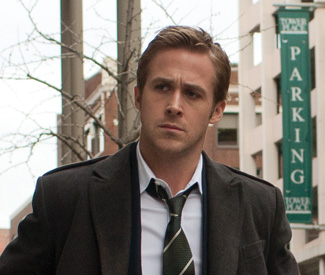
Shades darker, with a side of honest abs, Ryan Gosling added oft-wordless fashion-plate soul to ’11: take a page from his Notebook, up-and-coming chestys, because whether you’re crate-digging old footage of the young Mickey Mouse Club kid warbling in floppy PJs alongside Justin Timberlake on YouTube or marveling over his viral snippet of street-fighting men intervention, you know Gosling’s loved. It’s tough to choose between Gosling’s George Clooney impression and cheese-eating Dirty Dancing (1987) tribute in Crazy, Stupid, Love.; his vintage Steve McQueen-James Dean style in Drive (that scorpion jacket launched a jillion Halloween costumes); and his quickly-devolving presidential campaign manager in The Ides of March.

In Ides, Gosling’s silky, feline, almost femme-y smoothness hardens into a chilly “Blue Steel,” threatening to plunge into nuttiness, as the film progresses. As with these other award-snagging hunks, he’s an adult caught in the cogs of a terrible, soul-shattering machine, and as Drive‘s romantic wheelman, Gosling’s ready to run off the median into an off-roading wilderness of ultraviolence. Of course, the deadliest mechanism lies within, for the driver driven to kill, the ladykiller breaking down the angles, and the political player who grabs his revenge after having his ideals destroyed (and bromantic boss-crush on Clooney’s candidate quashed).

The abs — and twinkling, then blistering, peepers — that truly seemed to be everywhere this year belonged to Michael Fassbender, who soft-opened the year in an archetypal romantic part, Mr. Rochester, in Jane Eyre. Fassbender went on to add a dose of real class to X-Men: First Class with his vengeance-seeking metalhead Magneto — oh, Jane, his emotional investment in the comic-book creation was the best thing about the reboot.

The latter part of 2011 ended with a seismic splash of wish fulfillment for Fassbender fans as his Carl Jung deconstructed — and entangled himself in — sex and the psyche in A Dangerous Method, and as Shame‘s corporate hot-shot by day, sex addict by night. His character, Brandon, attempts to lose himself in naked abandon, unable to sustain intimacy with anyone, including his boundary-less sister (see recurring support gal/fan stand-in Carey Mulligan). Shame director Steve McQueen, not be confused with Drive‘s inspiration, wisely lets his camera rest, unsettled and ambivalent, on Fassbender’s face at the end of one night of hopeless coitus, after a close brush with a real relationship gets clipped short by flaccidity.

Caught in mid-rut, Brandon’s orgasm face is an anguished rictus of painful pleasure, half horrifying tragedy mask, half laughable comedy mask. It’s all there, the sexual fantasy-turned-nightmare, the tears behind the dazzling smiles, pecs, and full-frontal shots, conveying in one look the perils of manhood and the forces these foxes can — and can’t — control.

Dishes for a winter’s night

0

APPETITE As we arrive at the end of 2011, here are a few dishes of soothing comfort for a winter’s night from four under-the-radar places.

EGG NOODLES IN A JAPANTOWN CULINARY RESPITE

Bushi-Tei (1638 Post, SF. 415-440-4959, www.bushi-tei.com) has long been one of my underrated restaurant picks. There’s much to love in the two-tiered space lined in rugged Japanese woods, with 18-foot communal table, and ever-sure conversation starter: Japanese toilets in the bathrooms (air dryers and seat warmers!)

When I heard new chef Michael Hung Jardiniere and pastry chef Yuko Fujii of Fifth Floor were coming aboard, I hoped the refined French Japanese cuisine would remain intact. I was delighted after a couple visits to see Hung has married comfort and intricacy, inventiveness and tradition. Tasting menus are $55, or $8-18 starters, $17-27 main courses.

Tak and Keiko Matsuba thankfully still run the restaurant: they’re among the most adorable husband-wife teams I’ve met. They bring a gentle passion to each aspect of the place, including Tak’s thoughtful wine pairings, like an Alsace Riesling with fish or sake with noodles.

There’s a Sunday brunch offering elegant bowls of egg noodles in Sonoma duck ragout or Haiga rice porridge laced with salt-roasted albacore tuna and a poached farm egg. A small serving of grilled Monterey calamari ($8) in a ginger bourride (a stew made with egg yolk and garlic) impresses with nuanced sauce and juicy squid.

Memorable dinner dishes include tataki of Hawaiian albacore ($12), a delicate, sashimi-style starter over black sesame aioli. Handmade egg noodles ($17) steal the show from worthy entrees like roasted Kurobuta pork Nabemono (Japanese stew). Hung makes his egg noodles with egg and soda, and at a recent dinner tossed them in brown butter cauliflower and hatcho miso, a miso from South Central Japan.

Fujii shows her skills in a unique dessert of Kabocha squash and matcha mochi dotting a coconut tapioca broth. Dense and warm, it is thankfully unsweet and richly satisfying, its three lush bean pastes — red bean, green tea, squash — the shining finish.

Post-dinner, Tak offers a pour of Denshin “Yuki” Junmai Ginjo sake brewed by Ippongi Kubohonten Co. He spoke of its cowboy boot, kimono-wearing sake maker whose area of Japan, Fukui, was hit hard by the recent earthquake. Matsuba loves to support such producers, welcoming them when they are in the States. We’re lucky to have this haven of pristine East-West cuisine in our city.

EGG YOLK AND RICOTTA RAVIOLI AT A COZY NOB HILL SPOT

Seven Hills (1550 Hyde, SF. 415-775-1550, www.sevenhillssf.com) is one of those neighborhood favorites many outside the ‘hood aren’t aware of. An Italian spot run by French natives(?), it’s a mellow respite for conversation with caring service. I enjoy the pasta most, especially in the form of a signature ravioli uovo ($9.50) filled with ricotta, spinach, and oozing Full Belly Farm egg yolk. In a light pool of brown butter and white truffle oil, it flirts with decadence. Spaghetti ($9.50/$19) is a heartwarming bowl (conveniently in two sizes) dotted with French Grandpa George’s recipe of plump fennel sausage, caramelized onions, and bell peppers in tomato sauce.

CHESTNUT SOUP IN A TINY FRENCH BISTRO

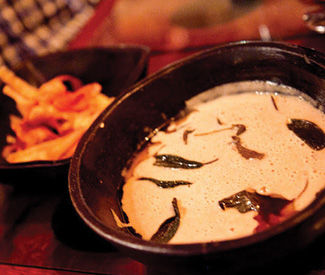
Bouche (603 Bush, SF. 415-956-0396 www.bouchesf.com) has only been open a couple weeks and thus is too new to comment in-depth upon. On a recent visit, I suffered tiny pangs of nostalgia, wishing Bar Crudo, since moved to the Panhandle, was still in this tiny, charming space. But the one dish out of a number of Bouche’s small plates ($6-18) that began to assuage those pangs was a creamy chestnut soup ($6). Its aroma evokes a winter panorama, the soup dotted with sage leaves fried in butter (which I could smell downstairs before the dish arrived to my table upstairs), with a side of crispy root vegetable chips to place on top.

HEALTHY “UNFRIED” CHICKEN IN PALO ALTO

Call it healthy “fast food” for the Peninsula set: LYFE Kitchen (167 Hamilton Ave., Palo Alto. 650-325-5933, www.lyfekitchen.com) is a bustling, new eatery in downtown Palo Alto. Draft beers, wines, smoothies, and juices flow, while vegan, vegetarian, and organic foods encourage guilt-free eating. This sort of place would take off in downtown SF: its healthful approach doesn’t leave taste behind, while its connection to celebrity chef Art Smith is a point of interest for foodies.

Alhough not everything worked (I’m afraid fries are ultimately better — and less soggy — when actually fried), two stand-outs are Art’s unfried chicken ($11.99) and a roasted beets and farro salad ($7.79). Chicken is a dish I often brush past for more enticing options, but this tender, “unfried” chicken is pounded flat, textural with breaded crust, on a heartwarming bed of roasted squash, brussels sprouts, dried cranberries, tied together by a drizzle of cashew cream and Dijon vinaigrette. The salad is loaded with roasted red beets over whole-grain farro and field greens, with a melange of fennel, walnuts, dried cranberries, oranges, red onion, and basil in maple-sherry vinaigrette. Every bite packs a flavor punch. Here one can fill up with a clear conscience. *

Subscribe to Virgina’s twice-monthly newsletter, The Perfect Spot, www.theperfectspotsf.com


Doom lens

0

cheryl@sfbg.com

YEAR IN FILM As everyone and John Cusack knows, 2012 is it. And not in a “billboard-buying Alameda radio preacher Harold Camping’s bungled Rapture predictions” kind of way. This is an all-in situation. The Mesoamerican Long Count calendar, a complicated and ancient system most enthusiastically explained by conspiracy theorists, winds up its 13th 144,000 day cycle on December 21, 2012. TL; DR: we’re toast.

Though pesky, facts-knowing Latin American archaeology scholars have suggested that this doesn’t actually mean the end of the world is nigh, good luck dissuading zillions of bloggers, survivalists, religious fanatics, super-volcano watchers, and people who lie awake at night, biting their fingernails over the Large Hadron Collider. Imminent catastrophe awaits! Are you ready?

Enter Hollywood, which in its 100-plus year history has never had any qualms about exploiting society’s extant feelings of fear and dread. In 2009, 2012 prophesized global destruction (“Mankind’s earliest civilization warned us this day would come!”) as only a film with a lavish special effects budget could. Yet it offered last-act hope, a preferred tactic of master of disaster Roland Emmerich — who, having ice-aged, Godzilla’d, and alien-invaded the planet in a succession of go-boom films over the past 15 years, switched gears in 2011 with Shakespeare mystery Anonymous. (Last-ditch artistic atonement, perhaps?)

The apocalyptic films of 2011 took a different approach, opting to emphasize existential terror instead of fireballs, with no happy endings in sight. Lars von Trier’s Melancholia inspects the one percent by peering into the lives of two privileged sisters: depressed Justine (Kirsten Dunst) and anxious Claire (Charlotte Gainsbourg). The film’s first half unfolds at Justine’s lavish wedding reception — held at Claire’s horsy estate — which devolves into a mini-disaster movie of its own. The stretch limo carrying the newlyweds is too bulky to navigate the property’s narrow, curving driveway, until the bride slides behind the wheel and gets the tires pointed in the right direction. It’s Justine’s last moment of glee, as her marriage-jinxing erratic behavior soon gives way to crippling malaise.

As it turns out, a newly-discovered planet, conveniently named Melancholia, is heading toward earth. A collision course is not guaranteed, but it’s pretty obvious where things are heading, and this is not the kind of movie that sends Bruce Willis into space with drilling equipment to save the day. As Claire whips herself into a panic, clicking through fear mongering websites (Melancholia‘s only evidence of a world beyond the mansion’s well-manicured grounds), Justine accepts the impending apocalypse with cool detachment. “The earth is evil,” she tells her sister. “We don’t need to grieve for it.”

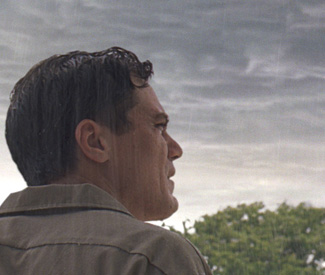
Though there’s no looming threat from outer space, the sky looks plenty ominous to Curtis (Michael Shannon), troubled protagonist of Jeff Nichols’ Take Shelter. Nightmares of the I-wake-up-screaming variety have become a regular thing, and though Curtis desperately needs the health insurance provided by his construction job — his daughter (Tova Stewart) is about to get an operation to restore her hearing — he’s become obsessed with upgrading the storm shelter in his backyard. Friends and neighbors, initially supportive, become angry and confused. A public meltdown is inevitable: “There is a STORM coming like nothing you have ever seen, and not A ONE OF YOU is prepared for it!” he bellows at a community dinner, spewing fire like a small-town Cassandra.

There’s more: Curtis’ mother is schizophrenic. Is history repeating, or are his visions actually prophetic? Is Nichols hinting at Biblical themes, or is he making a statement about mental illness, or the destruction of the American dream? The film’s provocative finale could be interpreted a variety of ways; though there’s no Melancholia-style conclusion, Take Shelter‘s message remains memorably unsettling.

But even if the world doesn’t actually take a buy-out in 2012, it’ll get there someday — as Terrence Malick’s dreamy Tree of Life, which is more or less the story of everything that has ever and will ever happen, points out. For film fans, the signs of a dying planet are all too clear. Just take a look at the top-grossing movies of 2011: all of them are either sequels or part of a series. Transformers: Dark of the Moon relieved ticket buyers of over $352 million, even though previous installment Transformers: Revenge of the Fallen (2009) was scientifically proven to have sucked the soul out of anyone who watched it. (True story.)

With the crap economy making even gigant-o-stars nostalgic for their $20 million paydays, the Hollywood-industrial complex concentrated on proven moneymakers, with a few notable exceptions (bless you, Bridesmaids). In 2011, all bets were off. No cult property was too sacred to remake, no “reboot” deemed unnecessary, no superhero with the word “green” in his name unworthy of an entire feature film, no use of 3D too gratuitous. Original ideas were placed on the endangered species list, unless you counted the very small handful of smarter films that somehow managed to break through (look hard; most of them came out in December). Though there’s always a chance that entertainment aimed at the masses will have a brain (2012’s The Dark Knight Rises looks promising), that’s all there is. A chance.

Worse yet: recent news that major film studios plan to stop releasing 35mm prints from their archives. Rep houses will be forced to show films either digitally or not at all. It’s a cost-cutting measure that will deny future generations the irreplaceable delight of watching a movie projected from film, as was intended by the artist who made it. (Somewhere, Stanley Kubrick is seething.) Why bother going to see an old movie at all, if you’re just gonna be watching the equivalent of blown-up DVD? Might as well stay home and watch the Kardashians shop for shoes that cost more than your rent.

Man, maybe I am ready for 2012 after all. At least there’s an alternative end-times scenario to look forward to: the adaptation of Max Brooks’ excellent novel World War Z, about a world rebuilding itself after a zombie holocaust. Its not-so-coincidental release date? December 21, 2012. You’ve been warned. 

www.thepetitionsite.com/1/fight-for-35mm/


Occupying the future

0

p { margin-bottom: 0.08in; }

It was a funny feeling, seeing so many faces from Occupy San Francisco and Occupy Oakland in the bright, clean “Gold Room” of San Francisco’s Commonwealth Club, particularly after spending so many nights camping with them and covering the movement.

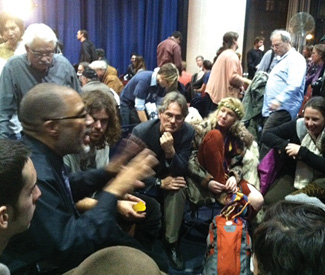
But they were there on Dec. 15, just up Market Street from their old campsites, along with a couple hundred supporters and interested community members, attending a forum on “Occupy: What now? What’s next?” Facilitator Caroline Moriarty Sacks announced that she “expected a civic conversation.” What she got was a very Occupy answer to the question of the evening which, in typical style, redefined the very concept of “civic” conversation.

The forum involved voices from many different parts of the left. Jean Quan, the Oakland mayor with a progressive activist past. George Lakoff, an outspoken liberal professor of linguistics at UC Berkeley. In the audience, dozens of people who support or are interested in Occupy, the mostly leftist San Francisco political milieu. And, of course, representing most of the panel and a good chunk of the audience were the active occupiers: anarchists, peace activists, labor organizers, and everything in between.

During the panels, their perspectives clashed. Yet Occupy strives to be a coalition of everyone, and all of these voices will be important as it progresses. Sacks had planned a 90-minute forum, featuring a panel to answer both moderator and audience questions, a break-out session, and summary reports back.

In their quest to practice participatory democracy, Occupy protesters have become used to long meetings that strive for non-hierarchical structure and a platform to hear the voice of anyone who would like to speak. If there’s one thing they can all agree upon, it’s that they’re a little tired of waiting patiently for their voices to be heard.

During the panel discussion, a few Occupiers started a Peoples Mic, interrupting Mayor Quan. They were escorted out. This fazed no one, and by the time she left the panel, chants demanding her recall rang in the hall. At each disruption, some Occupy-involved folks would object, “Listen to her! I want to hear all viewpoints!”

The tone was rowdy, but not aggressive. Minutes after disrupting the forum, protesters were back on schedule, sitting in small groups engaged in dialogue with other audience members. Even Quan was fine with it; she told the Oakland Tribune, “It was a chance to talk and have dialogue…We fostered a debate.”

This event was a microcosm of the thorny but crucial way that Occupy is uniting the left. The people in the room had something in common: belief in the visions and goals of Occupy. They just disagreed on how to get there.

Discussing, debating, and creatively bridging these differences has been one of the movement’s greatest struggles. But the more Occupy succeeds on the thorny path to unity, the more its strength builds.

Misrepresenting anarchism

Civil disobedience, peace, non-violence—all of these are critical concepts for the Occupy movement, and wrestling with them frankly has been part of the long road towards unification.

This has been done through the application of what’s originally an anarchist concept: embracing a diversity of tactics.

This is what the Occupy protesters did at the Commonwealth Club Forum. Some disapproved of disruptions, others thought them necessary. Individuals acted as they felt was right.

The Occupy supporters who turned their backs on Quan and interrupted her didn’t do it because they are inexplicably rude. They gave their reasons, including still being hurt and angry after Quan unleashed police using tear gas, rubber bullets, and aggression to break up their encampment on Oct. 25.

Quan also was displeased about that night’s events, saying that “No one is happy about what happened around the tear gas and mutual aid.”

The second reason for the reactions was what an Occupy Oakland protester who mic-checked Quan called her “misrepresentation of anarchism.” This has been dismissed and mocked by many press outlets, as if to say: What’s the point of bothering to understand anarchism?

Many people who identify with anarchist principles and tactics are involved with Occupy groups. This has contributed to the growth and development of autonomous communities at camps, as many anarchists have extensive knowledge and practice in building alternative communities based on horizontalism and collective management of resources. Occupy’s anarchist roots go deep.

This has also created controversy when tactics like property destruction and the black bloc, both associated with anarchism, become a part of Occupy. One example was the bank windows smashed and vacant building occupied during Occupy Oakland’s General Strike on Nov. 2, and riot police again responded with tear gas that night. The next day, 700 attended a General Assembly meeting to focus on discussing violence, its nature, and the ethics surrounding it.

Many have been quick to characterize this ongoing debate as a division in the movement. But if unity is to be achieved, these tough conversations are necessary.

Bringing it home

Occupy has been criticized for its lack of leaders, but that has left it open to exciting possibilities. To start a new Occupy project, you just have to convince some people to help you out—you must gain approval from no one. Some have described the organization as a “do-ocracy.” Don’t ask for permission, they say, just do it.

As such, the ideas for moving forward span from handfuls of people on street corners to millions converging on Washington.

Lakoff presented one of these concepts to the group at the Commonwealth Club, what he called “Occupy Elections.” Lakoff said, “Join Democratic clubs, and insist on supporting those people with your general moral principles. If you join Democratic clubs soon, you decide who gets to run. This is how the Tea Party took over.”

Like most ideas floating around in Occupy, there’s already something similar underway. Berkeley resident Joshua Green started the Occupy the Congress initiative, which hopes to organize and fund efforts for candidates “who support the declaration of the occupation of Wall Street.” Congressional candidates such as Elizabeth Warren in Massachusetts and Norman Solomon here in California have expressed support for and goals similar to the Occupy movement.

Occupy Washington DC has taken the message to Congress in other ways. In an open forum with supporters and renowned economists, they developed their Budget Proposal for the 99 Percent and are coordinating with Occupy groups throughout the country to call for a National Occupation of Washington DC starting March 30.

A call to action like that has a chance of being huge. With the West Coast Port Shutdown on Dec. 12, Occupy has demonstrated an ability to coordinate nationally. Those actions also showed Occupy’s growing unity with labor groups, as ILWU members worked closely with Occupy to plan those actions.

On Dec. 6, Occupy demonstrated its dedication to yet another new frontier—occupying foreclosed homes. That was a national day of action called by Occupy Our Homes and Occupy groups in over two dozen cities participated, defending homeowners threatened with eviction and moving the homeless into empty properties.

Hibernation

By the time moderator Melissa Griffin asked her final question to the panel, it was clear that the “civic conversation” had not gone as planned. Two Occupy protesters had been escorted out for interrupting Jean Quan. A handful of others had stood and turned their backs when she spoke. The crowd was restless for their own chance to grill the panelists, and there were only a few minutes left. With a faint look of dismay and hopelessness, Griffin asked the question that had no chance of being quickly answered: What’s next for occupy?

She quoted Kalle Lasn, co-founder of Adbusters, the “culture-jamming” organization credited with prompting Occupy Wall Street. In a recent interview with NPR, Lasn said: “I think that we should hibernate for the winter. We should brainstorm with each other. We should network with each other and then come out swinging next spring.” Griffin asked the panelists if they agreed with that statement.

Of course, some did and some didn’t. In fact, some form of “hibernation” is what many plan to do. In San Francisco, Occupy reading groups, workshops, and educational circles are on the rise. Small actions happen almost daily, ranging from workshops to meetings to marches to pop-up occupations.

Occupiers who were kicked out of camps are sleeping in networks of squats, safe-houses, and what one long-time camper described as “little homeless encampments around the city. We don’t put up an Occupy banner, and police don’t arrest us.”

The forum was a microcosm of the debates and plans brewing within Occupy, and it ended like most Occupy events. New connections had been made. Most people trickled out while several Occupy campers stayed to help stack chairs and clean up from the event. They all eventually exited the warm building, with its empty lobby that could have slept at least 50 people. OccupySF and Oakland activists chatted and advised each other on where to go.

Occupy is a resurgence in the spirit and power of protest and peoples movements, a recognition that the personal is political, that individuals losing their jobs and their homes can have more power in numbers. Organizing and protest has become a lifestyle.

As the Occupiers left the Commonwealth Club building, the future seemed thrilling, although many still needed a place to sleep for the night while those possibilities continue to percolate.

Style Paige: Retrofit Republic’s vintage flair

0

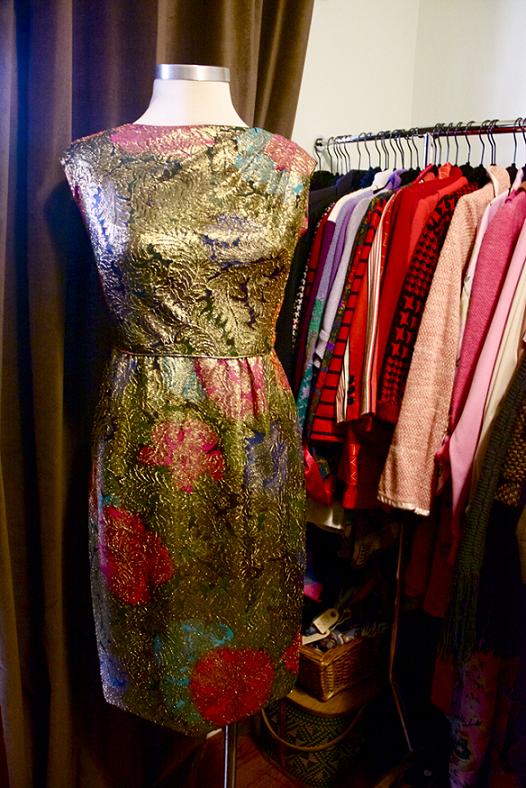
Wedged between two clothing stores in San Francisco, a narrow alley leads to the home of Jenny Ton and Julie Rhee, a.k.a. the alternative vintage boutique Retrofit Republic. Inside on a recent visit, I felt like a kid in a candy store – except there was no candy. Instead, bowls of earrings, necklaces, and pendants were neatly displayed on a table. Here, a stunning sequin clutch with colorful roses. There, four racks of vintage men’s and women’s clothing, with shoes on display wherever they could fit. Wearing the perfect gold holiday dress, a mannequin peeking around the corner told me to look around, stay awhile.

It didn’t feel as though I was standing in an apartment at all. With a floral curtain hiding the kitchen and bedrooms on the far side of their apartment, the place felt like a quaint little vintage shop. 

“I feel like I have a relationship with every piece in here,” said Ton, who along with Rhee owns the store. The two handpick every item that now decorates their living room. A sustainable vintage seller with a social impact,  Retrofit Republic offers styling to individuals, changemakers, and brands. Its slogan: Look good. Do good. Make an appointment and you can enter the home for a free private session of custom styling, or to buy signature vintage pieces.

Julie Rhee [left] and Jenny Ton [right]: Owners of Retrofit Republic, stylists extraordinaire. 

Old tennis rackets were stacked in front of luggage pieces, handbags hung on a coat rack with a grey hat resting on the top, and a vintage clock reading the wrong time sat in front of a framed photo of the duo’s company name. Each piece had incredible details, embroidery, and structure, like the off-white brocade coat with gold buttons and the men’s herringbone blazers with brown elbow patches. I wanted to slip away with one of the many fur coats, or perhaps the pair of Salvatore Ferragamo flats. 

To schedule a private shopping appointment, you must fill out a styling profile on Retrofit Republic’s website. The 26 questions include queries regarding your signature style and favorite accessories, as well as your shoe, pant, and dress sizes. Based on your profile, Ton and Rhee will pull together head-to-toe outfits that fit your style and personality.

Along with providing private shopping sessions to those who first fill out the 26-question style interview, Retrofit Republic styles photoshoots, bridal parties, and – perhaps its most popular service – does home wardrobe assessments. 

The hour-long assessment (particularly for those who are looking to revamp their wardrobe) includes getting rid of not-so-flattering garments. The duo teaches customers how to pick clothes that are more flattering but still compliment their lifestyle and personality. Ton says the service is perfect for people who are tired of their work wardrobe. “And it helps that we’re a good time,” Rhee added.

The shop’s mission is to prove that being fashionable and socially responsible can go hand-in-hand. Fusing passions for fashion, thrifting, and sustainability gave birth to Retrofit Republic. Ton and Rhee got started at an all-weekend yard sale they set up to clear out stuff before moving to another apartment. 

Their endeavor has been going strong for almost a year. Both Ton and Rhee came from non–profit backgrounds, so it is fitting that Retrofit Republic is a community- and consumer-conscious company.

So many shiny things, so little time: the sea of accesories at Retrofit Republic 

And although the duo has styled CEOs, political candidates, and music artists they stay mindful of their local community. Retrofit Republic works with every budget and markets to low-income people of color and the LGBT community by collaborating with various community organizations. The shop has also donated styling services to non-profits in the Bay Area like the Asian Pacific Environmental Network and the Lyon-Martin Clinic, and never requires a purchase to enter the store.

Ton and Rhee find vintage pieces anywhere and everywhere. They hit up local thrift stores, yard sales, garage sales, estate sales, and accept donations. They have traveled as far as Europe, South America, and Asia to find unique vintage goods. The two can tell you about each piece’s journey to the shop – on each hang tag, printed opposite the shop’s logo there is the line “Where I’m from?” Below that, a handwritten answer brings to life thrift stories. 

Browsing the amazing finds, I found myself wondering how the two were able to say goodbye to some of the items when it was time to sell. 

“I found these amazing, amazing vintage boots at a street market in Argentina and I’m kicking myself because I sold them,” Rhee said laughing. “They were so amazing.”

Only they said they don’t get attached. They’re constantly shopping, so there’s a strong probability that they’ll find those amazing boots over and over again.

Besides, “it’s the thrill of the hunt,” said Ton. 

Set up an appointment to check out Retrofit Republic at www.retrofitrepublic.com

Nite Trax: Housepitality warms, Jason Kendig’s solstice mix chases winter chills

0

Local and global nightlife notes, reviews, tunes, and more

I’m still buzzing over last night’s fantastic installment of the Housepitality weekly at Icon, which was a classic San Francisco get-down, a warm intersection of smiling hotties, sweet freaks, and warm tunes from main men DJ Bus Station John and Honey Soundsystem’s Ken Vulsion. A gay old time indeed in a perfectly pan-orientational venue.

(Many of us queens used Bus Station John’s hopping back room — which he’d decorated with fuschia and yellow Christmas lights — as a respite from the often too-crowded front room dance floor, and it was funny to see some of the straighter bro-types who wandered back there do a double take and slowly start to back out. But more often than not, they soon rejoined and dropped their inhibitions in our true nightlife style. I even helped hook one up with this amazing girl, because he was so tipsy and shy, and because I’m lady-magic.) It was a perfect solstice evening — definitely hit up future Housepitalities.

Speaking of Honey Soundsystem and the solstice, one of queer techno-ish collective Honey’s heartthrobs, Jason Kendig (also cofounder of the MR INTL label), has released his annual, eagerly awaited Winter Solstice mix. If you’re looking for the spot-on alternative to playing Barbra Streisand at your holiday affair, this chill, sophisticated techno set will do the trick nicely. Oh hell, play both!

Jason says:

“I made a mix last year on the solstice that also coincided with the lunar eclipse. I got a request to make another one and since the timing was right i thought i’d put together a collection of tunes that i’ve been digging lately. Something on the deeper side of things. Goes well with a hot toddy.” (And listen for some canny references to Jason’s beloved hometown, Detroit. They call her Ms. Ross!)

Dance to Honey Soundsystem every Sunday night — except this Christmas one — at Holy Cow and swing by the Honey-Sunset New Year’s Eve party at Public Works with hot ‘n heavy Bulgarian tech-house star KiNK and, as always, a thrilling, nubile crowd ready to dance I’m sure.

Jason Kendig winter mix 2011 by kendig

Tracklist:

beatbox (pbr streetgang remix) – crazy p
rainbow road – tornado wallace
if i feat. valentine (jay shepheard remix) – hamid
no one – daniel bortz
love in me (eats everything’s loving you re-work) – laura jones
what’s there – dauwd
ensnare – julio bashmore
call me (dixon edit) – mark e
intersection – tevo howard
something – honeydrop
life of plants & flowers – tom trago
wecanonlybewhoweare – crazy p

Snap Sounds: Super 11

0

SUPER 11
SUPER ONZE
(self-released)

Led by hand drumming, three-stringed n’goni lute, and organic pitch shifting Malian chant, Super 11’s Super Onze is a compelling set of songs. The band, a collective formed in a remote region of Northern Mali, plays Takamba, a type of music typically created for weddings and other ceremonies. It comes from a rich musical history, linked to other artists in the area, and in style to acts such as Ali Farka Touré.

I first came to Super 11 through cantorial-blues act Sway Machinery. The Sway Machinery traveled to Mali a few years back to work on an album and Gao-based Super 11 ended up appearing on the New York act’s double record — a brilliant decision. It’s no wonder the collab worked. Merely explore the fiery opening vocal solo on Super Onze‘s “Khoumeissa,” or fall deep into any of the album’s thumping hand-made dance beats. It’s available at www.super11.bandcamp.com.

The reluctant soloist

0

MUSIC Michael Beach is not the conventional — or, cliché — singer-songwriter. Granted, he writes stripped down folk rock, but he’s not locked in the style. He can swallow the comparisons to Nick Drake or Mason Jennings, but he hasn’t modeled himself after those (or any other) singer-songwriters really. “I think that I would get bored if that’s all I listened to,” he says. It explains why there’s more to his bare bones sound — the dude simply doesn’t fit the mold.

“It’s not like I sit at home and read Greek mythology,” Beach tells me over the phone. Yet, in answer to a question about his newest record, Mountains + Valleys, released on Spectacular Commodity/Twin Lake Records, he evokes narratives and characters from biblical text and classical myths.

“You take something,” he explains, “a character from a myth, a religious tradition, or a historical figure and that symbolizes an idea. And then you manipulate those ideas by explaining it through the characters.”

“So you make it your own in other words,” I counter.

“I mean I’m certainly not under the impression that nothing like this has ever been done before.”

Beach is quick to pass on credit to others, whether it’s his predecessors or the musicians who’ve lent him a hand in the studio. It makes you think he’s still vaguely uncomfortable as a solo artist. First and foremost, Beach is the guitarist and lead singer of Electric Jellyfish, a rock band based out of Melbourne, Australia. Beach, who’s from Merced, attended La Trobe University in the suburbs of Melbourne and formed the band with Peter Warden and Adam Camilleri roughly seven years back.

It was when Electric Jellyfish took a short break that Beach started recording on his own. “I didn’t want to be idle, so I recorded an album.” It was as simple as that — Blood Courses was released in 2008. However, two years later, Beach’s visa expired. He was forced back to the states and made his home in San Francisco.

Now the members of Jellyfish take turns touring their respective countries. They have a forthcoming seven-inch entitled Trouble Coming Down, and are on the bill to play Austin, Texas’ SXSW in March. In the meantime, Beach is left to his own devices.

Mountains + Valleys shares similarities with Beach’s previous album, but with some notable differences. “[Blood Courses] was really, really sparse and brittle; purposefully one guitar track and one vocal track. I wanted to stretch my legs a little bit and incorporate some other instruments for a whole band sound. But I still wanted to keep things sparse and basic.”

Mountains + Valleys is sparse. However, as the title indicates, it ascends in dramatic directions too. Beach may hold back at times, but he can yank those chains off and embrace a devil-may-care attitude. It’s painstaking calculation as much as pure impulse. If Beach is fairly abstruse with his words, he’s clearly vulnerable in his vocal delivery. If “So Said the Birds” has elements you might ascribe to folk, “Straight Spines” gushes with enough drive to call straight indie-rock.

Interspersed throughout the album are brief instrumentals that vary from the electric rock collage of “Central San Joaquin” to the more subtle and dissonant “Shasta.” Beach says the inspiration for the instrumentals was Chris Smith’s Bad Orchestra, which wasn’t widely released outside of Australia.

“I think [the instrumentals] made me less one-dimensional, less like ‘I’m a guy who writes songs and strums my guitar.’ There’s more than one way of conveying meaning in music.”

MICHAEL BEACH

Wed/21

With Brian Smith, and the Same

9 p.m., $6

Hemlock Tavern

1131 Polk, SF

(415) 596-7777

www.hemlocktavern.com


Toasts with the most

0

virginia@sfbg.com

APPETITE We seek wine recommends the year ’round, but never more than the during the holiday season. Here’s some affordable sipping assistance for ringing in the new year or decking the halls with friends. (Key local shops like K&L Wine Merchants, Jug Shop, Arlequin, Bi-Rite, or SF Wine Trading Co., may stock these bottles or can likely get them for you).


GOING BUBBLY

Nothing says New Year’s Eve like champagne, and at a recent Bubble Lounge industry tasting my palate was piqued by a few. I cannot afford Armand de Brignac champagne, but if you can splurge, by all means, be my guest. Offered in elaborate, hand-carved bottles marked by pewter labels, attention to detail is paramount. Thankfully, the champagne is as elevated as the package. The Blanc de Blanc is buttery with oak, balanced by a chardonnay crispness; the Rose is a gently flushed beauty; Brut Gold is a showcase blend of Pinot Noir, Chardonnay, and Pinot Menuier. I may never be able to stock my wine cabinet with a bottle — it’s often priced at more than $300 a bottle — but I anticipate the joy of tasting it again.

However, at a ridiculously reasonable $7.99 per bottle, Spain’s Jaume Serra Cristalino Brut earned my kudos with earthy, citrus notes and bone-dry finish. The Cristalino Rose was also lovely, redolent of mushroom and tart cherry, made with Pinot Noir and the less common Trepat grape.

Cloverhill Sparkling from Tasmania, priced around $30, is bready and crisp, balanced with honey. Zardetto Rose Raboso Veronese and Zeta Prosecco are both real values: the Rose is laden with strawberry and vanilla cream, while the acidic Prosecco is food friendly. (Both around $15).


CIDER SIPPING

With a long American history, cider is low in alcohol and a happy food companion… a welcome change of pace from wine and champagne. I received a few samples this fall, my pick being an upstate New York duo. Newton Pippin Original Sin Cider, is made from single heirloom Pippin varietals, known as “the prince of apples”. Uber dry and crisp, it pairs well with a wide range of foods (I rather like it with pretzels and mustard). Cherry Tree Original Sin Cider is a winning combo of tart cherries combined with crisp heirloom apples. (Both come at around $12 per bottle.)


VALUE WINES

A few recent favorites that won’t break your bank:

Lasseter Enjoué, Sonoma — This $24 rose from the just-opened Lasseter Family Winery (you may know John Lasseter as Pixar-Disney’s CFO and director of films like Toy Story) is a dry Rhone-style rose, whispering with Mediterranean breezes and flower gardens. It’s a Syrah, Mourvedre, and Grenache blend, (enjoué, means “joyful, playful”). Although winter might not seem ideal, I’d sip this softly acidic beauty for a winter escape or hold onto it until the days lengthen … my favorite of the four wines at the elegantly understated winery. John, his wife Nancy, and winemaker Julia Iantosca have a love of Bordeaux and Rhone wines, apparent in their blended wines representing varietals from both regions. Purchase online at www.lasseterfamilywinery.com or at the winery (tastings by appointment).

Gerard Bertrand Chateau L’Hospitalet, France — 2007 Gerard Bertrand Chateau L’Hospitalet Reserve is one of the better French bargain reds. At a mere $8.99 per bottle, this wine from the La Clape region of the Languedoc is fruit-forward, begging to partner with a hearty cassoulet or coq au vin. A blend of 30 percent Grenache, 40 percent Syrah, and percent Mourvedre, its soft spice is balanced by minerality and subtle oak.

Landmark 2009 Grand Detour Pinot Noir, Sonoma — At $40, this is Landmark winery’s lower-priced Pinot which I actually prefer to its $65 Kanzler Pinot. It’s robust for a Pinot with earthy cherry and minimal oak, but offers enough acidity to be food friendly, unfolding as it sits. This casual, comfortable winery (with bocce ball and small lake) offers tastings and bottles to purchase or online at www.landmarkwine.com.

Mapema Sauvignon Blanc and Malbec, Argentina — Mapema’s 2011 Sauvignon Blanc ($14) and 2009 Malbec ($19) are both affordable winners. The Sauv Blanc claims 90 percent stainless steel fermentation (10 percent aged in new French oak), allowing the grape’s zesty, acidic properties to dominate. Lemongrass hints and a well-rounded finish go nicely with seafood. The Malbec offers hints of cherry and cocoa, with solid tannins from 50 percent new and 50 percent one-year French oak, pairing well with pork, lamb, or hearty grains.

Huge Bear Sauvignon Blanc, Sonoma — The name Huge Bear might not be poetic (though I dig the old world, Wild West California label), but the 2009 Sauvignon Blanc ($25) offers floral melon and citrus notes, soothing with Asian take-out. The 2009 Chardonnay ($40) is pricey but showcases crisp apple, pear and mineral notes, followed by a butter cream finish. These are small production at merely 150 cases each, fine local retailers at www.hugebearwines.com

Kracher’s Cuvee Beernauslese (pronounced bear-en-ow-SCHLAY-zuh) — I adore Austrian wines and this $27 blend of Chardonnay and Welschriesling grapes is much more than a sweet finish to a meal. It’s a layered, acidic dessert wine, dripping with vanilla honey balanced by mineral pineapple and lemon zest.

Subscribe to Virgina’s twice-monthly newsletter, The Perfect Spot, at www.theperfectspotsf.com


Pre-Occupied

0

arts@sfbg.com

YEAR IN VISUAL ART “Occupy the Empty,” Amanda Curerri’s 2010 solo show at Ping Pong Gallery (now Romer Young Gallery), seems about as appropriate a tag line as any for this past year. It’s not just Curerri’s prescient title that resonated with the occupations at Zucotti Park, Frank Ogawa Plaza, and the Mario Savio steps at U.C. Berkeley’s Sproul Hall, as well as the populist expressions of protest seen throughout the Arab Spring that many involved with the Occupy movement looked to, not always unproblematically, as sympathetic precedents.

“Occupy the Empty” took seriously the question of how art and aesthetics can create a more democratic society, testing the tensions inherent within the question’s very terms by asking viewers who entered Curerri’s deconstructed courtroom to become witnesses. The efficacy of the entire enterprise was predicated on individuals taking the stand, but also placing their testimony against and alongside those who had spoken before about a form of speech no less personal and performative: last words.

Similarly, the tension of the individual voice in relation to the collective it contributed to has been the engine motor of the Occupy movement. At the encampments no one could speak for anyone else and yet everyone was, at the very least, in agreement on the necessity of being present, a message often relayed (without an apparent sense of irony) back to the assembled, via a re-presentational strategy known as “the human microphone.”

One could also point to the whimsical criers and peddlers of Allison Smith’s “Market Day,” a public performance event held on and around Market Street in June as part of her Southern Exposure exhibit “The Cries of San Francisco,” or Stephanie Syjuco’s “Shadow Shop,” a mom-and-pop-style art market that resided for five months at SFMOMA, as other examples of participatory artistic practice that aimed to insert alternative forms of democratic exchange into public life, in some ways anticipating much of the discussions around aesthetics and politics that Occupy generated.

Whether this exploratory, incessantly present dynamic will — or can — continue to “trickle up” further through the art world remains to be seen. Major museums largely played it safe this year going with tried and true blockbusters (locally, Picasso and Impressionism) or spectacular spectaculars that had critics alternately swooning or pointing at the naked emperor’s relentless march, as in the recent retrospectives of Mauricio Catalan and Carsten Höller in New York.

Certainly, the likes of Charles Saatchi grumpily lecturing about cultural capital and the “vulgarity” of new super-elite art collectors in the pages of the UK Guardian doesn’t make the one percent look necessarily any more “in touch.” (Not that any of the moneyed gawkers I encountered at Art Basel Miami would care.) On the other hand, Alice Walton’s recently opened Crystal Bridges Museum of American Art in Arkansas, funded with Wal-Mart cash, can be seen as presenting both a possible new model and a grim augury about how art’s public future will rely even more transparently but no less troublingly on private beneficence. Why must we travel to a major urban center to see outstanding art? Then again, why donate to a museum when you can build you own?

ADDENDA

Although I don’t do regrets, I believe that putting out something “for the record” should still count as as a positive — despite constant abuse of the phrase by those publicly scandalized for their private moral failings. So, following in the tradition of last year’s “year in art” column, here is an incomplete rundown of art, exhibits, and, institutions that didn’t entirely make it in for myriad reasons, none of which had to do with the work itself.


KATHYRN VANDYKE “PAINT” AT STEPHEN WIRTZ GALLERY, MAR. 16-APRIL 23

Who said non-representational collage was done for? VanDyke’s colorful, mixed media mash-ups of paint and paper flaunted the grain of their materials and the elegance of their compositional logics with the disciplined flourish of a master flamenco dancer.


SFMOMA PUBLIC PROGRAMMING

Whereas SFMOMA’s track record in regard to exhibitions has been mixed this year (cheers to the recent Richard Serra and Francesa Woodman retrospectives; good riddance to the slog that was “Exposed”), its public programming has brought an invigorating mix of poets, musicians, performers, and audiences to the institution, making that word seem an awfully staid descriptor for a venue that has consistently hosted such unexpectedly engaging and fun events.


“BALENCIAGA AND SPAIN” AT THE DE YOUNG MUSEUM OF FINE ART, MAR. 26-JULY 4

The sculptural, late 1960s pieces in this quiet stunner of a show highlighted the influence of Spain’s many forms of national costume upon its most gifted native sons, couturier Cristobal Balenciaga — and should shush the grousing of anyone upset over the rise of fashion and textile exhibits at major art institutions. To appropriate a nugget of praise once paid to Yves Saint Laurent, we can debate whether or not fashion is art until the cows come home, but there is no doubt that Balenciaga was an artist. Bring on the Gaultier!


DAVID IRELAND AT GALLERY PAULE ANGLIM, NOV. 2-26

Ireland’s early ’70s canvases of cement, dirt, and rock are slices of time, fragments of place. They are numinous, fragile reminders of being, as well one piece of the legacy of this late, great Bay Area artist.


PACIFIC STANDARD TIME, VARIOUS VENUES, LOS ANGELES

If you haven’t already planned a weekend around the Getty’s massive, multi-institution survey of postwar California art (www.pacificstandardtime.org), you owe it to yourself to head south ASAP. Many of the participating exhibits close in late January, so get!

Stage Listings

0

Stage listings are compiled by Guardian staff. Performance times may change; call venues to confirm. Reviewers are Robert Avila, Rita Felciano, and Nicole Gluckstern. Submit items for the listings at listings@sfbg.com. For further information on how to submit items for the listings, see Picks.

THEATER

ONGOING

Absolutely San Francisco Alcove Theater, 414 Mason, Ste 502, SF; (415) 992-8168, www.thealcovetheater.com. $32-50. Thurs, 8pm. Through Dec 29. Not Quite Opera Productions presents Anne Nygren Doherty’s musical about San Francisco, with five characters all portrayed by Mary Gibboney.

The Golden Girls: The Christmas Episodes Victoria Theatre 2961 16th St, SF; www.trannyshack.com. $30. Thurs/22-Fri/23, 8pm. Despite the unseasonably warm weather, it was beginning to feel a lot like Christmas, circa 1987, thanks to the return of four luminous drag queens and a little TV-to-stage holiday special that, after six years, can safely be called a San Francisco tradition. Heklina (Dorothy), Pollo Del Mar (Rose), Matthew Martin (Blanche), and Cookie Dough (Sophia) are the older ladies of Miami, delivering verbatim two episodes of the famed sitcom, each with a special gay yuletide theme — fleshed out by special guests Laurie Bushman (as Blanche’s gay kid brother Clayton) and Manuel Caneri (as thinly disguised lesbian Jean). (Opening night also saw special appearances by morning-radio personalities and emcees Fernando Ventura and Greg Sherrell.) Of course, a Word for Word production this isn’t. Knowing drag mischief and unflappable performances allow a certain welcome latitude in attitude, not to mention costuming, which is wonderful in that Pasadena estate sale way: a veritable bazaar of ’80s bizarre. (Avila)

*On the Air Pier 29 on the Embarcadero (at Battery), SF; (415) 438-2668, love.zinzanni.org. $117 and up (includes dinner). Wed/21, Fri/23, Tues/27, Dec 28-30, 6:15pm (also Dec 28, 11:30am); Sat/24, 11:30am; Dec 31, 8:30pm. Teatro ZinZanni’s final production at its longtime nest on Pier 29 is a nostalgia-infused banquet of bits structured around an old-time radio variety show, featuring headliners Geoff Hoyle (Geezer) and blues singer Duffy Bishop. If you haven’t seen juggling on the radio, for instance, it’s pretty awesome, especially with a performer like Bernard Hazens, whose footing atop a precarious tower of tubes and cubes is already cringingly extraordinary. But all the performers are dependably first-rate, including Andrea Conway’s comic chandelier lunacy, aerialist and enchanting space alien Elena Gatilova’s gorgeous “circeaux” act, graceful hand-balancer Christopher Phi, class-act tapper Wayne Doba, and radio MC Mat Plendl’s raucously tweeny hula-hooping. Add some sultry blues numbers by raunchy belter Bishop, Hoyle’s masterful characterizations (including some wonderful shtick-within-a-shtick as one-liner maestro “Red Bottoms”), a few classic commercials, and a healthy dose of audience participation and you start to feel nicely satiated and ready for a good cigar. Smoothly helmed by ZinZanni creative director Norm Langill, On the Air signals off-the-air for the popular dinner circus — until it can secure a new patch of local real estate for its antique spiegeltent — so tune in while you may. (Avila)

*Period of Adjustment SF Playhouse, 533 Sutter, SF; (415) 677-9596, www.sfplayhouse.org. $20-50. Tues-Thurs, 7pm (also Wed/21-Thurs/22, 2pm); Fri-Sat, 9pm (also Sat, 3pm; no show Sat/24). Through Jan 14. A nervous young man with an unaccountable tremor, George Haverstick (a compellingly manic Patrick Alparone) has waited until his honeymoon to finally call on his old Korean War buddy, Ralph (a stout but tender Johnny Moreno) — only to drop his new bride, Isabel (the terrifically quick and sympathetic MacKenzie Meehan), at the doorstep and hurry away. As it happens, Ralph’s wife of five years, Dorothea (an appealing Maggie Mason), has just quit him and taken their young son with her, turning the family Christmas tree and its uncollected gifts into a forlorn monument to a broken home — which, incidentally, has a tremor of its own, having been built atop a vast cavern. Tennessee Williams calls his 1960 play “a serious comedy,” which is about right, since although things end on a warm and cozy note, the painful crises of two couples and the lost natures of two veterans — buried alive in two suburbs each called “High Point” — are the stuff of real distress. SF Playhouse artistic director Bill English gets moving but clear-eyed, unsentimental performances from his strong cast — bolstered by Jean Forsman and Joe Madero as Dorothea’s parents—whose principals do measured justice to the complex sexual and psychological tensions woven throughout. If not one of Williams’s great plays, this is an engaging and surprisingly memorable one just the same, with the playwright’s distinctive blend of the metaphorical and concrete. As a rare snowfall blankets this Memphis Christmas Eve, 1958, something dark and brooding lingers in the storybook cheer. (Avila)

A Tale of Two Genres SF Playhouse, 533 Sutter, SF; (415) 869-5384, www.un-scripted.com. $10-20. Wed/21, 8pm. Un-Scripted Theater Company presents an improvised musical inspired by Charles Dickens.

Xanadu New Conservatory Theatre Center, 25 Van Ness, SF; (415) 861-8972, www.nctcsf.org. $25-45. Wed-Sat, 8pm (no show Sat/24); Sun, 2pm (no show Sun/25 or Jan 1). Through Jan 15. New Conservatory Theatre Center performs the retro roller-skating musical.

BAY AREA

*God’s Plot Ashby Stage, 1901 Ashby, Berk; (510) 841-6500, www.shotgunplayers.org. $18-27. Wed-Thurs, 7pm; Fri-Sat, 8pm; Sun, 5pm (no shows Wed/21-Sun/25). Through Jan 15. Playwright-director Mark Jackson excavates a bit of deep history for Occupy USA, an episode in the annals of colonial American theater and jurisprudence that played, and plays, like a rehearsal for a revolution — this time with music. Capping Shotgun Players’ 20th anniversary season of new work, God’s Plot comically animates and literally underscores (through song, and irresistible banjo and bass accompaniment courtesy of Josh Pollock and Travis Kindred) the story surrounding “Ye Bare and Ye Cubb,” a play performed in 1665 Virginia but now lost. The legal battle that engulfed this satire of the English crown and its economic and political domination of the colonies was an early instance of the close but little acknowledged relationship between art and politics in proto-American society, with much too of religious conflict in the mix (personified here by a powerfully smoldering John Mercer as closet-Quaker Edward Martin). The playwright, a brash self-inventor named William Darby (a sure, charismatic Carl Holvick-Thomas), colludes with a disgruntled merchant (Anthony Nemirovsky) and a former indentured servant climbing the social ladder as a new tenant hand (Will Hand). Darby, meanwhile, is secretly wooing — and even more, being wooed by — Tryal Pore (an ebullient, magnetic Juliana Lustenader), a young woman even braver and more outspoken than he. As an expression of her novel and unbridled spirit, Tryal alone breaks into song to express her feelings or observations. Her temperament is meanwhile a source of worry to her father (a comically deft Kevin Clarke) and mother (Fontana Butterfield), but also attracts an unwitting suitor (a compellingly serious Joe Salazar). The play’s overarching narrative of nationalist ferment, which reaches an overtly stirring pitch, thus comes mirrored by the tension in two dramatic triangles whose common point is the precocious, golden-throated Tryal Pore. More of the private drama might have served the overall balance of the play, but a good part of the achievement of director Jackson and his generally muscular cast is making a complex play of enduring ideas and conflicts look so effortless and fun. (Avila)

The Secret Garden TheatreWorks at Lucie Stern Theatre, 1305 Middlefield, Palo Alto; (650) 463-1960, www.theatreworks.org. $19-72. Wed/21, 2 and 7:30pm; Thurs/22-Fri/23, 8pm; Sat/24, 1 and 6pm; Dec 27-28, 7:30pm; Dec 29-30, 8pm (also Dec 30, 2pm); Dec 31, 2pm. TheatreWorks performs the Tony Award-winning musical adaptation of Frances Hodgson Burnett’s novel.

*The Wild Bride Berkeley Repertory Theatre, Roda Theatre, 2015 Addison, Berk; (510) 647-2949, www.berkeleyrep.org. $14.50-73. Tues, Thurs-Sat, 8pm (also Thurs and Sat, 2pm); Wed and Sun, 7pm (no show Sun/25). Through Jan 1. In the first act of Kneehigh Theatre’s The Wild Bride, the destinies of an innocent girl (Audrey Brisson), her moonshine-making father (Stuart Goodwin), and a predatory devil in a cheap suit (Stuart McLoughlin) become inextricably entwined by an ill-fated bargain. Steeped in European fairytale logic and American folk and blues music, Bride is inventively staged at the base of a giant tree, combining mime, puppetry, dance, live music, Cirque du Soleil-style vocals, acrobatics, and taut verse into a swooping, expressionistic fable. Accidentally promised to the devil by her doting but drink-dulled dad, “The Girl” suffers first the creepy indignity of being perved on by her preternatural suitor, and secondly the horror of having her hands chopped off by her own father, actions which drive her to flee into the woods, morphing into a character known only as “The Wild” (played by Patrycja Kujawska). After a stint as an unlikely, Edward Scissorhands-esque queen, The Wild too is driven from comfort and morphs a second time into a third character “The Woman” (Éva Magyar), an experience-toughened mother bear who kicks the devil’s ass (literally), and triumphs over adversity, without even uttering a single word. At turns dark, dexterous, fanciful, and fatal, Bride rises above the usual holiday fare with a timeless enchantment. (Gluckstern)

The World’s Funniest Bubble Show Marsh Berkeley, TheaterStage, 2120 Allston, Berk; (415) 826-5750, www.themarsh.org. $8-50. Sun and Dec 26-30, 11am (no show Sun/25). Through Dec 31. Louis “The Amazing Bubble Man” Pearl returns with this kid-friendly, bubble-tastic comedy.

PERFORMANCE/DANCE

“Cut the Crap! With Semi-Motivational Guru, Clam Lynch” Dark Room, 2263 Mission, SF; www.darkroomsf.com. Jan 6 and Jan 13, 8pm. $15. Get motivated with self-help-guru-satirizing comedian Clam Lynch.

“Dieter und Shiela at the San Francisco International Youth Hostel” Eureka Theatre, 215 Jackson, SF; www.combinedartform.com. Wed-Fri, 9:30pm, $20. Will Franken presents his latest solo, multi-character comedy.

“Forking II: A Merry FORKING Christmas” StageWerx, 446 Valencia, SF; www.pianofight.com.Wed/21-Fri/23 and Dec 25-30, 8pm. $25-35. Well holy forking shit, it’s been three years already since Daniel Heath’s A Merry Forking Christmas debuted at PianoFight’s old Off-Market Theater digs, and in that time a few new faces have been added to the cast, and a few loose ends tied up in a bow, rendering the overall package a ho-ho-holiday treat worth indulging in. Hate the holidays? Not nearly as much as Goth girl morgue assistant Charlotte (Leah Shesky); her buddy Monique (Emma Shelton), a frustrated culinary genius selling pot cookies to stressed-out shoppers; Adam (Jed Goldstein), a disaffected Jew hired on as a Mall Santa from a temp agency; or Charles (Alex Boyd), an effete metrosexual dangerously enervated by his fiancée’s perfectionist vigor (Nicole Hammersla). Hilariously guided by Ray Hobbs and Gabrielle Patacsil, who play a variety of bit roles (Headbanger vs. Bible Banger, embattled parents fighting over the last coveted “Meat Panda,” feral children), the audience periodically gets to vote over the next permutation of plot, the “forks” alluded to in the title. According to artistic director Rob Ready (also featured in the cast as “Old Ben”), there are 362,880 possible combinations, and yes, the actors have memorized them all. Question is, will you? (Gluckstern)

“Kung Pao Kosher Comedy” New Asia Restaurant, 772 Pacific, SF; (415) 522-3737, www.koshercomedy.com. Fri-Sat, 6 and 9:30pm; Sun, 5 and 8:30pm. $42-62. Now in its 19th year, this night of “Jewish comedy on Christmas in a Chinese restaurant (where else?)” features headliners Elaine Boosler, Avi Liberman, Jeff Applebaum, and Lisa Geduldig.

Mark Foehringer Dance Project | SF Children’s Creativity Museum, 221 Fourth St, SF; www.brownpapertickets.com. Wed-Fri, 11am and 2pm. $20-35. The contemporary ballet company performs Mark Foehringer’s Nutcracker Sweets.

“Santaland Diaries” Eureka Theatre, 215 Jackson, SF; www.combinedartform.com. Thurs/22-Sat/24 and Dec 26-30, 8pm (also Fri/23-Sat/24, 3pm). $20-50. Combined Artform presents David Sedaris’ holiday comedy.

Smuin Ballet Yerba Buena Center for the Arts, 701 Mission, SF; www.smuinballet.org. Wed-Fri, 8pm (also Wed, 2pm); Sat, 2pm. $65. The company performs its acclaimed tribute to the holidays, The Christmas Ballet.

“Tenderloin Christmas Hustler: Occupy the ‘Loin!” Phoenix Theater, 414 Mason, Sixth Flr, SF; www.tenderloinxmashustler.com. Wed-Fri, 8pm. $20-25. Mash-up Christmas parody, complete with sock puppet Jesus at intermission.

“Welcome to Boswick’s House” SF Playhouse, 533 Sutter, SF; www.boswick.net. Thurs-Fri and Mon-Tues, 11am. $19. Boswick the Clown performs a goofy holiday show aimed at kids ages 4-8 years old.

“Yes Sweet Can” Dance Mission Theater, 3316 24th St, SF; (415) 225-7281, www.sweetcanproductions.com. Dec 27-29, 2:30 and 4:30pm; Dec 30, 4 and 8pm; Dec 31-Jan 1, 2pm. $15-60. Sweet Can Productions presents an hourlong extravaganza of circus arts for the holidays.
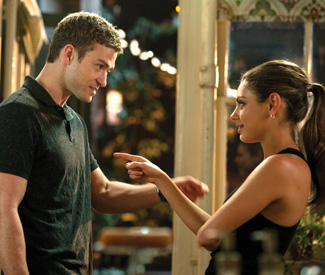
On the Cheap Listings

0

Submit items for the listings at listings@sfbg.com. For further information on how to submit items for the listings, see Picks.

WEDNESDAY 21

Cartoonist-palooza gift sale and concert Mercury Café, 201 Octavia, SF. www.stevelafler.net. 6-9 p.m., free. Lloyd Dangle, a longtime deft lampooner of the one percent in his Troubletown comic strip, headlines a night of comic-oriented holiday offerings and live music. Mats!?, Jeff Roysdon, Steve Lafler, and the Dick Nixon Experience (responsible for the one-and-only “Oaxacabilly” sound) join.

Winter Solstice celebration Muir Woods Visitor Center, 1 Muir Woods Rd., Mill Valley. www.parksconservancy.org. 3-8 p.m., free. You can spend the longest night of the year spent underneath the longest trees around. Solstice crown-making, musical performances, and luminaria-guided jaunts along Muir Woods trails light up the night.

THURSDAY 22

Objectified screening Phyllis Wattis Theater, SFMOMA, 151 Third St., SF. www.sfmoma.org. 7 p.m., $5. From the very same folks who examined glyphs and serifs in the film Helvetica comes a film on the design of some of our most mundane objects. Potato peelers and toothbrushes will both be under discussion.

Animation Workshop Rock Paper Scissors Collective, 2278 Telegraph, Oakl. www.rpscollective.org. 6-8 p.m., sliding scale. Before gifs, there was the even simpler stuff: cut-out and stop-motion animation. Rock Paper Scissors holds monthly workshops on such styles of yore. Eager would-be animators are invited to come and create their own short films.

FRIDAY 23

Berlin-Style Ping-Pong Project One, 251 Rhode Island, SF. 9 p.m., $5. With two whole reasons to celebrate (the first being that it’s Friday, the second that it’s Christmas Eve-Eve), there’s absolutely no excuse to pass up the latest match of “Berlin-style” ping-pong, the paddled craze sweeping the city. Join the frantic runners-round-the-table.

SATURDAY 24

Mittens and Mistletoe Dance Mission Theater, 3316 24th St., SF. www.dancemission.org. Also Sun/25. 2 p.m. and 4 p.m., $7.50 on www.brownpapertickets.com. Directed by two bonafide clowns, Coventry and Kaluza, the winter-themed variety show re-imagines trashcans, brooms, and similarly ordinary objects with the help of slack lines, acrobatics, and the usual circus magic.

SUNDAY 25

Free admission day Contemporary Jewish Museum, 736 Mission, SF. www.thecjm.org. 11 a.m.-4 p.m., free. Sure, there’s Chinese food and the Cineplex. But for those Christmas Day wanderers looking for cultural enlightenment, the CJM opens its doors for a day of spinning top-making and guided tours (including one of that sweet Houdini exhibit).

“It’s a Jewish Christmas” Make-Out Room, 3225 22nd St., SF. www.makeoutroom.com. 5-11 p.m., $10. Strip dreidel, a real-deal Chanukah bush, alternating works of neurotic brilliance by Woody Allen and Larry David, and a lavish spread of chow mein make this the best un-Christmas ever.

Schlitz and free country music Bender’s, 806 South Van Ness, SF. www.bendersbar.com. 9 p.m., free. Two dollars for the beer that made Milwaukee famous is great enough, but add the twanging grooves of local group the Dead Westerns and you may never make it out of Bender’s.

MONDAY 26

Kwanzaa in San Francisco Through Jan. 1. Various times and places, SF. www.kwanzaasanfrancisco.com. Celebrate the African holiday of faith, self-determination, unity, and other universally clutch principles with these seven days of free events. Highlights: the Mon/26 keynote speech by City College trustee Dr. Brenda Wade, Dec. 28’s one-woman play on the life of Harriet Tubman, and feasts every night of the festivities.

Holiday Animation Film Festival McBean Theater, Exploratorium, 3601 Lyon, SF. www.exploratorium.edu. Noon, 2, and 4 p.m., free with museum admission. Even if you start watching a holiday-themed short screened as part of the holiday animation festival and it doesn’t tickle your fancy, chances are you’ve only got about a minute or two left to go before it’s over, Scrooge. Hand-painted paper scraps, stop-motion animation, and stuffed animals headline the show.

Style Paige: Shot in shearling

0

Question: can you wear too much shearling? Those that are non-plussed over the material might say yes after seeing this man I snapped a photo of on 16th and Mission Streets who was dressed in a leather coat lined with shearling, topped off with a green hat. But on that chilly day, I was struck by the outfit — it was exuding warm and fashionable.

Talk of shearling has been churning the blogosphere for weeks. Louis Vuitton’s monogram handbag with shearling trim has been responsible for much of it, as have polls on the materials aesthetic merits. Just yesterday, photos of Nicki Minaj were posted on the Web in which she wore wore Fendi shearling cuffed booties.

It’s a vintage-inspired style that both men and women can replicate from celebrities and runway looks. Check out 3.1 Phillip Lim or Calvin Klein then head to a Bay Area thrift store and find your own one-of-a-kind coats and hats. I see nothing wrong with a shearling overload because you can never have too much of a good thing. Well maybe some things, but definitely not shearling.


Christopher Hitchens, the war and religion

3

Everything that can be said about Christopher Hitchens has already been said. Thanks to the wonders of the Internet (and the fact that we all knew he was going to die soon), every friend, foe, analyst and critic in the world weighed in on the guy who was both an Oxford-educated British snob, a hard-partying literary figure, a one-time Trotskyite and, over the past decade, a disgraceful fan of the Iraq War.

He’d barely been dead an hour when the plaudits and attacks started to roll in — and I’m nowhere near qualified to join that party. (Although I will say: I have to give a certain amount of credit to anyone who can get away with calling Mother Teresa a “thieving, fanatical Albanian dwarf.”)

But I will say this: “God is not Great: How Religion Poisons Everything” is a wonderful read, and there was nothing more entertaining in the world than listening to Hitchens debate learned and respected religious figures on the Bible, hell and Jesus. While he’s (righly) lambasted for popularizing the term “Islamofascist,” he wasn’t much kinder to the Pope; he despised all religious leaders, rejected calls for a deathbed conversion and died a confirmed atheist.

I heard him once ask a noted Baptist minister whether he was really going to suffer unspeakable torture for eternity just because he didn’t believe in the Baptist God; the guy couldn’t answer him. He could discuss the great religious texts like the scholar he was and make jokes along the way.

I’m not much for the upper classes in general, and the British upper classes seem to have a particular sense of entitlement that grates on me, particularly when they weave back and forth between socialism and fine champagne. But you have to admit: The guy had style.


Cream of the crop

0

virginia@sfbg.com

APPETITE On a recent misty morning in Point Reyes, and then during a Petaluma afternoon inland, I visited two of our most beloved creameries. The damp earth of a dairy farm in dark, early hours is oddly intoxicating, while sampling fresh cheese in various stages of ripening is sheer pleasure. These dairies make me proud of the familial, forward-thinking, humane food practices that have been going strong in the Bay Area for decades.


STRAUS FAMILY CREAMERY

One look in the eyes of cows at Straus Family Creamery (www.strausfamilycreamery.com) and you’re changed. If you did not care where your milk came from, you do now. Petting baby cows, tagged with names such as Wilma or Eve, you become attached, even protective, of these peaceable animals.

Organic before it became a “trend,” Bill Straus began farming this coastal Point Reyes land in 1941 with 23 cows (there are now over 300 milk cows). His wife Ellen read Rachel Carson’s game-changing Silent Spring in the 1960s, mobilizing them both toward a lifelong commitment to environmental sustainability. Theirs were the first certified organic dairy farm west of the Mississippi in 1994, leading in sustainable farming practices.

Early on a soft, gray weekday, I trekked up to the farm, right on Tomales Bay, via scenic winding roads. The air smells funky with cows, yes, but also bracingly of earth, water, grass.

Bill and Ellen’s son Albert Straus now runs the farm. Majoring in dairy science, he launched the famed ice cream line (he’s a real aficionado), continuing to grow Straus Creamery in sustainable practices like composting solids and waste to fertilize their land (or that of nearby biodynamic wineries).

Straus keeps a “closed herd” so no infection or disease gets transported to the cows. While he works with 300 milking cows, he’s simultaneously raising 250 young cows who begin milking after two years.

As prices of basics like grain and production have gone up at least 25 percent in the last couple of years, there’s not a lot of profit to made allowing the natural process vs. increasing milk flow by injecting cows with hormones. It is heartening to see those like Straus, who care more about the quality and health of the product for consumers, along with the animals and their land, than the bottom line. Still, Straus presses on, under standards for organic farm certification that are stricter than for any food product.

“Most farmers are pretty risk averse, but I seem to continue to go the other way, “Albert told me with a laugh.

He’s pleased to note that around 50 percent of Marin and Sonoma farms are now organic. (Learn more about the organization formed in part by Albert and Sue Conley of Cowgirl Creamery, Marin Organic, www.marinorganic.org, now celebrating 10 years and responsible for promoting much of the region and industry’s growth).


COWGIRL CREAMERY

A day spent with Cowgirl Creamery (www.cowgirlcreamery.com) founders Sue Conley and Peggy Smith, among the finest cheesemakers in the country, is a delight. There are close ties to the Straus family: Conley and Smith not only source milk from Straus, but Sue was in part inspired to launch Cowgirl by the Strauses.

Both from rich culinary backgrounds, Peg and Sue created highly-lauded cheeses like that triple-cream dream, Mt. Tam, and earthy, unique Red Hawk. Their shop in the Ferry Building is a cheese destination.

The Cowgirls produce 10 different cheeses, seven in Petaluma (a town boasting other major creameries like Clover Stornetta and Three Twins), and three in their original, smaller Point Reyes facility. Peg notes that in Europe keeping cheeses regionally uniform — like Camembert in Camembert, France, for example — means strict style regulations. “We are lucky to have such great variety of cheeses here,” she told me, celebrating the freedom of experimentation led to some of the most popular Cowgirl cheeses.

Besides an idyllic lunch at Sue’s house, the day’s high point came in sampling Mt. Tam in numerous states of age, from an hours’ old, just-brined specimen that tasted salty-sour-tart to a meaty, acidic example at seven days, and finishing with a creamy, nutty 32-day chunk. (Mt. Tam is usually sold in the mid 20-30 day range.)

Schedule a tour of Cowgirl (tours resume in the Spring) or the Straus farm (group tours only), and you may come away as I did, with an increased appreciation for cheese, cows, our diverse region, and the artisans who strive to create the best… and change the world while they’re at it. *

Subscribe to Virgina’s twice-monthly newsletter, The Perfect Spot, www.theperfectspotsf.com


Our Weekly Picks: December 14-20

0

WEDNESDAY 14

The Christmas Ballet

Not everyone is nutty enough to celebrate the nuclear family during the holidays. But that’s no reason not to go out and party. Smuin Ballet is a good place to start. The core of the late Michael Smuin’s The Christmas Ballet stays pretty much the same — classical music and (more or less) classical dancing in the first half, and a marvelous-fun, stylistically allover the place second half. Some ingredients have become classics: Santa Baby, Surfer, and Drummer Boy, among others. Every year, however, there are premieres. This December they are by Amy Seiwert and Robert Sund. (Rita Felciano)

Through Dec. 23, times vary

8 p.m., $25–$62

Yerba Buena Center for the Arts

701 Mission St. SF

415-556-5000

www.smuinballet.org


THURSDAY 15

Baths

Baths is 22-year-old electronic musician Will Wiesenfeld. Like many lumped into the chillwave category, Wiesenfeld recorded his debut album Cerulean (Anticon) in his bedroom. Cerulean is a soft and fuzzy collection of melodic, piano-driven love songs endowed with the contemporary flair of inventive rhythms and eclectic samples. The album features lots of strange, distant vocals and some unlikely cameos by clicking pens and rustling blankets. Weisenfeld’s music feels lukewarm, relaxing, laid-back. It’s like, well, warm baths. (Frances Capell)

With Dntel and Raliegh Moncrief

8 p.m., $18

Slim’s

333 11th St., SF

(415) 255-0333

www.slimspresents.com


Emmett Otter’s Jugband Christmas

With the Muppets currently making their highly anticipated comeback in movie theaters, Bay Area fans are in for a special treat, a trip down memory lane to Frogtown Hollow with screenings of 1977’s Emmet Otter’s Jug-Band Christmas. Featuring a cast of beloved furry and felt-covered magical creations of the Jim Henson Company, the film tells the tale of the adorable Ma Otter and her son, who both secretly enter a musical talent contest to win money to buy each other presents for Christmas. Hosted by Kermit the Frog, the talent show is propelled by a variety of foot-stomping musical numbers, and punctuated by the young otter’s heartwarming realization that family is the greatest gift of all. (Sean McCourt)

7:30 p.m.; Dec. 18, 2 p.m., $8

Yerba Buena Center for the Arts

701 Mission, SF

(415) 978-2787

www.ybca.org


Yip Deceiver

Think of Yip Deceiver as Of Montreal’s wicked cousin. Of Montreal multi-instrumentalist Davey Pierce has borrowed the band’s poppiest elements and let them run wild on his electronic side project. Lots of synthesizers and infectious hooks inform the retro dance blow-out that is Yip Deceiver. It’s like an Of Montreal that’s been fed party drugs and handed a glowstick. A naughtier, sweatier Of Montreal. “Dance like you’ve got no soul,” Pierce commands on Yip Deceiver’s “Sadie Hawkins Day.” (Capell)

With Shock, Loose Shus, and Tres Lingerie

8 p.m., $6

Milk Bar

1840 Haight, SF

(415) 387-6455

www.milksf.com


Loco Dice

Dusseldorfer techno DJ Loco Dice is kind of the alpha male of the underground dance scene. Not just because of his sculpted physique, impeccable five o’clock shadow, forceful opinions, and tendency to fill parties up with expensive sunglasses and hot chicks. No, it’s his refreshingly muscular style that elicits awe — he can make anybody’s record sound like his body-pumping own during a set, and his residencies on Ibiza helped add some speaker-engulfing German power to the island’s signature Spanish-samba techno sound. (The party line on this talent is that his years spent playing hip-hop cultivated a certain transformative energy.) Don’t write him off as some Jersey Shore Ibizan, though. Loco Dice also brings a roving ear and polished intelligence to the decks, as well as the kind of improvisatory magic only a live setting, and pulsing psychic conversation with the dancers, can provide. (Marke B.)

10 p.m., $15–$25

Vessel

85 Campton, SF

www.vesselsf.com


Dinosaur Jr.

Of all the pioneering alternative rock groups dragging out their old albums in their entirety, Dinosaur Jr. could easily have kept the past quarantined away. In the seven-odd years since J. Mascis and Lou Barlow put aside a long standing grudge, the band has been operating at peak form, releasing acclaimed albums including 2007’s Beyond and 2009’s Farm. The current tour, however, finds Dino looking back and performing 1988’s Bug, an album remembered for shredded guitars (“Freak Scene”) and destroyed vocal cords (“Don’t”) as much as a tour that resulted in the band’s unceremonious break-up. Former SST labelmate, Henry Rollins, will be on hand for a Q&A looking back on the era, and perhaps lay some issues to rest (Ryan Prendiville)

With Pierced Arrows

8 p.m., $32.50

Fillmore

1850 Geary, SF

(415) 346-6000

www.thefillmore.com


FRIDAY 16

Slow Hands

Slow food, slow cooking, slow money, slow living … why not a slow house movement? Well, at least “slow” in the non-metaphoric sense: NYC DJ Slow Hands was at the vanguard of a dance music moment that a couple of years ago began to slow house music tempos down to a sultry 100 beats per minute from the standard 120bpm. Sometimes he’d play slower tunes from outside the usual dance realm, sometimes he’d actually just slow down the records themselves. (The Moombahton genre followed the second method soon afterwards, slowing Dutch Euro-techno down to reggaeton speed.) But Slow Hands slow never equals boring. His mixes move with the hypnotic complexity of a dream machine, full of dubby effects, chugging momentum, and entrancing riffs. He may not even play slow at all, blasting off into wondrously ecstatic underground pop if the room feels it. Read my interview with him at www.sfbg.com/slowhands (Marke B.)

9 p.m., $15 before midnight, $20 after

Beat Box

314 11th St., SF.

www.ayli-sf.com


SATURDAY 17

A Child’s Christmas in Wales

Dylan Thomas’s prose poem A Child’s Christmas in Wales should stand alongside Dickens’ A Christmas Carol as one of the seasonal classics. It tells the story of a Welsh boy’s Christmas with witty anecdotes and rich language, reviving an earlier time “before the motor car” when everything — even the snow which “came shawling out of the ground and swam and drifted out of the arms and hands and bodies of the trees” — was unspoiled and dreamlike. Originally written for a BBC radio broadcast, the poem became a children’s book after Thomas’s death in 1953. This short film adaptation from 1963 was produced by Marvin Lightner and uses the bold and theatrical original recording by Thomas. (James H. Miller)

2 p.m., $15

Exploratorium

3601 Lyon, SF

(415) 561-0360

www.exploratorium.edu


“One-Minute Play Festival”

One of the shortest plays on record is Samuel Beckett’s Breath — it runs somewhere between 20 and 30 seconds and, from beginning to end, consists purely of sounds of a child crying, followed by heavy breathing, light changes, and a stage cluttered with trash. Not even Beckett attempted to put actors in the terse script. But at the One-Minute Play Festival, they do use actors. With more than 80 one-minute plays written specifically for the occasion, over 30 actors and five directors, the two-day festival provides quite the jarring experience. In 60 seconds, you can probably do little more than read this short article and blow your nose. But by that time at the festival, you would have already seen a contemporary drama. (Miller)

8 p.m.; Dec. 18, 2 and 7 p.m., $20

Thick House

1695 18th St., SF

(415) 626-2176

www.playwrightsfoundation.org


Lagwagon

Growing up, skate-punk trailblazer Lagwagon was a pretty big deal for me. In the band’s heyday, Lagwagon’s frontman Joey Cape was the poster boy for teenage fuck-ups everywhere. The band may have been made up of a bunch of slackers, but its music became the definitive sound of Fat Wreck Chords and inspired countless skate-punk bands to follow in its footsteps. I’d kind of forgotten about Lagwagon until I found out it was re-releasing five of its albums from the ’90s this year. For those of us who downloaded all its music on Napster and spent our allowance money on 40s, it’s payback time. (Frances Capell)

With Druglords of the Avenues and Heartsounds

9 p.m., $22

Slim’s

333 11th St., SF

(415) 255-0333

www.slimspresents.com


Pinback

Pinback tends not to burst into moments of wild intensity, but it doesn’t dwell on the lower end of things either. It finds, rather, a comfortable space between the two, much like the Sea and Cake, with whom it shares a similar texture and mood. Formed in the late 1990s as a side project by Zach Smith and Rob Crow after Smith’s band Three Mile Pilot went on hiatus, the San Diego band released its self-titled debut in 1999. In 2007, the band released Autumn of the Seraphs — an instant classic Pinback album that’s spearheaded by Smith and Crow’s complementary vocals and rhythmic guitar work. Since then, the band has been relatively quiet on the recording end, but it hasn’t yet renounced the tour bus. (Miller)

With Ghetto Blaster

10 p.m., $20

Bottom of the Hill

1233 17th St., SF

(415) 621-4455

www.bottomofthehill.com


SUNDAY 18

“Santa’s Cool Holiday Film Festival”

Something is happening to the children of Mars. Hooked on TV programs beamed from nearby Earth, they can’t eat or sleep — they’ve become fixated on foreign concepts like “playing with toys” and “Christmas.” After consulting with the planet’s resident 800-year-old wise man, Martian leaders come up with a solution: “We need a Santa Claus on Mars.” Interstellar kidnapping ahoy! Forget A Christmas Story (1983) — it’s all about 1965’s Santa Claus Conquers the Martians, an outrageously low-budget fruitcake of spunky kids, robot henchmen, bloop-bloop “space age” sound effects, zapping rays, a German-accented rocket expert, a villain with a mustache, and (naturally) a heartwarming final message about the true spirit of Christmas. This screening also features retro holiday cartoons and trailers, plus a toy drive hosted by the San Francisco Firefighter’s Toy Program. Hooray for Santy Claus! (Cheryl Eddy)

1:30 p.m., $7.50–$10 ($5 admission for children who contribute a new, unwrapped toy)

Castro Theatre

429 Castro, SF

(415) 621-6120

www.castrotheatre.com


TUESDAY 20

Zach Rogue

As an atheist gentile, I don’t know much about Judaism. But I do know that by the midpoint of December the bombardment of everything X-mas has me eyeing all the non-Christian events possible. Luckily, the Idelsohn Society has set up the Tikva Records pop-up shop, a non-red and white, non-ringing of the bells oasis. For the beginning of “the Festival of Lights” (Thanks Wikipedia!), local singing songwriter Zach Rogue, of indie-rock outfit Rogue Wave and recent project Release the Sunbird, will inaugurate the festivities with a performance and candle lighting. Candle lighting? I’ve got to see this. (Prendiville)

7 p.m., donation suggested (RSVP online)

Tikva Records

3191 Mission, SF

(415) 713-0649

www.tikvarecords.eventbrite.com  


The Guardian listings deadline is two weeks prior to our Wednesday publication date. To submit an item for consideration, please include the title of the event, a brief description of the event, date and time, venue name, street address (listing cross streets only isn’t sufficient), city, telephone number readers can call for more information, telephone number for media, and admission costs. Send information to Listings, the Guardian Building, 135 Mississippi St., SF, CA 94107; fax to (415) 487-2506; or e-mail (paste press release into e-mail body — no text attachments, please) to listings@sfbg.com. Digital photos may be submitted in jpeg format; the image must be at least 240 dpi and four inches by six inches in size. We regret we cannot accept listings over the phone.