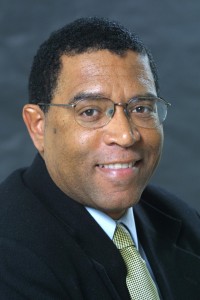
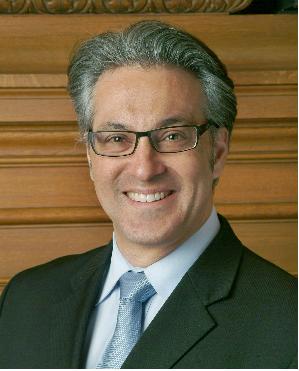
Sheriff

Film Listings

0

Film listings are edited by Cheryl Eddy. Reviewers are Kimberly Chun, Michelle Devereaux, Peter Galvin, Max Goldberg, Dennis Harvey, Johnny Ray Huston, Louis Peitzman, Lynn Rapoport, Ben Richardson, and Matt Sussman. For rep house showtimes, see Rep Clock. For first-run showtimes, see Movie Guide.

SAN FRANCISCO INTERNATIONAL FILM FESTIVAL

The 54th annual San Francisco International Film Festival runs through Thurs/5. Venues are the Sundance Kabuki, 1881 Post, SF; Castro, 429 Castro, SF; New People, 1746 Post, SF; San Francisco Museum of Modern Art, 151 Third, SF; and Pacific Film Archive, 2575 Bancroft, SF. For tickets (most shows $13) and complete schedule visit www.sffs.org.

OPENING

The Beaver See “The Darkness Underneath.” (1:31)

*Cave of Forgotten Dreams The latest documentary from Werner Herzog once again goes where no filmmaker — or many human beings, for that matter — has gone before: the Chauvet-Pont-d’Arc Cave, a heavily-guarded cavern in Southern France containing the oldest prehistoric artwork on record. Access is highly restricted, but Herzog’s 3D study is surely the next best thing to an in-person visit. The eerie beauty of the works leads to a typically Herzog-ian quest to learn more about the primitive culture that produced the paintings; as usual, Herzog’s experts have their own quirks (like a circus performer-turned-scientist), and the director’s own wry narration is peppered with random pop culture references and existential ponderings. It’s all interwoven with footage of crude yet beautiful renderings of horses and rhinos, calcified cave-bear skulls, and other time-capsule peeks at life tens of thousands of years ago. The end result is awe-inspiring. (1:35) (Eddy)

*Incendies When tightly wound émigré Nawal (Luba Azabal) dies, she leaves behind adult twins Jeanne (Mélissa Désormeaux-Poulin) and Simon (Maxim Gaudette) — and leaves them documents that only compound their feelings of grief and anger, suggesting that what little they thought they knew about their background might have been a lie. While resentful Simon at first stays home in Montreal, Jeanne travels to fictive “Fuad” (a stand-in for source-material playwright Wajdi Mouawad’s native Lebanon), playing detective to piece together decades later the truth of why their mother fled her homeland at the height of its long, brutal civil war. Alternating between present-day and flashback sequences, this latest by Canadian director Denis Villeneuve (2000’s Maelstrom) achieves an urgent sweep punctuated by moments of shocking violence. Resembling The Kite Runner in some respects as a portrait of the civilian victimization excused by war, it also resembles that work in arguably piling on more traumatic incidences and revelations than one story can bear — though so much here has great impact that a sense of over-contrivance toward the very end only slightly mars the whole. (2:10) Embarcadero. (Harvey)

Jumping the Broom It’s wedding (movie) season! Angela Bassett and Paula Patton star in this one. (1:48) Shattuck.

Last Night Married for three years and together “since college,” New York City yuppies Michael (Sam Worthington) and Joanna (Keira Knightley) have a comfortable, loving relationship, though it’s unclear how much passion remains. Still, it doesn’t take much for Joanna to bristle jealously when she meets Michael’s co-worker and frequent business-trip companion, Laura (Eva Mendes). As Michael and Laura flirt their way to an overnight meeting in Philly, Joanna runs into an old flame (Guillaume Canet); before long, it becomes a cross-cutting race to see who’ll cheat first. Writer-director Massy Tadjedin isn’t spinning a new story here — and though the film offers a sleek look at contemporary marriage, Last Night takes itself a tad too seriously, purporting to showcase realistic problems and emotions amid a cast beamed directly from Planet Gorgeous Movie Star. Beautiful people: they’re just like us? (1:30) (Eddy)

*Meek’s Cutoff See “Nothing Was Delivered.” (1:44) Albany, Embarcadero.

Queen to Play From first-time feature director Caroline Bottaro comes this drama about … chess. Wait! Before your eyes glaze over, here are a few more fast facts: it’s set in idyllic Corsica and features, as an American expat, Kevin Kline in his first French-speaking role. (Side note: is there a Kline comeback afoot? First No Strings Attached, then The Conspirator, and now Queen to Play. All within a few short months.) Lovely French superstar Sandrine Bonnaire plays Héléne, a hotel maid who has more or less accepted her unremarkable life — until she happens to catch a couple (one half of which is played by Jennifer Beals, cast because Bottaro is a longtime fan of 1983’s Flashdance!) playing chess. An unlikely obsession soon follows, and she asks Kline’s character, a reclusive doctor who’s on her freelance house-cleaning route, to help her up her game. None too pleased with this new friendship are Héléne’s husband and nosy neighbors, who are both suspicious of the doctor and unsure of how to treat the formerly complacent Héléne’s newfound, chess-inspired confidence. Queen to Play can get a little corny (we’re reminded over and over that the queen is “the most powerful piece”), and chess is by nature not very cinematic (slightly more fascinating than watching someone type, say). But Bonnaire’s quietly powerful performance is worth sticking around for, even when the novelty of whiskery, cardigan-wearing, French-spouting Kline wears off. (1:36) Embarcadero, Shattuck, Smith Rafael. (Eddy)

Something Borrowed Kate Hudson and Ginnifer Goodwin play frenemies of the highest order in this rom-com adapted from the best-selling novel. (1:53) Shattuck.

There Be Dragons Dougray Scott and Wes Bentley star in this drama set against the backdrop of the Spanish Civil War. (2:00)

*These Amazing Shadows If you love movies, it’ll be hard to resist These Amazing Shadows (subtitled “A story about the National Film Registry and the power of the movies”) — it’s chock full o’ clips from films that’ve been deemed worthy of inclusion in the National Film Registry’s elite ranks. This includes, of course, the likes of 1942’s Casablanca and 1939’s Gone With the Wind, but also more recent cultural touchstones like 1985’s Back to the Future and a number of experimental, short, and silent works, and even a few cult films too. Along the way film scholars and makers (including locals Barry Jenkins, Rick Prelinger, and Mick LaSalle) chime in on their favorite films and stress why preserving film is important. There’s a healthy dose of film history, as well, with mentions of groundbreaking director Lois Weber (one of early cinema’s most prolific artists, despite her gender) and a discussion of why racially questionable films like 1915’s The Birth of a Nation — a film that Boyz n the Hood (1991) director John Singleton recommended for Registry inclusion — are historically important despite their content. Dedicated film buffs won’t discover any surprises, and there’s not much discussion of queer film (unless John Waters talking about 1939’s The Wizard of Oz counts?), nor any mention of the current shift from film to digital formats (of course preserving old films is important, but will the Registry also start considering digital-only films for inclusion?) But perhaps these are topics for another film, not this nostalgia-heavy warm fuzzy that’ll affect anyone who remembers the magic of seeing a personally significant film — join the mob if it’s 1977’s Star Wars — for the first time. (1:28) Sundance Kabuki. (Eddy)

*Thor When it comes to superhero movies, I’m not easily impressed. Couple that with my complete disinterest in the character of Thor, and I didn’t go into his big-screen debut with any level of excitement. Turns out Kenneth Branagh’s Thor is a genre standout — the best I’ve seen since 2008’s Iron Man. For those who don’t know the mythology, the film follows Thor (Chris Hemsworth) as he’s exiled from the realm of Asgard to Earth. Once there, he must reclaim his mighty hammer — along with his powers — in order to save the world and win the heart of astrophysicist Jane Foster (Natalie Portman). Hemsworth is perfectly cast as the titular hero: he’s adept at bringing charm to a larger-than-life god. The script is a huge help, striking the ideal balance between action, drama, and humor. That’s right, Thor is seriously funny. On top of that, the effects are sensational. Sure, the 3D is once again unnecessary, but it’s admittedly kind of fun when you’re zooming through space. (2:03) (Peitzman)

ONGOING

The Adjustment Bureau As far as sci-fi romantic thrillers go, The Adjustment Bureau is pretty standard. But since that’s not an altogether common genre mash-up, I guess the film deserves some points for creativity. Based on a short story by Philip K. Dick, The Adjustment Bureau takes place in a world where all of our fates are predetermined. Political hotshot David Norris (Matt Damon) is destined for greatness — but not if he lets a romantic dalliance with dancer Elise (Emily Blunt) take precedence. And in order to make sure he stays on track, the titular Adjustment Bureau (including Anthony Mackie and Mad Men‘s John Slattery) are there to push him in the right direction. While the film’s concept is intriguing, the execution is sloppy. The Adjustment Bureau suffers from flaws in internal logic, allowing the story to skip over crucial plot points with heavy exposition and a deus ex machina you’ve got to see to believe. Couldn’t the screenwriter have planned ahead? (1:39) Shattuck. (Peitzman)

African Cats (1:40) 1000 Van Ness, Shattuck.

*Bill Cunningham New York To say that Bill Cunningham, the 82-year old New York Times photographer, has made documenting how New Yorkers dress his life’s work would be an understatement. To be sure, Cunningham’s two decades-old Sunday Times columns — “On the Street,” which tracks street-fashion, and “Evening Hours,” which covers the charity gala circuit — are about the clothes. And, my, what clothes they are. But Cunningham is a sartorial anthropologist, and his pictures always tell the bigger story behind the changing hemlines, which socialite wore what designer, or the latest trend in footwear. Whether tracking the near-infinite variations of a particular hue, a sudden bumper-crop of cropped blazers, or the fanciful leaps of well-heeled pedestrians dodging February slush puddles, Cunningham’s talent lies in his ability to recognize fleeting moments of beauty, creativity, humor, and joy. That last quality courses through Bill Cunningham New York, Richard Press’ captivating and moving portrait of a man whose reticence and personal asceticism are proportional to his total devotion to documenting what Harold Koda, chief curator at the Costume Institute at the Metropolitan Museum of Art, describes in the film as “ordinary people going about their lives, dressed in fascinating ways.” (1:24) Embarcadero, Shattuck. (Sussman)

Certified Copy Abbas Kiarostami’s beguiling new feature signals “relationship movie” with every cobblestone step, but it’s manifestly a film of ideas — one in which disillusionment is as much a formal concern as a dramatic one. Typical of Kiarostami’s dialogic narratives, Certified Copy is both the name of the film and an entity within the film: a book written against the ideal of originality in art by James Miller (William Shimell), an English pedant fond of dissembling. After a lecture in Tuscany, he meets an apparent admirer (Juliette Binoche) in her antique shop. We watch them talk for several minutes in an unbroken two-shot. They gauge each other’s values using her sister as a test case — a woman who, according to the Binoche character, is the living embodiment of James’ book. Do their relative opinions of this off-screen cipher constitute characterization? Or are they themselves ciphers of the film’s recursive structure? Kiarostami makes us wonder. They begin to act as if they were married midway through the film, though the switch is not so out of the blue: Kiarostami’s narrative has already turned a few figure-eights. Several critics have already deemed Certified Copy derivative of many other elliptical romances; the strongest case for an “original” comes of Roberto Rossellini’s Voyage to Italy (1954). The real difference is that while Rossellini’s masterpiece realizes first-person feelings in a third-person approach, Kiarostami stays in the shadow of doubt to the end. (1:46) Opera Plaza, Smith Rafael. (Goldberg)

The Conspirator It may not be your standard legal drama, but The Conspirator is a lot more enjoyable when you think of it as an extended episode of Law & Order. The film chronicles the trial of Mary Surratt (Robin Wright), the lone woman charged in the conspiracy to assassinate Abraham Lincoln. It’s a fascinating story, especially for those who don’t know much of the history past John Wilkes Booth. But while the subject matter is compelling, the execution is hit-or-miss. Wright is sympathetic as Surratt, but the usually great James McAvoy is somewhat forgettable in the pivotal role of Frederick Aiken, Surratt’s conflicted lawyer. It’s hard to say what it is that’s missing from The Conspirator: the cast — which also includes Evan Rachel Wood and Tom Wilkinson — is great, and this is a story that’s long overdue to be told. Still, something is lacking. Could it be the presence of everyone’s favorite detective, the late Lennie Briscoe? (2:02) Embarcadero, Empire, 1000 Van Ness, Piedmont. (Peitzman)

Dylan Dog: Dead of Night (1:47) SF Center.

Fast Five There are plenty of laugh-out-loud moments in Fast Five, in addition to a much demolition derby-style crunch — instances that stretch credulity and simultaneously trigger a chuckle at the OTT fantasy of the entire enterprise. Two unarmed men chained to the ceiling kick their way out of a torture cell, jump favela rooftops to freedom with nary a bullet wound in sight, and, in the movie’s smash-’em-up tour de force, use a bank vault as a hulking pair of not-so-fuzzy dice to pulverize an unsuspecting Rio de Janeiro. Not for nothing is rapper Ludacris attached to this franchise — his name says it all (why not go further than his simple closing track, director Justin Lin, now designated the keeper of Fast flame, and have him providing the rap-eratic score/running commentary throughout?) In this installment, shady hero Dominic (Vin Diesel) needs busting out of jail — check, thanks to undercover-cop-turned-pal Brian (Paul Walker) and Dominic’s sis Mia (Jordana Brewster). Time to go on the lam in Brazil and to bring bossa nova culture down to level of thieving L.A. gearheads, as the gearhead threesome assemble their dream team of thieves to undertake a last big heist that will set ’em up for life. Still, despite the predictable pseudo-twists — can’t we all see the bromance-bonding between testosteroni boys Diesel and Dwayne Johnson coming from miles of blacktop away? — there’s enough genre fun, stunt driving marvels, and action choreography here (Lin, who made his name in ambitious indies like 2002’s Better Luck Tomorrow, has developed a knack for harnessing/shooting the seeming chaos) — to please fans looking for a bigger, louder kick. (1:41) Empire, 1000 Van Ness. (Chun)

*Hanna The title character of Hanna falls perfectly into the lately very popular Hit-Girl mold. Add a dash of The Boys from Brazil-style genetic engineering — Hanna has the unfair advantage, you see, when it comes to squashing other kids on the soccer field or maiming thugs with her bare hands — and you have an ethereal killing/survival machine, played with impassive confidence by Atonement (2007) shit-starter Saoirse Ronan. She’s been fine-tuned by her father, Erik (Eric Bana), a spy who went out into the cold and off the grid, disappearing into the wilds of Scandinavia where he home-schooled his charge with an encyclopedia and brutal self-defense and hunting tests. Atonement director Joe Wright plays with a snowy palette associated with innocence, purity, and death — this could be any time or place, though far from the touch of modern childhood stresses: that other Hannah (Montana), consumerism, suburban blight, and academic competition. The 16-year-old Hanna, however, isn’t immune from that desire to succeed. Her game mission: go from a feral, lonely existence into the modern world, run for her life, and avenge the death of her mother by killing Erik’s CIA handler, Marissa (Cate Blanchett). The nagging doubt: was she born free, or Bourne to be a killer? Much like the illustrated Brothers Grimm storybook that she studies, Hanna is caught in an evil death trap of fairytale allegories. One wonders if the super-soldier apple didn’t fall far from the tree, since evil stepmonster Marissa oversaw the program that produced Hanna — the older woman and the young girl have the same cold-blooded talent for destruction and the same steely determination. Yet there’s hope for the young ‘un. After learning that even her beloved father hid some basic truths from her, this natural-born killer seems less likely to go along with the predetermined ending, happy or no, further along in her storybook life. (1:51) 1000 Van Ness, SF Center. (Chun)

Hoodwinked Too! Hood vs. Evil (1:25) 1000 Van Ness.

*In a Better World Winner of this year’s Best Foreign Language Film Oscar, this latest from Danish director Susanne Bier (2004’s Brothers, 2006’s After the Wedding) and her usual co-scenarist Anders Thomas Jensen (2005’s Adam’s Apples, 2003’s The Green Butchers) is a typically engrossing, complex drama that deals with the kind of rage for “personal justice” that can lead to school and workplace shootings, among other things (like terrorism). Shy, nervous ten-year-old Elias (Markus Rygaard) needs a confidence boost, but things are worrying both at home and elsewhere. His parents are estranged, and his doting father (Mikael Persbrandt) is mostly away as a field hospital in Kenya tending victims of local militias. At school, he’s an easy mark for bullies, a fact which gets the attention of charismatic, self-assured new kid Christian (William Jøhnk Nielsen), who appoints himself Elias’ new (and only) friend — then when his slightly awed pal is picked on again, intervenes with such alarming intensity that the police are called. Christian appears a little too prone to violence and harsh judgment in teaching “lessons” to those he considers in the wrong; his own domestic situation is another source of anger, as he simplistically blames his earnest, distracted executive father (Ulrich Thomsen) for his mother’s recent cancer death. Is Christian a budding little psychopath, or just a kid haplessly channeling his profound loss? Regardless, when an adult bully (Kim Bodnia as a loutish mechanic) humiliates Elias’ father in front of the two boys, Christian pulls his reluctant friend into a pursuit of vengeance that surely isn’t going to end well. With their nuanced yet head-on treatment of hot button social and ethical issues, Bier and Jensen’s work can sometimes border on overly-schematic melodrama, meting out its own secular-humanist justice a bit too handily, like 21st-century cinematic Dickenses. But like Dickens, they also have a true mastery of the creating striking characters and intricately propulsive plotlines that illustrate the points at hand in riveting, hugely satisfying fashion. This isn’t their best. But it’s still pretty excellent, and one of those universally accessible movies you can safely recommend even to people who think they don’t like foreign or art house films. (1:53) Lumiere. (Harvey)

Insidious (1:42) California.

*Jane Eyre Do we really need another adaptation of Jane Eyre? As long as they’re all as good as Cary Fukunaga’s stirring take on the gothic romance, keep ’em coming. Mia Wasikowska stars in the titular role, with the dreamy Michael Fassbender stepping into the high pants of Edward Rochester. The cast is rounded out by familiar faces like Judi Dench, Jamie Bell, and Sally Hawkins — all of whom breathe new life into the material. It helps that Fukunaga’s sensibilities are perfectly suited to the story: he stays true to the novel while maintaining an aesthetic certain to appeal to a modern audience. Even if you know Jane Eyre’s story — Mr. Rochester’s dark secret, the fate of their romance, etc. — there are still surprises to be had. Everyone tells the classics differently, and this adaptation is a thoroughly unique experience. And here’s hoping it pushes the engaging Wasikowska further in her ascent to stardom. (2:00) Albany, Lumiere, Piedmont. (Peitzman)

Kill the Irishman If you enjoy 1970s-set Mafia movies featuring characters with luxurious facial hair zooming around in Cadillacs, flossing leather blazers, and outwitting cops and each other — you could do a lot worse than Kill the Irishman, which busts no genre boundaries but delivers enjoyable retro-gangsta cool nonetheless. Adapted from the acclaimed true crime book by a former Cleveland police lieutenant, the film details the rise and fall of Danny Greene, a colorful and notorious Irish-American mobster who both served and ran afoul of the big bosses in his Ohio hometown. During one particularly conflict-ridden period, the city weathered nearly 40 bombings — buildings, mailboxes, and mostly cars, to the point where the number of automobiles going sky-high is almost comical (you’d think these guys would’ve considered taking the bus). The director of the 2004 Punisher, Jonathan Hensleigh, teams up with the star of 2008’s Punisher: War Zone, Ray Stevenson, who turns in a magnetic performance as Greene; it’s easy to see how his combination of book- and street smarts (with a healthy dash of ruthlessness) buoyed him nearly to the top of the underworld. The rest of the cast is equally impressive, with Vincent D’Onofrio, Val Kilmer, Christopher Walken, and Linda Cardellini turning in supporting roles, plus a host of dudes who look freshly defrosted from post-Sopranos storage. (1:46) Opera Plaza. (Eddy)

Legend of the Fist: The Return of Chen Zhen (1:46) Four Star.

*Limitless An open letter to the makers of Limitless: please fire your marketing team because they are making your movie look terrible. The story of a deadbeat writer (Bradley Cooper) who acquires an unregulated drug that allows him to take advantage of 100 percent of his previously under-utilized brain, Limitless is silly, improbable and features a number of distracting comic-book-esque stylistic tics. But consumed with the comic book in mind, Limitless is also unpredictable, thrilling, and darkly funny. The aforementioned style, which includes many instances of the infinite regression effect that you get when you point two mirrors at each other, and a heavy blur to distort depth-of-field, only solidifies the film’s cartoonish intentions. Cooper learns foreign languages in hours, impresses women with his keen attention to detail, and sets his sights on Wall Street, a move that gets him noticed by businessman Carl Van Loon (Robert DeNiro in a glorified cameo) as well as some rather nasty drug dealers and hired guns looking to cash in on the drug. Limitless is regrettably titled and masquerades in TV spots as a Wall Street series spin-off, but in truth it sports the speedy pacing and tongue-in-cheek humor required of a good popcorn flick. (1:37) 1000 Van Ness, SF Center. (Galvin)

*The Lincoln Lawyer Outfitted with gym’d-tanned-and-laundered manly blonde bombshells like Matthew McConaughey, Josh Lucas, and Ryan Phillippe, this adaptation of Michael Connelly’s LA crime novel almost cries out for an appearance by the Limitless Bradley Cooper — only then will our cabal of flaxen-haired bros-from-other-‘hos be complete. That said, Lincoln Lawyer‘s blast of morally challenged golden boys nearly detracts from the pleasingly gritty mise-en-scène and the snappy, almost-screwball dialogue that makes this movie a genre pleasure akin to a solid Elmore Leonard read. McConaughey’s criminal defense attorney Mickey Haller is accustomed to working all the angles — hence the title, a reference to a client who’s working off his debt by chauffeuring Haller around in his de-facto office: a Lincoln Town Car. Haller’s playa gets truly played when he becomes entangled with Louis Roulet (Phillippe), a pretty-boy old-money realtor accused of brutally attacking a call girl. Loved ones such as Haller’s ex Maggie (Marisa Tomei) and his investigator Frank (William H. Macy) are in jeopardy — and in danger of turning in some delightfully textured cameos — in this enjoyable walk on the sleazy side of the law, the contemporary courtroom counterpart to quick-witted potboilers like Sweet Smell of Success (1957). (1:59) 1000 Van Ness. (Chun)

*My Perestroika Robin Hessman’s very engaging documentary takes one very relatable look at how changes since glasnost have affected some average Russians. The subjects here are five thirtysomethings who, growing up in Moscow in the 70s and 80s, were the last generation to experience full-on Communist Party indoctrination. But just as they reached adulthood, the whole system dissolved, confusing long-held beliefs and variably impacting their futures. Andrei has ridden the capitalist choo-choo to considerable enrichment as the proprietor of luxury Western menswear shops. But single mother Olga, unlucky in love, just scrapes by, while married schoolteachers Lyuba and Boris are lucky to have inherited an apartment (cramped as it is) they could otherwise ill afford. Meanwhile Ruslan, once member of a famous punk band (which he abandoned on principal because it was getting “too commercial”), both disdains and resents the new order just as he did the old one. Home movies and old footage of pageantry celebrating Soviet socialist glory make a whole ‘nother era come to life in this intimate, unexpectedly charming portrait of its long-term aftermath. (1:27) Balboa. (Harvey)

*The Princess of Montpensier Marie (Mélanie Thierry), the titular figure in French director Bertrand Tavernier’s latest, is a young 16th century noblewoman married off to a Prince (Grégoire Leprince-Ringuet) of great wealth and property. But they’ve barely met when he’s called off to war — leaving her alone on his enormous estate, vulnerable to myriad suitors who seem to be forever throwing themselves at her nubile, neglected body. Lambert Wilson (2010’s Of Gods and Men) is touching as the older soldier appointed her protector; he comes to love her, yet is the one man upstanding enough to resist compromising her. If you’ve been jonesing for the kind of lush arthouse period epic that feels like a big fat classic novel, this engrossing saga from a 70-year-old Gallic cinema veteran in top form will scratch that itch for nearly two and a half satisfyingly tragic-romantic hours. (2:19) Opera Plaza, Smith Rafael. (Harvey)

*Of Gods and Men It’s the mid-1990s, and we’re in Tibhirine, a small Algerian village based around a Trappist monastery. There, eight French-born monks pray and work alongside their Muslim neighbors, tending to the sick and tilling the land. An emboldened Islamist rebel movement threatens this delicate peace, and the monks must decide whether to risk the danger of becoming pawns in the Algerian Civil War. On paper, Of Gods and Men sounds like the sort of high-minded exploitation picture the Academy swoons over: based on a true story, with high marks for timeliness and authenticity. What a pleasant surprise then that Xavier Beauvois’s Cannes Grand Prix winner turns out to be such a tightly focused moral drama. Significantly, the film is more concerned with the power vacuum left by colonialism than a “clash of civilizations.” When Brother Christian (Lambert Wilson) turns away an Islamist commander by appealing to their overlapping scriptures, it’s at the cost of the Algerian army’s suspicion. Etienne Comar’s perceptive script does not rush to assign meaning to the monks’ decision to stay in Tibhirine, but rather works to imagine the foundation and struggle for their eventual consensus. Beauvois occasionally lapses into telegraphing the monks’ grave dilemma — there are far too many shots of Christian looking up to the heavens — but at other points he’s brilliant in staging the living complexity of Tibrihine’s collective structure of responsibility. The actors do a fine job too: it’s primarily thanks to them that by the end of the film each of the monks seems a sharply defined conscience. (2:00) California, Opera Plaza. (Goldberg)

*Poetry Sixtysomething Mija (legendary South Korean actor Yun Jung-hee) impulsively crashes a poetry class, a welcome shake-up in a life shaped by unfulfilling routines. In order to write compelling verse, her instructor says, it is important to open up and really see the world. But Mija’s world holds little beauty beyond her cheerful outfits and beloved flowers; most pressingly, her teenage grandson, a mouth-breathing lump who lives with her, is completely remorseless about his participation in a hideous crime. In addition, she’s just been disgnosed with the early stages of Alzheimer’s, and the elderly stroke victim she housekeeps for has started making inappropriate advances. Somehow writer-director Lee Chang-dong (2007’s Secret Sunshine) manages not to deliver a totally depressing film with all this loaded material; it’s worth noting Poetry won the Best Screenplay Award at the 2010 Cannes Film Festival. Yun is unforgettable as a woman trying to find herself after a lifetime of obeying the wishes of everyone around her. Though Poetry is completely different in tone than 2009’s Mother, it shares certain elements — including the impression that South Korean filmmakers have recognized the considerable rewards of showcasing aging (yet still formidable) female performers. (2:19) Smith Rafael. (Eddy)

Pom Wonderful Presents: The Greatest Movie Ever Sold Don’t even think about shortening the title: Morgan Spurlock’s new documentary POM Wonderful Presents: The Greatest Story Ever Sold is ingenious, bitingly funny, and made possible by corporate sponsorship. POM paid good money to earn a spot about the title, so damned if I’m going to leave them out. Instead of keeping product placement subliminal — or at least trying — Spurlock shows exactly what goes into the popular marketing practice. His film isn’t so much critical as it is honest: he doesn’t fight product placement, but rather embraces it to his own advantage. It’s win-win. Spurlock gets to make his movie without losing any cash, and the audience gets a hilarious insider look into a mostly hidden facet of advertising. As he says, it’s about transparency, and no one can claim Spurlock is trying to go behind our backs. And what of the advertising that pops up throughout the film? I can only speak to my own experience, but yes, I’m drinking POM as I write this. (1:26) SF Center, Shattuck. (Peitzman)

Potiche When we first meet Catherine Deneuve’s Suzanne — the titular trophy wife (or potiche) of Francois Ozon’s new airspun comedy — she is on her morning jog, barely breaking a sweat as she huffs and puffs in her maroon Adidas tracksuit, her hair still in curlers. It’s 1977 and Suzanne’s life as a bourgeois homemaker in a small provincial French town has played out as smoothly as one of her many poly-blend skirt suits: a devoted mother to two grown children and loving wife who turns a blind eye to the philandering of husband Robert (Fabrice Luchini), Suzanne is on the fast track to comfortable irrelevance. All that changes when the workers at Robert’s umbrella factory strike and take him hostage. Suzanne, with the help of union leader and old flame Babin (Gerard Depardieu, as big as a house), negotiates a peace, and soon turns around the company’s fortunes with her new-found confidence and business savvy. But when Robert wrests back control with the help of a duped Babin, Suzanne does an Elle Woods and takes them both on in a surprise run for political office. True to the film’s light théâtre de boulevard source material, Ozon keeps things brisk and cheeky (Suzanne sings with as much ease as she spouts off Women’s Lib boilerplate) to the point where his cast’s hammy performances start blending into the cheery production design. Satire needs an edge that Potiche, for all its charm, never provides. (1:43) Clay, Shattuck, Smith Rafael. (Sussman)

Prom (1:44) 1000 Van Ness.

Rio (1:32) 1000 Van Ness, SF Center.

The Robber (1:37) Lumiere, Shattuck.

Scre4m Back in 1996, Wes Craven’s Scream revitalized the slasher genre with a script (by Kevin Williamson) that poked fun at horror clichés while still delivering genuine scares. The sequels offered diminishing returns on this once-clever formula; Scream 4 arrives 11 years past Scream 3, presumably hoping to work that old self-referential yet gory magic on a new crop of filmgoers. But Craven and Williamson’s hall-of-mirrors creation (more self-satisfied than self-referential, scrambling to anticipate a cynical audience member’s every second-guess) is barely more than than a continuation of something that was already tired in 2000, albeit with iPhone and web cam gags pasted in for currency’s sake. Eternal Ghostface target Sidney Prescott (Neve Campbell) returns to her hometown to promote what’s apparently a woo-woo self-help book (Mad Men‘s Alison Brie, as Sidney’s bitchy-perky publicist, steals every scene she’s in); still haunting Woodsboro are Dewey (David Arquette), now the sheriff, and Gale (Courteney Cox), a crime author with writer’s block. When the Munch-faced one starts offing high school kids, local movie nerds (Rory Culkin, Hayden Panettiere) and nubile types (Emma Roberts, Hayden Panettiere) react by screening all seven Stab films, inspired by the “real-life” Woodsboro murders, and spouting off about the rules, or lack thereof in the 21st century, of horror sequels. If that sounds mega-meta exhausting, it is. And, truth be told, not very scary. (1:51) 1000 Van Ness. (Eddy)

I Am File in the dusty back drawer of An Inconvenient Truth (2006) wannabes. The cringe-inducing, pretentious title is a giveaway — though the good intentions are in full effect — in this documentary by and about director Tom Shadyac’s search for answers to life’s big questions. After a catastrophic bike accident, the filmmaker finds his lavish lifestyle as a successful Hollywood director of such opuses as Bruce Almighty (2003) somewhat wanting. Thinkers and spiritual leaders such as Desmond Tutu, Howard Zinn, UC Berkeley psychology professor Dacher Keltner, and scientist David Suzuki provide some thought-provoking answers, although Shadyac’s thinking behind seeking out this specific collection of academics, writers, and activists remains somewhat unclear. I Am‘s shambling structure and perpetual return to its true subject — Shadyac, who resembles a wide-eyed Weird Al Yankovic — doesn’t help matters, leaving a viewer with mixed feelings, less about whether one man can work out his quest for meaning on film, than whether Shadyac complements his subjects and their ideas by framing them in such a random, if well-meaning, manner. And sorry, this film doesn’t make up for Ace Ventura: Pet Detective (1994). (1:16) Shattuck. (Chun)

*Source Code A post-9/11 Groundhog Day (1993) with explosions, Inception (2010) with a heart, or Avatar (2009) taken down a notch or dozen in Chicago —whatever you choose to call it, Source Code manages to stand up on its own wobbly Philip K. Dick-inspired legs, damn the science, and take off on the wings of wish fulfillment. ‘Cause who hasn’t yearned for a do-over — and then a do-over of that do-over, etc. We could all be as lucky — or as cursed — as soldier Colter Stevens (Jake Gyllenhaal), who gets to tumble down that time-space rabbit hole again and again, his consciousness hitching a ride in another man’s body, while in search of the bomber of a Chicago commuter train. On the upside, he gets to meet the girl of his dreams (Michelle Monaghan) — and see her getting blown to smithereens again and again, all in the service of his country, his commander-cum-link to the outside world (Vera Farmiga), and the scientist masterminding this secret military project (Jeffrey Wright). On the downside, well, he gets to do it over and over again, like a good little test bunny in pinball purgatory. Fortunately, director Duncan Jones (2009’s Moon) makes compelling work out of the potentially ludicrous material, while his cast lends the tale a glossed yet likable humanity, the kind that was all too absent in Inception. (1:33) 1000 Van Ness. (Chun)

Stake Land Not gonna lie — the reason I wanted to review this one was because of the film still in the San Francisco International Film Festival catalogue. Rotten-faced vampire with a stake through its neck? Yes, please! But while Jim Mickle’s apocalyptic road movie does offer plenty of gore, it’s more introspective than one might expect, following an orphaned teenage boy, Martin (Connor Paolo, Serena’s little bro on Gossip Girl), and his gruff mentor, Mister (Snake Plissken-ish Nick Damici), on their travels through a ravaged America. As books, films, and comics have taught us, whenever a big chunk of the human race is wiped out (thanks to zombies, vampires, an unknown cataclysm, etc.), the remaining population will either be good (heroic, like Mister and Martin, or helpless, like the stragglers they rescue, including a nun played by Kelly McGillis), or evil — cannibals, rapists, religious nuts, militant survivalists, etc. Stake Land doesn’t throw many curveballs into its end-times narrative, but it’s beautifully shot and doesn’t hold back on the brutality. Larry Fessenden (director of 2006’s The Last Winter) produced and has a brief cameo as a helpful bartender. (1:38) Roxie. (Eddy)

Tyler Perry’s Madea’s Big Happy Family (2:00) 1000 Van Ness, Shattuck.

Water for Elephants A young man named Jacob Jankowski (Robert Pattinson) turns his back on catastrophe and runs off to join the circus. It sounds like a fantasy, but this was never Jacob’s dream, and the circus world of Water for Elephants isn’t all death-defying feats and pretty women on horses. Or rather, the pretty woman also rides an elephant named Rosie and the casualties tend to occur outside the big top, after the rubes have gone home. Stumbling onto a train and into this world by chance, Jacob manages to charm the sadistic sociopath who runs the show, August (Christophe Waltz), and is charmed in turn by August’s wife, Marlena (Reese Witherspoon), a star performer and the object of August’s abusive, obsessive affections. Director Francis Lawrence’s film, an adaptation of Sarah Gruen’s 2006 novel, depicts a harsh Depression-era landscape in which troupes founder in small towns across America, waiting to be scavenged for parts — performers and animals — by other circuses passing through. Waltz’s August is a frightening man who defines a layoff as throwing workers off a moving train, and the anxiety of anticipating his moods and moves supplies most of the movie’s dramatic tension; Jacob and Marlena’s pallid love story feeds off it rather than adding its own. The film also suffers from a frame tale that feels awkward and forced, though Hal Holbrook makes heroic efforts as the elderly Jacob, surfacing on the grounds of — what else? — a modern-day circus to recount his tale of tragedy and romance. (2:00) Empire, 1000 Van Ness, SF Center. (Rapoport)

*Win Win Is Tom McCarthy the most versatile guy in Hollywood? He’s a successful character actor (in big-budget movies like 2009’s 2012; smaller-scale pictures like 2005’s Good Night, and Good Luck; and the final season of The Wire). He’s an Oscar-nominated screenwriter (2009’s Up). And he’s the writer-director of two highly acclaimed indie dramas, The Station Agent (2003) and The Visitor (2007). Clearly, McCarthy must not sleep much. His latest, Win Win, is a comedy set in his hometown of New Providence, N.J. Paul Giamatti stars as Mike Flaherty, a lawyer who’s feeling the economic pinch. Betraying his own basic good-guy-ness, he takes advantage of a senile client, Leo (Burt Young), when he spots the opportunity to pull in some badly-needed extra cash. Matters complicate with the appearance of Leo’s grandson, Kyle (newcomer Alex Shaffer), a runaway from Ohio. Though Mike’s wife, Jackie (Amy Ryan), is suspicious of the taciturn teen, she allows Kyle to crash with the Flaherty family. As luck would have it, Kyle is a superstar wrestler — and Mike happens to coach the local high school team. Things are going well until Kyle’s greedy mother (Melanie Lynskey) turns up and starts sniffing around her father’s finances. Lessons are learned, sure, and there are no big plot twists beyond typical indie-comedy turf. But the script delivers more genuine laughs than you’d expect from a movie that’s essentially about the recession. (1:46) Bridge, California, Piedmont. (Eddy)

REP PICKS

*A Place in the Sun A poor relation to wealthy manufacturers, George Eastman (31-year-old Montgomery Clift) accepts his uncle’s offer of a job, starting at the bottom but proving a quick study. As he rises up the ladder, he acquires an altatross — an atypically demure Shelley Winters as factory girl Alice — that becomes a serious liability as his stature rises enough to attract socialite goddess Angela (17 year-old Elizabeth Taylor). This kickoff to the Mechanics Institute’s month-long Taylor tribute was a sensation in 1951. Taylor had been a juvenile star (1944’s National Velvet), then a teenage ingenue, but this film established her as the most beautiful movie star of her generation — matched with dreamily vague Clift, a newcomer who’d created a sensation himself in 1948’s Red River and 1949s The Heiress. George Stevens — smack amidst his journey from being a lively iconoclast (Astaire and Rogers, Tracy and Hepburn, 1939’s Gunga Din) to the decreasingly prolific maker of solemn Oscar-bait epics — filmed the two of them in swooning, gigantic close ups that were the most star-makingly heated since Garbo met John Gilbert. In 1951, nobody read Clift’s aching sensitivity as gay; women wanted to clutch his bony, Brylcreemed body to their bosoms. Despite the actor’s tragic history — guarantee of his continued mythologizing — he’s a remote screen presence, as opposed to Taylor’s superficial ease. (She became an interesting actress later, when permitted to play harpies and hysterics.) But he’s very poignant in a monologue where George confesses all — well, nearly all — his vulnerable points to a potential future father-in-law. This adaptation of Theodore Dreiser’s 1925 An American Tragedy — an actual Great American Novel, published the same year as yea greater The Great Gatsby — is fairly frank for its era about unwedded pregnancies, the inaccessibility of abortion, and unbridgeable class divides. But it’s also aged unevenly, with awkward use of back-projection and a crucial softening of the novel’s most intense narrative turning point. The climatic courtroom drama is graceless; later progress more Christian-inspirational than Dreiser envisioned; nor does the fabled romance chemistry register as it once did. Still, this is a moment in film history: not one of Elizabeth Taylor’s best performances, but the one that secured her status as upmarket bombshell for a generation. Plus it won six Oscars, including Best Director. (2:02) Mechanics’ Institute. (Harvey)


 

Spies in blue

19

sarah@sfbg.com

San Francisco cops assigned to the FBI’s terrorism task force can ignore local police orders and California privacy laws to spy on people without any evidence of a crime.

That’s what a recently released memo appears to say — and it has sent shockwaves through the civil liberties community.

It also has members of the S.F. Police Commission asking why a carefully crafted set of rules on intelligence gathering, approved in the wake of police spy scandals in the 1990s, were bypassed without the knowledge or consent of the commission.

“It’s a bombshell,” said John Crew, a long-time police practices expert with the American Civil Liberties Union of Northern California.

The ACLU obtained the document April 4 under the California Public Records Act after a long battle. It’s a 2007 memorandum of understanding outlining the terms of an agreement between the city and the FBI for San Francisco’s participation in the Joint Terrorism Task Force.

And, according to Crew, it effectively puts local officers under the control of the FBI. “That means Police Commission policies do not apply,” Crew said. “It allows San Francisco police to circumvent local intelligence-gathering policies and follow more permissive federal rules.”

Veena Dubal, a staff attorney at the Asian Law Caucus, agreed: “This MOU confirms our worst fears,” she said.

Dubal noted that in the waning months of the Bush administration, the FBI changed its policies to allow federal authorities to collect intelligence on a person even if the subject is not suspected of a crime. The FBI is now allowed to spy on Americans who have done nothing wrong — and who may be engaged in activities protected by the First Amendment.

FBI activity under this new “assessment” category has since come under fire, and a recent report in The New York Times showed that the FBI has conducted thousands of assessments each month, and that these guidelines continue under Obama.

And if the feds do control San Francisco police policy, then the San Francisco cops could be spying on innocent people — a dramatic change from longstanding city policy. “The MOU is disturbing,” Police Commission member Petra DeJesus told the Guardian. “The department is assuring us that local policies are not being violated — but it looks as if it’s subject to interpretation.”

It’s the latest sign of a dangerous trend: San Francisco cops are working closely with the feds, often in ways that run counter to city policy.

And it raises a far-reaching question: With a district attorney who used to be police chief, a civilian commission that isn’t getting a straight story from the cops, and a climate of secrecy over San Francisco’s intimate relations with outside agencies, who is watching the cops?


SPIES LIKE US

San Francisco has a long — and ugly — history of police surveillance on political groups. SFPD officers spied on law-abiding organizations during the 1984 Democratic National Convention; kept files in the 1980s on 100 Bay Area civil, labor, and special interest groups; and carried out undercover surveillance of political groups focused on El Salvador and Central America.

Those abuses led the Police Commission to develop a departmental general order in 1990 known as DGO 8.10. The local intelligence guidelines require “articulable and reasonable suspicion” before SFPD officers are allowed to collect information on anyone.

Even those rules weren’t enough to halt the spies in blue. In 1993, police inspector Tom Gerard was caught spying on political groups — particularly Arab American and anti-apartheid organizations and groups Gerard described as “pinko” — and selling that information to agents for the Anti-Defamation League.

As the ACLU and Asian Law Caucus noted in a December 2010 letter to Cdr. Daniel Mahoney: “That scandal was not just about the fact that peaceful organizations and individuals were being unlawfully spied upon and their private information sold to foreign governments, but that the guidelines adopted in 1990 had never been fully implemented by SFPD. No officers had been trained on the new guidelines and no meaningful audit had ever been implemented.”

Over the years, the commission has tried to keep tabs on police intelligence and prevent more spy scandals. The general order mandates that local police officials have to request general authority from a commanding officer and the chief to investigate any activity that comes under First Amendment protections — and must specify in the request what the facts are that give rise to this suspicion of criminal activity. The order also states that the chief can’t approve any request that doesn’t include evidence of possible criminal activity.

Those requests are reviewed monthly by the Police Commission and there are annual audits of the SFPD files to monitor compliance — so the notion that the local cops are joining the FBI spy squad without commission oversight is more than a little disturbing.

Officials with the FBI and SFPD are doing their best to reassure the local community that there’s nothing to worry about. But so far their replies seem to duck questions about whether FBI guidelines trump local policies. For example, the MOU states that “when there is a conflict, [task force members] are held to the standard that provides the greatest organizational benefit.”

We asked Mahoney to clarify: does that mean the local cops could be held to the FBI’s standards?

“The San Francisco Police Officer(s) who are assigned to the Joint Terrorism Task Force always have and continue to be required to follow all SFPD’s policies and procedures,” Mahoney replied in a statement.

That’s confusing; do they follow SFPD policies, or obey the MOU?

We asked FBI special agent-in-charge Stephanie Douglas whether SFPD officers are involved in surveillance and “assessments” (that FBI code word for creating spy files on individuals and groups) and whether they are identifying as SFPD or FBI officers.

“The FBI only initiates investigations on allegations of criminal wrongdoing or threats to our national security,” Douglas replied April 21. “Our investigations are conducted in compliance with the Constitution, the laws of the United States, the Attorney General Guidelines, the Domestic Investigation and Operations Guide, and all other FBI policies.”

Okay, that’s typical FBI-speak. Here’s more: “The JTTF is a task force comprised of FBI special agents, agents from other federal agencies, and local police officers who have been officially deputized as federal task force officers (TFOs) who have the power and authority of a federal agent. Because all JTTF TFOs are actually de facto federal agents, they are required to operate under federal laws and policies when involved in a JTTF case.”

So the cops are actually feds. But wait: “Our standard JTTF MOU recognizes, however, that the JTTF TFOs do wear two hats, as it were, and directs JTTF TFOs to follow his or her own agency’s policy when it is stricter than the FBI policy under certain circumstances,” Douglas concluded.

Again: not exactly clear, and not exactly reassuring.

“At some point they need to say whether SFPD officers are engaged in assessments,” Crew said.

These questions have spurred the Police Commission and Human Rights Commission to schedule a joint hearing in May to discuss what the document means, why SFPD never alerted the civilian oversight authorities, and whether a clarifying addendum can be tacked onto the agreement.


SPY FOR US OR LEAVE

The concerns are likely to be intensified by recent developments in Portland, Ore.

Portland dropped out of the Joint Terrorism Task Force in 2005 over concerns that local cops would be violating privacy laws. But in November 2010, the FBI thwarted a bomb plot allegedly linked to terrorists, and city officials came under pressure to rejoin the JTTF.

But Mayor Sam Adams has insisted on language that would bar local cops from doing surveillance and assessments, which, apparently, won’t fly with the feds.

On April 20, Willamette Week, the Portland alternative paper, wrote that Adams “effectively scuttled” Portland’s reentry into its local JTTF because of his anti-spying language.

In an April 19 letter to Adams, U.S. Attorney for Oregon Dwight Holton stated that Adams’ proposal of only allowing officers with the Portland Police Bureau to be involved in investigations and not in FBI assessments was a deal-breaker.

“Unfortunately, as currently drafted, the proposed resolution does not provide a way in which the PPB can rejoin the team,” Holton wrote. “There is a single provision that stands as a roadblock to participation — specifically the provision that seeks to have the City Council delineate only certain investigative steps a task force officer can take part in. Specifically, the resolution seeks to dictate for the JTTF which stages of an investigation task force officers from the [Portland police] can work on.”

“Investigation and prevention of complex crimes and terrorism are typically fluid and fast-moving,” he added. “It makes no sense to ask [Portland police] officers to be in for one part of a conversation, but out for another part of the same conversation as investigators discuss findings from assessments, investigations, etc. in evaluating and addressing terrorist threats in Portland and beyond.”

The message isn’t lost on San Francisco civil liberties activists. If you don’t let your cops join the spy squad, they can’t be a part of the task force.

“It was one thing to join the JTTF 10 years ago when they were operating under guidelines that, while not to the ALCU’s taste, were at least tied to some level of suspicion,” Adams said. “But they have taken their procedures and guidelines and moved them to the far right. It’s one thing to say that it’s necessary for the FBI to do that, and quite another to say that local agencies have to forfeit their own policies — and with no public debate or decision-making.”


ASK THE FEDS FIRST

Further complicating the question of police oversight is the fact that George Gascón, who was police chief when civil liberties groups started asking for a copy of the MOU last fall, refused to turn over the document without asking the feds first.

In a Jan. 4 letter to the ACLU and ALC, Gascón and Mahoney stated that the SFPD could not speak to information about the duties, functions, and numbers of officers assigned to the Joint Terrorism Task Force “without conferring with our partners in the Federal Bureau of Investigation.”

“I am sure you can appreciate the delicate balance we hold in crafting policy that not only supports our mission in the ultimate protection of life, but also in advancing democratic values through collaboration with the communities we serve,” Gascón and Mahoney wrote.

And Gascón is now district attorney.

“It raises the question of accountability,” said Public Defender Jeff Adachi “We want to make sure that police officers working in the city, regardless of whether it be for the feds or the SFPD, are complying with general orders and policies established by the department. But when officers go on an assignment with the feds, we don’t know if they are operating under parameters set by local law.”

Unearthing the FBI’s hitherto clandestine MOU with the SFPD appears to be yet another sign that local police are increasingly being subjected to federal policies not in keeping with local procedures.

As the Guardian previously reported, the 2008 decimation of San Francisco’s sanctuary city legislation and the 2010 activation of the federal government’s controversial Secure Communities program, which both happened during former Mayor Gavin Newsom’s tenure, means that the city of St. Francis now ranks among the top 38 counties nationwide that are deporting “noncriminal aliens.”

Dubal also noted that the FBI came to the SFPD in 1996 asking for help with the task force, but also sought a waiver from the Police Commission so officers could participate without having to follow local rules. “And within two weeks, then Mayor Willie Brown said, not in our town,” Dubal said. “So in 1997, the SFPD said we are not going to join unless we can follow our own rules. And in 2001, when the SFPD joined, it was under an MOU that required them to comply with SFPD rules and was signed in 2002 by then-SFPD Chief [Earl] Saunders.”

Dubal said that after local law enforcement agencies sign an MOU with the FBI, they designate and assign officers to work from FBI headquarters. “In the past, two SFPD officers, paid with San Francisco tax dollars, physically worked in the FBI’s office in a secure room where you can only go if you have security clearance. But they still can’t spy without reasonable suspicion, and they also need audits.”

Crew and Dubal said that in a recent meeting, SFPD officials assured them that local police were following General Order 8.10, but that they are open to creating an MOU addendum to clarify this.

Crew and Dubal remain unsure if the FBI would be agreeable to signing off on that. They note that the FBI has previously stated that its JTTF has sensitive investigations going on so it can’t give the public all the information. “Fine, but the issue is, Are these investigations based on suspicion, or are they based on religious background, associations, ethnicity, and travel patterns?” Dubal said.

They also doubt that the MOU would even have surfaced if not for comments that then SFPD Chief Gascón made, first in October 2009, then in March 2010, that triggered an uproar in the local Muslim, Arab, and Pakistani and Afghani communities.

At the time, Gascón, who has a law degree and graduated from the FBI Academy, had just landed in San Francisco fresh from a stint as police chief for Meza, Ariz., where he drew praise for speaking out against Maricopa County Sheriff Joe Arpaio’s inhumane treatment of undocumented immigrants Given this seemingly progressive stance, Gascón shocked civil libertarians in San Francisco when he said he wanted to unearth SFPD’s intelligence unit, which was disbanded amid scandal in the early 1990s.

“We have to realize that in the post-9/11 world, San Francisco is an iconic city, like New York, Washington. and Los Angeles,” Gascón said. “If somebody wanted to make a big statement about something they disliked about America, doing it here would definitely get attention. We need to know what is going on under the surface of the city.”

But Gascón did not say how a revived police spy unit, which had been shut down in large part due to Crew’s work, would operate. And six months later, he upset Bay Area Muslims during a March 2010 breakfast by reportedly saying that the Hall of Justice building was not just susceptible to earthquakes, but also to an attack by members of the city’s Middle Eastern community who could park a van in front of it and blow it up.

Gascón subsequently claimed that he “never referred to Middle Easterners or Arab Americans,” but that he had instead singled out the Afghanistan and Yemen communities because they pose “potential terrorism risks”

“In light of Gascón’s comments and his desire to resurrect the intelligence unit, people were asking, ‘Is it possible that the SFPD is also doing the same thing?'” Dubal asked, noting that she started getting complaints in 2009 and throughout 2010 about the FBI.

“Folks were saying that the FBI was asking about their religious identity, their family situation, and their political activities,” she recalled. “I certainly saw an upswing in innocent people being contacted. People were saying, ‘What the hell? — the FBI knocked on my door at 5 a.m.'”


COMMUNITIES UNDER SIEGE

A 2011 Human Rights Commission report documents frequent complaints from Arab, Muslim, and South Asian communities facing racial and religious profiling while traveling and unwaraanted interrogation, surveillance, and infiltration by local and federal law enforcement personnel at their homes, places of worship, and workplaces.

The report recommended asking the supervisors and the Police Commission to “ensure that all SFPD officers, including those deputized to the Joint Terrorism Task Force, follow and comply with local and state privacy laws, including DGO 8.10.”

On April 5, the Board of Supervisors voted 10-0 to approve a resolution, sponsored by Sup. Ross Mirkarimi and cosponsored by Sups David Chiu, Eric Mar, David Campos, and John Avalos, to endorse the HRC report.

All this is happening against the backdrop of FBI guidelines that have been loosened twice since September 2011, first by U.S. Attorney General John Ashcroft in the wake of the 9/11 terrorist attacks, then by Attorney General Michael Mukasey in the dying days of the Bush administration, and now by the Obama administration.

And as The New York Times reported in March, records obtained through a Freedom of Information Act request show that between Dec. 2008 and March 2009, the FBI began 11,667 assessments of people and groups for criminal/terror links, completed 8,605 assessments, and launched more than 400 intensive investigations based on the assessments. The FBI also told the Times that agents continue to open assessments at about the same pace

Crew noted that Mukasey’s guidelines marked the first time since 1976 that the FBI has been allowed to do assessments and collect files without a suspicion that a crime has occurred.

Dubal observed that the most relevant documents to emerge from a recent FOIA request to determine if the FBI has engaged in disturbing intelligence gathering activities are those related to “geomapping.”

“The materials are not particular to Northern California, but they show how FBI maps communities based in ethnic concentrations,” Dubal said.

Dubal also pointed to the case of Yasir Afifi, an Egyptian American student from Santa Clara, who found an FBI tracking device on his car when he took it in for an oil change. In March 2011, CAIR filed suit in Washington, D.C., alleging that the FBI violated Afifi’s First, Fourth, and Fifth Amendment rights by failing to obtain a warrant.

DeJesus recently told the Guardian that the Police Commission was never made aware of the MOU’s existence. “The chief should have checked in with the commission president, at the very least,” she said. “The idea that they were not reporting this to anyone is disconcerting.”

“The SFPD does not have the authority to enter into a secret agreement with the FBI whereby some of its officers are allowed to conduct intelligence operations in violation of the Police Commission’s General Order 8.10,” Crew added.

In a Jan. 25 letter to Mahoney, representatives from the ACLU and the ALC noted that “in the past, the SFPD had not previously deferred to the FBI on whether or how to openly address how San Francisco police officers will be supervised and held to well-established and painstakingly and collaboratively crafted San Francisco general orders.”

“These are low-level investigations that require no criminal predicate, meaning that when initiating an assessment, FBI agents can conduct intrusive forms of investigation without any criminal suspicion,” Dubal said. “These include interviewing innocent Americans, infiltrating organizations, using open source data to spy and surveil, going into religious centers such as mosques to spy and surveil, and recruiting and using informants.”


Film Listings

0

Film listings are edited by Cheryl Eddy. Reviewers are Kimberly Chun, Michelle Devereaux, Peter Galvin, Max Goldberg, Dennis Harvey, Johnny Ray Huston, Louis Peitzman, Lynn Rapoport, Ben Richardson, and Matt Sussman. For rep house showtimes, see Rep Clock. For first-run showtimes, see Movie Guide.

SAN FRANCISCO INTERNATIONAL FILM FESTIVAL

The 54th annual San Francisco International Film Festival runs through May 5. Venues are the Sundance Kabuki, 1881 Post, SF; Castro, 429 Castro, SF; New People, 1746 Post, SF; San Francisco Museum of Modern Art, 151 Third, SF; and Pacific Film Archive, 2575 Bancroft, SF. For tickets (most shows $13) and complete schedule visit www.sffs.org.

OPENING

*…But Film is My Mistress and Images from the Playground Swedish critic Stig Bjorkman will visit the Rafael with two recent documentaries he’s made about

his country’s–and one of the last century’s–greatest filmmakers, Ingmar Bergman. The feature-length Mistress adds commentary from admiring colleagues Olivier Assayas, John Sayles, Arnaud Desplechin, Bertolucci, Scorcese, Lars von Trier and Woody Allen to a scrutiny of Bergman’s working methods, as glimpsed in eight features from 1966’s Persona to 2003’s Saraband. It’s fascinating to watch Liv Ullmann and Ingrid Bergman endlessly questioning their scenes on 1978’s Autumn Sonata, charming to watch the director walk arm-in-arm down a street with his invaluable cinematographer Sven Nykvist. Bjorkman’s half-hour Images from the Playground is comprised of home movies and behind-the-scenes footage mostly shot by Bergman himself from the early 1950s onward, accompanied by audio reflections from him and major collaborators. In contrast to the filmmaker’s rep for doom and gloom, these clips show everybody having a pretty good time on the job, goofing for the camera, while his unbridled enthusiasm for his actresses suggests something was swinging in Sweden well before the Sixties. Dennis (1:35) Smith Rafael. (Harvey)

Dylan Dog: Dead of Night Brandon Routh stars as the titular supernatural investigator in this adaptation of the Italian comic-book series. (1:47)

Fast Five Vin Diesel and Paul Walker: still furious after all these years. (1:41)

Hoodwinked Too! Hood vs. Evil Hayden Panettiere, Glenn Close, and Joan Cusack lend their voices to this 3D animated sequel. (run time not available) Legend of the Fist: The Return of Chen Zhen Donnie Yen stars in Andrew Lau’s period martial arts actioner. (1:46) Four Star.

*My Perestroika Robin Hessman’s very engaging documentary takes one very relatable look at how changes since glasnost have affected some average Russians. The subjects here are five thirtysomethings who, growing up in Moscow in the 70s and 80s, were the last generation to experience full-on Communist Party indoctrination. But just as they reached adulthood, the whole system dissolved, confusing long-held beliefs and variably impacting their futures. Andrei has ridden the capitalist choo-choo to considerable enrichment as the proprietor of luxury Western menswear shops. But single mother Olga, unlucky in love, just scrapes by, while married schoolteachers Lyuba and Boris are lucky to have inherited an apartment (cramped as it is) they could otherwise ill afford. Meanwhile Ruslan, once member of a famous punk band (which he abandoned on principal because it was getting “too commercial”), both disdains and resents the new order just as he did the old one. Home movies and old footage of pageantry celebrating Soviet socialist glory make a whole ‘nother era come to life in this intimate, unexpectedly charming portrait of its long-term aftermath. (1:27) Balboa. (Harvey)

*The Princess of Montpensier Marie (Mélanie Thierry), the titular figure in French director Bertrand Tavernier’s latest, is a young 16th century noblewoman married off to a Prince (Grégoire Leprince-Ringuet) of great wealth and property. But they’ve barely met when he’s called off to war — leaving her alone on his enormous estate, vulnerable to myriad suitors who seem to be forever throwing themselves at her nubile, neglected body. Lambert Wilson (2010’s Of Gods and Men) is touching as the older soldier appointed her protector; he comes to love her, yet is the one man upstanding enough to resist compromising her. If you’ve been jonesing for the kind of lush arthouse period epic that feels like a big fat classic novel, this engrossing saga from a 70-year-old Gallic cinema veteran in top form will scratch that itch for nearly two and a half satisfyingly tragic-romantic hours. (2:19) Smith Rafael. (Harvey)

Prom Every teen movie has a prom scene; this ensemble movie’s just cutting to the chase is all. (1:44)

The Robber A bank robber uses his marathoning skills to escape crime scenes in this Austrian thriller based on a true story. (1:37)

Stake Land See “Land of the Undead.” (1:38) Roxie.

Too Perfect Five 14-year-old boys come of age in this Bay Area-made film. (1:15) Orinda.

ONGOING

The Adjustment Bureau As far as sci-fi romantic thrillers go, The Adjustment Bureau is pretty standard. But since that’s not an altogether common genre mash-up, I guess the film deserves some points for creativity. Based on a short story by Philip K. Dick, The Adjustment Bureau takes place in a world where all of our fates are predetermined. Political hotshot David Norris (Matt Damon) is destined for greatness — but not if he lets a romantic dalliance with dancer Elise (Emily Blunt) take precedence. And in order to make sure he stays on track, the titular Adjustment Bureau (including Anthony Mackie and Mad Men‘s John Slattery) are there to push him in the right direction. While the film’s concept is intriguing, the execution is sloppy. The Adjustment Bureau suffers from flaws in internal logic, allowing the story to skip over crucial plot points with heavy exposition and a deus ex machina you’ve got to see to believe. Couldn’t the screenwriter have planned ahead? (1:39) (Peitzman)

African Cats (1:40)

Arthur (1:45)

Atlas Shrugged (1:57)

*Bill Cunningham New York To say that Bill Cunningham, the 82-year old New York Times photographer, has made documenting how New Yorkers dress his life’s work would be an understatement. To be sure, Cunningham’s two decades-old Sunday Times columns — “On the Street,” which tracks street-fashion, and “Evening Hours,” which covers the charity gala circuit — are about the clothes. And, my, what clothes they are. But Cunningham is a sartorial anthropologist, and his pictures always tell the bigger story behind the changing hemlines, which socialite wore what designer, or the latest trend in footwear. Whether tracking the near-infinite variations of a particular hue, a sudden bumper-crop of cropped blazers, or the fanciful leaps of well-heeled pedestrians dodging February slush puddles, Cunningham’s talent lies in his ability to recognize fleeting moments of beauty, creativity, humor, and joy. That last quality courses through Bill Cunningham New York, Richard Press’ captivating and moving portrait of a man whose reticence and personal asceticism are proportional to his total devotion to documenting what Harold Koda, chief curator at the Costume Institute at the Metropolitan Museum of Art, describes in the film as “ordinary people going about their lives, dressed in fascinating ways.” (1:24) (Sussman)

Ceremony It’s easy to dismiss Ceremony as derivative. The plot isn’t exactly original. But recycled material aside, it’s an entertaining indie diversion and a promising feature-length debut from writer-director Max Winkler. The underrated Michael Angarano stars as Sam Davis, a pretentious shit who owes a lot to Holden Caulfield by way of Rushmore‘s Max Fischer. Sam tricks his best friend Marshall (Reece Thompson) into accompanying him on a weekend getaway, with the real objective of winning back his lost love Zoe (Uma Thurman). But Zoe is all set to marry blowhard Whit Coutell (Lee Pace) and is not too keen on blowing off her wedding. None of the characters are all that likable — a quirky indie comedy must — and there are few surprises. But Winkler’s script is cute, and his cast is charming enough to carry the material along. The scenes between Angarano and Thompson are the film’s best. Here’s hoping they stand out enough to earn these young actors the recognition they deserve. (1:40) (Peitzman)

Certified Copy Abbas Kiarostami’s beguiling new feature signals “relationship movie” with every cobblestone step, but it’s manifestly a film of ideas — one in which disillusionment is as much a formal concern as a dramatic one. Typical of Kiarostami’s dialogic narratives, Certified Copy is both the name of the film and an entity within the film: a book written against the ideal of originality in art by James Miller (William Shimell), an English pedant fond of dissembling. After a lecture in Tuscany, he meets an apparent admirer (Juliette Binoche) in her antique shop. We watch them talk for several minutes in an unbroken two-shot. They gauge each other’s values using her sister as a test case — a woman who, according to the Binoche character, is the living embodiment of James’ book. Do their relative opinions of this off-screen cipher constitute characterization? Or are they themselves ciphers of the film’s recursive structure? Kiarostami makes us wonder. They begin to act as if they were married midway through the film, though the switch is not so out of the blue: Kiarostami’s narrative has already turned a few figure-eights. Several critics have already deemed Certified Copy derivative of many other elliptical romances; the strongest case for an “original” comes of Roberto Rossellini’s Voyage to Italy (1954). The real difference is that while Rossellini’s masterpiece realizes first-person feelings in a third-person approach, Kiarostami stays in the shadow of doubt to the end. (1:46) Smith Rafael. (Goldberg)

*Circo The old notion of “running away with the circus” seldom seemed appealing — conjuring images of following an elephant around with a shovel — and it grows even less so after watching Aaron Schock’s warm, touching documentary. The kids here might one day run away from the circus. They’re born into Grand Circo Mexico, one of four circuses run by the Ponce family, which has been in this business for generations; if they’re old enough to walk, they’re old enough to perform, and help with the endless setup and breakdown chores. (Presumably child labor laws are an innovation still waiting to happen here.) Touring Mexico’s small towns in trucks with a variety of exotic animals, it’s a life of labor, with on-the-job training in place of school — arguably not much of a life for child, as current company leader Tino’s wife Ivonne (who really did run away with the circus, or rather him, at age 15) increasingly insists. Other family members have split for a normal life, and Tino is caught between loyalty to his parents’ ever-struggling business and not wanting to lose the family he’s raised himself. This beautifully shot document, scored by Calexico and edited by Mark Becker (of 2005’s marvelous Romantico), is a disarming look at a lifestyle that feels almost 19th century, and is barely hobbling into the 21st one. (1:15) (Harvey)

The Conspirator It may not be your standard legal drama, but The Conspirator is a lot more enjoyable when you think of it as an extended episode of Law & Order. The film chronicles the trial of Mary Surratt (Robin Wright), the lone woman charged in the conspiracy to assassinate Abraham Lincoln. It’s a fascinating story, especially for those who don’t know much of the history past John Wilkes Booth. But while the subject matter is compelling, the execution is hit-or-miss. Wright is sympathetic as Surratt, but the usually great James McAvoy is somewhat forgettable in the pivotal role of Frederick Aiken, Surratt’s conflicted lawyer. It’s hard to say what it is that’s missing from The Conspirator: the cast — which also includes Evan Rachel Wood and Tom Wilkinson — is great, and this is a story that’s long overdue to be told. Still, something is lacking. Could it be the presence of everyone’s favorite detective, the late Lennie Briscoe? (2:02) (Peitzman)

*Hanna The title character of Hanna falls perfectly into the lately very popular Hit-Girl mold. Add a dash of The Boys from Brazil-style genetic engineering — Hanna has the unfair advantage, you see, when it comes to squashing other kids on the soccer field or maiming thugs with her bare hands — and you have an ethereal killing/survival machine, played with impassive confidence by Atonement (2007) shit-starter Saoirse Ronan. She’s been fine-tuned by her father, Erik (Eric Bana), a spy who went out into the cold and off the grid, disappearing into the wilds of Scandinavia where he home-schooled his charge with an encyclopedia and brutal self-defense and hunting tests. Atonement director Joe Wright plays with a snowy palette associated with innocence, purity, and death — this could be any time or place, though far from the touch of modern childhood stresses: that other Hannah (Montana), consumerism, suburban blight, and academic competition. The 16-year-old Hanna, however, isn’t immune from that desire to succeed. Her game mission: go from a feral, lonely existence into the modern world, run for her life, and avenge the death of her mother by killing Erik’s CIA handler, Marissa (Cate Blanchett). The nagging doubt: was she born free, or Bourne to be a killer? Much like the illustrated Brothers Grimm storybook that she studies, Hanna is caught in an evil death trap of fairytale allegories. One wonders if the super-soldier apple didn’t fall far from the tree, since evil stepmonster Marissa oversaw the program that produced Hanna — the older woman and the young girl have the same cold-blooded talent for destruction and the same steely determination. Yet there’s hope for the young ‘un. After learning that even her beloved father hid some basic truths from her, this natural-born killer seems less likely to go along with the predetermined ending, happy or no, further along in her storybook life. (1:51) (Chun)

Henry’s Crime Keanu Reeves is one of those actors who’s spectacularly franchise-wealthy — due to those Matrix movies wherein his usual baffled solemnity was ideal — yet whom the public otherwise feels scant evident loyalty toward, and producers don’t know what to do with. Now that he’s aging out of his looks, can he transform into a character actor? Maybe. Reeves played charming suitors in Something’s Gotta Give (2003) and The Private Lives of Pippa Lee (2009), both very much supporting roles. He seems increasingly interested in indie films, which he surely doesn’t need to pay the rent, and he’s certainly the best reason to see Henry’s Crime, a pleasant, middling, retro crime caper costarring frequently better actors at dimmer wattage than usual. The film is an old hat out of the Damon Runyon trunk, in which lovable crooks mix it up with hoity theatrical types and nobody gets hurt except (barely) the really bad guys. James Caan — who starred in similar enterprises during their post-The Sting heyday plays the veteran convict-conman who schools Reeves’ hapless Buffalo, N.Y., toll-taker Henry after our hero is slammer-thrown for an armed robbery he didn’t know he was embroiled in until it was over. Upon release, Henry discovers the targeted bank and nearby theater had a Prohibition-era secret tunnel between them. Having already done the time, he figures he might as well do the crime by finishing the aborted bank job for real. He enlists local stage diva Julie (Vera Farmiga) as well as Caan’s parole-coaxed Max. Resulting wacky hijinks render Max a theater “volunteer” and Henry as Julie’s Cherry Orchard costar, all so they can access the walled-up passageway to the bank vault. Much of this is ridiculous, of course, and not intentionally so. The climax is classic movies-getting-how-theater-works-wrong. But its contrivance functions to some extent because the lead actor convinces us it should. (1:48) (Harvey)

Hop (1:30)

*In a Better World Winner of this year’s Best Foreign Language Film Oscar, this latest from Danish director Susanne Bier (2004’s Brothers, 2006’s After the Wedding) and her usual co-scenarist Anders Thomas Jensen (2005’s Adam’s Apples, 2003’s The Green Butchers) is a typically engrossing, complex drama that deals with the kind of rage for “personal justice” that can lead to school and workplace shootings, among other things (like terrorism). Shy, nervous ten-year-old Elias (Markus Rygaard) needs a confidence boost, but things are worrying both at home and elsewhere. His parents are estranged, and his doting father (Mikael Persbrandt) is mostly away as a field hospital in Kenya tending victims of local militias. At school, he’s an easy mark for bullies, a fact which gets the attention of charismatic, self-assured new kid Christian (William Jøhnk Nielsen), who appoints himself Elias’ new (and only) friend — then when his slightly awed pal is picked on again, intervenes with such alarming intensity that the police are called. Christian appears a little too prone to violence and harsh judgment in teaching “lessons” to those he considers in the wrong; his own domestic situation is another source of anger, as he simplistically blames his earnest, distracted executive father (Ulrich Thomsen) for his mother’s recent cancer death. Is Christian a budding little psychopath, or just a kid haplessly channeling his profound loss? Regardless, when an adult bully (Kim Bodnia as a loutish mechanic) humiliates Elias’ father in front of the two boys, Christian pulls his reluctant friend into a pursuit of vengeance that surely isn’t going to end well. With their nuanced yet head-on treatment of hot button social and ethical issues, Bier and Jensen’s work can sometimes border on overly-schematic melodrama, meting out its own secular-humanist justice a bit too handily, like 21st-century cinematic Dickenses. But like Dickens, they also have a true mastery of the creating striking characters and intricately propulsive plotlines that illustrate the points at hand in riveting, hugely satisfying fashion. This isn’t their best. But it’s still pretty excellent, and one of those universally accessible movies you can safely recommend even to people who think they don’t like foreign or art house films. (1:53) (Harvey)

*Jane Eyre Do we really need another adaptation of Jane Eyre? As long as they’re all as good as Cary Fukunaga’s stirring take on the gothic romance, keep ’em coming. Mia Wasikowska stars in the titular role, with the dreamy Michael Fassbender stepping into the high pants of Edward Rochester. The cast is rounded out by familiar faces like Judi Dench, Jamie Bell, and Sally Hawkins — all of whom breathe new life into the material. It helps that Fukunaga’s sensibilities are perfectly suited to the story: he stays true to the novel while maintaining an aesthetic certain to appeal to a modern audience. Even if you know Jane Eyre’s story — Mr. Rochester’s dark secret, the fate of their romance, etc. — there are still surprises to be had. Everyone tells the classics differently, and this adaptation is a thoroughly unique experience. And here’s hoping it pushes the engaging Wasikowska further in her ascent to stardom. (2:00) (Peitzman)

Kill the Irishman If you enjoy 1970s-set Mafia movies featuring characters with luxurious facial hair zooming around in Cadillacs, flossing leather blazers, and outwitting cops and each other — you could do a lot worse than Kill the Irishman, which busts no genre boundaries but delivers enjoyable retro-gangsta cool nonetheless. Adapted from the acclaimed true crime book by a former Cleveland police lieutenant, the film details the rise and fall of Danny Greene, a colorful and notorious Irish-American mobster who both served and ran afoul of the big bosses in his Ohio hometown. During one particularly conflict-ridden period, the city weathered nearly 40 bombings — buildings, mailboxes, and mostly cars, to the point where the number of automobiles going sky-high is almost comical (you’d think these guys would’ve considered taking the bus). The director of the 2004 Punisher, Jonathan Hensleigh, teams up with the star of 2008’s Punisher: War Zone, Ray Stevenson, who turns in a magnetic performance as Greene; it’s easy to see how his combination of book- and street smarts (with a healthy dash of ruthlessness) buoyed him nearly to the top of the underworld. The rest of the cast is equally impressive, with Vincent D’Onofrio, Val Kilmer, Christopher Walken, and Linda Cardellini turning in supporting roles, plus a host of dudes who look freshly defrosted from post-Sopranos storage. (1:46) (Eddy)

The King’s Speech Films like The King’s Speech have filled a certain notion of “prestige” cinema since the 1910s: historical themes, fully-clothed romance, high dramatics, star turns, a little political intrigue, sumptuous dress, and a vicarious taste of how the fabulously rich, famous, and powerful once lived. At its best, this so-called Masterpiece Theatre moviemaking can transcend formula — at its less-than-best, however, these movies sell complacency, in both style and content. In The King’s Speech, Colin Firth plays King George VI, forced onto the throne his favored older brother Edward abandoned. This was especially traumatic because George’s severe stammer made public address tortuous. Enter matey Australian émigré Lionel Logue (Geoffrey Rush, mercifully controlled), a speech therapist whose unconventional methods include insisting his royal client treat him as an equal. This ultimately frees not only the king’s tongue, but his heart — you see, he’s never had anyone before to confide in that daddy (Michael Gambon as George V) didn’t love him enough. Aww. David Seidler’s conventionally inspirational script and BBC miniseries veteran Tom Hooper’s direction deliver the expected goods — dignity on wry, wee orgasms of aesthetic tastefulness, much stiff-upper-lippage — at a stately promenade pace. Firth, so good in the uneven A Single Man last year, is perfect in this rock-steadier vehicle. Yet he never surprises us; role, actor, and movie are on a leash tight enough to limit airflow. (1:58) Castro. (Harvey)

*Limitless An open letter to the makers of Limitless: please fire your marketing team because they are making your movie look terrible. The story of a deadbeat writer (Bradley Cooper) who acquires an unregulated drug that allows him to take advantage of 100 percent of his previously under-utilized brain, Limitless is silly, improbable and features a number of distracting comic-book-esque stylistic tics. But consumed with the comic book in mind, Limitless is also unpredictable, thrilling, and darkly funny. The aforementioned style, which includes many instances of the infinite regression effect that you get when you point two mirrors at each other, and a heavy blur to distort depth-of-field, only solidifies the film’s cartoonish intentions. Cooper learns foreign languages in hours, impresses women with his keen attention to detail, and sets his sights on Wall Street, a move that gets him noticed by businessman Carl Van Loon (Robert DeNiro in a glorified cameo) as well as some rather nasty drug dealers and hired guns looking to cash in on the drug. Limitless is regrettably titled and masquerades in TV spots as a Wall Street series spin-off, but in truth it sports the speedy pacing and tongue-in-cheek humor required of a good popcorn flick. (1:37) (Galvin)

*The Lincoln Lawyer Outfitted with gym’d-tanned-and-laundered manly blonde bombshells like Matthew McConaughey, Josh Lucas, and Ryan Phillippe, this adaptation of Michael Connelly’s LA crime novel almost cries out for an appearance by the Limitless Bradley Cooper — only then will our cabal of flaxen-haired bros-from-other-‘hos be complete. That said, Lincoln Lawyer‘s blast of morally challenged golden boys nearly detracts from the pleasingly gritty mise-en-scène and the snappy, almost-screwball dialogue that makes this movie a genre pleasure akin to a solid Elmore Leonard read. McConaughey’s criminal defense attorney Mickey Haller is accustomed to working all the angles — hence the title, a reference to a client who’s working off his debt by chauffeuring Haller around in his de-facto office: a Lincoln Town Car. Haller’s playa gets truly played when he becomes entangled with Louis Roulet (Phillippe), a pretty-boy old-money realtor accused of brutally attacking a call girl. Loved ones such as Haller’s ex Maggie (Marisa Tomei) and his investigator Frank (William H. Macy) are in jeopardy — and in danger of turning in some delightfully textured cameos — in this enjoyable walk on the sleazy side of the law, the contemporary courtroom counterpart to quick-witted potboilers like Sweet Smell of Success (1957). (1:59) (Chun)

Miral (1:42)

*Of Gods and Men It’s the mid-1990s, and we’re in Tibhirine, a small Algerian village based around a Trappist monastery. There, eight French-born monks pray and work alongside their Muslim neighbors, tending to the sick and tilling the land. An emboldened Islamist rebel movement threatens this delicate peace, and the monks must decide whether to risk the danger of becoming pawns in the Algerian Civil War. On paper, Of Gods and Men sounds like the sort of high-minded exploitation picture the Academy swoons over: based on a true story, with high marks for timeliness and authenticity. What a pleasant surprise then that Xavier Beauvois’s Cannes Grand Prix winner turns out to be such a tightly focused moral drama. Significantly, the film is more concerned with the power vacuum left by colonialism than a “clash of civilizations.” When Brother Christian (Lambert Wilson) turns away an Islamist commander by appealing to their overlapping scriptures, it’s at the cost of the Algerian army’s suspicion. Etienne Comar’s perceptive script does not rush to assign meaning to the monks’ decision to stay in Tibhirine, but rather works to imagine the foundation and struggle for their eventual consensus. Beauvois occasionally lapses into telegraphing the monks’ grave dilemma — there are far too many shots of Christian looking up to the heavens — but at other points he’s brilliant in staging the living complexity of Tibrihine’s collective structure of responsibility. The actors do a fine job too: it’s primarily thanks to them that by the end of the film each of the monks seems a sharply defined conscience. (2:00) (Goldberg)

*Poetry Sixtysomething Mija (legendary South Korean actor Yun Jung-hee) impulsively crashes a poetry class, a welcome shake-up in a life shaped by unfulfilling routines. In order to write compelling verse, her instructor says, it is important to open up and really see the world. But Mija’s world holds little beauty beyond her cheerful outfits and beloved flowers; most pressingly, her teenage grandson, a mouth-breathing lump who lives with her, is completely remorseless about his participation in a hideous crime. In addition, she’s just been disgnosed with the early stages of Alzheimer’s, and the elderly stroke victim she housekeeps for has started making inappropriate advances. Somehow writer-director Lee Chang-dong (2007’s Secret Sunshine) manages not to deliver a totally depressing film with all this loaded material; it’s worth noting Poetry won the Best Screenplay Award at the 2010 Cannes Film Festival. Yun is unforgettable as a woman trying to find herself after a lifetime of obeying the wishes of everyone around her. Though Poetry is completely different in tone than 2009’s Mother, it shares certain elements — including the impression that South Korean filmmakers have recognized the considerable rewards of showcasing aging (yet still formidable) female performers. (2:19) Smith Rafael. (Eddy)

Pom Wonderful Presents: The Greatest Movie Ever Sold Don’t even think about shortening the title: Morgan Spurlock’s new documentary POM Wonderful Presents: The Greatest Story Ever Sold is ingenious, bitingly funny, and made possible by corporate sponsorship. POM paid good money to earn a spot about the title, so damned if I’m going to leave them out. Instead of keeping product placement subliminal — or at least trying — Spurlock shows exactly what goes into the popular marketing practice. His film isn’t so much critical as it is honest: he doesn’t fight product placement, but rather embraces it to his own advantage. It’s win-win. Spurlock gets to make his movie without losing any cash, and the audience gets a hilarious insider look into a mostly hidden facet of advertising. As he says, it’s about transparency, and no one can claim Spurlock is trying to go behind our backs. And what of the advertising that pops up throughout the film? I can only speak to my own experience, but yes, I’m drinking POM as I write this. (1:26) (Peitzman)

Potiche When we first meet Catherine Deneuve’s Suzanne — the titular trophy wife (or potiche) of Francois Ozon’s new airspun comedy — she is on her morning jog, barely breaking a sweat as she huffs and puffs in her maroon Adidas tracksuit, her hair still in curlers. It’s 1977 and Suzanne’s life as a bourgeois homemaker in a small provincial French town has played out as smoothly as one of her many poly-blend skirt suits: a devoted mother to two grown children and loving wife who turns a blind eye to the philandering of husband Robert (Fabrice Luchini), Suzanne is on the fast track to comfortable irrelevance. All that changes when the workers at Robert’s umbrella factory strike and take him hostage. Suzanne, with the help of union leader and old flame Babin (Gerard Depardieu, as big as a house), negotiates a peace, and soon turns around the company’s fortunes with her new-found confidence and business savvy. But when Robert wrests back control with the help of a duped Babin, Suzanne does an Elle Woods and takes them both on in a surprise run for political office. True to the film’s light théâtre de boulevard source material, Ozon keeps things brisk and cheeky (Suzanne sings with as much ease as she spouts off Women’s Lib boilerplate) to the point where his cast’s hammy performances start blending into the cheery production design. Satire needs an edge that Potiche, for all its charm, never provides. (1:43) Smith Rafael. (Sussman)

Red, White and Blue (1:42) Roxie.

Rio (1:32)

Scre4m Back in 1996, Wes Craven’s Scream revitalized the slasher genre with a script (by Kevin Williamson) that poked fun at horror clichés while still delivering genuine scares. The sequels offered diminishing returns on this once-clever formula; Scream 4 arrives 11 years past Scream 3, presumably hoping to work that old self-referential yet gory magic on a new crop of filmgoers. But Craven and Williamson’s hall-of-mirrors creation (more self-satisfied than self-referential, scrambling to anticipate a cynical audience member’s every second-guess) is barely more than than a continuation of something that was already tired in 2000, albeit with iPhone and web cam gags pasted in for currency’s sake. Eternal Ghostface target Sidney Prescott (Neve Campbell) returns to her hometown to promote what’s apparently a woo-woo self-help book (Mad Men‘s Alison Brie, as Sidney’s bitchy-perky publicist, steals every scene she’s in); still haunting Woodsboro are Dewey (David Arquette), now the sheriff, and Gale (Courteney Cox), a crime author with writer’s block. When the Munch-faced one starts offing high school kids, local movie nerds (Rory Culkin, Hayden Panettiere) and nubile types (Emma Roberts, Hayden Panettiere) react by screening all seven Stab films, inspired by the “real-life” Woodsboro murders, and spouting off about the rules, or lack thereof in the 21st century, of horror sequels. If that sounds mega-meta exhausting, it is. And, truth be told, not very scary. (1:51) (Eddy)

Soul Surfer (1:46)

*Source Code A post-9/11 Groundhog Day (1993) with explosions, Inception (2010) with a heart, or Avatar (2009) taken down a notch or dozen in Chicago —whatever you choose to call it, Source Code manages to stand up on its own wobbly Philip K. Dick-inspired legs, damn the science, and take off on the wings of wish fulfillment. ‘Cause who hasn’t yearned for a do-over — and then a do-over of that do-over, etc. We could all be as lucky — or as cursed — as soldier Colter Stevens (Jake Gyllenhaal), who gets to tumble down that time-space rabbit hole again and again, his consciousness hitching a ride in another man’s body, while in search of the bomber of a Chicago commuter train. On the upside, he gets to meet the girl of his dreams (Michelle Monaghan) — and see her getting blown to smithereens again and again, all in the service of his country, his commander-cum-link to the outside world (Vera Farmiga), and the scientist masterminding this secret military project (Jeffrey Wright). On the downside, well, he gets to do it over and over again, like a good little test bunny in pinball purgatory. Fortunately, director Duncan Jones (2009’s Moon) makes compelling work out of the potentially ludicrous material, while his cast lends the tale a glossed yet likable humanity, the kind that was all too absent in Inception. (1:33) (Chun)

Trust Outta-hand sexting and predatory online pedophilia gets Schwimmerized with Trust, which creeps into the theaters with all the sudden stealth of a—surprise!—predatory online pedophile. Nevertheless, like any relevant drama torn from the headlines, Trust starts off with promise, as director David Schwimmer attempts to replicate the budding chat-room romance of Annie (Liana Liberato) and her supposed male tween counterpart with playful onscreen text. The constant, increasingly intimate chatting takes a sexy turn while the crush confesses that he’s actually in college, then older still, and finally instigates a meet-up. Few can accuse Annie’s ad-man father Will (Clive Owen) and quirky mom Lynn (Catherine Keener) of being uncaring—but the consequences of Annie’s relationship quickly upend the family in ways that have the frustrated, guilt-ridden Owen rampaging with the barely capped rage that he does so well (a skill that threatens to typecast him). Liberato, who flips from fresh-faced hope to utter desperation, and Keener, who can make drinking a glass of water compelling, do much better, though Trust never truly grabs even the most wired social networker. Must be all that annoying texting. (1:55) (Chun)

Tyler Perry’s Madea’s Big Happy Family (2:00)

Water for Elephants A young man named Jacob Jankowski (Robert Pattinson) turns his back on catastrophe and runs off to join the circus. It sounds like a fantasy, but this was never Jacob’s dream, and the circus world of Water for Elephants isn’t all death-defying feats and pretty women on horses. Or rather, the pretty woman also rides an elephant named Rosie and the casualties tend to occur outside the big top, after the rubes have gone home. Stumbling onto a train and into this world by chance, Jacob manages to charm the sadistic sociopath who runs the show, August (Christophe Waltz), and is charmed in turn by August’s wife, Marlena (Reese Witherspoon), a star performer and the object of August’s abusive, obsessive affections. Director Francis Lawrence’s film, an adaptation of Sarah Gruen’s 2006 novel, depicts a harsh Depression-era landscape in which troupes founder in small towns across America, waiting to be scavenged for parts — performers and animals — by other circuses passing through. Waltz’s August is a frightening man who defines a layoff as throwing workers off a moving train, and the anxiety of anticipating his moods and moves supplies most of the movie’s dramatic tension; Jacob and Marlena’s pallid love story feeds off it rather than adding its own. The film also suffers from a frame tale that feels awkward and forced, though Hal Holbrook makes heroic efforts as the elderly Jacob, surfacing on the grounds of – what else? – a modern-day circus to recount his tale of tragedy and romance. (2:00) (Rapoport)

White Irish Drinkers What is 20-year TV veteran John Gray (of series The Ghost Whisperer) doing writing-directing yet another indie Mean Streets (1973) knockoff? That’s fresh-outta-film-school business. Why is anyone doing one of those so long after the expiration date for that second (or by now third) generation shit? This trip down some very familiar roads — 1997’s Good Will Hunting and 1977’s Saturday Night Fever being others — stars SF native Nick Thurston as a 1975 Brooklyn youth with a violent alcoholic father (Stephen Lang), long-suffering mother (Karen Allen), and an older brother drifting into criminality (Geoffrey Wigdor). As outside influences this talented closet artist has the requisite upscaling girl (Leslie Murphy) urging him to dream big, and a wistfully downtrodden employer (Peter Riegert) providing the plot gimmick as a failing movie-palace owner who hopes to turn around his fortunes with a one-night-stand by the Rolling Stones. Everything about White Irish Drinkers feels recycled from other movies. Though the performers work hard and the progress is entertaining enough, there’s way too much déjà vu here for one film to bear and still stand on its own punch-drunk legs. (1:49) (Harvey)

*Win Win Is Tom McCarthy the most versatile guy in Hollywood? He’s a successful character actor (in big-budget movies like 2009’s 2012; smaller-scale pictures like 2005’s Good Night, and Good Luck; and the final season of The Wire). He’s an Oscar-nominated screenwriter (2009’s Up). And he’s the writer-director of two highly acclaimed indie dramas, The Station Agent (2003) and The Visitor (2007). Clearly, McCarthy must not sleep much. His latest, Win Win, is a comedy set in his hometown of New Providence, N.J. Paul Giamatti stars as Mike Flaherty, a lawyer who’s feeling the economic pinch. Betraying his own basic good-guy-ness, he takes advantage of a senile client, Leo (Burt Young), when he spots the opportunity to pull in some badly-needed extra cash. Matters complicate with the appearance of Leo’s grandson, Kyle (newcomer Alex Shaffer), a runaway from Ohio. Though Mike’s wife, Jackie (Amy Ryan), is suspicious of the taciturn teen, she allows Kyle to crash with the Flaherty family. As luck would have it, Kyle is a superstar wrestler — and Mike happens to coach the local high school team. Things are going well until Kyle’s greedy mother (Melanie Lynskey) turns up and starts sniffing around her father’s finances. Lessons are learned, sure, and there are no big plot twists beyond typical indie-comedy turf. But the script delivers more genuine laughs than you’d expect from a movie that’s essentially about the recession. (1:46) (Eddy)

Your Highness One of the dangers of reviewing a film like Your Highness is that stoner comedies have a very specific intended audience. A particular altered state is recommended to maximize one’s enjoyment. I tend not to show up for professional gigs with Mary Jane as my plus-one, so I had to view the latest from Pineapple Express (2008) director David Gordon Green through un-bloodshot eyes. While Express was more explicitly ganja-themed, Your Highness is instead a comedy that approximates the experience of getting as high as possible, then going directly to Medieval Times. Never gut-bustingly funny, Your Highness still reaps chuckles from its hard-R dialogue and plenty of CG-assisted sight gags involving genetalia. James Franco and Danny McBride star as princes, one heroic and one ne’er-do-well, who quest to save a maiden kidnapped by an evil wizard (Justin Theroux). Natalie Portman turns up as a thong-wearing warrior, just ’cause it’s that kind of movie. Forget the box office; only time and the tastes of late-night movie watchers will dictate whether Your Highness is a success or a bust. Case in point: nobody thought much of Half Baked (1998) when it was released, but in certain circles, it’s become a bona fide classic. Say it with me now: “Fuck you, fuck you, fuck you, you’re cool, and fuck you. I’m out!” (1:42) (Eddy)


Busy week for immigration reform advocates

12

On Tuesday, April 26, the California Assembly’s Public Safety Committee holds a hearing on AB 1081, Assemblymember Tom Ammiano’s Transparency and Responsibility Using State Tools (TRUST) Act. The TRUST Act seeks to allow local governments to opt out of US Immigration and Customs Enforcement (ICE’s) controversial “Secure Communities” program and to set standards for jurisdictions that chose to participate in S-Comm.

Also on Tuesday, Congressmember Luis Gutierrez kicks off his “Change Takes Courage” immigrant rights tour in seven California cities. Gutierrez lands in San Francisco Wednesday, April 27, and the Bay Area immigrant community and LGBT leaders will host him on the steps of City Hall, as Gutierrez asks President Obama to stop the record number of deportations of immigrant families and students that have already occurred under the Obama administration.

Joining Ammiano in Sacramento on Tuesday as co-sponsors of the TRUST Act are Assemblymembers Gil Cedillo (D-LA) and Bill Monning (D- Carmel) and Sen. Leland Yee (D-SF). Endorsers include 80 organizations, local governments and elected officials, including the Santa Clara and Santa Cruz County Boards, San Francisco Sheriff Michael Hennessey and retired Sacramento Police Chief Arturo Venegas, and civil rights and faith groups, including the California Partnership to End Domestic Violence, the California Labor Federation, the San Bernardino Catholic Diocese and Equality California.

SF Sheriff Michael Hennessey blew the whistle on S-Comm last May, but was unable to stop the feds from activating the program in San Francisco last June. And the most recent batch of S-Comm statistics show that San Francisco, once famed as a sanctuary city, now ranks in the top 38 counties nationwide that deport “non-criminal aliens,” which is ICE-speak for immigrants whose primary misstep is that they are in the country without the requisite paperwork.

Ammiano’s Trust Act hearing comes just days after Congressmember Zoe Lofgren (D- San Jose) called for an investigation into the conduct of ICE officials around advising local municipalities whether they are required to participate in ICE’s S-Comm program.

“You can’t have a government department essentially lying to local government and to members of Congress. This is not OK,” Lofgren said April 22, following the disclosure of hundreds of ICE documents that allegedly show that the agency has been giving intentionally contradictory and misleading information about S-Comm to local officials.

“From then-Attorney General Brown on down, it’s painfully clear ICE deceived Californians about S-Comm,” said Angela Chan, a staff attorney with the Asian Law Caucus. “That’s unacceptable behavior for a government agency in a democracy.”

Advocates hope that Ammiano’s TRUST Act will restore balance and accountability to the nation’s otherwise broken immigration system. They charge that S-Comm’s misleading focus, over-broad reach and lack of transparency have eroded trust between police and immigrant communities, making victims and witnesses to crimes reluctant to come forward.

The TRUST Act would make S-Comm an “opt-in” program so local governments can tailor their participation based on local needs.

The bill would also set safeguards for municipalities that do elect to participate in S-Comm to guard against racial profiling and would ensure that children and domestic violence survivors are not swept up by S-Comm.

The TRUST act also upholds the right to a day in court by only reporting for deportation individuals convicted – not merely accused – of crimes.

Tuesday’s hearing will be followed by Congressman Luis Gutierrez’s Wednesday appearance in San Francisco, which the African Advocacy Network, Asian Law Caucus, Central American Resource Center, Chinese for Affirmative Action, People Organized to Demand Environmental and Economic Rights, Out4Immigration, San Francisco Interfaith Coalition on Immigration, and Dolores Street Community Services sponsored.

Sups David Campos, John Avalos, and David Chiu will join Gutierrez and their message to President Obama is laid out in the following press statement:

“We need administrative relief to uphold the values of opportunity, justice, and human rights for all to move our country forward. With the stroke of a pen, President Obama could put a halt to the rapidly increasing deportations that are taking place. We need to stop deporting parents and ripping apart all families, including same-sex partners. We need to stop deporting students who would have been eligible for the DREAM ACT. Last year, the U.S. deported an estimated 400,000 immigrants, the highest number of deportations per year in the history of our nation. We must allow our counties to opt out of  “S-Comm” (Secure Communities), which is making our communities less secure, and we support Congressman Gutierrez in these courageous requests. Immigrants are part of the fabric of our communities, and we need to fix our immigration system so everyone who lives here can continue to live as a full member of society without constant fear of safety, security, and livelihood being jeopardized at any moment.”


Film Listings

0

Film listings are edited by Cheryl Eddy. Reviewers are Kimberly Chun, Michelle Devereaux, Peter Galvin, Max Goldberg, Dennis Harvey, Johnny Ray Huston, Louis Peitzman, Lynn Rapoport, Ben Richardson, and Matt Sussman. For rep house showtimes, see Rep Clock. For first-run showtimes, see Movie Guide.

SAN FRANCISCO INTERNATIONAL FILM FESTIVAL

The 54th annual San Francisco International Film Festival runs April 21–May 5. Venues are the Sundance Kabuki, 1881 Post, SF; Castro, 429 Castro, SF; New People, 1746 Post, SF; San Francisco Museum of Modern Art, 151 Third, SF; and Pacific Film Archive, 2575 Bancroft, SF. For tickets (most shows $13) and complete schedule visit www.sffs.org.

THURS/21

Castro Beginners 7.

FRI/22

Kabuki The Place In Between 2. “Irresistable Impulses” (shorts program) 3:15. The Good Life 3:45. Miss Representation 6. Hahaha 6:15. I’m Glad My Mother is Alive 6:45. Attenberg 7. Walking Too Fast 8:45. Meek’s Cutoff 9. Microphone 9:15. The City Below 9:30. Stake Land 11:30.

New People Hot Coffee 6:30. Nainsukh 9:15.

PFA Silent Souls 7. Jean Gentil 8:40.

SAT/23

Kabuki “Youth Media Mash-Up” noon. Mysteries of Lisbon 12:15. The Autobiography of Nicolae Ceausescu 12:45. The Colors of the Mountain 1. Year Without a Summer 3. Life, Above All 4. “Mind the Gap” (shorts program) 4:45. Better This World 6. The Future 6:15. Le Quattro Volte 6:45. The Light Thief 7:15. World on a Wire 8:45. Living On Love Alone 9:30. “Get With the Program” (shorts program) 9:45. The Troll Hunter 11:30.

New People Pink Saris 1. The Last Buffalo Hunt 3:20. The Pipe 6. Hospitalité 9.

SFMOMA The Mill and the Cross 12:30. !Women Art Revolution 3.

PFA Foreign Parts 2:15. The Green Wave 4. Autumn 6:15. The High Life 8:40.

SUN/24

Kabuki “Irresistable Impulses” (shorts program) noon. A Cat in Paris 12:30. Jean Gentil 1. Nainsukh 2:30. The Green Wave 2:45. Walking Too Fast 3. “Cupid With Fangs” (shorts program) 3:15. Silent Souls 4:45. Crime After Crime 6. At Ellen’s Age 6:15. The Colors of the Mountain 6:30. “The Deep End” (shorts program) 7. Asleep in the Sun 8:45. “State of Cinema: Christine Vachon” 9. The Stool Pigeon 9:15. “From A to Zellner” (shorts program) 9:45.

New People A Useful Life noon. Microphone 2. The Autobiography of Nicolae Ceausescu 5:15. The Future 9:15.

PFA Something Ventured 2. Children of the Princess of Cleves 4:15. Chantrapas 6:15. The Arbor 8:45.

MON/25

Kabuki Children of the Princess of Cleves 2. The City Below 4. Meek’s Cutoff 4:30. Hot Coffee 6:30. Autumn 6:45. Cave of Forgotten Dreams 7. She Monkeys 7:15. Salon: The Social Justice Documentary 8:30. Hahaha 9. The Light Thief 9:15. I’m Glad My Mother is Alive 9:30. Stake Land 9:45.

New People The Troll Hunter 6:15. Year Without a Summer 9:15.

PFA A Useful Life 7. !Women Art Revolution 8:40.

TUES/26

Kabuki Hot Coffee 2. Hahaha 3:30. Ulysses 4. Chantrapas 6. Jean Gentil 6. The Sleeping Beauty 6:15. Nostalgia for the Light 6:30. She Monkeys 8:45. New Skin For the Old Ceremony 9. The Whistleblower 9:15. Cave of Forgotten Dreams 9:30.

New People The Last Buffalo Hunt 6:30. “Cupid With Fangs” (shorts program) 9.

PFA Better This World 6:30. Position Among the Stars 8:50.

OPENING

African Cats This Earth Day release, narrated by Samuel L. Jackson, follows cheetah and lions on the African savanna. (1:40) Shattuck.

Ceremony It’s easy to dismiss Ceremony as derivative. The plot isn’t exactly original. But recycled material aside, it’s an entertaining indie diversion and a promising feature-length debut from writer-director Max Winkler. The underrated Michael Angarano stars as Sam Davis, a pretentious shit who owes a lot to Holden Caulfield by way of Rushmore‘s Max Fischer. Sam tricks his best friend Marshall (Reece Thompson) into accompanying him on a weekend getaway, with the real objective of winning back his lost love Zoe (Uma Thurman). But Zoe is all set to marry blowhard Whit Coutell (Lee Pace) and is not too keen on blowing off her wedding. None of the characters are all that likable — a quirky indie comedy must — and there are few surprises. But Winkler’s script is cute, and his cast is charming enough to carry the material along. The scenes between Angarano and Thompson are the film’s best. Here’s hoping they stand out enough to earn these young actors the recognition they deserve. (1:40) Lumiere. (Peitzman)

Pom Wonderful Presents: The Greatest Movie Ever Sold Don’t even think about shortening the title: Morgan Spurlock’s new documentary POM Wonderful Presents: The Greatest Story Ever Sold is ingenious, bitingly funny, and made possible by corporate sponsorship. POM paid good money to earn a spot about the title, so damned if I’m going to leave them out. Instead of keeping product placement subliminal — or at least trying — Spurlock shows exactly what goes into the popular marketing practice. His film isn’t so much critical as it is honest: he doesn’t fight product placement, but rather embraces it to his own advantage. It’s win-win. Spurlock gets to make his movie without losing any cash, and the audience gets a hilarious insider look into a mostly hidden facet of advertising. As he says, it’s about transparency, and no one can claim Spurlock is trying to go behind our backs. And what of the advertising that pops up throughout the film? I can only speak to my own experience, but yes, I’m drinking POM as I write this. (1:26) SF Center. (Peitzman)

Red, White and Blue Noah Taylor stars in this mystery punctuated by shocking twists. (1:42) Roxie.

Trust A teenager is victimized by an internet predator in this drama. Clive Owen and Catherine Keener play her horrified parents. (1:55) Opera Plaza.

Tyler Perry’s Madea’s Big Happy Family She’s baaack. (2:00) Shattuck.

Water for Elephants A young man (Robert Pattinson) joins a circus (populated by the likes of Reese Witherspoon and Christoph Waltz) in this drama based on the best-selling novel. (2:00) Balboa, Marina.

White Irish Drinkers What is 20-year TV veteran John Gray (of series The Ghost Whisperer) doing writing-directing yet another indie Mean Streets (1973) knockoff? That’s fresh-outta-film-school business. Why is anyone doing one of those so long after the expiration date for that second (or by now third) generation shit? This trip down some very familiar roads — 1997’s Good Will Hunting and 1977’s Saturday Night Fever being others — stars SF native Nick Thurston as a 1975 Brooklyn youth with a violent alcoholic father (Stephen Lang), long-suffering mother (Karen Allen), and an older brother drifting into criminality (Geoffrey Wigdor). As outside influences this talented closet artist has the requisite upscaling girl (Leslie Murphy) urging him to dream big, and a wistfully downtrodden employer (Peter Riegert) providing the plot gimmick as a failing movie-palace owner who hopes to turn around his fortunes with a one-night-stand by the Rolling Stones. Everything about White Irish Drinkers feels recycled from other movies. Though the performers work hard and the progress is entertaining enough, there’s way too much déjà vu here for one film to bear and still stand on its own punch-drunk legs. (1:49) Lumiere, Shattuck. (Harvey)

ONGOING

The Adjustment Bureau As far as sci-fi romantic thrillers go, The Adjustment Bureau is pretty standard. But since that’s not an altogether common genre mash-up, I guess the film deserves some points for creativity. Based on a short story by Philip K. Dick, The Adjustment Bureau takes place in a world where all of our fates are predetermined. Political hotshot David Norris (Matt Damon) is destined for greatness — but not if he lets a romantic dalliance with dancer Elise (Emily Blunt) take precedence. And in order to make sure he stays on track, the titular Adjustment Bureau (including Anthony Mackie and Mad Men‘s John Slattery) are there to push him in the right direction. While the film’s concept is intriguing, the execution is sloppy. The Adjustment Bureau suffers from flaws in internal logic, allowing the story to skip over crucial plot points with heavy exposition and a deus ex machina you’ve got to see to believe. Couldn’t the screenwriter have planned ahead? (1:39) Balboa, Shattuck. (Peitzman)

Arthur (1:45) Empire, 1000 Van Ness, SF Center.

Atlas Shrugged (1:57) Shattuck, SF Center.

*Bill Cunningham New York To say that Bill Cunningham, the 82-year old New York Times photographer, has made documenting how New Yorkers dress his life’s work would be an understatement. To be sure, Cunningham’s two decades-old Sunday Times columns — “On the Street,” which tracks street-fashion, and “Evening Hours,” which covers the charity gala circuit — are about the clothes. And, my, what clothes they are. But Cunningham is a sartorial anthropologist, and his pictures always tell the bigger story behind the changing hemlines, which socialite wore what designer, or the latest trend in footwear. Whether tracking the near-infinite variations of a particular hue, a sudden bumper-crop of cropped blazers, or the fanciful leaps of well-heeled pedestrians dodging February slush puddles, Cunningham’s talent lies in his ability to recognize fleeting moments of beauty, creativity, humor, and joy. That last quality courses through Bill Cunningham New York, Richard Press’ captivating and moving portrait of a man whose reticence and personal asceticism are proportional to his total devotion to documenting what Harold Koda, chief curator at the Costume Institute at the Metropolitan Museum of Art, describes in the film as “ordinary people going about their lives, dressed in fascinating ways.” (1:24) Embarcadero, Shattuck. (Sussman)

Certified Copy Abbas Kiarostami’s beguiling new feature signals “relationship movie” with every cobblestone step, but it’s manifestly a film of ideas — one in which disillusionment is as much a formal concern as a dramatic one. Typical of Kiarostami’s dialogic narratives, Certified Copy is both the name of the film and an entity within the film: a book written against the ideal of originality in art by James Miller (William Shimell), an English pedant fond of dissembling. After a lecture in Tuscany, he meets an apparent admirer (Juliette Binoche) in her antique shop. We watch them talk for several minutes in an unbroken two-shot. They gauge each other’s values using her sister as a test case — a woman who, according to the Binoche character, is the living embodiment of James’ book. Do their relative opinions of this off-screen cipher constitute characterization? Or are they themselves ciphers of the film’s recursive structure? Kiarostami makes us wonder. They begin to act as if they were married midway through the film, though the switch is not so out of the blue: Kiarostami’s narrative has already turned a few figure-eights. Several critics have already deemed Certified Copy derivative of many other elliptical romances; the strongest case for an “original” comes of Roberto Rossellini’s Voyage to Italy (1954). The real difference is that while Rossellini’s masterpiece realizes first-person feelings in a third-person approach, Kiarostami stays in the shadow of doubt to the end. (1:46) Opera Plaza, Smith Rafael. (Goldberg)

*Circo The old notion of “running away with the circus” seldom seemed appealing — conjuring images of following an elephant around with a shovel — and it grows even less so after watching Aaron Schock’s warm, touching documentary. The kids here might one day run away from the circus. They’re born into Grand Circo Mexico, one of four circuses run by the Ponce family, which has been in this business for generations; if they’re old enough to walk, they’re old enough to perform, and help with the endless setup and breakdown chores. (Presumably child labor laws are an innovation still waiting to happen here.) Touring Mexico’s small towns in trucks with a variety of exotic animals, it’s a life of labor, with on-the-job training in place of school — arguably not much of a life for child, as current company leader Tino’s wife Ivonne (who really did run away with the circus, or rather him, at age 15) increasingly insists. Other family members have split for a normal life, and Tino is caught between loyalty to his parents’ ever-struggling business and not wanting to lose the family he’s raised himself. This beautifully shot document, scored by Calexico and edited by Mark Becker (of 2005’s marvelous Romantico), is a disarming look at a lifestyle that feels almost 19th century, and is barely hobbling into the 21st one. (1:15) Lumiere, Shattuck. (Harvey)

The Conspirator It may not be your standard legal drama, but The Conspirator is a lot more enjoyable when you think of it as an extended episode of Law & Order. The film chronicles the trial of Mary Surratt (Robin Wright), the lone woman charged in the conspiracy to assassinate Abraham Lincoln. It’s a fascinating story, especially for those who don’t know much of the history past John Wilkes Booth. But while the subject matter is compelling, the execution is hit-or-miss. Wright is sympathetic as Surratt, but the usually great James McAvoy is somewhat forgettable in the pivotal role of Frederick Aiken, Surratt’s conflicted lawyer. It’s hard to say what it is that’s missing from The Conspirator: the cast — which also includes Evan Rachel Wood and Tom Wilkinson — is great, and this is a story that’s long overdue to be told. Still, something is lacking. Could it be the presence of everyone’s favorite detective, the late Lennie Briscoe? (2:02) Embarcadero, Empire, 1000 Van Ness, Piedmont, Presidio. (Peitzman)

*Hanna The title character of Hanna falls perfectly into the lately very popular Hit-Girl mold. Add a dash of The Boys from Brazil-style genetic engineering — Hanna has the unfair advantage, you see, when it comes to squashing other kids on the soccer field or maiming thugs with her bare hands — and you have an ethereal killing/survival machine, played with impassive confidence by Atonement (2007) shit-starter Saoirse Ronan. She’s been fine-tuned by her father, Erik (Eric Bana), a spy who went out into the cold and off the grid, disappearing into the wilds of Scandinavia where he home-schooled his charge with an encyclopedia and brutal self-defense and hunting tests. Atonement director Joe Wright plays with a snowy palette associated with innocence, purity, and death — this could be any time or place, though far from the touch of modern childhood stresses: that other Hannah (Montana), consumerism, suburban blight, and academic competition. The 16-year-old Hanna, however, isn’t immune from that desire to succeed. Her game mission: go from a feral, lonely existence into the modern world, run for her life, and avenge the death of her mother by killing Erik’s CIA handler, Marissa (Cate Blanchett). The nagging doubt: was she born free, or Bourne to be a killer? Much like the illustrated Brothers Grimm storybook that she studies, Hanna is caught in an evil death trap of fairytale allegories. One wonders if the super-soldier apple didn’t fall far from the tree, since evil stepmonster Marissa oversaw the program that produced Hanna — the older woman and the young girl have the same cold-blooded talent for destruction and the same steely determination. Yet there’s hope for the young ‘un. After learning that even her beloved father hid some basic truths from her, this natural-born killer seems less likely to go along with the predetermined ending, happy or no, further along in her storybook life. (1:51) Empire, Four Star, 1000 Van Ness, SF Center. (Chun)

Henry’s Crime Keanu Reeves is one of those actors who’s spectacularly franchise-wealthy — due to those Matrix movies wherein his usual baffled solemnity was ideal — yet whom the public otherwise feels scant evident loyalty toward, and producers don’t know what to do with. Now that he’s aging out of his looks, can he transform into a character actor? Maybe. Reeves played charming suitors in Something’s Gotta Give (2003) and The Private Lives of Pippa Lee (2009), both very much supporting roles. He seems increasingly interested in indie films, which he surely doesn’t need to pay the rent, and he’s certainly the best reason to see Henry’s Crime, a pleasant, middling, retro crime caper costarring frequently better actors at dimmer wattage than usual. The film is an old hat out of the Damon Runyon trunk, in which lovable crooks mix it up with hoity theatrical types and nobody gets hurt except (barely) the really bad guys. James Caan — who starred in similar enterprises during their post-The Sting heyday plays the veteran convict-conman who schools Reeves’ hapless Buffalo, N.Y., toll-taker Henry after our hero is slammer-thrown for an armed robbery he didn’t know he was embroiled in until it was over. Upon release, Henry discovers the targeted bank and nearby theater had a Prohibition-era secret tunnel between them. Having already done the time, he figures he might as well do the crime by finishing the aborted bank job for real. He enlists local stage diva Julie (Vera Farmiga) as well as Caan’s parole-coaxed Max. Resulting wacky hijinks render Max a theater “volunteer” and Henry as Julie’s Cherry Orchard costar, all so they can access the walled-up passageway to the bank vault. Much of this is ridiculous, of course, and not intentionally so. The climax is classic movies-getting-how-theater-works-wrong. But its contrivance functions to some extent because the lead actor convinces us it should. (1:48) Embarcadero. (Harvey)

Hop (1:30) 1000 Van Ness, Shattuck.

*In a Better World Winner of this year’s Best Foreign Language Film Oscar, this latest from Danish director Susanne Bier (2004’s Brothers, 2006’s After the Wedding) and her usual co-scenarist Anders Thomas Jensen (2005’s Adam’s Apples, 2003’s The Green Butchers) is a typically engrossing, complex drama that deals with the kind of rage for “personal justice” that can lead to school and workplace shootings, among other things (like terrorism). Shy, nervous ten-year-old Elias (Markus Rygaard) needs a confidence boost, but things are worrying both at home and elsewhere. His parents are estranged, and his doting father (Mikael Persbrandt) is mostly away as a field hospital in Kenya tending victims of local militias. At school, he’s an easy mark for bullies, a fact which gets the attention of charismatic, self-assured new kid Christian (William Jøhnk Nielsen), who appoints himself Elias’ new (and only) friend — then when his slightly awed pal is picked on again, intervenes with such alarming intensity that the police are called. Christian appears a little too prone to violence and harsh judgment in teaching “lessons” to those he considers in the wrong; his own domestic situation is another source of anger, as he simplistically blames his earnest, distracted executive father (Ulrich Thomsen) for his mother’s recent cancer death. Is Christian a budding little psychopath, or just a kid haplessly channeling his profound loss? Regardless, when an adult bully (Kim Bodnia as a loutish mechanic) humiliates Elias’ father in front of the two boys, Christian pulls his reluctant friend into a pursuit of vengeance that surely isn’t going to end well. With their nuanced yet head-on treatment of hot button social and ethical issues, Bier and Jensen’s work can sometimes border on overly-schematic melodrama, meting out its own secular-humanist justice a bit too handily, like 21st-century cinematic Dickenses. But like Dickens, they also have a true mastery of the creating striking characters and intricately propulsive plotlines that illustrate the points at hand in riveting, hugely satisfying fashion. This isn’t their best. But it’s still pretty excellent, and one of those universally accessible movies you can safely recommend even to people who think they don’t like foreign or art house films. (1:53) Embarcadero, Shattuck. (Harvey)

Insidious (1:42) 1000 Van Ness.

*Jane Eyre Do we really need another adaptation of Jane Eyre? As long as they’re all as good as Cary Fukunaga’s stirring take on the gothic romance, keep ’em coming. Mia Wasikowska stars in the titular role, with the dreamy Michael Fassbender stepping into the high pants of Edward Rochester. The cast is rounded out by familiar faces like Judi Dench, Jamie Bell, and Sally Hawkins — all of whom breathe new life into the material. It helps that Fukunaga’s sensibilities are perfectly suited to the story: he stays true to the novel while maintaining an aesthetic certain to appeal to a modern audience. Even if you know Jane Eyre’s story — Mr. Rochester’s dark secret, the fate of their romance, etc. — there are still surprises to be had. Everyone tells the classics differently, and this adaptation is a thoroughly unique experience. And here’s hoping it pushes the engaging Wasikowska further in her ascent to stardom. (2:00) Albany, Embarcadero, Piedmont, Presidio. (Peitzman)

Kill the Irishman If you enjoy 1970s-set Mafia movies featuring characters with luxurious facial hair zooming around in Cadillacs, flossing leather blazers, and outwitting cops and each other — you could do a lot worse than Kill the Irishman, which busts no genre boundaries but delivers enjoyable retro-gangsta cool nonetheless. Adapted from the acclaimed true crime book by a former Cleveland police lieutenant, the film details the rise and fall of Danny Greene, a colorful and notorious Irish-American mobster who both served and ran afoul of the big bosses in his Ohio hometown. During one particularly conflict-ridden period, the city weathered nearly 40 bombings — buildings, mailboxes, and mostly cars, to the point where the number of automobiles going sky-high is almost comical (you’d think these guys would’ve considered taking the bus). The director of the 2004 Punisher, Jonathan Hensleigh, teams up with the star of 2008’s Punisher: War Zone, Ray Stevenson, who turns in a magnetic performance as Greene; it’s easy to see how his combination of book- and street smarts (with a healthy dash of ruthlessness) buoyed him nearly to the top of the underworld. The rest of the cast is equally impressive, with Vincent D’Onofrio, Val Kilmer, Christopher Walken, and Linda Cardellini turning in supporting roles, plus a host of dudes who look freshly defrosted from post-Sopranos storage. (1:46) Opera Plaza. (Eddy)

The King’s Speech Films like The King’s Speech have filled a certain notion of “prestige” cinema since the 1910s: historical themes, fully-clothed romance, high dramatics, star turns, a little political intrigue, sumptuous dress, and a vicarious taste of how the fabulously rich, famous, and powerful once lived. At its best, this so-called Masterpiece Theatre moviemaking can transcend formula — at its less-than-best, however, these movies sell complacency, in both style and content. In The King’s Speech, Colin Firth plays King George VI, forced onto the throne his favored older brother Edward abandoned. This was especially traumatic because George’s severe stammer made public address tortuous. Enter matey Australian émigré Lionel Logue (Geoffrey Rush, mercifully controlled), a speech therapist whose unconventional methods include insisting his royal client treat him as an equal. This ultimately frees not only the king’s tongue, but his heart — you see, he’s never had anyone before to confide in that daddy (Michael Gambon as George V) didn’t love him enough. Aww. David Seidler’s conventionally inspirational script and BBC miniseries veteran Tom Hooper’s direction deliver the expected goods — dignity on wry, wee orgasms of aesthetic tastefulness, much stiff-upper-lippage — at a stately promenade pace. Firth, so good in the uneven A Single Man last year, is perfect in this rock-steadier vehicle. Yet he never surprises us; role, actor, and movie are on a leash tight enough to limit airflow. (1:58) Shattuck. (Harvey)

*Limitless An open letter to the makers of Limitless: please fire your marketing team because they are making your movie look terrible. The story of a deadbeat writer (Bradley Cooper) who acquires an unregulated drug that allows him to take advantage of 100 percent of his previously under-utilized brain, Limitless is silly, improbable and features a number of distracting comic-book-esque stylistic tics. But consumed with the comic book in mind, Limitless is also unpredictable, thrilling, and darkly funny. The aforementioned style, which includes many instances of the infinite regression effect that you get when you point two mirrors at each other, and a heavy blur to distort depth-of-field, only solidifies the film’s cartoonish intentions. Cooper learns foreign languages in hours, impresses women with his keen attention to detail, and sets his sights on Wall Street, a move that gets him noticed by businessman Carl Van Loon (Robert DeNiro in a glorified cameo) as well as some rather nasty drug dealers and hired guns looking to cash in on the drug. Limitless is regrettably titled and masquerades in TV spots as a Wall Street series spin-off, but in truth it sports the speedy pacing and tongue-in-cheek humor required of a good popcorn flick. (1:37) California, Four Star, 1000 Van Ness, SF Center. (Galvin)

*The Lincoln Lawyer Outfitted with gym’d-tanned-and-laundered manly blonde bombshells like Matthew McConaughey, Josh Lucas, and Ryan Phillippe, this adaptation of Michael Connelly’s LA crime novel almost cries out for an appearance by the Limitless Bradley Cooper — only then will our cabal of flaxen-haired bros-from-other-‘hos be complete. That said, Lincoln Lawyer‘s blast of morally challenged golden boys nearly detracts from the pleasingly gritty mise-en-scène and the snappy, almost-screwball dialogue that makes this movie a genre pleasure akin to a solid Elmore Leonard read. McConaughey’s criminal defense attorney Mickey Haller is accustomed to working all the angles — hence the title, a reference to a client who’s working off his debt by chauffeuring Haller around in his de-facto office: a Lincoln Town Car. Haller’s playa gets truly played when he becomes entangled with Louis Roulet (Phillippe), a pretty-boy old-money realtor accused of brutally attacking a call girl. Loved ones such as Haller’s ex Maggie (Marisa Tomei) and his investigator Frank (William H. Macy) are in jeopardy — and in danger of turning in some delightfully textured cameos — in this enjoyable walk on the sleazy side of the law, the contemporary courtroom counterpart to quick-witted potboilers like Sweet Smell of Success (1957). (1:59) Four Star, 1000 Van Ness. (Chun)

Miral (1:42) California.

*Of Gods and Men It’s the mid-1990s, and we’re in Tibhirine, a small Algerian village based around a Trappist monastery. There, eight French-born monks pray and work alongside their Muslim neighbors, tending to the sick and tilling the land. An emboldened Islamist rebel movement threatens this delicate peace, and the monks must decide whether to risk the danger of becoming pawns in the Algerian Civil War. On paper, Of Gods and Men sounds like the sort of high-minded exploitation picture the Academy swoons over: based on a true story, with high marks for timeliness and authenticity. What a pleasant surprise then that Xavier Beauvois’s Cannes Grand Prix winner turns out to be such a tightly focused moral drama. Significantly, the film is more concerned with the power vacuum left by colonialism than a “clash of civilizations.” When Brother Christian (Lambert Wilson) turns away an Islamist commander by appealing to their overlapping scriptures, it’s at the cost of the Algerian army’s suspicion. Etienne Comar’s perceptive script does not rush to assign meaning to the monks’ decision to stay in Tibhirine, but rather works to imagine the foundation and struggle for their eventual consensus. Beauvois occasionally lapses into telegraphing the monks’ grave dilemma — there are far too many shots of Christian looking up to the heavens — but at other points he’s brilliant in staging the living complexity of Tibrihine’s collective structure of responsibility. The actors do a fine job too: it’s primarily thanks to them that by the end of the film each of the monks seems a sharply defined conscience. (2:00) Albany, Opera Plaza. (Goldberg)

*Poetry Sixtysomething Mija (legendary South Korean actor Yun Jung-hee) impulsively crashes a poetry class, a welcome shake-up in a life shaped by unfulfilling routines. In order to write compelling verse, her instructor says, it is important to open up and really see the world. But Mija’s world holds little beauty beyond her cheerful outfits and beloved flowers; most pressingly, her teenage grandson, a mouth-breathing lump who lives with her, is completely remorseless about his participation in a hideous crime. In addition, she’s just been disgnosed with the early stages of Alzheimer’s, and the elderly stroke victim she housekeeps for has started making inappropriate advances. Somehow writer-director Lee Chang-dong (2007’s Secret Sunshine) manages not to deliver a totally depressing film with all this loaded material; it’s worth noting Poetry won the Best Screenplay Award at the 2010 Cannes Film Festival. Yun is unforgettable as a woman trying to find herself after a lifetime of obeying the wishes of everyone around her. Though Poetry is completely different in tone than 2009’s Mother, it shares certain elements — including the impression that South Korean filmmakers have recognized the considerable rewards of showcasing aging (yet still formidable) female performers. (2:19) Shattuck, Smith Rafael. (Eddy)

Potiche When we first meet Catherine Deneuve’s Suzanne — the titular trophy wife (or potiche) of Francois Ozon’s new airspun comedy — she is on her morning jog, barely breaking a sweat as she huffs and puffs in her maroon Adidas tracksuit, her hair still in curlers. It’s 1977 and Suzanne’s life as a bourgeois homemaker in a small provincial French town has played out as smoothly as one of her many poly-blend skirt suits: a devoted mother to two grown children and loving wife who turns a blind eye to the philandering of husband Robert (Fabrice Luchini), Suzanne is on the fast track to comfortable irrelevance. All that changes when the workers at Robert’s umbrella factory strike and take him hostage. Suzanne, with the help of union leader and old flame Babin (Gerard Depardieu, as big as a house), negotiates a peace, and soon turns around the company’s fortunes with her new-found confidence and business savvy. But when Robert wrests back control with the help of a duped Babin, Suzanne does an Elle Woods and takes them both on in a surprise run for political office. True to the film’s light théâtre de boulevard source material, Ozon keeps things brisk and cheeky (Suzanne sings with as much ease as she spouts off Women’s Lib boilerplate) to the point where his cast’s hammy performances start blending into the cheery production design. Satire needs an edge that Potiche, for all its charm, never provides. (1:43) Clay, Shattuck, Smith Rafael. (Sussman)

Rio (1:32) 1000 Van Ness, Presidio, SF Center.

Scre4m Back in 1996, Wes Craven’s Scream revitalized the slasher genre with a script (by Kevin Williamson) that poked fun at horror clichés while still delivering genuine scares. The sequels offered diminishing returns on this once-clever formula; Scream 4 arrives 11 years past Scream 3, presumably hoping to work that old self-referential yet gory magic on a new crop of filmgoers. But Craven and Williamson’s hall-of-mirrors creation (more self-satisfied than self-referential, scrambling to anticipate a cynical audience member’s every second-guess) is barely more than than a continuation of something that was already tired in 2000, albeit with iPhone and web cam gags pasted in for currency’s sake. Eternal Ghostface target Sidney Prescott (Neve Campbell) returns to her hometown to promote what’s apparently a woo-woo self-help book (Mad Men‘s Alison Brie, as Sidney’s bitchy-perky publicist, steals every scene she’s in); still haunting Woodsboro are Dewey (David Arquette), now the sheriff, and Gale (Courteney Cox), a crime author with writer’s block. When the Munch-faced one starts offing high school kids, local movie nerds (Rory Culkin, Hayden Panettiere) and nubile types (Emma Roberts, Hayden Panettiere) react by screening all seven Stab films, inspired by the “real-life” Woodsboro murders, and spouting off about the rules, or lack thereof in the 21st century, of horror sequels. If that sounds mega-meta exhausting, it is. And, truth be told, not very scary. (1:51) 1000 Van Ness. (Eddy)

Some Days Are Better Than Others First-time director Matt McCormick doesn’t break any new stylistic or thematic ground with his ensemble drama, but Some Days Are Better Than Others does boast an interesting bit of stunt casting. Indie rock fans will recognize the Shins’ James Mercer as mopey Eli, who drifts between temp jobs trying to earn enough money to go back to school because he hates working so much; fellow musician Carrie Brownstein appears as Katrina, a recently-dumped, reality TV-obsessed dog-shelter worker; her character is the kind of emo thrift-shopper that Portlandia would had no trouble poking fun at. Other points on this sad-sack square are a lonely woman ((Renee Roman Nose) who finds an erstwhile cremation urn, and an elderly man (David Wodehouse) obsessed with the kaleidoscope-like patterns he captures while filming soap bubbles. Moments of wry humor (Katrina checks messages at “mumblemail.net”) and some Ghost World-ish jabs at mainstream go-getters (including a moving-company douchebag who hires Eli to help clean out a recently-deceased woman’s house) keep Some Days from being a total downer, but be warned: this is one melancholy movie. Shins fans will enjoy the scene where Eli, alone in his room, rehearses for a yearned-for karaoke date with a Bonnie Tyler classic. (1:33) Roxie. (Eddy)

Soul Surfer (1:46) 1000 Van Ness, SF Center.

*Source Code A post-9/11 Groundhog Day (1993) with explosions, Inception (2010) with a heart, or Avatar (2009) taken down a notch or dozen in Chicago —whatever you choose to call it, Source Code manages to stand up on its own wobbly Philip K. Dick-inspired legs, damn the science, and take off on the wings of wish fulfillment. ‘Cause who hasn’t yearned for a do-over — and then a do-over of that do-over, etc. We could all be as lucky — or as cursed — as soldier Colter Stevens (Jake Gyllenhaal), who gets to tumble down that time-space rabbit hole again and again, his consciousness hitching a ride in another man’s body, while in search of the bomber of a Chicago commuter train. On the upside, he gets to meet the girl of his dreams (Michelle Monaghan) — and see her getting blown to smithereens again and again, all in the service of his country, his commander-cum-link to the outside world (Vera Farmiga), and the scientist masterminding this secret military project (Jeffrey Wright). On the downside, well, he gets to do it over and over again, like a good little test bunny in pinball purgatory. Fortunately, director Duncan Jones (2009’s Moon) makes compelling work out of the potentially ludicrous material, while his cast lends the tale a glossed yet likable humanity, the kind that was all too absent in Inception. (1:33) Balboa, Marina, 1000 Van Ness. (Chun)

*Win Win Is Tom McCarthy the most versatile guy in Hollywood? He’s a successful character actor (in big-budget movies like 2009’s 2012; smaller-scale pictures like 2005’s Good Night, and Good Luck; and the final season of The Wire). He’s an Oscar-nominated screenwriter (2009’s Up). And he’s the writer-director of two highly acclaimed indie dramas, The Station Agent (2003) and The Visitor (2007). Clearly, McCarthy must not sleep much. His latest, Win Win, is a comedy set in his hometown of New Providence, N.J. Paul Giamatti stars as Mike Flaherty, a lawyer who’s feeling the economic pinch. Betraying his own basic good-guy-ness, he takes advantage of a senile client, Leo (Burt Young), when he spots the opportunity to pull in some badly-needed extra cash. Matters complicate with the appearance of Leo’s grandson, Kyle (newcomer Alex Shaffer), a runaway from Ohio. Though Mike’s wife, Jackie (Amy Ryan), is suspicious of the taciturn teen, she allows Kyle to crash with the Flaherty family. As luck would have it, Kyle is a superstar wrestler — and Mike happens to coach the local high school team. Things are going well until Kyle’s greedy mother (Melanie Lynskey) turns up and starts sniffing around her father’s finances. Lessons are learned, sure, and there are no big plot twists beyond typical indie-comedy turf. But the script delivers more genuine laughs than you’d expect from a movie that’s essentially about the recession. (1:46) Bridge, California, Piedmont. (Eddy)

Your Highness One of the dangers of reviewing a film like Your Highness is that stoner comedies have a very specific intended audience. A particular altered state is recommended to maximize one’s enjoyment. I tend not to show up for professional gigs with Mary Jane as my plus-one, so I had to view the latest from Pineapple Express (2008) director David Gordon Green through un-bloodshot eyes. While Express was more explicitly ganja-themed, Your Highness is instead a comedy that approximates the experience of getting as high as possible, then going directly to Medieval Times. Never gut-bustingly funny, Your Highness still reaps chuckles from its hard-R dialogue and plenty of CG-assisted sight gags involving genetalia. James Franco and Danny McBride star as princes, one heroic and one ne’er-do-well, who quest to save a maiden kidnapped by an evil wizard (Justin Theroux). Natalie Portman turns up as a thong-wearing warrior, just ’cause it’s that kind of movie. Forget the box office; only time and the tastes of late-night movie watchers will dictate whether Your Highness is a success or a bust. Case in point: nobody thought much of Half Baked (1998) when it was released, but in certain circles, it’s become a bona fide classic. Say it with me now: “Fuck you, fuck you, fuck you, you’re cool, and fuck you. I’m out!” (1:42) 1000 Van Ness, SF Center. (Eddy) 


Ammiano says support is growing for TRUST Act

5

Assemblymember Tom Ammiano says that statewide support is building for AB 1081 (the TRUST Act), which would give local governments the right to opt-out of the controversial Secure Communities program.

As the Guardian previously reported, ten months after ICE’s controversial S-Comm program was activated in San Francisco, our “sanctuary city” ranks among the top 38 counties nationwide deporting “non-criminal aliens.”

“Unlikely allies are lining up behind this bill because ICE misled the public about S-Comm, whose real focus is more spin than safety,” Ammiano said in a press release today. “In fact, seven in ten Californians deported under S-Comm had committed no crime or were picked up for minor offenses like traffic violations. The program is ruining trust between immigrant communities and the police. But here in California, we can do better. This bill is a practical solution that lets local governments have a say and restores some balance to this dysfunctional system.”

Joining Ammiano as co-sponsors of the TRUST (Transparency and Responsibility Using State Tools) Act are Assemblymembers Gil Cedillo and Bill Monning and Sen. Leland Yee. And the act, which is billed as a pro-safety and pro-transparency proposal, already has the support of over 50 organizations and a slew of elected local officials.

These officials include San Francisco Sheriff Mike Hennessey who blew the whistle on the program last May, when federal authorities privately told local law enforcement agencies that S-Comm was going live in San Francisco in June 2010. At the time, there had been no public hearings on the proposed program, which links fingerprints taken when folks are booked at county jails with federal and international databases—in other words, before folks charged with crimes have had their day in court.

A press release from Ammiano’ s office states that S-Comm’s “misleading focus, over-broad reach and lack of transparency” has eroded trust between police and immigrant communities and sparked considerable open government concerns —problems the TRUST Act aims to fix.

In addition to allowing municipalities to opt-out, the TRUST Act would also sets basic safeguards for local governments that participate in the program to guard against racial profiling, protect the rights of children and domestic violence survivors. And it would uphold the right to a day in court by only reporting for deportation individuals convicted, not merely accused, of crimes. 

“Under S-Comm, a desperate call for help can quickly turn into a nightmare situation for victims of domestic violence,” said Tara Shabazz, Executive Director of the California Partnership to End Domestic Violence. “We’ve seen victims of abuse reported for deportation from San Francisco to Lodi, California. This bill will protect abuse victims and remove an important barrier to reaching out for help, and we are proud to support it.”

Ammiano’s office says that these serious public safety and civil liberties concerns have pushed local governments to seek a way out of the program, imposed on communities with no transparency or opportunity for local oversight. They note that the Santa Clara Board of Supervisors unanimously requested to opt out of S-Comm program in September 2010, but after months of confusion, ICE refused to honor the county’s request.

“The Federal Government forced this program on my jail without my consent,” SF Sheriff Michael Hennessey said. “By allowing local governments to opt out of this flawed program, AB 1081 will help law enforcement win back some trust with immigrant communities. That, in turn, will help improve public safety for everyone.” 

 “The TRUST Act raises this unregulated and inaccurate program to California’s standards and ensures transparency and accountability through clear data reporting requirements for local jurisdictions opting to participate in S-Comm,” said Chris Newman, National Day Laborer Organizing Network’s legal director.
 AB 1081 will be heard in the Assembly Committee on Public Safety on Tuesday, April 26 at 9 a.m. in State Capitol Room 126.

Sorry, Chuck, it’s not over yet

A Saturday editorial by the Chronicle’s C.W. (Chuck) Nevius suggested that the Haight Ashbury Neighborhood Council (HANC) Recycling Center would face final closure this coming Friday, March 4, because the Recreation & Park Department had issued a notice stating that the lease would be terminated on that date.

“There are rumors that recycling director Ed Dunn might channel his spirit of the Haight in the ’60s and chain himself to the fence in protest,” Nevius wrote in a derisive column which ended with the phrase: “But this is over.” These fighting words inspired HANC to issue a press release of its own, announcing it was in need of thousands of feet of chain for a possible March 4 showdown. But that, apparently, was meant to be tongue-in-cheek. It’s now sounding as if there won’t be much happening at the recycling center that day at all, except maybe some recycling, native plant sales, and compost turning.

There will be more to report on this subject soon, including new legal questions surrounding the eviction. But for now, the Guardian has received word from the San Francisco Sheriff’s Department that the Sheriff has no plans to carry out a HANC eviction on March 4.

“We will not be involved in any way until we get a valid court order,” explained Sheriff spokesperson Eileen Hirst. “We’ve heard nothing ordering us to carry out an eviction,” she said.

Generally, Hirst added, the Sheriff’s department only carries out evictions on Wednesdays, covering half the city’s territory at a time. The department typically posts a notice before going through with an eviction.

Local hire victory party a political who’s who

2

The atmosphere at the local hiring victory party that Laborers Local 261 held at its Union Hall this week  was positively elated. Beer, wine and yummy pupusas flowed, commendations were made, and live drumming gave the event a playful edge. And it didn’t hurt that the place was crammed with political candidates, past, present and future, as San Francisco gears up for a a mayor, D.A. and sheriff’s race, this fall.

Sup. David Campos, who hasn’t thrown his hat in the mayor’s race, at least not yet, described the mood as “exciting.” “Who would have thought a year ago that we’d be having this victory,” Campos said, crediting fellow progressive Sup. John Avalos and the community for “great legislative work.”

Sup. John Avalos, who isn’t showing signs of running in the mayor’s race despite his legislative victories, saw implementation and resistant building trades as the biggest hurdles, moving forward. But he felt city departments will lead the way in showing how to implement the new law, when it kicks in March 25. “The San Francisco PUC has shown that local hire can be successful,” he said. “The new PUC building is at 48 percent local hire across all trades.”

Avalos hoped the building trades will come to see local hire in a more positive light. “They need to understand that it’s good for this city, their unions and union membership,” he said.

Avalos noted that he recently met with members of the San Mateo Board of Supervisors to address concerns that SF’s local hire would lead to job losses in San Mateo.Just before Christmas, the San Mateo supes voted unanimously to urge Newsom to veto Avalos’ local hire policy, but it turns out they had been misled around the law’s impacts. ”I met with [County Sups.] Carole Groom and Adrienne Tissier and said, ‘We have a huge misunderstanding,” Avalos said, noting that Jerry Hill’s recent grandstanding against local hire appears to be going nowhere.

Mayor Ed Lee, who insists he’s not planning to run for mayor in November, urged folks to focus on implementation of Avalos’ legislation.
“We are not just here to celebrate a legislative victory but the first jobs we create,” Lee said. “The world does not just turn by signing legislation.”

Board President David Chiu, who dropped by towards the end of the party with Sup. Jane Kim,Board President David Chiu, said he is “still thinking” about running for mayor, and acknowledged that the road to implementing local hire could be challenging. “But during this Great Recession, we have to do everything we can to make sure San Francisco residents get put to work, and local hire is an important part of that.”

Sup. Ross Mirkarimi, who has just announced that he is running for sheriff, linked high recidivism rates in San Francisco to the need to do a better job of hiring local residents. “We have a 70 percent repeat offender rate,” Mirkarimi said. “That’s 3 out of 4 folks.” Noting that there are 1800 parolees in San Francisco daily, Mirkarimi observed that if folks can’t get a job when they come out of the criminal justice system, they are way more likely to re-offend.

Bayview resident Deanna Rice, who got out of a federal penitentiary a year ago, and is still looking for work, said unemployment is another barrier in the way of her trying to regain custody of her kids, who are 9 and 10 years old.

Laborers Local 261 Business Manager Ramon Hernandez acknowledged that more work needs to be done to make local hire a go.
“We will try to do the best we can to get everyone on the same page,” he said

Local 261 Secretary-Treasurer David De La Torre said their membership is struggling and hurting, existing members and residents are not working
“Local hire is not about a sense of entitlement,” he said. “We gotta put people to work and build the local economy. It’s not about race. It’s about community, a disadvantaged community.”

Greg Doxey of the Osiris Coalition pointed to the economic benefits of local hire.
“If you hire local, people are going to shop two, three blocks from home, the economy will get stronger, they’ll be more tax revenue, and folks could even qualify to buy homes

CityBuild’s Guillermo Rodriguez praised the Board, department heads and Mayor Ed Lee “for getting together with labor” to pass Avalos local hire legislation.

But despite the happy vibes at the party, I left wondering if there is going to be adequate investment in workforce development side come budget time, if folks will try to game the system by using the address of locally-based subcontractors to establish local residency, and whether local efforts to sabotage the legislation are going to escalate now that the San Mateo Board no longer seems opposed to the law. But I also left knowing that folks like James Richards, President of Aboriginal Blacks United, have made it clear that if local hire doesn’t get  implemented, they’ll keep protesting until it does. So, stay tuned….


Taser proposal will move forward

Following a hearing at the San Francisco Police Commission that stretched late into the night, the seven-member panel voted 6 to 1 to authorize the San Francisco Police Department to develop a proposal for implementing Tasers or other less-lethal weapons.

Representatives from immigrant advocacy groups, communities of color, queer and transgender communities, mental-health professional organizations, and civil-rights watchdog groups turned out en masse to voice opposition to the plan. Out of around 50 speakers, just one spoke in favor of adopting Tasers.

As the discussion wore on, commissioners revised the resolution again and again. Interim Police Chief Jeff Godown had initially requested permission to draft a proposal in 30 days; it was extended to 90. Instead of researching the feasibility of Tasers alone, commissioners said the SFPD should look into other less-lethal weapons as possible alternatives. Another amendment prioritized outreach to marginalized communities.

Commissioner Petra DeJesus cast the lone vote of dissent, saying, “No matter how you dress it up, it’s a soft-pitch way to authorize Tasers.” DeJesus voiced concerns about how the departmental budget would be impacted. She also noted, “They’re being used more in the minority community, and that’s the community we’re trying to build trust with.”

Commissioner Angela Chan invited a series of guests to testify about concerns surrounding Tasers. Among them was Attorney John Burris, who has sued police departments over misuse of Tasers; a University of California Berkeley professor who gave a detailed presentation about Tasers and cardiac arrest; and Allen Hopper of the American Civil Liberties Union, who presented a video clip showing outrageous instances of Taser use. At the end of the night, however, Chan was persuaded to go along with the proposal.

Chan later told the Guardian that she supported the resolution because the timeline had been lengthened, which allowed for greater community outreach, and because the discussion had been broadened to include discussion about less-lethal weapons other than Tasers. Also, Chan noted that her suggestion for the force to review their use-of-force tactics as part of moving forward with the program was integrated into the resolution.

Several members of the San Francisco police force told horror stories about situations in which they said they could have used Tasers. A Mission Station officer suffered an attack by a Nortenos gang member in Garfield Park, and feared for his life until backup arrived. A Tenderloin Station officer was thrown into a store window after responding to a call about a trespasser. Just before it happened, “I was reaching for my firearm, and I was going to shoot him,” the officer said.

During the hearing, Chief Godown asked all SFPD officers to stand. He announced, “Everybody that’s in this room are my kids. I’m passionate about making sure they don’t get hurt.” Following a role-playing scenario in which a person waved a knife at an officer, Godown said that without a Taser, “That officer would have had no other option but to shoot that man.”

Equally disturbing, however, were stories about Taser deployments gone wrong. There was the petite African American woman who was at a drugstore buying candy when police attacked and Tasered her because they mistook her for a shoplifter. There was the Virginia couple that was hosting a backyard baptism celebration when police responded to a noise complaint and Tasered them both; the woman was pregnant, and could have suffered a miscarriage due to the electric charge. There was the 17-year-old grocery store clerk who suffered a heart attack and died after police Tasered him — the whole thing started with his employer’s complaint that he was eating a hot pocket he didn’t pay for. Then there was the man who was Tasered during a traffic stop by cops who thought he was drunk. In reality, he was in diabetic shock.

Mayor Ed Lee’s Deputy Chief of Staff, Cristine DeBerry, made an appearance to say Lee was in support of the department’s proposal to move forward with investigating the use of Tasers.

Sheriff Mike Hennessey also offered comments, saying Tasers have been an effective tool in San Francisco jails, yet are rarely used.

Community members, meanwhile, raised a slew of concerns. They highlighted pending budget cuts and asked how these new and expensive instruments could possibly be paid for. They questioned the erosion of trust between police and the public, particularly in communities of color, where Taser use tends to be disproportionately high. Many people, particularly from the mental health community, voiced concerns about accidental deaths due to Taser use.

“I’m a great-grandma with a heart murmur,” said Terrrie Frye, “and I wonder if the police will be able to recognize that when we’re all protesting the budget cuts that will result from these Tasers.”

*This post has been updated from an earlier version.

Who’s next?

39

steve@sfbg.com and tredmond@sfbg.com

The seven serious candidates who have announced plans to run for mayor extends from moderate to conservative at this point, but it’s an unusual field for San Francisco: there is no clear progressive standard-bearer, and no clear downtown candidate.

But it probably won’t stay that way. Sources say others are likely to join the lackluster race in the coming months, and there’s a strong likelihood that some progressive candidate will decide to the take plunge.

Also unlike the last few mayor’s races, there appears to be no clear frontrunner — either in fundraising or in having a clear constituency base — a new dynamic that creates an unpredictability that will be exacerbated because this is the first contested mayor’s race using the ranked-choice voting system and public financing of candidates.

There was a weak field of challengers to Gavin Newsom in 2007 and no one qualified for public financing or presented a strong threat. But this time City Attorney Dennis Herrera and former Sup. Bevan Dufty already have indicated they will take public financing, and others are expected to follow suit.

In addition to Herrera and Dufty, the field includes Sen. Leland Yee, Assessor-Recorder Phil Ting, venture capitalist Joanna Rees, and former Sups. Tony Hall and Michela Alioto-Pier. Those close to Board President David Chiu also say he is “seriously considering” jumping into the race and talking to friends and supporters about that possibility now.

But so far none come from the progressive political community that has controlled the Board of Supervisors for the past decade. Although Chiu is the only candidate in the field to self-identify as a progressive, he has adopted a more moderate governing style that has frustrated many progressive activists and supervisors. So that leaves voters on the left without a candidate right now.

“If a credible progressive candidate doesn’t get into the race, then we’ll see the top-tier candidates — which so far Leland Yee and Dennis Herrera — try to make friends with progressive San Francisco. And it would appear they have a lot of work to do,” Aaron Peskin, the former board president who chairs the San Francisco Democratic Party, told us.

Both Yee and Herrera have taken some progressive positions, and Yee has consistently endorsed more progressive candidates than anyone else in the mayoral field, but they have also taken many positions that have alienated them from progressives. And both have been taking in lots of campaign cash from interests hostile to the progressive base of renters, environmentalists, and advocates for social and economic justice.

“Nobody who has put their hats in the ring is really exciting anyone, so there is plenty of room for new entrants,” Peskin said, noting the progressives are actively discussing who should run. Peskin wouldn’t identify whom they’re courting, but some of the names being dropped are Sups. John Avalos, Ross Mirkarimi, and David Campos, as well as former Sup. Chris Daly and Peskin.

But Mirkarimi shifted some of that talk this week when he announced that he intends to run to replace the retiring Mike Hennessey as sheriff.

Political consultant Jim Stearns, who is representing Yee, also expects others to get into the race. “I don’t think the field is complete yet. Historically, the strong self-identified progressive candidate has come in late or surged late, like [Tom] Ammiano and [Matt] Gonzalez,” Stearns said.

Ammiano launched his write-in mayoral bid in September 1999 and Gonzalez jumped into the race just before the filing deadline in August 2003, so there’s plenty of time for progressive candidates to get in. “It’s never too late in San Francisco,” Stearns said. And unlike those two races when the upstarts were seriously outspent by the well-heeled frontrunners, Stearns said this year’s field will likely be on a fairly even financial footing.

“It’s likely every candidate will have $1.5 million to $2 million to spend,” he said. That means the keys to the race are likely to be name ID with voters and “which campaign can do the most with the least dollars,” Stearns said.

Already, some of the candidates who will be running to the center are looking for progressive support. Yee, for example, has given substantial amounts of money to progressive groups and candidates and has endorsed progressives for office.

Yee told us he’s positioning himself as “the candidate of the regular folks of San Francisco — the people who are trying to raise their families and live in this city.” He added: “To the extent that the progressive agenda fits that, we’ll be part of it.”

But he already has the endorsement of the Building Trades Council, which has often been at war with progressives, particularly over development issues.

Yee said he hasn’t yet weighed in on the local budget, but he agreed that new revenue “shouldn’t be off the table.” He said he thinks the current pension reform discussions at City Hall, involving Mayor Ed Lee, Sup. Sean Elsbernd, financier Warren Hellman, and union representatives are “the right way to go.”

Herrera said he’s going to run on his record — which includes a long list of progressive legal actions (along with his gang injunctions, which a lot of progressives question). He also told us that he’s involved in the pension reform discussions but thinks that new revenue absolutely ought to be a part of the budget debate.

Mirkarimi runs for sheriff

2

tredmond@sfbg.com

Sup. Ross Mirkarimi filed preliminary papers to run for sheriff Feb. 22, altering the shape of the mayor’s race and giving progressives another shot at electing a candidate to citywide office.

His move also guarantees that law enforcement will be part of the discussion on the left this fall and it opens the door for a progressive sheriff to succeed retiring Mike Hennessey and continue the sorts of policies that have made him a national example of alternative ways to approach crime and punishment.

Mikarimi, a graduate of the San Francisco Police Academy and a former District Attorney’s Office investigator, has law enforcement experience and has made violent crime a key issue as a district supervisor. But he’s not part of the city’s public safety establishment.

“One of the greatest successes of Mike Hennessey was that he was an independent sheriff,” Mirkarimi told us. “That allowed him to take a progressive approach to his job.”

Mirkarimi had been talking about the job of sheriff for some time now, but he had been waiting to hear whether Hennessey would seek another term after 31 years on the job. When the sheriff announced last week that he was planning to retire, Mirkarimi moved quickly, contacting potential supporters and setting up a campaign plan.

The supervisor becomes the immediate front-runner in a race where there’s no other high-profile candidate. But that doesn’t mean he’s going to walk into the job — the last thing downtown wants is a progressive of Mirkarimi’s stature holding a high-profile citywide office that could be a springboard to a future run for mayor.

“This is going to be a top-of-the-ticket race,” Mirkarimi said. “We don’t want it to be a setback by losing the Hennessey legacy.”

Mirkarimi pushed hard for community policing as a supervisor, demanding more foot patrols in areas like the Western Addition, where the homicide rate was high. As sheriff, he told us, he would work to expand on Hennessey’s efforts at curbing recidivism.

“Eventually, almost everyone who’s incarcerated comes back to the community,” he said. “Our recidivism rate for the county jails is above 60 percent, and we have to work on reentry programs to lower that. It’s really about keeping communities safe.”

If a strong progressive gets into the mayor’s race — and somebody whom the left can support runs for district attorney — there’s the prospect of a slate of candidates who can work together, share resources, and mount a concerted campaign.

It’s likely Mirkarimi will get the support of at least five or six supervisors and other high-profile political figures. Hennessey hasn’t said anything about his successor, but if he supports Mirkarimi — which is entirely possible — the supervisor will be in strong position for November.

But the likelihood of at least one downtown-backed candidate, and possibly several law-enforcement types, in the race will make it challenging. With ranked-choice voting, Mirkarimi will not only have to win most of the first-place votes, but reach out beyond the progressive community to get enough seconds and thirds to hold on to victory.

But if he can pull it off, he’ll have done something no other solid progressive has done in years: win an open race for a citywide office.

Is Adachi’s pension reform a Tea Party initiative?

54

With all eyes on Wisconsin, local labor leaders are suggesting that Public Defender Jeff Adachi’s proposed retirement/health plan reforms are really Tea Party initiatives, even as Adachi threatens to place another Measure B-like initiative on the fall ballot if city leaders can’t agree on a fix for the city’s fiscal problems

Last fall, Adachi started a war with the local labor movement when he placed Measure B on the November ballot. Measure B proposed increasing employee contributions for retirement benefits, decreasing employer contributions for heath benefits for employees, retirees and their dependents, and changing rules for arbitration proceedings about city collective bargaining agreements,

Measure B ultimately failed, but not after both sides spent a ton of cash. And now labor is refusing to have Adachi sit in on their pension reform talks with Mayor Ed Lee, former SEIU President Andy Stern is describing the fight in Wisconsin as a ’15 state GOP Power grab,” and SEIU Local 1021 leader Gabriel Haaland is pointing to Wisconsin as a reason for excluding Adachi from pension reform talks

“Adachi’s obviously scapegoating a group that’s part of a national agenda,” Haaland said, noting that in the states where Republicans gained statehouse control in 2010, there’s talk about eliminating collective bargaining, and ending defined benefit plans and paycheck protection.

“The problem is that pension reform has been blowing on the anti-public sector worker winds that are blowing in Wisconsin and other states, whether progressives want to acknowledge it or not,” Haaland continued. “There is a reason that Adachi got so much money last year, and the corporate interests behind him are part of this effort to bash public sector workers.”

Prop. B’s campaign finance records show the campaign raised $1.125 million in 2010, and that the lion’s share came from wealthy individuals.

Billionaire venture capitalist, former Google board member and Obama supporter Michael Moritz gave $245,000. Author Harrier Heyman, Moritz’ wife, donated $172,500. financial analyst Richard Beleson donated $110,000. George Hume of Basic American Foods donated $50,000. Gov. Schwarzenegger’s former economic policy advisor David Crane gave $37,500. Philanthropist Warren Hellman donated $50,000. Republican investor Howard Leach, who co-hosted a Prop. B fundraiser with former Mayor Willie L. Brown, gave $25,000. Investor Joseph Tobin gave $15,750. Maverick Capital partner David Singer gave $15,000. JGE Capital Partners donated  $15,000; Bechtel owner  Stephen Bechtel Jr gave $10,000: Matthew Cohler, a general partner of Benchmark Capital, donated $10,000; the California Chamber of Commerce donated $5,000 and philanthropist Dede Wilsey gave $1,000.

But records also show that Measure B opponents, which included San Francisco Firefighters, SF Police Officers Association, SF First Responders, the California Nurses Association, United Educators, San Francisco Gardeners, San Francisco Teachers, Library Workers, laguna Honda Workers, donated over $1 million in their successful bid to squash Adachi’s reform. And that just about every elected Democrat, including Assemblymember Tom Ammiano, then mayor Gavin Newsom, Sheriff Mike Hennessey, and Board President David Chiu, came out against Adachi’s original plan.
 
Haaland acknowledged that the argument could be made that the progressives’ version of the hotel tax didn’t pass and less attention was paid to the district elections last fall, because labor focused primarily on defeating Adachi’s Measure B.

“But at the end of the day, we did get the real estate transfer tax and we defeated Measure B,” Haaland observed. “So, we need to keep fighting anti-worker pressure. It’s challenging times, but I feel like the connections need to be made.”

Adachi was swift to refute Haaland’s claim that his Measure B pension reform is and was a Tea Party initiative.
“What’s not been reported is the fact that there are all these people supporting pension reform who are progressive Democrats,” Adachi said, pointing to Moritz, Crane and former Board President and Green Party member Matt Gonzalez, who all supported Measure B last fall.

“You are talking about saving basic services and that’s a progressive cause,” Adachi continued. “You might argue that pension reform isn’t a progressive solution. But then you are saying that the needs of one group of workers are subservient to the needs of other workers. And even if you raised every tax in the city, you’d not be able to keep up with pension and healthcare costs.”

“Even if we could raise parking tickets to $200 a pop, and tax folks who make more than $100,000 a year, that still wouldn’t solve the problem, because the problem is so huge,” Adachi added. “When you look at this crisis, you can’t simply redbait and say, you are a Republican, or Sarah Palin. Matt Gonzales has always spoken for progressive values, but because he supports pension reform, he’s suddenly a member of the Tea Party? At a certain point, it begins to become absurd.”

Haaland countered that he’s  “challenged by the notion that thousands show up in Wisconsin to fight some of the same people behind Measure B, but our discourse has lowered to whether or not Jeff Adachi is a good guy.”

And Adachi expressed doubt that Mayor Ed Lee can come up with a suitable pension reform plan.

“I’ve heard Lee say there has to be a solution involving pension reform and underfunded healthcare benefits that would save $300 million to $400 million in annual savings, and that corresponds with the solution he needs to come up with to close the budget deficit,” Adachi said.

Adachi said that he has met with Lee on his own to discuss pension reform, but the new mayor did not list specifics.
“He didn’t tell me what his plan was,” Adachi said, “The Prop. B supporters have a plan, but Lee did not ask what that was. But he said he sincerely wants to solve that problem, and that his preference would be one ballot initiative that everyone would agree on. And I fully support a solution that is going to truly solve the problem. I’ve always believed it’s important for the public to understand the gravity of the situation. For too long, it’s been the elephant in the room and there hasn’t been enough public information.”

Adachi said he had a beef with the idea of “groups of labor unions holding meetings at City Hall and deciding who can participate.”

“It’s also troubling that there is no information publicly available about what the ideas on the table are, no explanation of how they got there, and no documenting of the extent of the problem,” Adachi continued. “And that’s what got us here in the first place: a lack of transparency, and voters being asked to weigh in without the full information.”

Adachi said he has an upcoming meeting with Lee, the Department of Human Resources and Sup. Sean Elsbernd about pension reform that is separate from the working group that includes labor and philanthropist Warren Hellmann.

And Elsbernd told the Guardian he believes the pension reform process would go smoother if Adachi were at the table.
“I have no problem with Jeff at the table, it makes sense to have him there to avoid two ballot measures,” Elsbernd said.

Elsbernd added that it was too early to cite numbers when it comes to talk of capping pensions.
“It’s a mistake to pick a number right now because you don’t know what it’s worth,” he said, noting that the pension reform working group has sent a bunch of different scenarios to retirement actuaries to crunch the numbers to see how much they would save the city.

“I can see a case being made for asking the highest paid city workers to contribute higher amounts for healthcare benefits,” Elsbernd said. “But I’m not sure that’s equitable on retirement benefits, though I could see a situation where safety pays more, regardless, because they have better pensions.”

Mirkarimi running for sheriff

17

Sup. Ross Mirkarimi is going to file papers today (Feb 22) to begin his campaign for sheriff.

Mirkarimi told us he wants to continue the progressive legacy of Mike Hennessey and to work to reduce recidivism. “Eventually, almost everyone who’s incarcerated comes back to the community,” he said, noting that more than 60 percent of people released from the county jail are re-arrested at some point. “We have to work on re-entry programs to lower that number,” he said. “It’s about keeping communities safe.”

Hennessey, long regarded as one of the city’s most progressive elected officials, has served as sheriff for 31 years. He’s been a national leader in progressive law-enforcement programs, and last year made headlines by fighting the federal mandate that local authorities turn over to immigration offices anyone arrested in the city without proper documentation. He announced recently that he won’t seek another term in November.

Since nobody else has announced an interest in the job — and nobody with Mirkarimi’s record and name recognition is even being mentioned — he becomes the instant front-runner. But it won’t be an easy campaign — the last thing downtown wants is another progressive in citywide office — particularly someone who, like Mirkarimi, could one day use the sheriff’s office as a platform to run for mayor.

Mirkarimi is a graduate of the San Francisco Police Academy and former investigator in the district attorney’s office. He’s been a champion of community policing and antiviolence programs — but as someone who has never been part of the local law-enforcement community, he comes to the race with political independence.

“One of the greatest successes of Mike Hennessey was that he was an independent sheriff,” Mirkarimi noted.

We’ll have more details in the Feb. 23 issue.

What if everybody ran for mayor?

66

I mean, not everybody. I’m not running. Tom Ammiano isn’t running. Mark Leno isn’t running. Ed Lee isn’t running, unless he is.


But as the progressives think about the 2011 mayor’s race, there’s a strategy that’s been floating around, mostly in bars, that’s crazy and I’m not even sure I’m serious about it myself, but it might actually make sense.


See, right now there’s no one progressive candidate that everyone can get behind. And there’s no single progressive candidate who has the resources and the citywide base to win a contest where millions of dollars will be spent, not only by the candidates but by indepenent expenditure groups.


So suppose a whole bunch of people ran? Suppose the field included Aaron Peskin, Chris Daly, David Campos, John Avalos, Ross Mirkarimi (although he might want to run for Sheriff), Eric Mar … a half dozen decent candidates get in the race, each of them bringing along constituencies who might not otherwise vote. And in the end, it all comes down to ranked-choice voting, and as we know from the Oakland mayor’s race and D10, anything can happen.


Aaron Peskin gets 15 percent of the vote, comes in first, gets enough second-place votes and suddenly — he’s mayor! Take that, Arthur Evans!


Seriously, the point isn’t to elect Peskin or any other individual. It’s too see if a concerted progressive campaign, involving candidates who work together, the way Jean Quan and Rebecca Kaplan did in Oakland, could get enough voters excited and involved to put one of the candidates over the top.


Again: I’m not even sure this is a good idea. But it’s worth thinking about.

SF’s new political era

31

news@sfbg.com

You can argue about what the word “progressive” means, and you can argue about the process and the politics that put Ed Lee in the Mayor’s Office. And you can talk forever about which group or faction has how much of a majority on the San Francisco Board of Supervisors, but you have to admit: this city has just undergone a significant political realignment.

Some of that was inevitable. The last members of the class of 2000, the supervisors who were elected in a rebellion against the sleaze, corruption, and runaway development policies of the Willie Brown administration, have left office. Gavin Newsom, the mayor who was often at war with the board and who encouraged a spirit of rancor and partisanship, is finally off to Sacramento. For the first time since 1978, the supervisors will be working with a mayor they chose themselves.

For much of the past 15 years, progressive politics was as much about stopping bad things — preventing Brown and then Newsom from wrecking the city — as it was about promoting good things. But the “politics of anti,” as San Francisco State political scientist Rich DeLeon describes is, wasn’t a central theme in the November elections, and this generation of supervisors comes into office with a different agenda.

Besides, one of the clear divisions on the board the past seven years was the Newsom allies against the progressives — something that dissipated instantly when Lee took over.

But the realignment goes deeper.

Until recently, the progressives on the board had a working majority — a caucus, so to speak — and they tended to vote together much of the time. The lines on the board were drawn almost entirely by what Newsom disparagingly calls ideology but could more accurately be described as a shared set of political values, a shared urban agenda.

There are still six supervisors who call themselves progressives, but the idea that they’ll stick together was shattered in the battle over a new mayor — and the notion that there’s anything like a progressive caucus died with Board President David Chiu’s election (his majority came in part from the conservative side, with three progressives opposing him) and with Chiu’s new committee assignments, which for the first time in a decade put control of key assignments in the hands of the fiscal conservatives.


A PROGRESSIVE MAJORITY?

The progressive bloc on the board was never monolithic. There were always disagreements and fractures. And, thanks to the Brown Act, the progressives don’t actually meet outside of the formal board sessions. But it was fair and accurate to say that, most of the time, the six members of the board majority functioned almost as a political party, working together on issues and counting on each other for key votes. There was, for example, a dispute two years ago over the board presidency — but in the end, Chiu was elected with exactly six votes, all from the progressive majority that came together in the end.

That all started to fall apart the minute the board was faced with the prospect of choosing a new mayor. For one thing, the progressives couldn’t agree on a strategy — should they look for someone who would seek reelection in November, or try to find an acceptable interim mayor? The rules that barred supervisors from voting for themselves made it more tricky; six votes were not enough to elect any of the existing members. And, not surprisingly, some of the progressives had mayoral ambitions themselves.

When state Assemblymember Tom Ammiano — who would have had six votes easily — took himself out of the running, there was no other obvious progressive candidate. And with no other obvious candidate, and little opportunity for open discussion, the progressives couldn’t come to an agreement.

But by the Jan. 4 board meeting, five of the six had coalesced around Sheriff Mike Hennessey. Chiu, however, was supporting Ed Lee, someone he had known and worked with in the Asian community and whom he considered a progressive candidate. And once it became clear that Lee was headed toward victory, Sup. Eric Mar announced that he, too, would be in Lee’s camp.

A few days later, when the new board convened to choose a president, the progressive solidarity was gone. Sups. David Campos, John Avalos, and Ross Mirkarimi, now the solid left wing of the board, voted for Avalos. Chiu won with the support of Mar, Sup. Jane Kim, and the moderate-to-conservative flank.

Now the Budget Committee — long controlled by a progressive chair and a progressive majority — will be led by Carmen Chu, who is among the most fiscally conservative board members. The Land Use and Development Committee will be chaired by Mar, but two of the three members are from the moderate side. Same goes for Rules, where Sup. Sean Elsbernd, for years the most conservative board member, will work with ideological ally Sup. Mark Farrell on confirming mayoral appointments, redrawing supervisorial districts, and promoting or blocking charter amendments as Kim, the chair, does her best to contain the damage.

You can argue that having independent-minded supervisors who don’t vote as a caucus is a good thing. You can also argue that a fractured left will never win against a united downtown. And both arguments have merit.

But you can’t argue any more that the board has the same sort of progressive majority it’s had for the past 10 years. That’s over. It’s a new — and different — political era.

What happens now? Will the progressives hold enough votes to have an influence on the city budget (and ensure that the deficit solutions include new revenue and not just cuts)? What legislative priorities will the supervisors be pushing in the next year? How will the votes shake out on difficult new proposals (and ongoing issues like community choice aggregation)?

Mayor Lee has pledged to work with the board and will show up for monthly questions. How will he respond to the sorts of progressive legislation — like tenant protections, transit-first policies, immigrant rights measures, and stronger affordable housing standards — that Newsom routinely vetoed?

How will this all play out in a year when the city will also be electing a new mayor?


IDENTITY POLITICS?

When Sups. Chiu, Mar, and Kim broke with their three progressive colleagues to support Chiu for board president — just as Chiu and Mar helped clear the path for Ed Lee to become mayor days earlier — it seemed to many political observers that identity had trumped ideology on the board. There’s some truth to that observation, but it’s too simple an explanation. There’s also the fact that Chiu strongly supported Kim, who is a personal friend and former roommate, in her election, so it’s no surprise she went with him for board president.

And the phrase itself is so laden with baggage and problems that it’s hard to talk about. It has come to signify a wide range of political activity and theorizing founded in the shared experiences of injustice of members of certain social groups. “Rather than organizing solely around belief systems, programmatic manifestoes, or party affiliation, identity political formations typically aim to secure the political freedom of a specific constituency marginalized within its larger context,” says the Stanford Encyclopedia of Philosophy, an ongoing research project by the students and faculty at Stanford University.

Although the notion of identity politics took hold during the social movements of the 1960s and ’70s — when liberation and organizing movements among women and various ethic and other identity groups fed a larger liberal democratic surge that targeted war, economic inequity, social injustice, and other issues — it’s also a political approach that has divided the populace.

“One of the central charges against identity politics by liberals, among others, has been its alleged reliance on notions of sameness to justify political mobilization,” says the Stanford Encyclopedia. “Looking for people who are like you rather than who share your political values as allies runs the risk of sidelining critical political analysis of complex social locations and ghettoizing members of social groups as the only persons capable of making or understanding claims to justice.”

Mar explains that the reality of identity politics and whether it’s a factor in the current politics at City Hall is far more complex.

“With me, David Chiu, and Jane Kim as a block of three progressive Asians — and I still define David Chiu as a progressive though I think some are questioning that — we all come out of what I would call a pro-housing justice, transit-first, and environmental sustainability [mindset],” Mar told us. “But I think because of our ethnic background and experiences, we may have different perspectives at times than other progressives.”

For example, Mar said, many working class families of color need to drive a car so they’ll differ from progressives who want to limit parking spaces to discourage driving. He also has reservations about the proposed congestion pricing fee and how it might affect low-income drivers.\

“I think often when progressive people of color come into office — Jane Kim might be one of the best examples — that sometimes there’s an assumption that her issues are going to be the same as a white progressive or a Latino progressive,” he said. “But I think kind of the different identities that we all have mean that we’re more complex.”

Campos, a Latino immigrant who is openly gay, noted that “as a progressive person of color, I have at times felt that the progressive movement didn’t recognize the importance of identity politics and what it means for me to have another person of color in power.”

But, he added, “I don’t think identity politics alone should guide what happens. A progressive agenda isn’t just about race but class, sexual orientation, and other things. It’s not enough to say that identity politics justifies everything.”

University of San Francisco political science professor Corey Cook told the Guardian that identity has always been a strong factor in San Francisco politics, even if it was overshadowed by the political realignment around progressive ideology that occurred in 2000, mostly as a reaction to an economic agenda based on rapid development and political cronyism.

“I’m not sure that identity wasn’t relevant, but it was swamped by ideology,” Cook told the Guardian. Now, he said, another political realignment seems to be occurring, one that downplays ideology compared to the position it has held for the last 10 years. “I’m not sure that ideology is dead. But the dynamics have definitely changed.”

Cook sees what may be a more important change reflected in Chiu’s decision to put the political moderates in control of key board committees. But he said that shift was probably inevitable given the difficulties of unifying the diverse progressive constituencies.

“It’s hard to hold a progressive coalition together, and it’s amazing that it has lasted this long,” he said.

There’s another kind of identity politics at play as well — that of native San Franciscans, who often express resentment at progressive newcomers talking about what kind of city this is, versus those who see San Francisco as a city of immigrants and ideas, a place being shaped by a wider constituency than the old-timers like to acknowledge.

“I’m honored to join Sups. Elsbernd and Cohen in representing the neighborhoods they grew up in,” Sup. Mark Farrell said during his opening remarks after being sworn in Jan. 8., sobbing when he thanked his parents for their support.

As he continued, he fed the criticism of the notion of ideology-based politics that has been a popular trope with Gavin Newsom and other fiscal conservatives in recent years, telling the crowd he wanted “to turn City Hall into a place based on issues and ideas, not ideology.”

Cohen also placed more importance on her birthright than on her political philosophy, telling stories about entering board chambers through the back door at age 16 when she was part of a youth program created by then-Mayor Frank Jordan, and with former Mayor Dianne Feinstein coming to speak at Cohen’s third-grade class. “I am a San Francisco native, and that is a responsibility I take seriously,” said Cohen, who graduated from the Emerge Program, which grooms women for political office,

“We will have another woman as president of the Board of Supervisors, and we will have a woman as mayor of San Francisco,” she added. And as the sole African American on the board, she also pledged, “I will be working to add more members of the African American community to the elected family of San Francisco.”

But what issues she plans to focus on and what values she’ll represent were unclear in her comments — as they were throughout her campaign, despite the efforts of journalists and activists to discern her political philosophy. In her public comments, her only stated goal was to build bridges between the community and City Hall and let decisions be guided by the people “not political ideologies.”

Oftentimes in recent San Francisco history, identity and ideology have worked in concert, as they did with former Sup. Harvey Milk, who broke barriers as the first openly gay elected official, but who also championed a broad progressive agenda that included tenants rights, protecting civil liberties, and creating more parks and public spaces.

Sup. Scott Wiener, shortly after being sworn into office, acknowledged the legacy of his district, which was once represented by Milk and fellow gay progressive leader Harry Britt, telling the crowd: “I’m keenly aware of the leadership that has come through this district and I have huge shoes to fill.”

Yet Wiener, a moderate, comes from a different ideological camp than Milk and Britt and he echoed the board’s new mantra of collaboration and compromise. “I will always try to find common ground. There is always common ground,” he said.


GETTING THINGS DONE?

Chiu is making a clear effort to break with the past, and has been critical of some progressive leaders. “I think it’s important that we do not have a small group of progressive leaders who are dictating to the rest of the progressive community what is progressive,” he said.

While he didn’t single out former Sup. Chris Daly by name, he does seem to be trying to repudiate Daly’s leadership style. “I think that while the progressive left and the progressive community leaders have had very significant accomplishments over the past 10 years, I do think that there are many times when our oppositional tactics have set us back.”

When Chiu was reelected board president, he told the crowd that “none of us were voted into office to take positions. We were voted into office to get things done.”

Some progressives were not at all happy with that comment. “I thought that was a terrible thing to say,” Avalos told the Guardian, arguing the positions that elected officials take shape the legislation that follows. As an example, he cited the positions that progressive members of Congress took in favor of the public option during the health care reform debate.

Talking about getting things done is “a sanctimonious talking point that fits well with what the Chronicle and big papers want to hear,” Avalos said. He said the Chronicle and other downtown interests are more interested in preserving the status quo and blocking progressive reforms. “It’s what they want to see not get done.”

Campos even challenged the comment publicly during the Jan. 11 board meeting when he said, “It’s important to get things done, but I don’t think getting things done is enough. We have to ask ourselves: what is it that we’re getting done? How is it that we’re getting things done? And for whom is it that we’re doing what we’re doing? Is it for the people, or the downtown corporate interests? I hope it’s not getting things done behind closed doors.”

Chiu said that, for him, getting things done is about expanding the progressive movement and consolidating its recent gains. “I think we all share a political goal. As progressives, we all share a political goal of getting things done and growing mainstream support for our shared progressive principles so that they really become the values of our entire city.”

To do that, he said, progressives are going to need to be more conciliatory and cooperative than they’ve been in the past. “I think it’s easy to slip into a more oppositional way of discussing progressive values, but I’m really pushing to move beyond that.”

The biggest single issue this spring will be the budget — and it’s hard to know exactly where the board president will draw his lines. “I have spoken to Mayor Lee about the need for open, transparent, and community-based budget processes and he’s open to that,” Chiu told us — and that alone would be a huge change. But the key progressive priority for the spring will be finding ways to avoid brutal budget cuts — and that means looking for new revenue.

When asked whether new general revenue will be a part of the budget solution, instead of Newsom’s Republican-style cuts-only approaches, Chiu was cautious. “I am open to considering revenues as part of the overall set of solutions to close the budget deficit,” he said. “I am willing to be one elected here that will try to make that argument.” But with his political clout and connections right now, he can do a lot more than be one person making an argument.

Chiu has always been open to new revenue solutions and even led the way in challenging the cuts-only approach to both the city budget and MTA budget two years in a row, only to back down in the end and cut a deal with Newsom. When asked whether things will be better this year given his closer relationship to Lee, Chiu replied, “I think things are going to be different in the coming months.”

During the board’s Jan. 7 deliberation on Lee, Sup. Eric Mar also said that based on his communications with Lee, Mar believed that the Mayor’s Office is open to supporting new revenue measures. He echoed the point later to us.

In addition to supporting the open, inclusive budget process, Mar called for “a humane budget that protects the safety net and services to the most vulnerable people in San Francisco is kind of the critical, top priority.

“I think it’s going to be difficult working with the different forces in the budget process,” he added. “That’s why I wish it could have been a progressive who was chairing the budget process.”

Mar said progressive activism on the budget process is needed now more than ever. “The Budget Justice Coalition from last year I think has to be reenergized so that so many groups are not competing for their own piece of the pie, but that it’s more of a for-all, share-the-pain budget with as many people communicating from outside as possible, putting the pressure on the mayor and the board to make sure that the critical safety net’s protected.”


CUTS WILL BE CENTER STAGE

But major cuts — and the issue of city employees pay and benefits — will also be center stage.

At the board’s Jan. 11 meeting, before the supervisors voted unanimously to nominate Lee as interim mayor, Sup. Elsbernd signaled that city workers’ retirement and health benefits will once again be at the center of the fight to balance the budget.

Elsbernd noted that in past years he was accused of exaggerating the negative impacts that city employees’ benefits have on the city’s budget. “But rather than being inflated, they were deflated,” Elsbernd said, noting that benefits will soon consume 18.14 percent of payroll and will account for 26 percent in three years.

“Does the budget deficit include this amount?” he asked.

And at the after-party that followed Lee’s swearing-in, Public Defender Jeff Adachi, who caused a furor last fall when he launched the ill-considered Measure B, which sought to reform workers’ benefits packages, told us he is not one to give up lightly.

“We learned a lot from that,” Adachi said. “This is still the huge elephant in City Hall. The city’s pension liability just went up another 1 percent, which is another $30 million”

Chu agreed that worker benefits would be a central part of the budget-balancing debate. “Any conversation about the long-term future of San Francisco’s budget has to look at the reality of where the bulk of our spending is,” she said.

Avalos noted that he plans to talk to labor and community based organizations about ways to increase city revenue. “I’m going to work behind the scene on the budget to make sure the communities are well-spoken for,” Avalos said, later adding, “But it’s hard, given that we need a two-thirds majority to pass stuff on the ballot.”

Last year, Avalos helped put two measures on the ballot to increase revenue: Prop. J, which sought to close loopholes in the city’s current hotel tax and asked visitors to pay a slightly higher hotel tax (about $3 a night) for three years, and Prop. N, the real property transfer tax that slightly increased the tax charged by the city on the sale of property worth more than $5 million.

Prop. N should raise $45 million, Avalos said. “I’ve always had my sights set on raising revenue, but making cuts is inevitable.”


THE IDEOLOGY ARGUMENT

Newsom and his allies loved to use “ideology” as a term of disparagement, a way to paint progressives as crazies driven by some sort of Commie-plot secret agenda. But there’s nothing wrong with ideology; Newsom’s fiscal conservative stance and his vow not to raise taxes were ideologies, too. The moderate positions some of the more centrist board members take stem from a basic ideology. Wiener, for example, told us that he thinks that in tough economic times, local government should do less but do it better. That’s a clear, consistent ideology.

For much of the past decade, the defining characteristic of the progressives on the board has been a loosely shared urban ideology supported by tenants, immigrant-rights groups, queer and labor activists, environmentalists, preservationists, supporters of public power and sunshine and foes of big corporate consolidation and economic power. Diversity and inclusiveness was part of that ideology, but it went beyond any one political interest or identity group.

It was often about fighting — against corruption and big-business hegemony and for economic and social equality. The progressive agenda started from the position that city government under Brown and Newsom had been going in the wrong direction and that substantive change was necessary. And sometimes, up against powerful mayors and their well-heeled backers, being polite and accommodating and seeking common ground didn’t work.

As outgoing Sup. Daly put it at his final meeting: “I’ve seen go-along to get along. If you want to do more than that, if you think there’s a fundamental problem with the way things are in this world, then go-along to get along doesn’t do it.” When Chiu announced that the new progressive politics is one of pragmatism, he was making a break from that ideology. He was signaling a different kind of politics. He has urged us to be optimistic about the new year — but we still don’t know what the new agenda will look like, how it will be defined, or at what point Chiu and his allies will say they’ve compromised and reached out enough and are ready to take a strong, even oppositional, stand. We do know the outcome will affect the lives of a lot of San Franciscans. And when the budget decisions start rolling down the pike, the political lines will be drawn fairly clearly. Because reaching across the aisle and working together sounds great in theory — but in practice, there is nothing even resembling a consensus on the board about how the city’s most serious problems should be resolved. And there are some ugly battles ahead.

Power and pragmatism

5

steve@sfbg.com

After an epic week at City Hall, the political dynamics in San Francisco have undergone a seismic shift, with pragmatism replacing progressivism, longtime adversarial relationships morphing into close collaborations, and Chinese Americans as mayor and board president.

It was a week of surprises, starting Jan. 4 when City Administrator Ed Lee came out of nowhere to become the consensus choice for interim mayor, and ending Jan. 9 when Mayor Gavin Newsom appointed Police Chief George Gascón to be the new district attorney, Newsom’s last official act as mayor before belatedly taking his oath of office as lieutenant governor on Jan. 10.

In between, the outgoing Board of Supervisors held a special final meeting Jan. 7, at which progressive supervisors fell into line behind Lee, some of them reluctantly, and accepted the new political reality. The next day, the new Board of Supervisors took office and overwhelmingly reelected David Chiu as board president, with only the three most progressive supervisors in dissent.

After Chiu played kingmaker as the swing vote for making Lee the new mayor, the board and Mayor’s Office are likely to enjoy far closer and more cooperative relations than they’ve had in many years. And the sometimes prickly, blame-game relations between the Police Department and D.A.’s Office should also get better now that the top cop has switched sides. But what it all means for the average San Franciscan, particularly the progressive voters who created what they thought was a majority on the Board of Supervisors, is still an open question.

One thing that is clear is the ideological battles that have defined City Hall politics — what Chiu called the “oppositional politics of personality” during his closing remarks on Jan. 8 — have been moved to the back burner while the new leaders try a fresh approach.

Newsom — with his rigid fiscal conservatism and open disdain for the Board of Supervisors, particularly its progressive wing — is gone. Also leaving City Hall is Sup. Chris Daly, a passionate and calculating progressive leader whose over-the-top antics caused a popular backlash against the movement.

In a way, Newsom and Daly were perfect foils for one another, caustic adversaries who often reduced one another to two-dimensional caricatures of themselves. But they were each strongly driven by rival ideologies and political priorities, despite Newsom’s rhetorical efforts to turn “ideology” into a dirty word applied only to his opponents.

“This year represents a changing of the guard, a transition,” Chiu said, pledging to continue pushing for progressive reforms, only with a more conciliatory approach, a theme also sounded by Sups. Eric Mar and Jane Kim, who each broke with their progressive colleagues to support Chiu over rival presidential nominee Sup. John Avalos.

“I will always support policies that will make our city more equitable and just,” Kim said after being sworn in to replace Daly, although she also made a claim about the new board with which her predecessor probably wouldn’t agree: “I think we have a lot more in common than we don’t.”

With a focus on diversity and compromise, “respect and camaraderie,” Mar said, “I think this new board represents the evolution of the progressive movement in San Francisco.”

If indeed City Hall is enjoying a “Kumbaya” moment, the path to this point was marred by backroom deal-making and old-school power politics, much of it engineered by a pair of figures from the previous era who are by no means progressives: former Mayor Willie Brown and Rose Pak, head of the Chinatown Chamber of Commerce.

Pak was seated front and center — literally and figuratively — during the board’s Jan. 7 vote for Lee and its Jan. 8 vote for Chiu, following media reports that it was she and Brown who persuaded Lee to take the job and city leaders (particularly Newsom, Chiu, and outgoing Sups. Bevan Dufty and Sophie Maxwell) to give it to him.

It all seemed sneaky and unsettling to board progressives, who questioned what kind of secret deal had been cut, even as they voiced their respect for Lee’s progressive roots and long history of service to the city. The sense that something unseemly was happening was exacerbated on Jan. 4 when Dufty abandoned a pledge of support for Sheriff Michael Hennessey — who five progressive supervisors supported for interim mayor — and left the meeting to confer with the Mayor’s Office before returning to announce his support for Lee.

Sups. David Campos, Ross Mirkarimi, and Avalos pleaded with their colleagues for time to at least talk with Lee, who was traveling in China since he reportedly changed his mind about wanting the interim mayor job. Maxwell was the only Lee supporter in the 6-5 vote for delaying the interim mayor item by a few days so the supervisors could speak with Lee by phone.

Pak and other Chinatown leaders put together a strong show of force by the Chinese American community at that Jan. 7 meeting, where the board voted 10-1 for Lee, with only Daly in dissent. Afterward, some of Lee’s strongest supporters — including the Rev. Norman Fong and Gordon Chin with the Chinatown Community Development Center — admitted that the process of picking Lee was flawed.

“Part of the problem was Ed’s because he couldn’t make up his mind. The process was bad,” Fong told the Guardian after the vote. Although Fong said he knows Lee to be a strong and trustworthy progressive, he admitted that the way it went down raised questions: “Some people were concerned about who he’ll listen to.”

Specifically, the concern is that Lee will be unduly influenced Brown and Pak, who each represent corporate clients whose interests are often at odds with those of the general public. And both operate behind the scenes and play a kind of political hardball that runs contrary to progressive values on openness, inclusion, and accountability.

“If there is a phone call from Willie Brown to Rose Pak, Ed Lee is going to go along with it,” predicted a knowledgeable source who has worked closely with all three, recalling the way they did business during Brown’s mayoral administration. “There was no real discussion of issues. The fix was always in.”

But Pak insisted that there was nothing wrong with the process of selecting Lee, and that all concerns about the nomination were driven by anti-Asian racism. “You have a plantation mentality,” Pak told the Guardian as she held court in front of a crowded press box before the Jan. 8 meeting. “The Bay Guardian has never given people of color a fair shot.”

While Newsom, Chiu, and Pak-allied political consultant David Ho all insisted “there was no deal” to win support for Lee, Pak seemed to revel in the high-profile role she played, with Bay Citizen reporter Gerry Shih labeling her “boastful” in his Jan. 6 article “Behind-The-Scenes Power Politics: The Making of Ed Lee,” which ran the next day in The New York Times.

“This was finally our moment to make the first Chinese mayor of a major city,” Pak reportedly told Shih. “How could you let that slip by?”

Chiu downplayed Pak’s influence, telling the Guardian that Lee was his top choice since November, and telling his colleagues before the Jan. 7 vote, “Ed is someone who does represent our shared progressive values.” But he also made it clear that helping the city’s progressive movement wasn’t what drove his decision.

“This is a decision beyond who were are as progressives and who we are as moderates. It’s about who we are as San Franciscans,” Chiu said. “This is a historic moment for the Chinese-American community,” calling it “a community that has struggled, a community that has seen discrimination.”

The next day, shortly after being elected to a second term as board president, Chiu acknowledged the “very real differences” in ideology among the supervisors, “but leadership is about working through those differences.” Ultimately, he said, “none of us were voted into office to take positions. We were voted into office to get things done.”

Historic mayoral vote followed a flawed process

6

Ed Lee would be San Francisco’s first Chinese-American mayor right now – if Mayor Gavin Newsom wasn’t delaying his swearing in as lieutenant governor. And Lee might also have had 10 votes on the Board of Supervisors on Tuesday, as he had today, if the process hadn’t involved backroom deals and moderate, lame-duck supervisors kowtowing to the outgoing mayor. In other words, this historic occasion just didn’t need to be sullied the way it was this week.
There was real jubilation at City Hall when I left there a few minutes ago, and for good reason, even though today’s vote will have to be repeated by the new board after Newsom officially resigns. “This is a historic moment for the Chinese-American community,” Board President David Chiu told a packed board chambers, calling it, “a community that has struggled, a community that has seen discrimination.”
Chiu braved the taunts of Sup. Chris Daly and some progressive activists for supporting Lee on Tuesday, steadfastly maintaining that Lee is progressive and the best candidate for this job, despite his five progressive colleagues voting for Sheriff Michael Hennessey. And Lee does have progressive roots and support, as the progressive supervisors have attested publicly.
Once the progressive supervisors were given the chance to talk to Lee – whose openness to accepting the nomination came out of nowhere, reportedly at the urging of Chinatown power broker Rose Pak and former Mayor Willie Brown – all but Daly voted to support Lee.
Yet all of them also publicly noted how the process was deeply flawed and contrary to progressive principles of openness and accountability. “I have questions about the process and how we got to this point,” Sup. John Avalos said before announcing his support for Lee based on a half-hour telephone conversation yesterday (Lee has been in China through his public consideration as interim mayor).  
Sup. David Campos said he nominated Hennessey as a compromise caretaker mayor based on the representation from Newsom that he was acceptable and after being told by Sup. Bevan Dufty that he would support Hennessey. Instead, Dufty refused to vote until calling for a recess and marching down to the Mayor’s Office on Tuesday, returning to be the swing vote for Lee.
“I’m very disappointed in the way this process has gone down,” Campos said, adding that Hennessey “did not deserve the kind of treatment he received.” Sups. Ross Mirkarimi and Eric Mar echoed the point, with Mirkarimi saying he still doesn’t understand why Dufty flipped or what happened when he went to visit the Mayor’s Office.
Through the whole hearing, Dufty – a candidate for mayor himself – didn’t say a word. At one point, he even started clearing out his desk in Board Chambers, throwing away recycled papers and filling a big envelope full of paper clips. He didn’t stick around the hallway for the celebration that he helped enable, instead going straight into his office, where I found him and asked for a reaction to his colleagues’ questioning of his motives and integrity.
“My actions speak for themselves,” was all Dufty would say.
Perhaps they do, but even Lee’s strongest supporters acknowledged that the process of picking him was flawed. “Part of the problem was Ed’s because he couldn’t make up his mind,” Rev. Norman Fong told the Guardian. “The process was bad.”
Without a public discussion or the ability of reporters or supervisors to talk to Lee, Fong acknowledged why some progressives worried that a deal had been cut to continue with Newsom’s policies and personnel. “Some people were concerned about who he’ll listen to,” Fong said, but he said, “I’ve fought with Ed Lee and I know his heart…He’ll do the right thing.”
Gordon Chin of Chinatown Community Development Center said he has worked closely with both Lee and Hennessey and both would have been good interim mayors, and he said this should not have been a partisan fight. “Who nominated Mike Hennessey as the nominee of all of progressive San Francisco?” Chin asked, noting that few progressive constituencies were consulted on the choice or offered their buy-in.
Yet he also acknowledged the unseemly way in which Lee came out of nowhere to get the nomination, with little public vetting, “If Ed was out there a week earlier, it would have been a lot better. It was a flawed process,” Chin said.
So flawed that Daly and many progressive activists are still smarting about what happened and wary of what kind of mayor Lee will be. “No more backroom deals,” queer activist and blogger Michael Petrelis repeatedly shouted at Rose Pak as she was being interviewed outside board chambers.
But Fong just shrugged and told me, “There’s backroom deals on the left too.”

Elsbernd defends Lee (but ducks the Tapas)

4

Well, Sean didn’t stop by for tapas at Que Syrah last night, but he did take the time to send me a long letter answering my questions about why he “mysteriously”  nominated CAO Ed Lee for interim mayor in Tuesday’s Board of Supervisors meeting.

I appreciate the letter and it’s to Sean’s credit that this is his modus operandi with the Guardian (and others) in answering questions, even pesky ones.

I am printing his letter in full below and offering him the opportunity to continue this illuminating conversation since his letter raises even more questions about his nomination of Lee.

For example, the Bay Citizen section of today’s New York Times, on the morning of the followup supervisors’ meeting this afternoon, laid out a detailed story by Gerry Shih  of how former Mayor Willie Brown, Rose Pak, a powerful Chinatown political operative, and Mayor Newsom orchestrated the Lee nomination to keep the mayor’s office safe for PG&E, the downtown gang, and Willie/Pak’s clients and allies.

The headline: “Behind-the-Scenes Power Politics: The Making of a Mayor,” with  pictures of Newsom, Willie, and Pak. The motivation for the orchestration, according to the story, was that on Sunday afternoon “Word had  trickled out that the main contenders for the job were Sheriff Michael Hennessey, former Mayor Art Agnos and former board chairman Aaron Peskin” and the three were “deemed too liberal” by Pak, Brown and Newsom.

Then, the story said that over the next 48 hours, Pak, Brown and the Newsom administration “engaged in an extraordinary political power play, forging a consensus” on the board, “outflanking the board’s progressive wing” and persuading Lee at the last moment  shortly before he boarded  a plane to  Taiwan to agree “to become San Francisco’s first Asian-American mayor, even though he had told officials for months that he had no interest in the job.”

The story noted that Pak was “in a boastful mood the next day, several hours before she planned to have celebratory drinks with Brown at the Chinese Hilton,” (Willie, last time I checked, was on an annual PG&E retainer of $200,000 plus.) The story ended with a telling quote from Pak: “Now you know why they say I play politics like a blood sport.”

So the new questions I have for Sean (and other supervisors who voted for Lee) is what did they know and when did they know it? Or were they even informed about the deal and how it came down? Is this the West Portal supervisor’s idea of how to choose a mayor?

P.S. Sean and his fellow Lee supporters may not think it’s important for the Guardian (or other media or citizens) to be able to ask questions of Lee or other candidates  before making him mayor.

Well, I think  it’s important and I have some basic questions: What is Lee’s position on rent control? On progressive taxation to help solve the crushing budget crisis? On rubberstamping Newsom/Pak/Brown policies as mayor? And on community choice aggregation and public power and kicking PG&E out of the mayor’s office?  The last question on PG&E  is critical, because this is the key litmus test in political San Francisco.  Any politician, elected or appointed or emerging,  who supports PG&E and opposes public power/CCA is not to be trusted.  Did anybody get to ask Lee any of these questions or any others? Let’s lay out the questions and Lee’s answers before making him the reluctant mayor.

Here’s Elsbernds letter to me:

Bruce,

Good to hear from you.  As always, I enjoy the conversation, particularly
with those District 7 constituents who so often and consistently advocate
positions contrary to the vast majority of residents in District 7 (e.g.
the Guardian’s endorsement against Proposition G, which received over 70%
of the vote in District 7), but every now and then, present a fresh
perspective worth analysis.


I believe Ed Lee will make an outstanding Interim Mayor. You asked me the
following questions to justify this.  Let me give it my best shot.

Why did I nominate Ed Lee for Interim Mayor when he was out of town?  His
presence was immaterial to me.  I had the opportunity to discuss his
interest in the position with him prior to the vote, and I have worked with
him for nearly 10 years, and know where he stands on various positions.  I
did not need him in the room on Tuesday evening to answer questions as I
had done my homework before showing up to class.


Why did I nominate Ed Lee when he was not publicly “out there” or “in
public discussion” as a candidate or even known by the Supervisors to be a
legitimate candidate?  Whether or not Ed Lee’s name was known to you, your
readers, or other Supervisors, is not a fact to which I can speak.  After
all, I do not fit any one of those 3 criteria.  Ed was always a candidate
to me, and, most importantly, the qualities of an Interim Mayor were “in
public discussion.”  These qualities, which I heard from residents in
district 7 and throughout the City, were that the individual be someone not
wanting to run for re-election, someone, who had a demonstrated ability to
appeal to all cross sections of the political spectrum, someone who knows
the City (both how it functions as a government as well as its many
neighborhoods), and, someone with demonstrated experience in a variety of
areas of public policy.


Why did I nominate Ed Lee when he has not publicly stated his views on any
of the major issues coming before the Mayor?  Yes, it’s true he has not
filled out a Bay Guardian questionnaire, or been grilled by your editorial
Board.  However, an astute observer of Ed’s career can decipher well his
positions.  Moreover, Ed was most recently confirmed unanimously to serve
as CAO of the City and County, for the second time.  During that
confirmation process, I had the opportunity, as did every other member of
the Board and the public to present issues to Ed for his analysis.  The
tough issues facing the Mayor, are the same tough issues facing the CAO,
the Supervisors, and everyone else charged with the duty of serving the
public.


Why did I nominate Ed Lee when he was not available for questioning by the
Board when the discussion and vote came down?  Yes, Ed was not present.
However, as I stated earlier, Ed had always been available to talk prior to
his departure.  I was able to ask my questions before he left.


Why did I nominate Ed Lee when he is not as qualified for this tough post
in these tough times as the other public candidates?  Well, this question
implies a bit of a comparison to the other candidates.  I respect the other
candidates too much to say anything negative about them.  Simply put, I
believe Ed is the lone candidate with the sufficient breadth, most
relevant, and most timely experience across City government, and the one
who had the greatest ability to bring all sides of the political spectrum
together.


Why did I nominate Ed Lee when he was obviously part of a backroom deal
orchestrated by Mayor Newsom and his downtown allies?  I love questions
based on evidence and fact.  This question, however, is merely a question
based on your opinion.  I disagree with that opinion.  Ed Lee was elected
Interim Mayor because he is the most qualified candidate.


Finally, thanks for the invitation to Que Syrah this evening.
Unfortunately, as a working parent, my weeknight evenings do not belong to
me – they belong to my son.  I’ll be with him tonight.  I hope you’re still
able to enjoy yourself without me.


All the best,
Sean


P.S.  It’s the “Village Grill,” not the “Village Inn .”  Perhaps you need
to get out on West Portal a bit more and learn the name of the
establishments along the street.


Daly goes down swinging

7

The League of Pissed of Voters made a Daly roast video honoring the “biggest asshole in San Francisco politics”

Between last night’s epic Chris Daly Roast and Daly’s crazy-man antics on Tuesday night, Daly is ending his 10-year tenure on the Board of Supervisors in fitting fashion: as a passionate leader of the progressive movement who has also been its – and his own – worst enemy.

A huge crowd packed The Independent to honor and make fun of Daly and other political figures, and it definitely had the feel of an alcohol-fueled progressive love-fest, right down to conservative Chronicle columnist CW Nevius taking a pie in the face after stepping off the stage for the evening’s most tedious session behind the microphone.

Well, at least it was until Daly took the mike, going on and on in often tasteless fashion and resisting efforts by his wife, Sarah Low, and others to get him to give up the spotlight. Daly just isn’t ready to leave the stage yet, despite buying and running the Buck Tavern, soon to be renamed Daly’s Dive. He’s even half seriously talking about running for mayor.

But for all of Daly’s many accomplishments – he is the most productive supervisor of his era and the most passionately progressive – his personal grudges also create problems for the movement. On Tuesday, Daly led the effort to name Sheriff Michael Hennessey as interim mayor, twisting Sup. Eric Mar’s arm to get him to come along, only to fall one vote short.

Even though Hennessey and Ed Lee are similar figures, Daly turned Board President David Chiu’s support for Lee into an act of epic ideological betrayal, aggressively menacing Chiu at the meeting and shouting at him, “I will haunt you! I will politically haunt you! It’s on like Donkey Kong.” He spoke over his colleagues as they had the floor and tried to talk, including repeatedly yelling at Sup. Michela Alioto-Pier, “You are a representative of the rich!” And when the board reconvened after a short recess, Daly remained in the audience, periodically flipping the bird to the board.

But for all Daly’s current ire toward Chiu, it should be noted that Chiu became board president two years ago because Daly led the opposition to Sup. Ross Mirkarimi becoming board president, giving Chiu far more political power than he would otherwise have. Daly has long prided himself on his good political instincts, and at times he has indeed been a masterful political tactician, but his ego sometimes gets the better of him. He’s hyper competitive and just wants to win, even when victory carries an unacceptable price.

When the new Board of Supervisors takes the oath of office at noon on Saturday, the progressive movement will lose a passionate leader in Chris Daly. But as it elects a new president and its political dynamics take shape, someone will need to take Daly’s role as the whip and conscience of the board, a role even his enemies acknowledged that he played.

“Chris, I think San Francisco is better because you served,” Sup. Sophie Maxwell said on Tuesday, gritting her teeth in praising someone who has at times scorned and belittled her. It will be interesting to see how Daly’s role is filled on the new board, and whether we can still have the passion without its pitfalls.

Chiu rejects DA job and defends his support for Lee

22

Amid speculation that he was angling to be appointed district attorney – and questions about whether that goal influenced his support for Ed Lee to be named interim mayor – Board of Supervisors President David Chiu has issued a press release announcing that he’s withdrawing from consideration for the DA’s job.

“Right now my strong belief is that I can best serve San Francisco from City Hall. The challenges ahead of us will require a new level of collaboration between our elected leaders—many of them new to office—and all San Franciscans who care about the future of our incredibly diverse and inclusive City,” Chiu said in the prepared statement, thanking Mayor Gavin Newsom and Attorney General Kamala Harris for their consideration and for recent meetings with Chiu on the appointment.

When I spoke with Chiu yesterday afternoon, he said that he was leaning against taking the job, partly out of concern that Newsom would replace him with a fiscal conservative like Joe Alioto Jr. “I would not want to leave my seat to someone whose perspective on issues is drastically different than mine,” Chiu told me.

He also strongly emphasized that there was no connection at all between his discussion with Newsom over the DA appointment and with Chiu’s pivotal support for Lee, and Chiu said Newsom did not raise the issue during their conversations. On Tuesday, Chiu broke with his progressive colleagues to be the sixth vote in favor of Lee.

Chiu said that he has long been supportive of Lee and Chiu disagrees with the assertion that Lee is a less progressive pick than Sheriff Michael Hennessey, who had the support of five progressive supervisors. “He’s someone who has tremendous progressive roots,” Chiu said of Lee, noting that Chinese-American progressives have long considered him one of their own. “We have been working with Ed Lee for years and we know where his heart is.”

Chiu argued that Lee is experienced in a broad range of city functions and issues while Hennessey’s knowledge of city government issues is limited mainly to law enforcement. While the strong and sudden support for Lee among fiscal conservatives has been worrisome to many progressives, Chiu noted that “unfortunately, the moderates are far more disciplined than we are on the progressive side.”

“We have many competing and diverse constituencies that led us to be unable to get to consensus around one candidate,” Chiu said.

The current Board of Supervisors will convene for a final time at 3 p.m. tomorrow to vote on Lee after progressive supervisors successfully pushed for a delay in the vote on Tuesday. In addition to Chiu and the five supervisors to his ideological right, Sup. Eric Mar has announced that he will also support Lee, and Sups. John Avalos and David Campos said they are open to backing Lee after they get the chance to speak with him.

Backroom Ed Lee mayoral deal raises suspicions

11

Last night’s dramatic eight-hour Board of Supervisors meeting, at which six supervisors suddenly came together around naming City Administrator Ed Lee to succeed Gavin Newsom as mayor, was a classic case of backroom dealing making, the full results of which the public still doesn’t know. And it is those unknowns that have progressives rightfully pissed off and distrustful of the choice.
On the surface, both Lee and the progressives’ preferred pick, Sheriff Michael Hennessey, are similar figures who fit Newsom’s demand for a nonpolitical caretaker mayor. He has publicly said both would be acceptable, and both have some impressive progressive credentials as well.
Lee was a civil rights attorney who help run the Asian Law Caucus before being hired by then-Mayor Art Agnos as an investigator for whistleblower complaints, and he’s worked for the city ever since, serving as executive director of the Human Rights Commission and director of the Department of Public Works. Newsom moved him in the powerful post of city administrator in 2005 and he was recently approved for a second five-term for that job, unanimously approved by the Board of Supervisors.
Sup. Bevan Dufty and other supervisors had even talked to Lee about being interim mayor, and he has consistently said that he didn’t want it – until a couple days ago. That’s when Newsom and the fiscal conservatives on the board suddenly coalesced around Lee, who apparently changed his mind while on a trip to China, from which he is scheduled to return on Sunday, although that might be moved up now that the board has delayed the vote choosing him until Friday afternoon.
That delay was won on a 6-5 vote, with moderate Sup. Sophie Maxwell heeding progressive requests for an opportunity to at least be able to speak with Lee before naming him the city’s 43rd mayor. “I don’t think we should make such a decision blindly,” Sup. John Avalos said.
It was a reasonable request that neither the fiscal conservatives nor Board President David Chiu, the swing vote for Lee in what his progressive supporters angrily call a betrayal, would heed. And the question is why. What exactly is going on here? Because it’s not just progressive paranoia to think that a deal has been cut to maintain the status quo in the Mayor’s Office, as Newsom’s downtown allies have desperately been seeking.
Just consider how all of this went down. Sources have confirmed for the Guardian that Chiu met with Newsom at least twice in recent days, and that Newsom offered Chiu the district attorney’s job, hoping to be able to put a fiscal conservative into the D3 seat and topple a bare progressive majority on the board. Chiu reportedly resisted the offer and tried to influence who Newsom would name to succeed him, and we’ll find out as soon as today who the new district attorney will be.
Closed door meetings also apparently yielded Lee as Newsom’s choice for successor mayor, with both Chiu and Sup. Eric Mar initially inclined to back Lee, who would be the city’s first Chinese-American mayor. After pushing his colleagues for weeks to name a new mayor, Daly tried to thwart the Lee pick by initially seeking a delay, then finally persuading Mar to go with Hennessey as his first choice.
“Politically, he will work for the other side, my progressive colleagues,” Daly said at the hearing, calling it “the biggest fumble in the history of progressive politics in San Francisco.”
As the deliberations began, Mar called Lee his mentor at the Asian Law Caucus and someone whom he respects, but that he preferred to keep Lee in his current post and to support Hennessey, who got five votes on the first round, while Lee got four, including Chiu.
Dufty – who said that he would be supportive of Hennessey for mayor – and Sup. Sophie Maxwell abstained from voting for anyone during the first round. On the second round, Maxwell went with Lee, leaving Dufty as the kingmaker. But rather than decide, he asked for a recess at 8:45 pm, and he and Maxwell went straight to Room 200 to confer with Newsom.
When the board reconvened, Dufty announced his support for Lee. Dufty denies that Newsom offered him anything, but he did confirm that Newsom indicated a preference for Lee and a willingly to help Lee return to his current post next year, which requires some tricky maneuvering around city ethics laws. Similarly, Chiu denies that his support for Lee was anything less than his unconditional preference.
But it’s hard to know. After weeks of Newsom playing games with leaving the Mayor’s Office to assume his duties at lieutenant governor (a stand egged on by his downtown allies and Chronicle editorial writers), it seems likely that Lee has given them some kind of assurance that he won’t rock the boat or side with board progressives on key issues.
Some progressives aren’t ready to accept that Lee will be our next mayor, believing that Chiu, Dufty, or Maxwell can still be shamed into changing their minds, but that seems unlikely. Instead, progressive Sups. John Avalos, David Campos, and Ross Mirkarimi just want to talk to Lee and they hope to be convinced that he’ll work cooperatively with the board and not simply be a Newsom puppet.
“I have been open and I remain open to supporting Ed Lee,” Campos said in support of the motion to continue the meeting to Friday at 3 pm, the day before the new Board of Supervisors is sworn in.
But he and the other progressives are openly questioning the Lee power play. After all, Campos said, his nomination of Hennessey was already an olive branch to Newsom’s side, saying he wasn’t the progressives’ first choice but simply the most acceptable from Newsom’s list. “It was in the spirit of one side of the political spectrum saying to the other side, ‘We want to come together,’” Campos said.
Instead, it was a backroom political deal with carried the day, a deal that Chiu went along with.
“I feel amazingly betrayed right now,” Jon Golinger, Chiu’s campaign manager, told us after the meeting. “It’s a shock…Process-wise, Ed Lee came out of nowhere.”
And that’s antithetical to the progressive values on transparency and public process. So now, it’s up to Lee, Chiu, and the other involved in this deal to fill in a few of the many blanks, and to assure the public that this choice is in the best interests of the whole city.